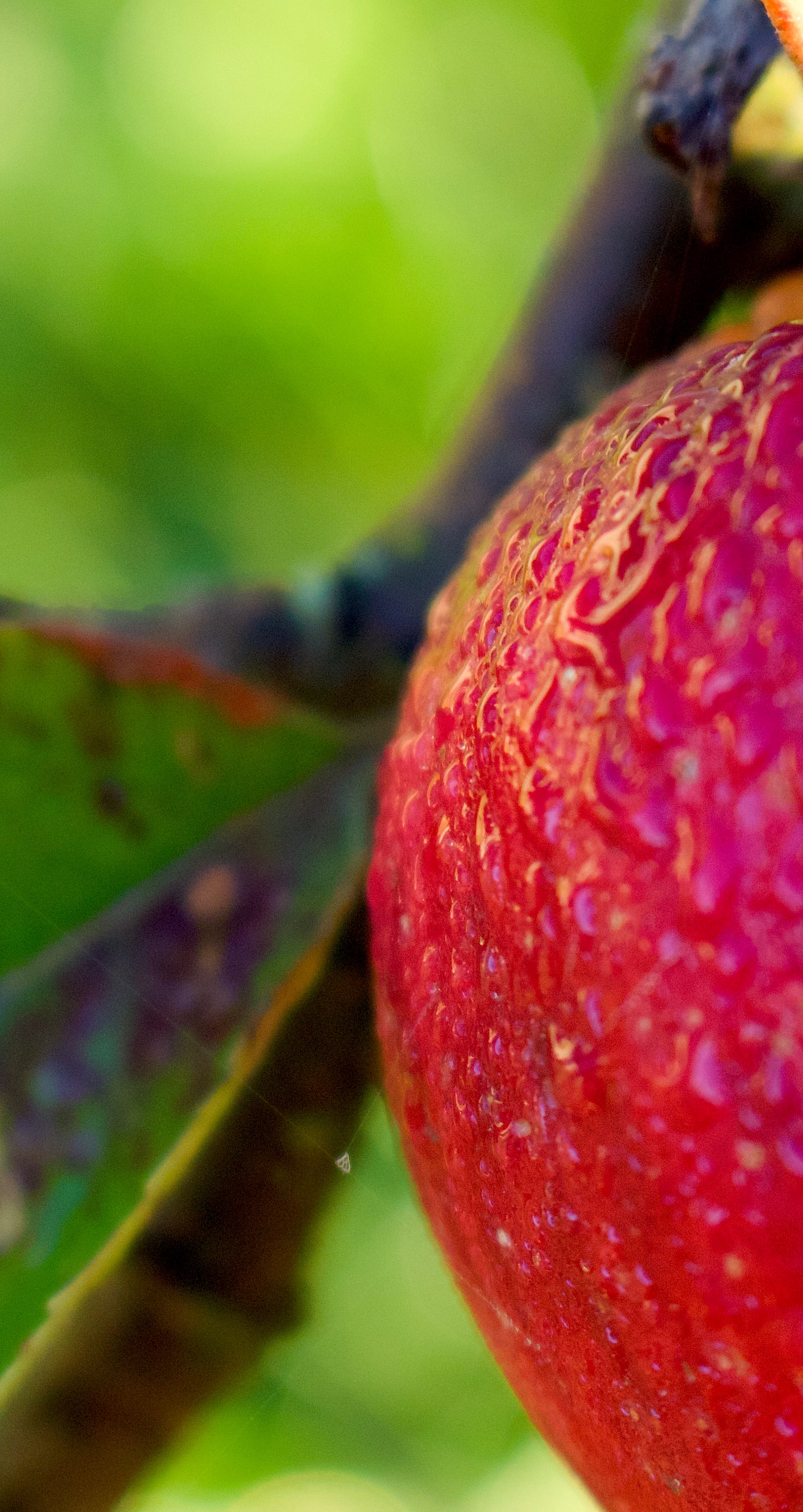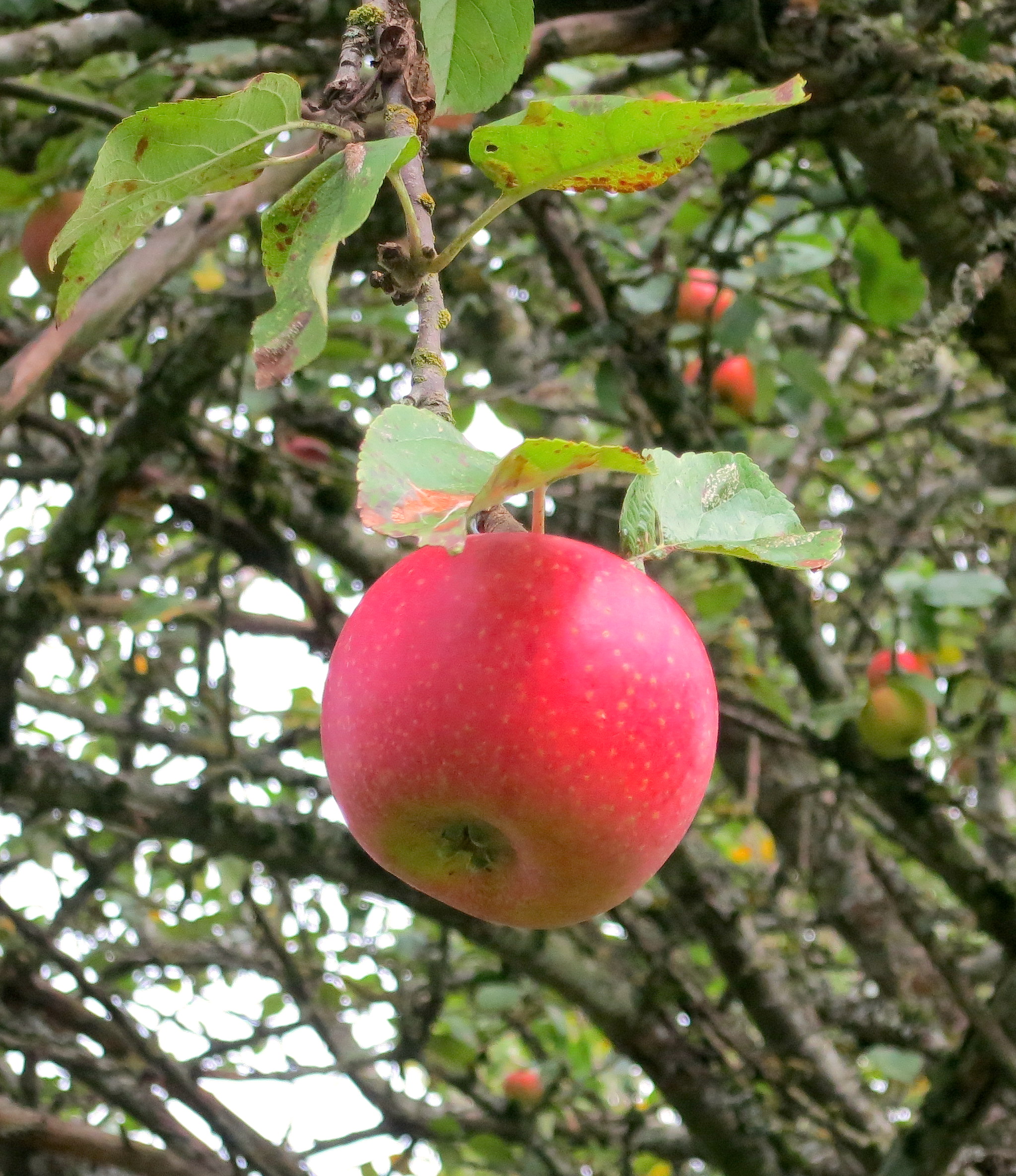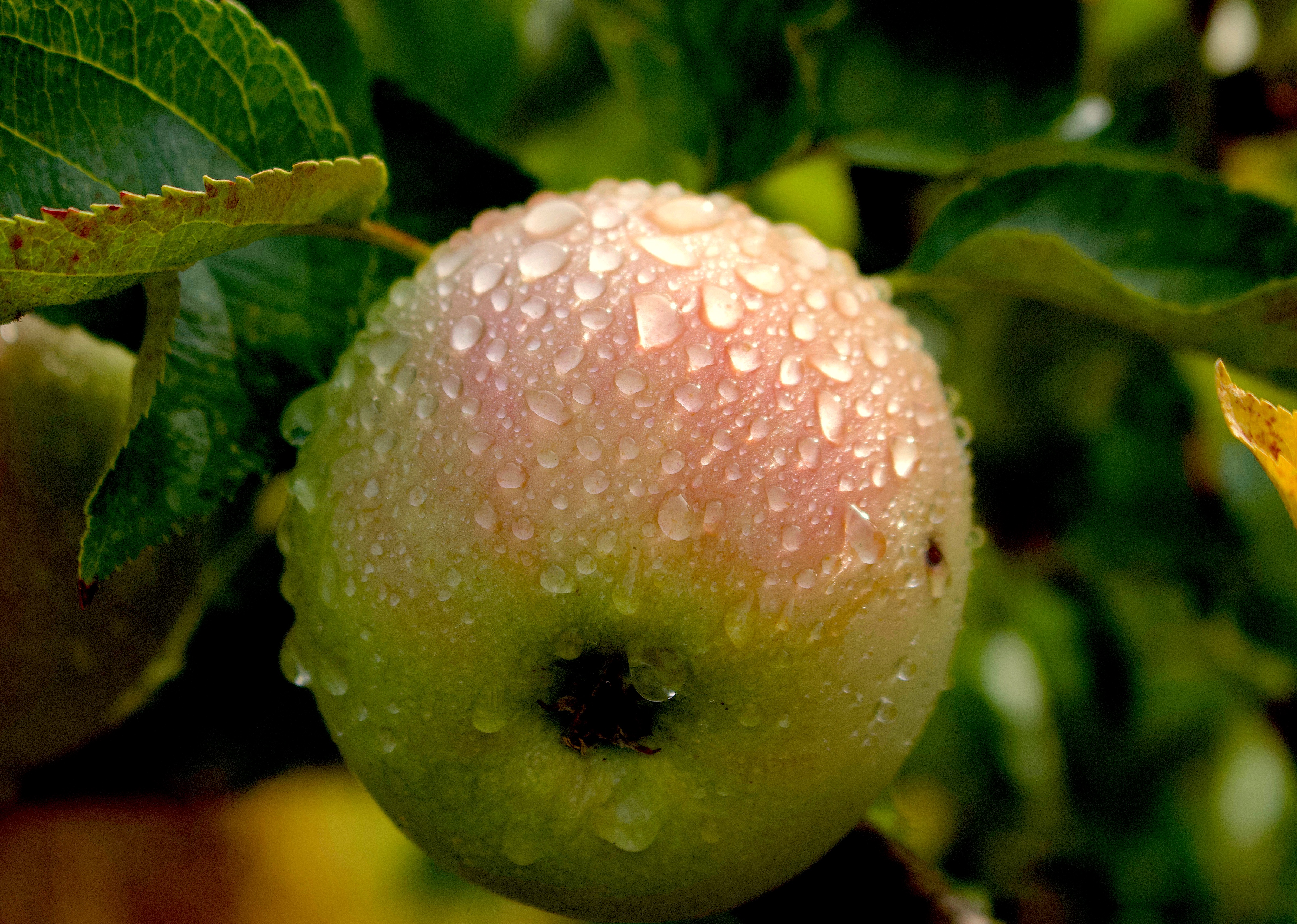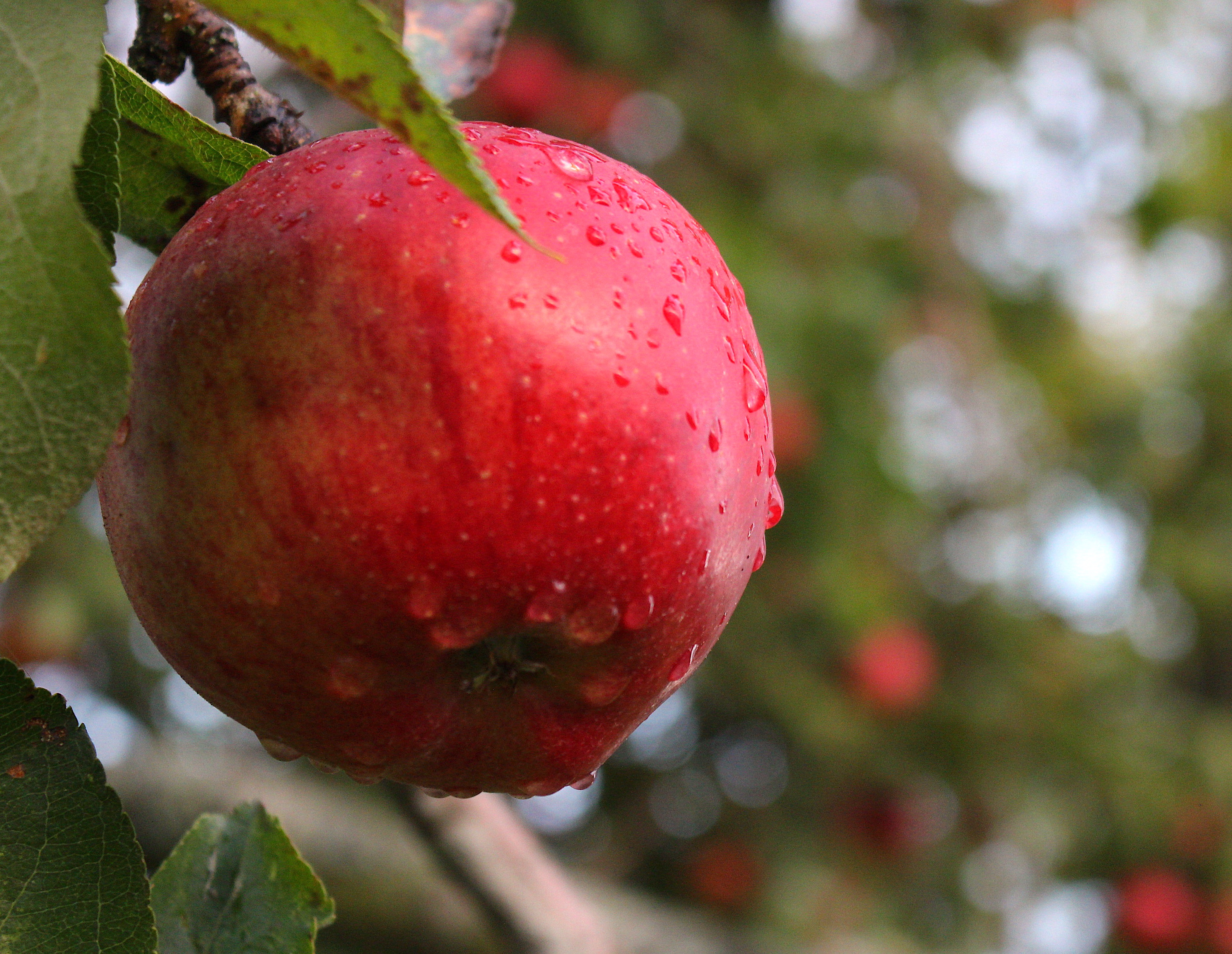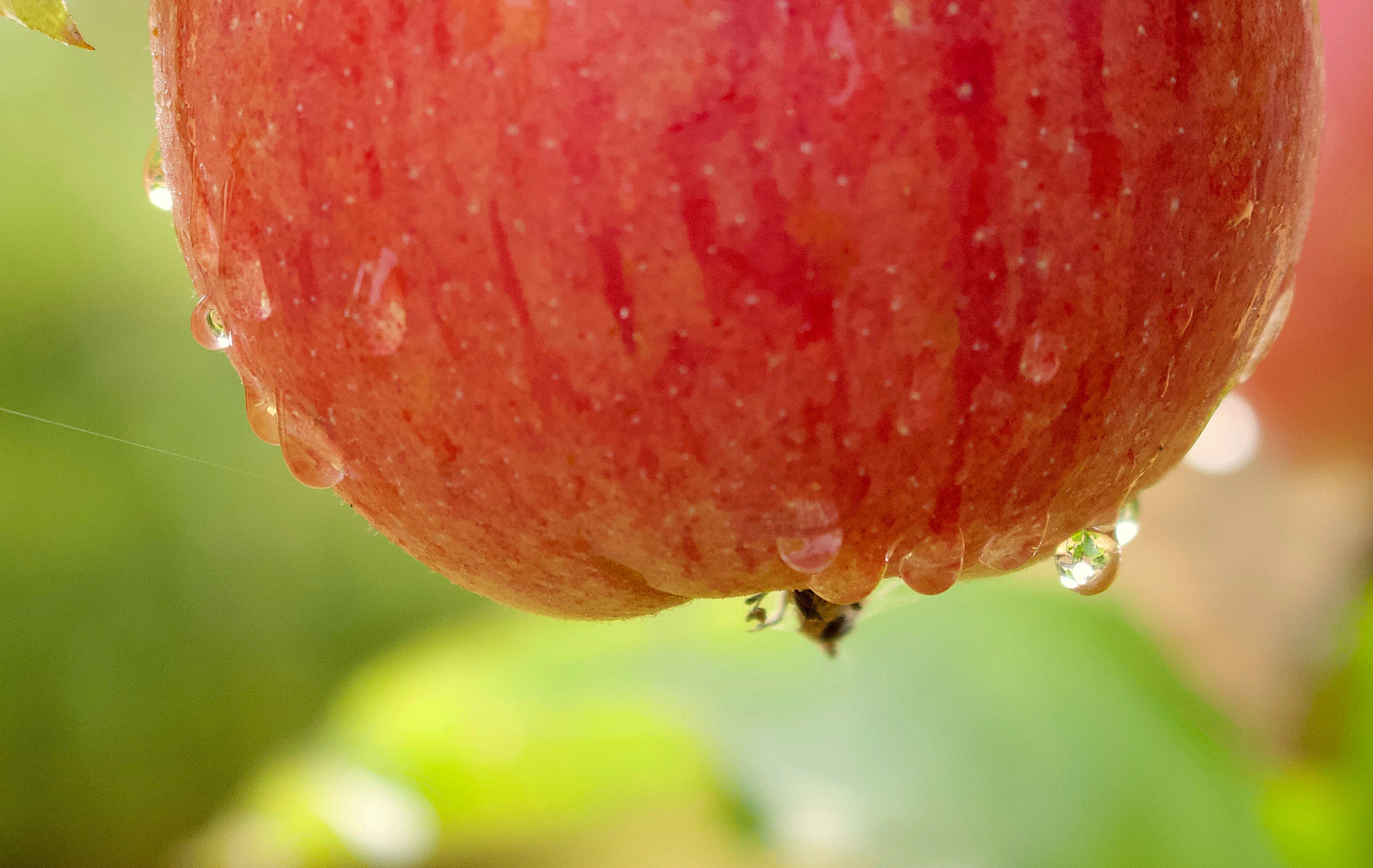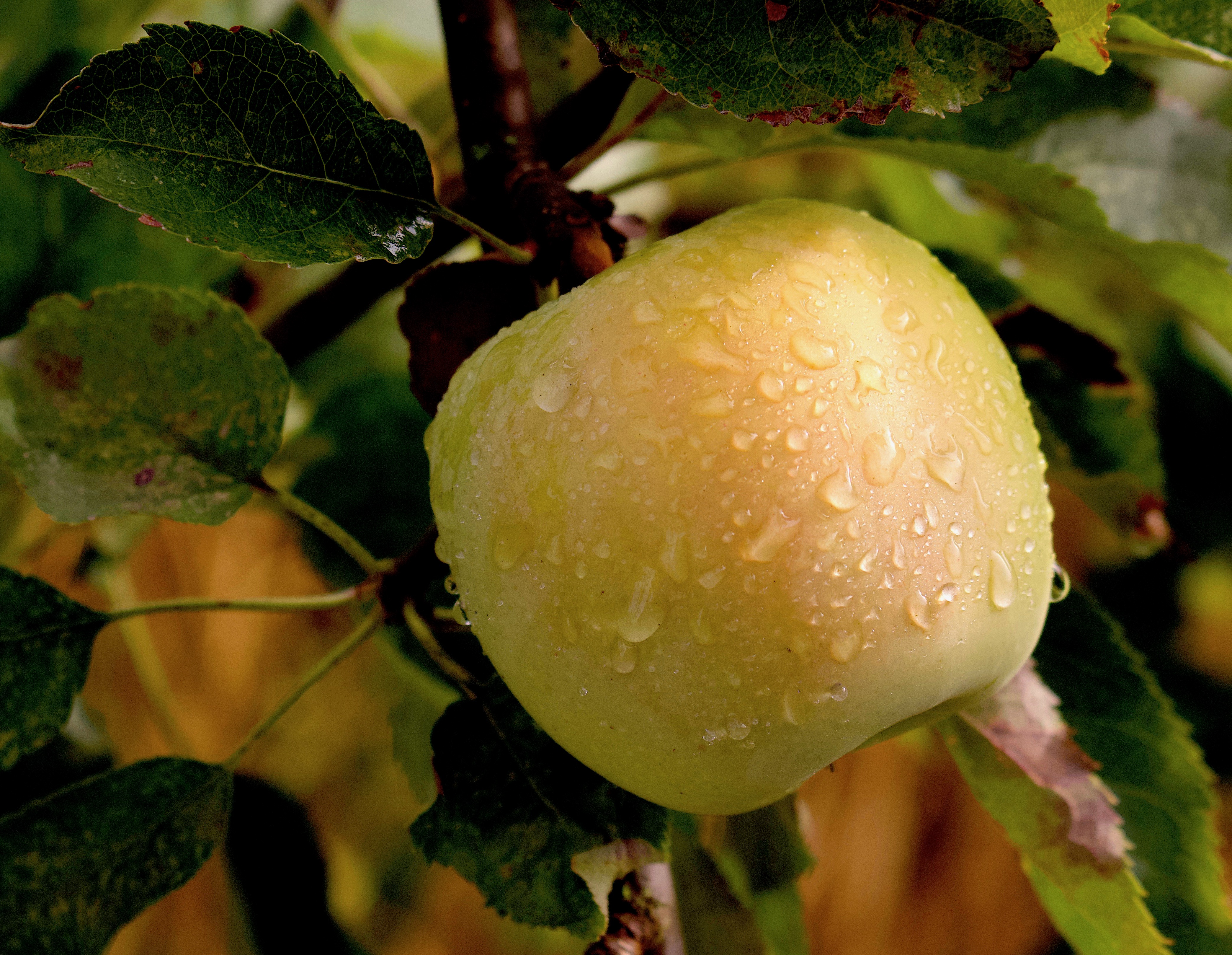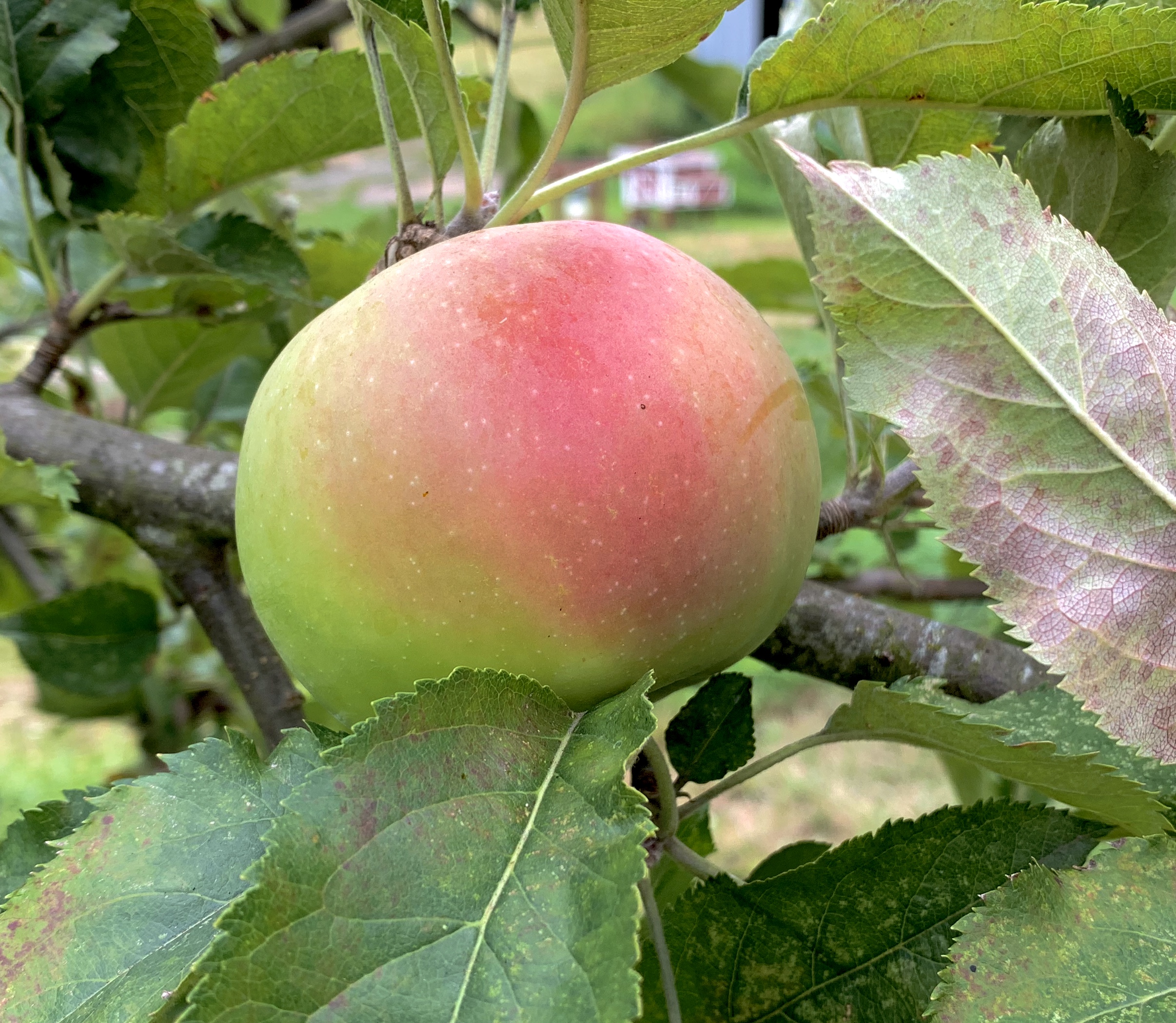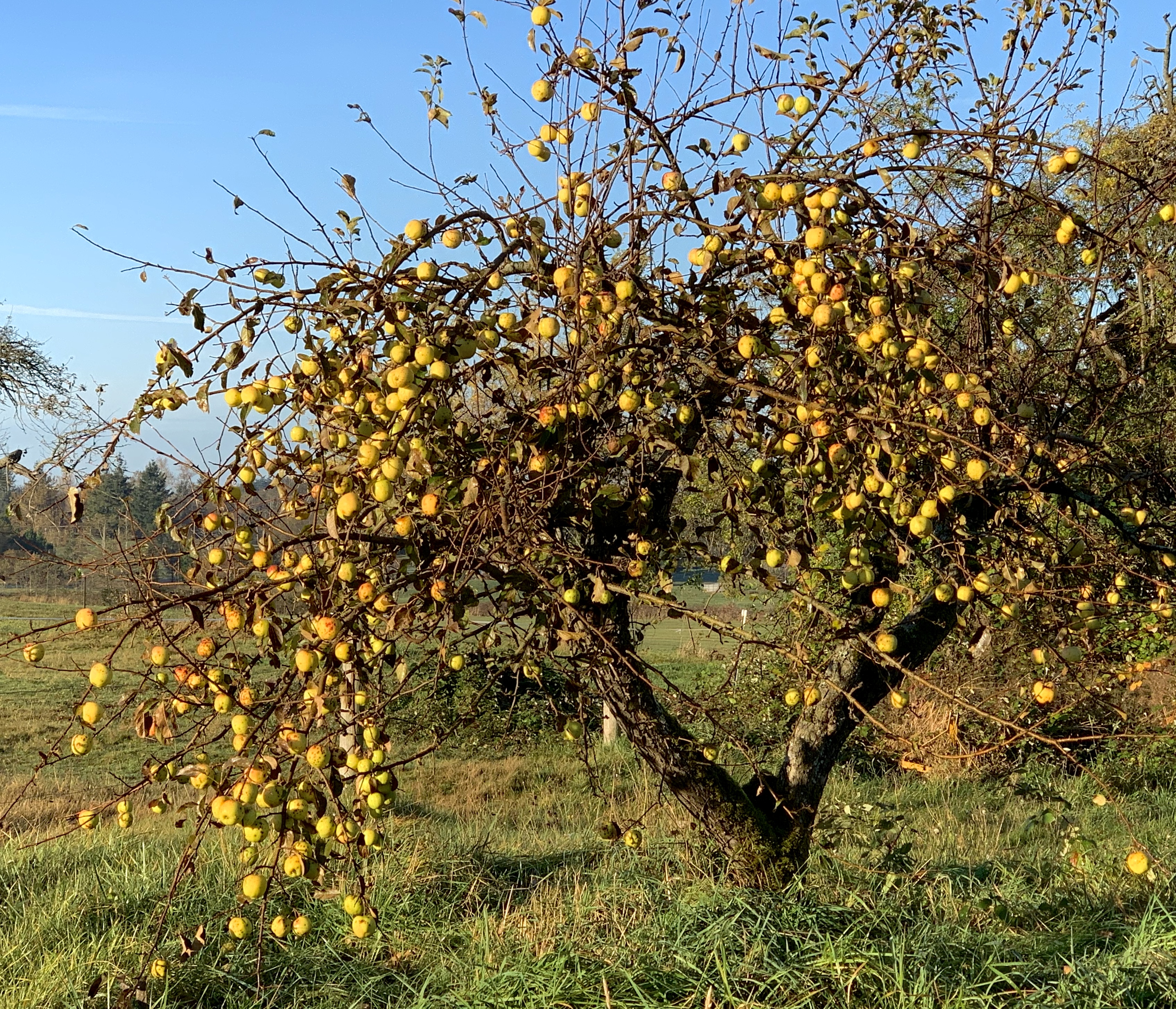
A Thousand Thousand Fruit to Touch

And then there is that day when all around,
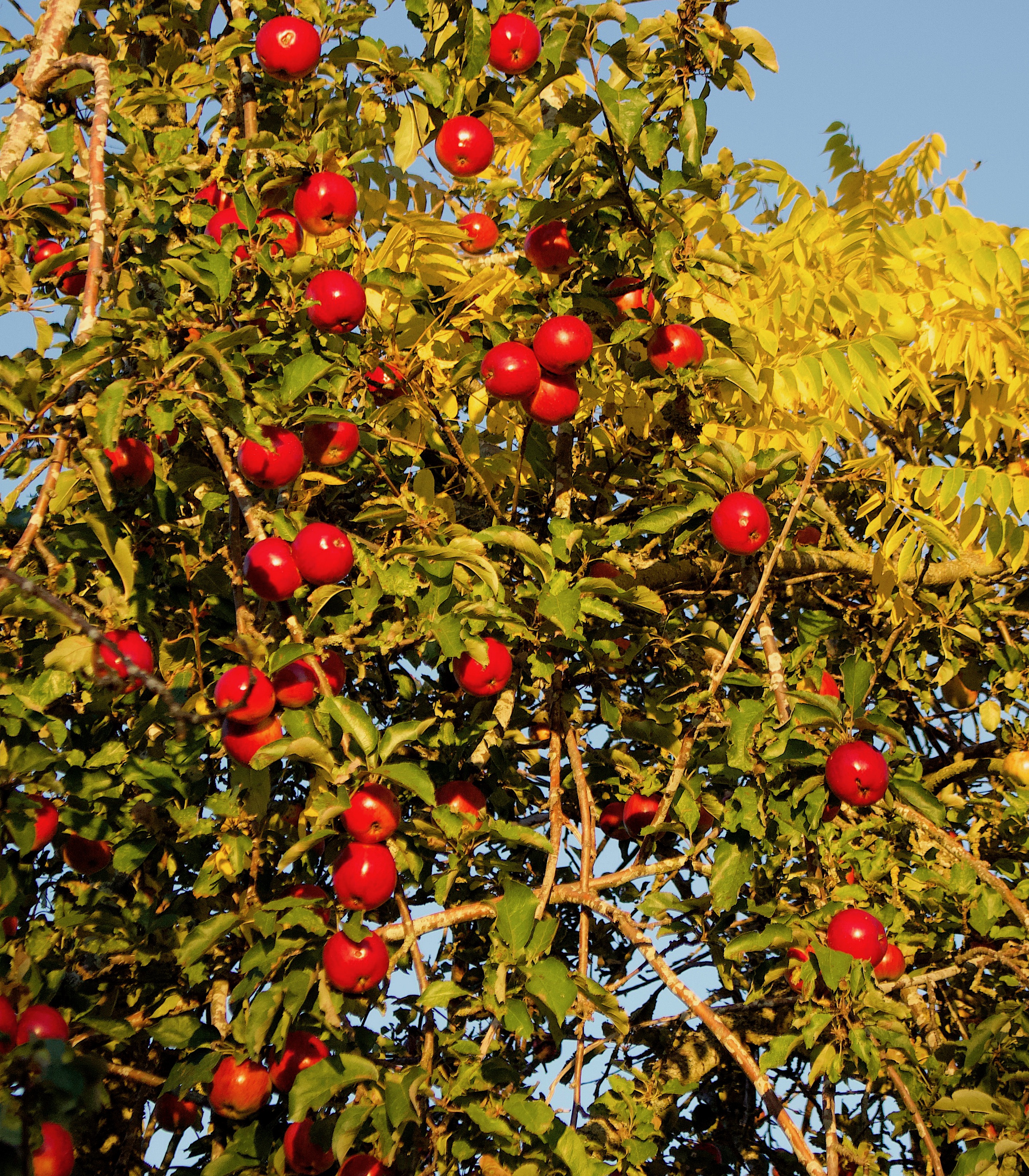
all around you hear the dropping of the apples,

one by one, from the trees.
At first it is one here and one there,
and then it is three and then it is four

and then nine and twenty,
until the apples plummet like rain,
fall like horse hoofs in the soft, darkening grass,
and you are the last apple on the tree;
and you wait for the wind to work you slowly free
from your hold upon the sky, and drop you down and down.
Long before you hit the grass
you will have forgotten there ever was a tree,
or other apples, or a summer, or green grass below,
You will fall in darkness…
~Ray Bradbury from Dandelion Wine

But I am done with apple-picking now. 
Essence of winter sleep is on the night, 
The scent of apples: I am drowsing off. 
I cannot rub the strangeness from my sight 
I got from looking through a pane of glass 
I skimmed this morning from the drinking trough 
And held against the world of hoary grass. 
It melted, and I let it fall and break. 
But I was well 
Upon my way to sleep before it fell, 
And I could tell 
What form my dreaming was about to take. 
For I have had too much 
Of apple-picking: I am overtired 
Of the great harvest I myself desired. 
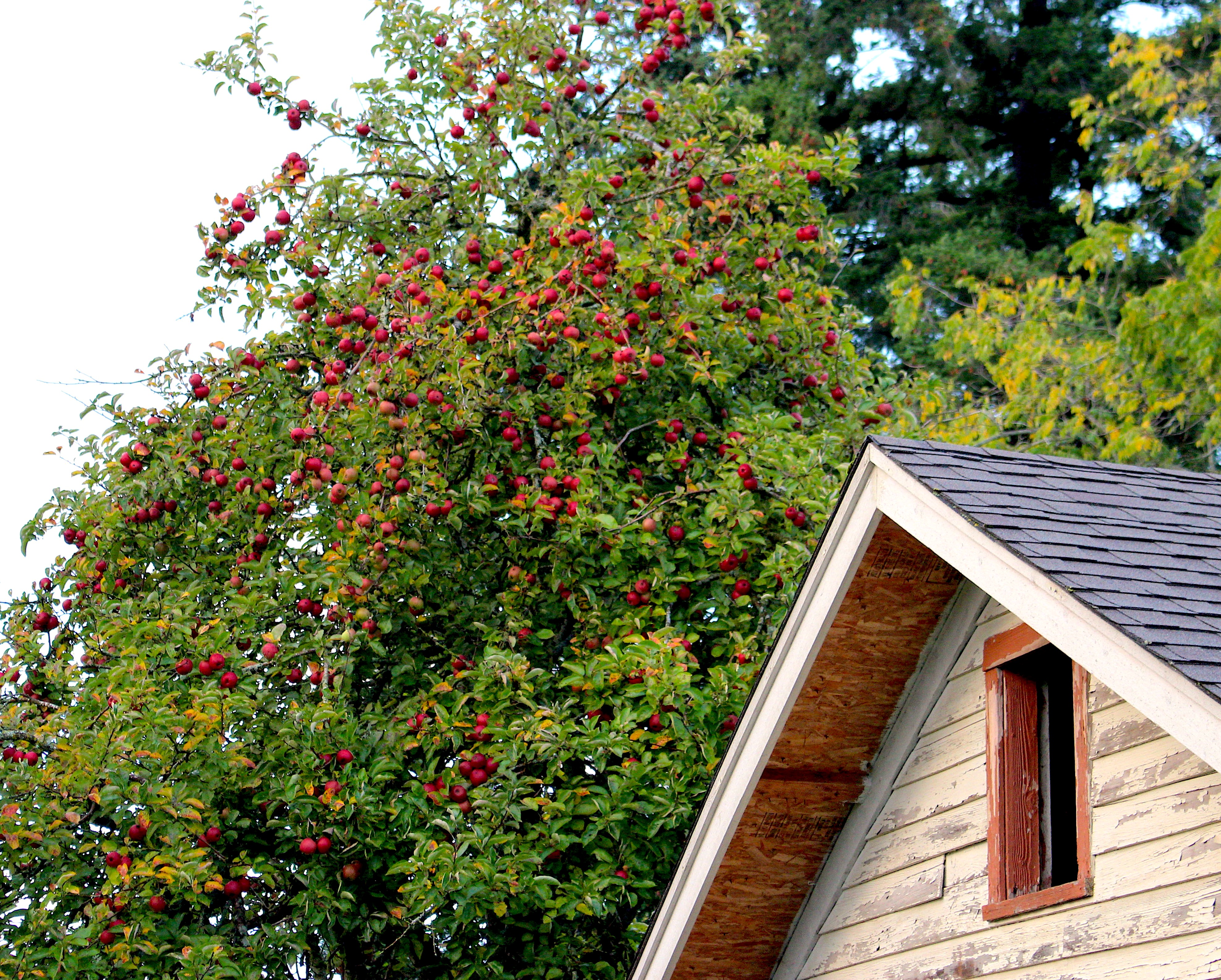
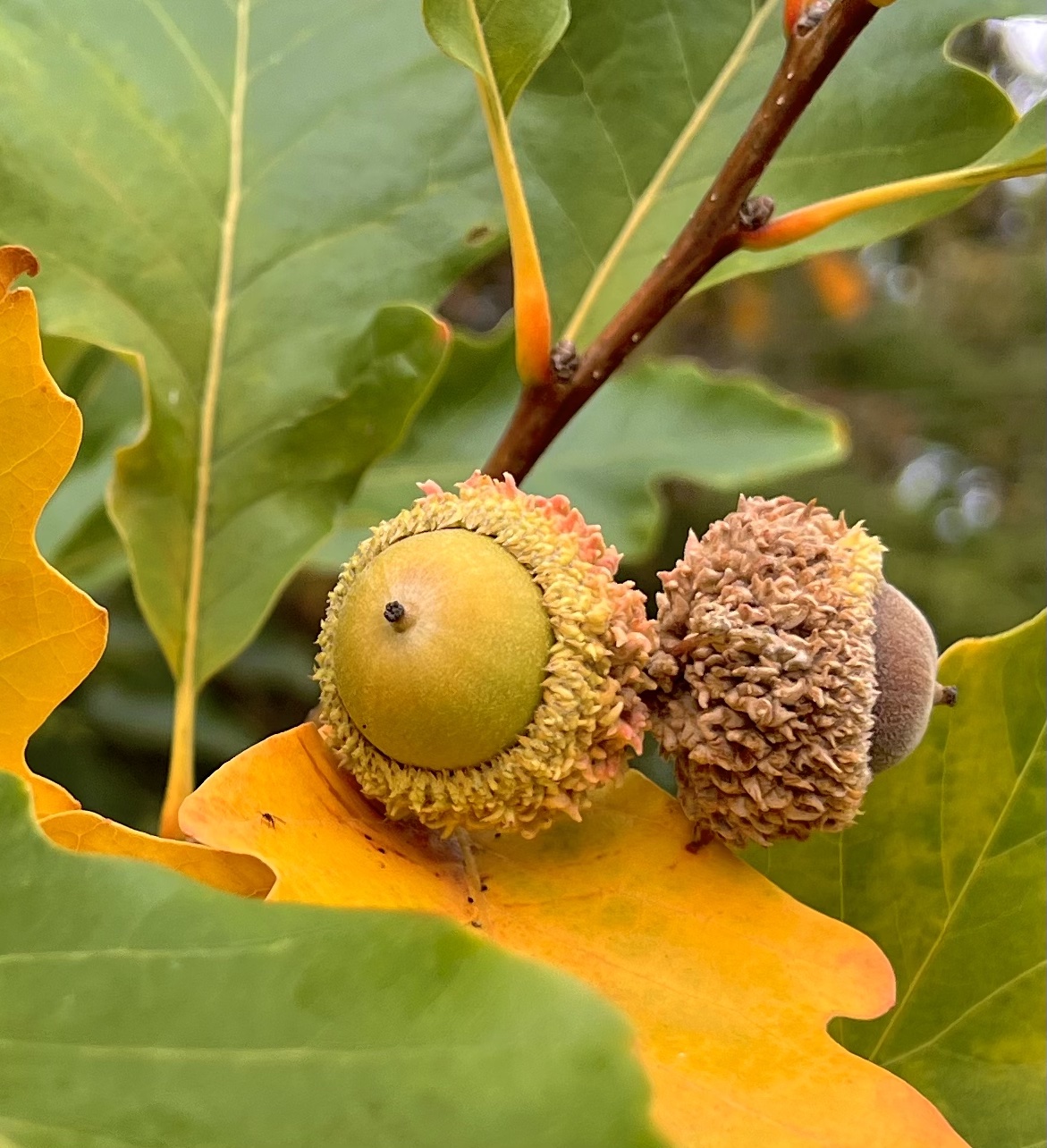
There were ten thousand thousand fruit to touch, 
Cherish in hand, lift down, and not let fall. 
For all 
That struck the earth, 
No matter if not bruised or spiked with stubble, 
Went surely to the cider-apple heap 
As of no worth. 
One can see what will trouble 
This sleep of mine, whatever sleep it is. 
Were he not gone, 
The woodchuck could say whether it’s like his 
Long sleep, as I describe its coming on, 
Or just some human sleep.
~Robert Frost from “After Apple-Picking”

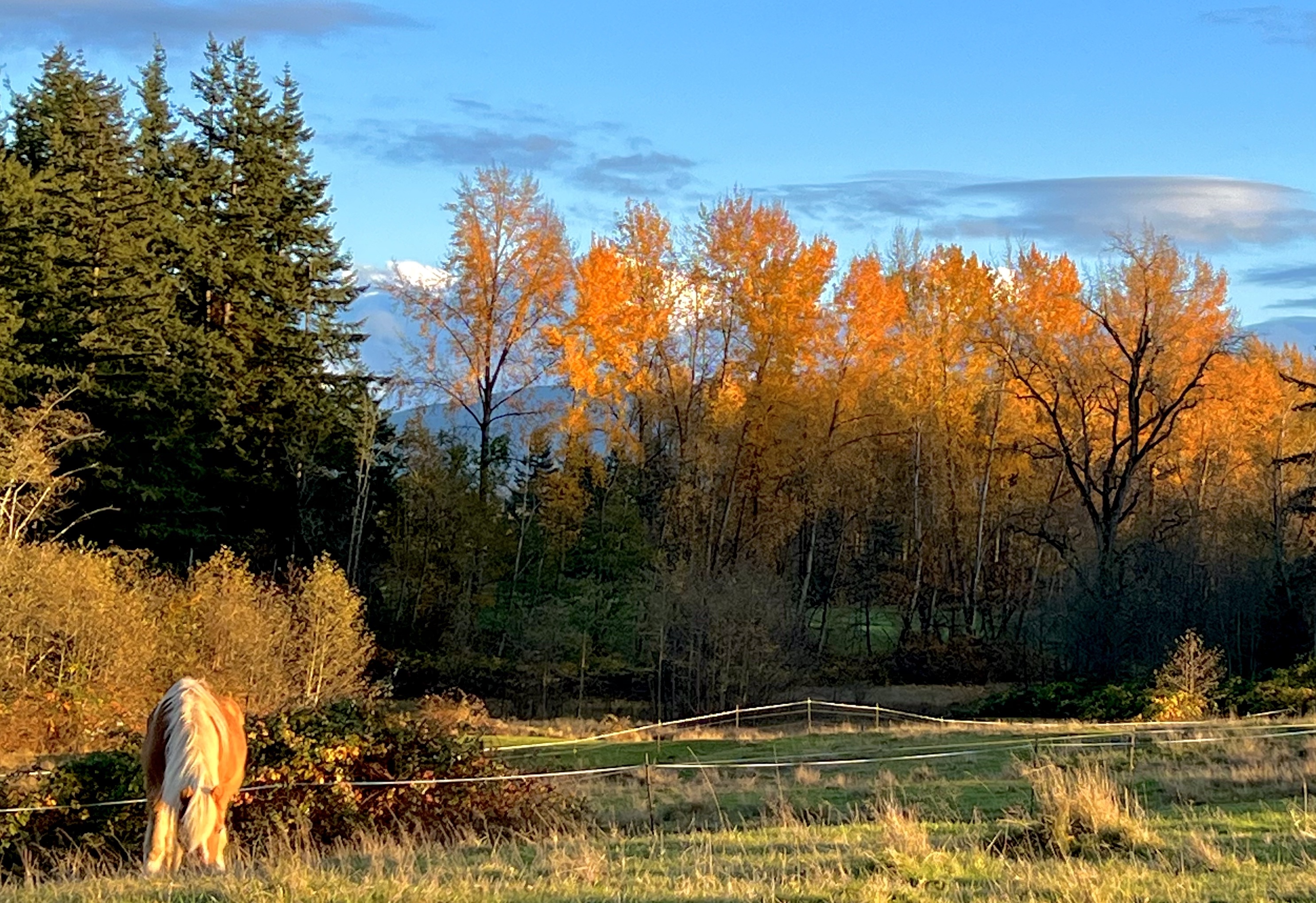
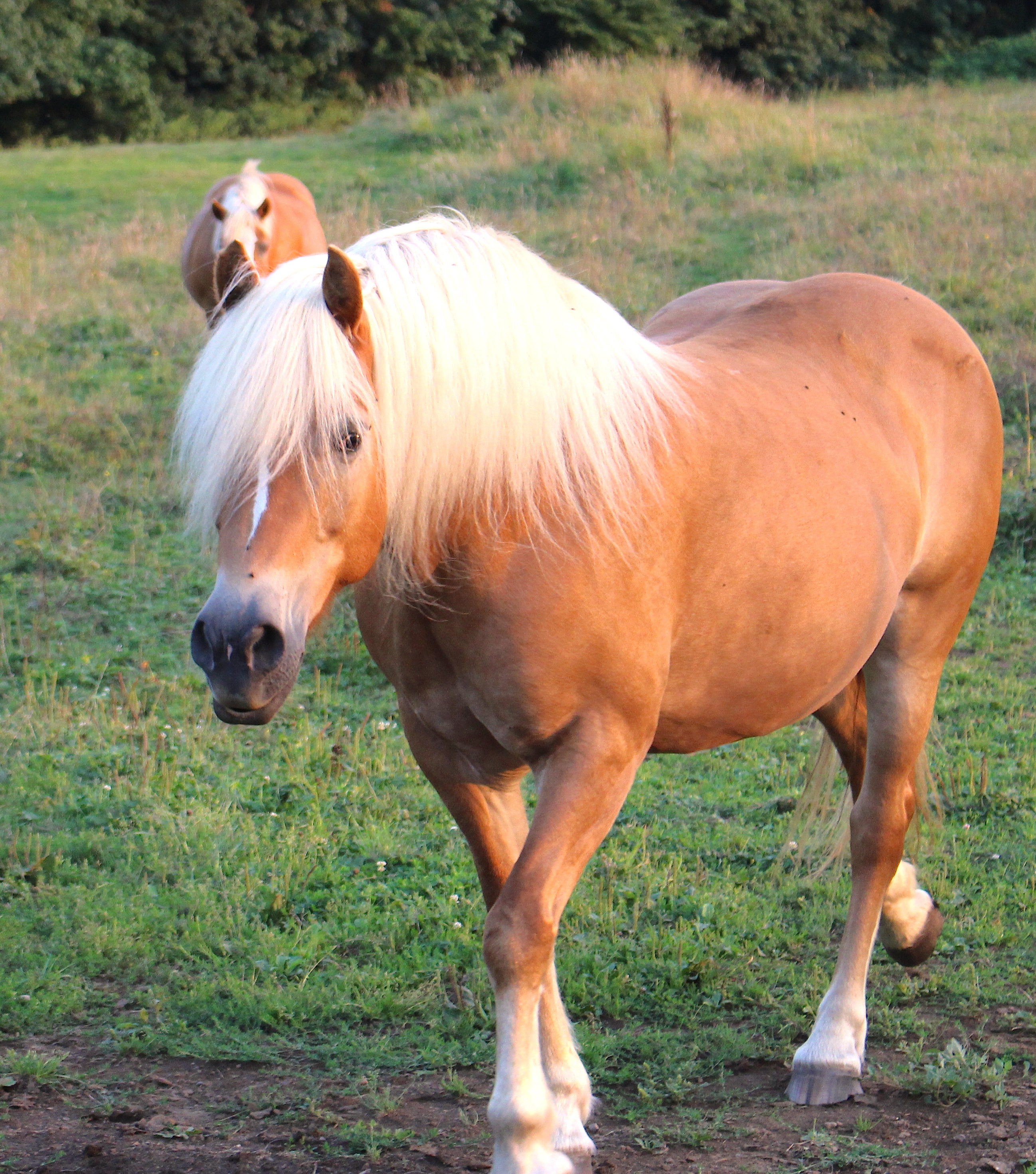
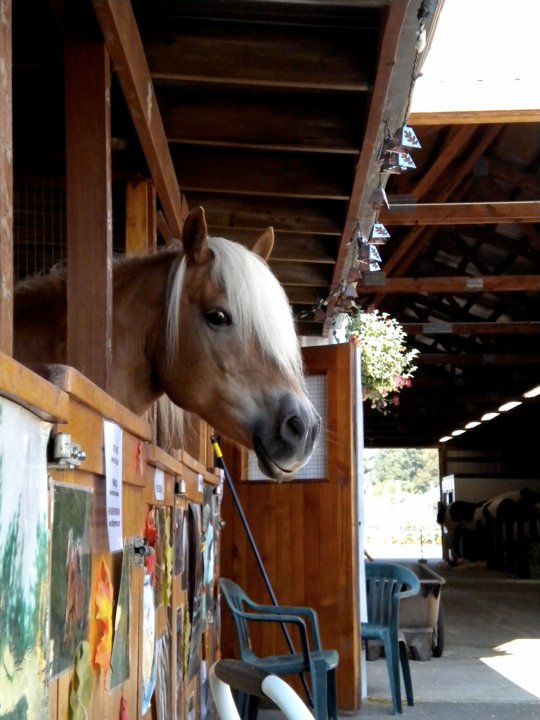
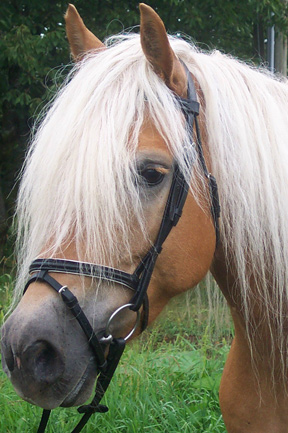
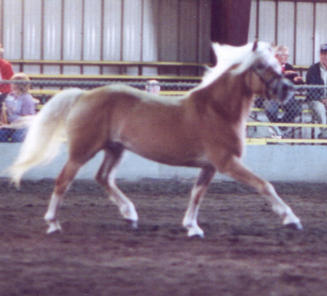
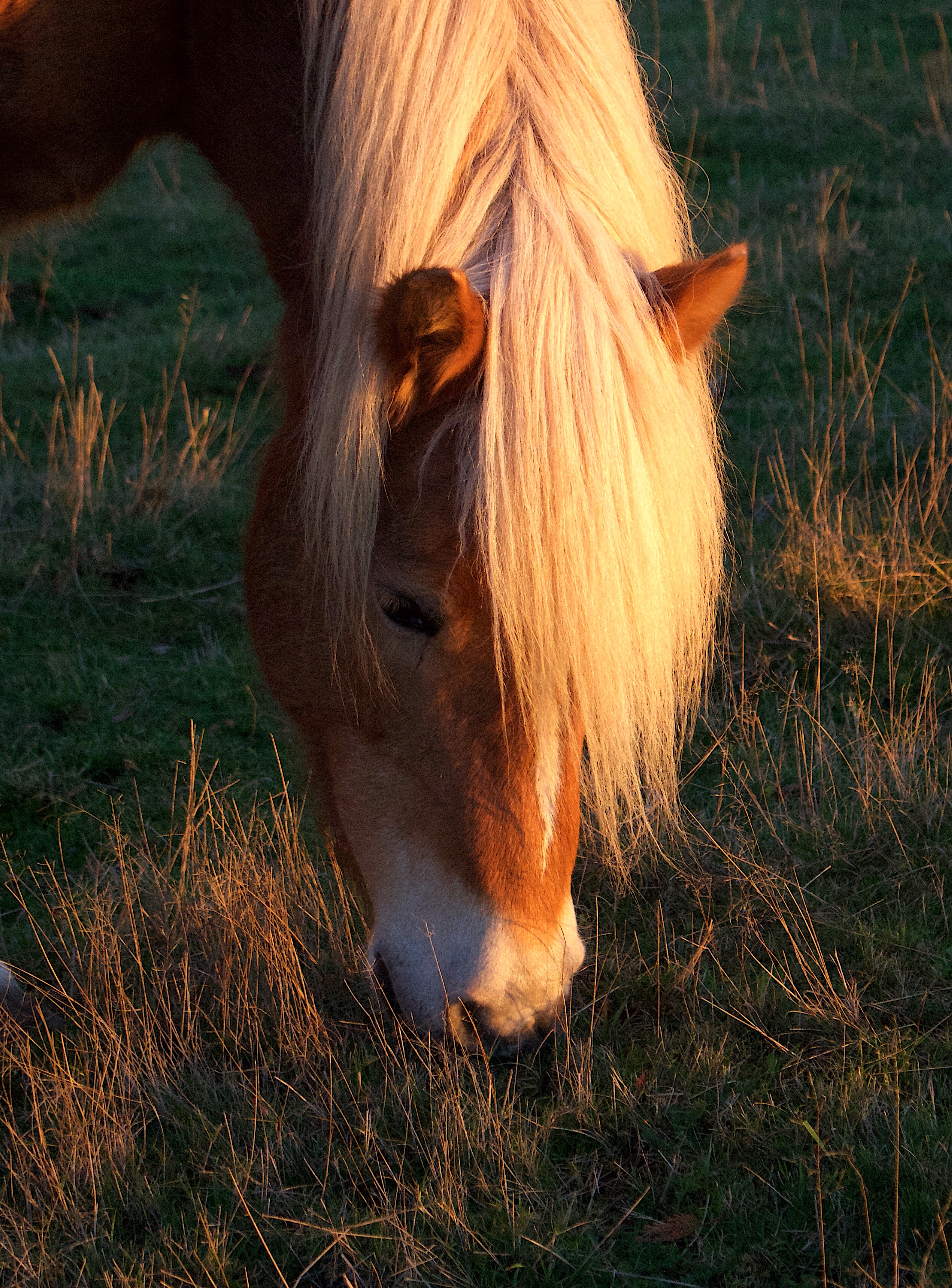
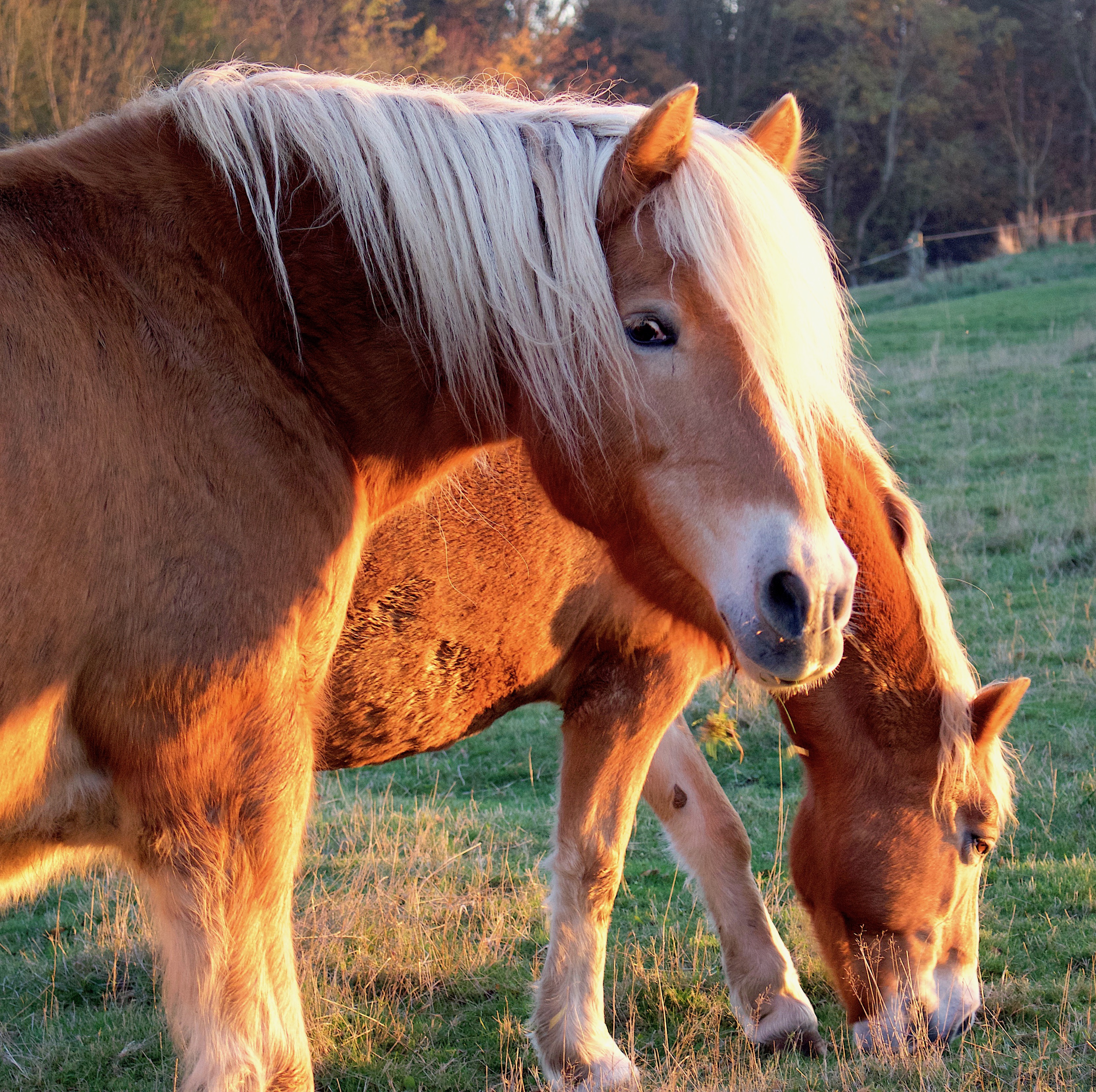
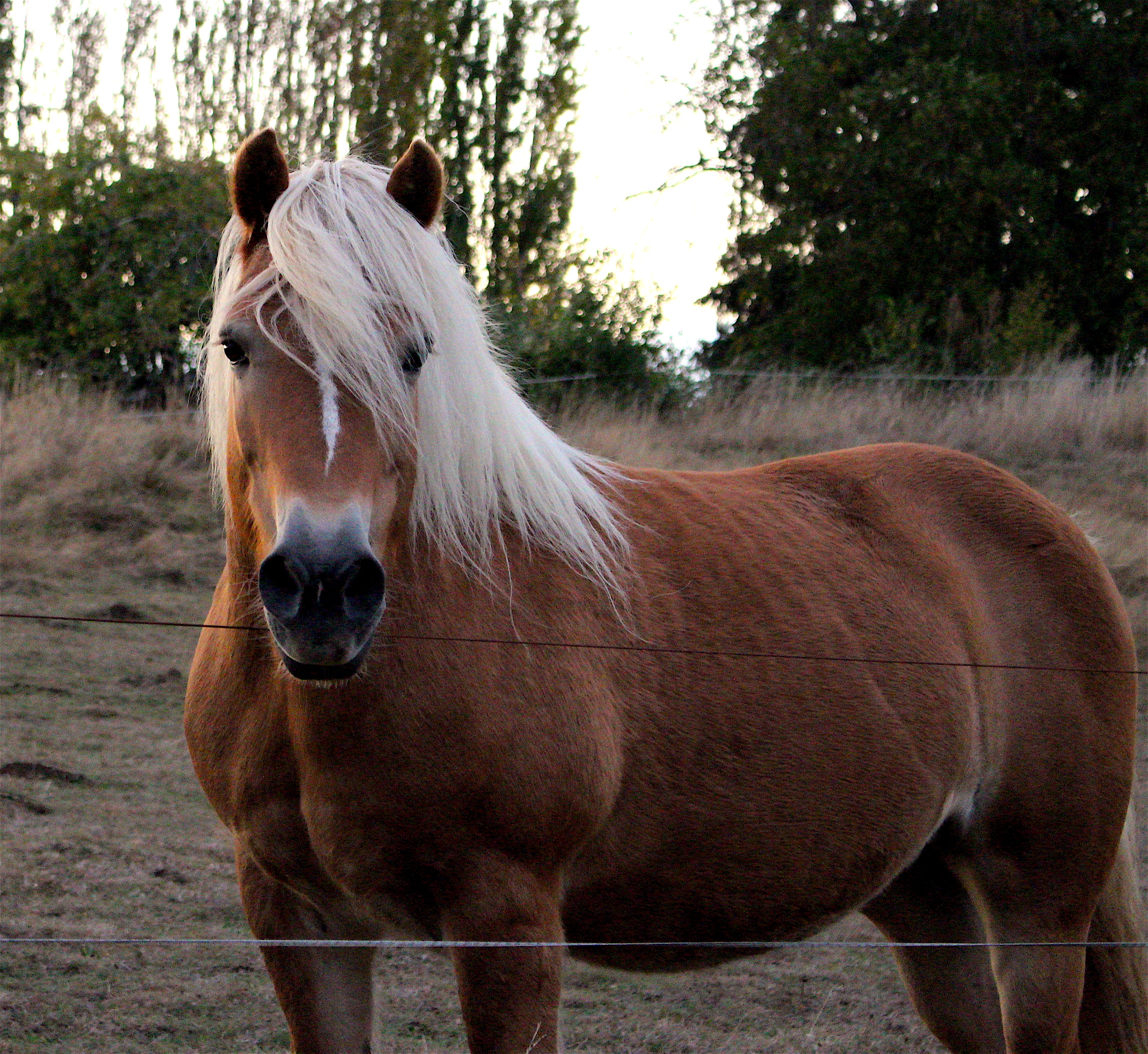
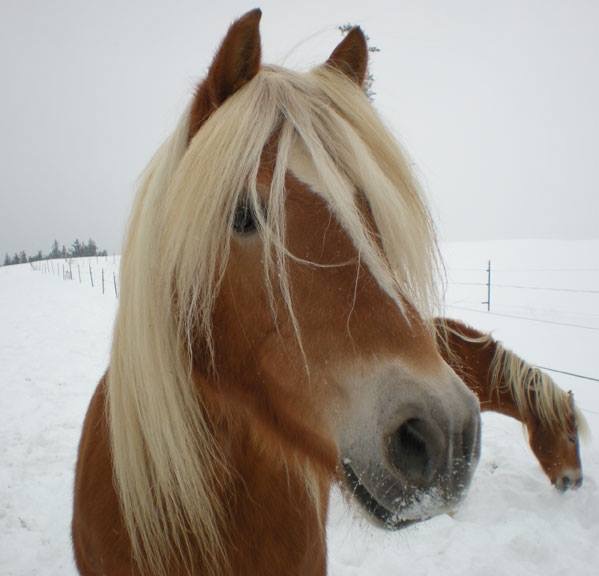
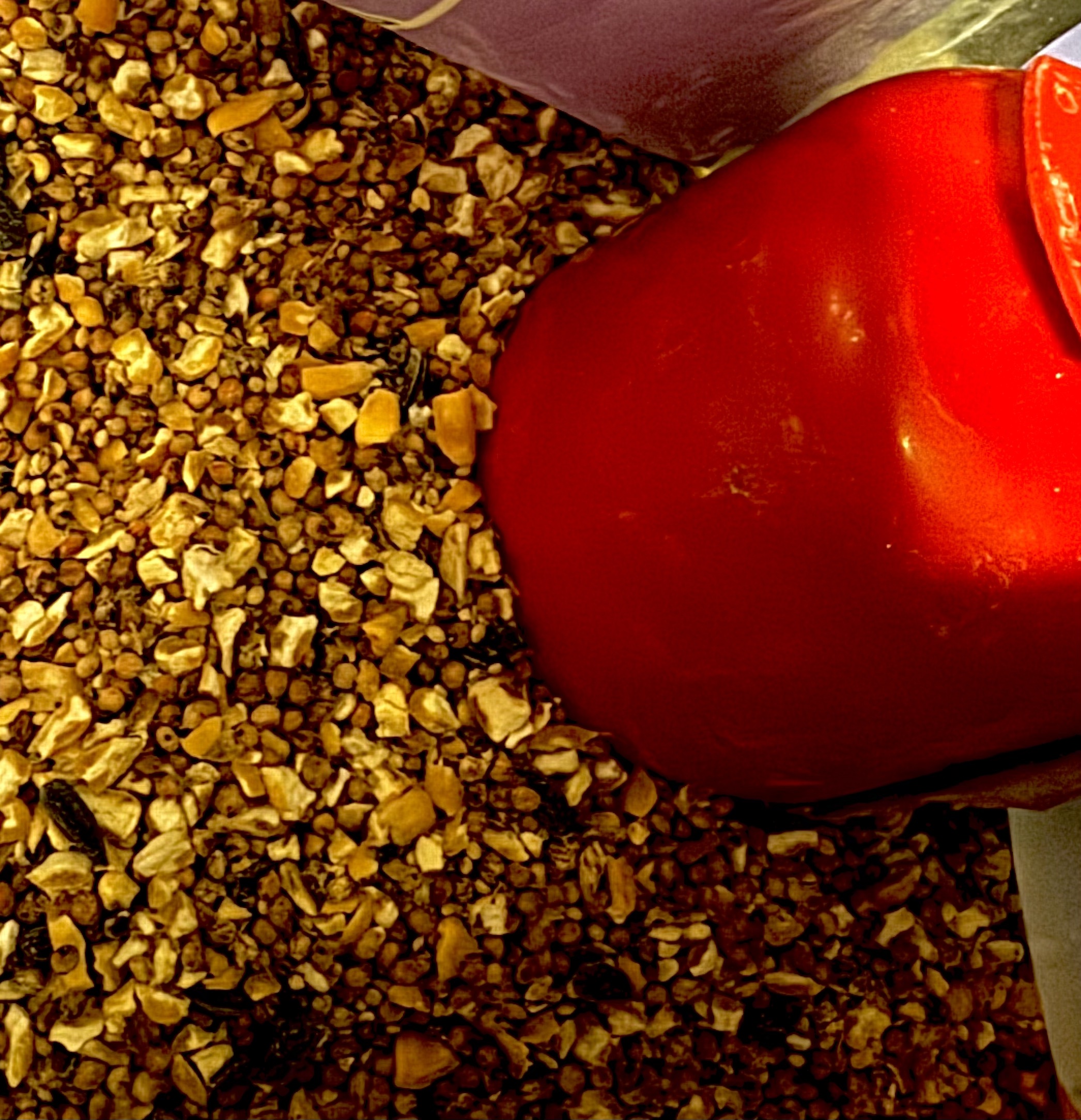
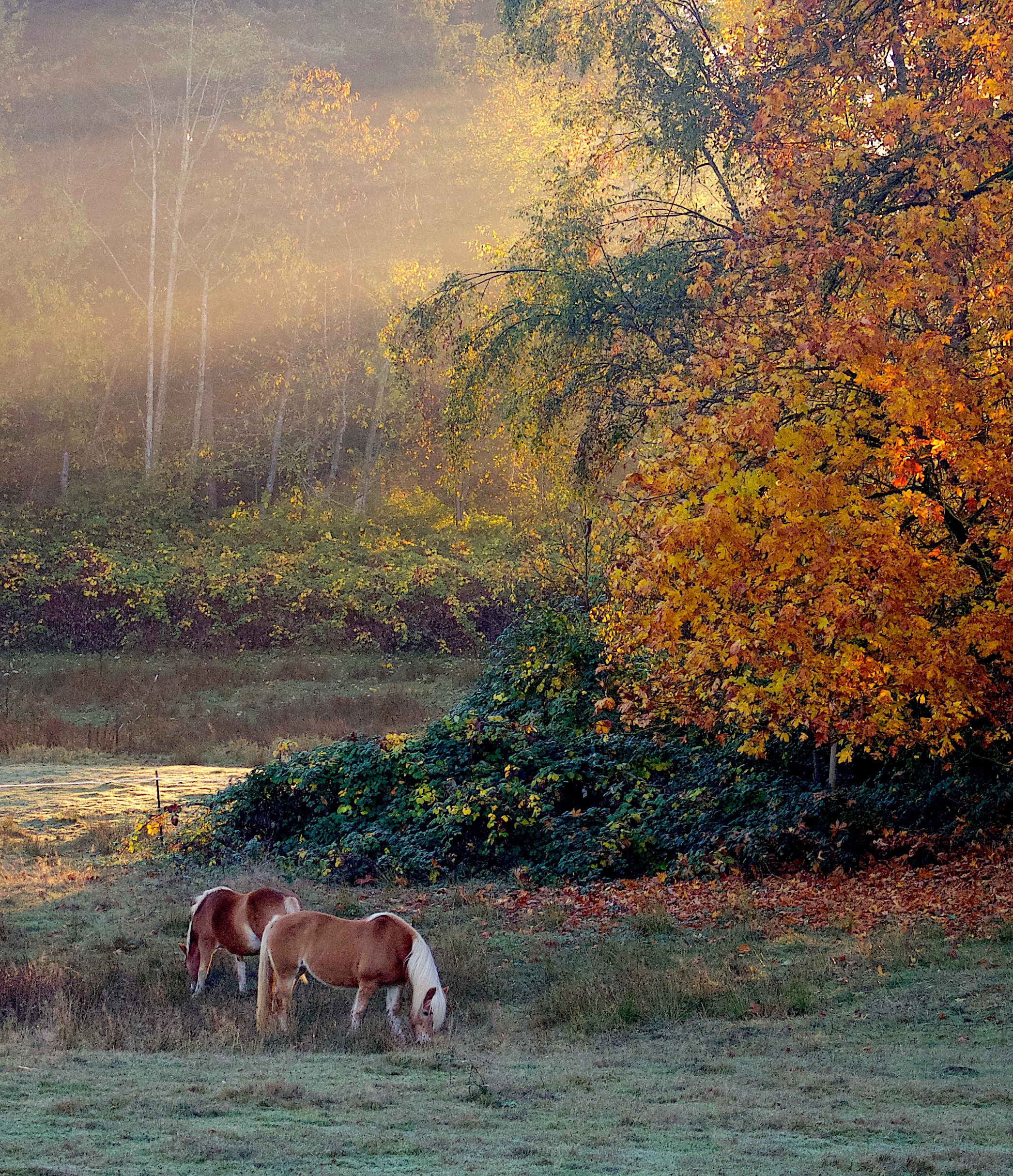
I pick up windfall apples to haul down to the barn for a special treat each night for the Haflingers. These are apples that we humans wouldn’t take a second glance at in all our satiety and fussiness, but the Haflingers certainly don’t mind a bruise, or a worm hole or slug trails over apple skin.

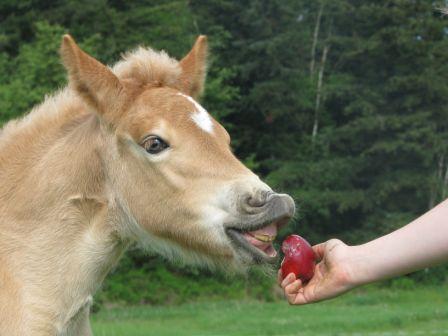
I’ve found over the years that our horses must be taught to eat apples–if they have no experience with them, they will bypass them lying in the field and not give them a second look. There simply is not enough odor to make them interesting or appealing–until they are cut in slices that is. Then they become irresistible and no apple is left alone from that point forward.

When I offer a whole apple to a young Haflinger who has never tasted one before, they will sniff it, perhaps roll it on my hand a bit with their lips, but I’ve yet to have one simply bite in and try. If I take the time to cut the apple up, they’ll pick up a section very gingerly, kind of hold it on their tongue and nod their head up and down trying to decide as they taste and test it if they should drop it or chew it, and finally, as they really bite in and the sweetness pours over their tongue, they get this look in their eye that is at once surprised and supremely pleased. The only parallel experience I’ve seen in humans is when you offer a five month old baby his first taste of ice cream on a spoon and at first he tightens his lips against its coldness, but once you slip a little into his mouth, his face screws up a bit and then his eyes get big and sparkly and his mouth rolls the taste around his tongue, savoring that sweet cold creaminess. His mouth immediately pops open for more.

It is the same with apples and horses. Once they have that first taste, they are our slaves forever in search of the next apple.

The Haflinger veteran apple eaters can see me coming with my sweat shirt front pocket stuffed with apples, a “pregnant” belly of fruit, as it were. They offer low nickers when I come up to their stalls and each horse has a different approach to their apple offering.

There is the “bite a little bit at a time” approach, which makes the apple last longer, and tends to be less messy in the long run. There is the “bite it in half” technique which leaves half the apple in your hand as they navigate the other half around their teeth, dripping and frothing sweet apple slobber. Lastly there is the greedy “take the whole thing at once” horse, which is the most challenging way to eat an apple, as it has to be moved back to the molars, and crunched, and then moved around the mouth to chew up the large pieces, and usually half the apple ends up falling to the ground, with all the foam that the juice and saliva create. No matter the technique used, the smell of an apple as it is being chewed by a horse is one of the best smells in the world. I can almost taste the sweetness too when I smell that smell.

What do we do when offered such a sublime gift from Someone’s hand? If it is something we have never experienced before, we possibly walk right by, not recognizing that it is a gift at all, missing the whole point and joy of experiencing what is being offered. How many wonderful opportunities are right under our noses, but we fail to notice, and bypass them because they are unfamiliar?

Perhaps if the Giver really cares enough to “teach” us to accept this gift of sweetness, by preparing it and making it irresistible to us, then we are overwhelmed with the magnitude of the generosity and are transformed by the simple act of receiving.

We must learn to take little bites, savoring each piece one at a time, making it last rather than greedily grab hold of the whole thing, struggling to control it, thereby losing some in the process. Either way, it is a gracious gift, and how we receive it makes all the difference.

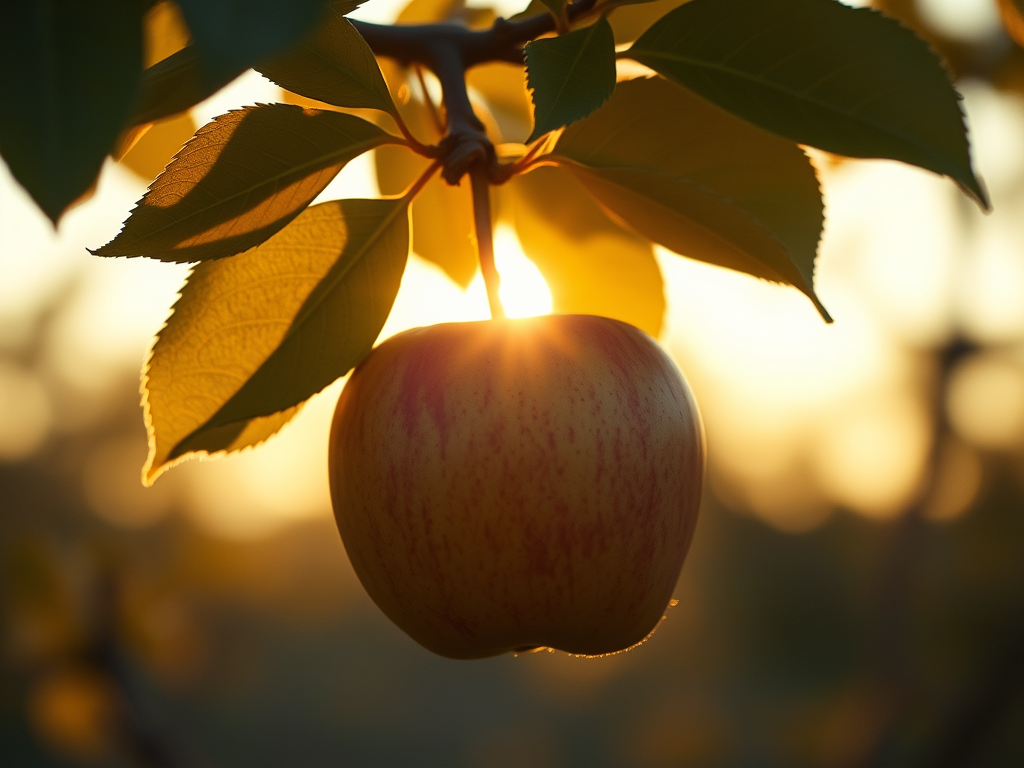
AI image created for this post

The tree of life my soul hath seen,
Laden with fruit and always green;
The trees of nature fruitless be,
Compared with Christ the Apple Tree.

His beauty doth all things excel,
By faith I know but ne’er can tell
The glory which I now can see,
In Jesus Christ the Appletree.

For happiness I long have sought,
And pleasure dearly I have bought;
I missed of all but now I see
‘Tis found in Christ the Appletree.

I’m weary with my former toil –
Here I will sit and rest awhile,
Under the shadow I will be,
Of Jesus Christ the Appletree.

With great delight I’ll make my stay,
There’s none shall fright my soul away;
Among the sons of men I see
There’s none like Christ the Appletree.

I’ll sit and eat this fruit divine,
It cheers my heart like spirit’al wine;
And now this fruit is sweet to me,
That grows on Christ the Appletree.

This fruit doth make my soul to thrive,
It keeps my dying faith alive;
Which makes my soul in haste to be
With Jesus Christ the Appletree.

One-Time
Monthly
Yearly

Make a one-time or recurring donation to support daily Barnstorming posts

Make a monthly donation

Make a yearly donation

Choose an amount

$10.00
$25.00
$50.00
$5.00
$15.00
$100.00
$5.00
$15.00
$100.00

Or enter a custom amount

$

Your contribution is deeply appreciated.

Your contribution is appreciated.

Your contribution is appreciated.

DonateDonate monthlyDonate yearly
Attempting to Stopper Time

the golden hour of the clock of the year.
Everything that can run to fruit has already done so:
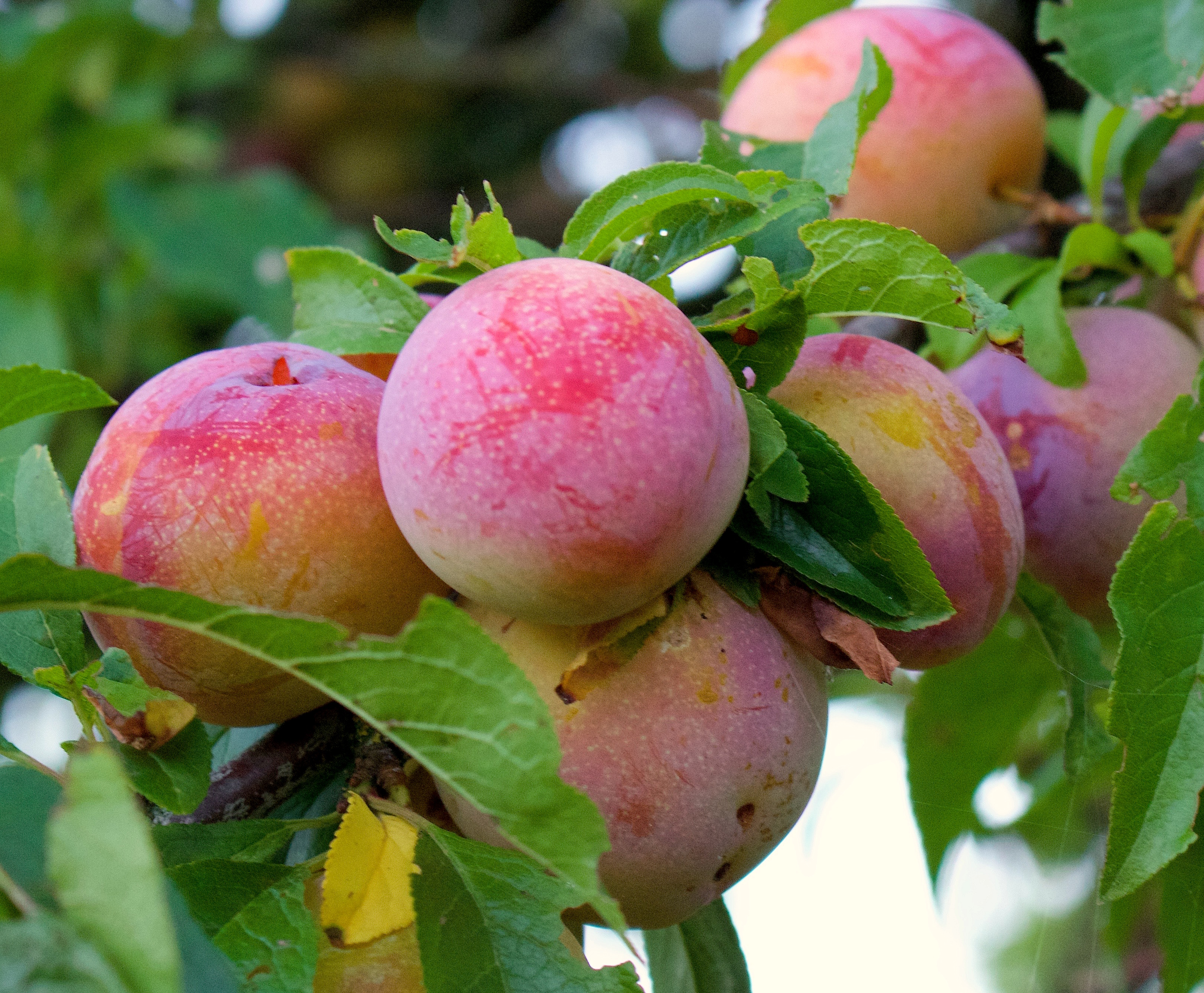
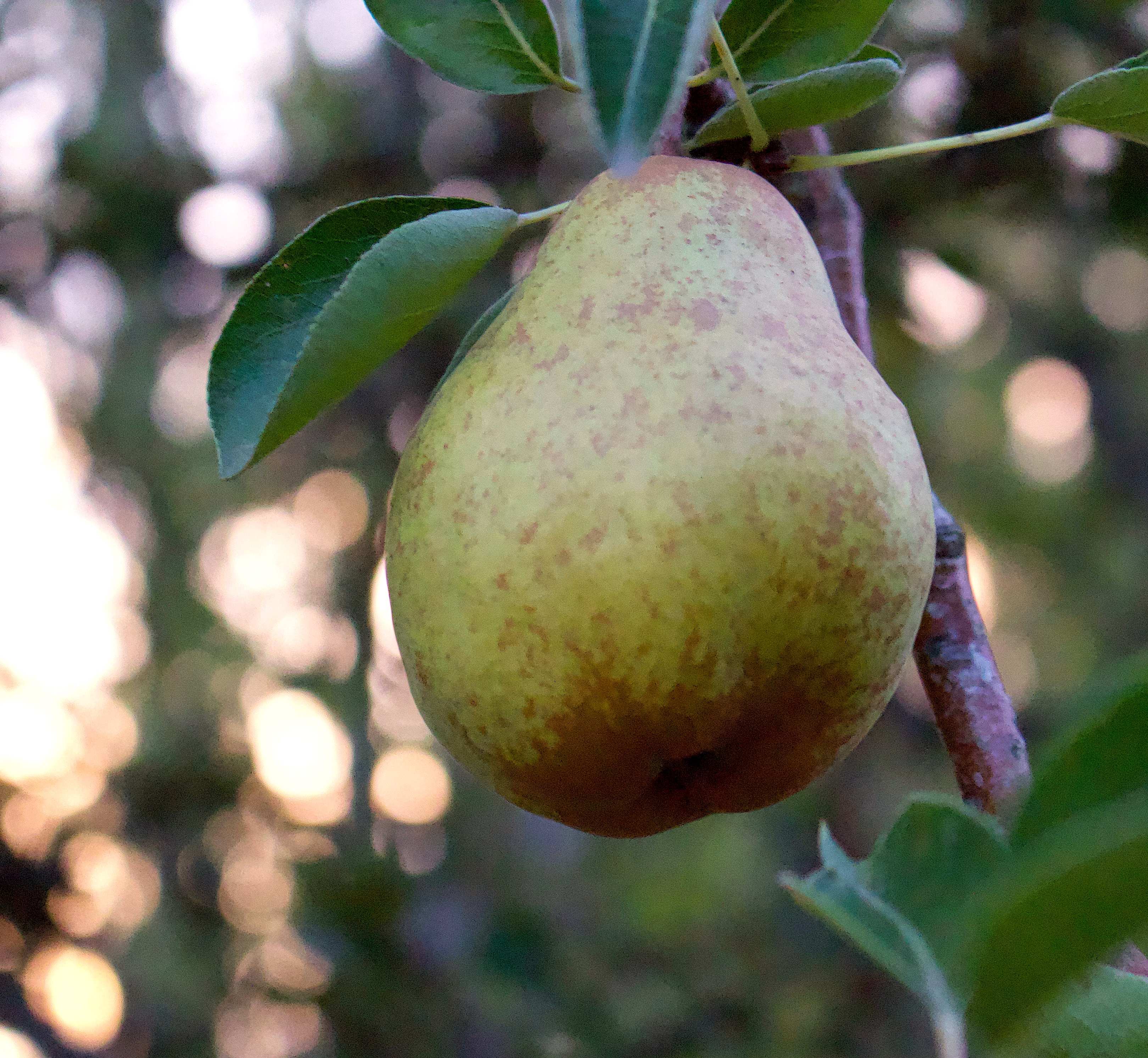
round apples, oval plums, bottom-heavy pears,
black walnuts and hickory nuts annealed in their shells,
the woodchuck with his overcoat of fat.

Flowers that were once bright as a box of crayons
are now seed heads and thistle down.
All the feathery grasses shine in the slanted light.
It’s time to bring in the lawn chairs and wind chimes,
time to draw the drapes against the wind,
time to hunker down.
Summer’s fruits are preserved in syrup,
but nothing can stopper time.
No way to seal it in wax or amber;
it slides though our hands like a rope of silk.
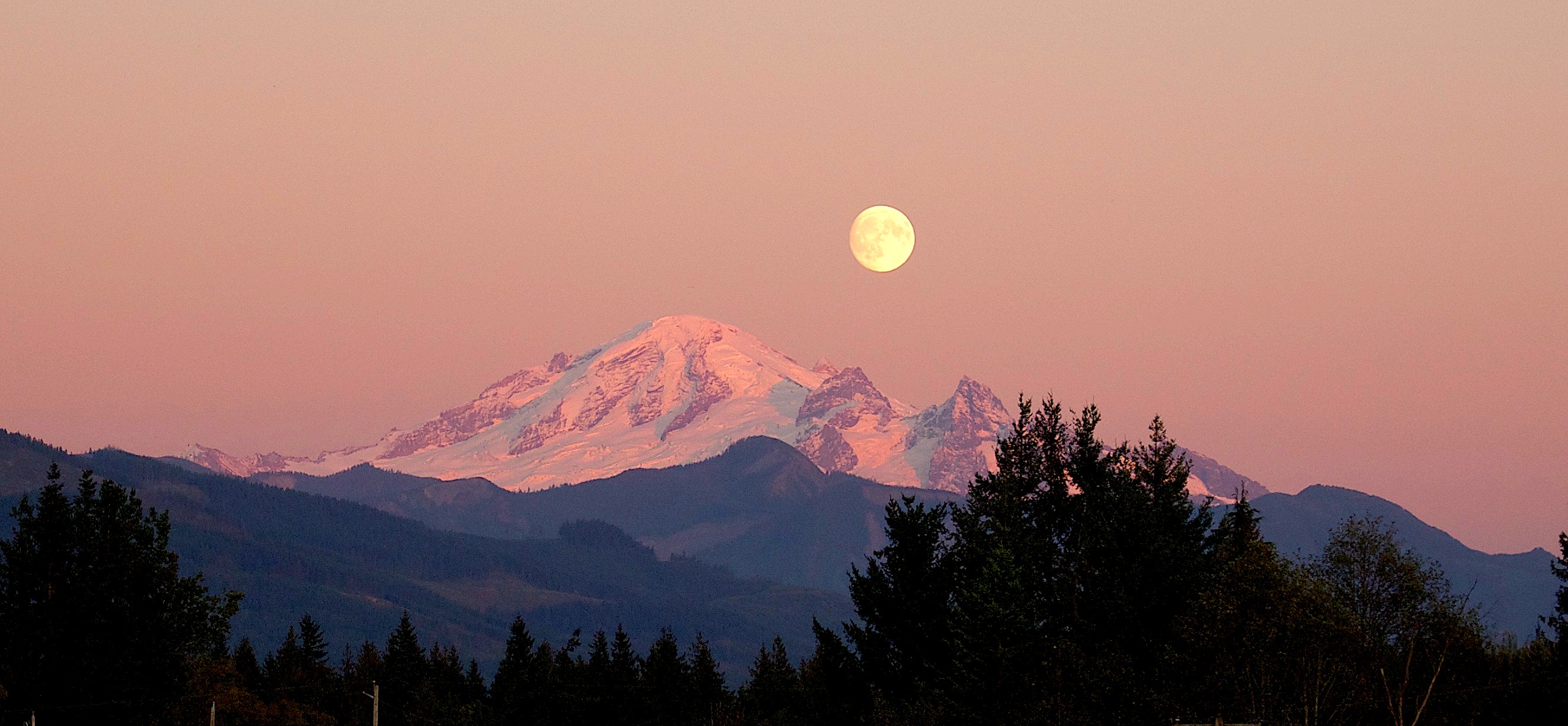
At night, the moon’s restless searchlight sweeps across the sky.
~Barbara Crooker “And Now it’s October” from Small Rain.

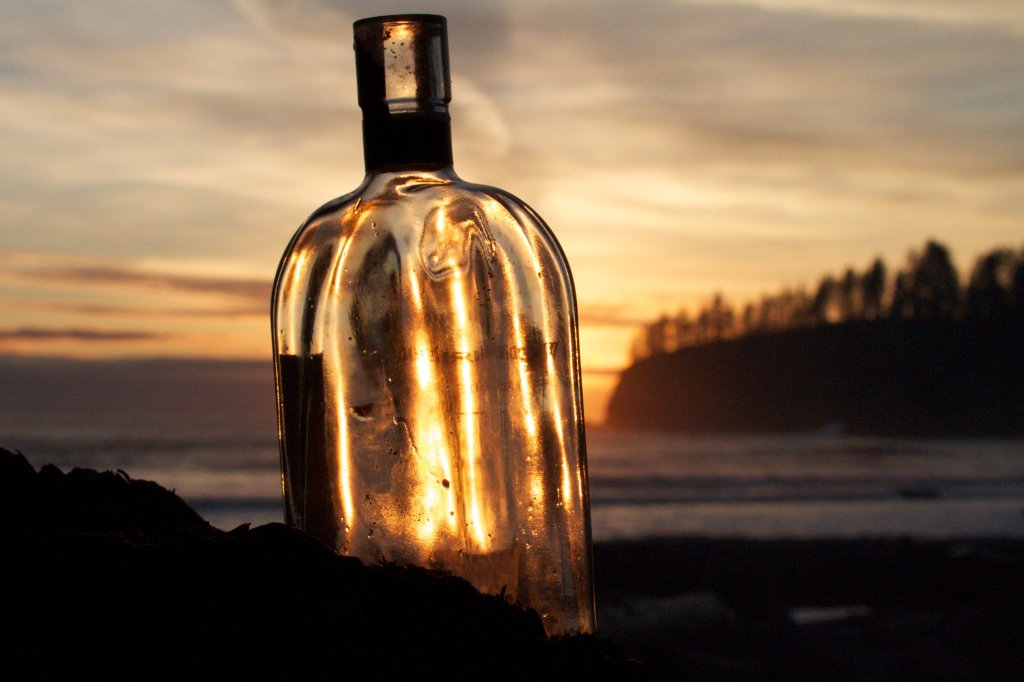
I do try to stopper time.

I try every day on this page,
not to suspend time or render it frozen,
but like flowers and fruit that wither,
I want to preserve these moments –
a few harvested words and pictures
to sample some chilly day.

I offer it up to you now,
a bit of fragrance,
to sip of its sweetness
as it glows, luminous in the bottle.

Let’s share.
Leave it unstoppered.
The passage of time
is meant to be preserved this way.

photo by Josh Scholten
One-Time
Monthly
Yearly

Make a one-time or recurring donation to support daily Barnstorming posts

Make a monthly donation

Make a yearly donation

Choose an amount

$10.00
$25.00
$50.00
$5.00
$15.00
$100.00
$5.00
$15.00
$100.00

Or enter a custom amount

$

Your contribution is deeply appreciated.

Your contribution is appreciated.

Your contribution is appreciated.

DonateDonate monthlyDonate yearly
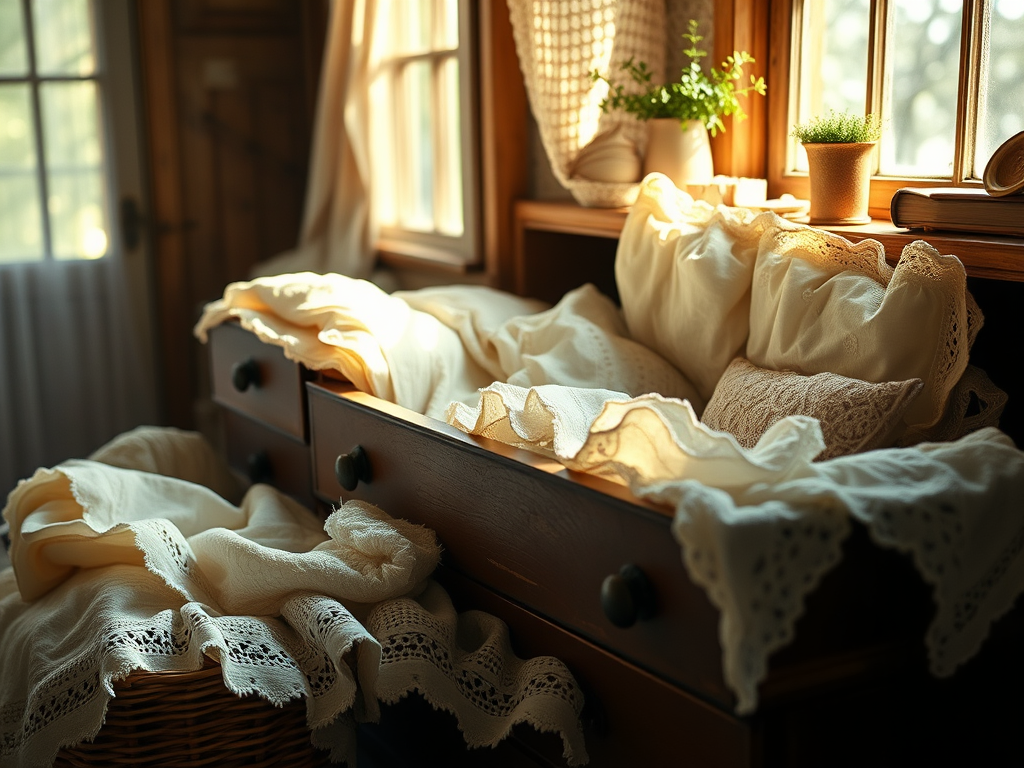
Scuttling

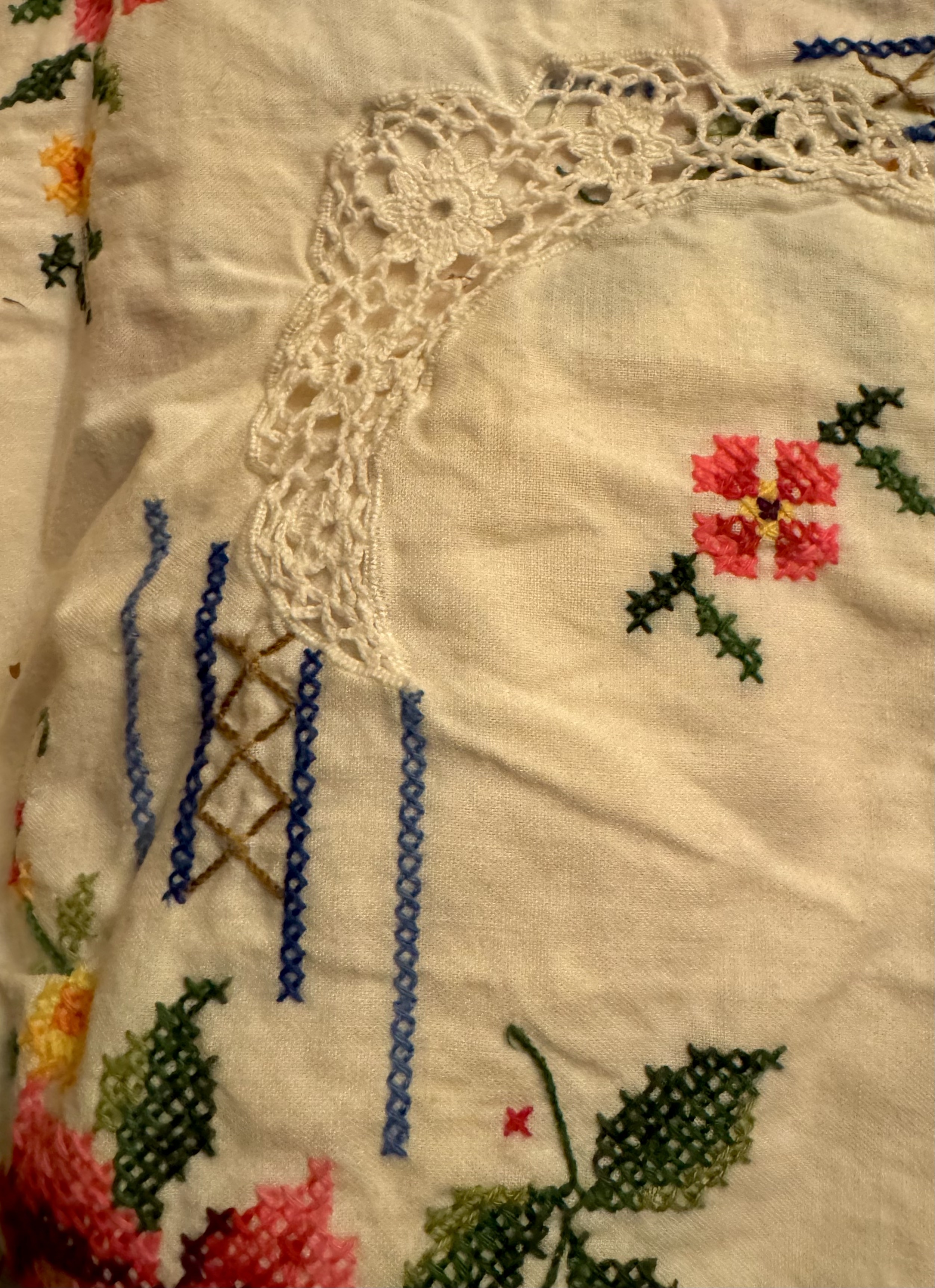
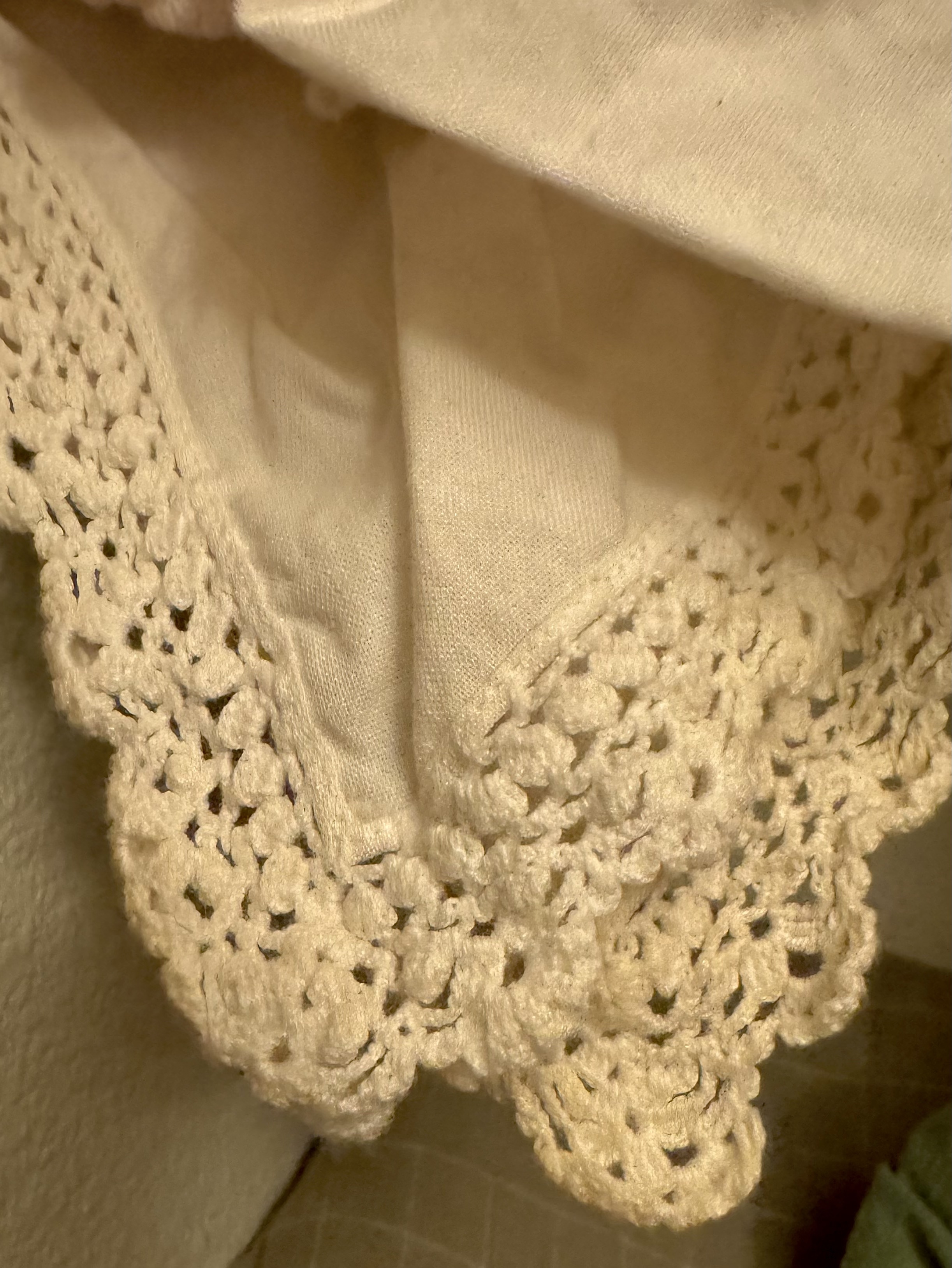
Searching for pillowcases trimmed  
with lace that my mother-in-law
once made, I open the chest of drawers   
upstairs to find that mice
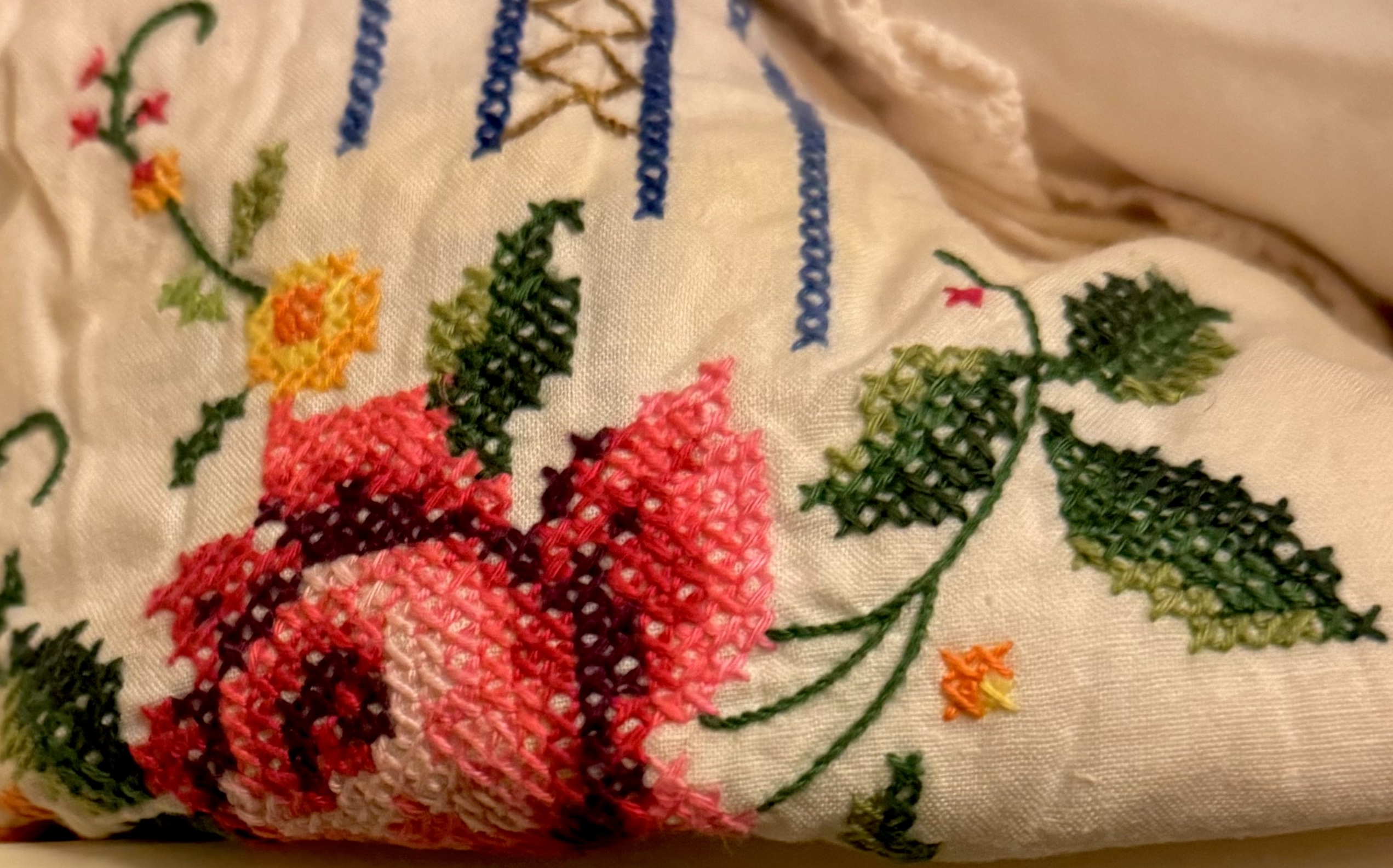
have chewed the blue and white linen   
dishtowels to make their nest,
and bedded themselves
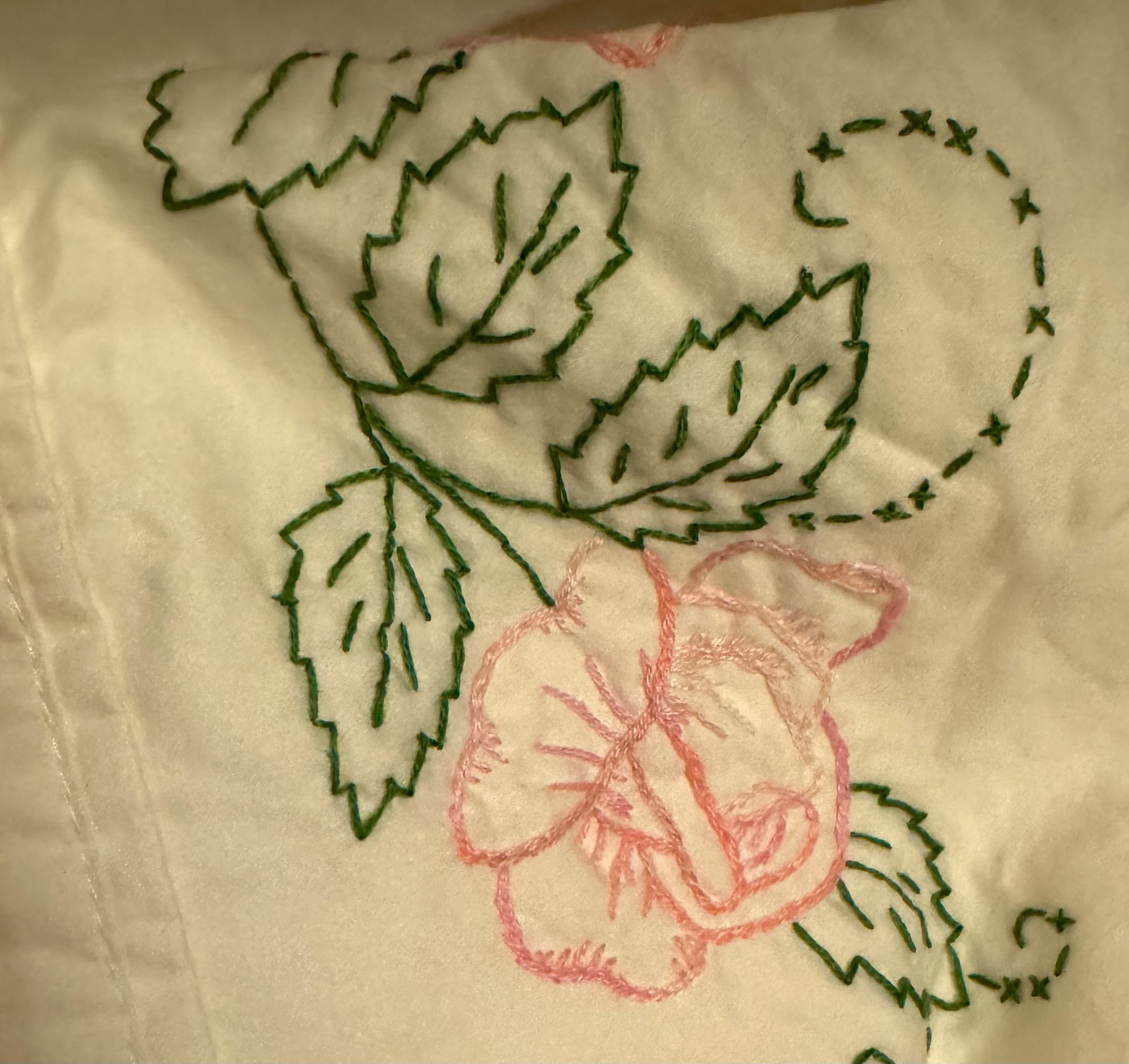
among embroidered dresser scarves   
and fingertip towels.

Tufts of fibers, droppings like black   
caraway seeds, and the stains of birth   
and afterbirth give off the strong   
unforgettable attar of mouse
that permeates an old farmhouse   
on humid summer days.

A couple of hickory nuts
roll around as I lift out
the linens, while a hail of black
sunflower shells
falls on the pillowcases,
yellow with age, but intact.

I’ll bleach them and hang them in the sun   
to dry. There’s almost no one left
who knows how to crochet lace…. 
  

The bright-eyed squatters are not here.   
They’ve scuttled out to the fields   
for summer, as they scuttled in
for winter—along the wall, from chair   
to skirted chair, making themselves   
flat and scarce while the cat
dozed with her paws in the air,
and we read the mail
or evening paper, unaware.
~Jane Kenyon, “Not Here” from Collected Poems

1

In a shoe box stuffed in an old nylon stocking
Sleeps the baby mouse I found in the meadow,
Where he trembled and shook beneath a stick
Till I caught him up by the tail and brought him in,
Cradled in my hand,
A little quaker, the whole body of him trembling,
His absurd whiskers sticking out like a cartoon-mouse,
His feet like small leaves,
Little lizard-feet,
Whitish and spread wide when he tried to struggle away,
Wriggling like a minuscule puppy.


Now he’s eaten his three kinds of cheese and drunk from his
bottle-cap watering-trough—
So much he just lies in one corner,
His tail curled under him, his belly big
As his head; his bat-like ears
Twitching, tilting toward the least sound.


Do I imagine he no longer trembles
When I come close to him?
He seems no longer to tremble.

2

But this morning the shoe-box house on the back porch is empty.
Where has he gone, my meadow mouse,
My thumb of a child that nuzzled in my palm? —
To run under the hawk’s wing,
Under the eye of the great owl watching from the elm-tree,
To live by courtesy of the shrike, the snake, the tom-cat.
I think of the nestling fallen into the deep grass,
The turtle gasping in the dusty rubble of the highway,
The paralytic stunned in the tub, and the water rising,—
All things innocent, hapless, forsaken.
~Theodore Roethke “The Meadow Mouse”

Let us walk in the woods, says the cat.
I’ll teach you to read the tabloid of scents,
to fade into shadow, wait like a trap, to hunt.
Now I lay this plump warm mouse on your mat.

~Marge Piercy from “The Cat’s Song”

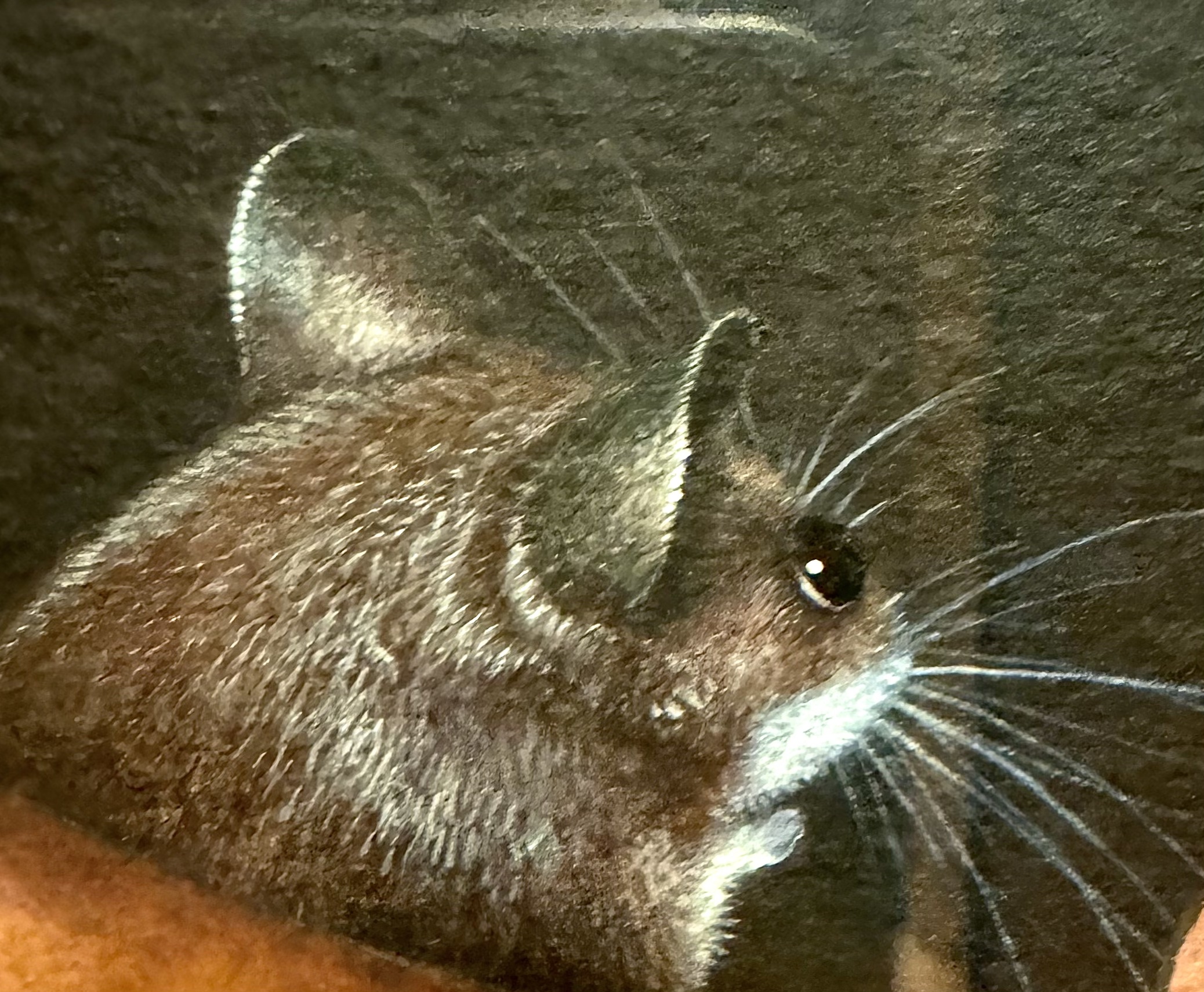
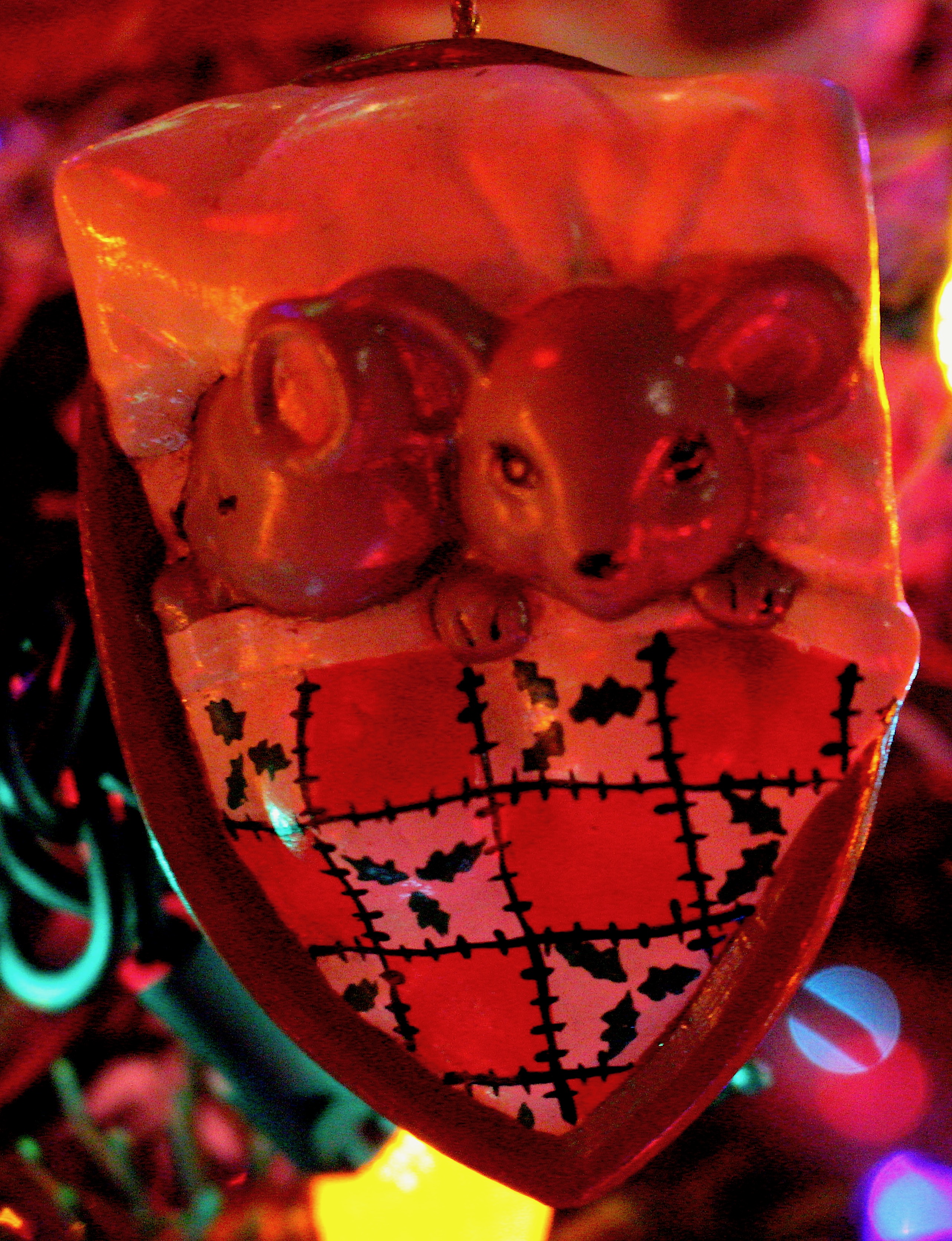
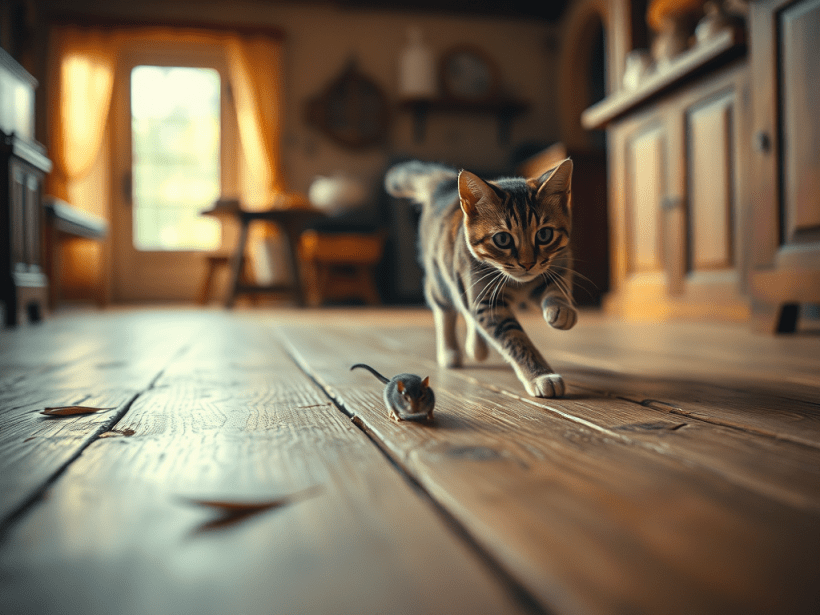
Our autumn house guests returned this week. They don’t tend to announce themselves; they prefer to creep in silently when we’re unaware, usually in the dark of the night, using whatever portal I haven’t plugged thoroughly enough with steel wool.

They leave for the summer, happier camping outside. Once the nights start feeling chilly, we might spot them out of the corner of our eye, scooting across the kitchen floor searching for any crumbs from dinner. I open the cupboard under the sink and see the evidence they surreptitiously have been back in residence for some time.

I’ve found their indoor camps in closets, and in storage boxes. They like to bring their outdoor treasures with them.

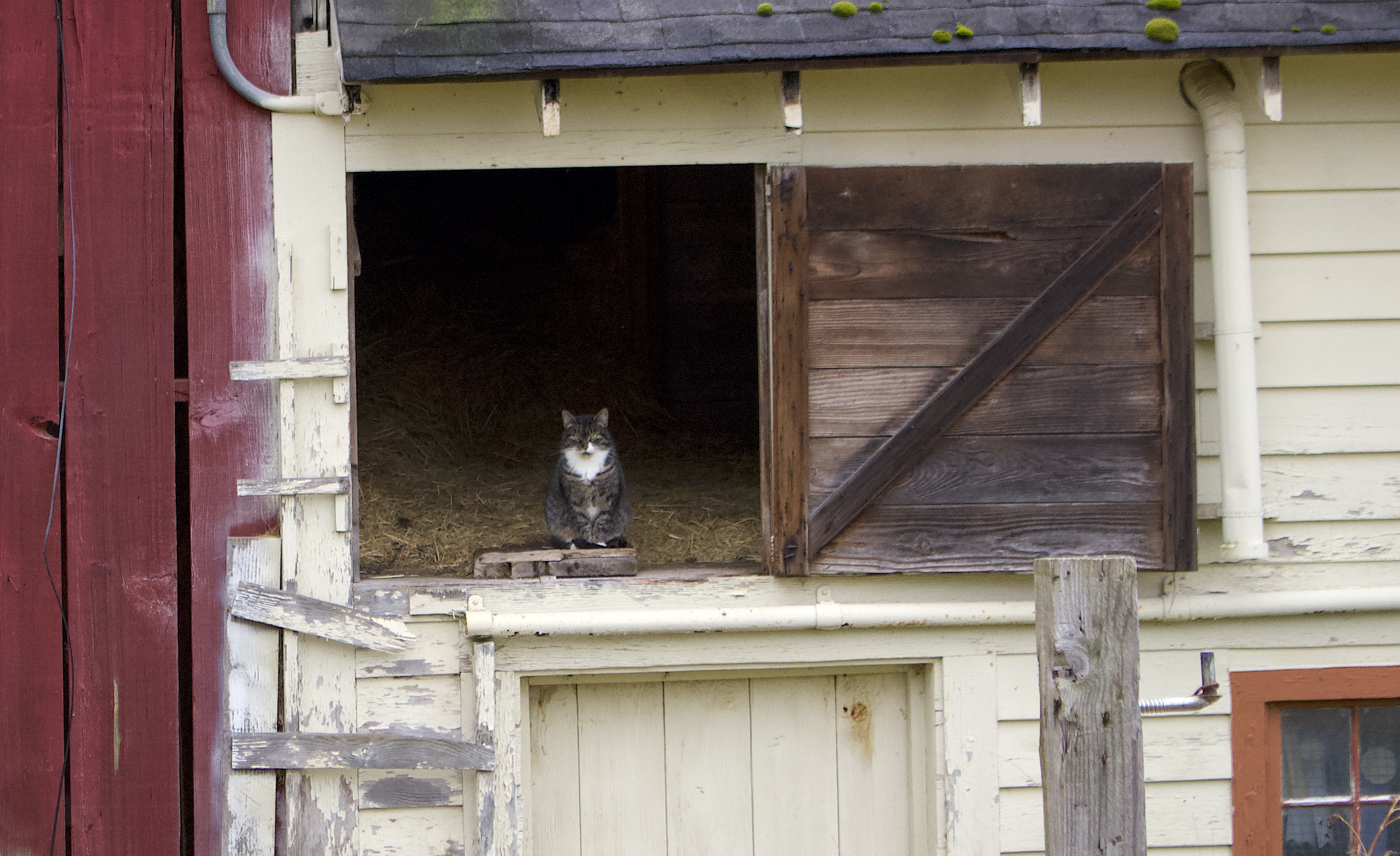
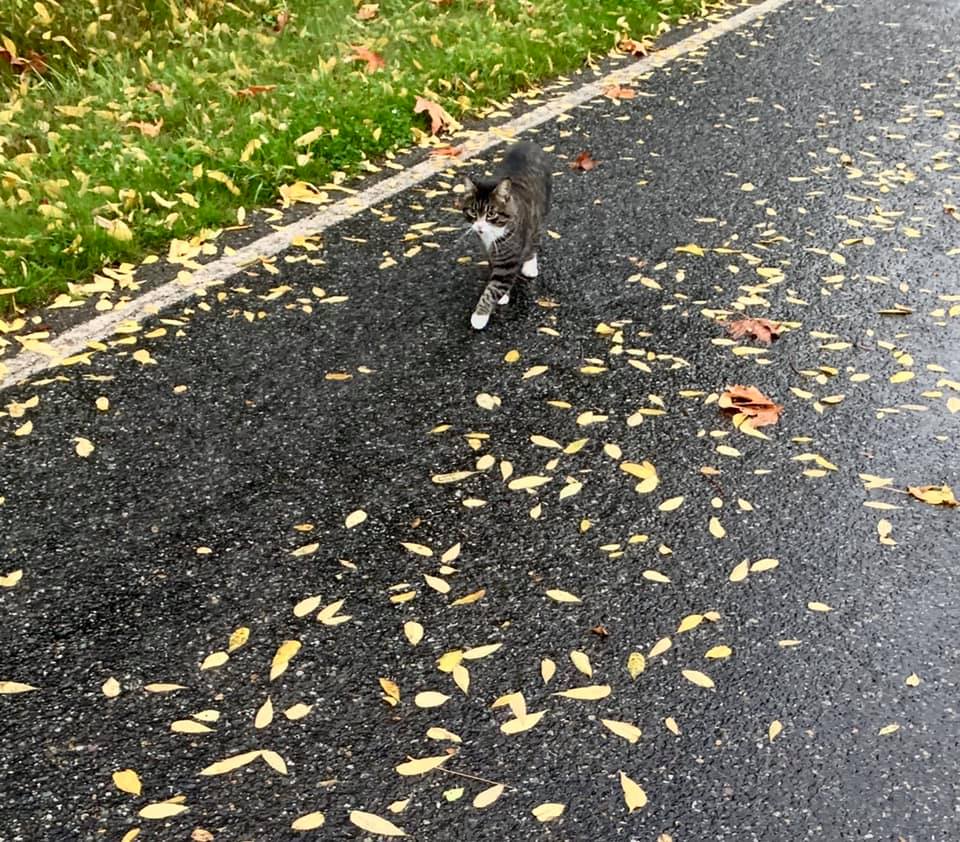
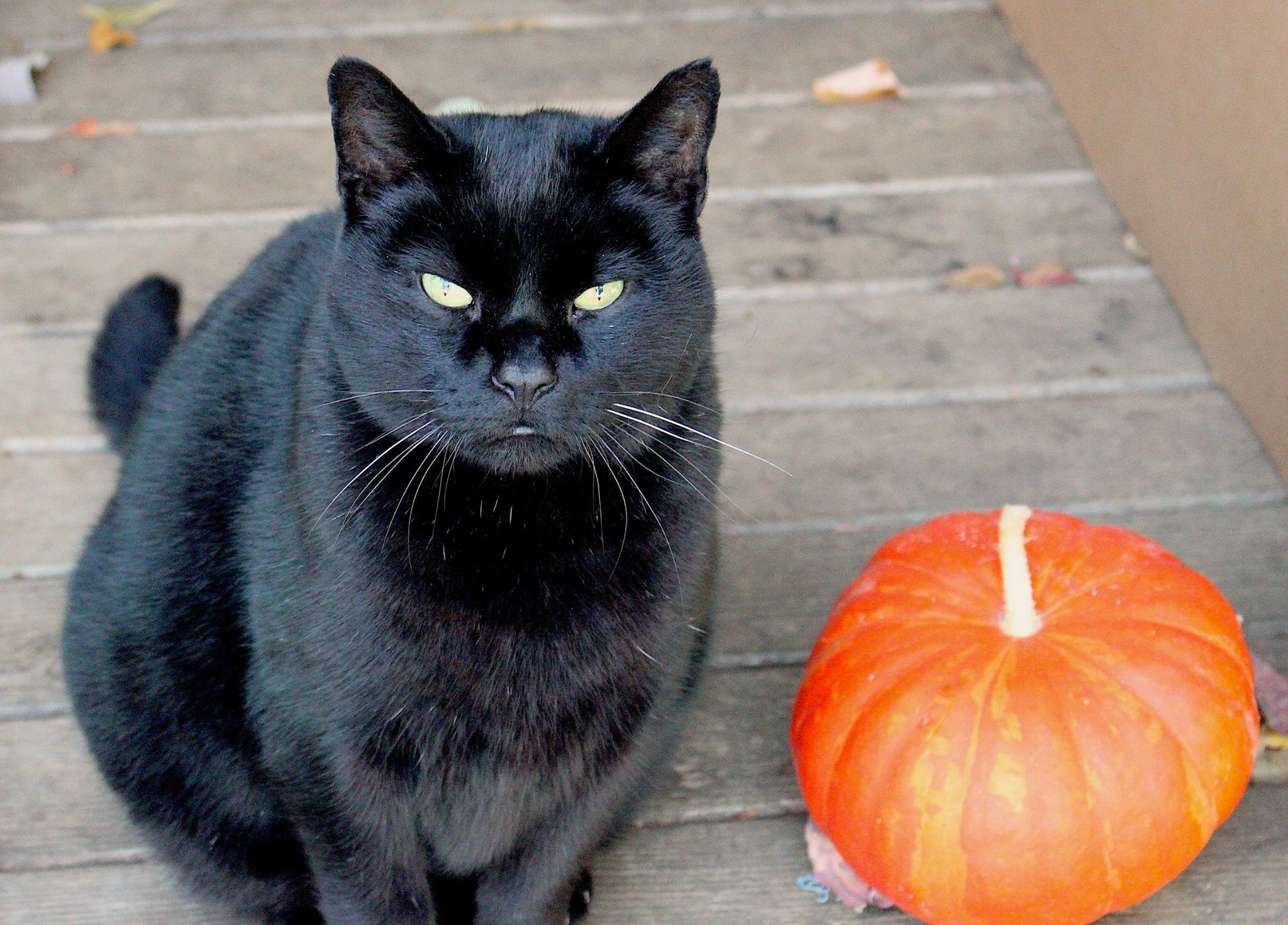
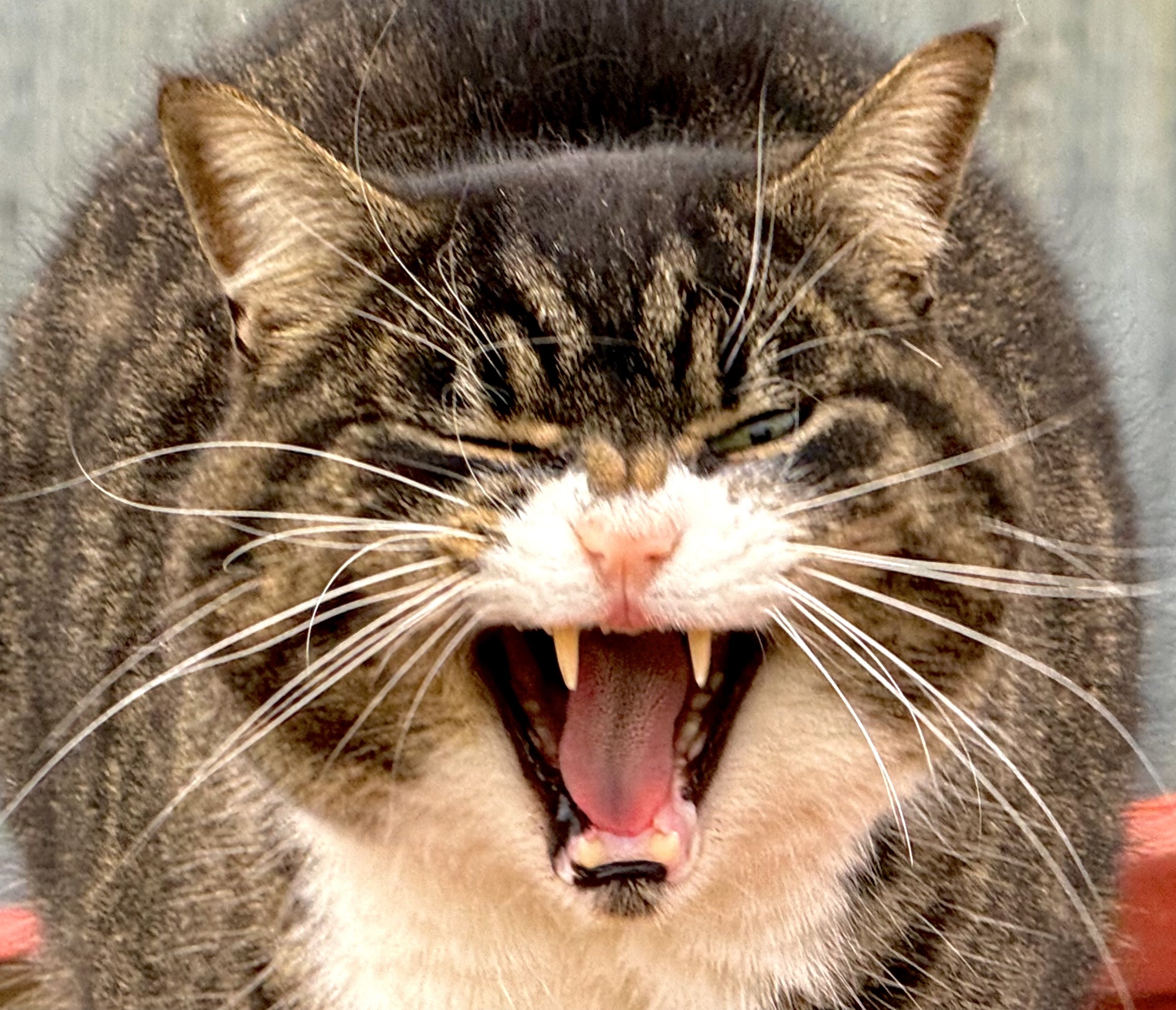
Our farm cats have been asleep at the wheel – they are supposed to be guarding all potential entry points. Yet these wee scuttlers got past them.

So I resort to primitive rodent control, traps baited with peanut butter and wait to hear the tell-tale snap of the spring. Instead, the bait is gone the next morning, with no furry body and no evidence of bloodshed. These are clever little scuttlers.

It is hard to outwit a smart mouse, and of course if one mouse is caught, there are at least thirty of its buddies yet to be caught.

Between the cats and the mice, the farm cats prove most wily. They pick their hapless victims at random, knowing they have job security as long as they allow only a few mice access to the house. Every few days, they leave scattered dissected mouse parts on the front porch to make a grisly impression, just to prove they, better than me, still know how to catch a mouse.

AI image created for this post
One-Time
Monthly
Yearly

Make a one-time or recurring donation to support daily Barnstorming posts

Make a monthly donation

Make a yearly donation

Choose an amount

$10.00
$25.00
$50.00
$5.00
$15.00
$100.00
$5.00
$15.00
$100.00

Or enter a custom amount

$

Your contribution is deeply appreciated.

Your contribution is appreciated.

Your contribution is appreciated.

DonateDonate monthlyDonate yearly
Cold Water on a Tender Tooth

Last evening,
As I drove into this small valley,
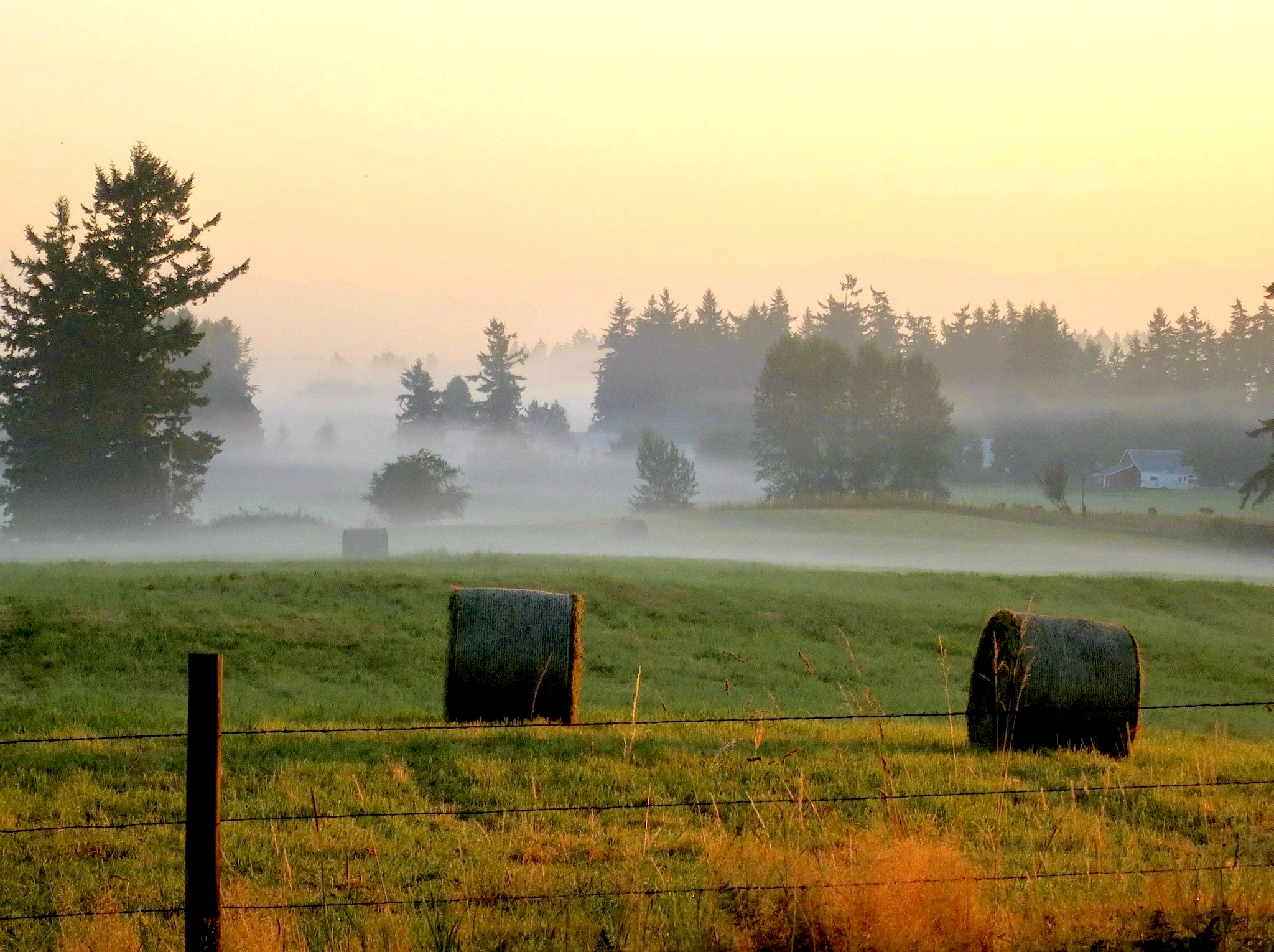
I saw a low-hanging cloud
Wandering through the trees.
It circled like a school of fish
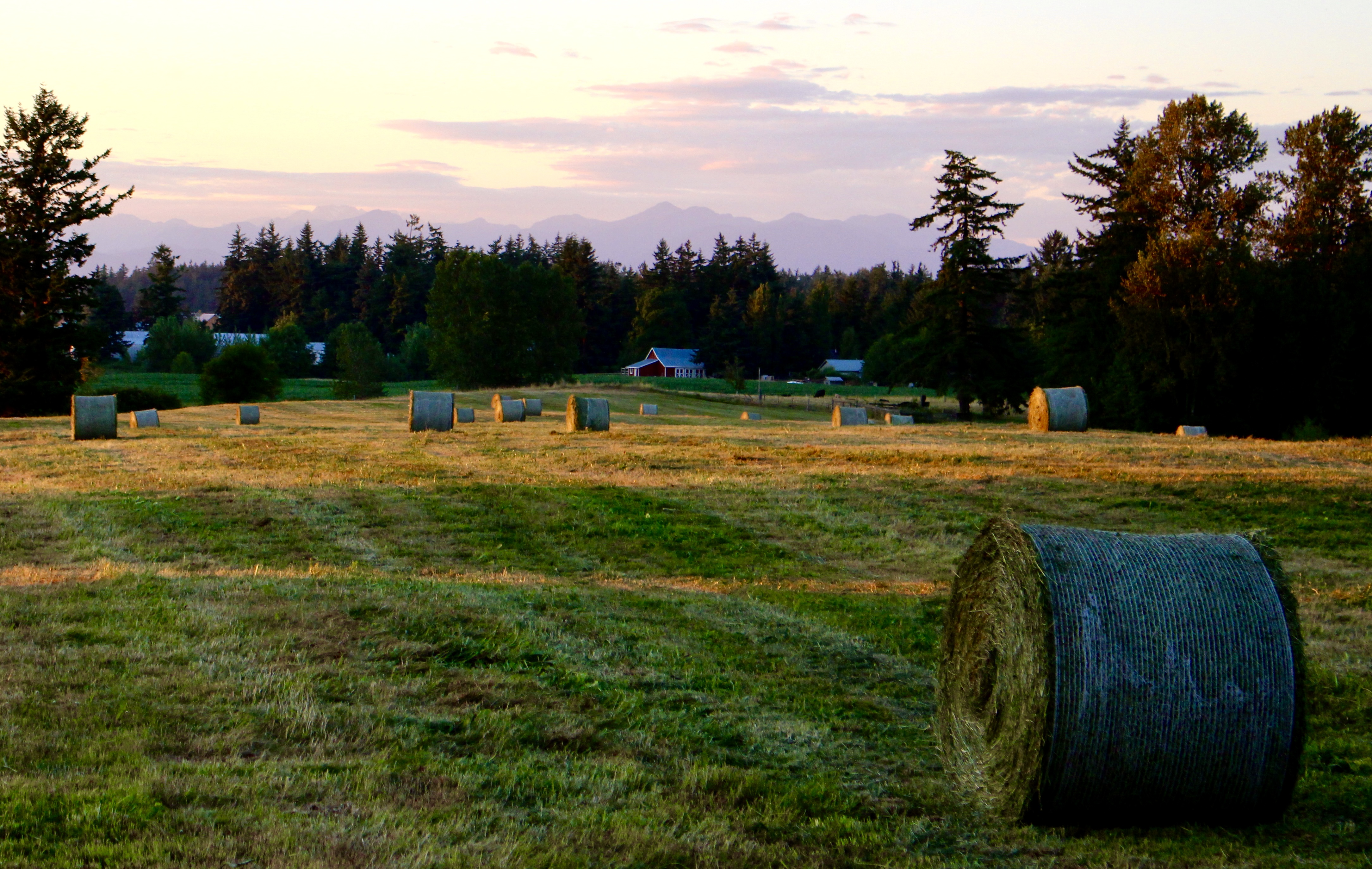
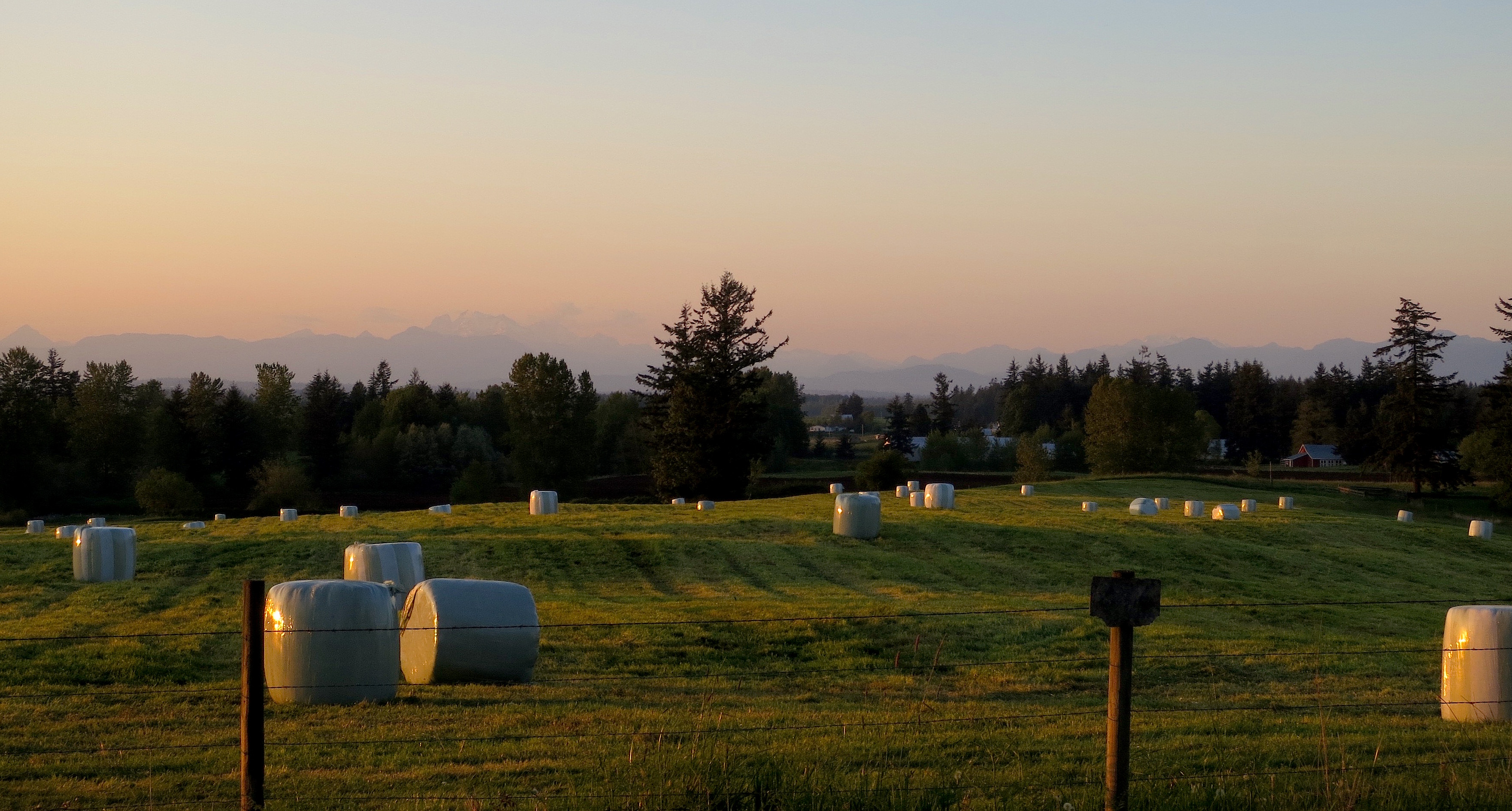
Around the dun-colored hay bales.
Reaching out its foggy hands
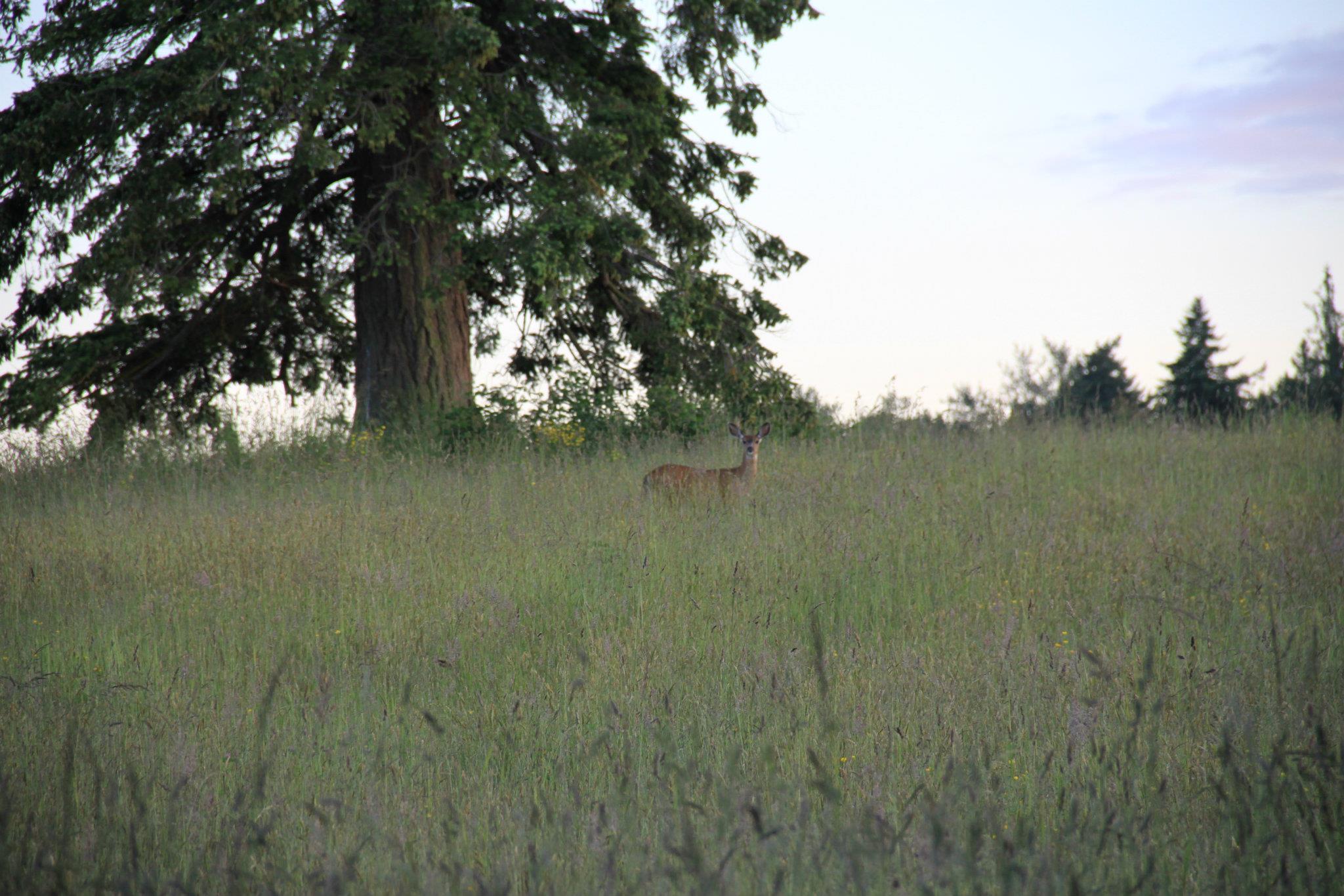
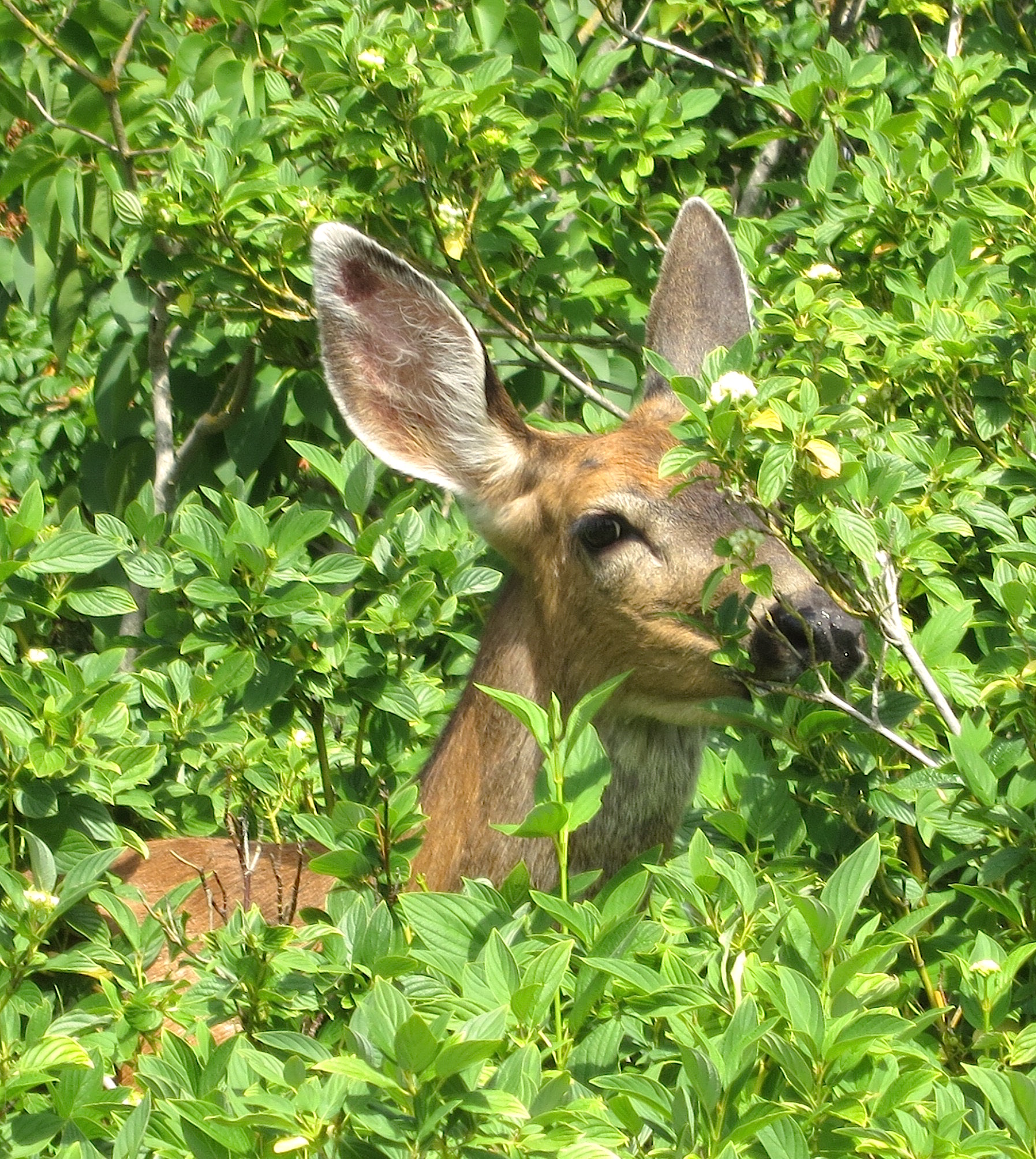
To stroke the legs of a perfect doe
Quietly grazing in a neighbor’s mule pasture.

  I stopped the car
And stepping out into the blue twilight,
A wet mist brushed my face,
And then it was gone.
It was not unfriendly,
But it was not inclined to tell its secrets.

  I am in love with the untamed things,
The cloud, the doe,
Water, air and light.
I am filled with such tenderness
For ordinary things:
The practical mule, the pasture,
A perfect spiral of gathered hay.
And although I should not be,
Consistent as it is,
I am always surprised
By the way my heart will open
So completely and unexpectedly,
With a rush and an ache,
Like a sip of cold water
On a tender tooth.
~Carrie Newcomer “In the Hayfield” from A Permeable Life: Poems & Essays

deer running in the foreground

Cool water on a tender tooth describes it exactly:

a moment of absolute wonder
brings exquisite tears to my eyes.
I’m so opened and exposed as to be painful,
feeling a clarity of being both sharp and focused.

it’s gone as quickly as it came,
but knowing it was there – unforgettable –
and knowing it is forever
only a memory,
both hurts,
and comforts…

One-Time
Monthly
Yearly

Make a one-time or recurring donation to support daily Barnstorming posts

Make a monthly donation

Make a yearly donation

Choose an amount

$10.00
$25.00
$50.00
$5.00
$15.00
$100.00
$5.00
$15.00
$100.00

Or enter a custom amount

$

Your contribution is deeply appreciated.

Your contribution is appreciated.

Your contribution is appreciated.

DonateDonate monthlyDonate yearly
Approaching the End of September

it rained in my sleep
and in the morning the fields were wet

I dreamed of artillery
of the thunder of horses

in the morning the fields were strewn
with twigs and leaves

as if after a battle
or a sudden journey

I went to sleep in the summer
I dreamed of rain

in the morning the fields were wet
and it was autumn
~Linda Pastan “September”

I can choose to fight the inevitable march of time
with sourness, sighs and sorrow,
thus arm myself with bitterness for what is no more,

or I can flow unmoved for as long as I can stay afloat,
barely aware of the passage of all taking place around me,

or I can smile at awaking each morning,
whether to sun or wind or rain and thunder,
grateful I’ve been given one more day to get it right,

or at least care enough to keep trying.

AI image created for this post
One-Time
Monthly
Yearly

Make a one-time or recurring donation to support daily Barnstorming posts

Make a monthly donation

Make a yearly donation

Choose an amount

$10.00
$25.00
$50.00
$5.00
$15.00
$100.00
$5.00
$15.00
$100.00

Or enter a custom amount

$

Your contribution is deeply appreciated.

Your contribution is appreciated.

Your contribution is appreciated.

DonateDonate monthlyDonate yearly
Zucchini Chronicles

Recite fifty zucchini recipes!                                                                                     Zucchini tempura; creamed soup;                                                                                 sauté with olive oil and cumin,                                                                                casserole of lamb; baked                                                                                             topped with cheese; marinated;                                                                                stuffed; stewed….

Sneak out before dawn to drop                                                                                              them in other people’s gardens,                                                                                            in baby buggies at churchdoors.

 Shot, smuggling zucchini into                                                                                               mailboxes, a federal offense.
~Marge Piercy from “Attack of the Squash People”

The trouble is, you cannot grow just one zucchini. Minutes after you plant a single seed, hundreds of zucchini will barge out of the ground and sprawl around the garden, menacing the other vegetables. At night, you will be able to hear the ground quake as more and more zucchinis erupt.
~Dave Barry

One day we came home from some errands to find a grocery sack of [zucchini] hanging on our mailbox. The perpetrator, of course, was nowhere in sight … Garrison Keillor says July is the only time of year when country people lock our cars in the church parking lot, so people won’t put squash on the front seat. I used to think that was a joke.
~Barbara Kingsolver

It started innocently enough in April
with two-leaf seedlings labeled green and golden;
non-descript squash plants harboring
vast potential.

By June the plants crept across the ground with vines
reaching past the beans to threaten the cucumbers:
going where no vine has gone before,
to divide and conquer, leaving no dust untouched.

July buds formed blossoms inviting bees deep
into yellow-throated pollen pools
thickening within days to elongated flesh:
fecundity in action before our eyes.

The finger-like projections at first harvested
too small, but temptation overwhelms patience;
sauted, grilled with garlic, superb in
supreme simplicity.

But come back a day later: hose-like vines
pumping into each squash, progressive inflation like
balloon-man creations to be twisted and transformed,
but too plump, too distended, too insatiable.

It’s a race to keep up with the pace of production
eat some, give them away, leave on doorsteps like abandoned kittens,
in boxes in church lobbies, lunch rooms at work,
food banks posting signs: “No more zucchini please!”

They march in formation in the garden path
as they are yanked swelling from their umbilical cords
and lined up, stacked, multiplying
like the broom fragments of the “Sorcerer’s Apprentice”.

Once tossed on to the compost pile,
they rest in intimate embrace through heated decomposition
in dead of winter, amid steam rising,
a seedling, innocent enough, pokes through exploding with potential~

Run for your lives!

AI image created for this post
One-Time
Monthly
Yearly

Make a one-time or recurring donation to support daily Barnstorming posts

Make a monthly donation

Make a yearly donation

Choose an amount

$10.00
$25.00
$50.00
$5.00
$15.00
$100.00
$5.00
$15.00
$100.00

Or enter a custom amount

$

Your contribution is deeply appreciated.

Your contribution is appreciated.

Your contribution is appreciated.

DonateDonate monthlyDonate yearly
Transfiguring the Trivial

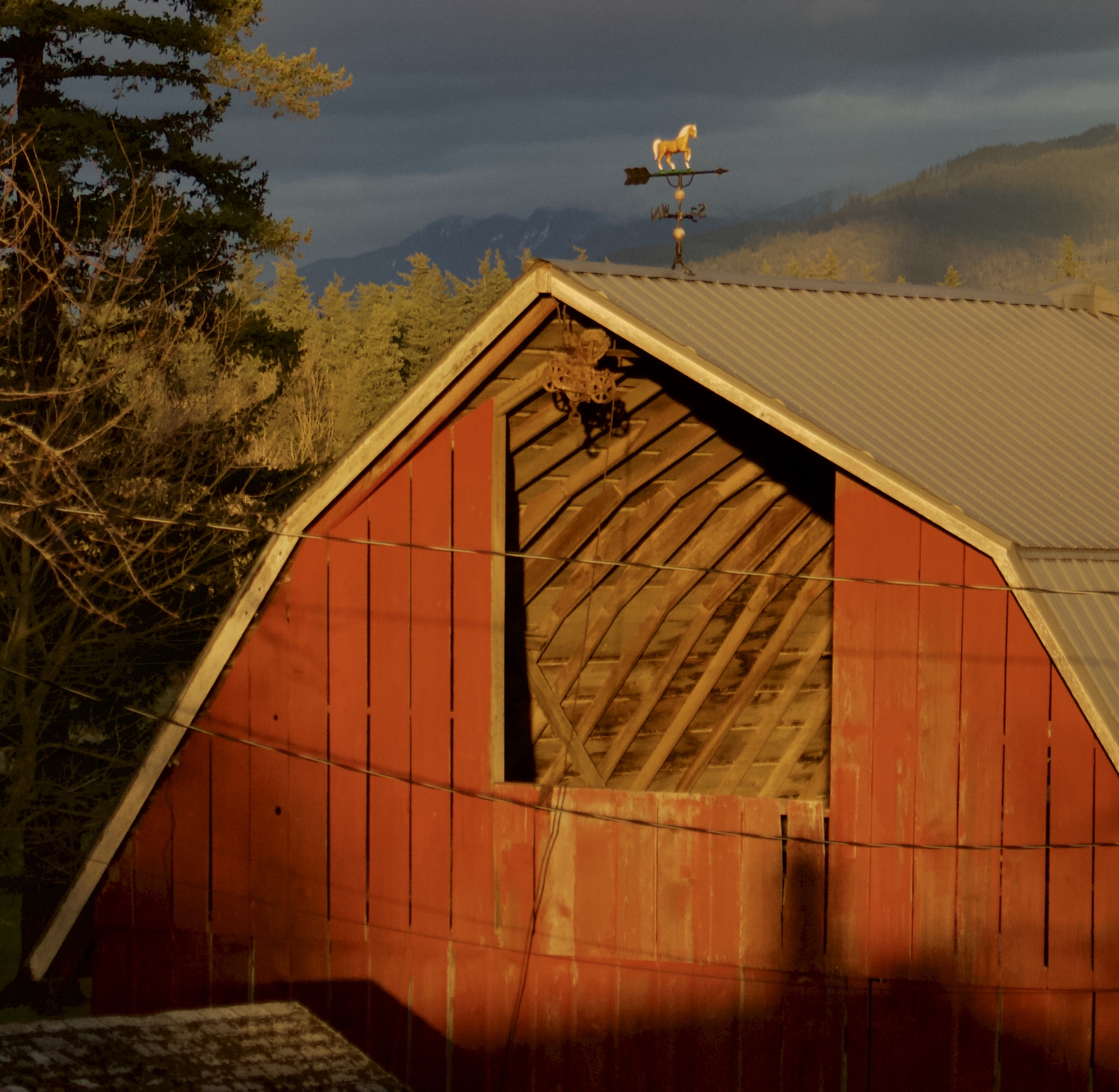
A sudden light transfigures a trivial thing,
a weather-vane, a wind-mill, a winnowing flail,
the dust in the barn door; a moment,- –
and the thing has vanished, because it was pure effect;
but it leaves a relish behind it,
a longing that the accident may happen again.
~Walter Pater from “The Renaissance”

Man Scything Hay by Todd Reifers
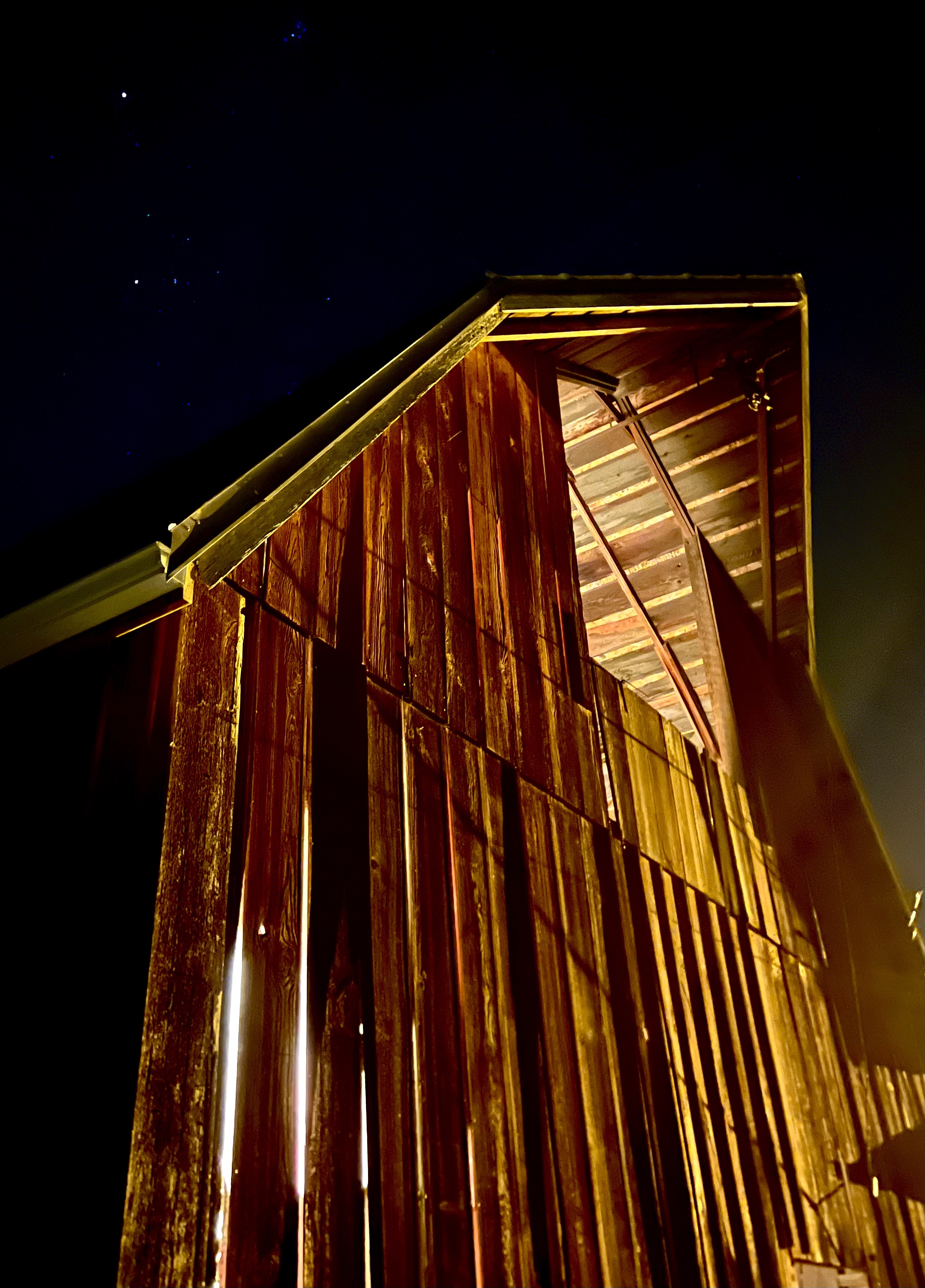
dust motes and insects in the barn

Summer ends now; now, barbarous in beauty, the stooks rise
Around; up above, what wind-walks! what lovely behaviour
Of silk-sack clouds! has wilder, wilful-wavier
Meal-drift moulded ever and melted across skies?

I walk, I lift up, I lift up heart, eyes,
Down all that glory in the heavens to glean our Saviour;
And eyes, heart, what looks, what lips yet give you a
Rapturous love’s greeting of realer, of rounder replies?

And the azurous hung hills are his world-wielding shoulder
Majestic – as a stallion stalwart, very-violet-sweet! –
These things, these things were here and but the beholder
Wanting; which two when they once meet,
The heart rears wings bold and bolder
And hurls for him, O half hurls earth for him off under his feet.

~Gerard Manley Hopkins “Hurrahing in Harvest”

The accident of light does happen,
again and again,
but when I least expect it. 

I need to be ready for it; in a blink, it can be gone. 

Yet in that moment,
everything is changed and transformed forever. 

The thing itself,
trivial and transient becomes something other, 
merely because of how it is illuminated. 

And so am I, trivial and transient,
lit from outside myself, winnowed and
transfigured by a love and sacrifice
that I can never deserve.

It was and is no accident.

My heart is readies for earth to be hurled to heaven’s Light.

AI image created for this post
One-Time
Monthly
Yearly

Make a one-time or recurring donation to support daily Barnstorming posts

Make a monthly donation

Make a yearly donation

Choose an amount

$10.00
$25.00
$50.00
$5.00
$15.00
$100.00
$5.00
$15.00
$100.00

Or enter a custom amount

$

Your contribution is deeply appreciated.

Your contribution is appreciated.

Your contribution is appreciated.

DonateDonate monthlyDonate yearly
It’ll Be Someone Else

Here’s the orchard someone else will tend to.
And the crawl space beneath the porch

of the house where someone else’s barn cat
will slumber through the summer nights
dreaming of long-tailed mice in the high grass.
Over that field, the light dips and refracts
through the broken glass of the muck pond
where a catfish will take someone else’s bait
and hook—that it might meet the refined
heat of a skillet. The ghosts of a thousand
head of cattle walk through the woods at night
in someone else’s dream while the windows,
cracked slightly, let a mild breeze pass
through the empty rooms like an appraiser.
There is no death that cannot be undone
by simply turning the compost with a pitchfork
or by scattering scratch in the dirt for chickens
who sing each time they lay, but every repair
is only a gesture against the torment of slow
winds and steady rain and heavy sun. It will be
someone else who grows too old to climb
the ladder into the barn’s cool loft or the flight
of stairs that lead to and from their own bed.
It will be their hand weighing the mortgage.
It will be their face forgetting its smile. Listen,
if the well pump kicks to life at dawn, it will be
someone else drawing a bath for the last time—
joints relaxing as their form submerges, body
recovering and failing in the same held breath.
~Travis Mossotti “Missing the Farm”
from Apocryphal Genesis

Well-away and be it so,
To the stranger let them go.
Even cheerfully I yield
Pasture, orchard, mowing-field,
Yea and wish him all the gain
I required of them in vain.
Yea and I can yield him house,
Barn, and shed, with rat and mouse
To dispute possession of.
These I can unlearn to love.
Since I cannot help it? Good!
Only be it understood,

It shall be no trespassing
If I come again some spring
In the grey disguise of years,
Seeking ache of memory here.
~Robert Frost from “On the Sale of My Farm”

Someday – we fervently hope not anytime soon – someone else will be living here and managing this farm, not us.

This land, originally all forested, provided game and native berries for the inland coastal tribes who lived here. When white settlers arrived and homesteading began, it was clearcut and the land became grazing pastures for livestock. Orchard trees were planted and crops produced and sold in nearby towns. Hundreds of similar small dairy farms in this county managed to feed their families and neighbors for nearly a century.

We purchased this land from the Lawrence family after they had farmed here over 80 years and they were so sad to leave. We are now in our 34th year here. We want to stay for another decade but we’re aging and our physical limitations are becoming increasingly apparent.

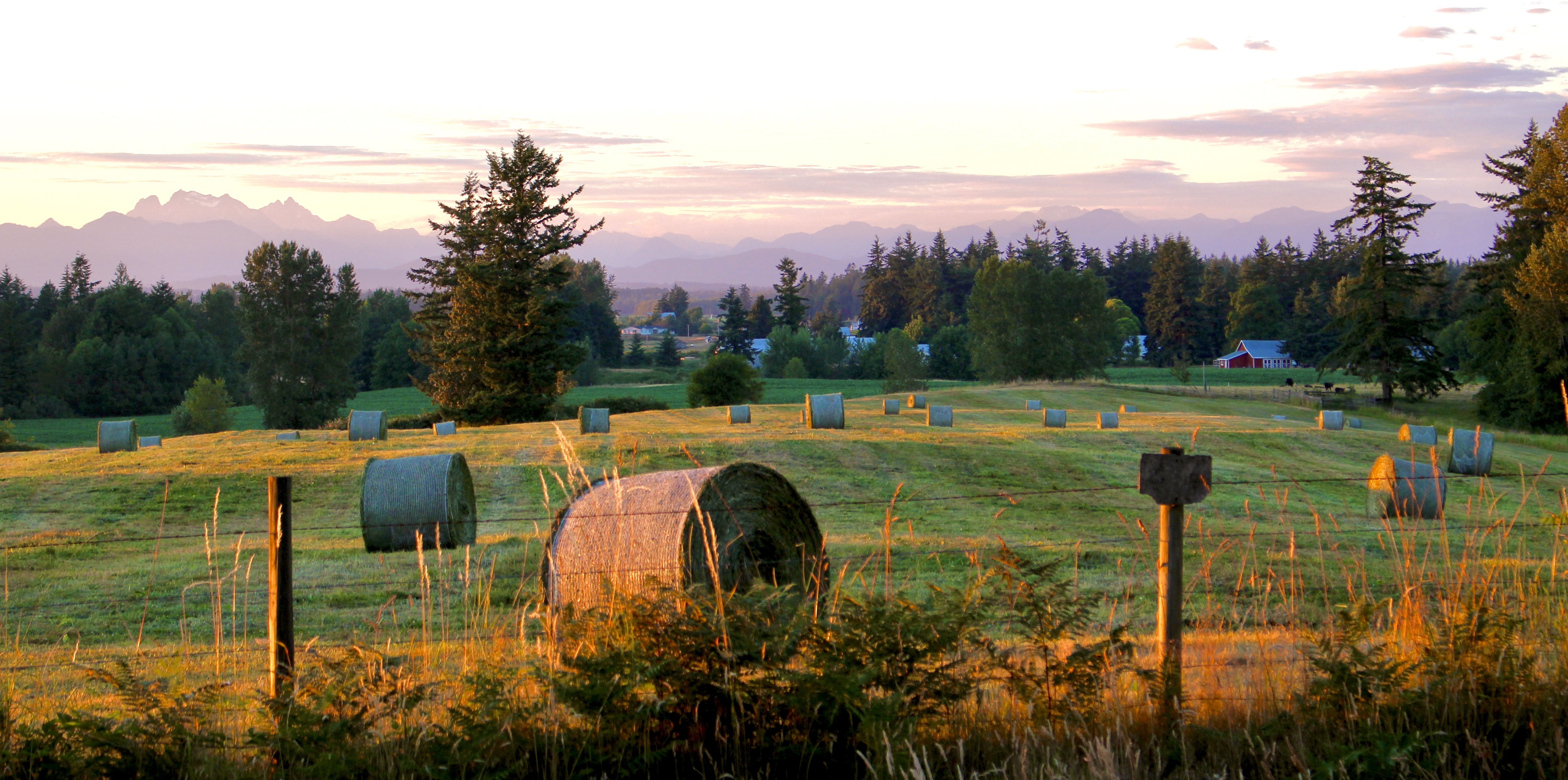
On a recent hot summer evening, my husband piled a wagon high with hay bales for the winter, with the help of the sons of the teenagers who helped us buck bales a generation ago. It won’t be too many years before someone else, not us, will be putting hay in the barn.

This land is where we feel we belong, just as those others who lived here were attached to this ground – but for how long? Will our non-farming offspring feel the pull to return home back to the farm?

We don’t know what the future may hold. What we do know: there is no such beauty as this land where we have worked and loved.

Yes, we feel we belong here.

For now. Until then.

AI image created for this post

Tell me, where is the road
I can call my own
That I left, that I lost
So long ago?
All these years I have wandered
Oh, when will I know
There’s a way, there’s a road
That will lead me home

After wind, after rain
When the dark is done
As I wake from a dream
In the gold of day
Through the air there’s a calling
From far away
There’s a voice I can hear
That will lead me home

Rise up, follow me
Come away, is the call
With the love in your heart
As the only song
There is no such beauty
As where you belong
Rise up, follow me
I will lead you home
~Michael Dennis Browne

One-Time
Monthly
Yearly

Make a one-time or recurring donation to support daily Barnstorming posts

Make a monthly donation

Make a yearly donation

Choose an amount

$10.00
$25.00
$40.00
$5.00
$15.00
$100.00
$5.00
$15.00
$100.00

Or enter a custom amount

$

Your contribution is deeply appreciated.

Your contribution is appreciated.

Your contribution is appreciated.

DonateDonate monthlyDonate yearly
Faired Well

The Northwest Washington Fair in Lynden is under way again this week and instead of being part of the fun and hub-bub, our Haflinger horses are staying home, out on pasture. It’s been over a decade since they were cleaned up, curried, braided and trailered into town for a week to
help make dreams come true for thousands of fairgoers.

I feel a bit wistful as I wake up early on this foggy mid-August morning, remembering the twenty years of 5:30 AM dawns where I would gather up our sleepy children and their friends and head into the fairgrounds to clean the Haflingers’ stalls, walk the horses for exercise and prepare for a busy day of people strolling by and admiring them. 

We stopped “doing” the fair as a Haflinger farm. Now that I’m 70 years old, rather than 40, 50, or 60, I’m okay about that. It was great while it lasted but this aging human and my equines relish our retirement, especially since the fair expanded to a 10 day rather than just a 6 day commitment. I so admire the draft horse families that have kept their six horse hitches active with their Belgians, Percherons and Clydesdales – some families are now in their fourth generation at the fair with teamsters, still driving the hitches, well into their eighties.

Our BriarCroft Haflingers display was a consistent presence at this regional fair for two decades, promoting the Haflinger breed in well-decorated stalls. Part of our commitment was to provide a 24-hr-a-day human presence with the horses. We had petitioned the Fair Board for 5 years in the late 1980s to allow us a spot at the fair, and they finally said “okay, here’s the space, build it yourself”, so we did.

We didn’t ask for classes, competition, or ribbons. We were there because fairgoers enjoyed seeing and touching our Haflingers and we enjoyed talking to all the people.

Once our children and their friends had careers and children of their own, they were no longer available to help “man” the horse stalls. I still miss spending such concentrated time with all the young nieces, nephews, neighbors, church and school friends who hung out with us over the years. I hope they still have fond memories of their time helping us at the fair.

Every year from 1992 onward, we evaluated whether we had the energy and resources to do it  again. Initially, Dan and I juggled our small children as well as horses at the fair and at home, taking a week of vacation from our jobs. Then, with the help of two other Haflinger breeding farms, and several young women who did a crowd-pleasing Haflinger “trick” riding demo in front of the grandstand, we rotated duties. The older kids watched the younger kids, the in-between kids did most of the horse stall cleaning duty, and the adults could sit and shoot the breeze.

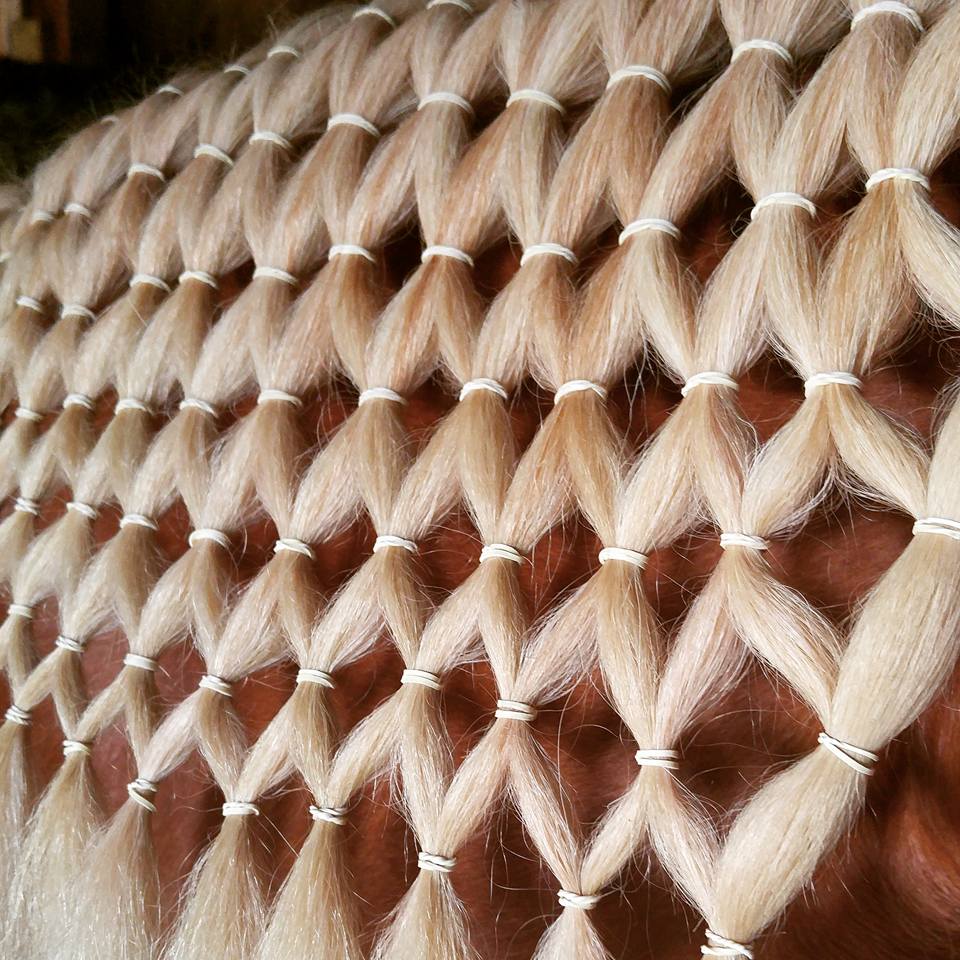
This created good will for the fair visitors who depended on us every year to be there with horses that they and their children could actually pet (and sit on) without worry, who enjoyed our braiding demonstrations, and our Haflinger trivia contests and prizes.

We continued to do this for so long because our horses were friendly and happy to give fair-goers a chance to safely get up close. These Haflingers became what dreams are made of.

Countless times a day a bright eyed child approached our stalls, climbed up on the step stools and reached up to pet a Haflinger nose or neck and look deep into those big brown eyes. They will not forget the moment when a horse they had never met before loved them back. Haflingers are magic with children and we saw that over and over again.

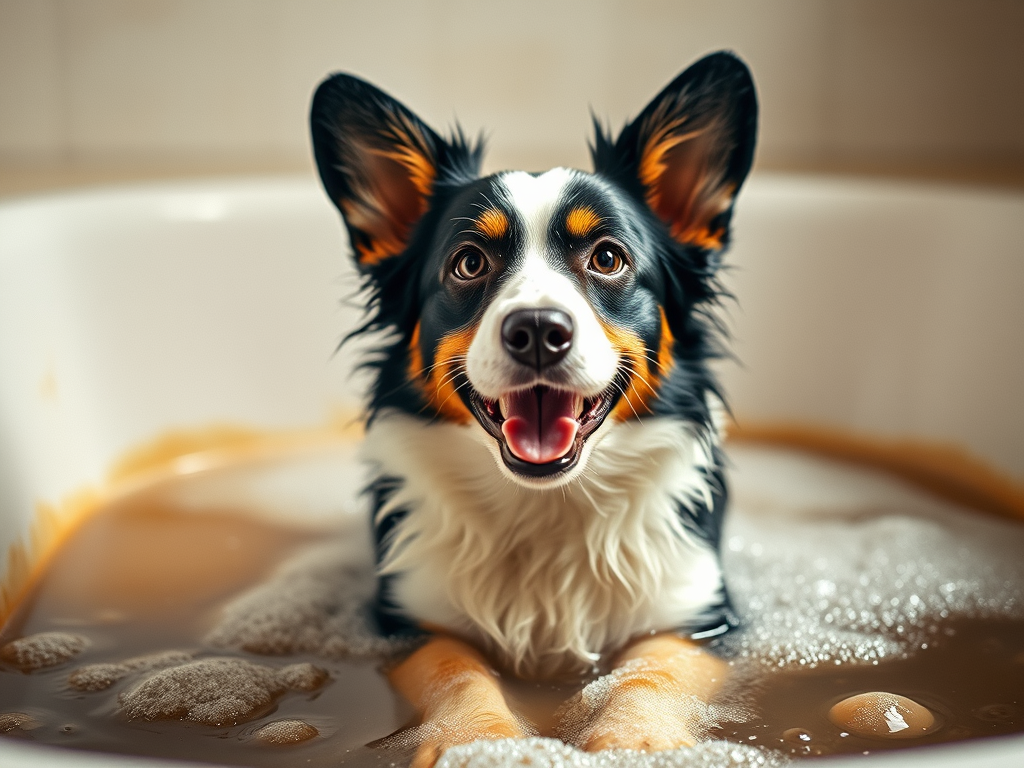
So on this foggy August morning years later, instead of heading to the fairgrounds to clean stalls and braid manes, I’m turning out our retired, dusty, unbathed Haflingers into the field as usual. They barely recall all the excitement they are missing.

Even if our horses don’t remember much about those fair weeks so long ago, I know some fair-goers still miss the friendly golden horses with the big brown eyes who tried, even if for a day, to make their dreams come true.

29 years ago, Milky Way and I were featured in our fair display on the front page of the local Bellingham Herald
AI image created for this post
One-Time
Monthly
Yearly

Make a one-time or recurring donation to support daily Barnstorming posts

Make a monthly donation

Make a yearly donation

Choose an amount

$10.00
$25.00
$50.00
$5.00
$15.00
$100.00
$5.00
$15.00
$100.00

Or enter a custom amount

$

Your contribution is deeply appreciated.

Your contribution is appreciated.

Your contribution is appreciated.

DonateDonate monthlyDonate yearly
Standing in Stillness

Broad August burns in milky skies,
The world is blanched with hazy heat;
The vast green pasture, even, lies
Too hot and bright for eyes and feet.

Amid the grassy levels rears
The sycamore against the sun
The dark boughs of a hundred years,
The emerald foliage of one.

Lulled in a dream of shade and sheen,
Within the clement twilight thrown
By that great cloud of floating green,
A horse is standing, still as stone.

He stirs nor head nor hoof, although
The grass is fresh beneath the branch;
His tail alone swings to and fro
In graceful curves from haunch to haunch.

He stands quite lost, indifferent
To rack or pasture, trace or rein;
He feels the vaguely sweet content
Of perfect sloth in limb and brain.
~William Canton “Standing Still”

Sweet contentment is a horse dozing in the summer field, completely sated by grass and clover, tail switching and skin rippling automatically to discourage flies.

I too wish at times for that stillness of mind and body, allowing myself to simply “be” without concern about yesterday’s travails, or what duties await me tomorrow.

I flunked sloth long ago.  Perhaps I was born driven.  My older sister, never a morning person, was thoroughly annoyed to share a bedroom with a toddler who awoke chirpy and cheerful, singing “Twinkle Twinkle” for all to hear and ready to conquer the day.

Since retiring, I admit I am becoming accustomed now to sloth-dom, though I am still too chipper in the early morning. It is a distinct character flaw.

Even so, I’m not immune to the attractions of a hot hazy day of doing absolutely nothing but standing still switching at flies. I envy our retired ponies in the pasture who spend the day grazing, moseying, and lazing. I worked hard many years to make that life possible for them.

I want to use my days well.
I want to be worthy.
I want to know there is a reason to be here beyond just warning the flies away.

It is absolutely enough to enjoy the glory of it all.

One-Time
Monthly
Yearly

Make a one-time or recurring donation to support daily Barnstorming posts

Make a monthly donation

Make a yearly donation
Choose an amount

$10.00
$25.00
$50.00
$5.00
$15.00
$100.00
$5.00
$15.00
$100.00

Or enter a custom amount

$

Your contribution is deeply appreciated.

Your contribution is appreciated.

Your contribution is appreciated.

DonateDonate monthlyDonate yearly