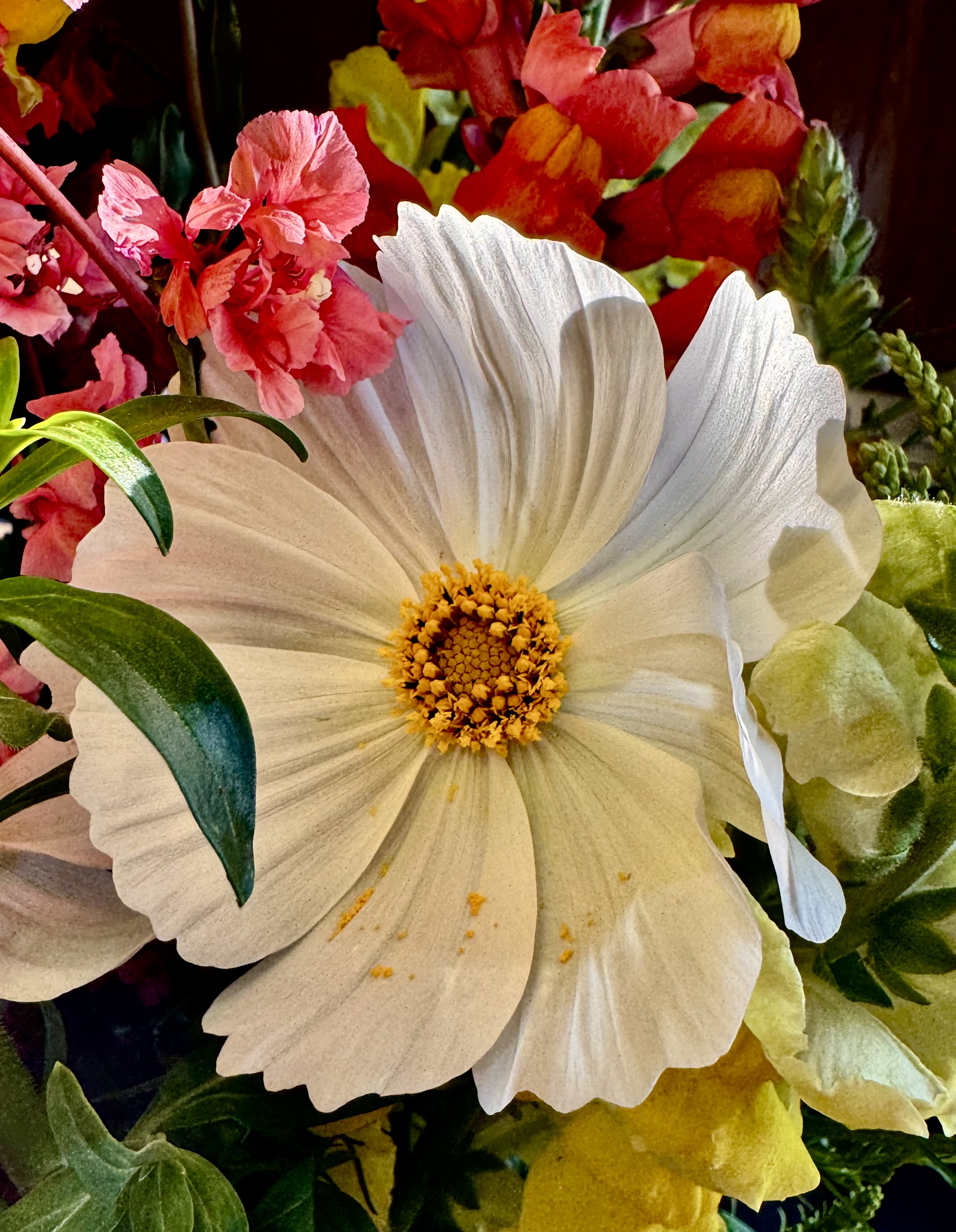
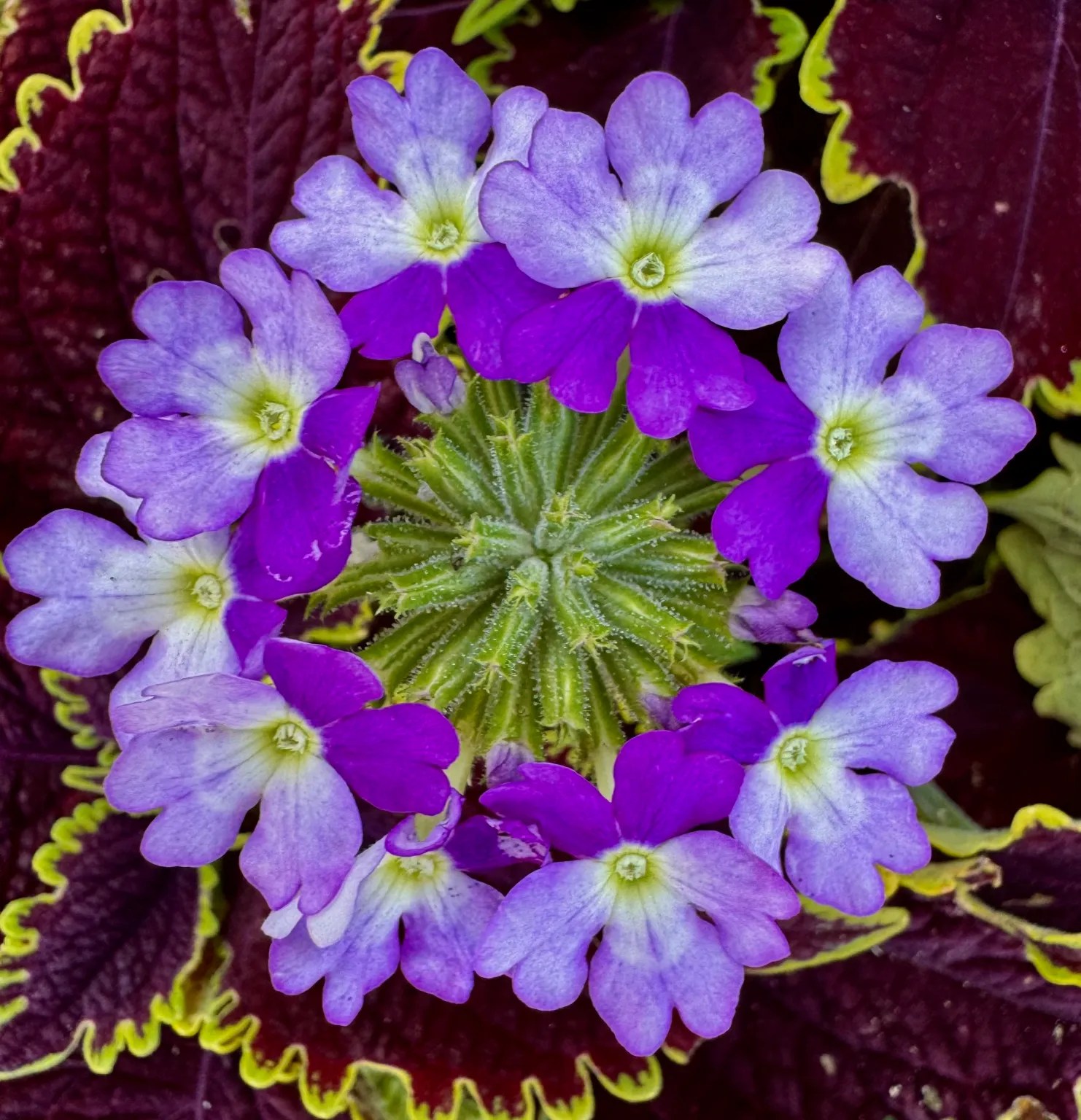
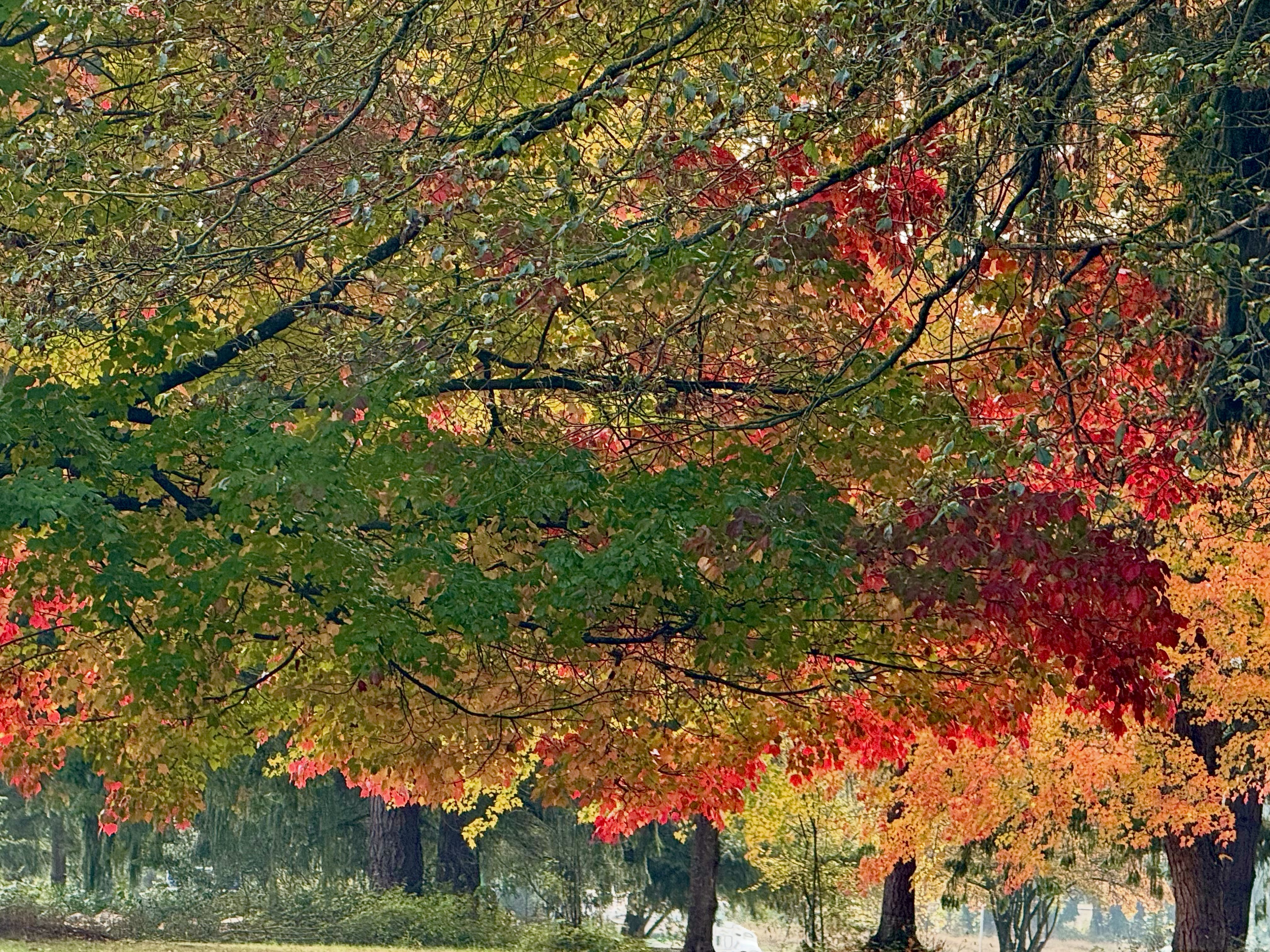
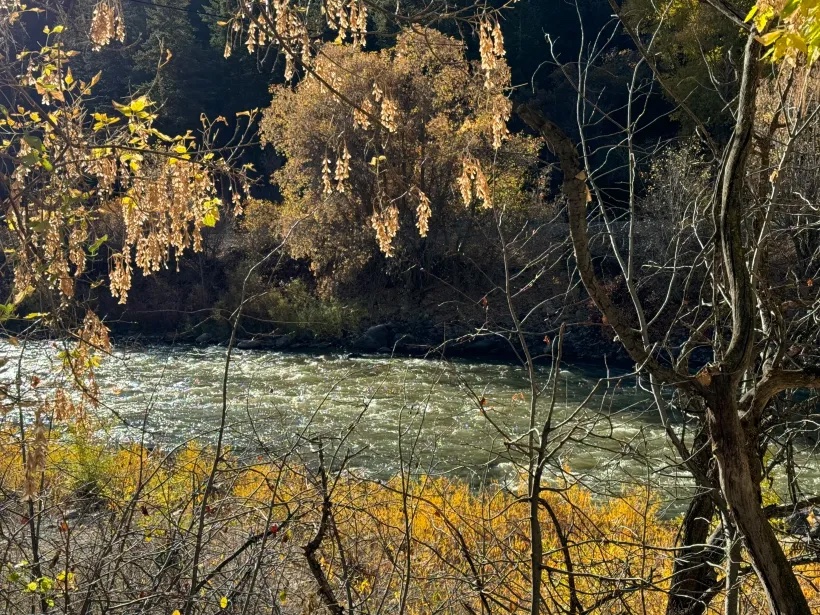
Then summer fades and passes and October comes. We’ll smell smoke then, and feel an unexpected sharpness, a thrill of nervousness, swift elation, a sense of sadness and departure. ~ Thomas Wolfe
Such days of autumnal decline hold a strange mystery which adds to the gravity of all our moods. ~Charles Nodier
I was drinking in the surroundings: air so crisp you could snap it with your fingers and greens in every lush shade imaginable offset by autumnal flashes of red and yellow. ~Wendy Delsol
October feels bittersweet, heralding the inevitable slow down to winter stillness.
The garden is put to bed, lawnmowers stored away, horses fluffy with winter fur coats, pruning shears not yet sharpened for the winter work of refinement and shaping.
Yet the air sparkles, sharp-edged in the lungs.
I am never ready for this crush of dark hours descending so quickly. Yet it comes with the promise of light and growth to come.
And so we feast on October while pondering what comes next.
One-Time
Monthly
Yearly
Make a one-time or recurring donation to support daily Barnstorming posts
I shall open my eyes and ears. Once every day I shall simply stare at a tree, a flower, a cloud, or a person. I shall not then be concerned at all to ask what they arebut simply be glad that they are. I shall joyfully allow them the mystery of what C.S. Lewis callstheir “divine, magical, terrifying and ecstatic” existence. ~Clyde Kilby in “Amazed in the Ordinary”
Our goal should be to live life in radical amazement. ….get up in the morning and look at the world in a way that takes nothing for granted. Everything is phenomenal; everything is incredible; never treat life casually. To be spiritual is to be amazed.
An open heart is alive to wonder, to the sheer marvel of “isness.” It is remarkable that the world is, that we are here, that we can experience it. This world is not ordinary. Indeed, what is remarkable is that it could ever look ordinary to us. An open heart knows “radical amazement.” An open heart and gratitude go together. We can feel this in our bodies. In the moments in my life when I have been most grateful, I have felt a swelling, almost a bursting in my chest. ~Marcus Borg from The Heart of Christianity
photo by Nicole Moorephoto by Nicole Moorephoto by Nicole Moorephoto by Nicole Moore
Much of the time I sleep-walk through each day, oblivious, as if in dense fog with unseeing wide-open eyes.
Especially if I’m rushing from here to there, I sense time slowing: I stumble through the days, the path appears indiscernible, my future uncertain, my purpose elusive.
How to stay awake and aware of the radical amazement of each moment given to me?
When I’m simply glad, everything becomes more vivid — the sounds of geese flying overhead, the smell of the farm, the layers of a foggy landscape, the taste of an autumn apple right from the tree, the string of fog-drop pearls on a spider web, the necessity and intensity of every breath, my purpose to be witness.
So wake me to be amazed anew -please- to see all that is around me. I want to chew on it again and again, simply savoring and simply glad.
One-Time
Monthly
Yearly
Make a one-time or recurring donation to support daily Barnstorming posts
Starting here, what do you want to remember? How sunlight creeps along a shining floor? What scent of old wood hovers, what softened sound from outside fills the air?
Will you ever bring a better gift for the world than the breathing respect that you carry wherever you go right now? Are you waiting for time to show you some better thoughts?
When you turn around, starting here, lift this new glimpse that you found; carry into evening all that you want from this day. This interval you spent reading or hearing this, keep it for life –
What can anyone give you greater than now, starting here, right in this room, when you turn around? ~William Stafford, “You Reading This, Be Ready” from Ask Me
Now after nearly seventeen years of daily writing here in this spot:
I have come to know you who I will never meet face to face in this life but who share with me: your love of the land, the clouds, the light, your families, your vocations and gifts, your hopes and dreams, and most of all — our Lord and Creator.
What do I want to remember about today? I treasure your encouragement as it finds its way here to light the gray and dusty corners of my life: a kind word, a silent tear, a gentle smile, a shared prayer.
What do I want you to remember about having visited here? I want you to feel the nurture of hope in these words, sensing the warmth of the sun on your face from these photos, to almost feel you are here, or as close as possible.
Mostly, I want you to know each morning, I invite you to walk with me as a fellow pilgrim.
Carry this with you, pass on its message to others. You never know where it might end up.
lyrics: Even before we call on Your name To ask You, O God, When we seek for the words to glorify You, You hear our prayer; Unceasing love, O unceasing love, Surpassing all we know. Glory to the Father, and to the Son, and to the Holy Spirit. Even with darkness sealing us in, We breathe Your name, And through all the days that follow so fast, We trust in You; Endless Your grace, O endless Your grace, Beyond all mortal dream. Both now and forever, And unto ages and ages, Amen.
What if you slept And what if In your sleep You dreamed And what if In your dream You went to heaven And there plucked a strange and beautiful flower And what if When you awoke You had that flower in your hand Ah, what then? ~Samuel Taylor Coleridge “What if you slept…”
What might our dreams tell us of heaven?
The last few nights I dreamed of those with whom I once had a warm friendship but no longer do.
My dreams were of grace and reconciliation, of walking and talking together and rediscovering our common goals and beliefs rather than dwelling on estrangement and sadness as we’ve gone our separate ways.
Upon waking, I wondered what vision of heaven this suggests: finding the lost treasure of connection that I allowed to let go.
Restoring a friendship is like waking, holding a strange and beautiful flower plucked in a dream. I cradle it gently in my hand as the precious gem it is.
What then is still possible? And what might I do with this flower now?
One-Time
Monthly
Yearly
Make a one-time or recurring donation to support daily Barnstorming posts
Dawn comes later and later now, and I, who only a month ago could sit with coffee every morning watching the light walk down the hill to the edge of the pond and place a doe there, shyly drinking,
then see the light step out upon the water, sowing reflections to either side — a garden of trees that grew as if by magic — now see no more than my face, mirrored by darkness, pale and odd,
startled by time. While I slept, night in its thick winter jacket bridled the doe with a twist of wet leaves and led her away, then brought its black horse with harness that creaked like a cricket, and turned
the water garden under. I woke, and at the waiting window found the curtains open to my open face; beyond me, darkness. And I, who only wished to keep looking out, must now keep looking in. ~Ted Kooser “A Letter in October”
God knows we seek out light these autumn mornings
praying to see multicolors filling the lines outside; my face a shadow in a blackened window pane
Some mornings we can only see our own reflection mirrored by darkness, startled by time, as we wonder what comes next.
God knows, as each year passes, we need His Light illuminating us as we look beyond ourselves, but even more as we look within.
One-Time
Monthly
Yearly
Make a one-time or recurring donation to support daily Barnstorming posts
to the heartbeat. Would our child live? Air tinted
gray, I moved closer, searched the screen
for the halo of bone,
touched glass
and stroked our bad luck,
my finger leaving its smudge
on the oval glow,
delicate as a grape. The head would
never form. Grace stared at the brightness
then closed her eyes, the light flickered
on our hands. This second child. Never.
The dark
washed in, heavy as water.
Did our baby know pain? Inside tiny feet
kicking, small hands
open, fingers reached out. Drift
of white static, this broken globe
we had made. ~Brian Komei Dempster “Glow” from Seize
The call came in the middle of a busy night as we worked on a floppy baby with high fever, a croupy toddler whose breathing squeezed and squeaked, a pale adolescent transfusing due to leukemia bleeding.
It was an anencephalic baby just born, unexpected, unwanted in a hospital across town, and she needed a place to die.
Our team of three puzzled how to manage a baby without a brain– simply put her in a room, swaddled, kept warm but alone? Hydrate her with a dropper of water to moisten her mouth? Offer her a taste of milk?
She arrived by ambulance, the somber attendants leaving quickly, unnerved by her mewing cries.
I took the wrapped bundle and peeled away the layers to find a plump full term baby, her hands gripping, arms waving once freed; just another newborn until I pulled off her stocking cap and looked into an empty crater — only a brainstem lumped at the base.
No textbook pictures had prepared me for the wholeness, the holiness of this living, breathing child.
Her forehead quit above the eyebrows with the entire skull missing, tufts of soft brown hair fringed her perfect ears, around the back of her neck. Her eyelids puffy, squinting tight, seemingly too big above a button nose and rosebud pink lips.
She squirmed under my fingers, her muscles strong, breaths coming steady despite no awareness of light or touch or noise.
Yet she cried in little whimpers, mouth working, seeking, lips tentatively gripping my fingertip. A bottle warmed, nipple offered, a tentative suck allowing tiny flow, then, amazing, a gurgling swallow.
Returning every two hours, more for me than for her, I picked her up to smell the salty sweet scent of amnion still on her skin as she grew dusky.
Her breathing weakened, her muscles loosened, giving up her grip on a world she would never see or hear or feel — to behold something far more glorious.
I gazed into her emptiness, waiting my turn to be filled.
One-Time
Monthly
Yearly
Make a one-time donation to support daily Barnstorming posts
When he had washed their feet and put on his outer garments and resumed his place, he said to them, “Do you understand what I have done to you? You call me Teacher and Lord, and you are right, for so I am. If I then, your Lord and Teacher, have washed your feet, you also ought to wash one another’s feet.
For I have given you an example, that you also should do just as I have done to you. Truly, truly, I say to you, a servant is not greater than his master, nor is a messenger greater than the one who sent him. If you know these things, blessed are you if you do them.
I am not speaking of all of you; I know whom I have chosen. But the Scripture will be fulfilled, ‘He who ate my bread has lifted his heel against me.’ (Psalm 41:9)
I am telling you this now, before it takes place, that when it does take place you may believe that I am he.
Truly, truly, I say to you, whoever receives the one I send receives me, and whoever receives me receives the one who sent me.” John 13: 12-20
Rembrandt Head of Christ
I, too, stood on the sacred image … on the face of the man who has been ever in my thoughts, … on the best and most beautiful face that any man can ever know, on the face of him whom I have always longed to love.
I understand your pain and your suffering. It is for that reason that I am here.
Lord, I resented your silence.
I was not silent. I suffered beside you. ~Shisaku Endo from Silence – an interchange at the end of the book between Father Sebastian Rodrigues and the voice of the Lord Jesus
Then Judas in his hot desire Said, “Give me what you will.” Christ spoke to him with words of fire, “Then, Judas, you must kill, One whom you love, One who loves you As only God’s son can: This is the work for you to do To save the creature man.“
“And men to come will curse your name, And hold you up to scorn; In all the world will be no shame Like yours; this is love’s thorn. It takes strong will of heart and soul, But man is under ban. Think, Judas, can you play this role In heaven’s mystic plan?”
So Judas took the sorry part, Went out and spoke the word, And gave the kiss that broke his heart, But no one knew or heard. And no one knew what poison ate Into his palm that day, Where, bright and damned, the monstrous weight Of thirty white coins lay.
It was not death that Judas found Upon a kindly tree; The man was dead long ere he bound His throat as final fee. And who can say if on that day When gates of pearl swung wide, Christ did not go His honored way With Judas by His side?
And then there is the love for the enemy– love for the one who does not love you but mocks, threatens, and inflicts pain. The tortured’s love for the torturer. This is God’s love. It conquers the world. ~Frederick Buechnerfrom The Magnificent Defeat
Even my close friend in whom I trusted, who ate my bread, has lifted his heel against me. Psalm 41:9
…he shall bruise your head, and you shall bruise his heel. Genesis 3:15
Jesus knew Judas would “lift his heel against him” – Jesus chose him for that very reason, a close friend who had been a cherished part of the twelve.
The kick is hard, but not unexpected.
A heel crushes the image of Jesus and all that is good and beautiful.
Yet, this Lord is able to understand the pain of the betrayer and know suffering so much, He brings it onto Himself.
It was for this reason He came. It was for this reason He invites us to eat the bread of life alongside Him. We are filled and forgiven because He loves us enough to take our kicks and crushes.
What a gift to be known so well by God Himself.
I am reading slowly through the words in the Book of John over the next year alongside my church family. Once a week, I will invite you to “come and see” what those words might mean as we explore His promises together.
One-Time
Monthly
Yearly
Make a one-time or recurring donation to support daily Barnstorming posts
He is a hard one to write a poem about. Like Napoleon. Hannibal. Genghis Khan. Already so large in history. To do it right, I have to sit down with him. At a place of his own choosing. Probably a steakhouse. We take a table in a corner. But people still recognize him, come up and slap him on the back, say how much they enjoyed studying about him in school and ask for his autograph. After he eats, he leans back and lights up a cigar and asks me what I want to know.
Notebook in hand, I suggest that we start with the Little Big Horn and work our way back. But I realize I have offended him. That he would rather take it the other way around. So he rants on about the Civil War, the way west, the loyalty of good soldiers and now and then twists his long yellow hair with his fingers. But when he gets to the part about Sitting Bull, about Crazy Horse, he develops a twitch above his right eye, raises his finger for the waiter, excuses himself and goes to the restroom while I sit there along the bluffs with the entire Sioux nation, awaiting his return. ~David Shumate “Custer” from High Water Mark
Bighorn Battlefield – National Park Service photo
When my family took two cross-country trips by car, once in 1963 and another in 1965, my father, a former officer and battalion leader in the Marines during WWII, was the primary driver and keeper of maps and deadlines. He could be convinced to stop at any number of state and national parks, points of interest and historical markers, but all four times we passed the sign indicating the Battle of the Little Bighorn, he would not stop despite our pleading.
“You’ve seen as much as there is up there,” he would say as we sped past, pointing at the marble monolith at the top of the hill where the battle took place. I would look around at the desolate countryside of brown grass with no trees, in the middle of nowhere, and wonder how this place could ever have warranted a battle to the death.
I was frustrated at my dad’s refusal to stop to learn more, but it was only a monument and stone gave markers. No interpretive center yet.
I had certainly learned about General George Custer’s Last Stand in my elementary school history lessons. But my interest was primarily driven by a 1958 Disney movie “Tonka Wakan” that I had seen in the theater and then later on Sunday nights on “Walt Disney’s Wonderful World of Color.” I thought I understood the tragedy of that day from the standpoint of the U.S. Calvary and the only surviving horse Comanche, who in the Disney-imagined version of the battle, was raised and trained by a young Indian boy who turned the horse over to the calvary and then later was part of the Little Bighorn Battle in defense of Indian territory.
So I had a very skewed and Disney-fied version of history and my father was not helping me understand more deeply. It wasn’t until much later that I realized the likely reason he was so reluctant to stop and examine the history of the Battle of the Little Bighorn.
My father was ashamed of it. He was a humble man who knew there could be no pride or sense of honor in that place.
He had likely been trained in his Marine Officer’s Training in 1942 to understand that the poor decision-making of a cocky, overly self-assured General led to the slaughter of five companies of the 7th Calvary Regiment as well as their Indian scouts in addition to dozens of Lakota and Dakota Sioux, Cheyenne and Arapahoe warriors.
My father had lived through three South Pacific island battles where poor decision-making was a death sentence. He didn’t feel the need to rehash a sorry history in this desolate part of Montana.
As an adult, I’ve visited the Battlefield with my husband and children several times, have learned more about what led to the battle, what took place that day and how the indigenous people of the region have memorialized the spot from their own perspective. When we approach this spot on our cross-country drives, I’m filled with regret and remorse at the loss of life and the eventual loss of a Native American culture that could never again be as it was, despite the defeat they handed to the cavalry that day. I learned more when our son lived and taught high school math on the Pine Ridge Reservation of the Lakota Sioux people and we visited the site of Wounded Knee, another tear-drenched place in U.S. Cavalry and Native American history.
We the people, most of us descendants of immigrant Americans, comprise the U.S. government and military — which has proven recently it doesn’t always make the best or wisest decisions.
War, suffering, loss and death cannot and should not be Disney-fied. History is more complex than a paragraph in a textbook, or a tweet or AI meme on social media from the White House.
We have so much to learn about our shame and our need for greater humility. We need to understand who we have offended, not just how offended we feel. We can’t hide from reality in the bathroom or drive on past the sites of these bloody conflicts, hoping it will all be forgotten.
We must never forget.
One-Time
Monthly
Yearly
Make a one-time or recurring donation to support daily Barnstorming posts
If we could, like the trees, practice dying, do it every year just as something we do— like going on vacation or celebrating birthdays— it would become as easy a part of us as our hair or clothing.
Someone would show us how to lie down and fade away as if in deepest meditation, and we would learn about the fine dark emptiness, both knowing it and not knowing it, and coming back would be irrelevant.
Whatever it is the trees know when they stand undone, surprisingly intricate, we need to know also so we can allow that last thing to happen to us as if it were only any ordinary thing,
leaves and lives falling away, the spirit, complex, waiting in the fine darkness to learn which way it will go. ~Grace Butcher, “Learning from Trees” from Poetry of Presence
And is it not enough that every year A richly laden autumn should unfold And shimmer into being leaf by leaf, It’s scattered ochres mirrored everywhere In hints and glints of hidden red and gold Threaded like memory through loss and grief, When dusk descends,when branches are unveiled, When roots reach deeper than our minds can feel And ready us for winter with strange calm, That I should see the inner tree revealed And know its beauty as the bright leaves fall And feel its truth within me as I am?
It is not yet enough. So I must try, In my poor turn, to help you see it too, As though these leaves could be as rich as those, That red and gold might glimmer in your eye, That autumn might unfold again in you, Feeling with me what falling leaves disclose. ~Malcolm Guite from “And is it Not Enough?”
If I were to die as a leaf does, I would want to change my clothes just bit by bit, overnight oozing gradually to scarlet, bleeding into the green a little bit more, until I’m so unrecognizable, I’ll seem brand new.
That would be ideal.
The reality is a fading to grey and brown, my edges withered and torn, bug-bitten with holes and weather-beaten bruised, dangling and fearful of letting go and so forgotten.
So I remember: no one, not one, falls without its Maker knowing. No one, not one, dies without being made brand new.
One-Time
Monthly
Yearly
Make a one-time or recurring donation to support daily Barnstorming posts
What is this unfolding, this slow- going unraveling of gift held in hands open to the wonder and enchantment of it all?
What is this growing, this rare showing, like blossoming of purple spotted forests by roadsides grown weary with winter months?
Seasons affected, routinely disordered by playful disturbance of divine glee weaving through limbs with sharpened shards of mirrored light, cutting dark spaces, interlacing creation, commanding life with whimsical delight.
Everything is made to perish; the wonder of anything at all is that it has not already done so. No, he thought. The wonder of anything is that it was made in the first place. What persists beyond this cataclysm of making and unmaking? ~Paul Hardingfrom Tinkers
God does not leave us to perish in the valley of dry bones.
We may think we are invincible, yet the truth is: we are mere dust, ready to blow away. The immense power of the breath of God fills newborn lungs and will someday restore the empty lungs of the resurrected dead.
He rebuilds our muscle and sinews, reconnects us bone to bone, person to person, living to rattle and sing as the body of Christ, mirrored reflections in His image.
This unfolding, this growing, this blossoming, this breaking: Lord, keep dizzying us with your blessings, now and always.
One-Time
Monthly
Yearly
Make a one-time or recurring donation to support daily Barnstorming posts