God keep my jewel this day from danger; From tinker and pooka and bad-hearted stranger. From harm of the water, from hurt of the fire. From the horns of the cows going home to the byre. From the sight of the fairies that maybe might change her. From teasing the ass when he’s tied to the manger. From stones that would bruise her, from thorns of the briar. From evil red berries that wake her desire. From hunting the gander and vexing the goat. From the depths o’ sea water by Danny’s old boat. From cut and from tumble, from sickness and weeping; May God have my jewel this day in his keeping. ~Winifred Lett (1882-1973) “Prayer for a Child“
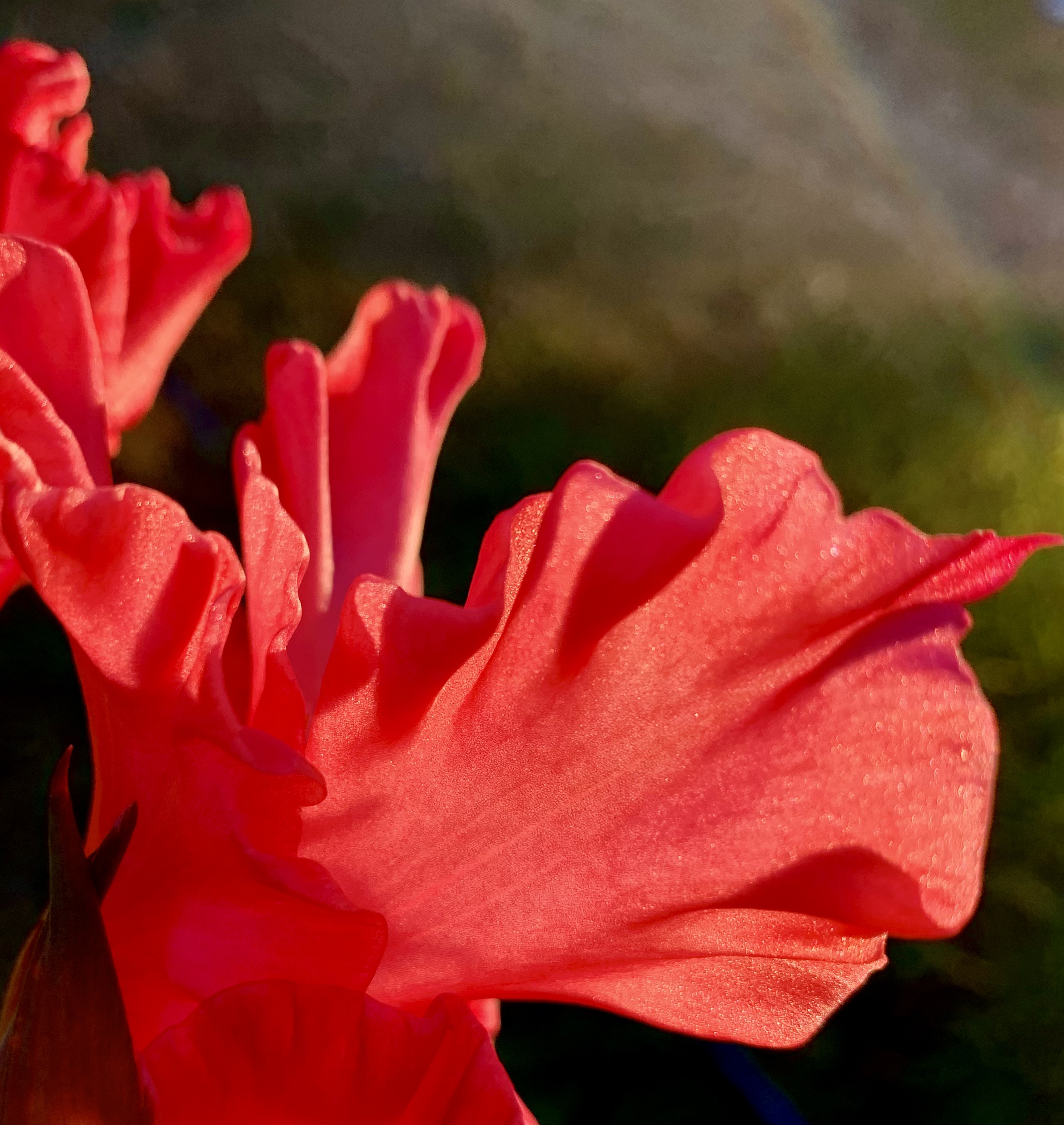
photo by Nate Gibson
I pray because I can’t help myself. I pray because I’m helpless. I pray because the need flows out of me all the time, waking and sleeping. It doesn’t change God. It changes me. ~C.S. Lewis
I want to make a case for the Lighthouse Parent, a term that the pediatrician Kenneth Ginsburg and others have used. A Lighthouse Parent stands as a steady, reliable guide, providing safety and clarity without controlling every aspect of their child’s journey.
Like a lighthouse that helps sailors avoid crashing into rocks, Lighthouse Parents provide firm boundaries and emotional support while allowing their children the freedom to navigate their own challenges. They demonstrate that they trust their kids to handle difficult situations independently. The key is learning when to step back and let them find their own way. ~Russell Shaw from “Lighthouse Parents Have More Confident Kids”
celebrating a long-awaited pregnancy – 1985
This “prayer for a child” has hung on the wall in our home for four decades, purchased when I was pregnant with our first of three children.
The drawing of the praying mother watching her toddler leave the safety of the home to explore the wide world addressed my worries as a new mama. I would glance at it daily, knowing the world is full of peril; it would remind me of God’s care for our family through every scary thing, real or imagined.
It helped me smile at a few of my irrational fears. Tinkers and pookas and fairies were unlikely to find our children in our rural landscape but at times the world seems full of “black-hearted strangers” and other threats, known and unknown.
Decades later, I continue to pray for our grown children and their God-given spouses, and for six adventuresome grandchildren.
I pray because I can’t not pray, and because I’m helpless without the care and compassion of our sovereign God for each of us, especially when we are brand new, completely dependent and helpless. He is a true “lighthouse” in our lives,
May I be changed by my prayers, molded into a “grand” mother and a light for our half dozen cherished grandchildren, each a jewel in His keeping.
One-Time
Monthly
Yearly
Make a one-time or recurring donation to support daily Barnstorming posts
The night of the Perseid shower, thick fog descended but I would not be denied. I had put the children to bed, knelt with them, and later in the quiet kitchen as tall red candles burned on the table between us, I’d listened to my wife’s sweet imprecations, her entreaties to see a physician. But at the peak hour— after she had gone to bed, and neighboring houses stood solemn and dark— I felt no human obligation and went without hope into the yard. In the white mist beneath the soaked and dripping trees, I lifted my eyes into a blind nothingness of sky and shivered in a white robe. I couldn’t see the outline of the neighbor’s willows, much less the host of streaking meteorites no bigger than grains of sand blazing across the sky. I questioned the mind, my troubled thinking, and chided myself to go in, but looking up, I thought of the earth on which I stood, my own scanty plot of ground, and as the lights passed unseen I imagined glory beyond all measure. Then I turned to the lights in the windows— the children’s nightlights, and my wife’s reading lamp, still burning. ~Richard Jones “The Manifestation”
Perhaps as a child you had the chicken pox and your mother, to soothe you in your fever or to help you fall asleep, came into your room and read to you from some favorite book, Charlotte’s Web or Little House on the Prairie, a long story that she quietly took you through until your eyes became magnets for your shuttering lids and she saw your breathing go slow. And then she read on, this time silently and to herself, not because she didn’t know the story, it seemed to her that there had never been a time when she didn’t know this story—the young girl and her benevolence, the young girl in her sod house— but because she did not yet want to leave your side though she knew there was nothing more she could do for you. And you, not asleep but simply weak, listened to her turn the pages, still feeling the lamp warm against one cheek, knowing the shape of the rocking chair’s shadow as it slid across your chest. So that now, these many years later, when you are clenched in the damp fist of a hospital bed, or signing the papers that say you won’t love him anymore, when you are bent at your son’s gravesite or haunted by a war that makes you wake with the gun cocked in your hand, you would like to believe that such generosity comes from God, too, who now, when you have the strength to ask, might begin the story again, just as your mother would, from the place where you have both left off. ~Keetje Kuipers“Prayer”
Flung is too harsh a word for the rush of the world. Blown is more like it, but blown by a generous, unending breath. ~Annie Dillardfrom Pilgrim at Tinker Creek
How could it be possible?
The five year old me had a sudden terrifying revelation that I would some day cease to walk this earth.
The much older me is more afraid of the faster and faster rush of the days than of their end.
The world hurtles through space and time at a pace that leaves me breathless. Throughout my seventy-plus years, I have felt flung all too frequently, bruised and weary from hurry and hubbub.
I have need of Someone to stop me for a moment, sit down and begin the Story again with me, starting right where we left off.
Now, with retirement from daily work obligations: breathing space. I’m lifted lighter, drifting where I’m blown, less weighted down by the next thing to do and the next place to be.
Instead I can just be… part of the story to be told, part of the wonder. Blown by breath that loves, fills and nurtures, a generous promise hopeful and fulfilled.
I’m grateful for the opportunity to see, even in the dark, a manifestation of glory and love just beyond my vision, praying that one day I will see and know it clearly.
The old me ~ Blown upon.
If only the five year old me could have known.
One-Time
Monthly
Yearly
Make a one-time or recurring donation to support daily Barnstorming posts
A shadow is hard to seize by the throat and dash to the ground. ~Victor Hugo from Les Miserables
Be comforted; the world is very old, And generations pass, as they have passed, A troop of shadows moving with the sun; Thousands of times has the old tale been told; The world belongs to those who come the last, They will find hope and strength as we have done. ~Henry Wadsworth Longfellow from “A Shadow”
The shadow’s the thing. If I no longer see shadows as “dark marks,” as do the newly sighted, then I see them as making some sort of sense of the light. They give the light distance; they put it in its place. They inform my eyes of my location here, here O Israel, here in the world’s flawed sculpture, here in the flickering shade of the nothingness between me and the light. ~Annie Dillard from Pilgrim at Tinker Creek
In faith there is enough light for those who want to believe and enough shadows to blind those who don’t. ~Blaise Pascal
These days I find myself seeking safety hiding in the shadows under a rock where lukewarm moderates tend to congregate in times of disagreement and dispute.
Extremist views often predominate simply for the sake of differentiating one’s political turf from the opposition.
The chasm is most gaping in any discussion of faith issues. Religion and politics have become angry neighbors constantly arguing over how high to build the fence between them, what it should be made out of, what color it should be, should there be peek holes, should it be electrified with barbed wire to prevent moving back and forth, should there be a gate with or without a lock and who pays for the labor.
And so it goes. We bring out the worst in our leaders as facts are distorted, the truth is stretched or completely abandoned, unseemly pandering abounds and curried favors are served for breakfast, lunch and dinner.
Enough already. In the midst of this morass, we who believe still choose to believe.
There is just enough Light for those who seek it. No need to remain blinded in the shadowlands.
I’ll come out from under my rock if you do.
In fact…I think I just did.
One-Time
Monthly
Yearly
Make a one-time or recurring donation to support daily Barnstorming posts
Above photos from Gombe Stream National Park, 1975
Reflecting on, and with respect for, the courage shown by Tanzanian park rangers and my kidnapped research colleagues on this unforgettable day 51 years ago —
I’m reposting this again as part of my Gombe saga from when I worked as a student research assistant for Jane Goodall in western Tanzania in 1975.An archived New York Times account is found here.
At first glance, Gombe National Park in Tanzania felt like paradise—a serene piece of the earth filled with exotic and fascinating wildlife, an abundance of fish and fruit to eat, and the rich unfamiliar sounds and smells of the tropical jungle. It was a façade. It was surrounded by the turmoil and upheaval of political rebellion and insurgencies in its neighboring countries, inflamed even more by the fall of Saigon in Vietnam a month previously due to the earlier pull out of the Americans from that long and tragic war.
Only a few miles north of our research station in Gombe National Park in western Tanzania, there had been years of civil war in the small land locked country of Burundi. When the wind was just right, we could hear gunfire and explosions echoing over the valleys that separated us. Escaping refugees would sometimes stop for food on their way to villages in Tanzania to the south, seeking safe haven in one of the poorest countries in the world, only a decade into its own experiment with socialism, Ujamaa.
There was also word of ongoing military rebellion against the dictatorship of President Mobutu in the mountainous country of Zaire twelve miles west across Lake Tanganyika.
Morning comes early for field studies of wildlife, as the research day must start before the chimpanzee and baboon subjects wake up and begin to stir. Before midnight, while we slept soundly in our metal huts scattered up the mountainside, a group of armed soldiers arrived by boat to the shore of Gombe National Park.
Storming the beach huts housing two unarmed Gombe park rangers and their families, the soldiers seized one and demanded to be told where the researchers were. The ranger refused to provide information and was severely beaten about the head and face by the butts of the rifles carried by the invaders. The armed soldiers then divided into smaller groups and headed up the trails leading to the huts, coming upon four sleeping student researchers, tying them up, taking them hostage, forcing them into boats and taking them across the lake back to Zaire.
Asleep farther up the mountain, we were wakened by other researchers who were fleeing, hearing the commotion. No one really understood what was happening down lower on the mountain. There were shouts and screams, and gun shots had been heard. Had someone been injured or killed? There was no choice but to run and hide deep in the bush at a predetermined gathering spot until an “all clear” signal was given by the rangers.
We hurried along barely familiar trails in the black of the jungle night, using no flashlights, our hearts beating hard, knowing we had no defense available to us other than the cover of darkness.
That was the longest wait for morning of my life, sitting alongside Jane holding her eight year old son Grub. A hand full of other students had also made their way to the hiding spot, none of us knowing what to think, say or do. We could only barely see each other’s faces in the darkness and were too frightened to make any sounds. We carried no weapons, and there was no way to communicate with the outside world. We had no idea how many of us may be missing, or possibly dead.
Jane clasped Grub in her arms, endeavoring in vain to keep him quiet, but his fears was ignited by the events that had just unfolded.
“Will they kidnap me, Jane? Will they come for me? Where will they take us? Will they shoot us dead?”
Jane, her face hidden by her blonde hair loose about her shoulders, sat rocking him, cradling him. “Shhh, shhh, we don’t want them to find us. We’re safe staying right here. Everything will be fine in the morning. No one will take you from me.”
Grub began to sob silently into her shoulder.
When the morning of May 20 dawned, the park rangers located us, and pieced together the events as best they could–the soldiers were Zairean rebels living in remote mountains, fighting an insurgency against the Zaire government. Seeking funds for their cause, they saw a kidnapping of Americans and Europeans as a way to raise quick funds and world publicity and sympathy. Four of our friends/coworkers were missing, the camp was ransacked and the rangers beaten but with no life threatening injuries. There was no way to remain safe at the Park, and our colleagues needed whatever help we could offer for their rescue.
We were able to send a messenger to a nearby fishing village, and a radio call was sent out to the small town of Kigoma, then relayed to Dar Es Salaam and Nairobi. Help arrived within a few hours, when a United Nations boat monitoring the civil war activities in Burundi pulled off shore near our camp. We were told we needed to evacuate Gombe that day, and would be taken to Kigoma, and then flown by bush pilot to Nairobi, Kenya to cooperate in the investigation of the kidnapping.
In Nairobi, at the US Embassy, I met CIA agents who viewed our wild primate studies with suspicion. Each of us were grilled individually as to our political beliefs, our activities at the camp and whether we may be somehow involved in subversive actions against the Zaire or Tanzanian governments. We were dumbfounded that our own countrymen would be so skeptical about our motives for being in Africa. It became clear our own government could be no help in resolving the kidnapping and bringing our friends home to safety. The agents did not shed any light on whether they knew our friends were alive or dead.
We were then hustled into a press conference (preserved video here) where we were interviewed for television and print media by the worldwide news agencies, and my parents saw me on the CBS evening news before they actually heard my voice over the phone. I flew back to Stanford the next day, spending 24 hours on a plane that made six stops up the coast of West Africa on its way back west, to tell what I knew to Stanford President Lyman and other administration officials as they prepared a plan to locate and free the students. I then returned home to Washington state to await any news that came too slowly from a place so far away that I remain astonished to this day that I was ever there at all.
It took over three months, private negotiations and ransom money to free all four of our friends back to safety. They have remained close to each other and to the remarkable man who helped free them, Dr. David Hamburg. We have had several reunions together over the years to remember those days of living in a place that at one time seemed like paradise.
In the past several years, we lost both Dr. Hamburg and Dr. Donald Kennedy, both instrumental as our faculty and mentors during our years at Stanford.
Dr. Goodall, who passed away last fall in her sleep at age 91, while on a lecture tour in Los Angeles, remained a vital part of the global message not only to preserve the wild chimpanzee, but to reverse the destruction of our natural world. Her message and life’s work continues through her organization www.janegoodall.org
Several of my colleagues have written about their experience at Gombe:
And Jesus, perceiving in himself that power had gone out from him, immediately turned about in the crowd and said, “Who touched my garments?”
And he looked around to see who had done it.
But the woman, knowing what had happened to her, came in fear and trembling and fell down before him and told him the whole truth.
And he said to her, “Daughter, your faith has made you well; go in peace, and be healed of your disease.” Mark 5: 30, 32-34
…the whole experience of compline is in some way a touching of the hem of Christ’s garment: something has been given, something disclosed. And the person holding a candle at compline may hear a call, and make a journey, as another stressed woman once did, from touching the hem of Christ’s garment to meeting him face to face.
… just occasionally, it opens into deeper things, on to more ultimate questions. Just occasionally, there is an opening of heart and soul, which in some sense the liturgy itself has made possible; and then it is that, just sometimes, someone takes a few more steps on that journey from the hem of his garment to the light of his countenance. ~Malcolm Guite from Poet’s Corner
Most of us are like that desperate woman hoping for healing by reaching out to touch the hem of His robe – ashamed to be so needy, hoping to go unnoticed, not actually wanting to bother anyone, but still helpless – so very helpless, but not without hope.
He knows when we reach out in desperation; He feels it.
So He lifts us up as we begin our journey to His light – from a touch of His hem to seeing His face.
It starts with reaching out. It starts with taking a few more steps. It starts with hope in the Light.
Before the ending of the day, Creator of the world, we pray That with Thy wonted favour Thou Wouldst be our guard and keeper now.
From all ill dreams defend our eyes, From nightly fears and fantasies; Tread under foot our ghostly foe That no pollution we may know.
O Father, that we ask be done Through Jesus Christ, thine only Son, Who with the Holy Ghost and Thee Dost live and reign eternally.
One-Time
Monthly
Yearly
Make a one-time or recurring donation to support daily Barnstorming posts
Not much to me is yonder lane Where I go every day; But when there’s been a shower of rain And hedge-birds whistle gay, I know my lad that’s out in France With fearsome things to see Would give his eyes for just one glance At our white hawthorn tree.
. . . .
Not much to me is yonder lane Where he so longs to tread: But when there’s been a shower of rain I think I’ll never weep again Until I’ve heard he’s dead. ~Siegfried Sassoon“The Hawthorn Tree”
Measure the walls. Count the ribs. Notch the long days. Look up for blue sky through the spout. Make small fires with the broken hulls of fishing boats. Practice smoke signals. Call old friends, and listen for echoes of distant voices. Organize your calendar. Dream of the beach. Look each way for the dim glow of light. Work on your reports. Review each of your life’s ten million choices. Endure moments of self-loathing. Find the evidence of those before you. Destroy it. Try to be very quiet, and listen for the sound of gears and moving water. Listen for the sound of your heart. Be thankful that you are here, swallowed with all hope, where you can rest and wait. Be nostalgic. Think of all the things you did and could have done. Remember treading water in the center of the still night sea, your toes pointing again and again down, down into the black depths. ~ Dan Albergotti “Things to Do in the Belly of the Whale” from The Boatloads
“In my distress I called to the Lord, and he answered me. From deep in the realm of the dead I called for help, and you listened to my cry. You hurled me into the depths, into the very heart of the seas, and the currents swirled about me; all your waves and breakers swept over me. I said, ‘I have been banished from your sight; yet I will look again toward your holy temple.’ The engulfing waters threatened me,[b] the deep surrounded me; seaweed was wrapped around my head. To the roots of the mountains I sank down; the earth beneath barred me in forever. But you, Lord my God, brought my life up from the pit.
“When my life was ebbing away, I remembered you, Lord, and my prayer rose to you, to your holy temple.
“Those who cling to worthless idols turn away from God’s love for them.
But I, with shouts of grateful praise, will sacrifice to you. What I have vowed I will make good. I will say, ‘Salvation comes from the Lord.“
“It is a childish work—the whale has the head of a dog and Jonah looks suspiciously fresh.” —www.artbible.info
In candied red, the white-bearded prophet emerges hands still clasped in prayer, clean, really clean, maybe too clean, first-day- of-school clean, baptism clean. It is a childish painting, perhaps, the punished coming up for air after a three-day, divine timeout, his begging and pleading inside this flesh box, sincere or not, but he’s out, old and fresh in a world around him, Brueghel is sure to make clear, swirling blue-black and solid brown, the earth’s bruising, perhaps a wish of healing yellow in the distance, a light faded behind the eye’s focus. The dogfish eyes big and rolling back mouth open
like the cave like the tomb like the brown creek carp we refuse to touch hate to catch squishy and formless but counted nonetheless. But he will dirty himself again after Nineveh under the vine cussing at God telling God His own business, and he will forget the welcoming red the fresh fruit color of that cloak—the thin (or thinning) clearing in the background beyond sea and storm, even the mouth as exit as release. He will soon forget to consider how suspicious it is for a man like him sitting in death’s darkness for three days to come out so clean so bright so forgiven. ~Jacob Stratman “a poem for my sons when they yell at God” from Christian Century
As I grumble about what I think is wrong with the world, I fail to understand that God has heard much grumbling from His children before. And much of what is wrong with the world is also wrong with me.
It must get tiresome, listening to it.
Perhaps that is why Jonah, who wanted to die rather than deal with the sinful city he had been sent to redeem, was given a little respite for three days to think things over until he understood what his role was.
By counting all those ribs inside the whale, he was thinking about all the things he had done wrong and all the things he should have done, but didn’t.
Whenever I stand in a structure with powerful beams towering over and surrounding me, I too feel swallowed whole. I am no more than a tiny speck within a vast organism.
Nevertheless, small as I am, I still matter to God. I am being prepared to be spit out, to do what I’m supposed to do, and not be concerned nearly as much with my disgruntlement with the rest of the world as with my disgruntlement with myself.
Swallowed whole by hope. Spit out forgiven.
One-Time
Monthly
Yearly
Make a one-time or recurring donation to support daily Barnstorming posts
First of all, we’ve been using the wrong word all these years. It means without rhythm. The only arrhythmia is asystole, I tell my students. That’s the flat line accompanied by the clang of alarms in all the television dramas. There’s not much you can do about it; the patient is dead and usually stays dead. The correct word to describe all the ways a heart can dance and die is dysrhythmia, which means a disordered rhythm. There’s the soldiered march of ventricular tachycardia or the pirouette twirl of Torsades. Ventricular fibrillation simply quivers on the monitor. When these rhythms occur, the patient is pulseless and sometimes you give magnesium, usually shock, and always pump their chest to the beat of whatever song lives in your head. Once I was speaking with a man who stopped in the middle of a word, and I watched the rhythm on the monitor change. When I didn’t feel a pulse, I started CPR, and then we placed the paddles on his chest and shouted, Clear, just like in the movies. And it worked. He opened his eyes and looked at me and said, I don’t feel good. And I said, It’s okay, I’m going to get you better and smoothed the fair from his forehead, but then the alarms blared and the V tach returned, and we did it all over again—the drugs and compressions and shocks, and his eyes opened one more time and he mouthed I’m scared around the tube I’d placed in his throat, and I said, I’m here with you. But that was the last time he said anything. We didn’t stop for thirty minutes or more. He’d waved to his family when the medics loaded him into the ambulance with just a little chest pain, so they were shocked when I entered the small consult room to tell them he had died. His teenage son collapsed and landed on his knees and punched the ground and said, But we were fighting, and I think the last thing I said was I hate you.
If you break break going out not in. How you live your life I don’t care but I’ll sell my arms for you, hold your secrets for ever.
If I speak of death which you fear now, greatly, it is without answers, except that each one we know is in our blood. Don’t recall graves. Memory is permanent. ~Michael Ondaatje from “To a Sad Daughter”
I was still a kid interning at State he reminisces late in the meal— It was a young red-headed woman looked like my sister when the lines went flat I fell apart shook like a car with a broken axle Went to the head surgeon a fatherly man Boy, he said, you got to fill a graveyard before you know this business and you just did row one, plot one. ~Alicia Suskin Ostriker, “The Surgeon” from The Book of Seventy
Like many other medical professionals who have worked in the trenches of frontline healthcare, I too am fascinated by the emergency room streaming drama “The Pitt.”
At first, I couldn’t watch without feeling I too should be working at the bedside alongside the ER team, trying my best to do the task assigned to me, responding to each new instruction, grateful when things go as hoped, crushed when nothing helps and the patient is lost.
The Pitt is the newest addition to the canon of medical dramas and feels like the real thing. All the technology is there, the medical terminology and procedures are real, in addition to the fraught interaction of professionals under stress. Most of all, it feels real because it shows patients and their families trying to cope with the worst day of their lives.
And medical miracles do happen, on TV and in real life.
Recently, a church friend was rescued in a drowning event, was unconscious on a ventilator for nearly a week, with much uncertainty about how much damage his brain had endured while under water. Several weeks later, he is now home, dealing with some memory gaps and muscle weakness, but improving strength daily.
Last week, I had the privilege of meeting a middle-aged pastor who was saved a few weeks ago when his heart stopped in his sleep. His wife started CPR, paramedics shocked his heart in the field more than once, he was stabilized in the ER, unconscious on a ventilator, cooled down to a lower body temperature to preserve his brain function.
His care team, along with family and friends, watched and waited and prayed, uncertain what would be the rest of his story.
When he was warmed up 24 hours later, he woke up, able to breathe on his own. Other than no memory for those brief hours of unconsciousness, he is still himself – living with a new awareness of his vulnerability and an immense gratitude, now with an implanted defibrillator in his chest.
The right words after being brought back from the dead? The right words when we never know if they will be the last words we utter or the last we will ever hear?
I know what they would be for me. I carry them in my heart…
One-Time
Monthly
Yearly
Make a one-time or recurring donation to support daily Barnstorming posts
But Jesus, knowing in himself that his disciples were grumbling about this, said to them,
“Do you take offense at this?Then what if you were to see the Son of Man ascending to where he was before? It is the Spirit who gives life; the flesh is no help at all. The words that I have spoken to you are spirit and life. But there are some of you who do not believe.”
(For Jesus knew from the beginning who those were who did not believe, and who it was who would betray him.) And he said, “This is why I told you that no one can come to me unless it is granted him by the Father.”
After this many of his disciples turned back and no longer walked with him.
So Jesus said to the twelve, “Do you want to go away as well?”
Simon Peter answered him, “Lord, to whom shall we go? You have the words of eternal life, and we have believed, and have come to know, that you are the Holy One of God.”
Jesus answered them, “Did I not choose you, the twelve? And yet one of you is a devil.” He spoke of Judas the son of Simon Iscariot, for he, one of the twelve, was going to betray him. John 6: 61-71
When God at first made man, Having a glass of blessings standing by, “Let us,” said he, “pour on him all we can. Let the world’s riches, which dispersèd lie, Contract into a span.”
So strength first made a way; Then beauty flowed, then wisdom, honour, pleasure. When almost all was out, God made a stay, Perceiving that, alone of all his treasure, Rest in the bottom lay.
“For if I should,” said he, “Bestow this jewel also on my creature, He would adore my gifts instead of me, And rest in Nature, not the God of Nature; So both should losers be.
“Yet let him keep the rest, But keep them with repining restlessness; Let him be rich and weary, that at least, If goodness lead him not, yet weariness May toss him to my breast.” ~George Herbert “The Pulley”
Thou hast formed us for Thyself, and our hearts are restless till they find rest in Thee. St. Augustine of Hippo in Confessions Book 1, Chapter 1
It is this great absence that is like a presence, that compels me to address it without hope of a reply. It is a room I enter
from which someone has just gone, the vestibule for the arrival of one who has not yet come.
What resources have I other than the emptiness without him of my whole being, a vacuum he may not abhor? ~R.S. Thomas from “The Absence”
Why no! I never thought other than That God is that great absence In our lives, the empty silence Within, the place where we go Seeking, not in hope to Arrive or find. He keeps the interstices In our knowledge, the darkness Between stars. His are the echoes We follow, the footprints he has just Left. We put our hands in His side hoping to find It warm. We look at people And places as though he had looked At them, too; but miss the reflection. ~R.S. Thomas “Via Negativa”
… to be consumed by God’s holy fire can be the best thing to ever happen to us. As one of my favorite authors Marilynne Robinson writes in her novel Gilead, “The idea of grace had been so much on my mind, grace as a sort of ecstatic fire that takes things down to essentials.”
To walk with Jesus is to leave some things behind, but I now know that the life he’s called me in to is one of beauty and grace, provision and purpose, relief and restoration — a life with all of the essentials. ~Grace Leuenberger from “Spiritual Formation Dropout” in Mockingbird
We are called to life in Him, containing all the essentials, even when we aren’t sure, don’t know and don’t care.
He knows this about us; He sees some turn back and walk away.
He knows they seek an easier life. He knows how hard it is to follow Him.
He knows our restlessness; He knows our impatience.
His footprints remain for us to find again. The pulley that lets us go will draw us back to Him.
I am reading slowly through the words in the Book of John over the next year alongside my church family. Once a week, I will invite you to “come and see” what those words might mean as we explore His promises together.
Text from Christina Rossetti None other Lamb, none other Name, None other hope in Heav’n or earth or sea, None other hiding place from guilt and shame, None beside Thee!
My faith burns low, my hope burns low; Only my heart’s desire cries out in me By the deep thunder of its want and woe, Cries out to Thee.
Lord, Thou art Life, though I be dead; Love’s fire Thou art, however cold I be: Nor Heav’n have I, nor place to lay my head, Nor home, but Thee.
One-Time
Monthly
Yearly
Make a one-time or recurring donation to support daily Barnstorming posts
At the gate, I sit in a row of blue seats with the possible company of my death, this sprawling miscellany of people— carry-on bags and paperbacks—
that could be gathered in a flash into a band of pilgrims on the last open road. Not that I think if our plane crumpled into a mountain
we would all ascend together, holding hands like a ring of skydivers, into a sudden gasp of brightness, or that there would be some common place
for us to reunite to jubilize the moment, some spaceless, pillarless Greece where we could, at the count of three, toss our ashes into the sunny air.
It’s just that the way that man has his briefcase so carefully arranged, the way that girl is cooling her tea, and the flow of the comb that woman
passes through her daughter’s hair . . . and when you consider the altitude, the secret parts of the engines, and all the hard water and the deep canyons below . . .
well, I just think it would be good if one of us maybe stood up and said a few words, or, so as not to involve the police, at least quietly wrote something down. ~Billy Collins “Passengers”
Tell us of a bypassed heart beating in 12C, how the woman holds a stranger’s hand to the battery sewn in beneath her collarbone, and says feel this. Tell us of the man’s ear listening across the aisle, hugging itself, a fist long since blistered by blaze. Outside, morning sun buckling up. Inside, twitching bonesacks of bat, birdsong erupting as light cracks the far jungle canopy. Ten thousand feet below ours, a grey cat tongues the morning’s butter left out to soft. Last night we broke open the sweet folds around two paper fortunes. One said variety. One said caution. The woman in 12C would hold that her heart needs its hidden spark, but the man shows how some live the rest of their lives with half a face remembering its before expression. Who was it that said our souls know one another by smell, like horses? ~Jenny Browne “Love Letter to a Stranger”
These days, I spend as little time as possible in airports and airplanes among strangers. As an introvert who prefers to read quietly and stay securely in my shell, I politely converse with the people next to me but prefer a book and silence.
It is always a wonder to me when seat partners across from me or in front of me will spend the trip finding out all about each other’s lives, destinations and feelings about the state of the world.
Even so, like Billy Collins in his poem, I’m struck by the affinity I feel for my fellow passengers as we embark on a trip by air – so different from each of us independently traveling down a highway in our individual vehicles.
In an airplane, our fates are lashed together. What happens to one will happen to all.
Because we are bound together – sometimes randomly, sometimes not – I do believe that we should try to find kindred and sympathetic souls in a mysterious way when we are thrust among strangers.
We are created for connection, whether by smell or sight or spirit.
And perhaps, scrolling through the internet, as we all do at times, you ran across this Barnstorming blog…not expecting a connection to happen.
And here we are –connected because I wrote something quietly down. One never knows how we may become bound together.
One-Time
Monthly
Yearly
Make a one-time or recurring donation to support daily Barnstorming posts