The Managed Flamingo

flamingo
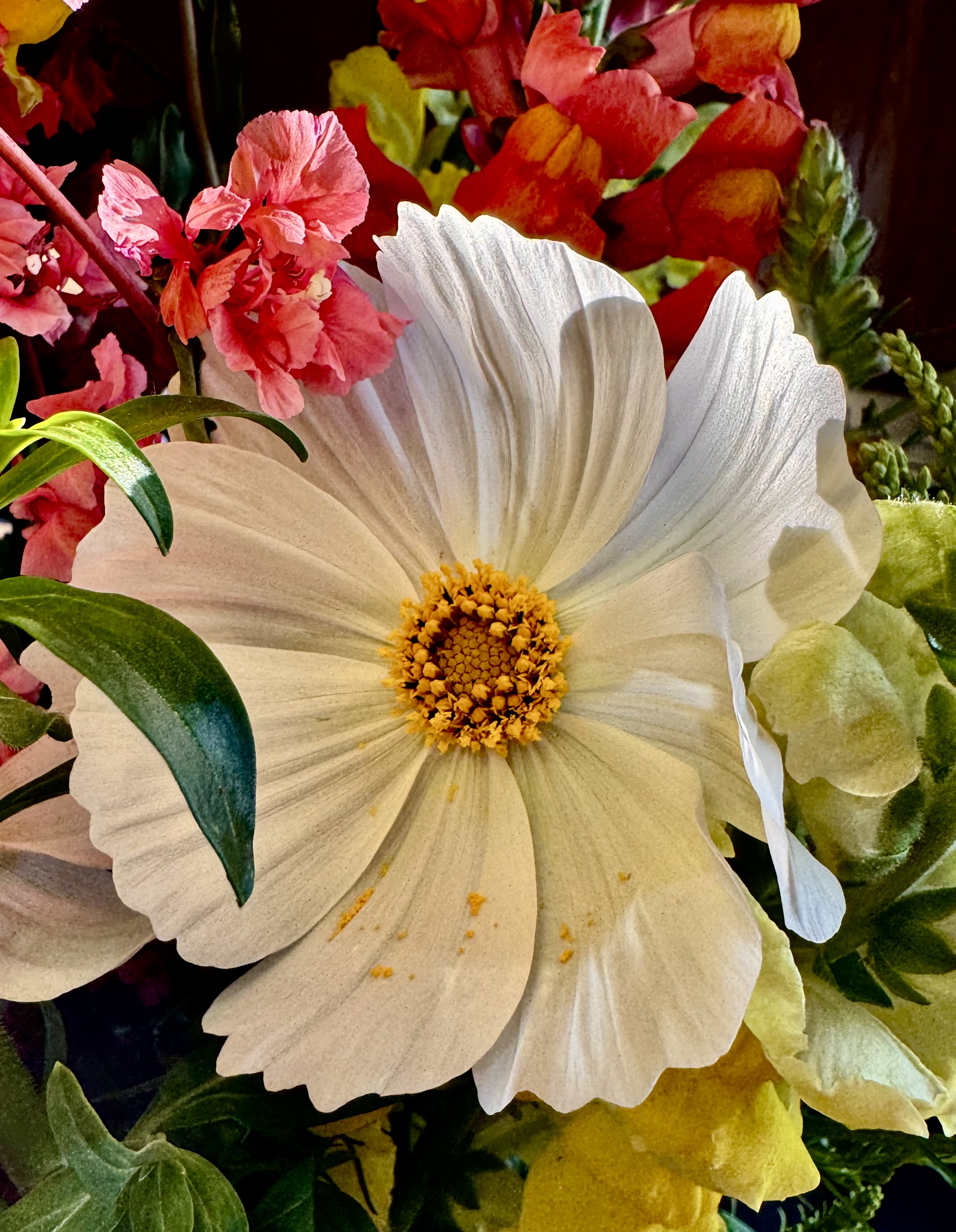
photo by Chris Duppenthaler

The chief difficulty Alice found at first
was in managing her flamingo:
she succeeded in getting its body tucked away,
comfortably enough,
under her arm,
with its legs hanging down, but generally,
just as she had got its neck nicely straightened out,
and was going to give the hedgehog a blow with its head,
it would twist itself round
and look up in her face,
with such a puzzled expression
that she could not help bursting out laughing:
and when she had got its head down,
and was going to begin again,
it was very provoking to find that
the hedgehog had unrolled itself,
and was in the act of crawling away….

Alice soon came to the conclusion
that it was a very difficult game indeed. 
~Lewis Carroll from Alice in Wonderland

Navigating the U.S. health care system over the last decade or so reminds me of Alice’s dreamscape game of Wonderland croquet. 

A physician is given a flamingo mallet and a hedgehog ball and ordered — by the Queen at the risk of having one’s head lopped off — to go play, but the mallet won’t cooperate and the ball keeps unrolling itself and crawling away. 

Just like any day in a medical clinic, a doctor’s time is spent trying to manage their flamingo. The patient, tired of waiting for weeks for an appointment, then stuck in an urgent care center or emergency waiting room– gets up and leaves.

At least Alice gets a good giggle out of it, but the reality in health care causes more tears than laughter. We are playing a very difficult game of changing rules and technology.

The flamingo in the doctor’s hands could represent the increasingly time-consuming requirement to search over 70,000 ICD-10 diagnosis codes rather than the previous 14,000 ICD-9 codes. 

Or the requirement to search for a 10 digit NDC number for any prescription medicine sent electronically to a pharmacy. 

Or the “meaningful use” criteria that regulate mandatory data collection and reportage on patients to the Federal Government in order to receive full payment for Medicare or Medicaid billings. 

Or updated HIPAA and HITECH electronic security requirements to ensure privacy and the requirement for patient access to their chart. 

Or the obligations to the new Accountable Care Organization that your employer has joined. 

Or the Maintenance of Certification hoops to jump through in order to continue to practice medicine.  

The exasperated and uncooperative “managed” flamingo keeps curling itself around and looking at us with a puzzled expression: 

just what is it you were supposed to be trained to do?   

is there actually a patient to pay attention to in all this morass of mandates?

And the poor hapless hedgehog patient is just rolled up in a ball awaiting a contact that never comes – for something, anything that might look like health care is about to happen. 

Instead, for the patient, there are many electronic forms to sign:
Notice of Patient Privacy,
Notice of Patient Rights and Responsibilities,
releases to share medical information,
agreements to pay today’s co-pay and tomorrow’s deductible and whatever is left unpaid by insurance,
agreement to have an AI app record and then transcribe the healthcare interaction,
passwords to choose for each electronic patient portal: the chart, insurance, health savings account, lab and X-ray results and healthcare.gov. 

It might be easier and less painful to just crawl away and hide from that bumbling health care provider who can’t seem to get their act together.

I wish I were laughing, but I’m not. As a once-practicing physician and now a patient, it’s getting harder and harder to play the game that is no game at all. 

There is always a threat to the physician of a professional beheading:
losing credentialing in an insurance plan,
getting poor ratings on anonymous online physician grading sites, being inexplicably dropped from a provider list,
keeping up with 50 hours of approved continuing education annually,
being too unproductive to remain in an employer medical group,
losing/forgoing board certification. 

We keep trying to juggle the flamingo motivated by those threats,
all the while ineptly managing the managed care system,
knowing the patient might get up and walk away out of sheer frustration.

Thankfully, I didn’t ever see patients in a fee-for-service clinic setting,
so I have sympathy for those who have no other option.

I think, at least I hope, I focused on taking care of people, trying to heal their illnesses and help them cope with life if they can’t be healed. 

I wanted to provide compassionate care without all the fol-de-rol.
These are absurd times for humans and hedgehogs.

It is enough to make a doctor cry. At least we meet our patients over the Kleenex box and compare notes, and maybe, just maybe, we’ll find enough common ground to even share a giggle or two.

flamingo2
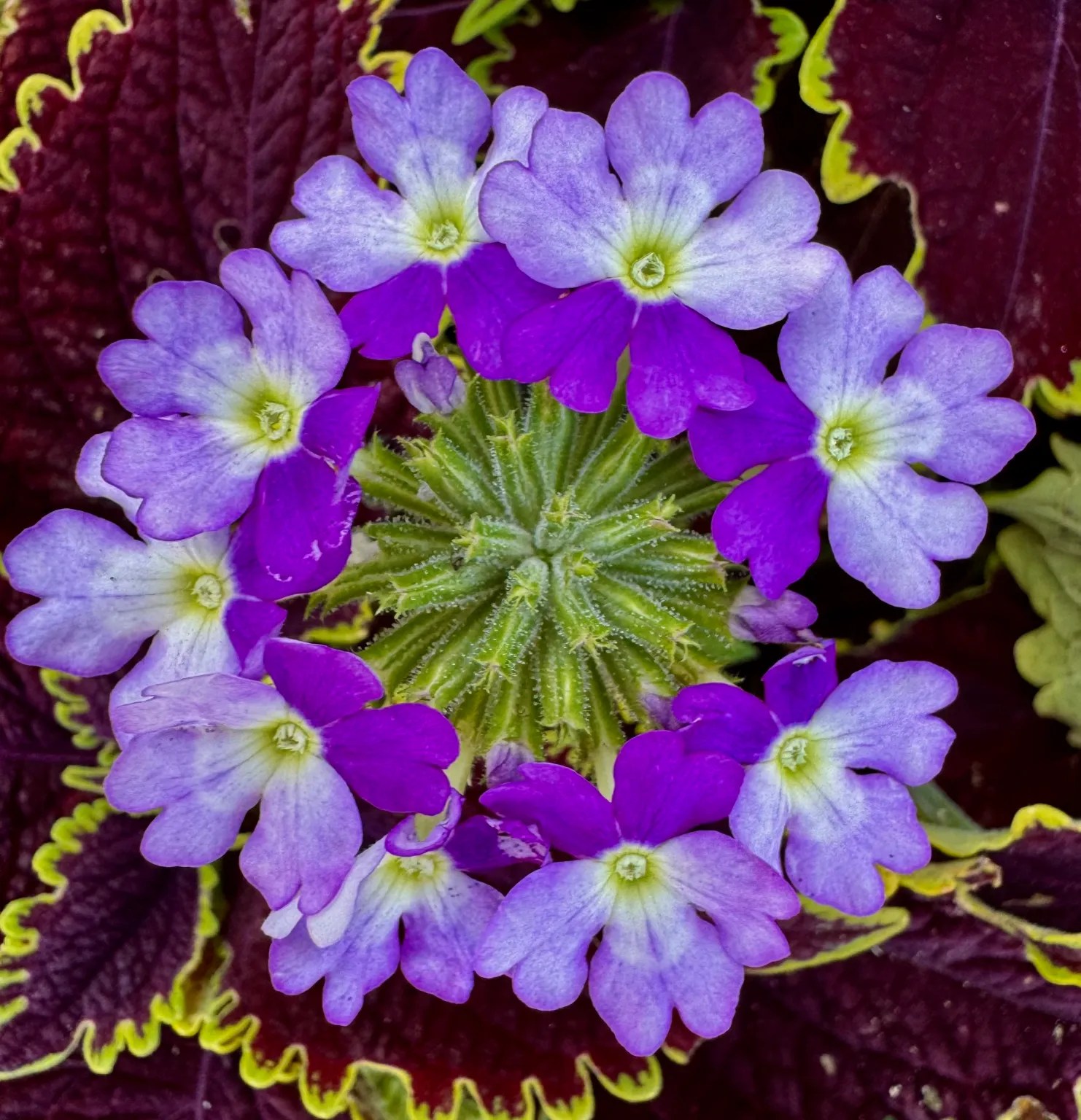
photo by Chris Duppenthaler

A Cloud of Stink

Like a piece of rotten meat
which not only stinks
right on its own surface
but also surrounds itself
with a stinking molecular cloud of stink,
so, too, each island of the archipelago
created and supported a zone of stink around itself.

~ Aleksandr Solzhenitsyn, The Gulag Archipelago, 1918-1956: An Experiment in Literary Investigation, Books III-IV

If you’re looking for sympathy
you’ll find it between shit and syphilis in the dictionary.
— David Sedaris (Barrel Fever: Stories and Essays)

As I’ve written elsewhere, I spend over an hour a day dealing with the excrement of my farm critters.

This is therapeutic time for me as I have deep respect for the necessity to clean up and compost what is smelly/stinky/yucky and biblically objectionable. (Deuteronomy 23:12-14)

None of us, including God, want to take a walk having to pick our way around poop.

As I’m busy picking up manure, I watch our dogs seek out the smelliest, most vile things they can find in the barn or field (preferably dead) and roll themselves around in it one after another until they are just as stinky as the stuff they found. They are clearly joyous about it, especially when they do it together. It is curious throw-back behavior that I’ve assumed, wearing my animal behaviorist hat, was about a wild predator covering up their scent in order to stalk and capture prey more effectively without being detected – except they are really truly so smelly that any prey could sense them coming from a mile away and would learn quickly that a moving creature that smells like poop or a dead carcass is bad news and to be avoided.

This is the main reason our farm dogs live full time outdoors. We prefer to avoid stinky dirty creatures too. So I’ve tried to understand this behavior for what adaptive purpose it may have.

What makes the most sense to me is the “pack mentality” that suggests that once one dog/wolf rolls in something objectionable, that the rest of the pack does too. This is a unifying theme for anxious individuals – they aren’t really on their own if they smell and blend in with the rest of the pack. So they spread the “wealth,” so to speak.

Stink up one, stink up all. Like team spirit, it seems to improve morale – until it doesn’t anymore.

I’ve been feeling covered with stink myself lately as I’ve searched for those sympathetic around me and found myself stuck between shit and syphilis. There are so many divisive opinions right now about a variety of current issues; vile nonsense has been flying right and left on social media as well as face to face. The theory is if all stink the same from rolling in piles of misinformation, we are then no longer alone.

Yet our destiny does not have to include believing, sharing and “flinging” the stuff that stinks to see who it will stick to. I no longer want to be a target.

Time for a bath.
Time for soap and cleansing and some serious self-examination.
Time to stop joyously rolling around in it.
Time to bury the excrement so we’re not staring at the ground, picking our way around the piles and can actually hold our heads up to see where we’re heading.

A Time Less Bold

My mother, who hates thunder storms,
Holds up each summer day and shakes
It out suspiciously, lest swarms
Of grape-dark clouds are lurking there;
But when the August weather breaks
And rains begin, and brittle frost
Sharpens the bird-abandoned air,
Her worried summer look is lost,

And I her son, though summer-born
And summer-loving, none the less
Am easier when the leaves are gone
Too often summer days appear
Emblems of perfect happiness
I can’t confront: I must await
A time less bold, less rich, less clear:
An autumn more appropriate.

~Philip Larkin “Mother, Summer, I”

Summer grass aches and whispers.

It wants something; it calls and sings; it pours
       out wishes to the overhead stars.

The rain hears; the rain answers; the rain is slow 
        coming; the rain wets the face of the grass.

~Carl Sandberg “Summer Grass”

August rushes by like desert rainfall,
A flood of frenzied upheaval,
Expected,
But still catching me unprepared.
Like a match flame
Bursting on the scene,
Heat and haze of crimson sunsets.
Like a dream
Of moon and dark barely recalled,
A moment,
Shadows caught in a blink.
Like a quick kiss;
One wishes for more
But it suddenly turns to leave,
Dragging summer away.
– Elizabeth Maua Taylor
 “August”

The endless clear skies of August
now broken with exuberant clouds,
rain falling in warm gusts,
leaves landing on browned ground.

This summer ended up being simply too much –
an excess of everything bright and beautiful,
meant to make us joyful,
yet bold and exhausting in its riches.

From endless hours of daylight,
to high rising temperatures and wildfires,
to palettes of smoke-filled landscapes
to fruitfulness and abundant blooms.

While summer always fills a void
after enduring cold spare dark days
the rest of the year,
I still depend on autumn returning.

I welcome darkening times back,
knowing how much I miss
those drear twilight months of longing
for the overwhelming fullness of summer.

Come and See: Unbind Him and Let Him Go

Then Jesus, deeply moved again, came to the tomb. It was a cave, and a stone lay against it. 

Jesus said, “Take away the stone.” 

Martha, the sister of the dead man, said to him, “Lord, by this time there will be an odor, for he has been dead four days.” 

Jesus said to her, “Did I not tell you that if you believed you would see the glory of God?” So they took away the stone.

And Jesus lifted up his eyes and said, “Father, I thank you that you have heard me. I knew that you always hear me, but I said this on account of the people standing around, that they may believe that you sent me.” 

When he had said these things, he cried out with a loud voice, “Lazarus, come out.” 

The man who had died came out, his hands and feet bound with linen strips, and his face wrapped with a cloth.

Jesus said to them, “Unbind him, and let him go.”
John 11:38-44

The man was wholly raised, but not wholly freed.
See, here is a living man in the garments of death!
That napkin and other grave-clothes were
altogether congruous with death,
but they were much out of place
when Lazarus began again to live.
It is a wretched sight to see a living man wearing his shroud.

If the Lord Jesus Christ employed the disciples
in relieving Lazarus of his grave-clothes,
do you not think he would employ us

if we were ready for such work? 
Innumerable are the instances of souls

blessed by human instrumentality…
~Charles Spurgeon from “Unbinding Lazarus”

When the Lord speaks,
it will usually produce something that needs to be unwrapped.
God’s words are powerful. They create, heal, and restore.
They change things in both the visible and invisible realm
s.

…as we become committed to the discipline of unwrapping,
like the bystanders Jesus invited into Lazarus’ miracle story,
we’ll be better positioned to participate
in the wondrous things Jesus is always doing in the lives of others
and the world around us.
~Randy Boldt from “The Discipline of Unwrapping”

After one moment when I bowed my head
And the whole world turned over and came upright,
And I came out where the old road shone white.
I walked the ways and heard what all men said,
Forests of tongues, like autumn leaves unshed,
Being not unlovable but strange and light;
Old riddles and new creeds, not in despite
But softly, as men smile about the dead

The sages have a hundred maps to give
That trace their crawling cosmos like a tree,
They rattle reason out through many a sieve
That stores the sand and lets the gold go free:
And all these things are less than dust to me
Because my name is Lazarus and I live.

~Gilbert Chesterton “The Convert”

Love, take my hand and lead me like the blind,
Unbandage me, unwrap me from my fear,
Open my eyes, my heart, my soul, my mind.
I struggle with these grave clothes, this dark earth,
But you are calling ‘Lazarus come forth!’
~Malcolm Guite from “He who has ears to hear let him hear’

The witnesses were marveling over the miracle of a living, breathing Lazarus, four days dead, stumbling out of the tomb, still wrapped in his graveclothes, in response to Jesus’ shout “Lazarus, come out.” 

The next command, spoken to those standing there with their mouths agape, was just as consequential: “Unbind him, and let him go.”

Jesus’ message was clear. This miracle doesn’t end with a stilled heart beating again. It is an ongoing resurrected transformation for the witnesses as well.

What the Lord raises up, the community must unwrap, helping Lazarus move back into life, with support.

We are surrounded every day by those who, like Lazarus, are metaphorically walking in their graveclothes, spiritually dead or dying. They may be a family member or neighbor, they may be living unhoused in the woods down the road, they may be lying overdosed in a city alley. When called back to life, their next step can’t happen until they are unbound from the death-wraps that smother and blind them.

The rest is up to us, their community.
Jesus, with only His words, gives new life to the dead.
Jesus, with only His words, commands us to make it possible for the living to thrive, unshackled from paralyzing sin, and freed to new life.

I am reading slowly through the words in the Book of John over the next year alongside my church family. Once a week, I will invite you to “come and see” what those words might mean as we explore His promises together.

Peacing Each One Beautiful

Like a fading piece of cloth
I am a failure

No longer do I cover tables filled with food and laughter
My seams are frayed my hems falling my strength no longer able
To hold the hot and cold

I wish for those first days
When just woven I could keep water
From seeping through
Repelled stains with the tightness of my weave
Dazzled the sunlight with my
Reflection

I grow old though pleased with my memories
The tasks I can no longer complete
Are balanced by the love of the tasks gone past

I offer no apology only
this plea:

When I am frayed and strained and drizzle at the end
Please someone cut a square and put me in a quilt
That I might keep some child warm

And some old person with no one else to talk to
Will hear my whispers

And cuddle
near
~Nikki Giovanni “Quilts”

“I make them warm to keep my family from freezing;
I make them beautiful to keep my heart from breaking.”
–From the journal of a prairie woman, 1870

To keep a husband and five children warm,
she quilts them covers thick as drifts against
the door. Through every fleshy square white threads
needle their almost invisible tracks; her hours
count each small suture that holds together
the raw-cut, uncolored edges of her life.
She pieces each one beautiful, and summer bright
to thaw her frozen soul. Under her fingers
the scraps grow to green birds and purple
improbable leaves; deeper than calico, her mid-winter
mind bursts into flowers. She watches them unfold
between the double stars, the wedding rings.
~Luci Shaw “Quiltmaker”
from Polishing the Petoskey Stone: New and Selected Poems.

Perhaps the world was made this way:
piecemeal, the parts fitting together exactly
as if made for one another~
the unique, disparate and separate
coming together in a glorious harmony.

The point of its creation is
forever functional and full of love –
a blanket of warmth and security
for generations to come.

Our legacy is to preserve this
beauty arising from scraps,
this broken stitched to broken
in a tapestry holy and whole.

When I no longer have strength
or the usefulness to perform my daily tasks,
piece me up and sew me into a greater whole
along with pieces of others who are fading.

We are so much better together,
so much more colorful and bold,
becoming art and function in our fraying state.

Full of warmth and comfort
covering all who are sick
and sleep and love and cuddle,
and drift off to heaven as the last breath is breathed.

all quilts above are on display this week at the Northwest Washington Fair – to see previous year’s artwork:
201520162017201820212022, 2023 , 2024

No Furrow on the Glow

morning820183

Further in Summer than the Birds
Pathetic from the Grass
A minor Nation celebrates
Its unobtrusive Mass.

No Ordinance be seen
So gradual the Grace
A pensive Custom it becomes
Enlarging Loneliness.

Antiquest felt at Noon
When August burning low
Arise this spectral Canticle
Repose to typify

Remit as yet no Grace
No Furrow on the Glow
Yet a Druidic Difference
Enhances Nature now 
~Emily Dickinson

morning820181
cattails1

“…one of the great poems of American literature. The statement of the poem is profound; it remarks the absolute separation between man and nature at a precise moment in time. The poet looks as far as she can into the natural world, but what she sees at last is her isolation from that world. She perceives, that is, the limits of her own perception. But that, we reason, is enough. This poem of just more than sixty words comprehends the human condition in relation to the universe:

So gradual the Grace
A pensive Custom it becomes
Enlarging Loneliness.

But this is a divine loneliness, the loneliness of a species evolved far beyond all others. The poem bespeaks a state of grace. In its precision, perception and eloquence it establishes the place of words within that state. Words are indivisible with the highest realization of human being.”
~N. Scott Momaday from The Man Made of Words

sunset818181
morning820182

On the first day I took his class on Native American Mythology and Lore in 1974 at Stanford, N.Scott Momaday strolled to the front, wrote the 60 words of this Dickinson poem on the blackboard.  He told us we would spend at least a week working out the meaning of what he considered the greatest poem written — this in a class devoted to Native American writing and oral tradition.  In his resonant bass, he read the poem to us many times, rolling the words around his mouth as if to extract their sweetness. This man of the plains, a member of the Kiowa tribe, loved this poem put together by a New England recluse poet — someone as culturally distant from him and his people as possible.

But grace works to unite us, no matter our differences, and Scott knew this as he led us, mostly white students, through this poem.  What on the surface appears a paean to late summer cricket song doomed to extinction by oncoming winter, is a statement of the transcendence of man beyond our understanding of nature and the world in which we, its creatures, find ourselves.

As summer begins its descent into the dark death of winter, we, unlike the crickets, become all too aware we too are descending, particularly when the skies are filled with smoke from uncontrolled wildfires in the north, the east and the south.  There is no one as lonely as an individual facing their mortality and no one as lonely as a poet facing the empty page, in search of words to describe the sacrament of sacrifice and perishing.

Yet the Word brings Grace unlike any other, even when the cricket song, pathetic and transient as it is, is gone.  The Word brings Grace, like no other, to pathetic and transient man who will emerge transformed.

There is no furrow on the glow. There is no need to plow and seed our salvaged souls, already lovingly planted and nurtured by our Creator God, yielding a fruited plain.

sunset88186
cattails2
frontyardlight2

Feeling the Twinges of this World

Under a canopy of leaves,
the irises, bountiful,
the calico butterfly flashing

and this one golden head
of a dazzling sunflower grasping
its cowled neck,

outweighing its stalk

in order to turn,
full bonneted,
to the absolute light.

What wonders these are:
things struggling
filament by filament,

birds twittering in a laughter
that could be weeping,
barely feeling the twinges of this world,

where the weak get stronger
or snailish with cracks

a day at a time.
~Judith Harris “Recovery”

Be patient toward all that is unsolved in your heart and try to love the questions themselves, like locked rooms and like books that are now written in a very foreign tongue.

Do not now seek the answers, which cannot be given you because you would not be able to live them. And the point is, to live everything.

Live the questions now. Perhaps you will then gradually, without noticing it, live along some distant day into the answer.

Be patient and without bitterness, and realize that the least we can do is to make coming into existence no more difficult for Him than the earth does for spring when it wants to come.
~Rainier Marie Rilke
from Letters to a Young Poet

We feel the twinges of struggling to live broken in difficult times; indeed, all our days are difficult times.

We won’t get out of this predicament alive, yet we are loved.

Whether we care or not about what happens
after our last breath does not alter the fact
Christ dwells alongside us;
our heavy heads bow as we turn to face
the compelling Light.

Like Mary, we must say:  “Let it be,” – not “no, not me, not now.”

We are transformed by accepting He has come on our behalf:
an oh-so-difficult faith connecting us like a slender filament to heaven:
like the bird greeting the morning with songs that weep,
like the butterfly emerging from its cracked chrysalis to try its wings,
like the cracked snail shell abandoned
because we no longer fit inside its broken confinement.

A Warm and Steady Sweetness

It’s ripe, the melon
by our sink. Yellow,
bee-bitten, soft, it perfumes
the house too sweetly.
At five I wake, the air
mournful in its quiet.
My wife’s eyes swim calmly
under their lids, her mouth and jaw
relaxed, different.
What is happening in the silence
of this house? Curtains
hang heavily from their rods.
Ficus leaves tremble
at my footsteps. Yet
the colors outside are perfect–
orange geranium, blue lobelia.
I wander from room to room
like a man in a museum:
wife, children, books, flowers,
melon. Such still air. Soon
the mid-morning breeze will float in
like tepid water, then hot.
How do I start this day,
I who am unsure
of how my life has happened
or how to proceed
amid this warm and steady sweetness?

~Albert Garcia “August Morning” from Skunk Talk


I know I am getting old and I say so,
but I don’t think of myself as an old man.
I think of myself as a young man
with unforeseen debilities. Time is neither
young nor old, but simply new, always
counting, the only apocalypse. And the clouds
—no mere measure or geometry, no cubism,
can account for clouds or, satisfactorily, for bodies.
There is no science for this, or art either.
Even the old body is new—who has known it
before?—and no sooner new than gone, to be
replaced by a body yet older and again new.
The clouds are rarely absent from our sky
over this humid valley, and there is a sycamore
that I watch as, growing on the riverbank,
it forecloses the horizon, like the years
of an old man. And you, who are as old
almost as I am, I love as I loved you
young, except that, old, I am astonished
at such a possibility, and am duly grateful.

~ Wendell Berry “VII.” from Leavings. 

…today, the unseen was everything.
The unknown, the only real fact of life.
All this he saw,
for one moment breathless and intense,
vivid on the morning sky;
and still, as he looked, he lived;
and still, as he lived, he wondered.
~Kenneth Grahame, The Wind in the Willows

How do I start this day
when I am unsure of the immense unknown?

I begin by looking.
I live with wonder and astonishment;
yet another morning has been gifted to me.

Even if sleep proved elusive,
the air through the windows still warm at midnight.
When even a melon-colored sky looks dry
along with everything beneath it.

When wildfire smoke still drifts in on waves from the north and east, both obscuring and rounding the sharp edges of mountain peaks.

I wonder, grateful, for the sweetness
on this tepid summer morning
offering itself to me.

I’m here.
I look, I live, I wonder.
Let the day begin, opening up into the immense unknown.

The Eyes Have It

To look into the eye of a horse
is to see a reflection of yourself
that you might’ve forgotten.
No grief was big enough
not to be washed clean in your horse’s eye.

~Gillian Mears from Foal’s Bread

(i do not know what it is about you that closes
and opens; only something in me understands

the voice of your eyes is deeper than all roses)
~e.e.cummings from “somewhere i have never travelled, gladly beyond”

…whenever you mark a horse, or a dog,
with a peculiarly mild, calm, deep-seated eye,

be sure he is an Aristotle or a Kant,
tranquilly speculating upon the mysteries in man. 

No philosophers so thoroughly comprehend us as dogs and horses.
They see through us at a glance.
But there is a touch of divinity ….
and a special halo about a horse…

~Herman Melville from Redburn: His First Voyage

Two whistles, one for each,
and familiar sounds draw close in darkness—
cadence of hoof on hardened bottomland,
twinned blowing of air through nostrils curious, flared.
They come deepened and muscular movements
conjured out of sleep: each small noise and scent
heavy with earth, simple beyond communion…

…and in the night, their mares’ eyes shine, reflecting stars,
the entire, outer light of the world here. 
~Jane Hirschfield from “After Work”

There is a moment after you move your eye away
when you forget where you are
because you’ve been living, it seems,
somewhere else, in the silence of the night sky.

You’ve stopped being here in the world.
You’re in a different place,
a place where human life has no meaning.

You’re not a creature in a body.
You exist as the stars exist,
participating in their stillness, their immensity.

~Louise Glück from “Telescope” in Averno

It’s tempting to fall headfirst into each eye’s fathomless well –
These eyes rivet me as they search my own:
a retinal magnet drawing me into
such incalculable depths.

Yet I am merely reflected like starlight;
only dancing on this shining mirrored surface
when I long to dive deep
to understand what they see in me:
so lost I long to be found.

Come and See: He Wept…

Now when Jesus came, he found that Lazarus had already been in the tomb four days. Bethany was near Jerusalem, about two miles off, and many of the Jews had come to Martha and Mary to console them concerning their brother. 

So when Martha heard that Jesus was coming, she went and met him, but Mary remained seated in the house. Martha said to Jesus, “Lord, if you had been here, my brother would not have died. But even now I know that whatever you ask from God, God will give you.” 

Jesus said to her, “Your brother will rise again.” Martha said to him, “I know that he will rise again in the resurrection on the last day.” 

Jesus said to her, “I am the resurrection and the life. Whoever believes in me, though he die, yet shall he live, and everyone who lives and believes in me shall never die. Do you believe this?” She said to him, “Yes, Lord; I believe that you are the Christ, the Son of God, who is coming into the world.”

When she had said this, she went and called her sister Mary, saying in private, “The Teacher is here and is calling for you.” And when she heard it, she rose quickly and went to him. Now Jesus had not yet come into the village, but was still in the place where Martha had met him. When the Jews who were with her in the house, consoling her, saw Mary rise quickly and go out, they followed her, supposing that she was going to the tomb to weep there. 

Now when Mary came to where Jesus was and saw him, she fell at his feet, saying to him, “Lord, if you had been here, my brother would not have died.” When Jesus saw her weeping, and the Jews who had come with her also weeping, he was deeply moved in his spirit and greatly troubled. And he said, “Where have you laid him?” 

They said to him, “Lord, come and see.” Jesus wept. So the Jews said, “See how he loved him!” But some of them said, “Could not he who opened the eyes of the blind man also have kept this man from dying?”
John 11:17-37

Beauty, to the Japanese of old, held together the ephemeral with the sacred. Cherry blossoms are most beautiful as they fall, and that experience of appreciation lead the Japanese to consider their mortality. Hakanai bi (ephemeral beauty) denotes sadness, and yet in the awareness of the pathos of life, the Japanese found profound beauty.

For the Japanese, the sense of beauty is deeply tragic, tied to the inevitability of death.

Jesus’ tears were also ephemeral and beautiful. His tears remain with us as an enduring reminder of the Savior who weeps. Rather than to despair, though, Jesus’ tears lead the way to the greatest hope of the resurrection. Rather than suicide, Jesus’ tears lead to abundant life.
~Makoto Fujimura

When I read that Jesus weeps as He witnesses the tears of grief of His dear friends, I am comforted. 

He understands and feels what we feel,
His tears just as plentiful and salty,
His feelings of love brimming so fully
they must be let go and cannot be held back.
He too is overwhelmed by the pathos
of His vulnerable and visceral humanity.

Our Jesus who wept with us becomes a promise of ultimate joy.

There is beauty in His rain of ephemeral tears.

I am reading slowly through the words in the Book of John over the next year alongside my church family. Once a week, I will invite you to “come and see” what those words might mean as we explore His promises together.