So It Goes

I spent seven hours yesterday at my daughter’s house
helping her expand their garden by at least ten times.
We dug up sod by the shovelful, shook off the dirt as
best we could; sod into the wheelbarrow and off to the
pile at the edge of the yard. Then all that over and over
again. Five hours total work-time, with time out for lunch
and supper. By the time I got home I knew all too well
that seventy-two is not thirty-five; I could barely move.

I got to quit earlier than Nadine. She told me I’d done
enough and that I should go get a beer and lie down on
the chaise lounge and cheer her on, which is what I did.

All this made me remember my father forty years ago
helping me with my garden. My father’s dead now, and
has been dead for many years, which is how I’ll be one
of these days too. And then Nadine will help her child,
who is not yet here, with her garden. Old Nadine, aching
and sore, will be in my empty shoes, cheering on her own.

So it goes. The wheel turns, generation after generation,
around and around. We ride for a little while, get off and
somebody else gets on. Over and over, again and again.
~David Budbill “Seventy-Two Is Not Thirty-Five” from Tumbling toward the End

The wheel turns, we cycle around again, get on and eventually get off.
This is a week of July birthdays in our family, for both old and young.

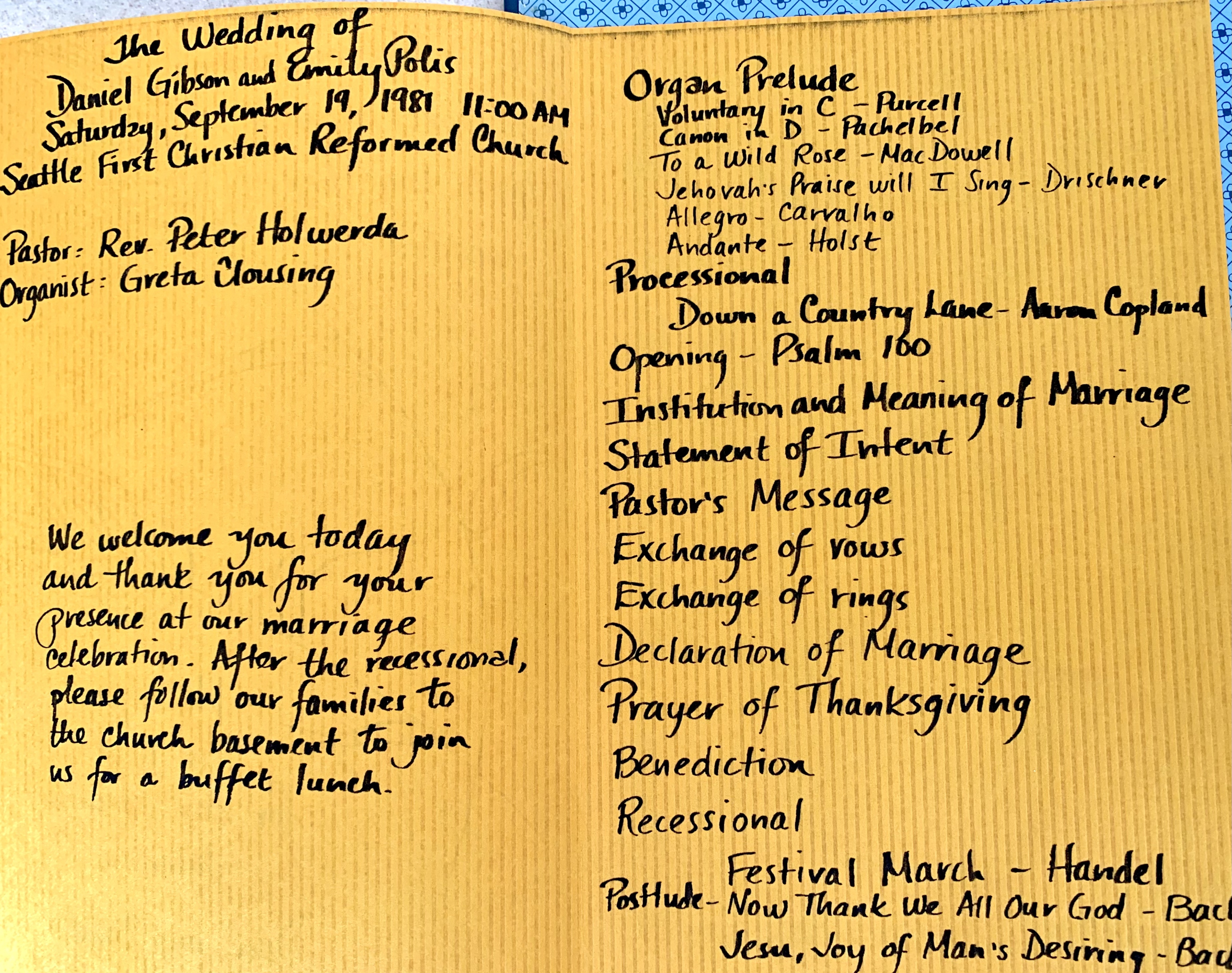
This hit me when we celebrated our grandson’s third birthday a few days ago in a suburban backyard where my daughter has continued the Gibson/Polis gardening tradition, using the compost we hauled in our truck from our farm several hours away.

Her peas were full and ripe and juicy, her greens lush and tasty – simple perfection thanks to her careful tending.

Meanwhile, our son gardens with his three boys in a very small urban backyard in Denver, teaching them what is weed and what will become a future meal.

I couldn’t help but get weepy, enjoying that special birthday feast.

…and knowing someday, our grandsons will plant and weed and harvest from the soil just as we and their parents did, over and over, again and again.

And this is why my eyes are closed
It’s just as well for all I’ve seen
And so it goes, and so it goes
And you’re the only one who knows

~Billy Joel

Just An Ordinary Life

No doubt she’s disappointed.

Such a disgrace I turned out to be.

Not a policy-maker
Or tech-savvy entrepreneur.
Nothing of note.

I gave birth three times
and sent three
tall, kind people 
into the world

I offered words of consolation
I planted sunflowers
I listened

Elected official?
Pulitzer Prize-winning journalist?
Cutting-edge thought-leader?
MD, PhD, CEO?
Oscar, Emmy, Tony? 
Nobel? 
Anything?

I closed my mother’s eyes
when she died
and again, my father’s

I made no fortune
no headlines
nothing went viral

I sang and danced
for no one

I remembered
I noticed
I breathed

Just an ordinary life
filled with extraordinary love.

How disappointing.
~Mary Poindexter McLaughlin “Alma Mater”

Parents can hold unreasonable expectations of success for their children; they tend to reflect their own deficiencies or failures.
After all, we want our kids to make the world a better place
than it was for us.

Yet no academic degree, no bank account, no notoriety or award
can match living an ordinary life filled with extraordinary love.

And yes, I am disappointed in myself – not because of the unmet expectations of my parents – I checked off all the boxes they hoped I would achieve in my younger years, but I couldn’t match the extraordinary love they showed me.

The older me tended to withhold myself emotionally from them as they grew frailer, fearing their weaknesses would someday become my own.

I could have been more compassionate in their final years, rather than taking on the more professional role of the doctor-daughter – physically present but too distracted and stretched with competing responsibilities.

That is something I cannot undo now except to pray for forgiveness for how my own inner struggles made those years harder than they needed to be.

My husband and I birthed three tall kind people who we love and have sent into the world. I pray for them what I wish I had understood when I was sent into the world by my parents: living their ordinary life of extraordinary love is more important than anything else they set out to do.

I rejoice as I see them foster such love for their spouses and their children and their communities: remembering, noticing and breathing life into each new day.

Seeing that as the years go by, I keep planting my sunflowers, slowly letting go of my own disappointment in myself.

All Parents Must Feel This

Today I’m sharing some poems I’ve collected recently about parenting, as I realize, looking back at my life, being a parent (and now a grandparent) has been my greatest joy.

In the early afternoon my mother
was doing the dishes. I climbed
onto the kitchen table, I suppose
to play, and fell asleep there.
I was drowsy and awake, though,
as she lifted me up, carried me
on her arms into the living room,
and placed me on the davenport,
but I pretended to be asleep
the whole time, enjoying the luxury—
I was too big for such a privilege
and just old enough to form
my only memory of her carrying me.
She’s still moving me to a softer place.

~Leo Dangel “In Memoriam” from Saving Singletrees.

We stop at the dry cleaners and the grocery store
and the gas station and the green market and
Hurry up honey, I say, hurry,
as she runs along two or three steps behind me
her blue jacket unzipped and her socks rolled down.

Where do I want her to hurry to? To her grave?
To mine? Where one day she might stand all grown?
Today, when all the errands are finally done, I say to her,
Honey I’m sorry I keep saying Hurry –
you walk ahead of me. You be the mother.

And, Hurry up, she says, over her shoulder, looking
back at me, laughing. Hurry up now darling, she says,
hurry, hurry, taking the house keys from my hands.

~Marie Howe “Hurry”

It wouldn’t even matter if I could sleep
as in was capable
since soon as I tuck in
my son calls from his bad
dream and I’m upstairs wiping his brow
and saying how it’s okay
so I trudge back down and arrange
the pillow just right and my breath steadies
till my daughter coughs and needs water
downstairs to get it creak back up and I tell
her it’s okay and I flop downstairs again
and find my bed after and in it the baby
upset by all this walking and creaking
and I hear her and I pat her on the back
and make wave sounds with my mouth
telling her she’s okay and I don’t know if
I am really I’m tired but I also feel guilty
like I’ve won something huge, opulent
and undeserved.
~Mischa Willett “Price”

All day the stars watch from long ago
my mother said I am going now
when you are alone you will be all right
whether or not you know you will know
look at the old house in the dawn rain
all the flowers are forms of water
the sun reminds them through a white cloud
touches the patchwork spread on the hill
the washed colors of the afterlife
that lived there long before you were born
see how they wake without a question
even though the whole world is burning

~ W.S. Merwin, “Rain Light” from The Shadow of Sirius

The best thing I did
for my mother
was to outlive her

for which I deserve
no credit

though it makes me glad
that she didn’t have
to see me die

Like most people
(I suppose)
I feel I should
have done more
for her

Like what?
I wasn’t such a bad son

I would have wanted
to have loved her as much
as she loved me
but I couldn’t
I had a life a son of my own

a wife and my youth that kept going on
maybe too long

And now I love her more
and more

so that perhaps
when I die
our love will be the same

though I seriously doubt
my heart can ever be
as big as hers

~Ron Padgett “The Best Thing I Did” from Collected Poems.

When the doctor suggested surgery
and a brace for all my youngest years,
my parents scrambled to take me
to massage therapy, deep tissue work,
osteopathy, and soon my crooked spine
unspooled a bit, I could breathe again,
and move more in a body unclouded
by pain. My mom would tell me to sing
songs to her the whole forty-five minute
drive to Middle Two Rock Road and forty-
five minutes back from physical therapy.
She’d say, even my voice sounded unfettered
by my spine afterward. So I sang and sang,
because I thought she liked it. I never
asked her what she gave up to drive me,
or how her day was before this chore. Today,
at her age, I was driving myself home from yet
another spine appointment, singing along
to some maudlin but solid song on the radio,
and I saw a mom take her raincoat off
and give it to her young daughter when
a storm took over the afternoon. My god,
I thought, my whole life I’ve been under her
raincoat thinking it was somehow a marvel
that I never got wet.
~Ada Limón “The Raincoat”

In the spelling bee my daughter wore a good
brown dress and kept her hands folded.
There were twelve children speaking


into a microphone that was taller than
they were. Each time it was her turn
I could barely look. It wasn’t that I wanted


her to win but I hoped she would be
happy with herself. The words were too hard
for me; I would have missed chemical,


thermos, and dessert. Each time she spelled
one correctly my heart became a bird.
She once fluttered so restlessly beneath


my skin and, on the morning of her arrival,
her little red hands held nothing.
Her life since has been a surprise: she can


sew; she can draw; she can read. She hates
raisins but loves science. All the parents
must feel this, watching from the cheap


folding chairs. Somewhere inside them
love took shape and now
it stands at the microphone, spelling.

~Faith Shearin “Spelling Bee” from Moving the Piano.

Each carried a balloon from a special event for kids and their families.

It had been a morning of our family being together, just because. Being a grandparent needs no other reason other than “just because.”

Big sister was saying how she planned to take her balloon to school on Monday to show her friends. She was enjoying the balloon’s bobbing and weaving in the air … until suddenly it popped, causing her to jump and then she had nothing left but tatters in her hand.

Her face crumpled and the tears began to flow.

Little brother gripped his balloon more tightly, looking at his sister’s tears and worrying the same thing might happen to his balloon. His face contorted, ready to cry right along with her.

Then there was a moment of clarity and insight in his eyes.

He handed his balloon to her. He said, “here, you can have mine.” And though he was clearly sad at the thought of having no balloon himself, his eyes were shining with proud tears.

He had discovered what it meant to sacrifice, to comfort and care for someone he loved.

She was speechless. She held his balloon gently, struggling to know how to respond. If it was even possible, she loved him so much more in that moment.

So their parents said to her brother, “we think that gift deserves stopping for a hot chocolate on the way home.”

Big sister looked at her parents, looked again at her little brother, and handed the balloon back to him, saying “why don’t we share?”

Hot chocolate makes all things wonderful and cozy and better, when shared with children we would give up anything so they can flourish.

Cut and Tumble, Sickness and Weeping

God keep my jewel this day from danger;
From tinker and pooka and bad-hearted stranger.
From harm of the water, from hurt of the fire.
From the horns of the cows going home to the byre.
From the sight of the fairies that maybe might change her.
From teasing the ass when he’s tied to the manger.
From stones that would bruise her, from thorns of the briar.
From evil red berries that wake her desire.
From hunting the gander and vexing the goat.
From the depths o’ sea water by Danny’s old boat.
From cut and from tumble, from sickness and weeping;
May God have my jewel this day in his keeping.
~Winifred Lett (1882-1973)
“Prayer for a Child

photo by Nate Gibson

I pray because I can’t help myself. I pray because I’m helpless. I pray because the need flows out of me all the time, waking and sleeping. It doesn’t change God. It changes me.
~C.S. Lewis

I want to make a case for the Lighthouse Parent, a term that the pediatrician Kenneth Ginsburg and others have used. A Lighthouse Parent stands as a steady, reliable guide, providing safety and clarity without controlling every aspect of their child’s journey. 

Like a lighthouse that helps sailors avoid crashing into rocks, Lighthouse Parents provide firm boundaries and emotional support while allowing their children the freedom to navigate their own challenges. They demonstrate that they trust their kids to handle difficult situations independently. The key is learning when to step back and let them find their own way.
~Russell Shaw from “Lighthouse Parents Have More Confident Kids”

celebrating a long-awaited pregnancy – 1985

This “prayer for a child” has hung on the wall in our home for four decades, purchased when I was pregnant with our first of three children.

The drawing of the praying mother watching her toddler leave the safety of the home to explore the wide world addressed my worries as a new mama. I would glance at it daily, knowing the world is full of peril; it would remind me of God’s care for our family through every scary thing, real or imagined.

It helped me smile at a few of my irrational fears. Tinkers and pookas and fairies were unlikely to find our children in our rural landscape but at times the world seems full of “black-hearted strangers” and other threats, known and unknown.

Decades later, I continue to pray for our grown children and their God-given spouses, and for six adventuresome grandchildren.

I pray because I can’t not pray, and because I’m helpless without the care and compassion of our sovereign God for each of us, especially when we are brand new, completely dependent and helpless. He is a true “lighthouse” in our lives,

May I be changed by my prayers, molded into a “grand” mother and a light for our half dozen cherished grandchildren, each a jewel in His keeping.

Staring at Empty Air

On the green hill with the river beyond it
long ago and my father there
and my grandmother standing in her faded clothes
wrinkled high-laced black shoes in the spring grass
among the few gravestones inside their low fence
by the small white wooden church
the clear panes of its windows
letting the scene through from the windows
on the other side of the empty room
and a view of the trees over there
my grandmother hardly turned her head
staring like a cloud at the empty air
not looking at the green glass gravestone
with the name on it of the man to whom
she had been married and who had been
my father’s father she went on saying nothing
her eyes wandering above the trees
that hid the river from where we were
a place where she had stood with him one time
when they were young and the bell kept ringing
~W.S. Merwin “Widnoon” from The Moon Before Morning

peekaboocloud

I remember my grandfather as a somber man who slowly rocked in a wooden chair, staying warm by the wood stove.

That chair now sits empty in our home.

For most of his life, Grandpa drank heavily, but he wasn’t just any drunk. He was a mean drunk. Surly, cursing, prone to throwing things and people, especially at home.

Grandma used to say he learned to drink in the logging camps and I suspect that is true. He started working as a logger before he was fully grown, dropping out of school, leaving home around age sixteen and heading up to the hills where real money could be made. 

He learned how to cut down huge old growth Douglas Fir trees, skid them down the hills using a team of horses, and then roll them onto waiting wagons to be hauled to the mills.

He lived with a group of men who surfaced once or twice a month from the hills to take a bath, bootleg booze during prohibition then try to avoid being arrested and thrown in the local pokey. Once in awhile, they maybe went to church with their womenfolk.

Mostly, being a logger taught him how to curse and drink.

He headed home to his father’s homestead farm with muscles and attitude a few years later, and started the process of felling trees, creating a “stump farm” that was a challenge to work because huge “old growth” stumps dotted the fields and hills next to muddy Similk Bay. He slowly worked at blasting them out of the ground so the land could be tilled.

It proved more than he had strength and motivation to do, so his fields were never very fruitful on that rocky hillside. He mostly grew hay for his own animals. He went to work in the local saw mill to make ends meet.

He cleaned up some when he met my grandmother, who at eighteen was seven years younger, and eager to escape her role as chief cook and bottle washer for her widowed father and younger brother.  She was devout, lively and full of energy and talked constantly while he, especially when sober, preferred to let others do the talking. It was an unusual match but he liked her cooking and she was ready to be wooed to escape the drudgery of her father’s household.

They settled on the stump farm and began raising a family, trying to eke out what living they could from the land, from the sporadic work he found at the saw mill, and every Sunday, took the wagon a mile down the road to the Bible Church where they both sang with gusto.

He still drank when he had the money, blowing his pay in the local tavern, and stumbling in the back door roaring and burping, falling into bed with his shoes on. Grandma was a teetotaler and yelled into his ruddy face about the wrath of God anytime he drank, their four children hiding when the dishes started to fly, and when he would whip off his belt to hit anyone who looked sideways at him.

When their eldest daughter took sick and died of lymphoma at age eight despite the little doctoring that was available, Grandpa got sober for awhile. He saw it as punishment from God, or at least that is what Grandma told him through her sobs as she struggled to cope with her loss.

Over the years, he relapsed many times, losing fingers in his work at the mill, and losing the respect of his wife, his children and the people in the community. Grandma took the kids for several months to cook in a boarding house in a neighboring town, simply to be able to feed her family while Grandpa squandered what he had on drink.

Reconciled over and over again, Grandma would come back to him, sending their only son to fetch him from the tavern for the night. My Dad would bicycle to that dark and smoky place, stand Grandpa up and guide him staggering out to their truck for the weaving drive home on country roads. On more than one occasion, Grandpa, belligerent as ever, would resist leaving and throw a punch at his boy, usually missing by a mile.

But once the boy grew taller and strong enough to fight back, managing to knock Grandpa to the ground in self-defense, the punching and resistance stopped. The boozing didn’t.

Grandpa sobered up for good while his boy fought in the war overseas in the forties, striking a bargain with God that his boy would come home safe to work the farm as long as Grandpa left alcohol alone.  It stuck and he stayed sober. His boy came home. Grandpa saw it as a promise kept and became an elder in his Bible Church, taught Sunday School and gave his extra cash to the church rather than the tavern. He and Grandma donated a house on their property to the church for a parsonage.

Some twelve years later, sitting in a Christmas Sunday School program one Christmas Eve, Grandpa leaned toward Grandma; she saw his face broken out in sweat, his face ashen.

“It’s hot in here, I need air, “ he said and collapsed in her lap. 

He was gone, just like that. He left the rest of his family behind while he sat in church, sober as can be, on the day before Christmas.

There is no question in my mind he knew he was forgiven. He headed home one more time, not weaving or swerving but traveling straight and narrow.

marshmallowmay3

Gone to Feed the Roses

Done are the toils and the wearisome marches,
Done is the summons of bugle and drum.
Softly and sweetly the sky overarches,
Shelt’ring a land where Rebellion is dumb.
Dark were the days of the country’s derangement,
Sad were the hours when the conflict was on,
But through the gloom of fraternal estrangement
God sent his light, and we welcome the dawn.
O’er the expanse of our mighty dominions,
Sweeping away to the uttermost parts,
Peace, the wide-flying, on untiring pinions,
Bringeth her message of joy to our hearts.

Ah, but this joy which our minds cannot measure,
What did it cost for our fathers to gain!
Bought at the price of the heart’s dearest treasure,
Born out of travail and sorrow and pain;
Born in the battle where fleet Death was flying,
Slaying with sabre-stroke bloody and fell;
Born where the heroes and martyrs were dying,
Torn by the fury of bullet and shell.
Ah, but the day is past; silent the rattle,
And the confusion that followed the fight.
Peace to the heroes who died in the battle,
Martyrs to truth and the crowning of Right!

Out of the blood of a conflict fraternal,
Out of the dust and dimness of death,
Burst into blossoms of glory eternal
Flowers that sweeten the world with the breath.
Flowers of charity, peace, and devotion
Bloom in the hearts that are empty of strife;
Love that is boundless and broad as the ocean
Leaps into beauty and fullness of life.
So, with the singing of paeans and chorals,
And with the flag flashing high in the sun,
Place on the graves of our heroes the laurels
Which their unfaltering valor has won!

~Paul Dunbar “Ode for Memorial Day”

homepristinerose

I am not resigned to the shutting away
of loving hearts in the hard ground.
So it is, and so it will be,

for so it has been, time out of mind:

Into the darkness they go, the wise and the lovely.  Crowned
With lilies and with laurel they go; but I am not resigned.
Lovers and thinkers, into the earth with you.
Be one with the dull, the indiscriminate dust.

A fragment of what you felt, of what you knew,
A formula, a phrase remains,—but the best is lost.
The answers quick and keen, the honest look,

the laughter, the love,—
They are gone.  They are gone to feed the roses.  Elegant and curled
Is the blossom.  Fragrant is the blossom.  I know. 

But I do not approve.

More precious was the light in your eyes
than all the roses in the world.
Down, down, down into the darkness of the grave
Gently they go, the beautiful, the tender, the kind;

Quietly they go, the intelligent, the witty, the brave.
I know.  But I do not approve.  And I am not resigned.
~Edna St. Vincent Millay “Dirge Without Music”

weepingrose

Each Memorial Day weekend without fail ~

we gather with family, have lunch, reminisce,
and trek to a cemetery high above the Sound
to catch up with our relatives who lie there, still.
Some for nearly 120 years, some more recent,
some we knew and loved and miss every day,
others not so much, unknown to us
except on genealogy charts,
their long-ago names and dates and these stones
all that is left of them.

Seven generations together briefly,
above and below the ground,
age 6 through 200 years.

Yet we know each
(as we know for ourselves and others)
was tender and kind, even though flawed and broken,
was beautiful and strong, even though wrinkled and frail,
was hopeful and faithful, even though too soon in the ground.

We know this about them
as we know it about ourselves:
someday we too will feed roses,
the light in our eyes transformed into elegant swirls
emitting the fragrant scent of heaven.

No one asks if we approve.
Nor am I resigned to this but only know:
So it is, so it has been, so it will be.

roseonblack

Goin’ home, goin’ home,
I’m a goin’ home;
Quiet like, some still day,
I’m jes’ goin’ home.
It’s not far, jes’ close by,
Through an open door;
Work all done, care laid by,
gwine to fear no more.

Mother’s there ‘spectin’ me,
Father’s waitin’ too;
Lots o’folk gather’d there,
All the friends I knew.

Home, home,
I’m goin’ home!
Nothin’ lost, all’s gain,
No more fret nor pain,
No more stumblin’ on the way,
No more longin’ for the day,
Gwine to roam no more!

Mornin’ star lights the way,
Res’less dreams all done;
Shadows gone, break o’day,
Real life jes’ begun.

Dere’s no break, ain’t no end,
Jes’ a livin’ on;
Wide awake, with a smile.
Goin’ on and on.

Goin’ home, goin’ home,
I’m jes’ goin’ home.
It’s not far, jes’ close by,
Through an open door;
I’m jes’ goin’ home.
Goin’ home.

What is Left Undone Will Wait

To rest before the sheaves are bound,
toss the scythes aside, bare the feet and sink
into the nearest haystack, release
the undone task and consent to sleep
while the brightest hour burns an arc
across its stretch of sky:
this is the body’s prayer, mid-day angelus
whispered in mingled breath while the limbs
stretch in thanksgiving and the body turns
toward the beloved.

This is the prayer of trust:
what’s left undone will wait. The unattended
child, the uncut acre, cracked wheel, broken
fence that are occupations of the waking mind
soften into shadow in the semi-darkness
of dream. All shall be well. Little depends on us.
The turning world is held and borne in love.
We give good measure in our toil and, meet and right,
obey the body when it calls us to rest.

~Marilyn Chandler McEntyre “Noon Rest (after Millet: 1890)” from “The Color of Light: Poems on Van Gogh’s Late Paintings”

Van Gogh: Noon Rest at Musée d’Orsay, Paris
Lying Man in Meijer Gardens

When you lie down, you will not be afraid;
when you lie down, your sleep will be sweet.
Proverbs 3:24

Thanks to retirement, I have learned to love mid-day naps.

After forty-plus years of 10 hour work days, then awakened with calls at night, I managed to semi-thrive on minimal sleep.

Not any more.

In my new reality, I have discovered that it is possible to leave things undone, something that was never possible during doctoring and patient care. Now it is okay to set a task aside and think about it later. All this hasn’t come naturally to me, but I’m learning.

So it is time to kick off my shoes, pull a quilt up to my chin and close my eyes, just for a little while.

All will be well. The world keeps turning, even when I’m not the one pedaling to keep it going.

Leaning Lest We Fall

Today we both fell.

Eventually balance moves
out of us into the world;
it’s the pull of rabbits
grazing on the lawn
as we talk, the slow talk
of where and when,
determining what
and who we will become
as we age.

We admire the new plants
and the rings of mulch you made,
we praise the rabbits eating

the weeds’ sweet yellow flowers.

Behind our words the days
serve each other as mother,
father, cook, builder, and fixer;
these float like the clouds
beyond the trees.

It is a simple life, now,
children grown, our living made
and saved, our years our own,
husband and wife,

but in our daily stride, the one
that rises with the sun,
the chosen pride,
we lean on our other selves,
lest we fall
into a consuming fire
and lose it all.
~Richard Maxson, “Otherwise” from  Searching for Arkansas

i carry your heart with me (i carry it in
my heart) i am never without it(anywhere
i go you go, my dear; and whatever is done
by only me is your doing, my darling)
I fear
no fate (for you are my fate, my sweet) I want
no world (for beautiful you are my world, my true)
and it’s you are whatever a moon has always meant
and whatever a sun will always sing is you

here is the deepest secret nobody knows
(here is the root of the root and the bud of the bud
and the sky of the sky of a tree called life; which grows
higher than soul can hope or mind can hide)
and this is the wonder that’s keeping the stars apart

i carry your heart (i carry it in my heart)
~e.e. cummings “i carry your heart with me”

May the sun bring you new energy by day,
May the moon softly restore you by night,
May the rain wash away your worries,
May the breeze blow new strength into your being.

May you walk gently through the world,
And know it’s beauty all the days of your life.

~Apache Blessing

Our days are slower now, less rushed, more reading and writing, walking and pondering, taking it all in and wondering what comes next.

I am so grateful not to hurry to work every day, planning how I should parcel out each moment when my energy and strength is waning.

Should I stay busy cooking, cleaning, sorting, giving away, simplifying our possessions so our children someday won’t have to?
Might our grandchildren tire of my attention? Or should I find ways to be of service off the farm to feel worthy of each new day, each new breath?

This time of life is a gift of grace, waking most days with no agenda and few appointments. What comes next remains uncertain, as it always has been. In my busyness, I simply didn’t pay enough attention before.

So I lean lest I fall.
I notice beauty and write about it.
I carry as many hearts as I can hold.
I keep breathing lest I forget how.

One Small Cry

The children have gone to bed.
We are so tired we could fold ourselves neatly
behind our eyes and sleep mid-word, sleep standing
warm among the creatures in the barn, lean together
and sleep, forgetting each other completely in the velvet,
the forgiveness of sleep.

Then the one small cry:
one strike of the match-head of sound:
one child’s voice:
and the hundred names of love are lit
as we rise and walk down the hall.

One hundred nights we wake like this,
wake out of our nowhere
to kneel by small beds in darkness.
One hundred flowers open in our hands,
a name for love written in each one.
~Annie Lighthart,“The Hundred Names of Love” from Iron String

I thought I had forgotten how to wake to the sound of a baby’s cry or a child’s voice calling out in the night.

I thought I wouldn’t remember how to gently open their bedroom door, entering their darkness from my own darkness, sorting out what was distressing them, sensing how to soothe them back to slumber, wondering if I might sing or pray the words they needed to hear, bringing a blossoming peace and stillness to their night.

When our son’s family arrived three years ago from thousands of miles away, staying with us until they could settle in their own place, I was reminded my nights were never meant to be mine alone.

As a child myself, I had such frequent night-wakenings that I’m sure my mother despaired that I would ever sleep through the night. She would come when I called, sitting beside my bed, rubbing my back until I forgot what woke me in the first place. She was patient and caring despite her own weariness, sleep problems and worriedness. She loved me and forgave me for needing her presence in the night; her nights were never her own.

So I too responded with compassion when my own children called out in the night. As part of my doctoring life, I woke regularly to phone calls from the ER or hospital and from patients during forty-two years of medical practice; I listened and tried my best to answer anxious questions with gentle understanding.

And when a grandchild sleeps here overnight, I’m on call again, remembering the sweetness of someone responding in the dark; the fears of the night need the promise of the Lord staying with us until the new day comes, usually only a few hours away.

Little child, be not afraid
Though rain pounds harshly against the glass
Like an unwanted stranger, there is no danger
I am here tonight

Little child, be not afraid
Though thunder explodes and lightning flash
Illuminates your tear-stained face
I am here tonight

And someday you’ll know
That nature is so
The same rain that draws you near me
Falls on rivers and land
On forests and sand
Makes the beautiful world that you’ll see
In the morning

Little child, be not afraid
Though storm clouds mask your beloved moon
And its candlelight beams, still keep pleasant dreams
I am here tonight

Little child, be not afraid
Though wind makes creatures of our trees
And their branches to hands, they’re not real, understand
And I am here tonight

And someday you’ll know
That nature is so
The same rain that draws you near me
Falls on rivers and land
On forests and sand
Makes the beautiful world that you’ll see
In the morning

For you know, once even I was a
Little child, and I was afraid
But a gentle someone always came
To dry all my tears, trade sweet sleep for fears
And to give a kiss goodnight

Well now I am grown
And these years have shown
That rain’s a part of how life goes
But it’s dark and it’s late
So I’ll hold you and wait
‘Til your frightened eyes do close

And I hope that you’ll know
That nature is so
The same rain that draws you near me
Falls on rivers and land
On forests and sand
Makes the beautiful world that you’ll see
In the morning

Everything’s fine in the morning
The rain’ll be gone in the morning
But I’ll still be here in the morning

A Halloween Forty Years Ago

In the quiet misty morning
When the moon has gone to bed
When the sparrows stop their singing
And the sky is clear and red
When the summer ceased it’s gleaming
When the corn is past its prime
When adventures lost its meaning
I’ll be homeward-bound in time
~Marta Keen from “Homeward Bound”

On Halloween day in 1985, I packed up a roll-up mattress pad, grabbed one lonely pumpkin from our small garden, locked our rental house door for the last time, then climbed in my car to head two hours north out of Seattle.

I don’t recall looking back in the rear view mirror at the skyline after nine years living in the city. My husband had moved to Whatcom County two months earlier to start his new job. I had stayed behind to wrap up my Group Health family practice in the Rainier Valley of central Seattle.

I was leaving the city for our new rural home and a very uncertain professional future.

I knew two things for sure: I was finally several months pregnant after a miscarriage and two years of trying to conceive, so our family was on its way, and we were going to live in our own house with a few acres and a barn.

A real (sort of) starter farm and starter family, a dream we both shared.
Our home sits in the midst of woods and corn fields, with deer strolling through the fields at dawn, coyotes howling at night, Canadian geese and trumpeter swans calling from overhead and salmon thriving in nearby streams. The snowy Cascades greet us in the morning to the east, the Canadian Coastal range majestic to the north and not far to the west, the Salish Sea/Puget Sound.

Since it wouldn’t be a farm without animals, I stopped at the first pet store I drove past and found two tortoise shell calico kitten sisters peering up at me, just waiting for new adventures in farmland. Their box was packed into the one spot left beside me in my little Mazda.

With that simple commitment to raise and nurture those kittens alongside the life growing inside me, life seemed very complete.

I will never forget the freedom I felt on that drive north. The highway seemed more open, the fall colors more vibrant, the wind more energizing, our baby kicking my belly, the kittens mewing from their box. There seemed so much potential even though I had just left behind the greatest family practice found in any urban setting (at the time, it was the most ethnically diverse zip code in the United States) with patients from all over the world: alongside the multi-racial inner city population living in subsidized housing developments, my patients included Muslim immigrants from the Middle East and Indonesia, Orthodox Jews, Italian Catholics, and refugees from Cambodia, Laos, and Vietnam.

I will never know so much variety of ethnic background and perspective again. If I could have packed them all into my little car and driven them north with me, I would have.

Despite what I was leaving behind, there was certainly a feeling of freedom that rainy Halloween day as the big city disappeared in the rear view mirror.

No longer would I sit captive in freeway rush-hour bumper to bumper traffic jams. I traded that for a new rural commute winding through farm fields while watching eagles fly overhead. I could become part of a community in a way I never could manage in the city, visiting with friends at the grocery store, playing piano and teaching Sunday School at church and serving on various community boards.

After the new kittens, dubbed Nutmeg and Oregano, arrived on our farm, we added even more diversity: a Belgian Tervuren dog Tango, a Haflinger horse Greta, Toggenburg goats Tamsin and her kids, a few Toulouse geese, Araucana chickens, Fiona the Scottish Highland cow, then another Haflinger Hans and another, Tamara. I worked as a fill-in doctor in four different clinics before our first baby was born, then settled into part-time practice in several different clinics for most of my career.

With those new commitments, life was fulfilling and busy – we soon added a little brother and seven years later, a sister. Then it felt like our family was complete.

Forty years later, our children have grown and gone to homes of their own, all married to wonderful spouses, raising six delightful children for us to lavish love on.

Somehow life now feels even more complete.

A few cats, a Cardigan Corgi, and three ponies still live at the farm with us. Now retired from our professional lives “in town”, we enjoy the freedom of slower and quieter days, nurtured and nurturing.

It all started October 31, 1985 with two orange and black kittens and a pumpkin sitting beside me in a little Mazda, my husband awaiting my homecoming 100 miles north. Now, forty years later, we celebrate this Halloween anniversary of farm and family, still pregnant with the possibility that life is never truly complete when there is always a new day just around the corner.