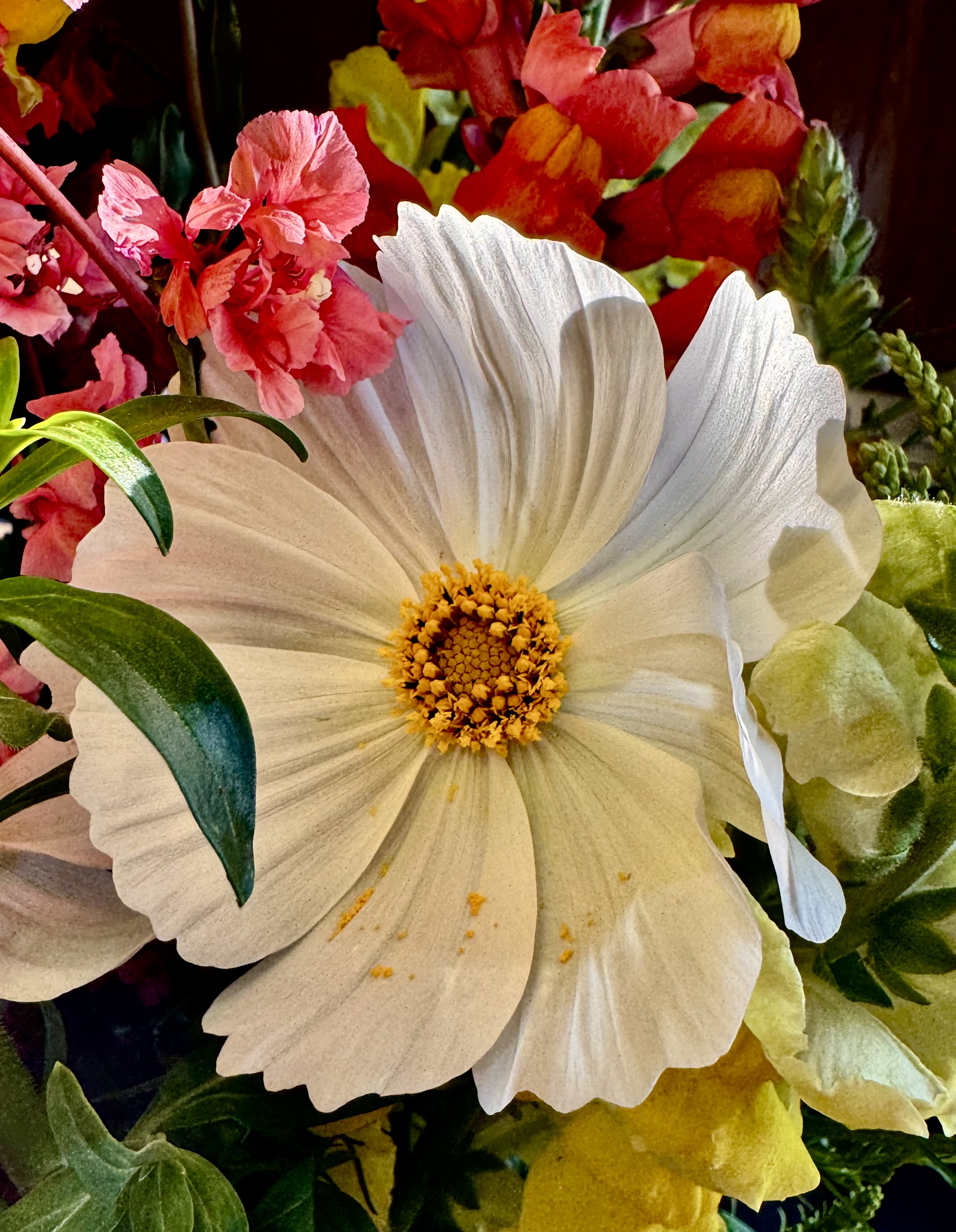
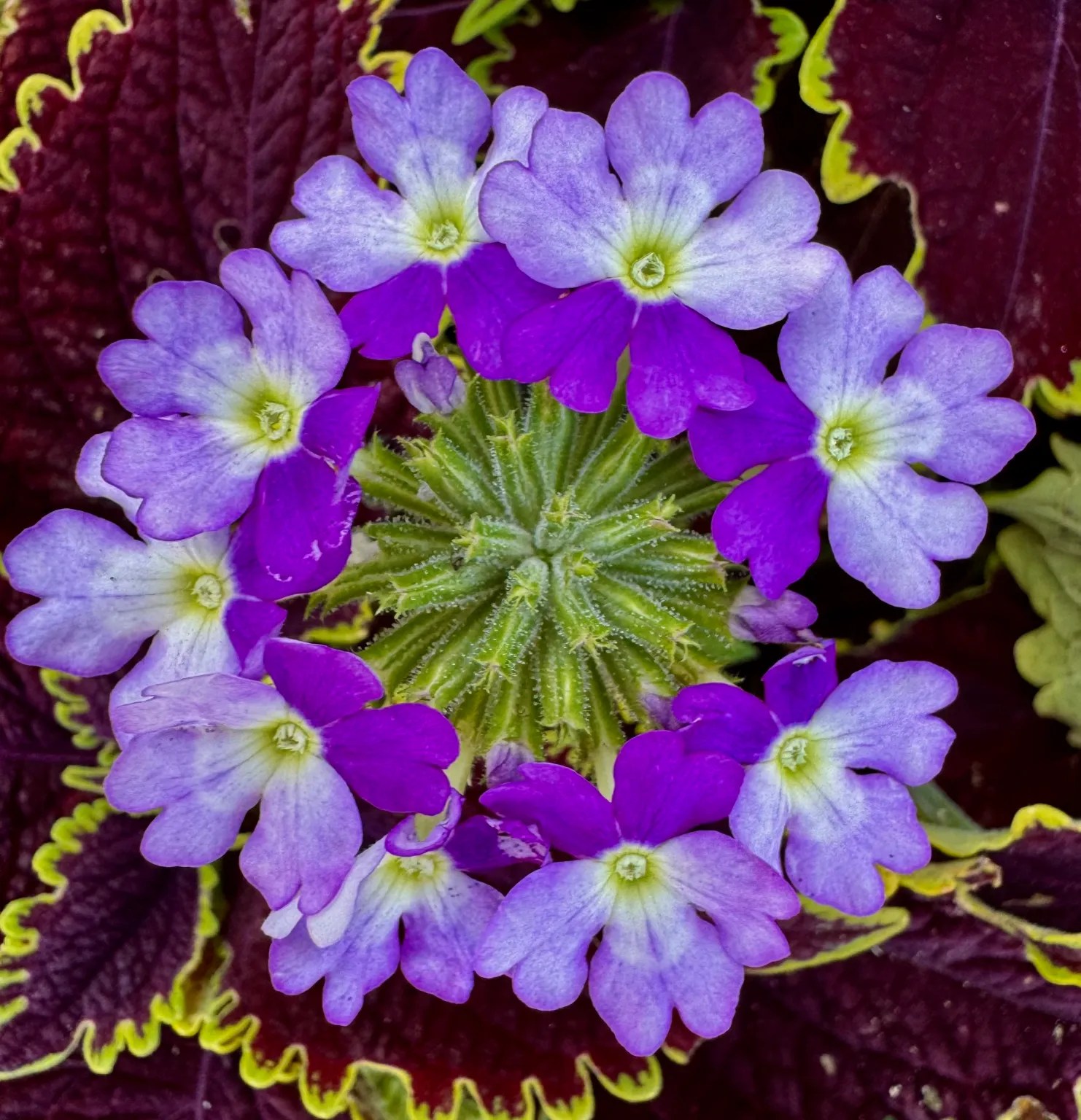
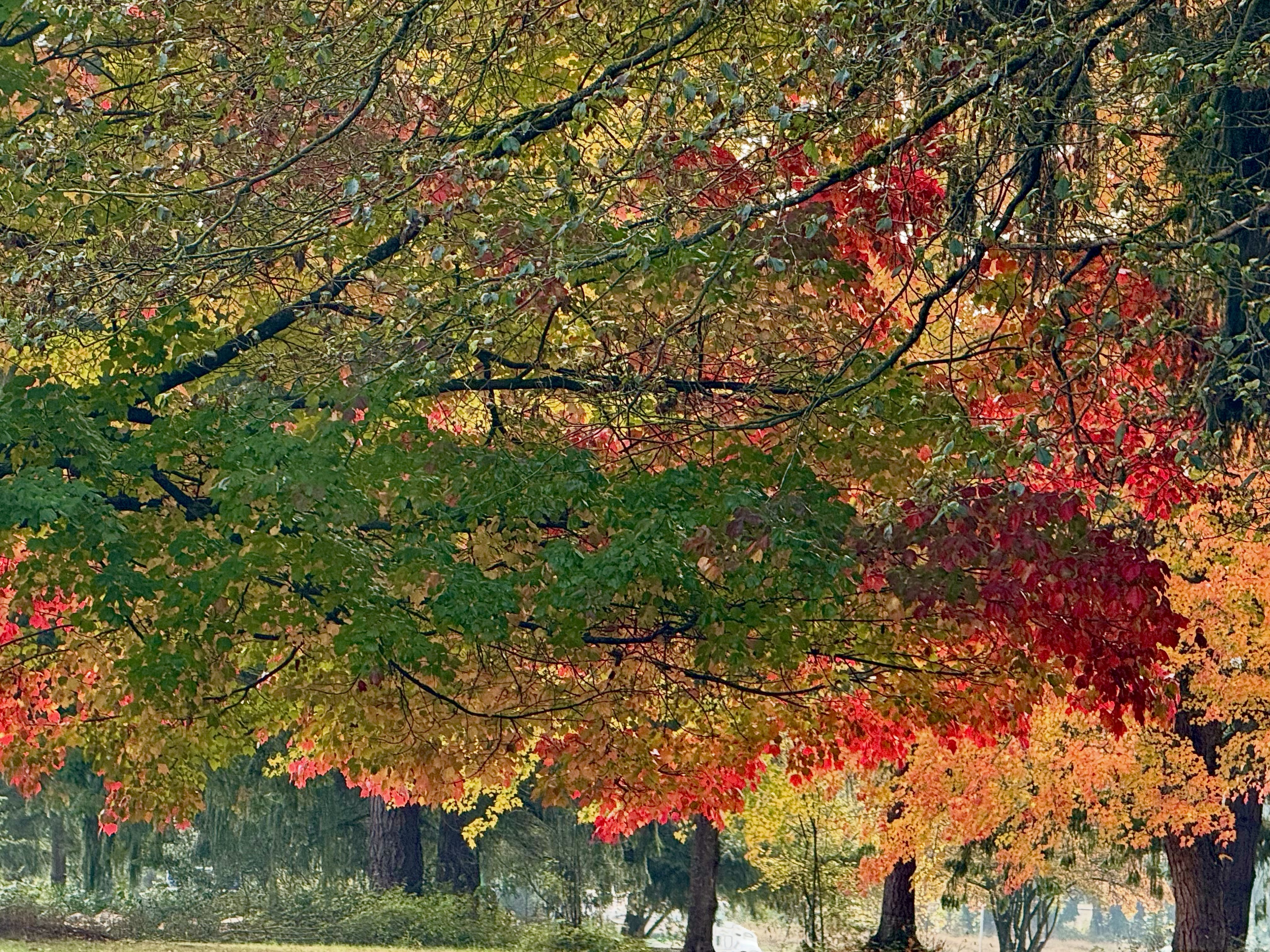
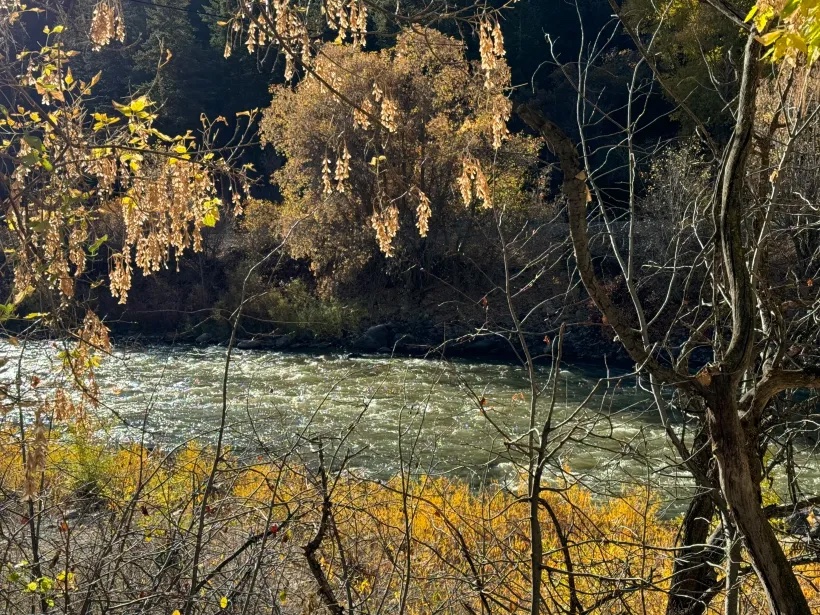
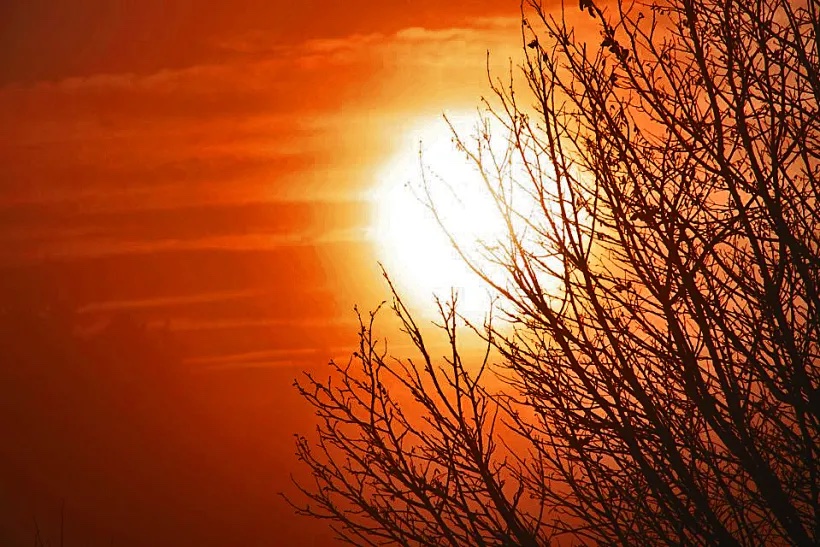
Again the woods are odorous, the lark Lifts on upsoaring wings the heaven gray That hung above the tree-tops, veiled and dark, Where branches bare disclosed the empty day.
After long rainy afternoons an hour Comes with its shafts of golden light and flings Them at the windows in a radiant shower, And rain drops beat the panes like timorous wings.
Then all is still. The stones are crooned to sleep By the soft sound of rain that slowly dies; And cradled in the branches, hidden deep In each bright bud, a slumbering silence lies. ~Rainer Maria Rilke, “In April” translated by Jessie Lamont
A Light exists in Spring Not present on the year At any other period – When March is scarcely here
A Color stands abroad On Solitary Hills That Science cannot overtake, But Human Nature feels. ~Emily Dickinson from 85- Part two: Nature
I do not know what gorgeous thing the bluebird keeps saying, his voice easing out of his throat, beak, body into the pink air of the early morning. I like it whatever it is. Sometimes it seems the only thing in the world that is without dark thoughts. Sometimes it seems the only thing in the world that is without questions that can’t and probably never will be answered, the only thing that is entirely content with the pink, then clear white morning and, gratefully, says so. ~Mary Oliver “What Gorgeous Thing” from Blue Horses
Maybe it is the particular tilt of the globe on its axis, or the suffusion of clouds mixing with the perpetually damp atmosphere, or perhaps the knowledge the darkness no longer claims us most of our waking time.
The light of gentle April has its own sacred whispering voice orchestrated with myriad birdsong.
We are immersed inside it for just a few weeks, yet it belongs framed on gallery walls for perpetuity to be admired at any time of the year, whenever we seek sweet slumber on a soft cushion of golden pastels.
Surrounded by such sacrament without and within, our recreated life in the Lord gently glows.
One-Time
Monthly
Yearly
Make a one-time or recurring donation to support daily Barnstorming posts
Then Jesus declared, “I am the bread of life. Whoever comes to me will never go hungry, and whoever believes in me will never be thirsty.
But as I told you, you have seen me and still you do not believe.All those the Father gives me will come to me, and whoever comes to me I will never drive away.
For I have come down from heaven not to do my will but to do the will of him who sent me. And this is the will of him who sent me, that I shall lose none of all those he has given me, but raise them up at the last day.
For my Father’s will is that everyone who looks to the Son and believes in him shall have eternal life, and I will raise them up at the last day.” John 6: 35-40
Awake sad heart, whom sorrow ever drowns; Take up thine eyes, which feed on earth; Unfold thy forehead gather’d into frowns: Thy Saviour comes, and with him mirth: Awake, awake; And with a thankfull heart his comforts take. But thou dost still lament, and pine, and crie; And feel his death, but not his victorie.
Arise sad heart; if thou dost not withstand, Christs resurrection thine may be: Do not by hanging down break from the hand, Which as it riseth, raiseth thee: Arise, Arise; And with his buriall-linen drie thine eyes: Christ left his grave-clothes, that we might, when grief Draws tears, or blood, not want an handkerchief. ~George Herbert “The Dawning”
On my doubting days in this fraught world, too frequent and discouraging, I remember the risen Christ who awoke, left behind His folded grave clothes, so we could dry our tears of grief.
He reached out to place Thomas’s hand in His wounds, gently guiding Thomas to His reality, to become our new reality~ His open wounds called to Thomas’s mind and heart, His flesh and blood awakening a struggling faith by a simple touch.
Leave it God to know how to dry our tears when we grieve. Leave it to God to know how to raise the unreachable.
I am reading slowly through the words in the Book of John over the next year alongside my church family. Once a week, I will invite you to “come and see” what those words might mean as we explore His promises together.
Text by Mechthild of Magdeburg Effortlessly, Love flows from God into man, Like a bird Who rivers the air Without moving her wings. Thus we move in His world One in body and soul, Though outwardly separate in form. As the Source strikes the note, Humanity sings — The Holy Spirit is our harpist, And all strings Which are touched in Love Must sound.
One-Time
Monthly
Yearly
Make a one-time or recurring donation to support daily Barnstorming posts
Though I know well enough To hunt the Lady’s Slipper now Is playing blindman’s-buff, For it was June She put it on And grey with mist the spider’s lace Swings in the autumn wind, Yet through this hill-wood, high and low, I peer in every place; Seeking for what I cannot find I do as I have often done And shall do while I stay beneath the sun. ~Andrew Young “Lady’s Slipper Orchid”
Everything is beautiful and I am so sad. This is how the heart makes a duet of wonder and grief. The light spraying through the lace of the fern is as delicate as the fibers of memory forming their web around the knot in my throat. The breeze makes the birds move from branch to branch as this ache makes me look for those I’ve lost in the next room, in the next song, in the laugh of the next stranger. In the very center, under it all, what we have that no one can take away and all that we’ve lost face each other. It is there that I’m adrift, feeling punctured by a holiness that exists inside everything. I am so sad and everything is beautiful. ~Mark Nepo “Adrift” from Inside the Miracle: Enduring Suffering, Approaching Wholeness
Under the pines, near the murmuring brook, I know the wild orchids grow, Fair and pure in their shady nook, A page in God’s own wonderful book With a message for me to know.
Come in the Spring to that beautiful bower And pause by the moss and the fern To study. And know from the little flower God’s promise of hope is ready to shower On those who will trust and learn.
Over the land, with colors so bright, Leaves whirl in the chill, fitful breeze. The gurgling brook, ice-coated and white; Ferns, mosses and orchids have vanished from sight, Dead and lost in the Winter’s first freeze.
In weakening faith and hopeless despair, Black winters of woe hold my soul. For death is the end; and each mortal must share The fate of the orchids that once blossomed there. Oblivion marketh the goal.
Hold thy hope, faithless soul, for again in the Spring Neath the pines, the wild orchids will bloom. Struggle upward toward God, thy Creator and King. The Saviour is risen and Nature doth sing, Christ overcomes death and the tomb! ~Joseph Pullman Porter “Wild Orchids”
How strange to find you where I did along a path beside a road, your legs in graceful green dancing to music made by wind and woods.
Like ladies from a bygone age, you left your slippers there to air in dappled shade, while you, barefoot, relaxed your stays, let loose your hair.
The treasures of this world might be as simple as an orchid’s bloom; how sad that so much time is spent in filling coffers for the tomb.
If only life could be so fresh and free as you in serenade, we might learn we value most those things found lost in woodland shade. ~Mike Orlock “Lady Slipper Serenade (in 4/4 time)”
My grandmother’s house where my father was born had been torn down. She sold her property on Fidalgo Island near Anacortes, Washington to a lumber company – this was the house where all four of her babies were born, where she and my grandfather loved and fought and separated and finally loved again, and where we spent chaotic and memorable Thanksgiving and Christmas meals. After Grandpa died, Grandma took on boarders, trying to afford to remain there on the homesteaded wooded acreage on Similk Bay, fronted by meadows where her Scottish Highland cattle grazed. Her own health was suffering and she reached a point when it was no longer possible to make it work. A deal was struck with the lumber company and she moved to a small apartment for the few years left to her, remaining bruised by leaving her farm.
My father realized what selling to a lumber company meant and it was a crushing thought. The old growth woods would soon be stumps on the rocky hill above the bay, opening a view to Mt. Baker to the east, to the San Juan Islands to the north, and presenting an opportunity for development into a subdivision. He woke my brother and me early one Saturday in May and told us we were driving the 120 miles to Anacortes.
He was on a mission.
As a boy growing up on that land, he had wandered the woods, explored the hill, and helped his dad farm the rocky soil. There was only one thing he felt he needed from that farm and he had decided to take us with him, to trespass where he had been born and raised to bring home a most prized treasure–his beloved lady slippers (Calypso bulbosa) from the woods.
These dainty flowers enjoy a spring display known for its brevity–a week or two at the most–and they tend to bloom in small little clusters in the leafy duff mulch of the deep woods, preferring only a little indirect sunlight part of the day. They are not easy to find unless you know where to look.
My father remembered exactly where to look.
We hauled buckets up the hill along with spades, looking as if we were about to dig for clams at the ocean. Dad led us up a trail into the thickening foliage, until we had to bushwhack our way into the taller trees where the ground was less brush and more hospitable ground cover. He would stop occasionally to get his bearings as things were overgrown. We reached a small clearing and he knew we were near. He went straight to a copse of fir trees standing guard over a garden of lady slippers.
There were almost thirty of them blooming, scattered about in an area the size of my small bedroom. Each orchid-like pink and lavender blossom had a straight backed stem that held it with sturdy confidence. To me, they looked like they could be little shoes for fairies who may have hung them up while they danced about barefoot. To my father, they represented the last redeeming vestiges of his often traumatic childhood, and were about to be trammeled by bulldozers. We set to work gently digging them out of their soft bedding, carefully keeping their bulb-like corms from losing a protective covering of soil and leafy mulch. Carrying them in the buckets back to the car, we felt some vindication that even if the trees were to be lost to the saws, these precious flowers would survive.
When we got home, Dad set to work creating a spot where he felt they could thrive in our own woods. He found a place with the ideal amount of shade and light, with the protection of towering trees and the right depth of undisturbed leaf mulch. We carefully placed the lady slippers in their new home, scattered in a pattern similar to how we found them. Then Dad built a four foot split rail fence in an octagon around them, as a protection from our cattle and a horse who wandered the woods, and as a way to demarcate that something special was contained inside.
The next spring, only six lady slippers bloomed from the original thirty. Dad was disappointed but hoped another year might bring a resurgence as the flowers established themselves in their new home. The following year there were only three. A decade later, my father left our farm and family, not looking back.
Sometime after the divorce, when my mother had to sell the farm, I visited our lady slipper sanctuary in the woods for the last time in the middle of May, seeking what I hoped might still be there, but I knew was no longer.
The split rail fence still stood, guarding nothing but old memories. No lady slippers bloomed. There was not a trace they had ever been there. They had given up and disappeared.
The new owners of the farm surely puzzled over the significance of the small fenced-in area in the middle of our woods. They probably thought it surrounded a graveyard of some sort.
And they would be right – it did.
An embroidery I made for my father after he replanted the lady slippers — on the back I wrote “The miracle of creation recurs each spring in the delicate beauty of the lady slipper – may we ourselves be recreated as well…”
One-Time
Monthly
Yearly
Make a one-time or recurring donation to support daily Barnstorming posts
Trust that there is a tiger, muscular Tasmanian, and sly, which has never been seen and never will be seen by any human eye. Trust that thirty thousand sword- fish will never near a ship, that far from cameras or cars elephant herds live long elephant lives. Believe that bees by the billions find unidentified flowers on unmapped marshes and mountains. Safe in caves of contentment, bears sleep. Through vast canyons, horses run while slowly snakes stretch beyond their skins in the sun. I must trust all this to be true, though the few birds at my feeder watch the window with small flutters of fear, so like my own. ~Susan Kinsolving “Trust”
It’s like so many other things in life to which you must say no or yes. So you take your car to the new mechanic. Sometimes the best thing to do is trust. The package left with the disreputable-looking clerk, the check gulped by the night deposit, the envelope passed by dozens of strangers— all show up at their intended destinations. The theft that could have happened doesn’t. Wind finally gets where it was going through the snowy trees, and the river, even when frozen, arrives at the right place. And sometimes you sense how faithfully your life is delivered, even though you can’t read the address. ~Thomas Smith “Trust”
When I stand at the window watching the flickers, sparrows, finches, juncos, grosbeaks, chickadees, and red-winged blackbirds come and go from the feeders, I wonder who is watching who.
They remain wary of me, fluttering away quickly if I approach with lens in hand. They fear capture, even within a camera. They have a life to be lived without my witness or participation. So much happens that I never see or know about.
I understand: I fear being captured too. I prefer to remain an enigma.
Even if only for a moment as an image preserved forever, I know it doesn’t represent all I am, all I’ve done, all I feel, all my moments put together. The birds and bees and snakes and horses are, and I am, so much more than one moment.
Only God sees us fully in every moment, witness to our freedom and captivity, our loneliness and grief, our joy and tears, our sleeping and waking, knowing our best and our worst.
And because He knows us so well and knows the address to which we will be delivered – in Him we must trust.
photo by Tomomi Gibson
One-Time
Monthly
Yearly
Make a one-time or recurring donation to support daily Barnstorming posts
More than the fuchsia funnels breaking out of the crabapple tree, more than the neighbor’s almost obscene display of cherry limbs shoving their cotton candy-colored blossoms to the slate sky of Spring rains, it’s the greening of the trees that really gets to me. When all the shock of white and taffy, the world’s baubles and trinkets, leave the pavement strewn with the confetti of aftermath, the leaves come. Patient, plodding, a green skin growing over whatever winter did to us, a return to the strange idea of continuous living despite the mess of us, the hurt, the empty. Fine then, I’ll take it, the tree seems to say, a new slick leaf unfurling like a fist to an open palm, I’ll take it all. ~Ada Limón“Instructions on Not Giving Up”
I thought I was emptied out – hollow and irretrievable – after a long drawn out winter of difficult news, and now these cold rainy spring days forecast even more bad news happening in the world.
Yet here I am ~ here we are ~ still among the living and breathing. I am swept away by what I see greening all around me.
The landscape begins to explode with layers of color and shadow. Standing close, I too am ignited. It is impossible to witness so much unfolding life and light and not be engulfed and heartened and singed around my edges.
It lures me outside where flames of green lap about my ankles as I stroll the fields and each fresh breeze fans the fires until I’ve nothing left of myself but ash and shadow.
Consumed and subsumed.
Combusted and busted.
What a way to go.
I’ll take it. I’ll take it all.
One-Time
Monthly
Yearly
Make a one-time or recurring donation to support daily Barnstorming posts
This post is from April 14, 2025 – about a special mare who still lives in our hearts:
Marlee has gone home this morning, far sooner than we planned. She was only twenty two, born only two months after our daughter’s birth, much too young an age for a Haflinger to die.
But something dire was happening to her over the last two weeks — not eating much, an expanding girth, then shortness of breath, and last week it was confirmed she had untreatable lymphoma.
Her bright eyes were shining to the end so it was very hard to ask the vet to turn the light off. But the time had come.
Marlee M&B came to us as a six month old “runty orphan” baby by the lovely stallion Sterling Silver, but she was suddenly weaned at three days when her mama Melissa died of sepsis.
She never really weaned from her bottle/bucket feeding humans Stefan and Andrea Bundshuh at M&B Farm in Canada. From them she knew people’s behavior, learned their nonverbal language, and understood human subtleties that most horses never learn. This made her quite a handling challenge as a youngster as it also meant there was no natural reserve nor natural respect for people. She had no boundaries taught by a mother, so we tried to teach her the proper social cues.
When turned out with the herd as a youngster, she was completely clueless–she’d approach the dominant alpha mare incorrectly, without proper submission, get herself bitten and kicked and was the bottom of the social heap for years, a lonesome little filly with few friends and very few social skills. She had never learned submission with people either, and had to have many remedial lessons on her training path.
Once she was a mature working mare, her relationship with people markedly improved as there was structure to her work and predictability for her, and after having her own foals, she picked up cues and signals that helped her keep her foal safe, though she had always been one of our most relaxed “do whatever you need to do” mothers when we handled her foals as she simply never learned that she needed to be concerned.
Over the years, as the herd has changed, Marlee became the alpha mare, largely by default and seniority, so I don’t believe she really trusted her position as “real”. She tended to bully, and react too quickly out of her own insecurity about her inherited position. She was very skilled with her ears but she was also a master at the tail “whip” and the tensed upper lip–no teeth, just a slight wrinkling of the lip. The herd scattered when they saw her face change. The irony of it all is that when she was “on top” of the herd hierarchy, she was more lonely than when she was at the bottom and I think a whole lot less happy as she had few grooming partners any more.
She accompanied us to the fair for a week of display of our Haflingers year after year after year — she could be always counted on to greet the public and enjoy days of braiding and petting and kids sitting on her back.
The day she started formal under saddle training under Val Bash was when the light bulb went off in her head–this was a job she could do! This was constant communication and interaction with a human being, which she craved! This was what she was meant for! And she thrived under saddle, advancing quickly in her skills, almost too fast, as she wanted so much to please her trainer.
She had, at the time, an unequaled record among North American Haflingers. She was not only regional champion in her beginner novice division of eventing as a pregnant 5 year old, but also received USDF Horse of the Year awards in First and Second Level dressage that year as the highest scoring Haflinger.
With Jessica Heidemann she did a “bridleless” ride display in front of hundreds of people at the annual Haflinger event, and with Garyn Heidemann as instructor, she became an eventing pony for a young rider whose blonde hair matched Marlee’s. She galloped with abandon in the field on bareback rides with Emily Vander Haak and became our daughter Lea’s special riding horse over the last few years.
She had a career of mothering along with intermittent riding work, with 5 foals –Winterstraum, Marquisse, Myst, Wintermond, and Nordstrom—each from different stallions, and each very different from one another.
This mare had such a remarkable work ethic, was “fine-tuned” so perfectly with a sensitivity to cues–that our daughter said: “Mom, it’s going to make me such a better rider because I know she pays attention to everything I do with my body–whether my heels are down, whether I’m sitting up straight or not.”
Marlee was, to put it simply, trained to train her riders.
We will miss her high pitched whinny from the barn whenever she heard the back door to the house open. We will miss her pushy head butt on the stall door when it was time to close it up for the night. We will miss that beautiful unforgettable face and those large deep brown eyes where the light was on.
What a ride she had for twenty two years, that dear little orphan. What a ride she gave to many who trained her and who she trained over the years. Though I never climbed on her back, what joy she gave me, the surrogate mom who loved and fed her, unable to resist those bright eyes, which are now closed in peace.
Photo Montage by Emily Vander Haak
One-Time
Monthly
Yearly
Make a one-time or recurring donation to support daily Barnstorming posts
Maybe it ruins the story to say at the start that no one was hurt the day Scotty Forester swung open the door of the family car, climbed up, put one hand on the wheel and, then, while pushing and pulling on buttons and knobs, he found and released
the brake, and it started, the silver-blue Mercury, to roll down Robin Street, best street in the neighborhood for sledding, for coasting on a bike with arms waving above your head, Scotty gaining speed on the long sweep of that block, heading
toward the intersection, then into it, then speeding through, the car beginning to slow as the street leveled out, although, toward the end, Scotty going fast enough to jump the curb before stopping, three feet from a gas pump.
Maybe knowing the ending ruins this story, but sometimes we need a break from dread. We need to know that the car did not crash, the child did not die. We need to briefly forget that we live in a world where a car is gaining speed, and
no one seems to be at the wheel. We need to be more like the dog Scotty drives past, who barks, and runs in circles as he barks some more, driven by some circuitry we have lost for loving this dangerous life, living it. ~Suzanne Cleary “Mercury”
A certain day became a presence to me; there it was, confronting me — a sky, air, light: a being. And before it started to descend from the height of noon, it leaned over and struck my shoulder as if with the flat of a sword, granting me honor and a task. The day’s blow rang out, metallic — or it was I, a bell awakened, and what I heard was my whole self saying and singing what it knew: I can. ~Denise Levertov “Variation on a Theme By Rilke”
Faith is not the clinging to a shrine but an endless pilgrimage of the heart. Audacious longings, burning songs, daring thoughts, an impulse overwhelming the heart, usurping the mind- these are all a drive towards serving Him who rings our hearts like a bell. It is as if He were waiting to enter our empty, perishing lives. ~Rabbi Abraham Joshua Heschel from Man Is Not Alone: A Philosophy of Religion
In the end, coming to faith remains for all a sense of homecoming, of picking up the threads of a lost life, of responding to a bell that had long been ringing, of taking a place at a table that had long been vacant. ~Malcolm Muggeridge
I saw the tree with lights in it. I saw the backyard cedar where the mourning doves roost charged and transfigured, each cell buzzing with flame. I stood on the grass with the lights in it, grass that was wholly fire, utterly focused and utterly dreamed.
It was less like seeing than like being for the first time seen, knocked breathless by a powerful glance.
I had been my whole life a bell, and never knew it until at that moment I was lifted and struck. ~Annie Dillardfrom Pilgrim at Tinker Creek
Too much of the time, I worry. I fixate on what I believe I can control in life as I’m barreling down the hill in this runaway car to an unknown fate.
It seems to me no one is at the wheel, but I am wrong.
The end of my story is clear to God so I can hand over my fear and dread to His merciful care.
How might I appear to my Maker each day? -my utter astonishment at waking up, -my breathless gratitude despite each out-of-control moment, -my pealing resonance as like a bell, I’m struck senseless by life.
Lyrics My father could use a little mercy now The fruits of his labor Fall and rot slowly on the ground His work is almost over It won’t be long and he won’t be around I love my father, and he could use some mercy now
My brother could use a little mercy now He’s a stranger to freedom He’s shackled to his fears and doubts The pain that he lives in is Almost more than living will allow I love my brother, and he could use some mercy now
My Church and my Country could use a little mercy now As they sink into a poisoned pit That’s going to take forever to climb out They carry the weight of the faithful Who follow ‘em down I love my Church and Country and they could use some mercy now
Every living thing could use a little mercy now Only the hand of grace can end the race Towards another mushroom cloud People in power, well They’ll do anything to keep their crown I love life, and life itself could use some mercy now
Yea, we all could use a little mercy now I know we don’t deserve it But we need it anyhow We hang in the balance Dangle ‘tween hell and hallowed ground Every single one of us could use some mercy now Every single one of us could use some mercy now Every single one of us could use some mercy now
One-Time
Monthly
Yearly
Make a one-time or recurring donation to support daily Barnstorming posts
All day I try to say nothing but thank you, breathe the syllables in and out with every step I take through the rooms of my house and outside into a profusion of shaggy-headed dandelions in the garden where the tulips’ black stamens shake in their crimson cups.
I am saying thank you, yes, to this burgeoning spring and to the cold wind of its changes. Gratitude comes easy after a hot shower, when my loosened muscles work, when eyes and mind begin to clear and even unruly hair combs into place.
Dialogue with the invisible can go on every minute, and with surprising gaiety I am saying thank you as I remember who I am, a woman learning to praise something as small as dandelion petals floating on the steaming surface of this bowl of vegetable soup, my happy, savoring tongue. ~Jeanne Lohmann “To Say Nothing But Thank You”
Returned from long travel, I sit in the familiar, sun-streaked pew, waiting for the bread and wine of holy Communion. The old comfort does not rise in me, only apathy and bafflement.
Let the light of late afternoon shine through chinks in the barn, moving up the bales as the sun moves down.
Let the cricket take up chafing as a woman takes up her needles and her yarn. Let evening come.
Let dew collect on the hoe abandoned in long grass. Let the stars appear and the moon disclose her silver horn.
Let the fox go back to its sandy den. Let the wind die down. Let the shed go black inside. Let evening come.
To the bottle in the ditch, to the scoop in the oats, to air in the lung let evening come.
Let it come, as it will, and don’t be afraid. God does not leave us comfortless, so let evening come. ~Jane Kenyon “Let Evening Come”
We resist nightfall in our lives.
We fear the dark of violence and threats of war, the suffering of innocent people who are harmed directly, and those harmed by lack of resources which go to bomb-making and dropping.
I wish I could remain forever sunshiny, vital and irreplaceable, living each moment with the energy I feel at dawn.
Yet I know that the forward momentum of time inevitably winds me down to twilight.
We are not alone in our need to catch our breath, to be still and grateful for each little thing – each petal, each taste, each sun ray illuminating the dark.
What shall we do about this? we ask our God.
We savor what we will, with gratitude, as evening comes. There is no stopping it as our lungs fill with the breath of God, our Creator.
We are not left comfortless.
One-Time
Monthly
Yearly
Make a one-time or recurring donation to support daily Barnstorming posts