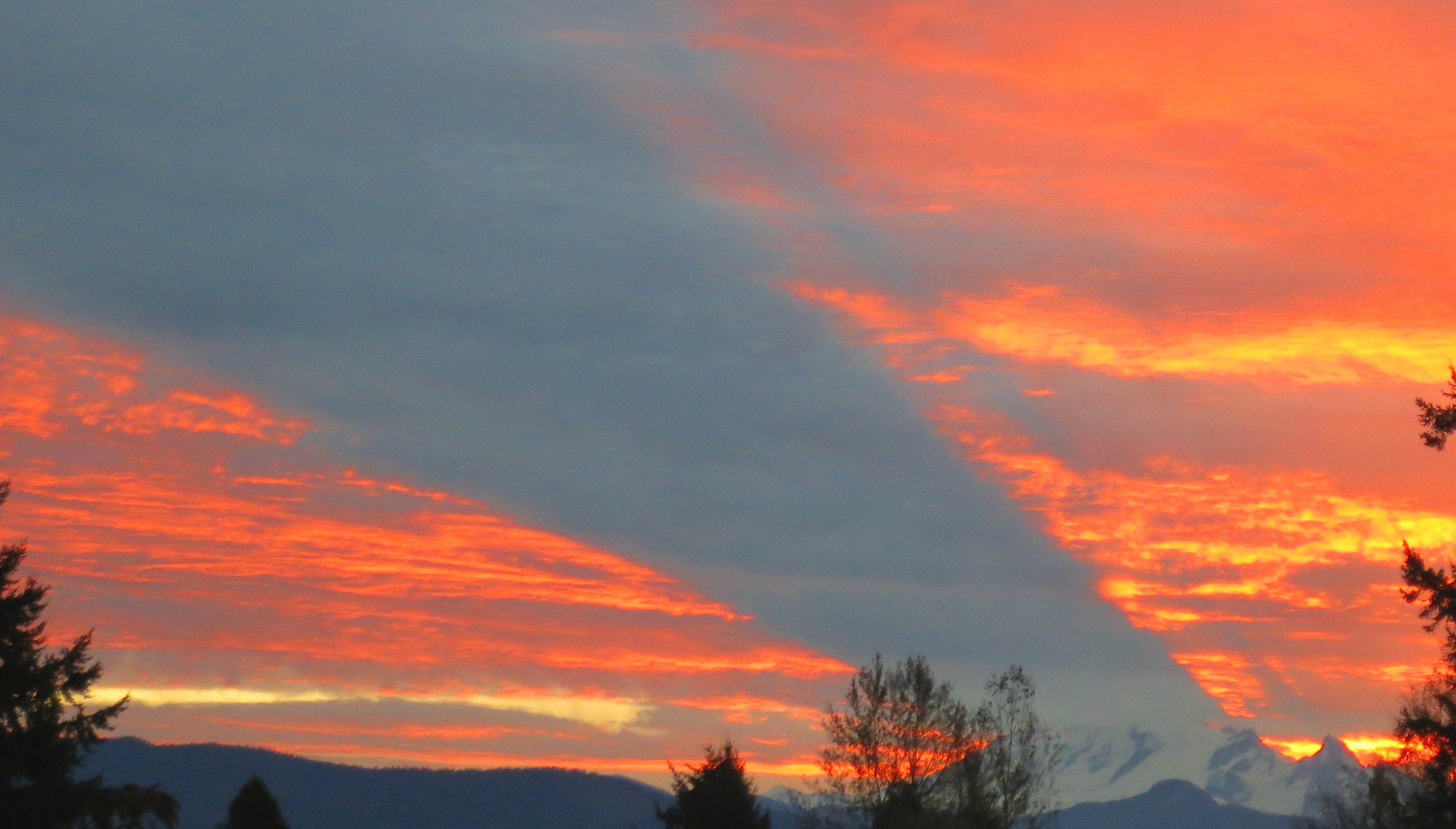
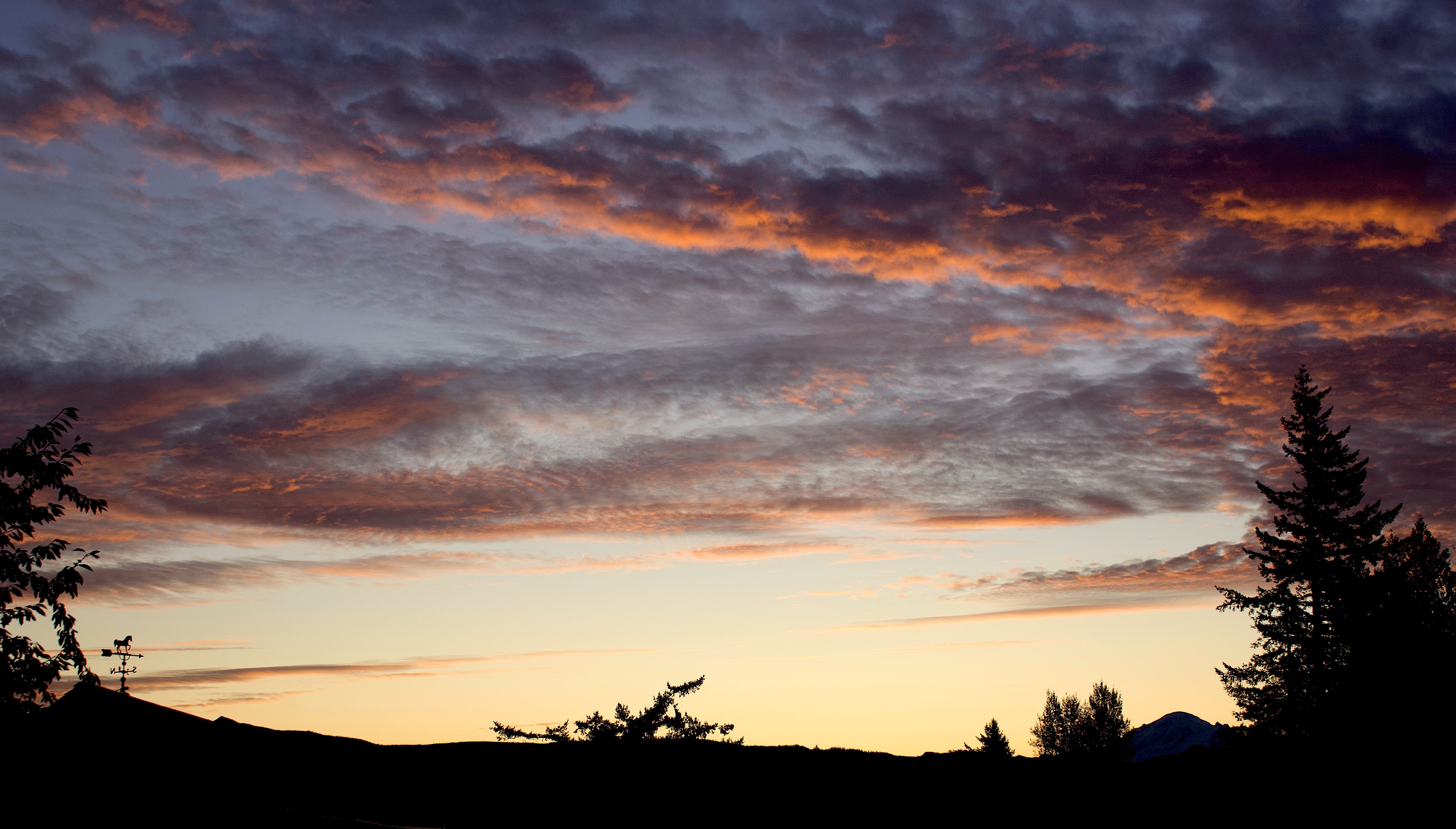
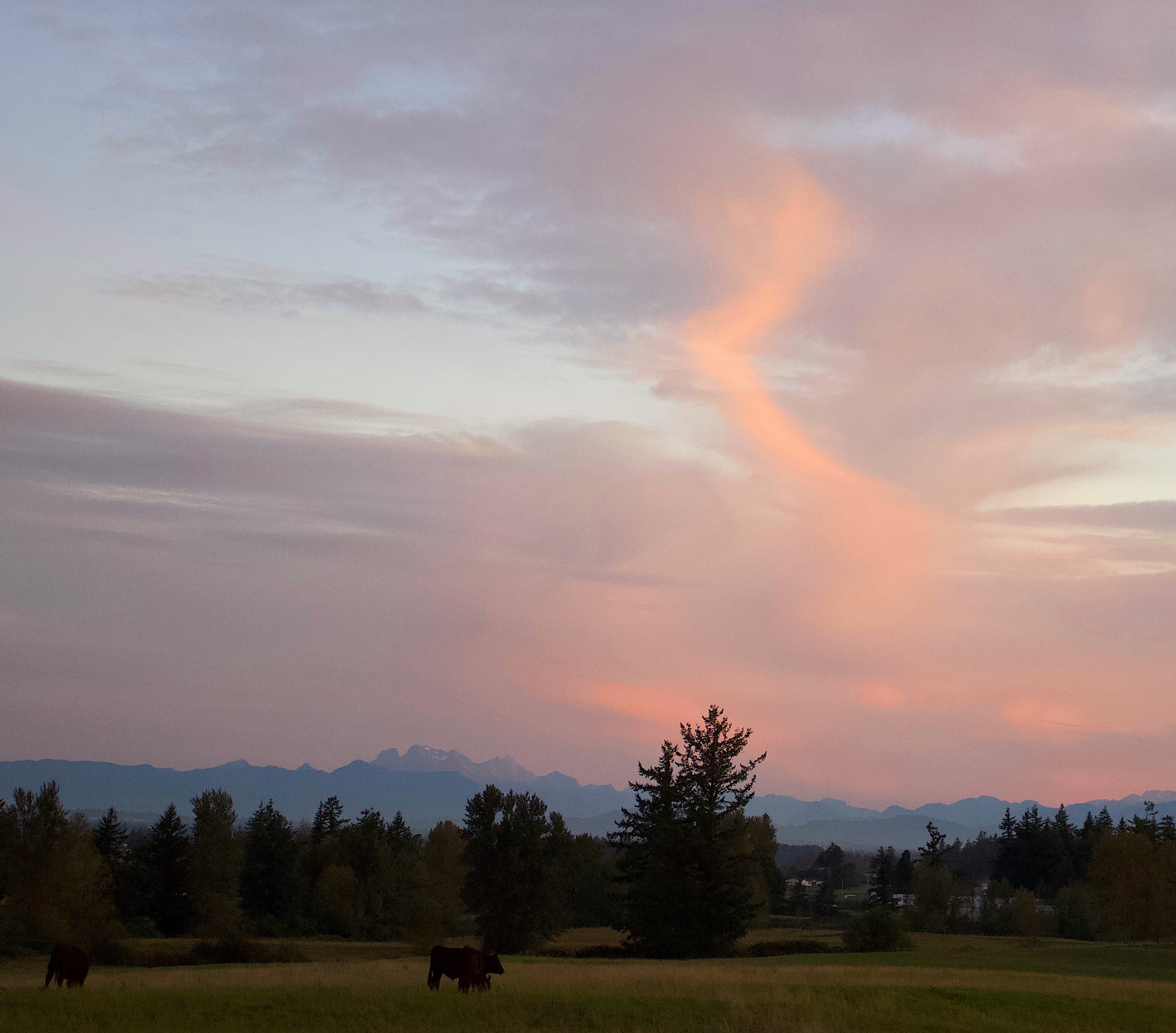
Seven-thirty. Driving northwest out of town, the snowscape dusky, sky tinted smoky peach. In the rear view mirror, a bright orange glow suffuses the stubbly treeline. Suddenly a column of brightness shoots from the horizon, a pillar of fire! One eye on the road, I watch behind me the head of a golden child begin to push up between the black knees of the hills. Two weeks out from Solstice, the sun so near winter it seems to rise in the south. A fiery angel stands over his cradle of branches. And what strange travelers come to honor him? And what gift will I bring to him this day? ~Thomas Smith “Advent Dawn” from The Glory.
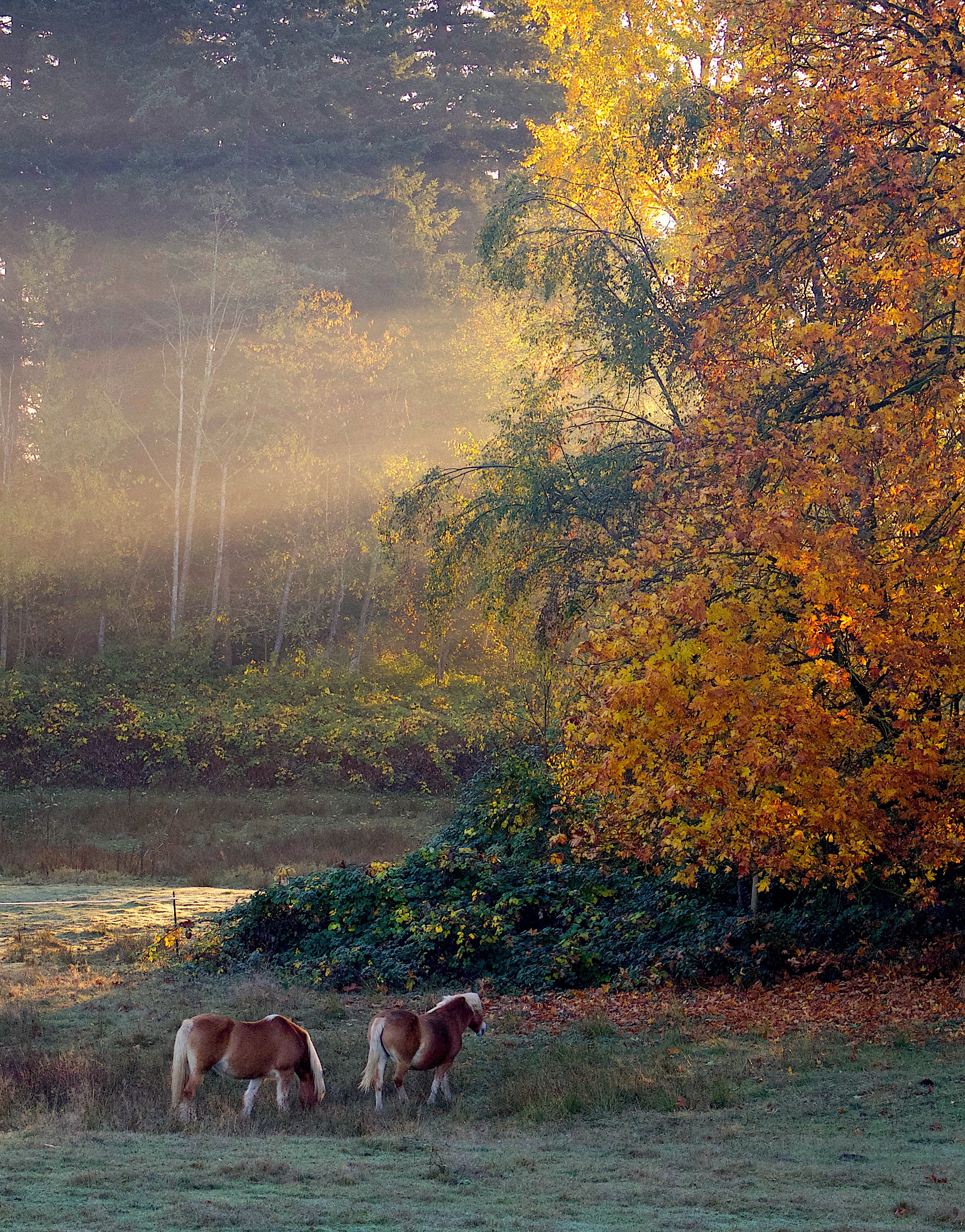
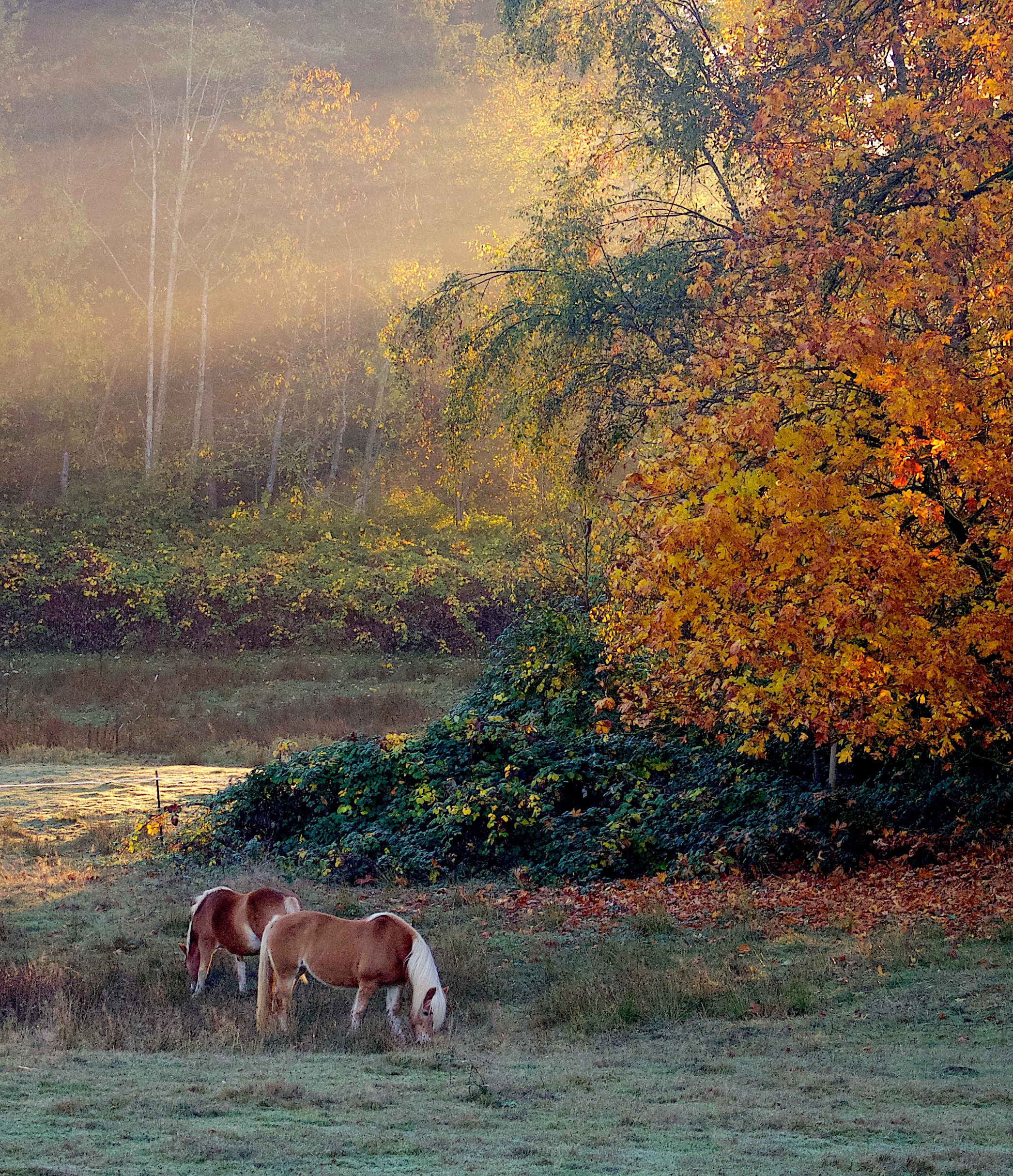
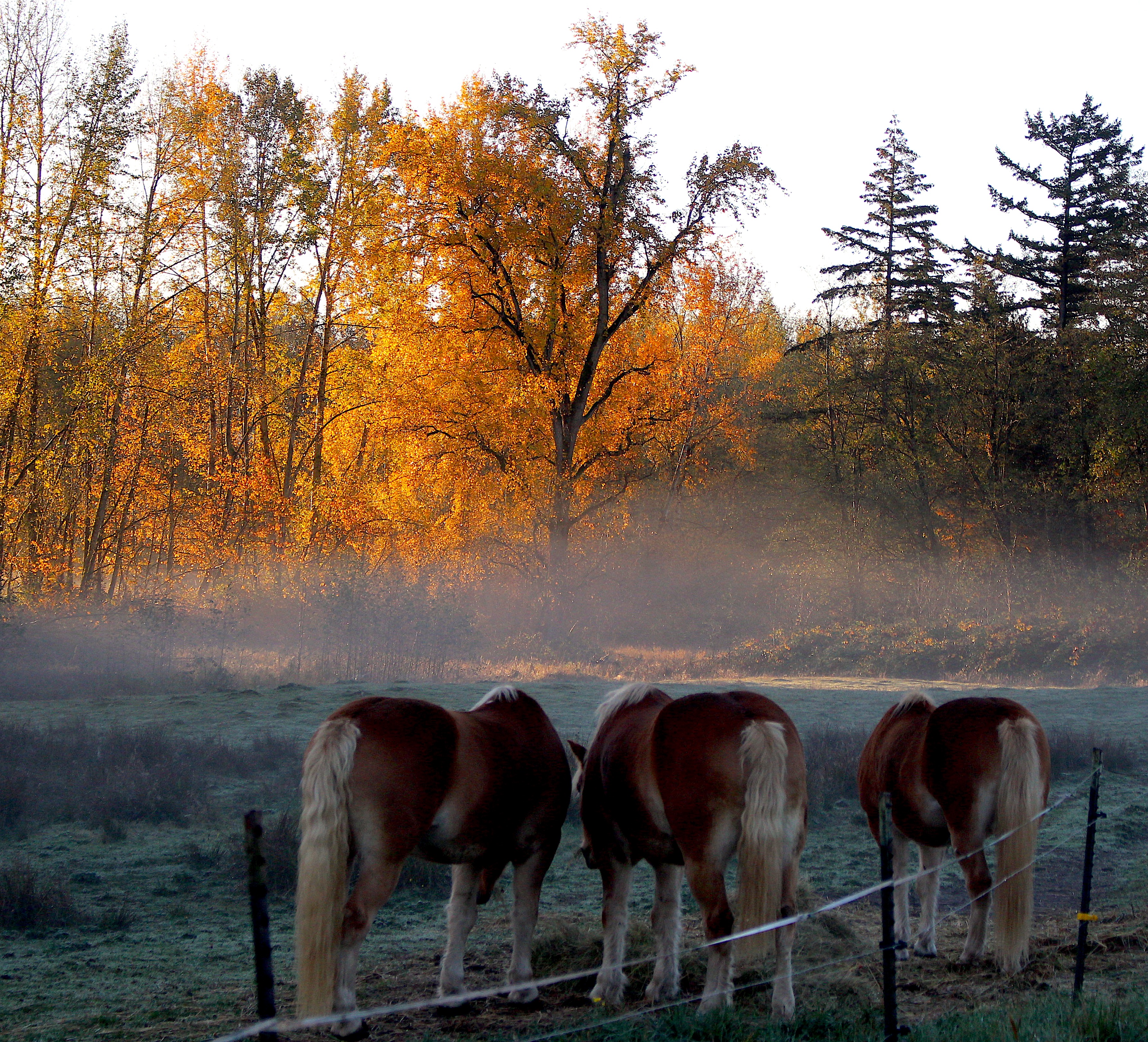
In trees still dripping night some nameless birds Woke, shook out their arrowy wings, and sang, Slowly, like finches sifting through a dream. The pink sun fell, like glass, into the fields. Two chestnuts, and a dapple gray, Their shoulders wet with light, their dark hair streaming, Climbed the hill. The last mist fell away.
And under the trees, beyond time’s brittle drift, I stood like Adam in his lonely garden On that first morning, shaken out of sleep, Rubbing his eyes, listening, parting the leaves, Like tissue on some vast, incredible gift. ~ Mary Oliver – “Morning In a New Land”
I want to wake each morning as if it were my first look at the world: to be astonished at the slow advance of the light and how the detail of the landscape begins to emerge from the mist of darkness.
As it is, I emerge from night covering my eyes, barely willing to look through my fingers to see what the day may hold. It is not the my first look at morning after all; I’m too aware there is heavy baggage to carry from the day before, and the day before that. The freshness of a new start is fermented by my history.
What gift can I bring to each new day? What gift can I bring to the God who came down to dwell in this weedy garden alongside me, help me carry my baggage and shoulder my load – indeed to carry me to my rest?
I will open my eyes and take in the morning, unwrapping it like the precious gift it is.
The best gift we can give to God is to receive the gift of Him with the astonishment it deserves.
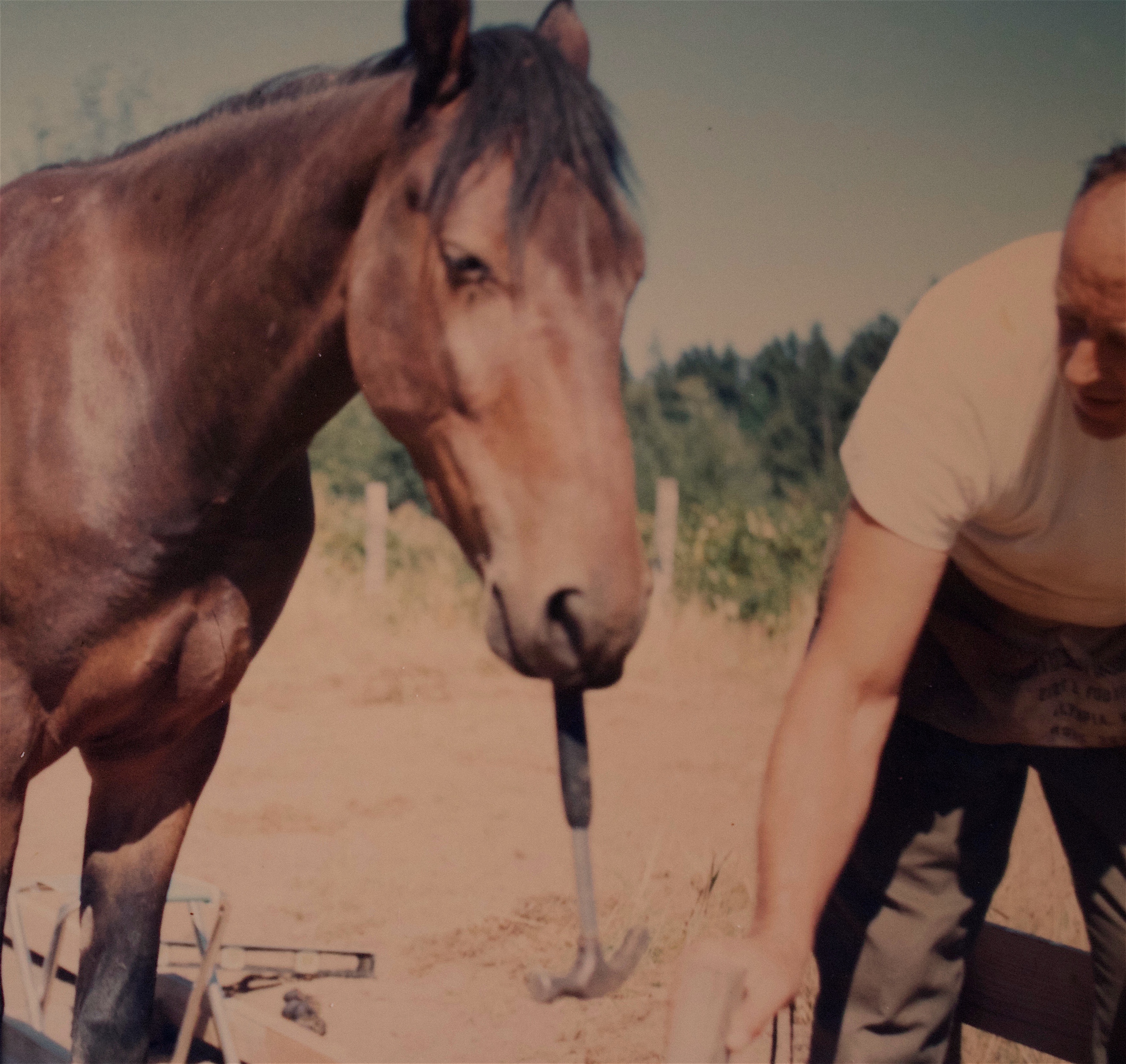
I wanted a horse. This was long after we sold the work horses, and I was feeling
restless on the farm. I got up early to help my father milk the cows, talking
a blue streak about TV cowboys he never had time to see and trying to
convince him that a horse wouldn’t cost so much and that I’d do all the work.
He listened while he leaned his head against the flank of a Holstein, pulling
the last line of warm milk into the stainless bucket. He kept listening
while the milk-machine pumped like an engine, and the black and silver cups fell off and
dangled down, clanging like bells when he stepped away, balancing the heavy milker
against the vacuum hose and the leather belt. I knew he didn’t want the trouble
of a horse, but I also knew there was nothing else I wanted the way I wanted a horse—
another way of saying I wanted to ride into the sunset and (maybe)
never come back—I think he knew that too. We’ll see, he said, we’ll see what we can do. ~Joyce Sutphen “What Every Girl Wants”
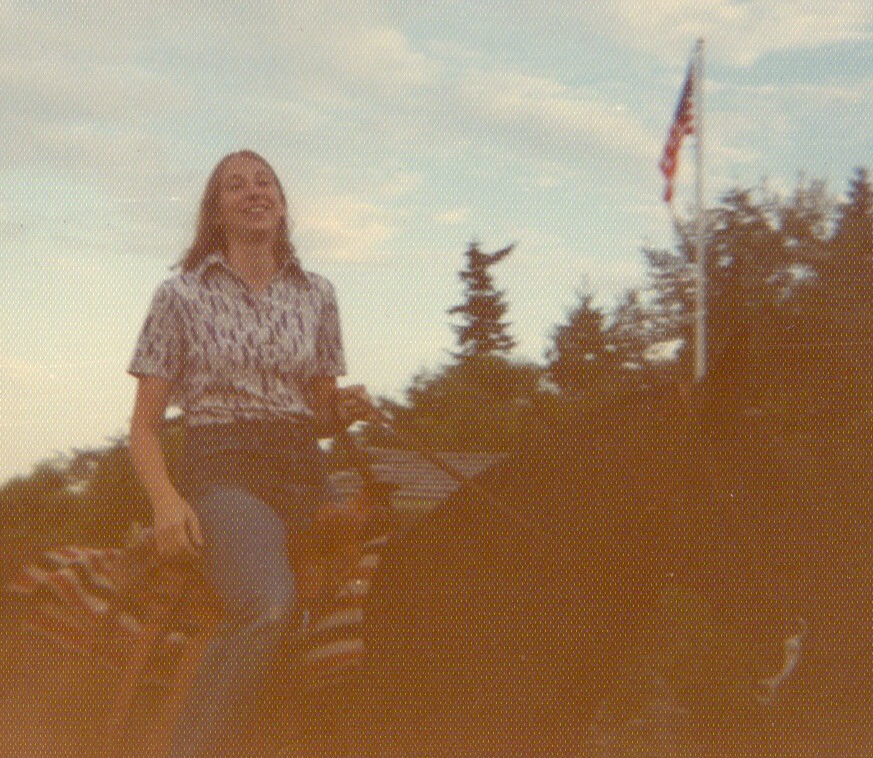
I once was a skinny freckled eleven year old girl who wanted nothing more than to have her own horse. Every inch of my bedroom wall had posters of horses, all my shelves were filled with horse books and horse figurines and my bed was piled with stuffed horses. I suffered an extremely serious case of horse fever.
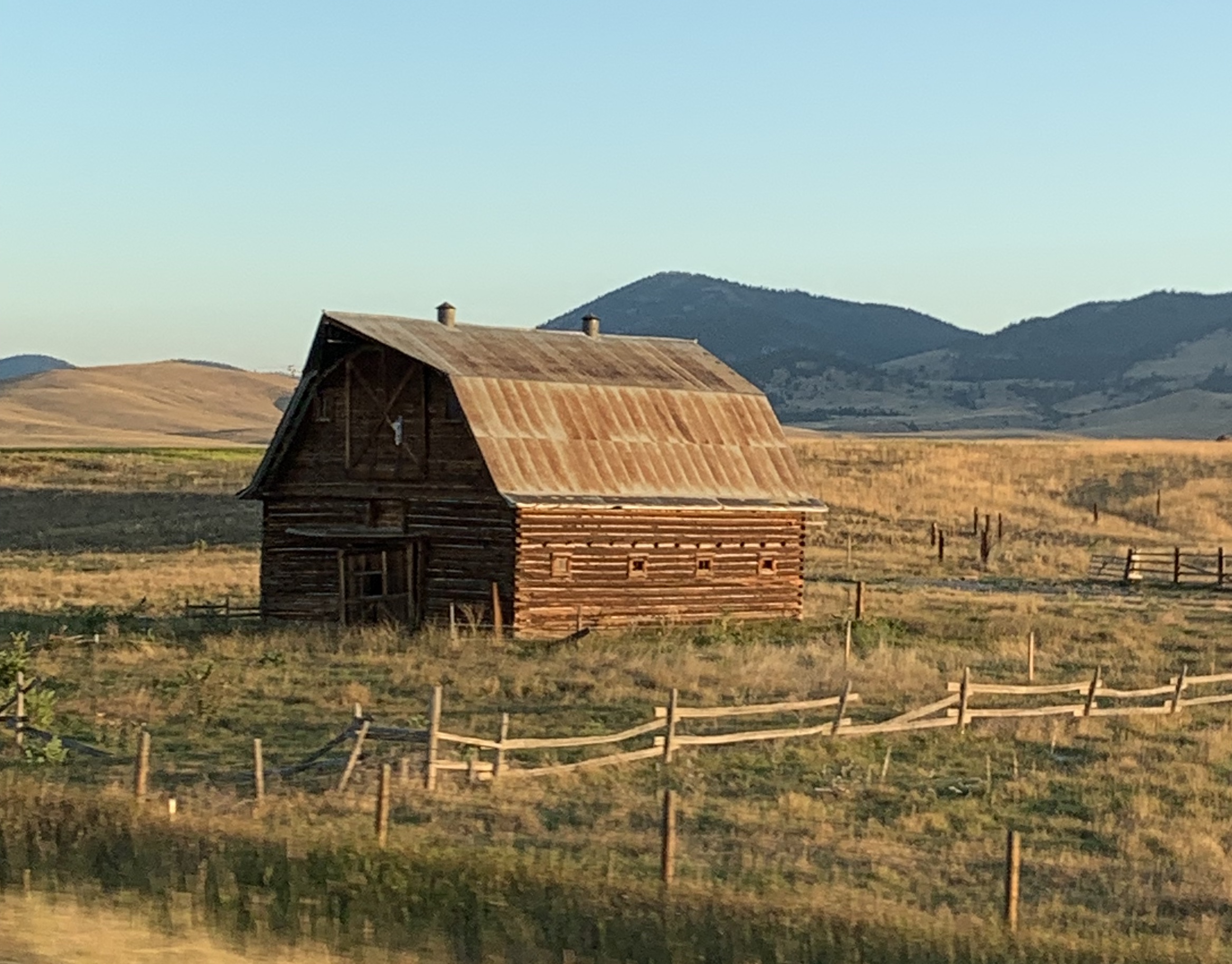
I had learned to ride my big sister’s horse while my sister was off to college, but the little mare had pushed down a hot wire to get into a field of spring oats which resulted in a terrible case of colic and had to be put down. I was inconsolable until I set my mind to buy another horse. We had only a small shed, not a real barn, and no actual fences other than the electric hot wire. Though I was earning money as best I could picking berries and babysitting, I was a long way away from the $150 it would take to buy a trained horse back in 1965. I pestered my father about my dreams of another horse, and since he was the one to dig the hole for my sister’s horse to be buried, he was not enthusiastic. “We’ll see,” he said. “We will see what we can do.”
So I dreamed my horsey dreams, mostly about golden horses with long white manes, hoping one day those dreams might come true.
In fall 1965, the local radio station KGY’s Saturday morning horse news program announced their “Win a Horse” contest. I knew I had to try. The prize was a weanling bay colt, part Appaloosa, part Thoroughbred, and the contest was only open to youth ages 9 to 16 years old. All I had to do was write a 250 word or less essay on “Why I Should Have a Horse”. I worked and worked on my essay, crafting the right words and putting all my heart into it, hoping the judges would see me as a worthy potential owner. My parents took me to visit the five month old colt named “Prankster”, a fuzzy engaging little fellow who was getting plenty of attention from all the children coming to visit him, and that visit made me even more determined.
When I read these words now, I realize there is nothing quite like the passion of an eleven year old girl:
“Why I Should Have a Horse”
When God created the horse, He made one of the best creatures in the world. Horses are a part of me. I love them and want to win Prankster for the reasons which follow:
To begin with, I’m young enough to have the time to spend with the colt. My older sister had a horse when she was in high school and her school activities kept her too busy to really enjoy the horse. I’ll have time to give Prankster the love and training needed.
Another reason is that I’m shy. When I was younger I found it hard to talk to anybody except my family. When my sister got the horse I soon became a more friendly person. When her horse recently died (about when Prankster was born), I became very sad. If I could win that colt, I couldn’t begin to describe my happiness.
Also I believe I should have a horse because it would be a good experience to learn how to be patient and responsible while teaching Prankster the same thing.
When we went to see Prankster, I was invited into the stall to brush him. I was never so thrilled in my life! The way he stood there so majestically, it told me he would be a wonderful horse.
If I should win him, I would be the happiest girl alive. I would work hard to train him with love and understanding. If I could only get the wonderful smell and joy of horses back in our barn!
I mailed in my essay and waited.
Fifty four years ago on this day, November 27, 1965, my mother and I listened to the local horse program that was always featured on the radio at 8 AM on Saturday mornings. They said they had over 300 essays to choose from, and it was very difficult for them to decide who the colt should go to. I knew then I didn’t have a chance. They had several consolation prizes for 2nd through 4th place, so they read several clever poems and heartfelt essays, all written by teenagers. My heart was sinking by the minute.
The winning essay was next. The first sentence sounded very familiar to me, but it wasn’t until several sentences later that we realized they were reading my essay, not someone else’s. My mom was speechless, trying to absorb the hazards of her little girl owning a young untrained horse. I woke up my dad, who was sick in bed with an early season flu. He opened one eye, looked at me, and said, “I guess I better get a fence up today, right?” Somehow, fueled by the excitement of a daughter whose one wish had just come true, he pulled himself together and put up a wood corral that afternoon, despite feeling so miserable.
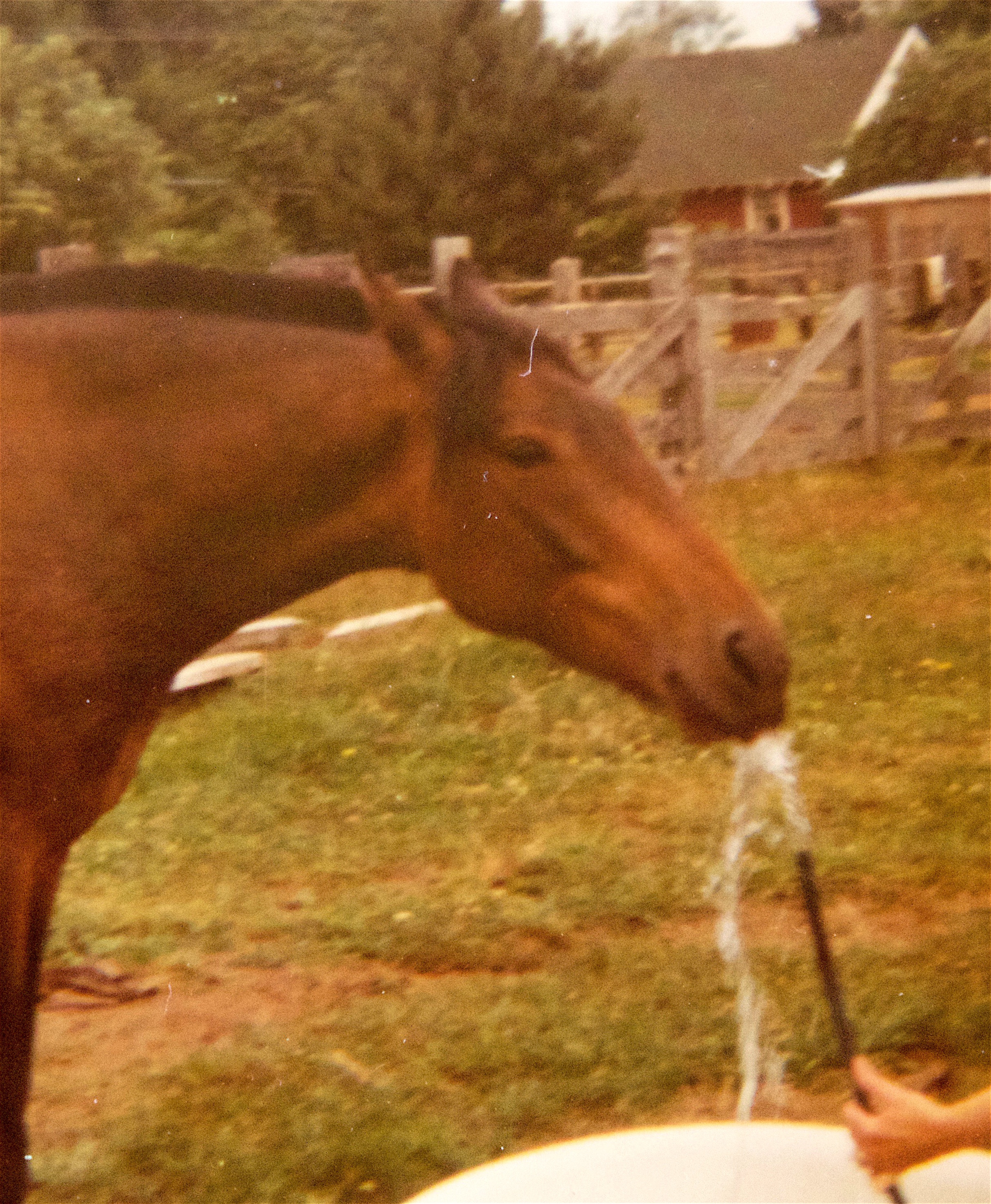
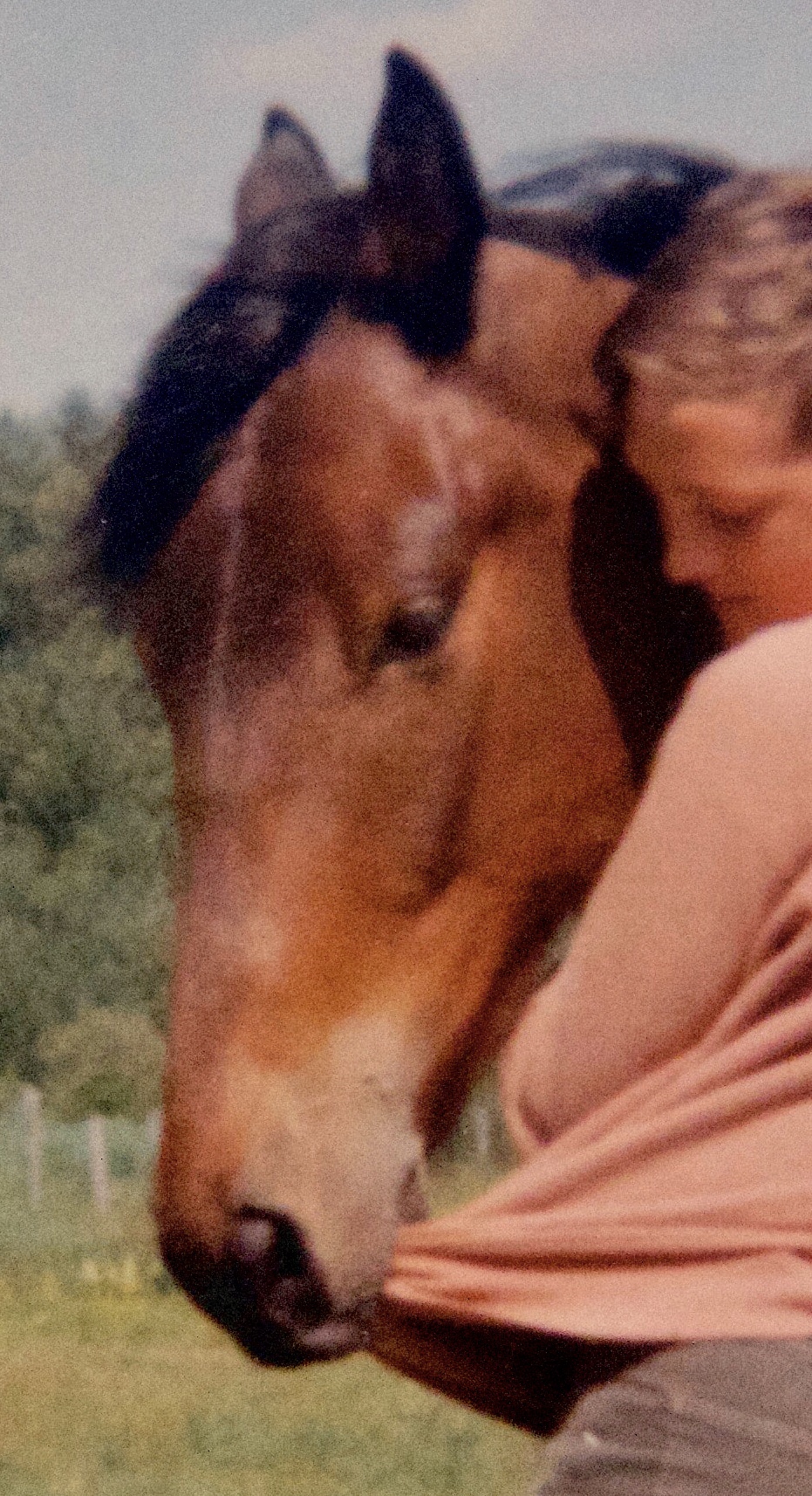
That little bay colt came home to live with me the next day. Over the next few months he and I did learn together, as I checked out horse training books from the library, and joined a 4H group with helpful leaders to guide me. I made plenty of mistakes along the way, learning from each one, including those that left behind scars I still bear. Prankster was a typical adolescent gelding who lived up to his name — full of mischief with a sense of humor and a penchant for finding trouble, but he was mine and that was all that mattered.
That and a dad who saw what he needed to do for his passionate kid. I’ll never forget.
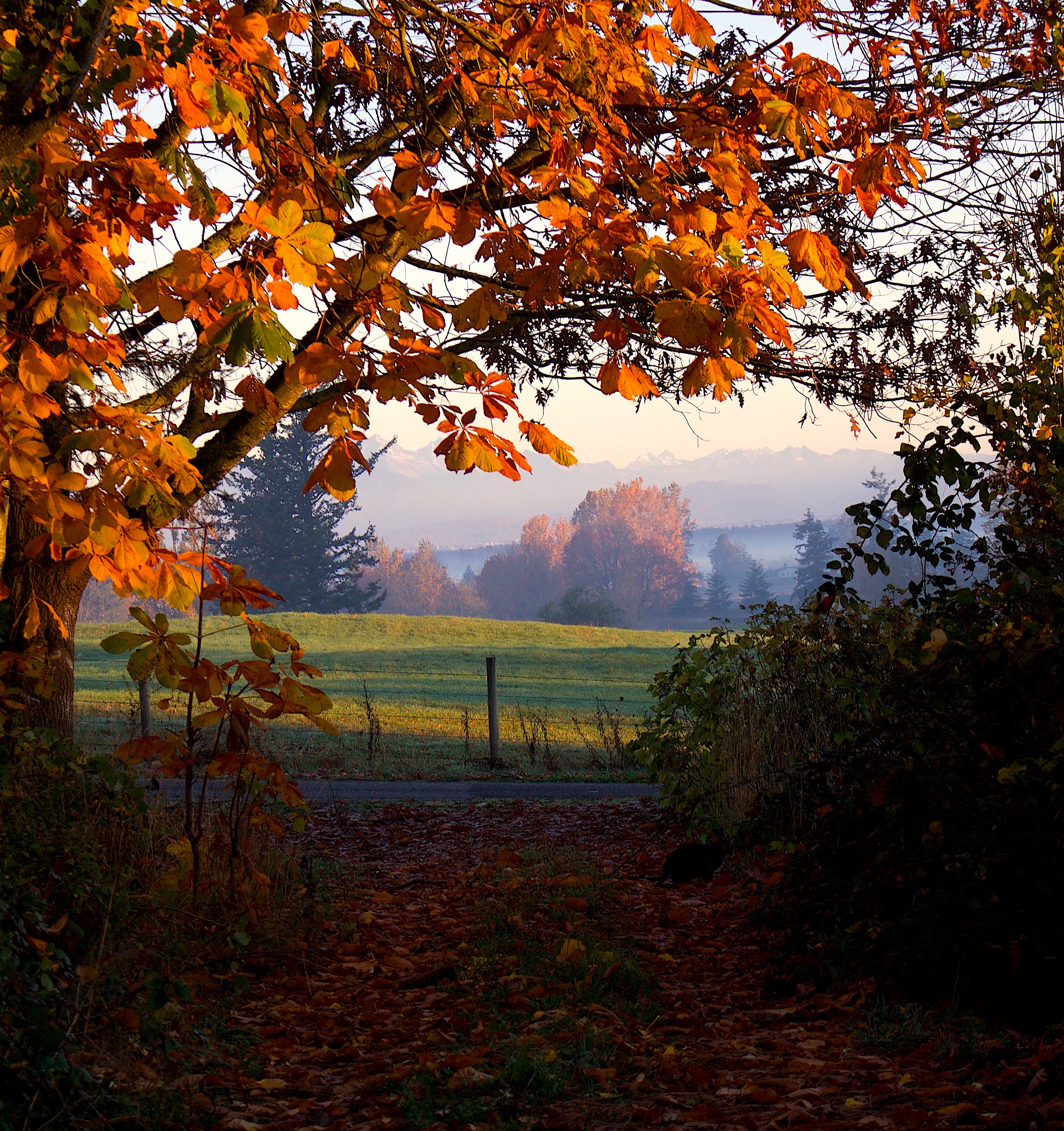
It will not always be like this, The air windless, a few last Leaves adding their decoration To the trees’ shoulders, braiding the cuffs Of the boughs with gold; a bird preening
In the lawn’s mirror. Having looked up From the day’s chores, pause a minute, Let the mind take its photograph Of the bright scene, something to wear Against the heart in the long cold. ~Ronald Stuart Thomas A Day in Autumn
Autumn farm chores are good for the weary heart.
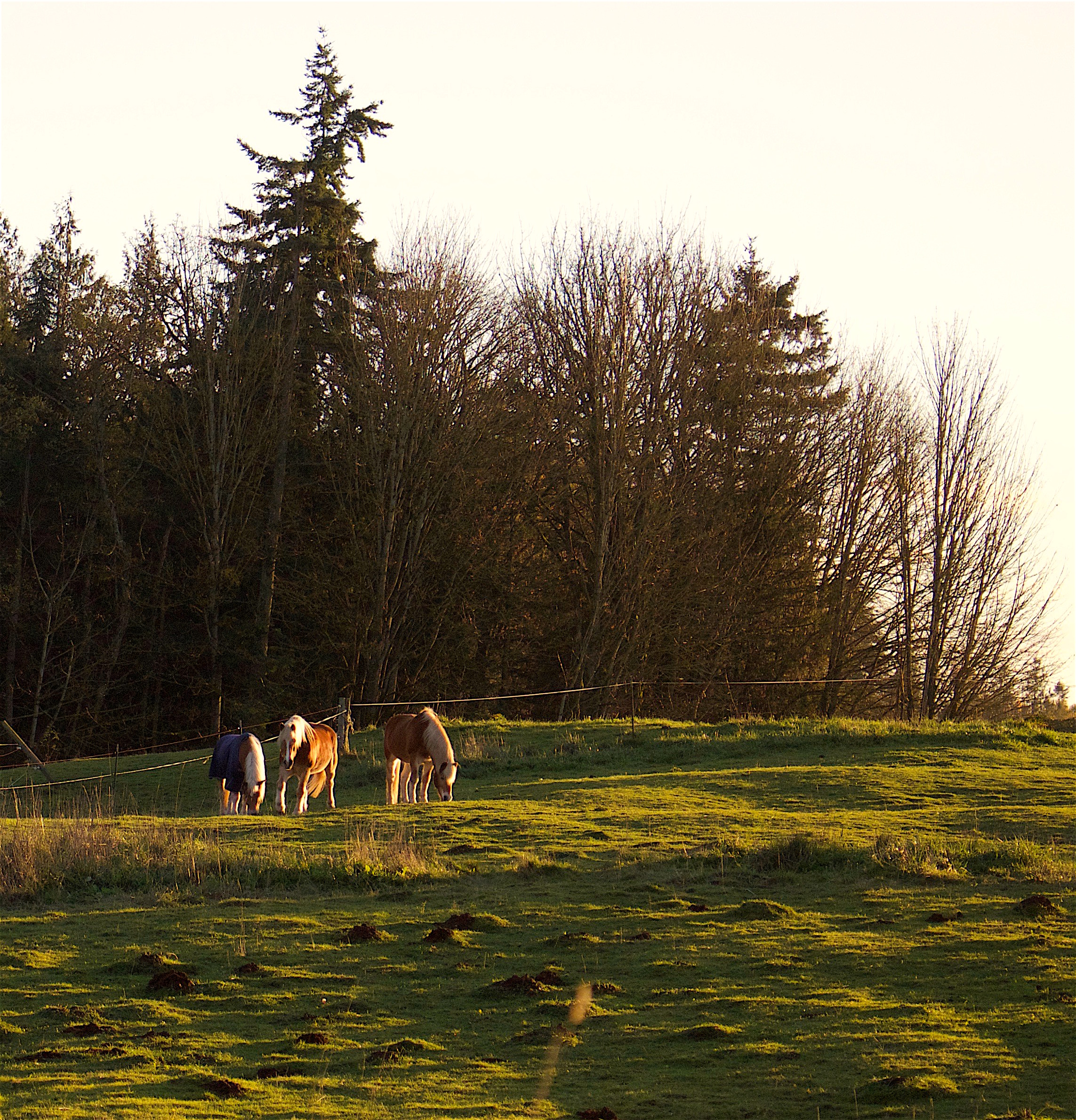
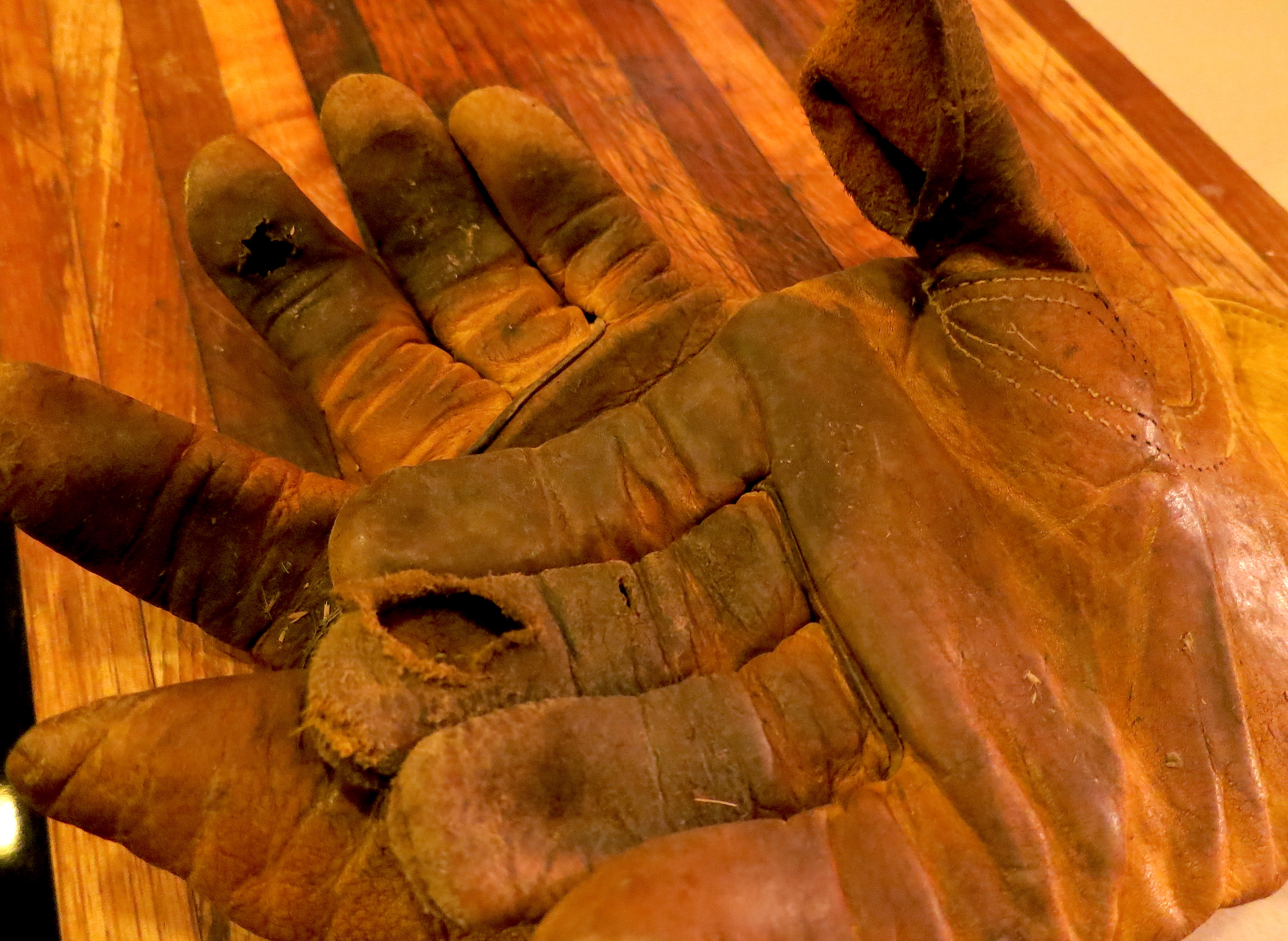
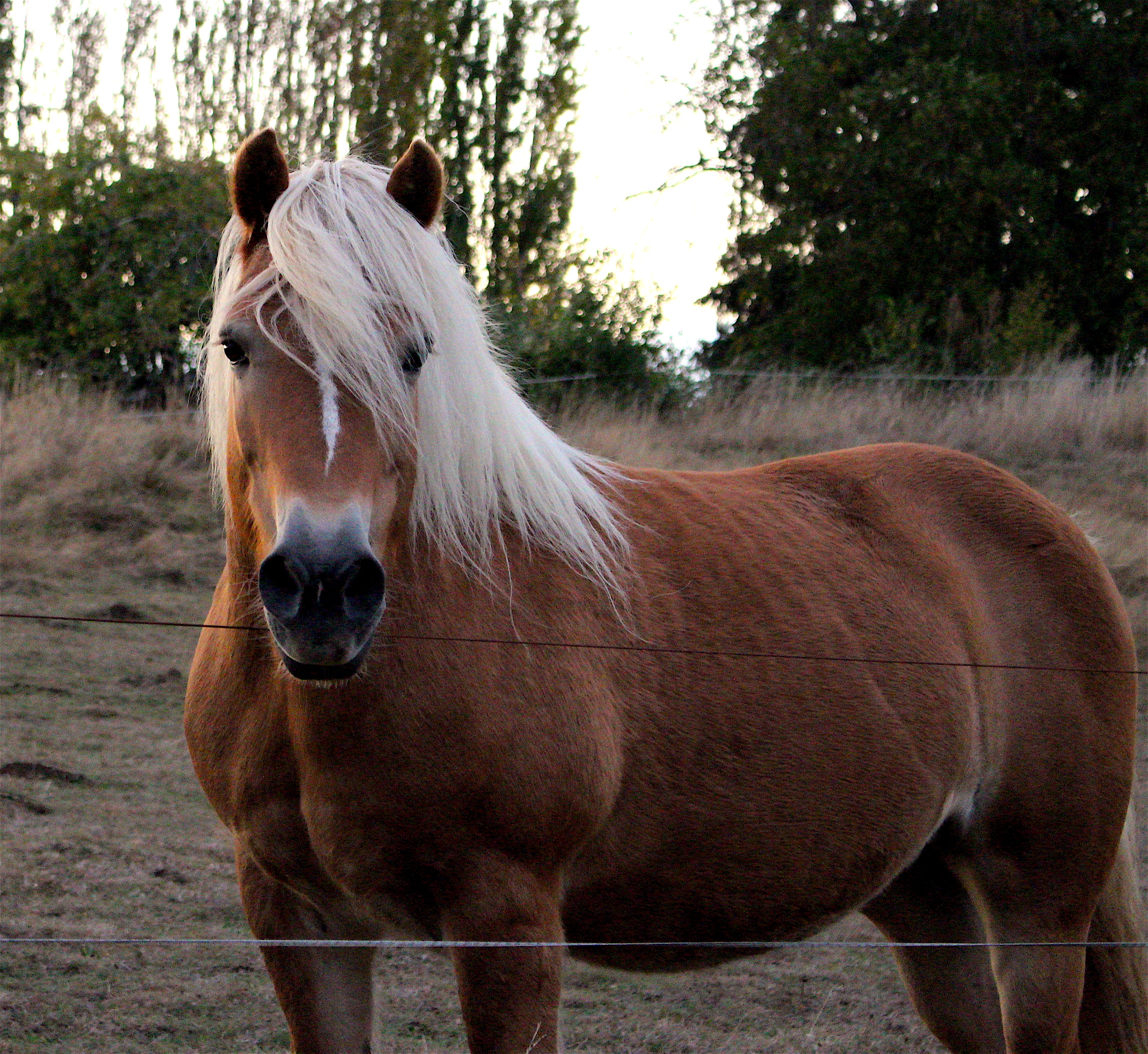
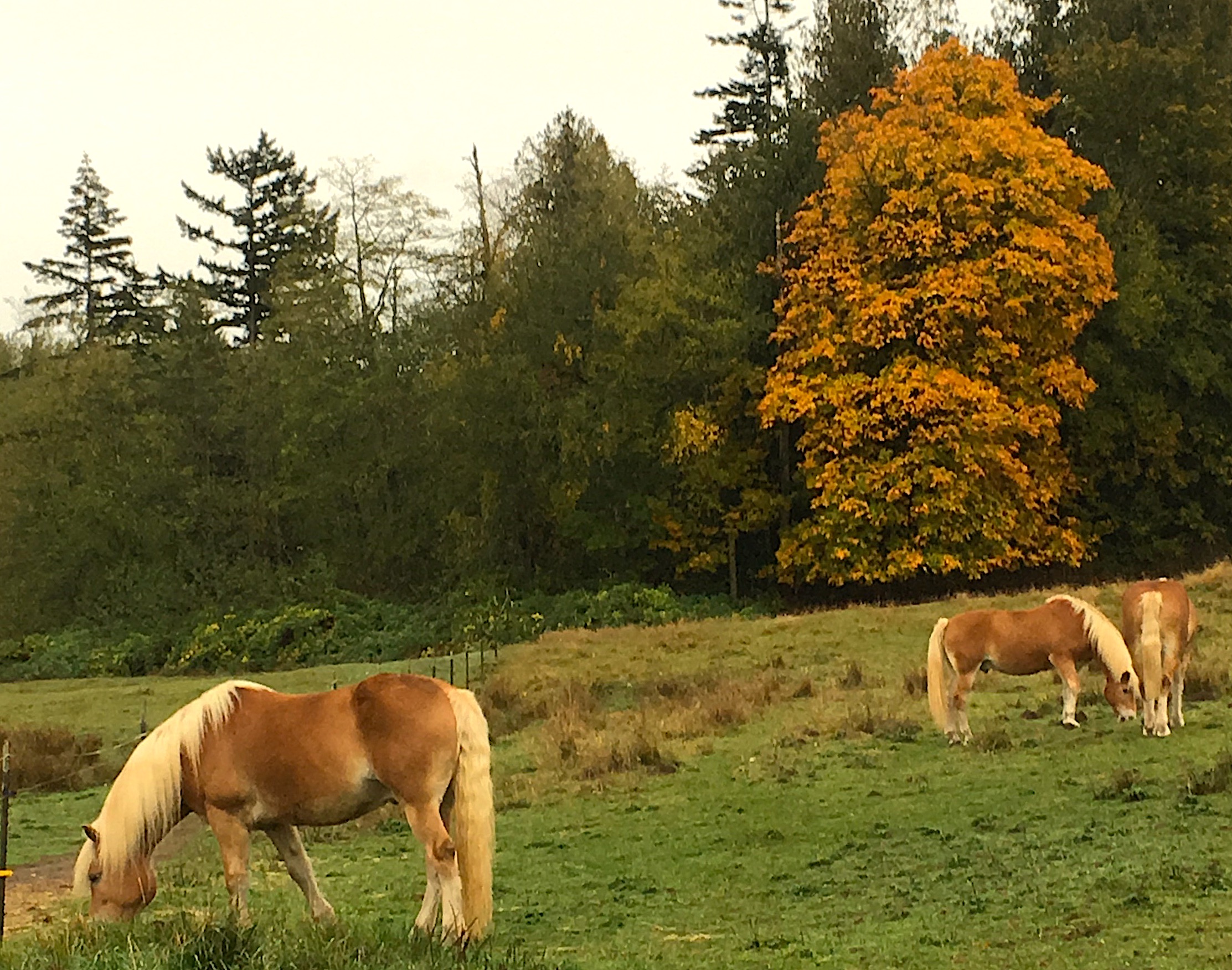
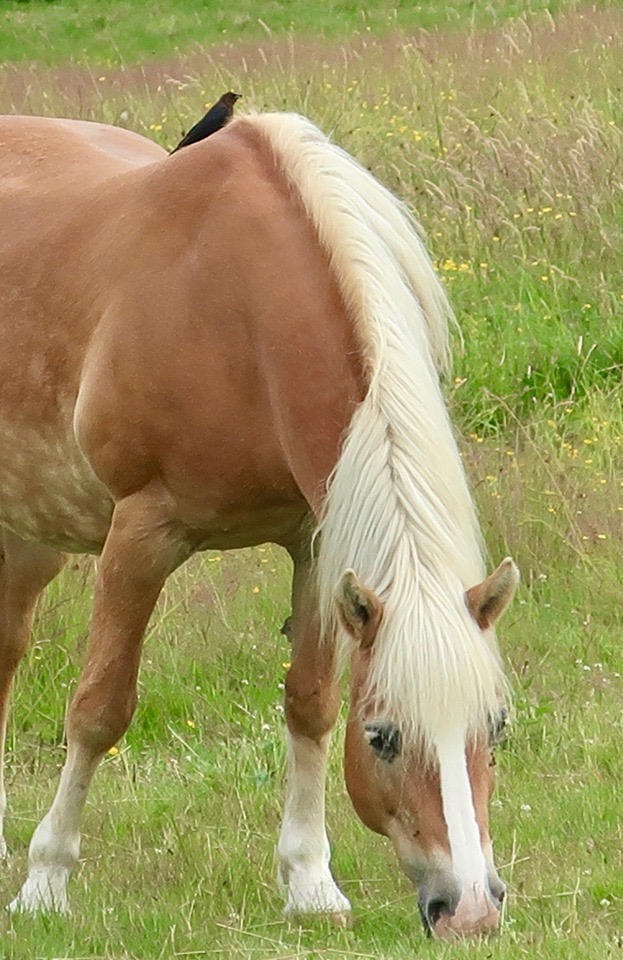
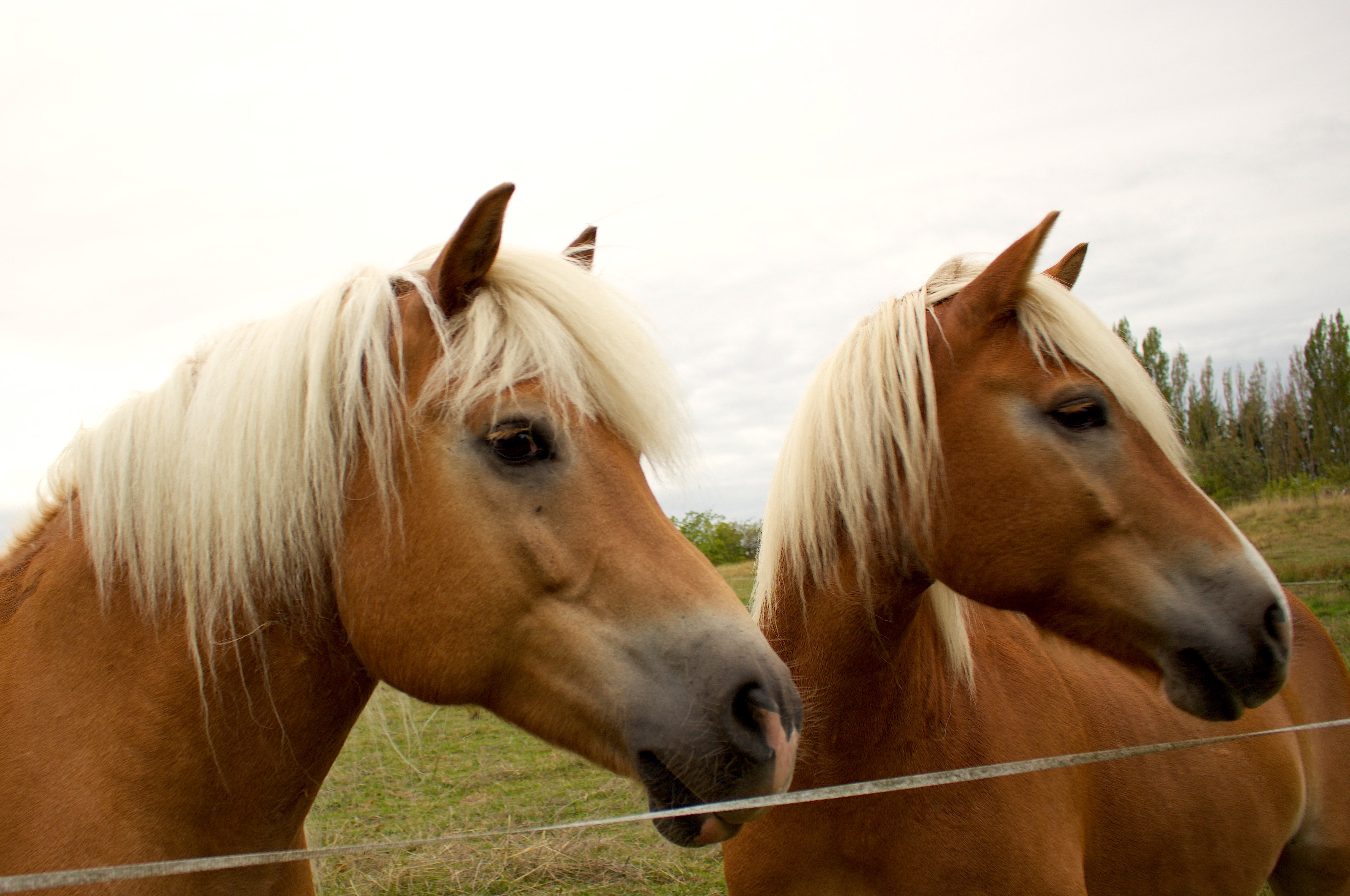
When the stresses of the work world amass together and threaten to overwhelm, there is reassurance in the routine of putting on muck boots, gloves, jacket, then hearing the back door bang behind me as I head outside. Following the path to the barns with my trusty corgi boys in the lead, I open wide the doors to hear the welcoming nickers of five different Haflinger voices.
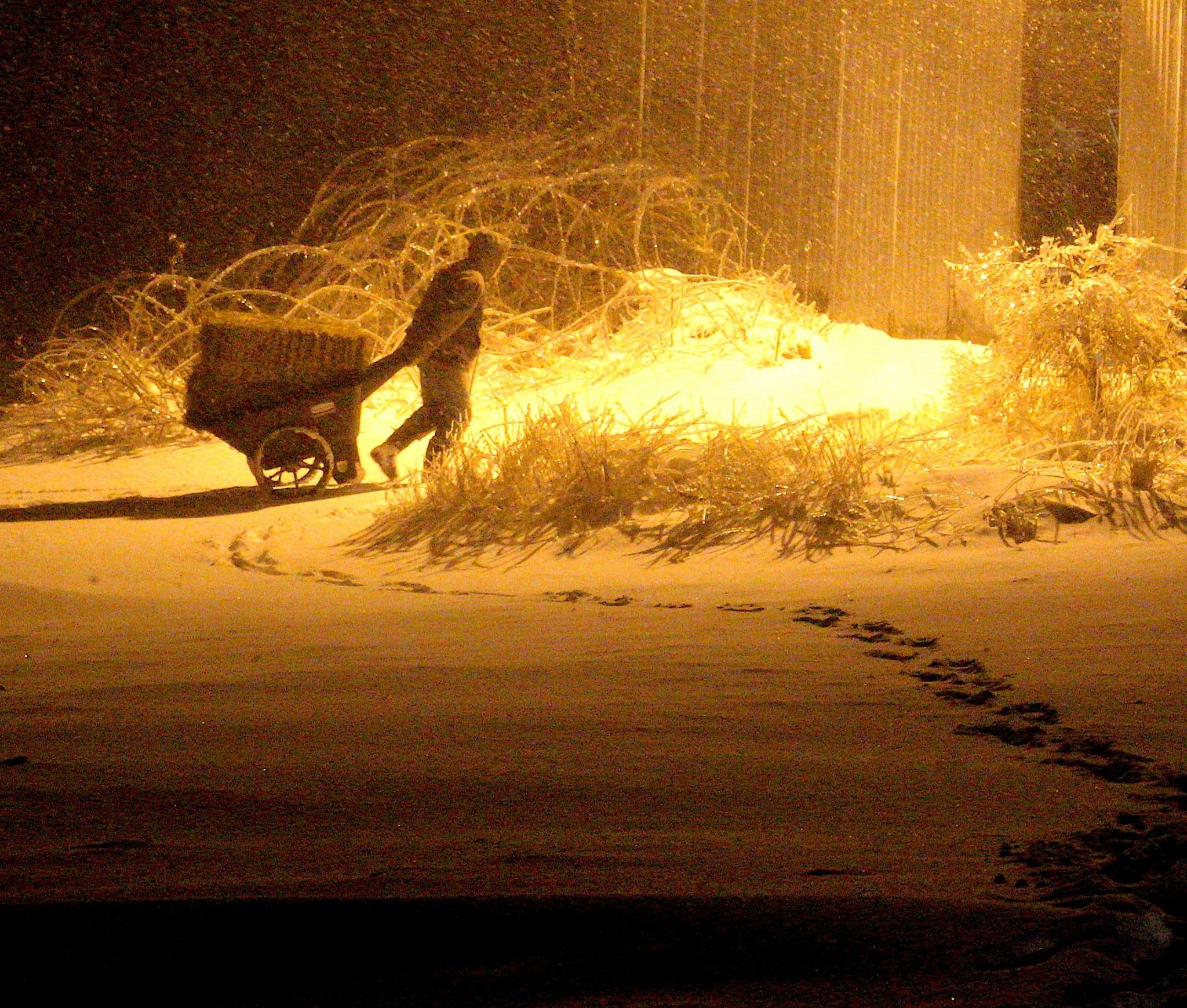
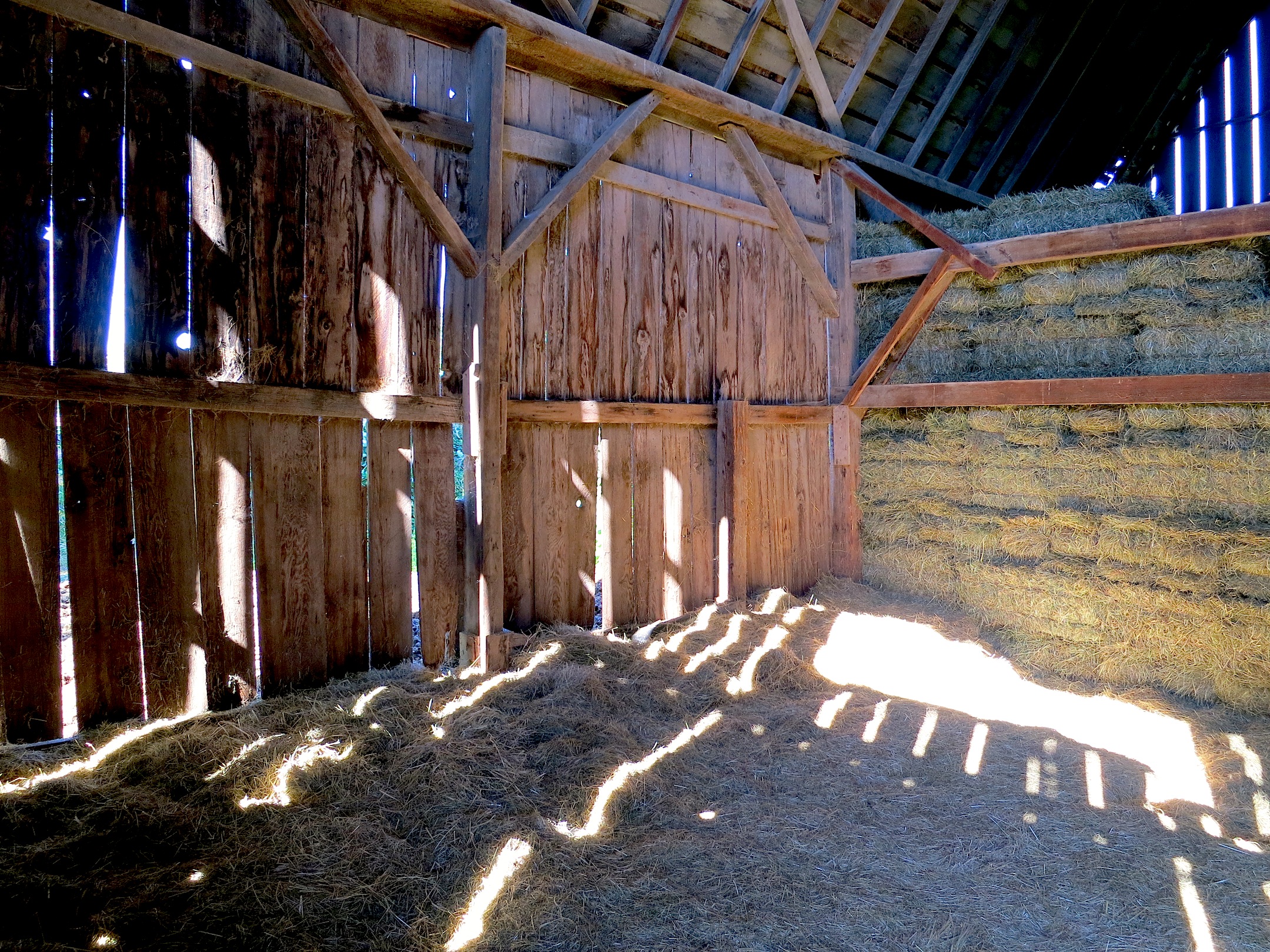
The routine: loosening up the twine on the hay bales and opening each stall door to put a meal in front of each hungry horse, maneuvering the wheelbarrow to fork up accumulated manure, fill up the water bucket, pat a neck and go on to the next one. By the time I’m done, I am calmer, listening to the rhythmic chewing from five sets of molars. It is a welcome symphony of satisfaction for both the musicians and audience. My mind snaps a picture and records the song to pull out later when needed.
The horses are not in the least perturbed that I may face a challenging day. Like the dogs and cats, they show appreciation that I have come to do what I promised to do–I care for them, I protect them and moreover, I will always return.
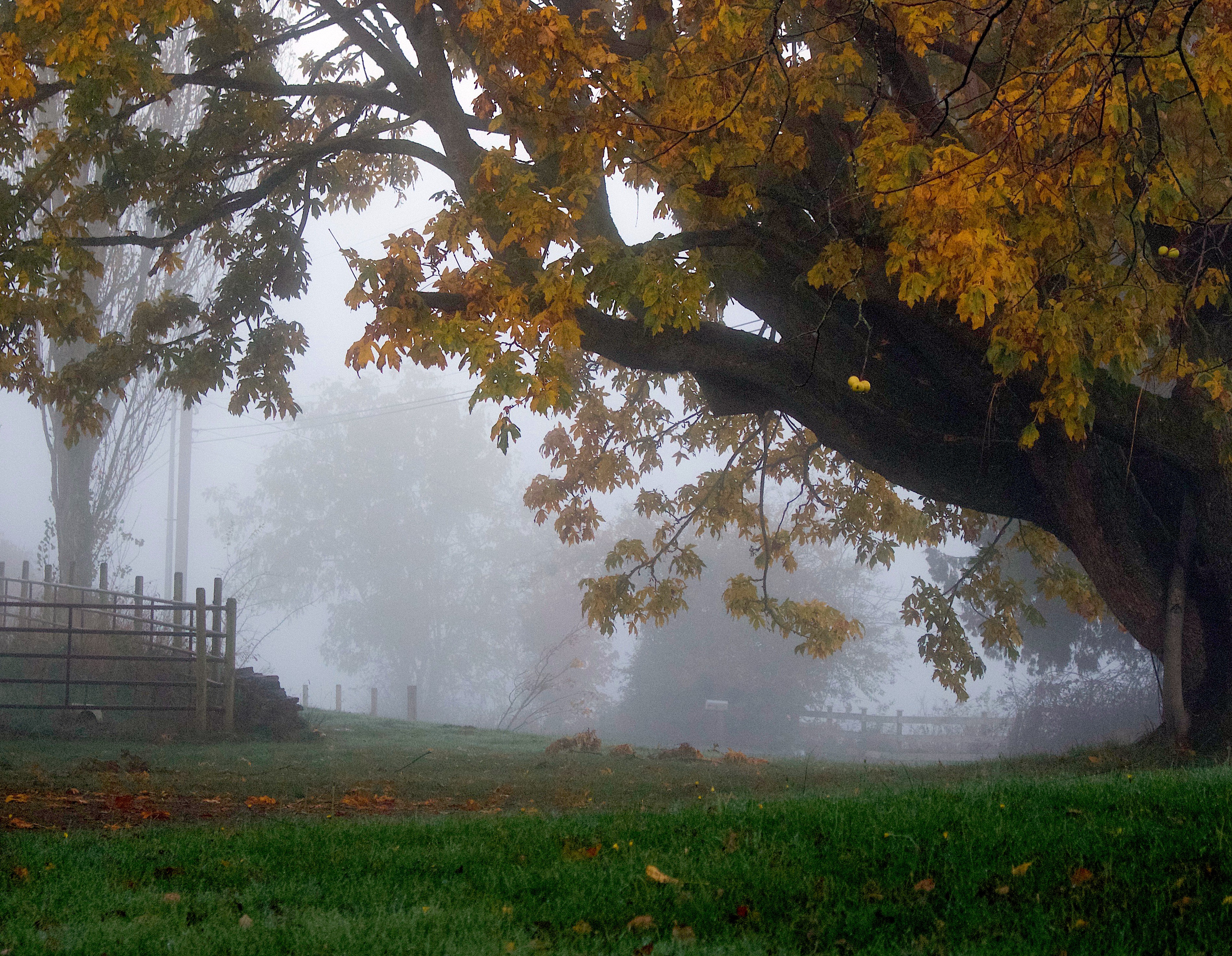
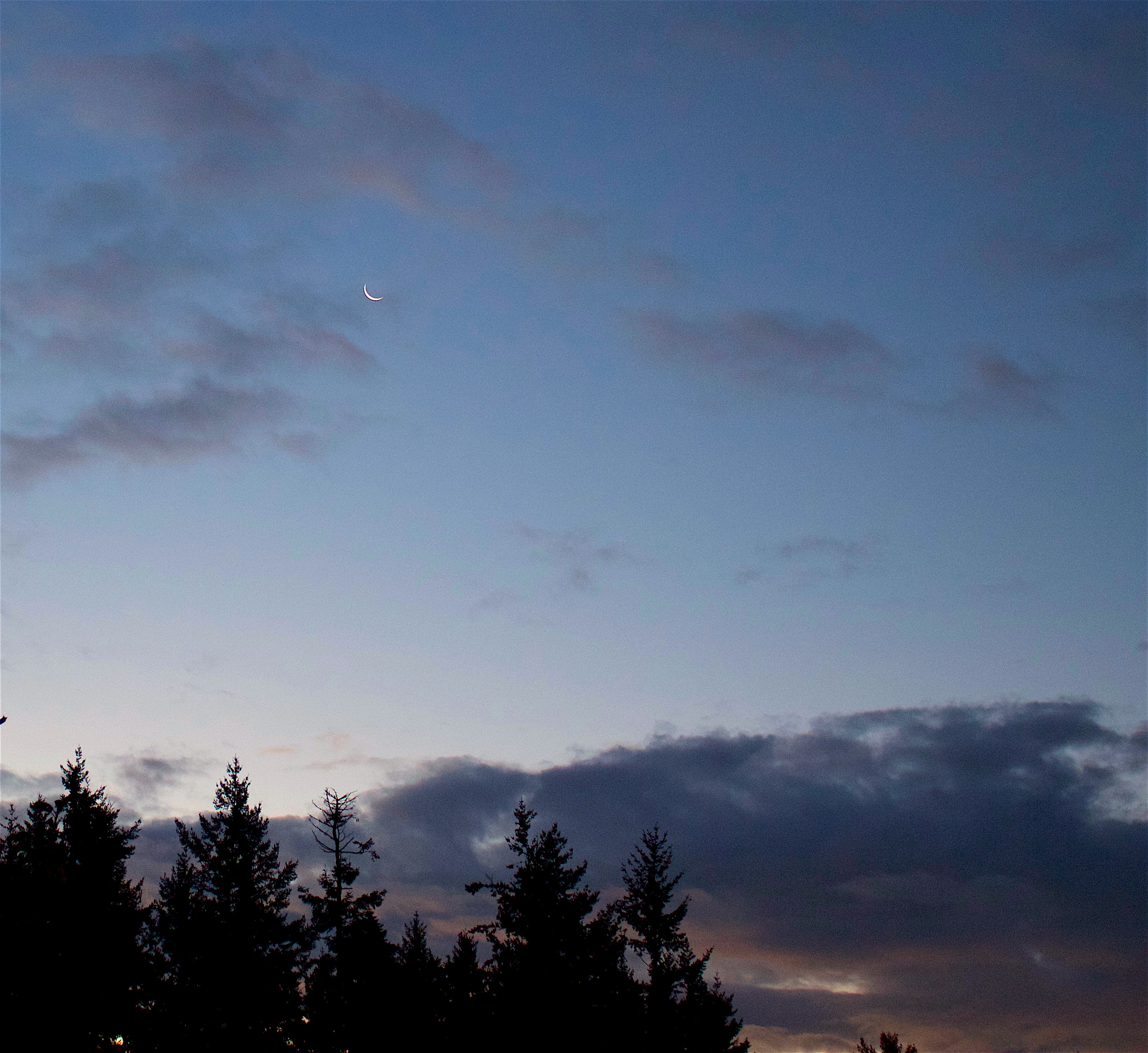
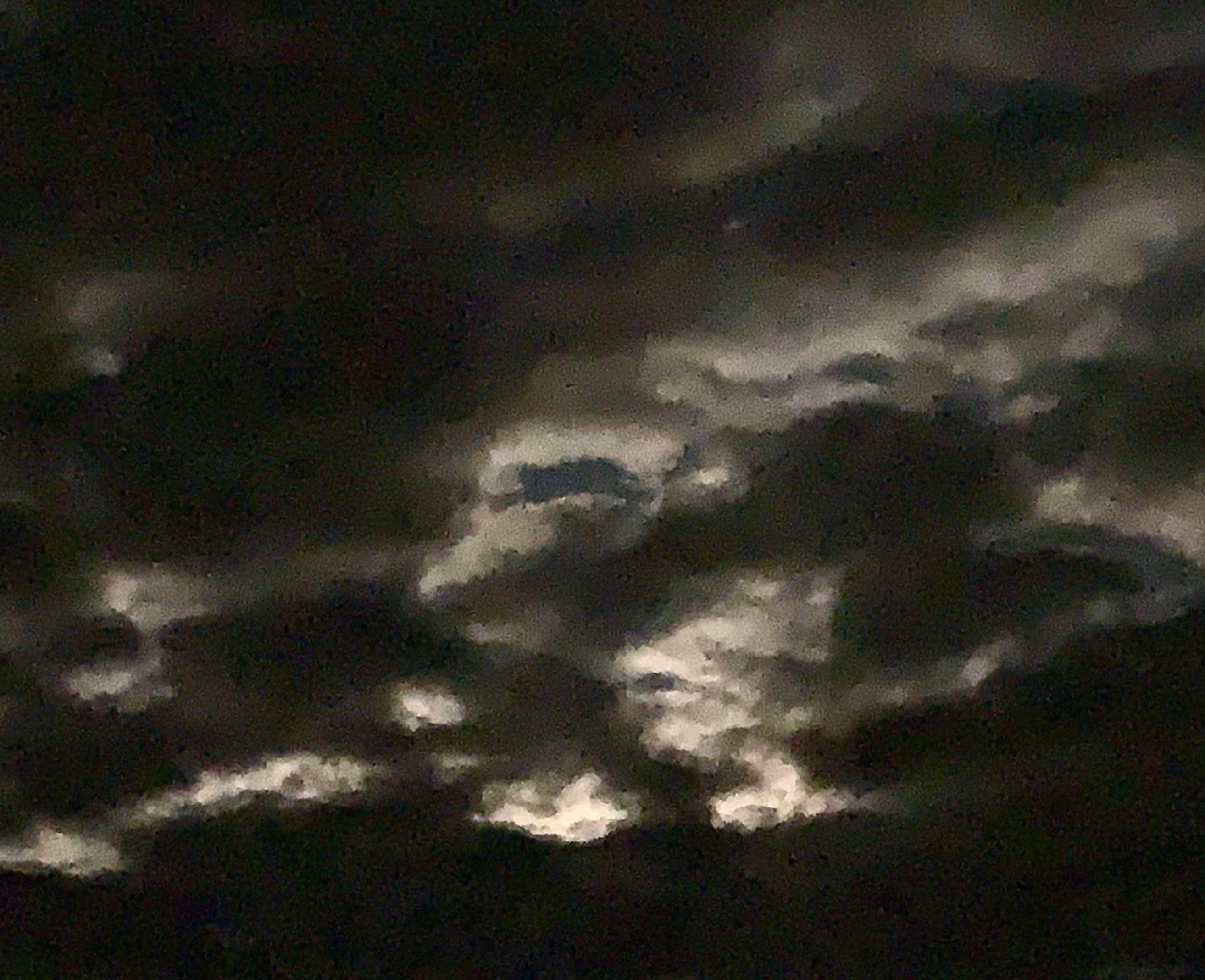
Outside the barn, the chill wind blows gently through the bare tree branches with a wintry bite, reminding me who is not in control. I should drop the pretense. The stars, covered most nights by cloud cover, show themselves, glowing alongside the moon in a galactic sweep across the sky. They exude the tranquility of an Ever-Presence over my bowed and humbled head. I am cared for and protected; He is always there and He will return.
Saving mental photographs of the extraordinary ordinariness of barn chores, I ready myself as autumn fades to winter.
Equilibrium is delivered to my heart, once and ever after, from a stable.
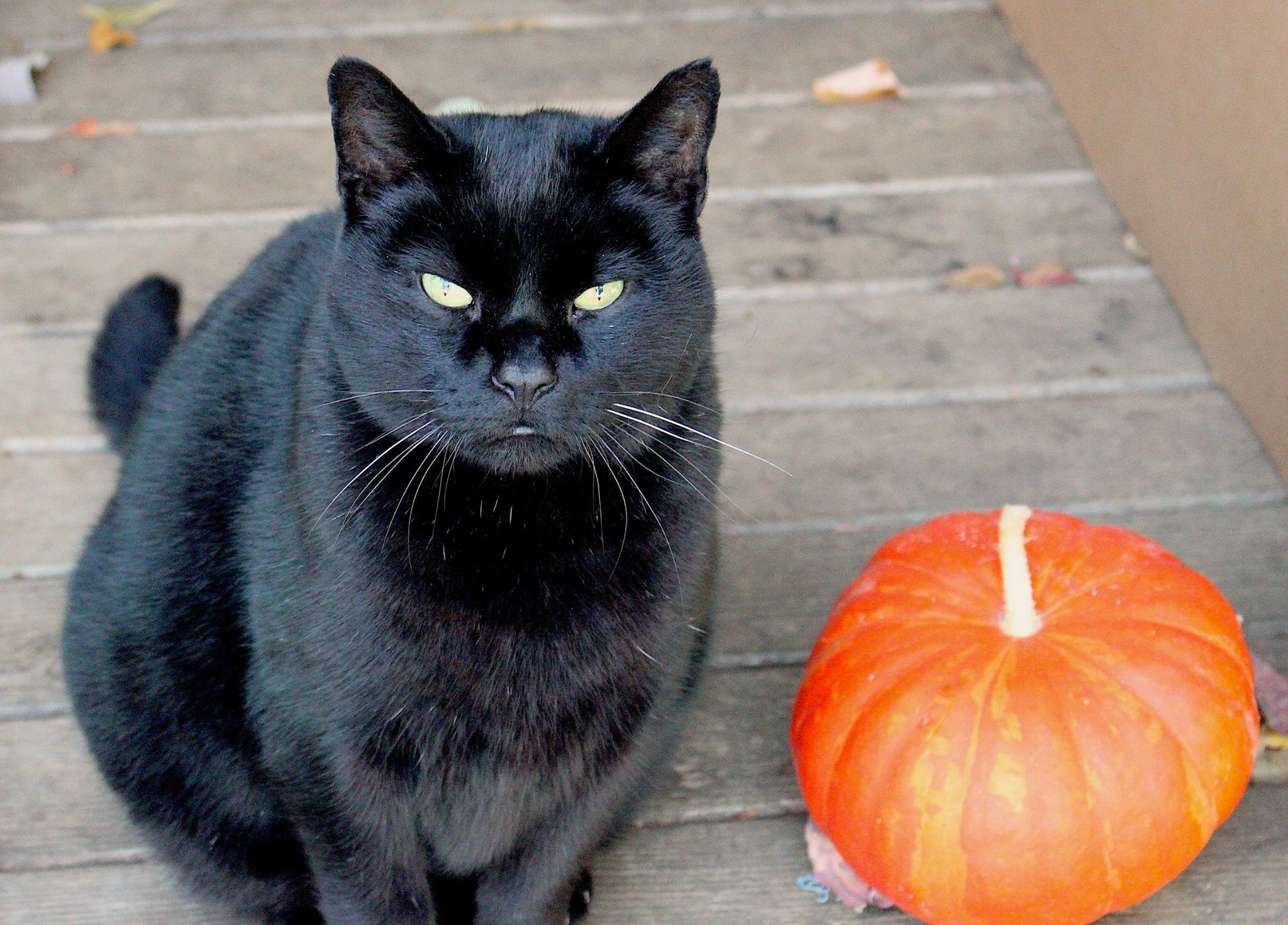
On Halloween day in 1985, I packed up my clothes, a roll up mattress, grabbed one lonely pumpkin from our small garden, locked our rental house door for the last time, climbed in my car and headed north out of Seattle. I never looked back in the rear view mirror at the skyline after nine years living in the city. My husband had moved to Whatcom County two months earlier to start his new job. I had stayed behind to wrap up my Group Health family practice in the Rainier Valley of Seattle, now leaving the city for a new rural home and a very uncertain professional future.
Never before had I felt such exhilaration at breaking through one wall to discover the unknown that lay on the other side.
I knew two things for sure: I was finally several months pregnant after a miscarriage and two years of infertility, so our family had begun. We were going to actually live in our own house, not just a rental, complete with a few acres and a barn.
A real (sort of) starter farm.
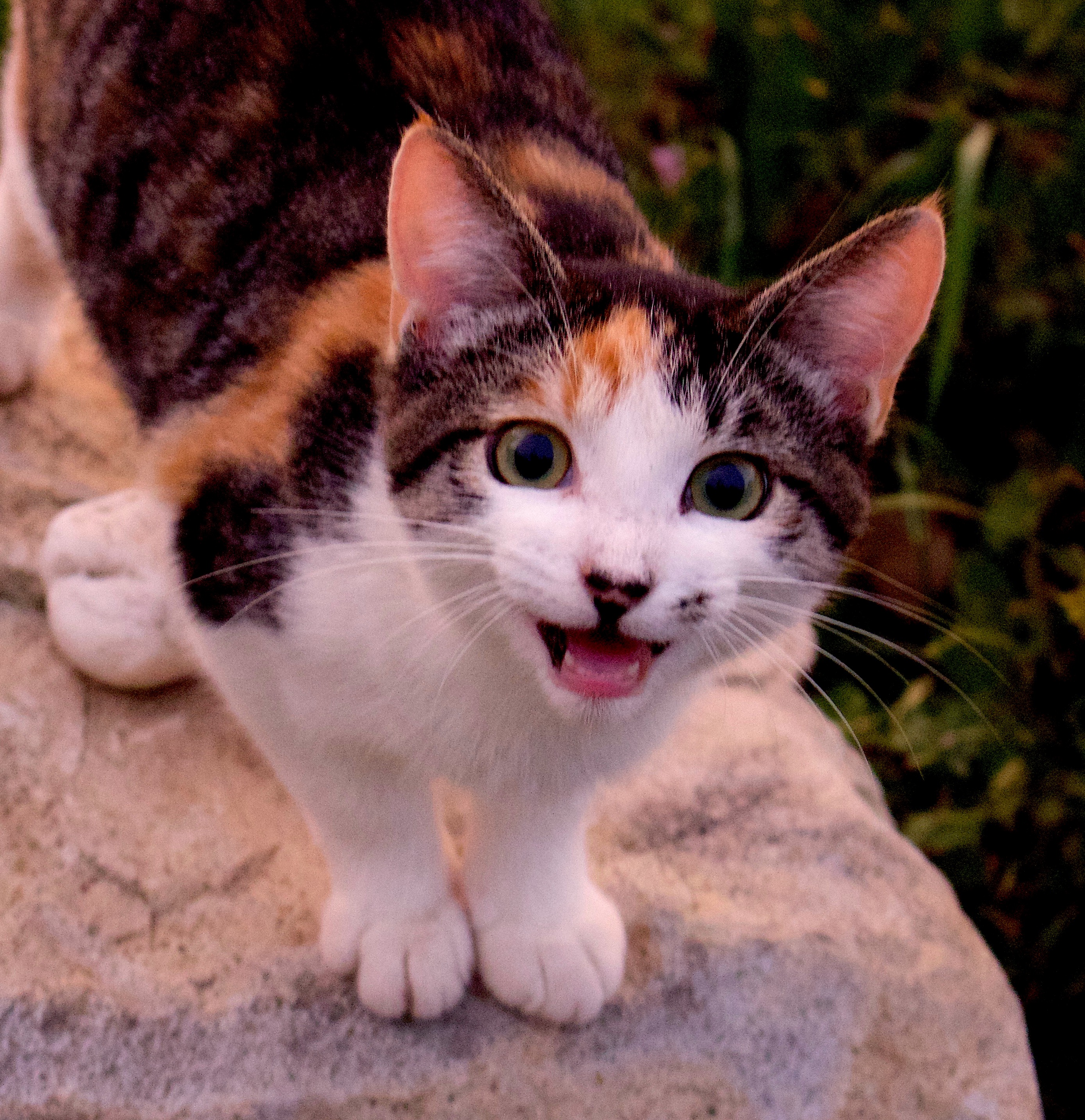
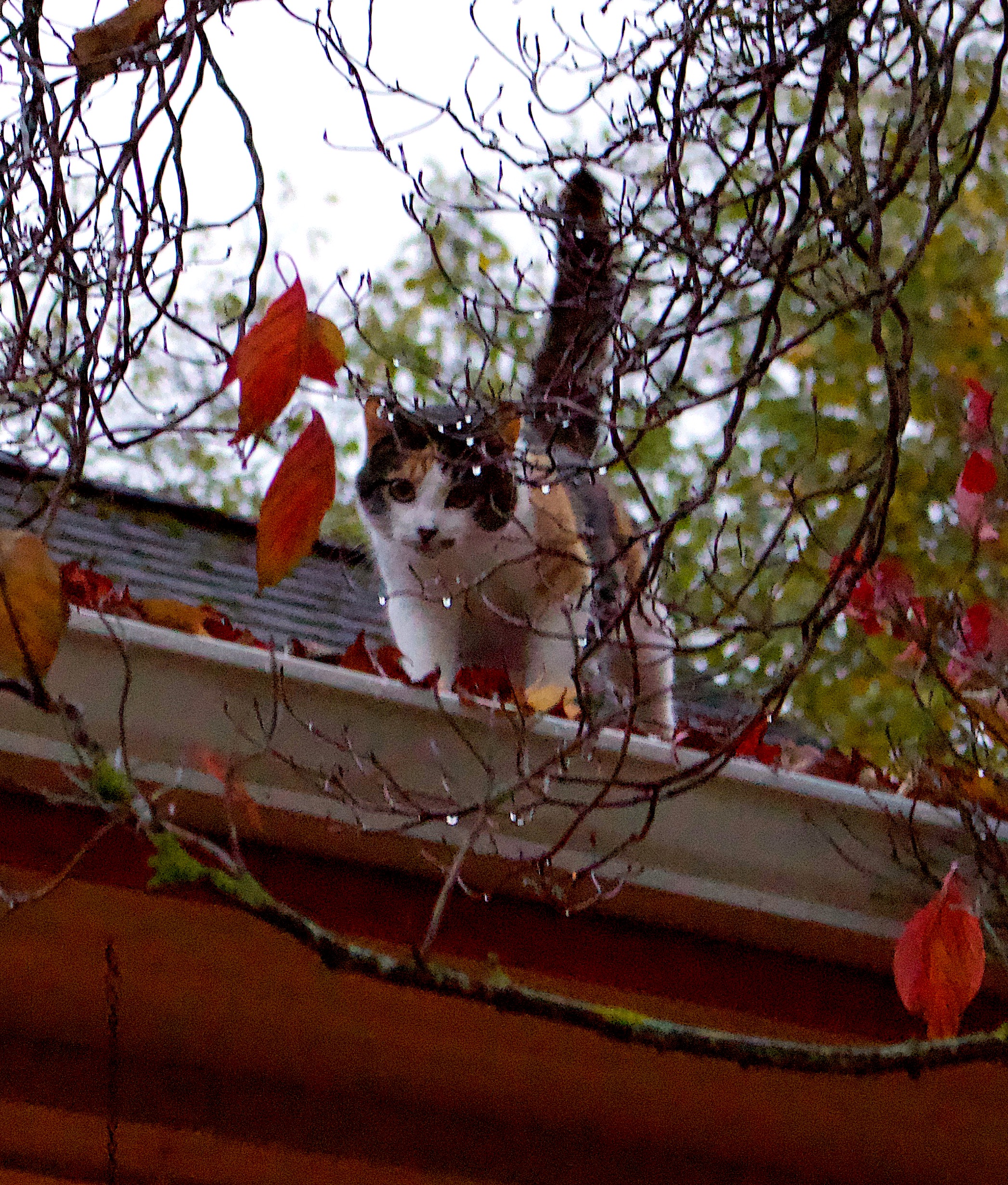
Since no farm can be complete without animals, I stopped at the first pet store I drove past and found two tortoise shell calico kitten sisters peering up at me, just waiting for new adventures in farmland. Their box was packed into the one spot left beside me in my little Mazda. With that admittedly impulsive commitment to raise and nurture those kittens, life seemed brand new.
I will never forget the feeling of freedom on that drive north out of the traffic congestion of the city. The highway seemed more open, the fall colors more vibrant, the wind more brisk, our baby happily kicking my belly, the kittens plaintively mewing from their box. There seemed to be so much potential even though I had just left behind the greatest job that could be found in any urban setting (the most diverse zip code in the United States): an ideal family practice with patients from all over the world: Muslims from the Middle East and Indonesia, Orthodox Jews, Italian Catholics, African Americans, Cambodians, Laotians, Vietnamese. I would never know so much variety of background and perspective again and if I could have packed them all into the Mazda and driven them north with me, I would have.
We started our farm with those kittens dubbed Nutmeg and Oregano, soon adding an ethnic diversity of farm animals: Belgian Tervuren dog Tango, Haflinger horse Greta, Toggenburg goats Tamsen and her kids, a few Toulouse geese, Araucana chickens, Fiona the Scottish Highland cow, then another Haflinger Hans and another, Tamara. I worked as a fill in locums doctor in four different clinics before our first baby, Nate, was born. We soon added little brother Ben and seven years later, sister Lea. We settled happily into parenthood, our church community, serving on school and community boards, gardening, and enduring the loss of our parents one by one.
Thirty four years later our children have long ago grown and gone to new homes of their own, off to their own adventures beyond the farm. Our sons married wonderful women, moving far away from home, our daughter teaches a fourth grade classroom a few hours away and we have two grandchildren with the third expected any moment.
A few cats, two Cardigan Corgi dogs, and a hand full of ponies remain at the farm with us. We are now both gray and move a bit more slowly, enjoy our naps and the quiet of the nights and weekends. My work has evolved from four small jobs to two decades of two part time jobs to one more than full time job that fit me like a well worn sweater 24 hours a day for thirty years. With retirement looming, I’m trying out a three day a week schedule and the old sweater doesn’t fit quite so comfortably.
My happily retired husband finds he is busier than ever: volunteering, serving on boards and being a full time farmer on our larger 20 acre place of fields and woods.
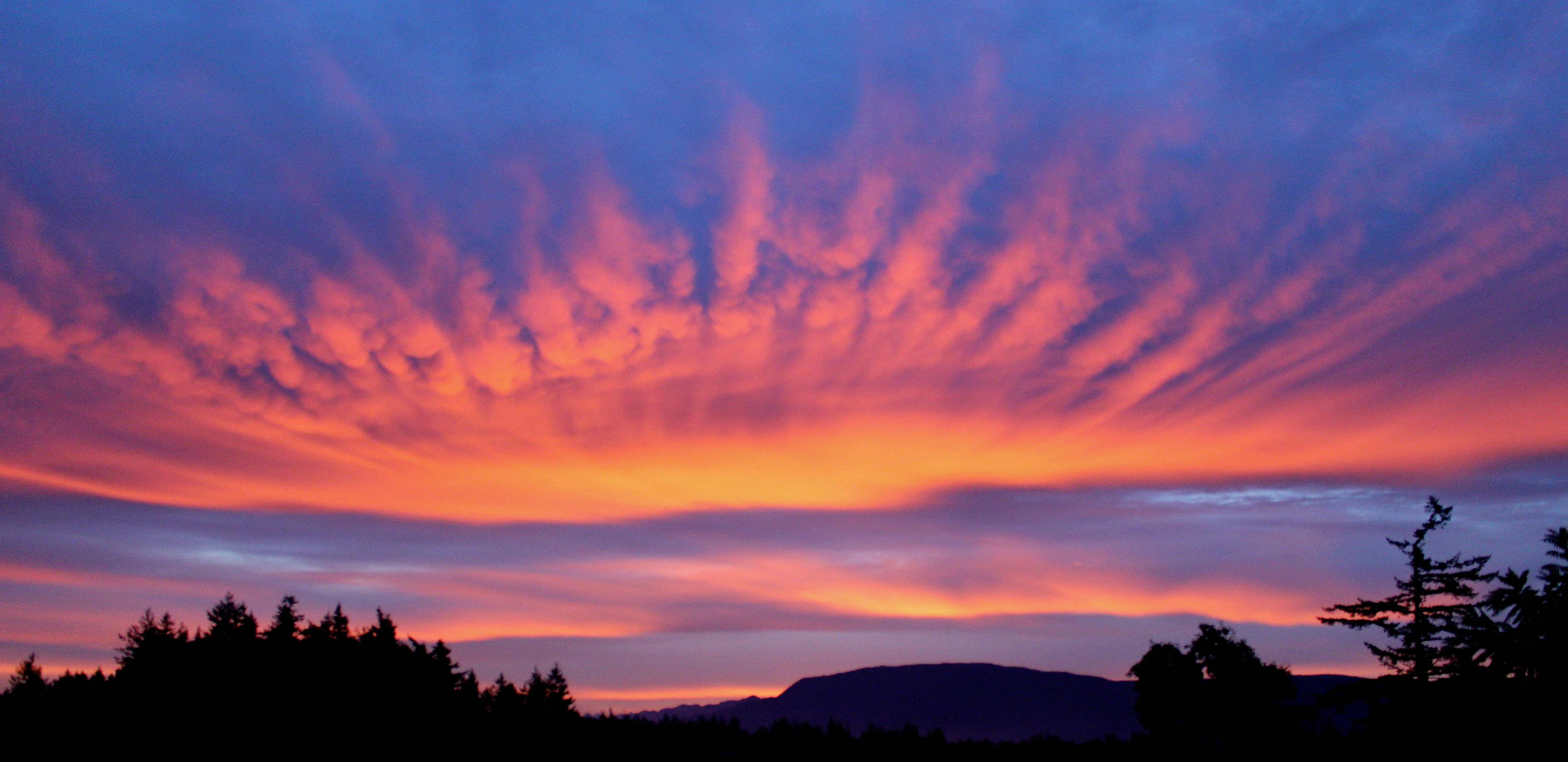
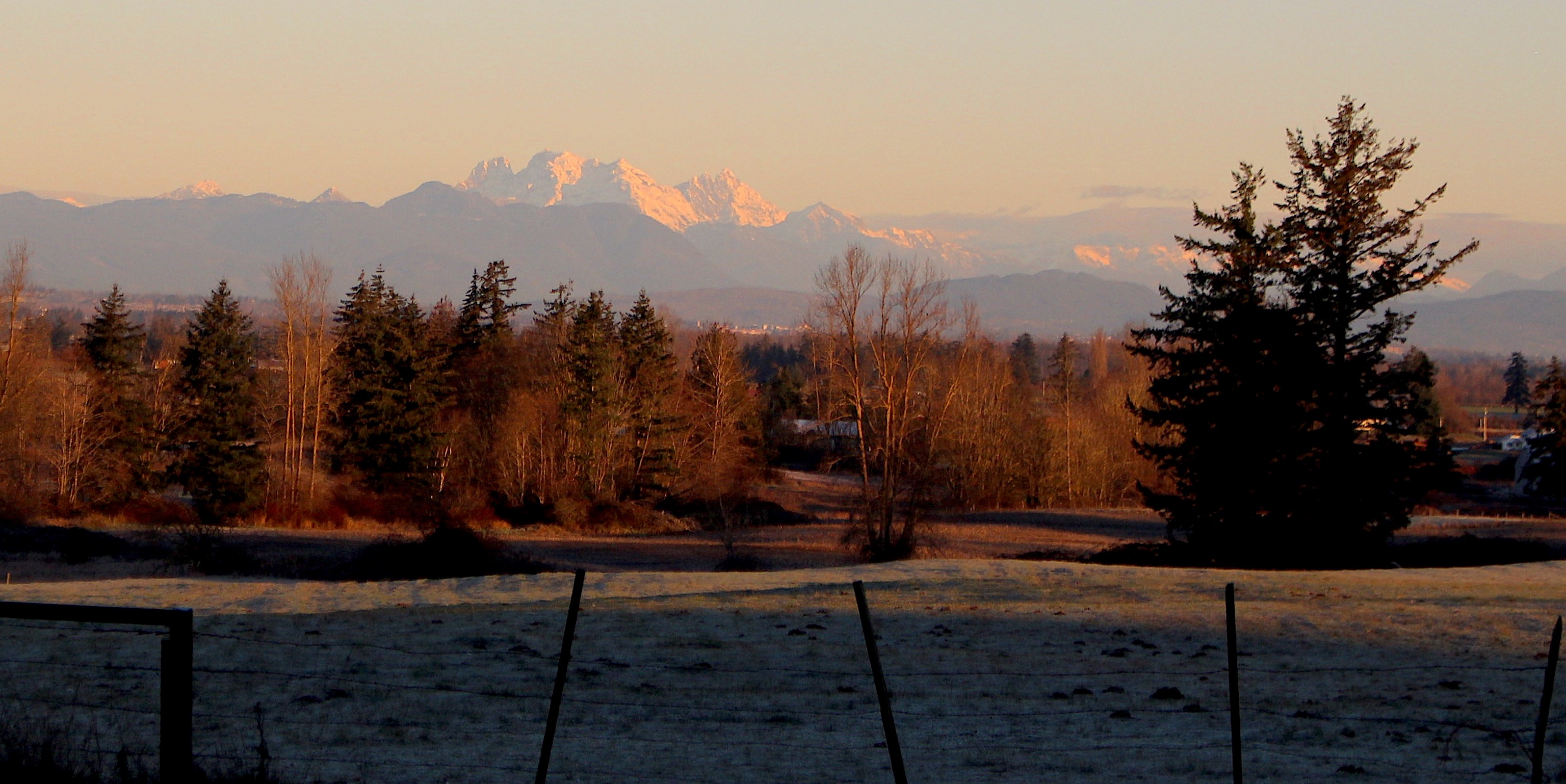
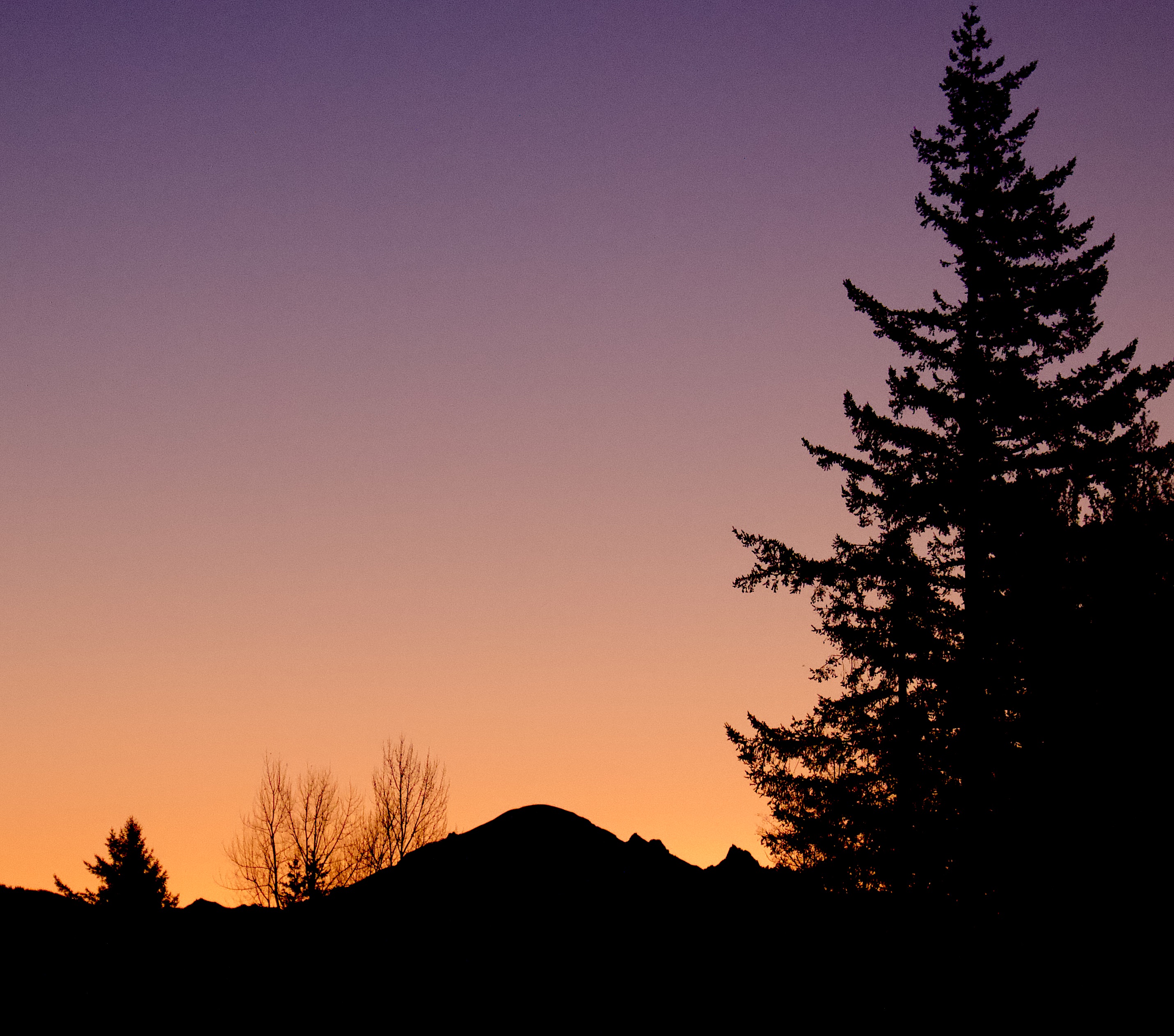
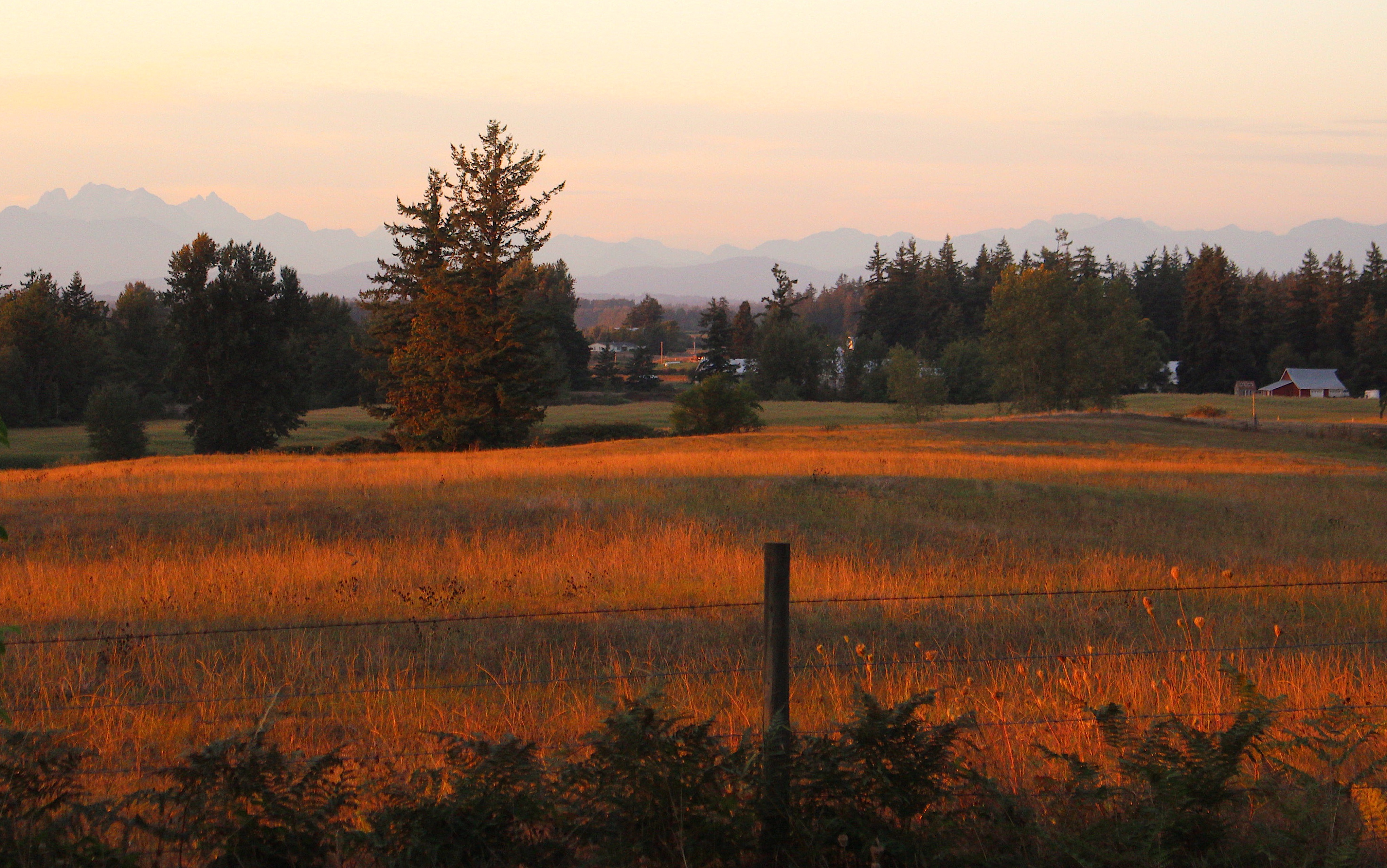
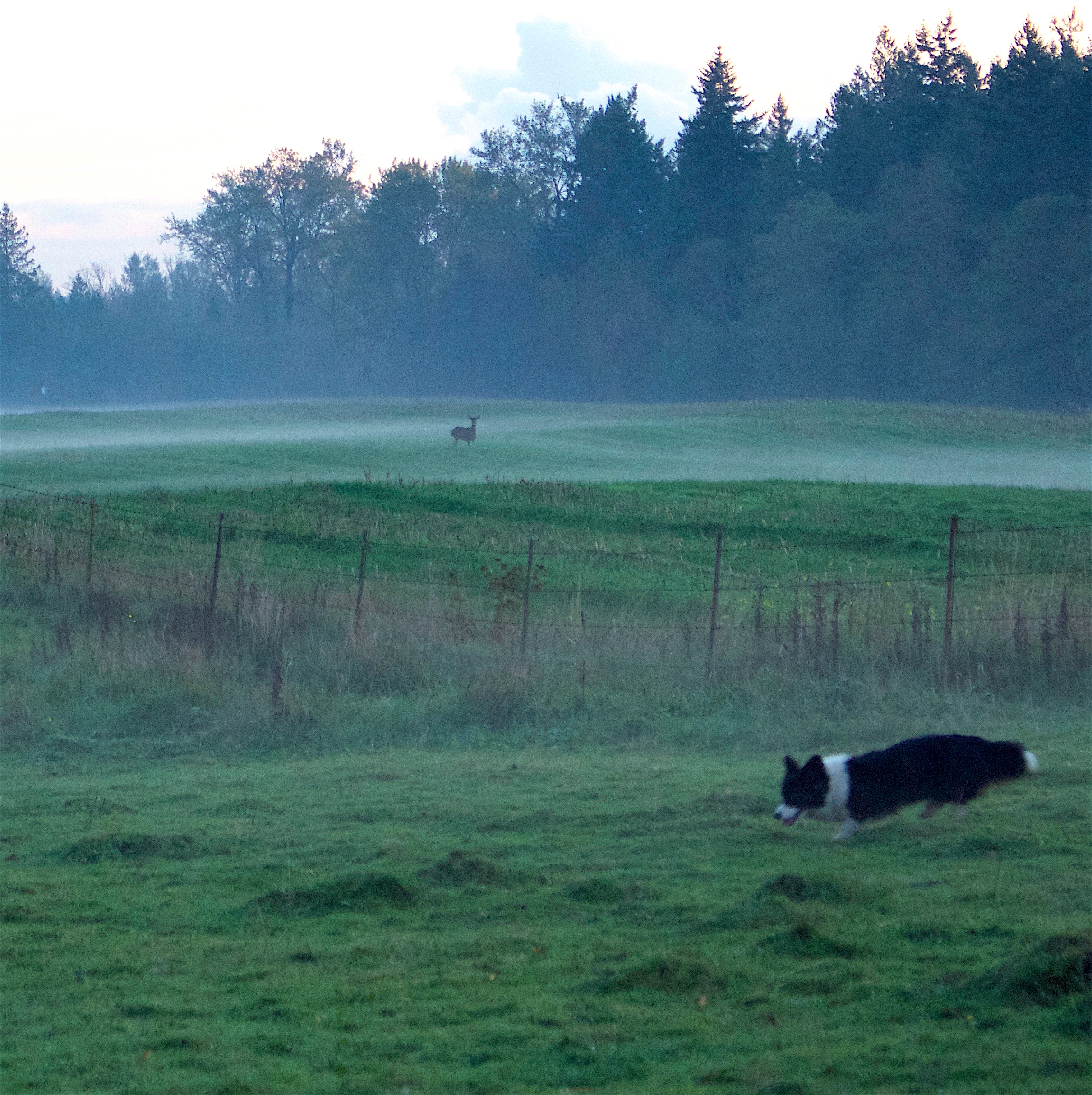
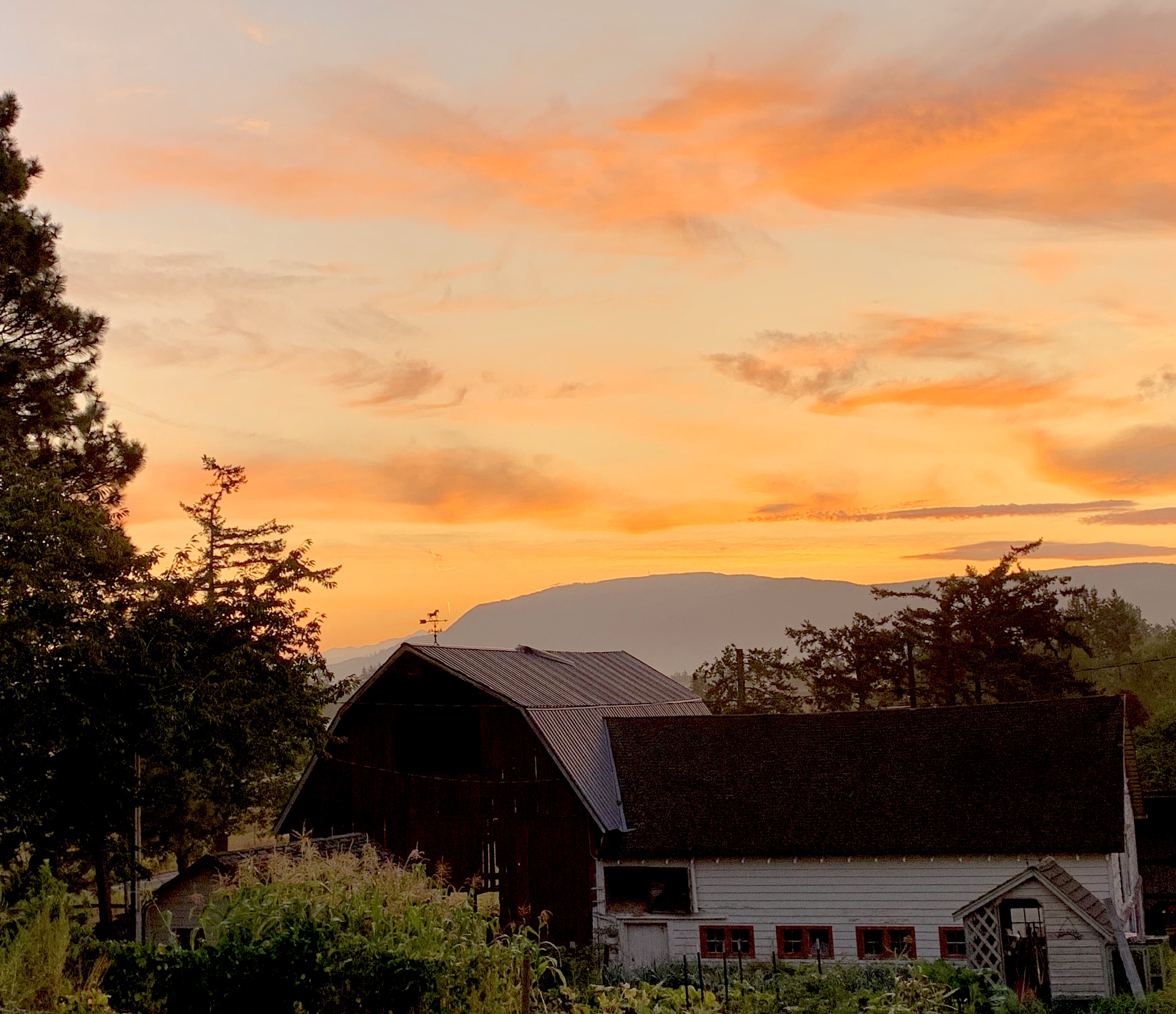
That rainy Halloween day over three decades ago I was freed into a wider world. I would no longer sit captive in freeway rush hour bumper to bumper traffic jams. Instead I celebrate my daily commute through farm fields, watching eagles fly, and new calves licked by their mamas. I am part of a broader community in a way I never could manage in the city, stopping to visit with friends at the grocery store, playing piano and teaching at church. Our home sits in the midst of woods and corn fields, with deer strolling through the fields at dawn, coyotes howling at night, Canadian and snow geese and trumpeter swans calling from overhead and salmon becoming more prolific every year in nearby streams. The snowy Cascades greet us in the morning and the sunset over Puget Sound bids us good night.
It all started October 31, 1985 with two orange and black kittens and a pumpkin sitting beside me in a little Mazda, my husband waiting for my homecoming 100 miles north. Now, thirty four years and three grown children and three (almost) grandchildren later, we celebrate this Halloween transition anniversary together. We’re still pregnant with the possibility that a wide world is waiting, just on the other side of the wall.
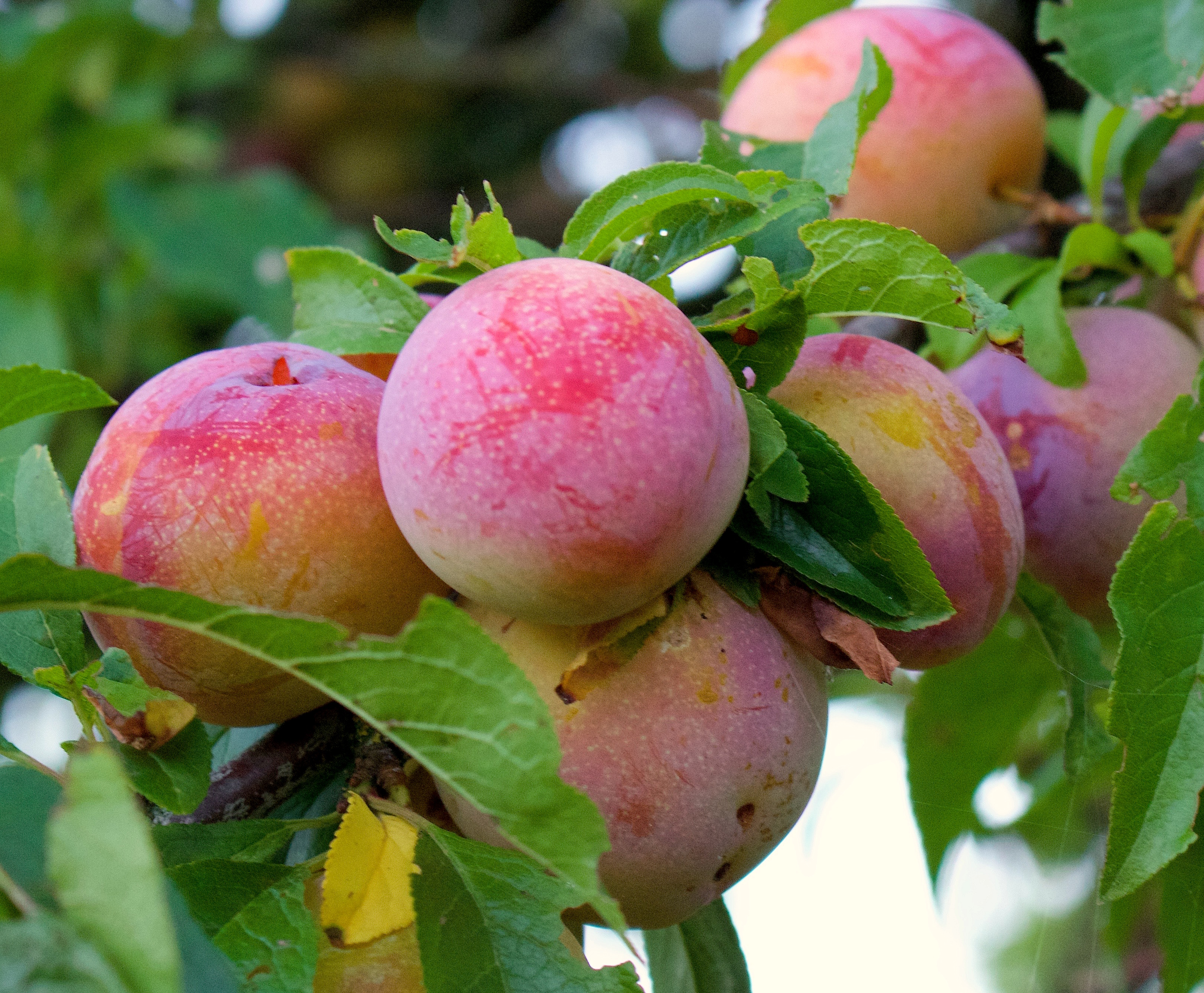
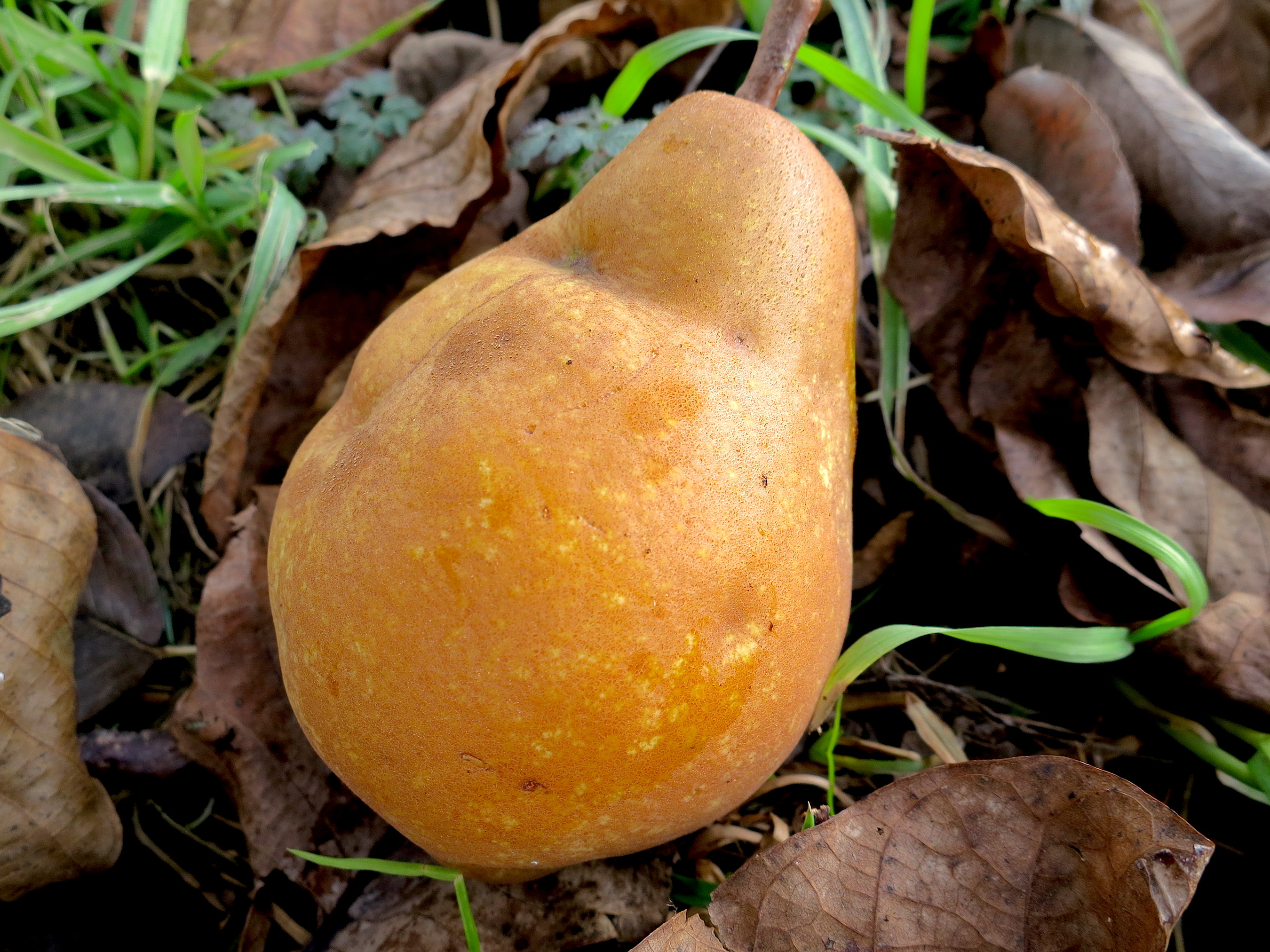
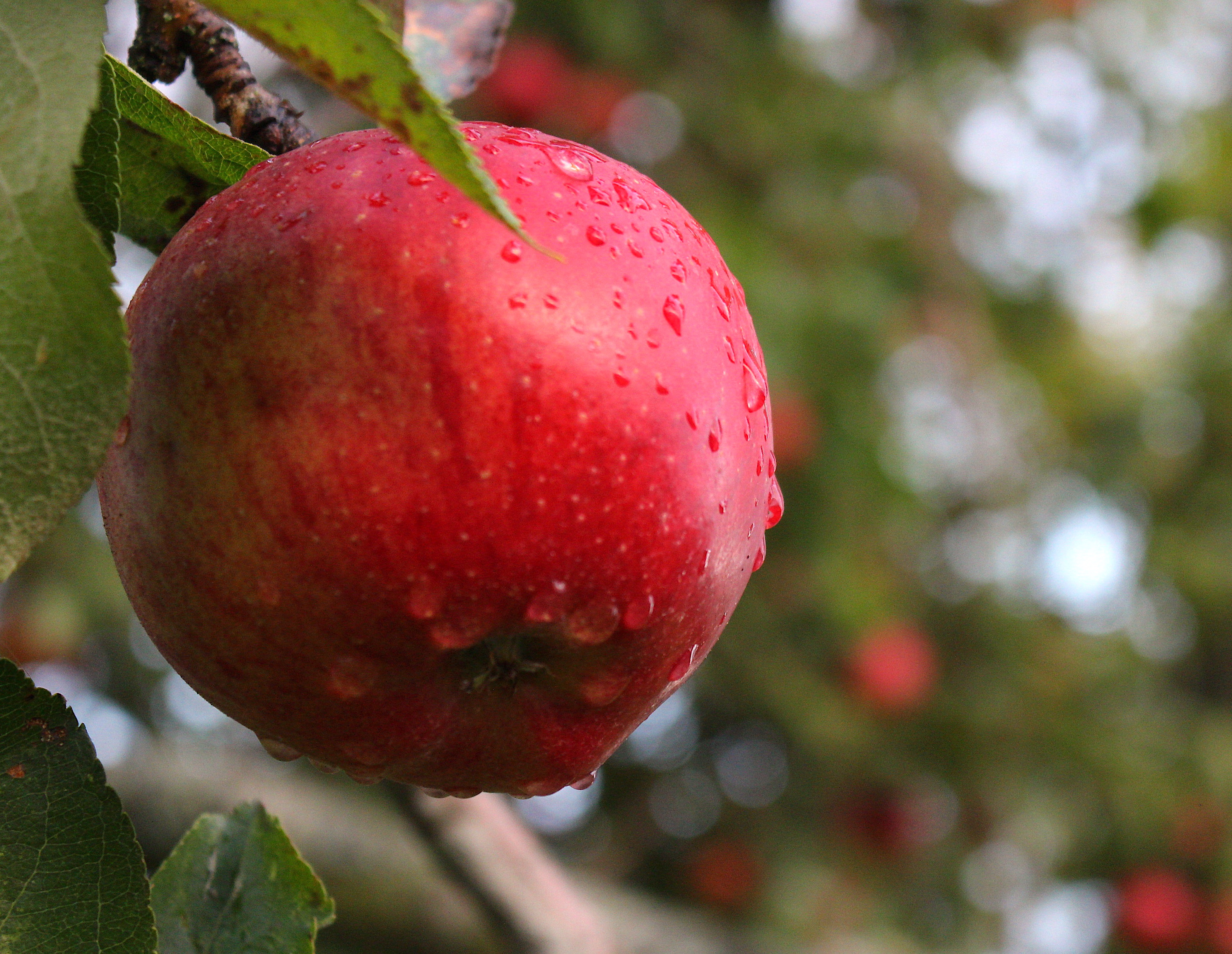
…the golden hour of the clock of the year. Everything that can run to fruit has already done so: round apples, oval plums, bottom-heavy pears, black walnuts and hickory nuts annealed in their shells, the woodchuck with his overcoat of fat. Flowers that were once bright as a box of crayons are now seed heads and thistle down. All the feathery grasses shine in the slanted light. It’s time to bring in the lawn chairs and wind chimes, time to draw the drapes against the wind, time to hunker down. Summer’s fruits are preserved in syrup, but nothing can stopper time. No way to seal it in wax or amber; it slides though our hands like a rope of silk. At night, the moon’s restless searchlight sweeps across the sky. ~Barbara Crooker “And Now it’s October” from Small Rain.
…but I do try to stopper time. I try every day not to suspend it or render it frozen, but like summer flower and fruit that withers, to preserve any sweet moment for sampling through stored words or pictures in the midst of my days of winter. I roll it around on my tongue, its heady fragrance becoming today’s lyrical shared moment, unstoppered, perpetual and always intoxicating.
He’s of the colour of the nutmeg. And of the heat of the ginger…. he is pure air and fire; and the dull elements of earth and water never appear in him, but only in patient stillness while his rider mounts him; he is indeed a horse… ~William Shakespeare from Henry V
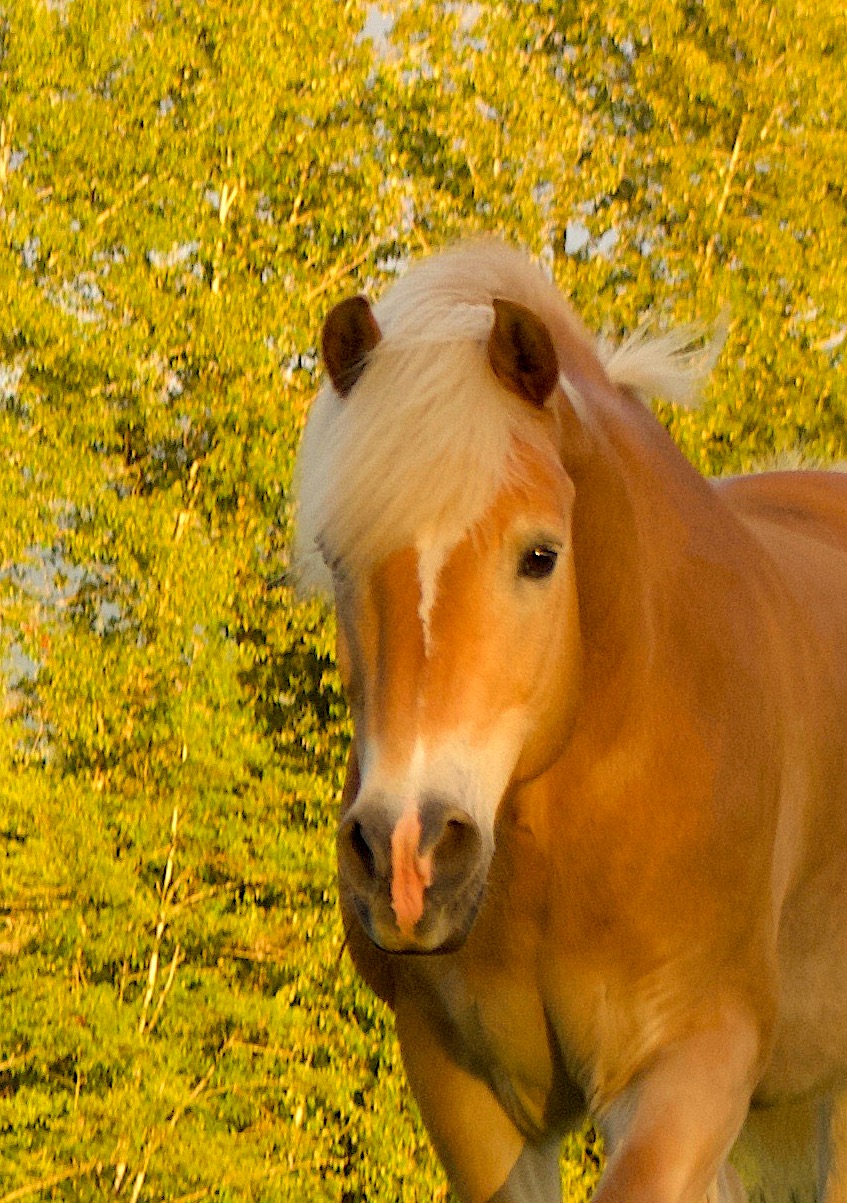
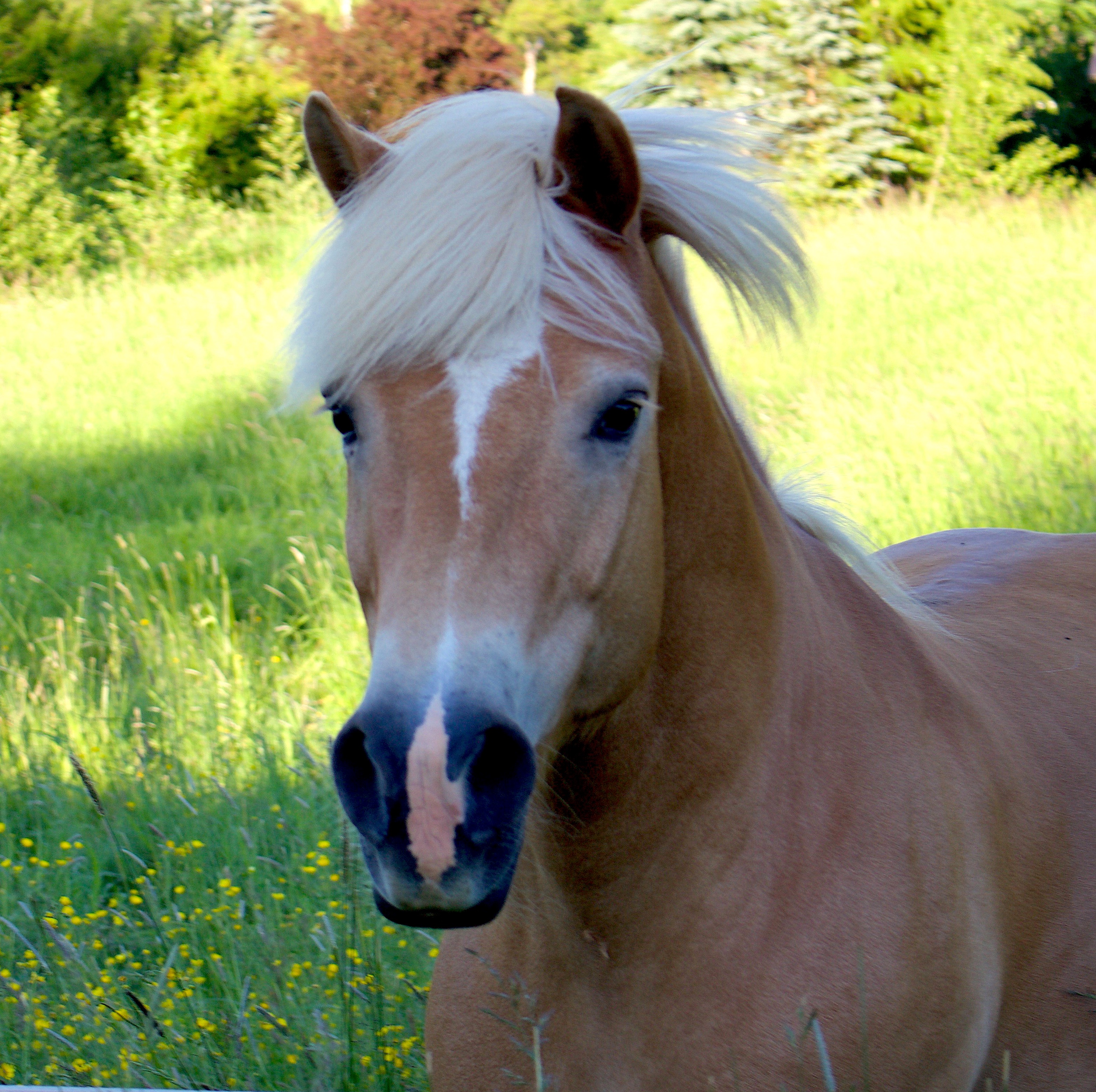
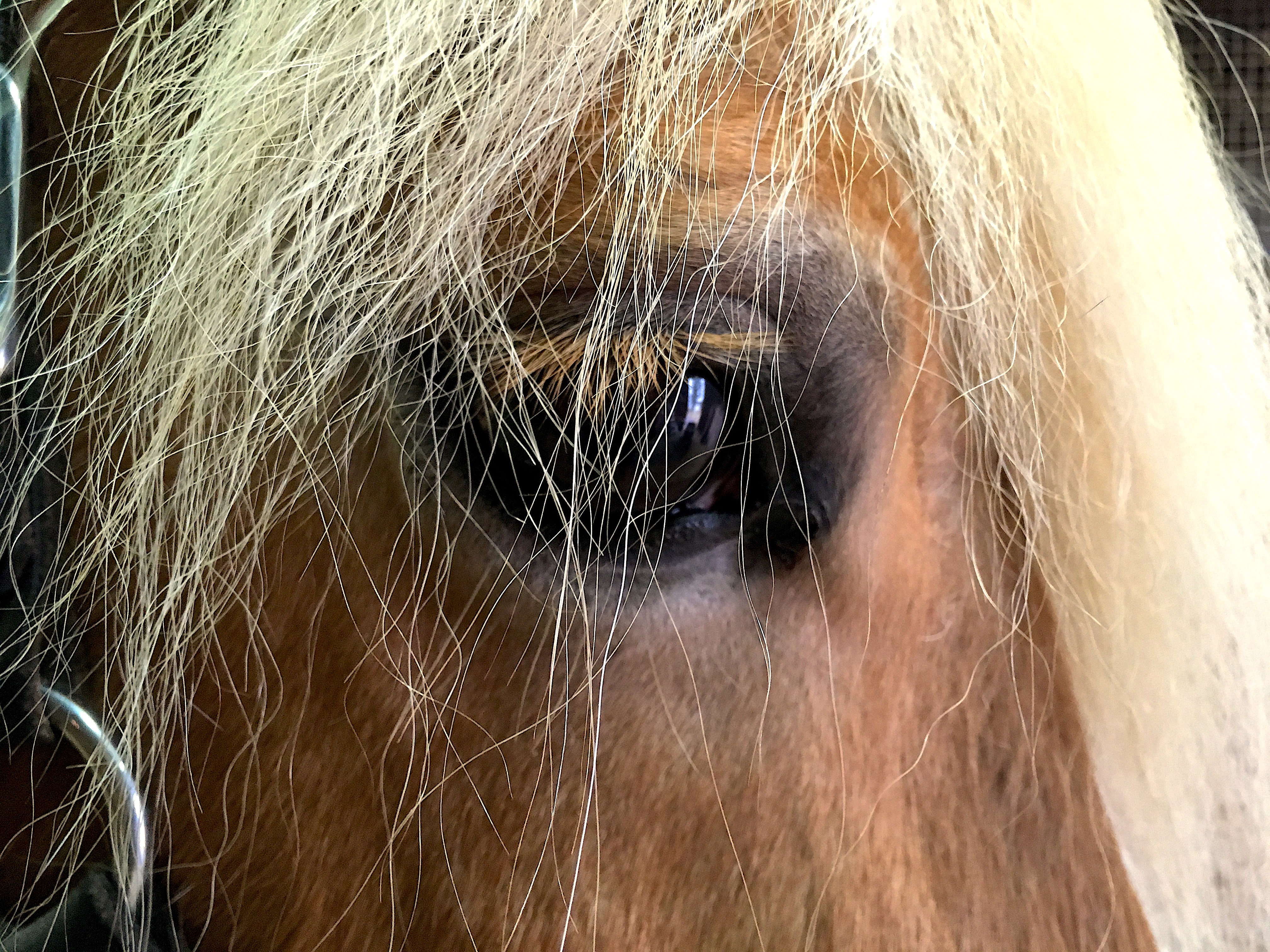
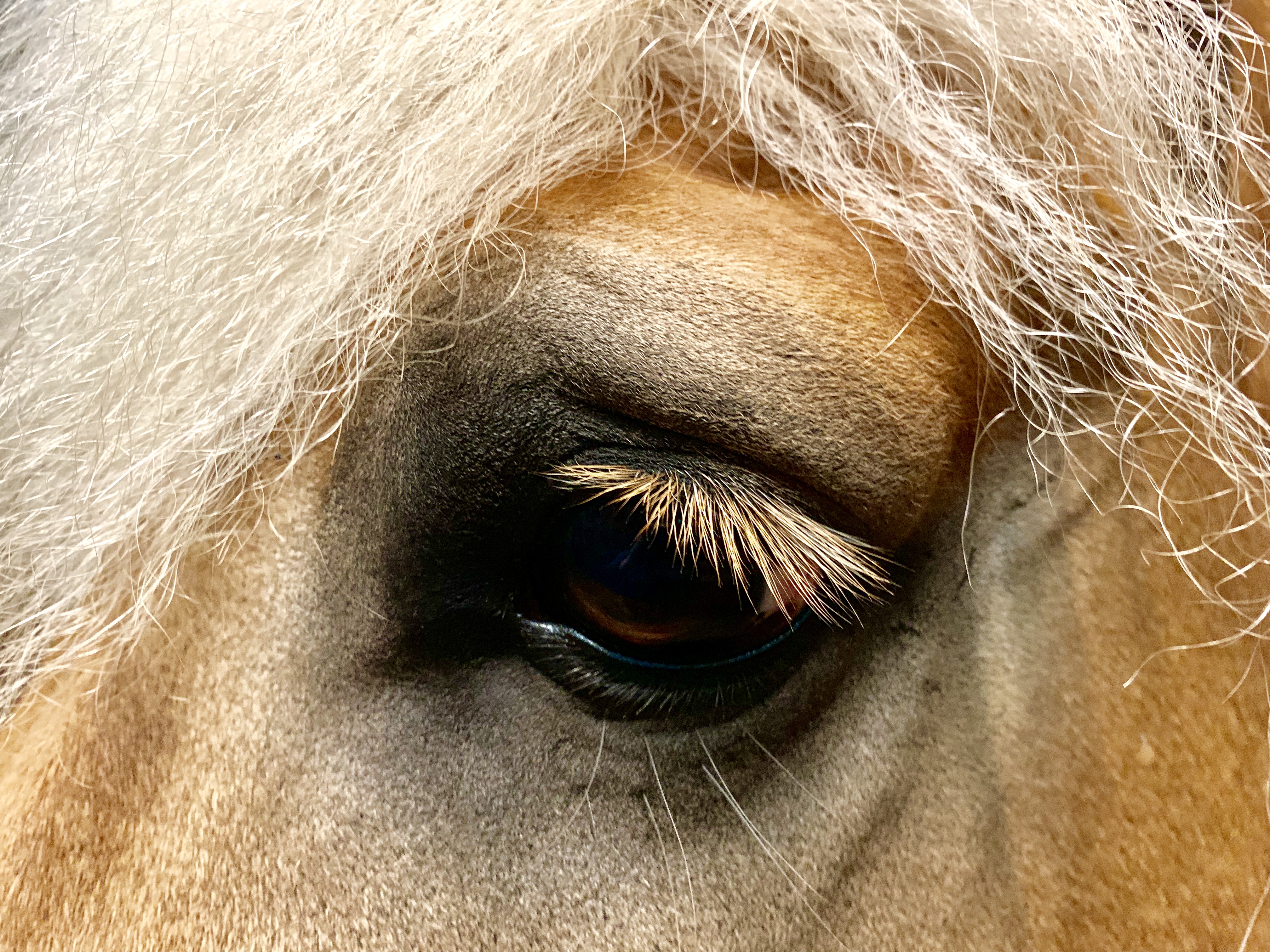
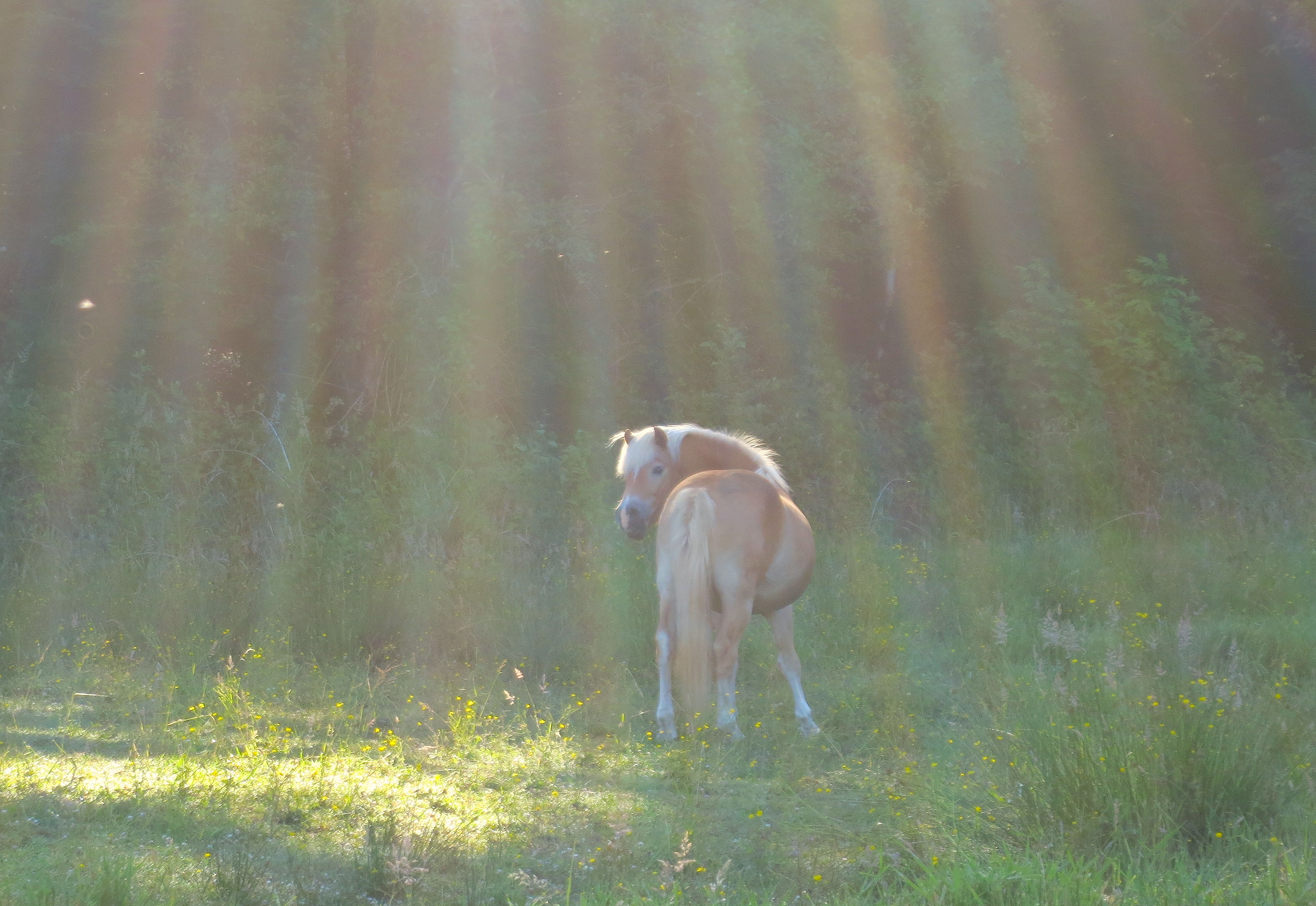
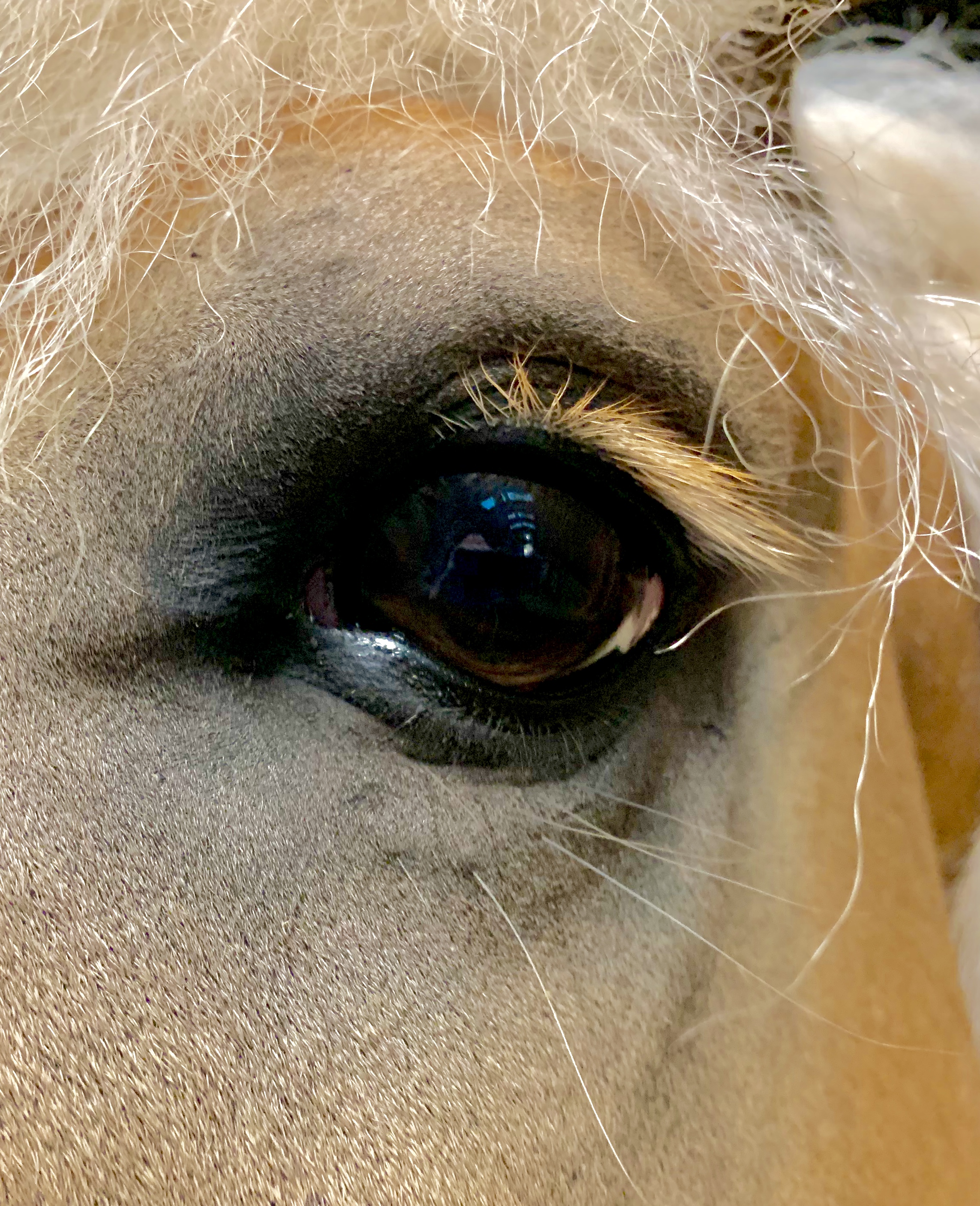
Not just because of the long wavy mane, and bushy ringleted tail, the feathers on the fetlocks, the black-rimmed deep brown eyes, topped with long elegant lashes, the glistening nutmeg ginger color, the perfect parallel little ears, the forelock that almost reaches to the upper lip….
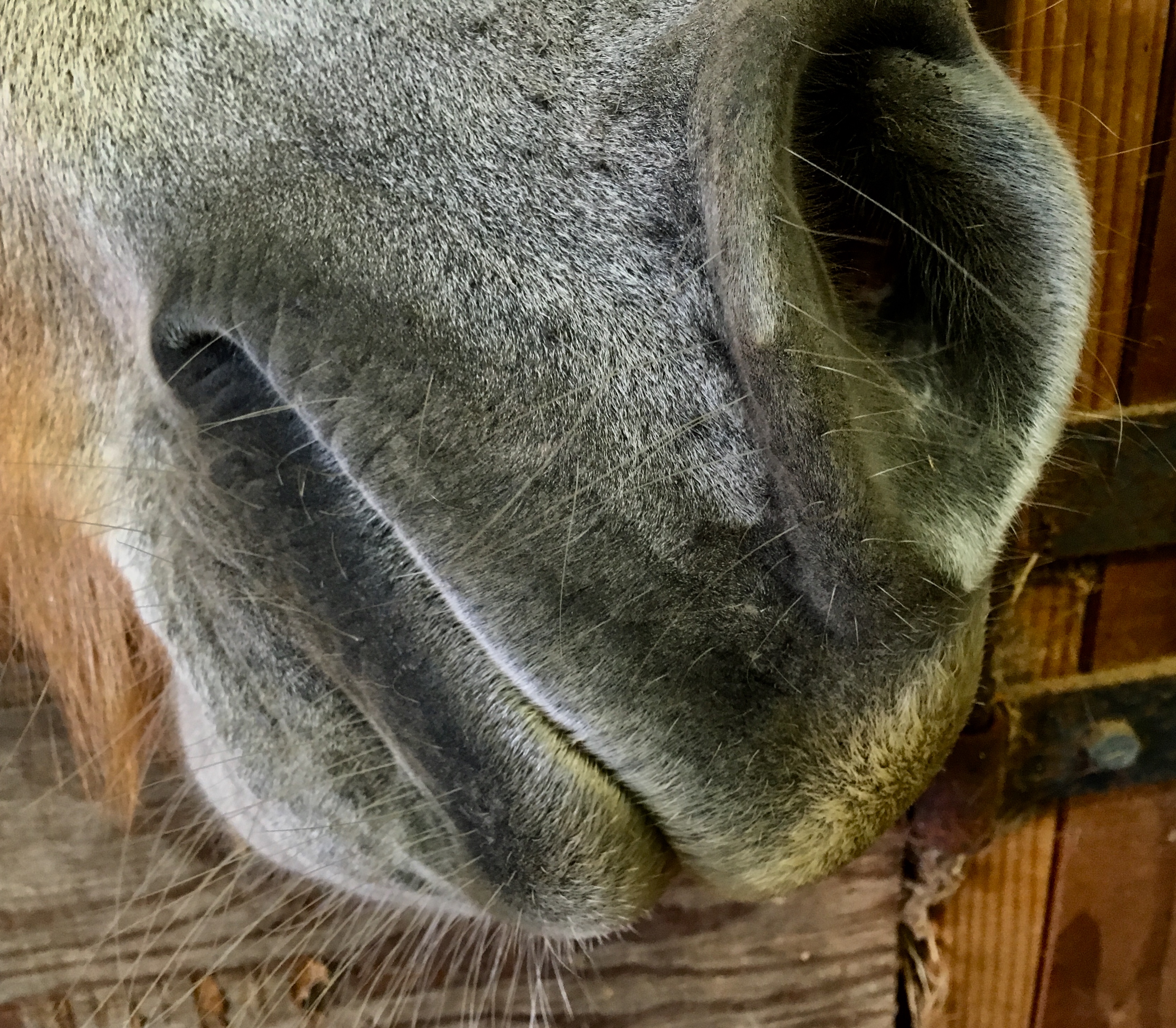
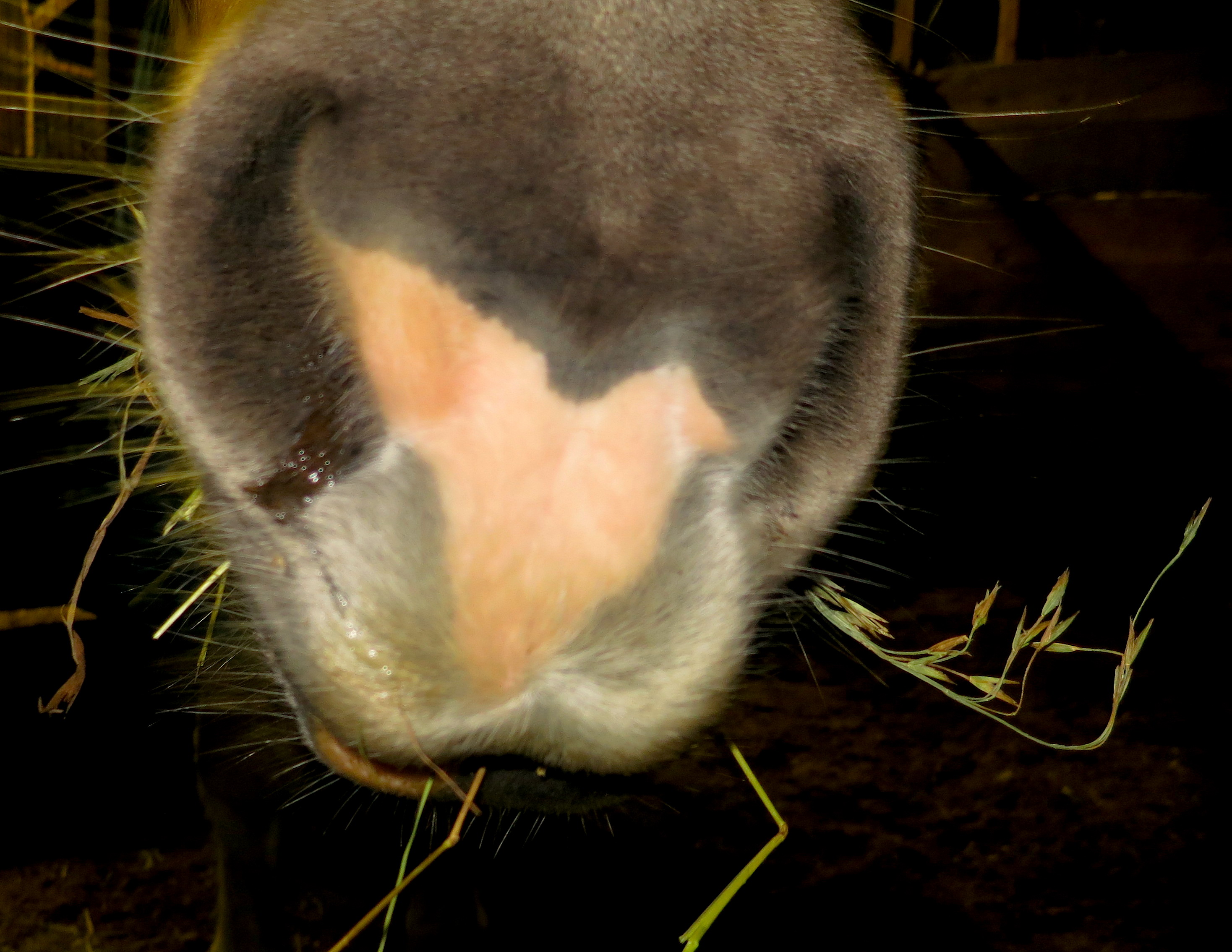
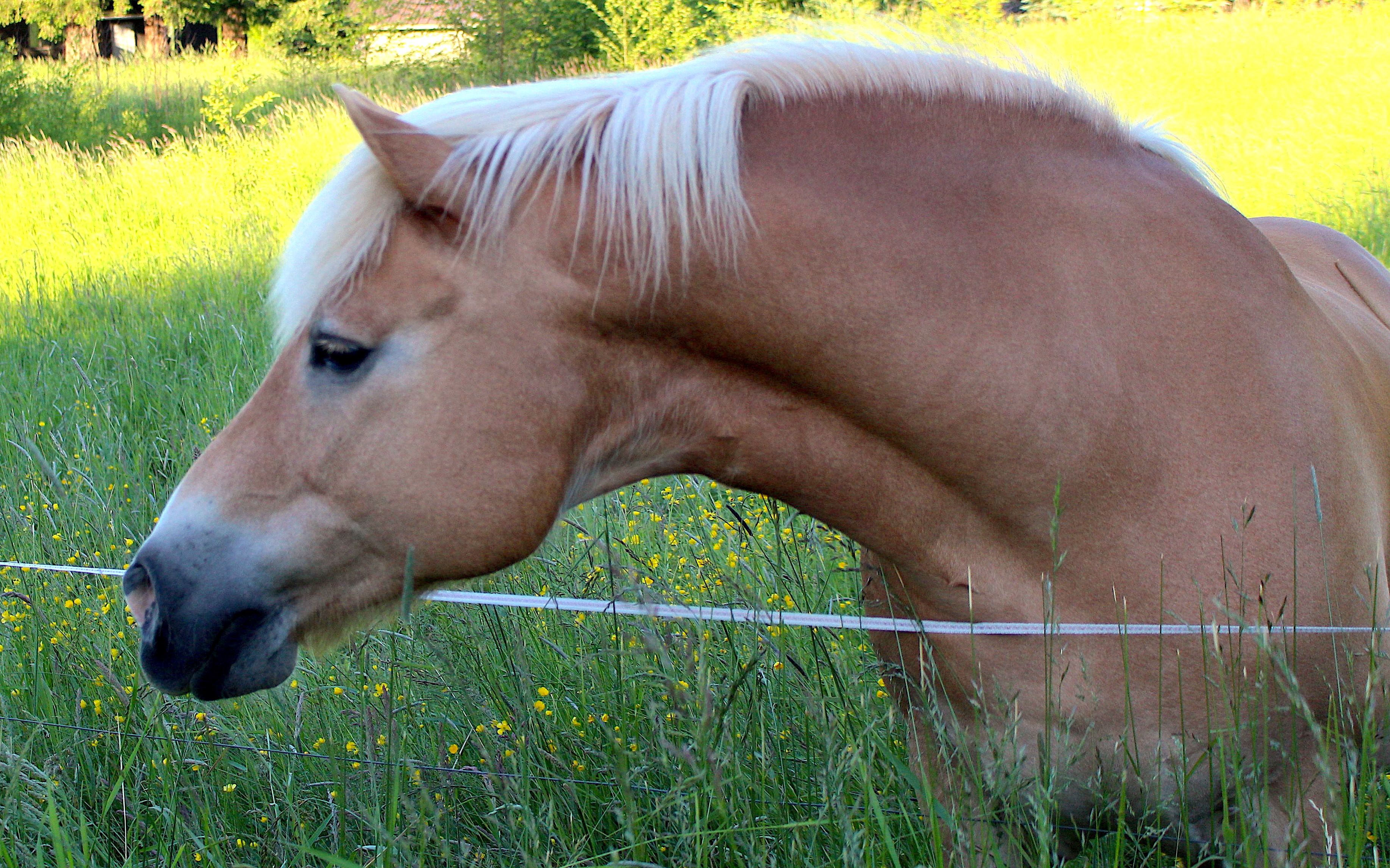
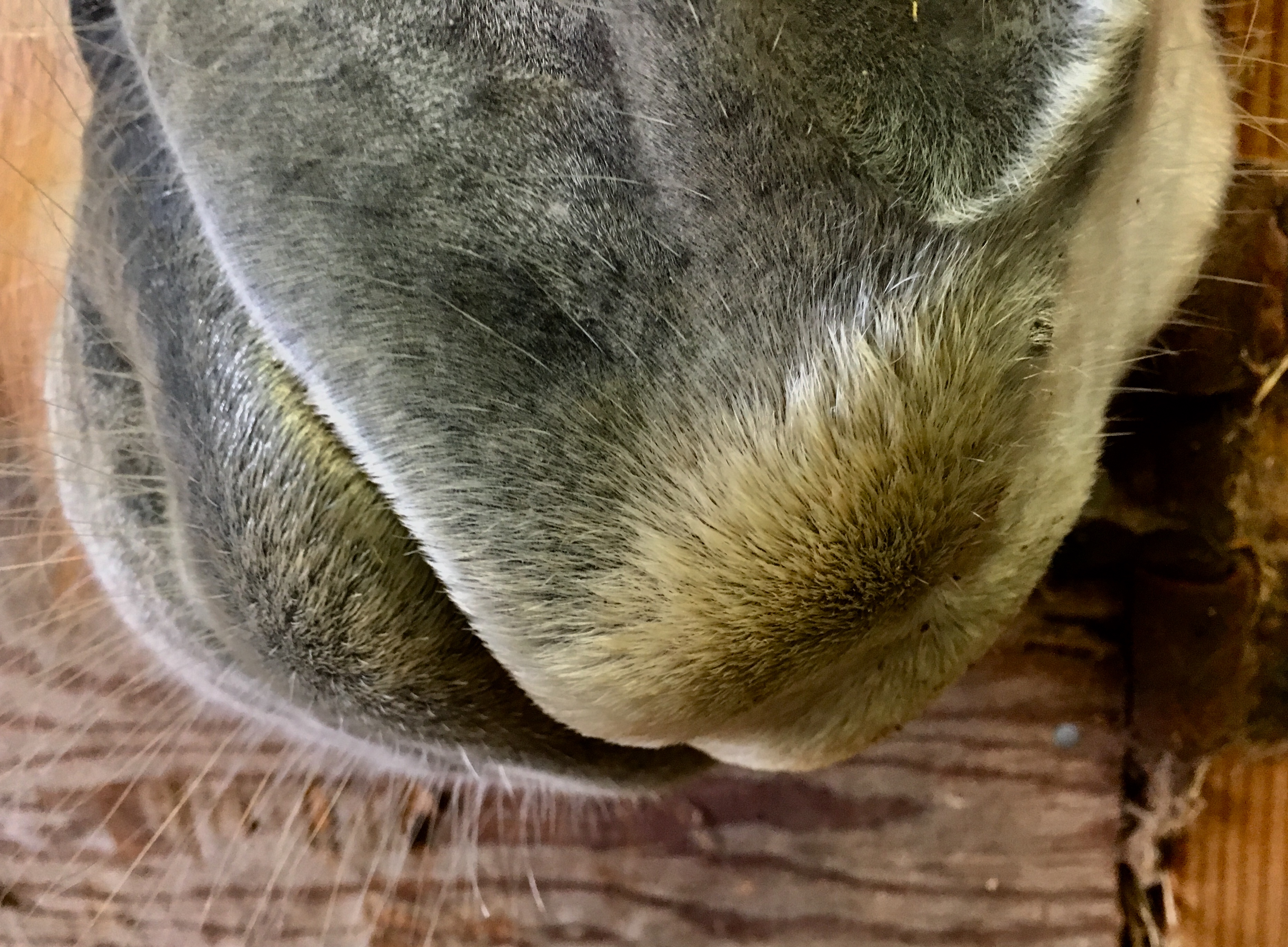
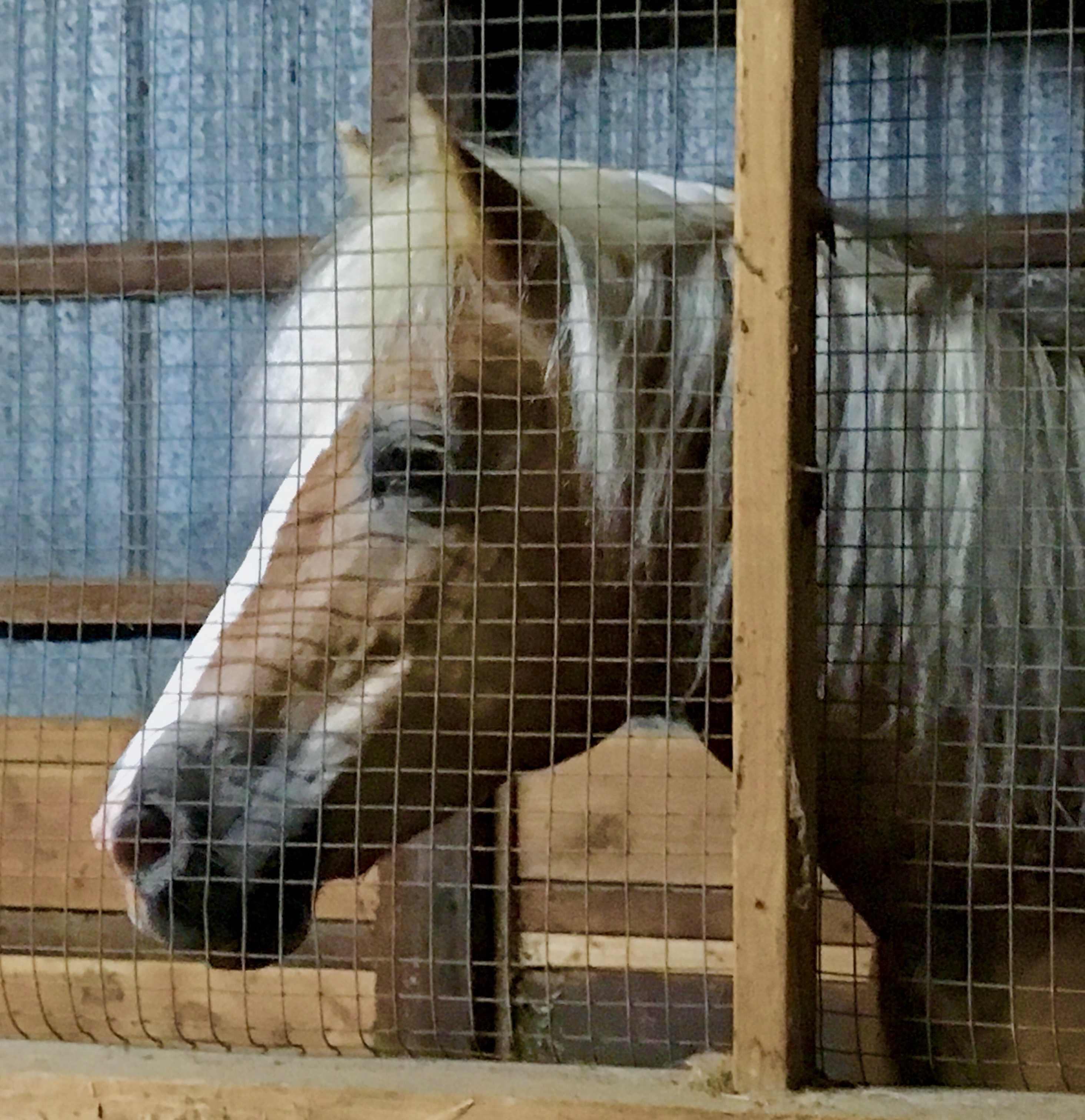
The real reason to love a Haflinger horse is its nose.
Pink noses, gray noses, nondescript not-sure-what-color noses, noses that have white stripes, diamonds, triangles, hearts or absolutely no white at all.
With hot breath exuding fragrance better than pricey perfume, lips softer than the most exquisite velvet.
Noses reach out in greeting, blow, sniff, nuzzle, caress, push, search, smudge faces and shower snot.
I spent this morning adjusting to this change in season by occupying myself with the familiar task of moving manure. Cleaning barn is a comforting chore, allowing me to transform tangible benefit from something objectionable and just plain stinky to the nurturing fertilizer of the future. It feels like I’ve actually accomplished something.
As I scooped and pushed the wheelbarrow, I remembered another barn cleaning twenty years ago, when I was one of three or four friends left cleaning over ninety stalls after a Haflinger horse event that I had organized at our local fairgrounds. Some people had brought their horses from over 1000 miles away to participate for several days. Whenever horse people gather, there were personality clashes and harsh words among some participants along with criticism directed at me that I had taken very personally. As I struggled with the umpteenth wheelbarrow load of manure, tears stung my eyes and my heart. I was miserable with regrets. After going without sleep and making personal sacrifices over many months planning and preparing for the benefit of our group, my work felt like it had not been acknowledged or appreciated.
My friend Jenny had stayed behind with her family to help clean up the large facility and she could see I was struggling to keep my composure. Jenny put herself right in front of my wheelbarrow and looked me in the eye, insisting I stop for a moment and listen.
“You know, none of these troubles and conflicts will amount to a hill of beans years from now. People will remember a fun event in a beautiful part of the country, a wonderful time with their horses, their friends and family, and they’ll be all nostalgic about it, not giving a thought to the infighting or the sour attitudes or who said what to whom. So don’t make this about you and whether you did or didn’t make everyone happy. You loved us all enough to make it possible to meet here and the rest was up to us. So quit being upset about what you can’t change. There’s too much you can still do for us.”
During tough times which still come often in my professional life, Jenny’s advice replays, reminding me to stop seeking appreciation from others, or feeling hurt when harsh words come my way. She was right about the balm found in the tincture of time and she was right about giving up the upset in order to die to self and self absorption, and keep focusing outward.
Jenny, I have remembered what you said even though sometimes I emotionally relapse and forget.
Jenny herself spent the next six years literally dying, while vigorously living her life every day, fighting a relentless cancer that was initially helpless in the face of her faith and intense drive to live. She became a rusting leaf, fading imperceptibly over time, crumbling at the edges until she finally let go. Her dying did not flash brilliance, nor draw attention at the end. Her intense focus during the years of her illness had always been outward to others, to her family and friends, to the healers she spent so much time with in medical offices, to her belief in the plan God had written for her and others.
Despite her intense love for her husband and young children, she had to let go her hold on life here. And we all had to let her go.
Brilliance cloaks her as her focus is now on things eternal.
You were so right, Jenny. No conflicts from twenty years ago amounted to a hill of beans; all is remembered fondly by those who were part of the gathering. I especially treasure the words you wisely spoke to me.
And I’m no longer upset that I can’t change the fact that you have left us. There is still so much you do for us, alive in our memories.
A hill, a farm, A forest, and a valley. Half a hill plowed, half woods. A forest valley and a valley field.
Sun passes over; Two solstices a year Cow in the pasture Sometimes deer
A farmhouse built of wood. A forest built on bones. The high field, hawks The low field, crows
Wren in the brambles Frogs in the creek Hot in summer Cold in snow
The woods fade and pass. The farm goes on. The farm quits and fails The woods creep down
Stocks fall you can’t sell corn Big frost and tree-mice starve Who wins who cares? The woods have time. The farmer has heirs. ~“Map” by Gary Snyder from Left Out in the Rain.
We have now passed from the season when our farm is brilliant, verdant and delicious to behold. In June, the cherry orchard blossoms yield to fruit and the pastures are knee high with grass. During the summer months, the daylight starts creeping over the eastern foothills at 4 AM and the last glimpse of sun disappears at nearly 10 PM. So many hours of light to work with!
I yearn for the coming dark rainy days to hide inside with a book.
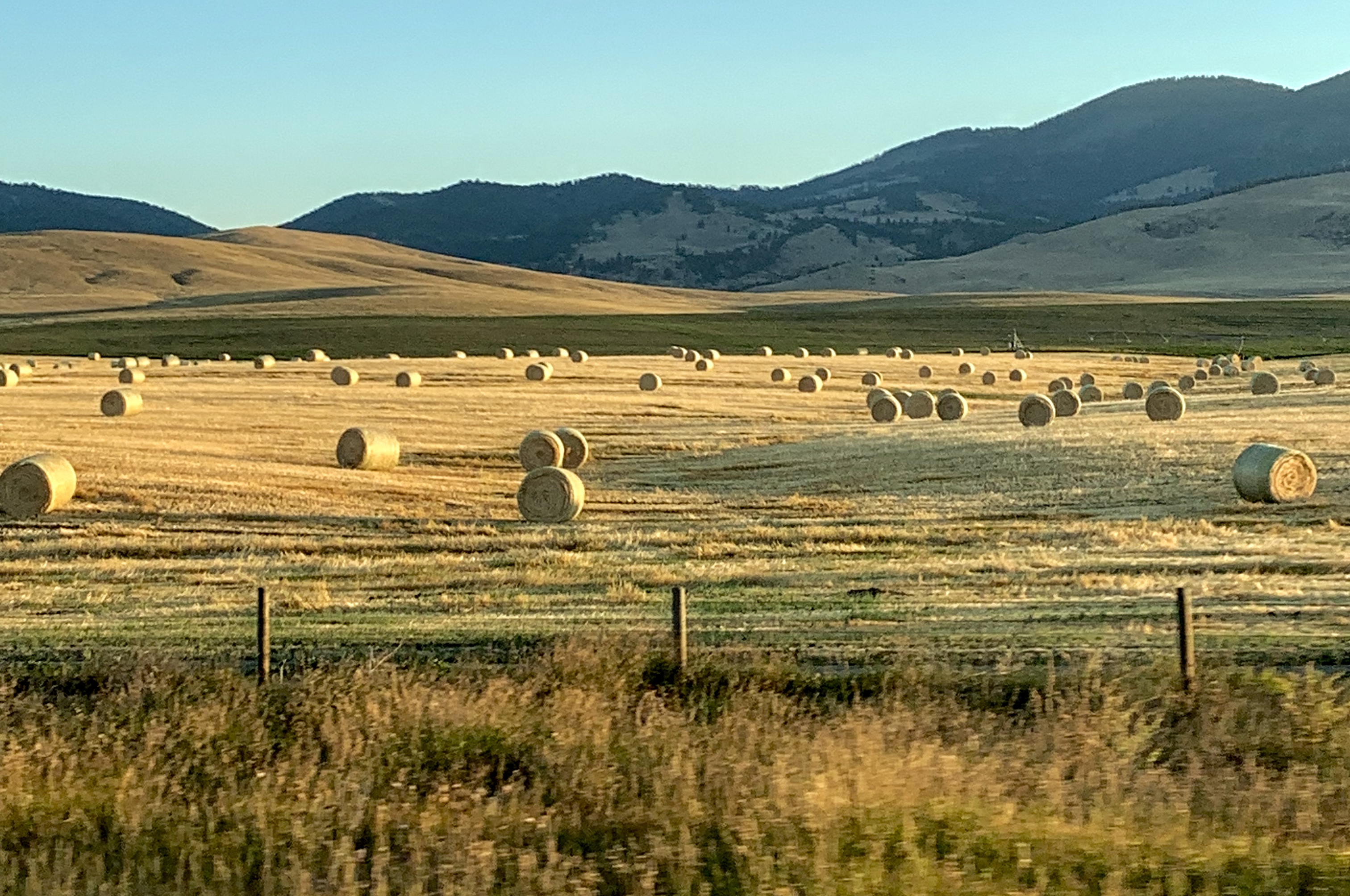
Instead the lawnmower and weed whacker call our names, and the fish pond needs cleaning and the garden must be prepared for winter. It’s not that things don’t happen on the farm during months like this. It’s just that nothing we do is enough. Blackberry brambles have taken over everything, grass grows faster than we can keep it mowed down, the manure piles grow exponentially. The fences always need fixing.
Suddenly our farm dream seems not nearly so compelling.
We spent many years dreaming about the farm as we hoped it would be. We imagined the pastures managed perfectly with fencing that was both functional and beautiful. Our barns and buildings would be tidy and leak-proof, and the stalls secure and safe. We’d have a really nice pick up truck with low miles on it, not a 35 year old hand me down truck with almost 200,000 miles. We would have trees pruned expertly and we’d have flower beds blooming as well as a vegetable garden yielding 9 months of the year. Our hay would never be rained on. We would have dogs that wouldn’t run off and cats that would take care of all the rodents. We wouldn’t have any moles, thistles, dandelions or buttercup. The pheasant, deer, coyotes, raccoons, and wild rabbits would only stroll through the yard for our amusement and not disturb anything. We’d have livestock with the best bloodlines we could afford and a steady demand from customers to purchase their offspring at reasonable prices so that not a dime of our off-farm income would be necessary to pay farm expenses. Our animals (and we) would never get sick or injured.
And our house would always stay clean.
Dream on. Farms are often back-breaking, morale-eroding, expensive sinkholes. I know ours is. Yet here we be and here we stay.
It’s home. We’ve raised three wonderful children here. We’ve bred and grown good horses and great garden and orchard crops and tons of hay from our own fields. We breathe clean air and hear dozens of different bird songs and look out at some of the best scenery this side of heaven. Eagles land in the trees in our front yard. It’s all enough for us even if we are not enough for the farm. I know there will come a time when the farm will need to be a fond memory and not a daily reality. Until then we will keep pursuing our dream as we and the farm grow older. Dreams age and mature and I know now what I dreamed of when I was younger was not the important stuff.
We have been blessed with one another, with the sunrises and the sunsets and everything in between. This is the stuff of which the best dreams are made.
The neighbor’s horses idle under the roof of their three-sided shelter, looking out at the rain.
Sometimes one or another will fade into the shadows in the corner, maybe to eat, or drink.
Still, the others stand, blowing out their warm breaths. Rain rattles on the metal roof.
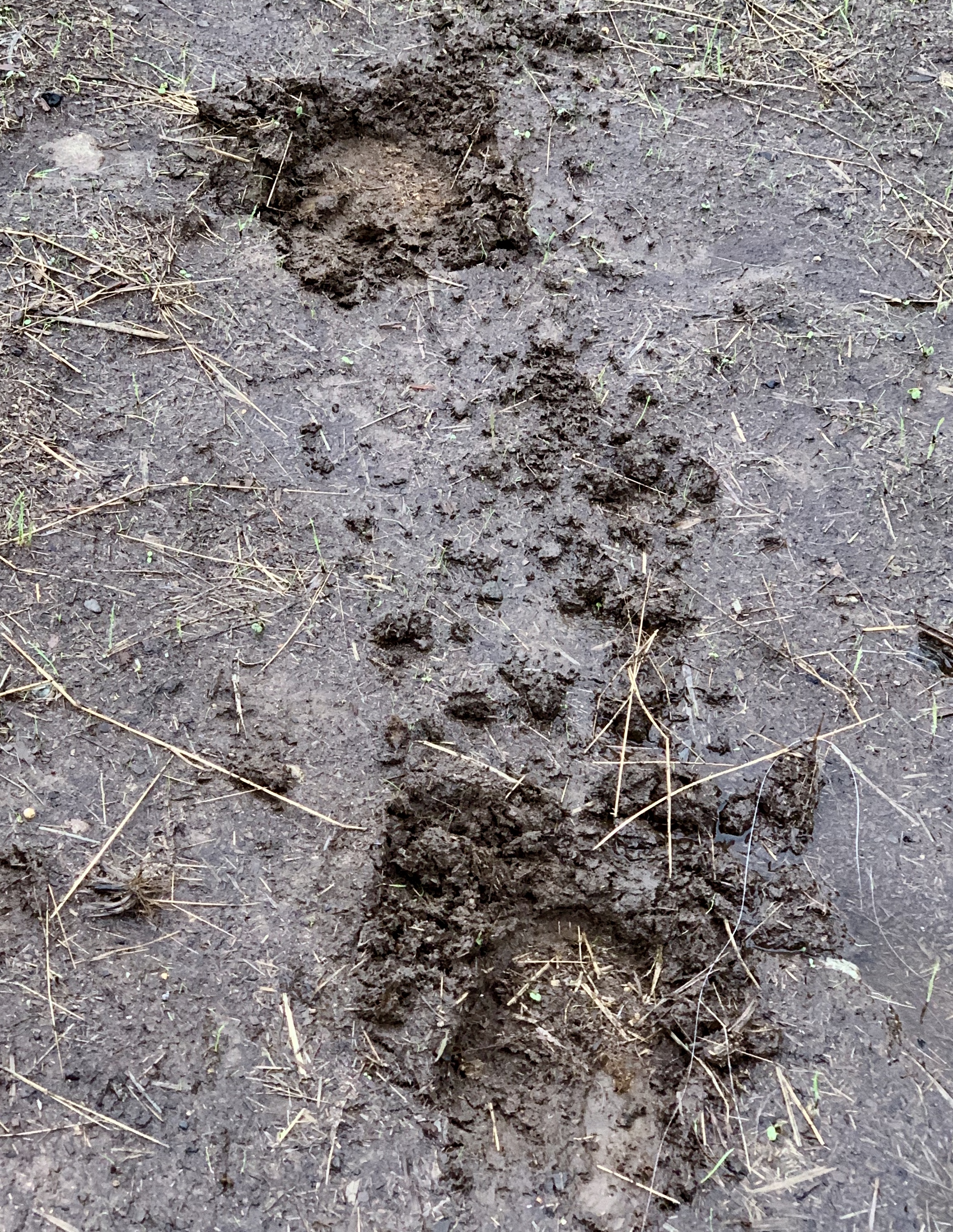
Their hoof prints in the corral open gray eyes to the sky, and wink each time another drop falls in. ~Jennifer Gray
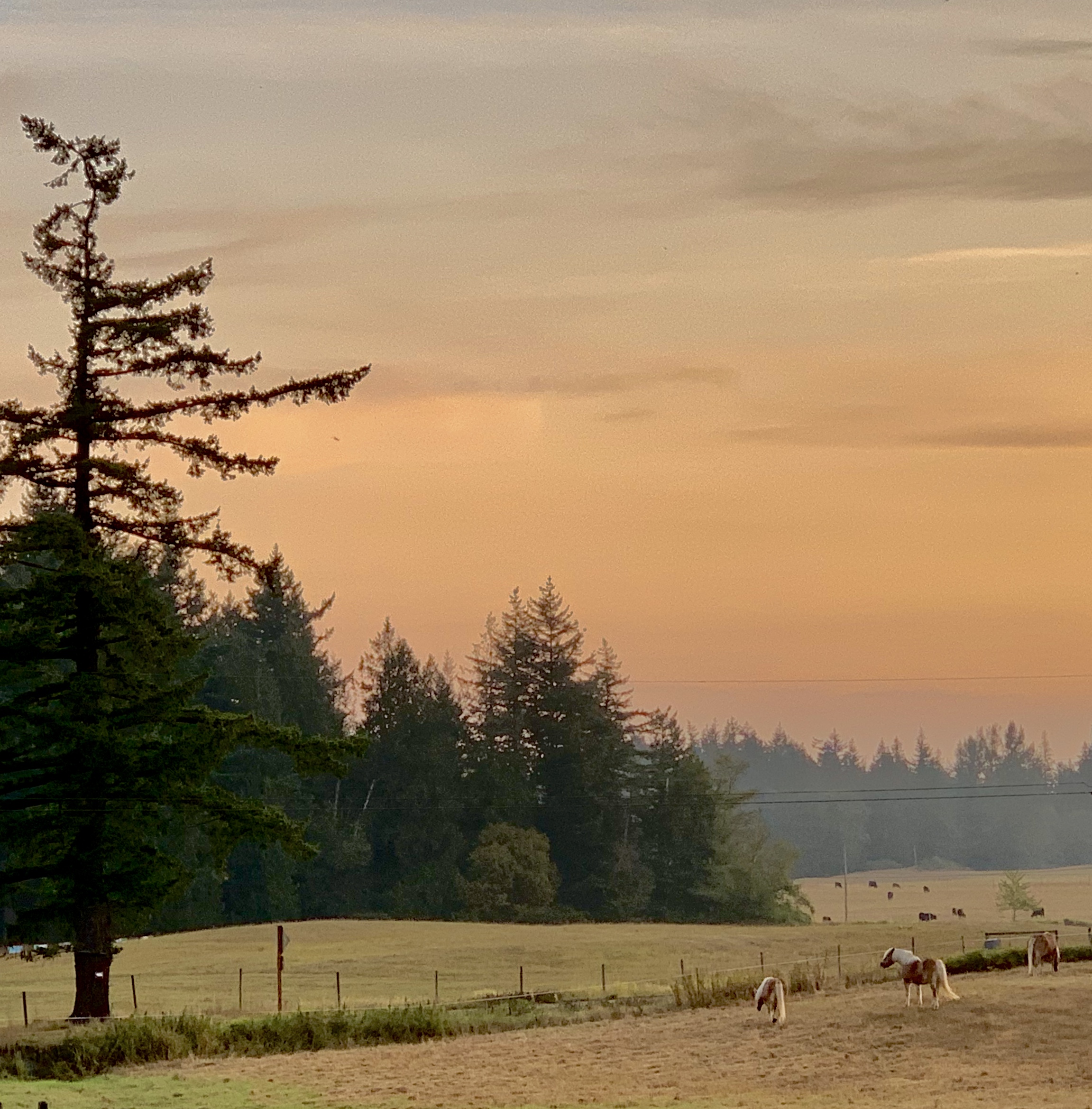
The September rains have returned and will stay awhile. We, especially the horses, sigh with relief, as flies no longer crawl over their faces all day seeking a watery eye to drink from. With no flies around, there are also no longer birds tickling pony backs looking for a meal.
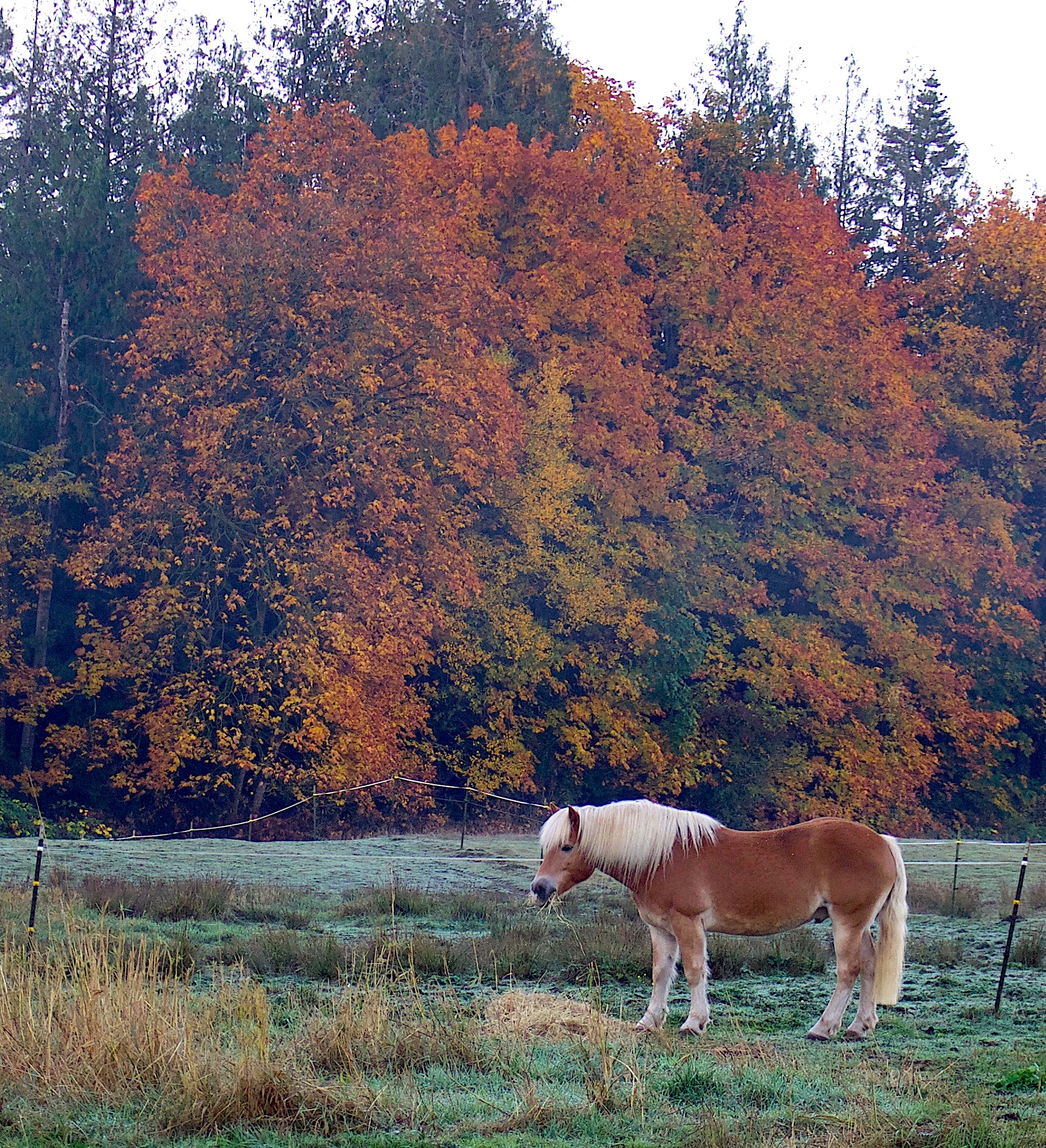
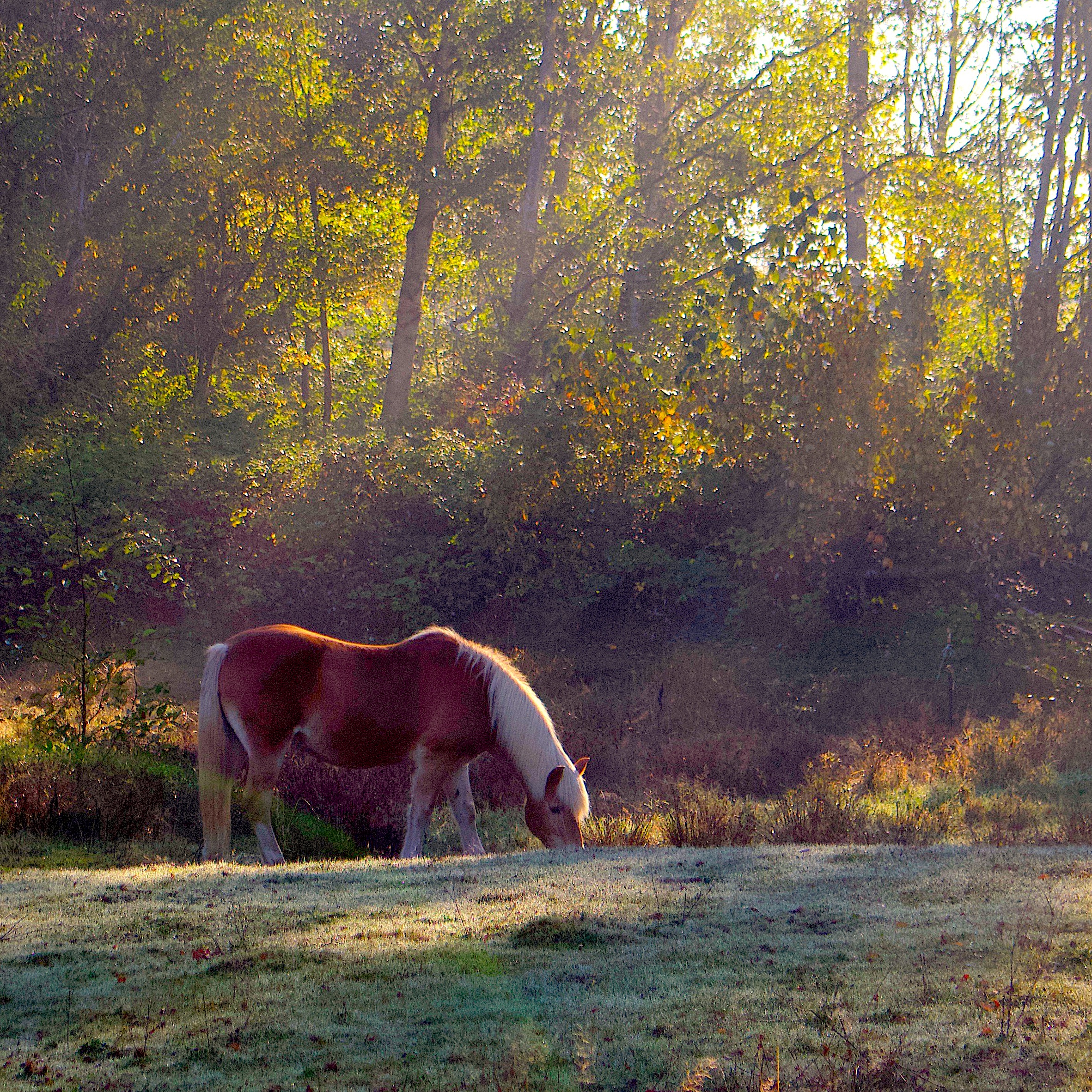
Our Haflingers prefer to graze under open gray skies not bothering to seek cover during the day; their mountain coats provide adequate insulation in a rain squall. Darkness descends earlier and earlier so I go out in the evening to find them standing waiting at the gate, ready for an invitation to come into the barn.
Their eyes are heavy, blinking with sleep; outside their muddy hoofprints fill with rain overnight.
It is a peaceful time for us no-longer-young ponies and farmers. We wink and nod together, ready for rain, ready for the night.
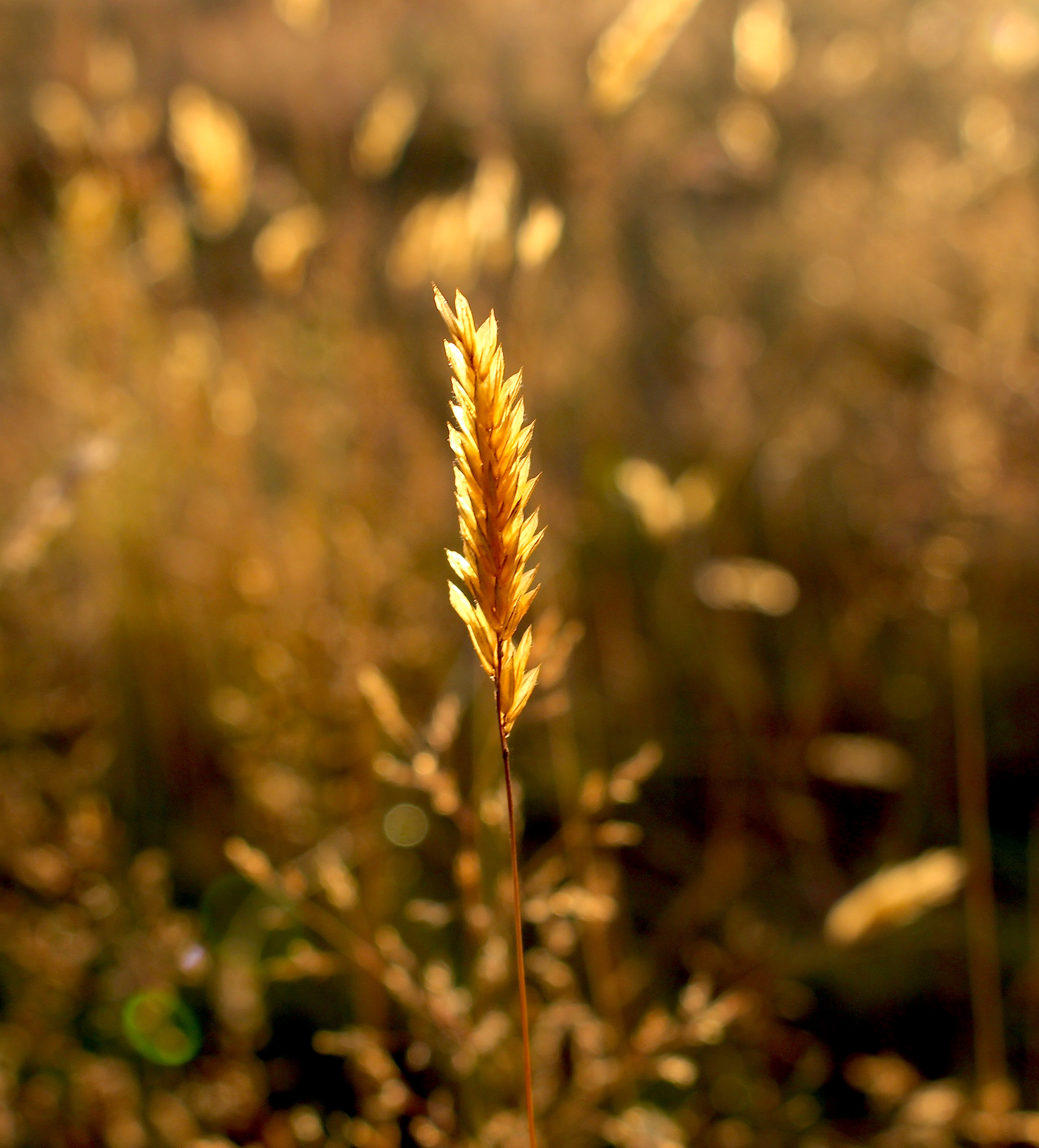
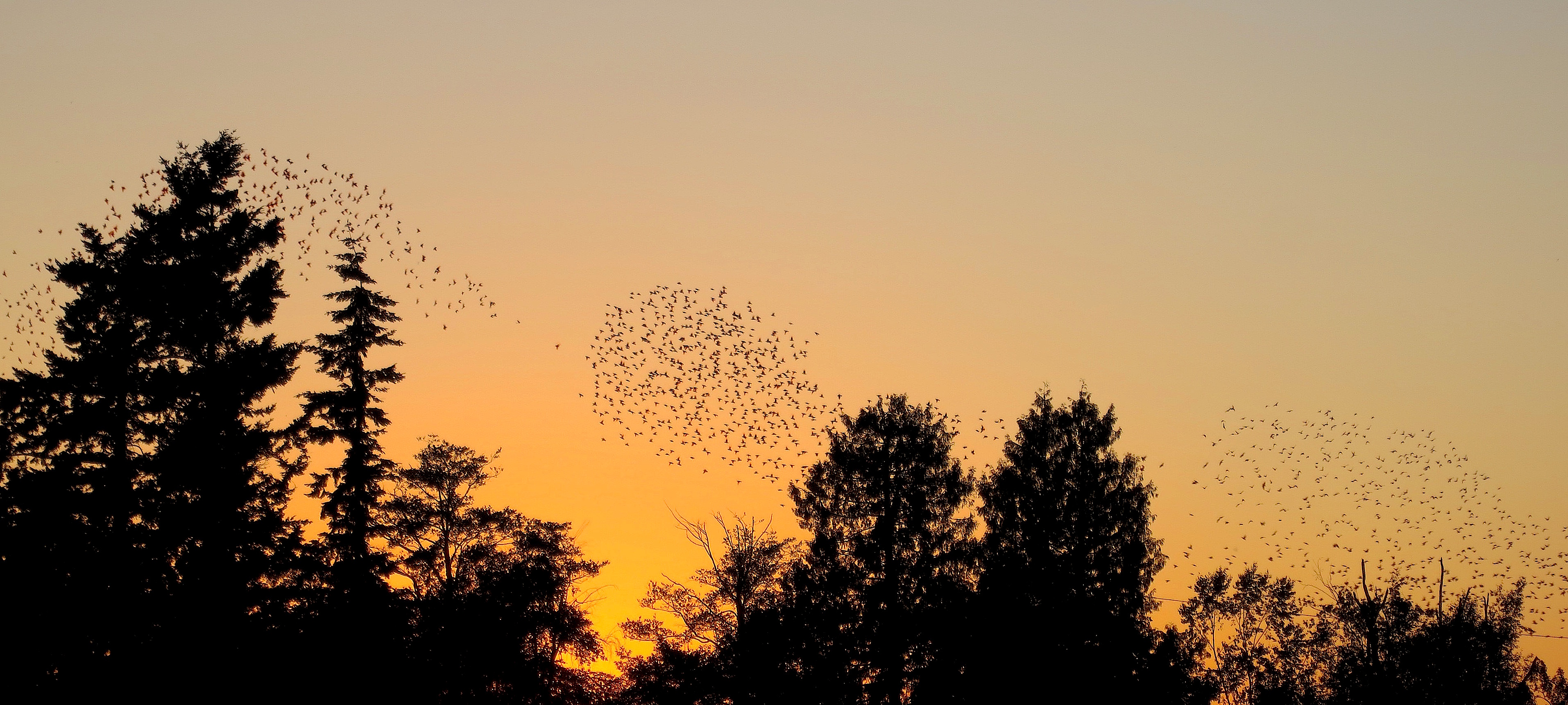
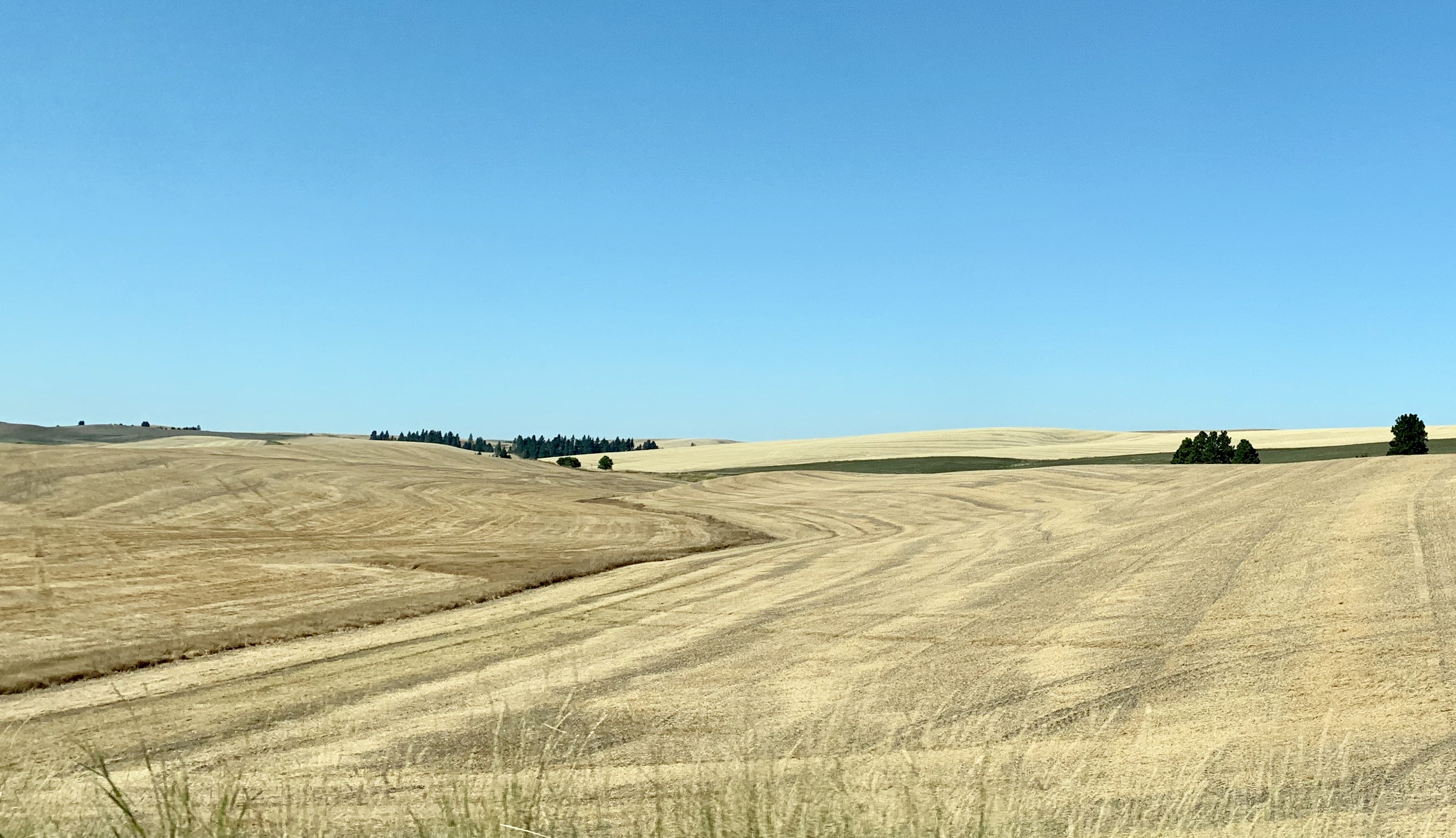
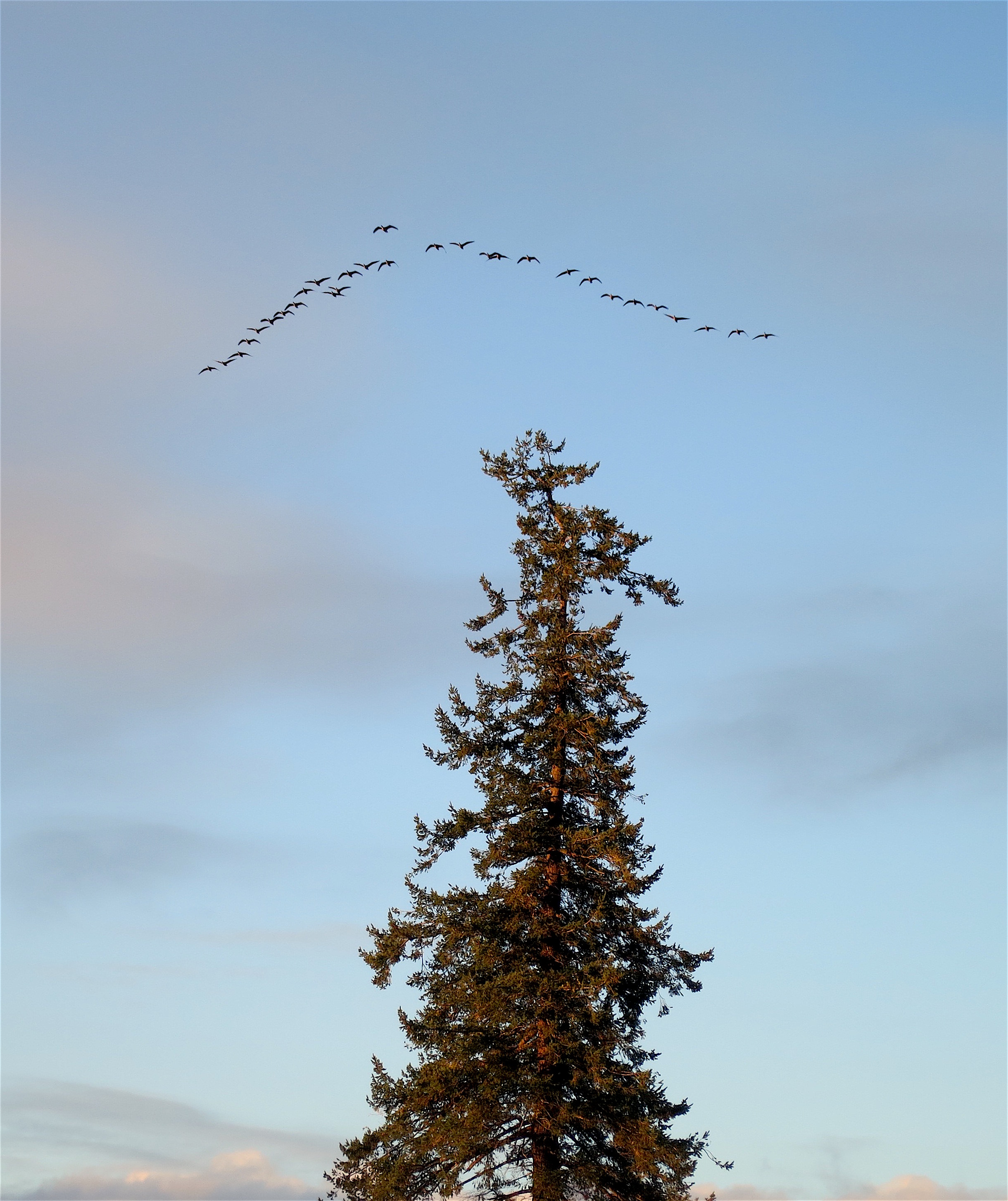
Gold of a ripe oat straw, gold of a southwest moon, What is there for you in the birds, the birds, the birds, crying down on the north wind in September, acres of birds spotting the air going south?
Is there something finished? And some new beginning on the way?
I cried over beautiful things knowing no beautiful thing lasts. ~Carl Sandburg from “Fall Time” and “Autumn Movement”
My summer of “no doctoring” finishes today. I return to part-time clinical work tomorrow; a new beginning is on the way.
I am readying myself.
I consider how it will feel to put the stethoscope back on and return to spending most of my daylight hours in window-less rooms. Several months of freedom to wander and wonder will be tough to give up.
However, when I meet my first patient of the day, I’m “all in.” Someone is needing my help more than I need time off. The wind has shifted, it is time to migrate back to the work I was called to do over forty years ago.
Still I will look for beautiful things where I can find them, knowing that even though they don’t last, they will always be well worth the weeping.




















 Barnstorming