At the soft place in the snowbank Warmed to dripping by the sun There is the smell of water. On the western wind the hint of glacier. A cottonwood tree warmed by the same sun On the same day, My back against its rough bark Same west wind mild in my face. A piece of spring Pierced me with love for this empty place Where a prairie creek runs Under its cover of clear ice And the sound it makes, Mysterious as a heartbeat, New as a lamb. ~Tom Hennen, “In the Late Season” from Darkness Sticks to Everything: Collected and New Poems.
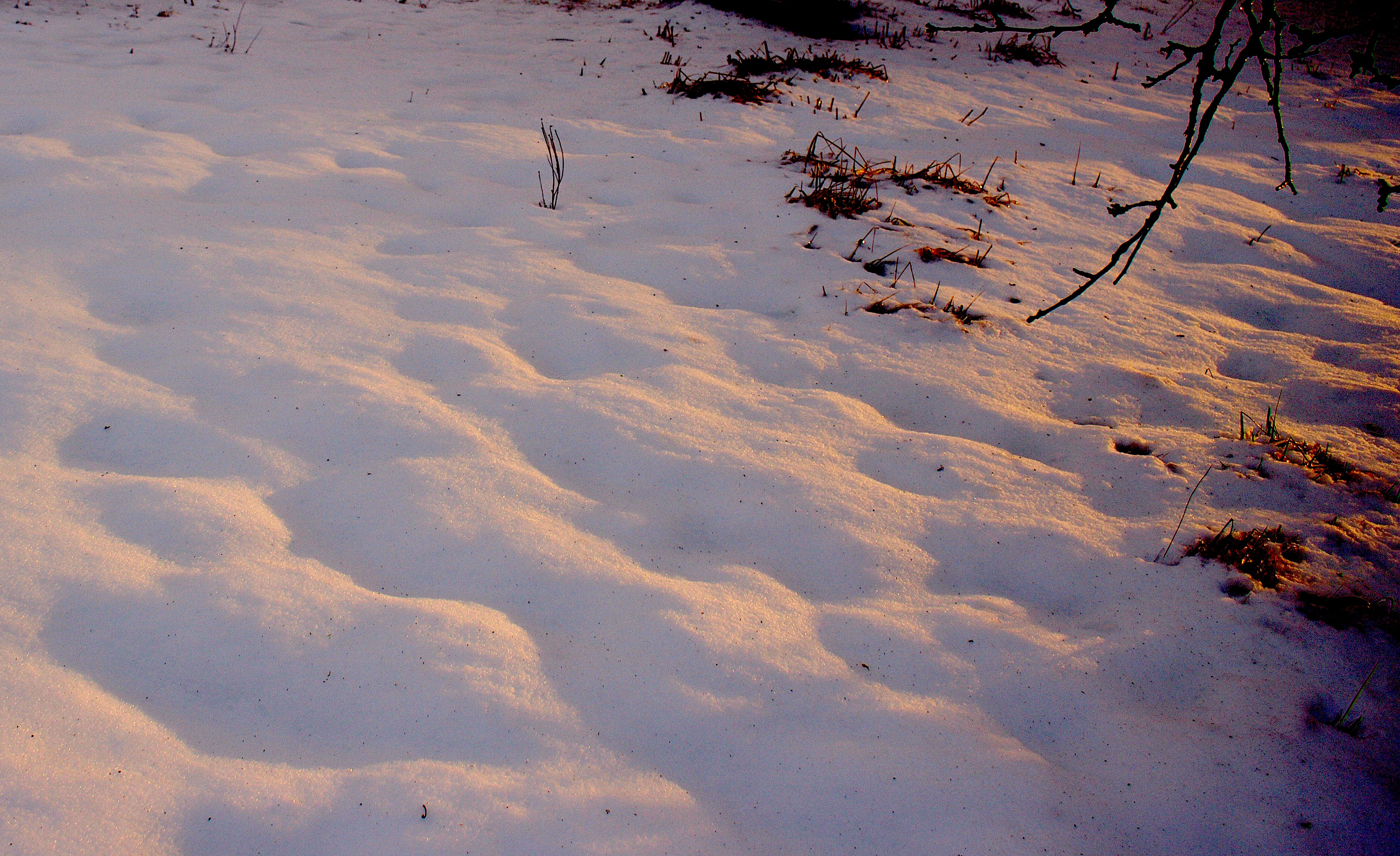
While walking the sloping hillside of our farm, if I listen carefully, I can hear trickling under the snow. I can’t see it but I can hear and feel and smell the water; as a hidden and mysterious melt happens. Thawing under my feet- as winter drains away, spring is on the move.
I witness that which I have no control over, this subtle softening of frozen ground- unseen, yet as evident as the steady beating of my heart as I too begin to thaw and melt through the miracle of flowing grace into whatever comes next.
I got out of bed on two strong legs. It might have been otherwise. I ate cereal, sweet milk, ripe, flawless peach. It might have been otherwise. I took the dog uphill to the birch wood. All morning I did the work I love. At noon I lay down with my mate. It might have been otherwise. We ate dinner together at a table with silver candlesticks. It might have been otherwise. I slept in a bed in a room with paintings on the walls, and planned another day just like this day. But one day, I know, it will be otherwise. ~Jane Kenyon “Otherwise” from Otherwise
We become complacent in our routines, confident in the knowledge that tomorrow will be very much like yesterday. The small distinct blessings of an ordinary day become lost in the rush of moving forward to the next experience, the next task, the next responsibility.
The reality is there is nothing ordinary about this day – it could be otherwise and some day it will be otherwise.
Jane Kenyon wrote much of her best poetry in the knowledge she was dying of leukemia. She reminds us that we don’t need a terminal diagnosis to understand the blessings of each ordinary moment.
So I look around longingly at the blessings of my life that I don’t even realize, knowing that one day, it will be otherwise. I dwell richly in the experience of these moments, these peaches and cream of daily life, as they are happening.
In the quiet misty morning When the moon has gone to bed, When the sparrows stop their singing And the sky is clear and red, When the summer’s ceased its gleaming When the corn is past its prime, When adventure’s lost its meaning – I’ll be homeward bound in time
Bind me not to the pasture Chain me not to the plow Set me free to find my calling And I’ll return to you somehow
If you find it’s me you’re missing If you’re hoping I’ll return, To your thoughts I’ll soon be listening, And in the road I’ll stop and turn Then the wind will set me racing As my journey nears its end And the path I’ll be retracing When I’m homeward bound again
Bind me not to the pasture Chain me not to the plow Set me free to find my calling And I’ll return to you somehow
In the quiet misty morning When the moon has gone to bed, When the sparrows stop their singing I’ll be homeward bound again. ~Marta Keen “Homeward Bound”
Seventy eight years ago, my parents married on Christmas Eve. It was not a conventional wedding day but a date of necessity, only because a justice of the peace was available to marry a score of war-time couples in Quantico, Virginia, shortly before the newly trained Marine officers were shipped out to the South Pacific to fight in WWII.
When I look at my parents’ young faces – ages 22 and just turned 21 — in their only wedding portrait, I see a hint of the impulsive decision that led to that wedding just a week before my father left for 30 months. They had known each other at college for over a year, had talked about a future together, but with my mother starting a teaching job in a rural Eastern Washington town, and the war potentially impacting all young men’s lives very directly, they had not set a date.
My father put his college education on hold to enlist, knowing that would give him some options he wouldn’t have if drafted, so they went their separate ways as he headed east to Virginia for his Marine officer training, and Mom started her high school teaching career as a speech and drama teacher. One day in early December of 1942, he called her and said, “If we’re going to get married, it’ll need to be before the end of the year. I’m shipping out the first week in January.” Mom went to her high school principal, asked for a two week leave of absence which was granted, told her astonished parents, bought a dress, and headed east on the train with a friend who had received a similar call from her boyfriend.
This was a completely uncharacteristic thing for my overly cautious mother to do, so… it must have been love.
They were married in a brief civil ceremony with another couple as the witnesses. They stayed in Virginia only a couple days and took the train back to San Diego, and my father was shipped out. Just like that. Mom returned to her teaching position and the first three years of their married life was composed of letter correspondence only, with gaps of up to a month during certain island battles when no mail could be delivered or posted.
As I sorted through my mother’s things following her death over a decade ago, I found their war-time letters to each other, stacked neatly and tied together in a box.
In my father’s nearly daily letters home to my mother during WWII, month after month after month, he would say, over and over, while apologizing for the repetition:
“I will come home to you, I will return, I will not let this change me, we will be joined again…”
This was his way of convincing himself even as he carried the dead and dying after island battles: men he knew well and the enemy he did not know. He knew they were never returning to the home they died protecting and to those who loved them.
He shared little of battle in his letters as each letter was reviewed and signed off by a censor before being sealed and sent. This story, however, made it through:
“You mentioned a story of Navy landing craft taking the Marines into Tarawa. It reminded me of something which impressed me a great deal and something I’m sure I’ll never forget.
So you’ll understand what I mean I’ll try to start with an explanation. In training – close order drill- etc. there is a command that is given always when the men form in the morning – various times during the day– after firing– and always before a formation is dismissed. The command is INSPECTION – ARMS. On the command of EXECUTION- ARMS each man opens the bolt of his rifle. It is supposed to be done in unison so you hear just one sound as the bolts are opened. Usually it is pretty good and sounds O.K.
Just to show you how the morale of the men going to the beach was – and how much it impressed me — we were on our way in – I was forward, watching the beach thru a little slit in the ramp – the men were crouched in the bottom of the boat, just waiting. You see- we enter the landing boats with unloaded rifles and wait till it’s advisable before loading. When we got about to the right distance in my estimation I turned around and said – LOAD and LOCK – I didn’t realize it, but every man had been crouching with his hand on the operating handle and when I said that — SLAM! — every bolt was open at once – I’ve never heard it done better – and those men meant business when they loaded those rifles.
A man couldn’t be afraid with men like that behind him.”
My father did return home to my mother after nearly three years of separation. He finished his college education to become an agriculture teacher to teach others how to farm the land while he himself became bound to the pasture and chained to the plow.
He never forgot those who died, making it possible for him to return home. I won’t forget either.
My mother and father could not have foretold the struggles that lay ahead for them. The War itself seemed struggle enough for the millions of couples who endured the separation, the losses and grieving, as well as the eventual injuries–both physical and psychological. It did not seem possible that beyond those harsh and horrible realities, things could go sour after reuniting.
The hope and expectation of happiness and bliss must have been overwhelming, and real life doesn’t often deliver. After raising three children, their 35 year marriage fell apart with traumatic finality. When my father returned home (again) over a decade later, asking for forgiveness, they remarried and had five more years together before my father died in 1995.
Christmas is a time of joy, a celebration of new beginnings and new life when God became man, humble, vulnerable and tender. But it also gives us a foretaste for the profound sacrifice made in giving up this earthly life, not always so gently.
As I peer at my father’s and mother’s faces in their wedding photo, I remember those eyes, then so trusting and unaware of what was to come. I find peace in knowing they returned home to behold the Light, the Salvation and the Glory~~the ultimate Christmas~~in His presence.
In the quiet misty morning When the moon has gone to bed, When the sparrows stop their singing And the sky is clear and red, When the summer’s ceased its gleaming When the corn is past its prime, When adventure’s lost its meaning – I’ll be homeward bound in time
Bind me not to the pasture Chain me not to the plow Set me free to find my calling And I’ll return to you somehow
If you find it’s me you’re missing If you’re hoping I’ll return, To your thoughts I’ll soon be listening, And in the road I’ll stop and turn Then the wind will set me racing As my journey nears its end And the path I’ll be retracing When I’m homeward bound again
Bind me not to the pasture Chain me not to the plow Set me free to find my calling And I’ll return to you somehow
In the quiet misty morning When the moon has gone to bed, When the sparrows stop their singing I’ll be homeward bound again. ~Marta Keen “Homeward Bound”
I stop the car along the pasture edge, gather up bags of corncobs from the back, and get out. Two whistles, one for each, and familiar sounds draw close in darkness— cadence of hoof on hardened bottomland, twinned blowing of air through nostrils curious, flared. They come deepened and muscular movements conjured out of sleep: each small noise and scent heavy with earth, simple beyond communion, beyond the stretched-out hand from which they calmly take corncobs, pulling away as I hold until the mid-points snap. They are careful of my fingers, offering that animal-knowledge, the respect which is due to strangers; and in the night, their mares’ eyes shine, reflecting stars, the entire, outer light of the world here. ~Jane Hirshfield “After Work”from Of Gravity and Angels.
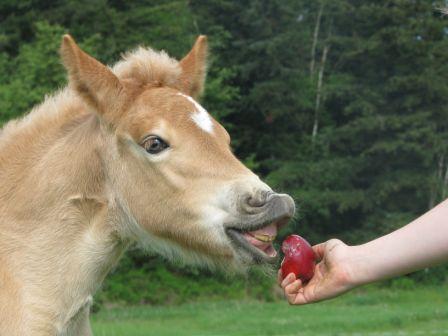
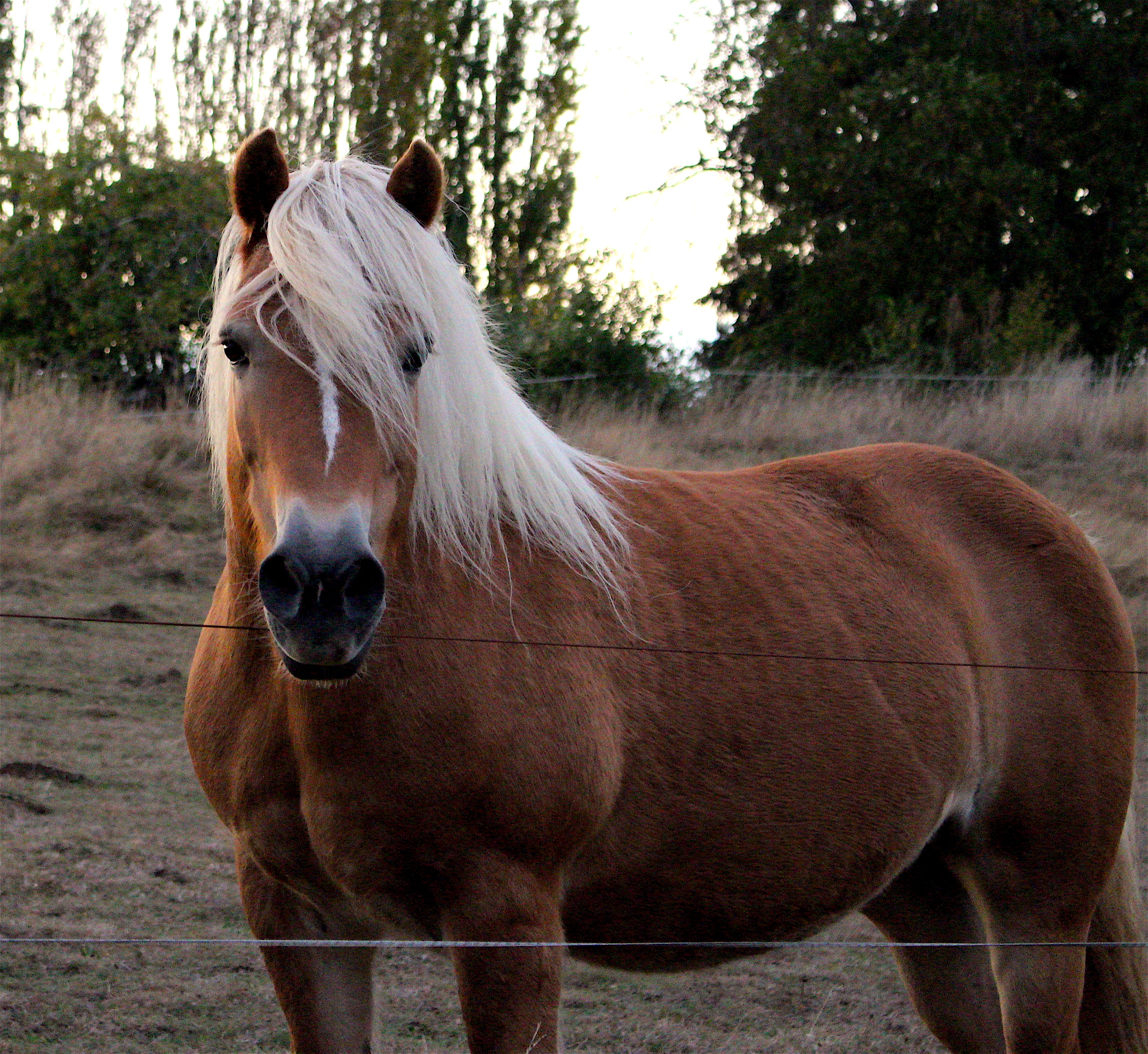
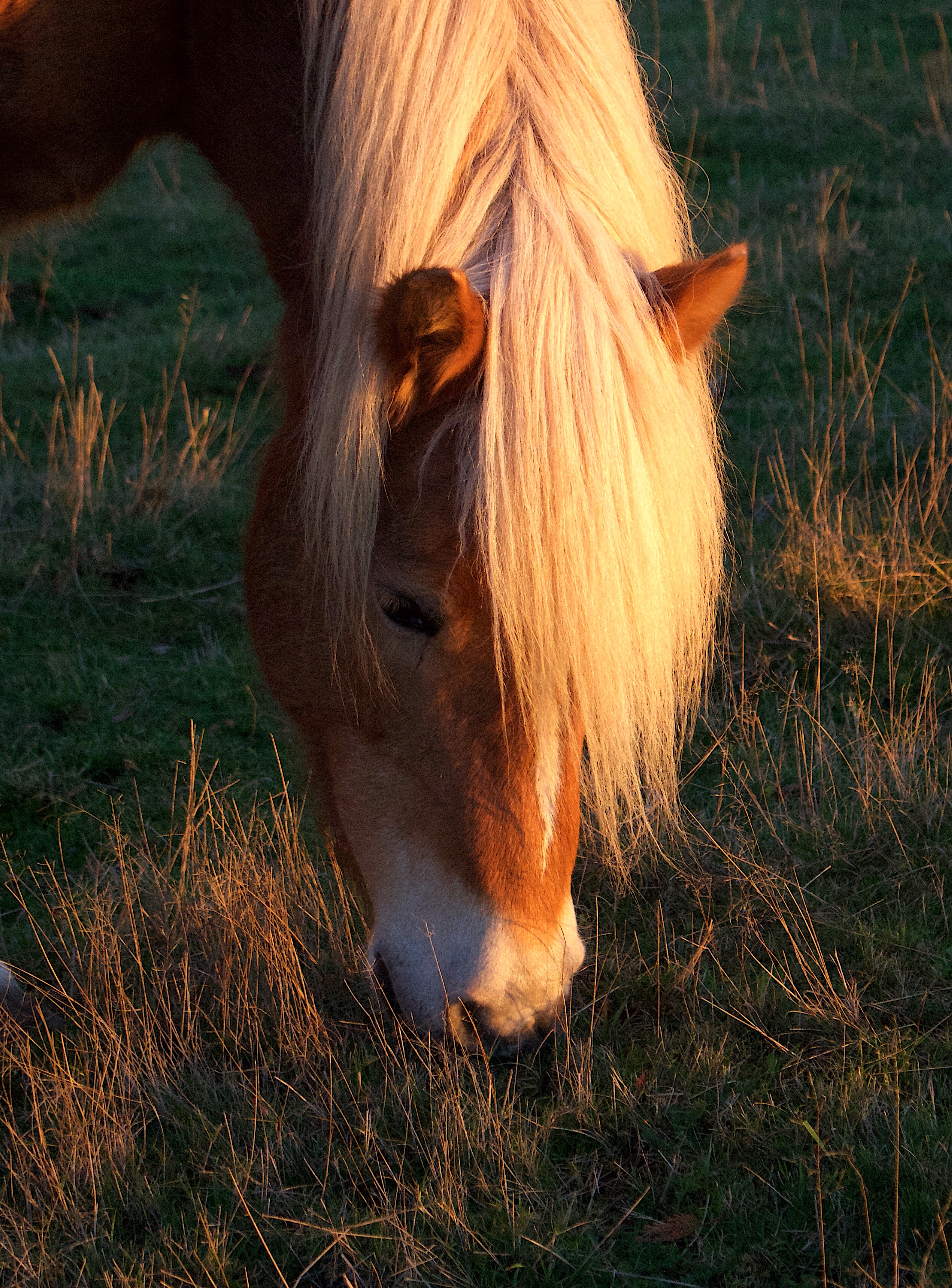
I’ve been picking up windfall apples to haul down to the barn for a special treat each night for the Haflingers. These are apples that we humans wouldn’t take a second glance at in all our satiety and fussiness, but the Haflingers certainly don’t mind a bruise, or a worm hole or slug trails over apple skin.
I’ve found over the years that our horses must be taught to eat apples–if they have no experience with them, they will bypass them lying in the field and not give them a second look. There simply is not enough odor to make them interesting or appealing–until they are cut in slices that is. Then they become irresistible and no apple is left alone from that point forward.
When I offer a whole apple to a young Haflinger who has never tasted one before, they will sniff it, perhaps roll it on my hand a bit with their lips, but I’ve yet to have one simply bite in and try. If I take the time to cut the apple up, they’ll pick up a section very gingerly, kind of hold it on their tongue and nod their head up and down trying to decide as they taste and test it if they should drop it or chew it, and finally, as they really bite in and the sweetness pours over their tongue, they get this look in their eye that is at once surprised and supremely pleased. The only parallel experience I’ve seen in humans is when you offer a five month old baby his first taste of ice cream on a spoon and at first he tightens his lips against its coldness, but once you slip a little into his mouth, his face screws up a bit and then his eyes get big and sparkly and his mouth rolls the taste around his tongue, savoring that sweet cold creaminess. His mouth immediately pops open for more.
It is the same with apples and horses. Once they have that first taste, they are our slaves forever in search of the next apple.
The Haflinger veteran apple eaters can see me coming with my sweat shirt front pocket stuffed with apples, a “pregnant” belly of fruit, as it were. They offer low nickers when I come up to their stalls and each horse has a different approach to their apple offering.
There is the “bite a little bit at a time” approach, which makes the apple last longer, and tends to be less messy in the long run. There is the “bite it in half” technique which leaves half the apple in your hand as they navigate the other half around their teeth, dripping and frothing sweet apple slobber. Lastly there is the greedy “take the whole thing at once” horse, which is the most challenging way to eat an apple, as it has to be moved back to the molars, and crunched, and then moved around the mouth to chew up the large pieces, and usually half the apple ends up falling to the ground, with all the foam that the juice and saliva create. No matter the technique used, the smell of an apple as it is being chewed by a horse is one of the best smells in the world. I can almost taste the sweetness too when I smell that smell.
What do we do when offered such a sublime gift from someone’s hand? If it is something we have never experienced before, we possibly walk right by, not recognizing that it is a gift at all, missing the whole point and joy of experiencing what is being offered. How many wonderful opportunities are right under our noses, but we fail to notice, and bypass them because they are unfamiliar?
Perhaps if the giver really cares enough to “teach” us to accept this communion meal, by preparing it and making it irresistible to us, then we are overwhelmed with the magnitude of the generosity and are transformed by the simple act of receiving.
We must learn to take little bites, savoring each piece one at a time, making it last rather than greedily grab hold of the whole thing, struggling to control it, thereby losing some in the process. Either way, it is a gracious gift, and it is how we receive it that makes all the difference.
The wild November come at last Beneath a veil of rain; The night wind blows its folds aside – Her face is full of pain.
The latest of her race, she takes The Autumn’s vacant throne: She has but one short moon to live, And she must live alone.
A barren realm of withered fields, Bleak woods, and falling leaves, The palest morns that ever dawned; The dreariest of eves.
It is no wonder that she comes, Poor month! With tears of pain; For what can one so hopeless do But weep, and weep again? ~Richard Henry Stoddard “November”
Leaves wait as the reversal of wind comes to a stop. The stopped woods are seized of quiet; waiting for rain bird & bug conversations stutter to a stop.
…the rain begins to fall. Rain-strands, thin slips of vertical rivers, roll the shredded waters out of the cloud and dump them puddling to the ground.
Whatever crosses over through the wall of rain changes; old leaves are now gold. The wall is continuous, doorless. True, to get past this wall there’s no need for a door since it closes around me as I go through. ~Marie Ponsot from “End of October”
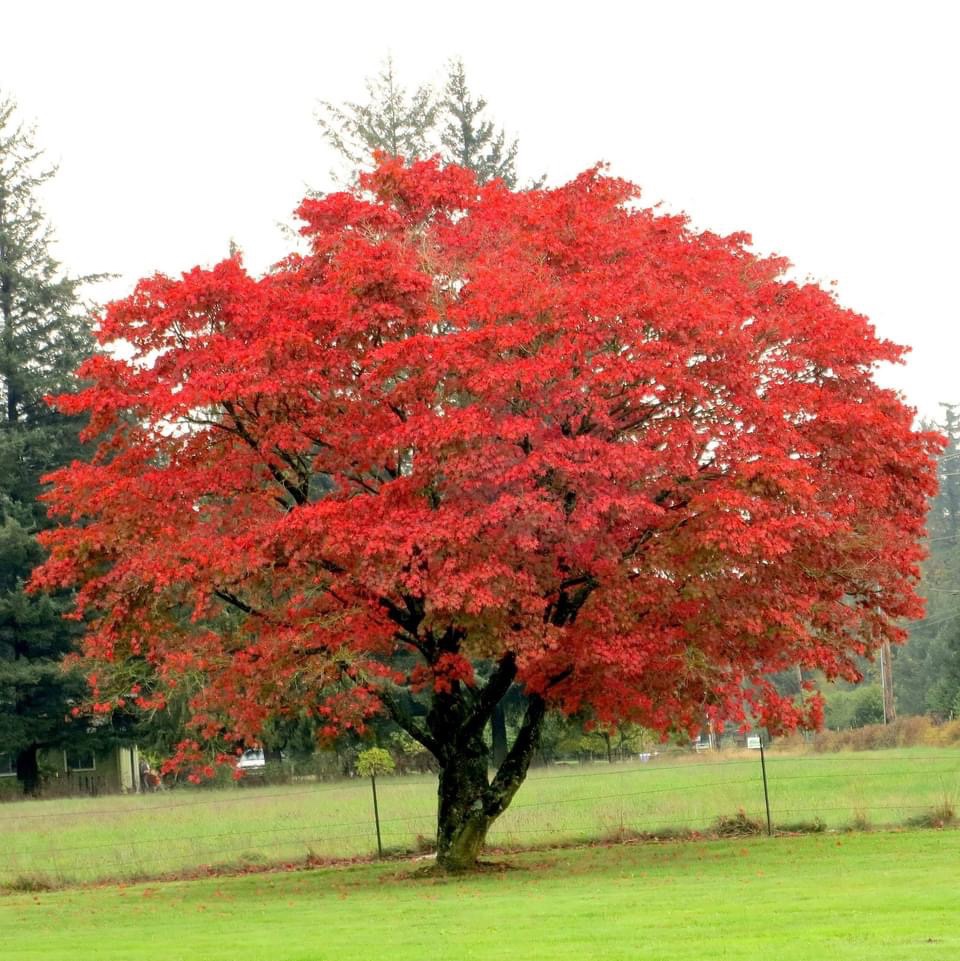
I reluctantly bid October good-bye to face forward into a darkening November.
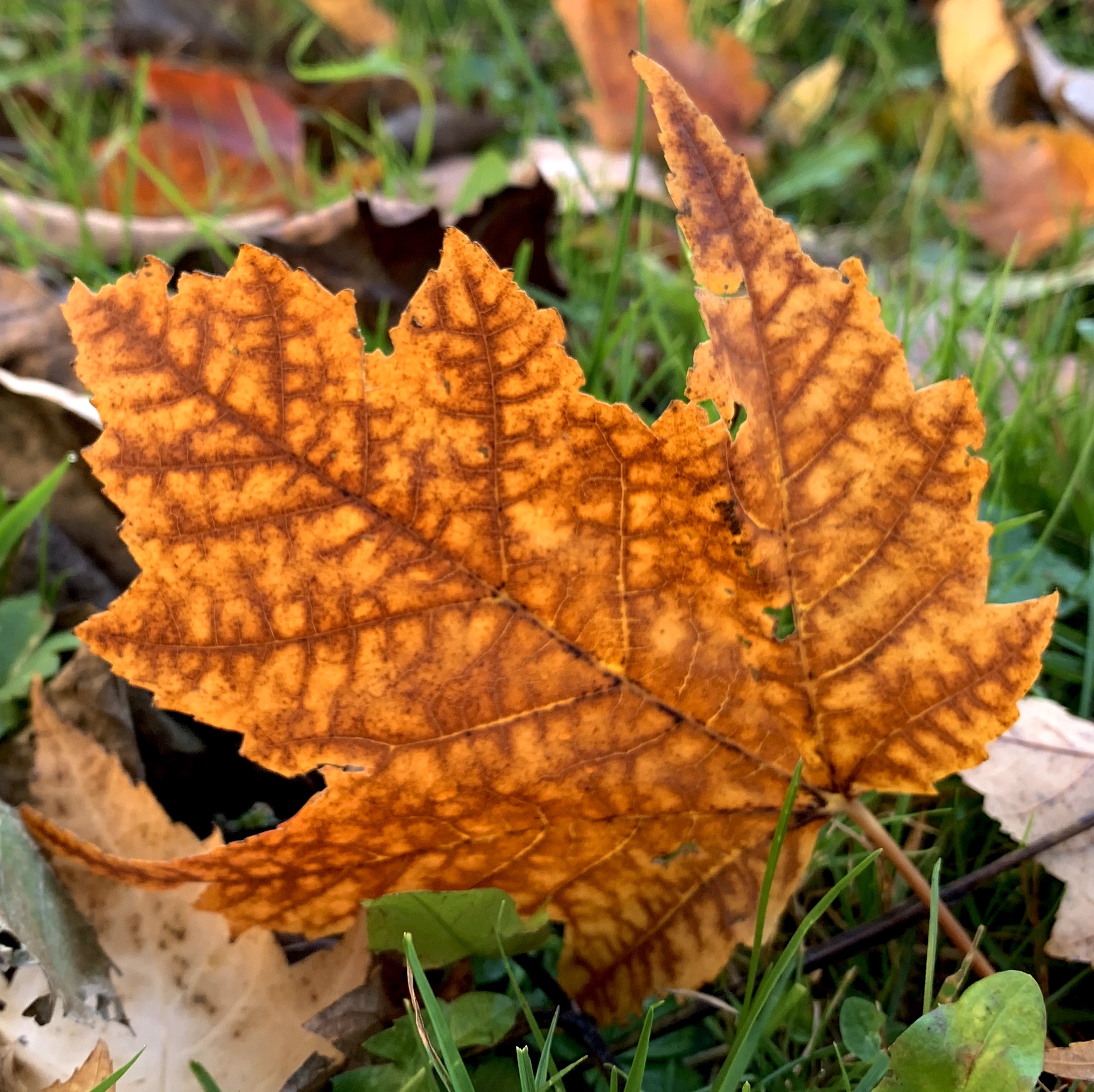
Summer is mere memory now; all color drained from leaves fallen, dissolving in frost and rain.
There’s no turning around now that the clock has fallen back. We commit our stumbling feet to the path that trudges toward winter, silenced and seized by the relentless momentum of doorless darkness. There appears no escape hatch.
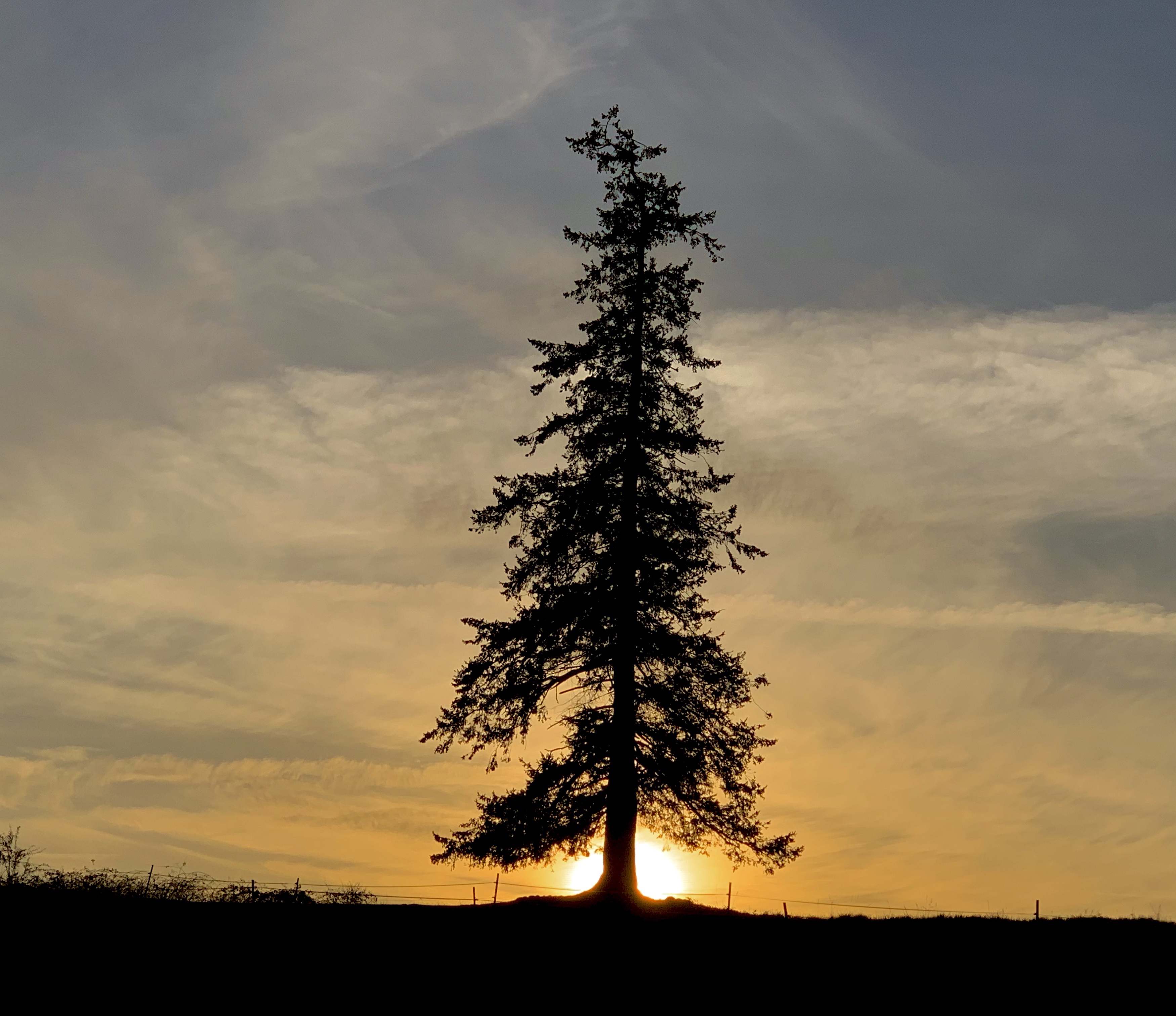
Yet when the light rises on the hills, even briefly, I feel a veil lift enough that I am able to see far beyond my reach. The horizon extends on and on forever and I only then I know I will endure another winter.
My father climbs into the silo. He has come, rung by rung, up the wooden trail that scales that tall belly of cement.
It’s winter, twenty below zero, He can hear the wind overhead. The silage beneath his boots is so frozen it has no smell.
My father takes up a pick-ax and chops away a layer of silage. He works neatly, counter-clockwise under a yellow light,
then lifts the chunks with a pitchfork and throws them down the chute. They break as they fall and rattle far below.
His breath comes out in clouds, his fingers begin to ache, but he skims off another layer where the frost is forming
and begins to sing, “You are my sunshine, my only sunshine.” ~Joyce Sutphen, “Silo Solo” from First Words
Farmers gotta be tough. There is no taking a day off from chores. The critters need to eat and their beds cleaned even during the coldest and hottest days. Farmers rise before the sun and go to bed long after the sun sets.
I come from a long line of farmers on both sides – my mother was the daughter of wheat farmers and my father was the son of subsistence stump farmers who had to supplement their income with outside jobs as a cook and in lumber mills. Both my parents went to college; their parents wanted something better for them than they had. Both my parents had professions but still chose to live on a farm – daily milkings, crops in the garden and fields, raising animals for meat.
My husband’s story is similar, though his parents didn’t graduate from college. Dan milked cows with his dad and as a before-school job in the mornings.
We still chose to live on a farm to raise our children and commit to the daily work, no matter the weather, on sunlit days and blowing snow days and gray muddy days. And now, when our grandchildren visit, we introduce them to the routine and rhythms of farm life, the good and the bad, the joys and the sorrows, and through it all, we are grateful for the values that follow through the generations of farming people.
And our favorite song to sing to our grandchildren is “You are my sunshine, my only sunshine” as it is the sun that sustains our days and its promise of return that sustains our nights.
You’ll never know, dears, how much we love you. Please don’t take our sunshine away.
I cannot endure to waste anything so precious as autumnal sunshine by staying in the house. There is no season when such pleasant and sunny spots may be lighted on, and produce so pleasant an effect on the feelings, as now in October. The sunshine is peculiarly genial; and in sheltered places, as on the side of a bank, or of a barn or house, one becomes acquainted and friendly with the sunshine. It seems to be of a kindly and homely nature. And the green grass strewn with a few withered leaves looks the more green and beautiful for them. ~Nathaniel Hawthornefrom The American Notebooks
After the keen still days of September, the October sun filled the world with mellow warmth… The maple tree in front of the doorstep burned like a gigantic red torch. The oaks along the roadway glowed yellow and bronze. The fields stretched like a carpet of jewels, emerald and topaz and garnet. Everywhere she walked the color shouted and sang around her… In October any wonderful unexpected thing might be possible. ~Elizabeth George Speare from The Witch of Blackbird Pond
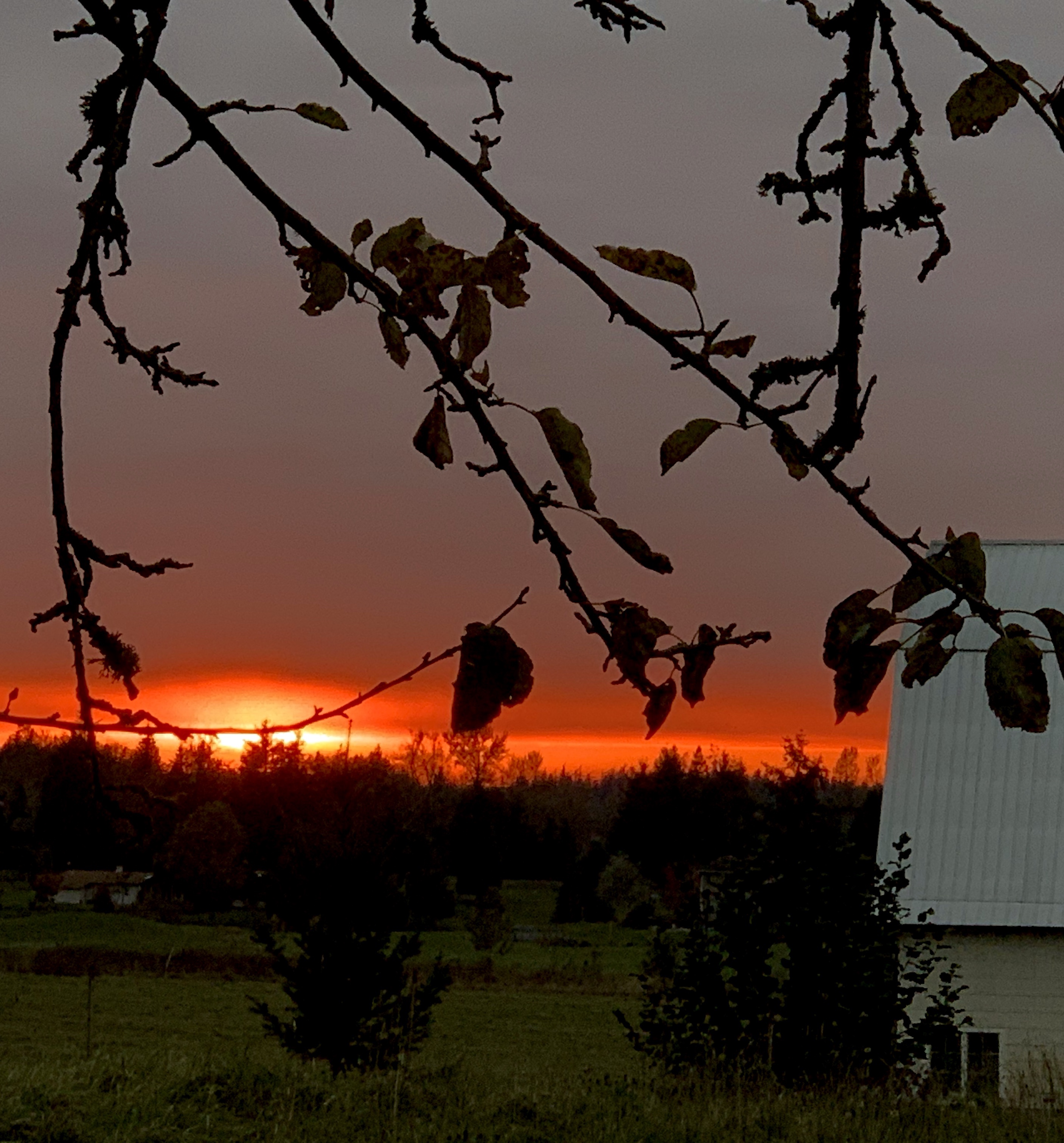
If I were a month, I would choose to be October: bathed by a genial and friendly sun, within a kindly and homely nature, slowly withering, yet still crisp, with mild temperature and modest temperament despite a rain and wind storm or two, only once in a while foggy.
Most of all, I would cherish my flashes of burnt umber as I reluctantly relinquish the light.
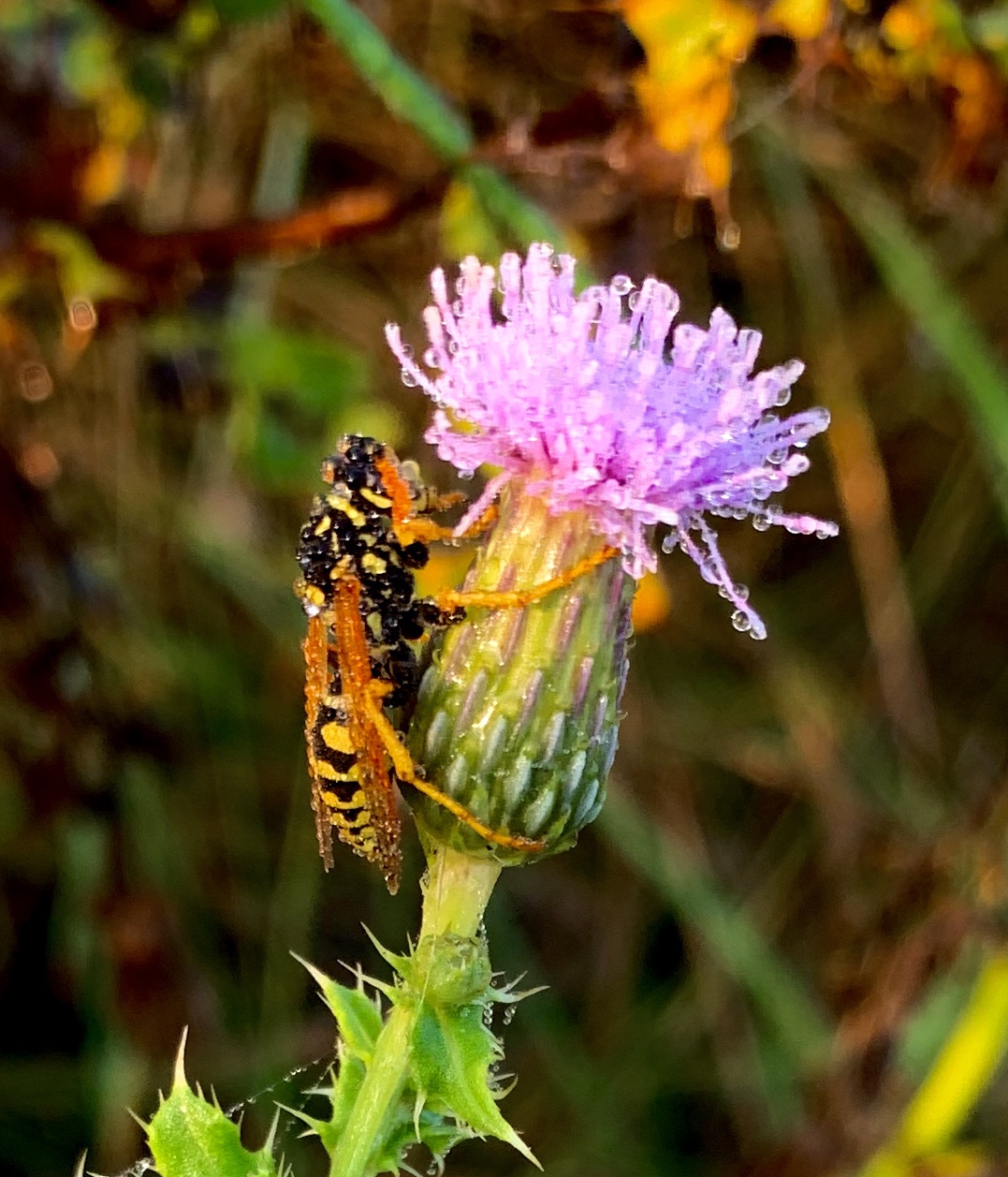
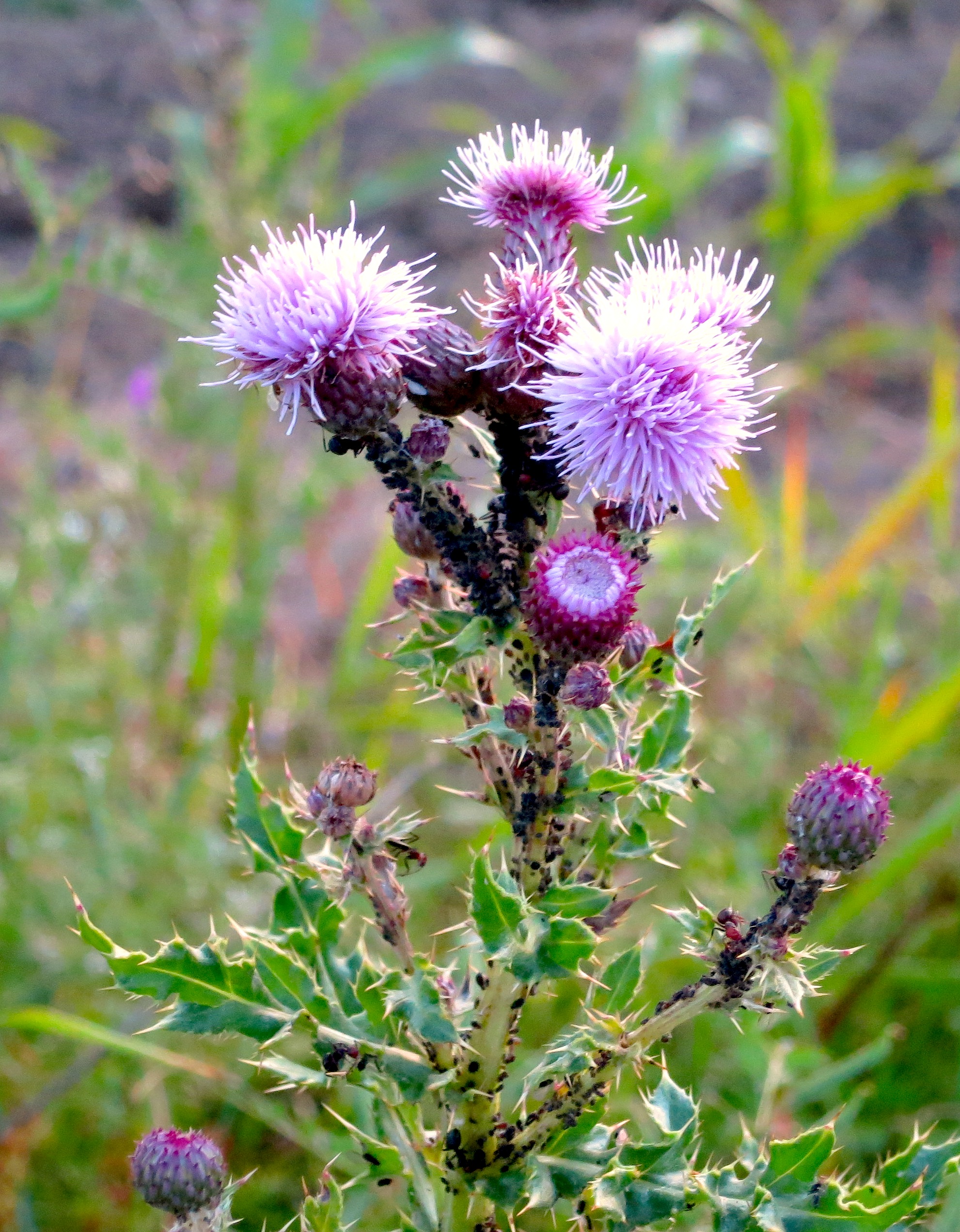
Sheep will not eat it nor horses nor cattle unless they are starving. Unchecked, it will sprawl over pasture and meadow choking the sweet grass defeating the clover until you are driven to take arms against it but if unthinking you grasp it barehanded you will need tweezers to pick out the stickers.
Outlawed in most Northern states of the Union still it jumps borders. Its taproot runs deeper than underground rivers and once it’s been severed by breadknife or shovel —two popular methods employed by the desperate— the bits that remain will spring up like dragons’ teeth a field full of soldiers their spines at the ready.
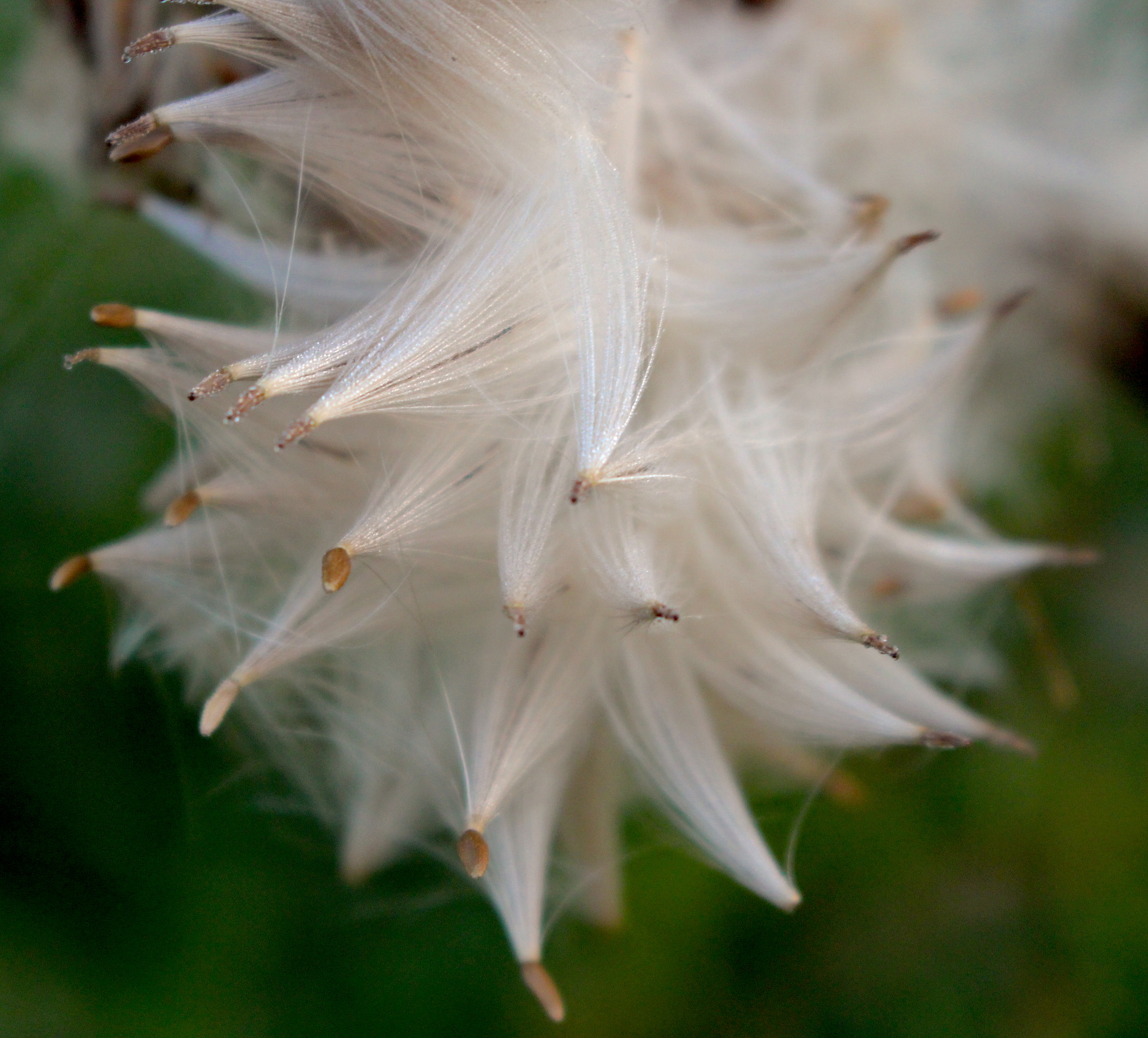
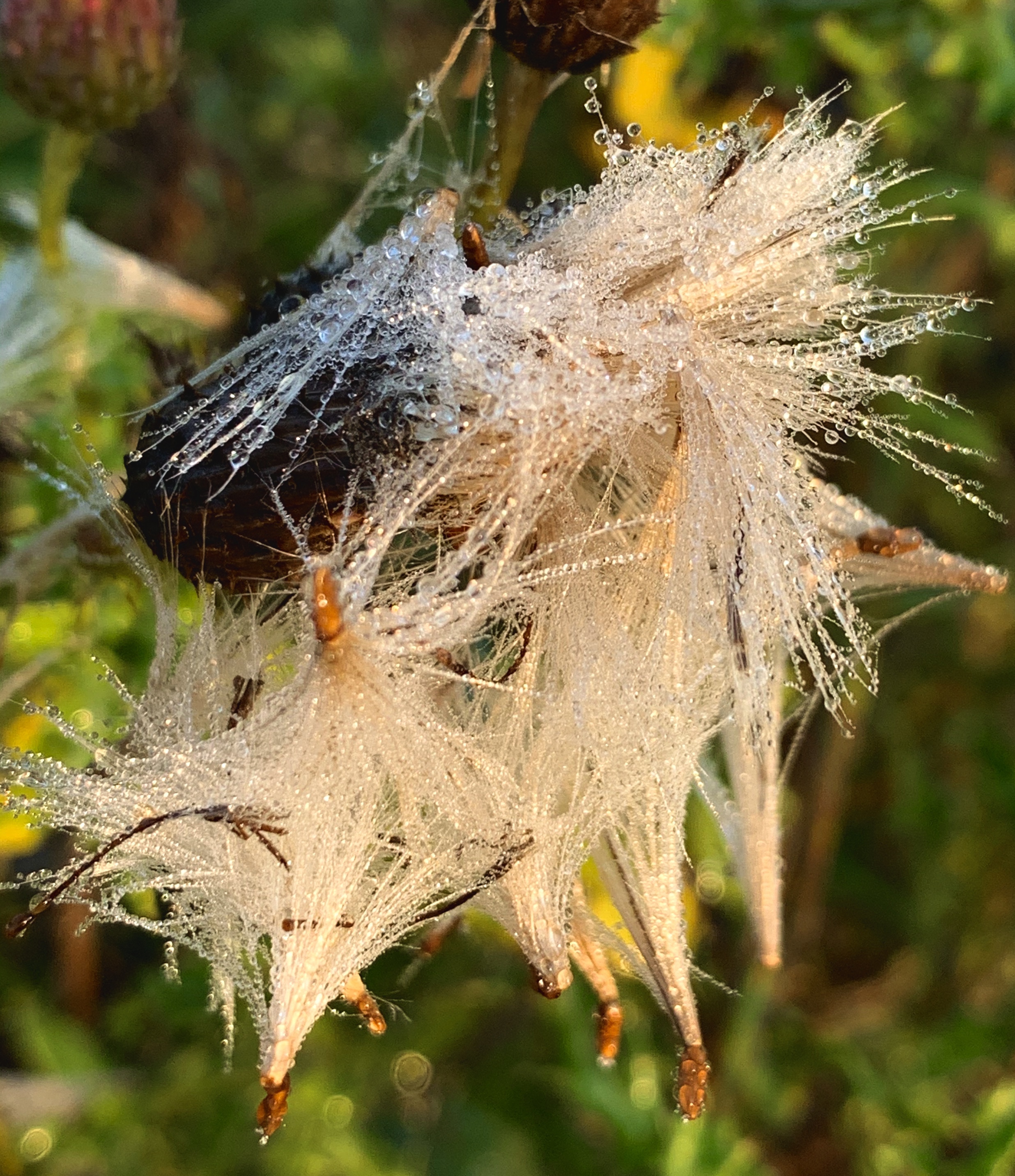
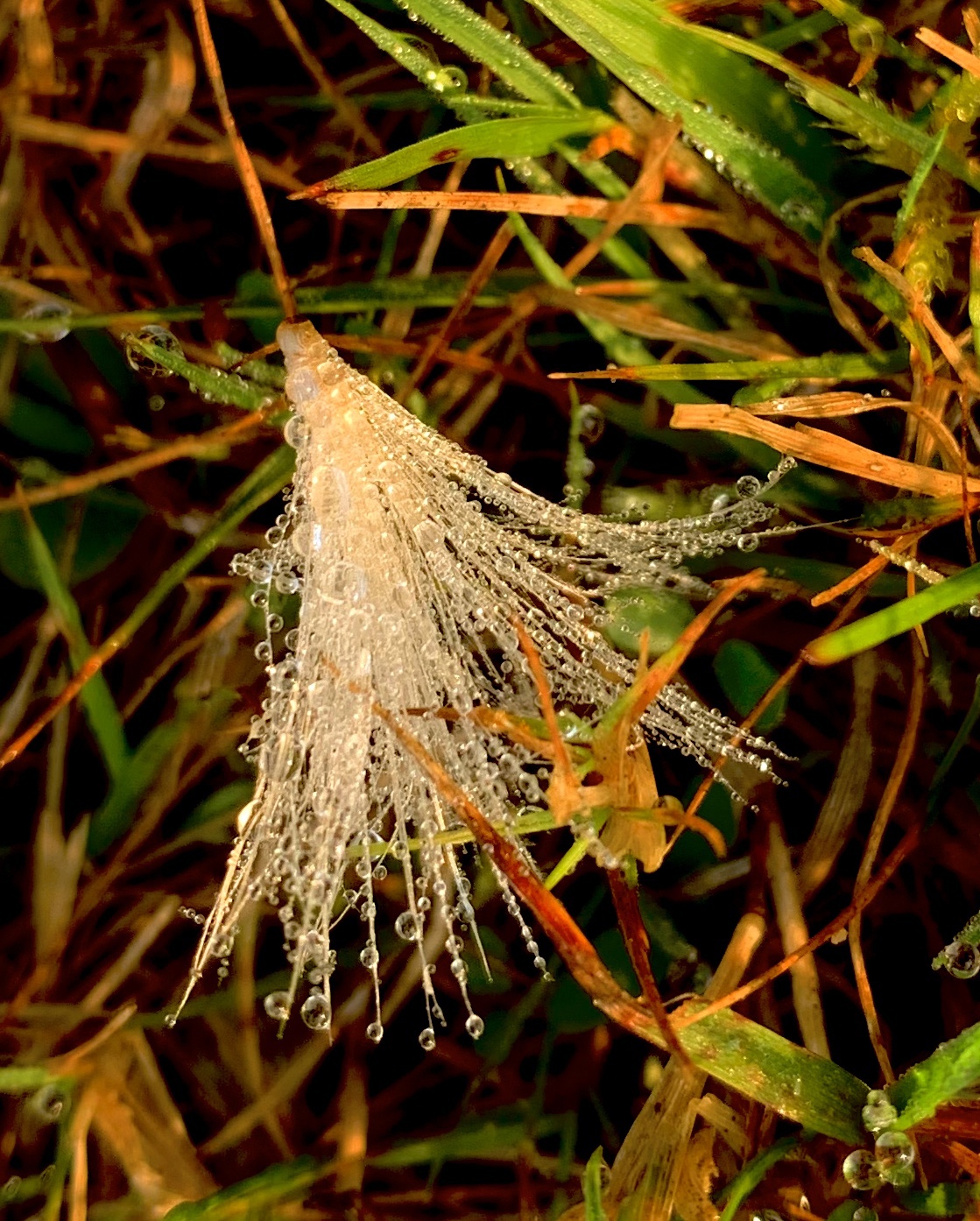
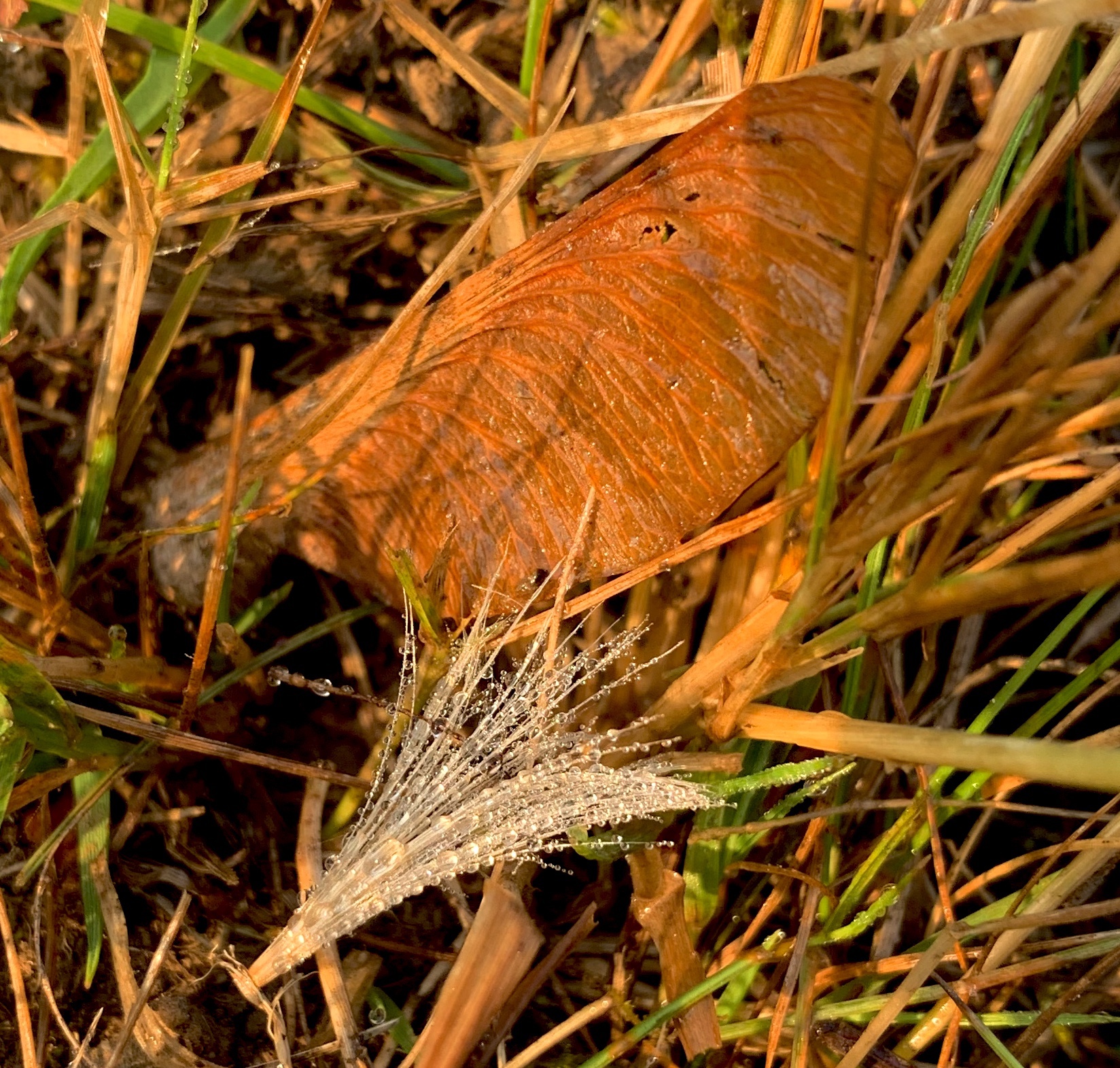
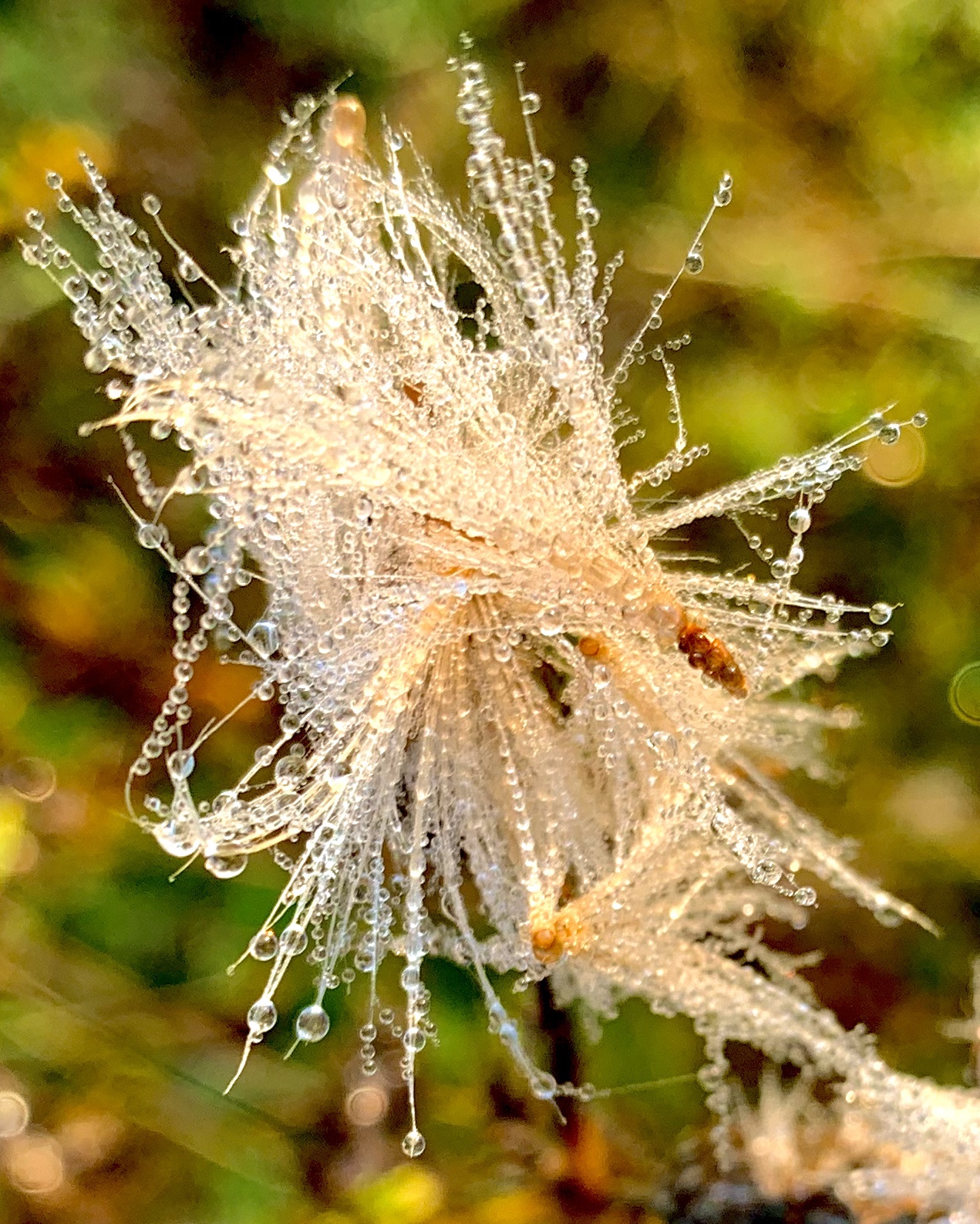
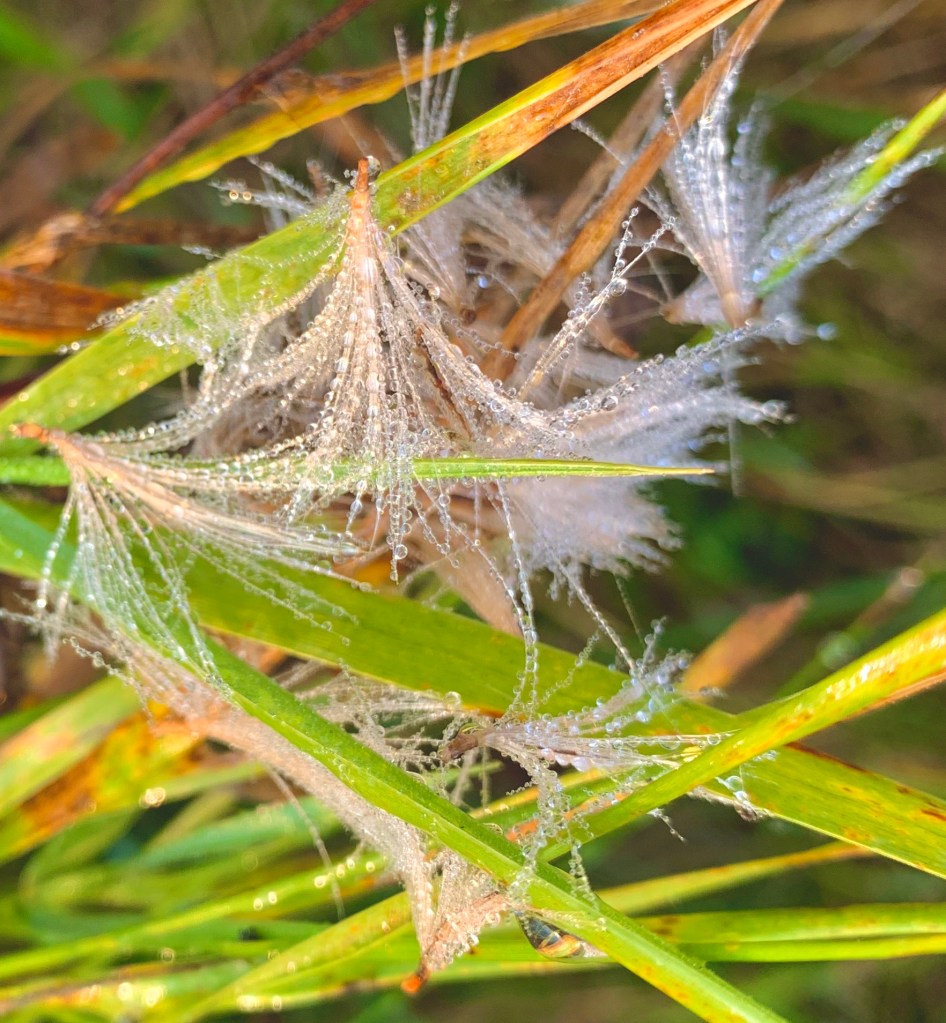
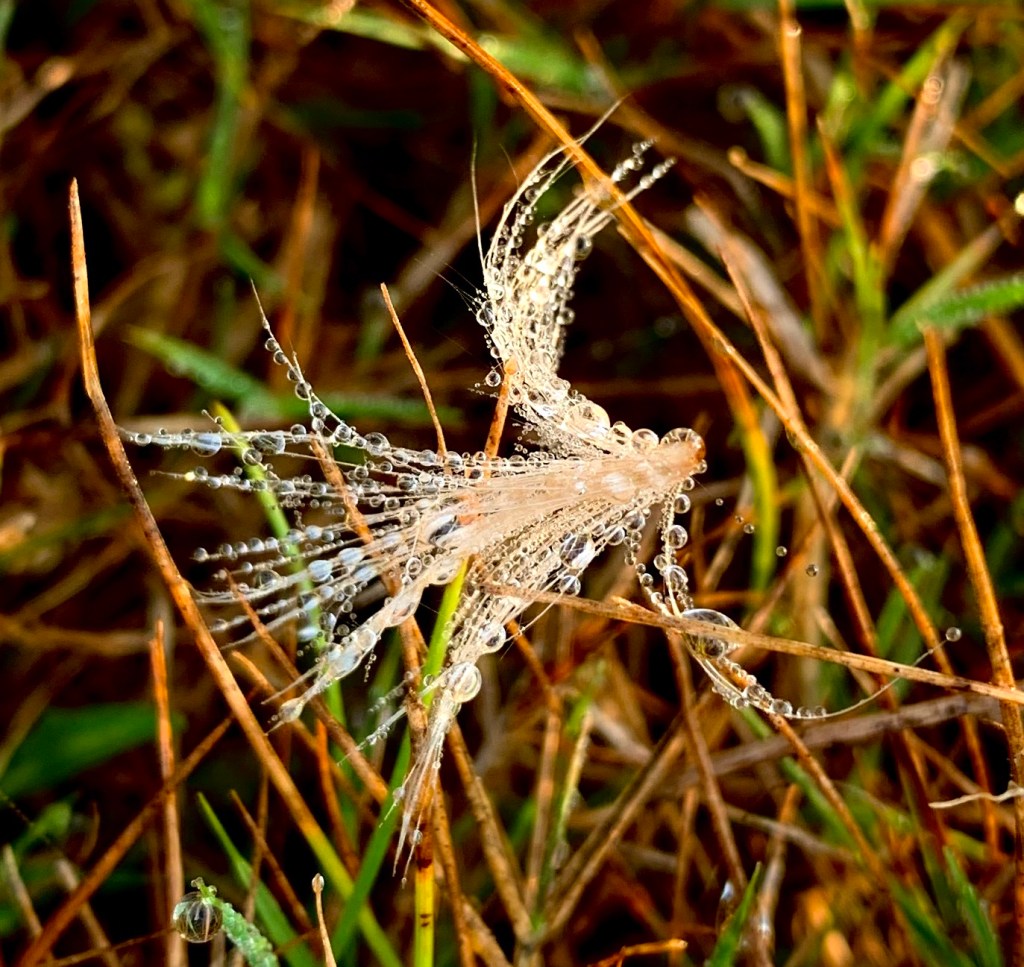
Bright little bursts of chrome yellow explode from the thistle in autumn when goldfinches gorge on the seeds of its flower. The ones left uneaten dry up and pop open and parachutes carry their procreant power to disparate venues in each hemisphere which is why there will always be thistle next year. ~Maxine Kumin “Why There Will Always Be Thistle” from The Long Marriage.
Against the rubber tongues of cows and the hoeing hands of men Thistles spike the summer air And crackle open under a blue-black pressure.
Every one a revengeful burst Of resurrection, a grasped fistful Of splintered weapons and Icelandic frost thrust up
From the underground stain of a decayed Viking. They are like pale hair and the gutturals of dialects. Every one manages a plume of blood.
Then they grow grey, like men. Mown down, it is a feud. Their sons appear, Stiff with weapons, fighting back over the same ground. ~Ted Hughes “Thistles”
Reluctantly the summer goes In a cloud of thistledown. ~Beverly Ashour from “September”
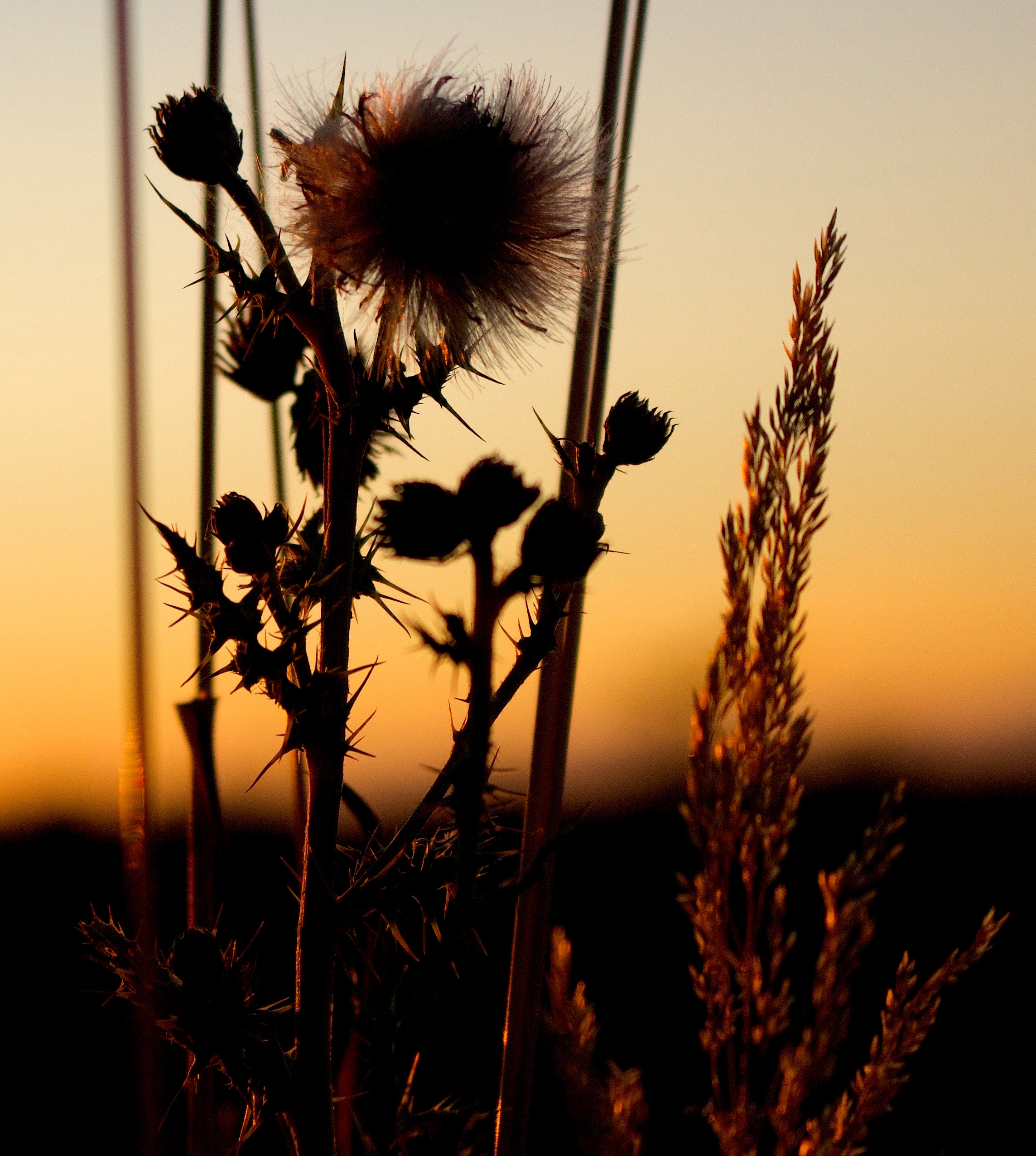
It is armored, it is deeply rooted, it is relentless. Highly ambitious, it produces downy tasty dancing seeds ready to soar far. Generation after generation of thistles persist due to this delicate ballerinas’ flight to the next horizon.
I should be strive to be as persistent, as rooted, as determined, yet as fluffy and tender under my defensive prickles and spines.
And then, may I softly dance in the journey to the next life.
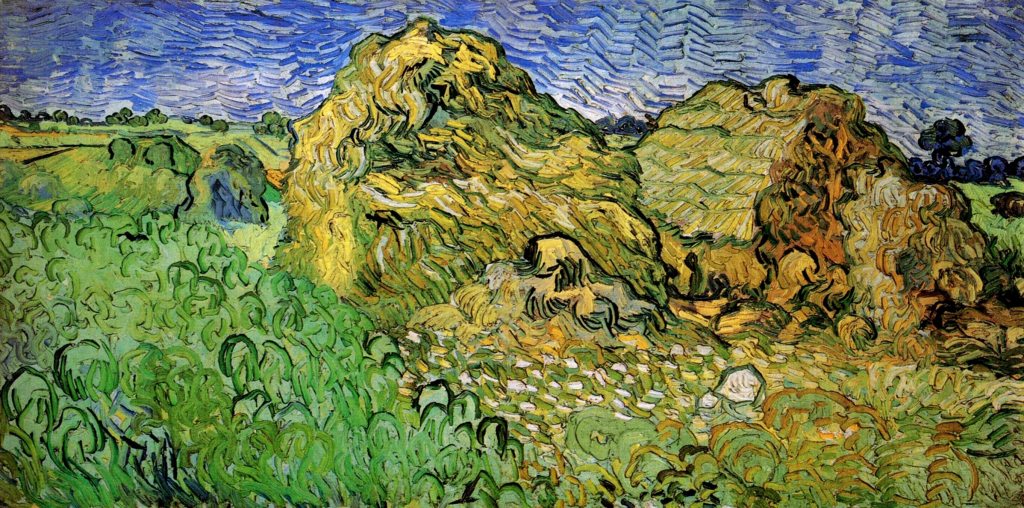
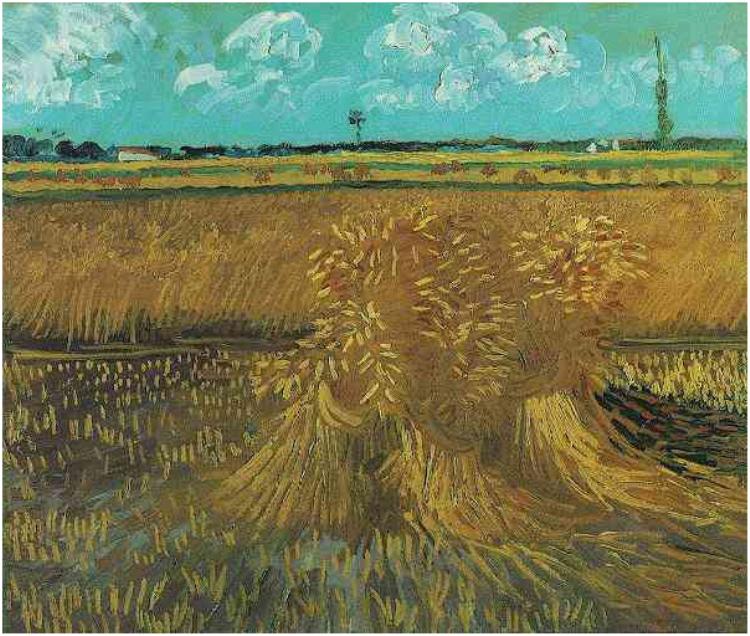
He fell in love with a simple field of wheat, and I’ve felt this way, too; melted, like a pool of mint chip ice cream, foolishly in love, even though we know how it turns out in the end: snicked by the scythe, burnt in the furnace of the August sun, threshed, separated, kernel from chaff. But right now, it’s spring, and the wheat aligns in orderly rows: Yellow green. Snap pea. Sage. Celadon. His brush strokes pile on, wave after wave, as the haystacks liquefy, slide off the canvas, roll on down to the sea. ~Barbara Crooker “Field with Wheat Stacks” from Les Fauves.
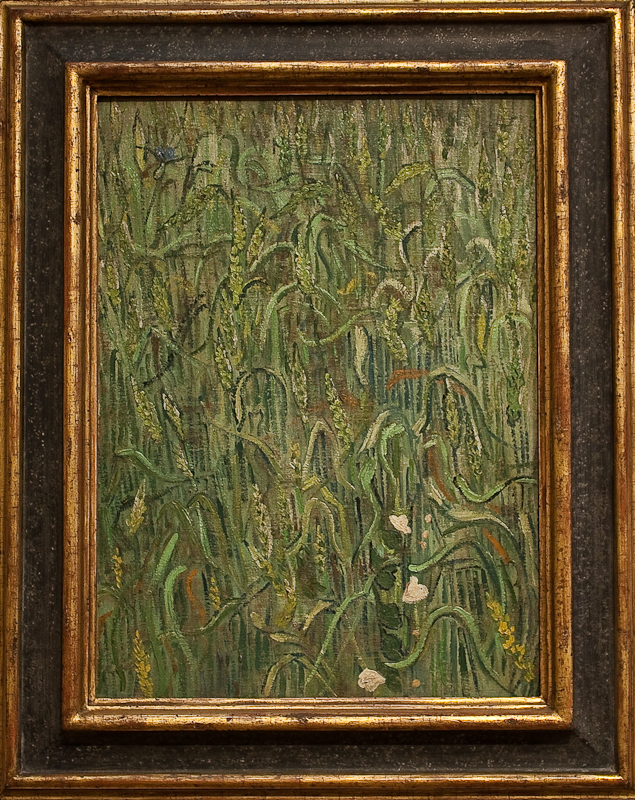
Wheat Field with Sheaves -Vincent Van GoghSheaves of Wheat in a Field –Vincent Van GoghEars of Wheat – Van Gogh 1890
There is nothing here but wheat, no blade too slight for his attention: long swaying brush strokes, pale greens, slithery yellows, the hopefulness of early spring. All grass is flesh, says the prophet. Here, there are no gorgeous azures stamped with almond blossoms, no screaming sky clawed with crows, no sunflowers roiling gold and orange, impasto thick as Midi sunlight. His brush herringboned up each stalk, the elemental concerns of sun, rain, dirt, while his scrim of pain receded into the underpainting. He let the wind play through the stems like a violin, turning the surface liquid, a sea of green, shifting eddies and currents. No sky, no horizon; the world as wheat. ~Barbara Crooker, “Ears of Wheat, 1890” from Les Fauves
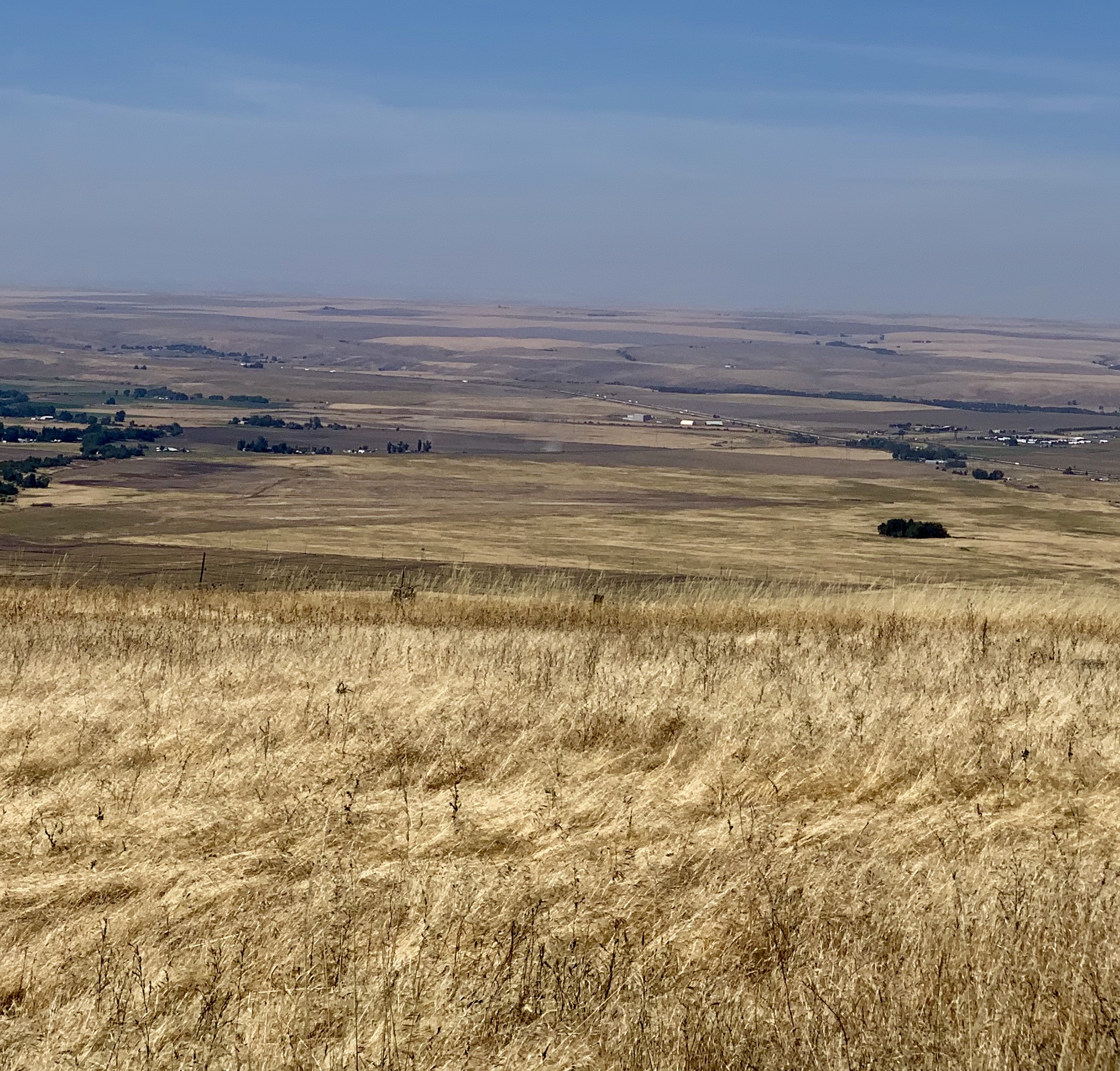
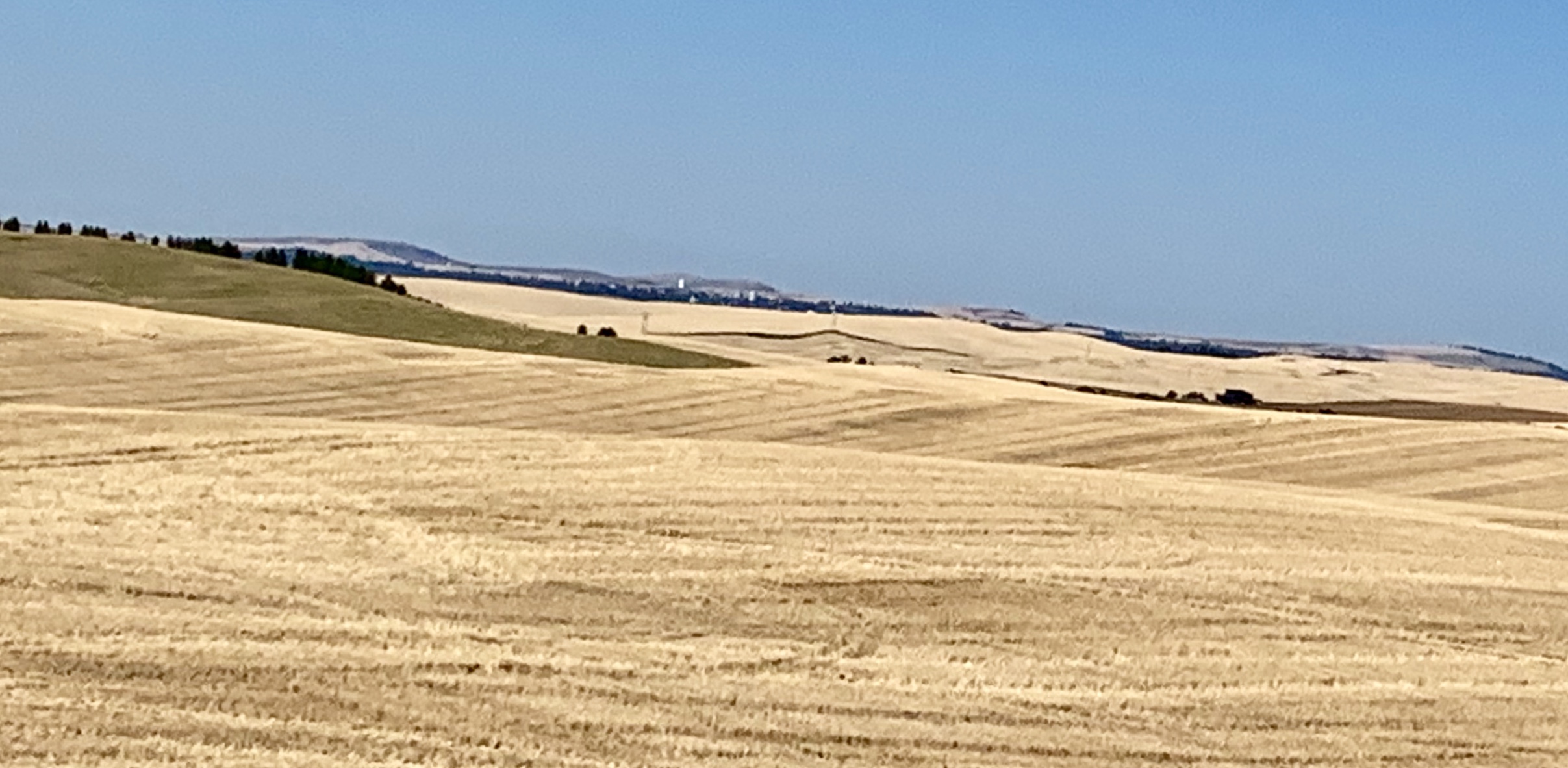
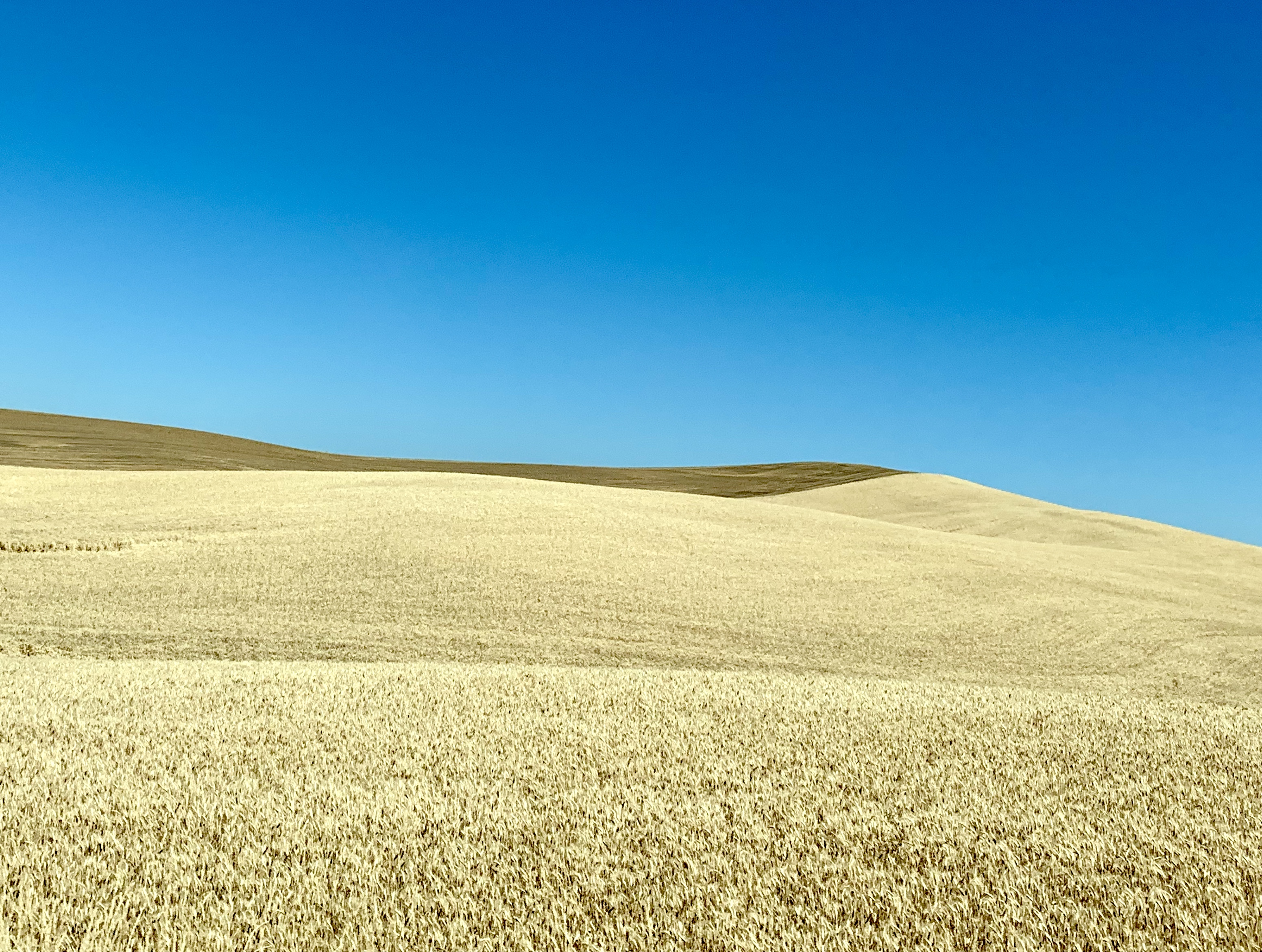
I continually fall in love with the fields in my world – I’m unable to take my eyes off them as they green up in the spring, as they wave in the breeze in June, as they turn into gold in August.
Each day brings a change to record and remember.
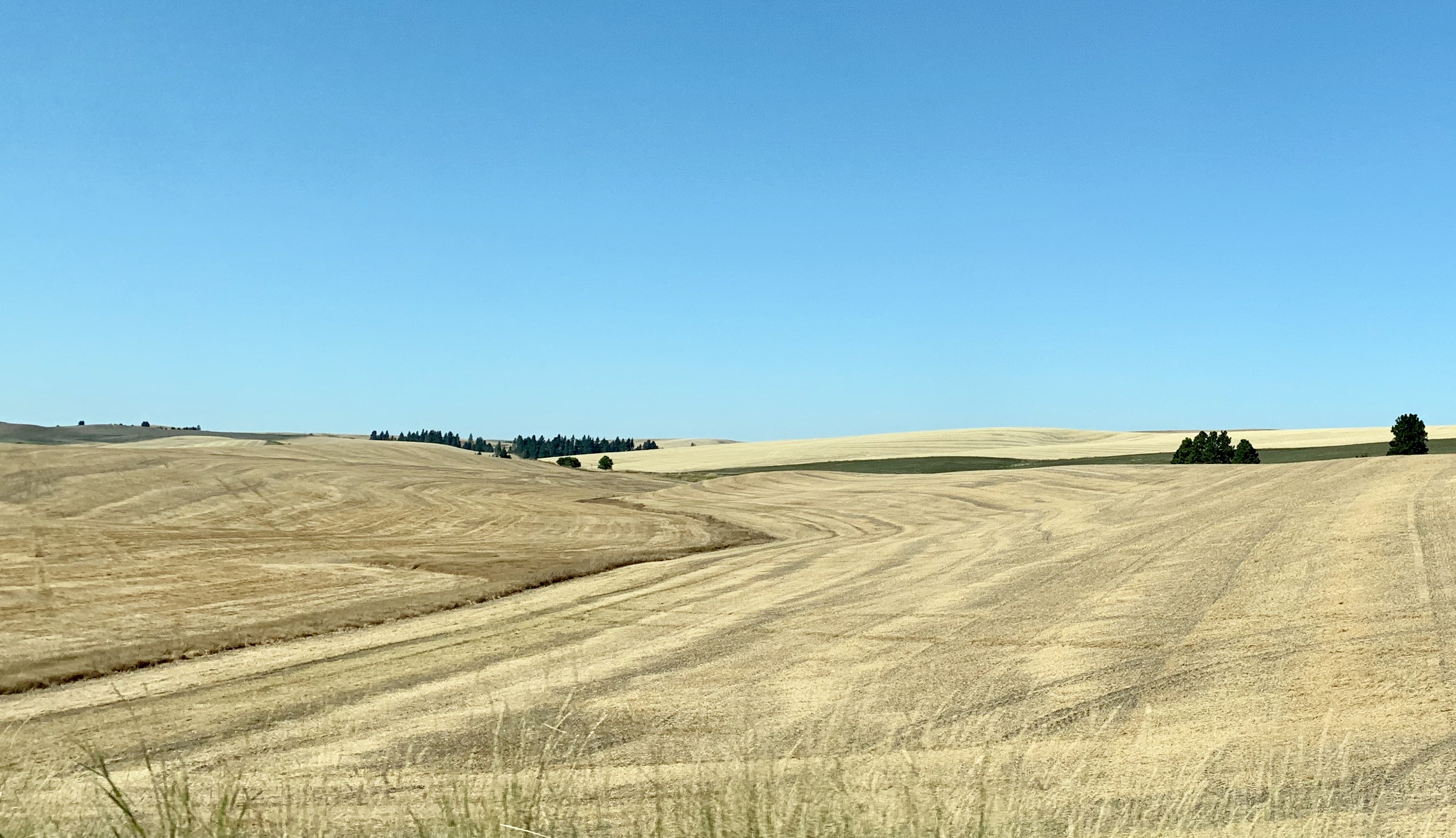
The colors pile on, one after another after another until it all must be cut short, harvested, stored and consumed, leaving behind the raw shorn remnants.
Yet in stubble is the memory of something that was once truly grand and beautiful and will be again.
Even stubble in a simple field reminds me of what is yet to come.
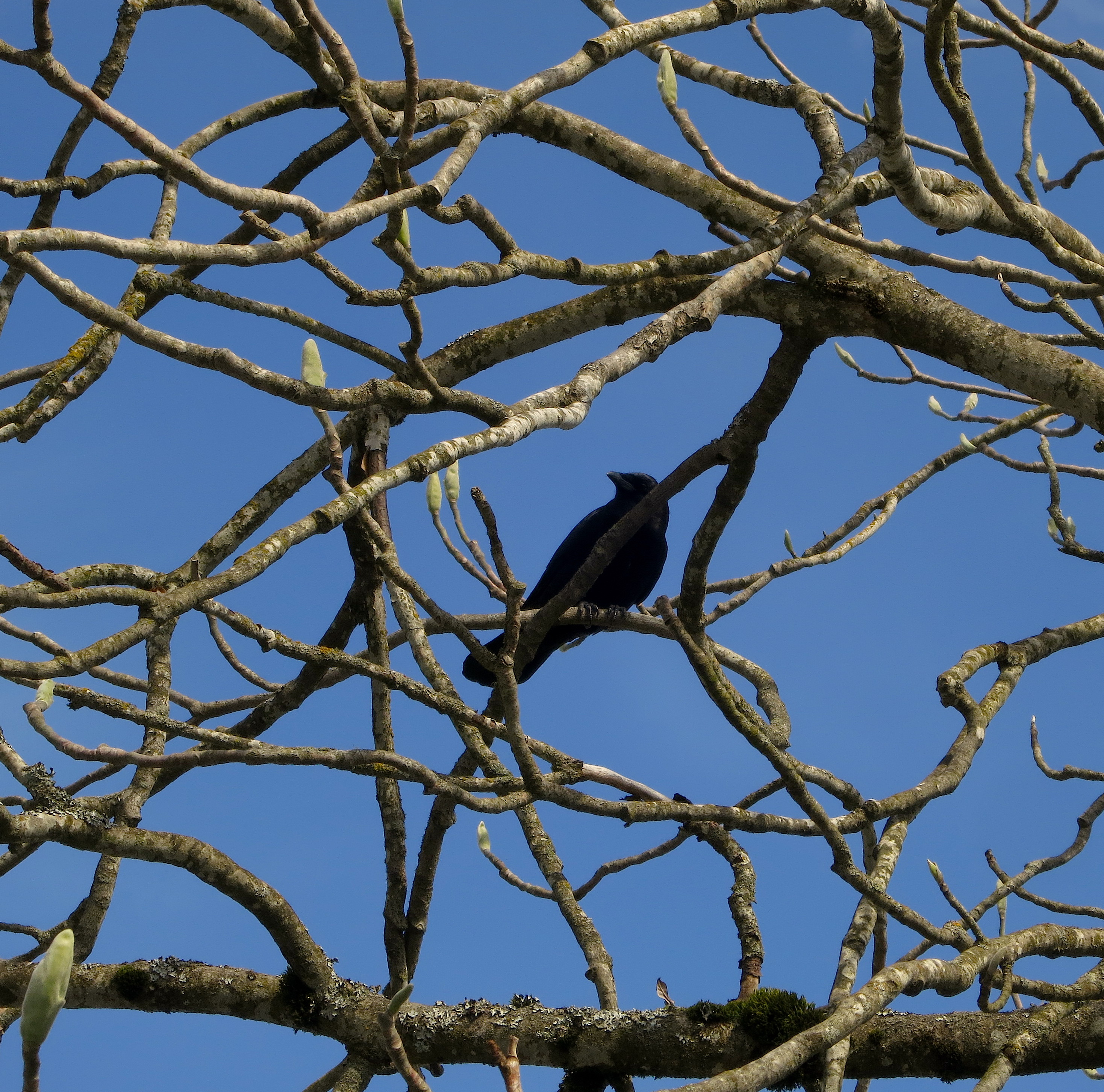
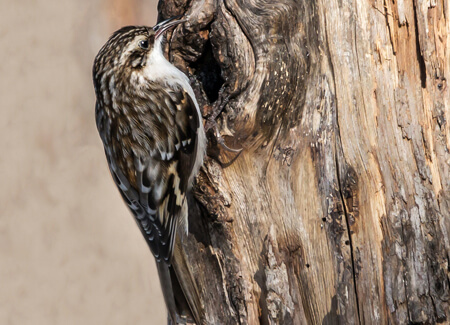
I took the dog and went to walk in the auditorium of the woods, but not to get away from things. It was our habit, that was all, a thing we did on summer days, and much there was to listen to. A slight wind came and went in three birches by the pond. A crow uphill was going on about the black life it led, and a brown creeper went creeping up a brown trunk methodically with no record of ever having been understood by anyone. A woodpecker was working out a deep hole from the sound of it in a stand of dead trees up there. And then a jay, much put upon, complained about some treachery it may or may not have endured, though most are liars anyway. The farther in, the quieter, till only the snapping of a stick broke the silence we were in. The dog stood still and looked at me, the woods by then already dark. Much later, on the porch at night, I heard the owl, an eldritch thing. The dog, still with me, heard it too, a call that came from where we’d been, and where we would not be again. ~John Foy, “Woods,” from Night Vision
photo of brown creeper from American Bird Conservancy
photo of stellar jay from allaboutbirds.orgphoto by Ken Schults for National Audubon Society
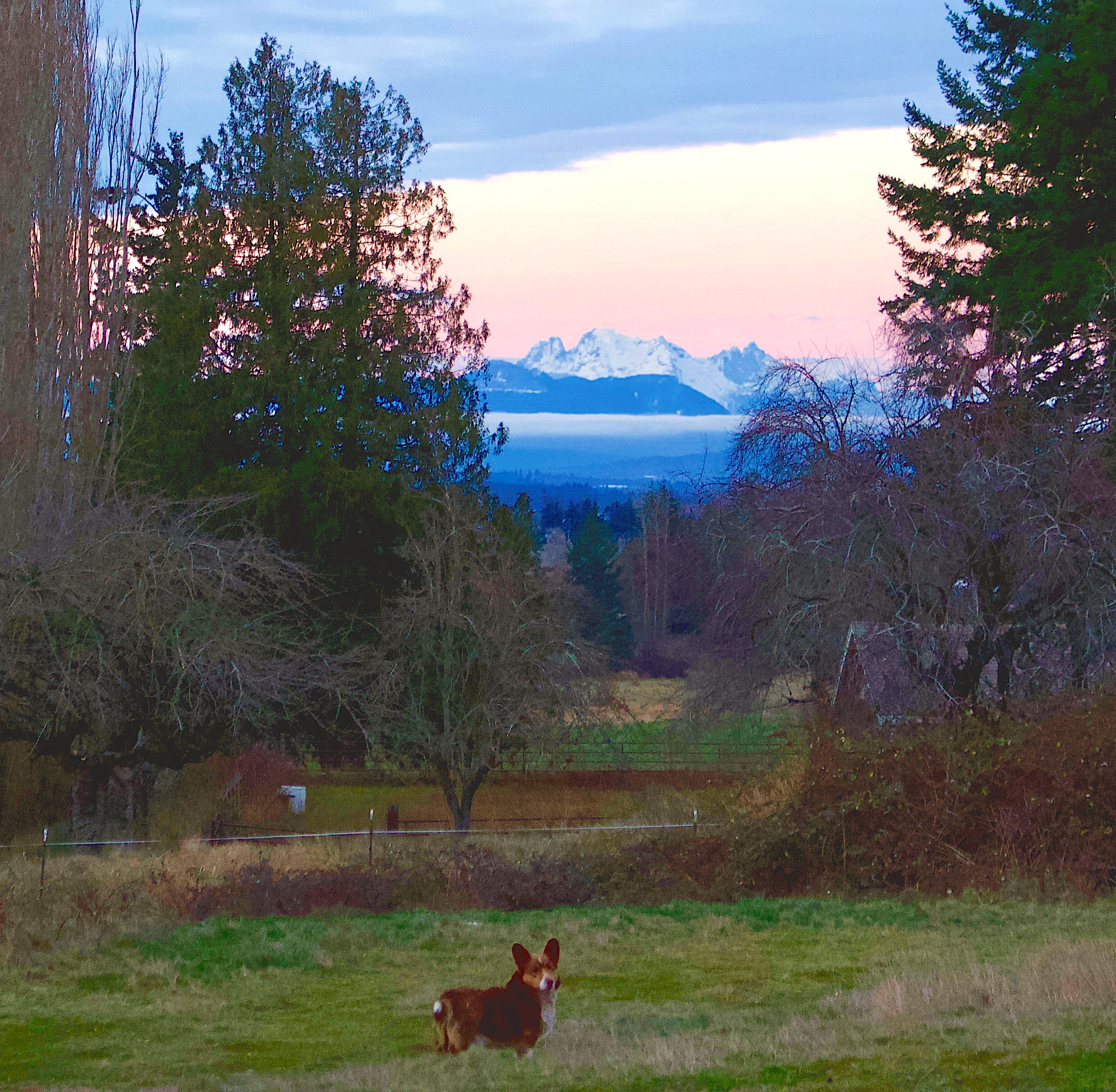
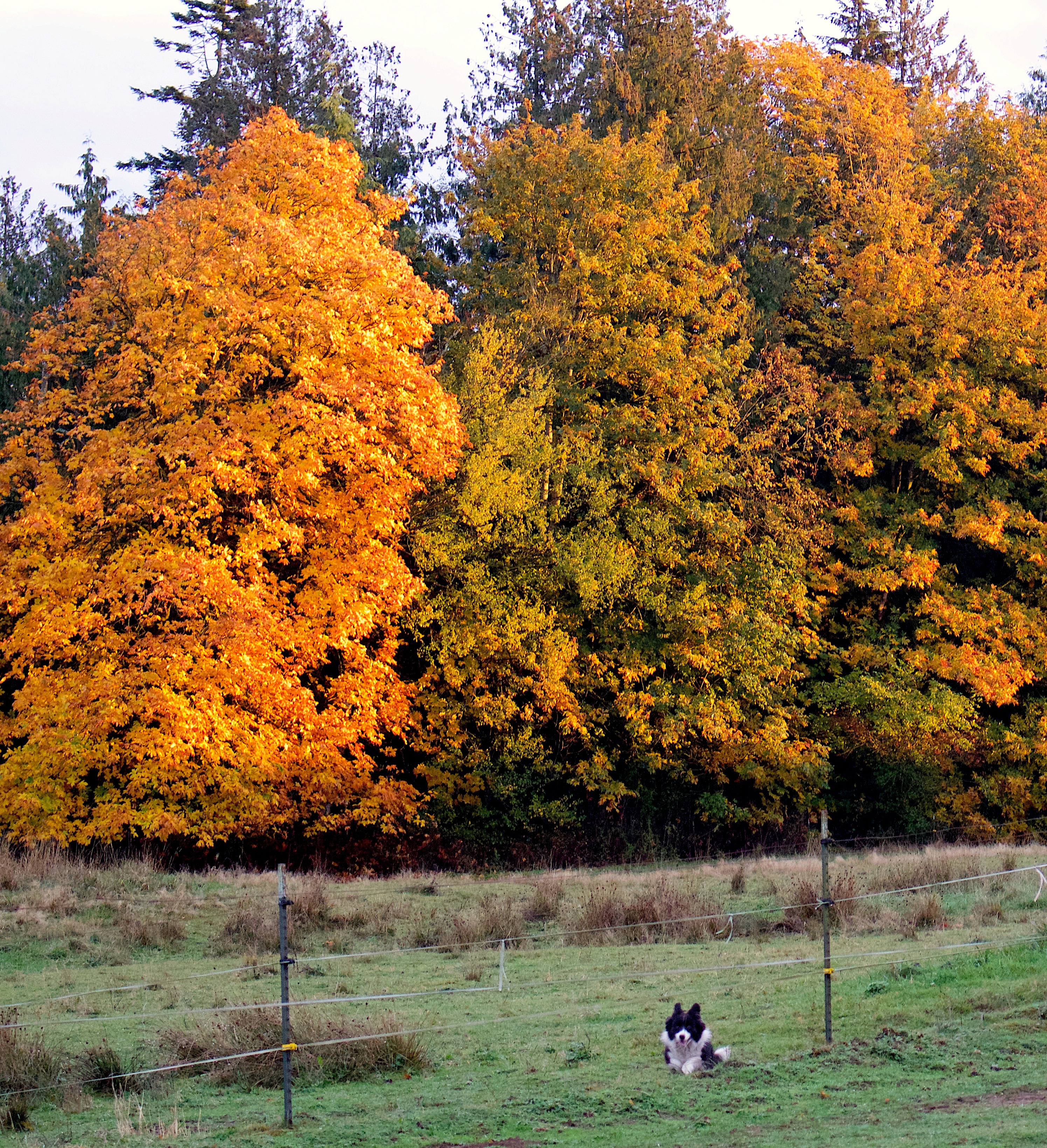
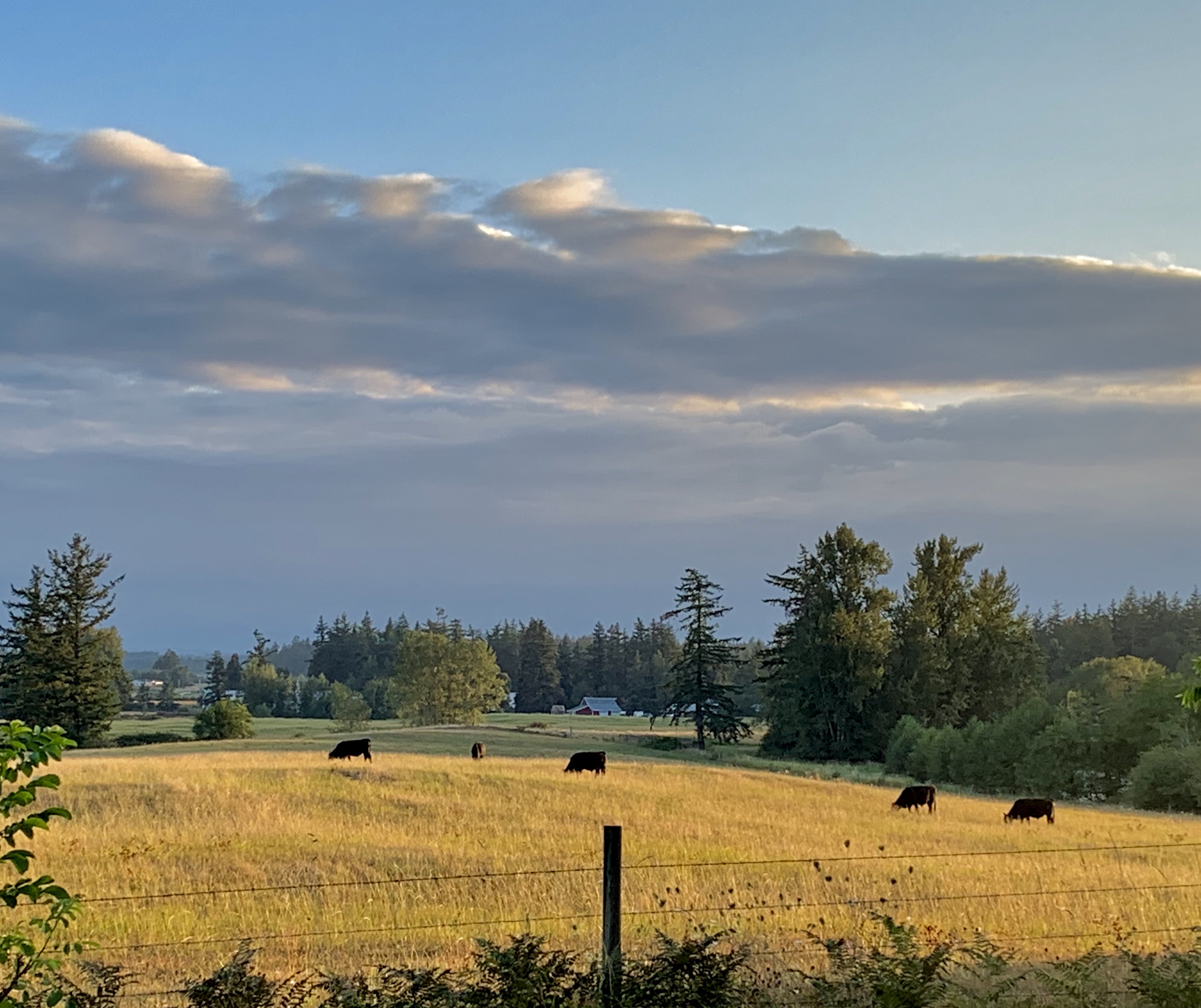
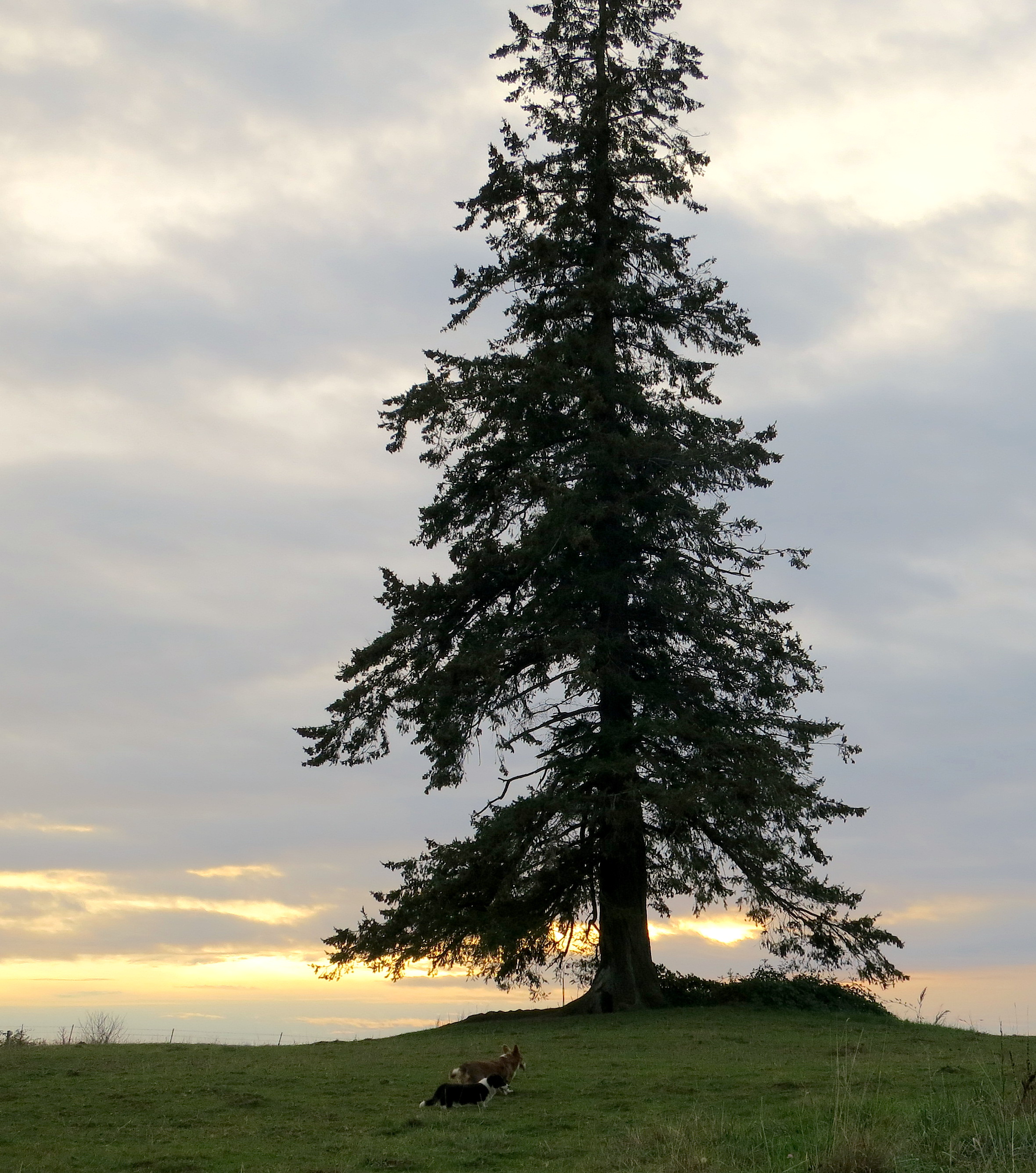
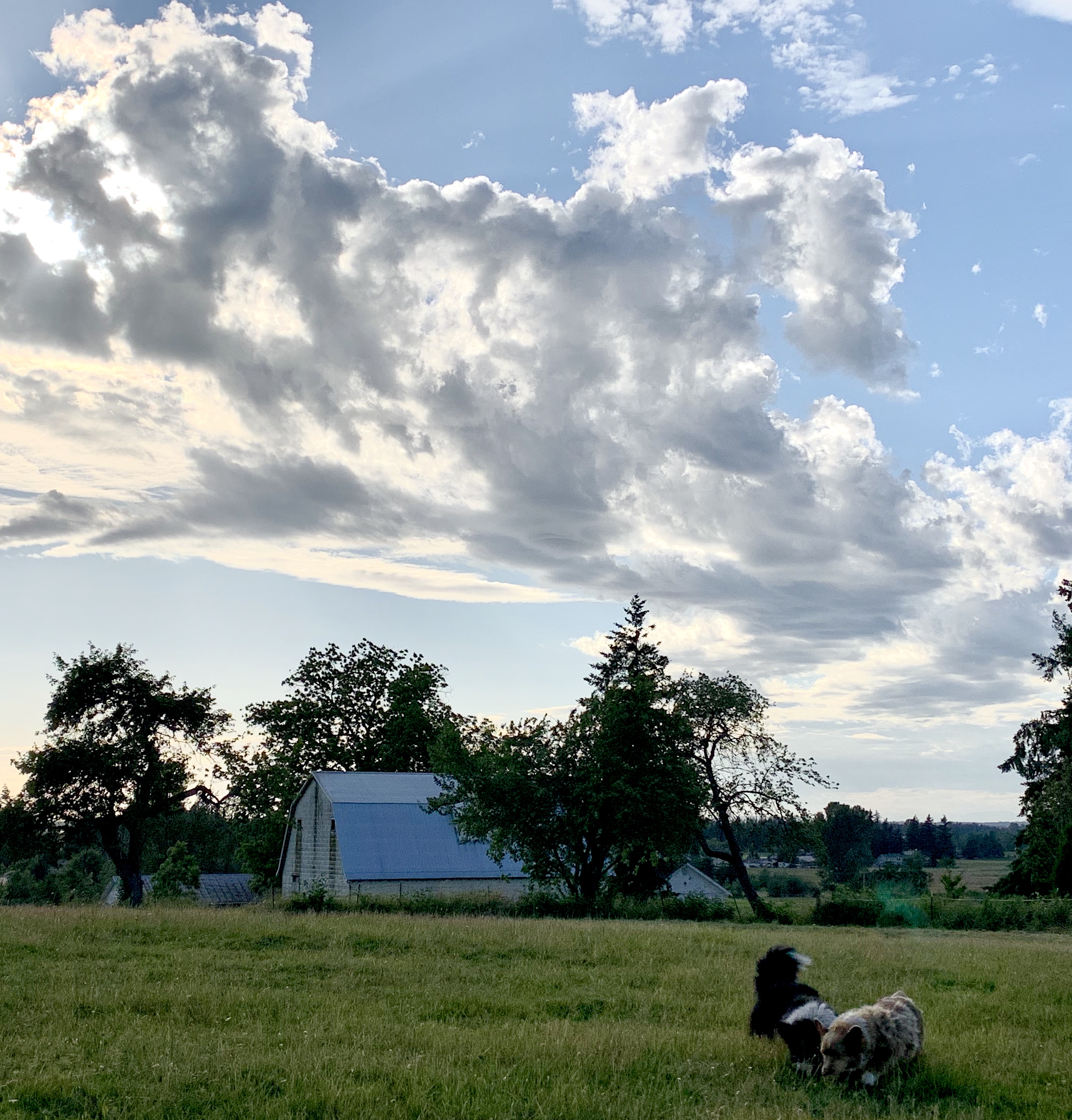
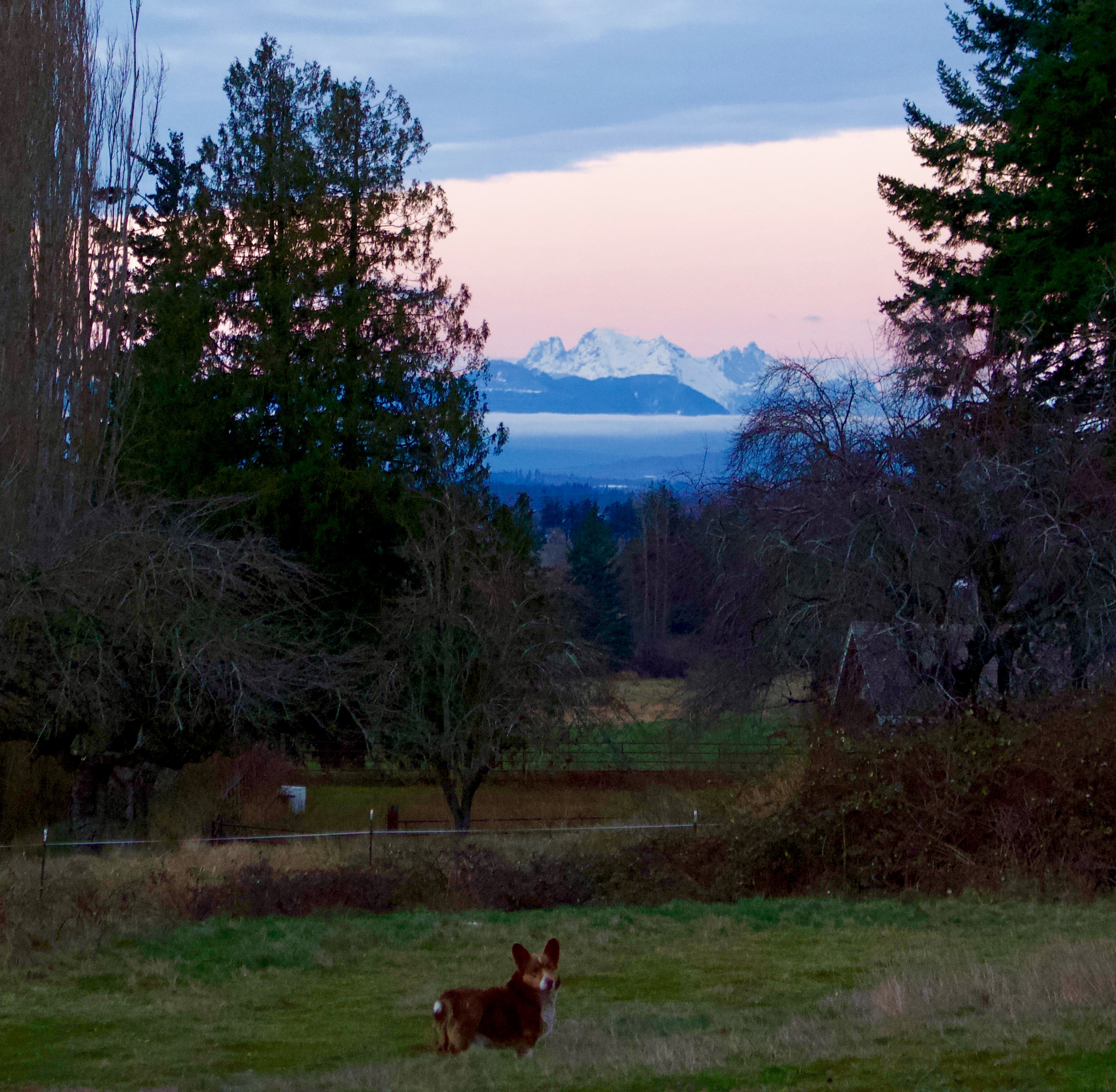
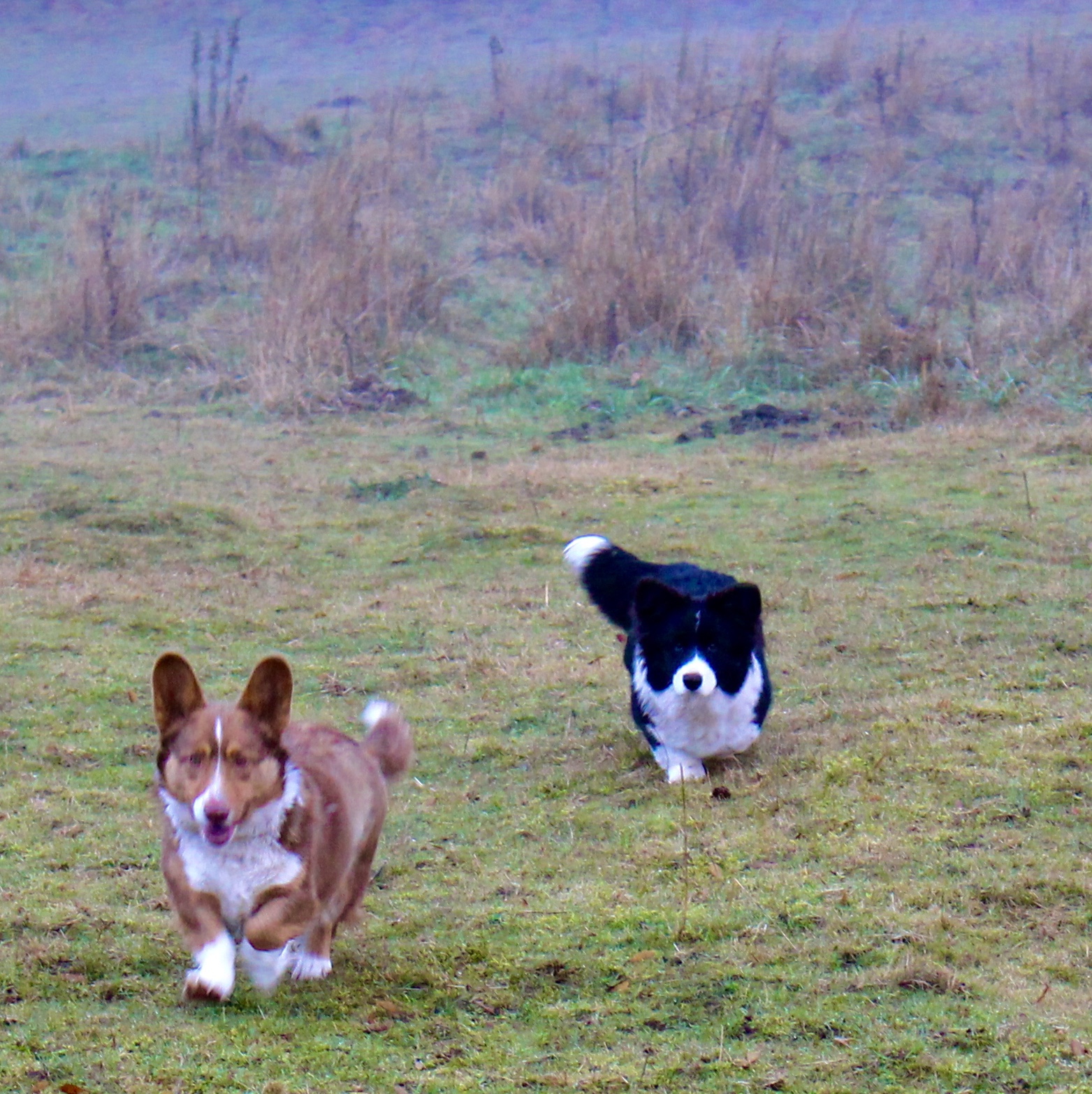
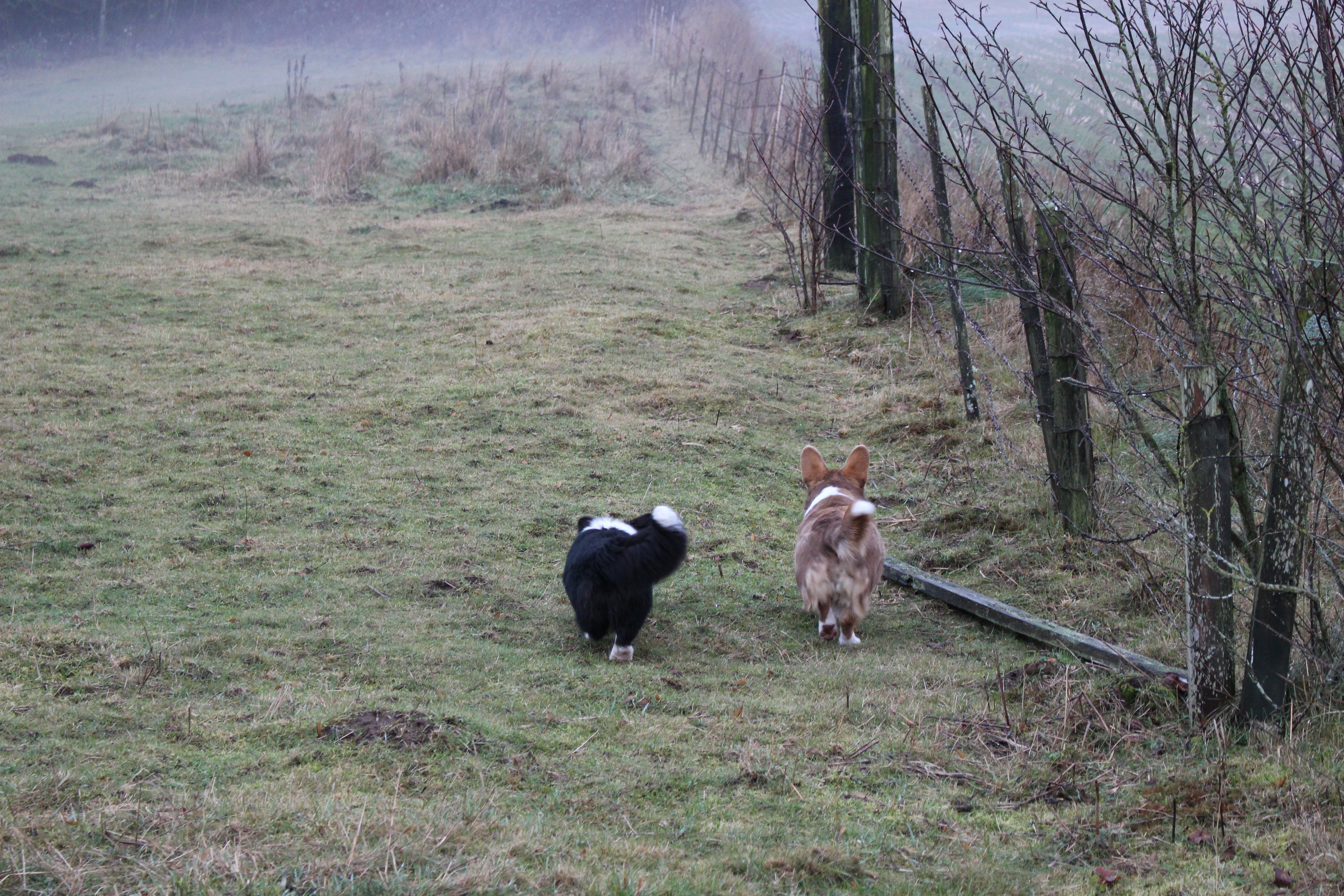
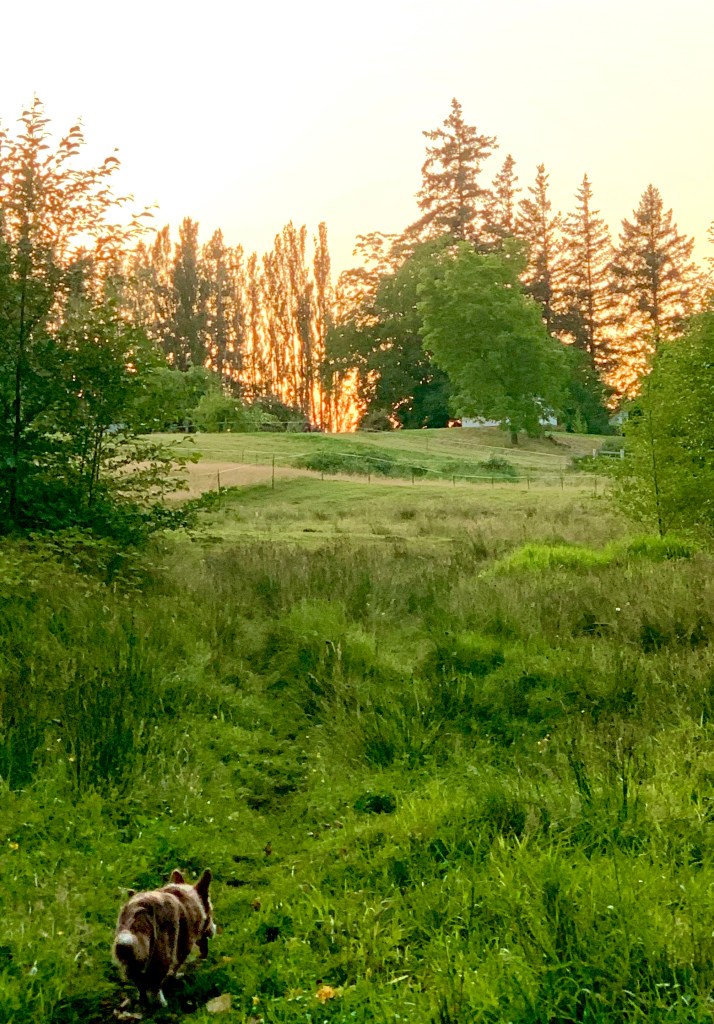
We live near fields and woods so the evening walks we take with the dogs are listening walks. There is always plenty to hear.
It is an immense relief to hear something other than the talking heads on TV or podcasts. The voices we hear in the woods are unconcerned about upcoming elections, pandemics or the state of the economy.
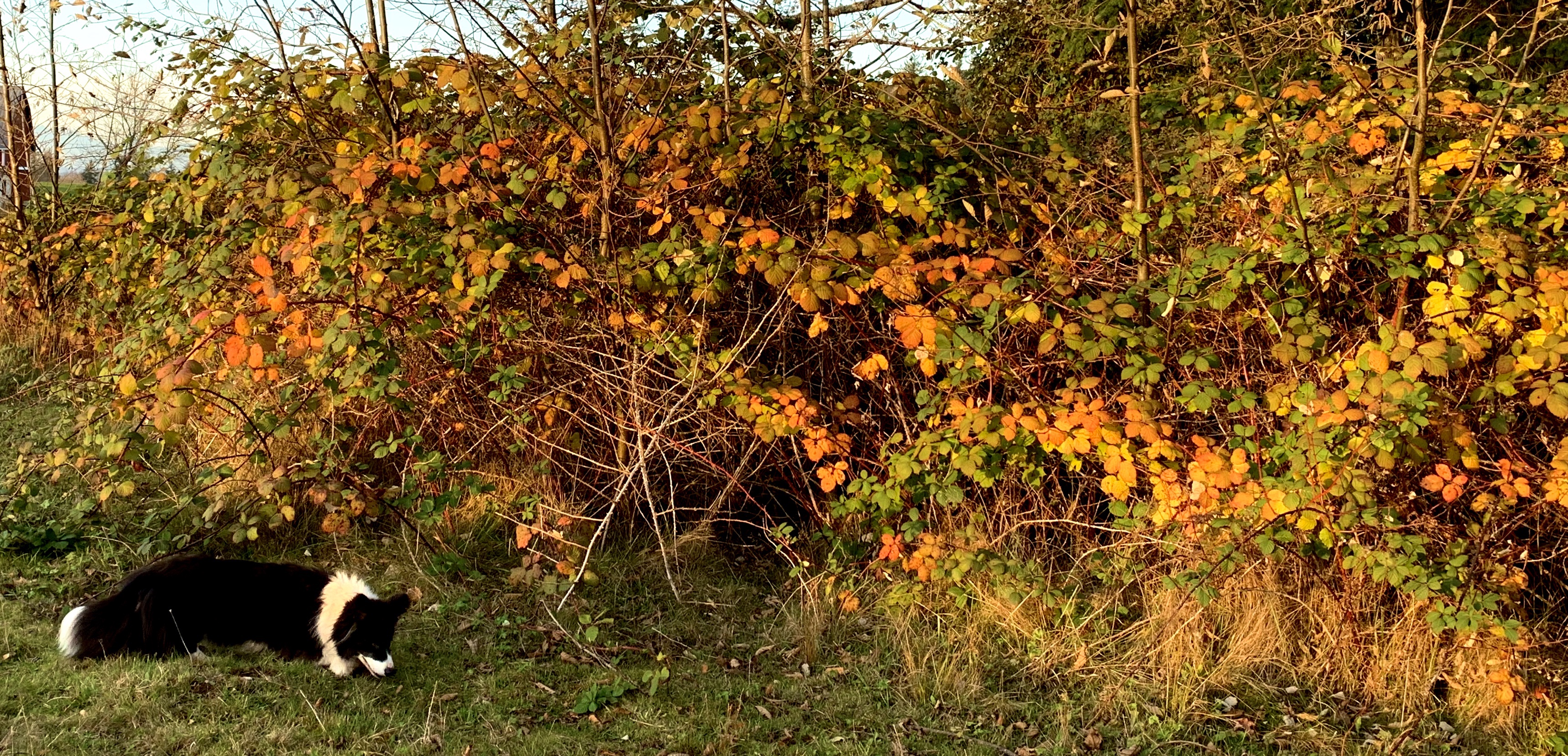
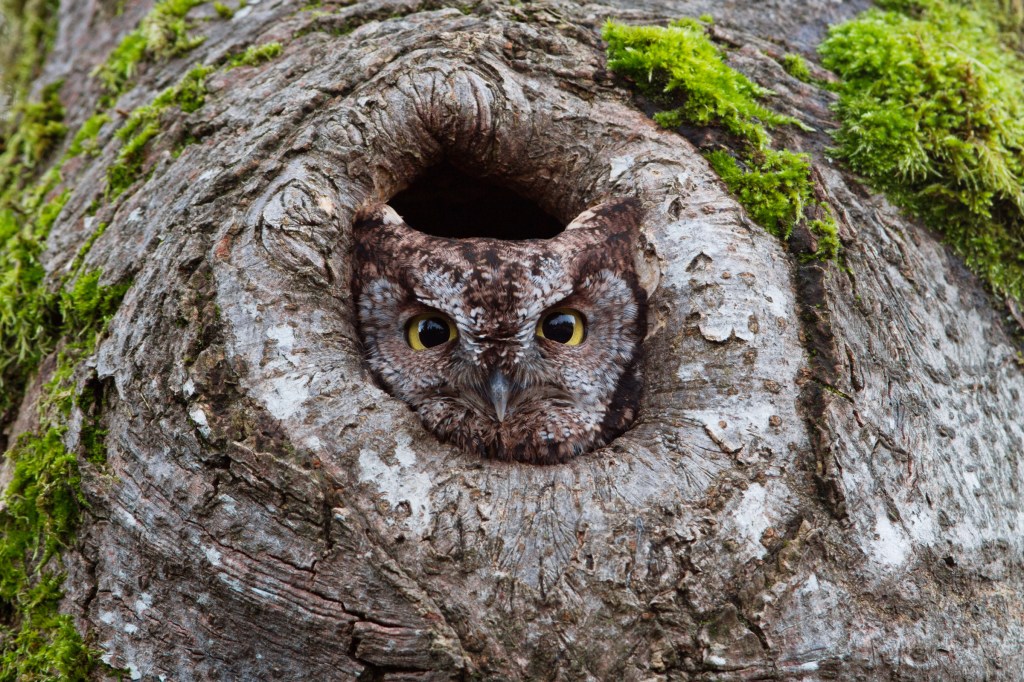
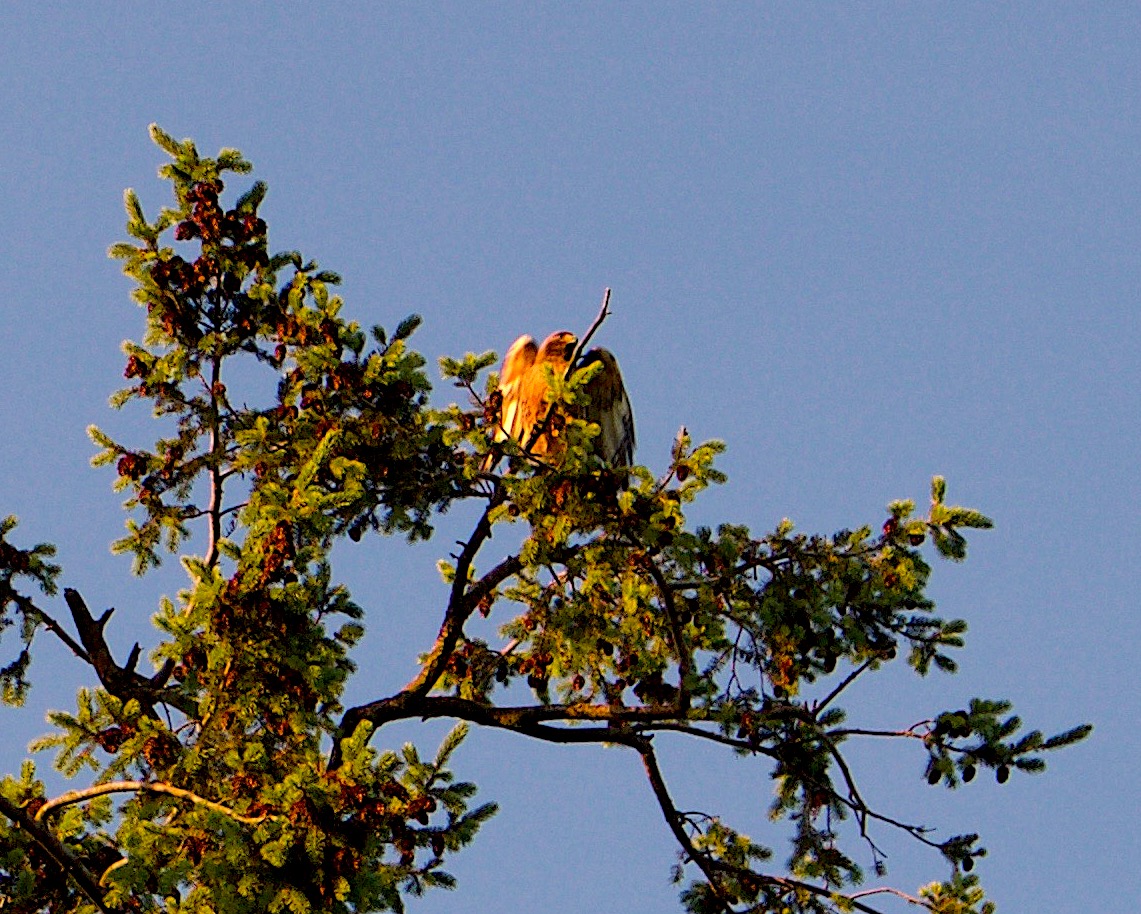
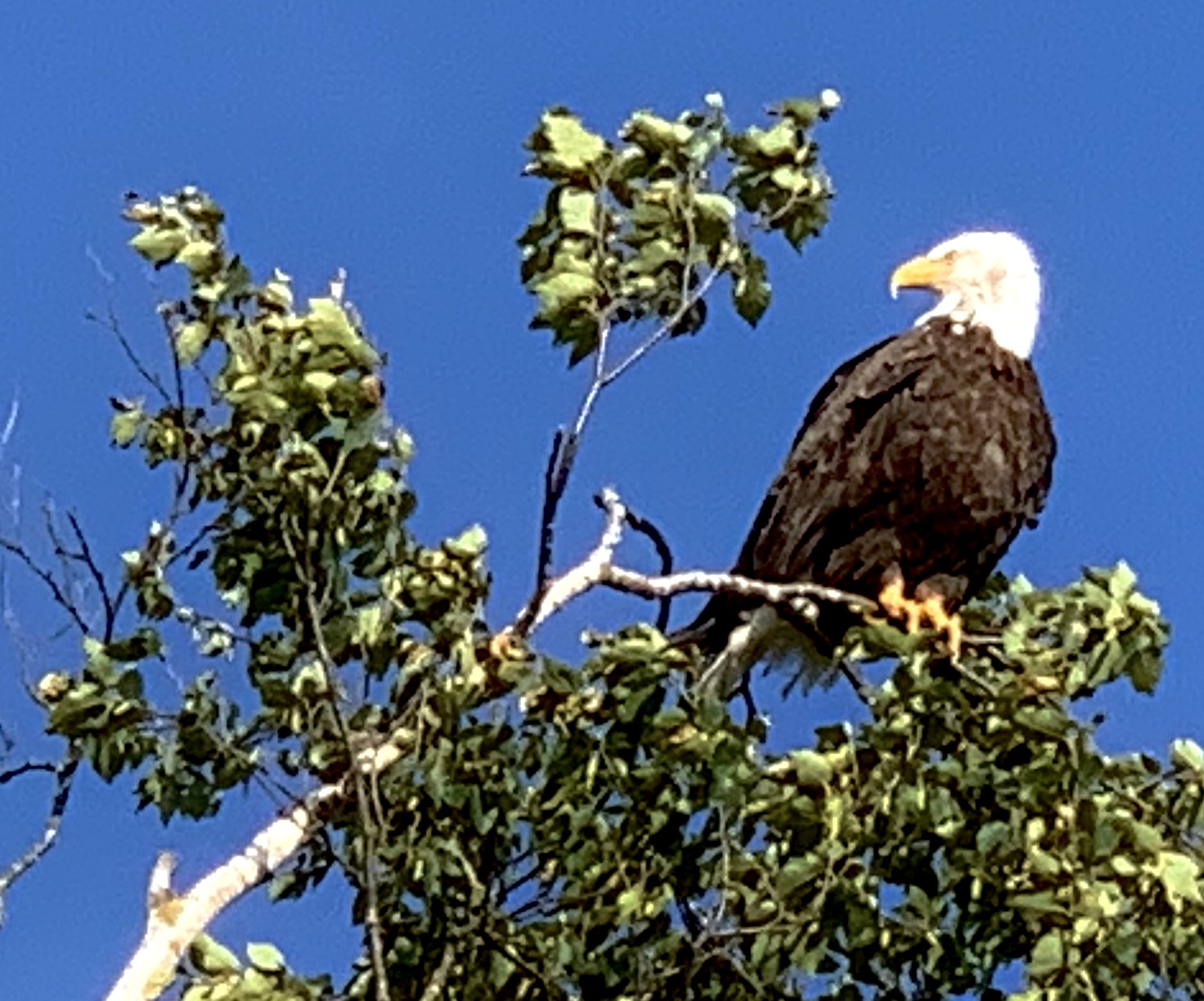
I listen for the sound of breezes rustling the tree branches, the crunch of sticks and dry leaves under my boots, and more often than not, the woodpeckers tapping away at tree trunks, eagles chittering from the treetops, and unseen owls visiting back and forth from their hidey-holes. The red-tailed hawks scream out warnings as they float from tree top to tree top, particularly upset that we’ve brought along the corgis into their territory.
So, like the outside world, this woods has its own talking heads and drama, but I know who I will listen to and where I prefer to hang out if given a choice. I understand I’m only a visitor to their world and will be invited back only as long as we tread softly.






















 Barnstorming