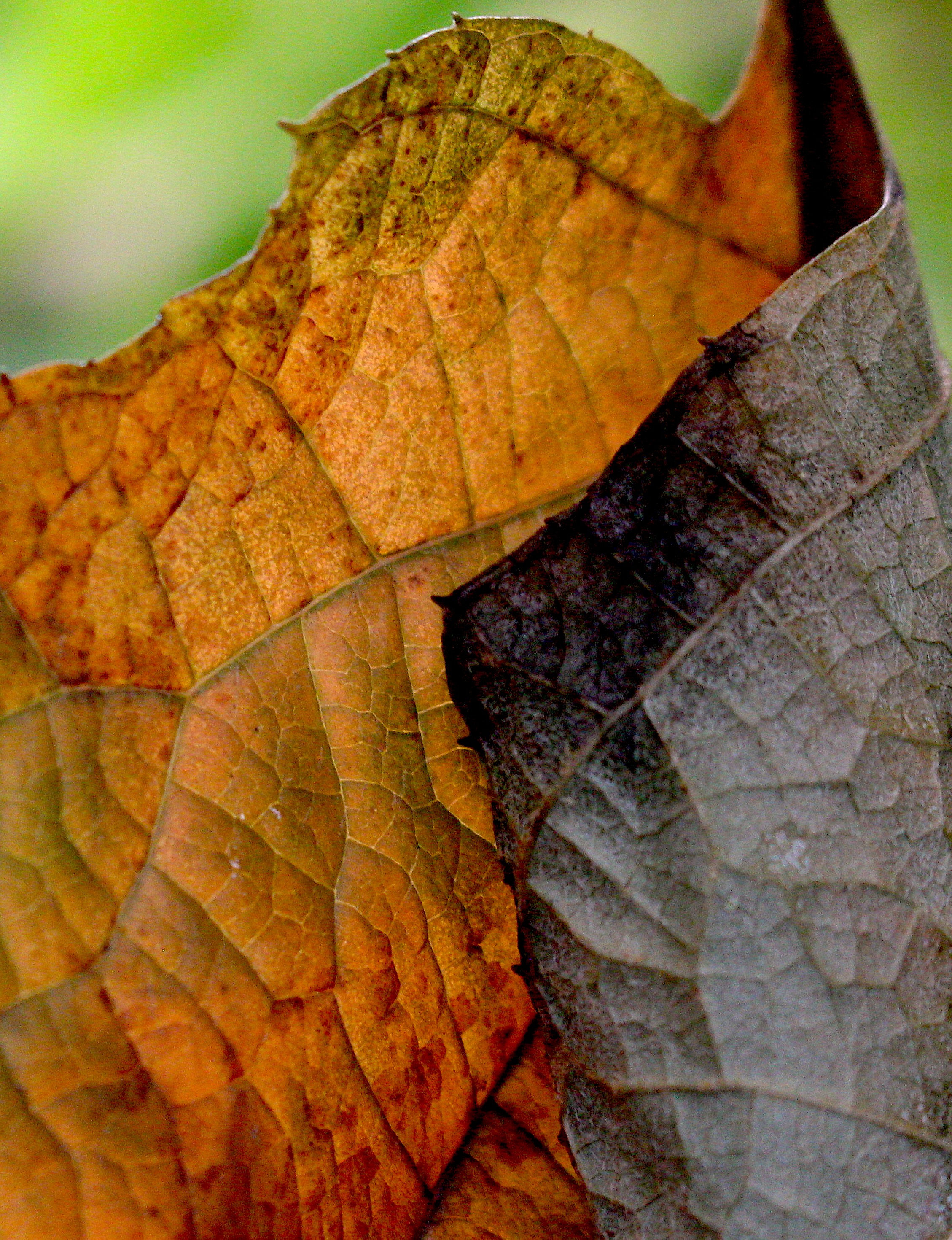
Within That Grip Until the End of Time

The severest pain will send you
to your bed, drop you to the floor.

The severest pain will roll you
into a fetal ball, and squeeze.

Within that grip, you might descend
into your long-abandoned core,

where, mid uncommon darkness, you
may find the door, whose opening

avails at last that lacuna
wherein the nous proves yet to be

also more spacious than heaven,
bearing also the Very God,

who is most pleased to meet you there.
~Scott Cairn “The End of Suffering” from Lacunae

Sometimes from sorrow, for no reason,
you sing. For no reason, you accept
the way of being lost, cutting loose
from all else and electing a world
where you go where you want to.

Arbitrary, a sound comes, a reminder
that a steady center is holding
all else. If you listen, that sound
will tell you where it is and you
can slide your way past trouble.

Certain twisted monsters
always bar the path—but that’s when
you get going best, glad to be lost,
learning how real it is
here on earth, again and again.

~William Stafford “Cutting Loose” from Dancing with Joy: 99 Poems

Before my fever broke,
And the pains lessened, I could actually see
Myself, in the exact center of that square.
How still it had become in my absence, & how
Immaculate, windless, sunlit. I could see
The outline of every leaf on the nearest tree,
See it more clearly than ever, more clearly than
I had seen anything before in my whole life:
Against the modest, dark gray, solemn trunk,
The leaves were becoming only what they had to be—
Calm, yellow, things in themselves & nothing
More—& frankly they were nothing in themselves,
Nothing except their little reassurance
Of persisting for a few more days, or returning
The year after, & the year after that, & every
Year following—estranged from us by now—& clear,
So clear not one in a thousand trembled; hushed
And always coming back—steadfast, orderly,
Taciturn, oblivious—until the end of Time.
~Larry Levis from The Widening Spell of the Leaves 

I did not sleep well last night —
my mind would not stop turning over and over,
my blankets twisted in turmoil,
my muscles too tense and tight.  

The worries of the day
needed serious wrestling in the dark
rather than settling forgotten under my pillow.

Yet this morning dawns anew.

I’m comforted by the rhythm
of hours starting fresh, like leaves on the trees
steadfast, orderly,
taciturn, oblivious—until the end of Time

So today, I’ll get my hands dirty
digging a hole deep enough to hold my worries;
tomorrow I’ll forget where exactly I buried them.

Ordinary as Unmown Grass

I will seek a letter at the mailbox’s red flag, how many more times?
Walk this puddled gravel drive with the dog and cat, how many more times?

Dislike the sight, row of brown molehills risen like my own petty complaints?
Be here to hear the just-before-spring birds tune up, how many more times?

My life, ordinary as unmown grass, tattered and dormant in fencerows….
Sons asleep upstairs under quilts pieced of castoff jeans, how many more times?

Witness sunrise over the barn, frost on the grass, deer by the pines? Think of “Jesus asking that man, Do you want to be made well? How many more times?

Think of Him asking me. Of walking back to the mailbox in late afternoon,
of pulling it open, reaching in again, how many more times?
~Daye Phillippo “Ordinary Ghazal” from Thunderhead

…it’s easy to forget that the ordinary is just the extraordinary that’s happened over and over again. Sometimes the beauty of your life is apparent. Sometimes you have to go looking for it. And just because you have to look for it doesn’t mean it’s not there.
God, grant me the grace of a normal day.

~Billy Coffey

I tend to get complacent in my daily routines, confident in the knowledge that tomorrow will be very much like yesterday.

I look out on plenty of unmown grass.

The reality is there is nothing ordinary about the events of this day or any other – it might have been otherwise and some day it will be otherwise.

I am reminded to stop rushing, take a look around and actually revel in the quiet moments of daily work, chats, walks, meals, and sleep, and yes, lawn mowing. As both of us suffered, one after the other, through a spring cold which interrupted our plans and schedules, we still knew how remarkable it is to just be here living life together.

We are granted peace even, maybe especially, when not feeling well.

Christ came to earth to remind us to dwell richly in the experience of these moments, to live, wanting to be well, despite our limitations.

God knows, such is a foretaste of the heaven which is to come.

Waiting for the School Bus

A second crop of hay lies cut   
and turned. Five gleaming crows   
search and peck between the rows.
They make a low, companionable squawk,   
and like midwives and undertakers   
possess a weird authority.

Crickets leap from the stubble,   
parting before me like the Red Sea.   
The garden sprawls and spoils.

Cloud shadows rush over drying hay,   
fences, dusty lane, and railroad ravine.   
The first yellowing fronds of goldenrod   
brighten the margins of the woods.

Schoolbooks, carpools, pleated skirts;   
water, silver-still, and a vee of geese.

*

The cicada’s dry monotony breaks   
over me. The days are bright   
and free, bright and free.

Then why did I cry today   
for an hour, with my whole   
body, the way babies cry?

*

A white, indifferent morning sky,
and a crow, hectoring from its nest
high in the hemlock, a nest as big
as a laundry basket …

In my childhood
I stood under a dripping oak,
while autumnal fog eddied around my feet,
waiting for the school bus
with a dread that took my breath away.

The damp dirt road gave off
this same complex organic scent.
I had the new books—words, numbers,
and operations with numbers I did not
comprehend—and crayons, unspoiled
by use, in a blue canvas satchel
with red leather straps.

Spruce, inadequate, and alien
I stood at the side of the road.
It was the only life I had.
~Jane Kenyon from “Three Songs at the End of Summer”

Yesterday, my son taught me the sign for lockdown
different than locking a door,
or the shutdown we invented at the start
of the pandemic. Little fistfuls of locks
swept quickly between us, a sign
designed especially for school.


My son spent his first years a different kind of
locked up—an orphanage in Bangkok, where he didn’t
speak and they couldn’t sign. He came home, age four,
silent. We thought being here could open
doors. It has, of course. He’s learned so much
at the deaf school; the speech therapist calls it a Language
Explosion. I keep lists of the words he’s gathered:
vanilla, buckle, castle, stay. And
lockdown. He absorbs it like the rest. Now the schools
he builds with Magna-Tiles have lockdowns. I worry
in trying to give him keys, we’ve only changed the locks.


To lock down a deaf school, we use a special strobe.
When it flashes, we flip switches and sign through
darkness. The children know to stay
beneath the windows. Every five minutes a robot texts:
“Shelter in place is still in effect. Please await further
instructions.” Then we pull the fire alarm, a tactical move to
unsettle the shooter. Hearing people can’t
think with noise like that. A piercing thing
we don’t detect, to cover the sounds we make, the sounds
we don’t know we’re making.

~Sara NovićLockdown at the School for the Deaf”

The first day back to school now isn’t always the day after Labor Day as it was when I was growing up. Some students have been in classes for a couple weeks already, others started a few days ago to ease into the transition more gently. 

Some return to the routine this morning – school buses roar past our farm brimming with eager young faces and stuffed back packs amid a combination of excitement and anxiety.

I remember well that foreboding that accompanied a return to school — the strict schedule, the inflexible rules and the often harsh adjustment of social hierarchies and friend groups. Even as a good learner and obedient student, I was a square peg being pushed into a round hole when I returned to the classroom. The students who struggled academically and who pushed against the boundaries of rules must have felt even more so. We all felt alien and inadequate to the immense task before us to fit in with one another, allow teachers to structure and open our minds to new thoughts, and to become something and someone more than who we were before.

Growth is so very hard, our stretching so painful, the tug and pull of friendships stressful. And for the last two decades, there is the additional fear of lockdowns and active shooters.

I worked with students on an academic calendar for over 30 years, yet though I’m now retired, I still don’t sleep well in anticipation of all this day means.

So I take a deep breath on a foggy post-Labor Day morning and am immediately taken back to the anxieties and fears of a skinny little girl in a new home-made corduroy jumper and saddle shoes, waiting for the schoolbus on our drippy wooded country road.

She is still me — just buried deeply in the fog of who I became after all those years of schooling, hidden somewhere under all the piled-on layers of learning and growing and hurting and stretching — I do remember her well.

Like every student starting a new adventure today,
we could all use a hug.

Lo! I am come to autumn,
   When all the leaves are gold;
Grey hairs and golden leaves cry out
   The year and I are old.

In youth I sought the prince of men,
   Captain in cosmic wars,
Our Titan, even the weeds would show
   Defiant, to the stars.

But now a great thing in the street
   Seems any human nod,
Where shift in strange democracy
   The million masks of God.

In youth I sought the golden flower
   Hidden in wood or wold,
But I am come to autumn,
   When all the leaves are gold.

~G.K. Chesterton “Gold Leaves”

Like An Old Song With Minor Variations

Just when you’d begun to feel
You could rely on the summer,
That each morning would deliver
The same mourning dove singing
From his station on the phone pole,
The same smell of bacon frying
Somewhere in the neighborhood,
The same sun burning off
The coastal fog by noon,
When you could reward yourself
For a good morning’s work
With lunch at the same little seaside cafe
With its shaded deck and iced tea,
The day’s routine finally down
Like an old song with minor variations,
There comes that morning when the light
Tilts ever so slightly on its track,
A cool gust out of nowhere
Whirlwinds a litter of dead grass
Across the sidewalk, the swimsuits
Are piled on the sale table,
And the back of your hand,
Which you thought you knew,
Has begun to look like an old leaf.
Or the back of someone else’s hand.
~George Bilgere “August”
from The Good Kiss

Twenty-five summers ago
I wrote a poem about the summer ending,
the shadows lengthening, and the light
gone soft and elegiac
like the end of a love song.
It joined roughly a million poems
written that summer alone
on the same subject, but in Spanish
or Japanese, or Swahili,
always the same thing, same shadows
lengthening, same soft light,
and I ended my poem, twenty five years ago,
by saying that the back of my hand
had begun to look like a dead leaf
or the back of someone else’s hand.
And this is just a shout out to say
to that version of me, a quarter
century ago, that the hand in question
looks even more like a dead leaf, even more 
like the back of someone else’s hand,
but—and this is crucial, the importance
of this next observation cannot
be overstated—the strange old hand
is still here, still enduring, still writing itself
into itself.

~George Bilgere “After Escher”

I don’t recognize the back of my own hands – surely they belong to someone else.

How is it possible for my hands to now look like my mother’s did?

It’s only possible now that I’ve lived many summers.
Yet I’m not quite dried up like an old leaf. At least not yet.

This dry spell is over; this morning there is magic in the sound and smell of rain.
Like the old song:
“The bright blessed day
The dark sacred night
And I think to myself
What a wonderful world…”

Spoonful By Spoonful

Do I dare
Disturb the universe?
In a minute there is time
For decisions and revisions which a minute will reverse.
For I have known them all already, known them all:
Have known the evenings, mornings, afternoons,
I have measured out my life with coffee spoons…
~T.S. Eliot
from The Love Song of J. Alfred Prufrock

Tokyo Starbucks
photo of Edinburgh street, taken from Starbucks

I read recently that Starbucks’ business has suffered a loss of customers because of longer waits for service, and price increases for custom-ordered drinks that take more barista time to create.

I have been a pretty loyal coffee customer since Starbucks opened their first shop at Pike Street Market in Seattle over 50 years ago. I have visited countless Starbucks, including one in the bustling Narita Airport in Tokyo and an upstairs shop on a drizzly corner in Edinburgh, Scotland.

Over that time, I’ve graduated from brewed coffee from dark roast beans to dark roast decaf beans. There is a difference between 20 year old me and 70 year old me; caffeine is no longer my friend.

Over a decade ago, I was buying my usual twice a month supply of decaf coffee beans from my local Starbucks shop. The barista looked at me apologetically and said “have you heard?”. She said my favorite blend was being phased out and soon would no longer be available. 

This completely disturbed my decaffeinated equilibrium.

I immediately wrote to the “Starbucks Customer Care” website to see if they really do care about their customers.

How could it be that I became so attached to a particular brand, a specific taste, a daily routine that something so insignificant in the scheme of things should become so significant to me? 

I was upset at myself for being perturbed by this.

So what if I’m in a minority of coffee drinkers who can only handle decaf because caffeine now makes my pulse race and my hands jittery.

So what if I’m part of an aging cohort who may not be all that important to the corporate world bent on marketing the newest taste trend to the young and fashionable. 

So what if I’m ridiculously dependent on that 5:30 AM home brewed cup of coffee, not because of needing a drug to wake me up, but because it is something I have done happily for years,
measuring out my days spoonful by spoonful.

I am indeed grateful for routine, and in my own grudging way, I can learn to be grateful for change. I suppose I’ll could get used to another blend if I have to (please, not too “herbal” or “flowery”). 

But life will not be the same – the evenings, mornings, afternoons I know so well.

It’s just tough to adapt when each morning has been defined by “Decaffinated, yet rich and well-balanced with a dark cocoa texture and a roasty sweetness, like the flavor of a fire-roasted marshmallow after you pull off the darkened cap. To be enjoyed with chocolate truffles and dinner guests who stay late.”  

Wow, they pay people to write stuff like that.  

I guess it isn’t as appealing to say “to be cherished with morning oatmeal by farmer physician poets who can’t handle caffeine.”

Too bad. We’re actually a pretty nice bunch. 
All one of us.

Postscript: My favorite decaf blend was phased out but later reintroduced and became one of their best sellers. I guess we’re all getting older…

AI image created for this post

Making Daisies

…perhaps God is strong enough to exult in monotony.
It is possible that God says every morning, “Do it again” to the sun;
and every evening, “Do it again” to the moon.
It may not be automatic necessity that makes all daisies alike;
it may be that God makes every daisy separately,
but has never got tired of making them.
~G.K. Chesterton
from Orthodoxy

Over  the shoulders and slopes of the dune  
I saw the white daisies go down to the sea,  
A host in the sunshine, an army in June,  
The people God sends us to set our hearts free.  

~Bliss William Carman from “Daisies”

As I get older, my daily routine can seem mundane and repetitive to the point of being boring. When our grown children call us to see how we’re doing, I don’t have much new to report (which is just fine with me). It must seem like we’re in a rut. I’m tempted to make stuff up, just to make my day sound more interesting…

Yet, I’ve discovered, if I don’t keep to a steadfast routine, I truly flounder in an unpredictable wilderness of my own making. The sun rises every morning, even if I’m not awake to witness it. It sets every evening without my standing on the hill to watch it go down.

But there is something very comforting about making an effort to be there, my eyes open, treasuring the passage of another day.

Surely God celebrates the predictability of His design and enjoys repetition, whether it is another sunrise or sunset or the reappearance every June of an infinite number of identical daisies?

He remains consistent, persistent and insistent. We need His steadfast reliability to lead us out of our personal chaotic wilderness.

Do it again, God.  Please — please do it again.

AI image created for this post

These Things You Do

There you are
this cold day
boiling the water on the stove,
pouring the herbs into the pot,
hawthorn, rose;
buying the tulips
& looking at them, holding
your heart in your hands at the table
saying please, please, to nobody else
there in the kitchen with you.
How hard, how heavy this all is.
How beautiful, these things you do,
in case they help, these things you do
that, although you haven’t said it yet,
say that you want to live.

~Victoria Adukwei Bulley “There You Are”

Our daily rituals are so routine and mundane, unless they are disrupted by unexpected and unwanted events. Then we desire nothing more than to get back to what is routine, familiar and comforting.

Right now, I’m aware of at least four friends in our small church congregation who are undergoing treatment for cancer, and a couple others who are waiting on testing results. They would love nothing more than a boringly routine day like they had known pre-diagnosis. Instead, nothing seems as if it will ever be the same again, except an awareness of how precious and valued each day of life is.

Thankfully, very few people are forced to share their life-threatening illnesses with the world via headlines, videos and photos like the King of England and Princess of Wales. Surely, that adds another layer of hard heaviness on top of dealing with such difficult, exhausting treatments and interventions.

For those coping with challenging medical illness, I pray for comforting rituals and routines that remind you how much you are loved. These beautiful moments of everyday life are reasons you want to live, even as you do these hard things.

May your heart and soul be held in loving hands as you see this through.

AI image created for this post

What I’m Looking For

For some reason we like to see days pass,
even though most of us claim we don’t want to reach our last one for a long time.

We examine each day before us with barely a glance and say,
no,
this isn’t one I’ve been looking for,
and wait in a bored sort of way for the next,

when we are convinced,
our lives w
ill start for real.

Meanwhile, this day is going by perfectly well-adjusted,
as some days are,
with the right amounts of sunlight and shade,
and a light breeze scented with a perfume made

from the mixture of fallen apples,
corn stubble, d
ry oak leaves,
and the faint odor of last night’s meandering skunk.
~Tom Hennen from “T
he Life of a Day”

I am ashamed to admit I squander time shamelessly,
waiting for that particularly special day I always dreamed of,
tossing off these mundane but precious hours
as somehow not measuring up nor exciting enough.

The shock is:
there have been over thirty-five years
of such days on this farm,
one passing by after another,
emerging fresh each morning from the duff and stuff of life,
and wouldn’t you know…
every single one has ended up being exactly what I’m looking for.


Moments Out of Sight

A neighborhood.
At dusk.

Things are getting ready
to happen
out of sight.

Stars and moths.
And rinds slanting around fruit.

But not yet.

One tree is black.
One window is yellow as butter.

A woman leans down to catch a child
who has run into her arms
this moment.

Stars rise.
Moths flutter.
Apples sweeten in the dark.

~Eavan Boland “This Moment” from In a Time of Violence

photo by Nate Gibson

At times, particularly at night, I’m keenly aware of all the unknowable and uncountable lives happening behind closed doors and curtained windows, each one living their own sacred moment in time.

So many meals being eaten, baths taken, tears shed, stories told, prayers recited, kisses shared.

These moments are the blessings of a quotidian predictability that we try to pass on to our children. In our routines, we may become oblivious to the mysteries happening all around us: innumerable stars shining, fragile moths fluttering and sweetening apples hanging heavy — yet there is mystery within each of us as well.

In the dark of night, despite our weariness:
We are remarkably loved and loving.
We try our best in difficult times and circumstances.
We grieve losses while struggling to survive sorrows.
We seek purpose and meaning, despite feeling unworthy.

Each passing moment becomes one to cherish.
Each moment mysteriously holy and sweet.

The Stones Themselves Will Start to Sing: Sacred Moments

Who but the Lord can give the shadows light,
can break into the dark, draw morning from the night?
Who but the Lord will hear our cry and answer, “Here am I”?
Who but the Lord makes blinded eyes to see,
gives music to the deaf, sets the lonely captive free?
Who but the Lord will by His glory show the paths of peace?
O shine on us the brightness of Your face,
to earth’s remotest end, every people, every race.
O shine on us until to each is shown Your saving grace.
~Susan Boersma

The sacred moments, the moments of miracle, are often the everyday moments, the moments which, if we do not look with more than our eyes or listen with more than our ears reveal only…a gardener, a stranger coming down the road behind us, a meal like any other meal. But if we look with our hearts, if we listen with all our being and imagination, what we may see is Jesus himself.
~Frederick Buechner

We can be blinded by the everyday-ness of Him: 
A simple loaf of bread is only that. 
A gardener crouches in a row of weeds, restoring order to chaos. 
A wanderer along the road engages in conversation.

Every day contains millions of everyday moments lost and forgotten, seemingly meaningless.

We would see Jesus if we only opened our eyes and listened with our ears.   At the table, on the road, in the garden.

The miracle of Him abiding with us is that it truly is every day.

He has made it so He shines upon us.

This year’s Lenten theme for Barnstorming is a daily selection from songs and hymns about Christ’s profound sacrifice on our behalf.

If we remain silent about Him, the stones themselves will shout out and start to sing (Luke 19:40).

In His name, may we sing…