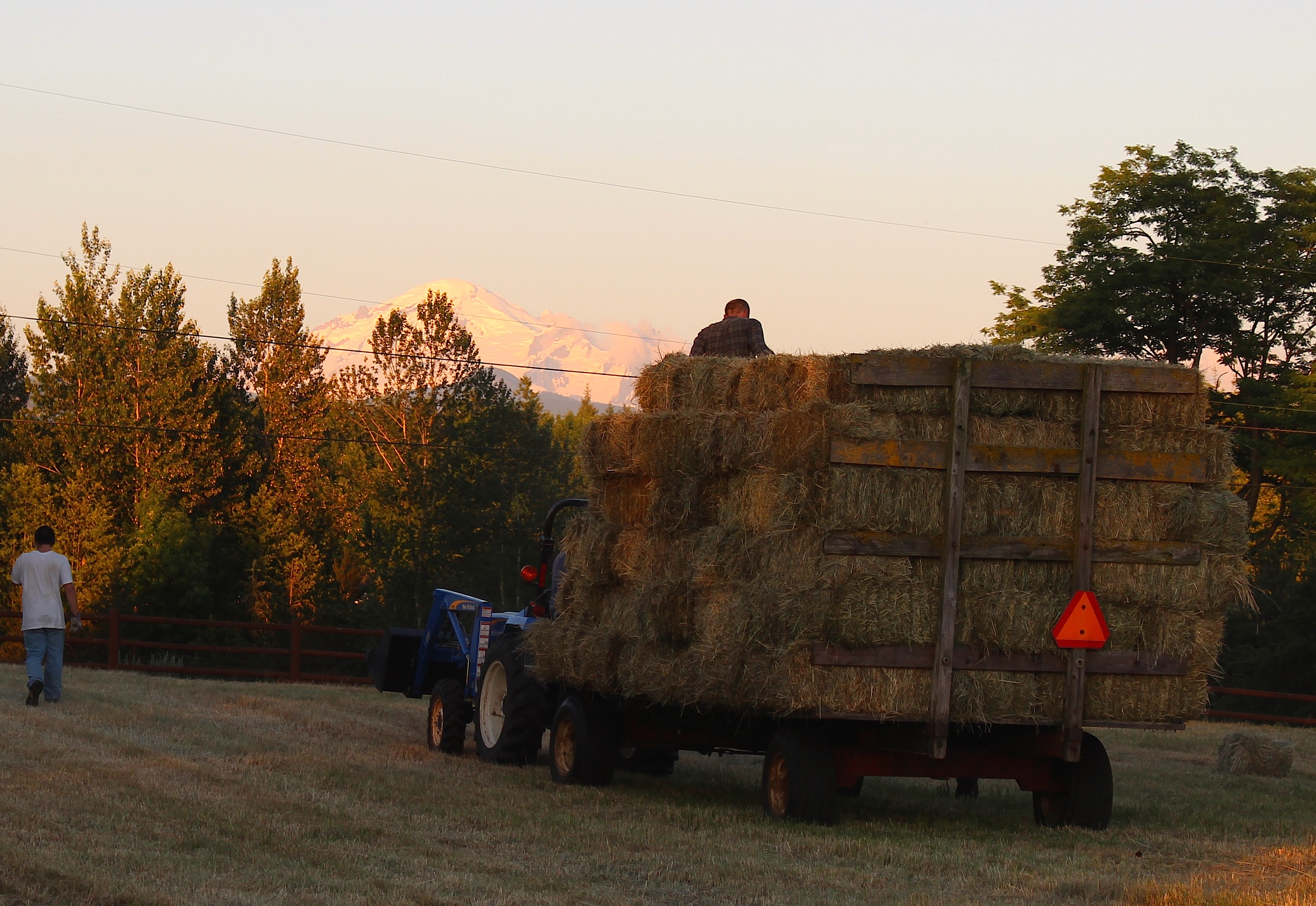
Sweating Under the High Arc of Midsummer

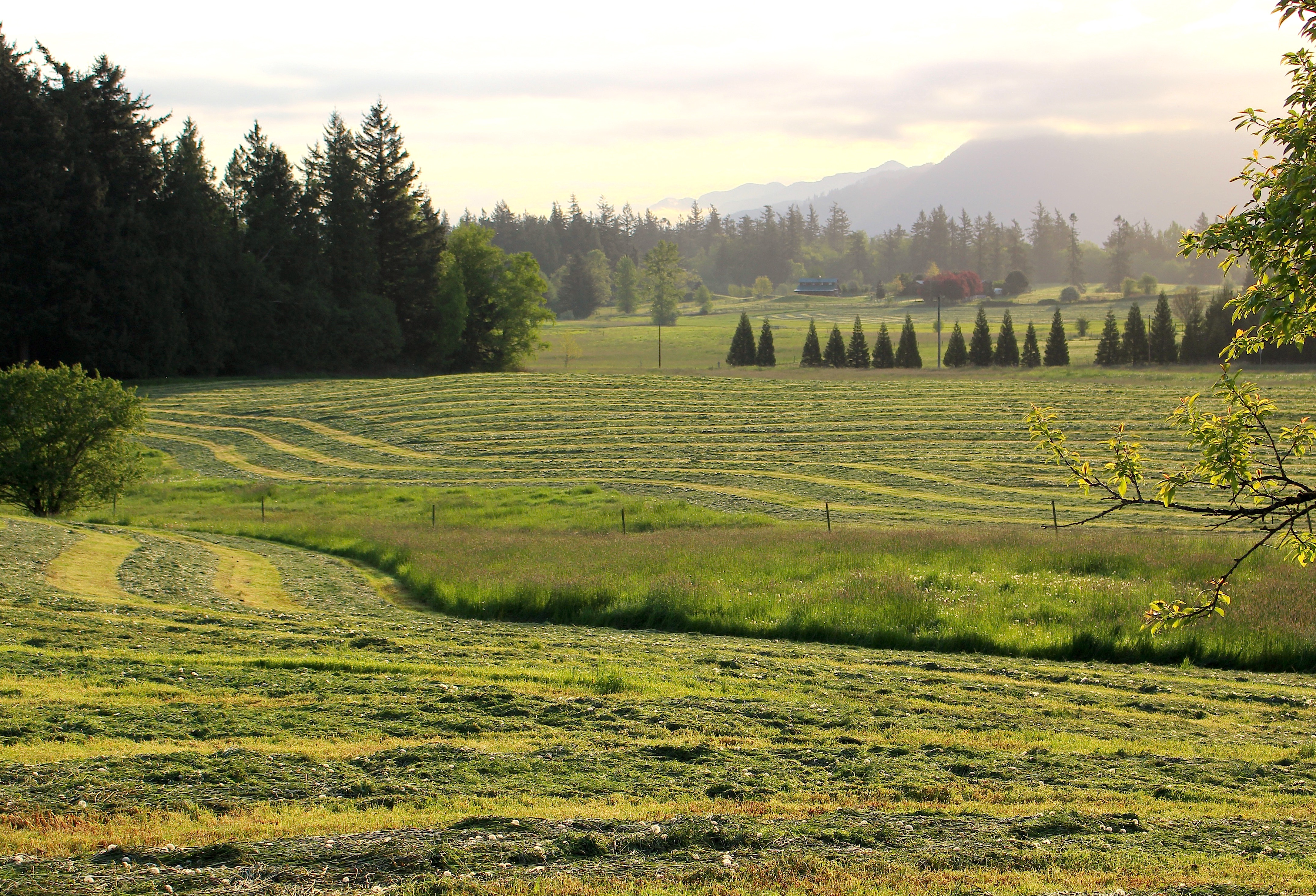
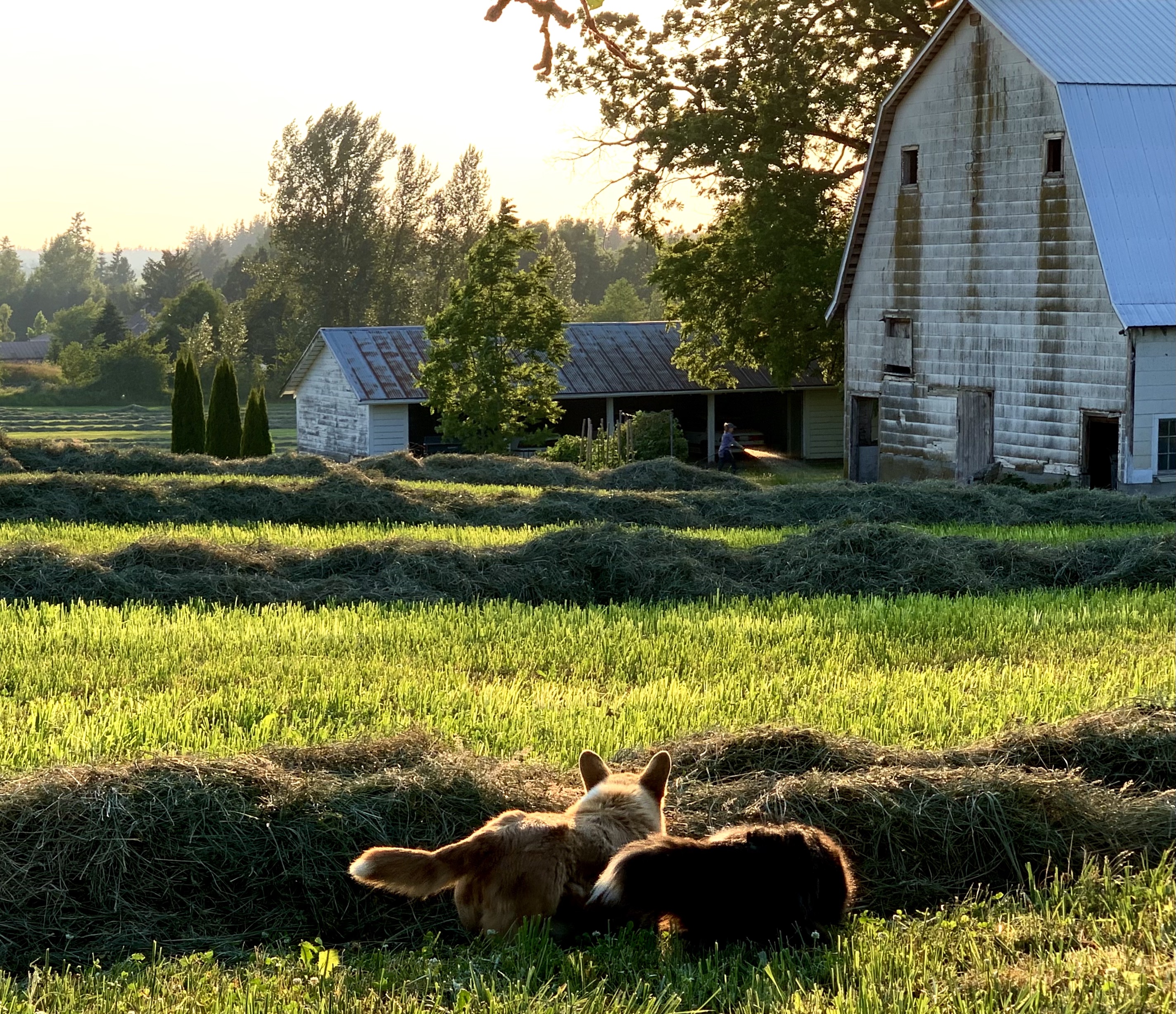
What is the hayfield in late afternoon
that it can fly in the face of time,

and light can be centuries old, and even
the rusted black truck I am driving

can seem to be an implement born
of some ancient harvest,

and the rhythmic baler, which spits out
massive bricks tied up in twine,

can seem part of a time before now
because light glitters on the hay dust,

because the sun is sinking and we sweat
under the high arc of mid-summer,

because our bodies cast such long shadows–
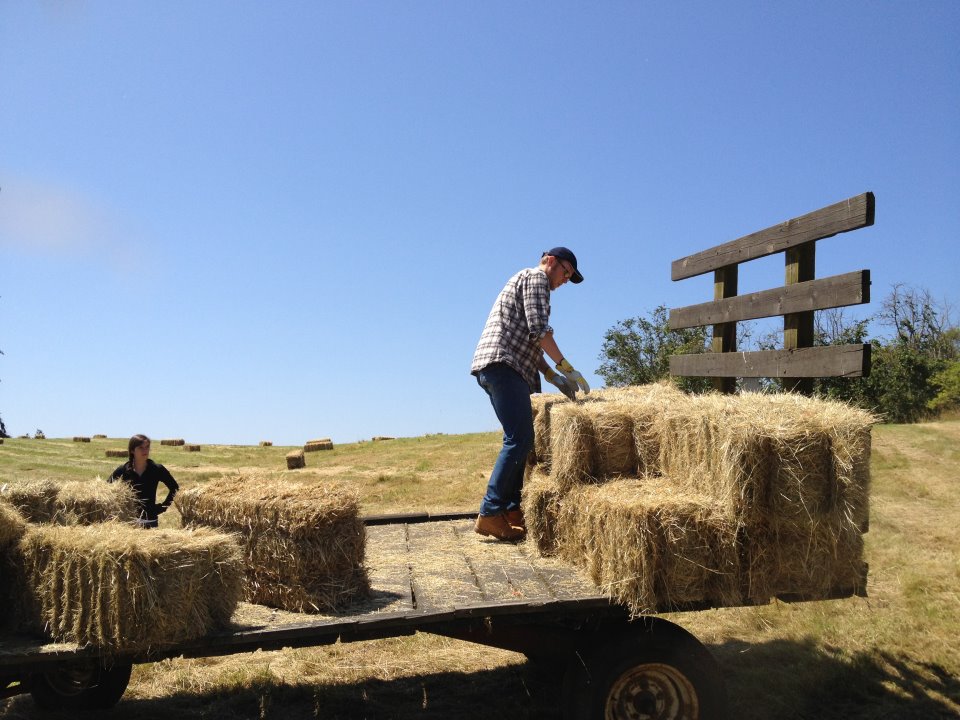
Rebecca, with the baby strapped to her back,

the men who throw impossible weight
to the top of the truck, the black and white

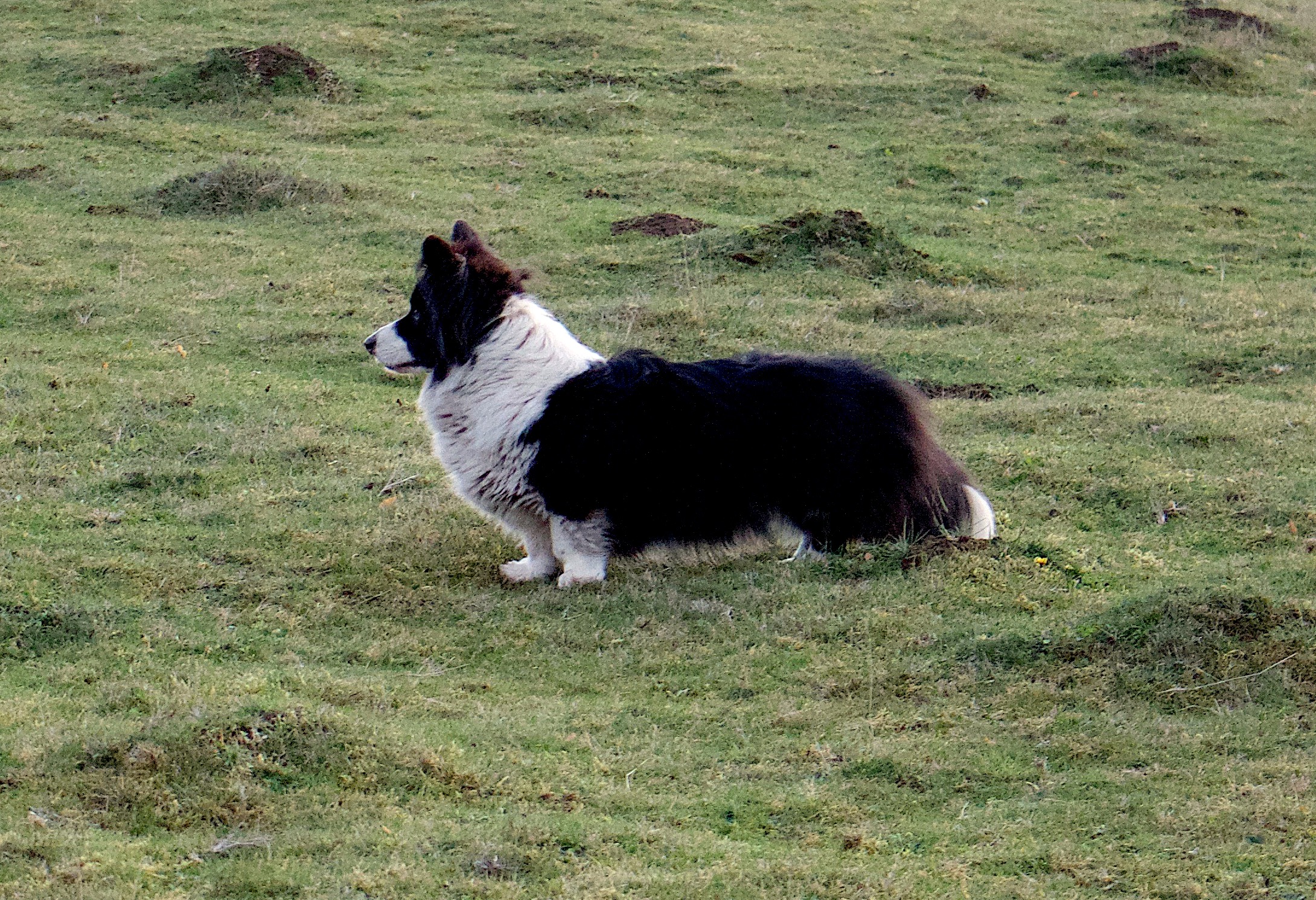
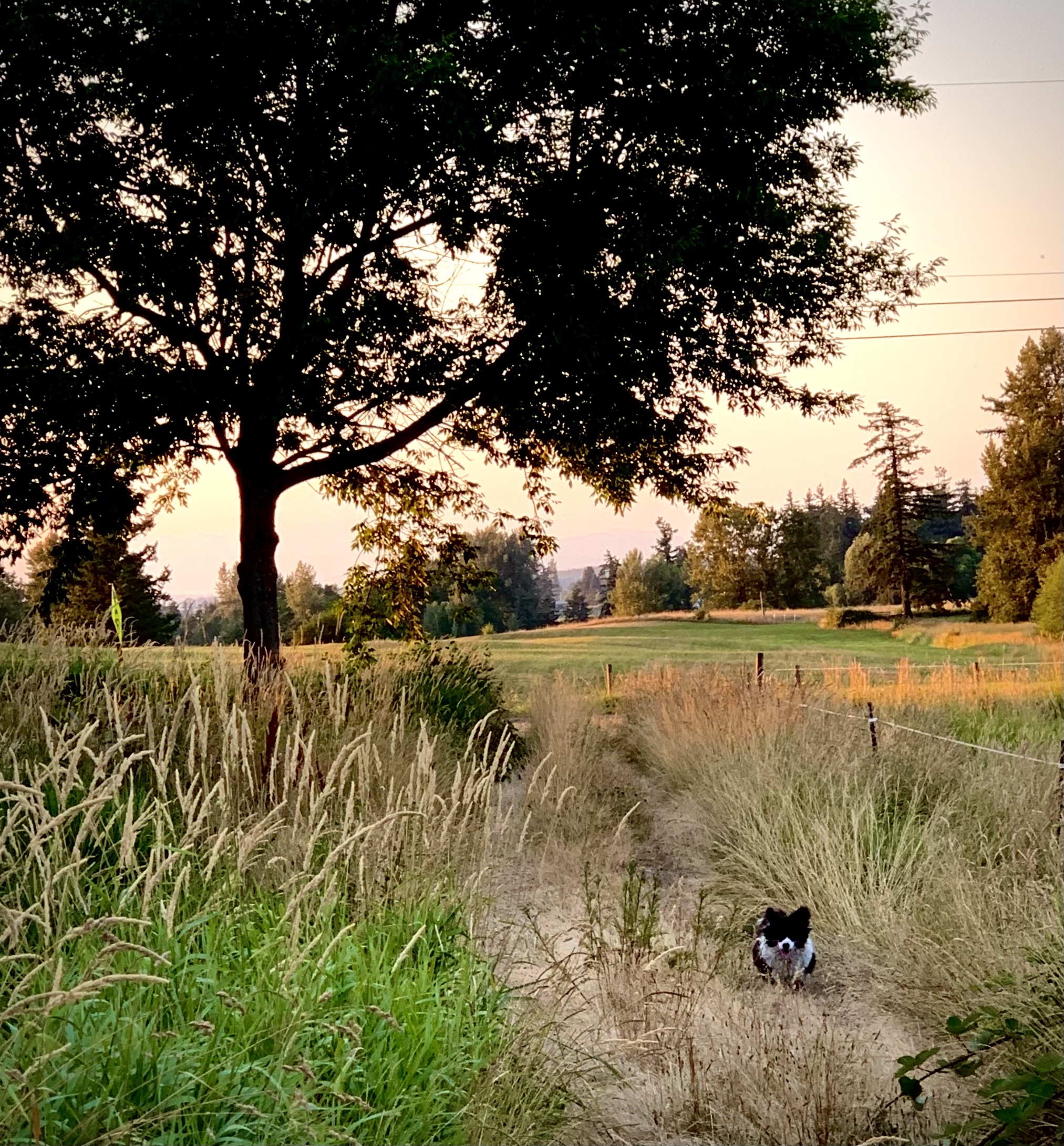
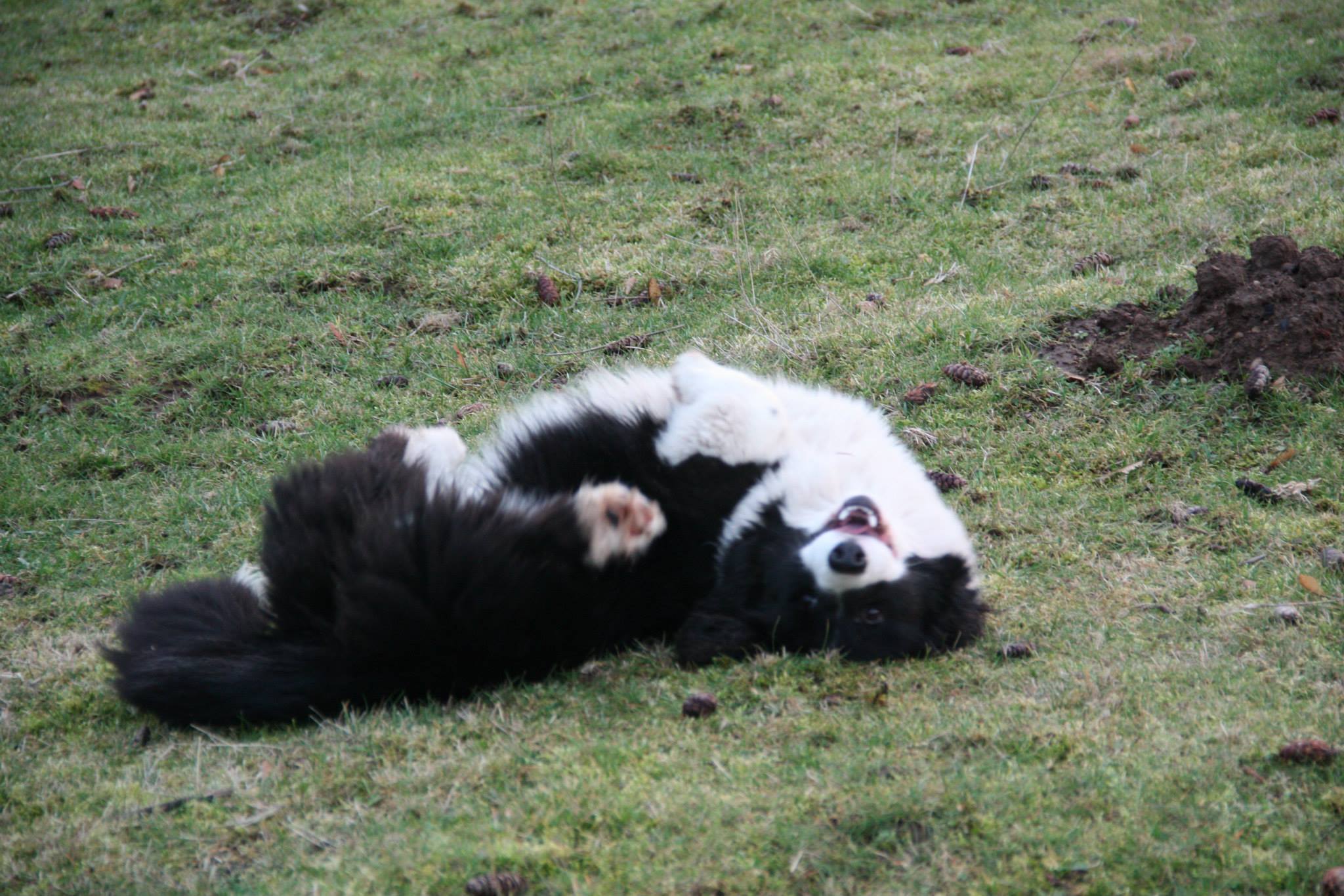
dog that races after mice or moles
whose lives have been suddenly exposed.

How does the taste of my sweat take me
down through the gate of childhood,

spinning backwards to land in a field
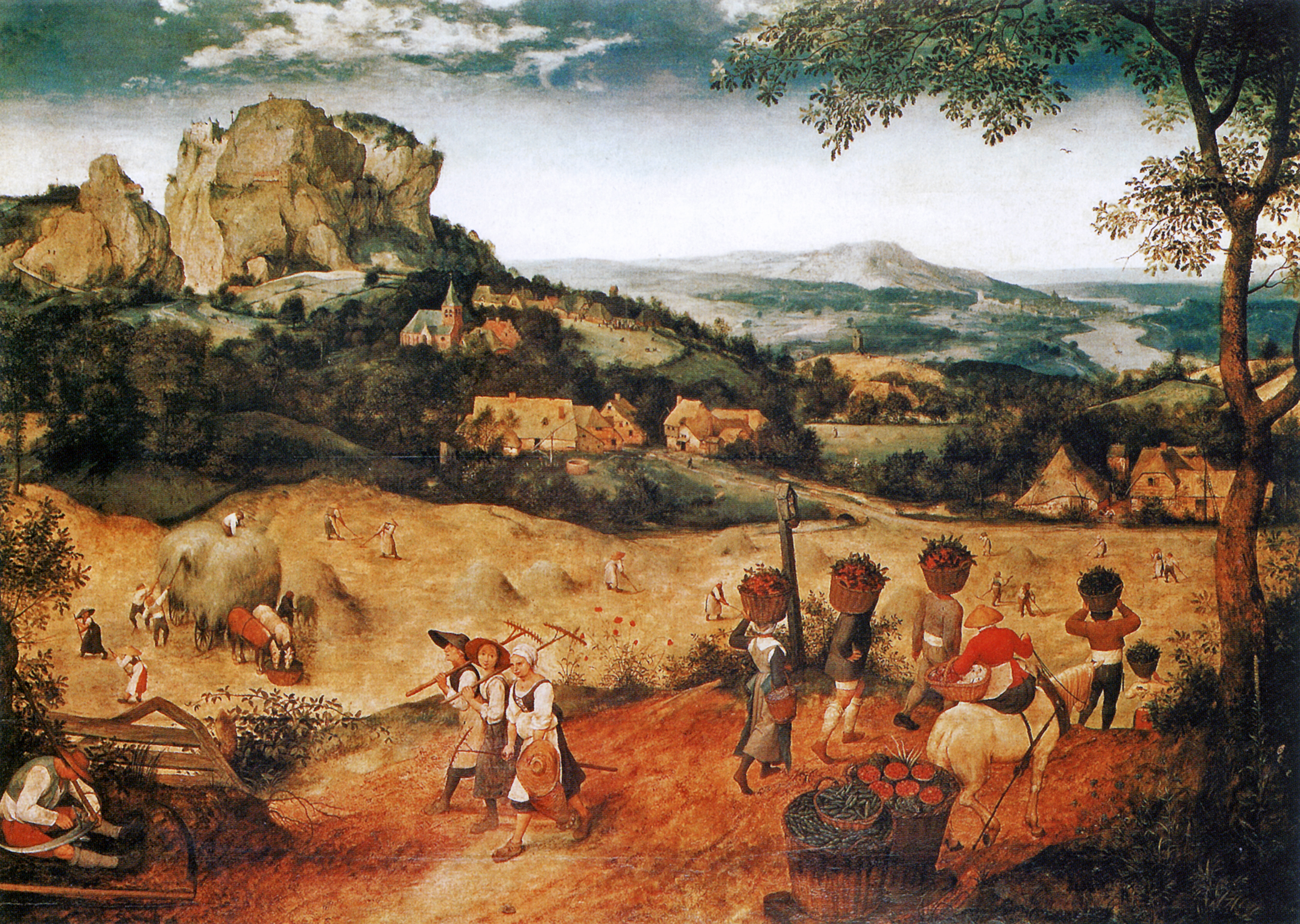
painted by Bruigel, where the taste of salt

is the same, and the same heat
rises in waves off a newly flattened field.

In the duskiness of slanted light, we laugh
just as we laughed then, because there is

joy in what the earth gives, allowing
our bodies to mingle with it, our voices

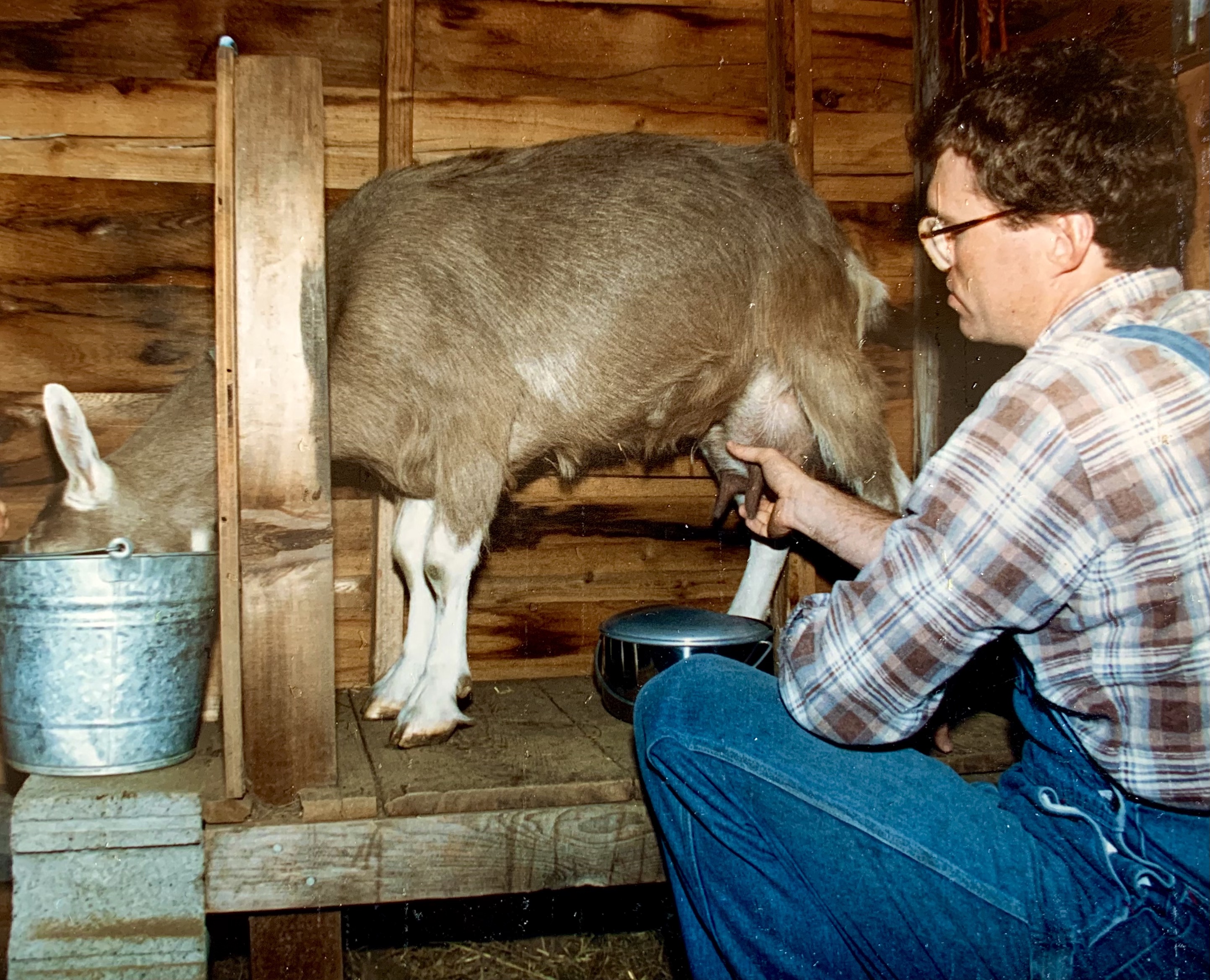
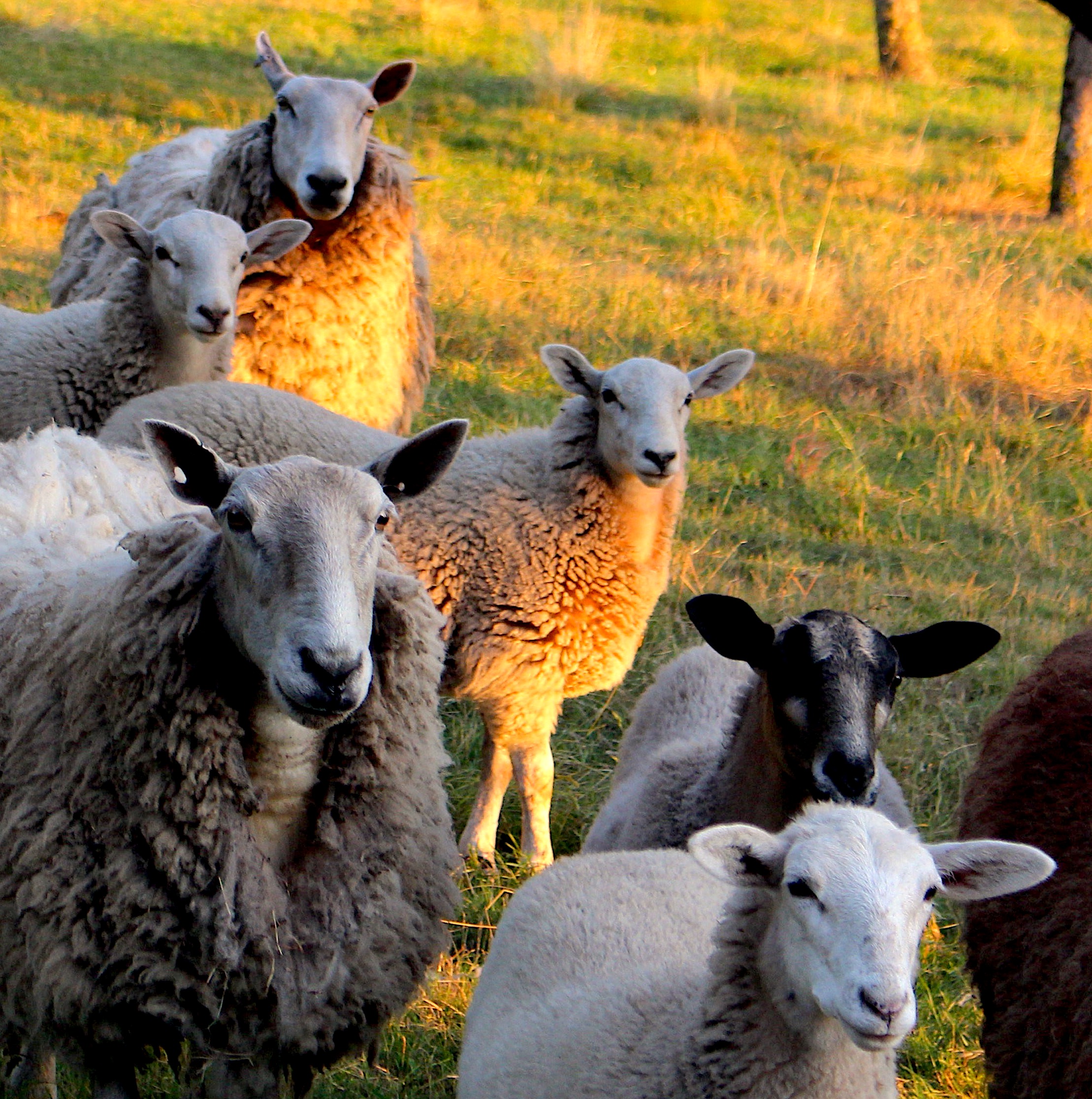
small on the field, our work assuring the goats
can give milk, the sheep can grow wool,

and we will have in our bones the taste
of something so old it travels in light.
~Susie Patlove “First Cutting” from Quickening
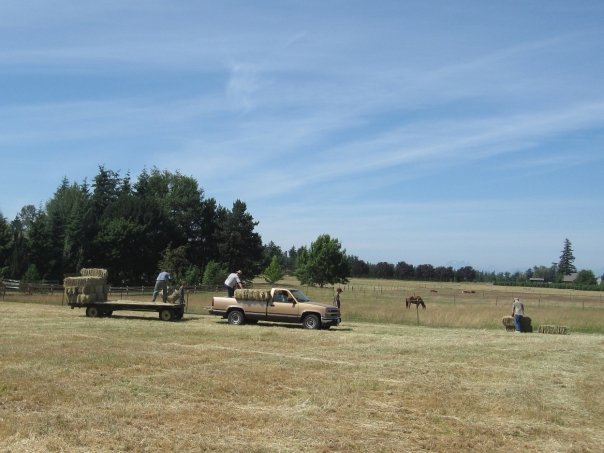
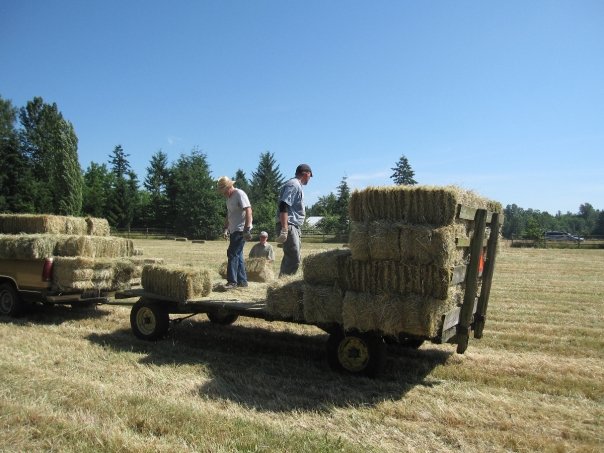
photo by Nate Gibson
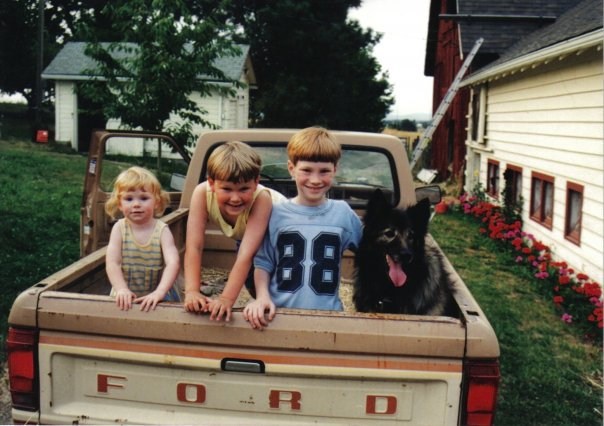
1994
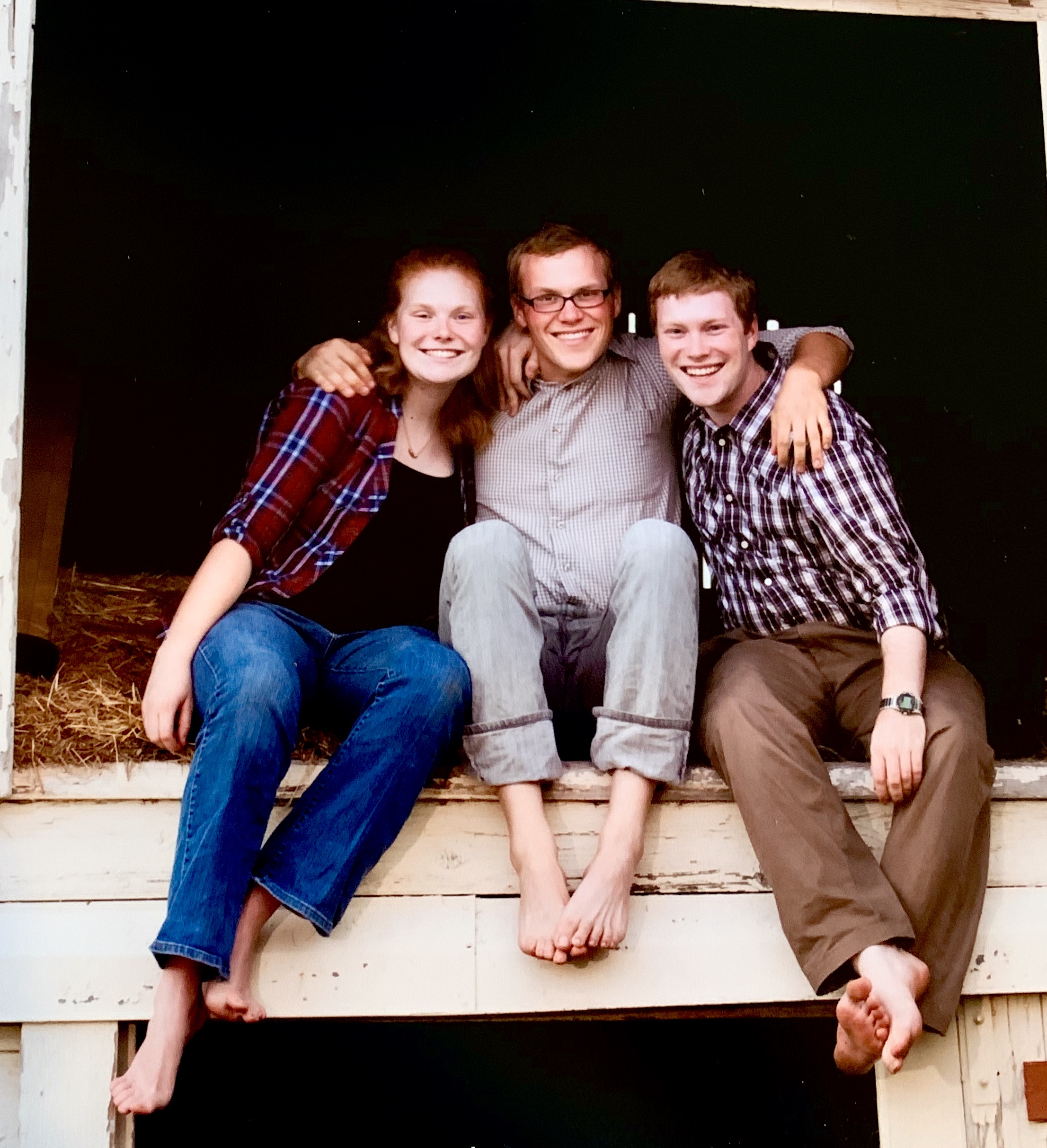
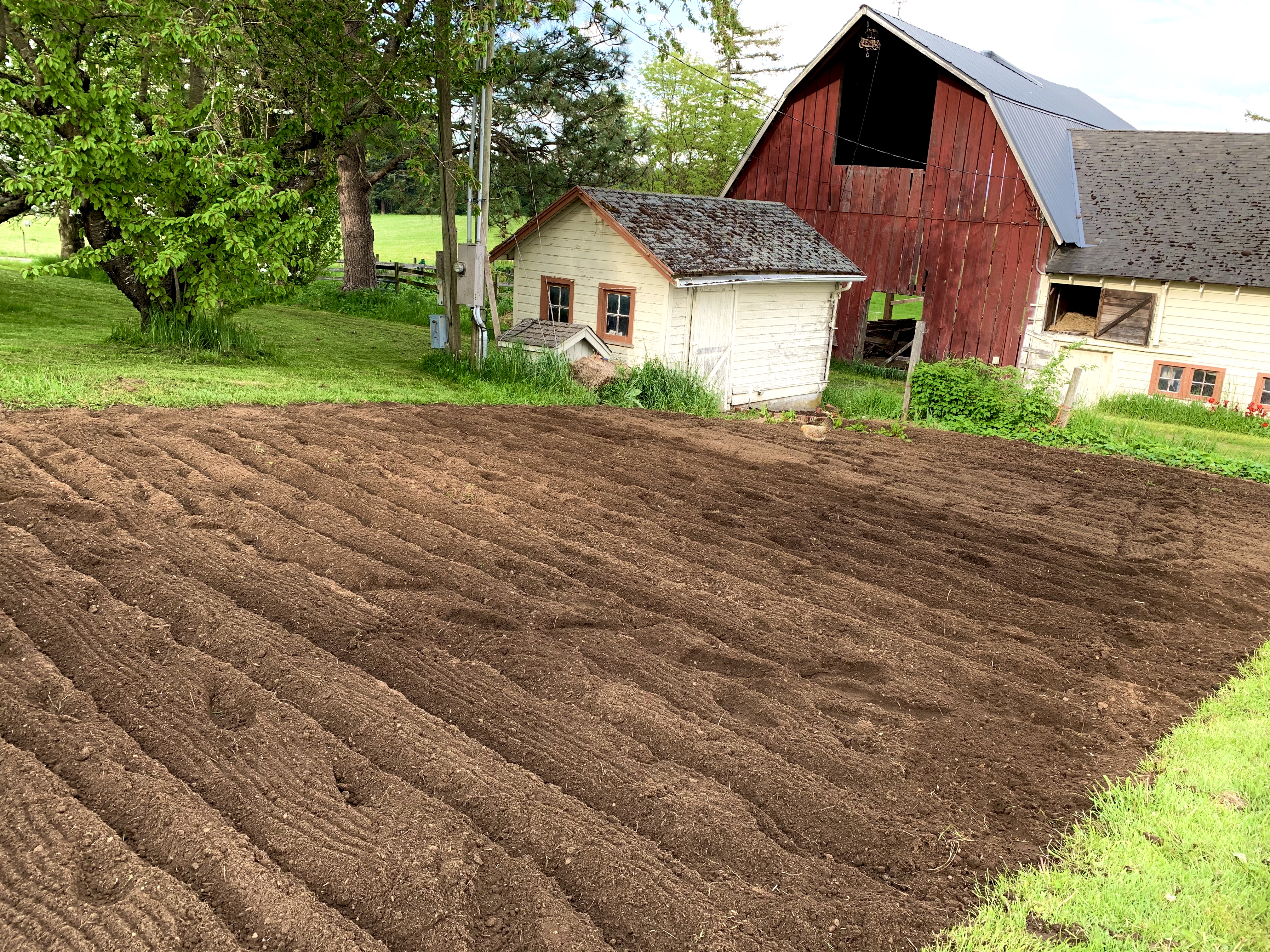
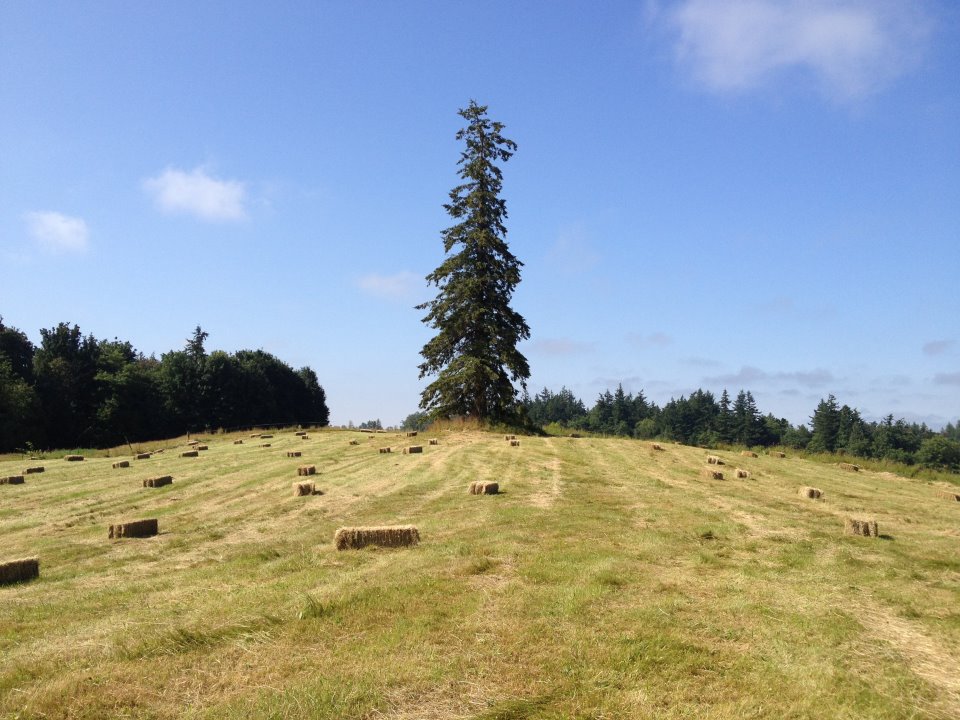
2005
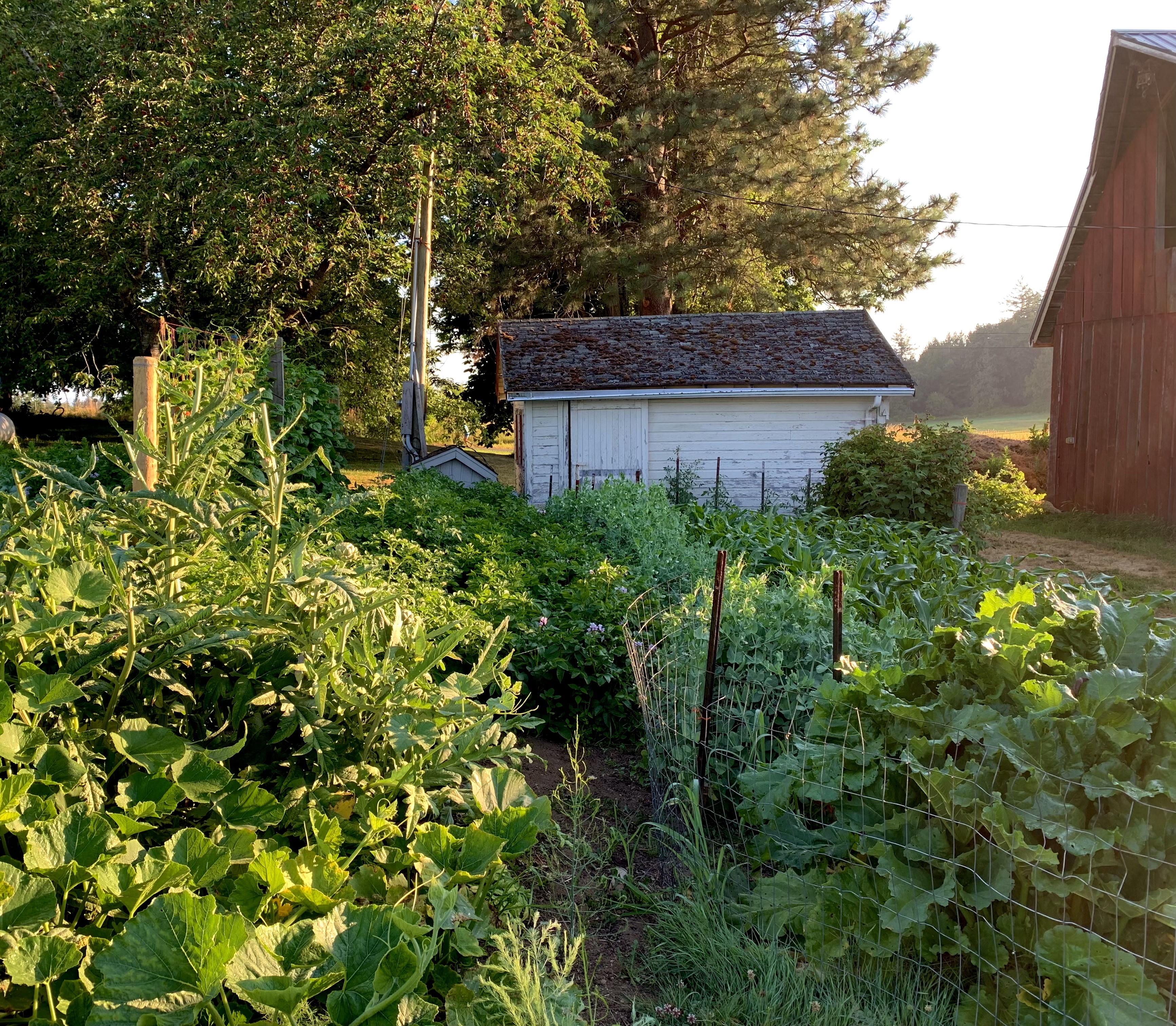
2011

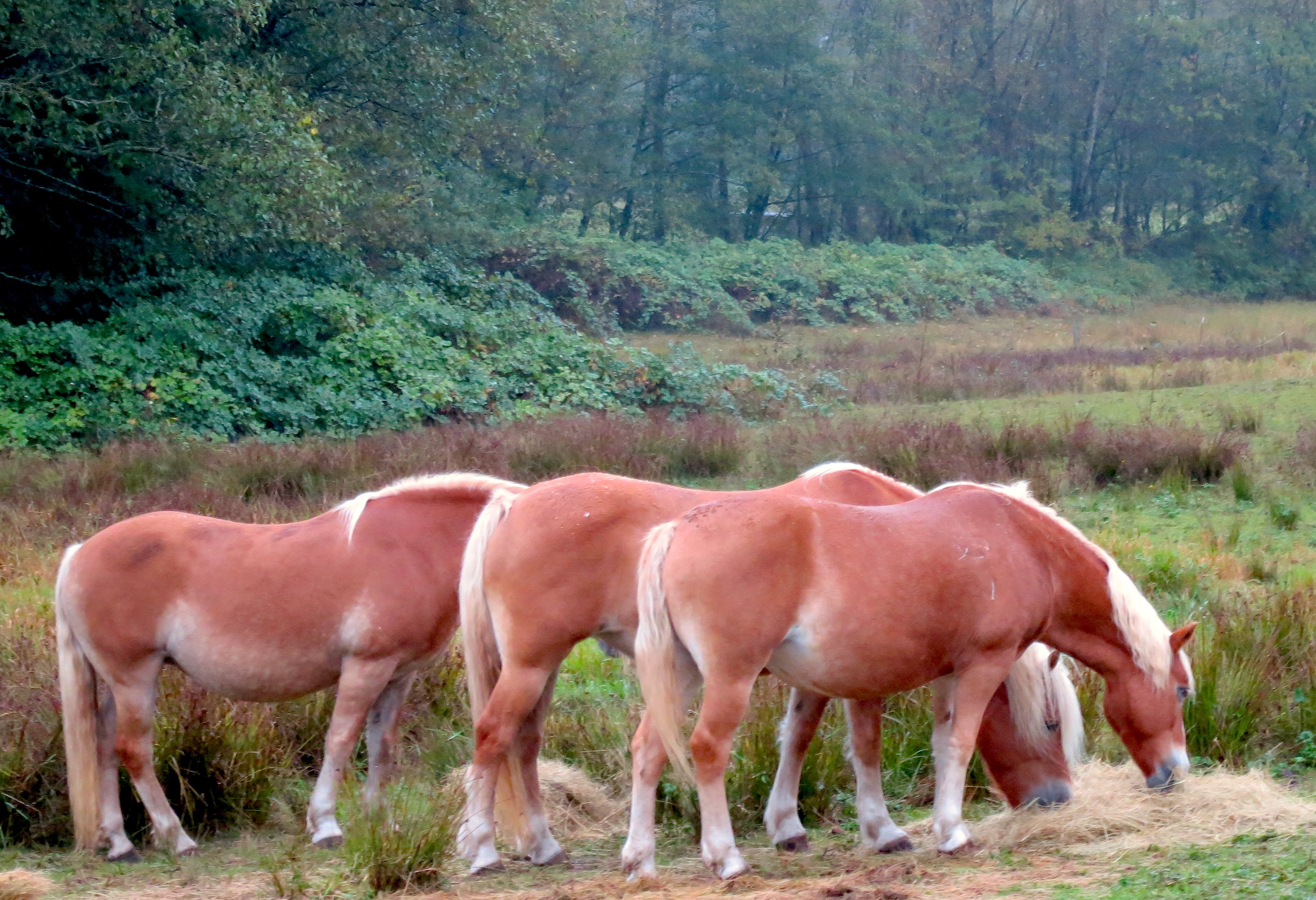
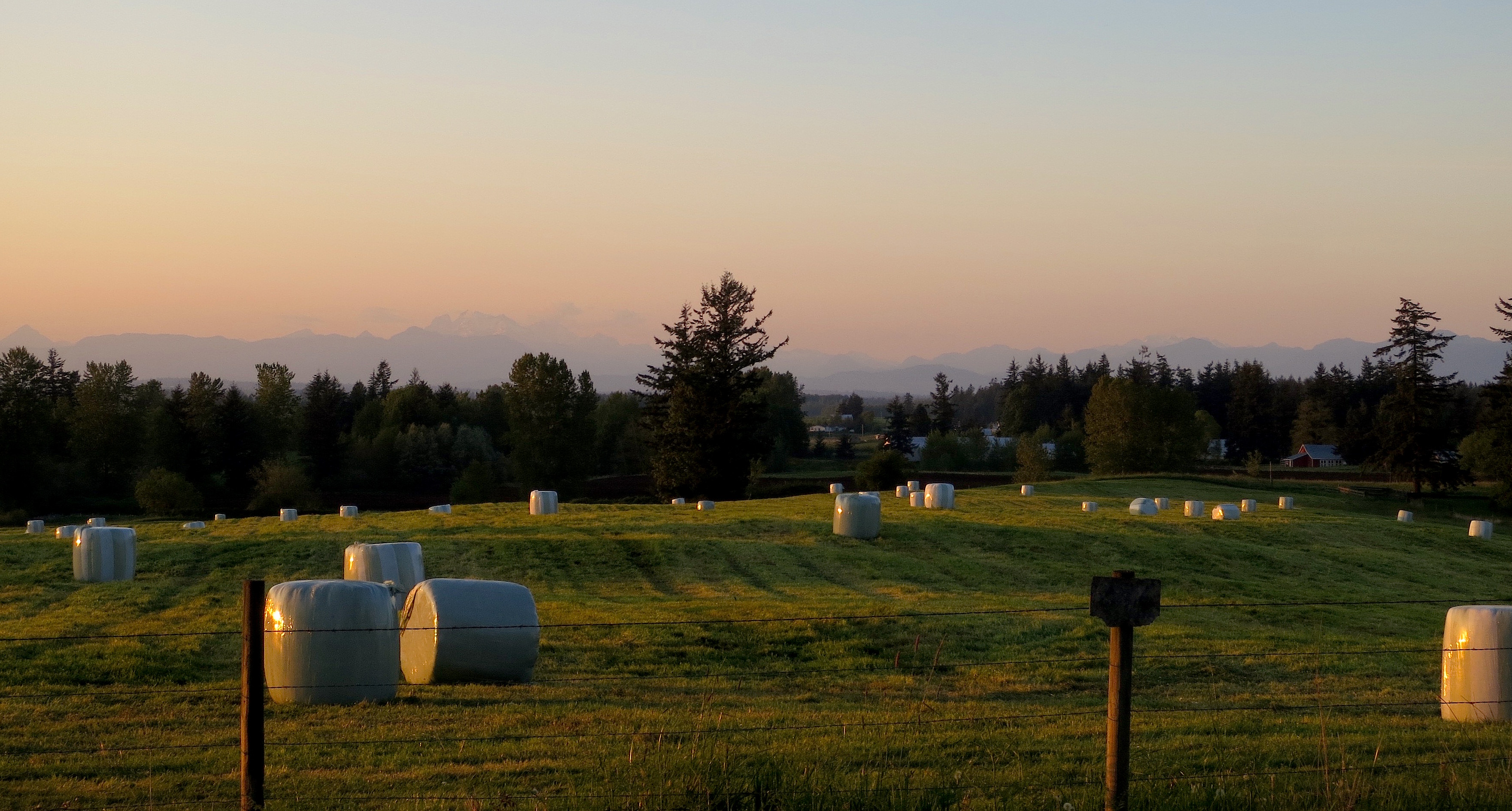
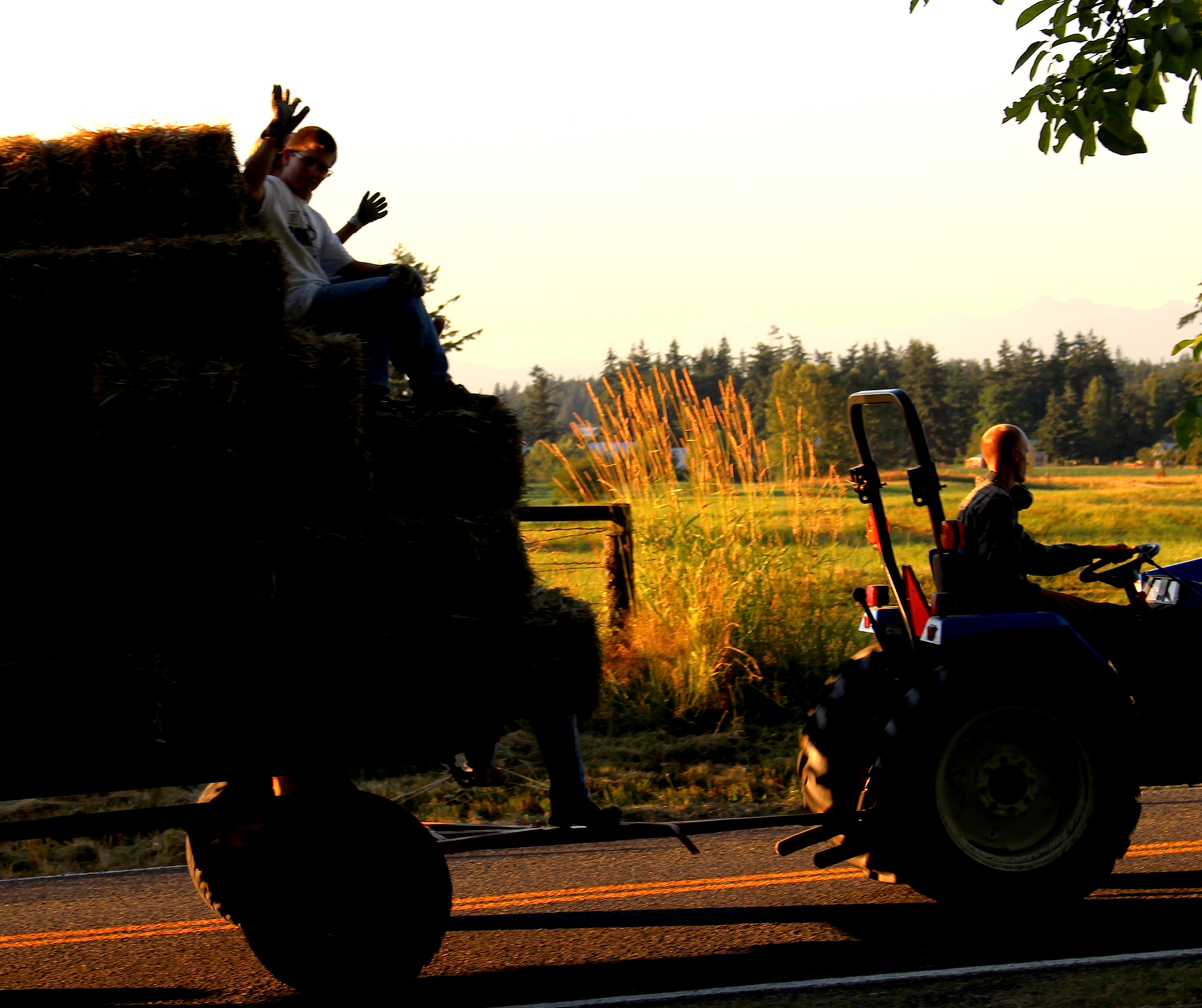
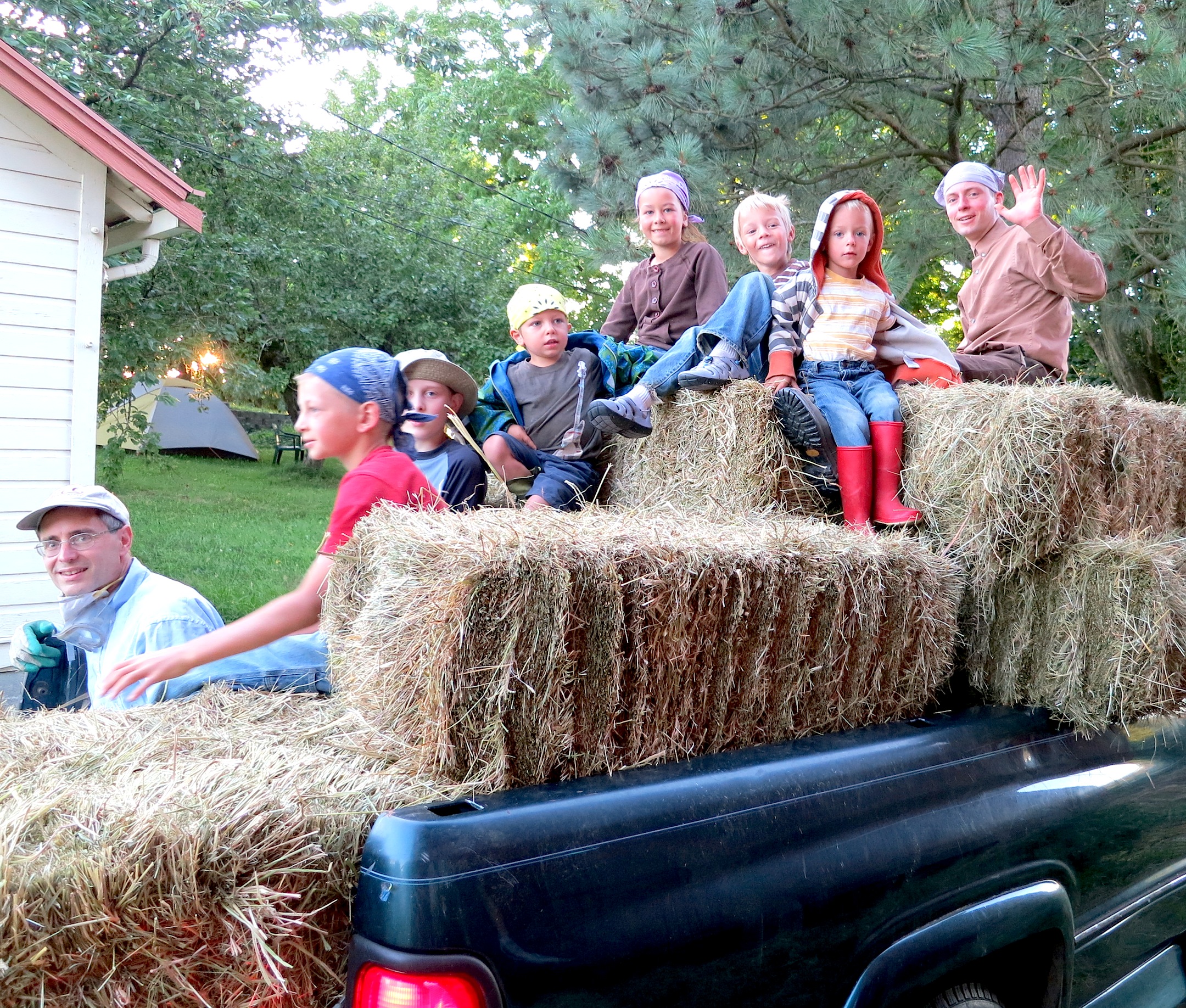
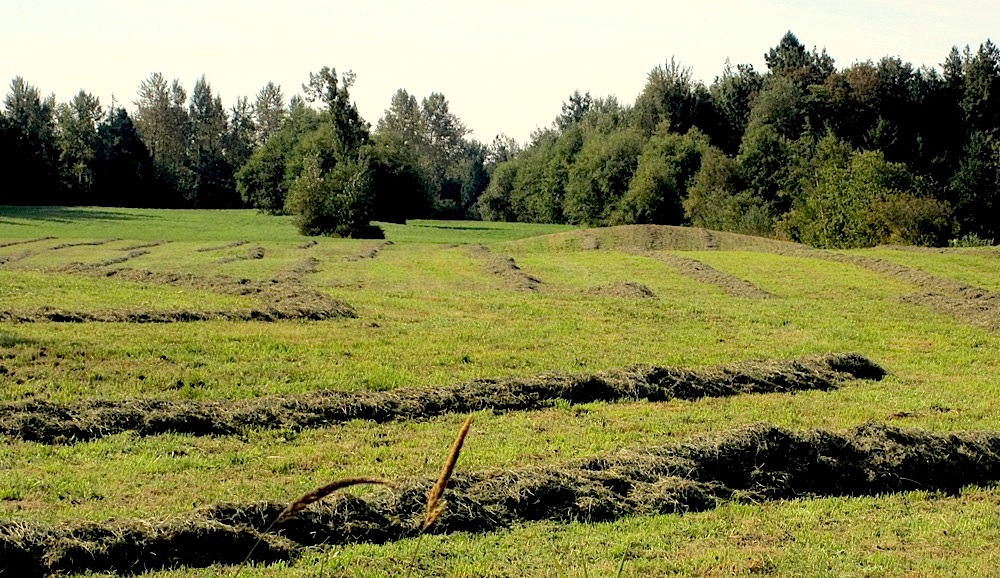
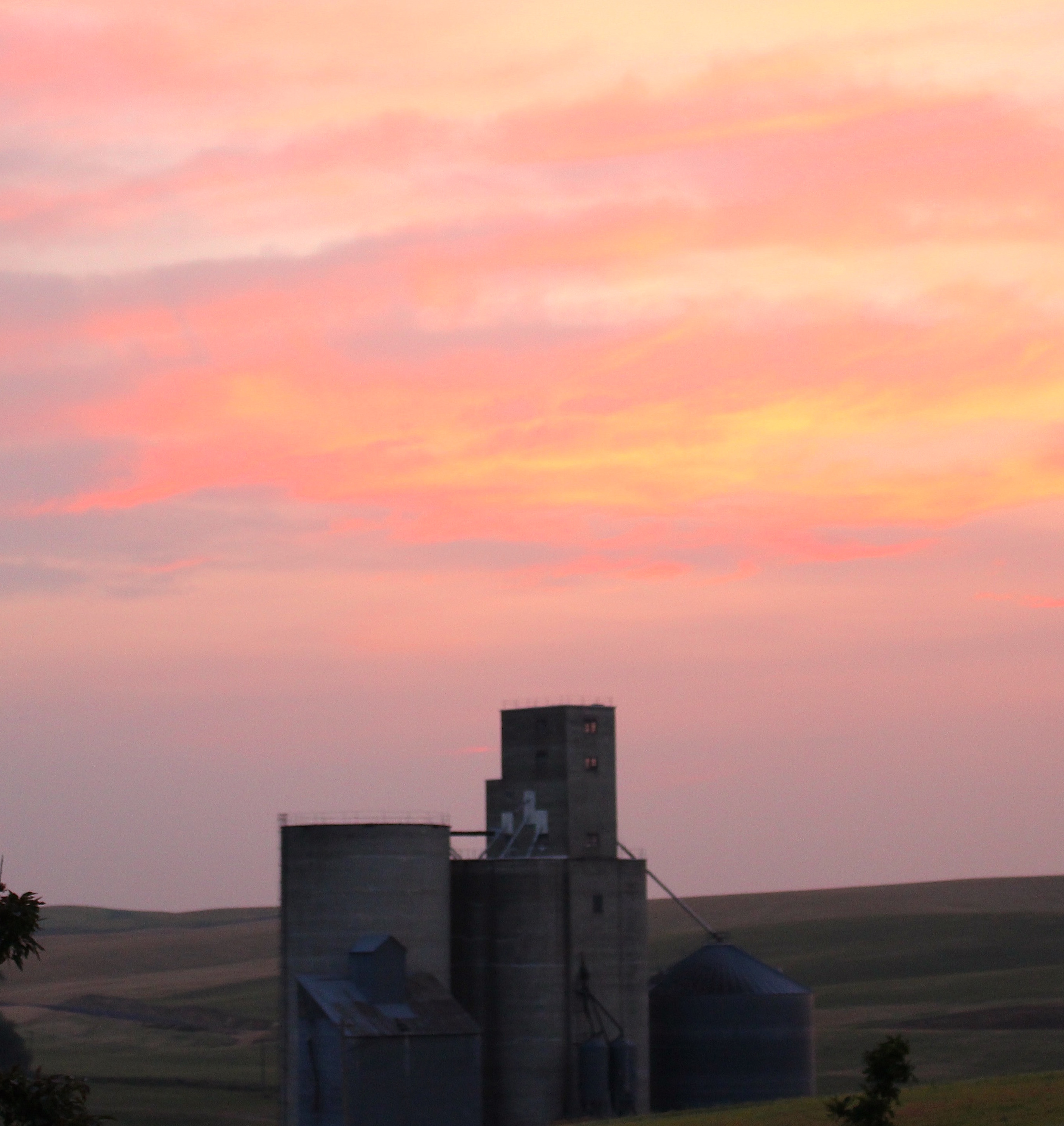
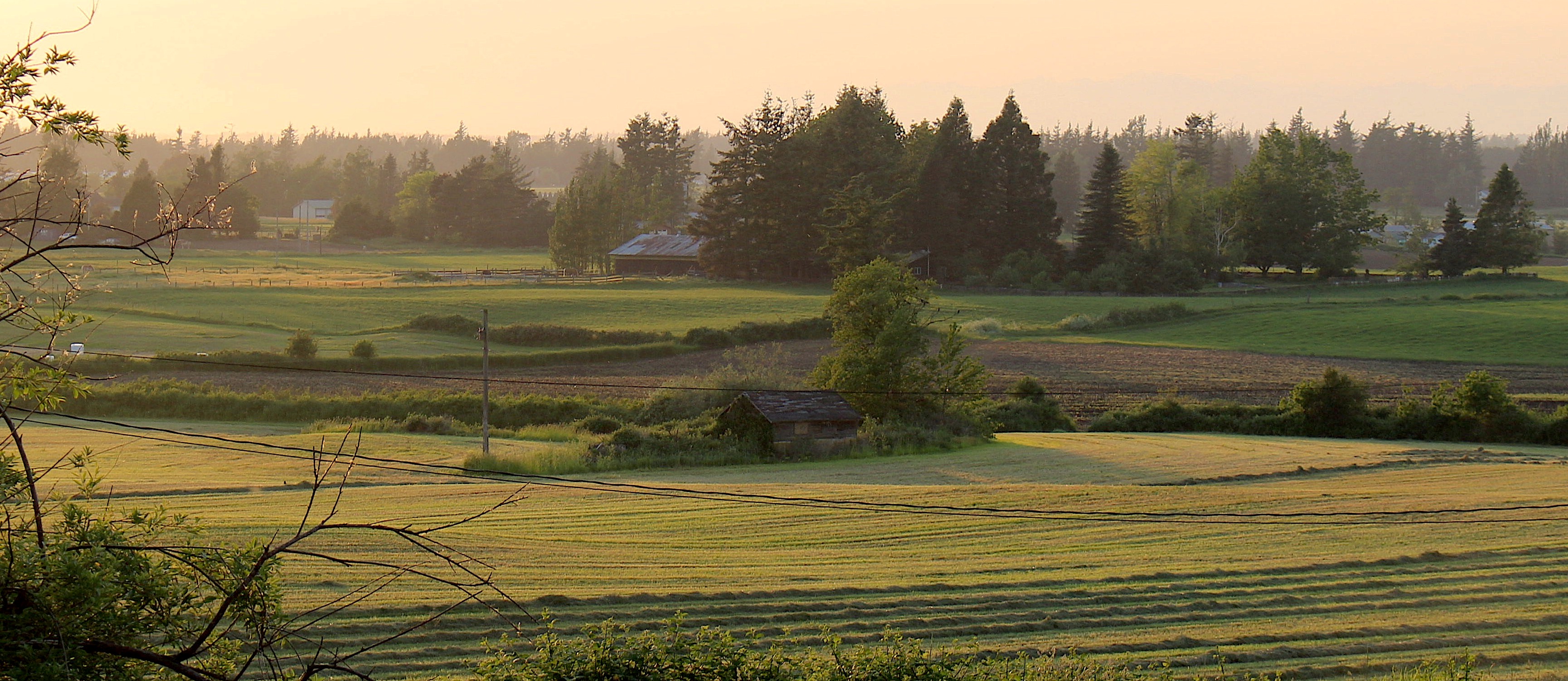
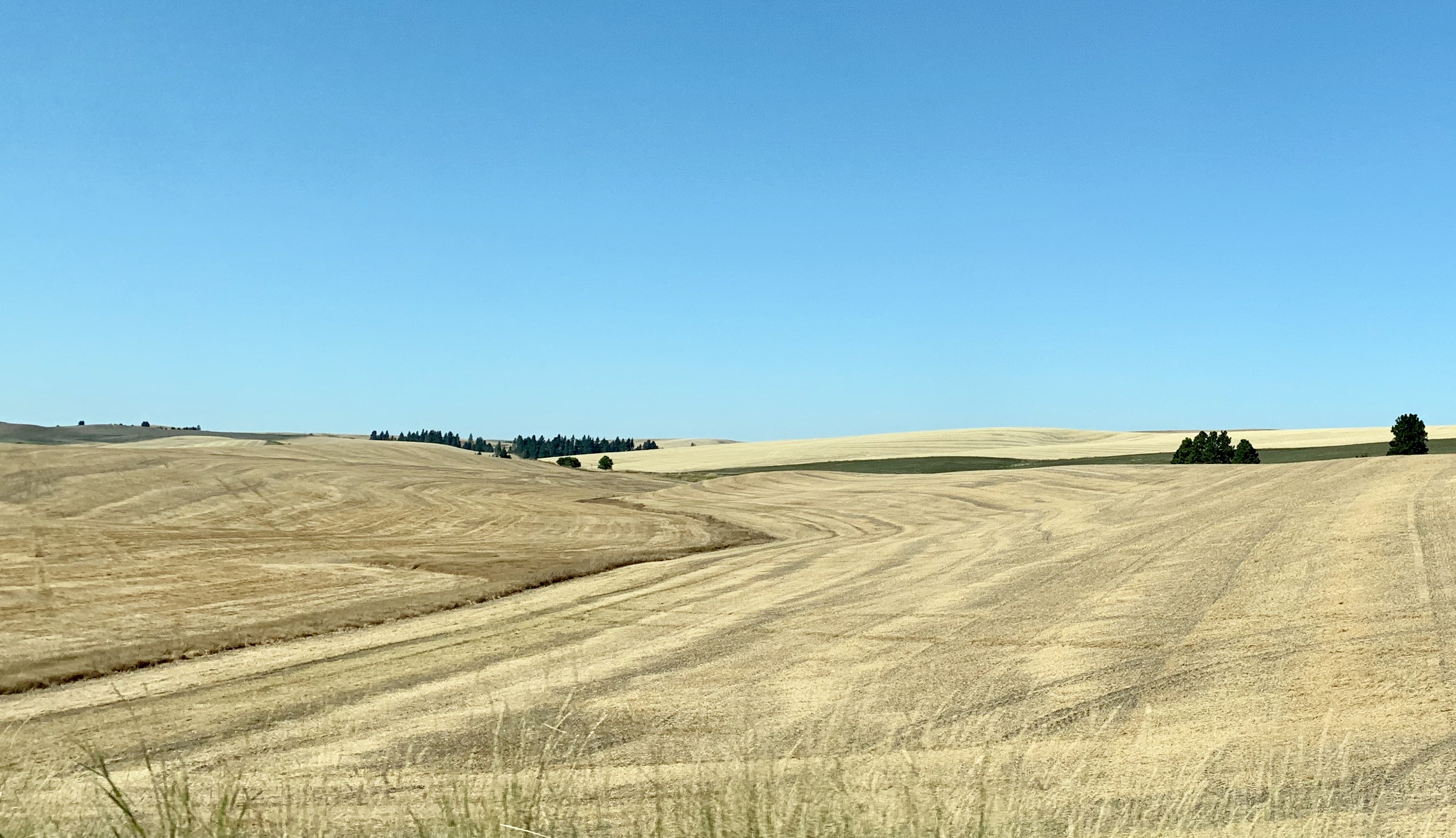
There is a timelessness to mid-summer hay harvest that goes back generations on both sides of our family. The cutting, raking and gathering of hay has evolved from horse-drawn implements and gathering loose shocks of hay to 100+ horse power air-conditioned tractors and huge round bales wrapped and stored in plastic sheathing rather than in barns.

Our farm is happily stuck somewhere in-between: we still prefer filling the haybarn with bales that I can still lift and move myself to feed our animals. True hay harvest involves sweat and dust and a neighborhood coming together to preserve summer in tangible form.

I grew up on a farm with a hayfield – I still have the scar over my eyebrow where I collided with the handle of my father’s scythe when, as a toddler, I came too close behind him as he was taking a swing at cutting a field of grass one swath at a time. I remember the huge claws of the hay hook reaching down onto loose hay piled up on our wagon. The hook would gather up a huge load, lift it high in the air to be moved by pulley on a track into our spacious hay loft. It was the perfect place to play and jump freely into the fragrant memories of a summer day, even in the dark of winter.

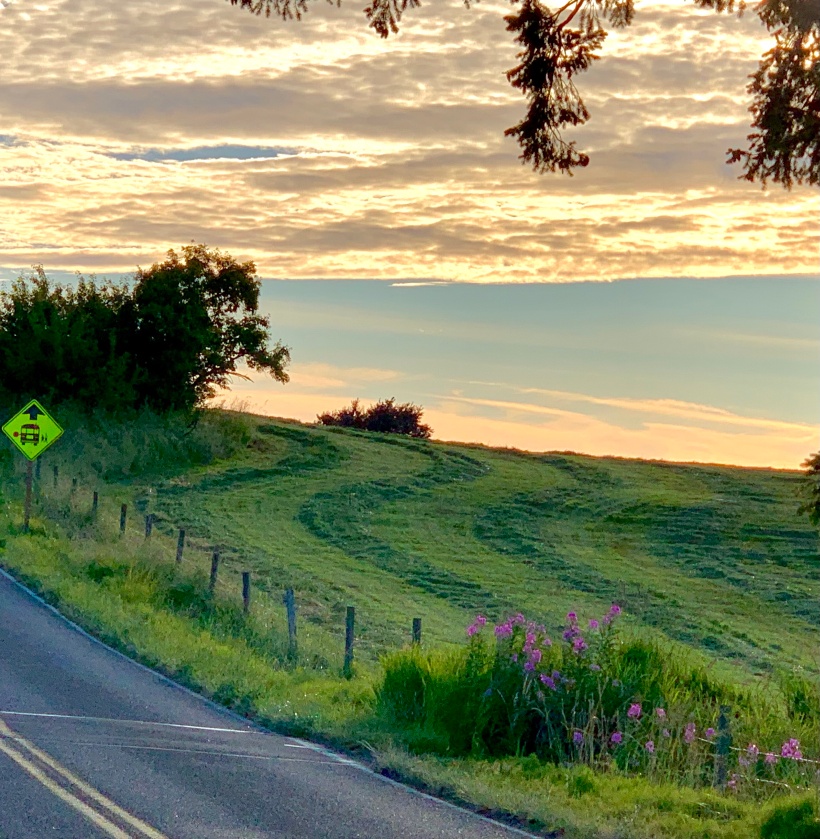
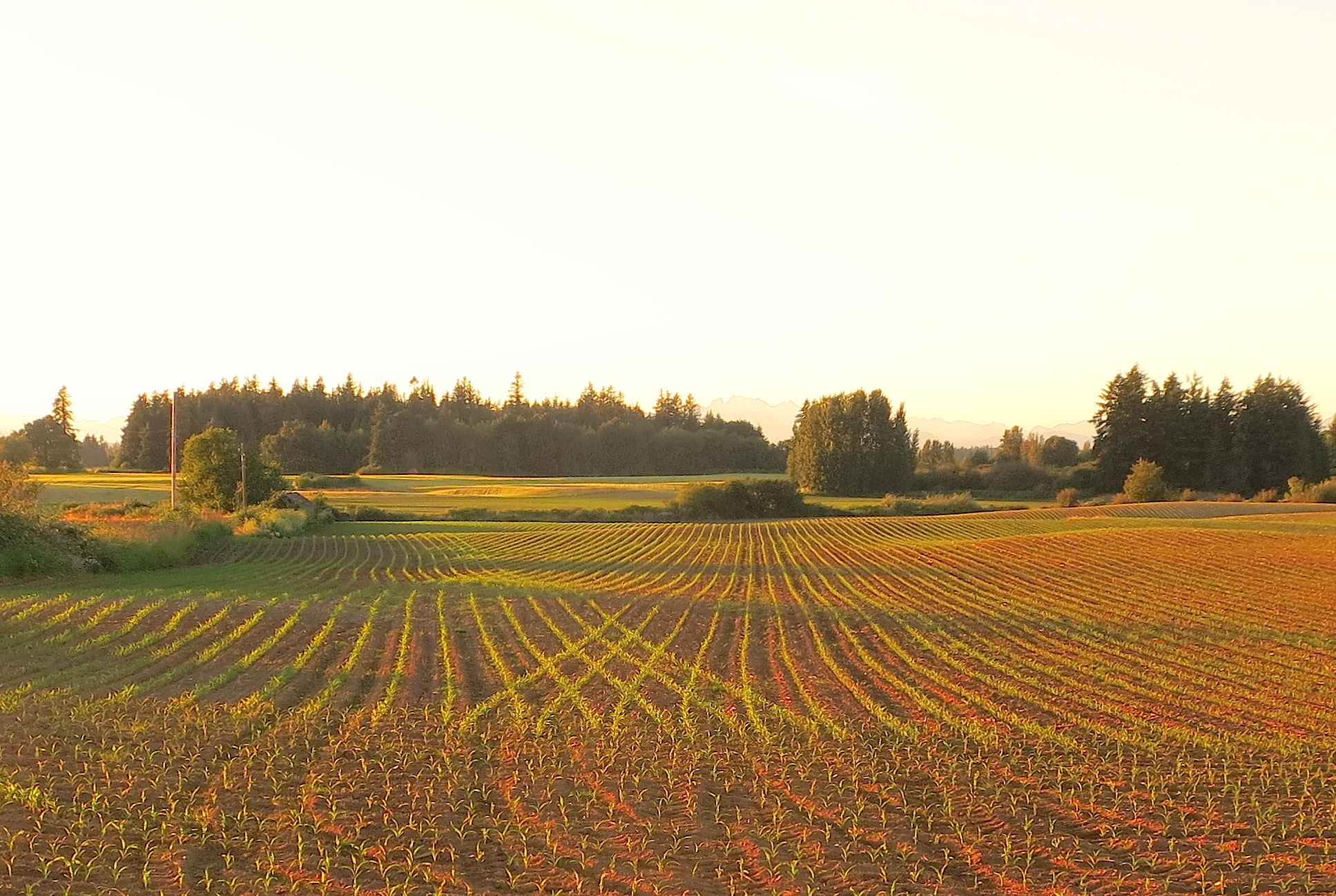
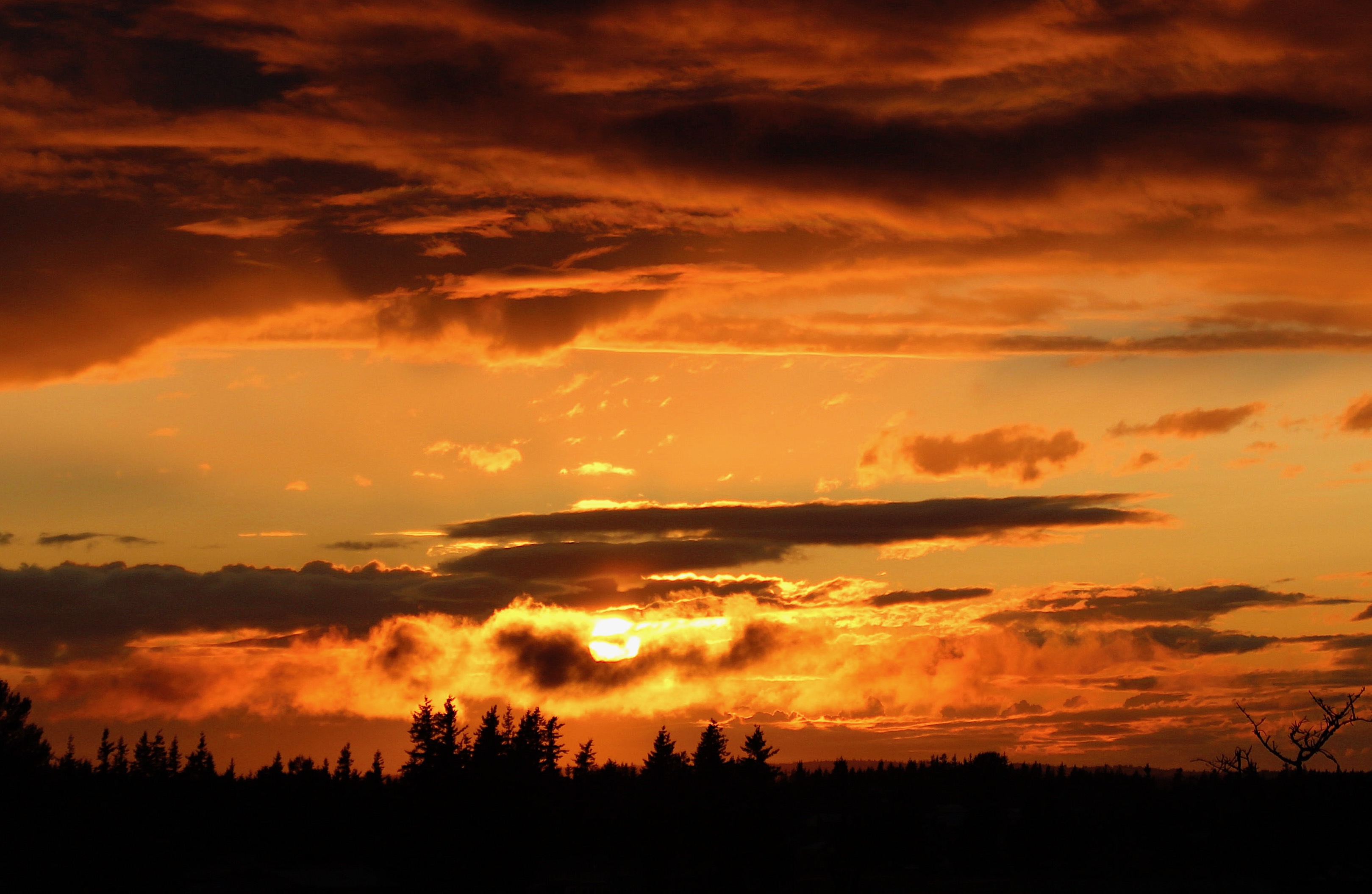
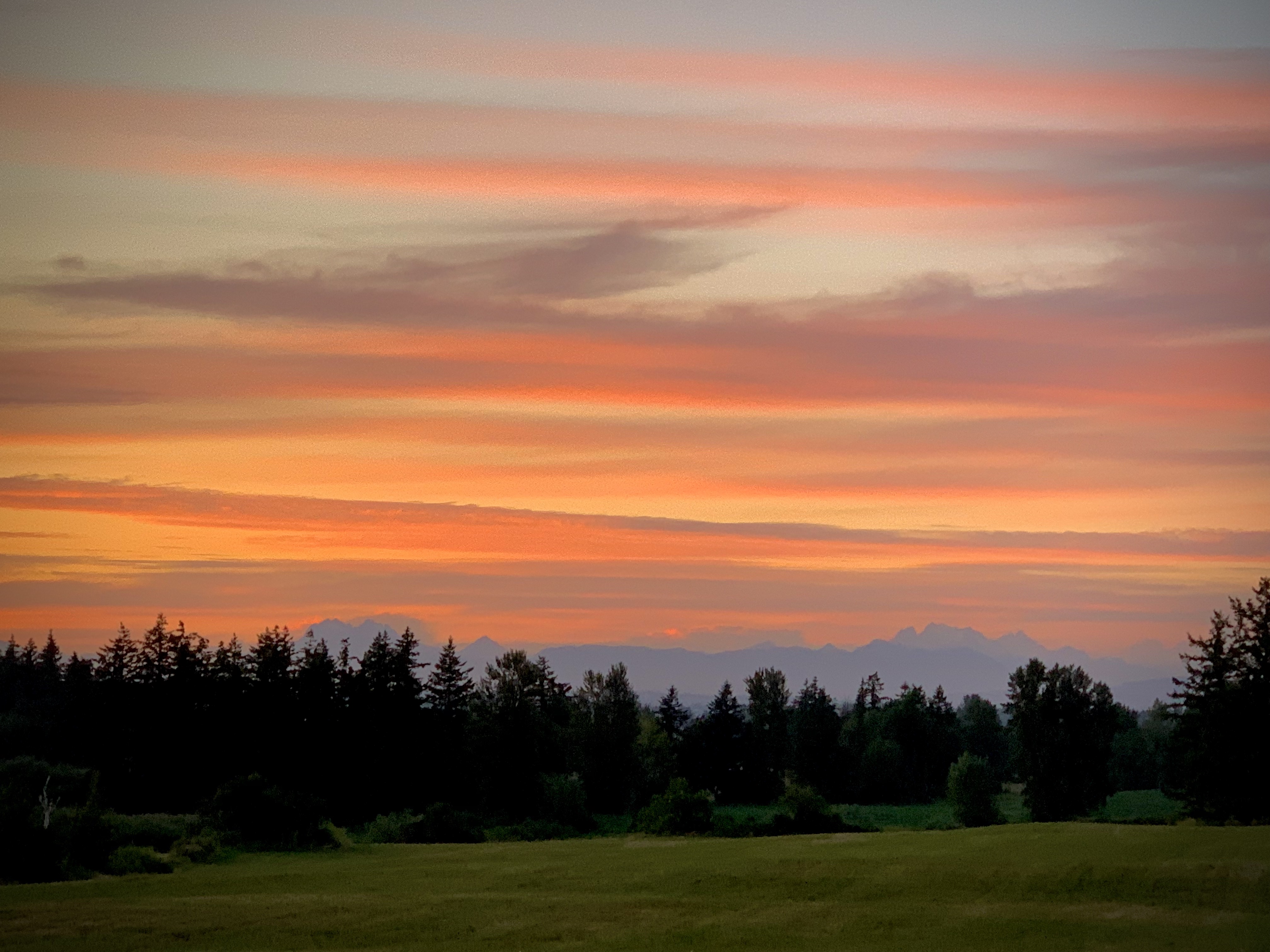
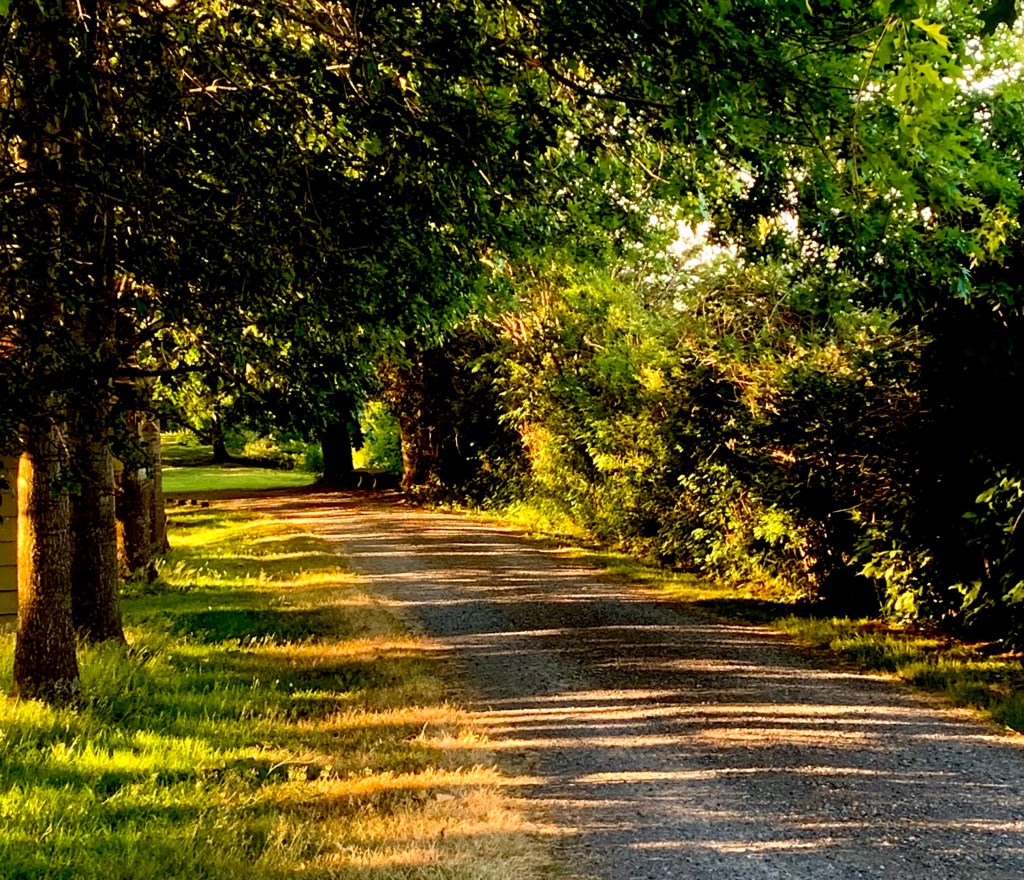
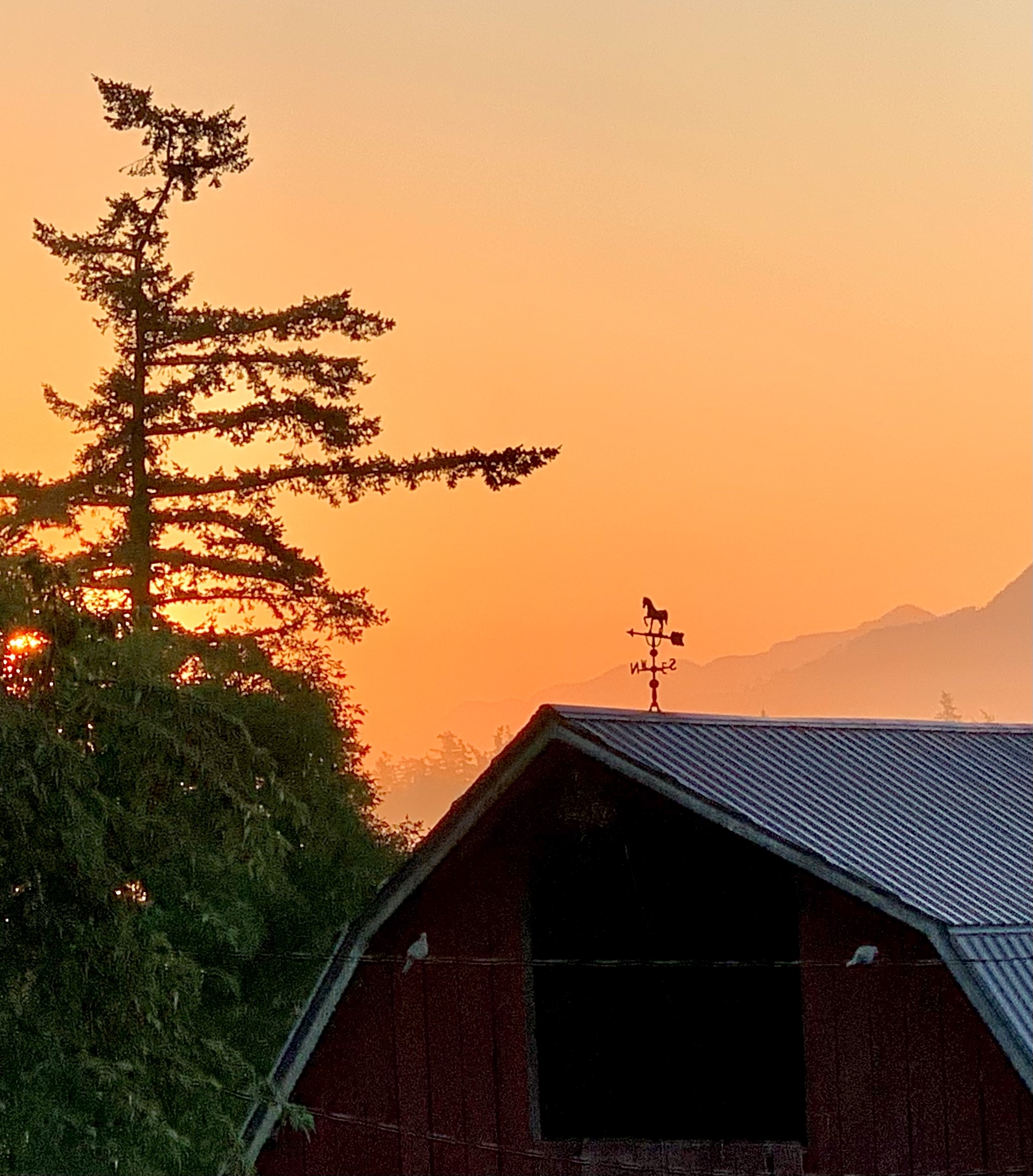
But these days it is the slanted light of summer I remember most:
-the weightlessness of dust motes swirling down sun rays coming through the slats of the barn walls as the hay bales are stacked
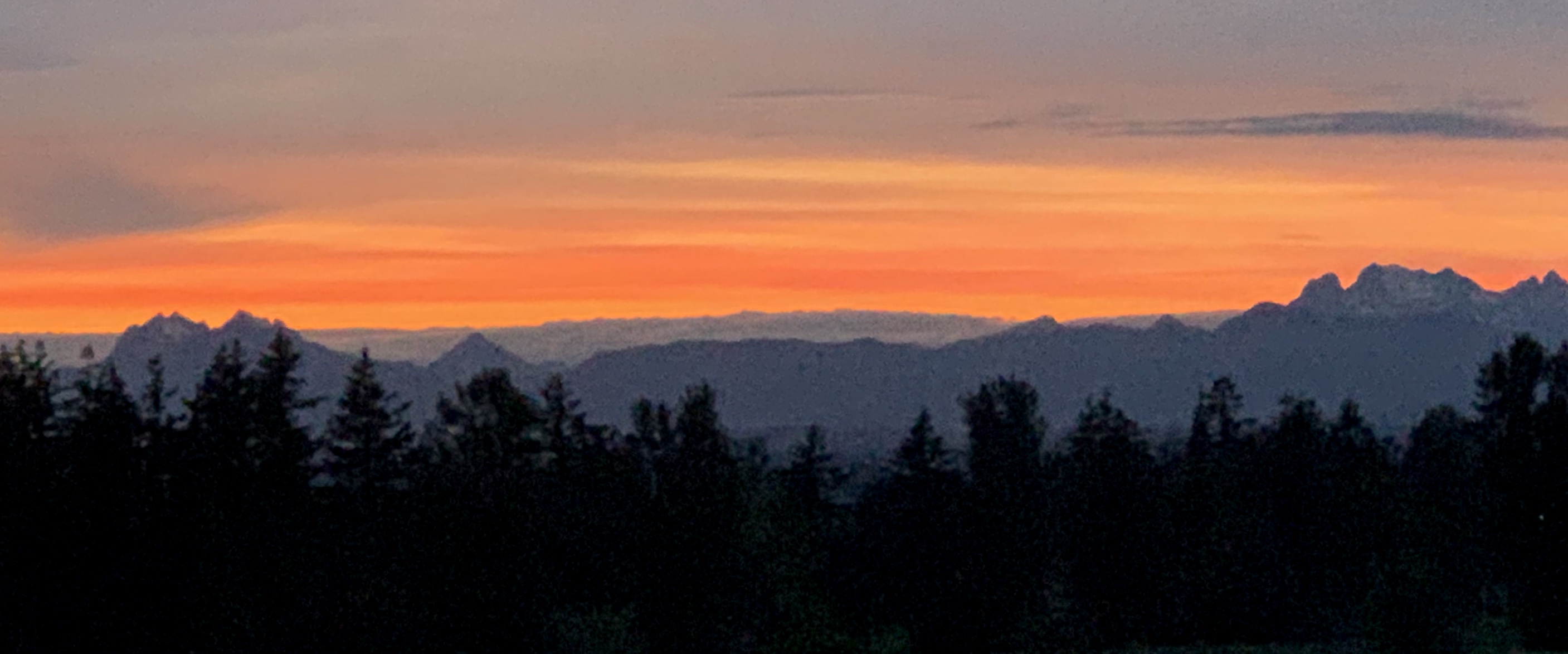
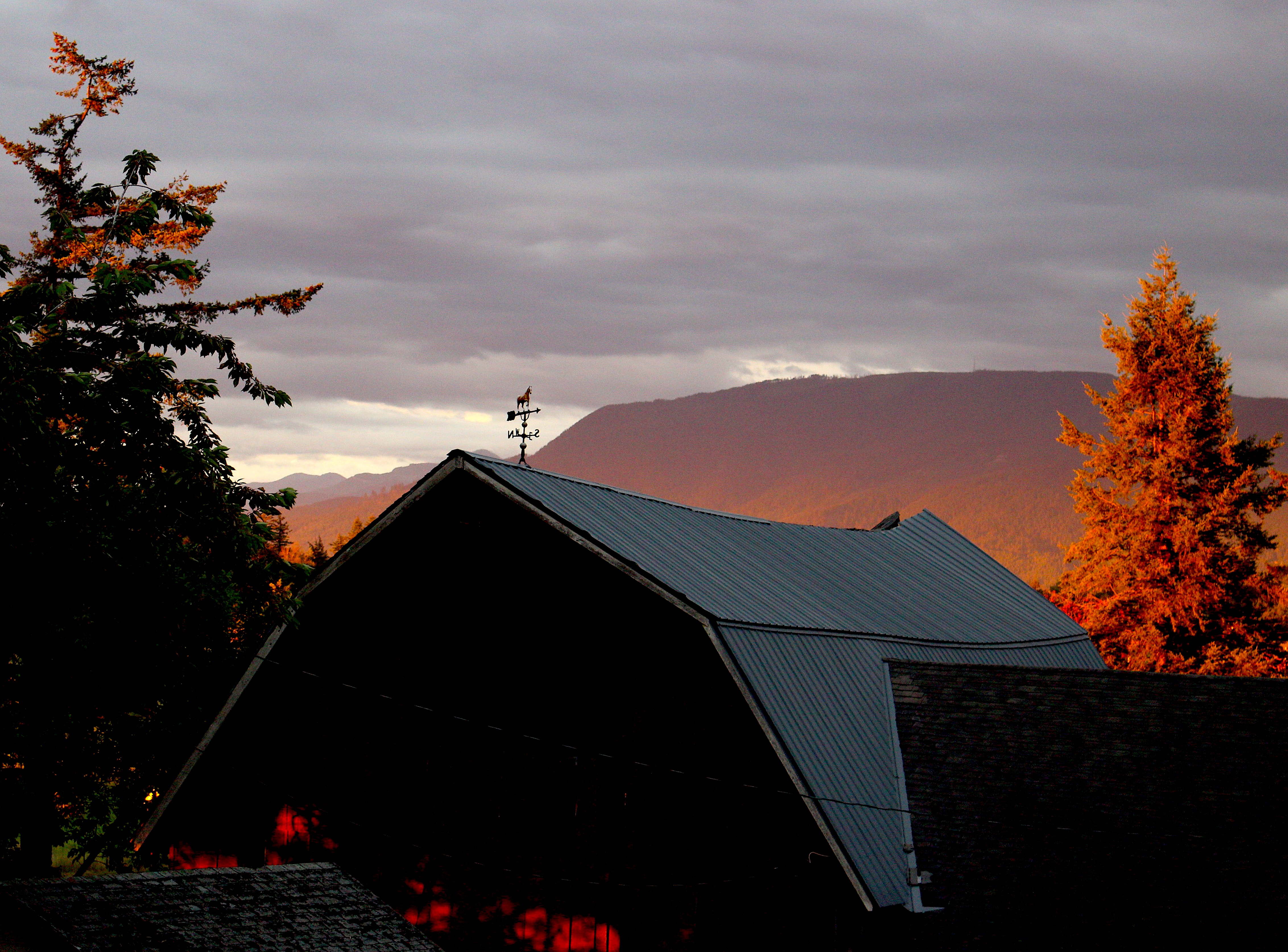
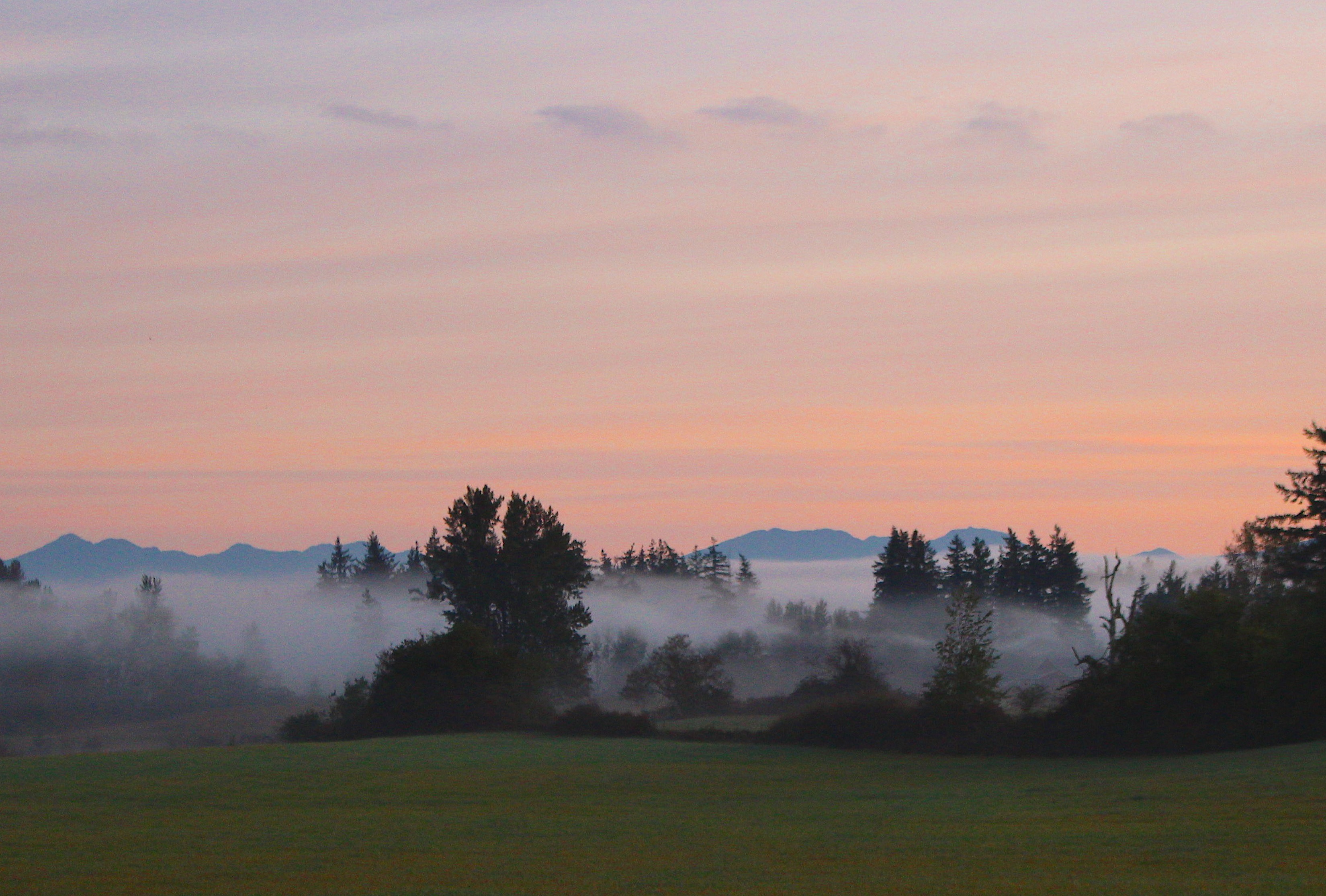
-the long shadows and distant alpenglow in the mountains
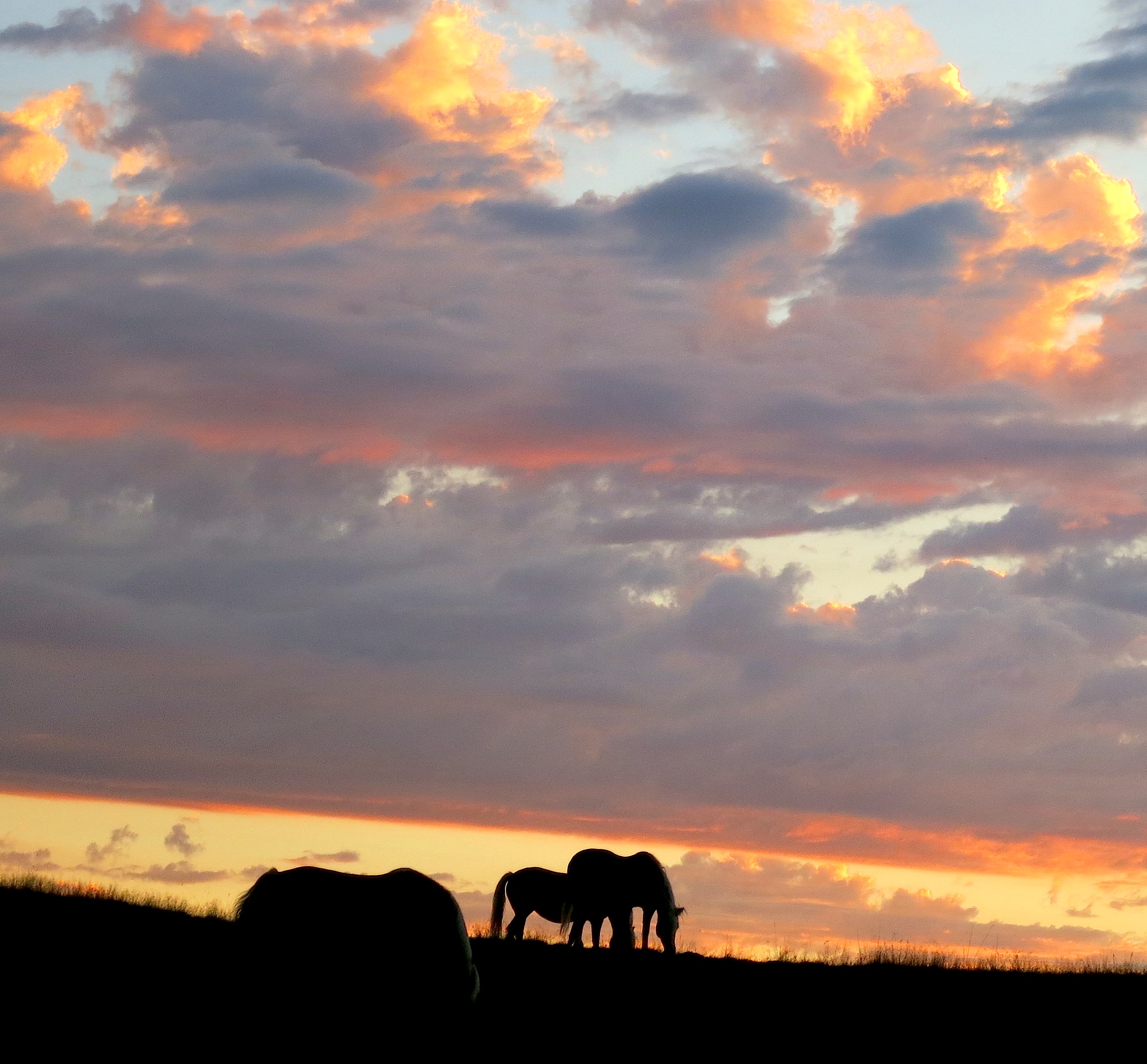
-the dusk that goes on and on as owls and bats come out to hunt above us

Most of all, I will remember the sweaty days of mid-summer as I open the bales of hay in mid-winter – the light and fragrance of those grassy fields spilling forth into the chill and darkness, in communion of blessing for our animals.
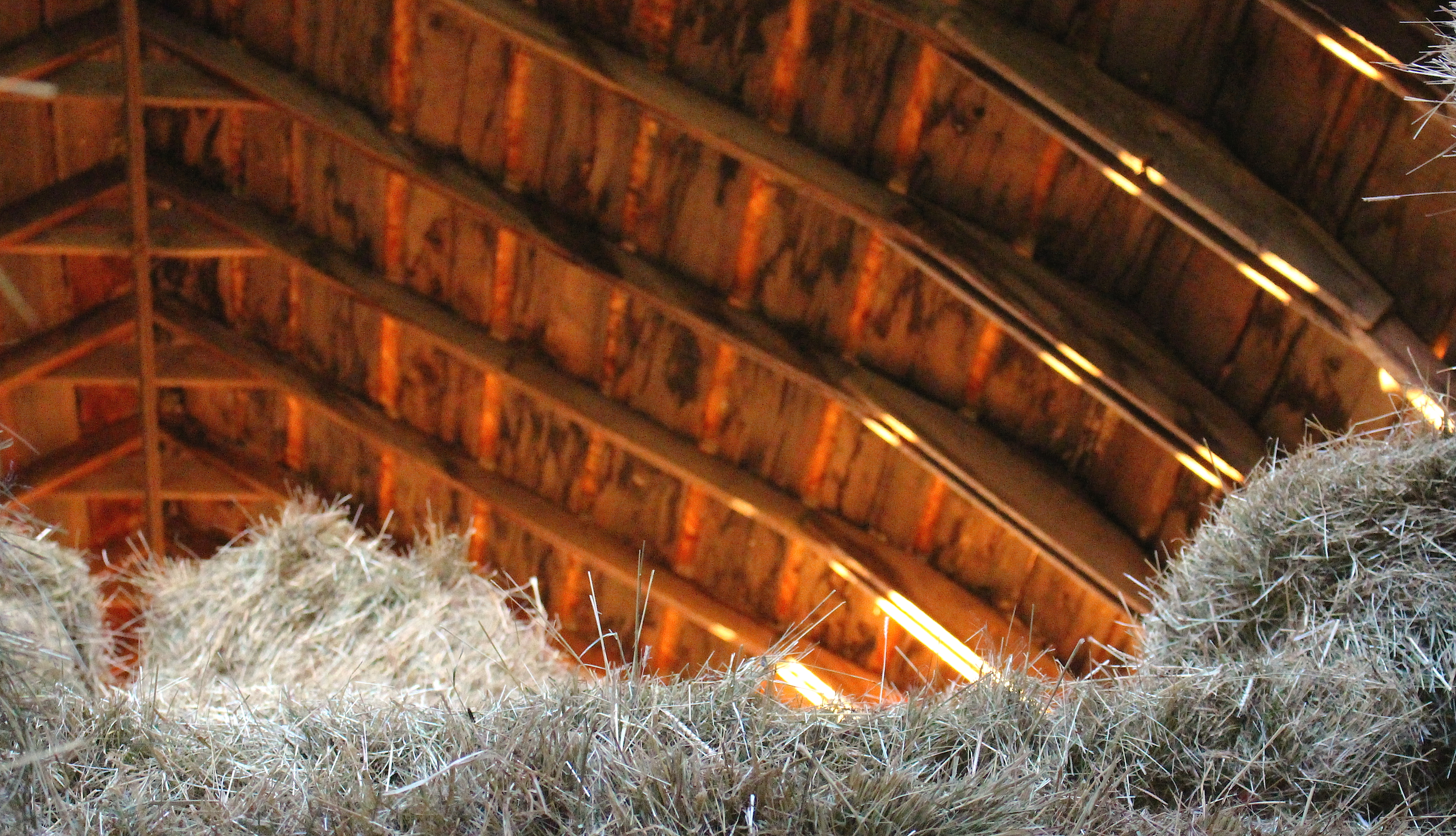
photo by Tayler Rae
Pieter Bruegel “Hay Harvest”
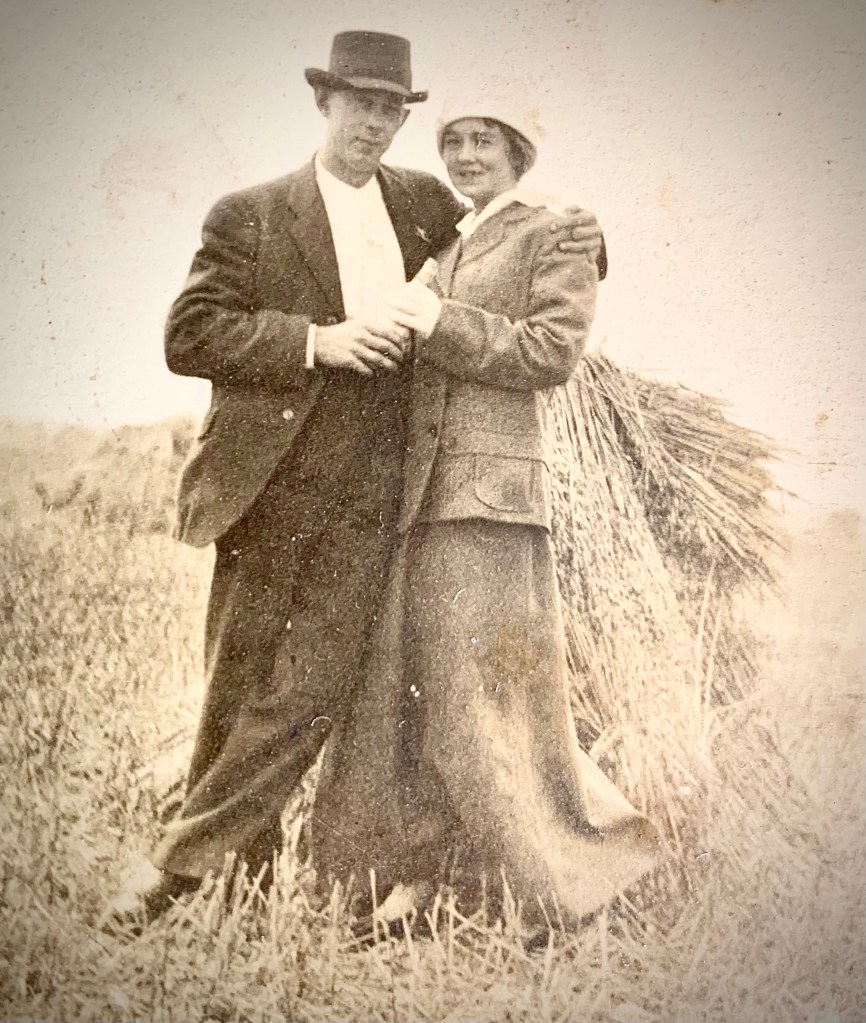
My grandparents Leslie Polis and Kittie Lovelace standing in a hayfield with loose hay shocks — 1915

Enjoy this blog post? A new book from Barnstorming is available to order here:

Through Grass and Grain

Mown meadows skirt the standing wheat;
I linger, for the hay is sweet,
New-cut and curing in the sun.
Like furrows, straight, the windrows run,
Fallen, gallant ranks that tossed and bent
When, yesterday, the west wind went
A-rioting through grass and grain.
To-day no least breath stirs the plain;
Only the hot air, quivering, yields
Illusive motion to the fields
Where not the slenderest tassel swings.
Across the wheat flash sky-blue wings;
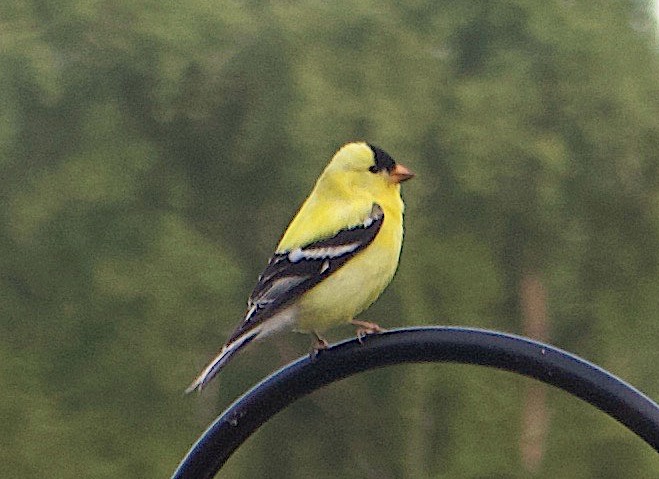
A goldfinch dangles from a tall,
Full-flowered yellow mullein; all
The world seems turning blue and gold.
Unstartled, since, even from of old,
Beauty has brought keen sense of her,
I feel the withering grasses stir;
Along the edges of the wheat,
I hear the rustle of her feet:
And yet I know the whole sea lies,
And half the earth, between our eyes.
~Sophie Jewett “In Harvest”

Autumn harvest happens outside of me
despite sudden coolness of the air,
thanks to showers that green the fields
for one more month of grazing,
midst the smell of the dying of vines and roots.

Autumn harvest is happening inside of me
as I slow down my walk,
curl up within the lengthening nights,
the color of my thoughts
turning to bronze and gold and red

before I let go
before I let go

A book of beauty in words and photographs, available for order here:

Go Out and Help Your Dad


It was hard work, dying, harder
than anything he’d ever done.


Whatever brutal, bruising, back-
Breaking chore he’d forced himself


to endure—it was nothing
compared to this. And it took


so long. When would the job
be over? Who would call him


home for supper? And it was
hard for us (his children)—


all of our lives we’d heard
my mother telling us to go out,


help your father, but this
was work we could not do.


He was way out beyond us,
in a field we could not reach.

~Joyce Sutphen, “My Father, Dying” from Carrying Water to the Field: New and Selected Poems.

We will grieve not, rather find                     
Strength in what remains behind;                     
In the primal sympathy                     
Which having been must ever be;  
                   

Thanks to the human heart by which we live,
Thanks to its tenderness, its joys, and fears,
To me the meanest flower that blows can give
Thoughts that do often lie too deep for tears.
~William Wordsworth from “Ode: Intimations of Immortality from Recollections of Early Childhood”

Twenty-six years ago today
we watched at your bedside as you labored,
readying yourself to die and we could not help
except to be there while we watched you
move farther away from us.


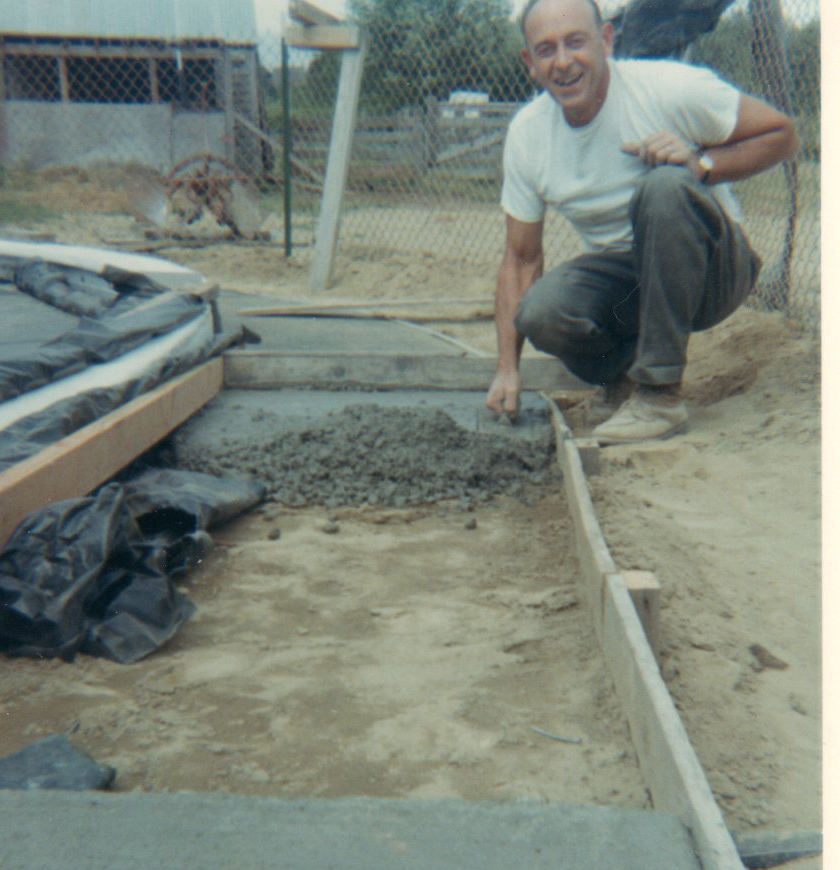
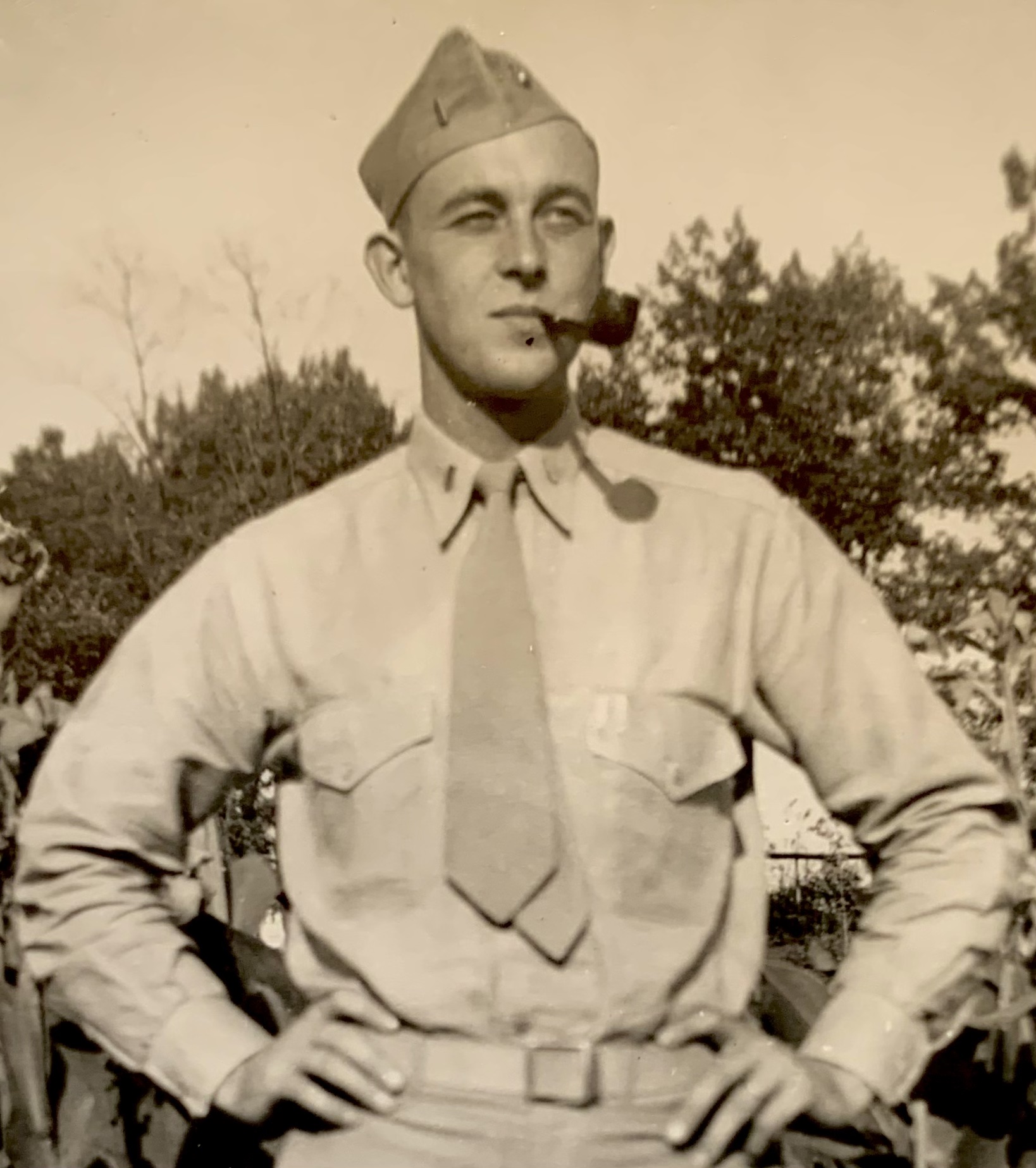
This dying, the hardest work you had ever done:

harder than handling the plow behind a team of draft horses,
harder than confronting a broken, alcoholic and abusive father,
harder than slashing brambles and branches to clear the woods,
harder than digging out stumps, cementing foundations, building roofs,
harder than shipping out, leaving behind a new wife after a week of marriage,
harder than leading a battalion of men to battle on Saipan, Tinian and Tarawa,
harder than returning home so changed there were no words,
harder than returning to school, working long hours to support family,
harder than running a farm with only muscle and will power,
harder than coping with an ill wife, infertility, job conflict, discontent,
harder than building your own pool, your own garage, your own house,
harder than your marriage ending, a second wife dying,
and returning home forgiven.

Dying was the hardest of all
as no amount of muscle or smarts could stop it crushing you,
taking away the strength you relied on for 73 years.

So as you lay helpless, moaning, struggling to breathe,
we knew your hard work was complete
and what was yet undone was up to us
to finish for you.

A new book from Barnstorming is available for order here:


Missing the Right Things

In your next letter, please describe
the weather in great detail. If possible,
enclose a fist of snow or mud,

everything you know about the soil,
how tomato leaves rub green against
your skin and make you itch, how slow

the corn is growing on the hill.
Thank you for the photographs
of where the chicken coop once stood,

clouds that did not become tornadoes.
When I try to explain where I’m from,
people imagine corn bread, cast-iron,

cows drifting across grass. I interrupt
with barbed wire, wind, harvest air
that reeks of wheat and diesel.

I hope your sleep comes easy now
that you’ve surrendered the upstairs,
hope the sun still lets you drink

one bitter cup before its rise. I don’t miss
flannel shirts, radios with only
AM stations, but there’s a certain kind

of star I can’t see from where I am—
bright, clear, unconcerned. I need
your recipes for gravy, pie crust,

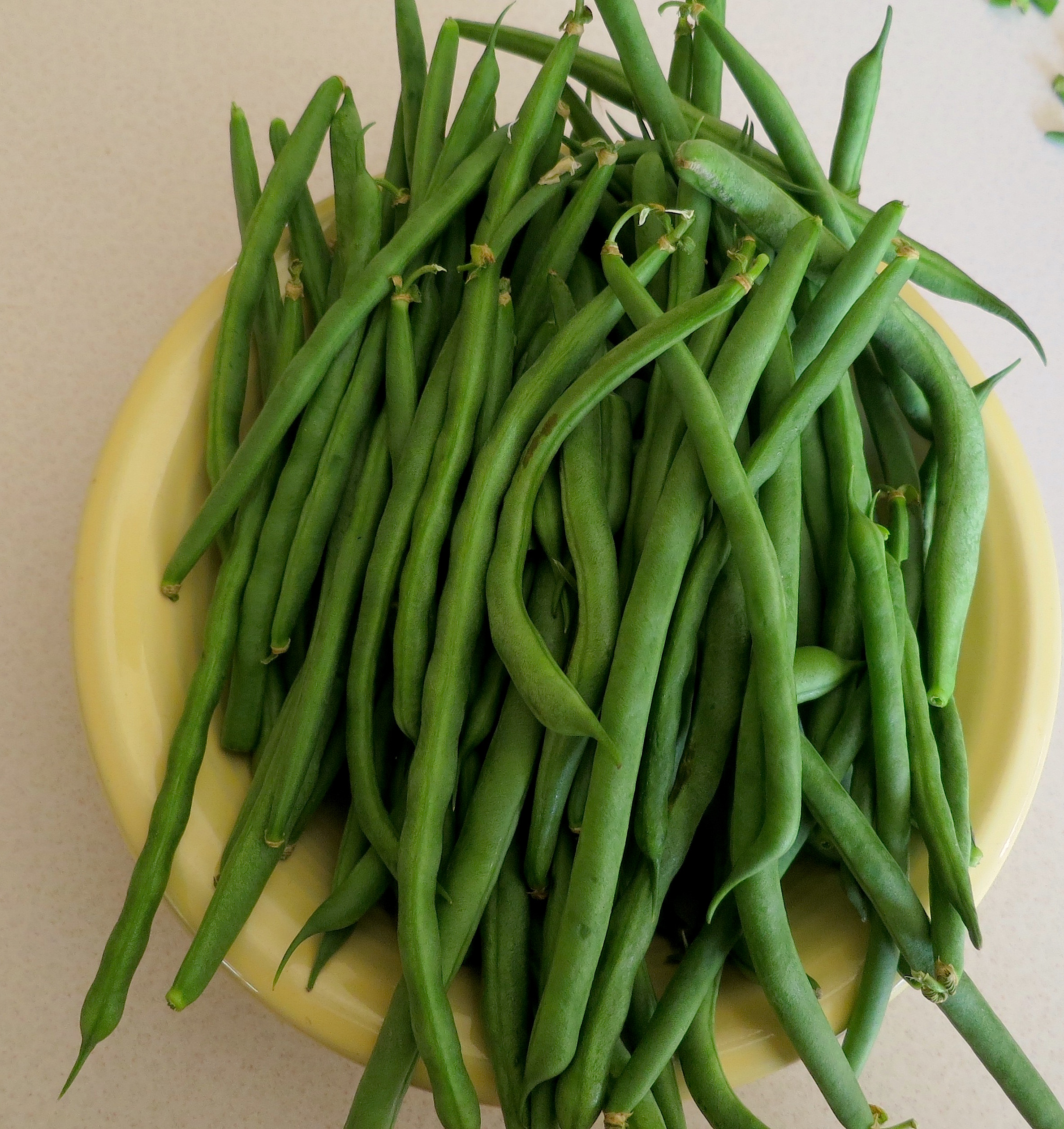
canned green beans. I’m sending you
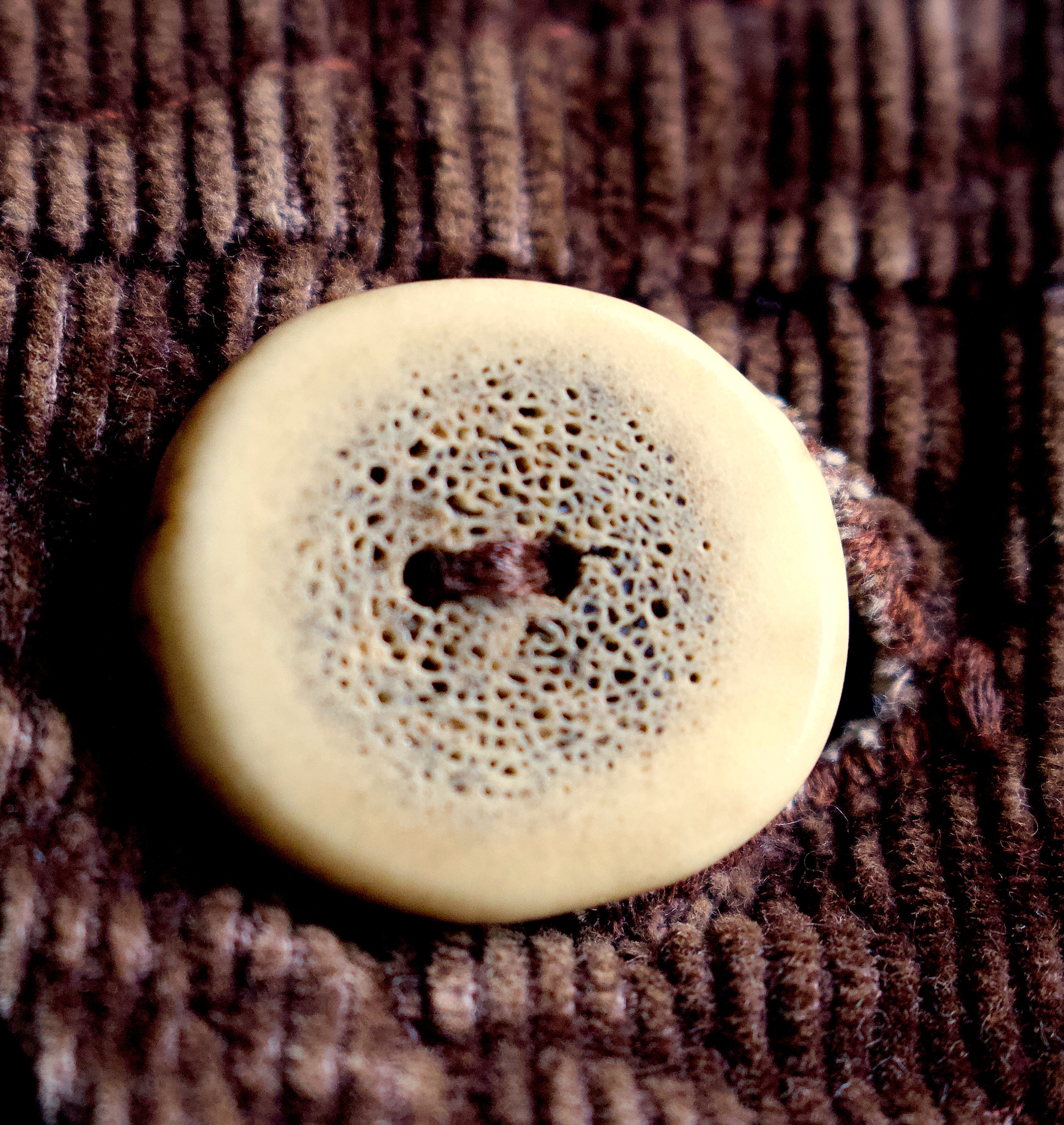
the buttons I can’t sew back on.
Please put them in the jar beside your bed.

In your next letter, please send seeds
and feathers, a piece of bone or china
you plowed up last spring. Please
promise I’m missing the right things.

~Carrie Shipers, “In Your Next Letter” from Cause for Concern

For our children (and now their children) who have left the farm, now living far away:

I want to be sure you are missing the right things about this incredible place.

There is so much about a farm that is worrisome, burdensome, back-breaking and unpredictable. Don’t miss those things.

Miss what is breath-taking, awe-inspiring and heart-swelling.

We miss you more than we can ever say, indeed an intensive “missing” that can’t be expressed in words. So I send this to you and you’ll understand.

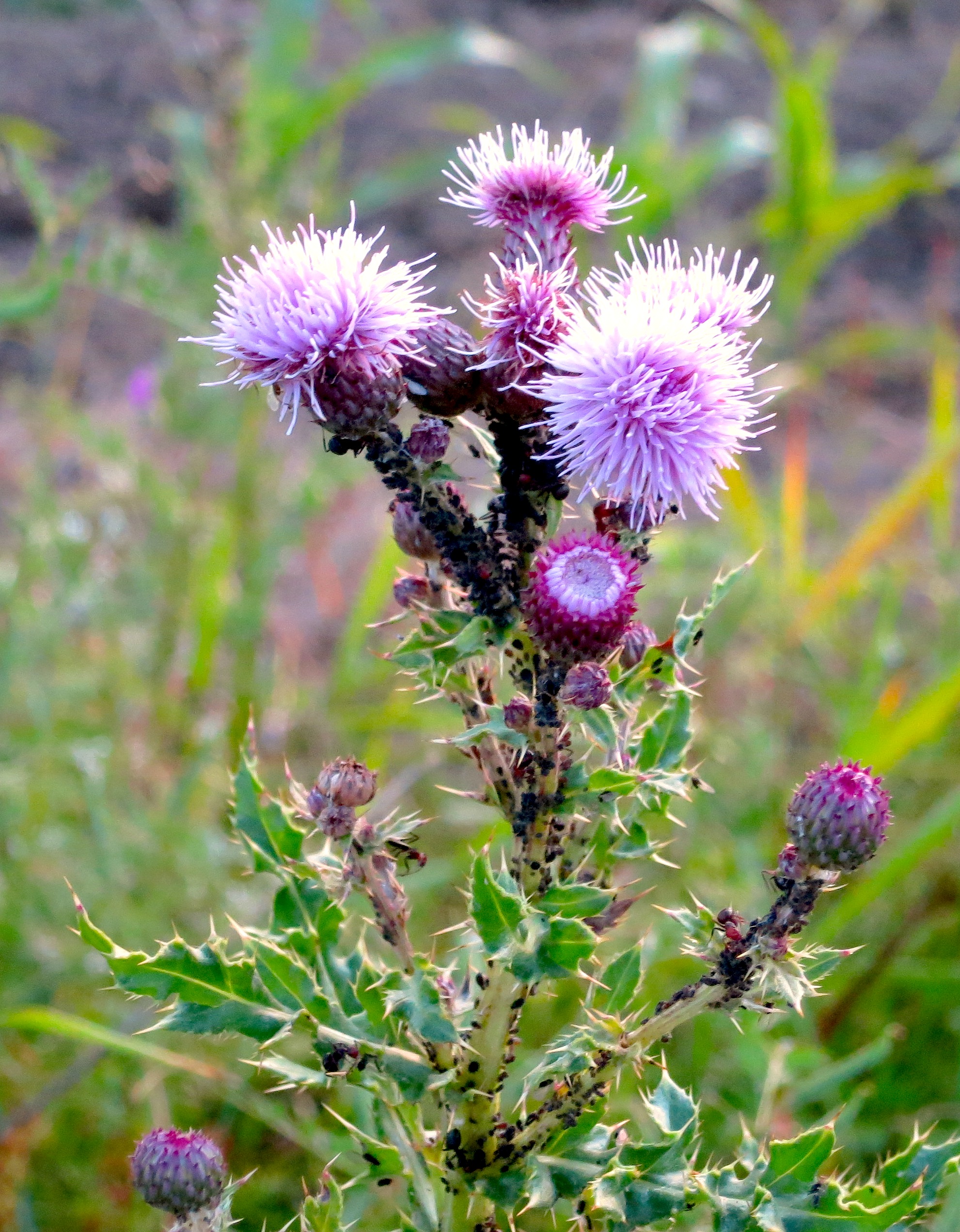
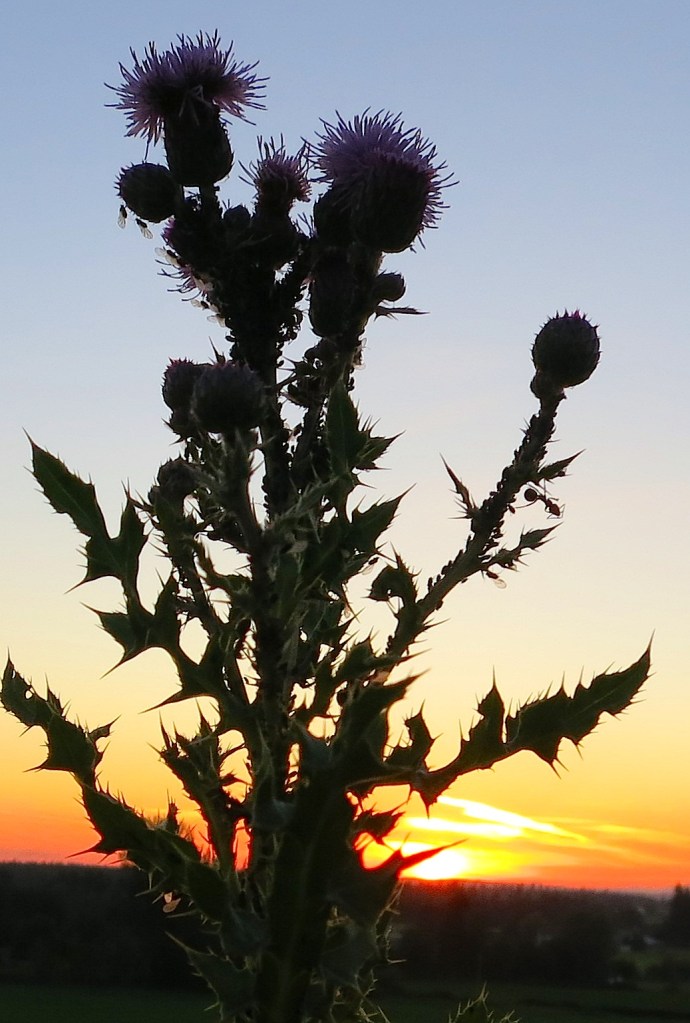
All Barb and Bristle

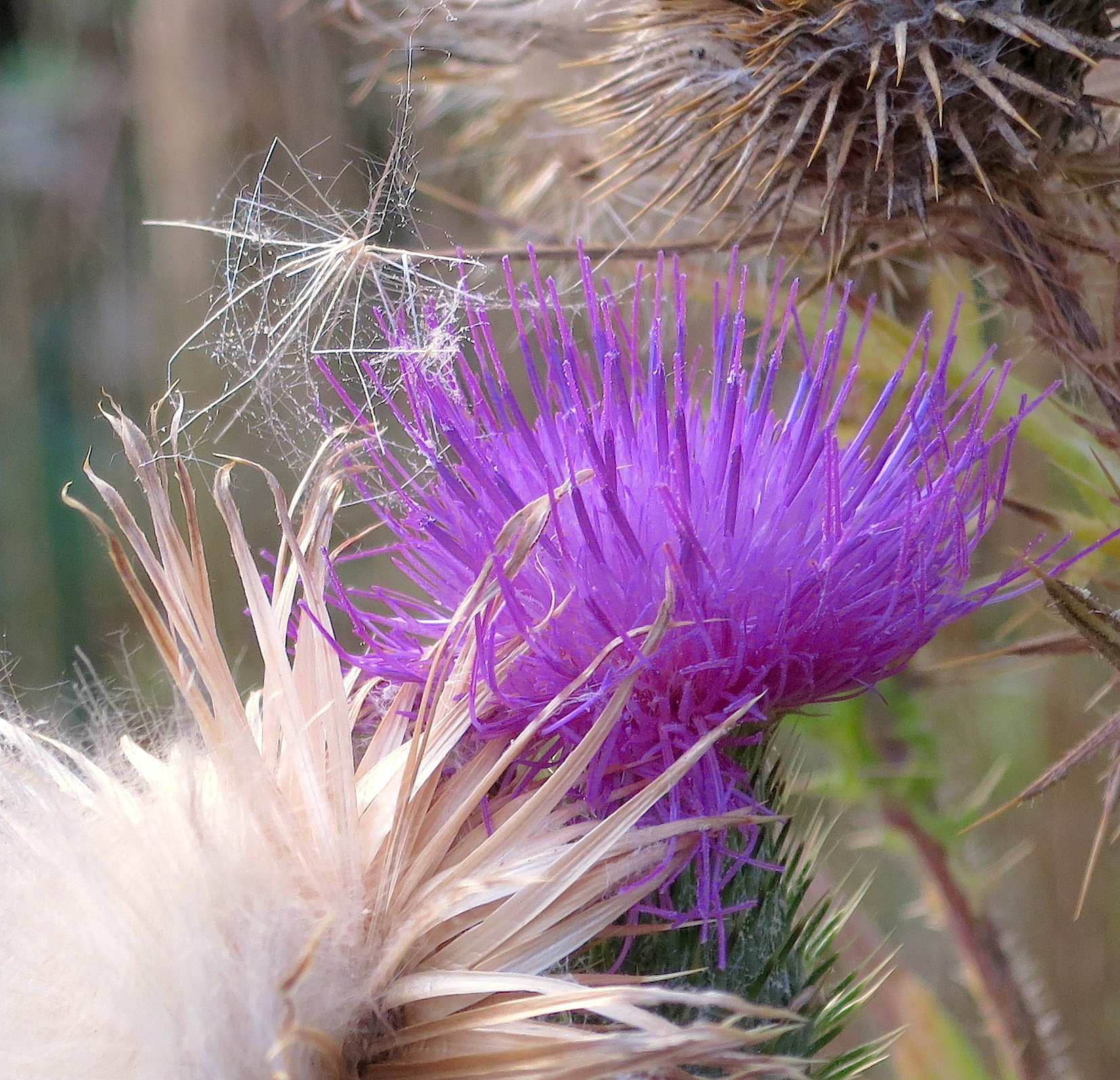
This upstart thistle
Is young and touchy; it is
All barb and bristle,

Threatening to wield
Its green, jagged armament
Against the whole field.

Butterflies will dare
Nonetheless to lay their eggs
In that angle where

The leaf meets the stem,
So that ants or browsing cows
Cannot trouble them.

Summer will grow old
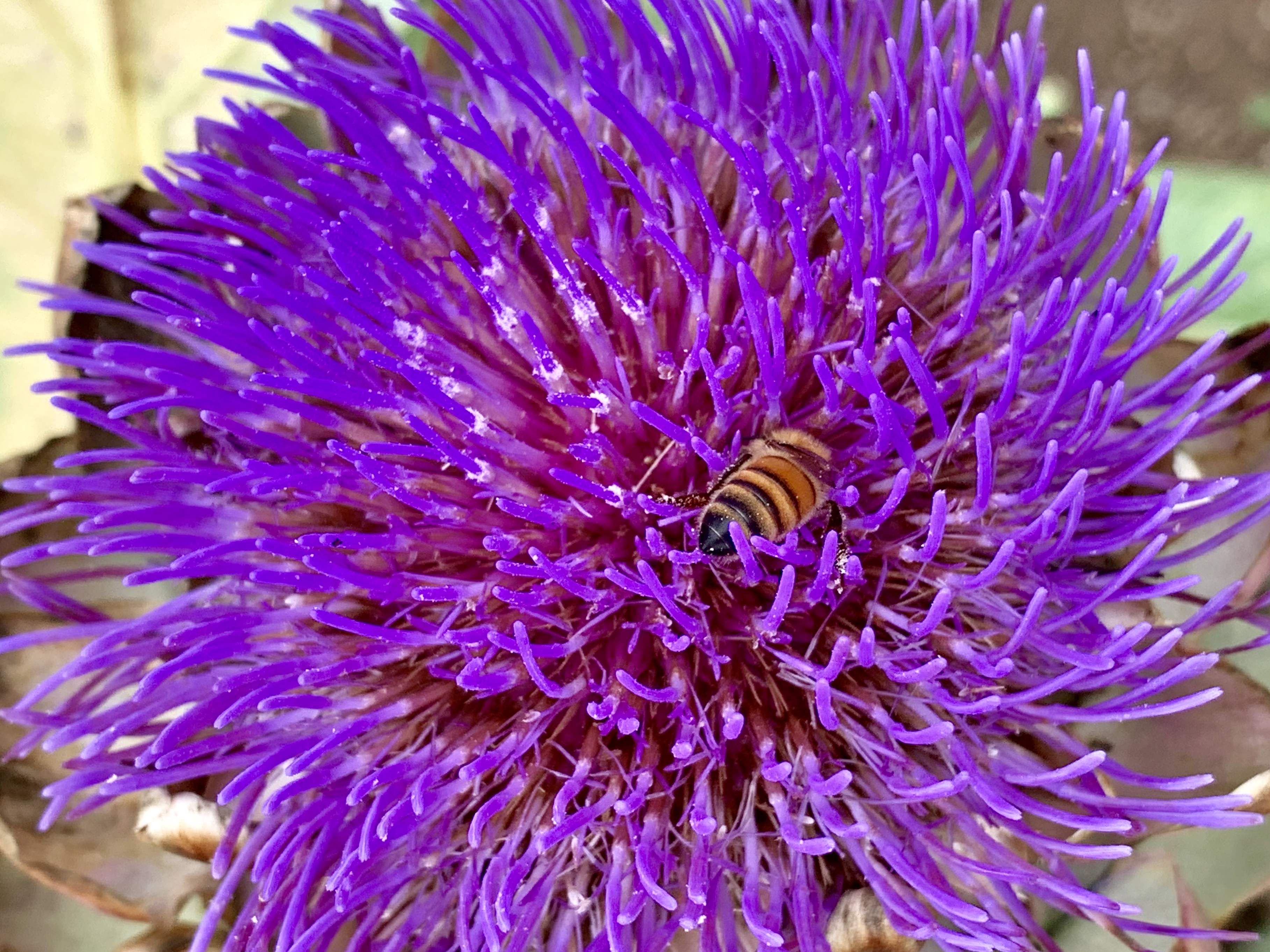
As will the thistle, letting
A clenched bloom unfold

To which the small hum
Of bee wings and the flash of
Goldfinch wings will come,

Till its purple crown
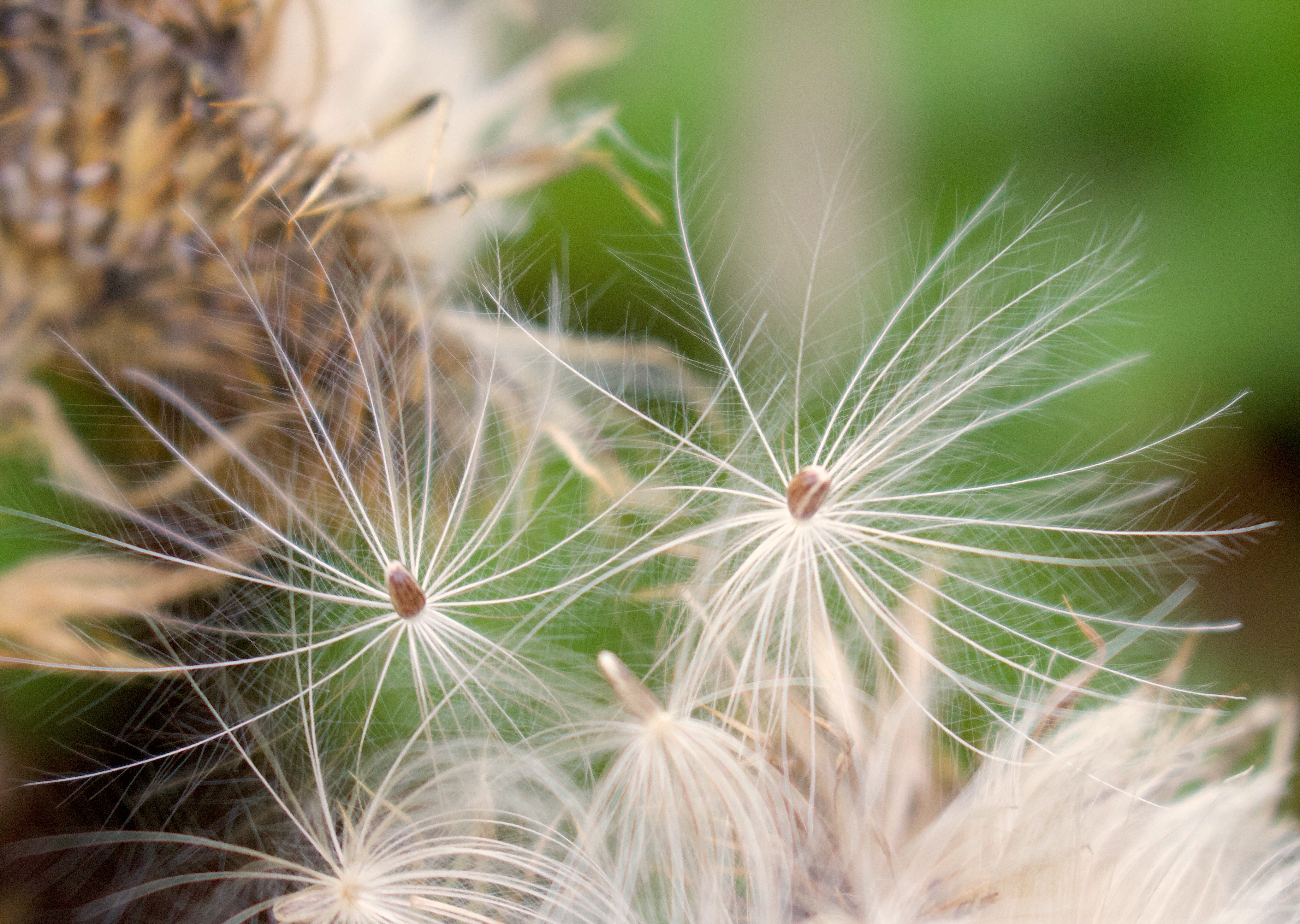
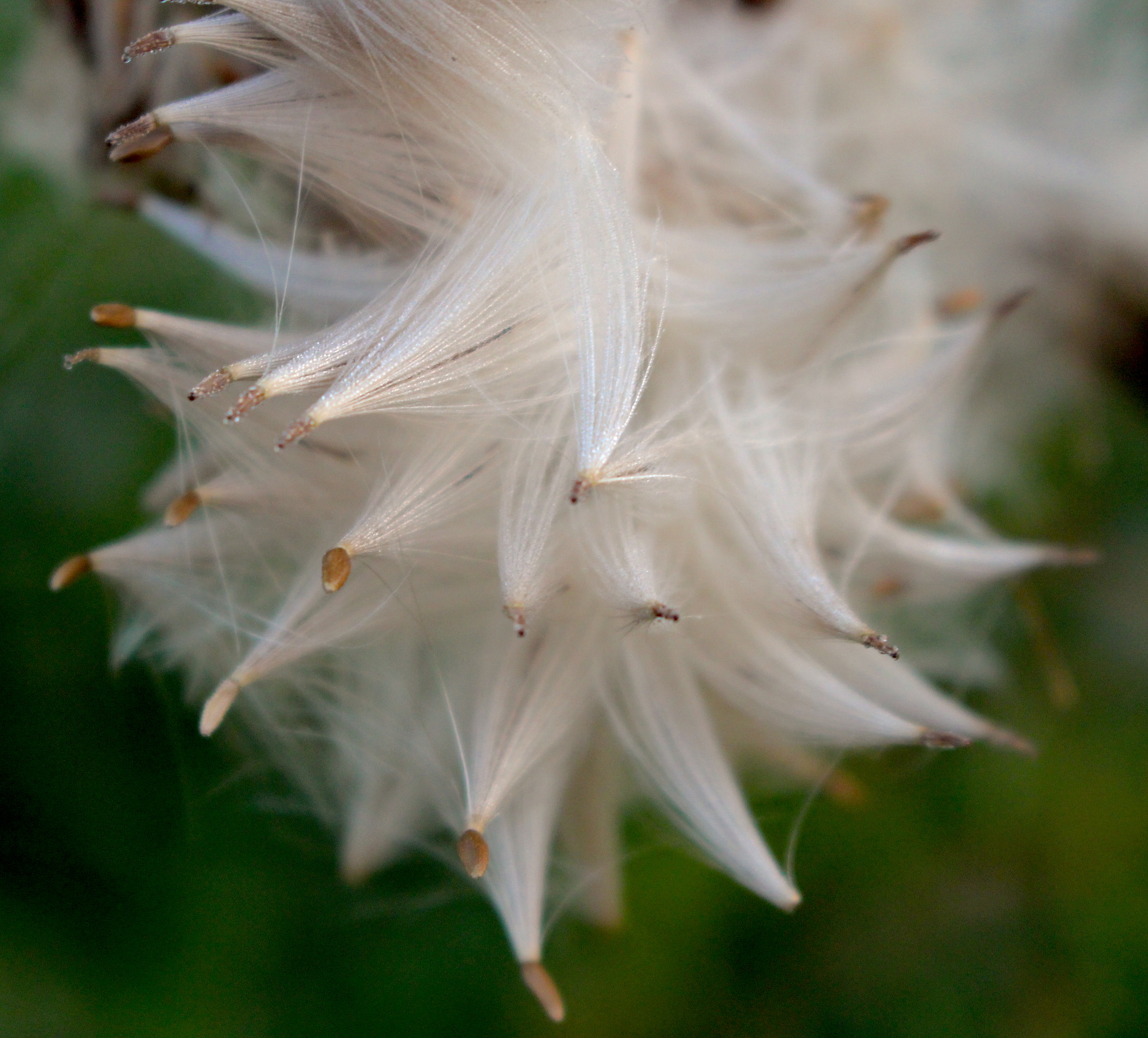
Blanches, and the breezes strew
The whole field with down.
~Richard Wilbur “A Pasture Poem” from Anterooms

Not unlike the thistles that dot our pastures, I can have a tendency to be a bristly, barbed and sharp – some is simply my nature, but also long years of relentless training to become tough and impenetrable. Perhaps it represents my need for self-protection, but like the thistle, though having spiky thorns may keep me from being “eaten”, it doesn’t deter the gentle approach of butterfly or bee.

As a result, I have been softened over time (in more ways than one!) by forces outside of myself – a ripening that means I am less threat and more welcoming. My unfolding into fluffy blossom became my way of enveloping myself around my world as grace enveloped me.

With the breezes, the softest of thistle down spreads afar rather than standing stock-still in self-defense. I find in my seventh decade, I’m actually meant to fly, settling into nooks and crannies I never could have dreamed while barbed and spiky.

That is how grace and redemption works on thistles and bristly people: from sharp edges to delicate downiness.

We are all in need of such transformation.

A new book from Barnstorming is available to order here:

Spin Until I’m Dizzy

Tomorrow
there will be sun, scalloped by clouds,
ushered in by a waterfall of birdsong.
It will be a temperate seventy-five, low
humidity. For twenty-four hours,
all politicians will be silent. Reality
programs will vanish from TV, replaced
by the “snow” that used to decorate
our screens when reception wasn’t
working. Soldiers will toss their weapons
in the grass. The oceans will stop
their inexorable rise. No one
will have to sit on a committee.
When twilight falls, the aurora borealis
will cut off cell phones, scramble the internet.
We’ll play flashlight tag, hide and seek,
decorate our hair with fireflies, spin
until we’re dizzy, collapse
on the dew-decked lawn and look up,
perhaps for the first time, to read the long lines
of cold code written in the stars….
~Barbara Crooker “Tomorrow” from Some Glad Morning.

Might I hope for a better tomorrow?

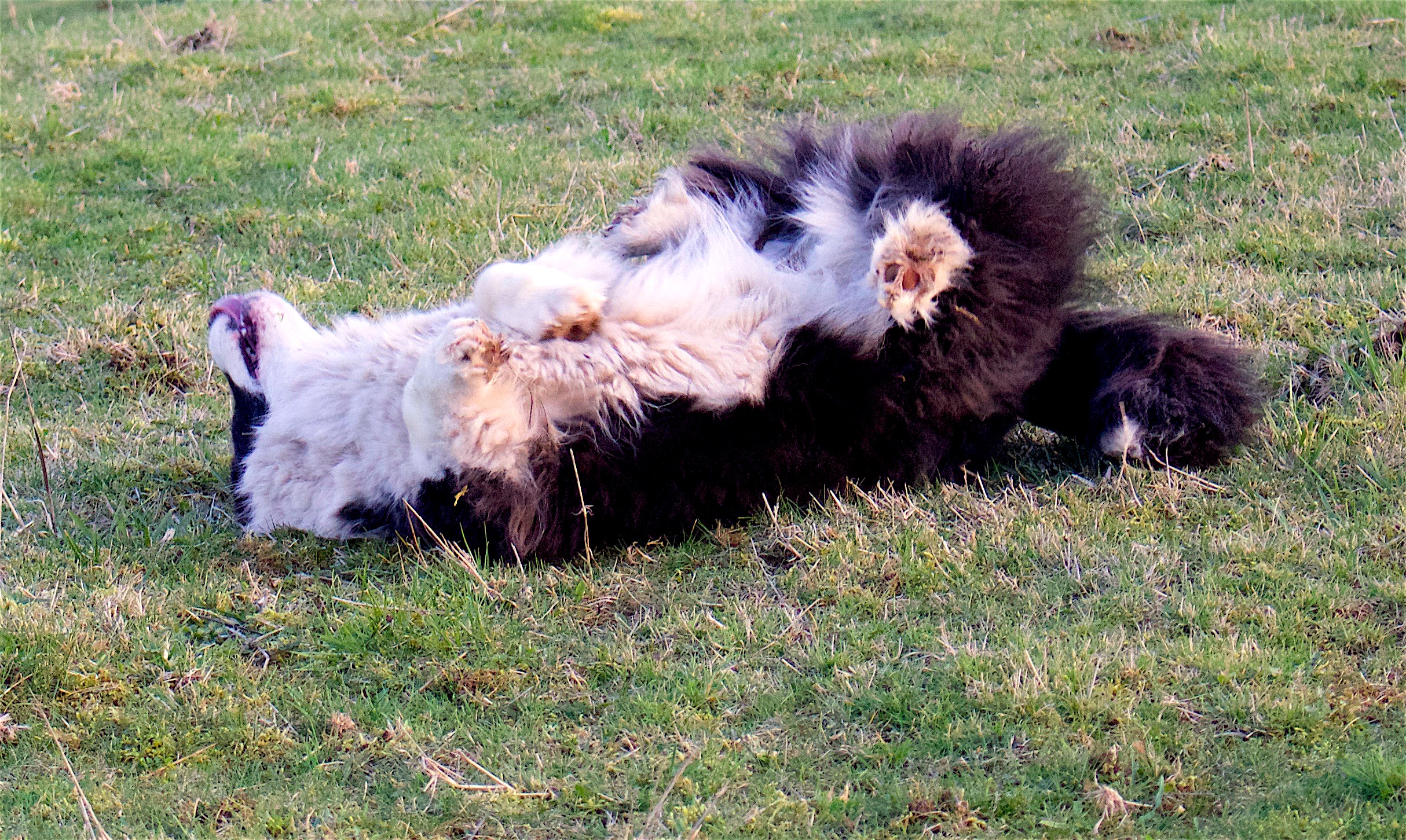
Awash in this world of technological and political complexity, I forget the simple pleasure of lying in the grass, looking up and staring at the stars spinning above me.

I become dizzy with the possibilities.

A new book from Barnstorming is available for order here:

Blessing of Hairy Toes

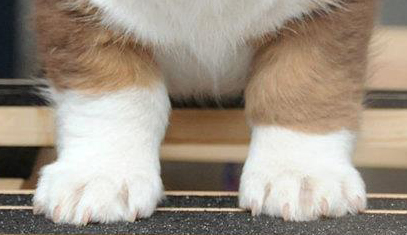
May the hair on your toes never fall out!
— J.R.R. Tolkien in The Hobbit (Thorin Oakenshield addressing Bilbo Baggins)

I can, with one eye squinted, take it all as a blessing.
— Flannery O’Connor

May you always have…
Walls for the winds
A roof for the rain
Tea beside the fire
Laughter to cheer you
Those you love near you
And all your heart might desire

May those who love us, love us;
and those who don’t love us, may God turn their hearts;

and if He doesn’t turn their hearts, may he turn their ankles
so we’ll know them by their limping.
~Traditional Irish Blessing

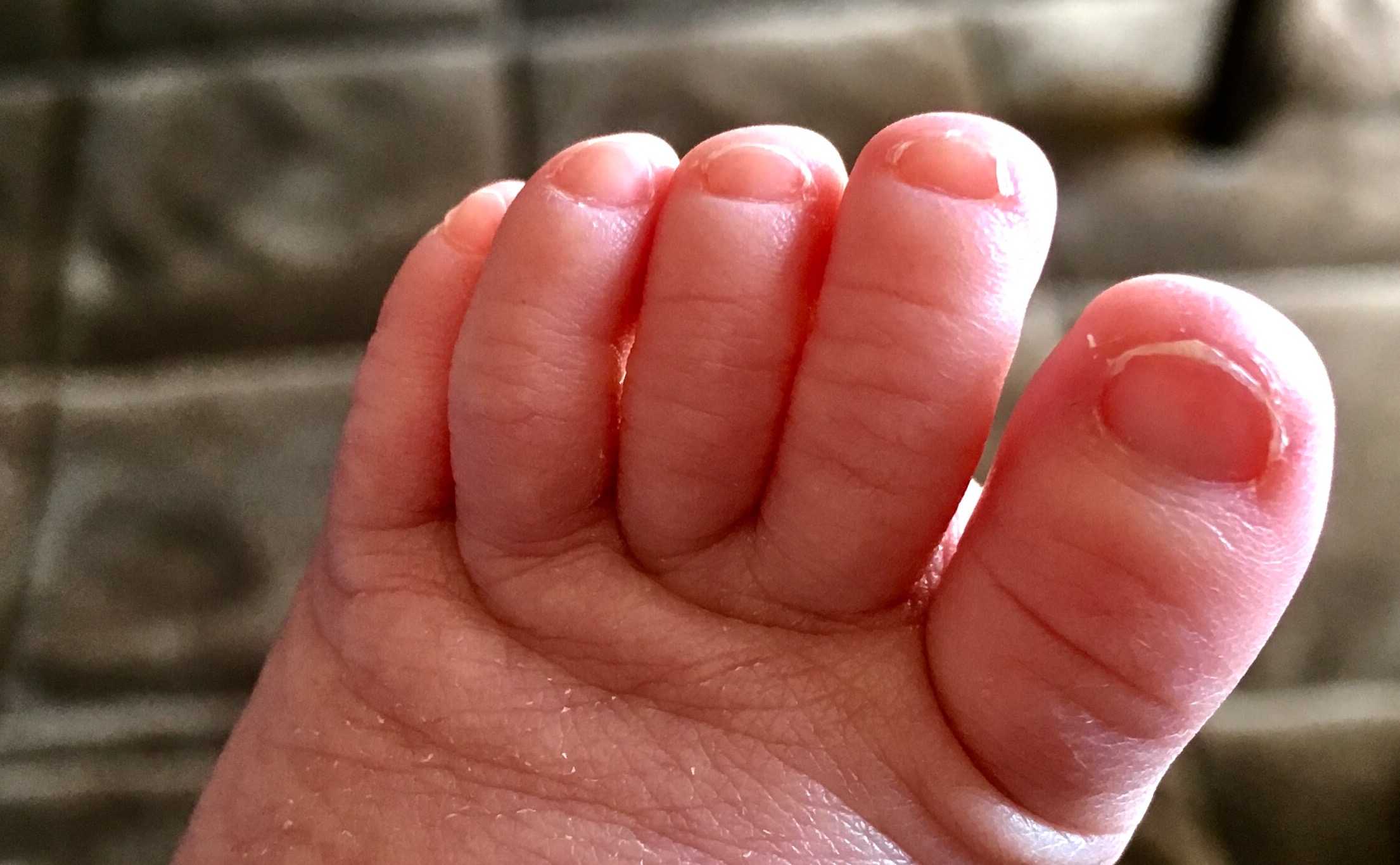
It’s a safe bet my toes and your toes have never been subjected to a blessing.

But I like the idea of being blest starting from the bottom up,  encompassing my most humble and homely parts first.

The world would be a better place if we rediscovered the art of bestowing blessings–those specific prayers of favor and protection that reinforce community and connection to each other and to something larger than ourselves.   They have become passé in a modern society where God’s relationship with and blessing of His people is not much more than an after-thought.   Benedictions can extend beyond the end of worship services to all tender partings; wedding receptions can go beyond roasting and toasting to encompass sincere prayers for a future life together.

But let’s start at the very beginning: let us bless our hairy toes.

That is a very good place to start…

A new book from Barnstorming is available to order here:
The Same Simple Welcome

All this he saw, for one moment breathless and intense, vivid on the morning sky; and still, as he looked, he lived; and still, as he lived, he wondered.
~Kenneth Grahame, The Wind in the Willows

He saw clearly how plain and simple – how narrow, even – it all was;
but clearly, too, how much it all meant to him,
and the special value of some such anchorage in one’s existence.
He did not at all want to abandon the new life and its splendid spaces,

to turn his back on sun and air and all they offered him
and creep home and stay there;
the upper world was all too strong,
it called to him still, even down there,
and he knew he must return to the larger stage.
But it was good to think he had this to come back to,
this place which was all his own,
these things which were so glad to see him again
and could always be counted upon for the same simple welcome.
~Kenneth Grahame, from Wind in the Willows about the Mole and his home at Mole End

Folks need a safe place to call home, where everybody knows their name, and they’re always glad you came – that same simple welcome is a given.

I, for one, am mighty grateful for this place I can wander and wonder about what I see and hear around me. I am gladly anchored here to everything that is meaningful to me.

Too many around the world wander homeless without an anchor – settling randomly wherever there is cover, or a clear grassy spot, or within the hidden-away seclusion of a woods. Even when offered secure housing, they often reject being anchored, not wanting to be subject to rules when home is about making compromises necessary to get along with others.

How do we make “home-more” for the home-less? How can we be convincing that more “anchorage” is a special value?

May we offer the same simple welcome to all.

A new book from Barnstorming is available to order here:
To See Heaven in a Wild Flower

To see a World in a Grain of Sand
And a Heaven in a Wild Flower,
Hold Infinity in the palm of your hand
And Eternity in an hour.

~William Blake from Auguries of Innocence

If I look closely enough, I might find the extraordinary in the commonplace things of life. So I keep my eyes alert and my heart open to infinite possibilities.

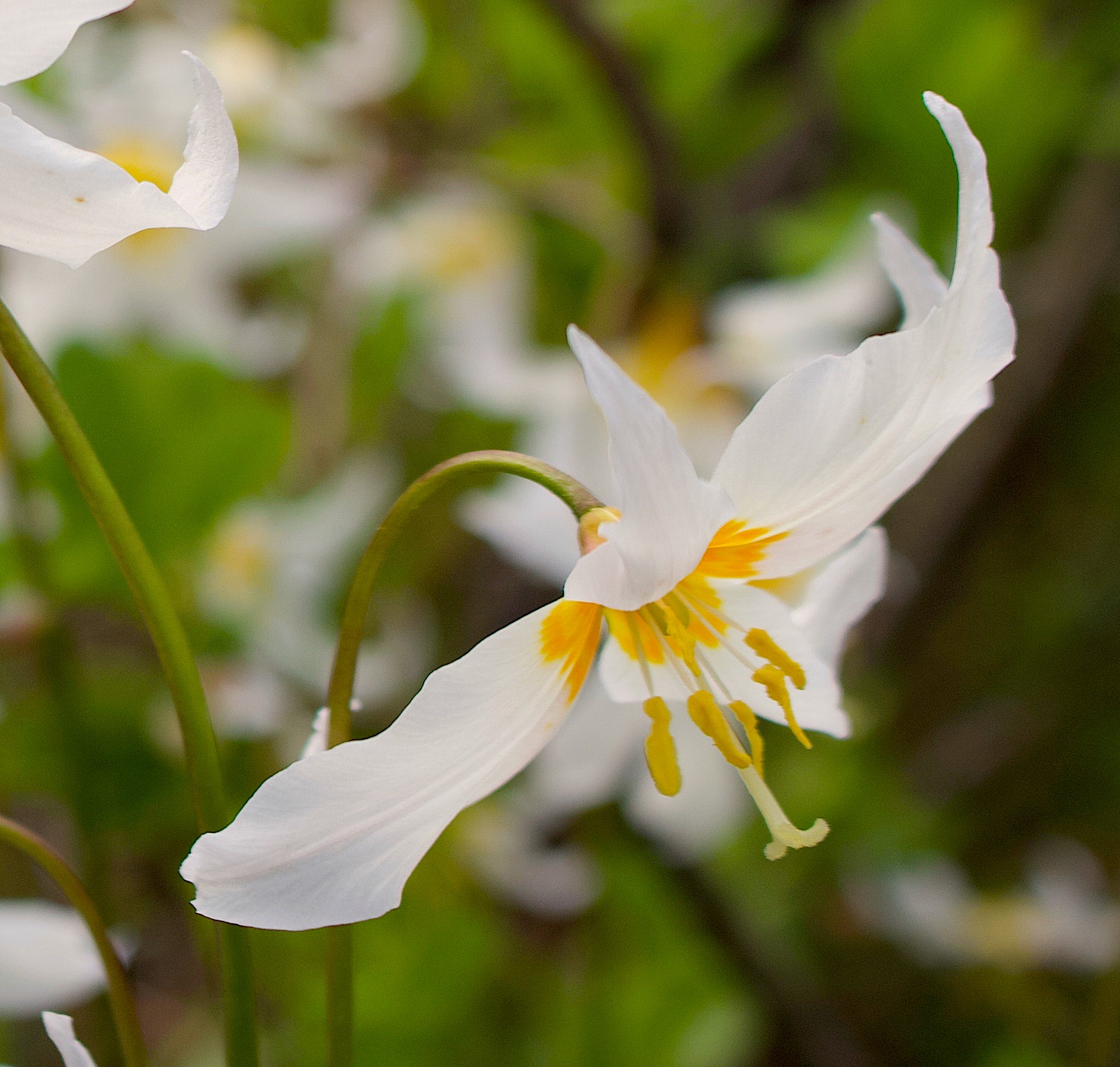
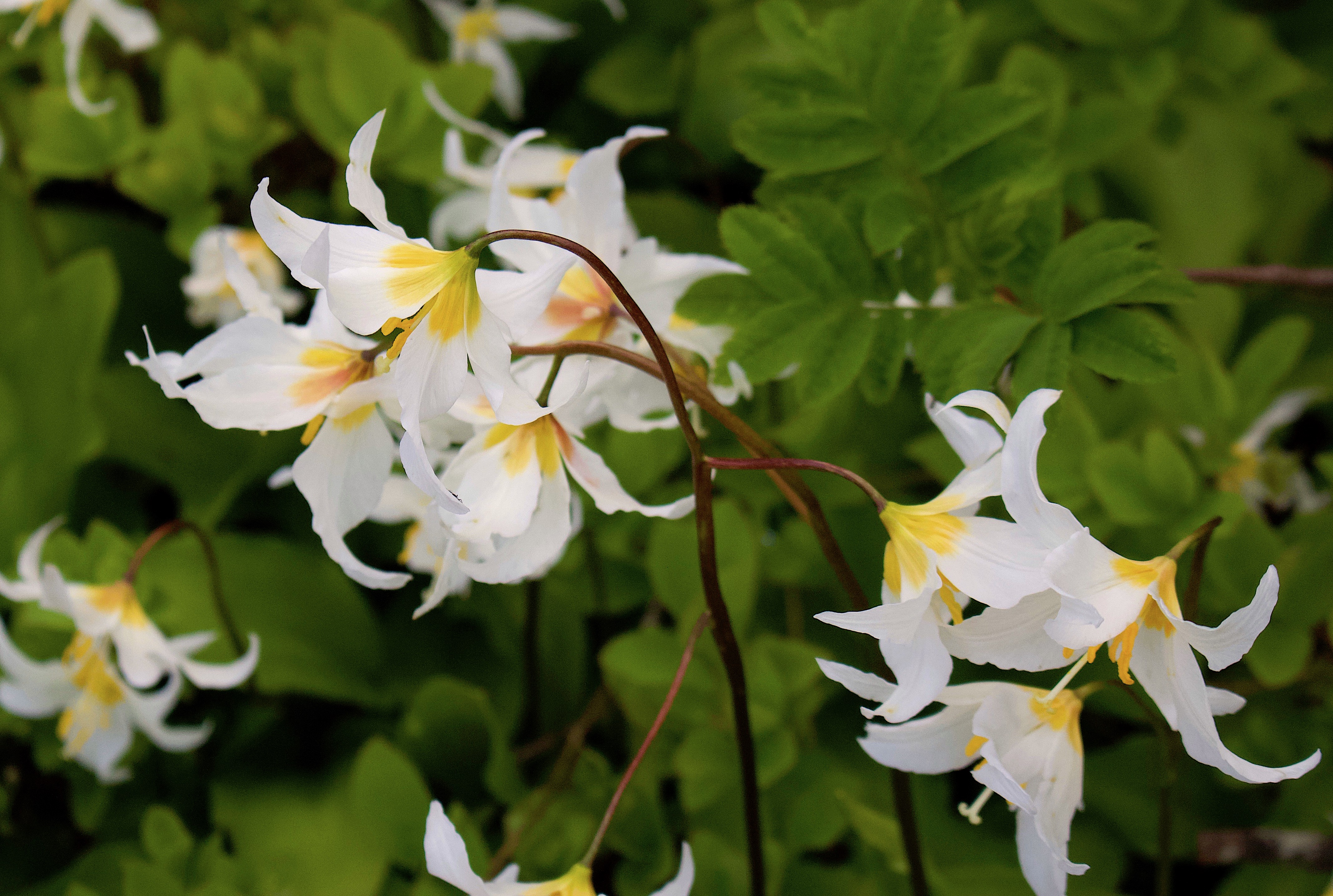
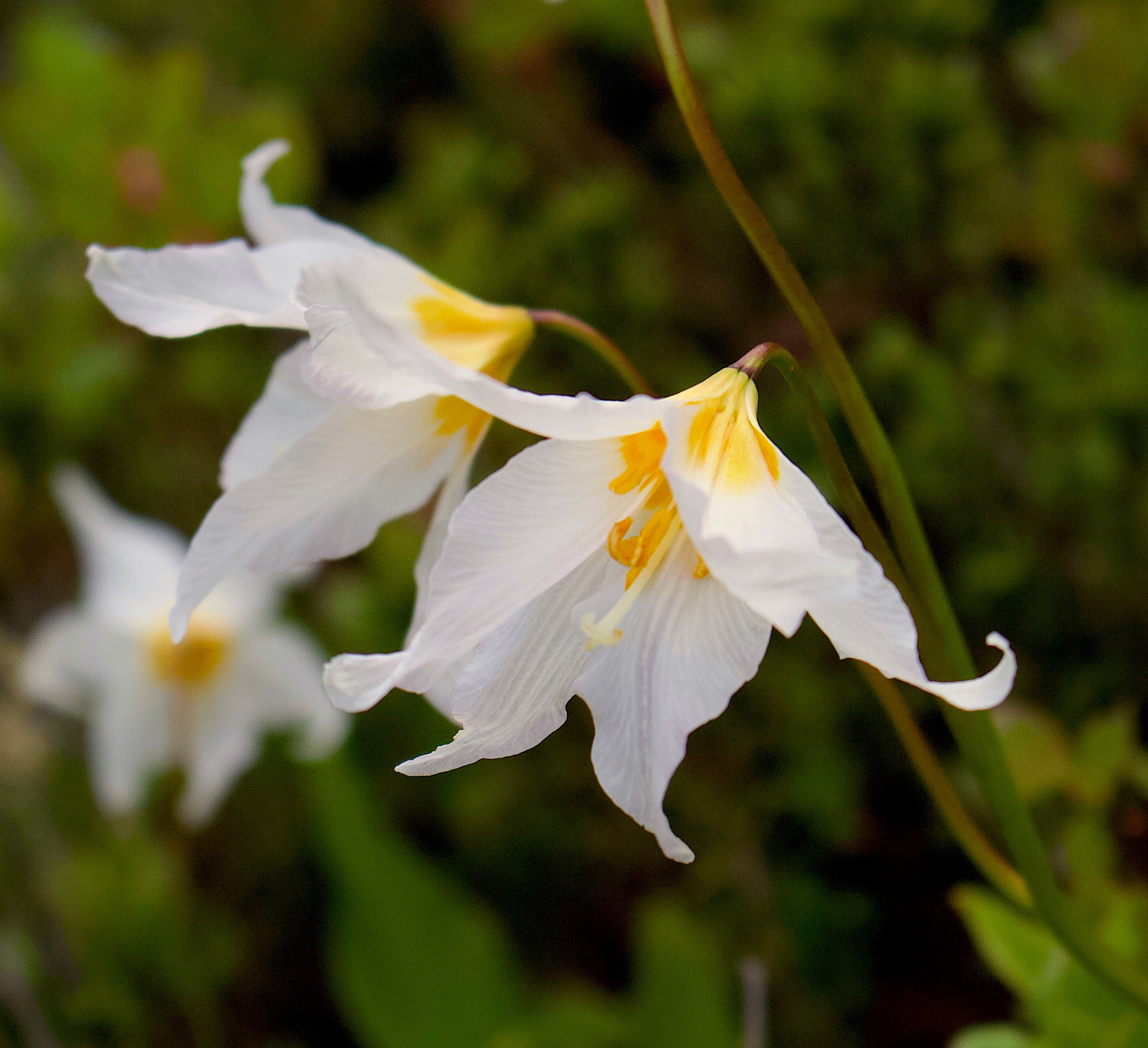
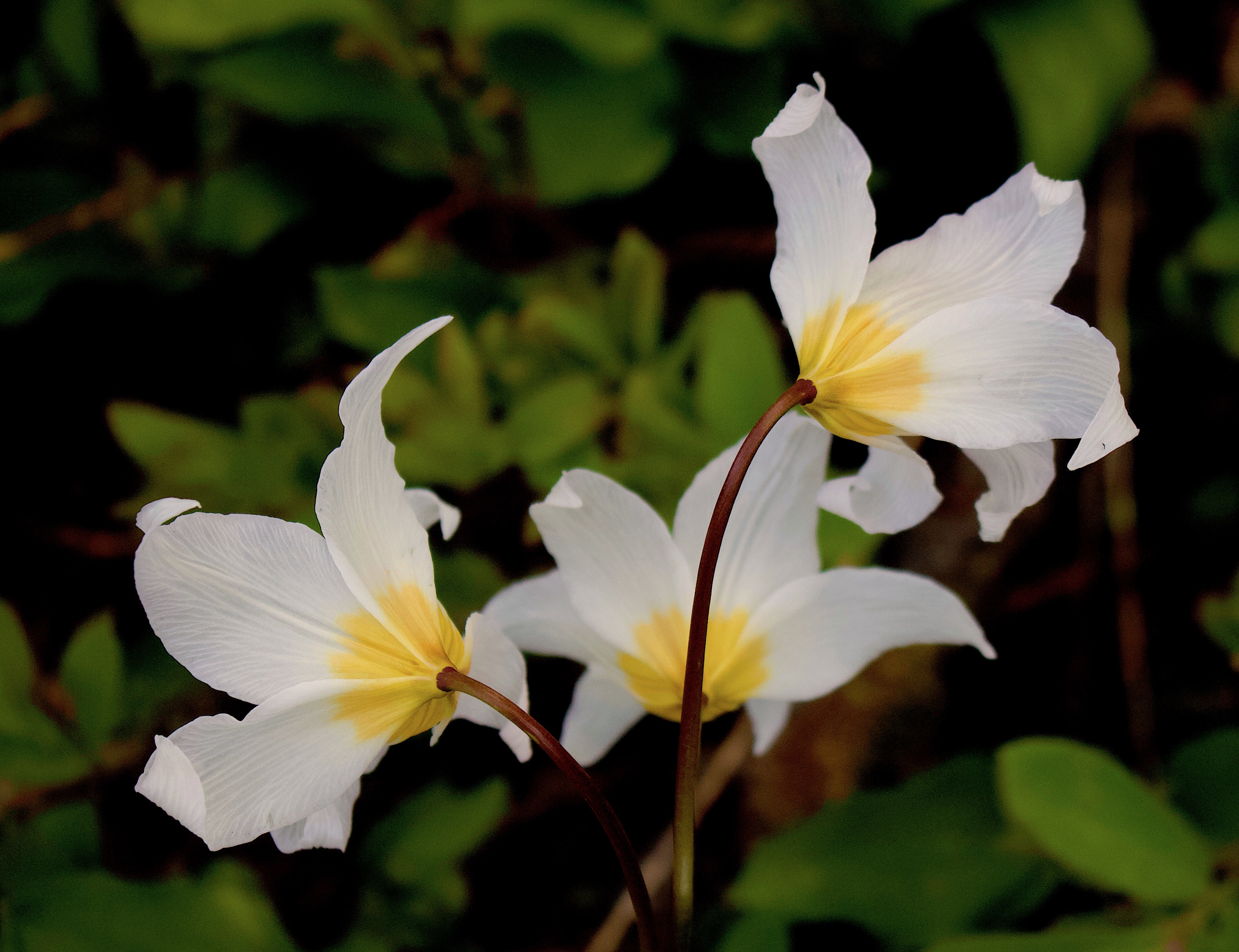
Sometimes what I see is so extraordinary already, it is like uncovering a bit of heaven on earth. Up in the alpine meadows of the Cascade mountains grow delicate avalanche lilies in July, just as the snow melt is complete. Though brief in their blooming, they are our harbingers of heaven. Despite the chill and darkness of winter, they rise triumphant, an eternal promise of a someday never-ending summer.

A new book from Barnstorming is available to order here:
A Down Comforter of Relief

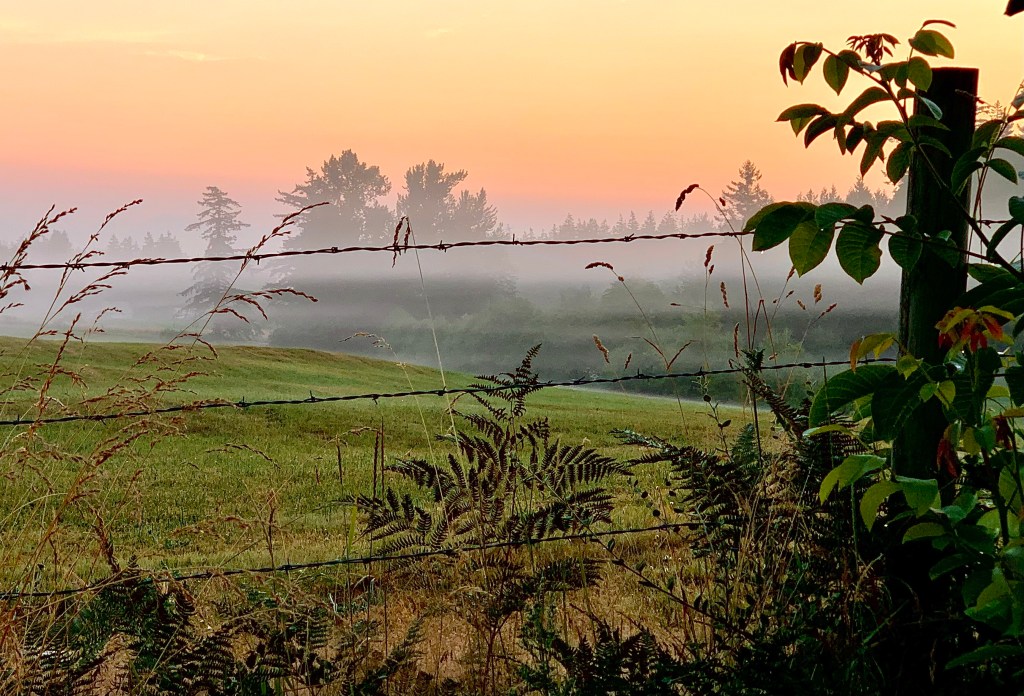
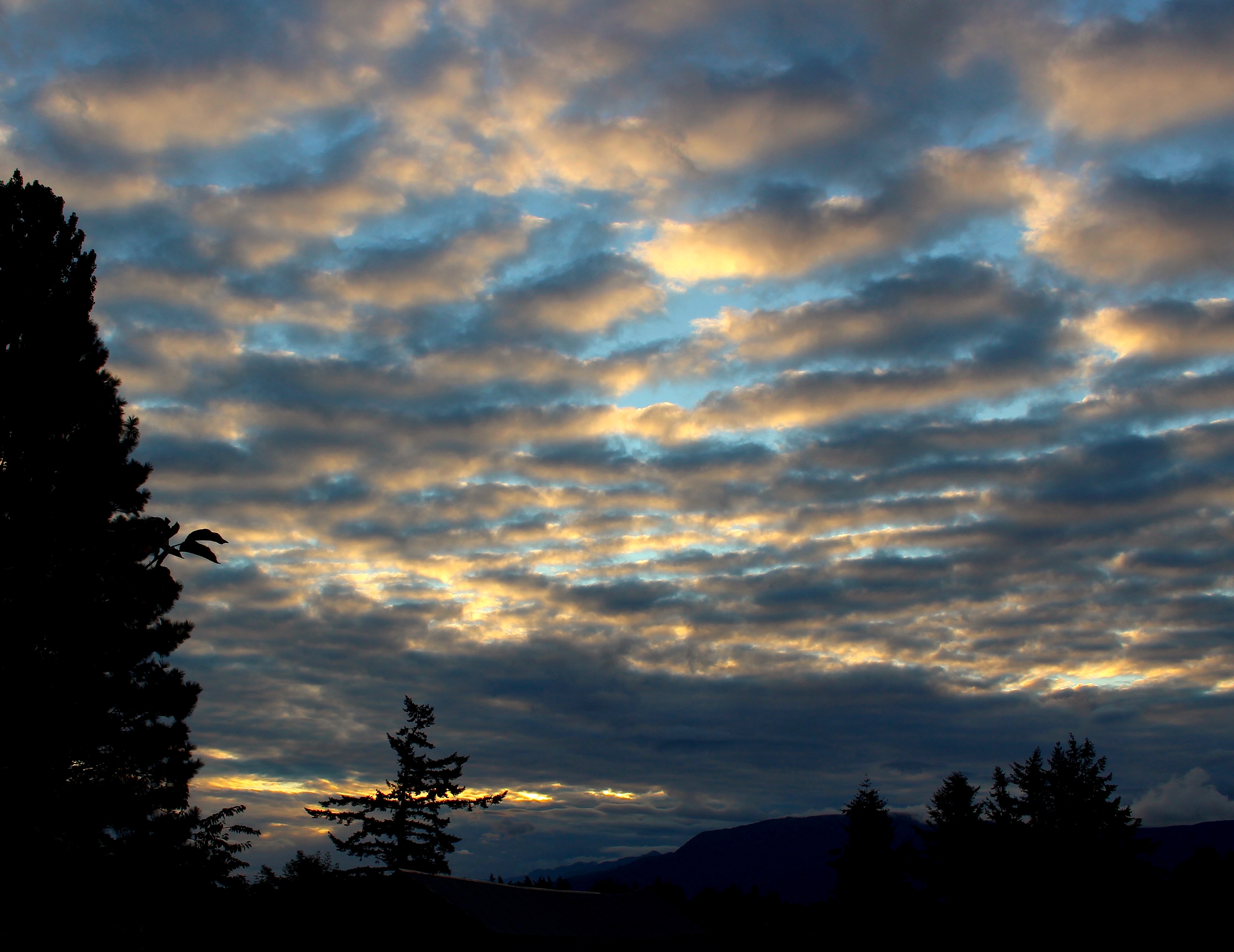
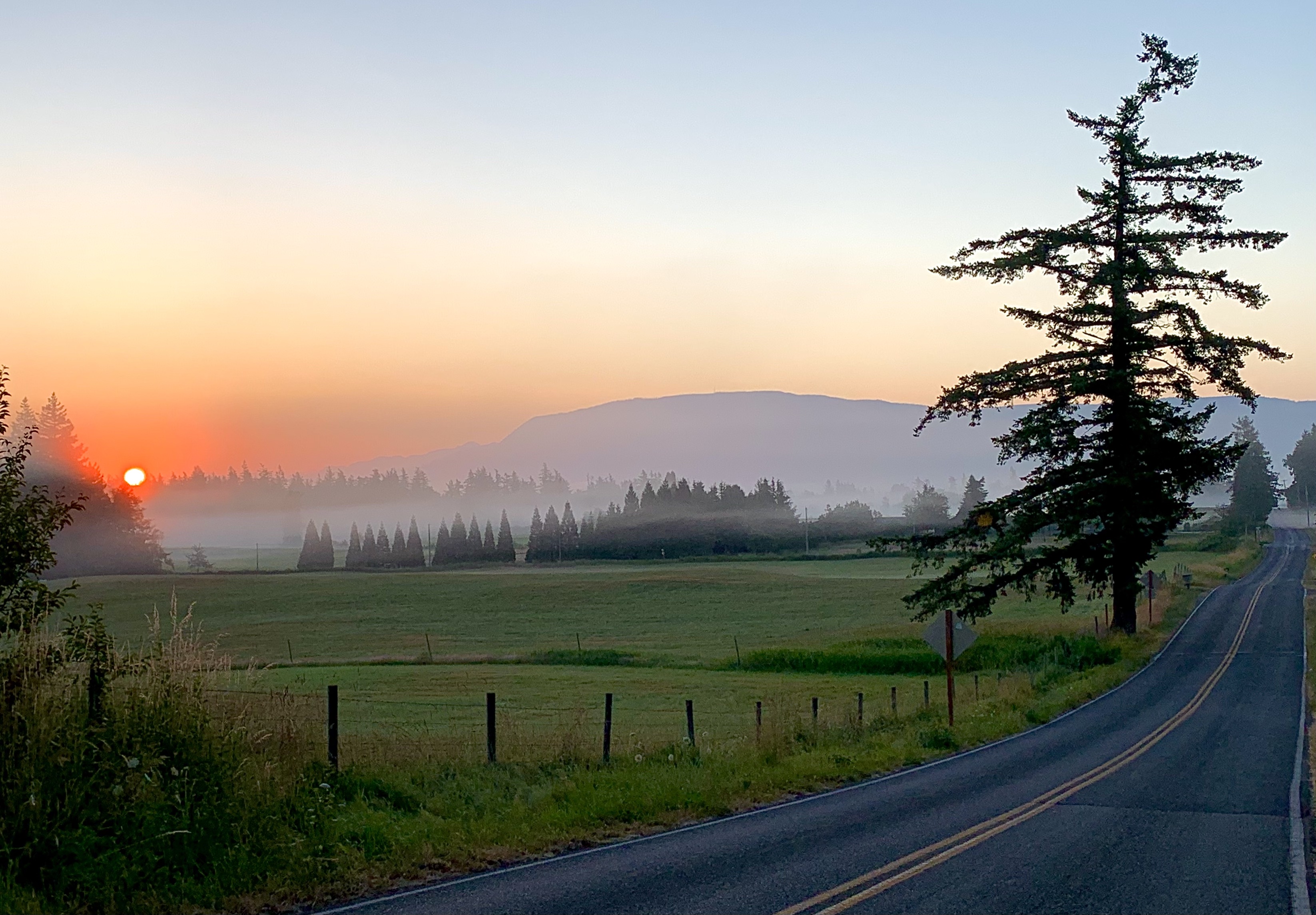
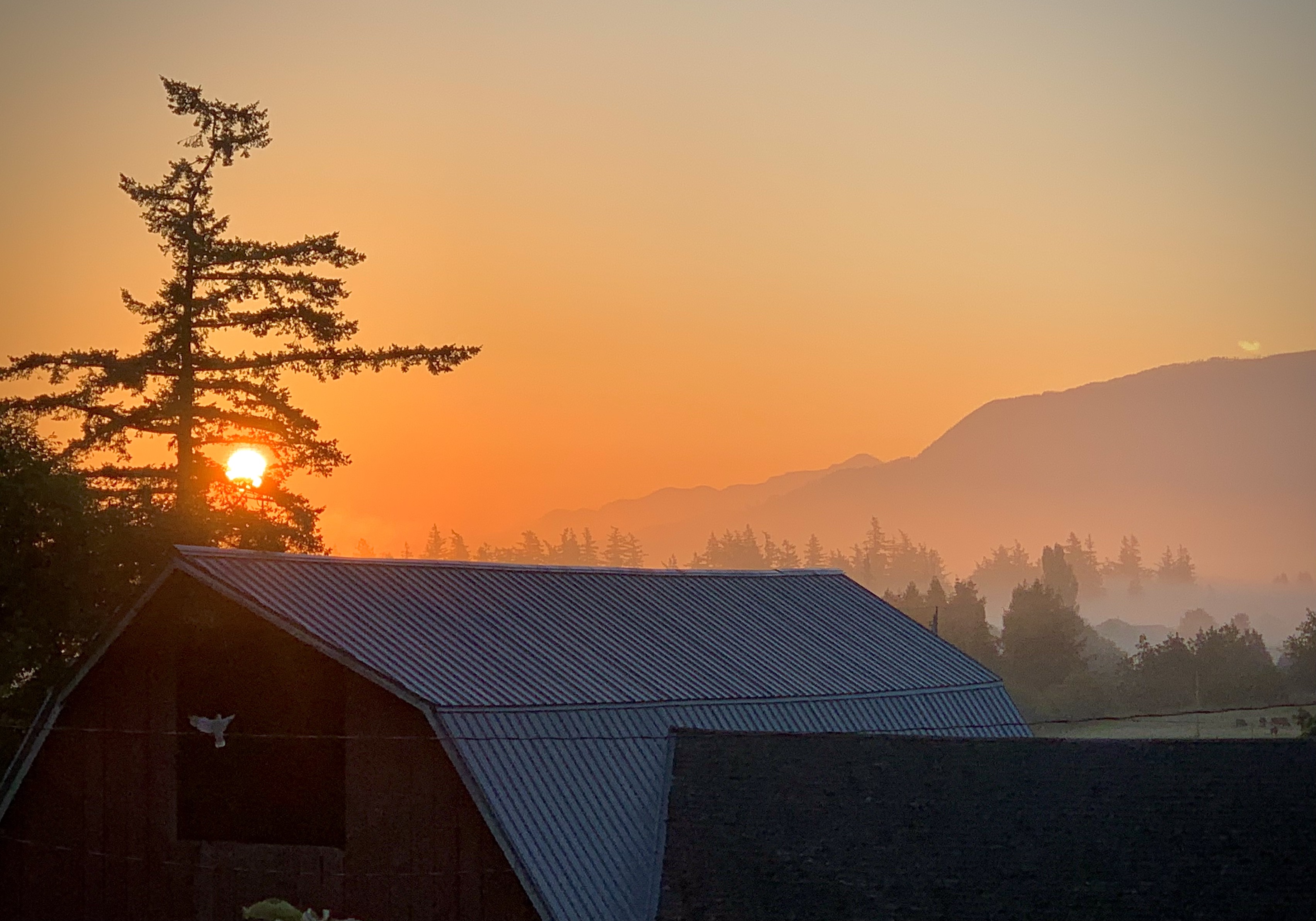
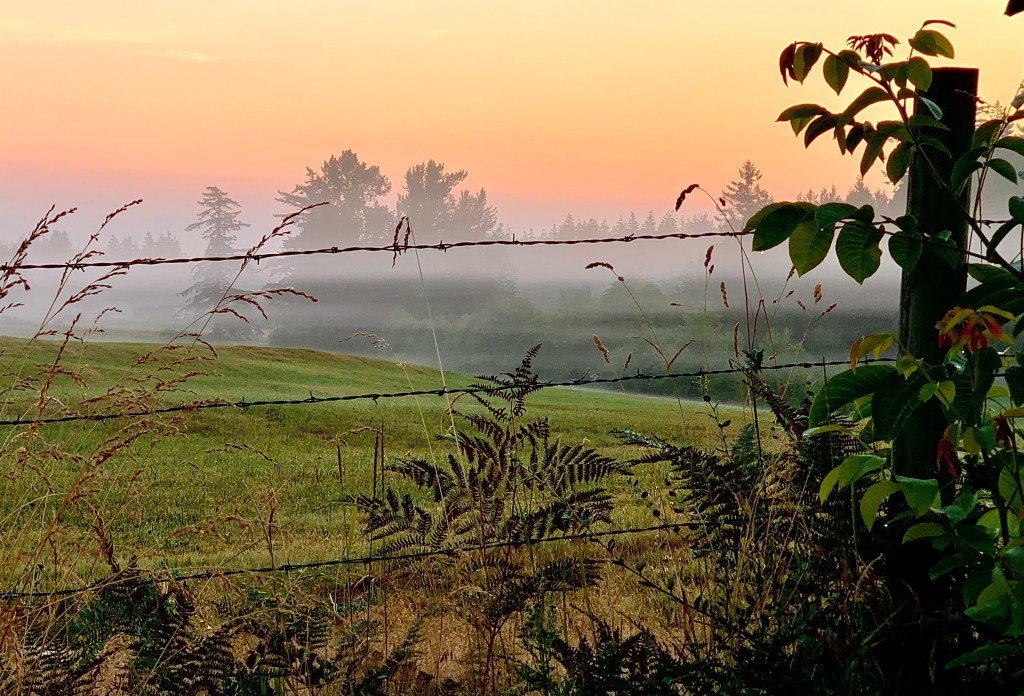
There is something mysterious about fog.
It whispered to Sandburg as it crept into the harbor


on little cat feet. It settles over Admiralty Inlet,
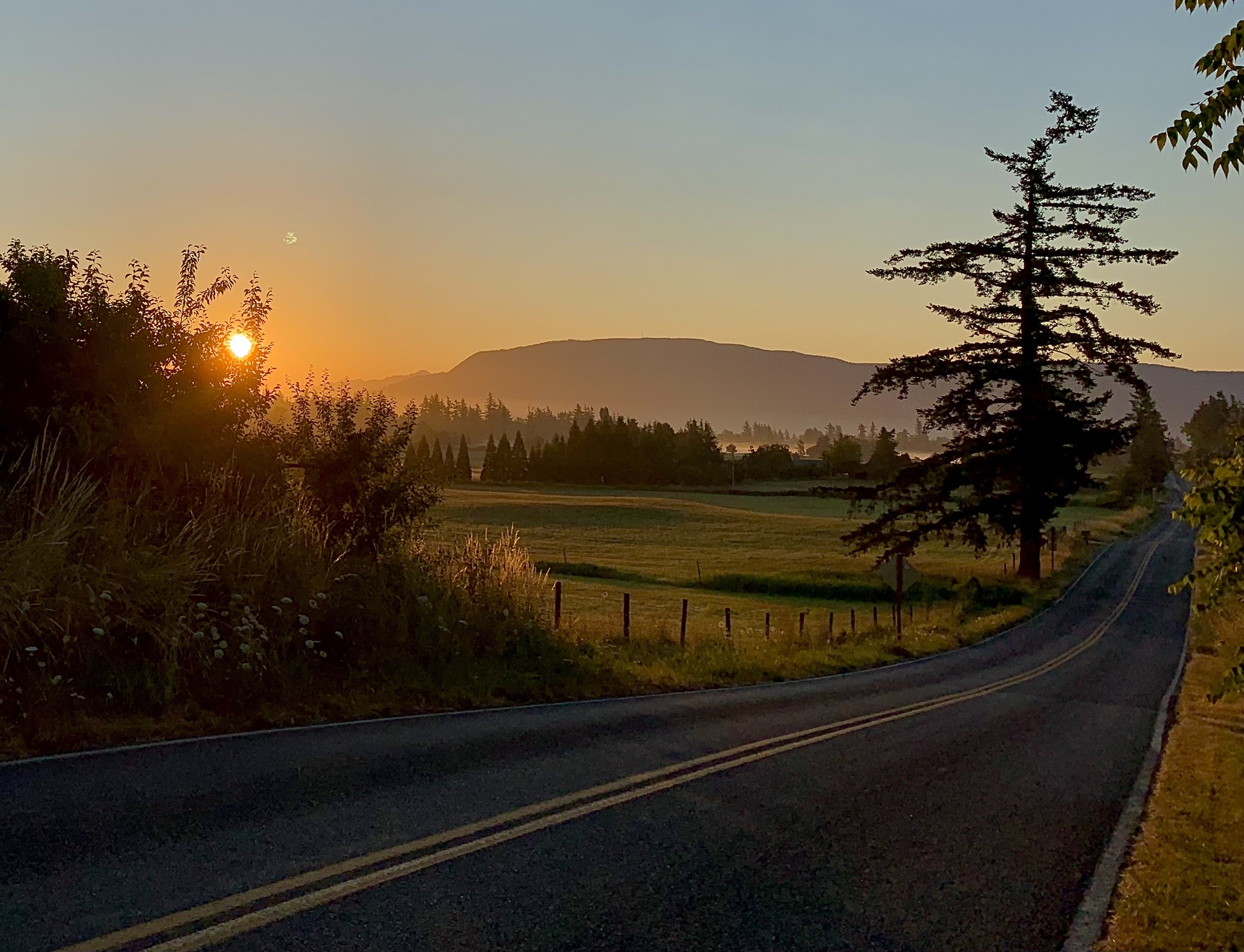
a down comforter of relief on a simmering summer day.


It moves in quickly, a cool mist that settles lightly
on our faces and arms as we trudge up the hill


toward home. Then the stillness, how it tamps down
sound, reminding us to honor silence and drift


through an inner landscape of ideas,
enter into the ethereal magic of another world
,

as if we were birds soaring in clouds
that have come down to enfold us,


quieting the minor furies we create.
~Lois Parker Edstrom from Glint (MoonPath Press, 2019)

And so you have a life that you are living only now,
now and now and now,
gone before you can speak of it,
and you must be thankful for living day by day,
moment by moment …
a life in the breath and pulse and living light of the present…

~Wendell Berry from Hannah Coulter

~Lustravit lampade terras~
(He has illumined the world with a lamp)
The weather and my mood have little connection.
I have my foggy and my fine days within me;
my prosperity or misfortune has little to do with the matter.
– Blaise Pascal from “Miscellaneous Writings”

The only thing more frightening than the unknown
is the fear that the next moment will be just like the last
or perhaps worse. 

I tend to forget:
the moment just passed can never be retrieved and relived.  

Worry and sorrow and angst are more contagious
than the latest viral scourge.
I mask up and wash my hands of it throughout the day.
I wish we could be vaccinated to protect us all from our unnamed fears.

I want to say to myself:
Stop and acknowledge this moment in time.
Stop wanting to be numb to all discomfort.
Stop fearing the next moment.
Just stop.
Instead, simply be,
now and now and now.

I need to know:
this moment, foggy or fine, is mine alone,
a down comforter of relief~
this moment of weeping and sharing
and breath and pulse and light.
I shout for joy in it
even when sound is muffled in morning fog.
It is to be celebrated.
I mustn’t hold back.

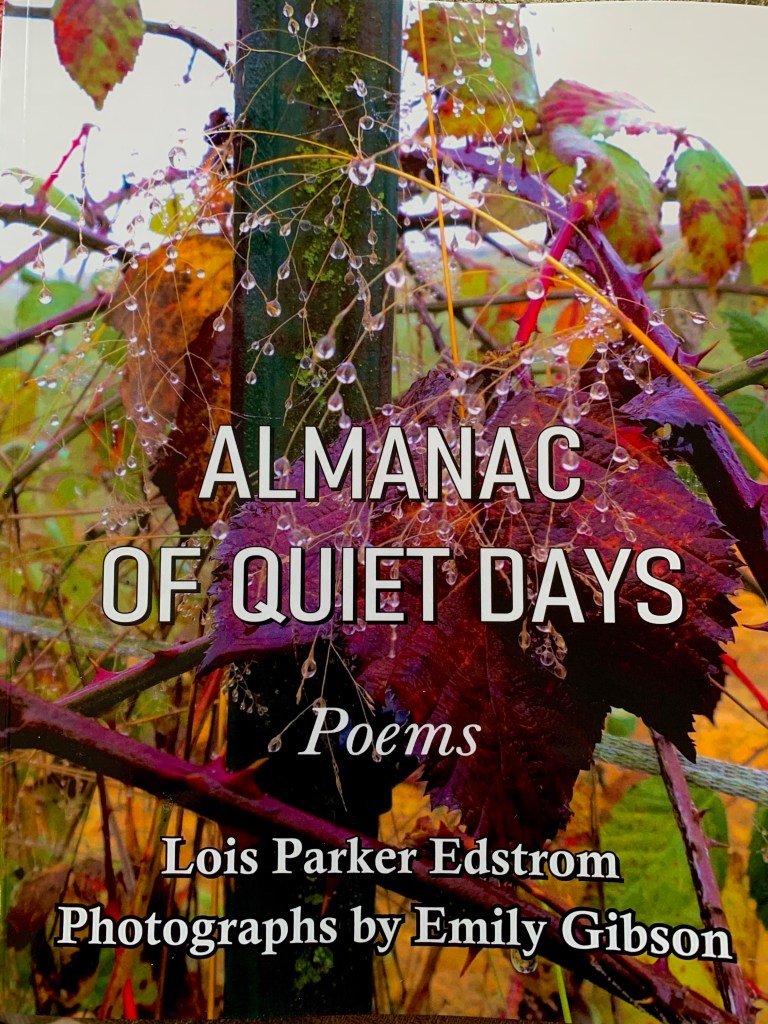
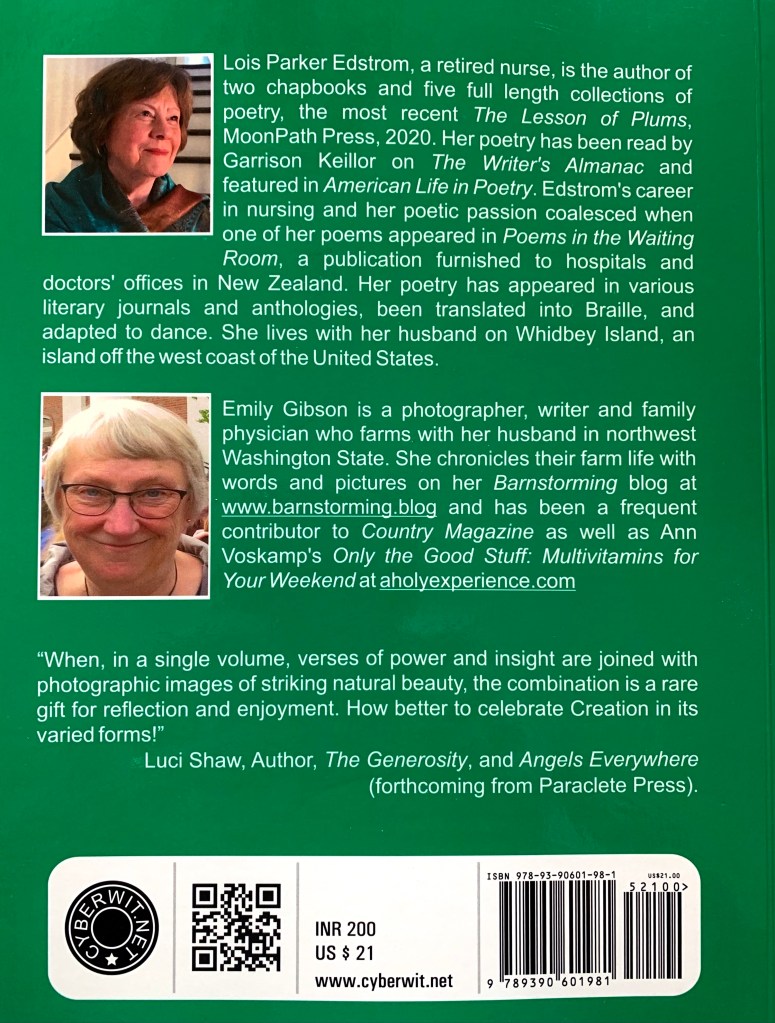
A new book from Barnstorming (with poetry from today’s poet Lois Edstrom) can be ordered here: