The Hinge of Faithfulness

No one compels you, traveler;
this road or that road, make your choice!
Dust or mud, heat or cold,
fellowship or solitude,
foul weather or a fairer sky,
the choice is yours as you go by.

But here if you would take this path
there is a gate whose latch is love,
whose key is single and which swings
upon the hinge of faithfulness,

and none can mock, who seeks this way,
the king we worship shamelessly.
If you would enter, traveler,
into this city fair and wide,
it is forever and you leave
all trappings of the self outside.

~Jane Tyson Clements from  No One Can Stem the Tide

What we call the beginning is often the end
And to make an end is to make a beginning.
The end is where we start from.

We shall not cease from exploration
And the end of all our exploring
Will be to arrive where we started
And know the place for the first time.
Through the unknown, unremembered gate
When the last of earth left to discover
Is that which was the beginning;
~T.S. Eliot from “Little Gidding” The Four Quartets

I can, with very little effort, remember the restlessness of my late teens once I learned homesickness was not a terminal condition.  There was a world out there to be explored just beyond the gate of my childhood barnyard, and I just knew I was meant to be a designated explorer and traveler, seeking out the extraordinary.

Ordinary simply wouldn’t do.  Ordinary was plentiful at my childhood home on a small farm with a predictable routine, a garden to be weeded and daily chores to be done, with middle-aged parents tight with tension in their struggling marriage.

On a whim at age nineteen, I applied for wild chimpanzee research study in Africa, and much to my shock, was accepted.  A year of academic and physical preparation as well as Swahili language study was required, so this was no impulsive adventure.   I had plenty of time to back out, reconsider, choose another path and retreat to ordinary again.

It was an adventure, far beyond what I had anticipated and trained for.  When I had to decide between more exploration, without clear purpose or funds, or returning home, I opted to return to the place I started. I saw home differently, as if for the first time,  after  experiencing the world in all its glory and ugliness. The next path I took, I needed to leave the trappings of myself behind, unlatch the gate with the key I had been given from the very beginning. The hinge of faithfulness opens the gate wide.

I must remember I have chosen the path that leads to forever, though neither smooth nor easy. Entering that unknown, unremembered gate means I will arrive where I started, back at the beginning and knowing the place for the first time.

What seemed to be the end proved to be the beginning…
Suddenly a wall becomes a gate.
~Henri Nouwen from A Letter of Consolation

Forever is Composed of Nows

Forever – is composed of Nows –
‘Tis not a different time –
Except for Infiniteness –
And Latitude of Home –

 
From this – experienced Here –
Remove the Dates – to These –
Let Months dissolve in further Months –
And Years – exhale in Years –

 
Without Debate – or Pause –
Or Celebrated Days –

No different Our Years would be
From Anno Dominies –
 ~Emily Dickinson, from The Complete Poems of Emily Dickinson

Whenever I feel overwhelmed with the news of the day, so much of which is depressingly dismal, I remind myself that there is still an infiniteness to life beyond this challenging year. Time passes like an ever-flowing stream: months dissolve into months, years exhale into years.

I flow right along with it, carried by the current though sometimes futilely fighting against it, trying to keep my nose above water.

No matter what may happen, no matter my frustration or sadness at the state of the world, things are beautiful in the moment now.

Forever is made up of nows — lots and lots and lots of nows. May the Year of our Lord be now and evermore into the infinite.

Just As I Left It

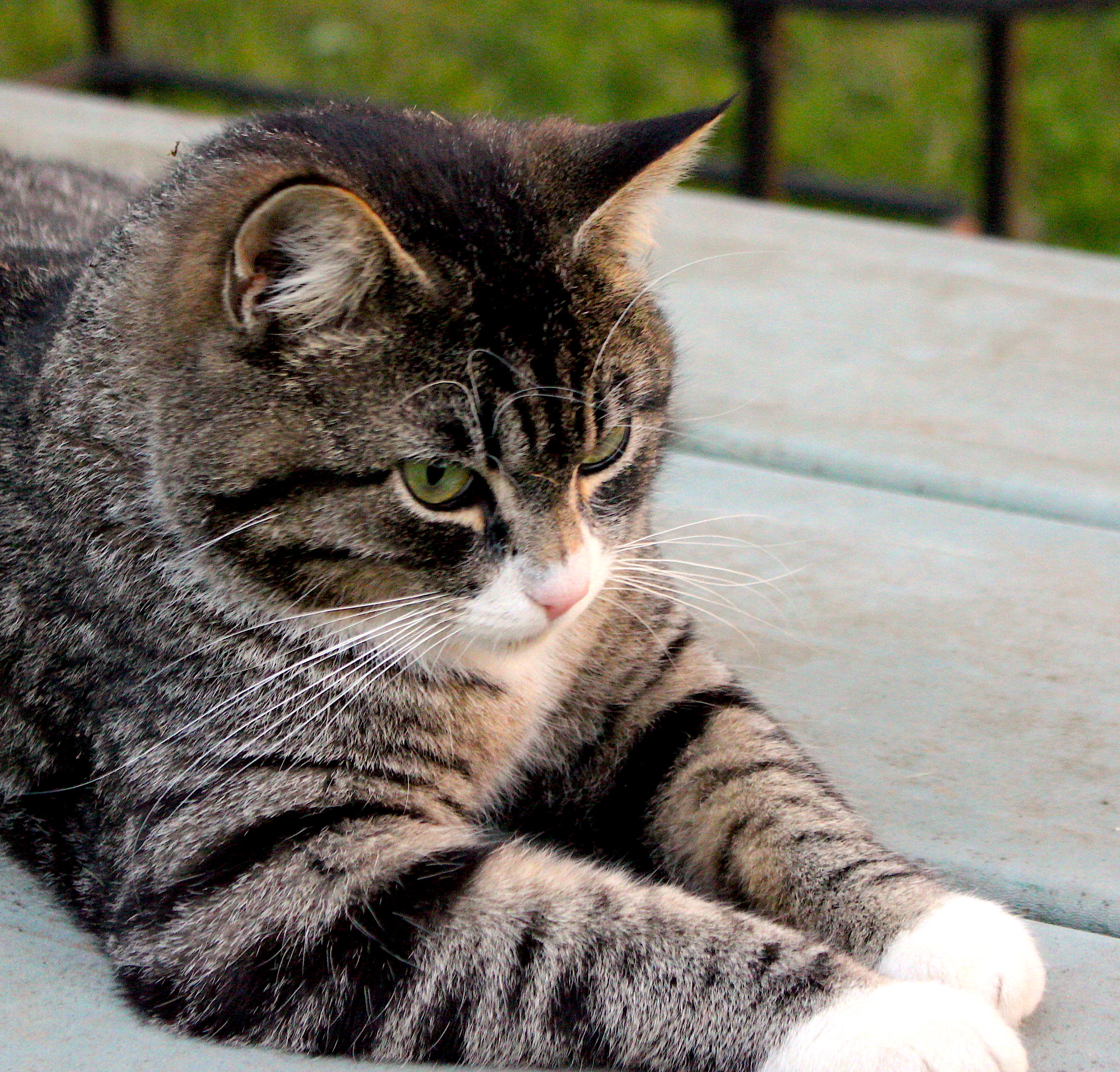
The cat calls for her dinner.
On the porch I bend and pour
brown soy stars into her bowl,
stroke her dark fur.
It’s not quite night.
Pinpricks of light in the eastern sky.
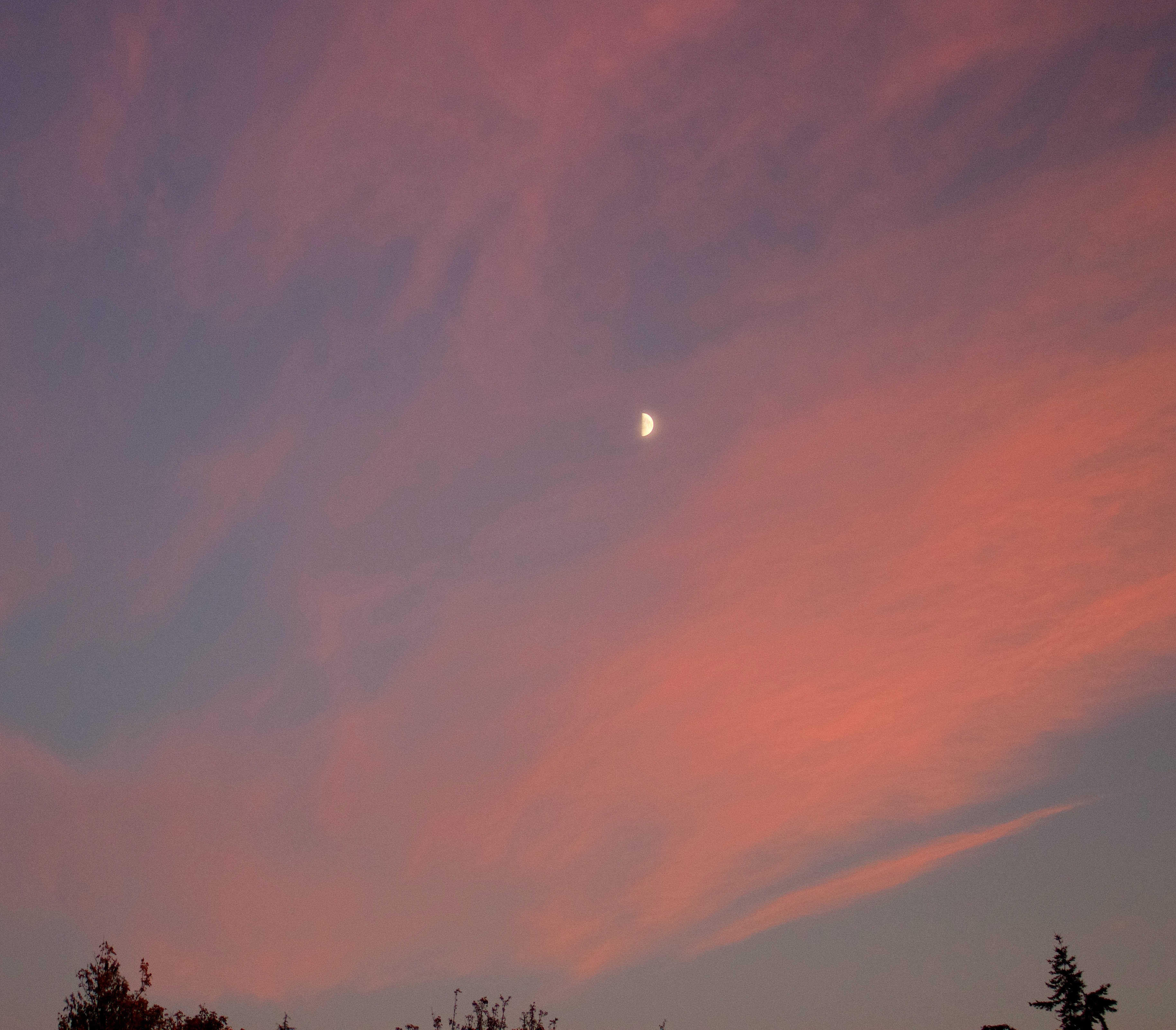
Above my neighbor’s roof, a transparent
moon, a pink rag of cloud.
Inside my house are those who love me.
My daughter dusts biscuit dough.
And there’s a man who will lift my hair
in his hands, brush it
until it throws sparks.
Everything is just as I’ve left it.
Dinner simmers on the stove.
Glass bowls wait to be filled
with gold broth. Sprigs of parsley
on the cutting board.
I want to smell this rich soup, the air
around me going dark, as stars press
their simple shapes into the sky.
I want to stay on the back porch
while the world tilts
toward sleep, until what I love
misses me, and calls me in.
~Dorianne Laux “On the Back Porch” from Awake

If just for a moment,
when the world feels like it is tilting so far
I just might fall off,
there is a need to pause
to look at where I’ve been
and get my feet back under me.

The porch is a good place to start:
a bridge to what exists beyond
without completely leaving the safety of inside.

I am outside looking square at uncertainty
and still hear and smell and taste
the love that dwells just inside these walls.

What do any of us want more
than to be missed if we were to step away
or be taken from this life?

Our voice, our words, our heart, our touch
never to be replaced,
its absence a hole impossible to fill?

When we are called back inside to the Love
that made us who we are,
may we leave behind the outside world
more beautiful because we were part of it.

Pounding the Earth

Nothing approaches a field like me. Hard
gallop, hard chest – hooves and mane and flicking
tail. My love: I apprehend each flower,
each winged body, saturated in a light
that burnishes. I would make a burnishing 
of you, by which I mean a field in flower,
by which i mean, a breaching – my hands
making an arrow of themselves, rooting
the loosened dirt. I would make for you
the barest of sounds, wing against wing,
there, at the point of articulation. Love, 
I pound the earth for you. I pound the earth. 

~Donika Kelly (2017) “Love Poem: The Centaur” from Bestiary

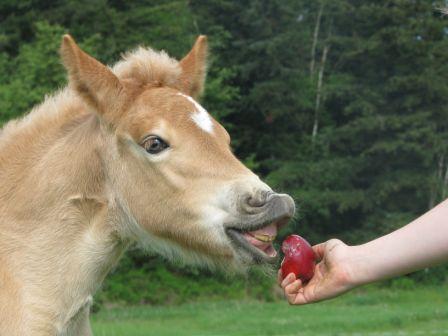
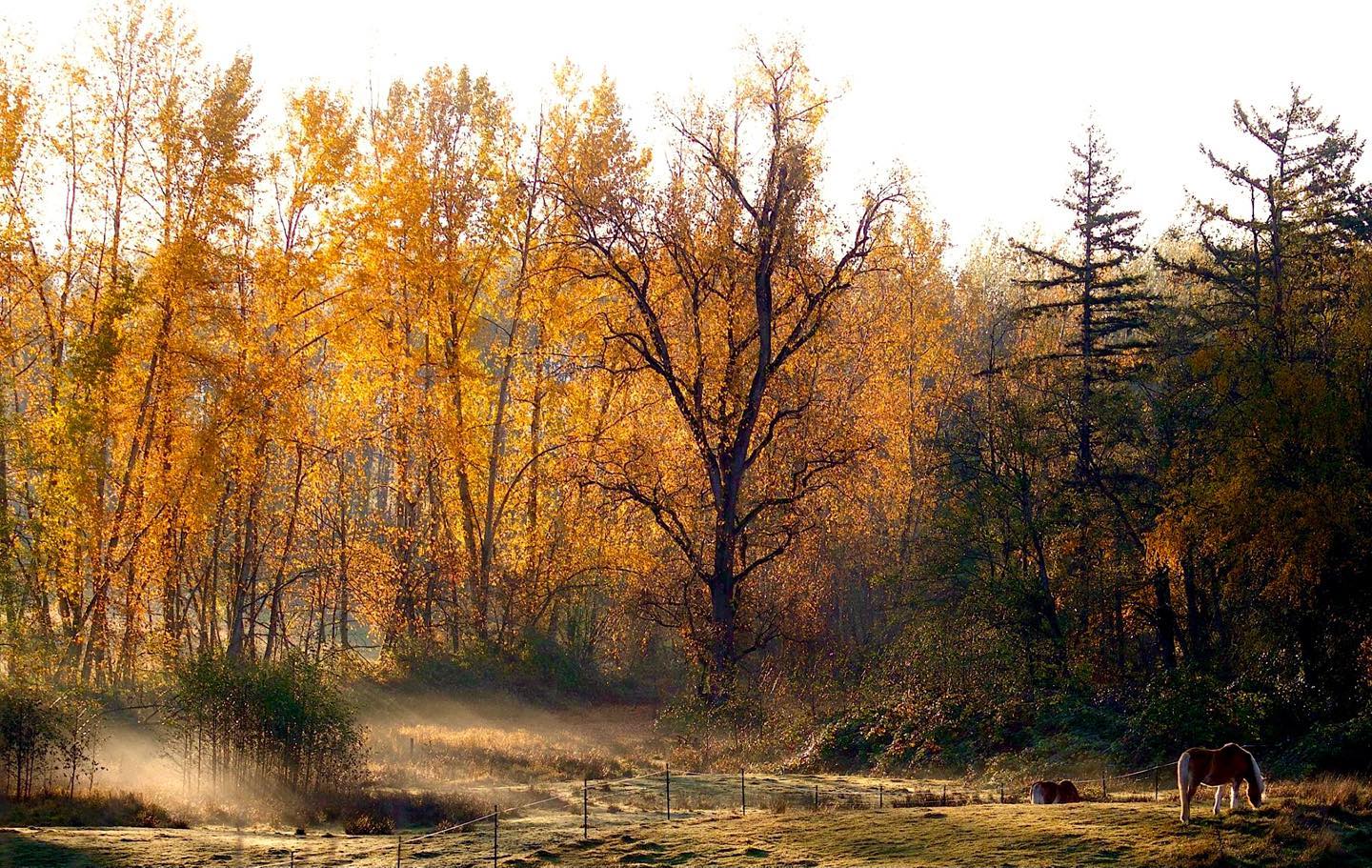
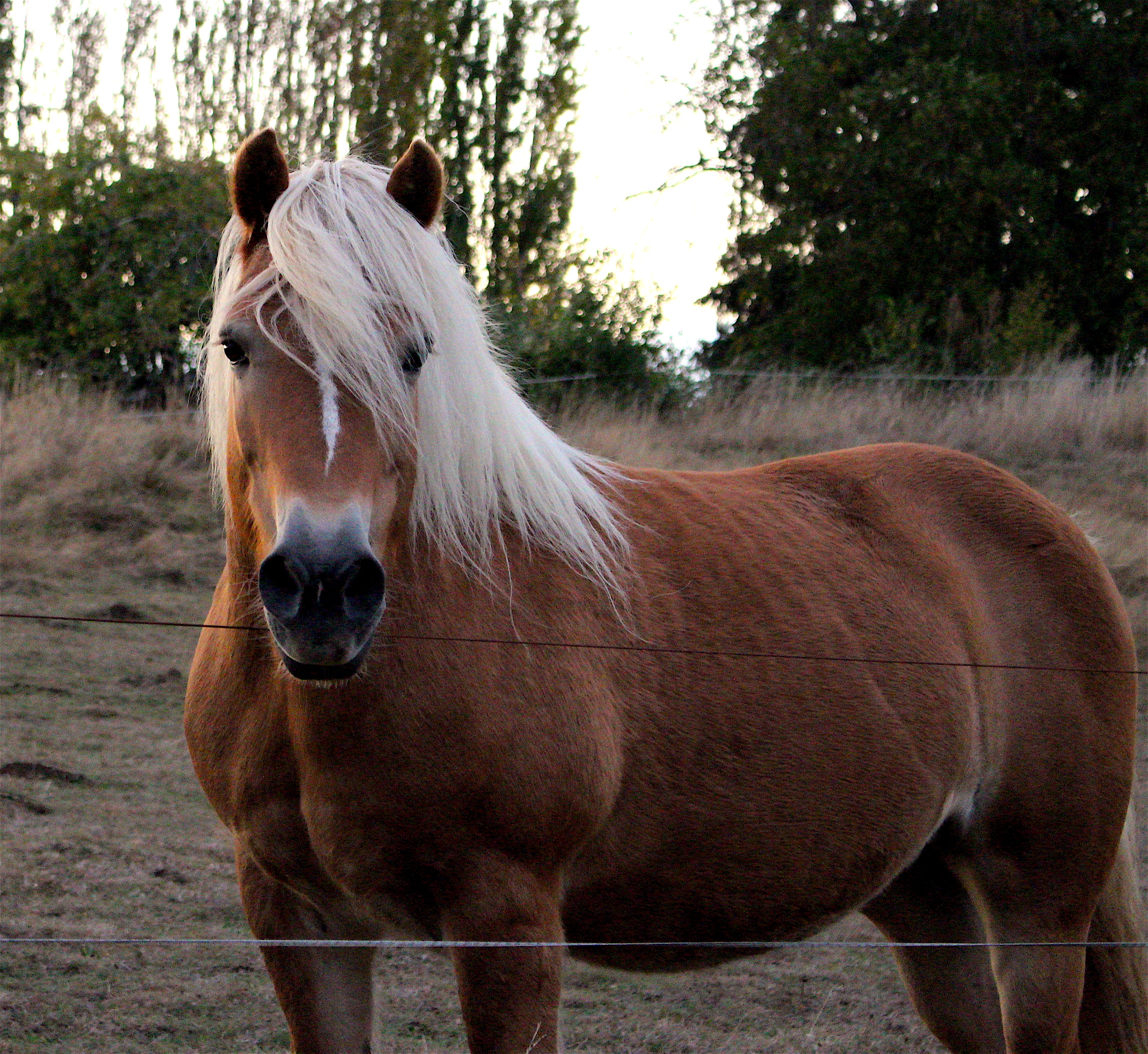
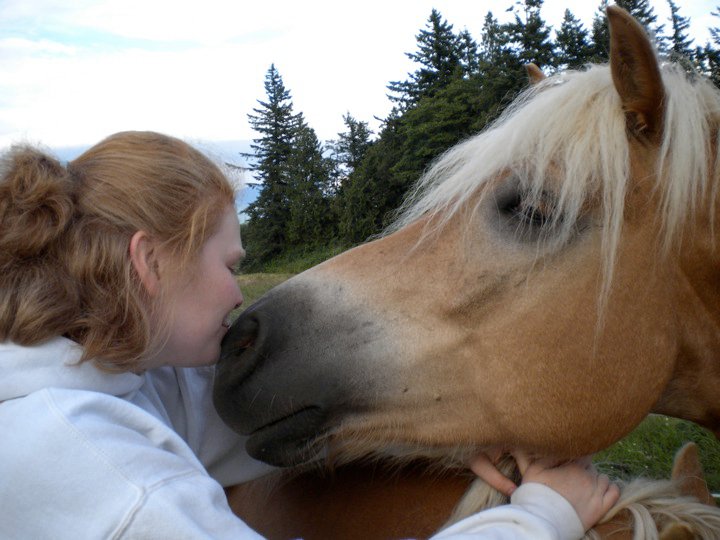
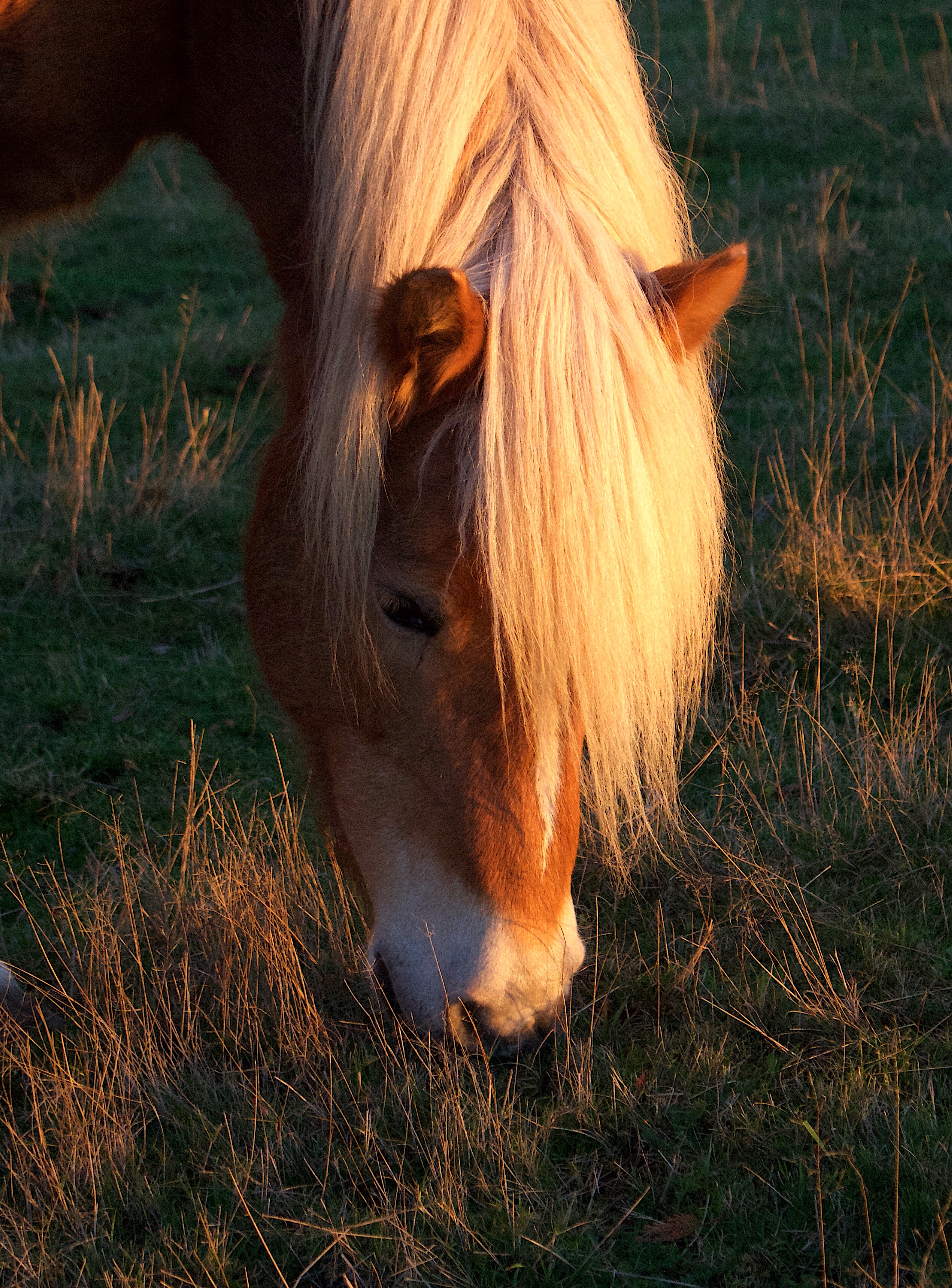
When Haflingers gallop in the field, it sounds like thunder as their hooves pound the earth. It can be a particularly ominous sound, especially in the middle of the night when the pounding hooves are going past our bedroom window which means only one thing: their field gate or the barn door has been breached. Haflingers are also Houdinis.

Their hooves may hug the ground, treading clover blossoms and blades of grass but I can see invisible wings as I watch them run. Their manes and tails float free even when the rest of their bodies are entirely earth-bound.

I know most of the time I move ponderously over the earth as well leaving my footprints behind. Some days I feel literally tethered to the ground, with no lightness of being whatsoever.

But once I breach the gate, I grow wings. The ground cannot hold me any longer and it rises to meet me as I fly.

Once the Weather Warms

As a child, my father helped me dig
a square of dense red clay, mark off rows
where zinnias would grow,
and radishes and tender spinach leaves.
He’d stand with me each night
as daylight drained away
to talk about our crops leaning on his hoe
as I would practice leaning so on mine.

Years later now in my big garden plot,
the soggy remnant stems of plants
flopped over several months ago,
the ground is cold, the berries gone,
the stakes like hungry sentries
stand guarding empty graves. And still
I hear his voice asking what I think
would best be planted once the weather warms.
~Margaret Mullins “Lonely Harvest” from Family Constellations

We were both raised by serious vegetable gardeners; as kids we helped plant and weed and harvest from large garden plots because that was how families fed themselves fresh produce rather than from a can. Even frozen vegetables were not plentiful in the stores and too expensive, so grow-it-yourself was a necessity before it became a trending hashtag.

Now, with his parents’ past guidance in his ears, my husband works the soil to prepare it yet again for yielding: the over-wintered shells of squash, the limp left-over bean vines, the stumps of corn stalks. Dark composted manure is mixed in, rototilled and fluffed, grass and weed roots pulled out. Then he carefully marks off the grid of rows and the decisions made about what goes where this year; what did well in the past? what didn’t germinate and what didn’t produce?

Then he lays the seeds and pats the soil down over the top and we wait.

Our garden has been yielding now for two weeks – plentiful greens and radishes and now fresh strawberries with peas coming on strong. It will be a resource for our church community and our winter meals as well as a fresh bounty for our table over the next three months.

Planting a garden is our very tangible expression of hope in the future when the present feels overwhelmingly gloomy with despair. Yet a garden doesn’t happen without our planning, work and care making that first spinach leaf, that first pea pod, that first strawberry taste even sweeter.

“All that is very well,” answered Candide, “but let us cultivate our
garden.”

~Voltaire’s last line from Candide

A Ceaseless Blessing

When I saw the figure on the crown of the hill,
high above the city, standing perfectly still

against a sky so saturated with the late-
afternoon, late-summer Pacific light

that granules of it seemed to have come out
of solution, like a fine precipitate

of crystals hanging in the brightened air,
I thought whoever it was standing up there

must be experiencing some heightened state
of being, or thinking—or its opposite,

thoughtlessly enraptured by the view.
Or maybe, looking again, it was a statue

of Jesus or a saint, placed there to bestow
a ceaseless blessing on the city below.

Only after a good five minutes did I see
that the figure was actually a tree—

some kind of cypress, probably, or cedar.
I was both amused and let down by my error.

Not only had I made the tree a person,
but I’d also given it a vision,

which seemed to linger in the light-charged air
around the tree’s green flame, then disappear.

~Jeffrey Harrison, “The Figure on the Hill” from Into Daylight.

A tree on our hill broods over us
through the decades,
day and night,
standing firm through sunrises and sunsets,
snow and wind and rain and blistering sun.

It isn’t mistaken for a person or statue
yet stands in steadfast silence
amid the ever-changing backdrop
and drama of uncertain times.

May these ceaseless blessings ever flow,
bestowed unimpeded
of a Love that hung
from the limbs of a tree on the hill.


The Same Unchangeableness

Spend your life trying to understand it, and you will lose your mind; but deny it and you will lose your soul.
~St. Augustine in his work “On the Trinity”

Here are two mysteries for the price of one — the plurality of persons within the unity of God, and the union of Godhead and manhood in the person of Jesus. . . . Nothing in fiction is so fantastic as is this truth of the Incarnation.
~J. L. Packer from Knowing God

photo by Josh Scholten

The story goes that Augustine of Hippo was walking on the beach contemplating the mystery of the Trinity.  Then he saw a boy in front of him who had dug a hole in the sand and was going out to the sea again and again and bringing some water to pour into the hole.

Augustine asked him, “What are you doing?”
“I’m going to pour the entire ocean into this hole.”
“That is impossible, the whole ocean will not fit in the hole you have made” said Augustine.
The boy replied, “And you cannot fit the Trinity in your tiny little brain.”

I accept that my tiny brain, ever so much tinier than St. Augustine’s,  cannot possibly absorb or explain the Trinity–I will not try to put the entire ocean in that small hole.  The many analogies used to help human understanding of the Trinity are dangerously limited in scope:
three candles, one light
vapor, water, ice
shell, yolk, albumin
height, width, depth
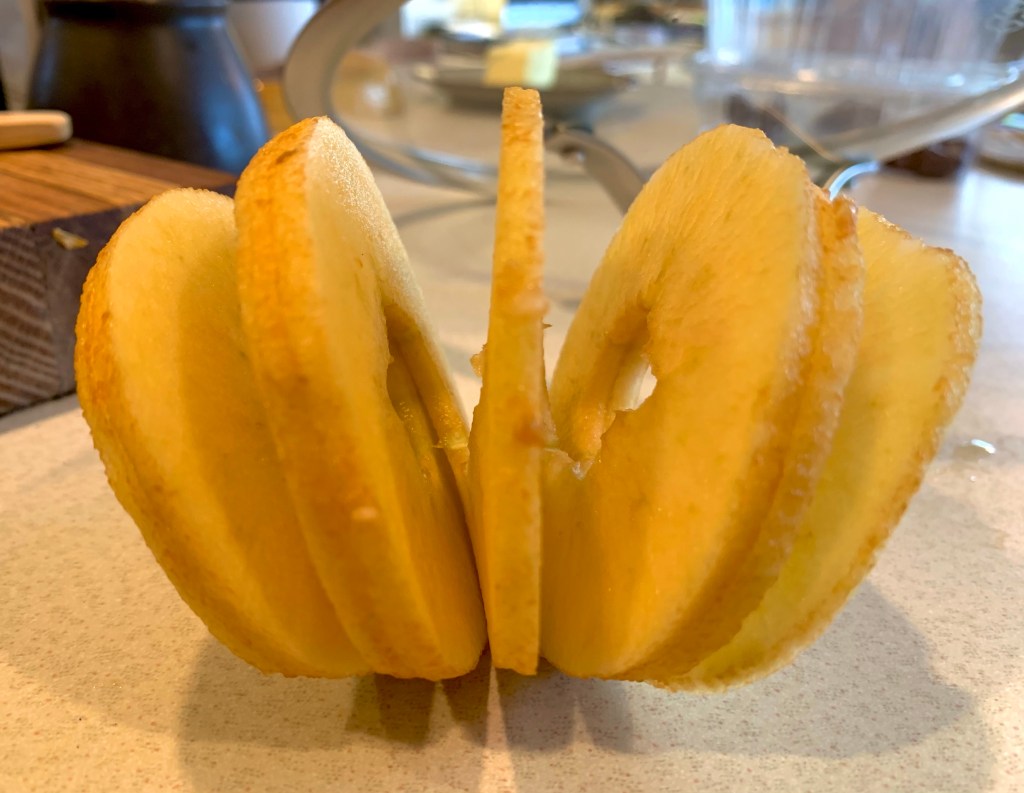
apple peel, flesh, core
past, present, future.

It is sufficient for me to know, as expressed by the 19th century Anglican pastor J.C. Ryle:  It was the whole Trinity, which at the beginning of creation said, “Let us make man”. It was the whole Trinity again, which at the beginning of the Gospel seemed to say, “Let us save man”.

All one, equal, harmonious, unchangeable, bound to save us from ourselves.


“It is not easy to find a name that will suitably express so great an excellence, unless it is better to speak in this way:
the Trinity, one God, of whom are all things, through whom are all things, in whom are all things. 
Thus the Father and the Son and the Holy Spirit, and each of these by Himself, is God,
and at the same time they are all one God;
and each of them by Himself is a complete substance, and yet they are all one substance.

The Father is not the Son nor the Holy Spirit;
the Son is not the Father nor the Holy Spirit;
the Holy Spirit is not the Father nor the Son:
but the Father is only Father,
the Son is only Son,
and the Holy Spirit is only Holy Spirit.

To all three belong the same eternity, the same unchangeableness, the same majesty, the same power.
In the Father is unity, in the Son equality, in the Holy Spirit the harmony of unity and equality.

And these three attributes are all one because of the Father, all equal because of the Son, and all harmonious because of the Holy Spirit.”
–Augustine of Hippo, On Christian Doctrine, I.V.5.

The Way We Love

I had a dog
  who loved flowers.
    Briskly she went
        through the fields,

yet paused
  for the honeysuckle
    or the rose,
        her dark head

and her wet nose
  touching
    the face
         of every one

with its petals
  of silk,
    with its fragrance
         rising

into the air
  where the bees,
    their bodies
        heavy with pollen,

hovered—
  and easily
     she adored
        every blossom,

not in the serious,
  careful way
    that we choose
        this blossom or that blossom—

the way we praise or don’t praise—
  the way we love
     or don’t love—
        but the way

we long to be—
  that happy
    in the heaven of earth—
        that wild, that loving.

~Mary Oliver “Luke” from Dog Songs

Why do we not feel the joie de vivre,
the ebullience and fullness of every moment? 
What makes us hide our nakedness rather than join in the walk
in the garden in the cool of the day?
What makes us choose this blossom or that, this tree or that,
this fruit or that, judging for ourselves what is good, better and best? 

What has happened to wild loving appreciation of the heaven of earth?

We gave it up for one taste; we lost heaven and regretted it immediately.

Even so,  joie de vivre awaits,
beyond this, above this. 
We are invited, all expenses paid,
yet unearned,
to go back to the way we long to be:

The incredible grace of loving wildly what we’re given.

Unless the Heart Catch Fire

The world is charged with the grandeur of God.
It will flame out, like shining from shook foil;
It gathers to a greatness, like the ooze of oil
Crushed. Why do men then now not reck his rod?
Generations have trod, have trod, have trod;
And all is seared with trade; bleared, smeared with toil;
And wears man’s smudge and shares man’s smell: the soil
Is bare now, nor can foot feel, being shod.

And for all this, nature is never spent;
There lives the dearest freshness deep down things;
And though the last lights off the black West went
Oh, morning, at the brown brink eastward, springs—
Because the Holy Ghost over the bent
World broods with warm breast and with ah! bright wings.
~Gerard Manley Hopkins “God’s Grandeur”

…the sudden angel affrighted me––light effacing
my feeble beam,
a forest of torches, feathers of flame, sparks upflying:
…as that hand of fire
touched my lips and scorched by tongue
and pulled by voice
into the ring of the dance.
~Denise Levertov from “Caedmon” in Breathing the Water

Unless the eye catch fire,
Then God will not be seen.
Unless the ear catch fire
Then God will not be heard.
Unless the tongue catch fire
Then God will not be named.
Unless the heart catch fire,
Then God will not be loved.
Unless the mind catch fire,
Then God will not be known.
~William Blake from “Pentecost”

Christ has no body now on earth but yours.
Yours are the only hands with which he can do his work.
yours are the only feet with which he can go about the world.
Yours are the only eyes through which his compassion
can shine forth upon a troubled world.
Christ has no body now on earth but yours.
~Teresa of Avila

Today,
when we feel we are without hope,
when the bent world reels with a troubled sickness of
shedding blood and spreading violence,
when faith feels frail,
when love seems distant,
we wait, stilled,
for the moment we ourselves – not our cities –
are lit afire ~
when the Living God is
seen, heard, named, loved, known
forever burning in our hearts deep down,
brooded over by His bright wings~
we are His dearest, His freshest deep down things,
in this moment
and for eternity.

Known and Unknown

As a fond mother, when the day is o’er,
   Leads by the hand her little child to bed,
   Half willing, half reluctant to be led,
   And leave his broken playthings on the floor,
Still gazing at them through the open door,
   Nor wholly reassured and comforted
   By promises of others in their stead,
   Which, though more splendid, may not please him more;
So Nature deals with us, and takes away
   Our playthings one by one, and by the hand
   Leads us to rest so gently, that we go
Scarce knowing if we wish to go or stay,
   Being too full of sleep to understand
   How far the unknown transcends the what we know.
~Henry Wadsworth Longfellow “Nature”

I remember being reluctant to go to bed as a child; I could miss something important that the adults waited to do until after I was asleep, or I wasn’t sure that I wanted to turn myself over to my dreams.

I had a period of time when I was in third grade (during the Cuban missile crisis) when I really was terrified to go to sleep, and ended up reading comic books during the night hours, trying to keep myself distracted from whatever fears I harbored. My mother, frantic for sleep herself during this worrisome time, consulted my pediatrician who prescribed orange juice with a tablespoon of brandy – for me, not for her. She was outraged at the thought, being a teetotaler, so bought no brandy for me (or for herself). I eventually got over my sleep issues, but not my worried heart.

The unknown is always more frightening than the known, and the older I got, the more I learned during 24 years of formal education and training, the more I realized I didn’t know. There would be no end to it. Even though I still spend several hours a week reading for required and non-required continuing medical education, I don’t crack the surface of everything that is news in my profession. There is a whole lot that I need to un-learn because it is now proven that it is no longer valid as it originally was over four decades of medical practice.

During the last three months of COVID-19, it is like drinking from several firehoses at once, as data on this previously unknown virus comes piecemeal from countless sources: the studies are rushed and sample sizes are small, conclusions are tentative, often barely peer-reviewed and sometimes disproven the next week by another study. What was considered “fact” a month ago may no longer be so.

So I know I must settle into the reality that there will always be plenty of unknowns, particularly as I reluctantly let go of life’s playthings one by one.

The unknown will always transcend the known on this side of the veil so I appreciate that I am gently led, in faith, to that long-awaited sleep that was so elusive before.