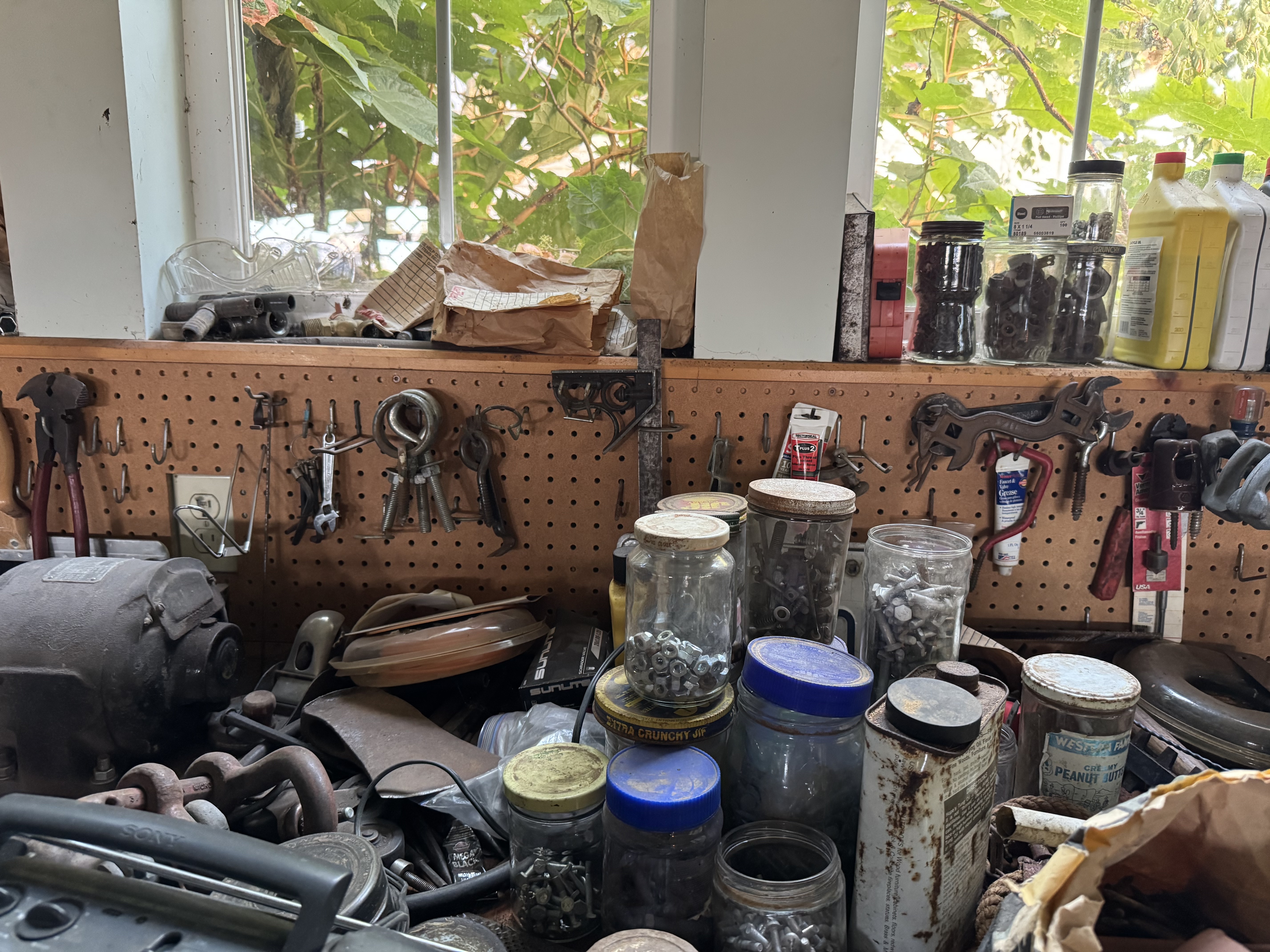
A Thing or Two

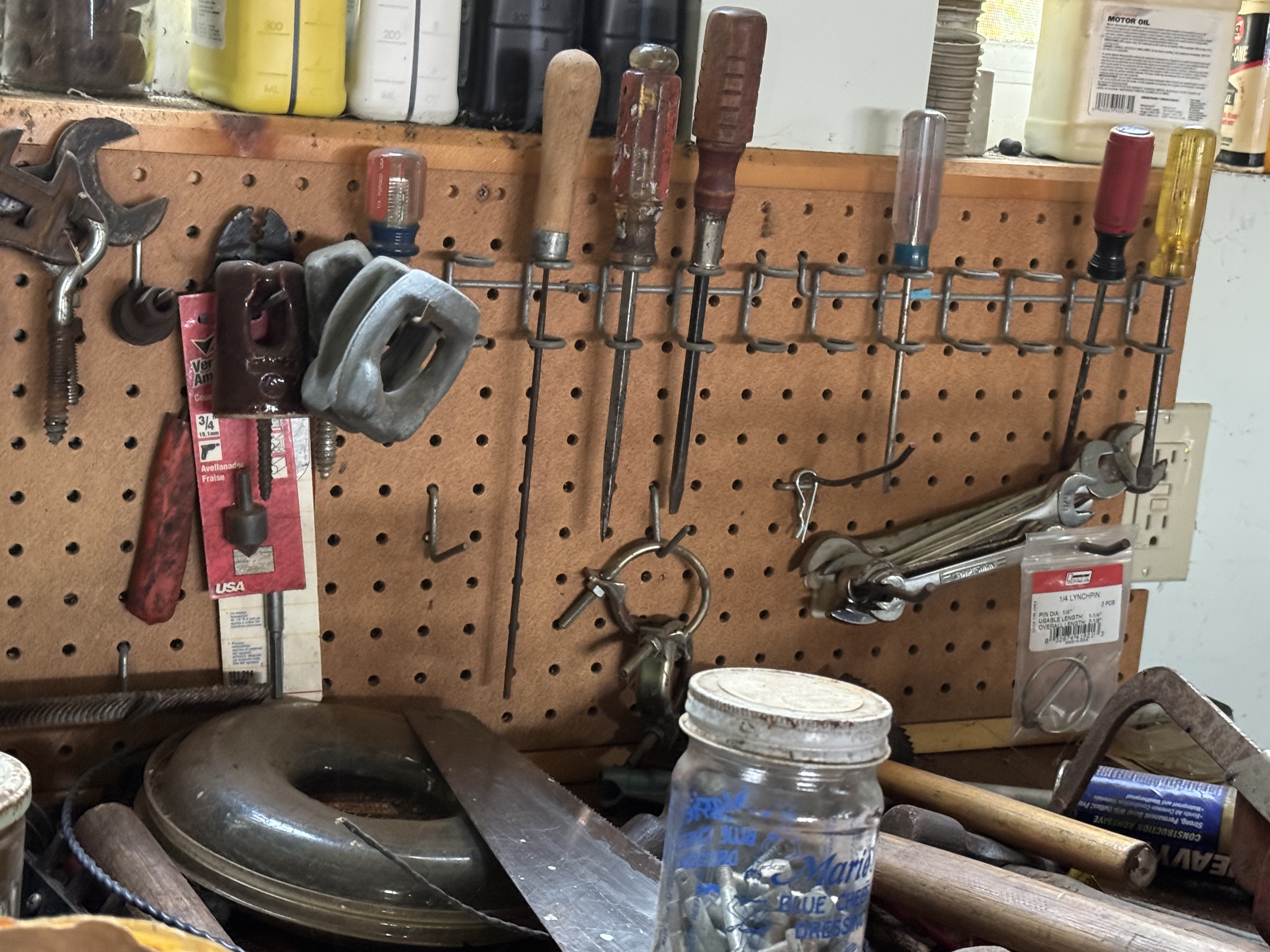
My father always knew the secret
name of everything—
stove bolt and wing nut,
set screw and rasp, ratchet
wrench, band saw, and ball—
peen hammer. He was my
tour guide and translator
through that foreign country
with its short-tempered natives
in their crewcuts and tattoos,
who suffered my incompetence
with gruffness and disgust.
Pay attention, he would say,
and you’ll learn a thing or two.


Now it’s forty years later,
and I’m packing up his tools
(If you know the proper
names of things you’re never
at a loss)
 tongue-tied, incompetent,
my hands and heart full
of doohickeys and widgets,
whatchamacallits, thingamabobs.

~Ronald Wallace “Hardware” from Time’s Fancy

“Hold on,” she said, “I’ll just run out and get him.
The weather here’s so good, he took the chance
To do a bit of weeding.”


So I saw him
Down on his hands and knees beside the leek rig,
Touching, inspecting, separating one
Stalk from the other, gently pulling up
Everything not tapered, frail and leafless,
Pleased to feel each little weed-root break,
But rueful also . . . 


Then found myself listening to
The amplified grave ticking of hall clocks
Where the phone lay unattended in a calm
Of mirror glass and sunstruck pendulums . . . 


And found myself then thinking: if it were nowadays,
This is how Death would summon
Everyman.

Next thing he spoke and I nearly said I loved him.
~Seamus Heaney “A Call” from ‘Poems That Make Grown Men Cry’

Between my finger and my thumb   
The squat pen rests; snug as a gun.
Under my window, a clean rasping sound   
When the spade sinks into gravelly ground: 
  

My father, digging. I look down
By God, the old man could handle a spade.
   

Just like his old man.
But I’ve no spade to follow men like them.

Between my finger and my thumb
The squat pen rests.
I’ll dig with it.

~Seamus Heaney from “Digging” from Death of a Naturalist

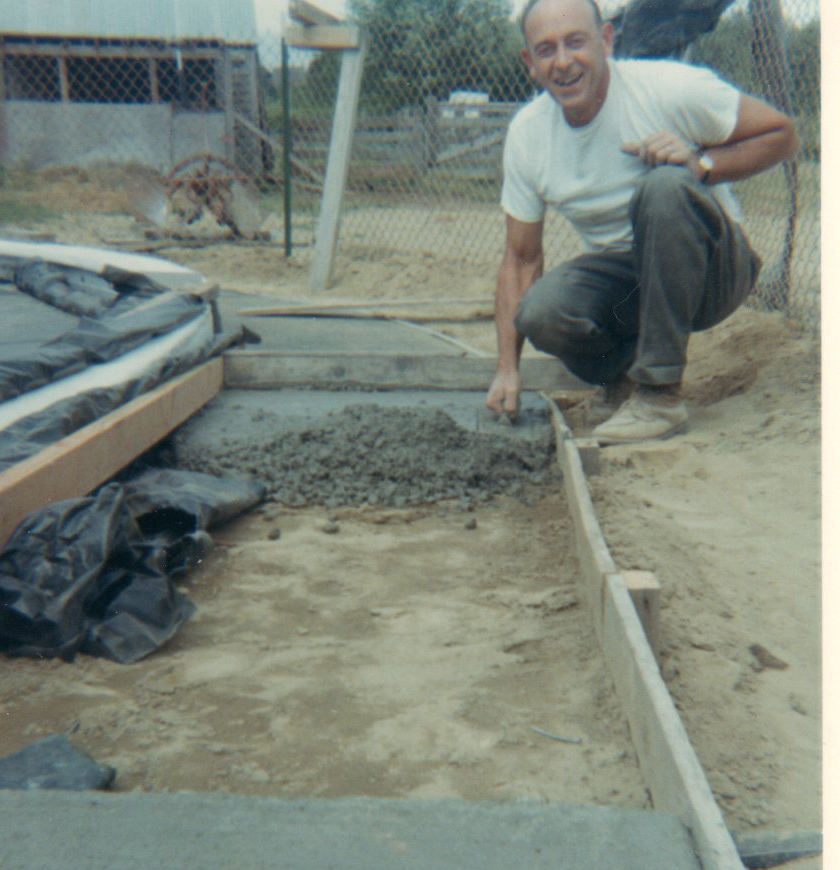
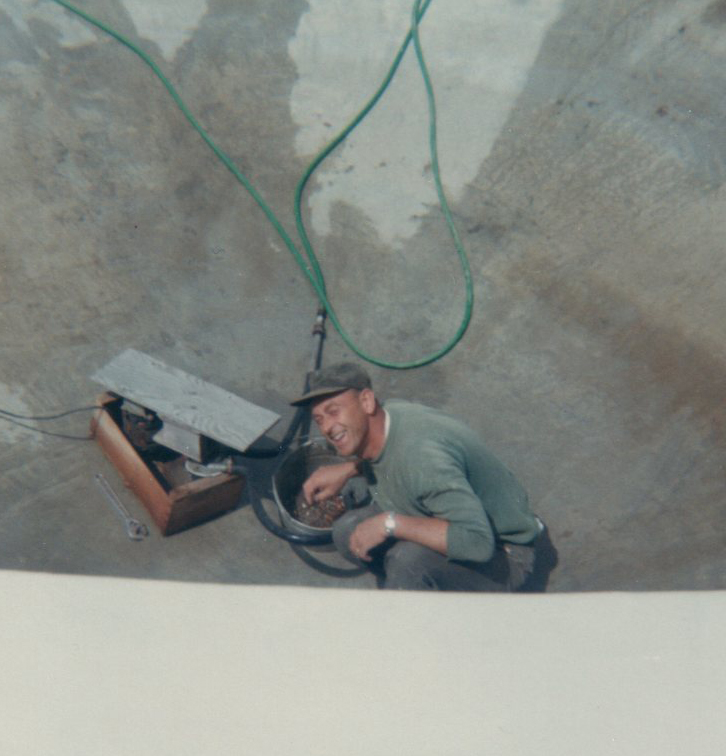
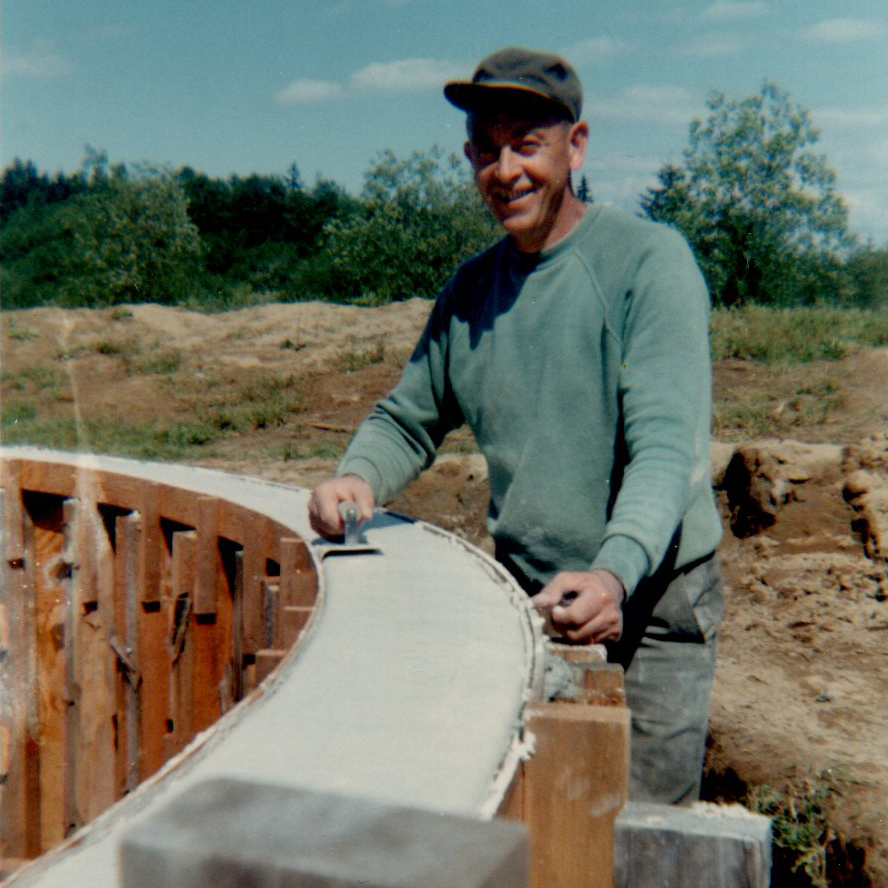
My father was a complex man. As I’ve aged, I understand better where my own complicated nature comes from.

As inscrutable as he could be, there were things I absolutely understood about him:

he was a man of action
– he never just sat, never took a nap, never wasted a day of his life without accomplishing something tangible.

he was a man of the soil
– he plowed and harrowed and sowed and fertilized and weeded and cut brush and harvested

he was a man of inventiveness
– he figured out a better way, he transformed tools and buildings, he started from scratch and built the impossible

he didn’t explain himself
– and never felt the need to.

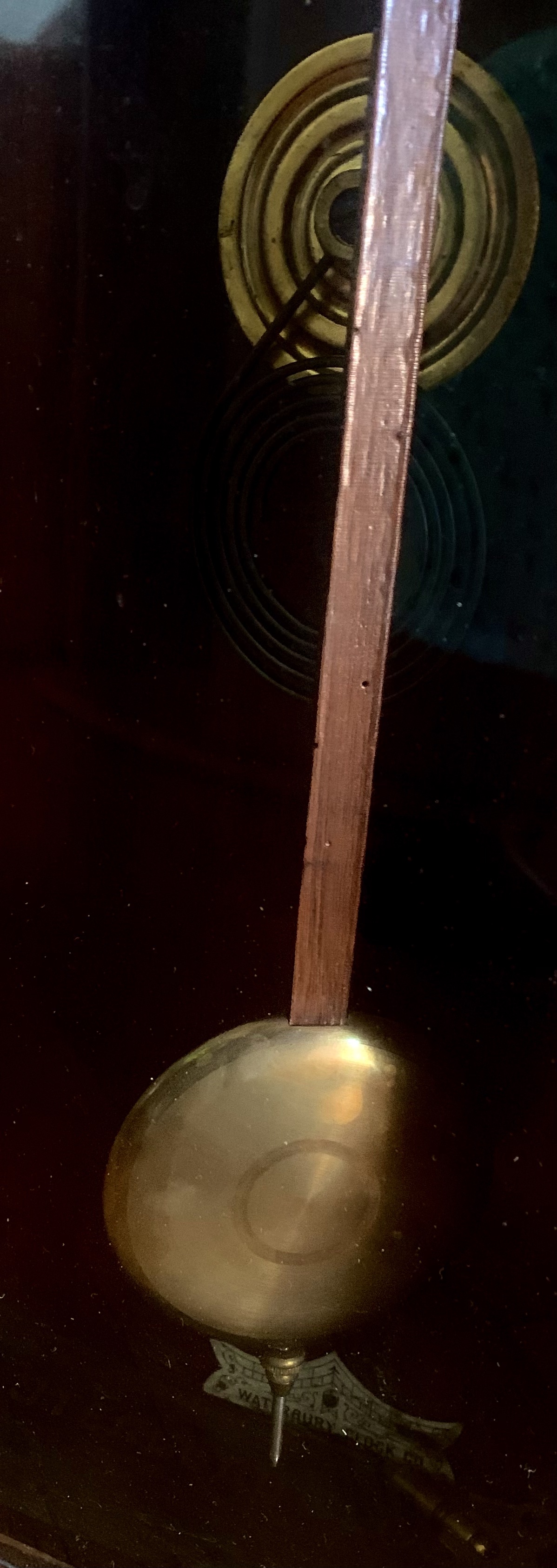
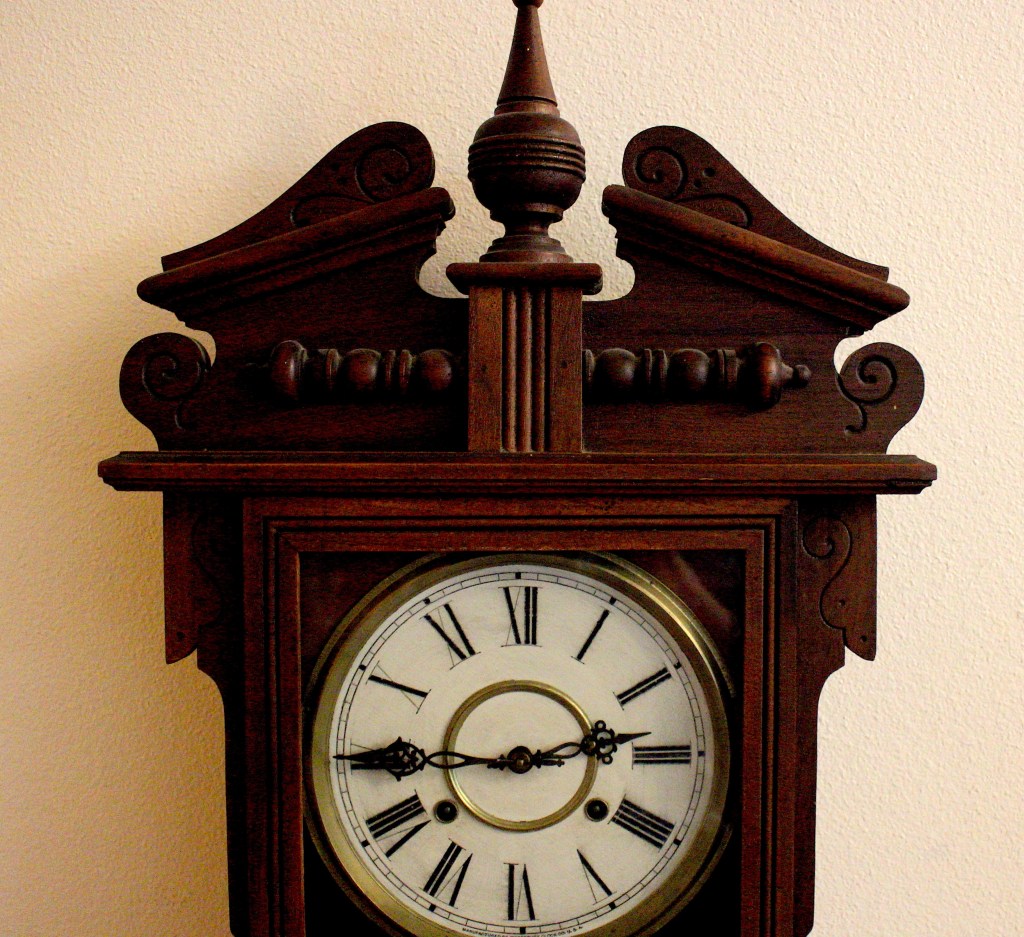
Time keeps ticking on without him here, now 30 years since he took his last breath as the clock pendulum swung back and forth in his bedroom. He was taken too young for all the projects he still had in mind.

He handed off a few to me.
Some I have done.
Some still wait, I’m not sure why.

My regret is not understanding how much he needed to hear how loved he was. He seemed fine without it being said.

But he wasn’t fine. And neither was I.

I wish I had said it when I had the chance.
I guess I am digging it out from the soil of my heart now.

One-Time
Monthly
Yearly

Make a one-time or recurring donation to support daily Barnstorming posts

Make a monthly donation

Make a yearly donation

Choose an amount

$10.00
$25.00
$50.00
$5.00
$15.00
$100.00
$5.00
$15.00
$100.00

Or enter a custom amount

$

Your contribution is deeply appreciated.

Your contribution is appreciated.

Your contribution is appreciated.

DonateDonate monthlyDonate yearly
Keep Reaching Out

Under a sky the color of pea soup
she is looking at her work growing away there
actively, thickly like grapevines or pole beans
as things grow in the real world, slowly enough.
If you tend them properly, if you mulch, if you water,
if you provide birds that eat insects a home and winter food,
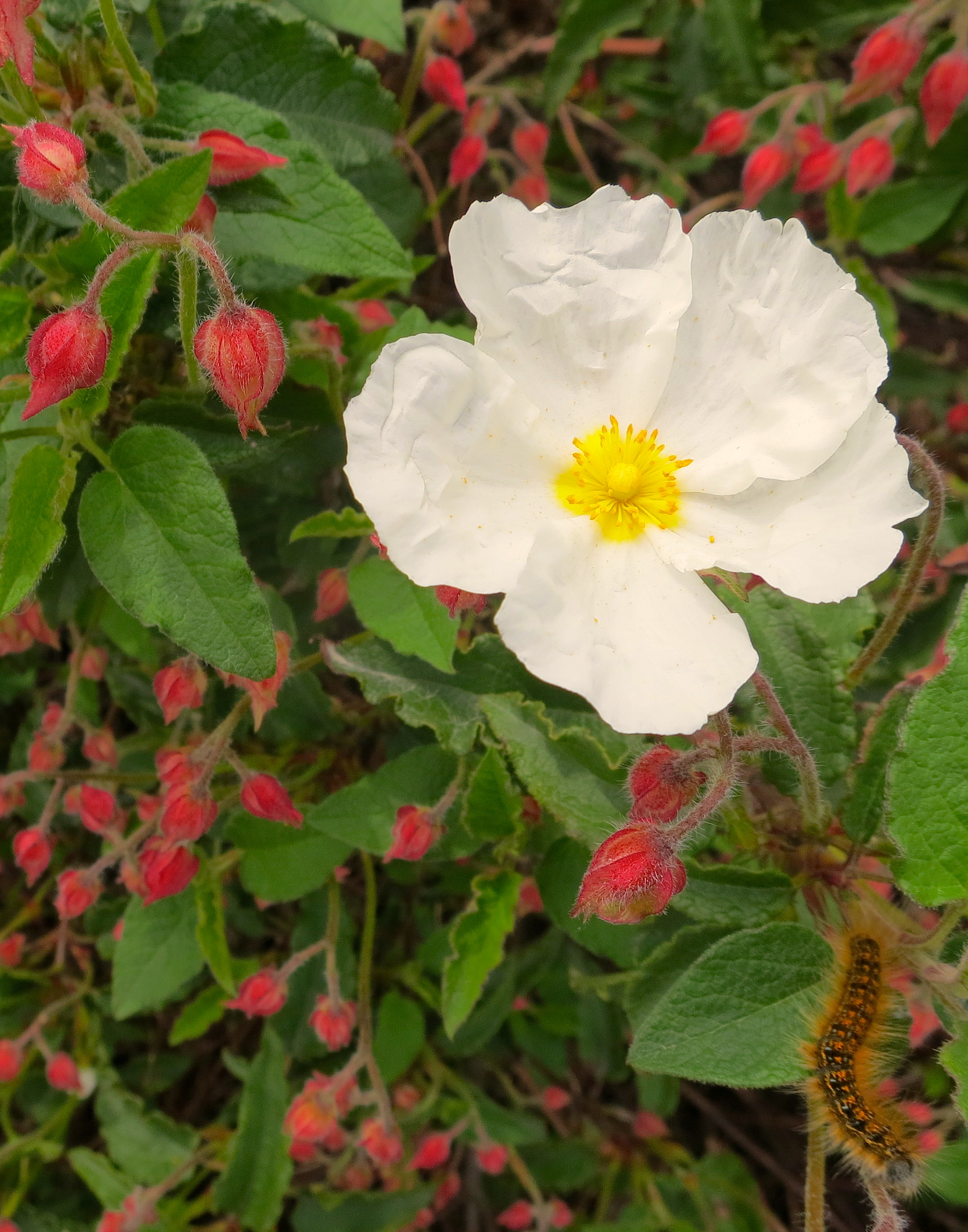
if the sun shines and you pick off caterpillars,
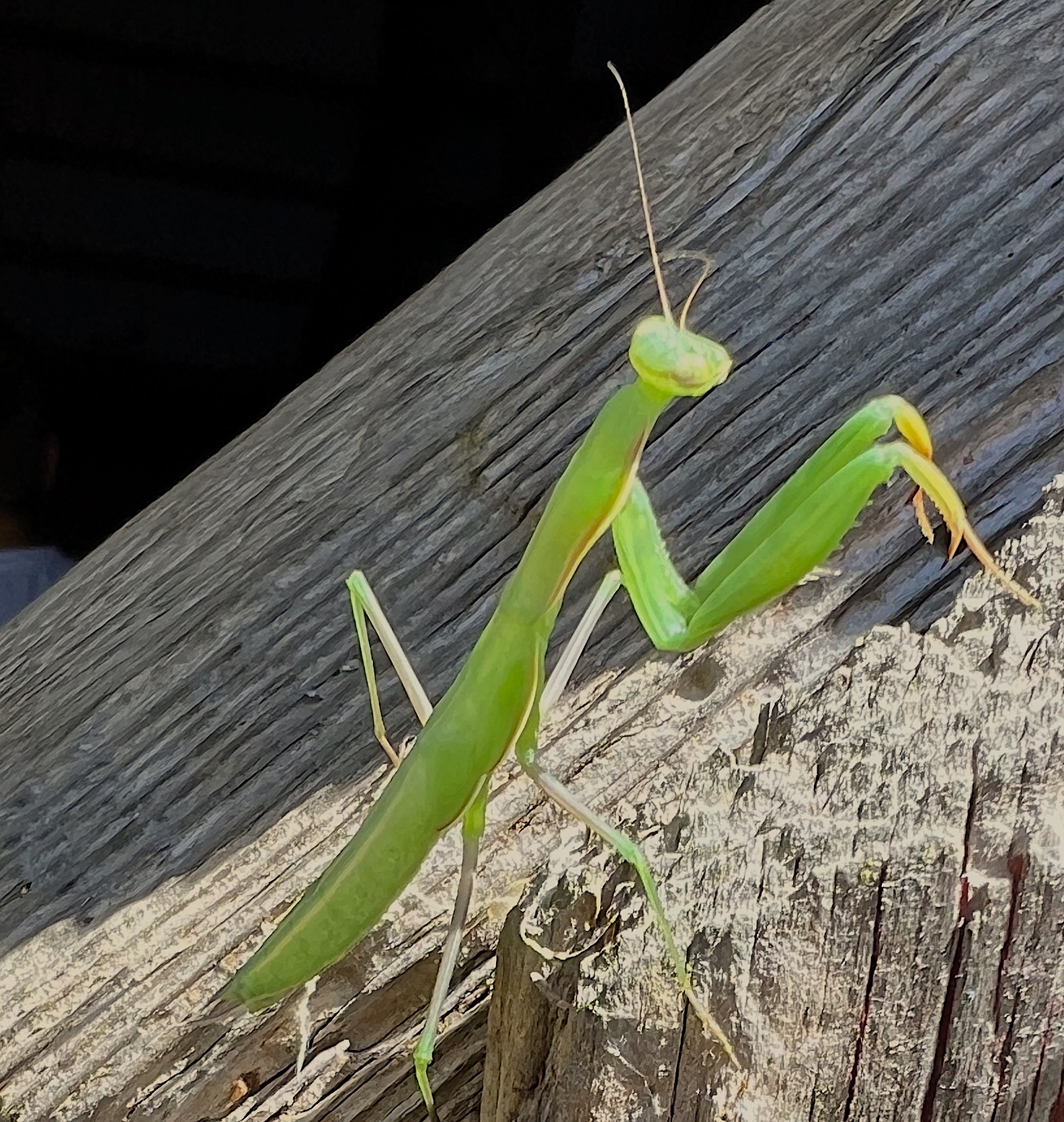
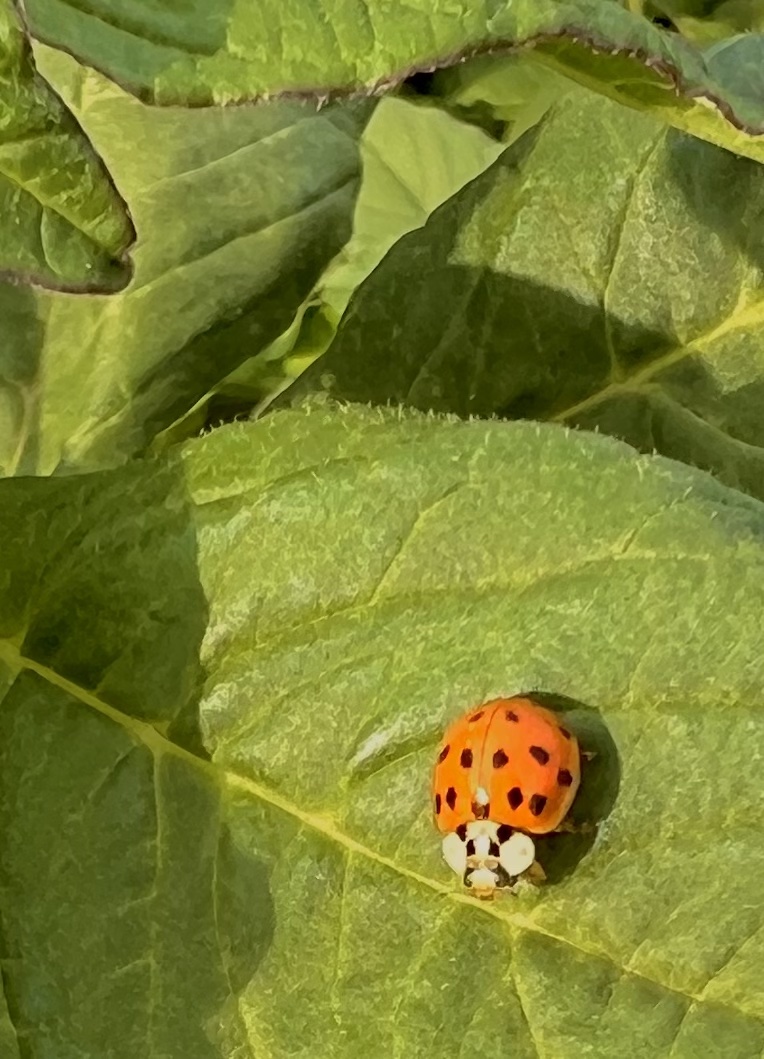
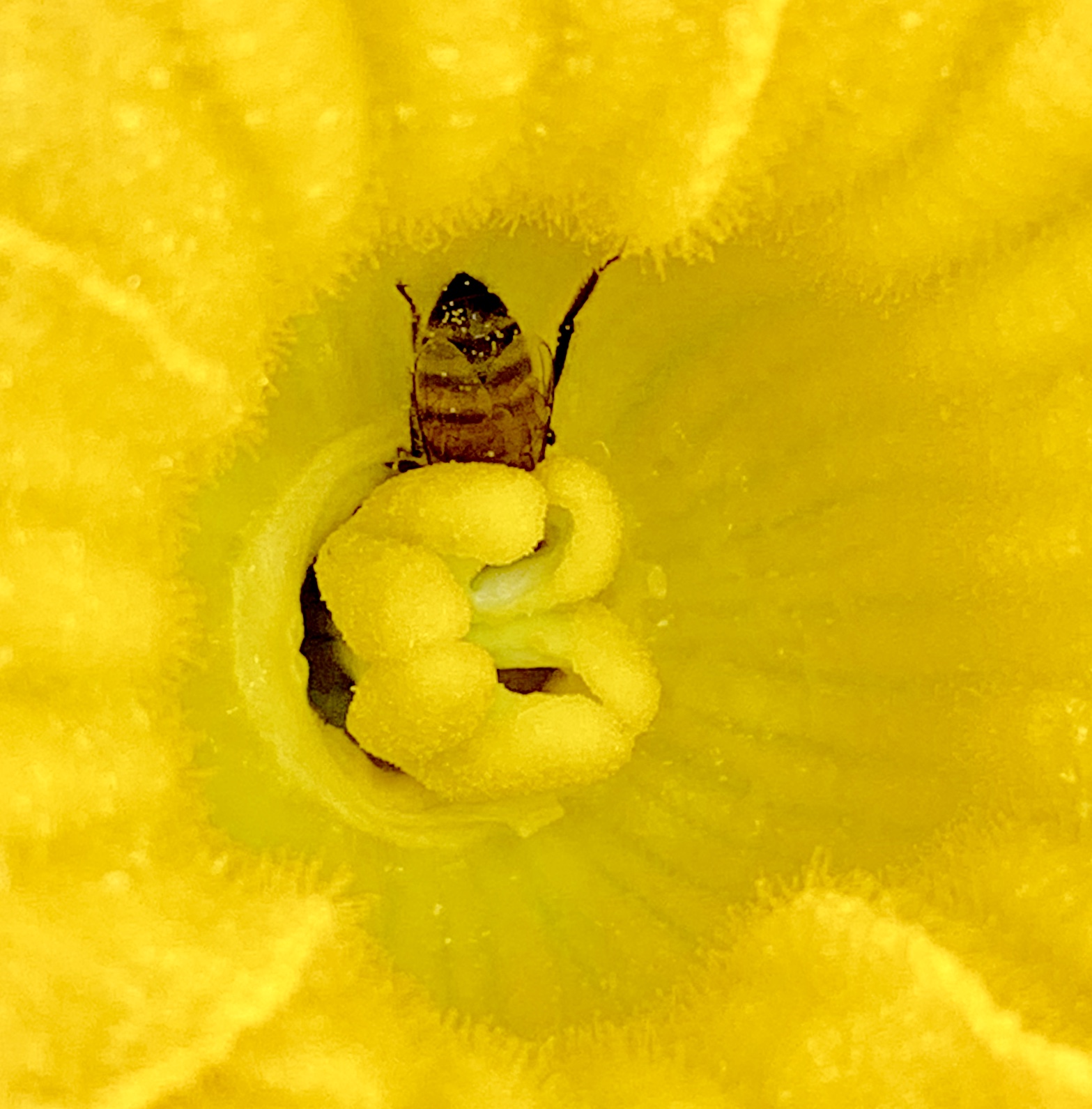
if the praying mantis comes and the ladybugs and the bees,
then the plants flourish, but at their own internal clock.

Connections are made slowly, sometimes they grow underground.
You cannot tell always by looking what is happening.
More than half the tree is spread out in the soil under your feet.
Penetrate quietly as the earthworm that blows no trumpet.
Fight persistently as the creeper that brings down the tree.
Spread like the squash plant that overruns the garden.
Gnaw in the dark and use the sun to make sugar.

Weave real connections, create real nodes, build real houses.
Live a life you can endure: Make love that is loving.
Keep tangling and interweaving and taking more in,
a thicket and bramble wilderness to the outside but to us
interconnected with rabbit runs and burrows and lairs.

Live as if you liked yourself, and it may happen:
reach out, keep reaching out, keep bringing in.
This is how we are going to live for a long time: not always,
for every gardener knows that after the digging, after the planting,
after the long season of tending and growth, the harvest comes.
~Marge Piercy “The Seven of Pentacles”

Our garden teaches us all kinds of life lessons, thanks to my husband’s hours of hard work preparing the soil, planting carefully and nurturing the emerging seedlings.

No garden tends itself – the growing plants reach out for connection to one another, for stability and companionship. The gardener nurtures, defends and harvests with an eye to preparing for the next growing season.

We who have been planted here need one another, interwoven and linked, both visibly and invisibly. I am woven around you and you around me; together we grow and thrive when tended, and as intended.

But more than anything else, we need our Gardener…

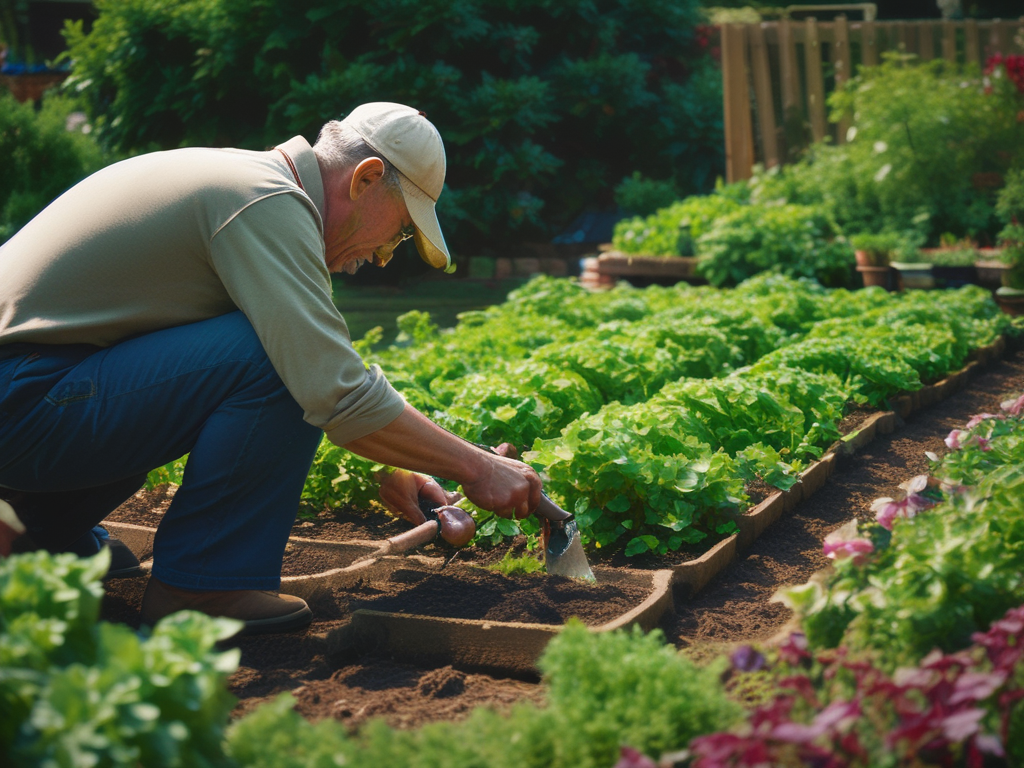
AI image created for this post
One-Time
Monthly
Yearly

Make a one-time or recurring donation to support daily Barnstorming posts

Make a monthly donation

Make a yearly donation

Choose an amount

$10.00
$25.00
$50.00
$5.00
$15.00
$100.00
$5.00
$15.00
$100.00

Or enter a custom amount

$

Your contribution is deeply appreciated.

Your contribution is appreciated.

Your contribution is appreciated.

DonateDonate monthlyDonate yearly
I Was All Hers

When all the others were away at Mass
I was all hers as we peeled potatoes.
They broke the silence, let fall one by one
Like solder weeping off the soldering iron:
Cold comforts set between us, things to share
Gleaming in a bucket of clean water.
And again let fall. Little pleasant splashes
From each other’s work would bring us to our senses.

So while the parish priest at her bedside
Went hammer and tongs at the prayers for the dying
And some were responding and some crying
I remembered her head bent towards my head,
Her breath in mine, our fluent dipping knives—
Never closer the whole rest of our lives.
~Seamus Heaney “Clearances -3”

April 2008 – Vigil at Mom’s Bedside

Lying still, your mouth gapes open as
I wonder if you breathe your last.
Your hair a white cloud
Your skin baby soft
No washing, digging, planting gardens, peeling potatoes,
Or raising children
Anymore.

Where do your dreams take you?
At times you wake in your childhood home of
Rolling wheat fields, boundless days of freedom.
Other naps take you to your student and teaching days
Grammar and drama, speech and essays.
Yesterday you were a young mother again
Juggling babies, farm and your wistful dreams.

Today you looked about your empty nest
Disguised as hospital bed,
Wondering aloud about
Children grown, flown.
You still control through worry
and tell me:
Travel safely
Get a good night’s sleep
Take time to eat
Call me when you get there

I dress you as you dressed me
I clean you as you cleaned me
I love you as you loved me
You try my patience as I tried yours.
I wonder if I have the strength to
Mother my mother
For as long as she needs.

When I tell you the truth
Your brow furrows as it used to do
When I disappointed you~
This cannot be
A bed in a room in a sterile place
Waiting for death
Waiting for heaven
Waiting

And I tell you:
Travel safely
Eat, please eat
Sleep well
Call me when you get there.

______________

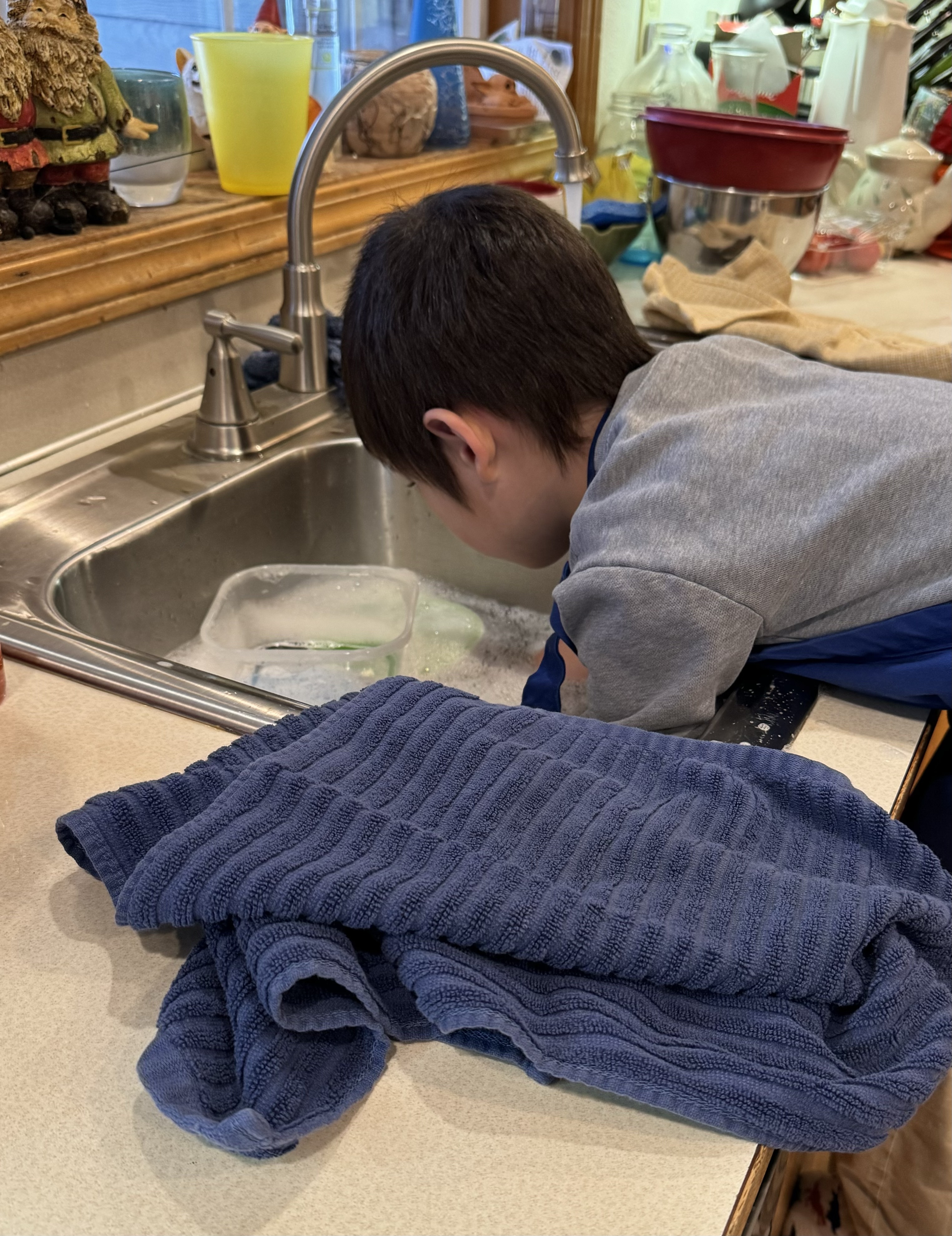
Now that I am a grandmother, I seek those tiny, daily, apparently meaningless opportunities to create memories that my grandchildren may warmly recall decades from now, knowing they were all mine, if only for a few minutes at the kitchen sink.

One-Time
Monthly
Yearly

Make a one-time or recurring donation to support daily Barnstorming posts

Make a monthly donation

Make a yearly donation

Choose an amount

$10.00
$25.00
$50.00
$5.00
$15.00
$100.00
$5.00
$15.00
$100.00

Or enter a custom amount

$

Your contribution is deeply appreciated.

Your contribution is appreciated.

Your contribution is appreciated.

DonateDonate monthlyDonate yearly
The Cellar’s Portion

In October of the year,
he counts potatoes dug from the brown field, counting the seed, counting the cellar’s portion out,   
and bags the rest on the cart’s floor.

He packs wool sheared in April, honey
in combs, linen, leather   
tanned from deerhide,   
and vinegar in a barrel
hooped by hand at the forge’s fire.

He walks by his ox’s head, ten days
to Portsmouth Market, and sells potatoes,   
and the bag that carried potatoes, flaxseed, birch brooms, maple sugar, goose feathers, yarn.

When the cart is empty he sells the cart.   
When the cart is sold he sells the ox,   
harness and yoke, and walks
home, his pockets heavy
with the year’s coin for salt and taxes,

and at home by fire’s light in November cold   
stitches new harness for next year’s ox in the barn,

and he carved a new yoke and sawed
planks for a new cart and split shingles all
winter, while his wife made flax into linen all
winter, and his daughter embroidered linen all
winter, and his son carved Indian brooms from
birch all winter, and everybody made candles,


and in March they tapped the sugar maple trees
and boiled the sap down, and in April they
sheared the sheep, spun yarn, and wove and
knitted, and in May they planted potatoes,
turnips, and cabbages, while apple blossoms
bloomed and fell, while bees woke up, starting to
make new honey, and geese squawked in the
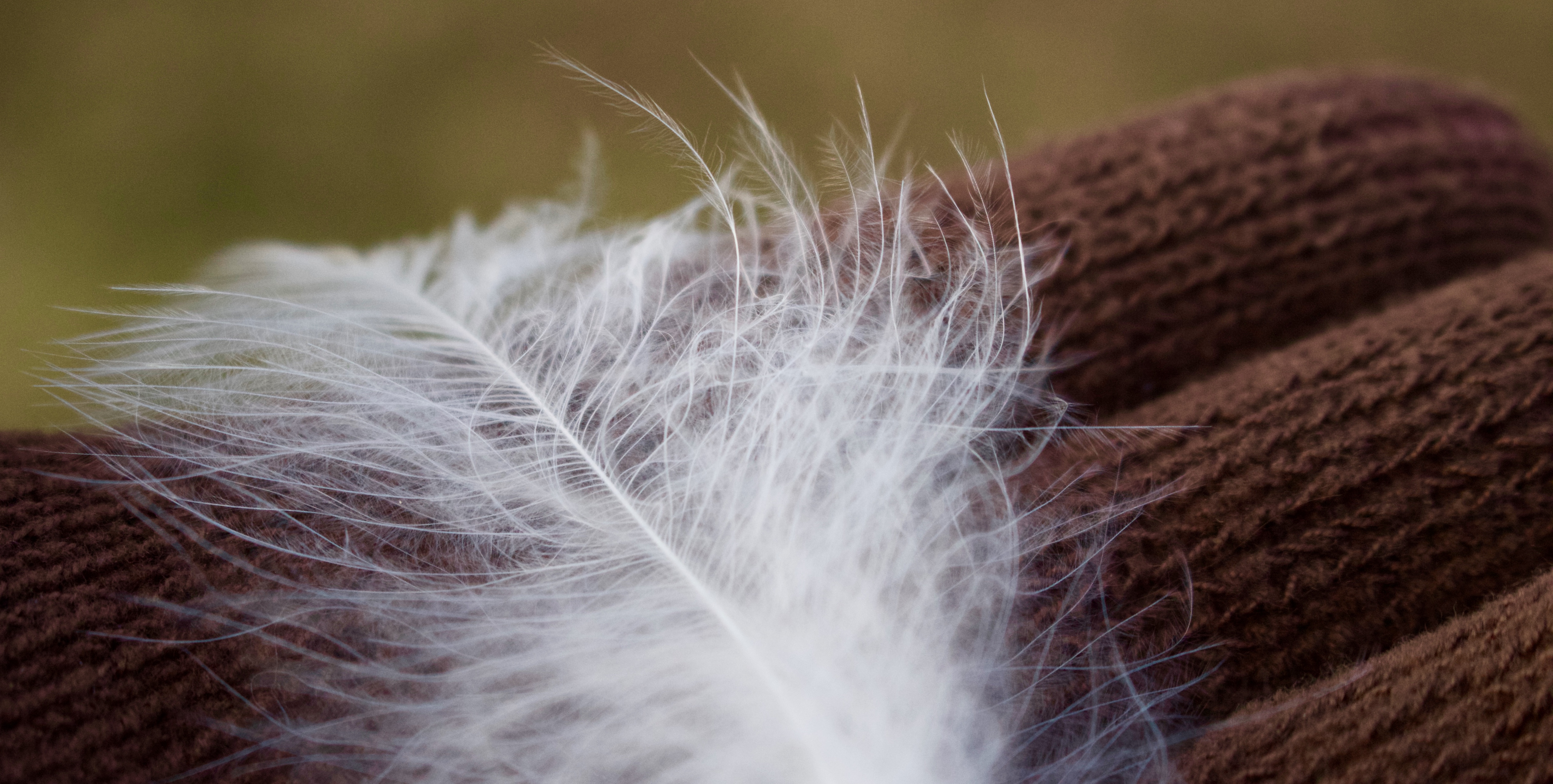
barnyard, dropping feathers as soft as clouds.
~Donald Hall “The Oxcart Man”

Come inside now.
Stand beside the warming stove.
Watch out through the windows as
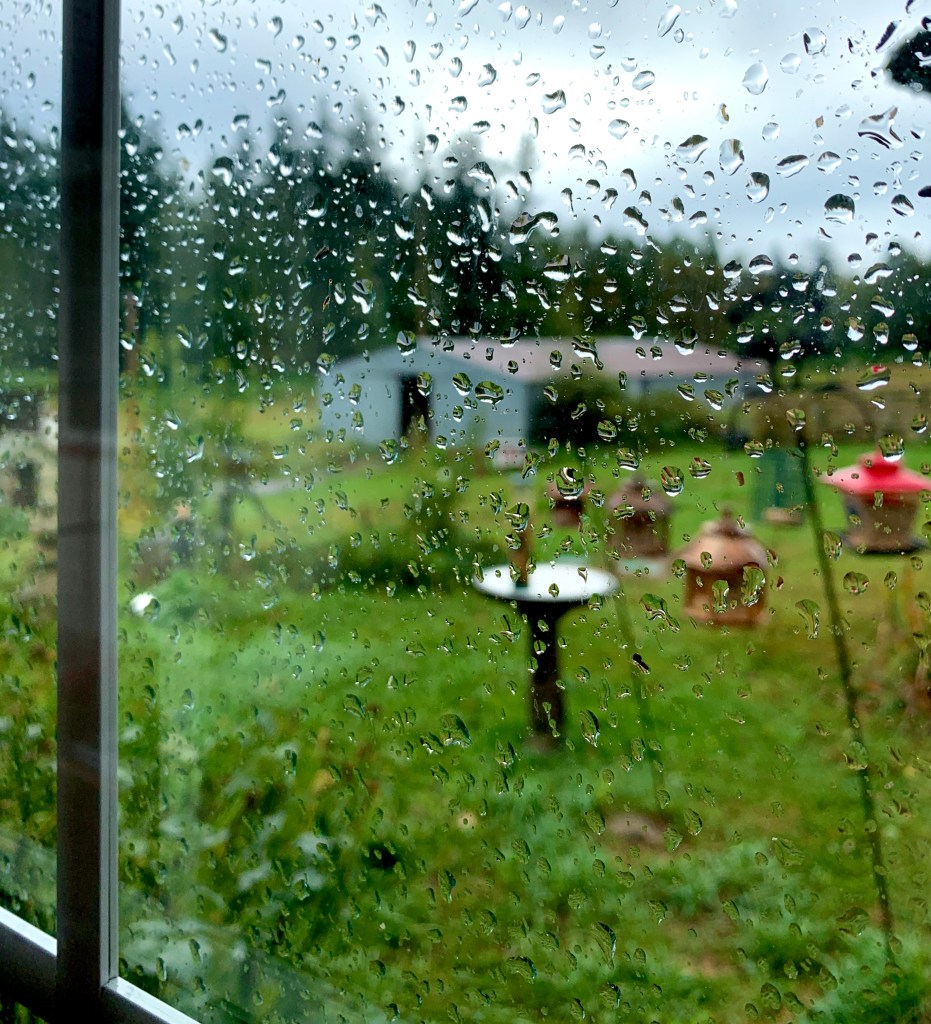
a cold rain tears down
the last leaves.

The larder full of dried herbs,
hot peppers, chutneys,
jellies, jams, dill pickles,
pickled relishes,
pickled beets.

The freezer full of frozen greens—
chard and spinach, collards, kale—
green beans, basil, red sauces,
applesauce, and
smoked meats.

The woodshed dry and full of wood,
winter squashes stashed away.
Down cellar: potatoes, carrots,
crock of sauerkraut.

Come inside now.
Stand beside the warming stove.
Listen. Wait.

~David Budbill “Come Inside Now” from Happy Life

Nothing would sleep in that cellar, dank as a ditch,
Bulbs broke out of boxes hunting for chinks in the dark,
Shoots dangled and drooped,
Lolling obscenely from mildewed crates,
Hung down long yellow evil necks, like tropical snakes.
And what a congress of stinks!
Roots ripe as old bait,
Pulpy stems, rank, silo-rich,
Leaf-mold, manure, lime, piled against slippery planks.
Nothing would give up life:
Even the dirt kept breathing a small breath.

~Theodore Roetke “Root Cellar” from The Collected Poems

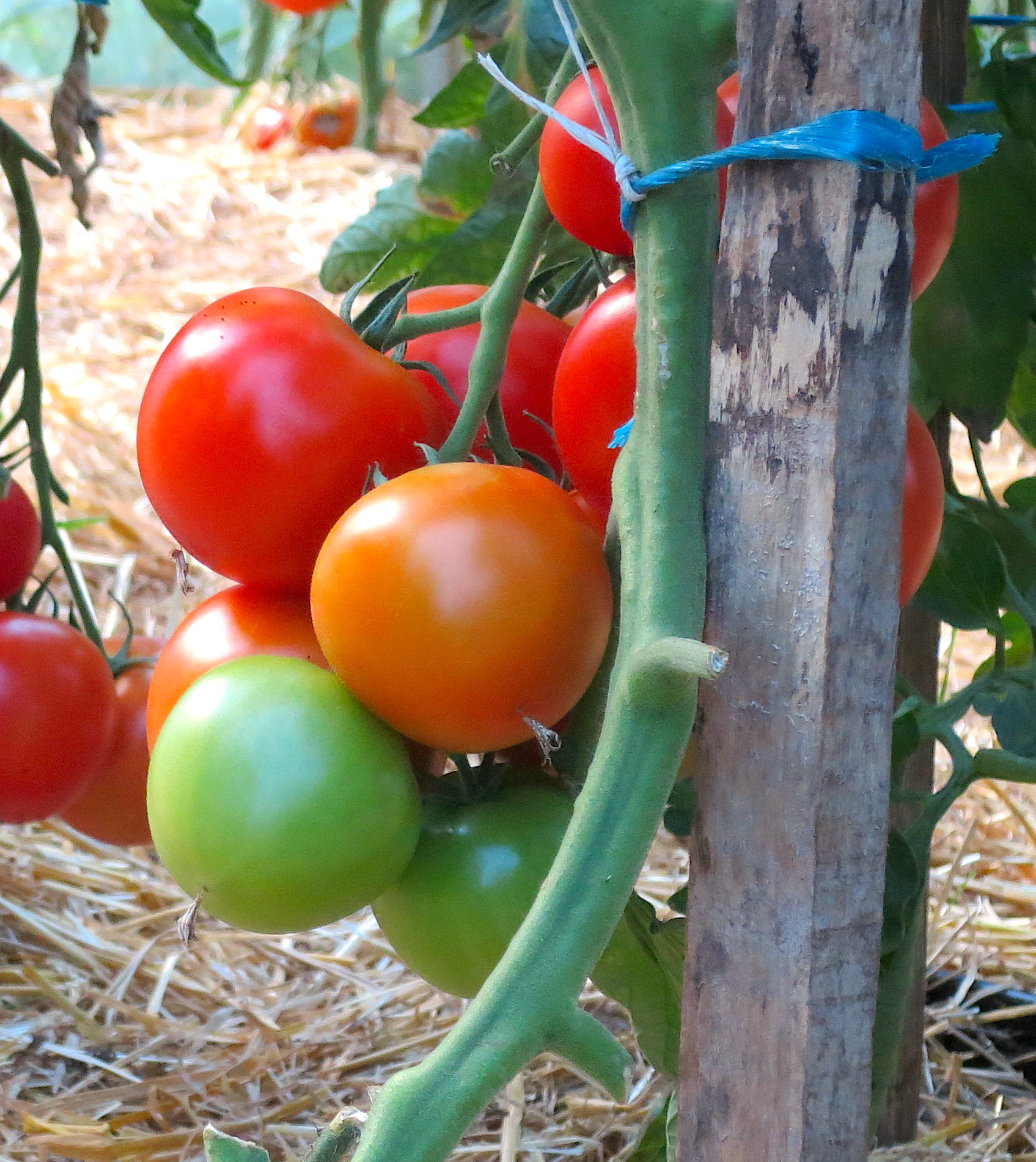
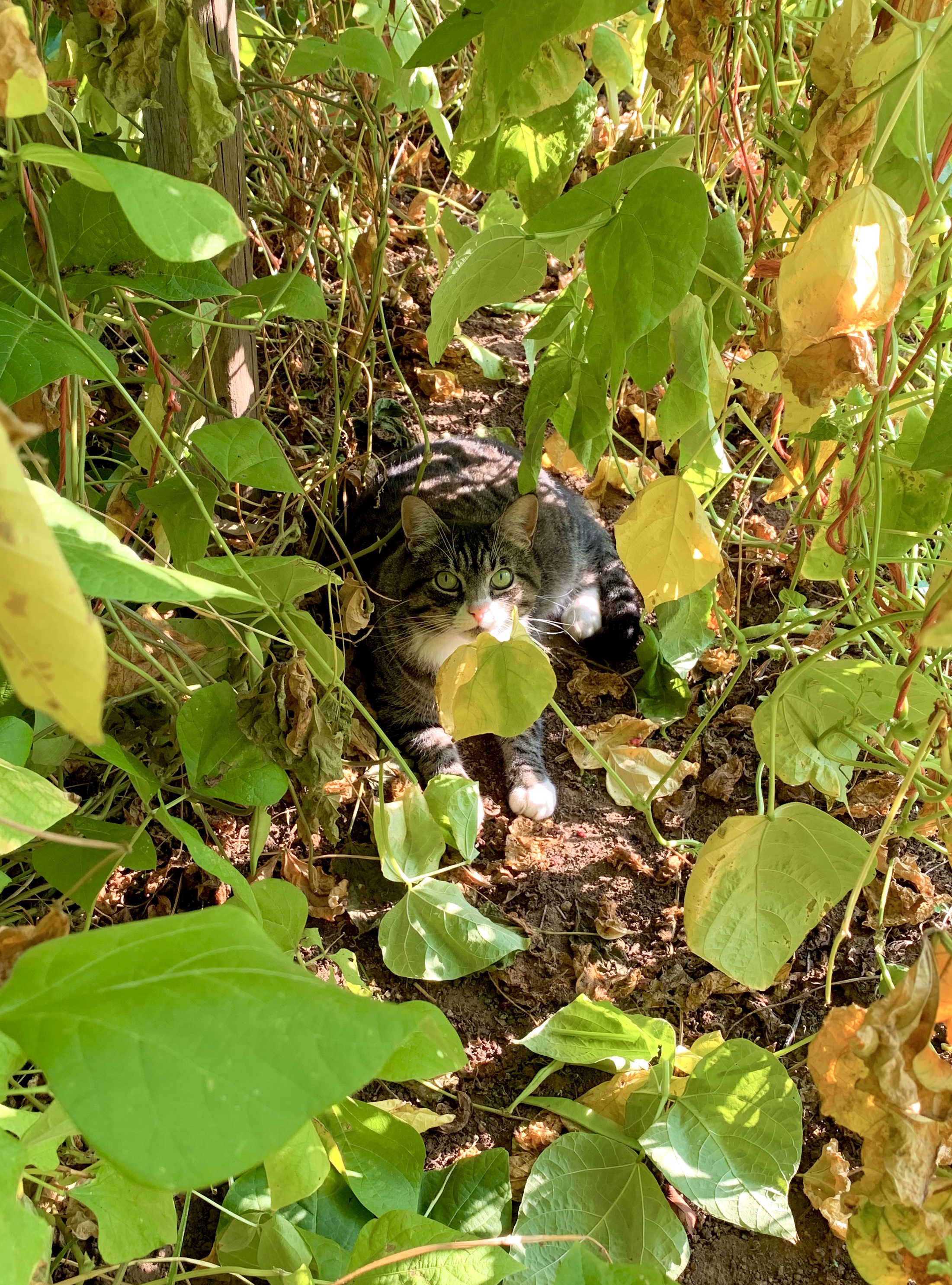
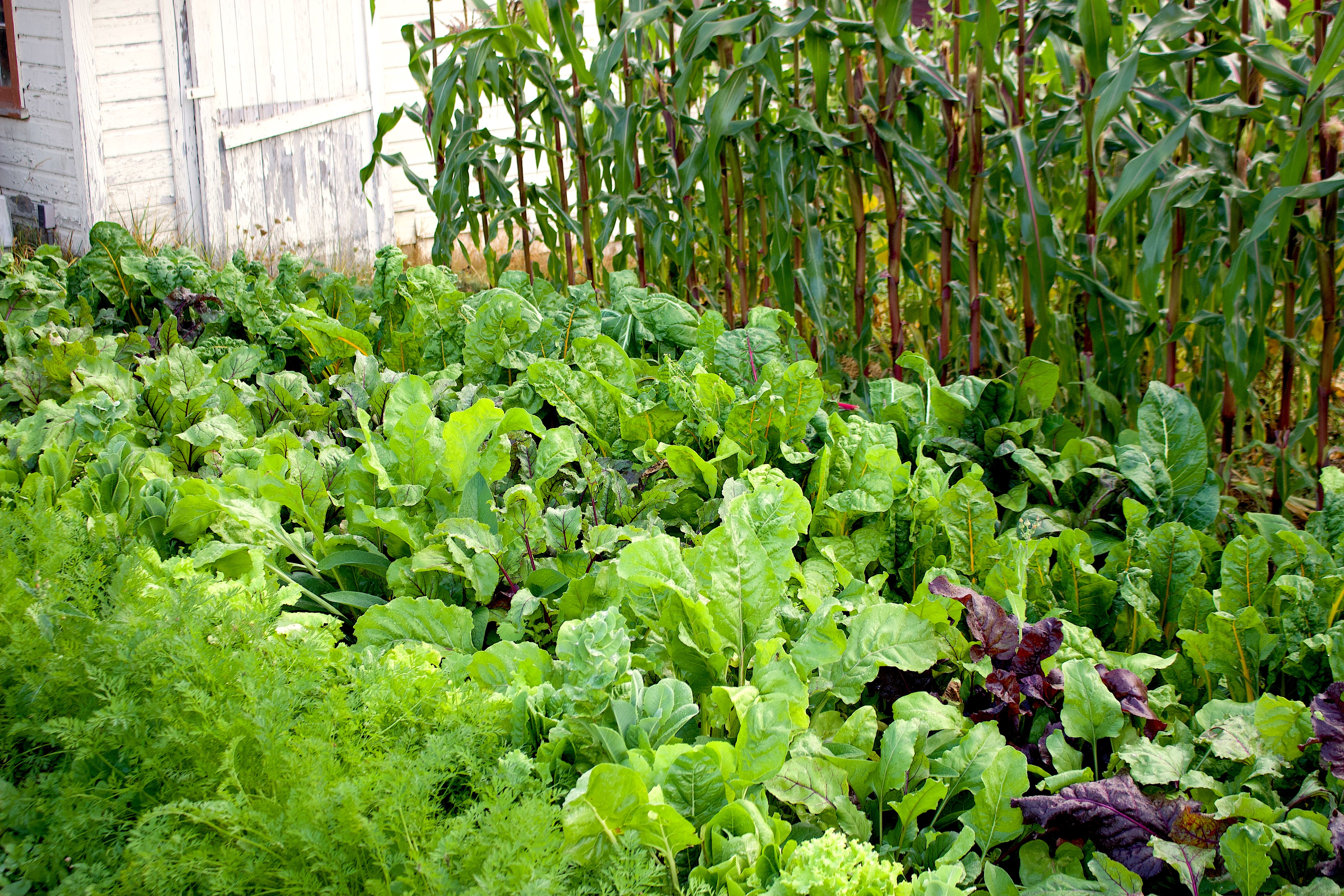
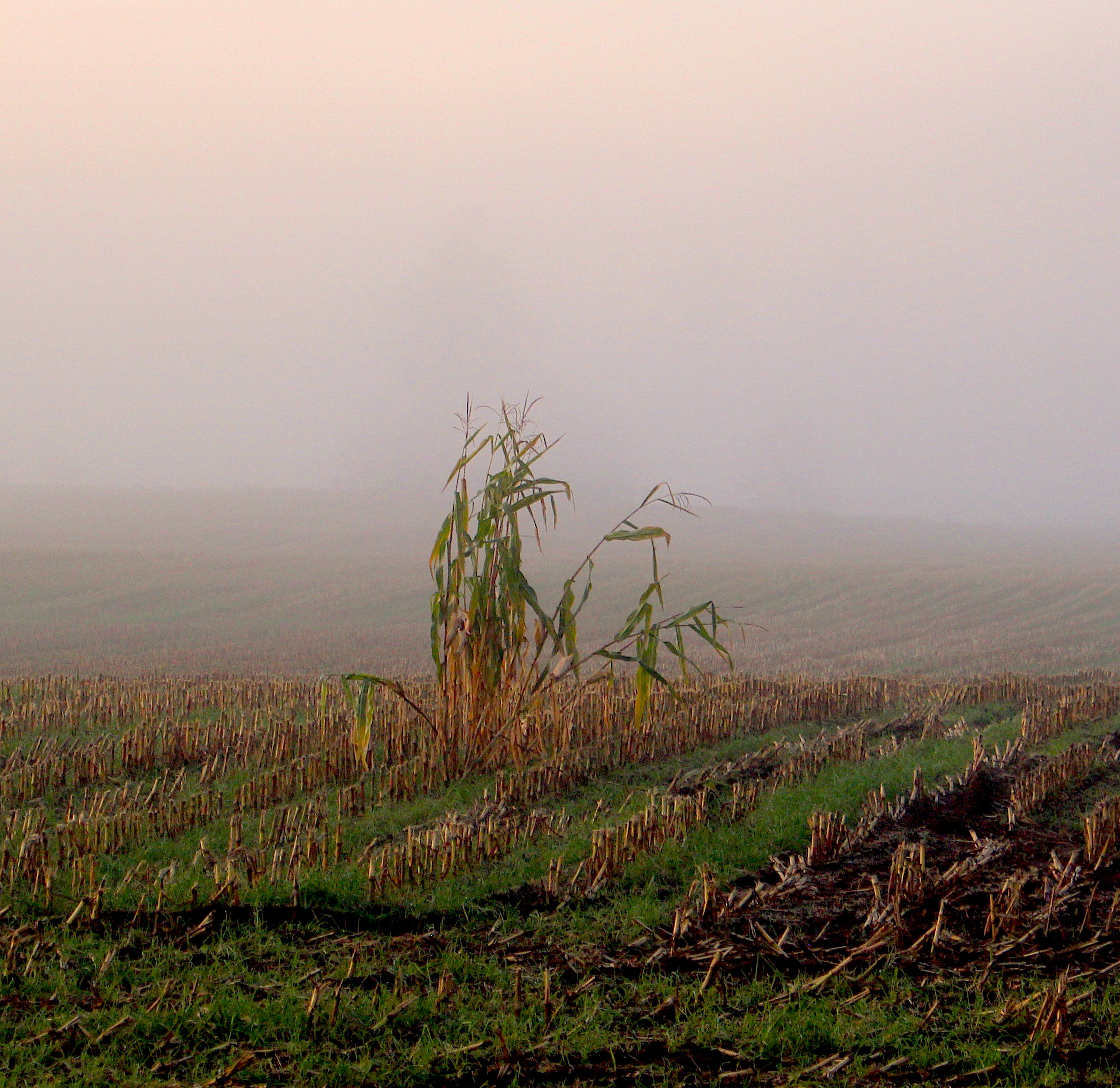
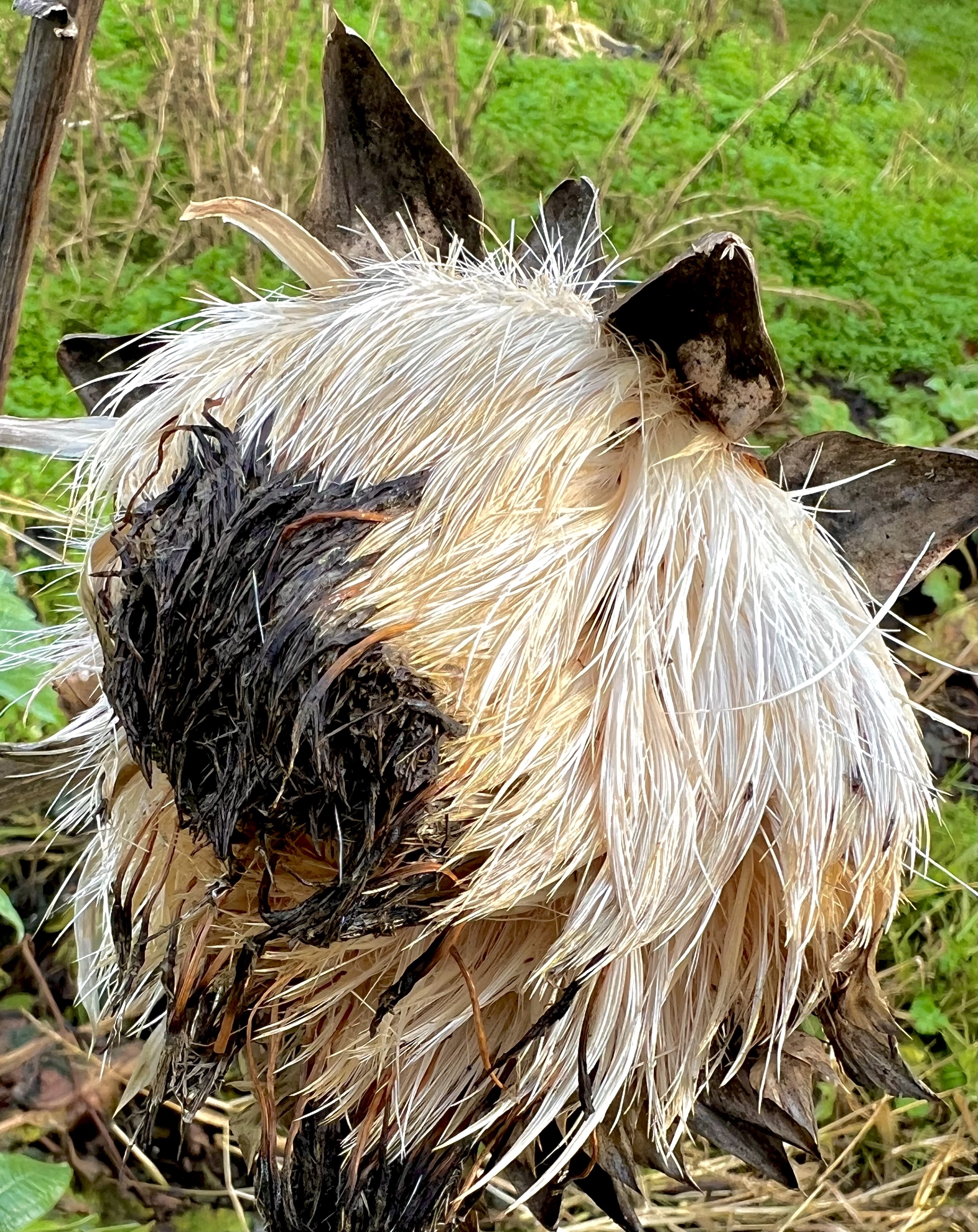
Even in the cold wet chill of November, our garden continues breathing, guarded by the furry fellow on a stalk below until a heavy windstorm topples him over.

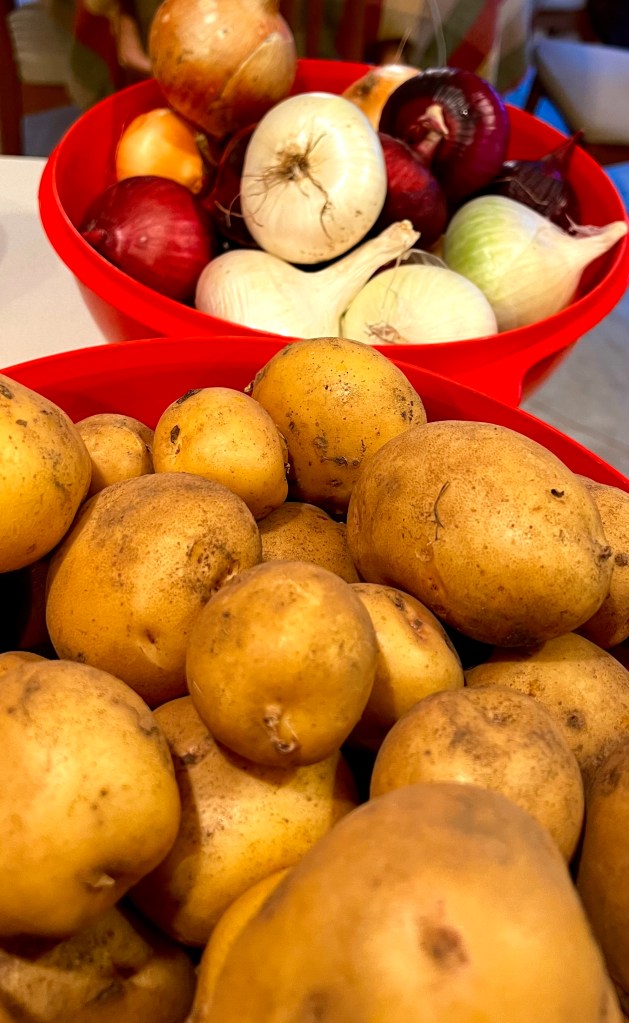
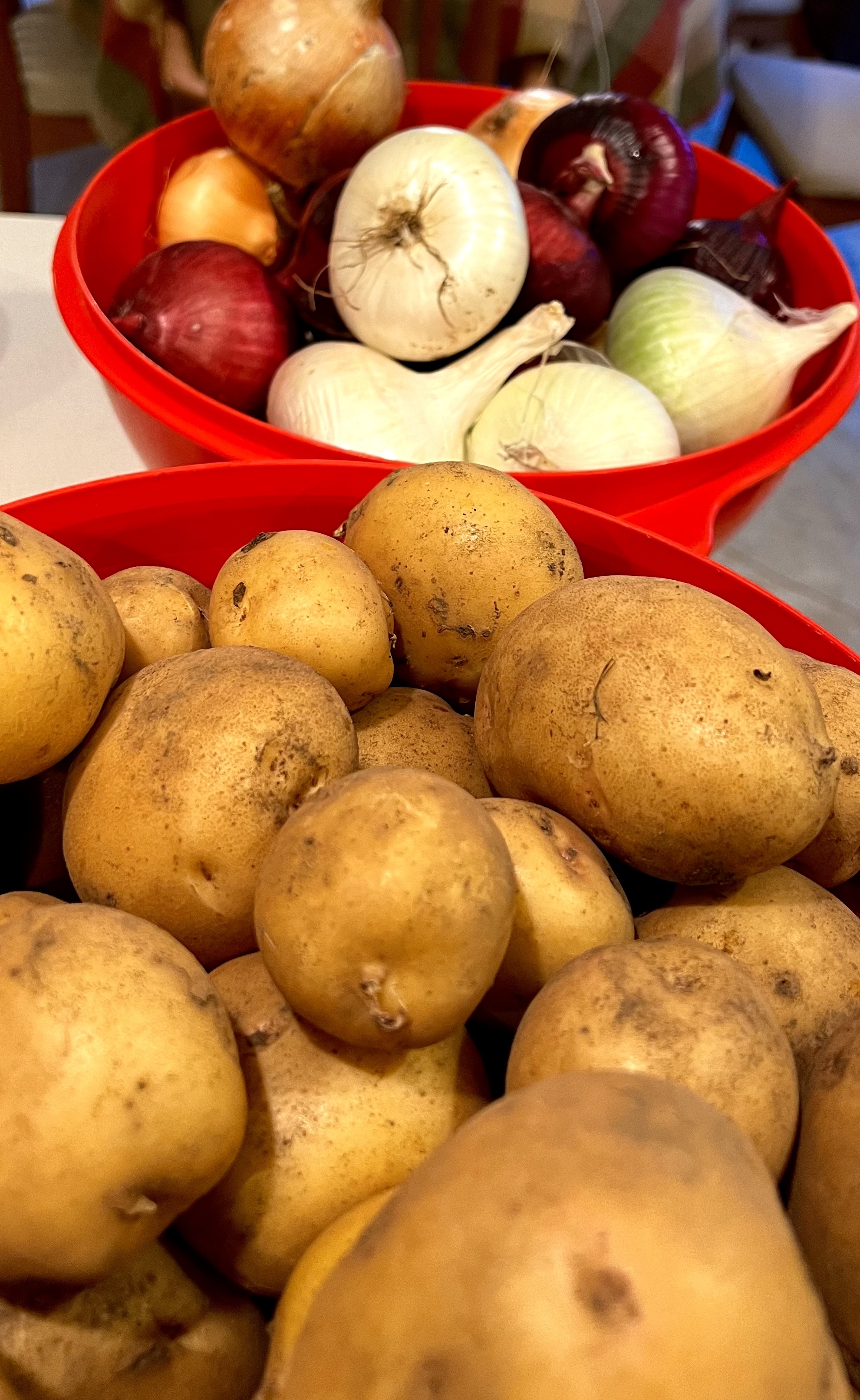
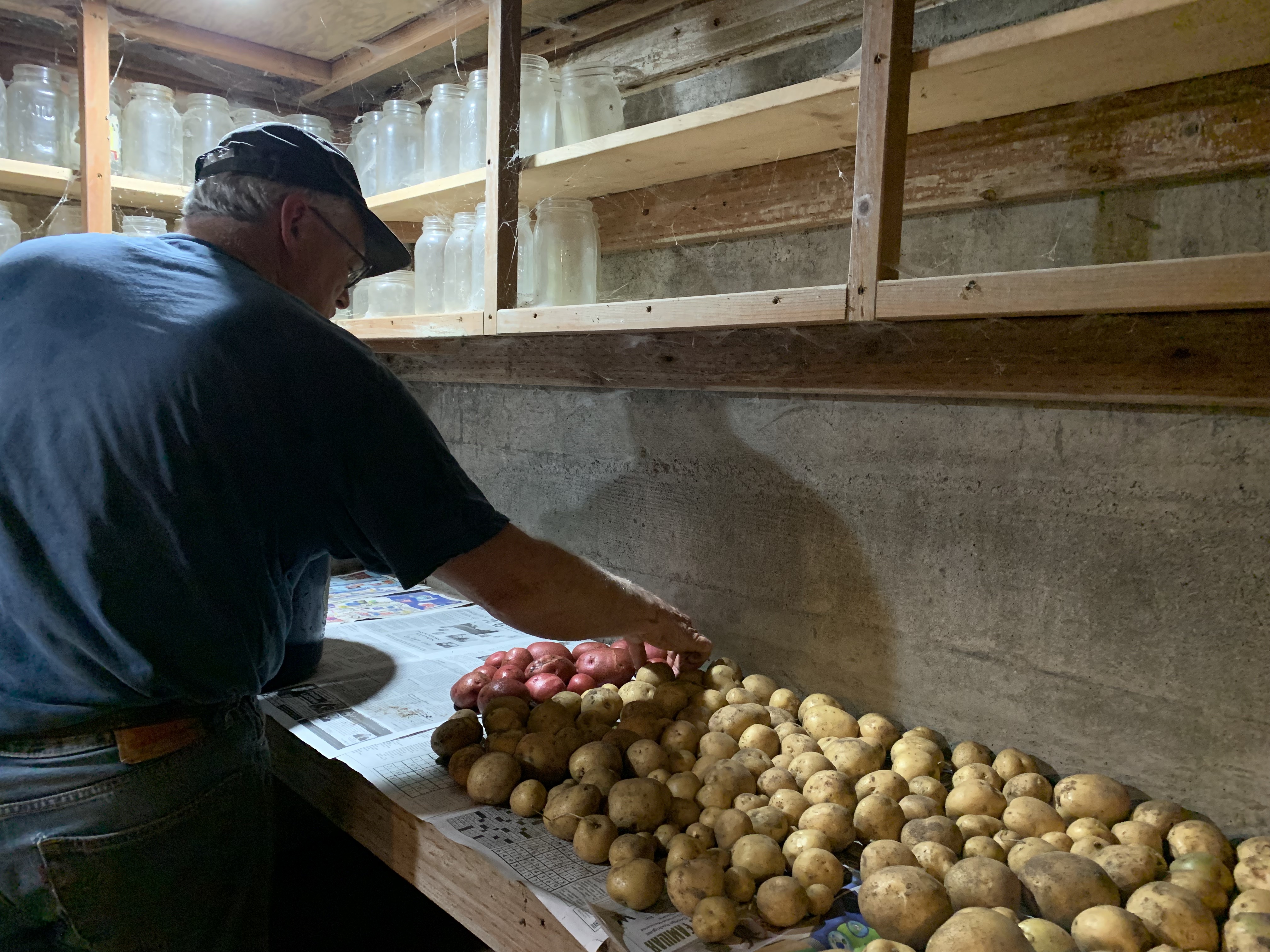
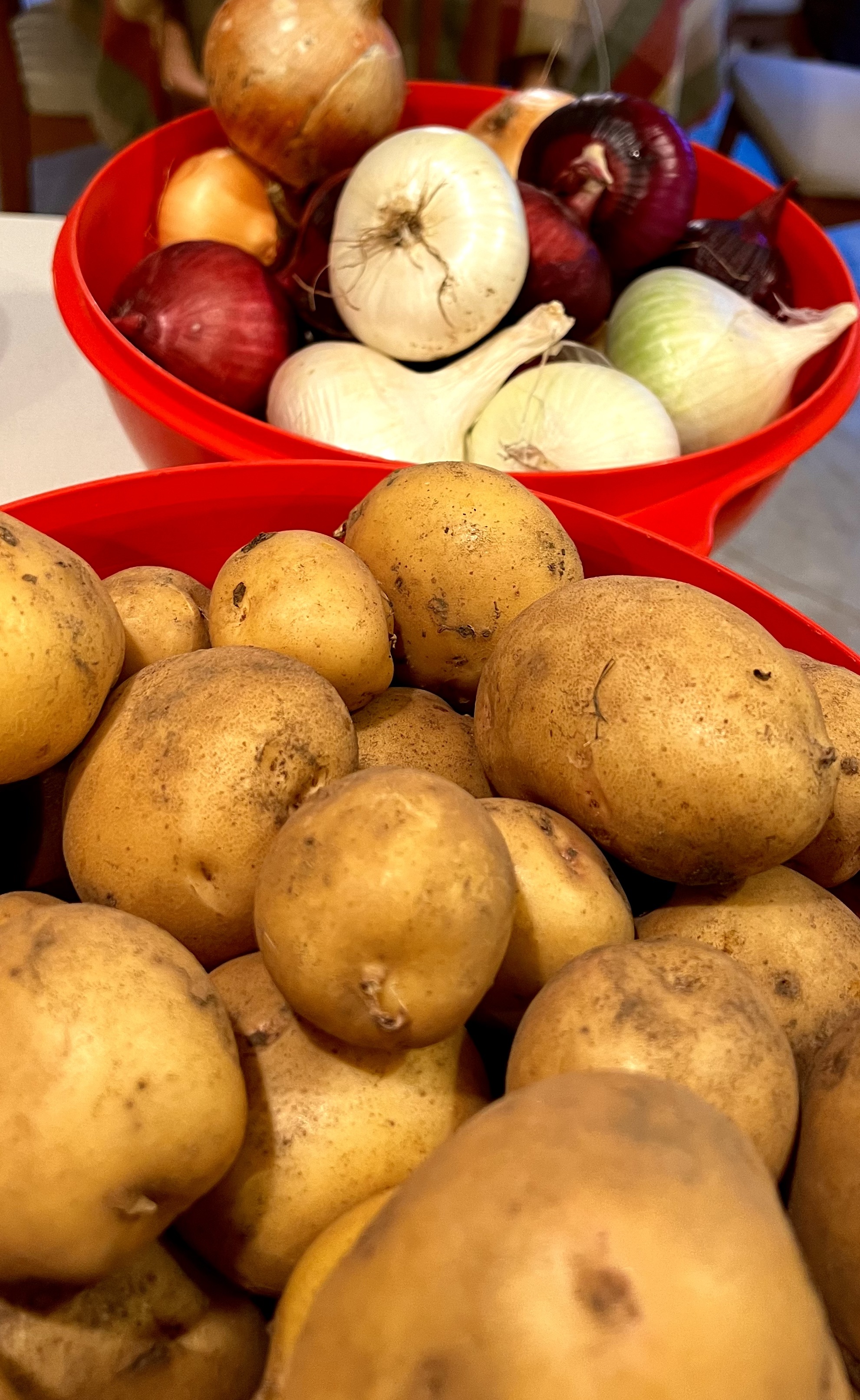
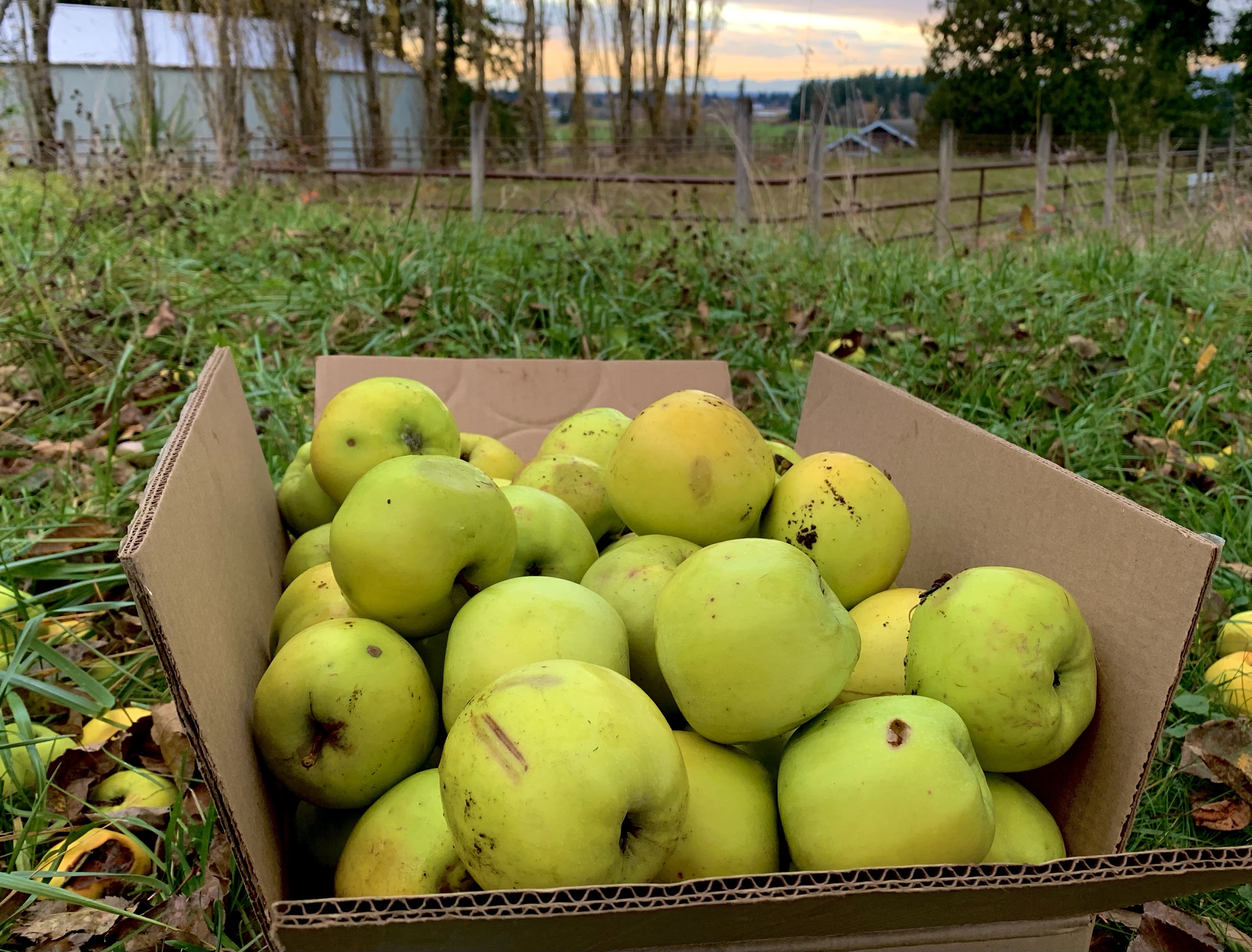
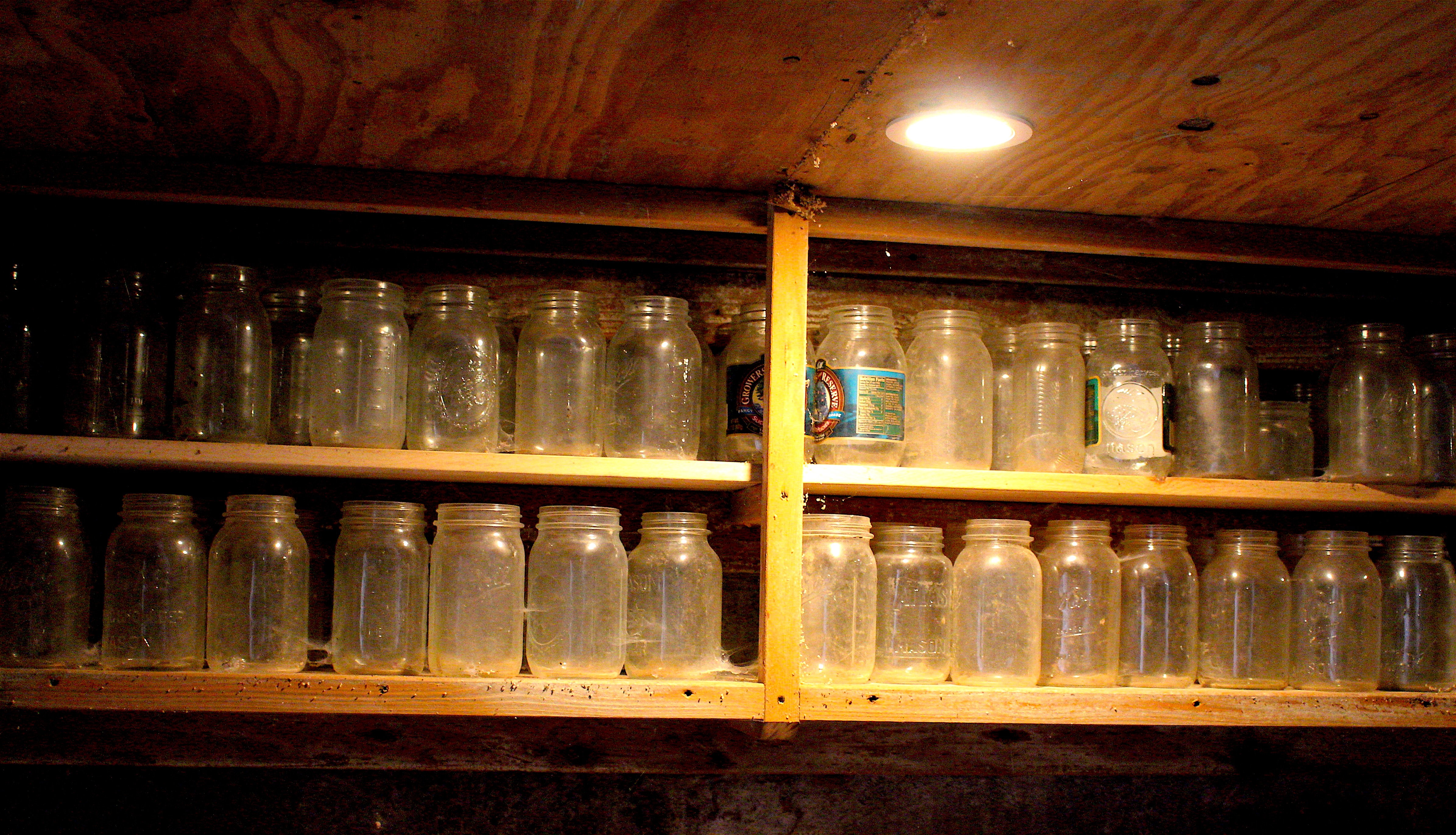
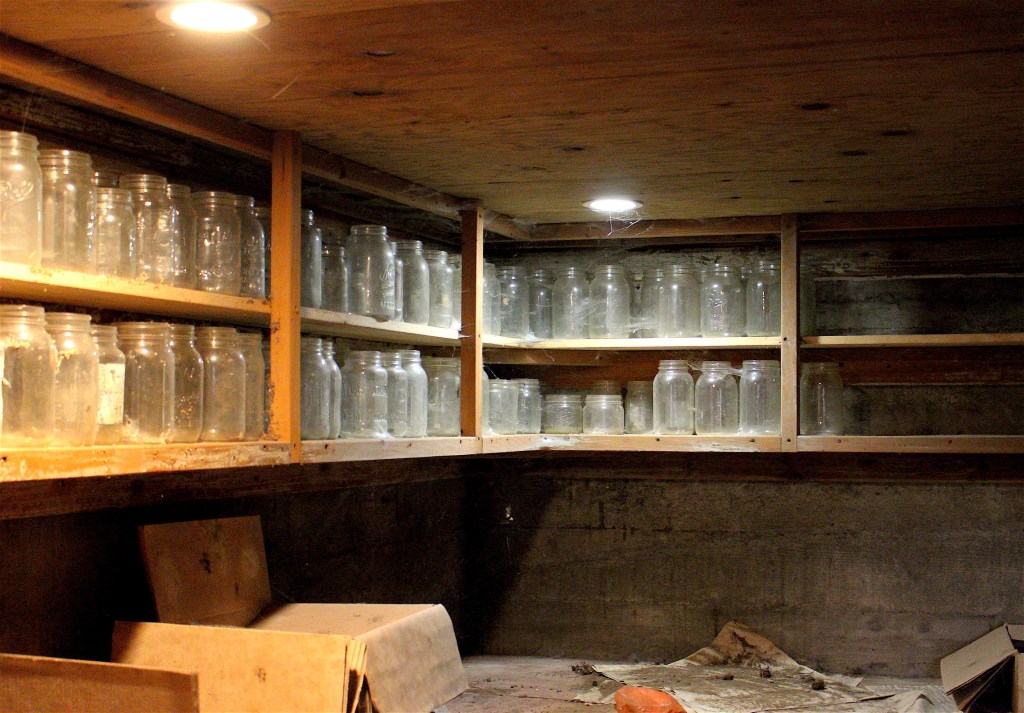
When I descend the steps into our root cellar, I find a still life of empty jars, no longer in use for produce to be preserved until spring. I no longer preserve produce through canning, as I used to. Instead we dry and freeze fruits and vegetables for storage. The cellar, though not as full as in years past, remains a place of quiet fecundity with its rich and earthy smells – a reminder of how things were done before the conveniences of today. We still keep apples, potatoes and onions in safe-keeping below ground – some of this farm’s orchard and garden harvest has been stored fresh in the cellar, year after year, for decades.

Until the last century, all of a farm family’s energy and effort was to preserve and store what was necessary to survive another year. Today, in too many places in the world, simple survival remains a family’s necessary and noble goal.

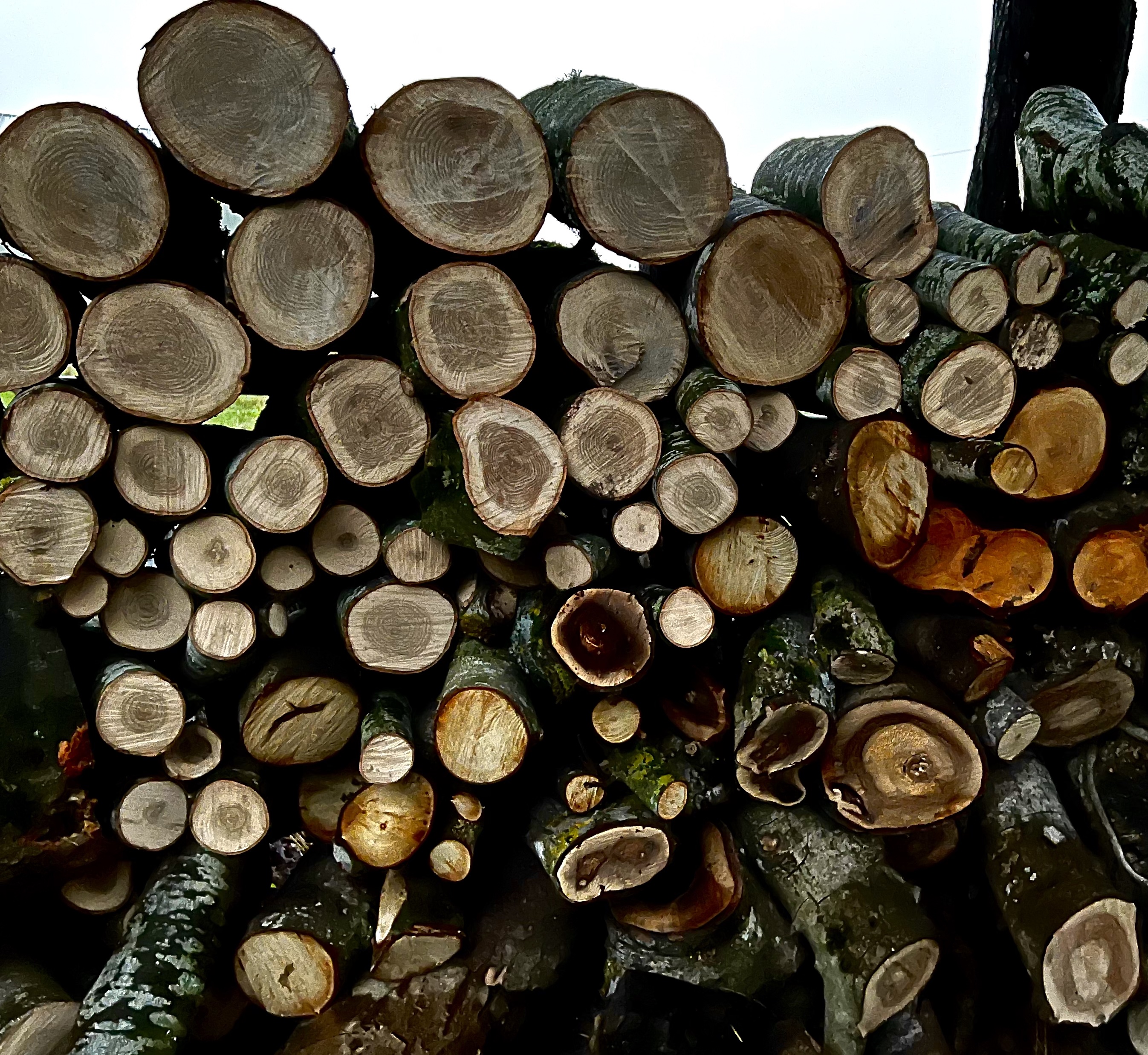
Surrounded by the relative comfort and privilege of a bountiful garden, orchard and woodpile, I never want to forget that.

Come inside. Warm up by the fire. Listen. Wait. Pray for lasting peace.

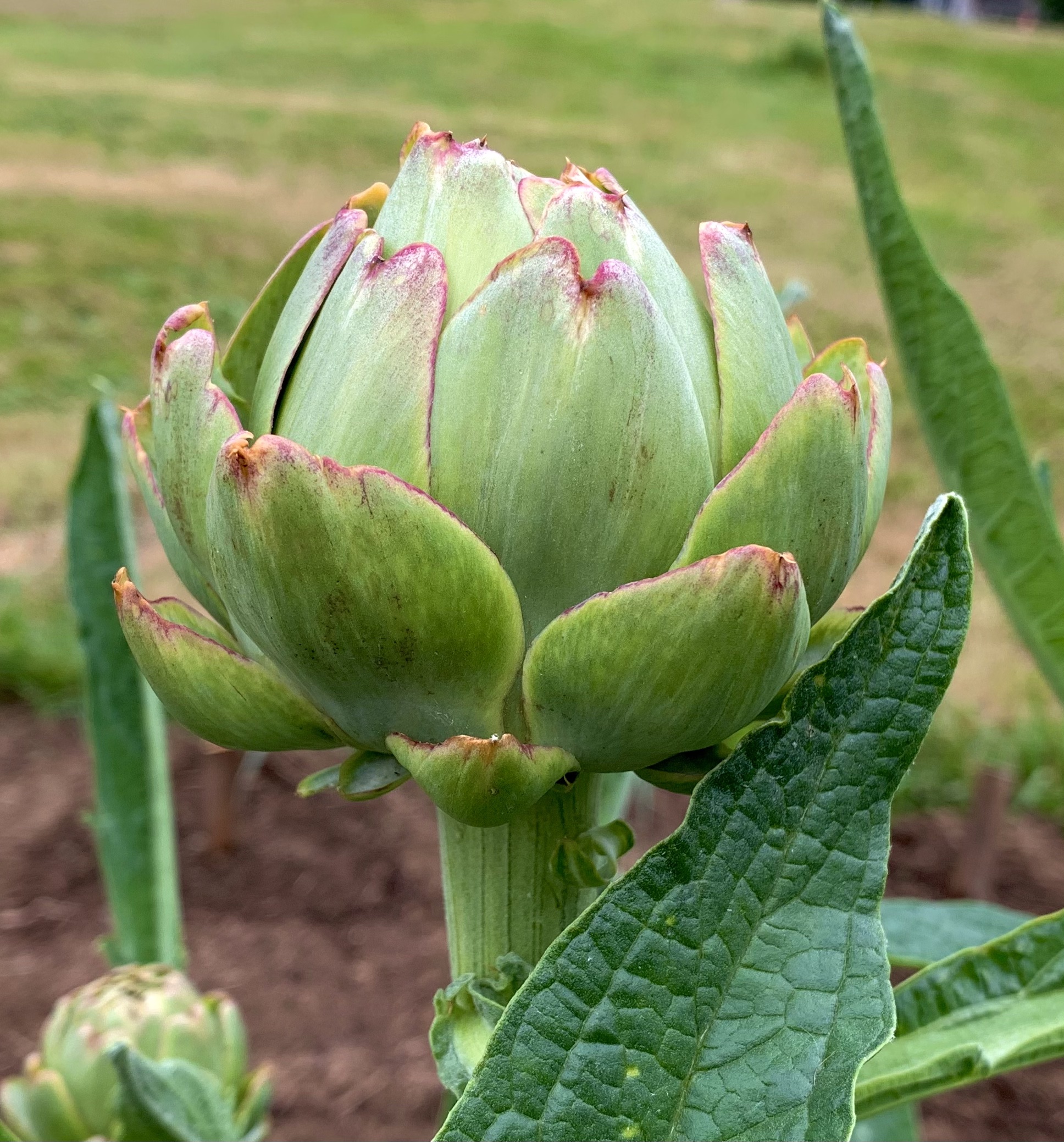
My artichoke “pup”

One-Time
Monthly
Yearly

Make a one-time or recurring donation to support daily Barnstorming posts

Make a monthly donation

Make a yearly donation

Choose an amount

$10.00
$25.00
$50.00
$5.00
$15.00
$100.00
$5.00
$15.00
$100.00

Or enter a custom amount

$

Your contribution is deeply appreciated.

Your contribution is appreciated.

Your contribution is appreciated.

DonateDonate monthlyDonate yearly
This Estranging Season

Lord, the time has come. The summer has been so long.
Lay your shadows over the sundials
and let loose the wind over the fields.

Order the last fruits to fully ripen;
give them two more days of southern sun,
urge them to perfection and speed
the last sweetness into the laden vine.

Those who have no house, will not build one now.
Those who are alone will long remain so,
they will rise, and read, and write long letters
and through the avenues go here and there
restlessly wandering, with the leaves drifting down.

~Rainer Maria Rilke “Herbsttag” English translation by Paul Archer from 1902 in the collection Das Buch der Bilder.

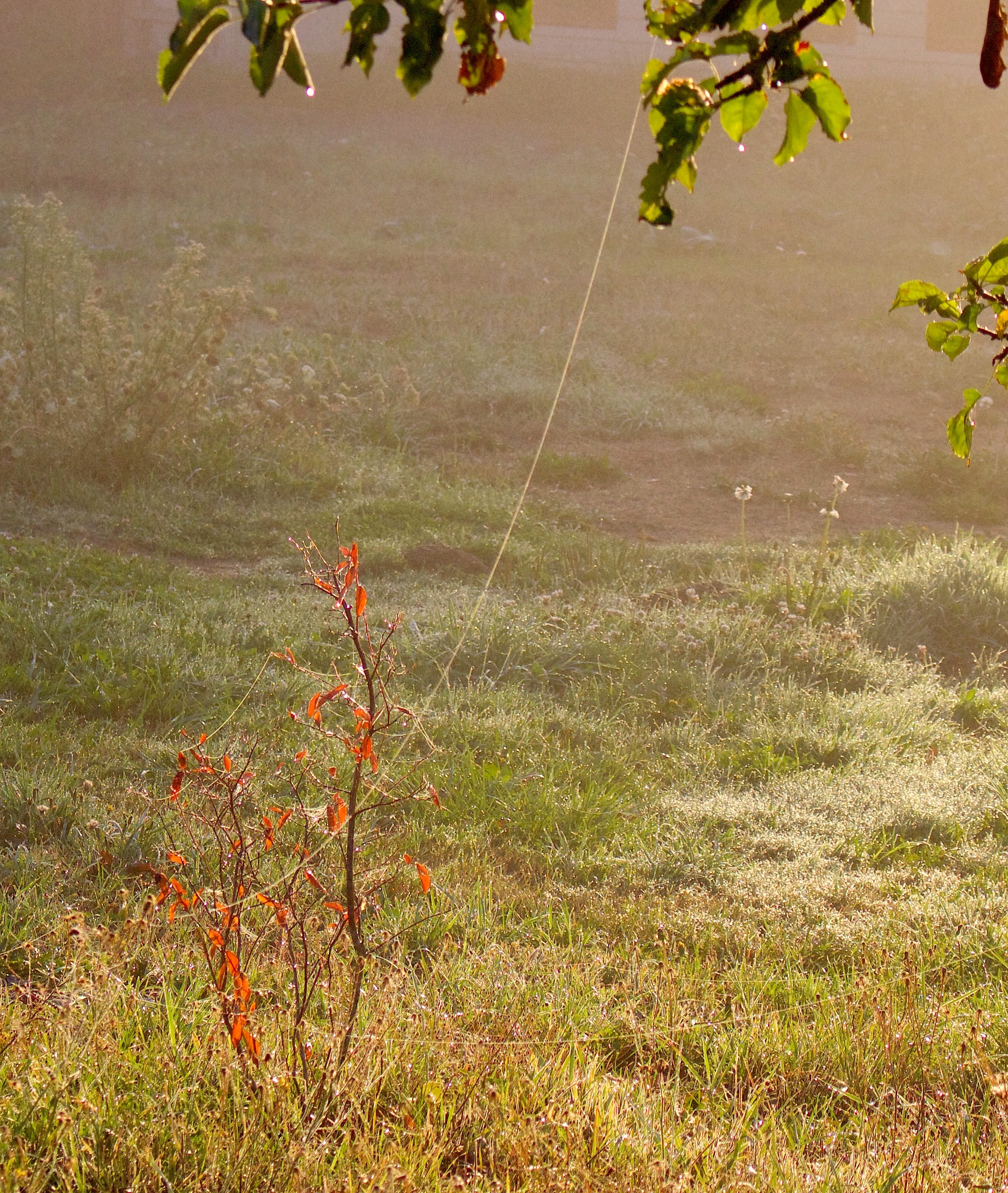
First hints of our condition manifest:
Spite in the wind, mist-gauze across the moon,
Light chill, the spider’s filaments, blanched grass,
And two days as warm as the south change nothing at all.
A morning comes when you know this cannot end well.
Soon it will be no time for gathering in gardens
All too soon, my dears, it will be the weather
For Brahms quintets, for leaves drifting triste past the windows
Of those in their rooms alone for the duration,
For whom this is no time to build. Those now alone
Are going to remain so through this estranging season
Of reading, of writing emails as detailed as letters,
Of watching dry leaves grow sodden on empty pavements.
Rilke said this in lines that I last read in Edinburgh
With my most beautiful aunt in her later age
When, many things gone, she remembered those verse in German.

~Peter Davidson “September Castles”

Enter autumn as you would 
a closing door. Quickly, 
cautiously. Look for something inside 
that promises color, but be wary 
of its cast — a desolate reflection, 
an indelible tint.
~Pamela Steed Hill  “September Pitch”

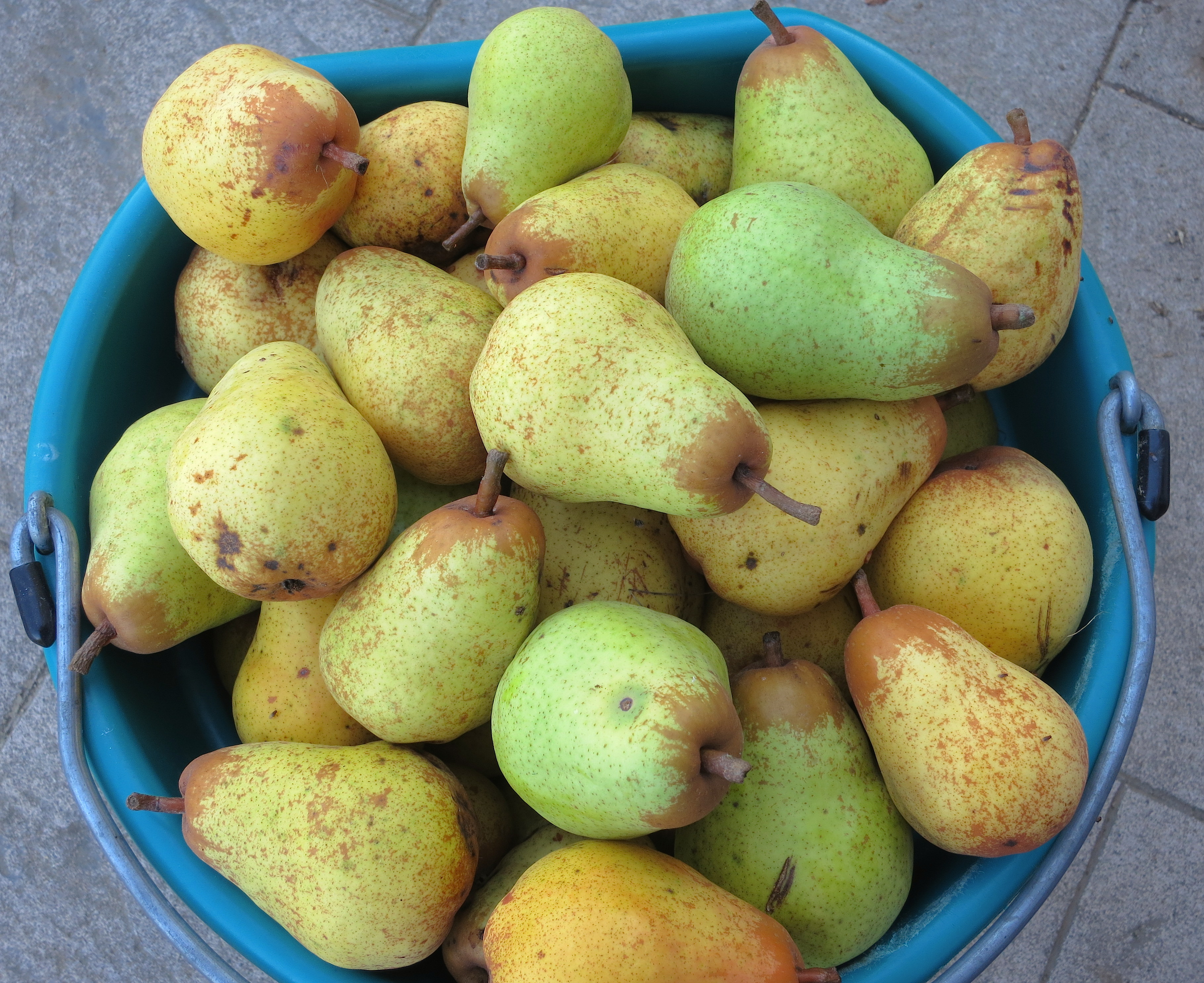
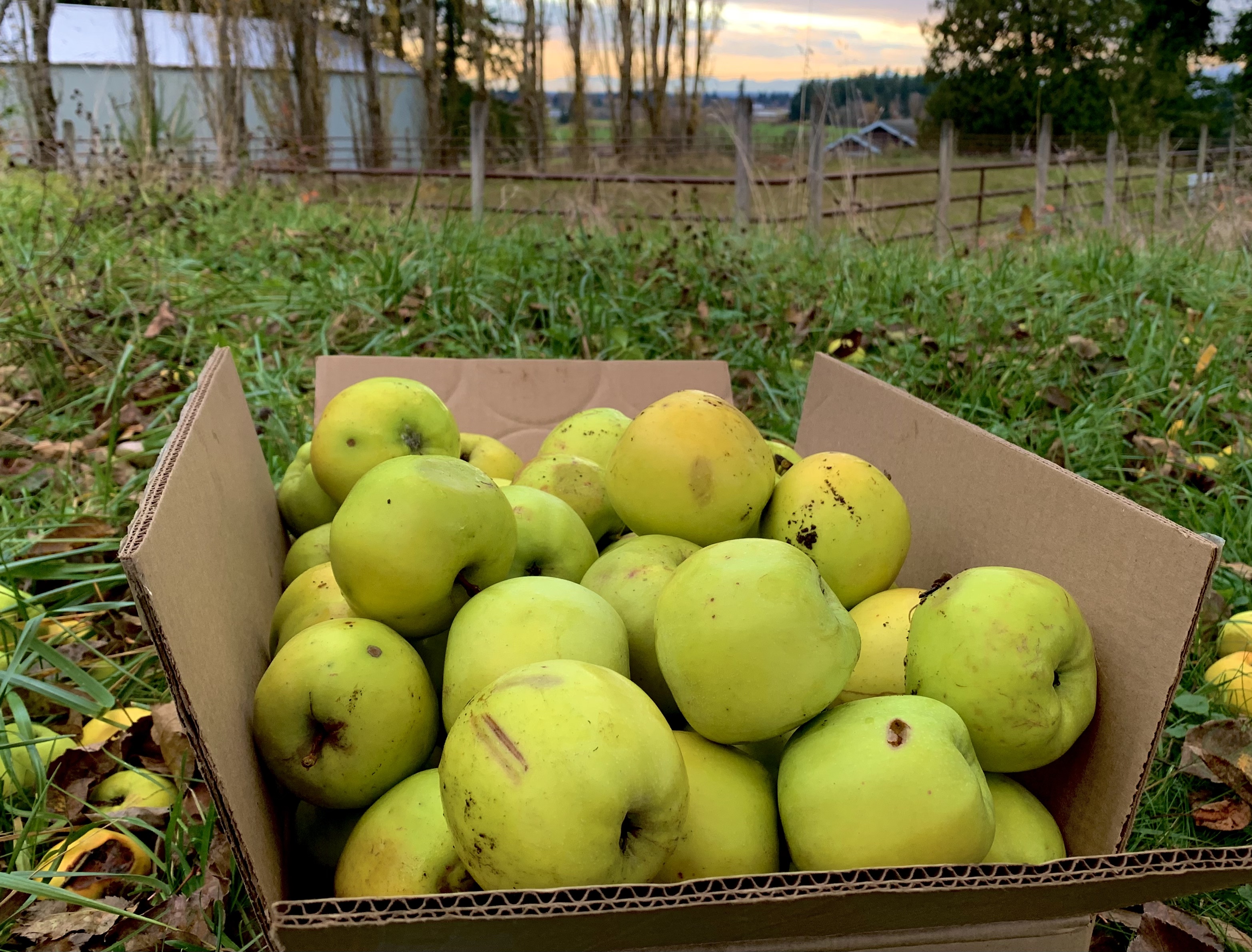
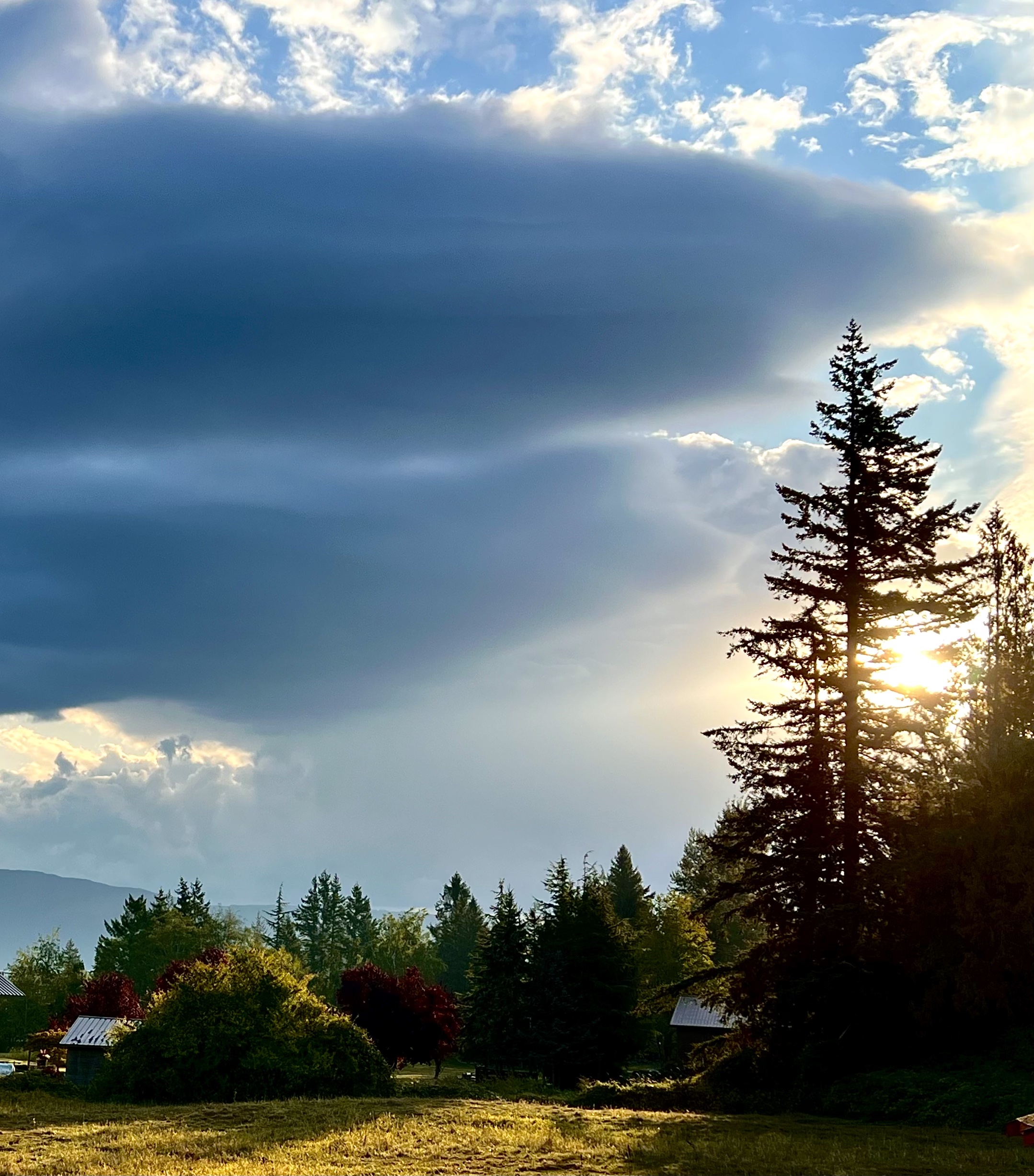
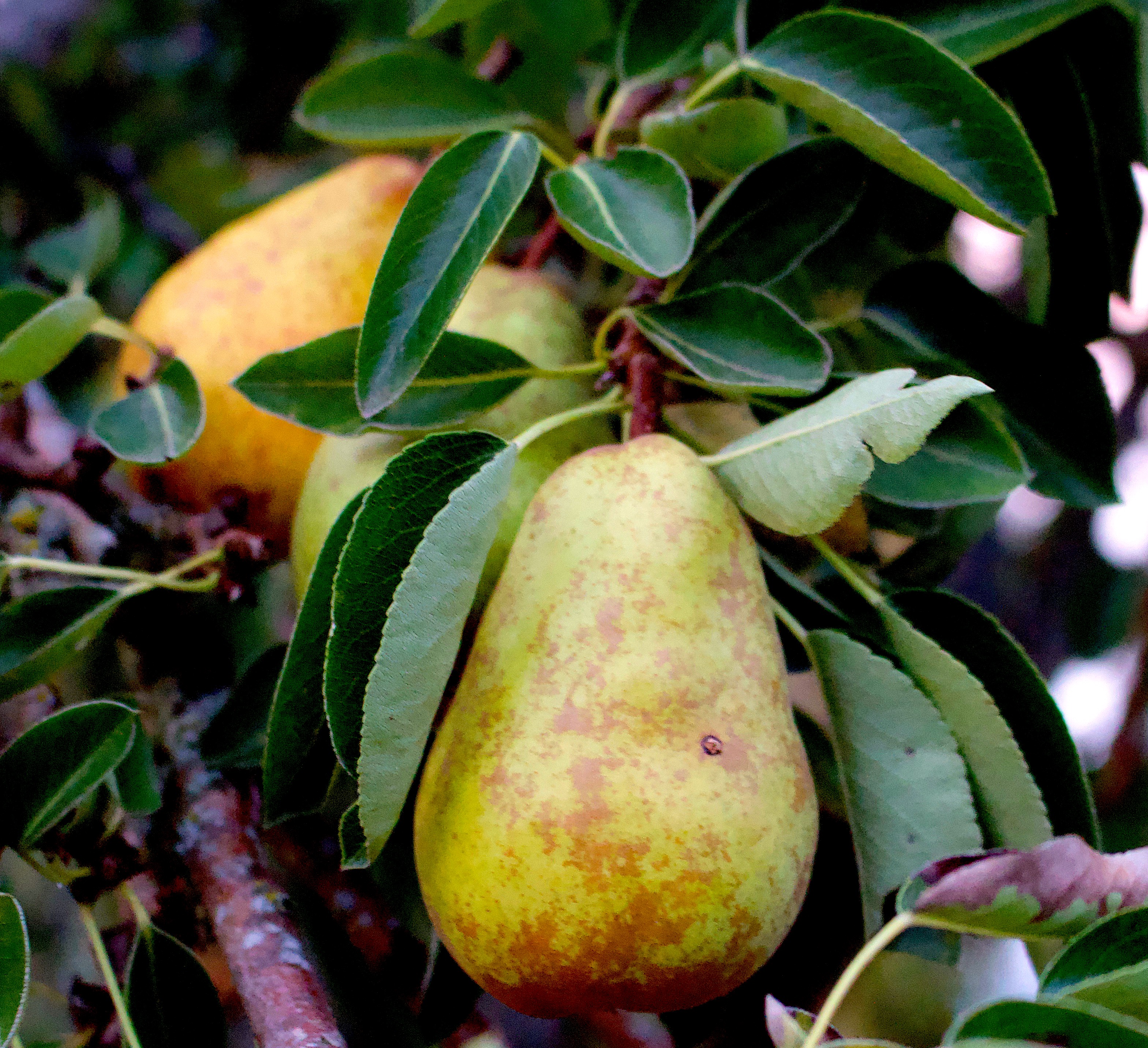
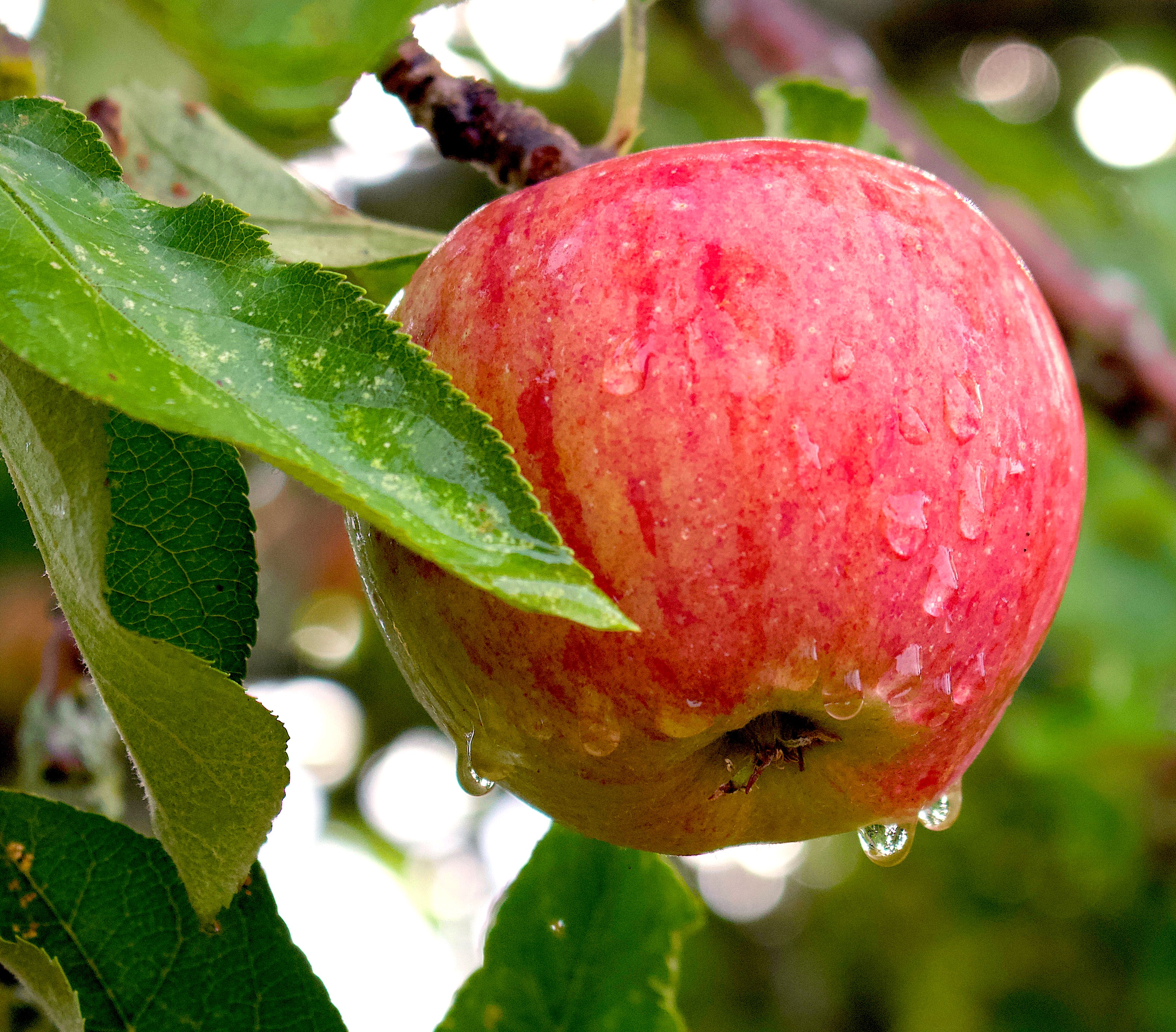
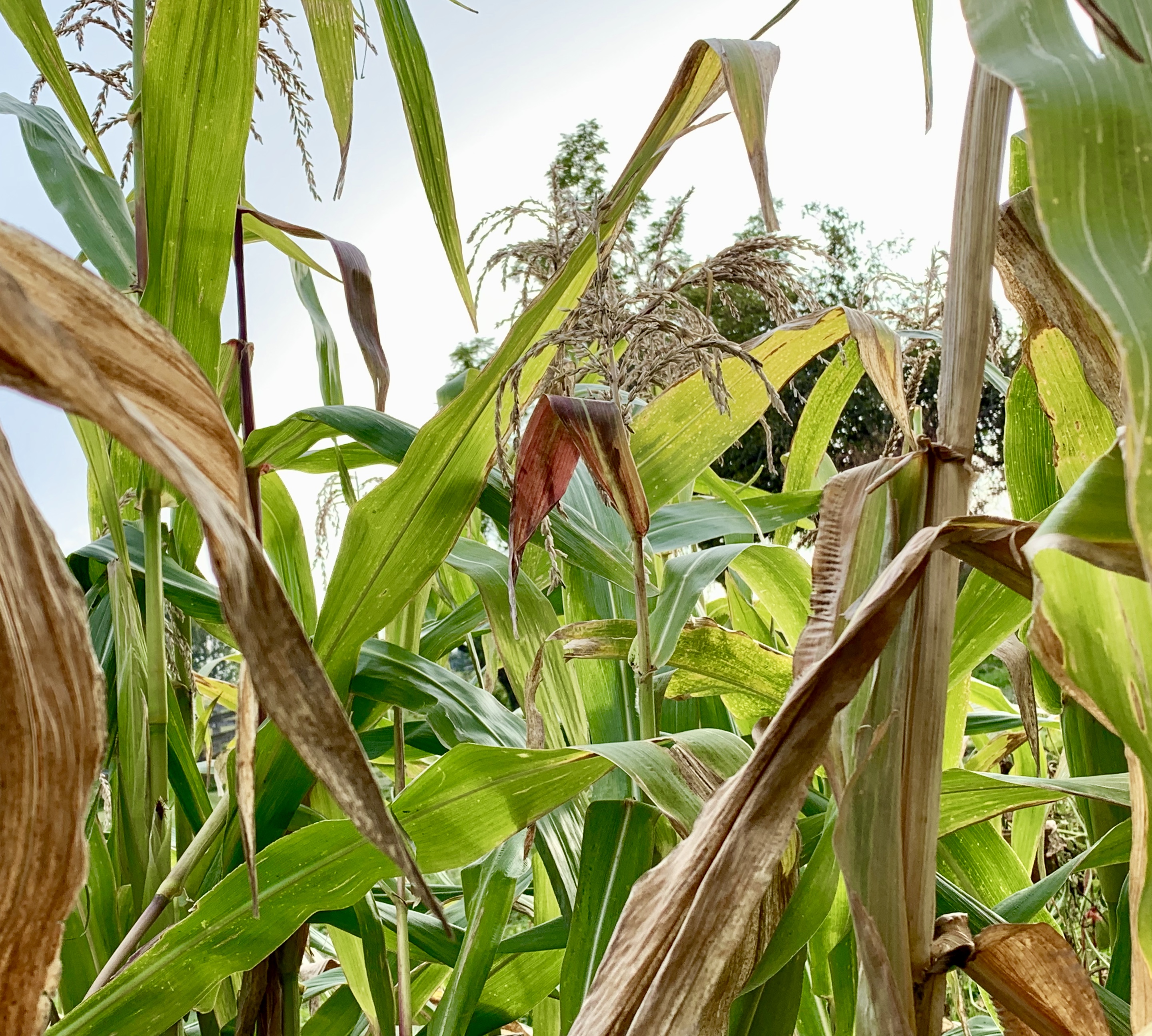
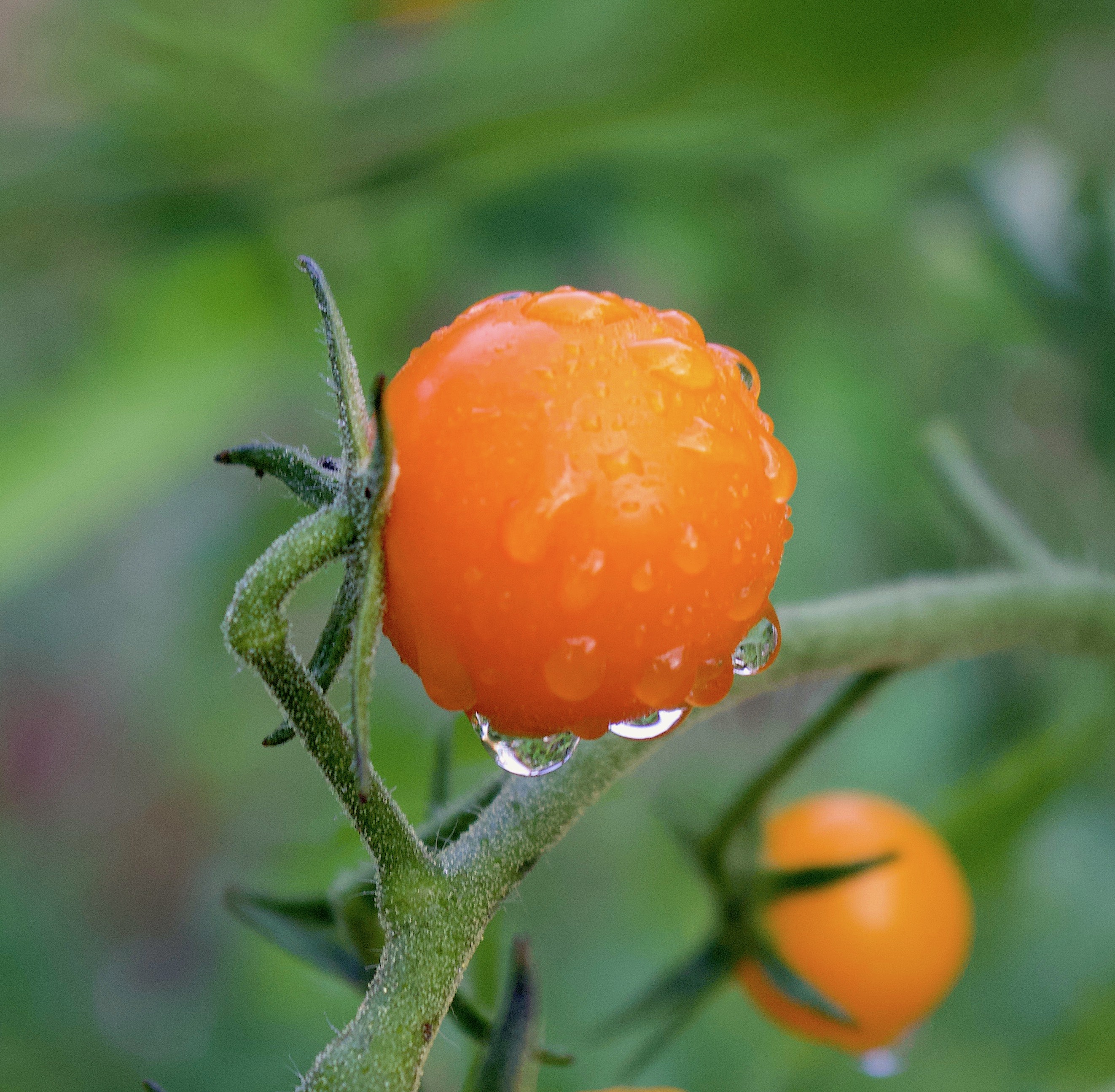
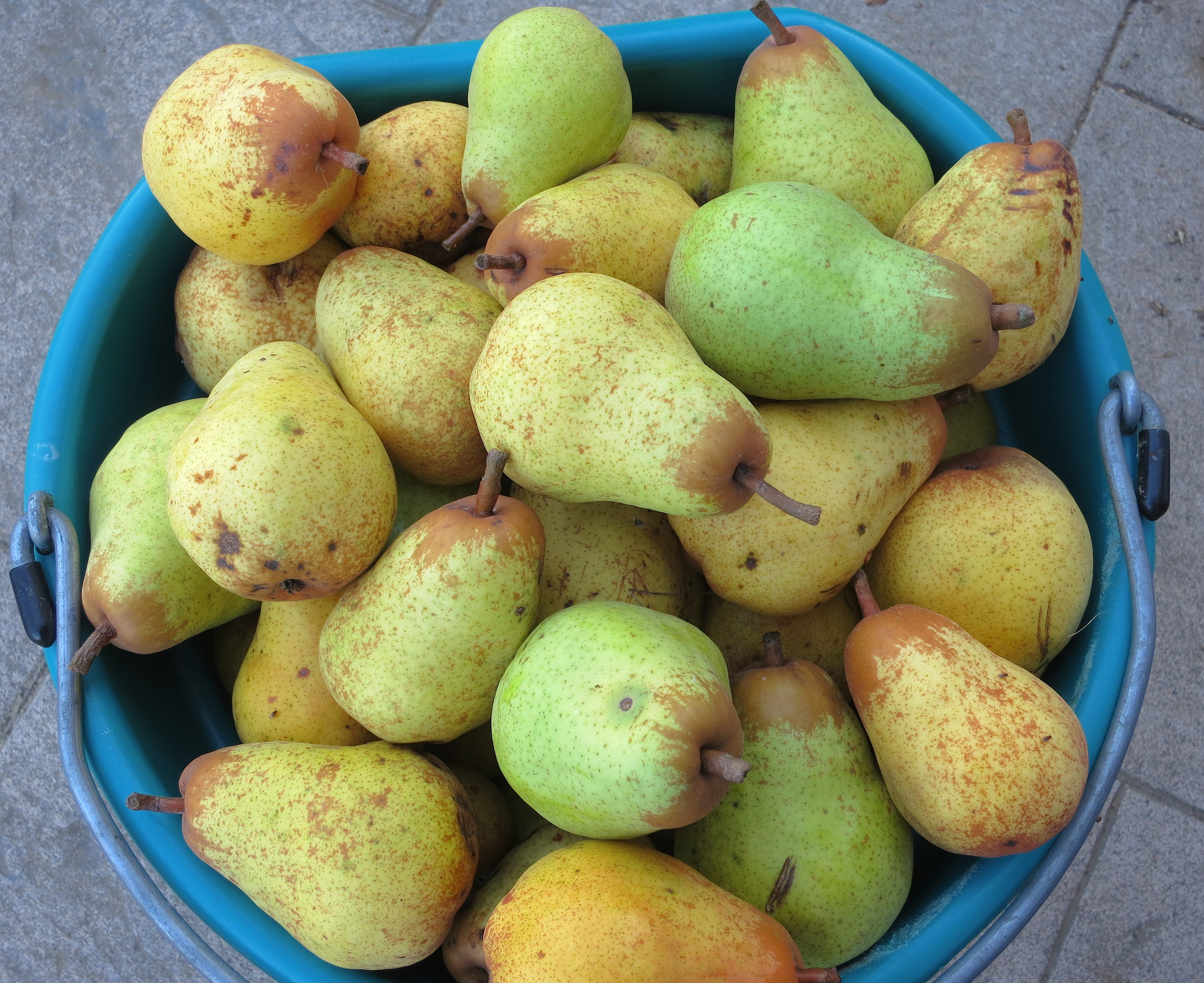
Summer has packed up, and moved on without bidding adieu or looking back over its shoulder. Cooling winds have carried in darkening clouds. I gaze upward to see and smell the change.  Rain has fallen, long overdue, yet there is temptation to bargain for a little more time.  Though we needed this good drenching, there are still potatoes to pull from the ground, apples and pears to pick, tomatoes not yet ripened, corn cobs too skinny to pick. 

I’m just not ready to wave goodbye to sun-soaked clear skies.

The overhead overcast is heavily burdened with clues of what is coming: earlier dusk, the feel of moisture, the deepening graying hues, the briskness of breezes, the inevitable mud and mold.  There is no negotiation possible. I need to steel myself and get ready, wrapping myself in the soft shawl of inevitability.

So autumn advances with the clouds, taking up residence where summer left off. Though there is still clean up of the overabundance left behind, autumn will bring its own unique plans for an exhilarating display of a delicious palette of hues.

Lord, the time has come. The truth is we’ve seen nothing yet.

One-Time
Monthly
Yearly

Make a one-time or recurring donation to support daily Barnstorming posts

Make a monthly donation

Make a yearly donation

Choose an amount

$10.00
$25.00
$50.00
$5.00
$15.00
$100.00
$5.00
$15.00
$100.00

Or enter a custom amount

$

Your contribution is deeply appreciated.

Your contribution is appreciated.

Your contribution is appreciated.

DonateDonate monthlyDonate yearly

Becoming a Skeleton of Its Summer Self

Toward the end of August I begin to dream about fall, how
this place will empty of people, the air will get cold and
leaves begin to turn. Everything will quiet down, everything
will become a skeleton of its summer self. Toward

the end of August I get nostalgic for what’s to come, for
that quiet time, time alone, peace and stillness, calm, all
those things the summer doesn’t have. The woodshed is
already full, the kindling’s in, the last of the garden soon

will be harvested, and then there will be nothing left to do
but watch fall play itself out, the earth freeze, winter come.

~David Budbill, “Toward the End of August” from Tumbling Toward the End.

As the calendar page flipped to September this past week, I felt nostalgic for what is coming, especially for our grandchildren who are starting new classes tomorrow.

Summer is filled with so much overwhelming activity due to ~18 hours of daylight accompanying weeks of unending sunny weather resulting in never-enough-sleep.  Waking on a summer morning feels so brim full with possibilities: there are places to go, people to see, new things to explore and of course, a garden and orchard always bearing and fruiting out of control.

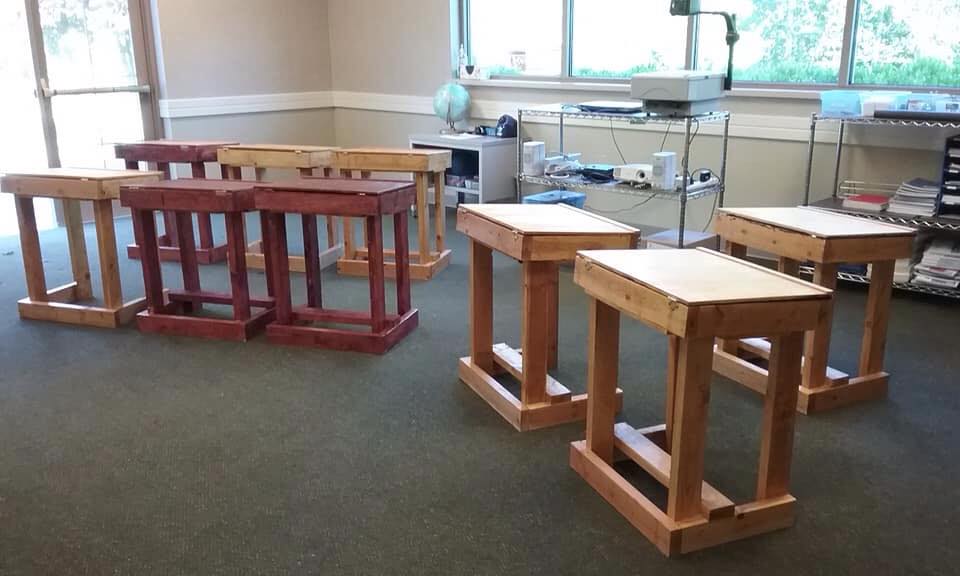
As early September days usher us toward autumn, we long for the more predictable routine of school days, so ripe with new learning opportunities. One early September a few years ago, my teacher friend Bonnie orchestrated an innovative introduction to fifth grade by asking her students, with some parental assistance, to make (from scratch) their own personalized school desks that went home with them at the end of the year. These students created their own learning center with their brains and hands, with wood-burned and painted designs, pictures and quotes for daily encouragement.

For those students, their desks will always represent a solid reminder of what has been and what is to come.

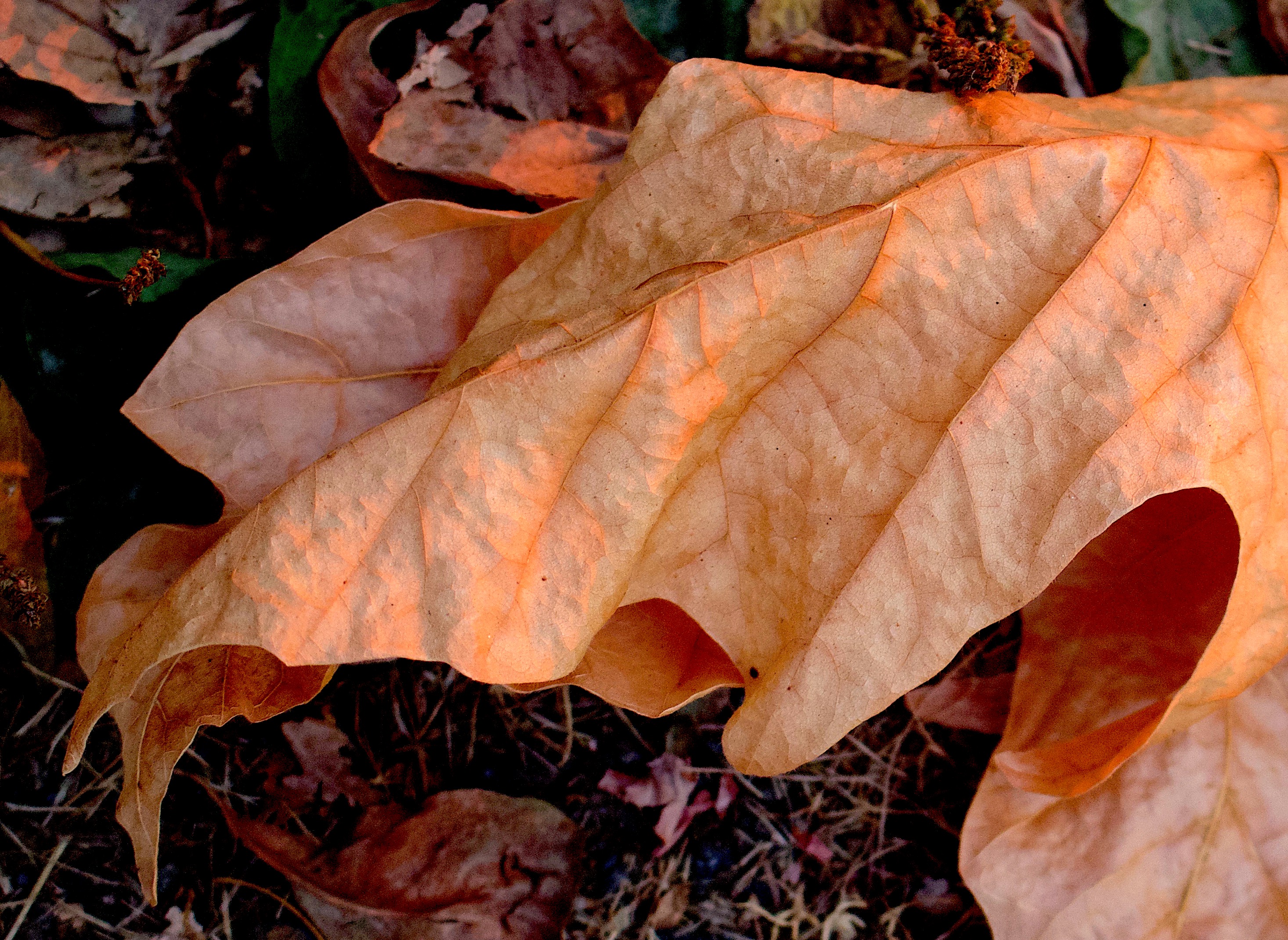
So too, I welcome September’s quieting times ushering in a new cool freshness in the air as breezes pluck and toss a few drying leaves from the trees.  I will watch the days play themselves out rather than feeling I must direct each moment.  I can be a sponge, ready to take in what the world is trying to teach me.

And so I am whispering hush … to myself.

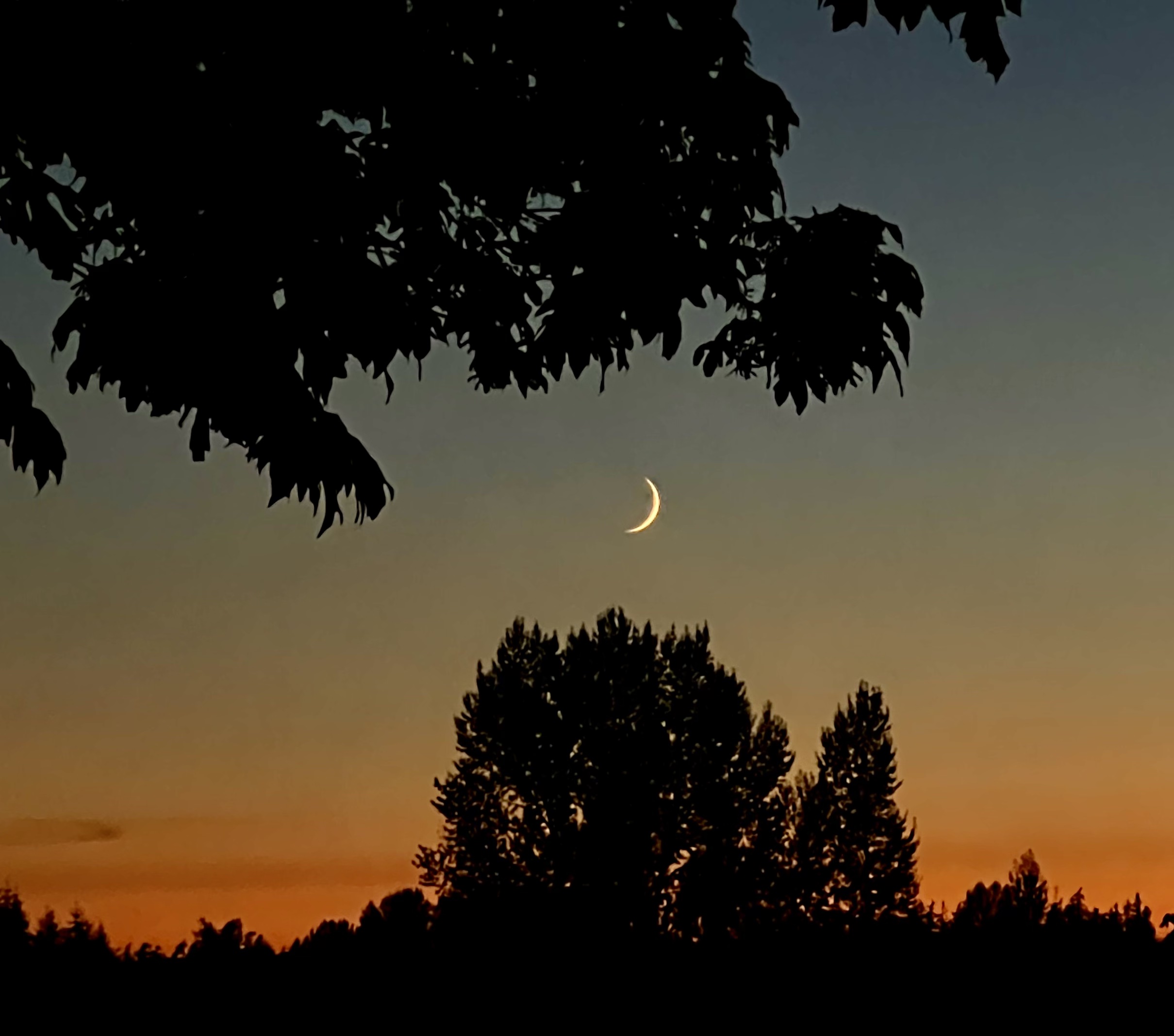
Goodnight August, goodnight summer, goodnight leaves,
goodnight garden, goodnight moon, goodnight air,
goodnight noises everywhere.

Bonnie’s student-made desks

One-Time
Monthly
Yearly

Make a one-time or recurring donation to support daily Barnstorming posts

Make a monthly donation

Make a yearly donation

Choose an amount

$10.00
$25.00
$50.00
$5.00
$15.00
$100.00
$5.00
$15.00
$100.00

Or enter a custom amount

$

Your contribution is deeply appreciated.

Your contribution is appreciated.

Your contribution is appreciated.

DonateDonate monthlyDonate yearly
Only Here and Now

When I work outdoors all day, every day,
as I do now, in the fall, getting ready for winter,
tearing up the garden, digging potatoes,
gathering the squash, cutting firewood, making kindling, repairing
bridges over the brook, clearing trails in the woods,

doing the last of the fall mowing,
pruning apple trees, taking down the screens,
putting up the storm windows, banking the house—all these things,
as preparation for the coming cold…


when I am every day all day all body and no mind, when I am
physically, wholly and completely, in this world with the birds,
the deer, the sky, the wind, the trees…


when day after day I think of nothing but what the next chore is,
when I go from clearing woods roads, to sharpening a chain saw,
to changing the oil in a mower, to stacking wood, when I am
all body and no mind…

when I am only here and now and nowhere else—
then, and only then, do I see the crippling power of mind,
the curse of thought, and I pause and wonder why
I so seldom find this shining moment in the now.
~David Budbill “This Shining Moment in the Now” from While We’ve Still Got Feet.

I spend only a small part of my day doing physical work compared to my husband’s faithful daily labor in the garden and elsewhere on the farm. We both celebrate the good and wonderful gifts from the Lord, His sun, rain and soil. Although these weeks are a busy harvest time preserving as much as we can from the orchard and the garden, too much of my own waking time is spent almost entirely within the confines of my skull.

I know that isn’t healthy. My body needs to lift and push and pull and dig and toss, so I head outside to do farm and garden chores. This physical activity gives me the opportunity to be “in the moment” and not crushed under “what was, what is, what needs to be and what possibly could be” — all the processing that happens mostly in my head.

I’m grateful for this tenuous balance in my life, knowing as I do that I was never cut out to be a good full time farmer. I sometimes feel that shining glow in the moments of “living it now” rather than dwelling endlessly in my mind about the past or the future.

Thank the Lord, oh thank the Lord. I am learning to let those harvest moments shine.

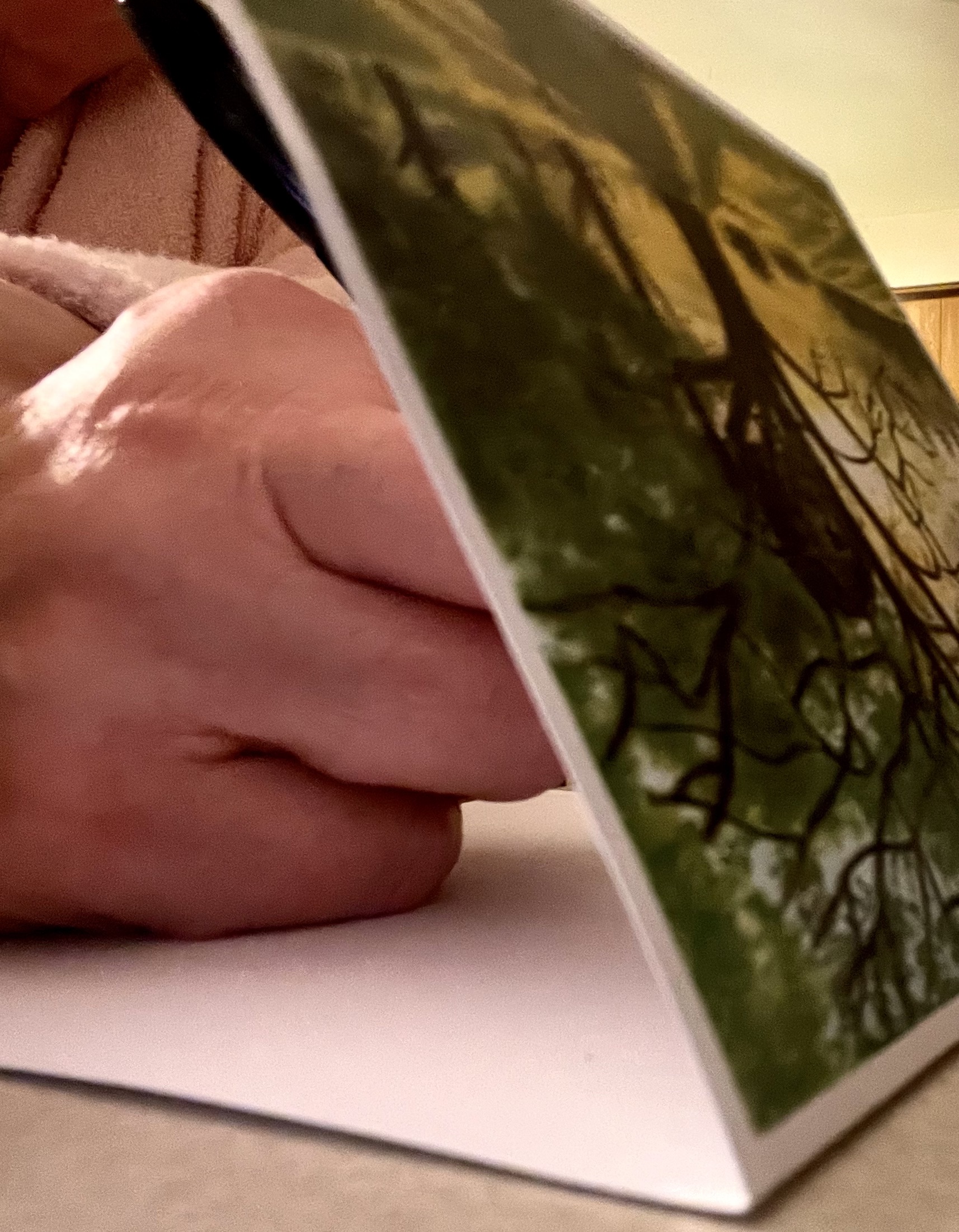
Original Barnstorming artwork note cards available as a gift to you with a $50 donation to support Barnstorming – information here

A Moment of Marvel

On this first day of November
it is cold as a cave,
the sky the color
of neutral third parties.
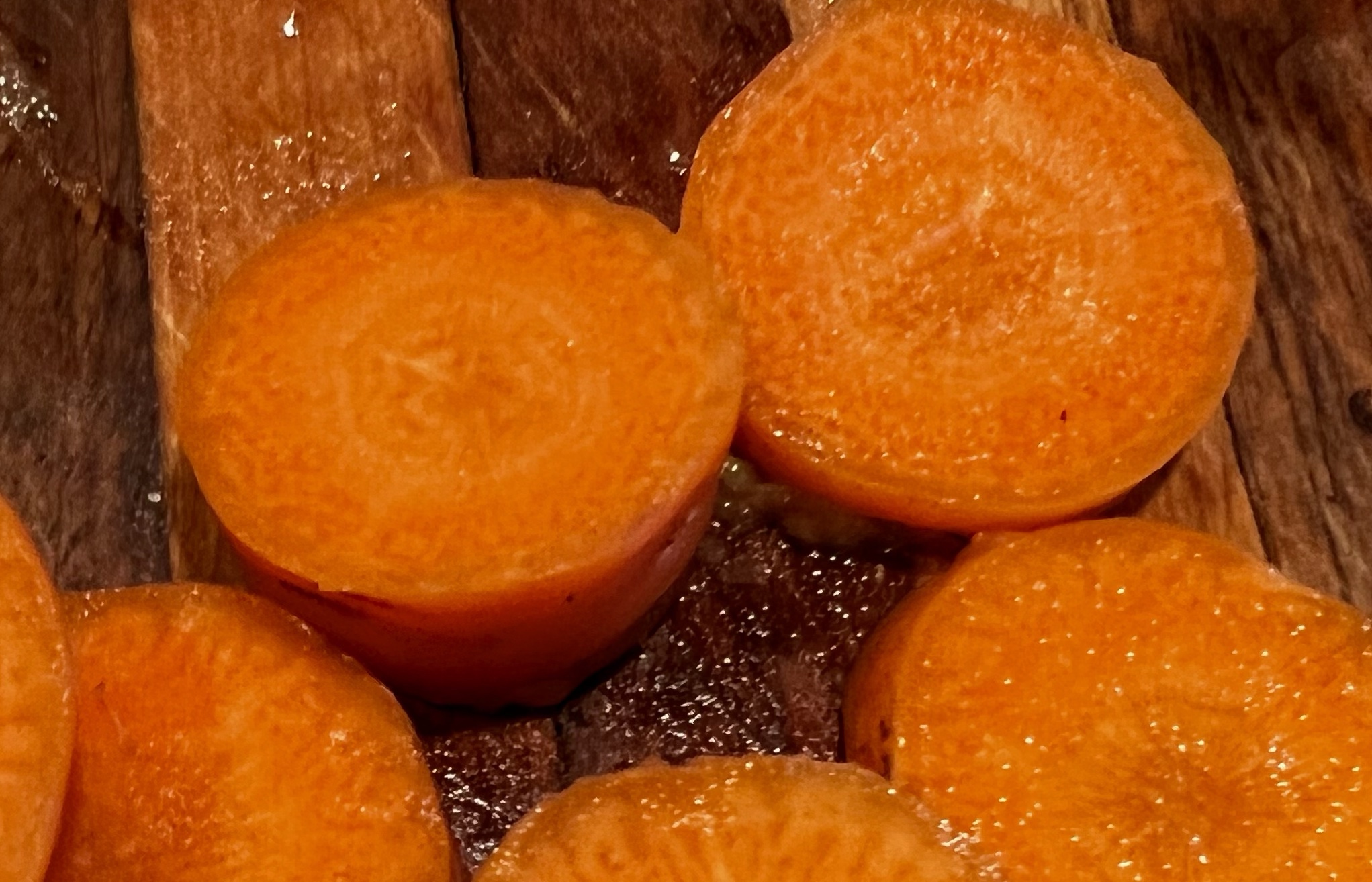
I am cutting carrots
for the chicken soup.
Knife against carrot
again and again
sends a plop of pennies
into the pan.
These cents,
when held to the gray light,
hold no noble president,
only stills
of some kaleidoscope
caught being pensive…
and beautiful,
in the eye of this beholder,
who did not expect
this moment of marvel
while making an early supper
for the hungry children.

~Cindy Gregg, “Monday” from Suddenly Autumn.

I wasn’t prepared for November to begin on this chilly Monday morning.

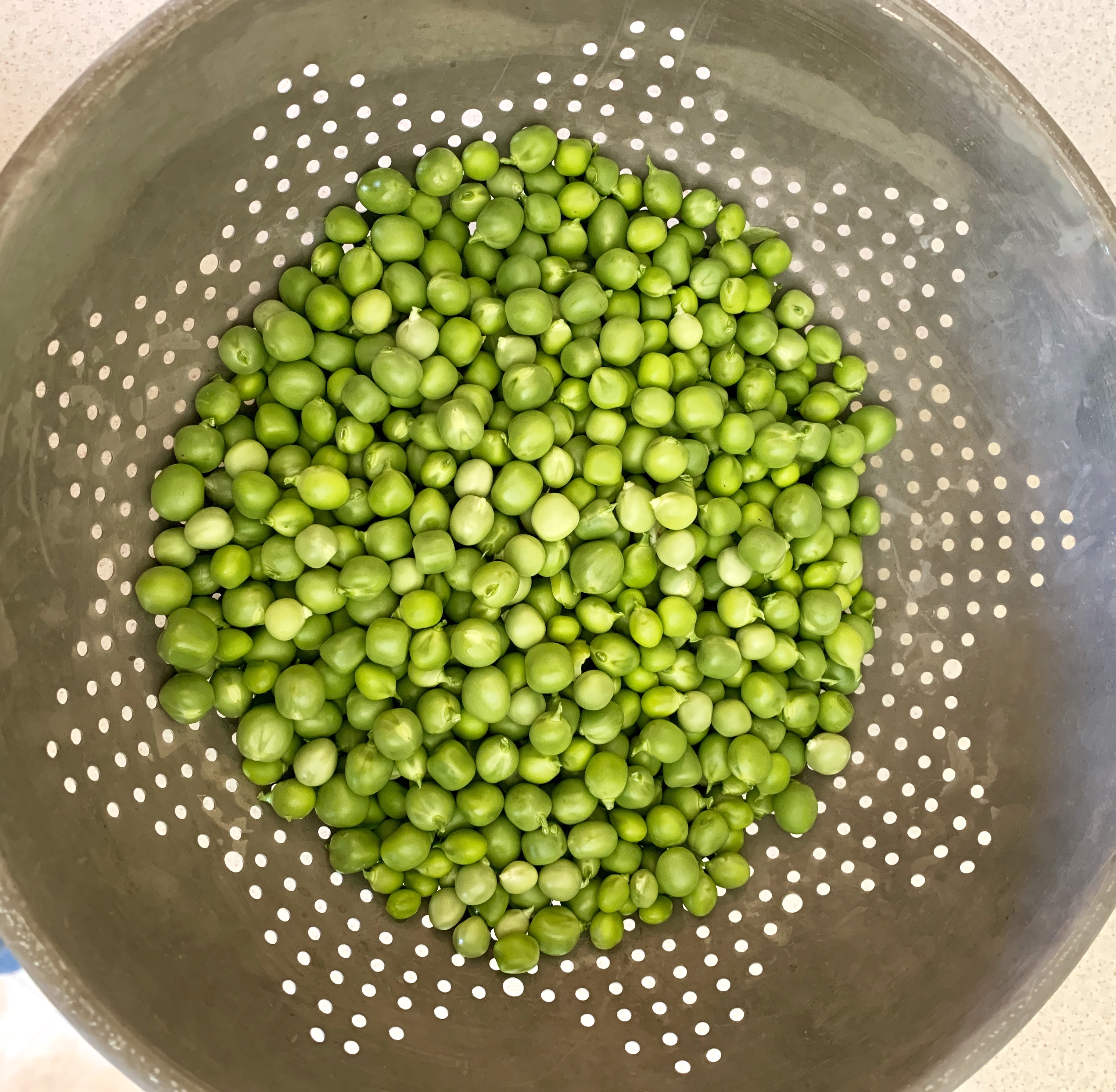
Throwing on my barn coat and boots, I pulled up some of the last carrots from the garden, cut them up, added some already harvested beans, peas and corn from the freezer, threw in some baby potatoes to make a crockpot of beef bone soup.

When we return home hungry from our community work tonight, we will be tired but well fed.

There is a moment of marvel in preparing a meal from one’s own garden bounty, remembering the small seeds put in the ground 6 months ago, and now washed and cut and simmering in a pot in our kitchen.

The start of November isn’t so chilly after all. We are warmed by the work done through the spring and summer, the sun and rain that grew these vegetables, and the Creator God who provides, even in the cold and dark months of the year.

We’ll make it through this first Monday of November, anticipating the marvels to come.

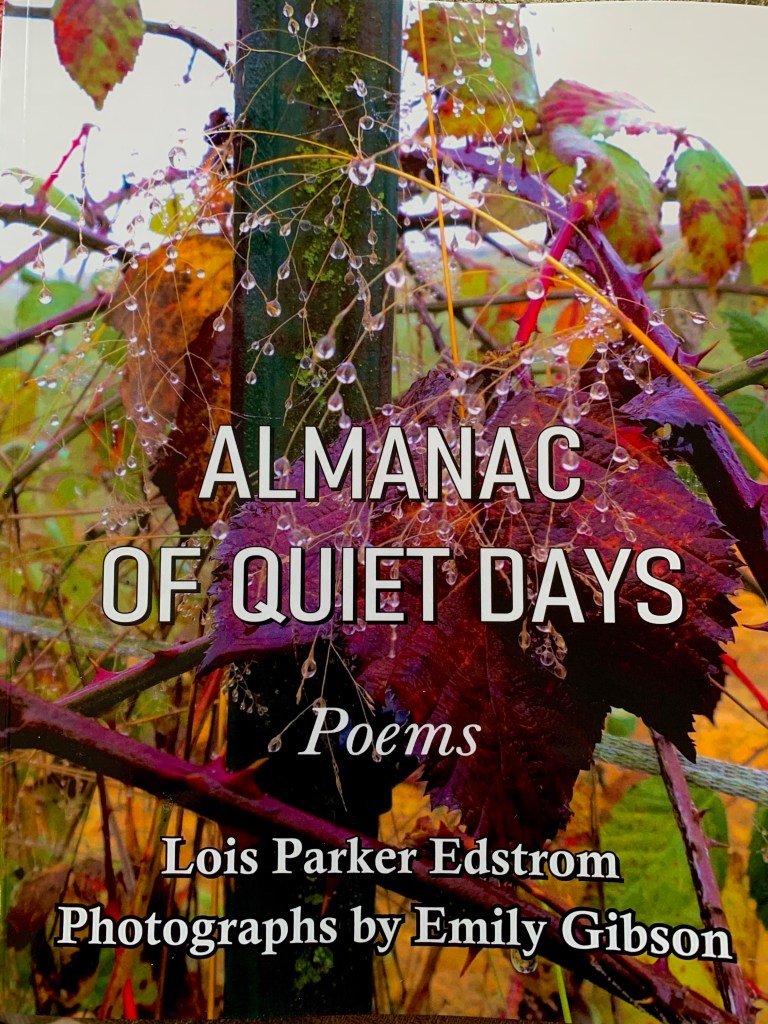
A book of beauty in words and photography, available to order here:

The Redeemed World

You get down on your knees in the dark earth—alone
for hours in hot sun, yanking weed roots, staking trellises,
burning your shoulders, swatting gnats; you strain your muscled
midwestern neck and back, callous your pianist’s hands.

You cut roses back so they won’t fruit, rip out and replace
spent annuals. You fill your garden dense with roots and vines.
And when a humble sprout climbs like a worm up out of death,
you are there to bless it, in your green patch, all spring and summer long,

hose like a scepter, a reliquary vessel; you hum
through the dreamy wilderness—no one to judge, absolve,
or be absolved—purified by labor, confessed by its whisperings, connected to its innocence.

So when you heft a woody, brushy tangle, or stumble
inside grimy, spent by earth, I see all the sacraments in place—
and the redeemed world never smelled so sweet.

~Ken Weisner, “The Gardener” from Anything on Earth.

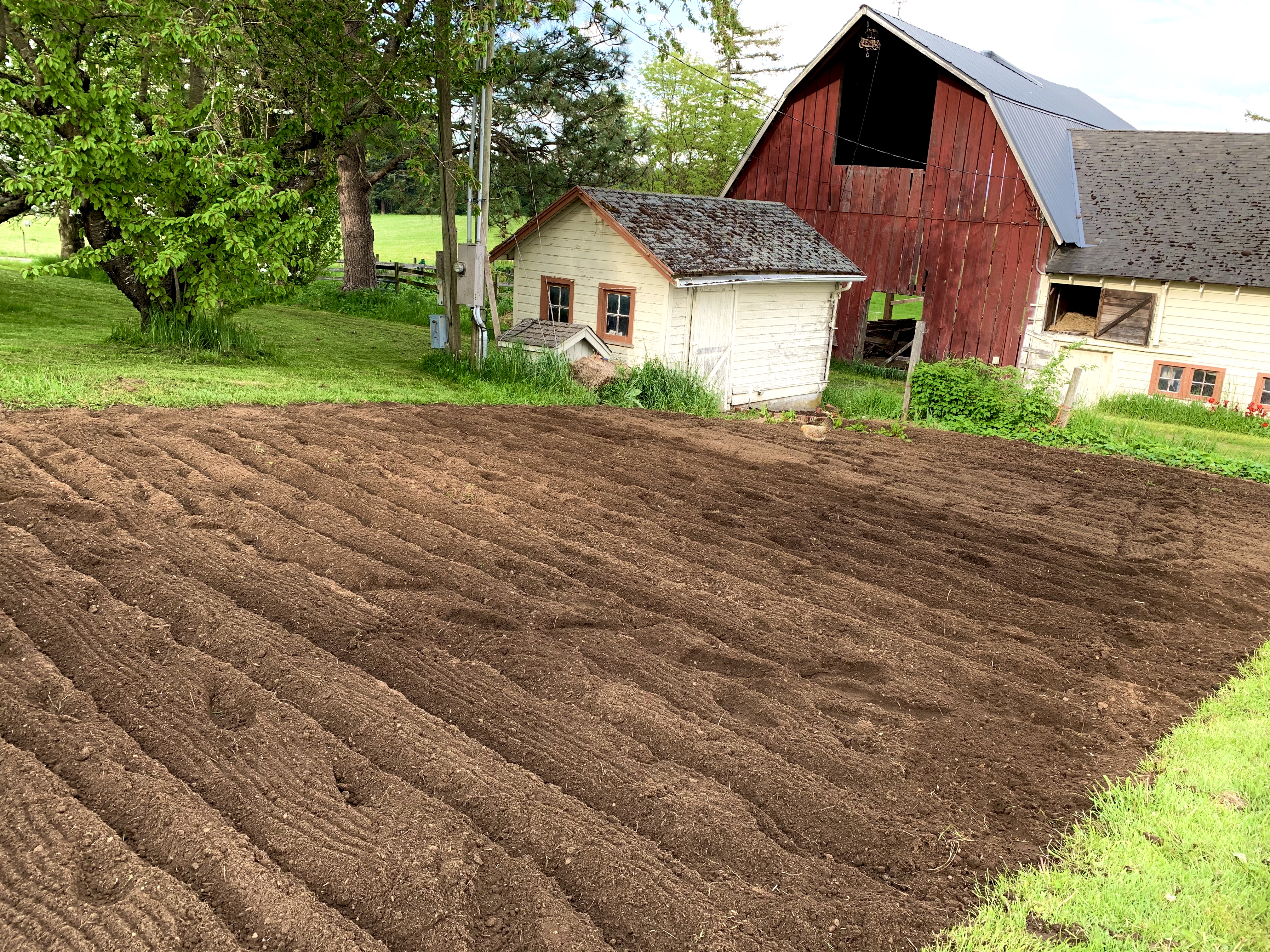
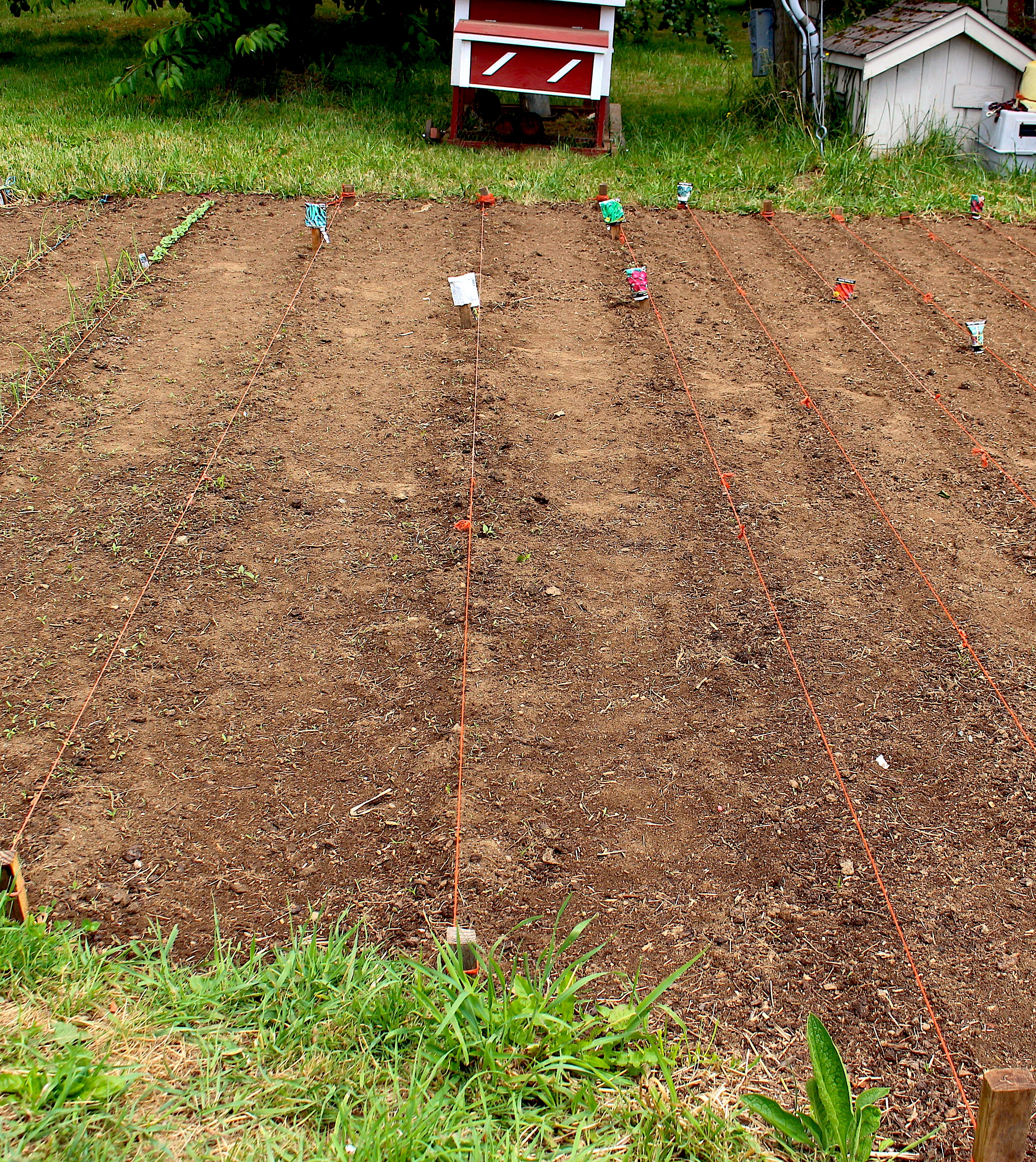
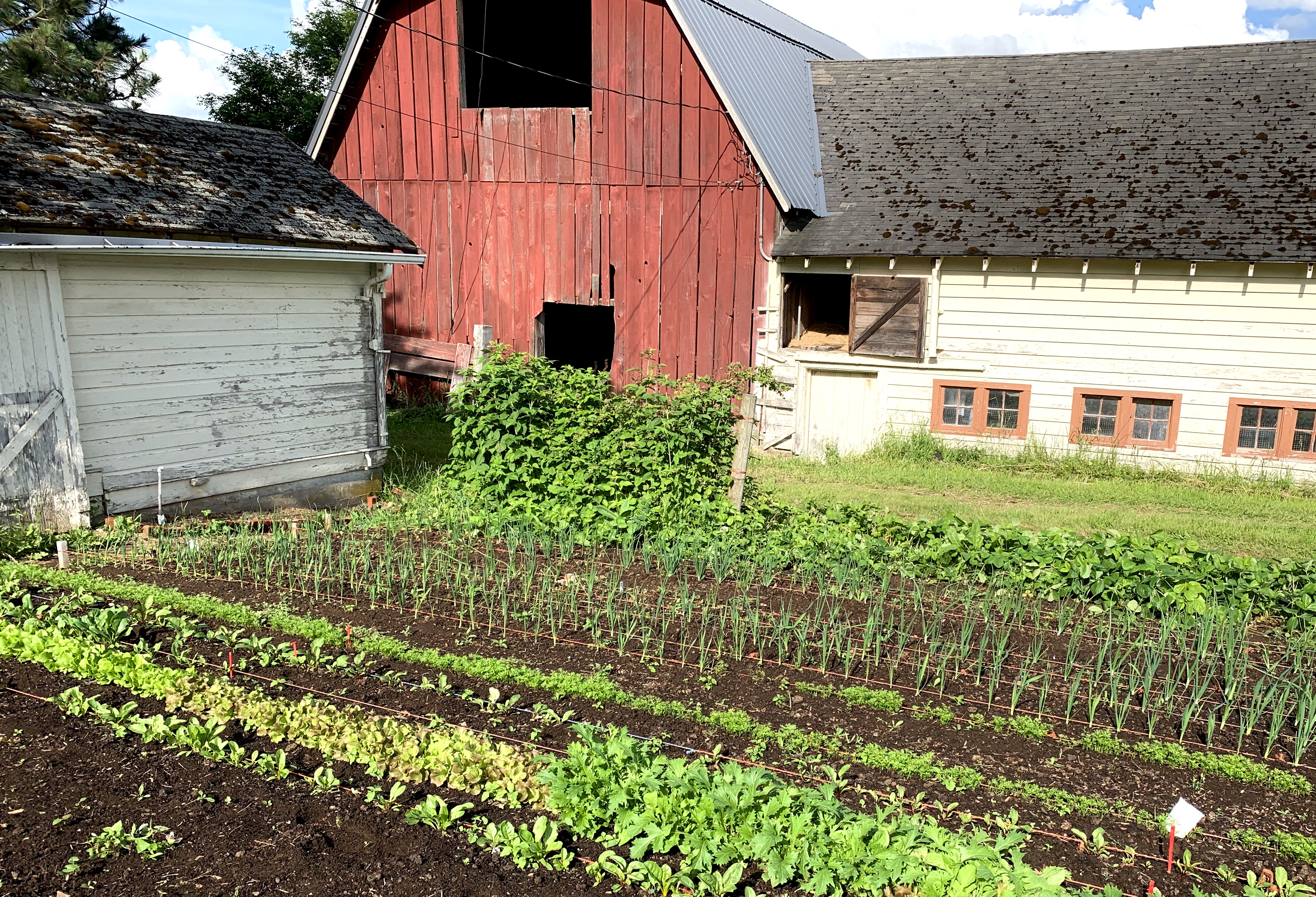
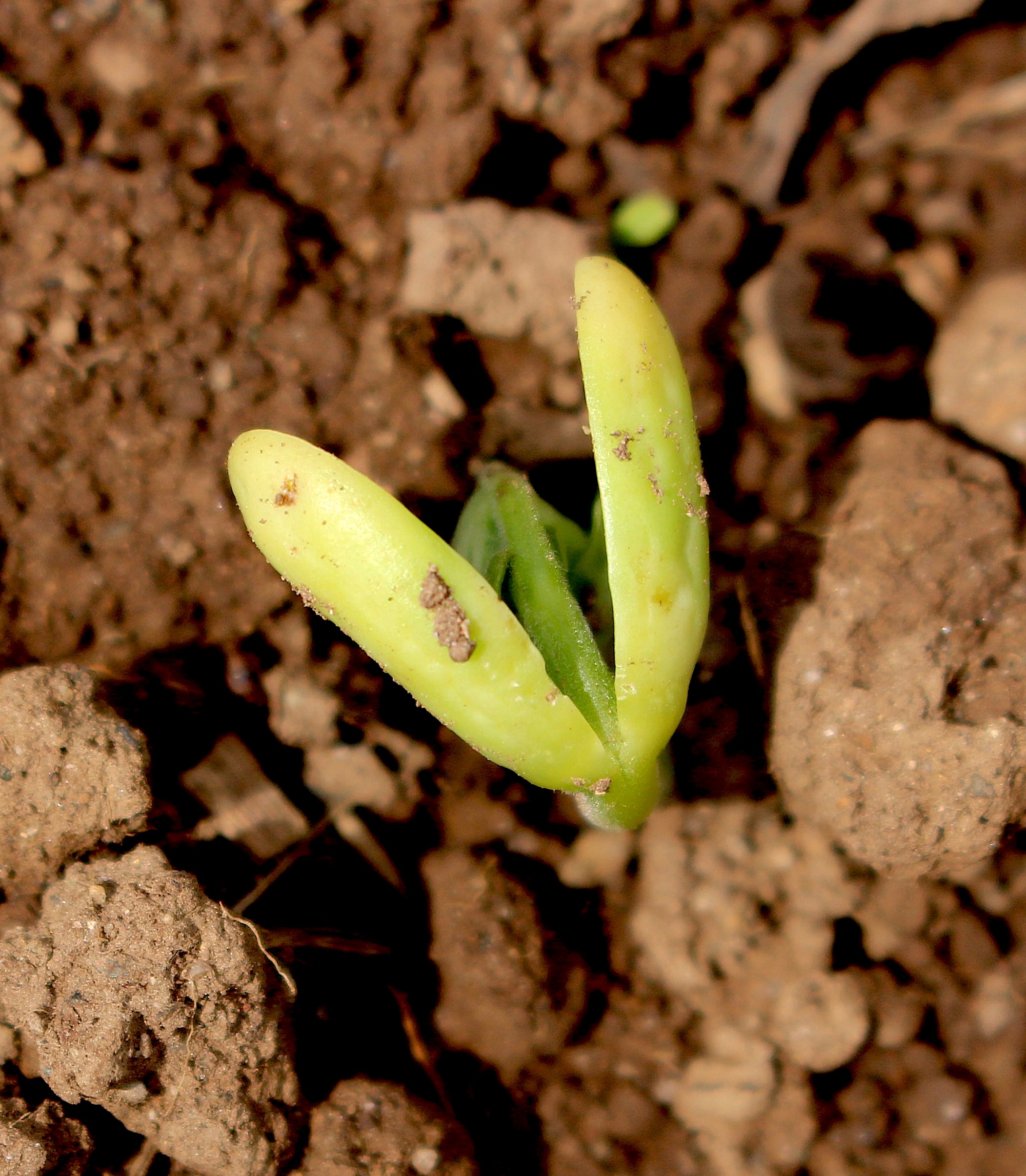
We are in full-garden produce preservation mode right now on the farm – these are the days when we pick the fruits of Dan’s labors – all the hours he spent this spring preparing the soil with rich compost, meticulously pulling out weeds by the roots, rototilling and cultivating, then staking/stringing/sowing the rows, then standing back to watch the sun and rain coax the seeds from the dark.

All this happens in a mere few weeks – we never tire of this illustration of redemption and renewal we’re shown year after year – how a mess of weeds and dirt can be cleared, refined and cleansed to once again become productive and fruitful, feeding those who hunger – both now and deep into winter and next spring.

It gives me hope; even when I myself am feeling full of weeds and despairingly dirty and overwhelmed, I can be renewed. It takes a persistent Gardener who is willing and eager to prune away what is useless, and sow anew what is needed for me to thrive and produce – His hands and knees are covered with my grime.

And the fruit that results! – so very sweet…

If you enjoy Barnstorming posts like this, you’ll enjoy this new book from Barnstorming, available to order here:

To Scatter New Potatoes

Between my finger and my thumb   
The squat pen rests; snug as a gun.

Under my window, a clean rasping sound   
When the spade sinks into gravelly ground:   
My father, digging. I look down

Till his straining rump among the flowerbeds   
Bends low, comes up twenty years away   
Stooping in rhythm through potato drills   
Where he was digging.

The coarse boot nestled on the lug, the shaft   
Against the inside knee was levered firmly.
He rooted out tall tops, buried the bright edge deep
To scatter new potatoes that we picked,
Loving their cool hardness in our hands.

By God, the old man could handle a spade.   
Just like his old man.

My grandfather cut more turf in a day
Than any other man on Toner’s bog.
Once I carried him milk in a bottle
Corked sloppily with paper. He straightened up
To drink it, then fell to right away
Nicking and slicing neatly, heaving sods
Over his shoulder, going down and down
For the good turf. Digging.

The cold smell of potato mould, the squelch and slap
Of soggy peat, the curt cuts of an edge
Through living roots awaken in my head.
But I’ve no spade to follow men like them.

Between my finger and my thumb
The squat pen rests.
I’ll dig with it.

~Seamus Heaney, “Digging” from Death of a Naturalist

Van Gogh Painting, Oil on Canvas on Panel Nuenen:
August, 1885 Kröller-Müller Museum Otterlo, The Netherlands
Digging Potatoes by Martin Driscoll http://www.martindriscoll.com

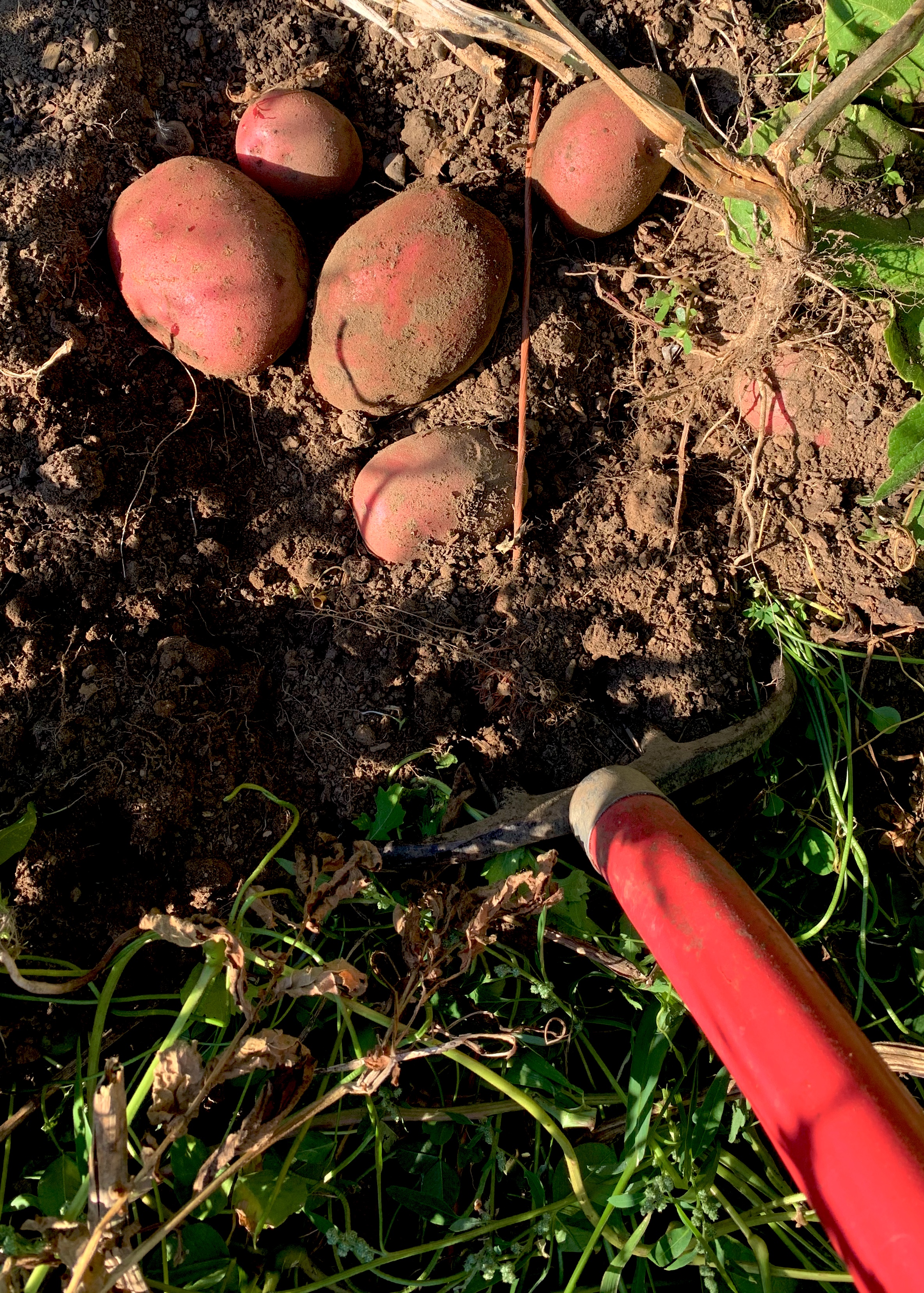
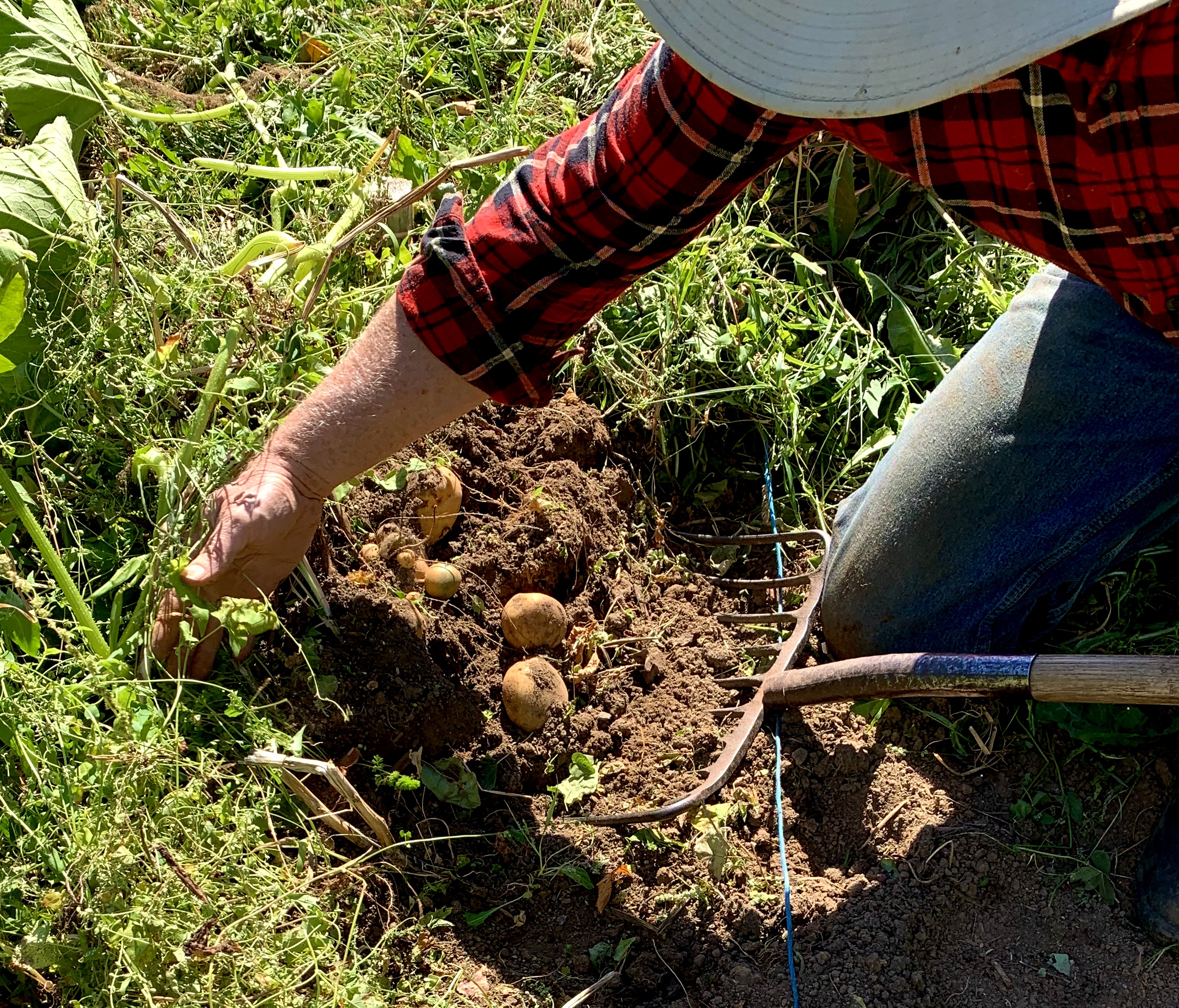
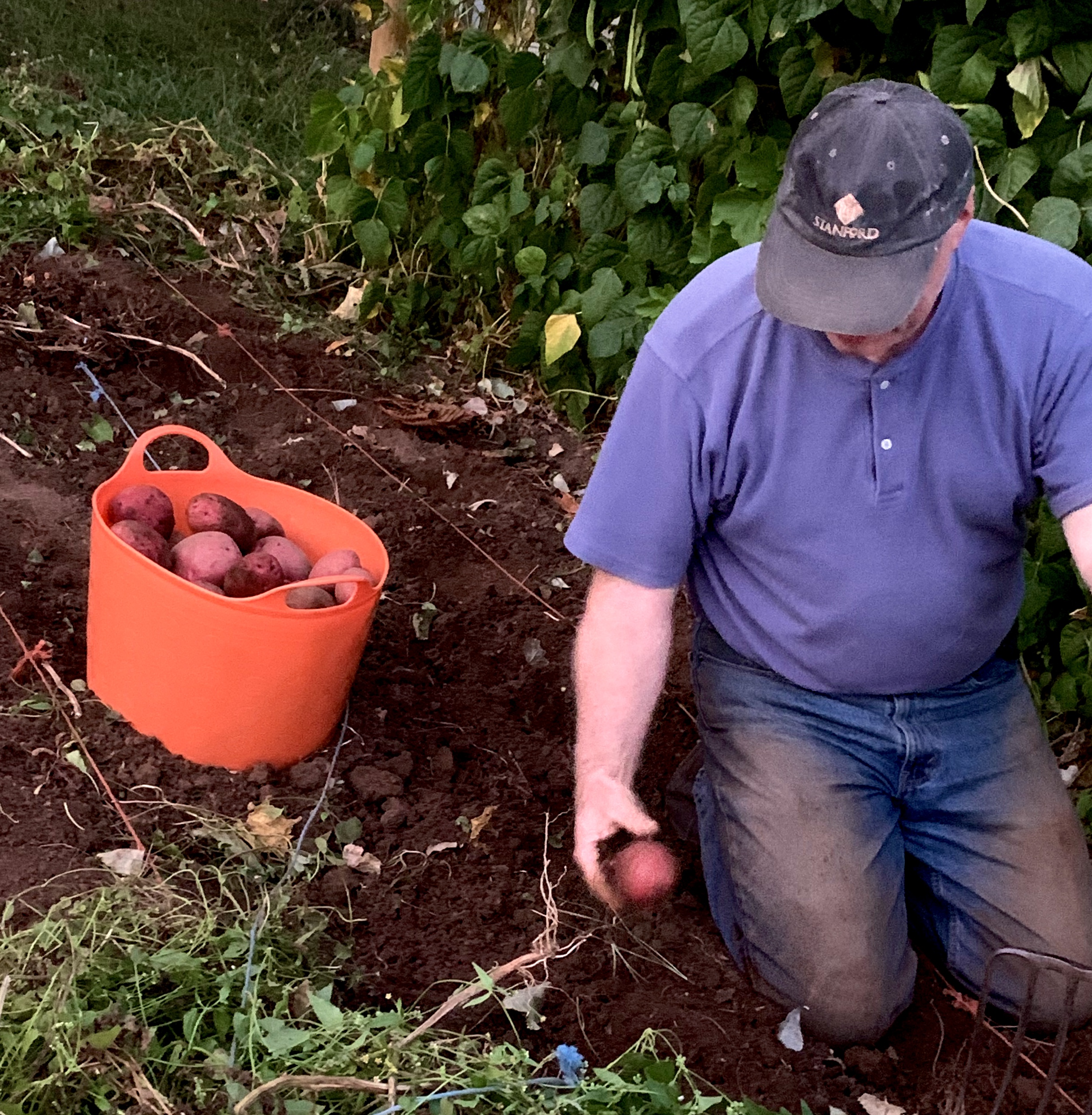
Digging potatoes is one of the most satisfying tasks for a farmer. Often the dead above-ground vines have melted into the ground, blending in with the weeds and encroaching sprawl of squash vines. Finding the treasure underneath the topsoil is an act of faith. You set the shovel or fork boldly into the dirt to loosen up the top eight inches. Then you submerge your hand into the dirt and come up with a fistful of potato gold nuggets, each smooth cool tuber rolling into fresh air like so many newly discovered hidden Easter eggs.

A daily dig for words to write isn’t nearly as easy as finding potatoes in the soil; the bounty under the surface often remains hidden away from my view and elusive. I have to keep searching and sifting and sorting. Some that I end up with are rotten. Some are overexposed, too green and toxic. Some are scabby and look ugly, but are still useable and hopefully tasty.
Yet I get out my virtual spade and dig into the dirt of life every day, hoping, just hoping, to come up with words in my hands that are not only beautiful, colorful, smooth and palatable, but a sheer delight for the digger/reader to discover along with me.