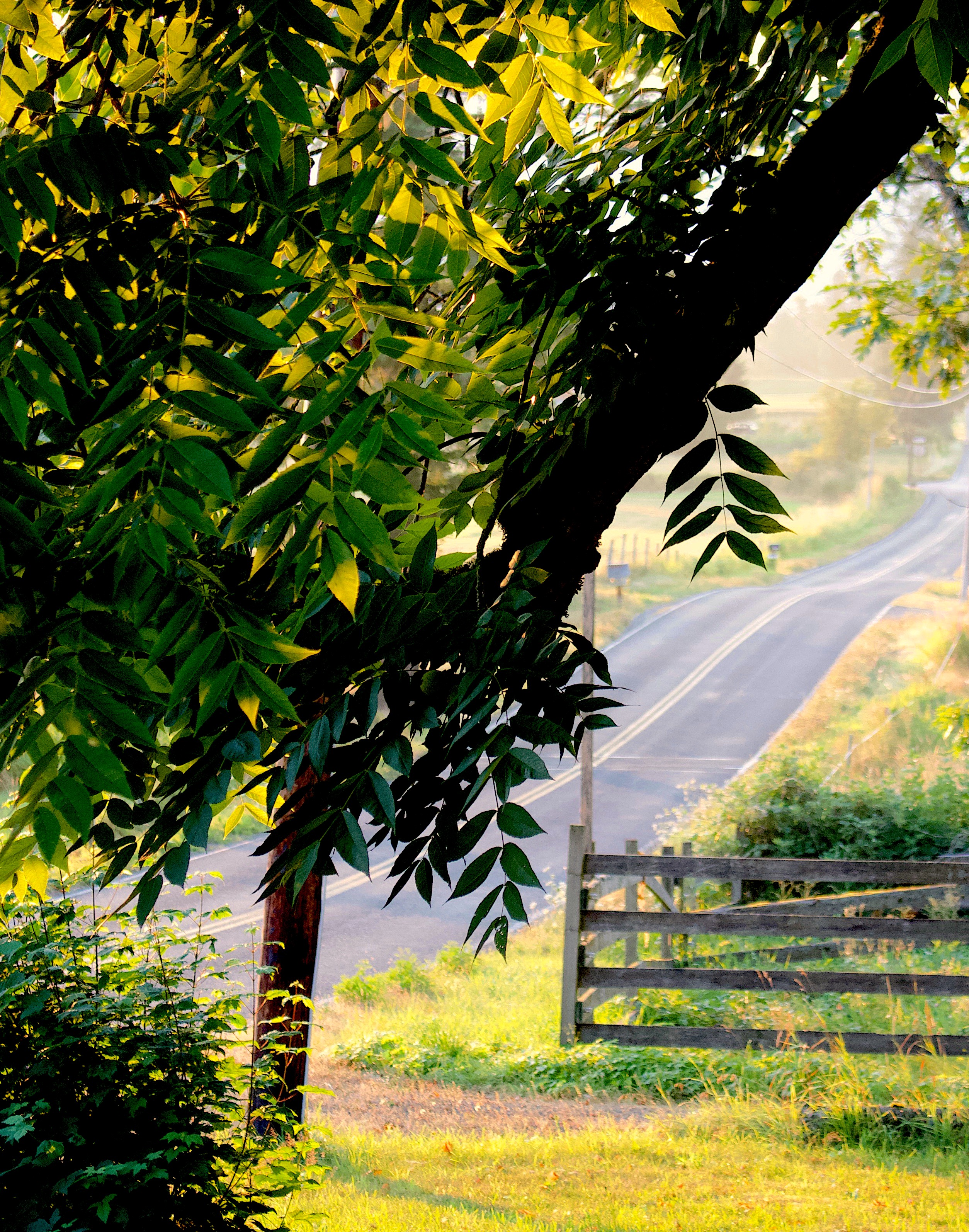
Come and See: Rivers of Living Water

On the last day of the feast, the great day, Jesus stood up and cried out, “If anyone thirsts, let him come to me and drink.  Whoever believes in me, as the Scripture has said, ‘Out of his heart will flow rivers of living water.’” 

Now this he said about the Spirit, whom those who believed in him were to receive, for as yet the Spirit had not been given, because Jesus was not yet glorified.

When they heard these words, some of the people said, “This really is the Prophet.” Others said, “This is the Christ.” But some said, “Is the Christ to come from Galilee? Has not the Scripture said that the Christ comes from the offspring of David, and comes from Bethlehem, the village where David was?” 

So there was a division among the people over him. Some of them wanted to arrest him, but no one laid hands on him.

The officers then came to the chief priests and Pharisees, who said to them, “Why did you not bring him?” The officers answered, “No one ever spoke like this man!”  The Pharisees answered them, “Have you also been deceived?  Have any of the authorities or the Pharisees believed in him? But this crowd that does not know the law is accursed.” 

Nicodemus, who had gone to him before, and who was one of them, said to them,  “Does our law judge a man without first giving him a hearing and learning what he does?”  They replied, “Are you from Galilee too? Search and see that no prophet arises from Galilee.”
John 7: 37-52

This darksome burn, horseback brown,
His rollrock highroad roaring down,
In coop and in comb the fleece of his foam
Flutes and low to the lake falls home.

A windpuff-bonnet of fawn-froth
Turns and twindles over the broth
Of a pool so pitchblack, fell-frowning,
It rounds and rounds Despair to drowning.

Degged with dew, dappled with dew,
Are the groins of the braes that the brook treads through,
Wiry heathpacks, flitches of fern,
And the beadbonny ash that sits over the burn.

What would the world be, once bereft
Of wet and wildness? Let them be left,
O let them be left, wildness and wet;
Long live the weeds and the wilderness yet.

~Gerard Manley Hopkins “Inversnaid”

The One who gives the calm of lakes and pools, the freshness of brooks and streams, the majestic depths of seas and oceans, the glory of pounding surf, the might of Niagara and the tinkle of the garden fountain, the One from whose being flows the gift of the water of eternal life — this is the One who is dying of a terrible thirst on the Cross for the love of his lost sheep
~Fleming Rutledge from “The Seven Last Words of the Cross”

…see the intricate connection between actual water—pure mountain streams, great lakes and seas, vast oceans, all of it created by God, all of it endangered by the carelessness and greed of humankind—and the living water of eternal life in Jesus Christ.

The water from <the crucified> Jesus’ side, together with the life-giving blood of the Lamb, is the metaphor for the eternal life that God gives to our human race, our race that seems more than ever to be bent on destroying itself and its beautiful planet. The interplay here between symbolism and factual reality is endlessly rich.

Human beings cannot live without water. In the age to come, in the city of God that will come down from heaven, there is a river of unquenchable love, bought for us by the agony and thirst of the only begotten Son of God.

Come to his water. Come to his cross. Come to his blood, shed for you . . . and find for yourselves the gift of the love that will never fail.
~Fleming Rutledge from The Christian Century

God has not abandoned us as we deserve due to sin and lack of belief.

He gifts Himself to His Created yet again, coming as Spirit to wash us clean in a river of living light and water. He invites us again to walk beside Him, die with Him, live with Him.

What we are asked for in return is simple faith – by acknowledging a God who is greater than anything or anyone, admitting we are thirsty and filthy, in dire need of cleansing.

He is our river of Light and Life, glorious and ever-flowing.

I am reading slowly through the words in the Book of John over the next year alongside my church family. Once a week, I will invite you to “come and see” what those words might mean as we explore His promises together.

Lyrics:
Are you thirsty
Are you empty
Come and drink these Living Waters
Time unbroken
Peace unspoken
Rest beside these Living Waters
Christ is calling
Find refreshing
At the cross of Living Waters
Lay your life down
On Thee, all come
Rise up in these Living Waters

There’s a river that flows
With mercy and love
Bringing joy to the city of our God
There our hope is secure
Do not fear anymore
Praise the Lord of Living Waters

Spirit moving
Mercy washing
Healing in these living waters
Lead your children to the shore line
Life is in these Living Waters

There’s a river that flows
With mercy and love
Bringing joy to the city of our God
There our hope is secure
Do not fear anymore
Praise the Lord of Living Waters

Come and See: Hidden in Plain Sight

Some of the people of Jerusalem therefore said,
“Is not this the man whom they seek to kill? 
And here he is, speaking openly, and they say nothing to him!
Can it be that the authorities really know that this is the Christ? But we know where this man comes from, and when the Christ appears, no one will know where he comes from.” 

So Jesus proclaimed, as he taught in the temple, 
“You know me, and you know where I come from.
But I have not come of my own accord. 
He who sent me is true, and him you do not know. 
I know him, for I come from him, and he sent me.”  

So they were seeking to arrest him, but no one laid a hand on him, because his hour had not yet come. Yet many of the people believed in him. They said, “When the Christ appears, will he do more signs than this man has done?”

The Pharisees heard the crowd muttering these things about him, and the chief priests and Pharisees sent officers to arrest him. 
Jesus then said, “I will be with you a little longer, and then I am going to him who sent me. You will seek me and you will not find me. Where I am you cannot come.”  

The Jews said to one another, “Where does this man intend to go that we will not find him? Does he intend to go to the Dispersion among the Greeks and teach the Greeks? 

What does he mean by saying, ‘You will seek me and you will not find me,’ and, ‘Where I am you cannot come’?”
John 7:25-36

Where is my God ? what hidden place
Conceals Thee still?
What covert dare eclipse Thy face?
Is it Thy will?

O let not that of anything;
Let rather brass,
Or steel, or mountains be Thy ring,
And I will pass.

Thy will such a strange distance is,
As that to it
East and West touch, the poles do kiss,
And parallels meet.

~George Herbert from “The Search”

I try to find you, yet you are not here.
I’ve studied absence, fought to fill it in –
courage comes easier with a grasp of why.

A secret’s camouflaged when unconcealed.
I chose to not see/saw the thing too near?
Absence turns thicker, muscled by its strain.


A moon in daylight, whitest blue on blue,
surprises briefly, to appear surreal
until it slips to rights…


… plain sight goes blind through chasing clarity.
I looked for you, so couldn’t see you gone.

I sensed your not-there in its burning life.
I listened out to feel its silence beat.
It does not speak with any human mouth.

~Denise Riley from “Hiding in Plain Sight” from Say Something Back 

Jesus arrived in Jerusalem in plain sight to the people there,
but they did not trust what they saw Him do
nor trust His Words, unable to fathom
He could be the long-awaited Christ.

Their partial understanding
of who they believe the Christ would be
blinds them to the Christ who is right before their eyes.

Later on, the resurrected Jesus –
appearing as a gardener,
a stranger on the road to Emmaus,
a figure cooking fish over a charcoal fire on the beach –
is the Christ hidden in plain sight.

Jesus’ presence among us –
a paradox from beginning to end.
Our limited vision and knowledge challenge us
to accept His divinity when we see only the man.
Yet He is so much more…

The veil pulls back to show us who He is.

I am reading slowly through the words in the Book of John over the next year alongside my church family. Once a week, I will invite you to “come and see” what those words might mean as we explore His promises together.

Come and See: Hidden Within Time

After this Jesus went about in Galilee. He would not go about in Judea, because the Jews were seeking to kill him.

Now the Jews’ Feast of Booths was at hand. So his brothers said to him, “Leave here and go to Judea, that your disciples also may see the works you are doing. For no one works in secret if he seeks to be known openly. If you do these things, show yourself to the world.” For not even his brothers believed in him.

Jesus said to them, “My time has not yet come, but your time is always here. The world cannot hate you, but it hates me because I testify about it that its works are evil.

“You go up to the feast. I am not going up to this feast, for my time has not yet fully come.”

After saying this, he remained in Galilee. But after his brothers had gone up to the feast, then he also went up, not publicly but in private. The Jews were looking for him at the feast, and saying, “Where is he?”

And there was much muttering about him among the people. While some said, “He is a good man,” others said, “No, he is leading the people astray.” Yet for fear of the Jews no one spoke openly of him.
‭‭John‬ ‭7‬:‭1‬-‭13‬ ‭

photo by Josh Scholten

Sometimes a lantern moves along the night,
That interests our eyes. And who goes there?
⁠I think; where from and bound, I wonder, where,
With, all down darkness wide, his wading light?

Men go by me whom either beauty bright
In mould or mind or what not else makes rare:
They rain against our much-thick and marsh air
Rich beams, till death or distance buys them quite.

Death or distance soon consumes them: wind
What most I may eye after, be in at the end
I cannot, and out of sight is out of mind.

Christ minds: Christ’s interest, what to avow or amend
⁠There, éyes them, heart wánts, care haúnts, foot fóllows kínd,
Their ránsom, théir rescue, ánd first, fást, last friénd.

~Gerard Manley Hopkins “The Lantern Out of Doors”

As swimmers dare
to lie face to the sky
and water bears them,
as hawks rest upon air
and air sustains them,
so would I learn to attain
free fall, and float
into Creator Spirit’s deep embrace,
knowing no effort earns
that all-surrounding grace.

~Denise Levertov “The Avowal”

Where is my God? what hidden place
Conceals thee still?
What covert dare eclipse thy face?
Is it thy will?
When thou dost turn, and wilt be neare;
What edge so keen,
What point so piercing can appeare
To come between?
For as thy absence doth excell,
All distance known:
So doth thy nearenesse bear the bell,
Making two one
.
~George Herbert from “The Search”

It’s so easy to look and see what we pass through in this world, but we don’t. If you’re like me, you see so little. You see what you expect to see rather than what’s there.
~Frederick Buechner from The Remarkable Ordinary

Who goes there?

Deep in the darkness of time passing, when we are uncertain who or what we see, Christ is there, sometimes hidden from our awareness.

He is our friend, He is our ransom, our rescue, our refuge.
Even when we can’t see him clearly.

We float, without effort on our part, in His grace.
When it is His time, we will know,
when His Light is no longer hidden.

I am reading slowly through the words in the Book of John over the next year alongside my church family. Once a week, I will invite you to “come and see” what those words might mean as we explore His promises together.

Come and See: Do You Want to Turn Back?

But Jesus, knowing in himself that his disciples were grumbling about this, said to them, 

“Do you take offense at this? Then what if you were to see the Son of Man ascending to where he was before? It is the Spirit who gives life; the flesh is no help at all. The words that I have spoken to you are spirit and life. But there are some of you who do not believe.” 

(For Jesus knew from the beginning who those were who did not believe, and who it was who would betray him.)  And he said, “This is why I told you that no one can come to me unless it is granted him by the Father.”

After this many of his disciples turned back and no longer walked with him. 

So Jesus said to the twelve, “Do you want to go away as well?”  

Simon Peter answered him, “Lord, to whom shall we go? You have the words of eternal life, and we have believed, and have come to know, that you are the Holy One of God.”  

Jesus answered them, “Did I not choose you, the twelve? And yet one of you is a devil.”  He spoke of Judas the son of Simon Iscariot, for he, one of the twelve, was going to betray him.
John 6: 61-71

When God at first made man,
Having a glass of blessings standing by,
“Let us,” said he, “pour on him all we can.
Let the world’s riches, which dispersèd lie,
Contract into a span.”

So strength first made a way;
Then beauty flowed, then wisdom, honour, pleasure.
When almost all was out, God made a stay,
Perceiving that, alone of all his treasure,
Rest in the bottom lay.

“For if I should,” said he,
“Bestow this jewel also on my creature,
He would adore my gifts instead of me,
And rest in Nature, not the God of Nature;
So both should losers be.

“Yet let him keep the rest,
But keep them with repining restlessness;
Let him be rich and weary, that at least,
If goodness lead him not, yet weariness
May toss him to my breast.”
~George Herbert “The Pulley”

Thou hast formed us for Thyself,
and our hearts are restless
till they find rest in Thee.

St. Augustine of Hippo in Confessions Book 1, Chapter 1

It is this great absence
that is like a presence, that compels
me to address it without hope
of a reply. It is a room I enter

from which someone has just
gone, the vestibule for the arrival
of one who has not yet come.

What resources have I
other than the emptiness without him of my whole
being, a vacuum he may not abhor?

~R.S. Thomas from “The Absence”

Why no! I never thought other than
That God is that great absence
In our lives, the empty silence
Within, the place where we go
Seeking, not in hope to
Arrive or find. He keeps the interstices
In our knowledge, the darkness
Between stars. His are the echoes
We follow, the footprints he has just
Left. We put our hands in
His side hoping to find
It warm. We look at people
And places as though he had looked
At them, too; but miss the reflection.

~R.S. Thomas “Via Negativa”

… to be consumed by God’s holy fire can be the best thing to ever happen to us. As one of my favorite authors Marilynne Robinson writes in her novel Gilead, “The idea of grace had been so much on my mind, grace as a sort of ecstatic fire that takes things down to essentials.”

To walk with Jesus is to leave some things behind, but I now know that the life he’s called me in to is one of beauty and grace, provision and purpose, relief and restoration — a life with all of the essentials.
~Grace Leuenberger from “Spiritual Formation Dropout” in Mockingbird

We are called to life in Him,
containing all the essentials,
even when we aren’t sure,
don’t know and don’t care.

He knows this about us;
He sees some turn back and walk away.

He knows they seek an easier life.
He knows how hard it is to follow Him.

He knows our restlessness;
He knows our impatience.

His footprints remain for us to find again.
The pulley that lets us go will draw us back to Him.

I am reading slowly through the words in the Book of John over the next year alongside my church family. Once a week, I will invite you to “come and see” what those words might mean as we explore His promises together.

Text from Christina Rossetti
None other Lamb, none other Name,
None other hope in Heav’n or earth or sea,
None other hiding place from guilt and shame,
None beside Thee!

My faith burns low, my hope burns low;
Only my heart’s desire cries out in me
By the deep thunder of its want and woe,
Cries out to Thee.

Lord, Thou art Life, though I be dead;
Love’s fire Thou art, however cold I be:
Nor Heav’n have I, nor place to lay my head,
Nor home, but Thee.

Come and See: A Light Inextinguishable

“If I testify about myself, my testimony is not true. There is another who testifies in my favor, and I know that his testimony about me is true.

“You have sent to John and he has testified to the truth. Not that I accept human testimony; but I mention it that you may be saved.  John was a lamp that burned and gave light, and you chose for a time to enjoy his light.

“I have testimony weightier than that of John. For the works that the Father has given me to finish—the very works that I am doing—testify that the Father has sent me.  And the Father who sent me has himself testified concerning me. You have never heard his voice nor seen his form,  nor does his word dwell in you, for you do not believe the one he sent. You study the Scriptures diligently because you think that in them you have eternal life. These are the very Scriptures that testify about me,  yet you refuse to come to me to have life.

“I do not accept glory from human beings,  but I know you. I know that you do not have the love of God in your hearts. I have come in my Father’s name, and you do not accept me; but if someone else comes in his own name, you will accept him. How can you believe since you accept glory from one another but do not seek the glory that comes from the only God?

“But do not think I will accuse you before the Father. Your accuser is Moses, on whom your hopes are set.  If you believed Moses, you would believe me, for he wrote about me. But since you do not believe what he wrote, how are you going to believe what I say?”
John 5: 31-47

One lights a candle: that candle, for example, so far as regards the little flame which shines there — that fire has light in itself; but your eyes, which lay idle and saw nothing, in the absence of the candle, now have light also, but not in themselves.

Further, if they turn away from the candle, they are made dark; if they turn to it, they are illumined. But certainly that fire shines so long as it exists: if you would take the light from it, you also at the same time extinguish it; for without the light it cannot remain.

But Christ is light inextinguishable and co-eternal with the Father, always bright, always shining, always burning. Therefore, because in yourself you were darkness, when you shall be enlightened, you will be light, though in the light. 

Be it that you were left in the dark in the night-time, you directed your attention to the lamp, you admired the lamp, and exulted at its light. But that lamp says that there is a sun, in which you ought to exult; and though it burns in the night, it bids you to be looking out for the day.
~Augustine from Tractate 22 and Tractate 23 on the Book of John

photo by Josh Scholten

Where would I be, in the dark of the night, if I didn’t have a light switch, a flashlight, or a candle to illuminate what I can not see?

I would be falling over the many obstacles in my way, running my head into objects overhead, or tripping into a dark hole underfoot.

I am grateful for those around me who steadfastly carry lamps to help me find my way when I’m lost. Each Sunday at church, I’m surrounded by them. I hope I too hold a lamp to show the path for someone else.

Yet it is not the lamp that is the ultimate source of Light – it is only the means to get where we each need to be.

Jesus tells us to focus on His inextinguishable Light – no more tripping and falling, bonks on the head, or getting irretrievably lost.

As the Word, He delivers us from our darkness and leads us to eternal life and Light.

I am reading slowly through the words in the Book of John over the next year alongside my church family. Once a week, I will invite you to “come and see” what those words might mean as we explore His promises together.

This year’s Barnstorming Lenten theme is Ephesians 3:9:
…to bring to light for everyone what is the plan of the mystery hidden for ages in God, who created all things…

Translation:
O Light born of Light,
Jesus, redeemer of the world,
Mercifully deign to accept
The praises and prayers of your suppliants.

O you who once deigned to be hidden in flesh
For the sake of the lost,
Grant us to be made members
Of your blessed body.

TRANSLATION
Word of the Highest, our only hope,
Eternal day of earth and the heavens,
We break the silence of the peaceful night;
Saviour Divine, cast your eyes upon us!

Pour on us the fire of your powerful grace,
That all hell may flee at the sound of your voice;
Banish the slumber of a weary soul,
That brings forgetfulness of your laws!

O Christ, look with favour upon your faithful people
Now gathered here to praise you;
Receive their hymns offered to your immortal glory;
May they go forth filled with your gifts.

Come and See: Do You Want to Get Well?

Some time later, Jesus went up to Jerusalem for one of the Jewish festivals. Now there is in Jerusalem near the Sheep Gate a pool, which in Aramaic is called Bethesda and which is surrounded by five covered colonnades. Here a great number of disabled people used to lie—the blind, the lame, the paralyzed. One who was there had been an invalid for thirty-eight years. When Jesus saw him lying there and learned that he had been in this condition for a long time, he asked him, “Do you want to get well?”

“Sir,” the invalid replied, “I have no one to help me into the pool when the water is stirred. While I am trying to get in, someone else goes down ahead of me.” Then Jesus said to him, “Get up! Pick up your mat and walk.”  At once the man was cured; he picked up his mat and walked.

The day on which this took place was a Sabbath, and so the Jewish leaders said to the man who had been healed, “It is the Sabbath; the law forbids you to carry your mat.” But he replied, “The man who made me well said to me, ‘Pick up your mat and walk.’ ”

 So they asked him, “Who is this fellow who told you to pick it up and walk?” The man who was healed had no idea who it was, for Jesus had slipped away into the crowd that was there.

Later Jesus found him at the temple and said to him, “See, you are well again. Stop sinning or something worse may happen to you.”  The man went away and told the Jewish leaders that it was Jesus who had made him well.

So, because Jesus was doing these things on the Sabbath, the Jewish leaders began to persecute him. In his defense Jesus said to them, “My Father is always at his work to this very day, and I too am working.” For this reason they tried all the more to kill him; not only was he breaking the Sabbath, but he was even calling God his own Father, making himself equal with God.

John 5: 1-18

I am overcome by ordinary contentment.
What hurt me so terribly all my life until this moment?
How I love the small, swiftly

beating heart of the bird singing in the great maples;
its bright, unequivocal eye.

~Jane Kenyon from “Having it out with Melancholy”

Thou art indeed just, Lord, if I contend 
With thee; but, sir, so what I plead is just. 
Why do sinners’ ways prosper? and why must 
Disappointment all I endeavour end? 

…birds build—but not I build; no, but strain, 
Time’s eunuch, and not breed one work that wakes. 
Mine, O thou lord of life, send my roots rain.
~Gerard Manley Hopkins from “Thou art indeed just, Lord”

It seems so obvious: someone lying on a mat near a healing pool for 38 years – an Old Testament reference to Israel’s wilderness journey and inability to enter the promised land – wants to get well.

Jesus knows this man’s heart is troubled.

Yet Jesus asks this paralyzed man whether he wants to be healed. Not if he is ready to be healed, but whether he wants to be well. It doesn’t seem like a hard question to answer, but at times in our own lives, we too may not feel ready for a transformation to wholeness?

Maybe we really aren’t sure what “well” and being healed will mean to our lives. We wander in the wilderness of weak, struggling bodies and minds, hoping and praying to be led into a promised land of no illness or limitations. But often we aren’t sure. We only know there are many compelling reasons – no help, no hope, isolation from family and friends – to explain why we are stuck where we are.

We can’t imagine it being any other way.

Some are born with disabilities determining what they can and can’t do, knowing no other existence than to be dependent on others for help and care. Others develop illness or experience injury that changes everything for them, creating overwhelming needs leading to profound discouragement.

Some try anything and everything, proven or unproven, to find relief from their symptoms, to find their way out of their wilderness — sometimes with lasting results, often with no improvement.

Jesus is asking this man and asking us: are you ready to live a full life that takes you beyond your current limits? If so, we are transformed from who we have been, to someone we and others may no longer recognize.

It is a scary prospect to pick up our mat, carry our own baggage and walk. But when Jesus enters our life and asks us, point blank, if we want to get well, to become whole, to leave our wilderness behind and join Him – we should not hesitate – wasting precious time explaining all the reasons it hasn’t worked so far.

Jesus is ready, willing and able. And we will be transformed.

…our present sufferings are not worth comparing with the glory that will be revealed in us.
Romans 8:18

I am reading slowly through the words in the Book of John over the next year. Once a week, I will invite you to “come and see” what those words might mean as we explore His promises together.

This year’s Barnstorming Lenten theme is Ephesians 3:9:
…to bring to light for everyone what is the plan of the mystery hidden for ages in God, who created all things…


Come and See: Take Him At His Word

After the two days he left for Galilee.  (Now Jesus himself had pointed out that a prophet has no honor in his own country.) When he arrived in Galilee, the Galileans welcomed him. They had seen all that he had done in Jerusalem at the Passover Festival, for they also had been there.

Once more he visited Cana in Galilee, where he had turned the water into wine. And there was a certain royal official whose son lay sick at Capernaum. When this man heard that Jesus had arrived in Galilee from Judea, he went to him and begged him to come and heal his son, who was close to death.

 “Unless you people see signs and wonders,” Jesus told him, “you will never believe.”

The royal official said, “Sir, come down before my child dies.”

 “Go,” Jesus replied, “your son will live.”

The man took Jesus at his word and departed. While he was still on the way, his servants met him with the news that his boy was living. When he inquired as to the time when his son got better, they said to him, “Yesterday, at one in the afternoon, the fever left him.”

Then the father realized that this was the exact time at which Jesus had said to him, “Your son will live.” So he and his whole household believed.

This was the second sign Jesus performed after coming from Judea to Galilee.
John 4: 43-54

Faith is to believe what you do not see;
the reward of this faith is to see what you believe.
Hebrews 11:1

Does the road wind up-hill all the way?
Yes, to the very end.

Will the day’s journey take the whole long day?
From morn to night, my friend.

But is there for the night a resting-place?
A roof for when the slow dark hours begin.

May not the darkness hide it from my face?
You cannot miss that inn.

Shall I meet other wayfarers at night?
Those who have gone before.

Then must I knock, or call when just in sight?
They will not keep you standing at that door.

Shall I find comfort, travel-sore and weak?
Of labour you shall find the sum.

Will there be beds for me and all who seek?
Yea, beds for all who come.

~Christina Rossetti “Up-Hill”

This life of ours can be an arduous and often troubled journey.

We might feel like we are never able to reach a point of rest in our uphill climb through obstacles and hazards. It can be so dark we’re not sure we can see the road, much less where we’re headed.

When a royal official makes the 20 hour journey uphill to find Jesus to ask him to heal and save his son, he surely was at a point of desperate need. He is so convinced by the stories of Jesus’ power to heal, he would go wherever needed to make that happen for his dying son.

Yet he discovers Jesus’ power is not just in His hands, but in His words.

Our faith is not just based on what we see with our eyes,
but in our trust and belief in Jesus, who is the Word.

When we are faced with that up-hill journey through troubled times, we will not be left stranded, lost and waiting by the roadside. Many have gone on before us, and those faithful are ready and waiting to help walk alongside us and give us encouragement to keep going.

There is a place waiting for wayfarers like us.

Jesus speaks the healing of the son
and the royal official takes Him at His Word.

No longer is that official merely politically powerful; he descends back down the road to his home spreading the word to all around him about the far greater power of Jesus.

There is salvation through the Word to those who believe. We all are weary travelers welcomed with open arms as the uphill road points us to the best home of all.

I am reading slowly through the words in the Book of John over the next year. Once a week, I will invite you to “come and see” what those words might mean as we explore His promises together.

Lyrics by Lori McKenna:

When the road under your feet is dark and feels wrong
And you find yourself lost and all your confidence gone
And the stars over your head through the clouds won’t be revealed
I’ll walk with you, even if it’s uphill

When the weight of your troubles send your knees into the dirt
And all your loyal distractions only magnify the hurt
When lonesome doesn’t quite define how so alone you feel
I’ll walk with you, even if it’s uphill

Hard times and landslides are part of life I know
Like they say, none of us get out alive
Whatever ocean you’re swimming across
However valley low
Whatever mountains you climb
I’ll walk with you, even if it’s uphill

Blessed are the times filled with sun, surrounded by your friends
Those days when all the new roads wait right where the old roads end
And should you wake up to Everest right outside your windowsill
I’ll walk with you even if it’s uphill

Hard times and landslides are part of life God knows
We all got some mountains to climb
Whatever ocean you’re swimming across
However valley low
I’m right here, I’ve been right here all this time
And I’ll walk with you, even if it’s uphill
I’ll walk with you, even if it’s uphill

Come and See: Ripe for Harvest

Meanwhile his disciples urged him, “Rabbi, eat something.” But he said to them, “I have food to eat that you know nothing about.” Then his disciples said to each other, “Could someone have brought him food?”

“My food,” said Jesus, “is to do the will of him who sent me and to finish his work. Don’t you have a saying, ‘It’s still four months until harvest’? I tell you, open your eyes and look at the fields! They are ripe for harvest. Even now the one who reaps draws a wage and harvests a crop for eternal life, so that the sower and the reaper may be glad together. Thus the saying ‘One sows and another reaps’ is true.  I sent you to reap what you have not worked for. Others have done the hard work, and you have reaped the benefits of their labor.”

Many of the Samaritans from that town believed in him because of the woman’s testimony, “He told me everything I ever did.” So when the Samaritans came to him, they urged him to stay with them, and he stayed two days. And because of his words many more became believers.

They said to the woman, “We no longer believe just because of what you said; now we have heard for ourselves, and we know that this man really is the Savior of the world.”
John 4: 31-42

The grower of trees, the gardener, the man born to farming,
whose hands reach into the ground and sprout,
to him the soil is a divine drug. He enters into death
yearly, and comes back rejoicing. He has seen the light lie down
in the dung heap, and rise again in the corn.
His thought passes along the row ends like a mole.
What miraculous seed has he swallowed
that the unending sentence of his love flows out of his mouth
like a vine clinging in the sunlight, and like water
descending in the dark?
~Wendell Berry “The Man Born to Farming” from Farming: A Handbook

My dad had a standard sign-off whenever I called my parents long-distance once a week from college.

He always said, “you know what you’re there for…”

At first I puzzled over that phrase. I knew I was in school to study and get a degree, but what was going to happen after that was still an unknown. Yet the weekly reminder was a good one. He was telling me that I was a seed sown in rich soil, and what I learned would help me grow and thrive as long as I remembered to put my roots down and drink deeply from that well of knowledge.

So it was with the Samaritan woman at the well – Jesus waited for her in the heat of the day for a reason. She was a seed sown, meant to bring others to share in the harvest of the good news she had heard.

So we too are here for a purpose. We truly need one another, to become interwoven and linked, both visibly and invisibly.

I am woven around you and you around me; together we grow and thrive when tended and — just as intended.

But more than anything, we need our Gardener.
We are sown, nurtured, grown under His care.
He knows what we are here for, and now, so do we.

I am reading slowly through the words in the Book of John over the next year. Once a week, I invite you to “come and see” what those words might mean as we explore His promises together. Past posts can be found by searching “Come and See” on this blog.

Come and See: Could This Be?

Just then his disciples returned and were surprised to find him talking with a woman. But no one asked, “What do you want?” or “Why are you talking with her?”

Then, leaving her water jar, the woman went back to the town and said to the people,  “Come, see a man who told me everything I ever did. Could this be the Messiah?”  They came out of the town and made their way toward him.
John 4:27-30

The woman is isolated and shunned by her community, which is why she comes to the well at noon and not in the cool of the morning or evening with the other women. She sees nothing but problems and barriers at first: the divisions of race and religion, the practical problem of the deep well, of having no buckets — and then the living presence of Jesus changes everything.

We see him through the icon, with one hand on his heart, the other on the water, himself the living connection between the two. Gazing at the icon, we see that the living water is already at the brim of the well. Has his presence drawn it up from the depths, or is it in fact flowing from him into the well, and not the other way round? Certainly, everything is reversed for the woman, and she who had to walk away from her village to find an outer source of refreshment will soon herself be a centre of renewal and be spreading good news in community.
~Malcolm Guite “Poet’s Corner” from Church Times

Icon painted by John Coleman for the Retreat Association

Some ask the world
and are diminished
in the receiving
of it. You gave me
only this small pool
that the more I drink
from, the more overflows
me with sourceless light.
~ R. S. Thomas “Gift” from Experimenting with an Amen 

..my heart leaps in wonder.
Cold, fresh, deep, I feel the word
water
spelled in my left palm…
opening the doors of the world…
~Denise Levertov from “The Well”

I approach the well with shame, in the heat of the day,
not wanting to speak or be spoken to…

Yet this man, waiting there,
asks for water
asks for my help
asks, despite of who I am
and what I have done.

Then he offers to me
what I could not give him:
knowing my life and my shame
he opens the door to the rest of my life,
having no more thirst.

Could this be?

My heart leaping in wonder,
now I must tell everyone I know…

I am reading slowly through the words in the Book of John over the next year. Once a week, I will invite you to “come and see” what those words might mean as we explore His promises together.

Come and See: Something More of the Depths

Now when Jesus learned that the Pharisees had heard that Jesus was making and baptizing more disciples than John (although Jesus himself did not baptize, but only his disciples), he left Judea and departed again for Galilee. 

And he had to pass through Samaria. So he came to a town of Samaria called Sychar, near the field that Jacob had given to his son Joseph. Jacob’s well was there; so Jesus, wearied as he was from his journey, was sitting beside the well. It was about the sixth hour.

A woman from Samaria came to draw water. Jesus said to her, “Give me a drink.” (For his disciples had gone away into the city to buy food.) The Samaritan woman said to him, “How is it that you, a Jew, ask for a drink from me, a woman of Samaria?” (For Jews have no dealings with Samaritans.) 

Jesus answered her, “If you knew the gift of God, and who it is that is saying to you, ‘Give me a drink,’ you would have asked him, and he would have given you living water.”  The woman said to him, “Sir, you have nothing to draw water with, and the well is deep. Where do you get that living water? Are you greater than our father Jacob? He gave us the well and drank from it himself, as did his sons and his livestock.” 

Jesus said to her, “Everyone who drinks of this water will be thirsty again, but whoever drinks of the water that I will give him will never be thirsty again. The water that I will give him will become in him a spring of water welling up to eternal life.” The woman said to him, “Sir, give me this water, so that I will not be thirsty or have to come here to draw water.”

 Jesus said to her, “Go, call your husband, and come here.” The woman answered him, “I have no husband.” Jesus said to her, “You are right in saying, ‘I have no husband’; for you have had five husbands, and the one you now have is not your husband. What you have said is true.” The woman said to him, “Sir, I perceive that you are a prophet. 20 Our fathers worshiped on this mountain, but you say that in Jerusalem is the place where people ought to worship.” 

Jesus said to her, “Woman, believe me, the hour is coming when neither on this mountain nor in Jerusalem will you worship the Father. You worship what you do not know; we worship what we know, for salvation is from the Jews. But the hour is coming, and is now here, when the true worshipers will worship the Father in spirit and truth, for the Father is seeking such people to worship him. God is spirit, and those who worship him must worship in spirit and truth.” 

The woman said to him, “I know that Messiah is coming (he who is called Christ). When he comes, he will tell us all things.” 

Jesus said to her, “I who speak to you am he.”
John 4: 1-26

Others taunt me with having knelt at well-curbs
Always wrong to the light, so never seeing
Deeper down in the well than where the water
Gives me back in a shining surface picture
Me myself in the summer heaven godlike
Looking out of a wreath of fern and cloud puffs.
Once, when trying with chin against a well-curb,
I discerned, as I thought, beyond the picture,
Through the picture, a something white, uncertain,
Something more of the depths—and then I lost it.
Water came to rebuke the too clear water.
One drop fell from a fern, and lo, a ripple
Shook whatever it was lay there at bottom,
Blurred it, blotted it out. What was that whiteness?
Truth? A pebble of quartz? For once, then, something.
~Robert Frost “For Once Then Something”

Recently, we tried having a new well dug on our farm after our well water became discolored and undrinkable after a week of very heavy rains.

It is a very deep decades-old well with a protective casing that was failing. The well diggers tried to hit water in the same aquifer only a few yards from the original well – yet, despite drilling even deeper, the hole remained dry. Our effort at fresh water was futile. Instead, with no other affordable options, we did what we could to repair the original well, hoping to give it new life, along with a robust filtration system so we would have fresh water.

We are a worshiping people who peer into a well hole, expecting it to deliver what we need, when we need it. We end up worshiping our own distorted reflection, rather than what is needed to sustain life.
We are lost, only looking deep into the depths of the ground, rather than seeking the depths of spirit and truth.

When we admit our own blindness and need for rescue, we are promised living water to quench our never-ending thirst.

Instead of “for once then something,” we are given
“forever, now, salvation.”

I am reading slowly through the words in the Book of John over the next year. Once a week, I will invite you to “come and see” what those words might mean as we explore His promises together.