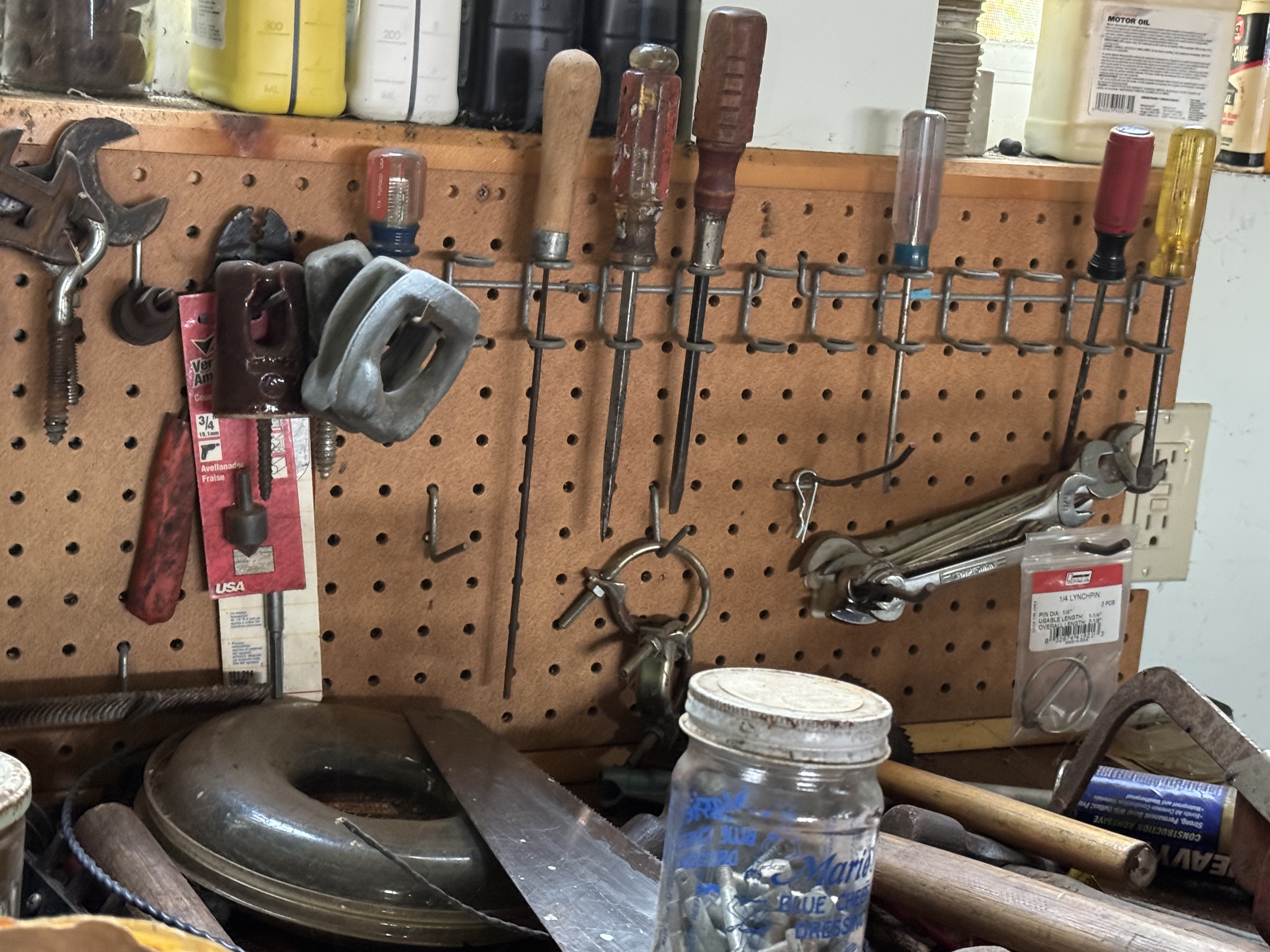
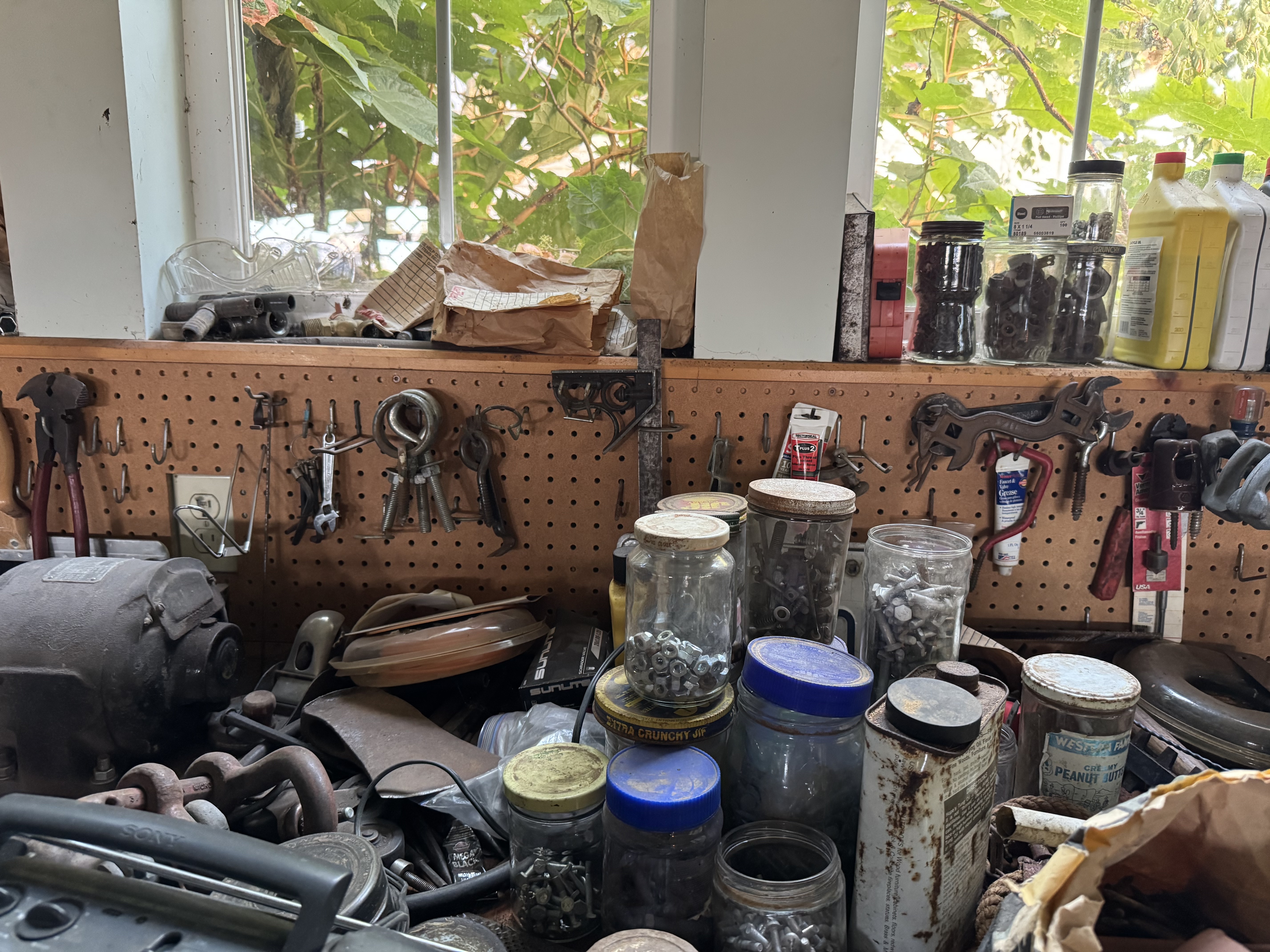
My father always knew the secret name of everything— stove bolt and wing nut, set screw and rasp, ratchet wrench, band saw, and ball— peen hammer. He was my tour guide and translator through that foreign country with its short-tempered natives in their crewcuts and tattoos, who suffered my incompetence with gruffness and disgust. Pay attention, he would say, and you’ll learn a thing or two.
Now it’s forty years later, and I’m packing up his tools (If you know the proper names of things you’re never at a loss) tongue-tied, incompetent, my hands and heart full of doohickeys and widgets, whatchamacallits, thingamabobs. ~Ronald Wallace “Hardware” from Time’s Fancy
“Hold on,” she said, “I’ll just run out and get him. The weather here’s so good, he took the chance To do a bit of weeding.”
So I saw him Down on his hands and knees beside the leek rig, Touching, inspecting, separating one Stalk from the other, gently pulling up Everything not tapered, frail and leafless, Pleased to feel each little weed-root break, But rueful also . . .
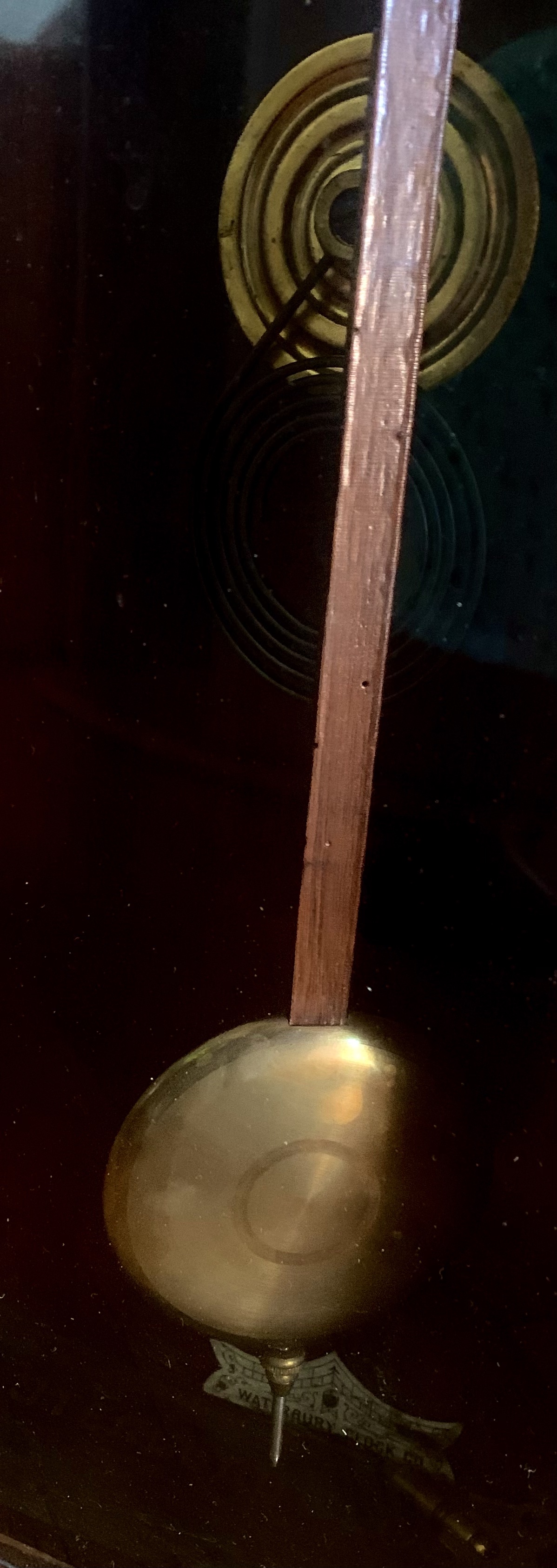
Then found myself listening to The amplified grave ticking of hall clocks Where the phone lay unattended in a calm Of mirror glass and sunstruck pendulums . . .
And found myself then thinking: if it were nowadays, This is how Death would summon Everyman.
Between my finger and my thumb The squat pen rests; snug as a gun. Under my window, a clean rasping sound When the spade sinks into gravelly ground:
My father, digging. I look down By God, the old man could handle a spade.
Just like his old man. But I’ve no spade to follow men like them.
Between my finger and my thumb The squat pen rests. I’ll dig with it. ~Seamus Heaney from “Digging” from Death of a Naturalist
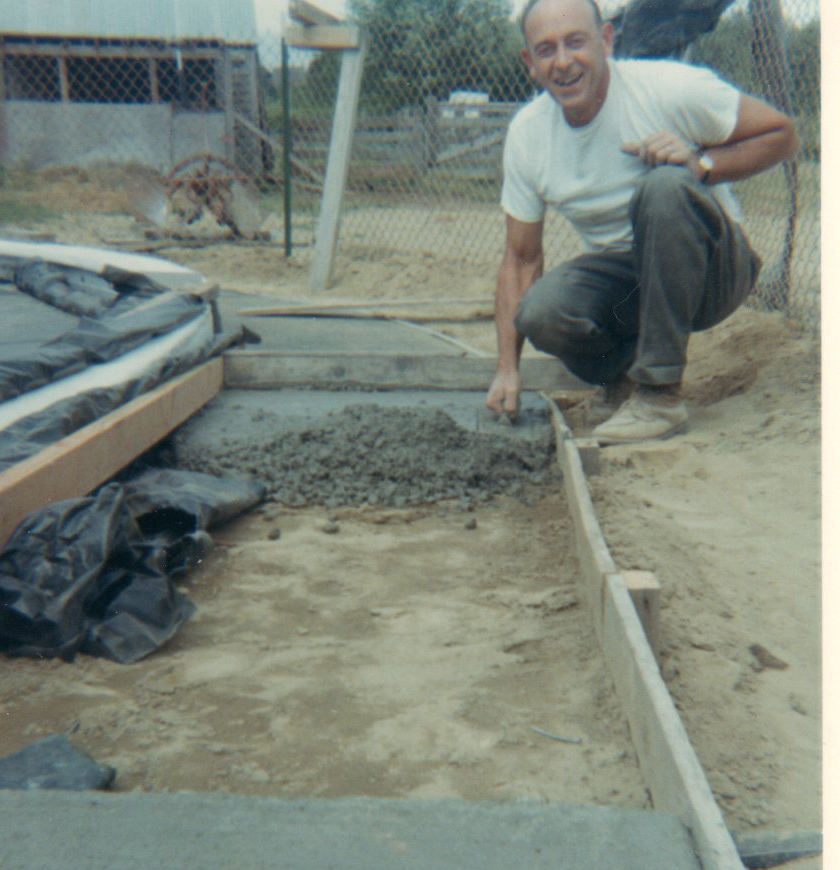
My father was a complex man. As I’ve aged, I understand better where my own complicated nature comes from.
As inscrutable as he could be, there were things I absolutely understood about him:
he was a man of action – he never just sat, never took a nap, never wasted a day of his life without accomplishing something tangible.
he was a man of the soil – he plowed and harrowed and sowed and fertilized and weeded and cut brush and harvested
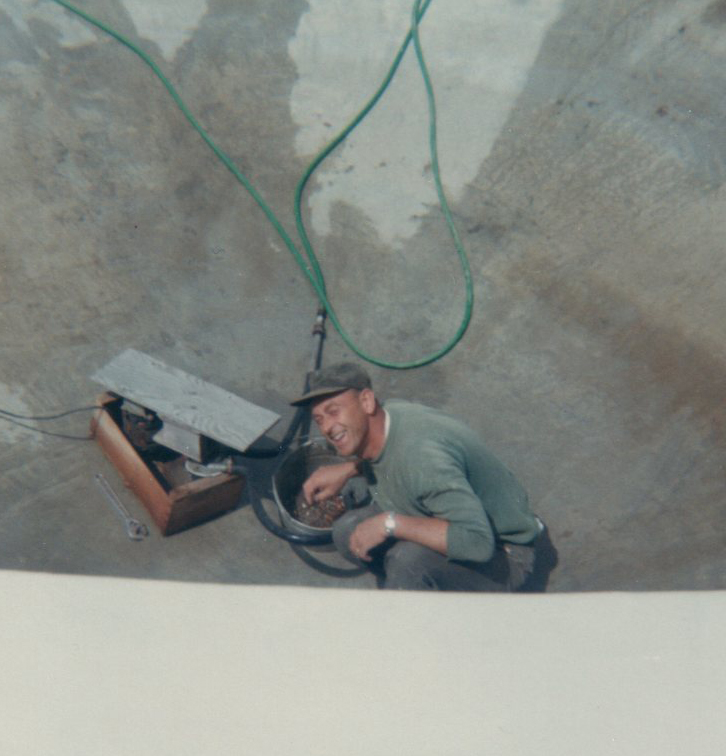
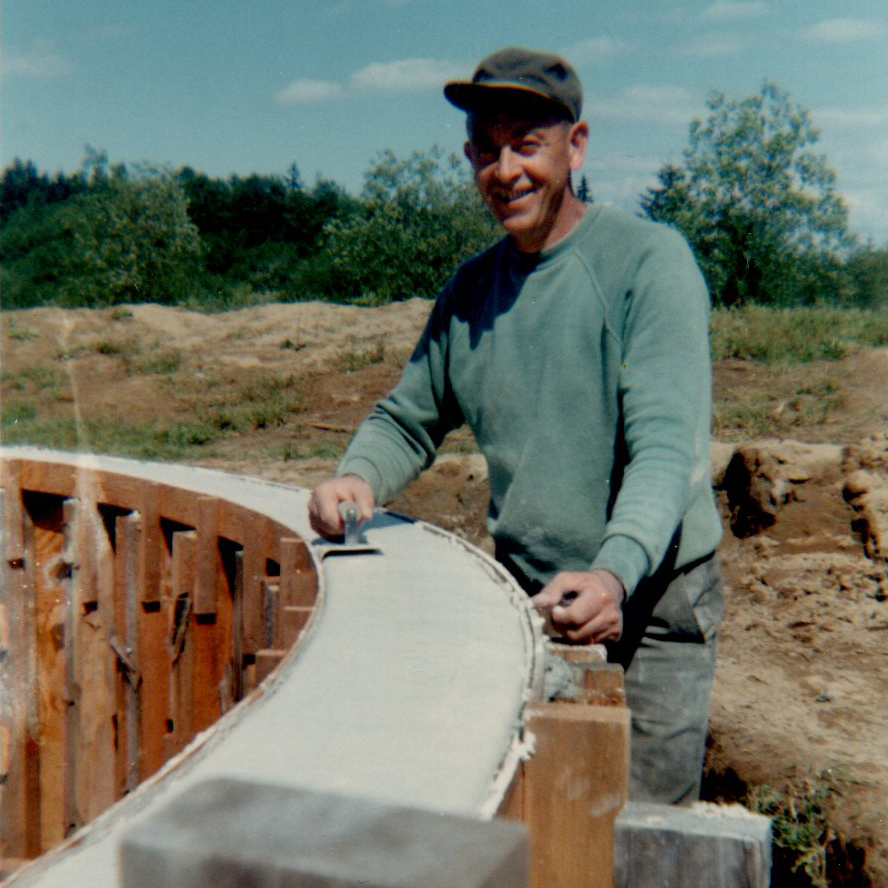
he was a man of inventiveness – he figured out a better way, he transformed tools and buildings, he started from scratch and built the impossible
he didn’t explain himself – and never felt the need to.
Time keeps ticking on without him here, now 30 years since he took his last breath as the clock pendulum swung back and forth in his bedroom. He was taken too young for all the projects he still had in mind.
He handed off a few to me. Some I have done. Some still wait, I’m not sure why.
My regret is not understanding how much he needed to hear how loved he was. He seemed fine without it being said.
But he wasn’t fine. And neither was I.
I wish I had said it when I had the chance. I guess I am digging it out from the soil of my heart now.
One-Time
Monthly
Yearly
Make a one-time or recurring donation to support daily Barnstorming posts
The meaning of marriage begins in the giving of words. We cannot join ourselves to one another without giving our word. And this must be an unconditional giving, for in joining ourselves to one another we join ourselves to the unknown. ~Wendell Berry from “Poetry and Marriage” in Standing By Words
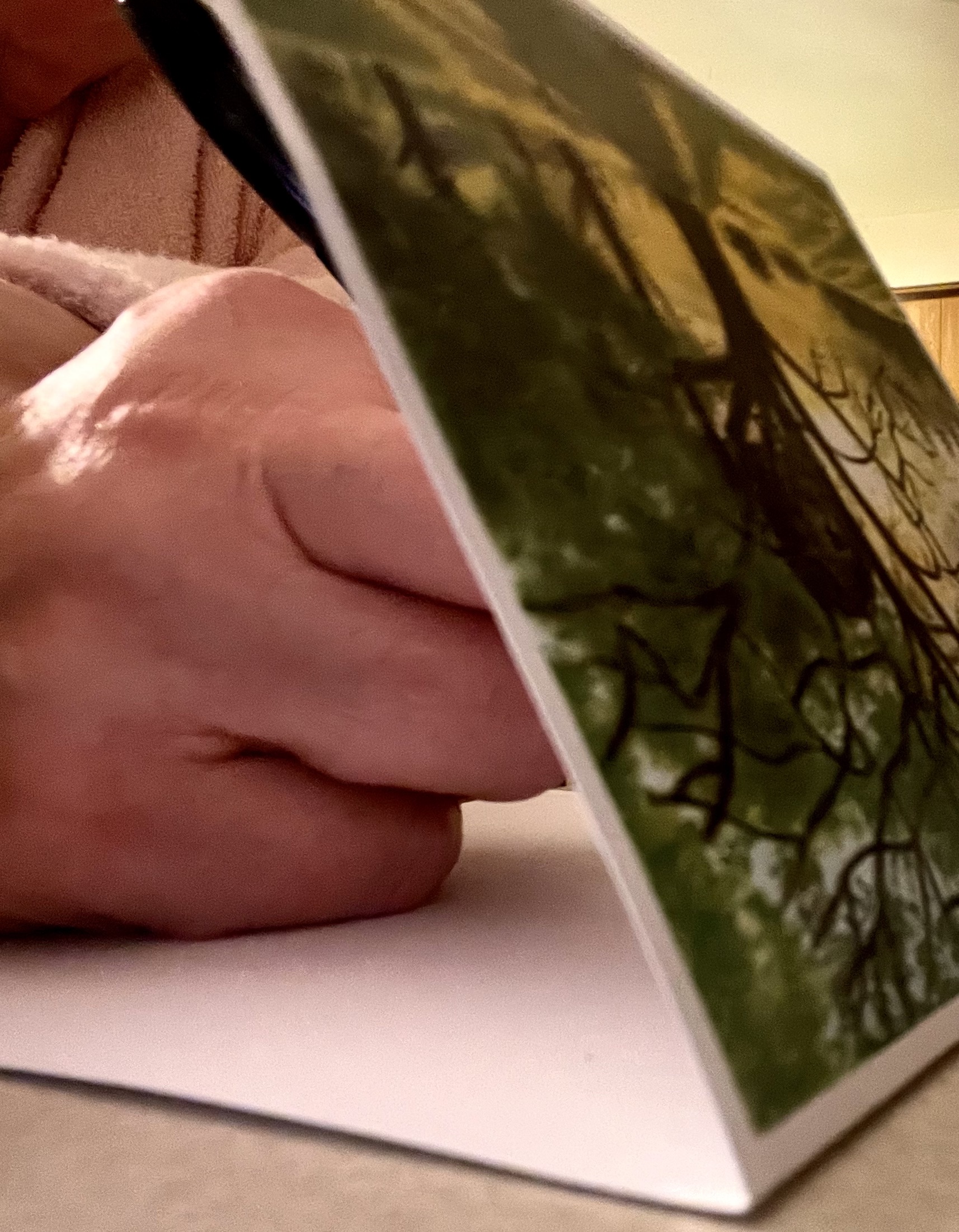
Our vows to one another forty-four years ago today:
Before God and this gathering, I vow from my heart and spirit that I will be your wife/husband for as long as we both shall live.
I will love you with faithfulness, knowing its importance in sustaining us through good times and bad.
I will love you with respect, serving your greatest good and supporting your continued growth.
I will love you with compassion, knowing the strength and power of forgiveness.
I will love you with hope, remembering our shared belief in the grace of God and His guidance of our marriage.
“And at home, by the fire, whenever you look up, there I shall be–and whenever I look up, there will be you.”
(our wedding vows for our September 19, 1981 wedding at First Seattle Christian Reformed Church — the last line adapted from Thomas Hardy’s “Far From the Madding Crowd”)
Sometimes our life reminds me of a forest in which there is a graceful clearing and in that opening a house, an orchard and garden, comfortable shades, and flowers red and yellow in the sun, a pattern made in the light for the light to return to. The forest is mostly dark, its ways to be made anew day after day, the dark richer than the light and more blessed, provided we stay brave enough to keep on going in.
We enter, willing to die, into the commonwealth of its joy. ~Wendell Berry from “A Country of Marriage”
…Marriage… joins two living souls as closely as, in this world, they can be joined. This joining of two who know, love, and trust one another brings them in the same breath into the freedom of sexual consent and into the fullest earthly realization of the image of God. From their joining, other living souls come into being, and with them great responsibilities that are unending, fearful, and joyful. The marriage of two lovers joins them to one another, to forebears, to descendants, to the community, to heaven and earth. It is the fundamental connection without which nothing holds, and trust is its necessity. ~Wendell Berry from Sex, Economy, Freedom and Community
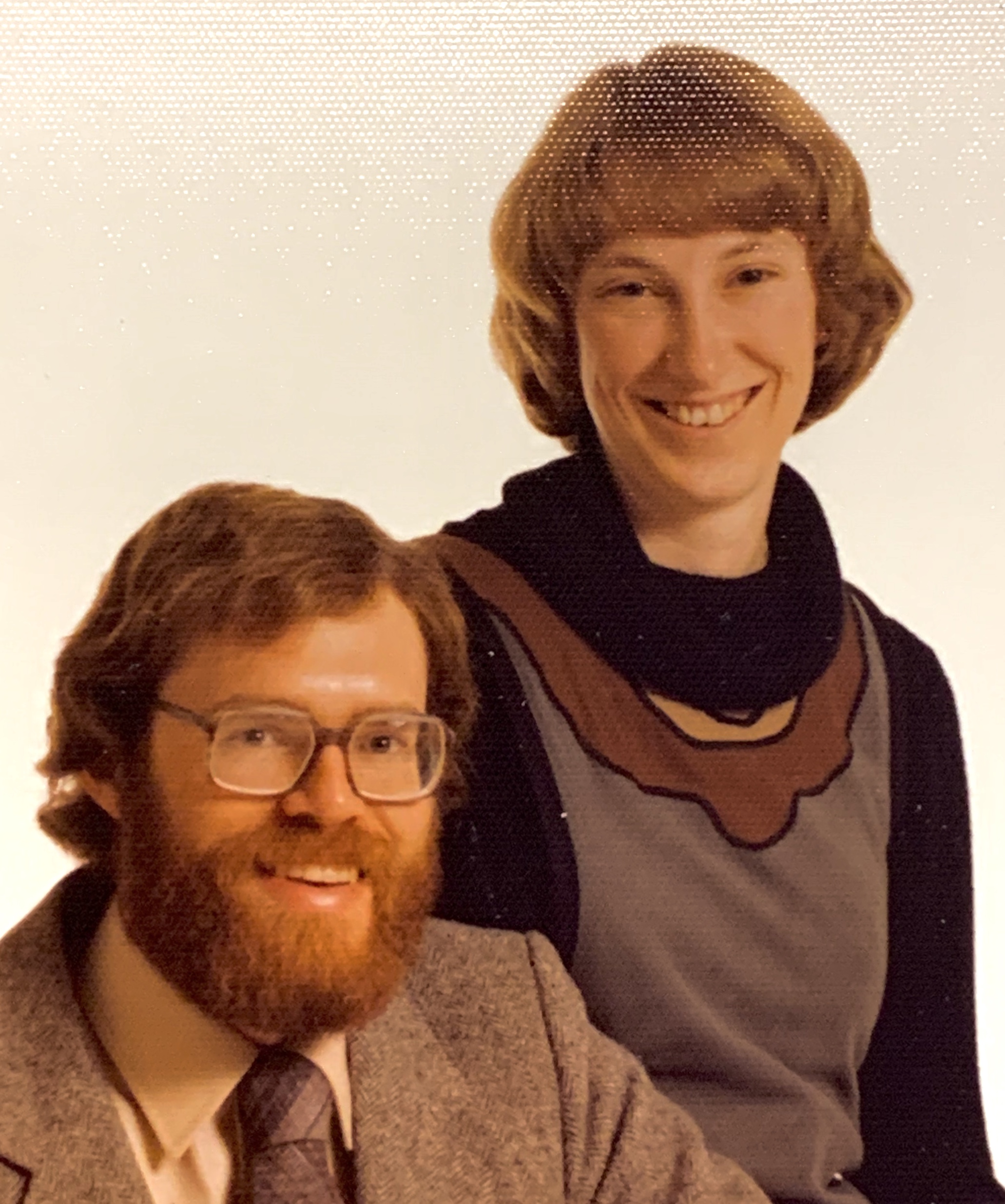
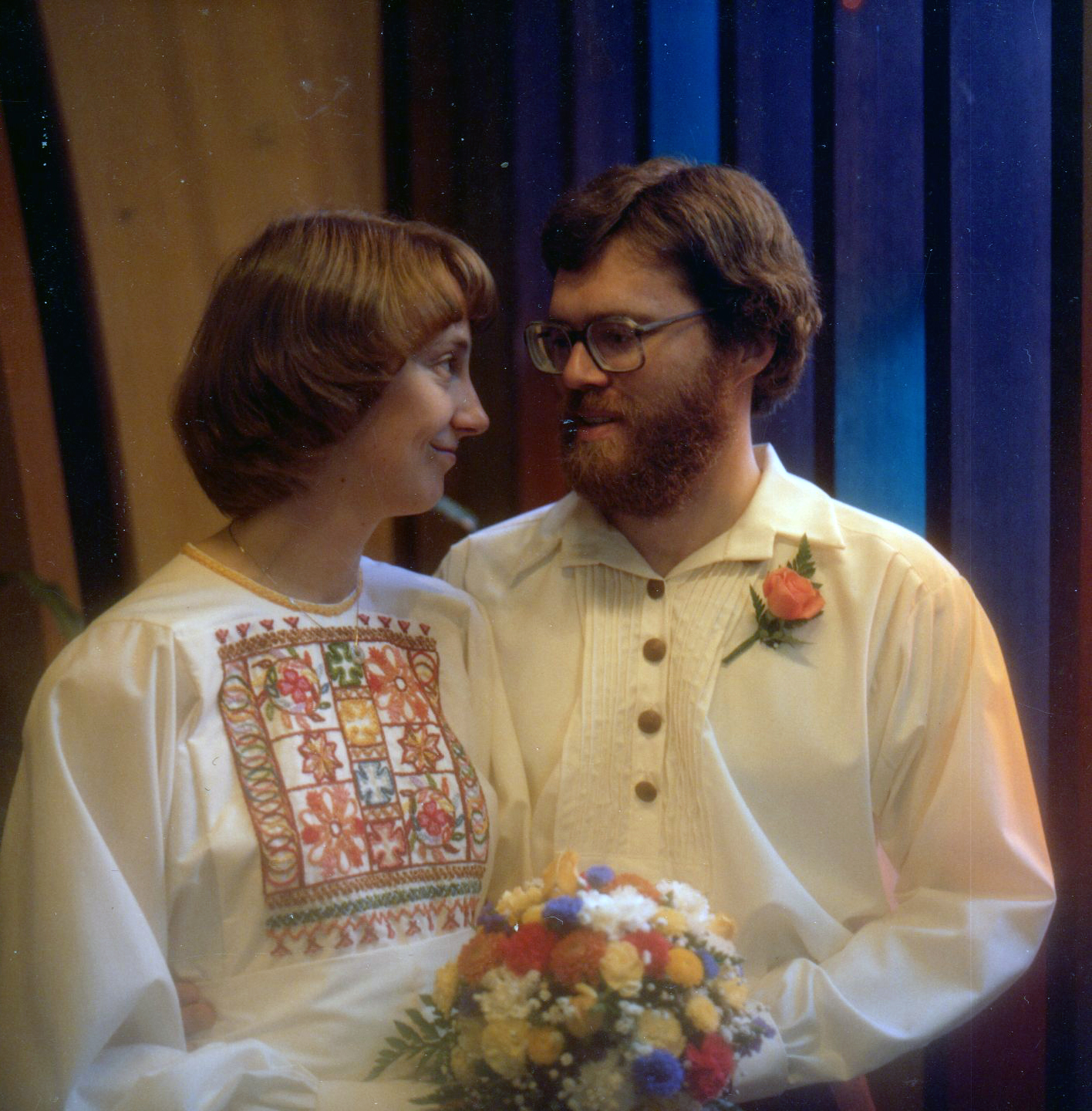
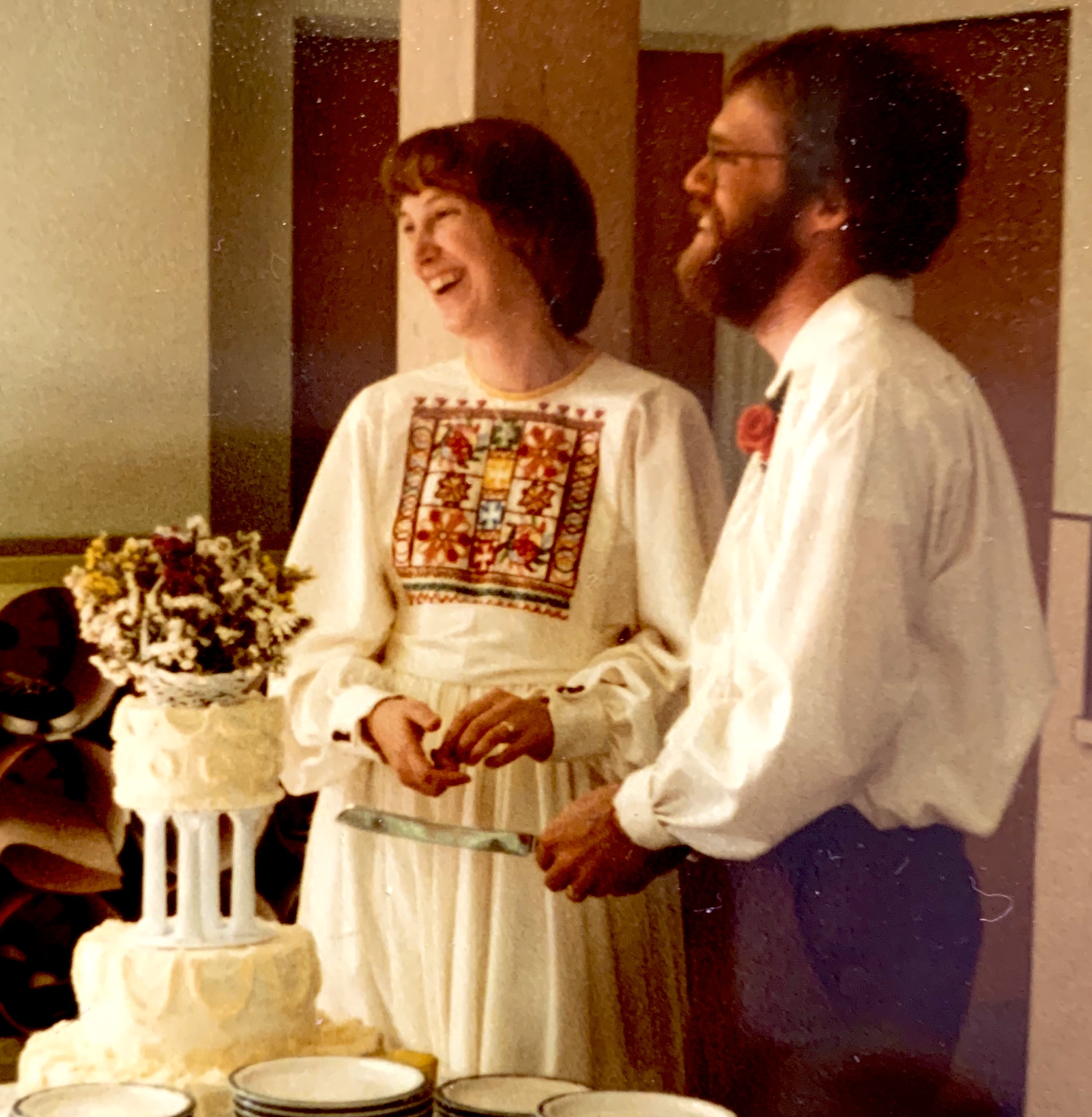
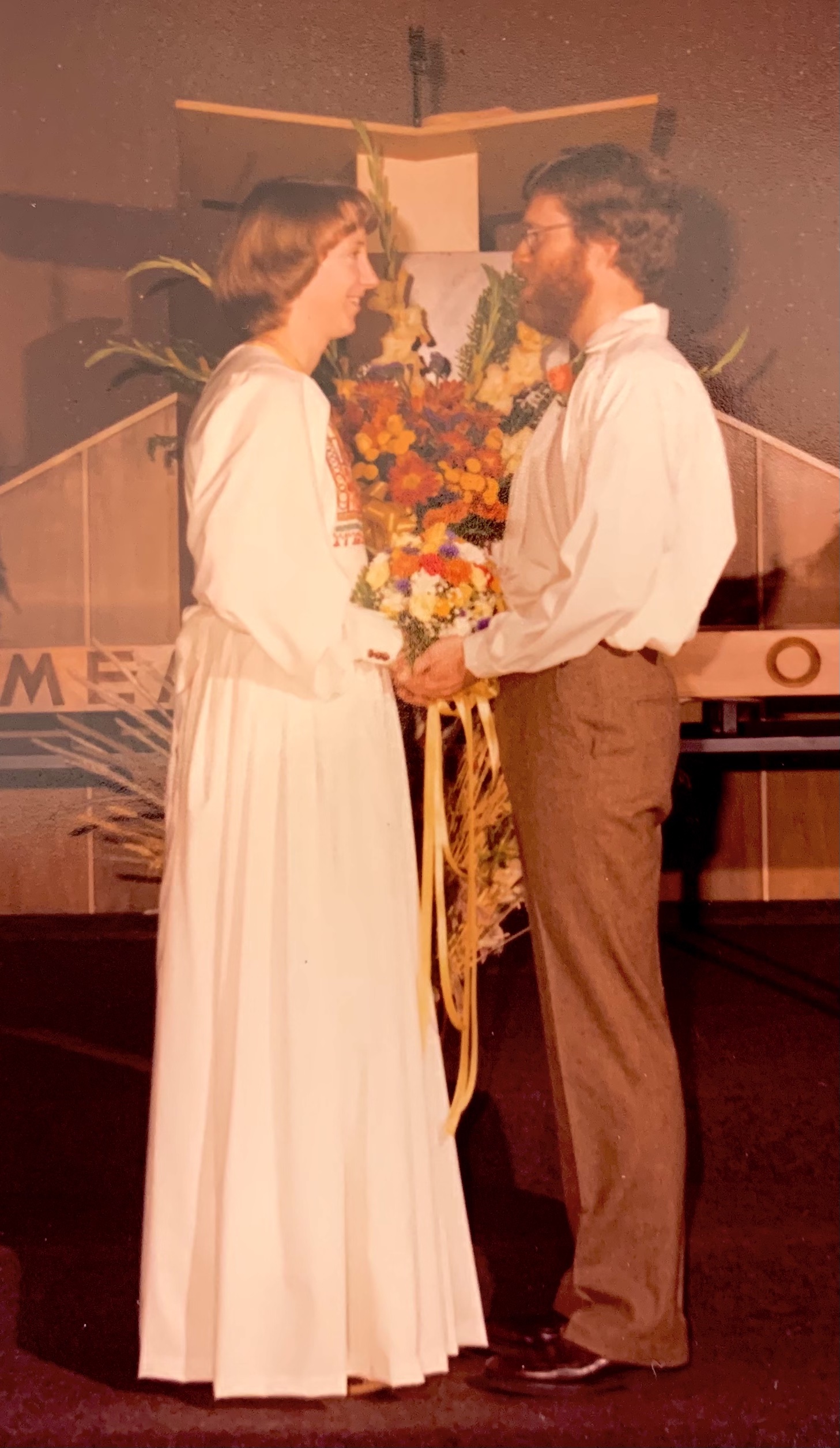
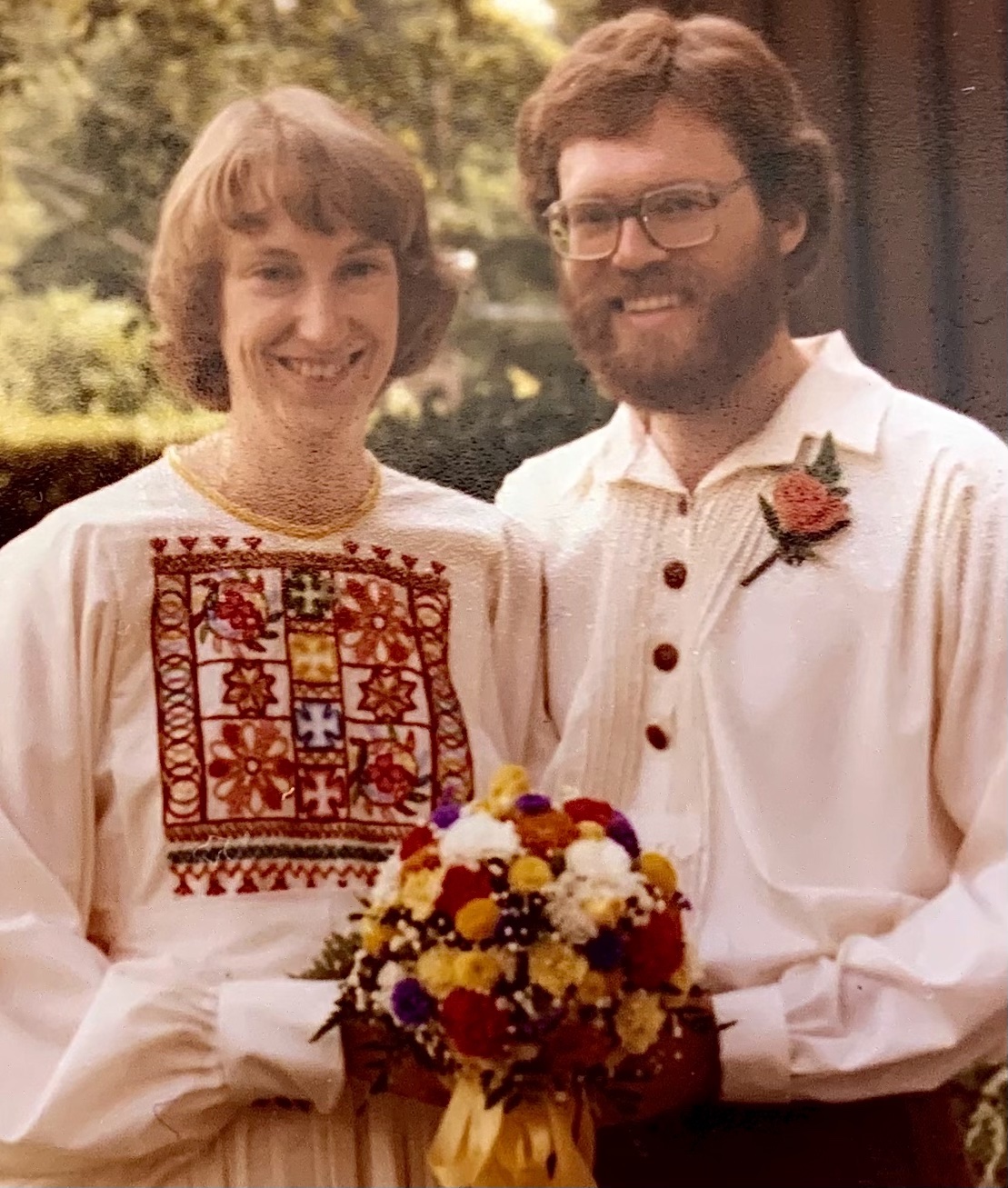
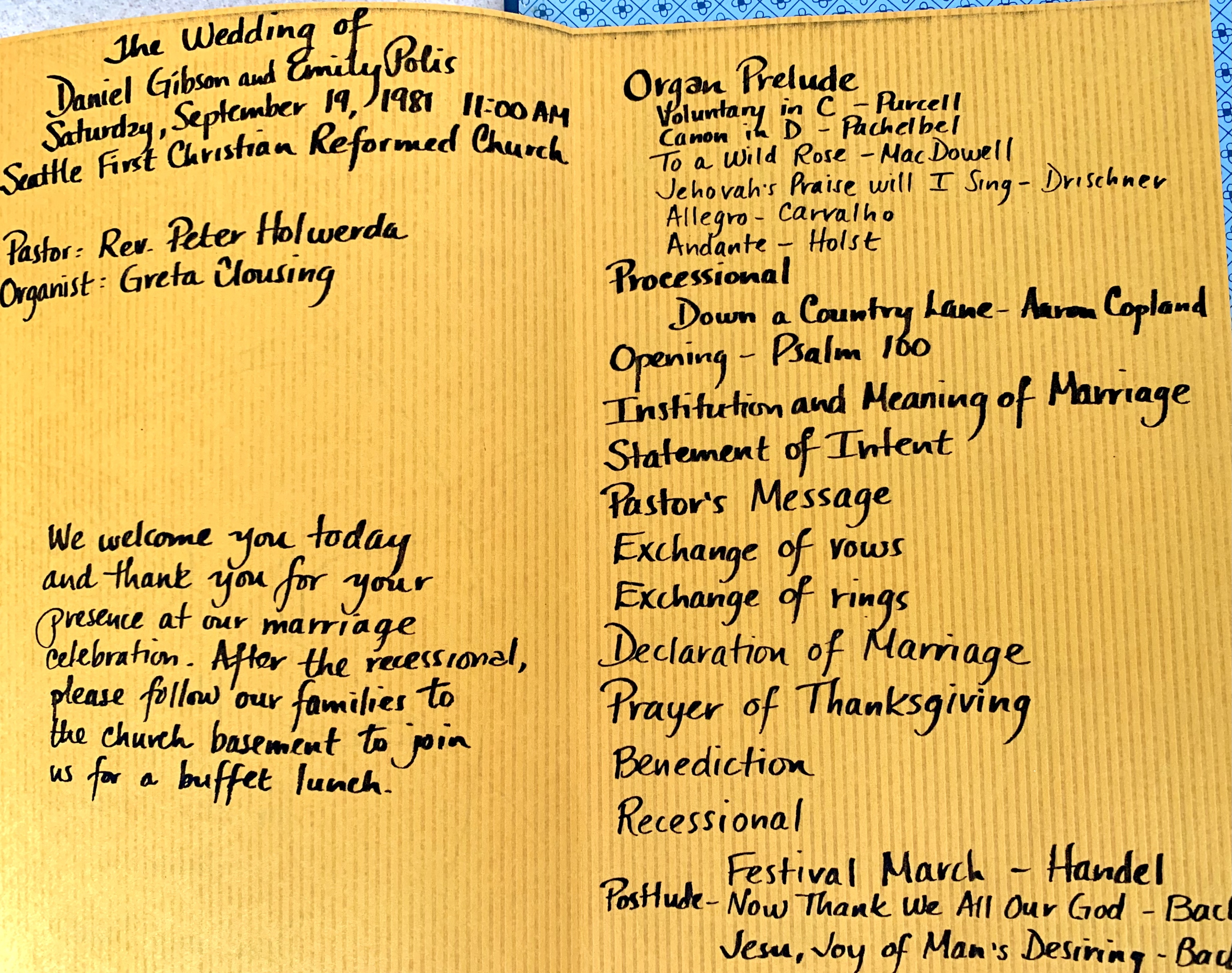
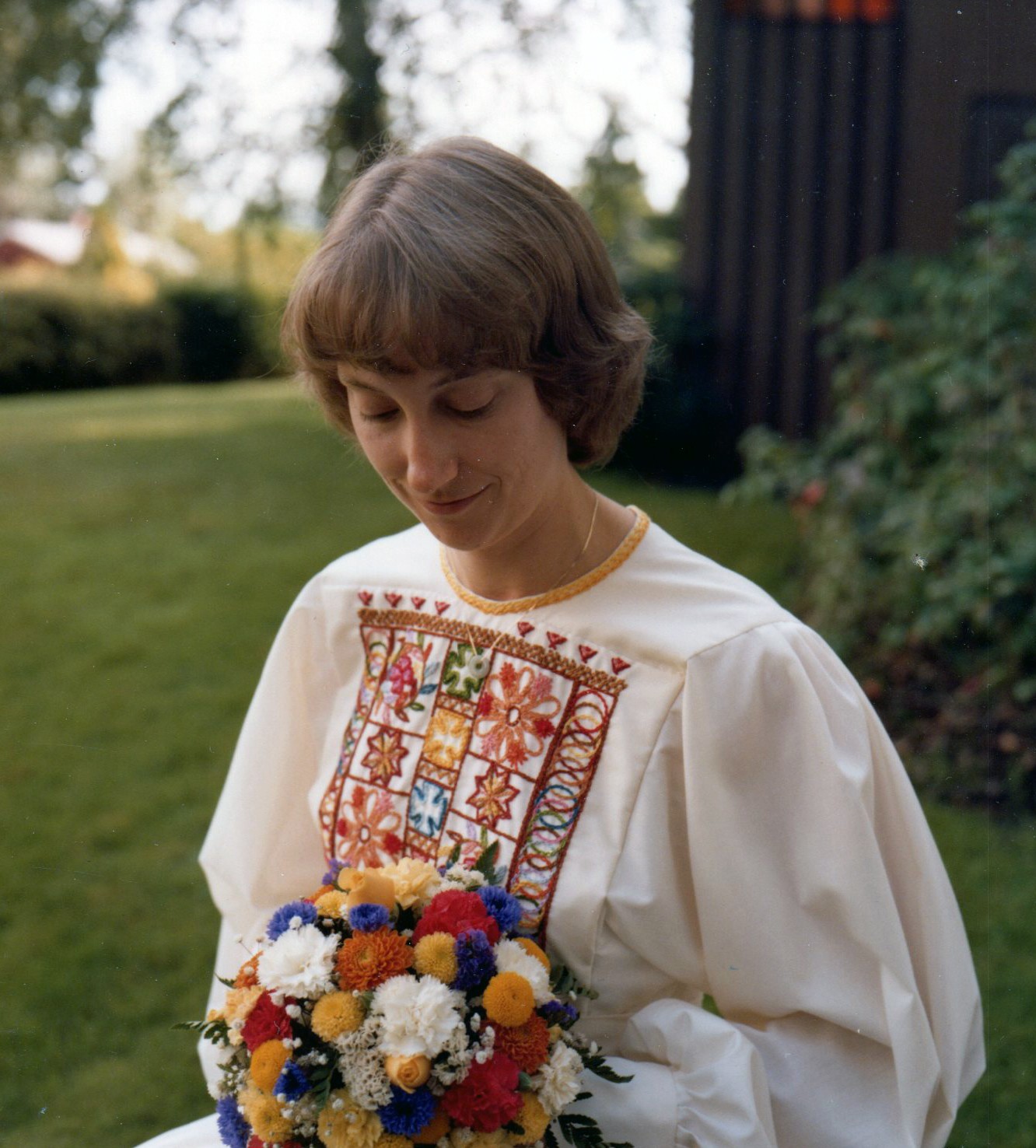
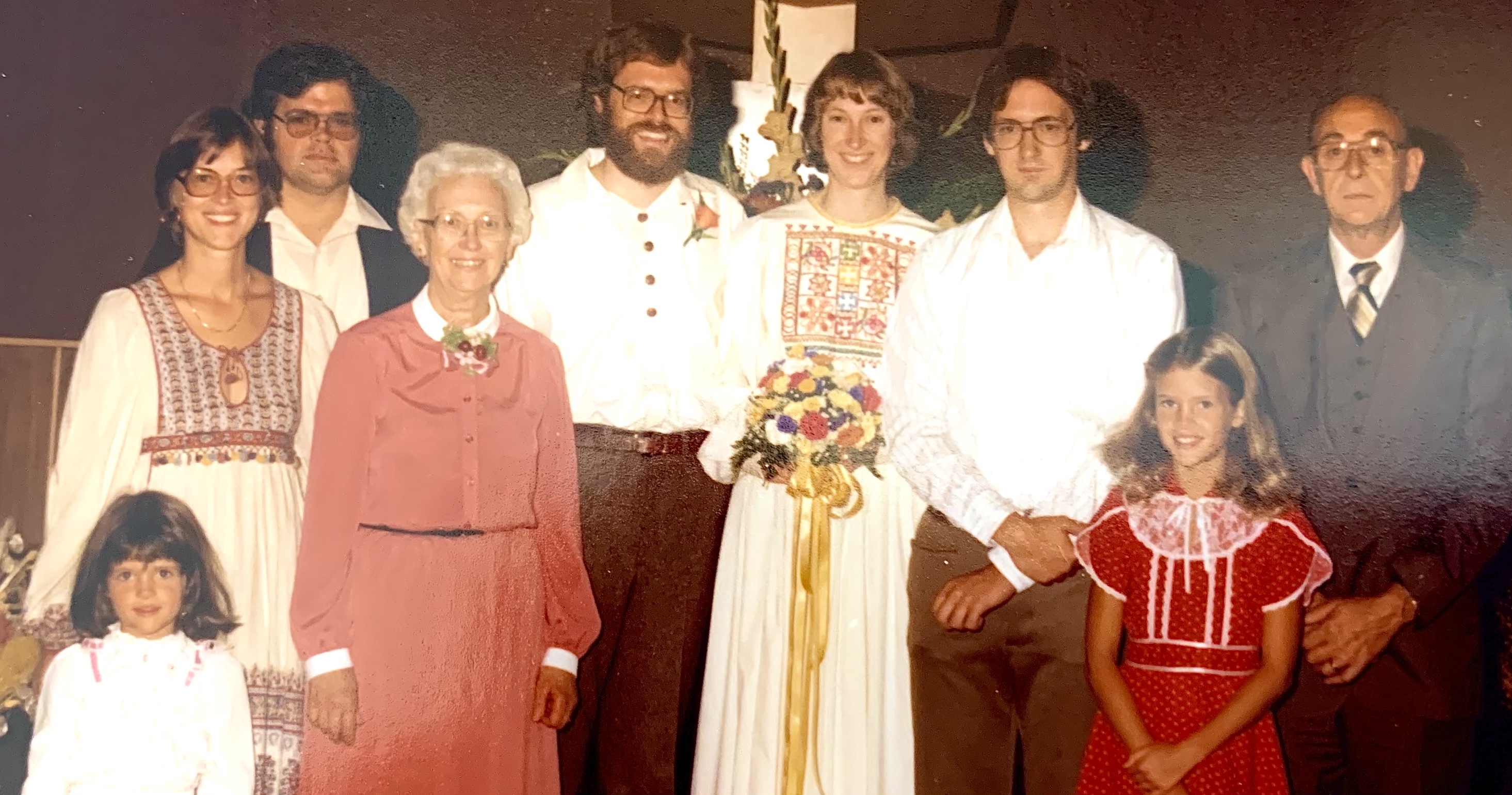
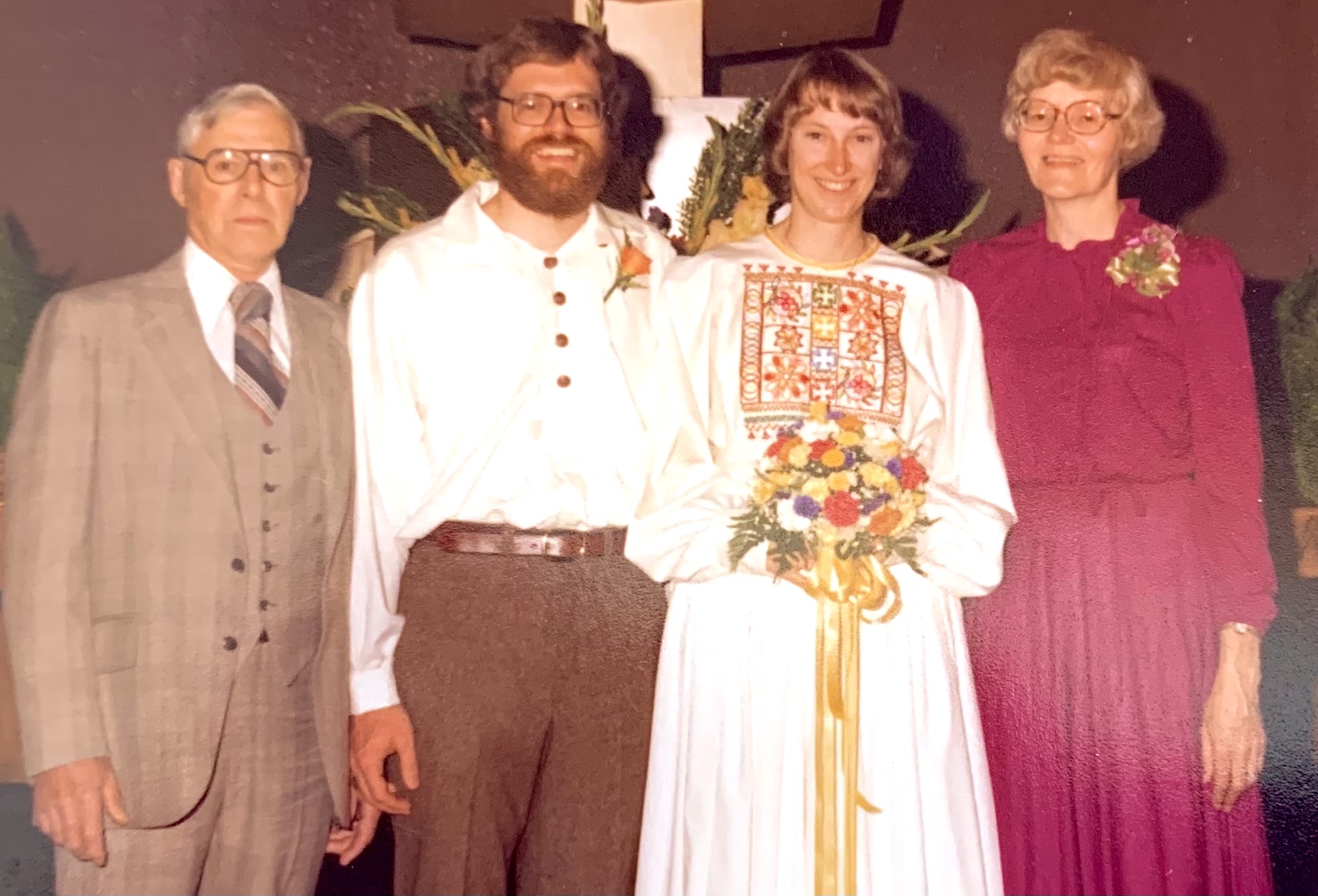
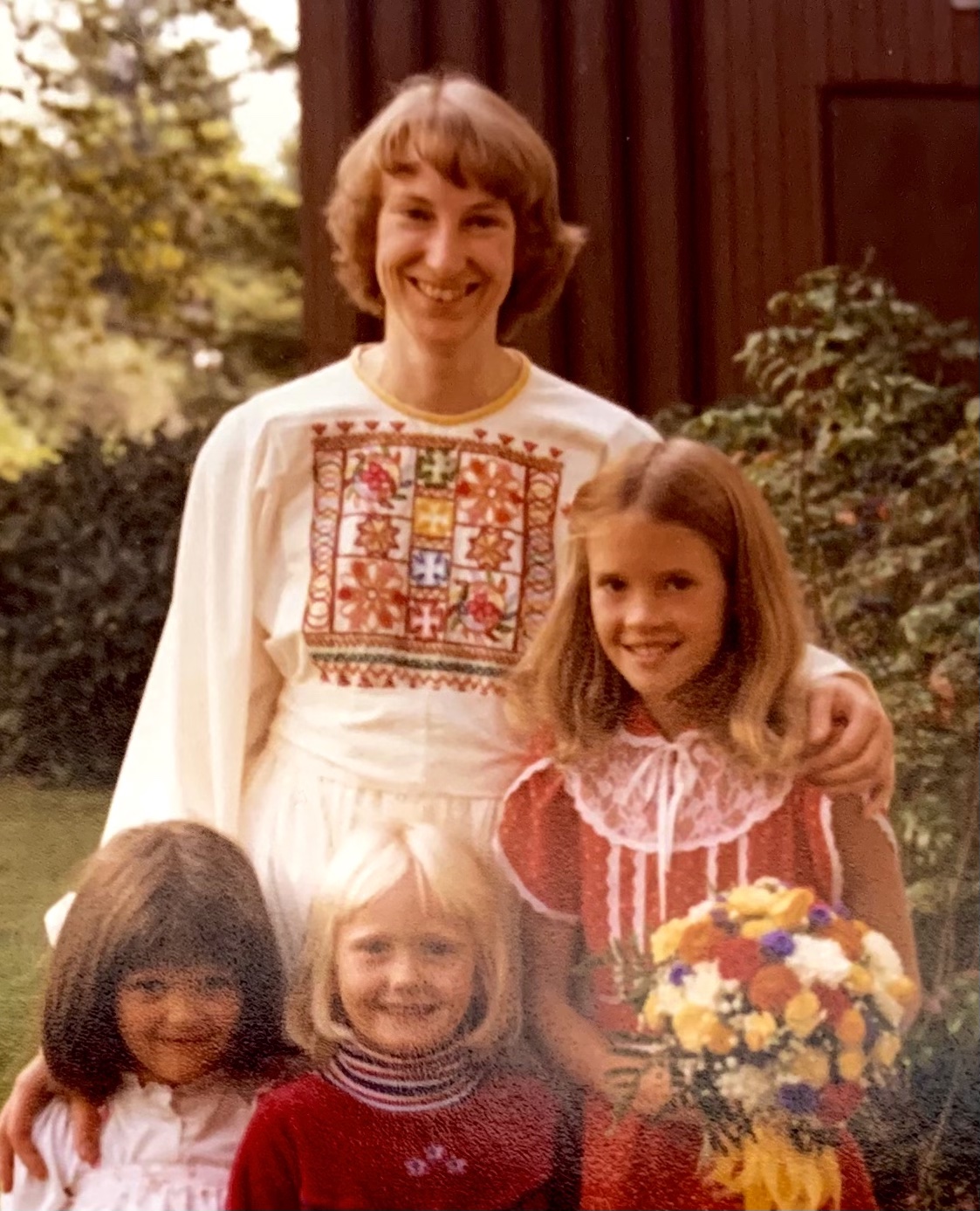
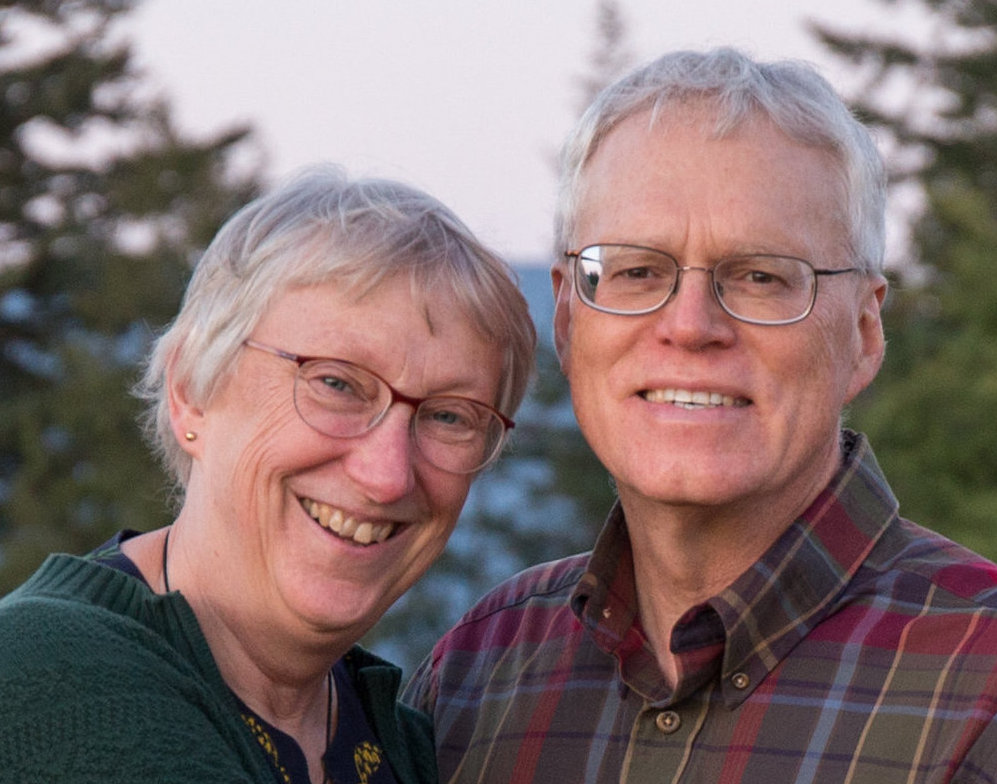
We married forty-four years ago today in our Seattle church with Pastor Peter Holwerda officiating, with a small group of family and friends as witnesses.
It was a wedding of two frugal people with little to spend – I sewed my dress and Dan’s shirt from muslin, we grew our own flowers, our families helped potluck the lunch afterward and our tiered carrot cake was made by a friend.
Yet our vows to one another were not frugal and held nothing back. They were extravagant and comprehensive, coming from our hearts and spirits. The music we asked our amazing organist to play (versions below) inspired us by its simplicity and complexity – very much like the families that raised us and the God we worship.
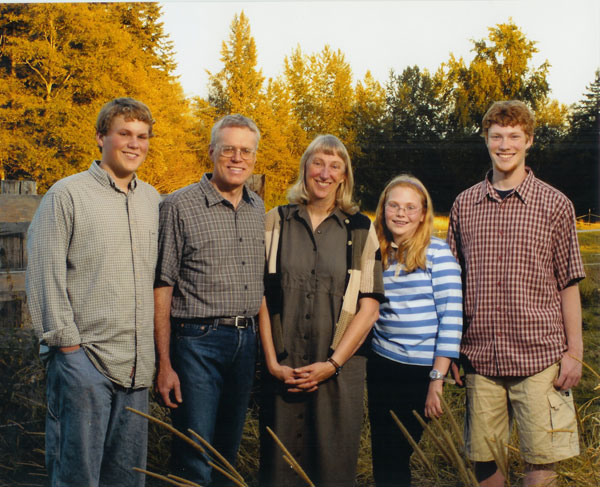
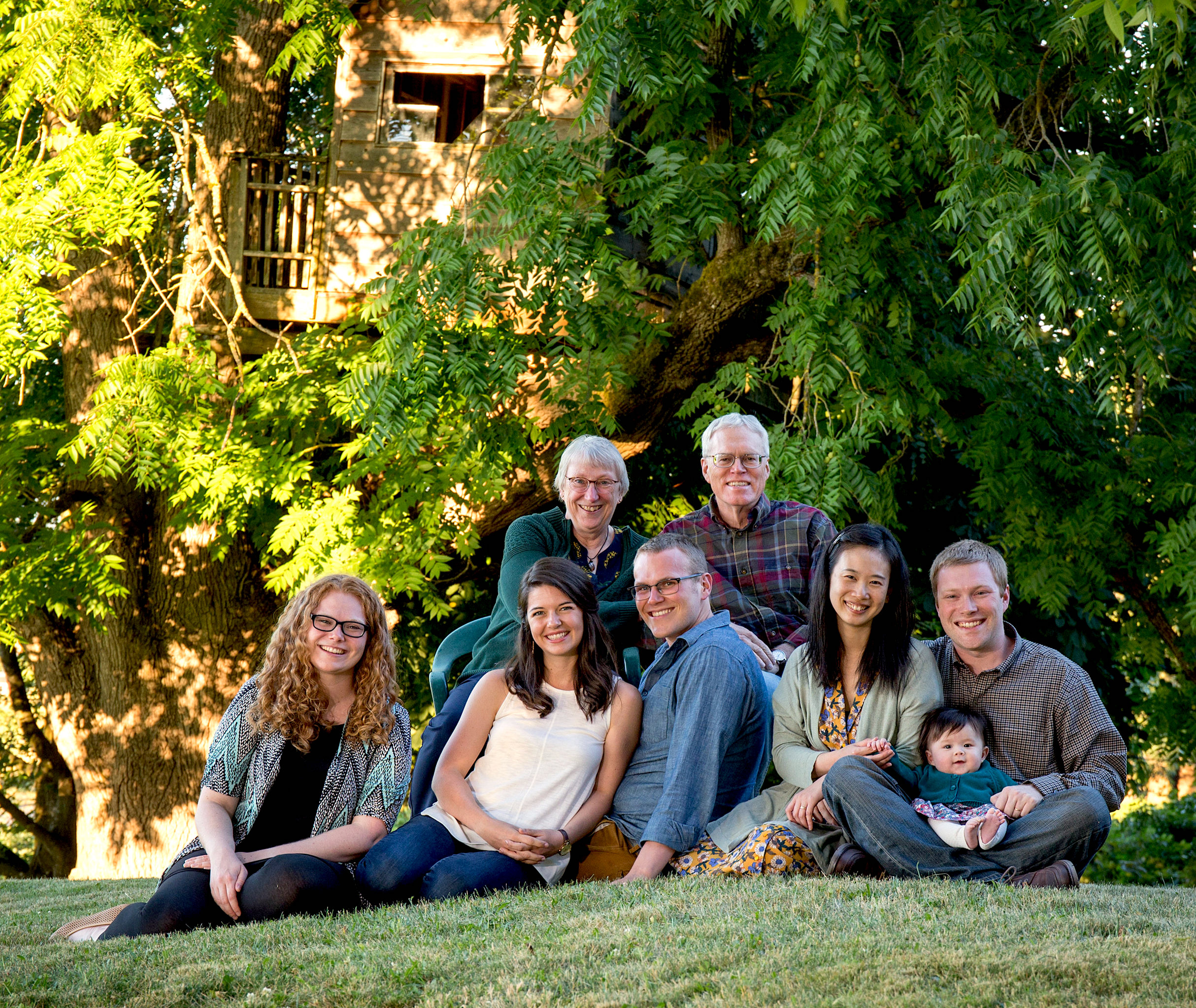
Our vows have taken us from the city to the countryside, to the raising and rejoicing in three amazing children and now six grandchildren. We both served more than forty years as a public-employed attorney and physician. We have laid down those responsibilities, and picked up the tools of farm and garden along with church and community service for as long as we are able.
We treasure each day of living together in faithfulness, respect, compassion and hope – knowing that how we love and find joy in one another mirrors how God loves and revels in His people.
We pray for many more days to fill us with what endures.
A pot of red lentils simmers on the kitchen stove. All afternoon dense kernels surrender to the fertile juices, their tender bellies swelling with delight.
In the yard we plant rhubarb, cauliflower, and artichokes, cupping wet earth over tubers, our labor the germ of later sustenance and renewal.
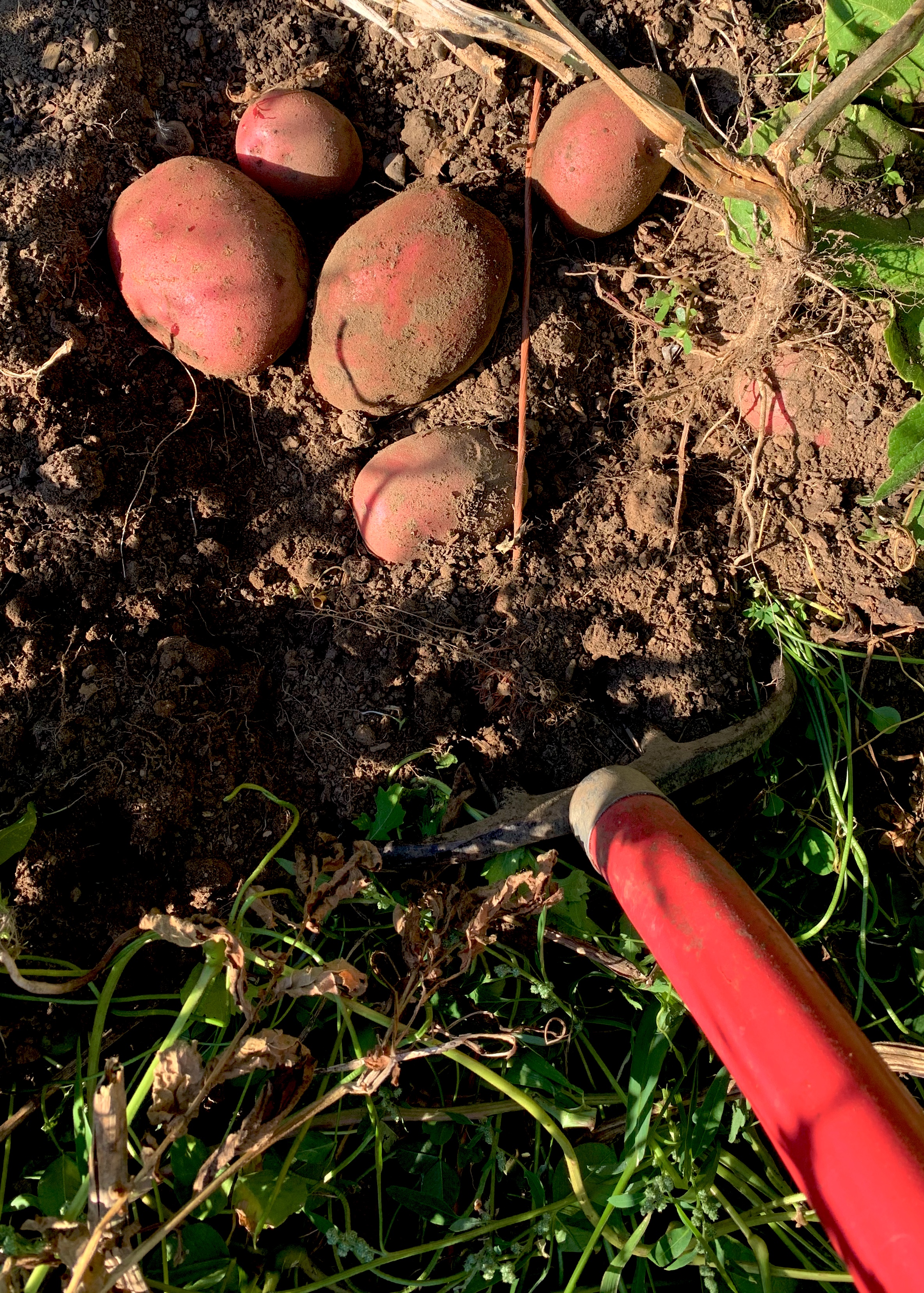
Across the field the sound of a baby crying as we carry in the last carrots, whorls of butter lettuce, a basket of red potatoes.
I want to remember us this way— late September sun streaming through the window, bread loaves and golden bunches of grapes on the table, spoonfuls of hot soup rising to our lips, filling us with what endures. ~Peter Pereira from “A Pot of Red Lentils”
Here are versions of the organ music we selected for prelude, processional, recessional and postlude
One-Time
Monthly
Yearly
Make a one-time or recurring donation to support daily Barnstorming posts
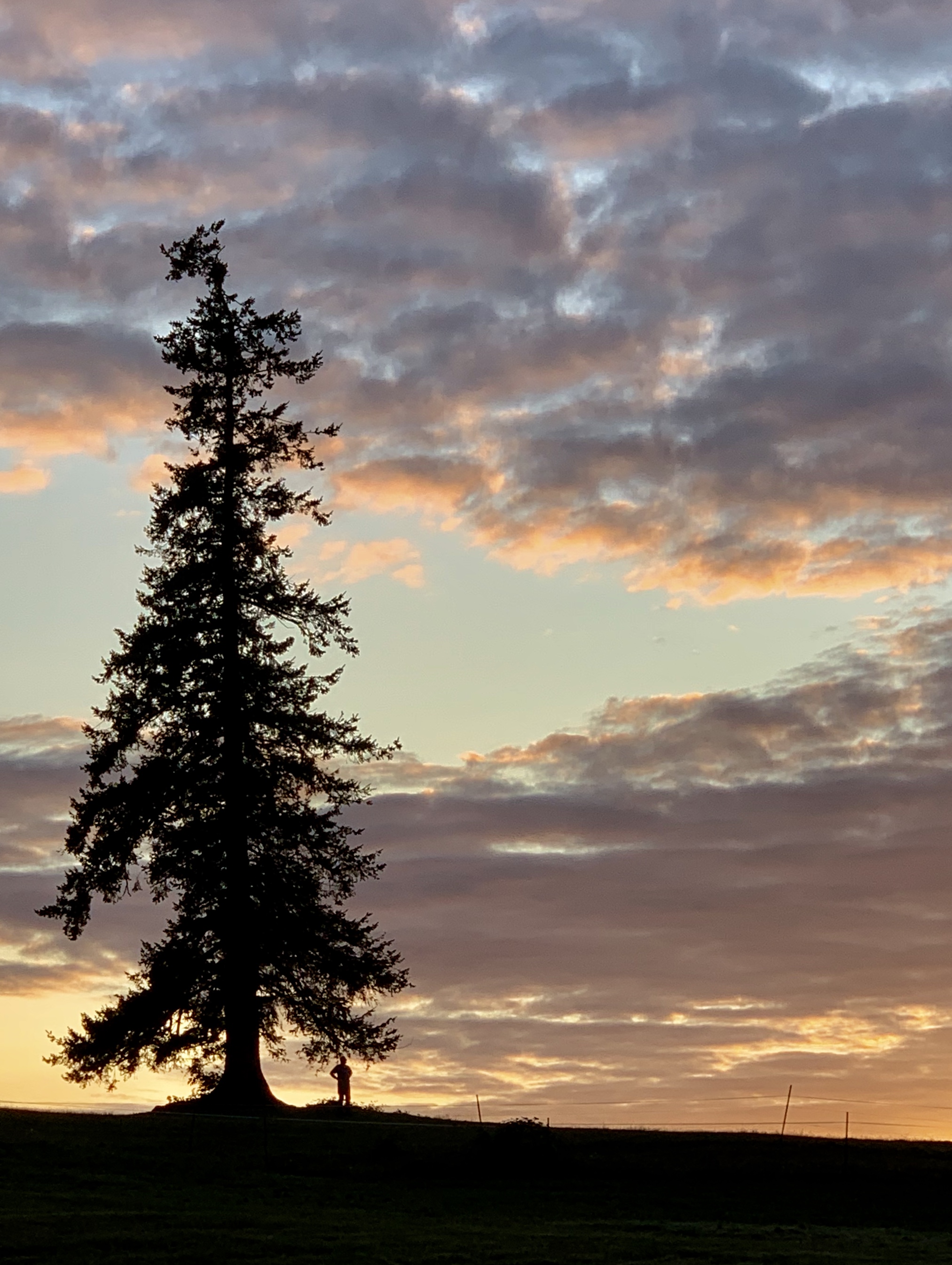
When I saw the figure on the crown of the hill, high above the city, standing perfectly still
against a sky so saturated with the late- afternoon, late-summer Pacific light
that granules of it seemed to have come out of solution, like a fine precipitate
of crystals hanging in the brightened air, I thought whoever it was standing up there
must be experiencing some heightened state of being, or thinking—or its opposite,
thoughtlessly enraptured by the view. Or maybe, looking again, it was a statue
of Jesus or a saint, placed there to bestow a ceaseless blessing on the city below.
Only after a good five minutes did I see that the figure was actually a tree—
some kind of cypress, probably, or cedar. I was both amused and let down by my error. Not only had I made the tree a person, but I’d also given it a vision,
which seemed to linger in the light-charged air around the tree’s green flame, then disappear. ~Jeffrey Harrison “The Figure on the Hill” from Into Daylight
Who was it who suggested that the opposite of war Is not so much peace as civilisation? He knew Our assassinated Catholic greengrocer who died At Christmas in the arms of our Methodist minister, And our ice-cream man whose continuing requiem Is the twenty-one flavours children have by heart. Our cobbler mends shoes for everybody; our butcher Blends into his best sausages leeks, garlic, honey; Our cornershop sells everything from bread to kindling. Who can bring peace to people who are not civilised? All of these people, alive or dead, are civilised. ~Michael Longley “All of These People” from Collected Poems
Who among us appear in the light-charged air, visible on the crown of the hill of life – who might be mistaken for a martyr or a saint or a visionary, when each one of us is merely a person responsible to a family, committed to help friends, dedicated to serve a community, placed in this world to steady a broken civilization.
There is the simple truth that we need a person with roots deep in the ground, branches that reach up and out, bearing fruit to share with those around us.
But surely not this misery, not this blight, not this trouble, certainly not these murders, which only bears and shares a heart-rending, horrible grief.
One-Time
Monthly
Yearly
Make a one-time or recurring donation to support daily Barnstorming posts
The thing is to love life, to love it even when you have no stomach for it and everything you’ve held dear crumbles like burnt paper in your hands, your throat filled with the silt of it. When grief sits with you, its tropical heat thickening the air, heavy as water more fit for gills than lungs; when grief weights you like your own flesh only more of it, an obesity of grief, you think, How can a body withstand this? Then you hold life like a face between your palms, a plain face, no charming smile, no violet eyes, and you say, yes, I will take you I will love you, again. ~Ellen Bass, “The Thing Is” from Mules of Love
...everything here seems to need us —Rainer Maria Rilke
It’s a hard time to be human. We know too much and too little. Does the breeze need us? If you’ve managed to do one good thing, the ocean doesn’t care. But when Newton’s apple fell toward the earth, the earth, ever so slightly, fell toward the apple. ~Ellen Bass from “The World Has Need of You” from Like a Beggar
Fallen leaves will climb back into trees. Shards of the shattered vase will rise and reassemble on the table. Plastic raincoats will refold into their flat envelopes. The egg, bald yolk and its transparent halo, slide back in the thin, calcium shell. Curses will pour back into mouths, letters un-write themselves, words siphoned up into the pen. My gray hair will darken and become the feathers of a black swan. Bullets will snap back into their chambers, the powder tamped tight in brass casings. Borders will disappear from maps. Rust revert to oxygen and time. The fire return to the log, the log to the tree, the white root curled up in the un-split seed. Birdsong will fly into the lark’s lungs, answers become questions again. When you return, sweaters will unravel and wool grow on the sheep. Rock will go home to mountain, gold to vein. Wine crushed into the grape, oil pressed into the olive. Silk reeled in to the spider’s belly. Night moths tucked close into cocoons, ink drained from the indigo tattoo. Diamonds will be returned to coal, coal to rotting ferns, rain to clouds, light to stars sucked back and back into one timeless point, the way it was before the world was born, that fresh, that whole, nothing broken, nothing torn apart. ~Ellen Bass “When You Return” from Like a Beggar
There is so much grief these days so much anger, so much loss of life, so much weeping.
How can we withstand this? How can we know, now, when we are barely able to breathe that we might know – at some point – we might have the stomach to love life again?
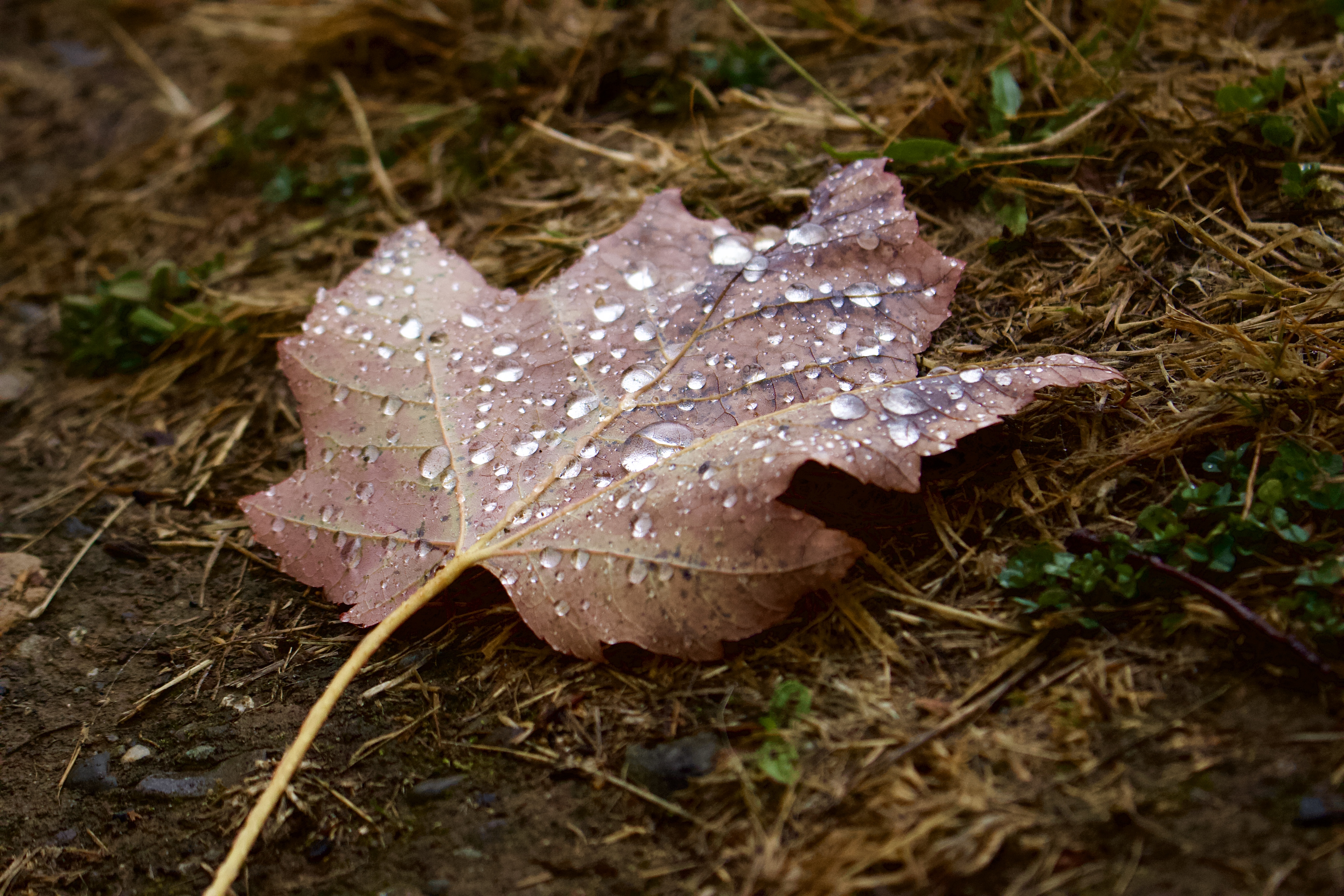
This time of year, no matter which way I turn, autumn’s kaleidoscope displays new patterns, new colors, new empty spaces as I watch the world die into itself once again.
Some dying is flashy, brilliant, blazing – a calling out for attention. Then there is the hidden dying that happens without anyone taking notice: just a plain, tired, rusting away letting go.
I spent this morning adjusting to the change in season by occupying myself with the familiar task of moving manure. Cleaning barn is a comforting chore, allowing me to transform tangible benefit from something objectionable and just plain stinky to the nurturing fertilizer of the future.
It feels like I’ve actually accomplished something.
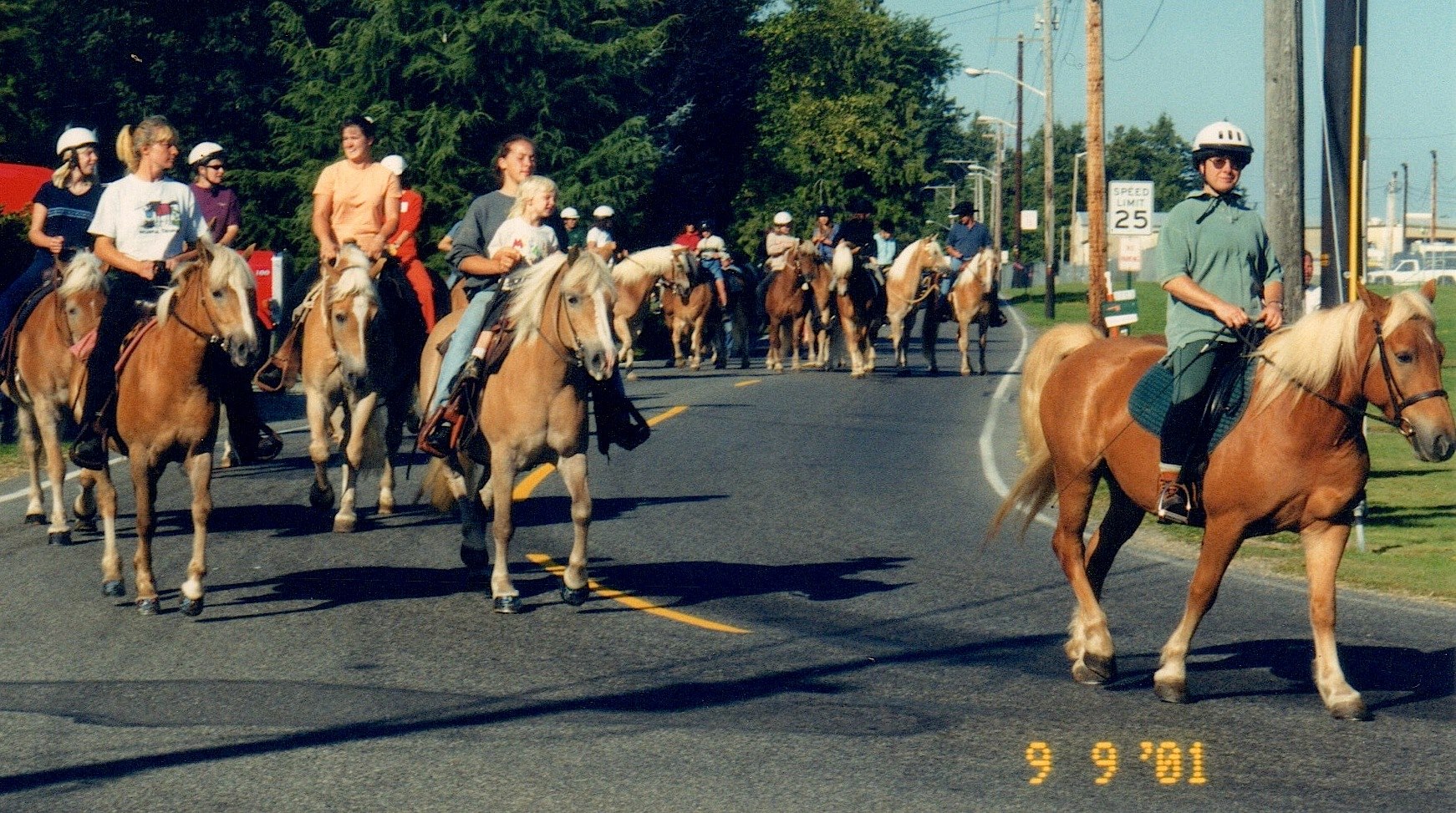
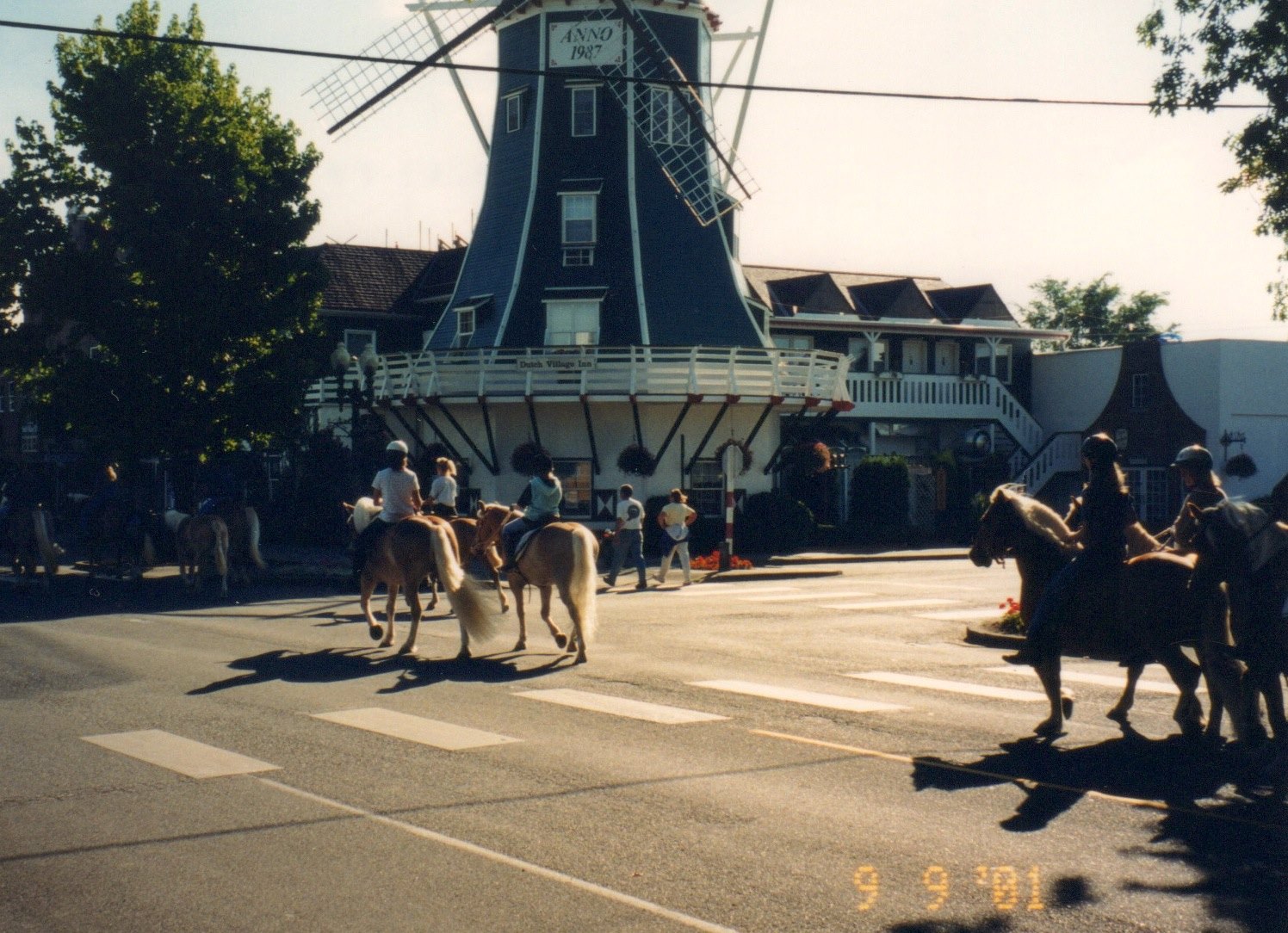
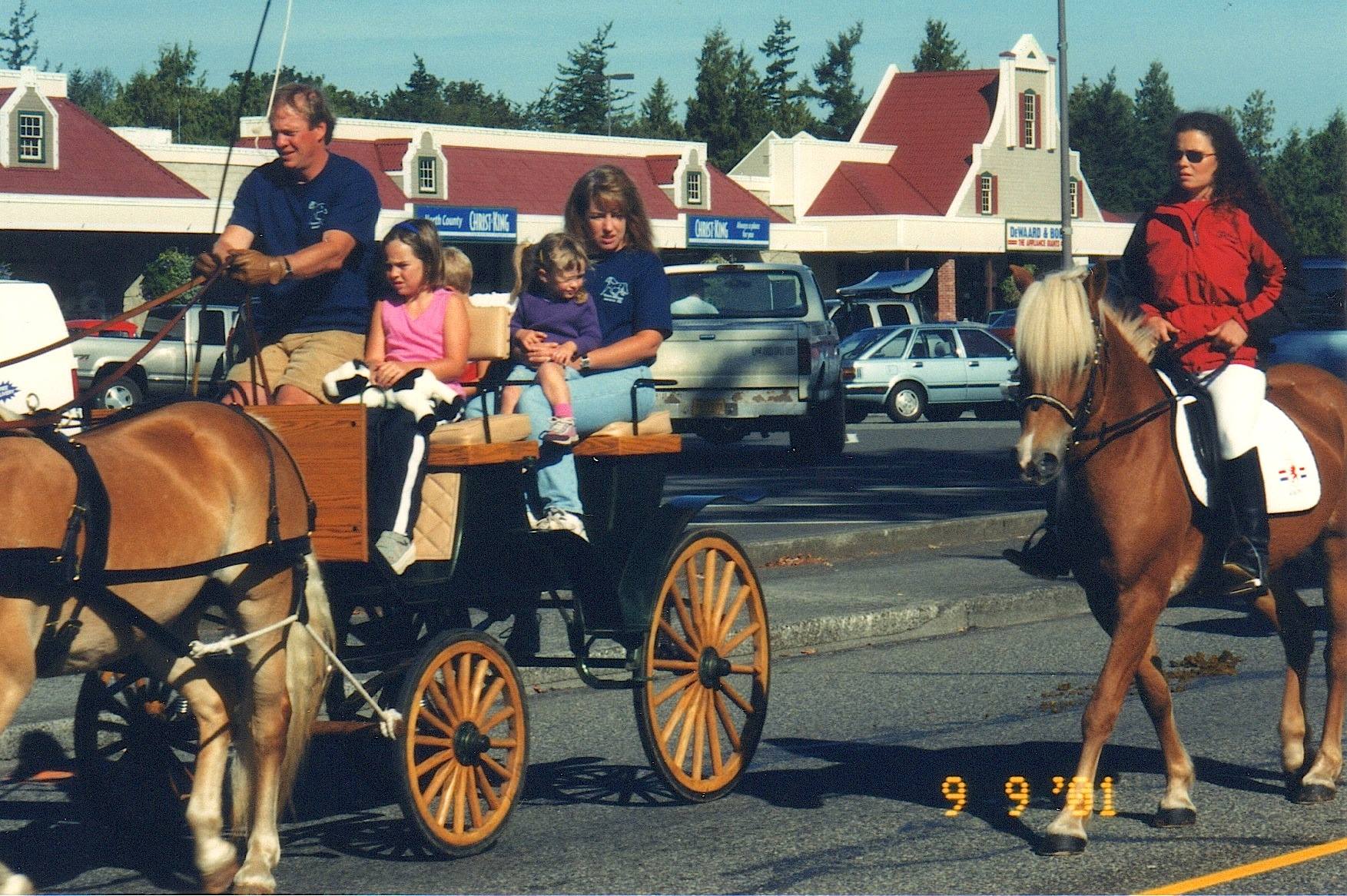
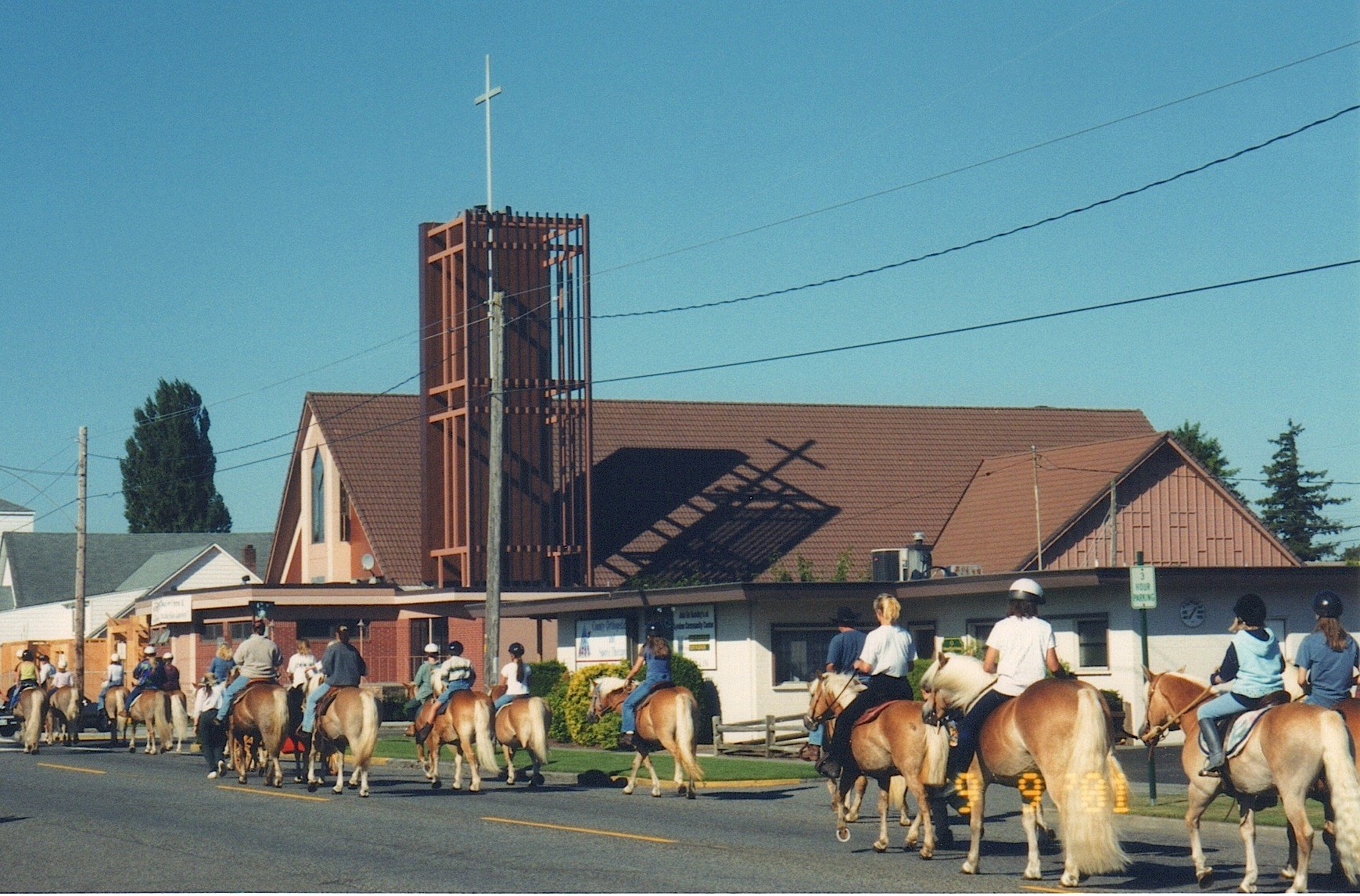
As I scoop and push the wheelbarrow, I recalled another barn cleaning 24 years ago, just days before the world changed on 9/11/01.
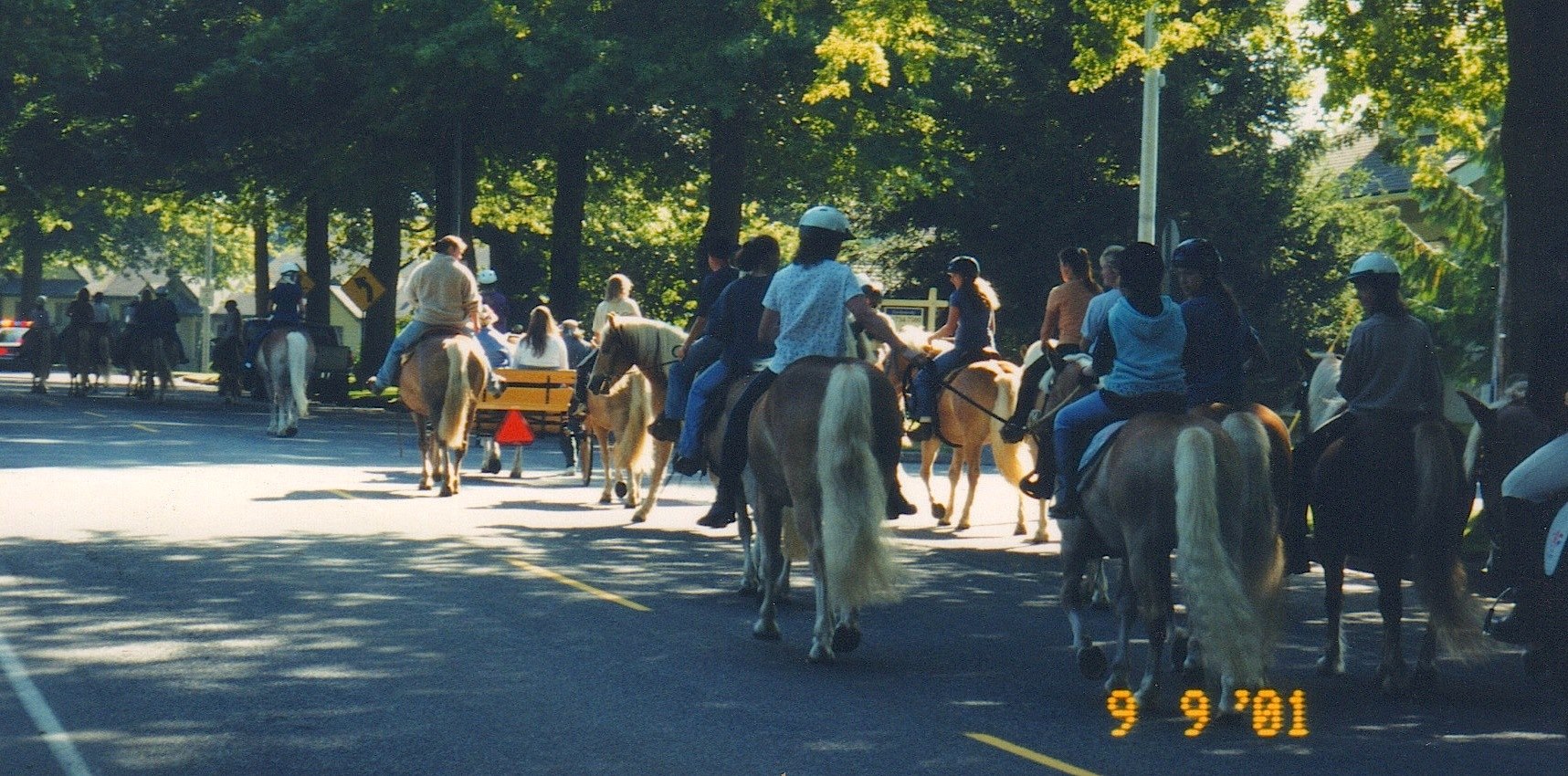
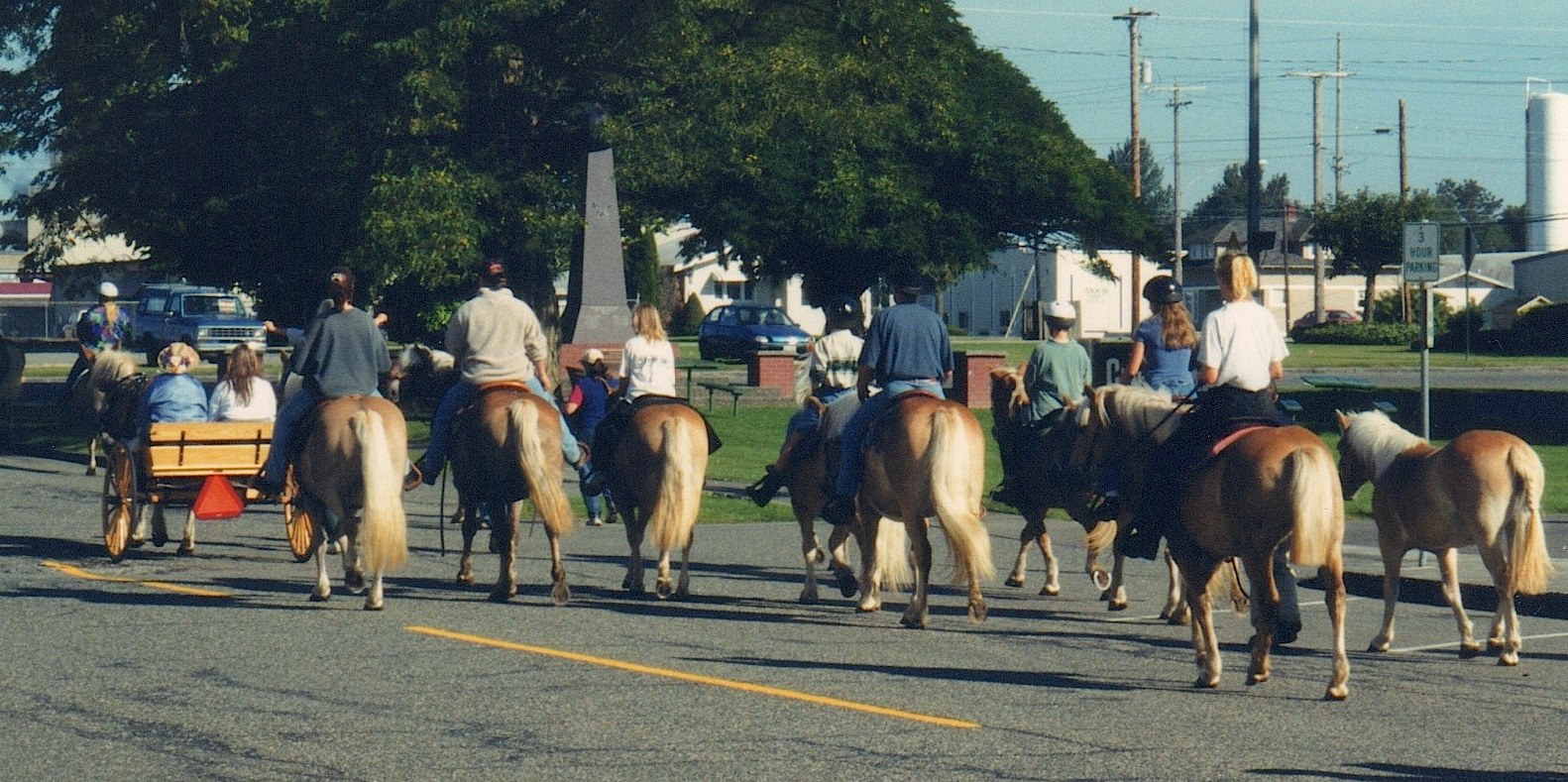
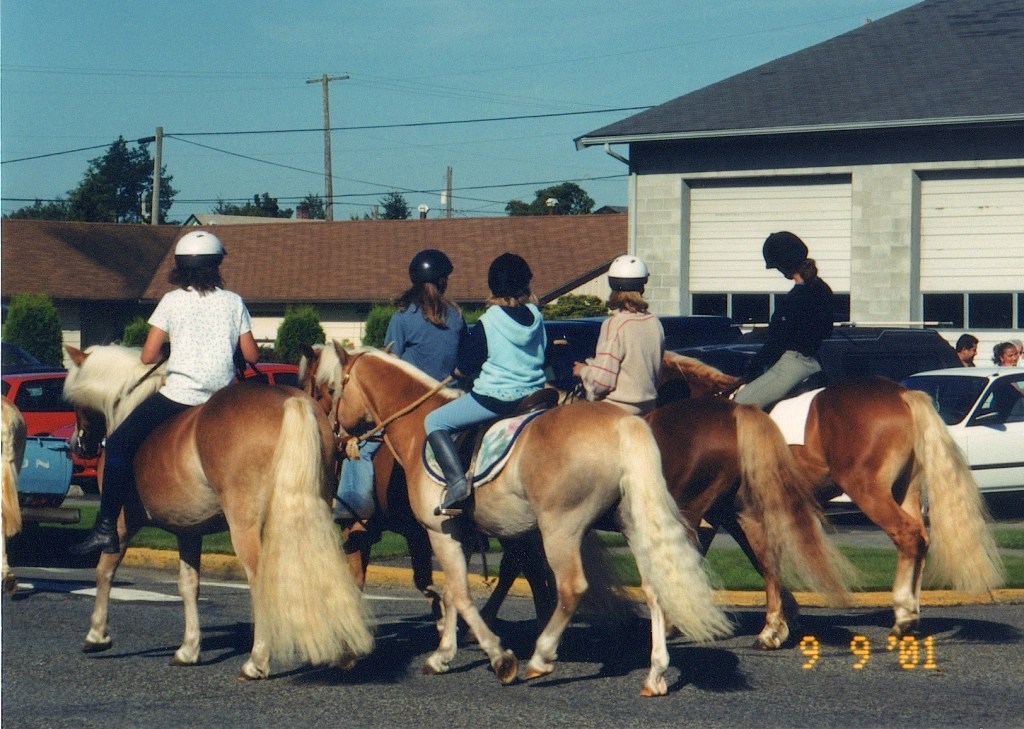
I was one of three or four friends left cleaning over ninety stalls after a Haflinger horse event that I had organized at our local fairgrounds. Some people had brought their horses from over 1000 miles away to participate for several days, including a Haflinger parade through our town on a quiet Sunday morning.
There had been personality clashes and harsh words among some participants along with criticism directed at me as the organizer that I had taken very personally. As I struggled with the umpteenth wheelbarrow load of manure, tears stung my eyes and my heart.
I was miserable with regret, feeling my work had been futile and unappreciated.
One friend had stayed behind with her young family to help clean up the large facility and she could see I was struggling to keep my composure. Jenny put herself right in front of my wheelbarrow and looked me in the eye, insisting I stop for a moment and listen:
“You know, none of these troubles and conflicts will amount to a hill of beans years from now. People will remember a fun event in a beautiful part of the country, a wonderful time with their Haflingers, their friends and family, and they’ll be all nostalgic about it, not giving a thought to the infighting or the sour attitudes or who said what to whom. So don’t make this about you and whether you did or didn’t make everyone happy. You loved us all enough to make it possible to meet here and the rest was up to us. So quit being upset about what you can’t change. There’s too much you can still do for us.”
Jenny had no idea how wise her words were, even two days later, on 9/11.
During tough times since (and there have been plenty), Jenny’s advice replays, reminding me to cease seeking appreciation from others or feeling hurt when harsh words come my way.
She was right about the balm found in the tincture of time. She was right about giving up the upset in order to die to self and self absorption, and instead to focus outward.
I have remembered.
Jenny herself did not know that day she would subsequently spend six years dying while still loving life every day, fighting a relentless cancer that was only slowed in the face of her faith and intense drive to live.
She became a rusting leaf gone holy, fading imperceptibly over time, crumbling at the edges until she finally had to let go. Her dying did not flash brilliance, nor draw attention at the end. Her intense focus during the years of her illness had always been outward to others, to her family and friends, to the healers she spent so much time with in medical offices, to her firm belief in the plan God had written for her and those who loved her.
So Jenny let go her hold on life here. And we reluctantly let her go. Brilliance cloaks her as her focus is now on things eternal.
You were so right, Jenny. The hard feelings from a quarter century ago don’t amount to a hill of beans now. The words you spoke to me that day taught me to love life even when I have no stomach for it.
All of us did have a great time together a few days before the world changed. And manure transforms over time to rich, nurturing compost.
I promise I am no longer upset that I can’t change what is past nor the fact that you and so many others have now left us.
But we’ll catch up later.
One-Time
Monthly
Yearly
Make a one-time or recurring donation to support daily Barnstorming posts
How much better it is to carry wood to the fire than to moan about your life. How much better to throw the garbage onto the compost, or to pin the clean sheet on the line, With a gray-brown wooden clothes pin. ~Jane Kenyon “The Clothespin”
Queen of my tub, I merrily sing, While the white foam rises high, And sturdily wash, and rinse, and wring, And fasten the clothes to dry; Then out in the free fresh air they swing, Under the sunny sky.
I wish we could wash from our hearts and our souls The stains of the week away, And let water and air by their magic make Ourselves as pure as they; Then on the earth there would be indeed A glorious washing-day!
Along the path of a useful life Will heart’s-ease ever bloom; The busy mind has no time to think Of sorrow, or care, or gloom; And anxious thoughts may be swept away As we busily wield a broom.
I am glad a task to me is given To labor at day by day; For it brings me health, and strength, and hope, And I cheerfully learn to say,— “Head, you may think; heart, you may feel; But hand, you shall work alway!” ~Louisa May Alcott “A Song from the Suds”
Silken web undulates, a lady’s private wash upon the wind. ~L.L. Barkat
All day the blanket snapped and swelled on the line, roused by a hot spring wind…. From there it witnessed the first sparrow, early flies lifting their sticky feet, and a green haze on the south-sloping hills. Clouds rose over the mountain….At dusk I took the blanket in, and we slept, restless, under its fragrant weight. ~Jane Kenyon “Wash”
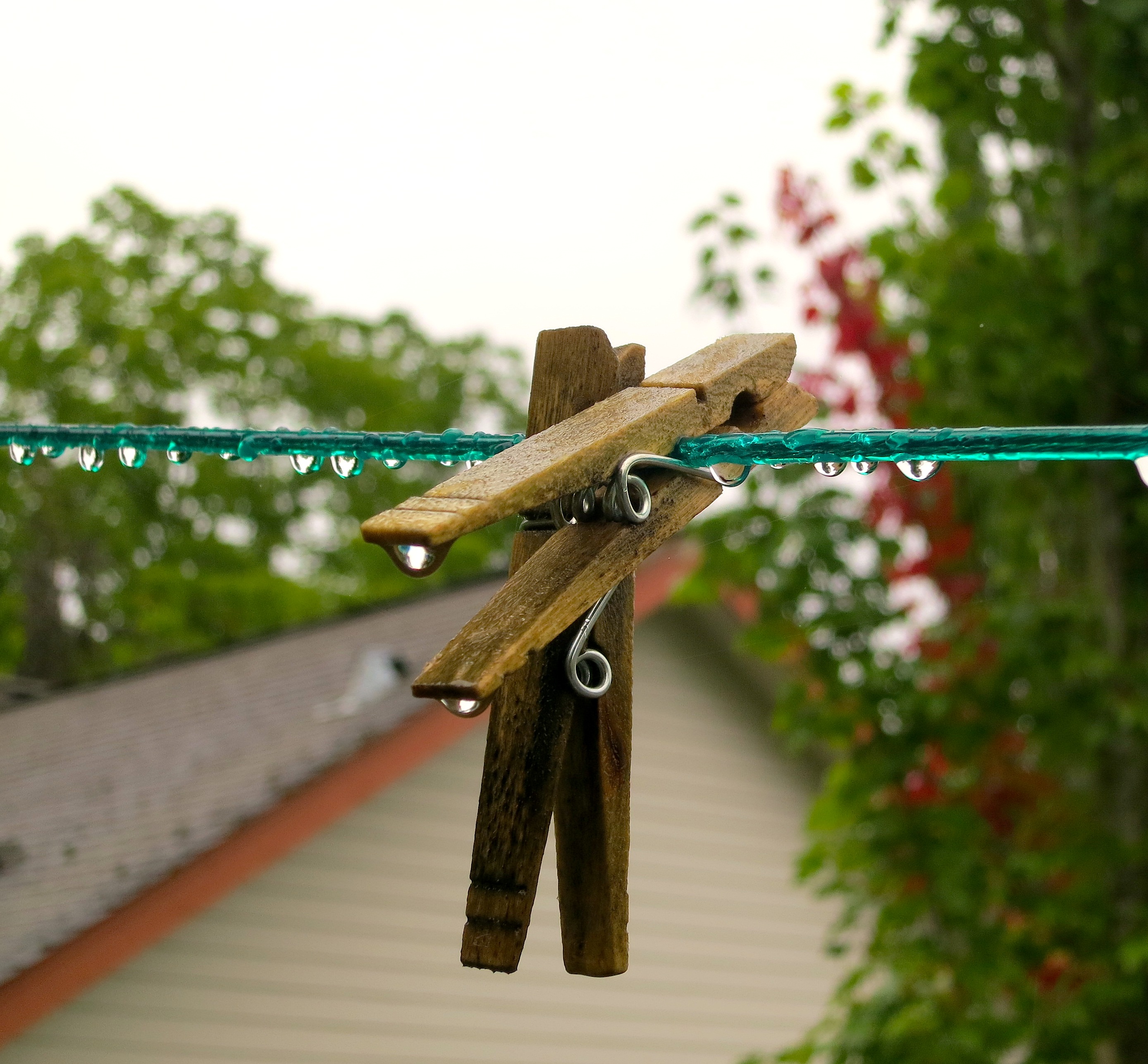
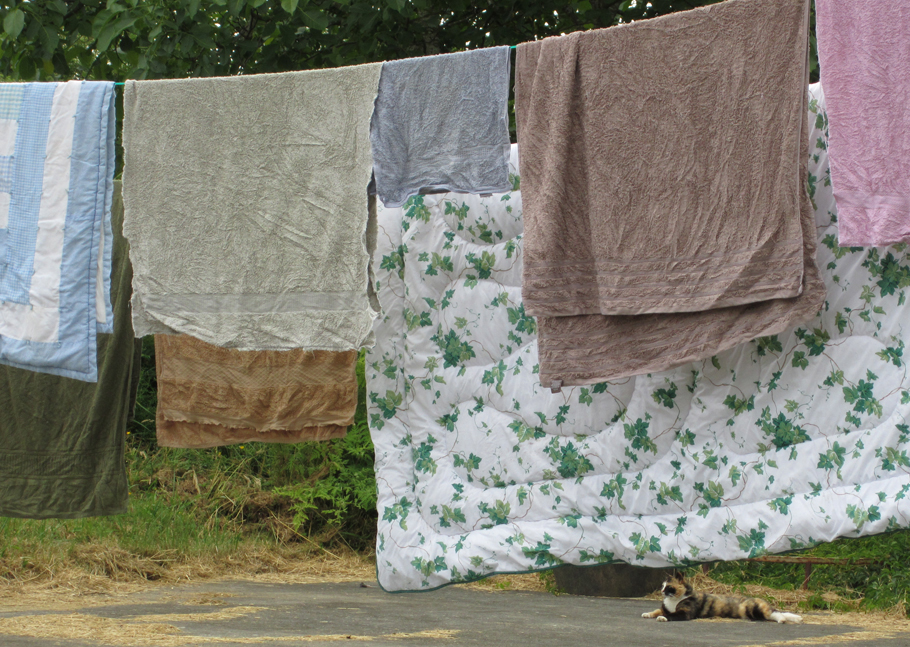
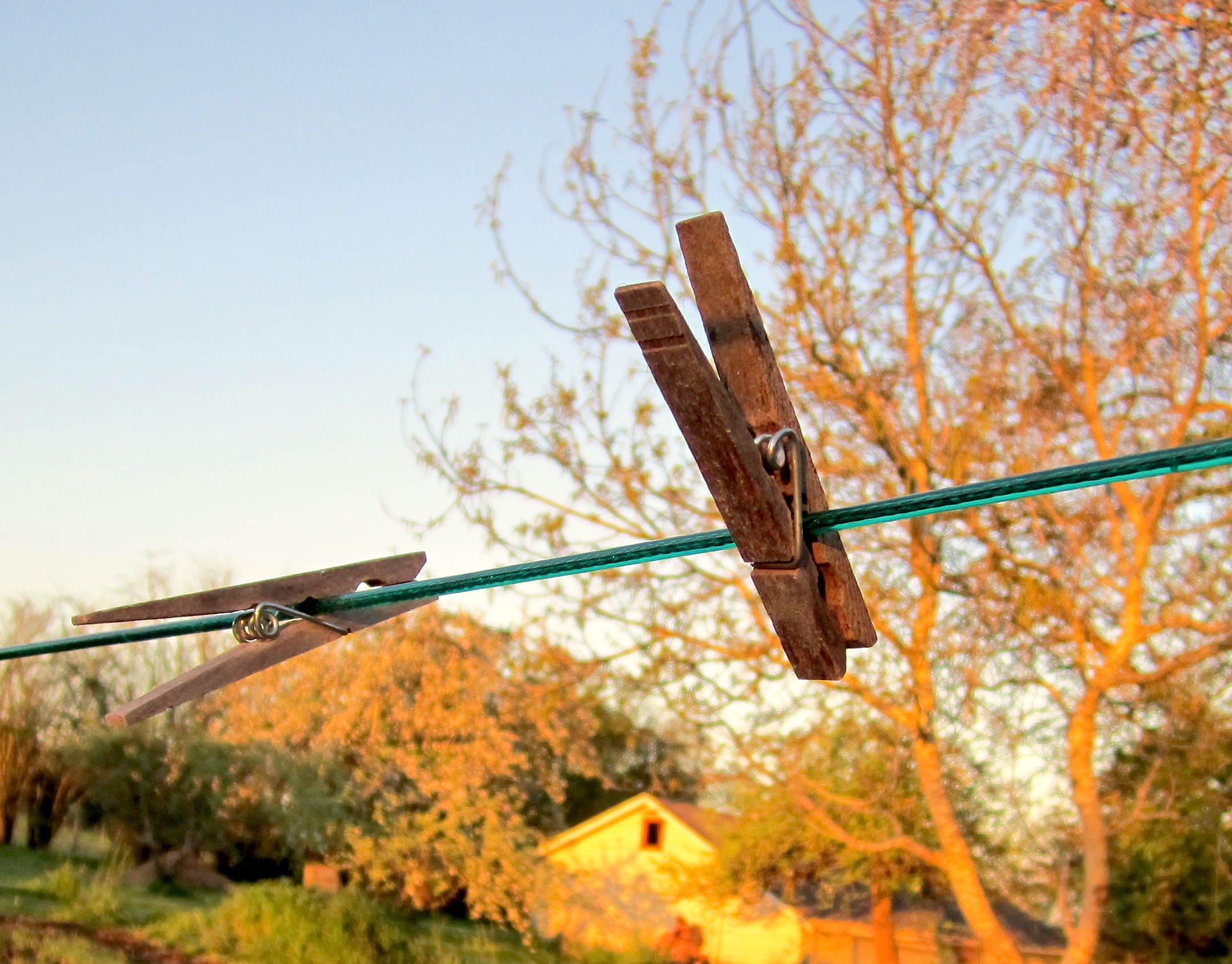
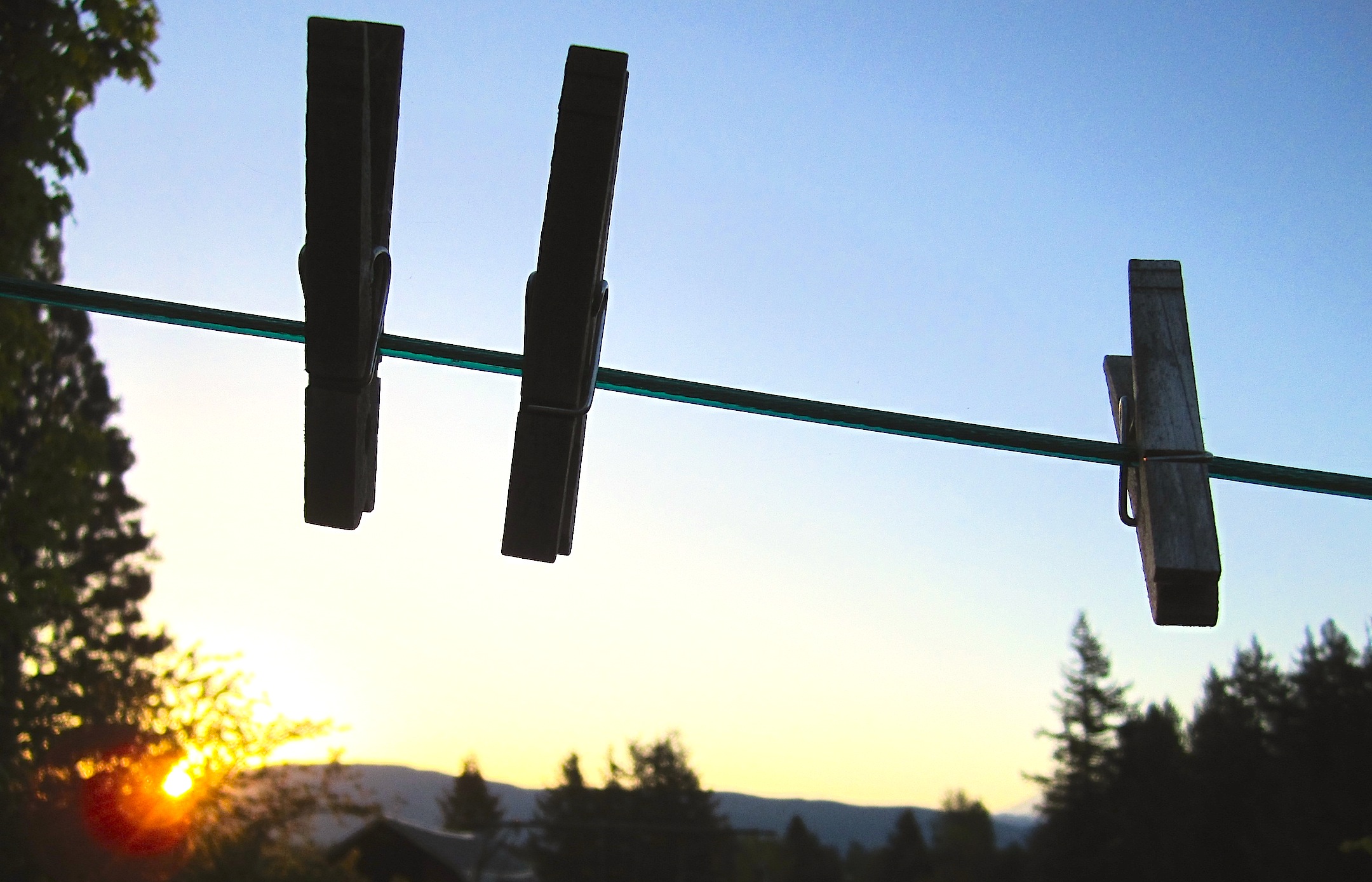
We have a clothesline that I use several times a week to take advantage of sunlight, breezes, fresh air fragrance – all at no cost but the time it takes to carry laundry outside, hang it up with my ancient clothespins, and then pull it back down at the end of the day.
It is well worth the effort; I have been fortunate to always live where there is a line and clothespins.
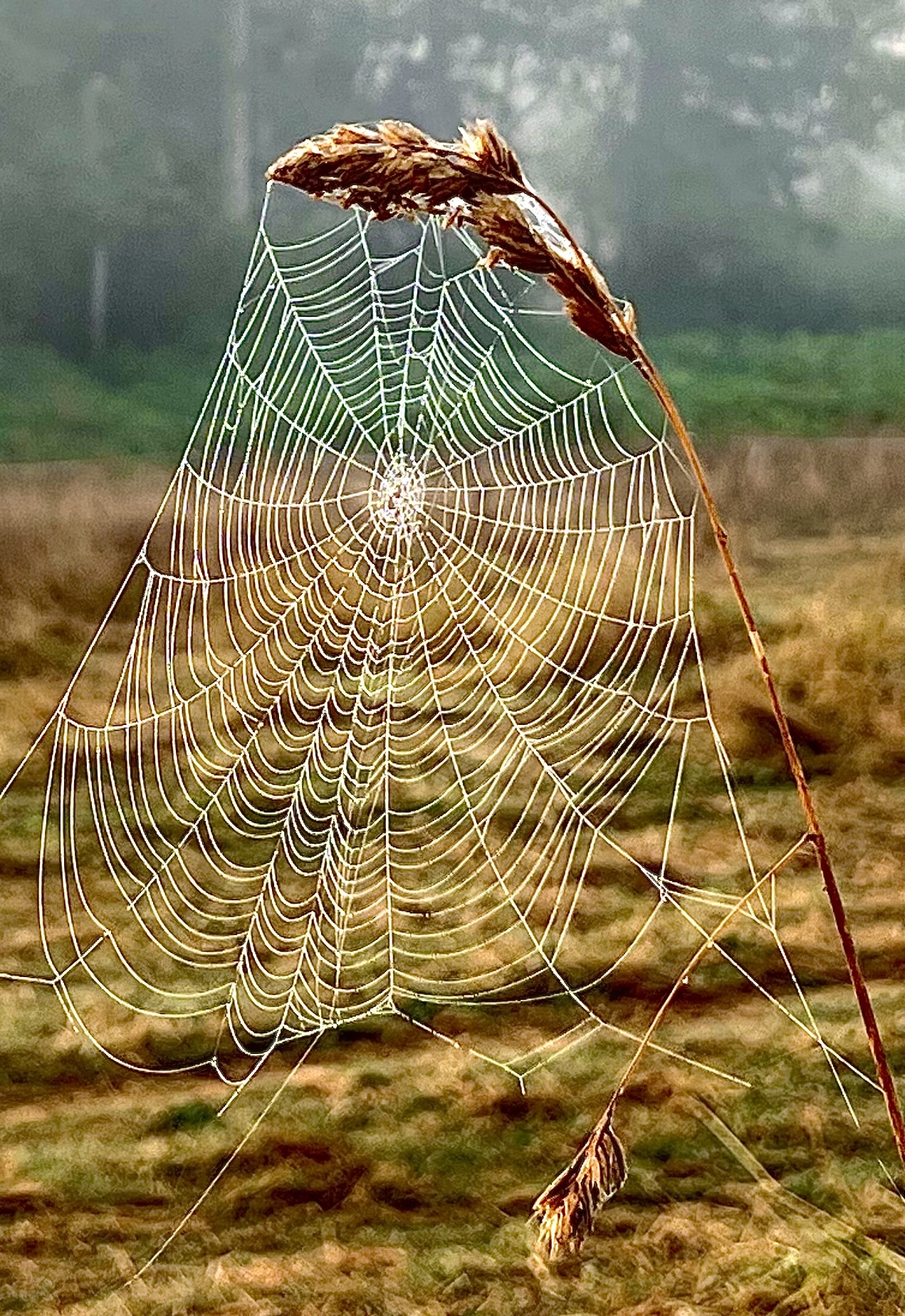
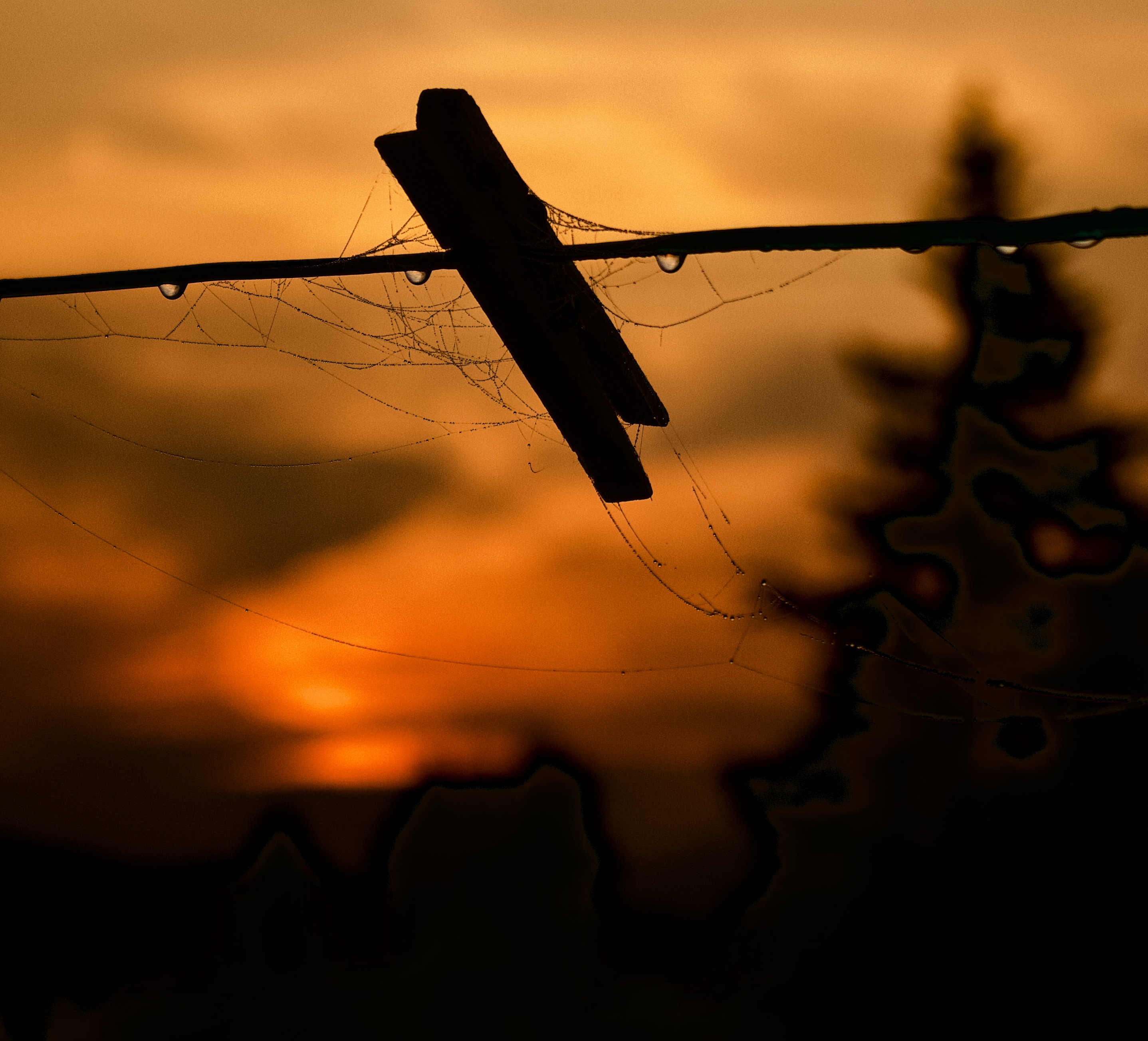
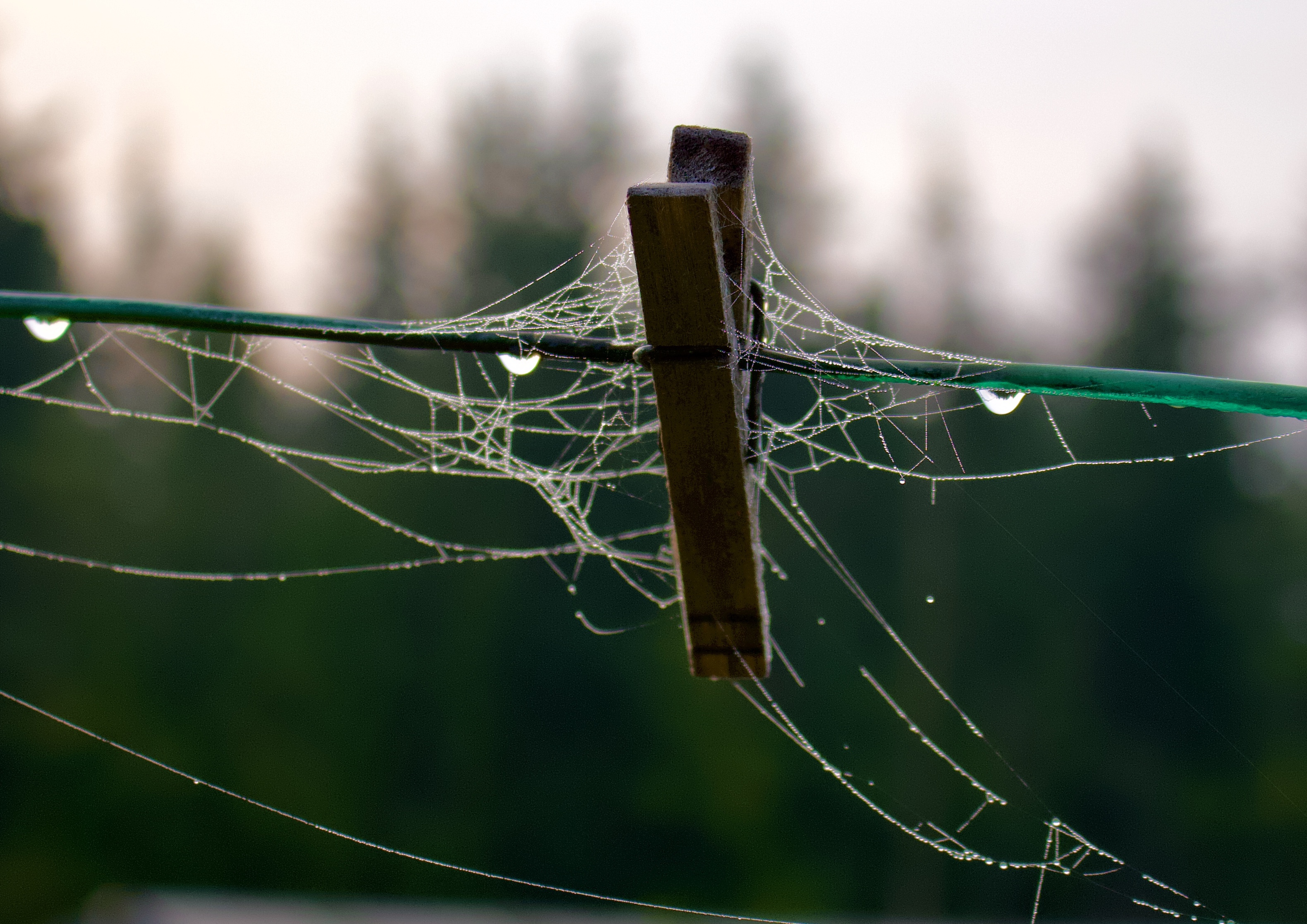
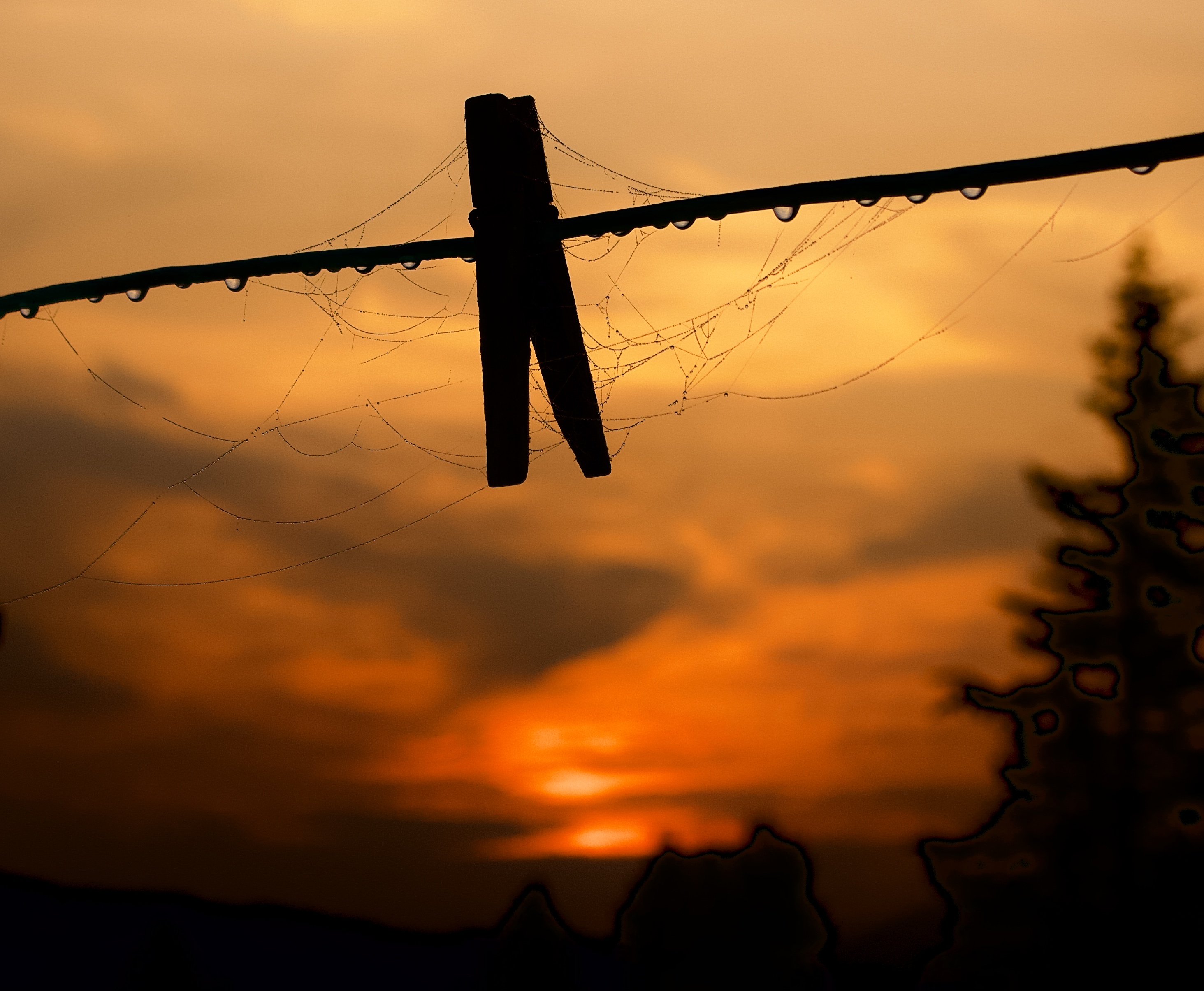
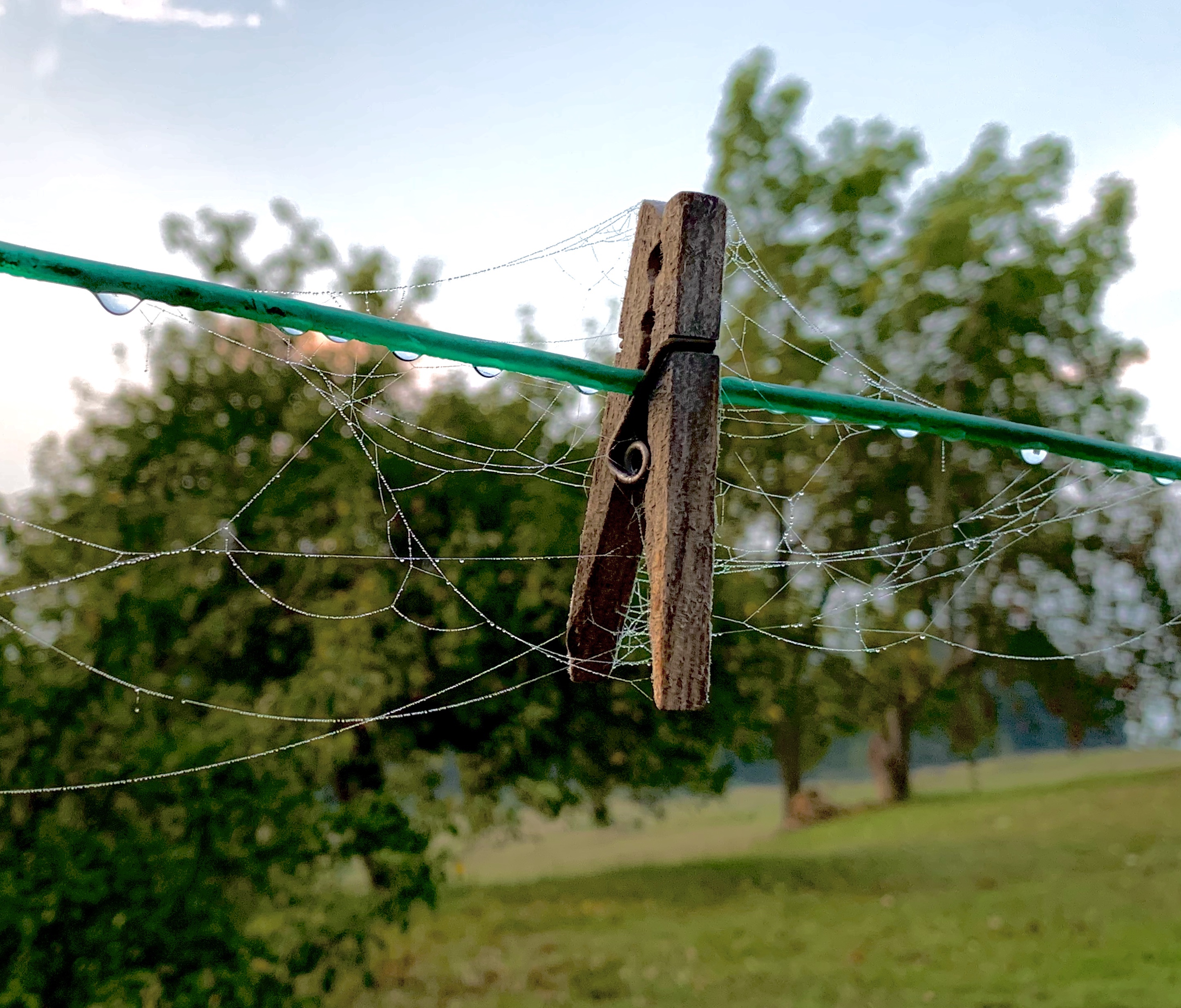
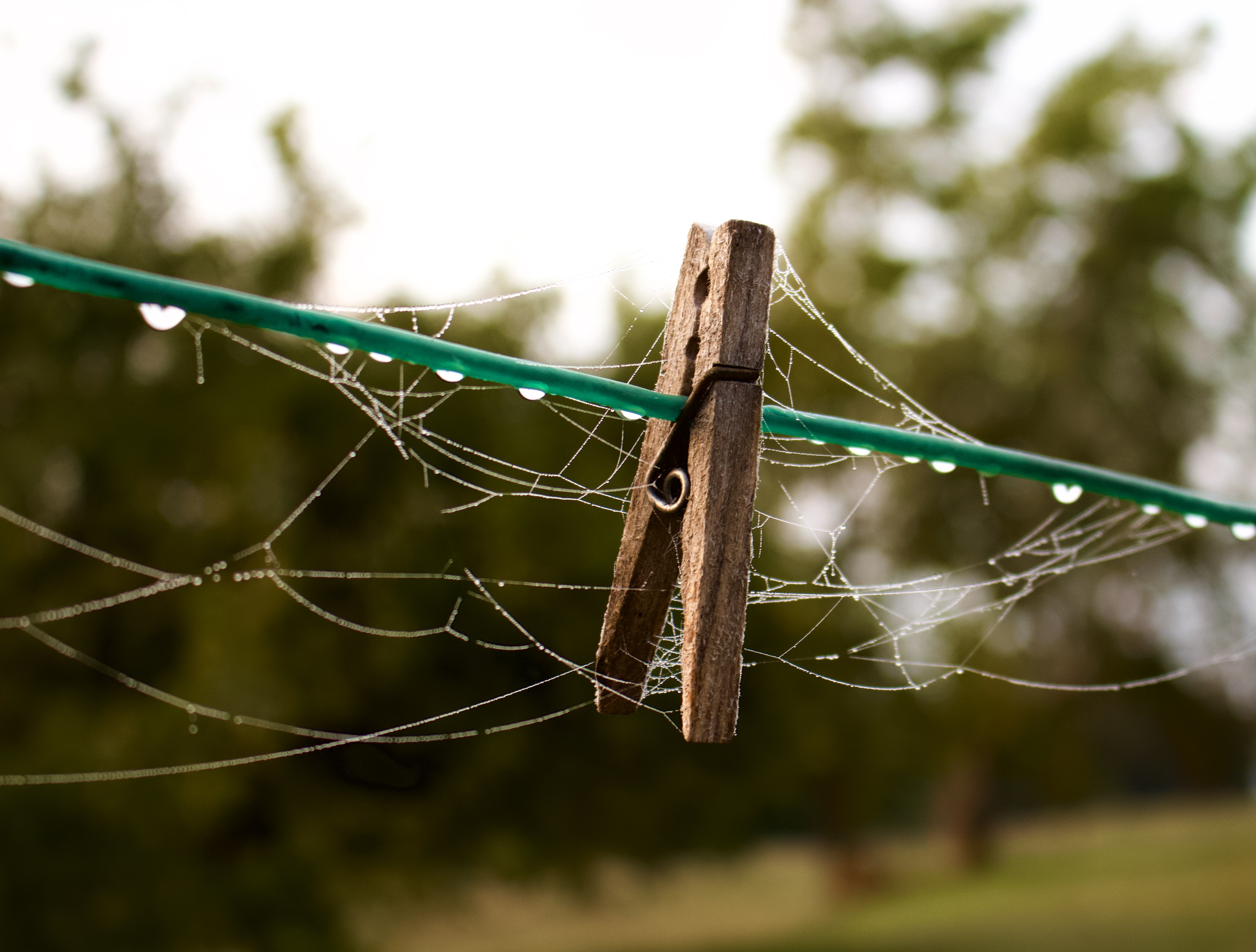
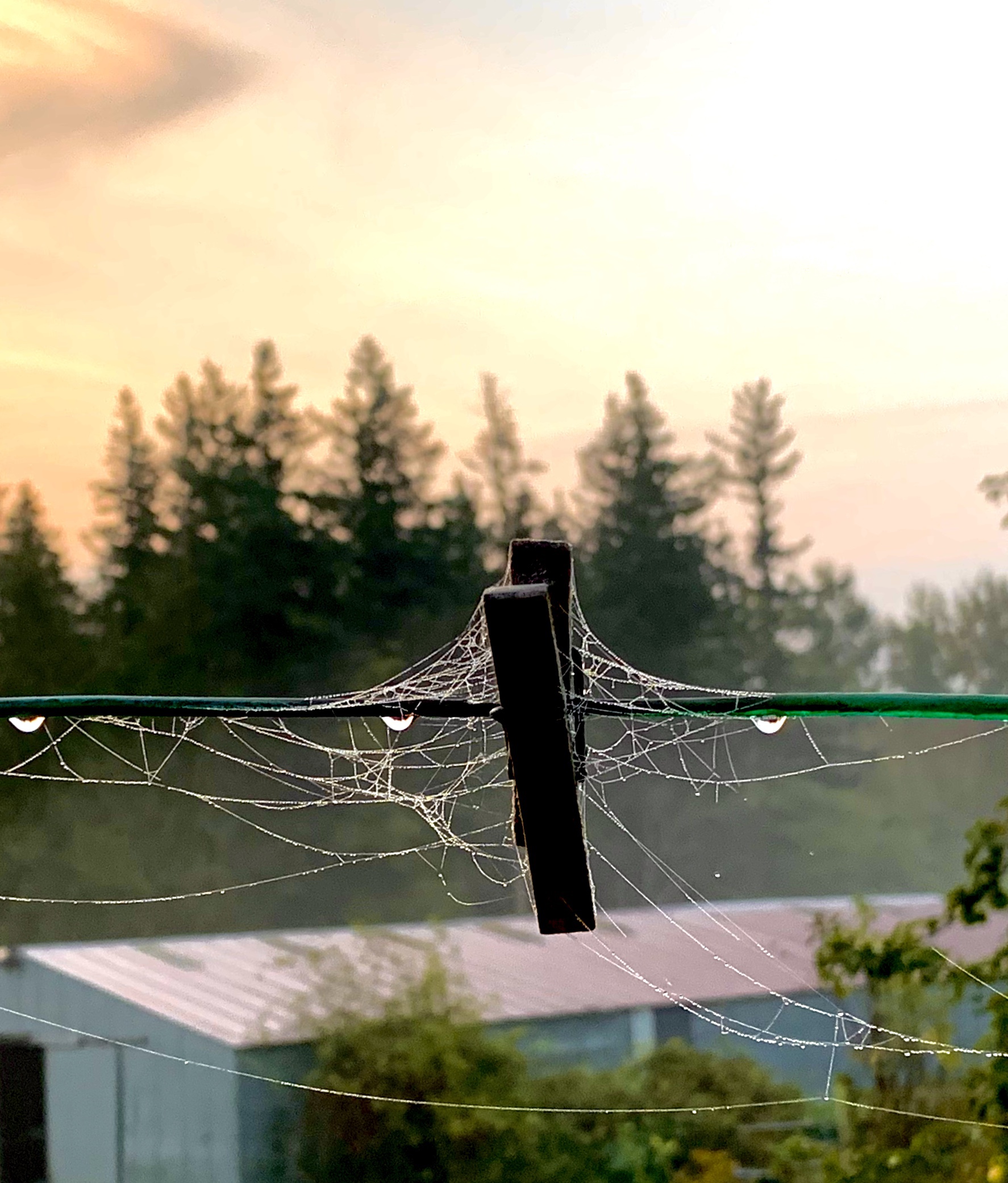
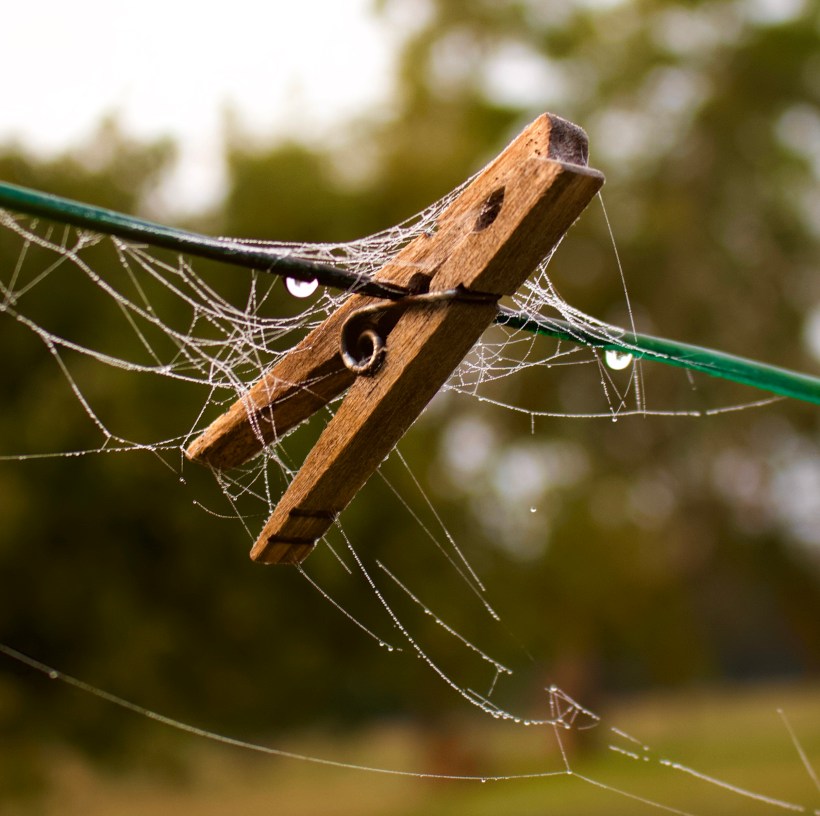
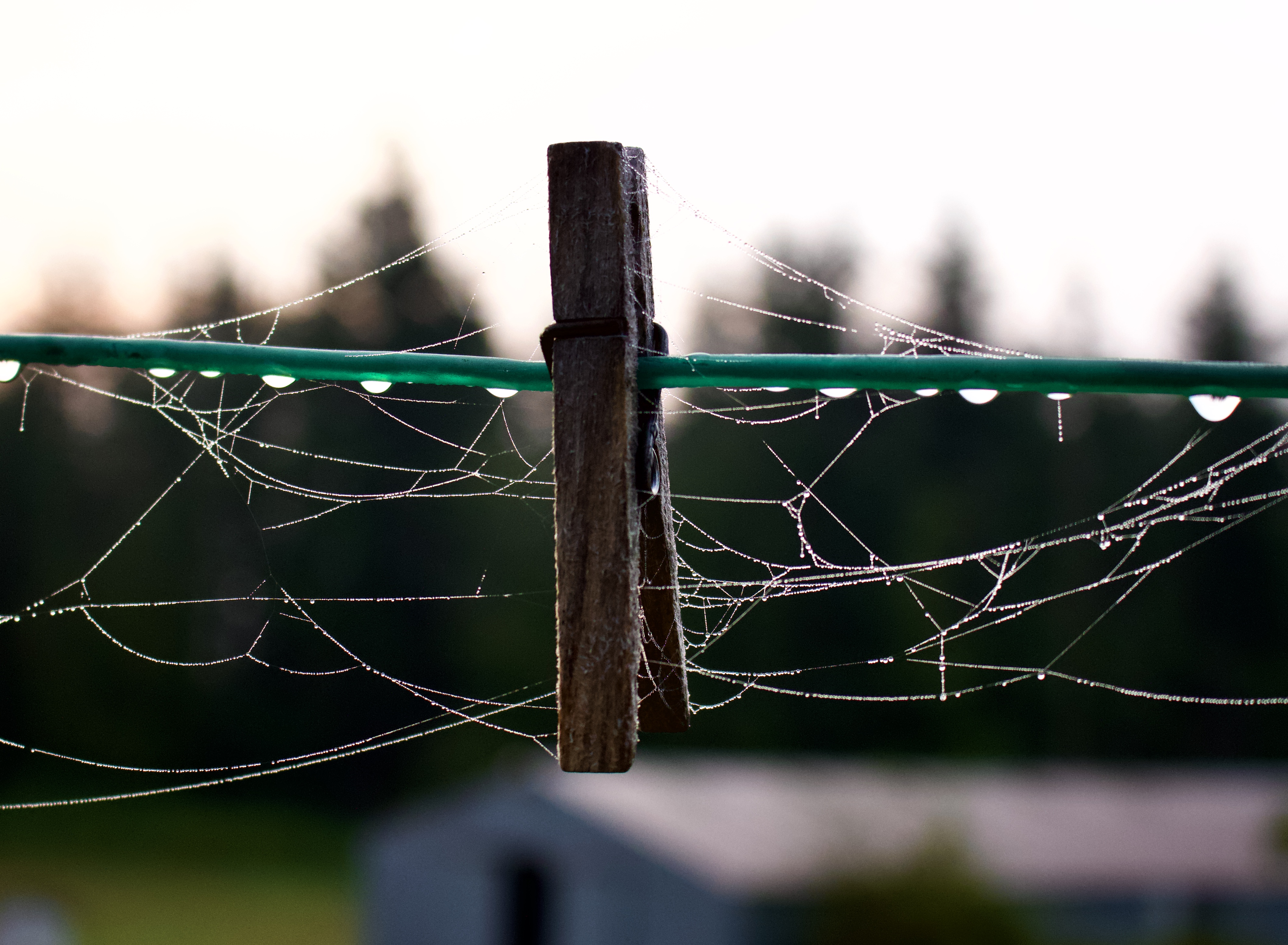
This morning, I found someone had been very busy during the night, securing the clothespins to the line to make sure the pins could not escape. Each pin and hinge were laced to the line with silken threads clinging tightly, just in case a pin might consider escaping.
I looked for this industrious spider, as it had trekked down a long line, working its webby magic through numerous clothespins, yet it had descended and snuck away on this foggy Labor Day, not even waiting to see what might happen to all its work.
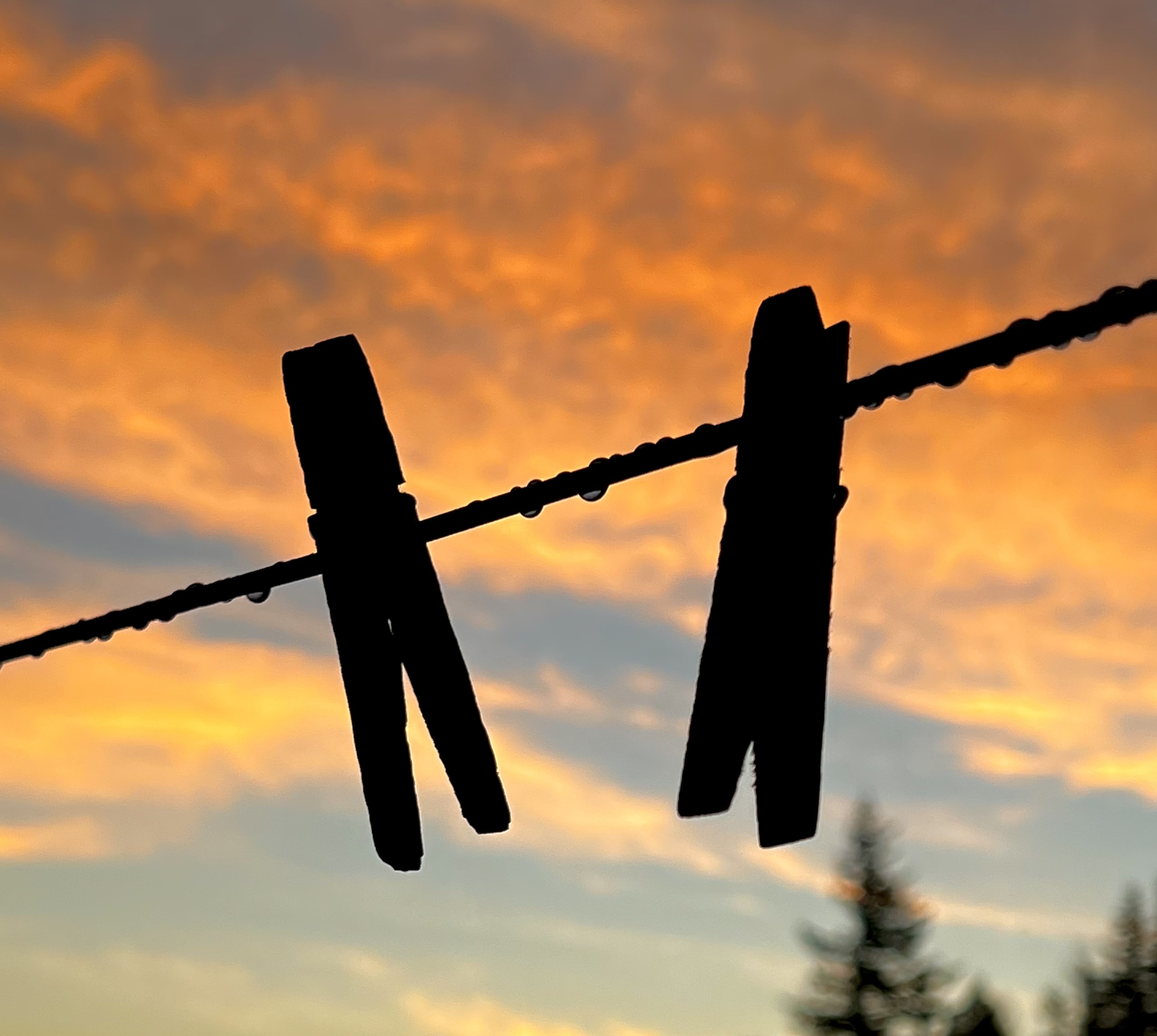
The old and weathered clothespins patiently wait for their next job, to pinch together what I give them to hold on to tomorrow while blowing in the wind. In the meantime, they cling to fresh life, gaily festooned with gossamer silk.
One-Time
Monthly
Yearly
Make a one-time or recurring donation to support daily Barnstorming posts
There is always an enormous temptation in all of life to diddle around making itsy-bitsy friends and meals and journeys for itsy-bitsy years on end.
It is so self-conscious, so apparently moral, simply to step aside from the gaps where the creeks and winds pour down, saying, I never merited this grace, quite rightly, and then to sulk along the rest of your days on the edge of rage.
I won’t have it.
The world is wilder than that in all directions, more dangerous and bitter, more extravagant and bright.
We are making hay when we should be making whoopee; we are raising tomatoes when we should be raising Cain,or Lazarus. ~Annie Dillard from Pilgrim at Tinker Creek
Other than a few exceptional circumstances in my life, I have always played it safe: living an itsy-bitsy life being a down-home, don’t rock the boat, work hard and live-a-quiet-life kind of person, growing hay and tomatoes and a few other things…
My grandparents lived that way, my parents lived that way. I feel like it is bound in the twists and turns of my DNA.
I do know a thing or two about sulking on the edge of rage, lost in a morass of seething bitterness about the state of the world. Yet if I were honest about it, the discontent I feel is all about me, always about me.
I want to have accomplished more to deserve taking up space in my days on earth. But that’s a problem we all have, isn’t it?
We’re unworthy of such unmerited grace as has been shown to us, raising us from the holes we dig for ourselves. It is such a pure Gift I wait for, borne out of God’s radical sacrifice deserving from me a life of radical gratitude, even when I choose to live it out a little quietly, making hay and raising tomatoes.
One-Time
Monthly
Yearly
Make a one-time or recurring donation to support daily Barnstorming posts
My father would lift me to the ceiling in his big hands and ask, How’s the weather up there? And it was good, the weather of being in his hands, his breath of scotch and cigarettes, his face smiling from the world below. O daddy, was the lullaby I sang back down to him as he stood on earth, my great, white-shirted father, home from work, his gold wristwatch and wedding band gleaming as he held me above him for as long as he could, before his strength failed down there in the world I find myself standing in tonight, my little boy looking down from his flight below the ceiling, cradled in my hands, his eyes wide and already staring into the distance beyond the man asking him again and again, How’s the weather up there? ~George Bilgere “Weather”.
It was hard work, dying, harder than anything he’d ever done.
Whatever brutal, bruising, back- breaking chore he’d forced himself
to endure—it was nothing compared to this. And it took
so long. When would the job be over? Who would call him
home for supper? And it was hard for us (his children)—
all of our lives we’d heard my mother telling us to go out,
help your father, but this was work we could not do.
He was way out beyond us, in a field we could not reach. ~Joyce Sutphen “My Father, Dying”
Deep in one of our closets is an old film reel of me about 16 months old sitting securely held by my father on his shoulders. I am bursting out with giggles as he repeatedly bends forward, dipping his head and shoulders down. I tip forward, looking like I am about to fall off, and when he stands back up straight, my mouth becomes a large O and I can almost remember the tummy tickle I feel. I want him to do it again and again, taking me to the edge of falling off and then bringing me back from the brink.
My father was a tall man, so being swept up onto his shoulders felt a bit like I was touching heaven.
It was as he lay dying 30 years ago this summer that I realized again how tall he was — his feet kept hitting the foot panel of the hospital bed my mother had requested for their home. We cushioned his feet with padding so he wouldn’t get abrasions even though he would never stand on them again, no longer towering over us.
His helplessness in dying was startling – this man who could build anything and accomplish whatever he set his mind to was unable to subdue his cancer. Our father, who was so self-sufficient he rarely asked for help, did not know how to ask for help now.
So we did what we could when we could tell he was uncomfortable, which wasn’t often. He didn’t say much, even though there was much we could have been saying. We didn’t reminisce. We didn’t laugh and joke together. We just were there, taking shifts catching naps on the couch so we could be available if he called out, which he never did.
This man: who had grown up dirt poor, fought hard with his alcoholic father left abruptly to go to college – the first in his family – then called to war for three years in the South Pacific.
This man: who had raised a family on a small farm while he was a teacher, then a supervisor, then a desk worker.
This man: who left our family to marry another woman but returned after a decade to ask forgiveness.
This man: who died in a house he had built completely himself, without assistance, from the ground up.
He didn’t need our help – he who had held tightly to us and brought us back from the brink when we went too far – he had been on the brink himself and was rescued, coming back humbled.
No question the weather is fine for him up there. I have no doubt.
One-Time
Monthly
Yearly
Make a one-time or recurring donation to support daily Barnstorming posts
But you can have the fig tree and its fat leaves like clown hands gloved with green. You can have the touch of a single eleven-year-old finger on your cheek, waking you at one a.m. to say the hamster is back. You can have the purr of the cat and the soulful look of the black dog, the look that says, If I could I would bite every sorrow until it fled, and when it is August, you can have August and abundantly so. You can have love, though often it will be mysterious, like the white foam that bubbles up at the top of the bean pot over the red kidneys until you realize foam’s twin is blood.
You can speak a foreign language, sometimes, and it can mean something. You can visit the marker on the grave where your father wept openly. You can’t bring back the dead, but you can have the words forgive and forget hold hands as if they meant to spend a lifetime together. You can have your grandfather sitting on the side of your bed, at least for a while, you can have clouds and letters, the leaping of distances, and Indian food with yellow sauce like sunrise. You can’t count on grace to pick you out of a crowd but here is your friend to teach you how to high jump, how to throw yourself over the bar, backwards, until you learn about love, about sweet surrender, and here are periwinkles, buses that kneel, farms in the mind as real as Africa.
And when adulthood fails you, you can still summon the memory of the black swan on the pond of your childhood, the rye bread with peanut butter and bananas your grandmother gave you while the rest of the family slept. There is the voice you can still summon at will, like your mother’s, it will always whisper, you can’t have it all, but there is this. ~Barbara Ras from “You Can’t Have It All” from Bite Every Sorrow
My pragmatic mother gave up her teaching career for marriage and family so would remind me regularly that I couldn’t have it all: there was no way a woman can have a husband and children and a farm and a garden and animals and a profession and write and travel and volunteer in the community and not make a mess of it all and herself.
My father would listen to her and say to me softly under his breath: “you do whatever you put your mind to…you know what you are here for.”
They were both right.
The alluring abundance of this life has invited me to want to touch and feel and taste it all, not unlike another woman who was placed with purpose in the Garden to be a side-by-side companion and co-worker. Yet she demonstrated what happens when you want more than you are given and yes, she indeed made a mess of things.
Yet there is this: despite wanting it all and working hard for it all and believing I could do it all, I missed the point altogether.
Life is all gift, never earned. Life is all grace, not deserved. It is all August abundance, it is right now, sustaining us through the year’s droughts and floods and storms and drab gray weather.
And there is this: I know what I am here for.
One-Time
Monthly
Yearly
Make a one-time or recurring donation to support daily Barnstorming posts
Who loves the rain And loves his home, And looks on life with quiet eyes, Him will I follow through the storm; And at his hearth-fire keep me warm; Nor hell nor heaven shall that soul surprise, Who loves the rain, And loves his home, And looks on life with quiet eyes. ~Frances Shaw, “Who loves the rain” from Look To the Rainbow of Grace
Now more than ever you can be generous toward each day that comes, young, to disappear forever, and yet remain unaging in the mind. Every day you have less reason not to give yourself away. ~Wendell Berry from “There is no going back”
What a wonder I was when I was young, as I learn by the stern privilege of being old: how regardlessly I stepped the rough pathways of the hillside woods, treaded hardly thinking the tumbled stairways of the steep streams, and worked unaching hard days thoughtful only of the work, the passing light, the heat, the cool water I gladly drank. ~Wendell Berry “VII” 2015 from Another Day
Love is a universe beyond The daylight spending zone: As one we more abound Than two alone. ~Wendell Berry “VIII” 2015 from Another Day
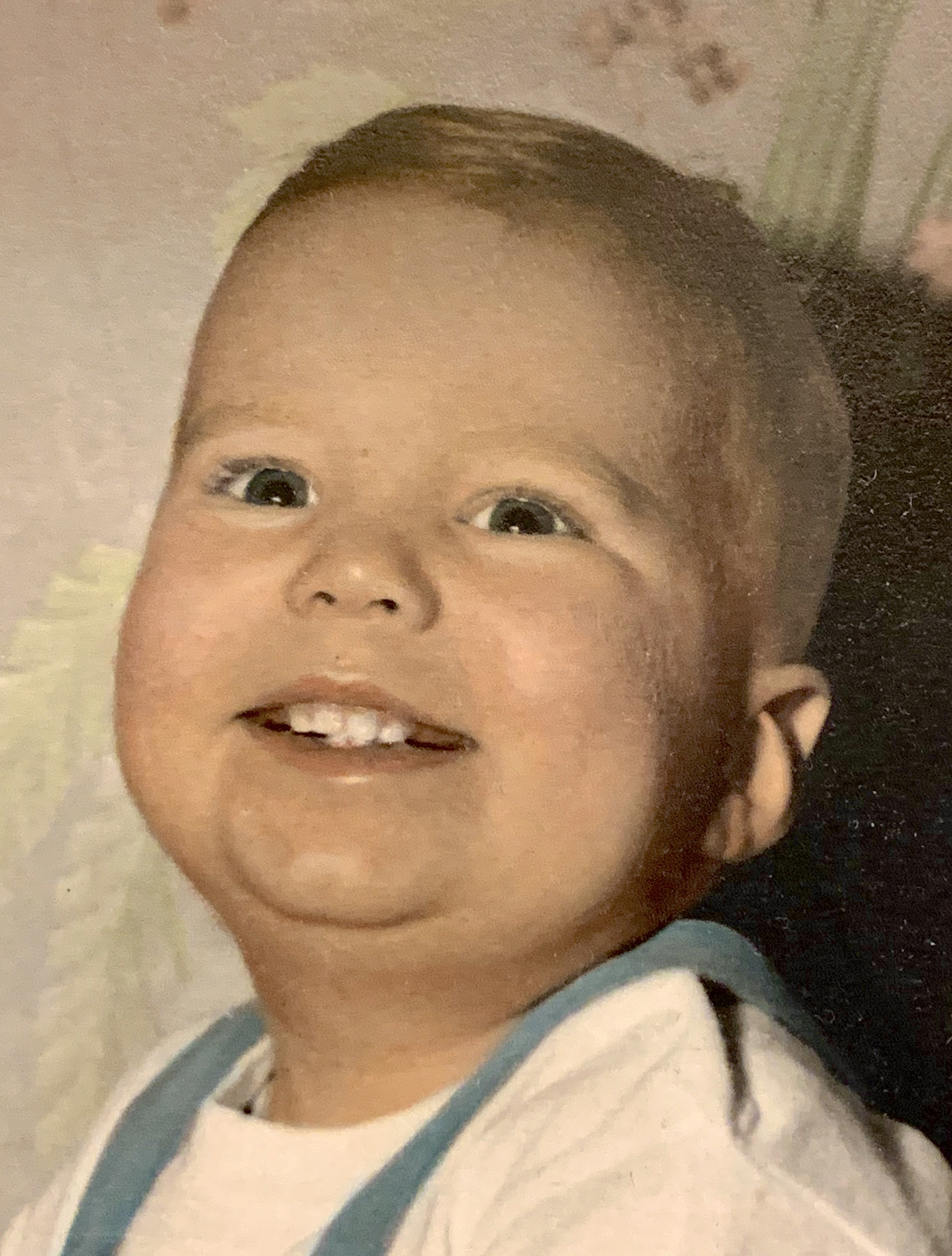
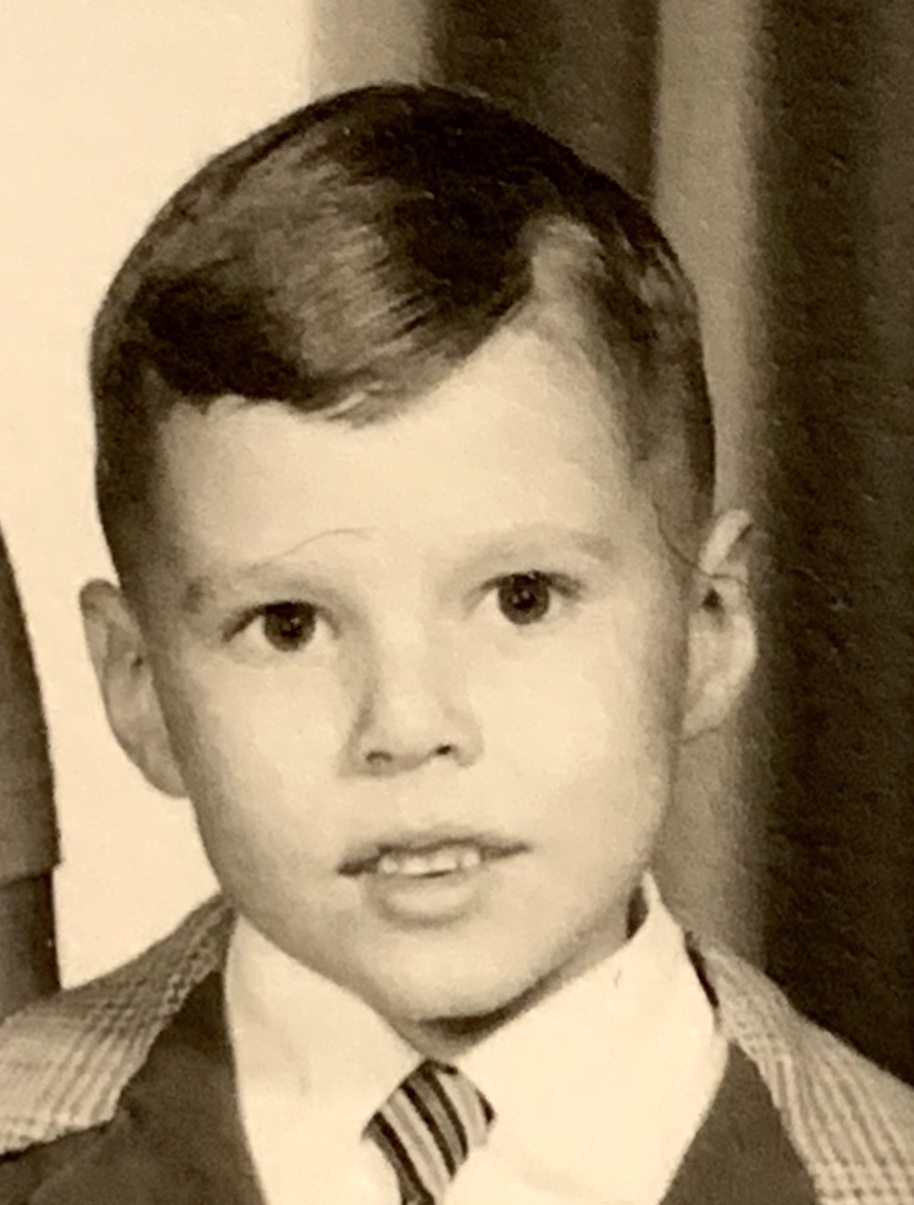
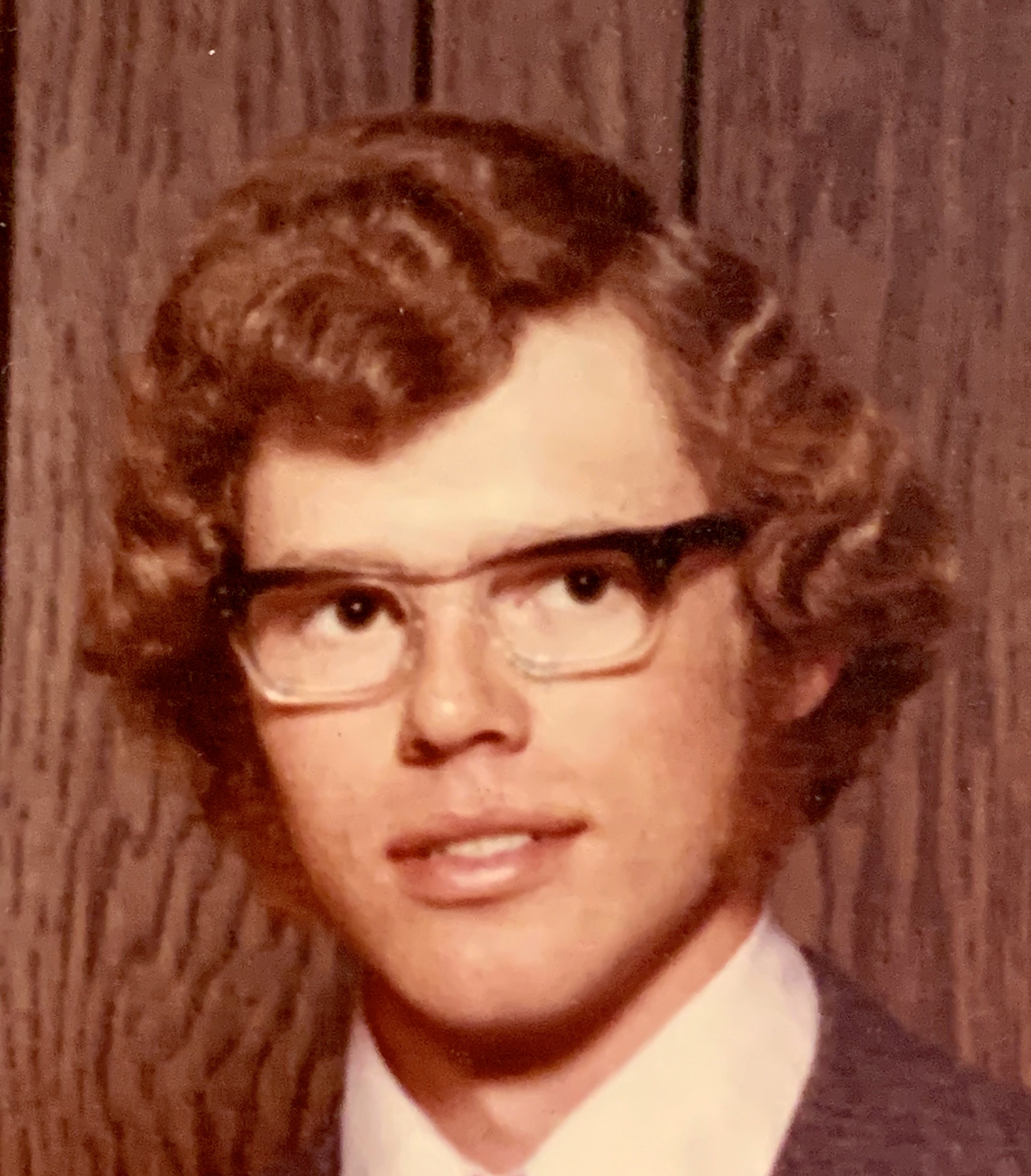
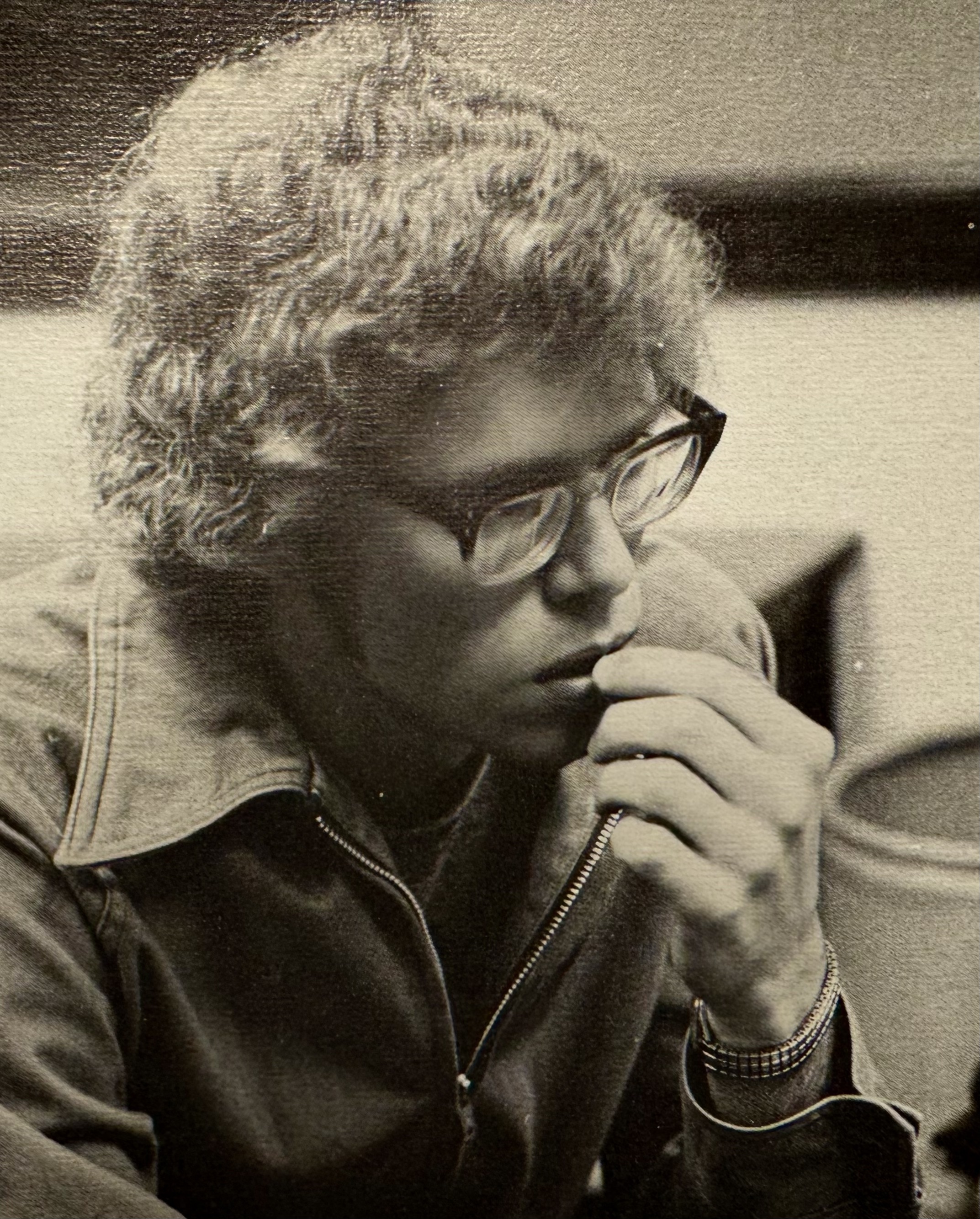
Thinking out loud on this day you were born, I thank God each day for bringing you to earth so we could meet, raise three amazing children, now six wonderful grandchildren, and walk this journey together with pulse and breath and dreams.
The boy you were became the man you are: so blessed by God, so needed by your family, church and community.
You give yourself away every day with such grace.
It was your quiet brown eyes I trusted first and just knew I’d follow you anywhere and I have.
In this journey together, we inhabit each other, however long may be the road we travel; you have become the air I breathe, refreshing, renewing, restoring~~ you are that necessary to me, and that beloved.
One-Time
Monthly
Yearly
Make a one-time or recurring donation to support daily Barnstorming posts
If ever we see those gardens again, The summer will be gone—at least our summer. Some other mockingbird will concertize Among the mulberries, and other vines Will climb the high brick wall to disappear.
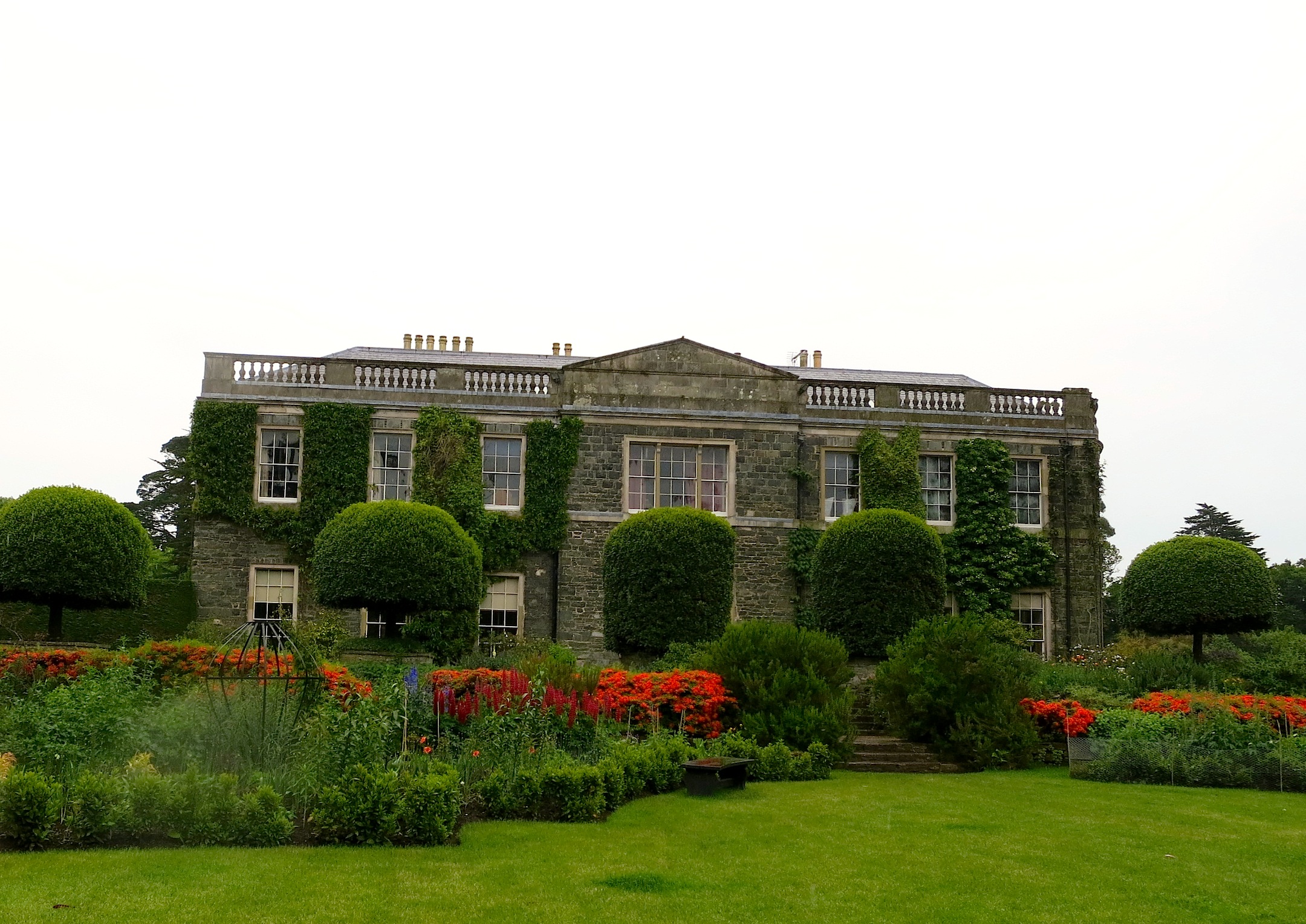
How many footpaths crossed the old estate— The gracious acreage of a grander age— So many trees to kiss or argue under, And greenery enough for any mood. What pleasure to be sad in such surroundings.
At least in retrospect. For even sorrow Seems bearable when studied at a distance, And if we speak of private suffering, The pain becomes part of a well-turned tale Describing someone else who shares our name.
Still, thinking of you, I sometimes play a game. What if we had walked a different path one day, Would some small incident have nudged us elsewhere The way a pebble tossed into a brook Might change the course a hundred miles downstream?
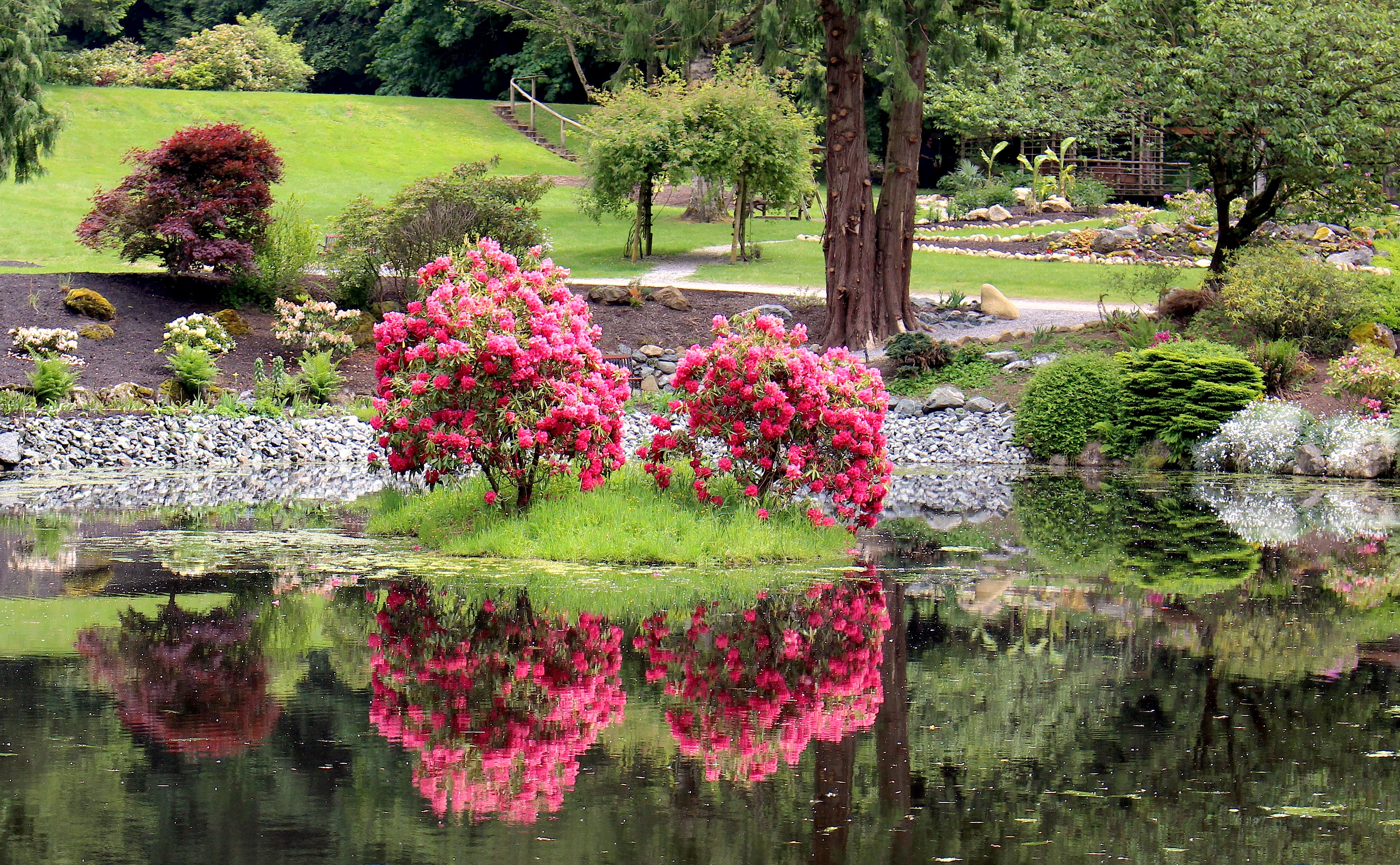
The trick is making memory a blessing, To learn by loss the cool subtraction of desire, Of wanting nothing more than what has been, To know the past forever lost, yet seeing Behind the wall a garden still in blossom. ~Dana Gioia “The Lost Garden” from Interrogations at Noon.
At present we are on the outside of the world, the wrong side of the door. . . . We cannot mingle with the splendours we see. But all the leaves of the New Testament are rustling with the rumour that it will not always be so. Some day, God willing, we shall get in. C.S. Lewis from The Weight of Glory
Memory can play tricks, either smoothing over the many potholes in the road of life, or digging the holes so deep, I fall in and am lost.
Whenever I am feeling regret for the things I have done, or all that I have left undone, I remember I have walked on paths of beauty beyond imagining.
I wouldn’t change much about what has been, knowing there is much more beauty to come.
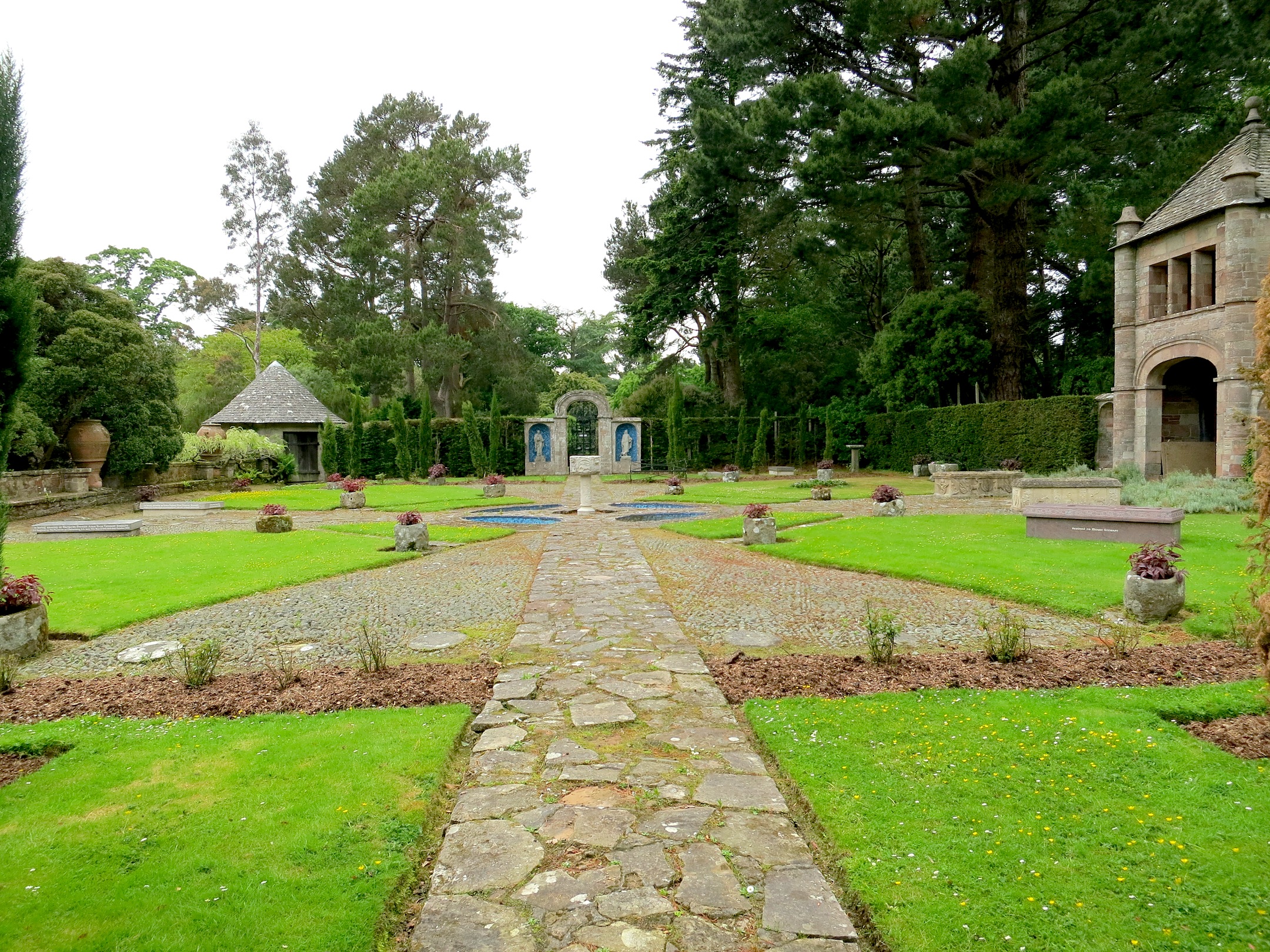
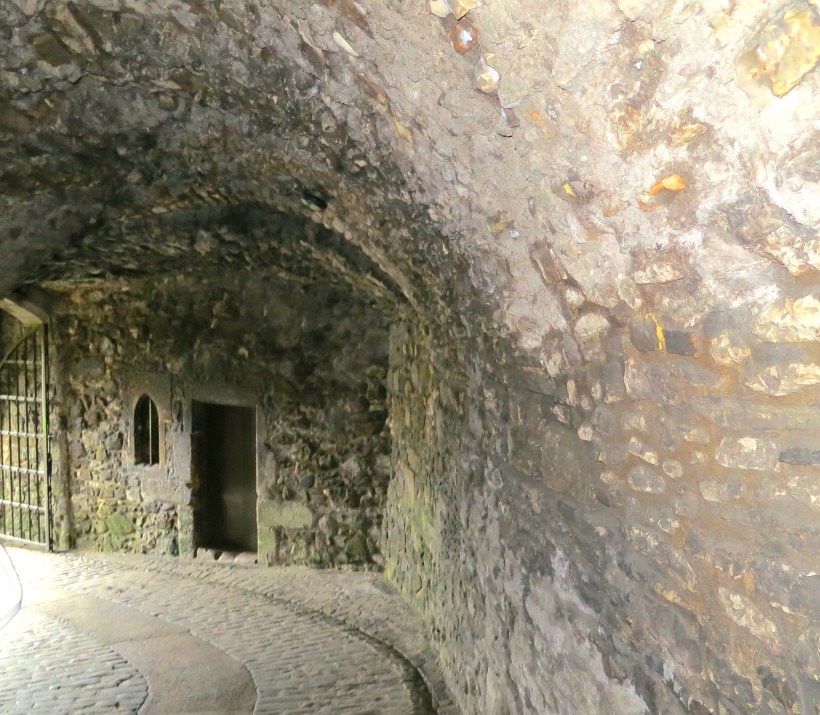
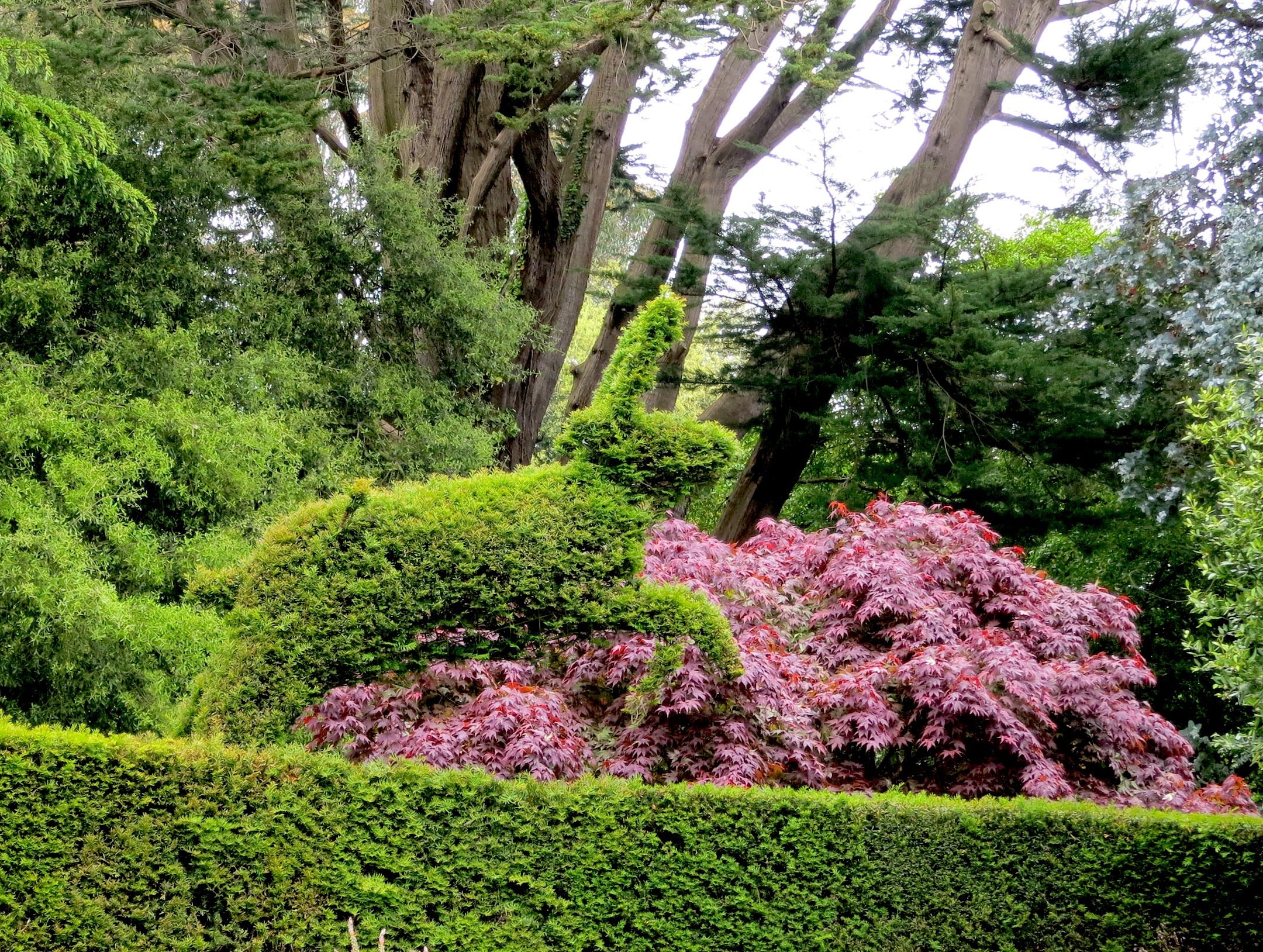
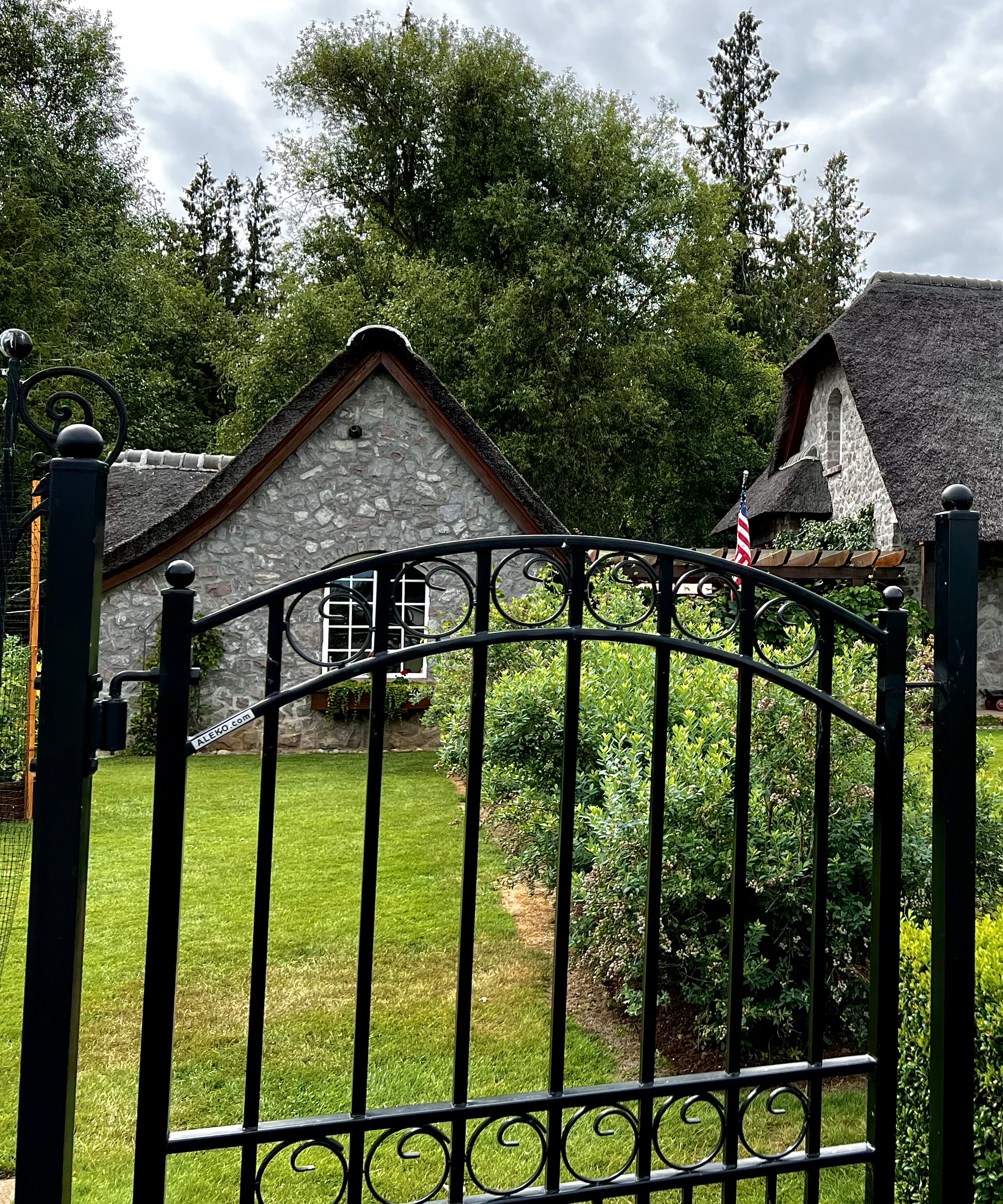
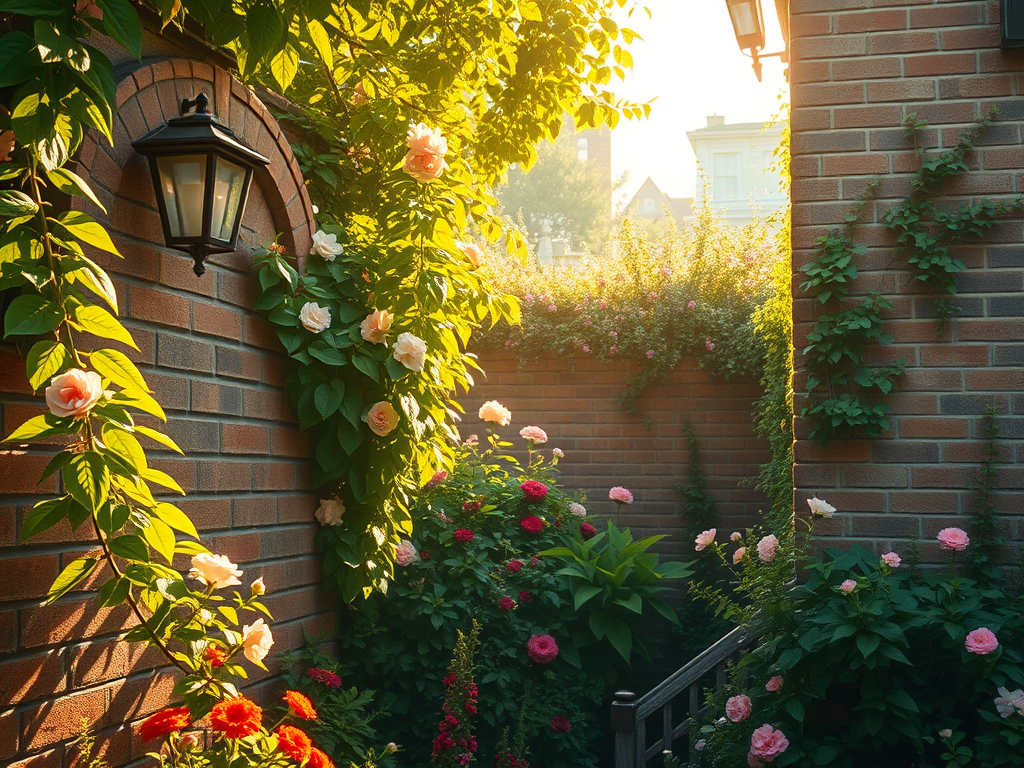
I remember gates and doors I could not open. Just a peek told me all I needed to know: there is a hidden, lost garden just waiting, still blooming, still inspiring, still brimming full of everything any of us could ever need.
AI image created for this post
One-Time
Monthly
Yearly
Make a one-time or recurring donation to support daily Barnstorming posts
















 Barnstorming