To Revel in Rays of Light

A writer should concern himself with whatever absorbs his fancy, stirs his heart, and unlimbers his typewriter.
I feel no obligation to deal with politics.
I do feel a responsibility to society.
A writer has the duty to be good, not lousy;
true, not false; lively, not dull;
accurate, not full of error.
He should tend to lift people up, not lower them down.

A writer must reflect and interpret his society, his world;
he must also provide inspiration and guidance and challenge.
Much writing today strikes me

as deprecating, destructive, and angry.
There are good reasons for anger, and I have nothing against anger.
But I think some writers have lost their sense of proportion,
their sense of humor, and their sense of appreciation.

I am often mad, but I would hate to be nothing but mad:
one role of the writer today is to sound the alarm.
The environment is disintegrating, the hour is late,
and not much is being done.
Instead of carting rocks from the moon,
we should be carting the feces out of Lake Erie.
…I think I would lose what little value I may have as a writer
if I were to refuse, as a matter of principle,
to accept the warming rays of the sun,
and to report them, whenever,
and if ever, they happen to strike me.

~E.B. White 1969 (on writing)

It becomes tiresome always feeling angry
about what it is happening in the world,
feeling that everything, even a virus,
has been made political.
I’m done with reading and writing nothing but words of frustration,
but will rail against the meanness that surrounds us,
and push back the bully
to seek out a balance of perspective and insight.

When I need to feel something other than mad,
I’ll walk as far as I can go,
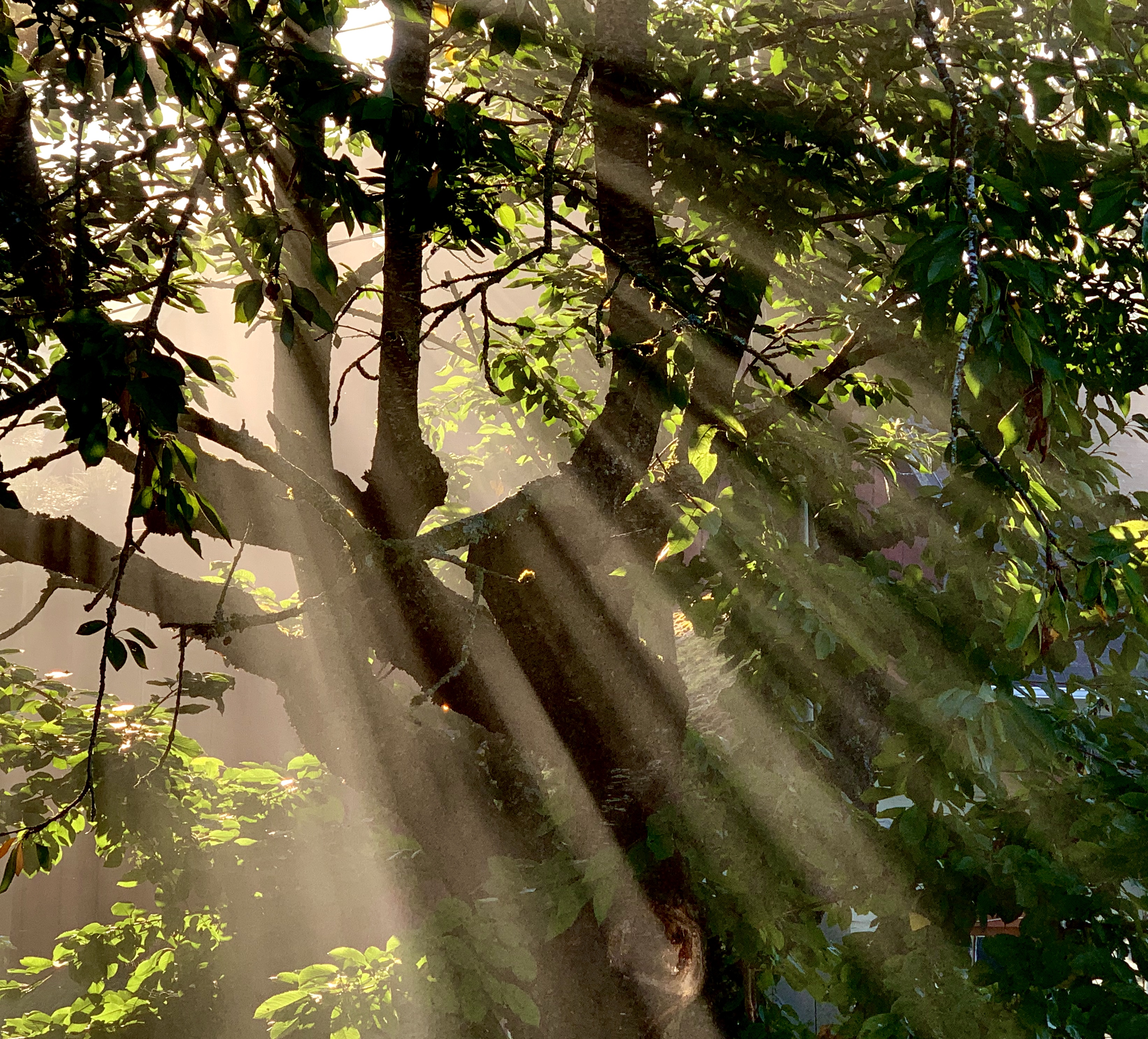
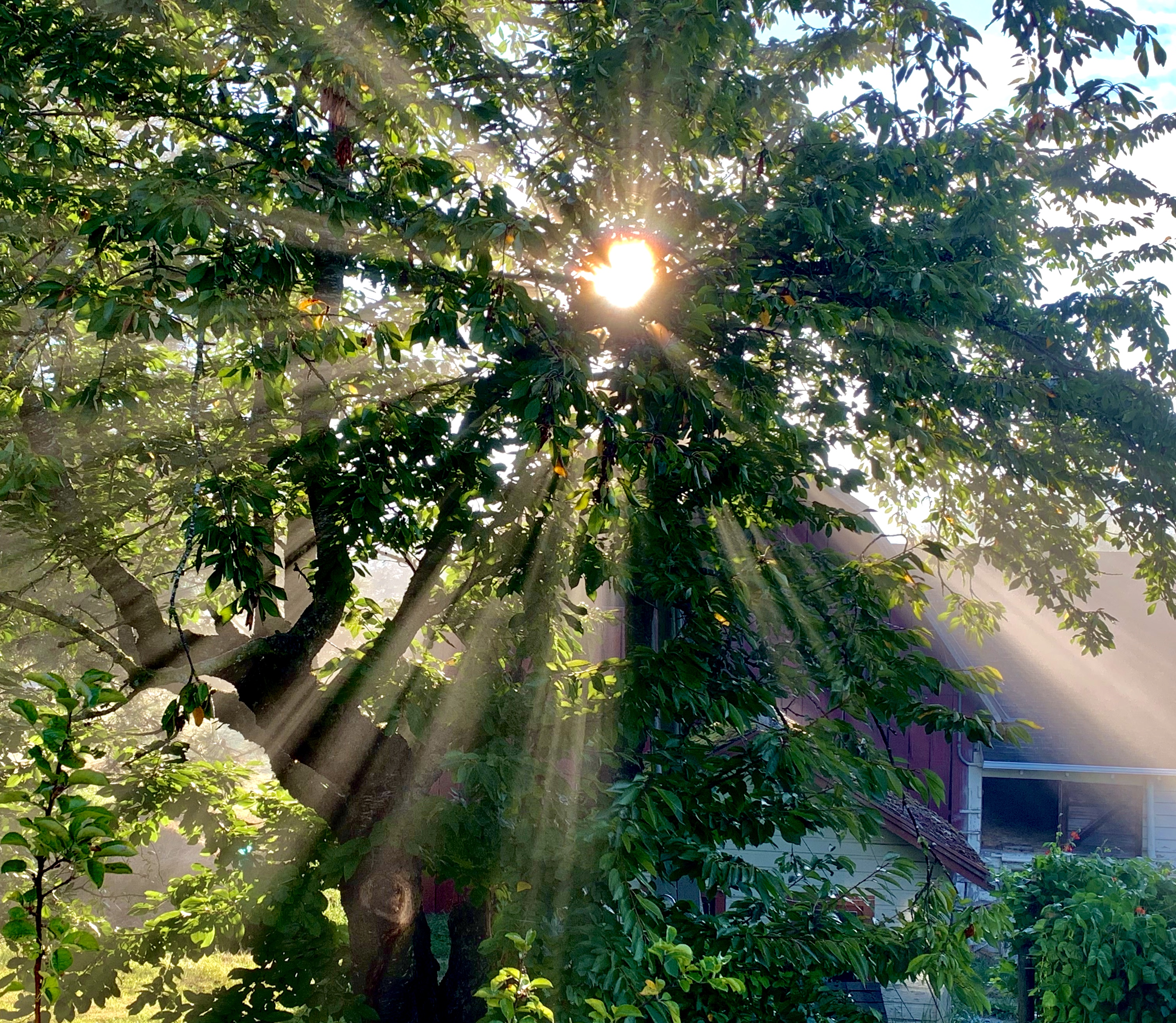
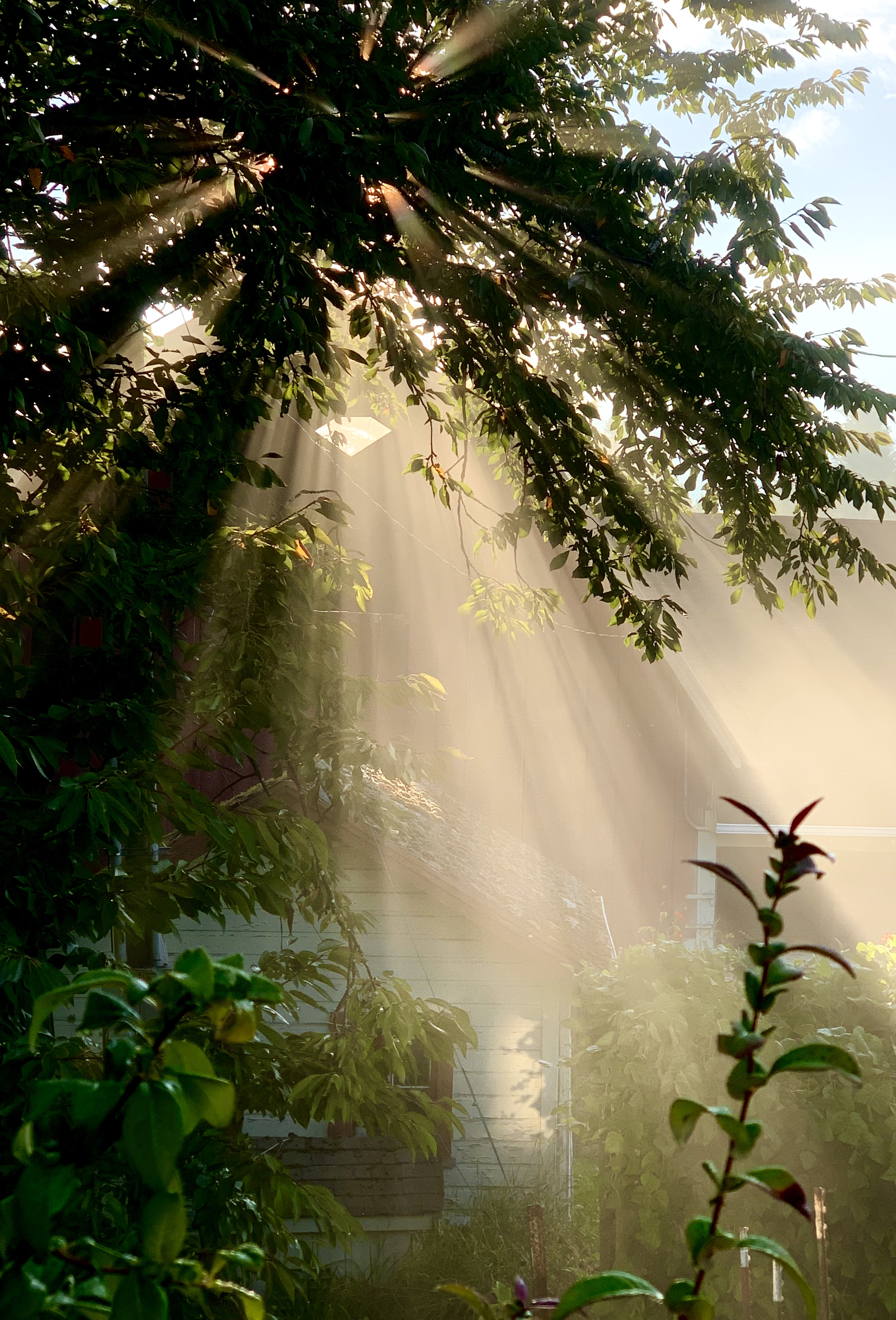
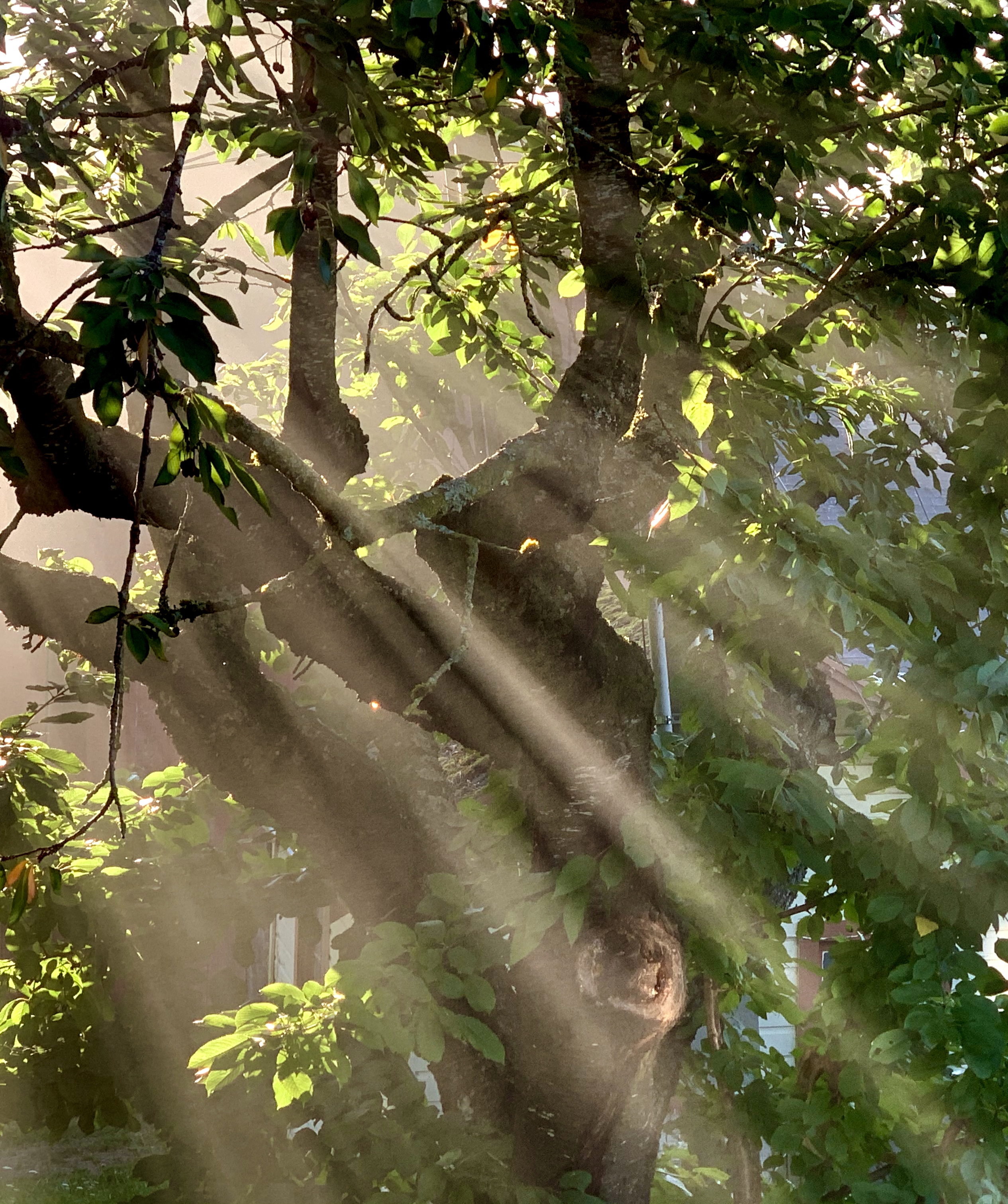
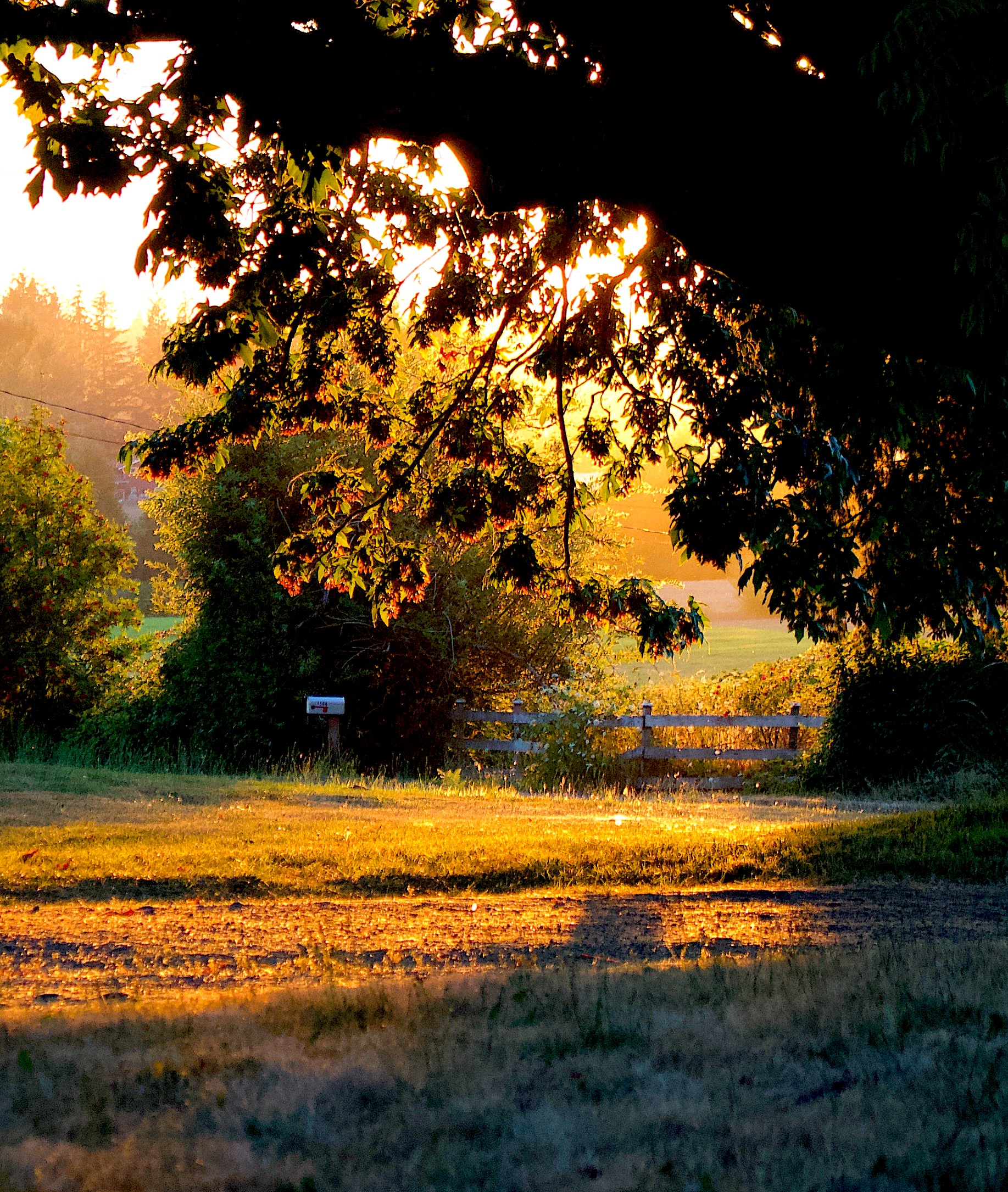
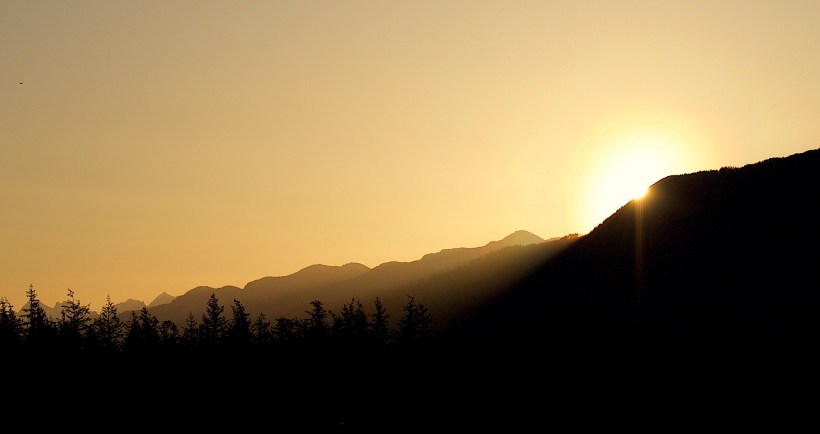
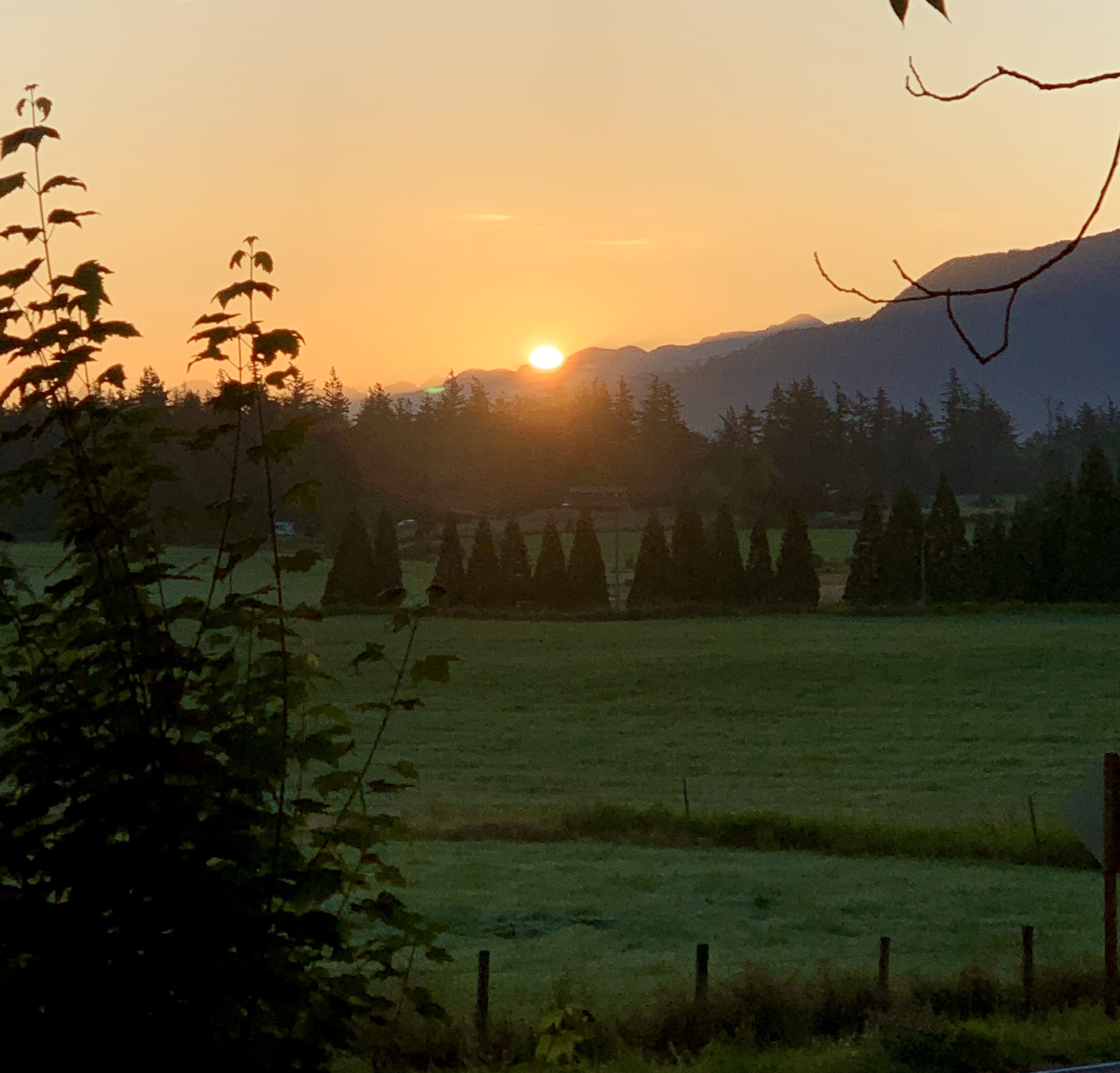
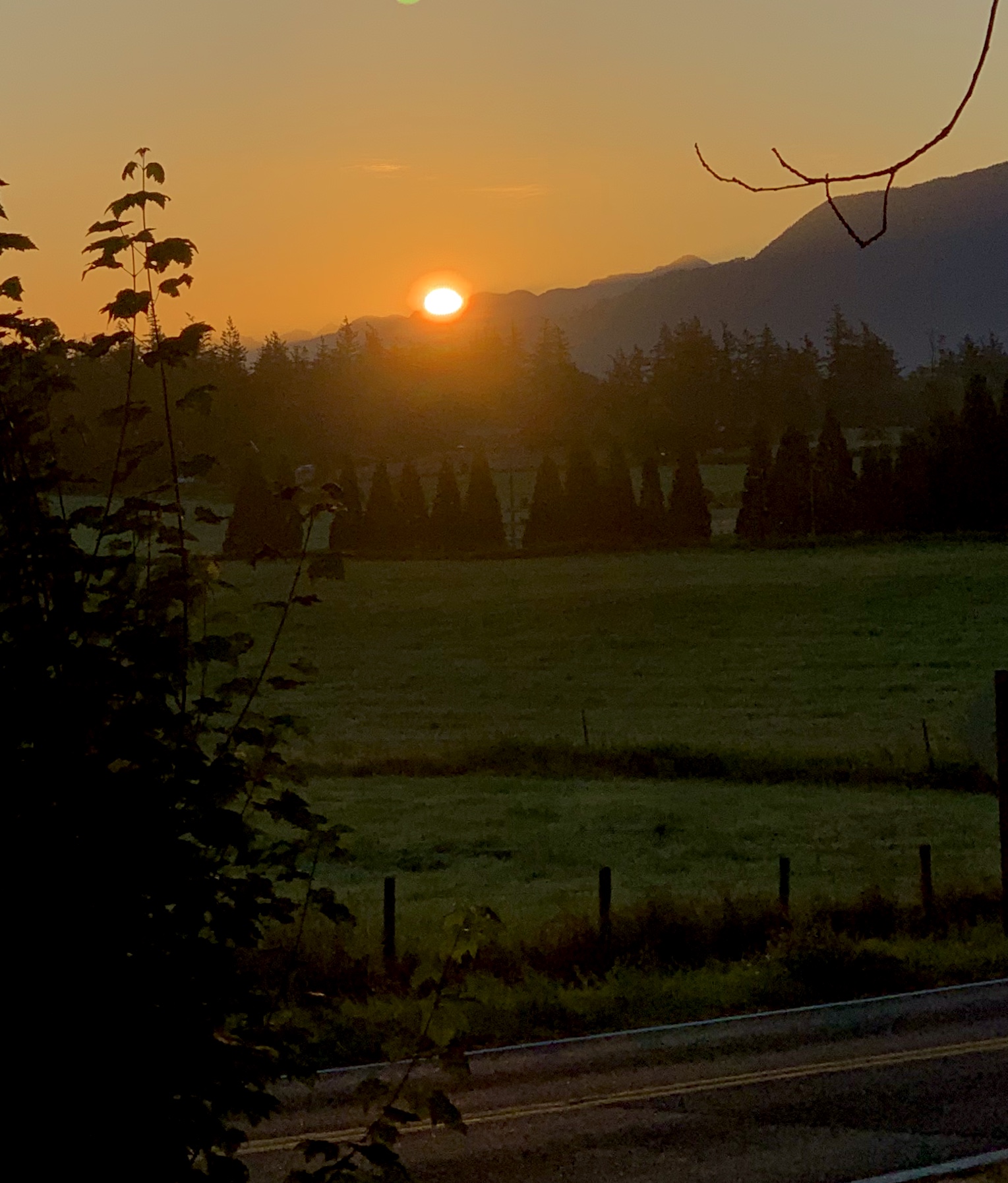
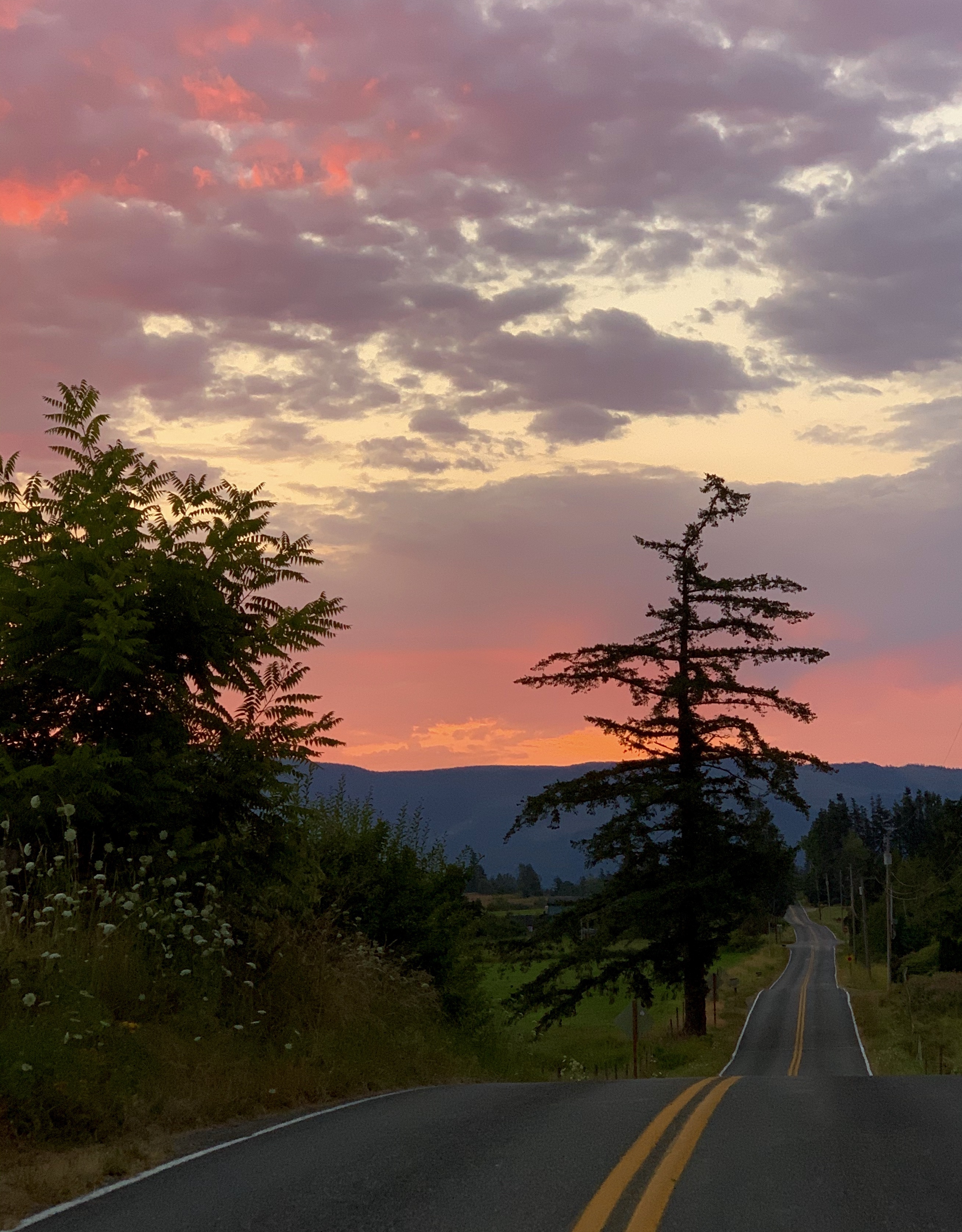
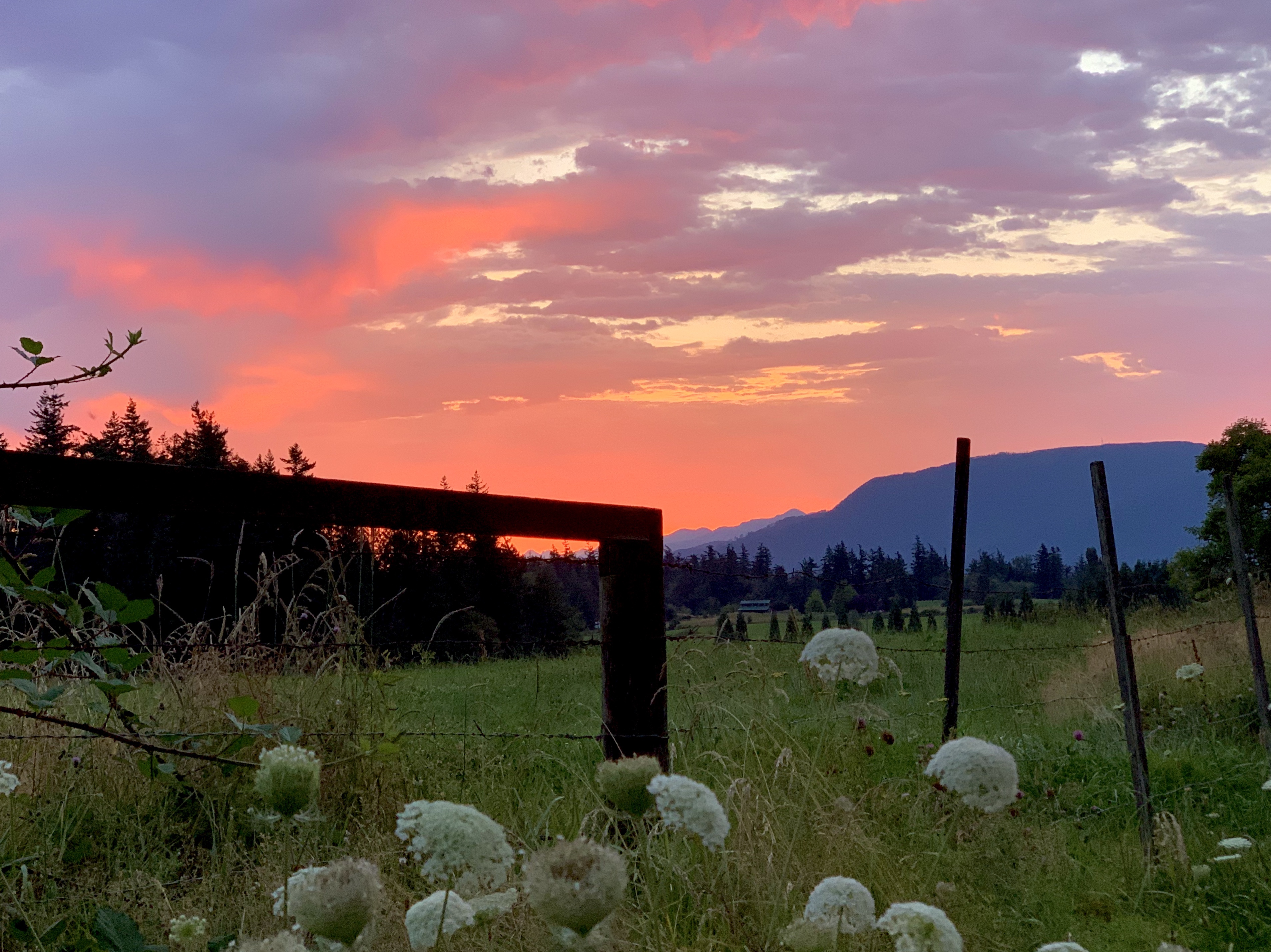
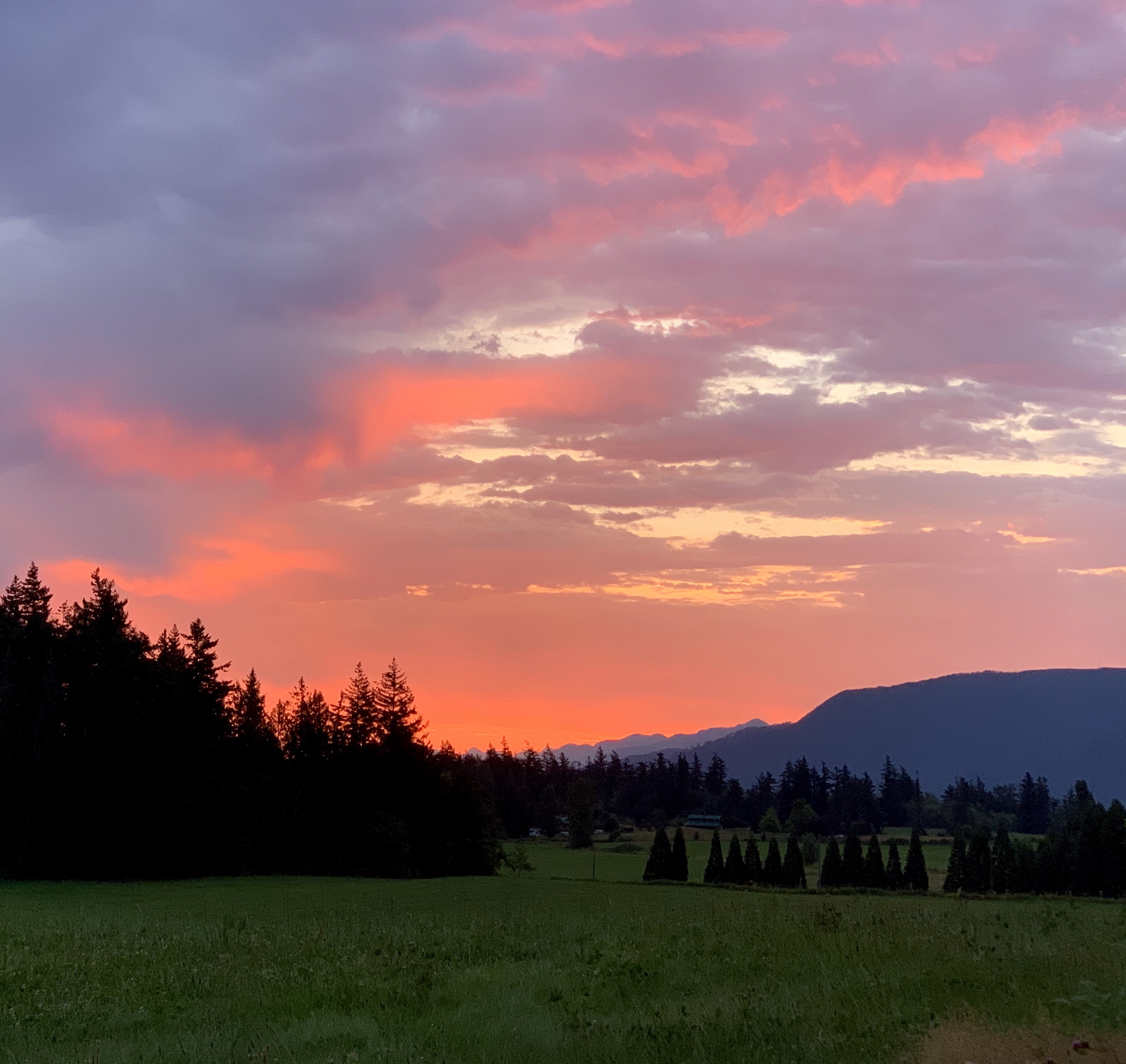
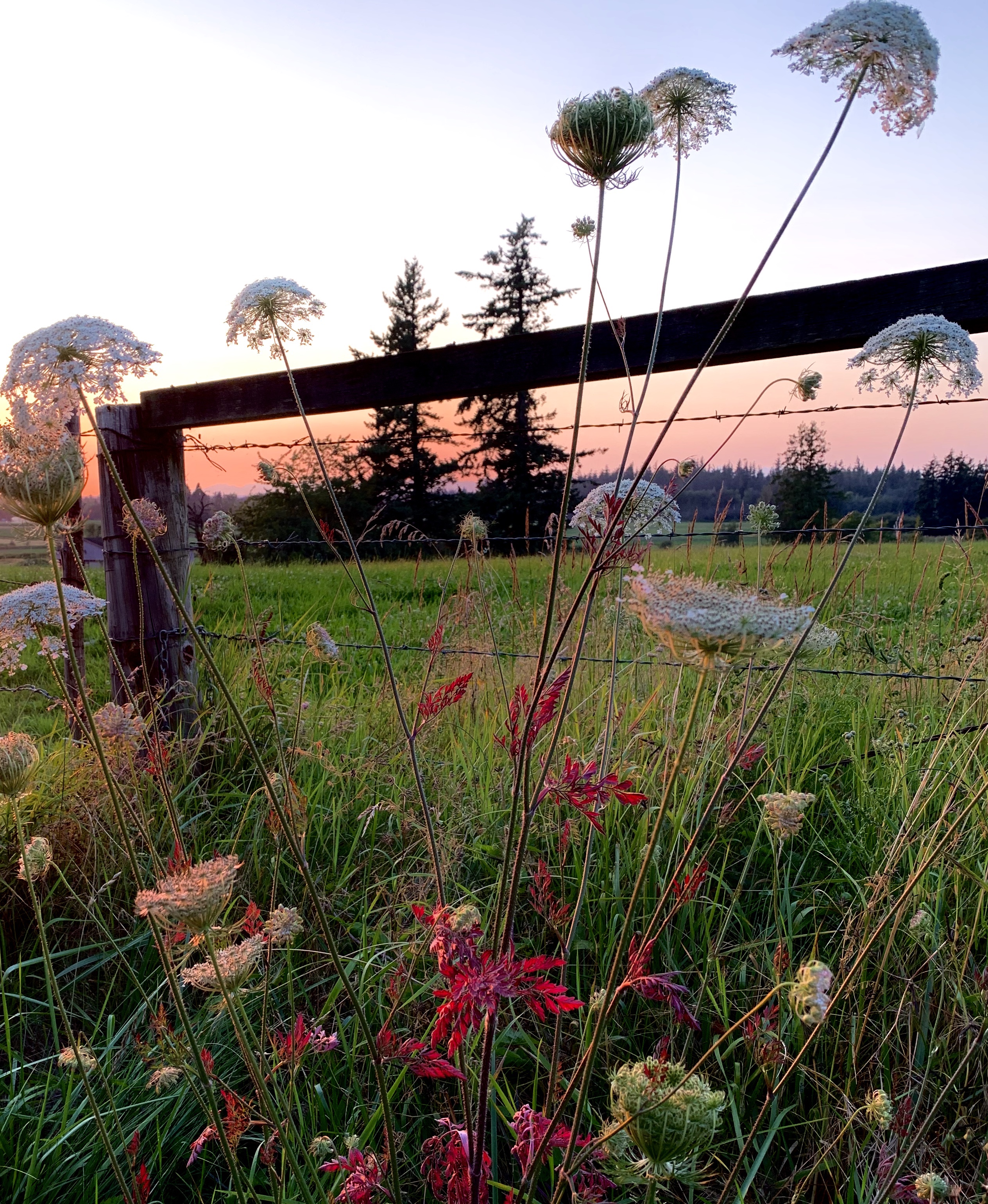
look up, revel in the gift of rays of light
and bask in their warmth and promise.

I will accept what the sun has to offer
and tell about it
so that my anger drains away
like so much waste flushed down a pipe,
never to be seen again.

Intended for Joy

There is not one blade of grass, there is no color in this world that is not intended to make us rejoice.
~John Calvin
as quoted in  John Calvin: A Sixteenth Century Portrait (Oxford, 1988) by William J. Bouwsma

It is too easy to become blinded to the glory surrounding us if we perceive it to be routine and commonplace.

I can’t remember the last time I celebrated a blade of grass,  given how focused I am at mowing it into conformity.

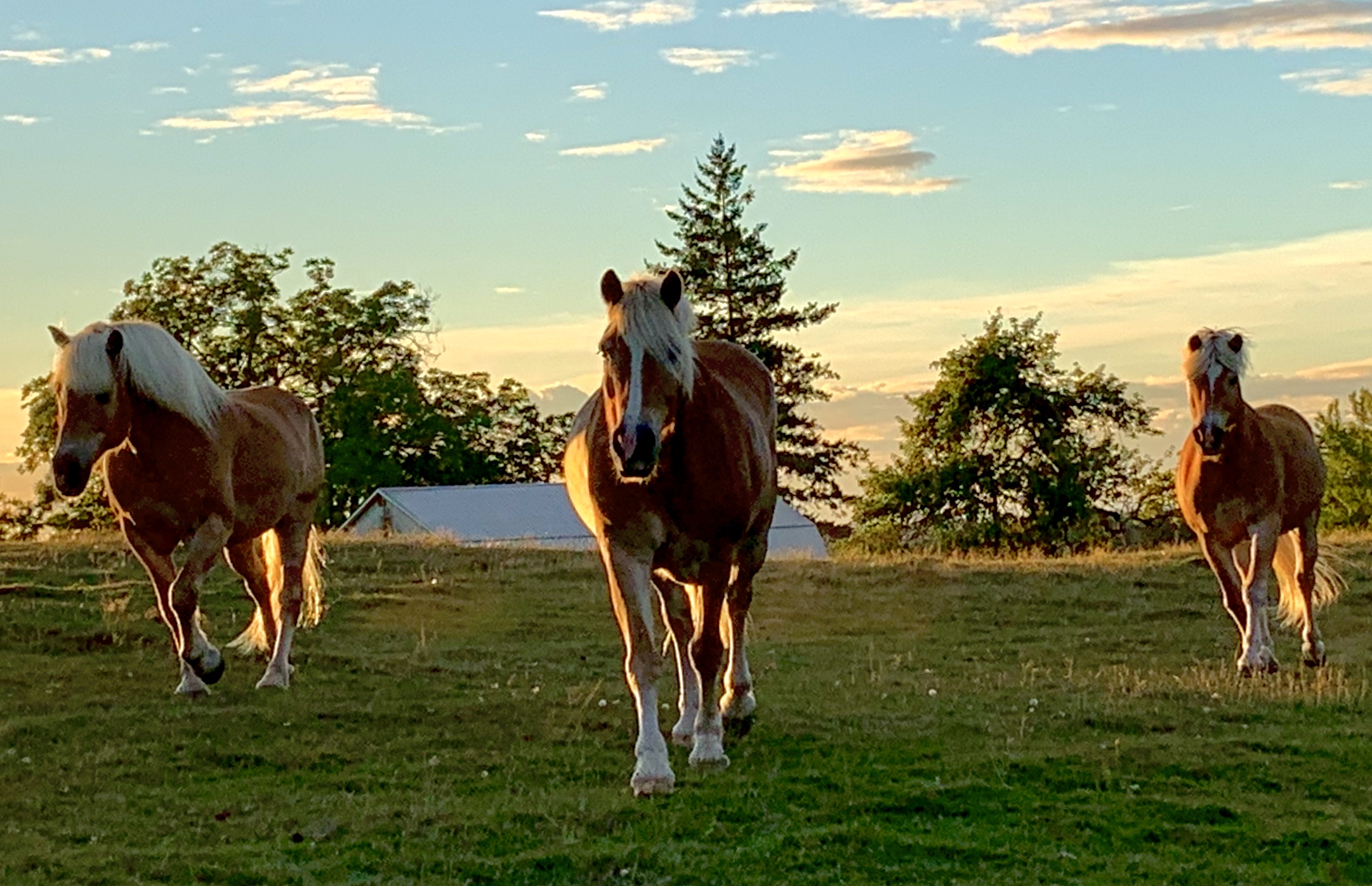
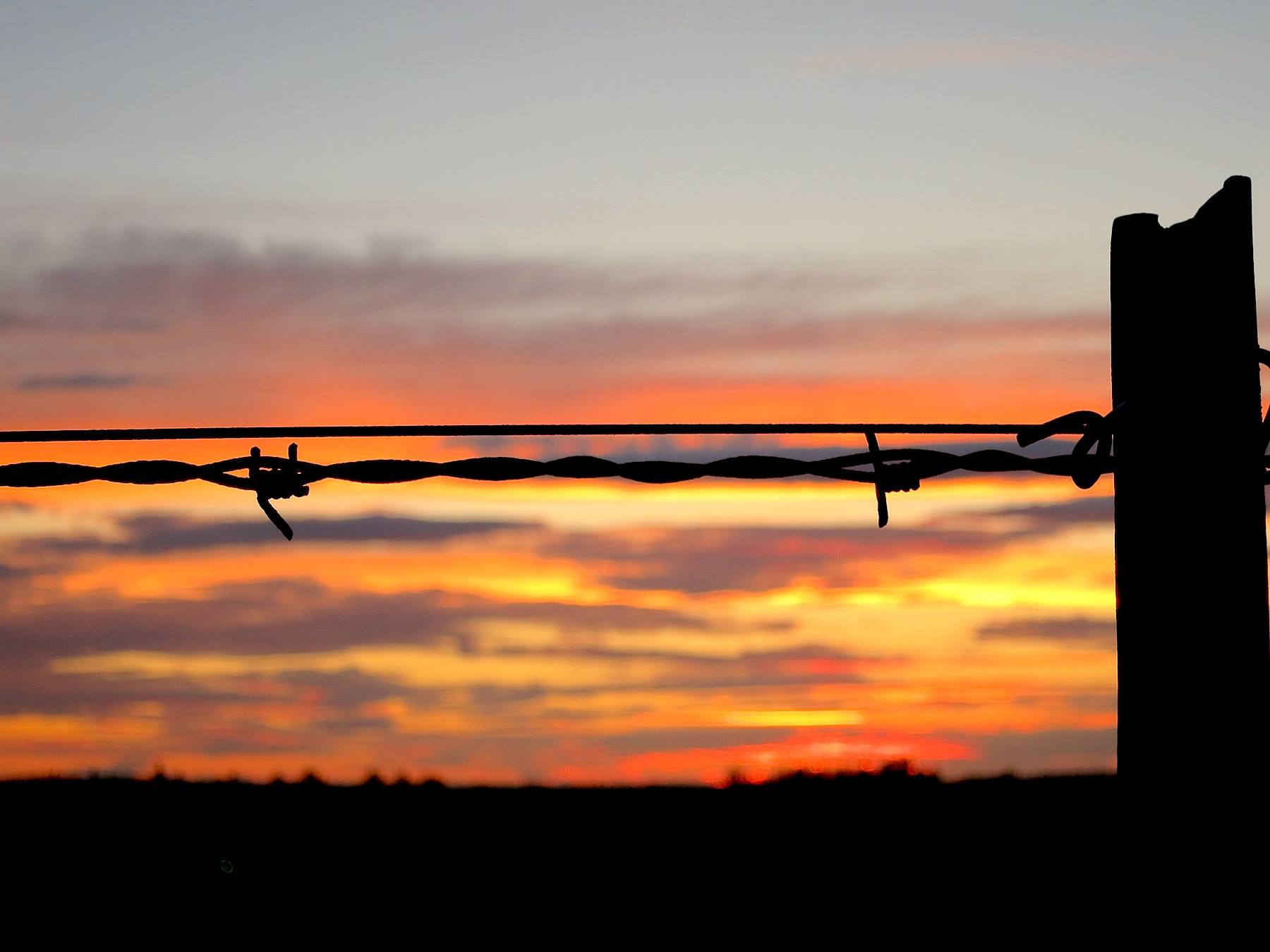
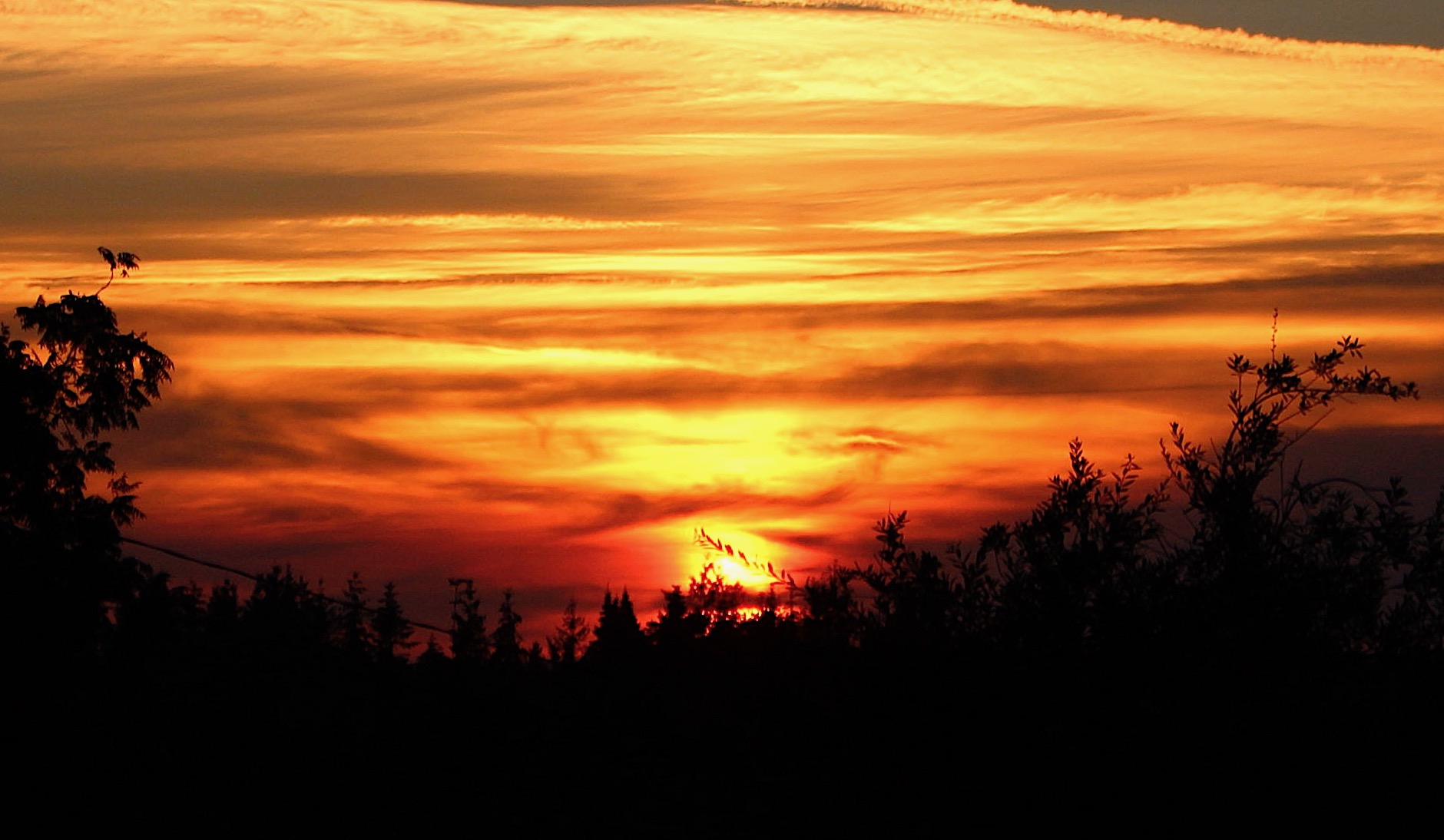
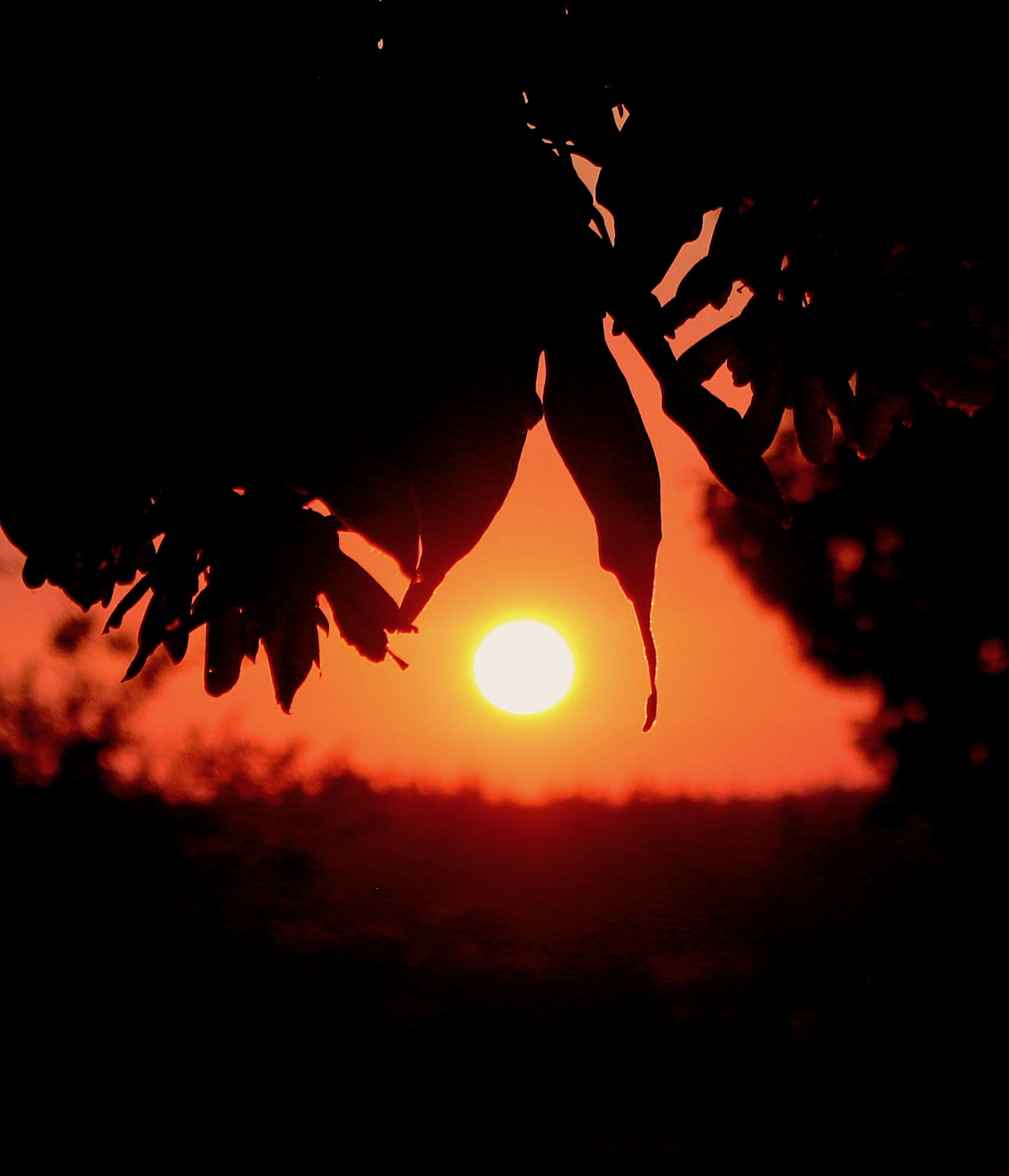
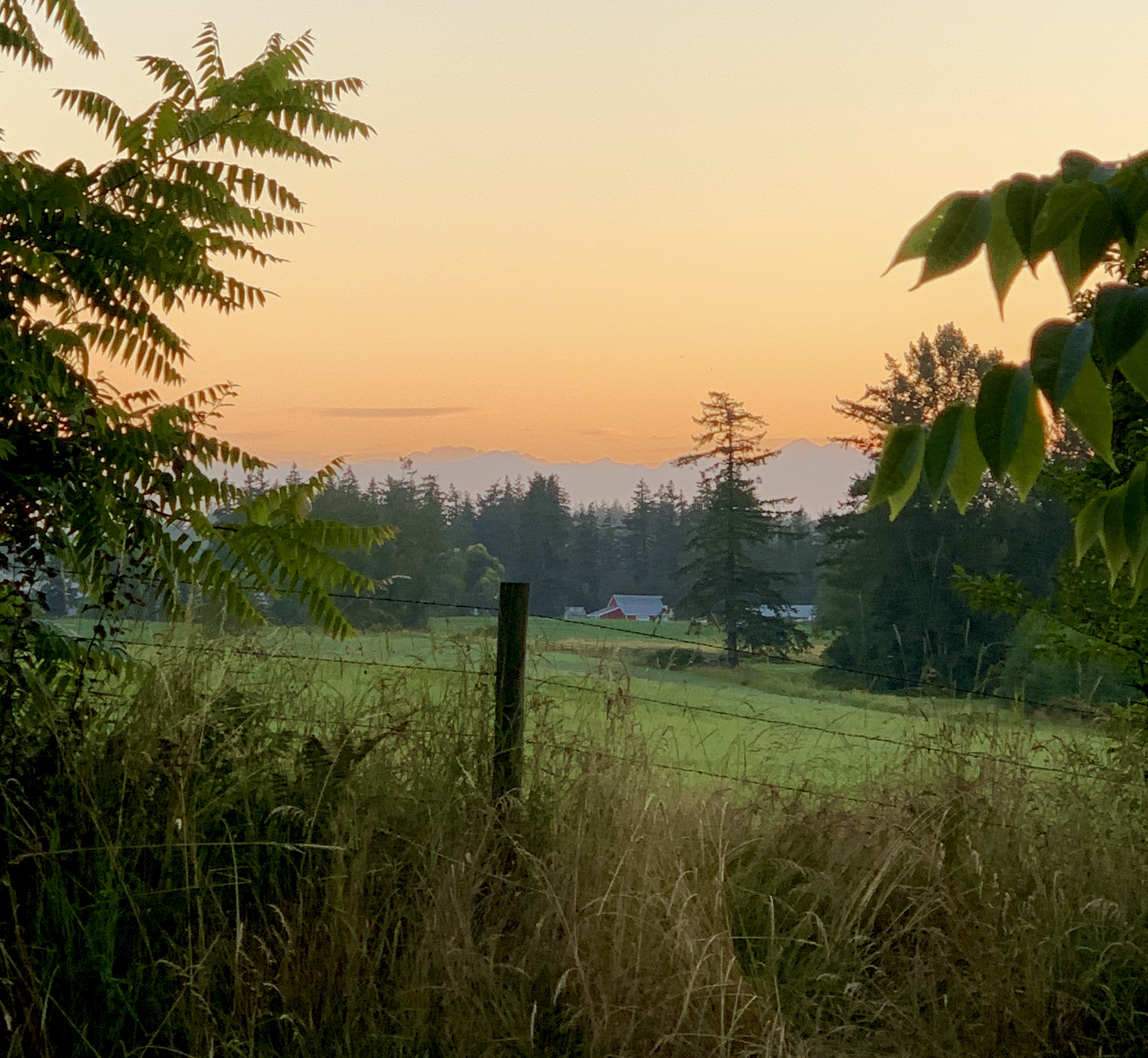
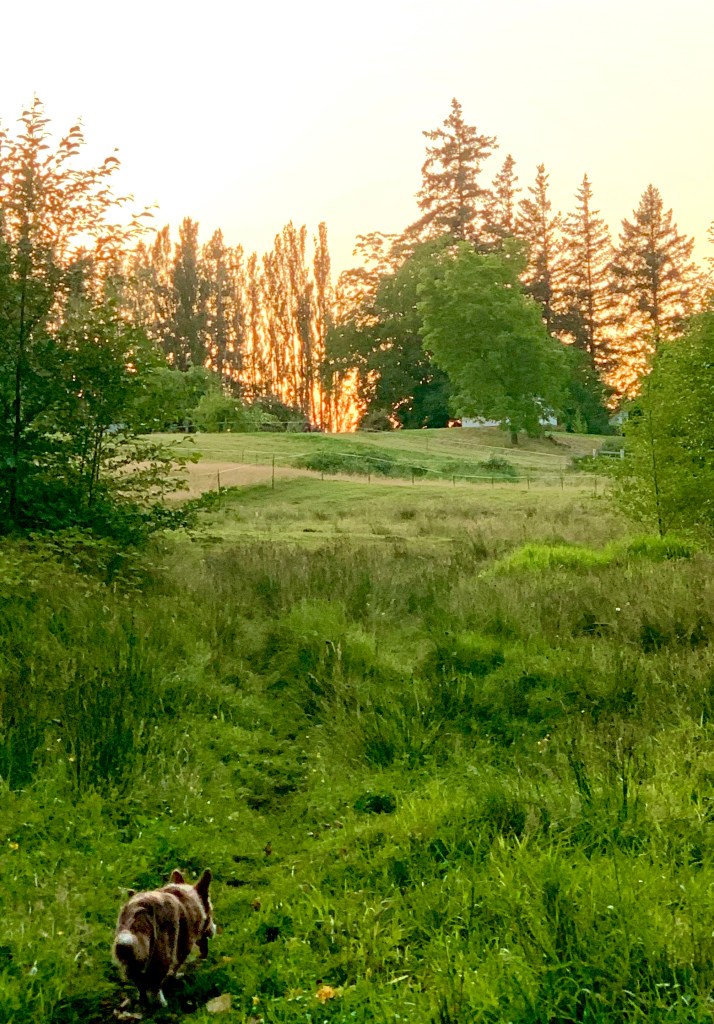
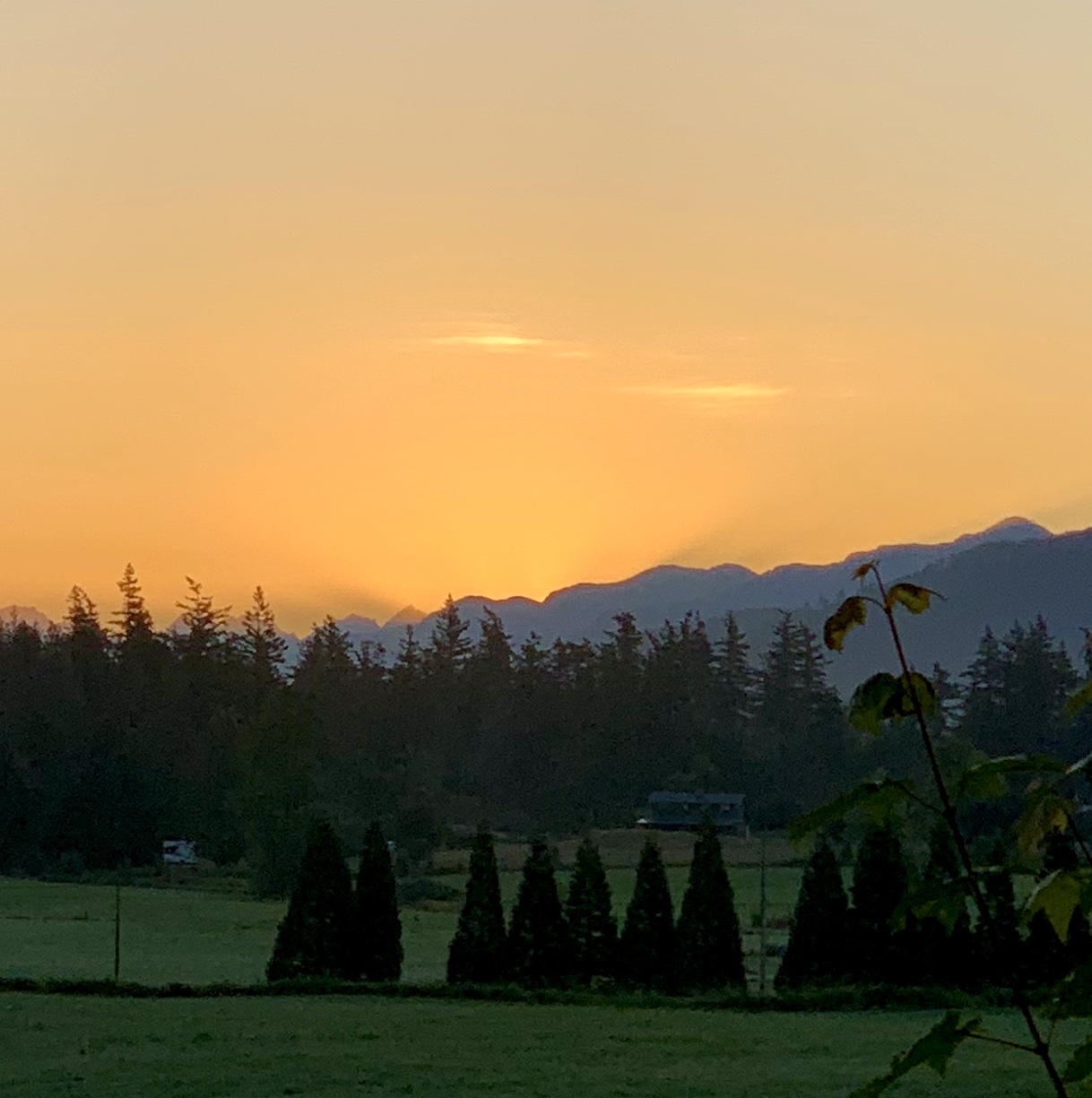
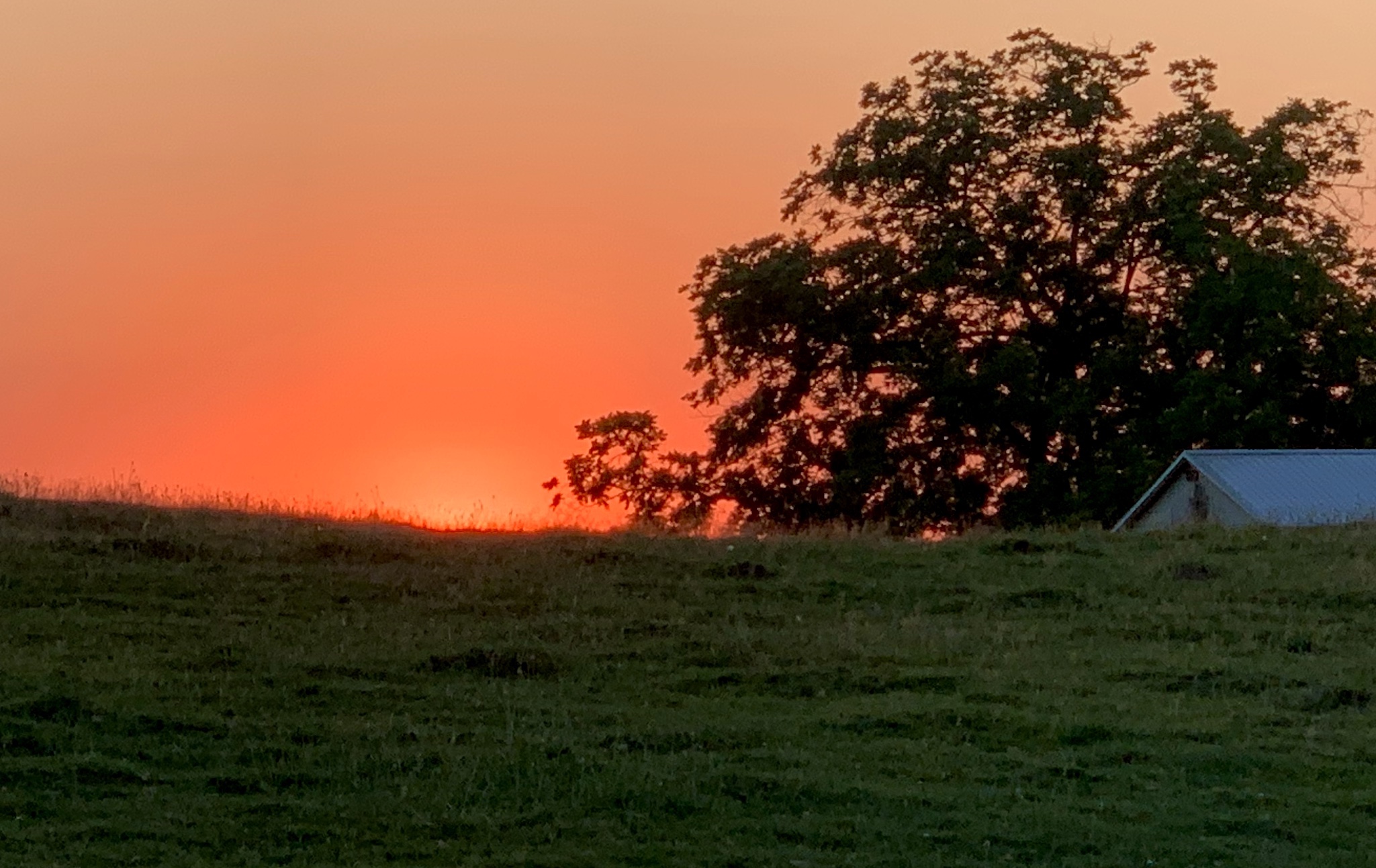
Too often I’m not up early enough to witness the pink sunrise or I’m too busy to take time to watch the sun paint the sky red as it sets or to witness our horses turning to gold in the evening glow.

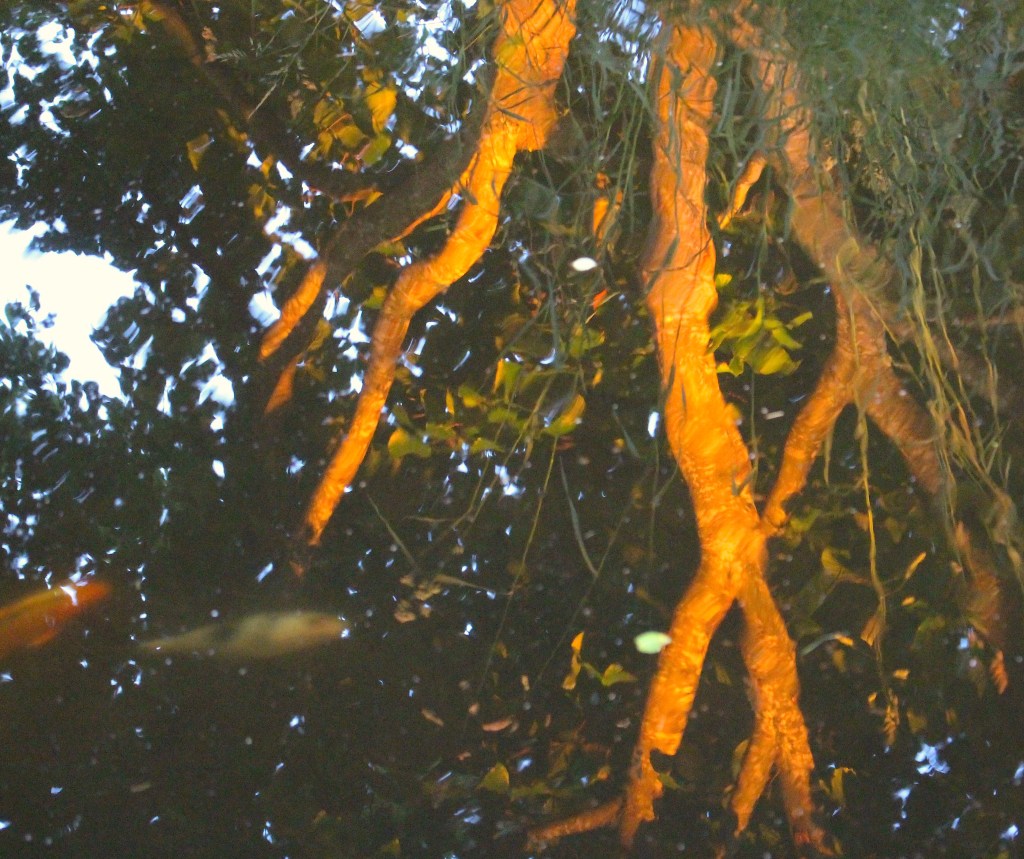
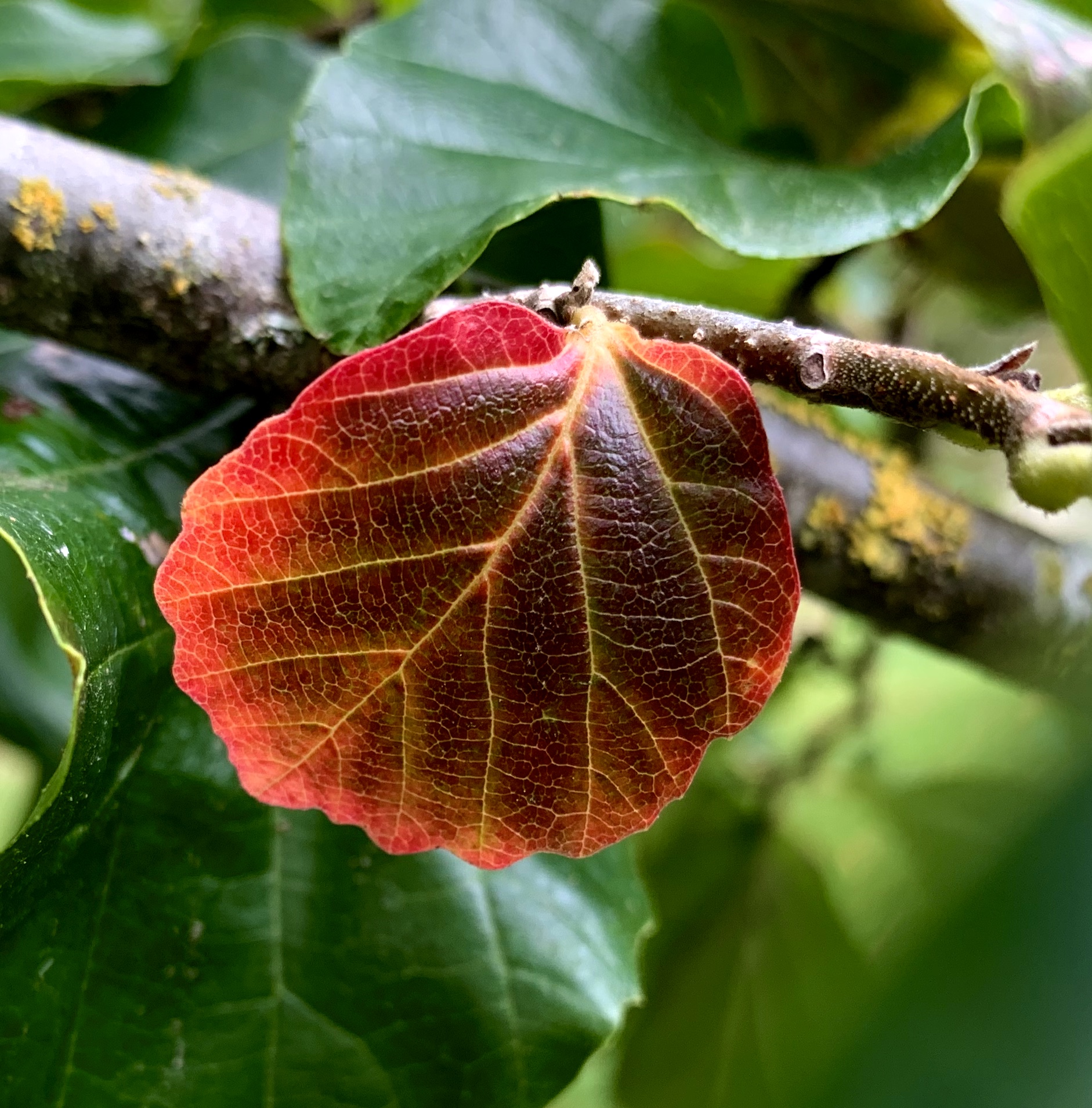
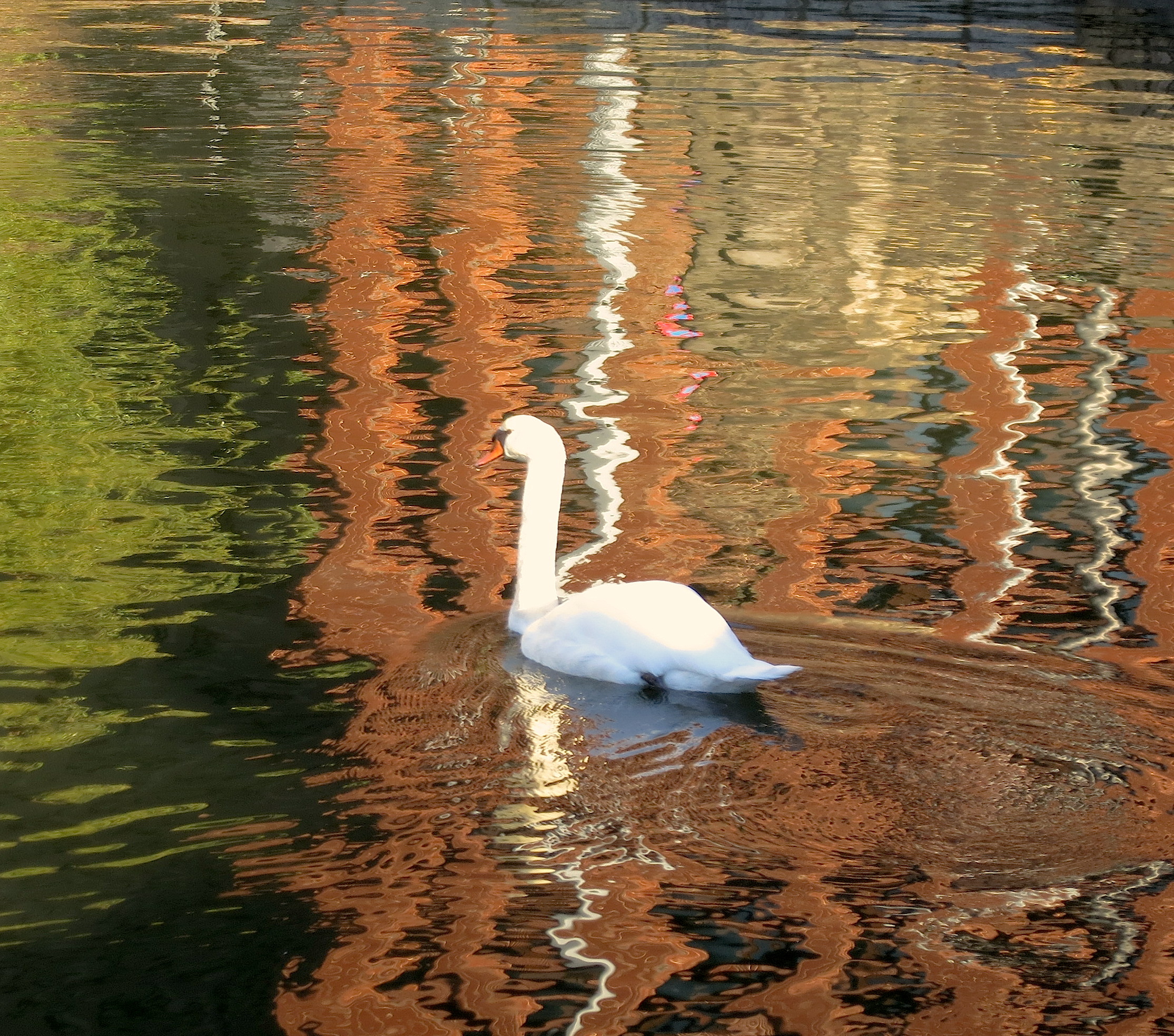
I didn’t notice how the light was illuminating our walnut tree until I saw the perfect reflection of it in our koi pond — I had marveled at a reflection instead of the real thing itself.

I almost missed the miracle of a spider’s overnight work in the grass; from a distance, it looked like a dew-soaked tissue draped like a tent over the green blades. When I went to go pick it up to throw it away in the trash, I realized I was staring at a small creature’s masterpiece.

I miss opportunities to rejoice innumerable times a day.  It takes only a moment of recognition and appreciation to feel the joy, and in that moment time stands still.  Life stretches a little longer when I stop to acknowledge the intention of creation as an endless reservoir of rejoicing.   If a blade of grass, if a leaf turning color, if a chance reflection, if a delicately knit tent in the grass — if all this is made for joy, then maybe so am I.

Even colorless, plain and commonplace me, created an image-bearer and intended reflector of Light.

Maybe so am I.

August Burns Low

morning820183

Further in Summer than the Birds
Pathetic from the Grass
A minor Nation celebrates
Its unobtrusive Mass.

No Ordinance be seen
So gradual the Grace
A pensive Custom it becomes
Enlarging Loneliness.

Antiquest felt at Noon
When August burning low
Arise this spectral Canticle
Repose to typify

Remit as yet no Grace
No Furrow on the Glow
Yet a Druidic Difference
Enhances Nature now 
~Emily Dickinson

“…one of the great poems of American literature. The statement of the poem is profound; it remarks the absolute separation between man and nature at a precise moment in time.  The poet looks as far as she can into the natural world, but what she sees at last is her isolation from that world.  She perceives, that is, the limits of her own perception. But that, we reason, is enough. This poem of just more than sixty words comprehends the human condition in relation to the universe:

So gradual the Grace
A pensive Custom it becomes
Enlarging Loneliness.

But this is a divine loneliness, the loneliness of a species evolved far beyond all others. The poem bespeaks a state of grace. In its precision, perception and eloquence it establishes the place of words within that state.  Words are indivisible with the highest realization of human being.”
~N. Scott Momaday from The Man Made of Words

sunset818181
morning820182

On the first day I took his class on Native American Mythology and Lore in 1974 at Stanford, N.Scott Momaday strolled to the front, wrote the 60 words of this Dickinson poem on the blackboard.  He told us we would spend at least a week working out the meaning of what he considered the greatest poem written — this in a class devoted to Native American writing and oral tradition.  In his resonant bass, he read the poem to us many times, rolling the words around his mouth as if to extract their sweetness. This man of the plains, a member of the Kiowa tribe, loved this poem put together by a white New England recluse poet — someone as culturally distant from him and his people as possible.

But grace works to unite us, no matter our differences, and Scott knew this as he led us, mostly white students, through this poem.  What on the surface appears a paean to late summer cricket song doomed to extinction by oncoming winter, is a statement of the transcendence of man beyond our understanding of nature and the world in which we, its creatures, find ourselves.

As summer begins its descent into the dark death of winter, we, unlike the crickets, become all too aware we too are descending. Not only are the skies are filled with smoke from uncontrolled wildfires, but the streets are filled with protesters and counter-protesters who loot and shoot rather than meet to ask questions, and our future is filled with the uncertain timeline of ongoing pandemic destruction as nature has the upper hand yet again. 

There is no one as lonely as an individual facing their mortality and no one as lonely as a poet facing the empty page, in search of words to describe the sacrament of sacrifice and perishing.

Yet the Word brings Grace unlike any other, even when the cricket song, pathetic and transient as it is, is gone.  The Word brings Grace, like no other, to pathetic and transient man who shall emerge transformed.

There is no furrow on the glow.  There is no need to plow and seed our salvaged souls, already lovingly planted and nurtured by our Creator God, yielding a fruited plain.

sunset88186
cattails2
frontyardlight2

Everything Dies Too Soon

Who made the world?
Who made the swan, and the black bear?
Who made the grasshopper?

I don’t know exactly what a prayer is.
I do know how to pay attention, how to fall down
into the grass, how to kneel down in the grass,
how to be idle and blessed, how to stroll through the fields,
which is what I have been doing all day.
Tell me, what else should I have done?
Doesn’t everything die at last, and too soon?
Tell me, what is it you plan to do
with your one wild and precious life?

~Mary Oliver from “A Summer Day”

It doesn’t take much to remind me
what a mayfly I am,
what a soap bubble floating over the children’s party.

Standing under the bones of a dinosaur
in a museum does the trick every time
or confronting in a vitrine a rock from the moon…

And the realization that no one
who ever breasted the waters of time
has figured out a way to avoid dying

always pulls me up by the reins and settles me down
by a roadside, grateful for the sweet weeds
and the mouthfuls of colorful wild flowers.

~Billy Collins from “Memento Mori“

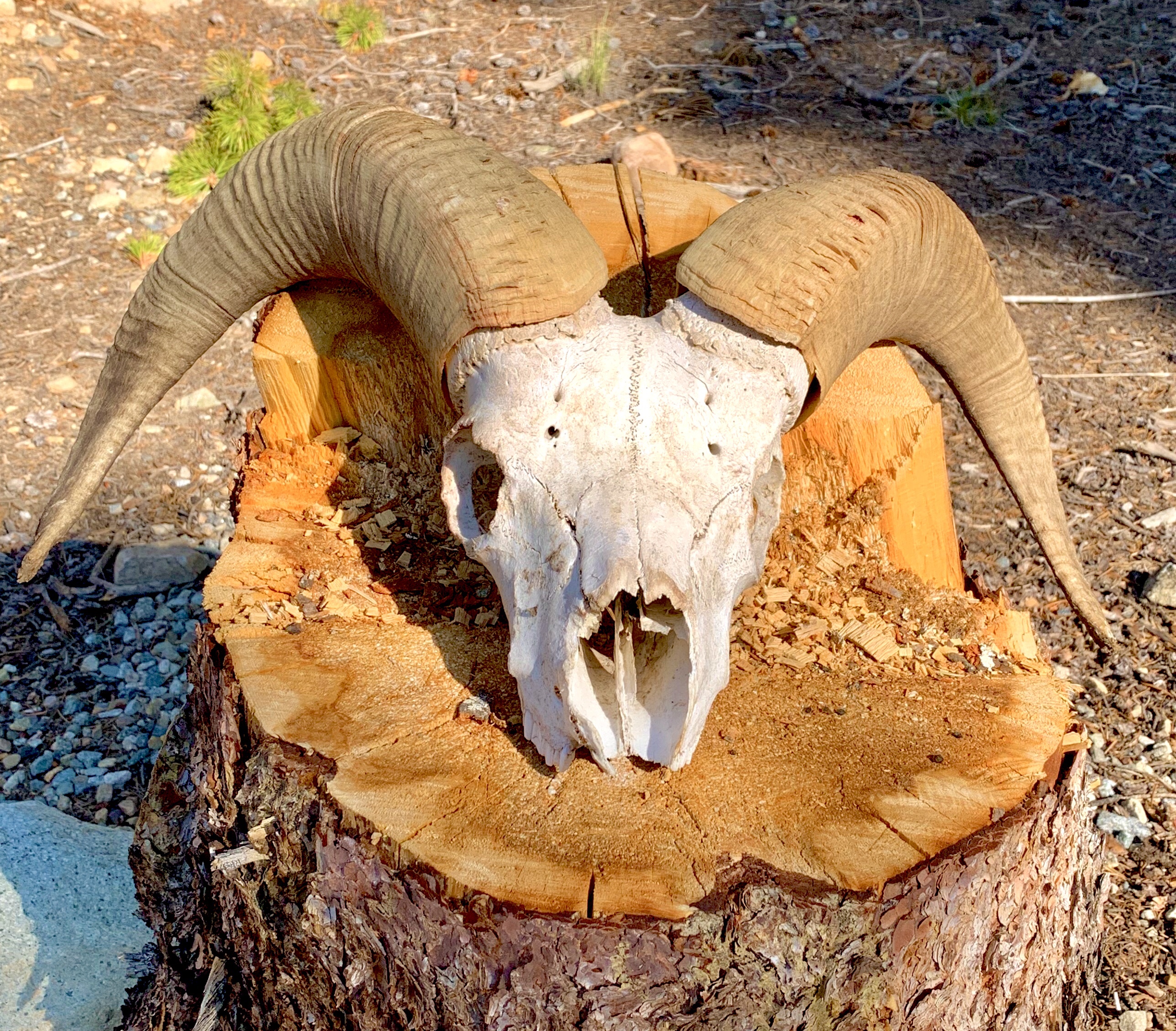
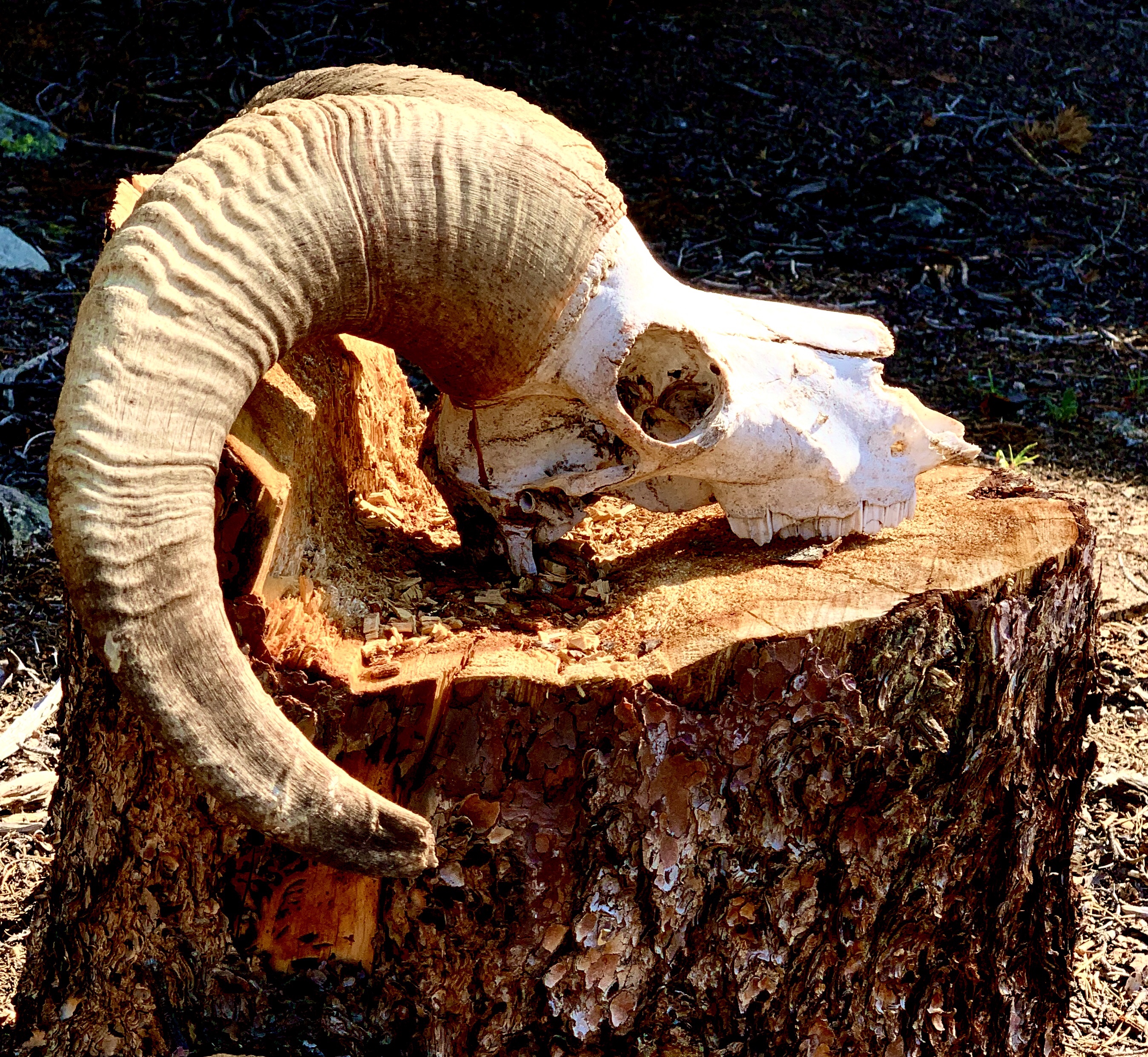
I’m reminded daily of how short our time on earth is – the evidence is everywhere. Yesterday it was the stark finality of discovering a beetle-cleaned bighorn sheep skull in the woods, in addition to the bold reality of a black bear paw print on the car sitting next to our cabin.

Each day I receive an email from the local hospital where I’ve had clinical privileges for 35 years – it innumerates the number of admitted COVID-19 cases and deaths, the number of ICU beds filled and the number of ventilators in use. Reading those numbers is like scanning the obituaries for names and ages and causes of death in the newspaper, the only consistent thing I read in the paper anymore. The deaths are reported dispassionately, as if they are inevitable, which they are, yet each happens too soon.

Much too soon.

So the admonition is to pay attention to each living thing and witness each moment, falling onto the grass in worship of this “wild and precious life” I’ve been given rather than dwell on the future when I’ll be buried under the grass.

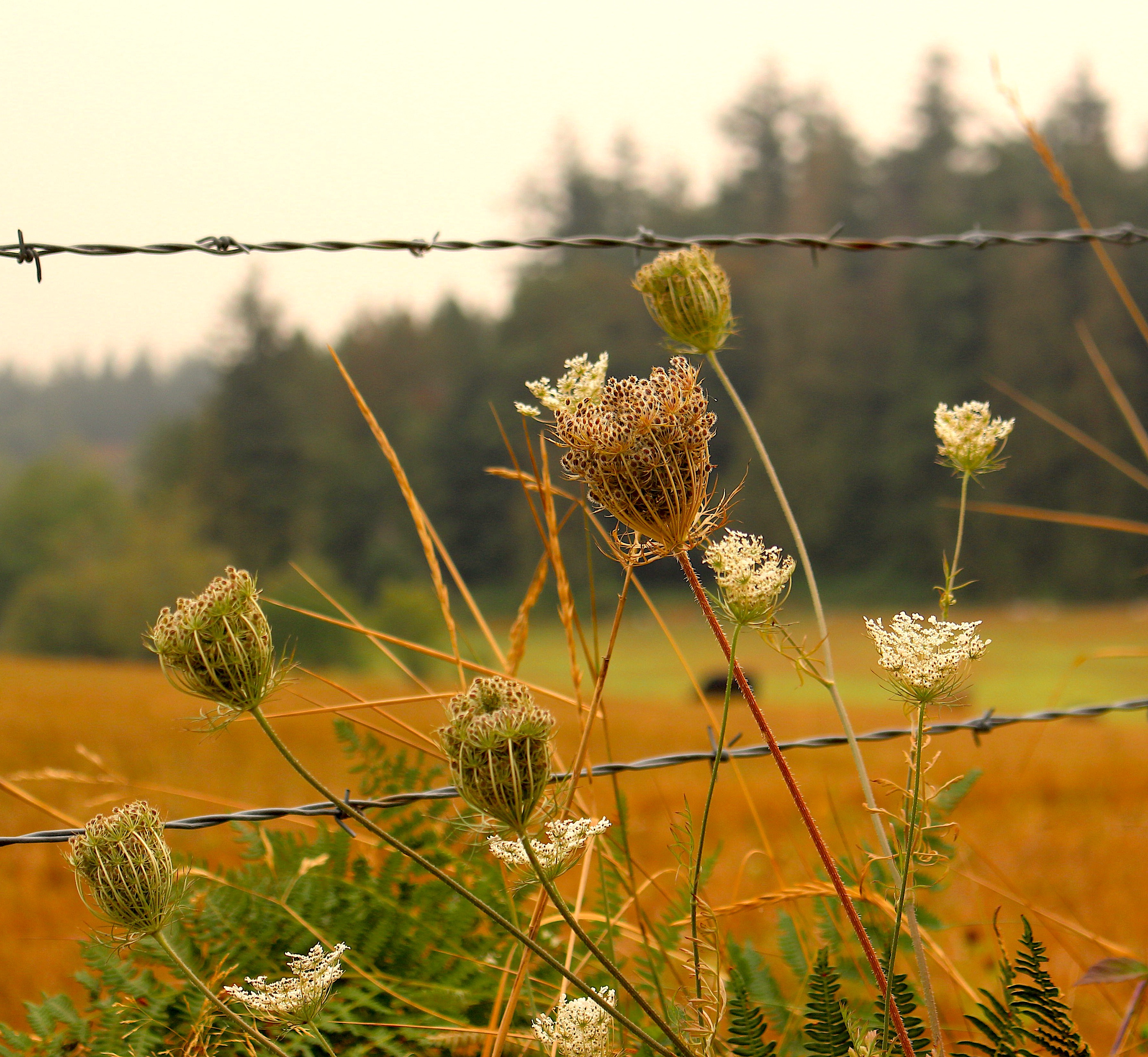
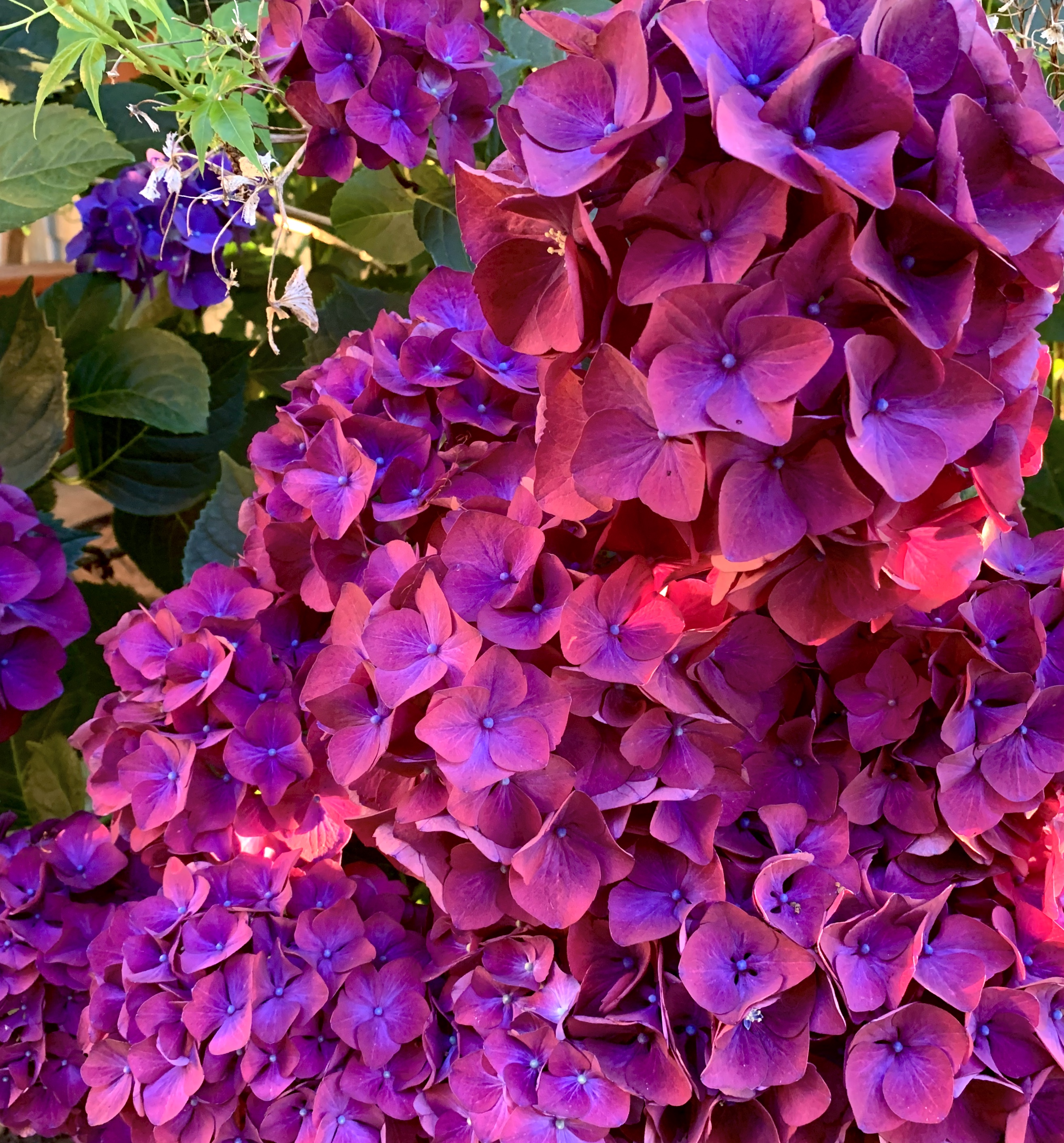
I shall celebrate being a consumer of this precious life, overjoyed by these sweet weeds and colorful wildflowers. There is still much that awaits me on this earth before, inevitably, I too become the consumed.

The Storm Inside and Out

Beneath our clothes, our reputations, our pretensions,
beneath our religion or lack of it,
we are all vulnerable both to the storm without
and to the storm within.
~Frederick Buechner – from Telling the Truth

We are so complicit and compliant
in pleasant and peaceful appearance,
sitting in silence allowing
our inner storm to stay well hidden;
if called and compelled to face wrongs boldly,
the tempest can no longer be contained.
Silence in the face of evil
must itself be shattered,
even the rocks will cry out,
as our storm spills forth
speaking the truth.

Silence in the face of evil is itself evil:
God will not hold us guiltless.
Not to speak is to speak.
Not to act is to act.
~Dietrich Bonhoeffer

We all are feeling the unpredictability of the state of the climate all around us:

heavy damaging winds, devastating hale storms, thunder and lightening, sweaty sunny middays, torrential unpredictable showers, ankle-deep mud, horrible forest fires.

Protests, violence, conspiracy theories, people distrusting and disrespecting others, name-calling, and plenty of deafening silence.

And inside my own cranium:

words that fly out too quickly, anxiety mixed with a hint of anger, too easy tears, searing frustration, feeling immobilized by the daily muck and mire of the state of the world today.

I have no excuse for acting like moody March, October, December and August within a span of a few hours. I should not be so easily forgiven or unburdened. I end up lying awake at night with regrets, composing apologies, and wanting to hide under a rock until the storms inside and outside blow over.

But in the midst of all the extremes, while the pandemic, the climate change, the racial injustice storms keep raging, a miracle is wrought:
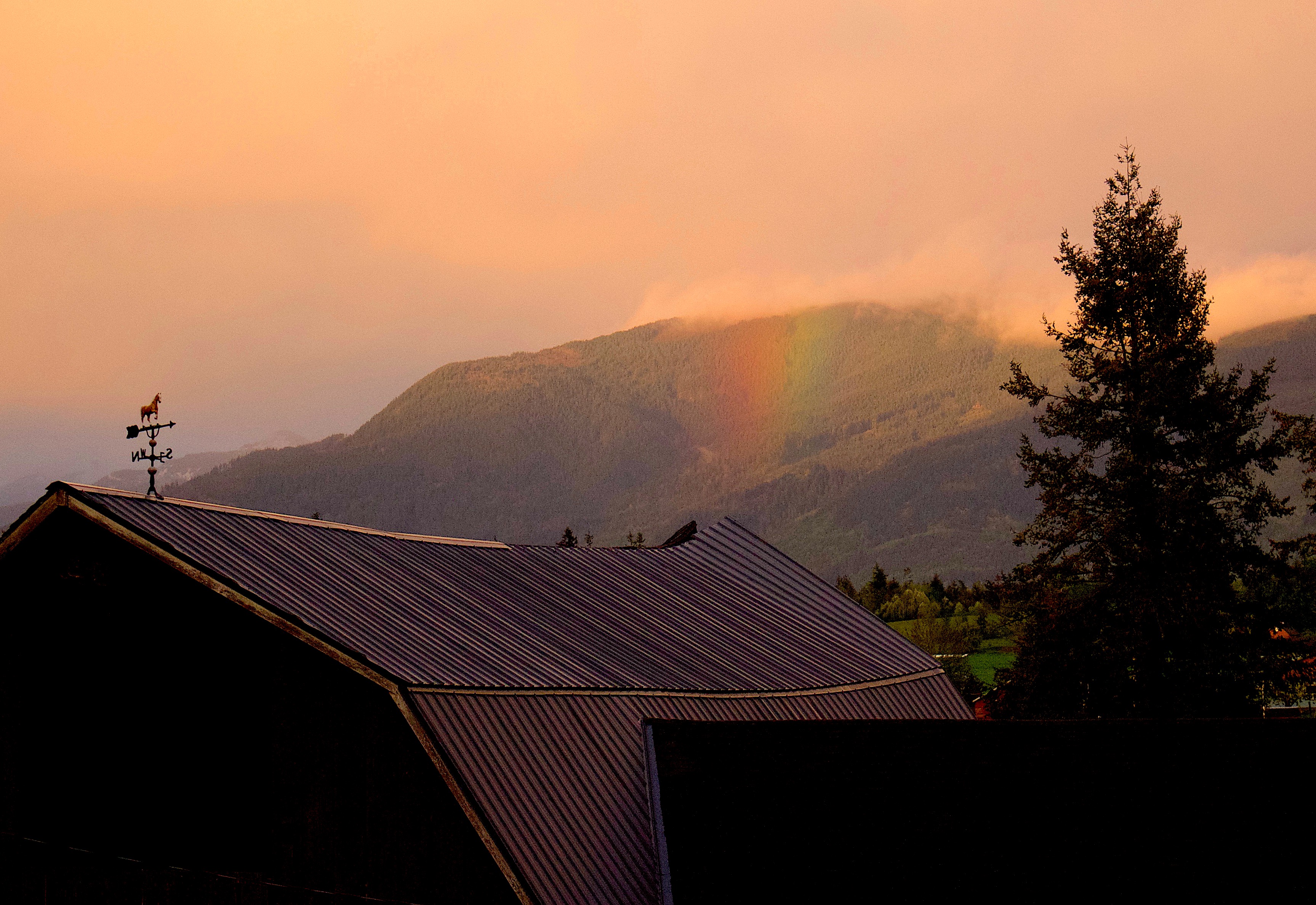
it can only happen when brilliant light exposes weeping from heavy laid clouds, like the rainbow that dropped from heaven last week to touch the earth right in our backyard, only a few feet from our barn.

God cries too. His wept tears light the sky in a promise of forgiveness while we tear each other apart.
He assures us: this storm too will pass.

He assures us because He knows all too well our desperate need for it.

Every Cubic Inch

Why, who makes much of a miracle?

As to me I know of nothing else but miracles,
Whether I walk city streets,
Or dart my sight over the roofs of houses toward the sky,
Or wade with naked feet along the beach just in the edge of the water,
Or stand under trees in the woods,
Or talk by day with any one I love,
or sleep in the bed at night with any one I love,
Or sit at table at dinner with the rest,
Or watch honey-bees busy around the hive of a summer forenoon,
Or animals feeding in the fields,
Or birds, or the wonderfulness of insects in the air,
Or the wonderfulness of the sundown, or of stars shining so quiet and bright,
Or the exquisite delicate thin curve of the new moon in spring;


These with the rest, one and all, are to me miracles,
The whole referring, yet each distinct and in its place.

To me every hour of the light and dark is a miracle,
Every cubic inch of space is a miracle,
Every square yard of the surface of the earth is spread with the same,
Every foot of the interior swarms with the same.

Every spear of grass — the frames, limbs, organs, of men and women,
and all that concerns them…


What stranger miracles are there?
~Walt Whitman from Leaves of Grass

Everywhere I turn, there is a miracle in the making. I know this deep in my bones, even when our days on this earth are short. I turn my camera to try to preserve it; I search for words to do it justice.

The strange miracle is that we are here at all: in an instant we are formed in all our unique potential, never having happened before and never to happen again—to become brain and heart and skin and arms and legs. We were allowed to be born, a miracle in itself in this modern age of conditional conception.

Now precious lives are being prematurely lost in this pandemic of spreading virus as well as the societal pandemic of divisiveness, when we need unified meeting of the minds more than anything else. I am trying not to get infected: a mask may cover my face and my hands can be washed, but how do I shield my ears and eyes from the barrage of words and images that spread distrust more effectively than a cough or sneeze?

The strangest miracle of all is that we are still loved, corrupted as we are. We are still offered salvage, undeserving as we are. We are still gifted with the miracle of grace until our last breath.

How strange indeed. How utterly wondrous.

August and Abundantly So

But you can have the fig tree and its fat leaves like clown hands
gloved with green.
You can have the touch of a single eleven-year-old finger
on your cheek, waking you at one a.m. to say the hamster is back.
You can have the purr of the cat and the soulful look
of the black dog, the look that says, If I could I would bite
every sorrow until it fled, and when it is August,
you can have it August and abundantly so. You can have love,
though often it will be mysterious, like the white foam
that bubbles up at the top of the bean pot over the red kidneys
until you realize foam’s twin is blood.


You can speak a foreign language, sometimes,
and it can mean something. You can visit the marker on the grave
where your father wept openly. You can’t bring back the dead,
but you can have the words forgive and forget hold hands
as if they meant to spend a lifetime together.


You can have your grandfather sitting on the side of your bed,
at least for a while, you can have clouds and letters, the leaping
of distances, and Indian food with yellow sauce like sunrise.


You can’t count on grace to pick you out of a crowd
but here is your friend to teach you how to high jump,
how to throw yourself over the bar, backwards,
until you learn about love, about sweet surrender,
and here are periwinkles, buses that kneel, farms in the mind
as real as Africa. And when adulthood fails you,


you can still summon the memory of the black swan on the pond
of your childhood, the rye bread with peanut butter and bananas
your grandmother gave you while the rest of the family slept.
There is the voice you can still summon at will, like your mother’s,
it will always whisper, you can’t have it all,
but there is this.
~Barbara Ras from “You Can’t Have It All
from Bite Every Sorrow

My pragmatic mother who gave up her teaching career for marriage and family reminded me regularly that I couldn’t have it all: there was no way a woman can have a husband and children and a farm and a garden and animals and a profession and travel and volunteer in the community and not make a mess of it all and herself.

My father would listen to her and say softly under his breath: “you do whatever you put your mind to…you know what you are here for.”

They were both right. The alluring abundance of this life has invited me to want to touch and feel and taste it all, not unlike another woman who was placed with purpose in the Garden to be side-by-side companion and co-worker. Yet she demonstrated what happens when you want more than you are given and yes, she made a mess of it.

Yet there is this: despite wanting it all and working hard for it all and believing I could do it all, I indeed missed the point altogether.
It’s forgive and forget walking hand in hand for a lifetime.
It’s all gift, not earned.
It’s all grace, not deserved.
It’s all August abundance, all year long, to sustain us through the drought and drab of winter.

There is this: I know what I am here for.

photo by Breanna Siebring Randall

A Listening Walk

I took the dog and went to walk
in the auditorium of the woods,
but not to get away from things.
It was our habit, that was all,
a thing we did on summer days,
and much there was to listen to.
A slight wind came and went
in three birches by the pond.
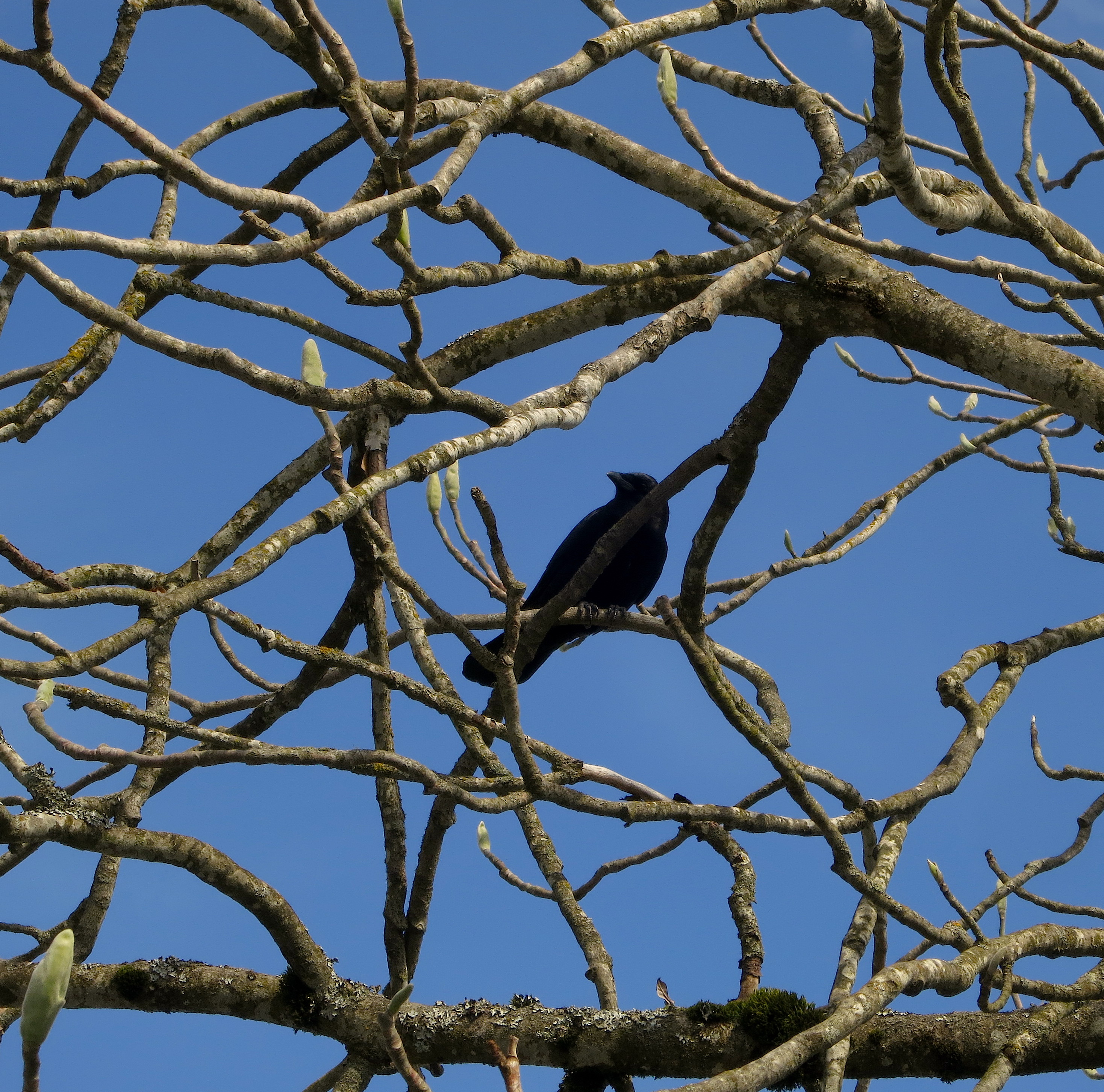
A crow uphill was going on
about the black life it led,
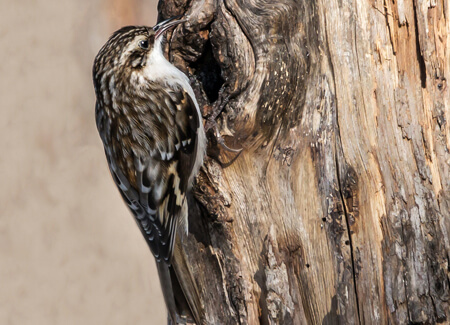
and a brown creeper went creeping up
a brown trunk methodically
with no record of ever having
been understood by anyone.
A woodpecker was working out
a deep hole from the sound of it
in a stand of dead trees up there.
And then a jay, much put upon,
complained about some treachery
it may or may not have endured,
though most are liars anyway.
The farther in, the quieter,
till only the snapping of a stick
broke the silence we were in.
The dog stood still and looked at me,
the woods by then already dark.
Much later, on the porch at night,
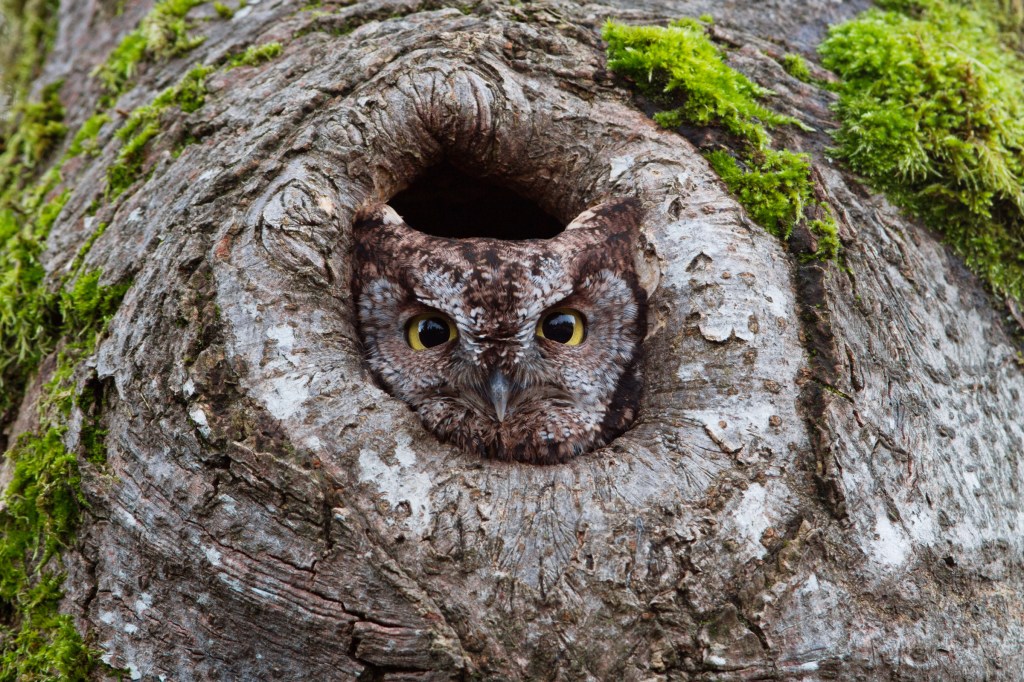
I heard the owl, an eldritch thing.
The dog, still with me, heard it too,
a call that came from where we’d been,
and where we would not be again.
~John Foy, “Woods,” from Night Vision

photo of brown creeper from American Bird Conservancy
photo of stellar jay from allaboutbirds.org
photo by Ken Schults for National Audubon Society

We live near fields and woods so the evening walks we take with the dogs are listening walks. There is always plenty to hear.

It is an immense relief to hear something other than the talking heads on TV or podcasts. The voices we hear in the woods are unconcerned about upcoming elections, pandemics or the state of the economy.

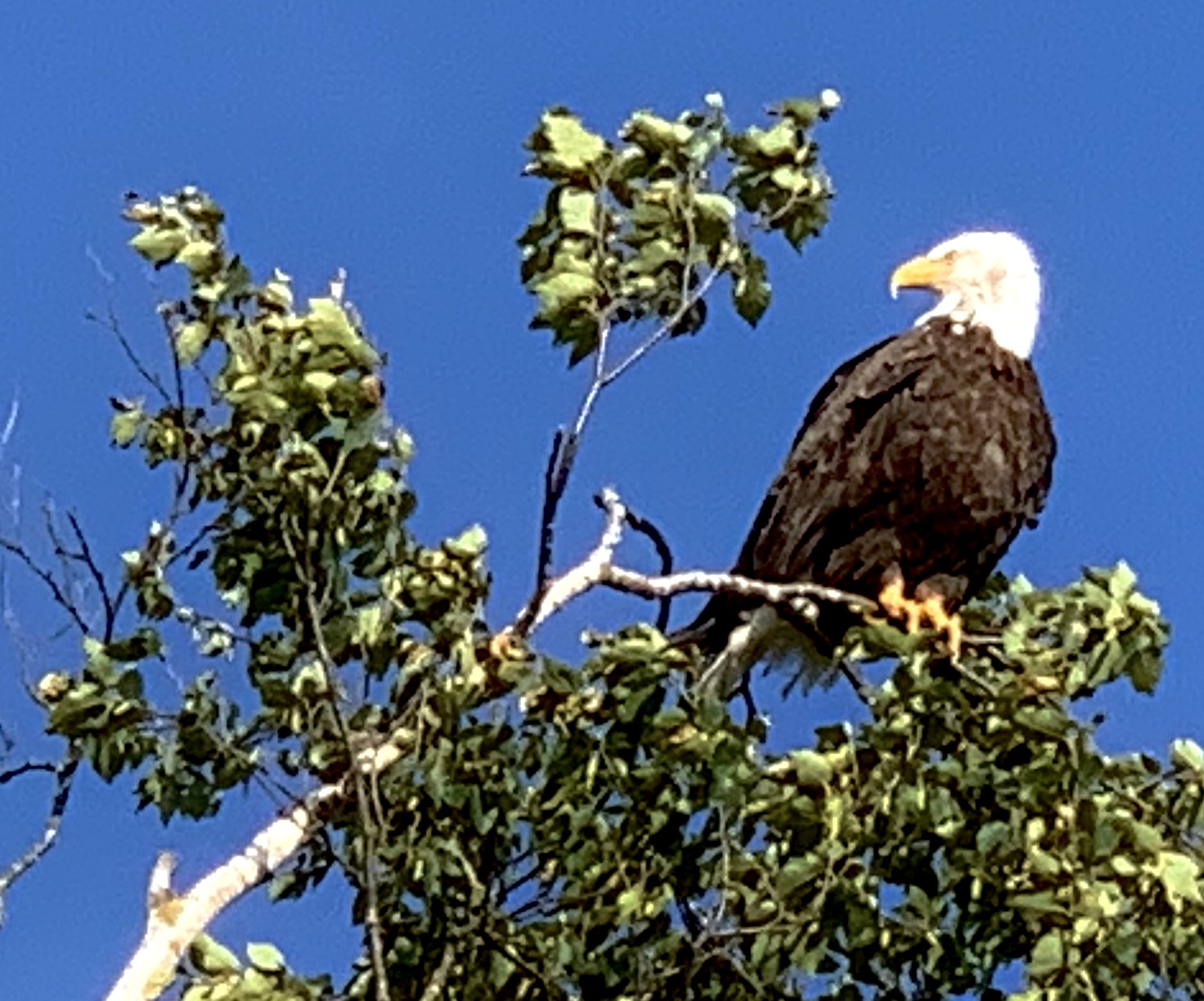
I listen for the sound of breezes rustling the tree branches, the crunch of sticks and dry leaves under my boots, and more often than not, the woodpeckers tapping away at tree trunks, eagles chittering from the treetops, and unseen owls visiting back and forth from their hidey-holes.
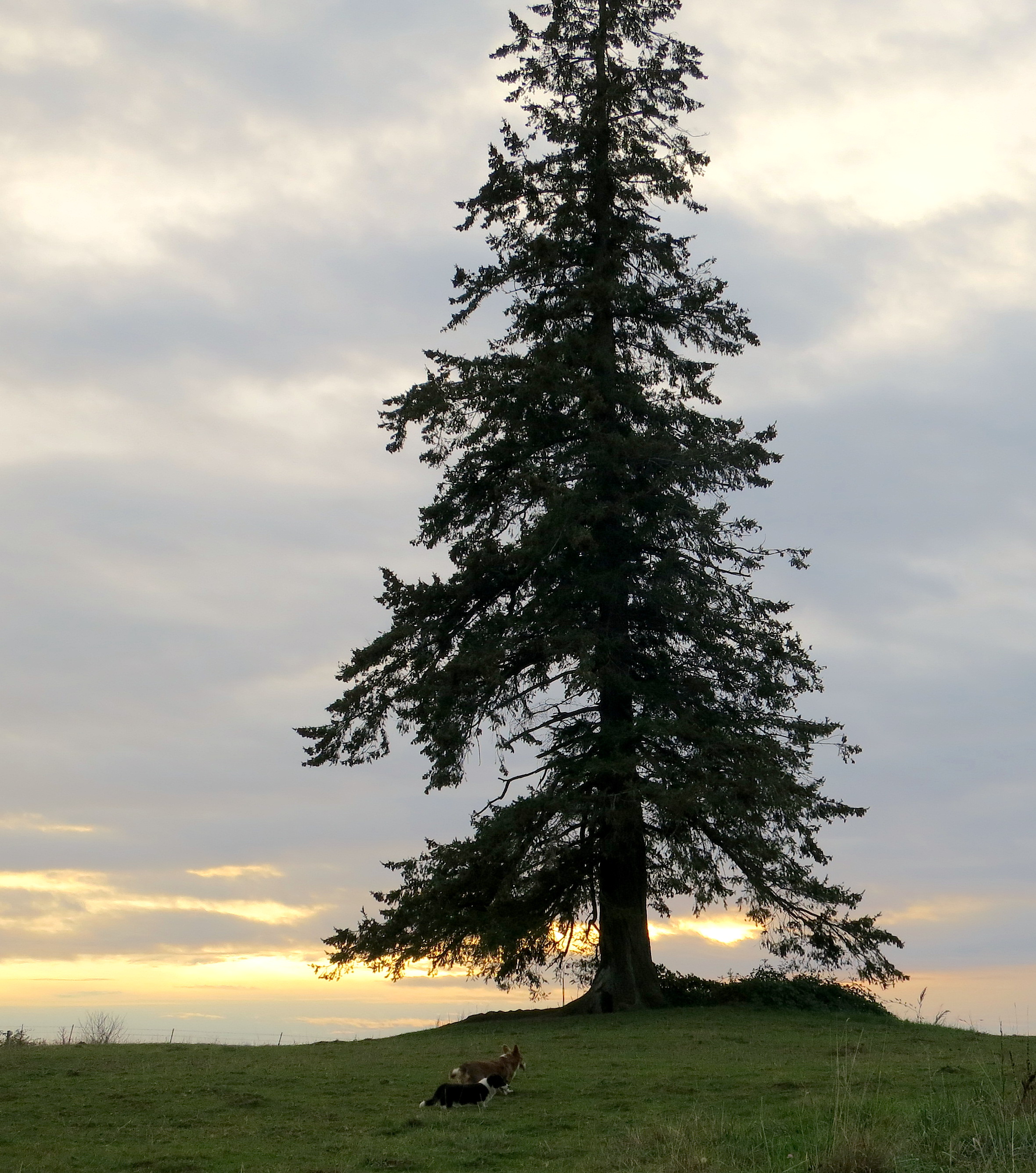
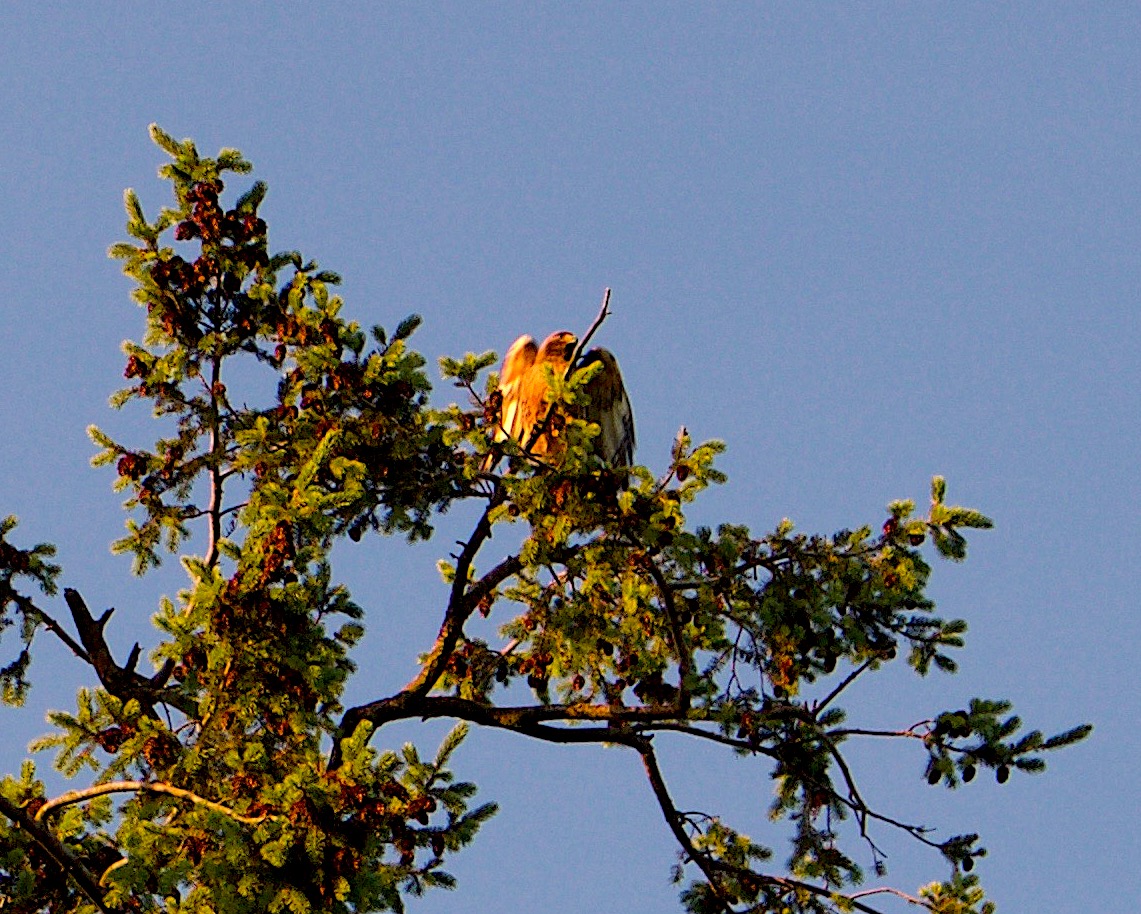
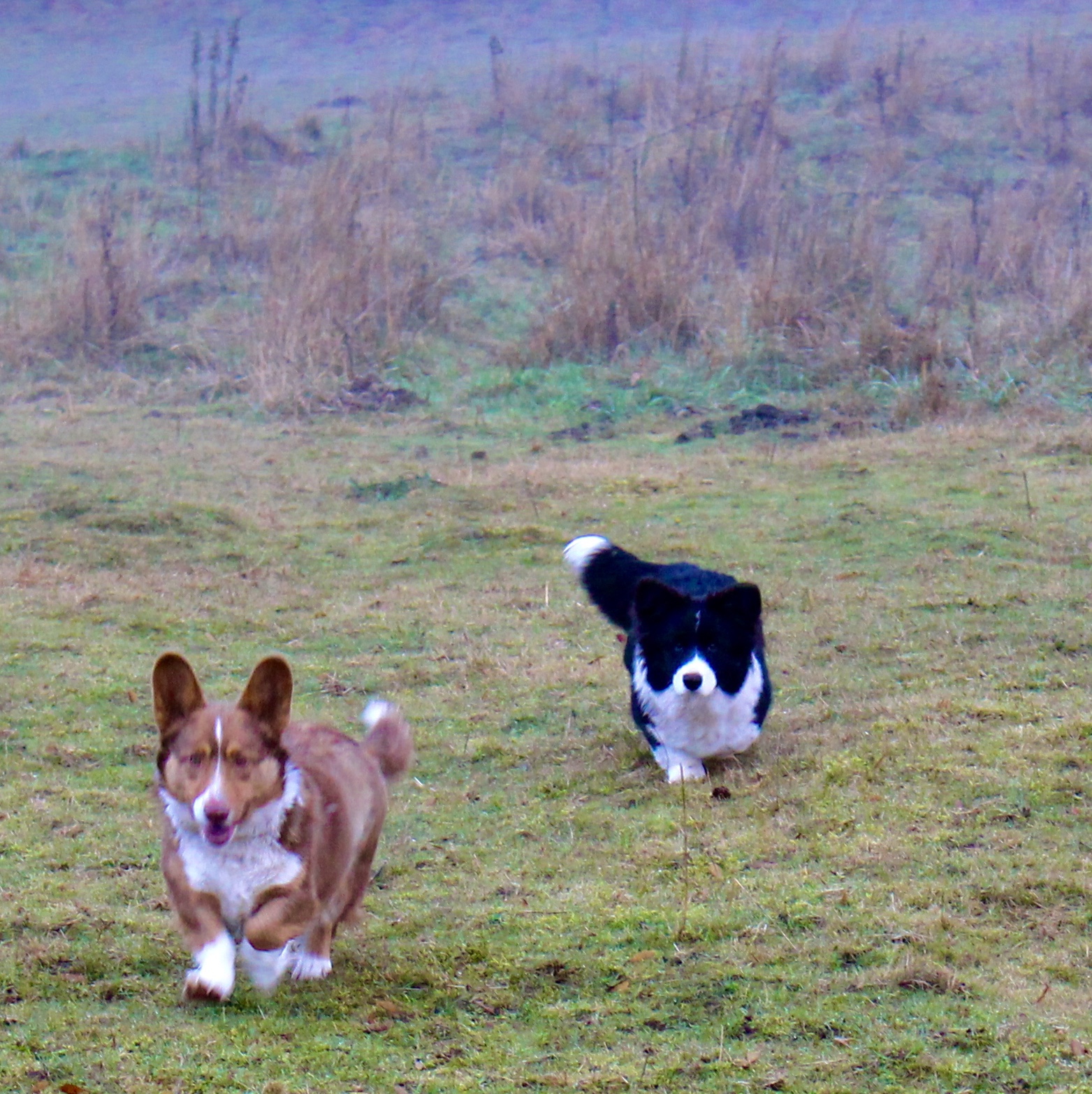
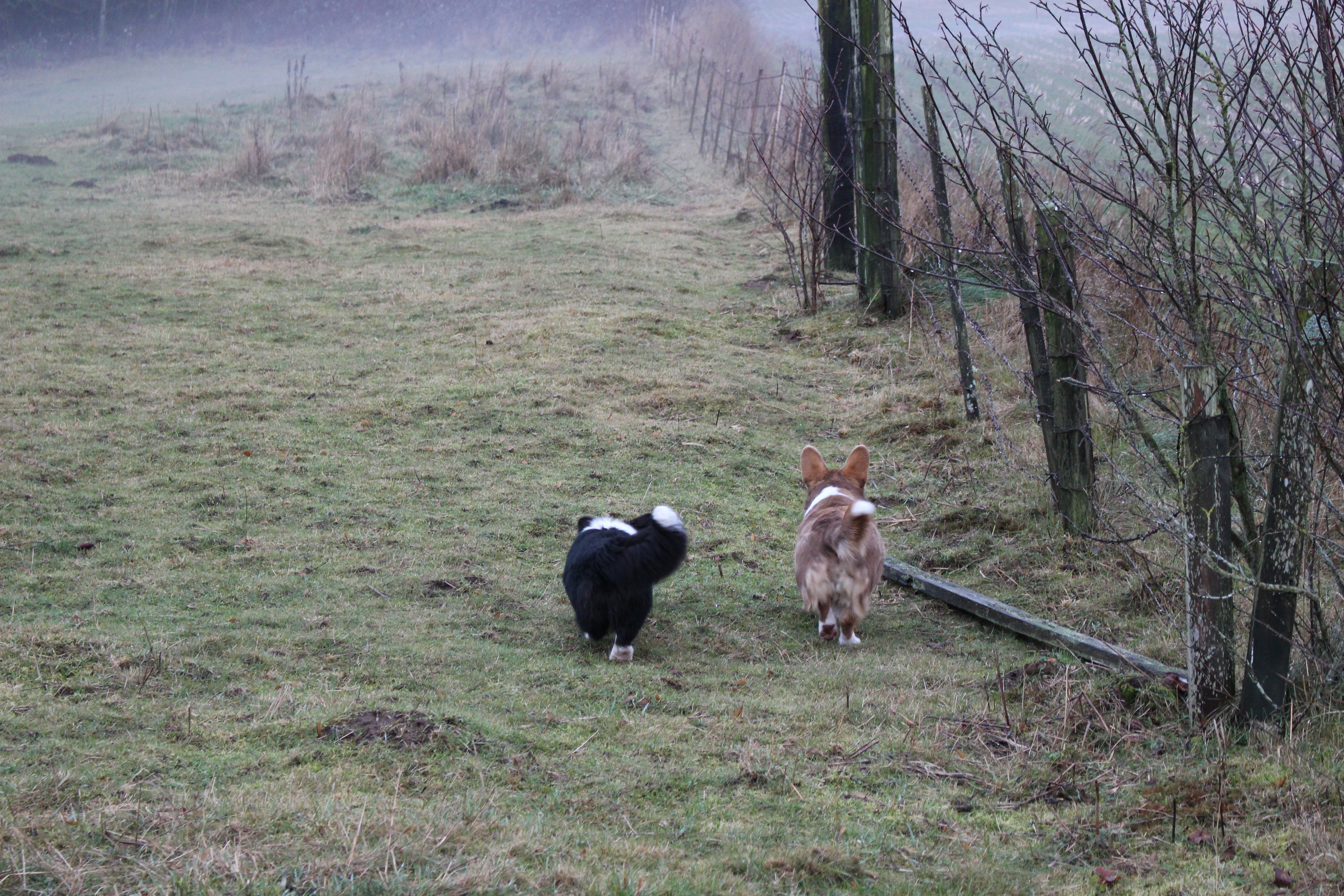
The red-tailed hawks scream out warnings as they float from tree top to tree top, particularly upset that we’ve brought along the corgis into their territory.

So, like the outside world, this woods has its own talking heads and drama, but I know who I will listen to and where I prefer to hang out if given a choice. I understand I’m only a visitor to their world and will be invited back only as long as we tread softly.

Until next time then, until next time.

Get Up and Go About the Day

Light wakes us – there’s the sun
climbing the mountains’ rim, spilling across the valley,
finding our faces.
It is July,

between the hay and harvest,
a time at arm’s length from all other time…

It is the time
to set aside all vigil, good or ill,
to loosen the fixed gaze of our attention
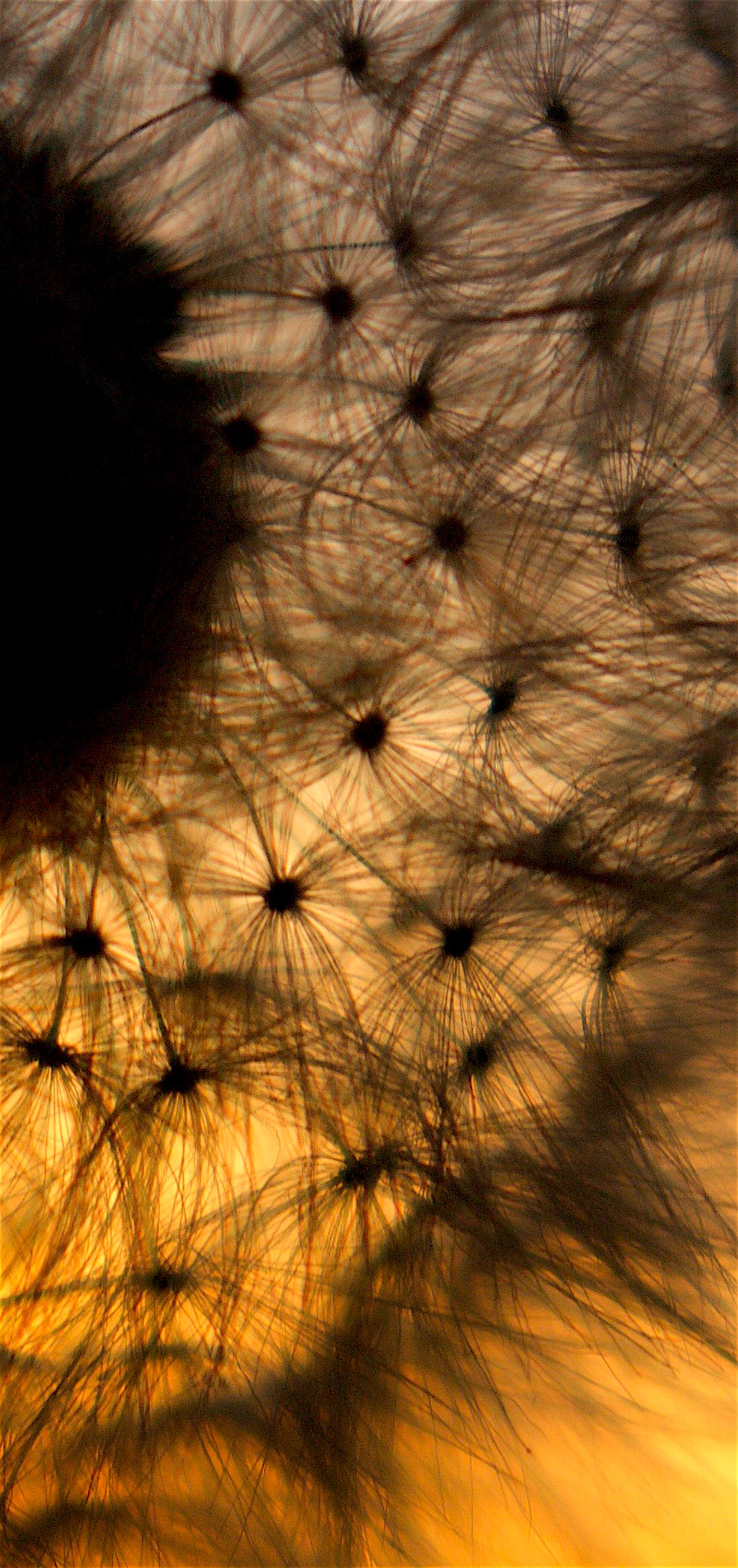
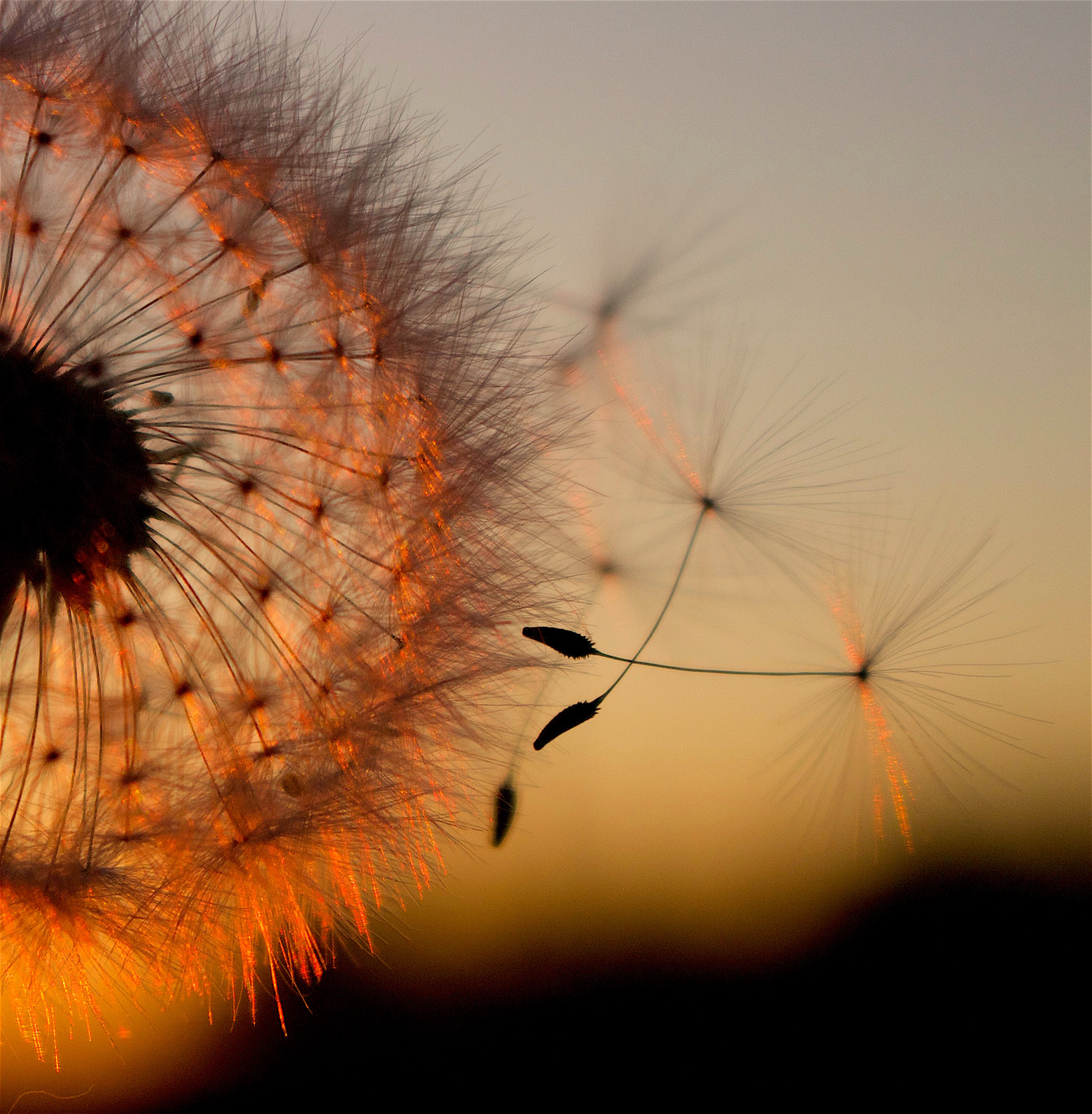
as dandelions let seedlings to the wind.
Wake with the light.
Get up and go about the day and watch
its surfaces that brighten with the sun.
~Kerry Hardie from “Sleep in Summer”

Saying good-bye to July
is admitting summer is already half-baked
and so are we–
we are still doughy
and not nearly done enough.

The rush to autumn is breathless.
We want to hold on tight
to our longish days
and our sweaty nights
for just a little while longer…

Please, oh please
grant us light
and steady us for the task
of getting ready and letting go.

Light on the Path Ahead

May you see God’s light on the path ahead
when the road you walk is dark.
May you always hear even in your hour of sorrow
the gentle singing of the lark.
When times are hard
may hardness never turn your heart to stone.
May you always remember when the shadows fall–
You do not walk alone.

~Traditional Irish Blessing

The day starts with the promise of beauty lit across the sky and concludes with the same light on the other side of the horizon. Yet everything in between can be darkness with no relief or stark brightness leaving no place to hide.

We can endure both if we endure it together. We can travel this long road if we have each other alongside in case we stumble. We can live out our days in gratitude even through our tears.

God does not leave us to journey alone.