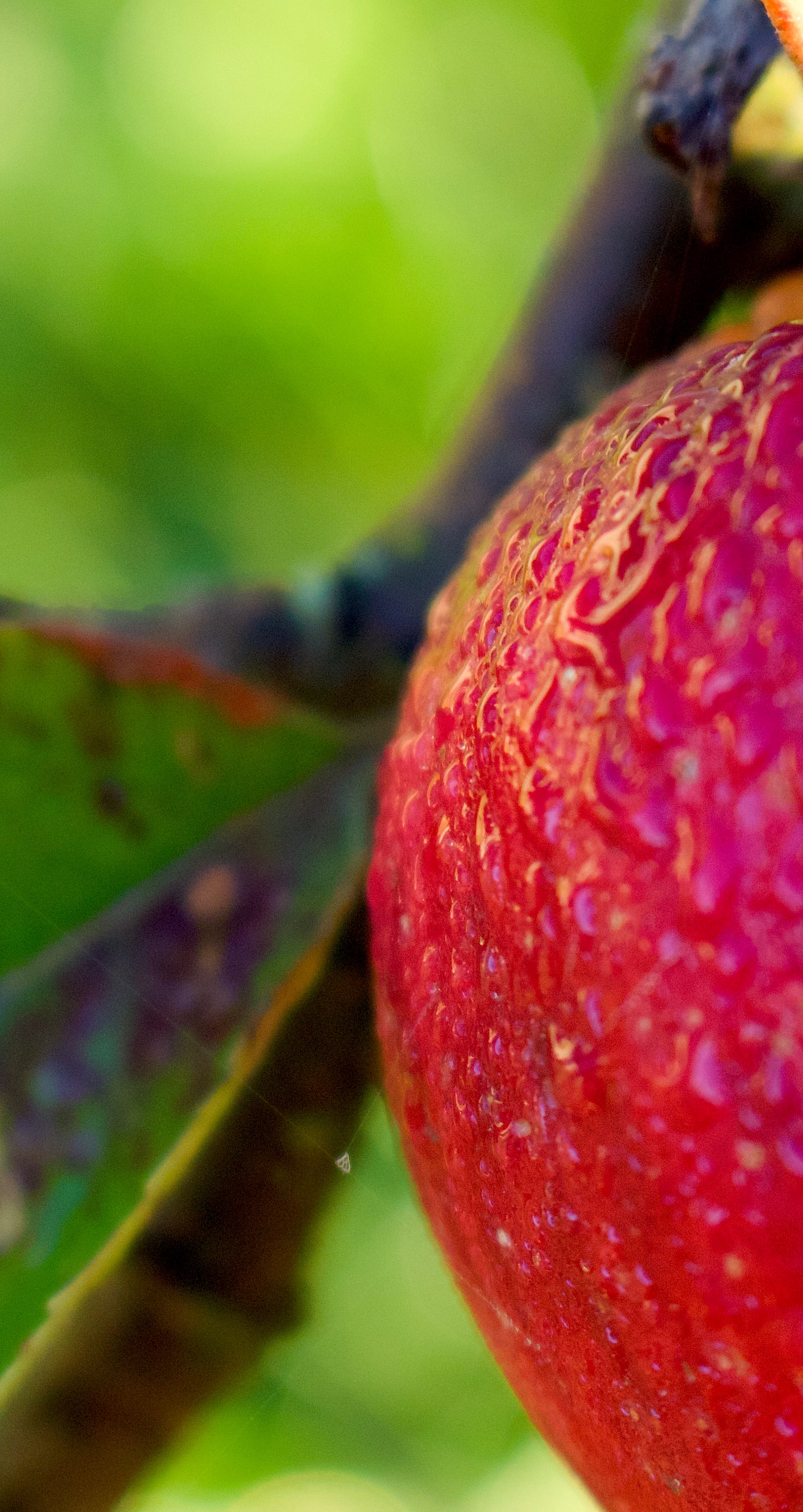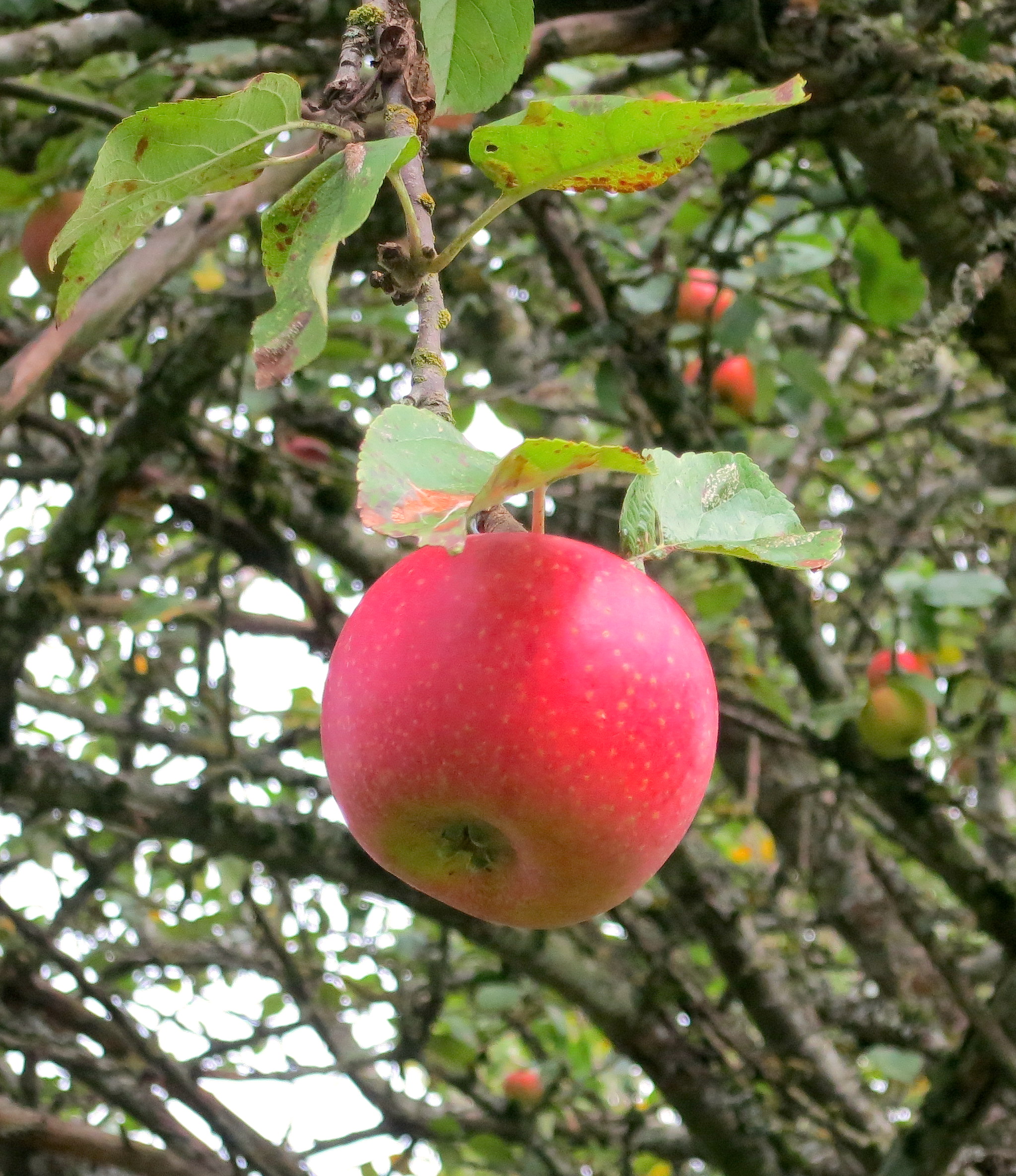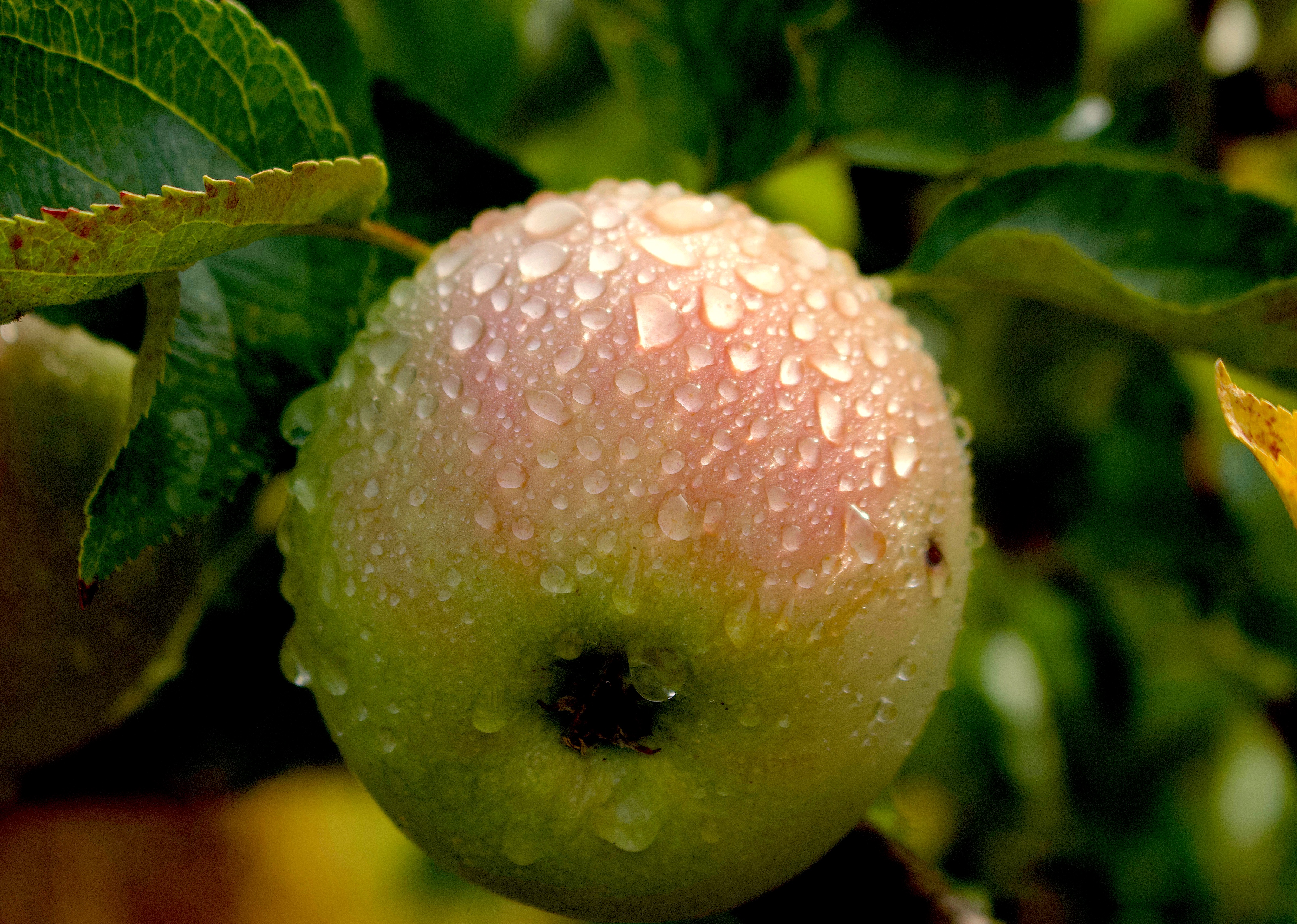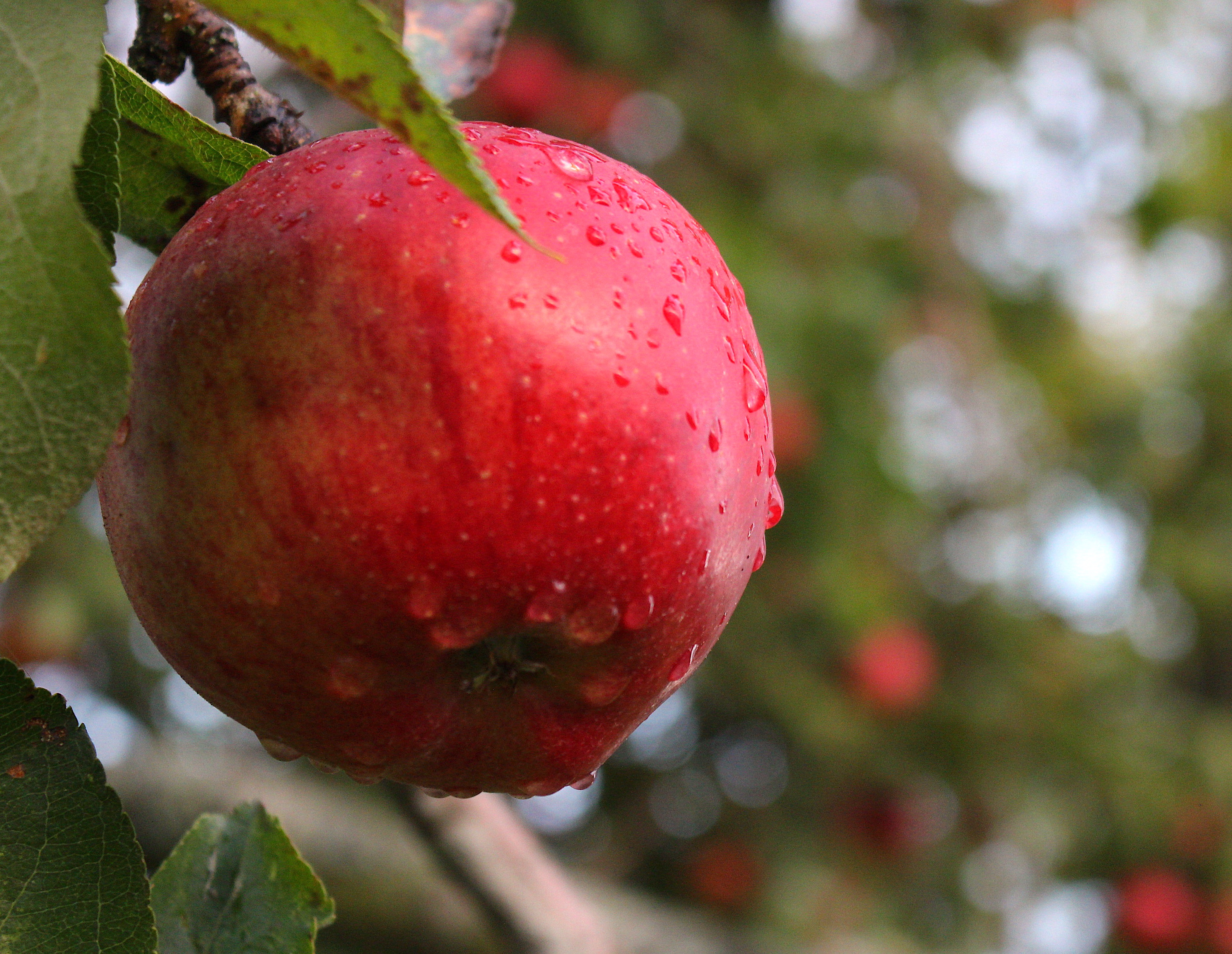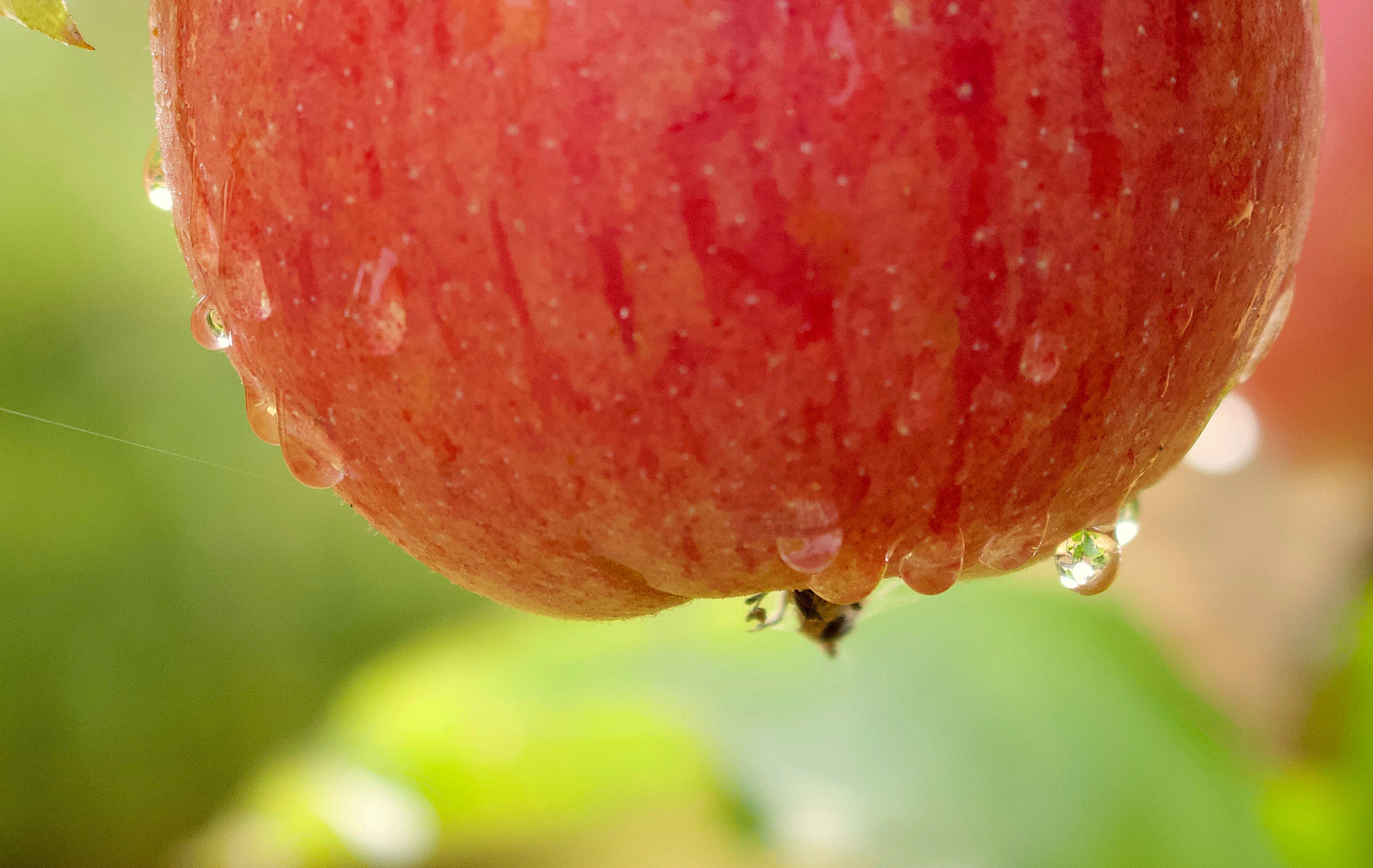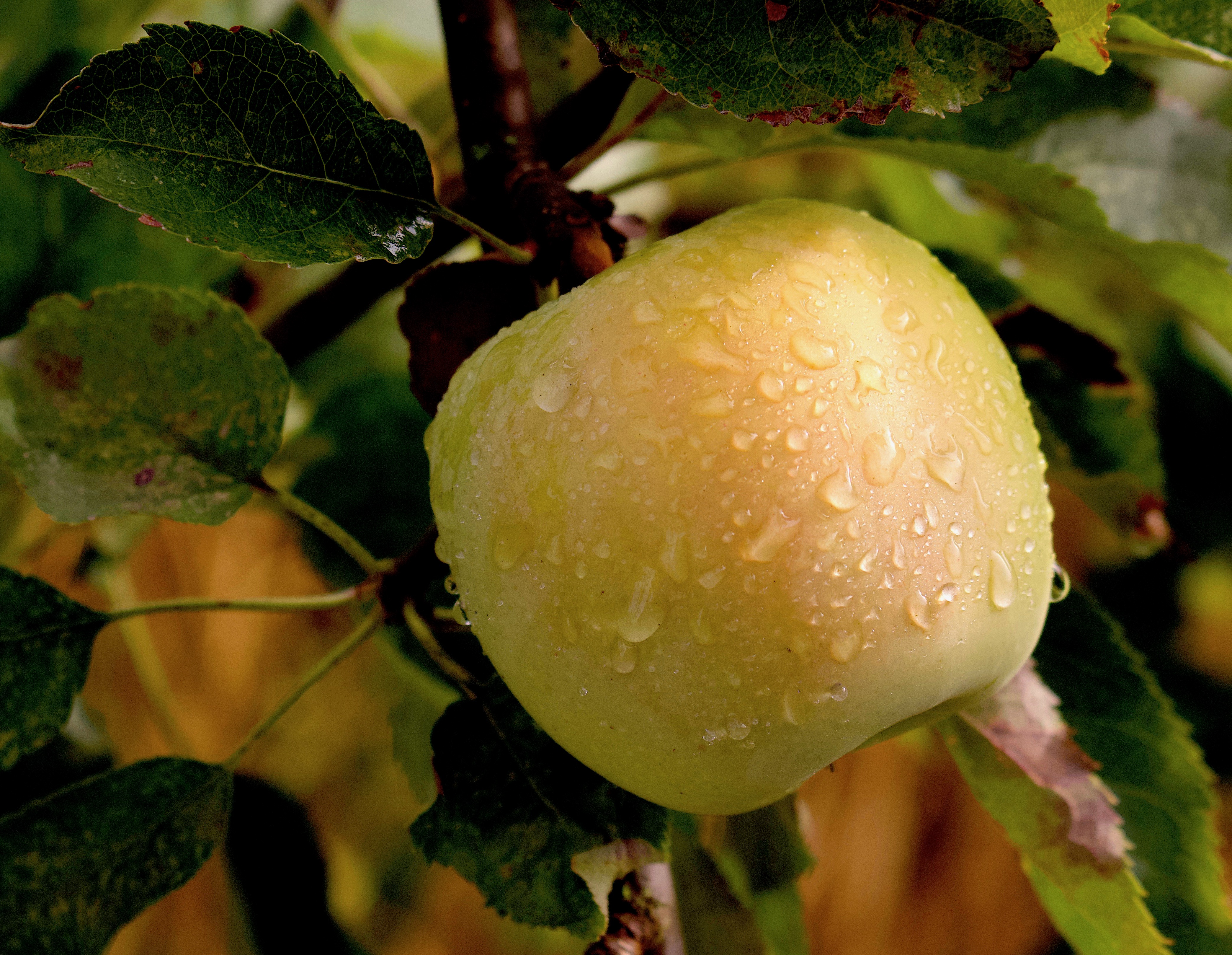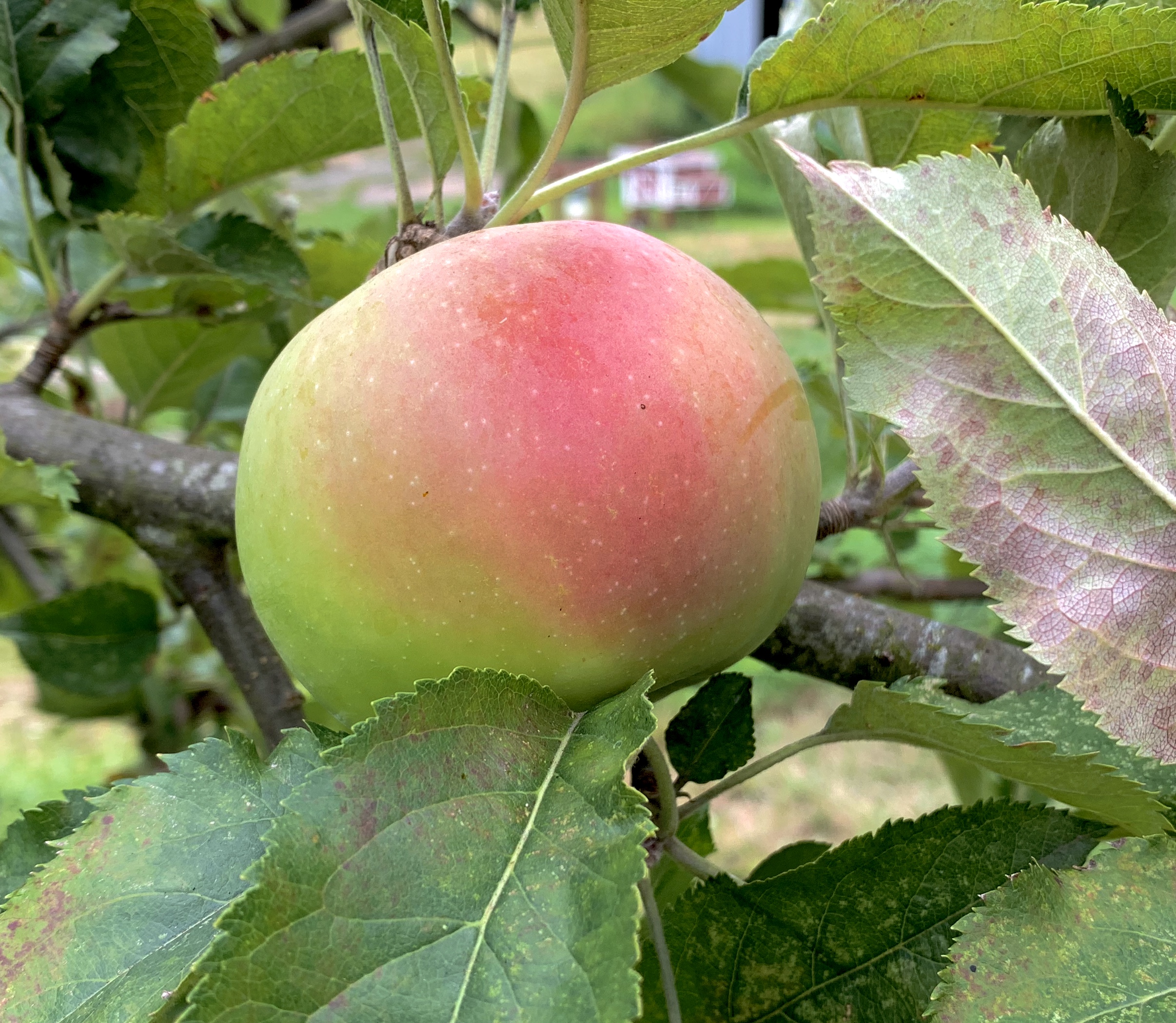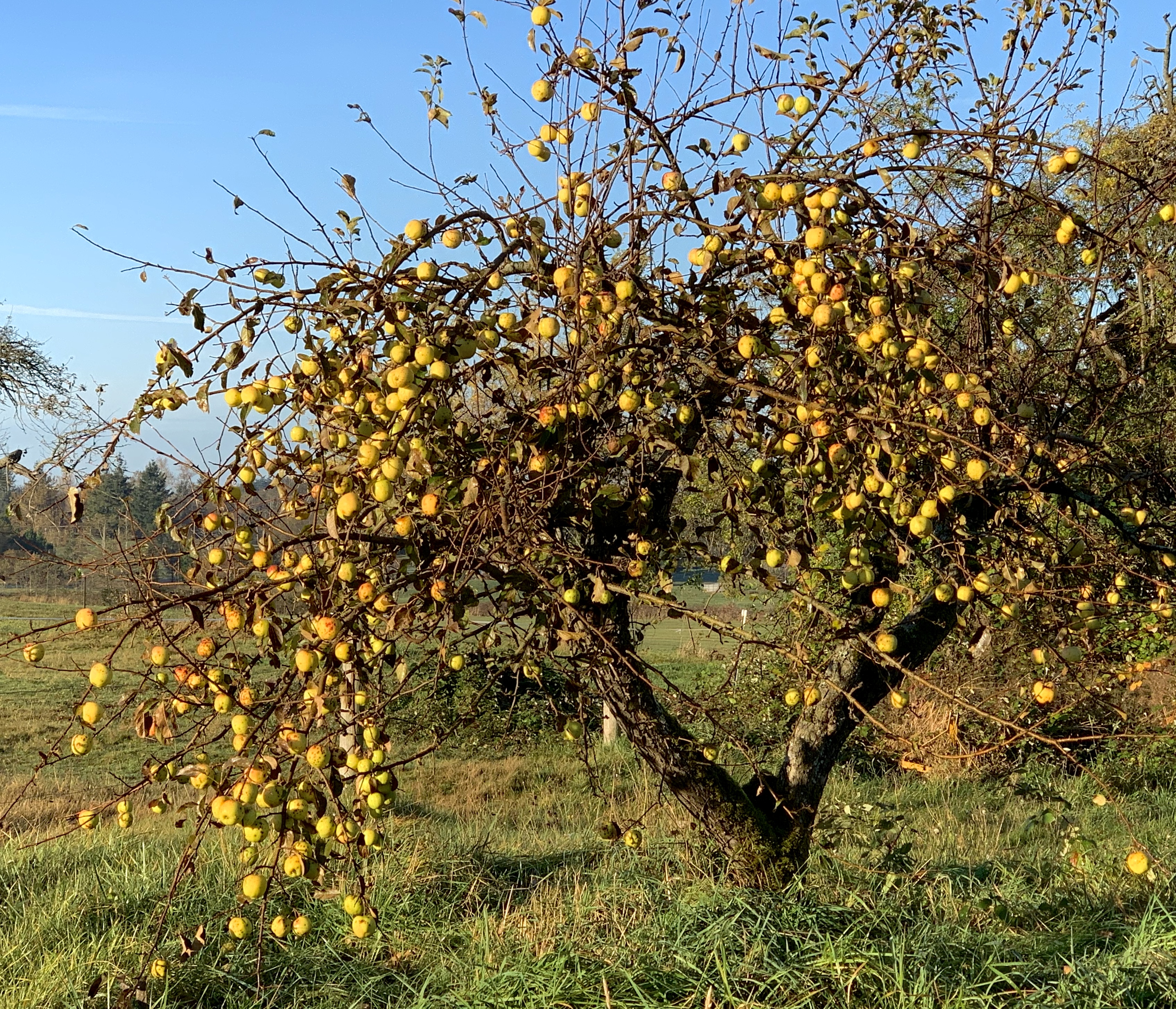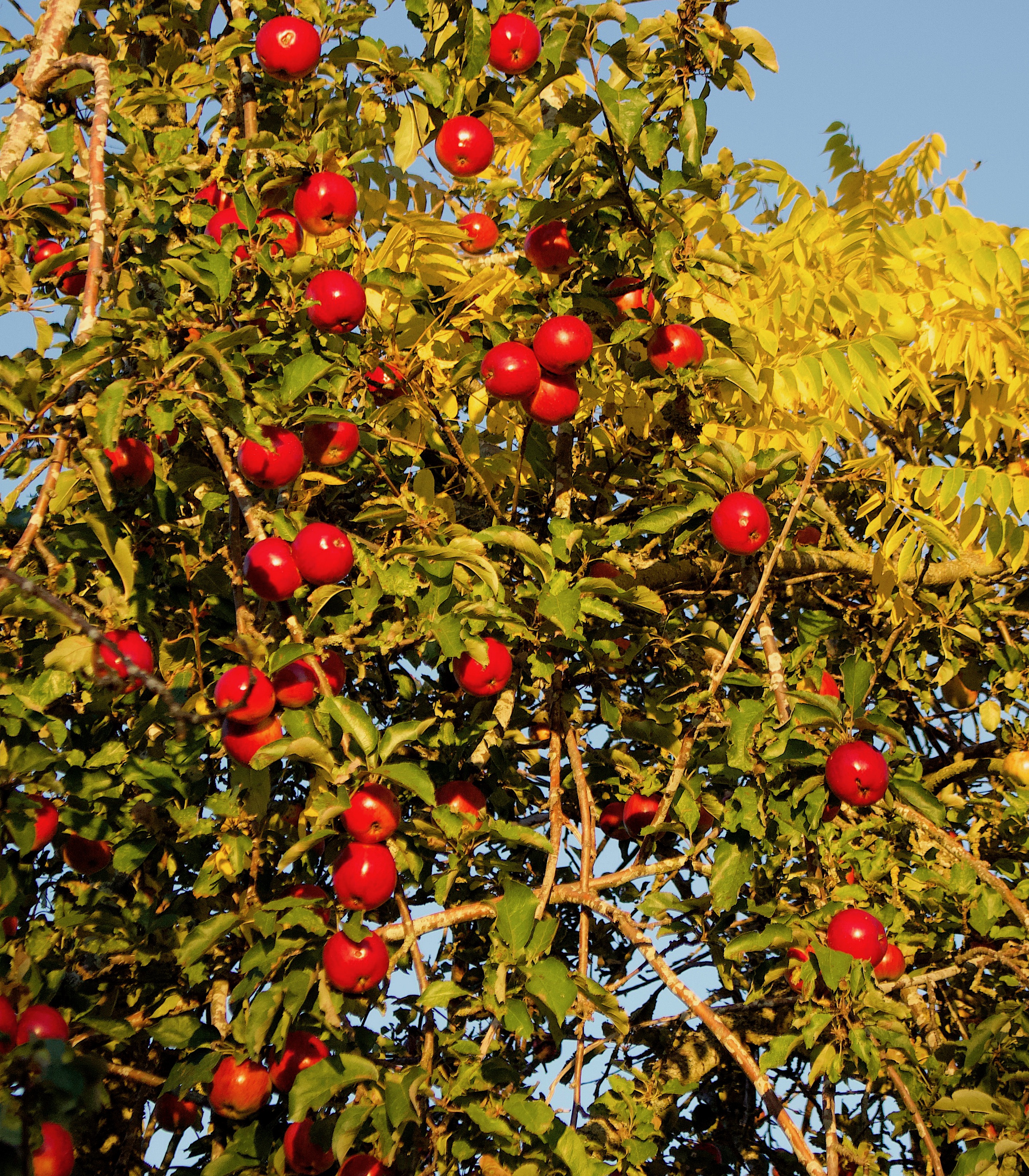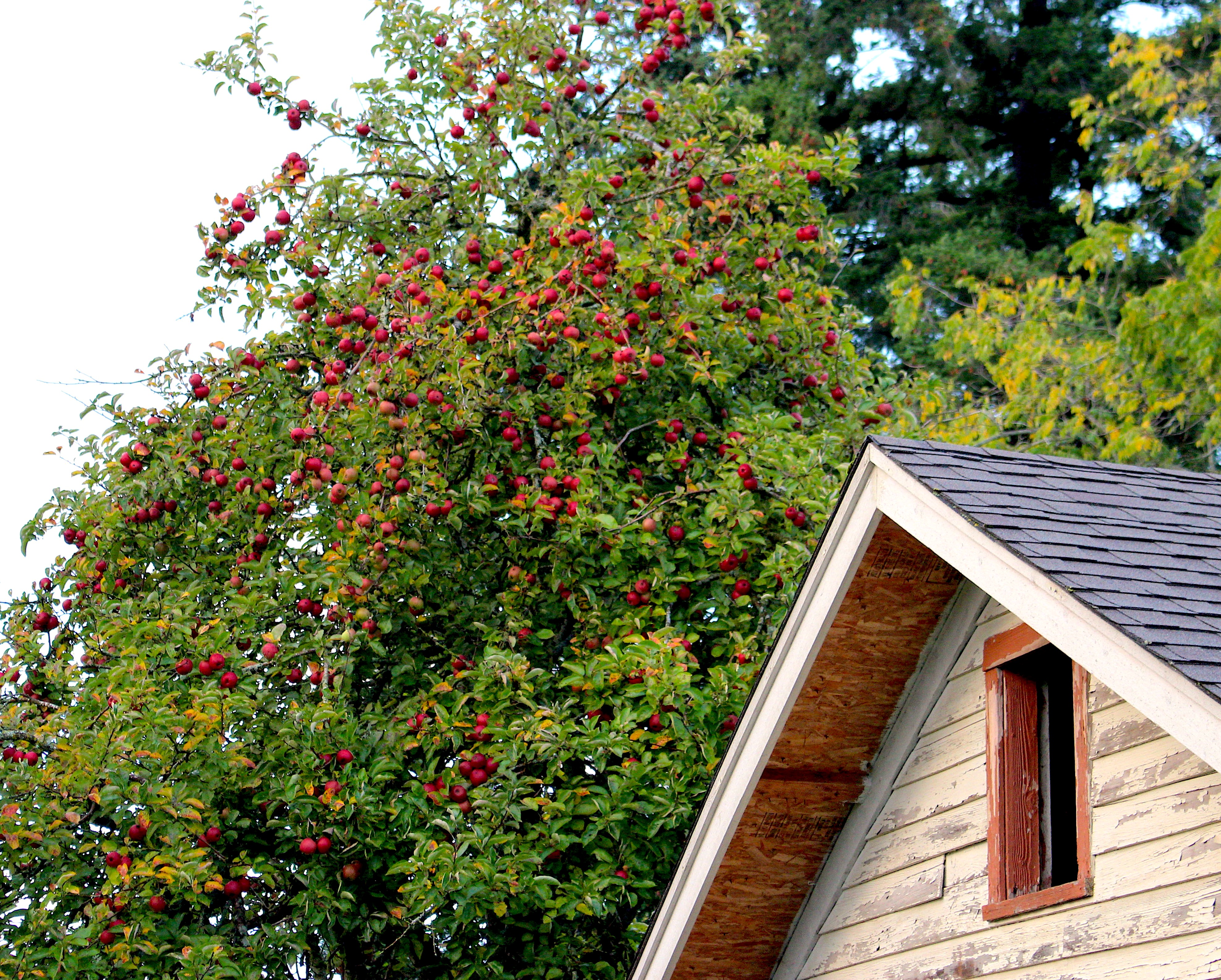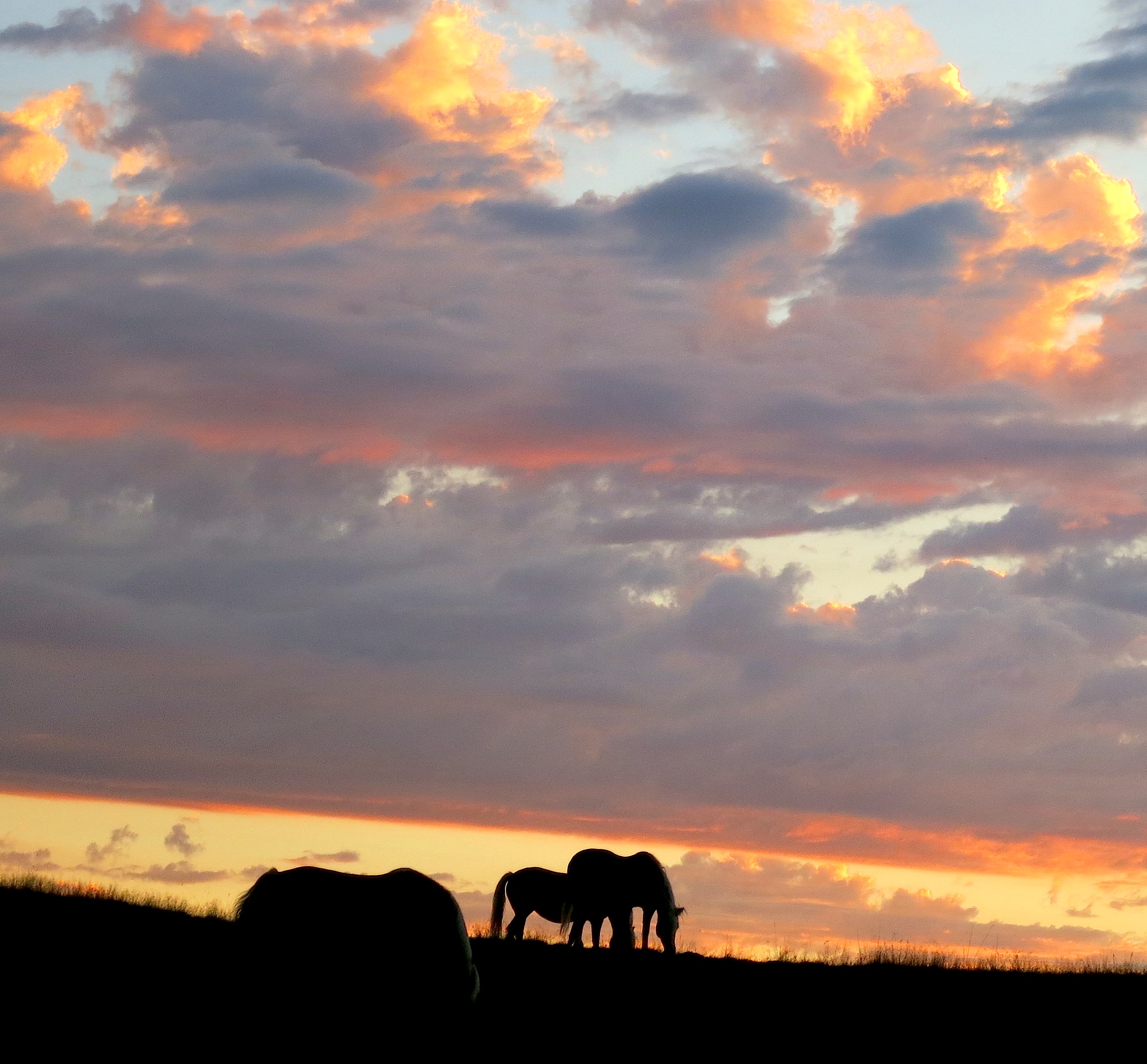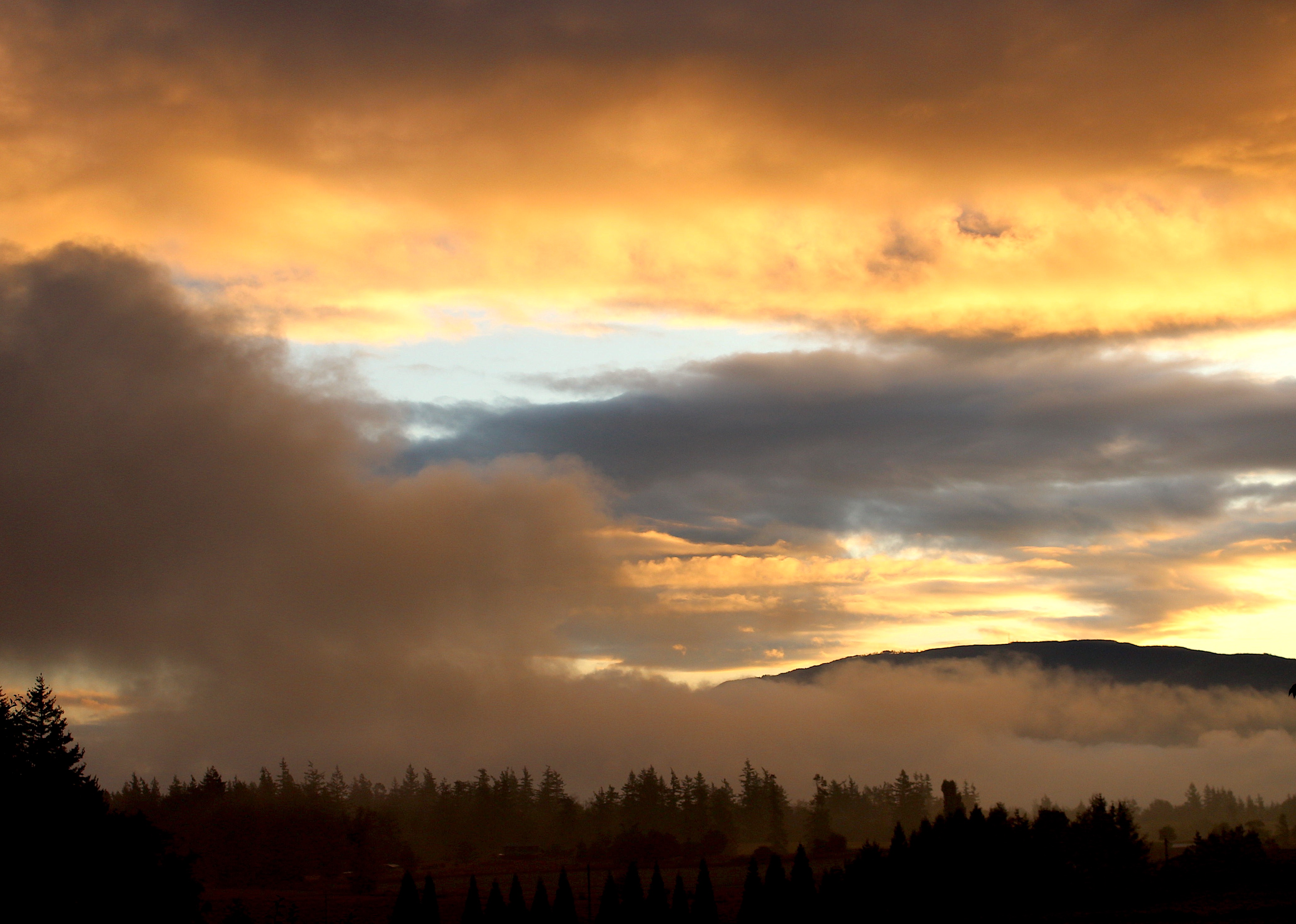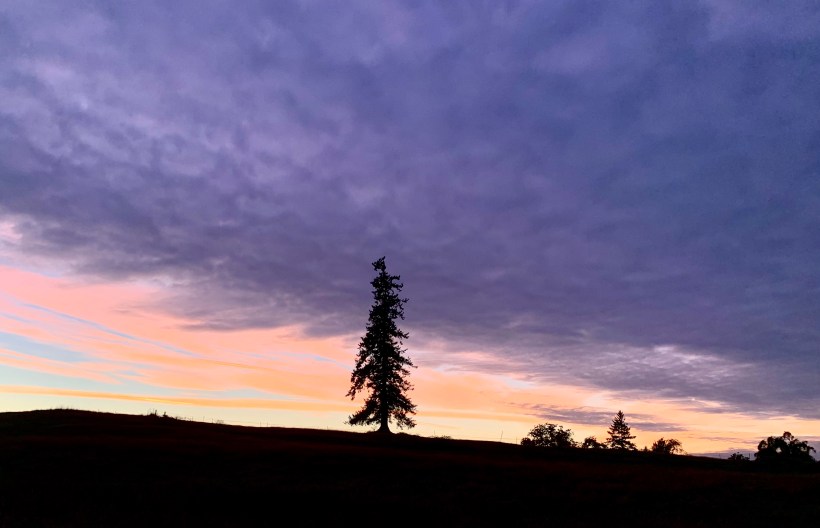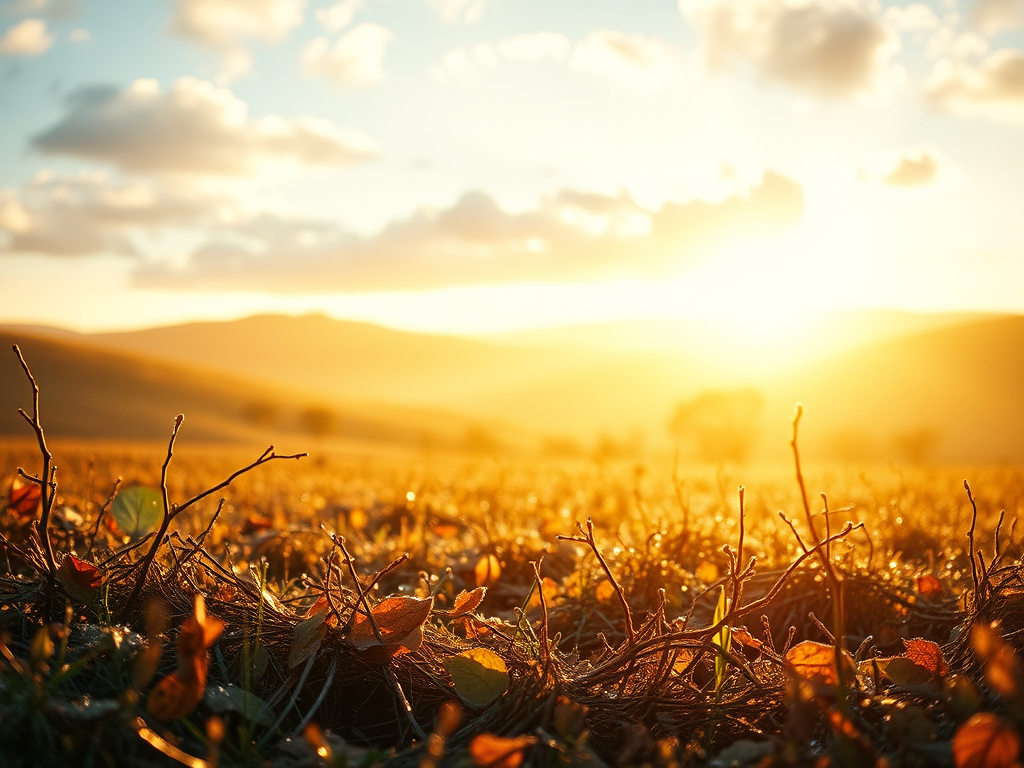
And then there is that day when all around, all around you hear the dropping of the apples, oneby one, from the trees. At first it is one here and one there, and then it is three and then it is four and then nine andtwenty, until the apples plummet like rain, fall like horse hoofsin the soft, darkening grass, and you are the last apple on thetree; and you wait for the wind to work you slowly free fromyour hold upon the sky, and drop you down and down. Longbefore you hit the grass you will have forgotten there everwas a tree, or other apples, or a summer, or green grass below, You will fall in darkness… ~Ray Bradbury from Dandelion Wine
But I am done with apple-picking now. Essence of winter sleep is on the night, The scent of apples: I am drowsing off. I cannot rub the strangeness from my sight I got from looking through a pane of glass I skimmed this morning from the drinking trough And held against the world of hoary grass. It melted, and I let it fall and break. But I was well Upon my way to sleep before it fell, And I could tell What form my dreaming was about to take. For I have had too much Of apple-picking: I am overtired Of the great harvest I myself desired. There were ten thousand thousand fruit to touch, Cherish in hand, lift down, and not let fall. For all That struck the earth, No matter if not bruised or spiked with stubble, Went surely to the cider-apple heap As of no worth. One can see what will trouble This sleep of mine, whatever sleep it is. Were he not gone, The woodchuck could say whether it’s like his Long sleep, as I describe its coming on, Or just some human sleep. ~Robert Frost from “After Apple-Picking”
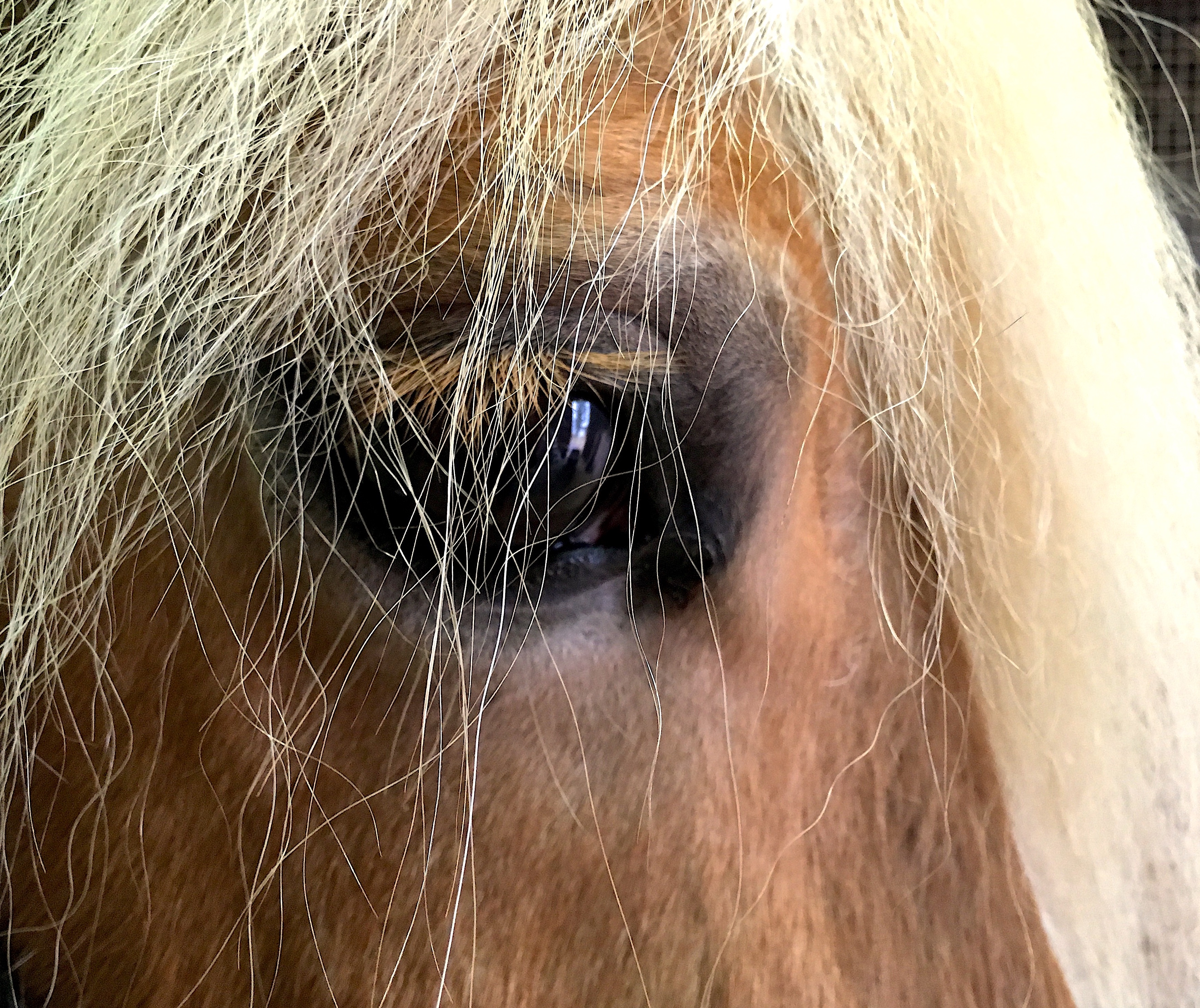
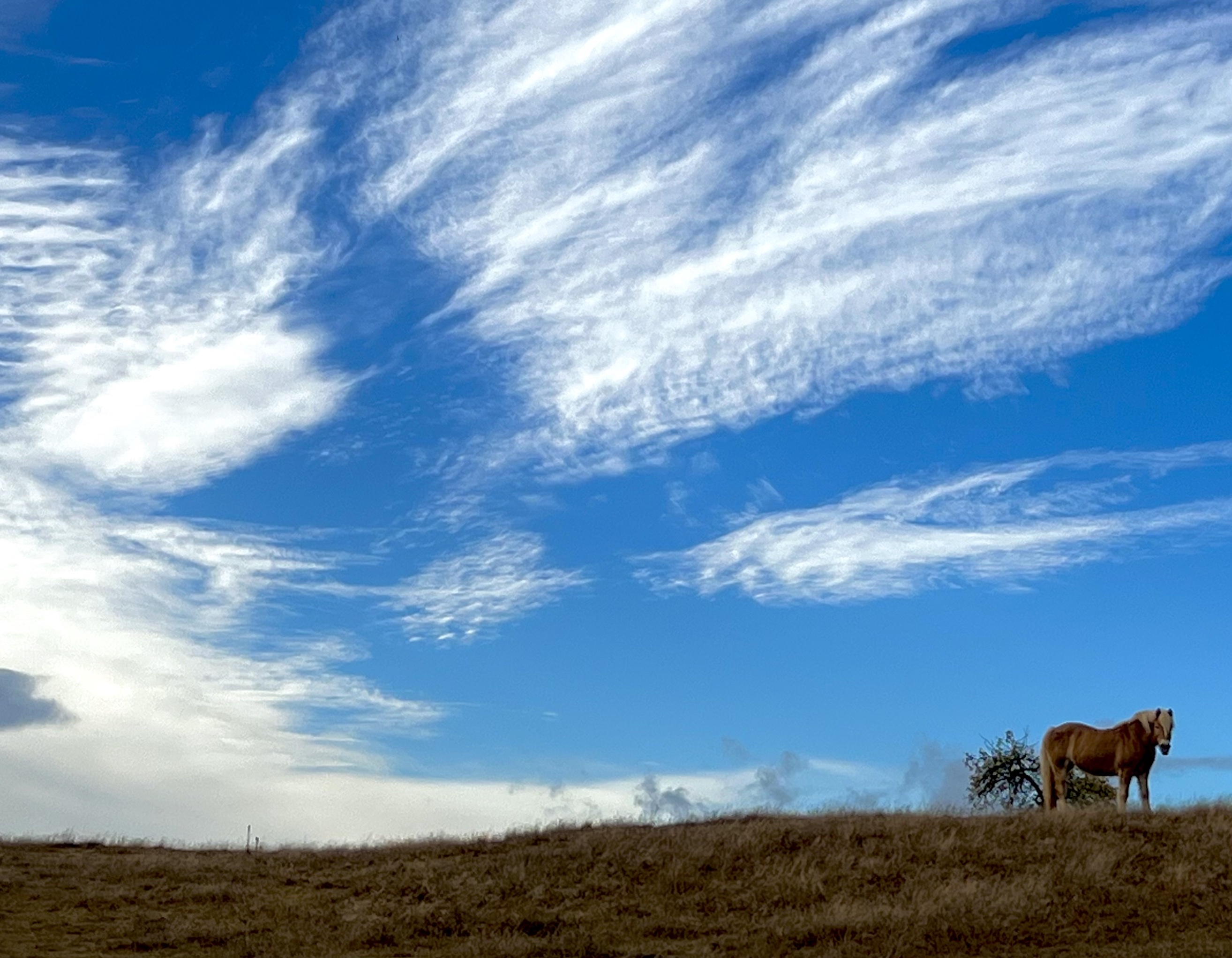
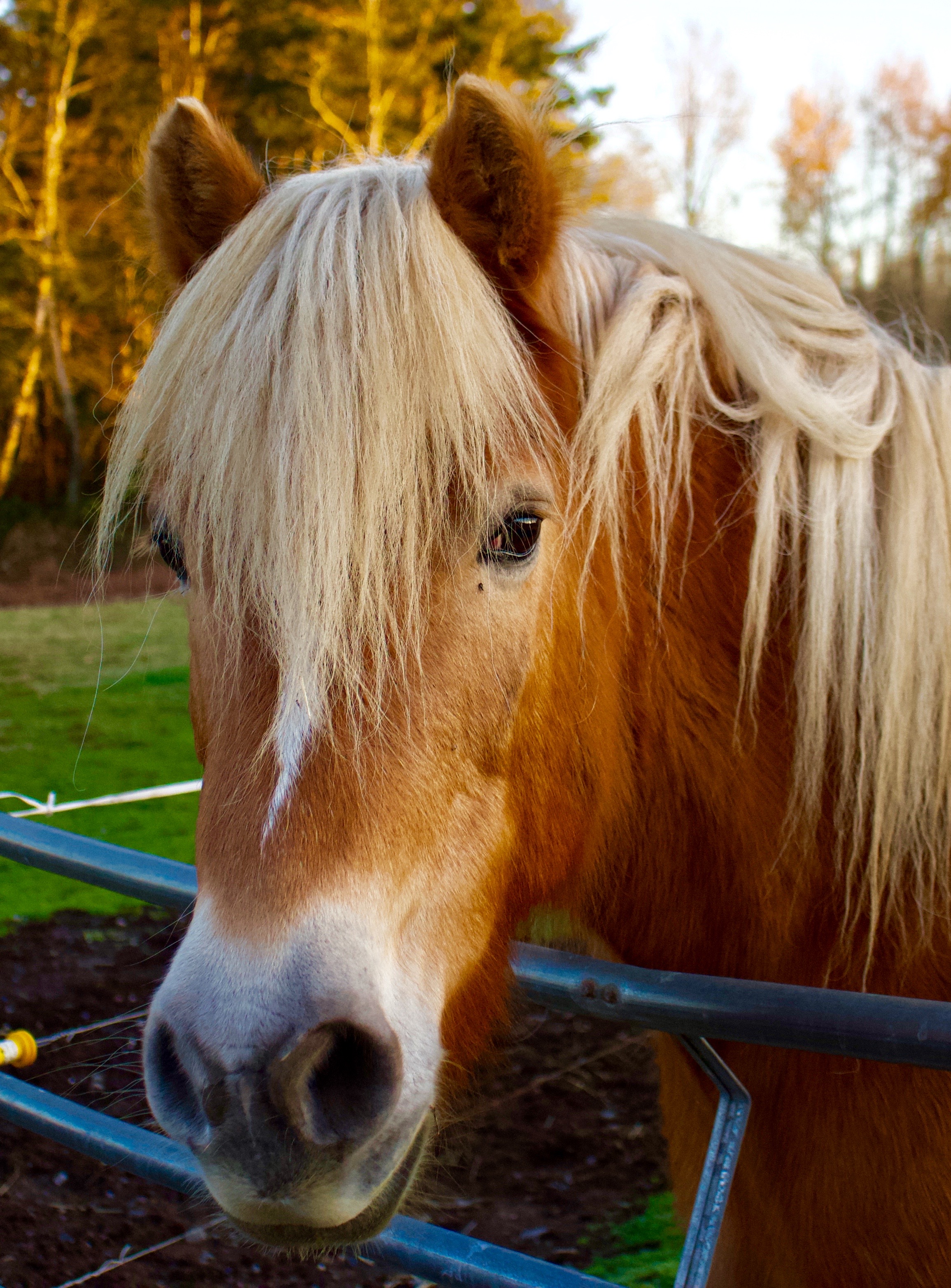
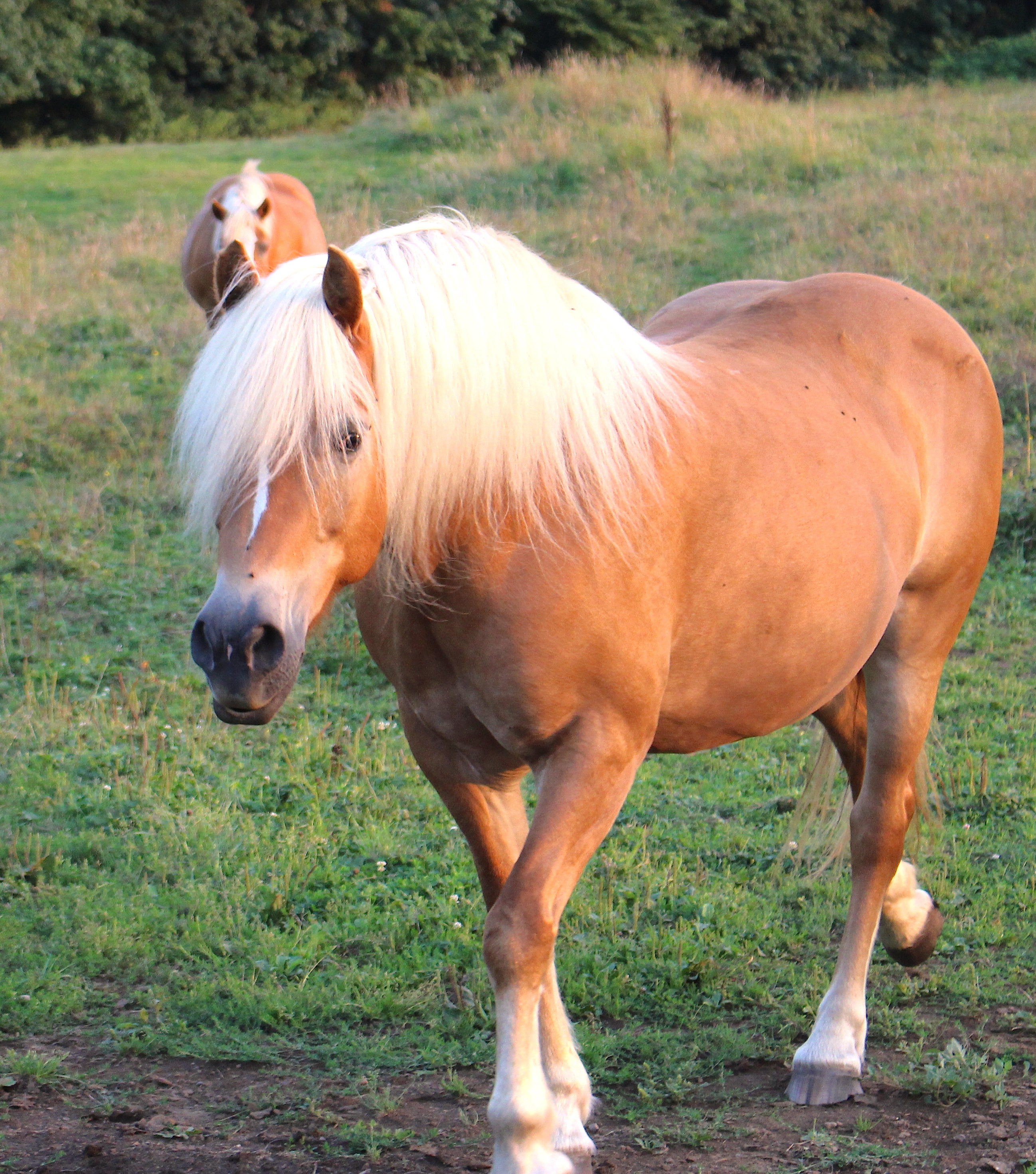
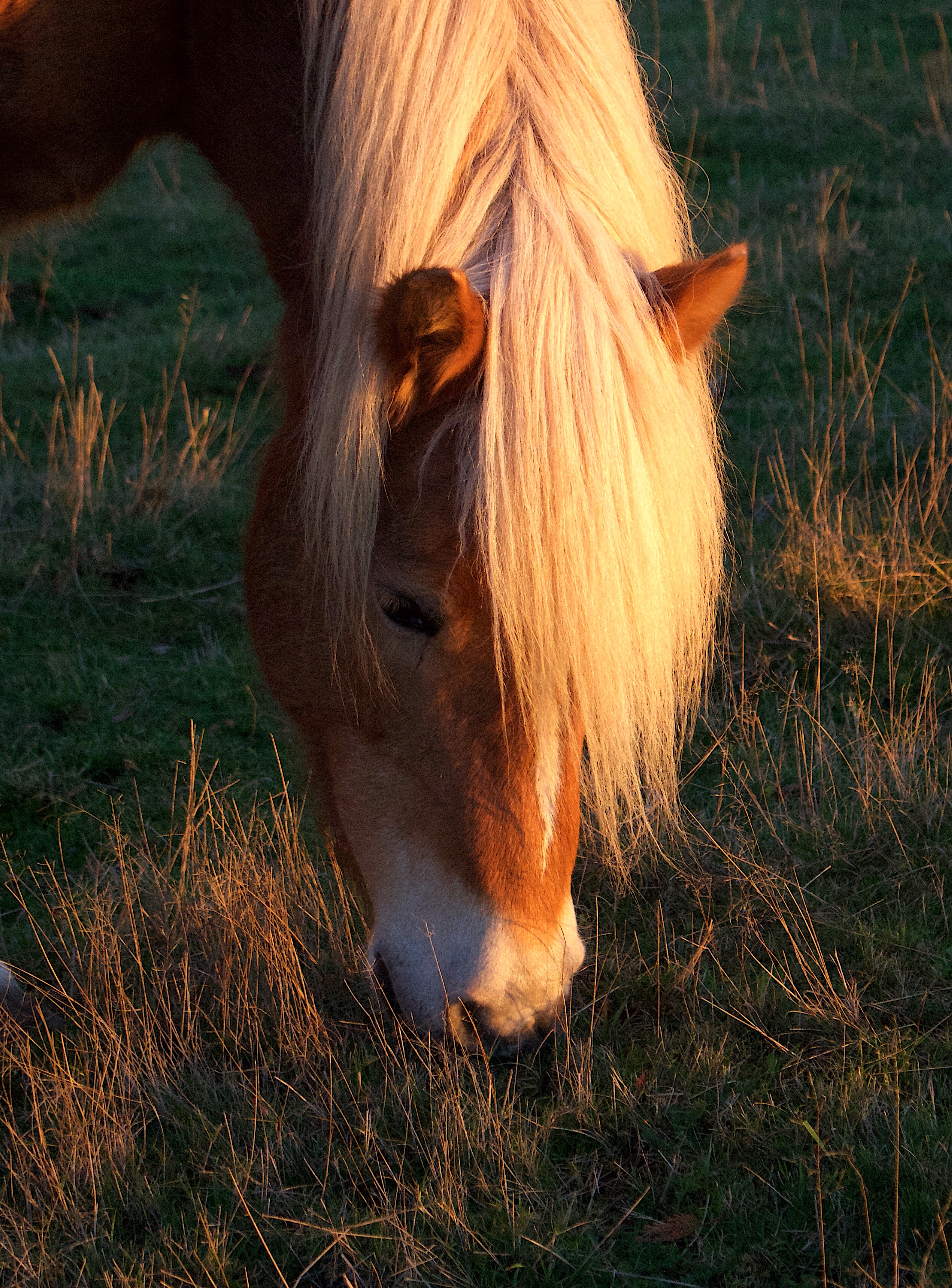
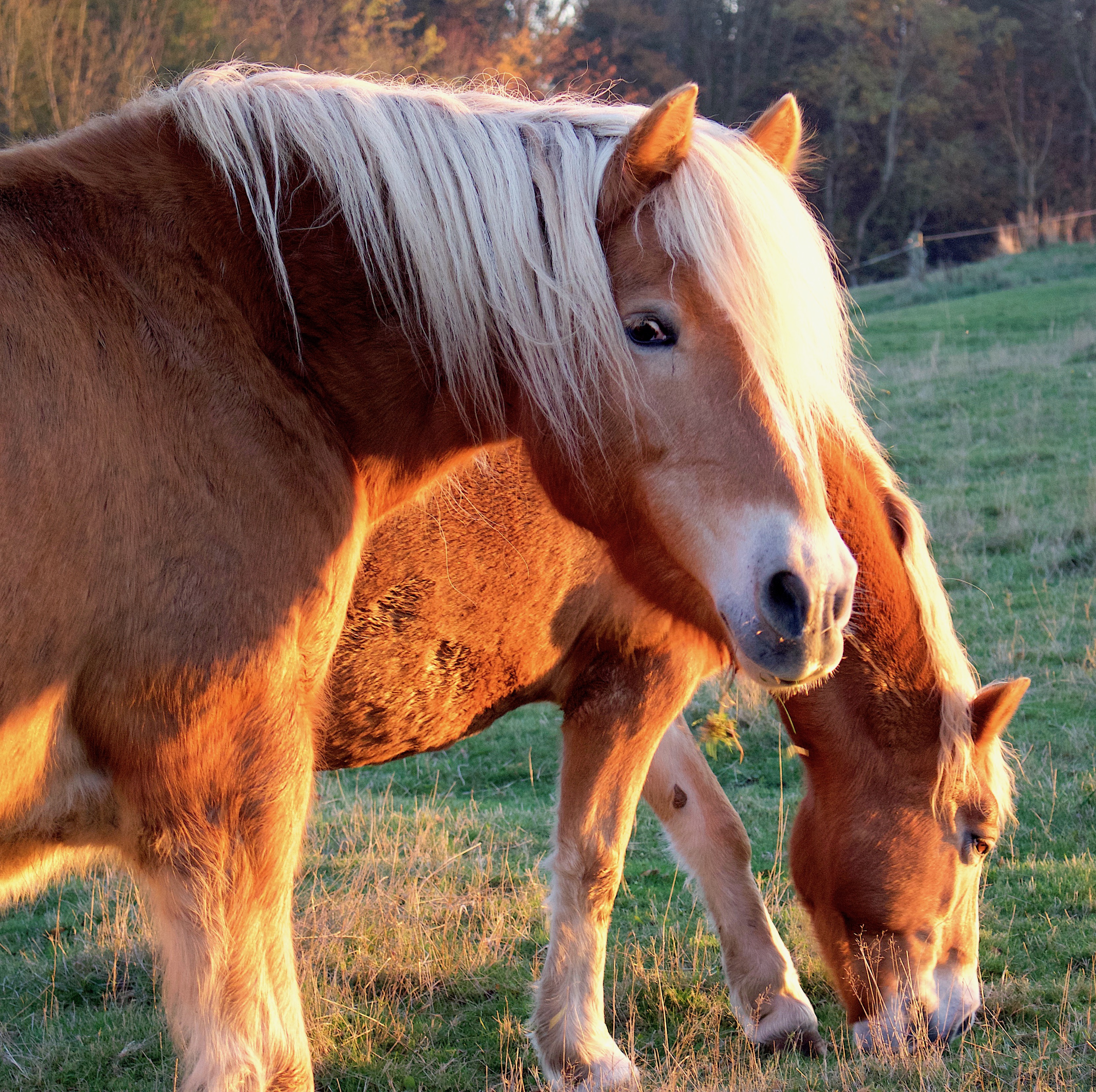
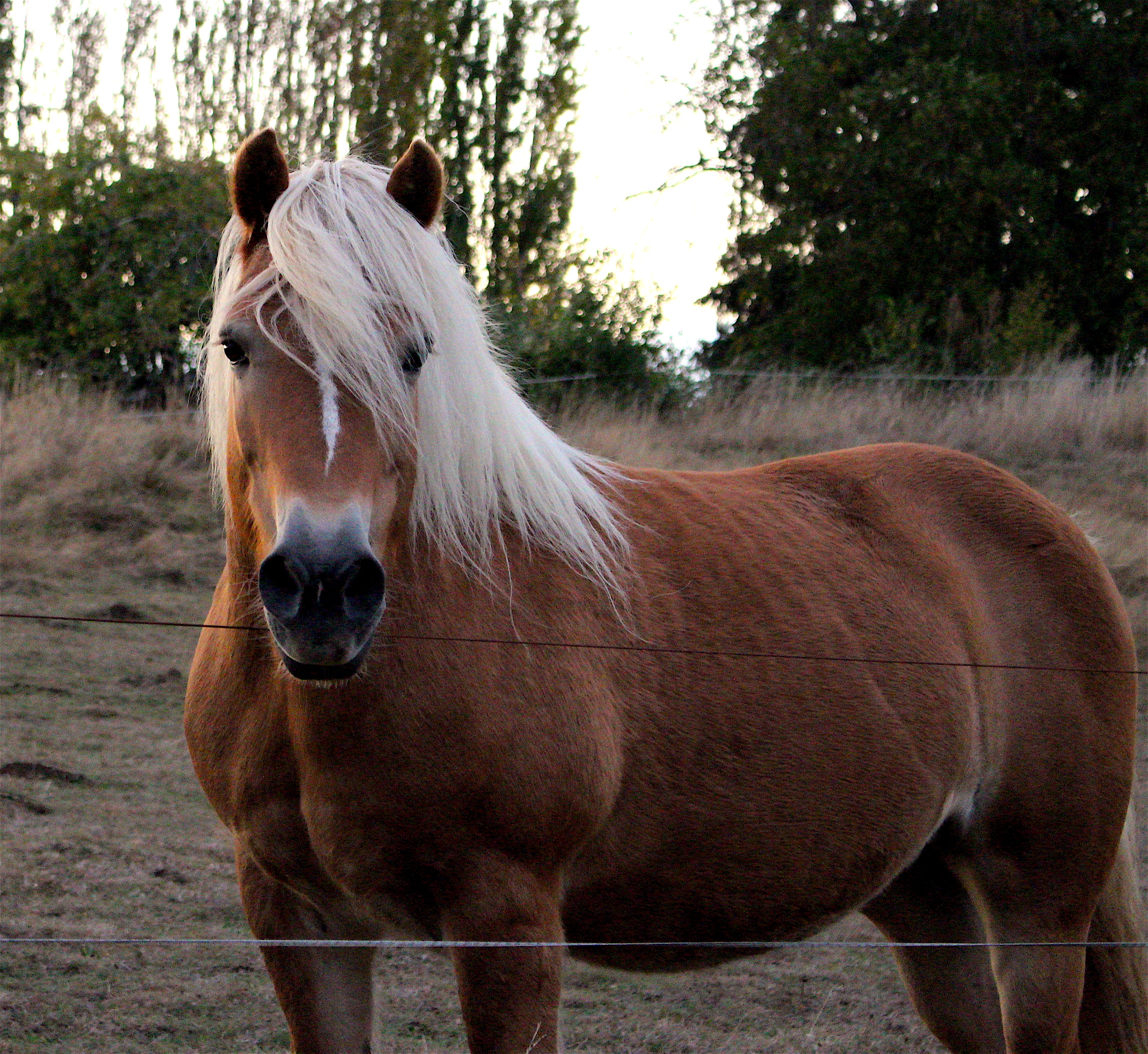
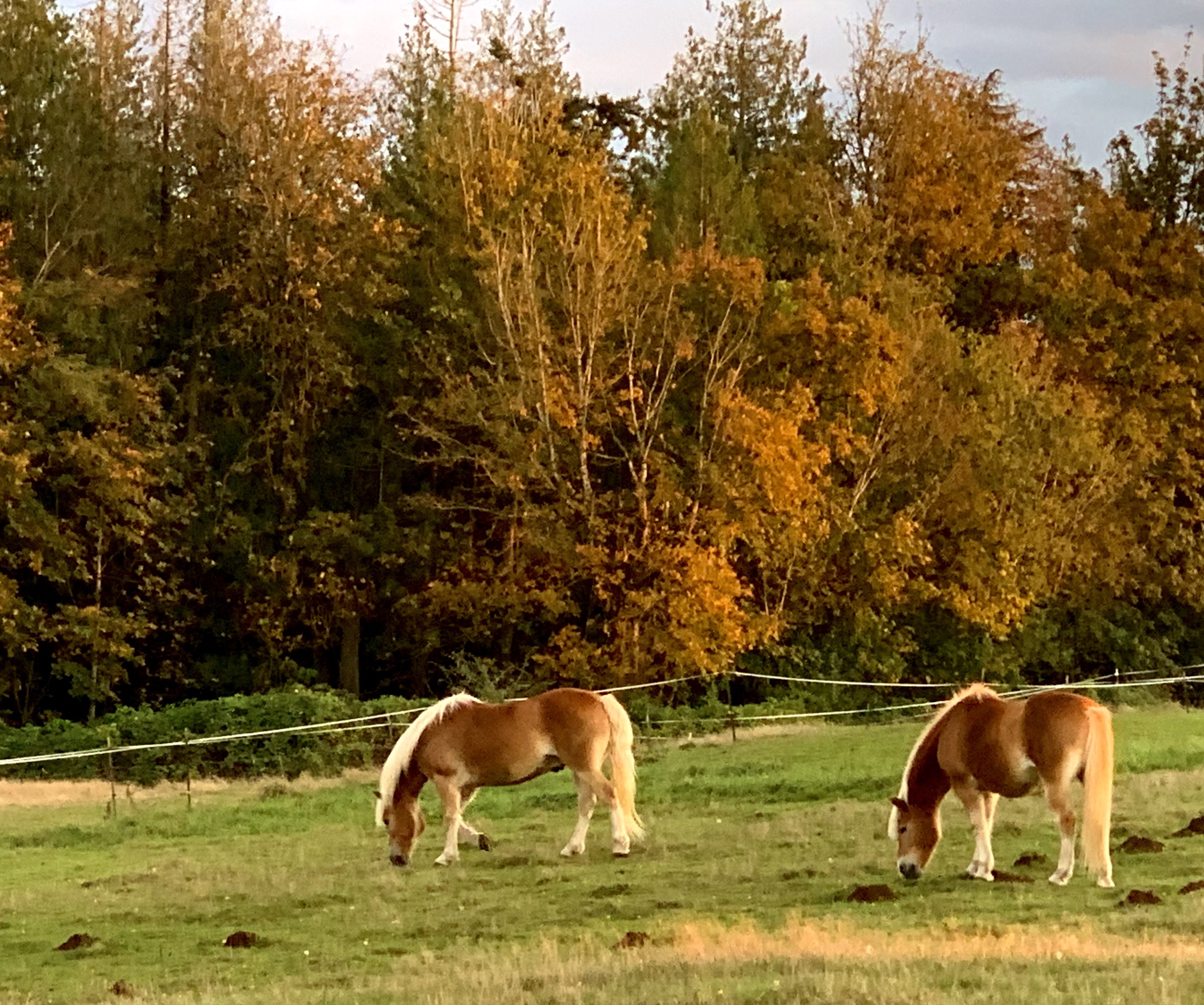
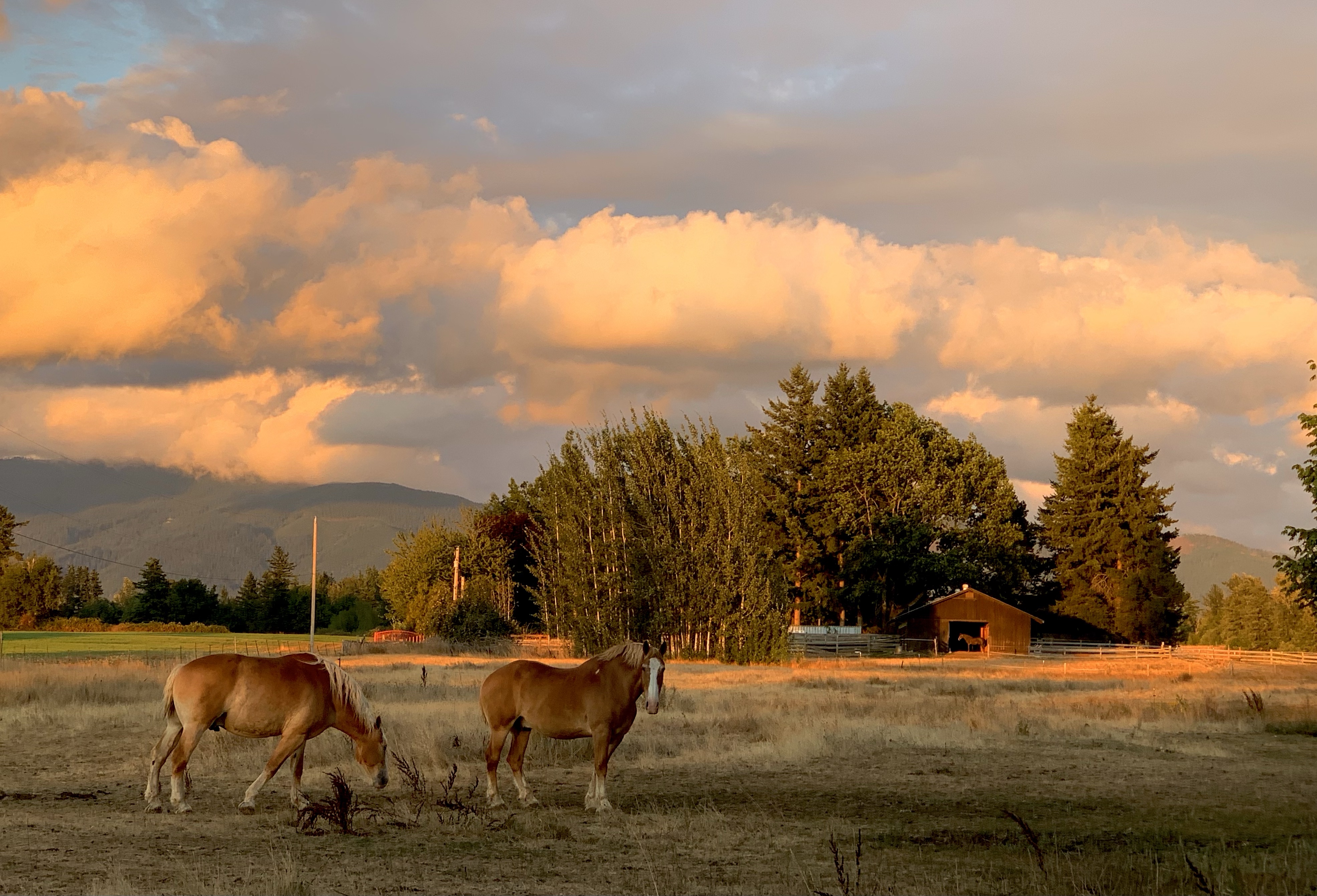
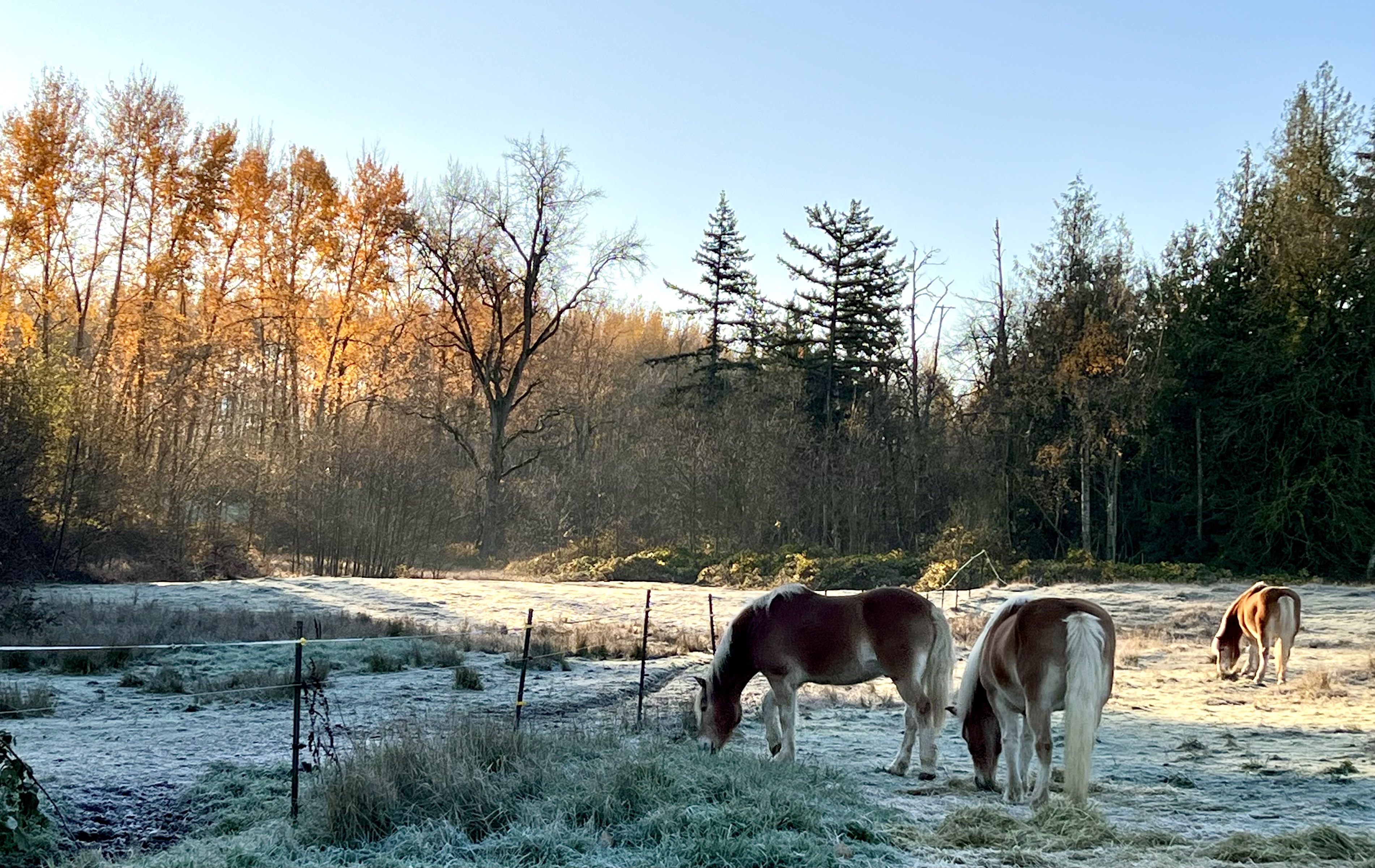
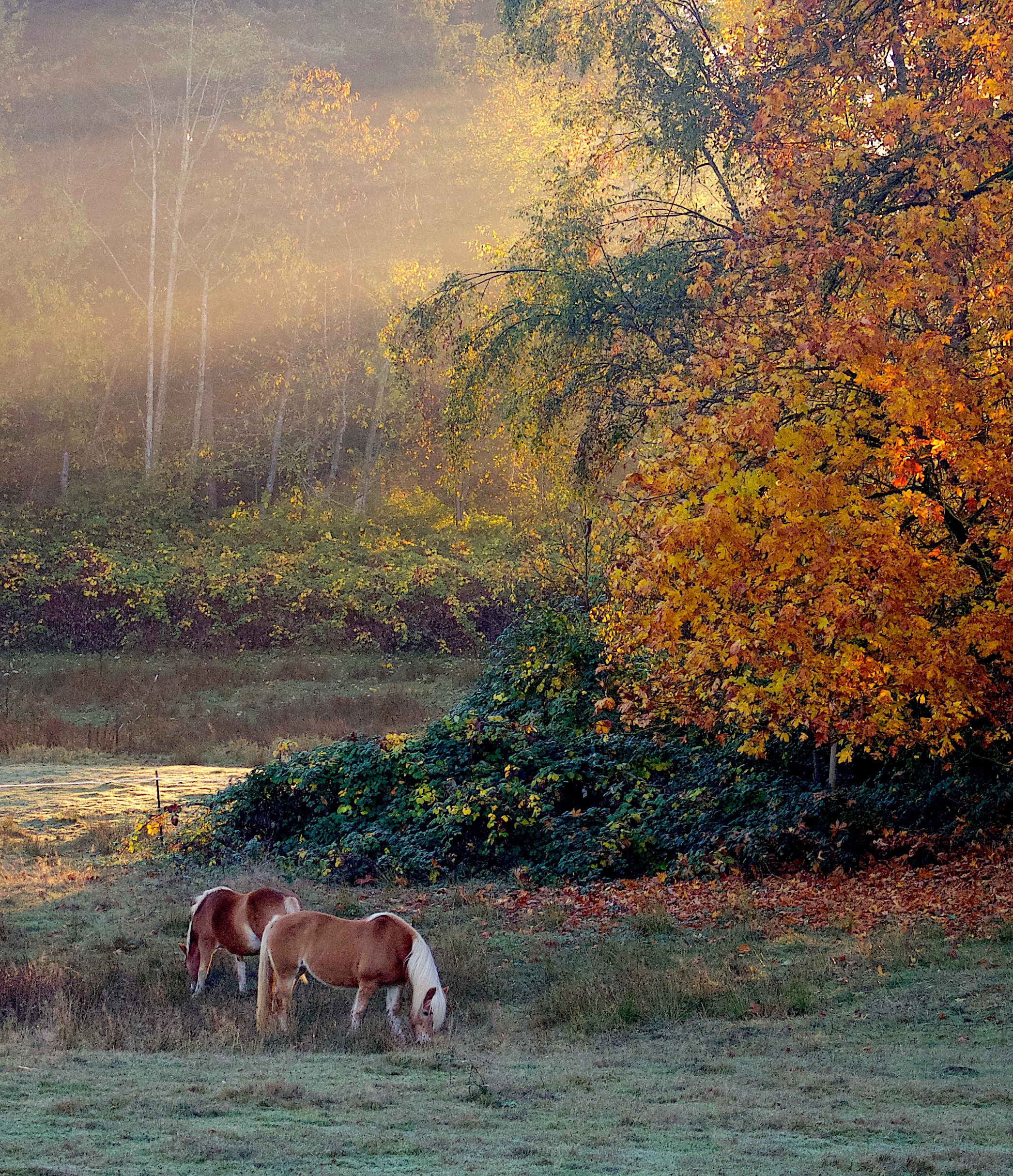
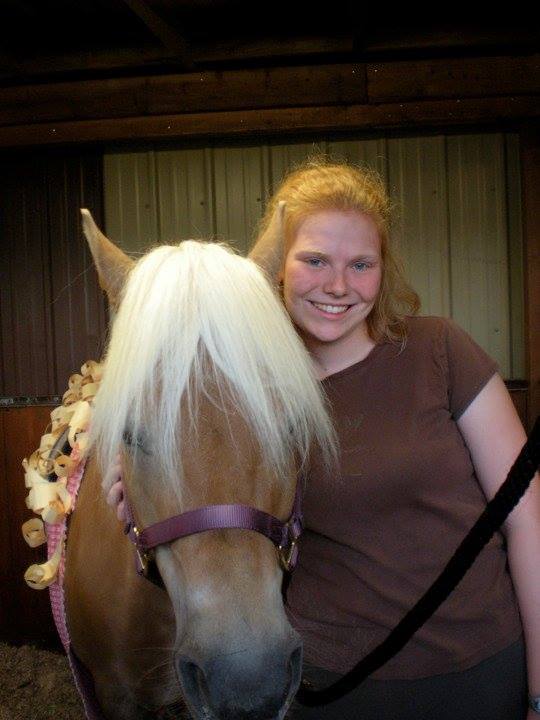
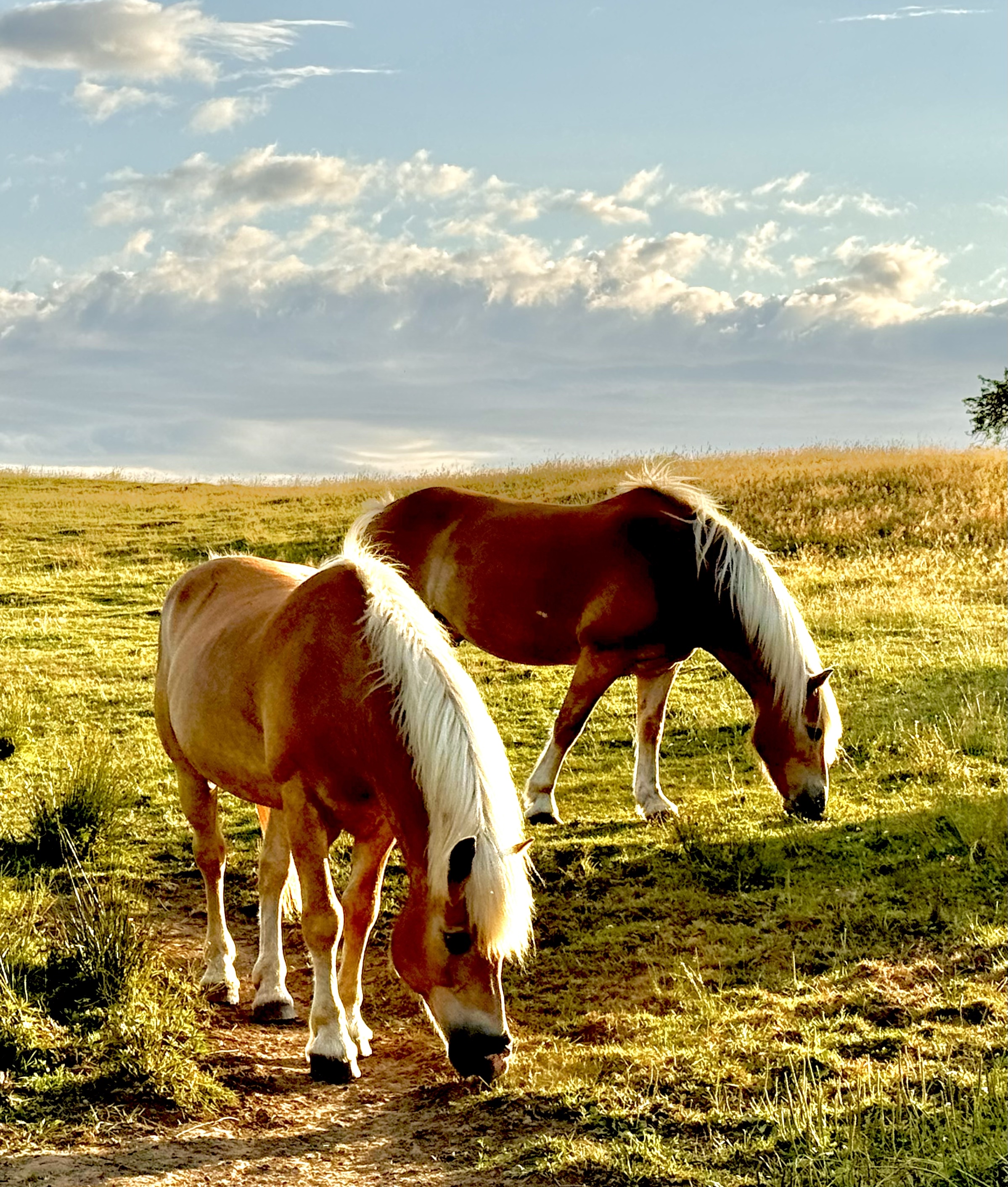
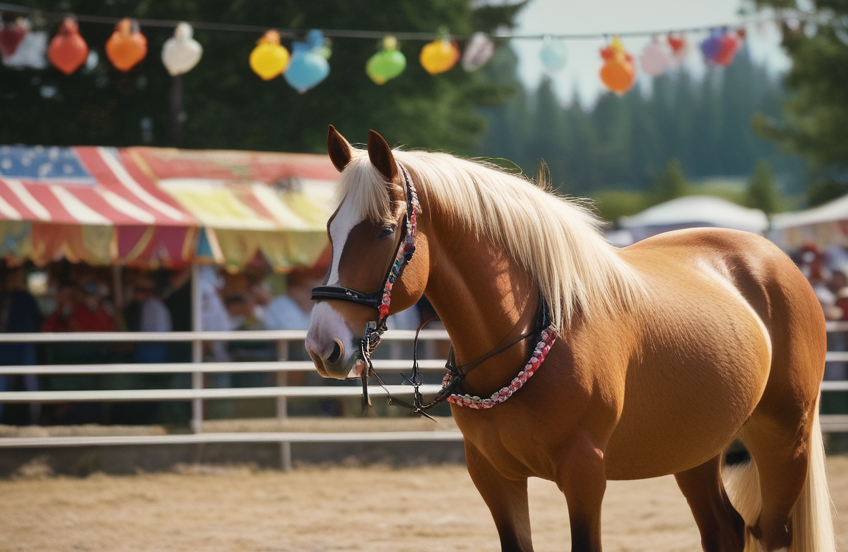
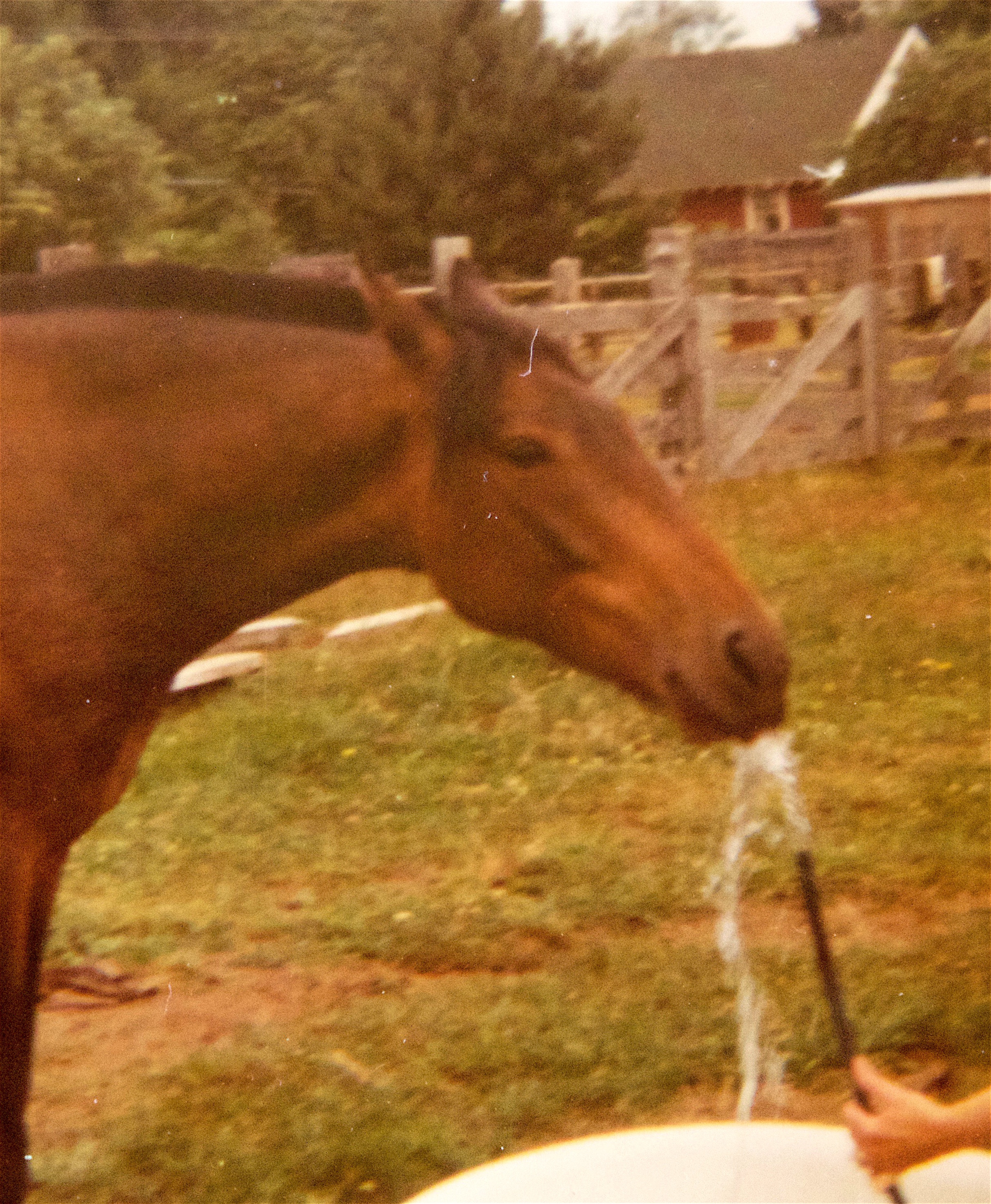
I pick up windfall apples to haul down to the barn for a special treat each night for the Haflingers. These are apples that we humans wouldn’t take a second glance at in all our satiety and fussiness, but the Haflingers certainly don’t mind a bruise, or a worm hole or slug trails over apple skin.
I’ve found over the years that our horses must be taught to eat apples–if they have no experience with them, they will bypass them lying in the field and not give them a second look. There simply is not enough odor to make them interesting or appealing–until they are cut in slices that is. Then they become irresistible and no apple is left alone from that point forward.
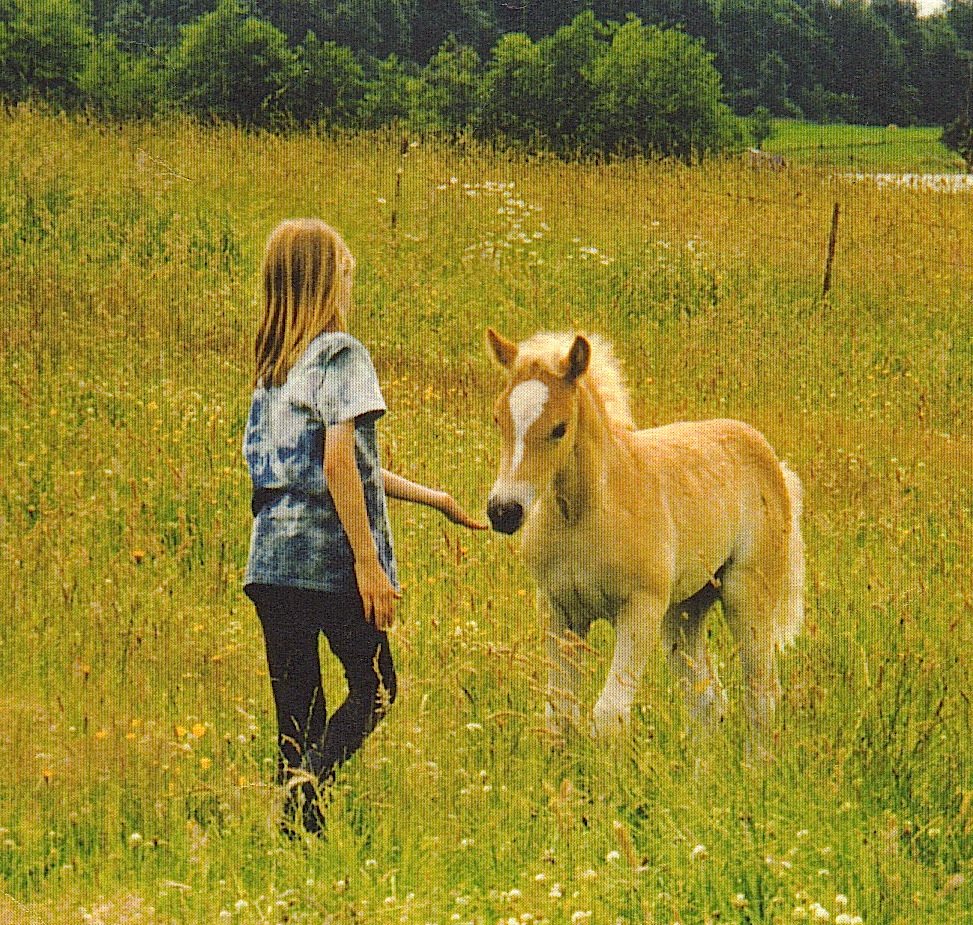
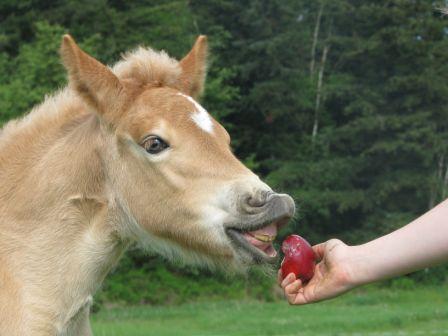
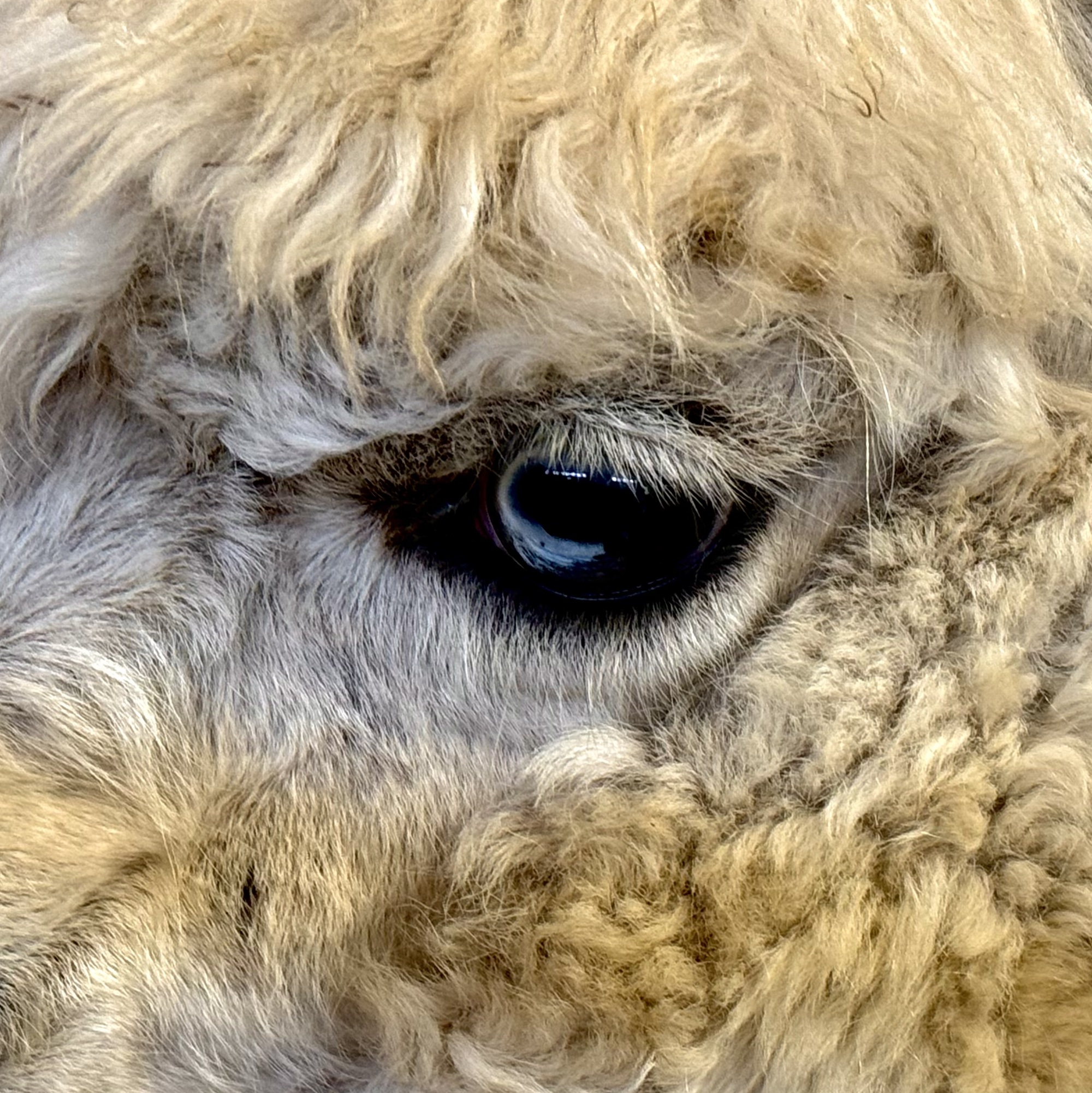
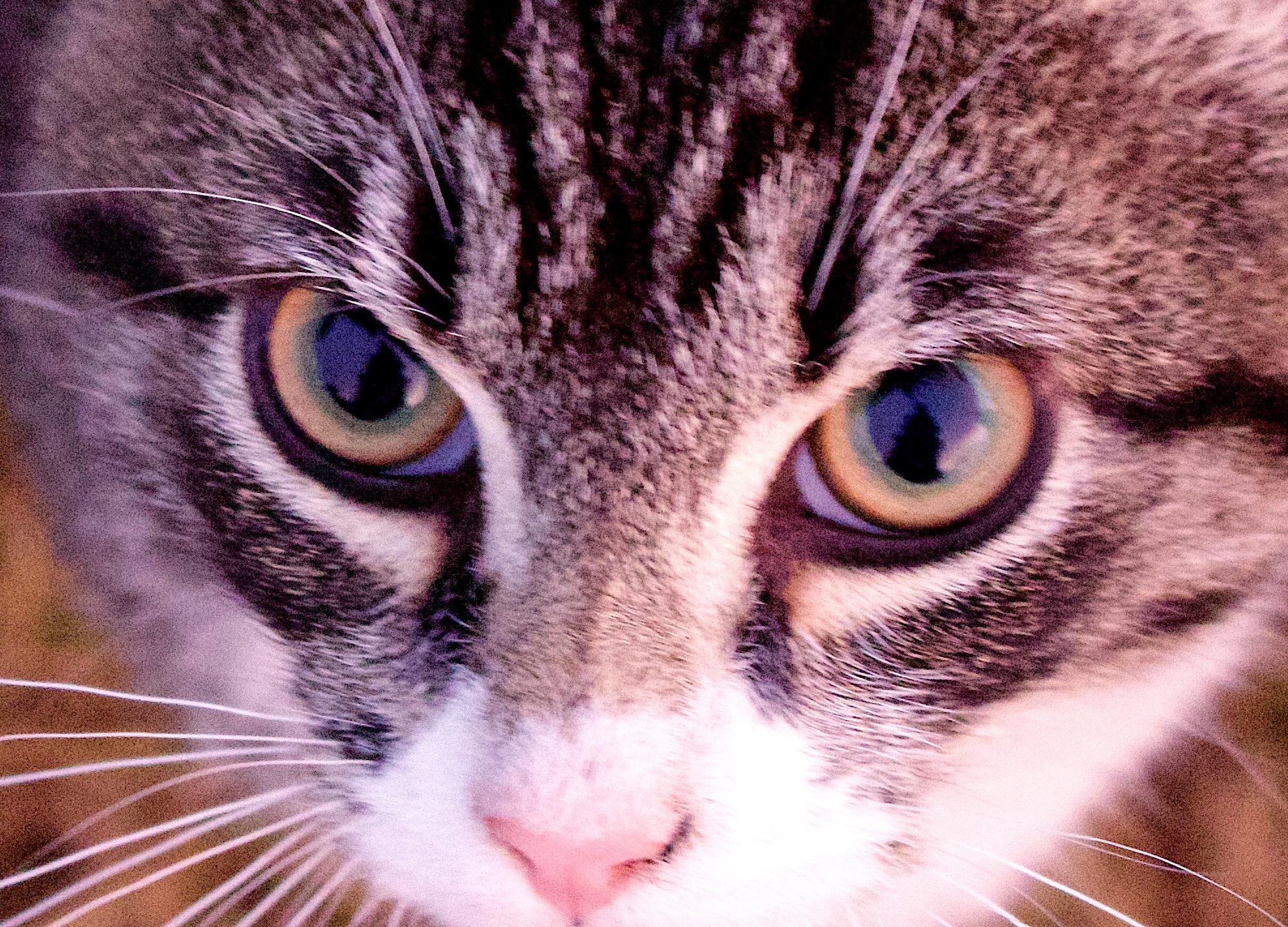
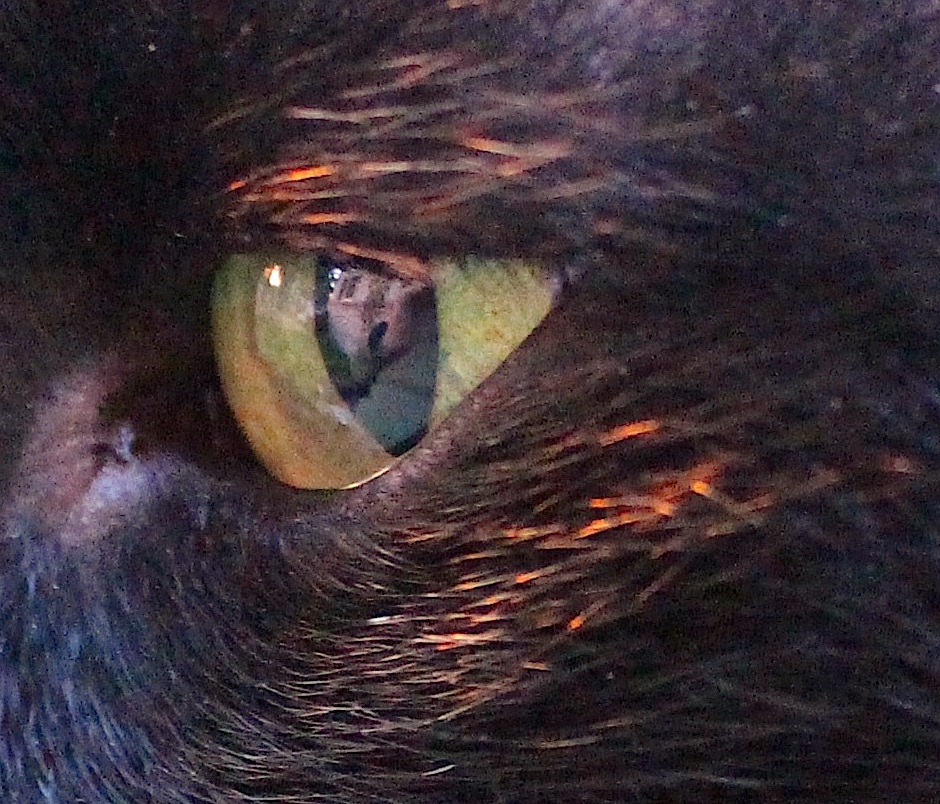
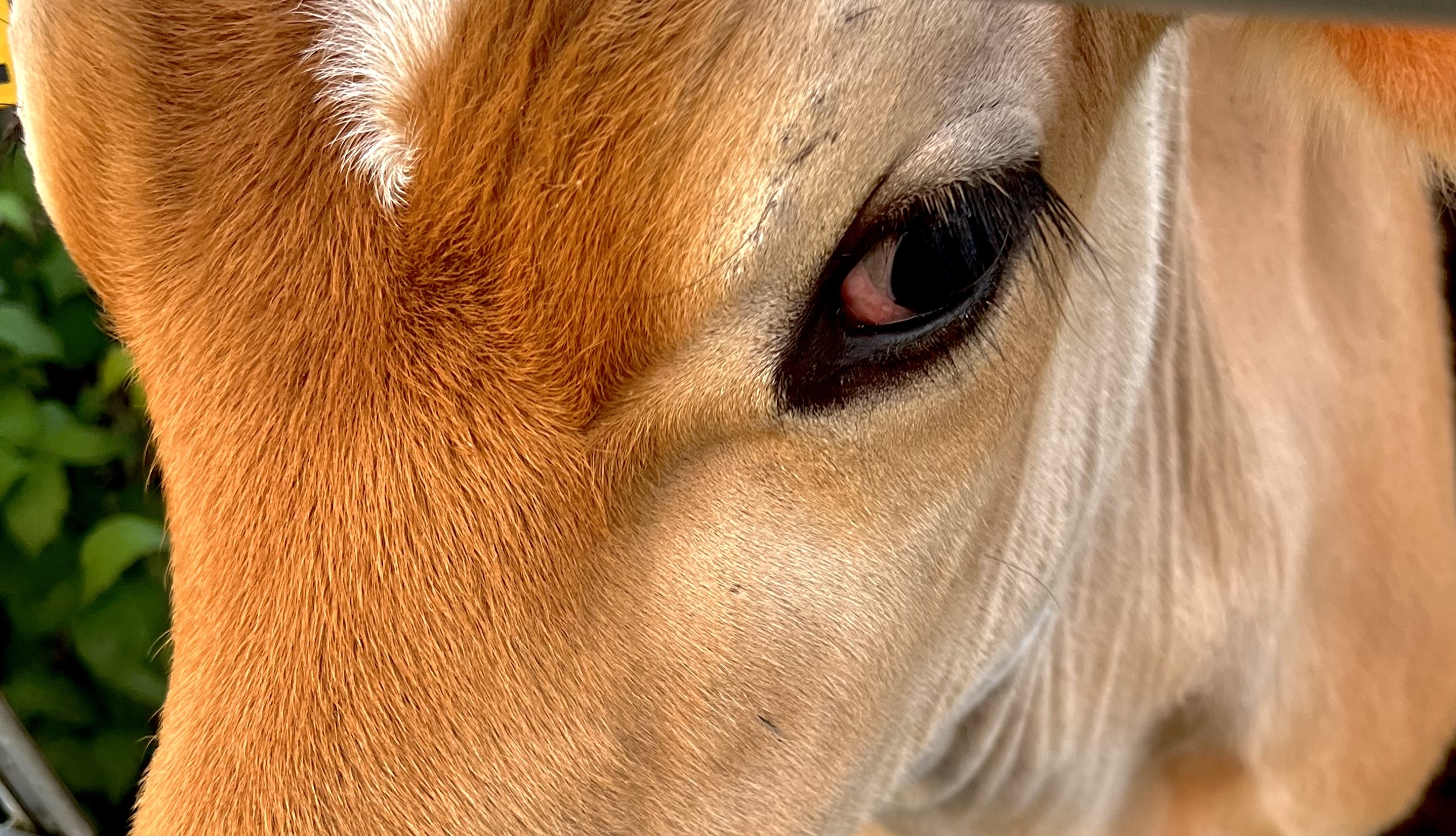
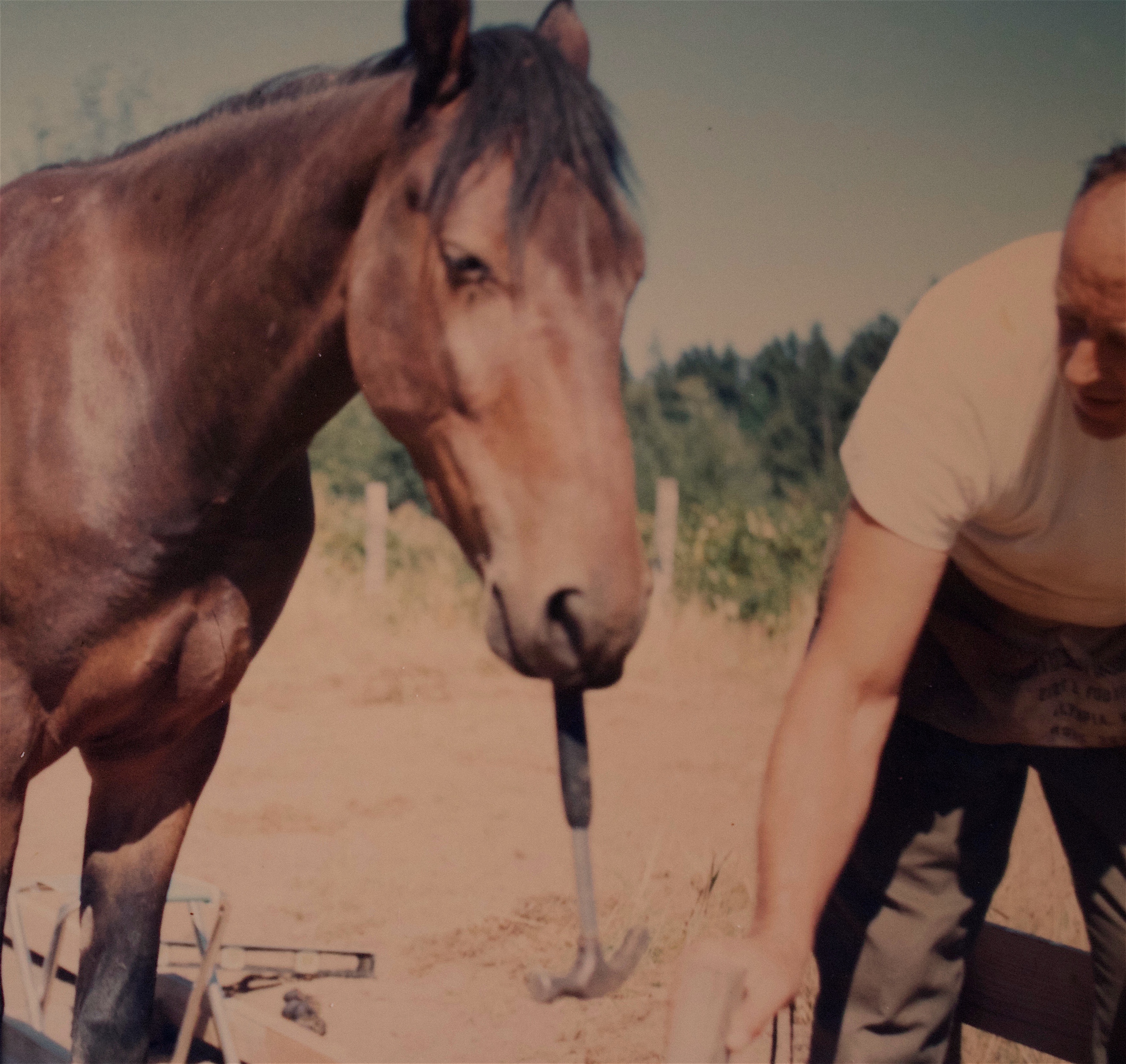
When I offer a whole apple to a young Haflinger who has never tasted one before, they will sniff it, perhaps roll it on my hand a bit with their lips, but I’ve yet to have one simply bite in and try. If I take the time to cut the apple up, they’ll pick up a section very gingerly, kind of hold it on their tongue and nod their head up and down trying to decide as they taste and test it if they should drop it or chew it, and finally, as they really bite in and the sweetness pours over their tongue, they get this look in their eye that is at once surprised and supremely pleased. The only parallel experience I’ve seen in humans is when you offer a five month old baby his first taste of ice cream on a spoon and at first he tightens his lips against its coldness, but once you slip a little into his mouth, his face screws up a bit and then his eyes get big and sparkly and his mouth rolls the taste around his tongue, savoring that sweet cold creaminess. His mouth immediately pops open for more.
It is the same with apples and horses. Once they have that first taste, they are our slaves forever in search of the next apple.
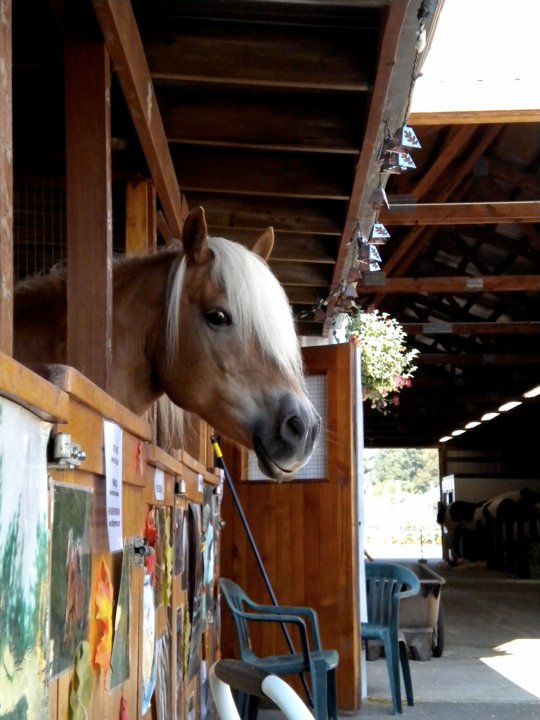
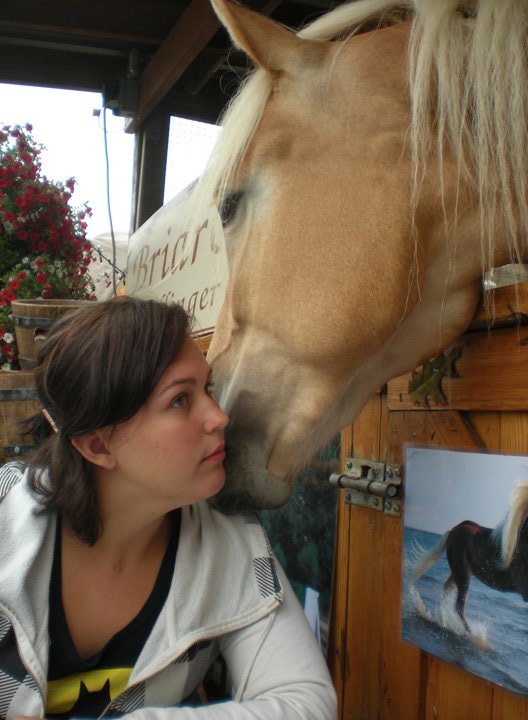
The Haflinger veteran apple eaters can see me coming with my sweat shirt front pocket stuffed with apples, a “pregnant” belly of fruit, as it were. They offer low nickers when I come up to their stalls and each horse has a different approach to their apple offering.
There is the “bite a little bit at a time” approach, which makes the apple last longer, and tends to be less messy in the long run. There is the “bite it in half” technique which leaves half the apple in your hand as they navigate the other half around their teeth, dripping and frothing sweet apple slobber. Lastly there is the greedy “take the whole thing at once” horse, which is the most challenging way to eat an apple, as it has to be moved back to the molars, and crunched, and then moved around the mouth to chew up the large pieces, and usually half the apple ends up falling to the ground, with all the foam that the juice and saliva create. No matter the technique used, the smell of an apple as it is being chewed by a horse is one of the best smells in the world. I can almost taste the sweetness too when I smell that smell.
What do we do when offered such a sublime gift from Someone’s hand? If it is something we have never experienced before, we possibly walk right by, not recognizing that it is a gift at all, missing the whole point and joy of experiencing what is being offered. How many wonderful opportunities are right under our noses, but we fail to notice, and bypass them because they are unfamiliar?
Perhaps if the Giver really cares enough to “teach” us to accept this gift of sweetness, by preparing it and making it irresistible to us, then we are overwhelmed with the magnitude of the generosity and are transformed by the simple act of receiving.
We must learn to take little bites, savoring each piece one at a time, making it last rather than greedily grab hold of the whole thing, struggling to control it, thereby losing some in the process. Either way, it is a gracious gift, and how we receive it makes all the difference.
AI image created for this post
The tree of life my soul hath seen, Laden with fruit and always green; The trees of nature fruitless be, Compared with Christ the Apple Tree.
His beauty doth all things excel, By faith I know but ne’er can tell The glory which I now can see, In Jesus Christ the Appletree.
For happiness I long have sought, And pleasure dearly I have bought; I missed of all but now I see ‘Tis found in Christ the Appletree.
I’m weary with my former toil – Here I will sit and rest awhile, Under the shadow I will be, Of Jesus Christ the Appletree.
With great delight I’ll make my stay, There’s none shall fright my soul away; Among the sons of men I see There’s none like Christ the Appletree.
I’ll sit and eat this fruit divine, It cheers my heart like spirit’al wine; And now this fruit is sweet to me, That grows on Christ the Appletree.
This fruit doth make my soul to thrive, It keeps my dying faith alive; Which makes my soul in haste to be With Jesus Christ the Appletree.
One-Time
Monthly
Yearly
Make a one-time or recurring donation to support daily Barnstorming posts
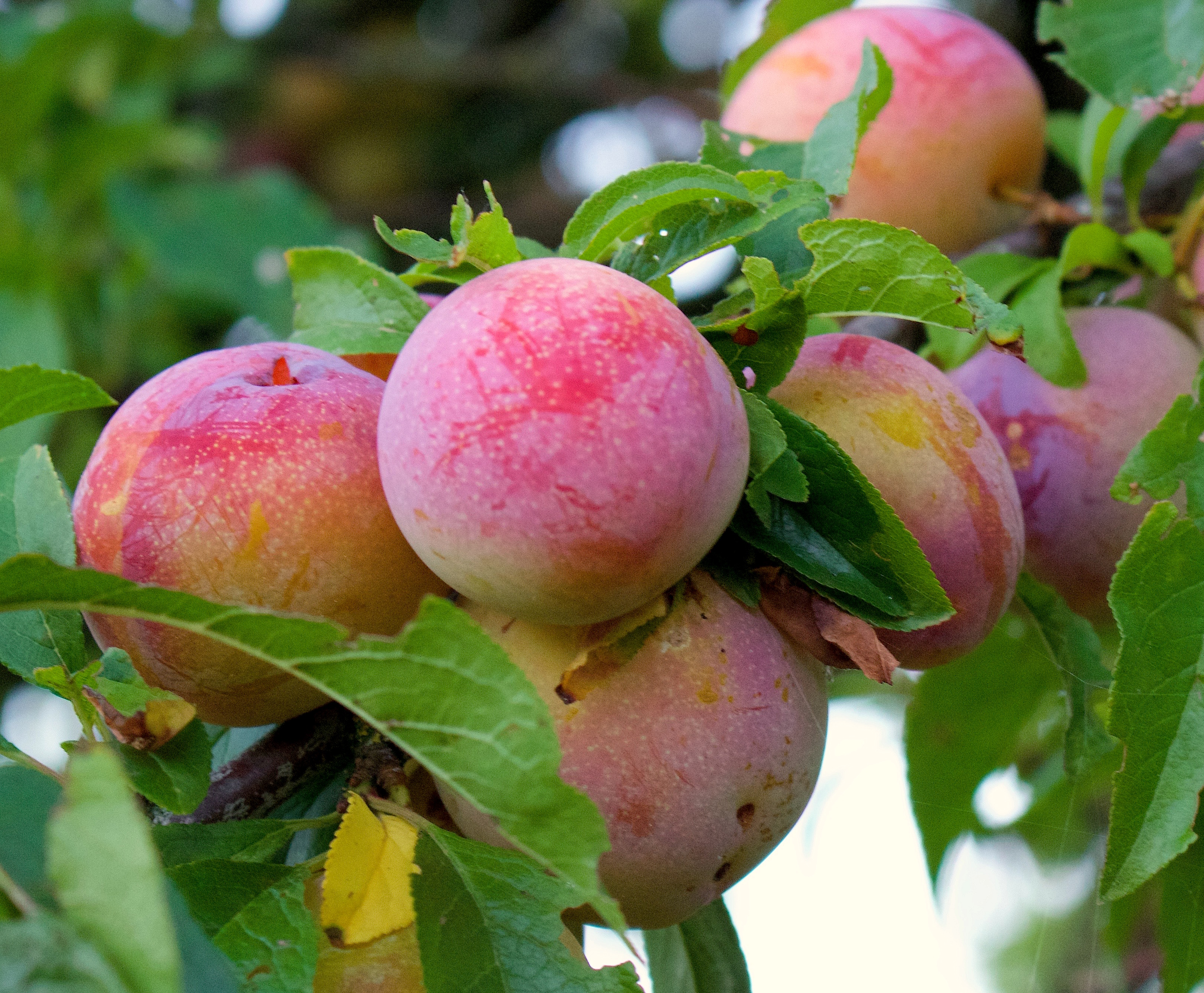
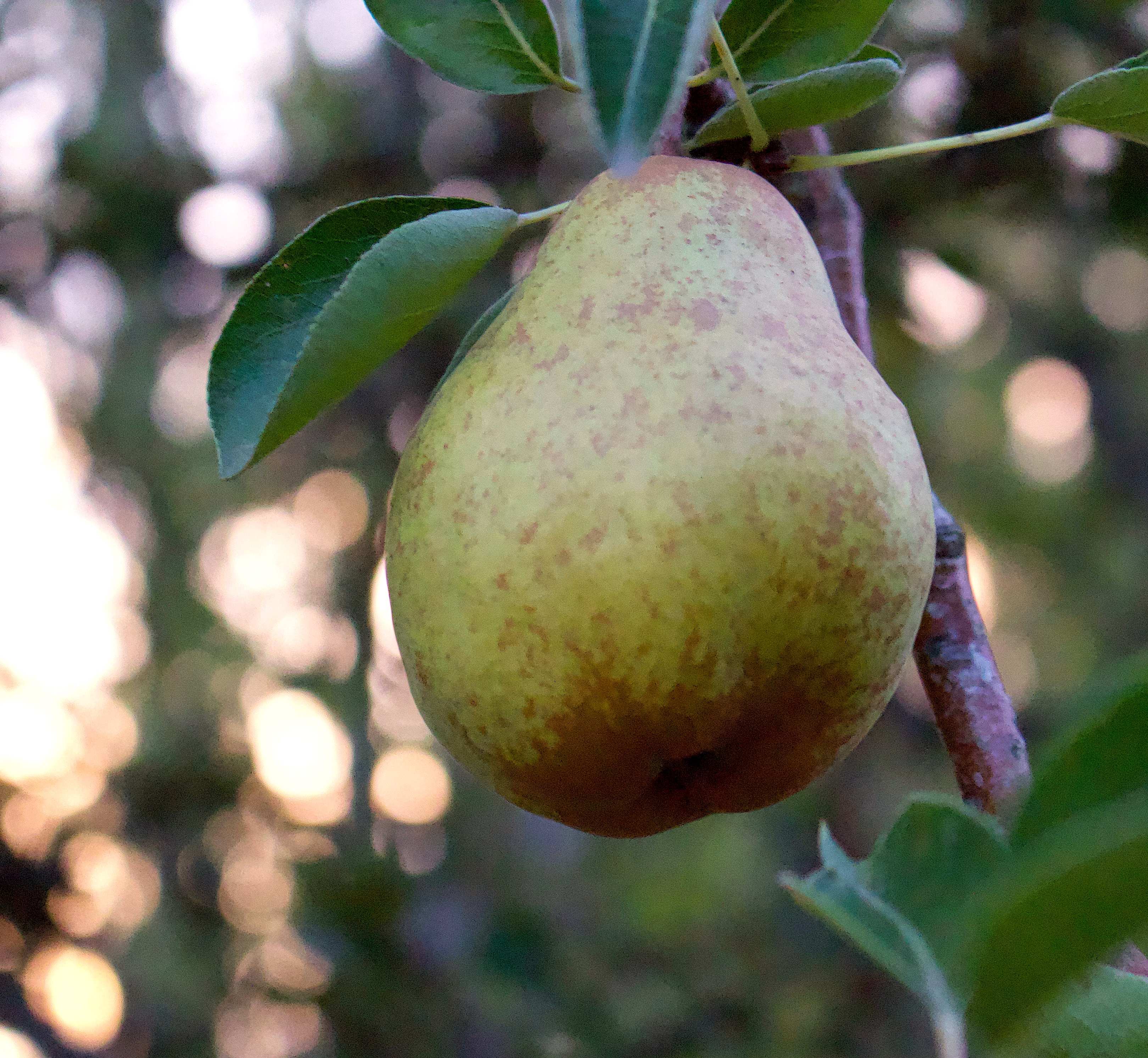
…the golden hour of the clock of the year. Everything that can run to fruit has already done so: round apples, oval plums, bottom-heavy pears, black walnuts and hickory nuts annealed in their shells, the woodchuck with his overcoat of fat. Flowers that were once bright as a box of crayons are now seed heads and thistle down. All the feathery grasses shine in the slanted light. It’s time to bring in the lawn chairs and wind chimes, time to draw the drapes against the wind, time to hunker down. Summer’s fruits are preserved in syrup, but nothing can stopper time. No way to seal it in wax or amber; it slides though our hands like a rope of silk. At night, the moon’s restless searchlight sweeps across the sky. ~Barbara Crooker “And Now it’s October” from Small Rain.
I do try to stopper time.
I try every day on this page, not to suspend time or render it frozen, but like flowers and fruit that wither, I want to preserve these moments – a few harvested words and pictures to sample some chilly day.
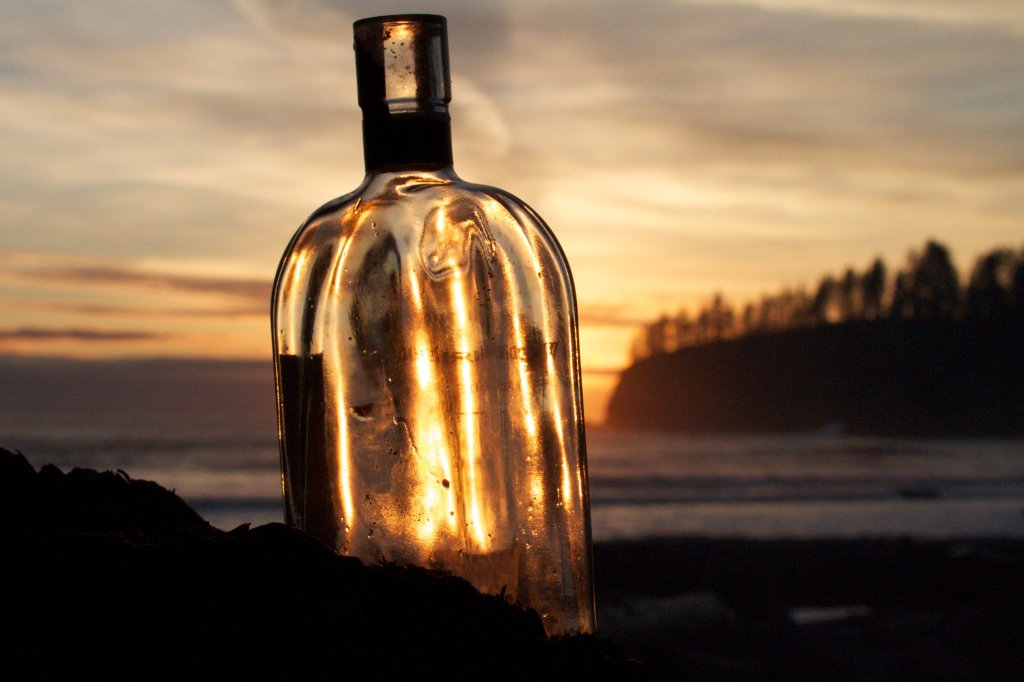
I offer it up to you now, a bit of fragrance, to sip of its sweetness as it glows, luminous in the bottle.
Let’s share. Leave it unstoppered. The passage of time is meant to be preserved this way.
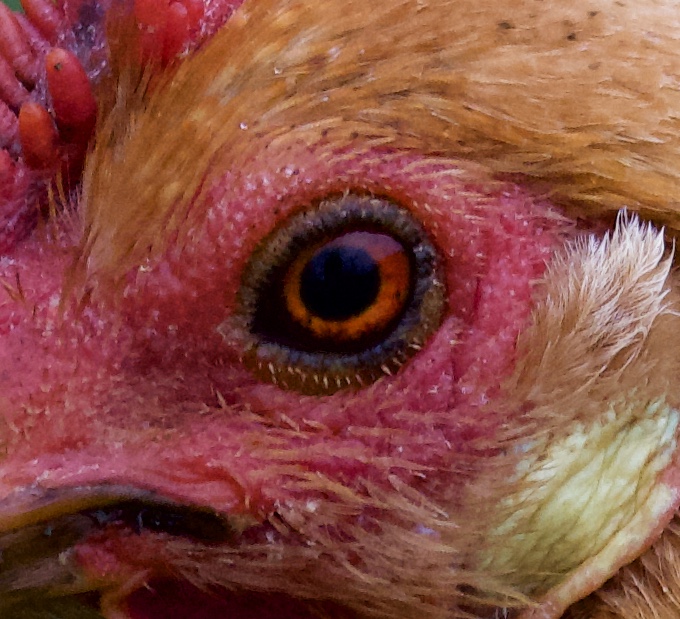
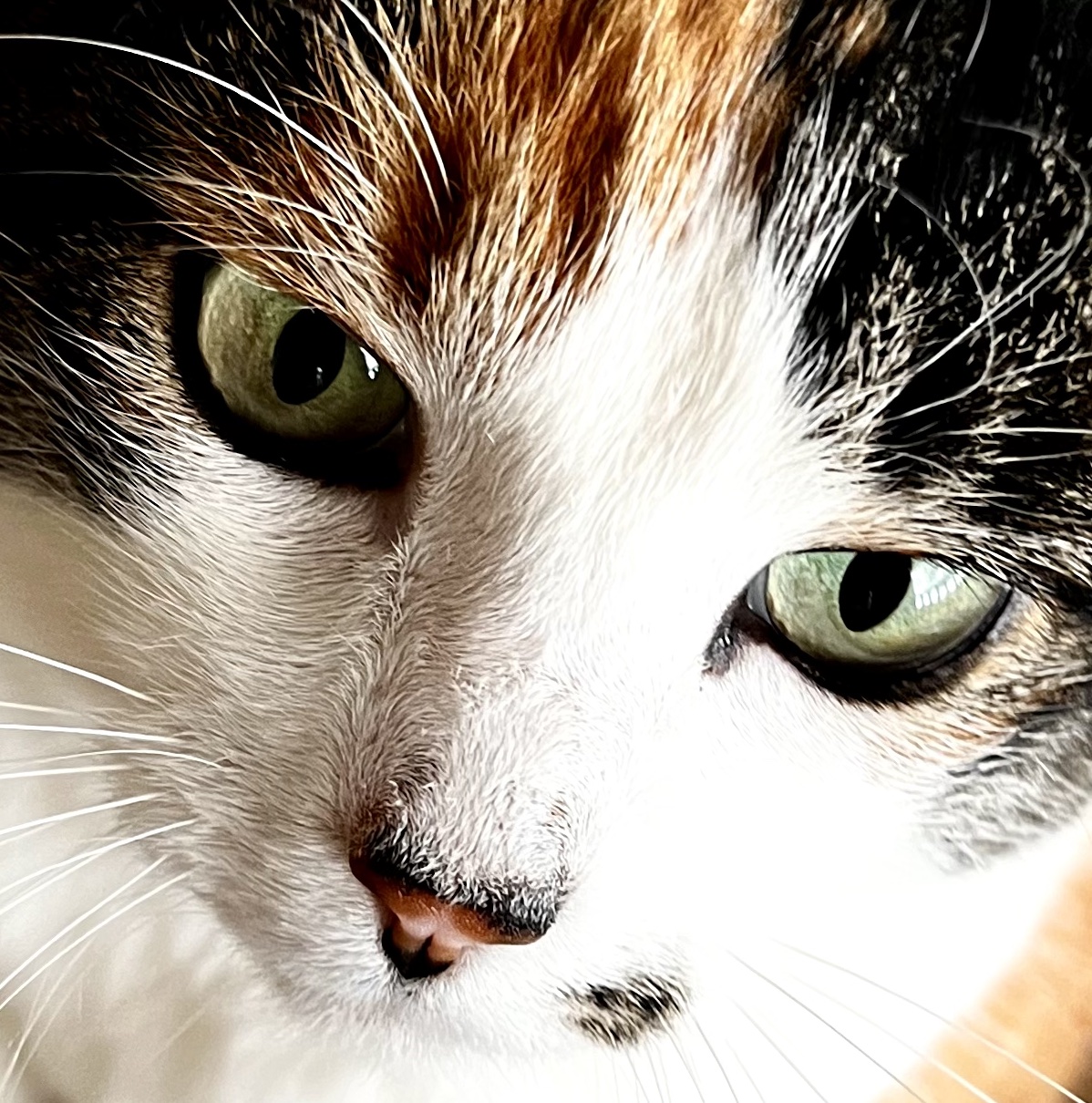
When we look long at one another, we soften, we relent, listen,
might forgive. We allow for silence —and when we see each other,
are known, and in that moment might change
though nothing has moved or been spoken.
There are some who say the walls cannot be broken,
but suddenly we are in a free place, and the fields
that extend from its center stretch for miles
as if out of the pupil and the iris of that momentary kingdom. ~Annie Lighthart “When We Look” from Pax
The weasel was stunned into stillness as he was emerging from beneath an enormous shaggy wild rose bush four feet away. I was stunned into stillness twisted backward on the tree trunk. Our eyes locked, and someone threw away the key.
Our look was as if two lovers, or deadly enemies, met unexpectedly on an overgrown path when each had been thinking of something else: a clearing blow to the gut.
It was also a bright blow to the brain, or a sudden beating of brains, with all the charge and intimate grate of rubbed balloons. It emptied our lungs. It felled the forest, moved the fields, and drained the pond; the world dismantled and tumbled into that black hole of eyes.
If you and I looked at each other that way, our skulls would split and drop to our shoulders. But we don’t. We keep our skulls. So. ~Annie Dillard from “Living Like Weasels”
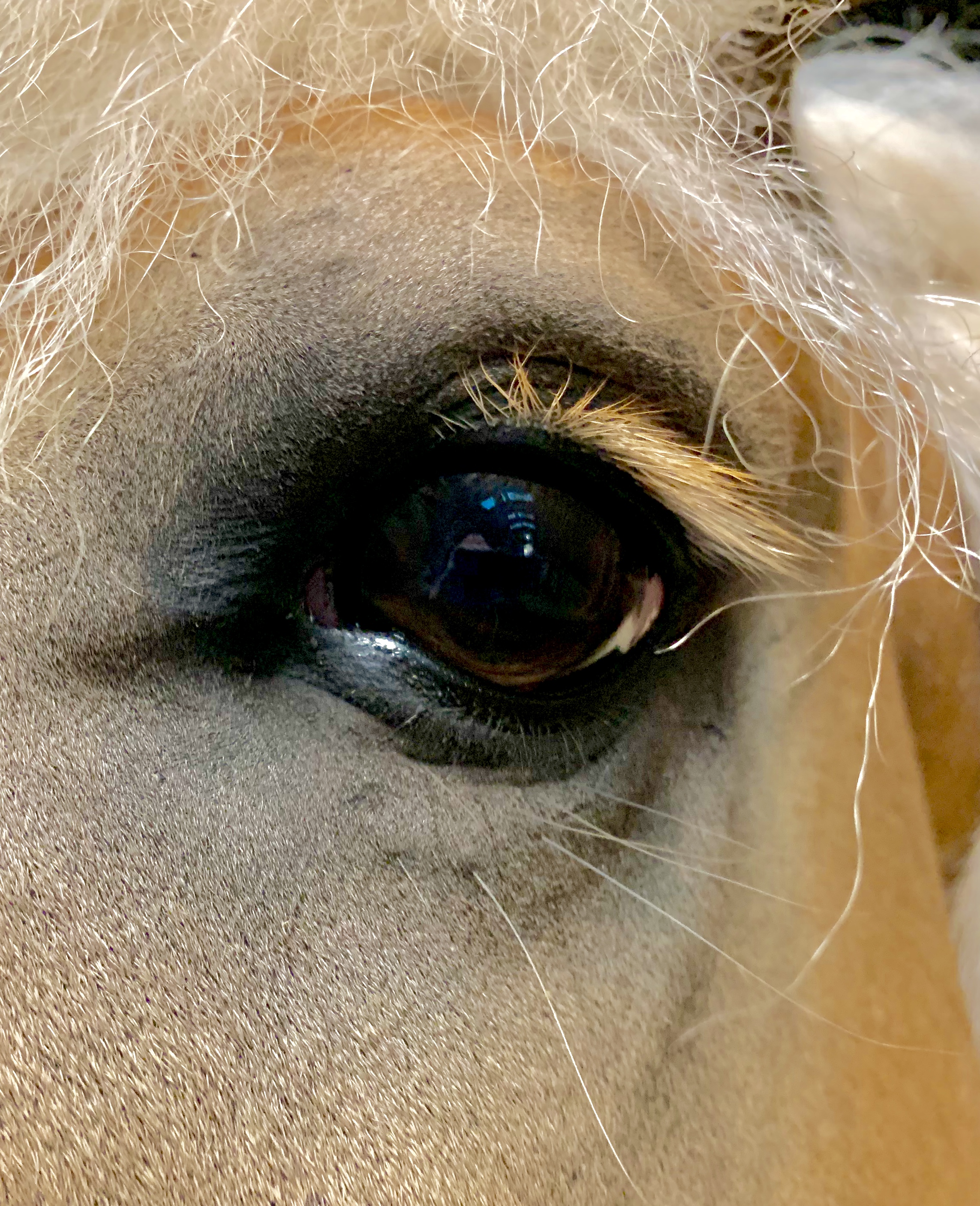
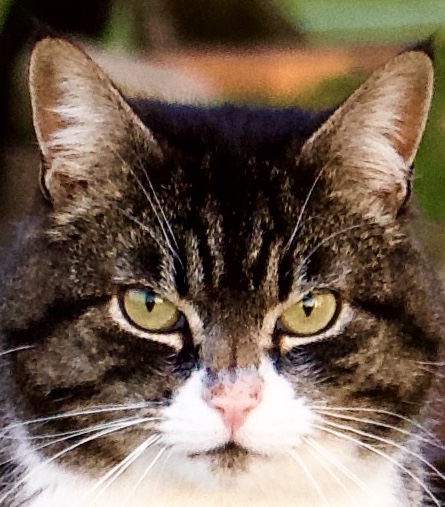
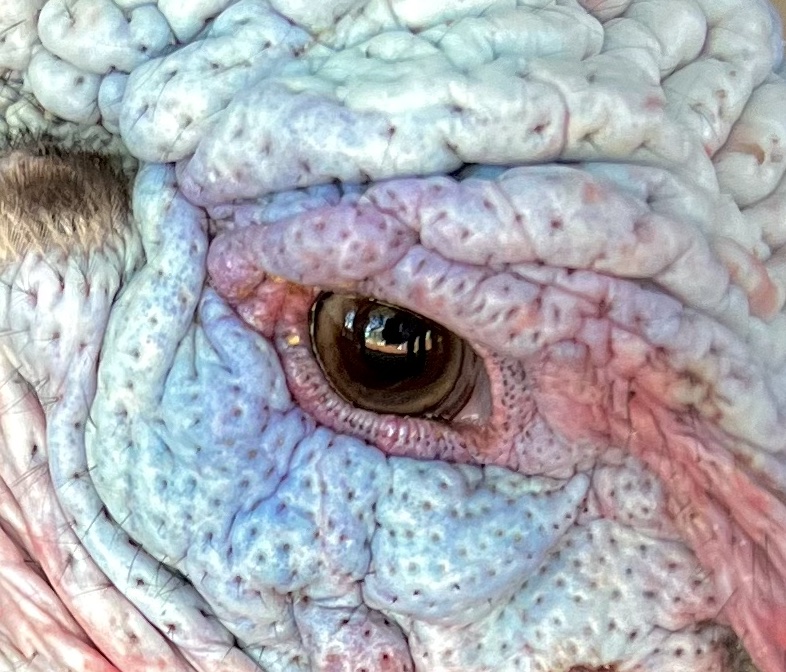
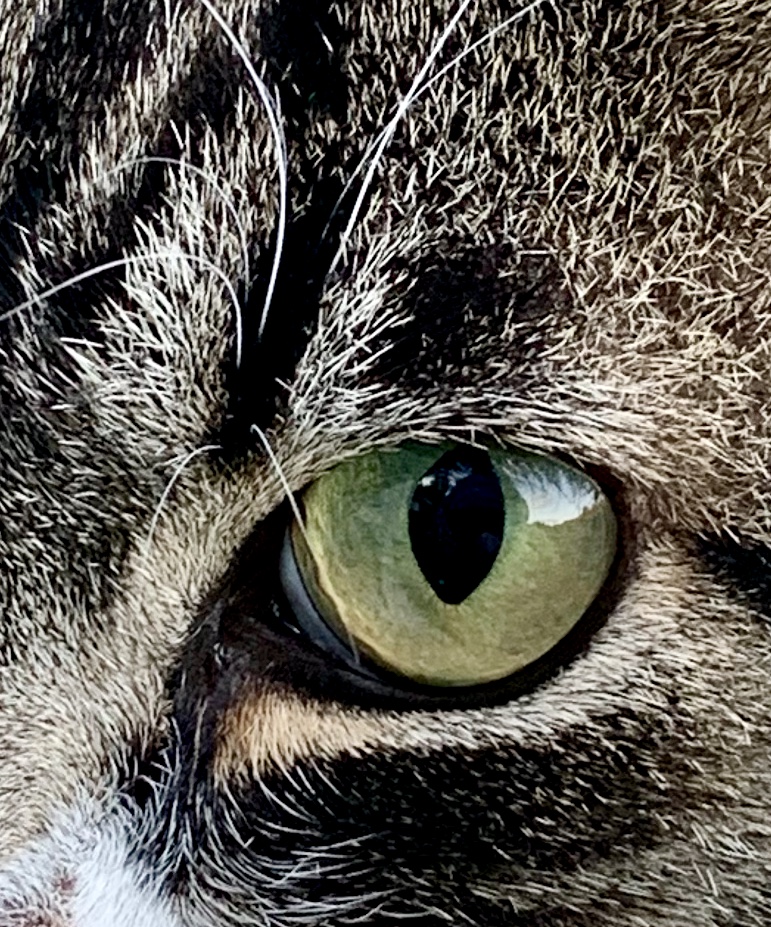
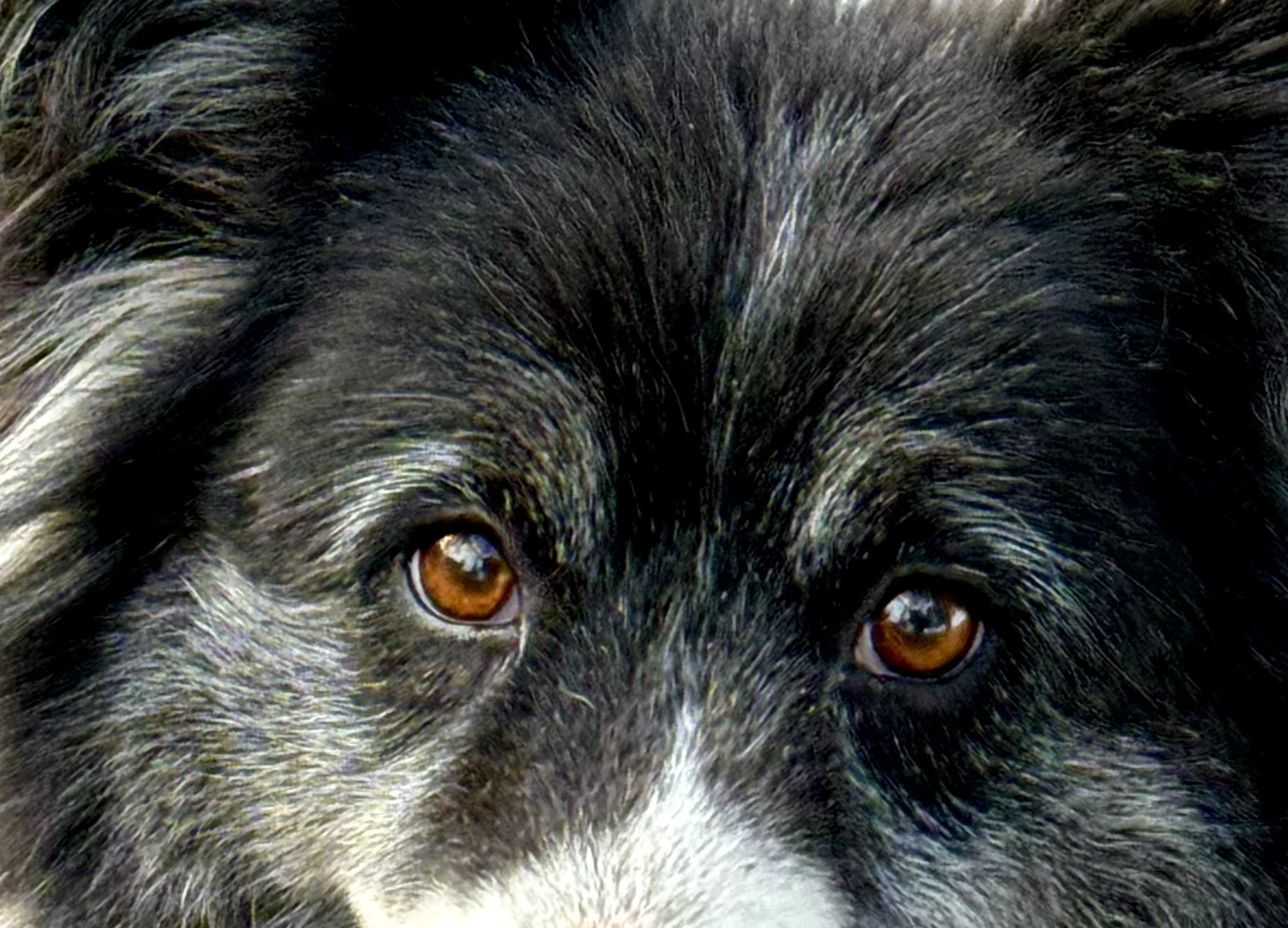
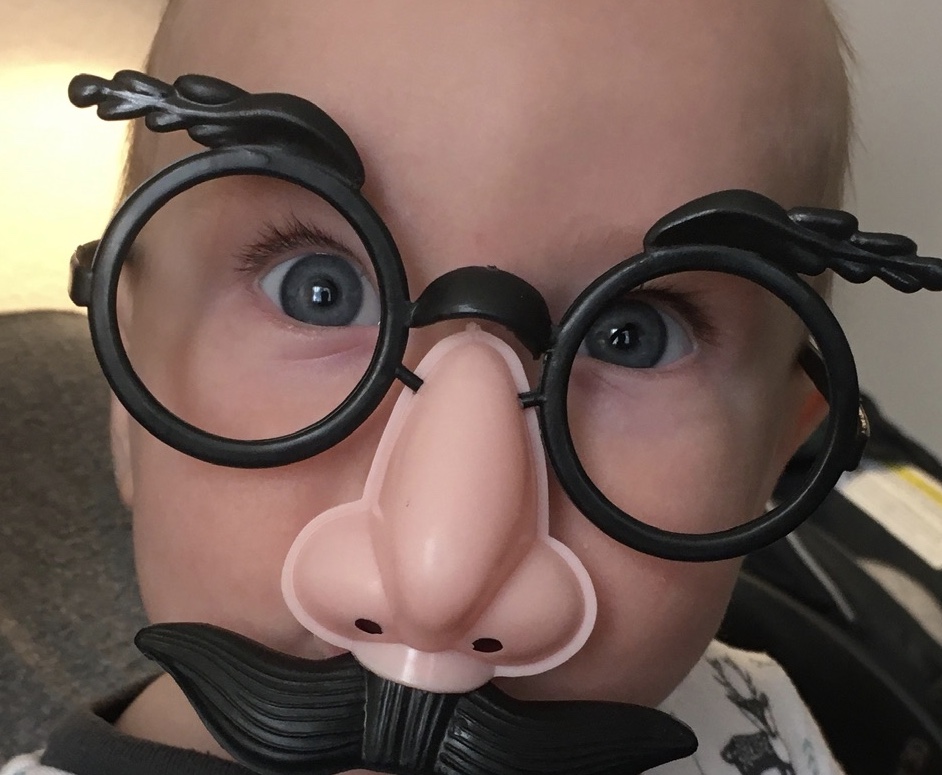
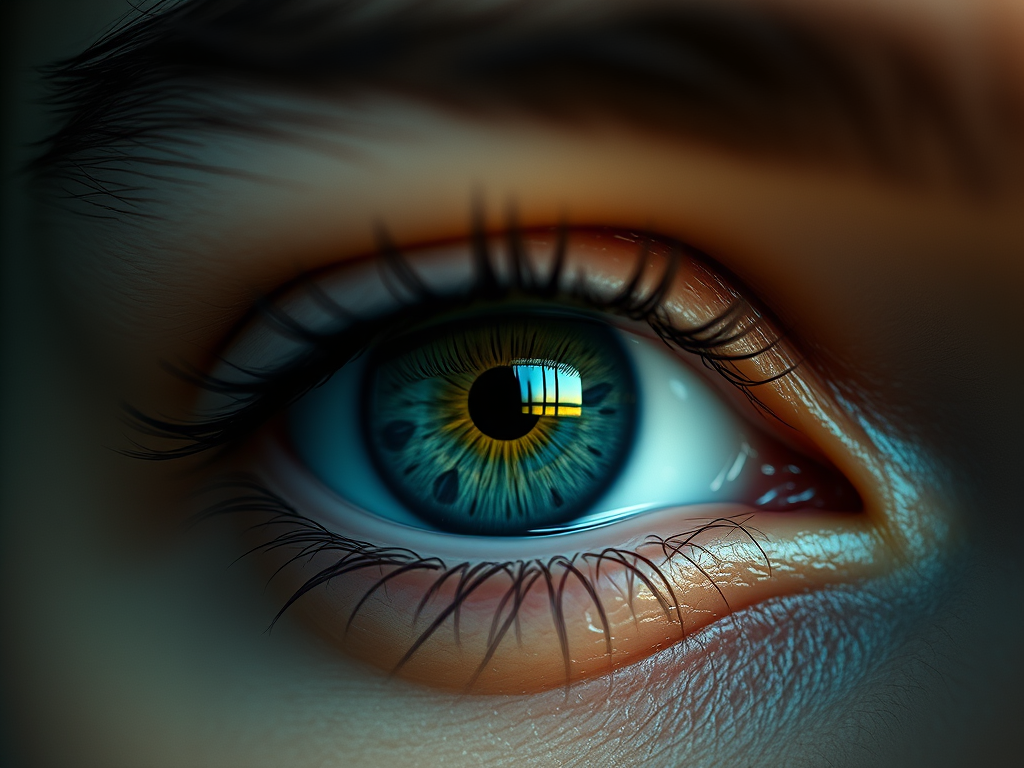
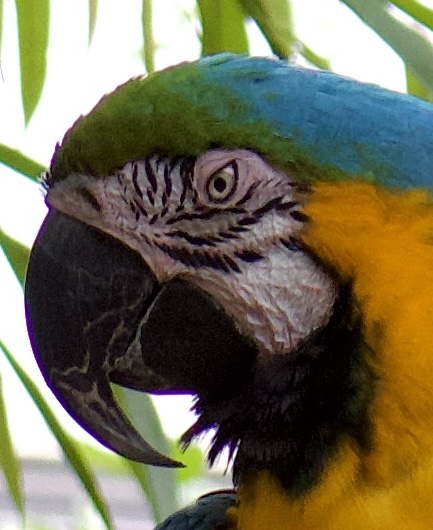
The pupil and iris are a portal to our thoughts, our dreams, our passions and our fears. They are simultaneously window and mirror, revealing feelings we try to keep to ourselves.
Locking eyes can be one of the most thrilling, stomach-butterflies, ecstatic moments of connection. It can be tender, loving, reassuring and encouraging.
Or it can be intimidating and terrifying. I tend to avoid eye contact when passing a stranger on a dark street, or when engaged in a very stressful public interaction. I don’t want to reveal my insecurity, vulnerability, or worry through direct eye contact. While studying primates in Africa, I learned never to look a baboon in the eye as it can communicate aggression and instigate an attack.
So instead, I learned to look at my feet.
I’d much rather lock eyes and learn everything I can about you. I want to dive deep into who you are, breaking down the walls and dismantle the barriers that keep us apart from one another. Then I’m letting you in too. The black holes of our inner universe.
After all, this is preparation when we see the face of God and allow Him to lock into our eyes, knowing our truth.
No keys needed forevermore.
AI image created for this post
One-Time
Monthly
Yearly
Make a one-time or recurring donation to support daily Barnstorming posts
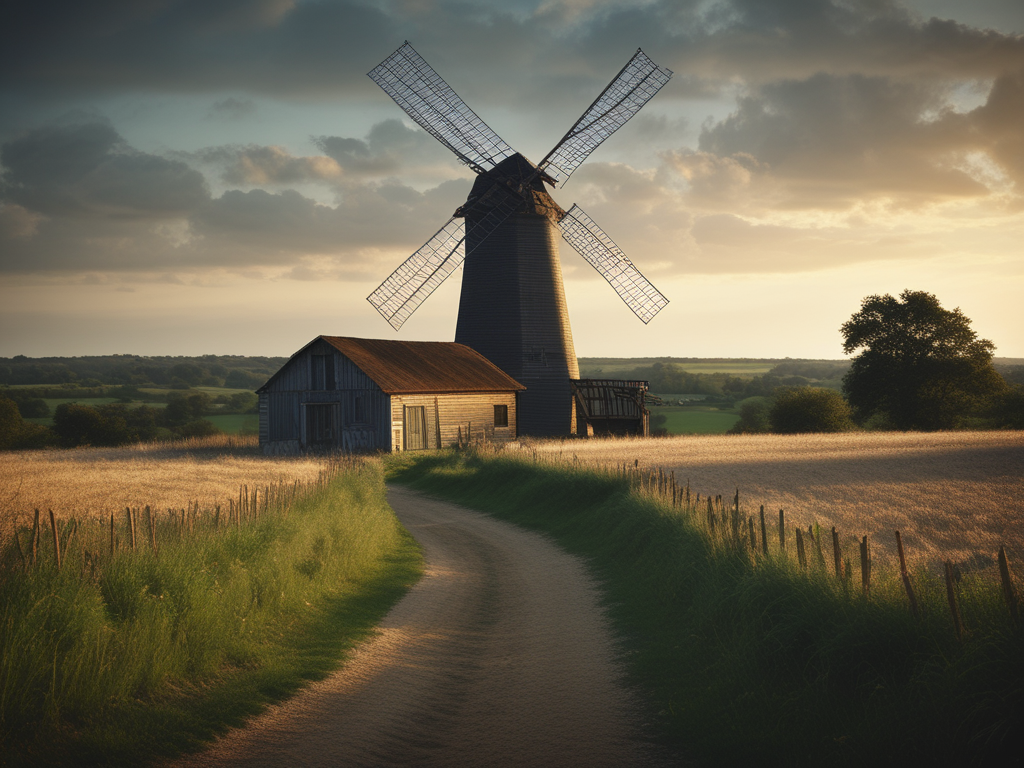
A sudden light transfigures a trivial thing, a weather-vane, a wind-mill, a winnowing flail, the dust in the barn door; a moment,- – and the thing has vanished, because it was pure effect; but it leaves a relish behind it, a longing that the accident may happen again. ~Walter Pater from “The Renaissance”
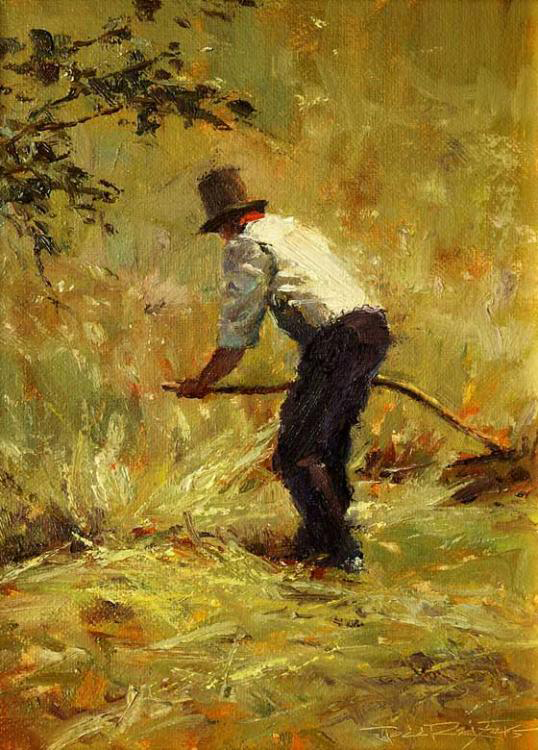
Man Scything Hay by Todd Reifers
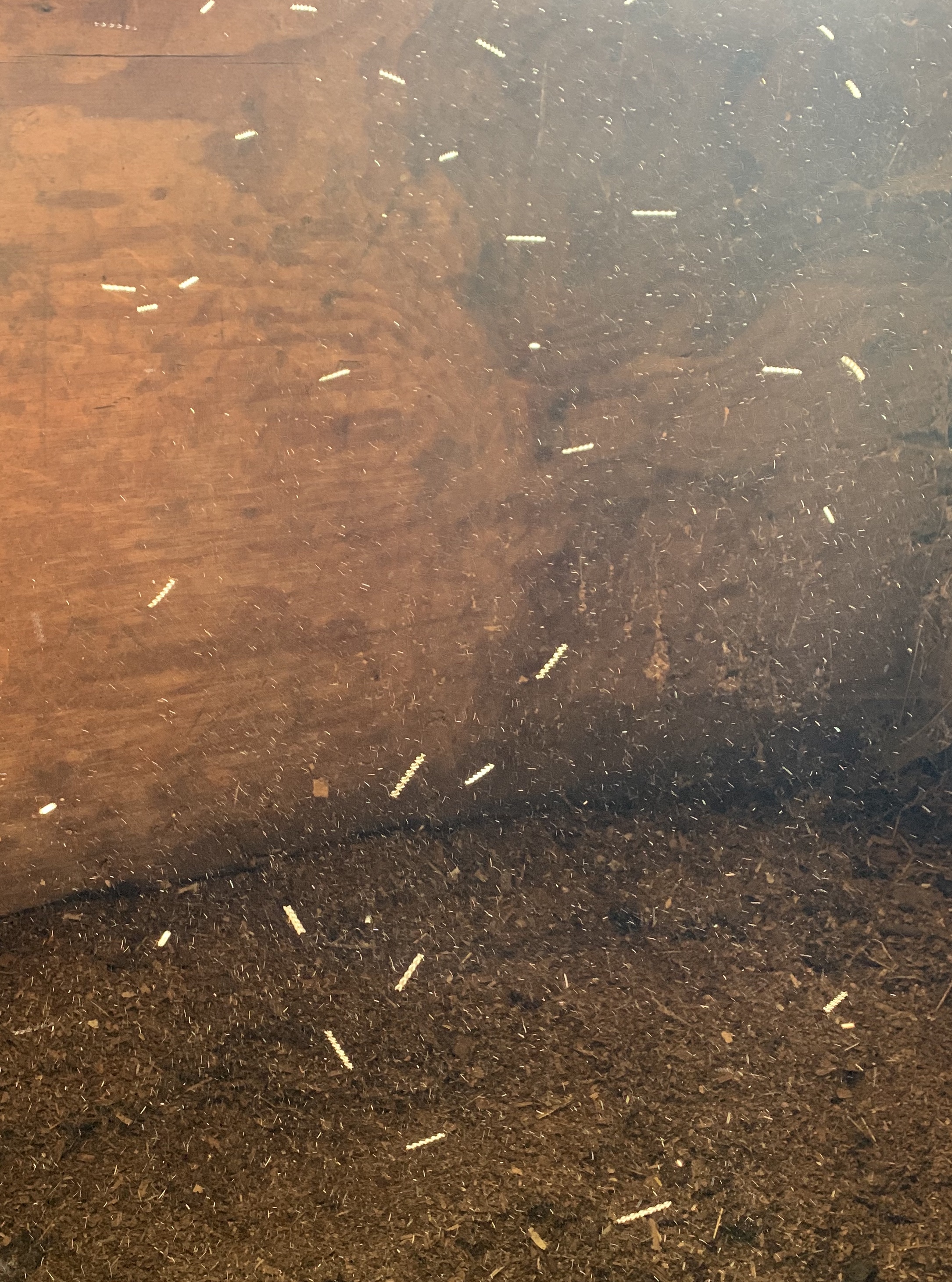
dust motes and insects in the barn
Summer ends now; now, barbarous in beauty, the stooks rise Around; up above, what wind-walks! what lovely behaviour Of silk-sack clouds! has wilder, wilful-wavier Meal-drift moulded ever and melted across skies?
I walk, I lift up, I lift up heart, eyes, Down all that glory in the heavens to glean our Saviour; And eyes, heart, what looks, what lips yet give you a Rapturous love’s greeting of realer, of rounder replies?
And the azurous hung hills are his world-wielding shoulder Majestic – as a stallion stalwart, very-violet-sweet! – These things, these things were here and but the beholder Wanting; which two when they once meet, The heart rears wings bold and bolder And hurls for him, O half hurls earth for him off under his feet. ~Gerard Manley Hopkins “Hurrahing in Harvest”
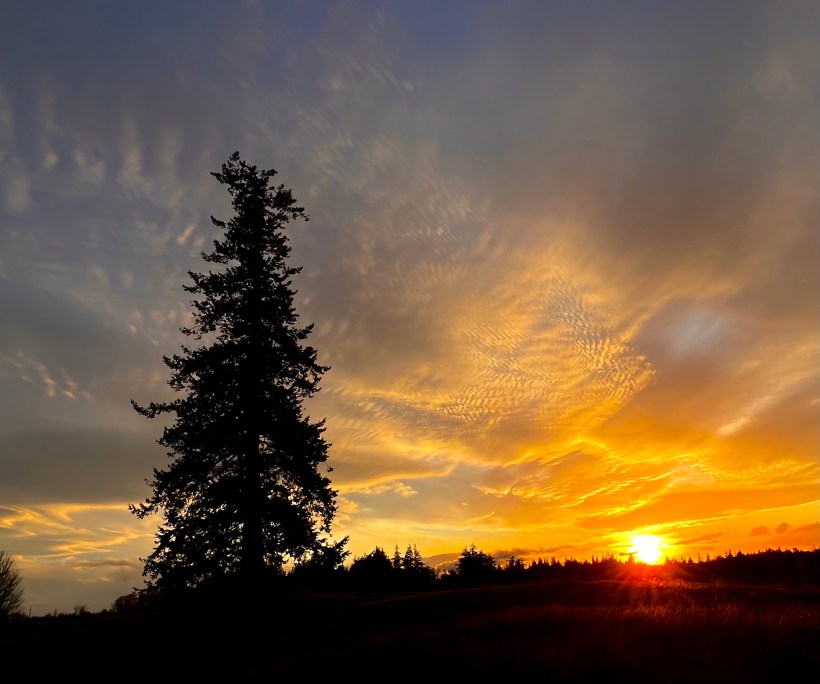
The accident of light does happen, again and again, but when I least expect it.
I need to be ready for it; in a blink, it can be gone.
Yet in that moment, everything is changed and transformed forever.
The thing itself, trivial and transient becomes something other, merely because of how it is illuminated.
And so am I, trivial and transient, lit from outside myself, winnowed and transfigured by a love and sacrifice that I can never deserve.
It was and is no accident.
My heart is readies for earth to be hurled to heaven’s Light.
AI image created for this post
One-Time
Monthly
Yearly
Make a one-time or recurring donation to support daily Barnstorming posts
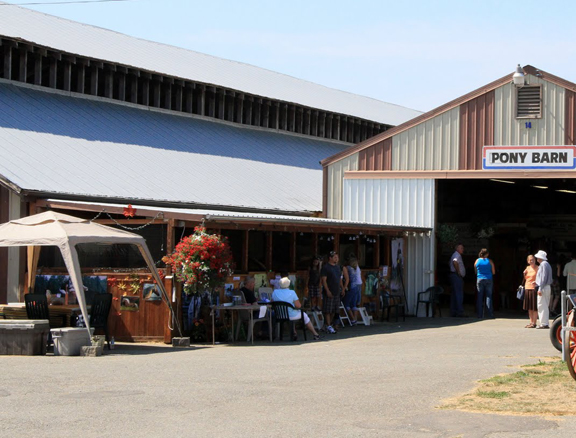
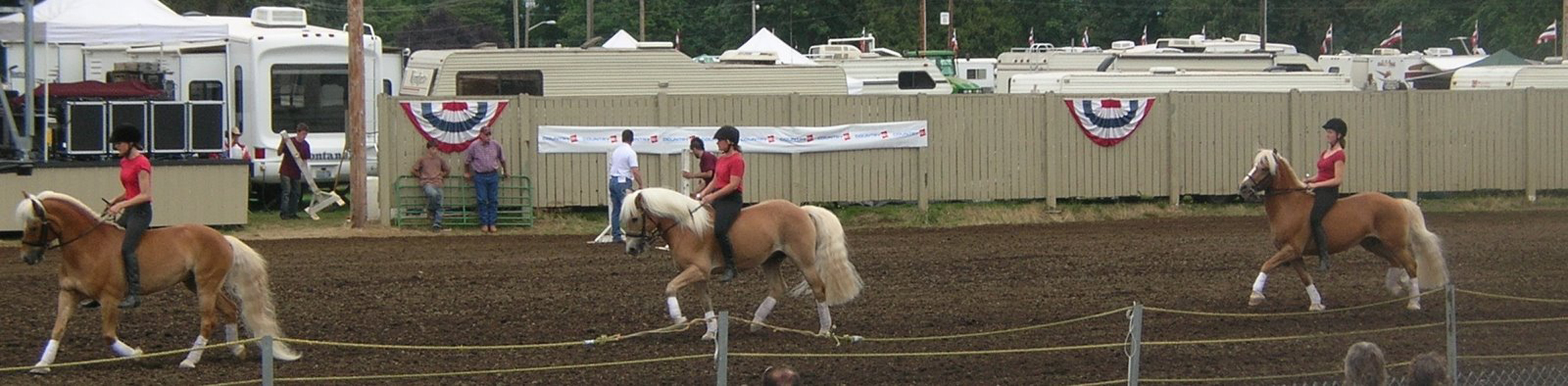
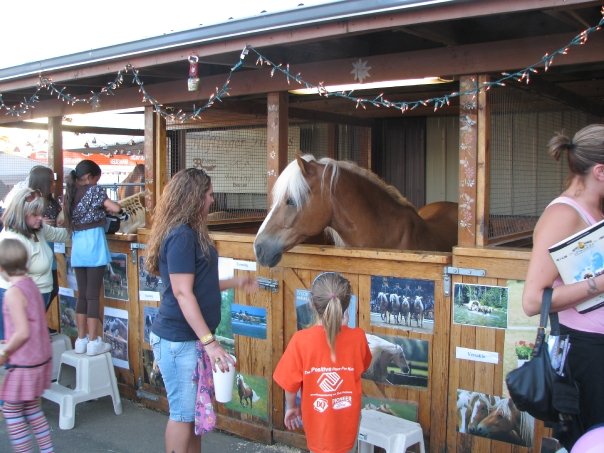
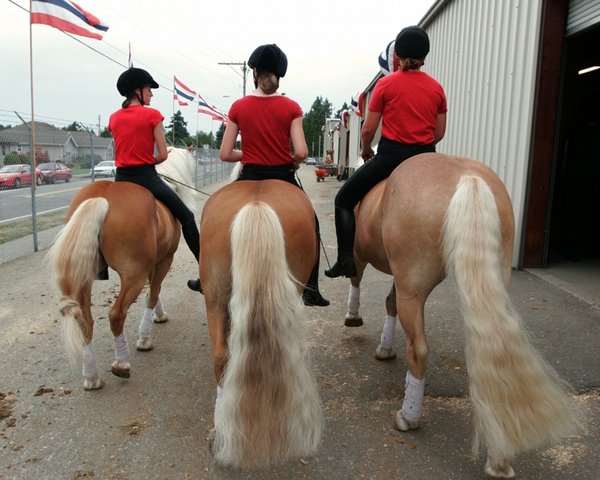
The Northwest Washington Fair in Lynden is under way again this week and instead of being part of the fun and hub-bub, our Haflinger horses are staying home, out on pasture. It’s been over a decade since they were cleaned up, curried, braided and trailered into town for a week to help make dreams come true for thousands of fairgoers.
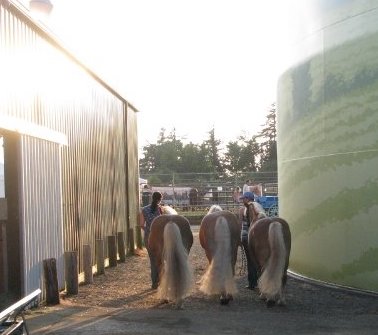
I feel a bit wistful as I wake up early on this foggy mid-August morning, remembering the twenty years of 5:30 AM dawns where I would gather up our sleepy children and their friends and head into the fairgrounds to clean the Haflingers’ stalls, walk the horses for exercise and prepare for a busy day of people strolling by and admiring them.
We stopped “doing” the fair as a Haflinger farm. Now that I’m 70 years old, rather than 40, 50, or 60, I’m okay about that. It was great while it lasted but this aging human and my equines relish our retirement, especially since the fair expanded to a 10 day rather than just a 6 day commitment. I so admire the draft horse families that have kept their six horse hitches active with their Belgians, Percherons and Clydesdales – some families are now in their fourth generation at the fair with teamsters, still driving the hitches, well into their eighties.
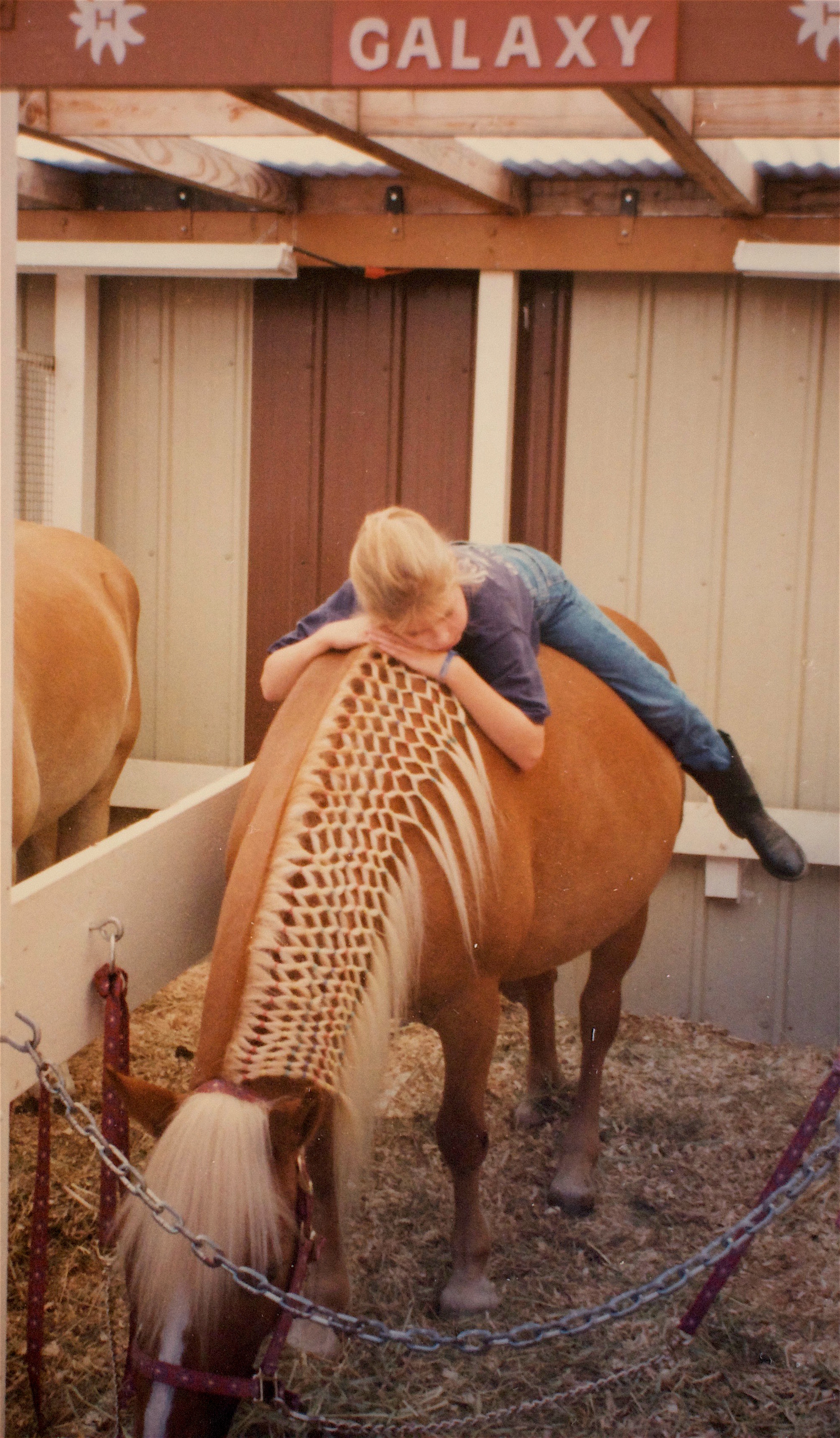
Our BriarCroft Haflingers display was a consistent presence at this regional fair for two decades, promoting the Haflinger breed in well-decorated stalls. Part of our commitment was to provide a 24-hr-a-day human presence with the horses. We had petitioned the Fair Board for 5 years in the late 1980s to allow us a spot at the fair, and they finally said “okay, here’s the space, build it yourself”, so we did.
We didn’t ask for classes, competition, or ribbons. We were there because fairgoers enjoyed seeing and touching our Haflingers and we enjoyed talking to all the people.
Once our children and their friends had careers and children of their own, they were no longer available to help “man” the horse stalls. I still miss spending such concentrated time with all the young nieces, nephews, neighbors, church and school friends who hung out with us over the years. I hope they still have fond memories of their time helping us at the fair.
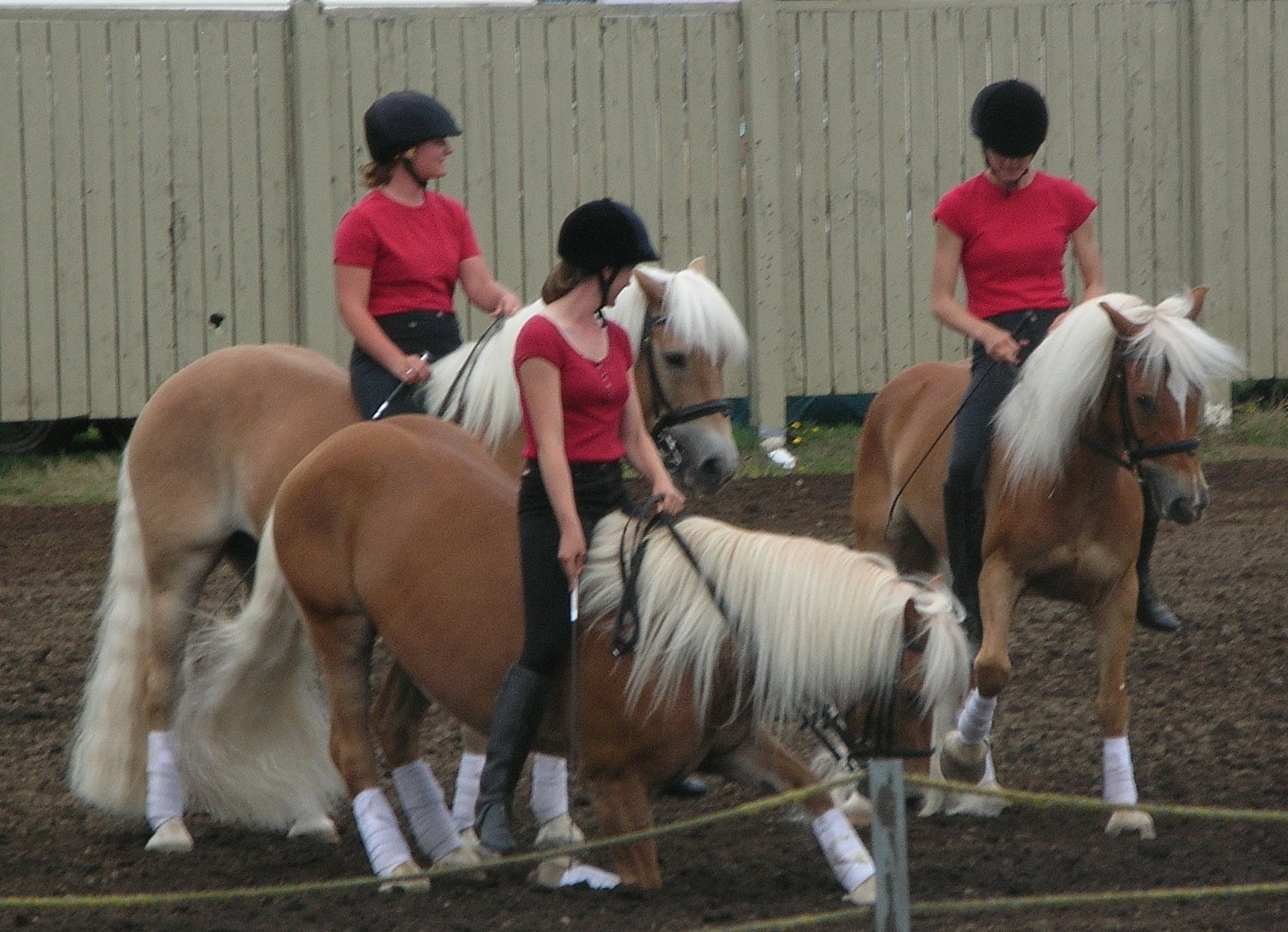
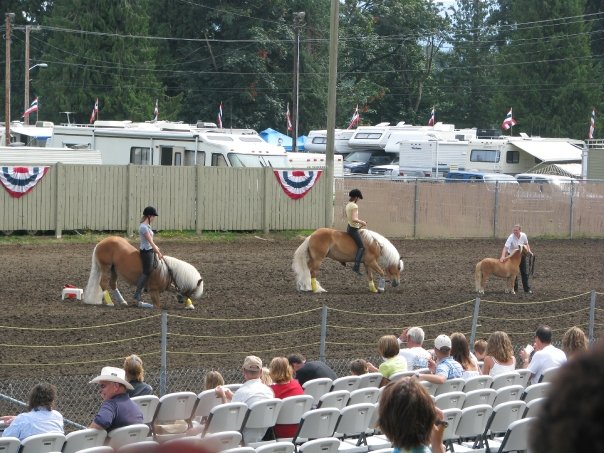
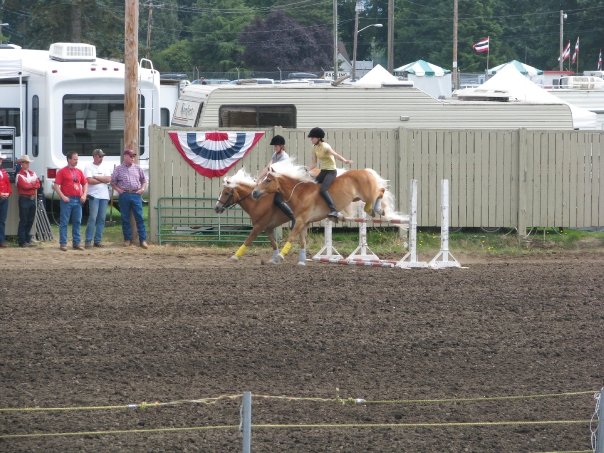
Every year from 1992 onward, we evaluated whether we had the energy and resources to do it again. Initially, Dan and I juggled our small children as well as horses at the fair and at home, taking a week of vacation from our jobs. Then, with the help of two other Haflinger breeding farms, and several young women who did a crowd-pleasing Haflinger “trick” riding demo in front of the grandstand, we rotated duties. The older kids watched the younger kids, the in-between kids did most of the horse stall cleaning duty, and the adults could sit and shoot the breeze.
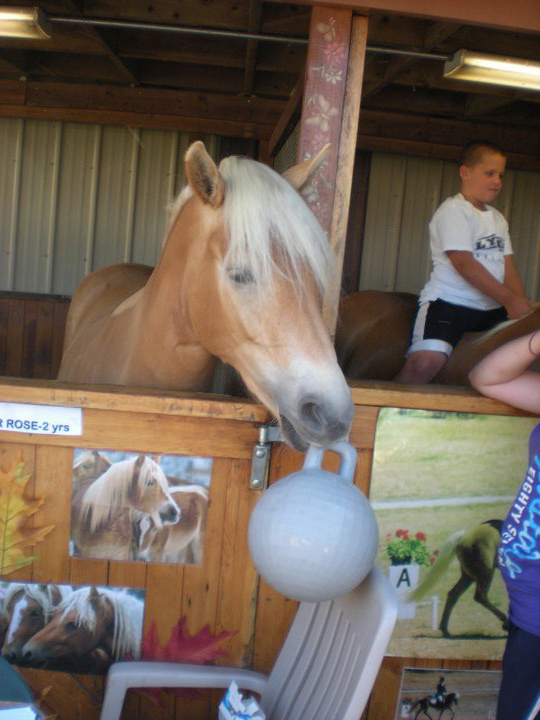
This created good will for the fair visitors who depended on us every year to be there with horses that they and their children could actually pet (and sit on) without worry, who enjoyed our braiding demonstrations, and our Haflinger trivia contests and prizes.
We continued to do this for so long because our horses were friendly and happy to give fair-goers a chance to safely get up close. These Haflingers became what dreams are made of.
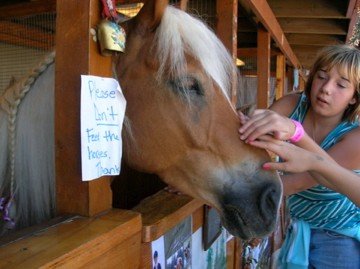
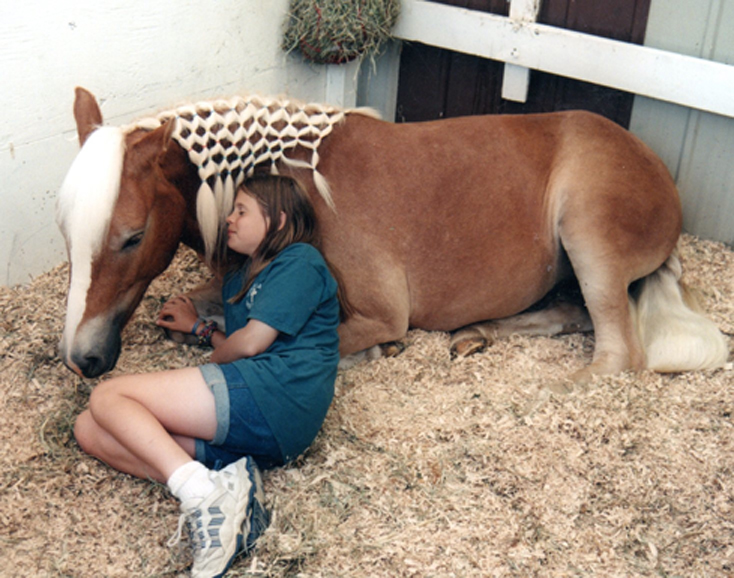
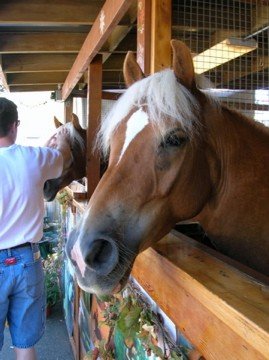
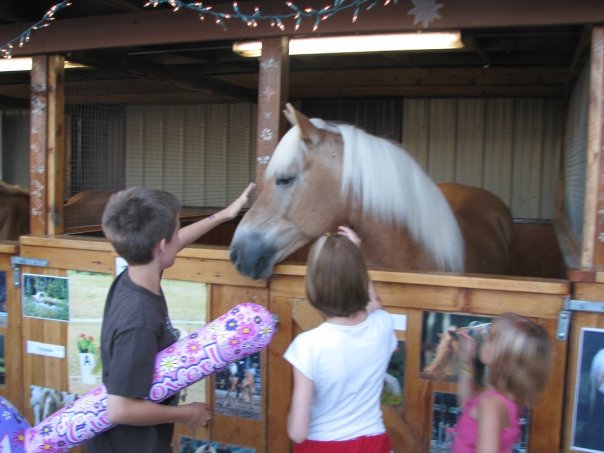
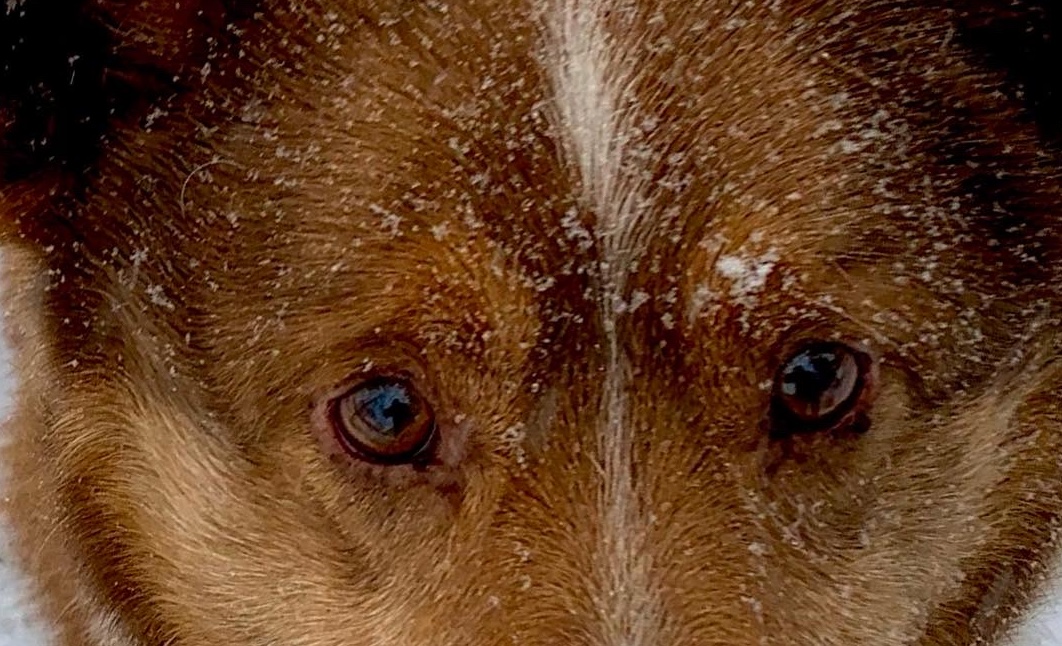
Countless times a day a bright eyed child approached our stalls, climbed up on the step stools and reached up to pet a Haflinger nose or neck and look deep into those big brown eyes. They will not forget the moment when a horse they had never met before loved them back. Haflingers are magic with children and we saw that over and over again.
So on this foggy August morning years later, instead of heading to the fairgrounds to clean stalls and braid manes, I’m turning out our retired, dusty, unbathed Haflingers into the field as usual. They barely recall all the excitement they are missing.
Even if our horses don’t remember much about those fair weeks so long ago, I know some fair-goers still miss the friendly golden horses with the big brown eyes who tried, even if for a day, to make their dreams come true.
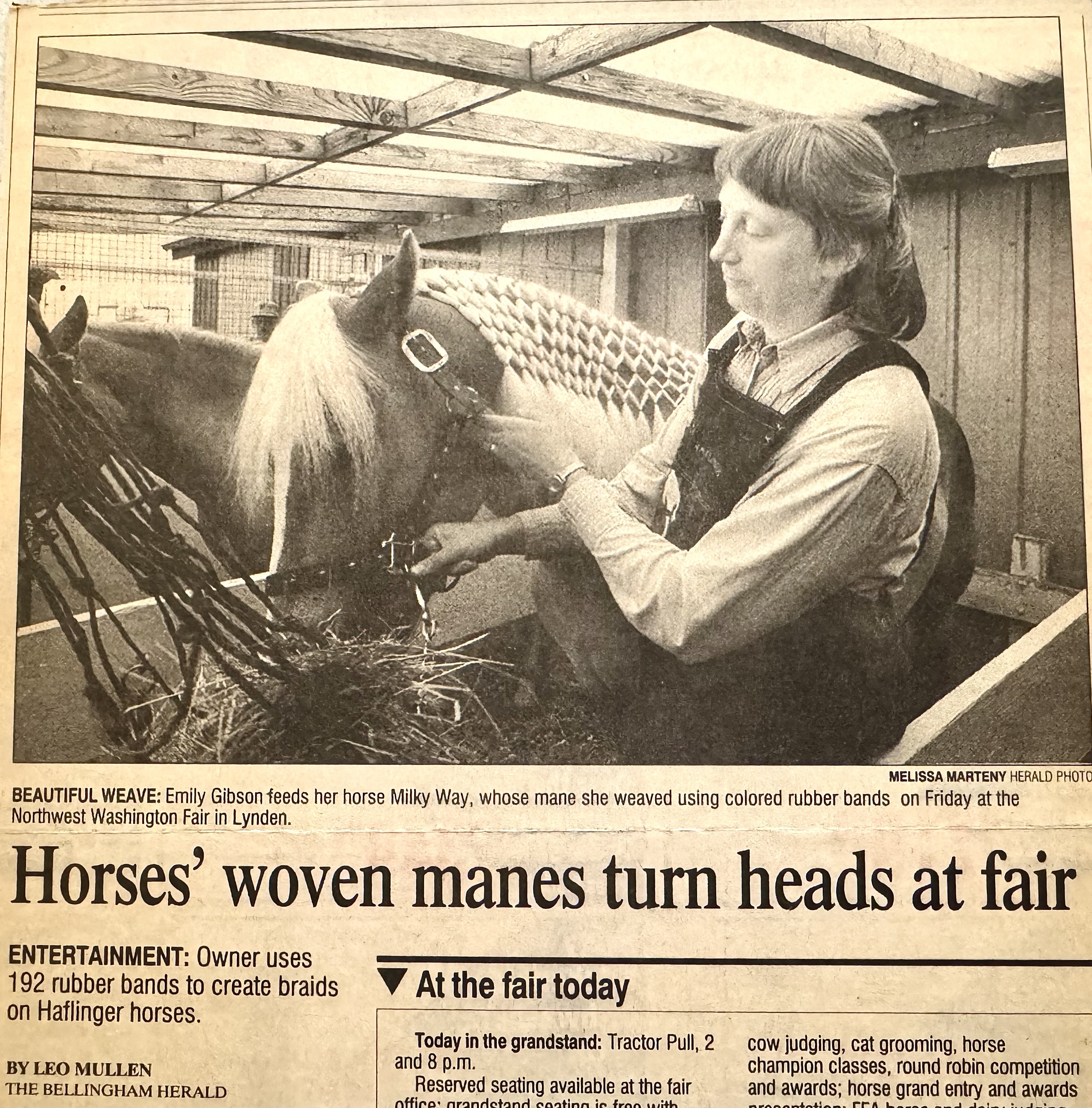
29 years ago, Milky Way and I were featured in our fair display on the front page of the local Bellingham Herald
AI image created for this post
One-Time
Monthly
Yearly
Make a one-time or recurring donation to support daily Barnstorming posts
Broad August burns in milky skies, The world is blanched with hazy heat; The vast green pasture, even, lies Too hot and bright for eyes and feet.
Amid the grassy levels rears The sycamore against the sun The dark boughs of a hundred years, The emerald foliage of one.
Lulled in a dream of shade and sheen, Within the clement twilight thrown By that great cloud of floating green, A horse is standing, still as stone.
He stirs nor head nor hoof, although The grass is fresh beneath the branch; His tail alone swings to and fro In graceful curves from haunch to haunch.
He stands quite lost, indifferent To rack or pasture, trace or rein; He feels the vaguely sweet content Of perfect sloth in limb and brain. ~William Canton “Standing Still”
Sweet contentment is a horse dozing in the summer field, completely sated by grass and clover, tail switching and skin rippling automatically to discourage flies.
I too wish at times for that stillness of mind and body, allowing myself to simply “be” without concern about yesterday’s travails, or what duties await me tomorrow.
I flunked sloth long ago. Perhaps I was born driven. My older sister, never a morning person, was thoroughly annoyed to share a bedroom with a toddler who awoke chirpy and cheerful, singing “Twinkle Twinkle” for all to hear and ready to conquer the day.
Since retiring, I admit I am becoming accustomed now to sloth-dom, though I am still too chipper in the early morning. It is a distinct character flaw.
Even so, I’m not immune to the attractions of a hot hazy day of doing absolutely nothing but standing still switching at flies. I envy our retired ponies in the pasture who spend the day grazing, moseying, and lazing. I worked hard many years to make that life possible for them.
I want to use my days well. I want to be worthy. I want to know there is a reason to be here beyond just warning the flies away.
It is absolutely enough to enjoy the glory of it all.
One-Time
Monthly
Yearly
Make a one-time or recurring donation to support daily Barnstorming posts
All day he’s shoveled green pine sawdust out of the trailer truck into the chute. From time to time he’s clambered down to even the pile. Now his hair is frosted with sawdust. Little rivers of sawdust pour out of his boots.
I hope in the afterlife there’s none of this stuff he says, while I broom off his jeans, his sweater flocked with granules, his immersed-in-sawdust socks. I hope there’s no bedding, no stalls, no barn
no more repairs to the paddock gate the horses burst through when snow avalanches off the roof. Although the old broodmare, our first foal, is his, horses, he’s fond of saying, make divorces.
…he says let’s walk up to the field and catch the sunset and off we go, a couple of aging fools.
I hope, he says, on the other side there’s a lot less work, but just in case I’m bringing tools. ~Maxine Kumin from “Chores”
photo by Emily Vander Haak
They sit together on the porch, the dark Almost fallen, the house behind them dark. Their supper done with, they have washed and dried The dishes–only two plates now, two glasses, Two knives, two forks, two spoons–small work for two. She sits with her hands folded in her lap, At rest. He smokes his pipe. They do not speak, And when they speak at last it is to say What each one knows the other knows. They have One mind between them, now, that finally For all its knowing will not exactly know Which one goes first through the dark doorway, bidding Goodnight, and which sits on a while alone. ~Wendell Berry “They Sit Together on the Porch”
If just for a moment, when this world is tilting so far we just might fall off, we pause to look at where we’ve been and get our feet back under us.
The porch is a good place to start: a bridge to what is beyond without leaving the familiar.
Outside, looking square at the unknown, yet still hearing and smelling and tasting the love that dwells just inside these walls.
What could we want more than to be missed when we step away?
Our voice, our words, our heart, our touch never to be replaced, its absence a hole impossible to fill?
When we are called back inside where Love made us who we are, may the “in between” of time spent on the porch, be even more treasured, because two aging fools sat together there a spell.
AI image created for this postAI image created for this post
One-Time
Monthly
Yearly
Make a one-time or recurring donation to support daily Barnstorming posts
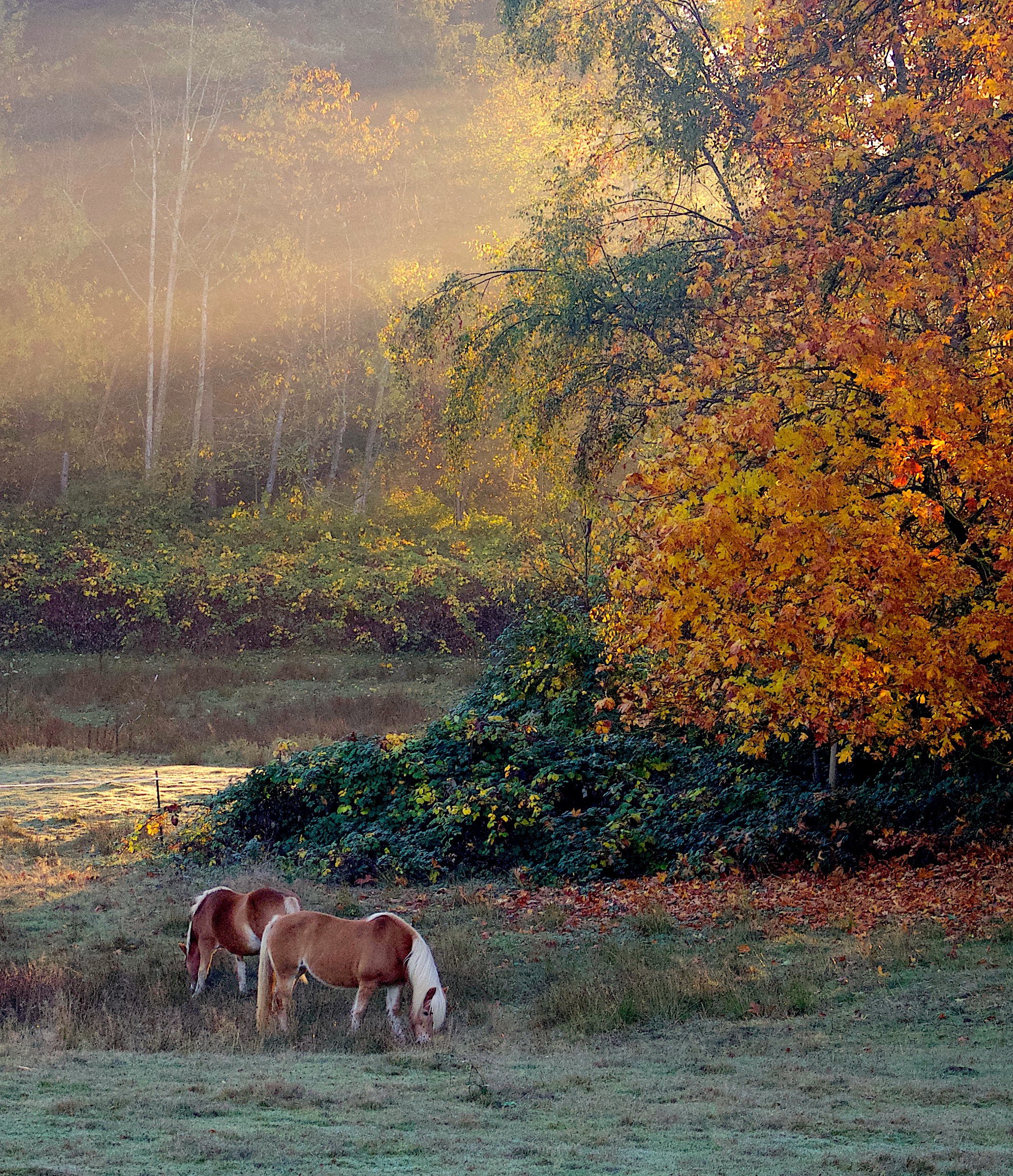
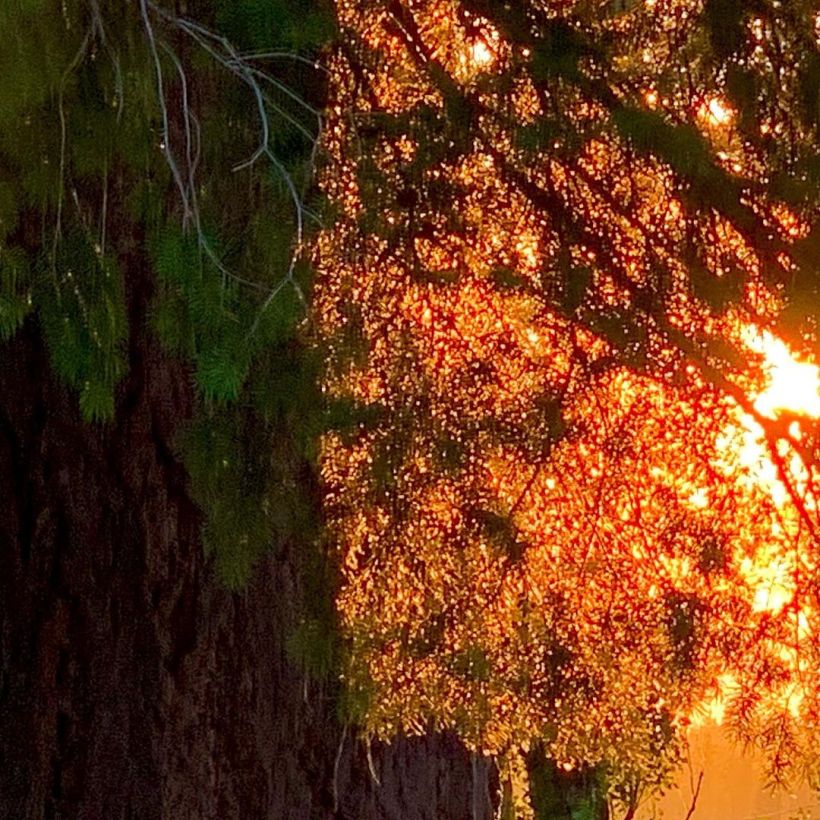
On the second day of fog, she goes to meet it sits on the broad root of a broken down apple tree, remembers being a child in such fog, searching for fairy houses. She hears movement in the grass, keeps very still while the veil of haze rises to treetops bronzed by the burn of the sun. Slowly horses and deer appear all around her, they graze close together, nosing fallen apples, until she forgets this is still a fallen world. ~Lonnie Hull DuPont, “On the Second Day of Fog” from She Calls the Moon by Its Name
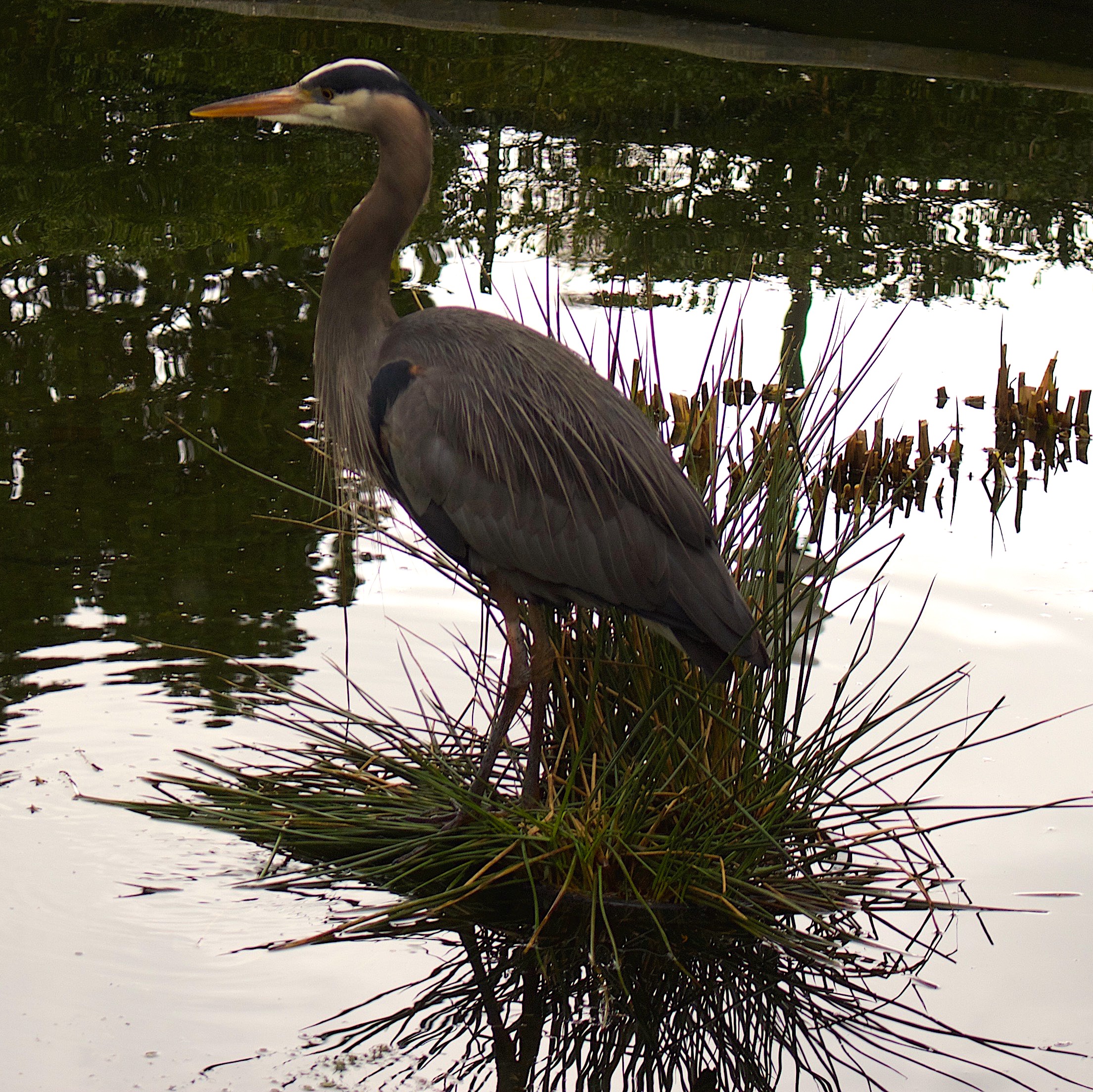
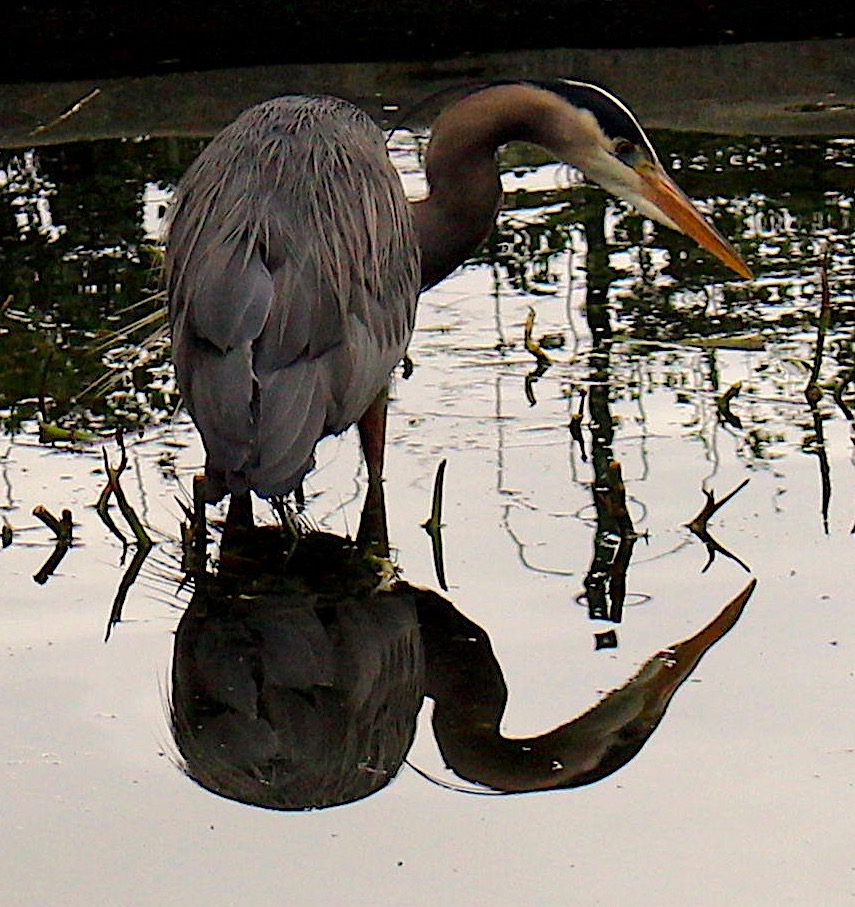
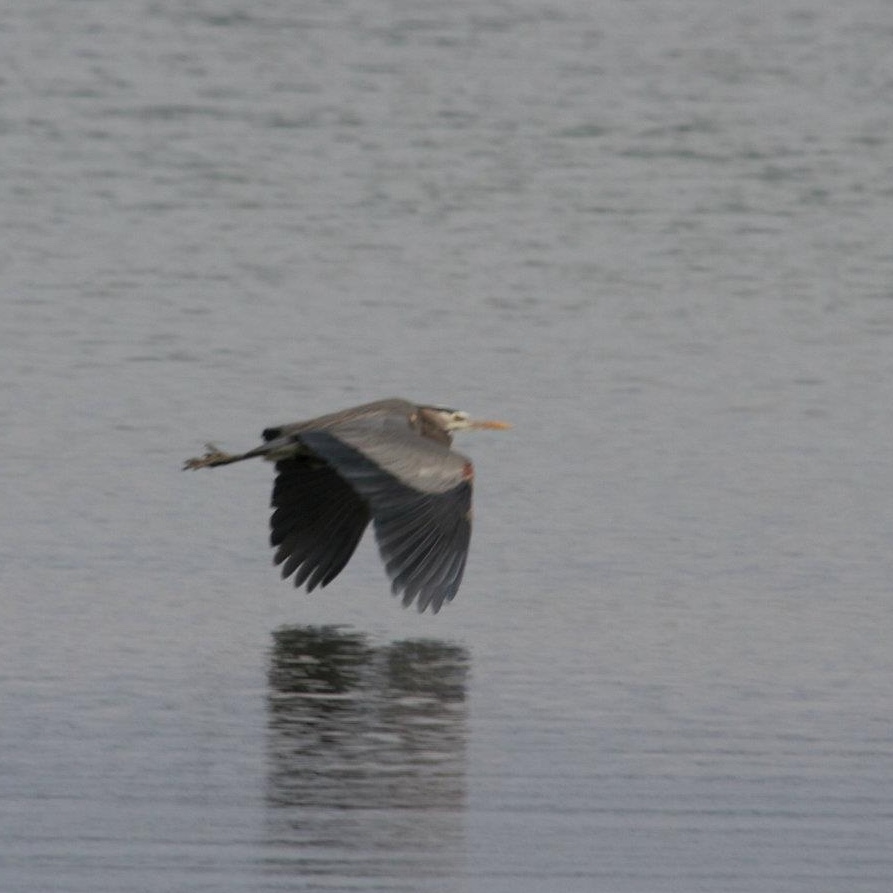
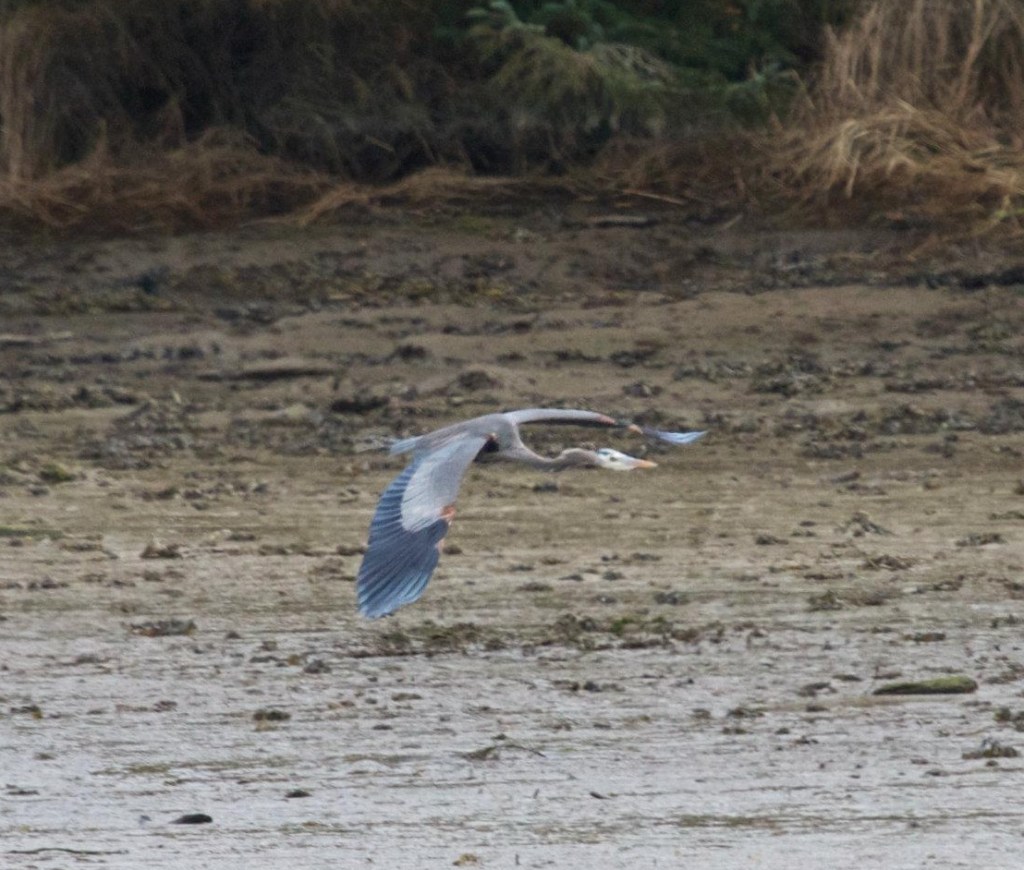
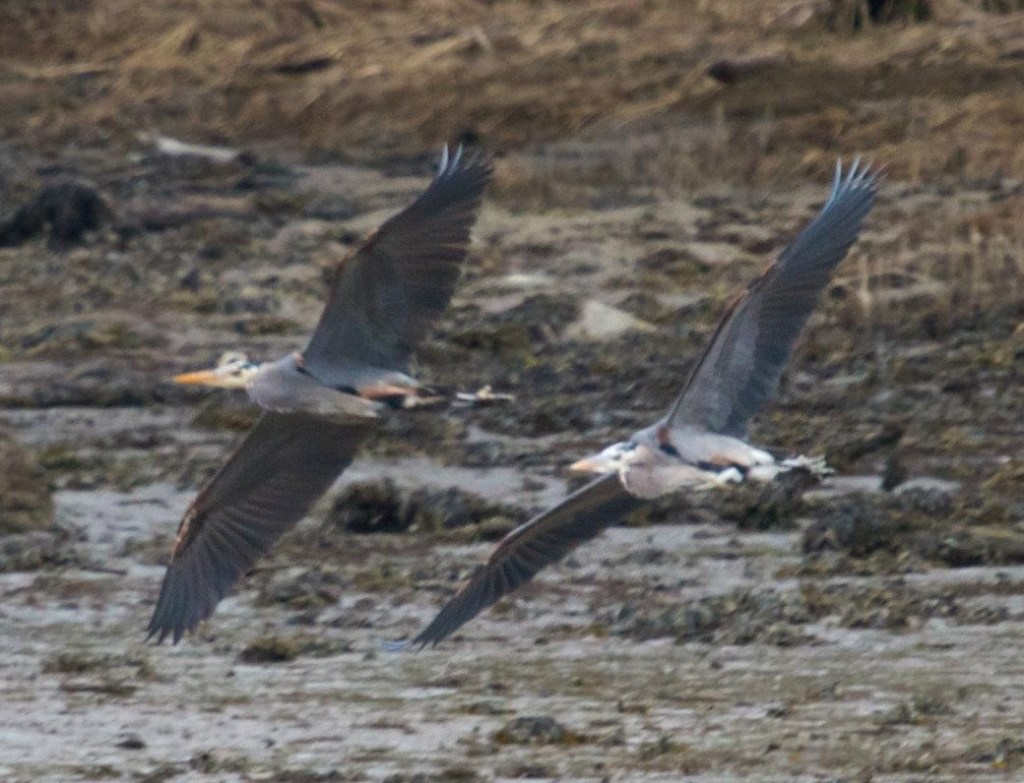
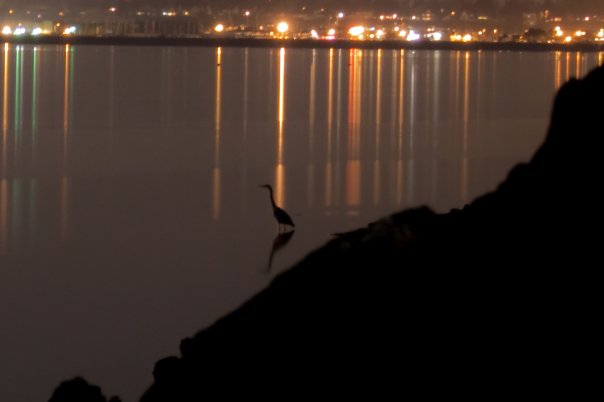
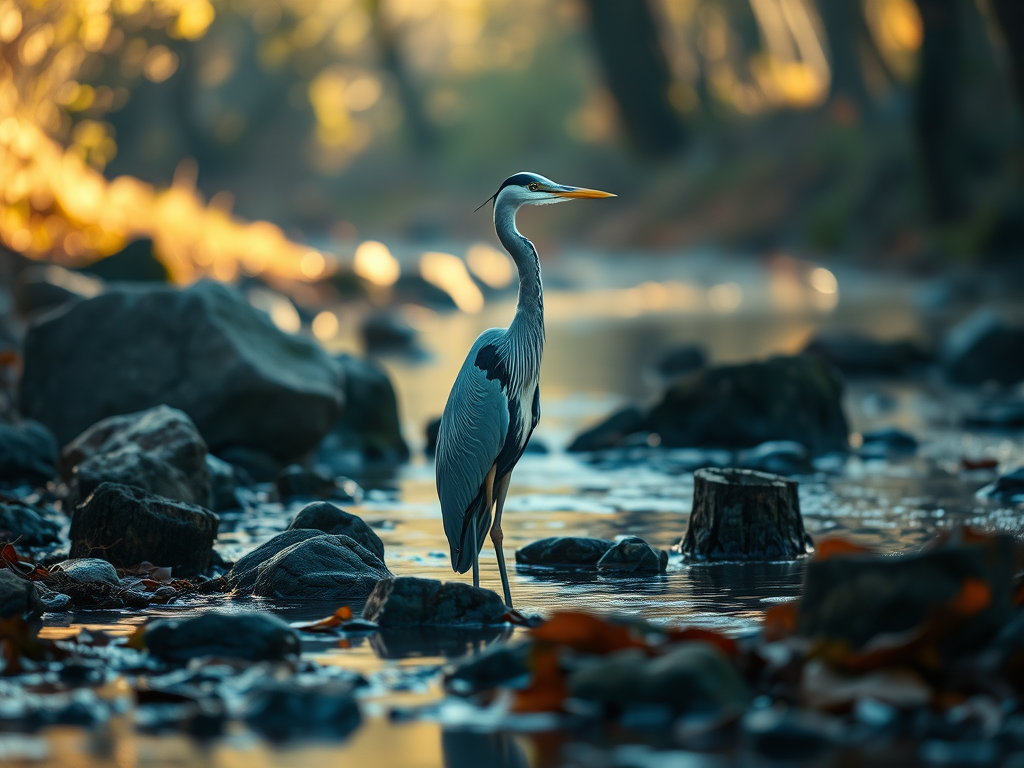
When despair for the world grows in me and I wake in the night at the least sound in fear of what my life and my children’s lives may be, I go and lie down where the wood drake rests in his beauty on the water, and the great heron feeds. I come into the peace of wild things who do not tax their lives with forethought of grief. I come into the presence of still water. And I feel above me the day-blind stars waiting with their light. For a time I rest in the grace of the world, and am free. ~Wendell Berry “The Peace of Wild Things“
When our grandchildren come to visit, I watch as yet another generation rediscovers the mystery of what we know about the joys and sorrows of this fallen but redeemed world.
I am reminded there is light beyond the fearsome darkness, there is peace amid the chaos, there is a smile behind the tears, there is stillness within the noisiness there is rest despite the restlessness, there is grace – ah, there is grace as inevitably the old gives way to the new.
One-Time
Monthly
Yearly
Make a one-time or recurring donation to support daily Barnstorming posts