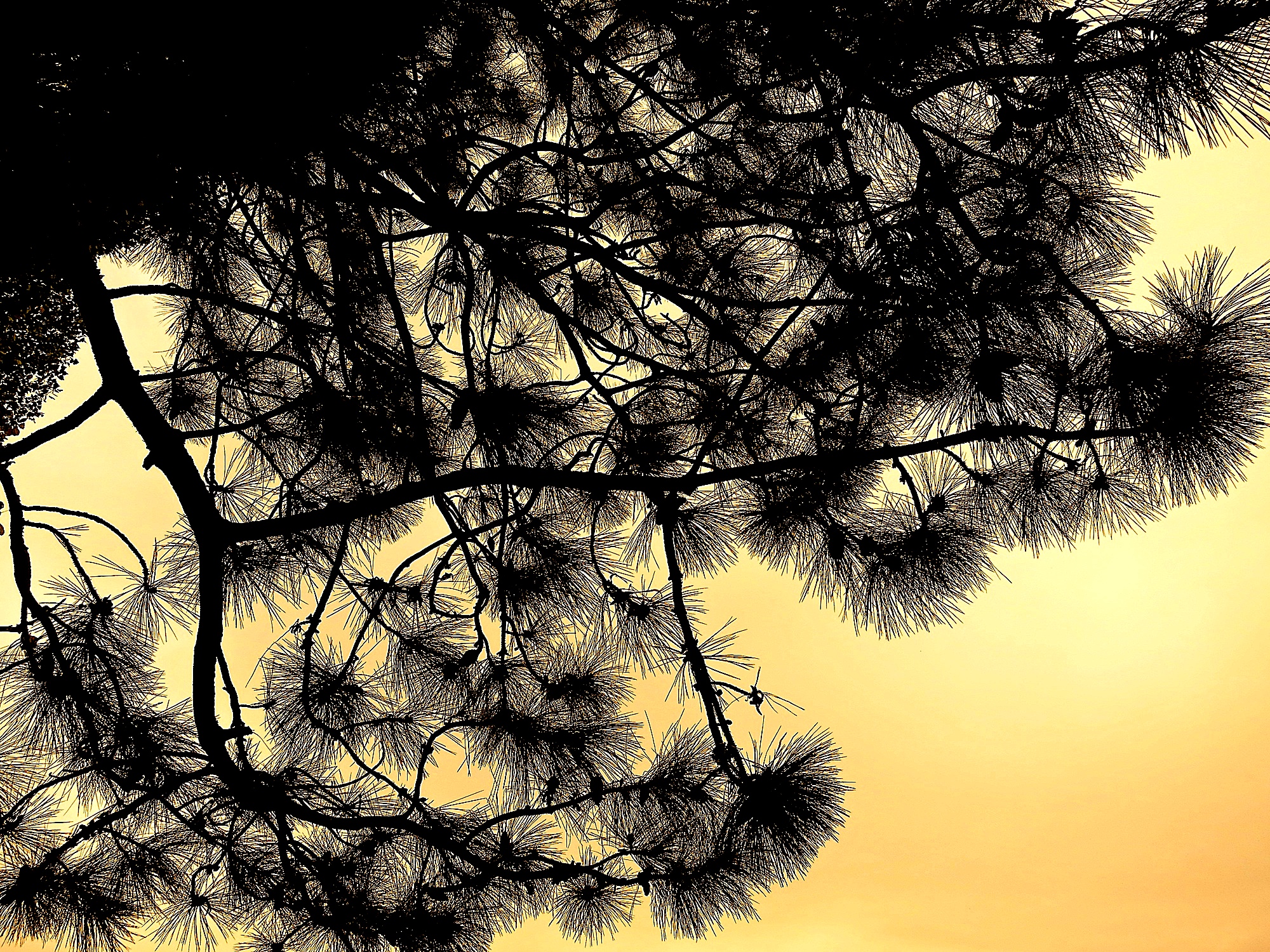
In a daring and beautiful creative reversal, God takes the worse we can do to Him and turns it into the very best He can do for us. ~Malcolm Guite from The Word in the Wilderness
Samwise, one of our two Cardigan Corgis who recently passed away in his sleep at a ripe old corgi age, always did twice daily barn chores with me.
He would run up and down the aisles as I fill buckets, throw hay, and he’d explore the manure pile out back and the compost pile and check out the dove house and have stand offs with the barn cats (which he always lost).
We had our routine. When I got done with chores, I whistled for him and we headed to the house.
We always returned home together.
Except this particular morning. I whistled when I was done and his furry little fox face didn’t appear as usual. I walked back through both barns calling his name, whistling, no signs of Sam. I walked to the fields, I walked back to the dog yard, I walked the road (where he never ever goes), I scanned the pond where he once fell in as a pup (yikes), I went back to the barn and glanced inside every stall, I went in the hay barn where he likes to jump up and down on stacked bales, looking for a bale avalanche he might be trapped under, or a hole he couldn’t climb out of. Nothing.
I’m really anxious about him at this point, fearing the worst. He was nowhere to be found, utterly lost.
Passing through the barn again, I heard a little faint scratching inside one Haflinger’s stall, which I had just glanced in 10 minutes before. The mare was peacefully eating hay. Sure enough, there was Sam standing with his feet up against the door as if asking what took me so long. He must have scooted in when I filled up her water bucket, and I closed the door not knowing he was inside, and it was dark enough that I didn’t see him when I checked. He and his good horse friend kept it their secret.
Making not a whimper or a bark when I called out his name, passing that stall at least 10 times looking for him, he just patiently waited for me to open the door and set him free.
It’s a Good Friday.
The lost was found even when he never felt lost to begin with.
Yet he was lost to me. And that is all that matters. We have no idea how lost we are until someone comes looking for us, doing whatever it takes to bring us home.
Sam was just waiting for a closed door to be opened. And today, of all days, that door is thrown wide open.
photo by Nate Gibson
Though you are homeless Though you’re alone I will be your home Whatever’s the matter Whatever’s been done I will be your home I will be your home I will be your home In this fearful fallen place I will be your home When time reaches fullness When I move my hand I will bring you home Home to your own place In a beautiful land I will bring you home I will bring you home I will bring you home From this fearful fallen place I will bring you home I will bring you home ~Michael Card
One-Time
Monthly
Yearly
Make a one-time or recurring donation to support daily Barnstorming posts
Like a storm of hornets, the little white planets layer and relayer as they whip around in their high orbits, getting more and more dense before they crash against our crust. A maelstrom of ferocious little fists and punches, so hard to believe once it’s past. ~Kay Ryan “Hailstorm”
Several years ago, a brief and unexpected Palm Sunday storm blew through with gusts of southerly winds, thunder, horizontal rain and noisy hale. I had left the north/south center aisle doors wide open after morning chores, so the storm also blew through the barn. Hay, empty buckets, horse halters and cat food were strewn about. The Haflinger horses stood wide-eyed and fretful in their stalls as the hail on the metal roof hammered away.
Once I got the doors closed and secured, all was soon made right. The horses relaxed and got back to their meals and things felt normal again.
Today, Holy Monday morning, all seems calm but nevertheless, somewhat beaten up. The barn is still there, the roof still on, the horses where they belong and all seems to be as it was before the barnstorming wind. Or so it might appear.
This wind heralds another storm beginning this week that hits with such force that I’m knocked off my feet, blown away, and left bruised and breathless. No latches, locks, or barricades are strong enough to protect me from what will come over the next few days.
Yesterday he rode in on a donkey softly, humbly, and wept at what he knew must come.
Today, he overturns the tables in his fury.
Tomorrow he describes the destruction that is to happen, yet no one understands.
Wednesday, a woman boldly anoints him with precious oil, as preparation, ignoring his disciples’ rebukes.
On Thursday, he kneels before his friends, pours water over their dusty feet, presides over a simple meal, and later, abandoned, sweats blood in agonized prayer.
By Friday, all culminates in a most perfect storm, transforming everything in its path, leaving nothing untouched, the curtain torn, the veil removed.
The silence on Saturday is deafening.
Next Sunday, the Son rises, sheds his shroud and neatly folds what is no longer needed. He is nearly unrecognizable in his glory.
He calls my name, my heart burns within me at his words and I can never be the same again.
I am, once again and always, barnstormed to the depths of my soul. Doors flung open wide, my roof pulled off, everything of no consequence blown away and now replaced, renewed and reconciled.
May it be done this week as he has said, again and yet again, year after year, life after life.
another barnstorming
This year’s Barnstorming Lenten theme is Ephesians 3:9:
…to bring to light for everyone what is the plan of the mystery hidden for ages in God, who created all things…
1. Courage, my soul, and let us journey on, Tho’ the night is dark, it won’t be very long. Thanks be to God, the morning light appears, And the storm is passing over, Hallelujah!
Chorus: Hallelujah! Hallelujah! The storm is passing over, Hallelujah!
2. Billows rolling high, and thunder shakes the ground, Lightnings flash, and tempest all around, Jesus walks the sea and calms the angry waves, And the storm is passing over, Hallelujah! [Chorus]
3. The stars have disappeared, and distant lights are dim, My soul is filled with fears, the seas are breaking in. I hear the Master cry, “Be not afraid, ’tis I,” And the storm is passing over, Hallelujah! [Chorus]
4. Soon we shall reach the distant shining shore, Free from all the storms, we’ll rest forevermore. Safe within the veil, we’ll furl the riven sail, And the storm will all be over, Hallelujah! [Chorus]
One-Time
Monthly
Yearly
Make a one-time or recurring donation to support daily Barnstorming posts
…and there was once, oh wonderful, a new horse in the pasture, a tall, slim being–a neighbor was keeping her there– and she put her face against my face, put her muzzle, her nostrils, soft as violets, against my mouth and my nose, and breathed me, to see who I was, a long quiet minute–minutes– then she stamped her feet and whisked tail and danced deliciously into the grass away, and came back. She was saying, so plainly, that I was good, or good enough. ~Mary Oliver from “The Poet Goes to Indiana”
photo by Lea Gibson
photo by Emily Vander Haak
Our farm has had many nuzzling muzzles here over the years–
Pink noses, gray noses, nondescript not-sure-what-color noses, noses that have white stripes, diamonds, hearts, triangles, or absolutely no marks at all.
Hot breath that exudes warm grassy fragrance better than any pricey perfume, lips softer than the most elegant velvet.
Noses that reach out in greeting to: blow, sniff, caress, push, search, breathe me in and breathe for me, to see who I am, or who I will become,
smudge my face and shower snot.
I guess I’m just good enough to be blessed by a nuzzling baptism of grace.
I miss the friendship with the pine tree and the birds that I had when I was ten. And it has been forever since I pushed my head under the wild silk skirt of the waterfall.
The big rock on the shore was the skull of a dead king whose name we could almost remember. Under the rooty bank you could dimly see the bunk beds of the turtles.
Nobody I know mentions these things anymore. It’s as if their memories have been seized, erased, and relocated among flowcharts and complex dinner-party calendars.
Now I want to turn and run back the other way, barefoot into the underbrush, getting raked by thorns, being slapped in the face by branches.
Down to the muddy bed of the little stream where my cupped hands make a house, and
I grew up on a small farm with several acres of woodland. It was my retreat until I left for college; I walked among twittering birds, skittering wild bunnies, squirrels and chipmunks, busy ant hills and trails, blowing leaves, swimming tadpoles, falling nuts, waving wildflowers, large firs, pines, cottonwoods, maples and alder trees.
I had a favorite “secret” spot sitting perched on a stump where a large rock provided a favorite sunning spot for salamanders. They and I would make eye contact, pondering our common Creator.
At college I longed for a place as private, as serene, but nothing could match the woods and creatures of my childhood home. After living a decade in the city, I nearly forgot what a familiar woods felt like.
On this farm we’ve stewarded for nearly forty years, I’ve longed for a similar sanctuary, yet my distractions are so much greater than when I was a child. Filled with greater worries, I can’t empty my head and heart as completely to receive the varied gifts to be found around me.
In my ever-shortening timeline to accomplish what I’ve been placed here to do, I need to study the faces of creation, knowing those eyes reflect the face of God.
One-Time
Monthly
Yearly
Make a one-time or recurring donation to support daily Barnstorming posts
Twenty years ago My generation learned To be afraid of mud. We watched its vileness grow, Deeper and deeper churned From earth, spirit, and blood.
From earth, sweet-smelling enough As moorland, field, and coast; Firm beneath the corn, Noble to the plough; Purified by frost Every winter morn.
From blood, the invisible river Pulsing from the hearts Of patient man and beast: The healer and life-giver; The union of parts; The meaning of the feast.
From spirit, which is man In triumphant mood, Conquerer of fears, Alchemist of pain Changing bad to good; Master of the spheres.
Earth, the king of space, Blood, the king of time, Spirit, their lord and god, All tumbled from their place, All trodden into slime, All mingled into mud. ~Richard Thomas Church “Mud” written in the 1930s
The world is mud-luscious and puddle-wonderful. ~E. E. Cummings from “In Just”
The work of the world is common as mud. Botched, it smears the hands, crumbles to dust. But the thing worth doing well done has a shape that satisfies, clean and evident. ~Marge Piercy from “To Be of Use” from Circles on the Water: Selected Poems of Marge Piercy
Several weeks of rain along with dismal headlines can take its toll in a variety of ways on the human psyche; the bleakness seeps into my brain, making my gray matter much grayer than usual. Everything slows down to a crawl and climbing out of bed to another dark day requires commitment and effort.
Managing barn chores and horses on days like these is a challenge. Despite years of effort to create well drained paddocks with great footing, there is no such thing when the ground is super saturated from unrelenting inches of rain, and when the barn and paddocks are unfortunately placed on the downside of a hill.
Every bare inch of ground has become mud soup with more water pouring off the hill every moment.
Mud in all its glory rivals ice for navigation hazard. Yesterday it was a boot magnet as I tried carefully to make my way with a load of hay to a bit drier area in a paddock, and found with one step that my boot had decided to remain mired in the muck and my foot was waving bootless in the air trying to decide whether to land in the squishy stuff or go back to the relative safety of the stuck boot. Standing there on one foot, with a load of hay in my arms, I’m sure I looked even more absurd than I felt at the moment, and at least I gave comic relief to people driving by.
I won’t say how I figured my way out, but it did require doing laundry later.
I remember years ago when my daughter was about 5 years old, I was busy with chores as she was exploring a similar muddy paddock and I realized I hadn’t seen her for a few minutes and I went looking. There she stood, wailing, with one stocking foot in the mud, an empty boot stuck up to its top, and her other boot so mired, she couldn’t move without abandoning it too. By the time I got her extracted, we were both laughing muddy messes.
More laundry.
The Haflinger horses are not averse to the mud if they are hungry enough. They’ll hesitate momentarily before they dive in to reach their meal but dive in they do. Those clean blonde legs and white tails are only a memory from last summer. Even their bellies are flecked with brown now. Later, back in the barn, as the mud dries, it curries off in chunks and I start to see my golden horses revealed again, but it seems they and I will never be truly clean again.
What lures me into the mud, enticing me deeper in muck that covers and coats me so thoroughly that it feels I’ll never be clean again? Whatever I want so badly that I’m willing to get hopelessly dirty to reach it, once there, it has become tainted by the mud as well, and is never as good as I had hoped.
I become hopelessly mired and stuck, sinking deeper by the minute. Reading the daily headlines only makes it worse.
Rescue comes from an outreached hand with strength greater than my own. Cleansing may be merely skin deep, only to last until my next dive into the mud, or it can be thorough and lasting–a sort of future “mud protective coating” so to speak. I can choose how dirty to get and how dirty to stay and how clean I want to be.
I think the whole world needs to do laundry daily.
One-Time
Monthly
Yearly
Make a one-time or recurring donation to support daily Barnstorming posts
I wanted a horse. This was long after we sold the work horses, and I was feeling
restless on the farm. I got up early to help my father milk the cows, talking
a blue streak about TV cowboys he never had time to see and trying to
convince him that a horse wouldn’t cost so much and that I’d do all the work.
He listened while he leaned his head against the flank of a Holstein, pulling
the last line of warm milk into the stainless bucket. He kept listening
while the milk-machine pumped like an engine, and the black and silver cups fell off and
dangled down, clanging like bells when he stepped away, balancing the heavy milker
against the vacuum hose and the leather belt. I knew he didn’t want the trouble
of a horse, but I also knew there was nothing else I wanted the way I wanted a horse—
another way of saying I wanted to ride into the sunset and (maybe)
never come back—I think he knew that too. We’ll see, he said, we’ll see what we can do. Joyce Sutphen – “What Every Girl Wants”
I once was a skinny freckled eleven year old girl who wanted nothing more than to have her own horse. Every inch of my bedroom wall had posters of horses, all my shelves were filled with horse books and horse figurines and my bed was piled with stuffed horses.
I suffered an extremely serious case of horse fever. I wished for a horse more than anything.
I had learned to ride my big sister’s horse while my sister was off to college, but the little mare had pushed down a hot wire to get into a field of spring oats which resulted in a terrible case of colic and had to be put down. I was inconsolable until I set my mind to buy another horse. We had only a small shed, not a real barn, and no actual fences other than the electric hot wire. Though I was earning money as best I could picking berries at 3 cents a pound and babysitting at 30 cents an hour, I was a long way away from the $150 it would take to buy a trained horse back in 1965.
I pestered my father about my dreams of another horse, and since he was the one to dig the hole for my sister’s horse to be buried, he was not enthusiastic. “We’ll see,” he said. “We will see what we can do.”
So I dreamed my horsey dreams, mostly about golden horses with long white manes, hoping one day those dreams might come true.
In fall 1965, the local radio station KGY’s Saturday morning horse news program announced their “Win a Horse” contest. I knew I had to try. The prize was a weanling bay colt, part Appaloosa, part Thoroughbred, and the contest was only open to youth ages 9 to 16 years old. All I had to do was write a 250 word or less essay on “Why I Should Have a Horse”.
I worked and worked on my essay, crafting the right words and putting all my heart into it, hoping the judges would see me as a worthy potential owner. My parents took me to visit the five month old colt named “Prankster”, a fuzzy engaging little fellow who was getting plenty of attention from all the children coming to visit him, and that visit made me even more determined.
When I read these words now, I realize there is nothing quite like the passion of an eleven year old girl:
“Why I Should Have a Horse”
When God created the horse, He made one of the best creatures in the world. Horses are a part of me. I love them and want to win Prankster for the reasons which follow:
To begin with, I’m young enough to have the time to spend with the colt. My older sister had a horse when she was in high school and her school activities kept her too busy to really enjoy the horse. I’ll have time to give Prankster the love and training needed.
Another reason is that I’m shy. When I was younger I found it hard to talk to anybody except my family. When my sister got the horse I soon became a more friendly person. When her horse recently died (about when Prankster was born), I became very sad. If I could win that colt, I couldn’t begin to describe my happiness.
Also I believe I should have a horse because it would be a good experience to learn how to be patient and responsible while teaching Prankster the same thing.
When we went to see Prankster, I was invited into the stall to brush him. I was never so thrilled in my life! The way he stood there so majestically, it told me he would be a wonderful horse.
If I should win him, I would be the happiest girl alive. I would work hard to train him with love and understanding. If I could only get the wonderful smell and joy of horses back in our barn!
I mailed in my essay and waited.
Sixty years ago on November 27, 1965, my mother and I listened to the local horse program that was always featured on the radio at 8 AM on Saturday mornings. They said they had over 300 essays to choose from, and it was very difficult for them to decide who the colt should go to. I knew then I didn’t have a chance. They had several consolation prizes for 2nd through 4th place, so they read several clever poems and heartfelt essays, all written by teenagers. My heart was sinking by the minute.
The winning essay was next. The first sentence sounded very familiar to me, but it wasn’t until several sentences later that we realized they were reading my essay, not someone else’s. My mom was speechless, trying to absorb the hazards of her little girl owning a young untrained horse.
I woke up my dad, who was sick in bed with an early season flu bug. He opened one eye, looked at me, and said, “I guess I better get a fence up today, right?” Somehow, fueled by the excitement of a daughter whose one wish had just come true, he pulled himself together and put up a wood corral that afternoon, despite feeling so miserable.
That little bay colt came home to live with me the next day. Over the next few months he and I did learn together, as I checked out horse training books from the library, and joined a 4H group with helpful leaders to guide me. I made plenty of mistakes along the way, learning from each one, including those that left behind scars I still bear.
Prankster was a typical adolescent gelding who lived up to his name — full of mischief with a sense of humor and a penchant for finding trouble, but he was mine and that was all that mattered.
Dreams do come true.
…that and a dad who saw what he needed to do for his passionate kid. I’ll never forget how he showed his love for me by doing what was needed in that moment.
AI image created for this post
One-Time
Monthly
Yearly
Make a one-time or recurring donation to support daily Barnstorming posts
There is a basic lesson that all young horses must learn (and a fewer older horses must relearn) on our farm. It is to stand still when asked and move only when asked. This does not come naturally to a young horse–they tend to be impatient and fidgety and fretful and full of energy. If they are hungry, they want food now and if they are bored, they want something different to do and if they are fearful, they want to be outta there.
Teaching a horse to be still is actually a greater lesson in persistence and consistency for the human handler, which means I don’t always do well in teaching this to my horses and they (and I) lapse frequently–wiggly pushy horses and a weary frustrated handler. It means correcting each little transgression the horse makes, asking them to move back to their original spot, even if there is hay waiting just beyond their nose, asking them to focus not on their hunger, their boredom, their fear, but asking them to focus only on me and where they are in relationship to me. It means they must forget about themselves and recognize something outside of themselves that is in control–even if I move away from them to do other things.
The greatest trust is when I can stand a horse in one spot, ask them to be still, walk away from them, briefly go out of sight, and return to find them as I left them, still focused on me even when I was not visible.
I was reminded of this during our pastor’s sermon on the book of Exodus when he preached on the moments before Moses parted the Red Sea, allowing the Hebrews an escape route away from Pharoah and the Egyptian chariots and soldiers. In those moments beforehand, the Hebrews were pressed up against the Sea with the Egyptians bearing down on them and they lamented they should never have left Egypt in the first place, and that generations of bondage in slavery would have been preferable to dying in the desert at the hands of the soldiers or drowning in the Sea.
Moses told them to “be still”. Or as our pastor said, he told them to “shut up”. Stay focused, be obedient, trust in the Lord’s plan. And the next thing that happened was the Sea opened up. Then the Hebrews rejoiced in thanksgiving for their freedom.
Thanksgiving, as it has developed over the years from the first historical observance of a meal shared jointly between the Pilgrims and their patient and generous Native American hosts, is just such a moment to “be still and know” about the gifts from our God. Yet in our hurried and harried culture, Thanksgiving is about buying the best bargain turkey, creating the most memorable recipes, decorating in perfect Martha Stewart style, eating together in Norman Rockwell style extended family gatherings, watching football and parades on the biggest flat screen TV, while preparing for the mad dash out the door the next day to start the Christmas shopping season.
Instead of all that fol de rol – be still.
Like my horses, I need correction when I start to agitate out of “hunger”–wanting to literally stuff myself full, or out of my boredom– seeking the latest in entertainment or satisfaction, or out of my fear– feeling the threats that surround us all in the world today. I need to be reminded continually that my focus must be outside myself and my perceived needs, and to be still long enough to know God is with us even though we cannot see Him every moment.
I do not do well at this.
My horses learn much faster than I do. I am restless, rarely taking the time to be still and acknowledge God who continually watches, waiting for me to settle down and focus on Him.
May this Thanksgiving remind me of my need for God, and my gratitude for His patient persistence in moving me back into place when I wiggle and fret and stuff myself even when I’m really not hungry.
May I remember that to be still and know God is the greatest gift I can give and that I can receive.
And may His Stillness be with you today as well.
One-Time
Monthly
Yearly
Make a one-time or recurring donation to support daily Barnstorming posts
My grandfather stands on the front porch watching the dogs come back, reassembled
from hair and grit and eyeteeth. Now the twin mares browse by the fence
in their coats of dust. Nobody asks what they mean, appearing so suddenly
when nobody needed them, or called. In the back yard, the buried people —
great-grandmothers in spectator pumps, the great-grandfather who died of sneezing,
the first baby, never named — stay buried. It’s not their overshoes
lost in the grass behind the smokehouse, not their faces alive in anyone’s
memory. But my mother waits in the pecan tree’s fingered shadow,
holding a broken milk jug full of daylilies, waiting as if
she wanted someone to tell her again it’s all right to be born now,
now is as good a time as any. In a month we’ll find my grandfather’s glasses
in their case under the front seat of his car. “Oh goodness,” my aunt will say,
as if it were a matter of his forgetting them. As if we could
give them back. We’re all convinced we’ve missed the moment. We forget
that pause while a soul undoes its buttons, the world falls away,
and one by one we step out into this death, to be remembered. ~Sally Thomas “Reunion”
The sunlight now lay over the valley perfectly still. I went over to the graveyard beside the church and found them under the old cedars… I am finding it a little hard to say that I felt them resting there, but I did… I saw that, for me, this country would always be populated with presences and absences, presences of absences, the living and the dead. The world as it is would always be a reminder of the world that was, and of the world that is to come. Wendell Berry in Jayber Crow
When it’s over, I don’t want to wonder if I have made of my life something particular, and real. I don’t want to find myself sighing and frightened or full of argument.
I don’t want to end up simply having visited this world. ~Mary Oliver from “When Death Comes”
God is at home. It is we who have gone out for a walk. ~Meister Eckhart
And He awaits for our return. He keeps the light on, so we can find our way back, when we are weary, or fearful or hungry or simply longing for reunion, to be remembered.
I think of those who wait for me on the other side, including our baby lost before birth over 42 years ago.
I know God watches over all these reunions; He knows the moment when our fractured hearts heal whole once again.
I will see you soon enough, sweet ones. Soon enough.
One-Time
Monthly
Yearly
Make a one-time or recurring donation to support daily Barnstorming posts
The world does not need words. It articulates itself in sunlight, leaves, and shadows. The stones on the path are no less real for lying uncatalogued and uncounted. The fluent leaves speak only the dialect of pure being…
The sunlight needs no praise piercing the rainclouds, painting the rocks and leaves with light, then dissolving each lucent droplet back into the clouds that engendered it. The daylight needs no praise, and so we praise it always– greater than ourselves and all the airy words we summon. ~Dana Giola from “Words”
The words the world needs is only the Word itself; we exist because He breathed breath into us, saying it was good.
Whatever we have to say about His Creation pales compared to His it is good
But we try over and over again to use words of wonder and praise to express our awe and gratitude and amazement while painted golden by His breath of Light.
One-Time
Monthly
Yearly
Make a one-time or recurring donation to support daily Barnstorming posts
I like the lady horses best, how they make it all look easy, like running 40 miles per hour is as fun as taking a nap, or grass. I like their lady horse swagger, after winning. Ears up, girls, ears up! But mainly, let’s be honest, I like that they’re ladies. As if this big dangerous animal is also a part of me, that somewhere inside the delicate skin of my body, there pumps an 8-pound female horse heart, giant with power, heavy with blood. Don’t you want to believe it? Don’t you want to lift my shirt and see the huge beating genius machine that thinks, no, it knows, it’s going to come in first. ~Ada Limón “How to Triumph Like a Girl”
Primarily from my college training in animal behavior, I have an appreciation for social cues, both human and non-human: those often nonverbal signals that are communicated through subtle means–in people, perhaps it is a raised eyebrow, a rapid blink, a tensing of the lips, a fidgeting foot.
When I studied captive and wild chimpanzees, they showed very familiar facial expressions and nonverbal communication that could be understood readily by a human primate.
In horses, it can be harder to interpret but their nonverbal language is there for all to see. The herdmates and the human handler, with careful observation and interpretation, should not be surprised about “what is going to happen next.”
It is no mystery.
I don’t consider Haflinger horses particularly subtle in their communication with each other or with humans. They can tend to have a “bull in a china shop” approach to life; this is not a breed that evolved particularly plagued with the existence of many predators in the Austrian Alps, so the need to blend into the background was minimal. Haflingers tend to be “out there”: unafraid, bold, meeting one’s gaze, and curious what the human is thinking.
I’ve found over the years that the best way to interpret a Haflinger’s emotions is by watching their ears, and to a lesser extent, their lips and tails. They usually have “poker face” eyes, deceptive at times in their depth, calmness and serenity. I tend to get lost in the beauty of their eyes and not pay attention to what the rest of the horse is saying.
Watching them interact with each other, almost everything is said with their ears. A horse with a friendly approach has ears forward, receptive, eager. If the horse being approached is welcoming, the ears are relaxed. Two good friends grooming or grazing together have swiveling, loose ears, often pointing toward each other, almost like a unique conversation between the four ears themselves. So when a Haflinger is happy to approach, or be approached by humans, the ears always say so.
Ears that are swiveling back, tensing and tight, or pinning are another story altogether. It is the clear signal of “get outta my way!”, or “you are not sharing this pile of hay with me” or “you may think you are a cute colt, but if you climb on me one more time…”
Ears can signal impatience “you are not getting my grain fast enough”, or “I’ve been standing here tied for too long!” A simple change in ear position can cause a group of horses to part like the Red Sea.
I owned a mare who was orphaned at 3 days of age, and spent her early weeks with intensive handling by people, and then allowed to socialize with a patient older gelding until she was old enough to be among other weanlings. When she came to our farm at 6 months of age, she had not learned all the usual equine social cues of a mare herd, and though very astute at reading human gestures and behavior, took awhile to learn appropriate responses. When turned out with the herd, she was completely clueless–she’d approach the dominant alpha mare incorrectly, without proper submission, get herself bitten and kicked and was the bottom of the social heap for years, a lonesome little filly with few friends and very few social skills.
She had never learned submission with people either, and had to have many remedial lessons on her training path. Once she was a mature working mare, her relationship with people markedly improved as there was structure to her work and predictability for her, and after having her own foals, she picked up cues and signals that helped her keep her foal safe, though she has always been one of our most relaxed “do whatever you need to do” mothers when we handle her foals as she simply never learned that she needed to be concerned.
Over the years, as the herd changed, this mare became the alpha mare, largely by default and seniority, so I don’t believe she really trusted her position as “real”. She tended to bully, and react too quickly out of her own insecurity about her inherited position. She was very skilled with her ears but she is also a master at the tail “whip” and the tensed upper lip–no teeth, just a slight wrinkling of the lip. The herd scattered when they see her face change.
The irony of being on top of the herd hierarchy: she was more lonely than when she was at the bottom. She was a whole lot less happy as she had few grooming partners any more. She craved power more than friends.
I certainly see people like this at times in the world. Some are not at all attuned to social cues, blundering their way into situations without understanding the consequences and “blurting without thinking”. It takes lots of kicks and bites for them to learn how to read other people and behave appropriately. Sometimes they turn to bullying because it is communication that everyone understands and responds to, primarily by “getting out of their way”. Perhaps they are very lonely, insecure, and need friends but their need for power overcomes their need for support.
We see this too frequently in people in our news headlines.
I continue to “watch the ears”–both Haflinger and human. And I continue to refine my own way of communicating so that I’m not a mystery to those around me. Hopefully no one scatters when they see me coming…
One-Time
Monthly
Yearly
Make a one-time or recurring donation to support daily Barnstorming posts