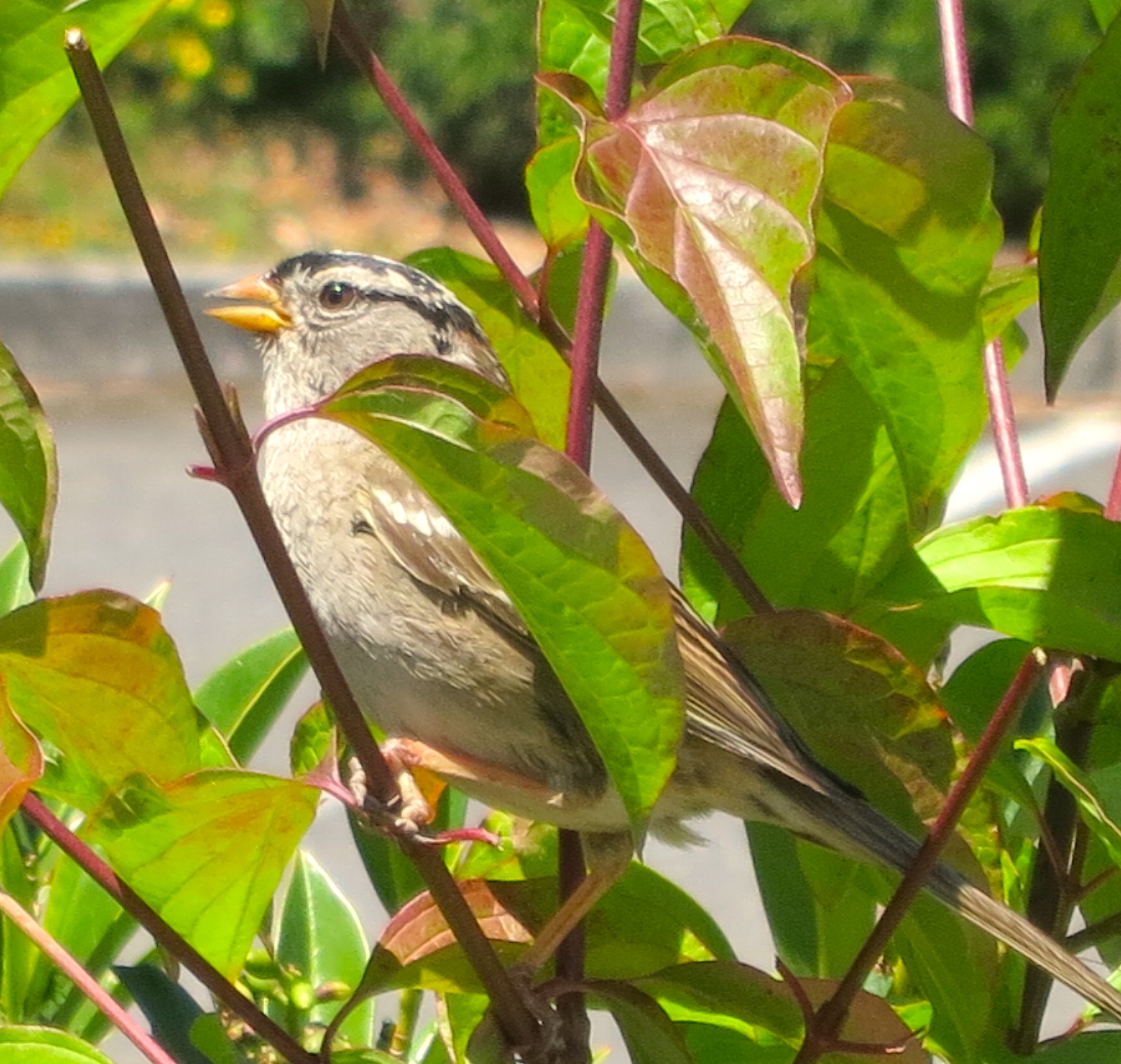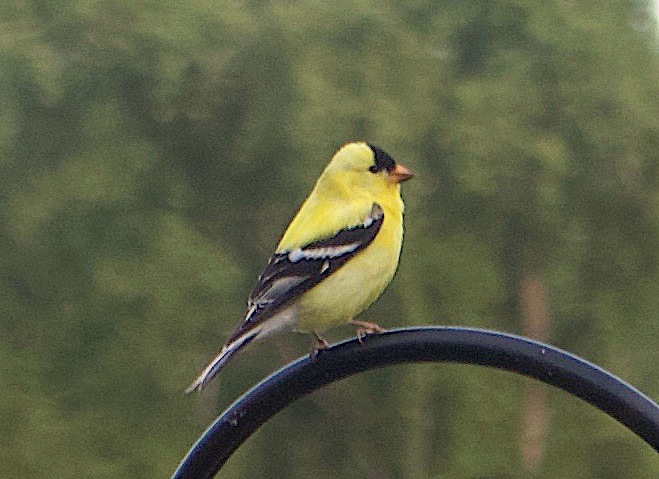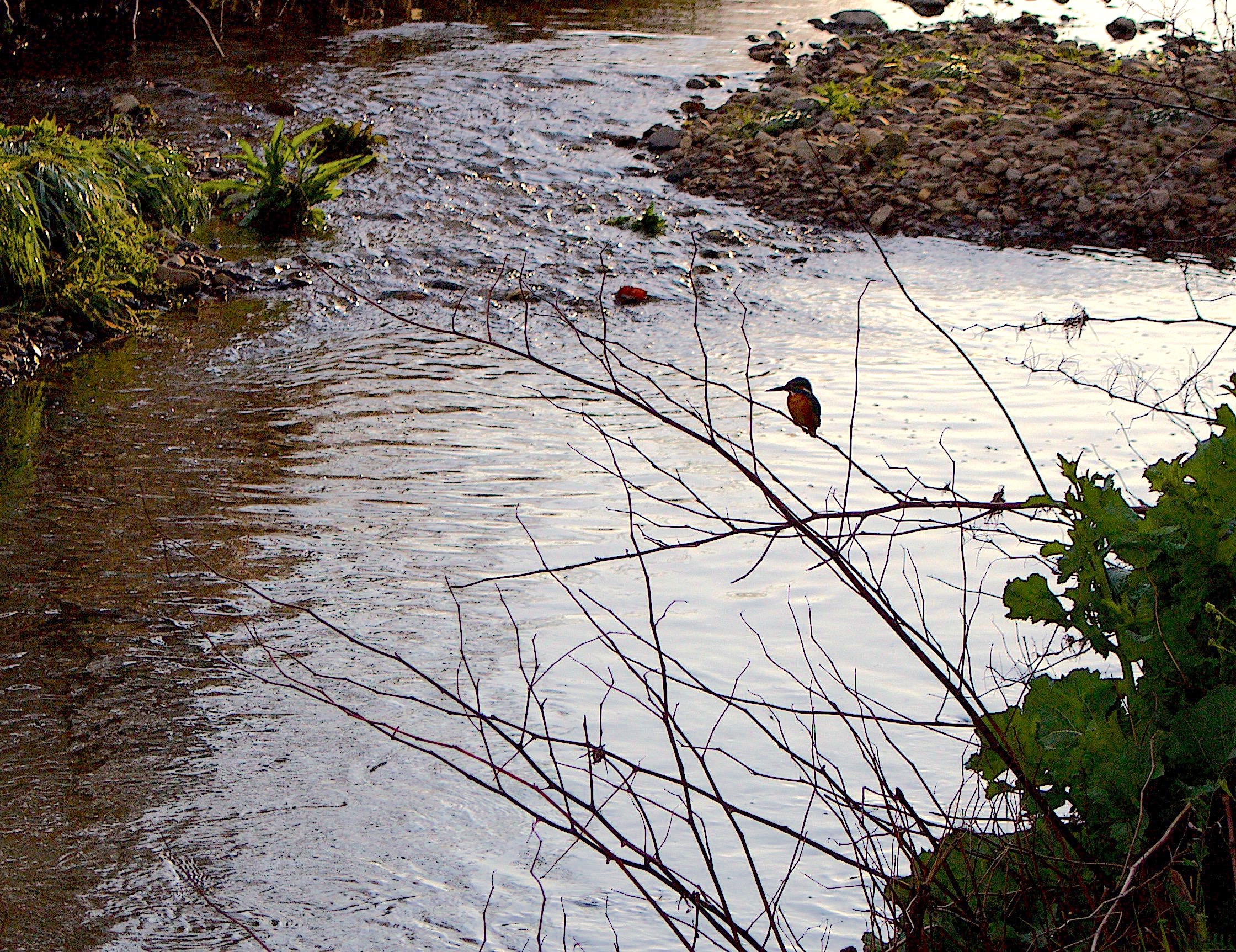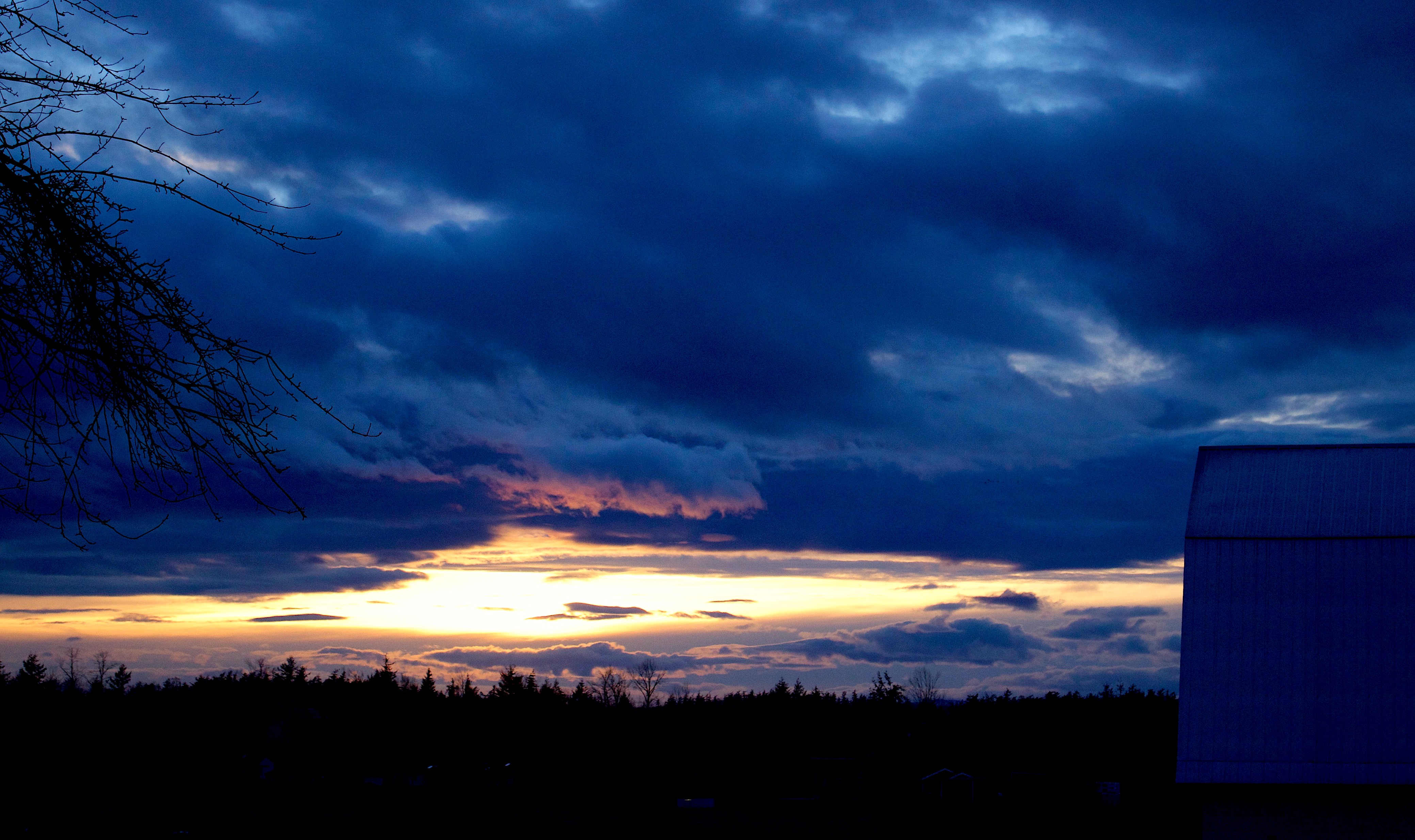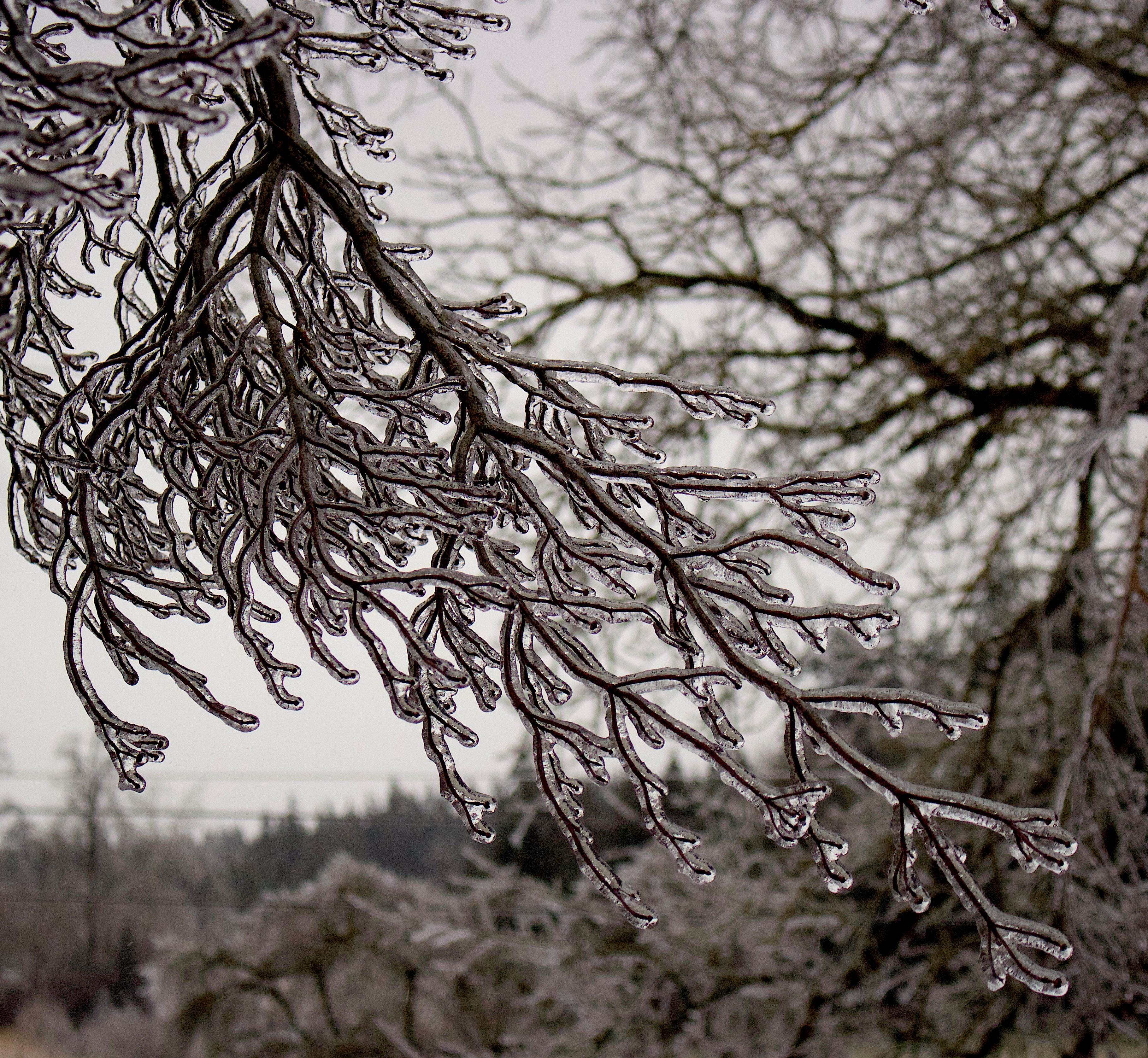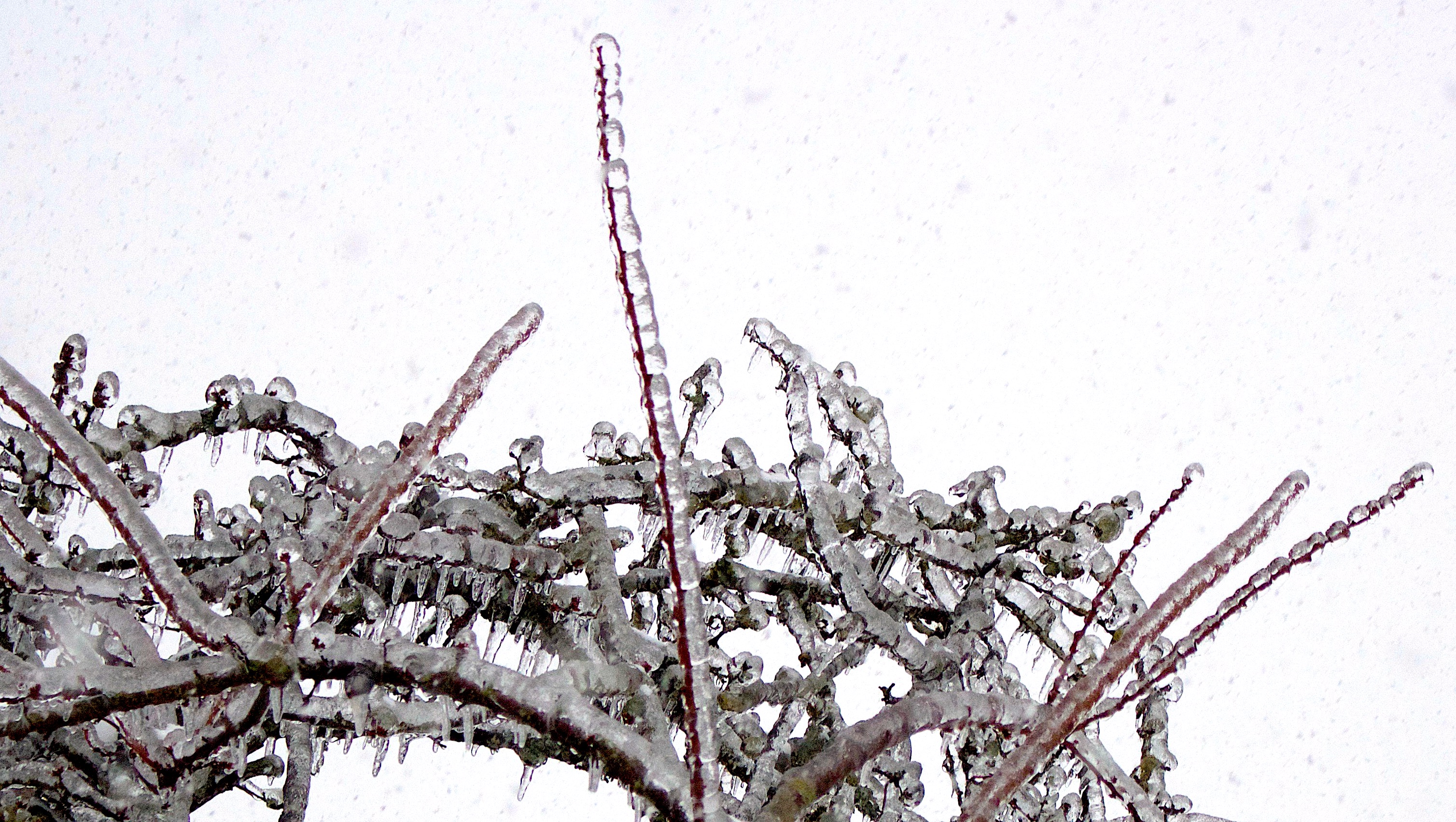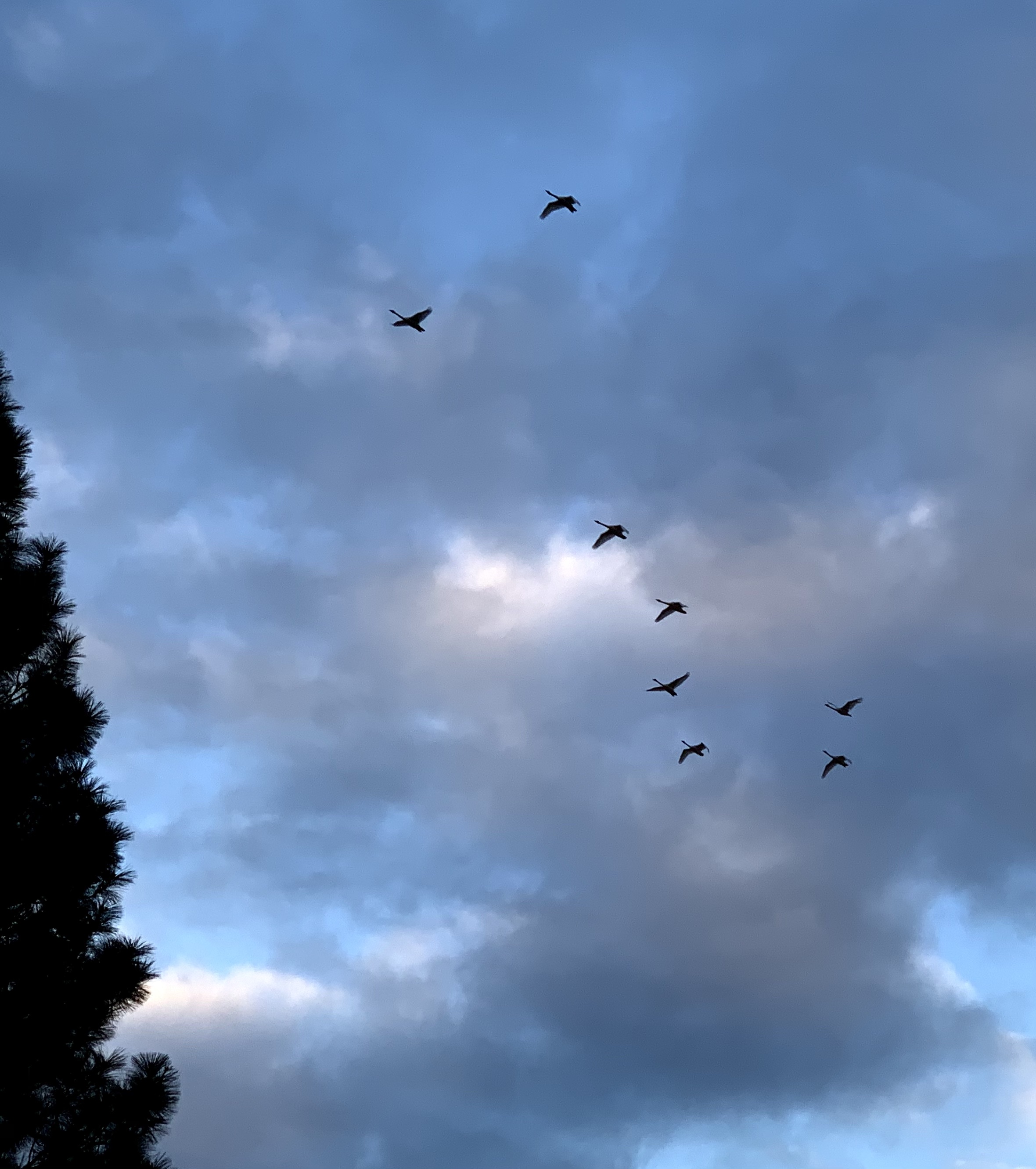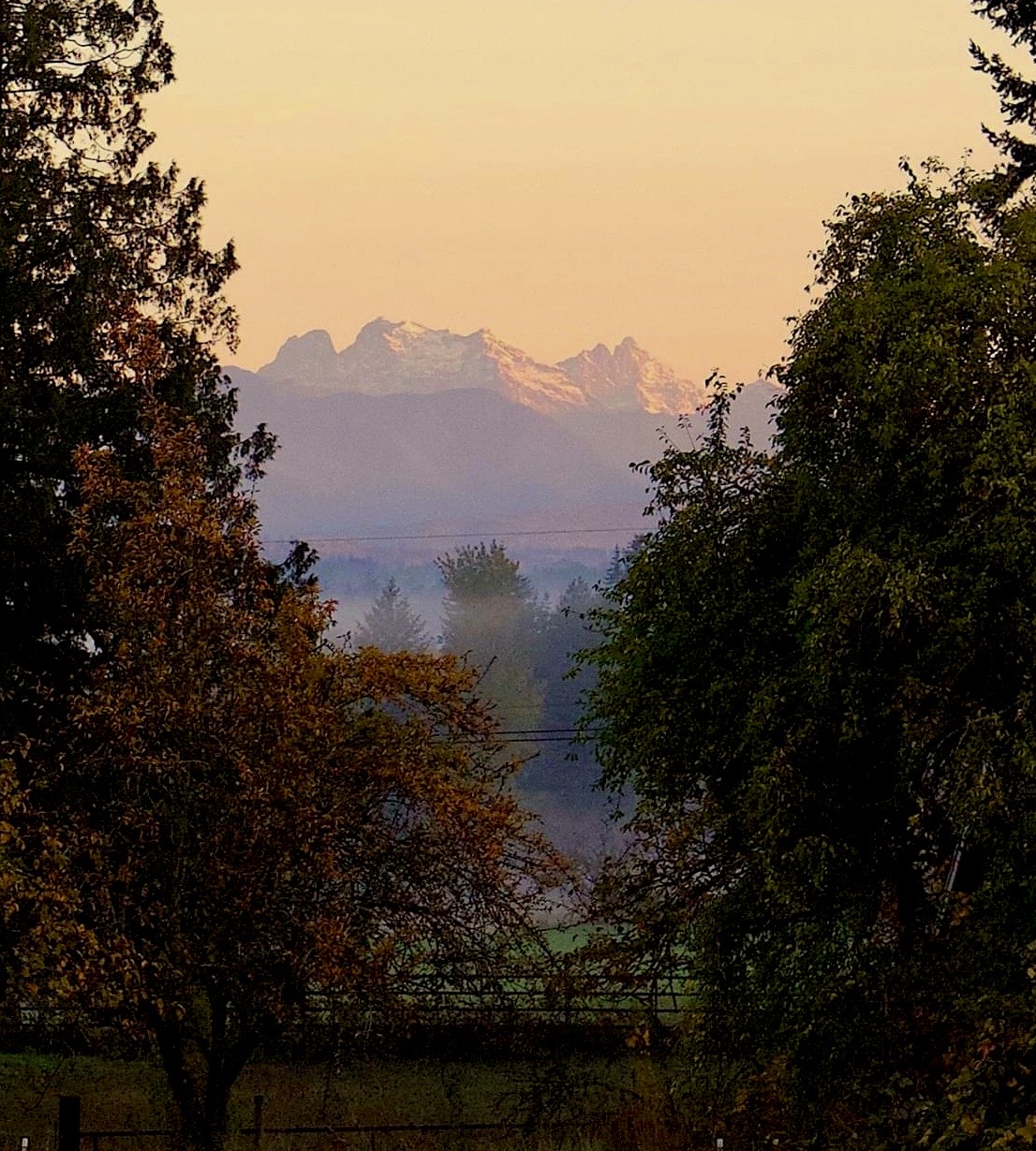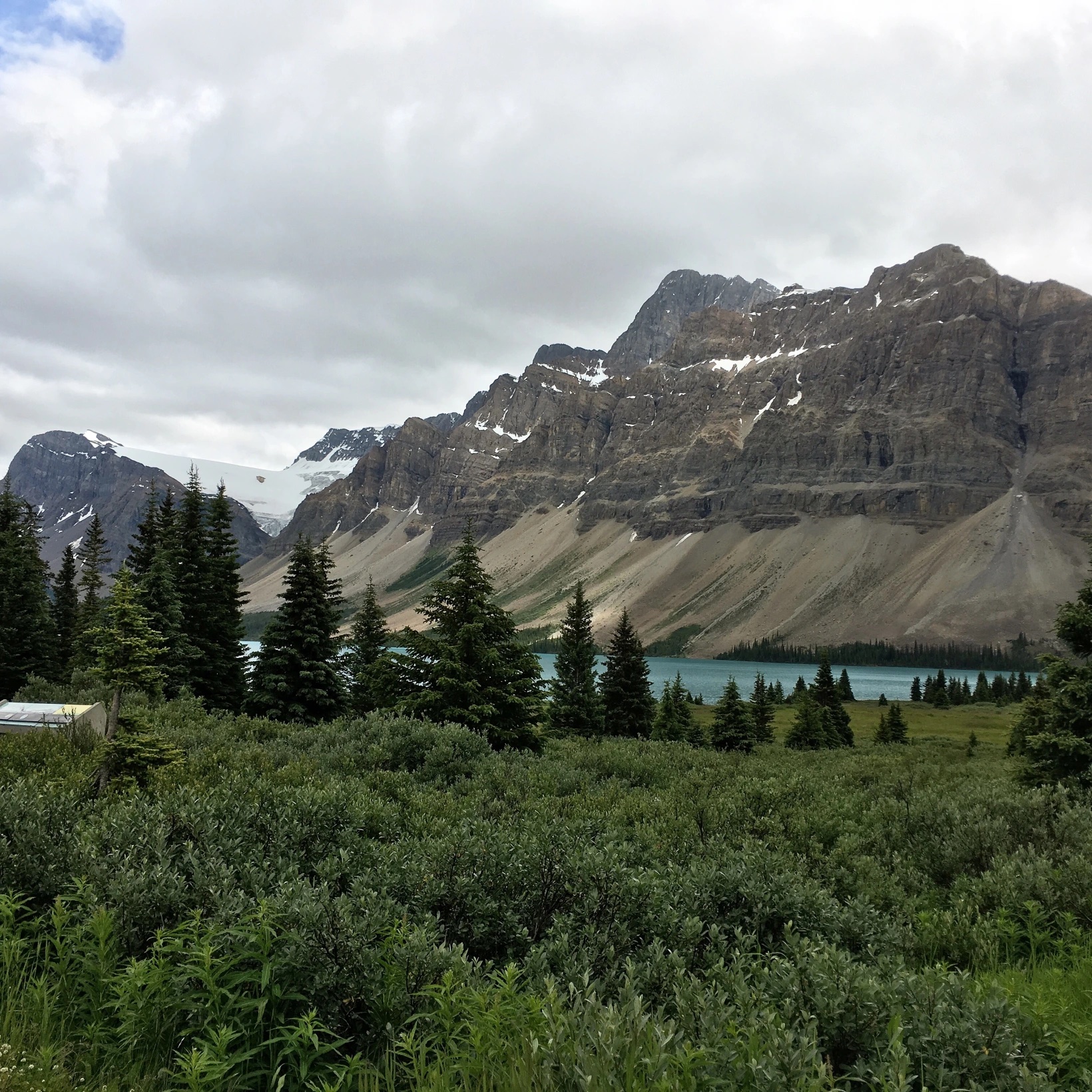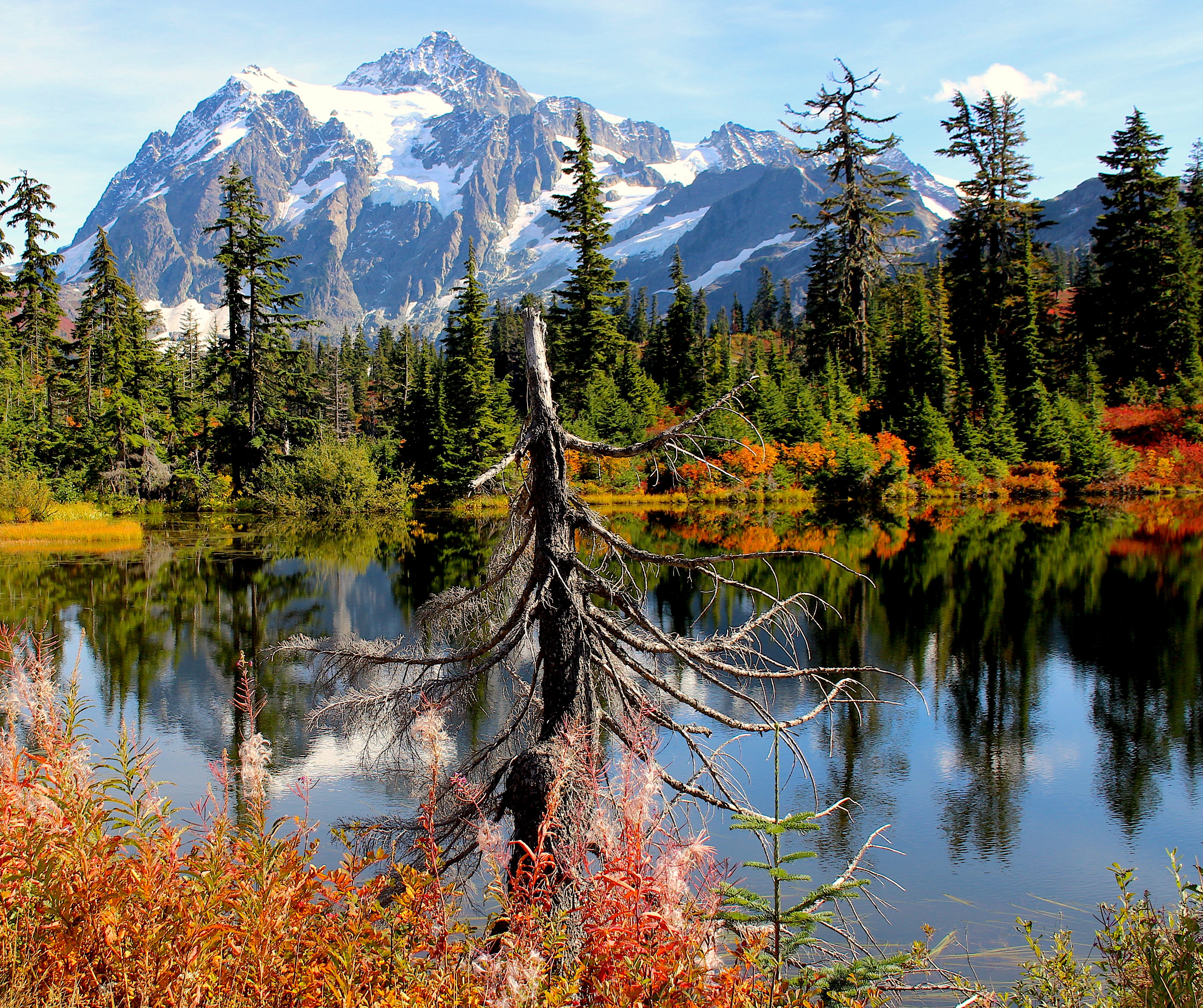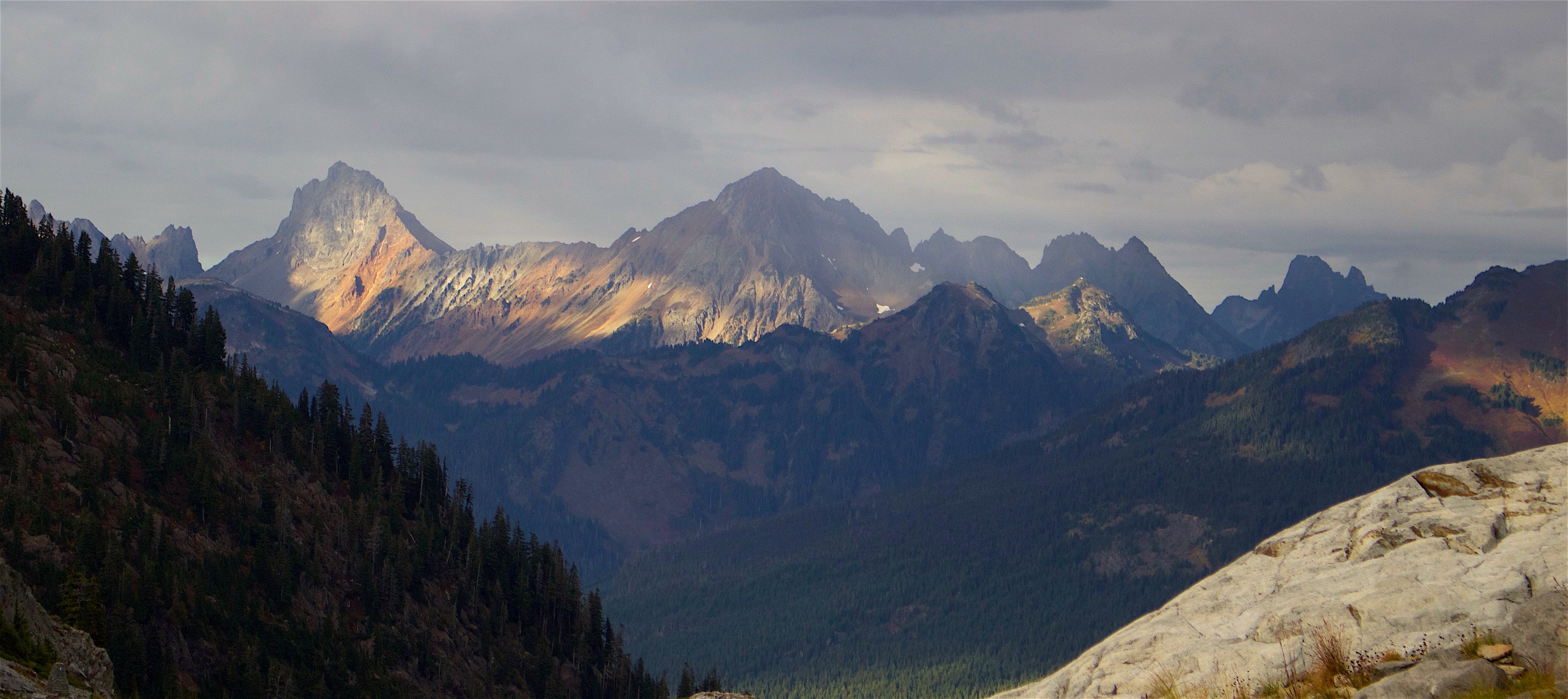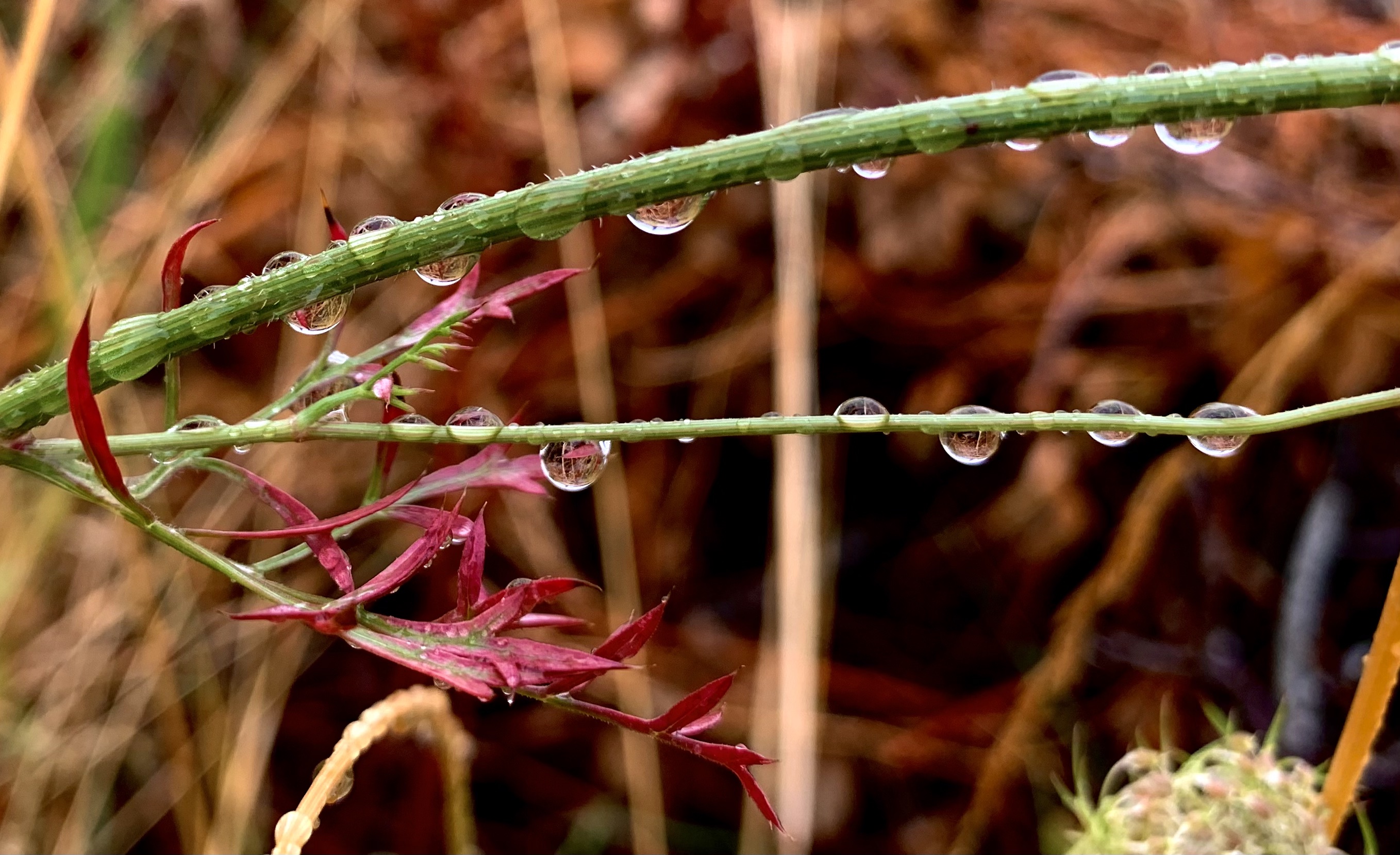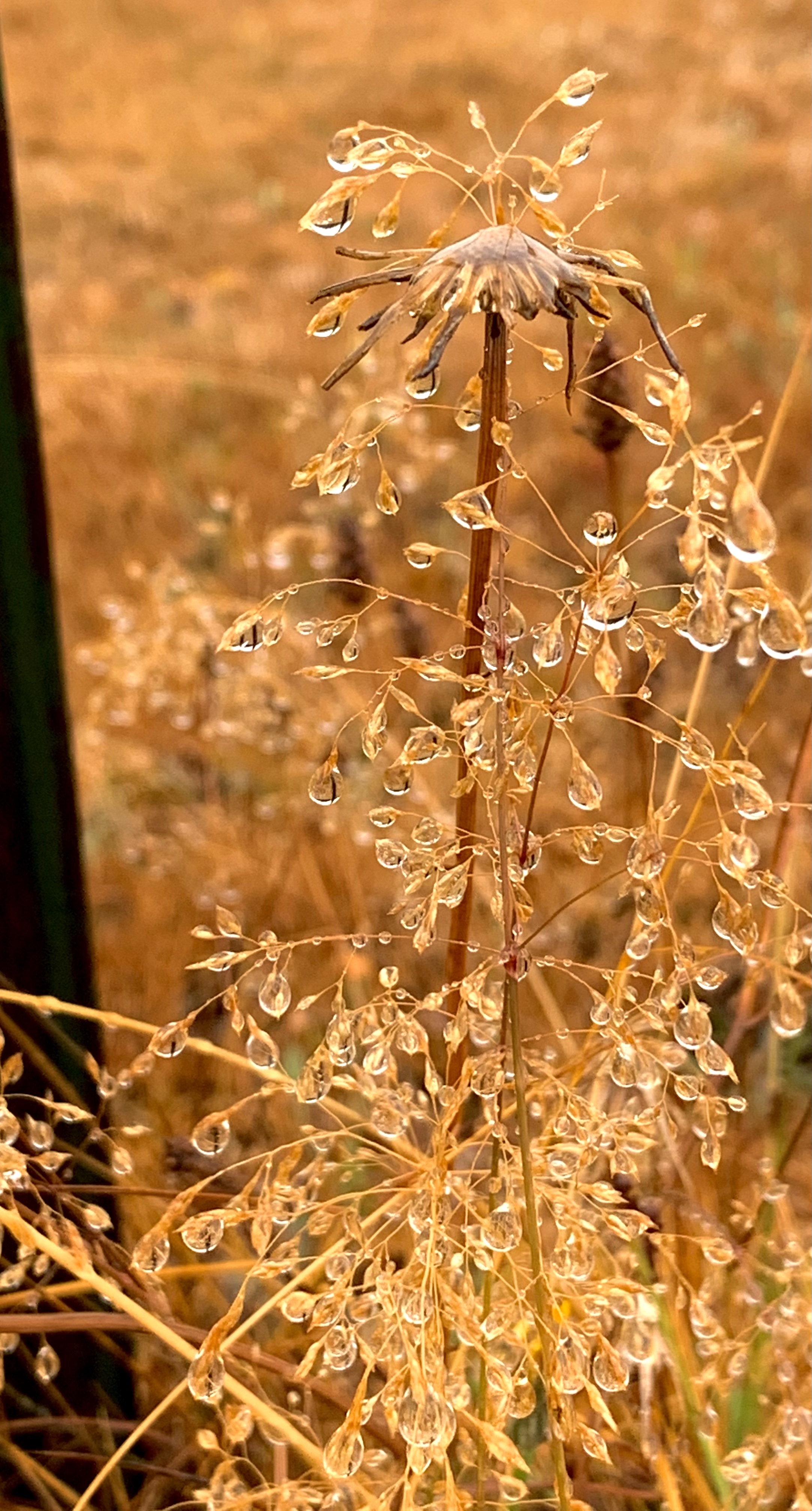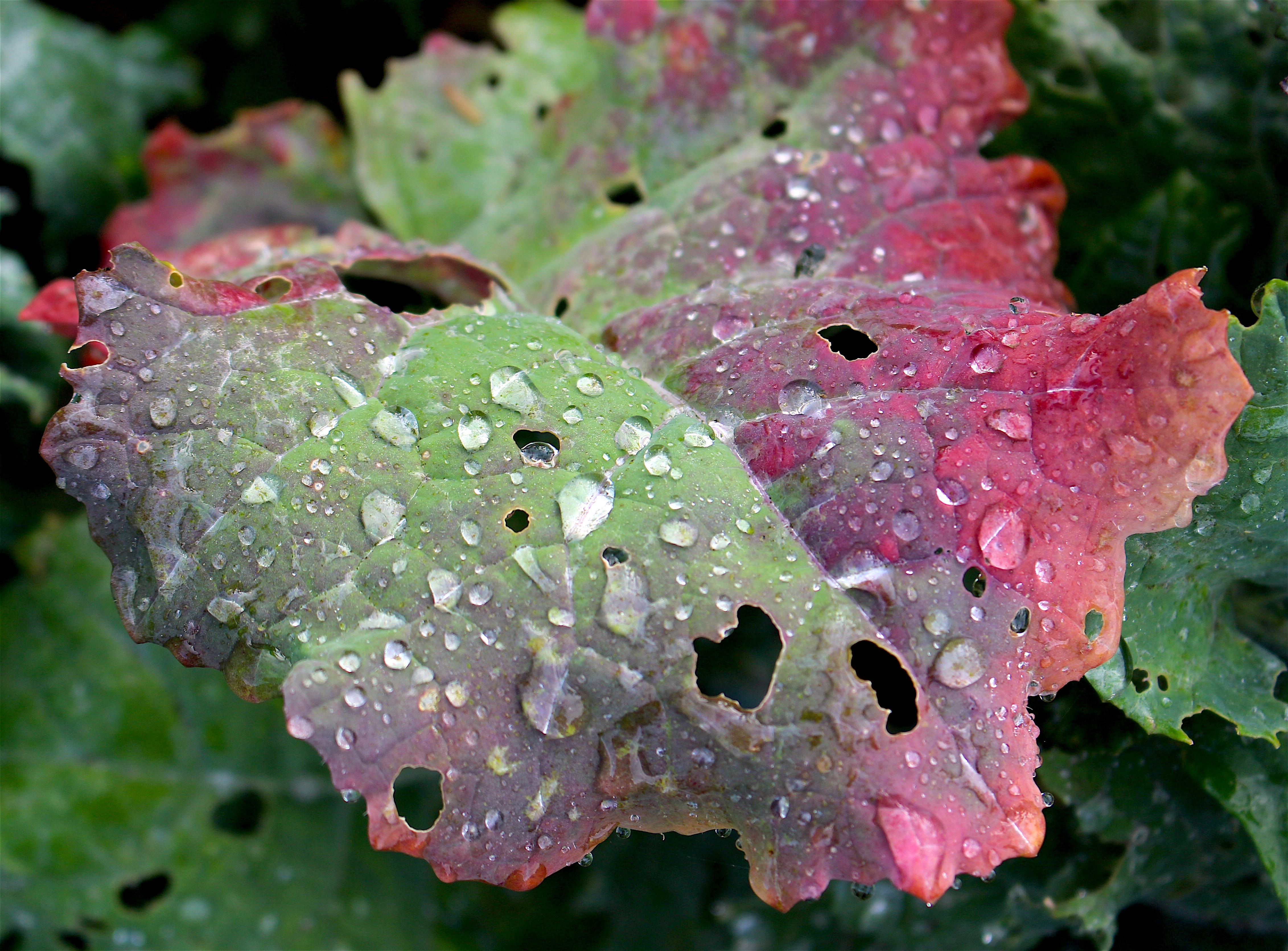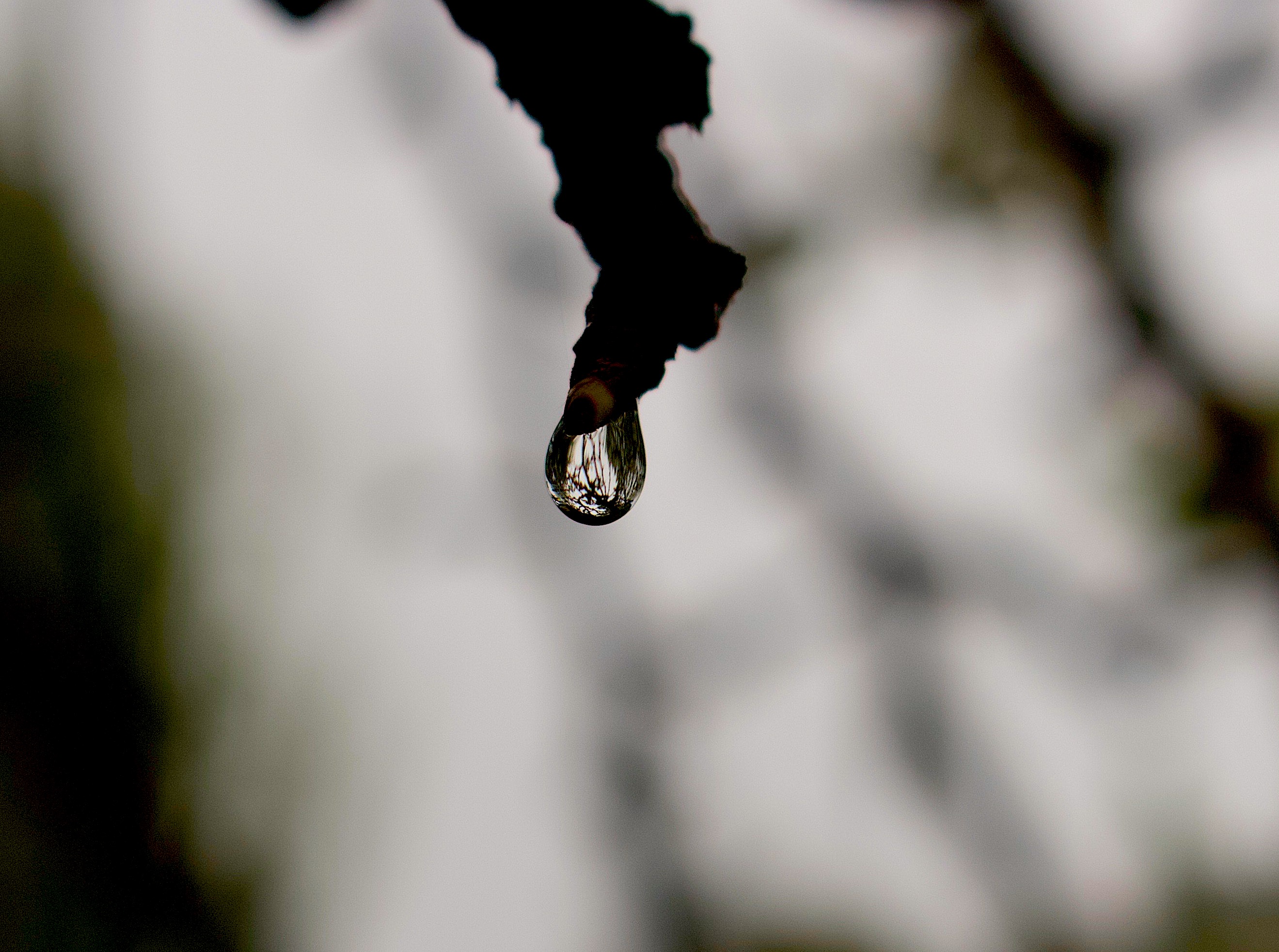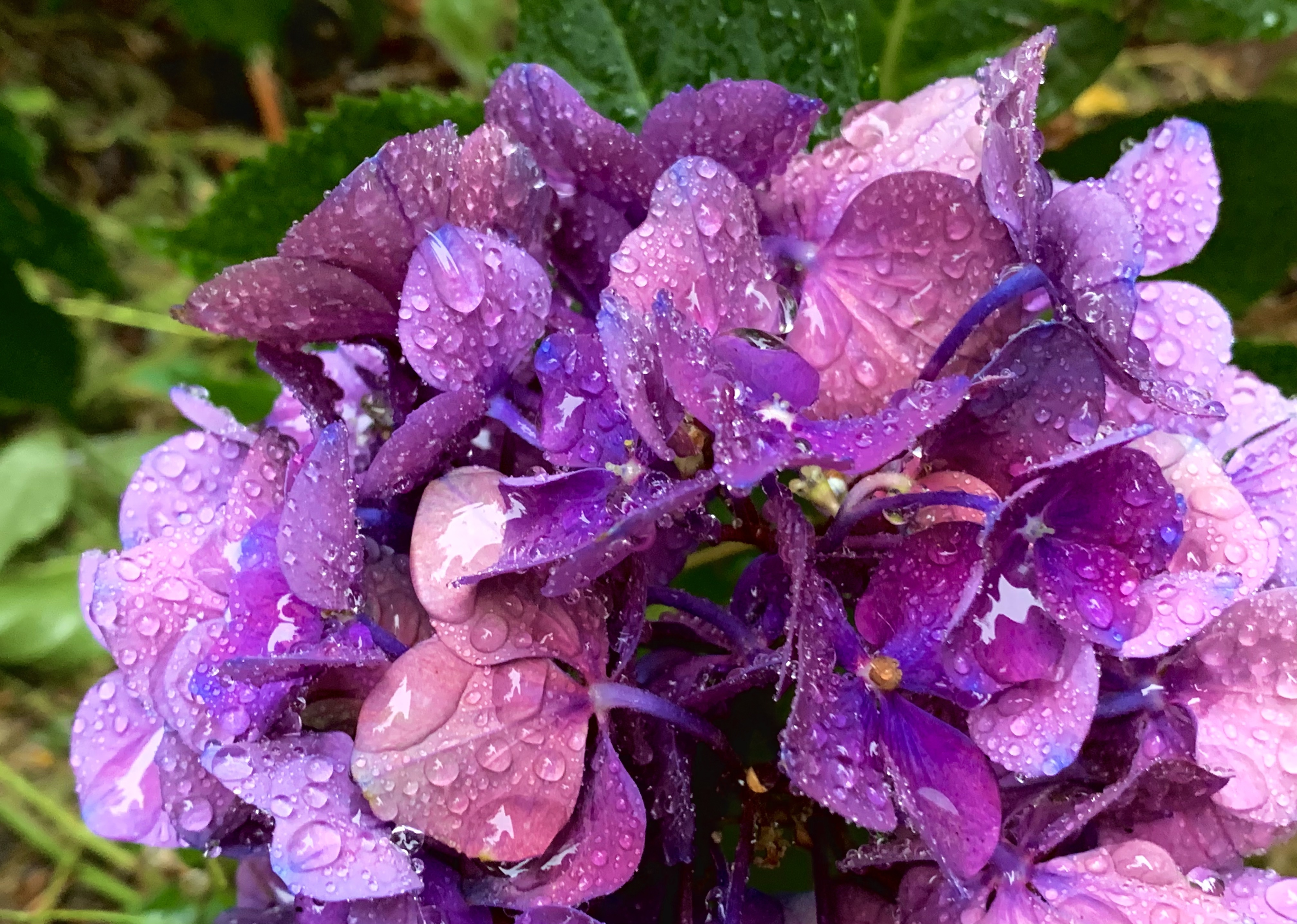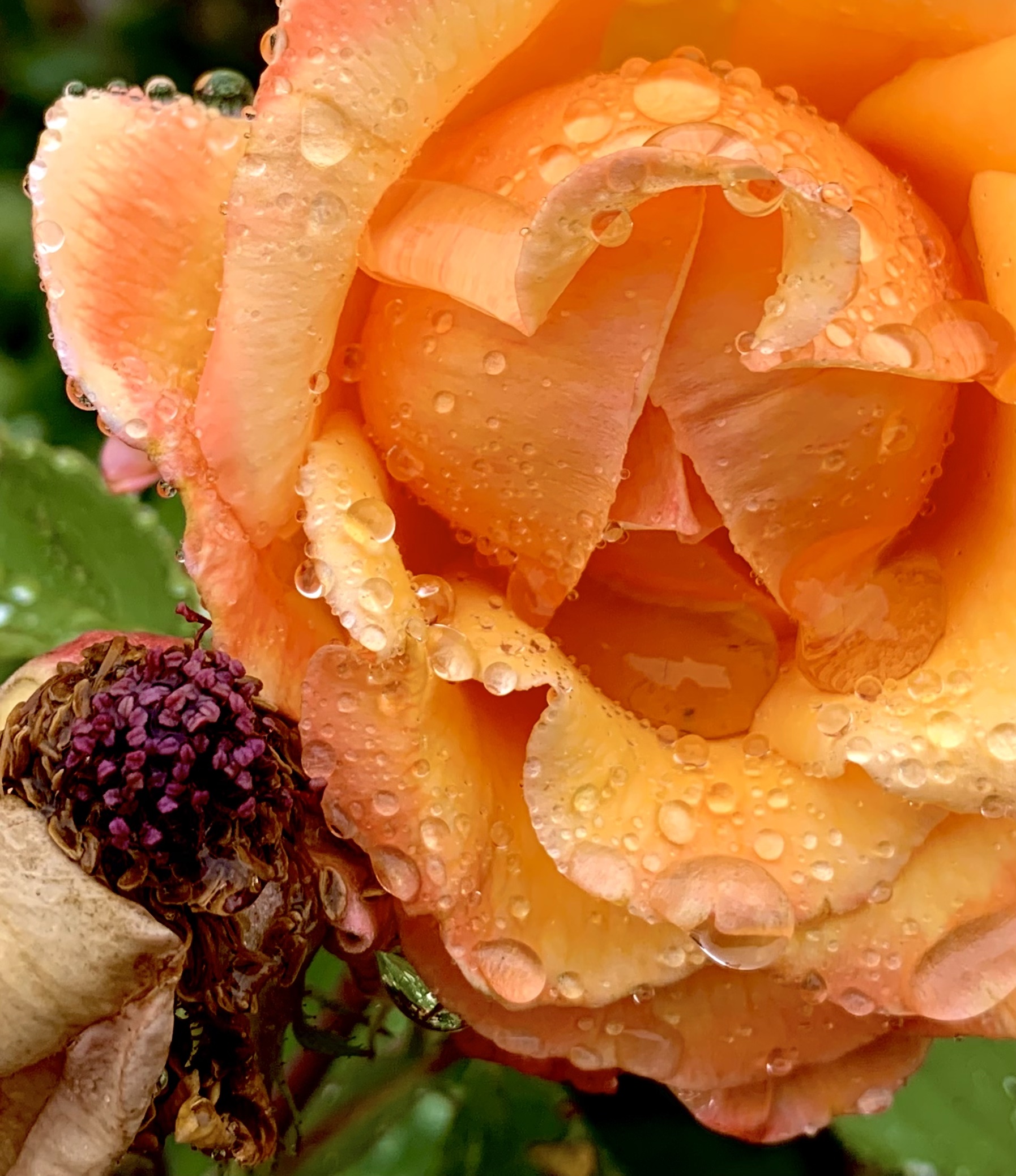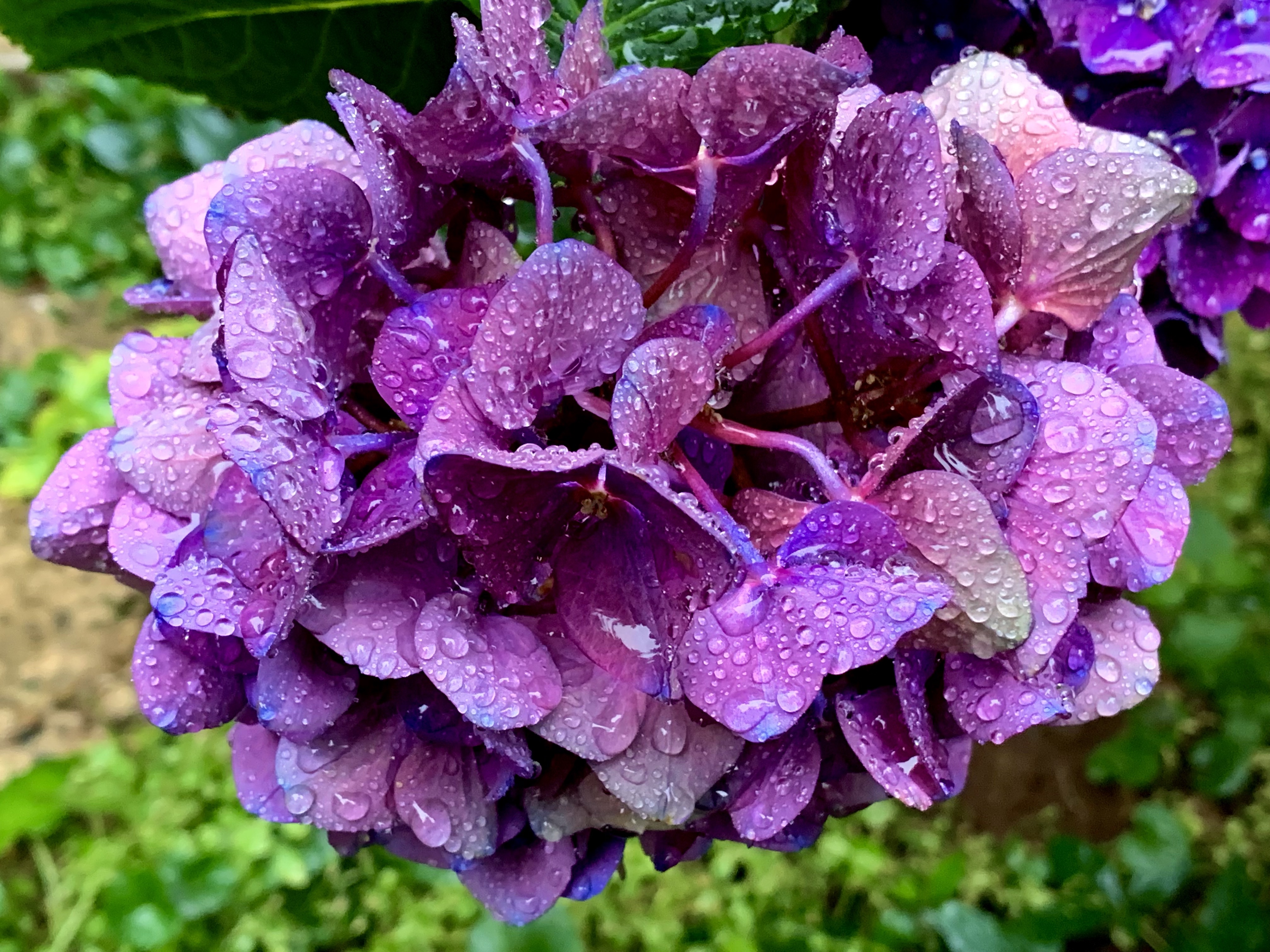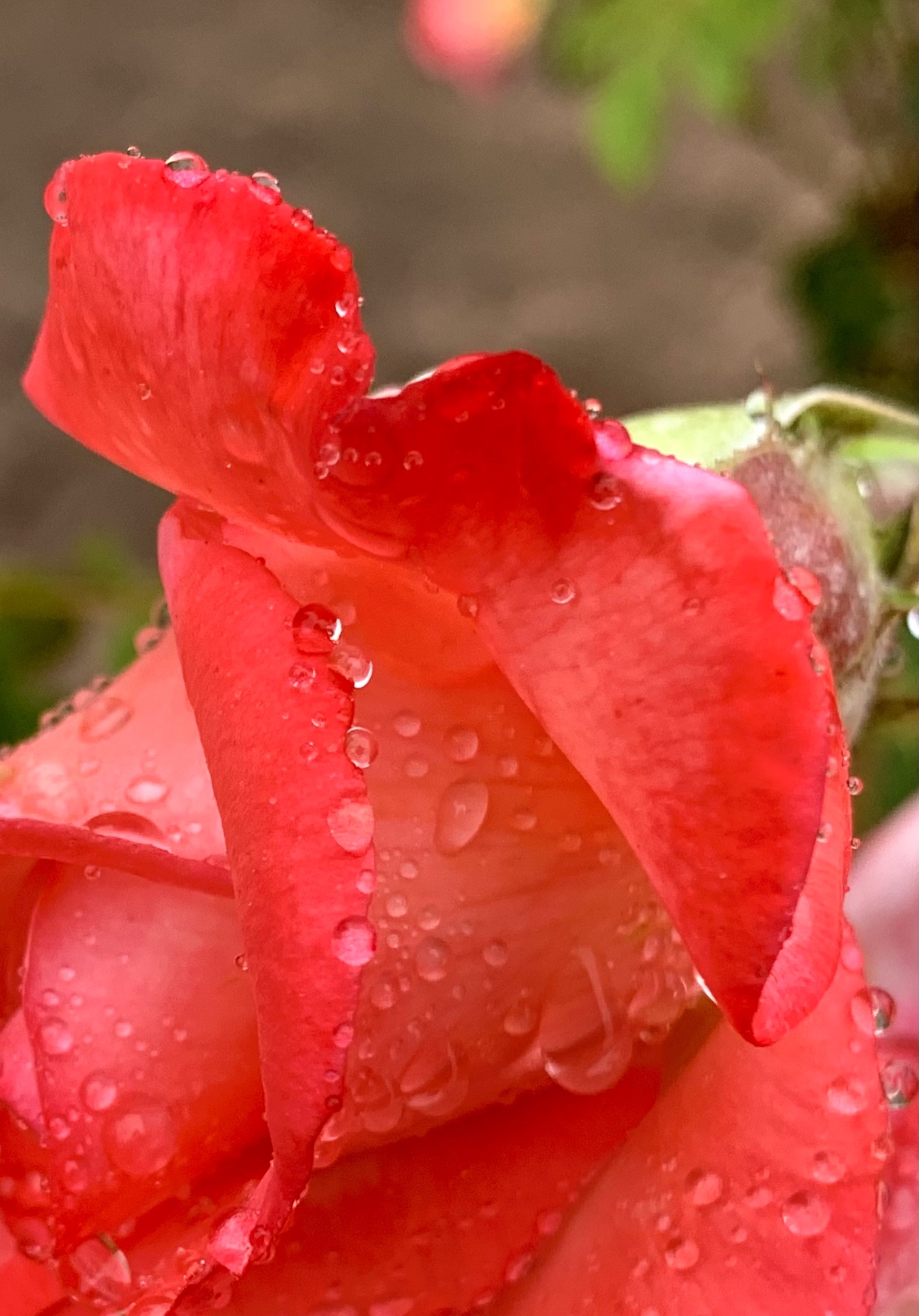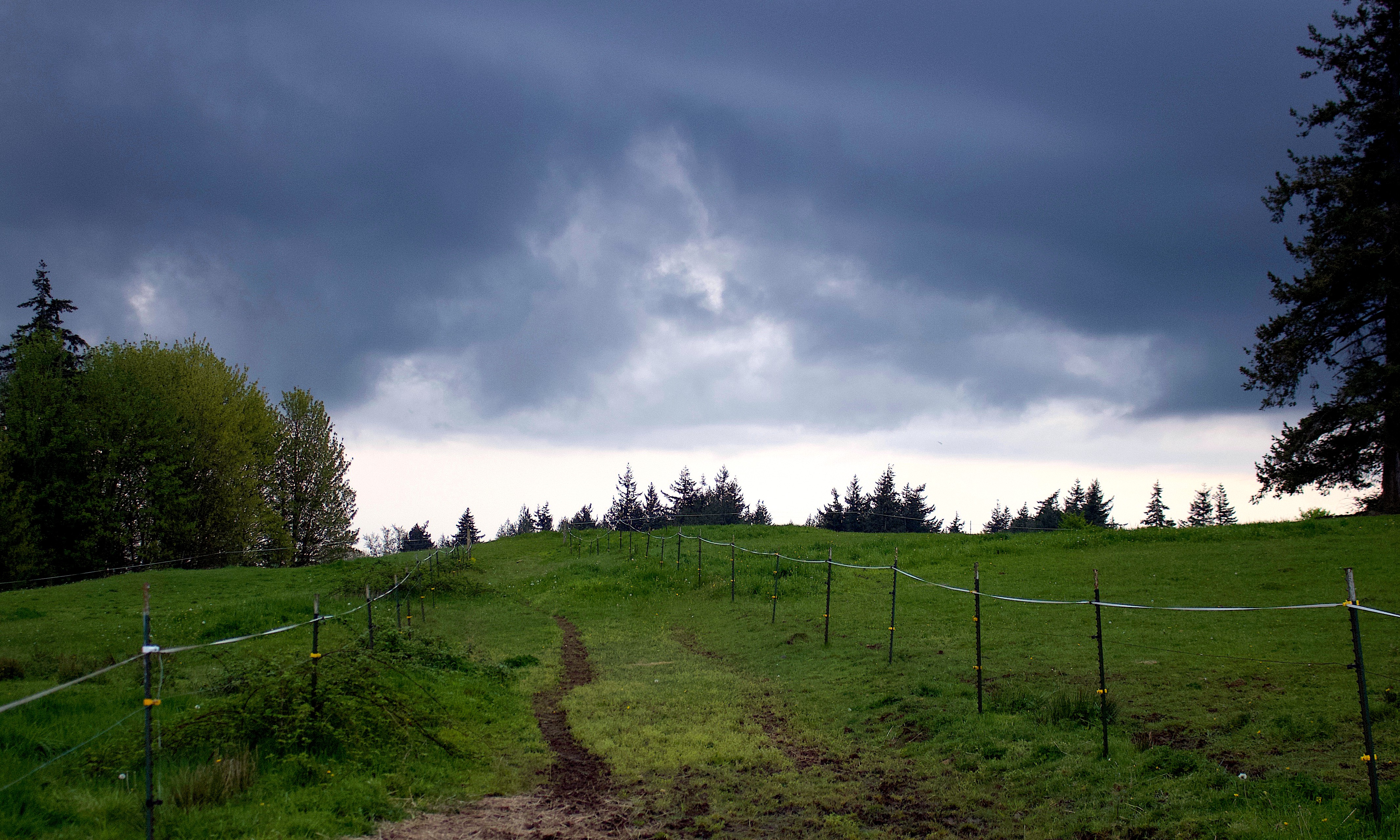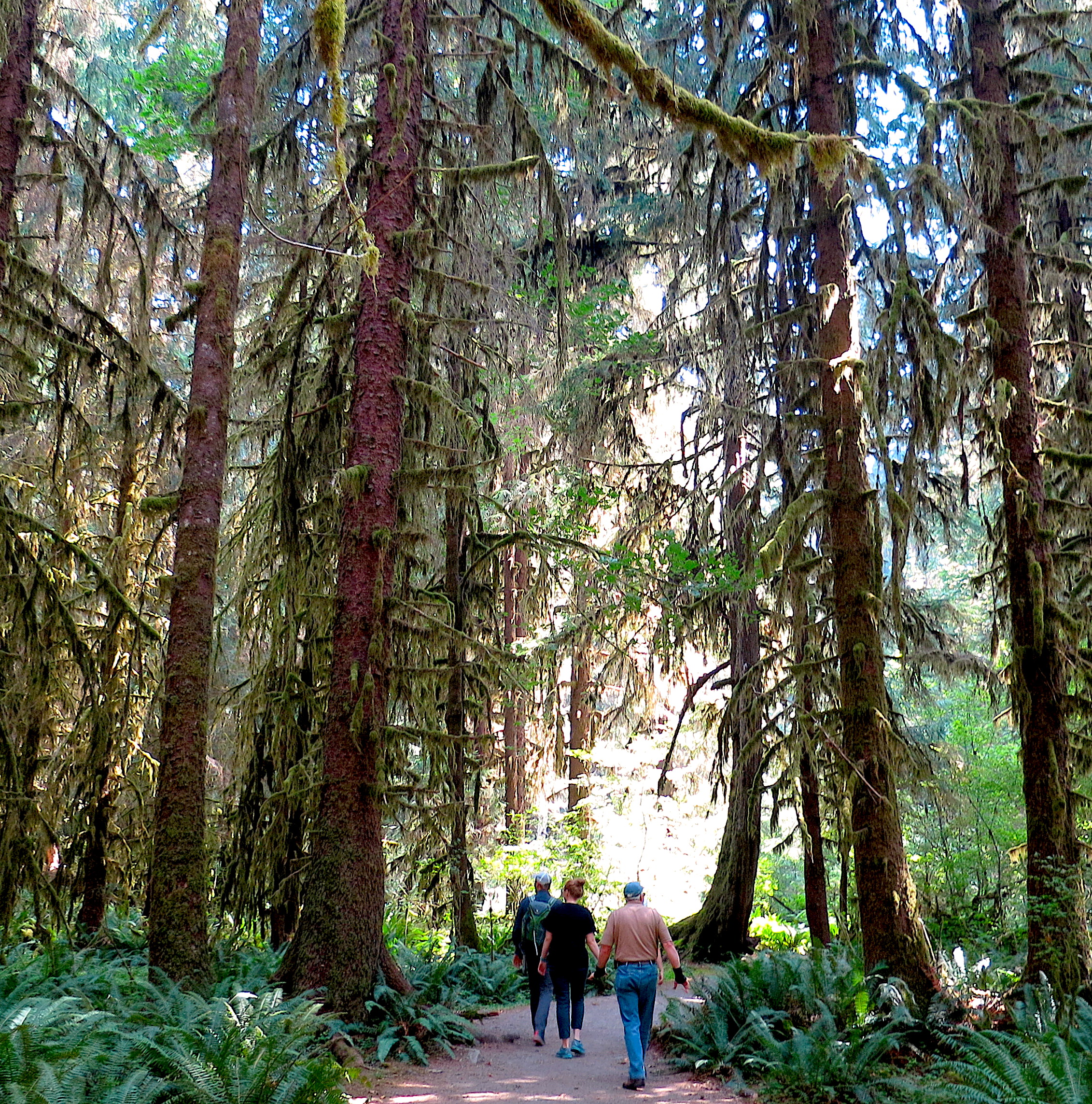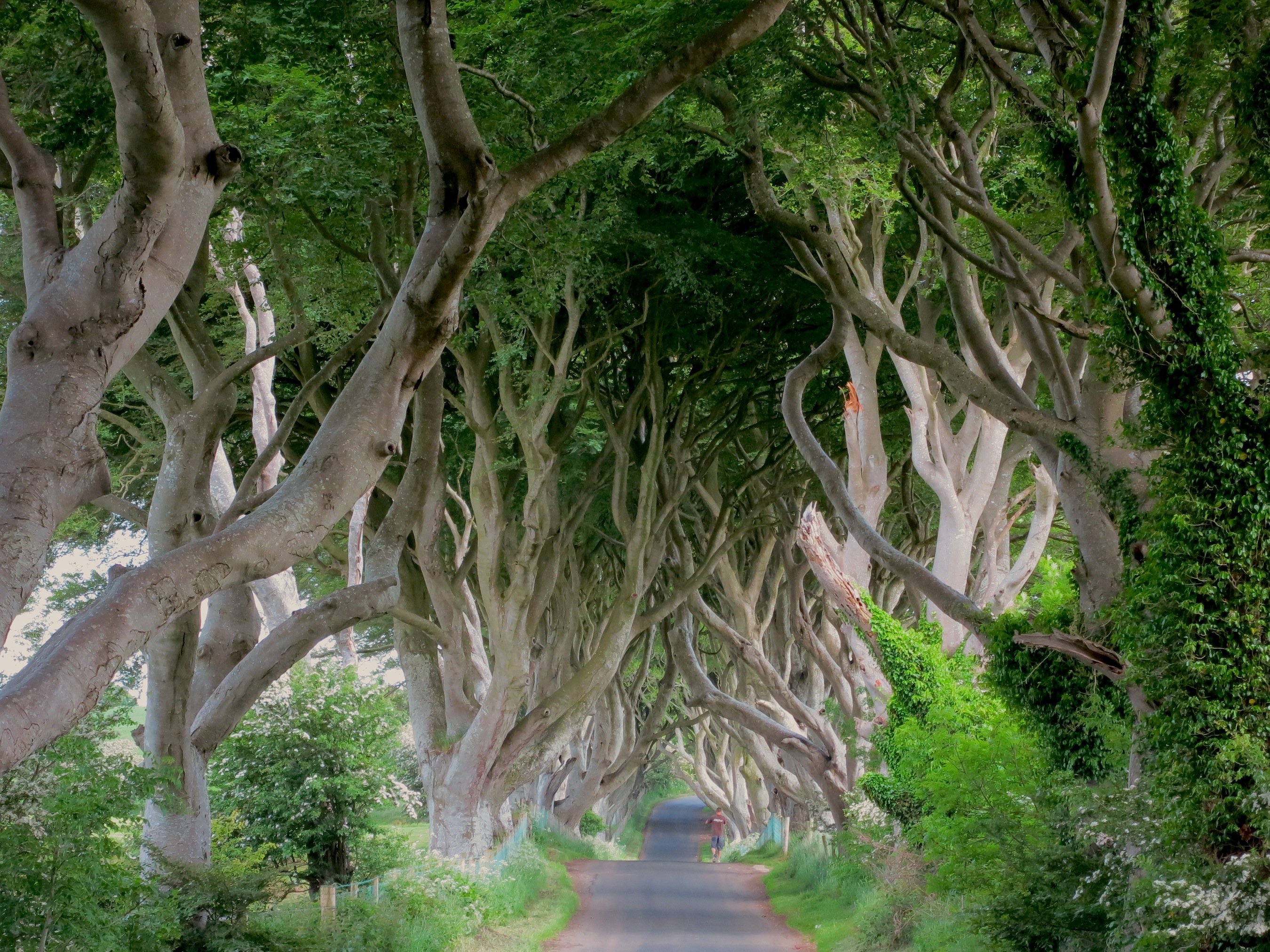
In This Twittering World

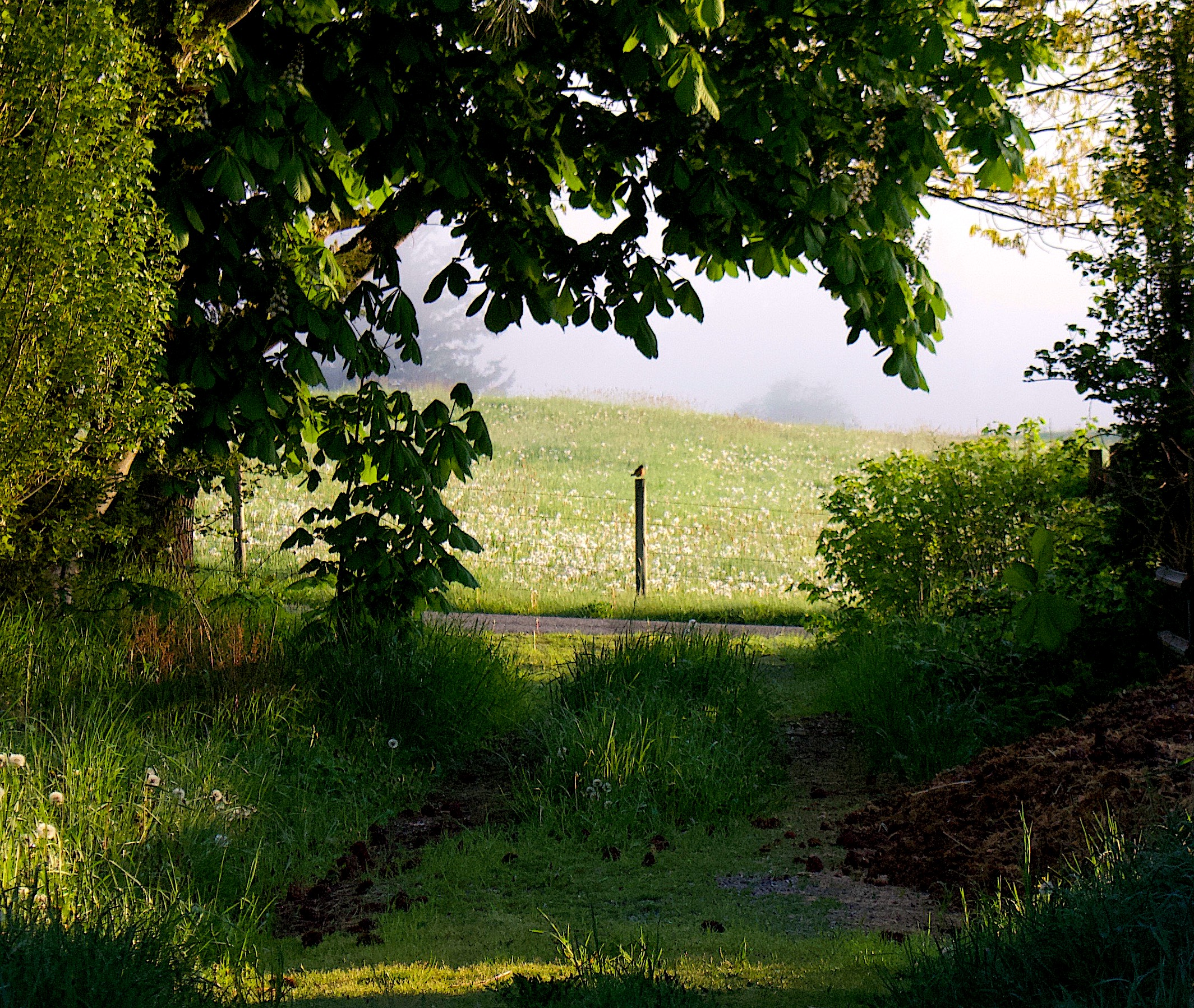
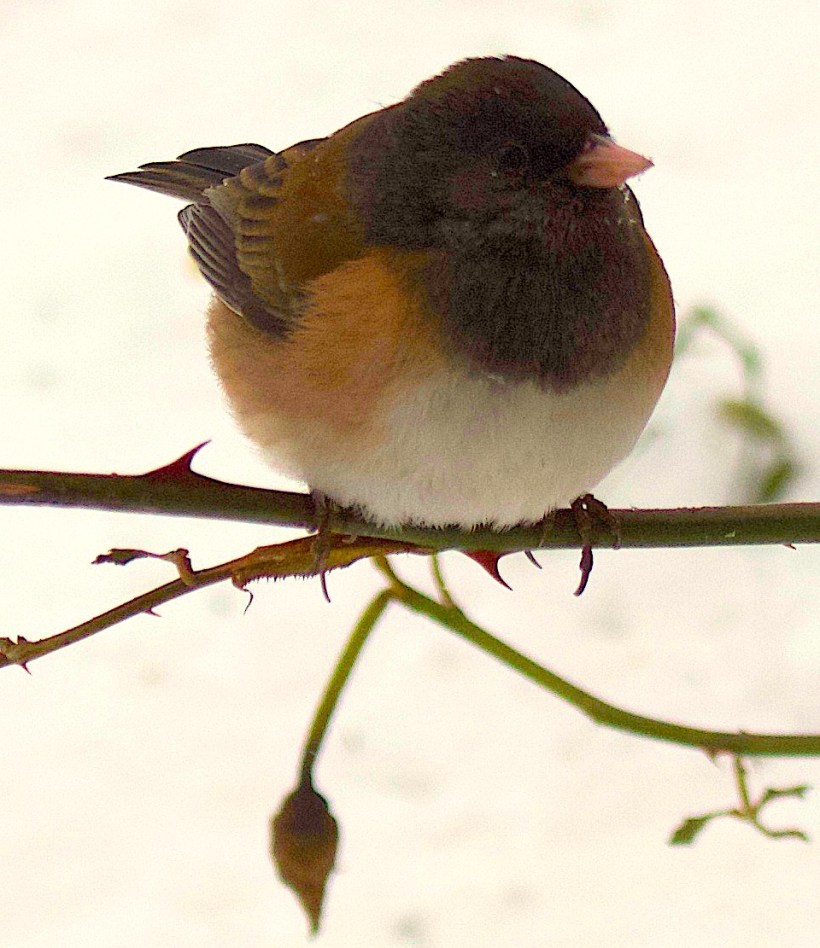
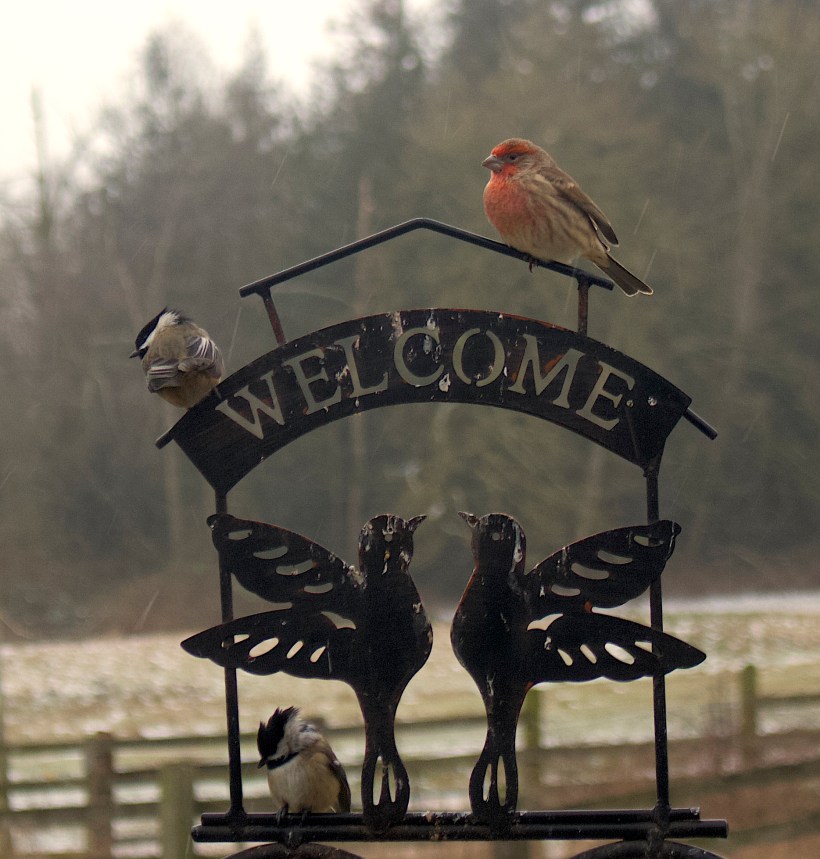
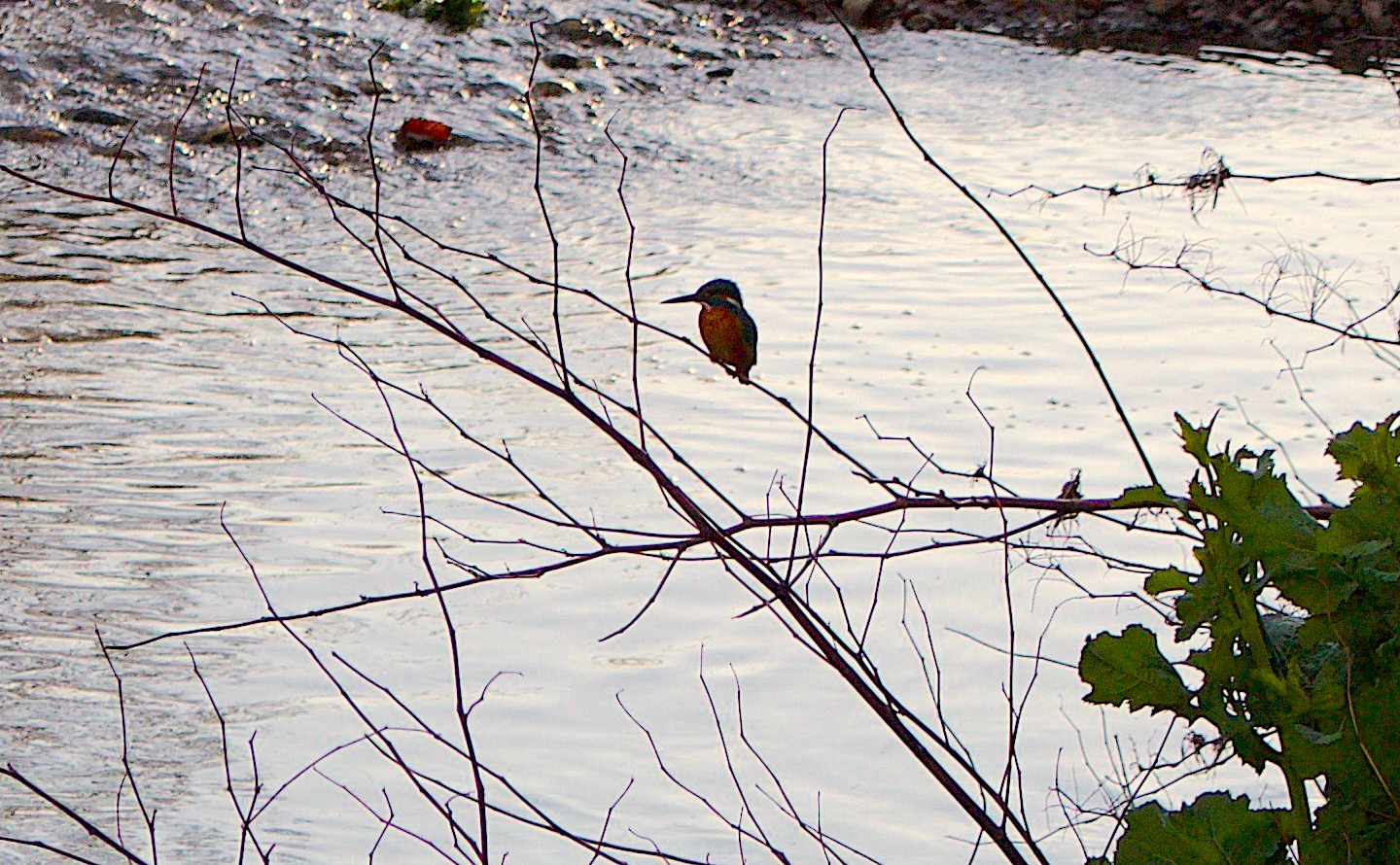
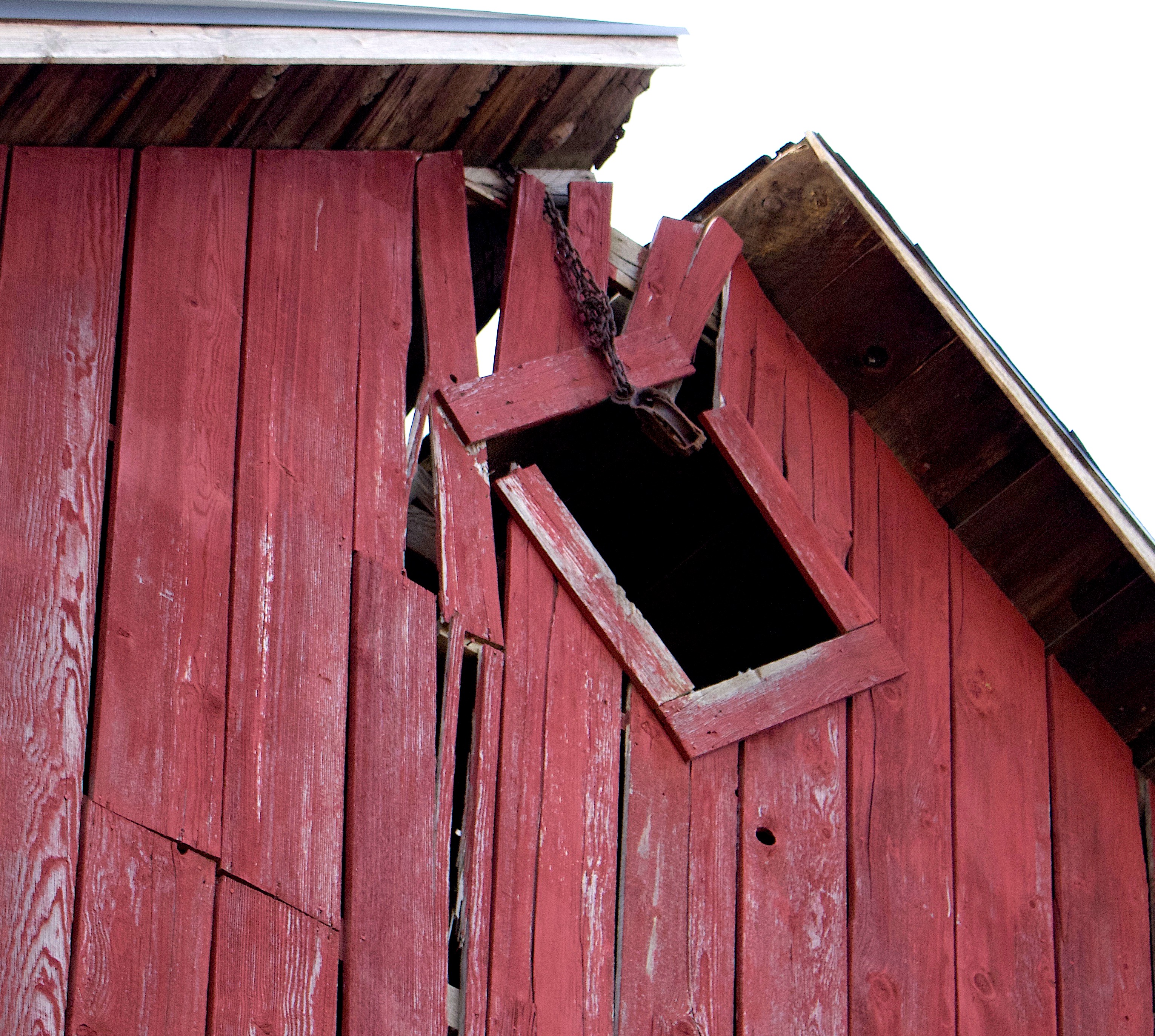
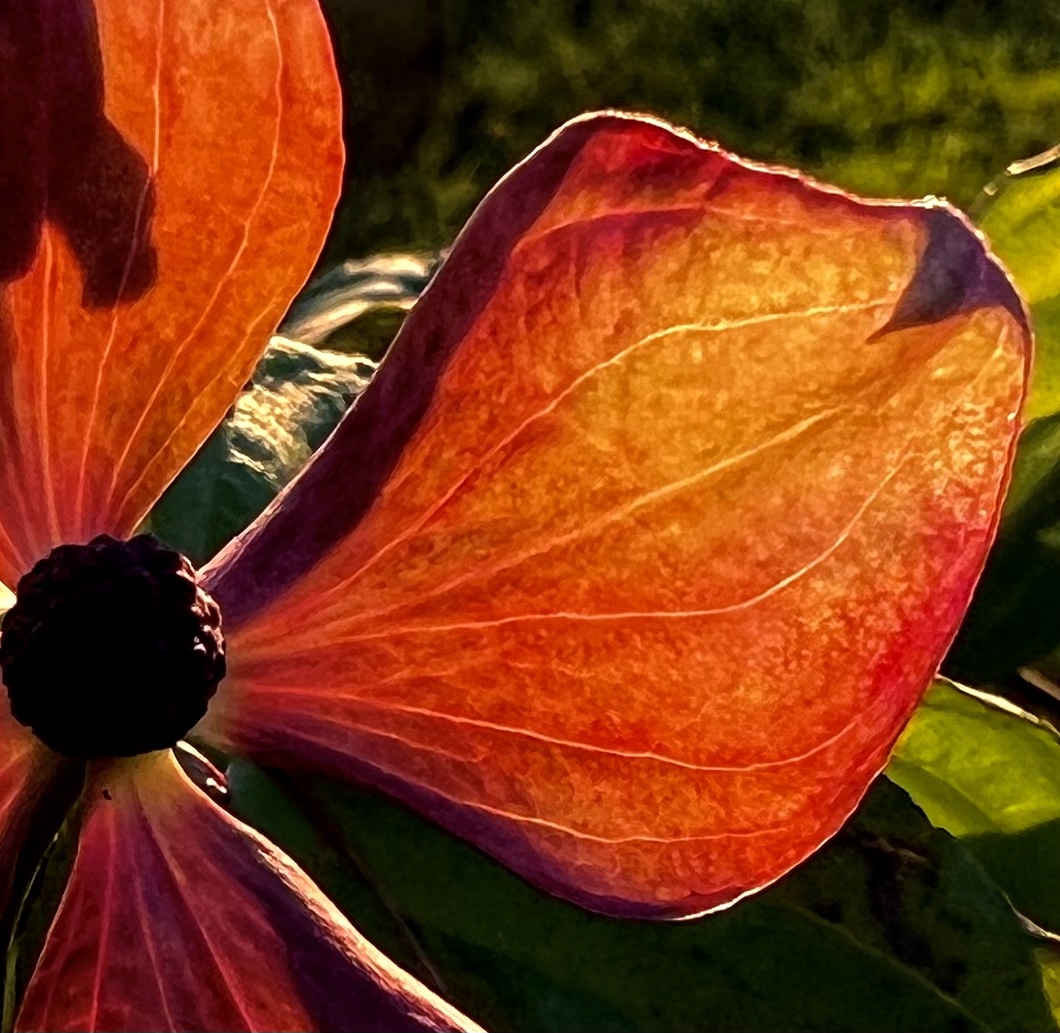
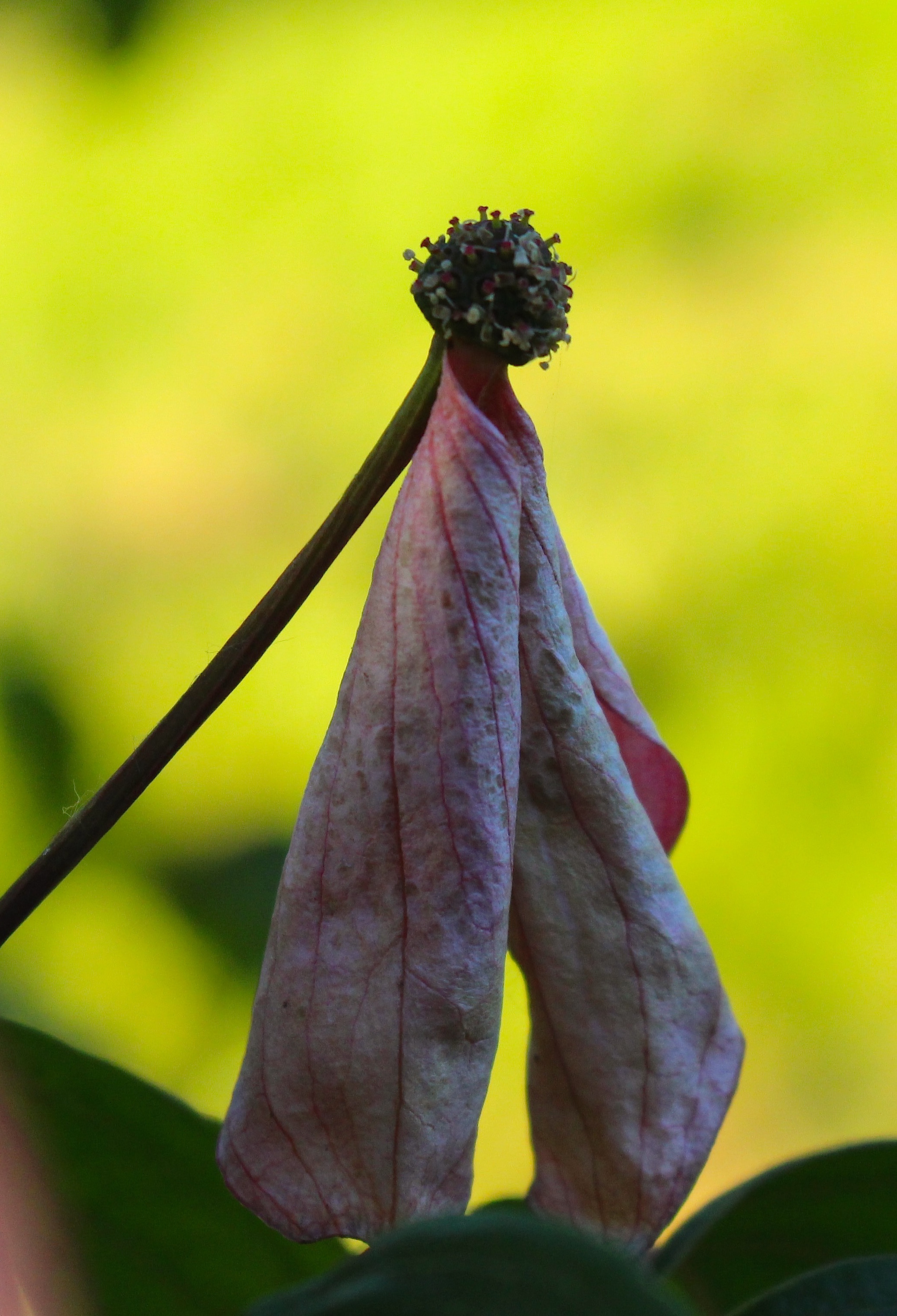
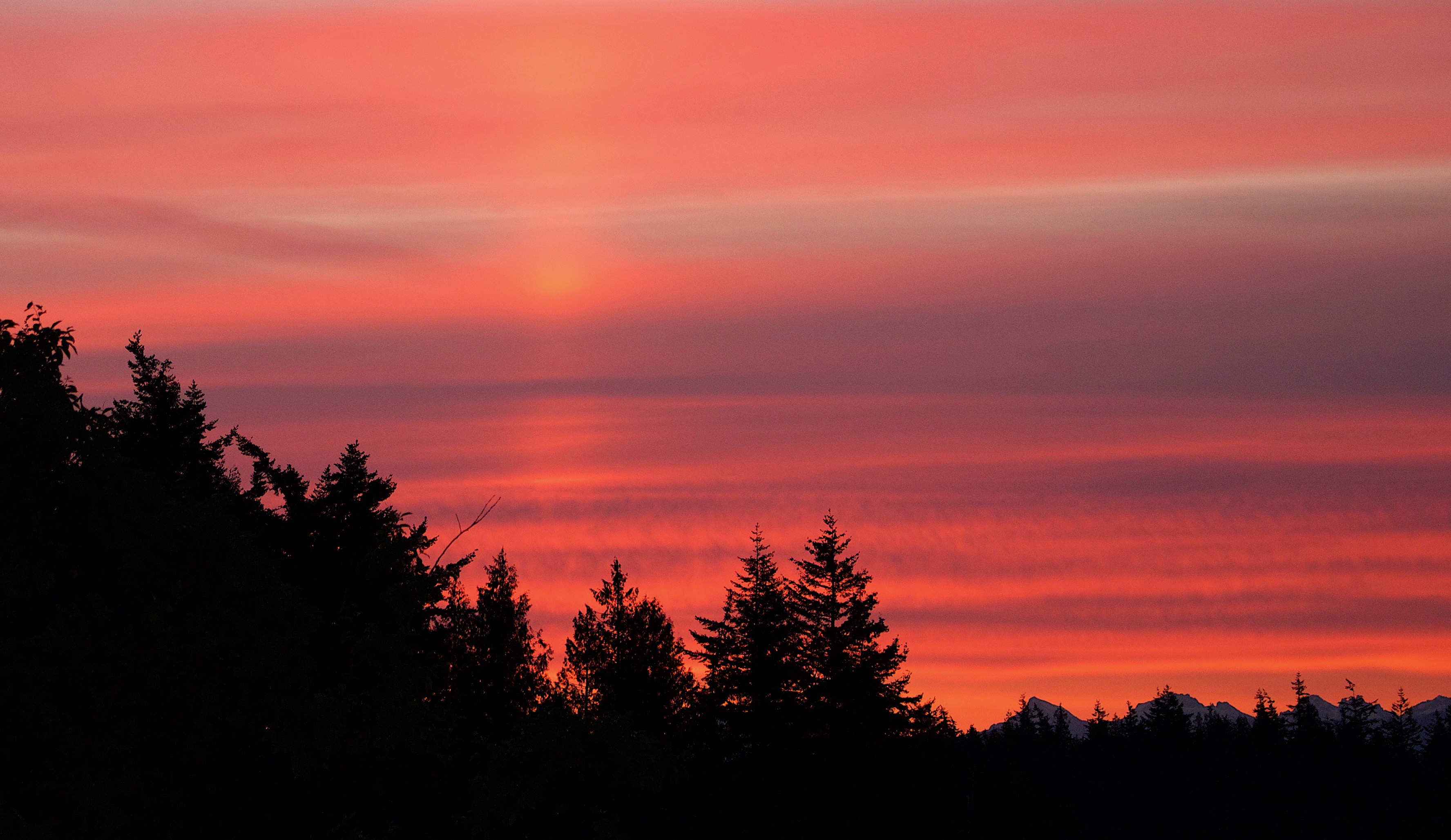
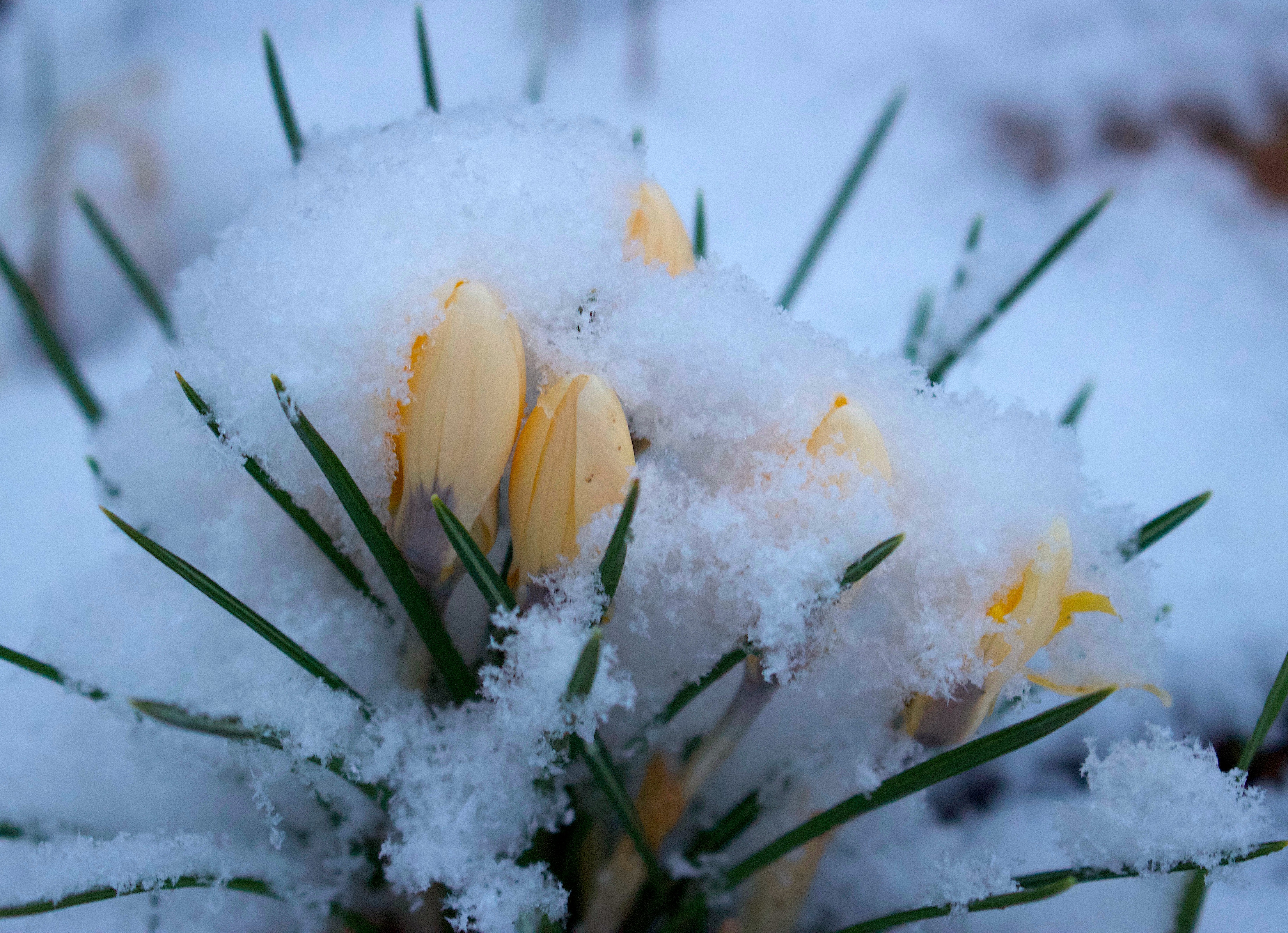
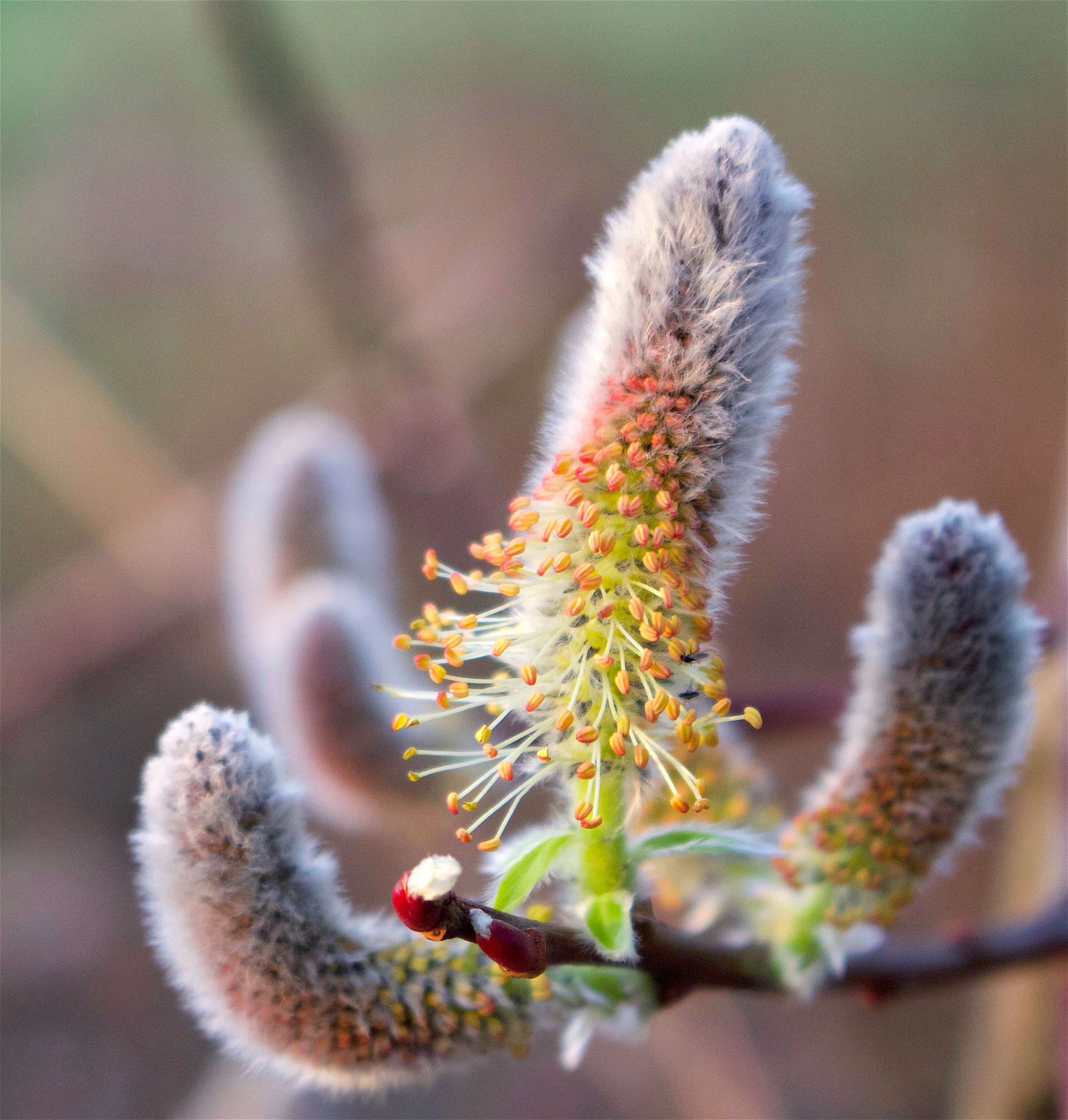
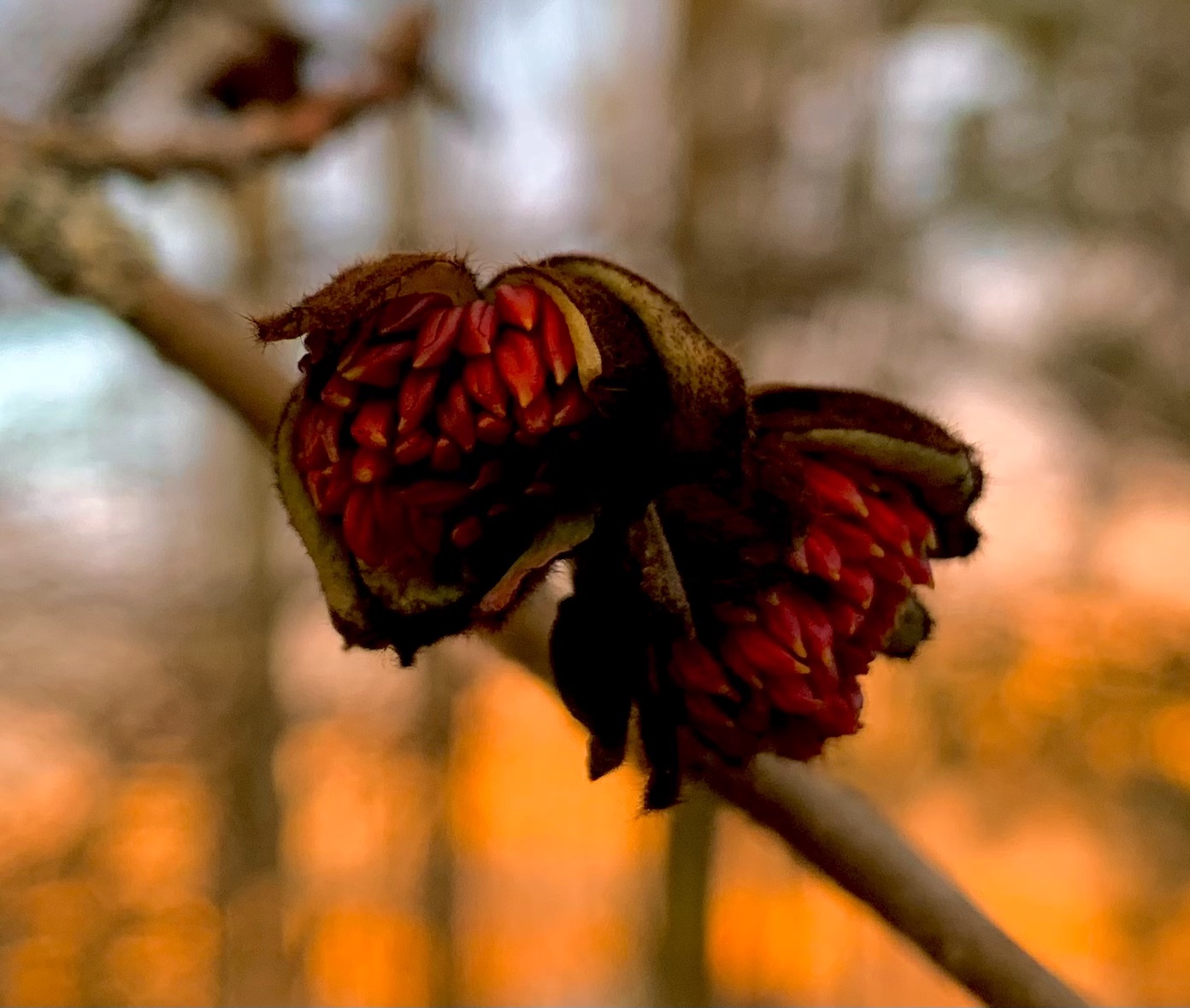
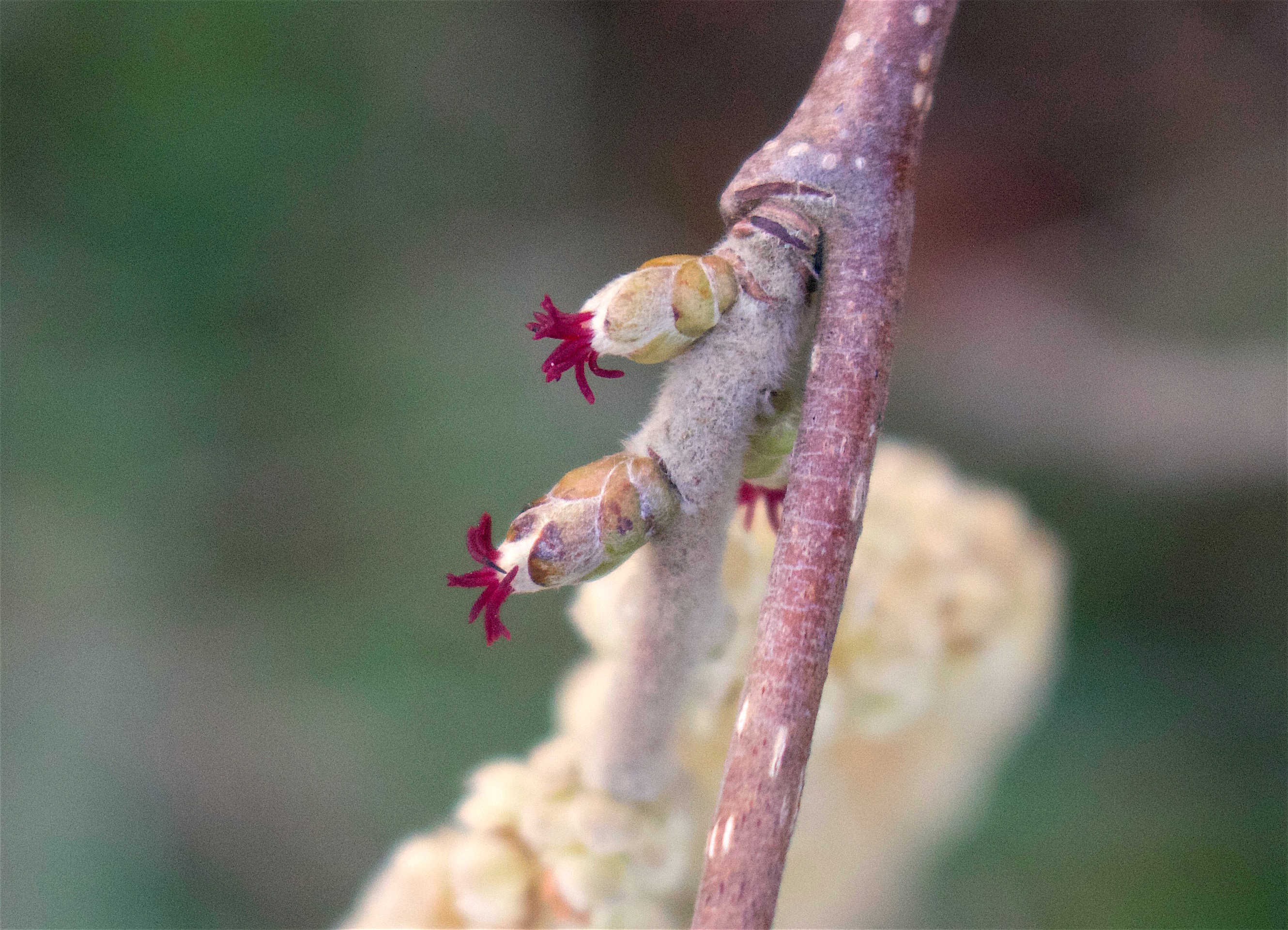
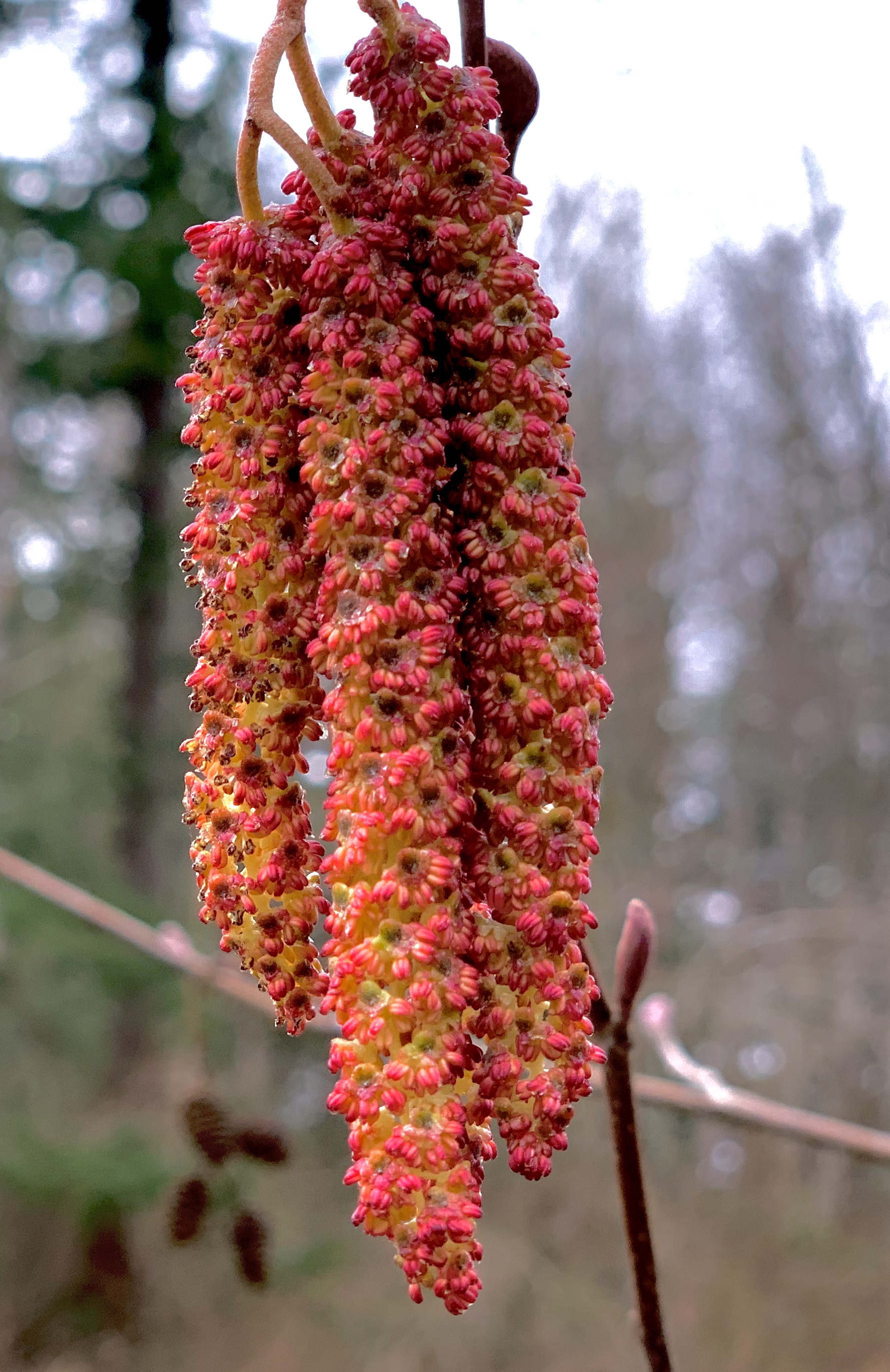
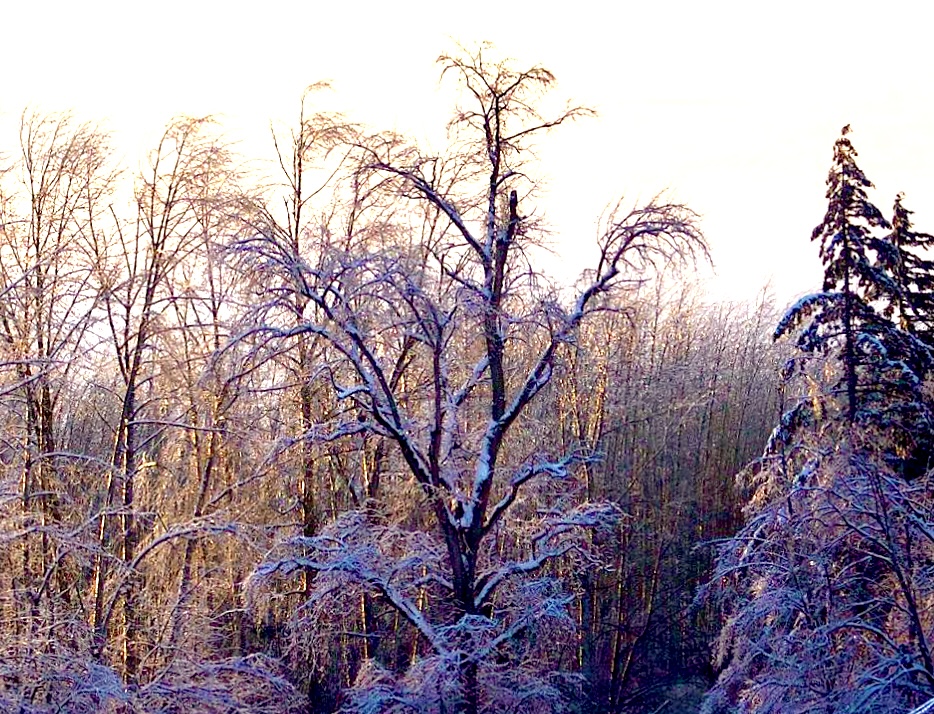
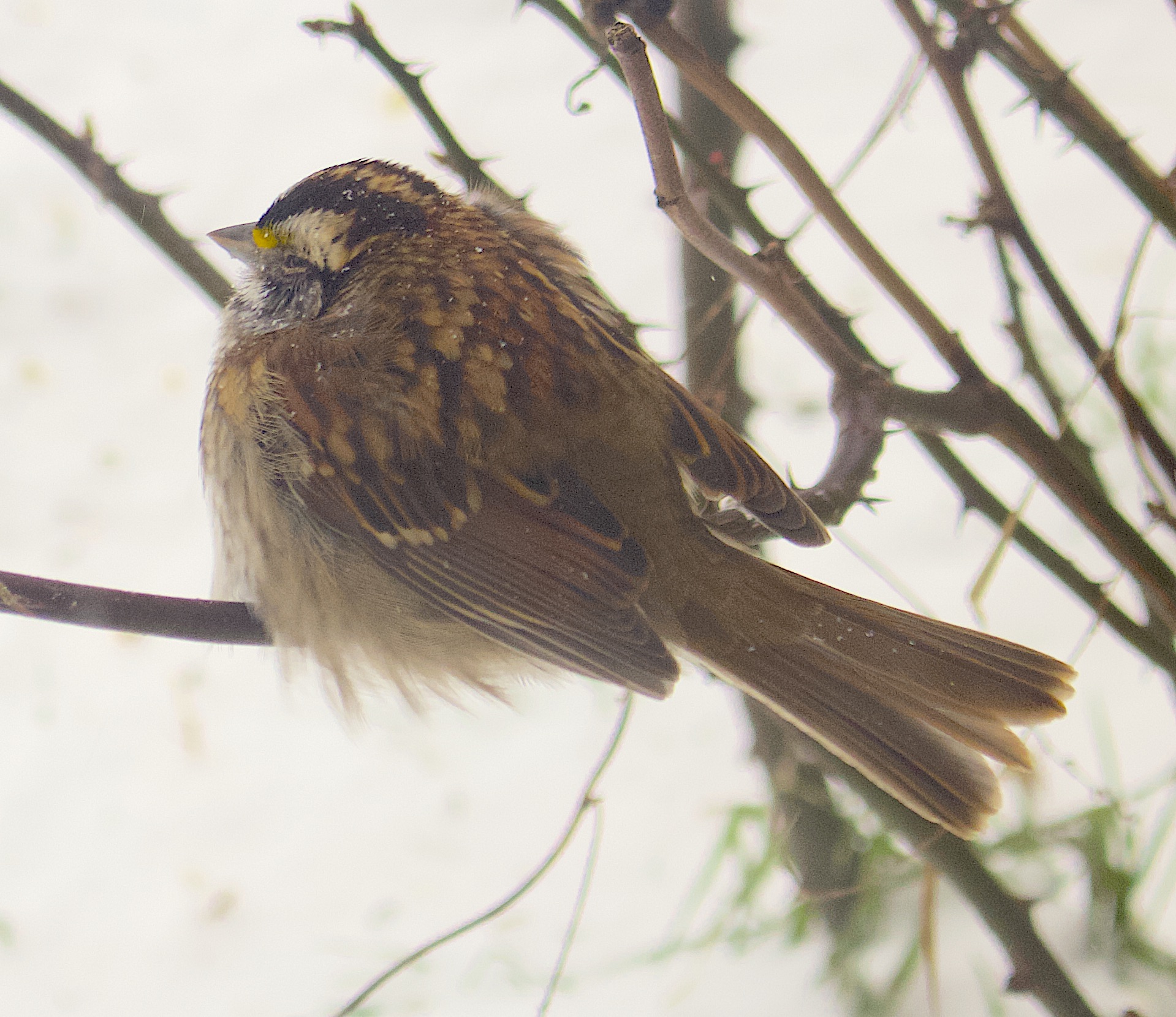
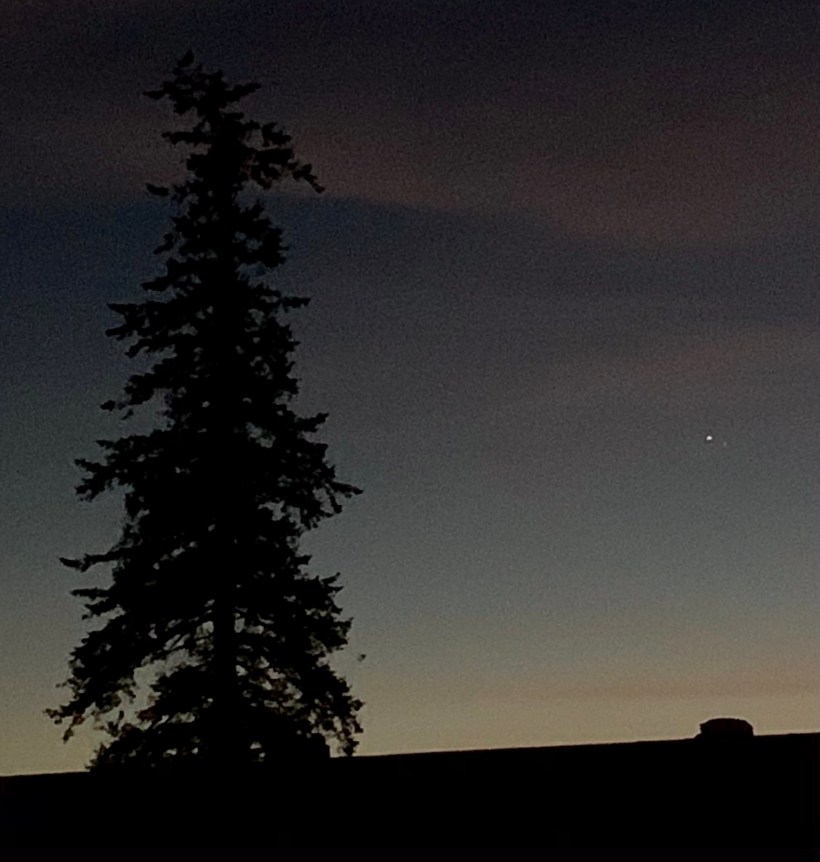
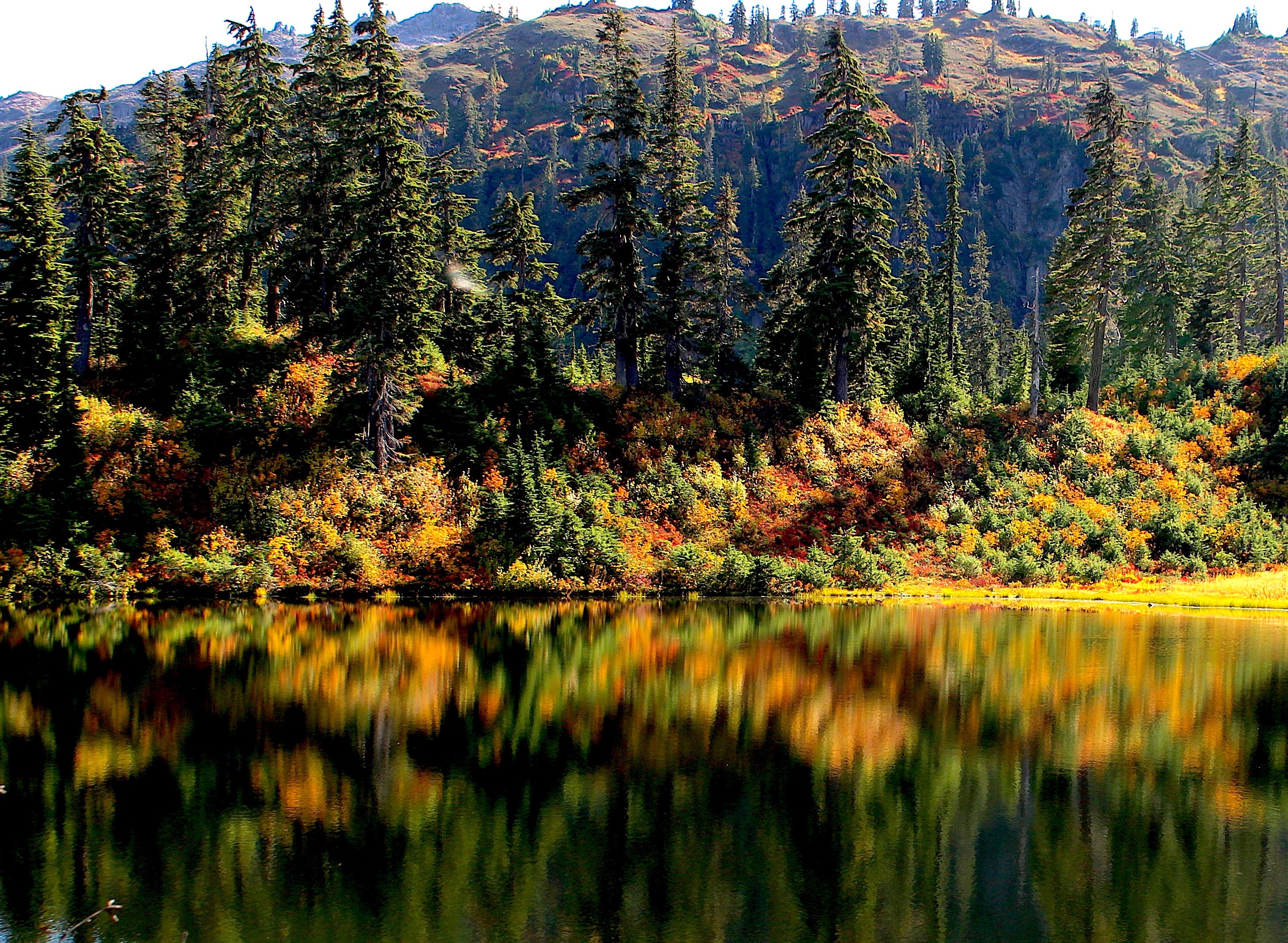
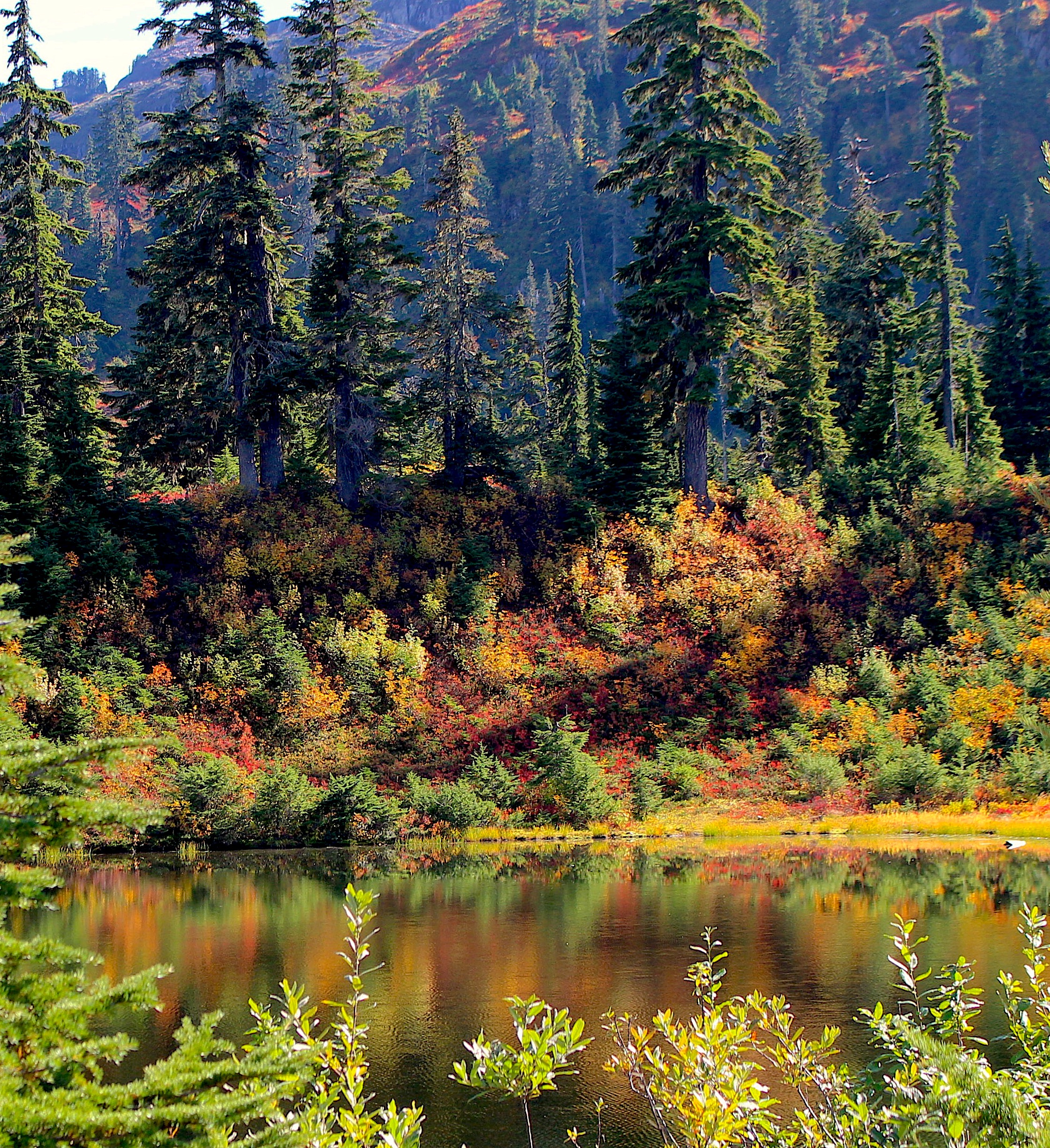
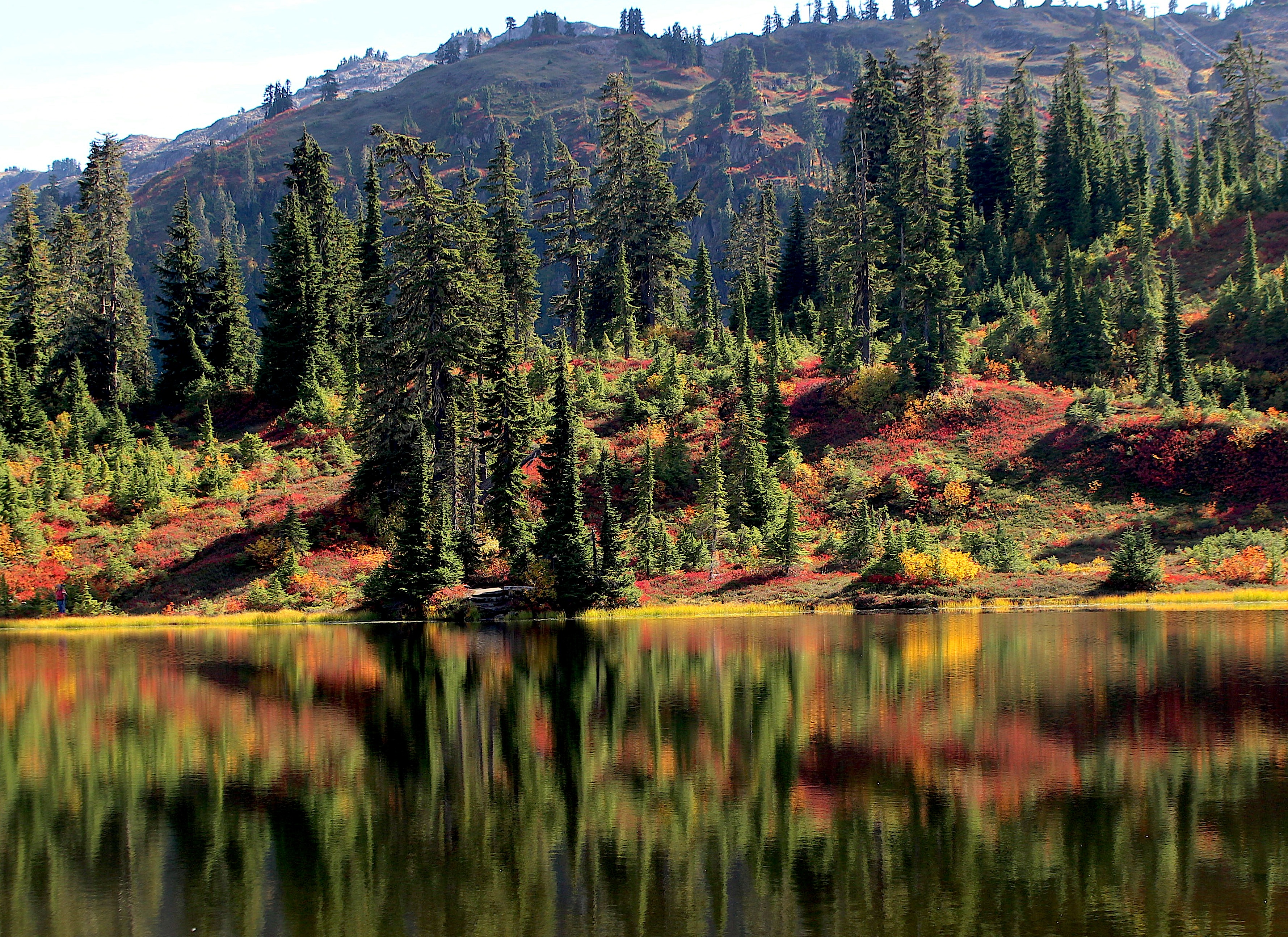
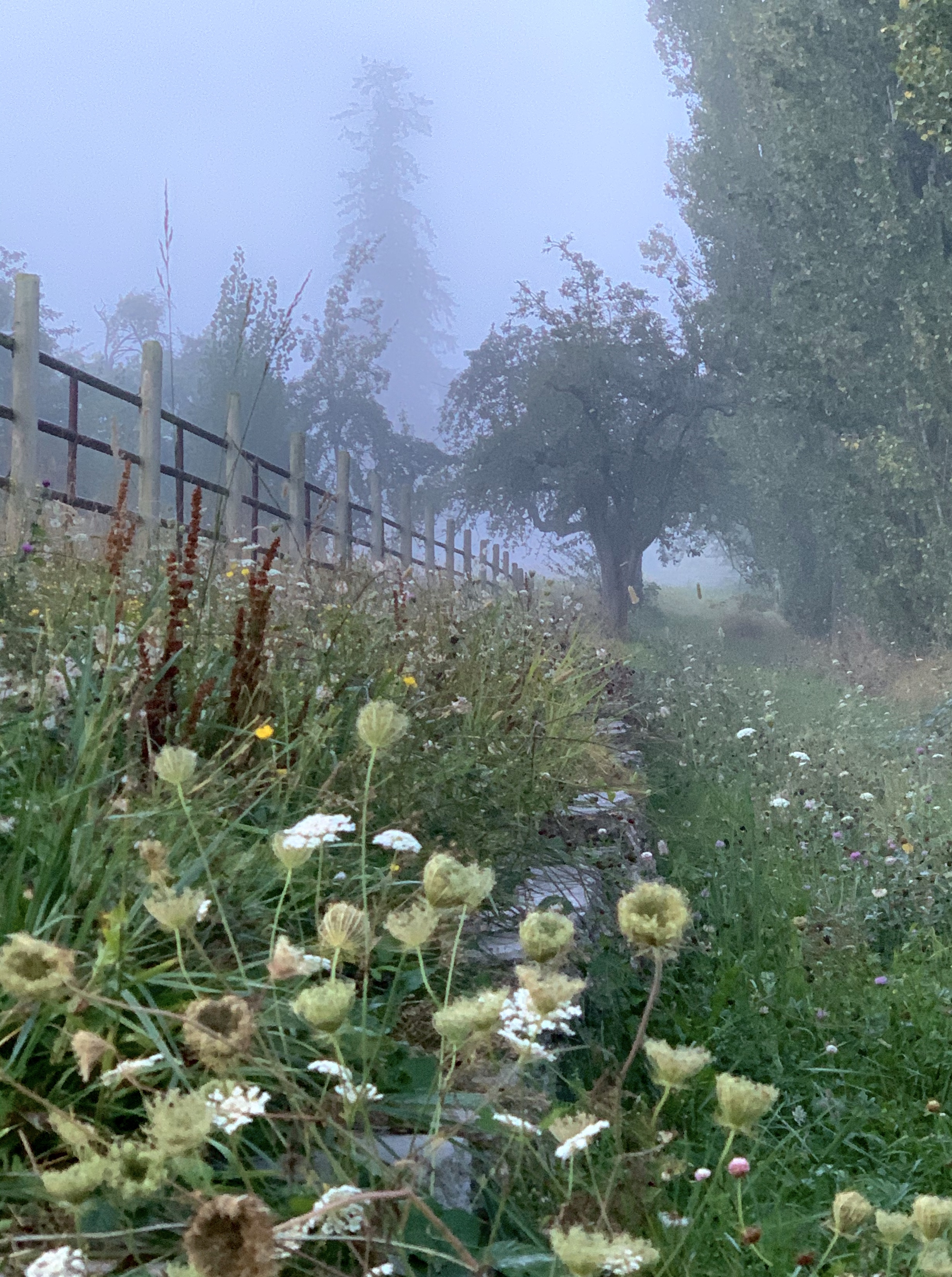
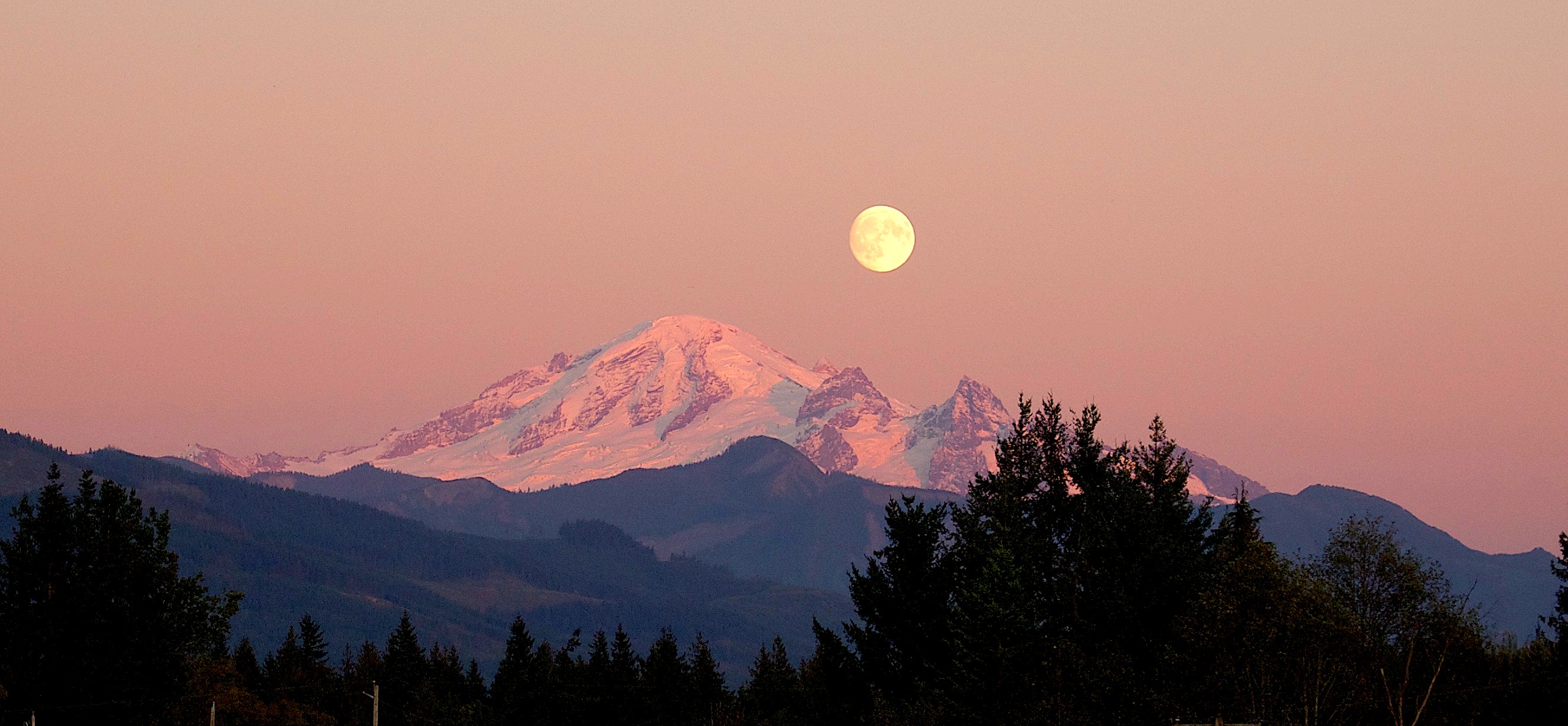
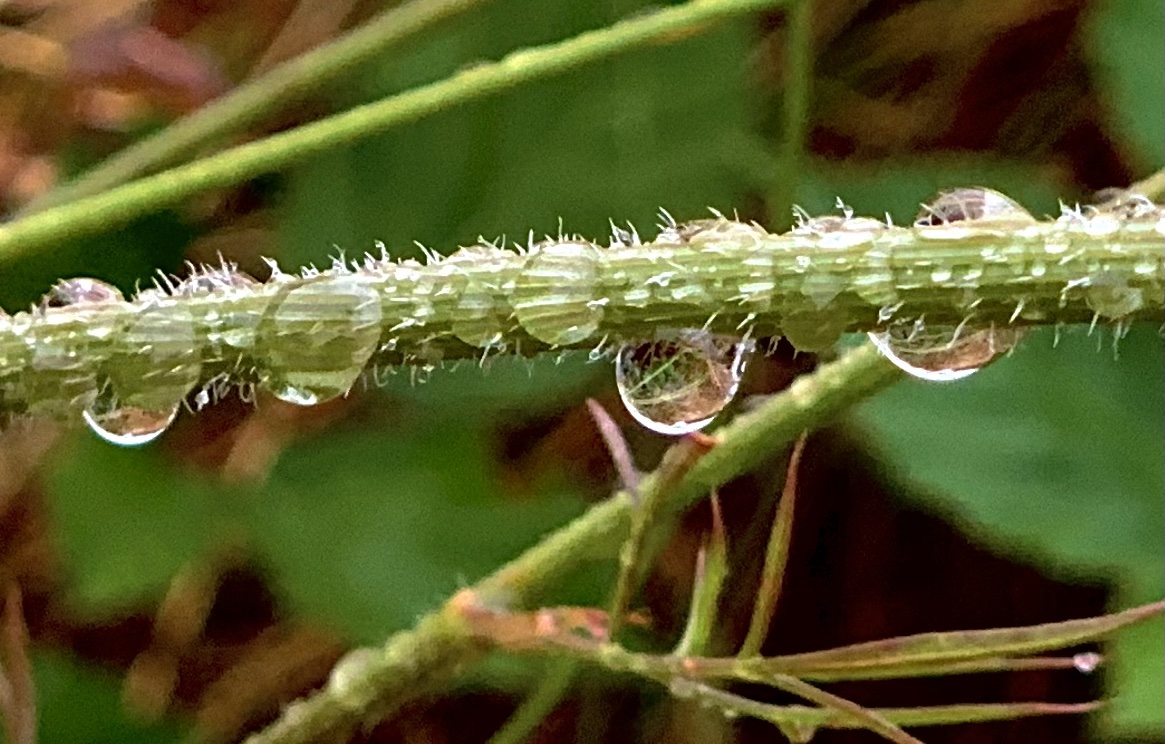
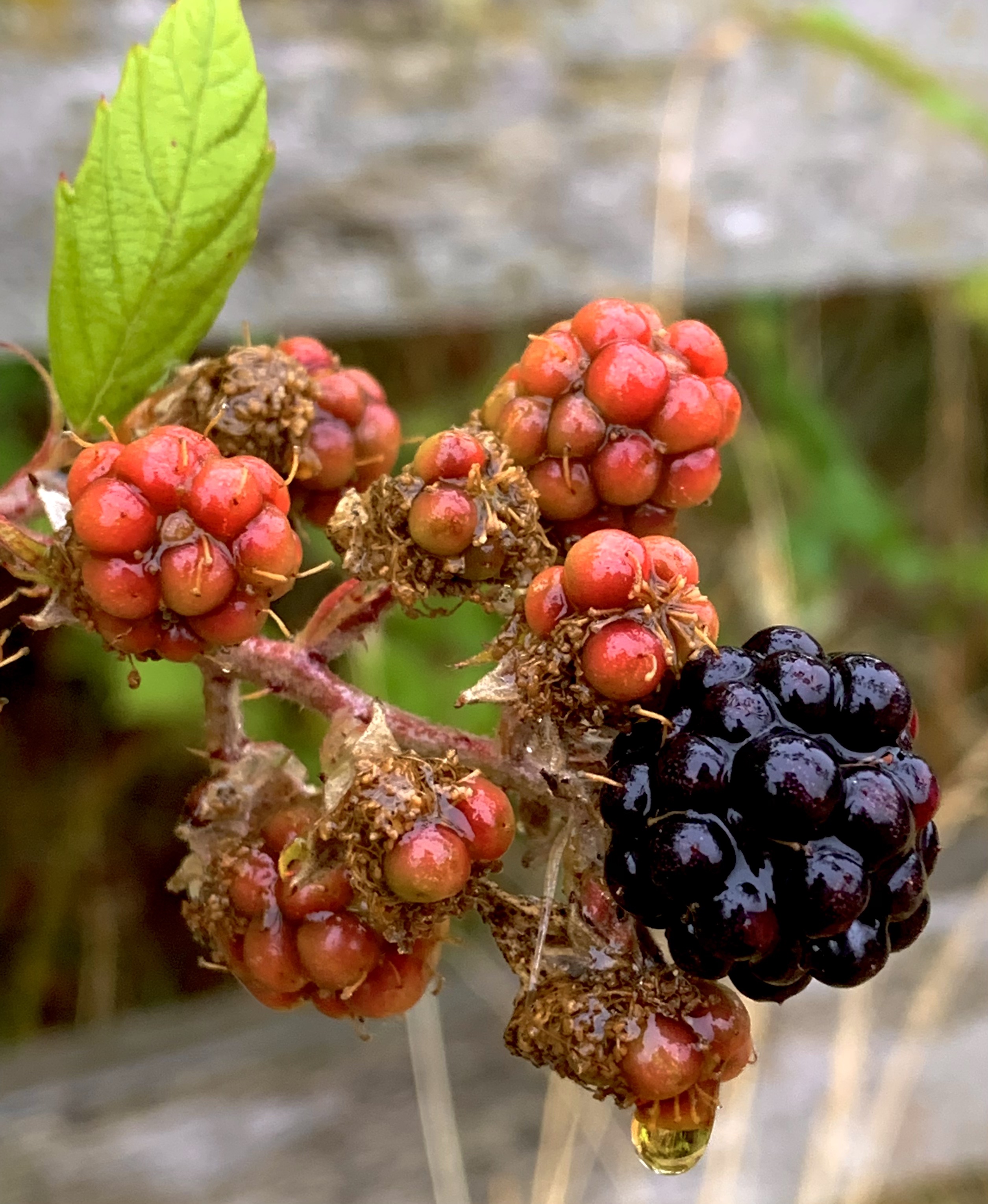
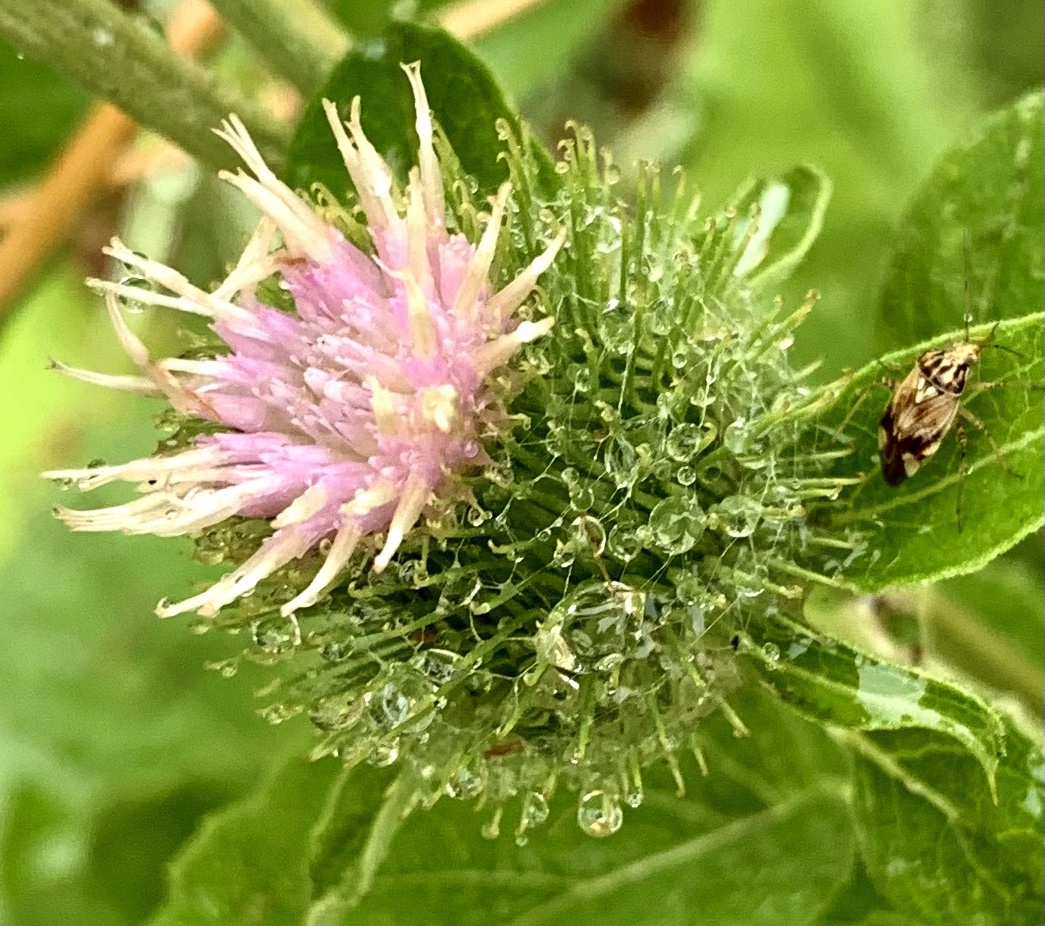
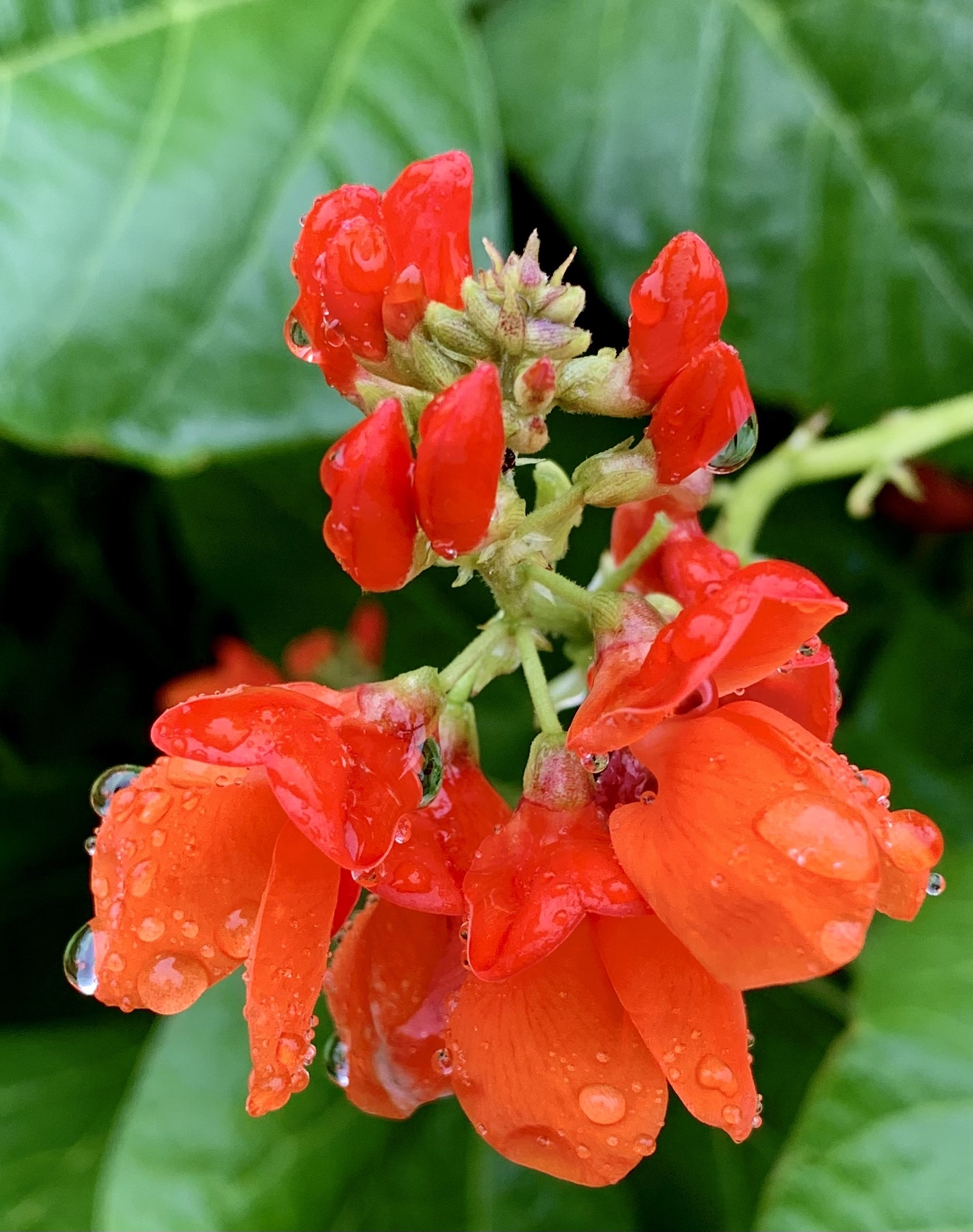
photo by Harry Rodenberger

Only a flicker
Over the strained time-ridden faces
Distracted from distraction by distraction
Filled with fancies and empty of meaning

Not here
Not here the darkness, in this twittering world.
..

After the kingfisher’s wing
Has answered light to light, and is silent, the light is still
At the still point of the turning world.

~T.S. Eliot – excerpts from Burnt Norton, first of the Four Quartets

Their song reminds me of a child’s neighborhood rallying cry—ee-ock-ee—with a heartfelt warble at the end. But it is their call that is especially endearing. The towhee has the brass and grace to call, simply and clearly, “tweet”. I know of no other bird that stoops to literal tweeting. 
~Annie Dillard, Pilgrim at Tinker Creek

A hundred thousand birds salute the day:–
        One solitary bird salutes the night:
Its mellow grieving wiles our grief away,
        And tunes our weary watches to delight;
It seems to sing the thoughts we cannot say,
        To know and sing them, and to set them right;
Until we feel once more that May is May,
        And hope some buds may bloom without a blight.
This solitary bird outweighs, outvies,
        The hundred thousand merry-making birds
Whose innocent warblings yet might make us wise
Would we but follow when they bid us rise,
        Would we but set their notes of praise to words
And launch our hearts up with them to the skies.
~Christina Rossetti “A Hundred Thousand Birds”

Eliot didn’t have in mind future tweets on 21st century Twitter when he wrote Burnt Norton in 1935.  He was far more concerned about the concept of Time and redeeming our distraction from connecting to God Himself, the “still point” source of the natural and creative order of all things. He uses the analogies of a garden of flowers and singing birds, a graveyard, and most disturbingly, a subway train of empty-souled people traveling in the Tube under London in the dark. 

Eliot was predicting an unknowable future. Great Britain was facing a second war with Germany, but nearly a century later, we live 24/7 in a “twittering world” war of empty words and darkness through devices we carry with us at all times. Eliot, critical of the dehumanizing technology of his time, was prescient enough to foresee how modern technology might facilitate our continued fall from grace and distract us from the source of our redemption.

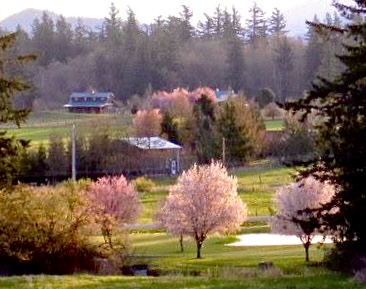
Perhaps Rossetti understands best. When birdsong begins on our farm in June at 4 AM in the apple, cherry, chestnut, and walnut trees outside our bedroom windows, I am swept away from my dreams by the distraction of wakening to music of the created order among the branches surrounding me, immersed in the beauty of dew-laden blooms and cool morning air.

Once a hundred thousand birds settle into routine conversation after twenty minutes of their loudly tweeted greetings of the day, I settle too, sitting bleary-eyed at my computer to navigate the twittering world of technology which is too often filled with fancies, or meanness, or, most often, completely empty of meaning altogether.

Yet, each morning as my heart is launched by the warbling songs outside my window, I’m determined to dismiss the distraction of the tweets and twitters on my screen. 

Not here will darkness be found on this page, if I can keep it at bay. I want to answer light to light and light with light.

No darkness here.

I hear a bird chirping, up in the sky
I’d like to be free like that spread my wings so high I
see the river flowing water running by
I’d like to be that river, see what I might find

I feel the wind a blowin’, slowly changing time
I’d like to be that wind, I’d swirl and the shape sky
I smell the flowers blooming, opening for spring
I’d like to be those flowers, open to everything

I feel the seasons change, the leaves, the snow and sun
I’d like to be those seasons, made up and undone
I taste the living earth, the seeds that grow within
I’d like to be that earth, a home where life begins

I see the moon a risin’, reaching into night
I’d like to be that moon, a knowing glowing light
I know the silence as the world begins to wake
I’d like to be that silence as the morning breaks

He does-n’t know the world at all
Who stays in his nest and does-n’t go out.
He does-n’t know what birds know best
Nor what I sing a-bout, Nor what I sing a-bout, Nor what sing a-bout:
That the world is full of love-li-ness.

When dew-drops spar-kle in the grass
And earth is a-flood with mor-ning light. light
A black-bird sings up-on a bush
To greet the dawn-ing af-ter night,
the dawn-ing af-ter night,
the dawn-ing af-ter night.
Then I know how fine it is to live.

Hey, try to o-pen your heart to beau-ty;
Go to the woods some-day
And weave a wreath of me-mory there.
Then if tears ob-scure your way
You’ll know how won-der-ful it is
To be a-live.

One-Time
Monthly
Yearly

Make a one-time or recurring donation to support daily Barnstorming posts

Make a monthly donation

Make a yearly donation

Choose an amount

¤5.00
¤10.00
¤20.00
¤5.00
¤15.00
¤100.00
¤5.00
¤15.00
¤100.00

Or enter a custom amount

¤

Your contribution is deeply appreciated.

Your contribution is appreciated.

Your contribution is appreciated.

DonateDonate monthlyDonate yearly

Let the Wound Lie Open

When the heart
Is cut or cracked or broken,
Do not clutch it;
Let the wound lie open.
Let the wind
From the good old sea blow in
To bathe the wound with salt,
And let it sting.
Let a stray dog lick it,
Let a bird lean in the hole and sing
A simple song like a tiny bell,
And let it ring.

~Michael Leunig “When the Heart”

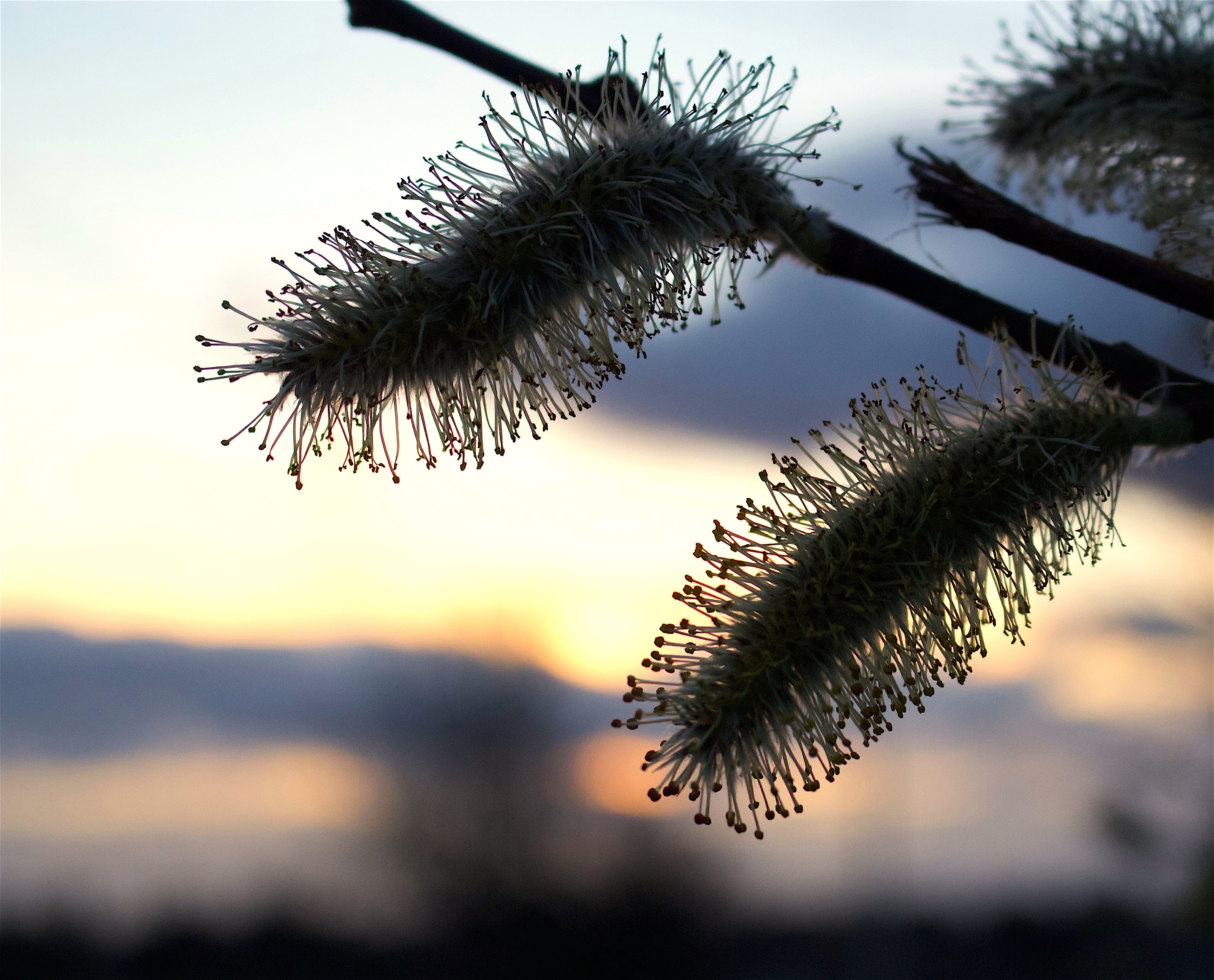
photo by Harry Rodenberger

The birds they sang
At the break of day
Start again
I heard them say
Don’t dwell on what
Has passed away
Or what is yet to be

You can add up the parts
but you won’t have the sum
You can strike up the march,
there is no drum
Every heart, every heart
to love will come
but like a refugee.

Ring the bells that still can ring
Forget your perfect offering
There is a crack, a crack in everything
That’s how the light gets in.
~Leonard Cohen from “Anthem”

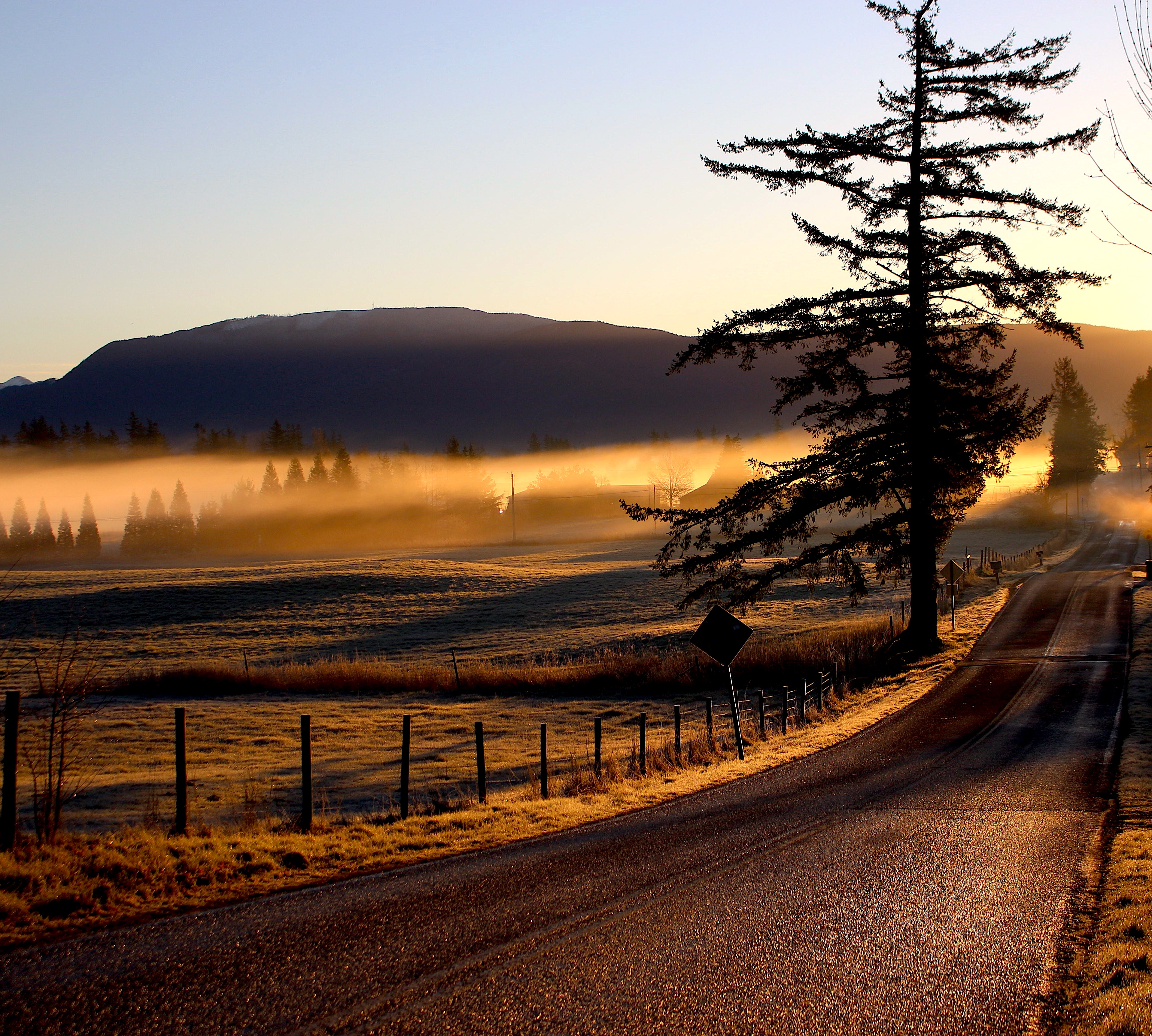
photo by Nate Gibson

Wounds come in various sizes and shapes,
some hidden, some quite obvious to all. 

How they are inflicted also varies–
some accidental,
others therapeutic and life-saving,
and too many, as happened this week,
intentionally and horrifically inflicted.

The most insidious are wounds so deep inside, 
no one can see or know they are there.
Those can cause fear and anger
that break a heart and mind with
a desire to control one’s destiny
by destroying others’.

These scars of living damaged,
these horrific wounds that don’t heal,
either lead to forever darkness
or can sting in repair, bathed by a Light
where before was none.

No wound is as deep and wide
as what the Word made Flesh
has borne for us:
love oozes from them,
grace heals from within.

Let the bells ring and never be silenced.

One-Time
Monthly
Yearly

Make a one-time or recurring donation to support daily Barnstorming posts

Make a monthly donation

Make a yearly donation

Choose an amount

¤5.00
¤10.00
¤20.00
¤5.00
¤15.00
¤100.00
¤5.00
¤15.00
¤100.00

Or enter a custom amount

¤

Your contribution is deeply appreciated.

Your contribution is appreciated.

Your contribution is appreciated.

DonateDonate monthlyDonate yearly

Forgive Me For Forgetting

Please forgive me for forgetting.
I wanted to go outside and look for you.
I was told this was impossible.

 
I was instructed to stay indoors.
But my words for you need sun.
My heart needs air.

 
I love you Spring.
I miss your warmth.
Come unlock my door.

~Ethelbert Miller “Beloved”

I love you, Spring.
But where are you? Nearly a week of chill winds and freezing temperatures put me back inside the house wanting to hide under the covers. Water buckets in the barn were frozen again, walkways were slick with ice, once friendly breezes threatened to knock me over with their force. This is not the Spring promised.

Come unlock my door, Spring.
When our old apple tree toppled over in the northeast blow earlier this week, I identified a bit too much. The wind took advantage of a hollowed out rotten core the tree had been hiding for years. What might I be hiding inside that makes me just as vulnerable to forces knocking on me, even though I bear fruit as usual?

Please forgive me for forgetting:
this world is at war with evil – families hiding in basements, subways filling with refugees, apartment buildings bombed. Now is when we are most fragile, exposed and wounded. Our lumpy exteriors are on full display waiting for spring to renew and cover us up.

I wanted to go look for you:
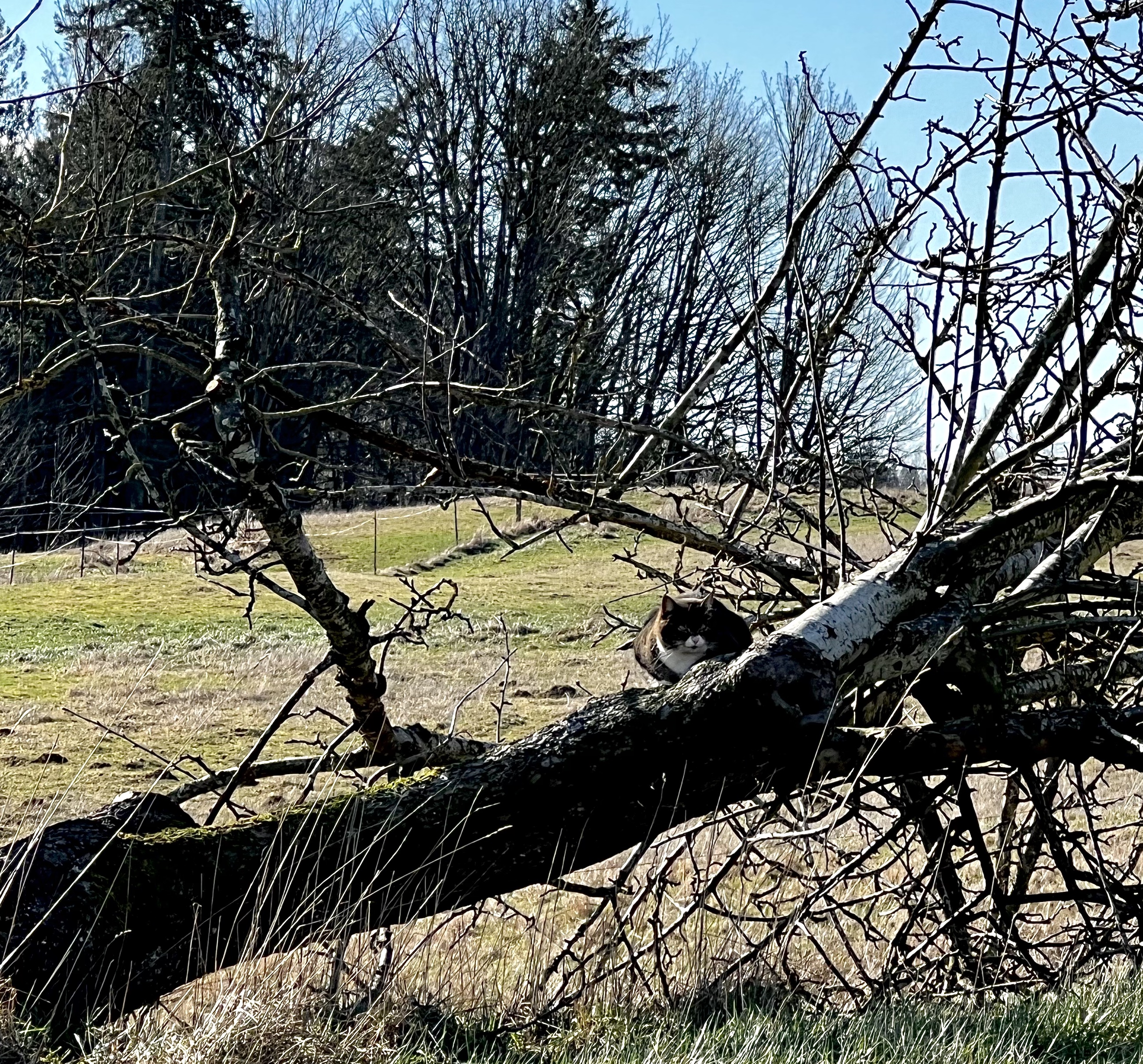
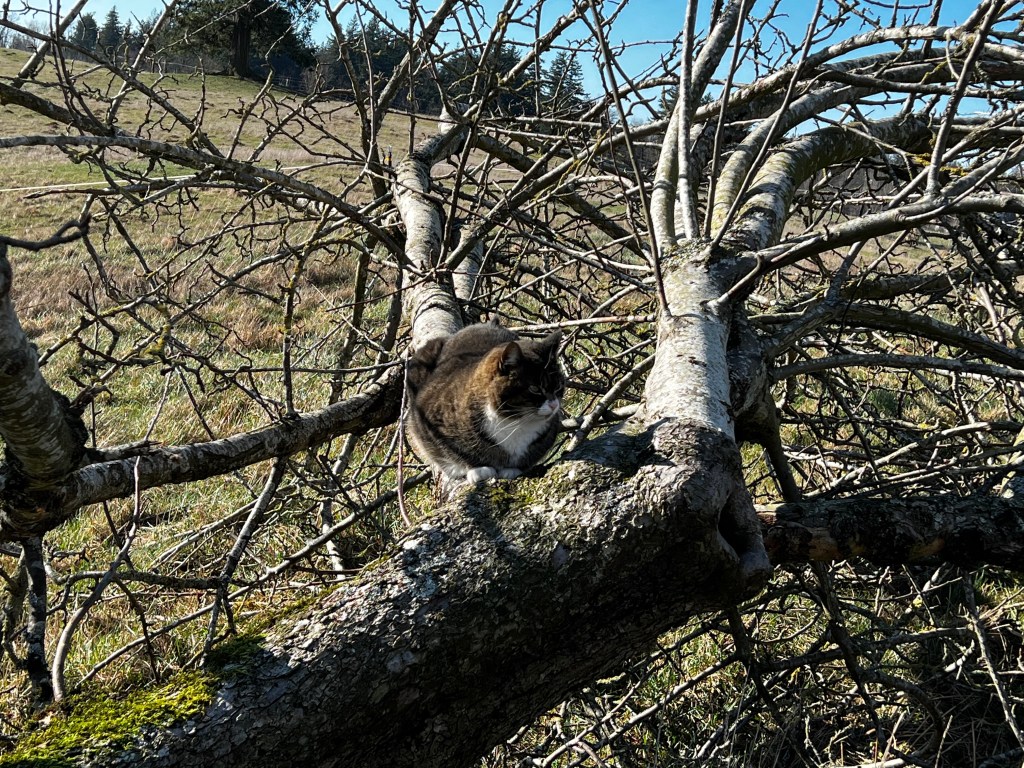
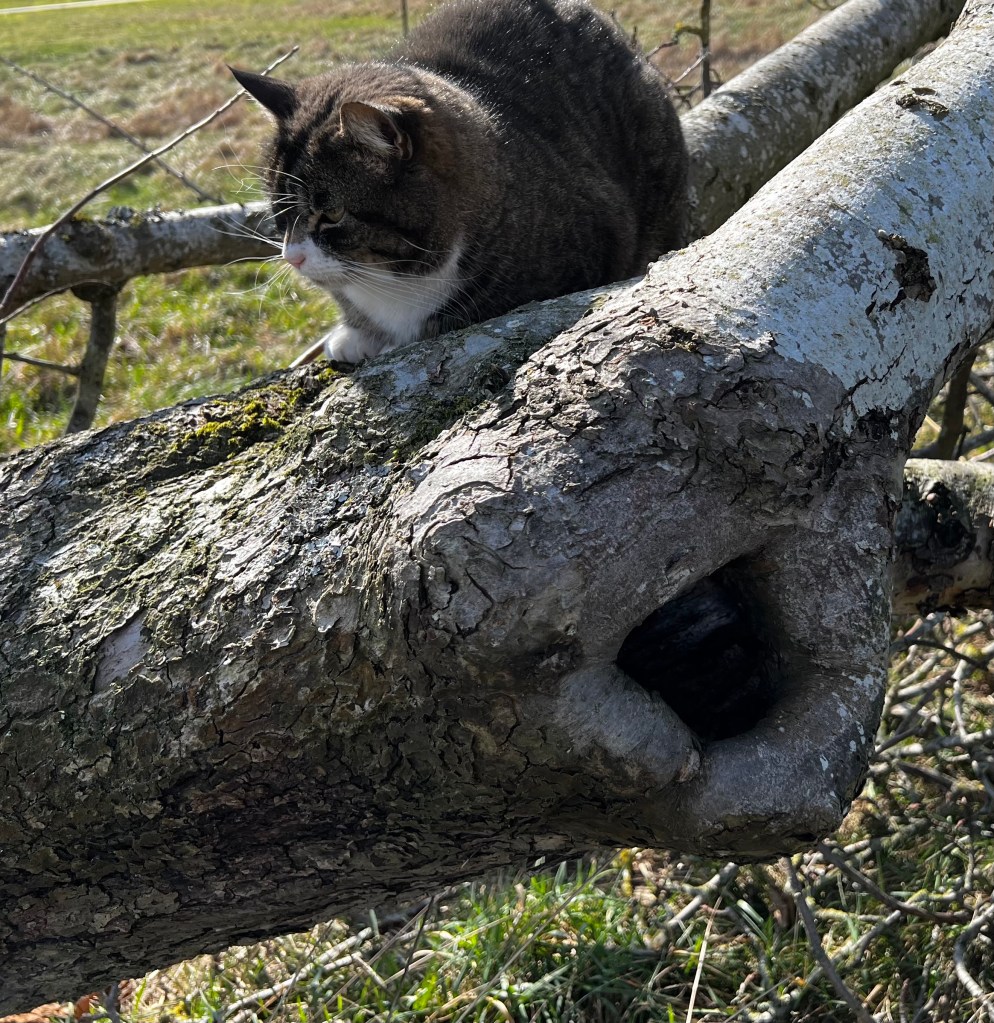
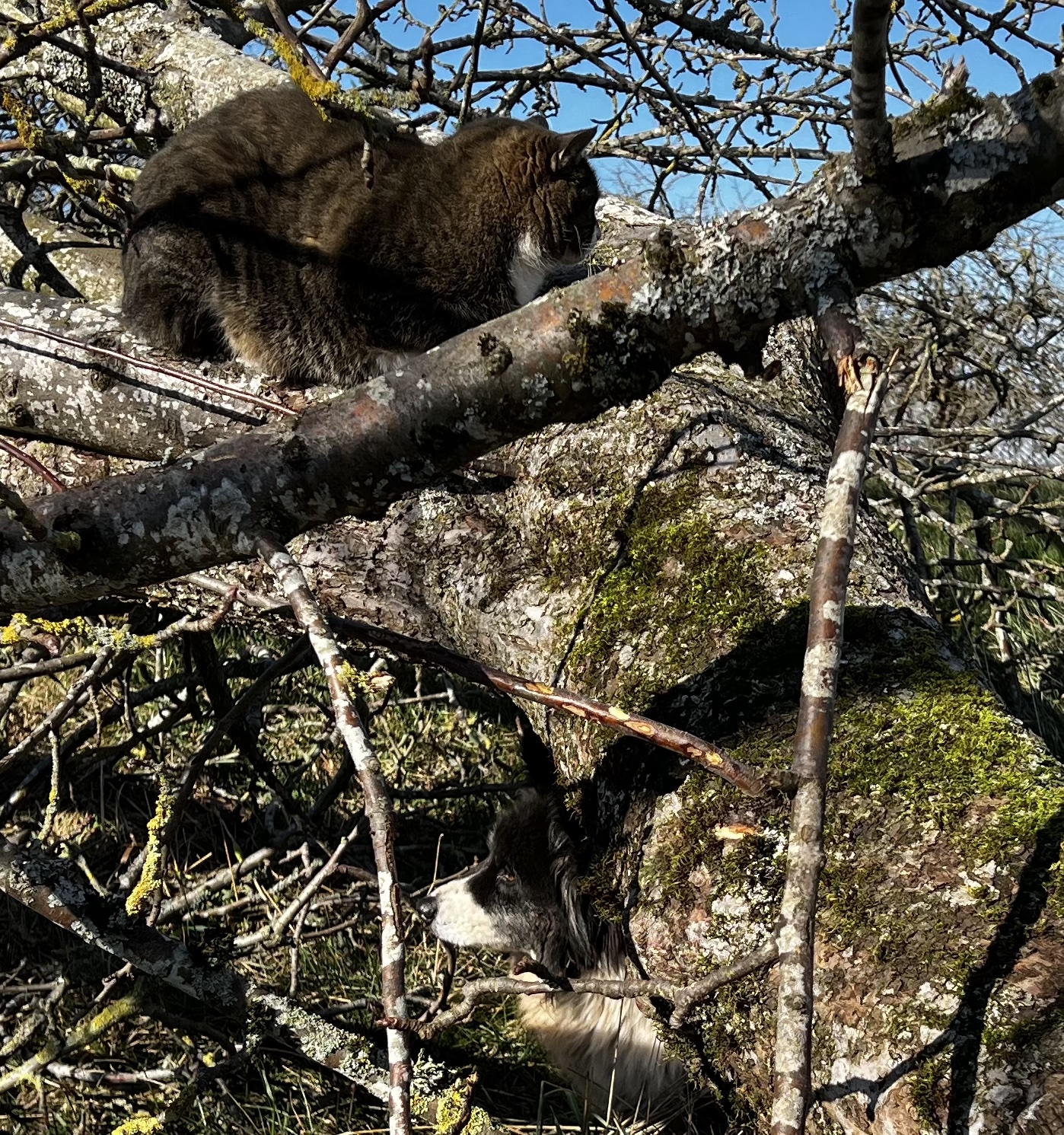
Our farm cat decided the old apple tree lying on its side was a new perfect perch to keep surveillance for curious (and irritating) farm dogs without having to climb up high. There he sat on the fallen trunk, far enough above a corgi dog’s head to be essentially invisible although Homer could absolutely smell there was a cat with threatening claws nearby … somewhere. Just where that cat could be remained a mystery to a dog who is distinctly height-challenged.

Like my cat, I wait now in late winter — seeking the sun for my words and fresh air for my heart. And like my dog, I sense something potentially threatening is near, but because of my own limitations of perception, I have no idea just how close.

I was told this was impossible:
may we weather the storms together
may there be peace and warmth for all people
may we find harmony as winter melts into spring.

cat hiding in plain sight, Homer too short to figure it out

This is my song, O God of all the nations,
A song of peace for lands afar and mine.
This is my home, the country where my heart is,
Here are my hopes, my dreams, my holy shrine.
But other hearts in other lands are beating,
With hopes and dreams as true and high as mine.
My country’s skies are bluer than the ocean,
And sunlight beams on cloverleaf and pine.
But other lands have sunlight too, and clover,
And skies are everywhere as blue as mine.
This is my song, O God of all the nations,
A song of peace for their land and for mine.
So let us raise this melody together,
Beneath the stars that guide us through the night;
If we choose love, each storm we’ll learn to weather,
Until true peace and harmony we find,
This is our song, a hymn we raise together;
A dream of peace, uniting humankind.
~Lloyd Stone and Blake Morgan

One-Time
Monthly
Yearly

Make a one-time or recurring donation to support Barnstorming

Make a monthly donation

Make a yearly donation

Choose an amount

¤5.00
¤10.00
¤20.00
¤5.00
¤15.00
¤100.00
¤5.00
¤15.00
¤100.00

Or enter a custom amount

¤

Your contribution is deeply appreciated.

Your contribution is appreciated.

Your contribution is appreciated.

DonateDonate monthlyDonate yearly

Our Weary World Transformed

I watch the great clear twilight
Veiling the ice-bowed trees;
Their branches tinkle faintly
With crystal melodies.

The larches bend their silver
Over the hush of snow;
One star is lighted in the west,
Two in the zenith glow.

For a moment I have forgotten
Wars and women who mourn,
I think of the mother who bore me
And thank her that I was born.
~Sara Teasdale “Winter Dusk” from The Collected Poems of Sara Teasdale

The towering tree spreads his greening canopy —
A veil between the soil and sky—
Not in selfish vanity,
But the gentle thrush to shade and shelter.


So it is with love.

For when we love,
Simply love,
Even as we are loved,
Our weary world can be transformed.

The busy thrush builds her nest below —
A fortnight’s work to weave and set—
Not for herself alone,
But her tender brood to shield and cherish.

And so it is with love.

For when we love,
Simply love,
Even as we are loved,
Our weary world can be transformed Into the Kingdom of God!
~Charles Silvestri “When We Love”

We are in the midst of a week-long late winter arctic blast of cold wind bending and breaking trees, even taking down an old apple tree in our orchard last night. Our seed feeders are swinging back and forth so violently that hungry wild birds struggle to hang on for their breakfast – they have to fight the northeast winds for their food.

The news headlines also freeze my heart, bringing back memories of old “cold war” threats and posturing of 60 years ago. In this more modern time of global communication, Ukrainian citizens directly in the line of fire become very real on our screens – people with work lives and families and views from their windows shared with the world as they anxiously wait for Russia’s shoe to drop upon them.

I freeze at the knowledge that my commitment to feed the birds in my backyard can’t begin to compare with the weary and war-torn world’s inability to keep starving children alive around the globe – in Afghanistan, South Sudan, Yemen and other unstable places.

I cannot forget our helplessness to love, cherish and protect the young when they are casualties of the destructive web of politics and power.

May God’s love transform our world,
turn our political platitudes to prayer,
bring about a thaw to build bridges, rather than gulfs,
between old enemies.

May love thrive in the nests and homes of parents
who commit to love, cherish and sustain their offspring
no matter where they live on the globe.

May I start right here, in my own frozen back yard,
caring for the young and vulnerable within my reach,
and hope my reach may stretch far beyond my grasp.

Madly in Love

How is it they live for eons in such harmony
– the billions of stars –
when most men can barely go a minute
without declaring war in their mind

against someone they know.

There are wars where no one marches with a flag,

though that does not keep casualties from mounting.

Our hearts irrigate this earth. 
We are fields before each other.
How can we live in harmony?


First we need to know 

we are all madly in love
with the same God.

O Lord my God, make me
submissive without protest,

poor without discouragement,
chaste without regret,
patient without complaint,
humble without posturing,
cheerful without frivolity,
mature without gloom,
and quick-witted without flippancy.


Grant that I may know
what You require me to do.
Bestow upon me
the power to accomplish Your will,
as is necessary and fitting
for the salvation of my soul.

~St. Thomas Aquinas

I look at headline news through my fingers, cringing.  

Amid the centuries of posturing between governments and every imaginable tribe and faction, the names and faces change but the nature of hatred of the “other” doesn’t.

We’ve seen this all before, over and over through history.  Over 150 years ago it was in the Gettysburg fields that blood of rival armies intermingled and irrigated U.S. soil.  Though now we stand side by side with Germany and Japan, our bitter adversaries a mere eighty years ago, our world continually brews new enemies and ignites new conflicts.

We can barely go a minute without declaring war in our minds even against our neighbor, even those we consider friends and family. There is yelling from the streets in angry protest and screaming at school board meetings. Casualties mount in our bitterness toward one another.

And who am I to point fingers or squint through them at the news of the day?
I am as prone to this as anyone.

Am I myself capable of submission without protest, remaining patient and uncomplaining even when I disagree? Can I embody humility without having a hidden agenda? Can I remain selfless when my true nature is wholly selfish?

How can there ever be harmony? 
How can I overcome my own rancorous heart?

As critical as it seems, It is not love for one another that comes first.
I must first know, love and trust the only God who has loved the unloveable so much He became one with us, overpowering our tendency to hate one another by taking it all upon Himself.

Jesus found us dying in a world desperately drying up; His bleeding heart poured itself out onto our thirsting soil. We have been handed salvation.

It is, in fact, God who is madly in love with us and though we’ve done nothing to deserve it, it is our turn to show love to one another.

A book from Barnstorming is available for order here:

The Redeemed World

You get down on your knees in the dark earth—alone
for hours in hot sun, yanking weed roots, staking trellises,
burning your shoulders, swatting gnats; you strain your muscled
midwestern neck and back, callous your pianist’s hands.

You cut roses back so they won’t fruit, rip out and replace
spent annuals. You fill your garden dense with roots and vines.
And when a humble sprout climbs like a worm up out of death,
you are there to bless it, in your green patch, all spring and summer long,

hose like a scepter, a reliquary vessel; you hum
through the dreamy wilderness—no one to judge, absolve,
or be absolved—purified by labor, confessed by its whisperings, connected to its innocence.

So when you heft a woody, brushy tangle, or stumble
inside grimy, spent by earth, I see all the sacraments in place—
and the redeemed world never smelled so sweet.

~Ken Weisner, “The Gardener” from Anything on Earth.

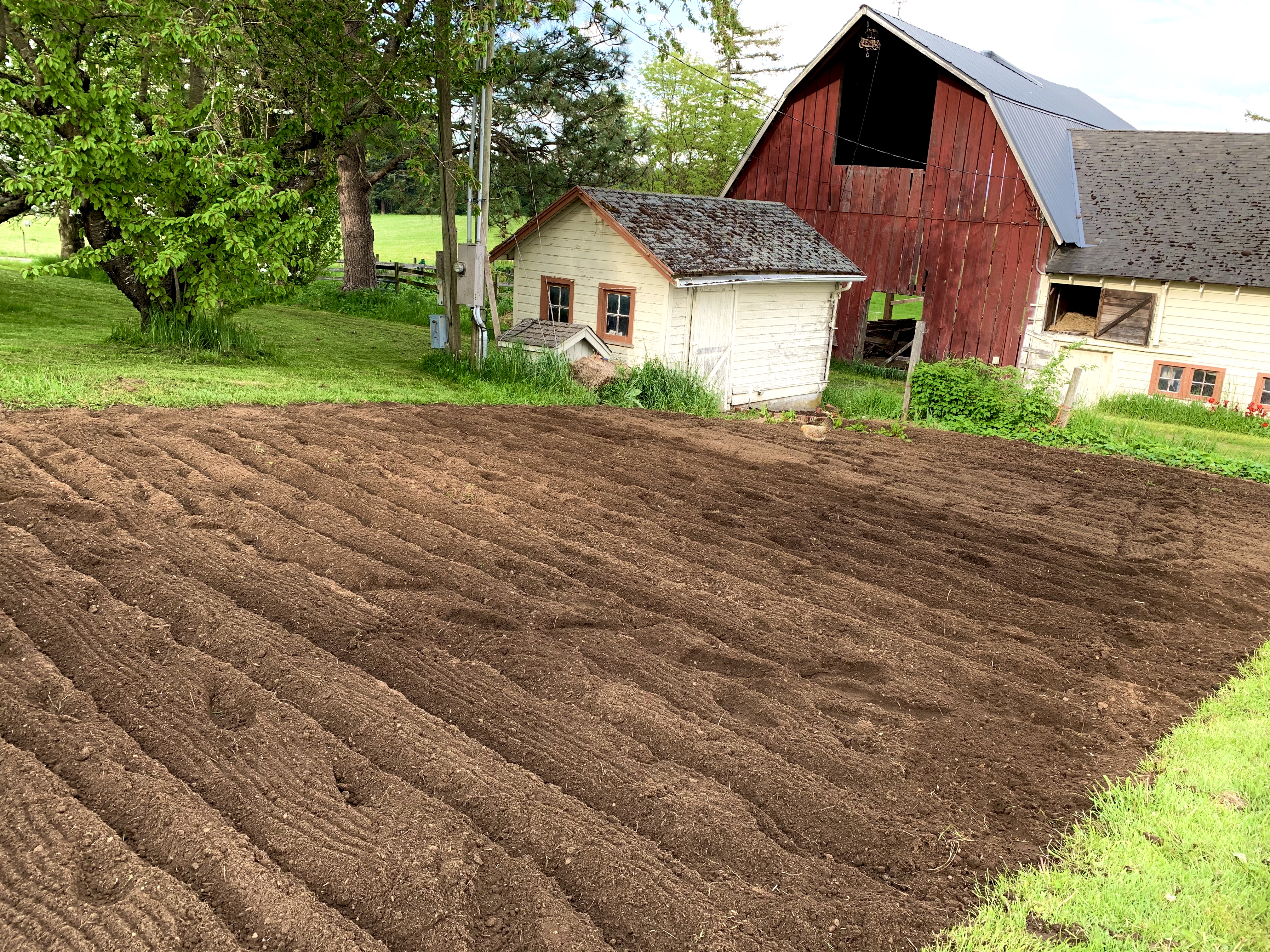
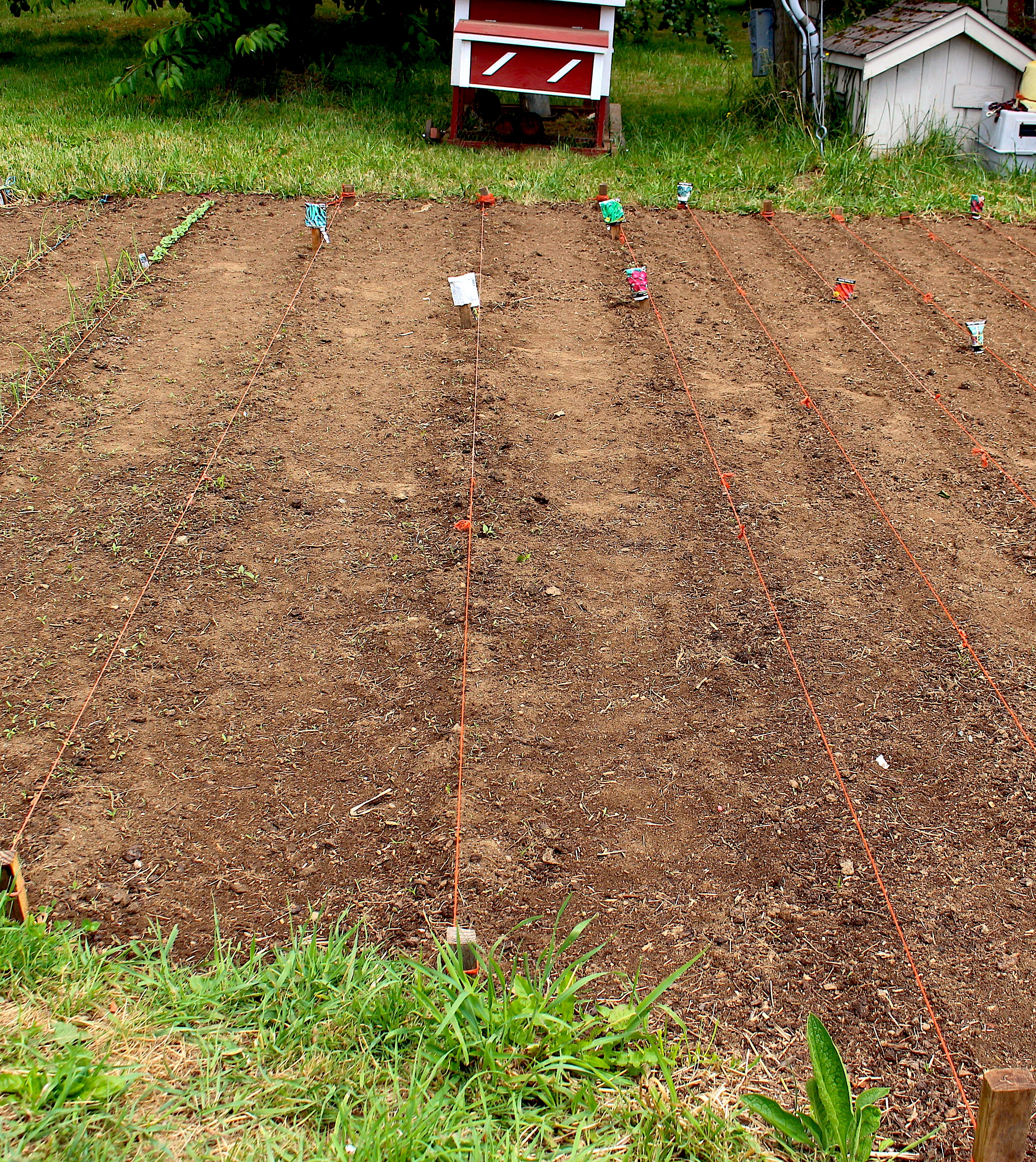
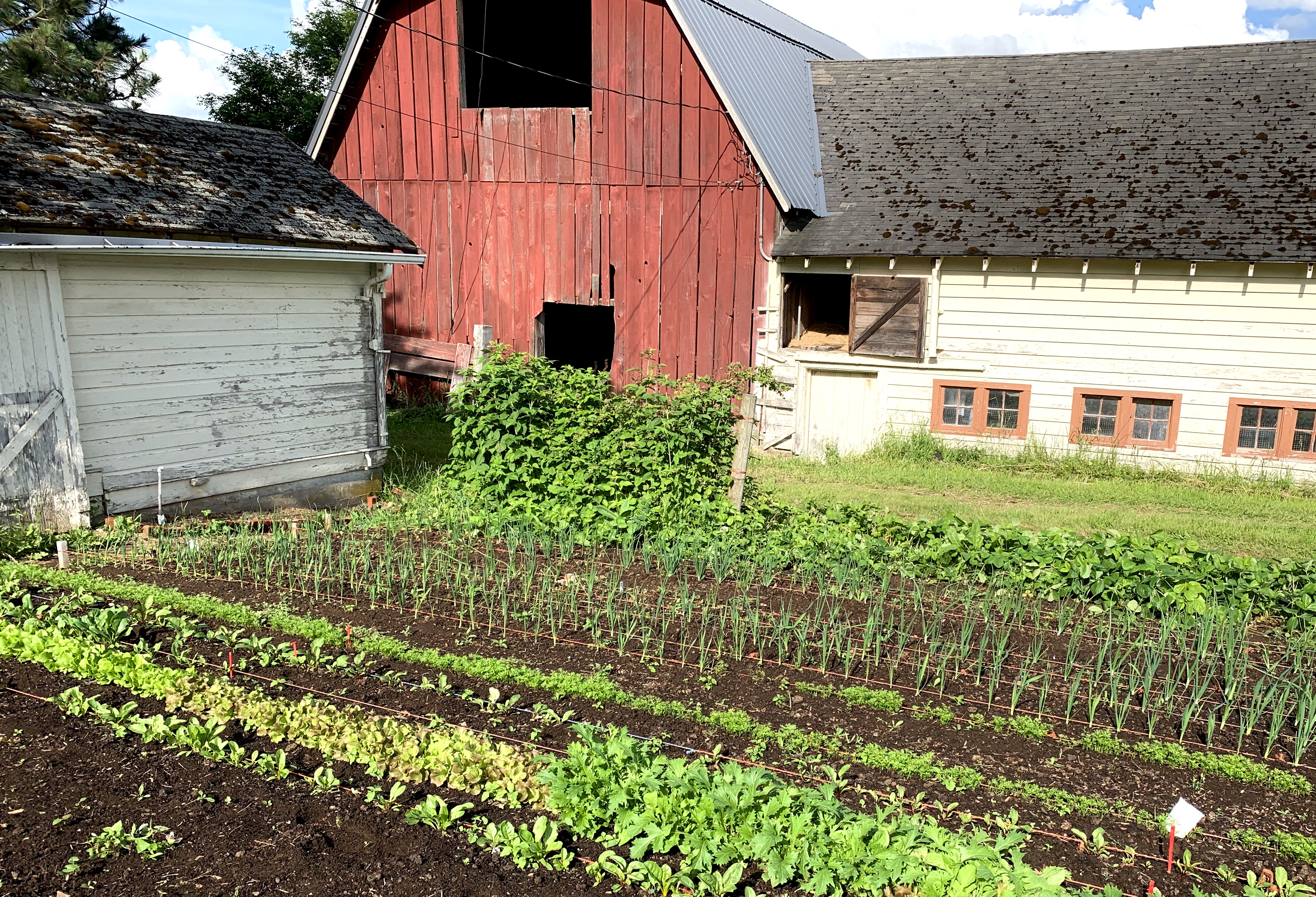
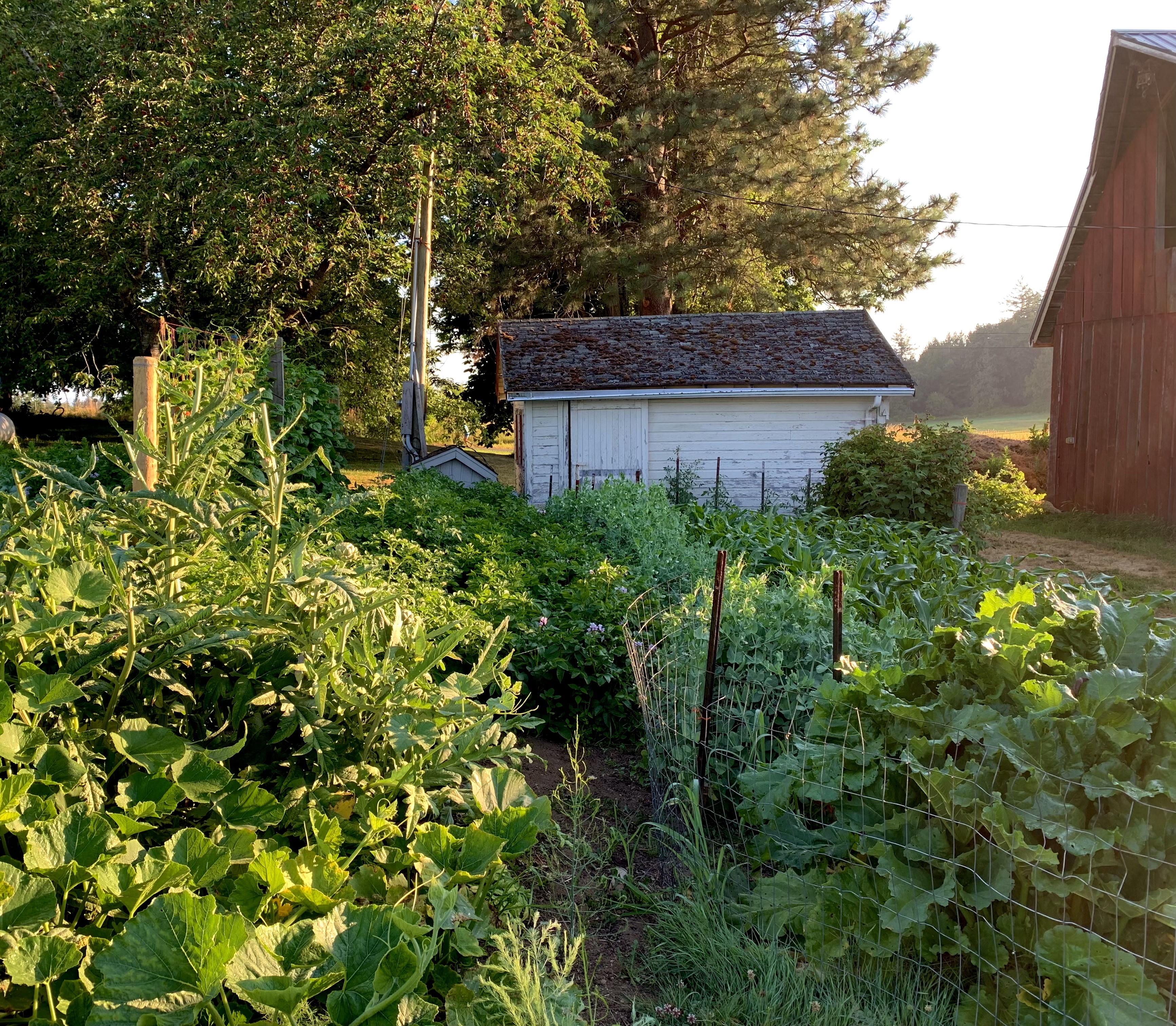
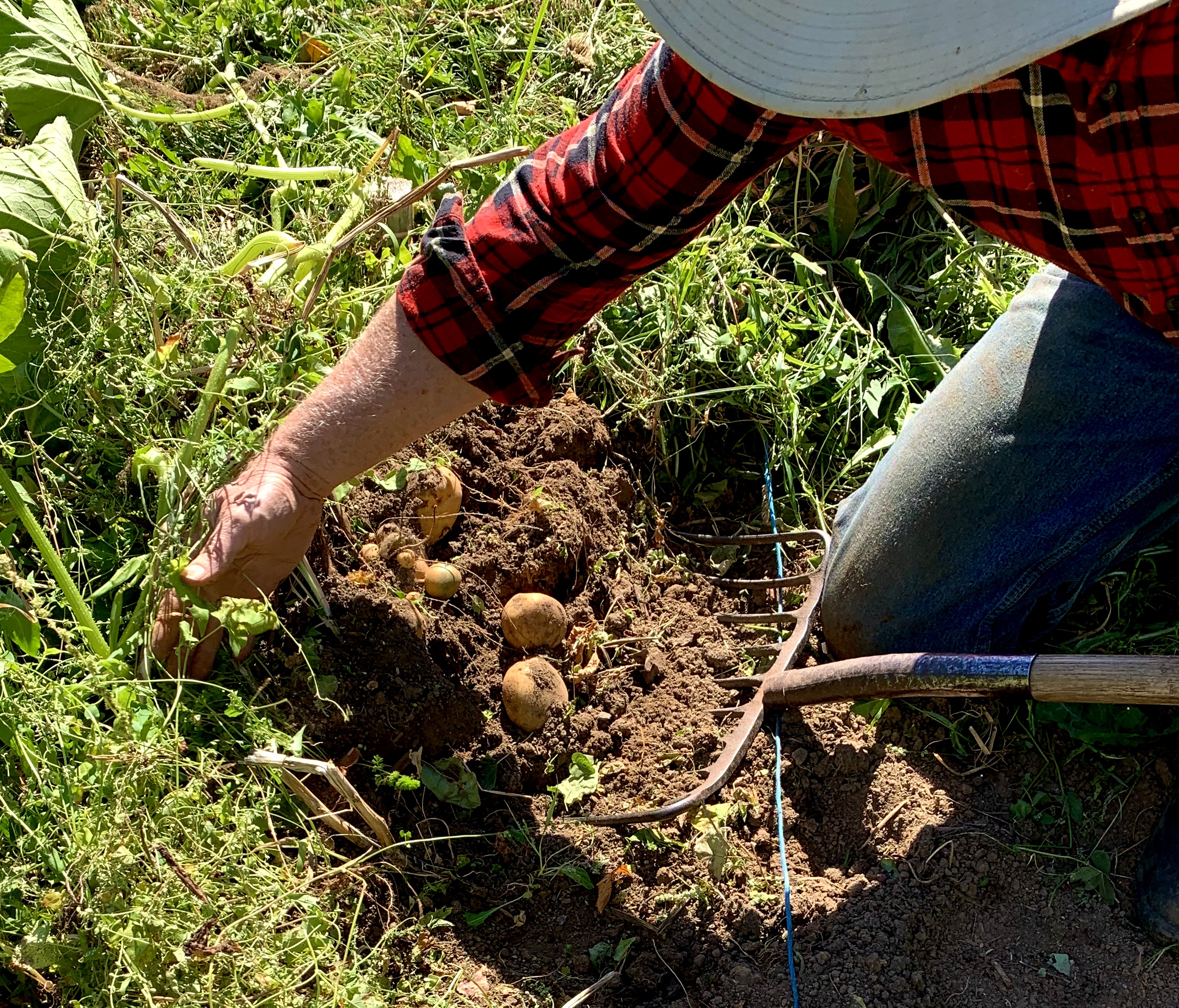
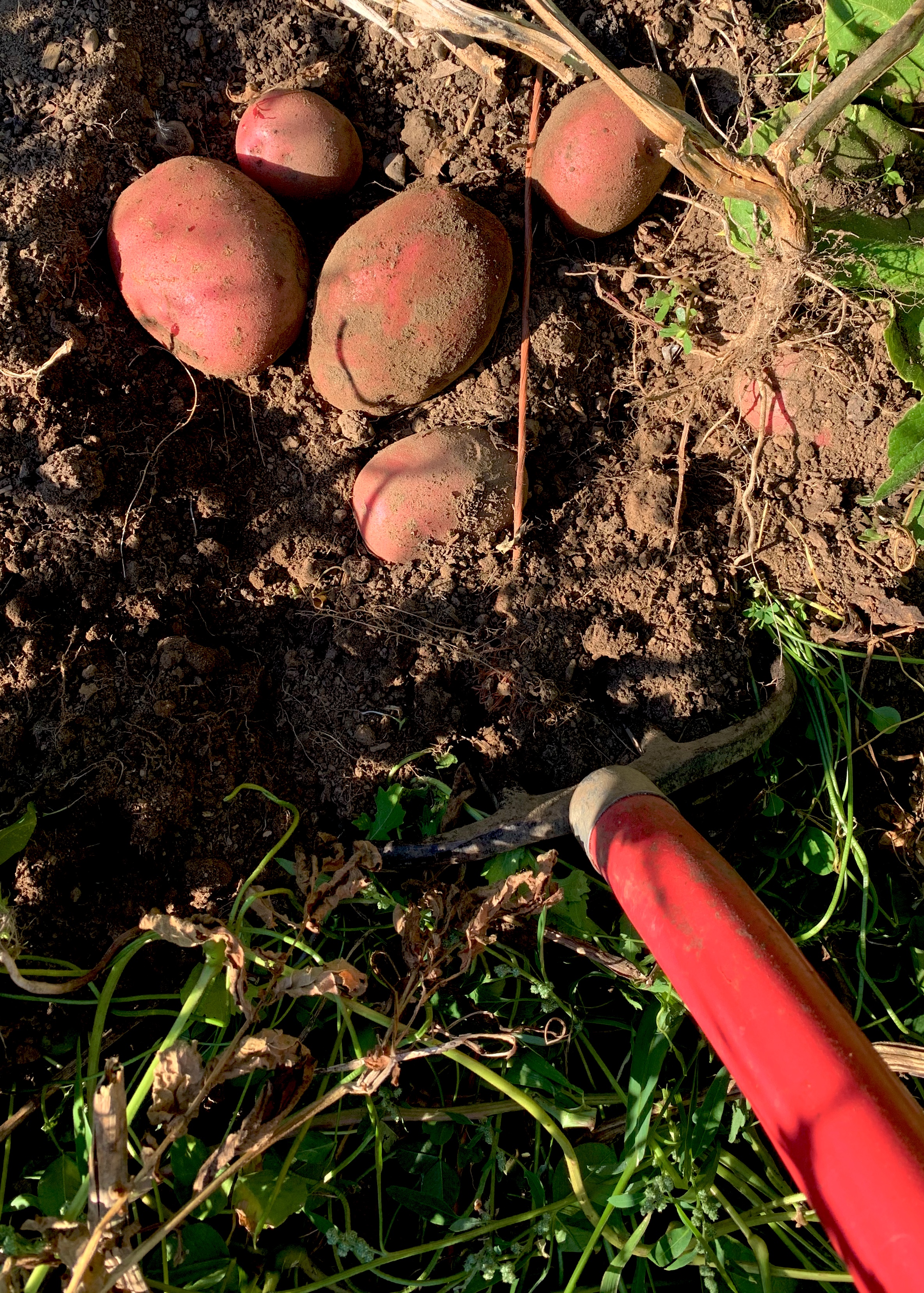
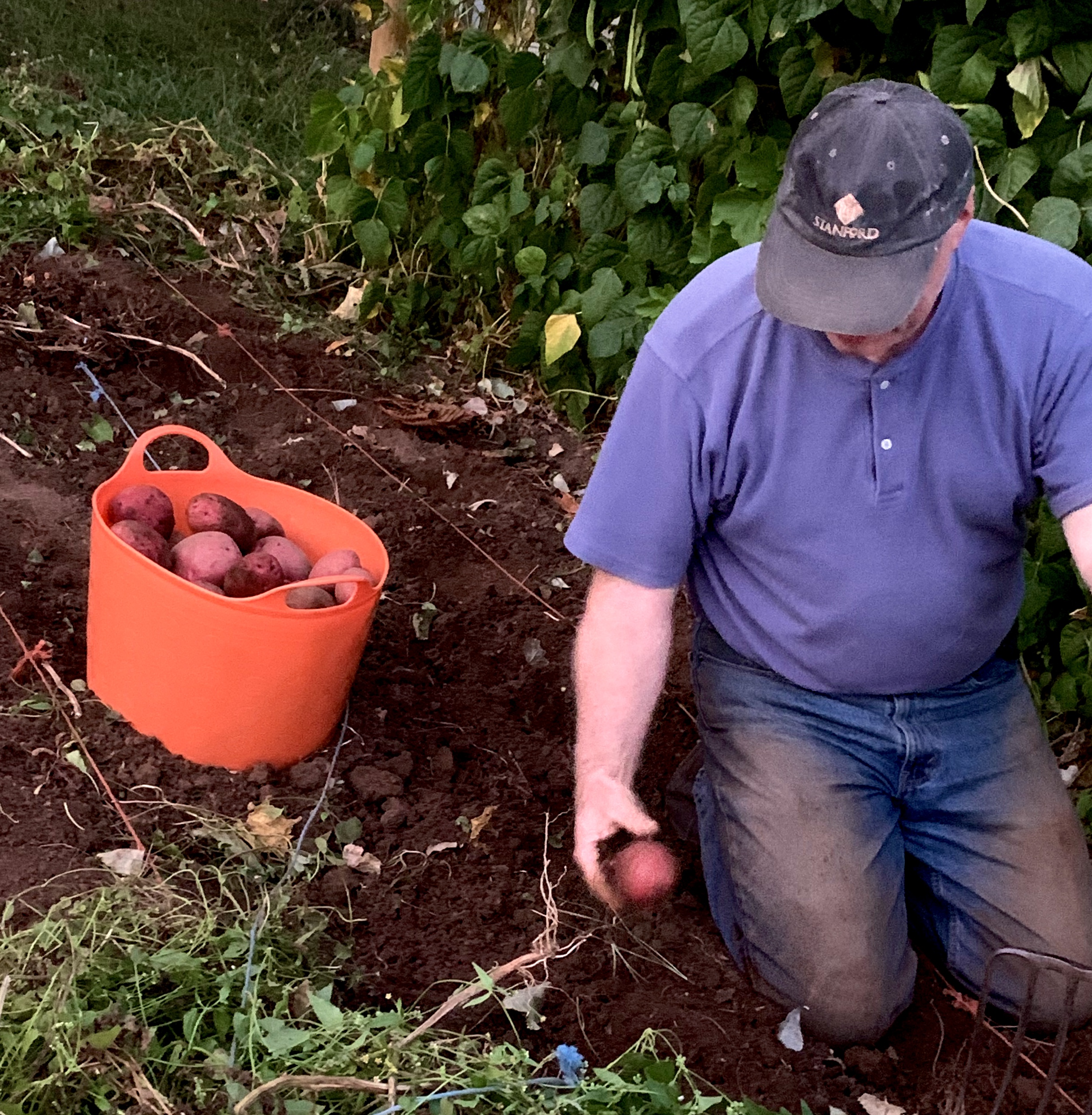
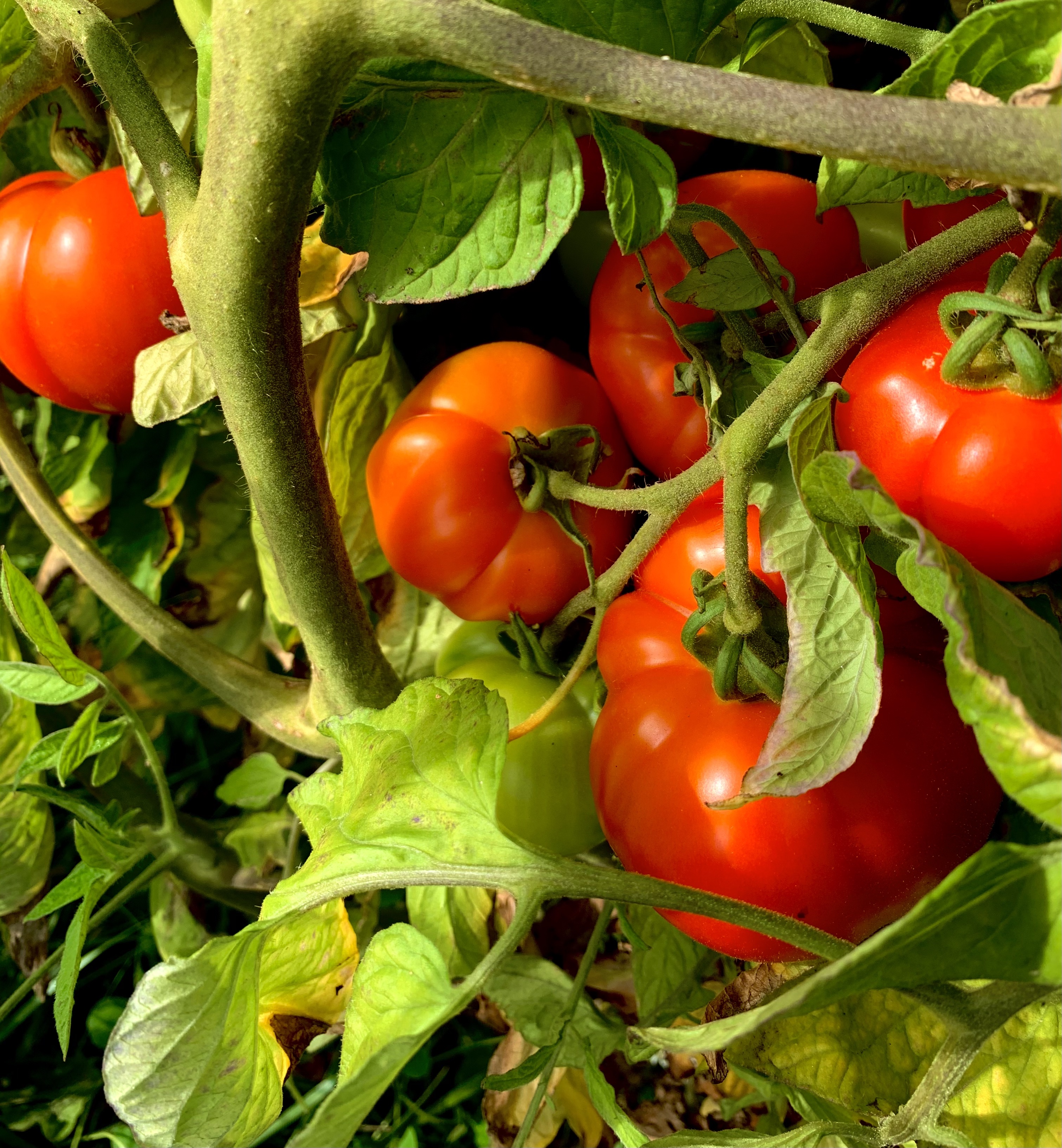
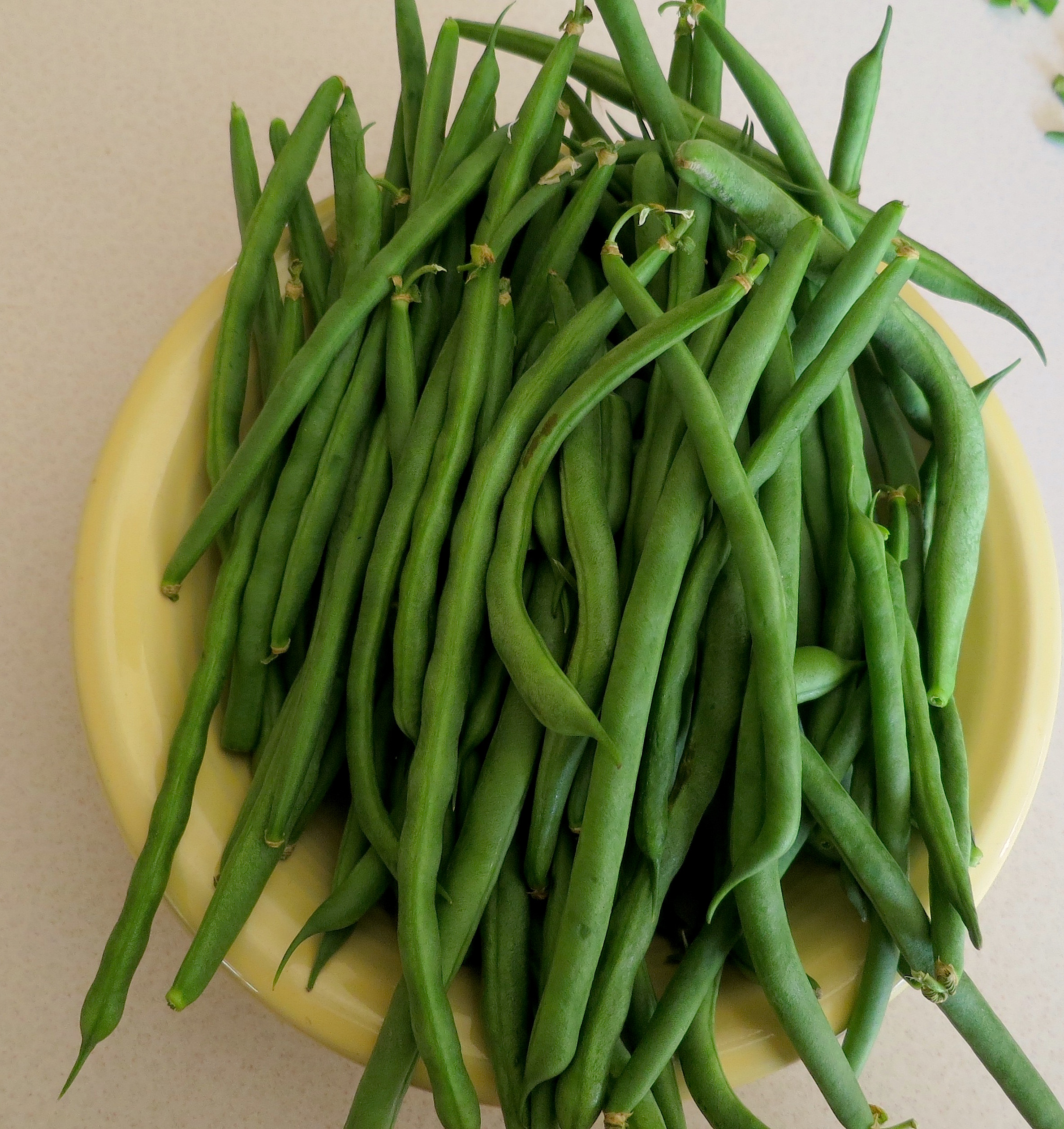
We are in full-garden produce preservation mode right now on the farm – these are the days when we pick the fruits of Dan’s labors – all the hours he spent this spring preparing the soil with rich compost, meticulously pulling out weeds by the roots, rototilling and cultivating, then staking/stringing/sowing the rows, then standing back to watch the sun and rain coax the seeds from the dark.

All this happens in a mere few weeks – we never tire of this illustration of redemption and renewal we’re shown year after year – how a mess of weeds and dirt can be cleared, refined and cleansed to once again become productive and fruitful, feeding those who hunger – both now and deep into winter and next spring.

It gives me hope; even when I myself am feeling full of weeds and despairingly dirty and overwhelmed, I can be renewed. It takes a persistent Gardener who is willing and eager to prune away what is useless, and sow anew what is needed for me to thrive and produce – His hands and knees are covered with my grime.

And the fruit that results! – so very sweet…

If you enjoy Barnstorming posts like this, you’ll enjoy this new book from Barnstorming, available to order here:

Change Altitudes

           ‘Regret has to be useless or it’s not really regret.’
                                                     ~Simone de Beauvoir

Rescuers did not find my uncle’s body.
But they found his axe at an icy altitude
impossible to navigate without one.


A little higher up, they found my uncle
’s sleeping bag at an altitude
unsurvivable without one.


You likely have a pen in purse or pocket.
Take it out and write a list of all
you need at your present altitude.


Next, change altitudes. Now, make another list:
the two biggest regrets of your life.
Take your time. Get it right. Because

here is all you need to know about need:
That list of regrets—cross one off.
You are going to need that space later.
~Jessica Goodfellow, “Unreachable” from Whiteout

I’ve known people who lost their lives while hiking/climbing in the mountains or due to some other tragedy – the cascade of decisions leading to their death are sources of regret for all who mourn them, even decades later. Somehow regret is a difficult feeling to let go; we cling to it as if it is somehow an essential part of us.

It is easy for me to come up with a long list of regrets in my life. They seem to grow like weeds – useless, unplanned, unwanted and prolific, threatening to take over any good fruit being produced.

Few of us volunteer to share openly about our current guilt or shame unless we are sitting in a therapy group or AA. Instead it gives us permission to beat ourselves up, going over and over in our minds how we could have done things differently. As a physician, I’ve heard about such heart-ache in my clinical encounters – a patient will regret an impulsive sexual encounter that turned out badly, or drinking and drugging too much, or regret an ongoing conflict with a family member, or wish they had decided to get that vaccine before becoming ill with a potentially preventable infection.

Our list of regrets can be endless and life-destroying.

I understand the pain of regret as I too am a flawed and fractured person with a seven decade history of things done and left undone, words said and unsaid. Even if I think I can somehow manage to cross a regret off my own list – perhaps I apologized and was granted forgiveness, or I tried to make right what I’d messed up — I still know a new regret will occupy its place before long.

I can’t simply fix my own regret list.

No matter what altitude we’re at — down in the pits in the lowest of the low, or up in the highest imaginable, I have come to realize that forgiveness is only possible through a knowledge of God Himself. He came to walk beside us in our low spots and our high spots, no matter where we find ourselves. His work on earth has crossed off our regrets and mistakes and wiped us clean of them.

He did this because He understood our desperate need; thanks to His sacrifice and love, our heart-aches are left at the Cross.

More beauty in words and photos are found in this new book from Barnstorming, available to order here:

If you have already read our book, your review of the book would be deeply appreciated here:

What is Possible Within Us

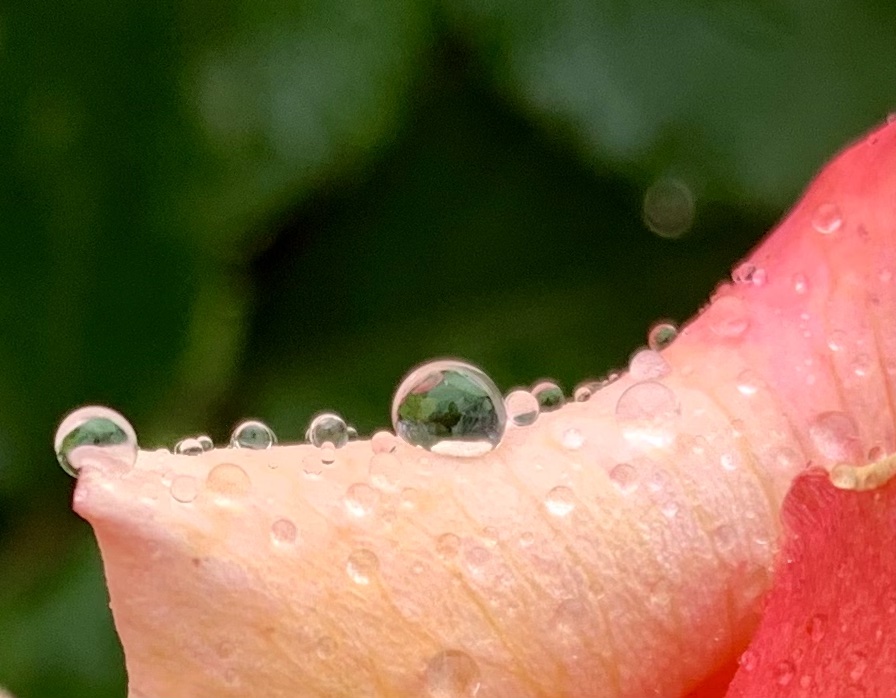
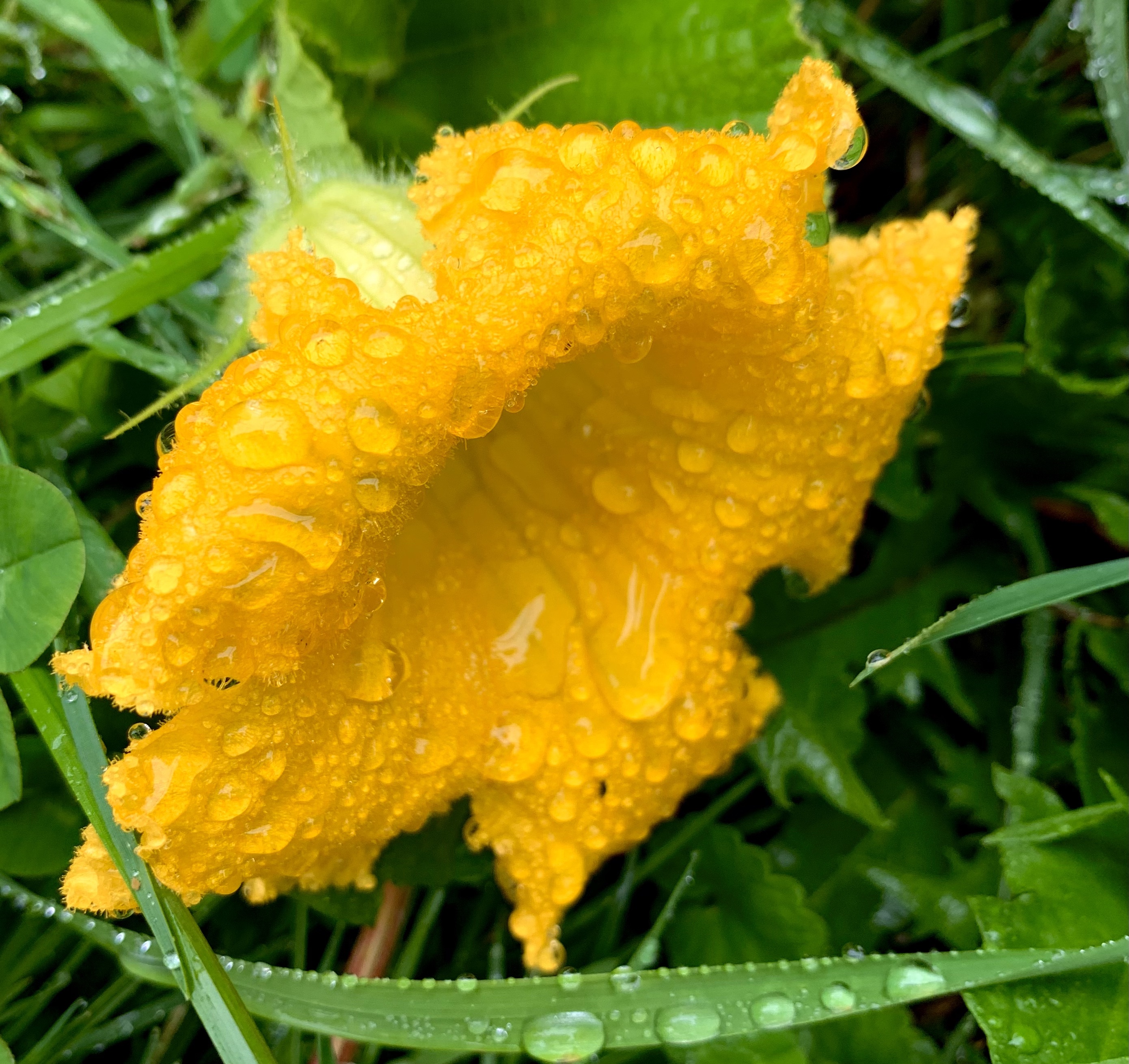
Find a quiet rain.  Then a green spruce tree.  You will notice that nearly every needle has been decorated with a tiny raindrop ornament.  Look closely inside the drop and there you are. In color. Upside down. Raindrops have been collecting snapshots since objects and people were placed, to their surprise, here and there on earth.

…even if we are only on display for a moment in a water drop as it clings to a pine needle, it is expected that we be on our best behavior, hair combed, jacket buttoned, no vulgar language.  Smiling is not necessary, but a pleasant attitude is helpful, and would be, I think, appreciated.
~Tom Hennen from “Outdoor Photos”
from Darkness Sticks to Everything

… We are, as we have always been, dangerous creatures, the enemies of our own happiness. But the only help we have ever found for this, the only melioration, is in mutual reverence.

God’s grace comes to us unmerited, the theologians say. But the grace we could extend to one another we consider it best to withhold in very many cases, presumptively, or in the absence of what we consider true or sufficient merit (we being more particular than God), or because few gracious acts, if they really deserve the name, would stand up to a cost-benefit analysis. This is not the consequence of a new atheism, or a systemic materialism that afflicts our age more than others. It is good old human meanness, which finds its terms and pretexts in every age. The best argument against human grandeur is the meagerness of our response to it, paradoxically enough.

And yet, the beautiful persists, and so do eloquence and depth of thought, and they belong to all of us because they are the most pregnant evidence we can have of what is possible in us.
~ Marilynne Robinson from “What Are We Doing Here?”

These past two months I’ve been trudging along feeling overheated, dry and cranky from the lack of rain — each step an effort, each thought a burden, taking every opportunity to grump about myself, the weather, the pandemic, and my fellow man. 

Now that we finally have had a good rain over the last 12 hours, I am reminded I am now preserved in the camera eye of the raindrops I pass, if only for an instant – each snapping an instagram selfie photo of my attitude.

It wouldn’t hurt me to stop rolling my eyes and cringing at the world. I might even try on a smile in a spirit of grace and forgiveness, even if the events of the day may not call for it. At least those smiles, reflected in the lens of each raindrop, will soak the soil when it is let go to fall earthward.

Planting smiles drop by drop: this overnight rain is a gift of grace to heal my grumbles – pregnant evidence of the beauty possible within me.

Needing a cure for crankiness? This new book from Barnstorming is the perfect remedy and available to order here:

How Way Leads to Way

…And both that morning equally lay
In leaves no step had trodden black.
Oh, I kept the first for another day!
Yet knowing how way leads on to way,
I doubted if I should ever come back.
I shall be telling this with a sigh
Somewhere ages and ages hence:
Two roads diverged in a wood, and I—
I took the one less traveled by,
And that has made all the difference.
~Robert Frost from “The Road Not Taken”

Two lonely cross-roads that themselves cross each other I have walked several times this winter without meeting or overtaking so much as a single person on foot or on runners. The practically unbroken condition of both for several days after a snow or a blow proves that neither is much travelled.

Judge then how surprised I was the other evening as I came down one to see a man, who to my own unfamiliar eyes and in the dusk looked for all the world like myself, coming down the other, his approach to the point where our paths must intersect being so timed that unless one of us pulled up we must inevitably collide. I felt as if I was going to meet my own image in a slanting mirror. Or say I felt as we slowly converged on the same point with the same noiseless yet laborious stride as if we were two images about to float together with the uncrossing of someone’s eyes. I verily expected to take up or absorb this other self and feel the stronger by the addition for the three-mile journey home.

But I didn’t go forward to the touch. I stood still in wonderment and let him pass by; and that, too, with the fatal omission of not trying to find out by a comparison of lives and immediate and remote interests what could have brought us by crossing paths to the same point in a wilderness at the same moment of nightfall. Some purpose I doubt not, if we could but have made out.

I like a coincidence almost as well as an incongruity.
~Robert Frost from “Selected Letters”

Robert Frost noted in different letters and lectures how readers misinterpreted his popular, yet ironic, “The Road Not Taken” poem.  His point was not “the road less traveled” had  “made all the difference” but that the roads are clearly described as the same. When life takes us to a fork in the road, we are compelled to make decisions that must take us one way or the other with little to guide us. We are uncertain where our choices may lead us, or if we have made the right choice.

I’ve come to many decision points in my life where I have simply had to “go with my gut.” Some of these turned out to be good decisions and other times I have had deep regret about my choice and wish I could go back and do it differently. But “way leads to way” and there is no going back for a do-over.

I have chosen roads that lead me astray into hazards and obstacles; God continually puts up signposts that have guided me home to safety.  My journey may be arduous, I may get terribly lost, I may walk alone for long stretches, I may end up crushed and bleeding in the ditch.

God follows the footprints I have left behind, and I am found, rescued and brought home, no matter what, and that — not the road I chose at the beginning — is what has made all the difference.

If you enjoy these Barnstorming posts, a new book from Barnstorming is available for order here:

Go Out and Help Your Dad


It was hard work, dying, harder
than anything he’d ever done.


Whatever brutal, bruising, back-
Breaking chore he’d forced himself


to endure—it was nothing
compared to this. And it took


so long. When would the job
be over? Who would call him


home for supper? And it was
hard for us (his children)—


all of our lives we’d heard
my mother telling us to go out,


help your father, but this
was work we could not do.


He was way out beyond us,
in a field we could not reach.

~Joyce Sutphen, “My Father, Dying” from Carrying Water to the Field: New and Selected Poems.

We will grieve not, rather find                     
Strength in what remains behind;                     
In the primal sympathy                     
Which having been must ever be;  
                   

Thanks to the human heart by which we live,
Thanks to its tenderness, its joys, and fears,
To me the meanest flower that blows can give
Thoughts that do often lie too deep for tears.
~William Wordsworth from “Ode: Intimations of Immortality from Recollections of Early Childhood”
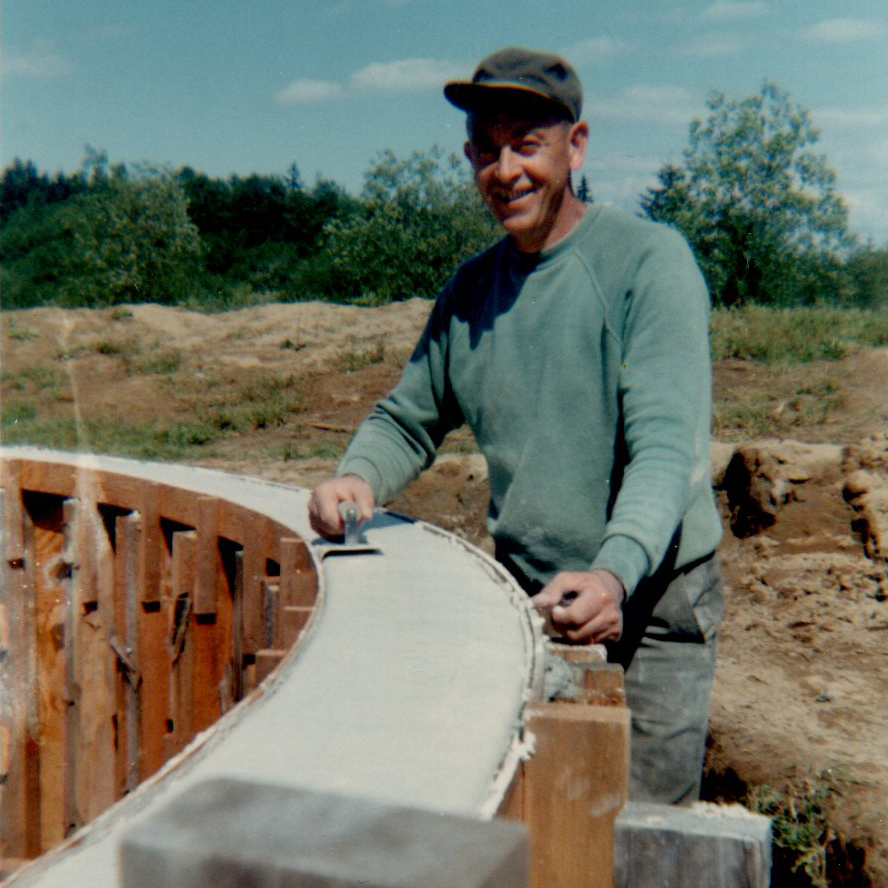
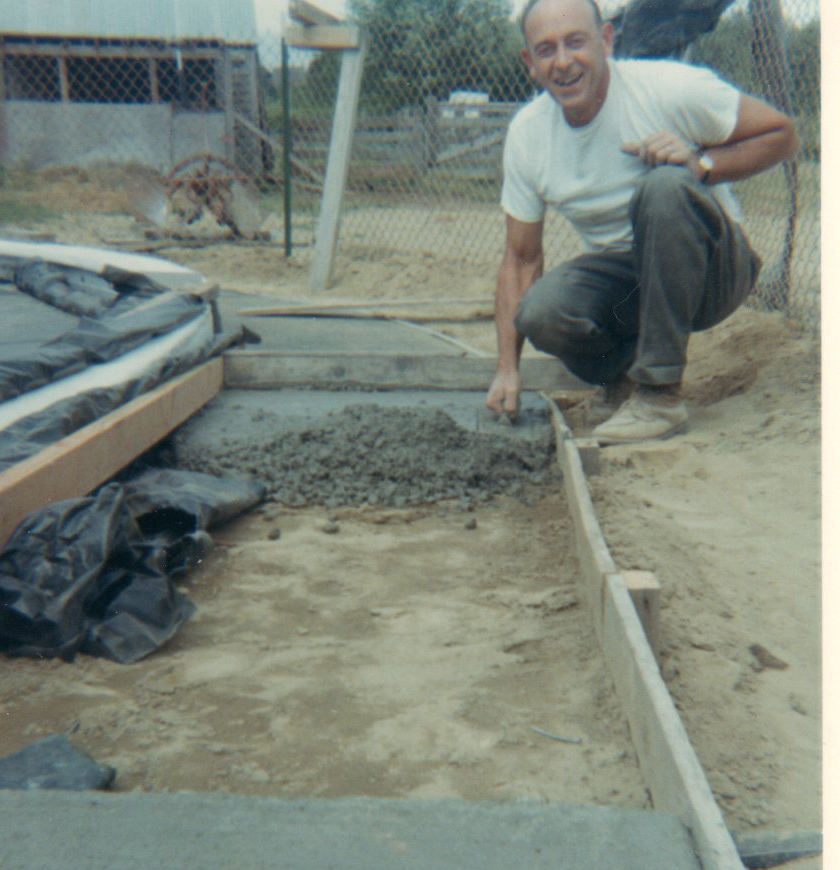
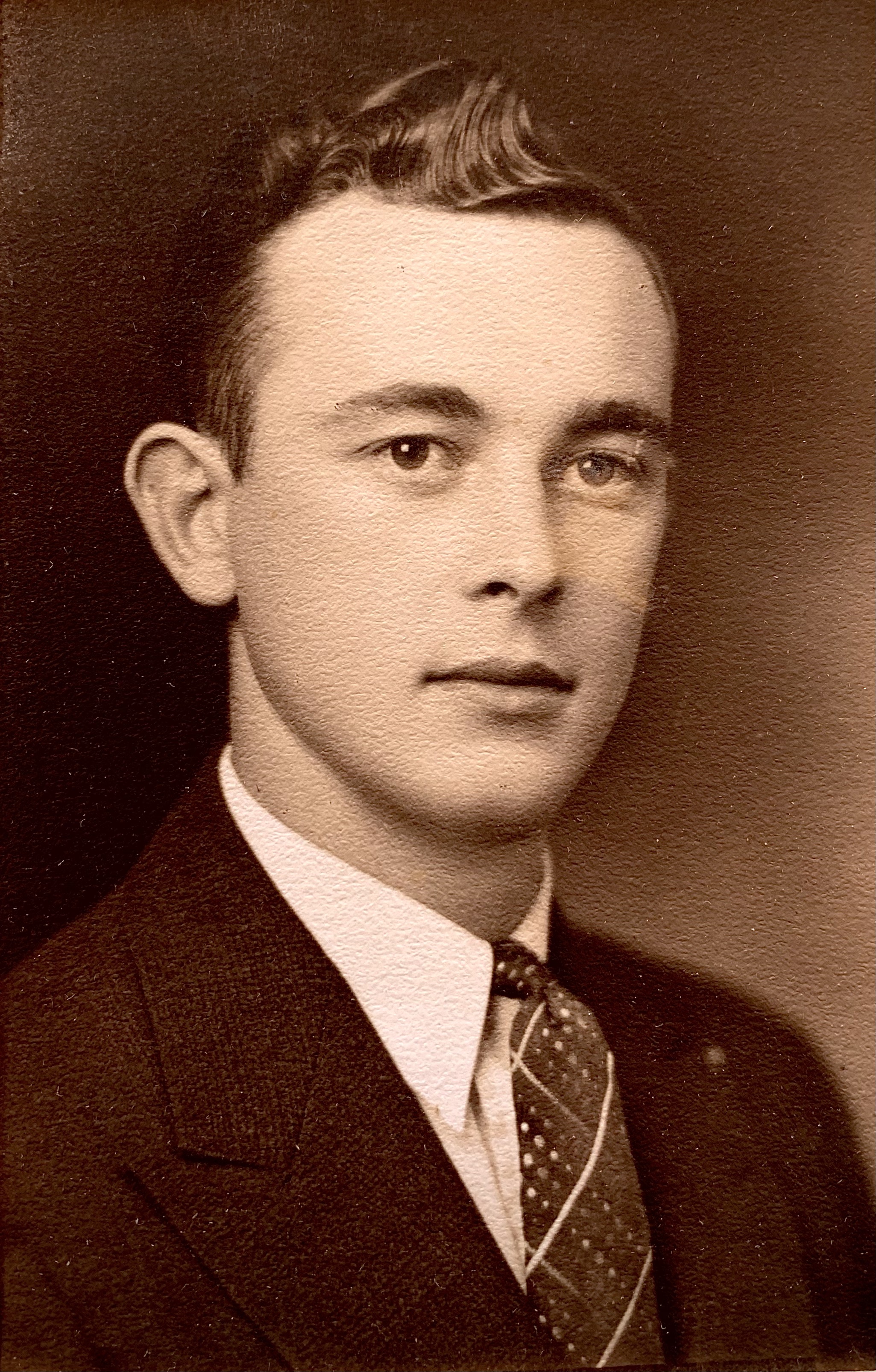
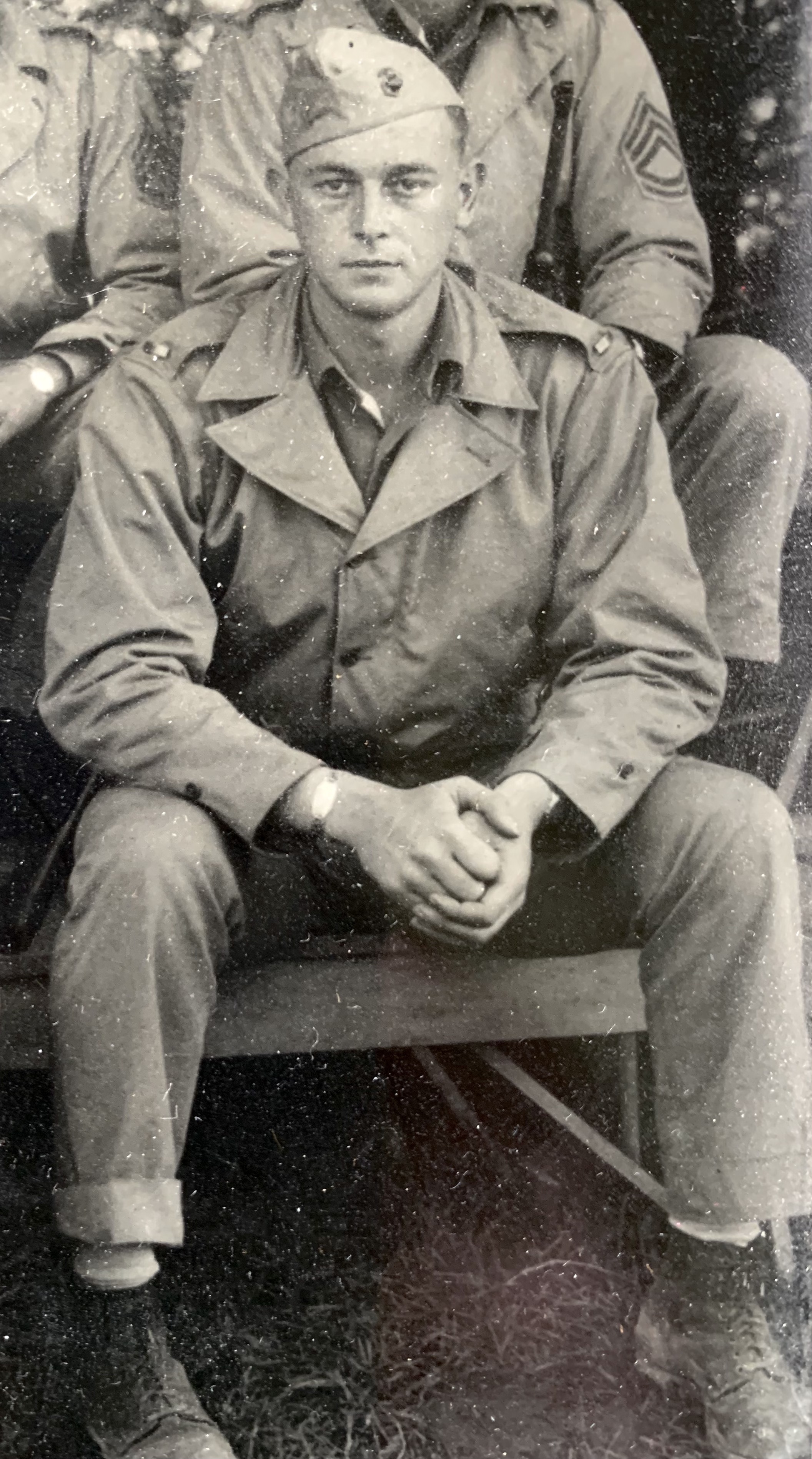
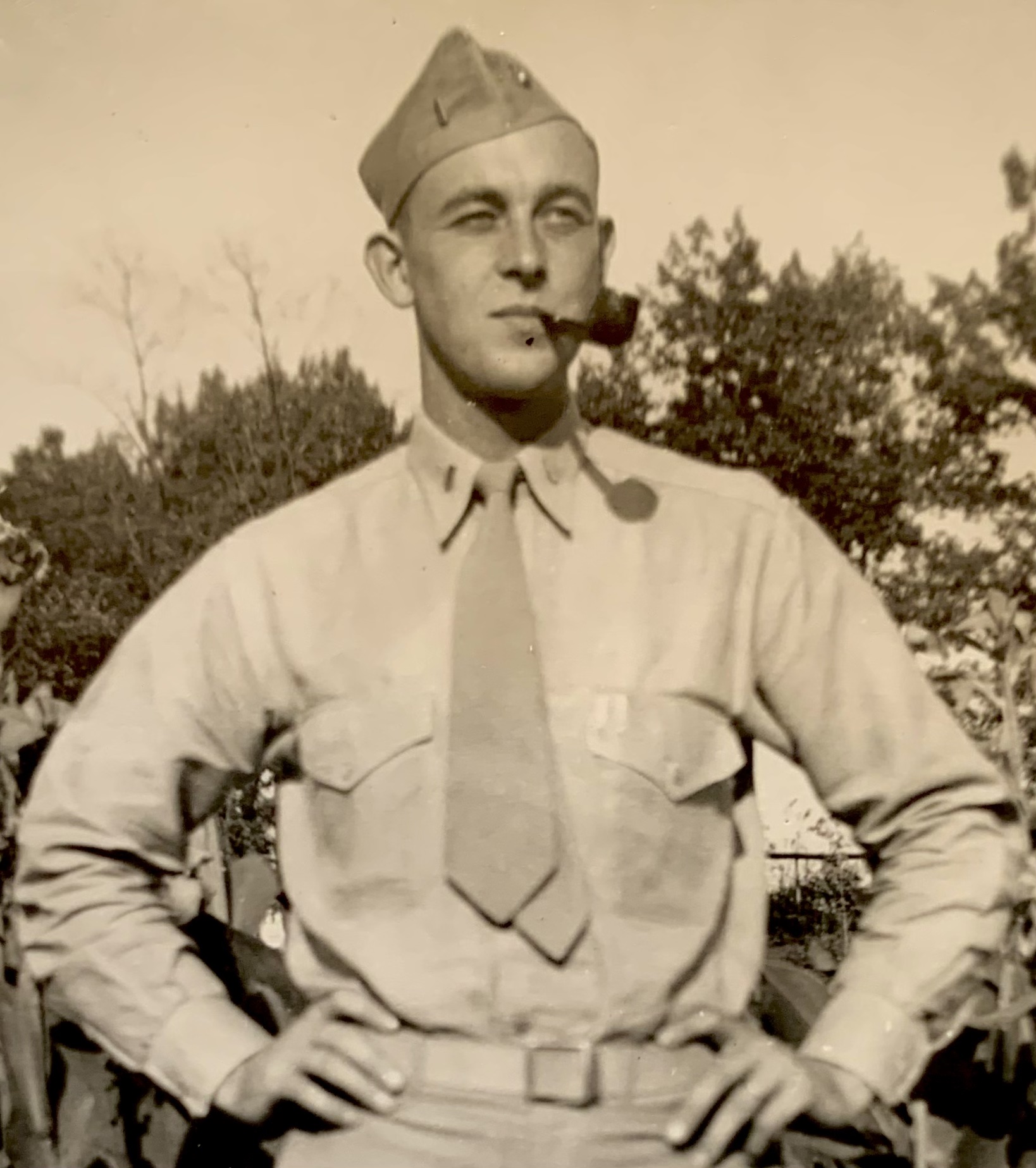
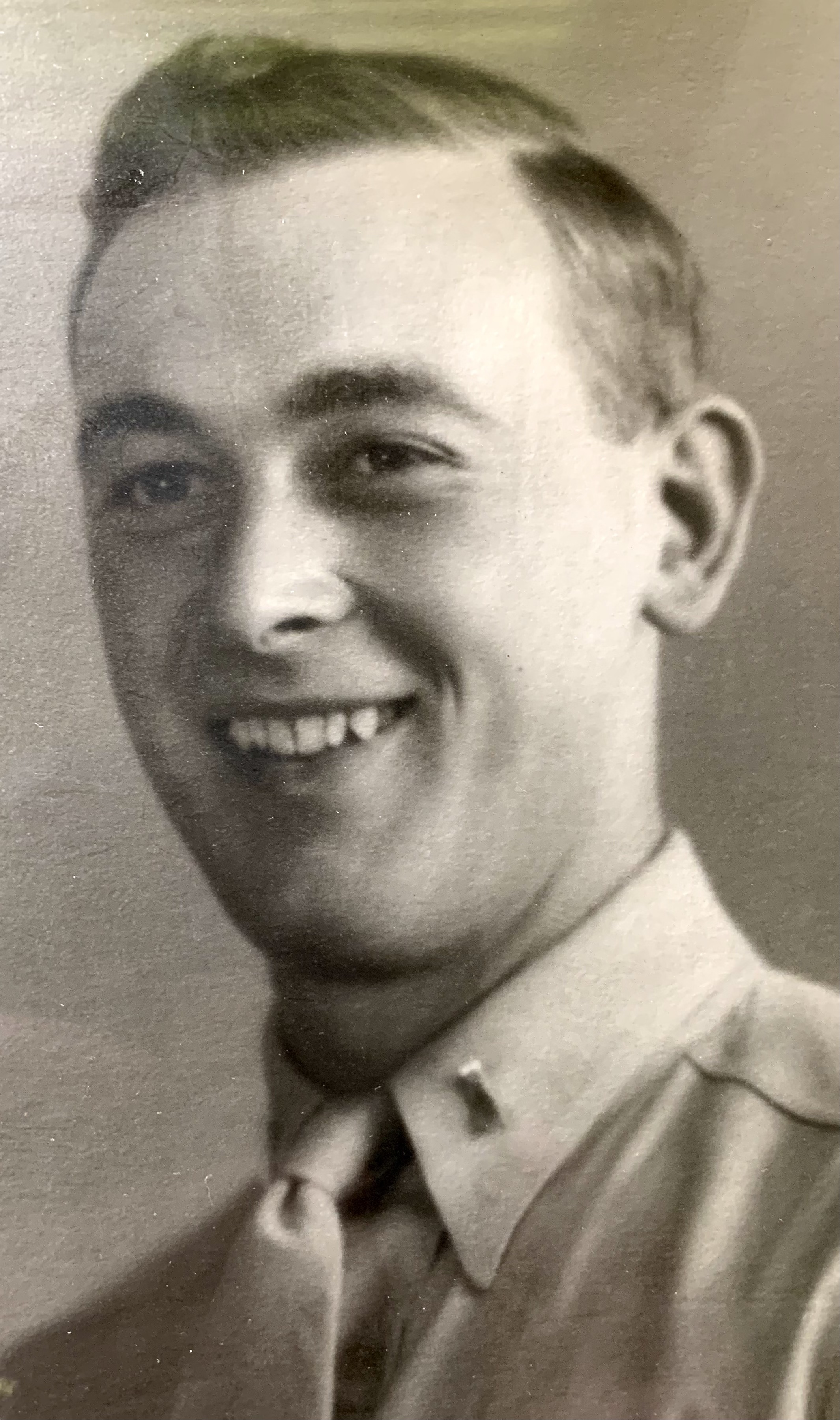
Twenty-six years ago today
we watched at your bedside as you labored,
readying yourself to die and we could not help
except to be there while we watched you
move farther away from us.


This dying, the hardest work you had ever done:

harder than handling the plow behind a team of draft horses,
harder than confronting a broken, alcoholic and abusive father,
harder than slashing brambles and branches to clear the woods,
harder than digging out stumps, cementing foundations, building roofs,
harder than shipping out, leaving behind a new wife after a week of marriage,
harder than leading a battalion of men to battle on Saipan, Tinian and Tarawa,
harder than returning home so changed there were no words,
harder than returning to school, working long hours to support family,
harder than running a farm with only muscle and will power,
harder than coping with an ill wife, infertility, job conflict, discontent,
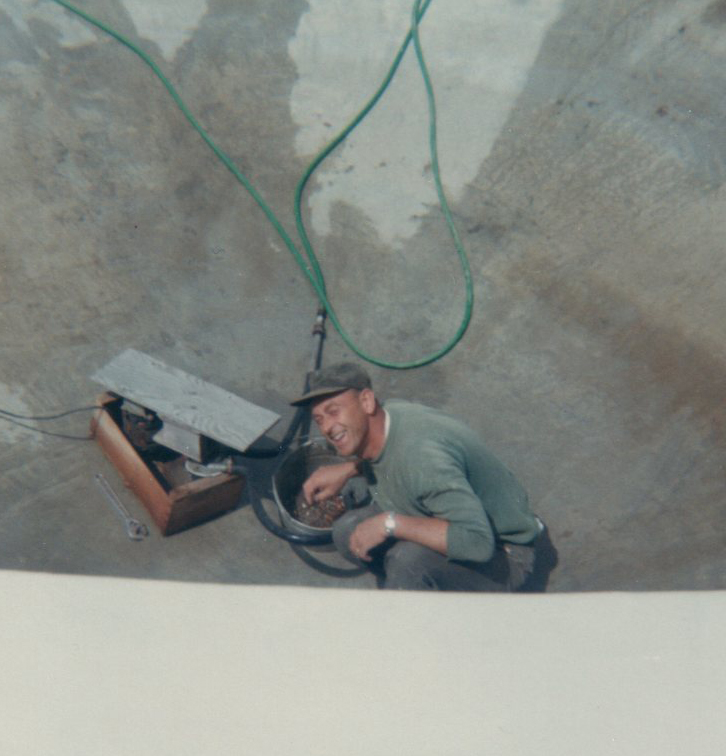
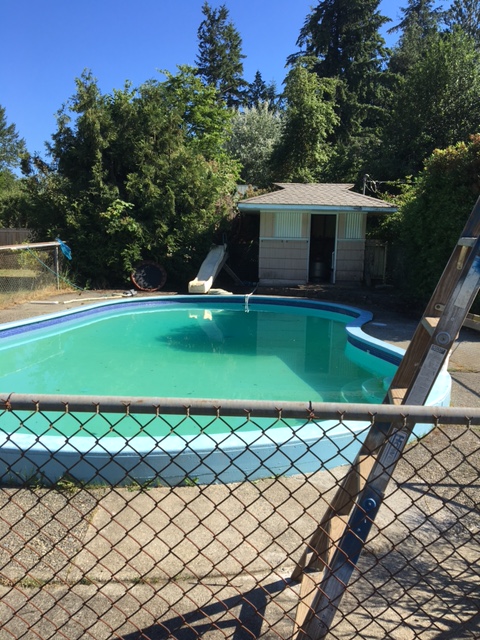
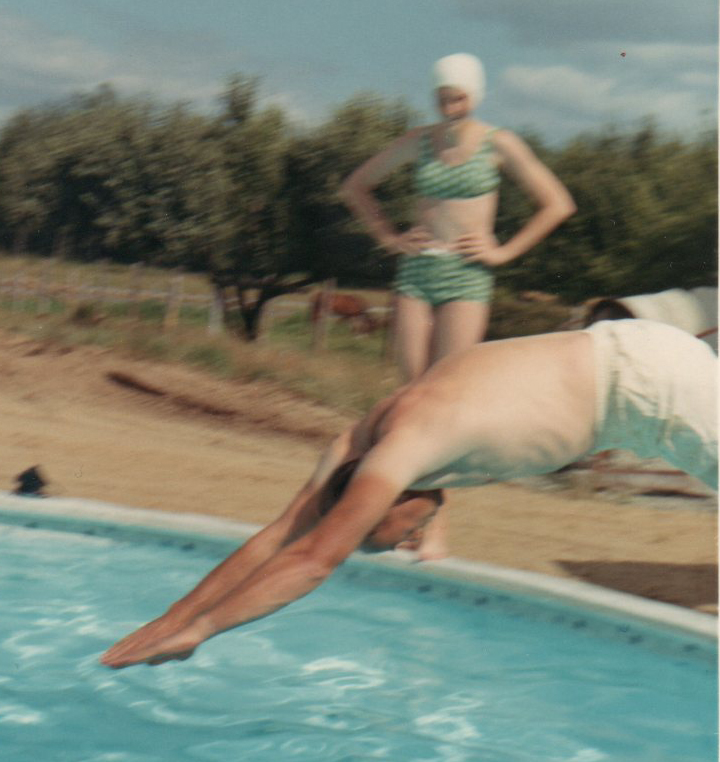
harder than building your own pool, your own garage, your own house,
harder than your marriage ending, a second wife dying,
and returning home forgiven.

Dying was the hardest of all
as no amount of muscle or smarts could stop it crushing you,
taking away the strength you relied on for 73 years.

So as you lay helpless, moaning, struggling to breathe,
we knew your hard work was complete
and what was yet undone was up to us
to finish for you.

A new book from Barnstorming is available for order here: