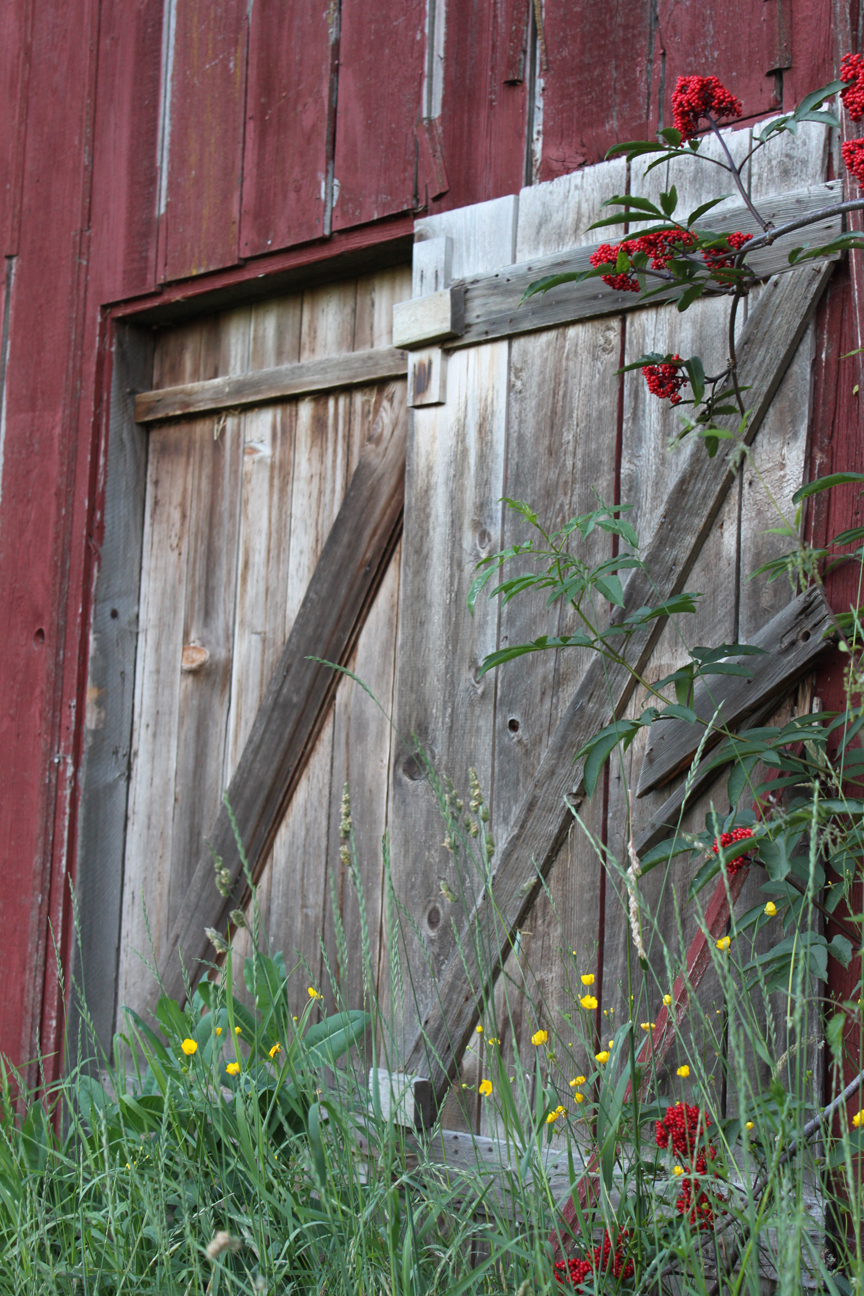
Change Altitudes

           ‘Regret has to be useless or it’s not really regret.’
                                                     ~Simone de Beauvoir

Rescuers did not find my uncle’s body.
But they found his axe at an icy altitude
impossible to navigate without one.


A little higher up, they found my uncle
’s sleeping bag at an altitude
unsurvivable without one.


You likely have a pen in purse or pocket.
Take it out and write a list of all
you need at your present altitude.


Next, change altitudes. Now, make another list:
the two biggest regrets of your life.
Take your time. Get it right. Because

here is all you need to know about need:
That list of regrets—cross one off.
You are going to need that space later.
~Jessica Goodfellow, “Unreachable” from Whiteout

I’ve known people who lost their lives while hiking/climbing in the mountains or due to some other tragedy – the cascade of decisions leading to their death are sources of regret for all who mourn them, even decades later. Somehow regret is a difficult feeling to let go; we cling to it as if it is somehow an essential part of us.

It is easy for me to come up with a long list of regrets in my life. They seem to grow like weeds – useless, unplanned, unwanted and prolific, threatening to take over any good fruit being produced.

Few of us volunteer to share openly about our current guilt or shame unless we are sitting in a therapy group or AA. Instead it gives us permission to beat ourselves up, going over and over in our minds how we could have done things differently. As a physician, I’ve heard about such heart-ache in my clinical encounters – a patient will regret an impulsive sexual encounter that turned out badly, or drinking and drugging too much, or regret an ongoing conflict with a family member, or wish they had decided to get that vaccine before becoming ill with a potentially preventable infection.

Our list of regrets can be endless and life-destroying.

I understand the pain of regret as I too am a flawed and fractured person with a seven decade history of things done and left undone, words said and unsaid. Even if I think I can somehow manage to cross a regret off my own list – perhaps I apologized and was granted forgiveness, or I tried to make right what I’d messed up — I still know a new regret will occupy its place before long.

I can’t simply fix my own regret list.

No matter what altitude we’re at — down in the pits in the lowest of the low, or up in the highest imaginable, I have come to realize that forgiveness is only possible through a knowledge of God Himself. He came to walk beside us in our low spots and our high spots, no matter where we find ourselves. His work on earth has crossed off our regrets and mistakes and wiped us clean of them.

He did this because He understood our desperate need; thanks to His sacrifice and love, our heart-aches are left at the Cross.

More beauty in words and photos are found in this new book from Barnstorming, available to order here:

If you have already read our book, your review of the book would be deeply appreciated here:

What is Possible Within Us

Find a quiet rain.  Then a green spruce tree.  You will notice that nearly every needle has been decorated with a tiny raindrop ornament.  Look closely inside the drop and there you are. In color. Upside down. Raindrops have been collecting snapshots since objects and people were placed, to their surprise, here and there on earth.

…even if we are only on display for a moment in a water drop as it clings to a pine needle, it is expected that we be on our best behavior, hair combed, jacket buttoned, no vulgar language.  Smiling is not necessary, but a pleasant attitude is helpful, and would be, I think, appreciated.
~Tom Hennen from “Outdoor Photos”
from Darkness Sticks to Everything

… We are, as we have always been, dangerous creatures, the enemies of our own happiness. But the only help we have ever found for this, the only melioration, is in mutual reverence.

God’s grace comes to us unmerited, the theologians say. But the grace we could extend to one another we consider it best to withhold in very many cases, presumptively, or in the absence of what we consider true or sufficient merit (we being more particular than God), or because few gracious acts, if they really deserve the name, would stand up to a cost-benefit analysis. This is not the consequence of a new atheism, or a systemic materialism that afflicts our age more than others. It is good old human meanness, which finds its terms and pretexts in every age. The best argument against human grandeur is the meagerness of our response to it, paradoxically enough.

And yet, the beautiful persists, and so do eloquence and depth of thought, and they belong to all of us because they are the most pregnant evidence we can have of what is possible in us.
~ Marilynne Robinson from “What Are We Doing Here?”

These past two months I’ve been trudging along feeling overheated, dry and cranky from the lack of rain — each step an effort, each thought a burden, taking every opportunity to grump about myself, the weather, the pandemic, and my fellow man. 

Now that we finally have had a good rain over the last 12 hours, I am reminded I am now preserved in the camera eye of the raindrops I pass, if only for an instant – each snapping an instagram selfie photo of my attitude.

It wouldn’t hurt me to stop rolling my eyes and cringing at the world. I might even try on a smile in a spirit of grace and forgiveness, even if the events of the day may not call for it. At least those smiles, reflected in the lens of each raindrop, will soak the soil when it is let go to fall earthward.

Planting smiles drop by drop: this overnight rain is a gift of grace to heal my grumbles – pregnant evidence of the beauty possible within me.

Needing a cure for crankiness? This new book from Barnstorming is the perfect remedy and available to order here:

How Way Leads to Way

…And both that morning equally lay
In leaves no step had trodden black.
Oh, I kept the first for another day!
Yet knowing how way leads on to way,
I doubted if I should ever come back.
I shall be telling this with a sigh
Somewhere ages and ages hence:
Two roads diverged in a wood, and I—
I took the one less traveled by,
And that has made all the difference.
~Robert Frost from “The Road Not Taken”

Two lonely cross-roads that themselves cross each other I have walked several times this winter without meeting or overtaking so much as a single person on foot or on runners. The practically unbroken condition of both for several days after a snow or a blow proves that neither is much travelled.

Judge then how surprised I was the other evening as I came down one to see a man, who to my own unfamiliar eyes and in the dusk looked for all the world like myself, coming down the other, his approach to the point where our paths must intersect being so timed that unless one of us pulled up we must inevitably collide. I felt as if I was going to meet my own image in a slanting mirror. Or say I felt as we slowly converged on the same point with the same noiseless yet laborious stride as if we were two images about to float together with the uncrossing of someone’s eyes. I verily expected to take up or absorb this other self and feel the stronger by the addition for the three-mile journey home.

But I didn’t go forward to the touch. I stood still in wonderment and let him pass by; and that, too, with the fatal omission of not trying to find out by a comparison of lives and immediate and remote interests what could have brought us by crossing paths to the same point in a wilderness at the same moment of nightfall. Some purpose I doubt not, if we could but have made out.

I like a coincidence almost as well as an incongruity.
~Robert Frost from “Selected Letters”

Robert Frost noted in different letters and lectures how readers misinterpreted his popular, yet ironic, “The Road Not Taken” poem.  His point was not “the road less traveled” had  “made all the difference” but that the roads are clearly described as the same. When life takes us to a fork in the road, we are compelled to make decisions that must take us one way or the other with little to guide us. We are uncertain where our choices may lead us, or if we have made the right choice.

I’ve come to many decision points in my life where I have simply had to “go with my gut.” Some of these turned out to be good decisions and other times I have had deep regret about my choice and wish I could go back and do it differently. But “way leads to way” and there is no going back for a do-over.

I have chosen roads that lead me astray into hazards and obstacles; God continually puts up signposts that have guided me home to safety.  My journey may be arduous, I may get terribly lost, I may walk alone for long stretches, I may end up crushed and bleeding in the ditch.

God follows the footprints I have left behind, and I am found, rescued and brought home, no matter what, and that — not the road I chose at the beginning — is what has made all the difference.

If you enjoy these Barnstorming posts, a new book from Barnstorming is available for order here:

Go Out and Help Your Dad


It was hard work, dying, harder
than anything he’d ever done.


Whatever brutal, bruising, back-
Breaking chore he’d forced himself


to endure—it was nothing
compared to this. And it took


so long. When would the job
be over? Who would call him


home for supper? And it was
hard for us (his children)—


all of our lives we’d heard
my mother telling us to go out,


help your father, but this
was work we could not do.


He was way out beyond us,
in a field we could not reach.

~Joyce Sutphen, “My Father, Dying” from Carrying Water to the Field: New and Selected Poems.

We will grieve not, rather find                     
Strength in what remains behind;                     
In the primal sympathy                     
Which having been must ever be;  
                   

Thanks to the human heart by which we live,
Thanks to its tenderness, its joys, and fears,
To me the meanest flower that blows can give
Thoughts that do often lie too deep for tears.
~William Wordsworth from “Ode: Intimations of Immortality from Recollections of Early Childhood”

Twenty-six years ago today
we watched at your bedside as you labored,
readying yourself to die and we could not help
except to be there while we watched you
move farther away from us.


This dying, the hardest work you had ever done:

harder than handling the plow behind a team of draft horses,
harder than confronting a broken, alcoholic and abusive father,
harder than slashing brambles and branches to clear the woods,
harder than digging out stumps, cementing foundations, building roofs,
harder than shipping out, leaving behind a new wife after a week of marriage,
harder than leading a battalion of men to battle on Saipan, Tinian and Tarawa,
harder than returning home so changed there were no words,
harder than returning to school, working long hours to support family,
harder than running a farm with only muscle and will power,
harder than coping with an ill wife, infertility, job conflict, discontent,
harder than building your own pool, your own garage, your own house,
harder than your marriage ending, a second wife dying,
and returning home forgiven.

Dying was the hardest of all
as no amount of muscle or smarts could stop it crushing you,
taking away the strength you relied on for 73 years.

So as you lay helpless, moaning, struggling to breathe,
we knew your hard work was complete
and what was yet undone was up to us
to finish for you.

A new book from Barnstorming is available for order here:


All Barb and Bristle

This upstart thistle
Is young and touchy; it is
All barb and bristle,

Threatening to wield
Its green, jagged armament
Against the whole field.

Butterflies will dare
Nonetheless to lay their eggs
In that angle where

The leaf meets the stem,
So that ants or browsing cows
Cannot trouble them.

Summer will grow old
As will the thistle, letting
A clenched bloom unfold

To which the small hum
Of bee wings and the flash of
Goldfinch wings will come,

Till its purple crown
Blanches, and the breezes strew
The whole field with down.
~Richard Wilbur “A Pasture Poem” from Anterooms

Not unlike the thistles that dot our pastures, I can have a tendency to be a bristly, barbed and sharp – some is simply my nature, but also long years of relentless training to become tough and impenetrable. Perhaps it represents my need for self-protection, but like the thistle, though having spiky thorns may keep me from being “eaten”, it doesn’t deter the gentle approach of butterfly or bee.

As a result, I have been softened over time (in more ways than one!) by forces outside of myself – a ripening that means I am less threat and more welcoming. My unfolding into fluffy blossom became my way of enveloping myself around my world as grace enveloped me.

With the breezes, the softest of thistle down spreads afar rather than standing stock-still in self-defense. I find in my seventh decade, I’m actually meant to fly, settling into nooks and crannies I never could have dreamed while barbed and spiky.

That is how grace and redemption works on thistles and bristly people: from sharp edges to delicate downiness.

We are all in need of such transformation.

A new book from Barnstorming is available to order here:

To Live One More Day

What a slow way to eat, the butterfly
is given by Nature, sipping nectar
one tiny blue flower at a time. Though
a Monarch in name, she’s made to scavenge
like the poorest of the poor, a morsel
here, a morsel there. A flutter of ink-
splattered orange wings. We don’t want to see
the struggle that undergirds the grace: the
ballerina’s sweat, or her ruined feet
hidden by tights and toe-shoes. She knows her
career will be as brief as it was hard
to achieve. Pollinated, the tiny
blue flowers are sated. The butterfly
flits away, hoping to live one more day.

~Barbara Quick, “The Struggle That Undergirds the Grace.”

You have been my friend. That in itself is a tremendous thing.
I wove my webs for you because I liked you.
After all, what’s a life, anyway?
We’re born, we live a little while, we die.
A spider’s life can’t help being something of a mess,
with all this trapping and eating flies.
By helping you, perhaps I was trying to lift up my life a trifle.
Heaven knows anyone’s life can stand a little of that.
~E. B. White, Charlotte’s Web


And when the sun rises we are afraid
it might not remain

when the sun sets we are afraid
it might not rise in the morning
when our stomachs are full we are afraid
of indigestion
when our stomachs are empty we are afraid
we may never eat again
when we are loved we are afraid
love will vanish
when we are alone we are afraid
love will never return
and when we speak we are afraid
our words will not be heard
nor welcomed
but when we are silent
we are still afraid


So it is better to speak
remembering
we were never meant to survive.
~Audre Lorde from “A Litany for Survival”

We are here so briefly.
We were never designed to survive forever on this earth
yet we try to run the clock out as long as we can.

Just one day more.

We are here because of struggle –
the pain of our birth, whether the cry of our laboring mother,
or our own wrestling free of the cocoon or the shell,
our daily work to find food
to feed ourselves and our young,
the upkeep and maintenance of our frail and failing bodies,
our ongoing fear we’ll be taken
before we can make a difference in another’s life.

If there is a reason for all this (and there is):
our struggle forms the grace of another’s salvation.
The flowers bloom to feed the butterfly,
the butterfly pollinates the flower,
ensuring the next generations of both.
The silent and weakened find their voice
so that the next generation can thrive.

Heaven knows,
anyone’s life can stand a little of that.

Just one day more, Lord. Please – one day more.

Tomorrow we’ll discover
What our God in Heaven has in store
One more dawn
One more day
One day more

~from Les Miserable

A new book available from Barnstorming available to order here:

The Shade of Unexpected Grace

Holy as a day is spent
Holy is the dish and drain
The soap and sink, and the cup and plate
And the warm wool socks, and the cold white tile
Shower heads and good dry towels
And frying eggs sound like psalms
With bits of salt measured in my palm
It’s all a part of a sacrament
As holy as a day is spent


Holy is the busy street
And cars that boom with passion’s beat
And the check out girl, counting change
And the hands that shook my hands today
And hymns of geese fly overhead
And spread their wings like their parents did
Blessed be the dog that runs in her sleep
To chase some wild and elusive thing


Holy is the familiar room
And quiet moments in the afternoon
And folding sheets like folding hands
To pray as only laundry can
I’m letting go of all my fear
Like autumn leaves made of earth and air
For the summer came and the summer went
As holy as a day is spent


Holy is the place I stand
To give whatever small good I can

And the empty page, and the open book
Redemption everywhere I look
Unknowingly we slow our pace
In the shade of unexpected grace
And with grateful smiles and sad lament
As holy as a day is spent
And morning light sings ‘providence’
As holy as a day is spent

~Carrie Newcomer “Holy as a Day is Spent”

We are in the middle of an unprecedented heat wave in the Pacific Northwest, predicted to hit 110 degrees F over the next two days. This part of the world is sorely unprepared for these temperatures – air conditioning is unusual in residences and some workplaces so we grit our teeth, mop our brows and search for the blessing of shade and relief.

There is barely a breeze. The weathervanes are standing stock-still without a hint of swivel, cooking in the sun just as thoroughly as the rest of us. Our barn has a beautiful Haflinger horse weather vane – a precious gift from Amish country given to us by treasured friends over thirty years ago.

However, the standard weather vane is a rooster, found on a neighbor’s barn about a mile from our farm. The traditional rooster vane (“weathercock”) has a long history dating back to the ninth century when Pope Gregory declared all churches were to be crowned with a rooster as a suitable Christian emblem. This was to immortalize St. Peter’s three betrayals, predicted by Christ to take place before the rooster crows in the morning on the day of His crucifixion.

So roosters began to appear on the weathervanes of churches in Europe, blowing this way and that with the wind, just as Peter found himself carried by the wind of opinion on that fateful day. We are to be reminded of our own tendency to shift and swivel with the forces that push us around when we are uncertain or fearful, forgetting our foundational faith and beliefs.

Yet Christ forgave Peter, not once or twice, but three times for each betrayal. He delivers an unexpected grace and gift of redemption to a man who had turned away from Him. Christ’s instruction to Peter was to “feed my sheep.”
Our response to the grace shown to us is to nurture and show grace to all we meet.

As our weathervanes remain unmoving in this heat, we stand firm in the shade of our Lord’s forgiveness of our betrayal of Him – all that is just and holy.

Amen and Amen.

A new book from Barnstorming is available for order here:

Standing Guard, Waiting

For as a cloud received Him from their sight,
So with a cloud will He return ere long:
Therefore they stand on guard by day, by night,
Strenuous and strong.

They do, they dare, they beyond seven times seven
Forgive, they cry God’s mighty word aloud:
Yet sometimes haply lift tired eyes to Heaven–
“Is that His cloud?”
~Christina Rossetti from “Ascension Day”

I wait for the Lord, my soul waits,
    and in his word I put my hope.
My soul waits for the Lord
    more than watchmen wait for the morning,
    more than watchmen wait for the morning.

Psalm 130: 5-6 from a Song of Ascents

Waiting is essential to the spiritual life.
But waiting as a disciple of Jesus is not an empty waiting.
It is a waiting with a promise in our hearts
that makes already present what we are waiting for.
We wait during Advent for the birth of Jesus.
We wait after Easter for the coming of the Spirit,
and after the ascension of Jesus
we wait for his coming again in glory.
We are always waiting,
but it is a waiting in the conviction that
we have already seen God’s footsteps.
— Henri Nouwen from Bread For The Journey: A Daybook of Wisdom and Faith

To wait is a hard sweet paradox in the Christian life.  It is hard not yet having what we know will be coming.  But it is sweet to have certainty it is coming because of the footprints we have seen: He has been here among us. 

Like the labor of childbirth, we groan knowing what it will take to get there, and we are full to brimming already.

The waiting won’t be easy; it will often be painful to be patient, staying alert to possibility and hope when we are exhausted, barely able to function.  Others won’t understand why we wait, nor do they comprehend what we could possibly be waiting for. 

We persevere together, with patience, watching and hoping; we are a community groaning together in sweet expectation of the morning.

A new book from Barnstorming available to order here

Will I Open the Door?

Behold, I stand at the door and knock; if anyone hears my voice and opens the door, I will come in to him and eat with him, and he with me.
Revelation 3:20

…we are faced with the shocking reality:
Jesus stands at the door and knocks, in complete reality.
He asks you for help in the form of a beggar,
in the form of a ruined human being in torn clothing.
He confronts you in every person that you meet.
Christ walks on the earth as your neighbor as long as there are people.
He walks on the earth as the one through whom
God calls you, speaks to you and makes his demands.
That is the greatest seriousness
and the greatest blessedness of <His> message.
Christ stands at the door.
Will you keep the door locked or open it to him?
~Dietrich Bonhoeffer from an Advent Sermon “The Coming of Jesus into our Midst”

photo by Nate Gibson

Sam does barn chores with me, always has.  He runs up and down the aisles as I fill buckets, throw hay, and he’ll explore the manure pile out back and the compost pile and have stand offs with the barn cats (which he always loses).  We have our routine.  When I get done with chores, I whistle for him and we head to the house. 

We head back home together.

Except this morning.  I whistled when I was done and his furry little fox face didn’t appear as usual.  I walked back through both barns calling his name, whistling, no signs of Sam.  I walked to the fields, I walked back to the dog yard, I walked the road (where he never ever goes), I scanned the pond (yikes), I went back to the barn and glanced inside every stall, I went in the hay barn where he likes to jump up and down on stacked bales, looking for a bale avalanche he might be trapped under, or a hole he couldn’t climb out of.  Nothing.

Passing through the barn again, I heard a little faint scratching inside one Haflinger’s stall, which I had just glanced in 10 minutes before.  The mare was peacefully eating hay.  Sam was standing with his feet up against the door as if asking what took me so long.  He must have scooted in when I filled up her water bucket, and I closed the door not knowing he was inside, and it was dark enough that I didn’t see him when I checked.  He and his good horse friend kept it their secret.

He made not a whimper nor did he bark when I called out his name, passing that stall at least 10 times looking for him. He just patiently waited for me to finally open the door I had previously locked tight.

It wasn’t Sam who was lost. Sam lost me. He patiently waited until I realized he was waiting for me for me to come around and open the door.

He was ready to accompany me back home. 

Though you are homeless
Though you’re alone
I will be your home
Whatever’s the matter
Whatever’s been done
I will be your home
I will be your home
I will be your home
In this fearful fallen place
I will be your home
When time reaches fullness
When I move my hand
I will bring you home
Home to your own place
In a beautiful land
I will bring you home
From this fearful fallen place
I will bring you home
~Michael Card

Leaving the Wilderness: Blown Away

A brief and unexpected Palm Sunday storm blew through yesterday afternoon with gusts of southerly winds, horizontal rain and noisy hale. I had left the north/south center aisle doors wide open after morning chores, so the storm also blew through the barn. Hay, empty buckets, horse halters and cat food were strewn about. The Haflinger horses stood wide-eyed and fretful in their stalls as the hail on the metal roof hammered away.

Once I got the doors closed and secured, all was soon made right. The horses relaxed and got back to their meals and things felt normal again.

Today, Holy Monday morning, all seems calm. The barn is still there, the roof still on, the horses where they belong and all seems to be as it was before the barnstorming wind. Or so it might appear.

This wind heralds another storm beginning this week that hits with such force that I’m knocked off my feet, blown away, and left bruised and breathless. No latches, locks, or barricades are strong enough to protect me from what will come over the next few days.

Yesterday he rode in on a donkey softly, humbly, and wept at what he knew must come.

Today, he overturns the tables in his fury.

Tomorrow he describes the destruction that is to happen, yet no one understands.

Wednesday, a woman boldly anoints him with precious oil, as preparation.

On Thursday, he kneels before his friends, pours water over their dusty feet, presides over a simple meal, and later, abandoned, sweats blood in agonized prayer.

By Friday, all culminates in a most perfect storm, transforming everything in its path, leaving nothing untouched, the curtain torn, the veil removed.

The silence on Saturday is deafening.

Next Sunday, the Son rises, sheds his shroud and neatly folds was is no longer needed. He is nearly unrecognizable in his glory.

He calls my name, my heart burns within me at his words and I can never be the same again.

I am, once again, barnstormed to the depths of my soul. Doors flung open wide, my roof pulled off, everything of no consequence blown away and now replaced, renewed and reconciled.

May it be done this week as he has said, again and yet again, year after year, life after life.

1. Courage, my soul, and let us journey on,
Tho’ the night is dark, it won’t be very long.
Thanks be to God, the morning light appears,
And the storm is passing over, Hallelujah!

Chorus: Hallelujah! Hallelujah! The storm is passing over, Hallelujah!

2. Billows rolling high, and thunder shakes the ground,
Lightnings flash, and tempest all around,
Jesus walks the sea and calms the angry waves,
And the storm is passing over, Hallelujah! [Chorus]

3. The stars have disappeared, and distant lights are dim,
My soul is filled with fears, the seas are breaking in.
I hear the Master cry, “Be not afraid, ’tis I,”
And the storm is passing over, Hallelujah!
[Chorus]

4. Soon we shall reach the distant shining shore,
Free from all the storms, we’ll rest forevermore.
Safe within the veil, we’ll furl the riven sail,
And the storm will all be over, Hallelujah! [Chorus]