Broad August burns in milky skies, The world is blanched with hazy heat; The vast green pasture, even, lies Too hot and bright for eyes and feet.
Amid the grassy levels rears The sycamore against the sun The dark boughs of a hundred years, The emerald foliage of one.
Lulled in a dream of shade and sheen, Within the clement twilight thrown By that great cloud of floating green, A horse is standing, still as stone.
He stirs nor head nor hoof, although The grass is fresh beneath the branch; His tail alone swings to and fro In graceful curves from haunch to haunch.
He stands quite lost, indifferent To rack or pasture, trace or rein; He feels the vaguely sweet content Of perfect sloth in limb and brain. ~William Canton “Standing Still”
Sweet contentment is a horse dozing in the summer field, completely sated by grass and clover, tail switching and skin rippling automatically to discourage flies.
I too wish at times for that stillness of mind and body, allowing myself to simply “be” without concern about yesterday’s travails, or what duties await me tomorrow.
I flunked sloth long ago. Perhaps I was born driven. My older sister, never a morning person, was thoroughly annoyed to share a bedroom with a toddler who awoke chirpy and cheerful, singing “Twinkle Twinkle” for all to hear and ready to conquer the day.
Since retiring, I admit I am becoming accustomed now to sloth-dom, though I am still too chipper in the early morning. It is a distinct character flaw.
Even so, I’m not immune to the attractions of a hot hazy day of doing absolutely nothing but standing still switching at flies. I envy our retired ponies in the pasture who spend the day grazing, moseying, and lazing. I worked hard many years to make that life possible for them.
I want to use my days well. I want to be worthy. I want to know there is a reason to be here beyond just warning the flies away.
It is absolutely enough to enjoy the glory of it all.
One-Time
Monthly
Yearly
Make a one-time or recurring donation to support daily Barnstorming posts
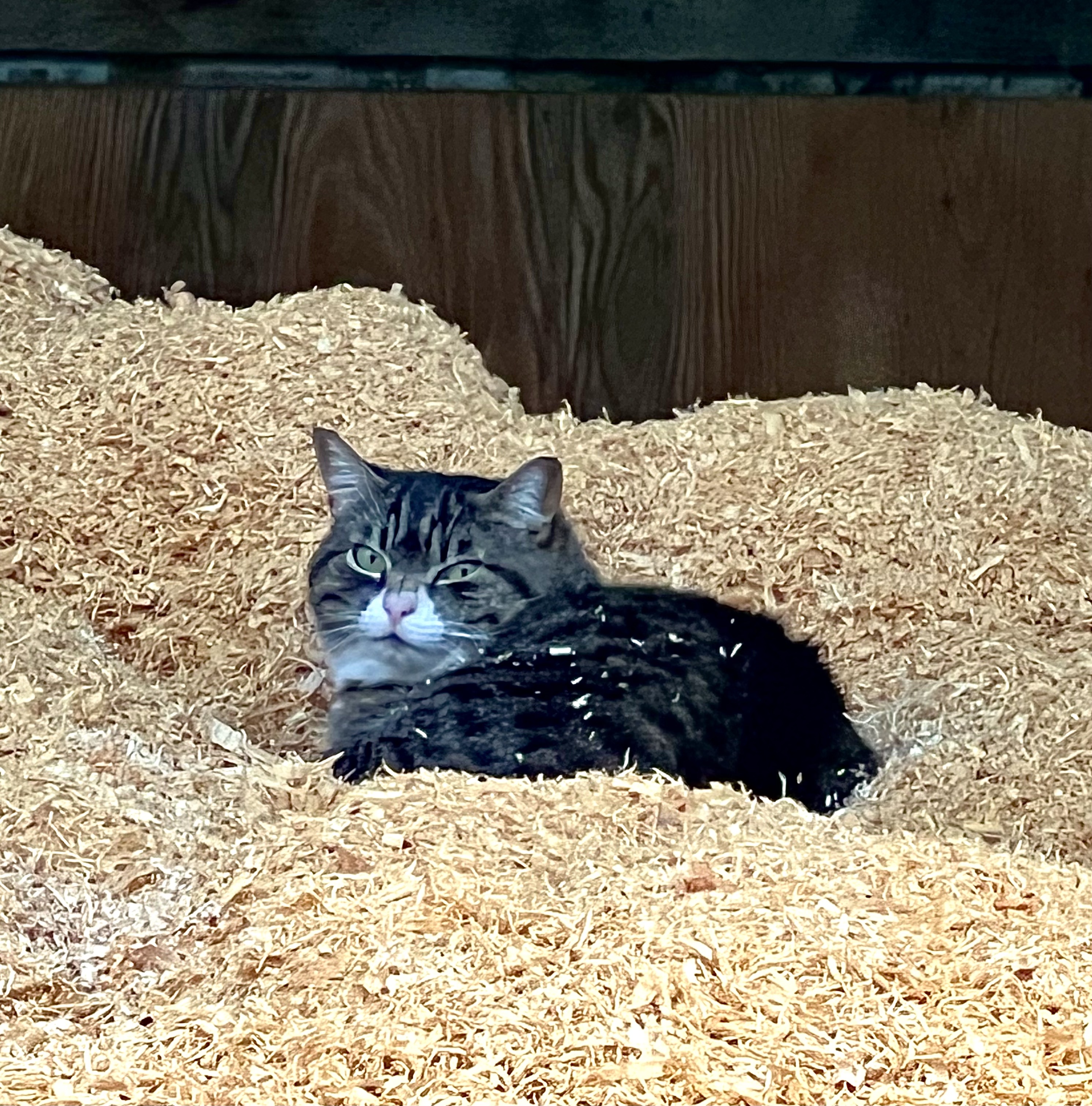
All day he’s shoveled green pine sawdust out of the trailer truck into the chute. From time to time he’s clambered down to even the pile. Now his hair is frosted with sawdust. Little rivers of sawdust pour out of his boots.
I hope in the afterlife there’s none of this stuff he says, while I broom off his jeans, his sweater flocked with granules, his immersed-in-sawdust socks. I hope there’s no bedding, no stalls, no barn
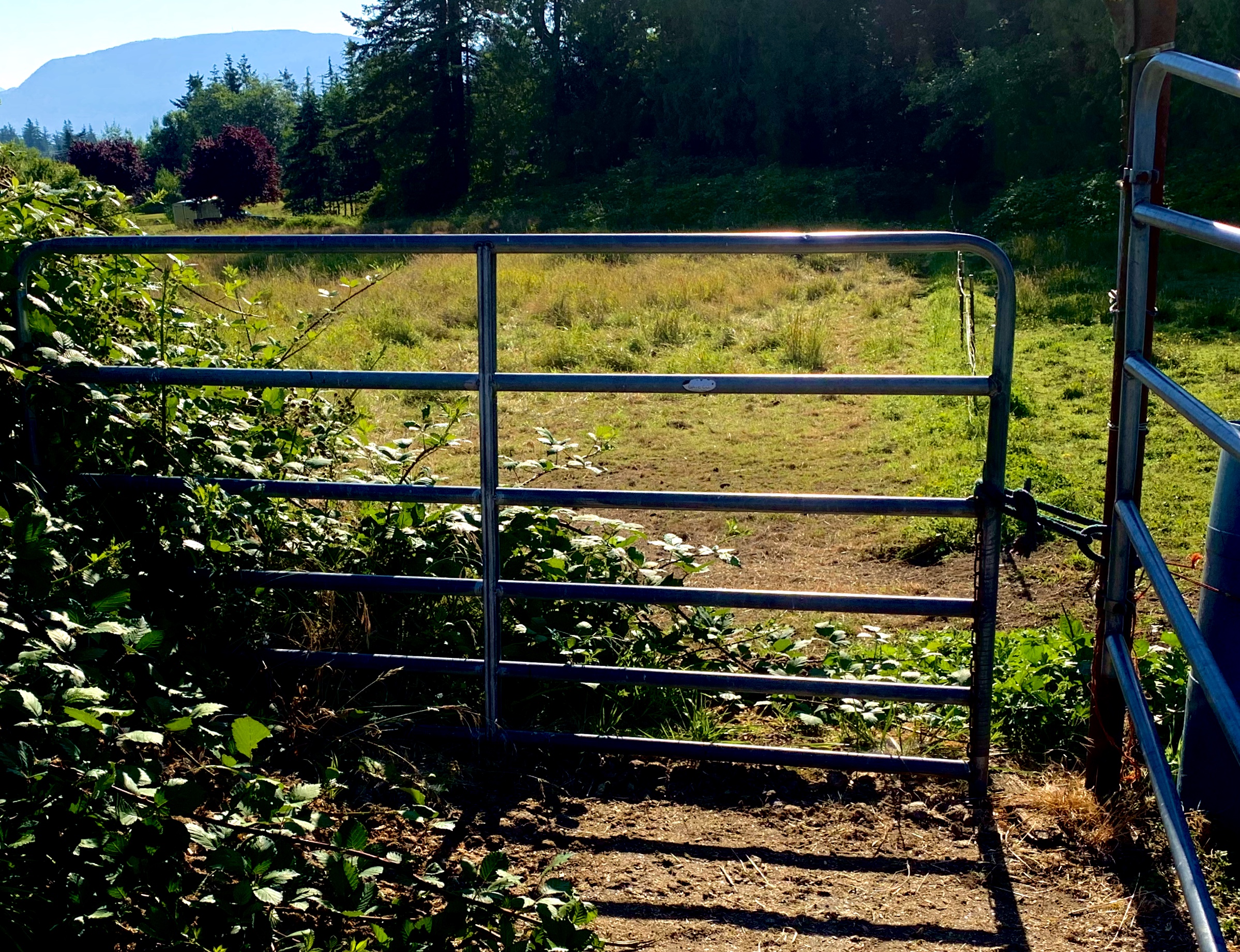
no more repairs to the paddock gate the horses burst through when snow avalanches off the roof. Although the old broodmare, our first foal, is his, horses, he’s fond of saying, make divorces.
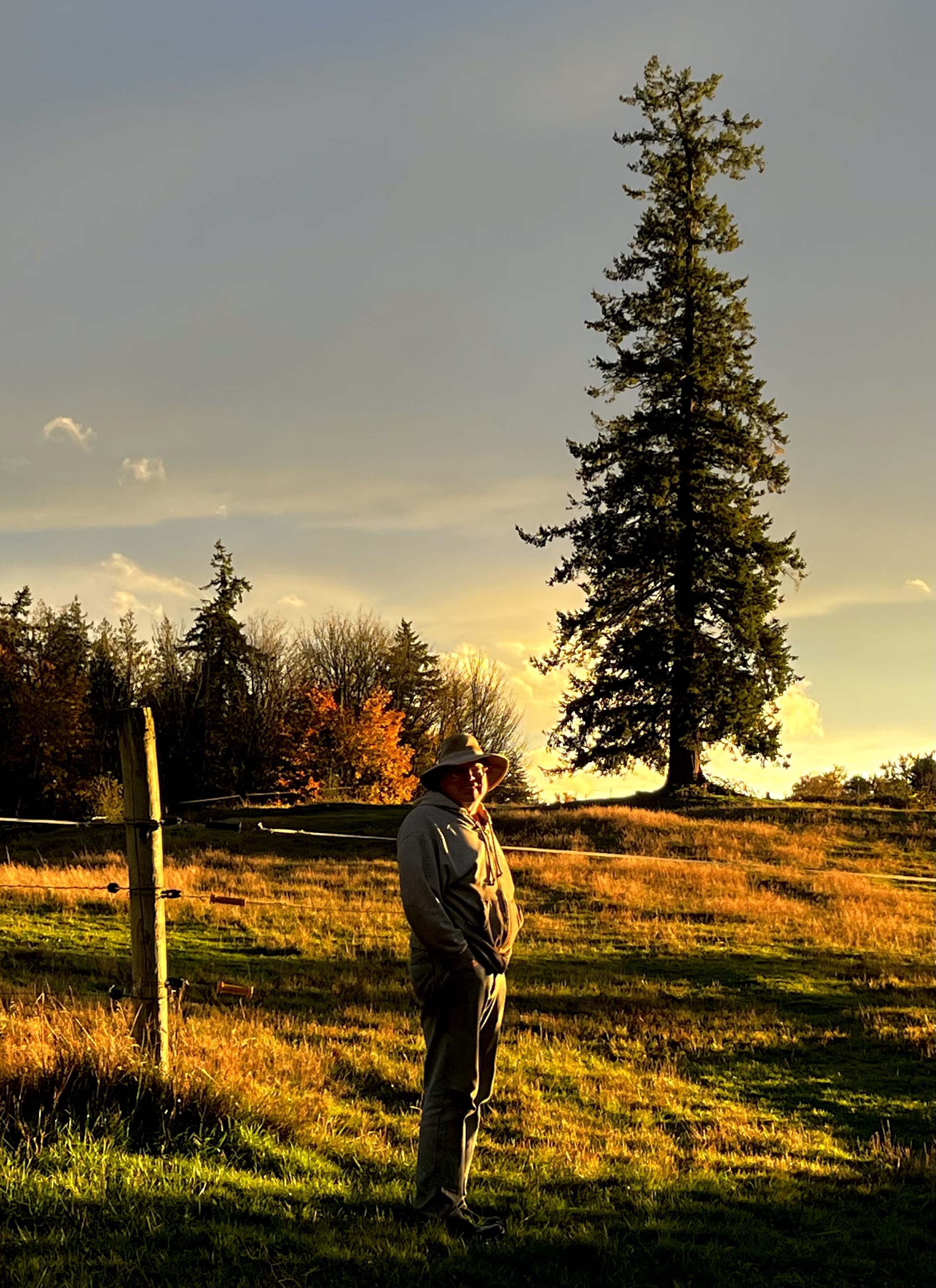
…he says let’s walk up to the field and catch the sunset and off we go, a couple of aging fools.
I hope, he says, on the other side there’s a lot less work, but just in case I’m bringing tools. ~Maxine Kumin from “Chores”
photo by Emily Vander Haak
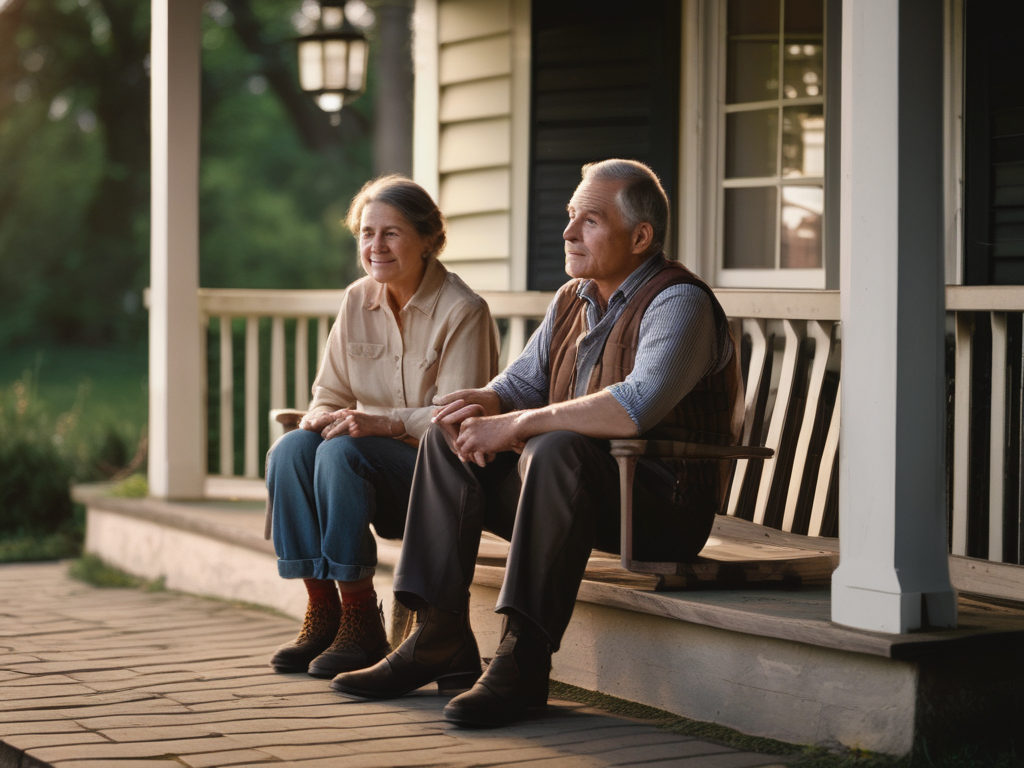
They sit together on the porch, the dark Almost fallen, the house behind them dark. Their supper done with, they have washed and dried The dishes–only two plates now, two glasses, Two knives, two forks, two spoons–small work for two. She sits with her hands folded in her lap, At rest. He smokes his pipe. They do not speak, And when they speak at last it is to say What each one knows the other knows. They have One mind between them, now, that finally For all its knowing will not exactly know Which one goes first through the dark doorway, bidding Goodnight, and which sits on a while alone. ~Wendell Berry “They Sit Together on the Porch”
If just for a moment, when this world is tilting so far we just might fall off, we pause to look at where we’ve been and get our feet back under us.
The porch is a good place to start: a bridge to what is beyond without leaving the familiar.
Outside, looking square at the unknown, yet still hearing and smelling and tasting the love that dwells just inside these walls.
What could we want more than to be missed when we step away?
Our voice, our words, our heart, our touch never to be replaced, its absence a hole impossible to fill?
When we are called back inside where Love made us who we are, may the “in between” of time spent on the porch, be even more treasured, because two aging fools sat together there a spell.
AI image created for this postAI image created for this post
One-Time
Monthly
Yearly
Make a one-time or recurring donation to support daily Barnstorming posts
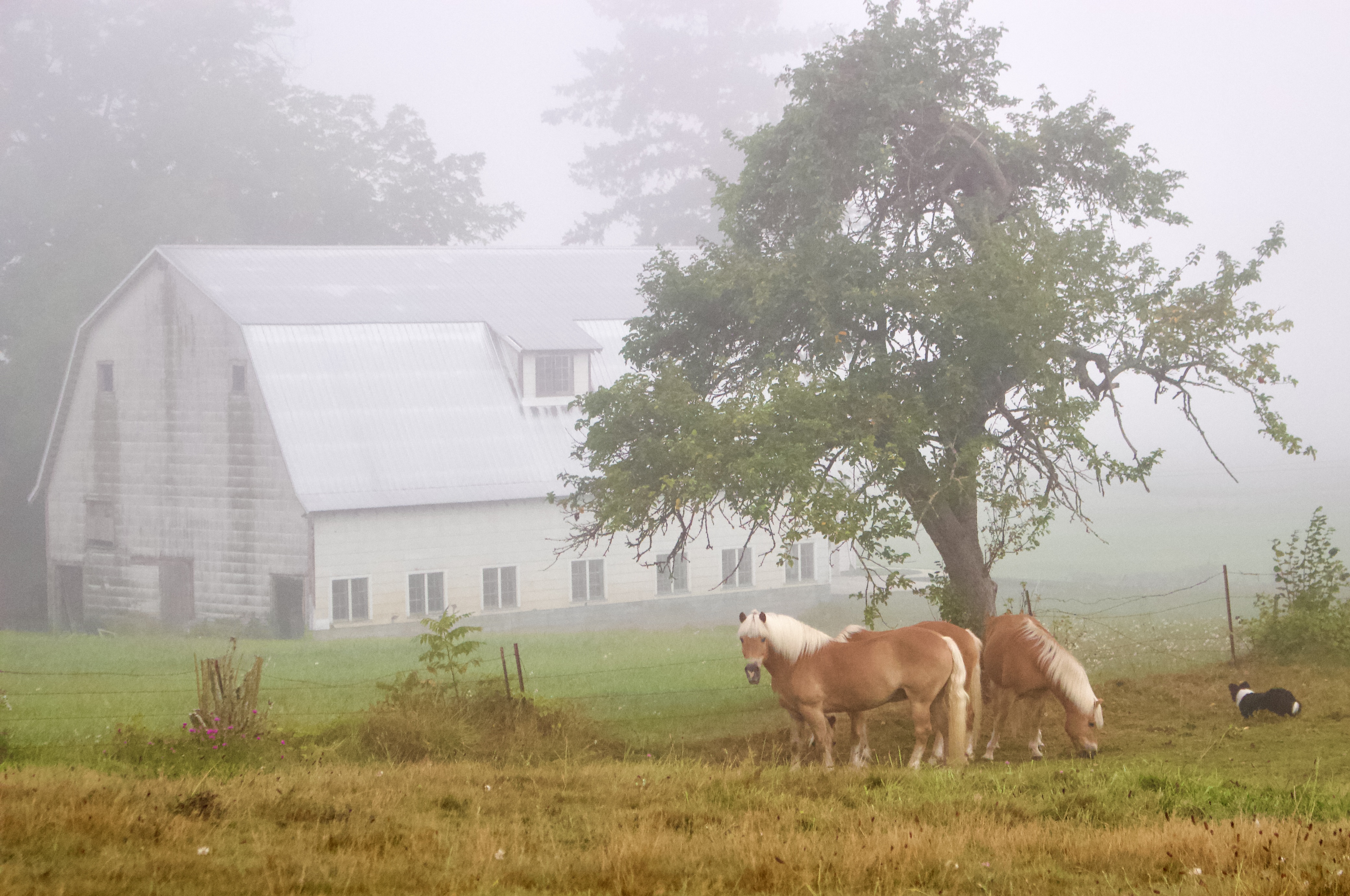
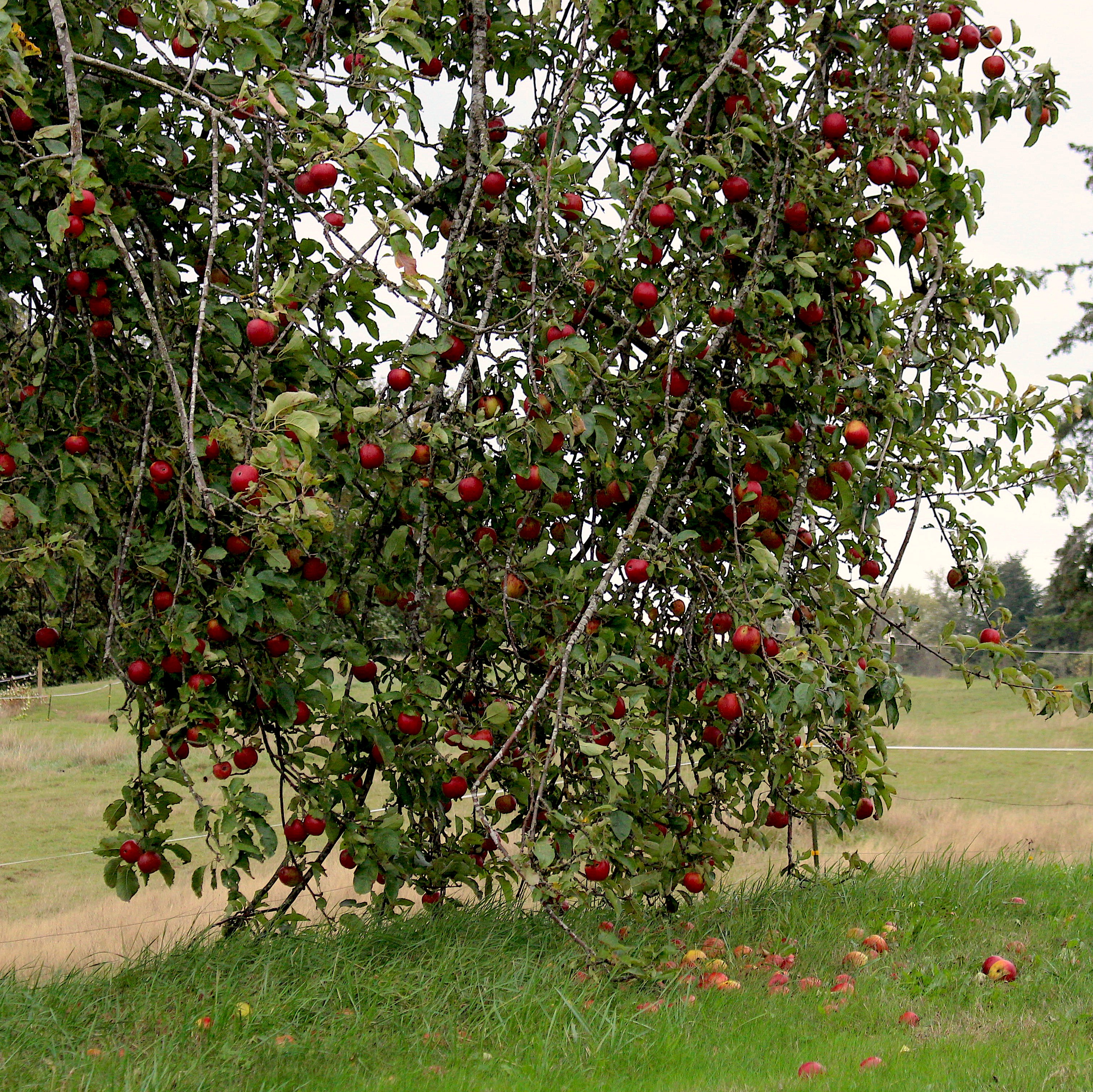
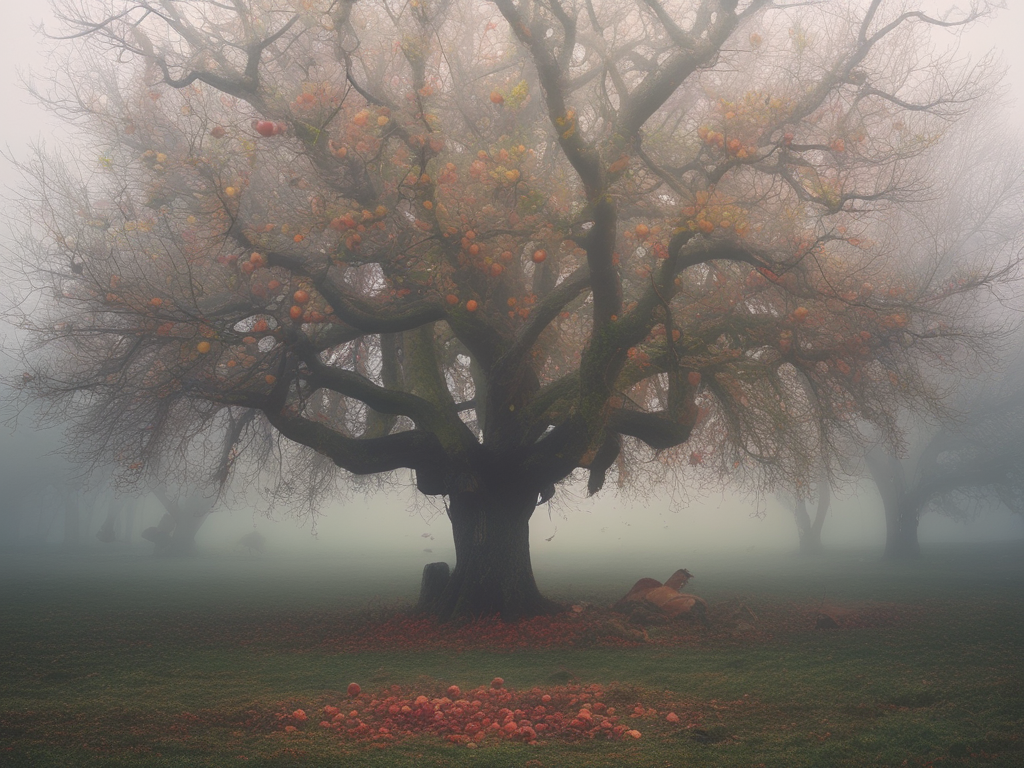
On the second day of fog, she goes to meet it sits on the broad root of a broken down apple tree, remembers being a child in such fog, searching for fairy houses. She hears movement in the grass, keeps very still while the veil of haze rises to treetops bronzed by the burn of the sun. Slowly horses and deer appear all around her, they graze close together, nosing fallen apples, until she forgets this is still a fallen world. ~Lonnie Hull DuPont, “On the Second Day of Fog” from She Calls the Moon by Its Name
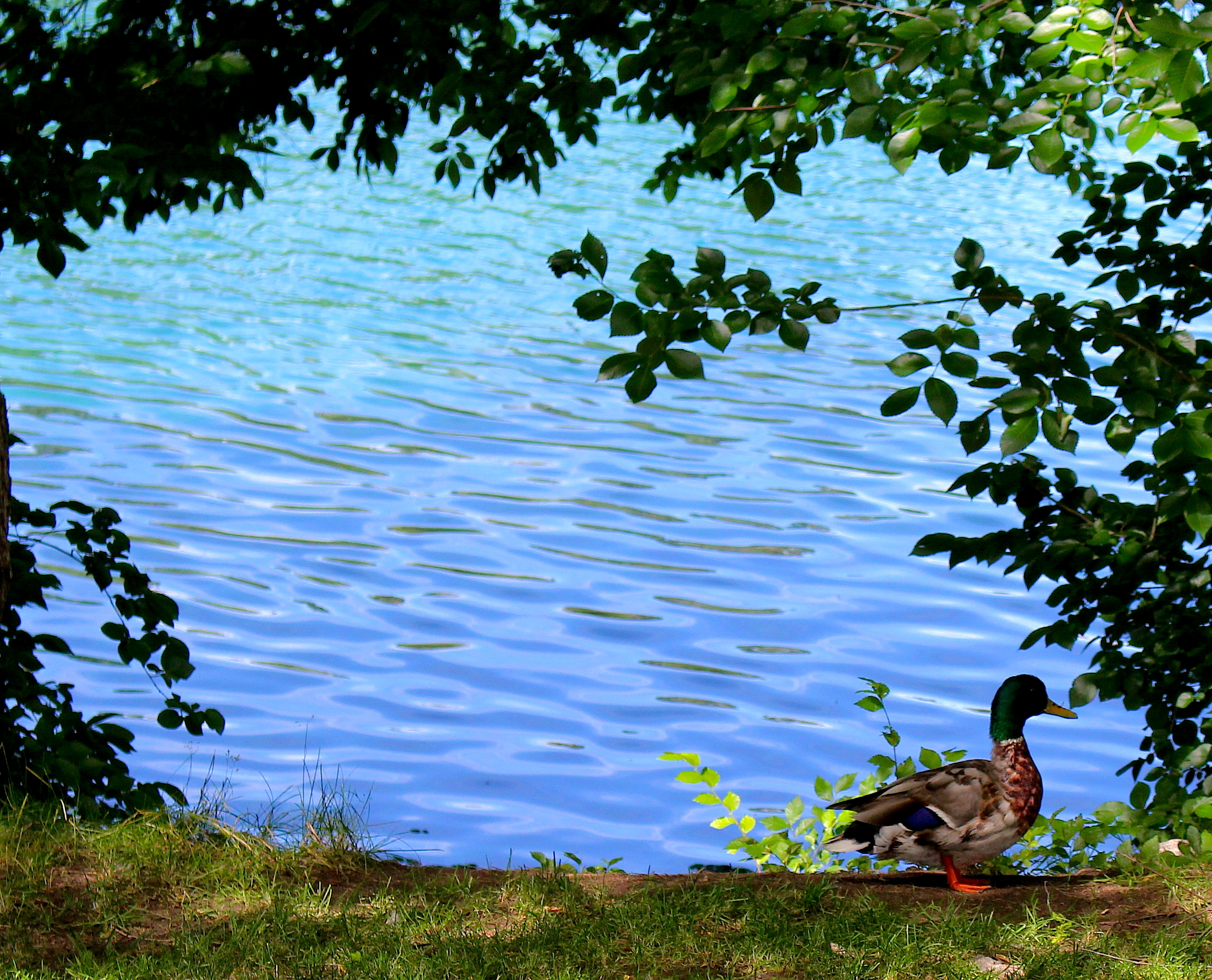
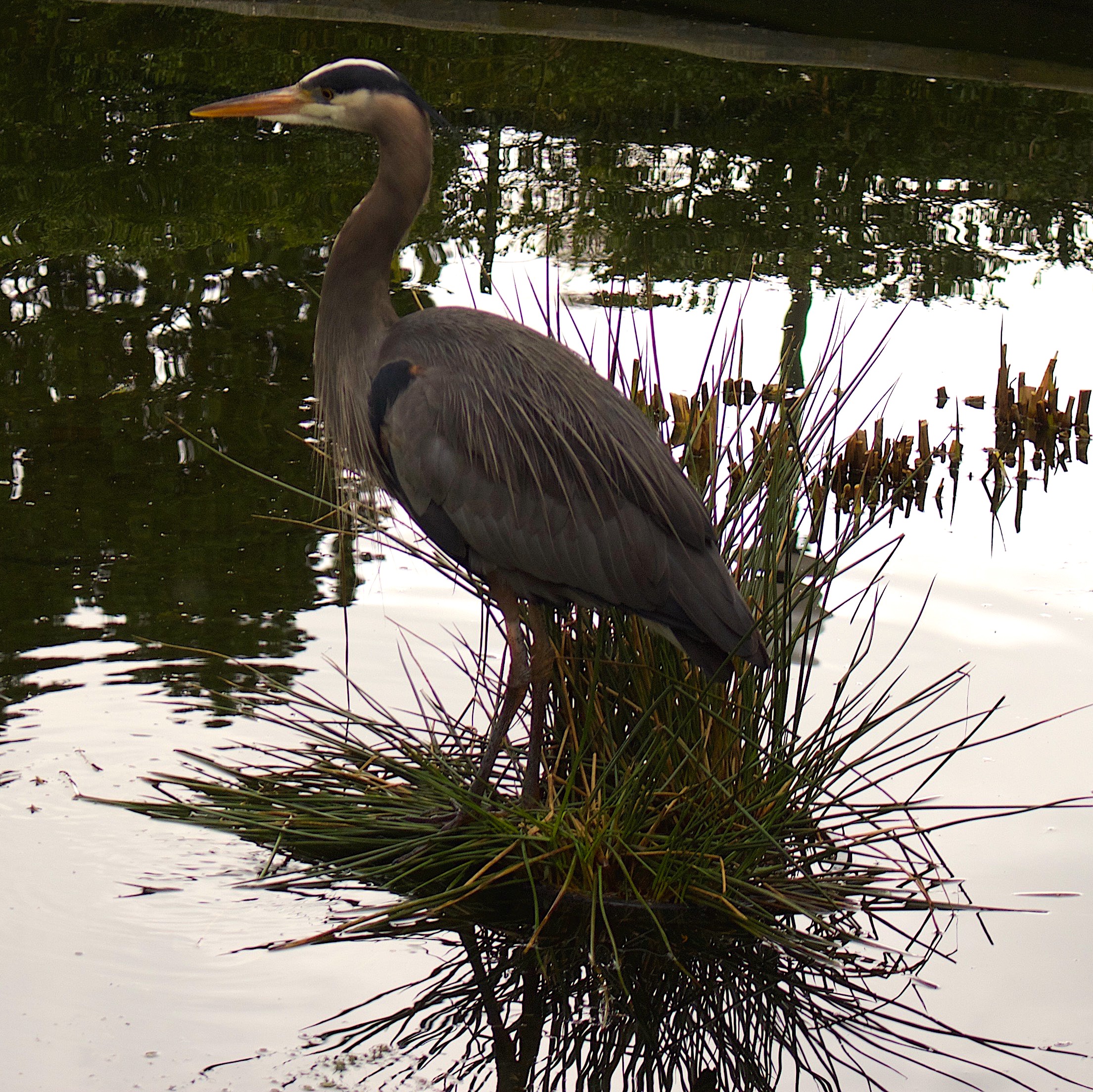
When despair for the world grows in me and I wake in the night at the least sound in fear of what my life and my children’s lives may be, I go and lie down where the wood drake rests in his beauty on the water, and the great heron feeds. I come into the peace of wild things who do not tax their lives with forethought of grief. I come into the presence of still water. And I feel above me the day-blind stars waiting with their light. For a time I rest in the grace of the world, and am free. ~Wendell Berry “The Peace of Wild Things“
When our grandchildren come to visit, I watch as yet another generation rediscovers the mystery of what we know about the joys and sorrows of this fallen but redeemed world.
I am reminded there is light beyond the fearsome darkness, there is peace amid the chaos, there is a smile behind the tears, there is stillness within the noisiness there is rest despite the restlessness, there is grace – ah, there is grace as inevitably the old gives way to the new.
One-Time
Monthly
Yearly
Make a one-time or recurring donation to support daily Barnstorming posts
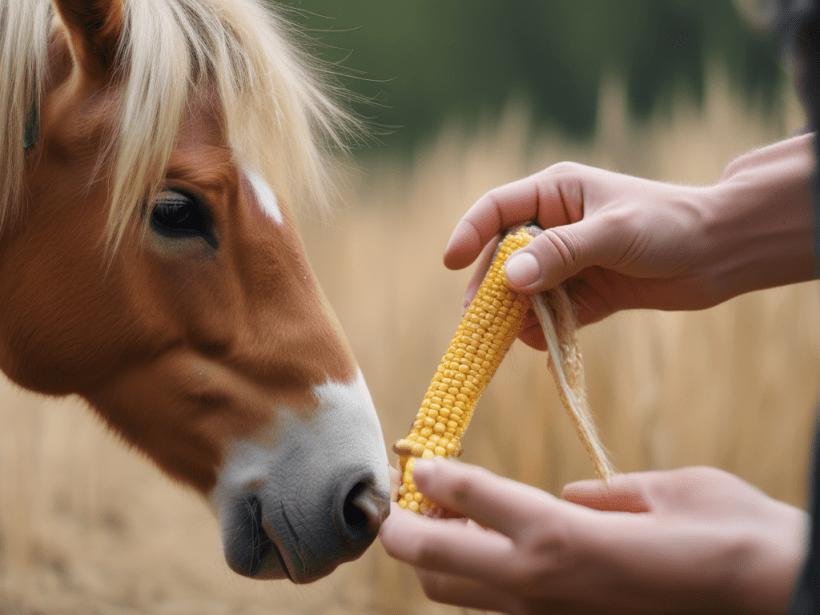
I stop the car along the pasture edge, gather up bags of corncobs from the back, and get out. Two whistles, one for each, and familiar sounds draw close in darkness— cadence of hoof on hardened bottomland, twinned blowing of air through nostrils curious, flared. They come deepened and muscular movements conjured out of sleep: each small noise and scent heavy with earth, simple beyond communion, beyond the stretched-out hand from which they calmly take corncobs, pulling away as I hold until the mid-points snap. They are careful of my fingers, offering that animal-knowledge, the respect which is due to strangers; and in the night, their mares’ eyes shine, reflecting stars, the entire, outer light of the world here. ~Jane Hirshfield “After Work” from Of Gravity and Angels
photo by Emily VanderHaak
Just off the highway to Rochester, Minnesota, Twilight bounds softly forth on the grass. And the eyes of those two Indian ponies Darken with kindness. They have come gladly out of the willows To welcome my friend and me. We step over the barbed wire into the pasture Where they have been grazing all day, alone. They ripple tensely, they can hardly contain their happiness That we have come. They bow shyly as wet swans. They love each other. There is no loneliness like theirs. At home once more, They begin munching the young tufts of spring in the darkness. I would like to hold the slenderer one in my arms, For she has walked over to me And nuzzled my left hand. She is black and white, Her mane falls wild on her forehead, And the light breeze moves me to caress her long ear That is delicate as the skin over a girl’s wrist. Suddenly I realize That if I stepped out of my body I would break Into blossom. ~James Wright, “A Blessing” from Above the River: The Complete Poems
Horses have been a daily part of my life for over fifty years, though while I attended school and worked in the city, I was forced to limit myself to goldfish.
Eventually living on a farm in the country was my goal, rather than a seeking out a prestigious career in the city. Raising horses (and cattle and goats and chickens and geese and ducks and dogs and cats…) was always my hope and dream.
And dreams sometimes come true.
As I get older, I realize how much easier goldfish are in comparison. Horses are so much bigger and stronger than I am; I’m far more aware of where I am and where they are so I don’t have an unscheduled landing.
As they get older (in their second and third decades of life), the horses have plenty of opinions, deeply trusting they belong here on this farm. They know the routine, the lay of the land, they know each other and they know me.
As the person who does their daily feeding and watering and brushing and bed cleaning, I expect them to be respectful and polite and they expect the same of me. Sometimes we mutually bump into senior citizen stubbornness.
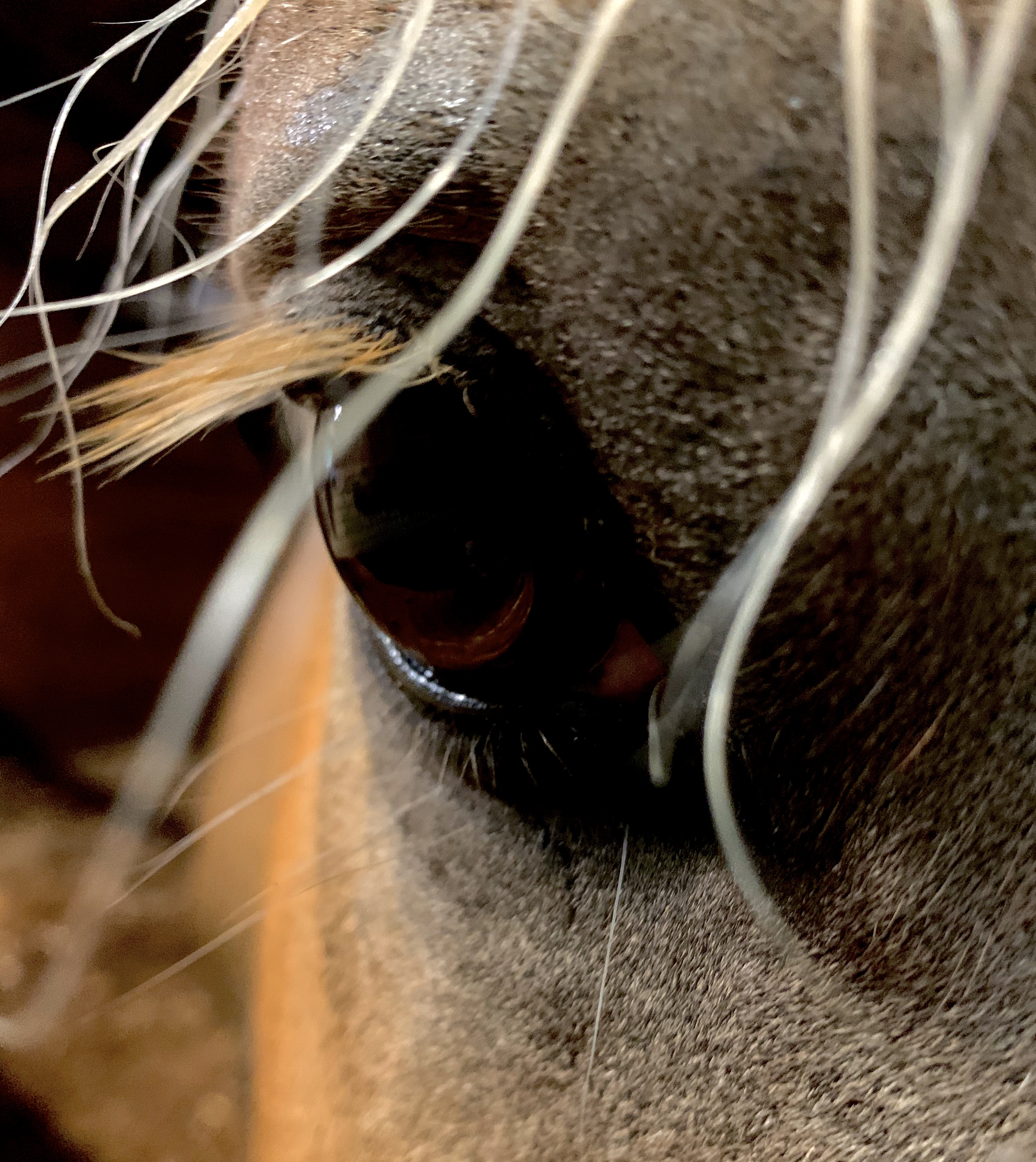
Even so, for as long as we all shall live, I find it a pure blessing to look into their shining eyes.
AI image created for this post
One-Time
Monthly
Yearly
Make a one-time or recurring donation to support daily Barnstorming posts
Because I have come to the fence at night, the horses arrive also from their ancient stable. They let me stroke their long faces, and I note in the light of the now-merging moon
how they, a Morgan and a Quarter, have been by shake-guttered raindrops spotted around their rumps and thus made Appaloosas, the ancestral horses of this place.
Maybe because it is night, they are nervous, or maybe because they too sense what they have become, they seem to be waiting for me to say something
to whatever ancient spirits might still abide here, that they might awaken from this strange dream, in which there are fences and stables and a man who doesn’t know a single word they understand. ~Robert Wrigley “After a Rainstorm”from Beautiful Country
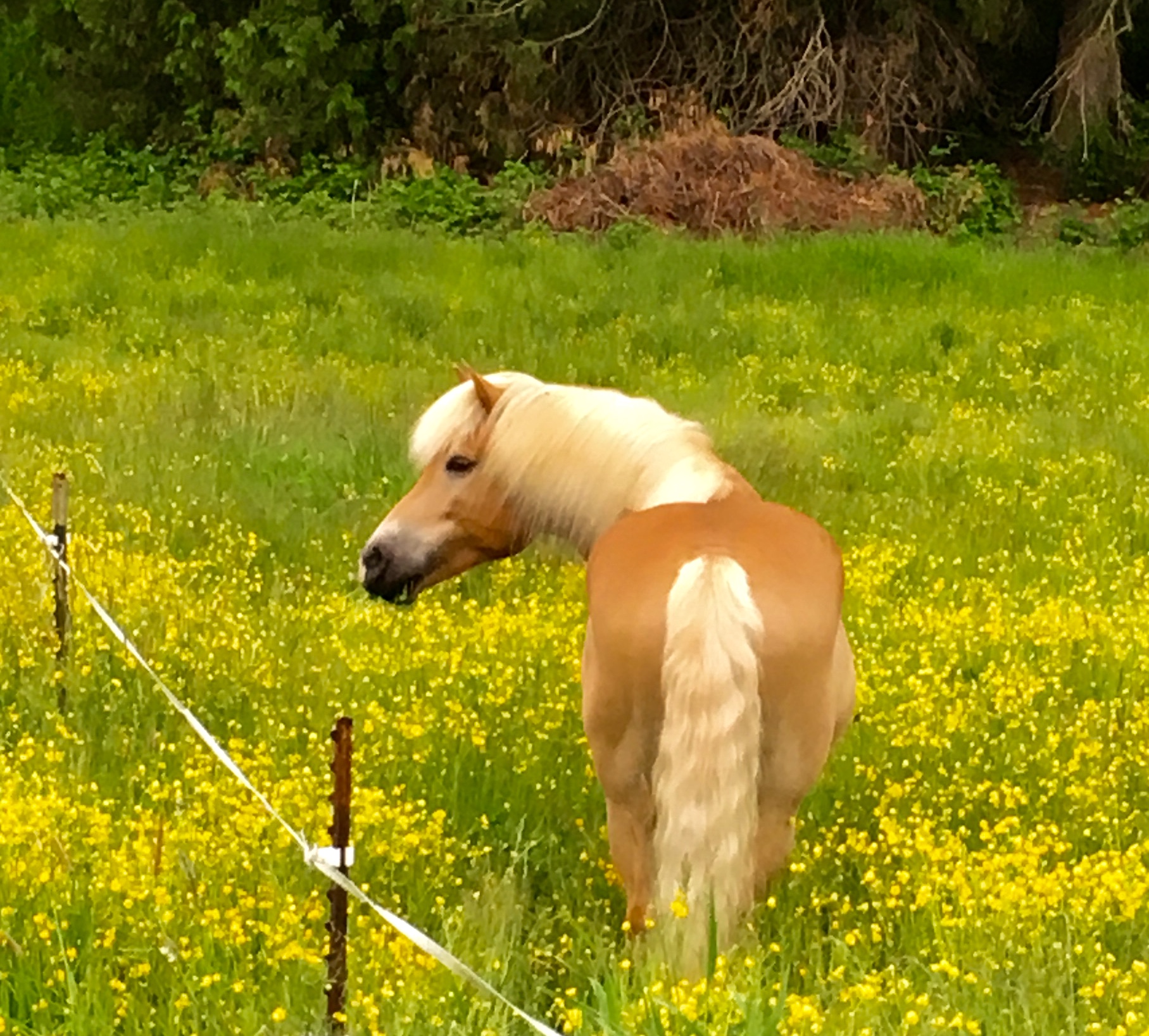
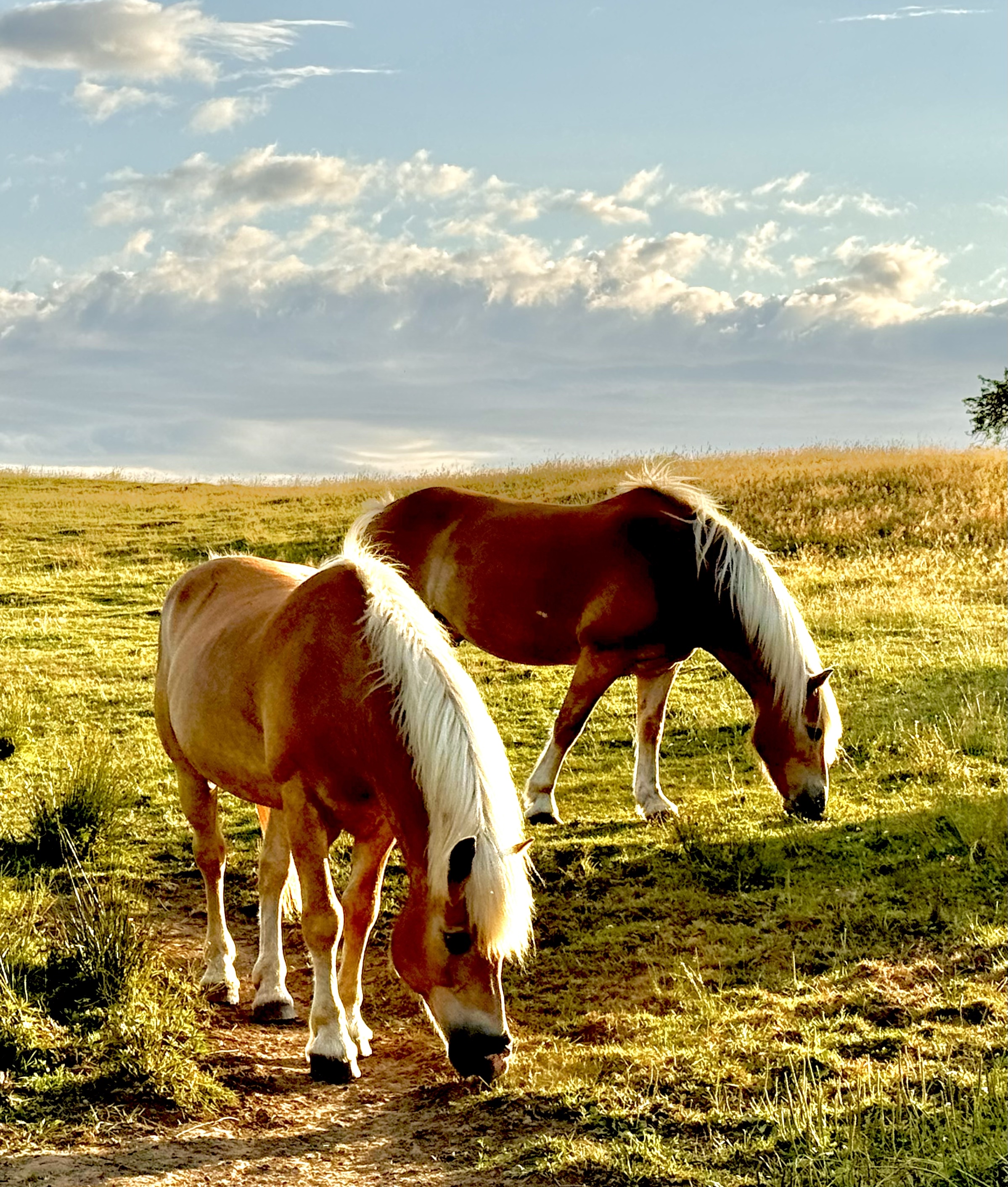
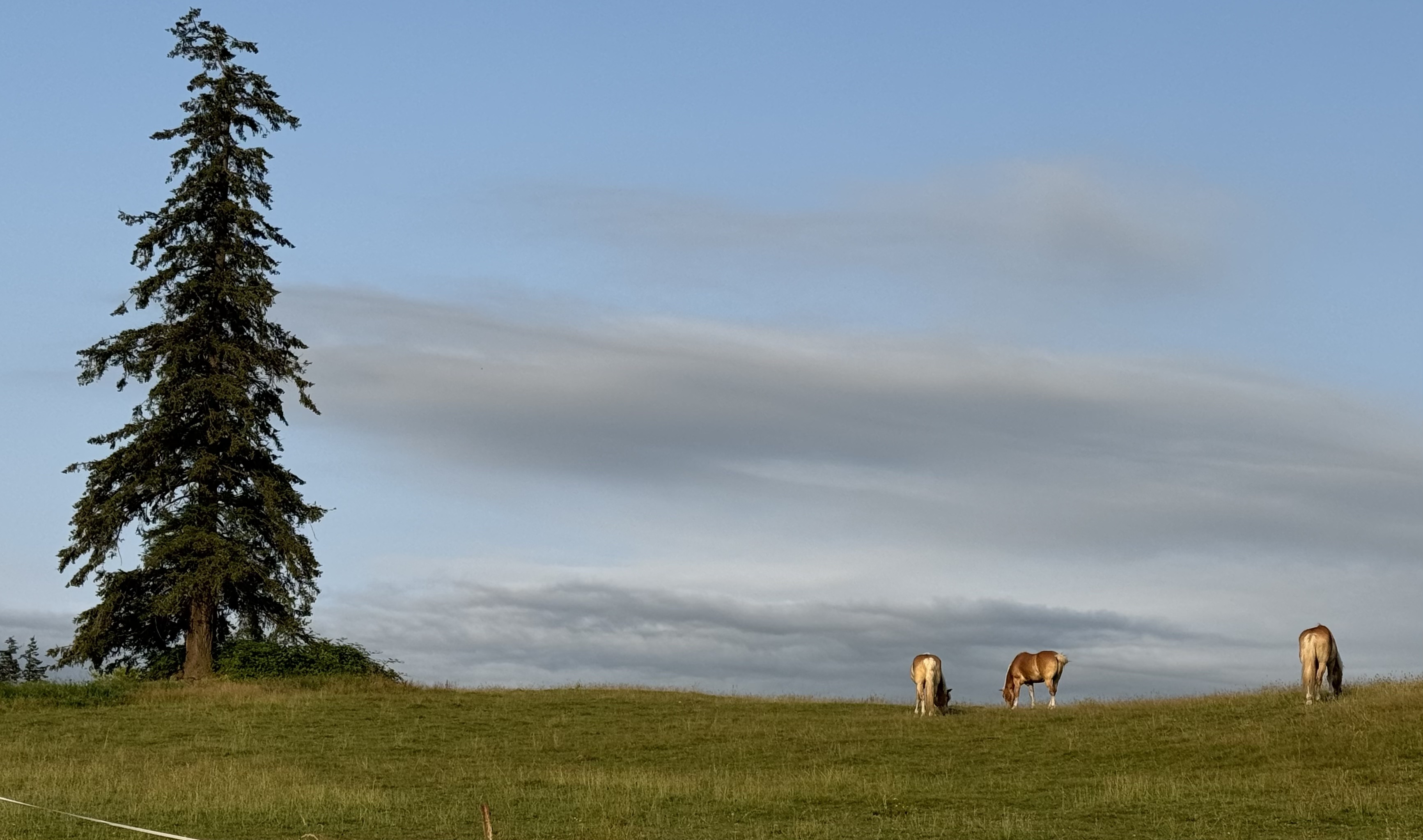
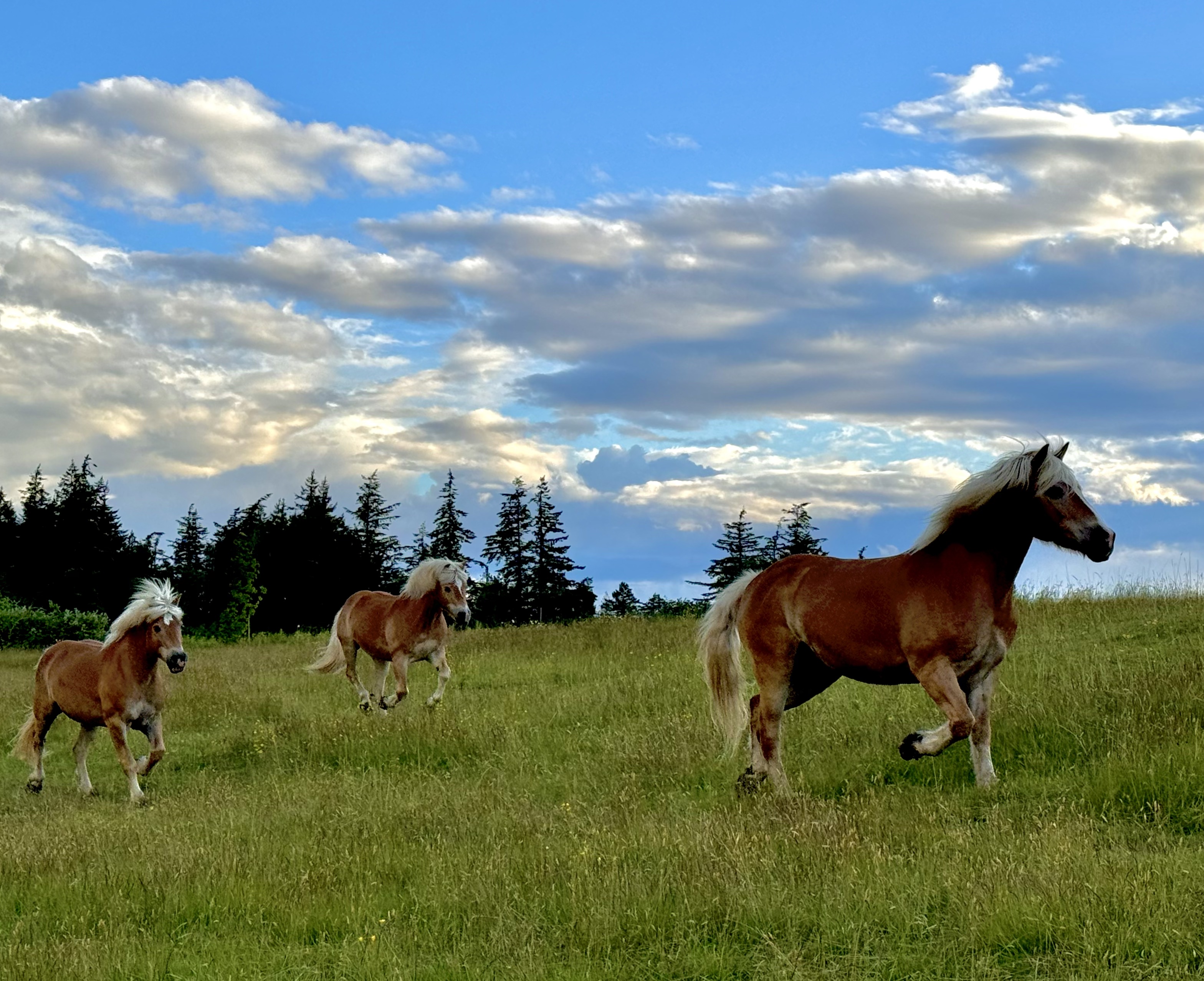
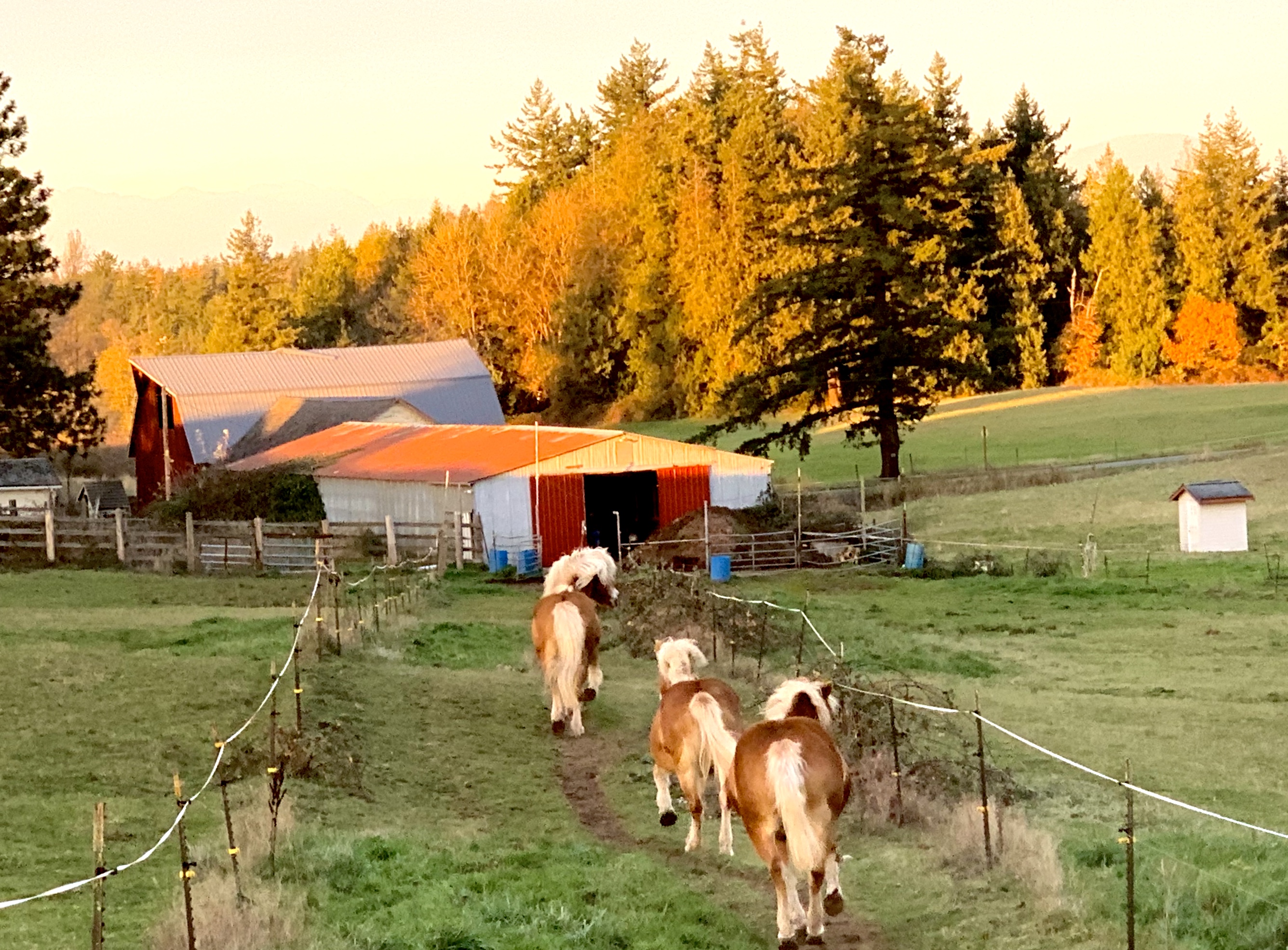
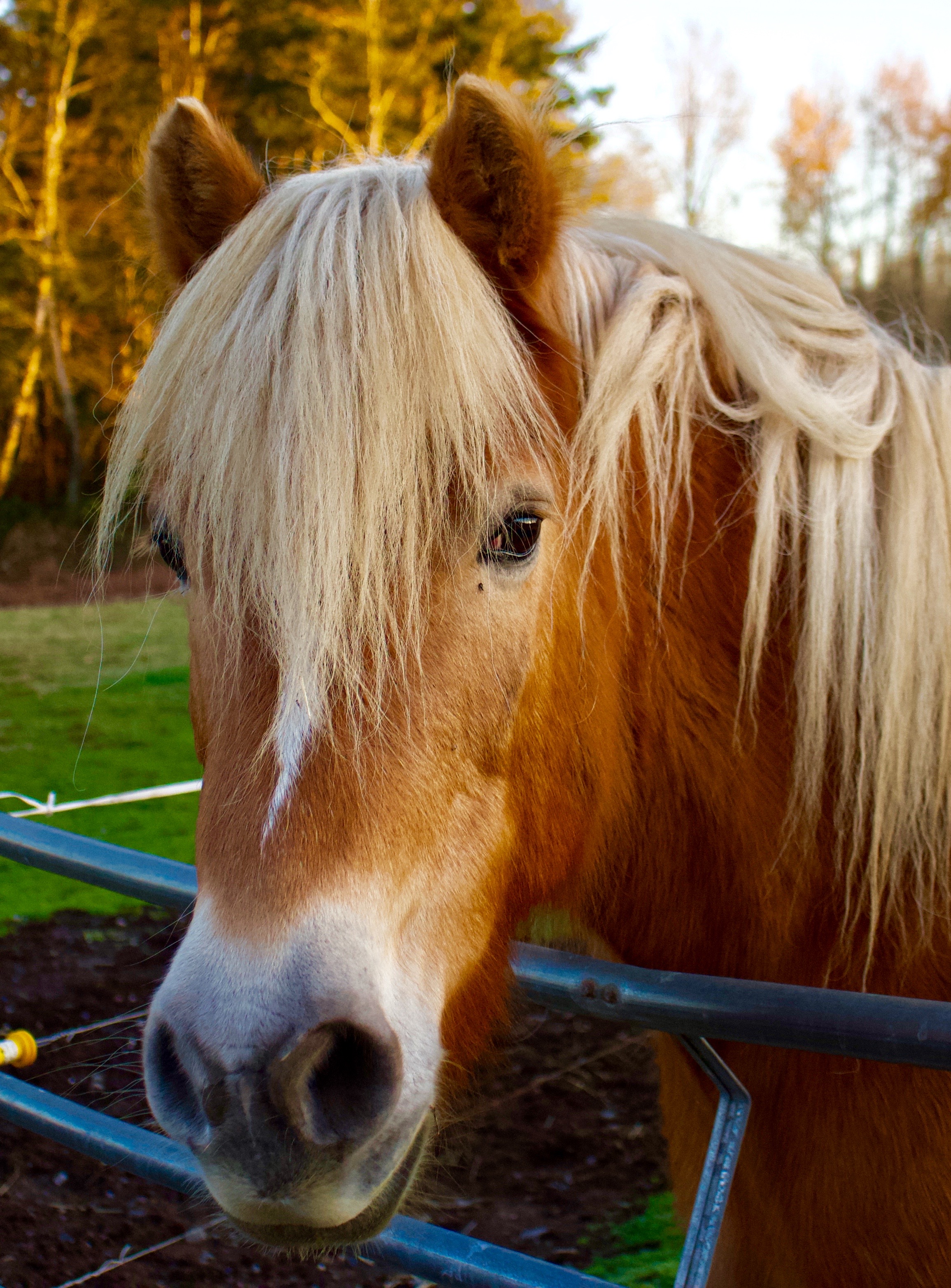
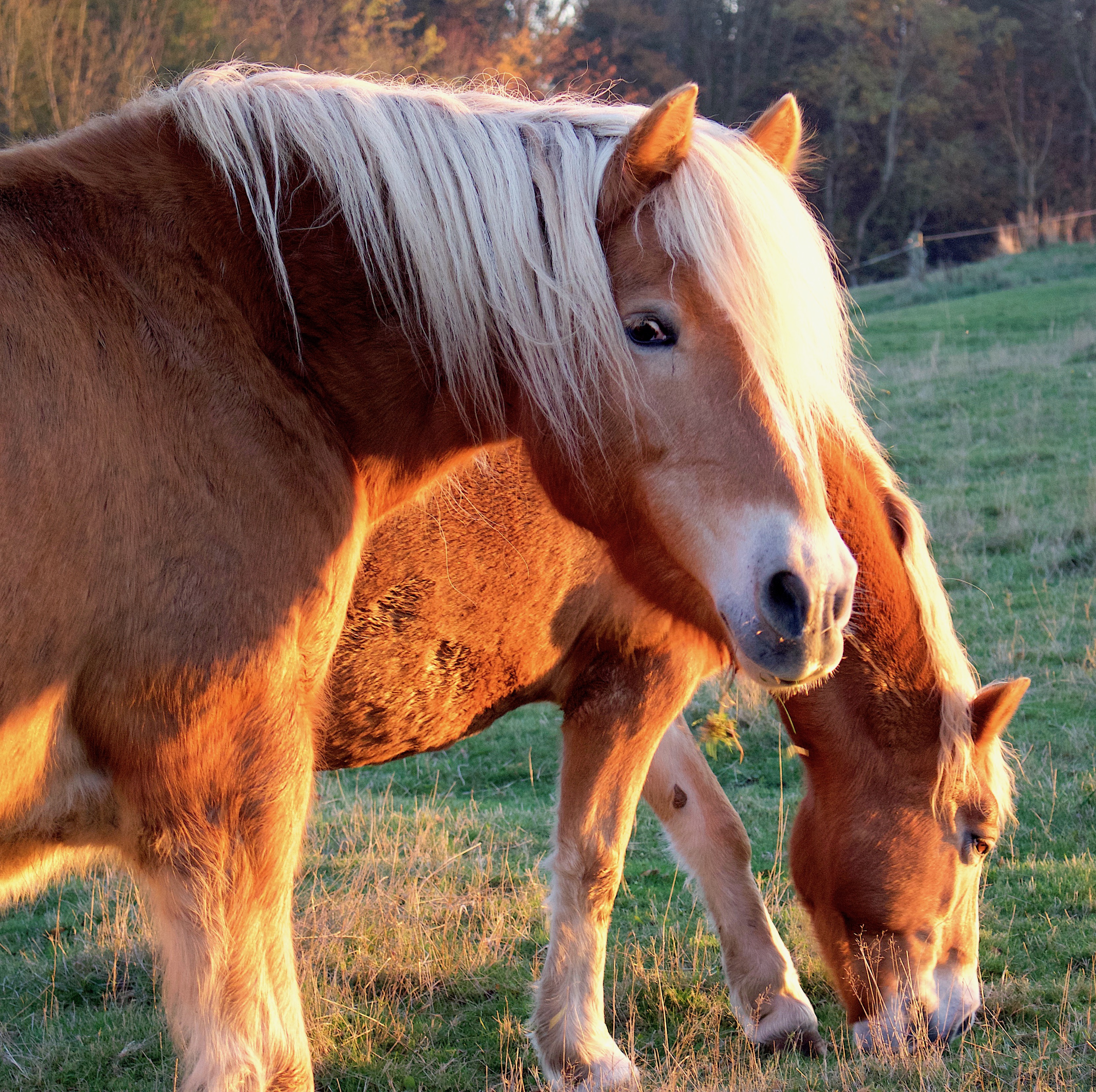
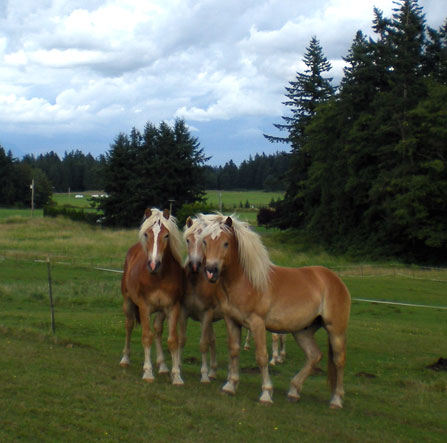
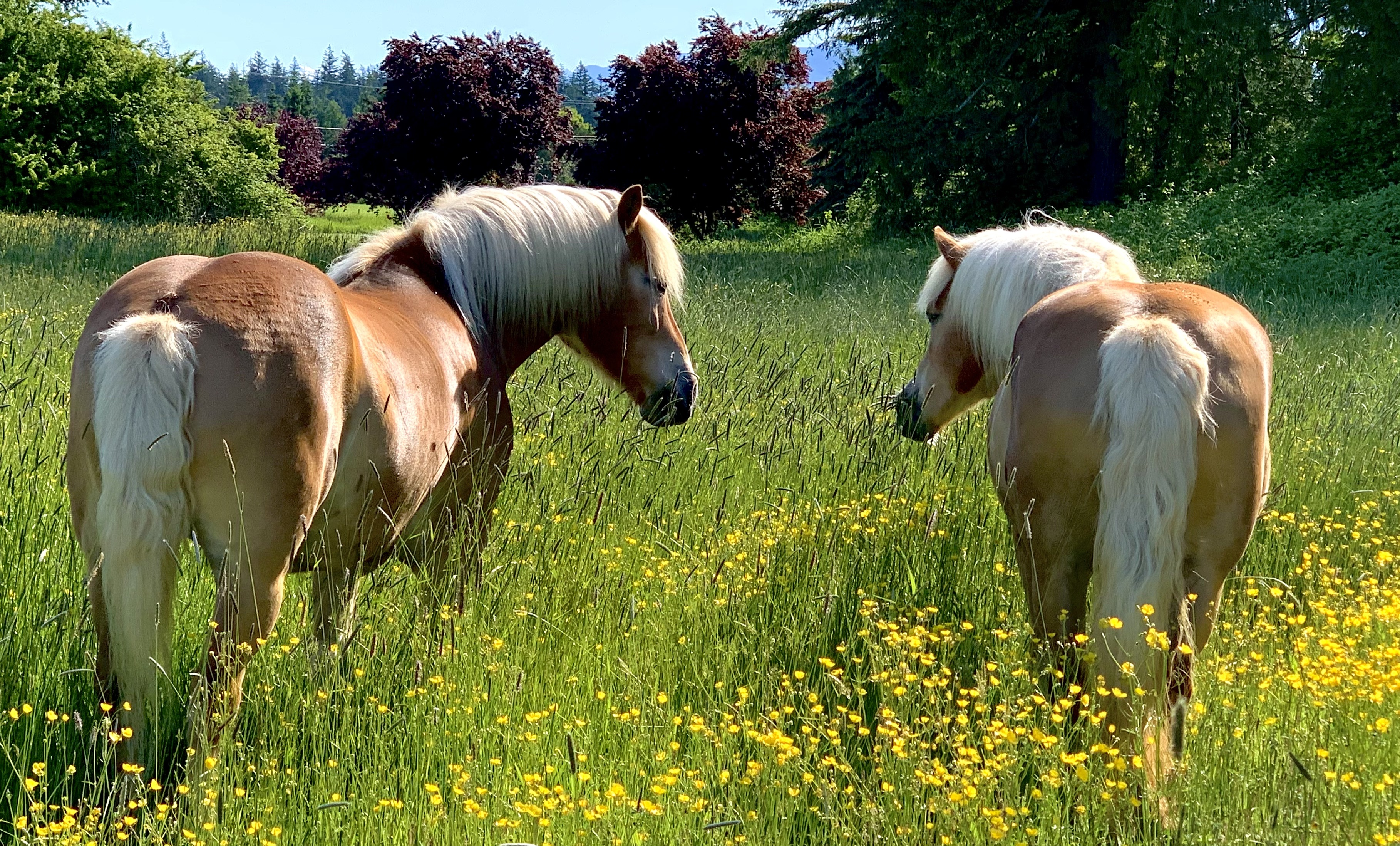
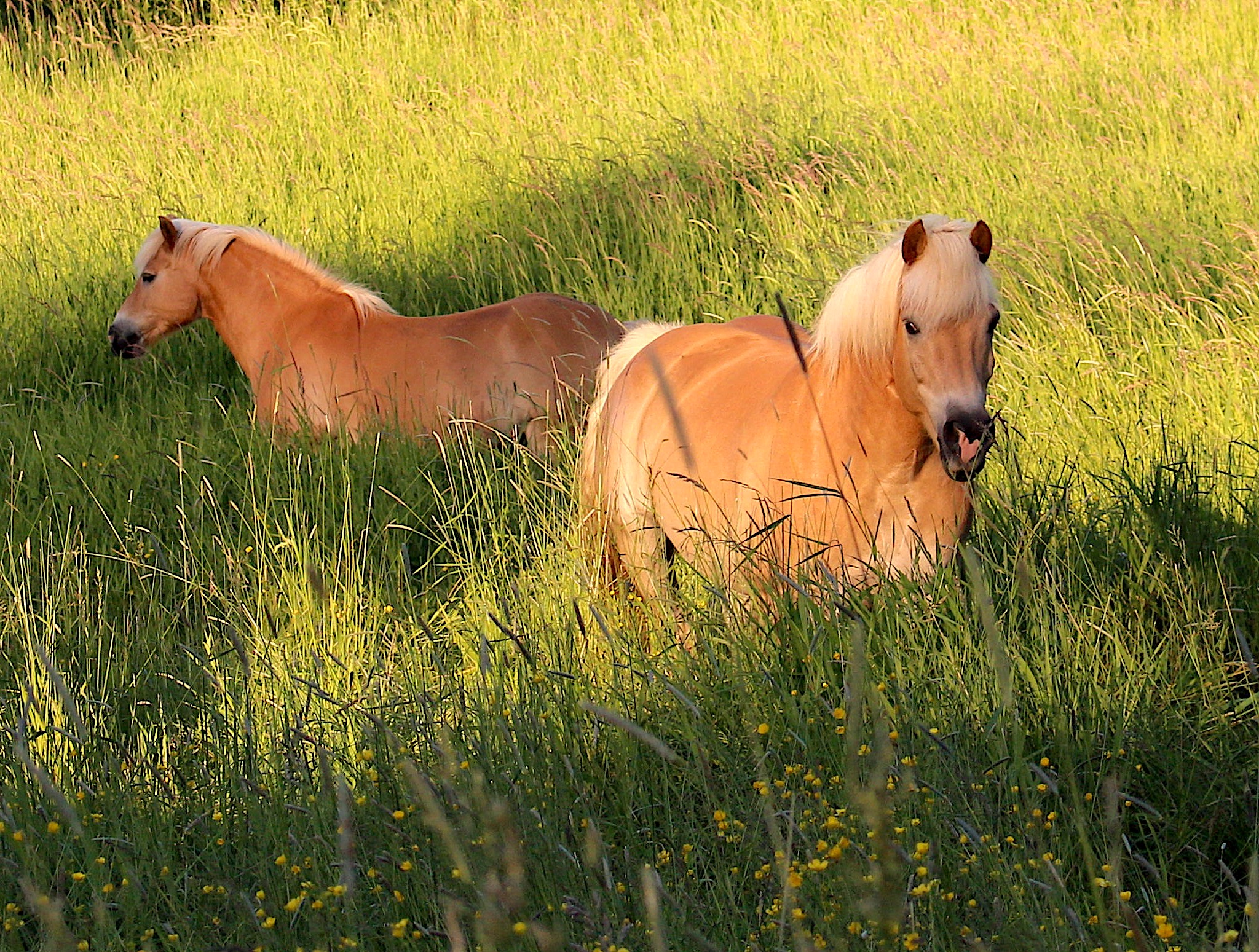
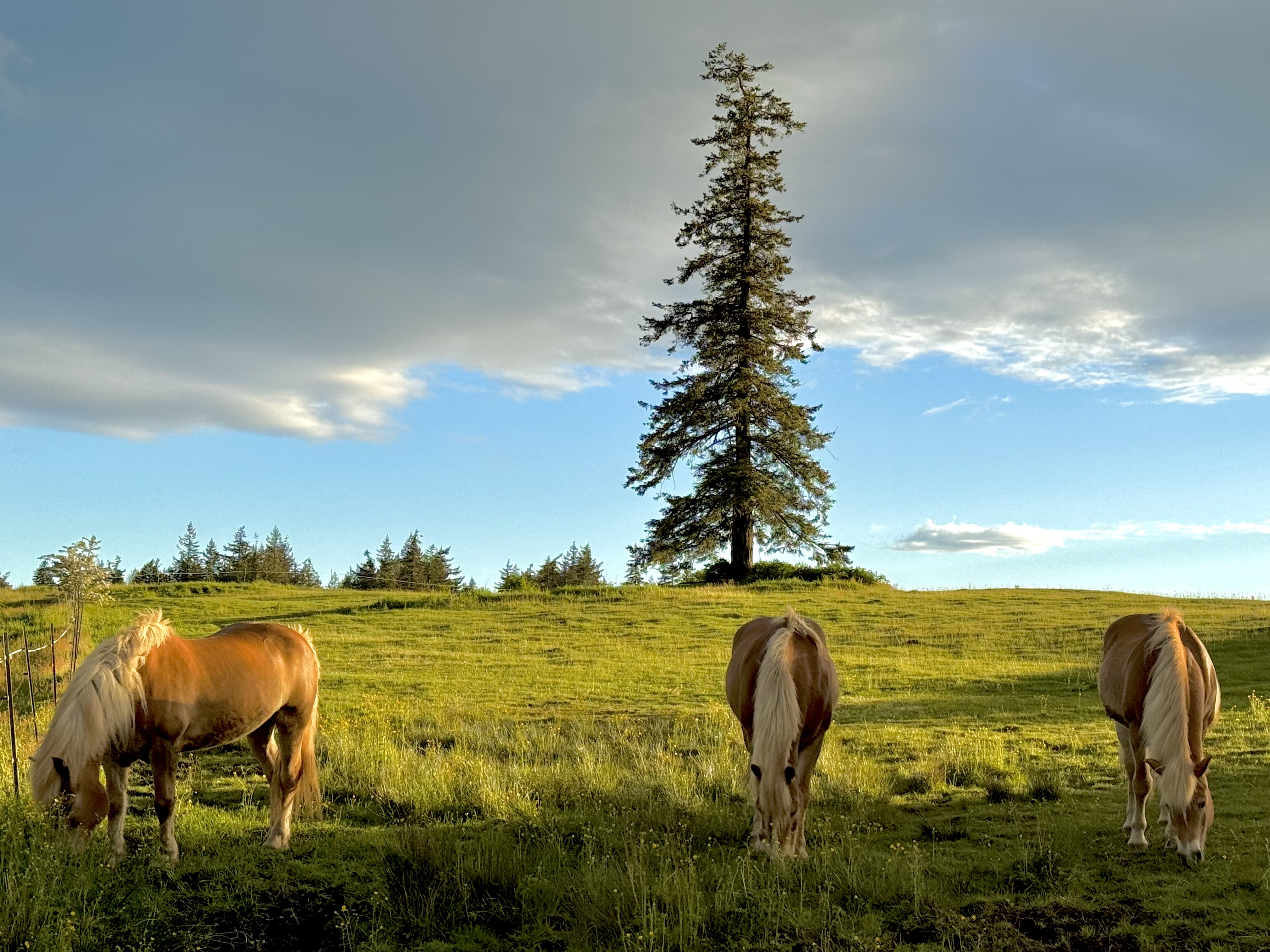
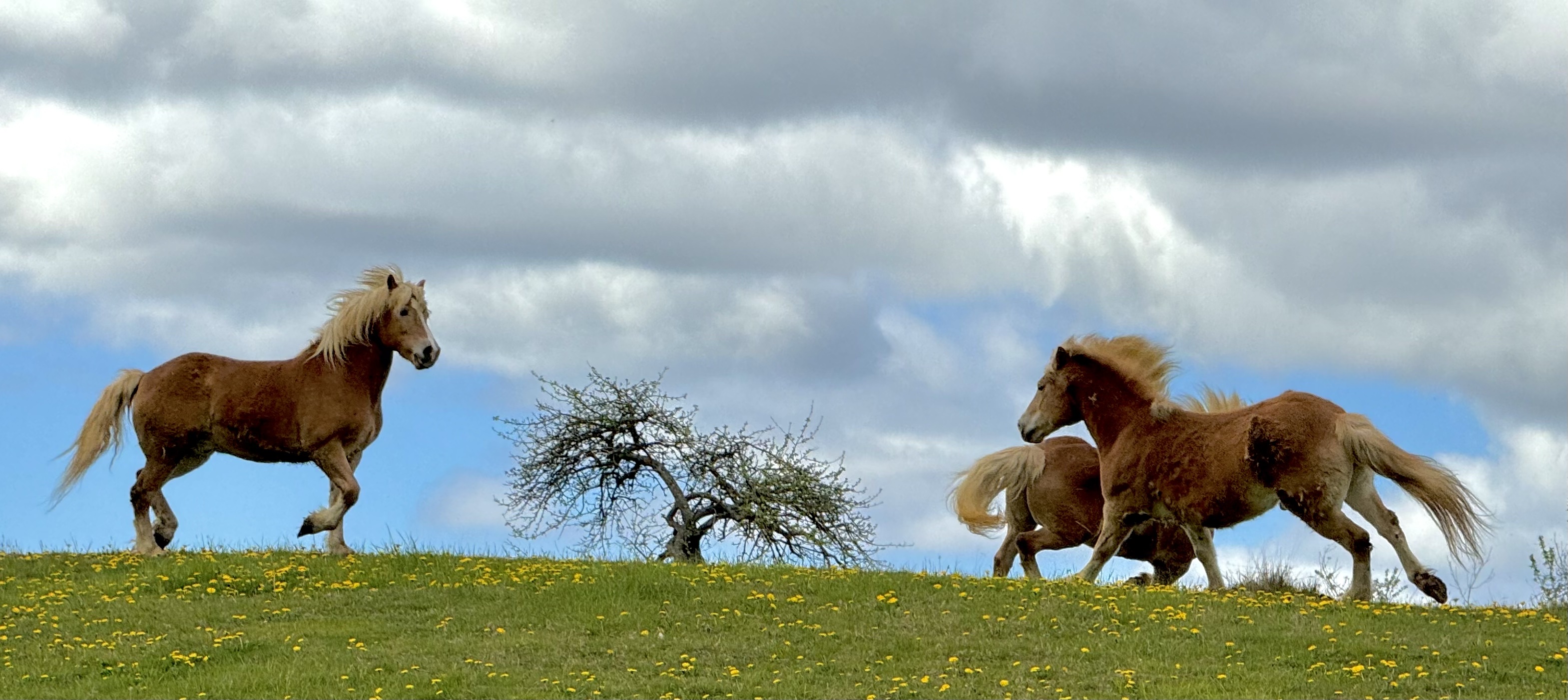
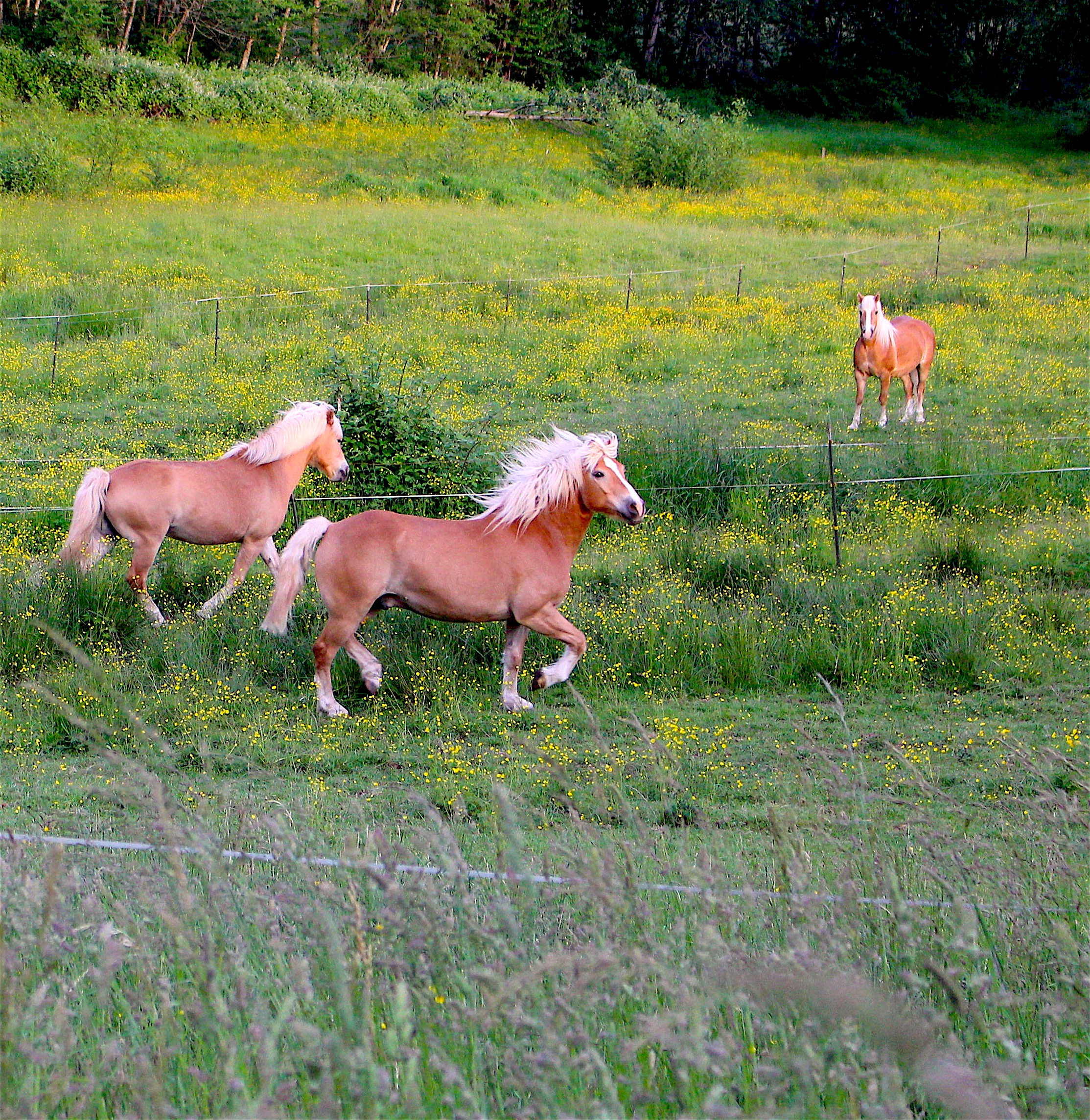
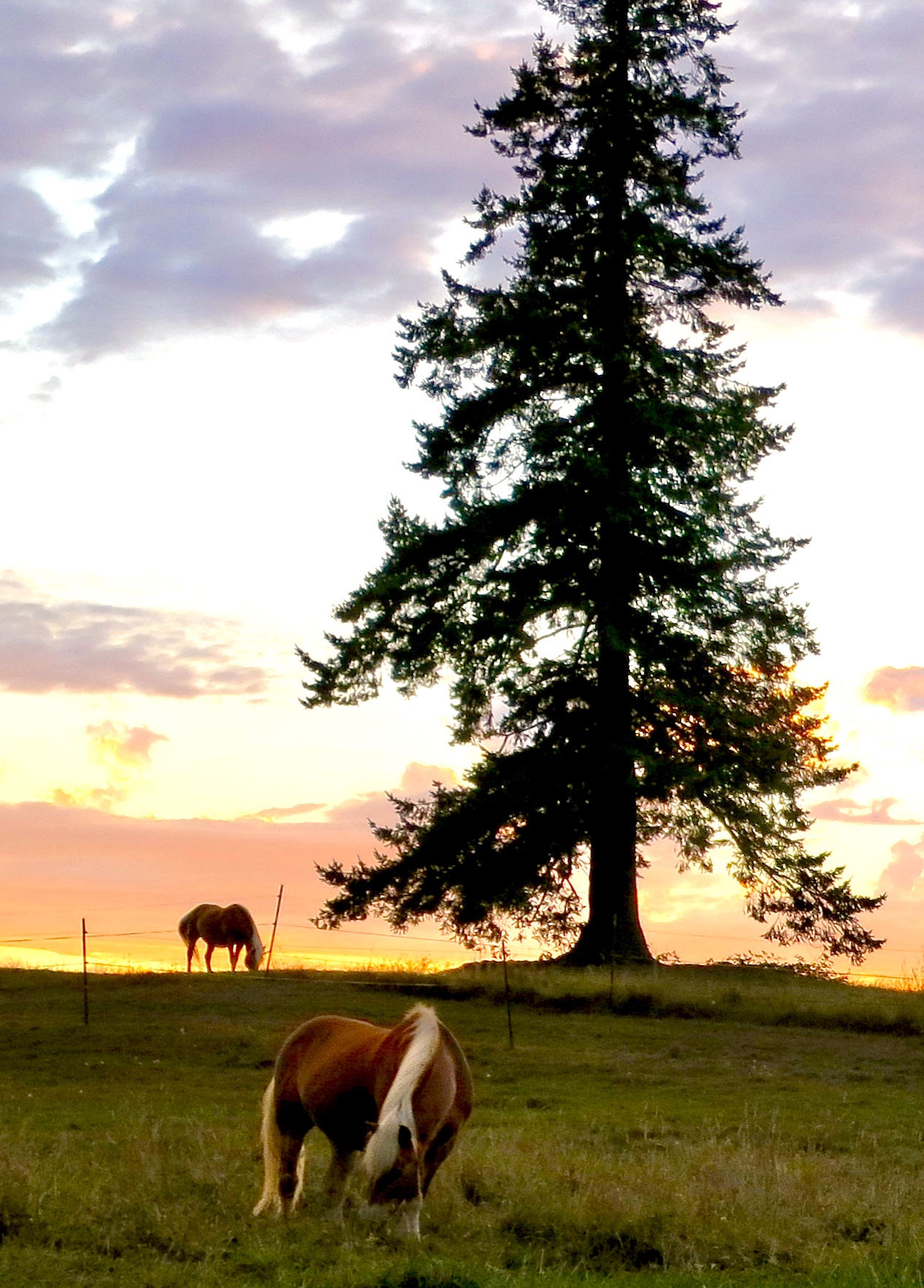
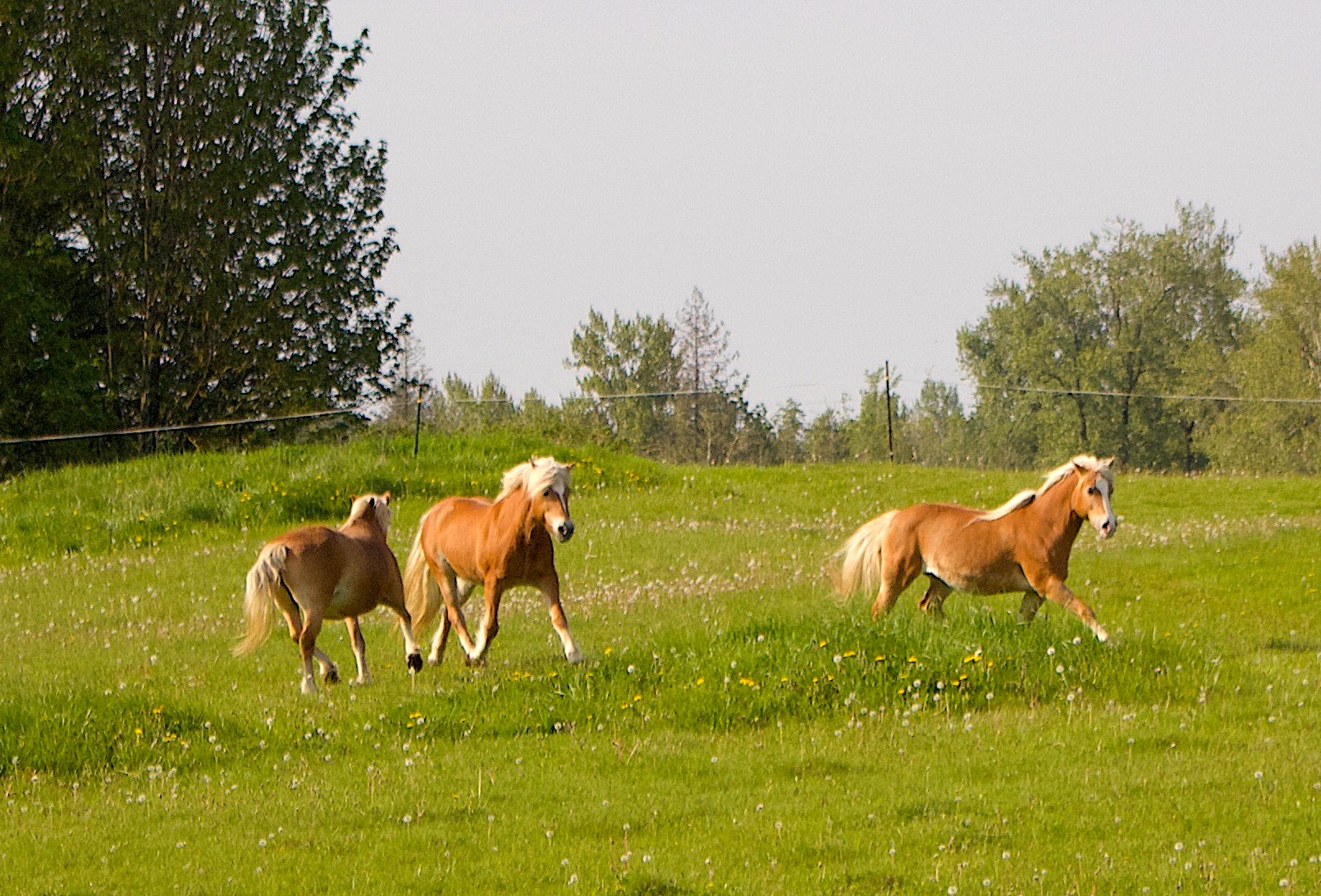
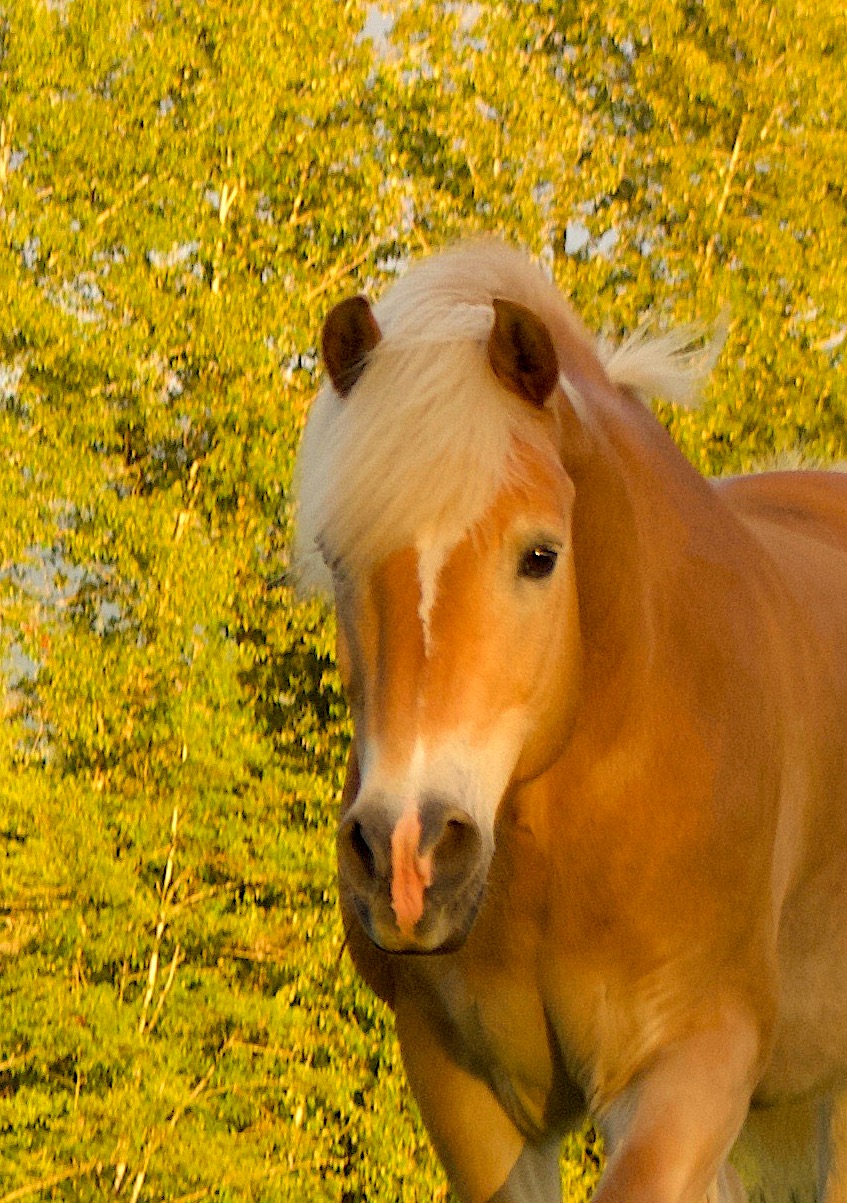
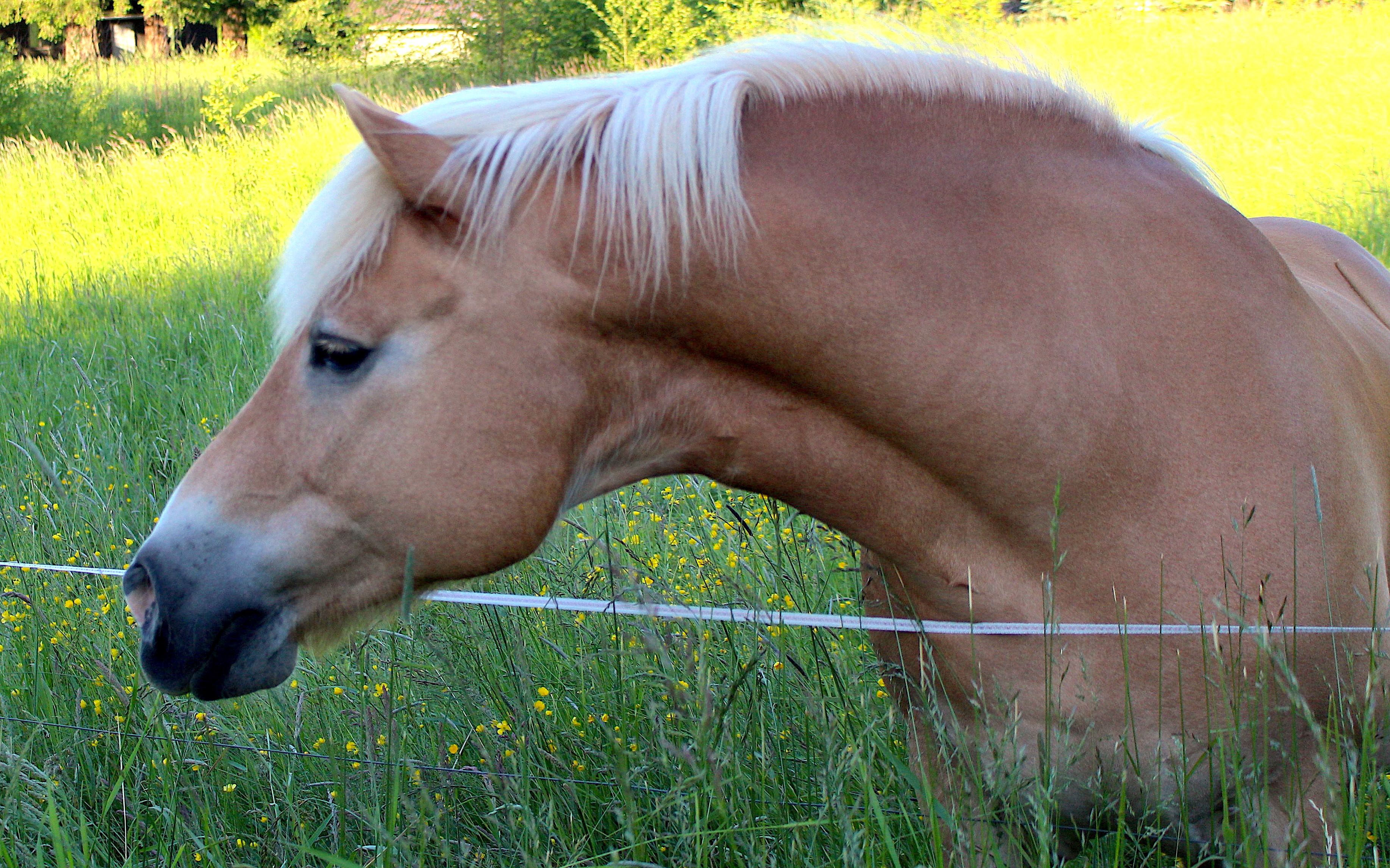
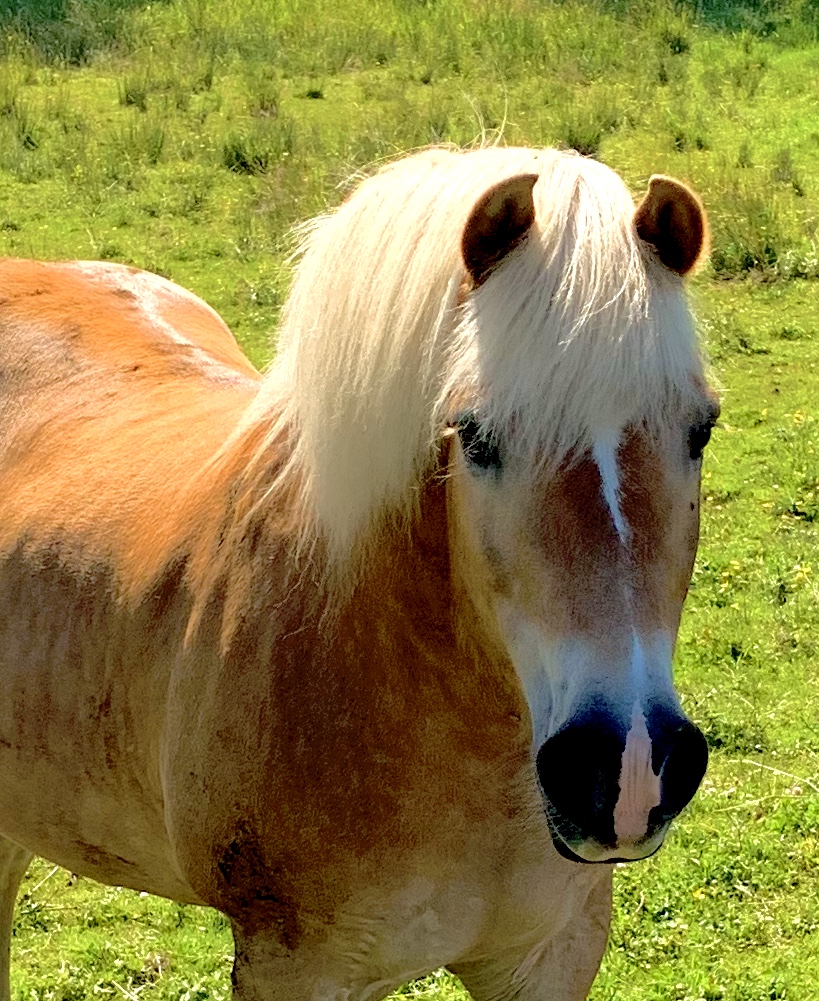
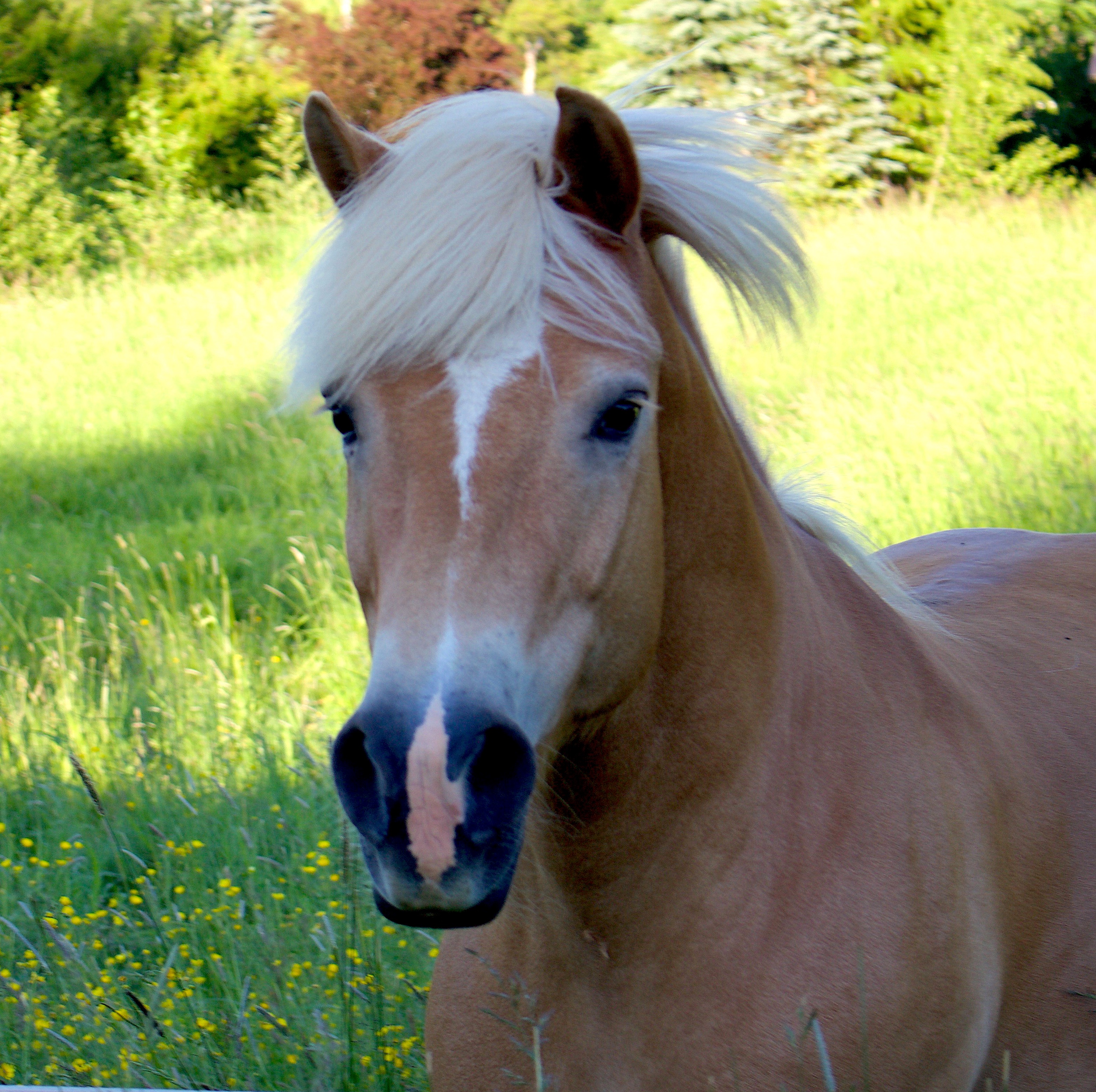
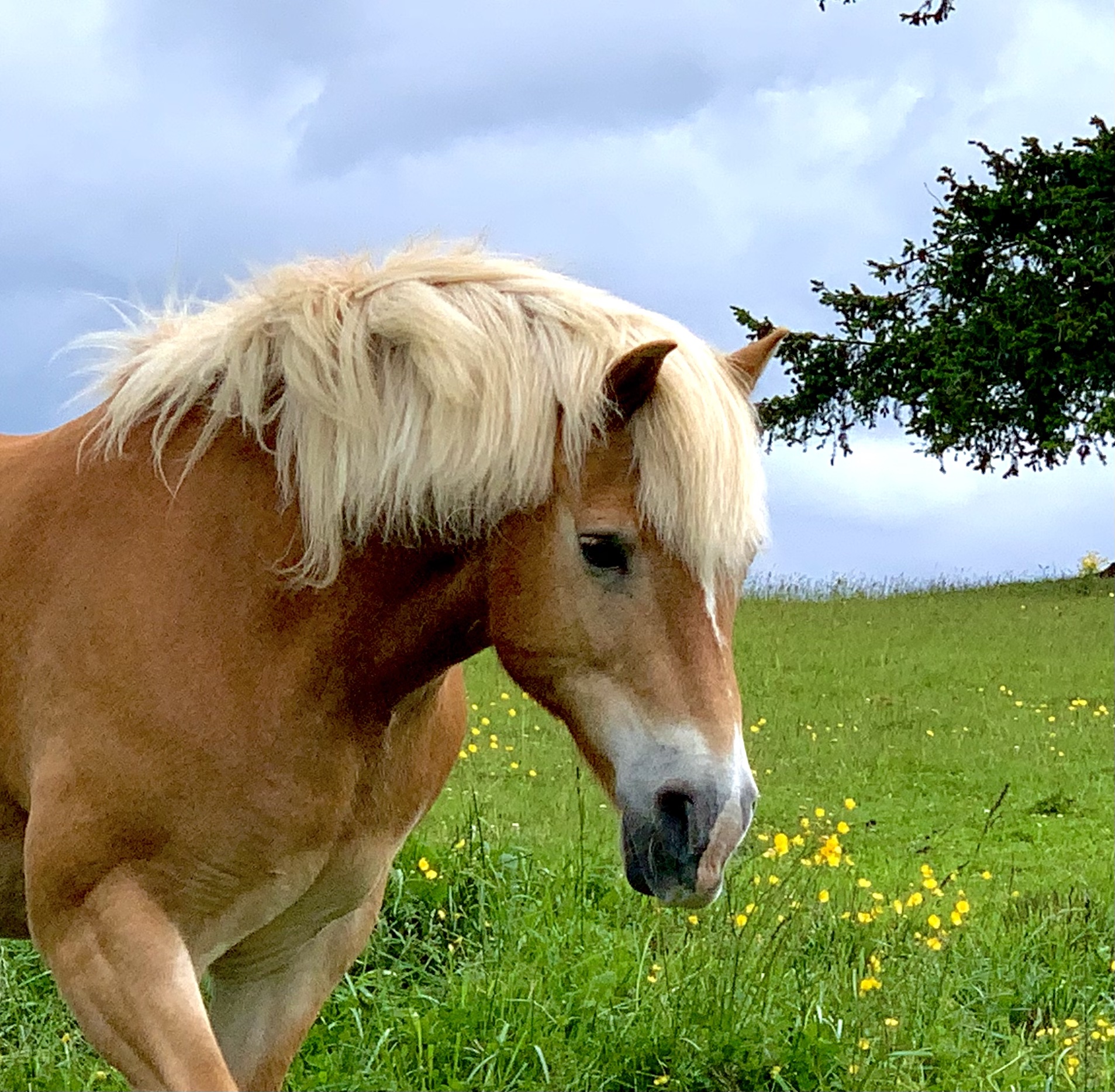
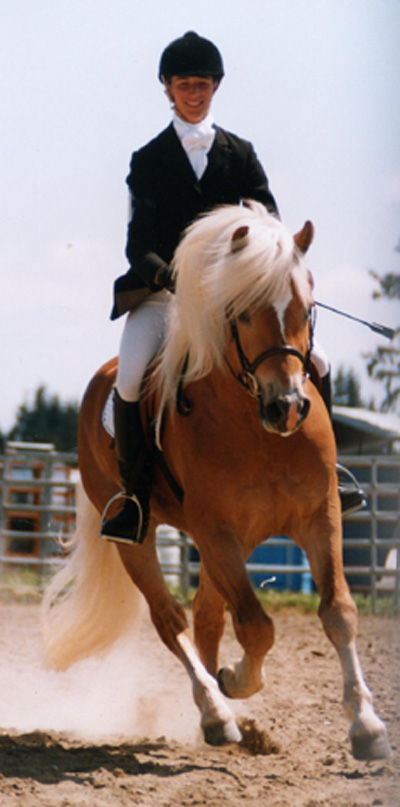
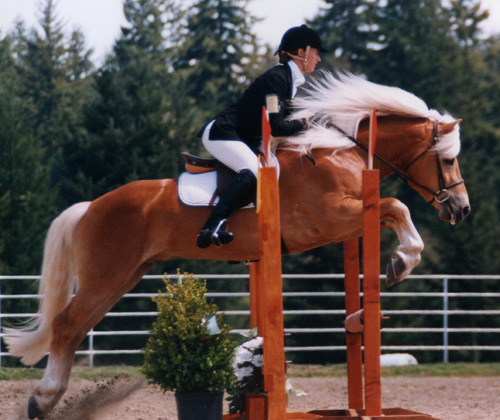
During our three decades of Haflinger horse ownership, I figured out long ago that Haflingers must have a migration center in their brain that tells them that it is time to move on to other territory – a move based on quality of forage, the seasons, or maybe simply a sudden urge for a change in scenery. This thrifty mountain breed adapted over hundreds of years to living in rather sparse Alpen meadows. They needed to move on to another feeding area enmasse on a pretty regular basis, or when the weather was starting to get crummy.
Or perhaps the next valley over had a better view, who knows? Trouble is, my Haflingers seem to have the desire to “move to other pastures” even if the grass in their own territory is plentiful and the view is great. And there doesn’t seem to be much in the way of natural or man-made barrier that will discourage them.
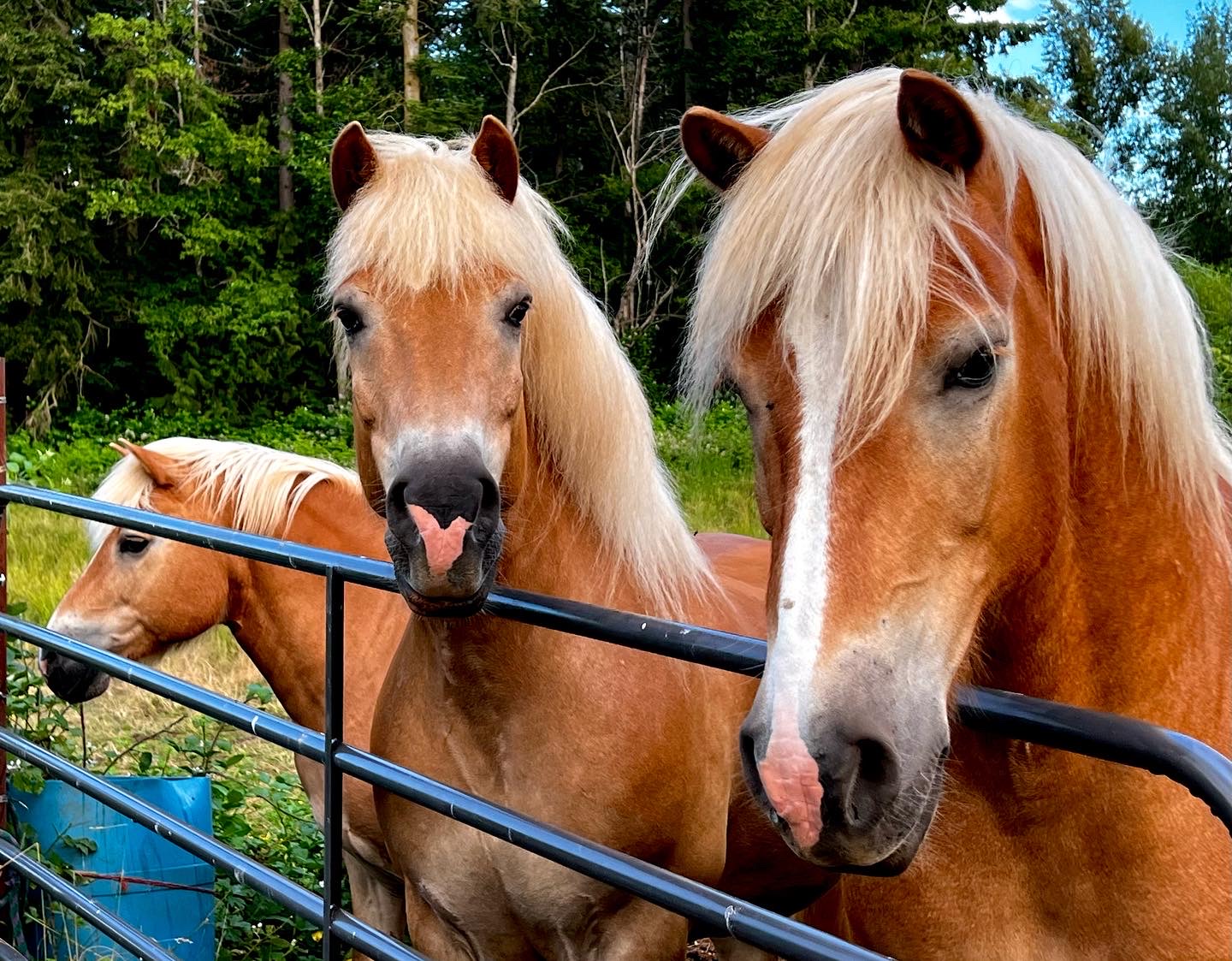
I have a trio of geldings I dub the “Three Musketeers”) who are particularly afflicted with wanderlust. There is not a field yet that has held them when they decide together that it is time to move on. We are a hotwire and white tape fenced farm–something that has worked fairly well over the years, as it is inexpensive, easily repaired and best of all, easily moved if we need to change the fencing arrangement in our pasture rotation between five different 2 acre pastures.
Previous generations of Haflingers have tested the hotwire and learned not to bother it again. No problem.
But not the Three Musketeers.
They know when the wire is grounding out somewhere, so the current is low. They know when the weather is so dry that conduction is poor through the wire. They know when I’ve absent-mindedly left the fencer unplugged because I’ve had someone visit and we wanted to climb unshocked through the fences to walk from field to field.
These three actually have little conferences out in the field together about this. I’ve seen them huddled together, discussing their strategy, and fifteen minutes later, I’ll look out my kitchen window and they are in another field altogether and the wire and tape is strewn everywhere and there’s not a mark on any of them. Even more mysteriously, often I can’t really tell where they made their escape as they leave no trace–I think one holds up the top wire with his teeth and the others carefully step over the bottom wire. I’m convinced they do this just to make me crazy.
Last night, when I brought them in from a totally different field from where they had started in the morning, they all smirked at me as they marched to their stalls as if to say, “guess what you have waiting for you out there.” It was too dark to survey the damage last night but I got up extra early to check it out this morning before I turned them out again.
Sure enough, in the back corner of the field they had been put in yesterday morning, (which has plenty of grass), the tape had been stretched, but not broken, and the wires popped off their insulators and dragging on the ground and in a huge tangled mass. I enjoyed 45 minutes of Pacific Northwest summer morning putting it all back together. Then I put them out in the field they had escaped to last night, thinking, “okay, if you like this field so well, this is where you’ll stay”.
Tonight, they were back in the first field where they started out yesterday morning. Just to prove they could do it. They are thoroughly enjoying this sport. I’m ready to buy a grand poobah mega-wattage fry-their-whiskers fence charger.
But then, I’d be spoiling their fun and their travels. As long as they stay off the road, out of our garden, and out of my kitchen, they can have the run of the place. I too remember being afflicted with wanderlust, long long ago, and wanting to see the big wide world, no matter what obstacles had to be overcome or shocks I had to endure to get there. And I got there after all that trouble and effort and realized that home was really where I wanted to be.
Now, prying me away from my little corner of the world gets more difficult every year. I hope my Haflinger trio will eventually decide that staying home is the best thing after all. Maybe they will listen to what I have to say this time.
AI image created for this post
One-Time
Monthly
Yearly
Make a one-time or recurring donation to support daily Barnstorming posts
Let the end of all bathtubs be this putting out to pasture of four Victorian bowlegs anchored in grasses.
Let all longnecked browsers come drink from the shallows while faucets grow rusty and porcelain yellows.
Where once our nude forebears soaped up in this vessel come, cows, and come, horses.
Bring burdock and thistle, come slaver the scum of timothy and clover on the cast-iron lip that our grandsires climbed over
and let there be always green water for sipping that muzzles may enter thoughtful and rise dripping. ~Maxine Kumin “Watering Trough” from Selected Poems
photo by Emily Vander Haak
Farmers became the original recyclers before it was a word or an expectation — there isn’t anything that can’t be used twice or thrice for whatever is needed, wherever and whenever, especially far from the nearest retail outlet or farm supply store.
The water troughs on the farm where I grew up were cast-off four-legged bath tubs hauled home from the dump, exactly like the old tub I bathed in when staying overnight at my grandma’s farm house. She needed her tub to stay put right in the bathroom, never considering an upgrade and remodel; she would never offer it up to her cows.
But there were people who could afford to install showers and molded tubs so out their tubs went to find new life and purpose on farms like ours.
When I was a kid, we kept goldfish in our bathtub water trough, to keep the algae at bay and for the amusement of the farm cats. The horses and cows would stand idle, drowsing by the tub, their muzzles dripping, mesmerized by flashes of orange circling the plugged drain.
I often wondered what they thought of sharing their drinking water with fish, but I suspect they had more weighty things to ponder: where the next lush patch of grass might be, how to reach that belly itch, and finding the best shade with fewest flies for that summer afternoon nap.
When it comes to sharing a tub, maybe farm animals aren’t that different from their farmer keepers after all: they both stand dripping and thoughtful alongside the tub, contemplating what comes next. After a long hot summer day, it may well be a well-earned rest.
AI image created for this post
One-Time
Monthly
Yearly
Make a one-time or recurring donation to support daily Barnstorming posts
(I wrote this 15 years ago on July 6 and have updated it with an addendum)
I remember childhood summers as 3 months of full-out celebration– long lazy days stretching into nights that didn’t seem to really darken until 11 PM and bright birdsong mornings starting out at 4:30 AM. Not only were there the brief family vacations at the beach or to visit cousins, but there was the Fourth of July, Daily Vacation Bible School, the county fair, family reunions, and of course and most importantly, my July birthday. Yes, there were mundane chores to be done, a garden to tend, a barn to clean, berries to pick, a lawn to mow and all that stuff, but my memories of summer are mostly about fluff and frolic.
So where are the summer parties now? Who is out there celebrating without me? Nothing seems to be spontaneous as it was when I was a child. Instead, most grown-ups have to go to work most days in the summer.
I’m finding myself in the midst of my 55th summer and I have to create celebrations if they are going to happen in my life. Without that perspective, the bird song at 4:30 AM can feel more irritant than blessing and the long days often mean I fall asleep nodding over a book at 9 PM. I want to treasure every, every minute of this precious time yet they flow through my fingers like so much water, faster and faster.
I realize there will be very few “family” summers left as I watch my children grow into adults and spread their wings. They will be on to new adventures in future summers. So each family ritual and experience together takes on special meaning and needs to be appreciated and remembered.
So….for this summer my family has crammed as much in as we can in celebration of the season:
We just spent some time in the hayfields bringing in the bales with friends–our little crew of seven–sweating and itchy and exhausted, but the sight and smell of several hundred hay bales, grown on our own land, harvested without being rained on and piled in the barn is sweet indeed. Weekly we are out on the softball field in church league, yelling encouragement and high-fiving each other, hooting at the good hits and the bad, the great catches and the near misses, and getting dirty and sprained, and as happy to lose as to win. We had a wonderful July 4 barbeque with good friends culminating in the fireworks show on our farm’s hill overlooking miles of valley around us, appreciating everyone else’s backyard displays as well as our own.
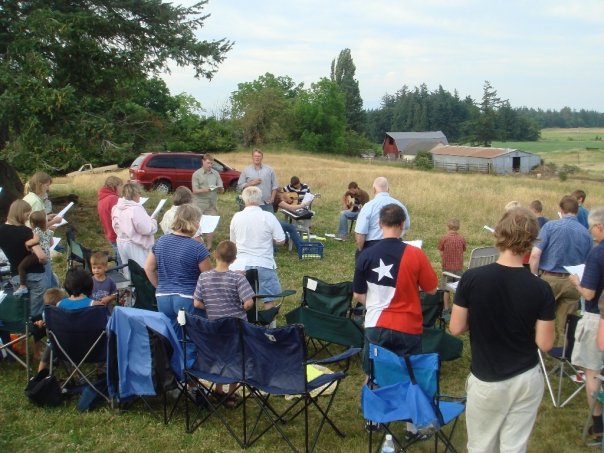
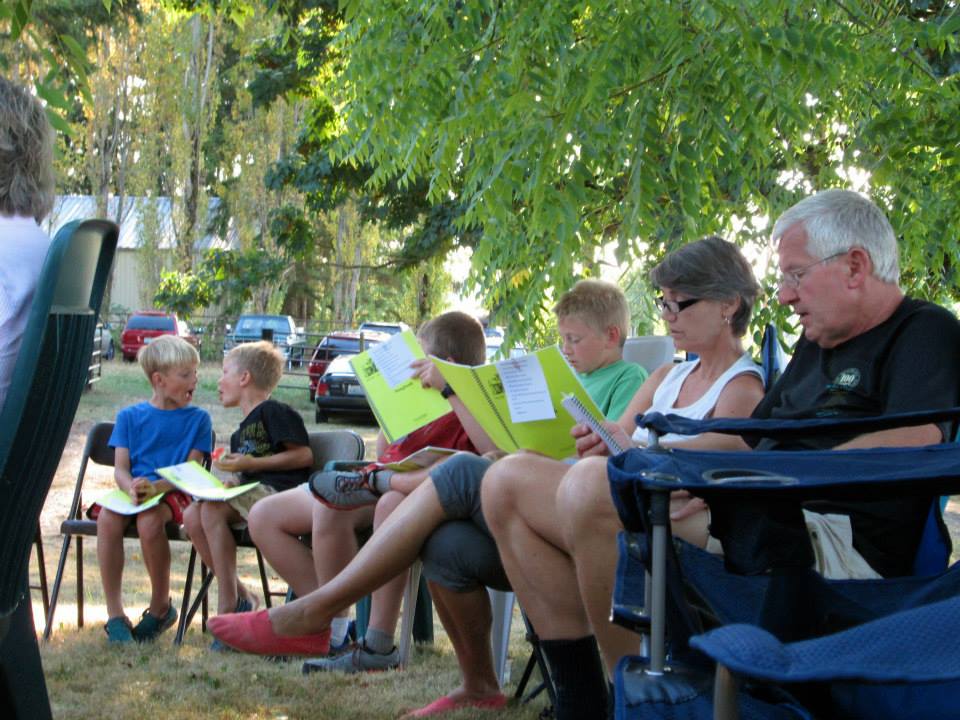
We are now able to sing hymns in church in four part harmony, and last night our children helped lead the singing last night in an evening “campfire church” for over fifty fellow worshipers on our hill. In a couple weeks, we’ll take to the beach for three days of playing in the sand, roasting hot dogs. reading good books, and playing board games. We’ll try to make the trek down to Seattle by train to spend the day watching the Mariners play (and likely lose).
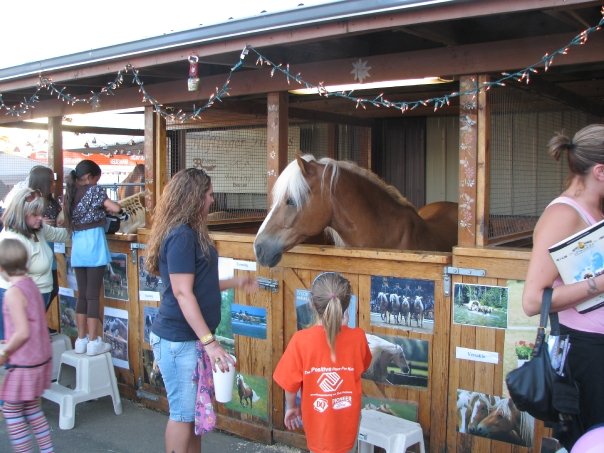
One change after seventeen years of hosting a display of our horses at the Lynden Fair: due to “off the farm” work and school schedules, we can’t muster the necessary round-the-clock crew of being there for our little part of small town agricultural pursuits.
Yet the real party happens right here every day in small ways without any special planning. It doesn’t require money or special food or traveling beyond our own soil. It is the smiles and good laughs we share together, and the hugs for kids taller than I am. It’s adult conversations with the new adults in our family–no longer adolescents.
It’s finding delight in fresh cherries from our own trees, currants and berries from our own bushes, greens from the garden, flowers for the table from the yard.
It is the Haflingers in the field that come right up to us to enjoy rubs and scratches and follow us like puppies. It is babysitting for neighborhood toddlers who remind us of the old days of having small children, and who give us a glimpse of future grandparenthood. It is good friends coming from far away to ride our horses and learn farm skills.
It is an early morning walk in the woods or a late evening stroll over the hills. It is daily contact with aging parents who no longer hear well or feel well but nevertheless share of themselves in the ways they are able. It is the awesome power of an evening sunset filled with hope and the calming promise of a new day somewhere else in this world of ours.
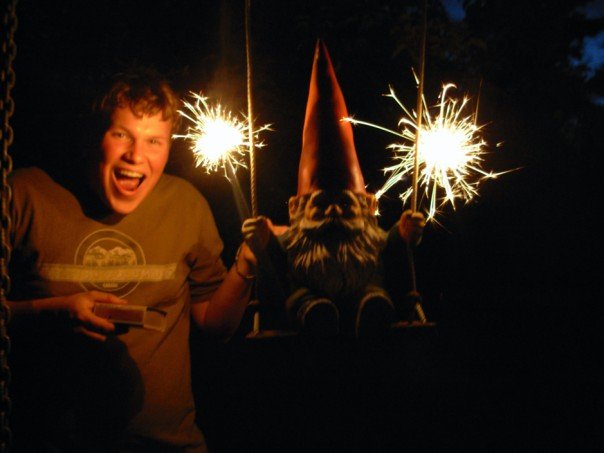
Some days may not look or feel like there’s a summer party happening, but that is only because I haven’t searched hard enough. The party is here, sparklers and all, even if only in my own mind.
Addendum: Fifteen years have passed since this was written and I’m glad I can look back and be reminded how full of life those family summers were. We seldom have the full-meal-deal of everyone together at one time, and since our parents have passed on to eternal summers in heaven, we have now the blessings of six grandchildren. Freckles abound!
We still can make a party happen, if only in our own minds.
AI image created for this post
One-Time
Monthly
Yearly
Make a one-time or recurring donation to support daily Barnstorming posts
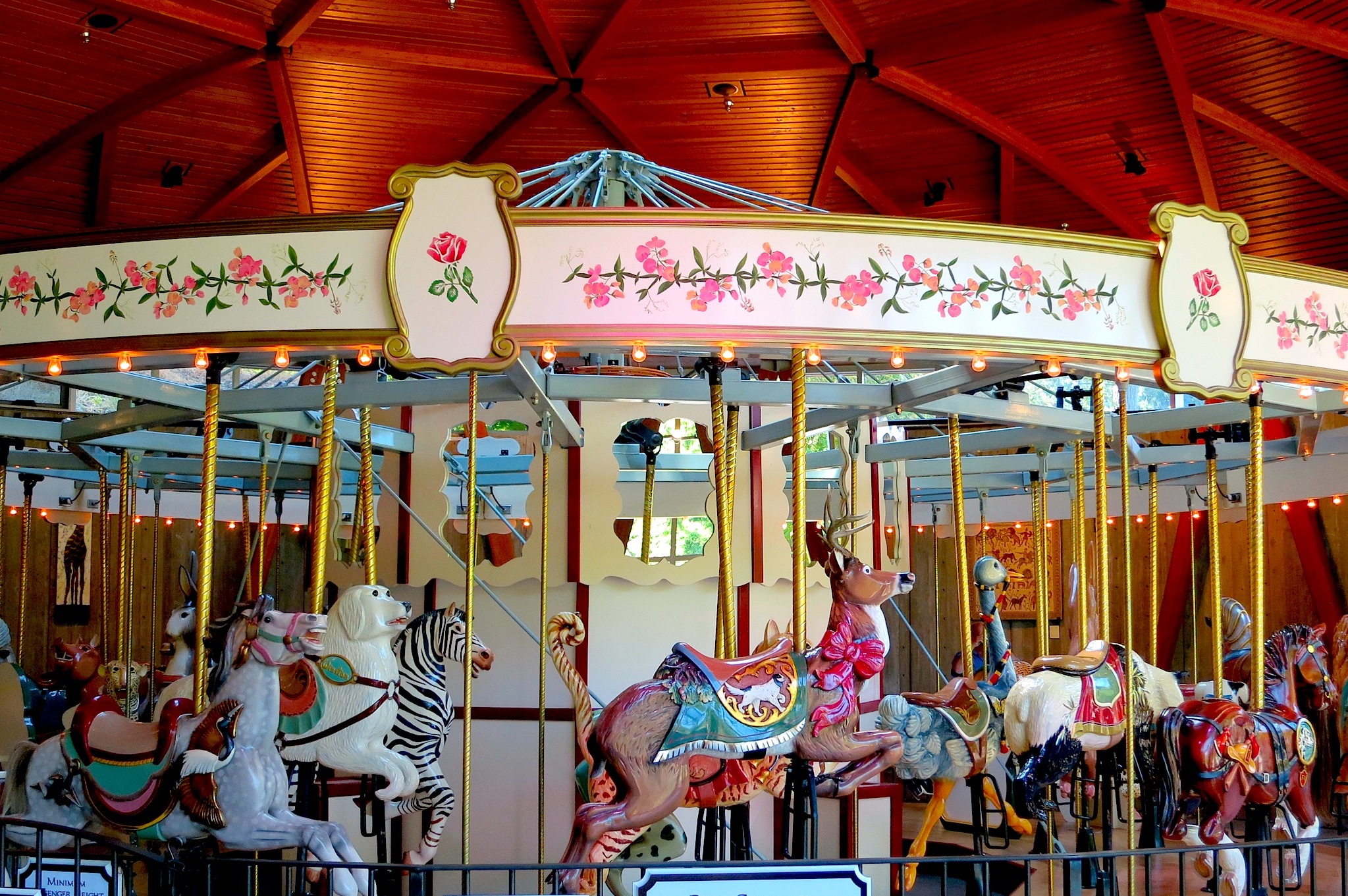
And the seasons they go round and round And the painted ponies go up and down We’re captive on the carousel of time We can’t return, we can only look behind From where we came And go round and round and round In the circle game… ~Joni Mitchell “The Circle Game”
those lovely horses, that galloped me, moving the world, piston push and pull, into the past—dream to where? there, when the clouds swayed by then trees, as a tire swing swung me under—rope groan. now, the brass beam, holds my bent face, calliope cadence—O where have I been? ~Rick Maxson “Carousel at Seventy”
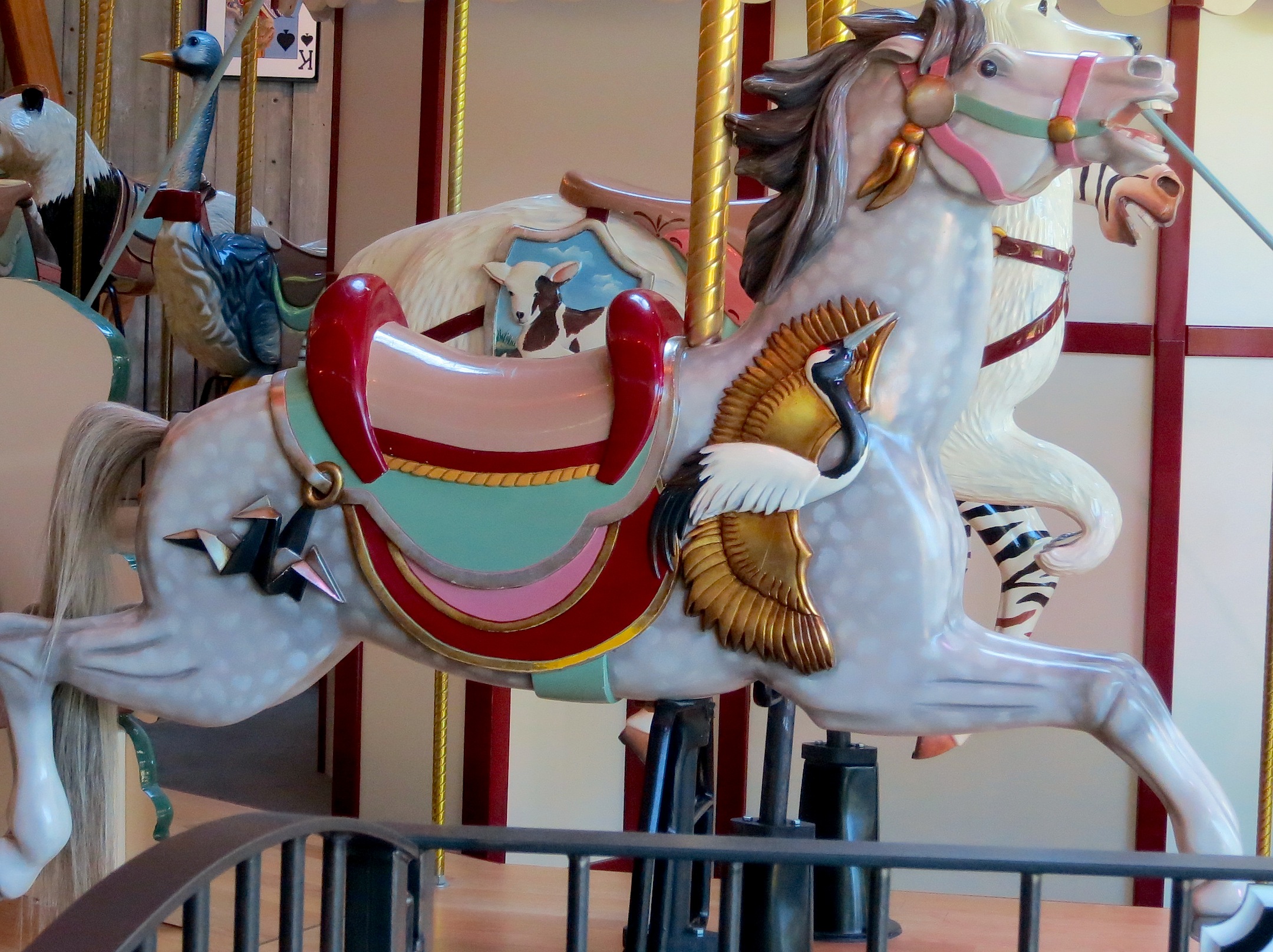
On thin golden poles gliding up, sliding down, a kingdom of horses goes spinning around.
Jumper, Brown Beauty, Dark Thunder, Sir Snow, a medley of ponies parade in a row.
Settled in saddles, their riders hold on to reins of soft leather while circling along
on chestnut or charcoal, on sleek Arctic white, on silver they gallop in place day and night.
Such spinning is magic, (to dream as you sail) with lavender saddle and ebony tail,
whirling to music in moonlight, spellbound, galloping, galloping, merrily go round. ~Rebecca Kai Dotlich “Carousel”
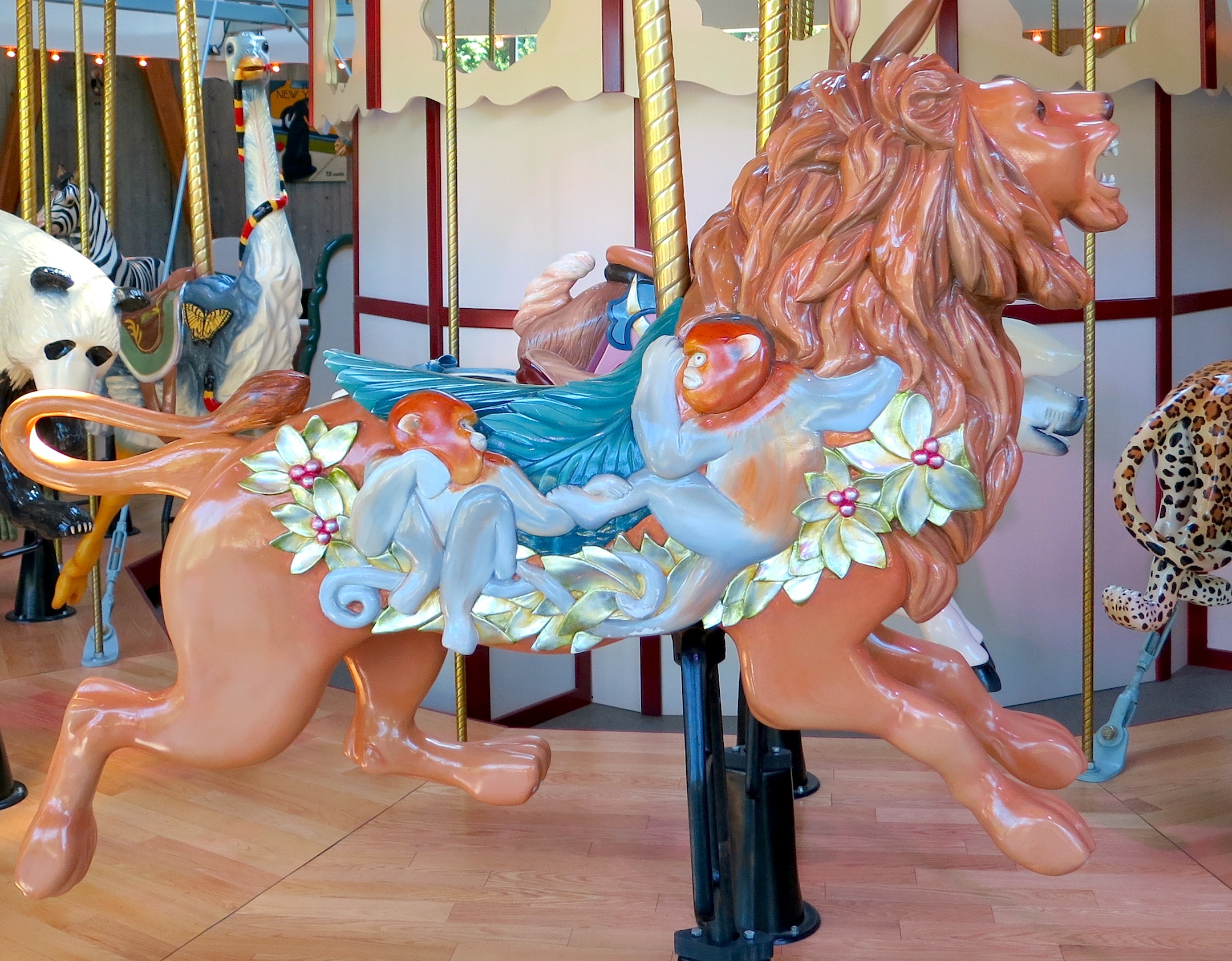
Under its canopy, in the shade it casts, turns a world with painted horses, all from a land that lingers a while before it disappears. Some, it’s true, are harnessed to a wagon, but all have valor in their eyes. A fierce red lion leaps among them, and here comes ’round a snow-white elephant.
Even a stag appears, straight from the forest, except for the saddle he wears, and, buckled on it, a small boy in blue.
And a boy in white rides the lion, gripping it with small clenched hands, while the lion flashes teeth and tongue.
And here comes ’round a snow-white elephant.
And riding past on charging horses come girls, bright-eyed, almost too old now for this children’s play. With the horses rising under them, they are looking up and off to what awaits. ~Rainer Maria Rilke from “Jardin de Luxembourg”
A fewJuly memories:
Sixty-five years ago, I was a five year old having her first ride on the historic carousel at Woodland Park Zoo before we moved from Stanwood to Olympia. Fifty-four years ago — a teenager working in a nursing home as a nurses’ aide after three days of training. Forty-nine years ago – returned home early from my studies in Tanzania after four chimpanzee researcher friends were held hostage for ransom and eventually released Forty-three years ago — deep in the guts of a hospital working forty hour long shifts, thinking about the man I was soon to marry Thirty-four years ago — my husband and I picking up bales of hay in our own farm field, two young children in tow after accepting a new position doctoring at the local university Twenty-seven years ago — raising three children and completed farm house remodel, supporting three parents with health issues, raising Haflinger horses, helping design a new clinic building at work, playing piano and teaching Sunday School at church Twenty-whatever years ago – life spinning faster, blurring with work at home, on the farm, at clinic, at church. I begin writing to grab and hang on to what I can. Sixteen years ago — one son about to move to Japan to teach and the other son to teach at Pine Ridge in South Dakota, daughter at home with a new driver’s license working with migrant children, a mother slowly bidding goodbye to life at a local care center, farming less about horse raising and more about gardening, maintaining and preserving. Ten years ago — two sons married, daughter working as a camp counselor so our first summer without children at home. Perfect time to raise a new puppy! Five years ago – A two year old granddaughter and two new grandsons! Daughter teaching, engaged to be married. Two years ago – completed forty-two years of non-stop doctoring so I bid it goodbye. Now – Three more grandsons! Two retired grandparents! Big garden on the farm but we’re slowing down.
The puppy’s face and our hair are turning white…
O where have I been? We can only look behind from where we came and await what is ahead.
The decades pass, round and round – there is comfort knowing that through the ups and downs of daily life, we still hang on. If we slip and fall, there is Someone ready to catch us.
Looking behind you, where have you been? What awaits you where you are heading?
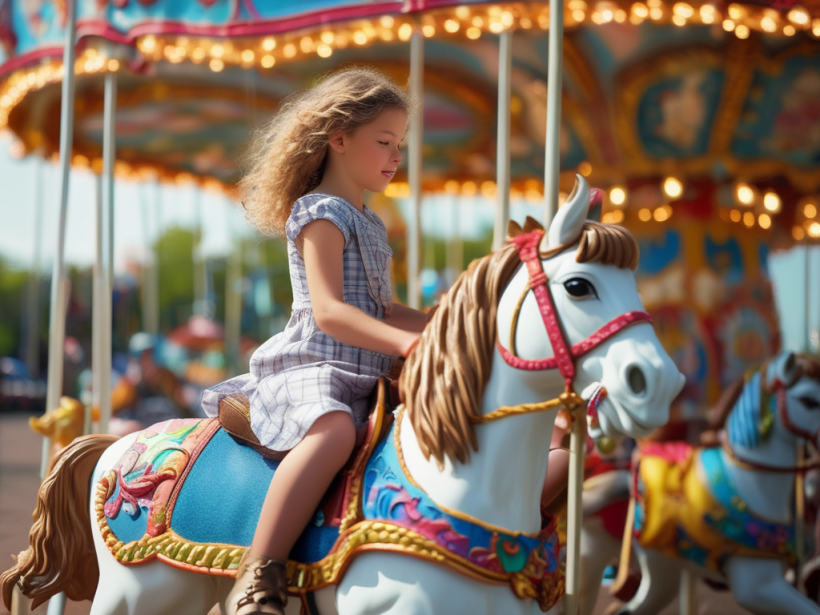
AI image created for this post
One-Time
Monthly
Yearly
Make a one-time or recurring donation to support daily Barnstorming posts
Not the bristle-bearded Igors bent under burlap sacks, not peasants knee-deep in the rice paddy muck, nor the serfs whose quarter-moon sickles make the wheat fall in waves they don’t get to eat. My friend the Franciscan nun says we misread that word meek in the Bible verse that blesses them. To understand the meek (she says) picture a great stallion at full gallop in a meadow, who— at his master’s voice—seizes up to a stunned but instant halt. So with the strain of holding that great power in check, the muscles along the arched neck keep eddying, and only the velvet ears prick forward, awaiting the next order. ~Mary Karr “Who the Meek Are Not” from Sinners Welcome
Blessed are the meek, for they shall inherit the earth. Matthew 5:5
I’ve seen meekness like this.
Our stallion allowed his strength and passion to be under control. He wanted to listen. He wanted to see what we might ask of him. He wanted to be with us.
This makes no sense given the world’s demand now for “strongman” leadership – someone who submits to no one, apologizes to no one, feels compassion for no one.
Globally and individually, we have desperate need of meekness. True strength is when someone knows the extent of their power but resists the need to prove it to anyone else.
The meek are ready, waiting for what God will have them do next.
AI image created for this post
One-Time
Monthly
Yearly
Make a one-time or recurring donation to support daily Barnstorming posts
Let us not with one stone kill one bird, much less two. Let us never put a cat in a bag nor skin them, regardless of how many ways there are to do so. And let us never take the bull, especially by his gorgeous horns. What I mean is
we could watch our tongues or keep silent. What I mean is we could scrub the violence from our speech. And if we find truth in a horse’s mouth, let us bless her
ground-down molars, no matter how old she is, especially if she was given as a gift. Again, let’s open her mouth——that of the horse, I mean——let us touch that interdental space where no teeth grow, where the cold bit was made to grip. Touch her there, gently now, touch that gentle
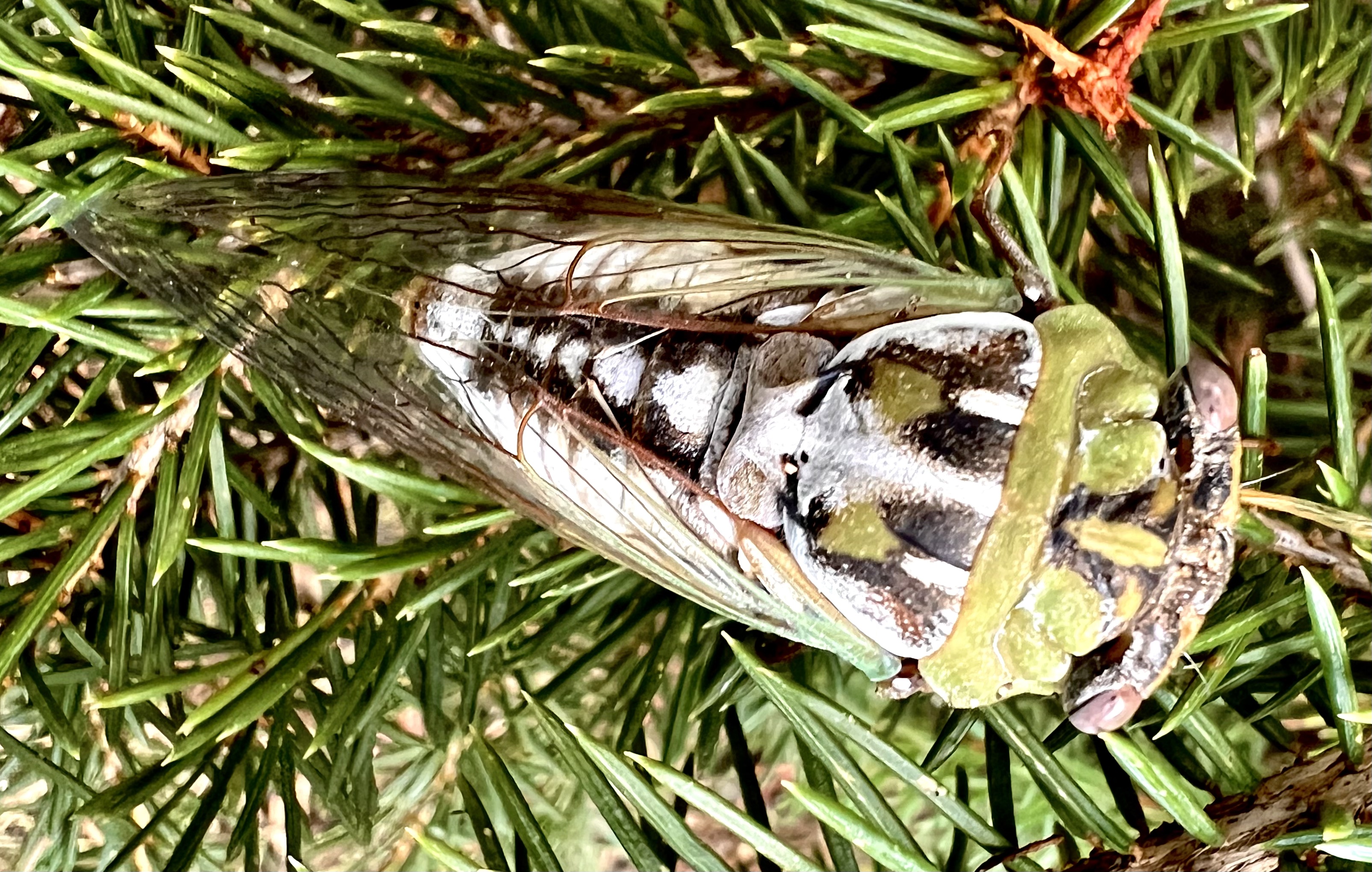
empty between her incisors and molars, rub her aching, vulnerable gums. Don’t worry: doing so calms her. Besides, she’s old now; she’s what we call broken; she won’t bite. She’s lived through two thirteen-year emergences of cicadas
and thought their rising a god infestation, thought each insect roiling up an iteration of the many names of god, because god to her is the grasses so what comes up from grass is god. She would not say it that way. Nor would she
say the word cicada——words are hindrances to what can be spoken through the body, are what she tolerates when straddled, giddy-up on one side then whoa on the other. After, it’s all good girl, Mable, good girl, before the saddle sweat is rinsed cool with water from the hose and a carrot is offered flat from the palm. Yes, words being
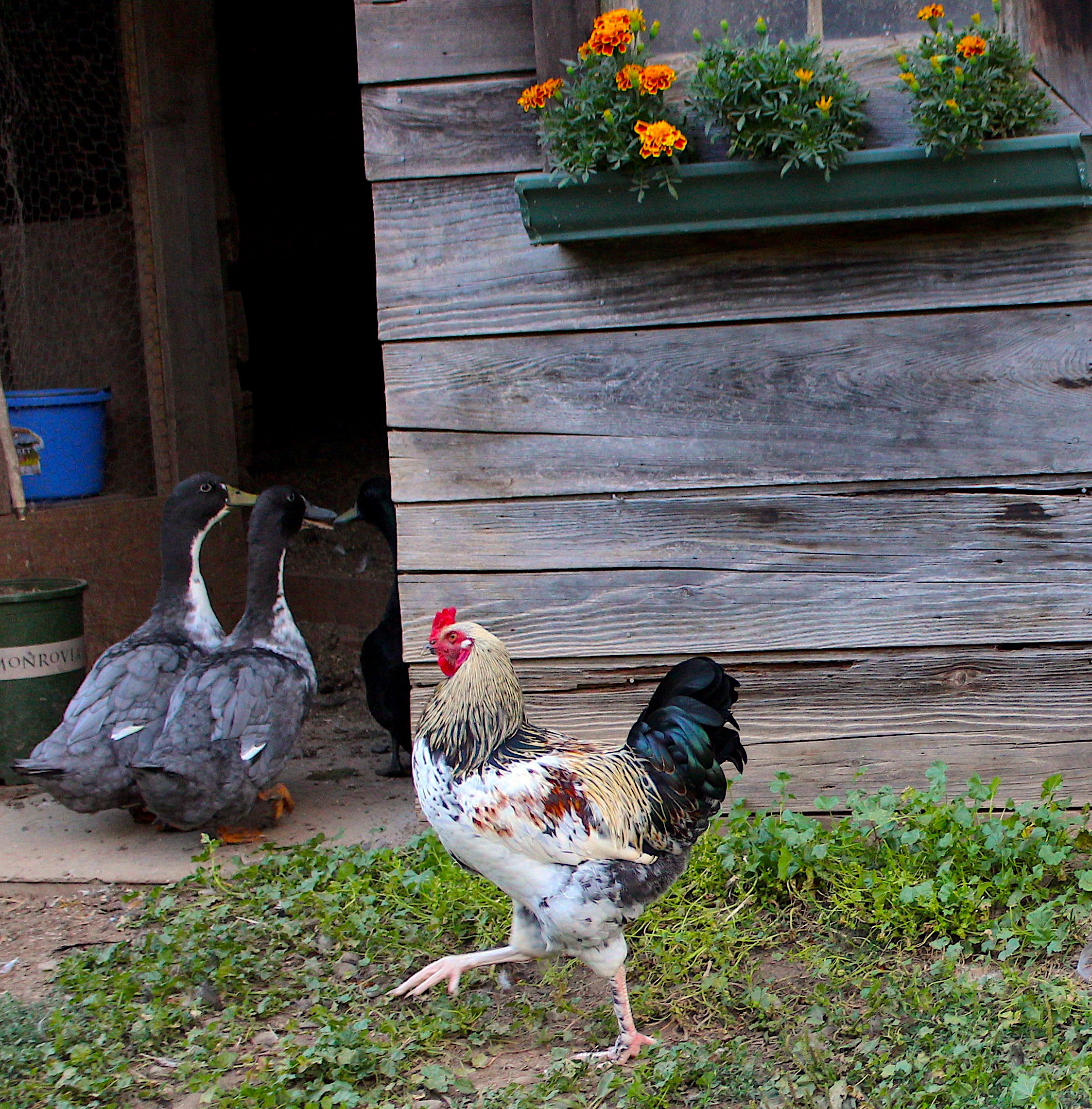
generally useless she listens instead to the confused rooster stuttering when the sun burns overhead, when it’s warm enough for those time-keepers to tunnel up from the dark and fill their wings to make them stiff and capable of flight. To her, it is the sound
of winter-coming in her mane or the sound of winter-leaving in her mane—— yes, that sound——a liquid shushing like the blood-fill of stallion desire she knew once but crisper, a dry crinkle of fall leaves. Yes, that sound, as they fill their new wings then lumber to the canopy to demand come here, come here, come here, now come.
If this is a parable you don’t understand, then, dear human, stop listening for words. Listen instead for mane, wind, wings, wind, mane, wings, wings, wings. The lesson here is of the mare and of the insects, even of the rooster puffed and strutting past. Because now, now there is only one thing worth hearing, and it is the plea of every living being in that field we call ours, is the two-word commandment trilling from the trees: let live, let live, let live. Can you hear it? Please, they say. Please. Let us live. ~Nickole Brown “Parable”
When a governor writes about her decision to shoot her wayward dog and stinky goat, our reaction is about the injustice perpetrated on the dog more than her decision to play god with any animal she has responsibility for. I feel a twinge of guilt at the accusation. Who among us can throw stones?
God is clear we are meant to be caretakers of His Creation. Yet I still swat flies and trap mice – there is no pleasure in doing so, so I still ask for forgiveness for my lack of charity and decision to make my own existence more comfortable at the expense of another living thing.
I admit I fail Creation in myriad ways.
I have owned animals whose behavior brought me to my knees, sometimes literally with my face in the muck. I have wept over the loss of a deformed stillbirth foal and a pond of koi frozen in a bitter winter storm. The stories abound of my helplessness in the face of sadness and loss and frustration but I never wanted to become executioner.
I don’t live with cycles of cicada population booms but have experienced their overwhelming din and understood we are mere witnesses and not in control. We are not “little g” gods on this earth. We are its stewards.






















 Barnstorming