The true harvest of my daily life is somewhat as intangible and indescribable as the tints of morning or evening. It is a little star-dust caught, a segment of the rainbow which I have clutched. ~Henry David Thoreaufrom Walden
In the beginning was the Word, and the Word was with God, and the Word was God. John 1:1
Painting the indescribable with words necessitates subtlety, sound and rhythm.
The best word color portraits I know are by Gerard Manley Hopkins who created pictures through startling word combinations:
I understand how difficult it is to harvest daily life using ordinary words. Like grasping ephemeral star trails or the transient rainbow that moves away as I approach, what I hold on the page is intangible — yet nevertheless very real.
I keep reaching for understanding, searching for the best words to share here: those that are ephemeral color yet eternal, and very very real.
After all, in the beginning was the Word, and there is no better place to start with its promise.
I’ll be reading slowly through the words in the Book of John over the next year. Once a week, I will invite you to “come and see” what those words might mean as we explore the promise together.
One-Time
Monthly
Yearly
Make a one-time or recurring donation to support daily Barnstorming posts
A second crop of hay lies cut and turned. Five gleaming crows search and peck between the rows. They make a low, companionable squawk, and like midwives and undertakers possess a weird authority.
Crickets leap from the stubble, parting before me like the Red Sea. The garden sprawls and spoils.
Cloud shadows rush over drying hay, fences, dusty lane, and railroad ravine. The first yellowing fronds of goldenrod brighten the margins of the woods.
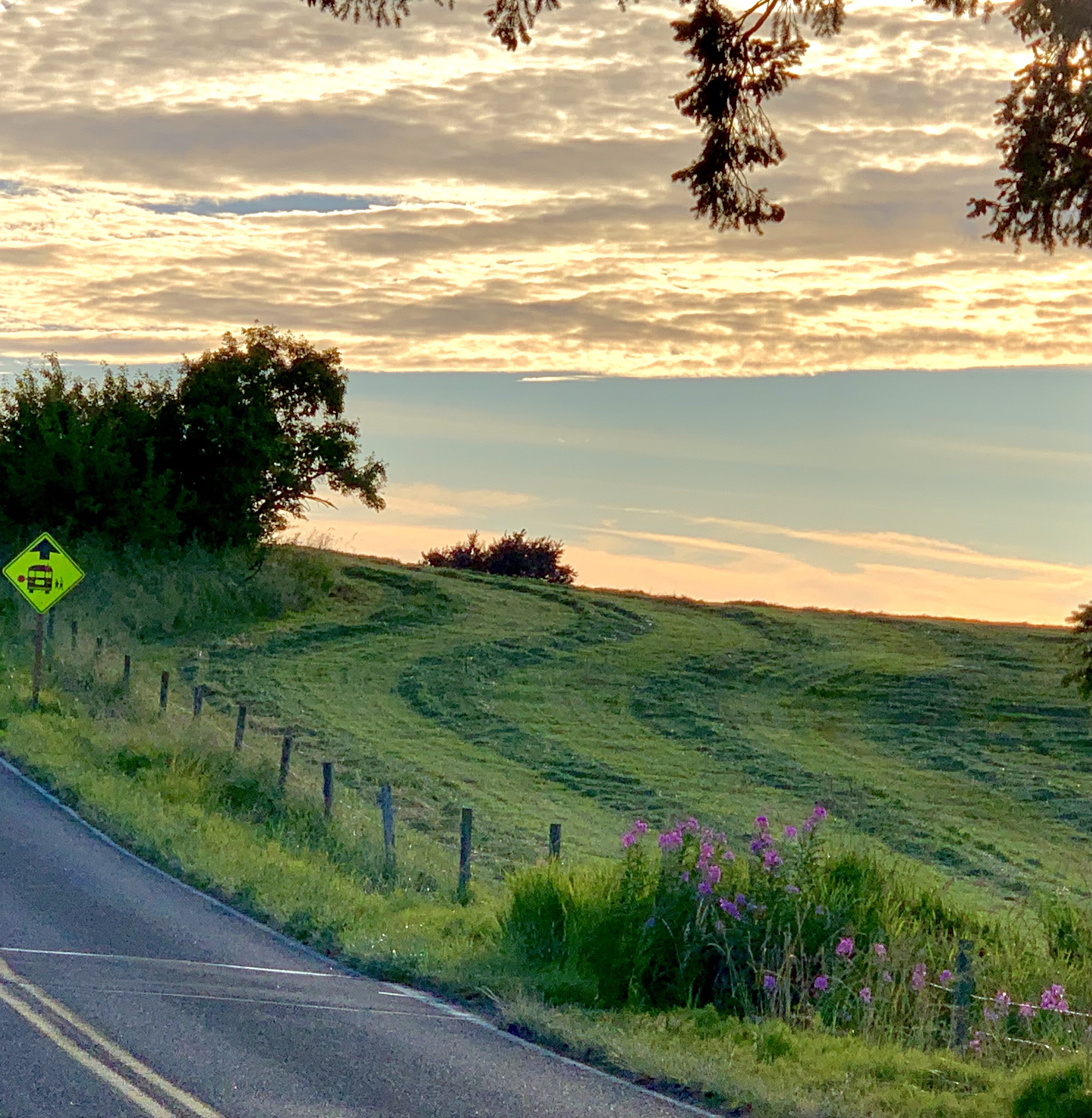
Schoolbooks, carpools, pleated skirts; water, silver-still, and a vee of geese.
*
The cicada’s dry monotony breaks over me. The days are bright and free, bright and free.
Then why did I cry today for an hour, with my whole body, the way babies cry?
*
A white, indifferent morning sky, and a crow, hectoring from its nest high in the hemlock, a nest as big as a laundry basket …
In my childhood I stood under a dripping oak, while autumnal fog eddied around my feet, waiting for the school bus with a dread that took my breath away.
The damp dirt road gave off this same complex organic scent. I had the new books—words, numbers, and operations with numbers I did not comprehend—and crayons, unspoiled by use, in a blue canvas satchel with red leather straps.
Spruce, inadequate, and alien I stood at the side of the road. It was the only life I had. ~Jane Kenyon from “Three Songs at the End of Summer”
Yesterday, my son taught me the sign for lockdown— different than locking a door, or the shutdown we invented at the start of the pandemic. Little fistfuls of locks swept quickly between us, a sign designed especially for school.
My son spent his first years a different kind of locked up—an orphanage in Bangkok, where he didn’t speak and they couldn’t sign. He came home, age four, silent. We thought being here could open doors. It has, of course. He’s learned so much at the deaf school; the speech therapist calls it a Language Explosion. I keep lists of the words he’s gathered: vanilla, buckle, castle, stay. And lockdown. He absorbs it like the rest. Now the schools he builds with Magna-Tiles have lockdowns. I worry in trying to give him keys, we’ve only changed the locks.
To lock down a deaf school, we use a special strobe. When it flashes, we flip switches and sign through darkness. The children know to stay beneath the windows. Every five minutes a robot texts: “Shelter in place is still in effect. Please await further instructions.” Then we pull the fire alarm, a tactical move to unsettle the shooter. Hearing people can’t think with noise like that. A piercing thing we don’t detect, to cover the sounds we make, the sounds we don’t know we’re making. ~Sara Nović “Lockdown at the School for the Deaf”
The first day back to school now isn’t always the day after Labor Day as it was when I was growing up. Some students have been in classes for a couple weeks already, others started a few days ago to ease into the transition more gently.
Some return to the routine this morning – school buses roar past our farm brimming with eager young faces and stuffed back packs amid a combination of excitement and anxiety.
I remember well that foreboding that accompanied a return to school — the strict schedule, the inflexible rules and the often harsh adjustment of social hierarchies and friend groups. Even as a good learner and obedient student, I was a square peg being pushed into a round hole when I returned to the classroom. The students who struggled academically and who pushed against the boundaries of rules must have felt even more so. We all felt alien and inadequate to the immense task before us to fit in with one another, allow teachers to structure and open our minds to new thoughts, and to become something and someone more than who we were before.
Growth is so very hard, our stretching so painful, the tug and pull of friendships stressful. And for the last two decades, there is the additional fear of lockdowns and active shooters.
I worked with students on an academic calendar for over 30 years, yet though I’m now retired, I still don’t sleep well in anticipation of all this day means.
So I take a deep breath on a foggy post-Labor Day morning and am immediately taken back to the anxieties and fears of a skinny little girl in a new home-made corduroy jumper and saddle shoes, waiting for the schoolbus on our drippy wooded country road.
She is still me — just buried deeply in the fog of who I became after all those years of schooling, hidden somewhere under all the piled-on layers of learning and growing and hurting and stretching — I do remember her well.
Like every student starting a new adventure today, we could all use a hug.
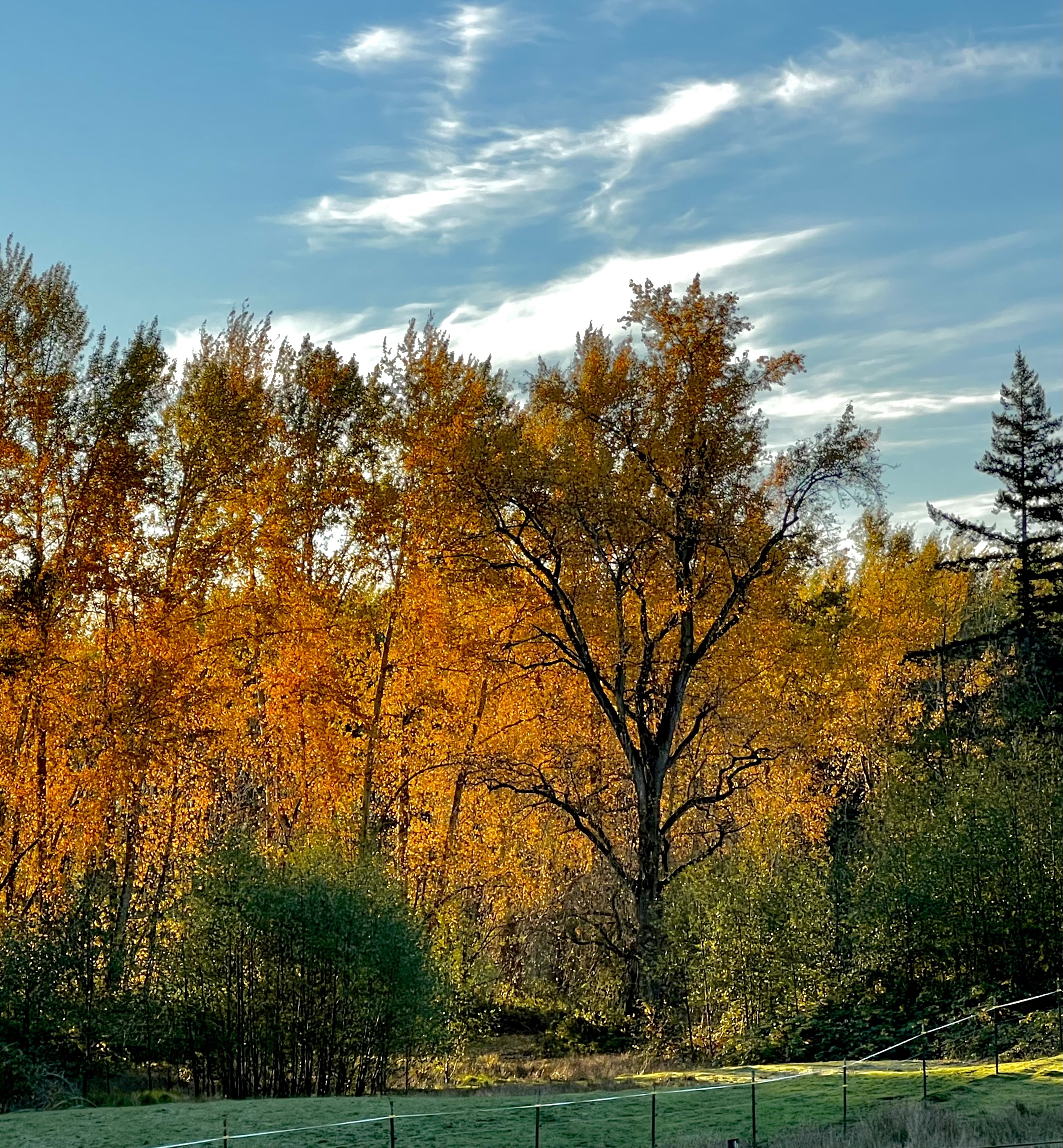
Lo! I am come to autumn, When all the leaves are gold; Grey hairs and golden leaves cry out The year and I are old.
In youth I sought the prince of men, Captain in cosmic wars, Our Titan, even the weeds would show Defiant, to the stars.
But now a great thing in the street Seems any human nod, Where shift in strange democracy The million masks of God.
In youth I sought the golden flower Hidden in wood or wold, But I am come to autumn, When all the leaves are gold. ~G.K. Chesterton “Gold Leaves”
One-Time
Monthly
Yearly
Make a one-time or recurring donation to support daily Barnstorming posts
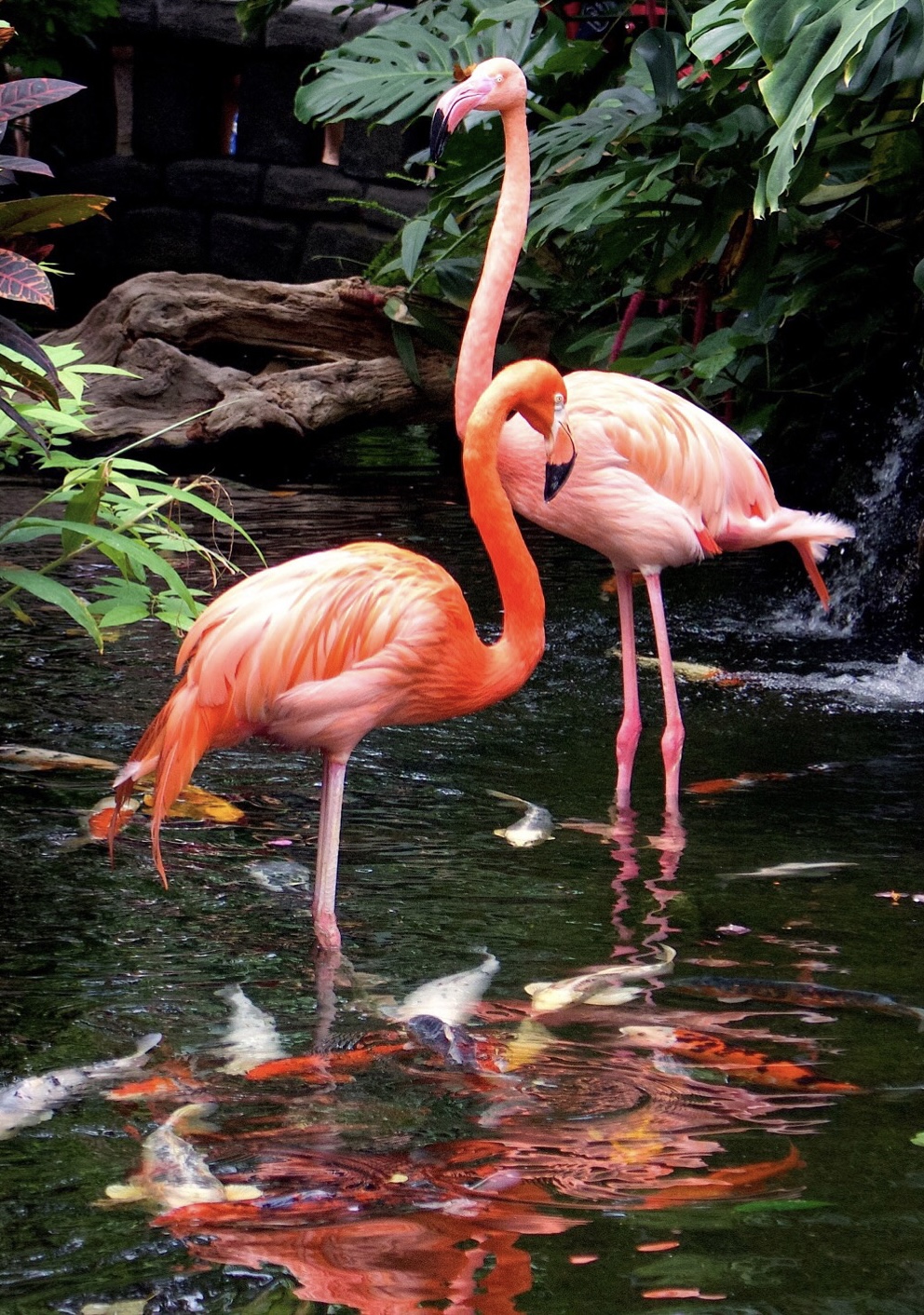
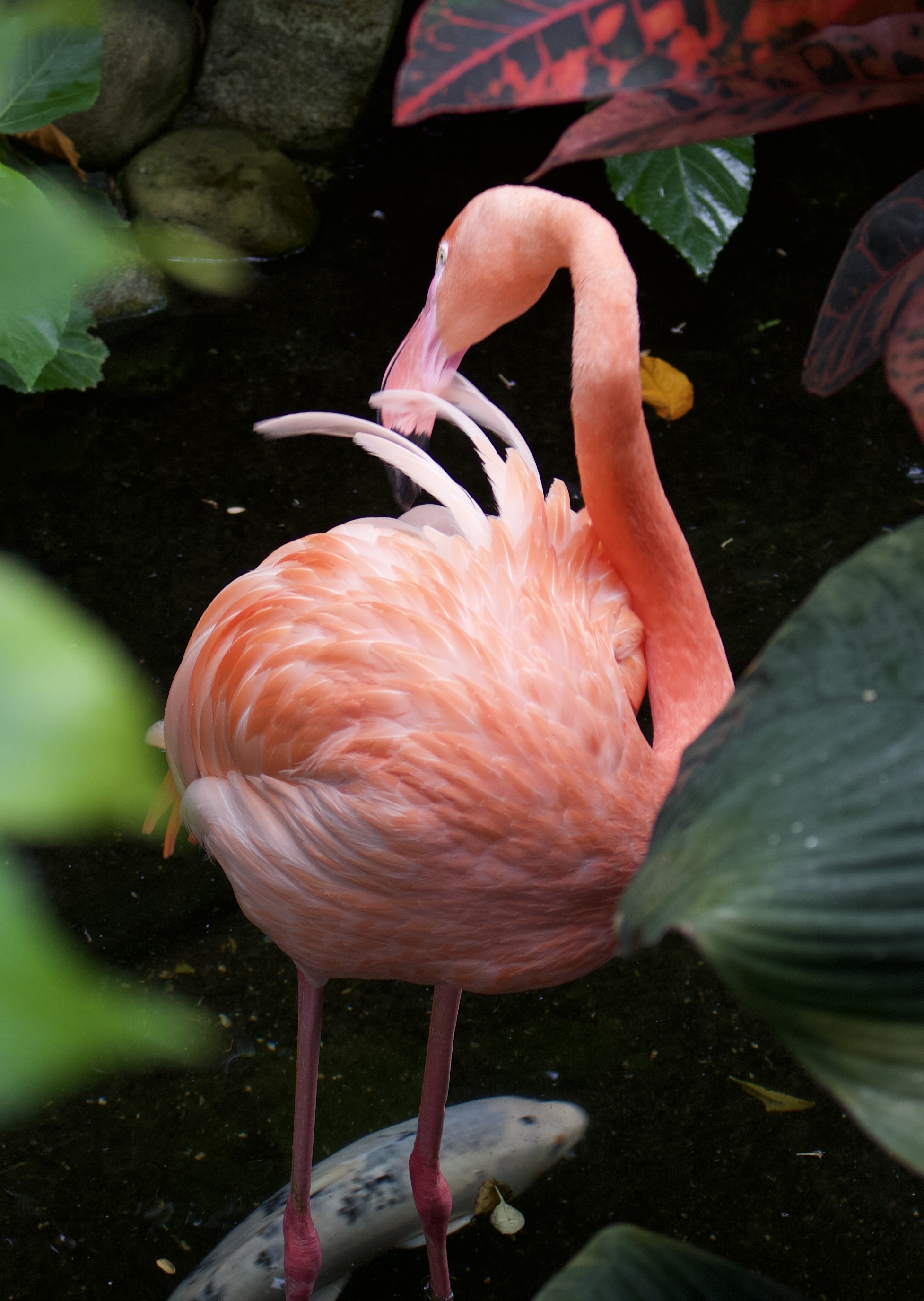
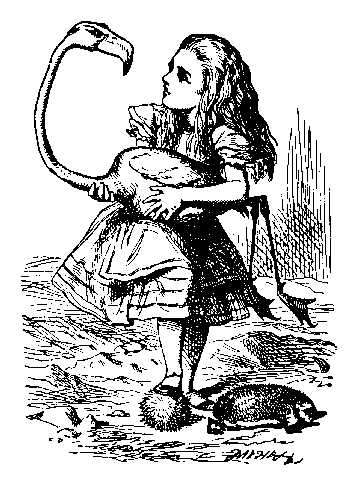
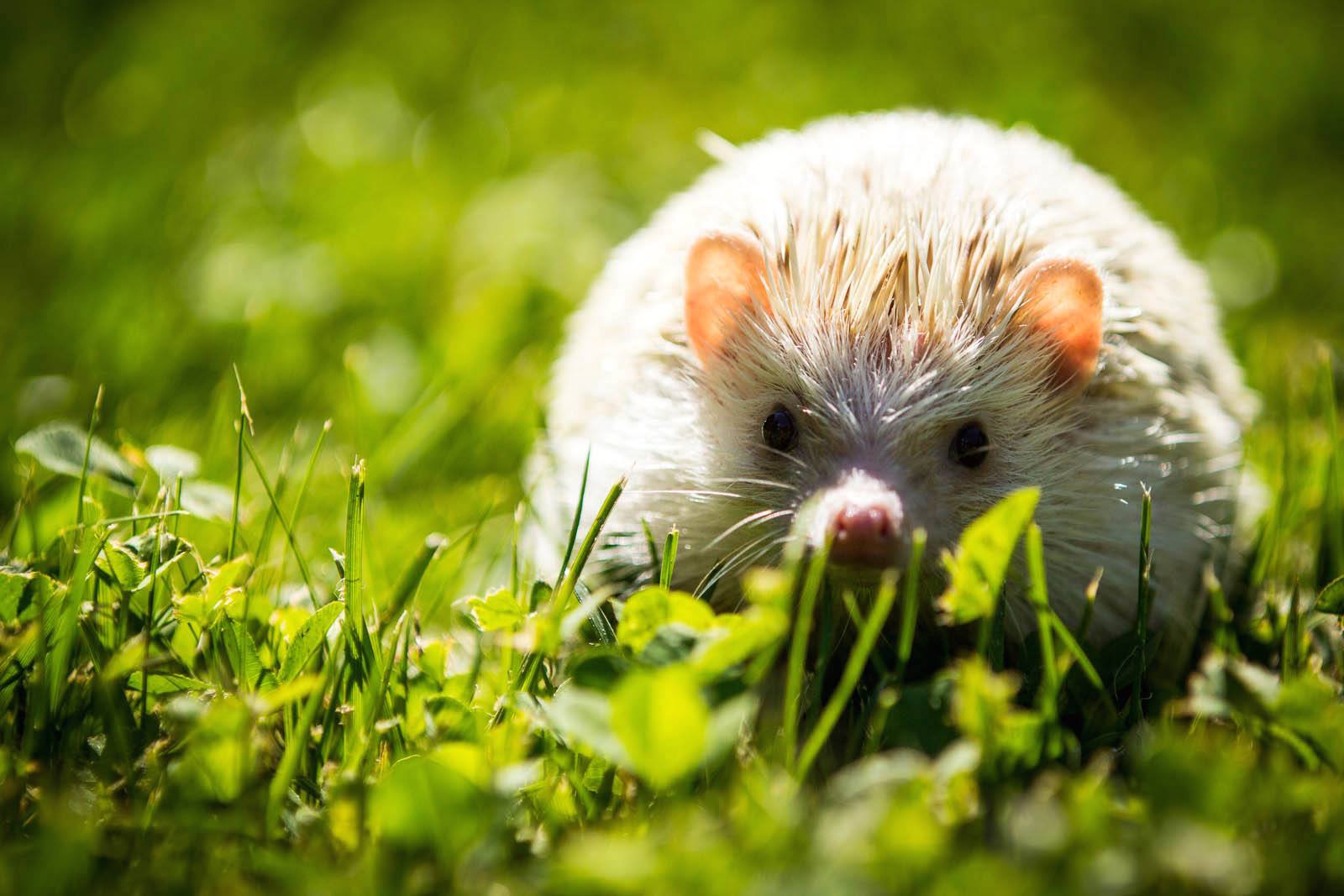
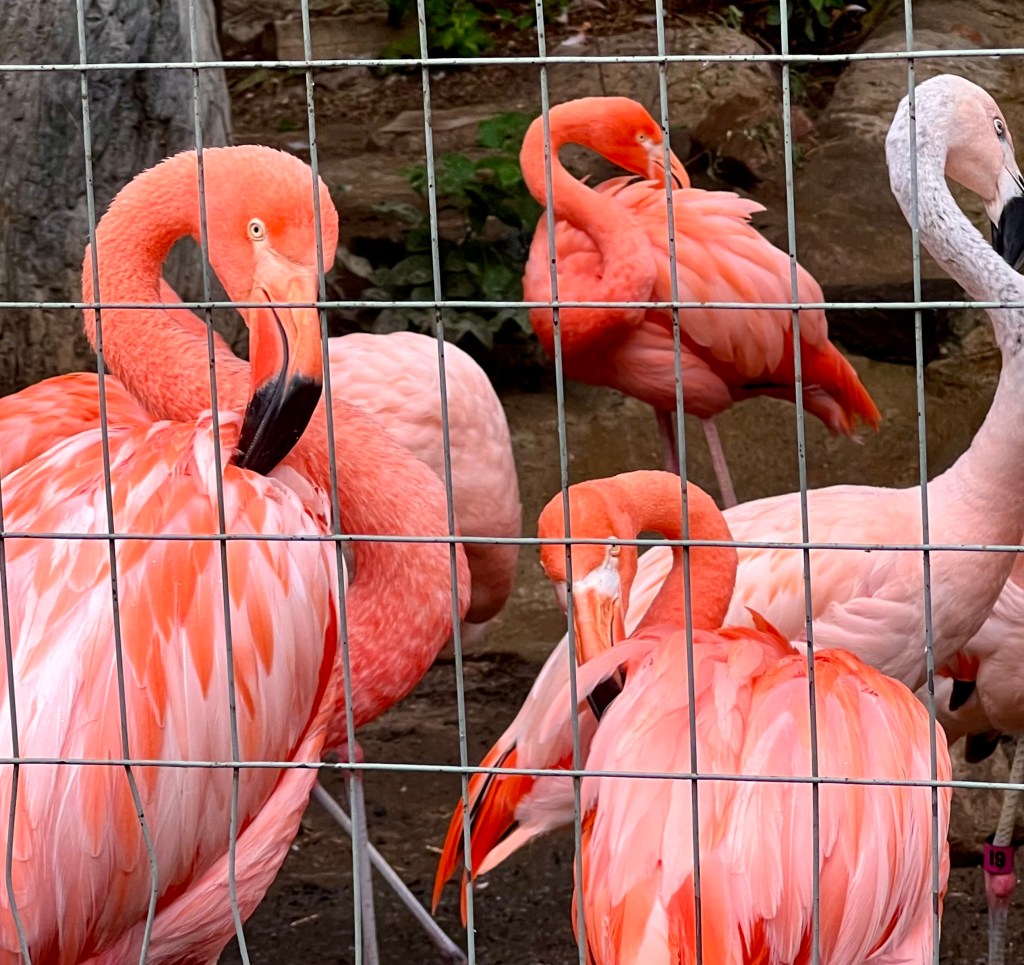
The chief difficulty Alice found at first was in managing her flamingo: she succeeded in getting its body tucked away, comfortably enough, under her arm, with its legs hanging down, but generally, just as she had got its neck nicely straightened out, and was going to give the hedgehog a blow with its head, it would twist itself round and look up in her face, with such a puzzled expression that she could not help bursting out laughing: and when she had got its head down, and was going to begin again, it was very provoking to find that the hedgehog had unrolled itself, and was in the act of crawling away…. Alice soon came to the conclusion that it was a very difficult game indeed. ~Lewis Carroll from Alice in Wonderland
Lewis Carroll Illustration
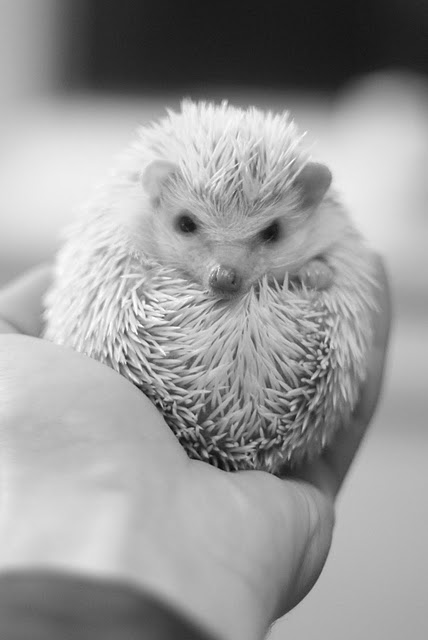
photo by Chris Duppenthaler
What a difficult game we find ourselves playing.
Does anyone understand the rules anymore?
Handed an uncooperative gangly mallet, our aim is hopelessly thwarted.
The furry round target takes one look, sees no point, so wanders off, seeking a friendlier game to play somewhere else.
These are absurd times for humans and hedgehogs.
photo by Chris Duppenthaler
One-Time
Monthly
Yearly
Make a one-time or recurring donation to support daily Barnstorming posts
Fall, leaves, fall; die, flowers, away; Lengthen night and shorten day; Every leaf speaks bliss to me Fluttering from the autumn tree. I shall smile when wreaths of snow Blossom where the rose should grow; I shall sing when night’s decay Ushers in a drearier day. ~Emily Brontë “Fall, Leaves, Fall”
It was not the thorn bending to the honeysuckles, but the honeysuckles embracing the thorn. ~Emily Brontë from Wuthering Heights
The loudest crows cawing over the tops of the oaks call me to autumn already, and though my back is to the window,
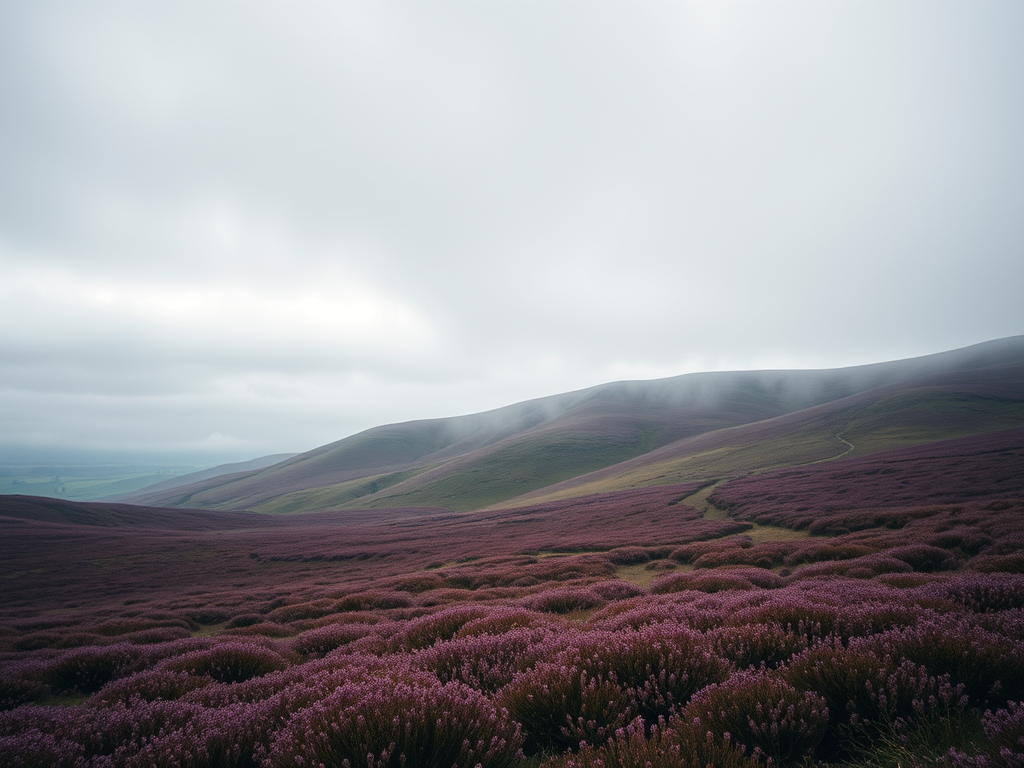
I know the sky must be a gray wuthering, and the curlews are crying. The wind must be moaning as it goes sweeping across heath and moors and the spikes of purple heather thousands of miles away from where my body sits; yet
I avoid watching sad movies and will close a book that is clearly heading for a weepy ending.
I don’t need to wrap myself around things that hurt when there is enough sadness and pain in the world already. Deep emotion sticks to me like velcro, even when I know the tragedy is not my own. I take it on as if it is.
As a result, the Brontë novel Wuthering Heights is not my cup of tea. I suffered through the book as well as the movie versions. It is grim with wild, destructive passions that only lead to more sorrow. I become immersed in those desperately gray “wuthering” scenes feeling the sharp thorns of the words I read that end up drawing blood from me.
But most suffering is not at all fictional. When I become aware of tragedy happening far away, when the hurricane leaves behind terrible devastation or bombs and bullets rip communities to shreds, even though there is little I can physically do to help, I can’t turn away and not look. I can’t close the book that makes me sad and uncomfortable.
I too must feel the hurt, embracing the thorns rather than avoiding them.
Jesus did just that, taking it all upon Himself. He never turned away and still, now, today, He is pierced, bloodied for our sake.
AI image created for this post
One-Time
Monthly
Yearly
Make a one-time or recurring donation to support daily Barnstorming posts
Now’s a good time, before the night comes on, To praise the loyalty of the vase of flowers Gracing the parlor table, and the bowl of oranges, And the book with freckled pages resting on the tablecloth. To remark how these items aren’t conspiring To pack their bags and move to a place Where stillness appears to more advantage. No plan for a heaven above, beyond, or within, Whose ever-blooming bushes are rustling In a sea breeze at this very moment. These things are focusing all their attention On holding fast as time washes around them. The flowers in the vase won’t come again. The page of the book beside it, the edge turned down, Will never be read again for the first time. The light from the window’s angled. The sun’s moving on. That’s why the people Who live in the house are missing. They’re all outside enjoying the light that’s left them. Lucky for them to find when they return These silent things just as they were. Night’s coming on and they haven’t been frightened off. They haven’t once dreamed of going anywhere. ~Carl Dennis, “Still Life” from Ranking the Wishes
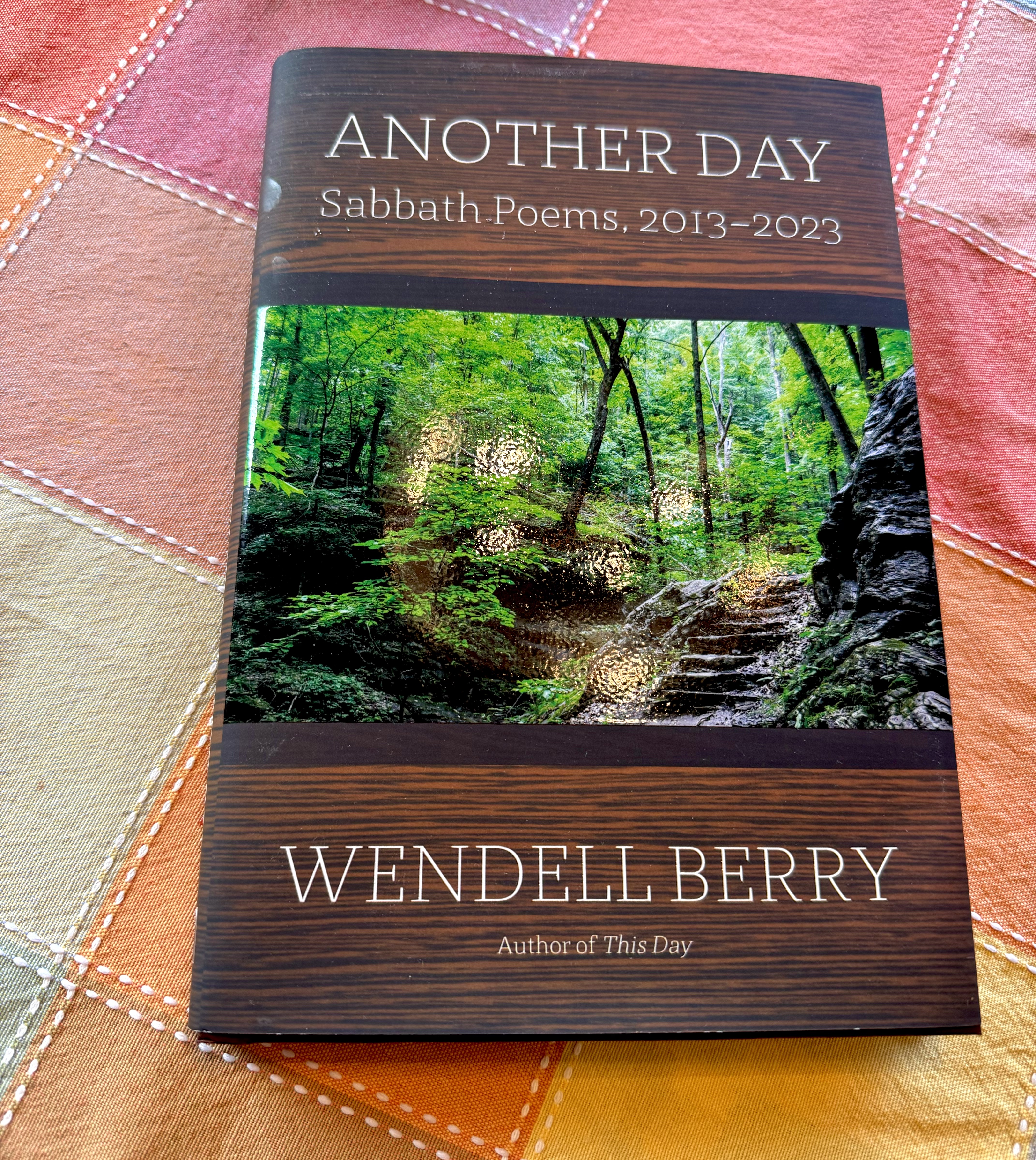
Wendell Berry – Another Day Sabbath Poems
The transformation of objects in space, or objects in time, To objects outside either, but tactile, still precise… It’s always the same problem – Nothing’s more abstract, more unreal, than what we actually see. The job is to make it otherwise. ~Charles Wright from “Basic Dialogue”in Appalachia
Annie Dillard – Pilgrim at Tinker Creek
Let us treasure the Light that is left to us, to dwell outside in its midst as night is coming.
Meanwhile, a still life exists within, unchanging, real, tangible, not going anywhere.
Stillness is always there if we decide to come in as the dark descends.
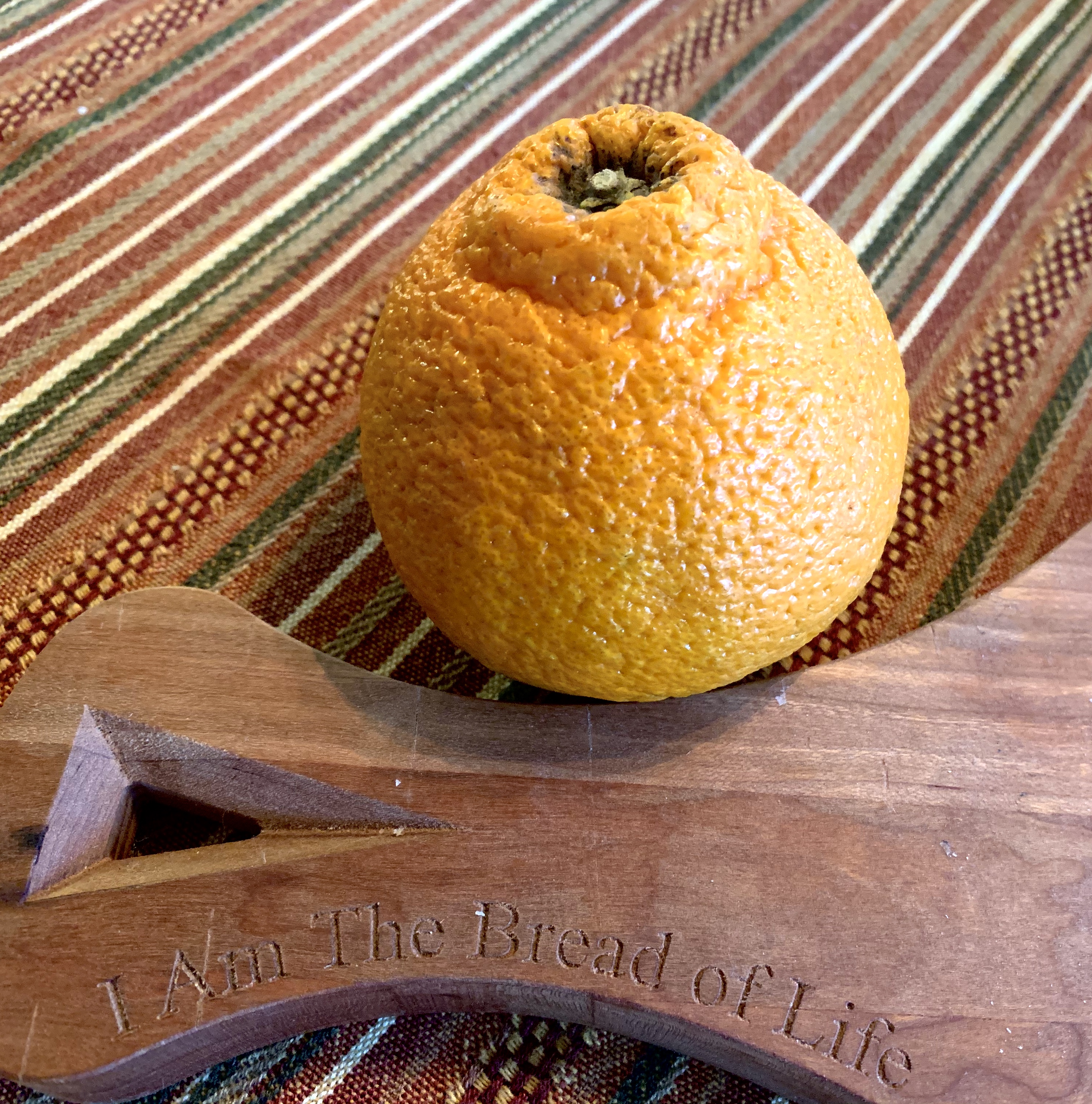
AI image created for this post
One-Time
Monthly
Yearly
Make a one-time or recurring donation to support daily Barnstorming posts
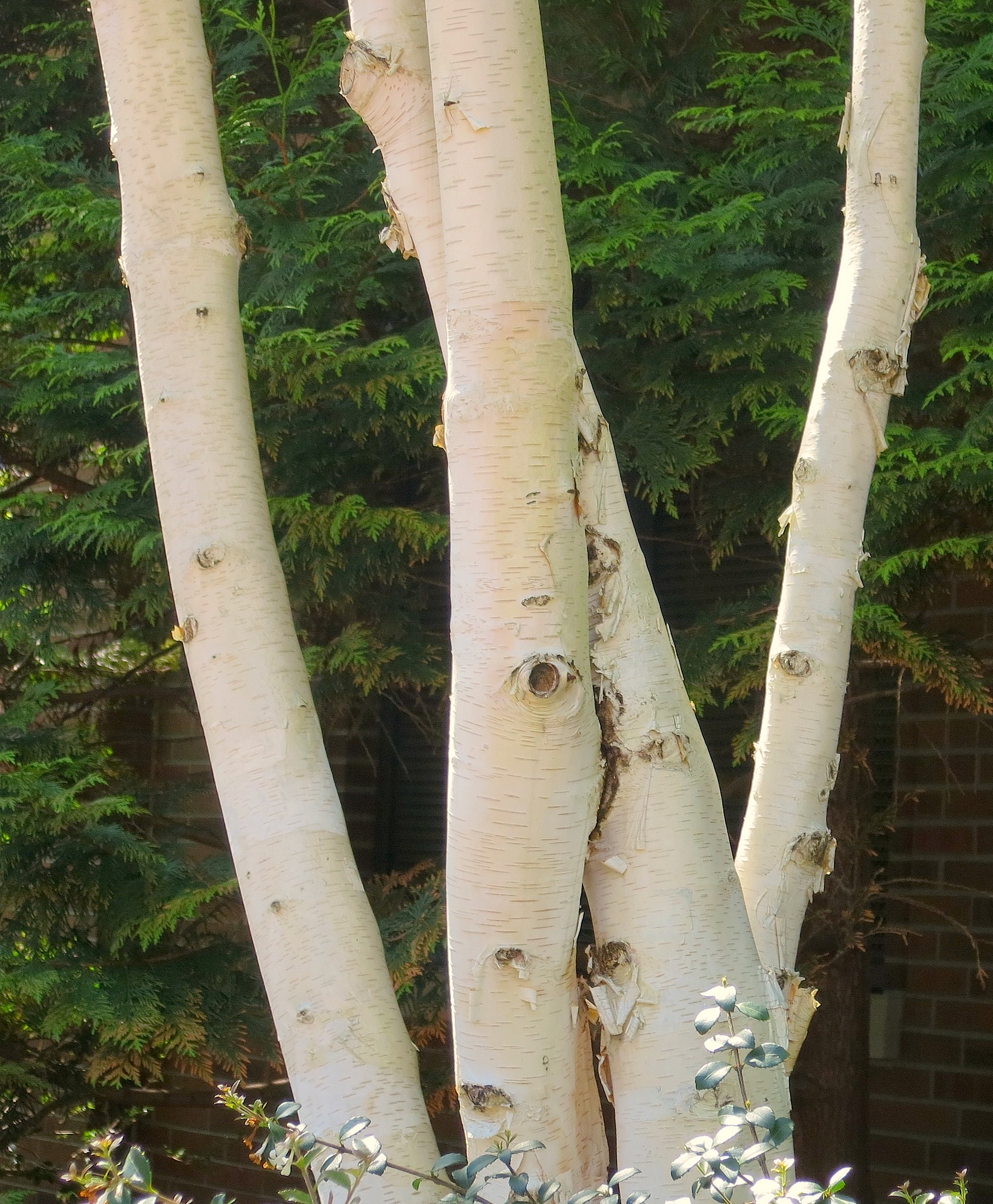
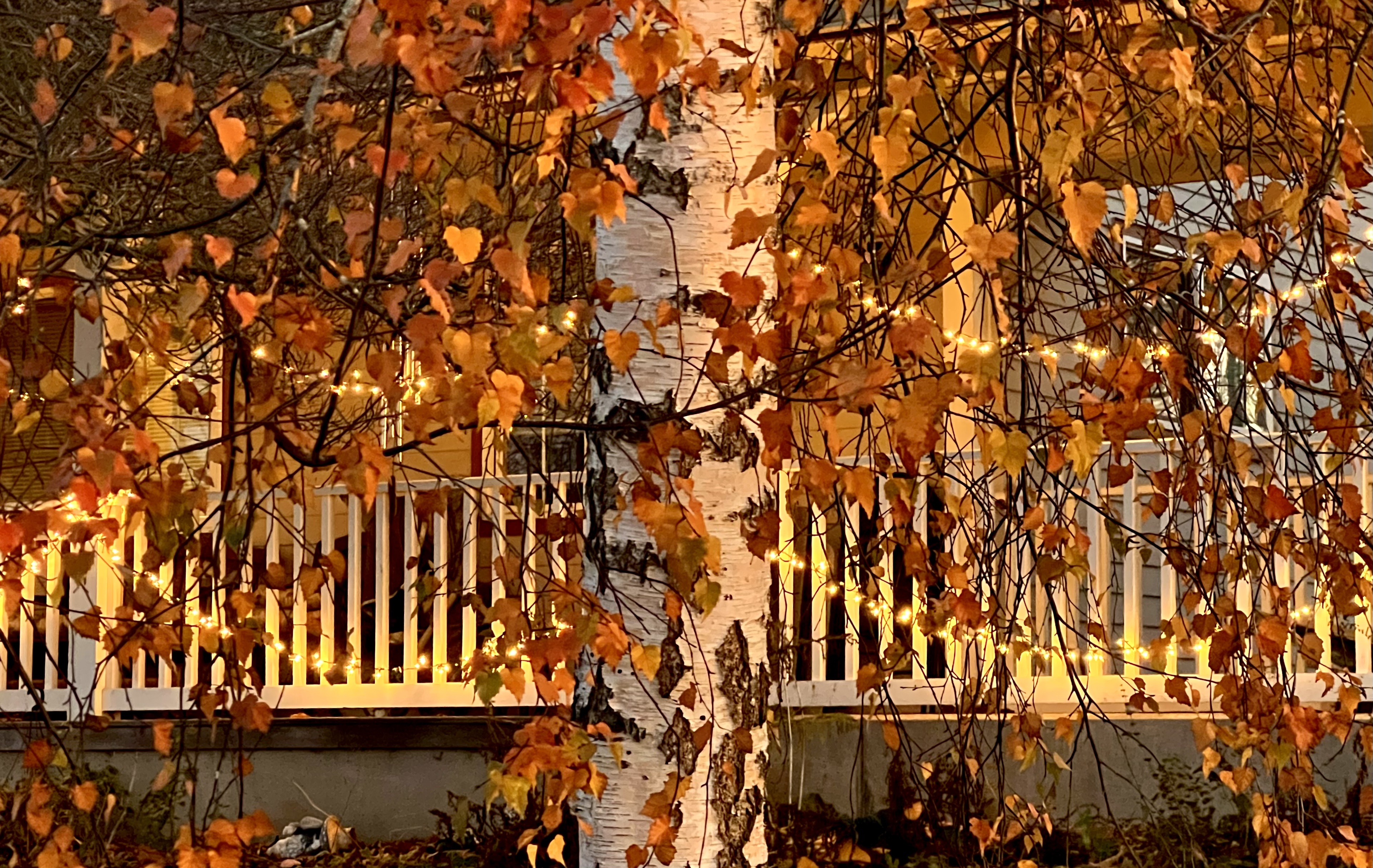
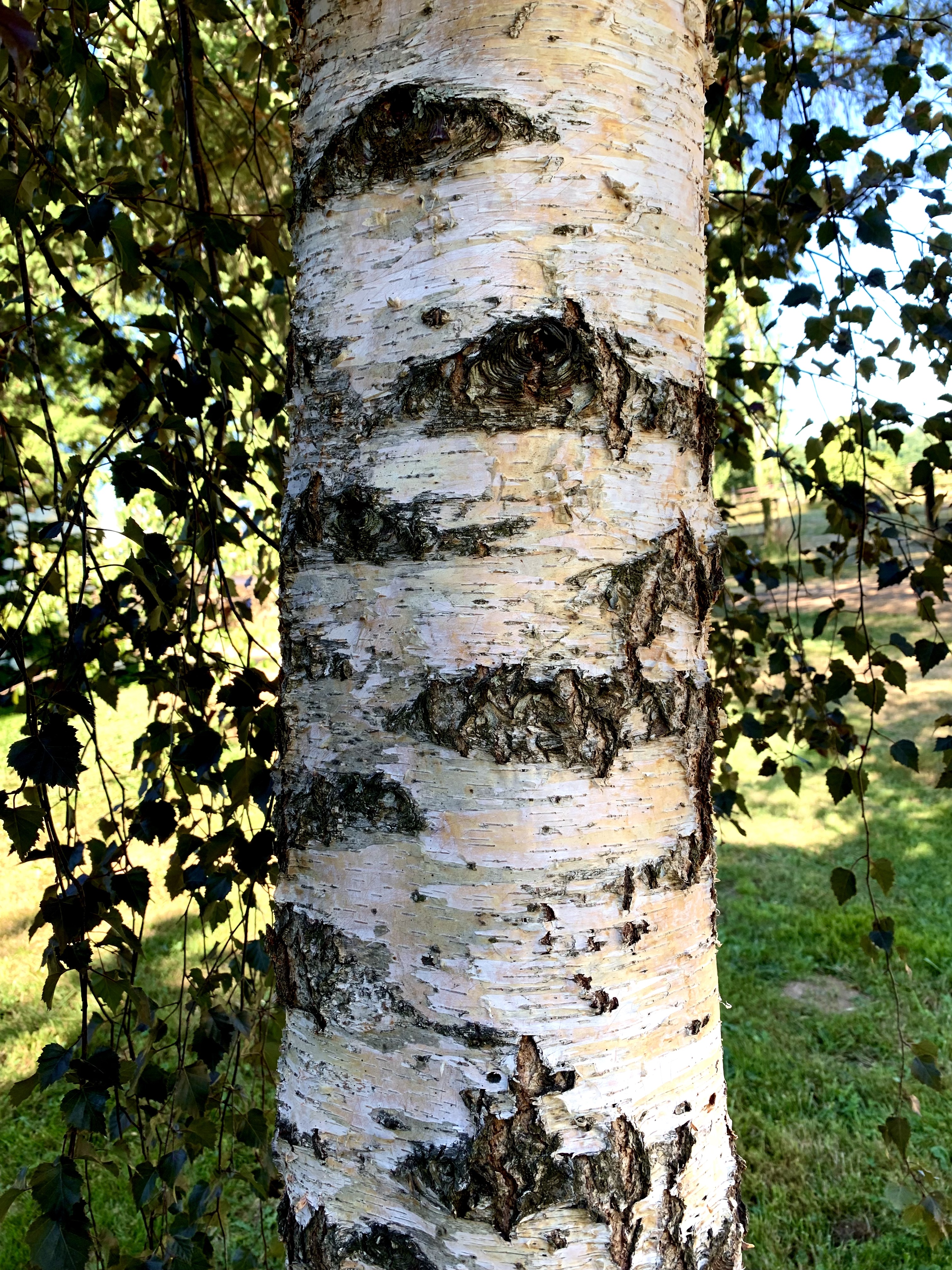
There are white birches outside my building. On a clear afternoon, the west sides of the slender trunks blaze with sunlight; the east sides glow with soft light reflected from the building windows. There is no darkness around these trees. Moss will never grow on them.
I hold up a sheet of paper, and it kindles bright on both sides.
I hold up a poem, and one side is lit by reflection from the faces of listeners. The other side is brilliant with divine radiance. In this transaction I illuminate nothing. My fingerprint on the paper is only a shadow. The poem is incandescent. The poem is a white birch. ~Tiel Aisha Ansari “Paper Birches” from Dervish Lions
So was I once myself a swinger of birches. And so I dream of going back to be. It’s when I’m weary of considerations, And life is too much like a pathless wood Where your face burns and tickles with the cobwebs Broken across it, and one eye is weeping From a twig’s having lashed across it open.
I’d like to get away from earth awhile And then come back to it and begin over. May no fate willfully misunderstand me And half grant what I wish and snatch me away Not to return. Earth’s the right place for love: I don’t know where it’s likely to go better.
I’d like to go by climbing a birch tree, And climb black branches up a snow-white trunk Toward heaven, till the tree could bear no more, But dipped its top and set me down again. That would be good both going and coming back. One could do worse than be a swinger of birches. ~Robert Frost from “Birches”
I ask them to take a poem and hold it up to the light like a color slide or press an ear against its hive.
I say drop a mouse into a poem and watch him probe his way out, or walk inside the poem’s room and feel the walls for a light switch.
I want them to waterski across the surface of a poem waving at the author’s name on the shore.
But all they want to do is tie the poem to a chair with rope and torture a confession out of it. They begin beating it with a hose to find out what it really means. ~Billy Collins “Introduction to Poetry”
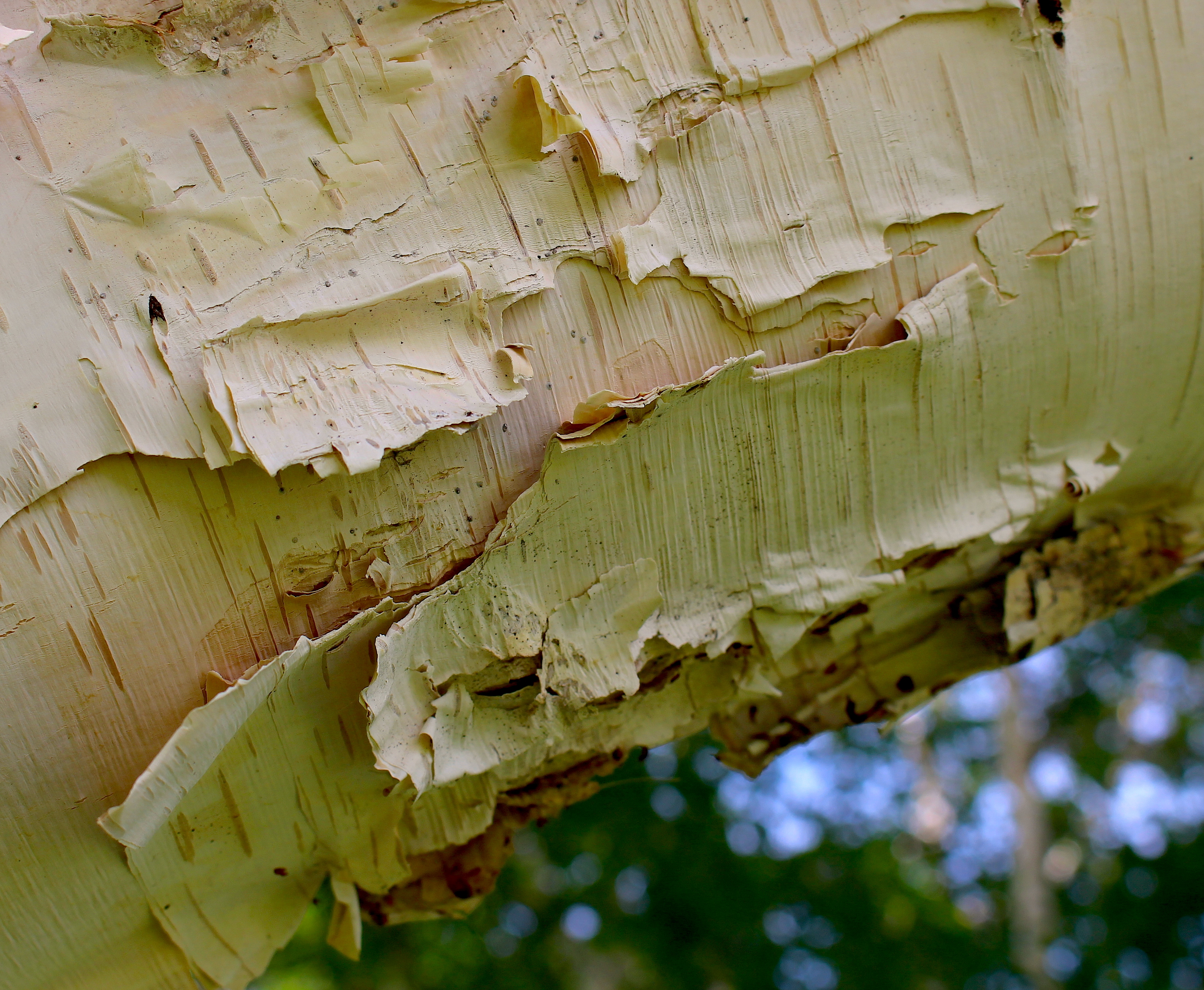
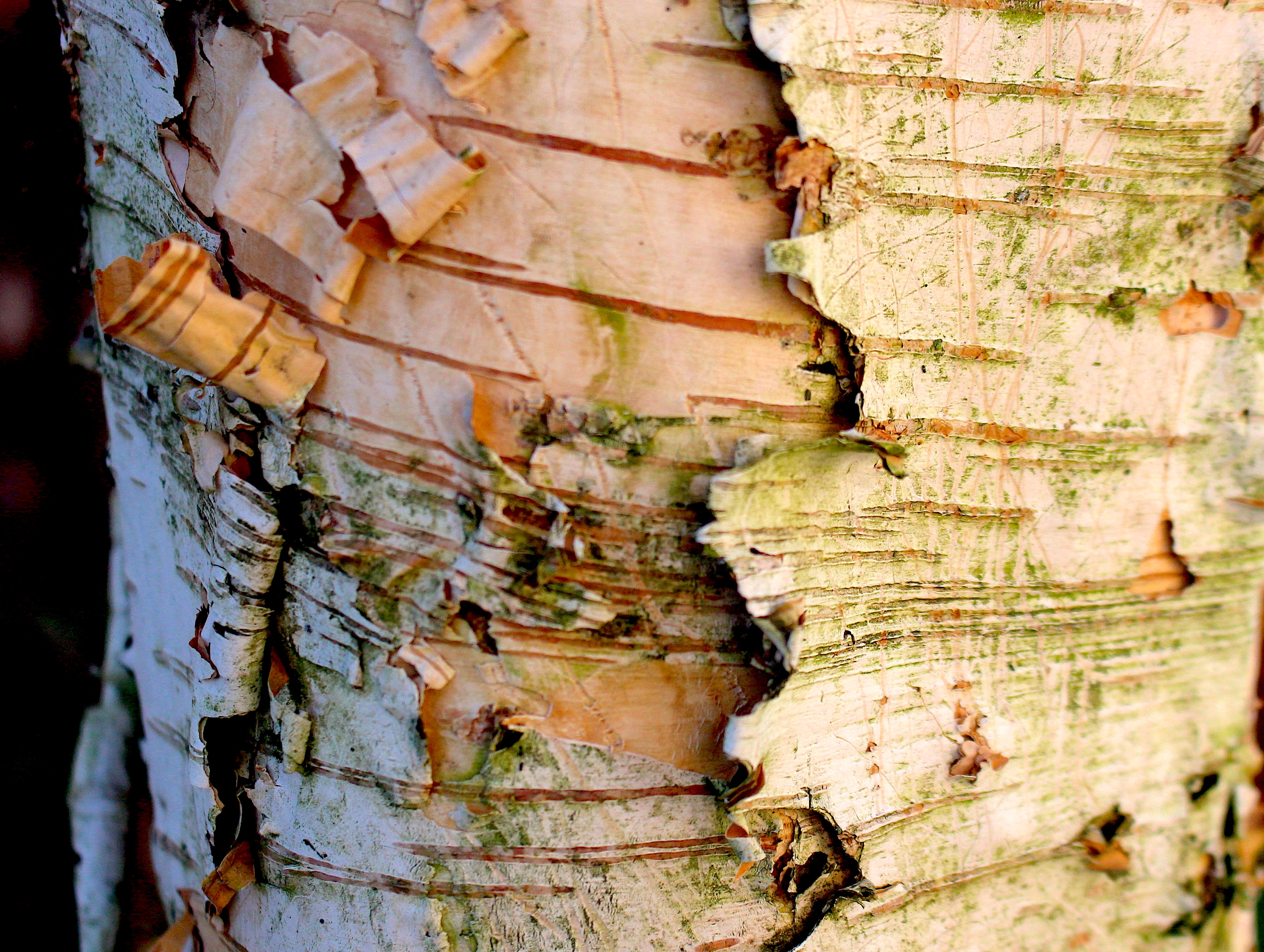
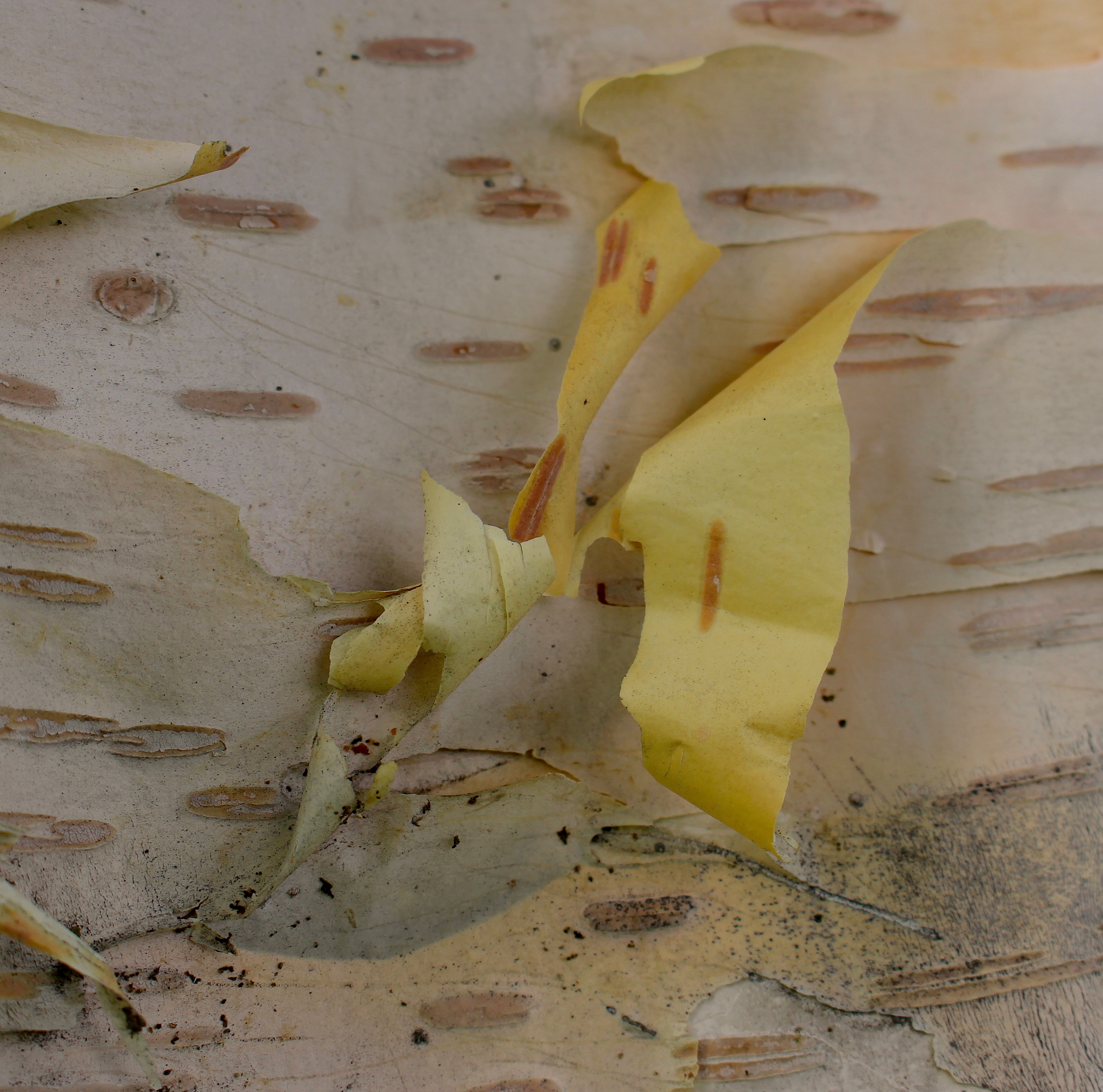
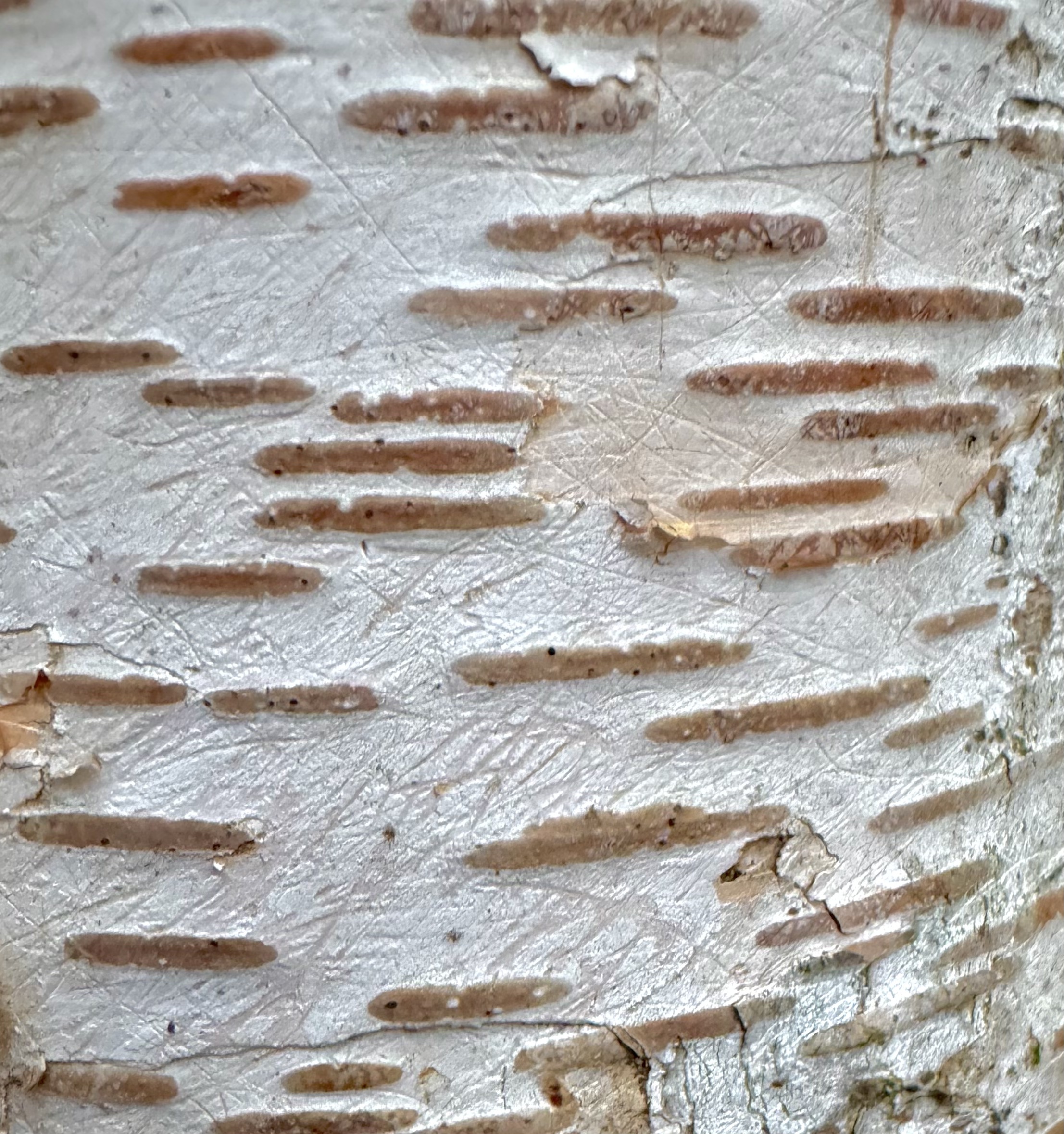
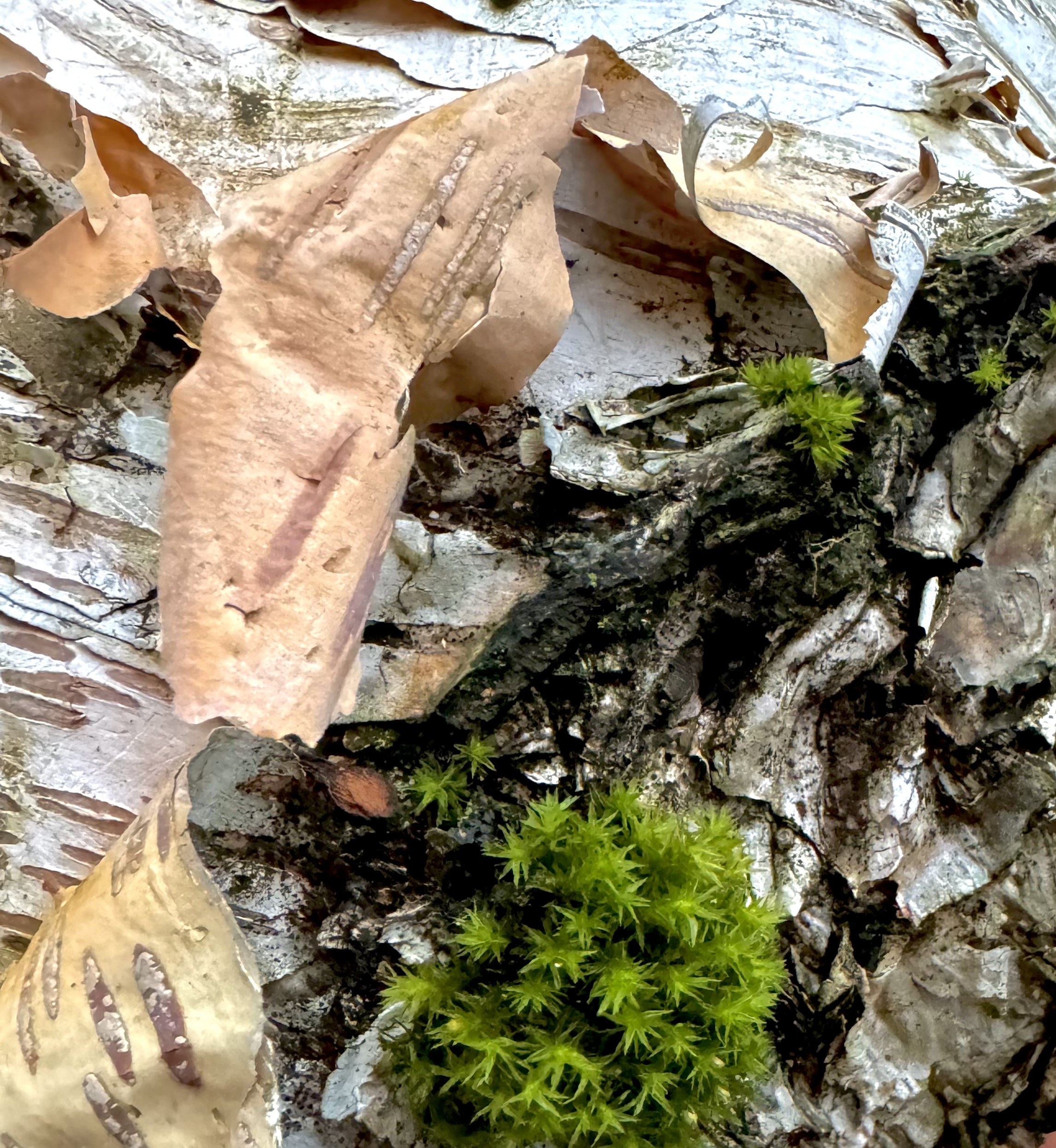
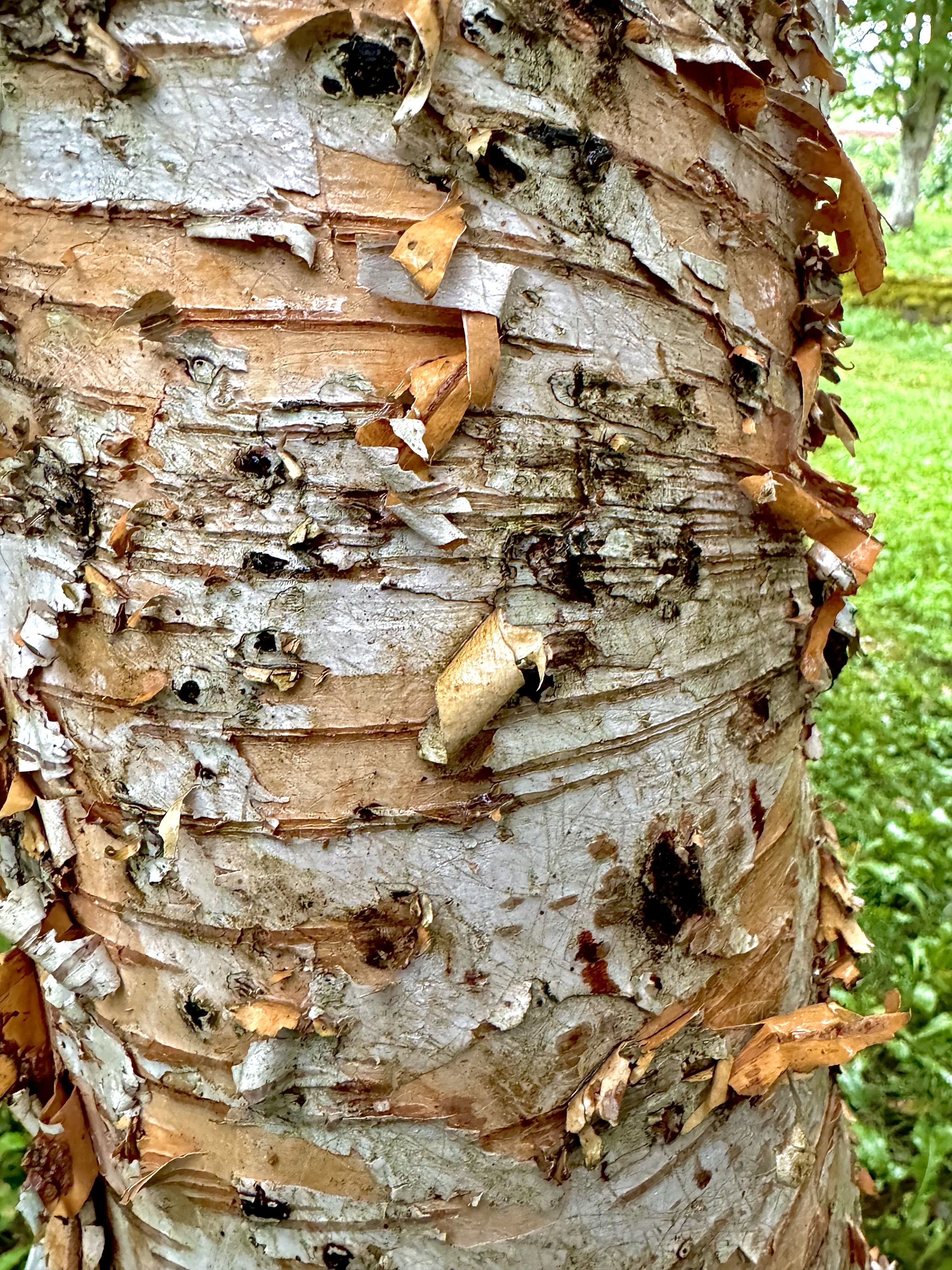
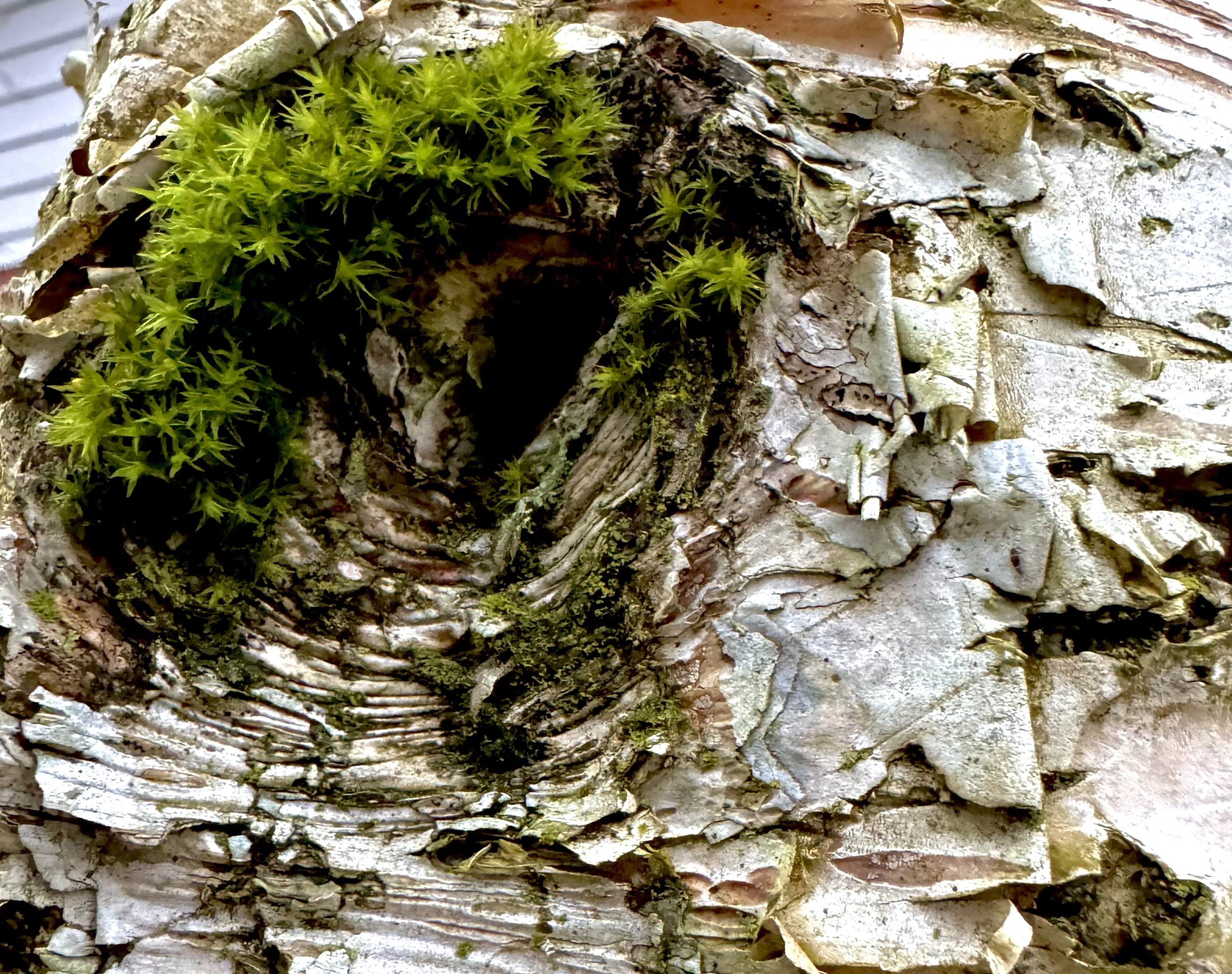
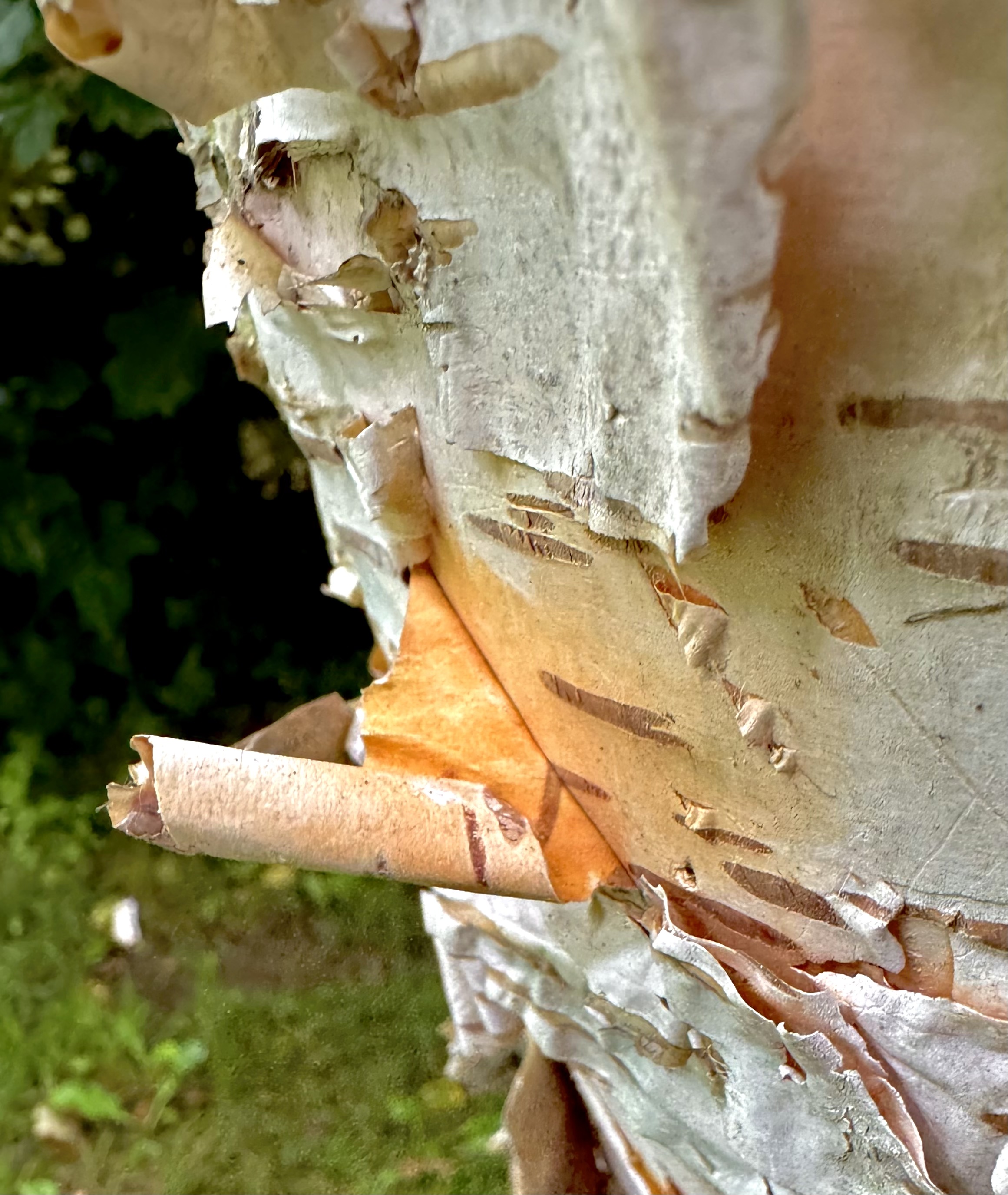
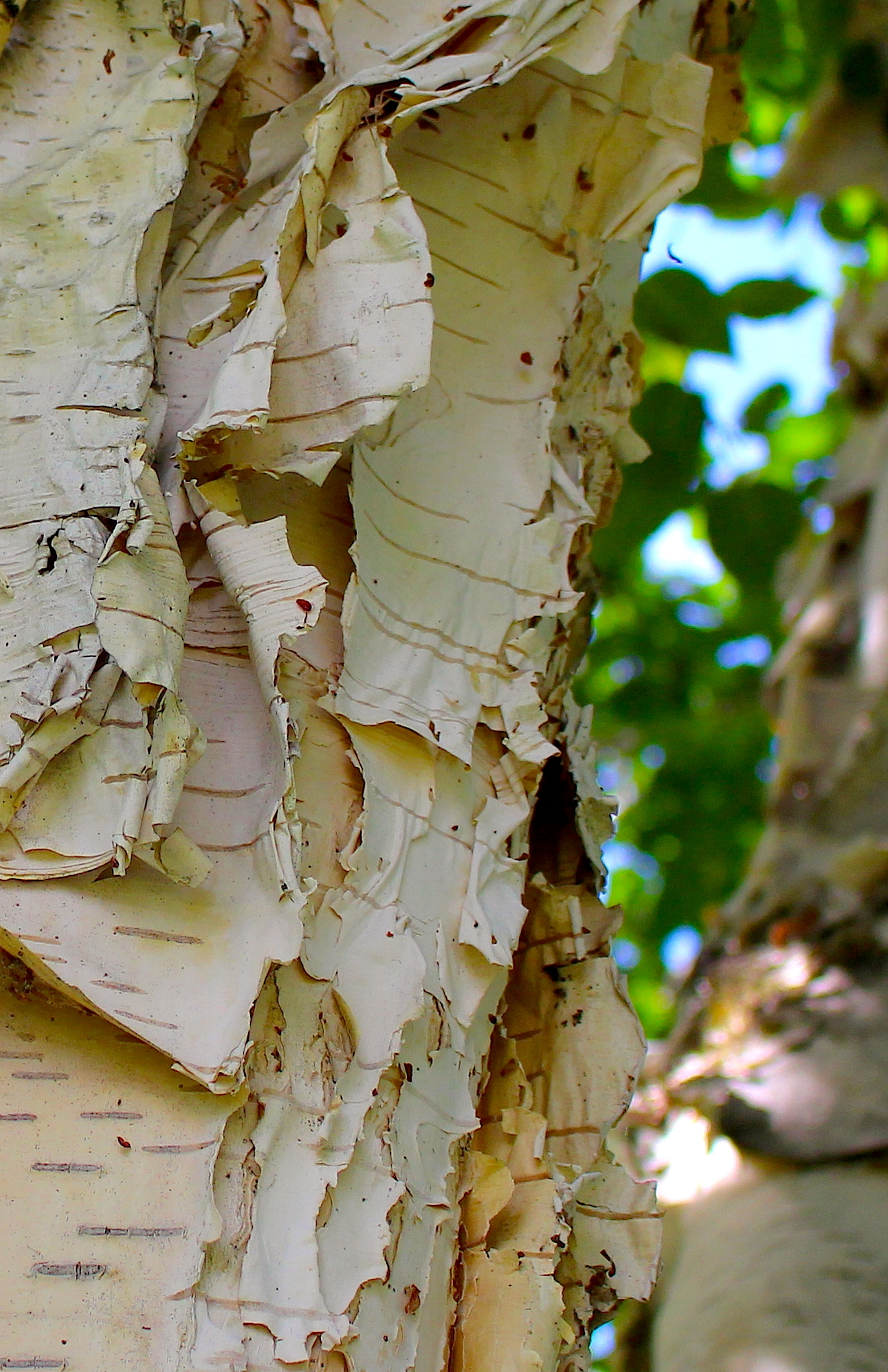
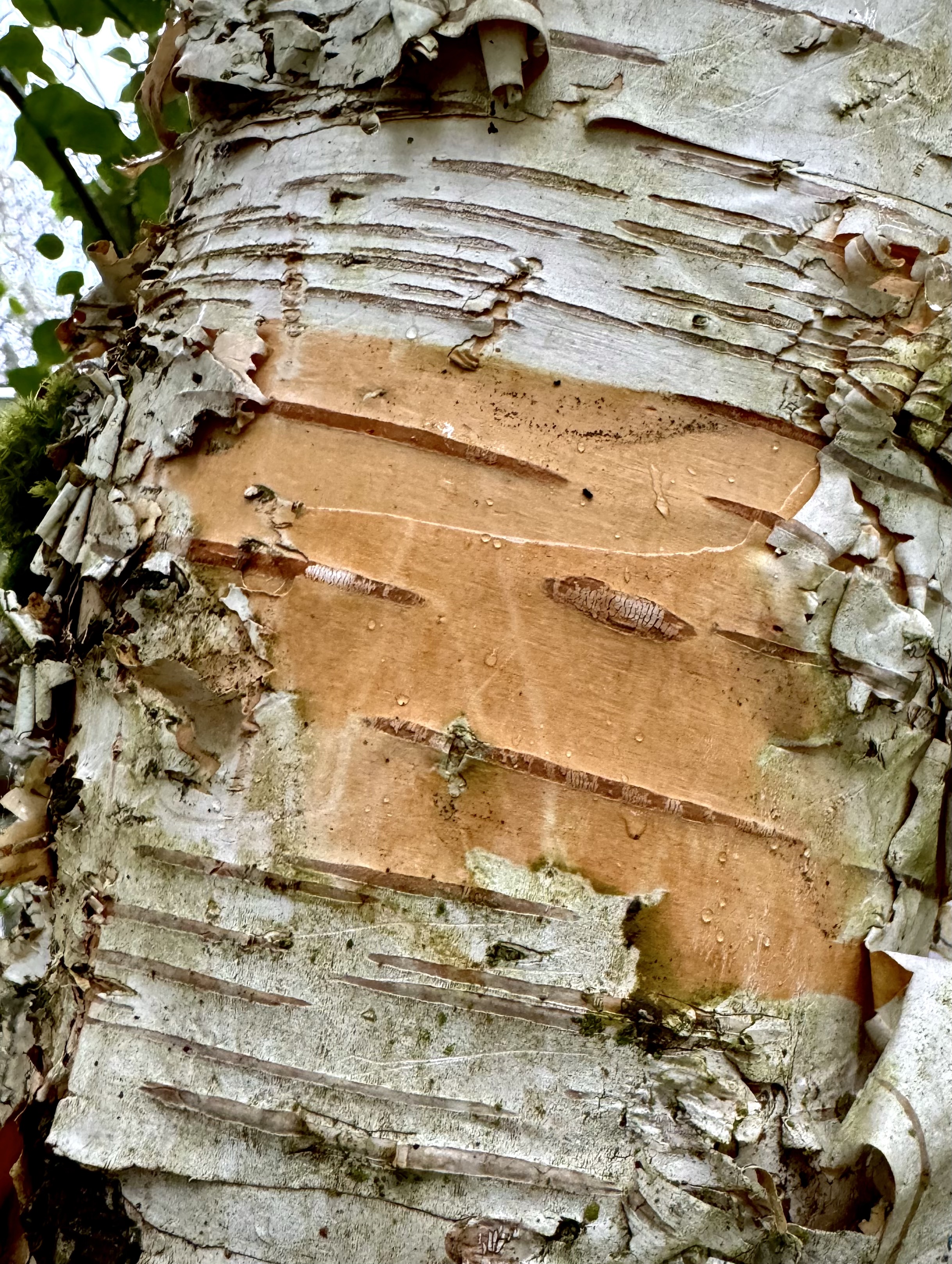
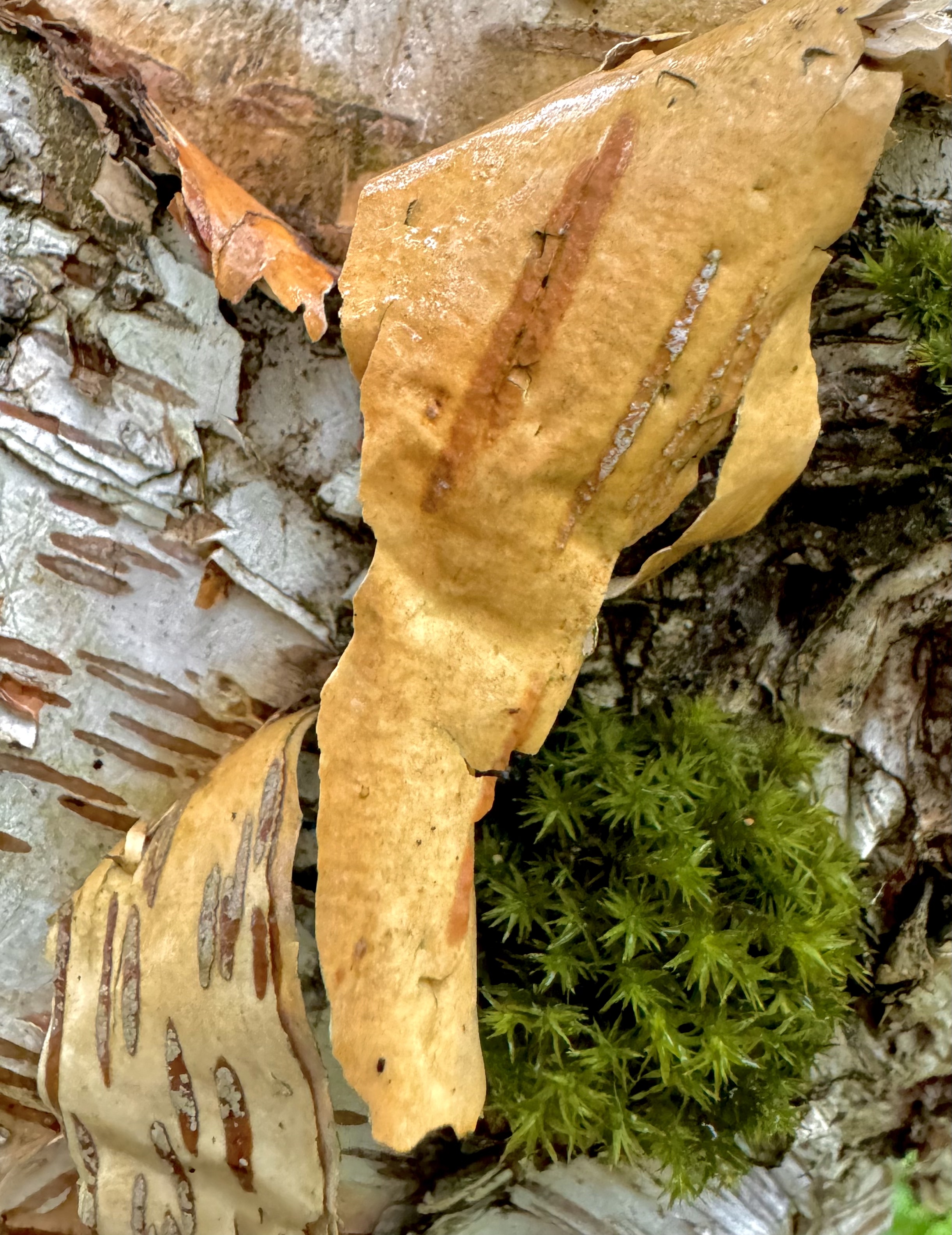
I’ve considered writing a poem down on the peeling birch paper still attached to the tree.
Although it tends to peel off the trunk in scroll-like rolls, I would leave it in place on the tree to see what eventually happens to my words. They may simply bleach out in the sun, melt in the rains, or blow away with the winter winds to eventually randomly land in someone’s field or in a nearby stream.
Or the words may hang tight to the trunk, waiting in place for a new bark skin to grow wrinkly over it, creating a new surface to compose something anew.
The reality is anything I write here on this blog, or on a notebook page, or on the paper of a birch tree, is faint shadow compared to the Words spoken and written by the Author of us all – birch trees and humans.
Incandescent divine radiant eternal Words of Love.
One-Time
Monthly
Yearly
Make a one-time or recurring donation to support daily Barnstorming posts
Just looking at them I grow greedy, as if they were freshly baked loaves waiting on their shelves to be broken open—that one and that—and I make my choice in a mood of exalted luck, browsing among them like a cow in sweetest pasture.
For life is continuous as long as they wait to be read—these inked paths opening into the future, page after page, every book its own receding horizon. And I hold them, one in each hand, a curious ballast weighting me here to the earth. ~Linda Pastan “The Bookstall” from Carnival Evening
…for people who love books and need To touch them, open them, browse for a while, And find some common good––that’s why we read. Readers and writers are two sides of the same gold coin. You write and I read and in that moment I find A union more perfect than any club I could join: The simple intimacy of being one mind. Here in a book-filled sun-lit room below the street, Strangers––some living, some dead––are hoping to meet. ~Garrison Keillor
You know who you are.
You are the person who stockpiles stacks of books on the bedside table and next to your favorite chair.
The person who sacrifices sleep to read just one more page.
The person who reads the cereal box when nothing else is available near the breakfast table.
The girl who falls into an uncovered manhole walking down a busy street while reading.
The objects of your affection may be as precious as the Book of Kells.
or as sappy as an Archie and Jughead comic book.
It’s the words, the words, that keep zipping by, telegraphing
an urgent message:What’s next? What’s next? ~Lois Edstrom “Bookworm” from Almanac of Quiet Days
Most of my life has been a reading rather than a writing life. For too many decades, I spent most of my time reading scientific and medical journals, to keep up with the changing knowledge in my profession. Even as a retired physician, I try to spend an hour a day reading medical articles but now have the time to dabble in books of memoir, biography, poetry and the occasional novel.
As a reader, I am no longer a stranger to the author or poet whose words I read. In a few instances, I’ve had the honor and privilege to meet my favorite authors in real life and to interact with them on line. Some are friends on the page as well as in my life.
I am no longer a stranger to many of you who read my words here on Barnstorming every day – I have been able to meet a number of you over the years. There is no greater privilege than to share our stories with one another.
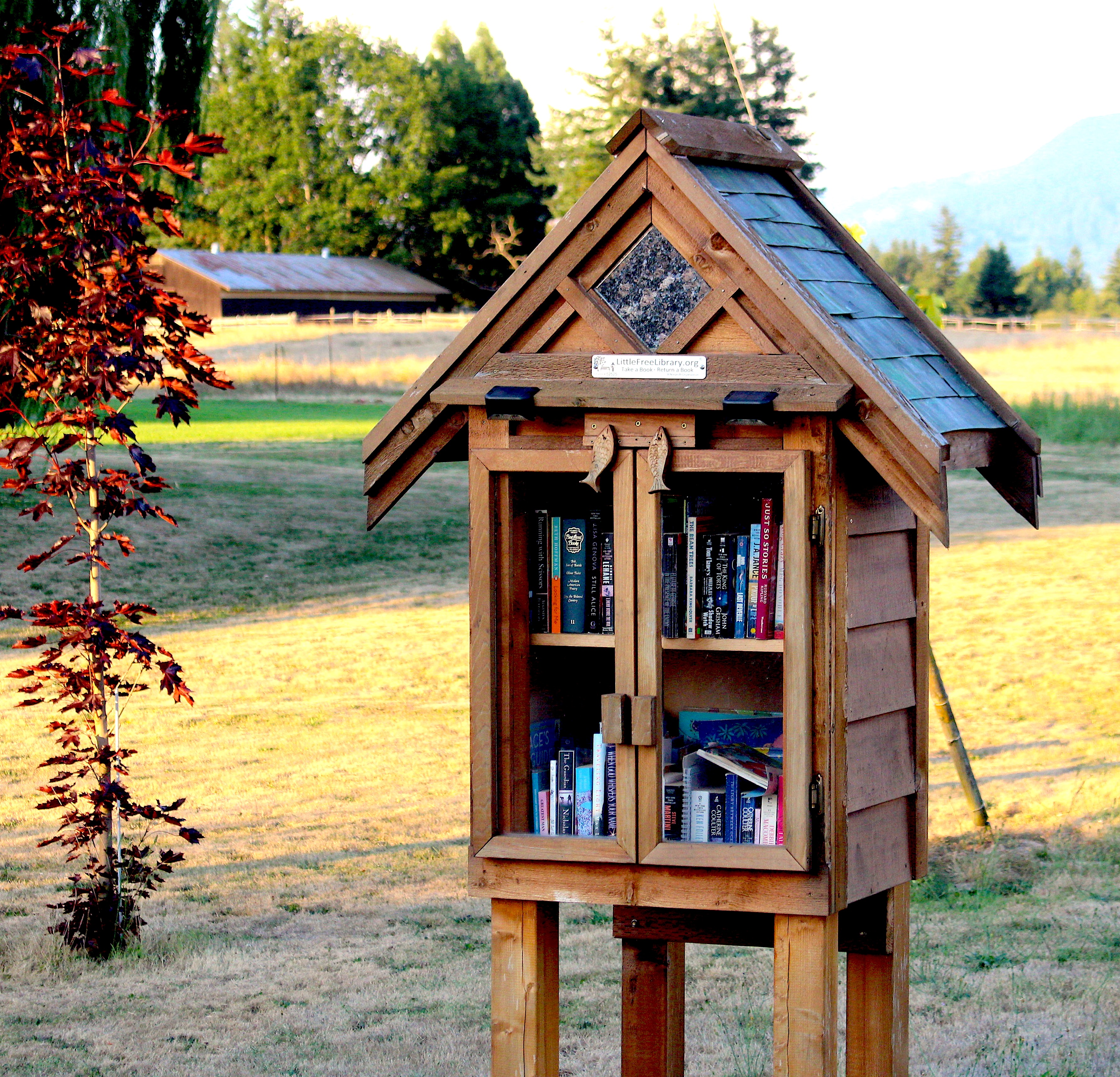
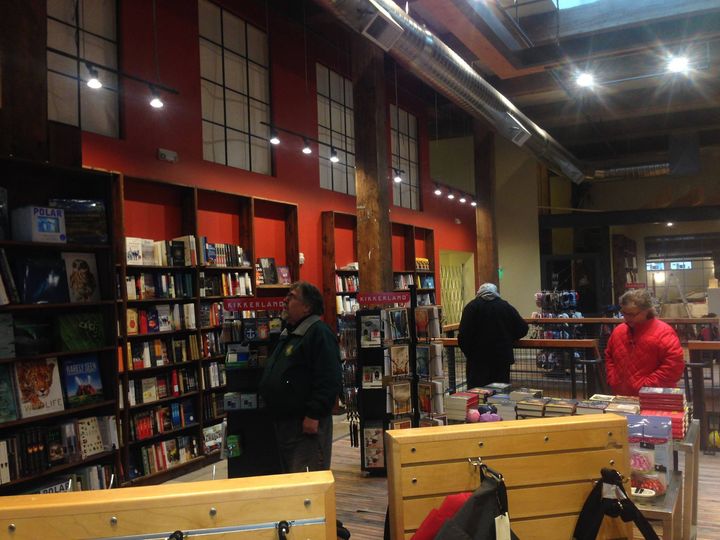
No matter where I discover books – in an independent bookstore, in a little free library standing along the roadside, or inside the world’s treasured libraries filled with books of antiquity – I seek out the privileged sanctuary of turning page after page written by those who graciously give me a glimpse of their inner world.
If librarians were honest, they would say, No one spends time here without being changed. Maybe you should go home. While you still can. ~Joseph Mills from “If Librarians Were Honest”
One-Time
Monthly
Yearly
Make a one-time or recurring donation to support daily Barnstorming posts
Perhaps as a child you had the chicken pox and your mother, to soothe you in your fever or to help you fall asleep, came into your room and read to you from some favorite book, Charlotte’s Web or Little House on the Prairie, a long story that she quietly took you through until your eyes became magnets for your shuttering lids and she saw your breathing go slow. And then she read on, this time silently and to herself, not because she didn’t know the story, it seemed to her that there had never been a time when she didn’t know this story—the young girl and her benevolence, the young girl in her sod house— but because she did not yet want to leave your side though she knew there was nothing more she could do for you. And you, not asleep but simply weak, listened to her turn the pages, still feeling the lamp warm against one cheek, knowing the shape of the rocking chair’s shadow as it slid across your chest. So that now, these many years later, when you are clenched in the damp fist of a hospital bed, or signing the papers that say you won’t love him anymore, when you are bent at your son’s gravesite or haunted by a war that makes you wake with the gun cocked in your hand, you would like to believe that such generosity comes from God, too, who now, when you have the strength to ask, might begin the story again, just as your mother would, from the place where you have both left off. ~Keetje Kuipers “Prayer” from Rattle #28, Winter 2007
These autumn days will shorten and grow cold. The leaves will shake loose from the trees and fall. Christmas will come, then the snows of winter. You will live to enjoy the beauty of the frozen world, for you mean a great deal to Zuckerman and he will not harm you, ever. Winter will pass, the days will lengthen, the ice will melt in the pasture pond. The song sparrow will return and sing, the frogs will awake, the warm wind will blow again. All these sights and sounds and smells will be yours to enjoy,Wilbur — this lovely world, these precious days … ~E.B. White (Charlotte talking to Wilbur) from Charlotte’s Web
Each passing moment is precious, as time flows relentlessly.
We, on a linear trajectory from birth to death, bear witness to the cycling of the seasons while earth spins and orbits through space.
The story of me, and the story of you, is not yet finished. While our heads nod, our eyelids become heavy, the Author is turning the pages, reading resonant Words that define our days.
We pick up where we left off, wanting to hear the next unknowable chapter. We try to stay awake, eager to see what comes next.
We aren’t quite ready to fall asleep, not yet. Not yet…
One-Time
Monthly
Yearly
Make a one-time or recurring donation to support daily Barnstorming posts
On the first day I took his class on Native American Mythology and Lore in 1974 at Stanford, a tall, young N.Scott Momaday strolled to the front, wrote the 60 words of an Emily Dickinson poem “Further in Summer”on the blackboard. He told us we would spend at least a week working out the meaning of what he considered the greatest poem written — this in a class devoted to Native American writing and oral tradition. In his resonant bass, he read the poem to us many times, rolling the words around his mouth as if to extract their sweetness. This man of the plains, a member of the Kiowa tribe, loved this poem put together by a New England recluse poet — someone as culturally distant from him and his people as possible.
But grace works to unite us, no matter our differences, and Scott knew this as he led us, mostly white students, through the poem. What on the surface appears a paean to late summer insect droning – doomed to extinction by the desolation of oncoming winter – is a statement of the transcendence of man beyond our understanding of nature and the world in which we, its creatures, find ourselves. As summer begins its descent into the dark death of winter, we, unlike cicadas and crickets, become all too aware we too are descending. There is no one as lonely as an individual facing their mortality and no one as lonely as a poet facing the empty page, in search of words to describe the sacrament of sacrifice and perishing.
Yet the written Word is not silent; the Word brings Grace unlike any other, even when the summer, pathetic and transient as it is, is gone. The Word brings Grace, like no other, to pathetic and transient man who will emerge transformed.
There is no furrow on the glow. There is no need to plow and seed our salvaged souls, already lovingly planted by our Creator God, yielding a fruited plain.
Scott was one of my most remarkable and influential teachers, teaching me to trust memories, to use the best words, and to describe beauty as best I can. I know his words will forever live on.
…<Dickinson’s Further in Summer is> one of the great poems of American literature. The statement of the poem is profound; it remarks the absolute separation between man and nature at a precise moment in time. The poet looks as far as she can into the natural world, but what she sees at last is her isolation from that world. She perceives, that is, the limits of her own perception. But that, we reason, is enough. This poem of just more than sixty words comprehends the human condition in relation to the universe:
“So gradual the Grace A pensive Custom it becomes Enlarging Loneliness.“
But this is a divine loneliness, the loneliness of a species evolved far beyond all others. The poem bespeaks a state of grace. In its precision, perception and eloquence it establishes the place of words within that state. Words are indivisible with the highest realization of human being. ~N.Scott Momaday from The Man Made of Words
Dearly. How was it used? Dearly beloved. Dearly beloved, we are gathered. Dearly beloved, we are gathered here in this forgotten photo album I came upon recently.
Dearly beloved, gathered here together in this closed drawer, fading now, I miss you. I miss the missing, those who left earlier. I miss even those who are still here. I miss you all dearly. Dearly do I sorrow for you.
Sorrow: that’s another word you don’t hear much anymore. I sorrow dearly. ~Margaret Atwood from “Dearly”
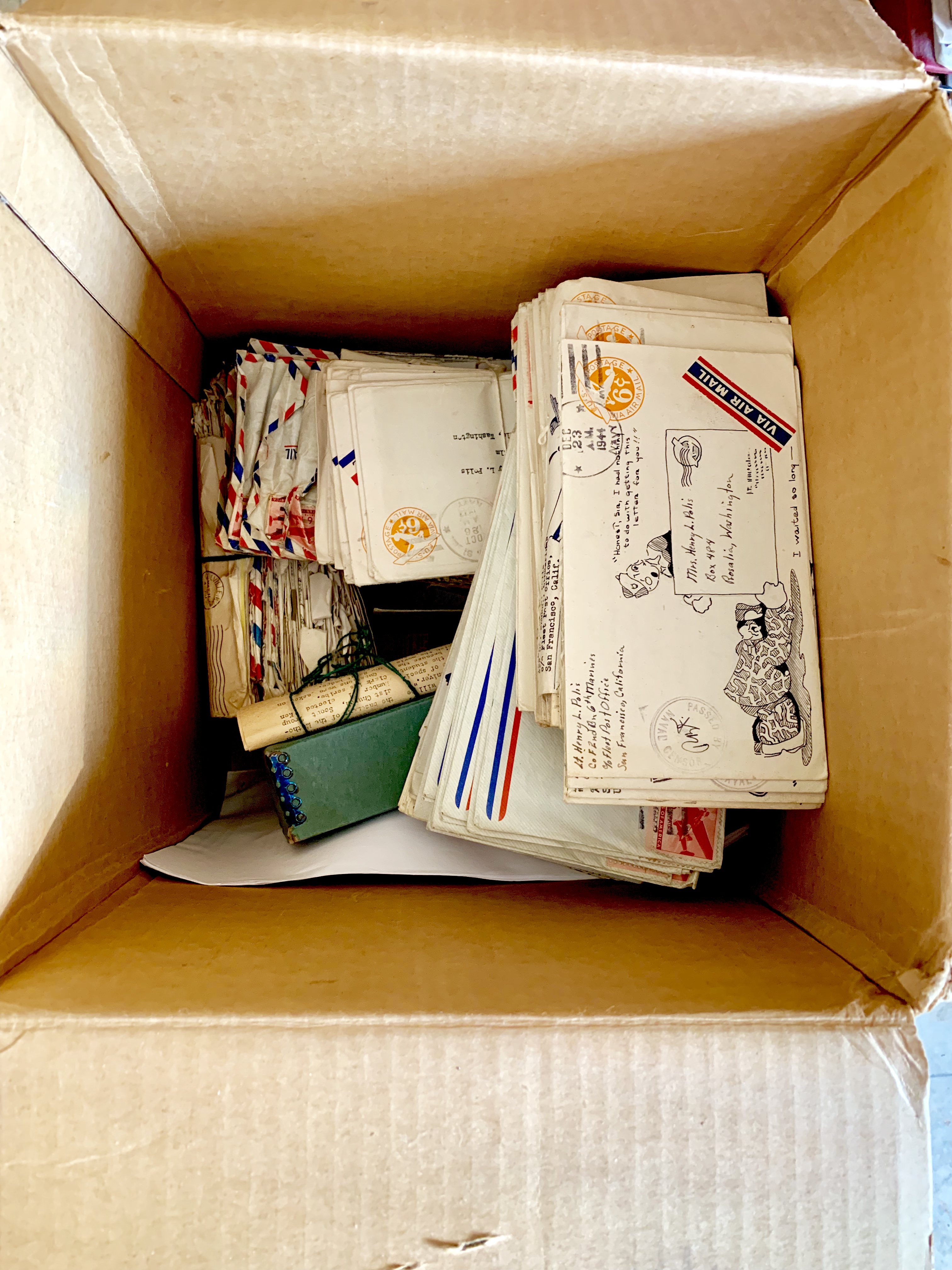
All day we packed boxes. We read birth and death certificates. The yellowed telegrams that announced our births, the cards of congratulations and condolences, the deeds and debts, love letters, valentines with a heart ripped out, the obituaries. We opened the divorce decree, a terrible document of division and subtraction. We leafed through scrapbooks: corsages, matchbooks, programs to the ballet, racetrack, theater—joy and frivolity parceled in one volume— painstakingly arranged, preserved and pasted with crusted glue. We sat in the room in which the beloved had departed. We remembered her yellow hair and her mind free of paradox. We sat together side by side on the empty floor and did not speak. There were no words between us other than the essence of the words from the correspondences, our inheritance—plain speak, bereft of poetry. ~Jill Bialosky “The Guardians” from The Players.
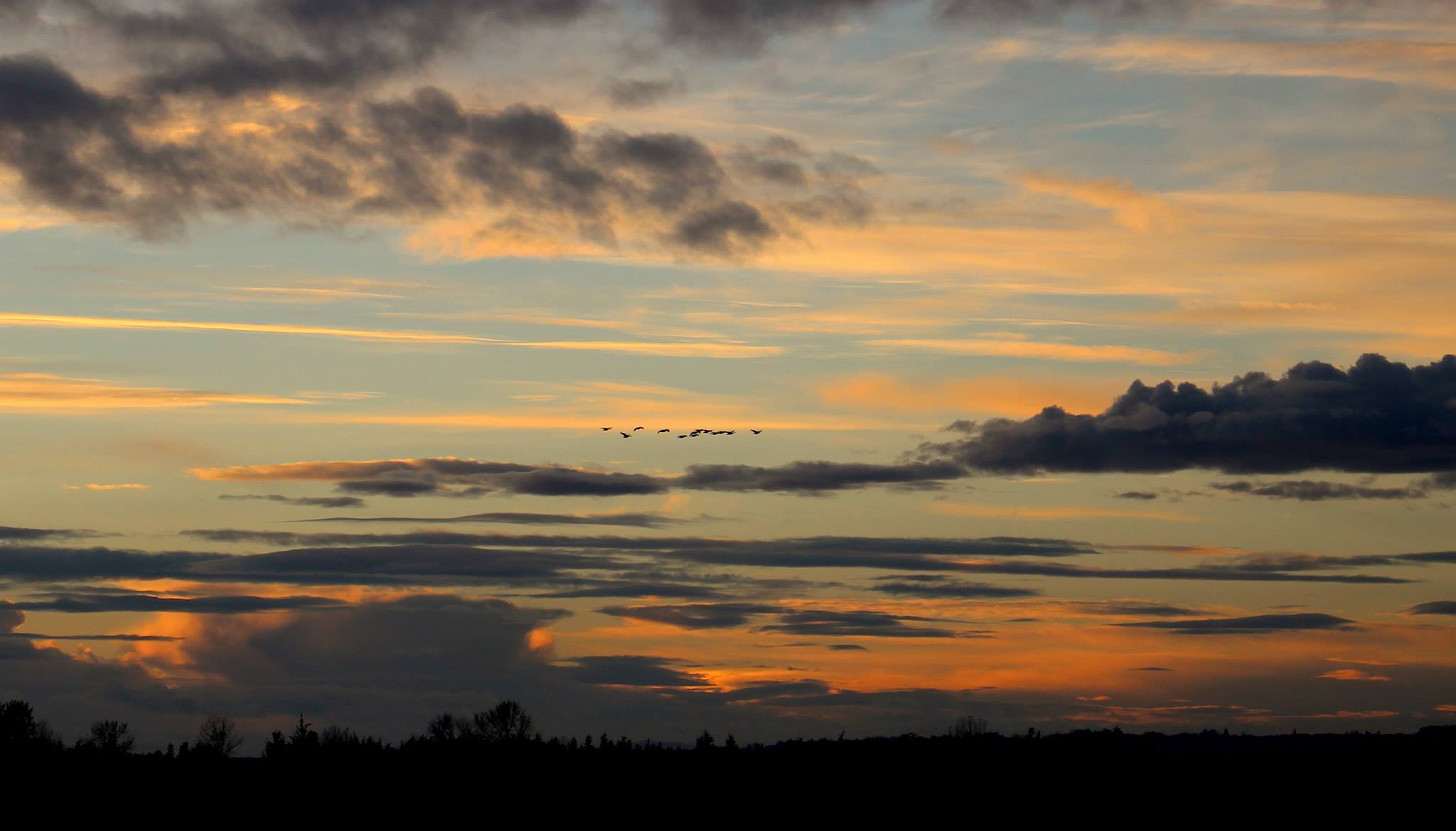
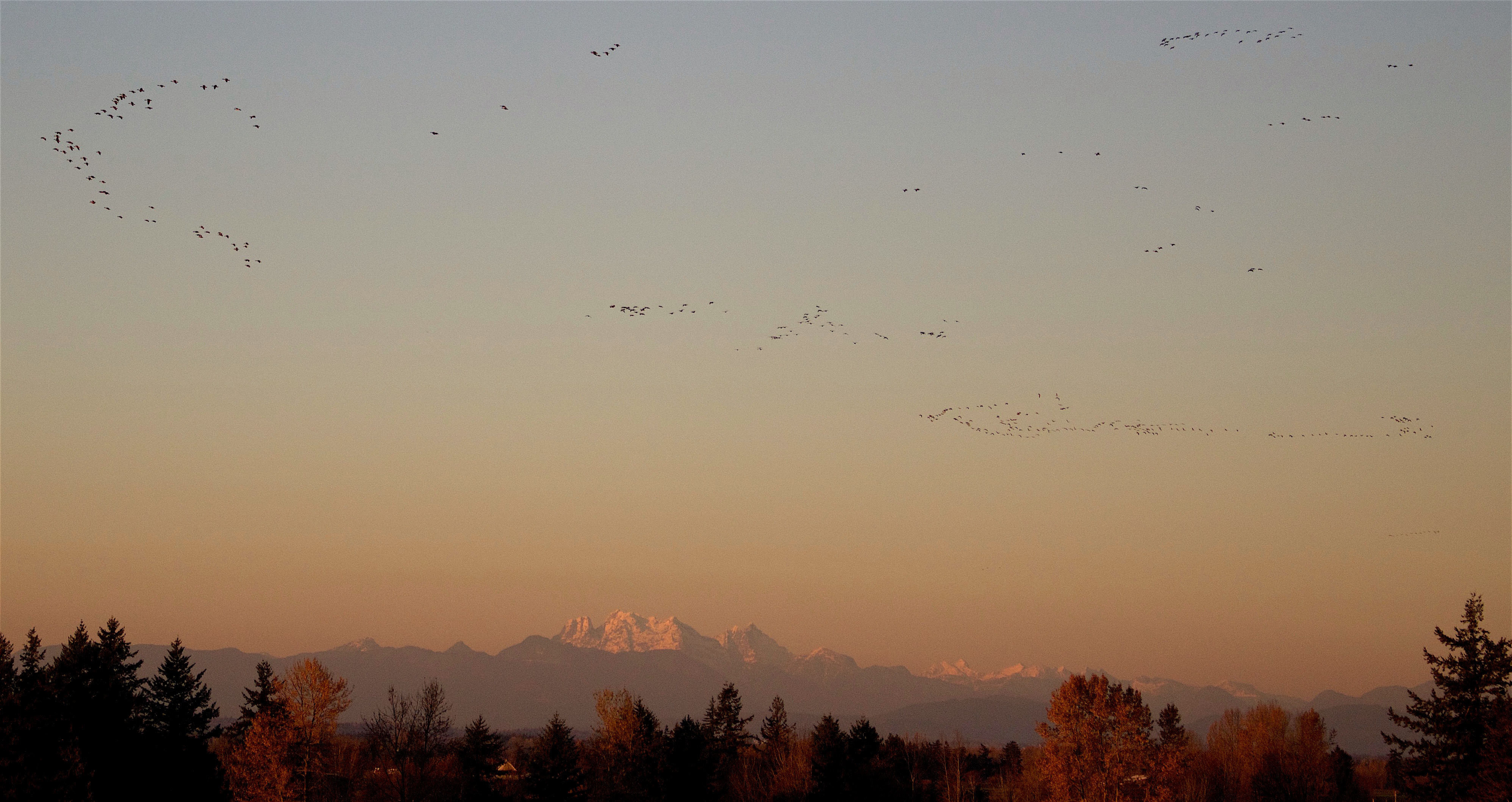
This time of year, huge flocks of migrating birds pass noisily overhead, striving together in their united effort to reach home. I envy their shared instinct to gather together with purpose.
Human families can be far more scattered and far less harmonious, yet still plenty noisy.
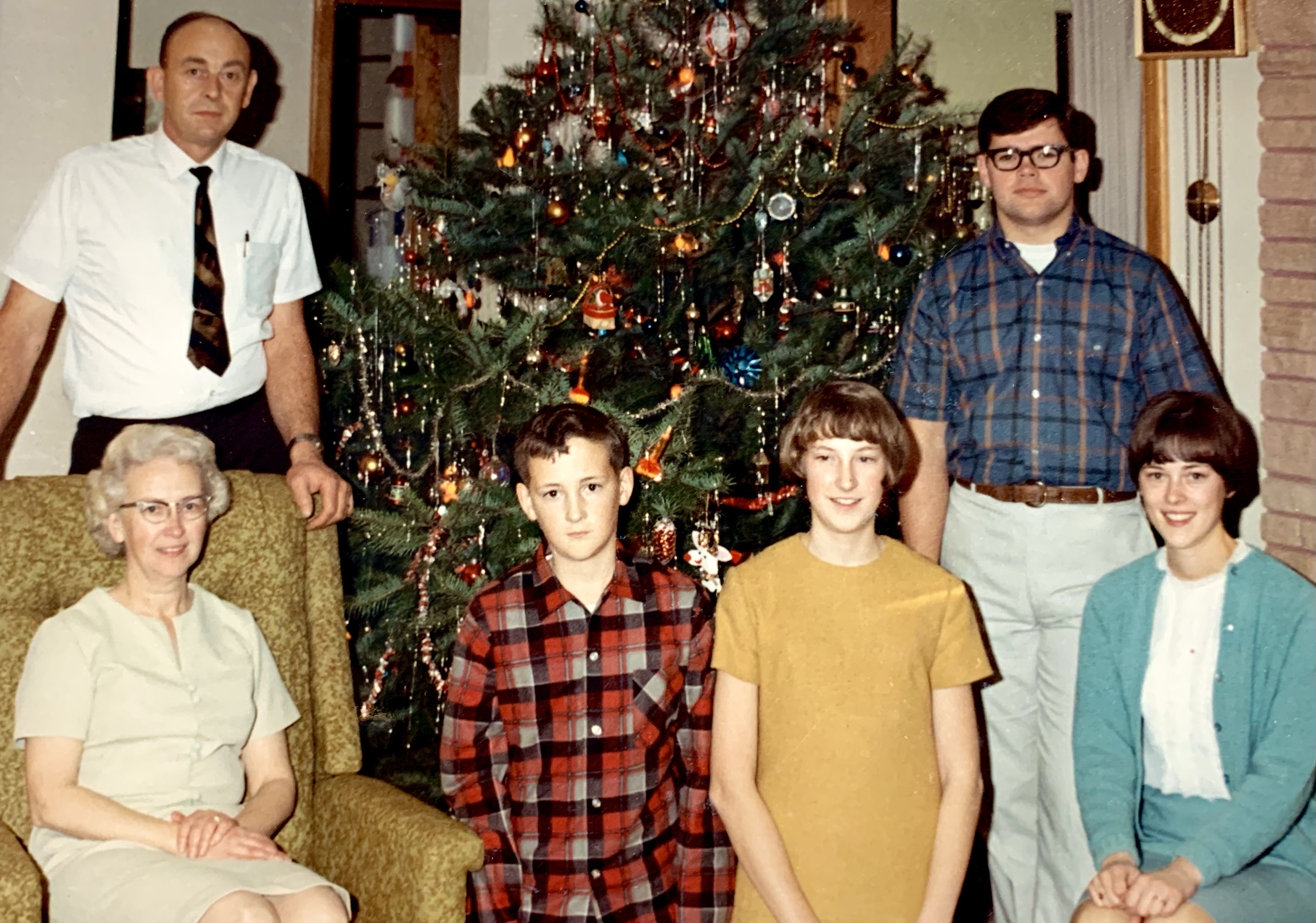
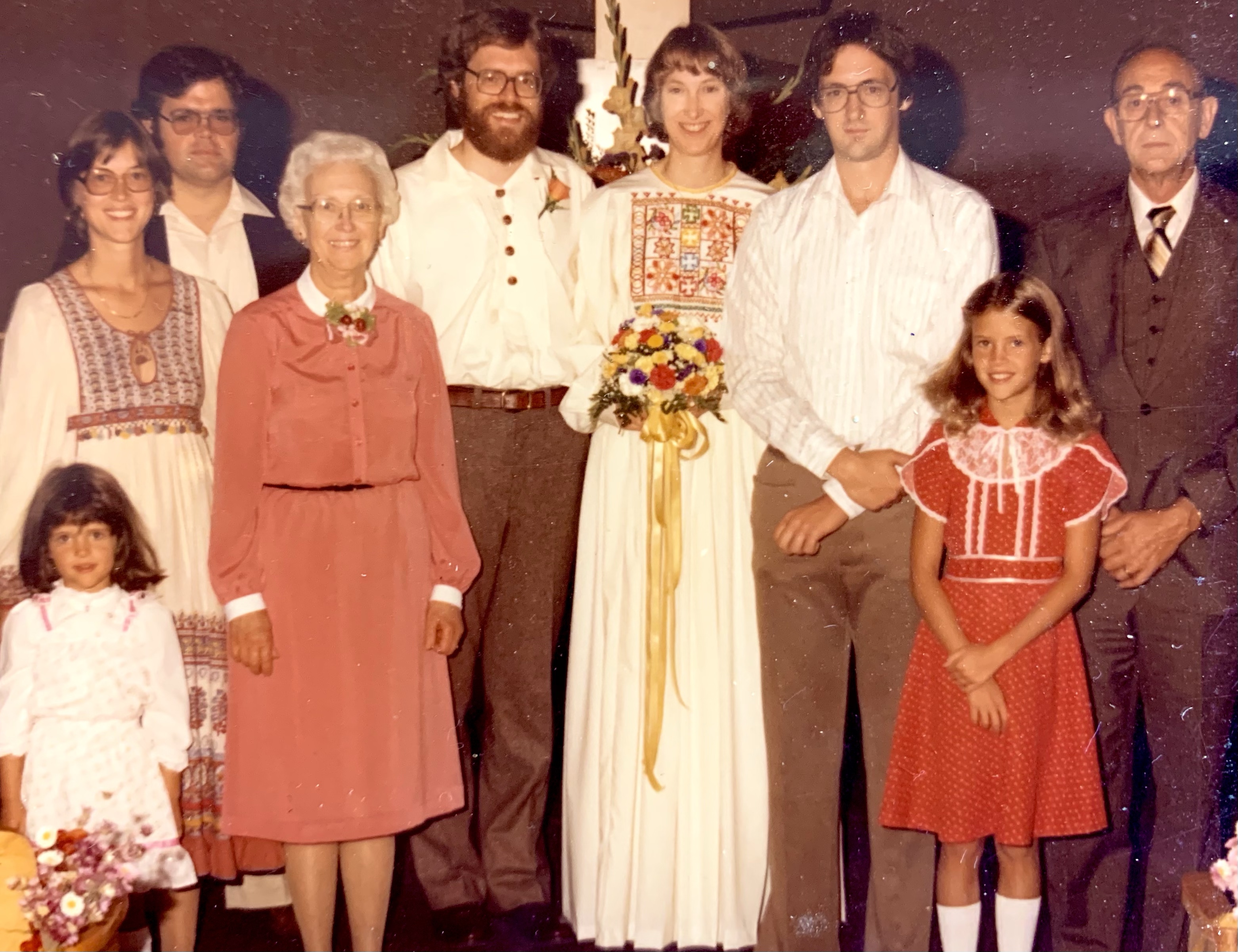
Through these holiday weeks, I take time to remember those who left this life long ago. It is bittersweet to be all together only in a photo album, with youth and smiles preserved indefinitely.
In a flash of time, three generations have passed: children have had children who now have children. Newlyweds have become grandparents, trying valiantly to fit the shoes of those who came before.
In our own eventual leave-taking, we will become the missing to be missed. There will come along new generations – those we will never meet – who will turn the pages of photograph albums and writings and wonder aloud about these unknown people from whom they descend.
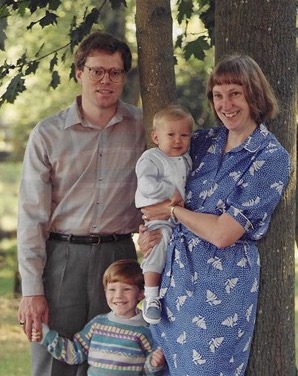
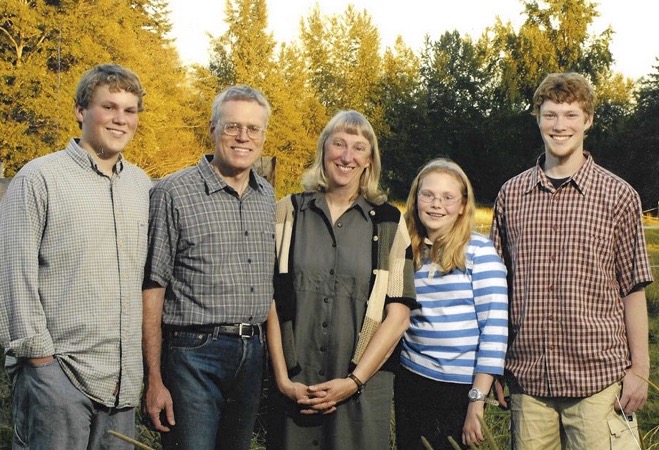
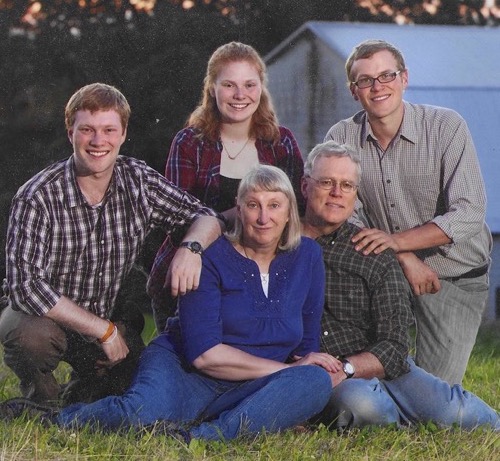
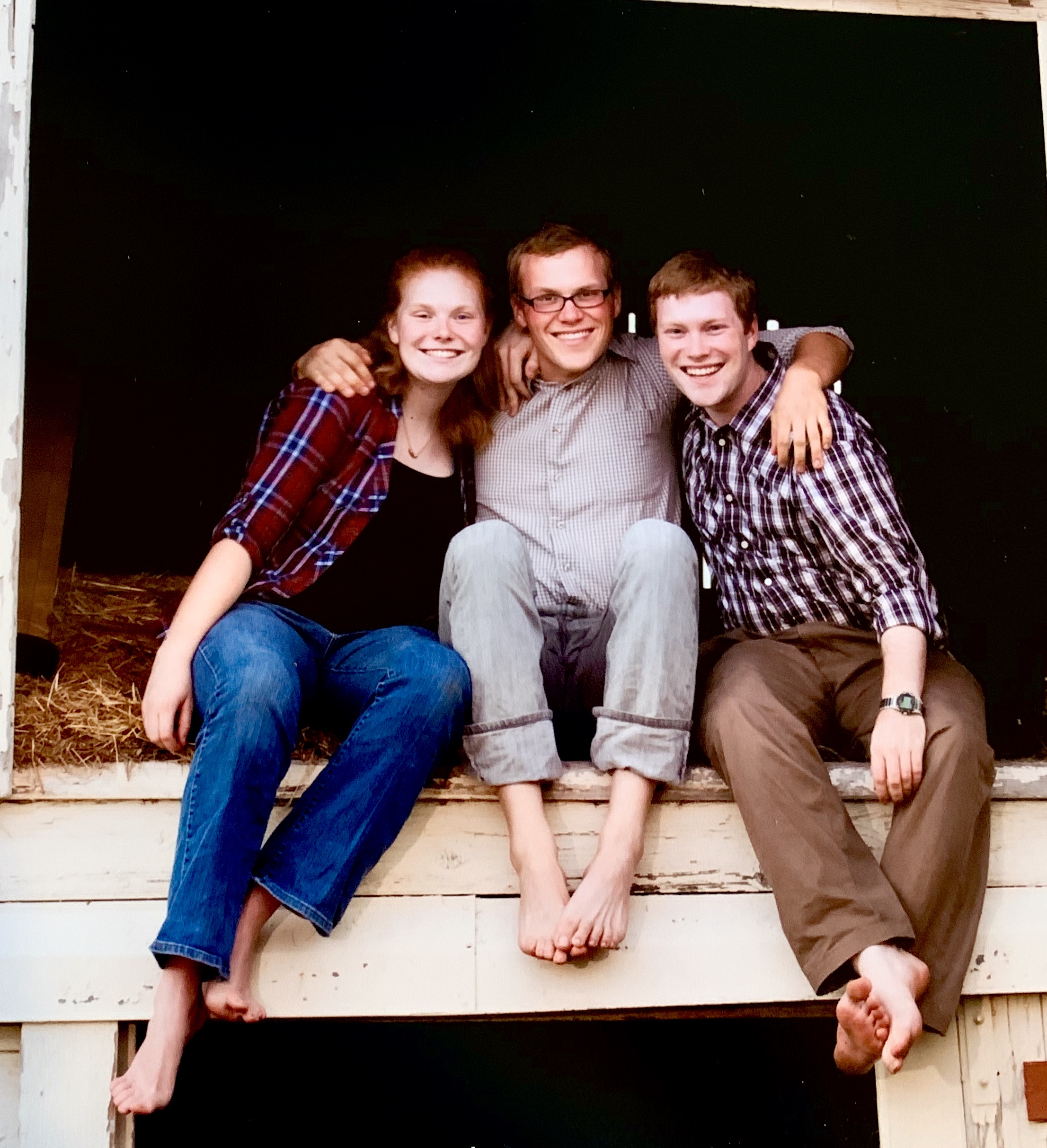
Dearly beloved, we who are missing are right here, waiting in a drawer or a file or a book on the shelf, ready to share, in plain words bereft of poetry, all our love and hopes and sorrows for you, the future generations to come.
One-Time
Monthly
Yearly
Make a one-time and recurring donation to support daily ad-free Barnstorming posts



























 Barnstorming