Go north a dozen years on a road overgrown with vines to find the days after you were born. Flowers remembered their colors and trees were frothy and the hospital was
behind us now, its brick indifference forgotten by our car mirrors. You were revealed to me: tiny, delicate, your head smelling of some other world. Turn right after the circular room
where I kept my books and right again past the crib where you did not sleep and you will find the window where I held you that June morning when you opened your eyes. They were
blue, tentative, not the deep chocolate they would later become. You were gazing into the world: at our walls, my red cup, my sleepless hair and though I’m told you could not focus, and you
no longer remember, we were seeing one another after seasons of darkness. ~Faith Shearin “Sight”
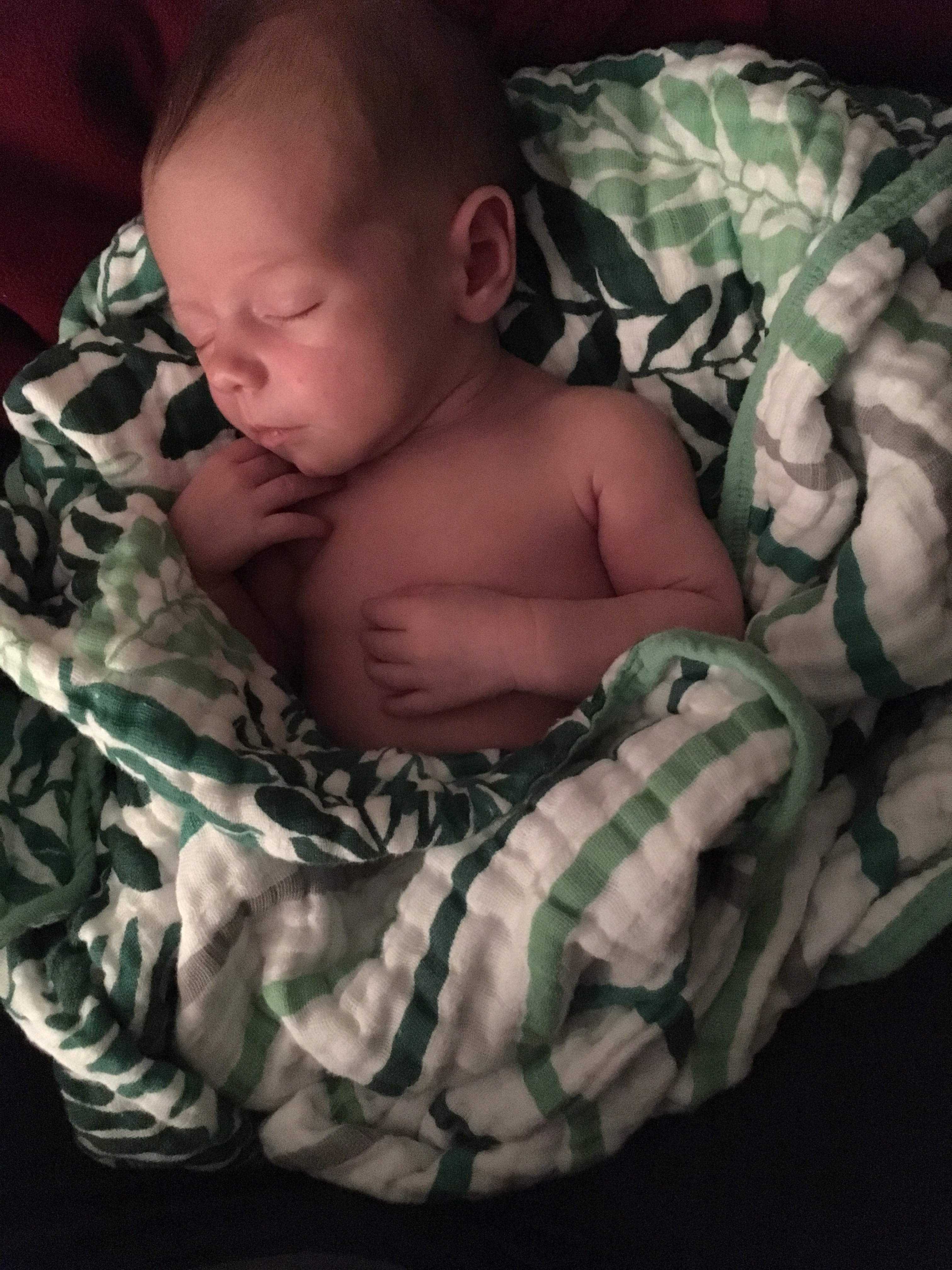
The helpless state of a newborn adjusting to an unfamiliar world – when all depends on deep murmurs, shadowy faces and comforting arms, full nipples and cleansing rags. When all that can be said are mewing cries and satisfied grunts.
Those long exhausting sleepless nights finally transition to heart-warming smiles at dawn, when we lock onto each other for survival, peering into the mutual light and love in our eyes, needing each other like no other; it is always, and will be always, about those eyes.
To be amazed by love is not to be blinded but to let the flare of wonder fill you like air filling a sail.
Isn’t this the voice of God at work?
Even his silence breathes life into you, a golden sigh as fresh as Eden. To love someone is not to lose anything, but to gain it in giving it all away. ~Luci Shaw from “Amazed by Love” in Water Lines
Lovers must not live for themselves alone. They must finally turn their gaze at one another back toward the community. If they had only themselves to consider, lovers would not need to marry, but they must think of others and of other things. They say their vows to the community as much as to one another, and the community gathers around them to hear and to wish them well, on their behalf and on its own. It gathers around them because it understands how necessary, how joyful, and how fearful this joining is. These lovers, pledging themselves to one another “until death,” are giving themselves away… Lovers, then, “die” into their union with one another as a soul “dies” into its union with God.
And so, here, at the very heart of community life, we find … this momentous giving. If the community cannot protect this giving, it can protect nothing—and our time is proving that this is so. ~Wendell Berry fromSex, Economy, Freedom & Community
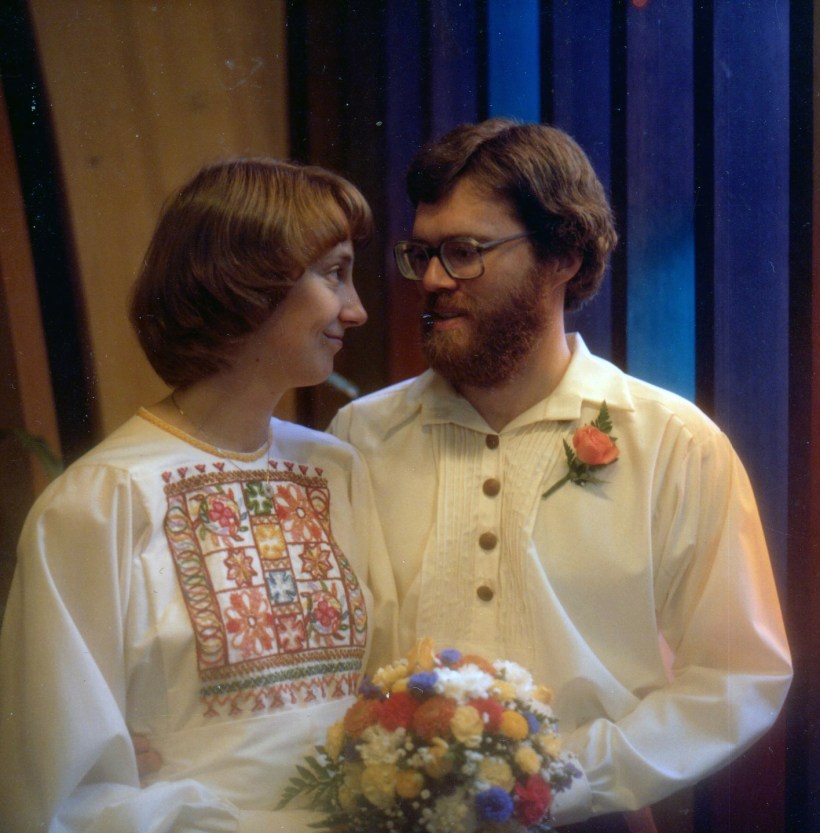
Before God and this gathering, I vow from my heart and spirit that I will be your wife/husband for as long as we both shall live.
I will love you with faithfulness, knowing its importance in sustaining us through good times and bad.
I will love you with respect, serving your greatest good and supporting your continued growth.
I will love you with compassion, knowing the strength and power of forgiveness.
I will love you with hope, remembering our shared belief in the grace of God and His guidance of our marriage.
“And at home, by the fire, whenever you look up, there I shall be–and whenever I look up, there will be you.”
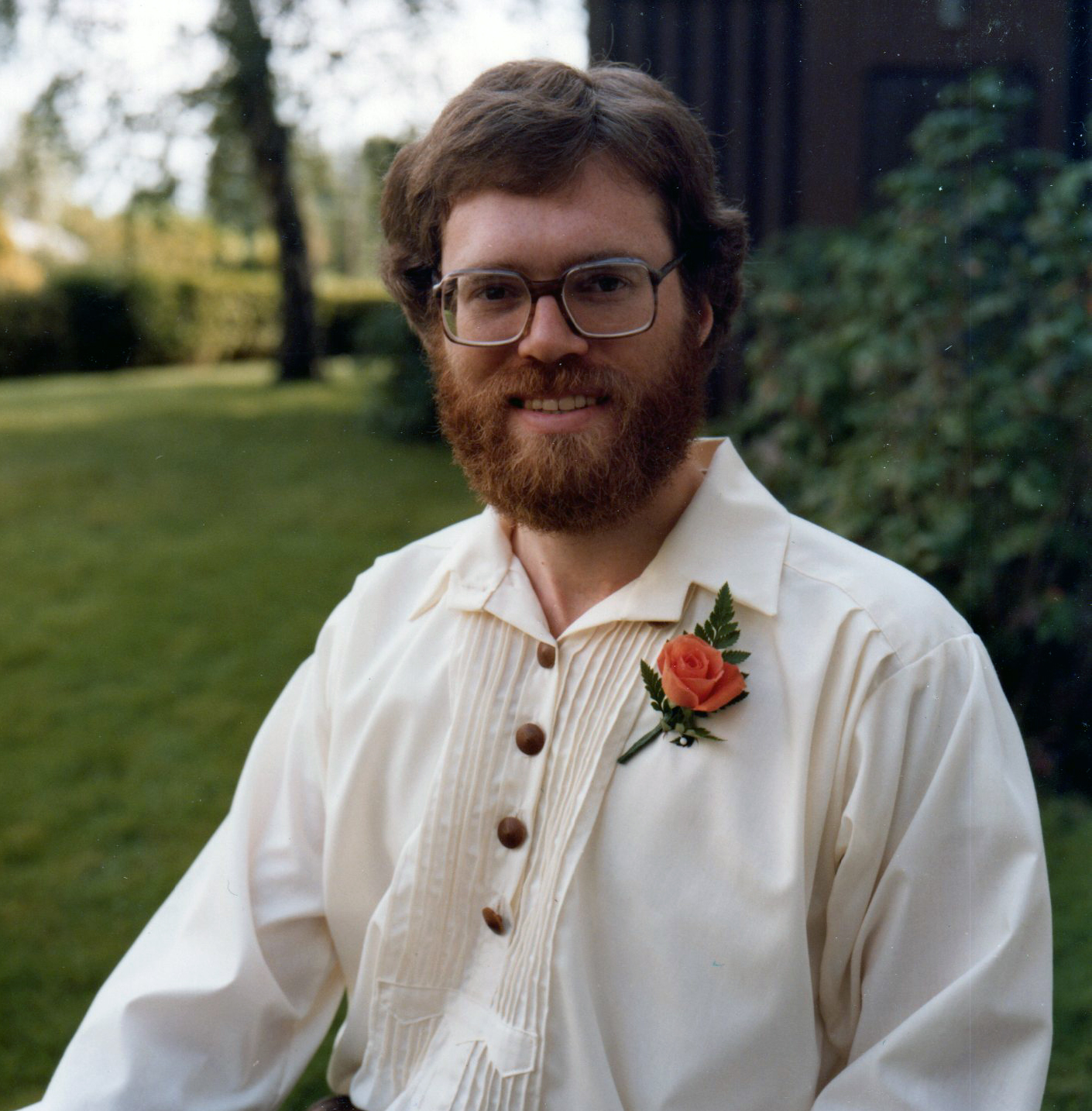
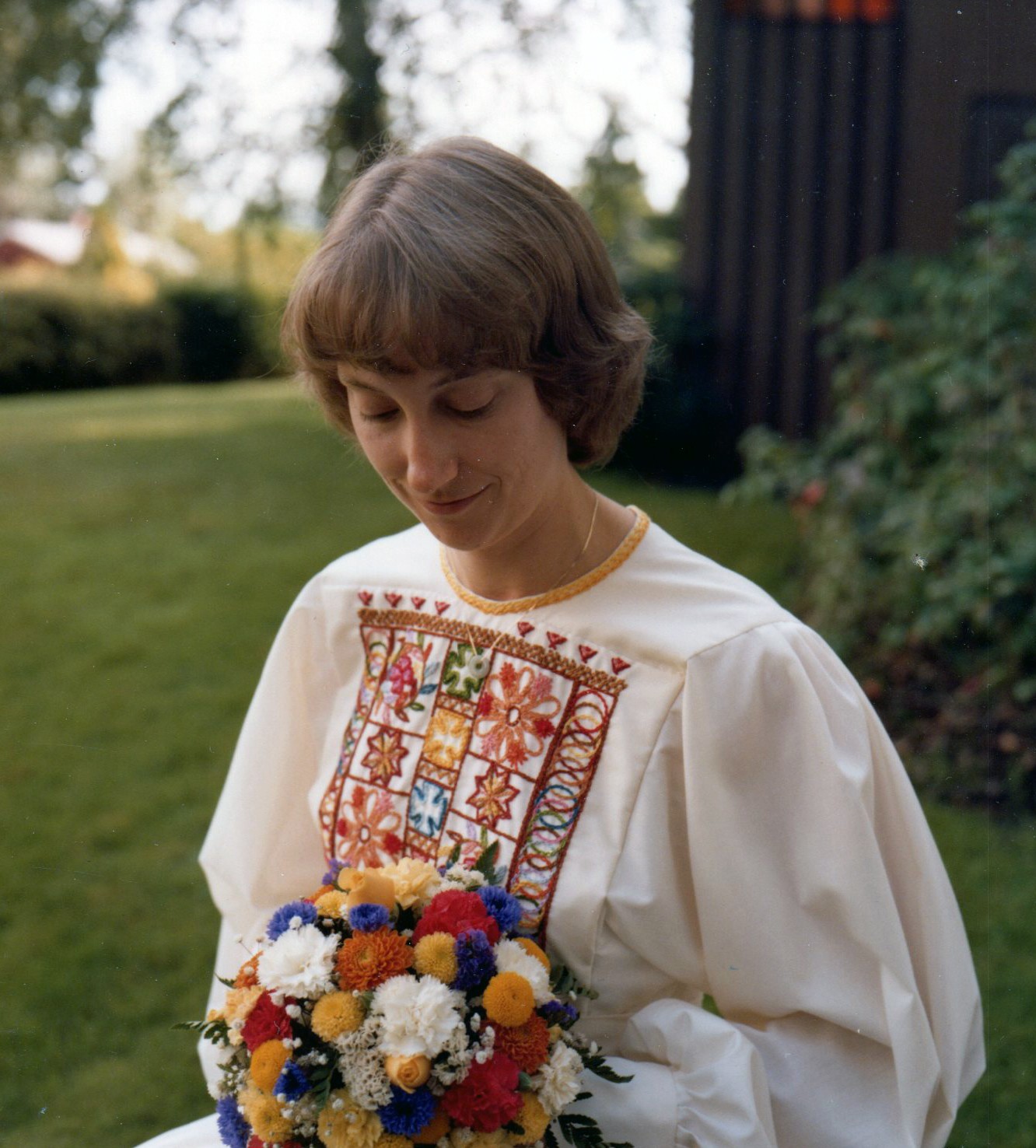
(our wedding vows for our September 19, 1981 wedding at First Seattle Christian Reformed Church — the last line adapted from Thomas Hardy’s “Far From the Madding Crowd”)
Holy as a day is spent Holy is the dish and drain The soap and sink, and the cup and plate And the warm wool socks, and the cold white tile Shower heads and good dry towels And frying eggs sound like psalms With bits of salt measured in my palm It’s all a part of a sacrament As holy as a day is spent Holy is the familiar room And quiet moments in the afternoon And folding sheets like folding hands To pray as only laundry can I’m letting go of all my fear Like autumn leaves made of earth and air For the summer came and the summer went As holy as a day is spent Holy is the place I stand To give whatever small good I can And the empty page, and the open book Redemption everywhere I look Unknowingly we slow our pace In the shade of unexpected grace And with grateful smiles and sad lament As holy as a day is spent And morning light sings ‘providence’ As holy as a day is spent ~Carrie Newcomer “Holy as a Day Is Spent “
If the New York Times says “Something Special is Happening in Rural America,” then of course, it must be true. But those of us out in the hinterlands have known the truth about the quieter life for decades. The pace is slower, the space is greater, the faces are friendlier.
It’s the small things that matter on a daily basis. Being in the center of things doesn’t matter.
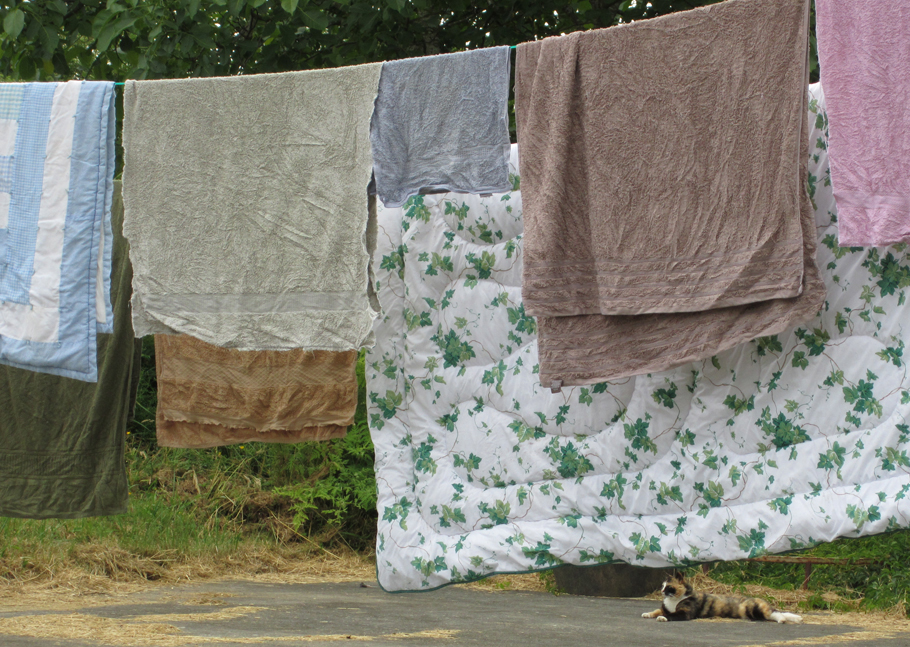
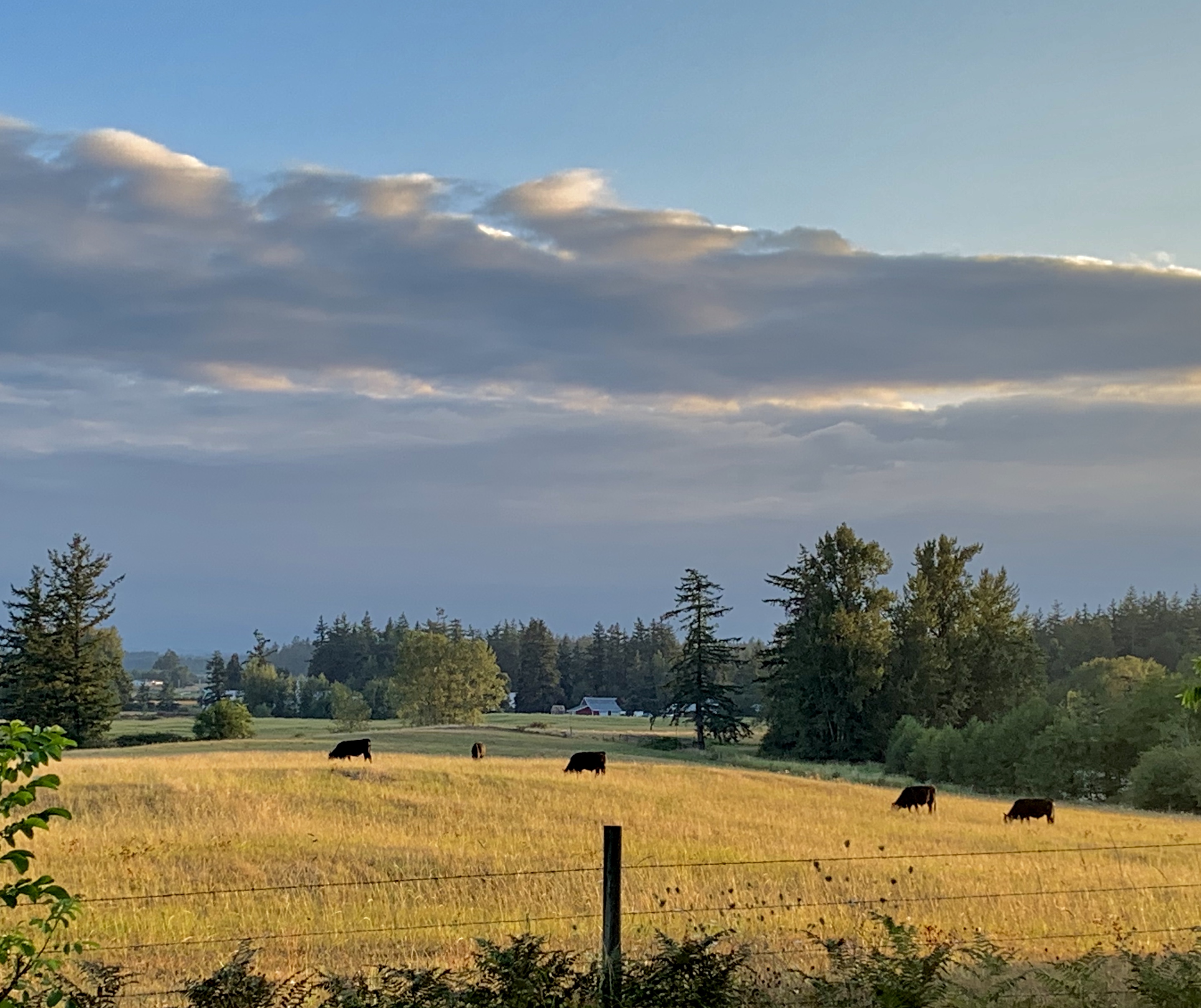
Give me a home where the clouds and cows roam, where laundry is line-dried and there is no traffic noise.
The neighbor’s horses idle under the roof of their three-sided shelter, looking out at the rain.
Sometimes one or another will fade into the shadows in the corner, maybe to eat, or drink.
Still, the others stand, blowing out their warm breaths. Rain rattles on the metal roof.
Their hoof prints in the corral open gray eyes to the sky, and wink each time another drop falls in. ~Jennifer Gray
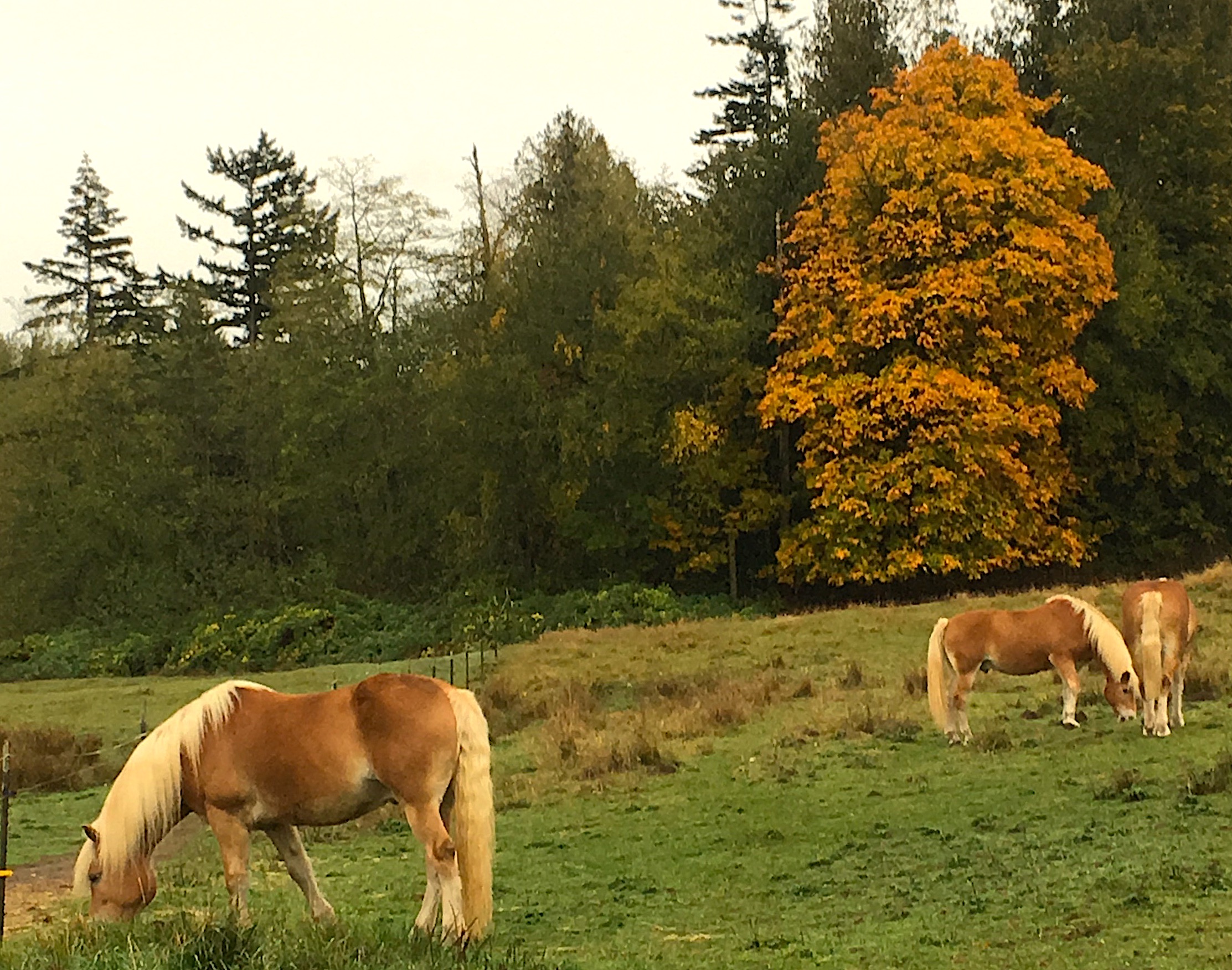
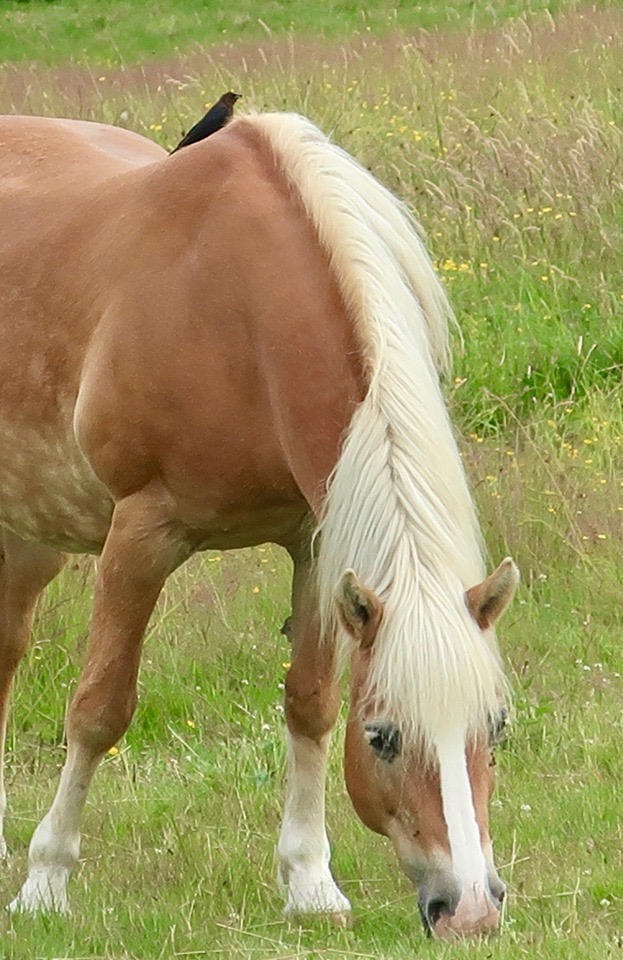
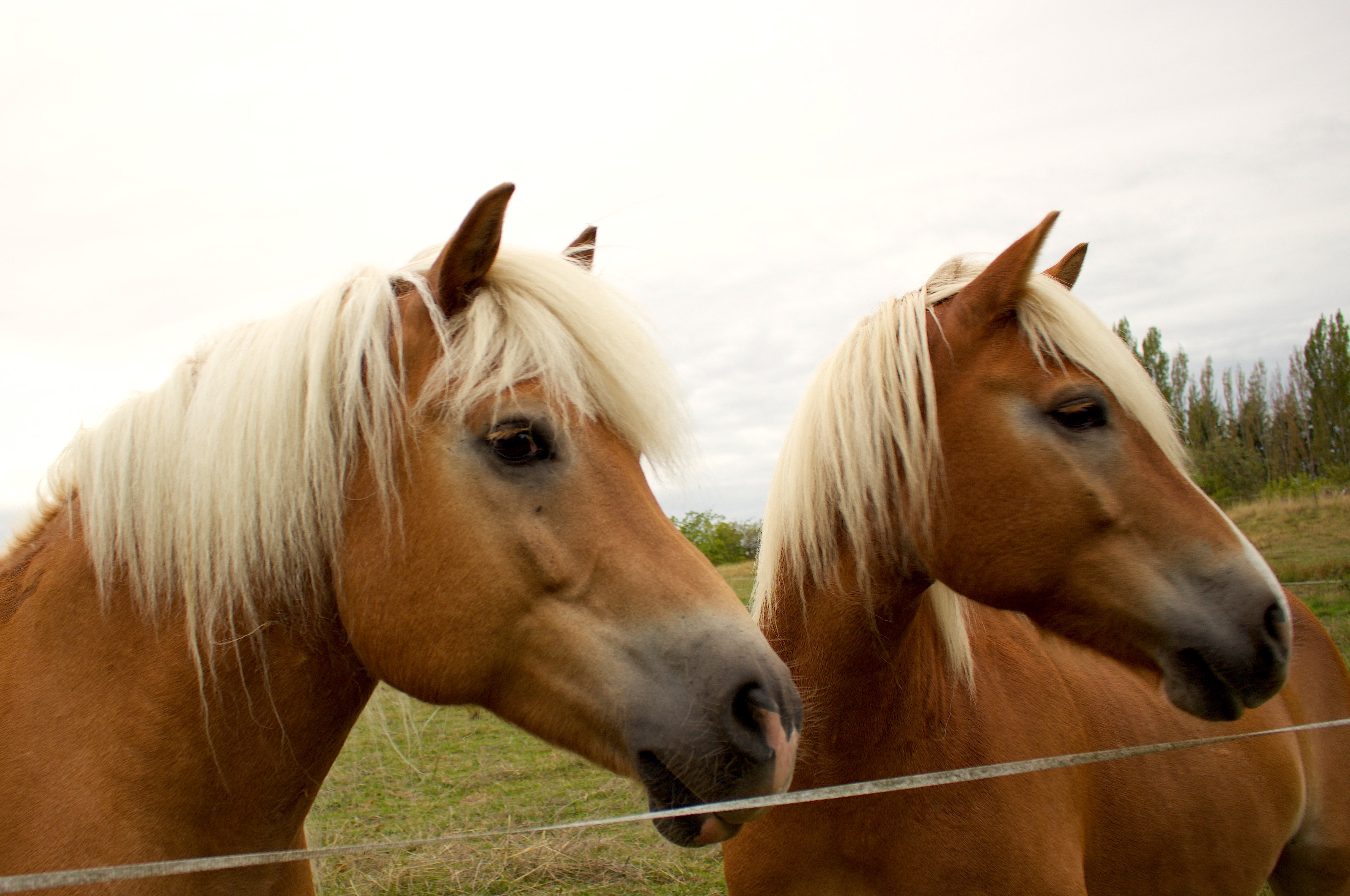
The September rains have returned and will stay awhile. We, especially the horses, sigh with relief, as flies no longer crawl over their faces all day seeking a watery eye to drink from. With no flies around, there are also no longer birds tickling pony backs looking for a meal.
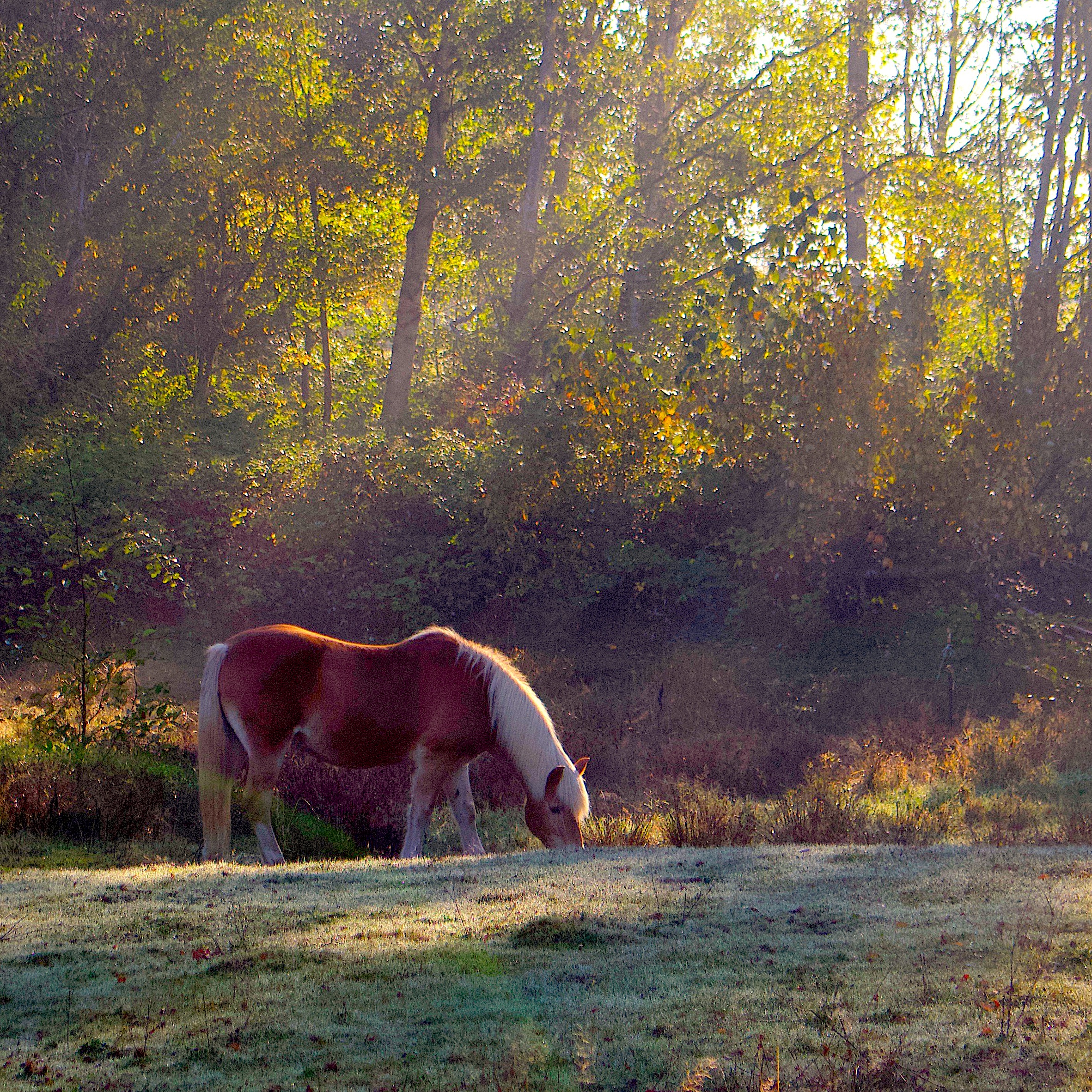
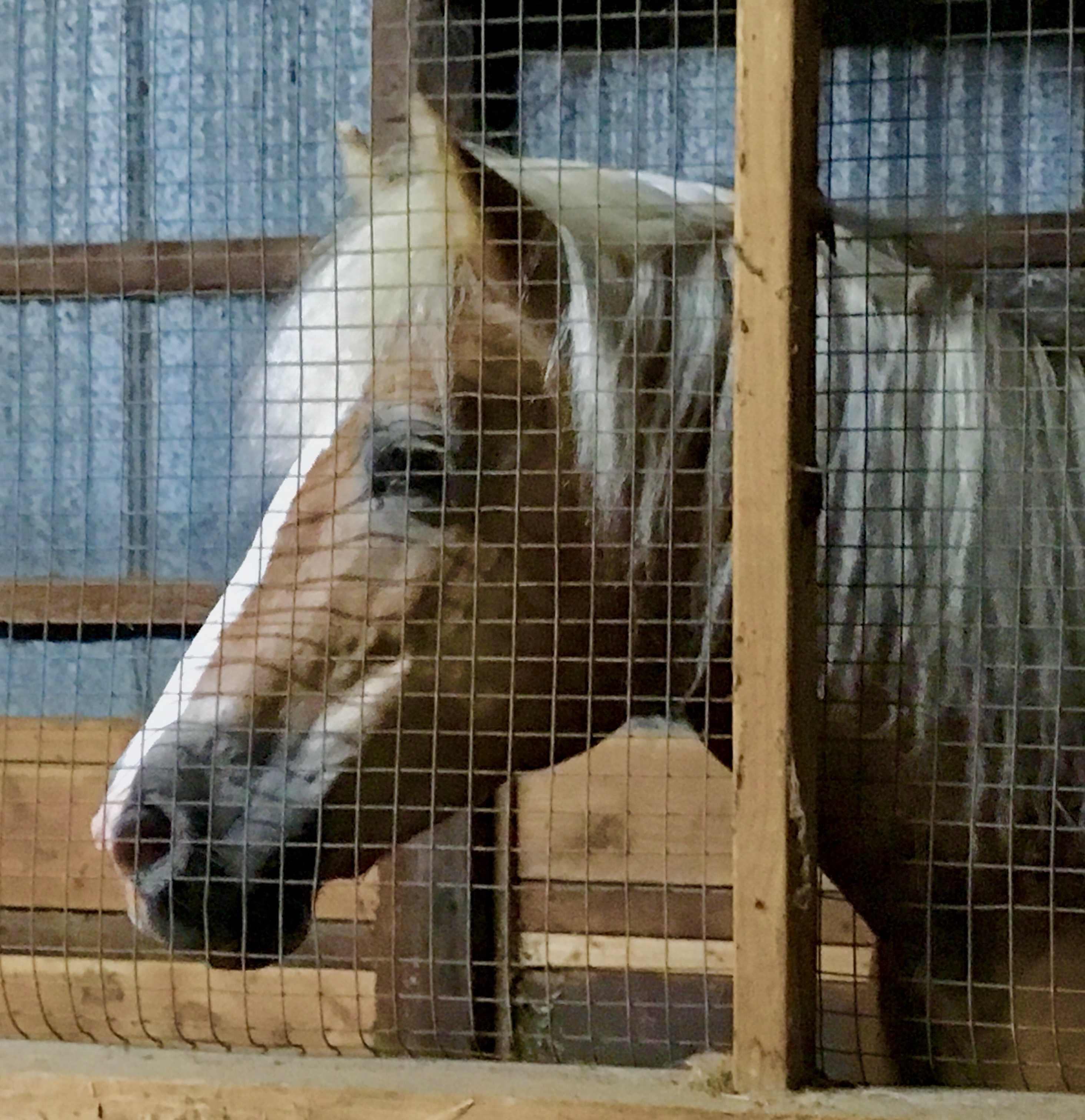
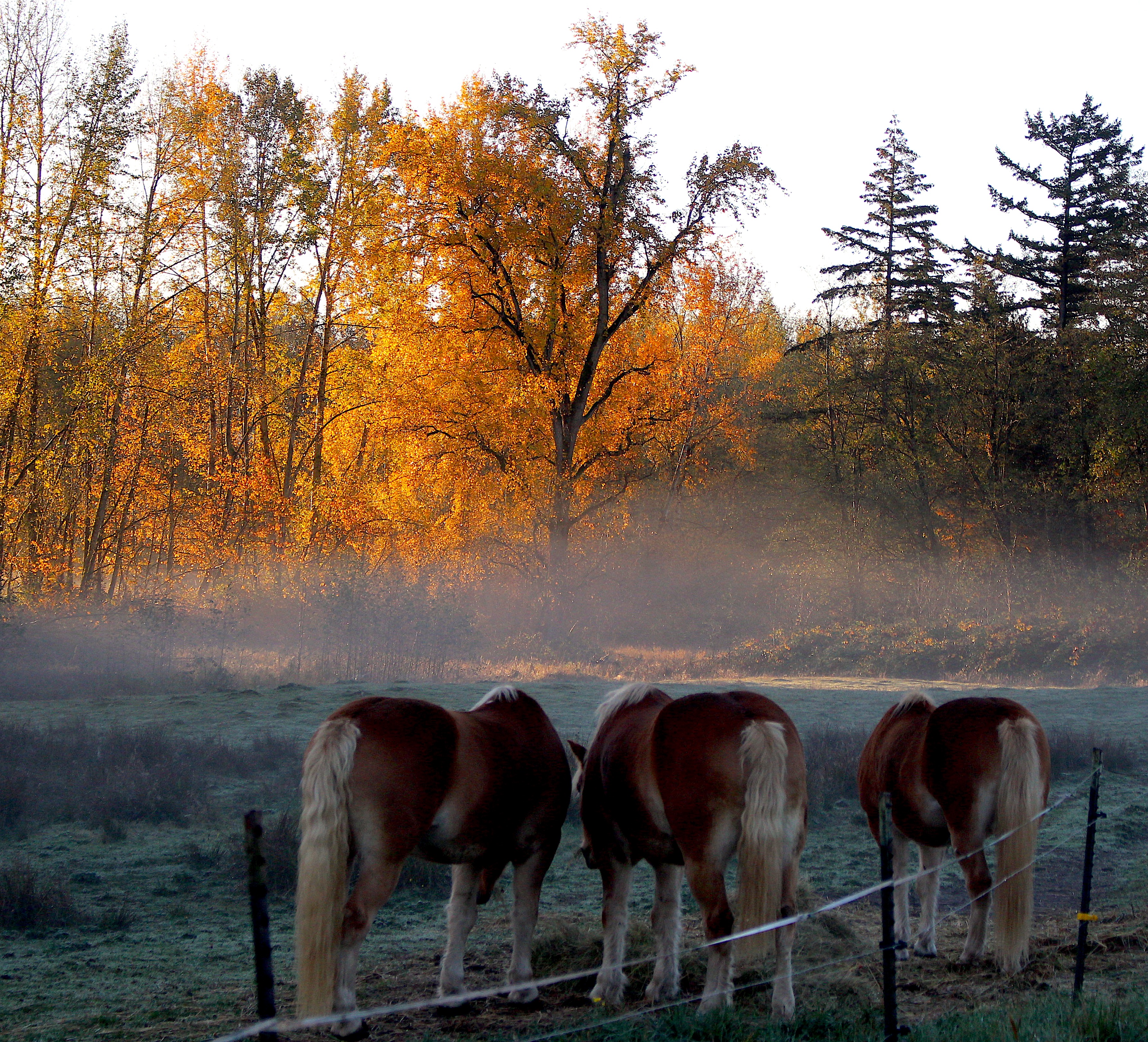
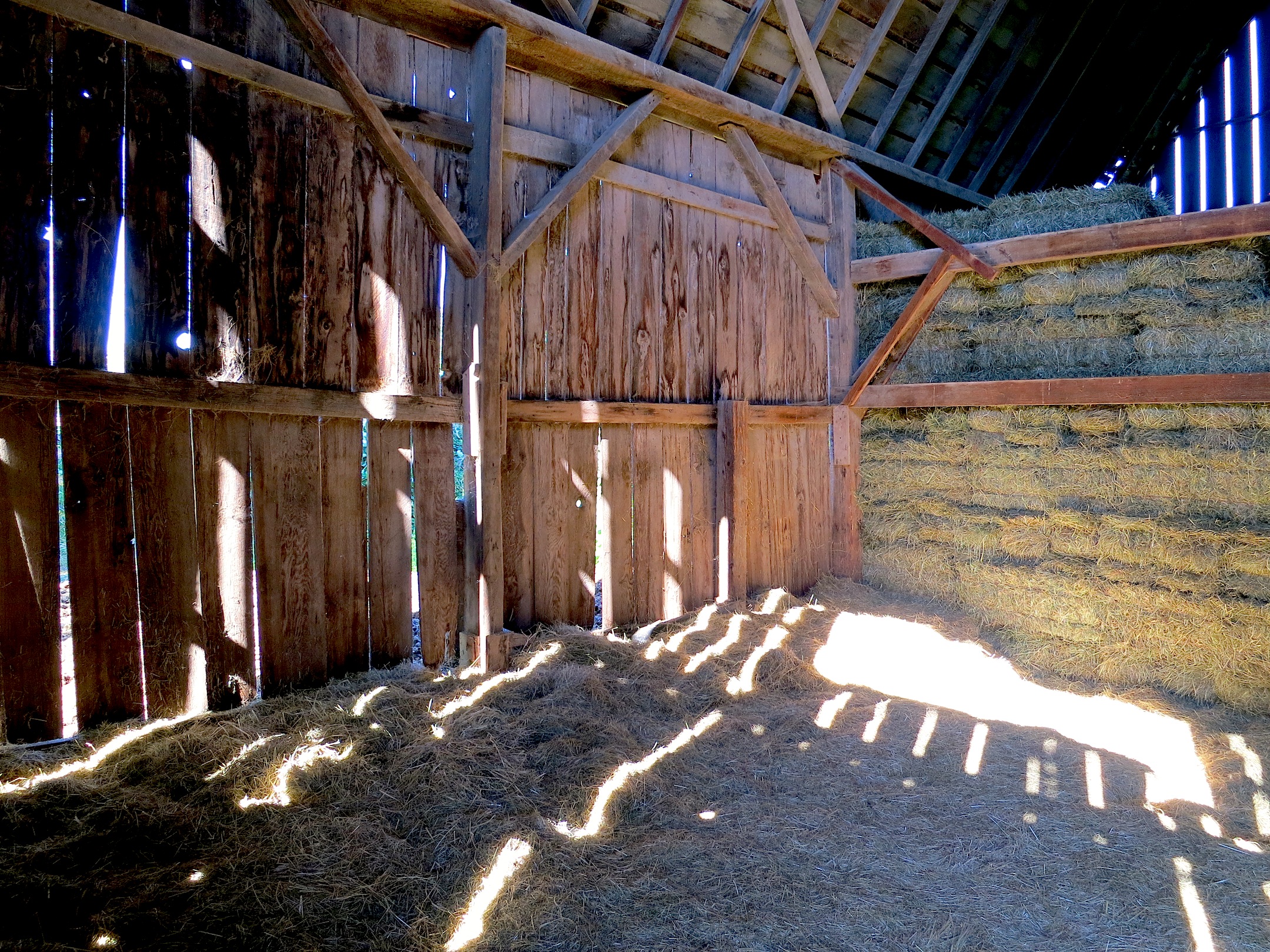
Our Haflingers prefer to graze under open gray skies not bothering to seek cover during the day; their mountain coats provide adequate insulation in a rain squall. Darkness descends earlier and earlier so I go out in the evening to find them standing waiting at the gate, ready for an invitation to come into the barn.
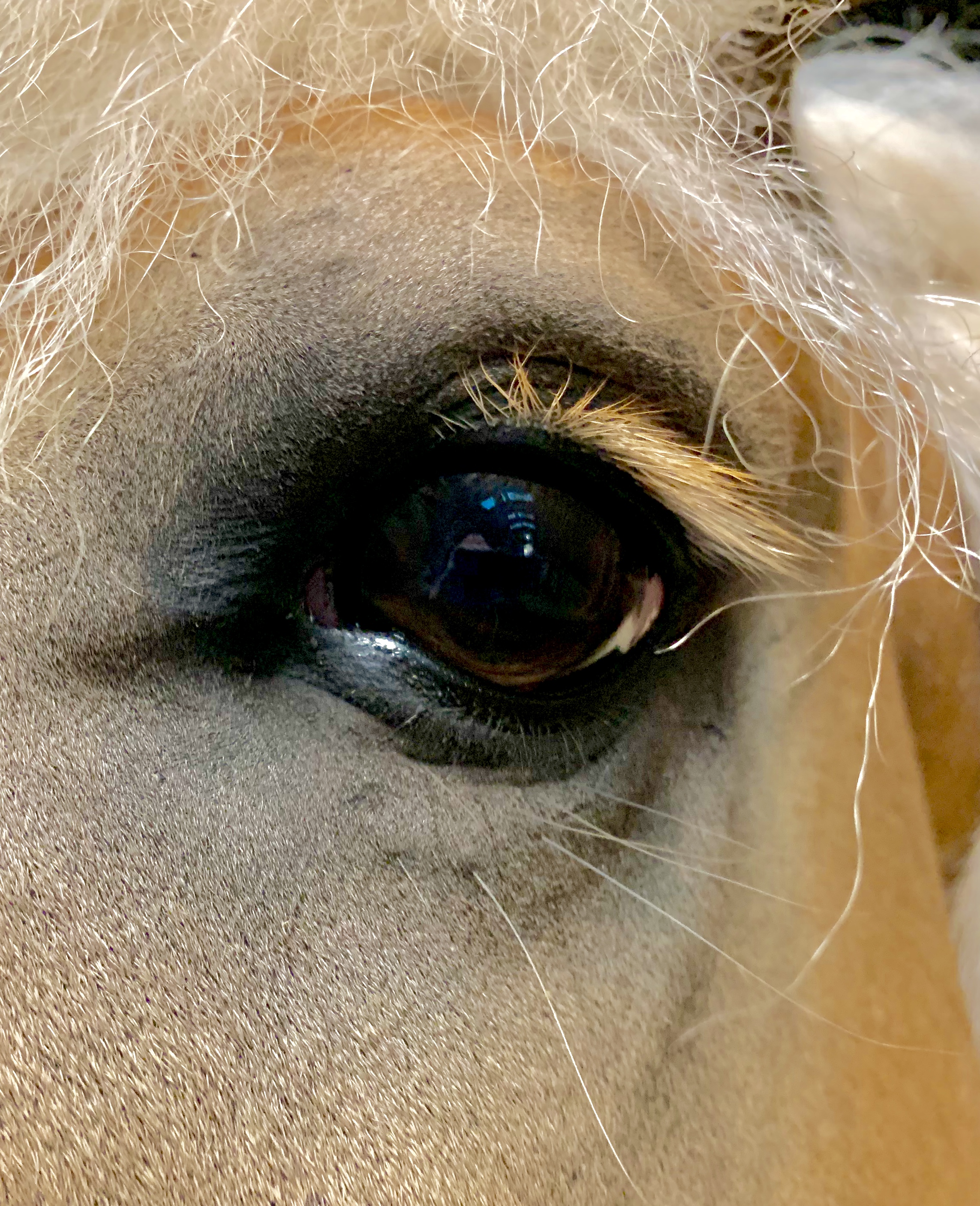
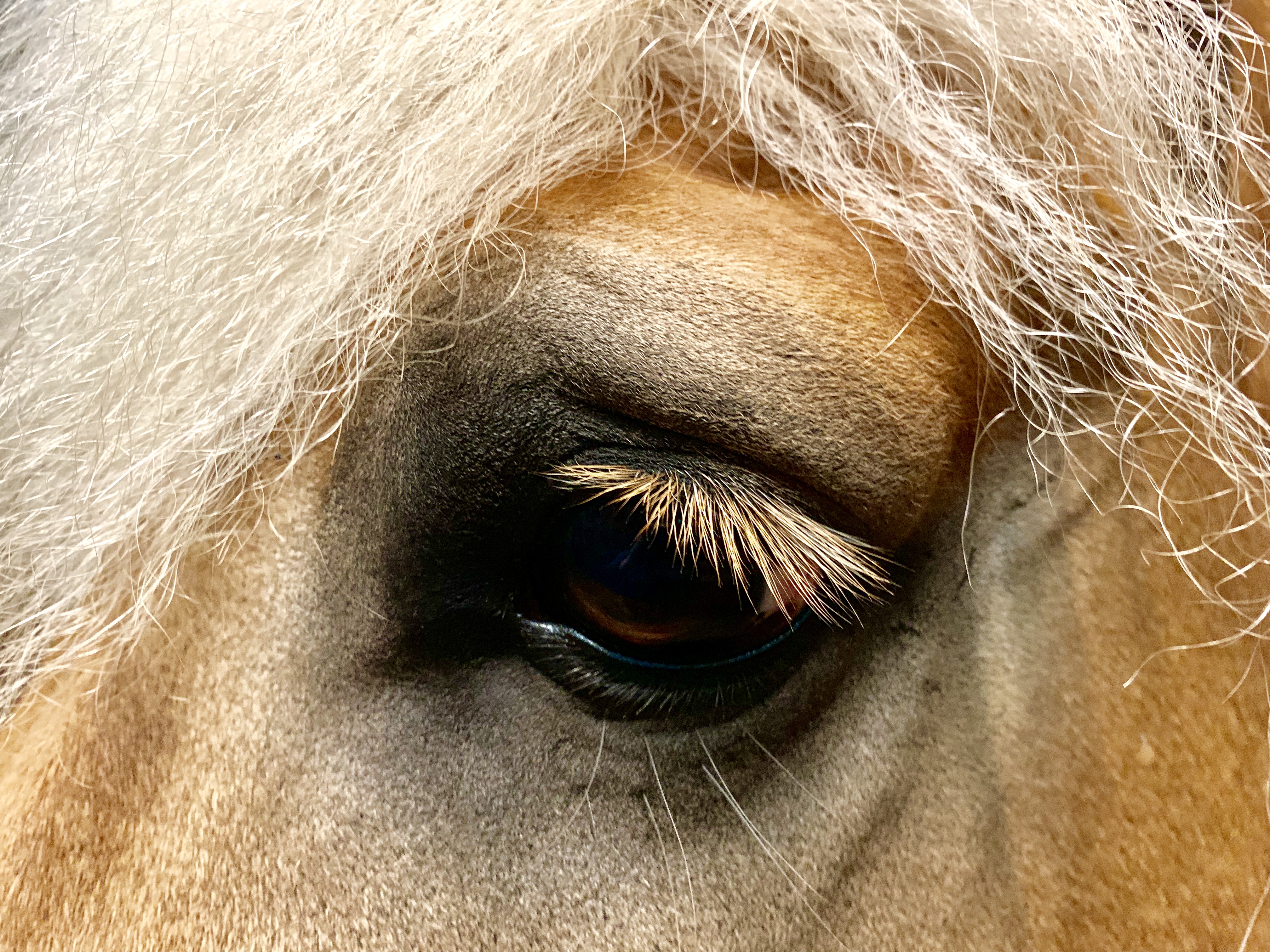
Their eyes are heavy, blinking with sleep; outside their muddy hoofprints fill with rain overnight.
It is a peaceful time for us no-longer-young ponies and farmers. We wink and nod together, ready for rain, ready for the night.
Everyone must leave something behind when he dies, my grandfather said. A child or a book or a painting or a house or a wall built or a pair of shoes made. Or a garden planted. Something your hand touched some way so your soul has somewhere to go when you die, and when people look at that tree or that flower you planted, you’re there.
It doesn’t matter what you do, he said, so long as you change something from the way it was before you touched it into something that’s like you after you take your hands away. The difference between the man who just cuts lawns and a real gardener is in the touching, he said. The lawn-cutter might just as well not have been there at all; the gardener will be there a lifetime. ~Ray Bradbury from Fahrenheit 451
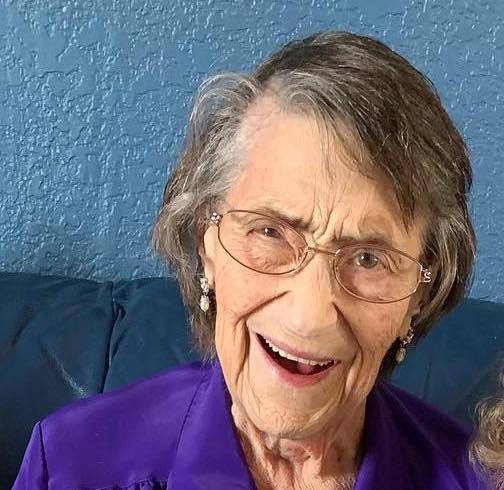
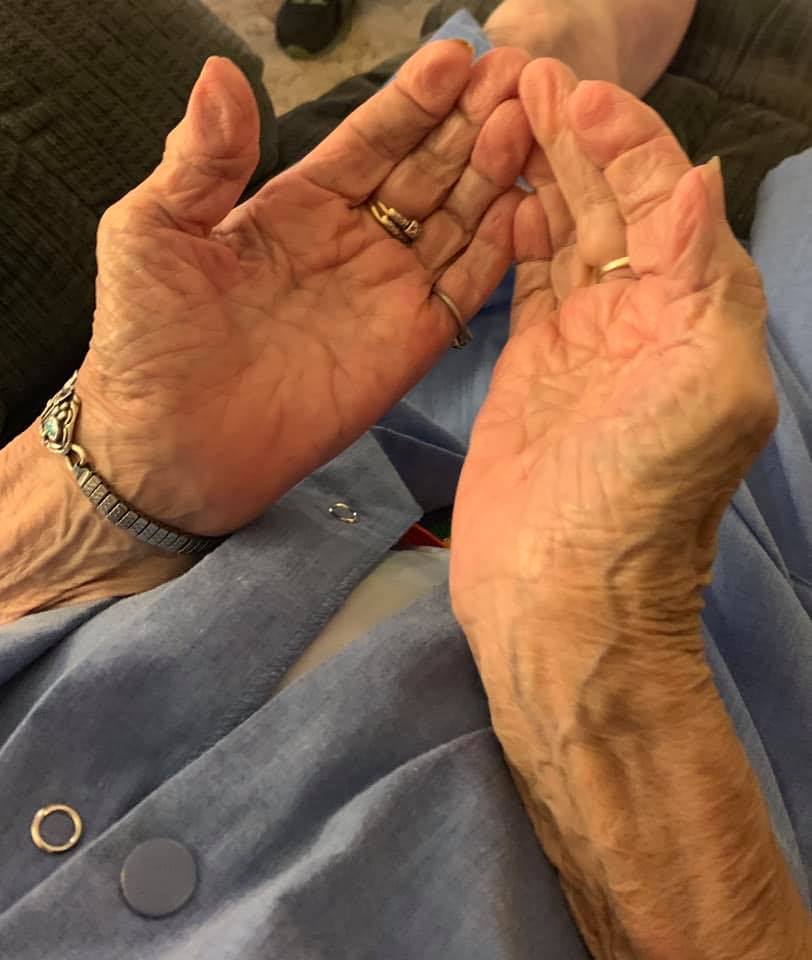
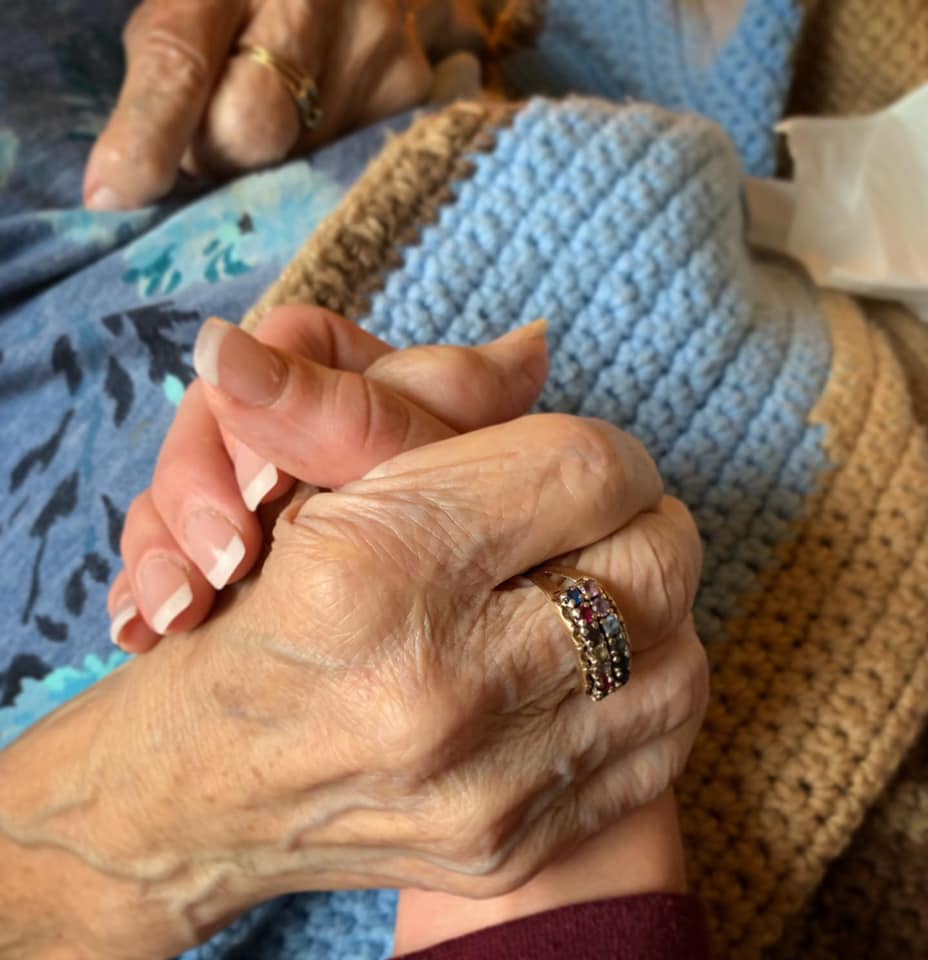
Esther Meyer, nearly 92, photo taken by a granddaughterEsther’s hands – photo by Donna Meyer photo by Danielle Meyer Miljevic
At last the entire family stood, like people seeing someone off at the rail station, waiting in the room.
“Well,” said Great-grandma, “there I am, I’m not humble, so it’s nice seeing you standing around my bed. Now next week there’s late gardening and closet-cleaning and clothes-buying for the children to do. And since that part of me is called, for convenience, Great-grandma, won’t be here to step it along, those other parts of me called Uncle Bert and Leo and Tom and Douglas, and all the other names, will have to take over, each to his own.”
“Yes, Grandma.”
Somewhere a door closed quietly.
… she saw it shaping in her mind quietly, and with serenity like a sea moving along and endless and self-refreshing shore.
Downstairs, she thought, they are polishing the silver, and rummaging the cellar, and dusting in the halls. She could hear them living all through the house.
“It’s all right,” whispered Great-grandma, as the dream floated her. “Like everything else in this life, it’s fitting.”
And the sea moved her back down the shore. ~Ray Bradbury “Great-Grandmother” from Dandelion Wine
Esther learned young how to work and she never forgot, still working up until the last few days of her long life.
Today she is sweeping up, wiping down counters and washing the dishes in a corner of heaven, after baking cookies and putting a soup on to simmer, to be sure everyone up there is well-fed and feels welcome.
She grew up on a remote farm in South Dakota where survival meant the whole family pitched in to help. When she married Pete and headed west to Washington, the work never let up: six sons, a small farm, a construction business to help manage, working as a caretaker privately and in a nursing home, taking on the mission of coordinating a large Sunday School ministry in our small church back over fifty years ago and never leaving.
Esther touched everything and everyone in this life, leaving a bit of herself behind in all of us. She’ll stay plenty busy in the next life.
She wasWiser Lake Chapel for over half her life, along with her husband Pete who passed from chronic leukemia over a decade ago. Their son Wes took on many of Pete’s carpentry and building maintenance duties at church, but then he too lost a fight with acute leukemia.
Esther persevered despite these heartbreaking losses, a tenacious testament to the power of the Spirit in one woman’s life. She had more artificial joints in her body than her own joints, some replaced twice. Her heart tried to fail any number of times, most recently after a trip to Europe she made earlier this year, by herself, to visit her missionary son. She never stopped driving. She never stopped walking even though every step took immense effort paid in pain. She came to every church service, morning and night and mid-week, usually with something fresh-baked in her hand. If soup was needed for a meal on short notice, she could make it happen in an hour from what she stored away in her freezer. She was a self-appointed clean-up crew, wheeling her walker from table to sink to counter to trash can and back again.
Every new great-grandbaby and every new Chapel baby had a hand-made Esther quilt, complete with her hand-painted pictures and the details of the birthday and birthweight printed on it. She made hundreds over her lifetime.
Esther’s family is a large exuberant and glory-filled group of sons and daughter-in-laws and grands and great-grands who reflect who she and Pete were to them, to our church and the greater community. They are a legacy left on earth, to keep up the good work and gratitude-filled worship, to never ever give up, no matter how tough life can be.
Thank you, Esther, for changing us all so profoundly we won’t ever be the same as we were before you touched us; you left us all so much better than before. Now I believe we all are just a little bit like you.
And most of all, thanks for 90-plus years of your loving labor on the Lord’s behalf. The soup is on the stove in memory of you.
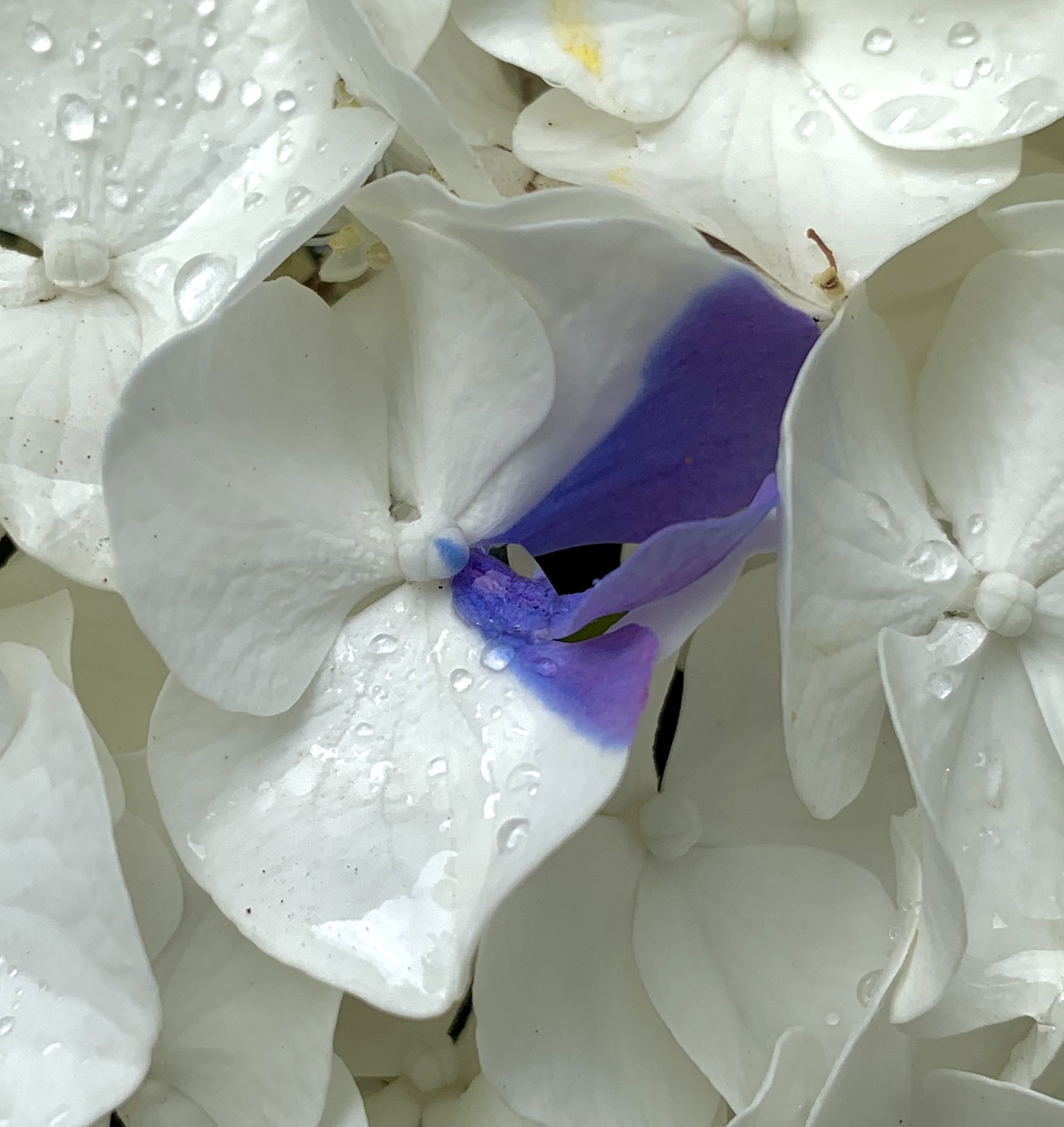
sphere of pillowed sky one faceless gathering of blue...
… I’m tethered, and devoted to your raw and lonely bloom
my lavish need to drink your world of crowded cups to fill. ~Tara Bray “hydrangea” from Image Journal
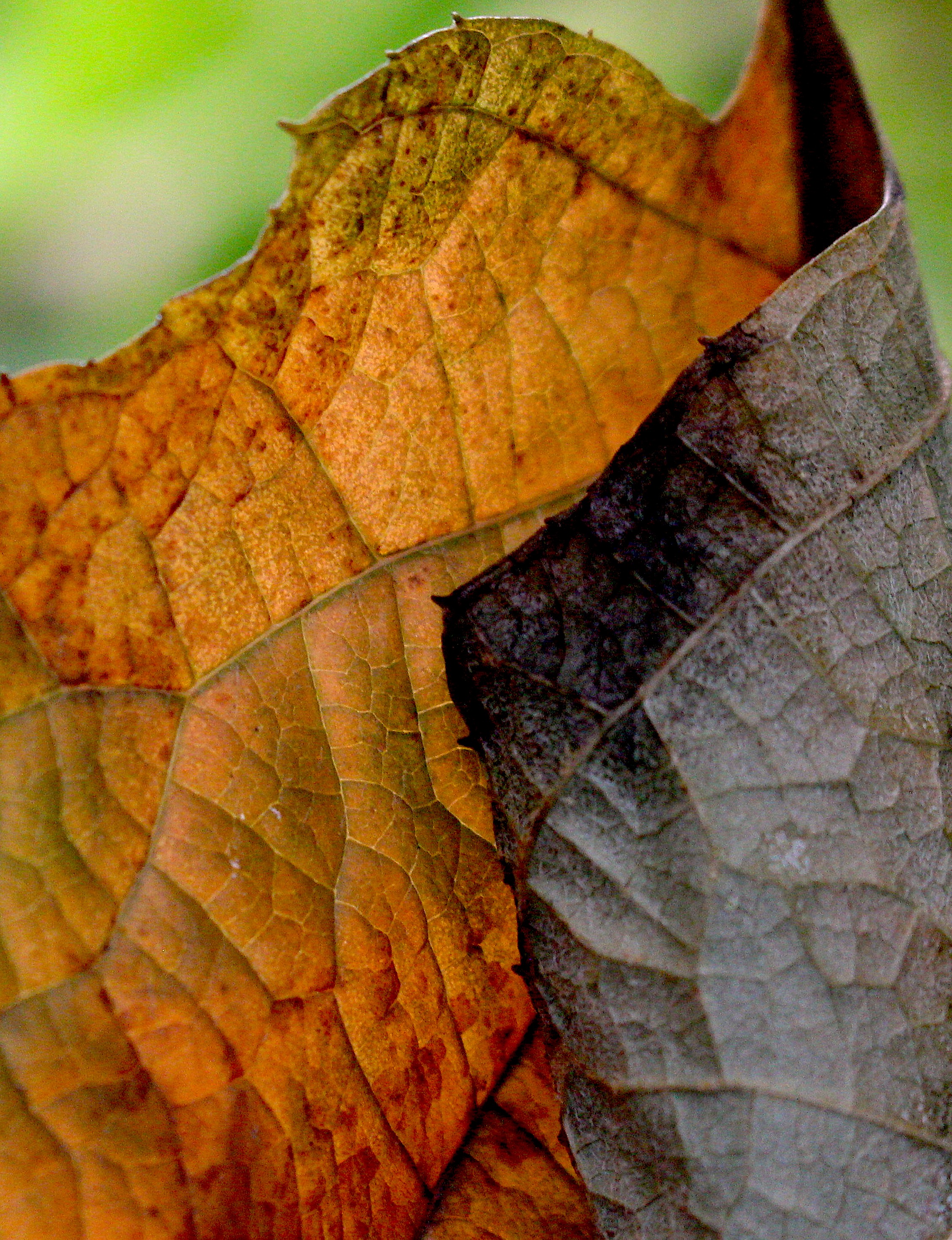
Like in old cans of paint the last green hue, these leaves are sere and rough and dull-complected behind the blossom clusters in which blue is not so much displayed as it’s reflected;
They do reflect it imprecise and teary, as though they’d rather have it go away, and just like faded, once blue stationery, they’re tinged with yellow, violet and gray;
As in an often laundered children’s smock, cast off, its usefulness now all but over, one senses running down a small life’s clock.
Yet suddenly the blue revives, it seems, and in among these clusters one discovers a tender blue rejoicing in the green. ~Rainer Maria Rilke “Blue Hydrangea” Translation by Bernhard Frank
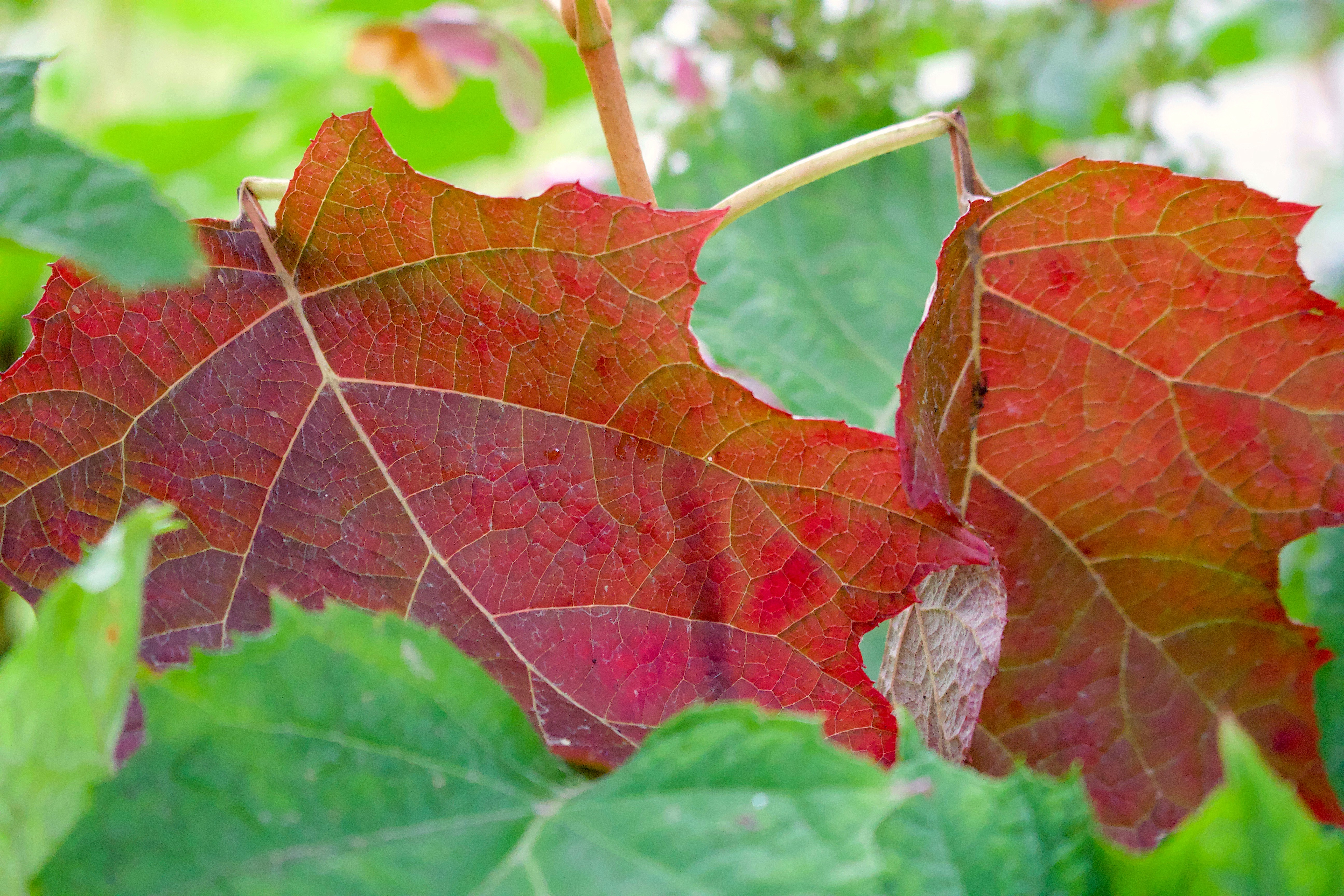
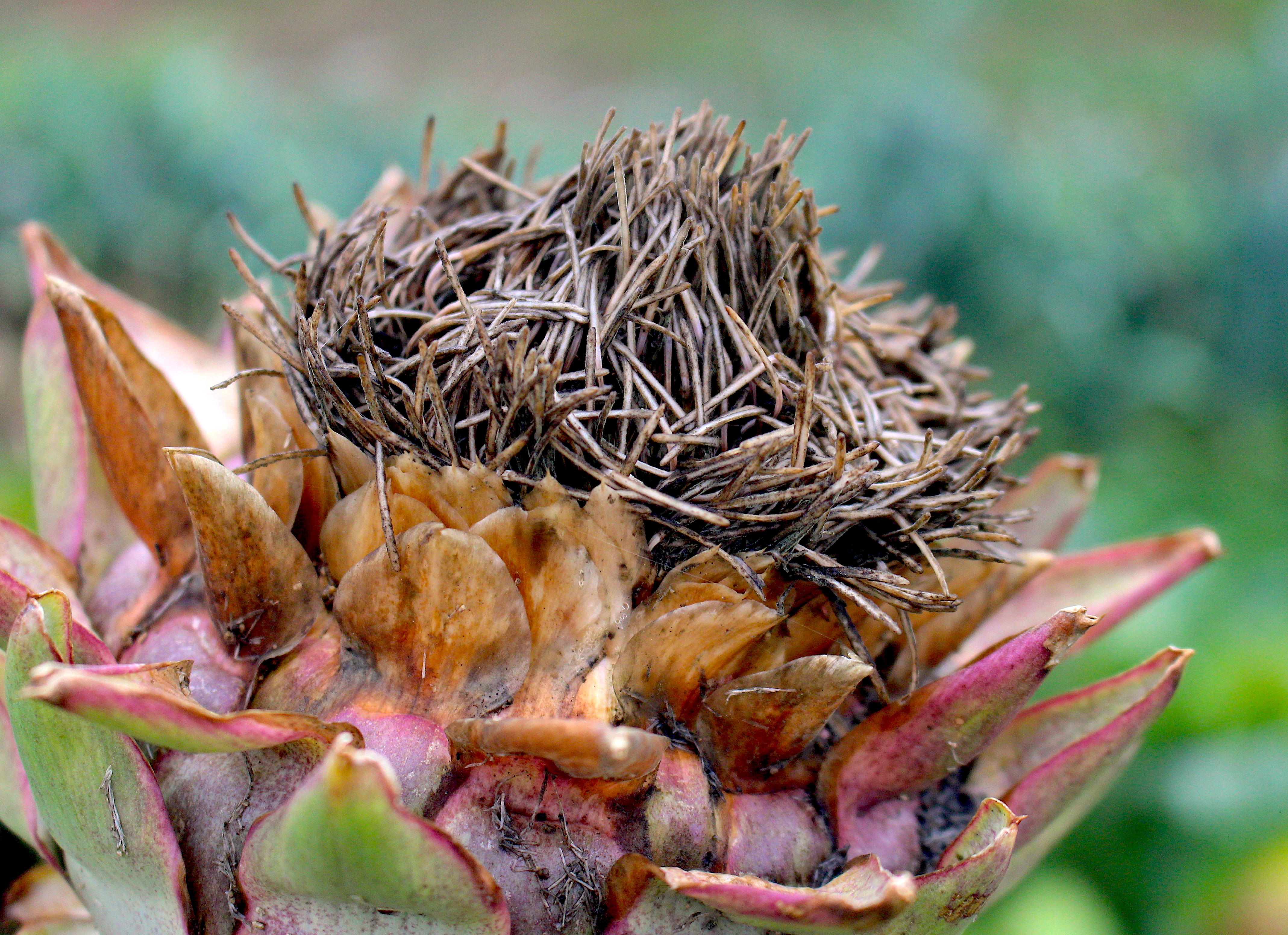
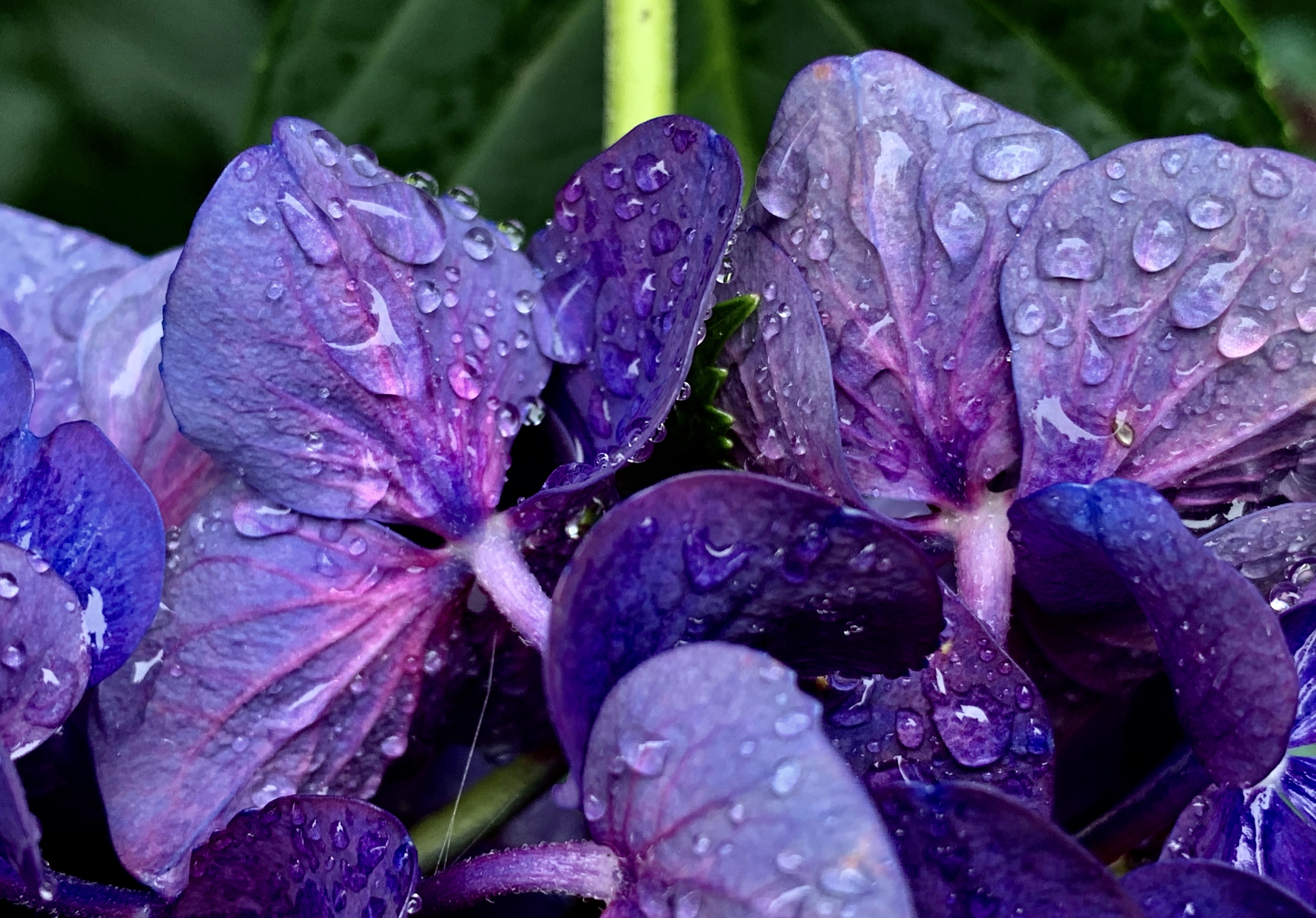
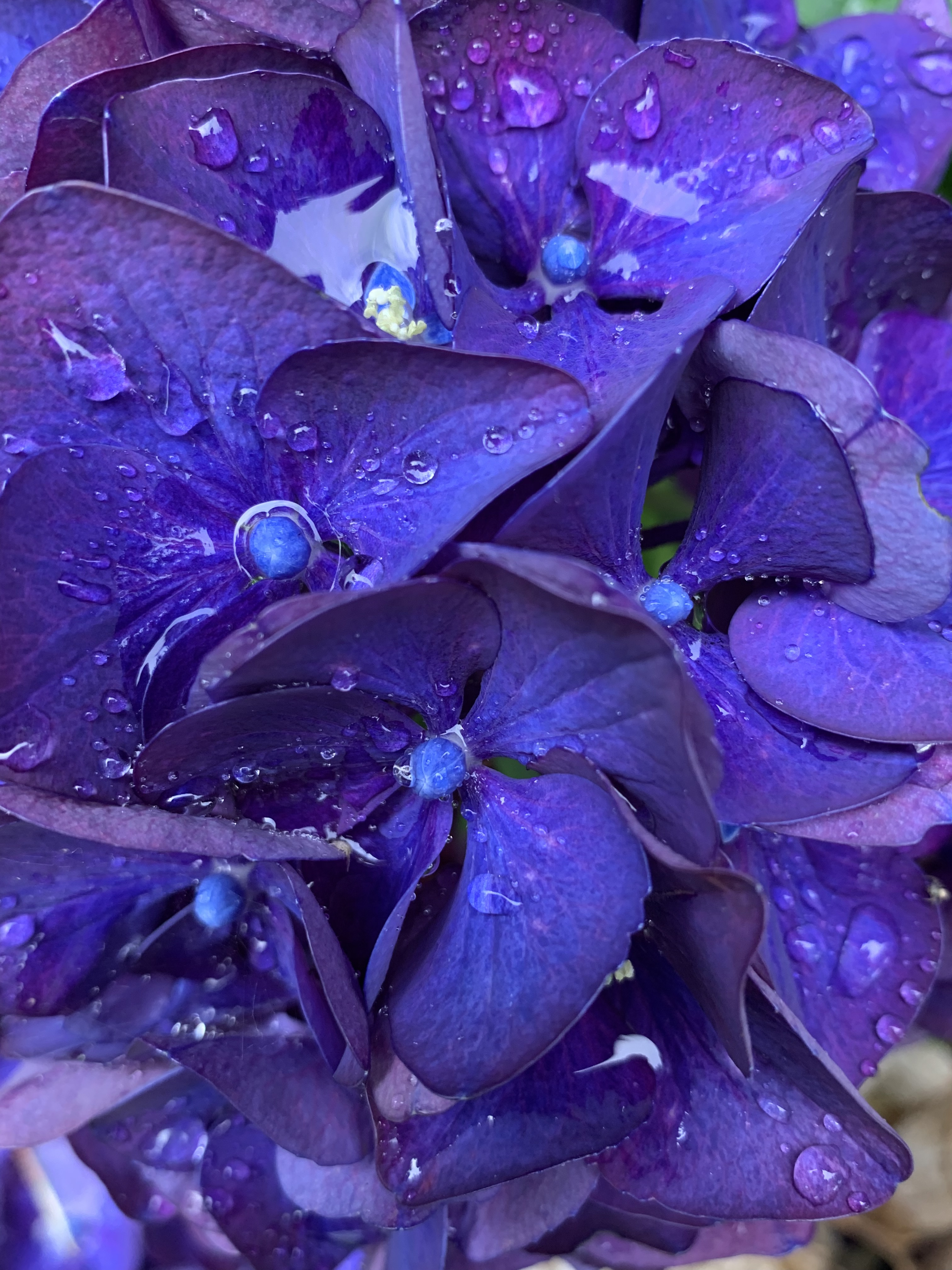
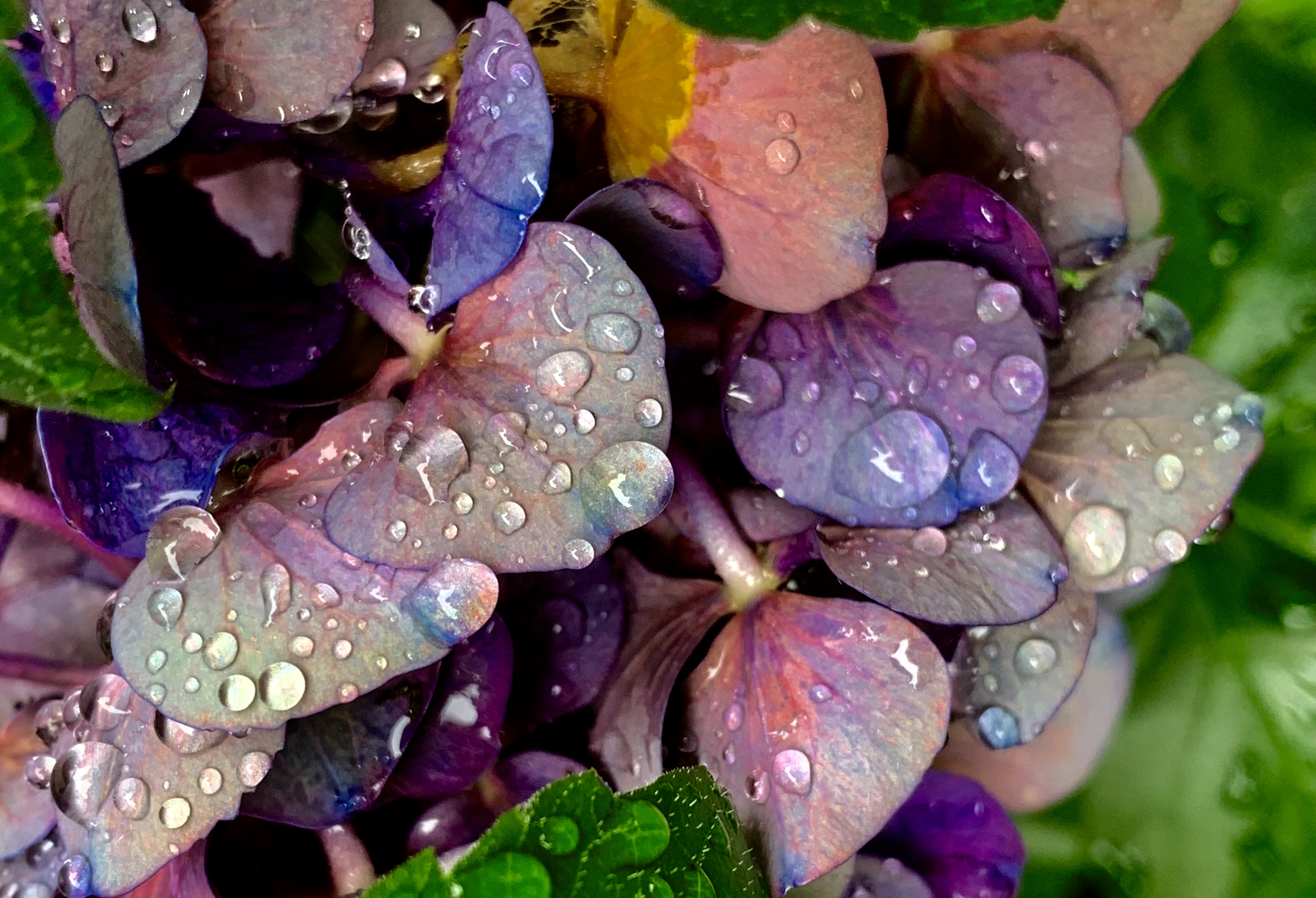
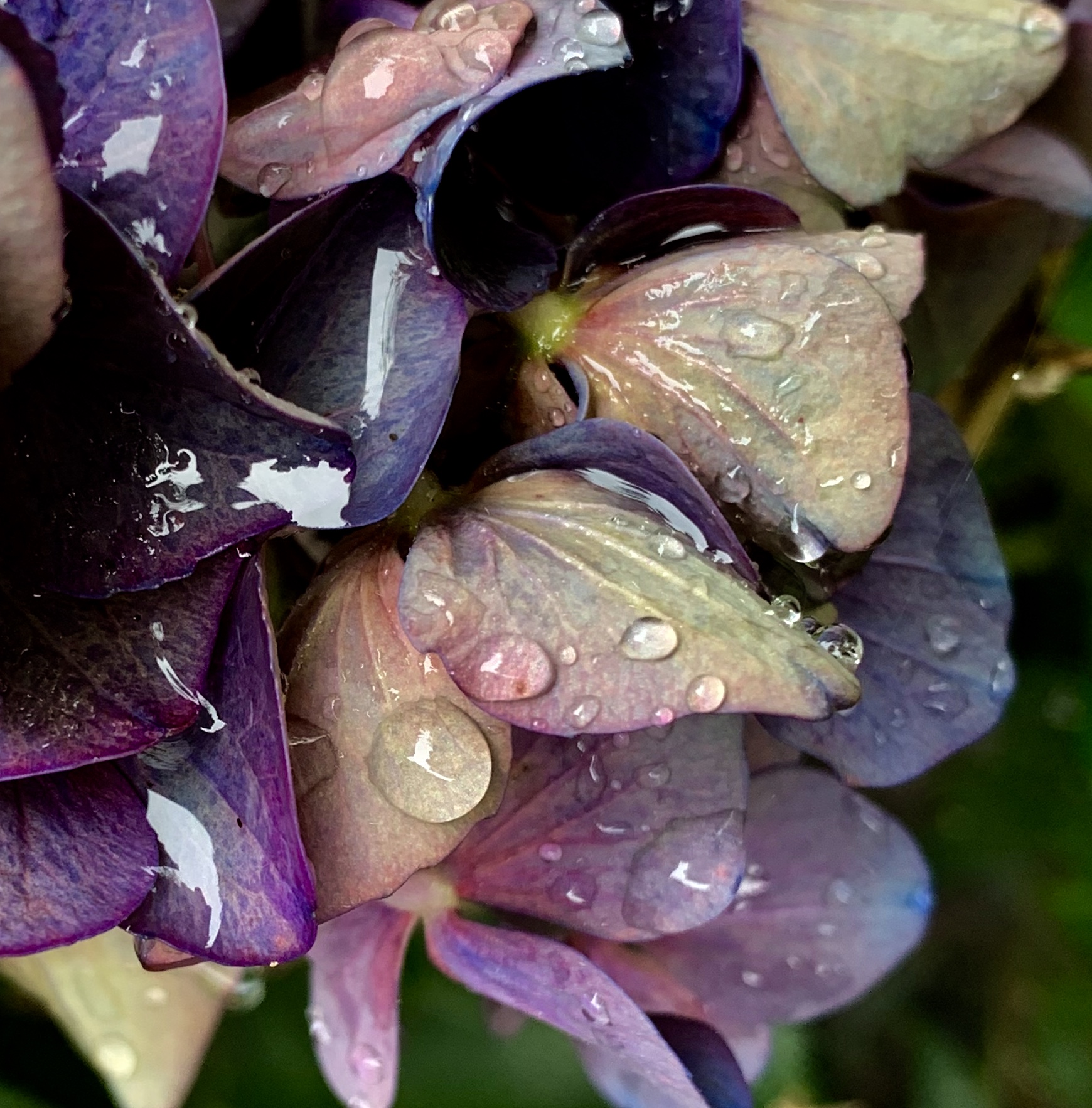
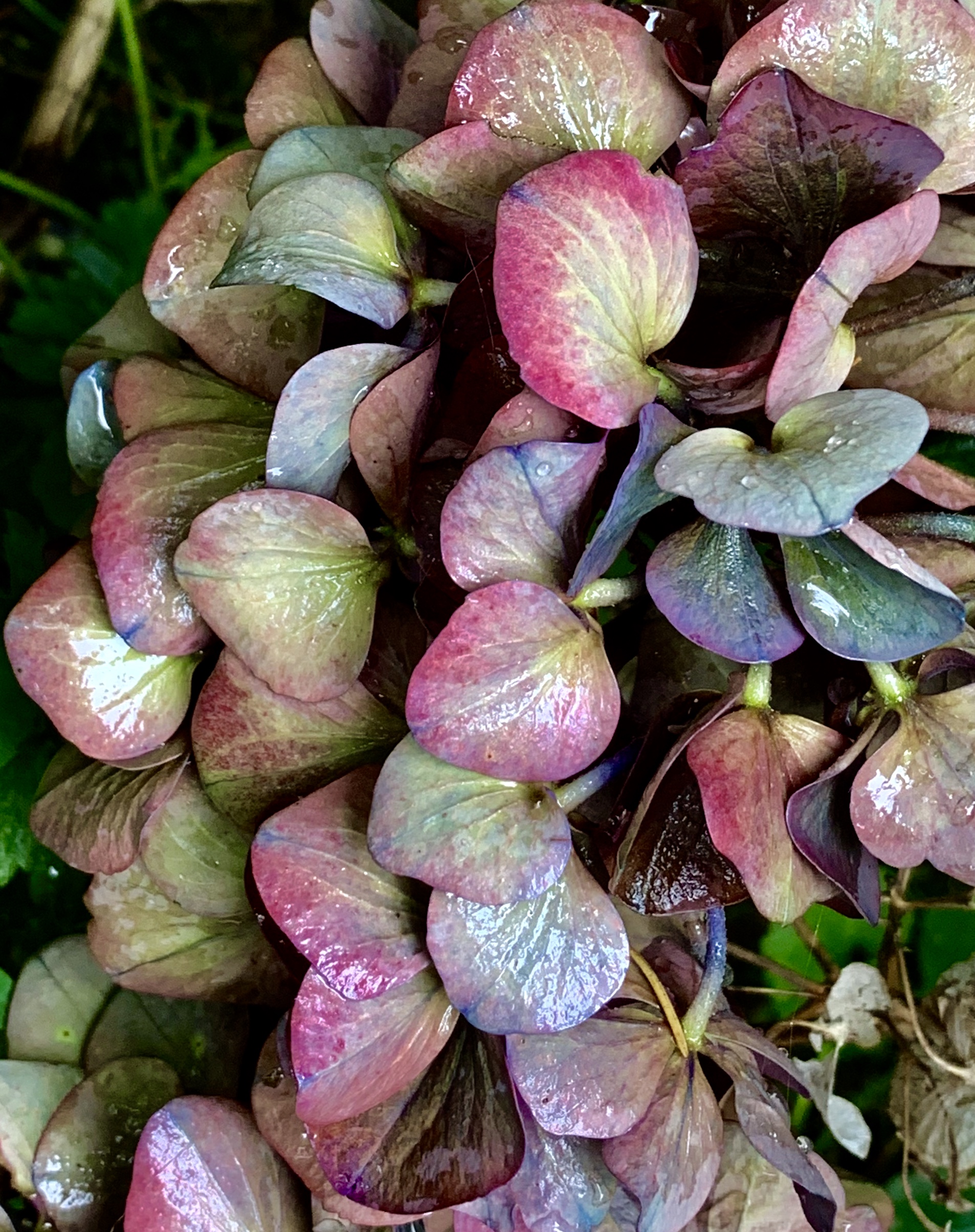
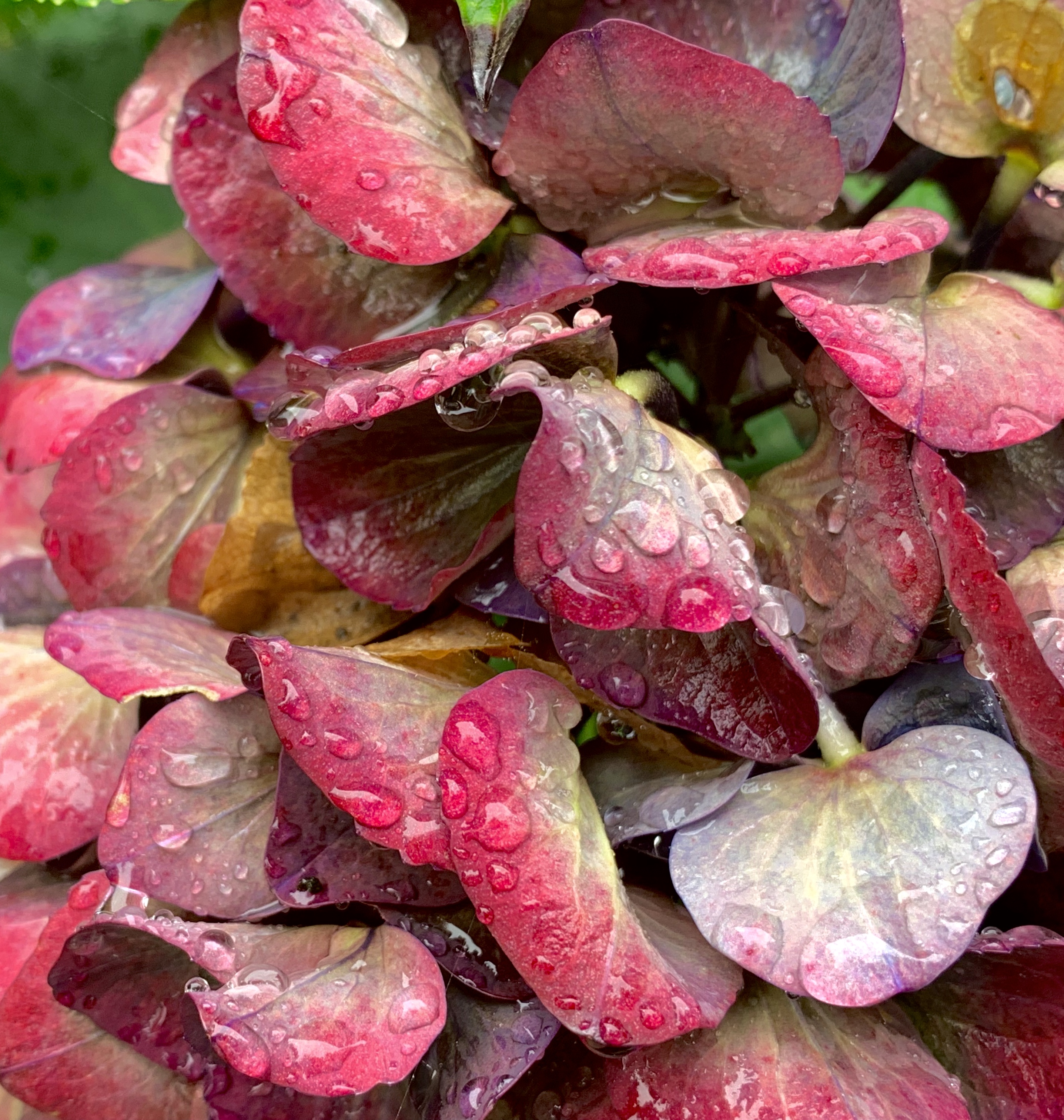
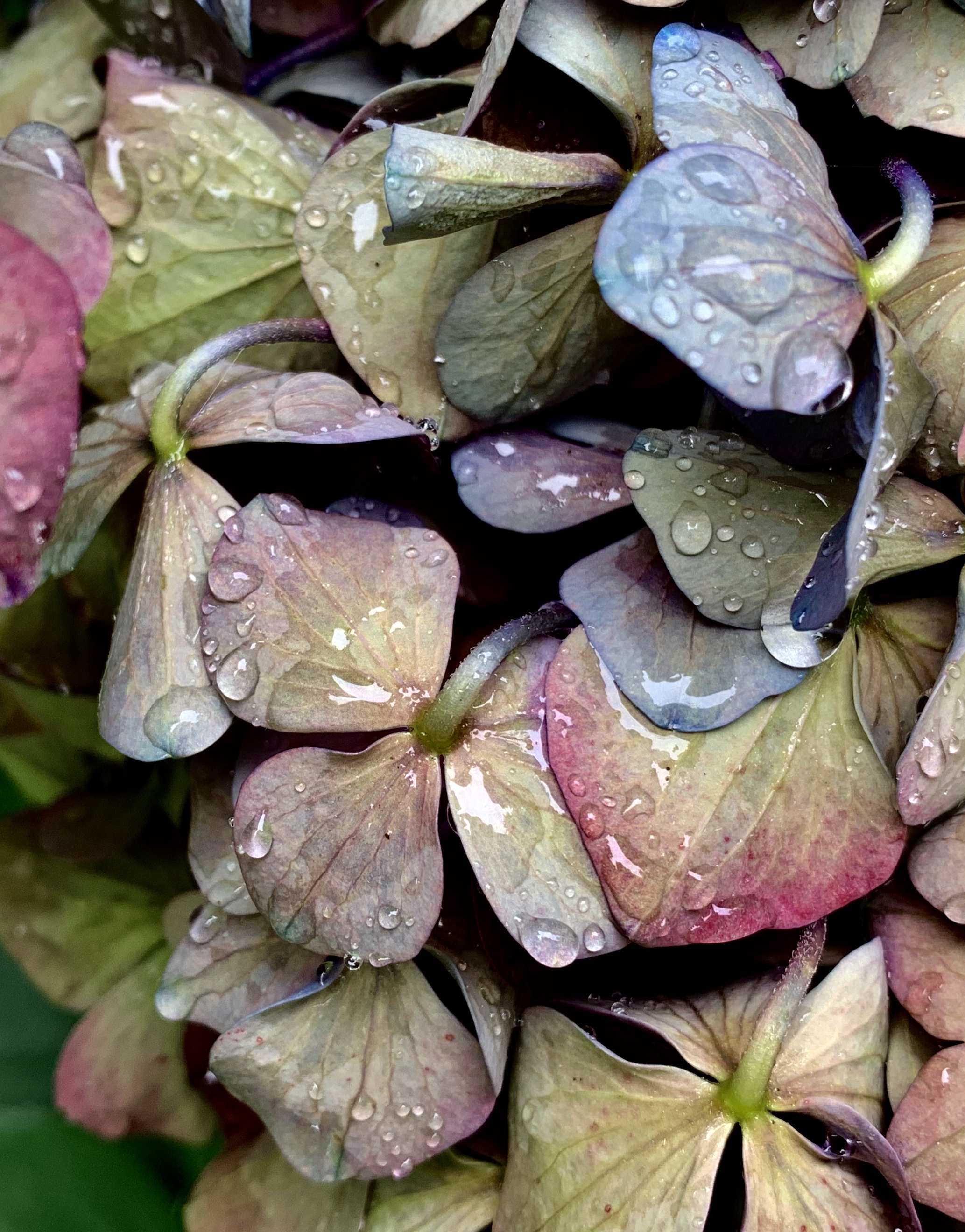
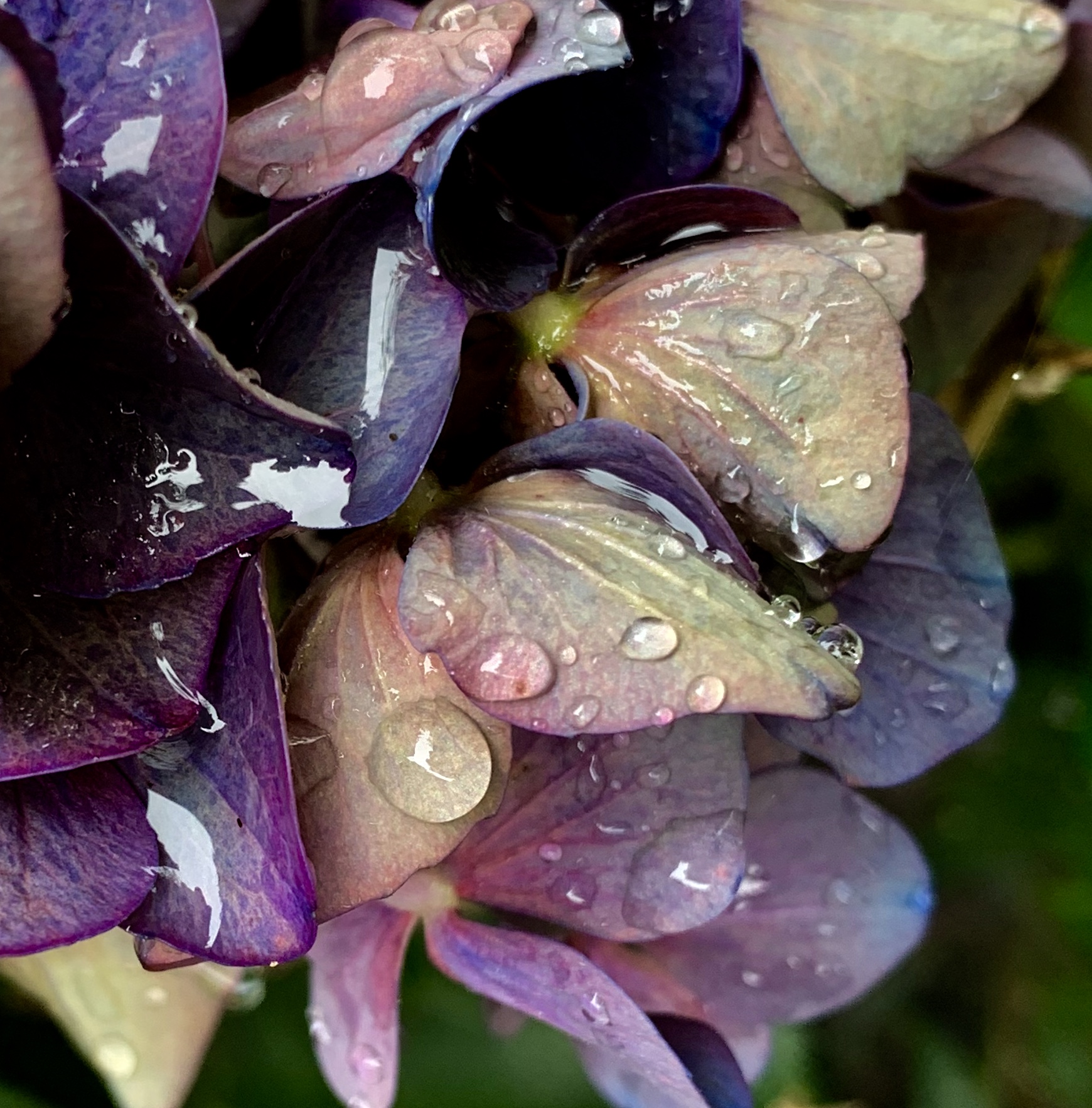
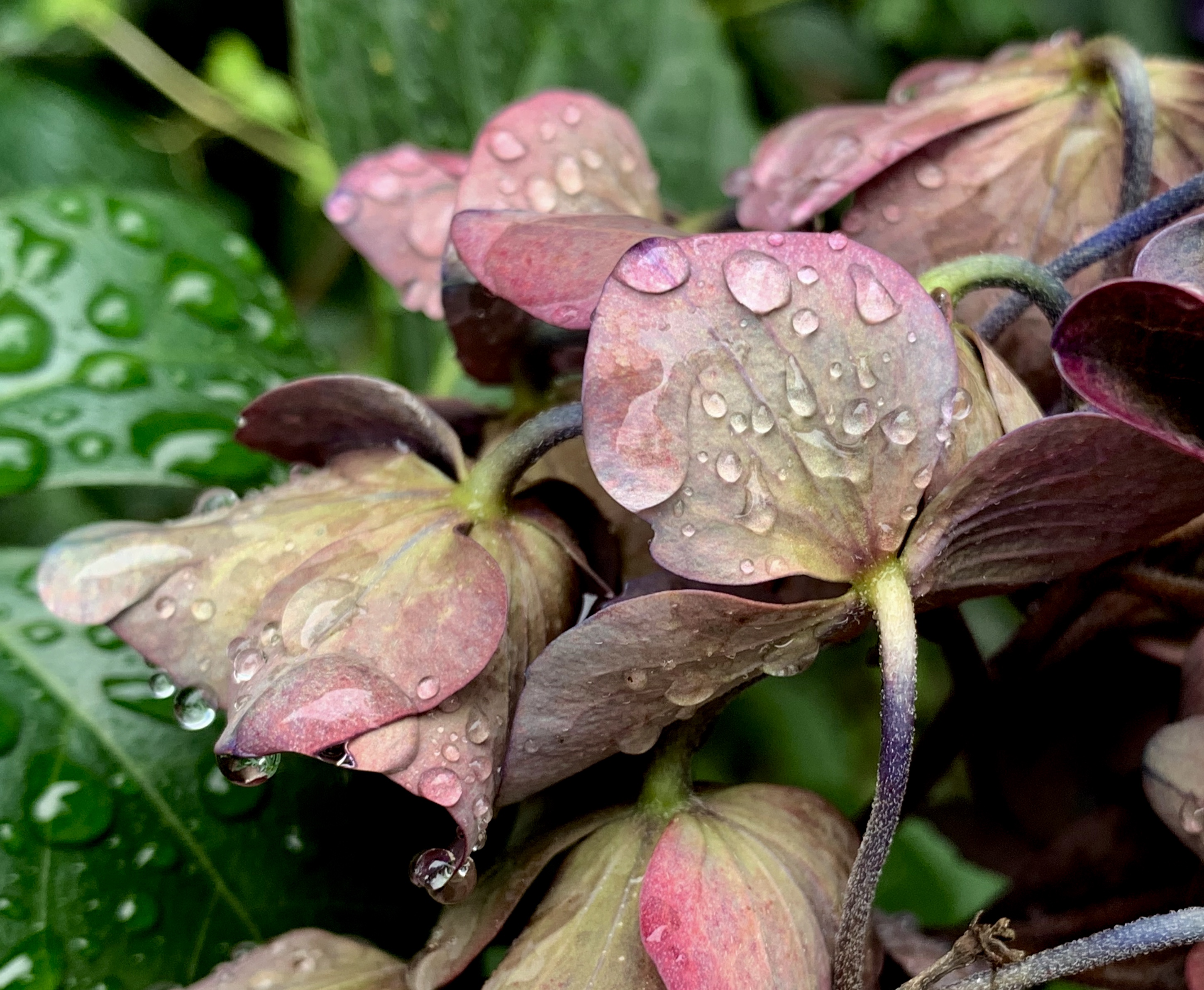
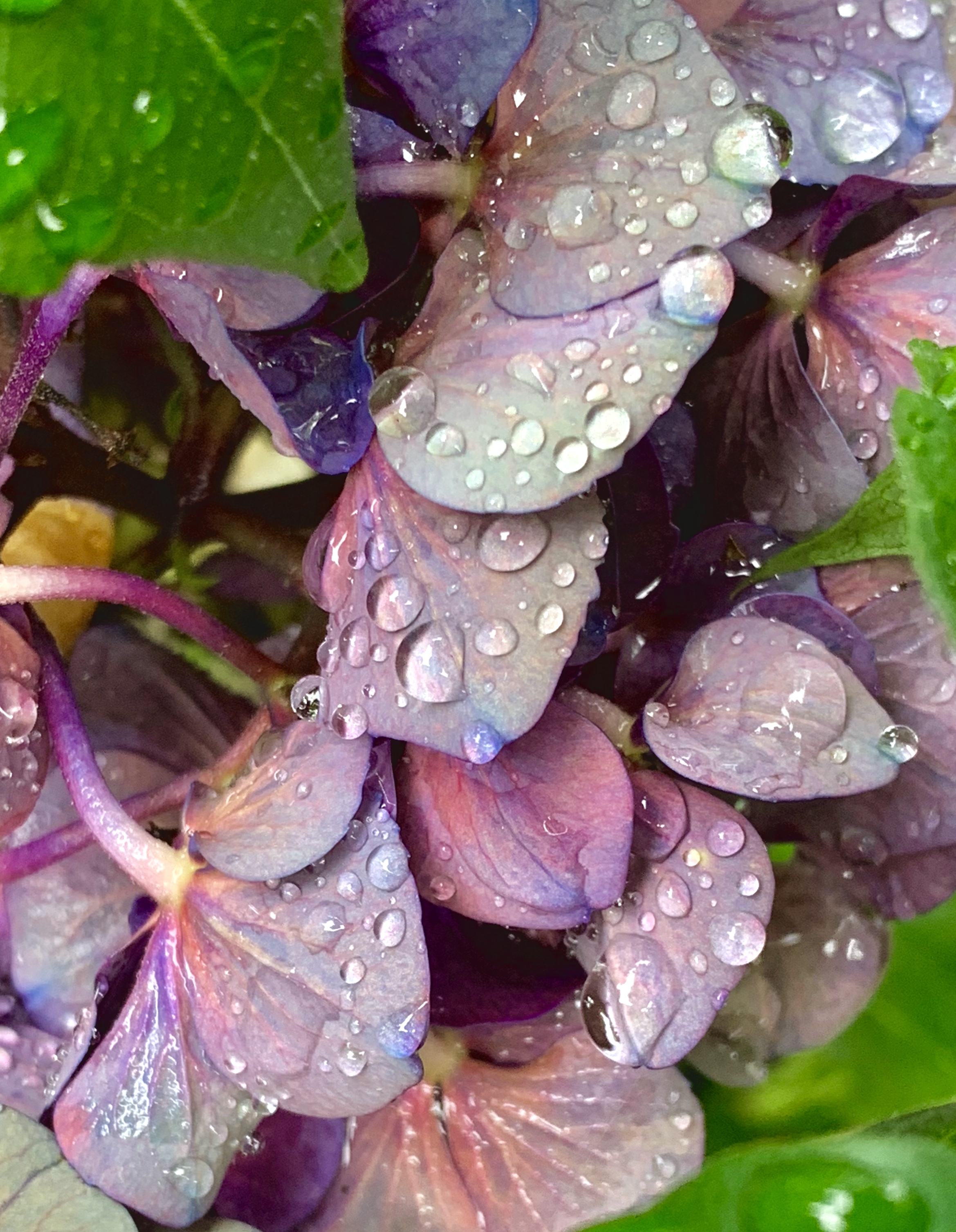
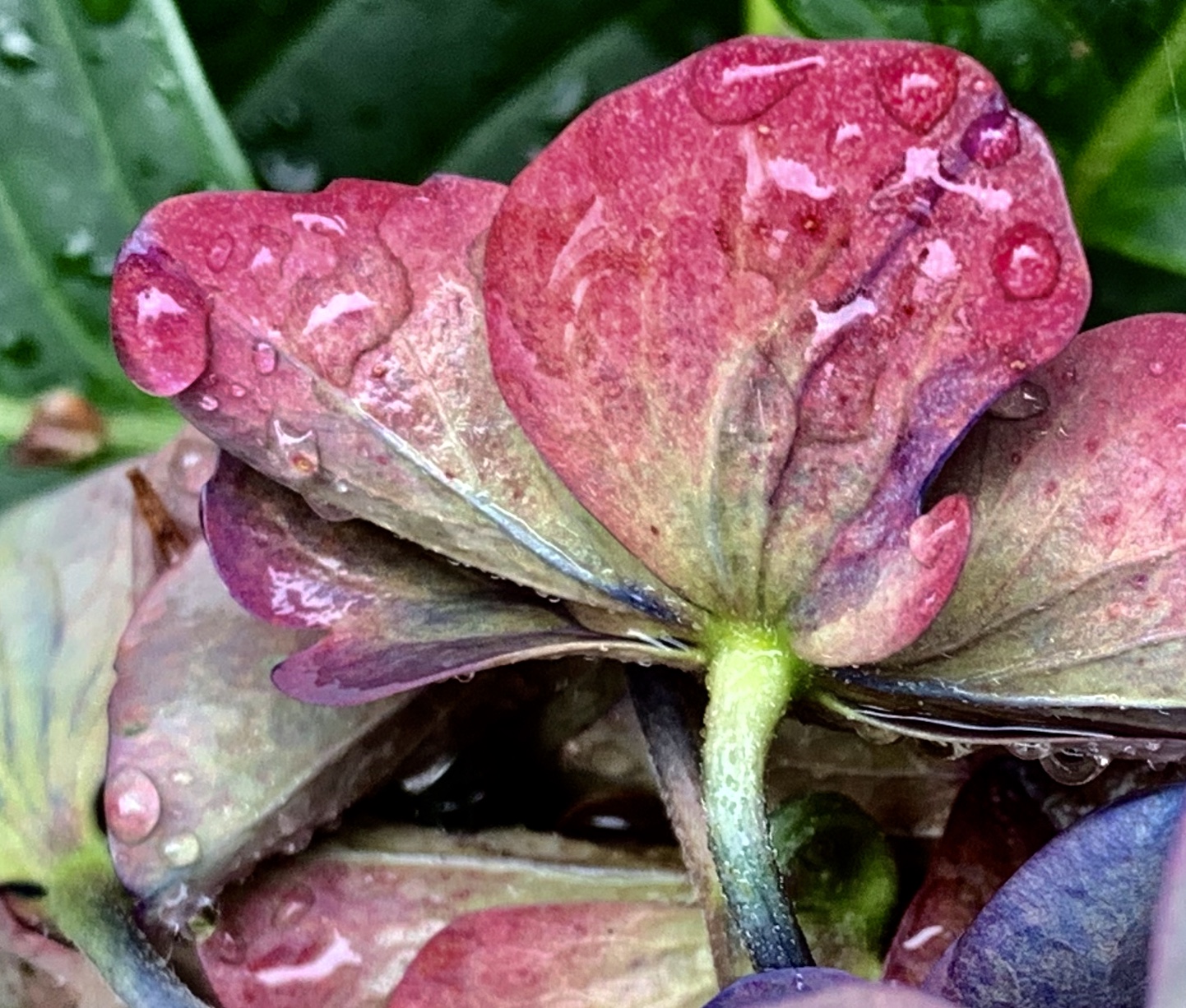
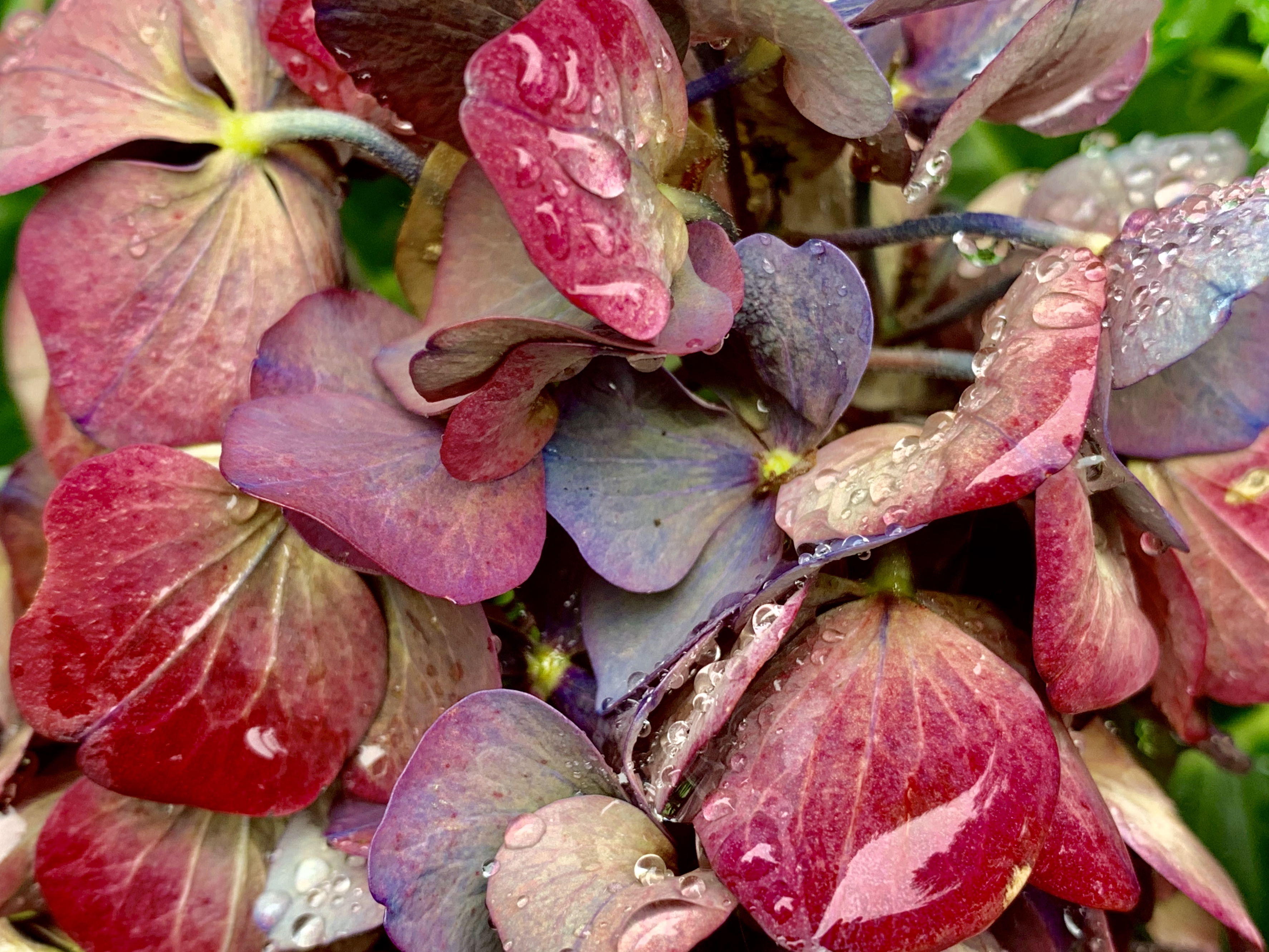
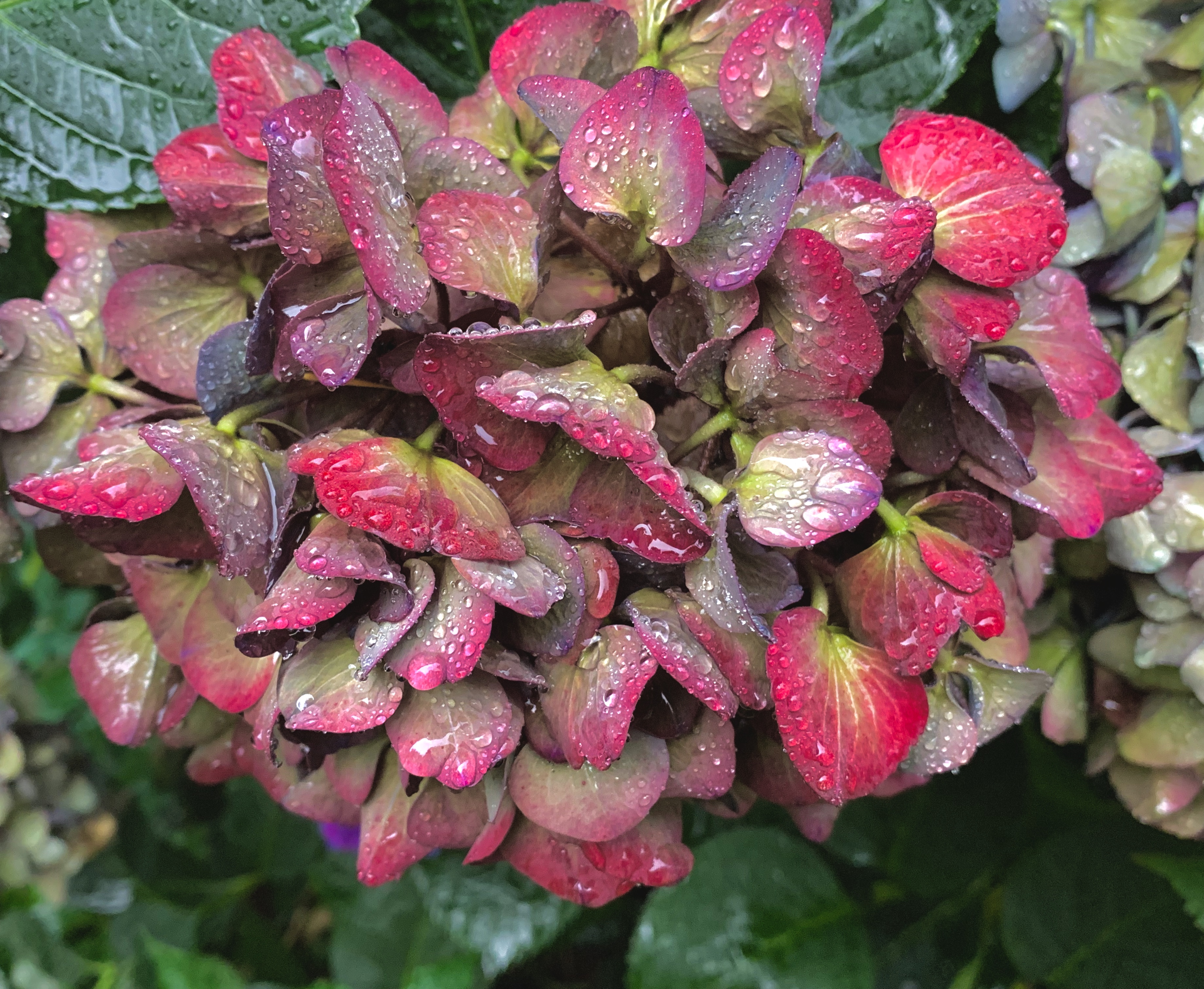
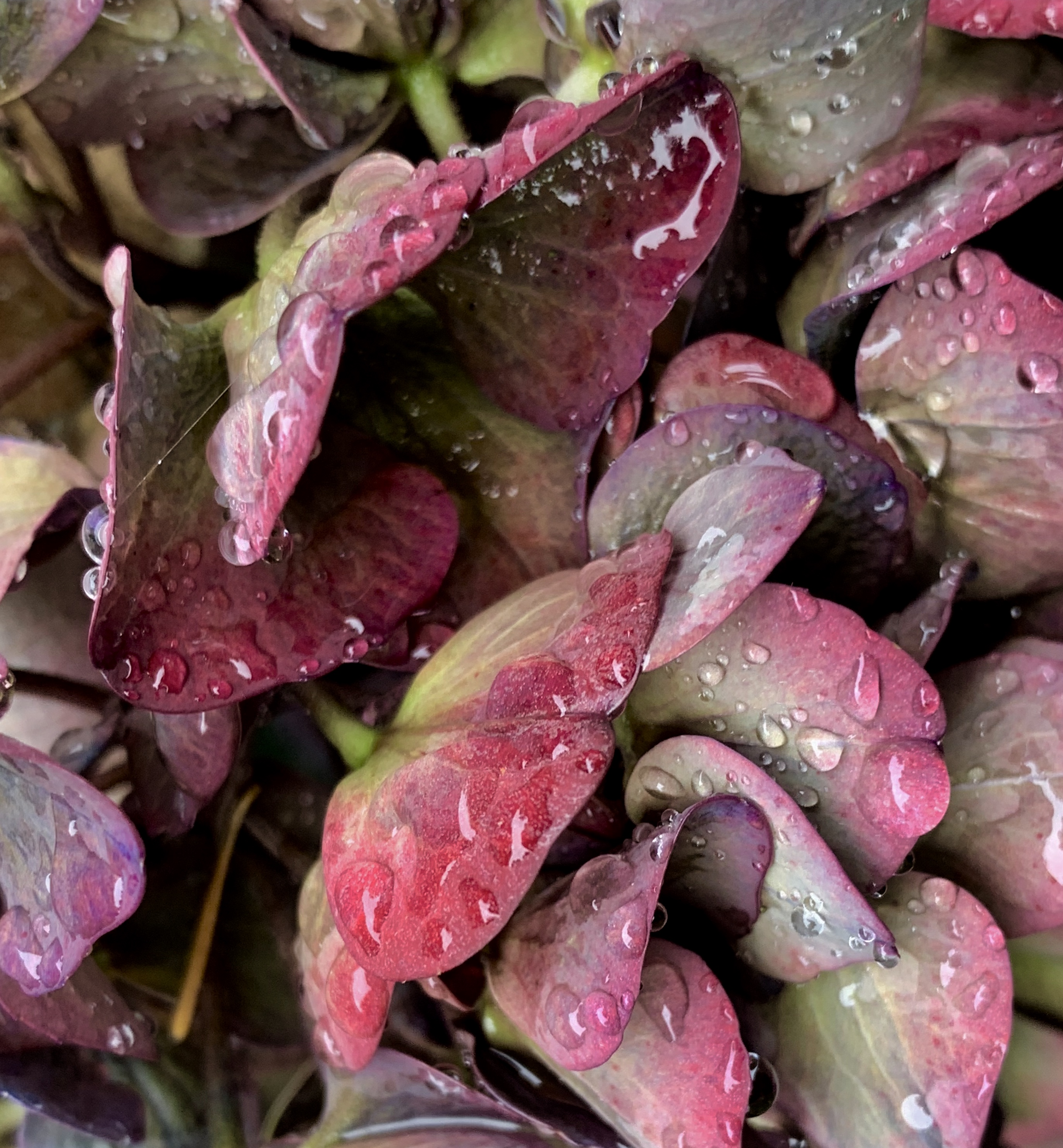
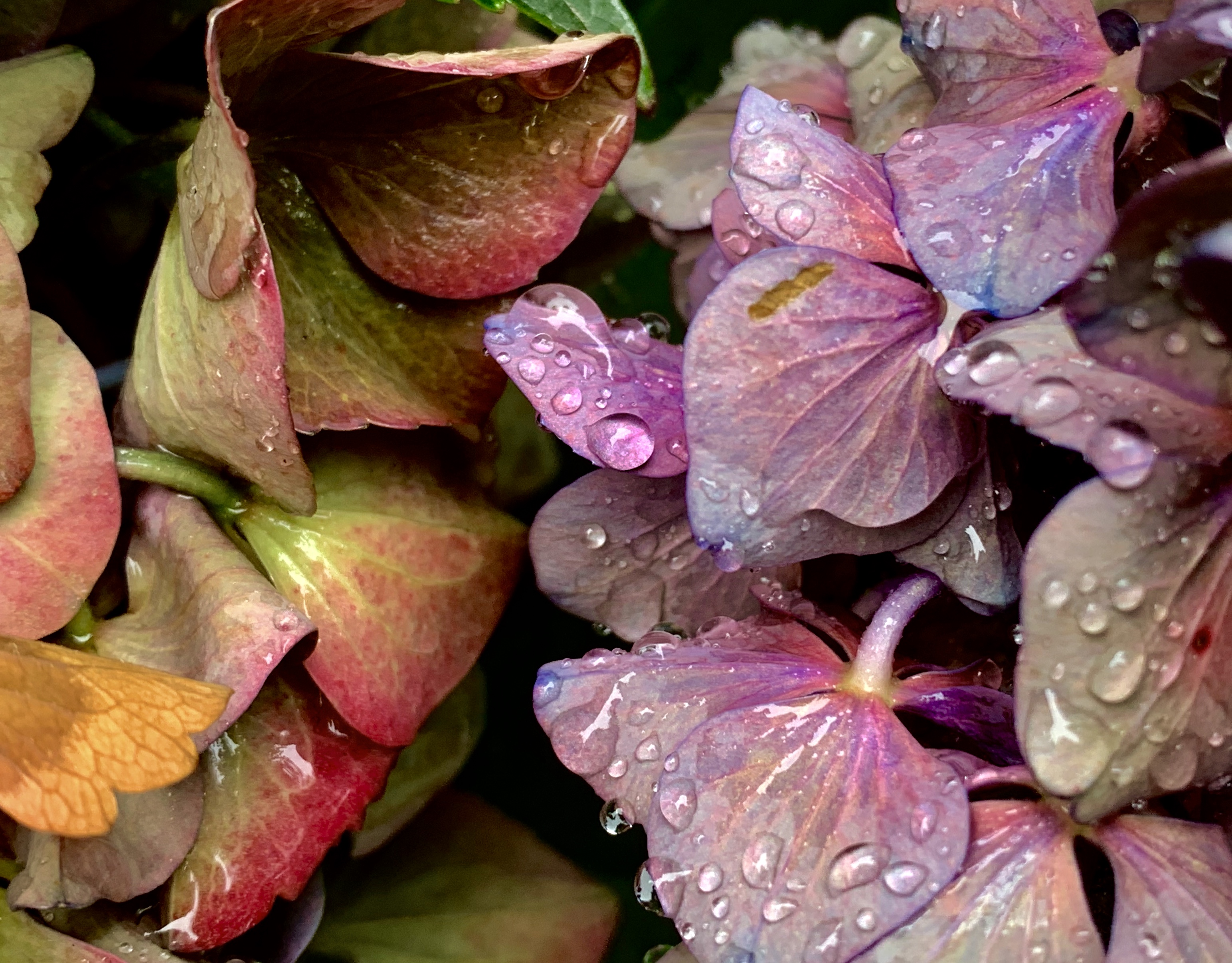
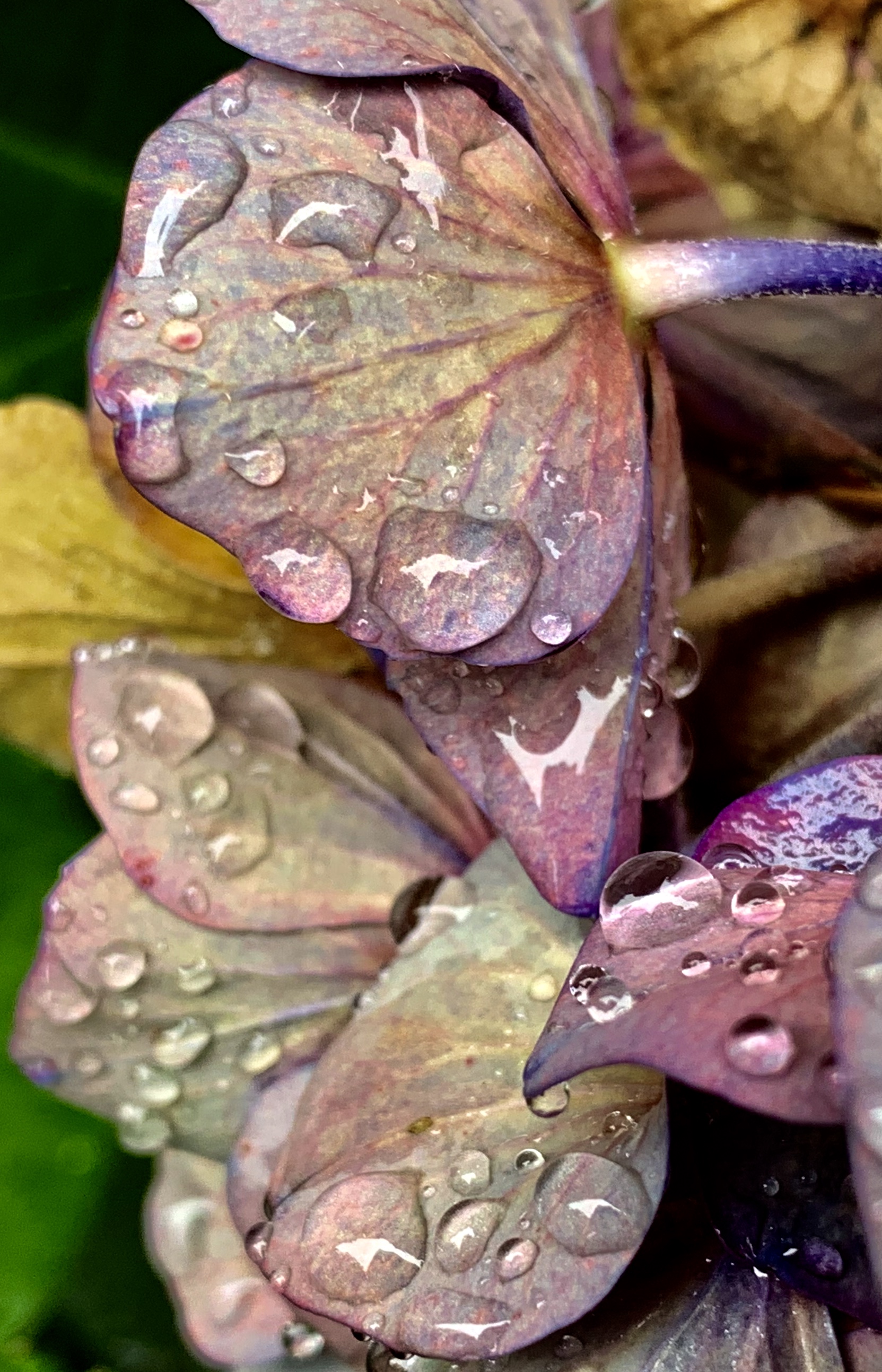
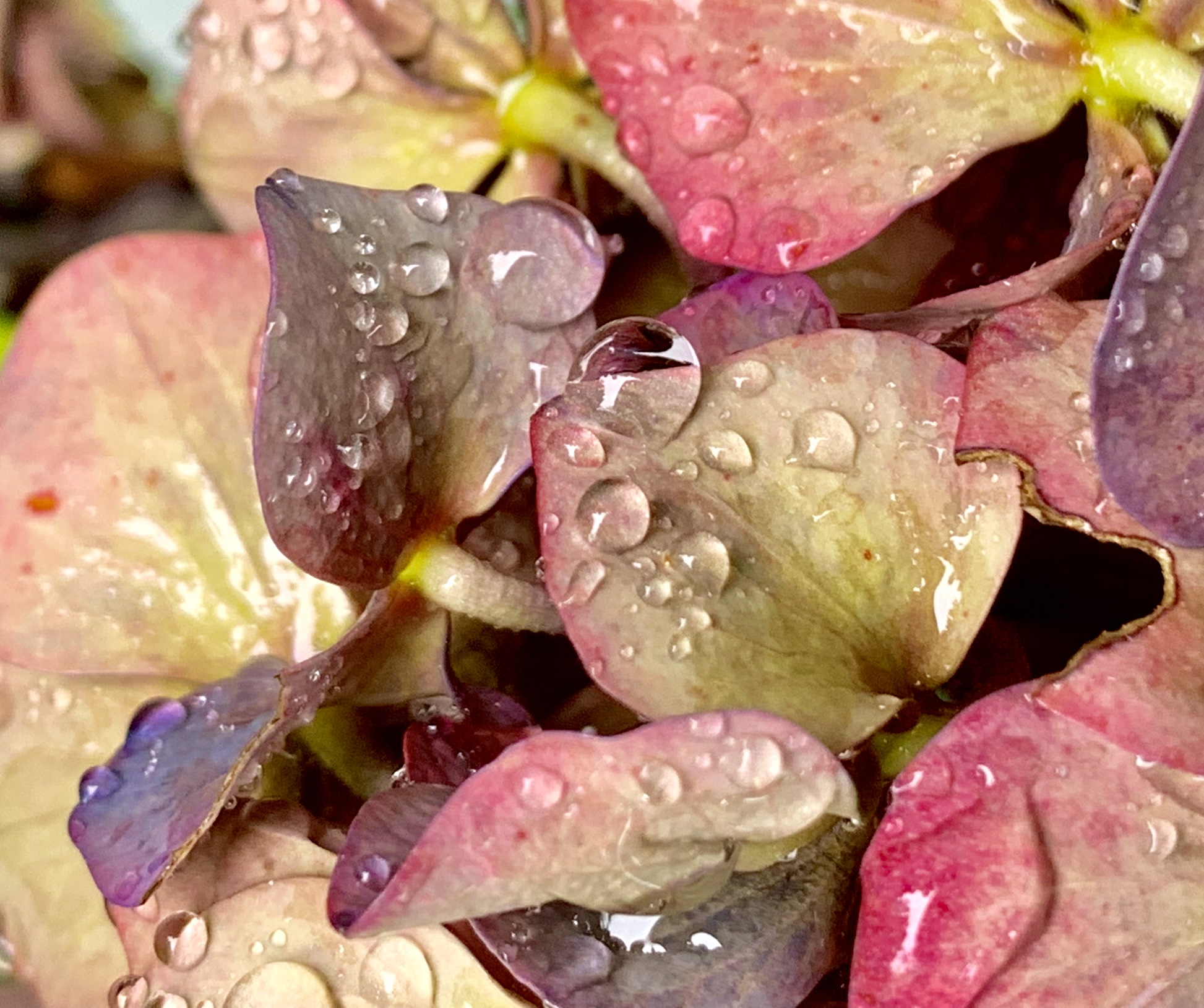
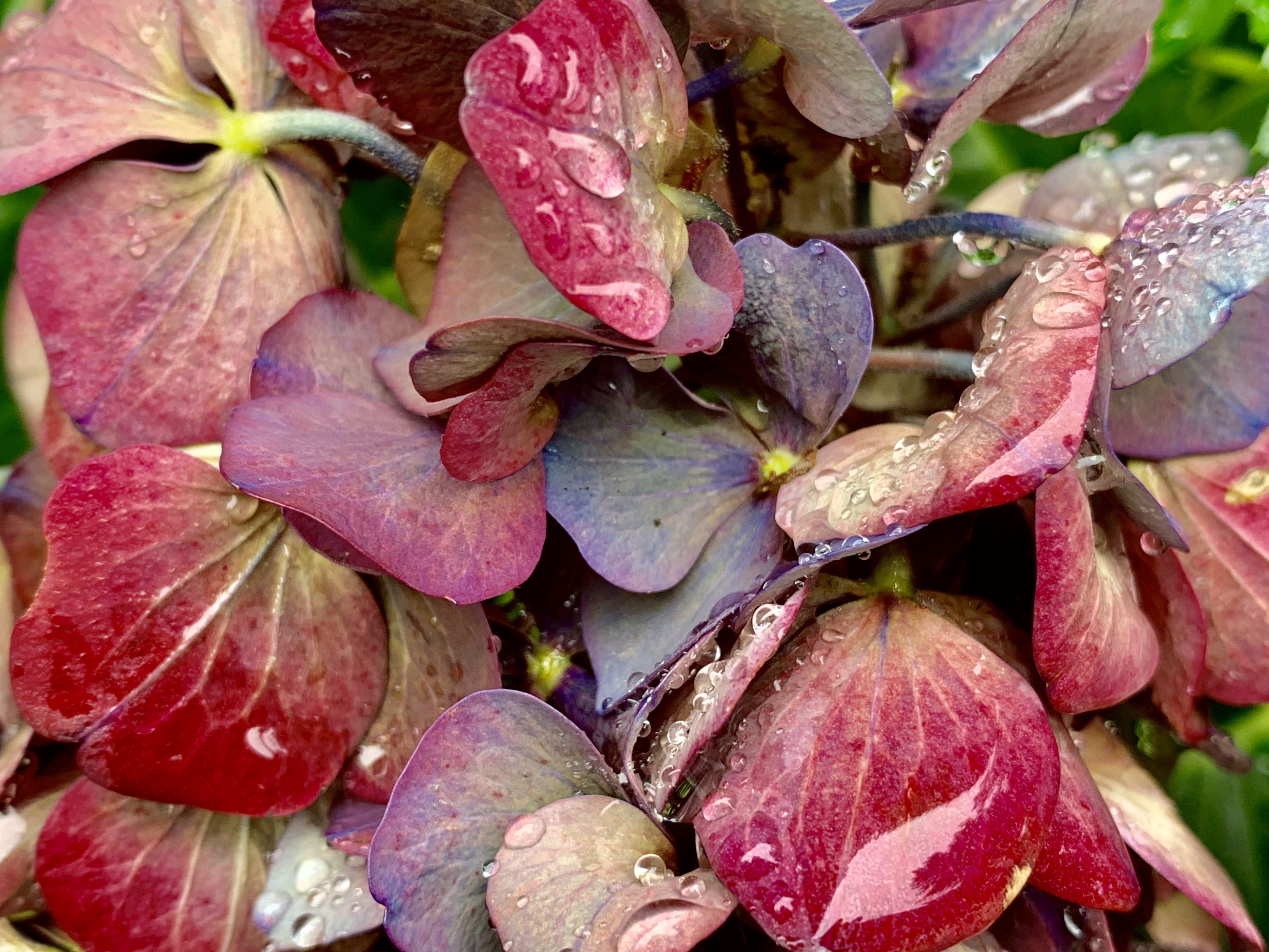
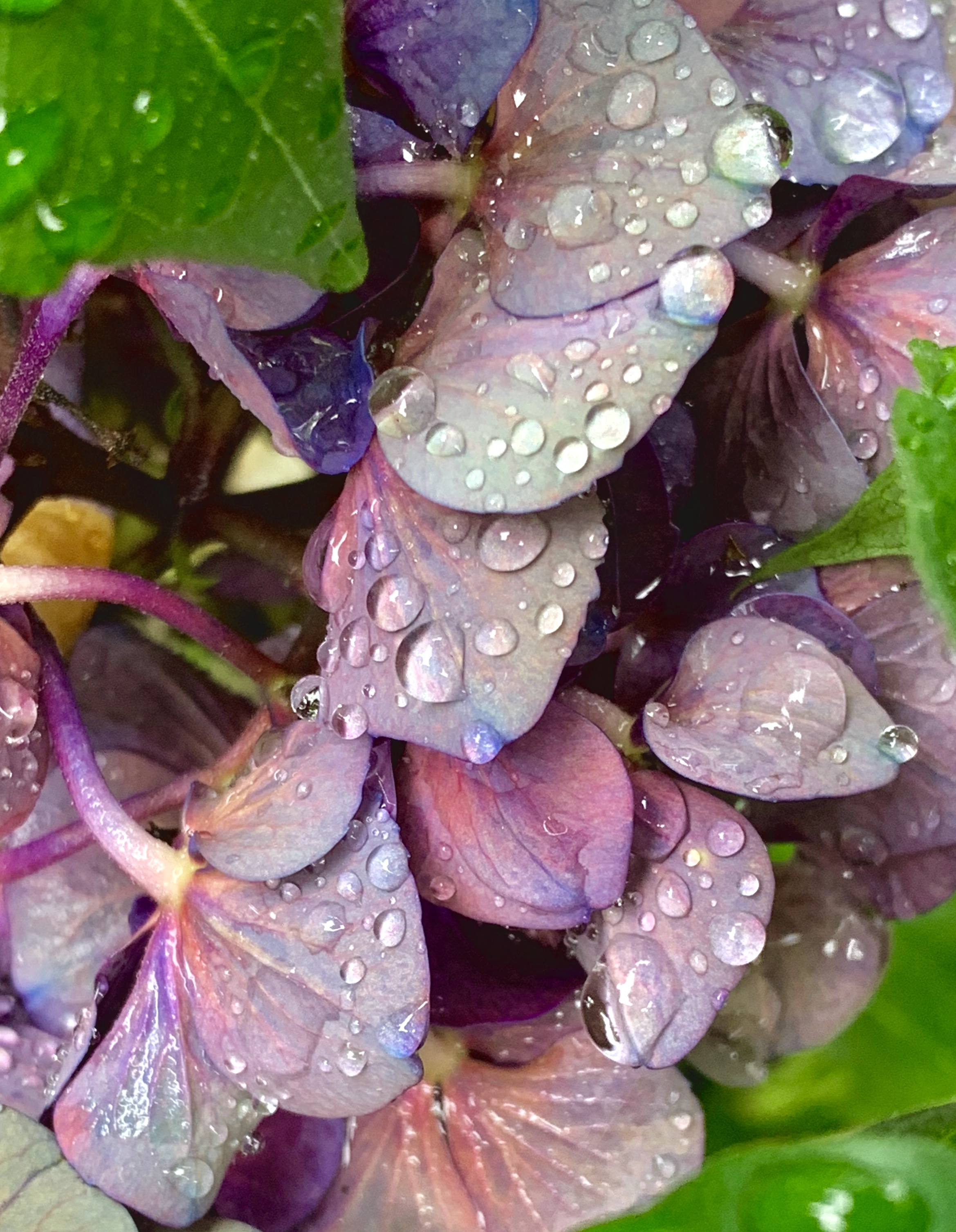
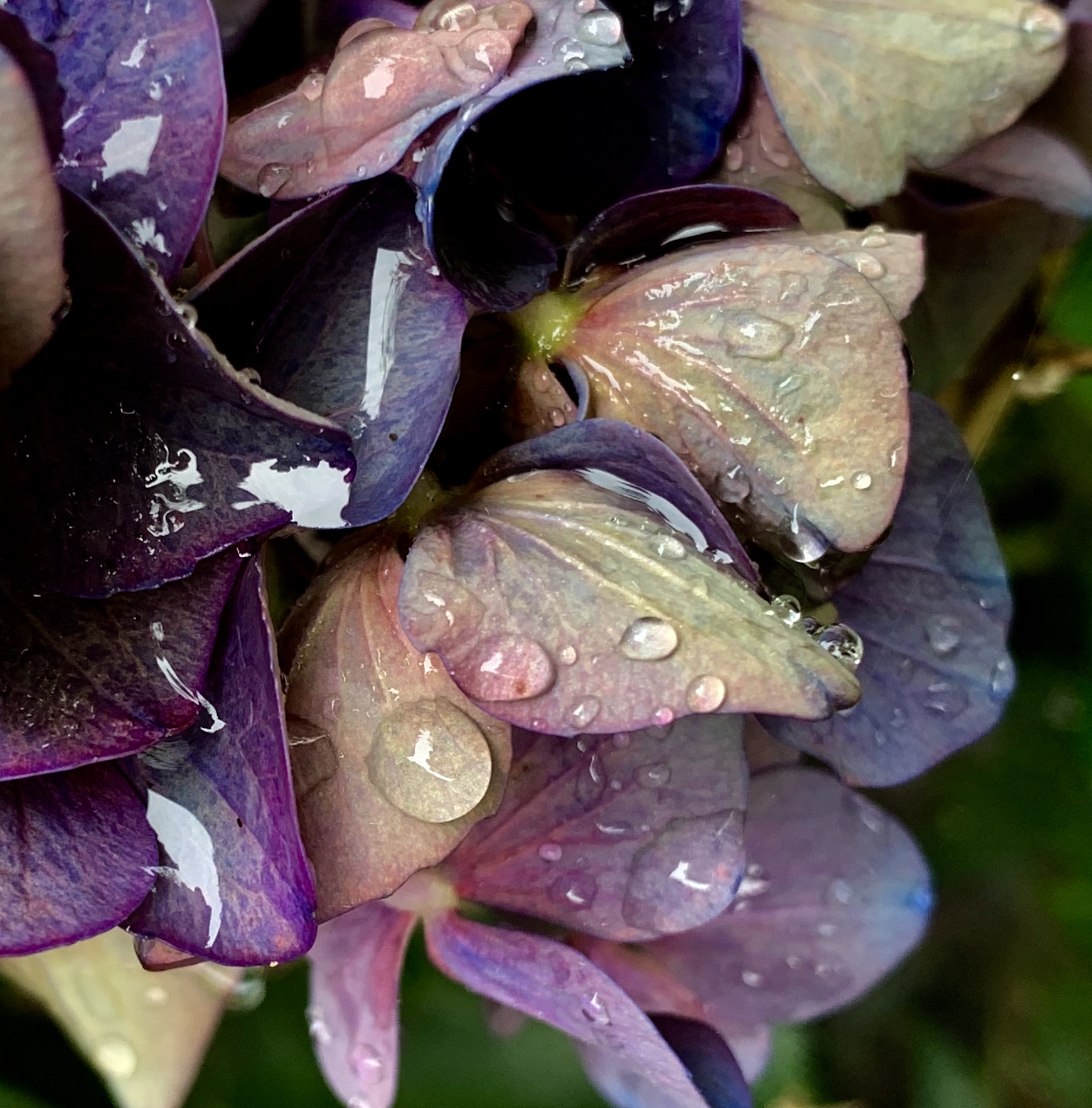
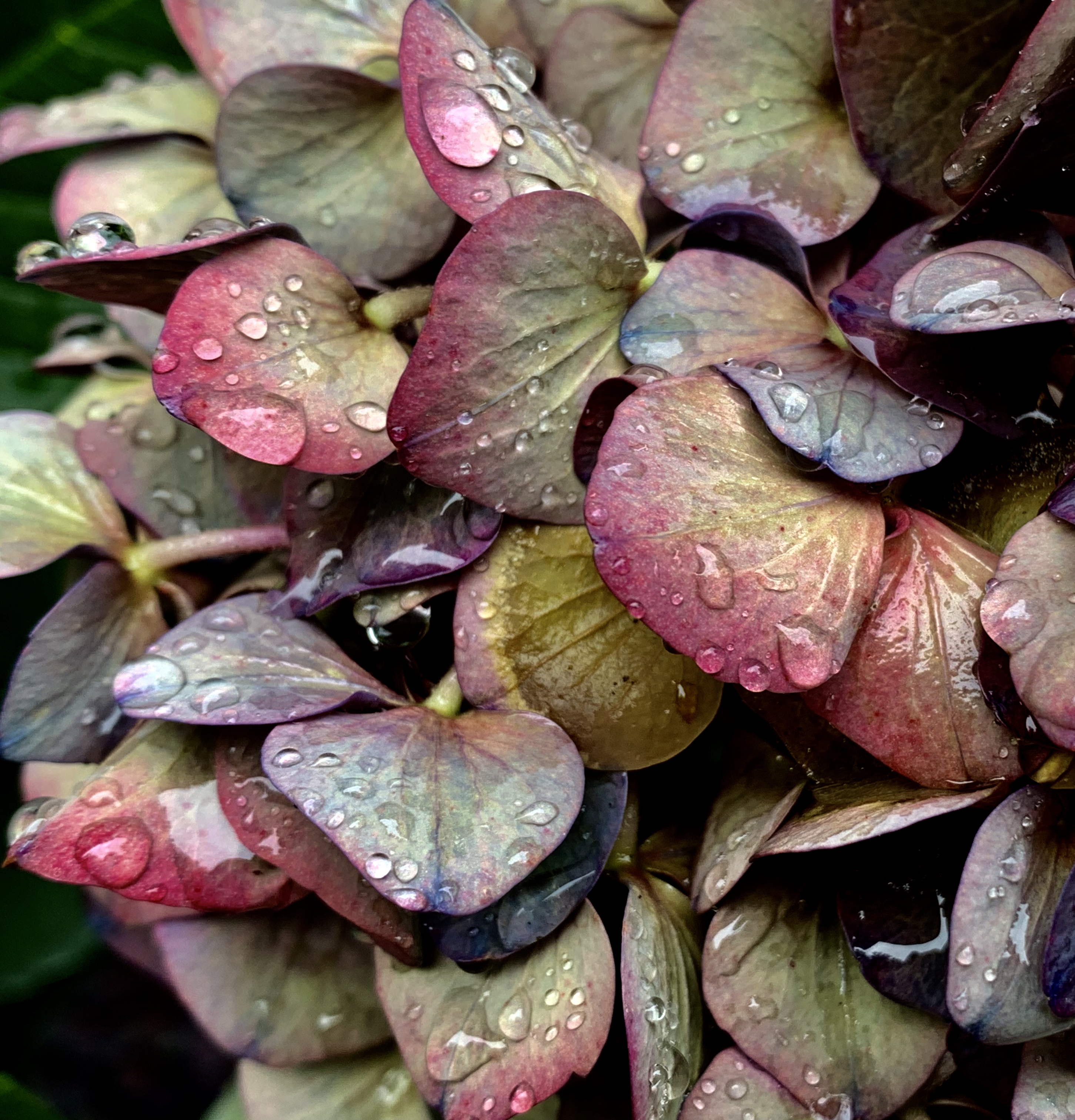
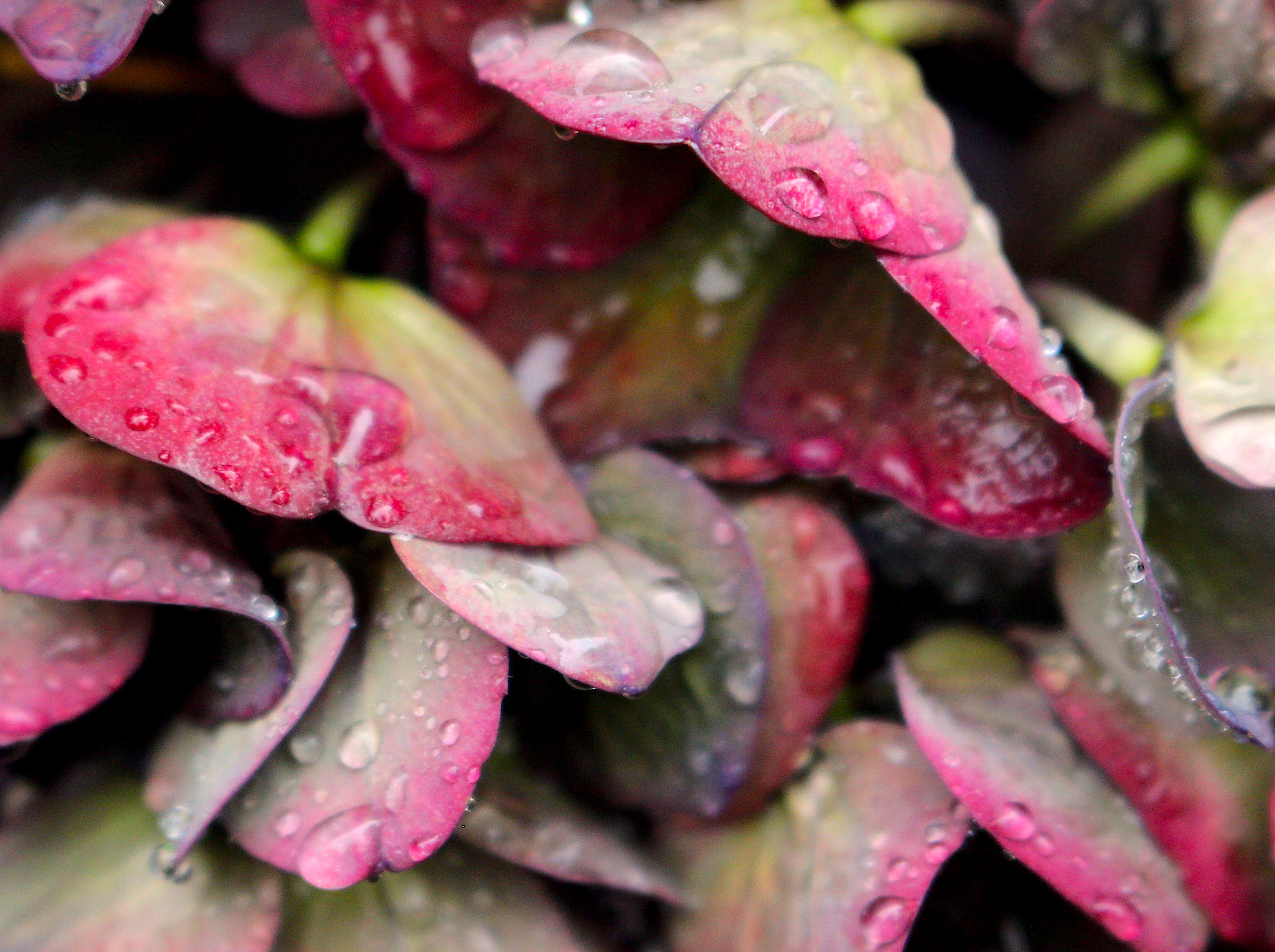
Dwelling within a mosaic of dying colors, these petals fold and collapse under the weight of the sky’s tears.
This hydrangea bears a rainbow of hues, once-vibrant promises of blue now fading to rusts and grays.
I know what this is like: the running out of the clock, feeling the limits of vitality.
Withering and drying, I’m drawn, thirsty for the beauty, to this waning artist’s palette.
To quench my thirst: from an open cup, an invitation, an everlasting visual sacrament.
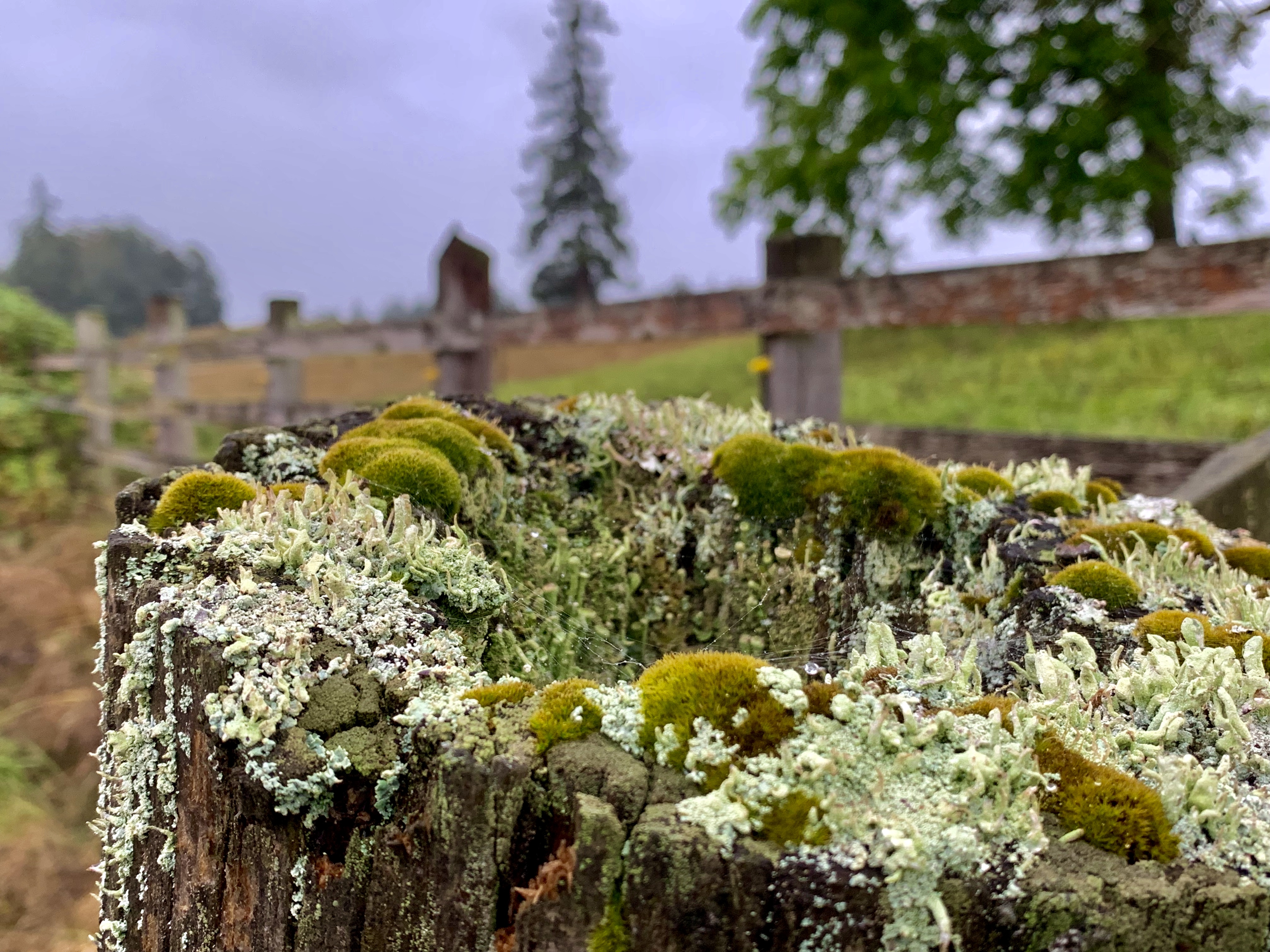
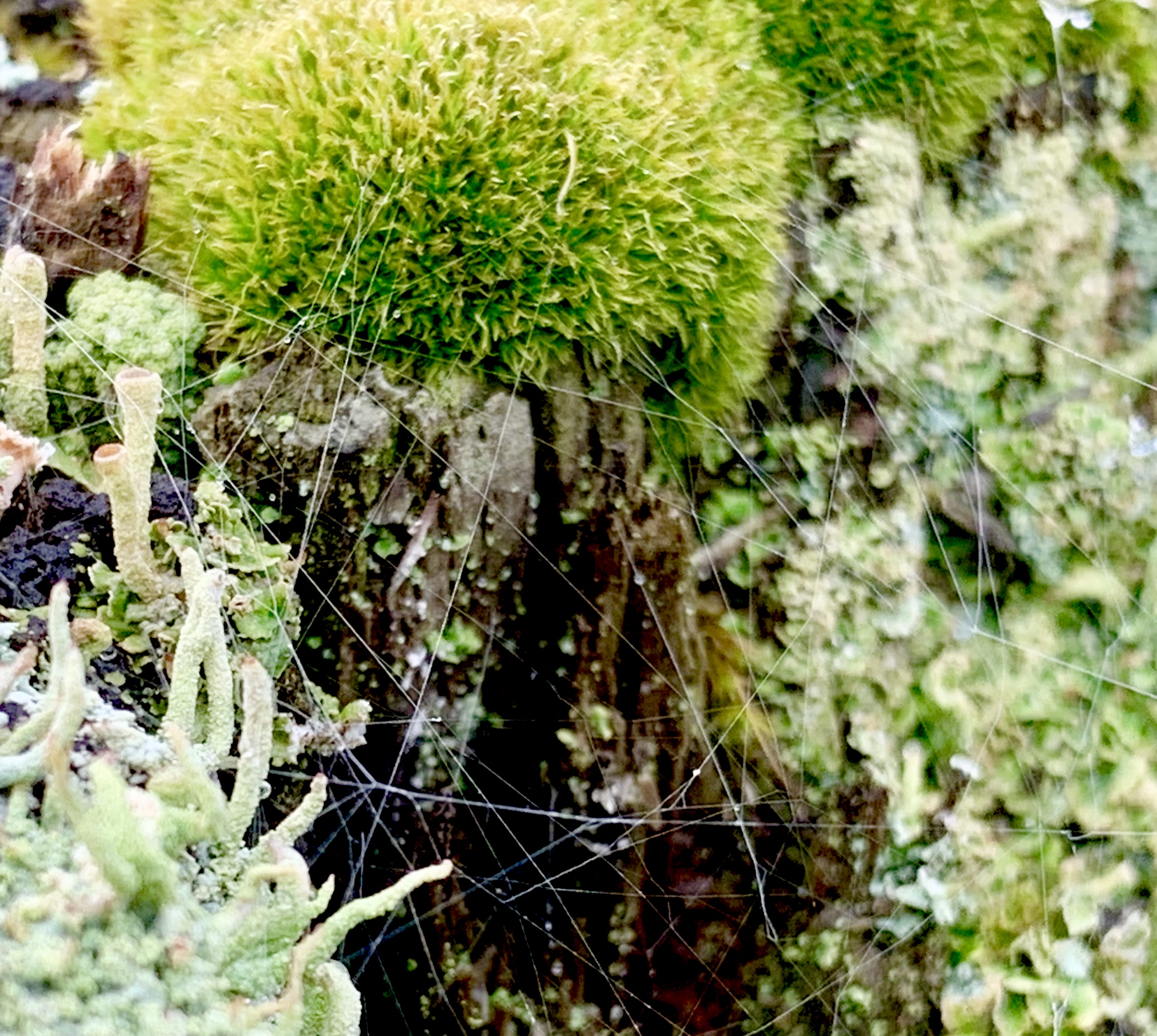
It is a lichen day. Not a bit of rotten wood lies on the dead leaves, but it is covered with fresh, green cup lichens… All the world seems a great lichen and to grow like one. ~Henry David Thoreau from his journal
Nature doth thus kindly heal every wound. By the mediation of a thousand little mosses and fungi, the most unsightly objects become radiant of beauty. There seem to be two sides of this world, presented us at different times, as we see things in growth or dissolution, in life or death. And seen with the eye of the poet, as God sees them, all things are alive and beautiful. ~Henry David Thoreau (journal)
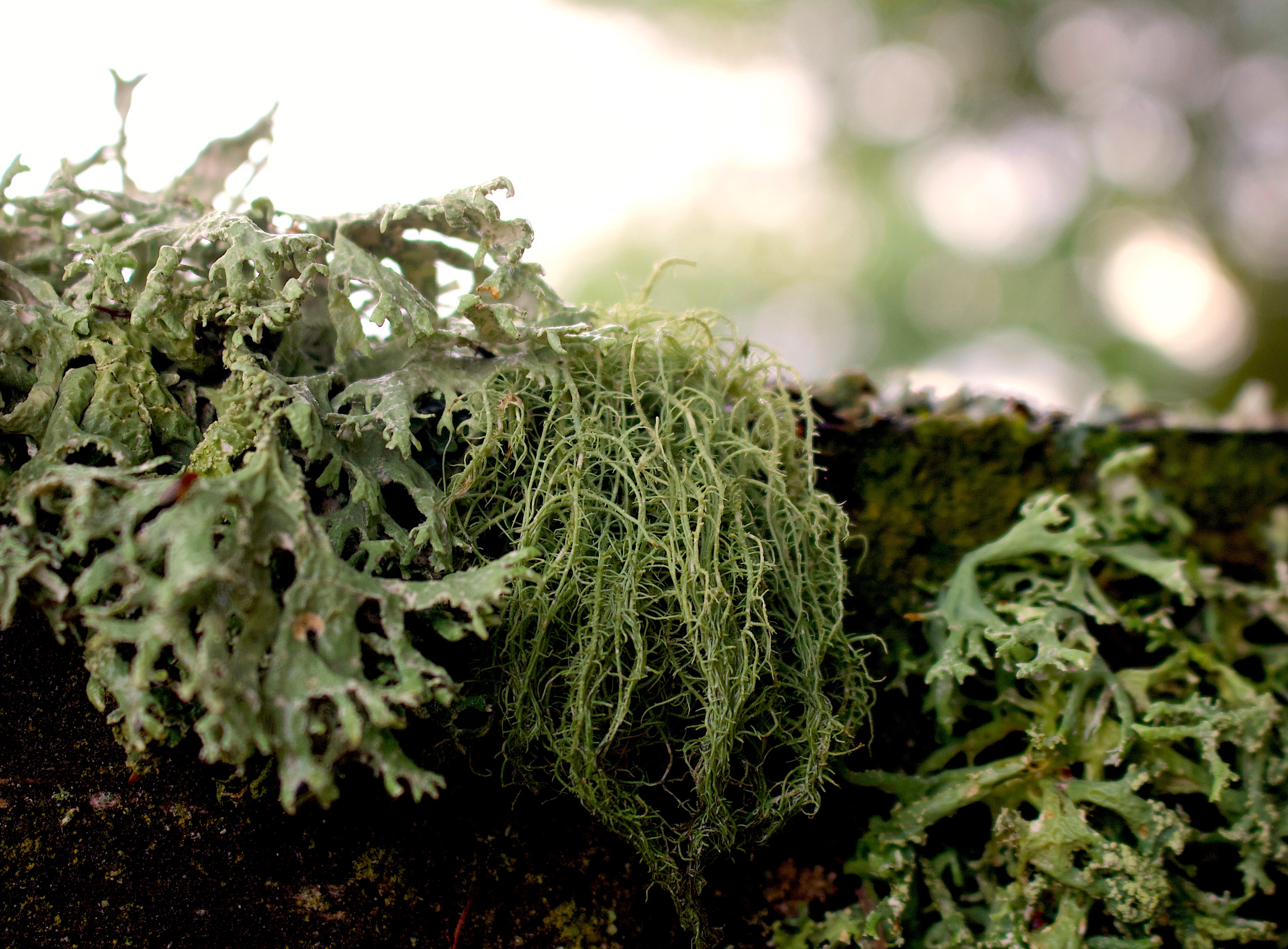
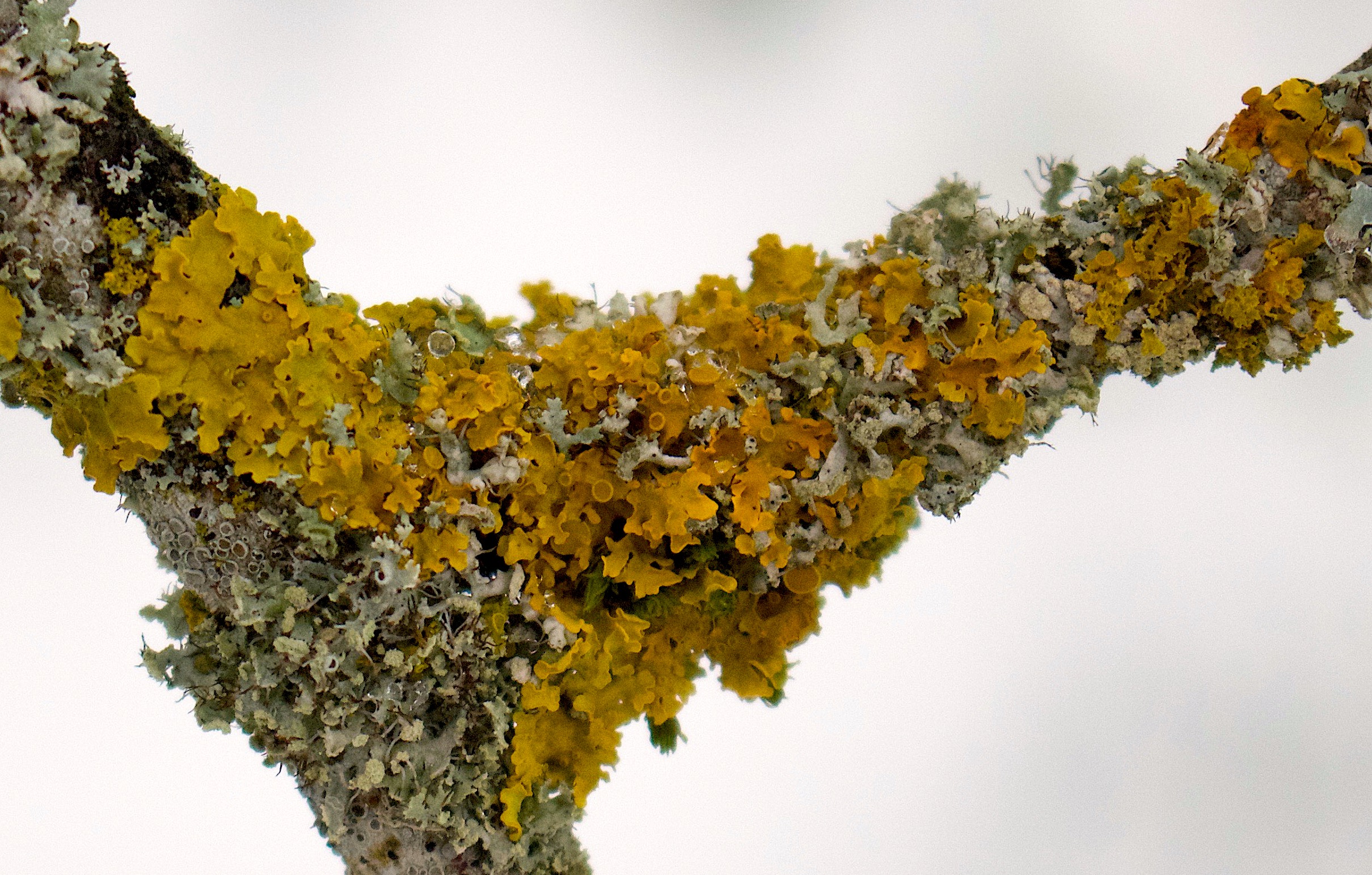
I’m a bit of a lichen myself – a bit of an opportunist, thriving in drizzle, sometimes colorful but most often not.
Mostly I hang on. Persevering. At times obnoxiously tenacious.
A dreamer of fairy tale kingdoms while living simply in plain sight.
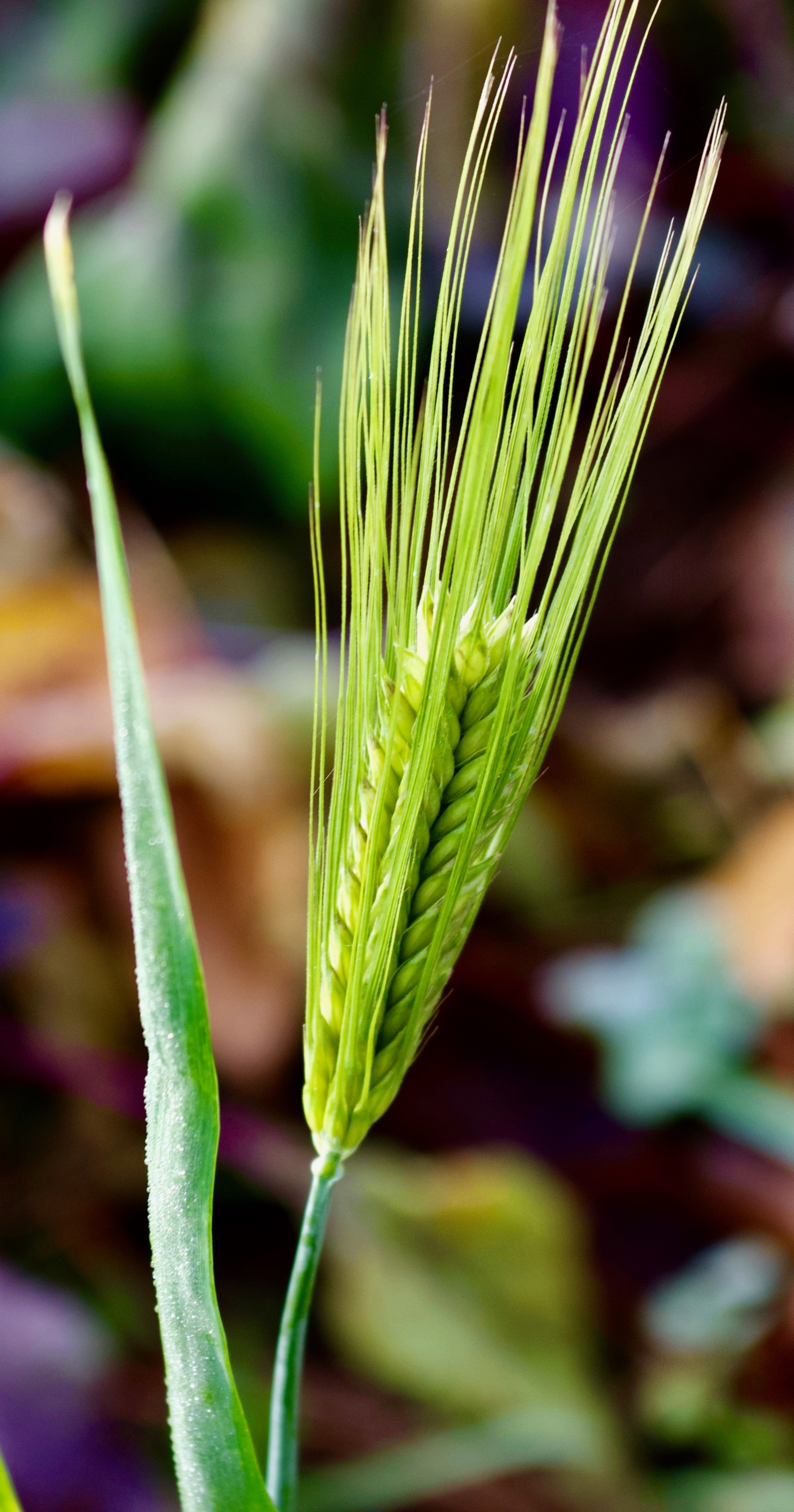
The moon drops one or two feathers into the field. The dark wheat listens. Be still. Now. There they are, the moon’s young, trying Their wings.
I stand alone by an elder tree, I do not dare breathe Or move. I listen. The wheat leans back toward its own darkness, And I lean toward mine. ~James Wright from “Beginning”
Wherever it was I was supposed to be this morning— whatever it was I said I would be doing— I was standing at the edge of the field— I was hurrying through my own soul, opening its dark doors— I was leaning out; I was listening. — Mary Oliver from “Mockingbirds” from New and Selected Poems, Volume 2
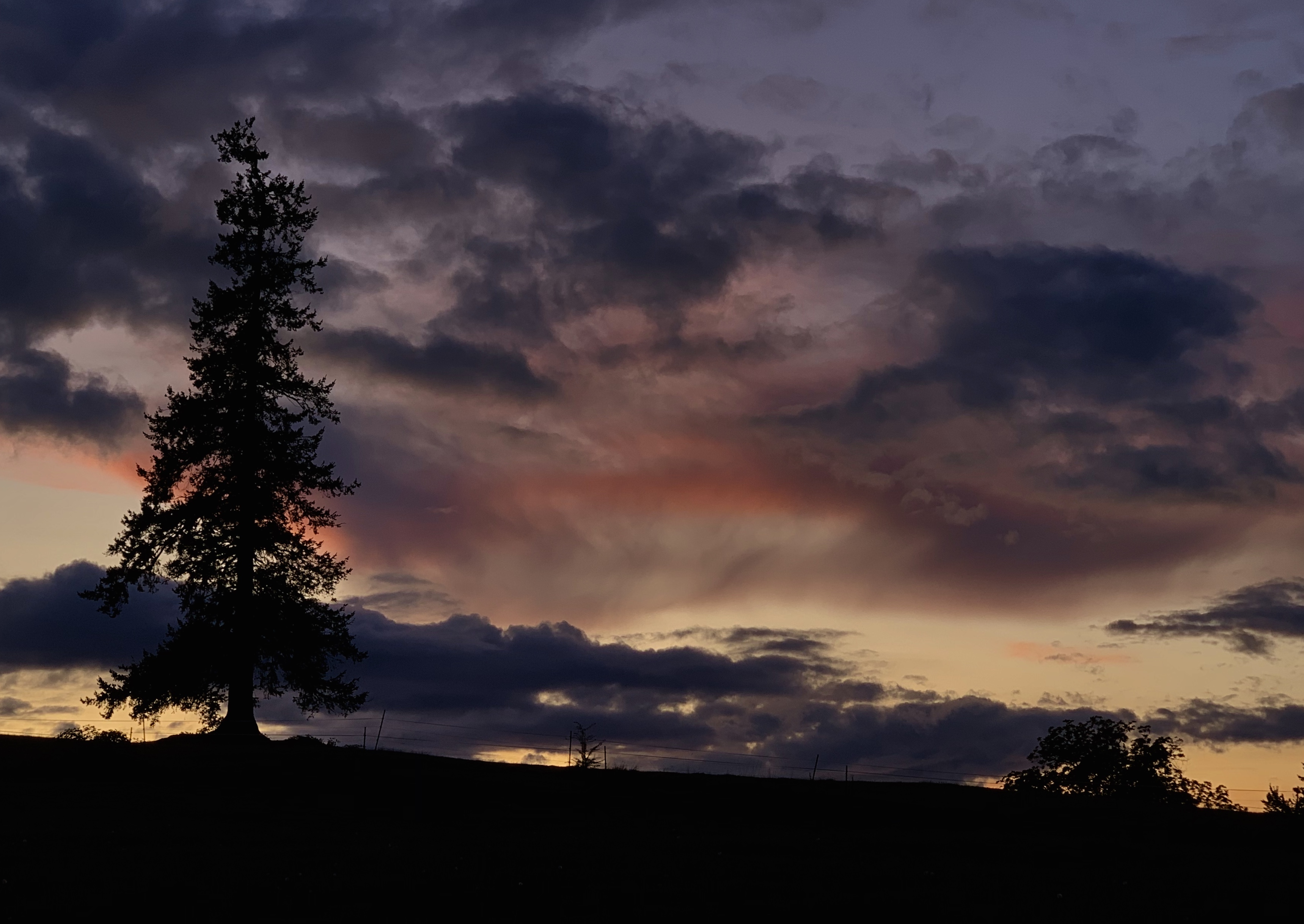
I am leaning back further into darkness.
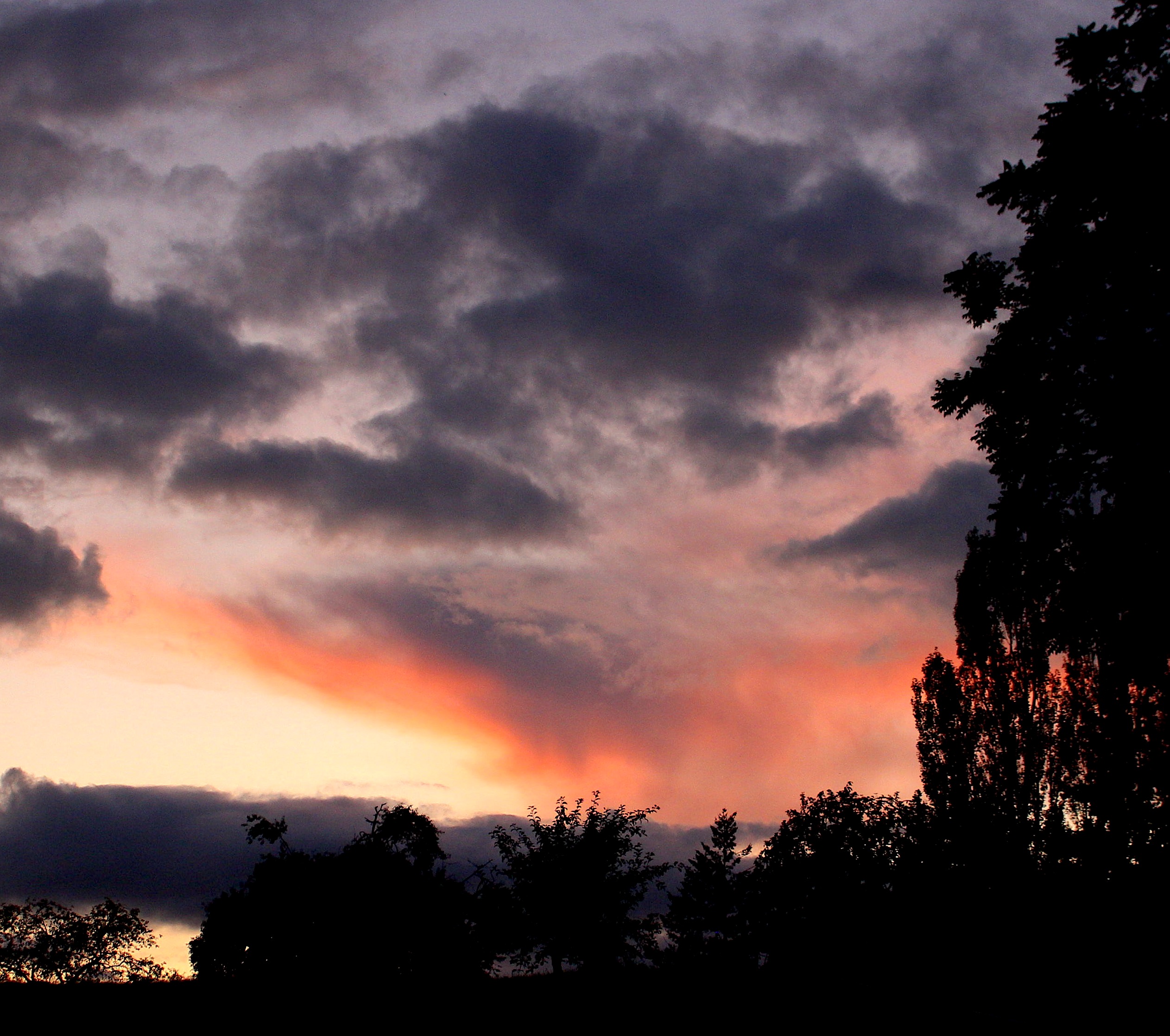
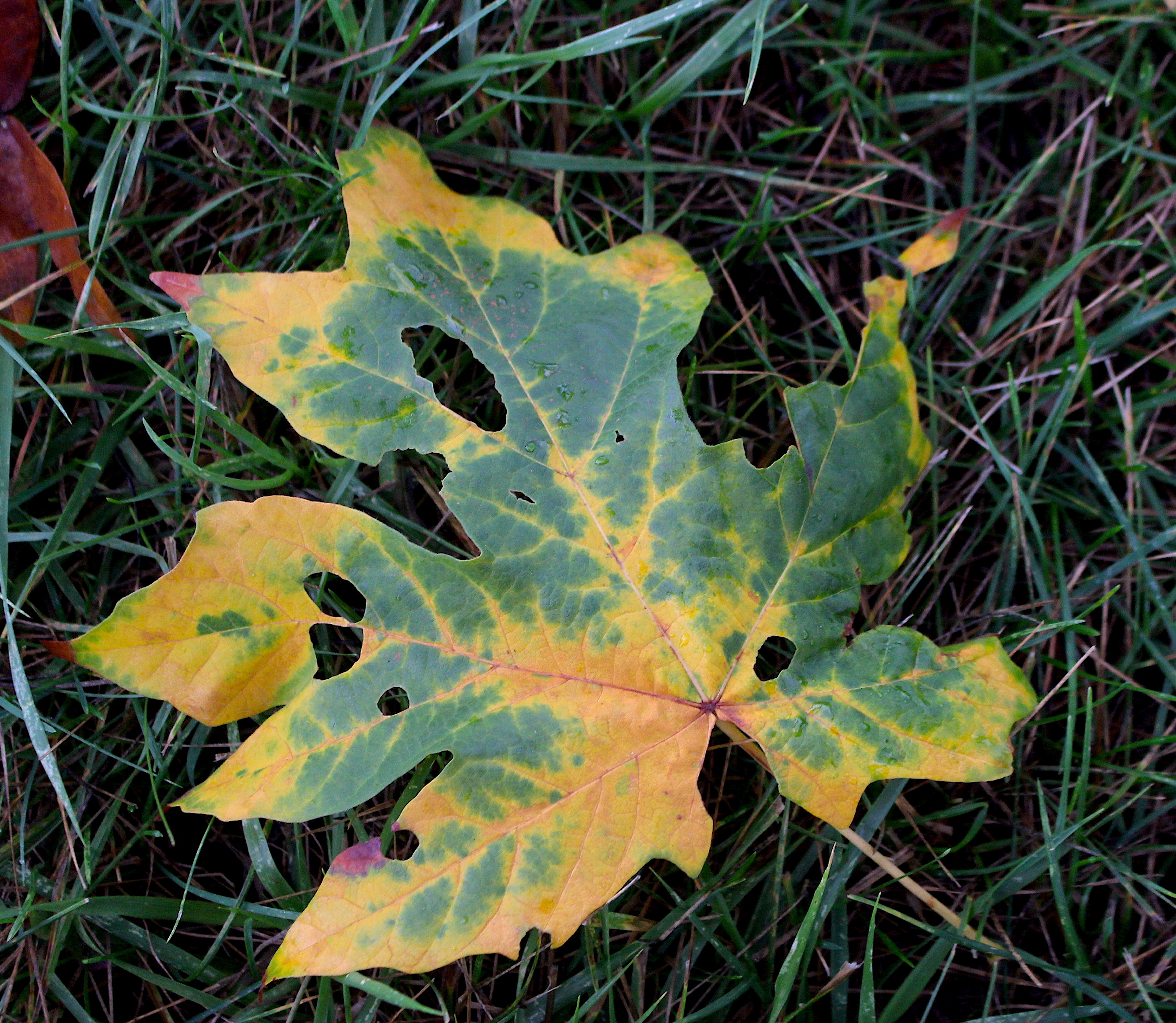
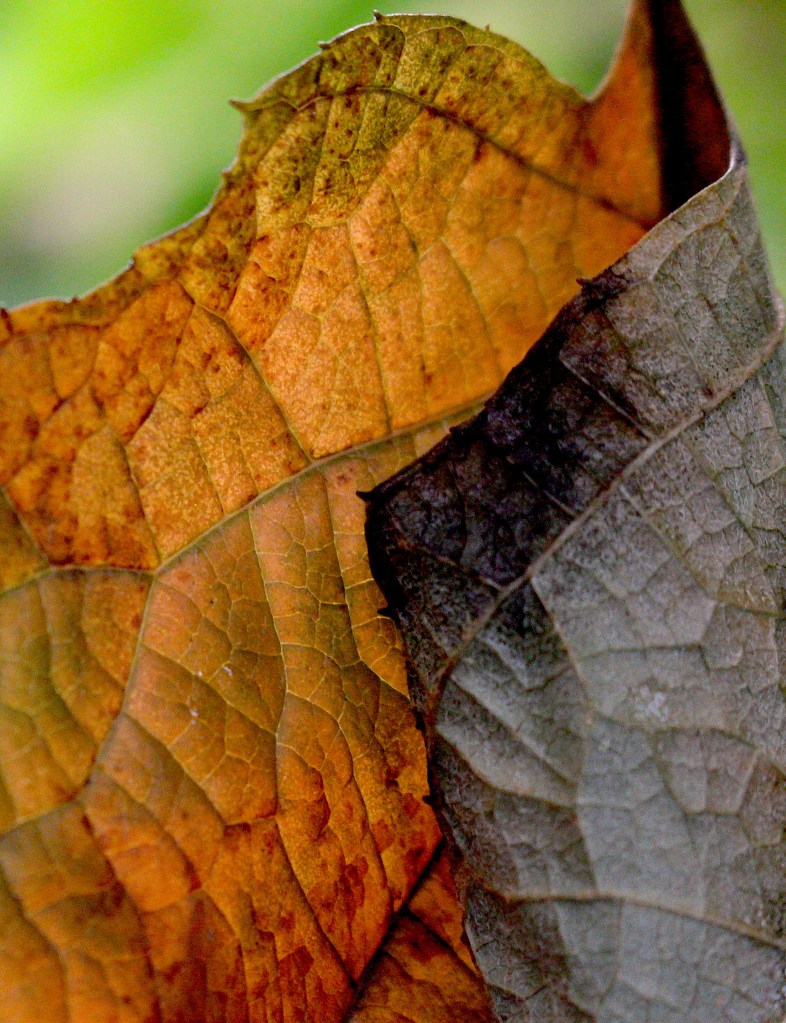
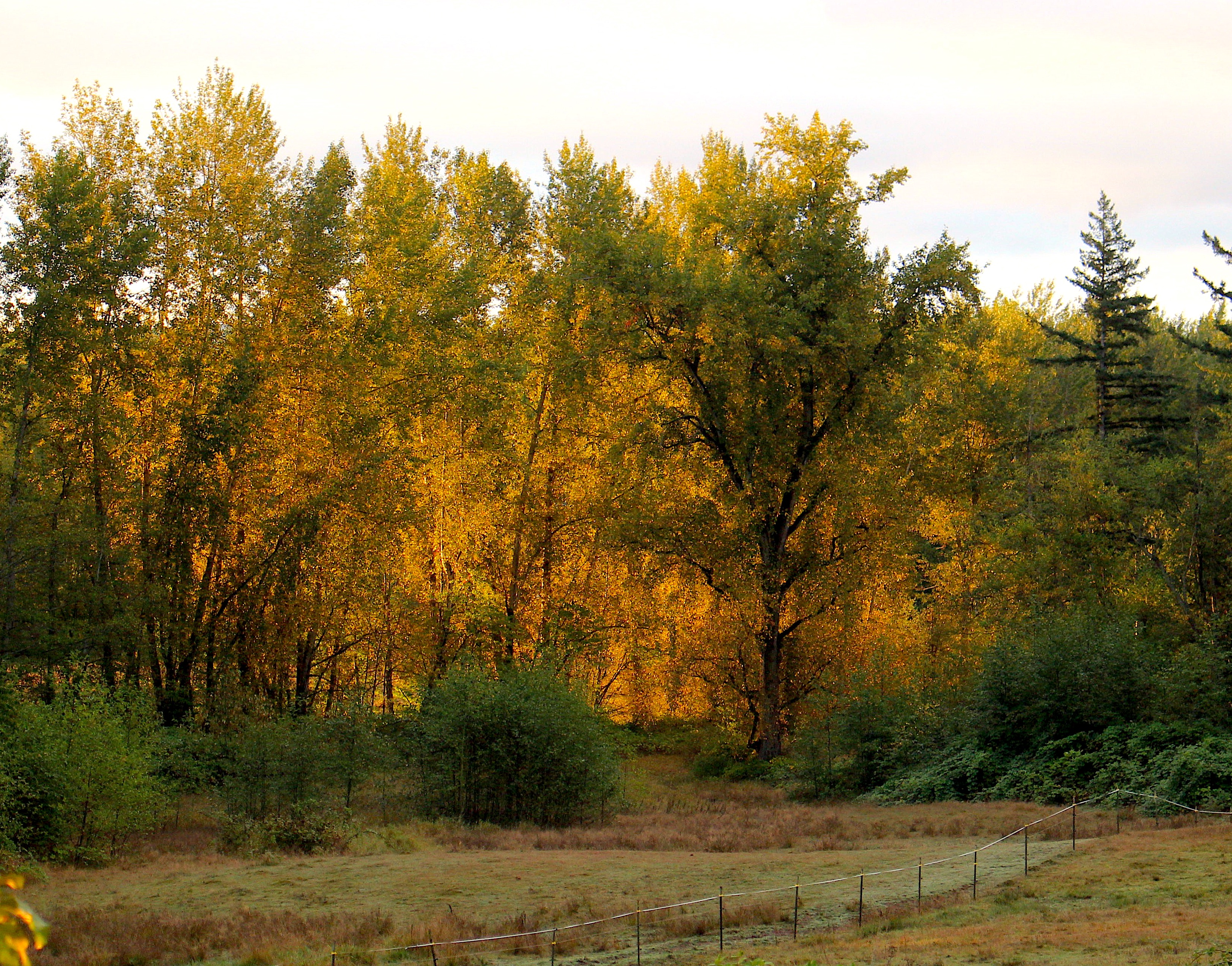
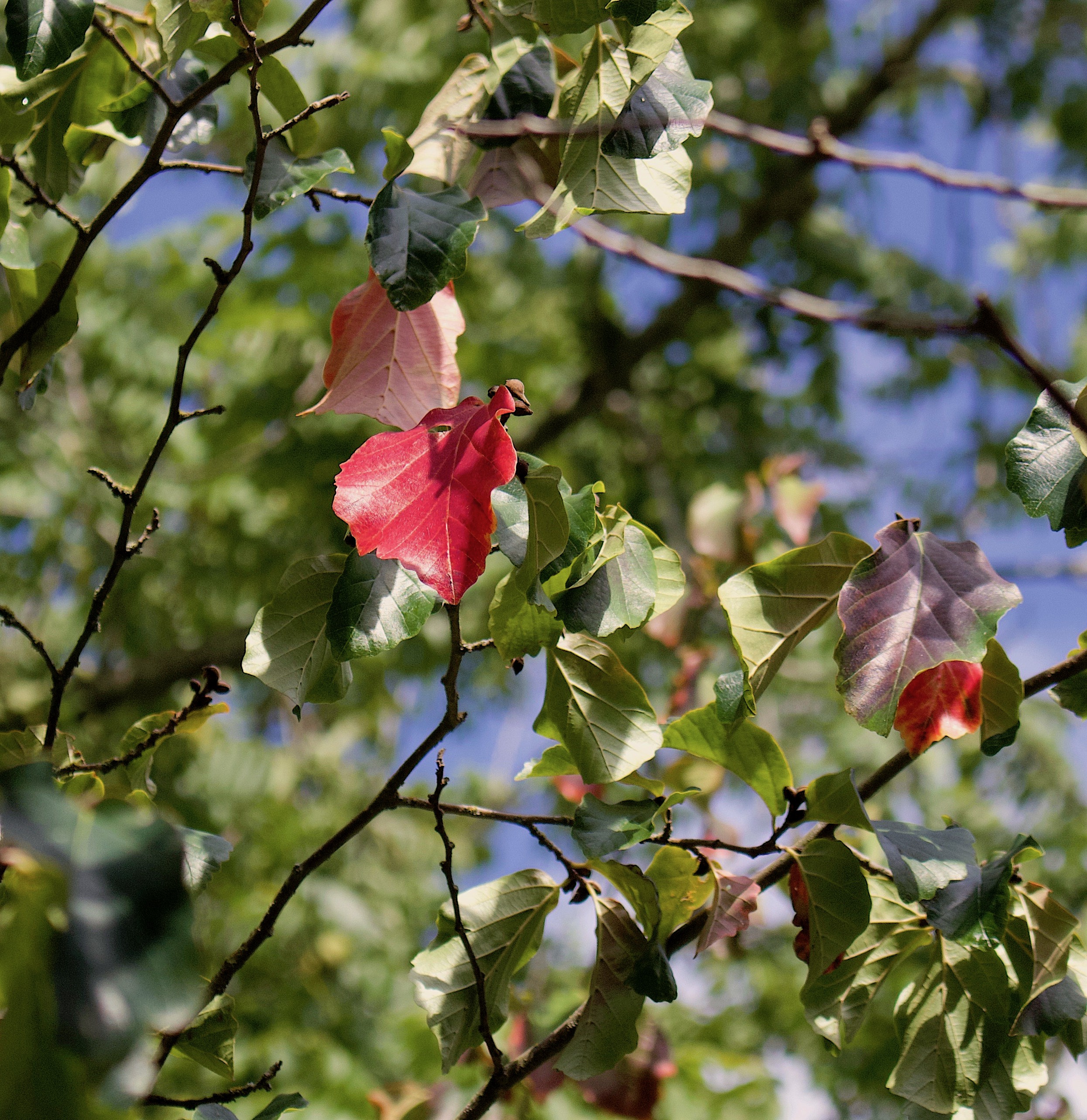
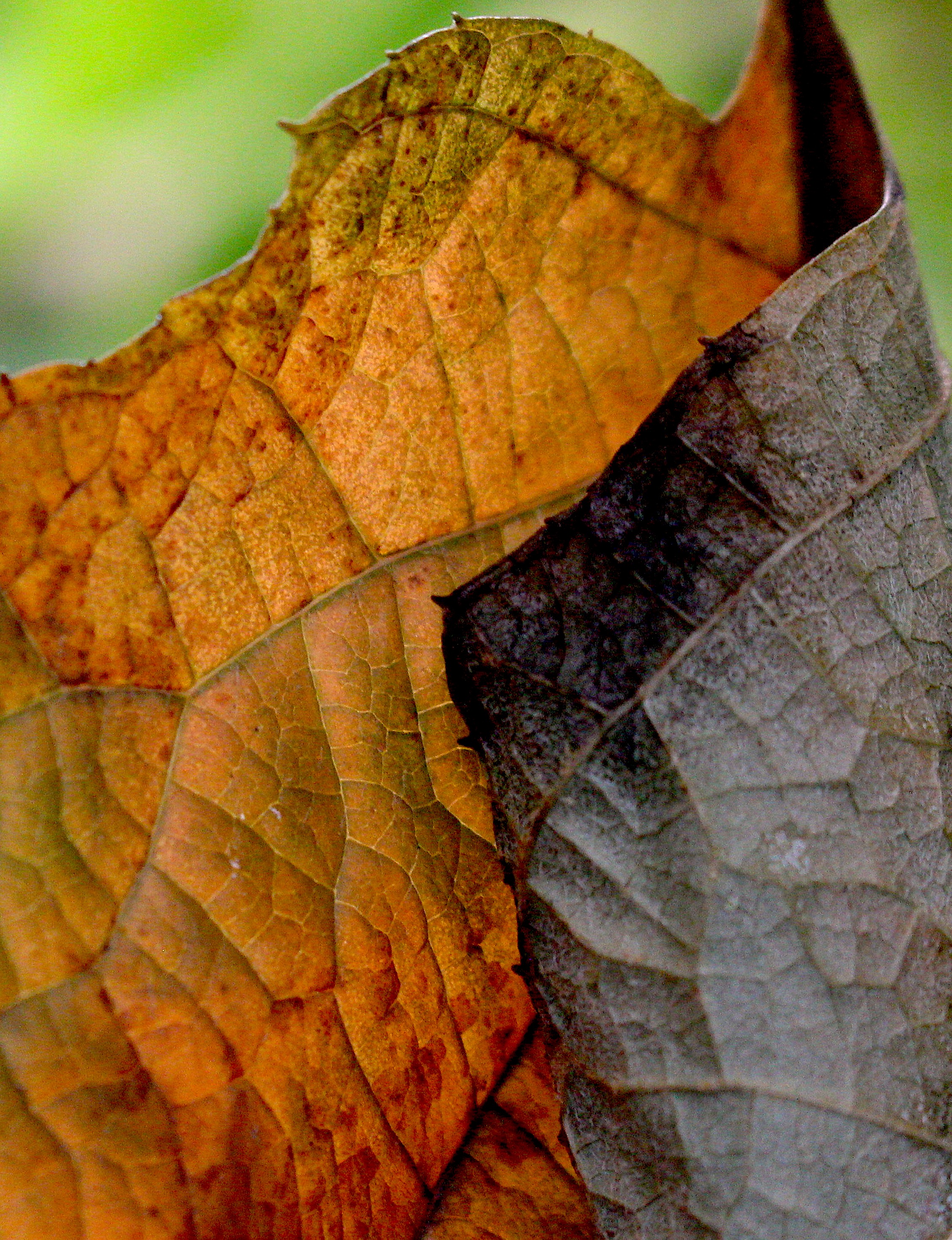
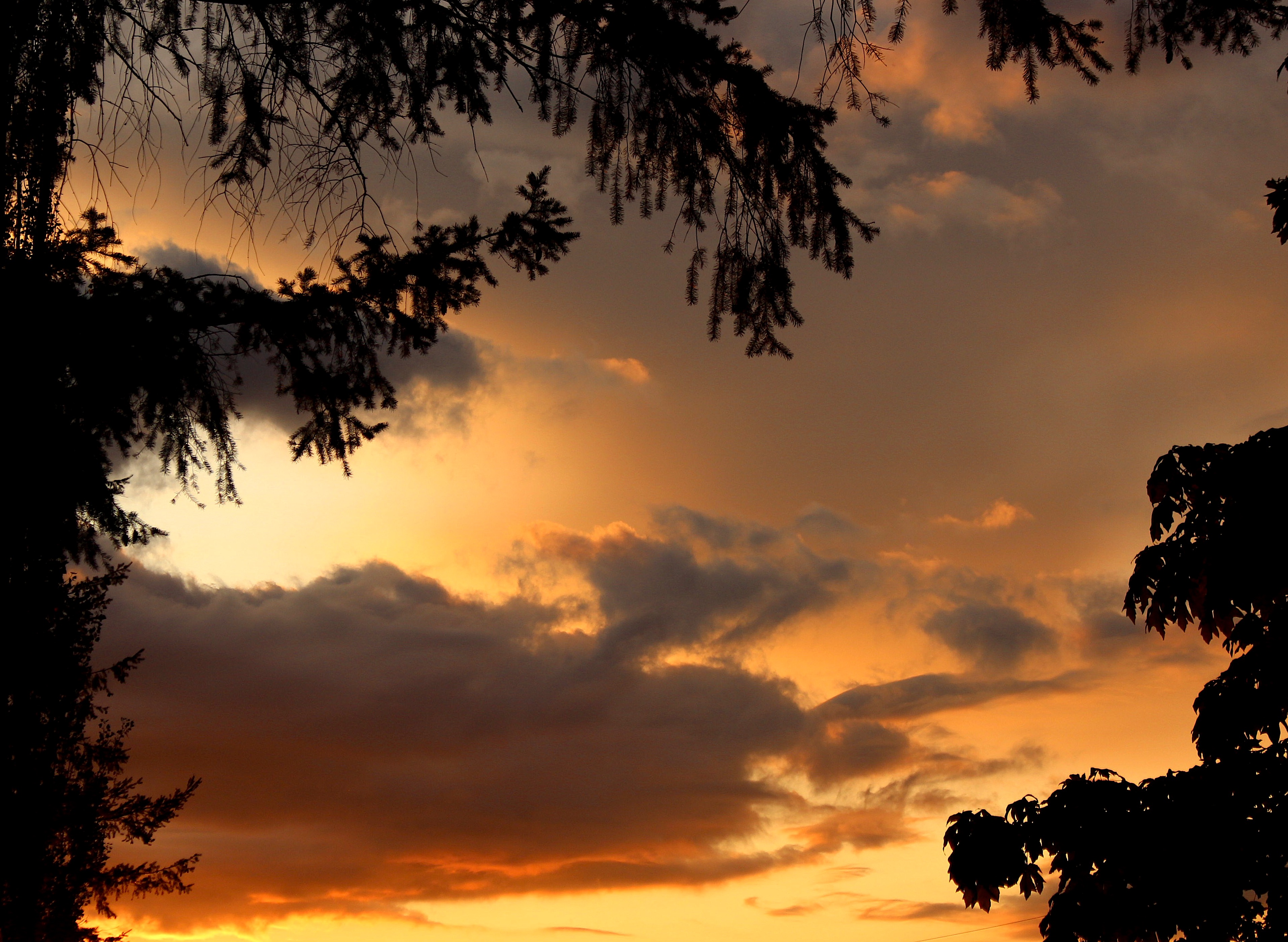
Sun rays through the window blinds no longer rouse me awake. The farm animals are eager for their evening tucking in rather than lingering long in the fields. The leaves blink away their green.
I ready myself for bed early, glad for respite and stillness.
Summer isn’t over yet but its fatigue is evident. We’re leaning back, eyes closed, ready for rest.
Sometimes you don’t get a chance To pause and rest Even to just take it all in Sometimes life just goes too fast And if you halt, even for a moment You could get rolled over By the momentum of existence So, push yourself and keep going Because once you stop You may not get started again And if you need a breather Do it after the big stuff is done – I guarantee you the view Will be a whole lot better ~Eric Nixon “The Momentum of Existence” from Equidistant
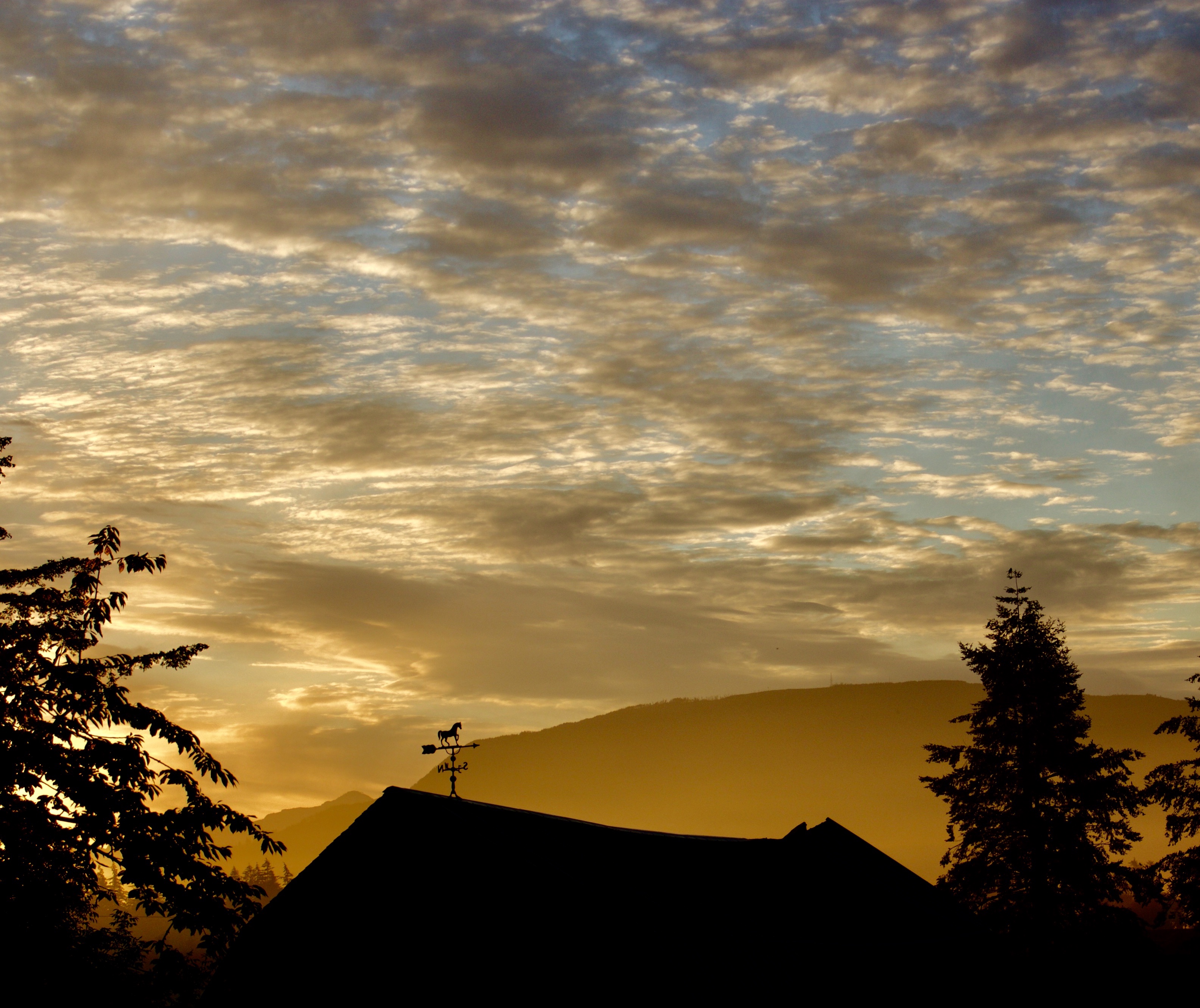
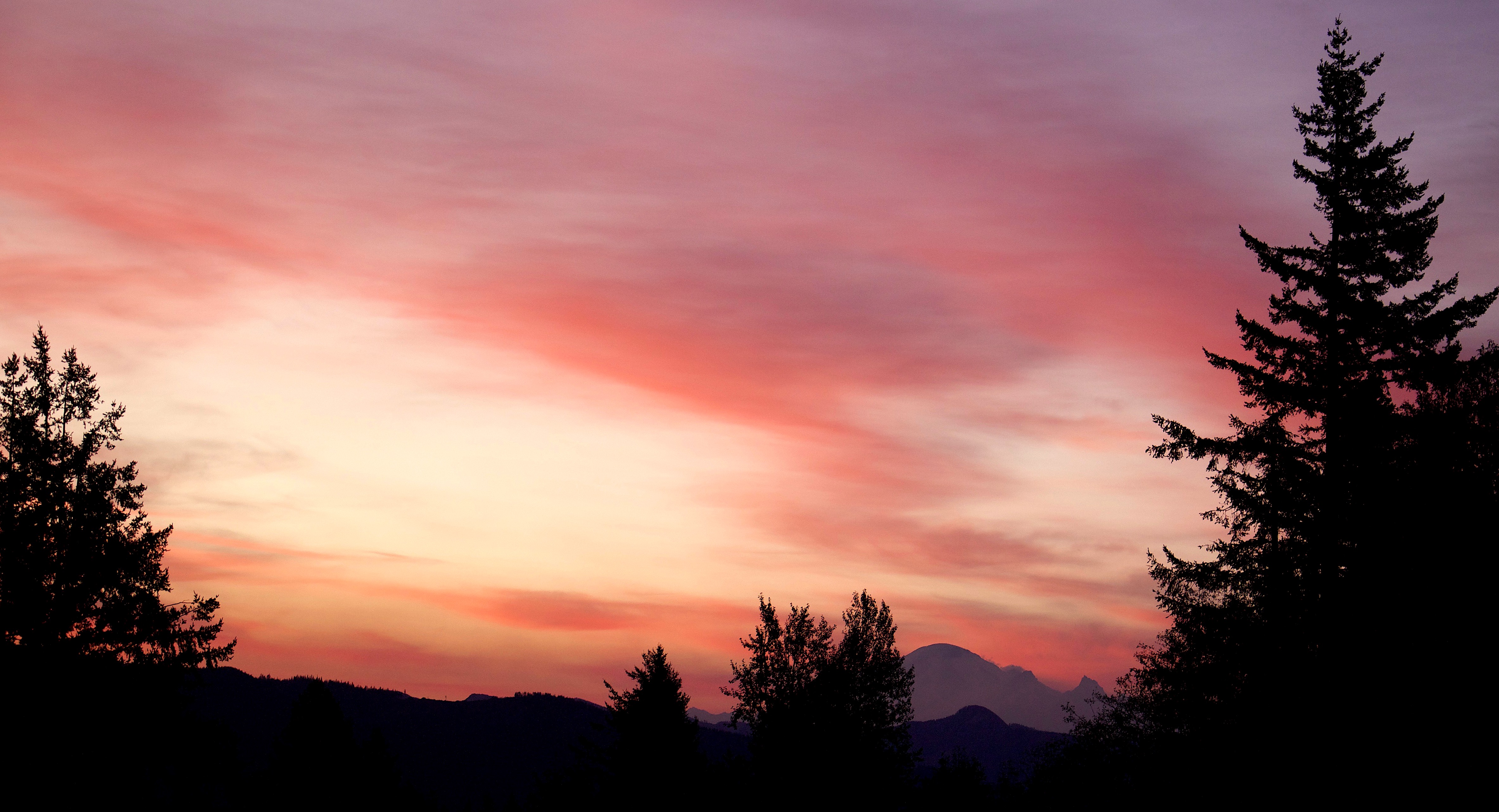
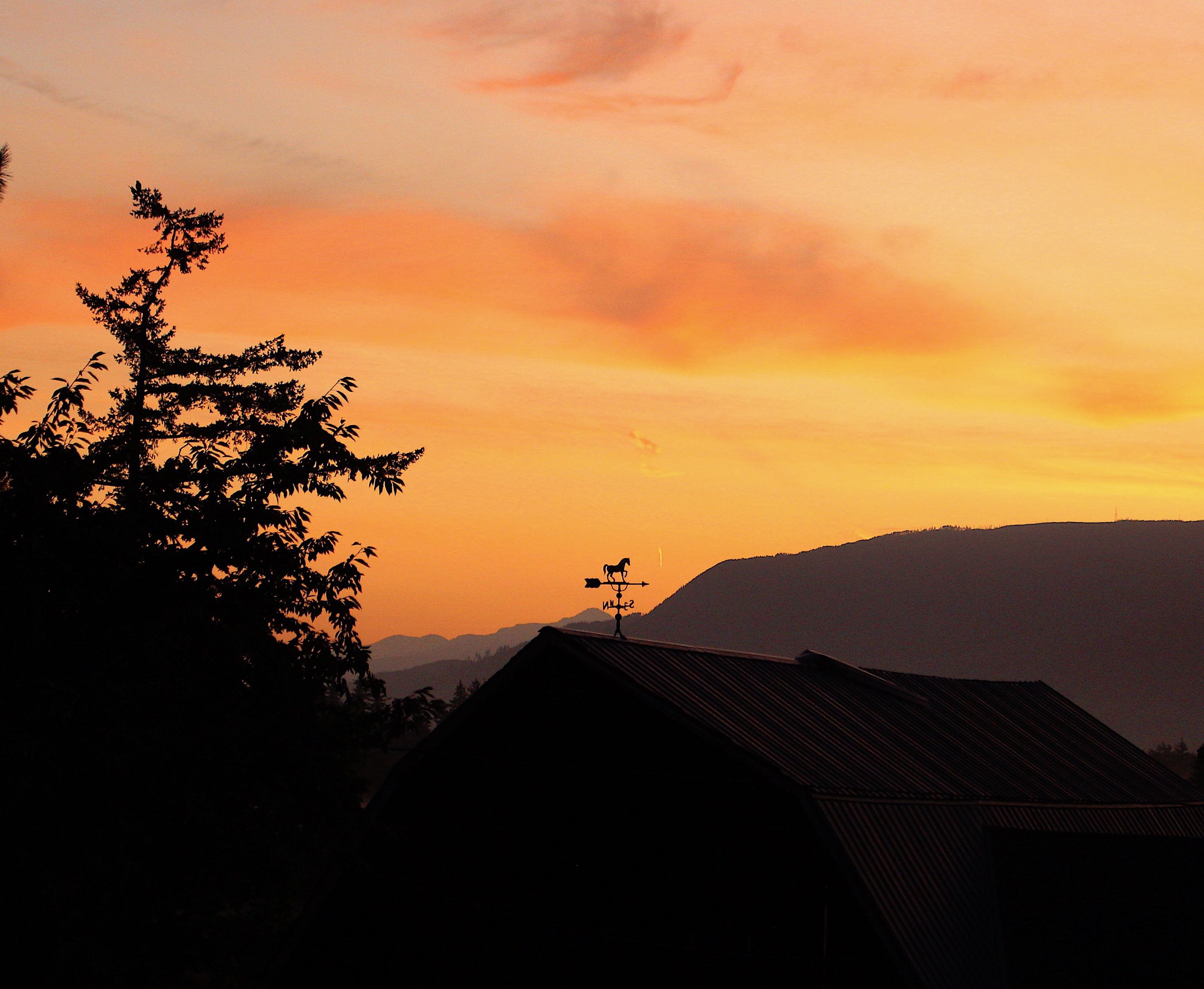
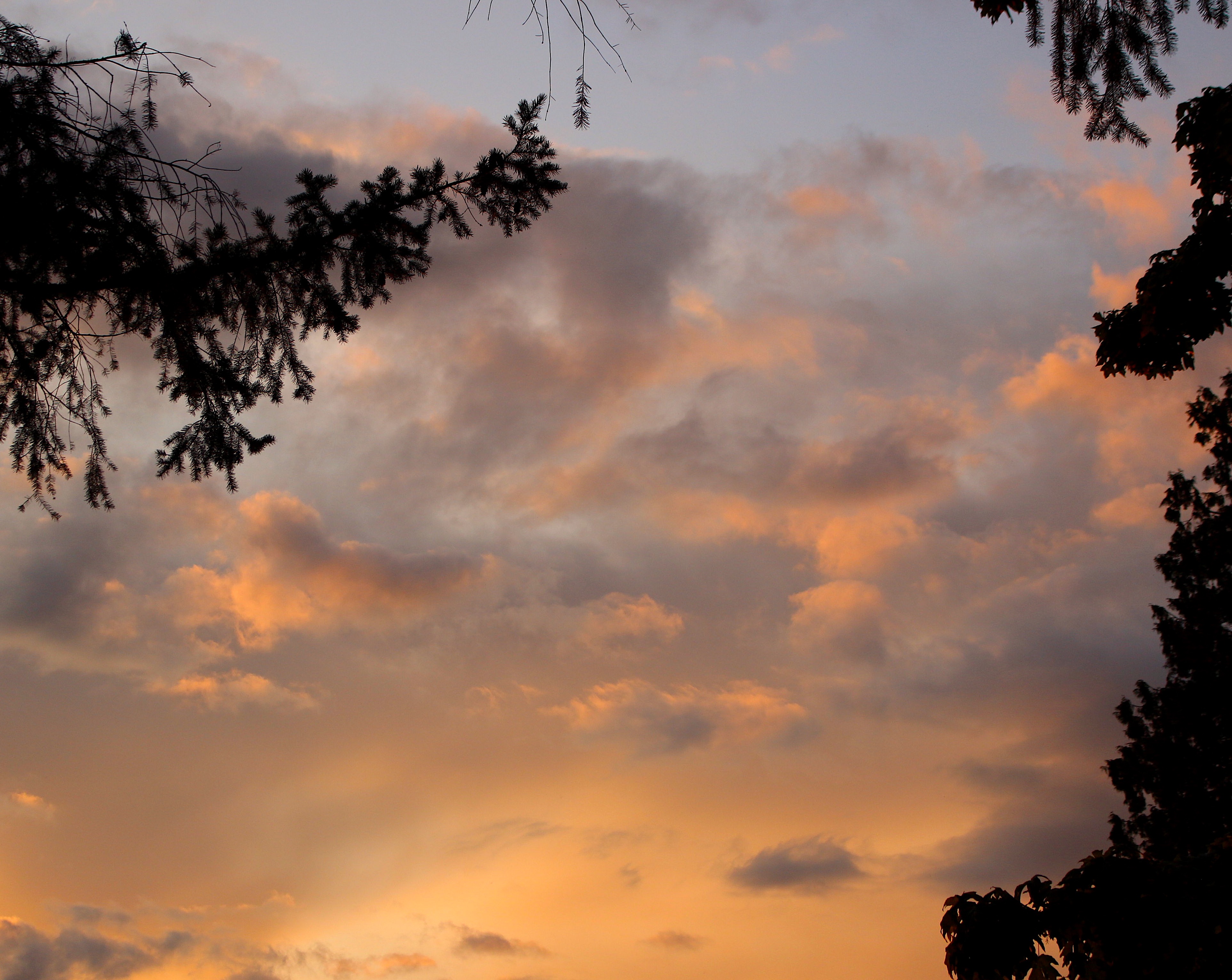
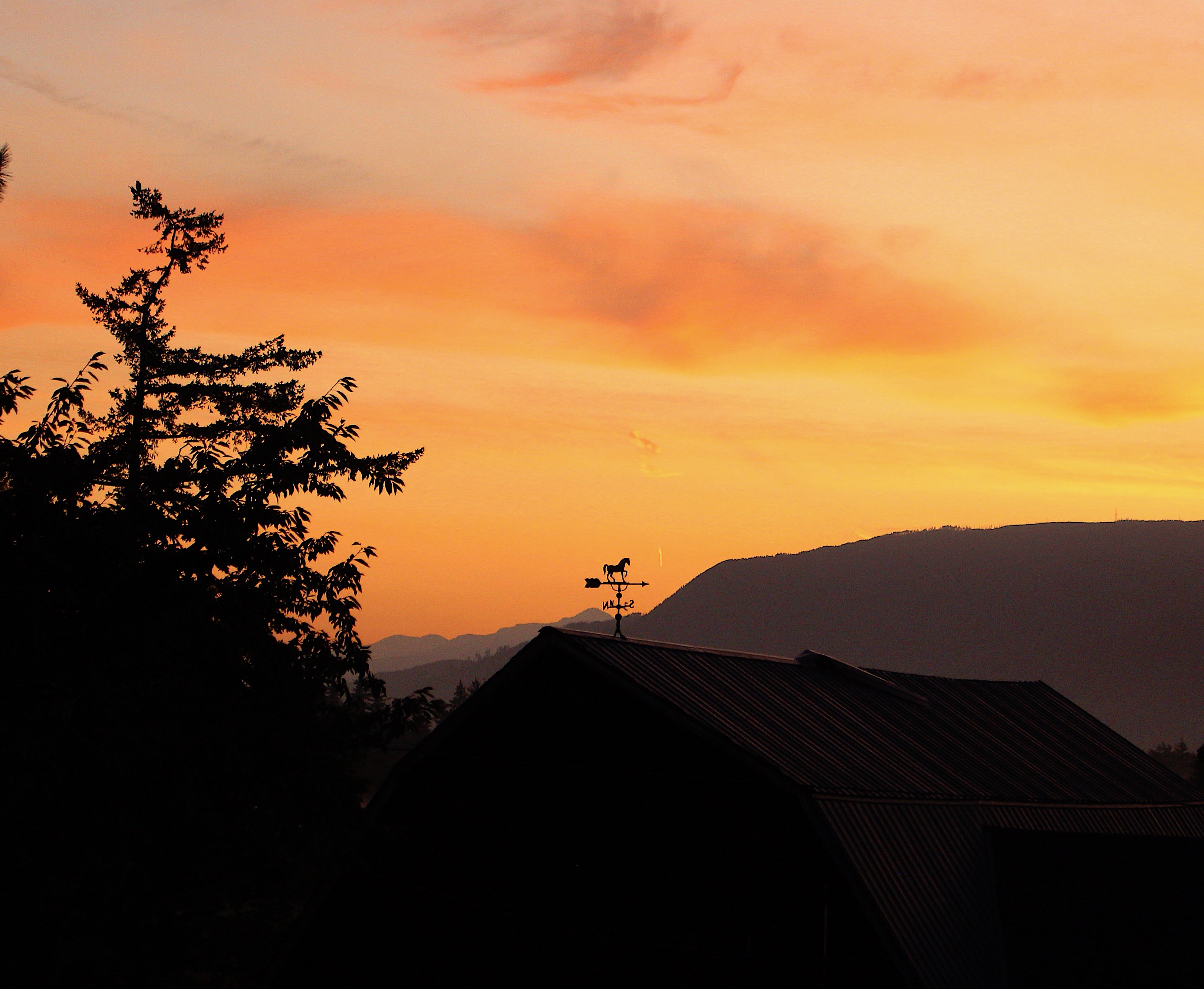
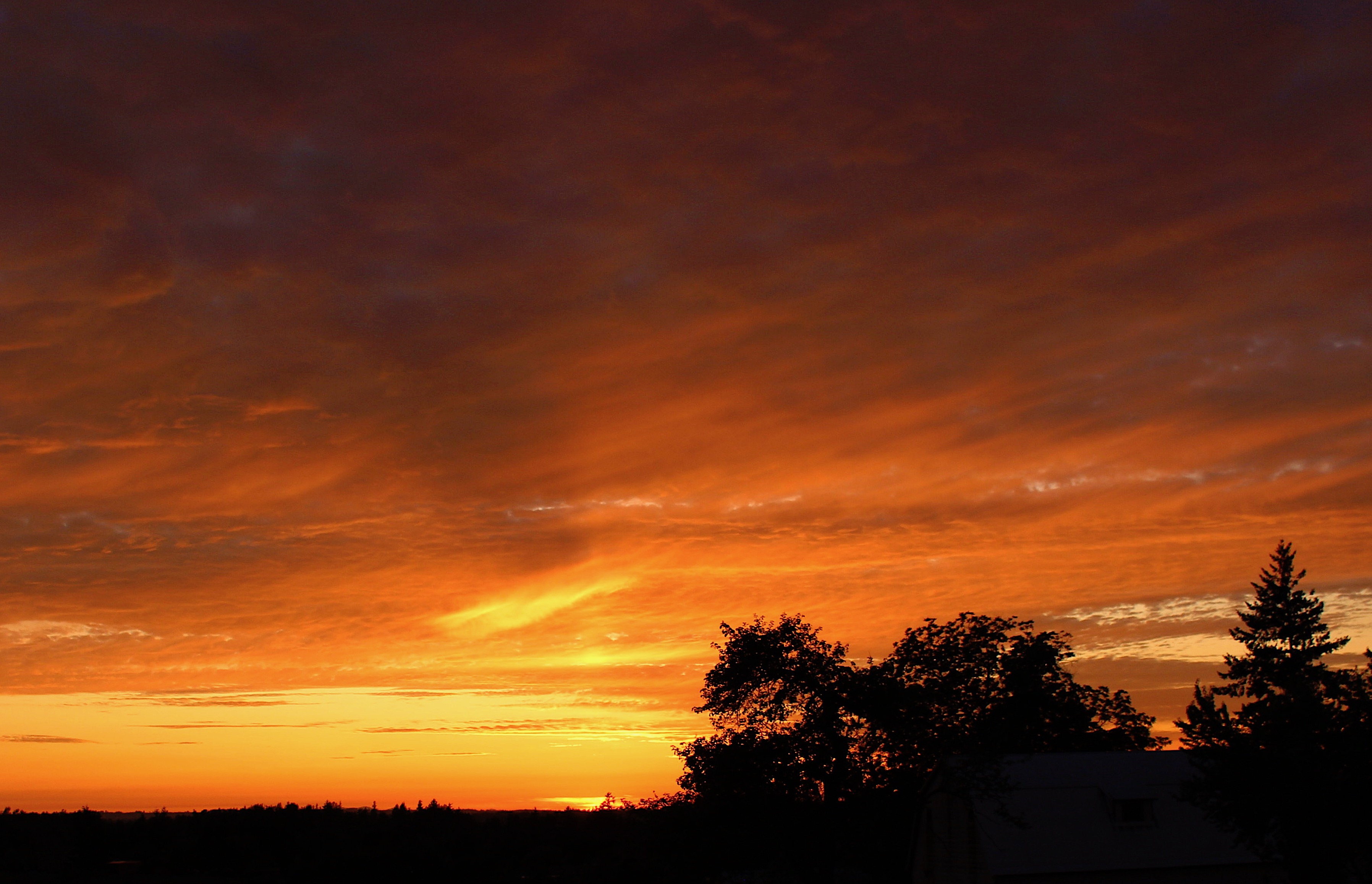
Sunrise and sunset happen so reliably every day, but I’m often too busy to be there to witness them. I miss some great shows because I don’t get up early enough or get home from work in time or simply don’t bother to look out the window.
These are brilliant light and shadow shows that are free for the taking if only I pause, take a breather, and watch.
The view keeps getting better the older I get. The momentum of daily life is pausing purposely to allow me, breathless, to take it all in.
there are no words there is no song is there a balm that can heal these wounds that will last a lifetime long and when the stars have burned to dust hand in hand we still will stand because we must
in one single hour in one single day we were changed forever something taken away and there is no fire that can melt this heavy stone that can bring back the voices and the spirits of our own
all the brothers, sisters and lovers all the friends that are gone all the chairs that will be empty in the lives that will go on can we ever forgive though we never will forget can we believe in the milk of human goodness yet
we were forged in freedom we were born in liberty we came here to stop the twisted arrows cast by tyranny and we won’t bow down we are strong of heart we are a chain together that won’t be pulled apart ~Kitty Donohoe “There are no words”written on 9/1/11
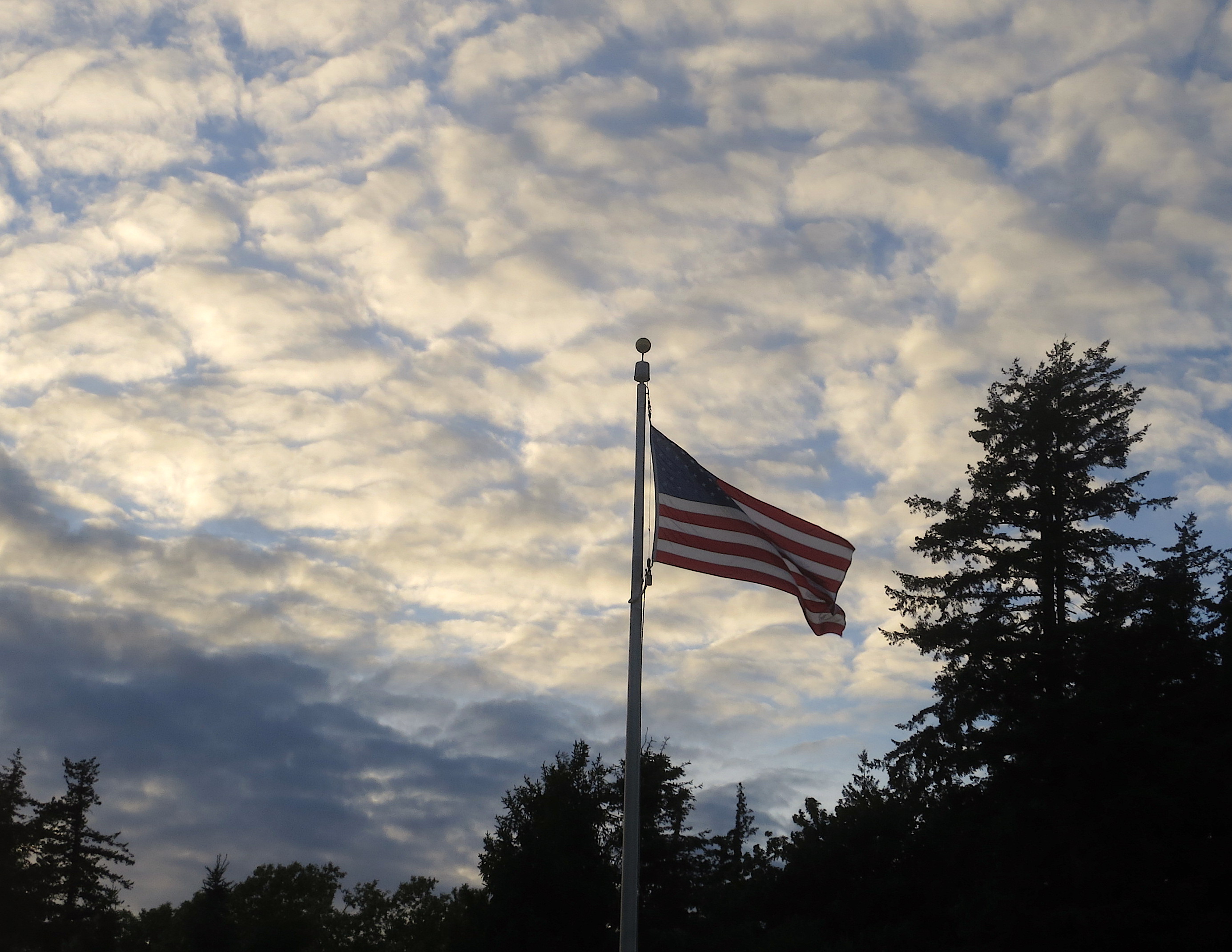
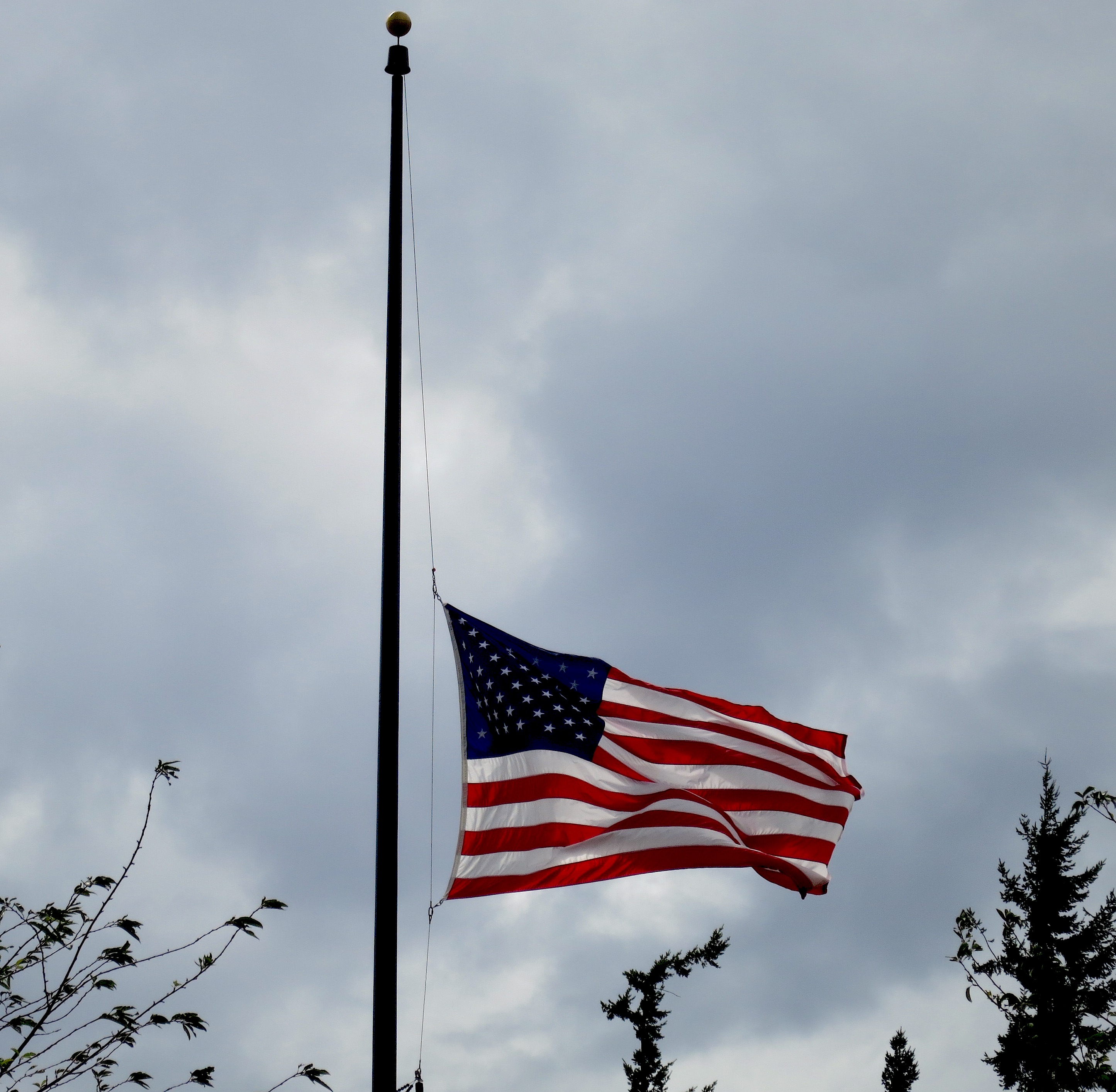
As a grade school child in November 1963, I learned the import of the U.S. flag being lowered to half mast in response to the shocking and violent death of our President. The lowering of the flag was so rare when I was growing up, it had dramatic effect on all who passed by — something very sad had happened to our country, warranting our unified silence and our stillness.
Since 9/11/01, our flag has spent significant time at half mast, so much so that I’m befuddled instead of contemplative, puzzling over what the latest loss might be as there are so many, sometimes all happening in the same time frame. We no longer are silenced by this gesture of honor and respect and we certainly are not stilled, personally and corporately instigating and suffering the same mistakes against humanity over and over again.
There remains so much more sadness to be borne after that tragic day 18 years ago – such abundance of grief that our world has become overwhelmed and stricken and it seems we’ve lost all imagination for the “milk of human goodness.” Instead it seems we have become more divisive, pulling ourselves apart.
We must return, as people of faith, to that stillness to which we are called on a day such as today. We must be still; we must be silent. We must let the bells toll and the names be read out. We must grieve the losses of this turning world and pray for release from the suffering we cause and we endure. Only in the asking, only in the kneeling down and pleading, are we surrounded by grace. A flag half lowered may have lost its power to punch our gut, but we are illuminated by the Light, forged in freedom, born in liberty.
We must stop allowing our chain links from being pulled apart.















 Barnstorming