Thank God for grace, Ye who weep only! —look up! those tears will run Soon in long rivers down the lifted face, And leave the vision clear for stars and sun. ~Elizabeth Barrett Browning from “Tears”
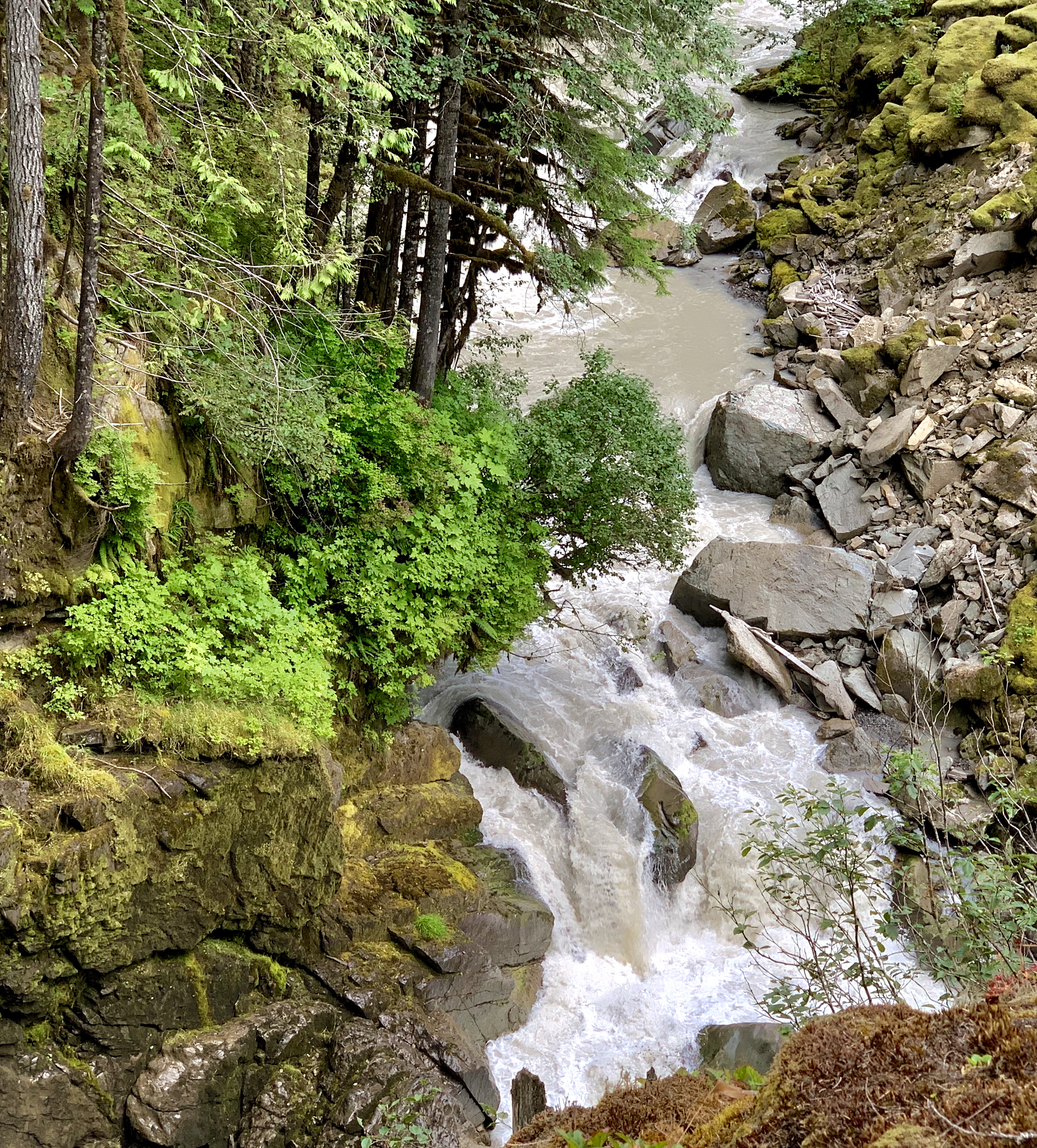
Grief is a river you wade in until you get to the other side. But I am here, stuck in the middle, water parting around my ankles, moving downstream over the flat rocks. I’m not able to lift a foot, move on. Instead, I’m going to stay here in the shallows with my sorrow… It’s mine. …I’m going to stand here, growing colder, until every inch of my skin is numb. I can’t cross over. Then you really will be gone. ~Barbara Crooker from “Grief”
A river of tears flows with the untimely loss of a young person, a child of our church. Sorrow at such a loss fills a chasm so deep and dark that it is a fearsome thing to even peer from the edge, as I do. The family is numb, swallowed up by their grief.
We can never understand why such infinite sadness should befall good and gracious people. We are once again reminded – there can be profound darkness that descends into the human heart, stealing away lives too soon.
Be assured you do not weep alone. Your grief is so familiar to a suffering God who too wept at the death of a friend, a God who cried out when asked to endure the unendurable.
There is comfort in knowing He understands and overcomes all peril to come to the rescue when we become stuck fast in the middle of our grief, too numb to move on. He will fill the hole left behind as only He can.
You who grieve: you are not abandoned. Your sadness is His, your sorrow is ours. You are loved with a love so deep and high and broad, it will somehow carry you through.
The thing is to love life, to love it even when you have no stomach for it and everything you’ve held dear crumbles like burnt paper in your hands, your throat filled with the silt of it. When grief sits with you, its tropical heat thickening the air, heavy as water more fit for gills than lungs; when grief weights you like your own flesh only more of it, an obesity of grief, you think, How can a body withstand this? Then you hold life like a face between your palms, a plain face, no charming smile, no violet eyes, and you say, yes, I will take you I will love you, again. ~Ellen Bass, “The Thing Is” from Mules of Love
There is so much grief these days so much loss of life so much weeping.
How can we withstand this? How can we know, now, when we are barely able to breathe that we might know – at some point – we might love life again?
Do not seek death. Death will find you. But seek the road which makes death a fulfillment.
The road, You shall follow it. The cup, You shall empty it. The pain, You shall conceal it. The truth, You shall be told it. The end, You shall endure it. ~Dag Hammarskjöld in writings from his 1953 journal
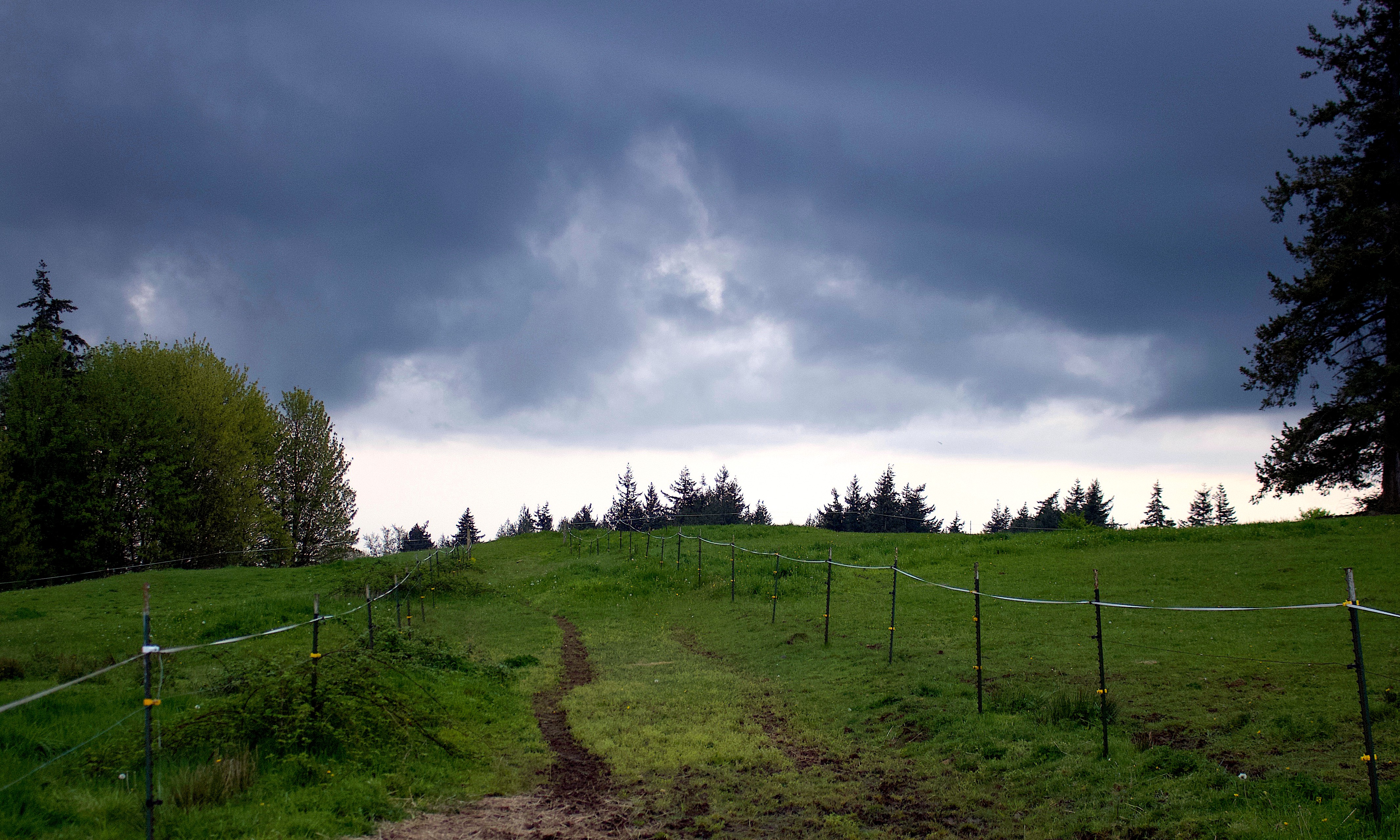
Today, after the wind storm of yesterday, when rain fell in unrelenting torrents from heaven, we are caught in a rising current so swift we must cling fast or be swept away.
Drenched beyond capacity to absorb any more, we are ready, Lord, to empty ourselves into your thirstiness so we are useful for your purposes.
Let us step outside for a moment As the sun breaks through clouds And shines on wet new fallen snow, And breathe the new air. So much has died that had to die this year. We are dying away from things. It is a necessity—we have to do it Or we shall be buried under the magazines, The too many clothes, the too much food.
Let us step outside for a moment Among ocean, clouds, a white field, Islands floating in the distance. They have always been there. But we have not been there.
Already there are signs. Young people plant gardens. Fathers change their babies’ diapers And are learning to cook.
Let us step outside for a moment. It is all there Only we have been slow to arrive At a way of seeing it. Unless the gentle inherit the earth There will be no earth. ~May Sarton from “New Year Poem”
Whenever you find tears in your eyes, especially unexpected tears, it is well to pay the closest attention. They are not only telling you something about the secret of who you are, but more often than not God is speaking to you through them of the mystery of where you have come from and is summoning you to where, if your soul is to be saved, you should go next. ~Frederick Buechnerfrom Beyond Words
This year I have been paying close attention to what makes me weep. During 2020, I have had more than ample opportunity to find out — from my tears — the secret of who I am, where I have come from, and for the salvation of my soul, where I am to be next.
My pockets contain hand sanitizer and kleenex, stowed right next to my mask.
In previous years, my tears flowed while spending time with far-flung children and grandchildren for the holidays — reading books and doing puzzles together and reminiscing about what has been and what could be. It was about singing grace together before a meal and my voice breaking with precious words of gratitude. My tears certainly had to do with bidding farewell until we meet again — gathering them in for that final hug and then that difficult letting-go and waving goodbye as they round the corner and disappear.
This year, that had to happen on a screen or from behind masks. No hugs hello or goodbye. None of the usual ways we celebrate together. I feel bereft as have countless other families around the globe. Some never had opportunity to say their final goodbye – too much has died this year.
As our children grew up, we encouraged them to go where their hearts told them they were needed and called to go, even if thousands of miles away from their one-time home on this farm. And so they went.
I too was let go once and though I would try to look back, too often in tears, I learned to set my face toward the future, seeking how the sun might break through the clouds in my life. It led me to this marriage, this family, this farm, this work, this church, to more tears and heartbreak, to more letting go. And it will continue if I’m granted more years to weep again and again with gusto and grace.
This year my tears flow for what could not be. For too many families, their tears flow for who now is missing and will never return. My tears flow for the pain and sadness of disagreement and angry words.
Spreading faster than COVID is the viral expansion of toxic misinformation and conspiracy theories sowing doubt and distrust. Masks are useless to protect people exposed to a deficiency of simple common sense.
So this is where I must go next: to love so much and so deeply that my tears might make a small difference to those around me, like the sun breaking through the clouds.
A wise and precious friend once told me that “our tears are God’s tears; to be bereft is the only way to become one with God.“
So I’ll let my tears flow where they may. And maybe someday I can leave my mask in my pocket.
A voice is heard in Ramah, mourning and great weeping, Rachel weeping for her children and refusing to be comforted, because they are no more. Matthew 2:18 and Jeremiah 31:15
We think of him as safe beneath the steeple, Or cosy in a crib beside the font, But he is with a million displaced people| On the long road of weariness and want. For even as we sing our final carol His family is up and on that road, Fleeing the wrath of someone else’s quarrel, Glancing behind and shouldering their load.
Whilst Herod rages still from his dark tower Christ clings to Mary, fingers tightly curled,| The lambs are slaughtered by the men of power, And death squads spread their curse across the world. But every Herod dies, and comes alone To stand before the Lamb upon the throne. ~Malcolm Guite from Waiting on the Word
…as you sit beneath your beautifully decorated tree, eat the rich food of celebration, and laugh with your loved ones, you must not let yourself forget the horror and violence at the beginning and end of the Christmas story. The story begins with the horrible slaughter of children and ends with the violent murder of the Son of God. The slaughter depicts how much the earth needs grace. The murder is the moment when that grace is given.
Look into that manger representing a new life and see the One who came to die. Hear the angels’ celebratory song and remember that sad death would be the only way that peace would be given. Look at your tree and remember another tree – one not decorated with shining ornaments, but stained with the blood of God.
As you celebrate, remember that the pathway to your celebration was the death of the One you celebrate, and be thankful. ~Paul Tripp
There can be no consolation; only mourning and great weeping, sobbing that wrings dry every human cell, leaving dust behind– dust, only dust which is beginning and end.
He came to us for times such as this, born of the dust of woman and the breath of Spirit, God who bent down to lie in barn dust, walk on roads of dust, die and be laid to rest as dust in order to conquer such evil as this that could terrify masses and massacre innocents.
He became dust to be like us He began a mere speck in a womb like us, so easily washed away as unexpected, unneeded, unwanted.
Lord, You are long expected. You are needed You are wanted.
Your heart beat like ours breathing each breath like ours until a fearful fallen world took Your and our breath away.
You shine through the shadows of death to guide our stumbling uncertain feet. Your tender mercies flow freely when there is no consolation when there is no comfort.
You hear our cries as You cry too. You know our tears as You weep too. You know our mourning as You mourned too. You know our dying as You died too.
God weeps as tragedy happens. Evil comes not from God yet humankind embraces it. Sin is a choice we made from the beginning, a choice we continue to make.
Only God can glue together what evil has shattered. He just asks us to hand Him the pieces of our broken hearts.
We will know His peace when He comes to bring us home, our tears will finally be dried, our cells no longer just dust, never only dust as we are glued together by the breath of God forevermore.
the tender mercy of our God, by which the rising sun will come to us from heaven to shine on those living in darkness and in the shadow of death, to guide our feet into the path of peace. Luke 1: 78-79
…Christmas will come once again. The great transformation will once again happen. God would have it so. Out of the waiting, hoping, longing world, a world will come in which the promise is given. All crying will be stilled. No tears shall flow. No lonely sorrow shall afflict us anymore, or threaten. ~Dietrich Bonhoeffer in a sermon to a church in Havana, Cuba December 21, 1930
when this blessing comes, take its hand. Get up. Set out on the road you cannot see.
This is the night when you can trust that any direction you go, you will be walking toward the dawn. — Jan Richardson (author of Circle of Grace)
“Gandalf! I thought you were dead! But then I thought I was dead! Is everything sad going to come untrue?” ~J.R.R. Tolkien from The Lord of the Rings when Samwise Gamgee wakes to find his friends all around him
“The answer is yes. And the answer of the Bible is yes. If the resurrection is true, then the answer is yes. Everything sad is going to come untrue.” ~Pastor Tim Keller’s response in a sermon given in an ecumenical prayer service memorial in Lower Manhattan on the fifth anniversary of Sept. 11.
In our minds, we want to rewind and replay the events of a tragedy in a way that would prevent it from happening in the first place. We want to bring the dead and injured back to health again. The pandemic virus fizzles out on its own, the devastating earthquake becomes a mere tremor, the flooding tsunami is only one foot, not thirty feet tall, the terrorist hijackers are prevented from ever boarding a plane, the shooter changes his mind at the last minute, lays down his arms, disables his booby trap bombs and calls someone for help with his distress and anger.
We want so badly for it all to be untrue, especially the events of this year. The bitter reality of horrendous suffering and sadness daily all over the earth is too much for us to absorb. We plead for relief, beg for a better day.
Our minds may play mental tricks like this, but God does not play tricks. He knows and feels what we do. He too wants to see it rewound and replayed differently. He has known grief and sadness, He has wept, He has suffered, He too died. And because of this, because of a God who came to dwell with us, was broken, died and then rose again whole and holy, we are assured, in His time, everything sad is going to come untrue.
Our tears will be dried, our grief turned to joy, our pain nonexistent, not even a memory. It will be a new day, a better day–as it is written, trustworthy and true.
May it come.
Quickly.
He will wipe away every tear from their eyes, and death shall be no more, neither shall there be mourning, nor crying, nor pain anymore, for the former things have passed away. And he who was seated on the throne said, “Behold, I am making all things new.” Also he said, “Write this down, for these words are trustworthy and true. Revelation 21: 4-5
When the stars threw down their spears And water’d heaven with their tears: Did he smile his work to see? Did he who made the Lamb make thee? ~William Blake from “The Tyger”
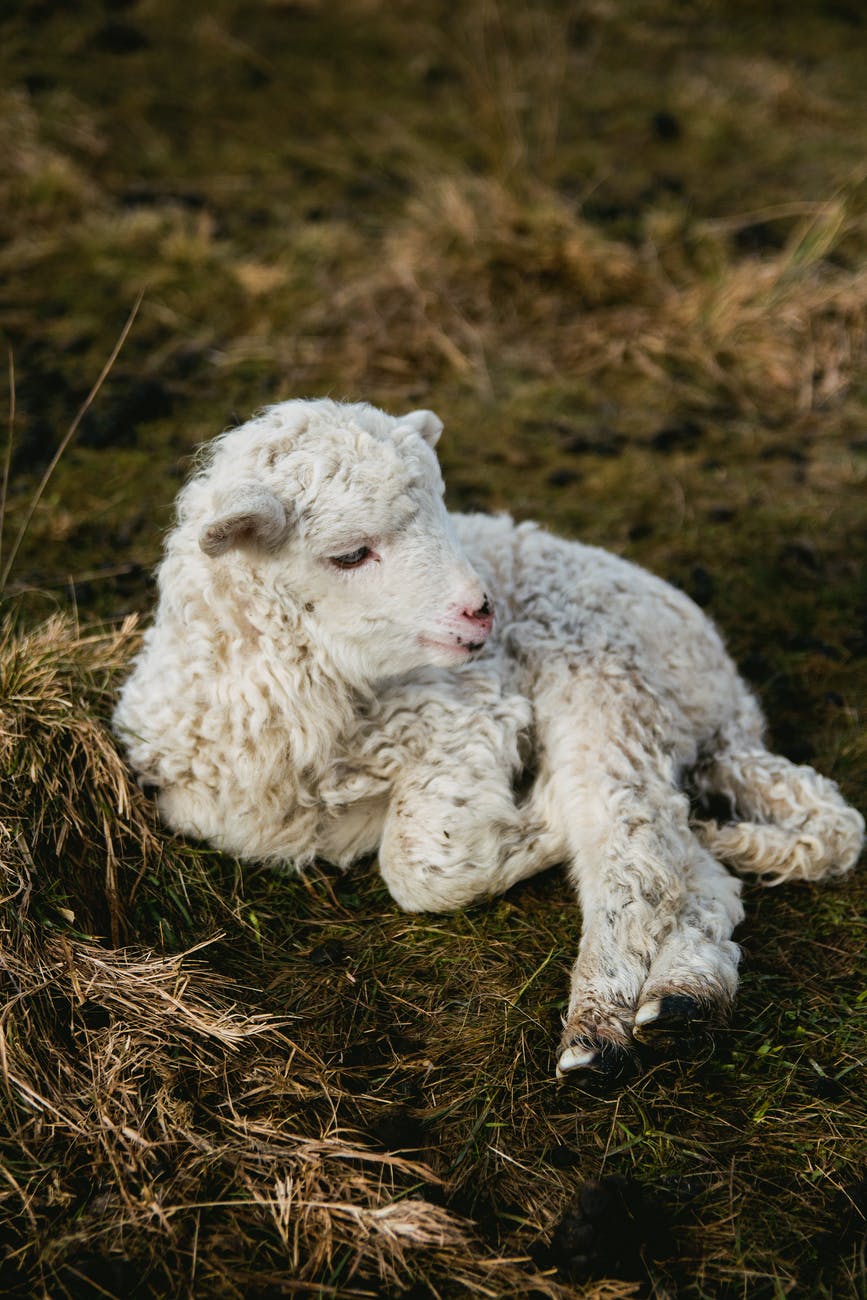
His birth was attended by tears: The stars wept, knowing what gift had been given Shepherds wept, hearing the heavenly host proclaim, His mother and father wept, knowing Who lay innocent in the manger, they to be entrusted to raise Him to save the world.
A meek Lamb becomes both protector and sacrifice, forgiving the hand that wields the knife that slays Him.
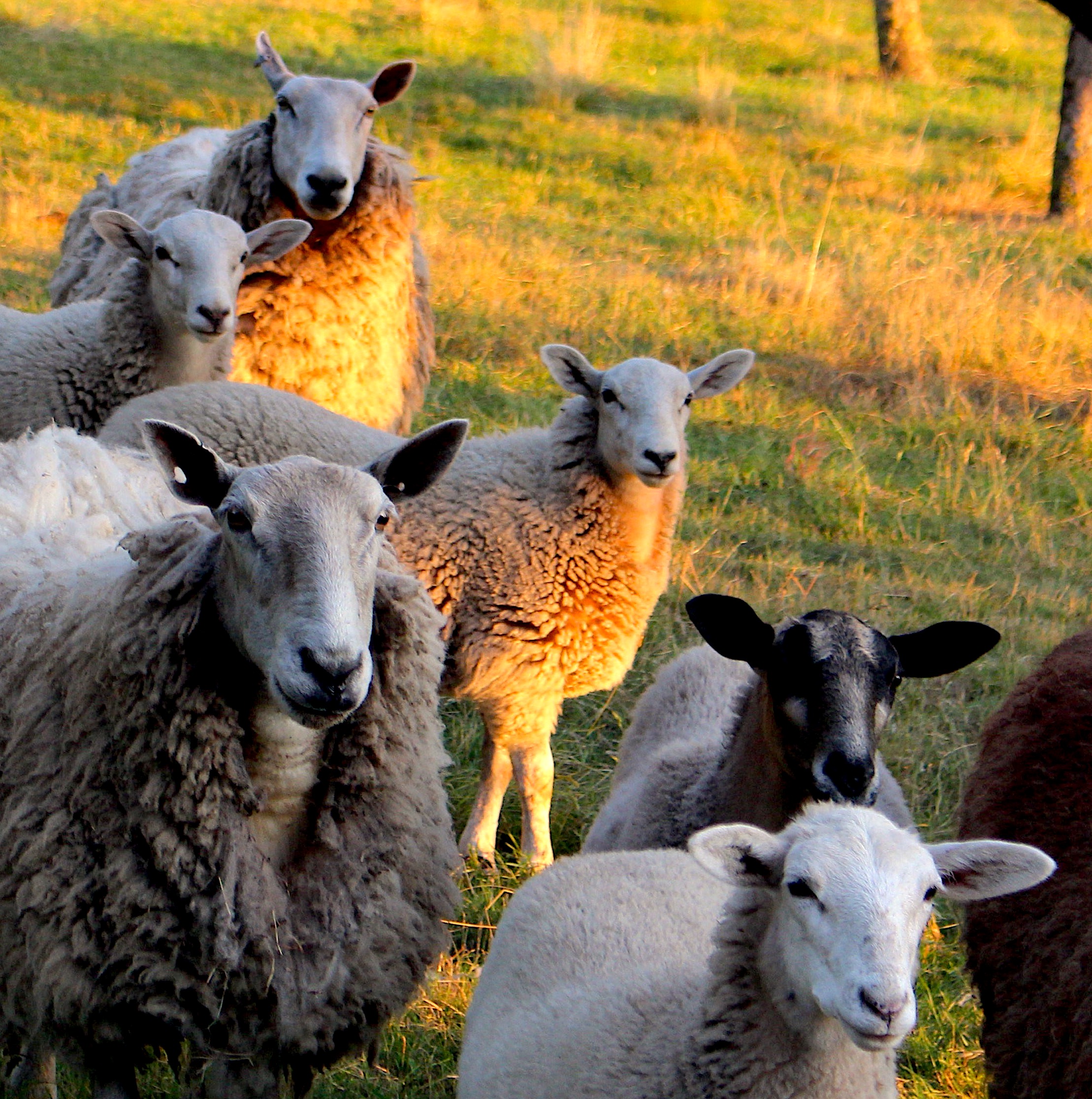
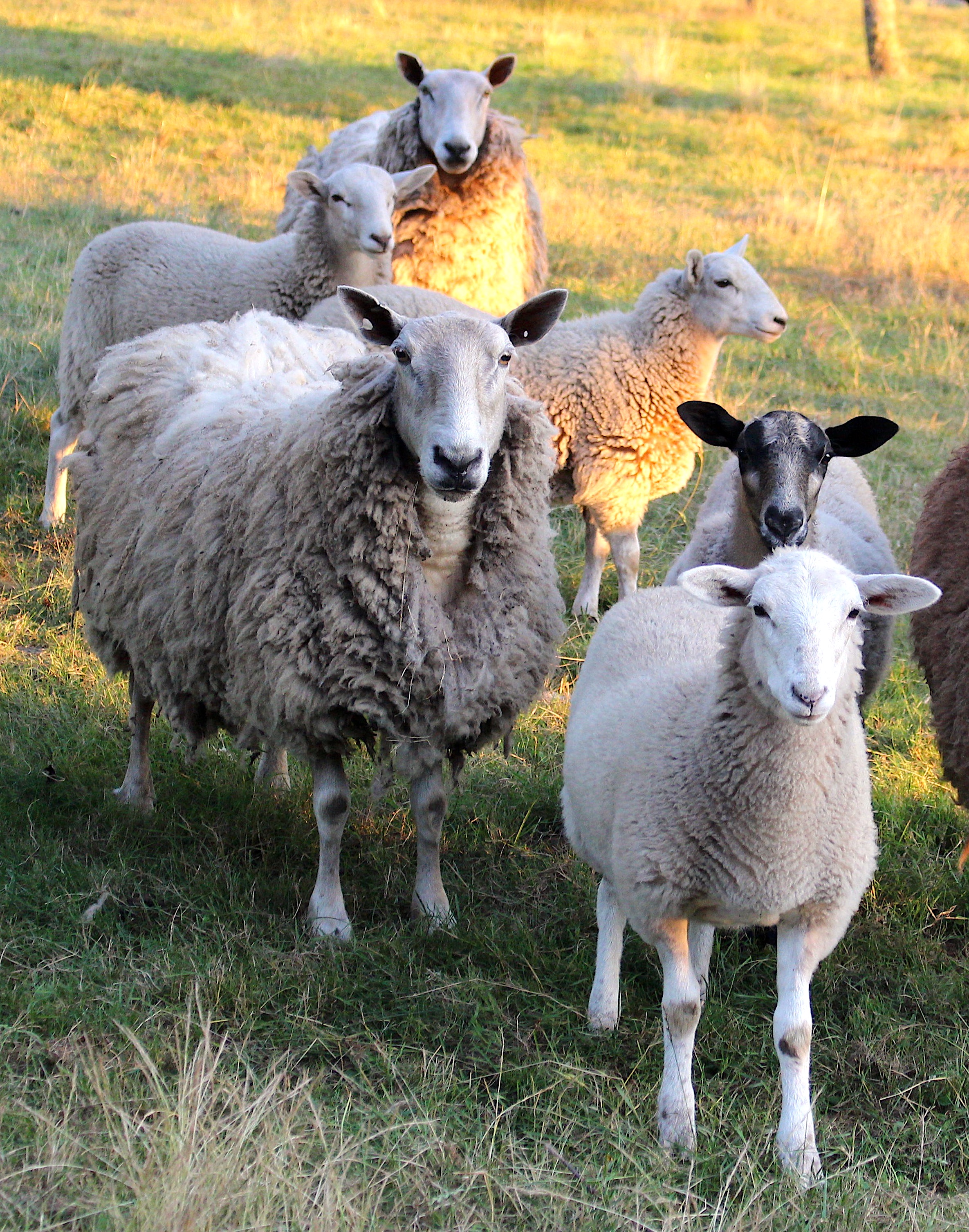
The Lamb shares His name with us so we answer His call ~ we are His sheep we are His flock
He who made the Lamb made us and we answer weeping, knowing the cost.
Little Lamb, who made thee? Dost thou know who made thee? Gave thee life, and bid thee feed, By the stream and o’er the mead; Gave thee clothing of delight, Softest clothing woolly, bright; Gave thee such a tender voice, Making all the vales rejoice? Little Lamb, who made thee? Dost thou know who made thee?
Little Lamb, I’ll tell thee, Little Lamb, I’ll tell thee: He is callèd by thy name, For He calls Himself a Lamb. He is meek, and He is mild: He became a little child. I a child, and thou a lamb, We are callèd by His name. Little Lamb, God bless thee! Little Lamb, God bless thee ~William Blake “Little Lamb”
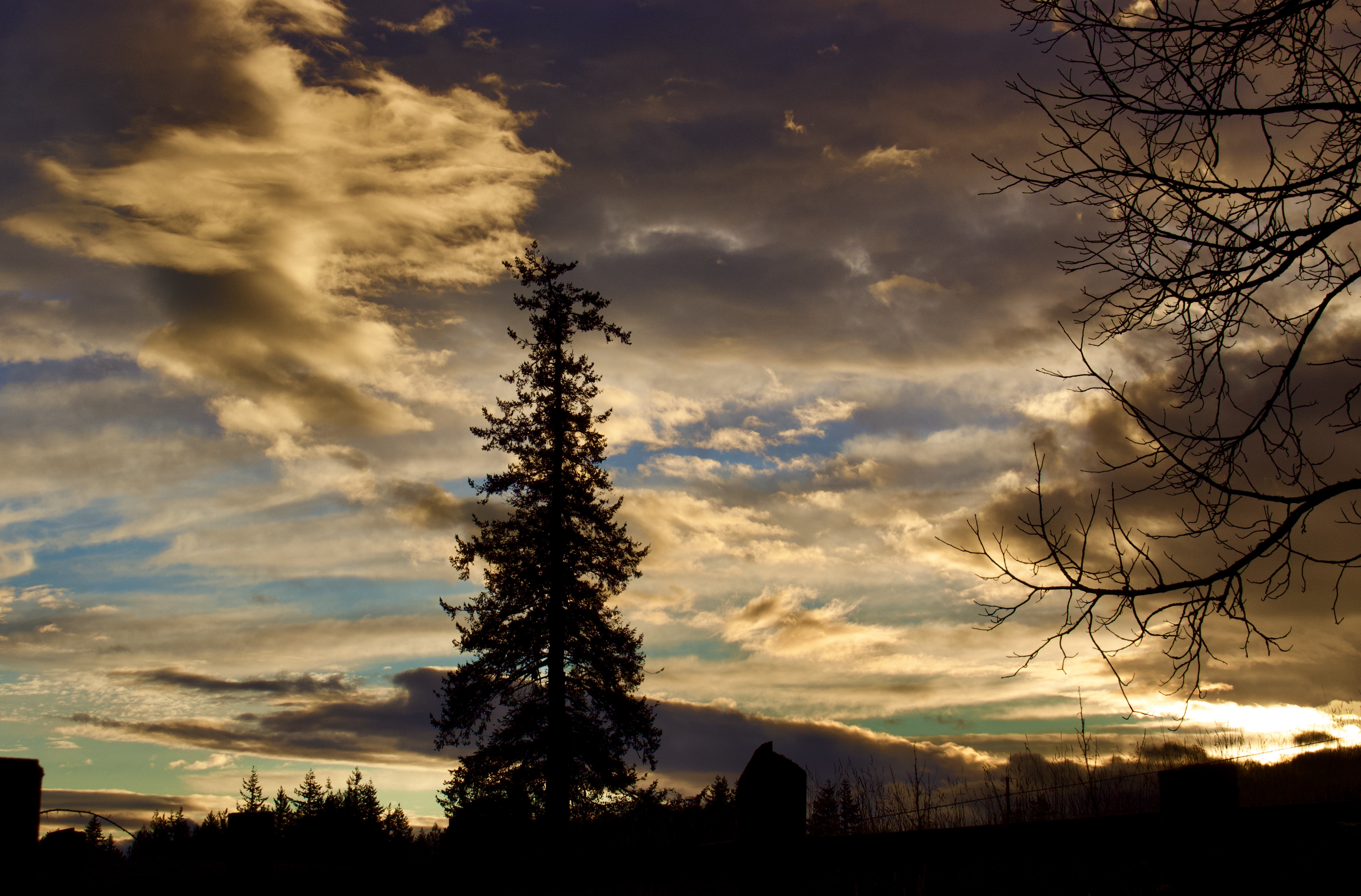
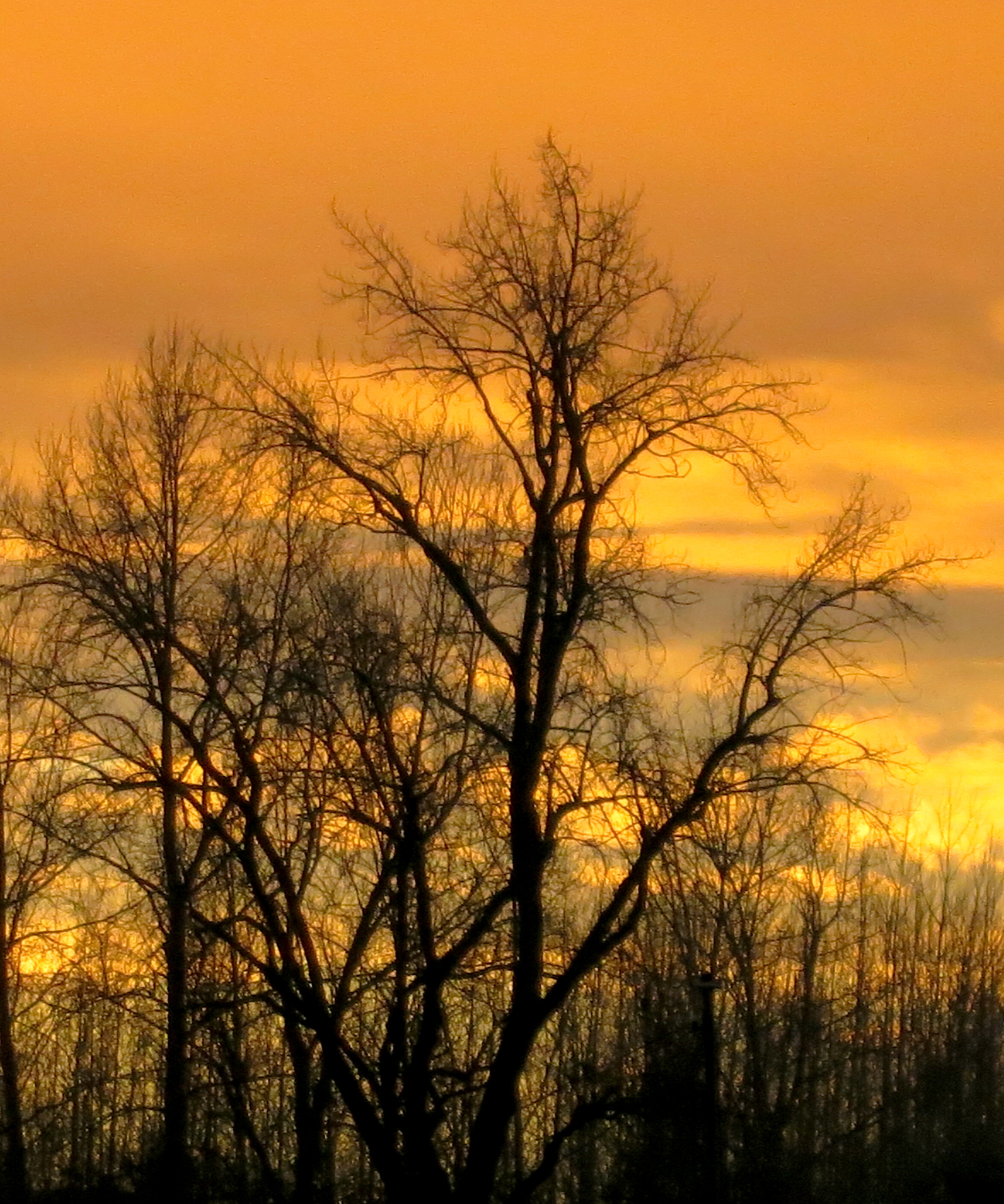
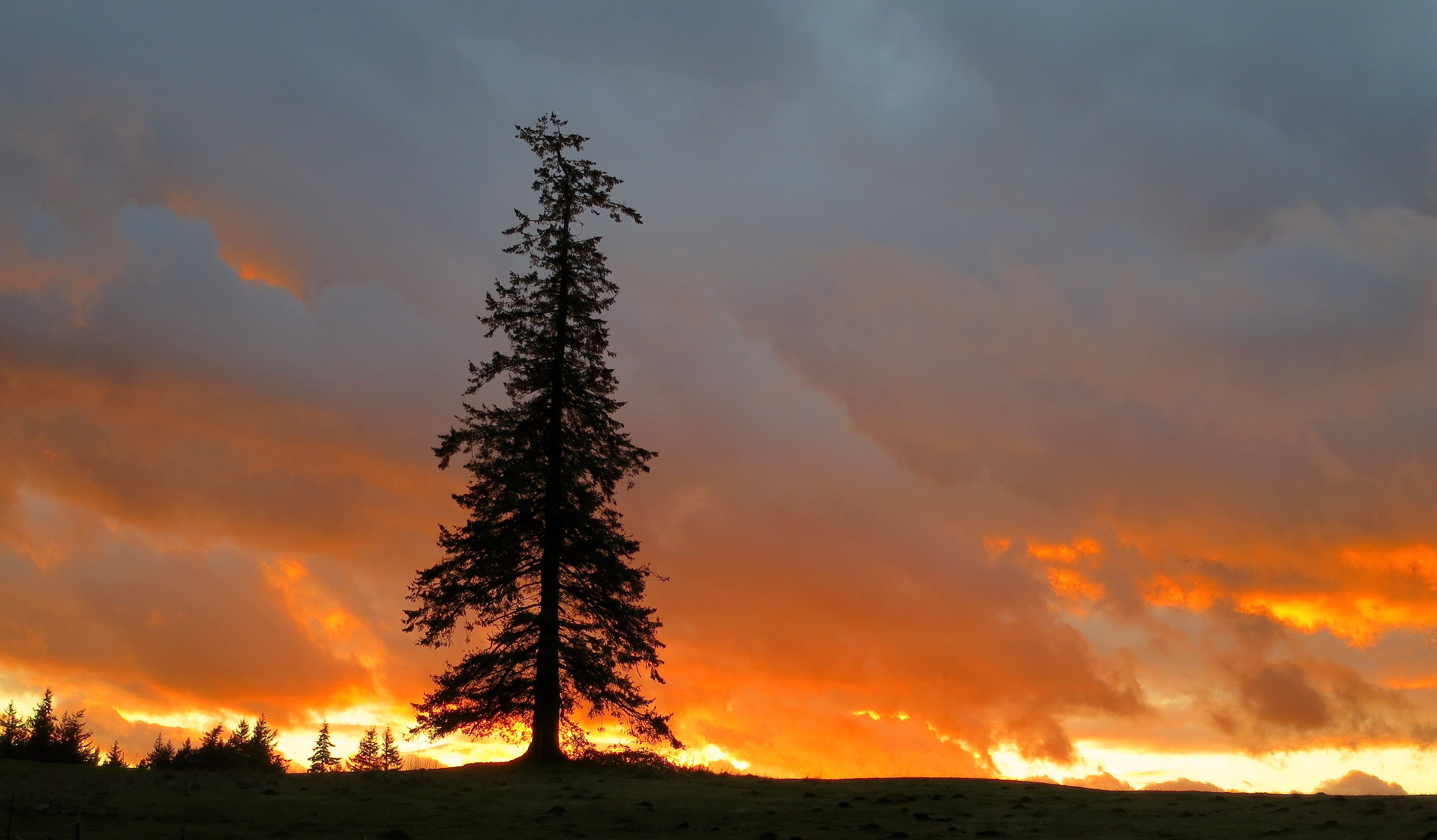
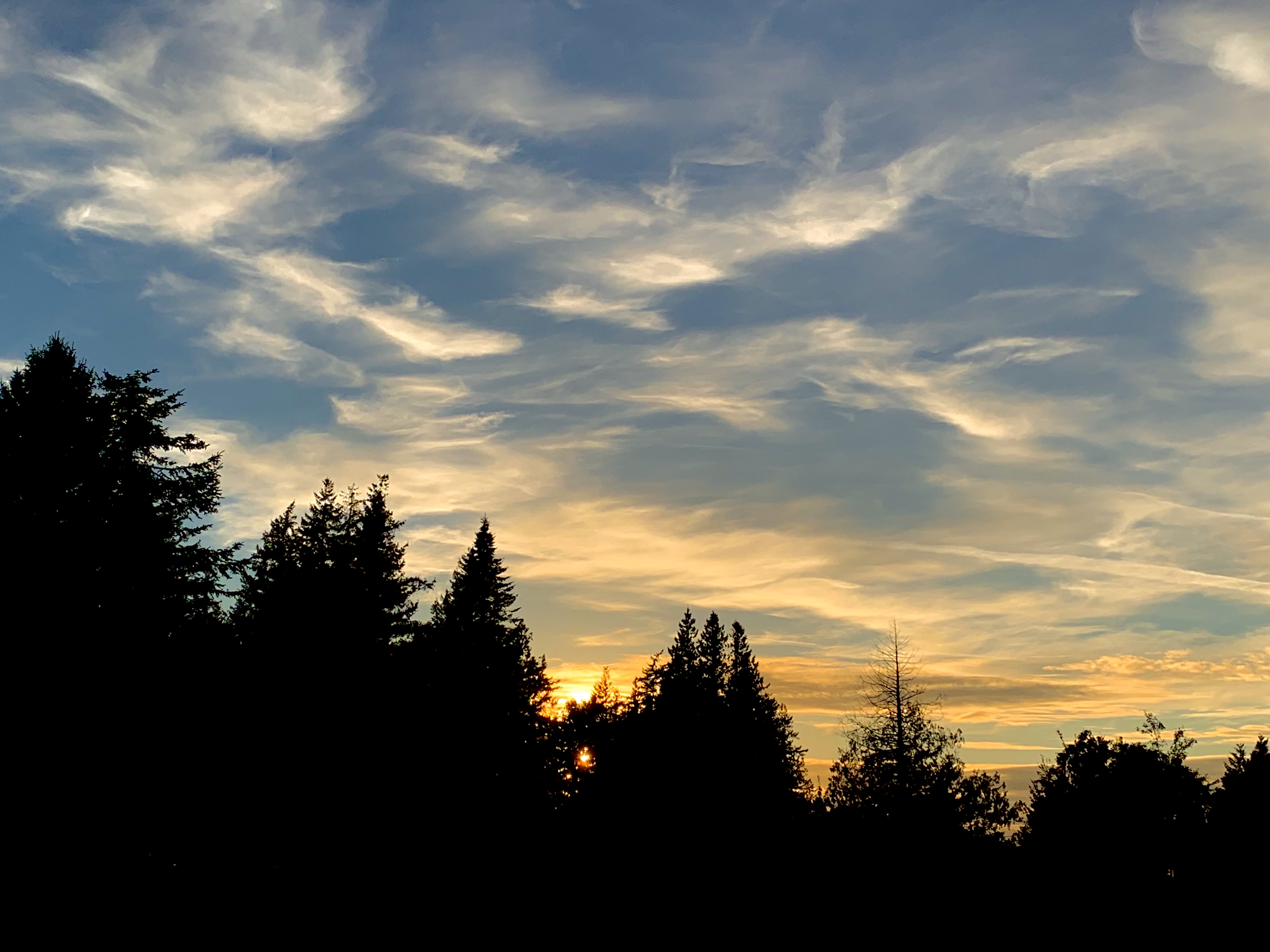
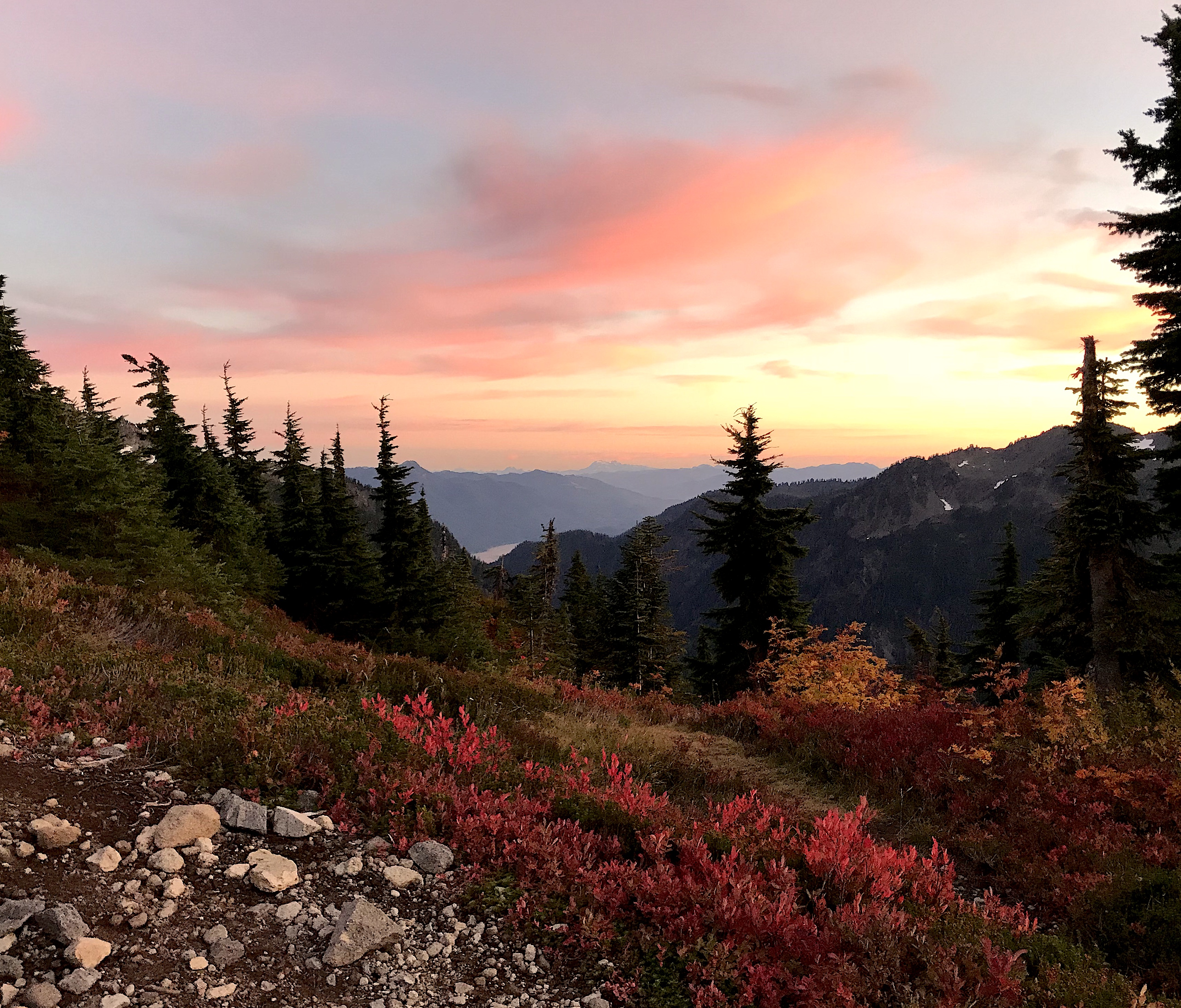
At almost four in the afternoon, the wind picks up and sifts through the golden woods.
The tree trunks bronze and redden, branches on fire in the heavy sky that flickers
with the disappearing sun. I wonder what I owe the fading day, why I keep
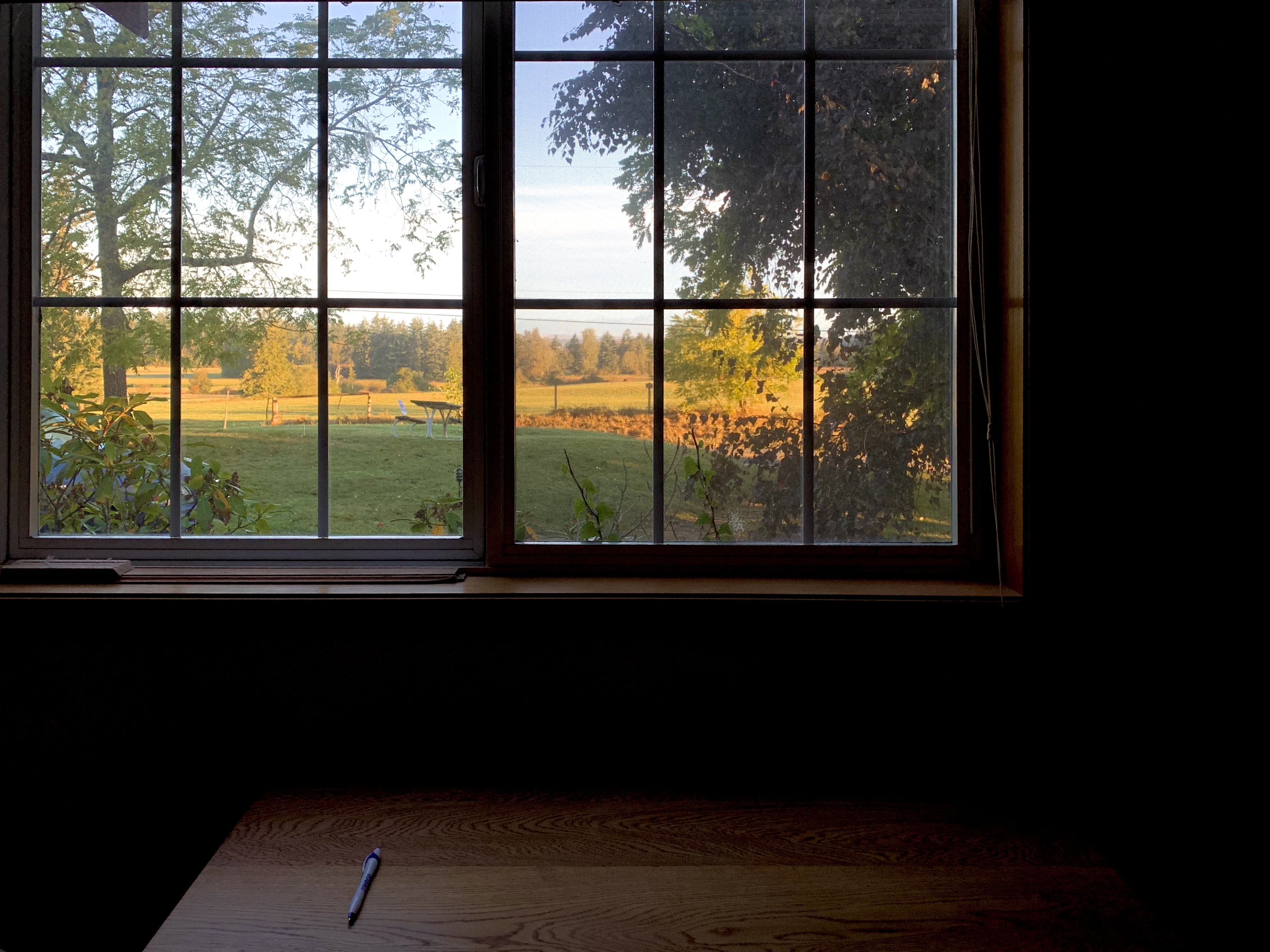
my place at this dark desk by the window measuring the force of the wind, gauging
how long a certain cloud will hold that pink edge that even now has slipped into gray?
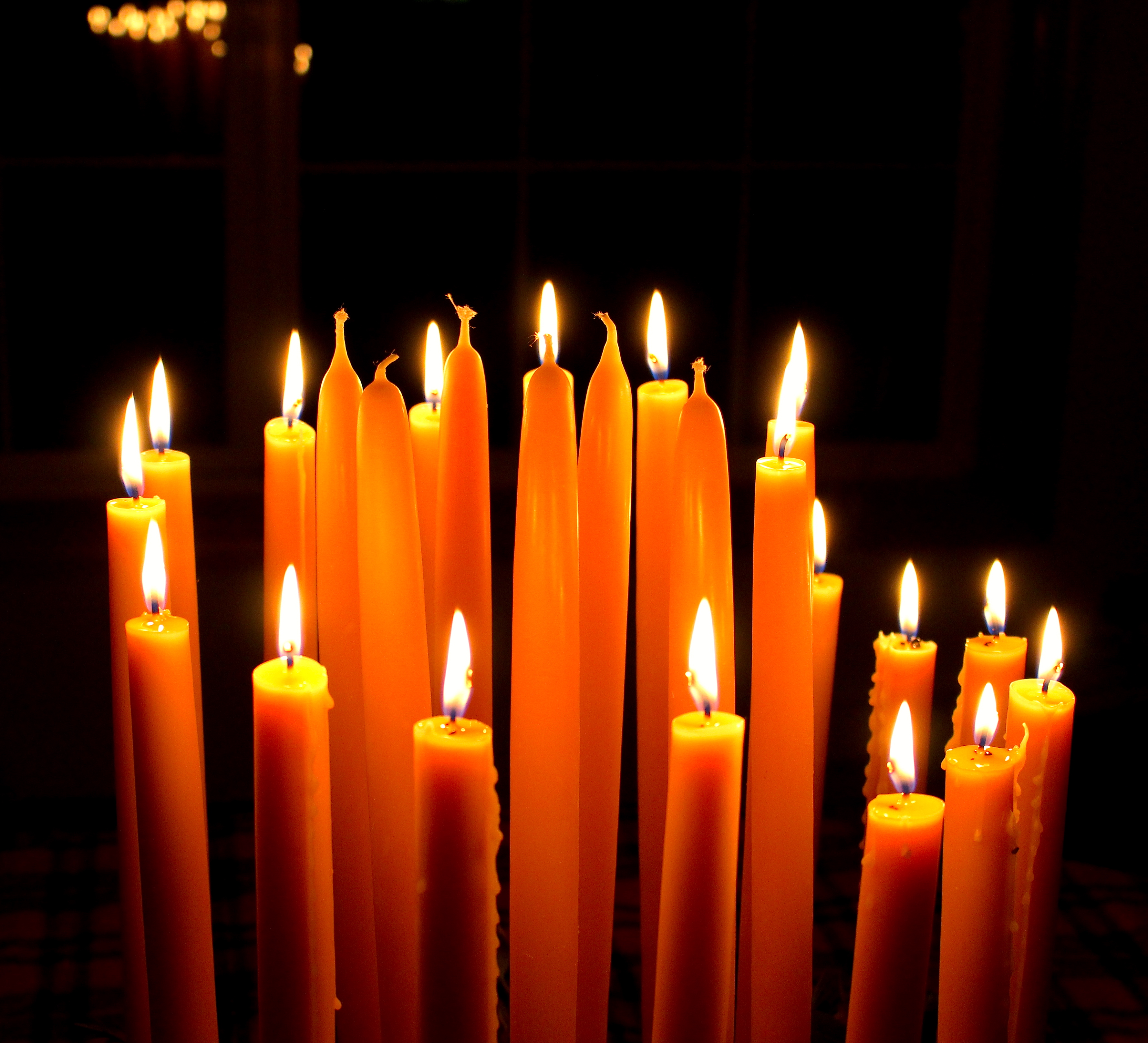
Quickly the lights are appearing, a lamp in every window and nests of stars
on the rooftops. Ladders lean against the hills and people climb, rung by rung, into the night. ~Joyce Sutphen “On the Shortest Days” from Modern Love & Other Myths.
While spending my day at my desk talking to faces on a screen, as I will today and every day, the names and stories and symptoms change every half hour. I sometimes glance up and out my window to the world beyond, concerned not to break eye contact.
I want to say: don’t you know this darkness surrounding you won’t last, while this day is fading you can turn on the light that you were given to find your way out of this.
I wonder if I owe it to you to tell you when I was young and afraid and away from home I didn’t believe the light was there either, or it wouldn’t turn on, or it burned out so I I felt swallowed by the darkness.
Then someone gave me a ladder to climb out and lit my light so I could see where I was going.
Here I am now, handing you a working light and a sturdy ladder and telling you how to use them.
…It’s true it can make you weep to peel them, to unfurl and to tease from the taut ball first the brittle, caramel-colored and decrepit papery outside layer, the least
recent the reticent onion wrapped around its growing body, for there’s nothing to an onion but skin, and it’s true you can go on weeping as you go on in, through the moist middle skins, the sweetest
and thickest, and you can go on in to the core, to the bud-like, acrid, fibrous skins densely clustered there, stalky and in- complete, and these are the most pungent… ~William Matthews from “Onions”
…I would never scold the onion for causing tears. It is right that tears fall for something small and forgotten. How at meal, we sit to eat, commenting on texture of meat or herbal aroma but never on the translucence of onion, now limp, now divided, or its traditionally honorable career: For the sake of others, disappear. ~Naomi Shihab Nye, from “The Traveling Onion” from Words Under the Words: Selected Poems.
Onion, luminous flask, your beauty formed petal by petal, crystal scales expanded you and in the secrecy of the dark earth your belly grew round with dew. Under the earth the miracle happened and when your clumsy green stem appeared, and your leaves were born like swords in the garden, the earth heaped up her power showing your naked transparency…
…You make us cry without hurting us. I have praised everything that exists, but to me, onion, you are more beautiful than a bird of dazzling feathers, heavenly globe, platinum goblet, unmoving dance of the snowy anemone
and the fragrance of the earth lives in your crystalline nature. ~Pablo Neruda from “Ode to the Onion”
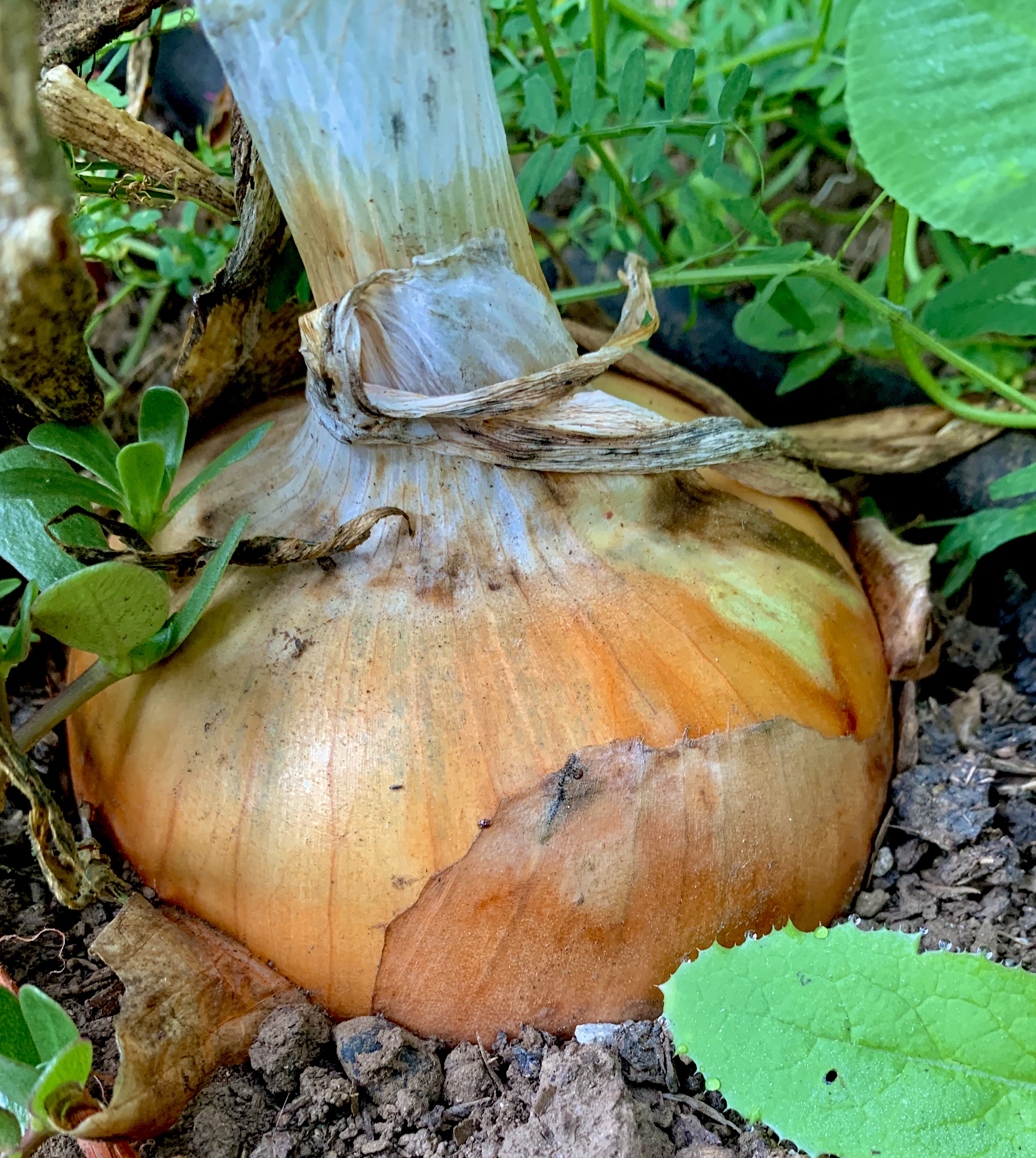
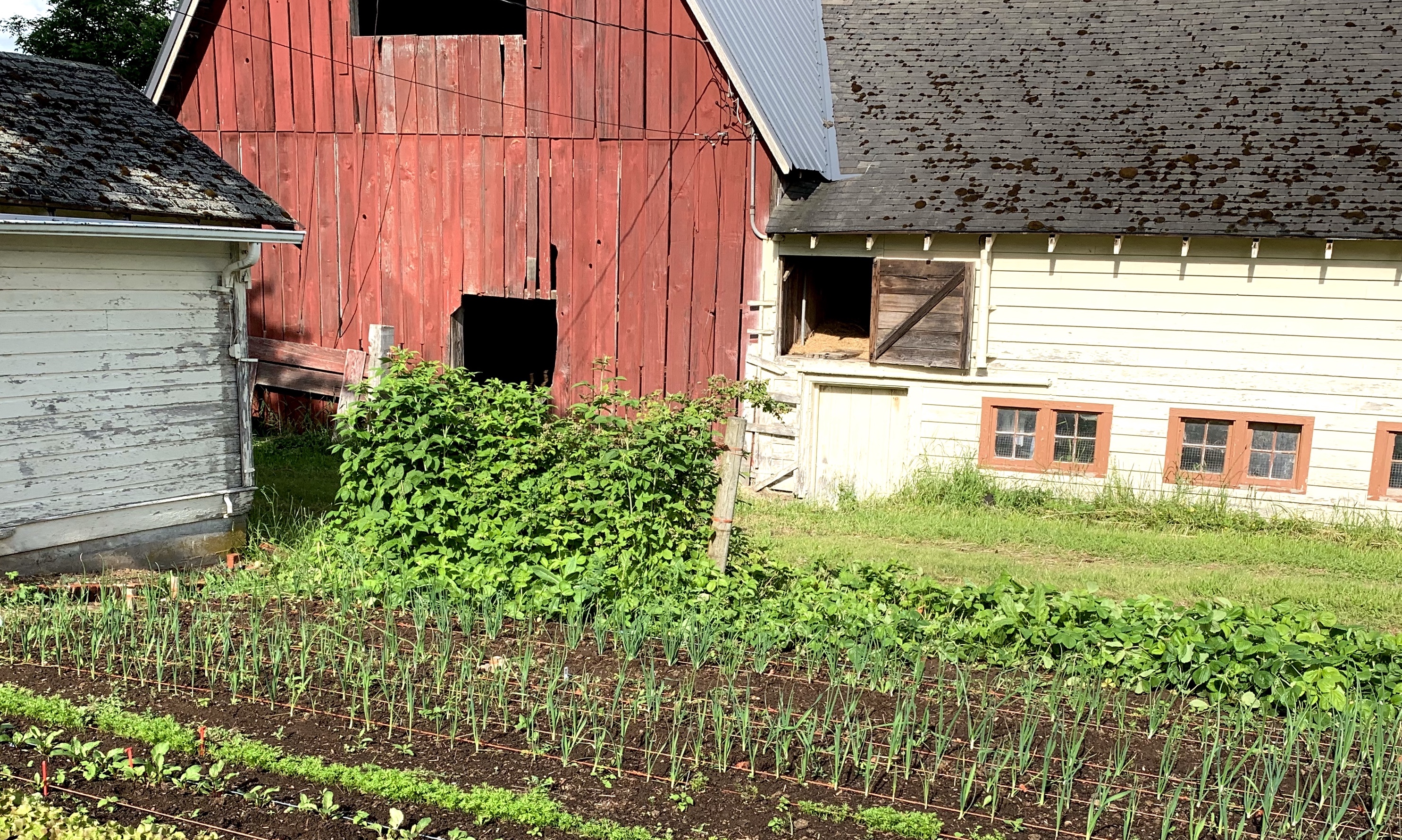
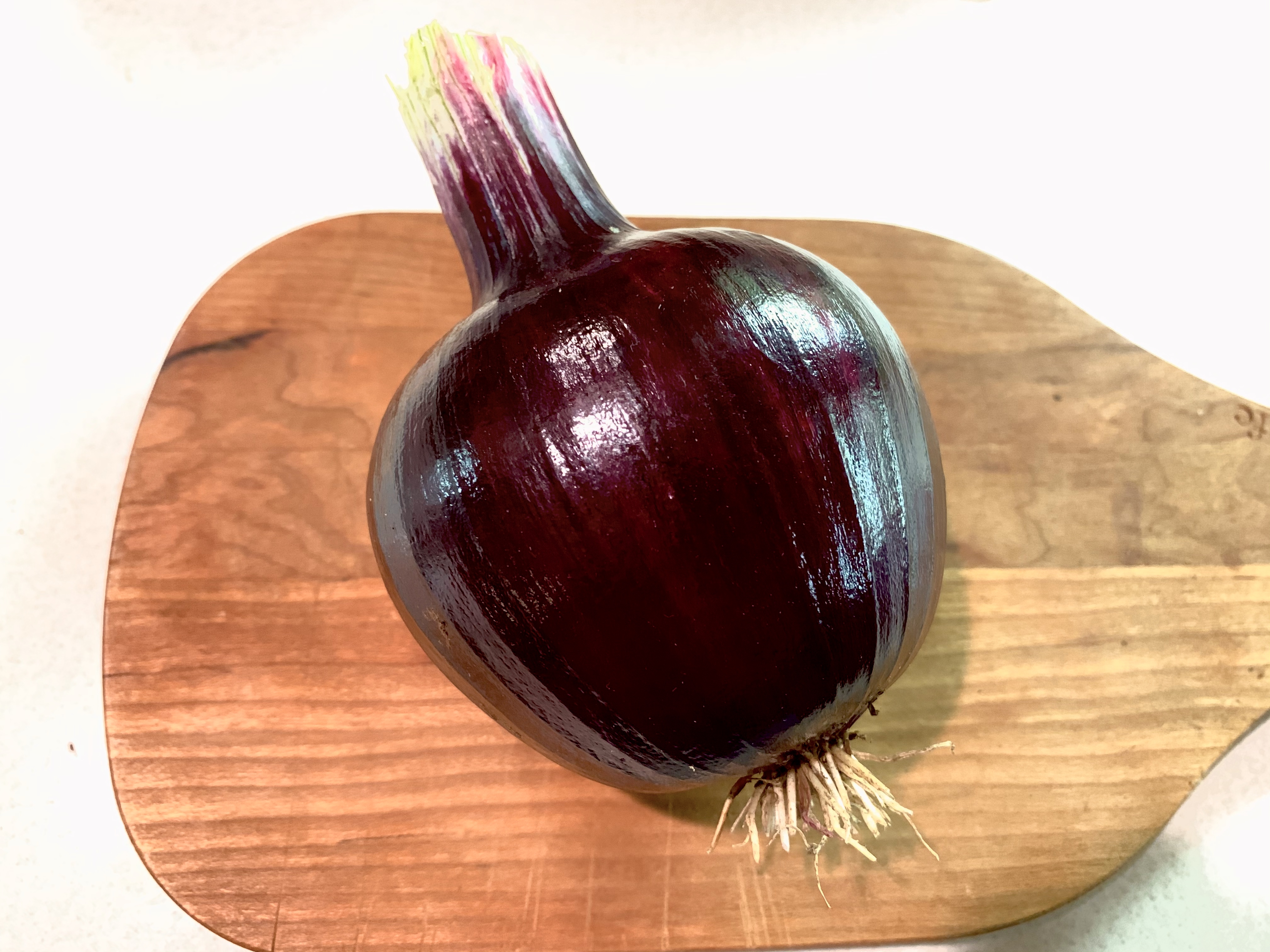
Everything smells of “eau de onion” here in the kitchen as the onions are brought in from our late summer garden to be stored or dehydrated and frozen for winter soups and stews.
This is weepy business, but these are good tears like I spill over the whistled Greensleeves theme from the old “Lassie” TV show, or during any childrens’ choir song, or by simply watching videos of our grandchildren who are quarantined so far away from our arms.
It takes almost nothing these days to make me weep, so onions are a handy excuse, allowing my tears to flow without explanation:
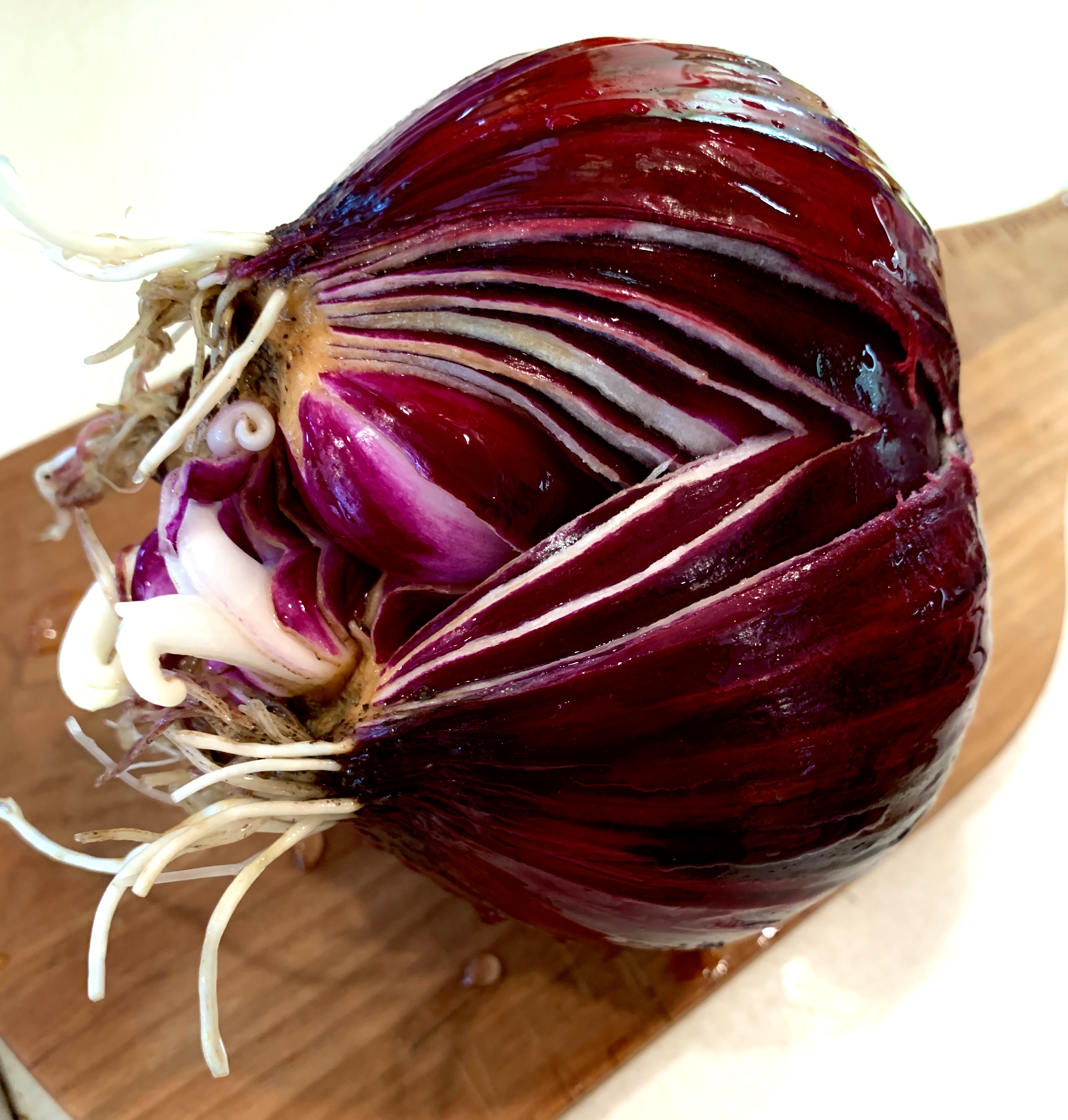
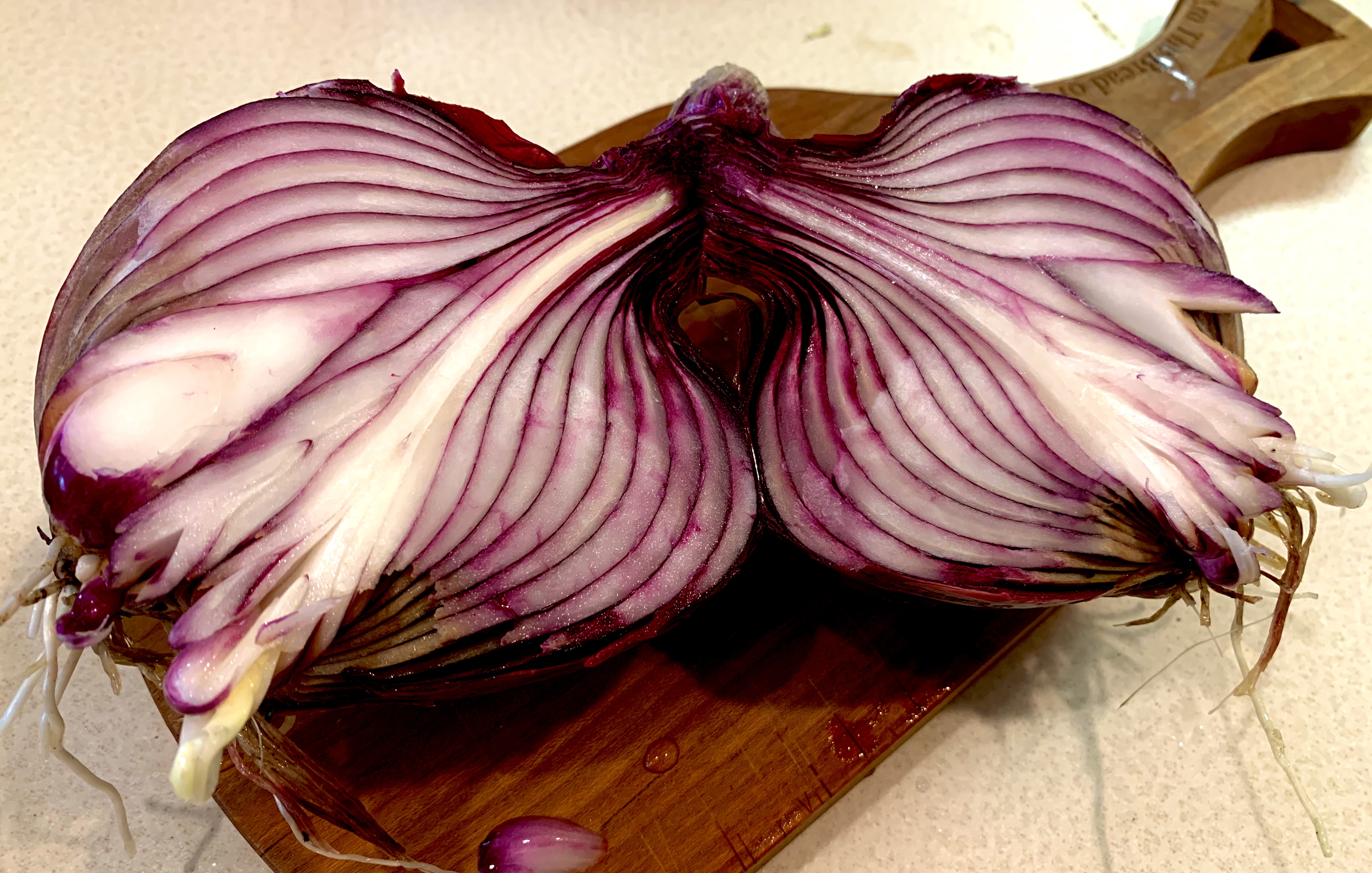
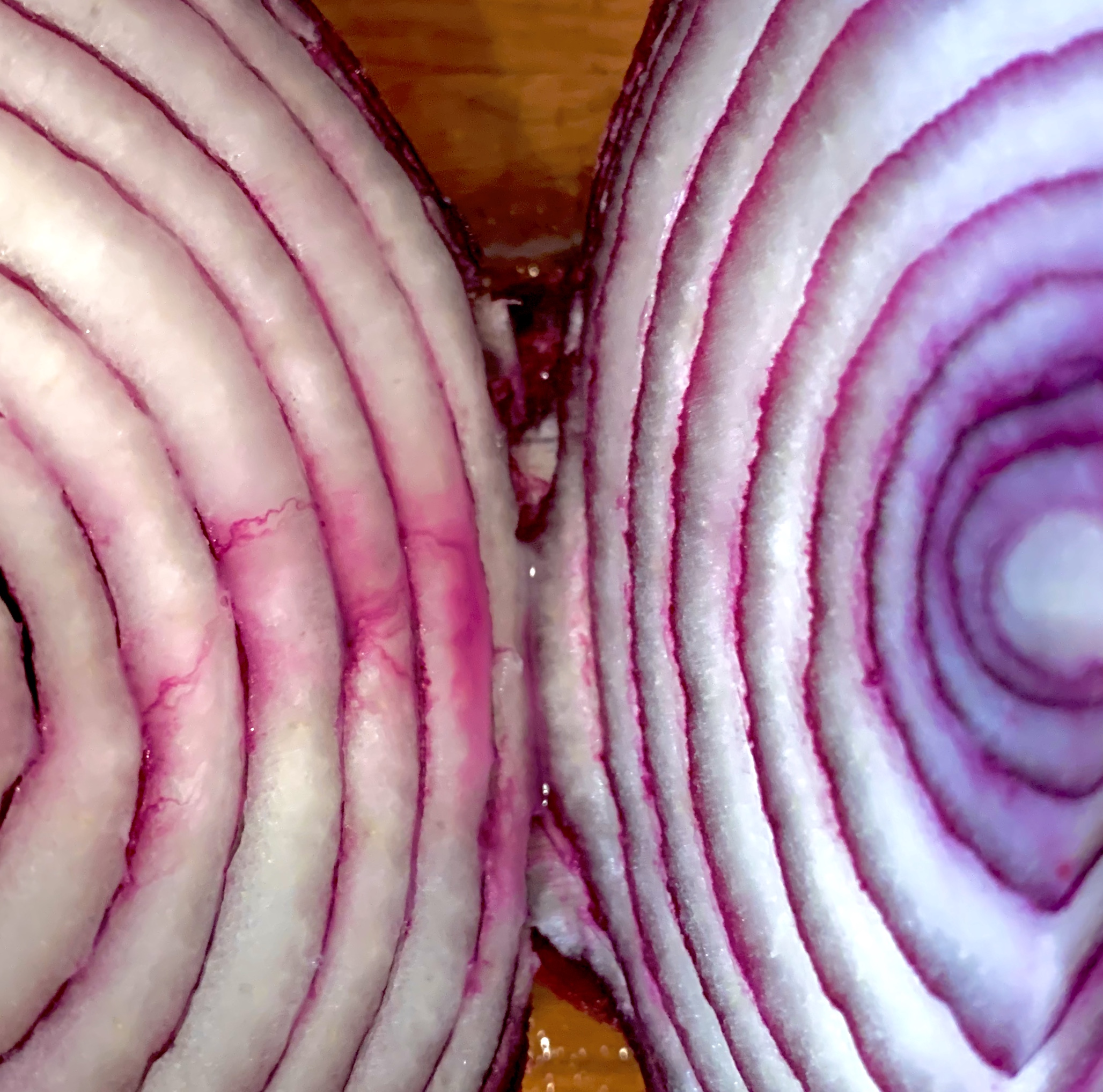
I weep over the headlines. I weep over how changed life is and for the sadness of the stricken. I weep over how messy things can get between people who don’t listen to one another or who misinterpret what they think they hear. I weep knowing we all have layers and layers of skin that appear tough on the outside, but as you peel gently or even ruthlessly cut them away, the layers get more and more tender until you reach the throbbing heart of us.
We tend to hide our hearts out of fear of being hurt, crying out in pain.
Like an onion, each one of us exists to make the day a bit better, the meal more savory, to enhance the flavors of all who are mixed into this melting pot together. We aren’t meant to stand alone, but to disappear into the stew, and be sorely missed if we are absent.
So very dish needs an onion, and for the sake of the dish, every onion vanishes in the process.
No, I don’t mean to make you cry as you peel my layers away, gently, one by one, each more tender until you reach my heart. Chop away at me if you must but weep the good tears, the ones that mean we weep for the sake of our meal together: you eating and drinking, and me – consumed.
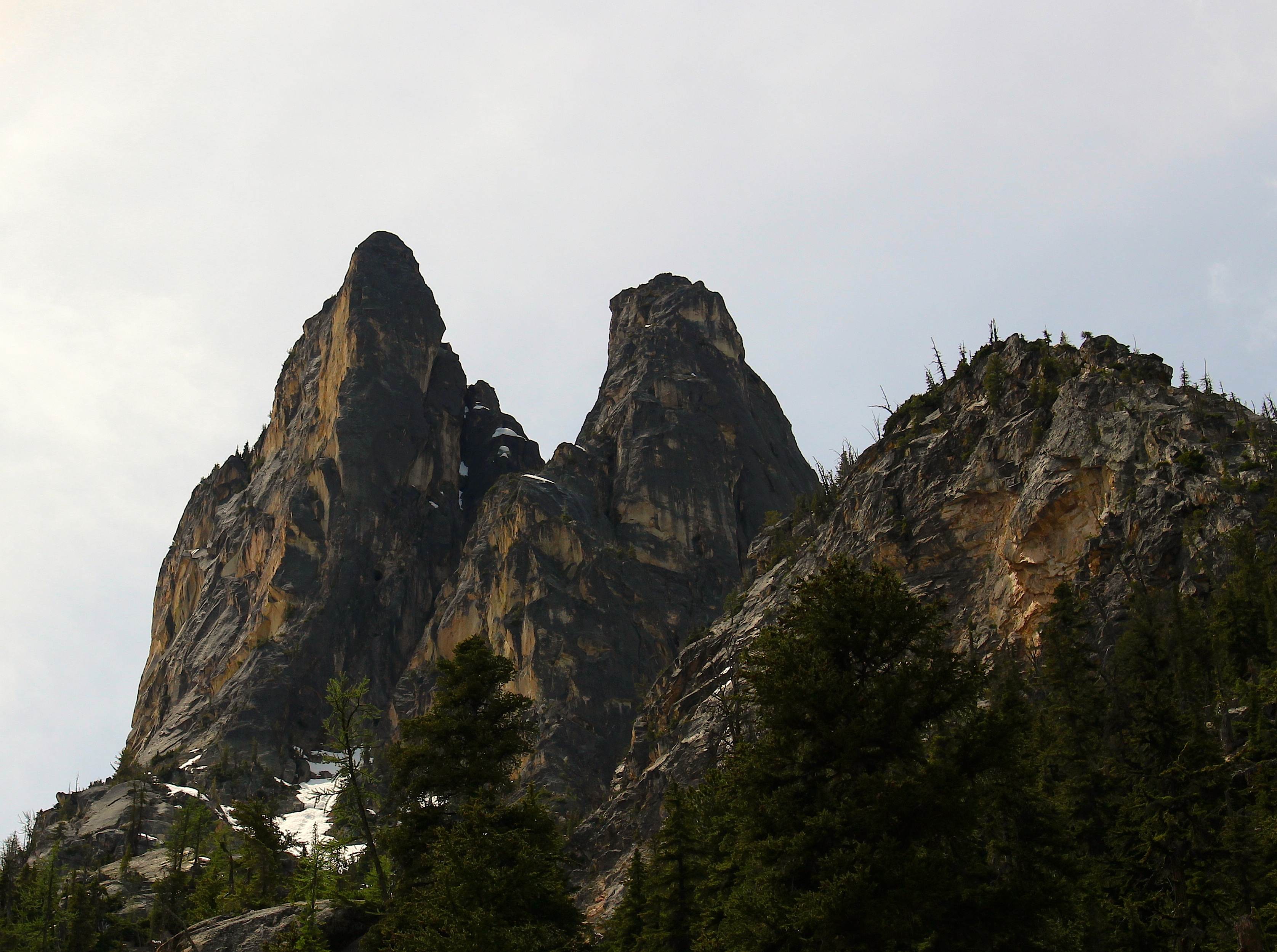
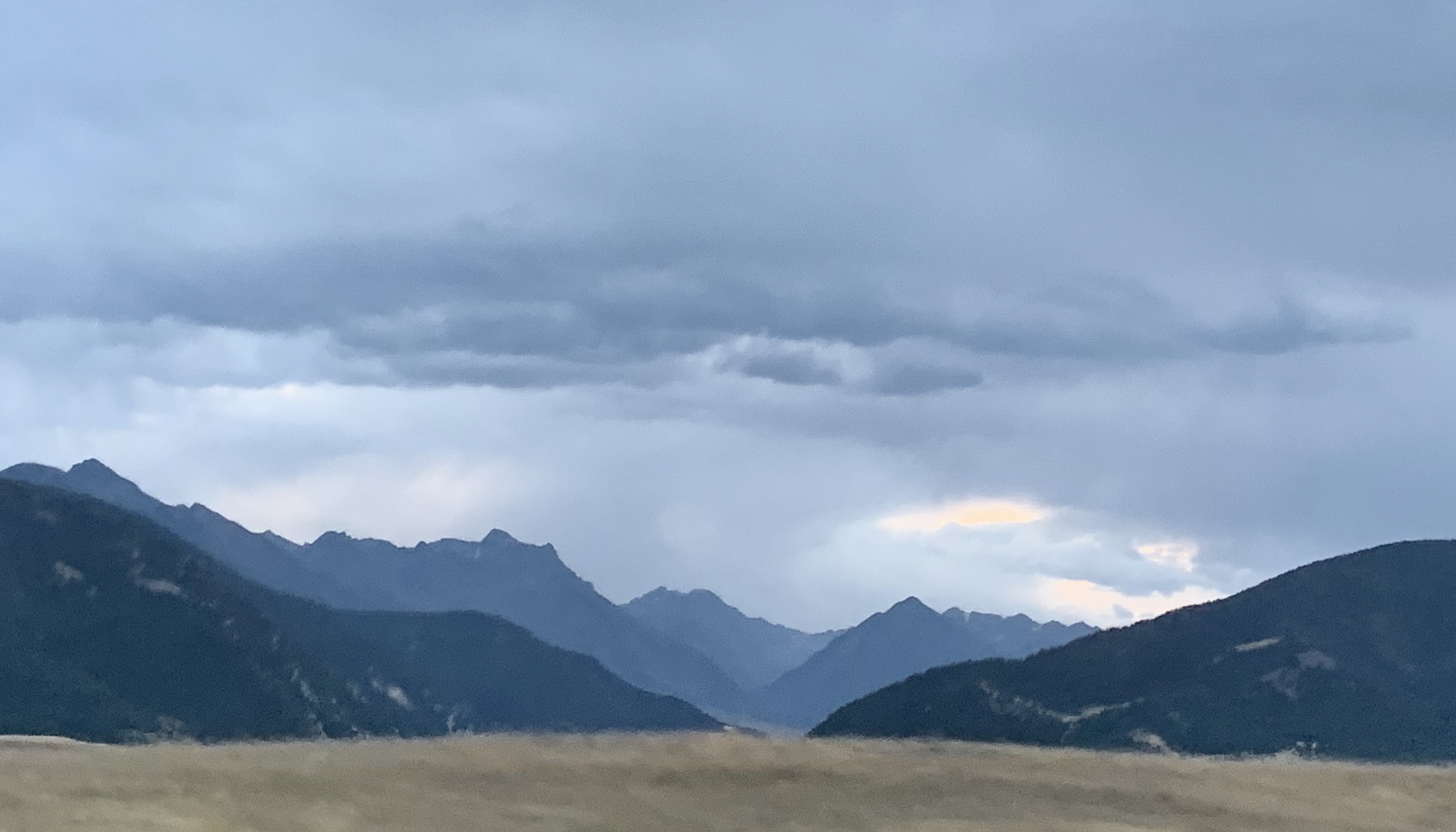
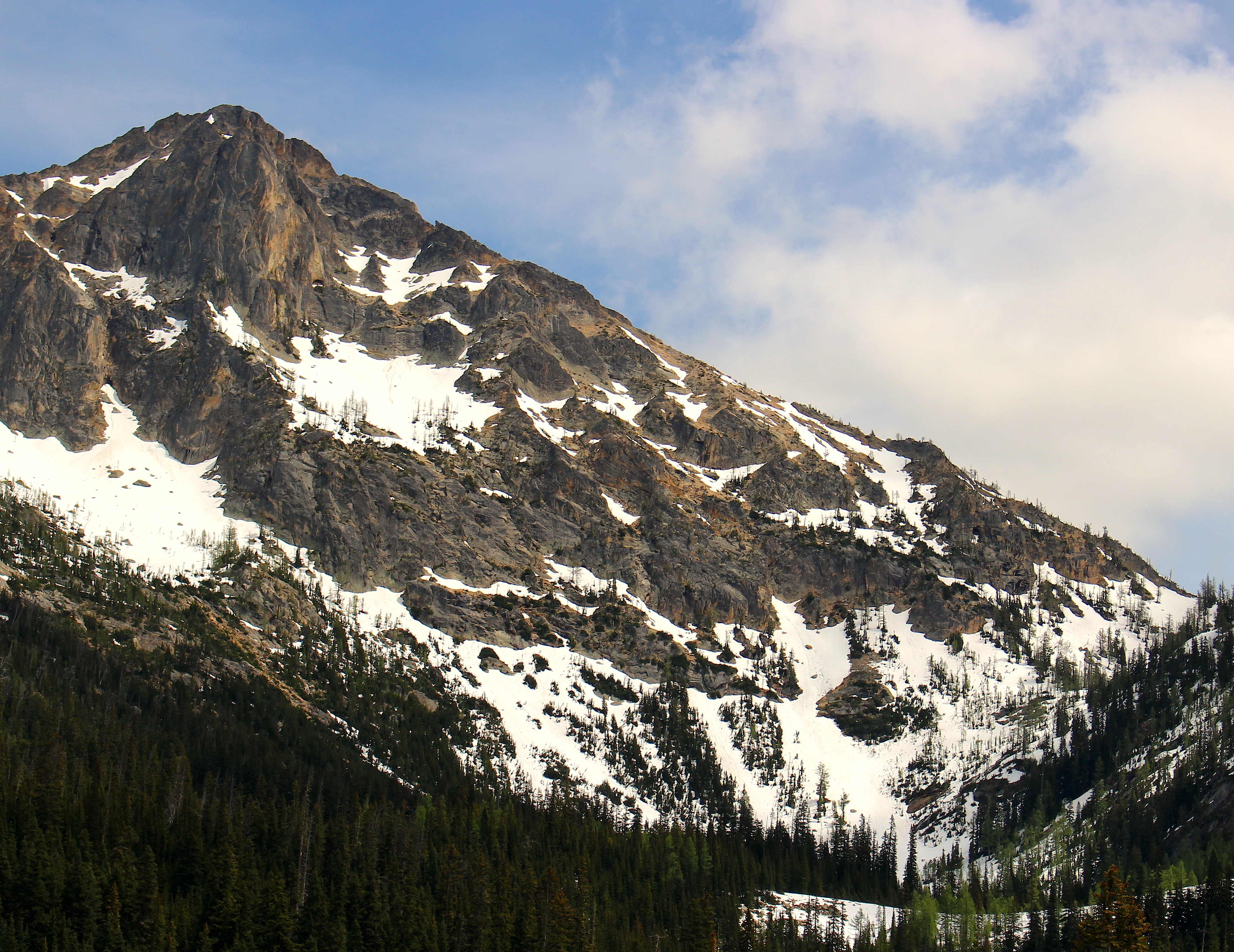
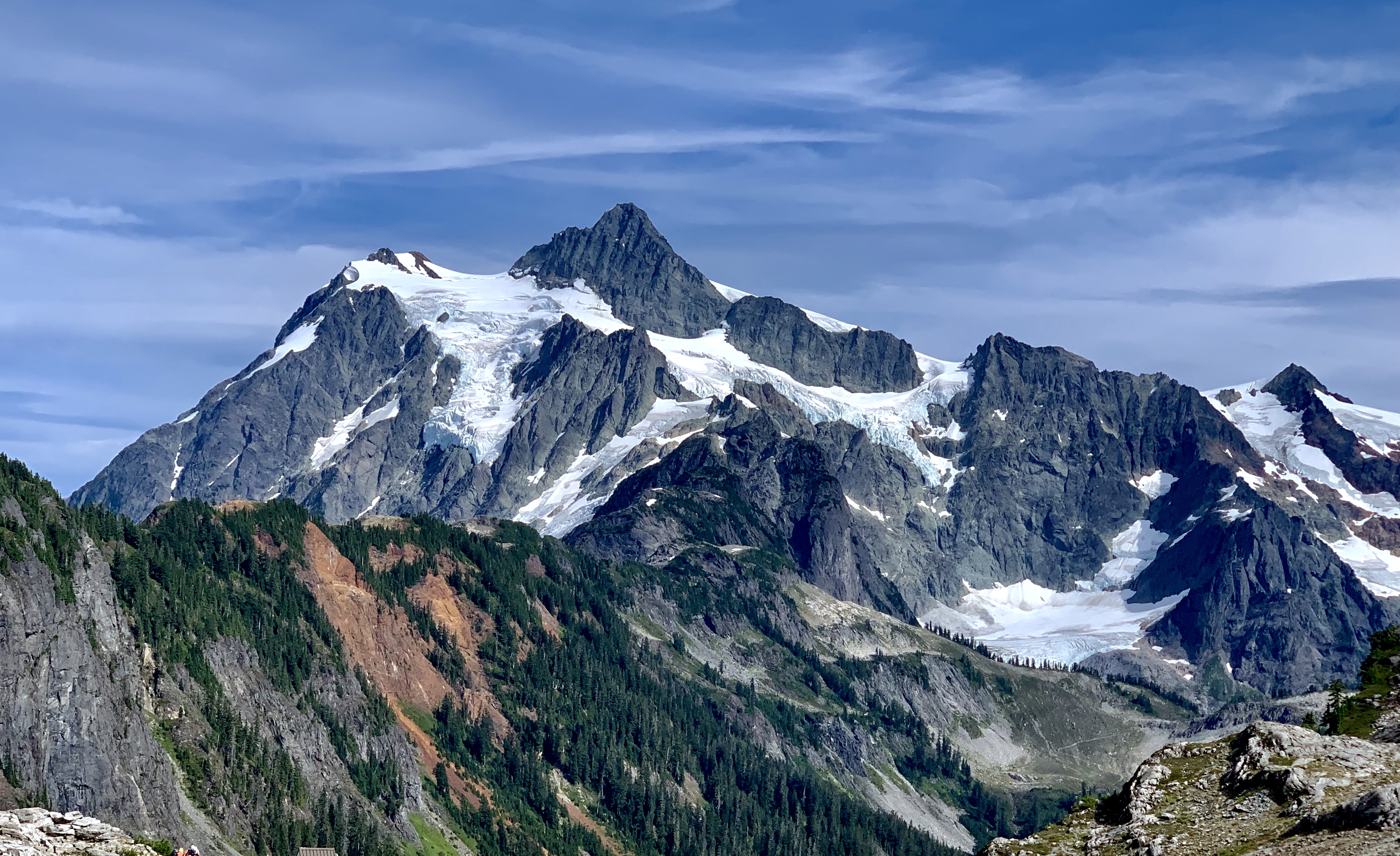
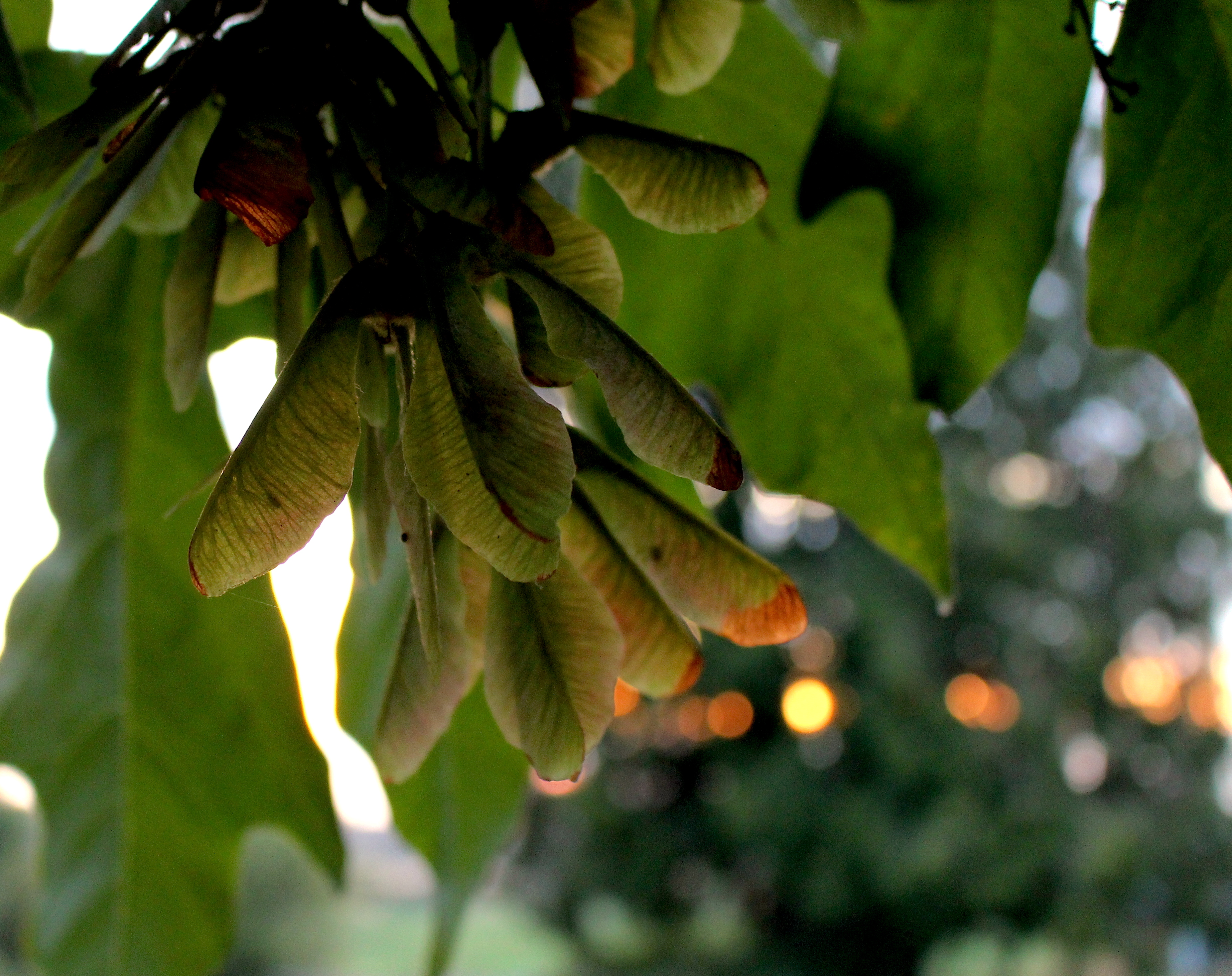
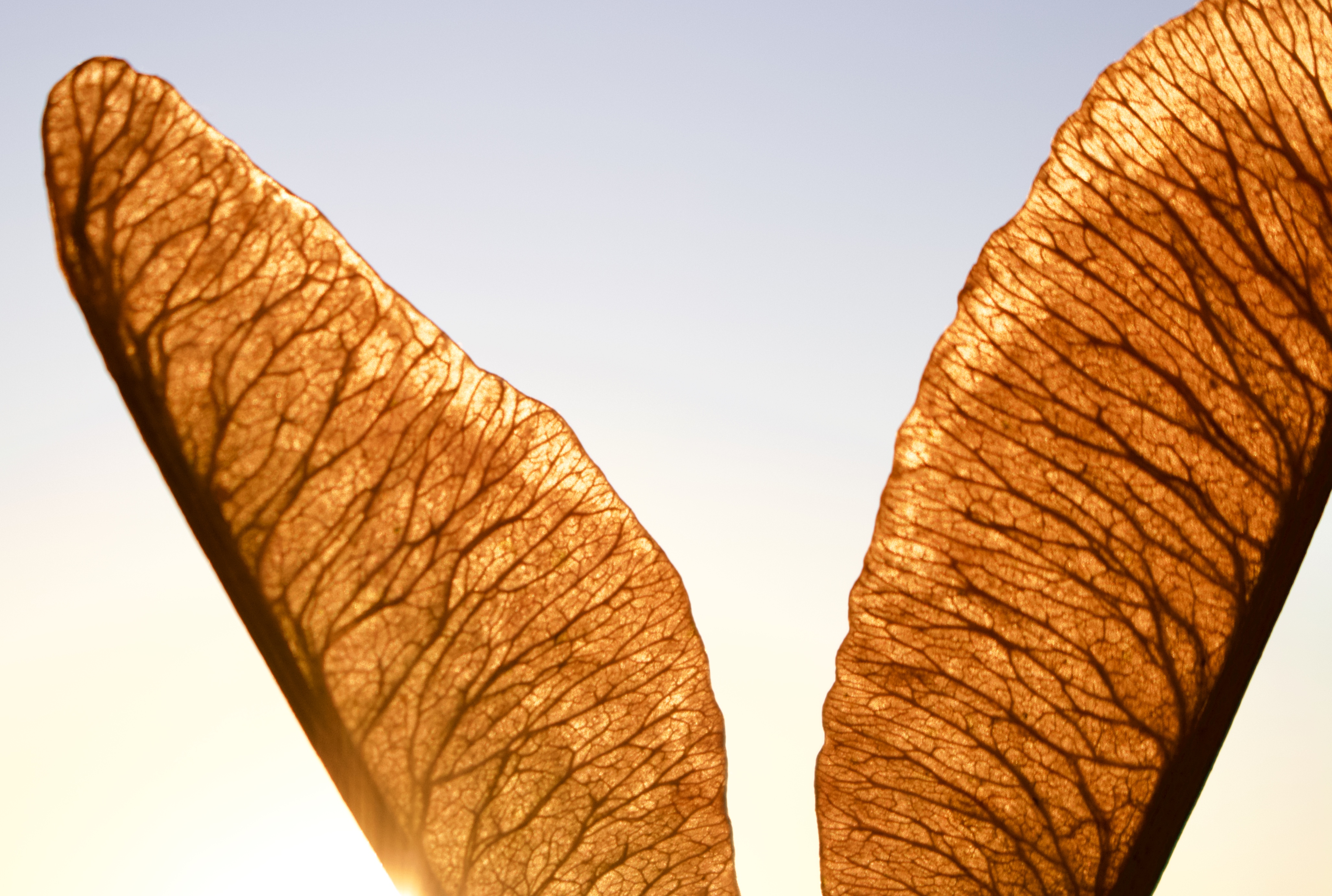
The gaps are the thing. The gaps are the spirit’s one home, the altitudes and latitudes so dazzlingly spare and clean that the spirit can discover itself like a once-blind man unbound. The gaps are the clefts in the rock where you cower to see the back parts of God; they are fissures between mountains and cells the wind lances through, the icy narrowing fiords splitting the cliffs of mystery. Go up into the gaps. If you can find them; they shift and vanish too. Stalk the gaps. Squeak into a gap in the soil, turn, and unlock —more than a maple— a universe. ~Annie Dillard from Pilgrim at Tinker Creek
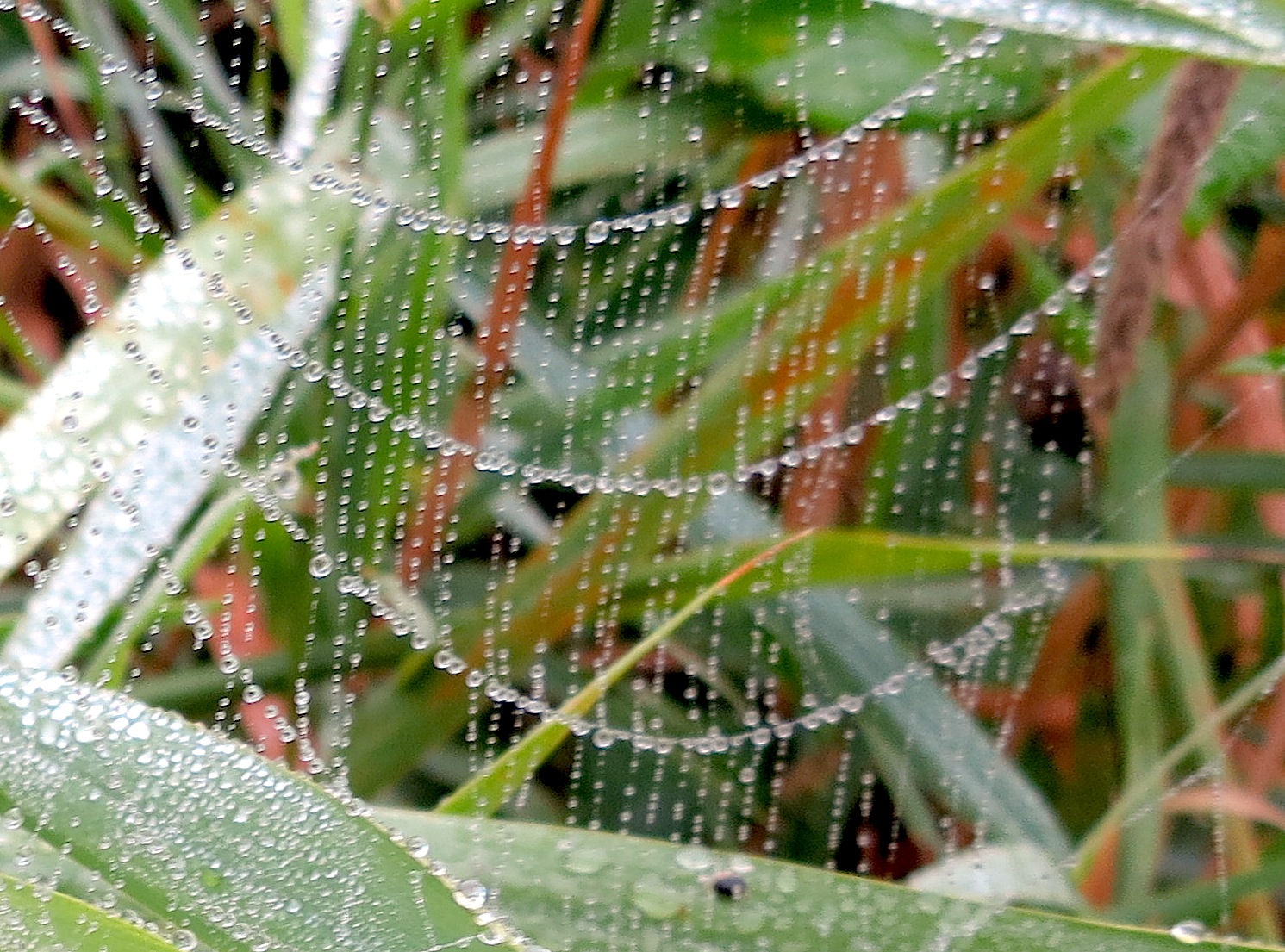
I think there is a yawning gaping separation threatening us right now.
I feel a fissuring gap in my life. People who have eaten at our table, shared our home, who we have worshiped alongside – are now estranged, no longer trusting. This separation is buoyed by the chill wind of politics blowing bitterly where once there was warmth and nurture and caring.
We disagree.
We no longer understand one another. We no longer listen to one another. The argument has become more important than the connection.
How can we even allow these gaps between us to develop? How do we fill these fissures with enough of ourselves so something new and vital can grow? How can we stalk the gaps together, knowing how we are all exposed?
Not one of us has the corner on the Truth; if we are honest with ourselves and each other, we cower together for safety in the cracks of this world, watching helplessly as the backside of God passes by too holy for us to gaze upon. He places us there together for our own good. I see you there alongside me.
We are weak together. We are dependent together. We need each other.
Only His Word – nothing else – can fill the open gaping hollow between us. His Grace is great enough to fill every hole bridge every gap bring hope to the hopeless plant seeds for the future and restore us wholly to each other.














 Barnstorming