The children have gone to bed. We are so tired we could fold ourselves neatly behind our eyes and sleep mid-word, sleep standing warm among the creatures in the barn, lean together and sleep, forgetting each other completely in the velvet, the forgiveness of sleep.
Then the one small cry: one strike of the match-head of sound: one child’s voice: and the hundred names of love are lit as we rise and walk down the hall.
One hundred nights we wake like this, wake out of our nowhere to kneel by small beds in darkness. One hundred flowers open in our hands, a name for love written in each one. ~Annie Lighthart, from Iron String
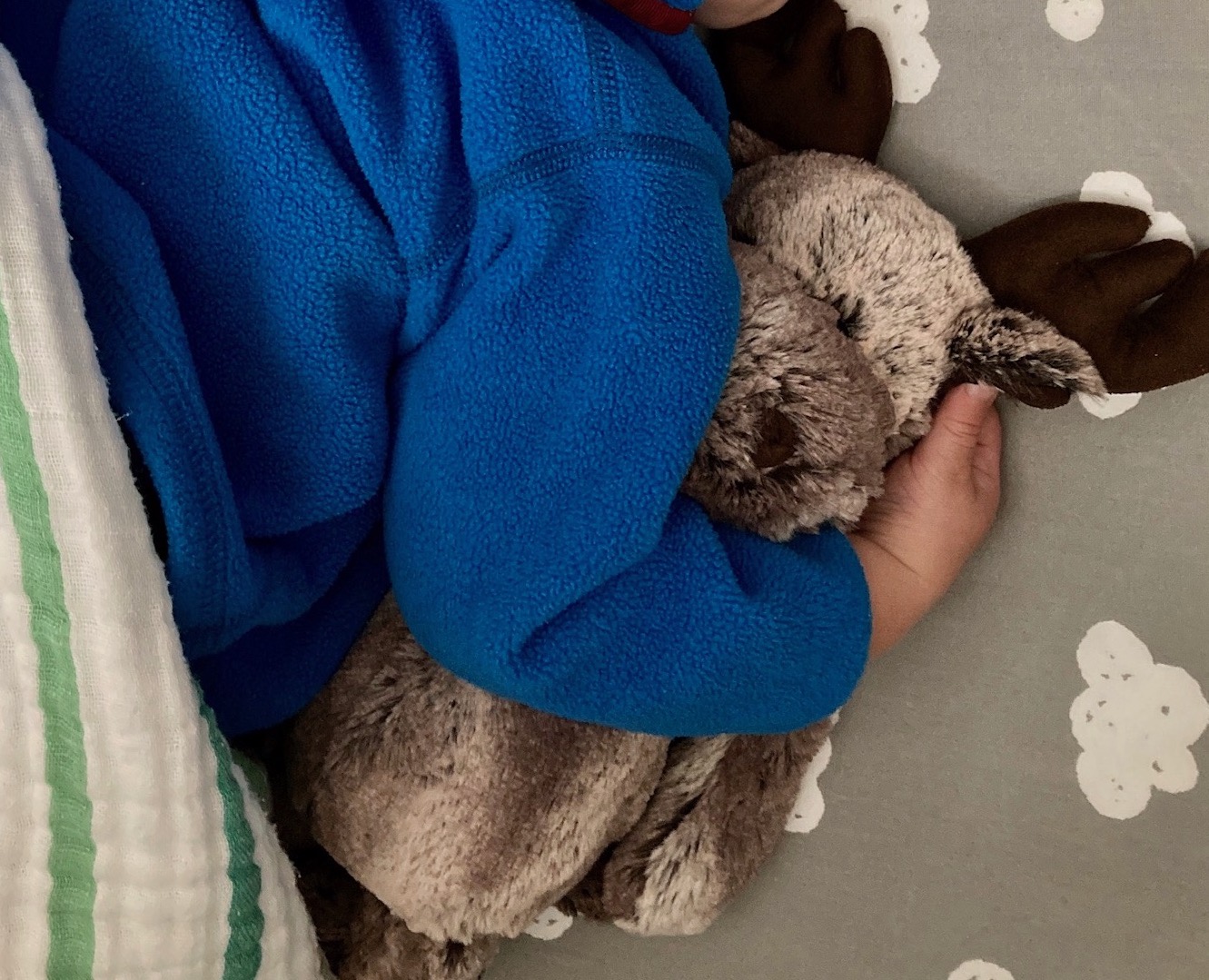
I thought I had forgotten how to wake to the sound of a child’s voice in the night. I thought I wouldn’t remember how to gently open their bedroom door, entering their darkness from my own darkness, discerning what was distressing them, sensing how to soothe them back to slumber, wondering if I might sing or pray the words they needed to hear, bringing a blossoming peace and stillness to their night.
And then our son’s family arrived two months ago from thousands of miles away, to stay until they could settle in their own place, and I remembered my nights were never meant to be mine alone. As a child, I had so many night-wakenings that I’m sure my mother despaired that I would ever sleep through the night. She would come when I called, sitting beside my bed, rubbing my back until I forgot what woke me in the first place. She was patient and caring despite her own weariness, sleep problems and worriedness. She loved me and forgave me for needing her presence in the night, so her nights were never her own.
I too responded with compassion when my own children called out in the night. I woke regularly to phone calls from hospitals and patients during forty years of medical practice and listened and answered questions with grace and understanding. And now, for a time, I’m on call again, remembering the sweetness of being loved when the dark fears of the night need the light and promise of a new day coming, if only just a few hours away.
One-Time
Monthly
Yearly
Make a one-time or recurring donation to support daily Barnstorming posts
“Vixi duellis nuper idoneus Et militavi non sine glori” (translation) Recently I lived suitable for warfare, and I soldiered not without glory.
Today we have naming of parts. Yesterday, We had daily cleaning. And tomorrow morning, We shall have what to do after firing. But today, Today we have naming of parts. Japonica Glistens like coral in all of the neighboring gardens, And today we have naming of parts.
This is the lower sling swivel. And this Is the upper sling swivel, whose use you will see When you are given your slings. And this is the piling swivel, Which in your case you have not got. The branches Hold in the gardens their silent, eloquent gestures, Which in our case we have not got.
This is the safety-catch, which is always released With an easy flick of the thumb. And please do not let me See anyone using his finger. You can do it quite easily If you have any strength in your thumb. The blossoms Are fragile and motionless, never letting anyone see Any of them using their finger.
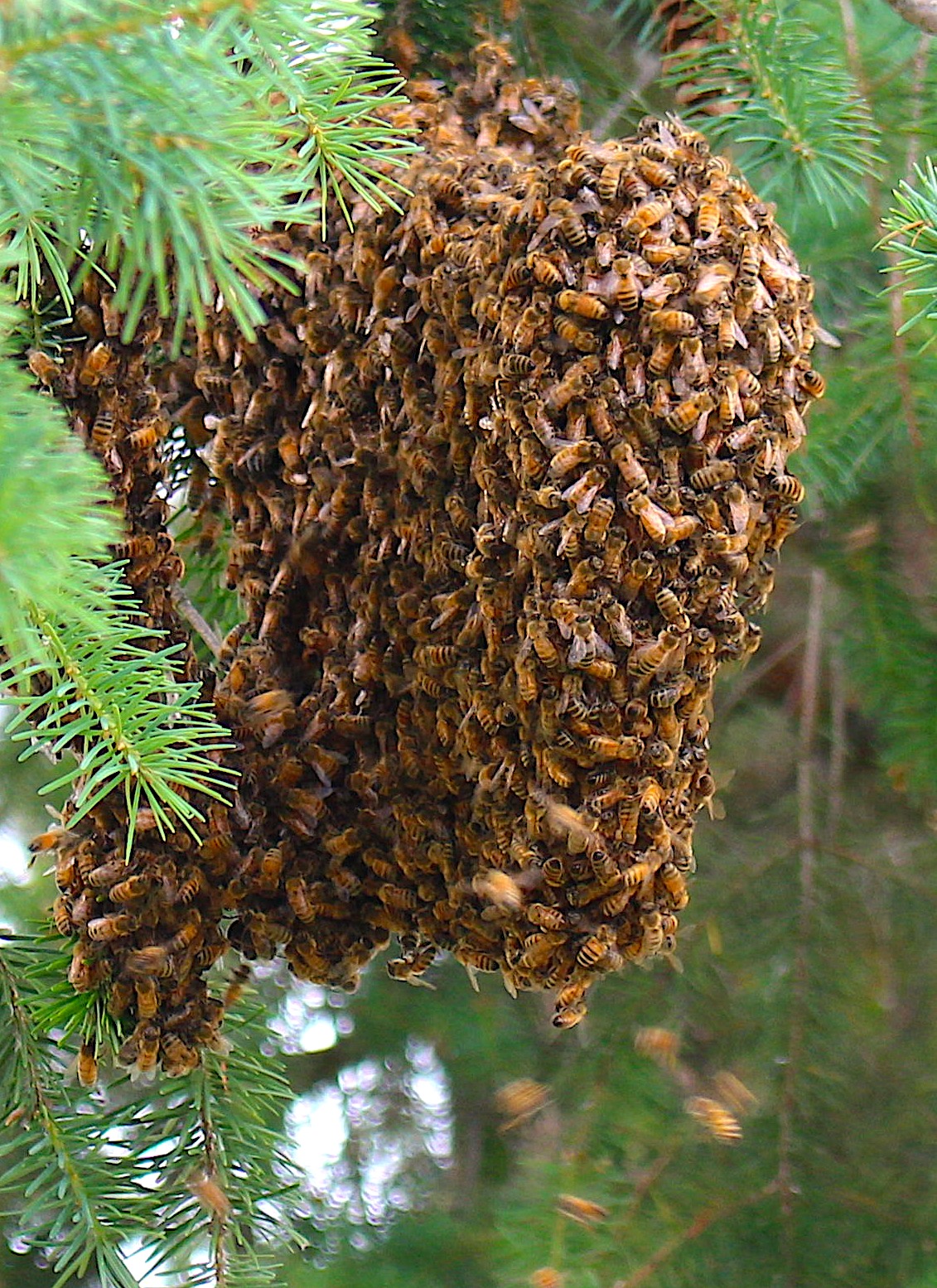
And this you can see is the bolt. The purpose of this Is to open the breech, as you see. We can slide it Rapidly backwards and forwards: we call this Easing the spring. And rapidly backwards and forwards The early bees are assaulting and fumbling the flowers: They call it easing the Spring.
They call it easing the Spring: it is perfectly easy If you have any strength in your thumb: like the bolt, And the breech, and the cocking-piece, and the point of balance, Which in our case we have not got; and the almond-blossom Silent in all of the gardens and the bees going backwards and forwards, For today we have naming of parts. ~Henry Reed “Naming of Parts”(1942)
“Naming of Parts” was a well-known British anti-war poem I memorized for debate class in high school in 1970, reciting it for interpretive reading competitions.
Below is a portion of a 1944 letter sent home to my mother from my father as he served as a Marine company officer in the South Pacific from January 1943 – fall 1945. After he returned home, physically uninjured, I had never seen him with a gun in his hands, and wasn’t aware he even had kept a gun after leaving the Marines. One day, in the early 1970’s, one of our farm’s beef animals was injured so my father, for the first time in thirty years, pulled out a gun from its hiding place to put down the suffering animal. I never saw the gun again and believe my father disposed of it soon after – firing that gun after so many years was too much for him.
“You mentioned a story of Navy landing craft taking the Marines into Tarawa. It reminded me of something which impressed me a great deal and something I’m sure I’ll never forget.
So you’ll understand what I mean I’ll try to start with an explanation. In training – close order drill- etc. there is a command that is given always when the men form in the morning – various times during the day– after firing– and always before a formation is dismissed. The command is INSPECTION – ARMS. On the command of EXECUTION- ARMS each man opens the bolt of his rifle. It is supposed to be done in unison so you hear just one sound as the bolts are opened. Usually it is pretty good and sounds O.K.
Just to show you how the morale of the men going to the <Tarawa> beach was – and how much it impressed me — we were on our way in – I was forward, watching the beach thru a little slit in the ramp – the men were crouched in the bottom of the boat, just waiting. You see- we enter the landing boats with unloaded rifles and wait till it’s advisable before loading. When we got about to the right distance in my estimation I turned around and said – LOAD and LOCK – I didn’t realize it, but every man had been crouching with his hand on the operating handle and when I said that — SLAM! — every bolt was open at once – I’ve never heard it done better – and those men meant business when they loaded those rifles.
A man couldn’t be afraid with men like that behind him. ~ Marine Captain Henry Polis(age 22)in a 1944 letter home about the Battle of Tarawa (November 1943)
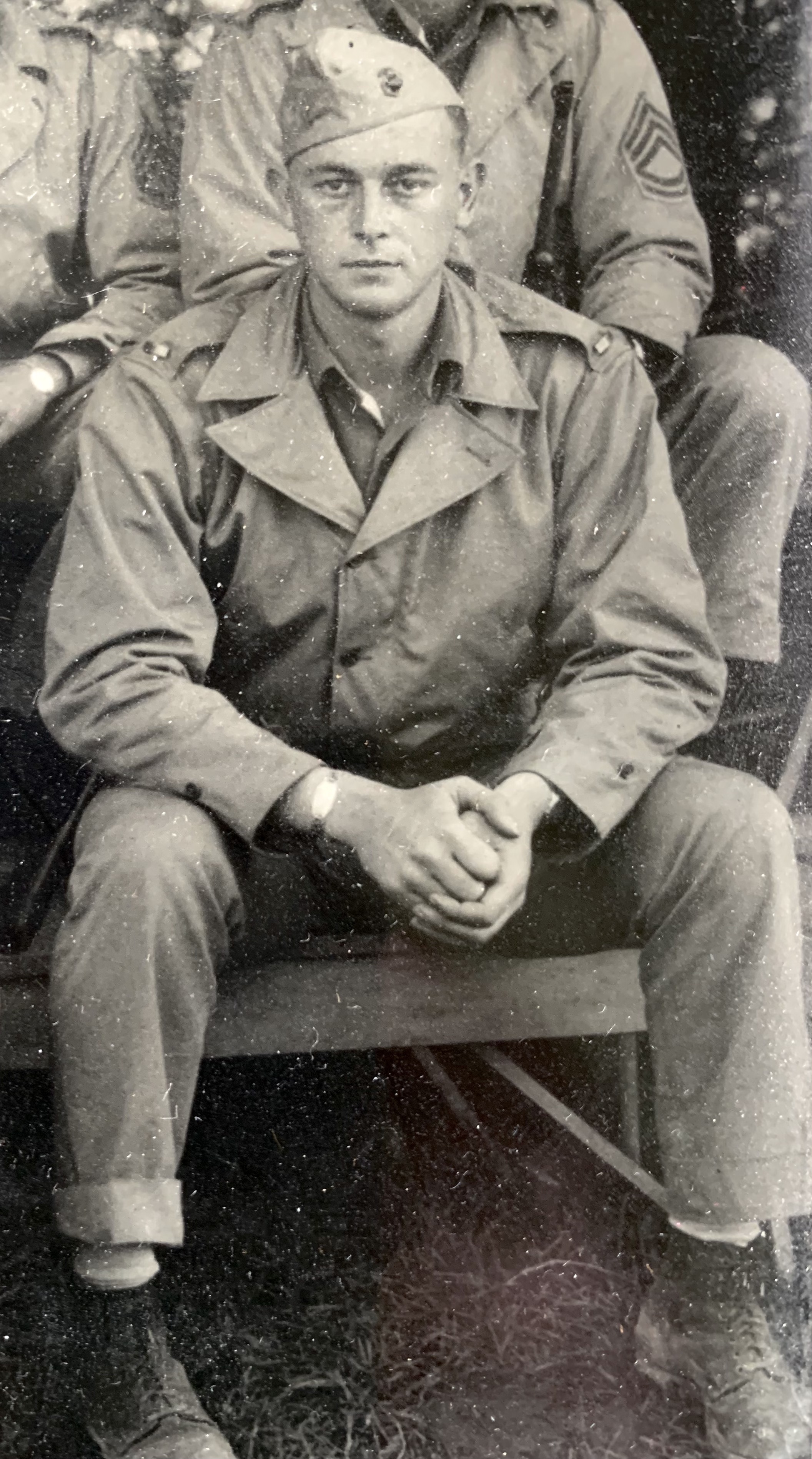
Henry Polis 1943
One-Time
Monthly
Yearly
Make a one-time or recurring donation to support daily Barnstorming posts
when my father had been dead a week I woke with his voice in my ear I sat up in bed and held my breath and stared at the pale closed door
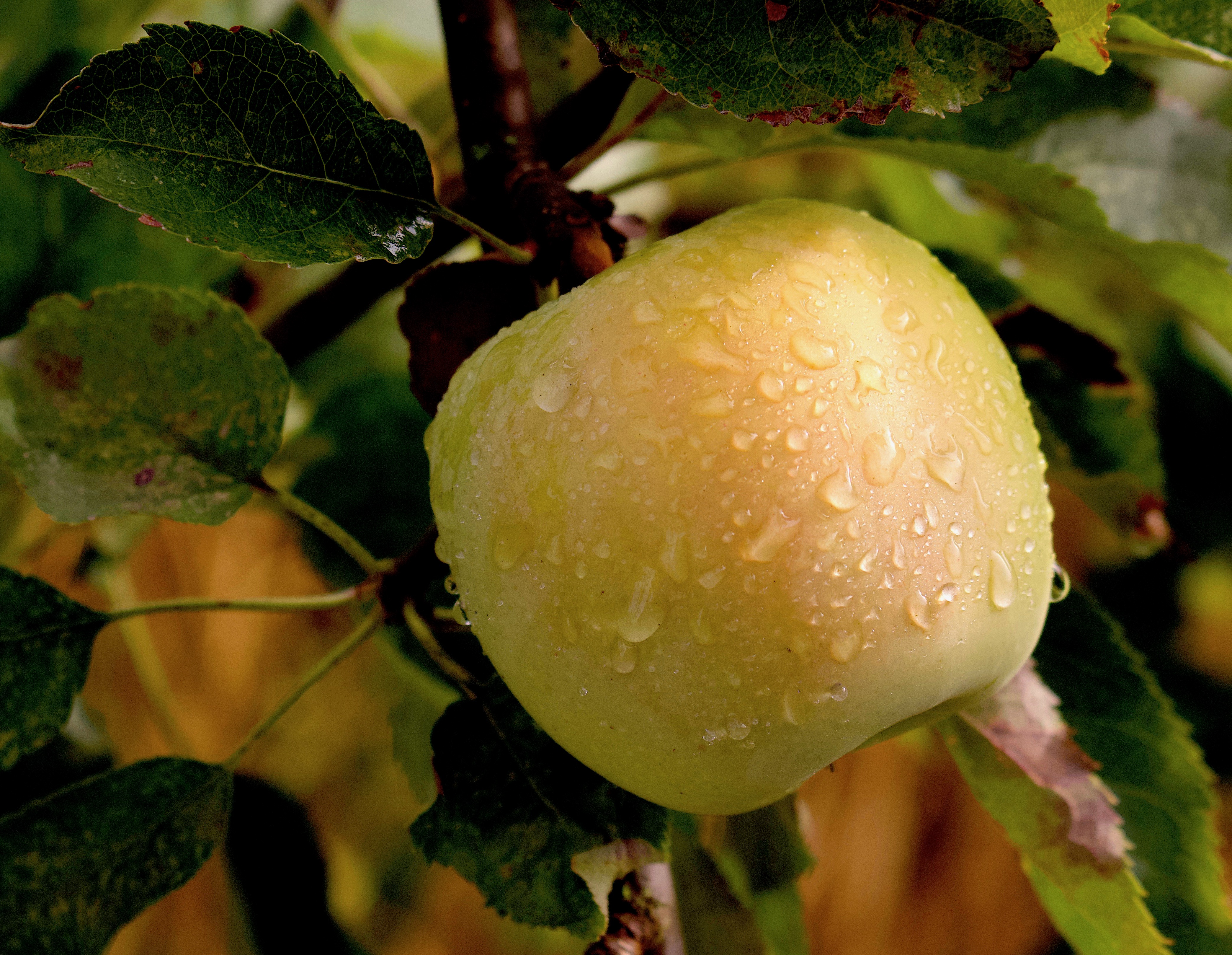
white apples and the taste of stone
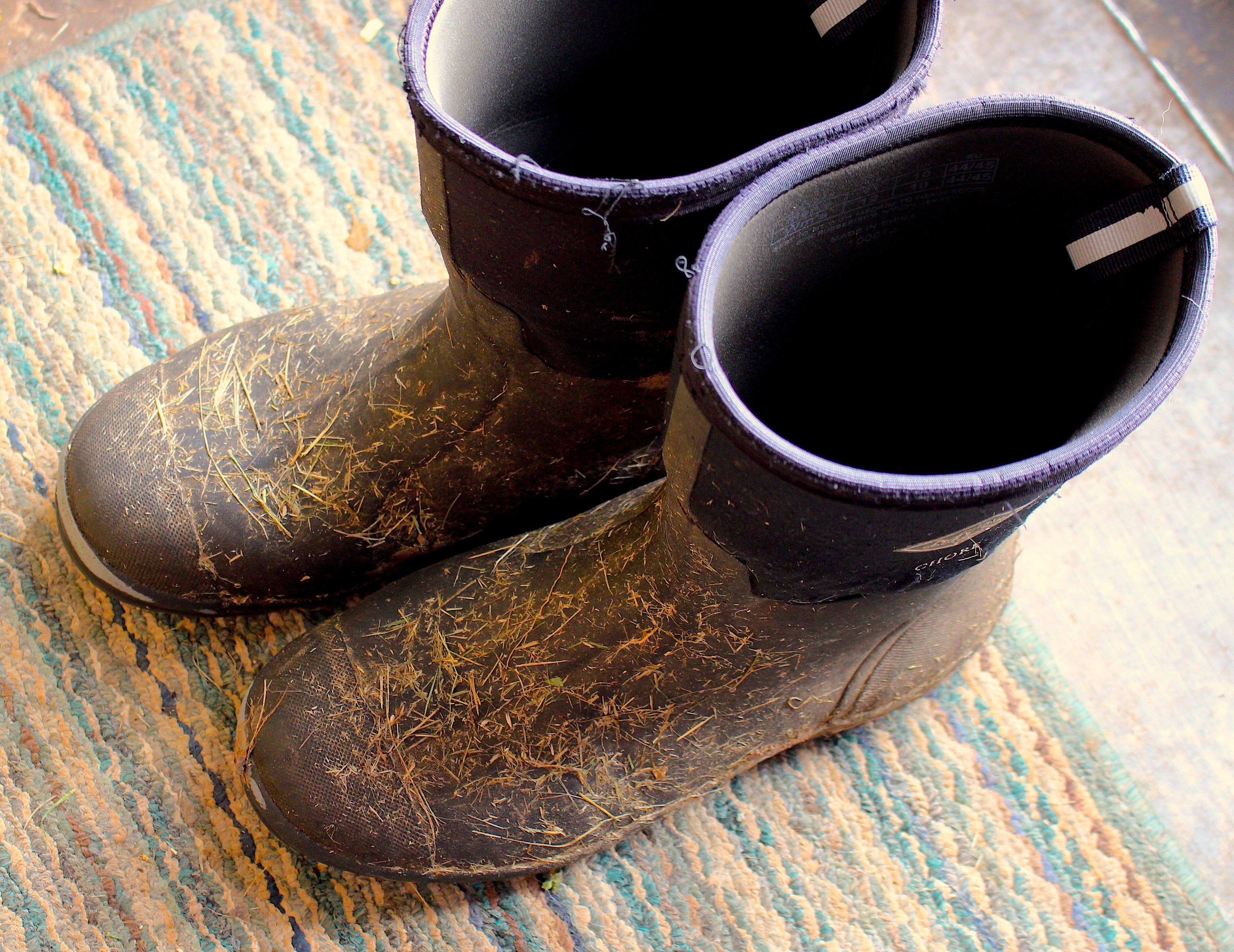
if he called again I would put on my coat and galoshes ~Donald Hall “White Apples”
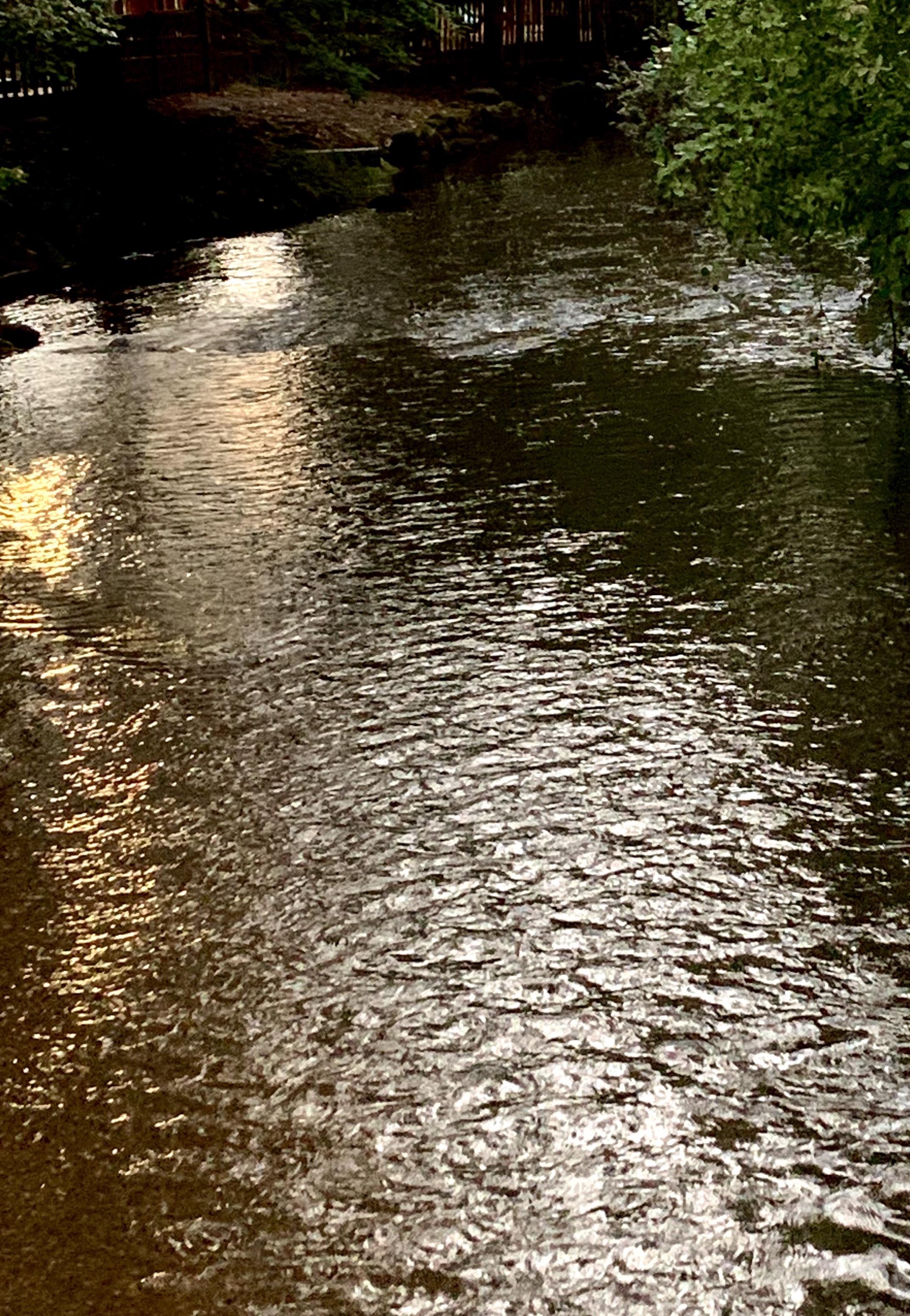
She skimmed the yellow water like a moth, Trailing her feet across the shallow stream; She saw the berries, paused and sampled them Where a slight spider cleaned his narrow tooth. Light in the air, she fluttered up the path, So delicate to shun the leaves and damp, Like some young wife, holding a slender lamp To find her stray child, or the moon, or both. Even before she reached the empty house, She beat her wings ever so lightly, rose, Followed a bee where apples blew like snow; And then, forgetting what she wanted there, Too full of blossom and green light to care, She hurried to the ground, and slipped below. ~James Wright “My Grandmother’s Ghost from Above the River: The Complete Poems
I saw my grandma’s ghost once.
She was my only grandparent I actually knew and who actually knew me — the others were lost before I was born or too young to realize what I had lost.
She had lived a hard life: losing her mother when she was 12, taking over the household duties for her father and younger brother while leaving school forever. She married too young to an abusive alcoholic, lost her first child to lymphoma at age 8 before treatment was possible and took her three remaining children to safety away from their father for a year to live above a seedy restaurant where she cooked seven days a week to make ends meet.
But there was grace too. The marriage somehow got patched together after Grandpa found God and sobriety – after his sudden death sitting in church, Grandma’s faith never wavered. Her garden soil yielded beautiful flowers she planted and nurtured and picked to sell, her children and grandchildren welcomed her many open armed visits and hugs.
She was busy planning her first overseas trip of a lifetime at age 72 when we noticed her eyes looked yellow. Only two weeks later she was bed-bound in unrelenting pain due to pancreatic cancer, gazing heaven-ward instead of Europe-bound. Her dreams had been dashed so quickly, she barely realized her itinerary and destination had changed.
I was 16 at the time, too absorbed in my own teenage cares and concerns to really notice how quickly she was fading and failing like a wilted flower. Instead I was picking fights with my stressed parents, worrying over taking my driver’s license driving test, distracted by all the typical social pressures of high school life.
Her funeral was unbearable as I had never really said goodbye – only one brief hospital visit when she was hardly recognizable in her anguish and jaundice. I didn’t even get to hold her hand.
Soon after she had been lowered into the ground next to her husband and young daughter, she came back to me in a dream.
I was asleep when my bedroom door opened into the dark, wakening me as the bright hallway light pushed its way via a shimmering beam to my bed. Grandma Kittie stood in my bedroom doorway, backlit by the light surrounding her silhouette. She silently stood there, just looking at me.
Startled, I sat up in my bed and said to her, “Grandma, why are you here? You died and we buried you!”
She nodded and smiled. And then she said to me:
“I want you to know I’m okay and always will be. You will be too.”
She gave a little wave, turned and left, closing the door behind her. I woke suddenly with a gasp in my darkened bedroom and knew I had just been visited.
She hadn’t come to say goodbye or to tell me she loved me — that I knew already.
She had come to shine with her light blossoming around her, mending my broken heart by planting it with peace.
Grandma Kittie and Grandpa Leslie in their courting days
You’re in a better place I’ve heard a thousand times And at least a thousand times I’ve rejoiced for you
But the reason why I’m broken The reason why I cry Is how long must I wait to be with you
I close my eyes and I see your face If home’s where my heart is then I’m out of place Lord, won’t you give me strength To make it through somehow I’ve never been more homesick than now
Help me Lord cause I don’t understand your ways The reason why I wonder if I’ll ever know But, even if you showed me The hurt would be the same Cause I’m still here so far away from home
In Christ, there are no goodbyes And in Christ, there is no end
So I’ll hold onto Jesus With all that I have To see you again To see you again
And I close my eyes and I see your face If home’s where my heart is then I’m out of place Lord, won’t you give me strength To make it through somehow
Won’t you give me strength To make it through somehow Won’t you give me strength To make it through somehow I’ve never been more homesick than now ~Millard Bart Marshall
One-Time
Monthly
Yearly
Make a one-time or recurring donation to support Barnstorming
Twilight comes to the little farm At winter’s end. The snowbanks High as the eaves, which melted And became pitted during the day, Are freezing again, and crunch Under the dog’s foot. The mountains From their place behind our shoulders Lean close a moment, as if for a Final inspection, but with kindness, A benediction as the darkness Falls. It is my fiftieth year. Stars Come out, one by one with a softer Brightness, like the first flowers Of spring. I hear the brook stirring, Trying its music beneath the ice. I hear – almost, I am not certain – Remote tinklings; perhaps sheepbells On the green side of a juniper hill Or wineglasses on a summer night. But no. My wife is at her work, There behind yellow windows. Supper Will be soon. I crunch the icy snow And tilt my head to study the last Silvery light of the western sky In the pine boughs. I smile. Then I smile again, just because I can. I am not an old man. Not yet. ~Hayden Carruth, “Twilight Comes” from From Snow and Rock
I am well aware how precious each day is, yet it necessitates effort to live as though I truly understand it.
So many people are not living out the fullness of their days as they have been taken too soon: either pandemic deaths or delayed treatment of other illness, tragic fatalities due to increased overdoses, accidents and suicides. I try to note the passing of the hours in my mind’s calendar so I can appreciate the blessings I have been given.
Each twilight becomes a benediction for preparation for the meal ahead. I pause to see, hear, touch and taste what is before me and what awaits me. And it never fails to make me smile.
I’m always hungry for the supper that awaits me, provided from the land through sacrifice and handed to me in love.
I’m not too old, at least not yet, to look forward to the gift of each next day until, in the fullness of time, there will be no more.
One-Time
Monthly
Yearly
Make a one-time or recurring donation to support Barnstorming
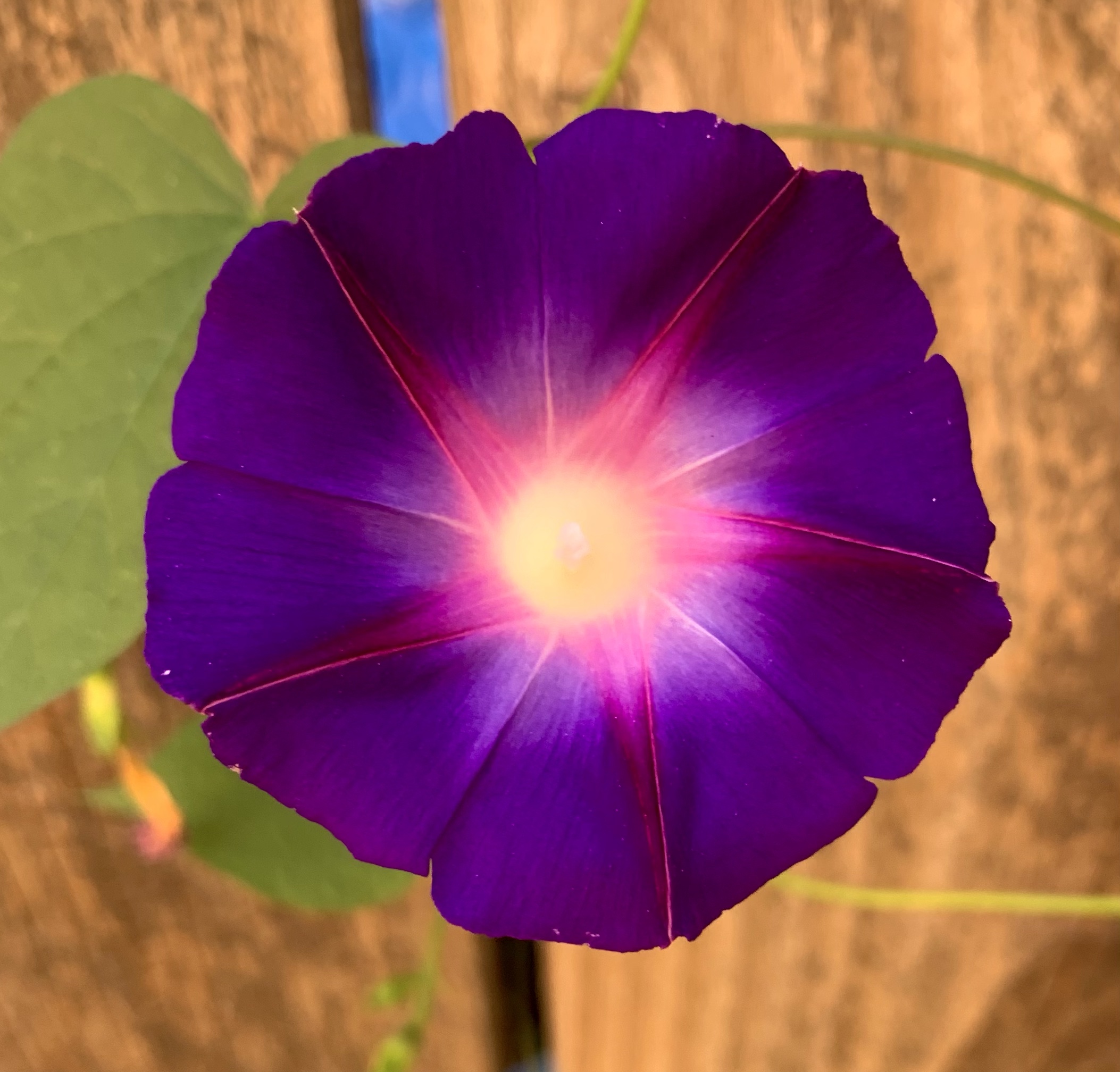
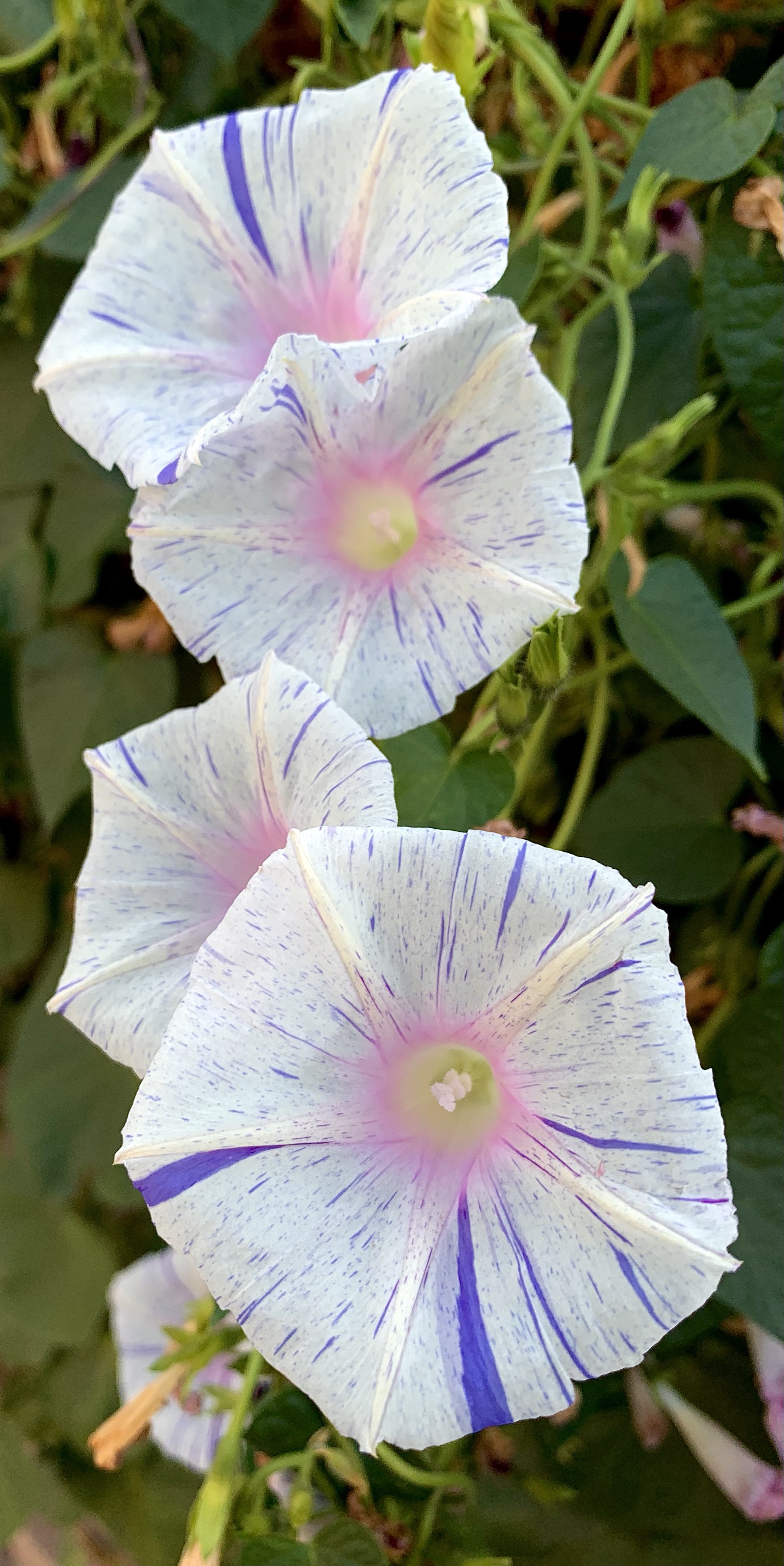
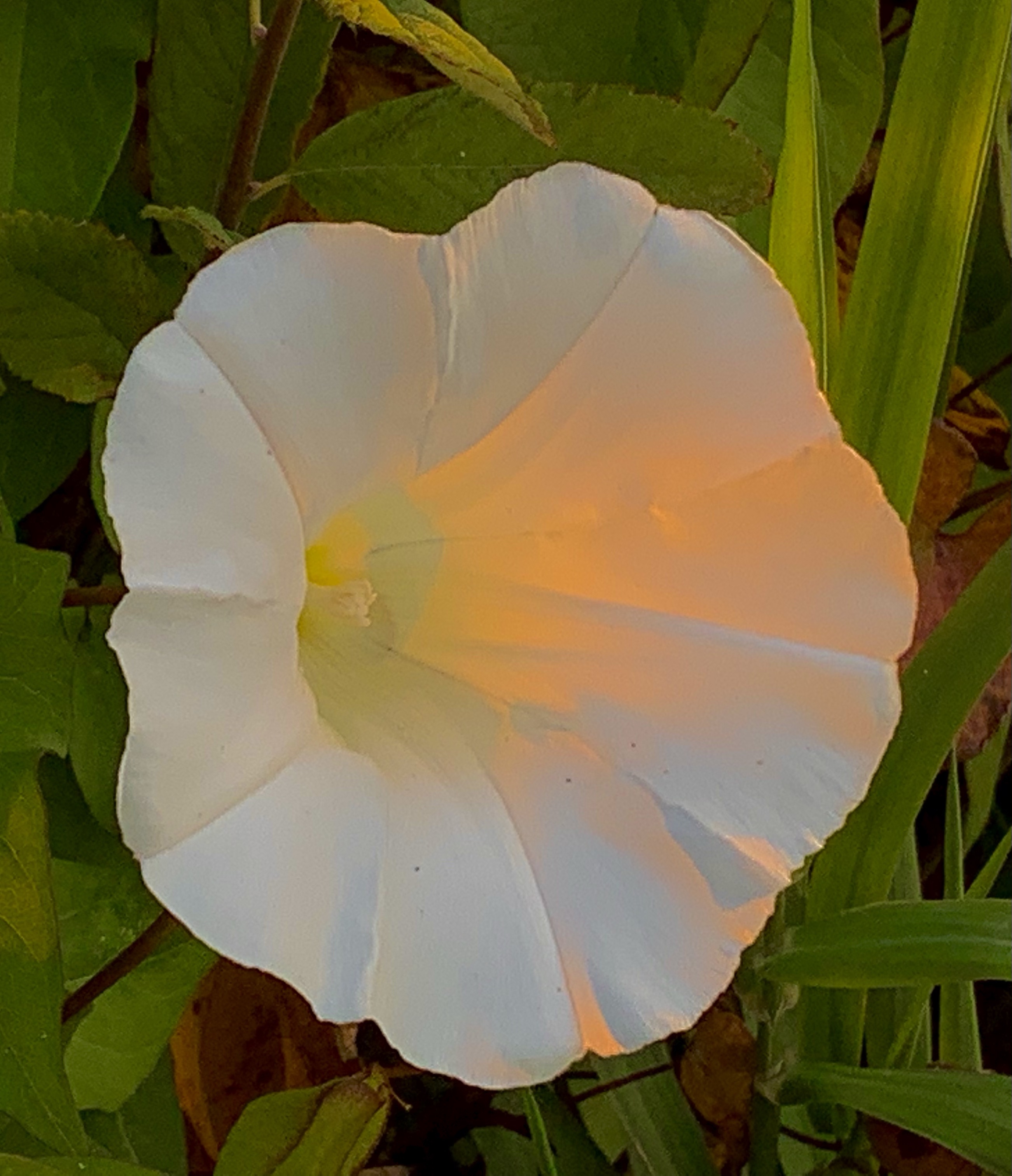
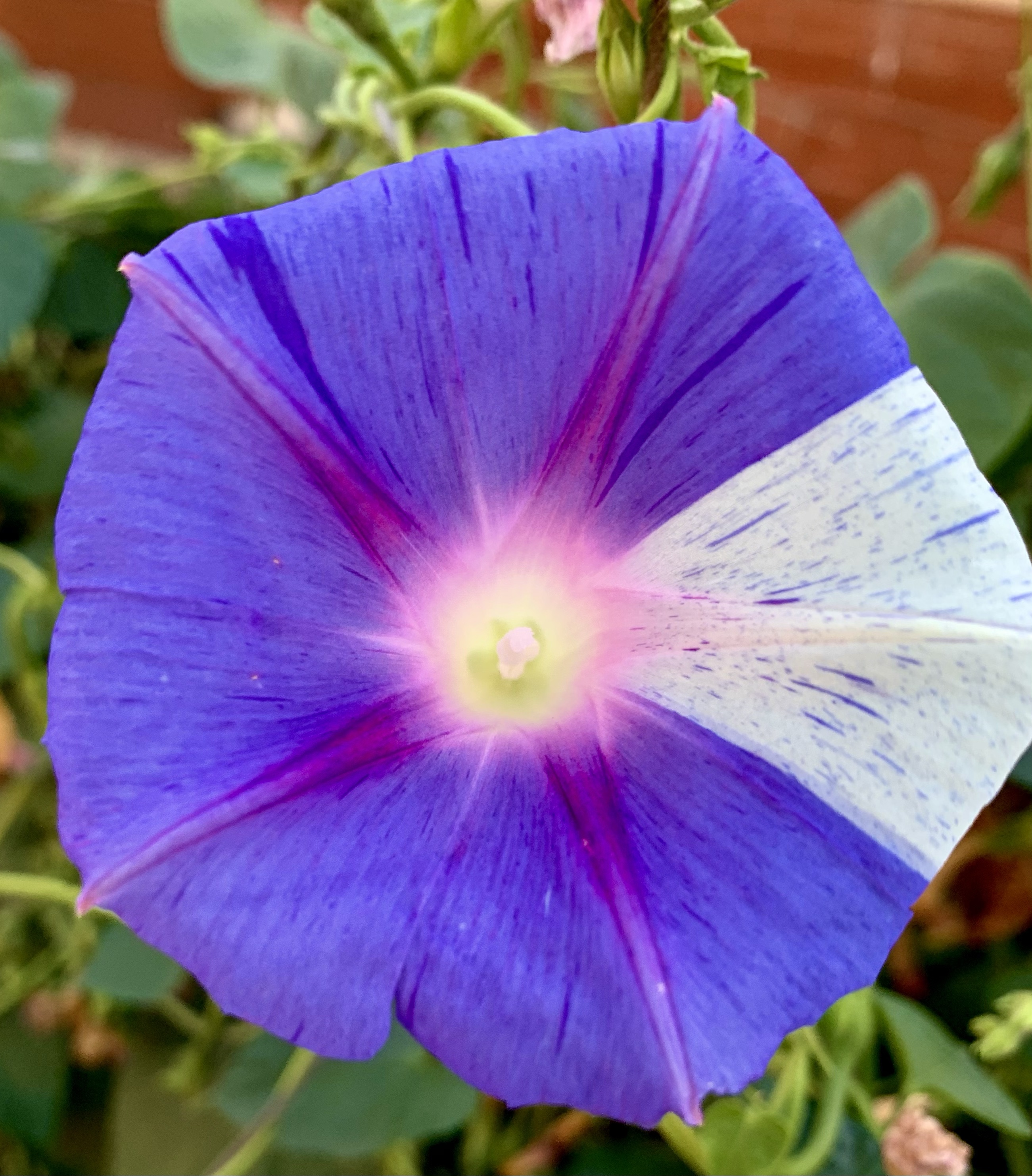
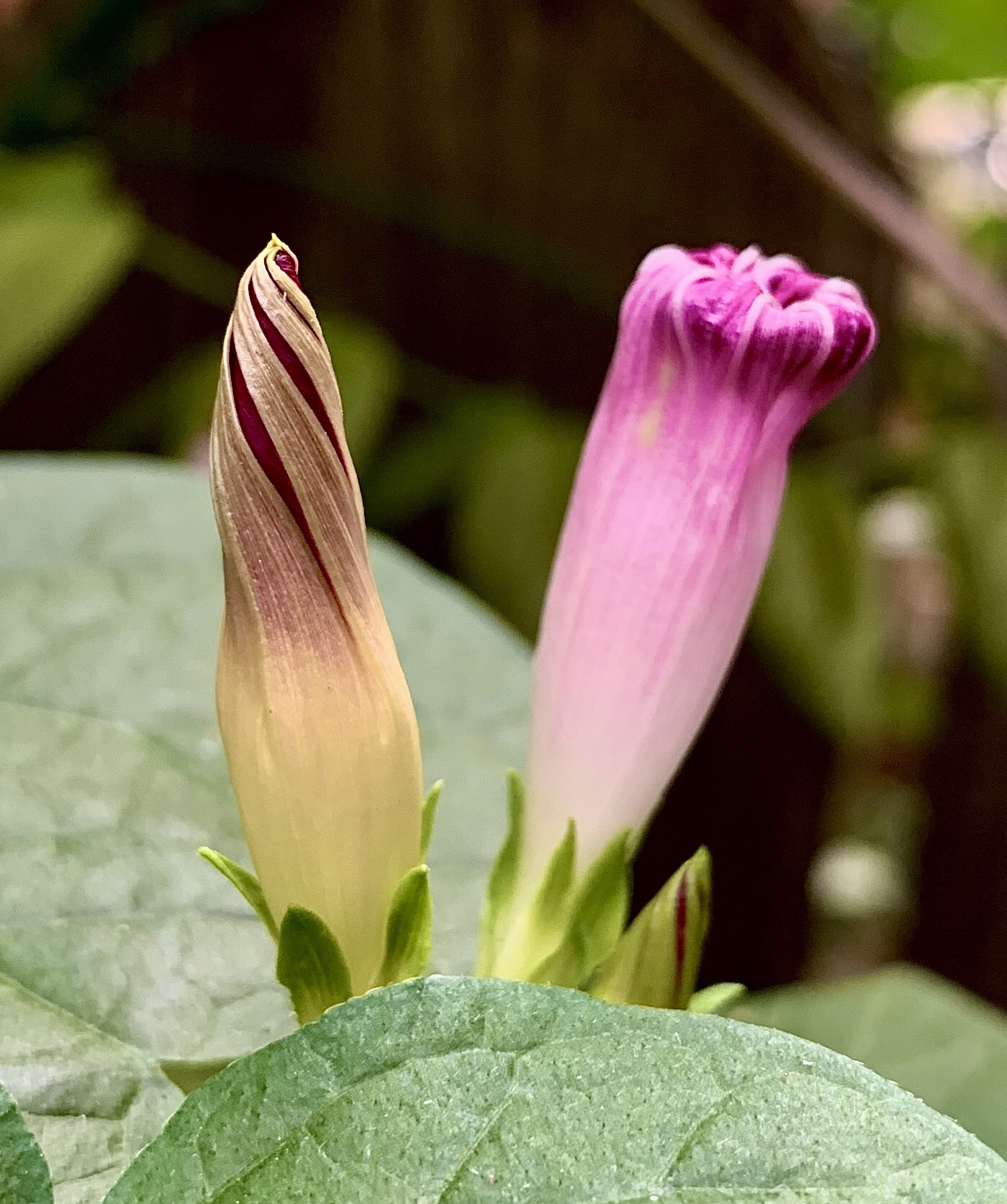
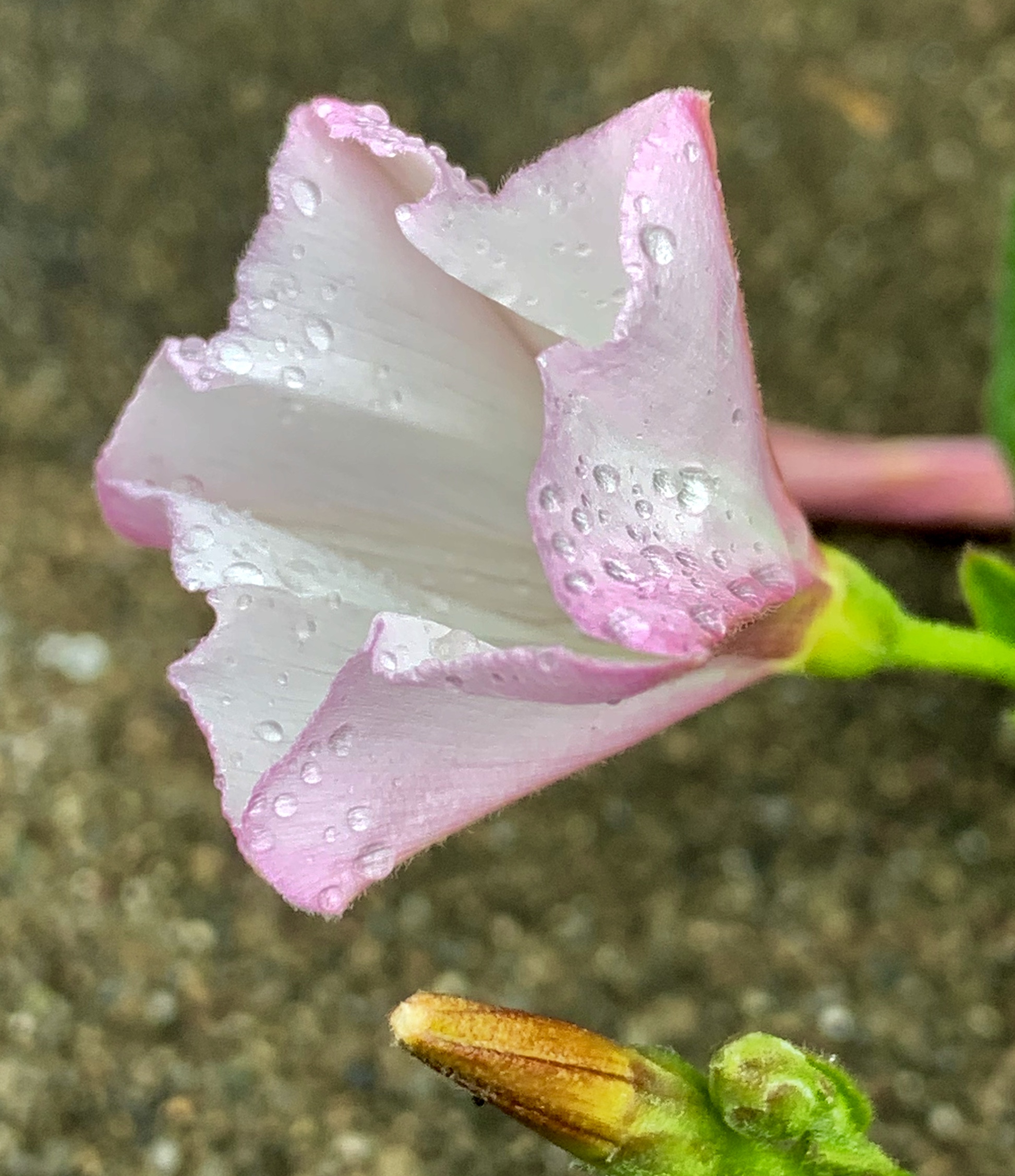
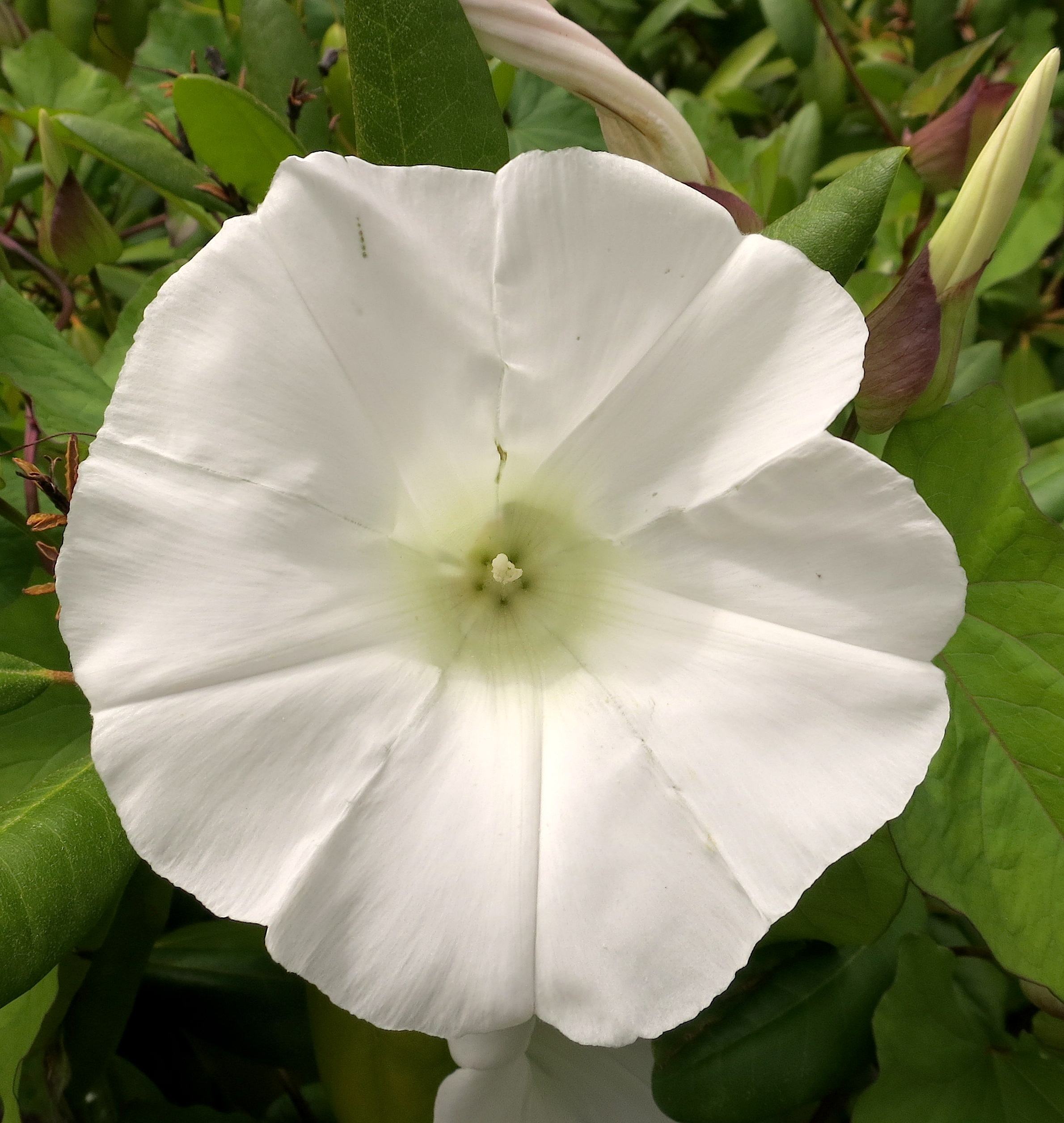
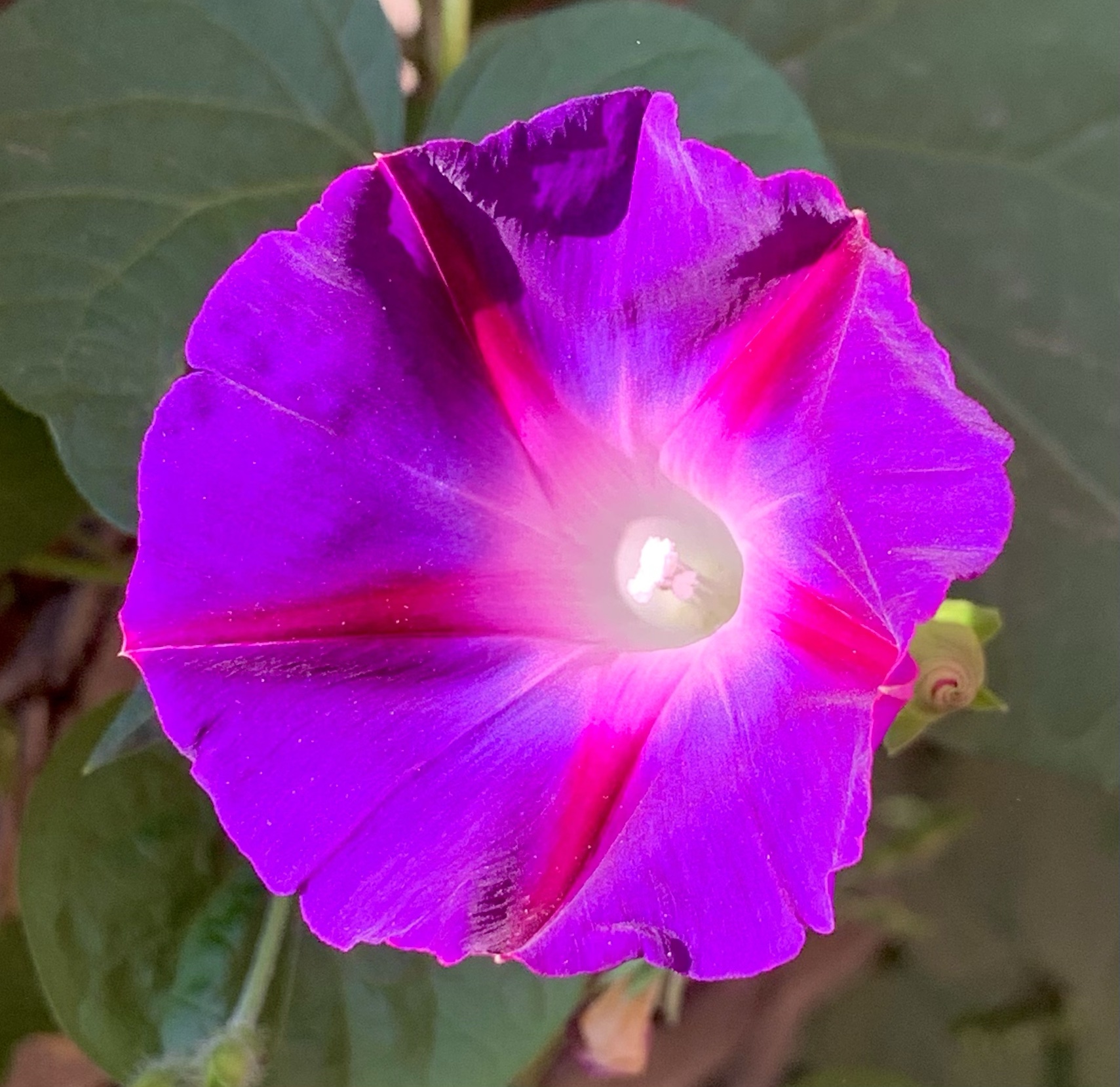
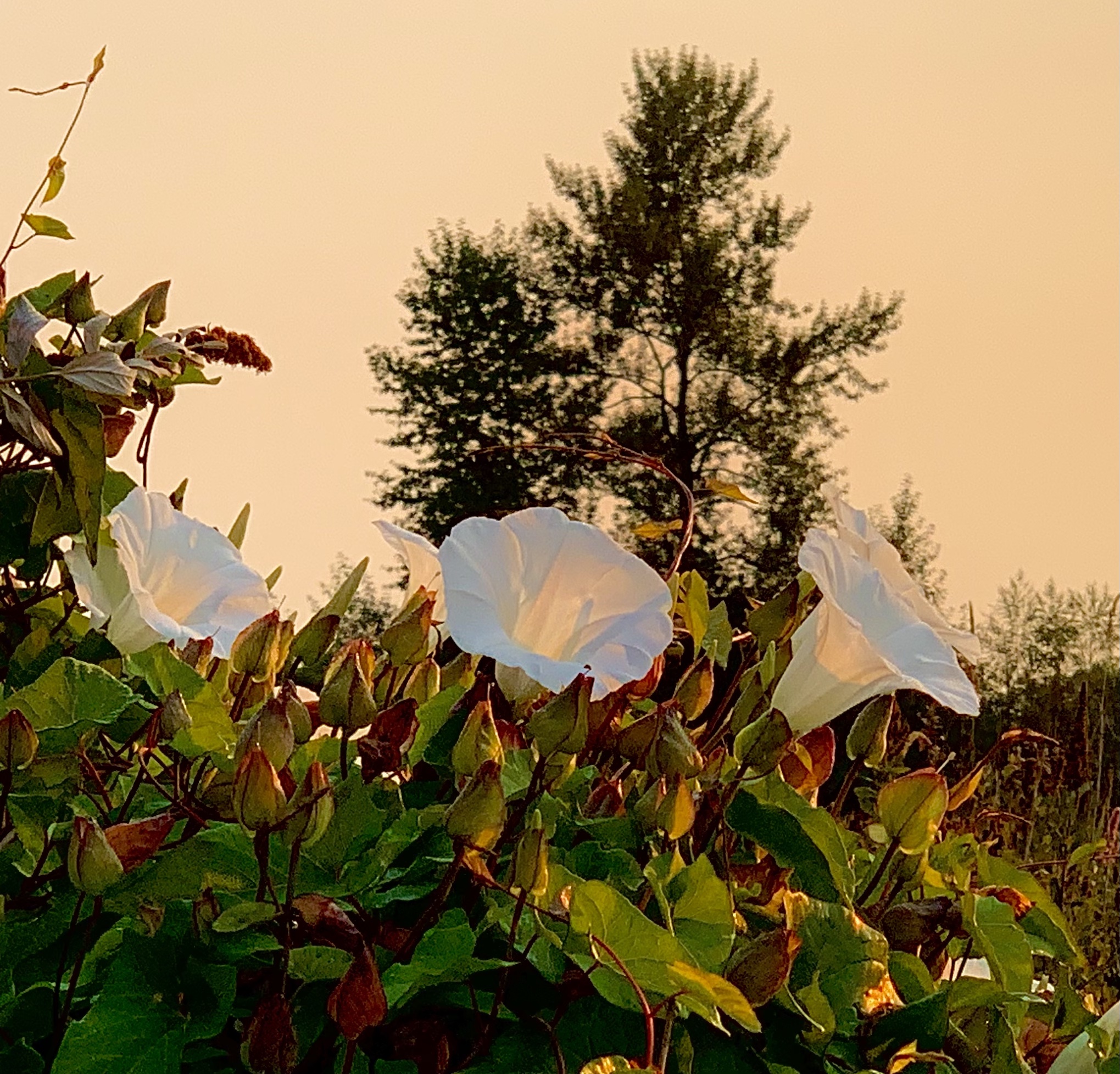
The morning glories bloom, securing the gate in the old fence ~Matsuo Basho Haiku
Was it worthwhile to paint so fair The every leaf – to vein with faultless art Each petal, taking the boon light and air Of summer so to heart?
To bring thy beauty unto a perfect flower, Then like a passing fragrance or a smile Vanish away, beyond recovery’s power – Was it, frail bloom, worthwhile?
Thy silence answers: “Life was mine! And I, who pass without regret or grief, Have cared the more to make my moment fine, Because it was so brief.
In its first radiance I have seen The sun! – Why tarry then till comes the night? I go my way, content that I have been Part of the morning light!” ~Florence Earle Coates “The Morning Glory”
I am alive — I guess — The Branches on my Hand Are full of Morning Glory — ~Emily Dickinson
Can I too unfurl with joy in the morning light, knowing I will wilt and wither at the end of the day? Will I live fully open to this day, unconcerned about tomorrow?
God intended for us to tend His garden yet He continually tends us. We mess up and are given a daily opportunity to make it right. I am alive – no question – to try to make this day better.
I blossom under His tending and like a passing smile, I leave without grief or regret.
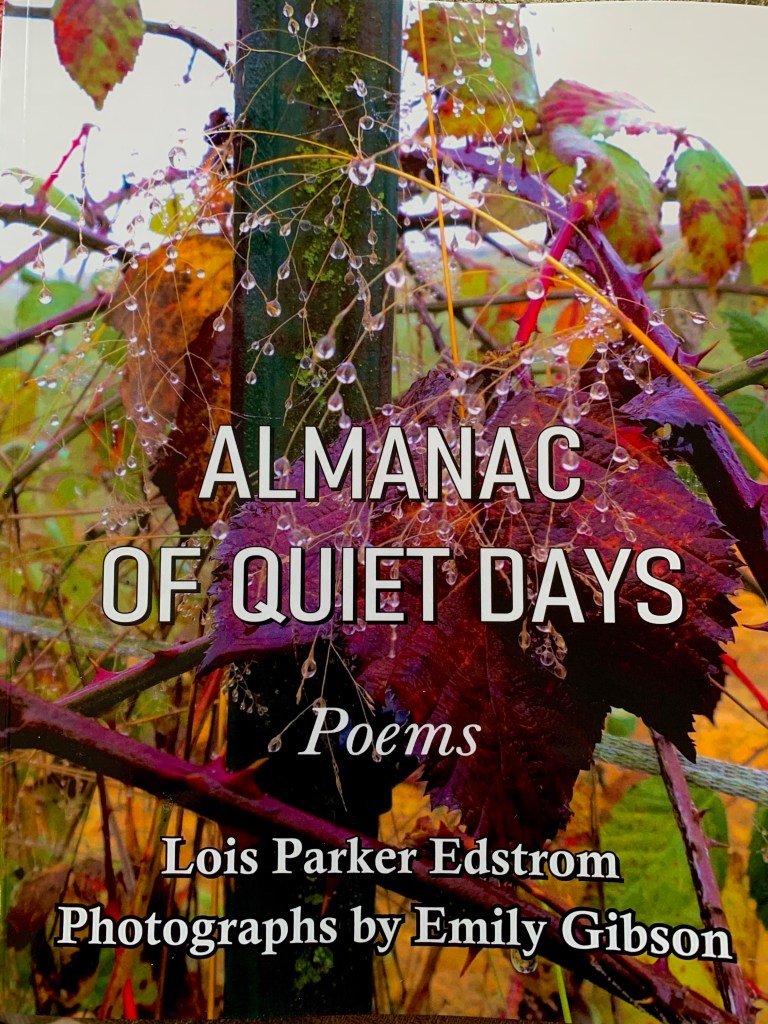
A book of beauty in words and photos, available to order
The summer ends, and it is time To face another way. Our theme Reversed, we harvest the last row To store against the cold, undo The garden that will be undone. We grieve under the weakened sun To see all earth’s green fountains dried, And fallen all the works of light. You do not speak, and I regret This downfall of the good we sought As though the fault were mine. I bring The plow to turn the shattering Leaves and bent stems into the dark, From which they may return. At work, I see you leaving our bright land, The last cut flowers in your hand. ~Wendell Berry “The Summer Ends” from A Timbered Choir.
I want to memorize it all before it changes as the light weakens from the sun shifting from north to south, balancing on the fulcrum of our country road at equinox.
The dying back of the garden leaves and vines reveals what lies unharvested beneath, so I gather in urgency, not wanting it to go to waste.
We part again from you, Summer – your gifts seemed endless until you ended – a reminder that someday, so must I.
I sit silenced and brooding, waiting for what comes next.
A book of beautiful words and photography, available to order here:
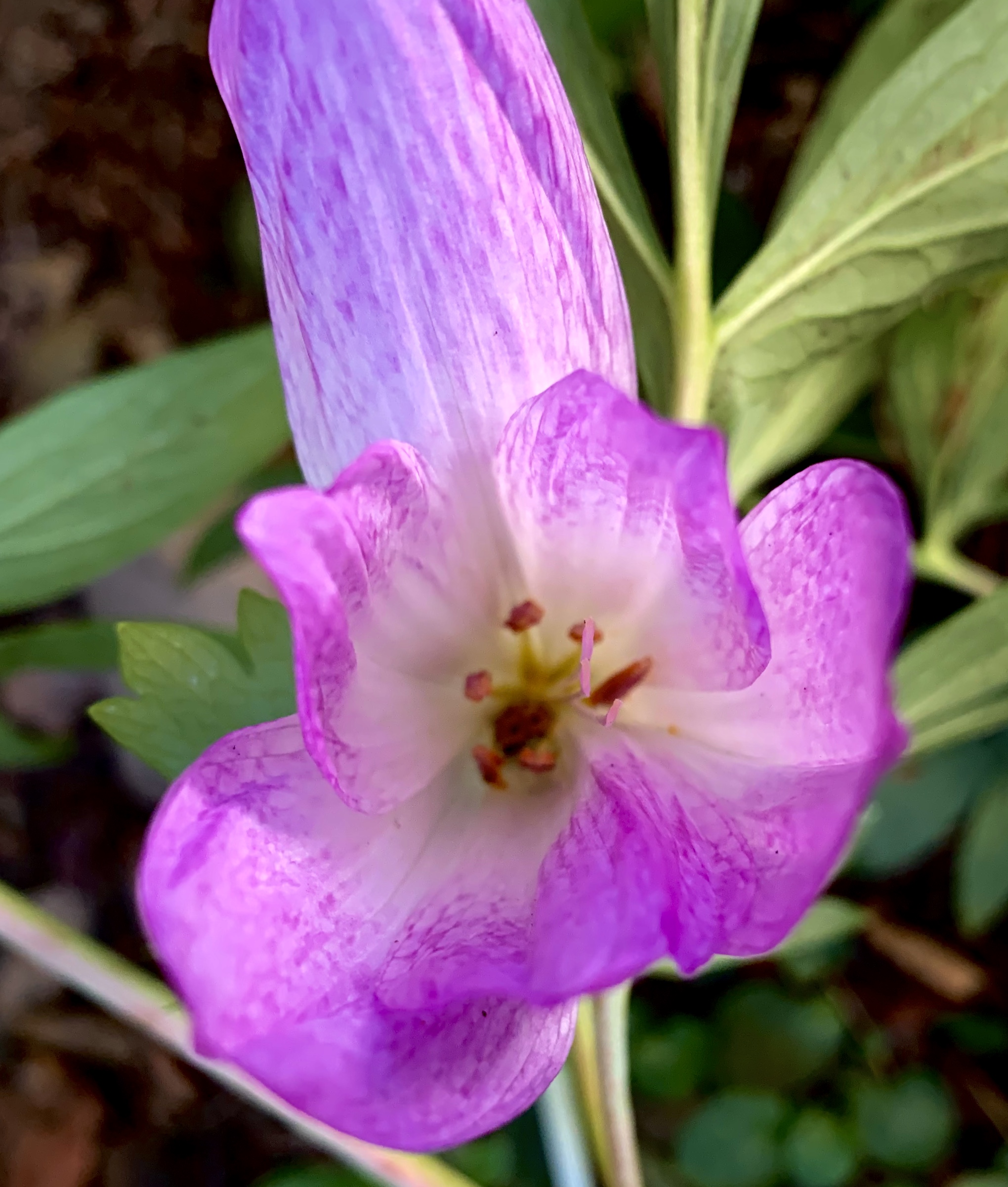
In the high woods that crest our hills, Upon a steep, rough slope of forest ground, Where few flowers grow, sweet blooms today I found Of the Autumn Crocus, blowing pale and fair. Dim falls the sunlight there; And a mild fragrance the lone thicket fills.
Languidly curved, the long white stems Their purple flowers’ gold treasure scarce display: Lost were their leaves since in the distant spring,
Their February sisters showed so gay. Roses of June, ye too have followed fleet! Forsaken now, and shaded as by thought, As by the human shade of thought and dreams, They bloom ‘mid the dark wood, whose air has wrought With what soft nights and mornings of still dew! Into their slender petals that clear hue, Like paleness in fresh cheeks; a thing On earth, I vowed, ne’er grew More delicately pure, more shyly sweet.
Child of the pensive autumn woods! So lovely, though thou dwell obscure and lone, And though thy flush and gaiety be gone; Say, among flowers of the sad, human mind, Where shall I ever find So rare a grace? in what shy solitudes? ~Robert Laurence Binyon “Autumn Crocus”
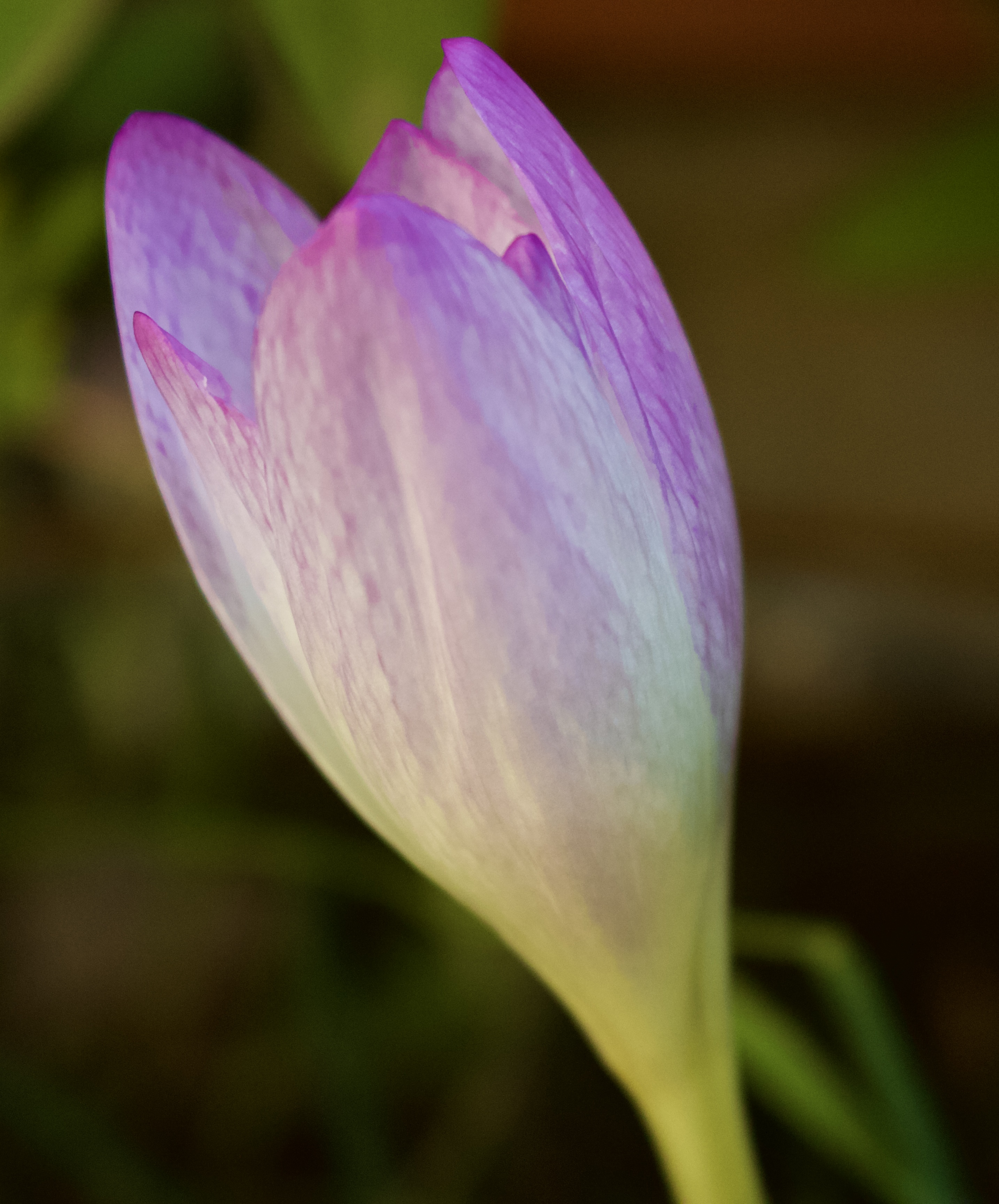
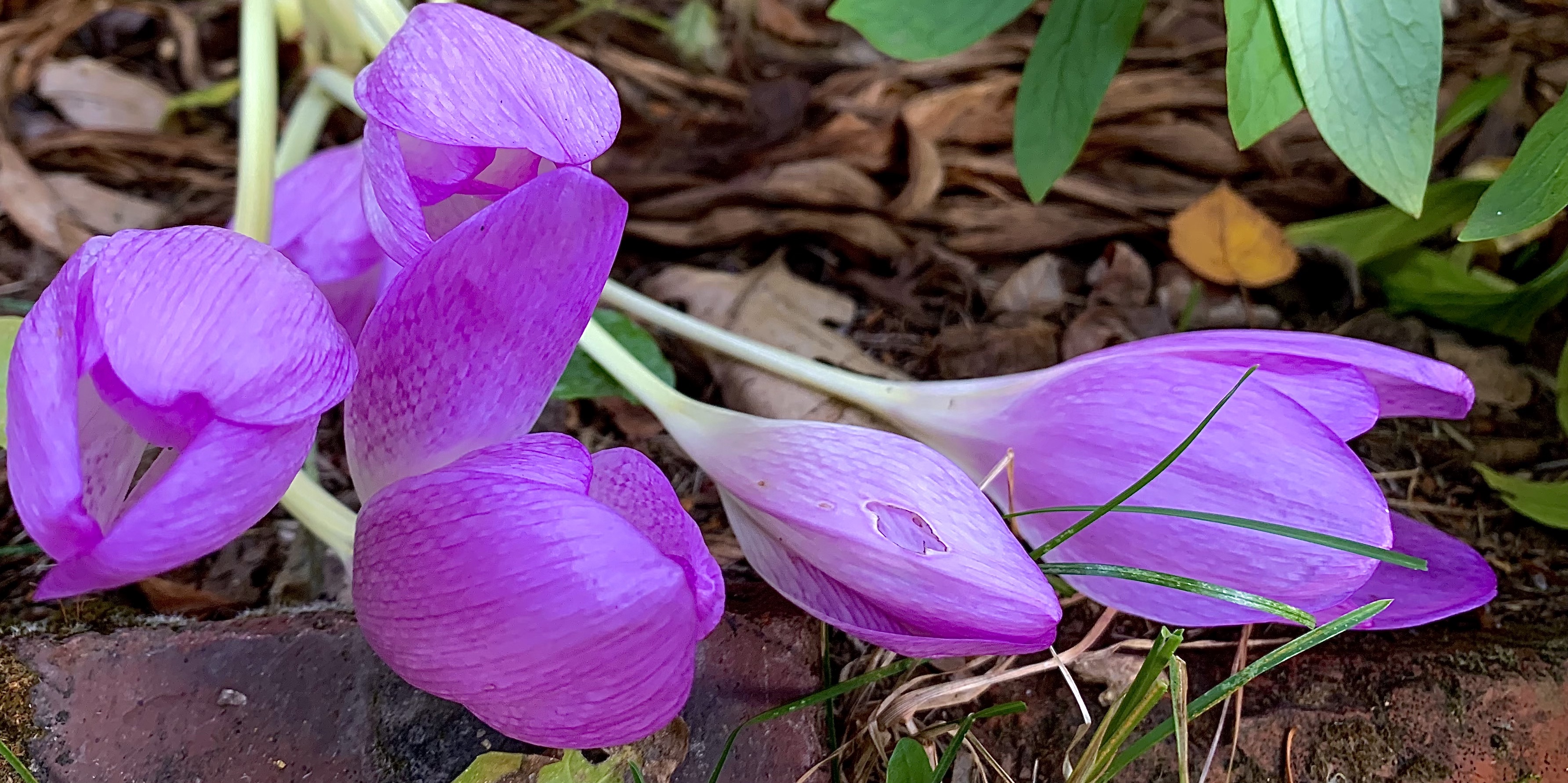
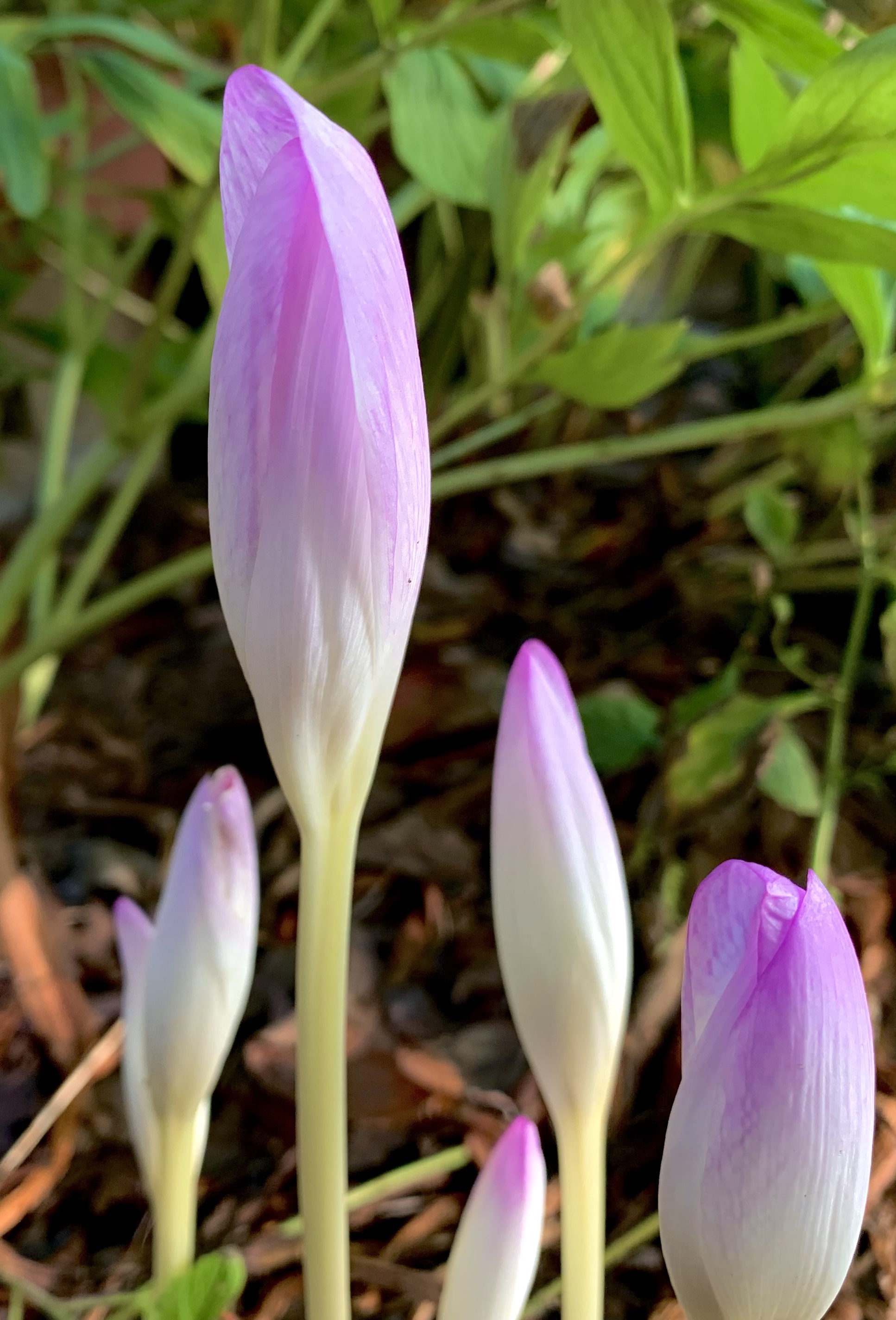
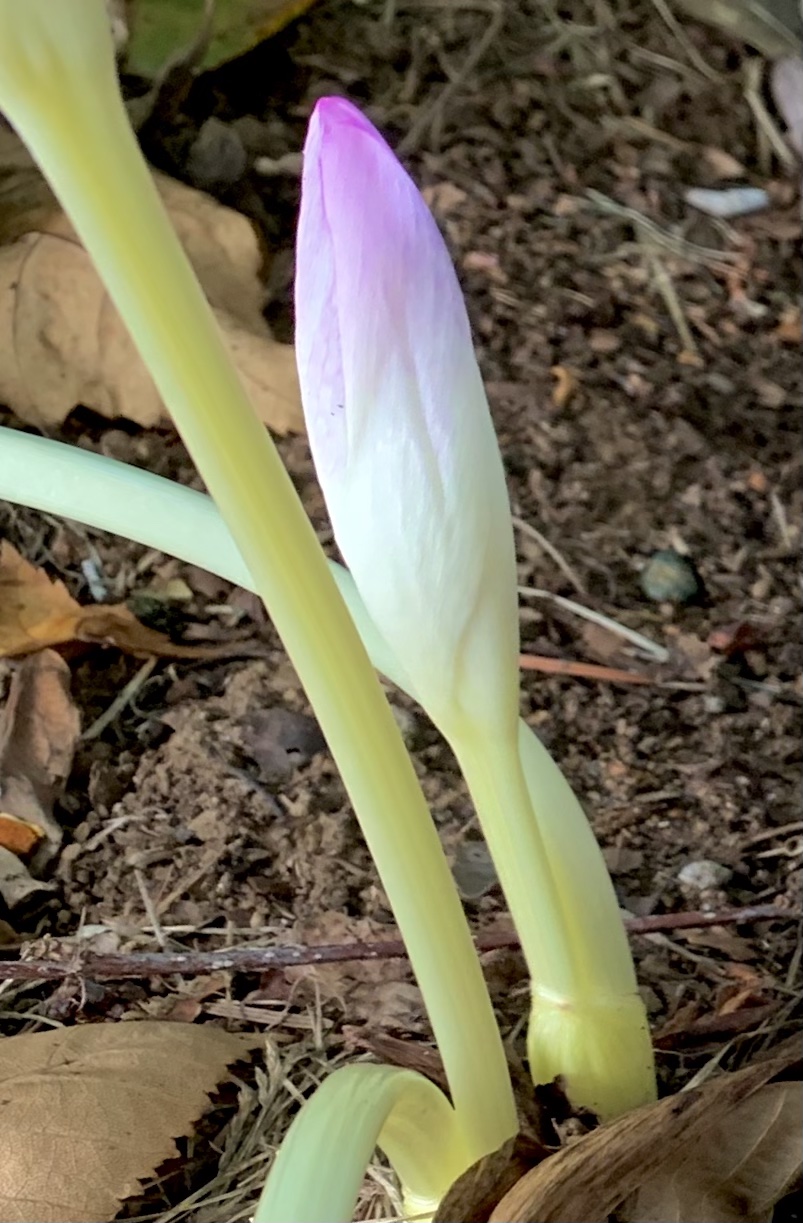
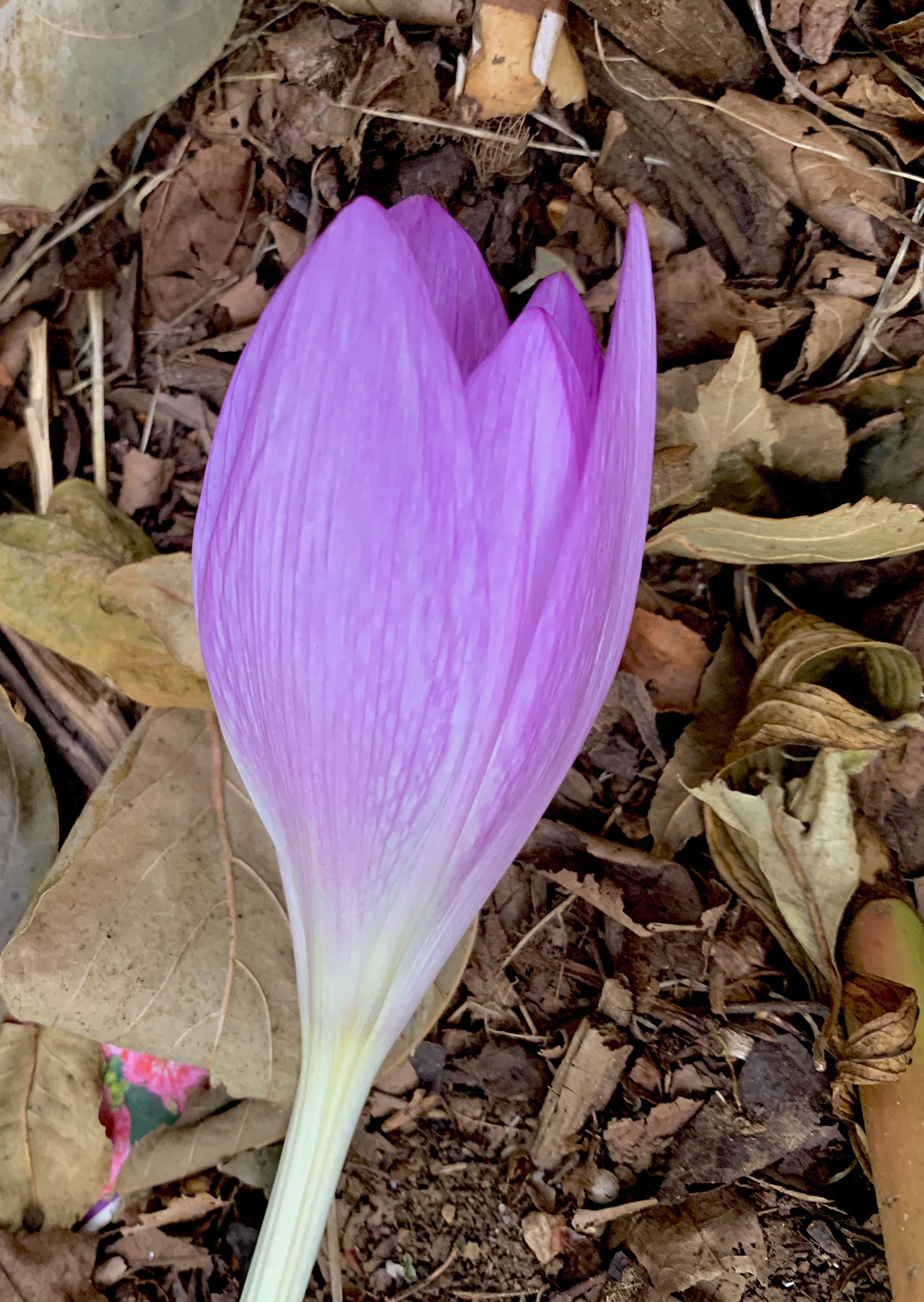
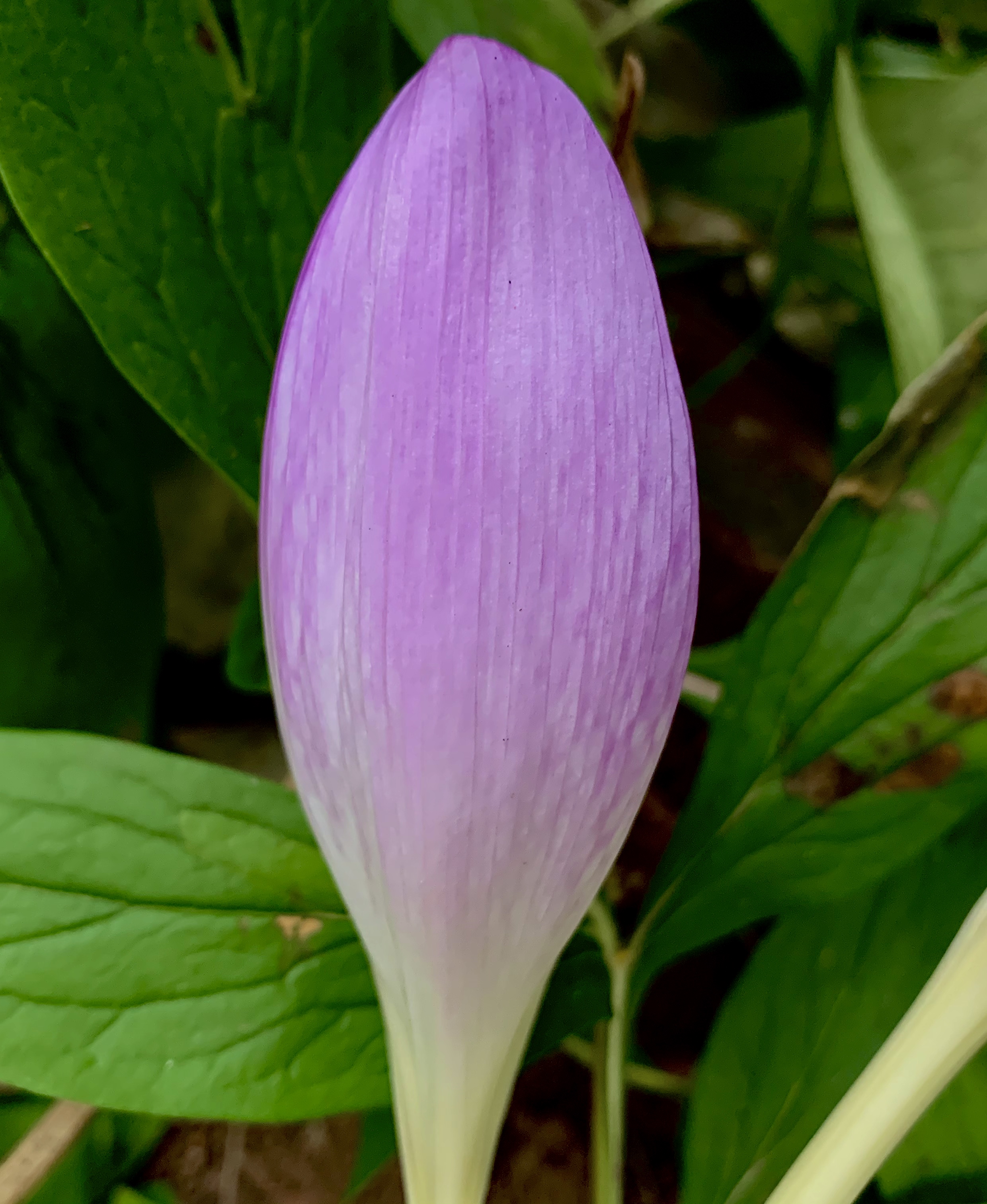
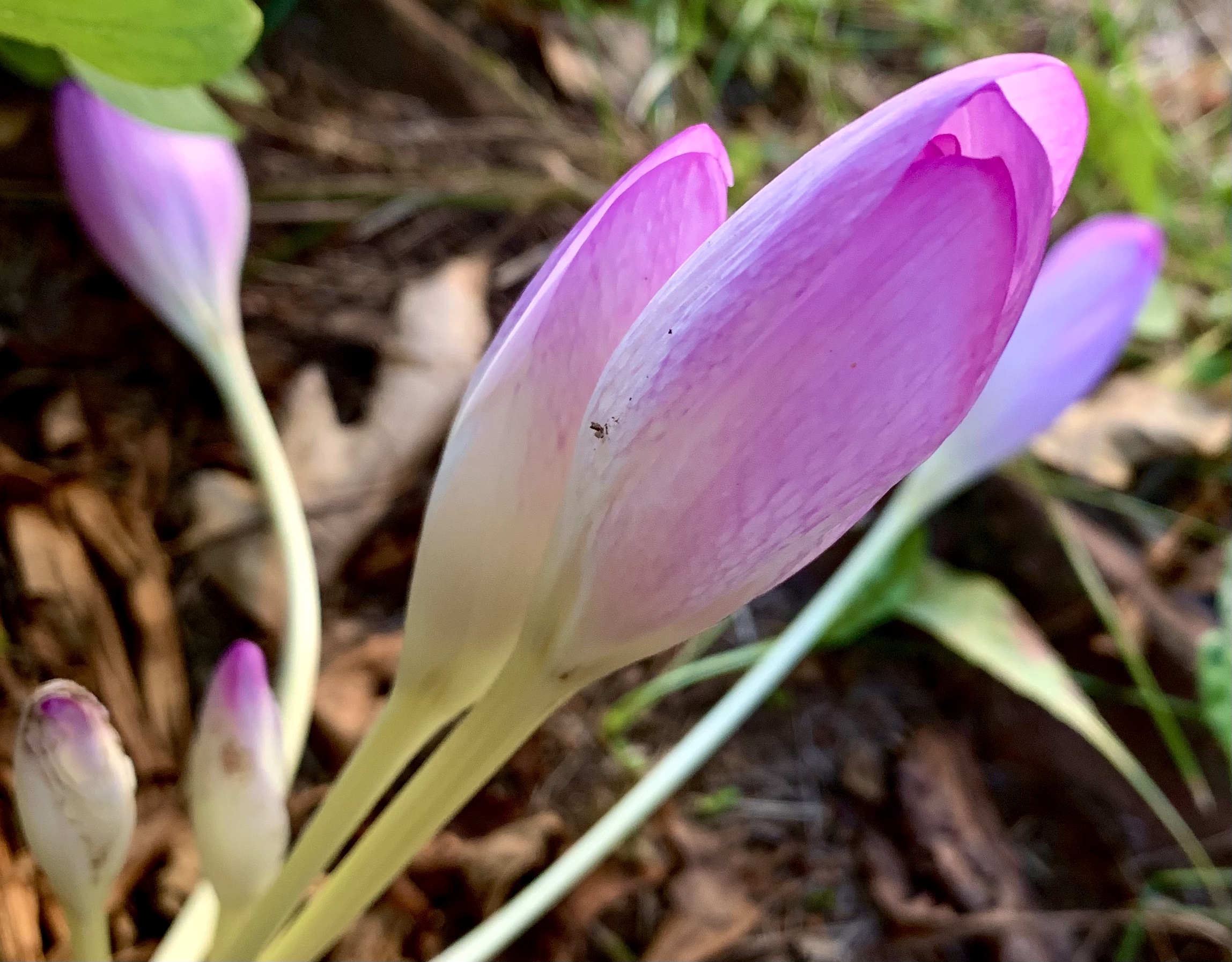
The early September emergence of autumn crocus is always unexpected, surprising even when I know where they hide in the shade of spent peony bushes.
They are bound in waning summer dreams beneath the surface, their incubation triggered by retreating light from above, unlike their springtime cousins who emerge to the sun through snow.
The autumn crocus waits with thoughtful temerity, summoned forth from earthly grime to remind us the end of summer is not the end of them or us.
A luminous gift of hope and beauty borne from a humble bulb; plain and only soil-adorned.
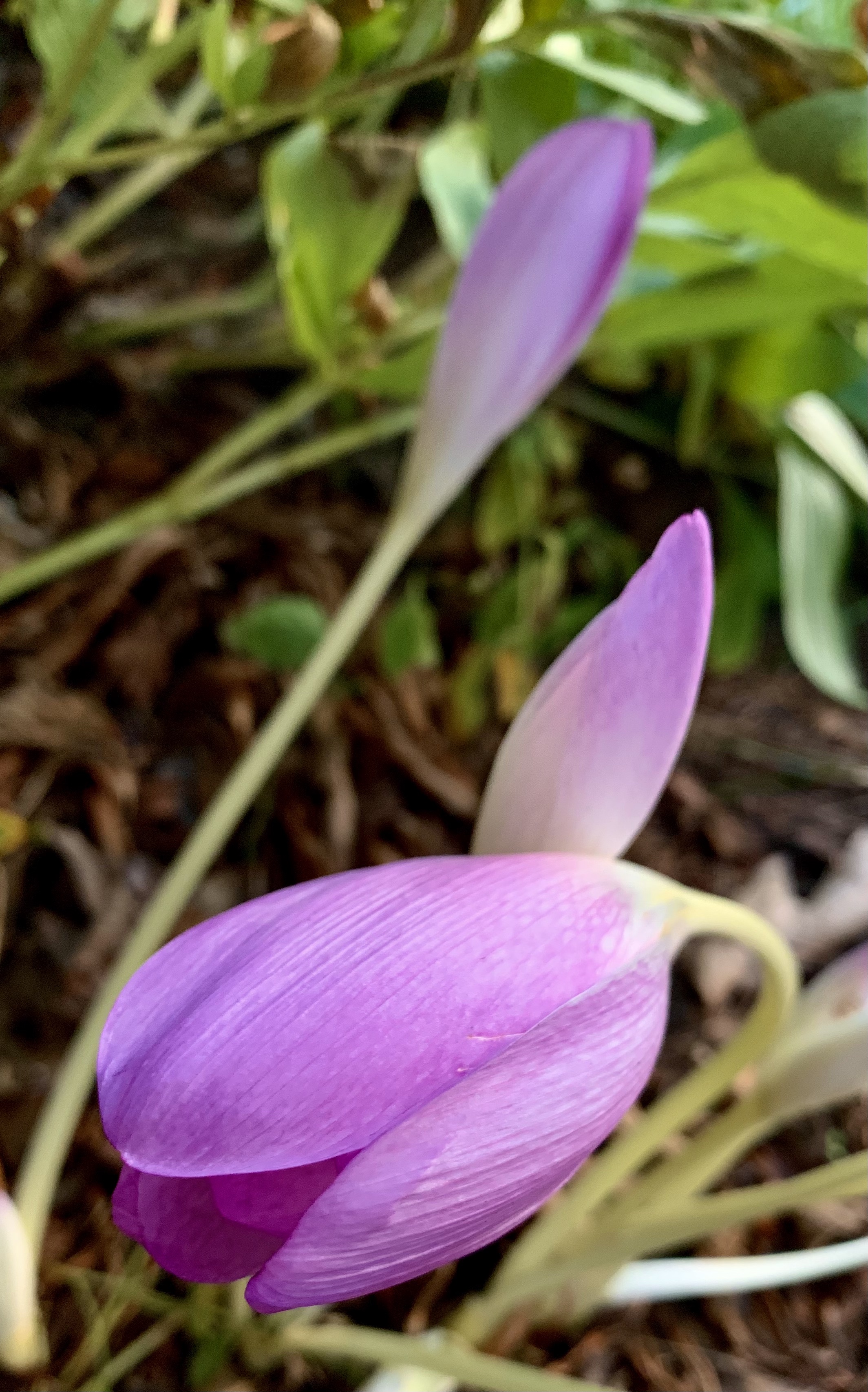
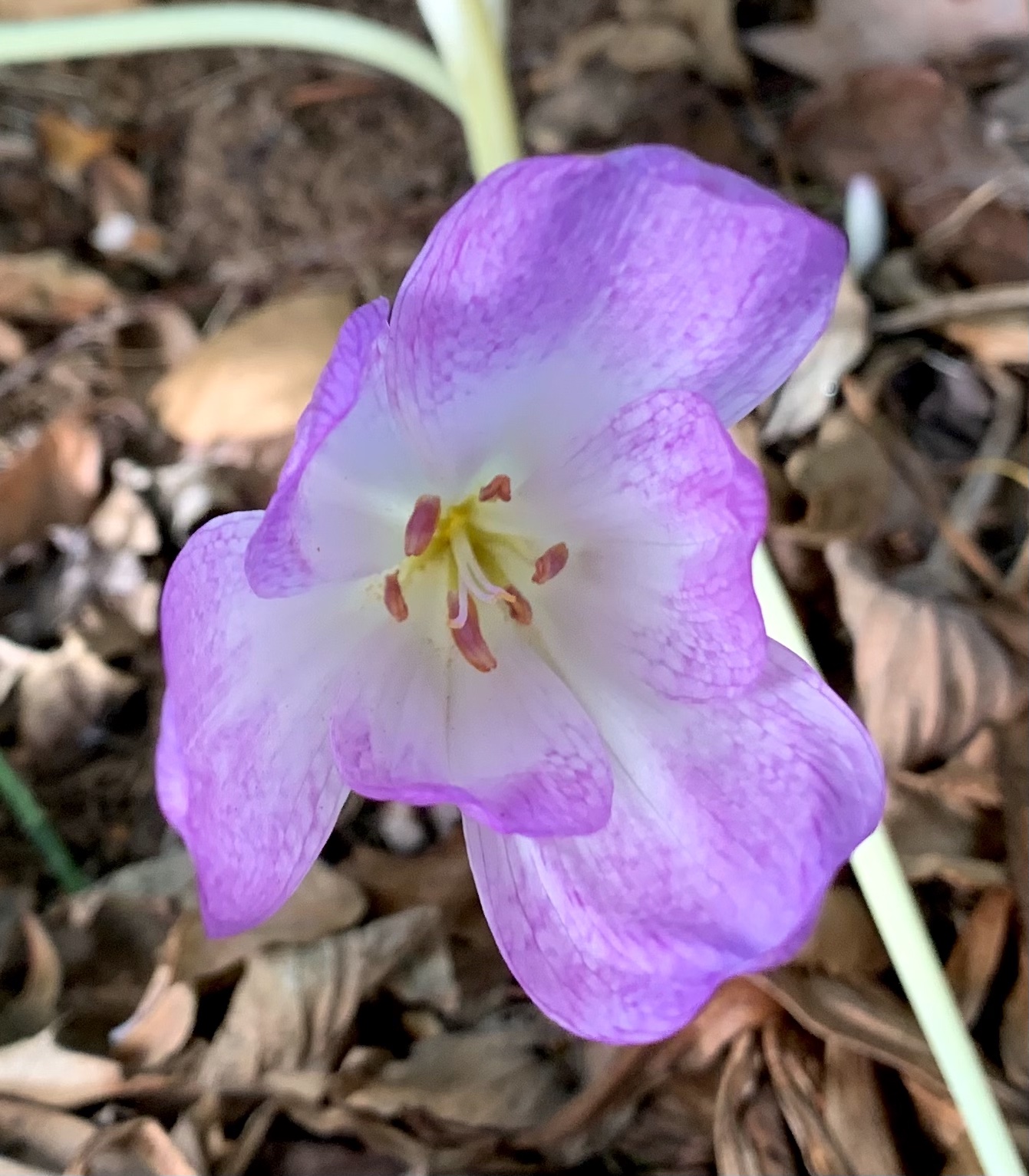
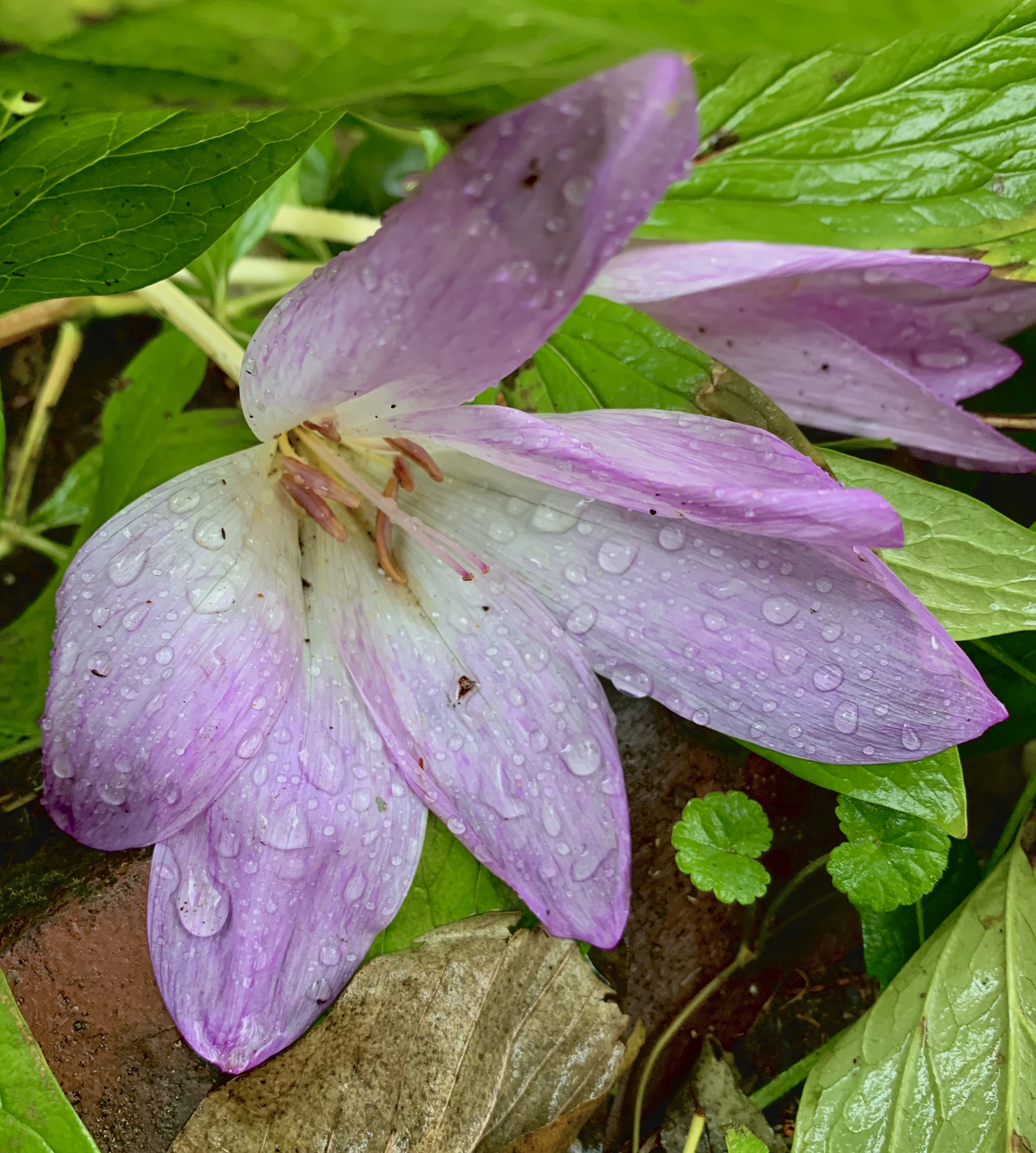
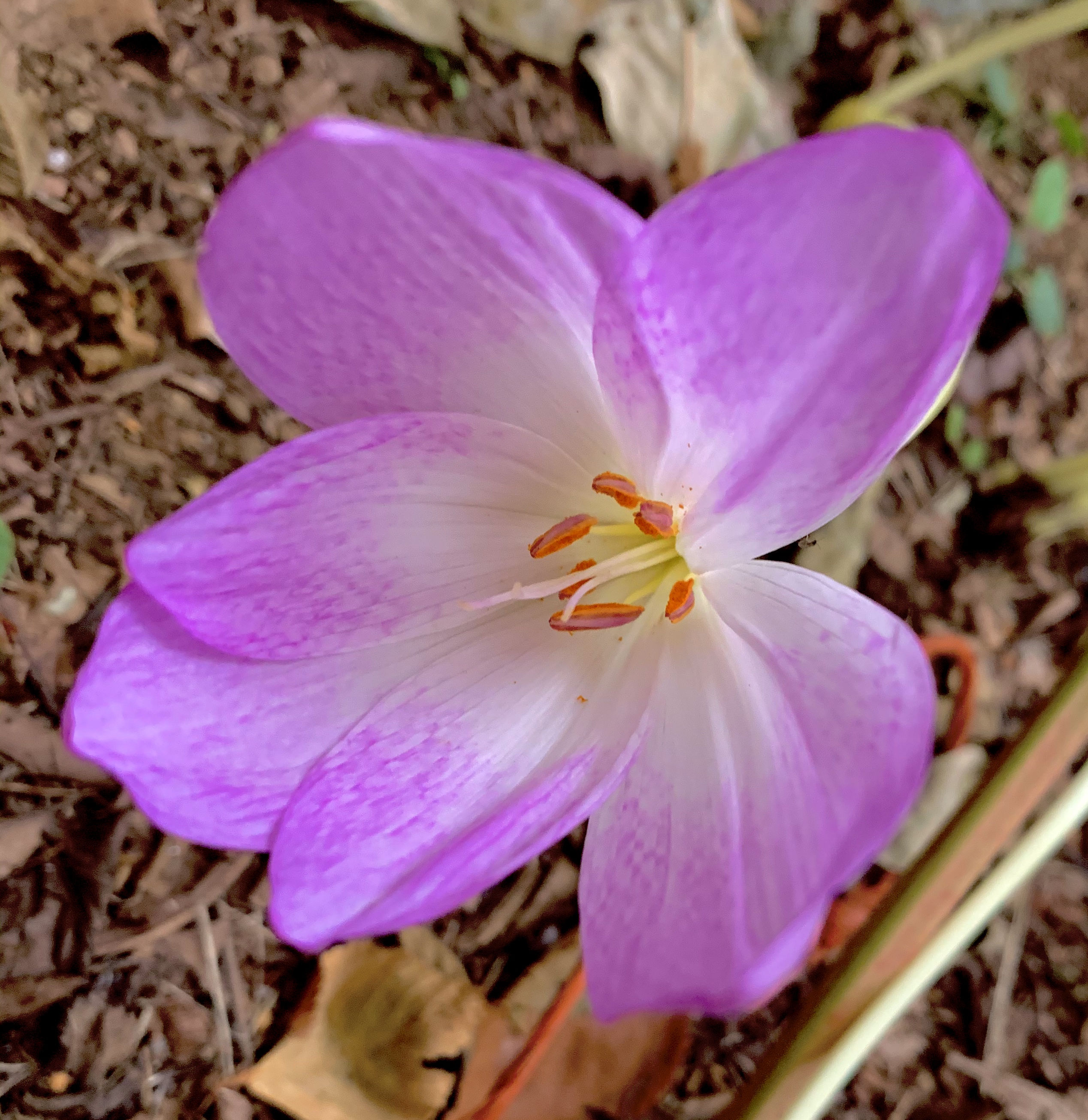
Slowly unfurling on a pale leggy stem, the tender lavender petals peel back to reveal golden crowns of saffron, brazenly blooming when all else is dying back.
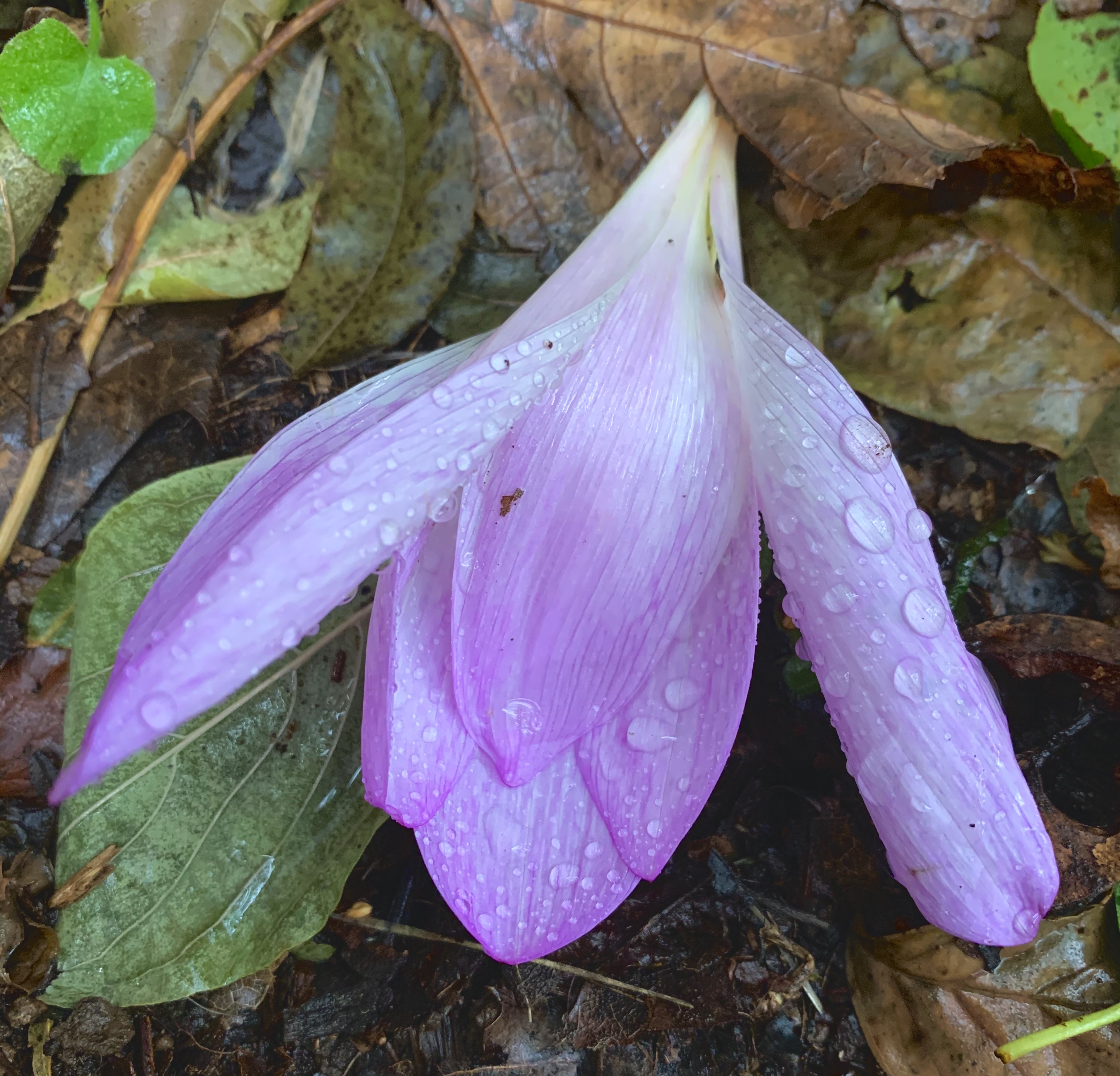
In the end, they too painfully wilt, deeply bruised and purple – under the Sun’s reflection made manifest; returning defeated, inglorious, fallen, to dust.
Yet we know – they remind us – they (and we) will rise again.
…we know what is coming behind the crocus. The spring comes slowly down this way; but the great thing is that the corner has been turned. . . It remains with us to follow or not, to die in this winter, or to go on into that spring and that summer. C.S. Lewis from God in the Dock
If you enjoy beautiful photos and words, consider ordering this Barnstorming book here:
My mother, who hates thunder storms, Holds up each summer day and shakes It out suspiciously, lest swarms Of grape-dark clouds are lurking there; But when the August weather breaks And rains begin, and brittle frost Sharpens the bird-abandoned air, Her worried summer look is lost,
And I her son, though summer-born And summer-loving, none the less Am easier when the leaves are gone Too often summer days appear Emblems of perfect happiness I can’t confront: I must await A time less bold, less rich, less clear: An autumn more appropriate. ~Philip Larkin “Mother, Summer, I”
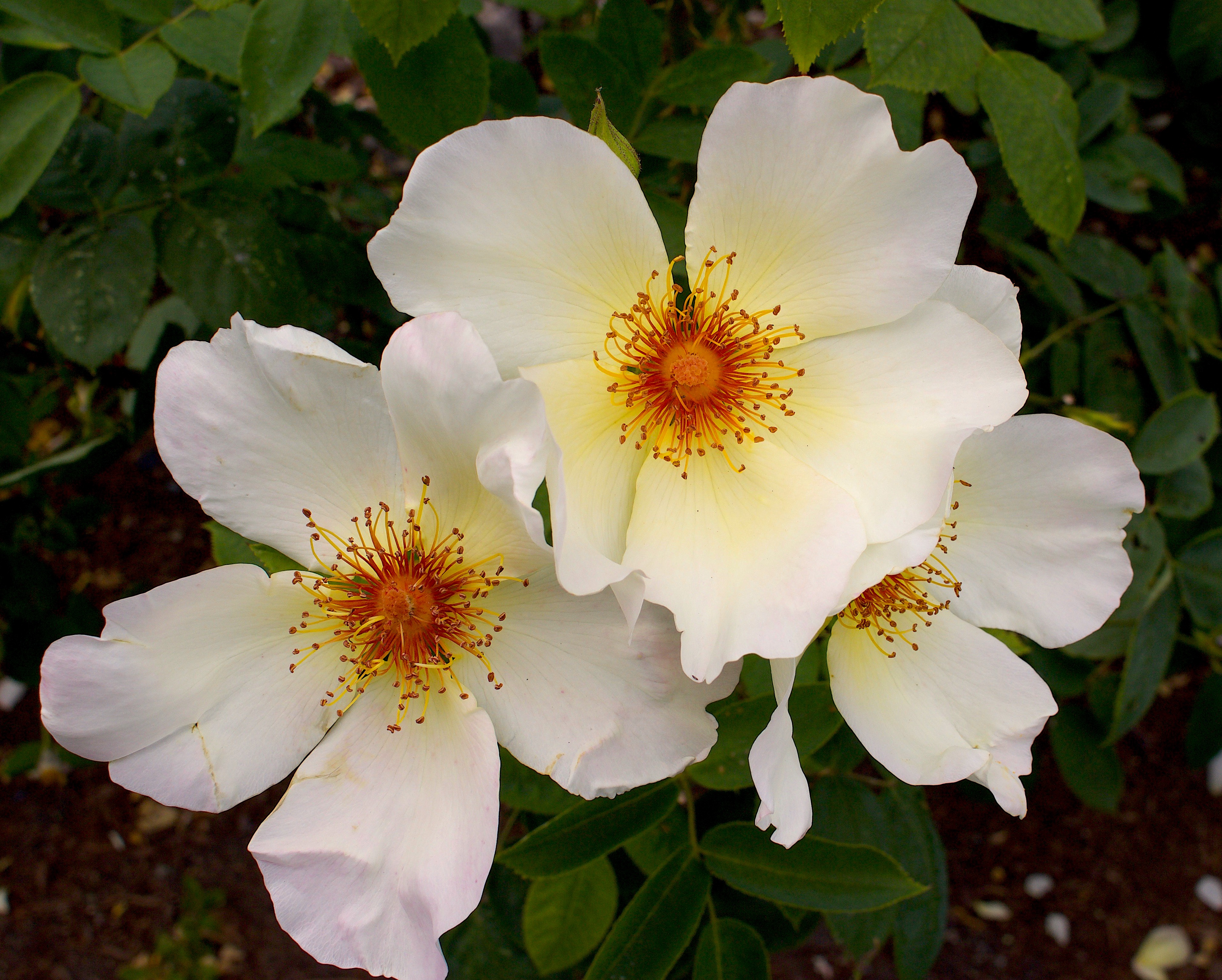
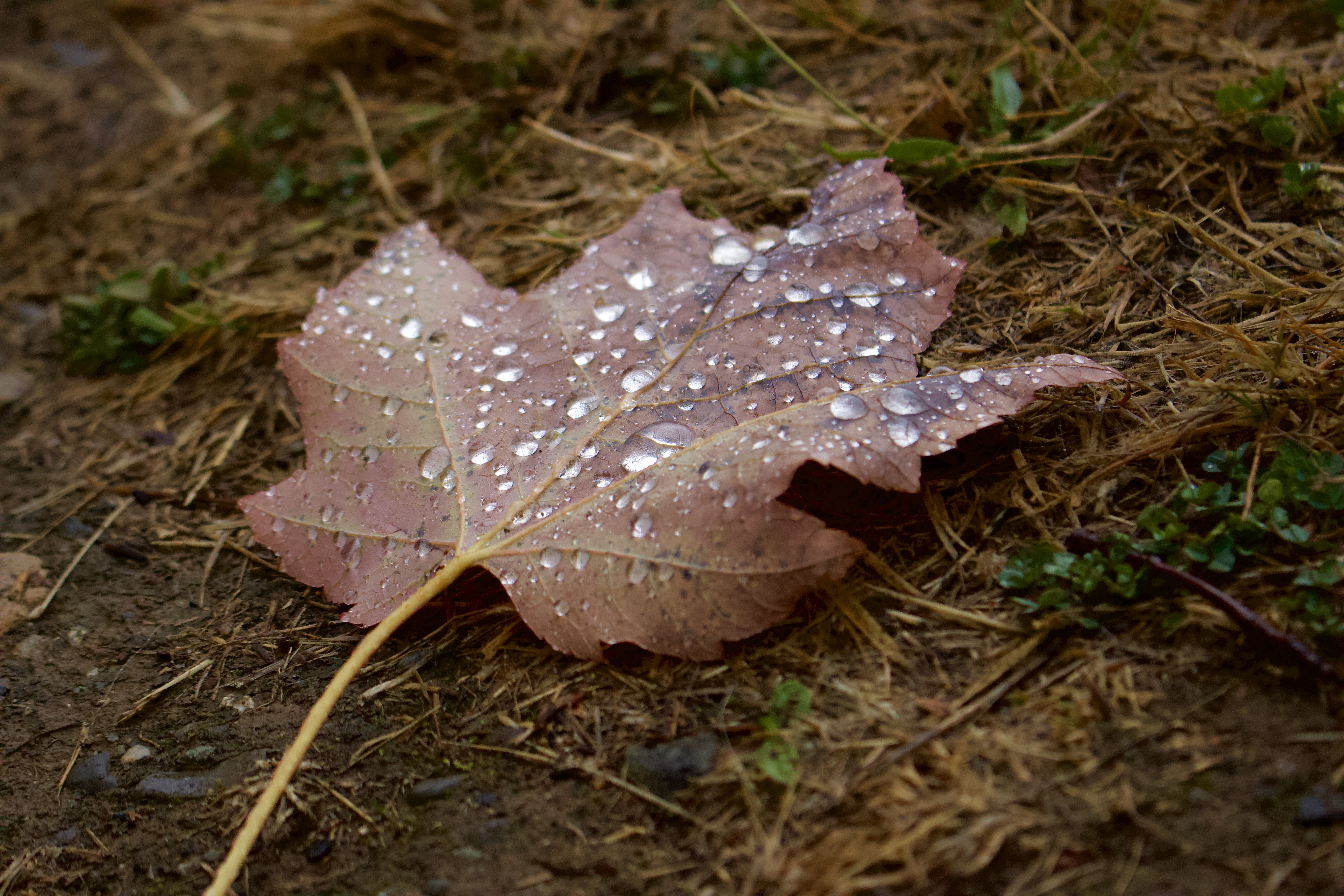
August weather has broken to clouds, sprinkles, nights with chill breezes, and leaves landing on brown ground.
This summer ended up being simply too much – an excess of everything meant to make us happy yet overwhelming and exhausting.
From endless hours of daylight, to high rising temperatures, to palettes of exuberant clouds to fruitfulness and abundant blooms.
While summer always fills a void left empty after enduring the many cold bare dark days of the rest of the year, I depend on winter days returning all too soon.
I will welcome them back, realizing how much I miss that longing for the fullness of summer.
If you enjoy Barnstorming posts, consider this new book available to order here:
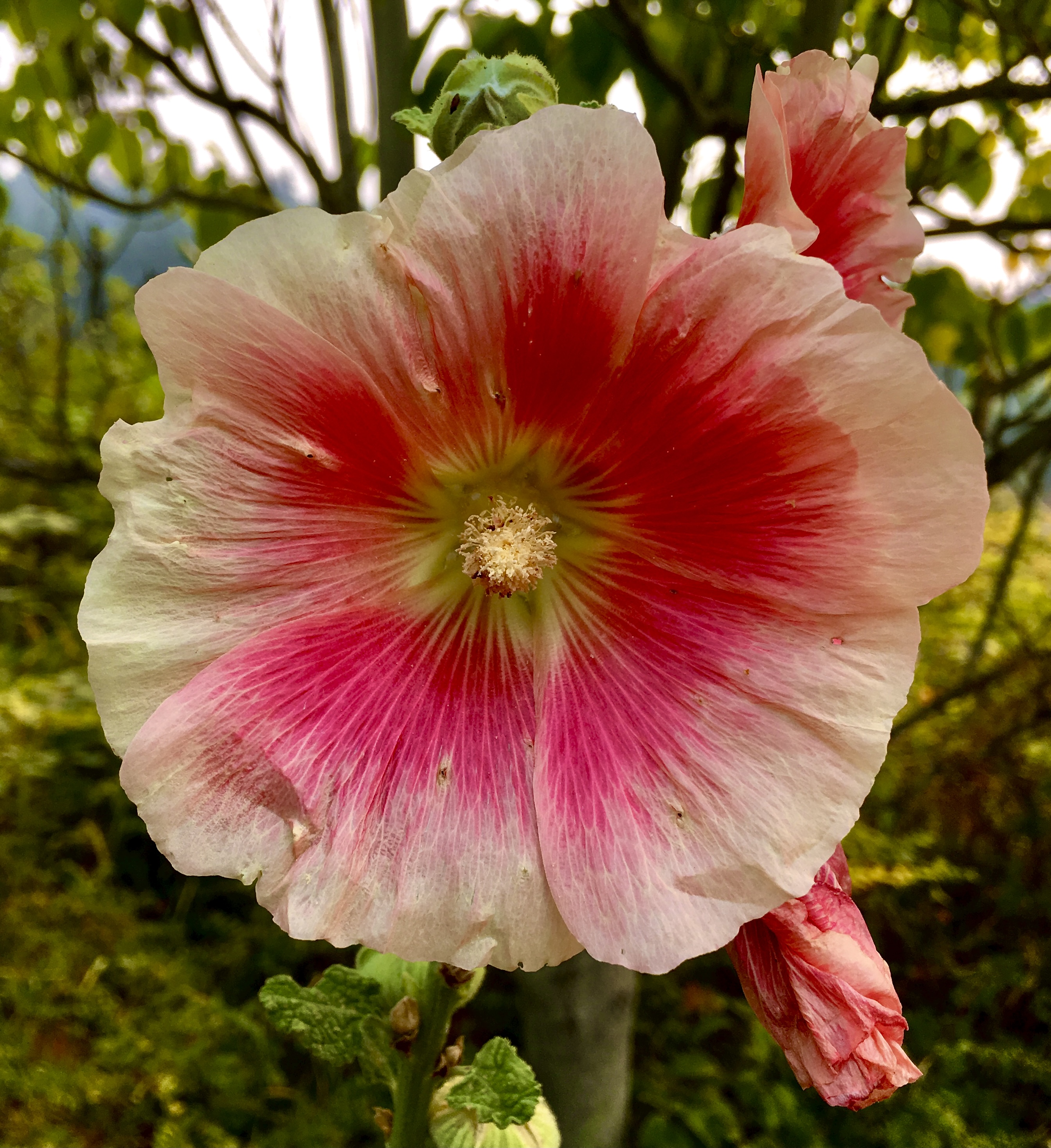
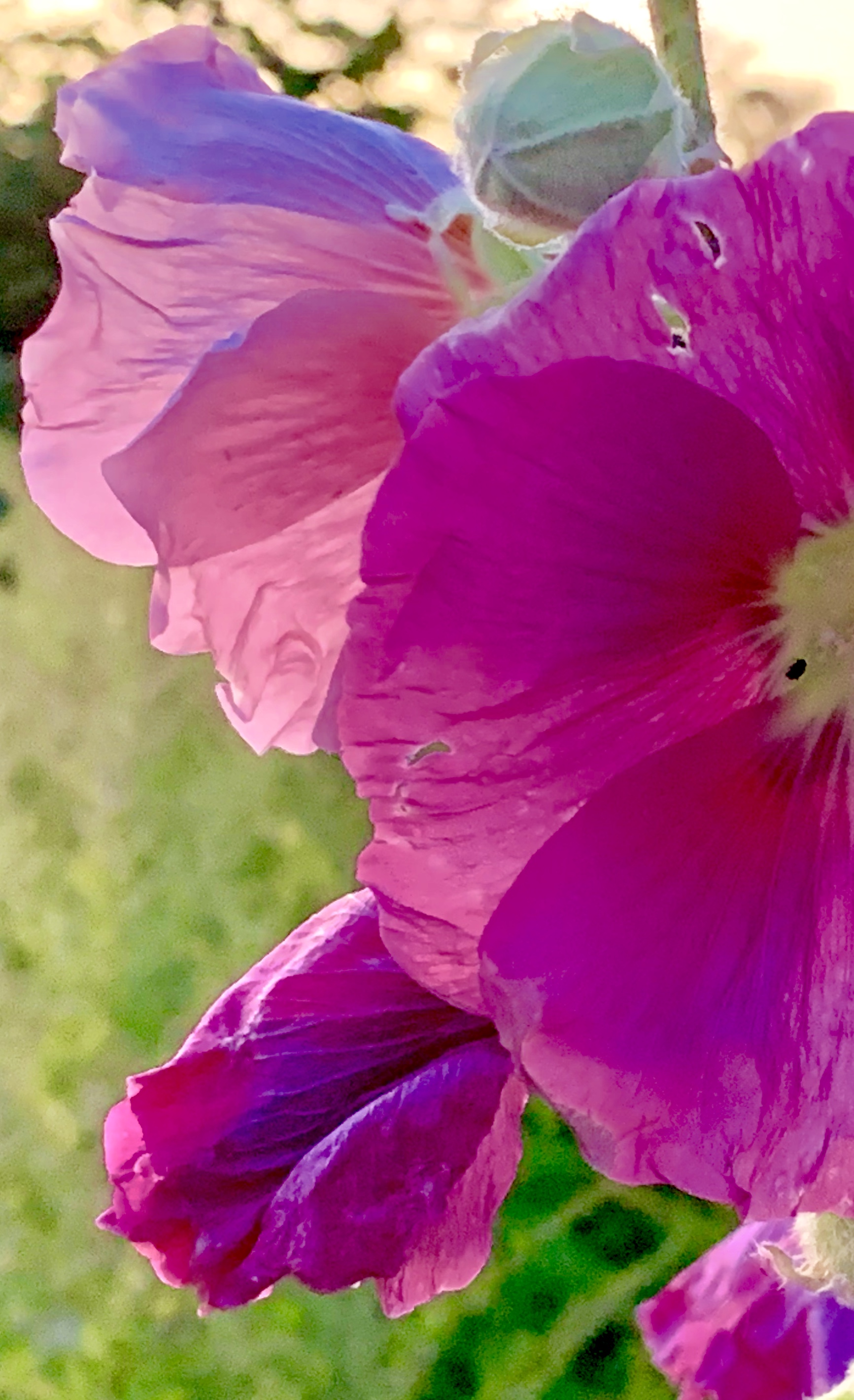
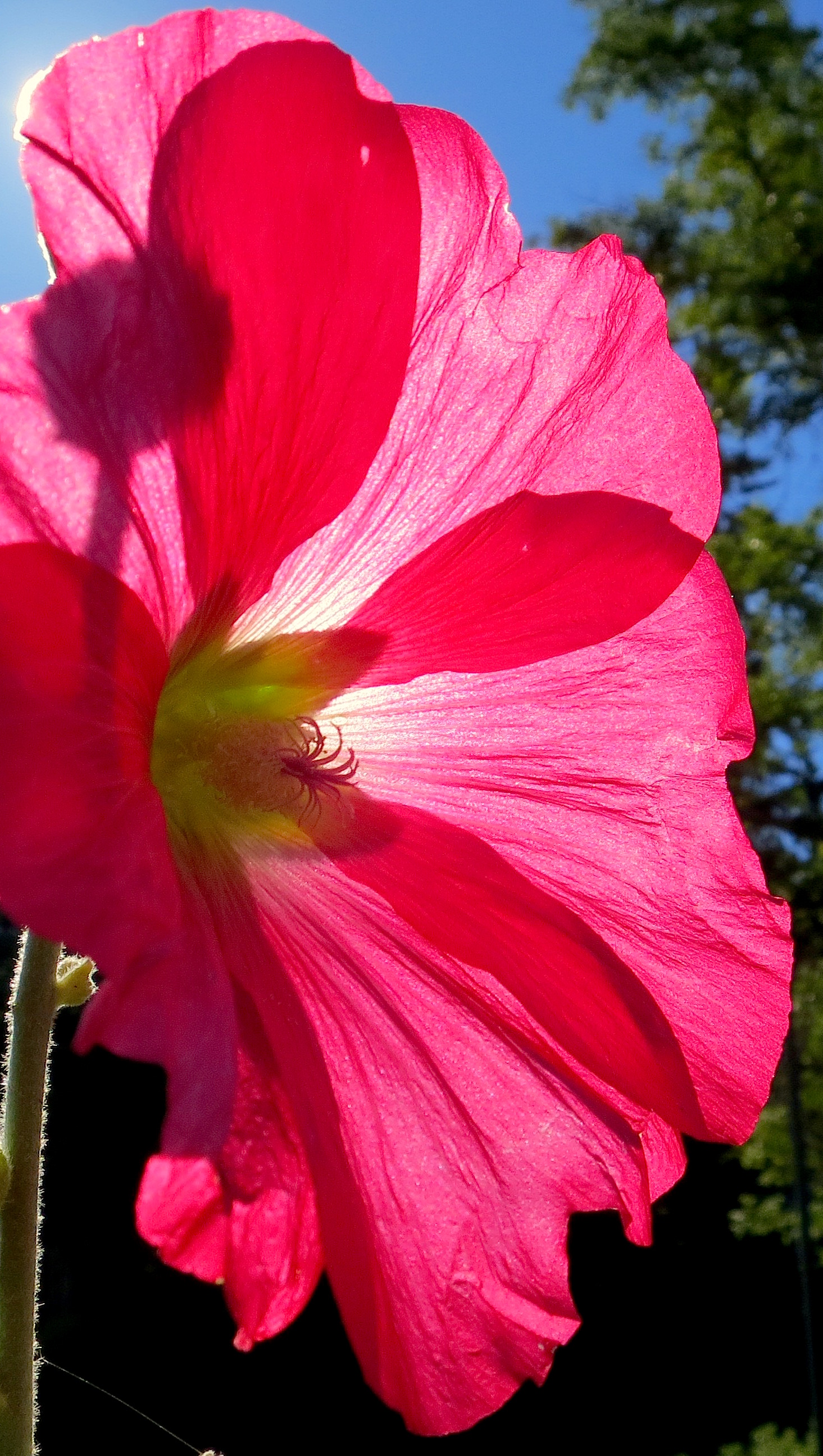
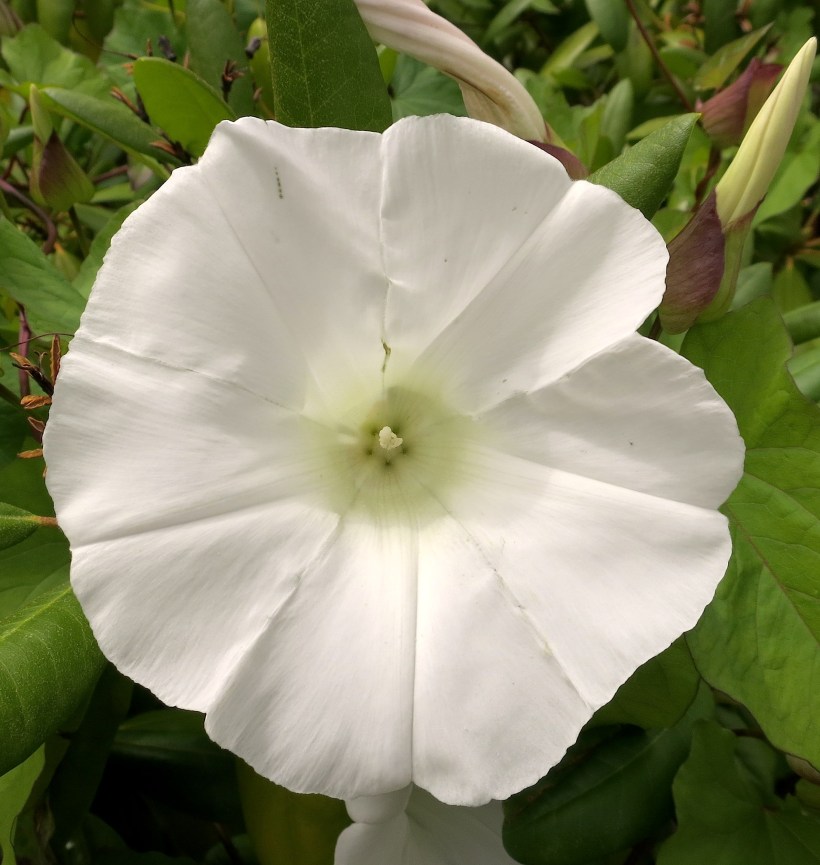
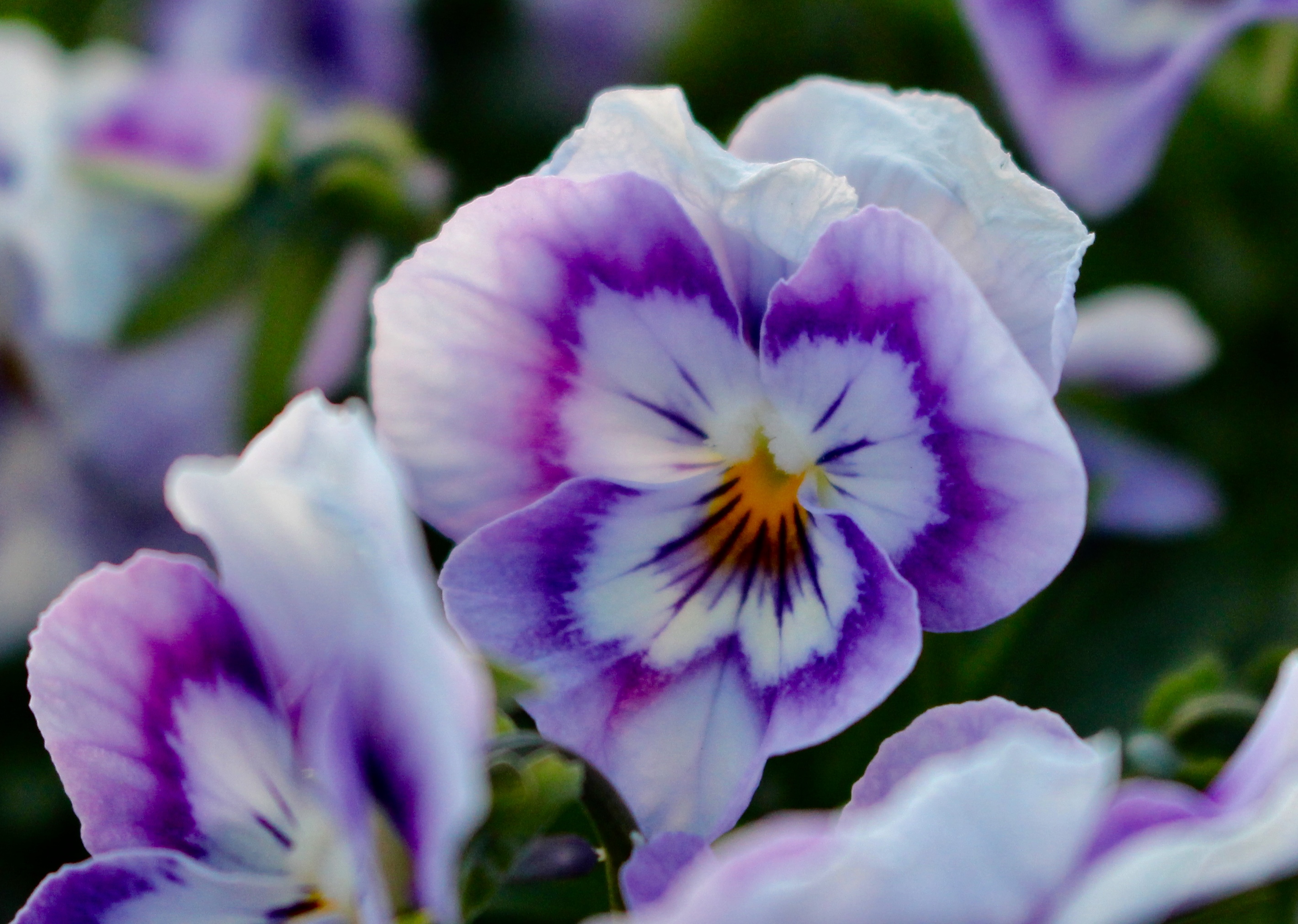
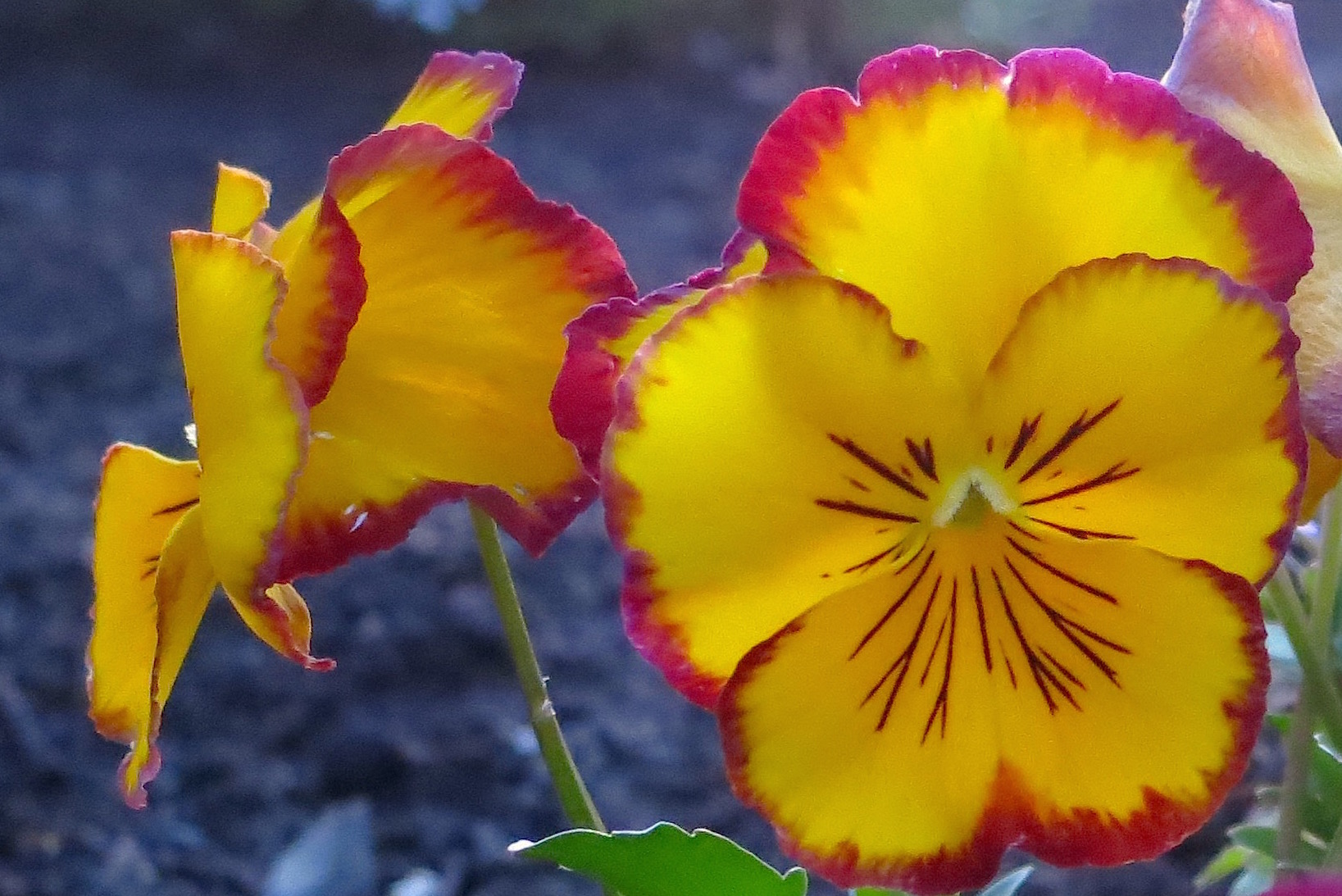
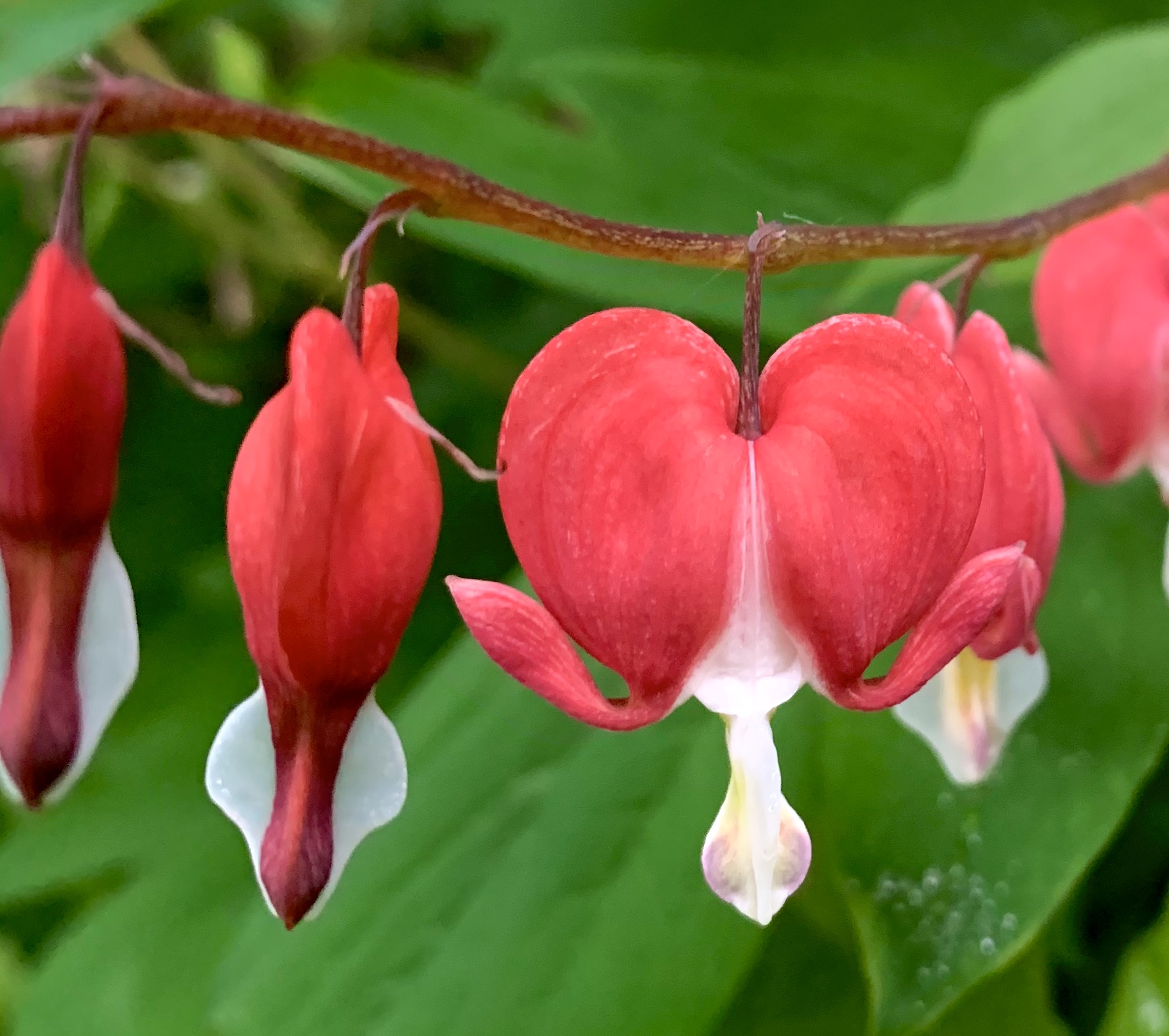
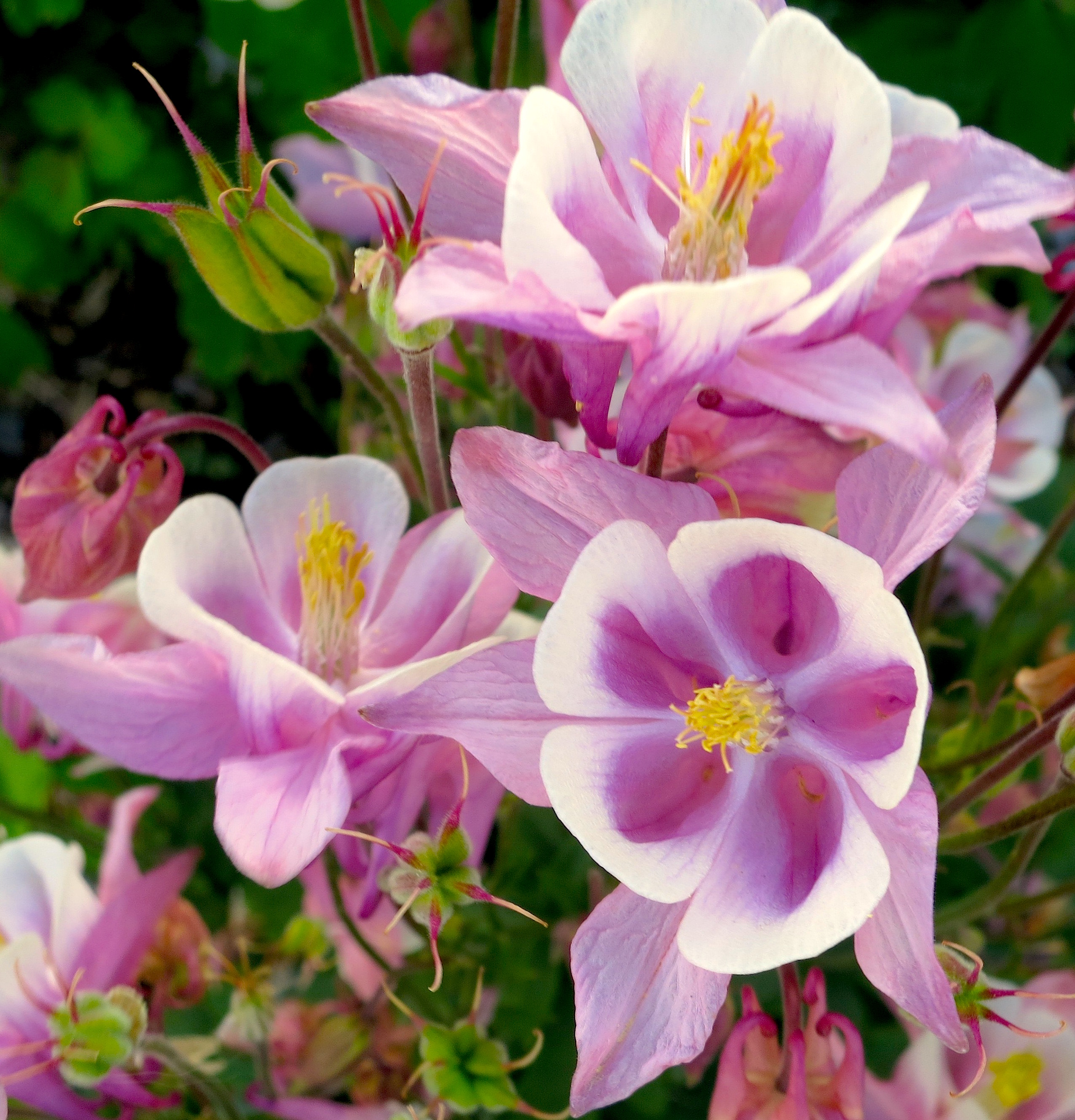
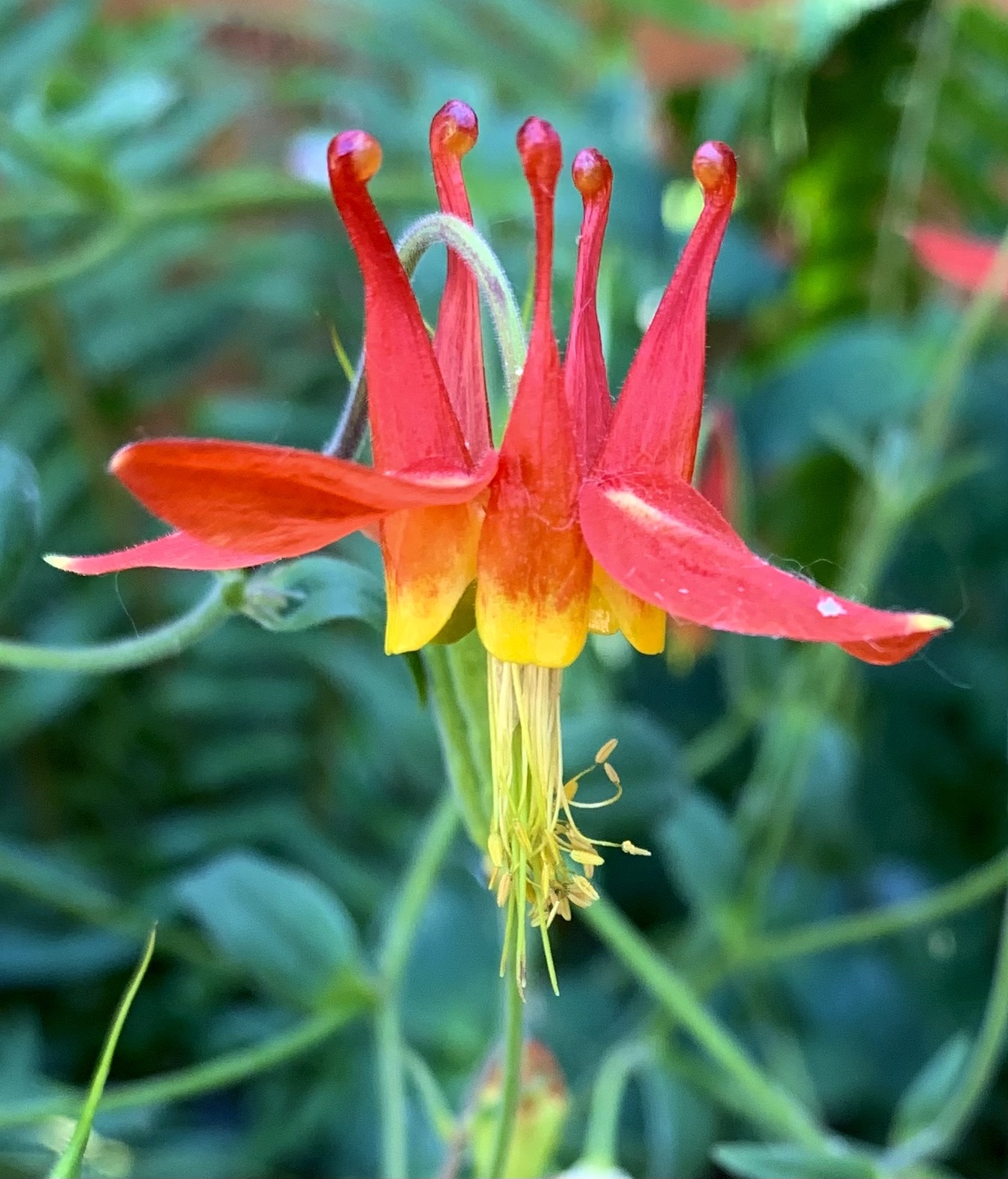
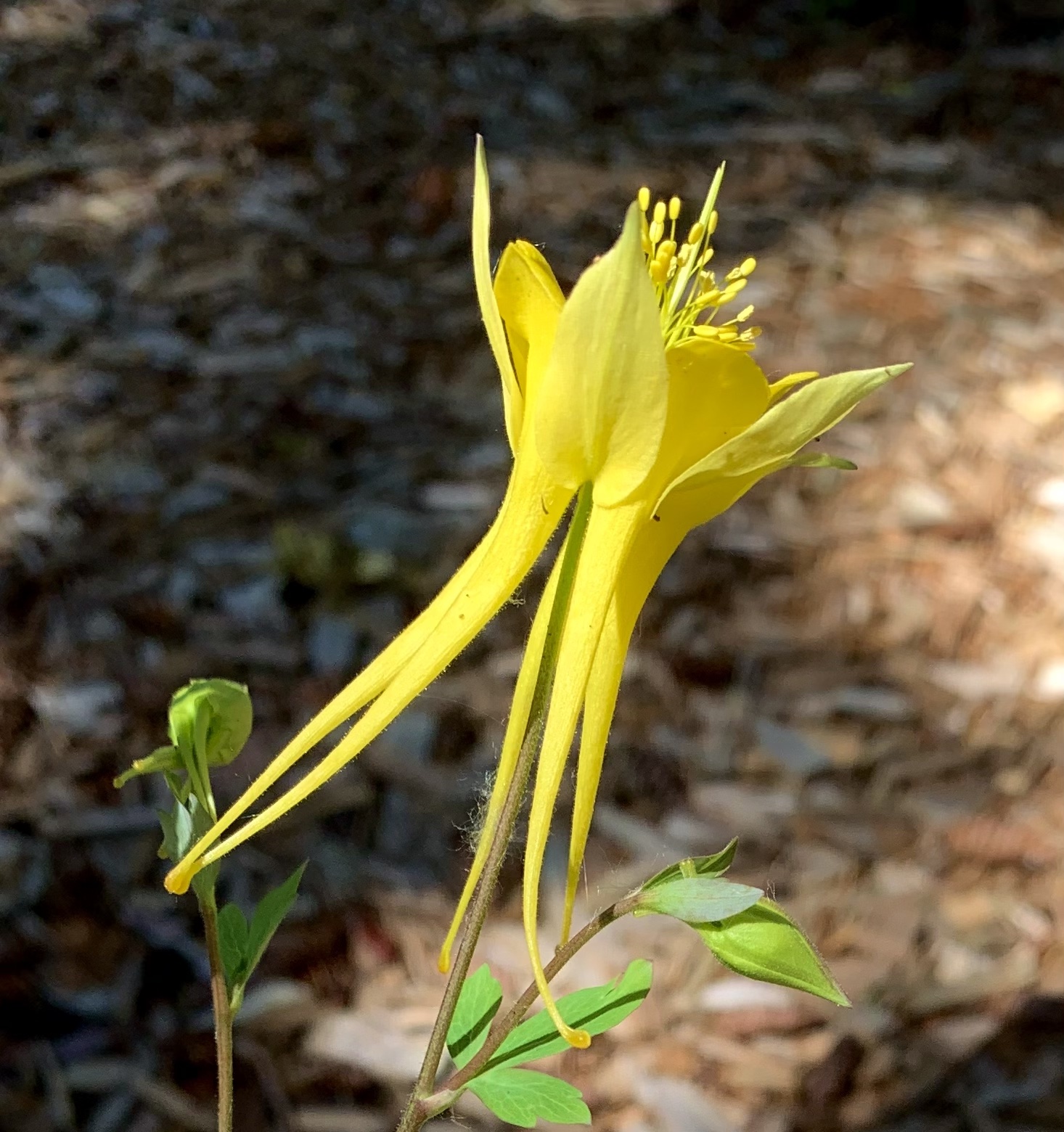
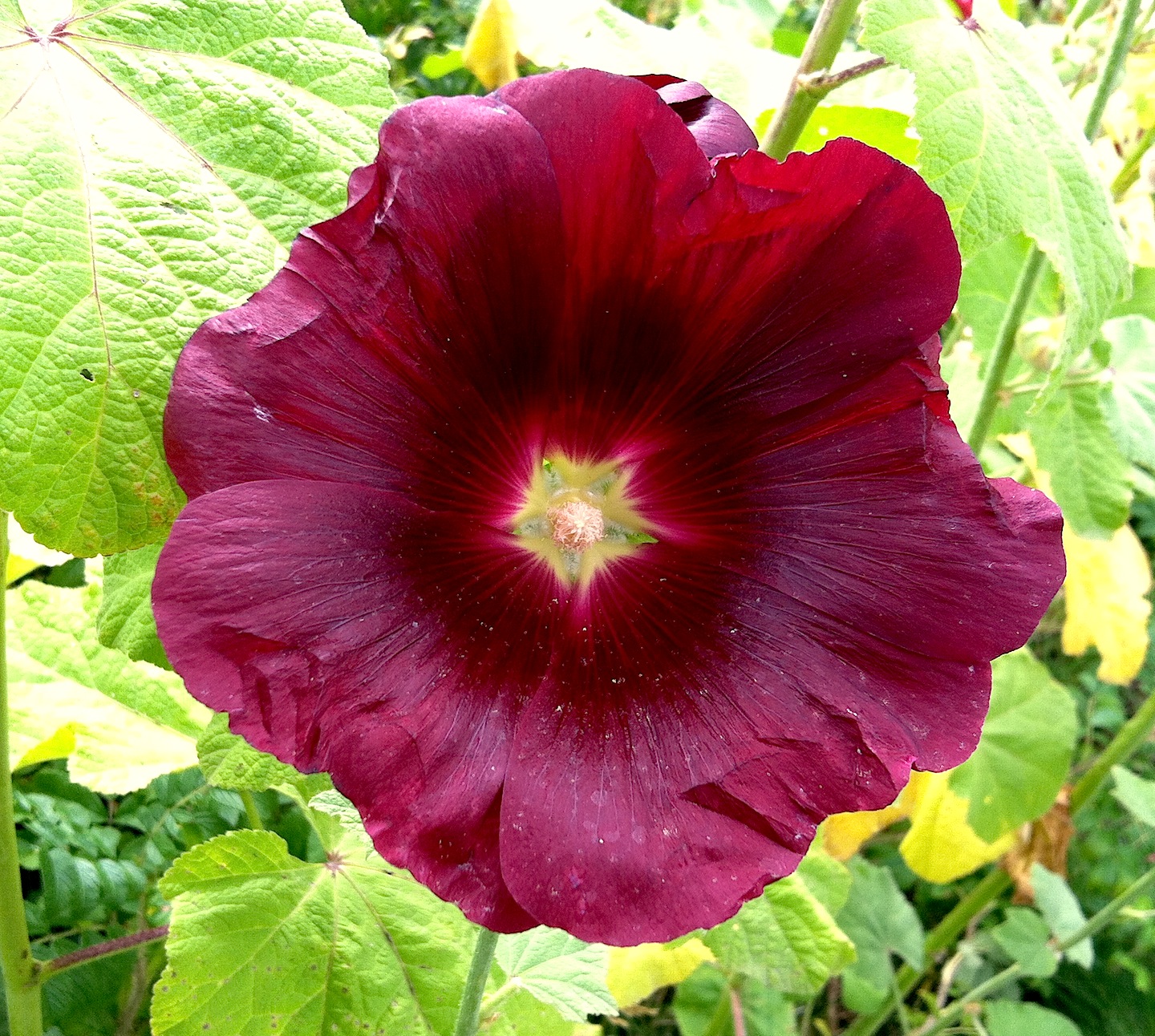
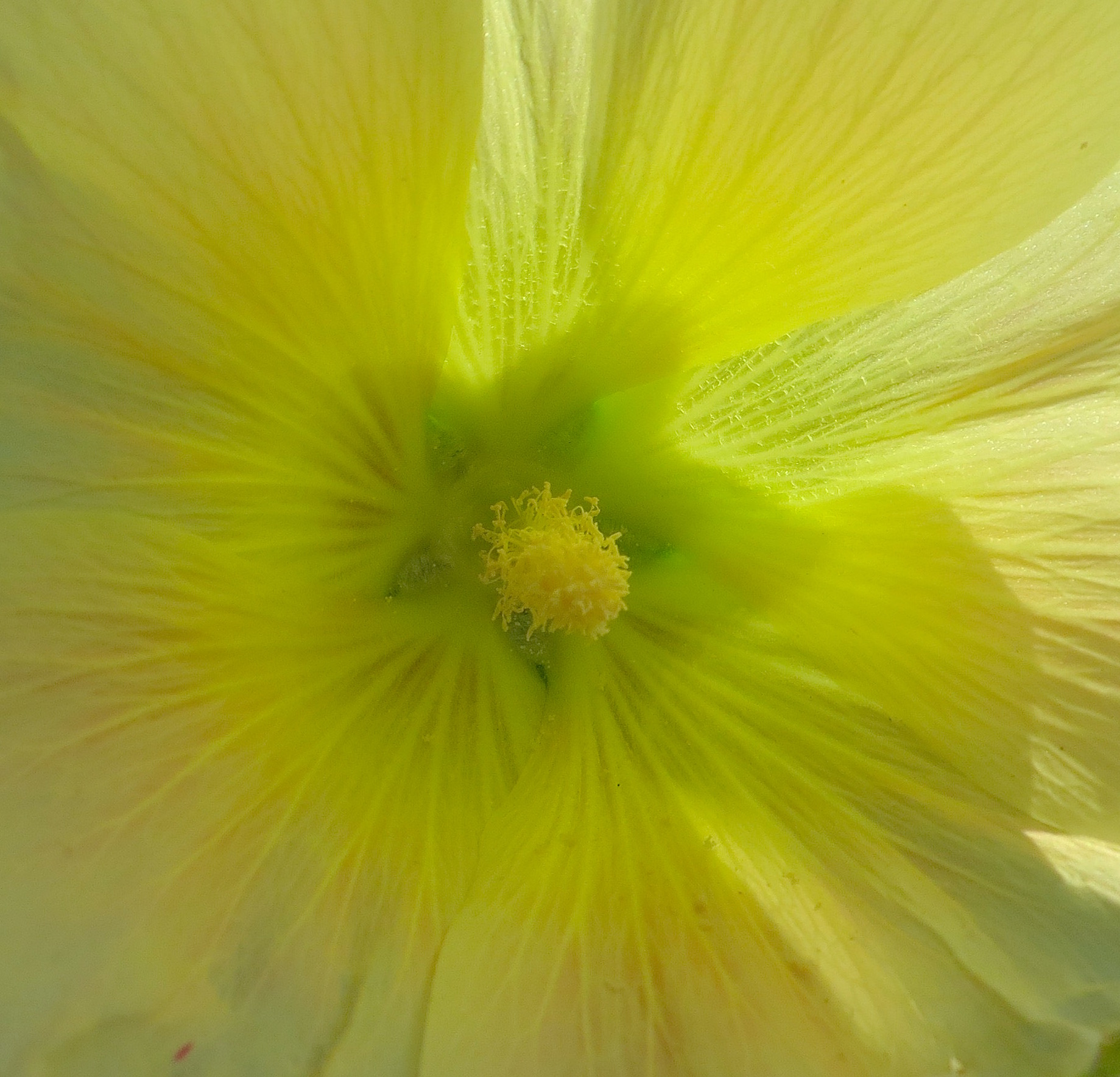
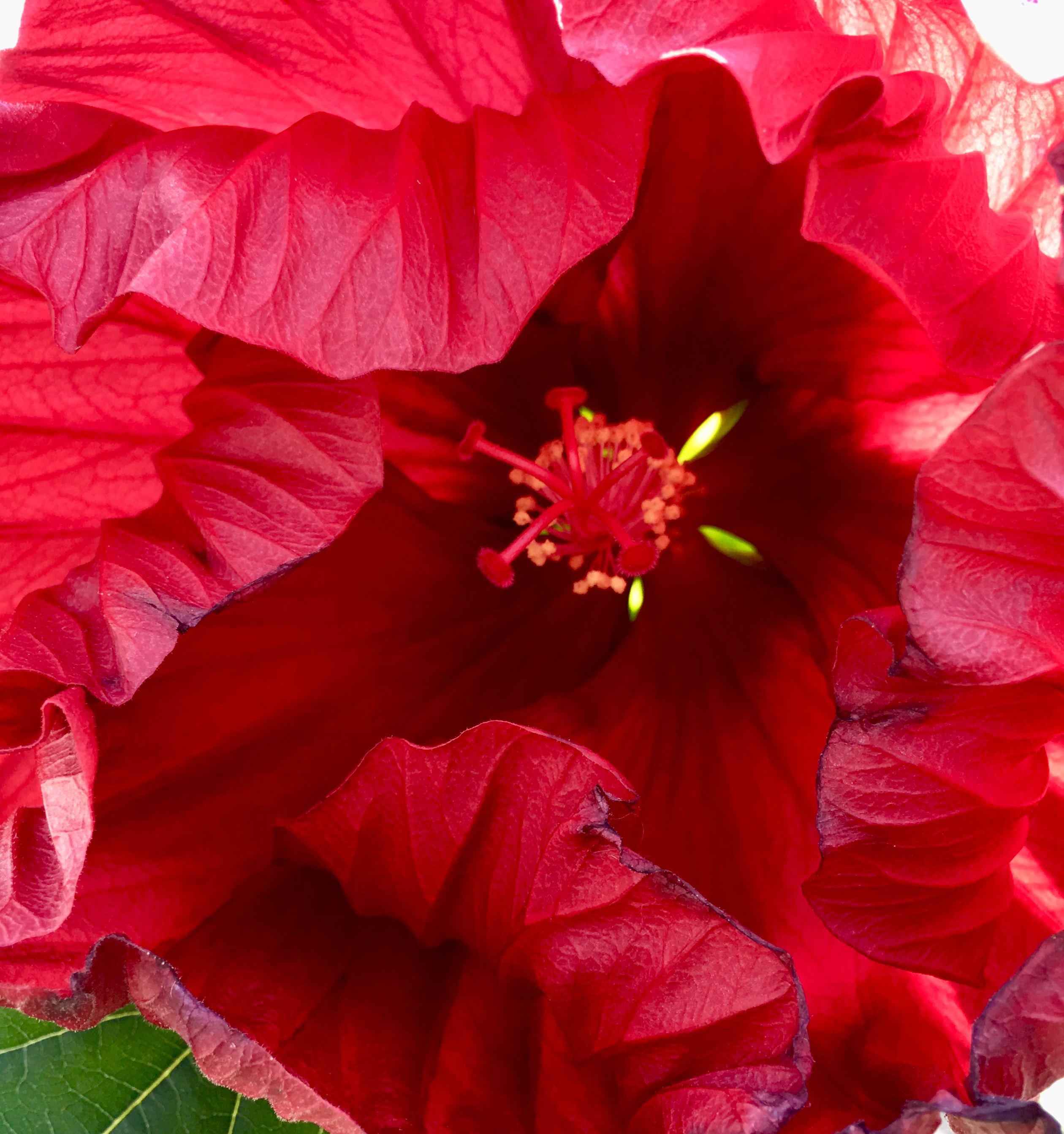
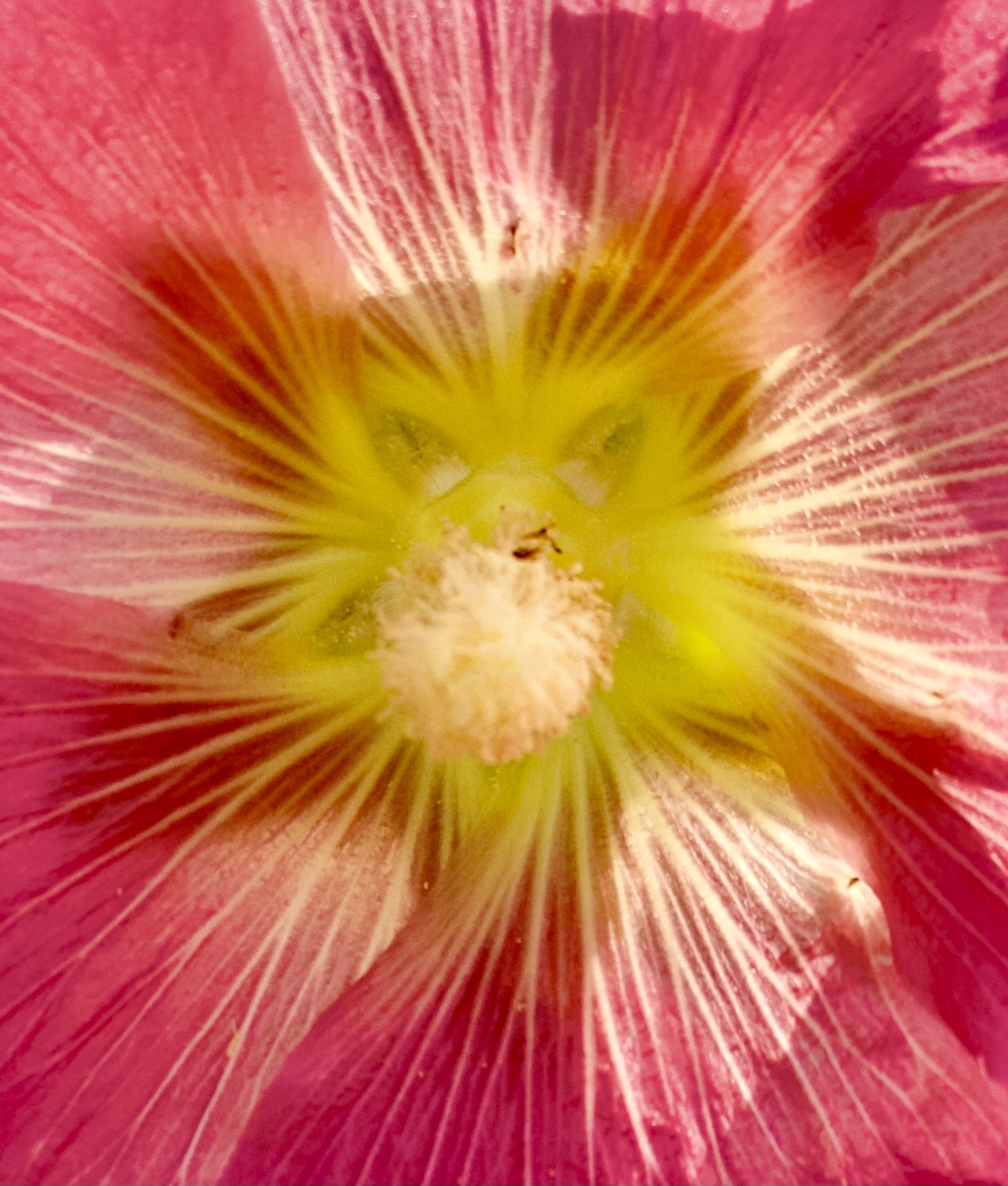
Old-fashioned flowers! I love them all: The morning-glories on the wall, The pansies in their patch of shade, The violets, stolen from a glade, The bleeding hearts and columbine, Have long been garden friends of mine; But memory every summer flocks About a clump of hollyhocks.
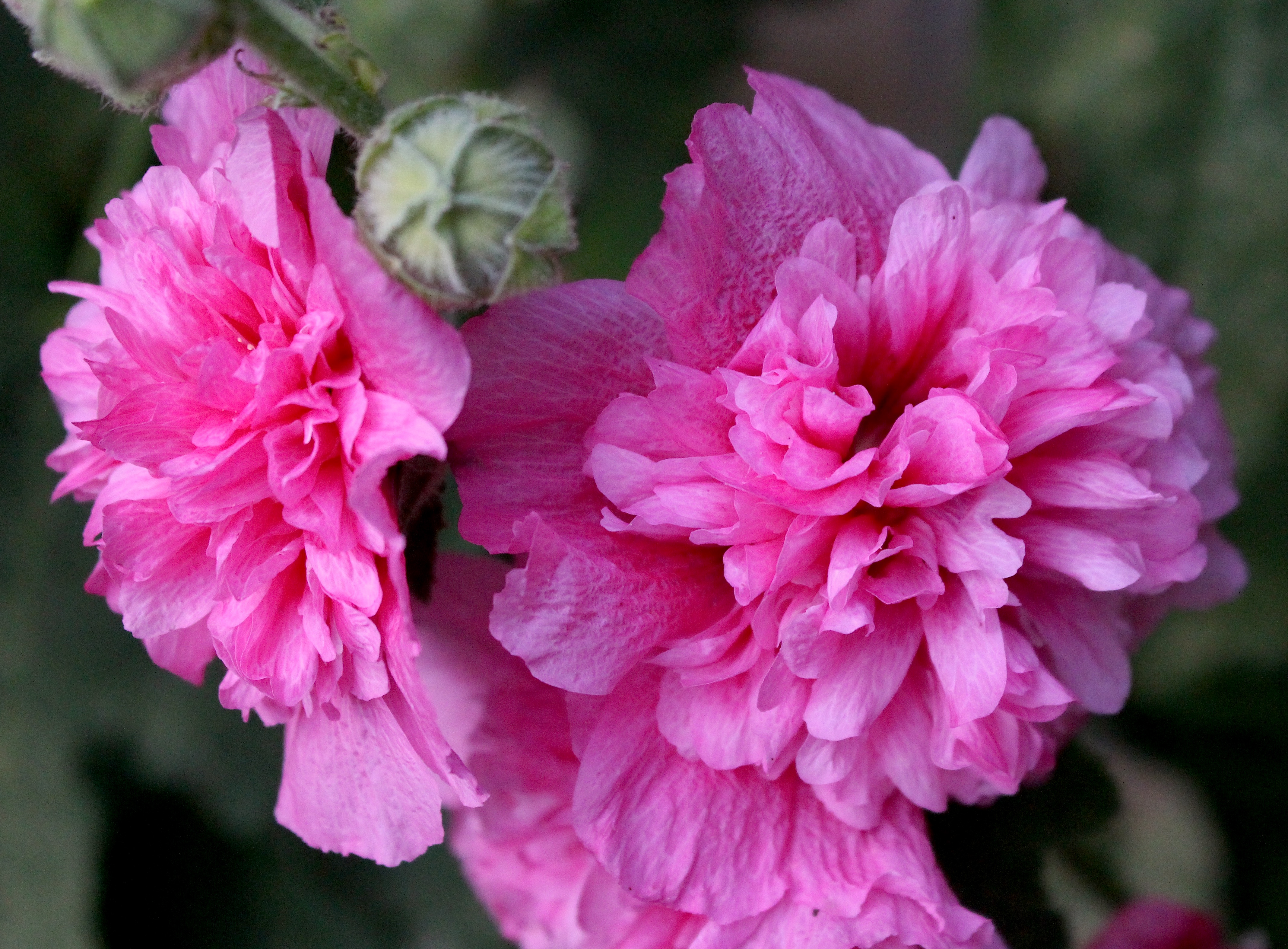
The mind’s bright chambers, life unlocks Each summer with the hollyhocks. ~Edgar Guest from “Hollyhocks”
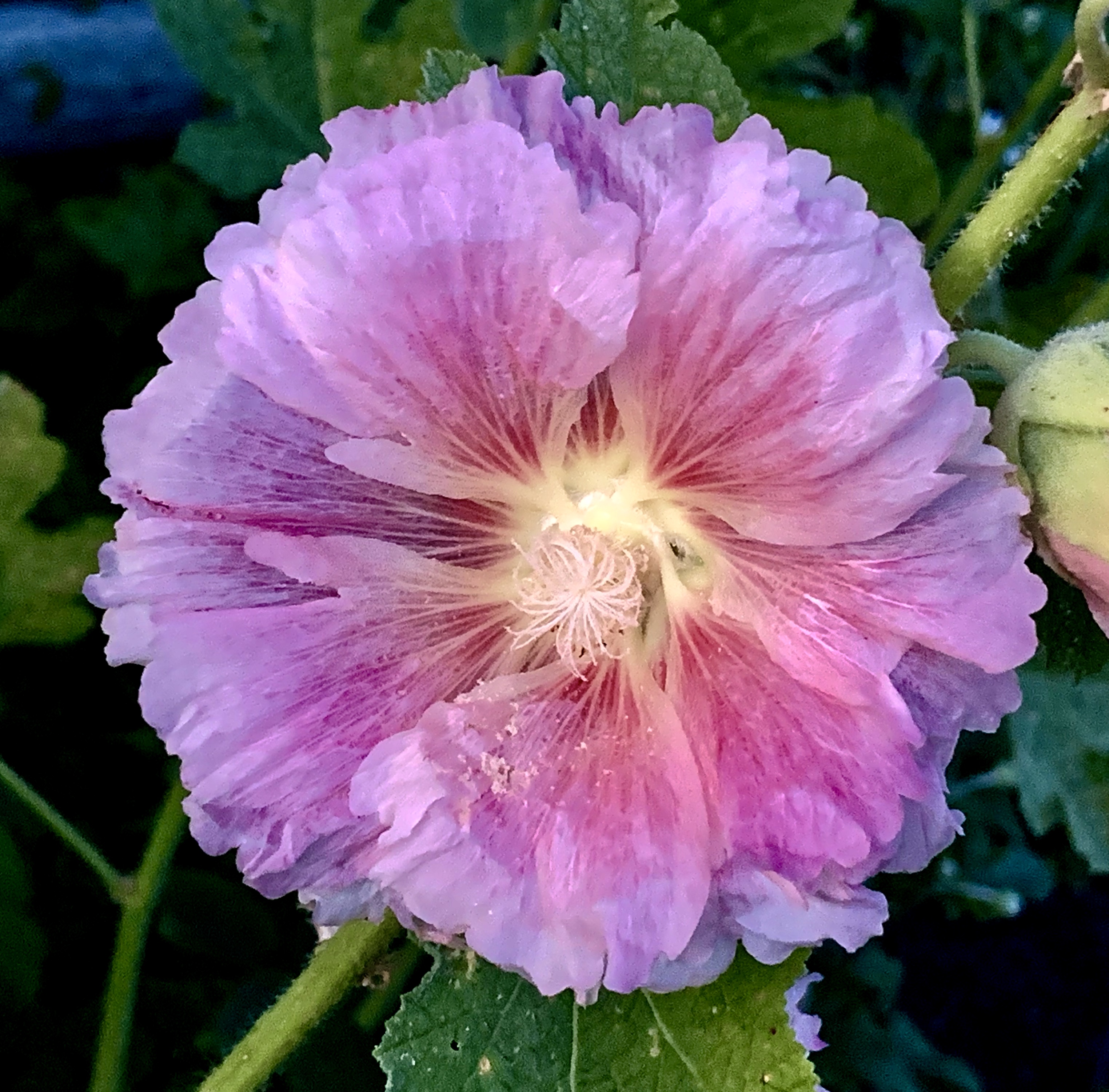
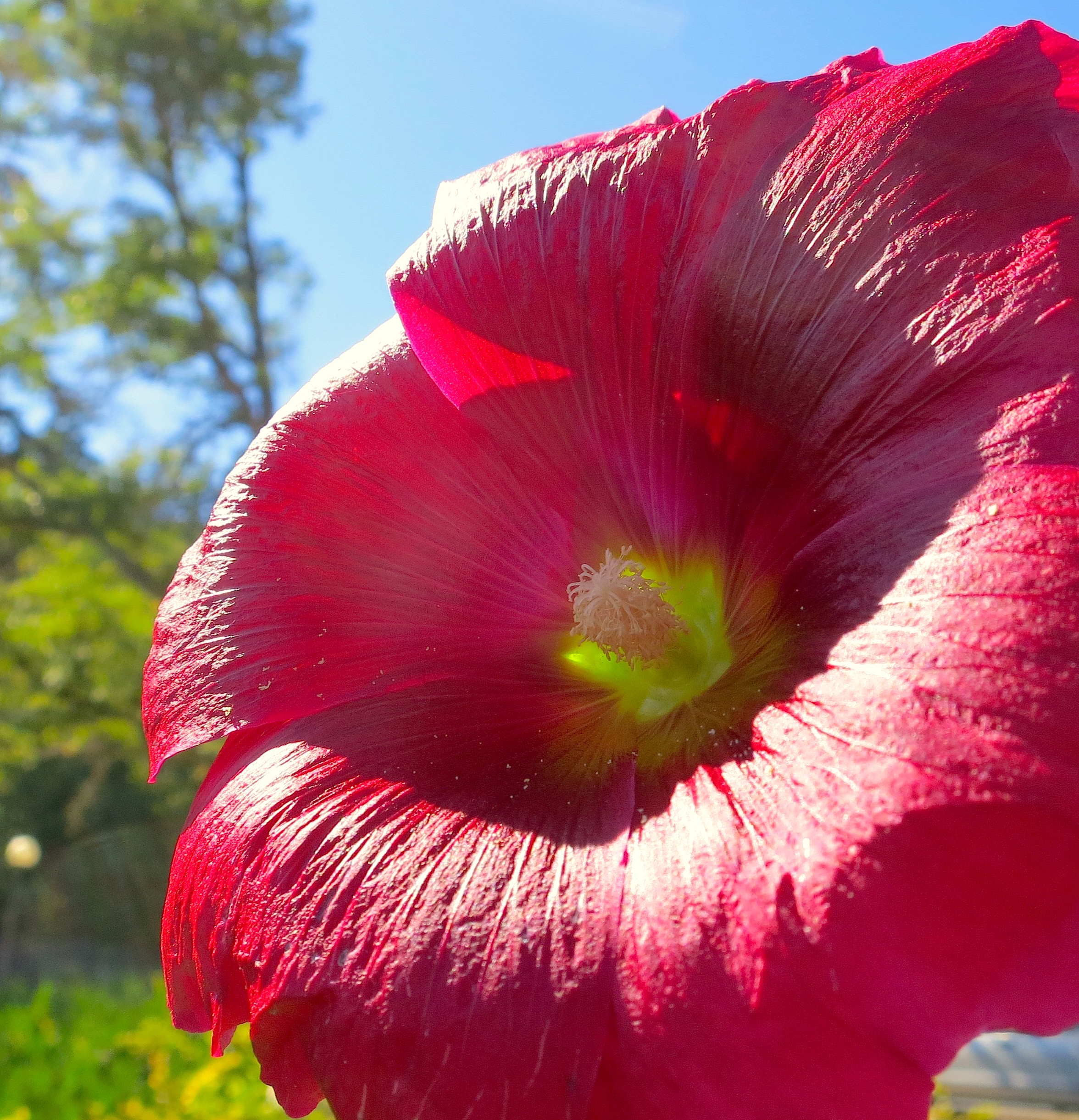
The endless well of summer lies deep in the heart of old-fashioned flowers, but no well is so deep as hollyhocks – the veins of their petals pumping color as they sway on long-nubbined stems, carefree in the breeze.
My mind is suddenly unlocked, opened by a hollyhock key.
hollyhock
Enjoy more photos and poems in this book from Barnstorming, available for order here:










































 Barnstorming