For the bark, dulled argent, roundly wrapped And pigeon-collared.
For the splitter-splatter, guttering Rain-flirt leaves.
For the snub and clot of the first green cones, Smelted emerald, chlorophyll.
For the scut and scat of cones in winter, So rattle-skinned, so fossil-brittle.
For the alder-wood, flame-red when torn Branch from branch.
But mostly for the swinging locks Of yellow catkins.
Plant it, plant it, Streel-head in the rain. ~Seamus Heaney “Planting the Alder”with an explanation of some of the poet’s poetic words here
Alder catkin, weightless as down, only blow it away and all changes utterly, and life, it appears, is not such a trifling matter, when nothing about it seems merely a trifle. …an alder catkin lies in my palm, and quivers, as if living.. ~Yevgeny Yevtushenko from “Alder Catkin” translated by Arthur Boyars and Simon Franklin
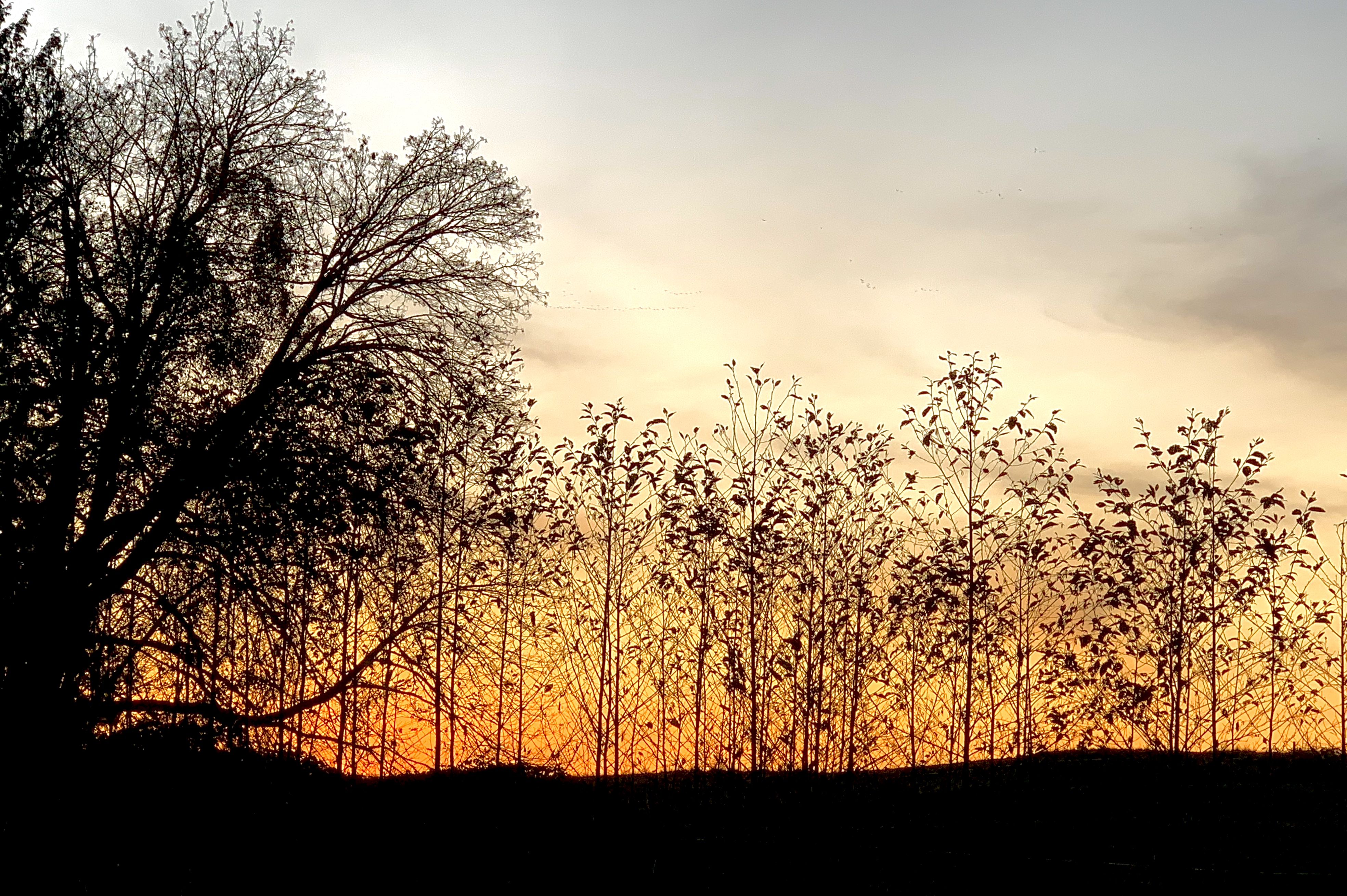
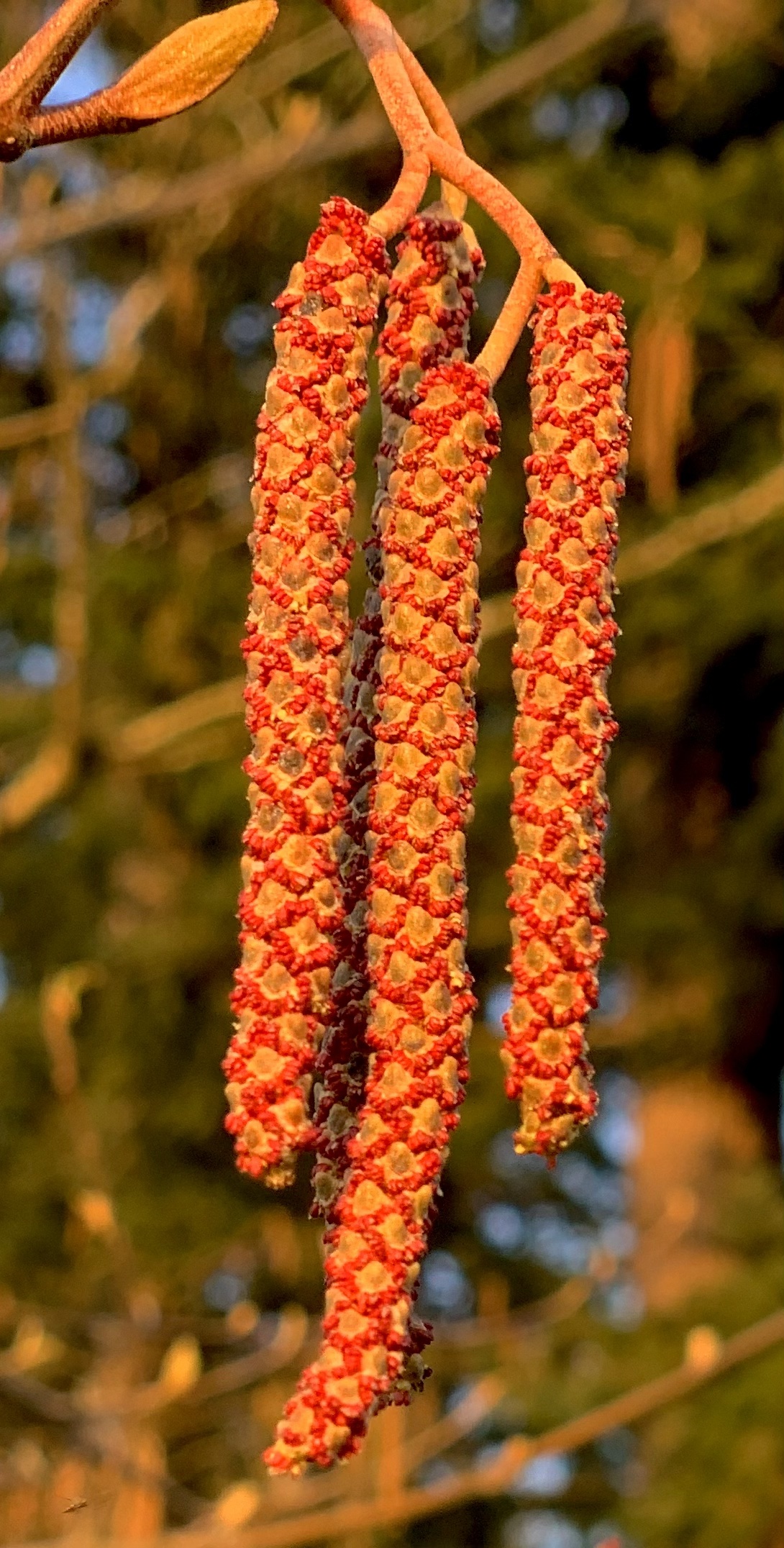
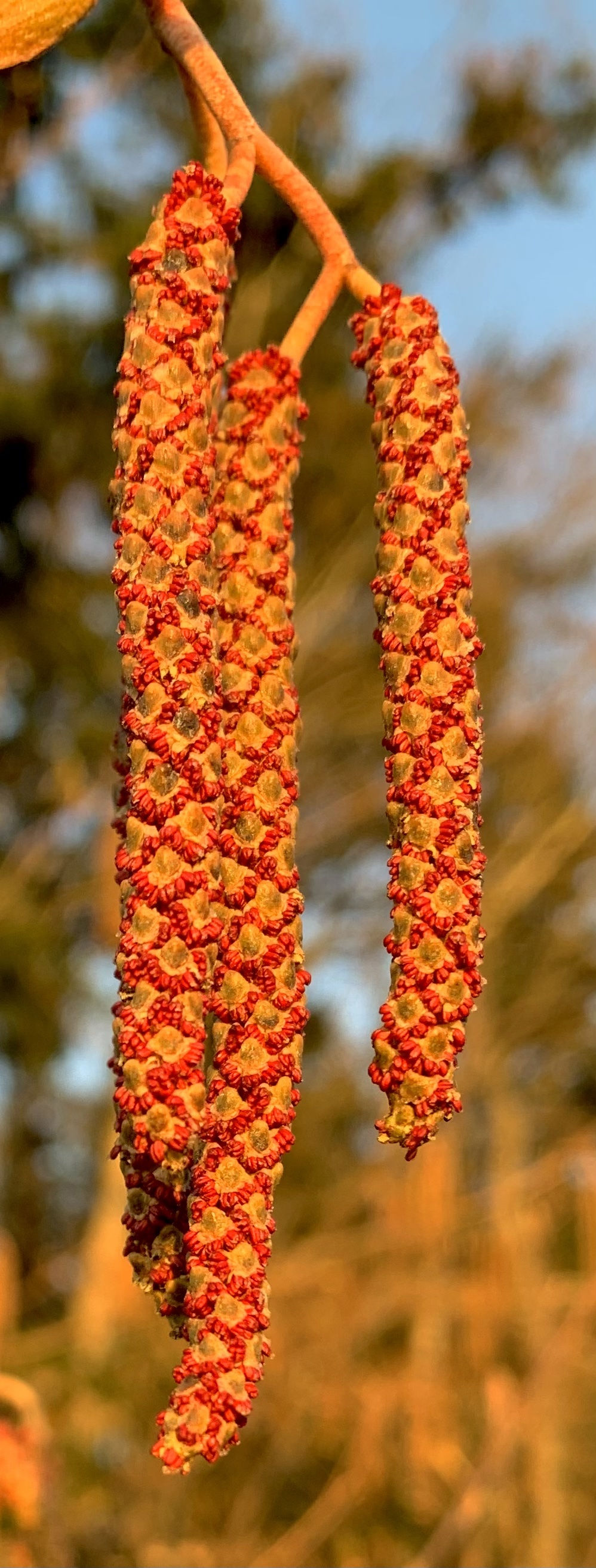
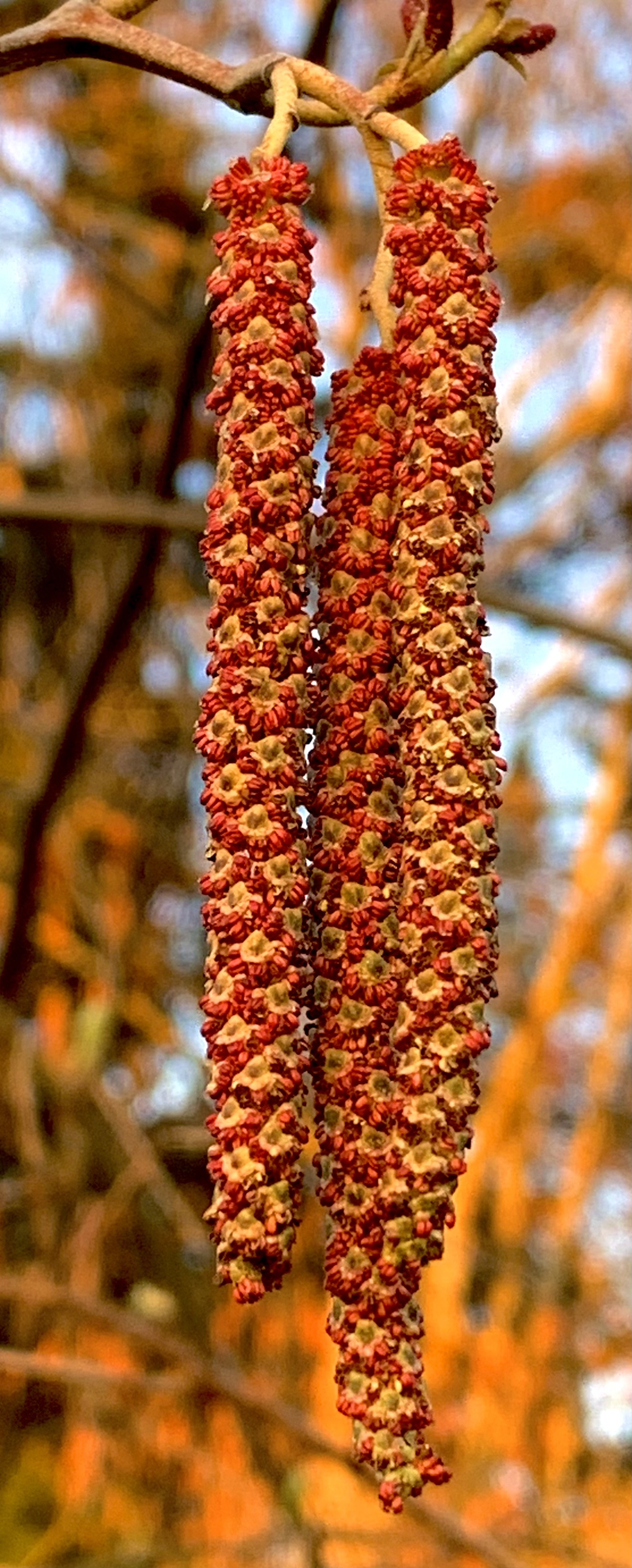
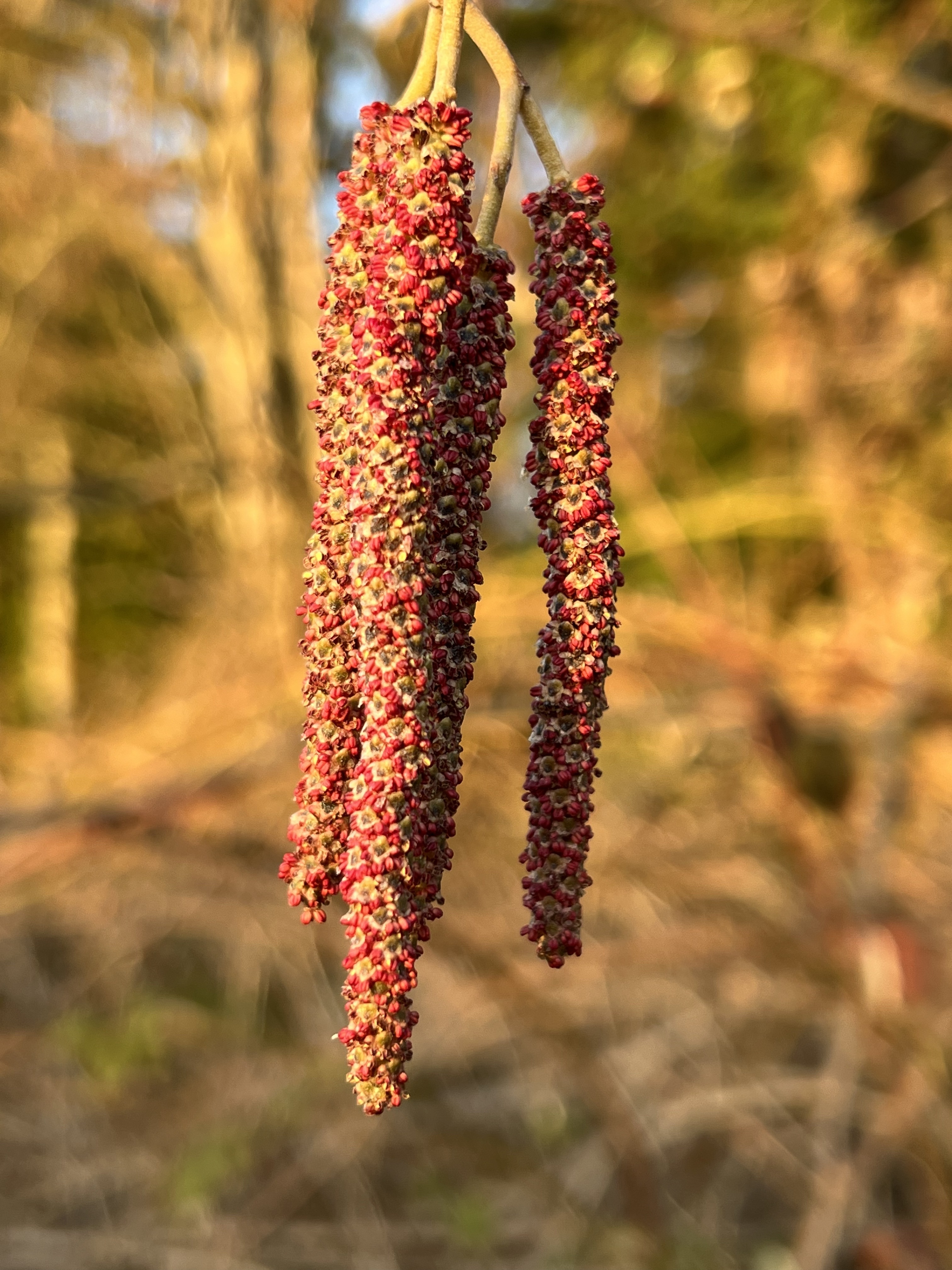
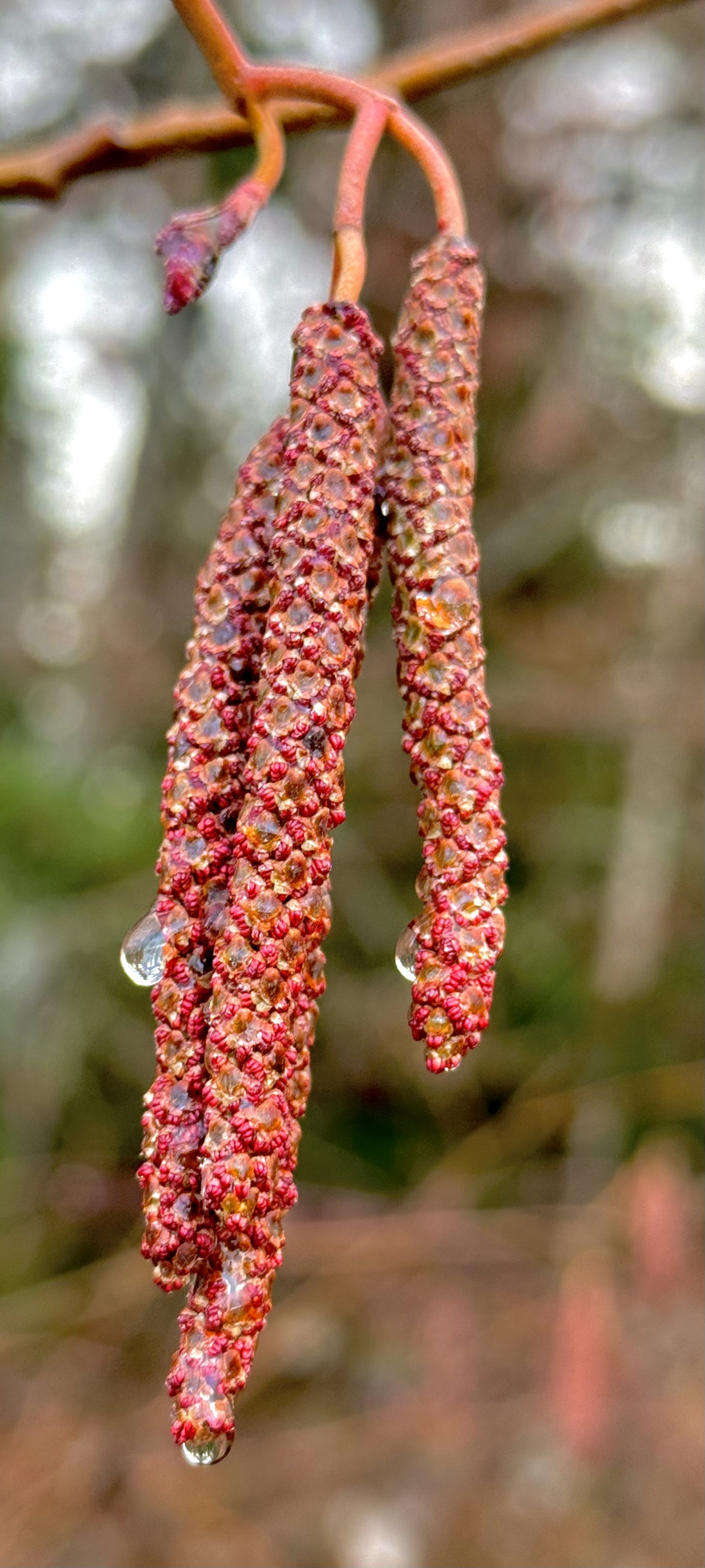
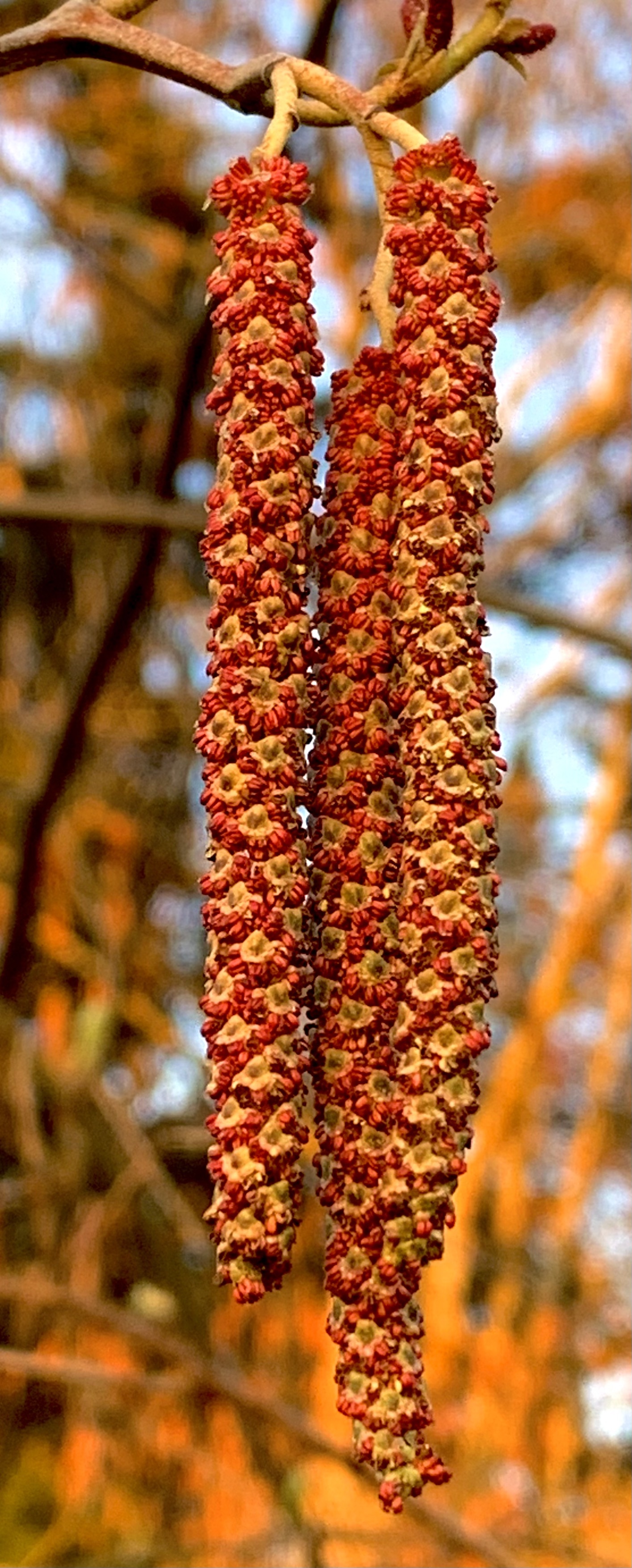
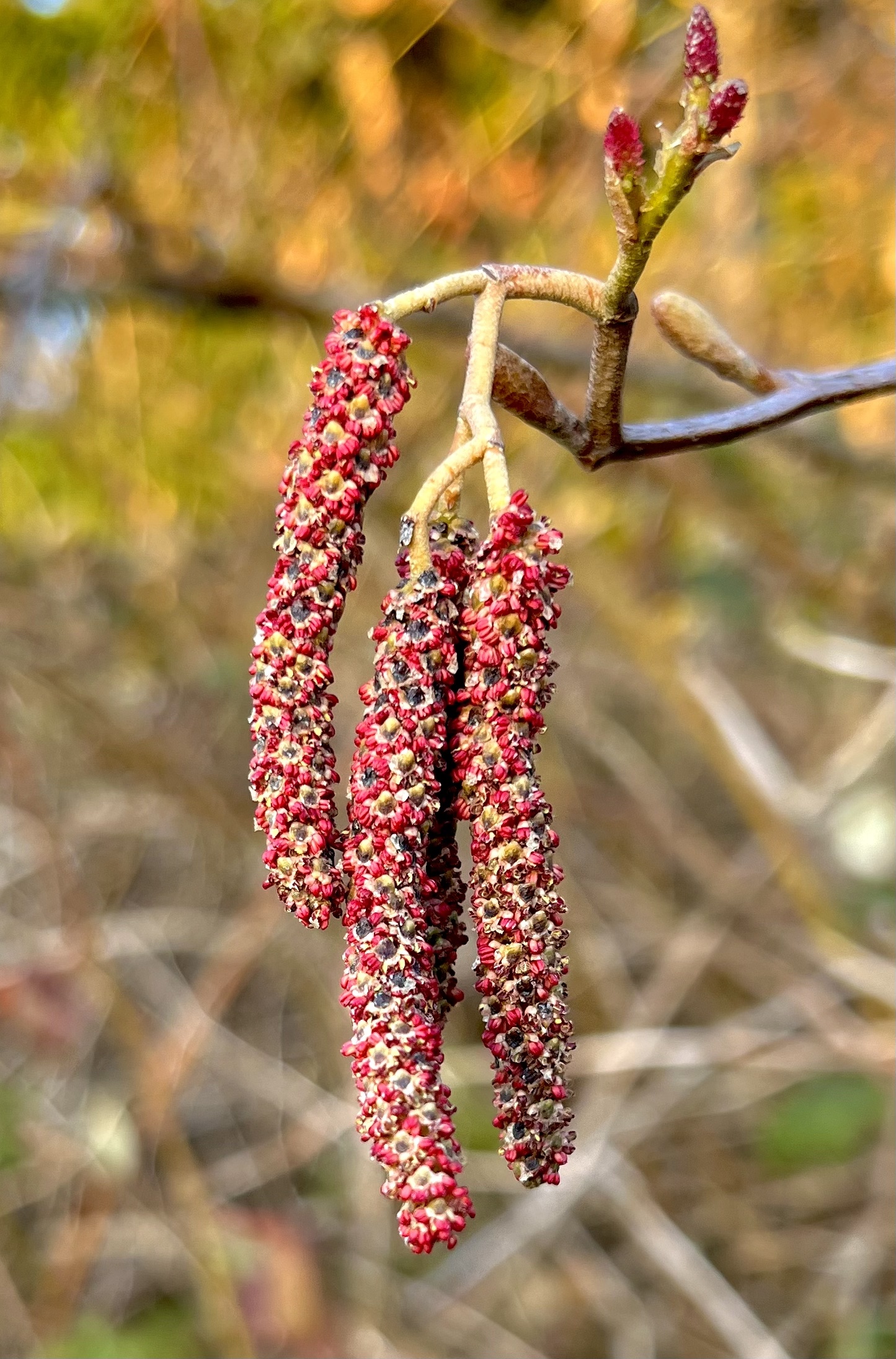
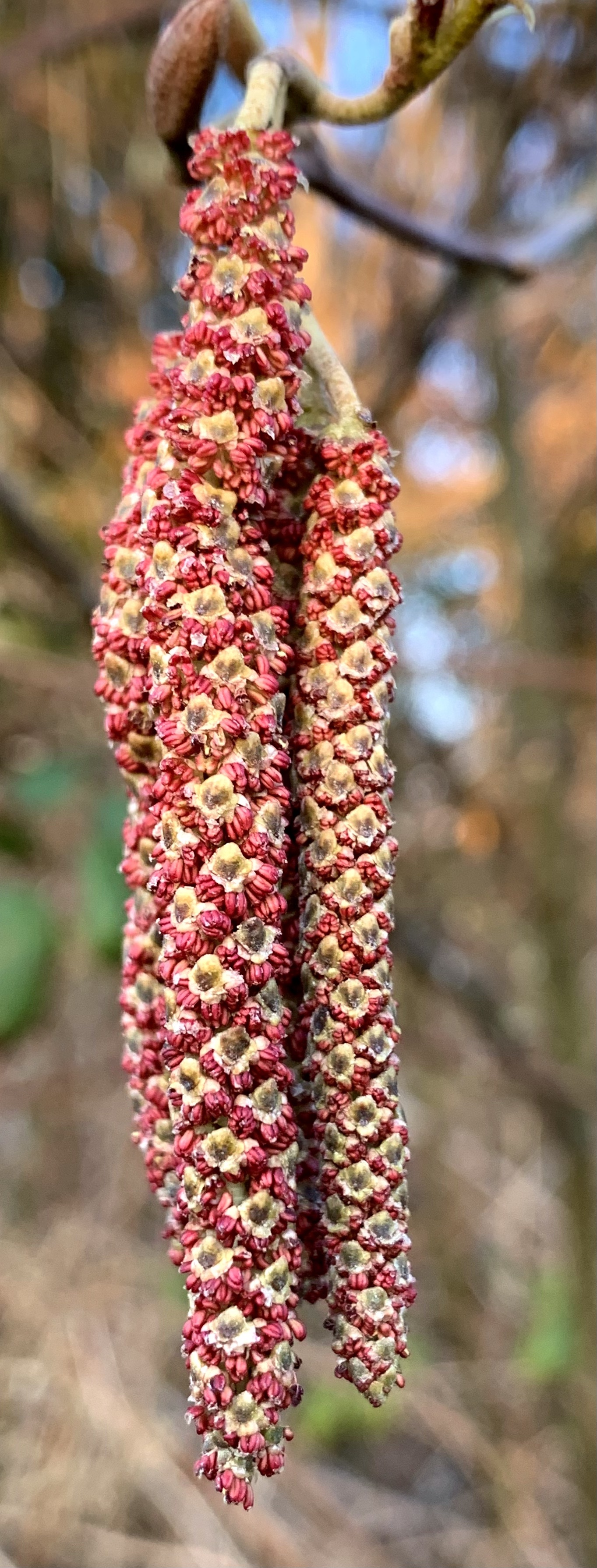
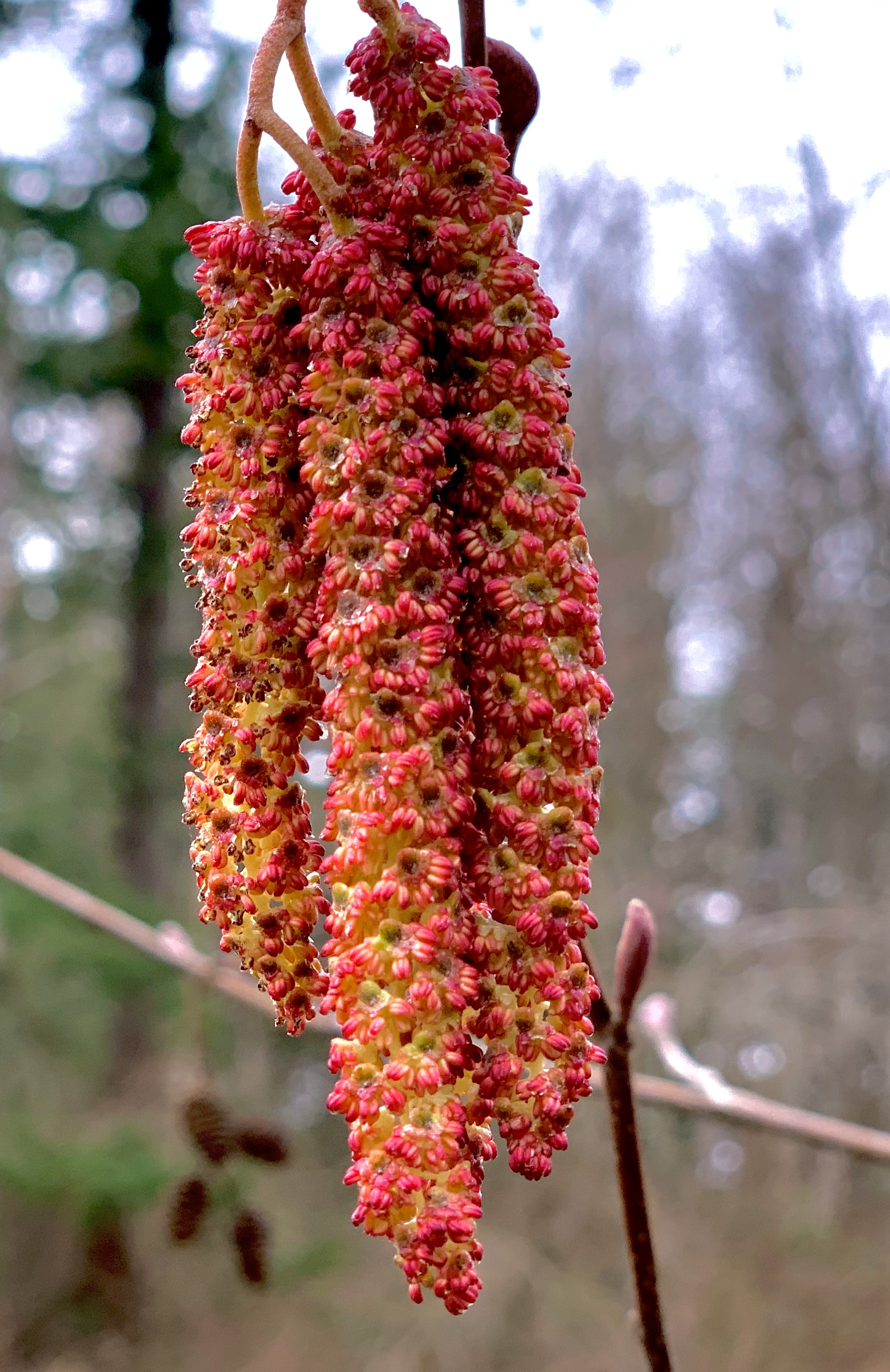
The alder tree branches are still winter-naked as their catkins start to emerge, other-worldly in appearance.
The swinging catkins search out every breeze to spread pollen as far as possible, engaging in serious alder-production business. It’s effective, as annually our pastures fill with baby alder trees, eager to form their own dense community in the wet ground of our lowlands.
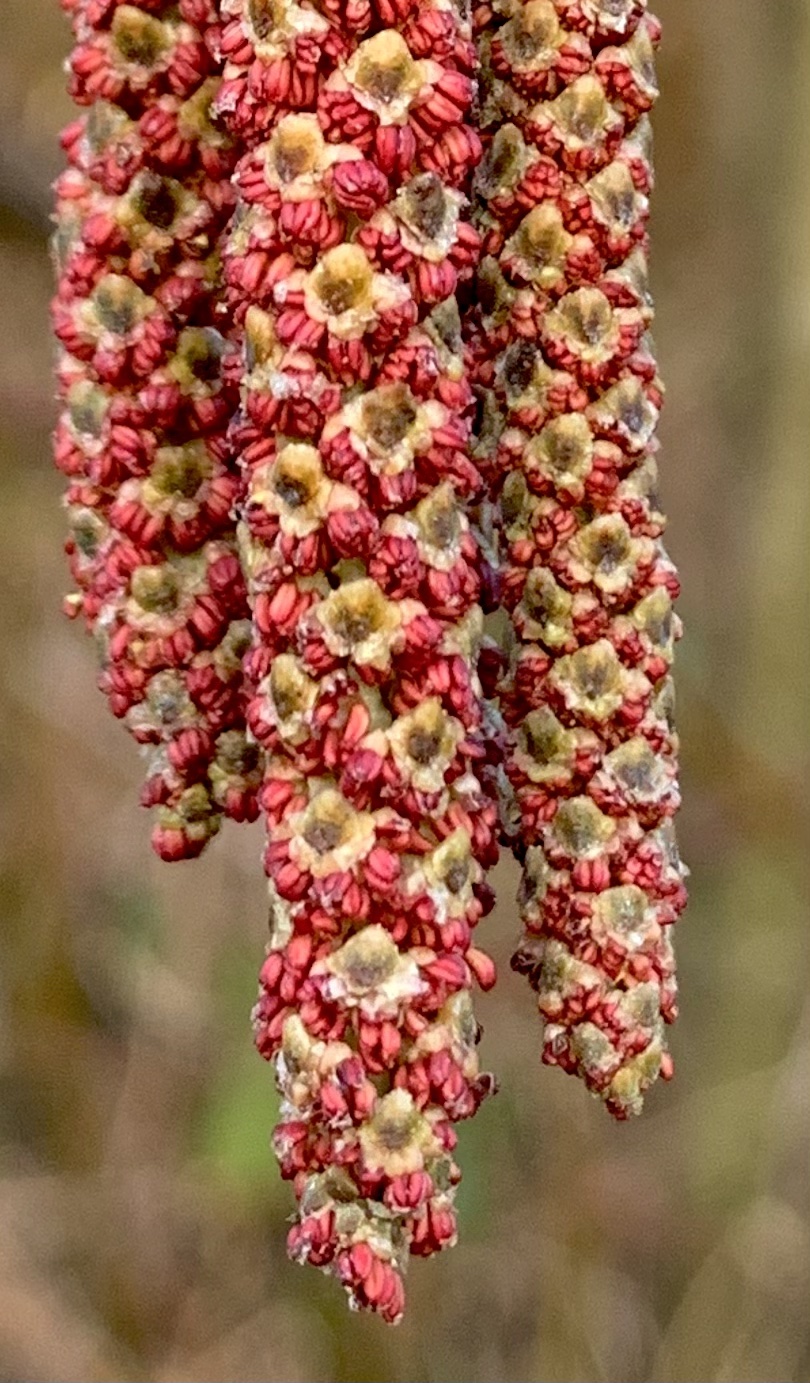
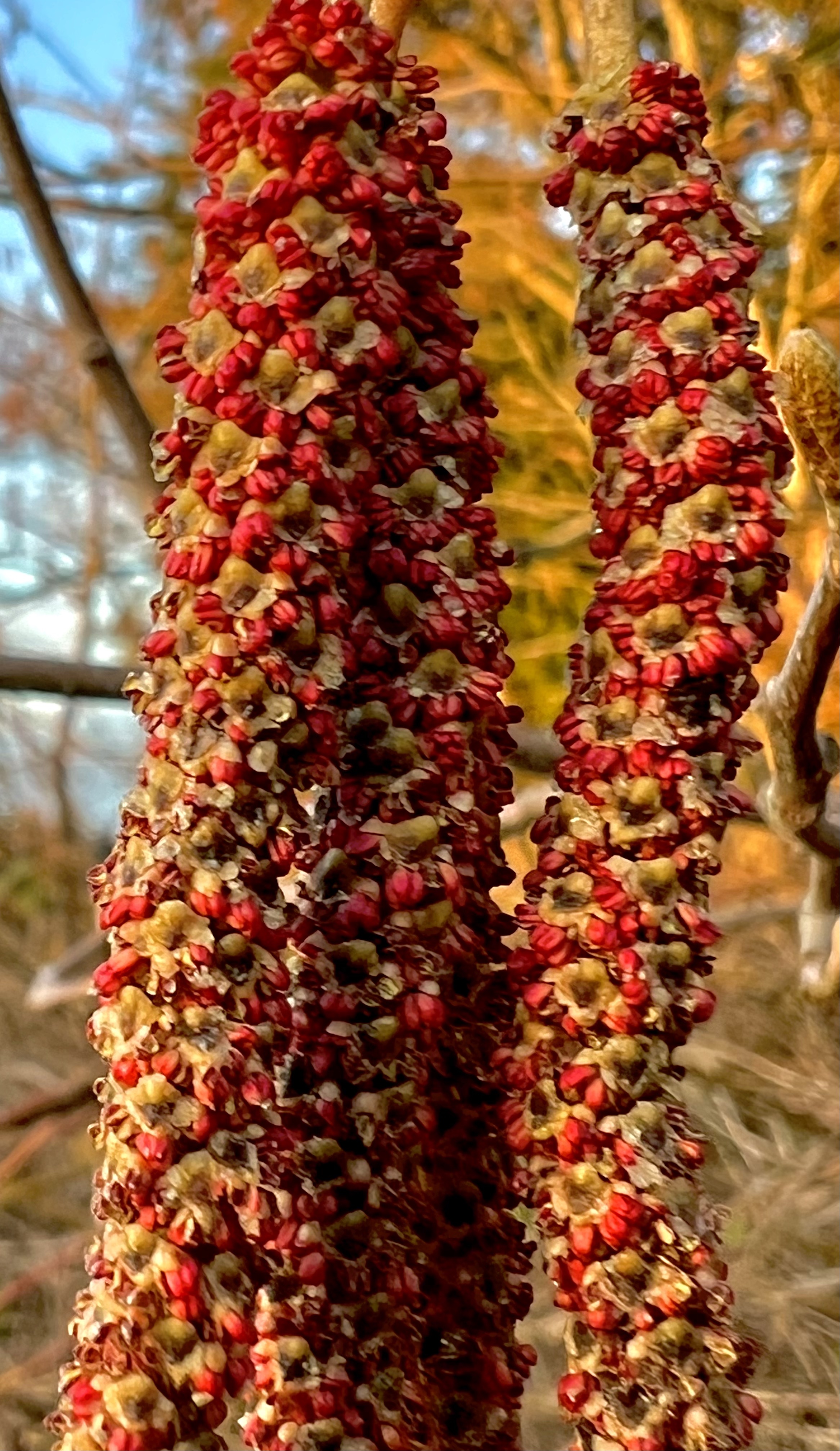
In its desire to dominate the woodlands and allergies here in the northwest, the alder catkin is nothing to trifle with. Though we don’t want a field full of them, I can’t help but admire them this time of year for their bold color and knobby texture, reminiscent of the upholstery of my family’s well-loved 1950’s davenport sofa which converted to a bed for sick kids or visiting cousins.
Another world, another life-time full of dreams…
One-Time
Monthly
Yearly
Make a one-time or recurring donation to support daily Barnstorming posts
I miss the friendship with the pine tree and the birds that I had when I was ten. And it has been forever since I pushed my head under the wild silk skirt of the waterfall.
The big rock on the shore was the skull of a dead king whose name we could almost remember. Under the rooty bank you could dimly see the bunk beds of the turtles.
Nobody I know mentions these things anymore. It’s as if their memories have been seized, erased, and relocated among flowcharts and complex dinner-party calendars.
Now I want to turn and run back the other way, barefoot into the underbrush, getting raked by thorns, being slapped in the face by branches.
Down to the muddy bed of the little stream where my cupped hands make a house, and
I grew up on a small farm with several acres of woodland. It was my retreat until I left for college; I walked among twittering birds, skittering wild bunnies, squirrels and chipmunks, busy ant hills and trails, blowing leaves, swimming tadpoles, falling nuts, waving wildflowers, large firs, pines, cottonwoods, maples and alder trees.
I had a favorite “secret” spot sitting perched on a stump where a large rock provided a favorite sunning spot for salamanders. They and I would make eye contact, pondering our common Creator.
At college I longed for a place as private, as serene, but nothing could match the woods and creatures of my childhood home. After living a decade in the city, I nearly forgot what a familiar woods felt like.
On this farm we’ve stewarded for nearly forty years, I’ve longed for a similar sanctuary, yet my distractions are so much greater than when I was a child. Filled with greater worries, I can’t empty my head and heart as completely to receive the varied gifts to be found around me.
In my ever-shortening timeline to accomplish what I’ve been placed here to do, I need to study the faces of creation, knowing those eyes reflect the face of God.
One-Time
Monthly
Yearly
Make a one-time or recurring donation to support daily Barnstorming posts
Morning without you is a dwindled dawn. ~Emily Dickinsonin a letter to a friend April 1885
Over the years, the most common search term bringing new readers to my Barnstorming blog is “dwindled dawn.”
I had written about Emily Dickinson’s “dwindles” on a number of occasions – missing a house full of our three children, who have their own homes with families. Yet I had not felt afflicted with a serious case of dwindles myself until the ongoing isolation during COVID-time.
I was clearly not the only one. “Dwindles” spread across the globe during the pandemic more quickly than the virus.
There really isn’t a pill that works well for dwindling. One of the most effective treatments is breaking bread with friends and family all in the same room, at the same table, playing games, lingering over conversation or singing together in harmony.
Just being together becomes the ultimate cure for dwindles.
Maybe experiencing friend and family deficiency during the pandemic helped us all understand how crucial we are to one another. It’s high time to replenish the reservoir so we don’t dwindle away to nothing.
If you are visiting these words for the first time because you too searched for “dwindled dawn” — welcome to Barnstorming. We can stave off the dwindles by joining together each day for encouragement and a bit of beauty.
Because mornings without you all diminishes me. I just want you to know.
One-Time
Monthly
Yearly
Make a one-time or recurring donation to support daily Barnstorming posts
I wondered if that was how forgiveness budded; not with the fanfare of epiphany, but with pain gathering its things, packing up, and slipping away unannounced in the middle of the night. — Khaled Hosseini from The Kite Runner
The time is ripe for looking back over the day, the week, the year, and trying to figure out where we have come from and where we are going to, for sifting through the things we have done and the things we have left undone for a clue to who we are and who, for better or worse, we are becoming.
We cling to the present out of wariness of the past.
But there is a deeper need yet, I think, and that is the need—not all the time, surely, but from time to time—to enter that still room within us all where the past lives on as a part of the present, where the dead are alive again, where we are most alive ourselves to turnings and to where our journeys have brought us.
The name of the room is Remember—the room where with patience, with charity, with quietness of heart, we remember consciously to remember the lives we have lived. ~Frederick Buechner from A Room Called Remember
age nineage 14age 15
Something went wrong, says the empty house in the weed-choked yard. Stones in the fields say he was not a farmer; the still-sealed jars in the cellar say she left in a nervous haste. And the child? Its toys are strewn in the yard like branches after a storm—a rubber cow, a rusty tractor with a broken plow, a doll in overalls. Something went wrong, they say. ~Ted Kooser, from “Abandoned Farmhouse” from Sure Signs: New and Selected Poems.
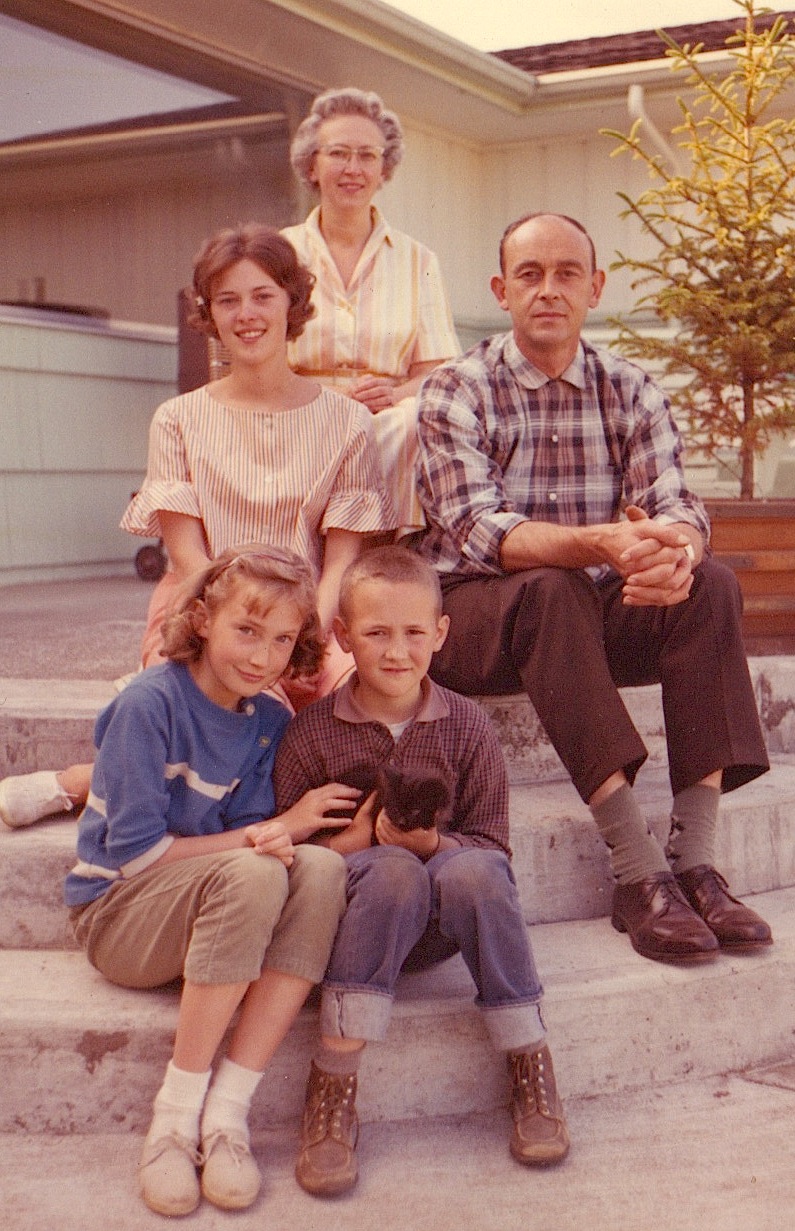
In 1959, when I was five years old, my father took a new job so our family moved from a large 3 story farm house in a rural community to a 1950’s newer rambler-style home just outside the city limits of the state capitol.
It was a big adjustment to move to a much smaller house without a basement or upper story, no garage, and no large haybarn nor chicken coop. It meant most things we owned didn’t make the move with us.
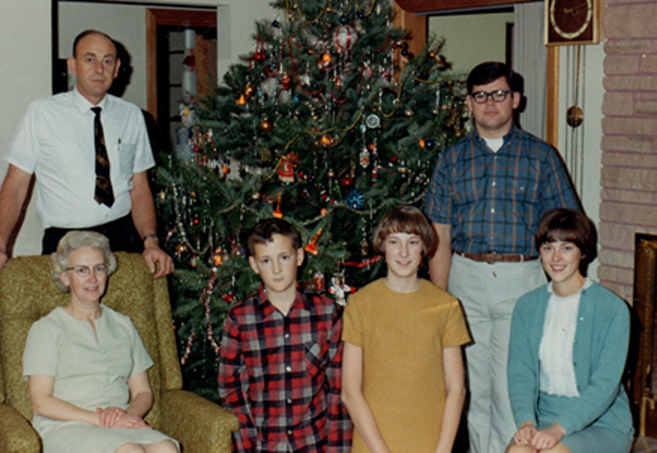
The rambler had two side-by-side mirror image rooms as the primary central living space between the kitchen/dining area on one side and the hallway to the bedrooms on the other. The living room could only be entered through the front door and the family room was accessed through the back door with a shared sandstone hearth in the center, containing a fireplace in each room. The only opening between the rooms had a folding door shut most of the year. In December, the door was opened to accommodate a Christmas tree, so it sat partially in the living room and depending on its generous width, spilled over into the family room. That way it was visible from both rooms, and didn’t take up too much floor space.
The living room, because it contained the only carpeting in the house, and our “best” furniture, was strictly off-limits. In order to keep our two matching sectional knobby gray fabric sofas, a green upholstered chair and gold crushed velvet covered love seat in pristine condition, the room was to be avoided unless we had company. The carpet was never to develop a traffic pattern, there would be no food, beverage, or pet ever allowed in that room, and the front door was not to be used unless a visitor arrived. The hearth never saw a fire lit on that side because of the potential of messy ashes or smoke smell.
This was not a room for toys or games. The chiming clock next to the hearth, wound with weighted cones on the end of chains, called out the hours without an audience.
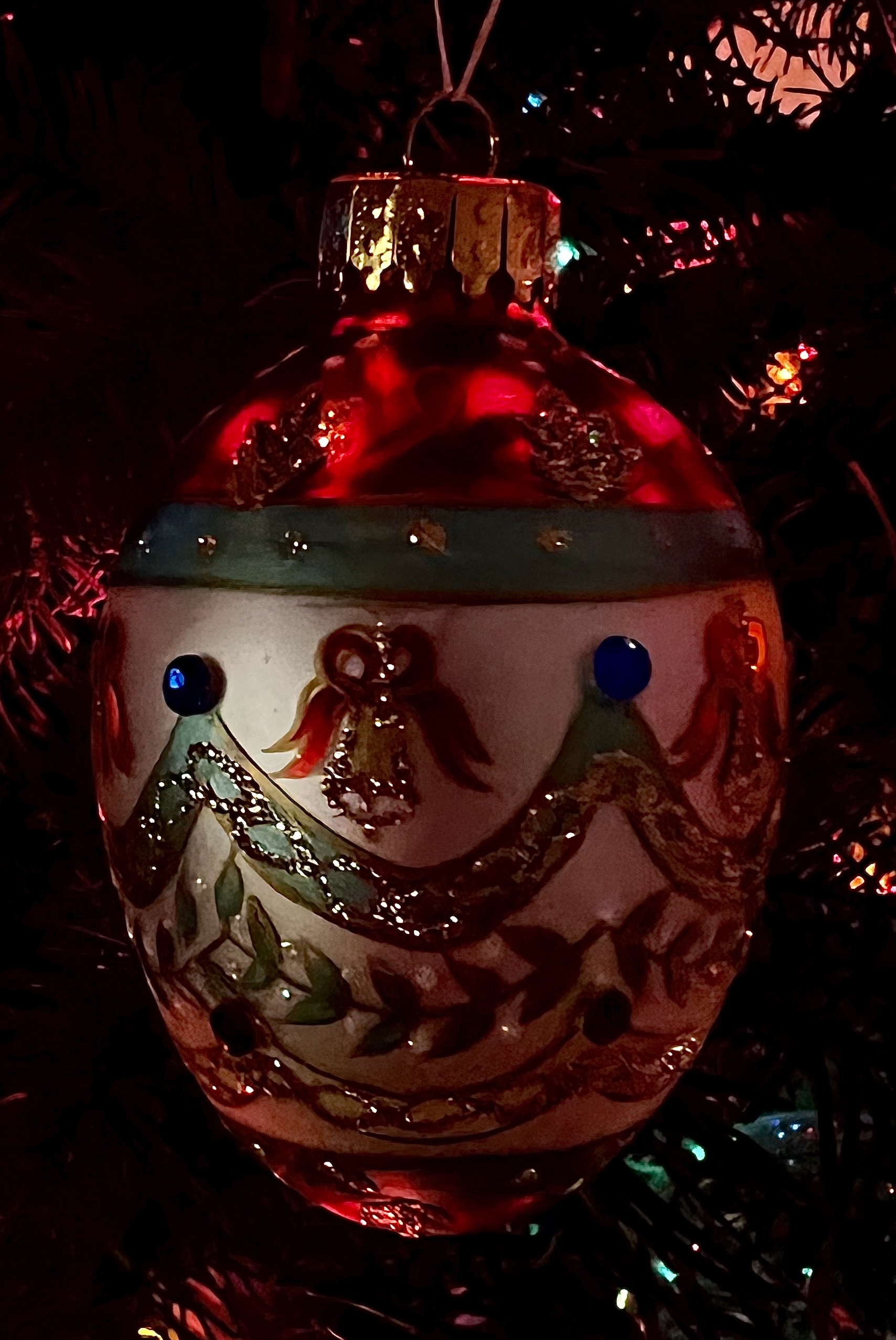
One week before Christmas, a tree was chosen to fit in the space where it could overflow into the family room. I particularly enjoyed decorating the “family room” side of the tree, using all my favorite ornaments that were less likely to break if they fell on the linoleum floor on that side of the door.
It was almost as if the Christmas tree itself became divided, with a “formal” side in the living room and a “real life” face on the other side where the living (and hurting) was actually taking place.
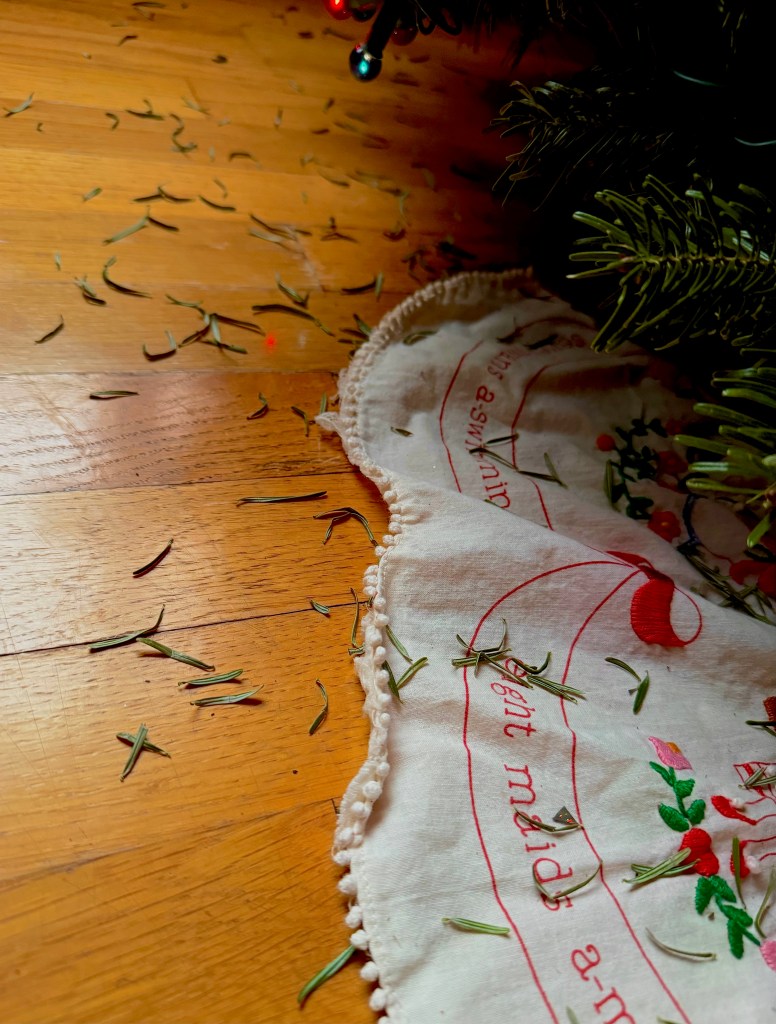
The tree straddled more than just two rooms. Every year that tree’s branches reached out to shelter a family that was slowly, almost imperceptibly, falling apart, like the fir needles dropping to the floor to be swept away.
Something was going wrong, only I didn’t see it at the time.
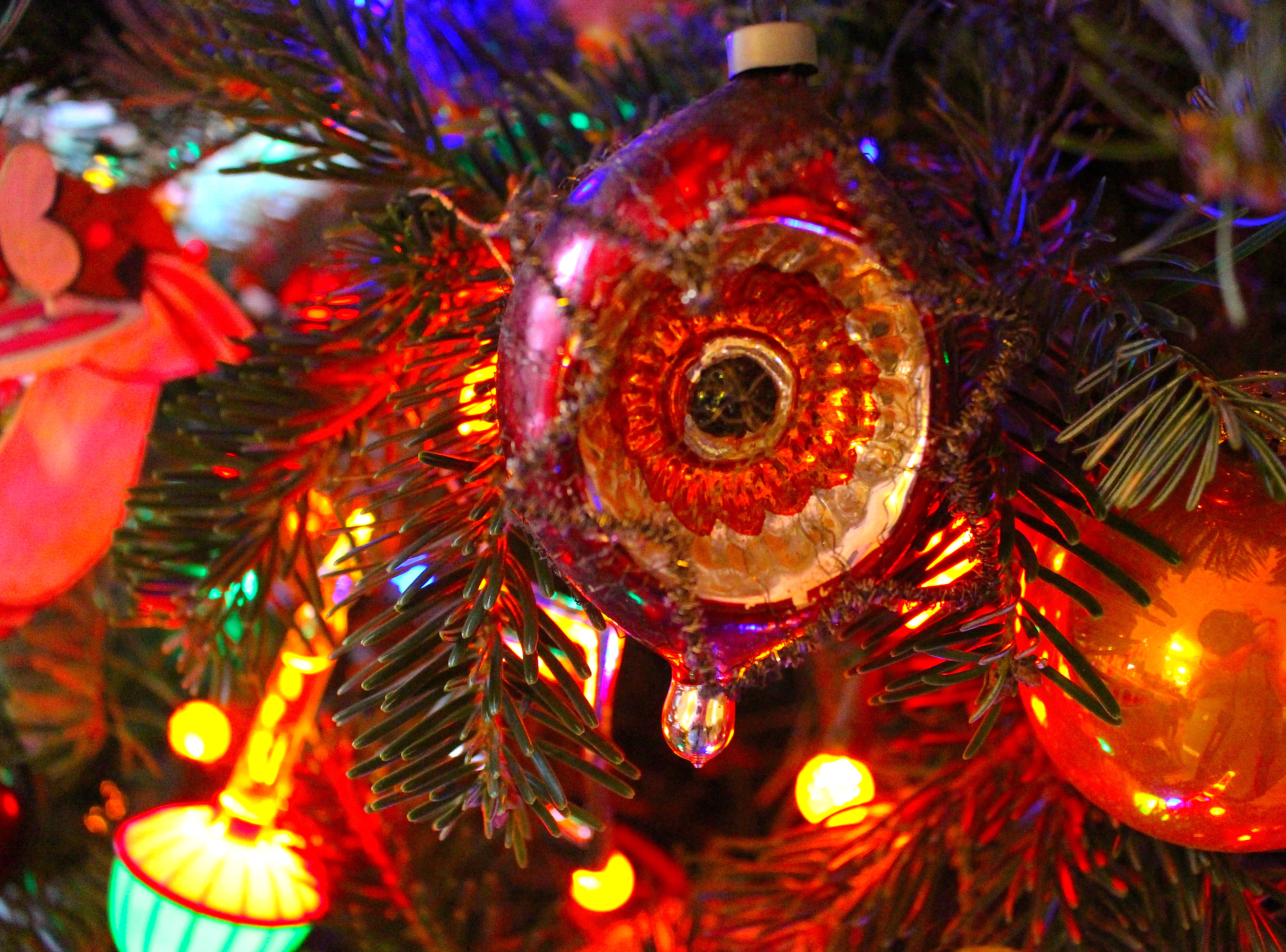
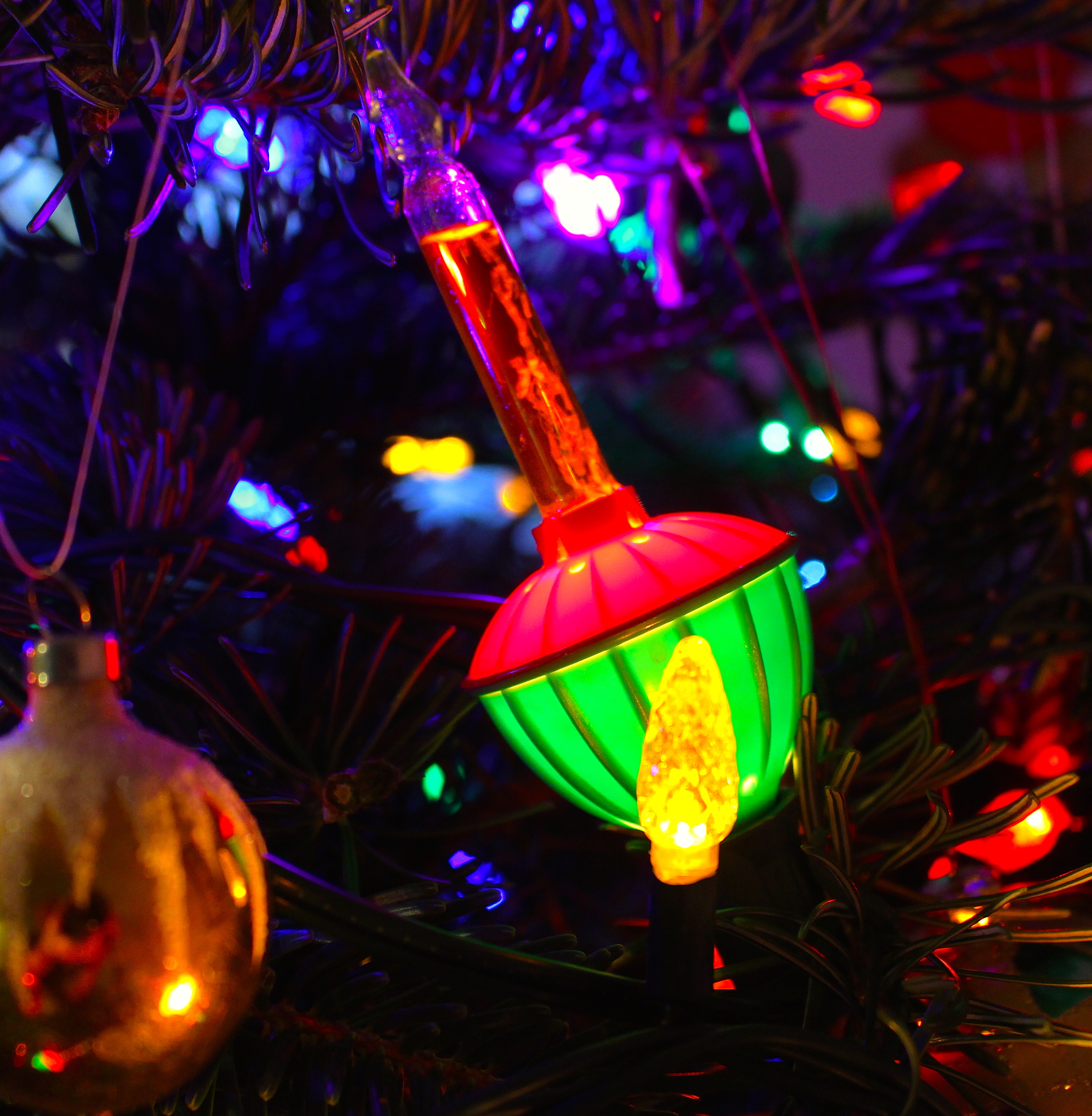
Each year since, our Christmas tree, bearing those old ornaments from my childhood, reminds me of that still room of memories.
No longer am I wary of the past. As I sweep up the fir needles that inevitably drop, I no longer weep.
One-Time
Monthly
Yearly
Make a one-time or recurring donation to support daily Barnstorming posts
Today is my mother’s birthday, but she’s not here to celebrate by opening a flowery card or looking calmly out a window.
If my mother were alive, she’d be 114 years old, and I am guessing neither of us would be enjoying her birthday very much.
Mother, I would love to see you again to take you shopping or to sit in your sunny apartment with a pot of tea, but it wouldn’t be the same at 114.
And I’m no prize either, almost 20 years older than the last time you saw me sitting by your deathbed. Some days, I look worse than yesterday’s oatmeal.
It must have been frigid that morning in the hour just before dawn on your first December 1st at the family farm a hundred miles north of Toronto.
Happy Birthday, anyway. Happy Birthday to you. ~Billy Collins from “December 1”
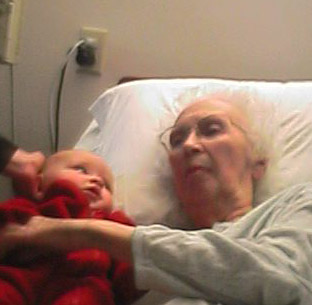
My mom meeting grandson Noah shortly before her death
December 1st is not my mother’s birthday but it was her death day seventeen years ago.
Yet it felt a bit like a birth.
The call came from the care center about 5:30 AM on the Monday after Thanksgiving on a frozen morning: the nurse gently said her breathing had changed, it wasn’t long now until she’d be gone.
My daughter and I quickly dressed and went out into bleak darkness to make the ten minute drive to where she lay. Mom had been wearily existing since a femur fracture 9 months earlier on a cruel April 1st morning. Everything changed for her at 87 years of being active. It was the beginning of the end for her, unable to care for herself at home.
Those nine months had been her gestation time to cross the threshold into a new life. It occurred to me as I drove – she was about to be born into her long-awaited yet long-feared transition to death.
Her room was darkened except for the multicolored lights on the table top artificial Christmas tree I had brought her a few days earlier. It cast colorful shadows onto the walls and the white bedspread on her hospital bed. It even made her look like she had color to her cheeks where there actually was none.
There was no one home.
She had already left, flown away while we drove the few miles to come to her. There was no reaching her now. Her skin was cooling, her face hollowed by the lack of effort, her body stilled and sunken.
I could not weep at that point – it was her liminal time to leave us behind. She was so very tired, so very weary, so very ready for heaven. And I, weary too, felt much like yesterday’s oatmeal, something she actually very much loved during her life, cooking up a big batch a couple times a week, enough to last several days.
I knew, seeing what was left of her there in that bed, Mom was no longer settling for yesterday’s oatmeal and no longer homeless. I knew she now was present for an everlasting feast, would never suffer insomnia again, would no longer be fearful of dying, her cheeks forever full of color.
I knew she had a new beginning: the glory of rebirth thanks to her Savior who had gently taken her by the hand through heaven’s gate to a land where joy would never end.
Happy Birthday, Mom. Happy December 1st Birthday to you.
I’ll fly away, oh glory I’ll fly away in the morning When I die hallelujah by and by I’ll fly away
God makes us happy as only children can be happy. God wants to always be with us, wherever we may be – in our sin, in our suffering and death. We are no longer alone; God is with us. We are no longer homeless; a bit of the eternal home itself has moved unto us. ~Dietrich Bonhoeffer
My 2025 Advent theme: On the threshold between heaven and earth
On that day there will be neither sunlight nor cold, frosty darkness. It will be a unique day—a day known only to the Lord— with no distinction between day and night. When evening comes, there will be light. Zechariah 14:6-7
So once in Israel love came to us incarnate, stood in the doorway between two worlds, and we were all afraid. ~Annie Dillard in Teaching a Stone to Talk
O Earth, lie heavily upon her eyes; Seal her sweet eyes weary of watching, Earth; Lie close around her; leave no room for mirth With its harsh laughter, nor for sound of sighs. She hath no questions, she hath no replies, Hushed in and curtained with a blessed dearth Of all that irked her from the hour of birth; With stillness that is almost Paradise. Darkness more clear than noon-day holdeth her, Silence more musical than any song; Even her very heart has ceased to stir: Until the morning of Eternity Her rest shall not begin nor end, but be; And when she wakes she will not think it long. ~Christina Rossetti “Rest”
One-Time
Monthly
Yearly
Make a one-time or recurring donation to support daily Barnstorming posts
My grandfather stands on the front porch watching the dogs come back, reassembled
from hair and grit and eyeteeth. Now the twin mares browse by the fence
in their coats of dust. Nobody asks what they mean, appearing so suddenly
when nobody needed them, or called. In the back yard, the buried people —
great-grandmothers in spectator pumps, the great-grandfather who died of sneezing,
the first baby, never named — stay buried. It’s not their overshoes
lost in the grass behind the smokehouse, not their faces alive in anyone’s
memory. But my mother waits in the pecan tree’s fingered shadow,
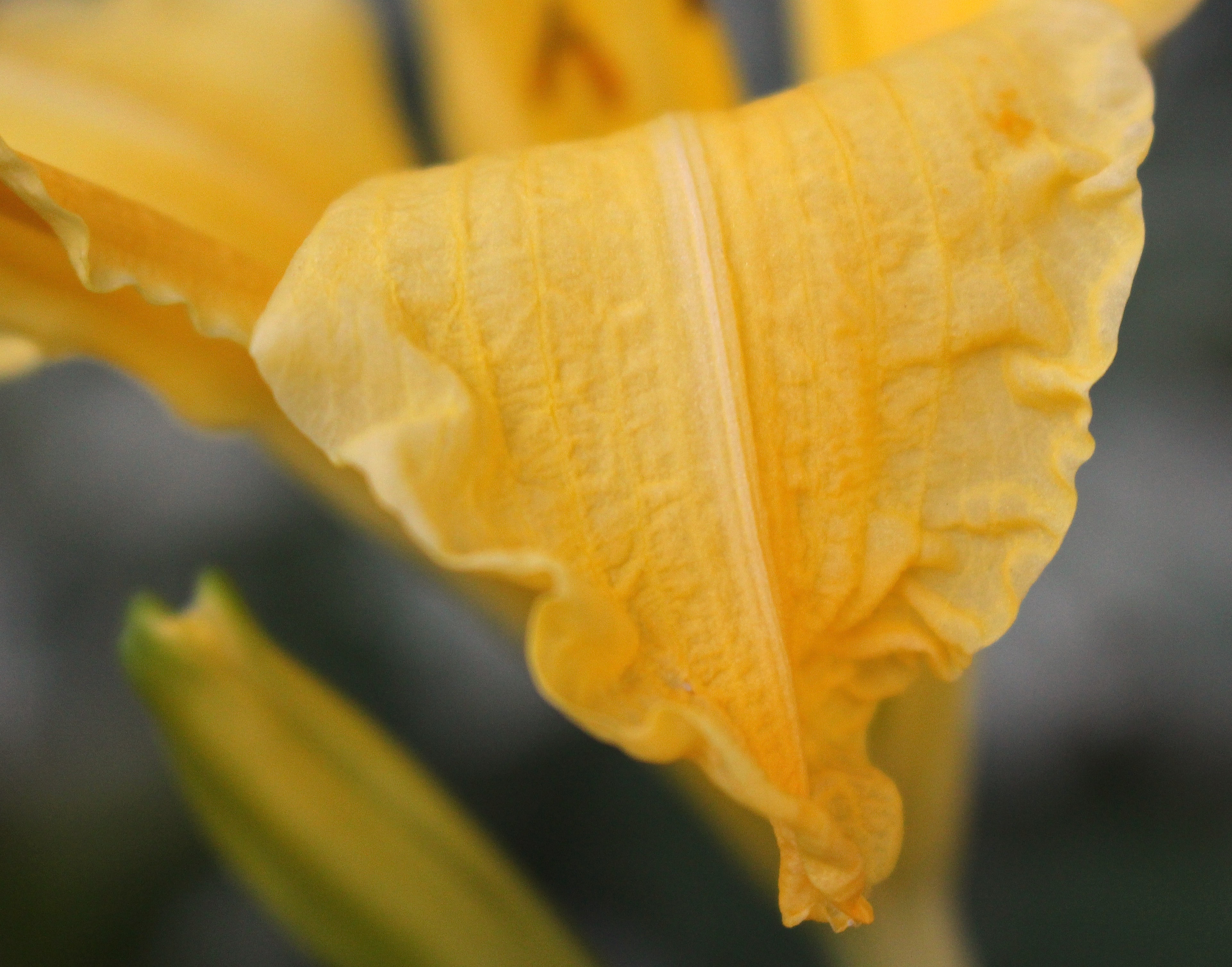
holding a broken milk jug full of daylilies, waiting as if
she wanted someone to tell her again it’s all right to be born now,
now is as good a time as any. In a month we’ll find my grandfather’s glasses
in their case under the front seat of his car. “Oh goodness,” my aunt will say,
as if it were a matter of his forgetting them. As if we could
give them back. We’re all convinced we’ve missed the moment. We forget
that pause while a soul undoes its buttons, the world falls away,
and one by one we step out into this death, to be remembered. ~Sally Thomas “Reunion”
The sunlight now lay over the valley perfectly still. I went over to the graveyard beside the church and found them under the old cedars… I am finding it a little hard to say that I felt them resting there, but I did… I saw that, for me, this country would always be populated with presences and absences, presences of absences, the living and the dead. The world as it is would always be a reminder of the world that was, and of the world that is to come. Wendell Berry in Jayber Crow
When it’s over, I don’t want to wonder if I have made of my life something particular, and real. I don’t want to find myself sighing and frightened or full of argument.
I don’t want to end up simply having visited this world. ~Mary Oliver from “When Death Comes”
God is at home. It is we who have gone out for a walk. ~Meister Eckhart
And He awaits for our return. He keeps the light on, so we can find our way back, when we are weary, or fearful or hungry or simply longing for reunion, to be remembered.
I think of those who wait for me on the other side, including our baby lost before birth over 42 years ago.
I know God watches over all these reunions; He knows the moment when our fractured hearts heal whole once again.
I will see you soon enough, sweet ones. Soon enough.
One-Time
Monthly
Yearly
Make a one-time or recurring donation to support daily Barnstorming posts
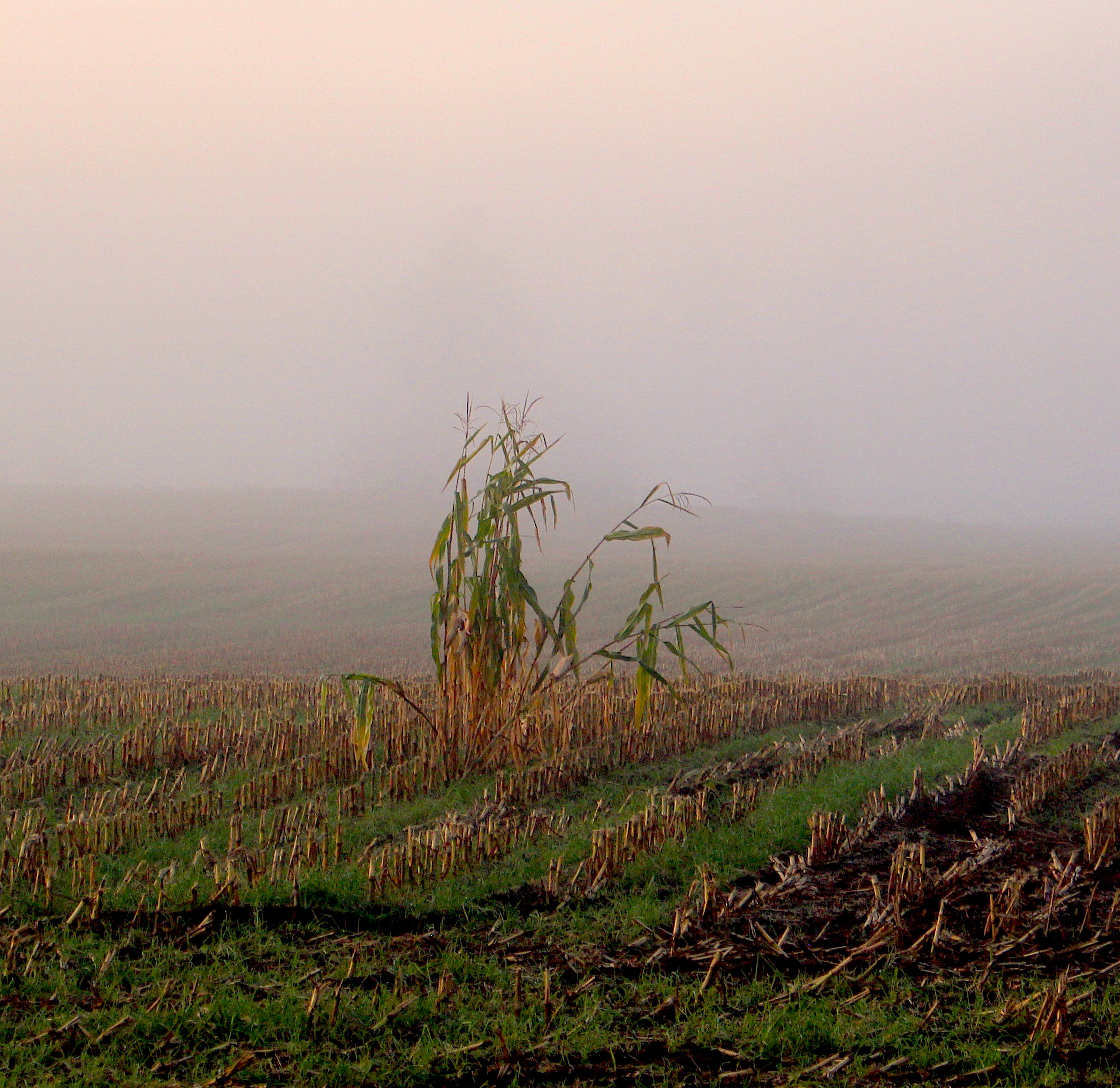
In the quiet misty morning When the moon has gone to bed When the sparrows stop their singing And the sky is clear and red When the summer ceased it’s gleaming When the corn is past its prime When adventures lost its meaning I’ll be homeward-bound in time ~Marta Keen from “Homeward Bound”
On Halloween day in 1985, I packed up a roll-up mattress pad, grabbed one lonely pumpkin from our small garden, locked our rental house door for the last time, then climbed in my car to head two hours north out of Seattle.
I don’t recall looking back in the rear view mirror at the skyline after nine years living in the city. My husband had moved to Whatcom County two months earlier to start his new job. I had stayed behind to wrap up my Group Health family practice in the Rainier Valley of central Seattle.
I was leaving the city for our new rural home and a very uncertain professional future.
I knew two things for sure: I was finally several months pregnant after a miscarriage and two years of trying to conceive, so our family was on its way, and we were going to live in our own house with a few acres and a barn.
A real (sort of) starter farm and starter family, a dream we both shared. Our home sits in the midst of woods and corn fields, with deer strolling through the fields at dawn, coyotes howling at night, Canadian geese and trumpeter swans calling from overhead and salmon thriving in nearby streams. The snowy Cascades greet us in the morning to the east, the Canadian Coastal range majestic to the north and not far to the west, the Salish Sea/Puget Sound.
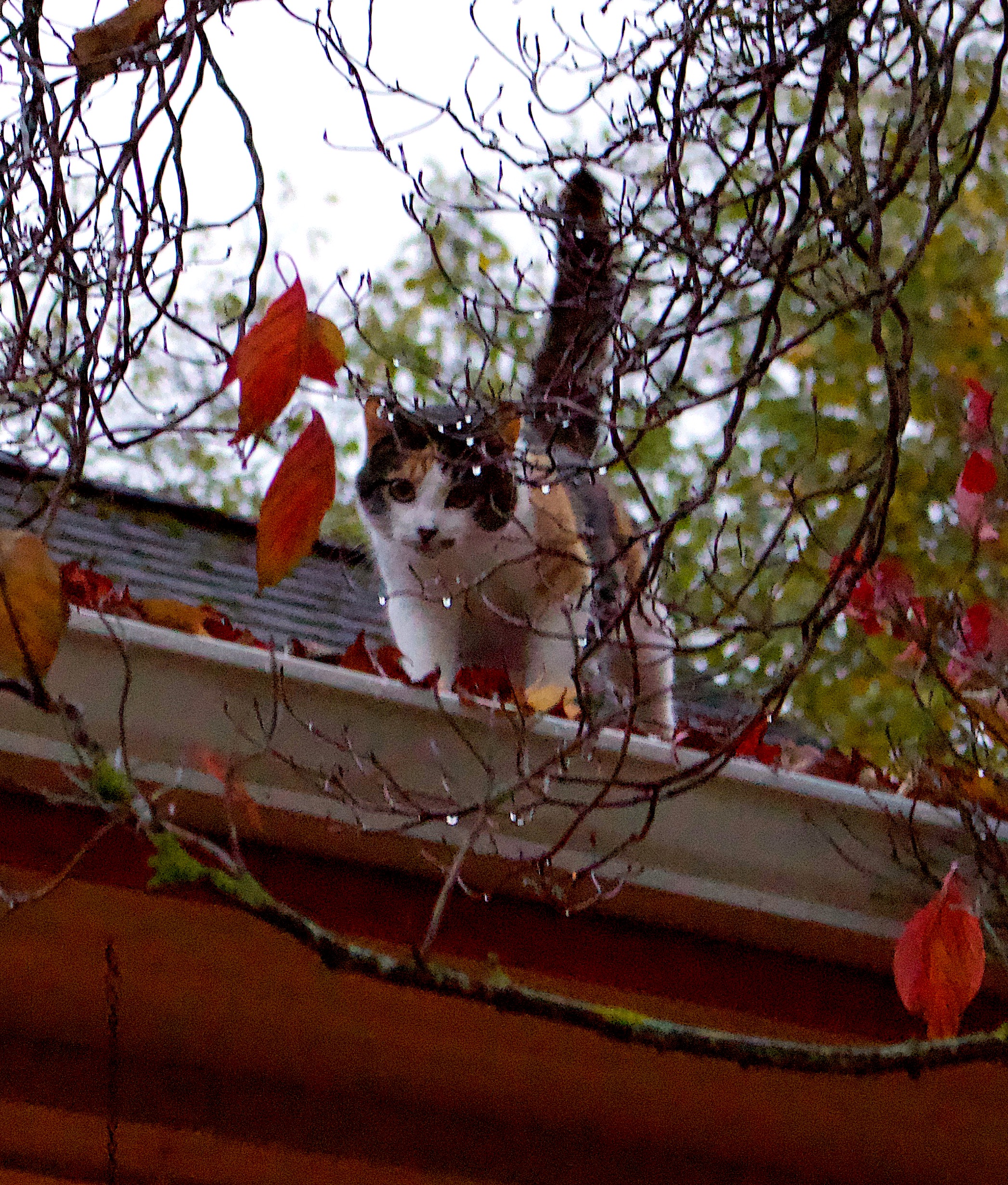
Since it wouldn’t be a farm without animals, I stopped at the first pet store I drove past and found two tortoise shell calico kitten sisters peering up at me, just waiting for new adventures in farmland. Their box was packed into the one spot left beside me in my little Mazda.
With that simple commitment to raise and nurture those kittens alongside the life growing inside me, life seemed very complete.
I will never forget the freedom I felt on that drive north. The highway seemed more open, the fall colors more vibrant, the wind more energizing, our baby kicking my belly, the kittens mewing from their box. There seemed so much potential even though I had just left behind the greatest family practice found in any urban setting (at the time, it was the most ethnically diverse zip code in the United States) with patients from all over the world: alongside the multi-racial inner city population living in subsidized housing developments, my patients included Muslim immigrants from the Middle East and Indonesia, Orthodox Jews, Italian Catholics, and refugees from Cambodia, Laos, and Vietnam.
I will never know so much variety of ethnic background and perspective again. If I could have packed them all into my little car and driven them north with me, I would have.
Despite what I was leaving behind, there was certainly a feeling of freedom that rainy Halloween day as the big city disappeared in the rear view mirror.
No longer would I sit captive in freeway rush-hour bumper to bumper traffic jams. I traded that for a new rural commute winding through farm fields while watching eagles fly overhead. I could become part of a community in a way I never could manage in the city, visiting with friends at the grocery store, playing piano and teaching Sunday School at church and serving on various community boards.
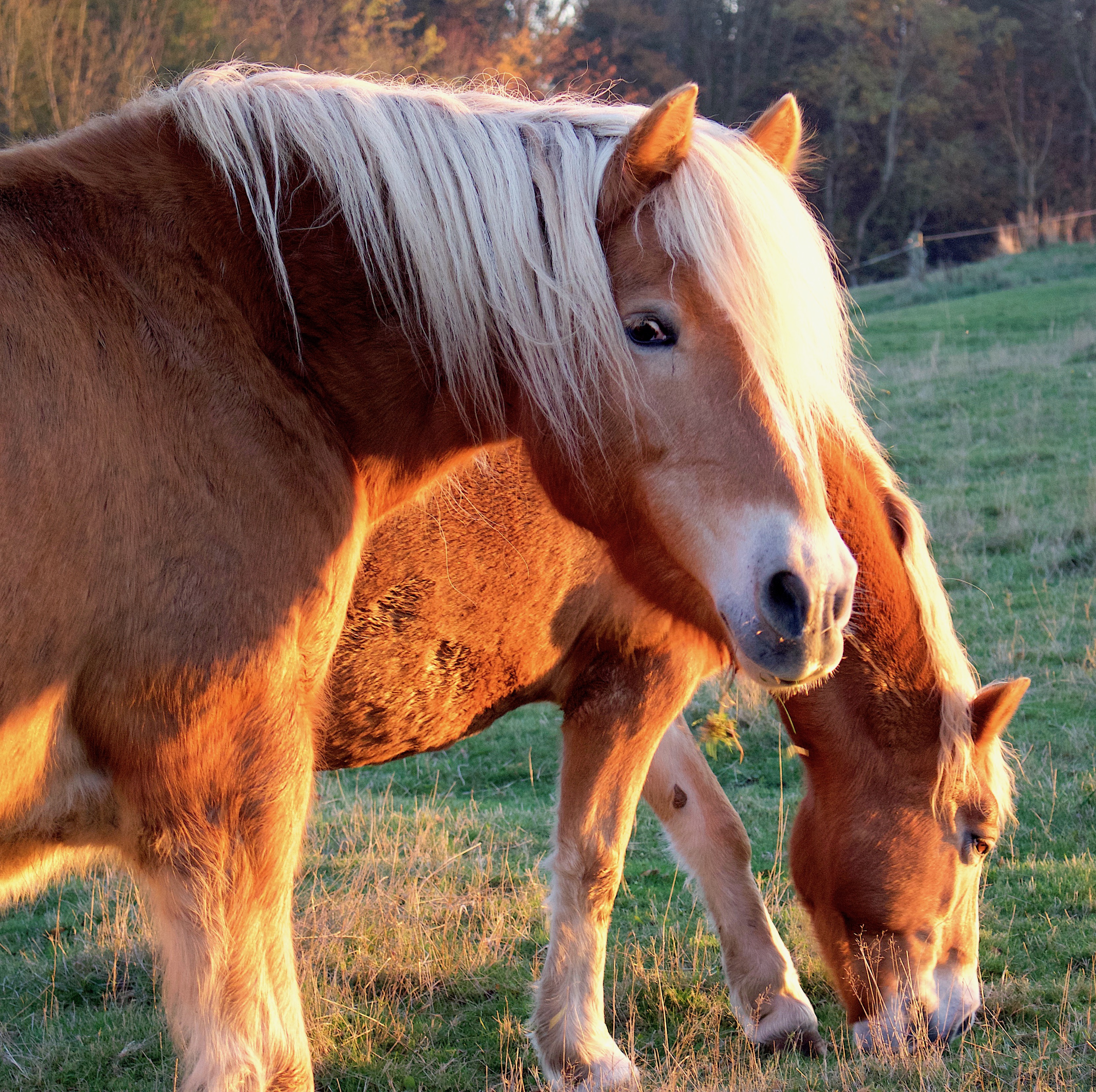
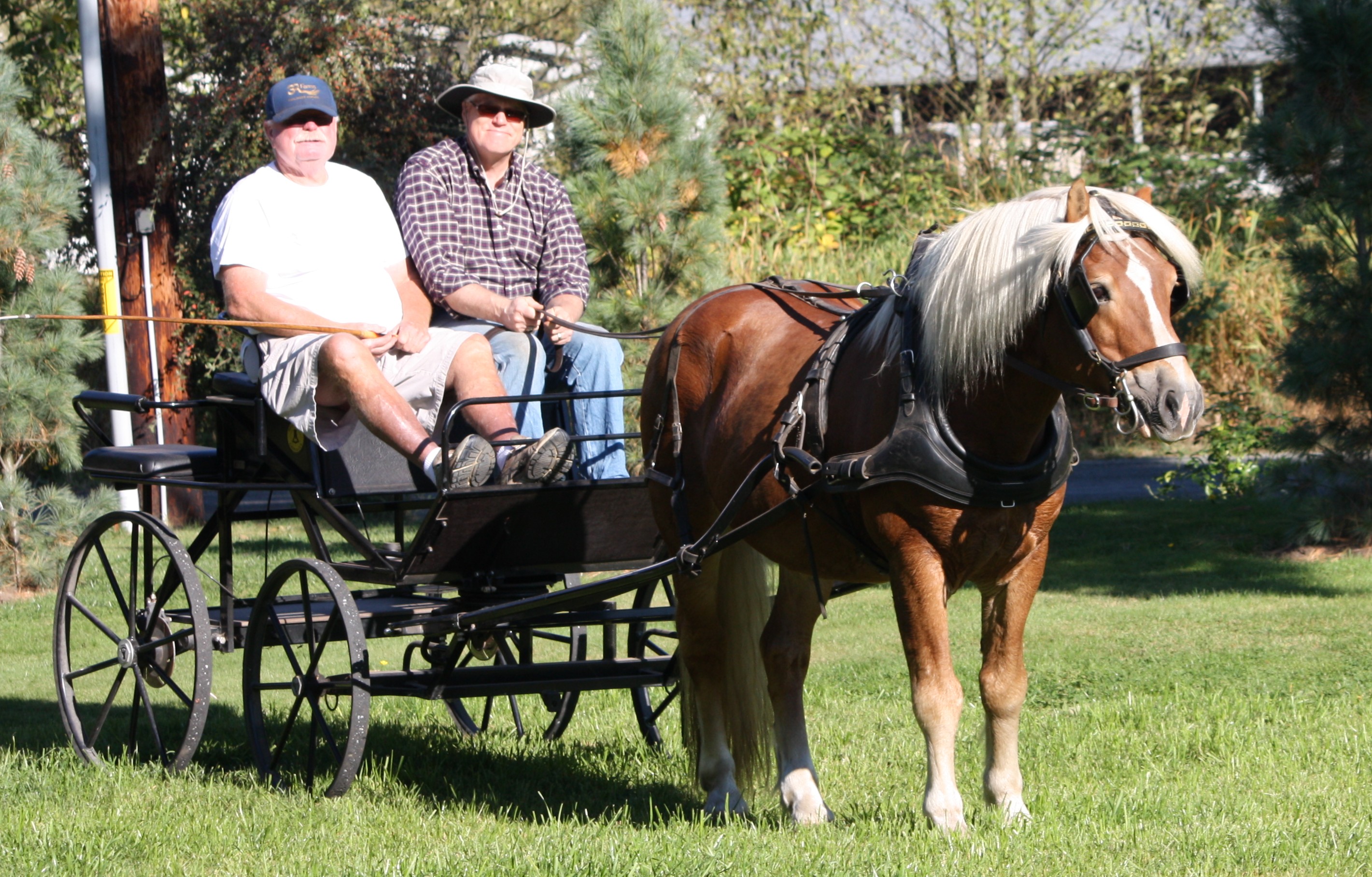
After the new kittens, dubbed Nutmeg and Oregano, arrived on our farm, we added even more diversity: a Belgian Tervuren dog Tango, a Haflinger horse Greta, Toggenburg goats Tamsin and her kids, a few Toulouse geese, Araucana chickens, Fiona the Scottish Highland cow, then another Haflinger Hans and another, Tamara. I worked as a fill-in doctor in four different clinics before our first baby was born, then settled into part-time practice in several different clinics for most of my career.
With those new commitments, life was fulfilling and busy – we soon added a little brother and seven years later, a sister. Then it felt like our family was complete.
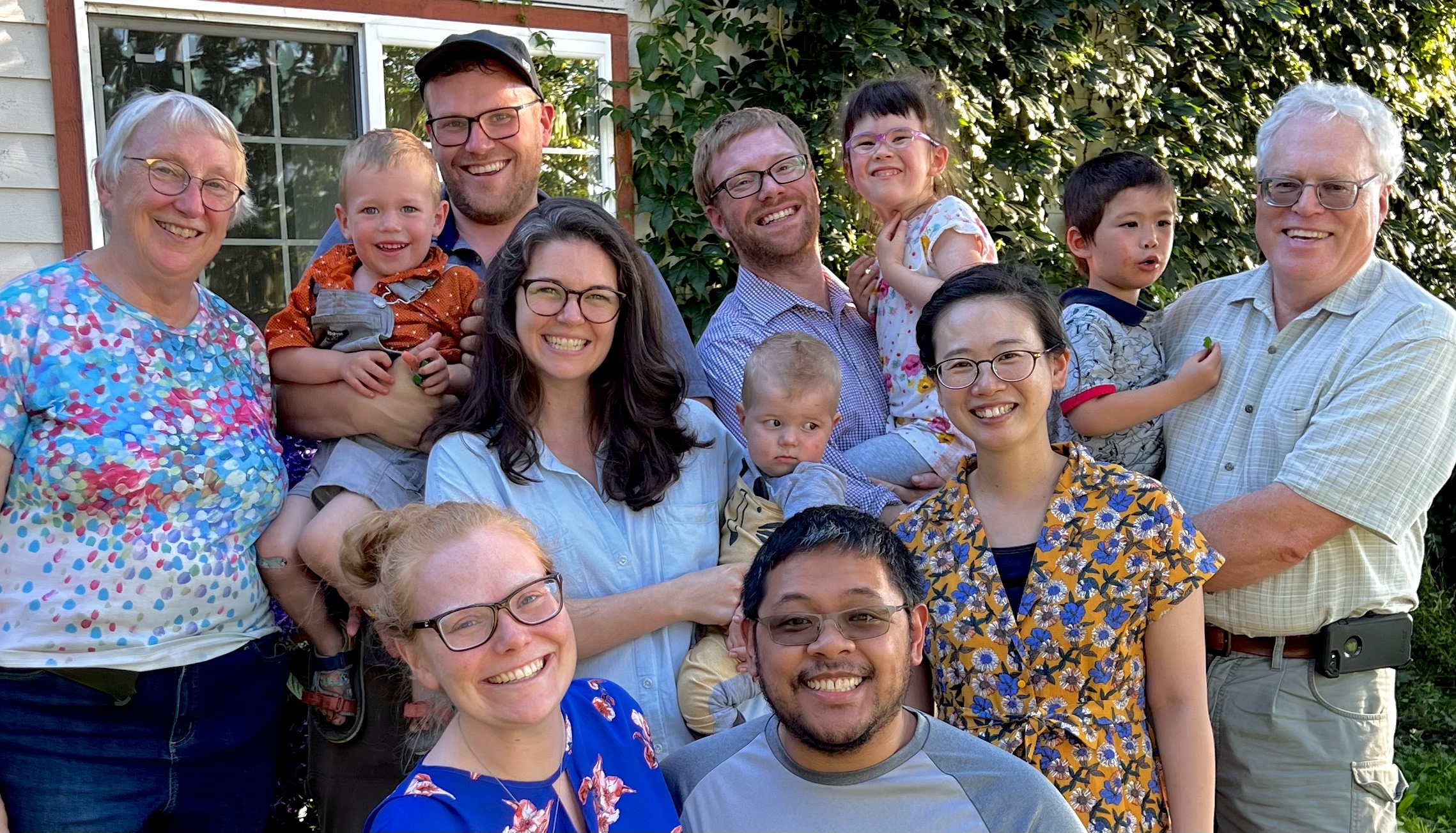
Forty years later, our children have grown and gone to homes of their own, all married to wonderful spouses, raising six delightful children for us to lavish love on.
Somehow life now feels even more complete.
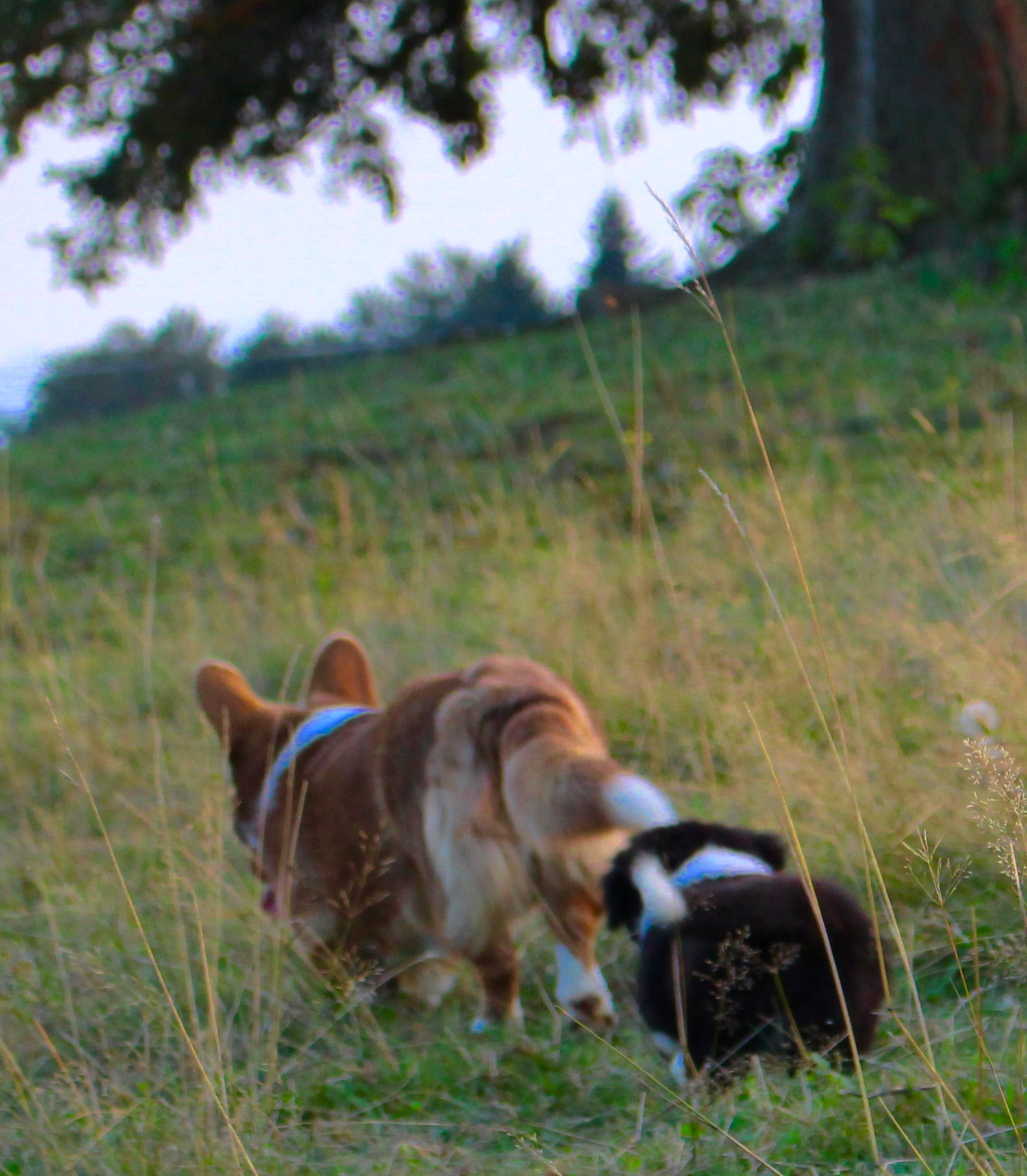
A few cats, a Cardigan Corgi, and three ponies still live at the farm with us. Now retired from our professional lives “in town”, we enjoy the freedom of slower and quieter days, nurtured and nurturing.
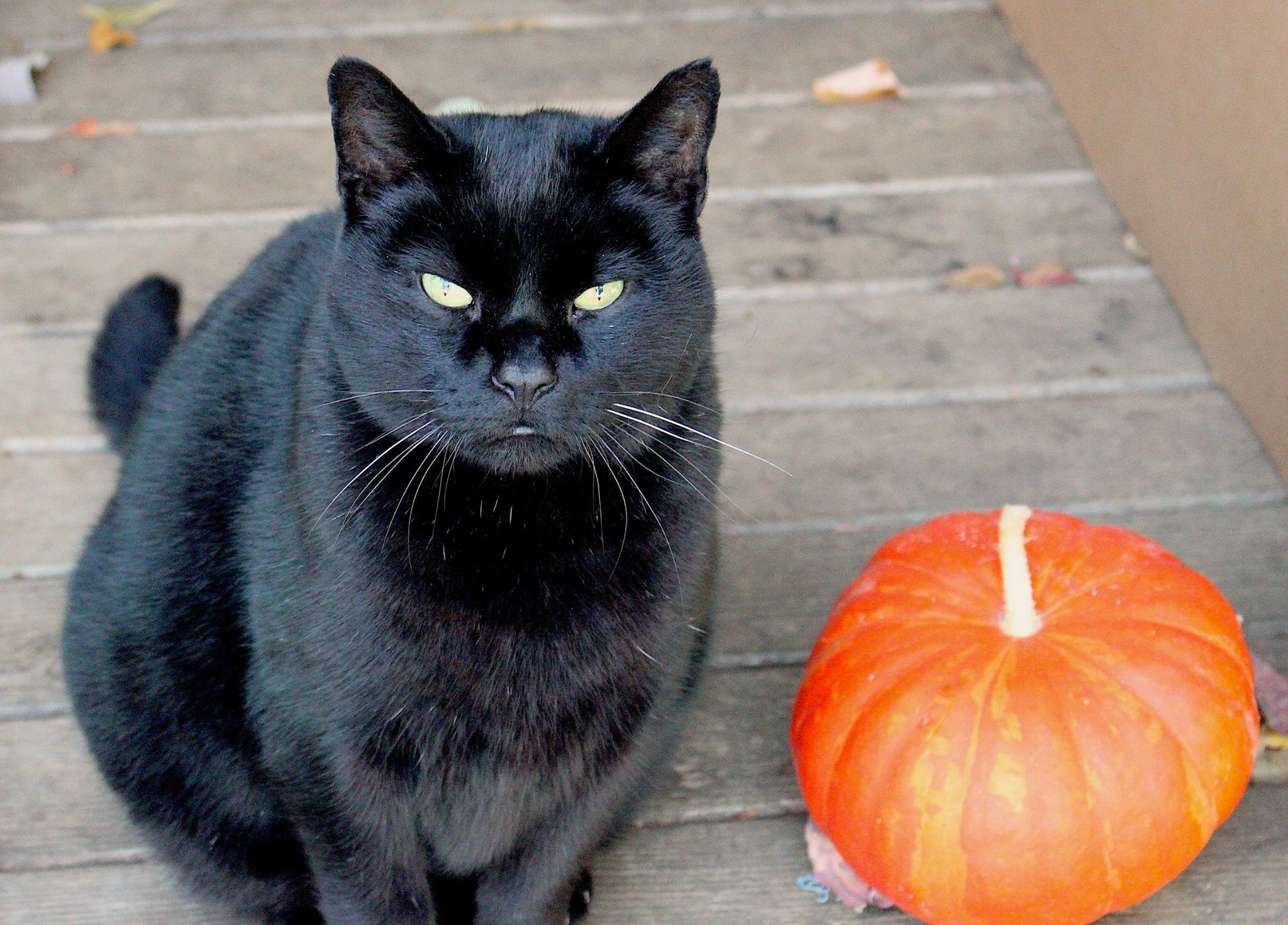
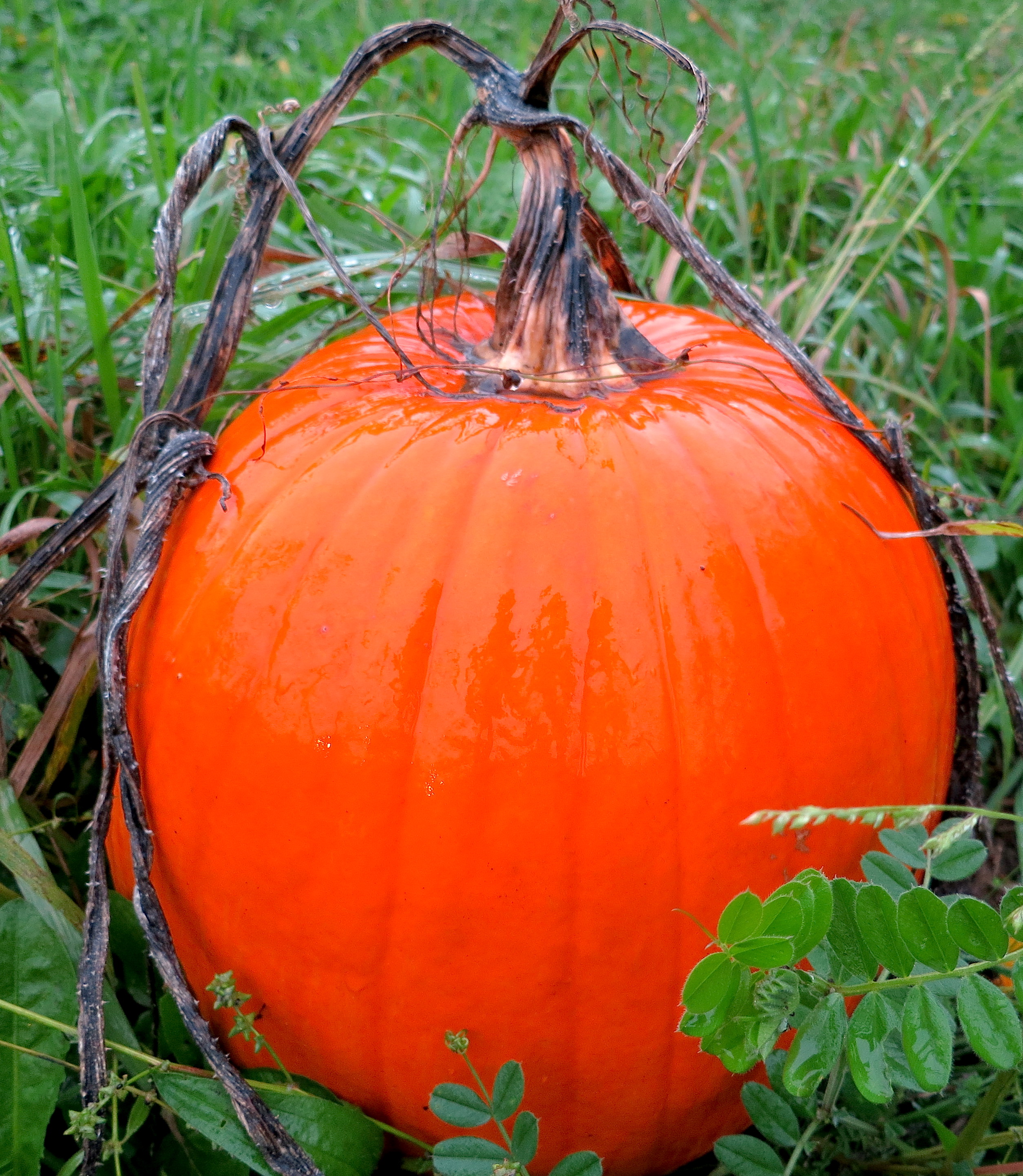
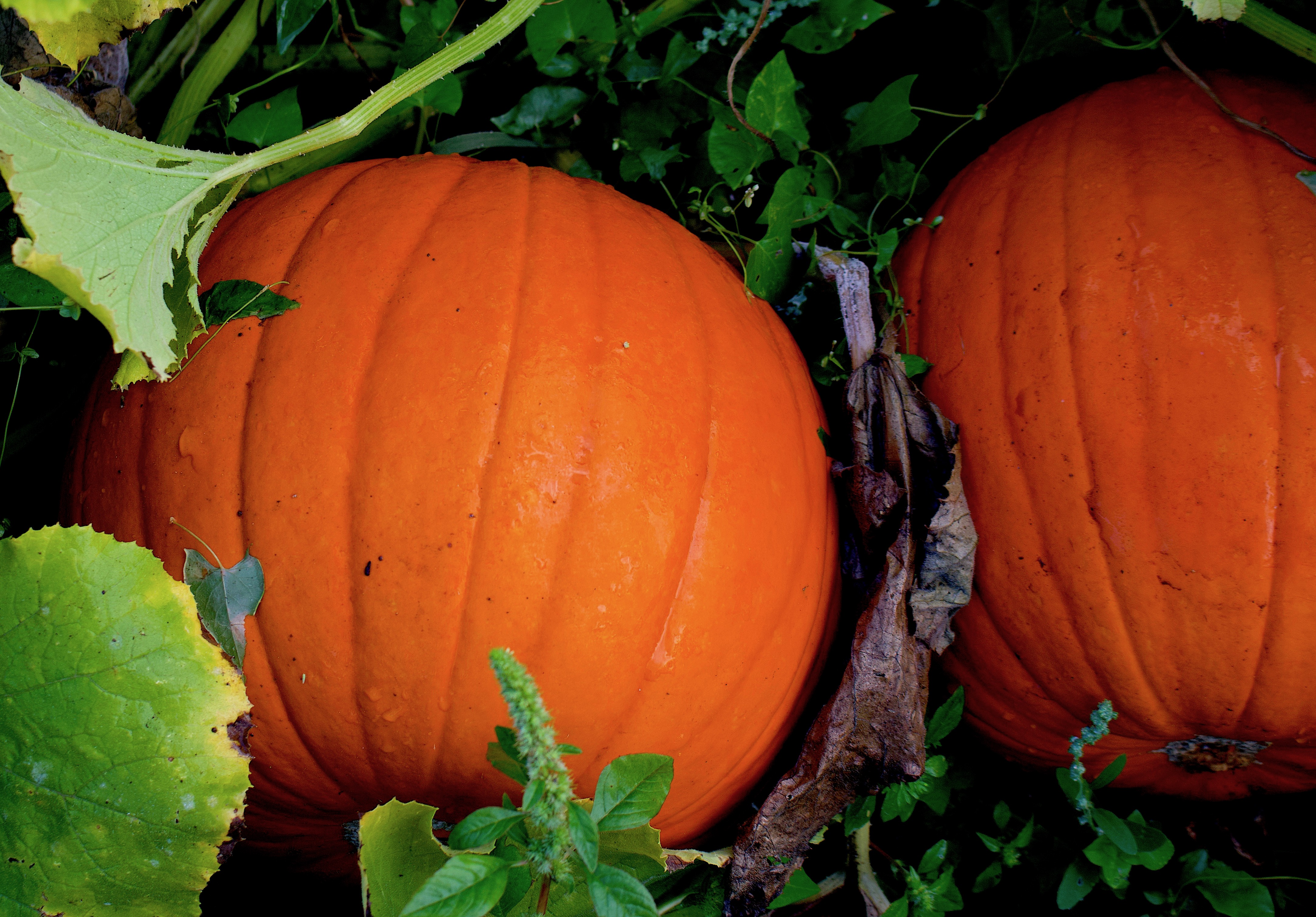
It all started October 31, 1985 with two orange and black kittens and a pumpkin sitting beside me in a little Mazda, my husband awaiting my homecoming 100 miles north. Now, forty years later, we celebrate this Halloween anniversary of farm and family, still pregnant with the possibility that life is never truly complete when there is always a new day just around the corner.
One-Time
Monthly
Yearly
Make a one-time or recurring donation to support daily Barnstorming posts
I want to be a passenger in your car again and shut my eyes while you sit at the wheel,
awake and assured in your own private world, seeing all the lines on the road ahead,
down a long stretch of empty highway without any other faces in sight.
I want to be a passenger in your car again and put my life back in your hands. ~Michael Miller “December”
I heard an old man speak once, someone who had been sober for fifty years, a very prominent doctor. He said that he’d finally figured out a few years ago that his profound sense of control, in the world and over his life, is another addiction and a total illusion. He said that when he sees little kids sitting in the back seat of cars, in those car seats that have steering wheels, with grim expressions of concentration on their faces, clearly convinced that their efforts are causing the car to do whatever it is doing, he thinks of himself and his relationship with God: God who drives along silently, gently amused, in the real driver’s seat. ~Anne Lamott from Operating Instructions
Up north, the dashboard lights of the family car gleam in memory, the radio plays to itself as I drive my father plied the highways while my mother talked, she tried to hide that low lilt, that Finnish brogue, in the back seat, my sisters and I our eyes always tied to the Big Dipper I watch it still on summer evenings, as the fireflies stream above the ditches and moths smack into the windshield and the wildlife’s red eyes bore out from the dark forests we flew by, then scattered like the last bit of star light years before. It’s like a different country, the past we made wishes on unnamed falling stars that I’ve forgotten, that maybe were granted because I wished for love. ~Sheila Packa “Driving At Night” from The Mother Tongue
The moon was like a full cup tonight, too heavy, and sank in the mist soon after dark, leaving for light
faint stars and the silver leaves of milkweed beside the road, gleaming before my car.
Yet I like driving at night… the brown road through the mist
of mountain-dark, among farms so quiet, and the roadside willows opening out where I saw
the cows. Always a shock to remember them there, those great breathings close in the dark.
I stopped, and took my flashlight to the pasture fence. They turned to me where they lay, sad
and beautiful faces in the dark, and I counted them-forty near and far in the pasture…
I switched off my light.
But I did not want to go, not yet, nor knew what to do if I should stay, for how
in that great darkness could I explain anything, anything at all. I stood by the fence. And then
Some of my most cherished childhood memories come from long rides home in the car at night from holiday gatherings. My father always drove, my mother hummed “I See the Moon” in the front passenger seat, and we three kids sat in the back seat, drowsy and full of feasting.
The night world hypnotically passed by outside the car window. I wondered whether the rest of the world was as safe and content as I felt at that moment.
On clear nights, the moon followed us down the highway, shining a light on the road.
Now as a driver at night, transporting grandchildren from a family gathering, I want them to feel the same peaceful contentment that I did as a child. As an older driver, I don’t enjoy driving at night, especially dark rural roads in pouring rain. I understand the enormous responsibility I bear, transporting those whom I dearly love and want to keep safe.
In truth, I long to be a passenger again, with no worries or pressures – just along for the ride, watching the moon and the world drift by, knowing I’m well-cared for.
But of course, I fret about the immense burden I feel to make things right in this dark and troubled world.
I am a passenger on a planet that has a Driver who feels great responsibility and care for all He transports through the black night of the universe. He loves me and I can rest content in the knowledge that I am safe in His vigilant hands.
I am not the driver – He knows how to safely bring me home, even in the rain.
I see the moon, it’s shining from far away, Beckoning with ev‘ry beam. And though all the start above cast down their light, Still the moon is all that I see And it’s calling out, “Come run a way! And we’ll sail with the clouds for our sea, And we’ll travel on through the black of the night, ‘til we float back home on a dream!” The moon approaches my window pane, stretching itself to the ground. The moon sings softly and laughs and smiles, and yet never makes a sound! I see the moon! I see the moon! Part A And it’s calling out, “Come run a way! And we’ll sail with the clouds for our sea, And we’ll travel on through the black of the night, ‘til we float back home on a dream!” Part B I see the moon, it’s shining from far away, Beckoning with ev‘ry beam. And though all the stars above cast down their light, Still the moon is all that I see ~Douglas Beam
One-Time
Monthly
Yearly
Make a one-time or recurring donation to support daily Barnstorming posts
Love means to learn to look at yourself The way one looks at distant things For you are only one thing among many. And whoever sees that way heals his heart, Without knowing it, from various ills— A bird and a tree say to him: Friend.
Then he wants to use himself and things So that they stand in the glow of ripeness. It doesn’t matter whether he knows what he serves: Who serves best doesn’t always understand. ~Czeslaw Milosz “Love” from New and Collected Poems: 1931-2001
Let him kneel down, lower his face to the grass, And look at light reflected by the ground. There he will find everything we have lost… ~Czeslaw Milosz from “The Sun”
It’s not easy to subdue the needy ego and let the life-giving soul take control, even though doing so saves us grief and serves the world well. So if you see me on the street one day, quietly muttering, “Only one thing among many, only one thing among many…,” you’ll know I’m still working on it, or it’s still working on me. ~Parker Palmer “The Big Question: Does My Life Have Meaning?”
It is always tempting to be self-absorbed; since my heart stent placement nearly 8 months ago, I tend to analyze every sensation in my chest, fuss over how many steps I take daily, and get discouraged when the scale doesn’t register the sacrifices I think I’m making in my diet.
In other words, in my efforts to heal my physically-broken heart, I become the center of my attention, rather than just one among many things in the days/months/years I have left. I need to look at myself from a distance rather than under a microscope.
It is a skewed and futile perspective, seeking meaning and purpose in life by navel gazing.
Instead, I should be concentrating on the ripeness of each day. I’ve been given a second chance to recalibrate my journey through the time I have left, focusing outward, gazing at the wonders around me, sometimes getting down on my knees.
I don’t fully understand how I might serve others by what I share here online, or what I do in my local community with my hands and feet. I now know not to miss the moments basking in the glow of loving those around me, including you friends I may never meet on this side of the veil.
May you glow in ripeness as well.
One-Time
Monthly
Yearly
Make a one-time or recurring donation to support daily Barnstorming posts
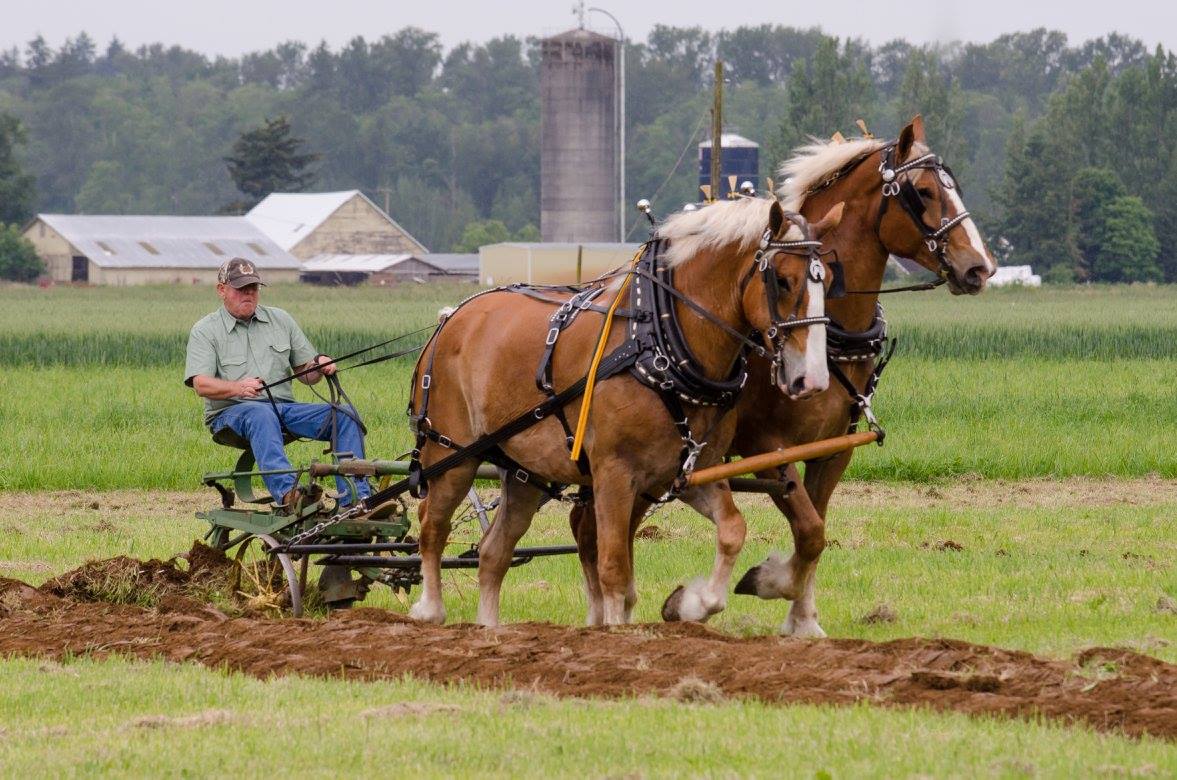
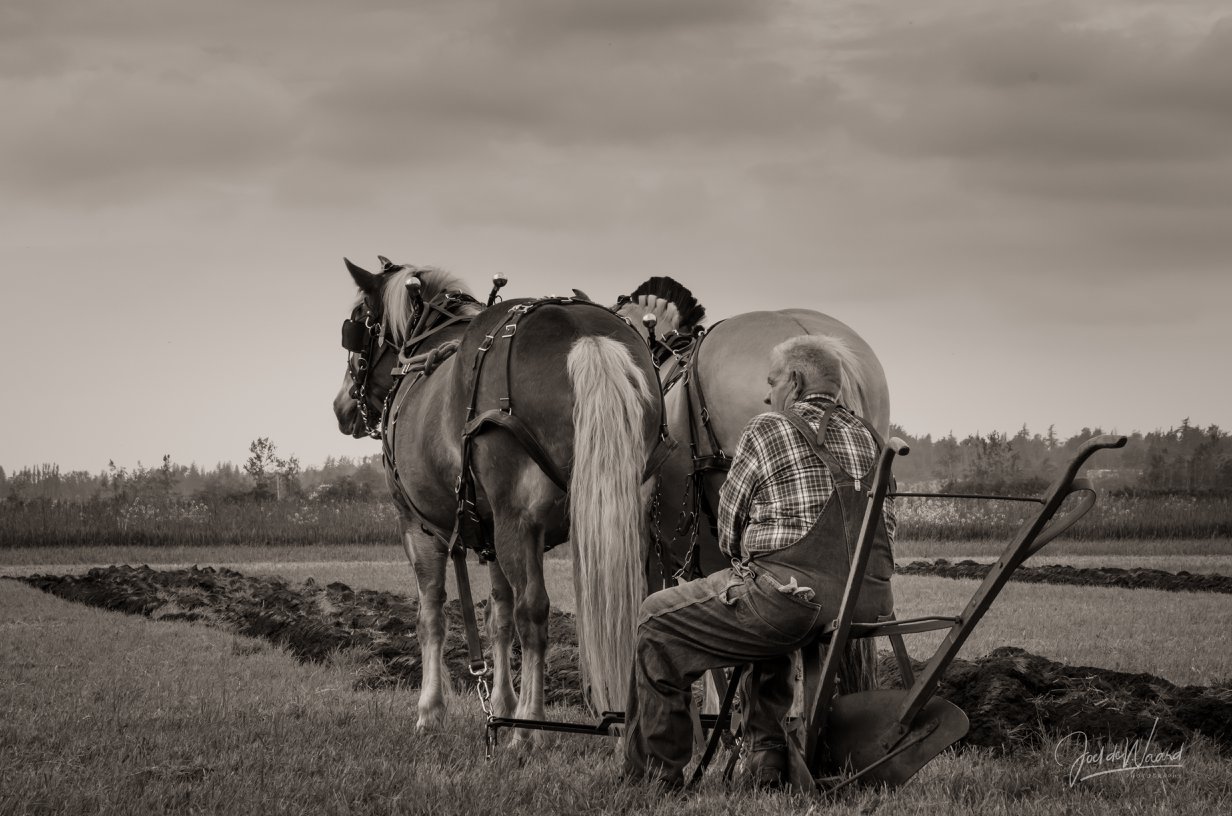
… The Amish have maintained what I like to think is a proper scale, largely by staying with the horse. The horse has restricted unlimited expansion. Not only does working with horses limit farm size, but horses are ideally suited to family life. With horses you unhitch at noon to water and feed the teams and then the family eats what we still call dinner. While the teams rest there is usually time for a short nap. And because God didn’t create the horse with headlights, we don’t work nights. ~Amish farmer David Kline in Great Possessions
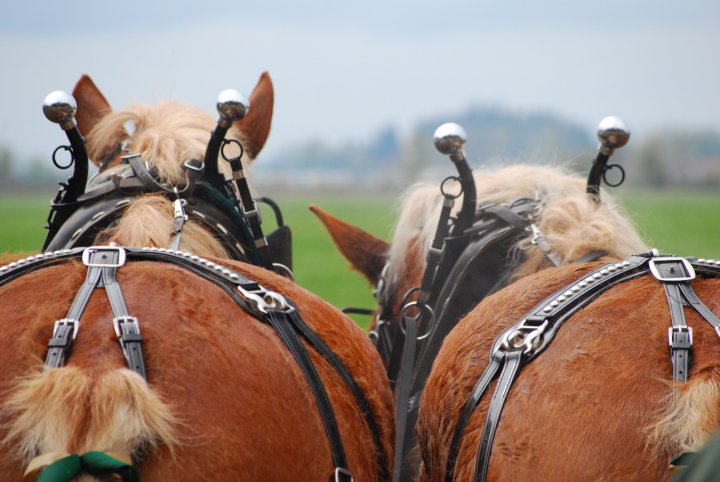
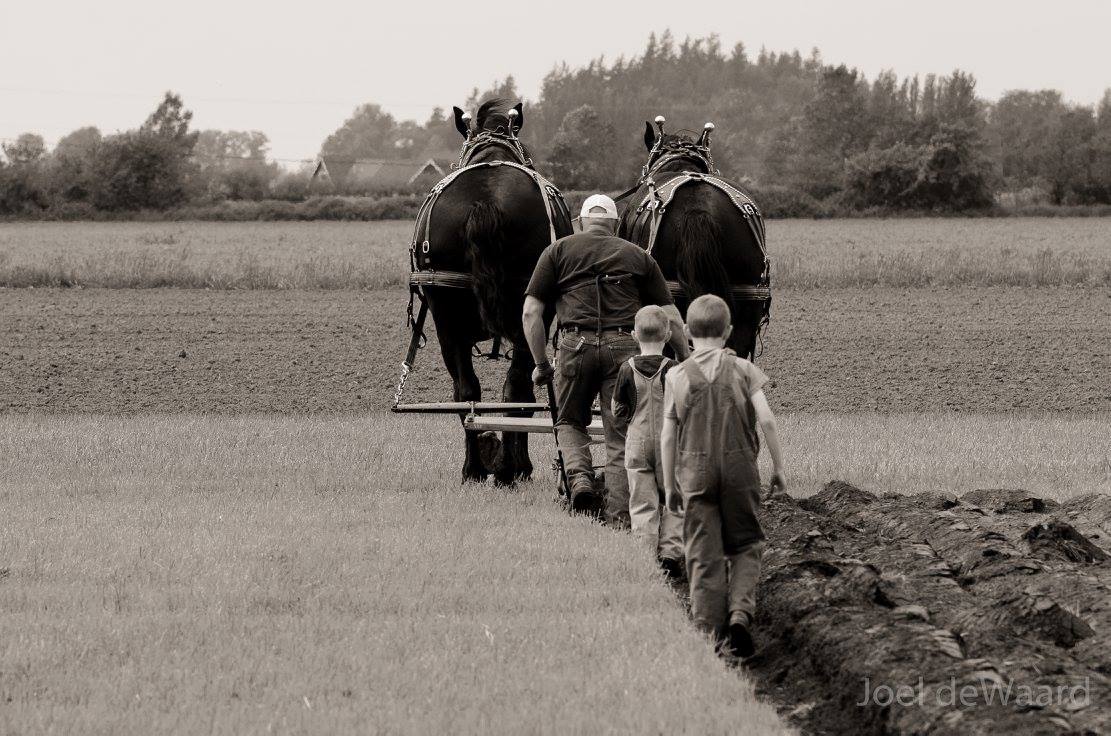
photo by Joel De Waardphoto by Joel De Waardphoto by Joel De Waardphoto by Joel De Waard
You can’t have the family farm without the family. ~G.K. Chesterton from “The Unprecedented Architecture of Commander Blair,” Tales of the Long Bow
Photo of Aaron Janicki haying with his Oberlander team in Skagit County courtesy of Tayler RaeBenjamin Janicki of Sedro Woolley raking hay with his team of Oberlanders
I’m 71 years old ~ old enough to have parents who grew up on farms worked by horses, one raising wheat and lentils in the Palouse country of eastern Washington and the other logging in the woodlands of Fidalgo Island of western Washington. The horses were crucial to my grandfathers’ success in caring for and tilling the land, seeding and harvesting the crops and bringing supplies from town miles away. Theirs was a hardscrabble life in the early 20th century with few conveniences. Work was year round from dawn to dusk; caring for the animals came before any human comforts. Once night fell, work ceased and sleep was welcome respite for man and beast.
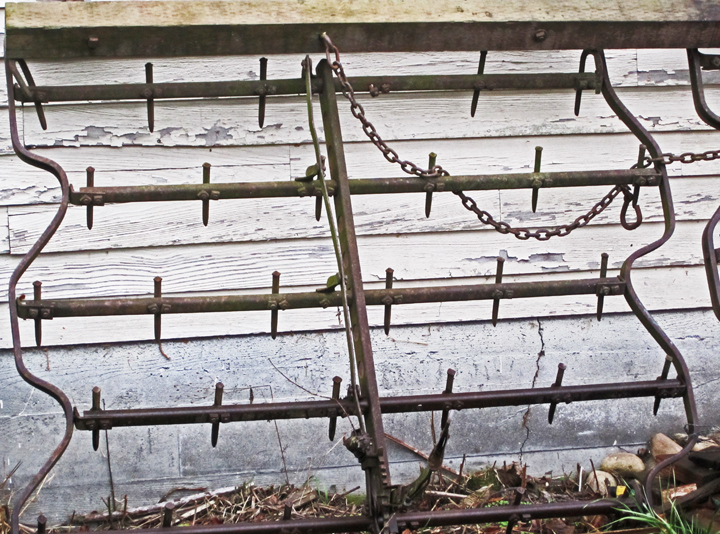
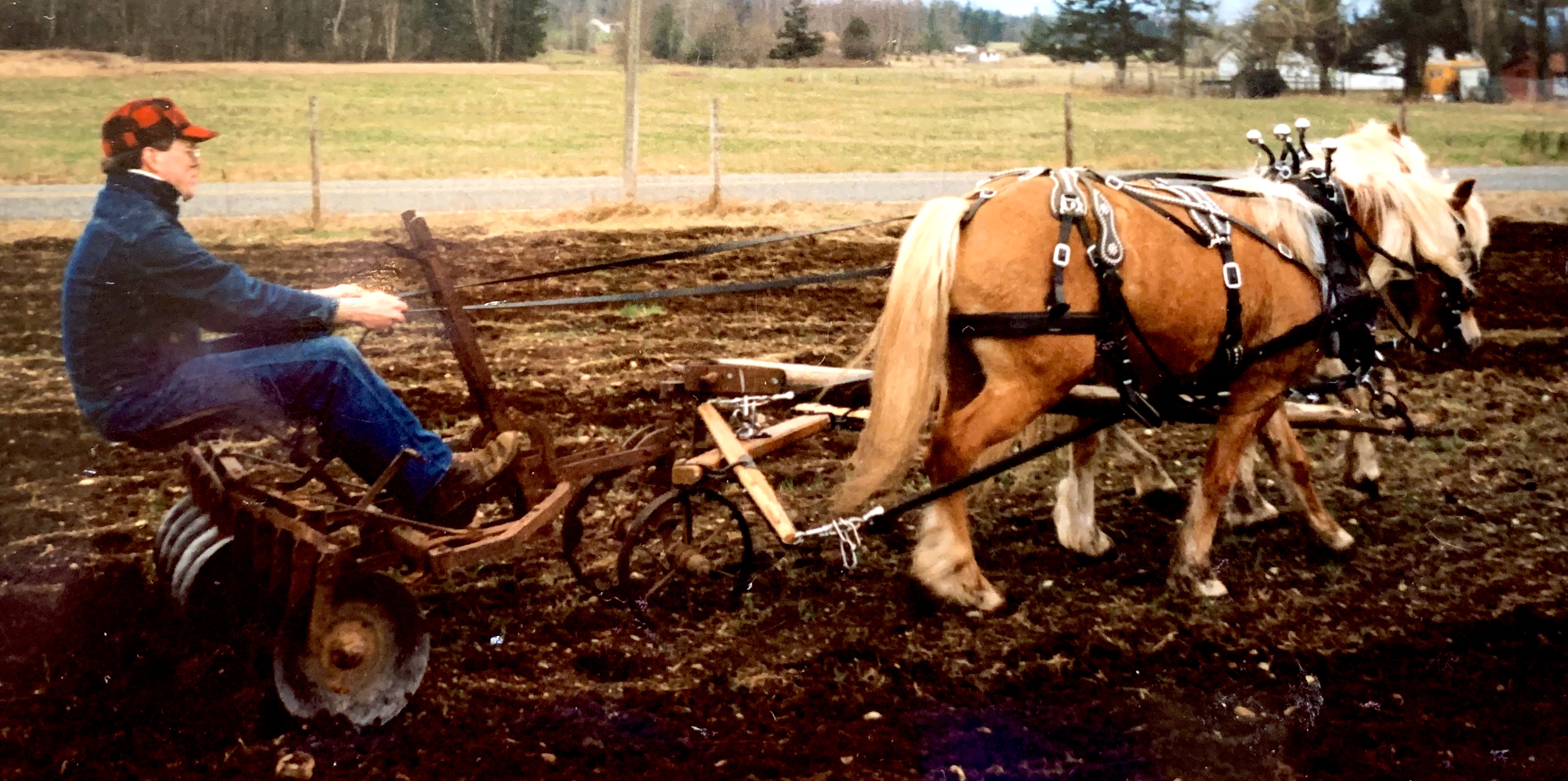
In the rural NW Washington countryside where we live, we’ve been fortunate enough to live near farmers who still dabble in horse farming, whose draft teams are hitched to plows and mowers and manure spreaders as they head out to the fields to recapture the past. They still gather together in the spring to have a well-attended and friendly competition plowing match.
Watching a good team work with no diesel motor running means hearing bird calls from the field, the steady footfall of the horses, the harness chains jingling, the leather straps creaking, the machinery shushing quietly as gears turn and grass lays over in submission. No ear protection is needed. There is no clock needed to pace the day.
There is a rhythm of nurture when animals instead of engines are part of the work day. The gauge for taking a break is the amount of foamy sweat on the horses and how fast they are breathing. It is time to stop and take a breather, it is time to start back up to do a few more rows, it is time to water, it is time for a meal, it is time for a nap, it is time for a rest in a shady spot. This is gentle use of the land with four footed stewards who deposit right back to the soil the digested forage they have eaten only hours before.
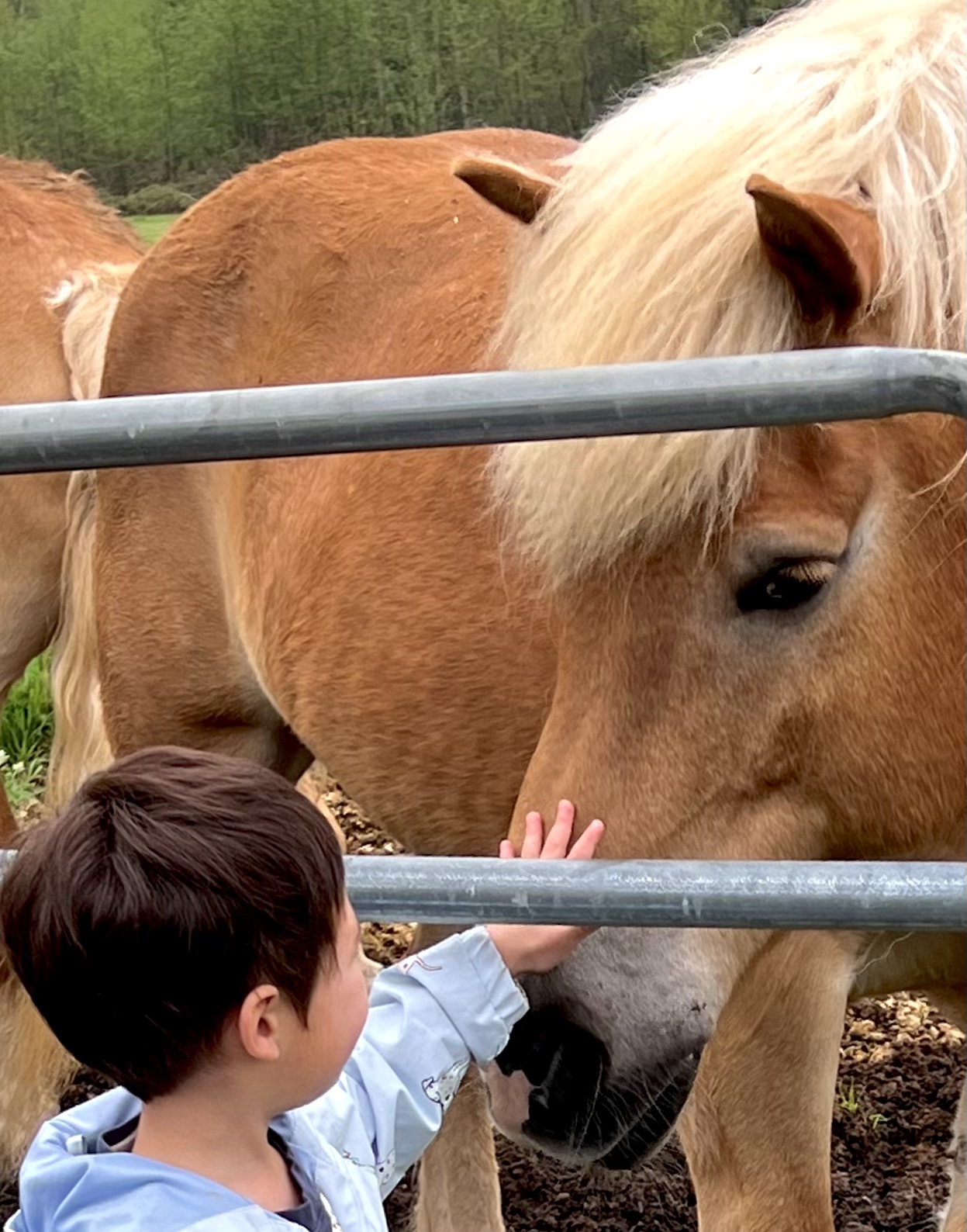
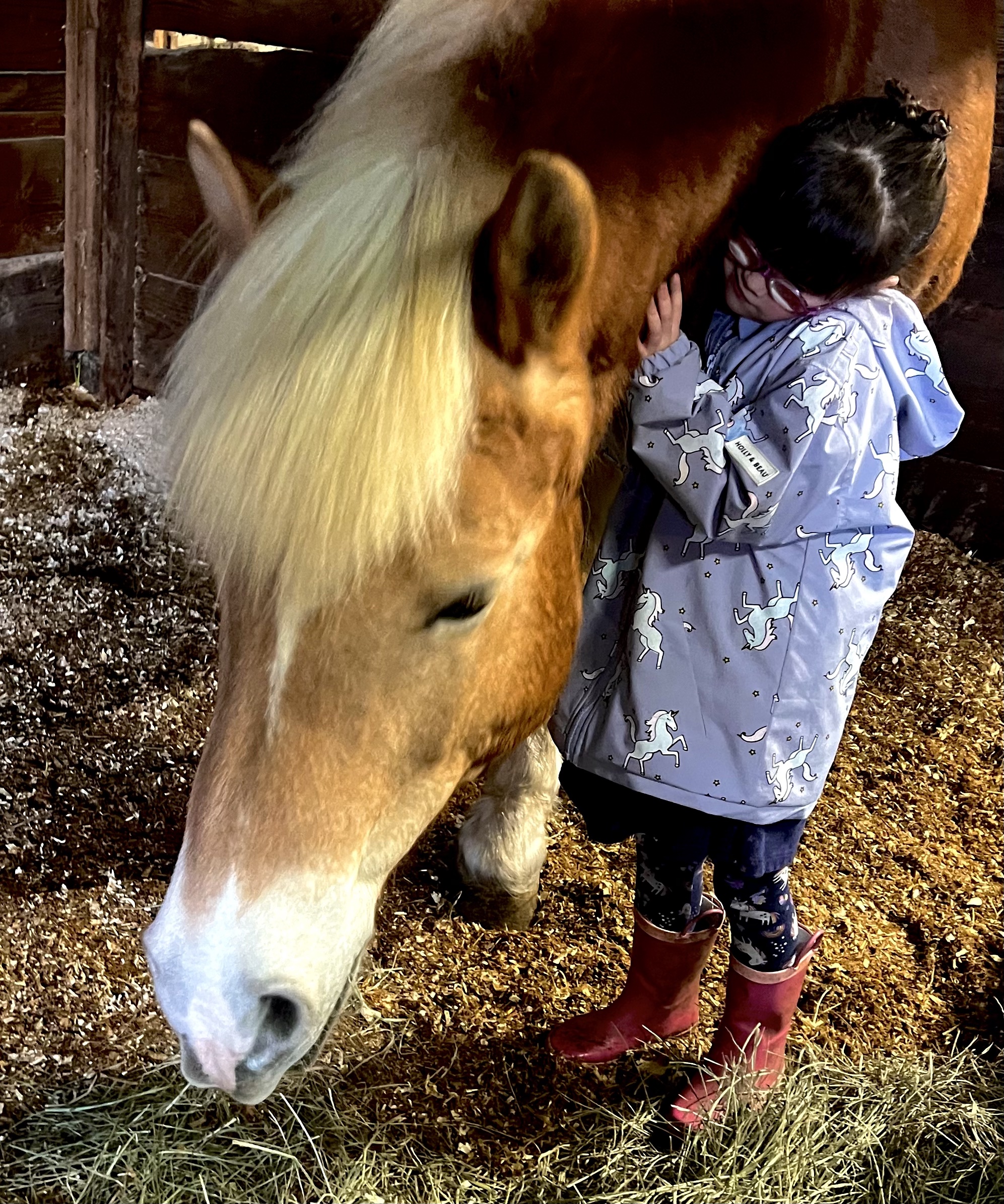
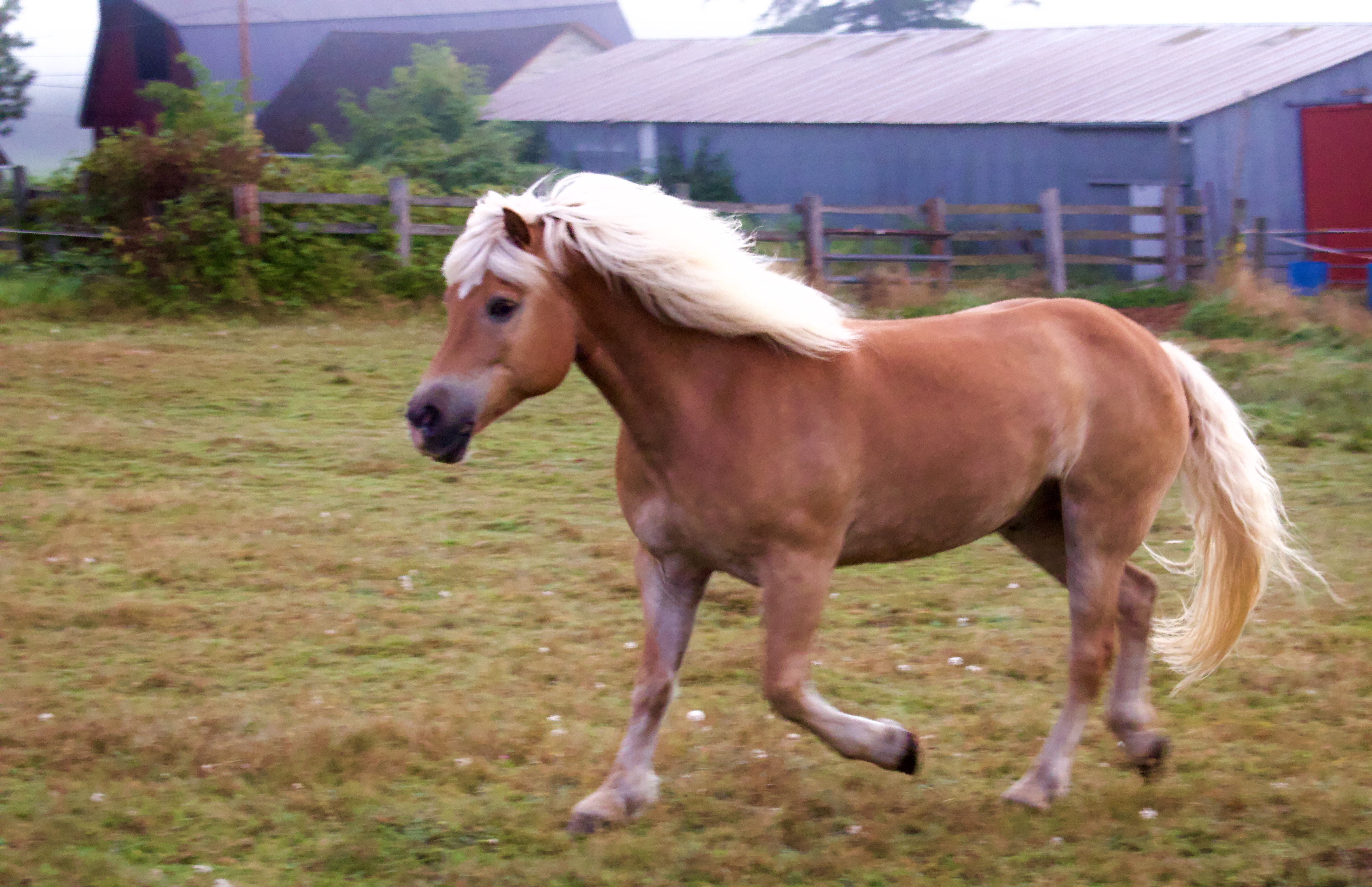
Our modern fossil-fuel-powered approach to food production has bypassed the small family farm which was so dependent on the muscle power of humans and animals. In our move away from horses worked by skilled teamsters, what has been gained in high production values has meant loss of self-sufficiency and dedicated stewardship of a smaller acreage. Draft breeds, including the Haflinger horses we raised for forty years, now are bred for higher energy with lighter refined bone structure meant more for eye appeal and floating movement, rather than the sturdy conformation and unflappable low maintenance mindset needed for pulling work.
Modern children grow up with a different set of values as well, no longer raised to work together with other family members, as well as the animals on the farm for a common purpose of daily survival.
Still fascinated by the The Small Farmer’s Journal, I am encouraged when the next generation reaches for horse collars and bridles, hitches up their horses to do the work as it used to be done. Although the modern world will never go back to the days of horse-drawn farming and transportation, we can acknowledge there were some benefits to the old ways of doing things, when progress meant being harnessed together as a team with our horses, tilling for truth and harvesting hope.
photo by Tayler Rae
I like farming. I like the work. I like the livestock and the pastures and the woods. It’s not necessarily a good living, but it’s a good life. I now suspect that if we work with machines the world will seem to us to be a machine, but if we work with living creatures the world will appear to us as a living creature. That’s what I’ve spent my life doing, trying to create an authentic grounds for hope. ~Wendell Berry, horse farmer, essayist, poet, professor
photo by Tayler Rae
One-Time
Monthly
Yearly
Make a one-time or recurring donation to support daily Barnstorming posts


















 Barnstorming