The gaps are the thing. The gaps are the spirit’s one home, the altitudes and latitudes so dazzlingly spare and clean that the spirit can discover itself like a once-blind man unbound. The gaps are the clefts in the rock where you cower to see the back parts of God; they are fissures between mountains and cells the wind lances through, the icy narrowing fiords splitting the cliffs of mystery. Go up into the gaps. If you can find them; they shift and vanish too. Stalk the gaps. Squeak into a gap in the soil, turn, and unlock… a universe. ~Annie Dillard from Pilgrim at Tinker Creek
Something will have gone out of us as a people if we ever let the remaining wilderness be destroyed … We simply need that wild country available to us, even if we never do more than drive to its edge and look in. ~Wallace Stegner, The Sound of Mountain Water
There is a yawning separation threatening us all right now as we peer over the frightening edge of another tight election.
Once again there is a fissuring gap between us.
People who have eaten at our tables, who were good friends, who we have worshiped alongside – became estranged. This separation was buoyed by blowing of the chill wind of politics where once there had been warmth and nurture and caring.
We disagreed then and continue to disagree. We no longer understand one another’s points of view.
How did we allow these gaps between us to develop? How do we close these fissures so something new and vital can grow? How can we stalk the gaps together?
Not one of us has the corner on the Truth; if we are honest with ourselves and each other, we cower together for safety in the cracks of this world, watching helplessly as the backside of God passes by, His face too holy for us to gaze upon.
He places us there together for our own good. I see you there alongside me.
We are weaker together when one side wins and the other loses. We are dependent together. We need to hold each other up as we look over the edge of the upcoming cliff.
Only His Word – nothing else – can fill the open gaping hollow before us. His Grace is great enough to fill every hole bridge every gap bring hope to the hopeless plant seeds for the future and restore us wholly to each other.
One-Time
Monthly
Yearly
Make a one-time or recurring donation to support daily Barnstorming posts
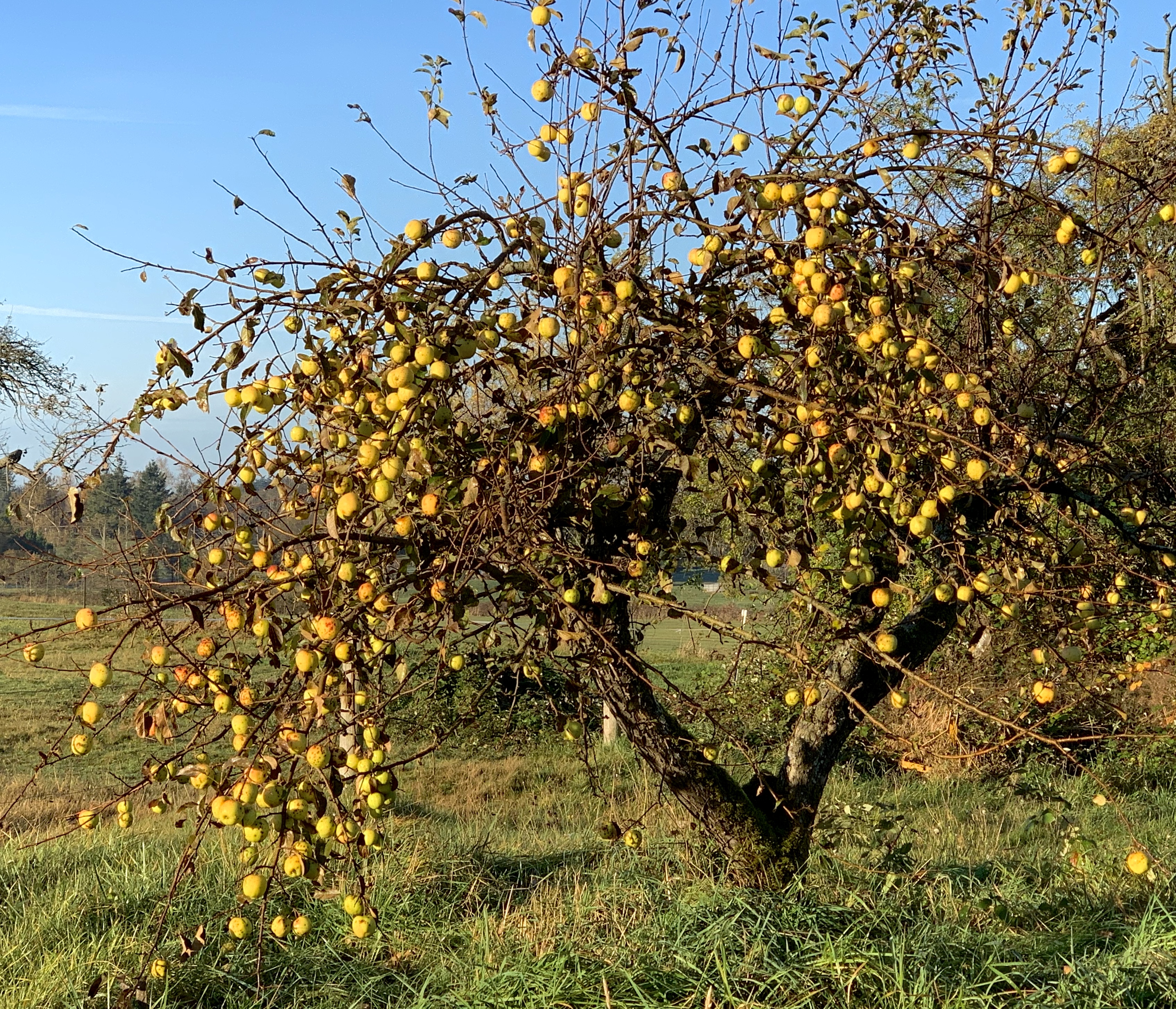
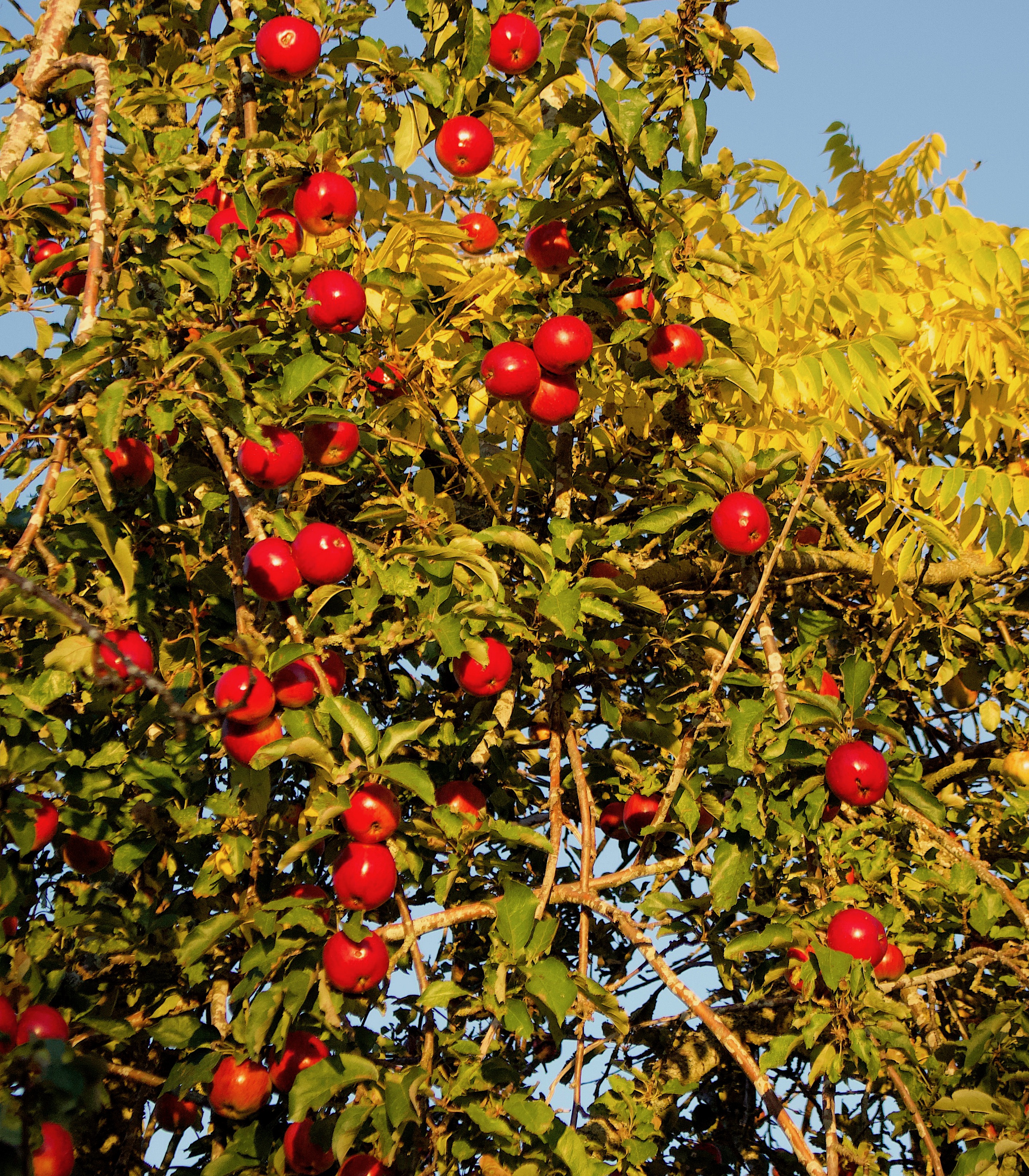
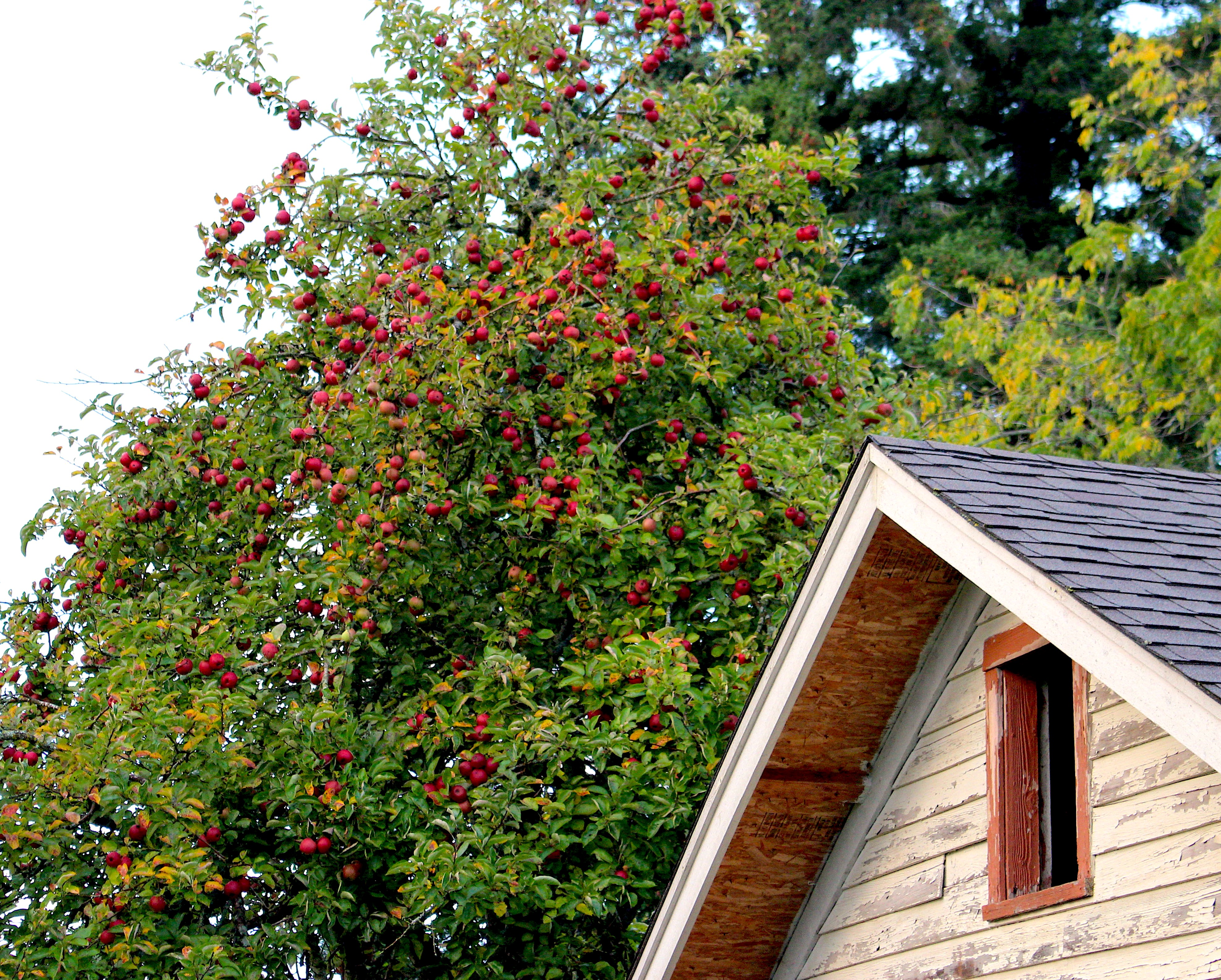
And then there is that day when all around, all around you hear the dropping of the apples, oneby one, from the trees. At first it is one here and one there, and then it is three and then it is four and then nine andtwenty, until the apples plummet like rain, fall like horse hoofsin the soft, darkening grass, and you are the last apple on thetree; and you wait for the wind to work you slowly free fromyour hold upon the sky, and drop you down and down. Longbefore you hit the grass you will have forgotten there everwas a tree, or other apples, or a summer, or green grass below, You will fall in darkness… ~Ray Bradbury from Dandelion Wine
But I am done with apple-picking now. Essence of winter sleep is on the night, The scent of apples: I am drowsing off. I cannot rub the strangeness from my sight I got from looking through a pane of glass I skimmed this morning from the drinking trough And held against the world of hoary grass. It melted, and I let it fall and break. But I was well Upon my way to sleep before it fell, And I could tell What form my dreaming was about to take. For I have had too much Of apple-picking: I am overtired Of the great harvest I myself desired. There were ten thousand thousand fruit to touch, Cherish in hand, lift down, and not let fall. For all That struck the earth, No matter if not bruised or spiked with stubble, Went surely to the cider-apple heap As of no worth. One can see what will trouble This sleep of mine, whatever sleep it is. Were he not gone, The woodchuck could say whether it’s like his Long sleep, as I describe its coming on, Or just some human sleep. ~Robert Frost from “After Apple-Picking”
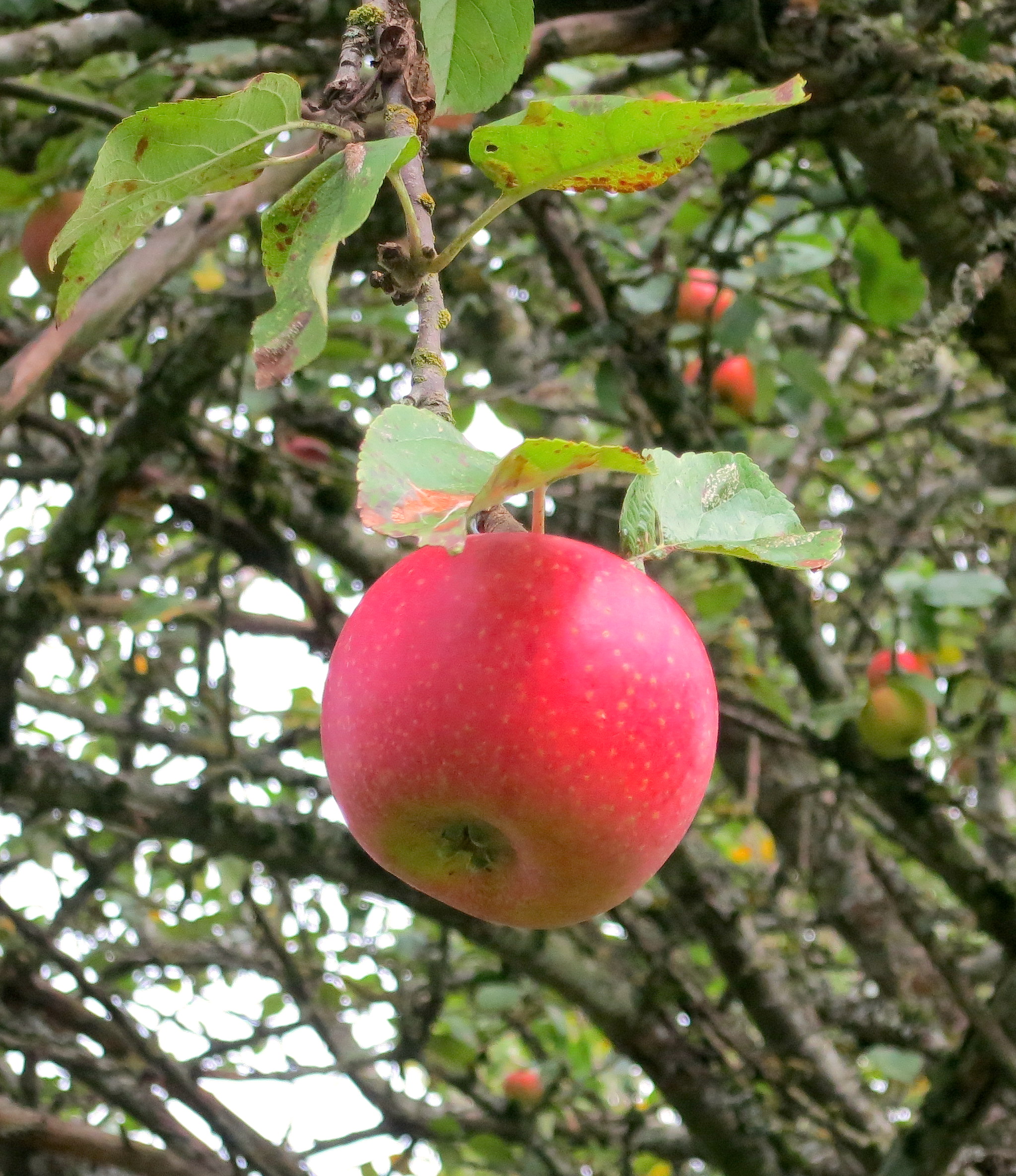
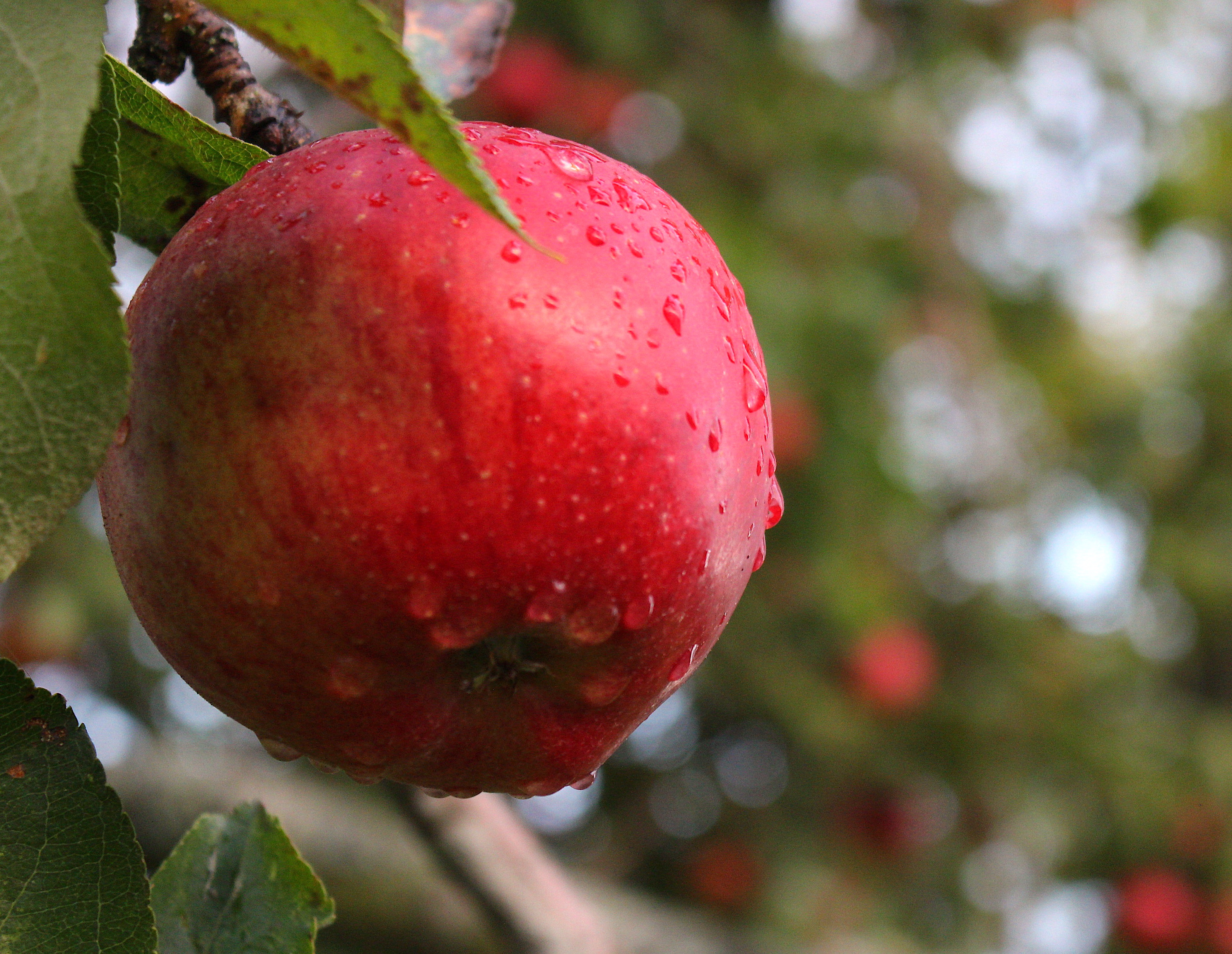
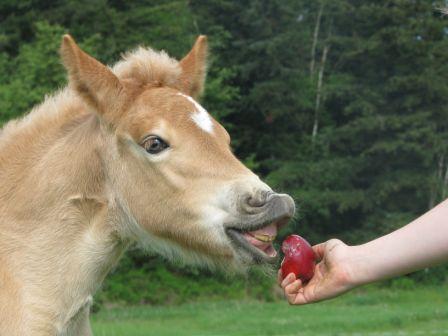
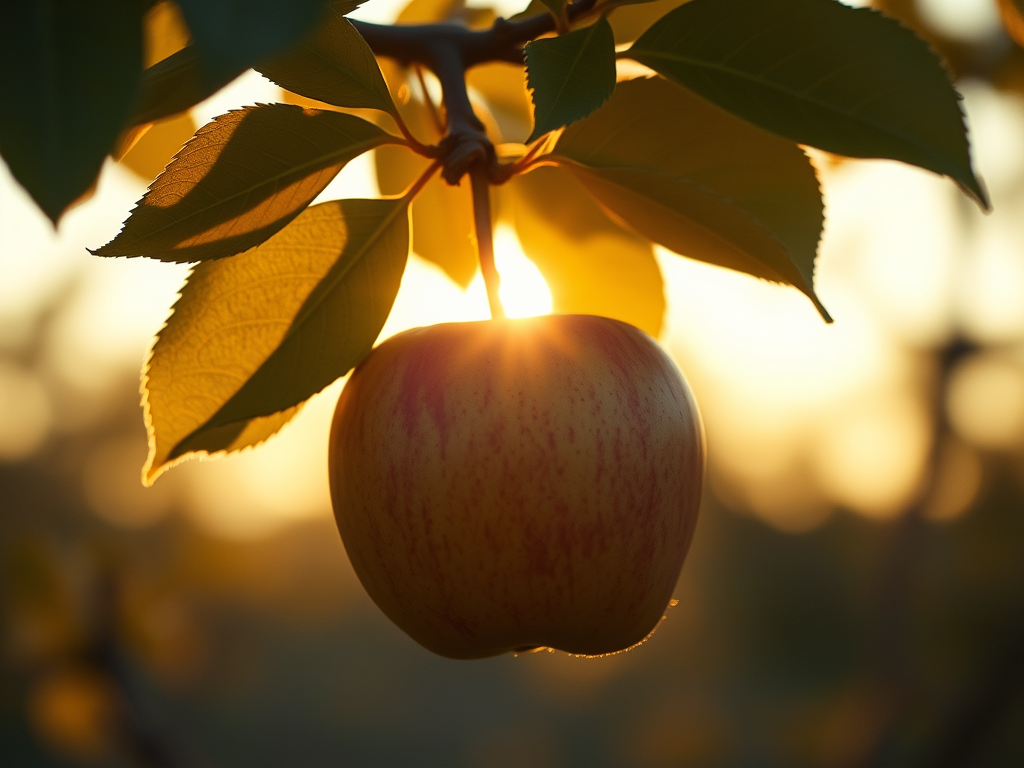
I pick up windfall apples to haul down to the barn for a special treat each night for the Haflingers. These are apples that we humans wouldn’t take a second glance at in all our satiety and fussiness, but the Haflingers certainly don’t mind a bruise, or a worm hole or slug trails over apple skin.
I’ve found over the years that our horses must be taught to eat apples–if they have no experience with them, they will bypass them lying in the field and not give them a second look. There simply is not enough odor to make them interesting or appealing–until they are cut in slices that is. Then they become irresistible and no apple is left alone from that point forward.
When I offer a whole apple to a young Haflinger who has never tasted one before, they will sniff it, perhaps roll it on my hand a bit with their lips, but I’ve yet to have one simply bite in and try. If I take the time to cut the apple up, they’ll pick up a section very gingerly, kind of hold it on their tongue and nod their head up and down trying to decide as they taste and test it if they should drop it or chew it, and finally, as they really bite in and the sweetness pours over their tongue, they get this look in their eye that is at once surprised and supremely pleased. The only parallel experience I’ve seen in humans is when you offer a five month old baby his first taste of ice cream on a spoon and at first he tightens his lips against its coldness, but once you slip a little into his mouth, his face screws up a bit and then his eyes get big and sparkly and his mouth rolls the taste around his tongue, savoring that sweet cold creaminess. His mouth immediately pops open for more.
It is the same with apples and horses. Once they have that first taste, they are our slaves forever in search of the next apple.
The Haflinger veteran apple eaters can see me coming with my sweat shirt front pocket stuffed with apples, a “pregnant” belly of fruit, as it were. They offer low nickers when I come up to their stalls and each horse has a different approach to their apple offering.
There is the “bite a little bit at a time” approach, which makes the apple last longer, and tends to be less messy in the long run. There is the “bite it in half” technique which leaves half the apple in your hand as they navigate the other half around their teeth, dripping and frothing sweet apple slobber. Lastly there is the greedy “take the whole thing at once” horse, which is the most challenging way to eat an apple, as it has to be moved back to the molars, and crunched, and then moved around the mouth to chew up the large pieces, and usually half the apple ends up falling to the ground, with all the foam that the juice and saliva create. No matter the technique used, the smell of an apple as it is being chewed by a horse is one of the best smells in the world. I can almost taste the sweetness too when I smell that smell.
What do we do when offered such a sublime gift from Someone’s hand? If it is something we have never experienced before, we possibly walk right by, not recognizing that it is a gift at all, missing the whole point and joy of experiencing what is being offered. How many wonderful opportunities are right under our noses, but we fail to notice, and bypass them because they are unfamiliar?
Perhaps if the Giver really cares enough to “teach” us to accept this gift of sweetness, by preparing it and making it irresistible to us, then we are overwhelmed with the magnitude of the generosity and are transformed by the simple act of receiving.
We must learn to take little bites, savoring each piece one at a time, making it last rather than greedily grab hold of the whole thing, struggling to control it, thereby losing some in the process. Either way, it is a gracious gift, and how we receive it makes all the difference.
AI image created for this post
The tree of life my soul hath seen, Laden with fruit and always green; The trees of nature fruitless be, Compared with Christ the Apple Tree.
His beauty doth all things excel, By faith I know but ne’er can tell The glory which I now can see, In Jesus Christ the Appletree.
For happiness I long have sought, And pleasure dearly I have bought; I missed of all but now I see ‘Tis found in Christ the Appletree.
I’m weary with my former toil – Here I will sit and rest awhile, Under the shadow I will be, Of Jesus Christ the Appletree.
With great delight I’ll make my stay, There’s none shall fright my soul away; Among the sons of men I see There’s none like Christ the Appletree.
I’ll sit and eat this fruit divine, It cheers my heart like spirit’al wine; And now this fruit is sweet to me, That grows on Christ the Appletree.
This fruit doth make my soul to thrive, It keeps my dying faith alive; Which makes my soul in haste to be With Jesus Christ the Appletree.
One-Time
Monthly
Yearly
Make a one-time or recurring donation to support daily Barnstorming posts
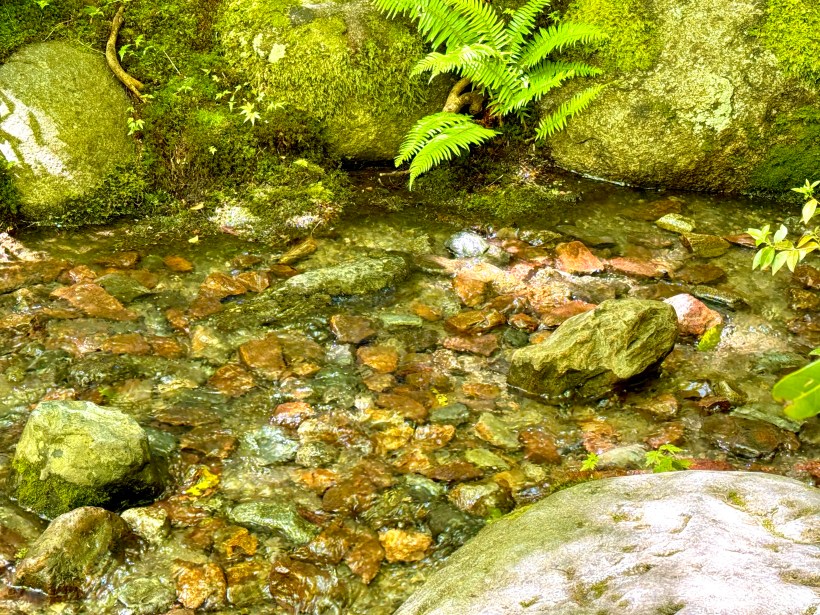
At the alder-darkened brink Where the stream slows to a lucid jet I lean to the water, dinting its top with sweat, And see, before I can drink,
A startled inchling trout Of spotted near-transparency, Trawling a shadow solider than he. He swerves now, darting out
To where, in a flicked slew Of sparks and glittering silt, he weaves Through stream-bed rocks, disturbing foundered leaves, And butts then out of view
Beneath a sliding glass Crazed by the skimming of a brace Of burnished dragon-flies across its face, In which deep cloudlets pass
And a white precipice Of mirrored birch-trees plunges down Toward where the azures of the zenith drown. How shall I drink all this?
Joy’s trick is to supply Dry lips with what can cool and slake, Leaving them dumbstruck also with an ache Nothing can satisfy. ~Richard Wilbur “Hamlen Brook”
Like so many others right now, I’m thirsty for honest, respectful discussion and debate about the state of the world. Instead, I’m left dry and wanting, ready to blow away with the next gust.
So I ache to witness fading colors, fallen leaves, swift winds and pouring rain, as all creatures great and small prepare for winter’s chill. There is stark honesty among all soon to fall asleep.
I yearn to hear God’s Truth spoken out loud. How amazing it would be — to be dumbstruck with joy.
One-Time
Monthly
Yearly
Make a one-time or recurring donation to support daily Barnstorming posts
Just as a painter needs light in order to put the finishing touches to his picture, so I need an inner light, which I feel I never have enough of in the autumn. ~Leo Tolstoy from Reminiscences
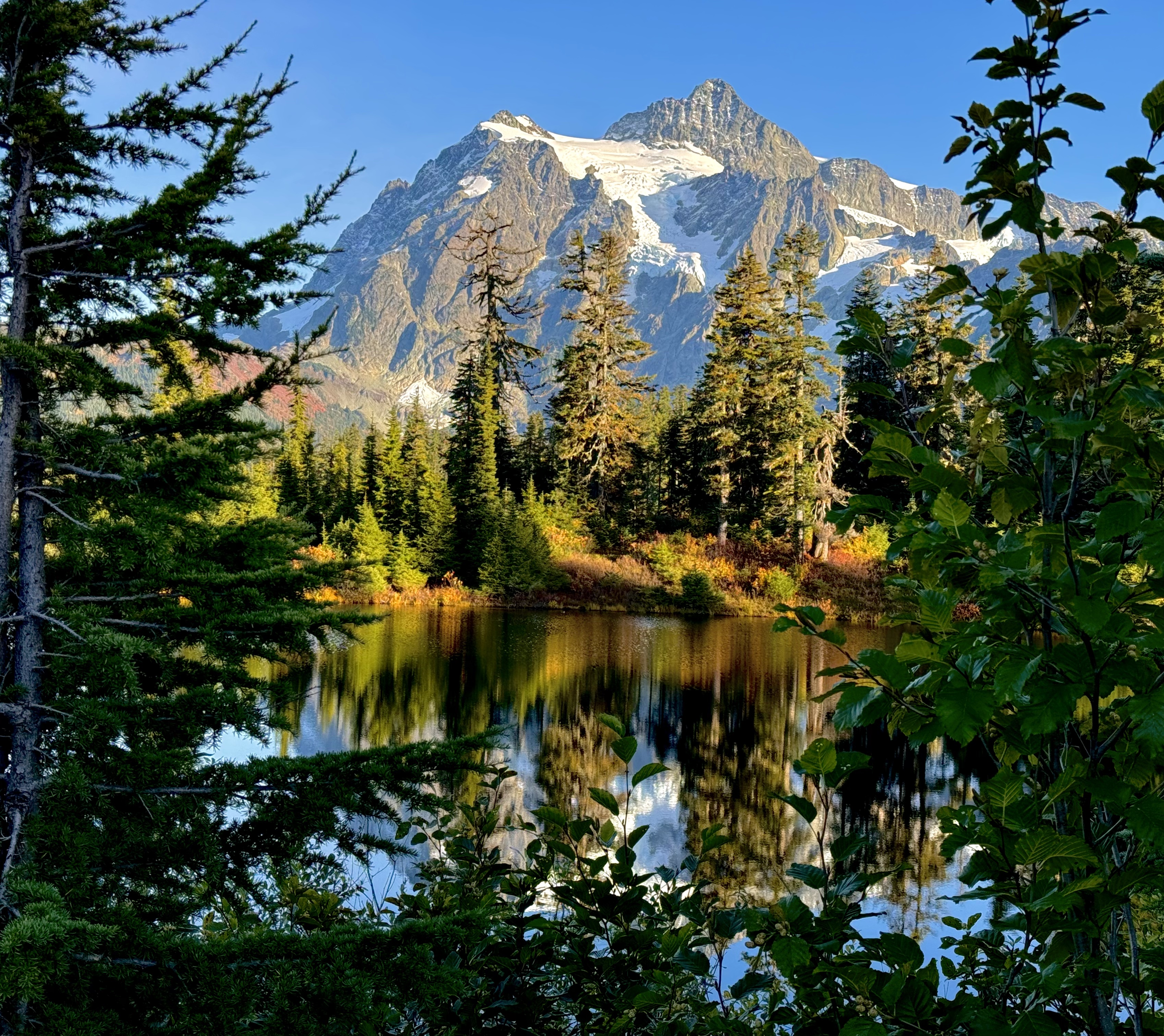
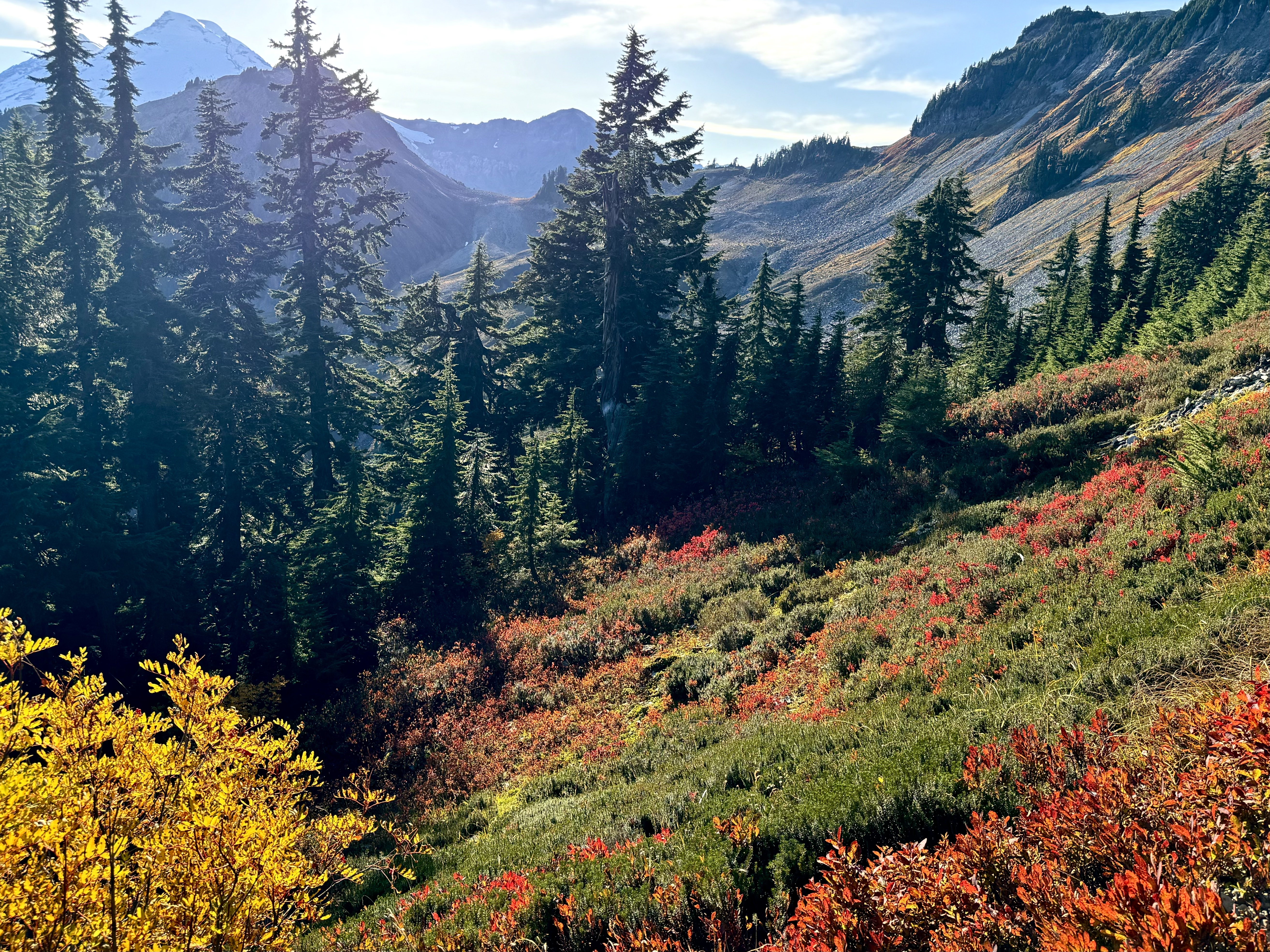
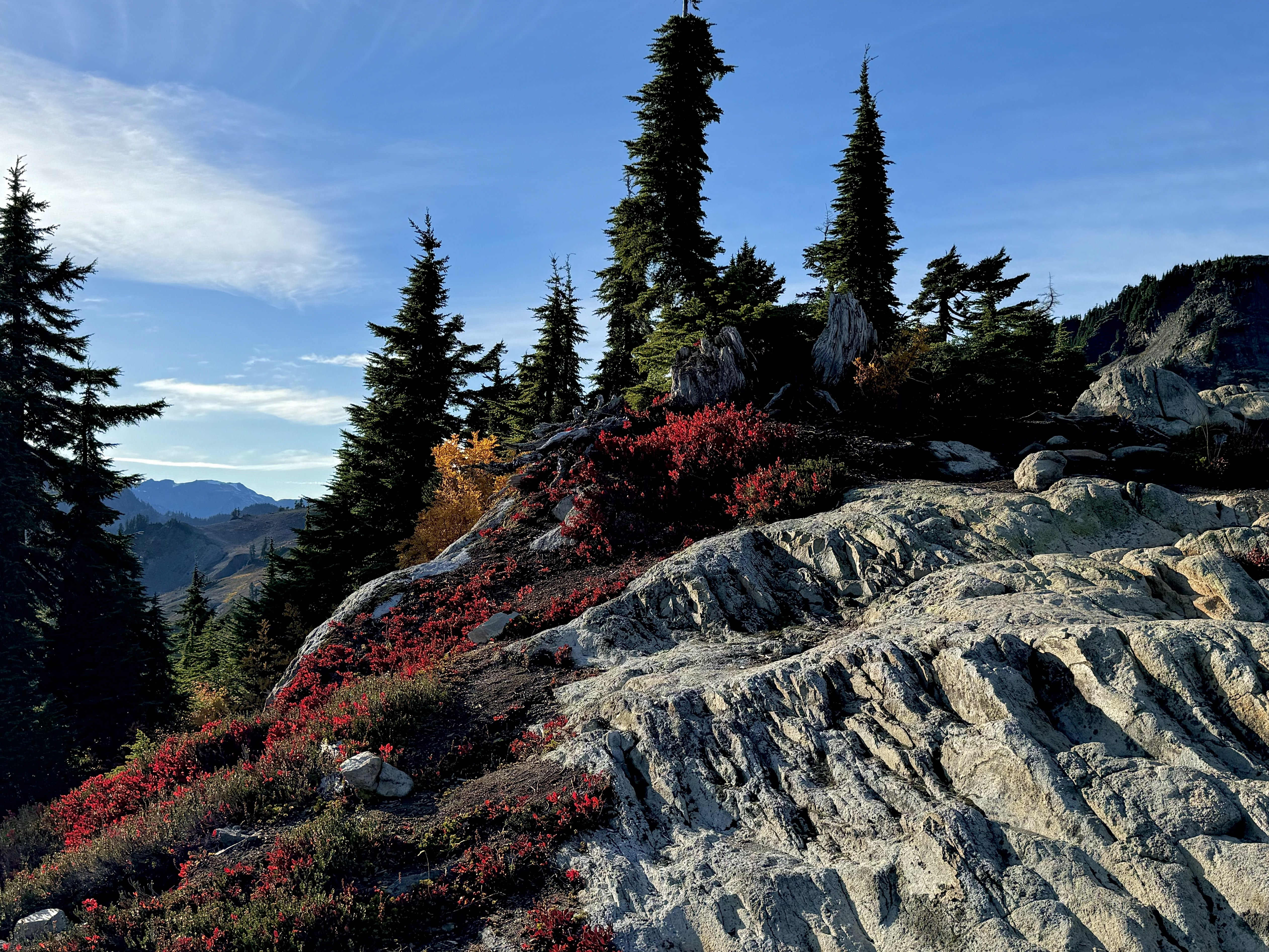
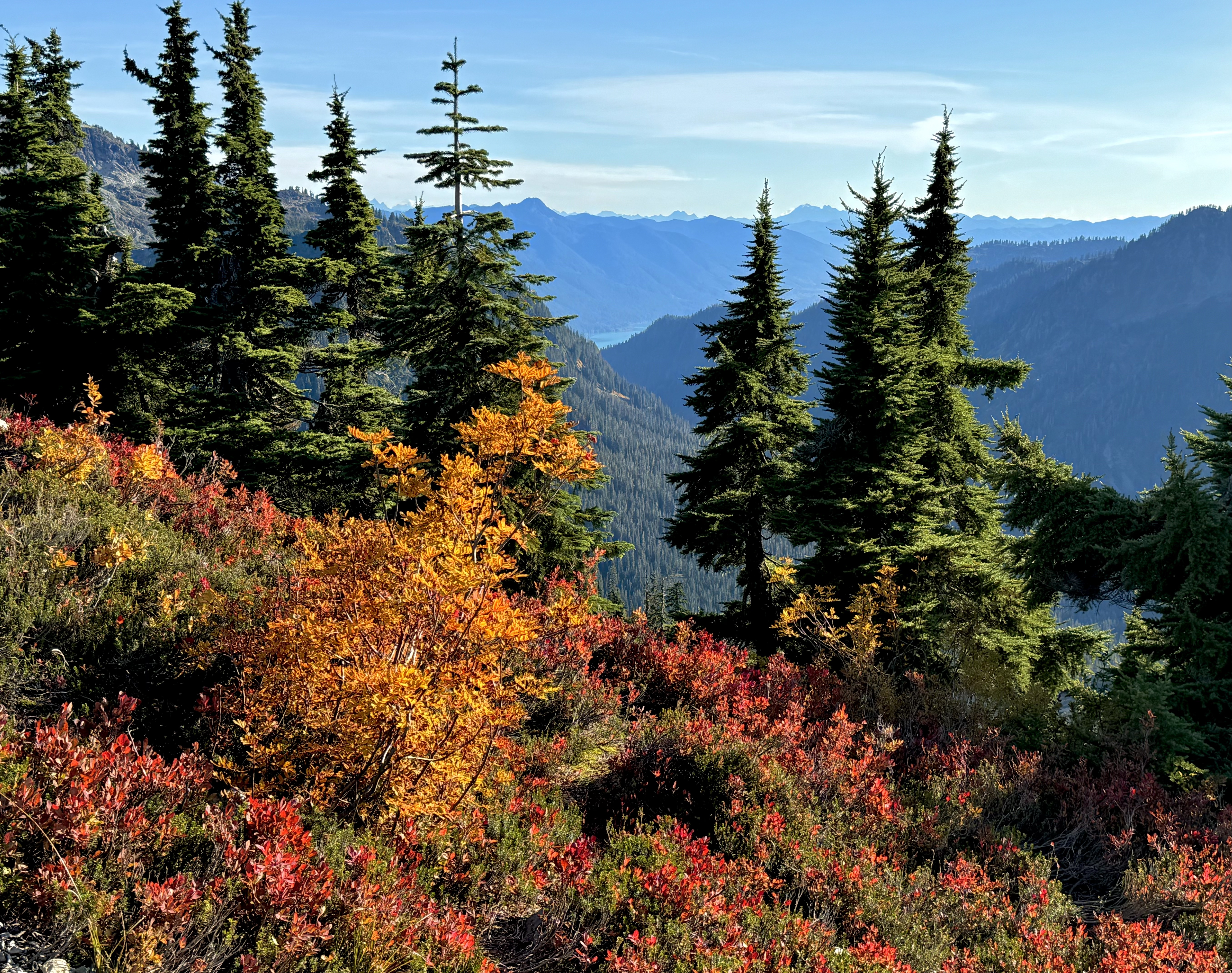
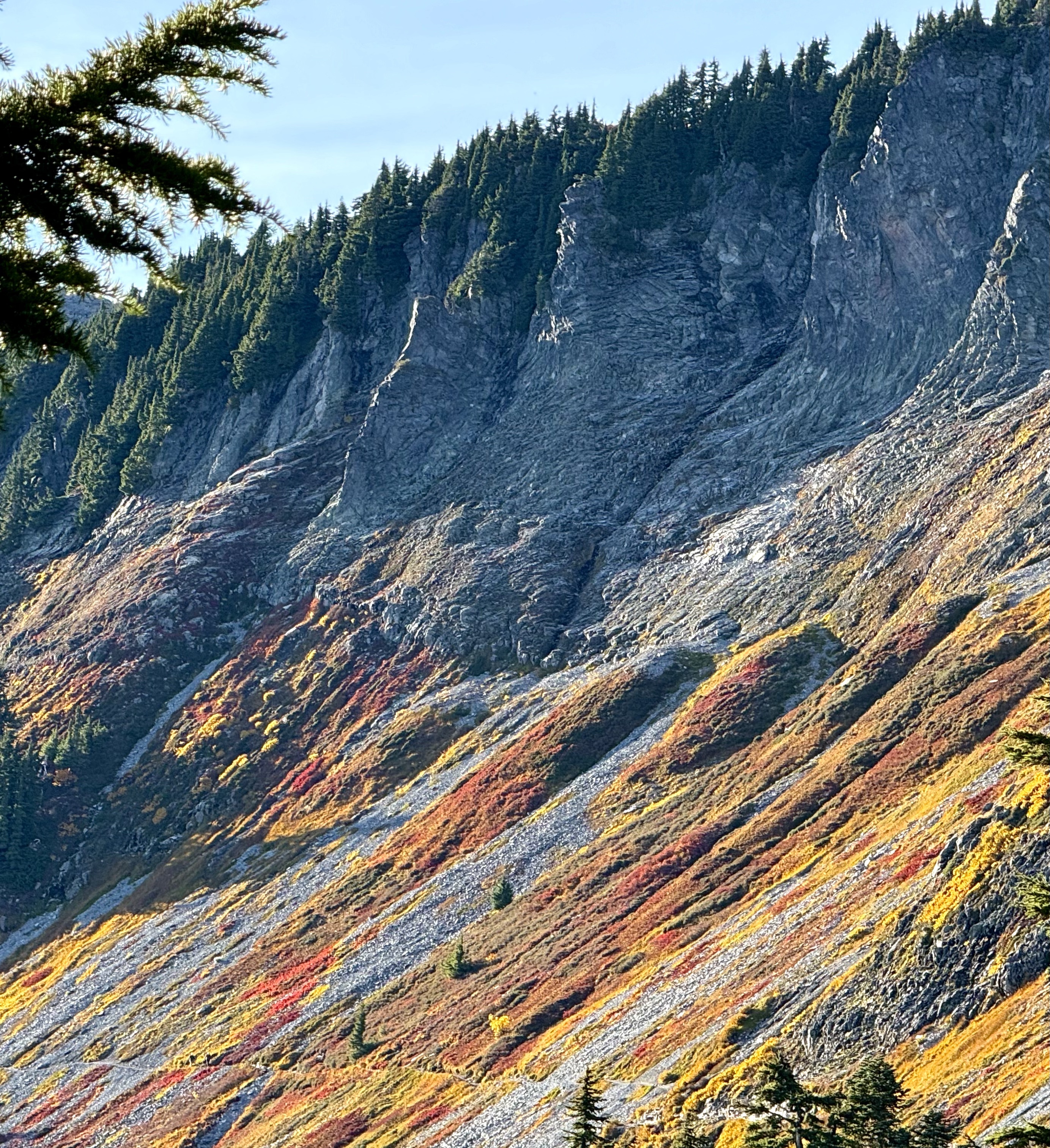
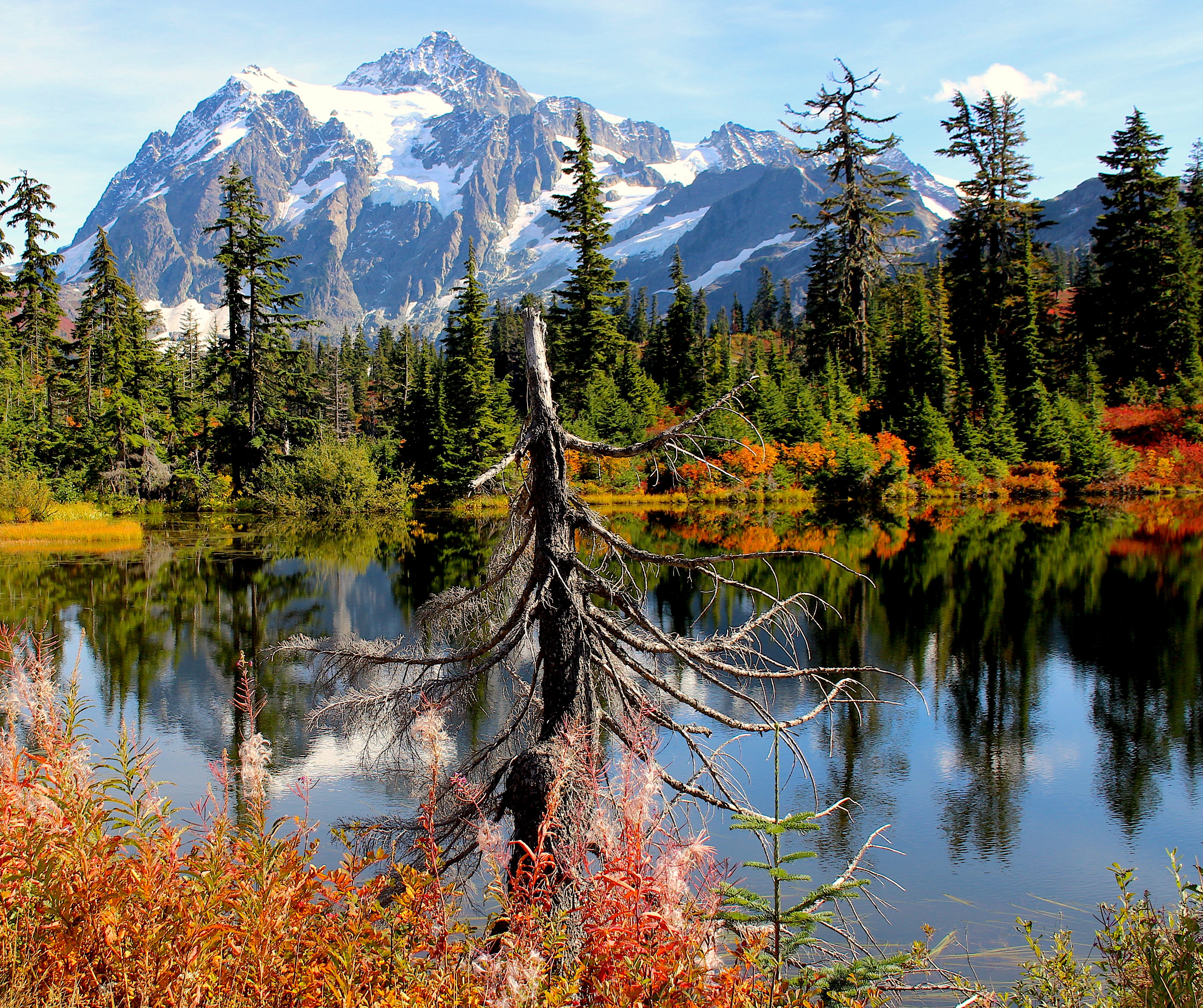
I was drinking in the surroundings: air so crisp you could snap it with your fingers and greens in every lush shade imaginable offset by autumnal flashes of red and yellow. ~Wendy Delsol
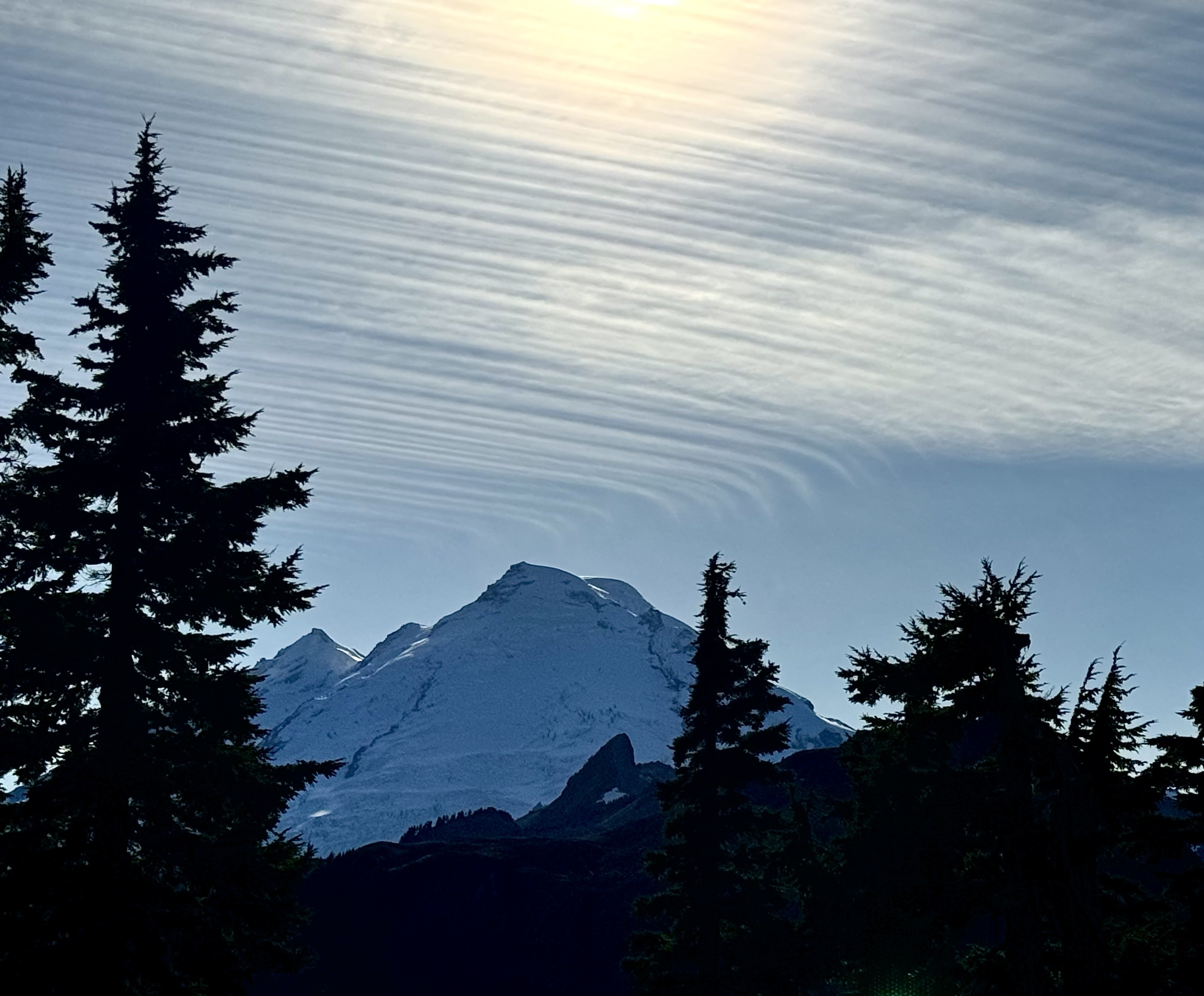
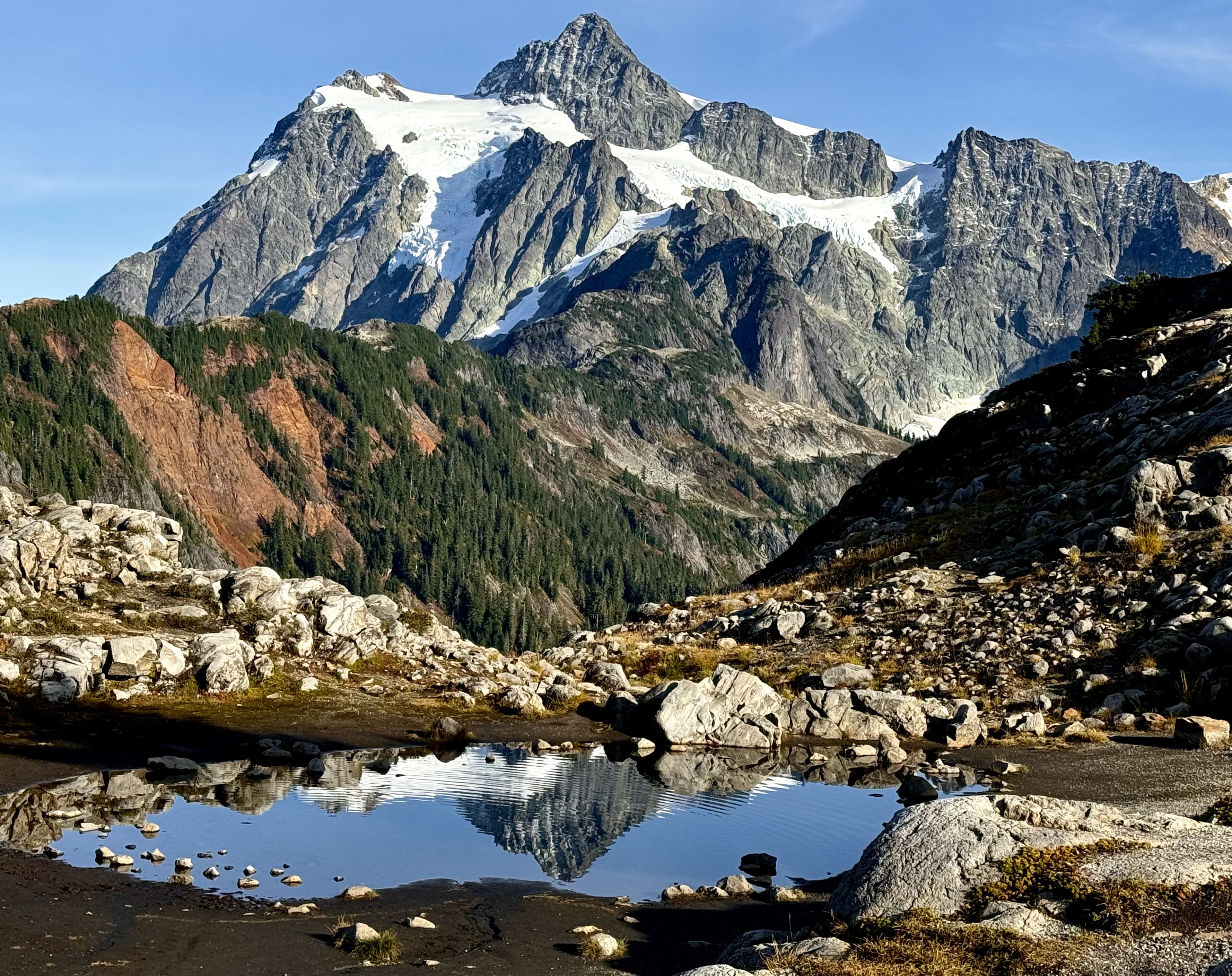
Let’s go I said, to find some light, but not just any light I said. Sure he said, let’s go.
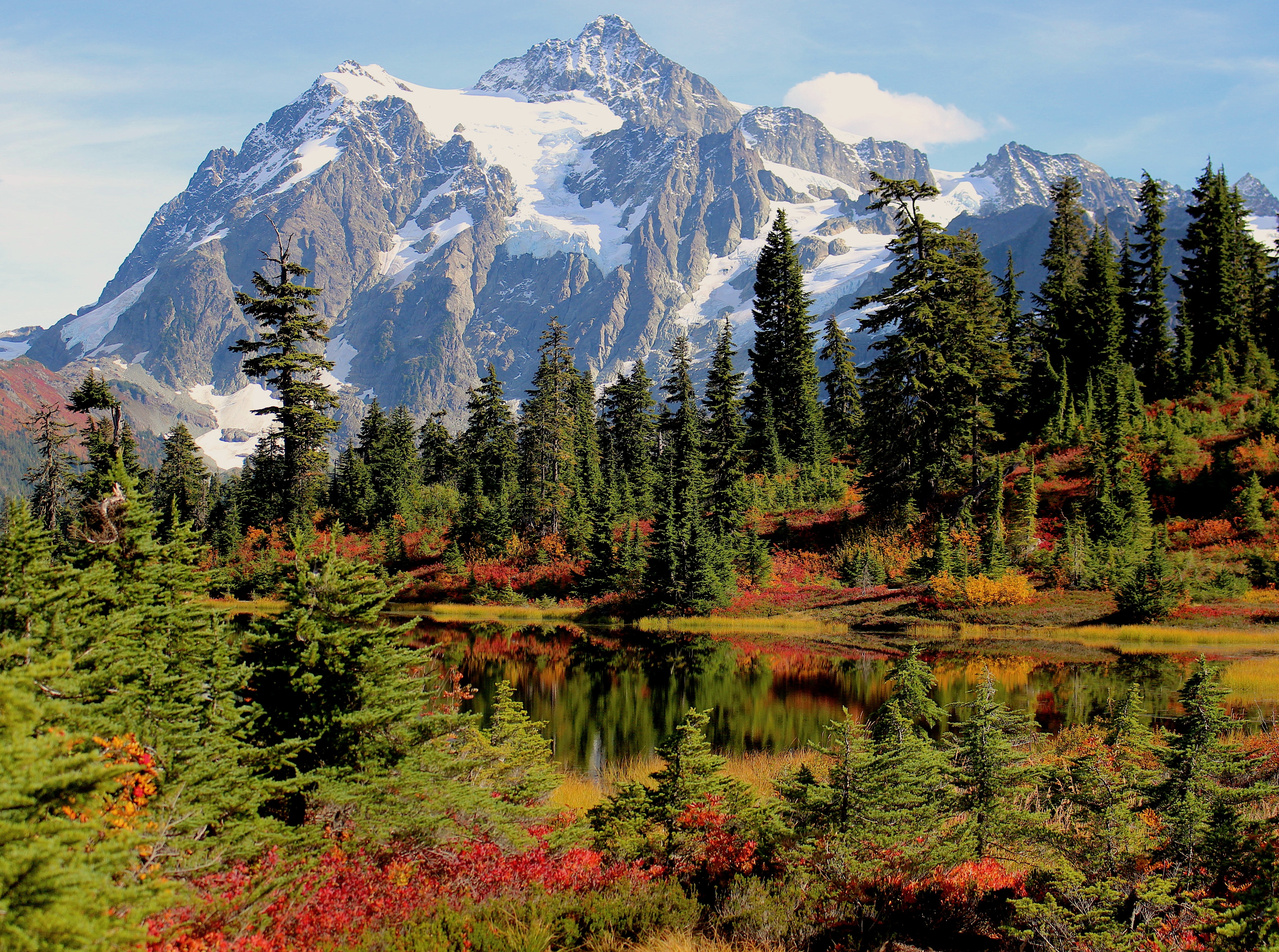
He loves to drive winding roads to breathe chill alpine air.
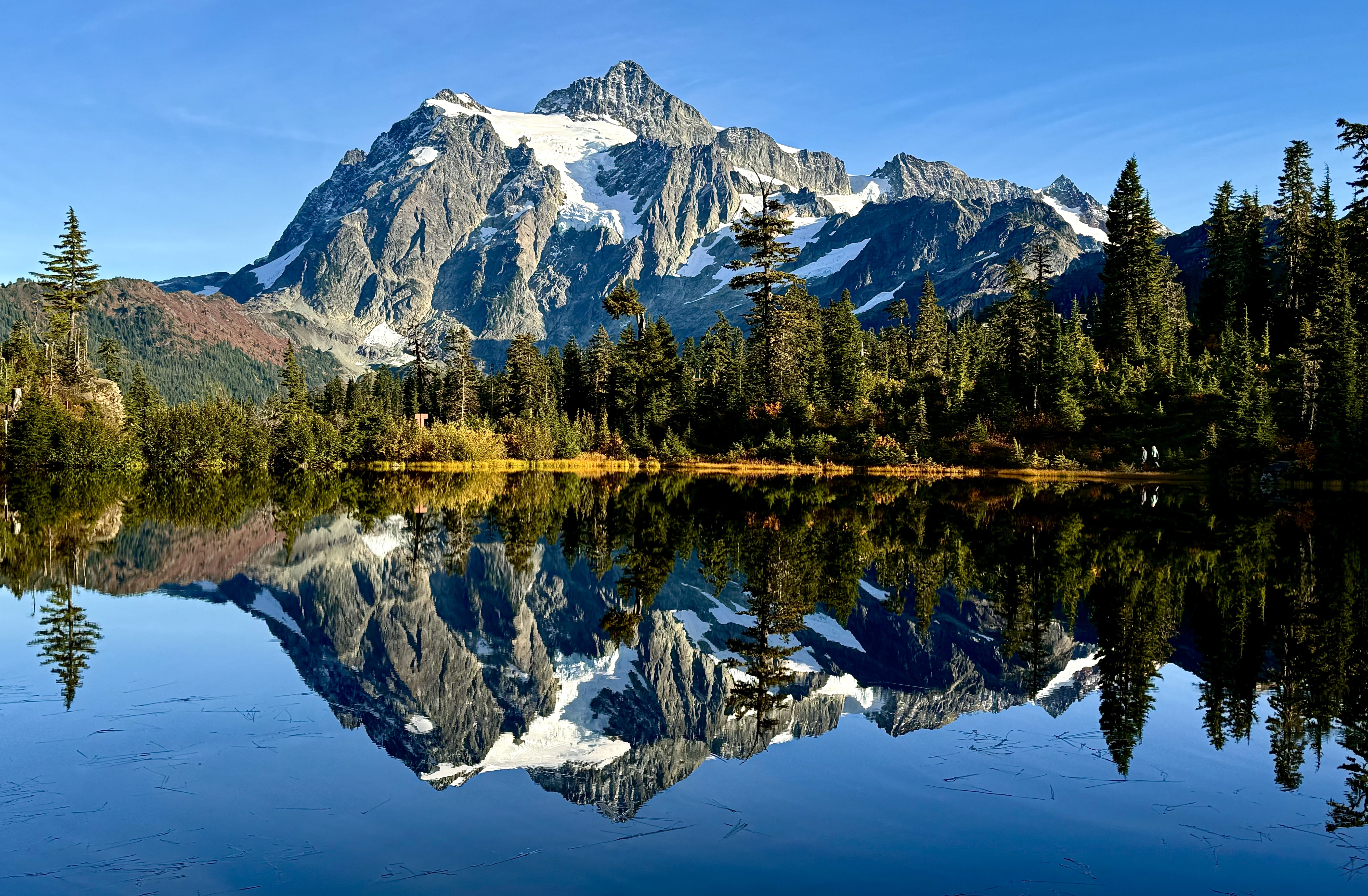
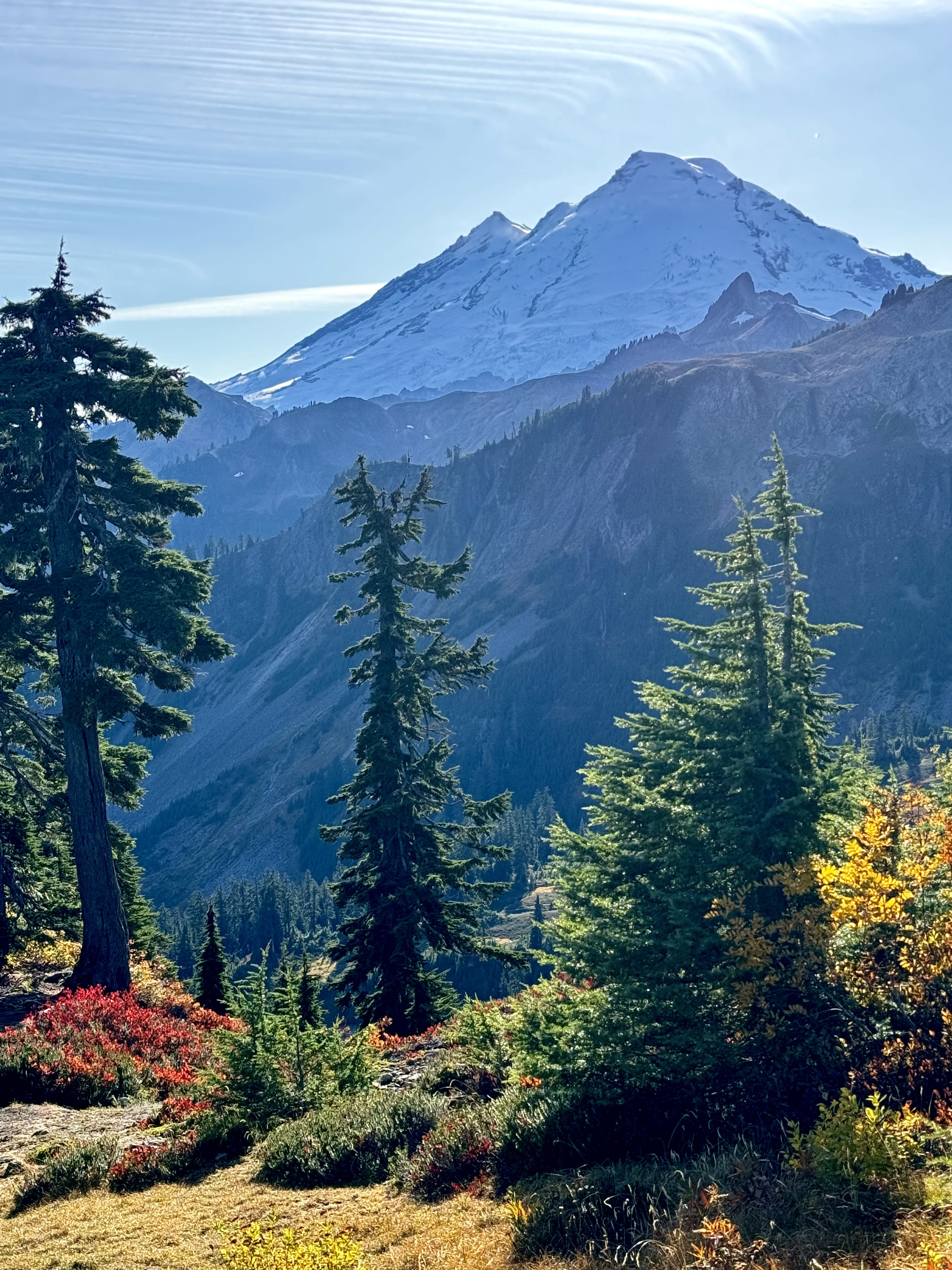
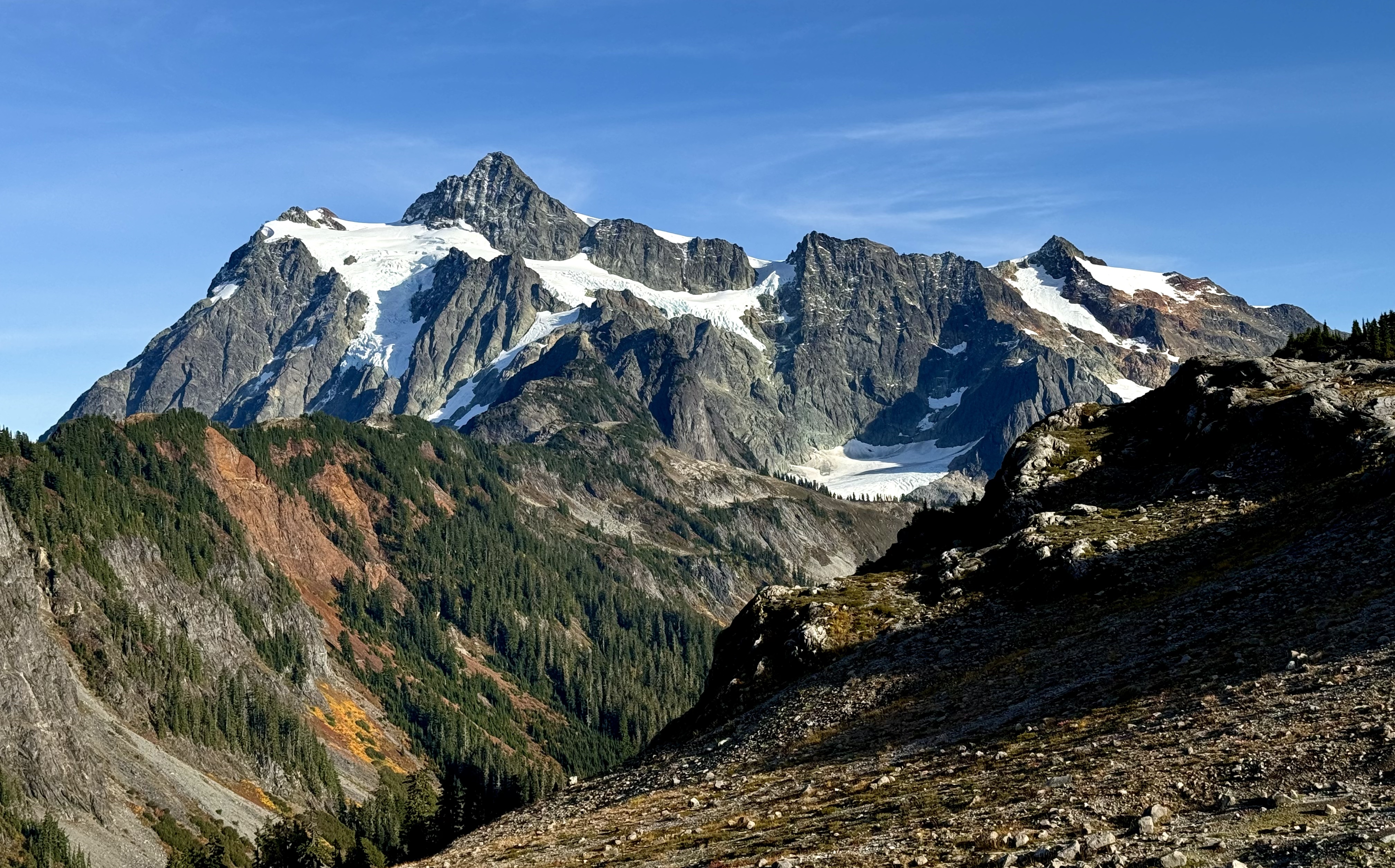
We headed 90 minutes northeast to find what I needed. The highway empty going up. Gas tank nearing empty with no time to fill up. Only a few photographers there, searching too.
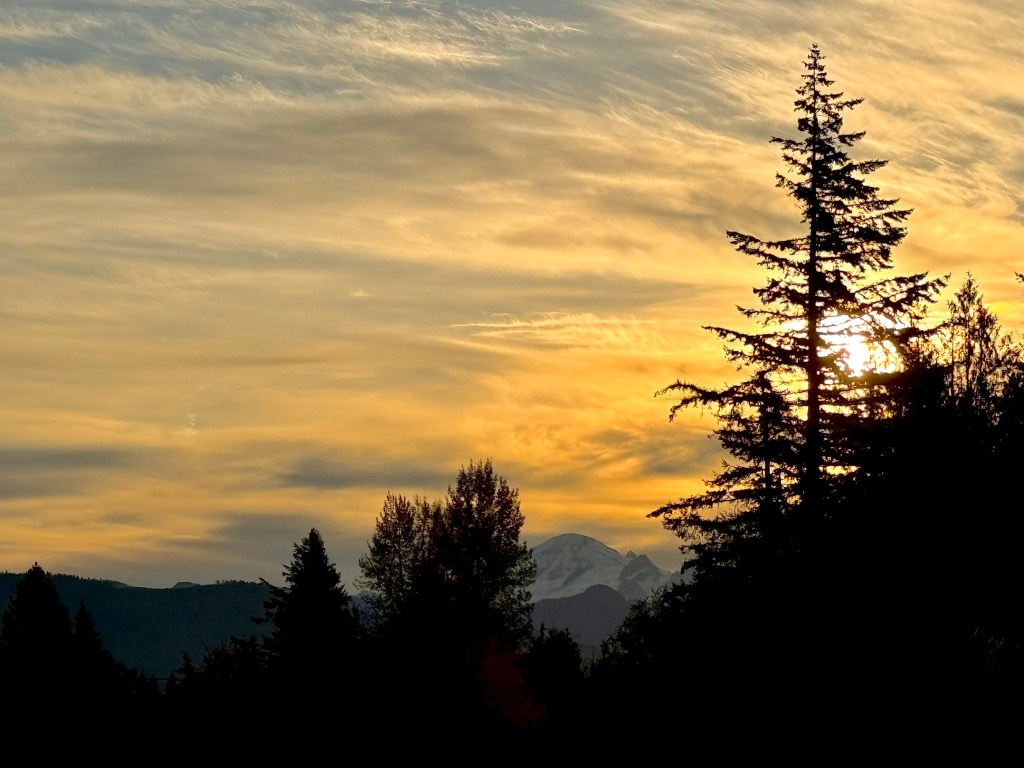
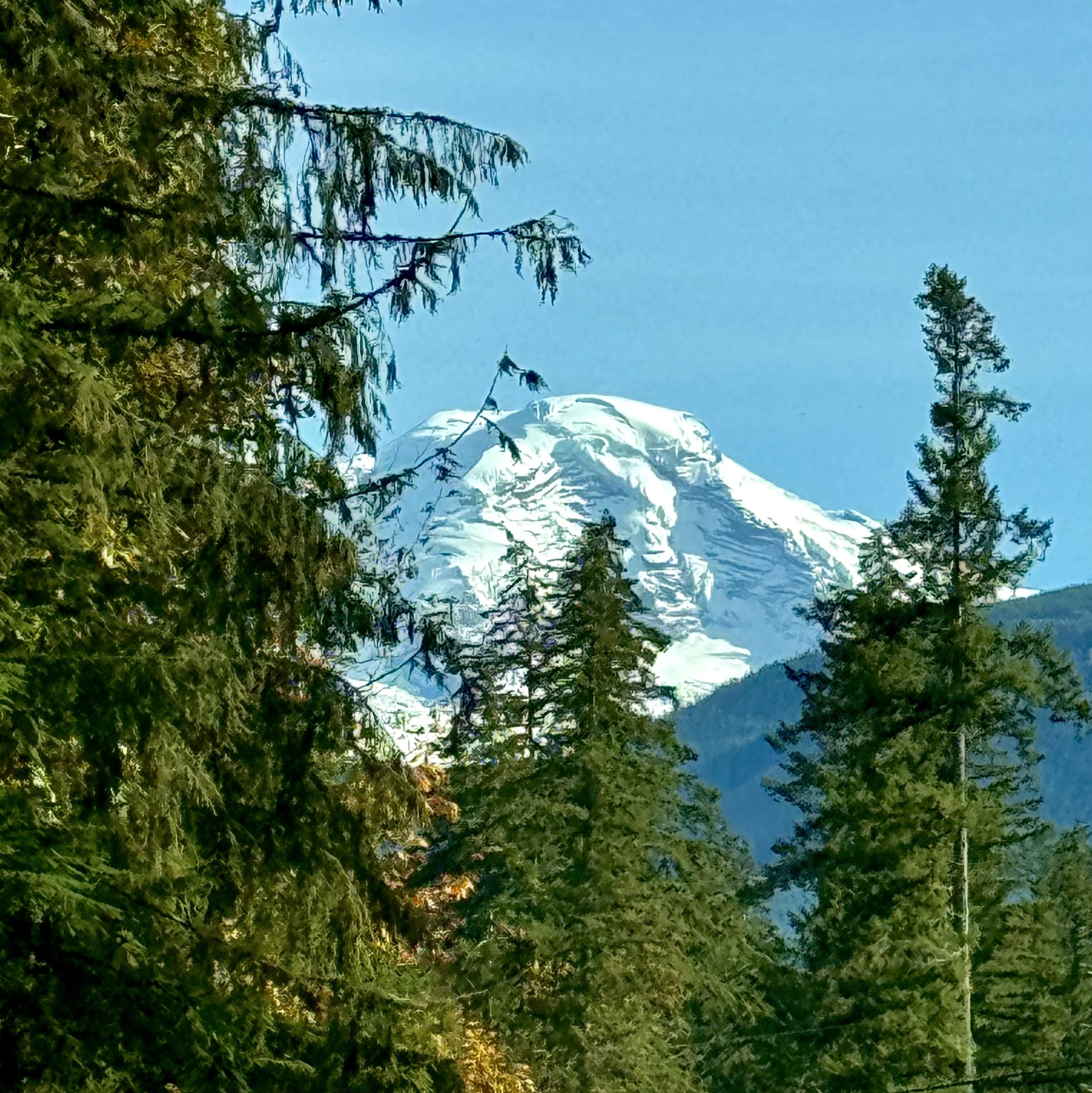
What we see from our backyard forty miles away overwhelms when standing awestruck in its own front yard.
Now my nearly empty tank slowly fills part-way. This dose of inner light will last me until next autumn. Overcome, overwhelmed, overpowered as though it’ll never be enough.
One-Time
Monthly
Yearly
Make a one-time or recurring donation to support daily Barnstorming posts
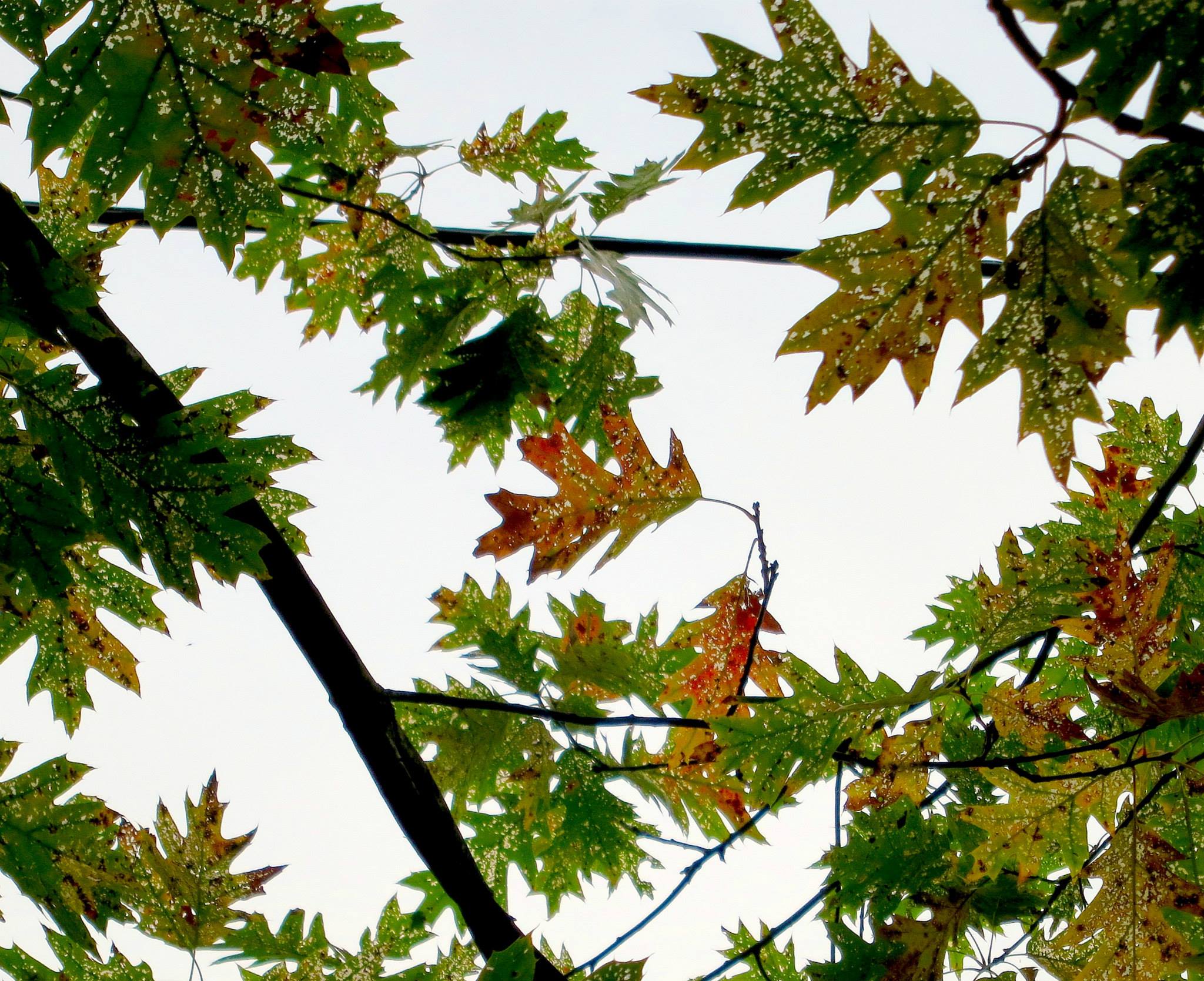
Fall, leaves, fall; die, flowers, away; Lengthen night and shorten day; Every leaf speaks bliss to me Fluttering from the autumn tree. I shall smile when wreaths of snow Blossom where the rose should grow; I shall sing when night’s decay Ushers in a drearier day. ~Emily Brontë “Fall, Leaves, Fall”
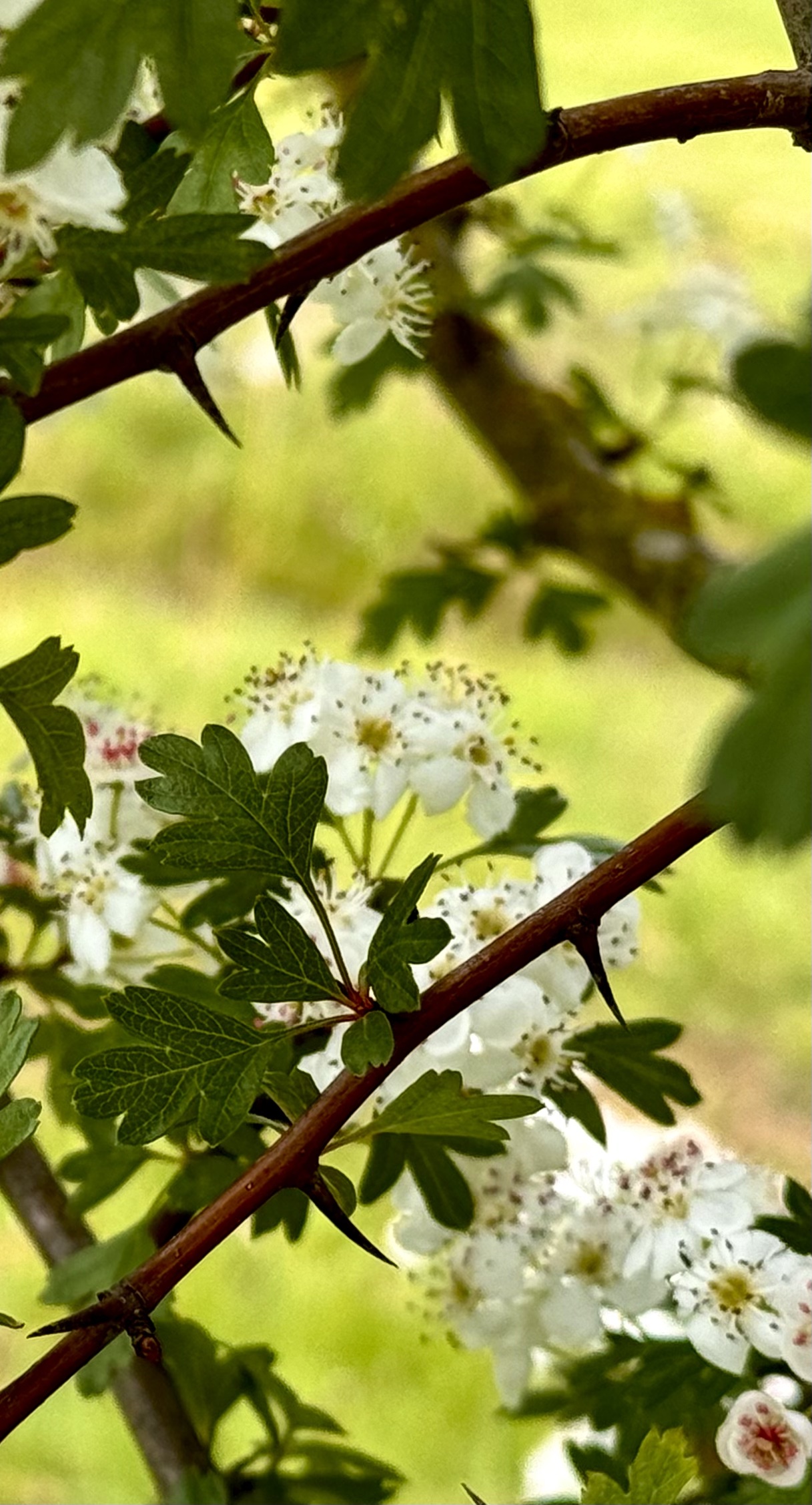
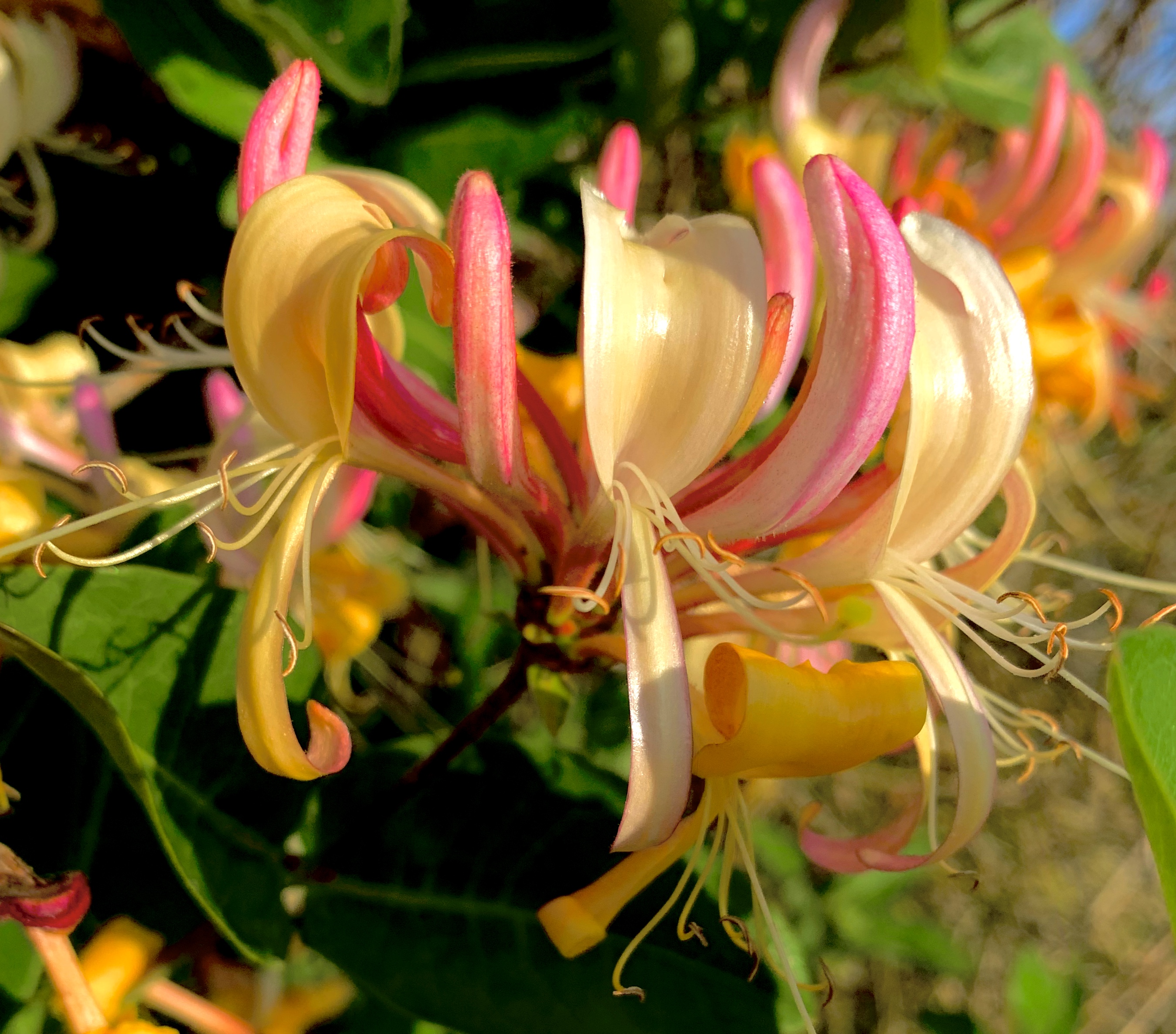
It was not the thorn bending to the honeysuckles, but the honeysuckles embracing the thorn. ~Emily Brontë from Wuthering Heights
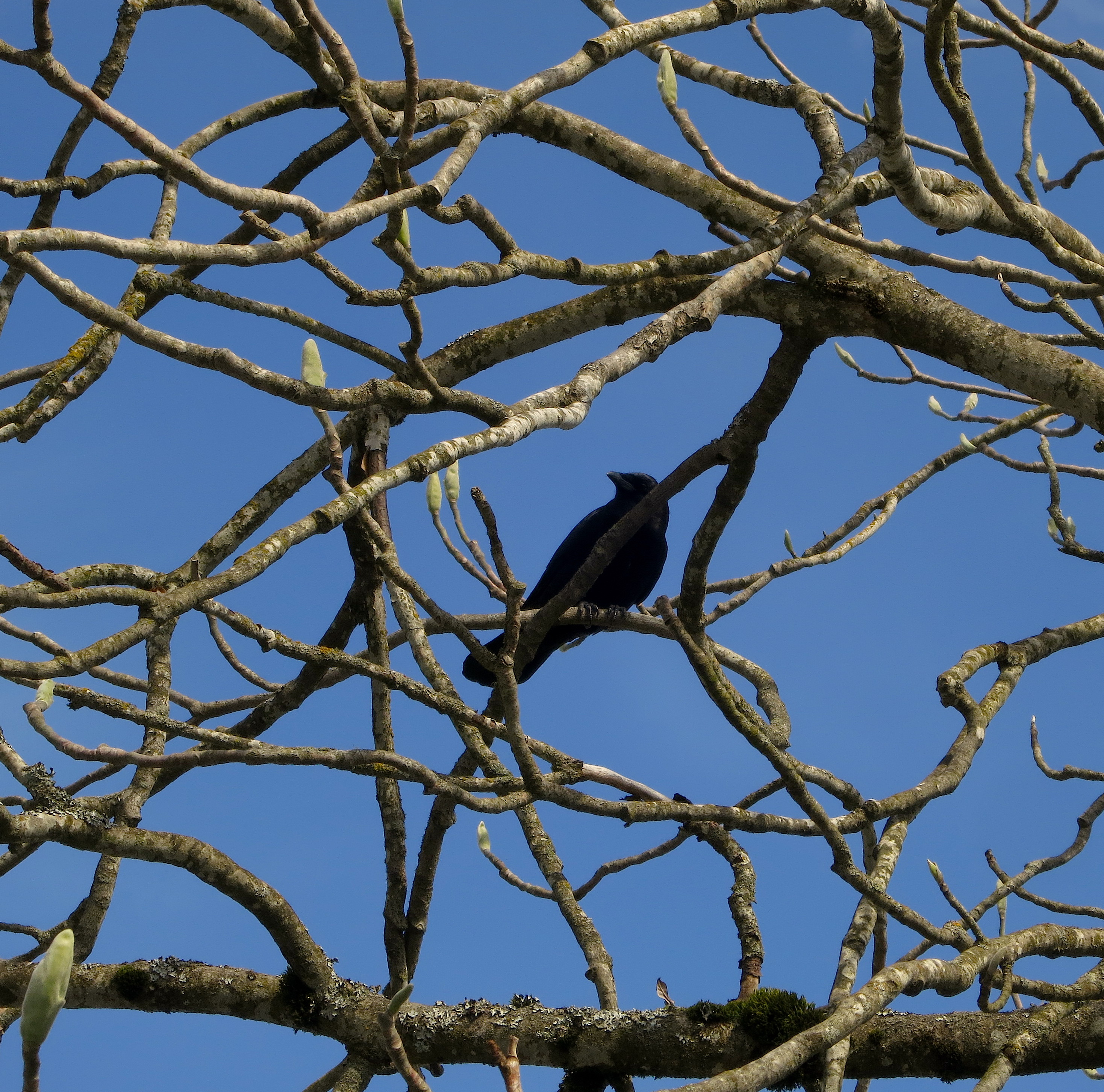
The loudest crows cawing over the tops of the oaks call me to autumn already, and though my back is to the window,
I know the sky must be a gray wuthering, and the curlews are crying. The wind must be moaning as it goes sweeping across heath and moors and the spikes of purple heather thousands of miles away from where my body sits; yet
I avoid watching sad movies and will close a book that is clearly heading for a weepy ending.
I don’t need to wrap myself around things that hurt when there is enough sadness and pain in the world already. Deep emotion sticks to me like velcro, even when I know the tragedy is not my own. I take it on as if it is.
As a result, the Brontë novel Wuthering Heights is not my cup of tea. I suffered through the book as well as the movie versions. It is grim with wild, destructive passions that only lead to more sorrow. I become immersed in those desperately gray “wuthering” scenes feeling the sharp thorns of the words I read that end up drawing blood from me.
But most suffering is not at all fictional. When I become aware of tragedy happening far away, when the hurricane leaves behind terrible devastation or bombs and bullets rip communities to shreds, even though there is little I can physically do to help, I can’t turn away and not look. I can’t close the book that makes me sad and uncomfortable.
I too must feel the hurt, embracing the thorns rather than avoiding them.
Jesus did just that, taking it all upon Himself. He never turned away and still, now, today, He is pierced, bloodied for our sake.
AI image created for this post
One-Time
Monthly
Yearly
Make a one-time or recurring donation to support daily Barnstorming posts
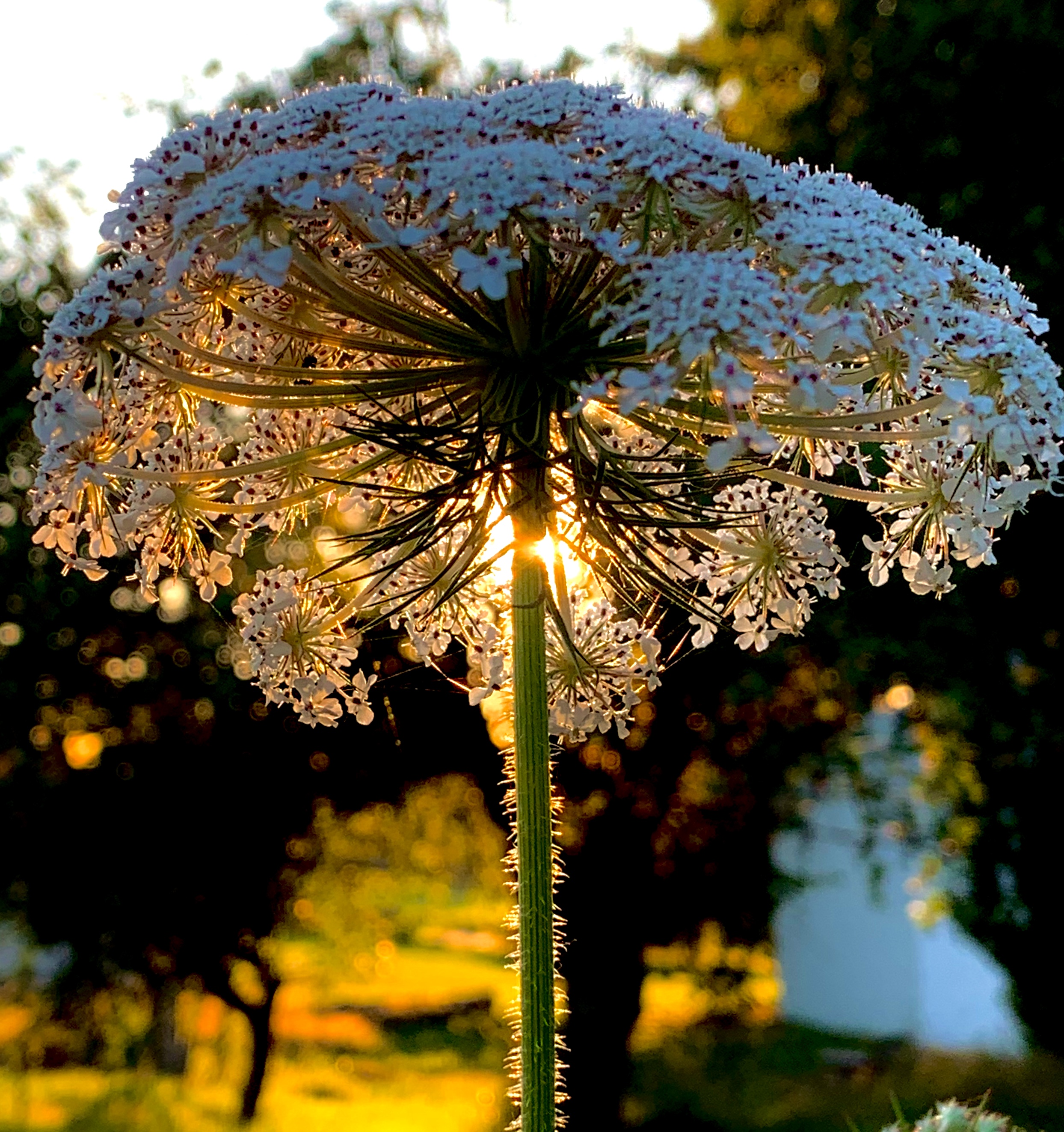
One wading a Fall meadow finds on all sides The Queen Anne’s Lace lying like lilies On water; it glides So from the walker, it turns Dry grass to a lake, as the slightest shade of you Valleys my mind in fabulous blue Lucernes.
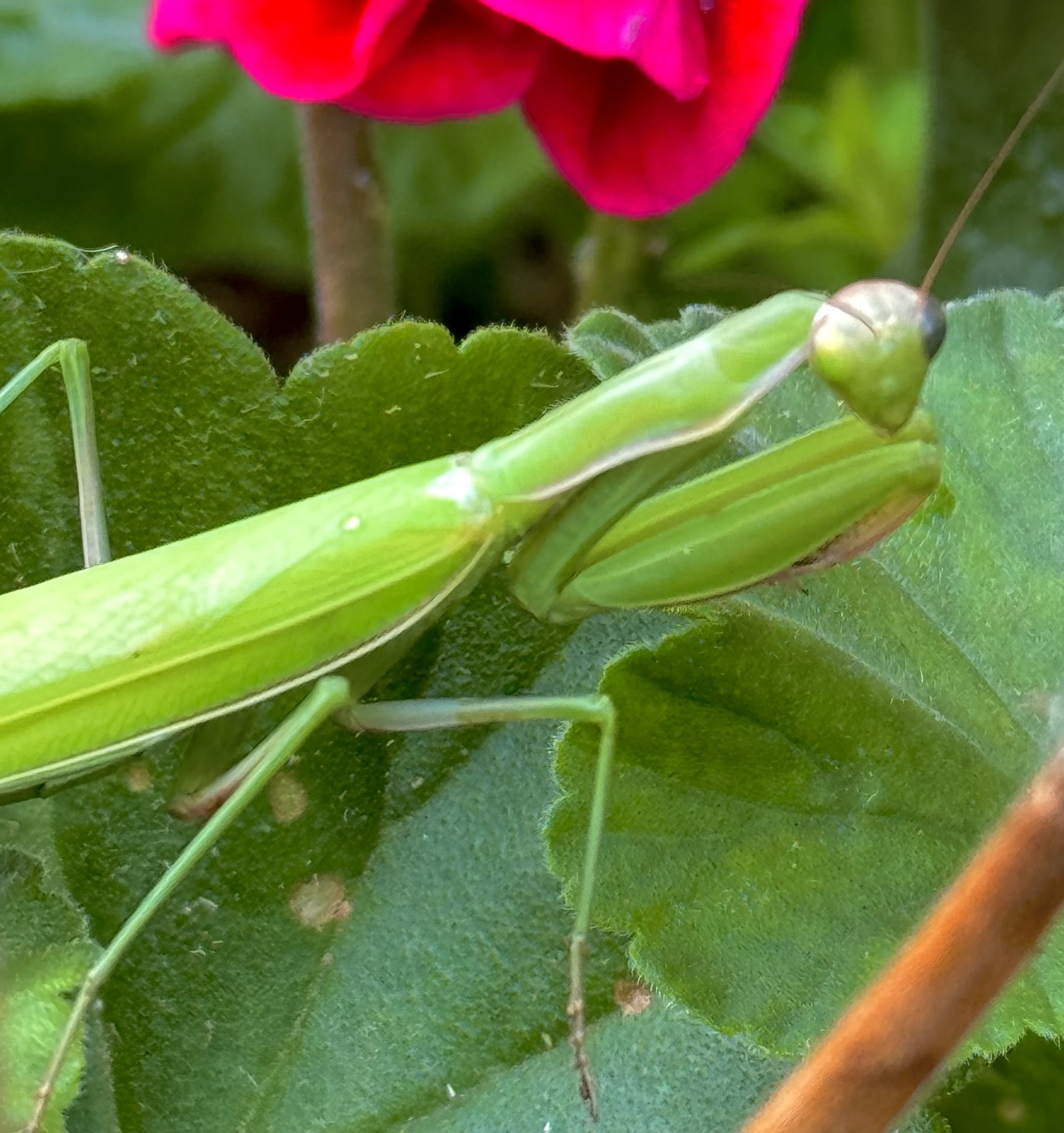
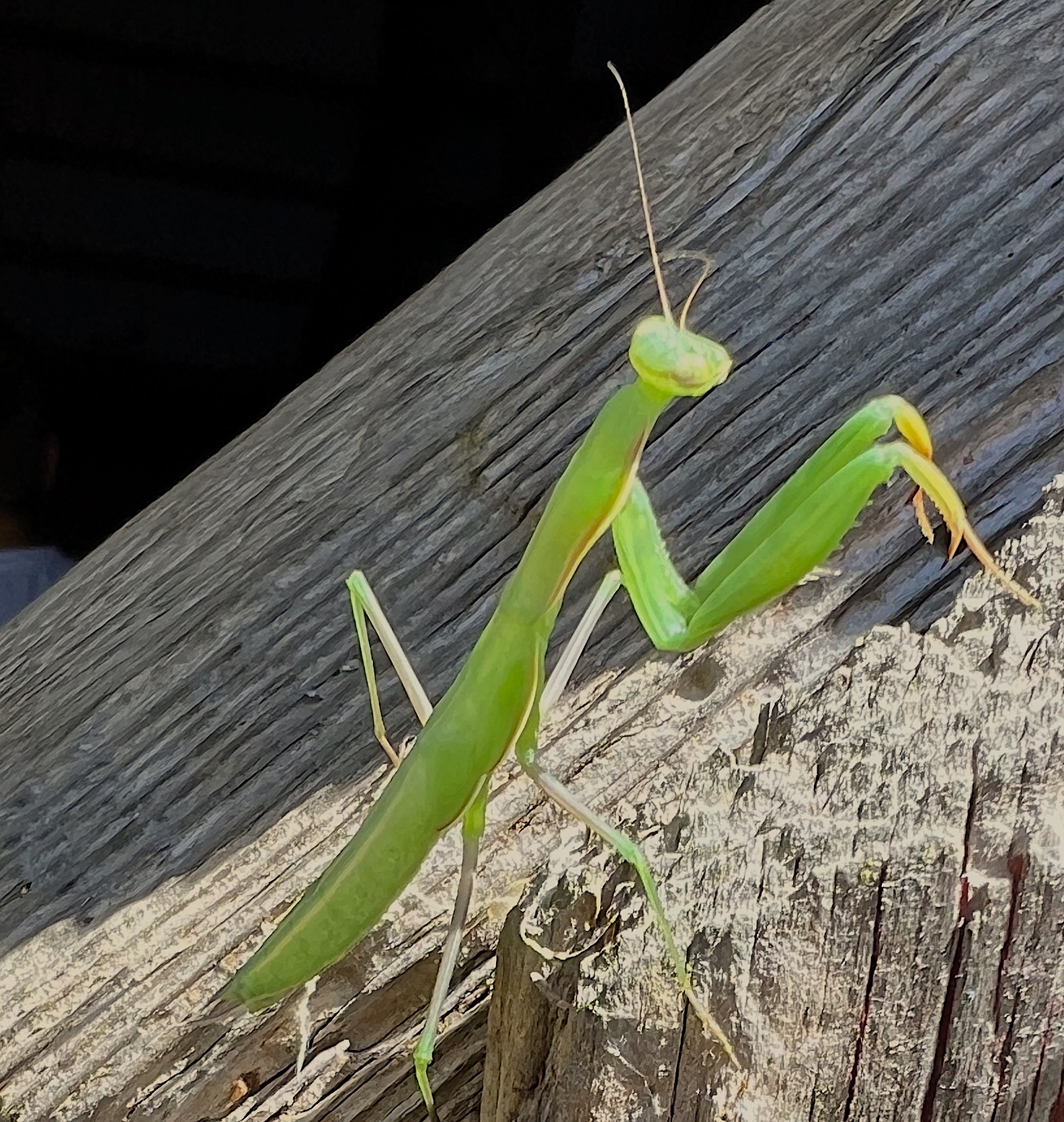
The beautiful changes as a forest is changed By a chameleon’s tuning his skin to it; As a mantis, arranged On a green leaf, grows Into it, makes the leaf leafier, and proves Any greenness is deeper than anyone knows.
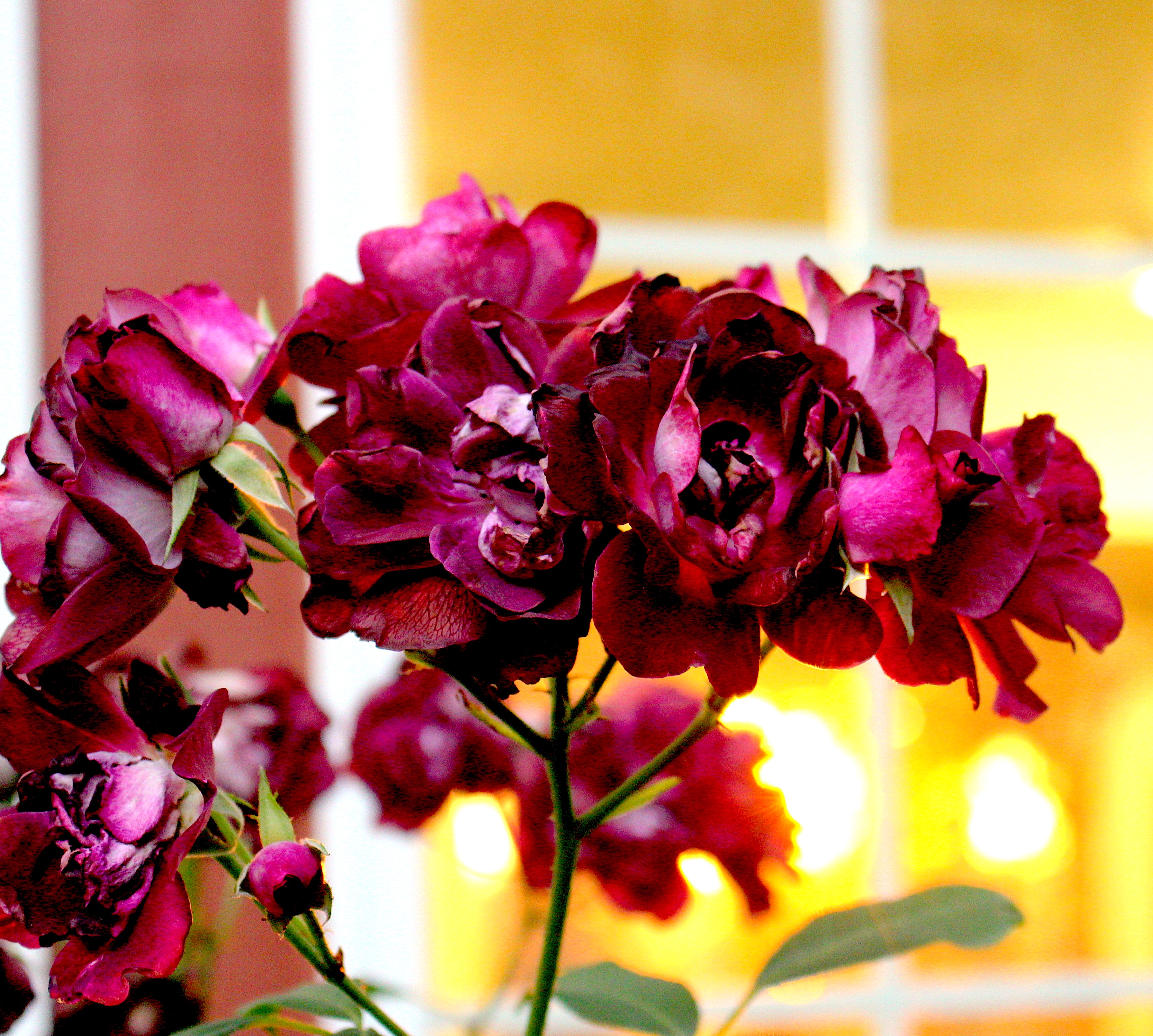
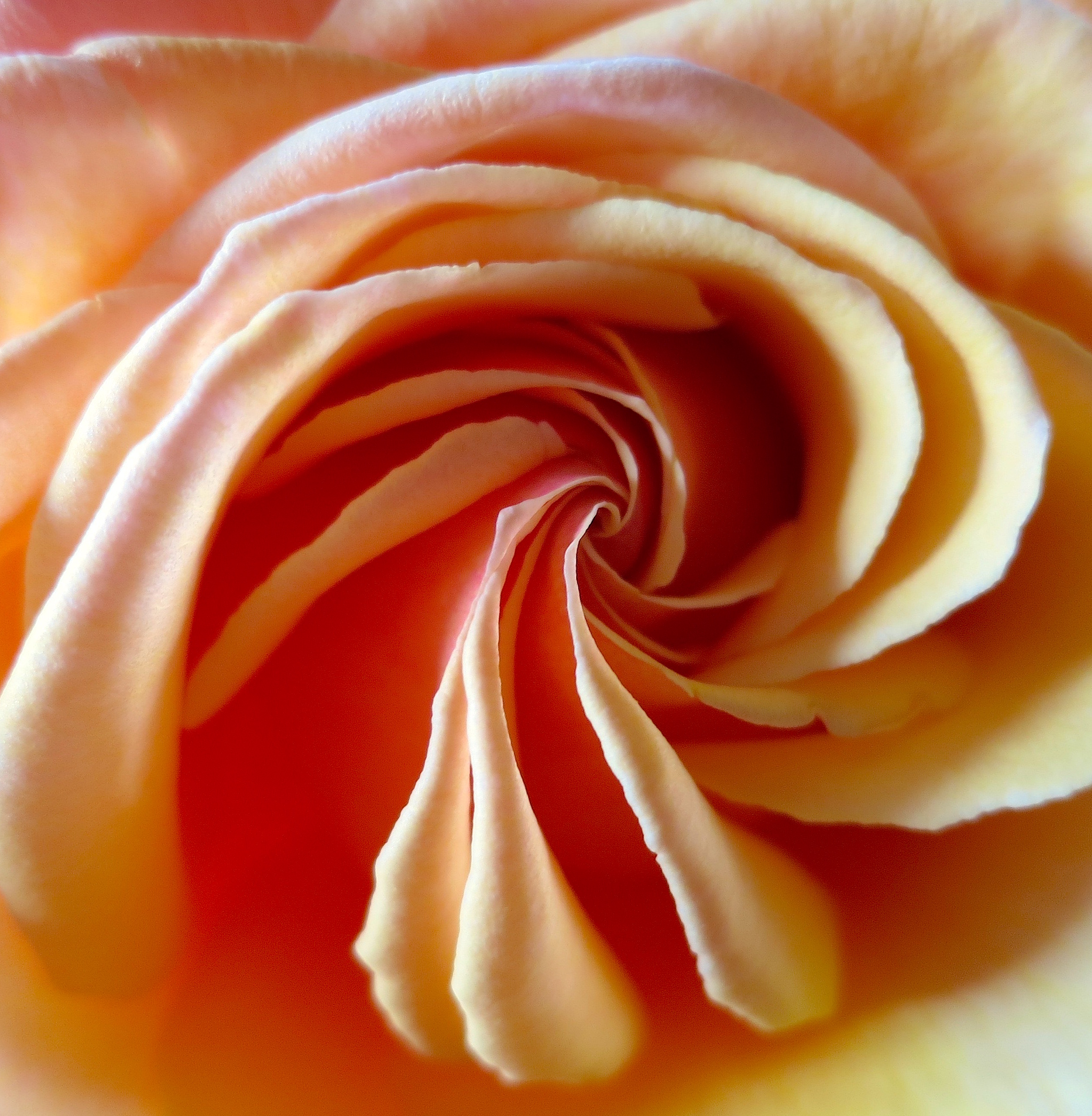
Your hands hold roses always in a way that says They are not only yours; the beautiful changes In such kind ways, Wishing ever to sunder Things and things’ selves for a second finding, to lose For a moment all that it touches back to wonder. ~Richard Wilbur “The Beautiful Changes”
I am changed again, as I blend into autumn.
We can’t help but be transformed by everything around us, you know.
Beautiful is the dying meadow, the shedding of dry reddened leaves, the tidal wave of wildflowers nodding goodbye until next summer.
Beauty is beheld with wonder and then lost to the ages. We cannot change what we see, but treasure its transience, as we cherish our own brief moments here.
We hold on lightly, ready to let go when the time comes. What comes next is beautiful beyond imagining.
One-Time
Monthly
Yearly
Make a one-time or recurring donation to support daily Barnstorming posts
I must go in; the fog is rising… ~Emily Dickinson, her last words
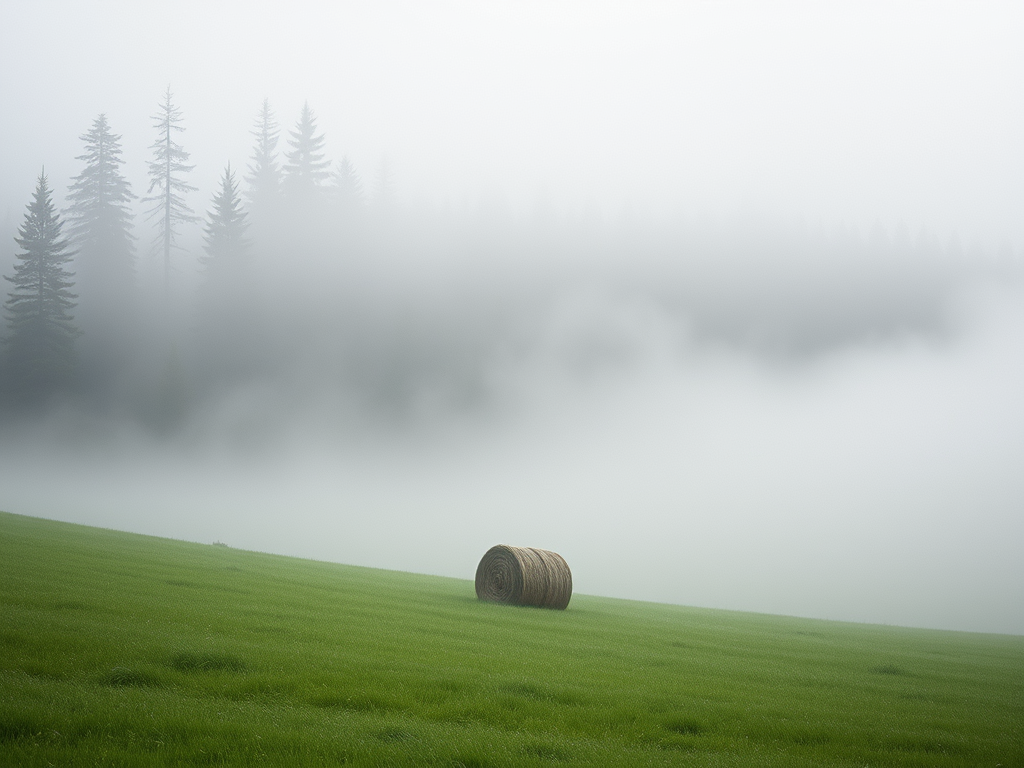
And when it lifts, the fog lifts what it buried, the tall pines stand taller, the valley breathes a magnanimous air, the green grass hills stir in wonder, the fleeting white clouds flee with their shadows, a bale of hay makes the case for being alone, and what was erased and briefly forgotten retrieves its mother tongue, speaking truth to the hour. And to be a witness to such plumes of mist dissolve into the vastness is to be the vastness, the Earth’s step our step, the observer and the observed holding hands with time, blankets of grief the years have cottoned over uncovered, the pallbearer–– coffin on shoulder––in view of the mound of soil up ahead summoned to his depths; dear father, here I am. ~Howard Altmann “The Fog”from In This House
Fog swallows us whole, not unlike being lowered into the depths of the grave.
Immersed so thoroughly, surrounded and muffled, yet still breathing in the chill mist.
But then the fog lifts. It rises. And takes us with it.
Father, here I am, holding hands with time.
AI image created for this post
One-Time
Monthly
Yearly
Make a one-time or recurring donation to support daily Barnstorming posts
…we know what is coming behind the crocus… the great thing is that the corner has been turned. It remains with us to follow or not, to die in this winter, or to go on into that spring and that summer. C.S. Lewis from God in the Dock
In the high woods that crest our hills, Upon a steep, rough slope of forest ground, Where few flowers grow, sweet blooms today I found Of the Autumn Crocus, blowing pale and fair. Dim falls the sunlight there; And a mild fragrance the lone thicket fills.
Languidly curved, the long white stems Their purple flowers’ gold treasure scarce display: Lost were their leaves since in the distant spring,
Their February sisters showed so gay. Roses of June, ye too have followed fleet! Forsaken now, and shaded as by thought, As by the human shade of thought and dreams, They bloom ‘mid the dark wood, whose air has wrought With what soft nights and mornings of still dew! Into their slender petals that clear hue, Like paleness in fresh cheeks; a thing On earth, I vowed, ne’er grew More delicately pure, more shyly sweet.
Child of the pensive autumn woods! So lovely, though thou dwell obscure and lone, And though thy flush and gaiety be gone; Say, among flowers of the sad, human mind, Where shall I ever find So rare a grace? in what shy solitudes? ~Robert Laurence Binyon “Autumn Crocus”
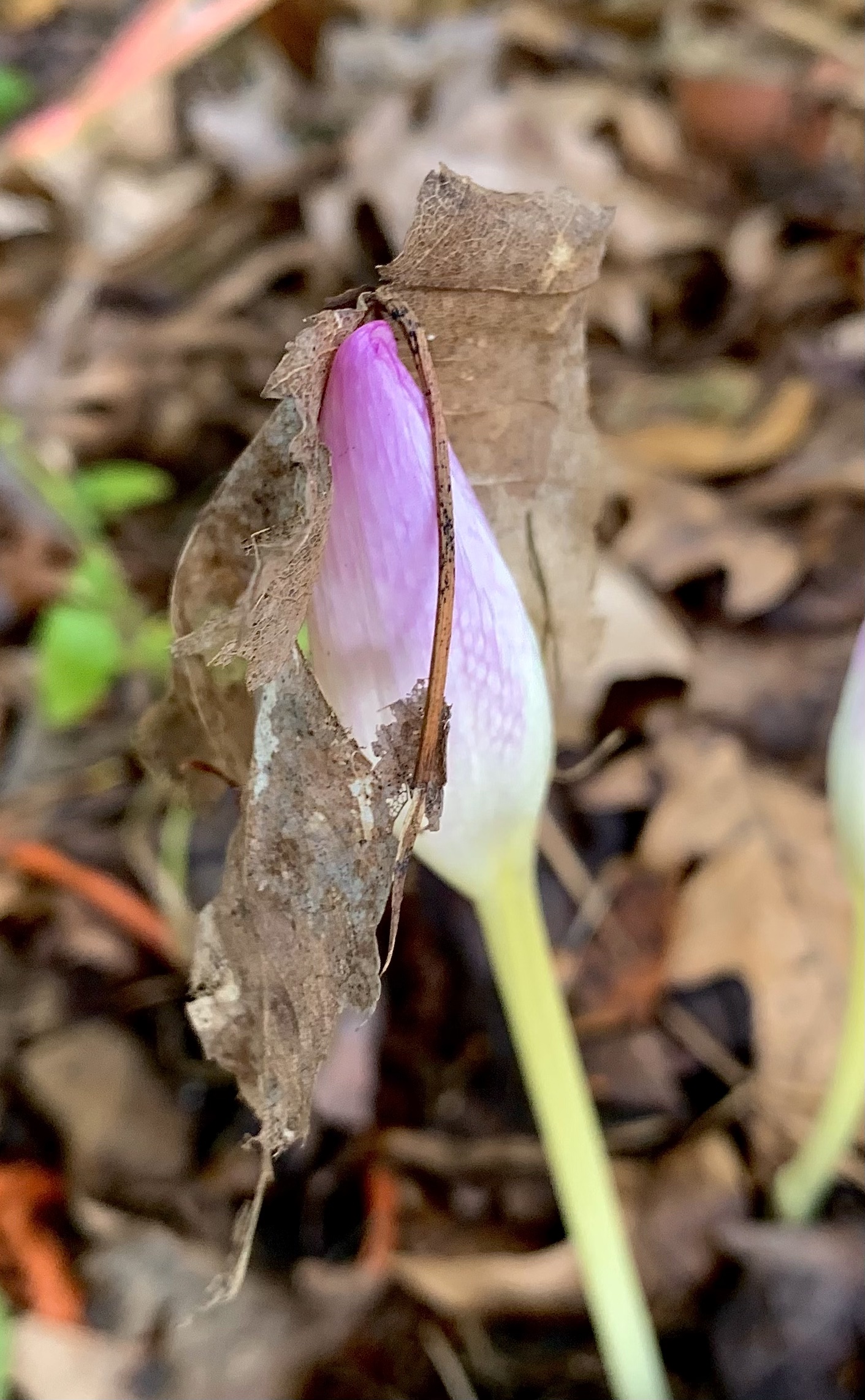
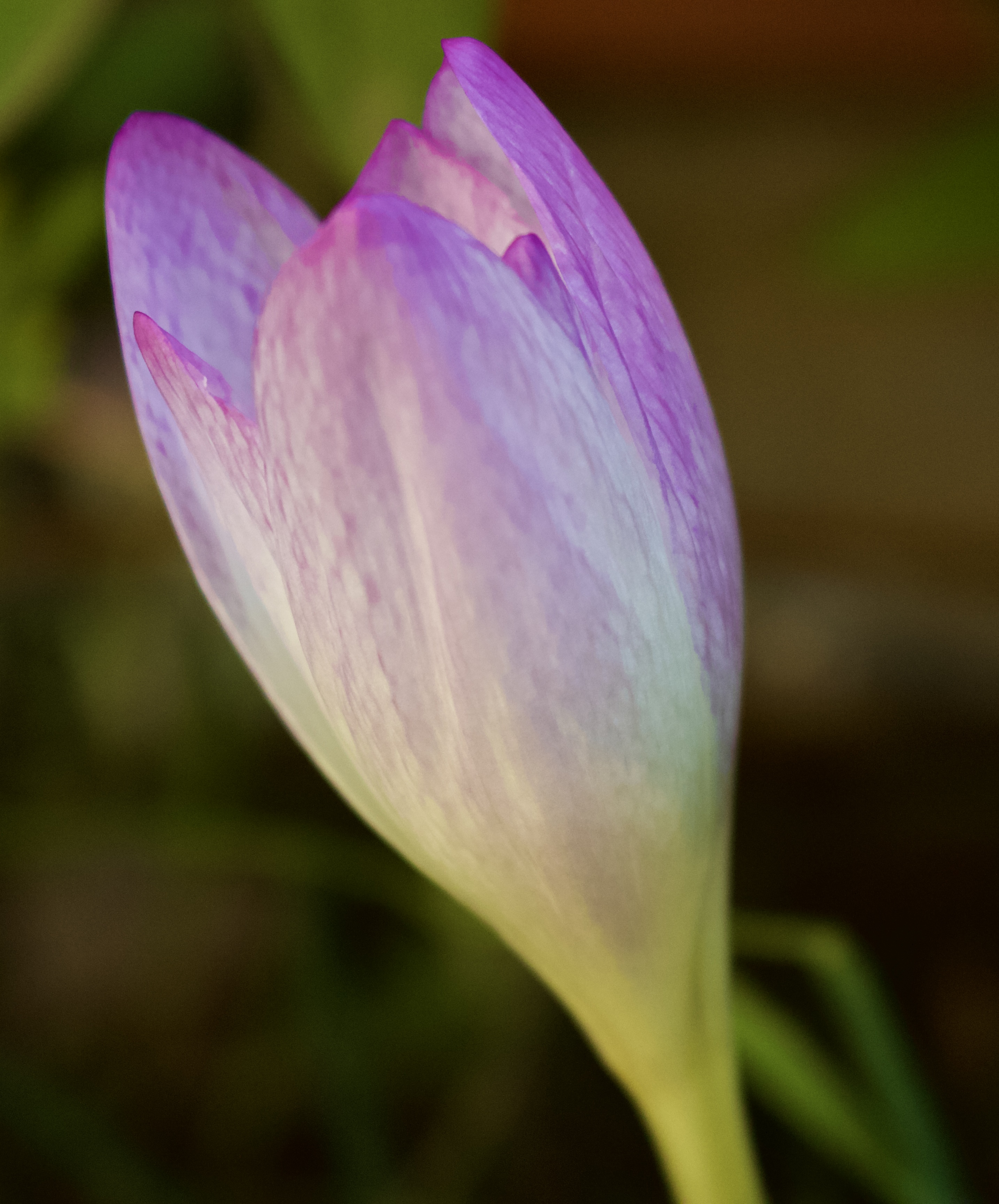
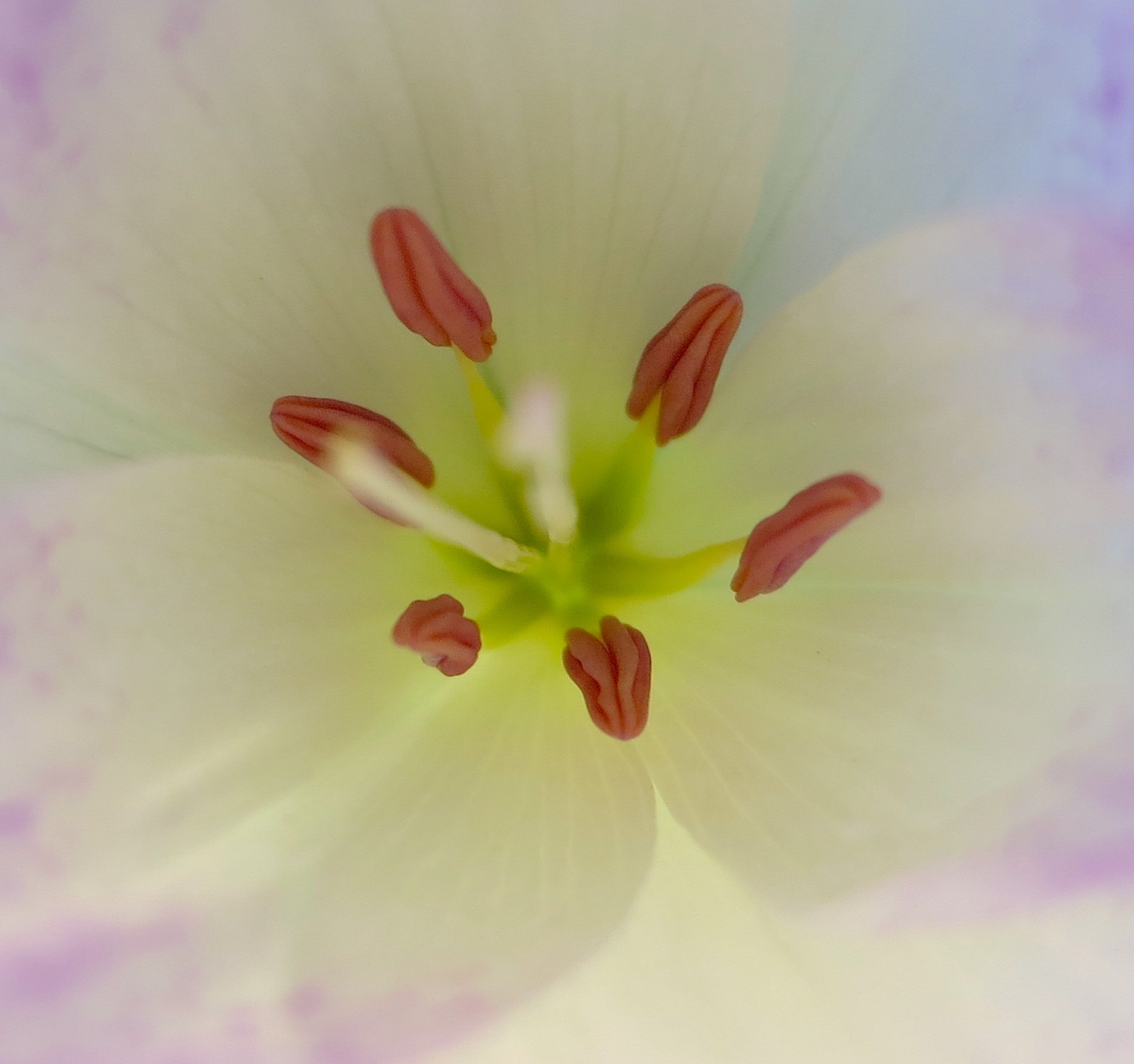
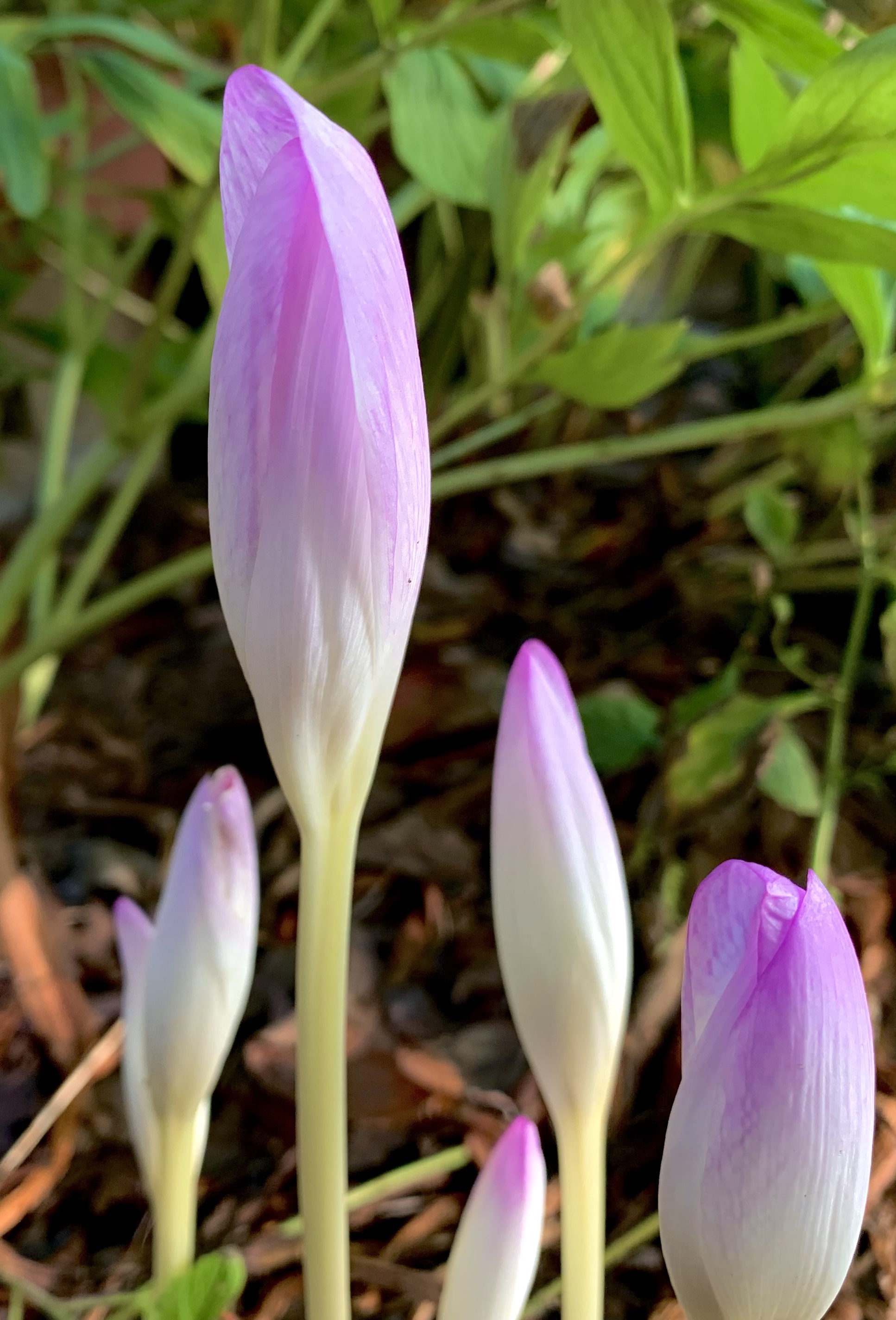
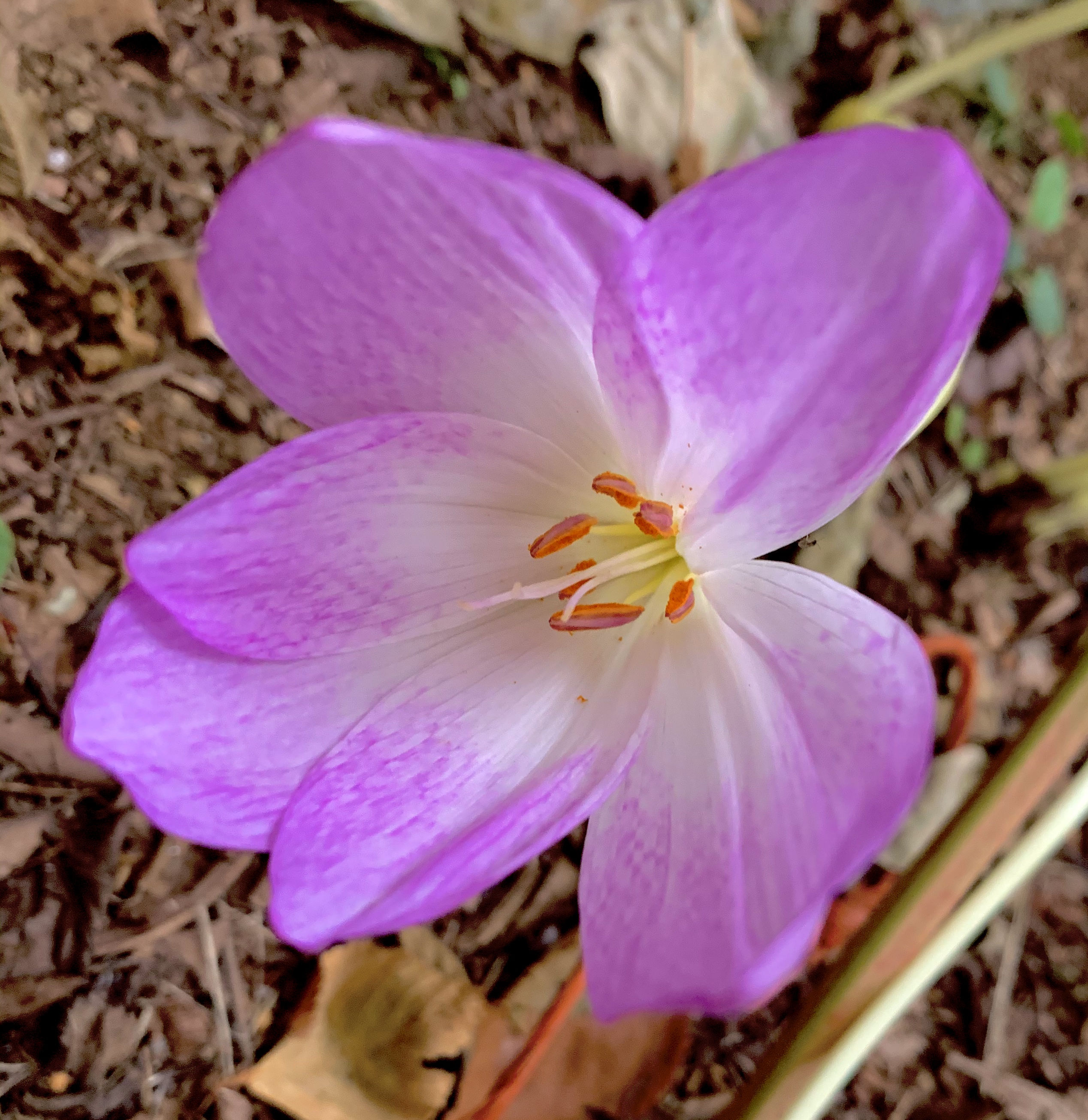
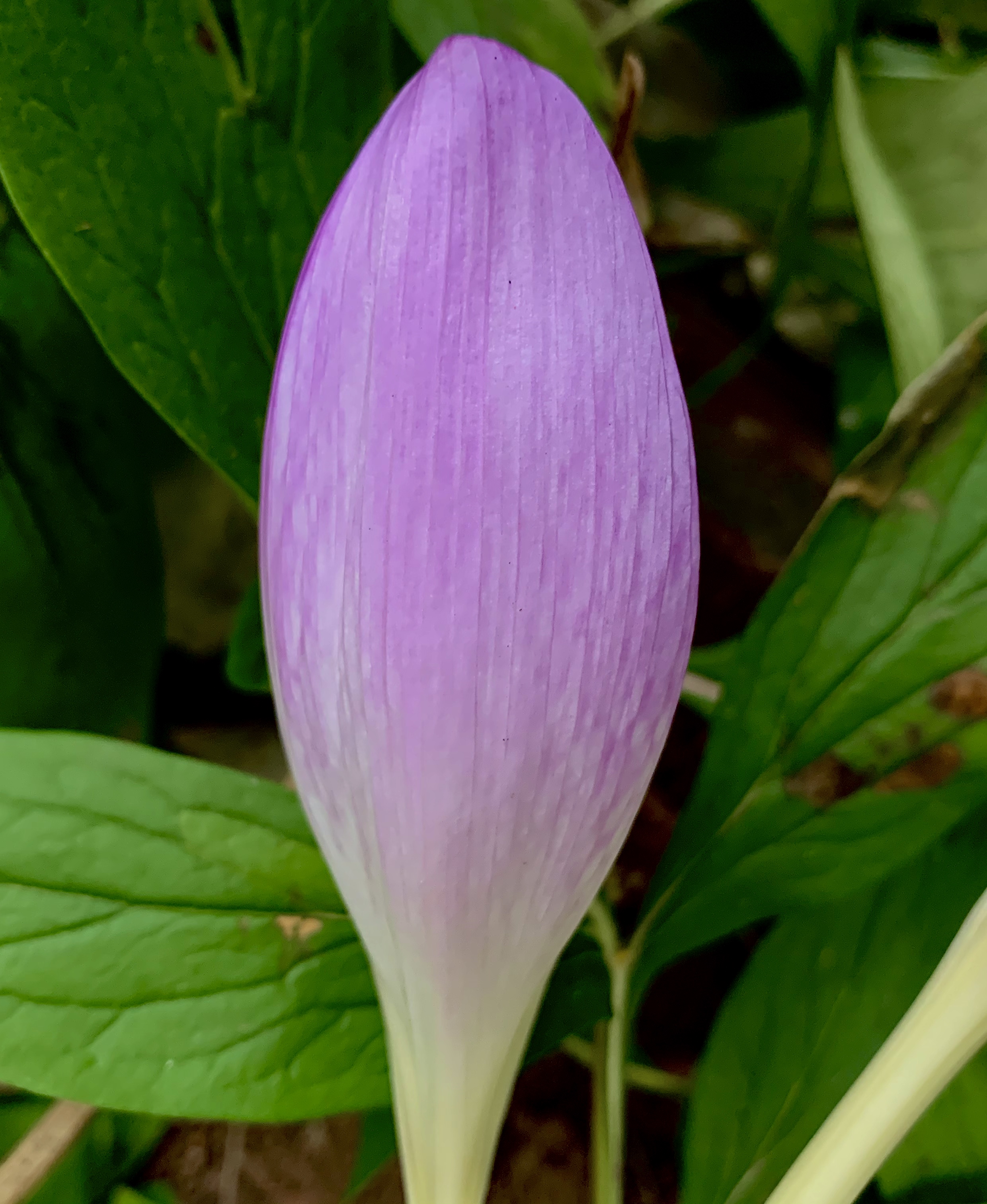
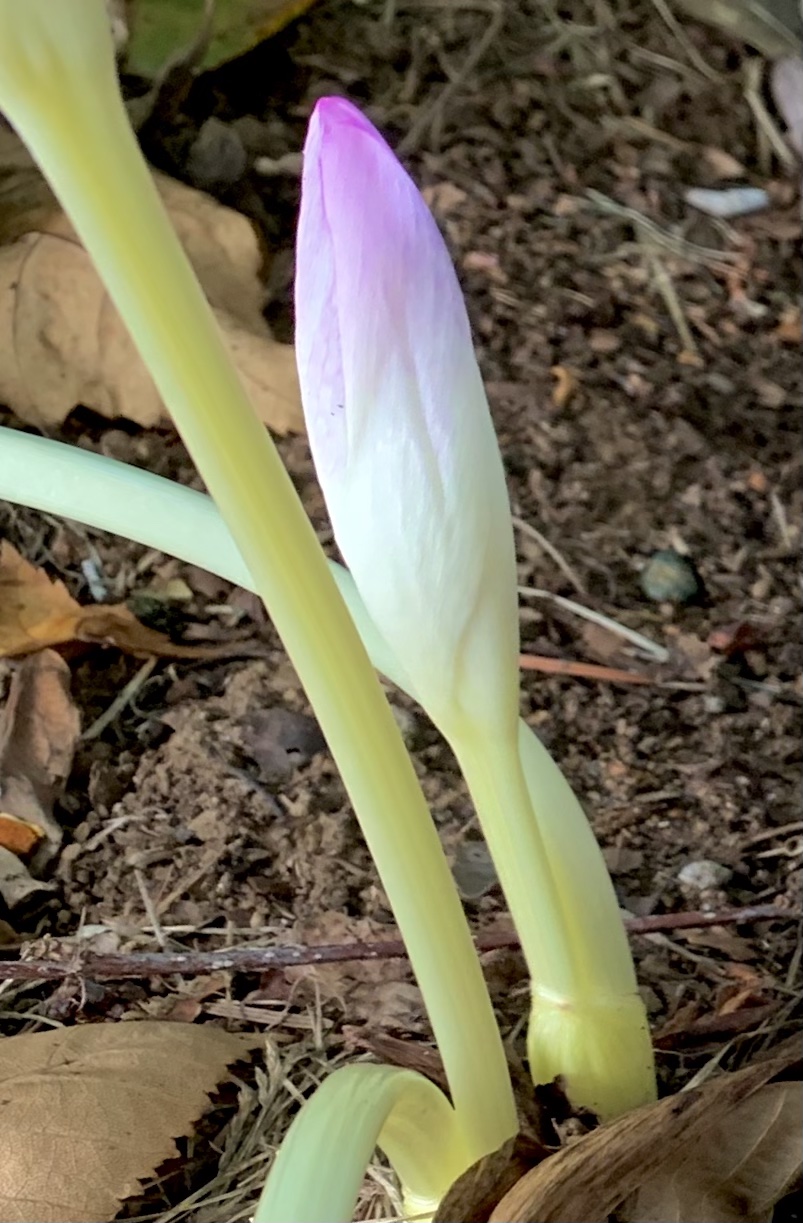
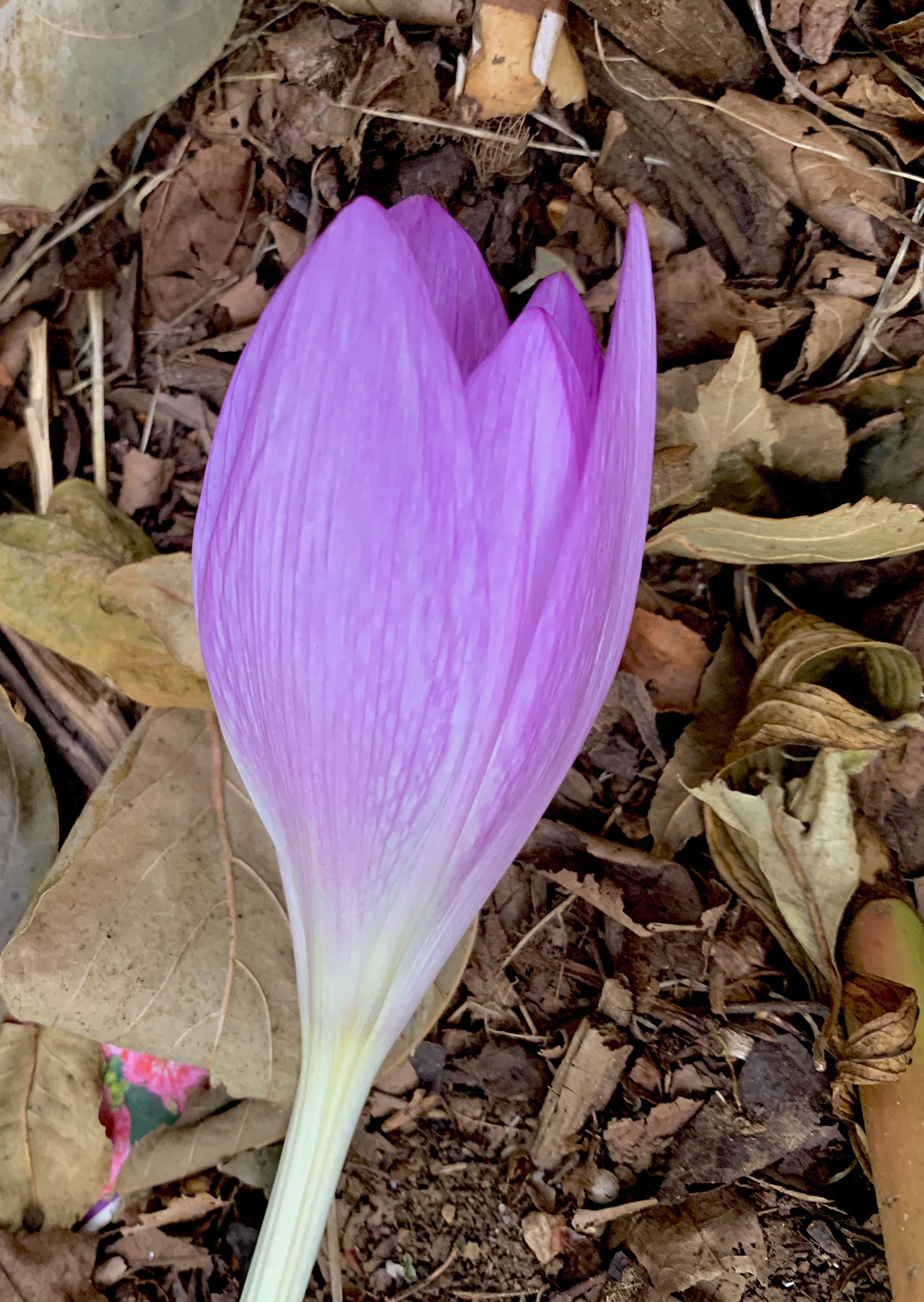
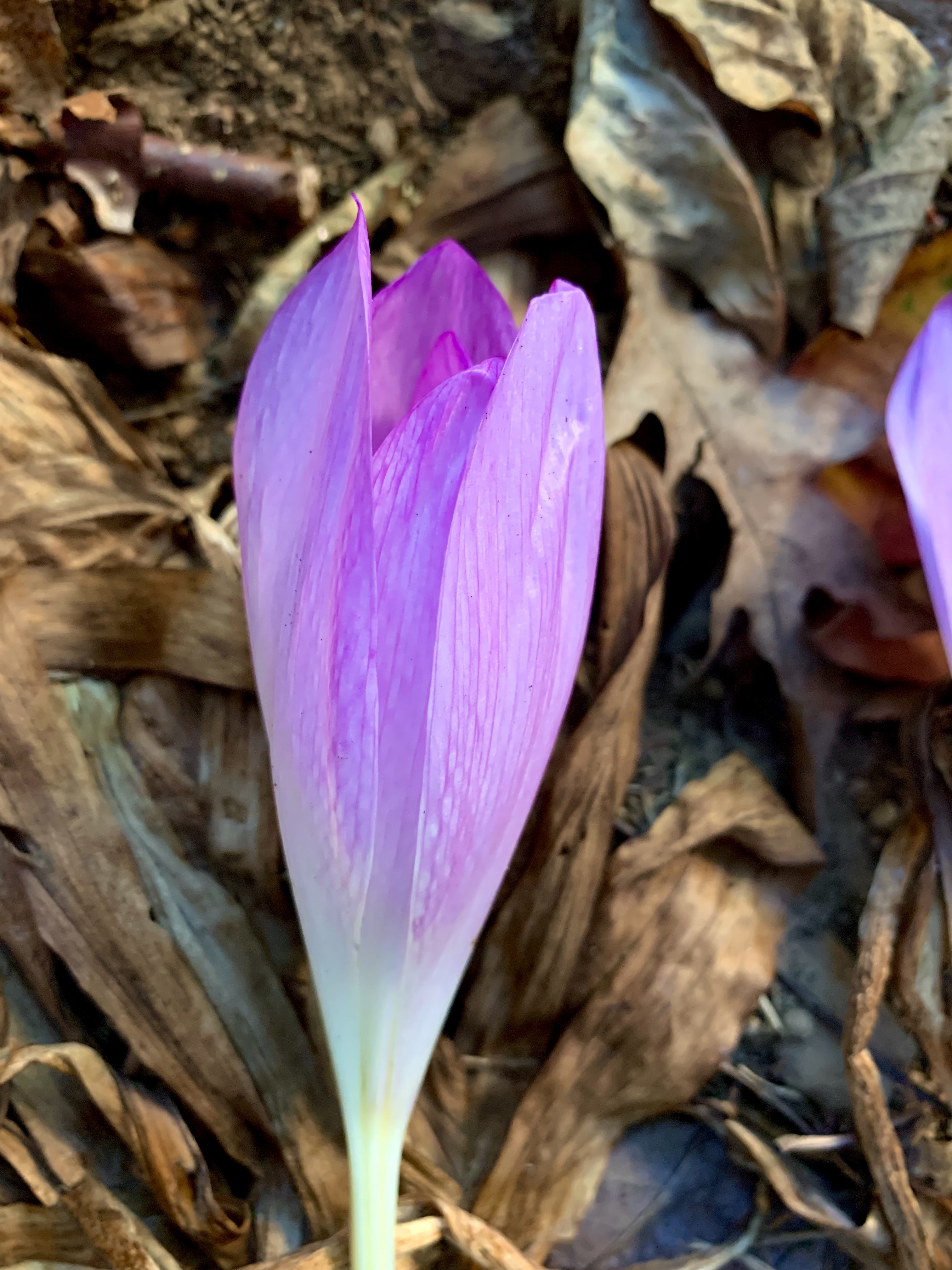
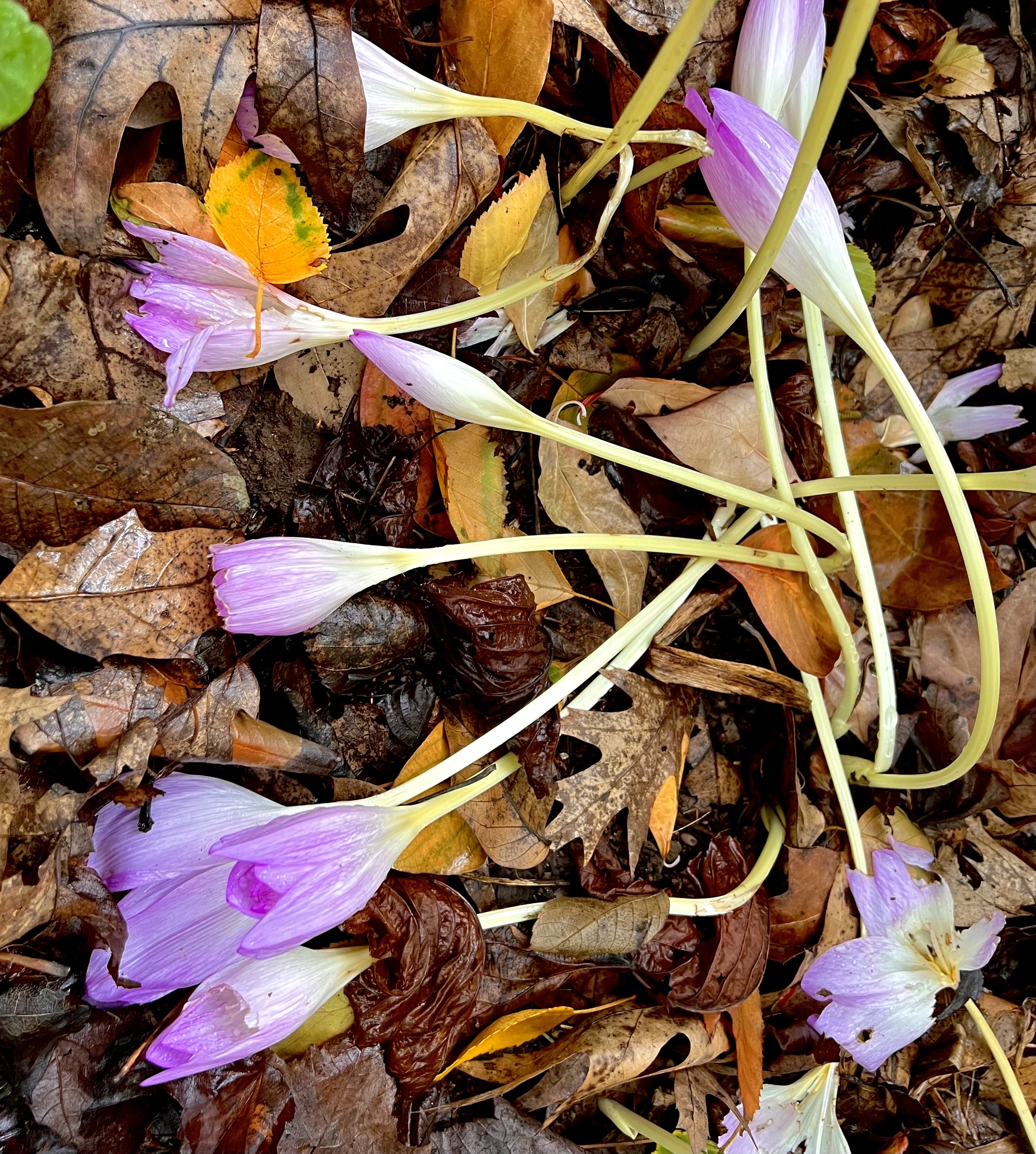
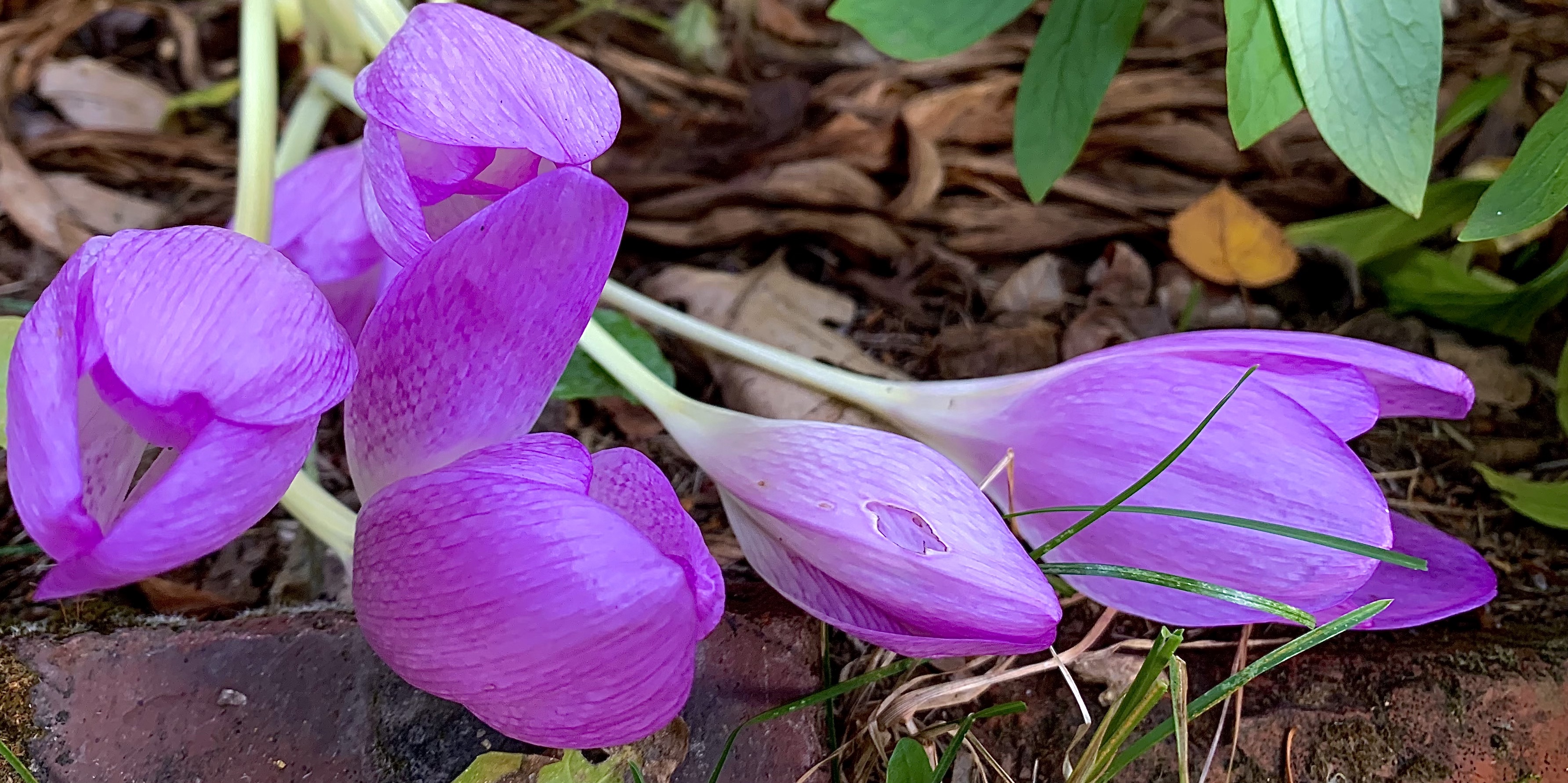
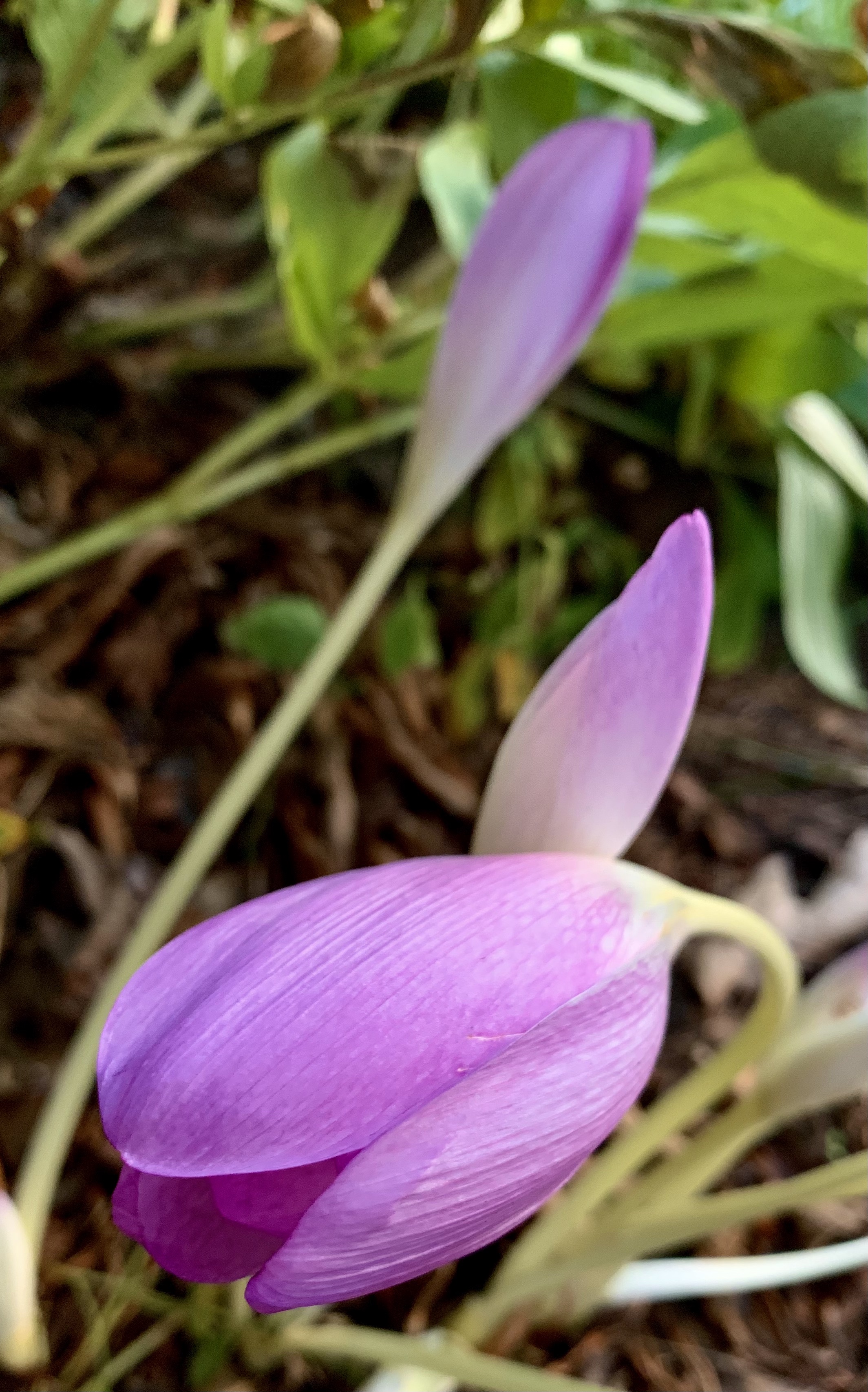
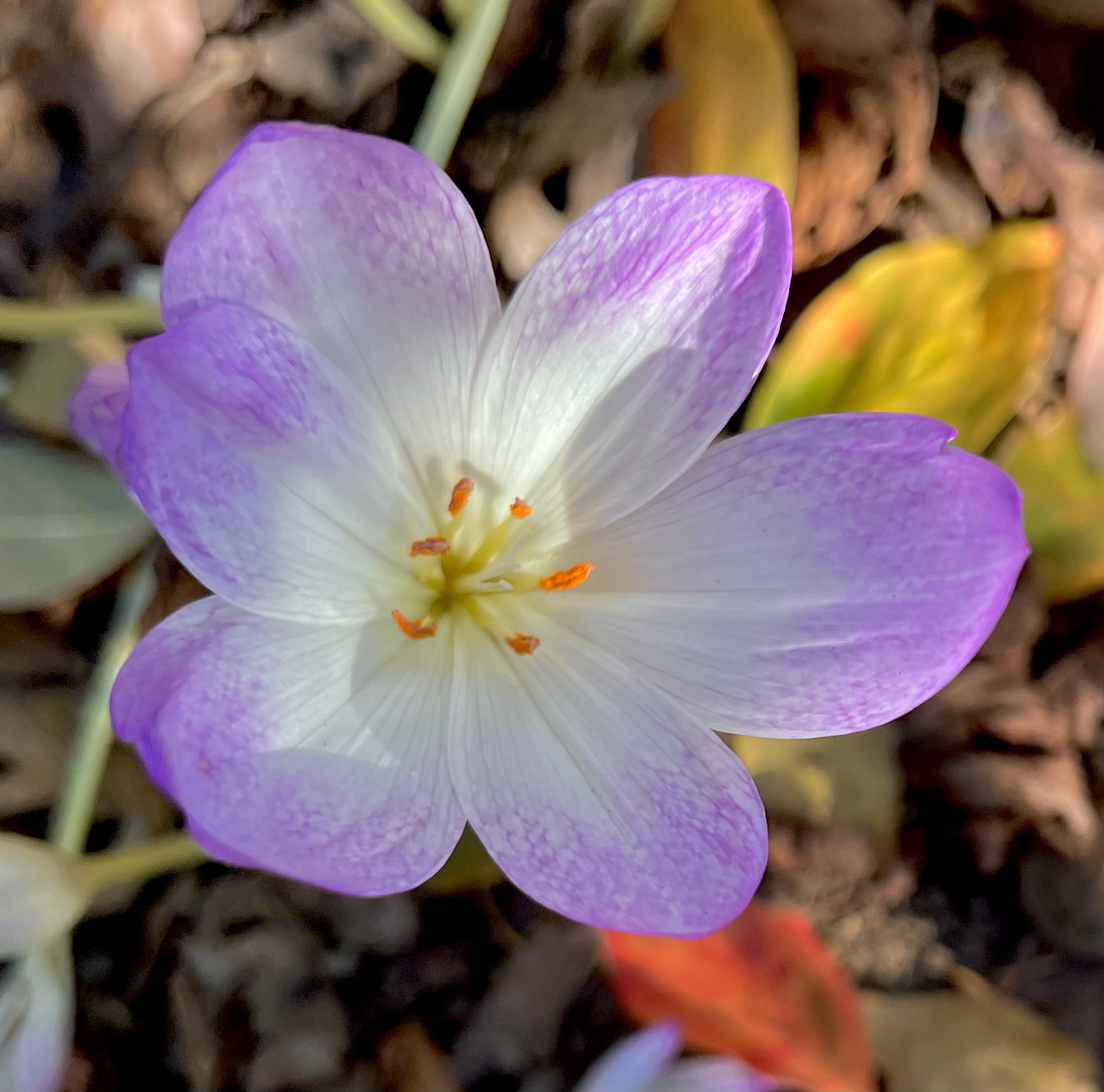
The emergence of autumn crocus is unexpected, surprising even when I know where the bulbs hide in the shade of spent peony bushes.
They lie waiting beneath of the surface of our waning summer dreams, triggered by retreating light from above, summoned forth from cooling soil to remind us summer’s end is not the end of them or us.
A luminous gift of hope and grace borne from a humble bulb; plain and only soil-adorned.
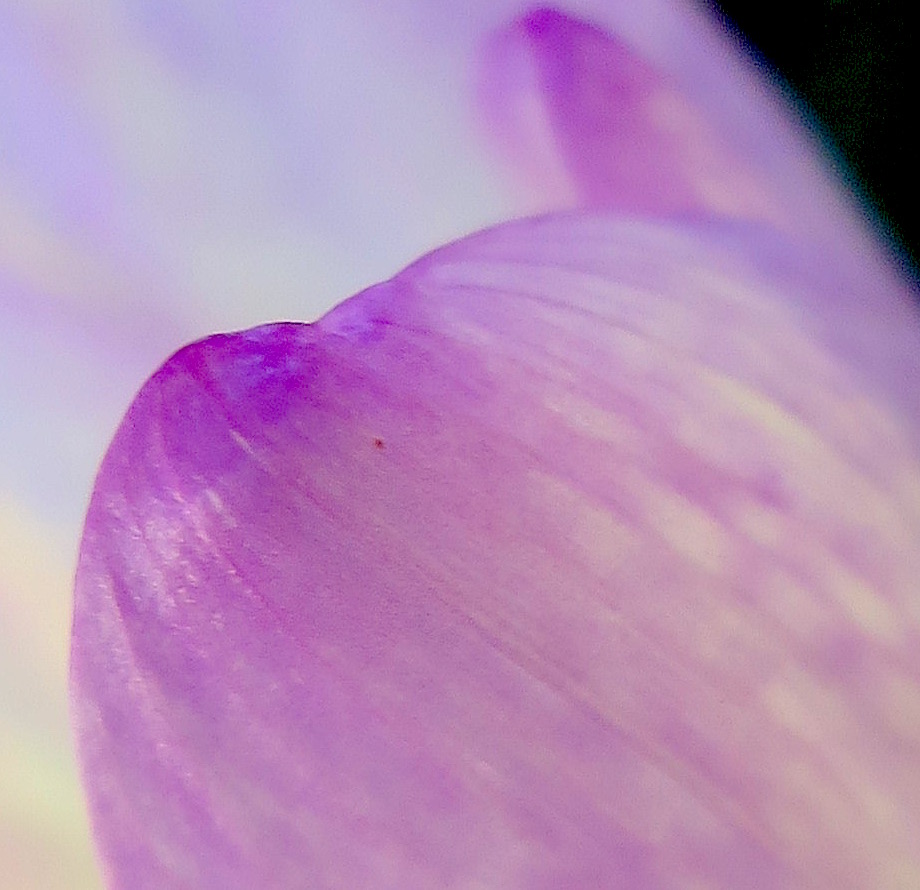
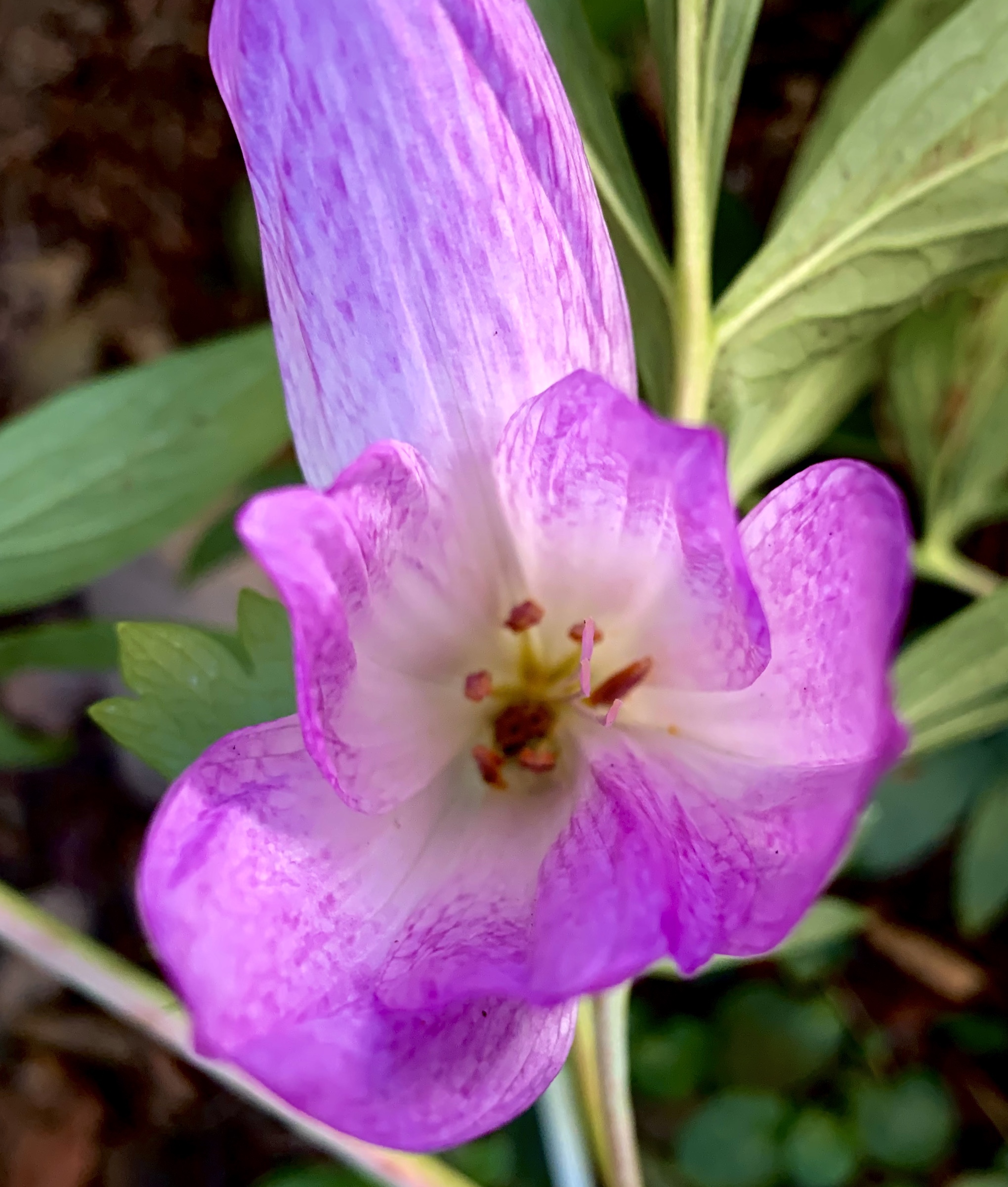
In a hurry, unfurling on a pale leggy stem, the tender lavender petals reveal golden crowns of saffron, brazenly blooming as all else is dying back.
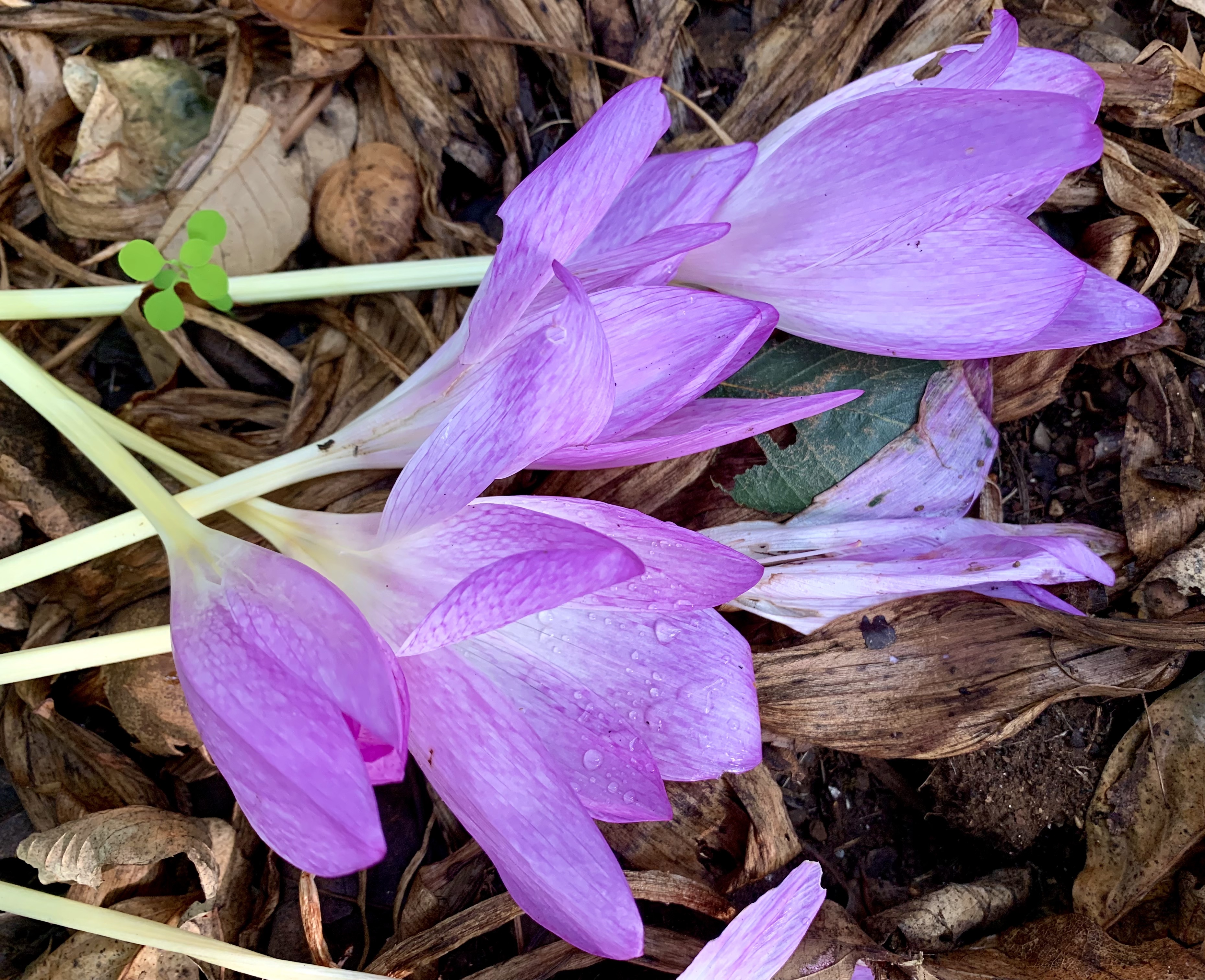
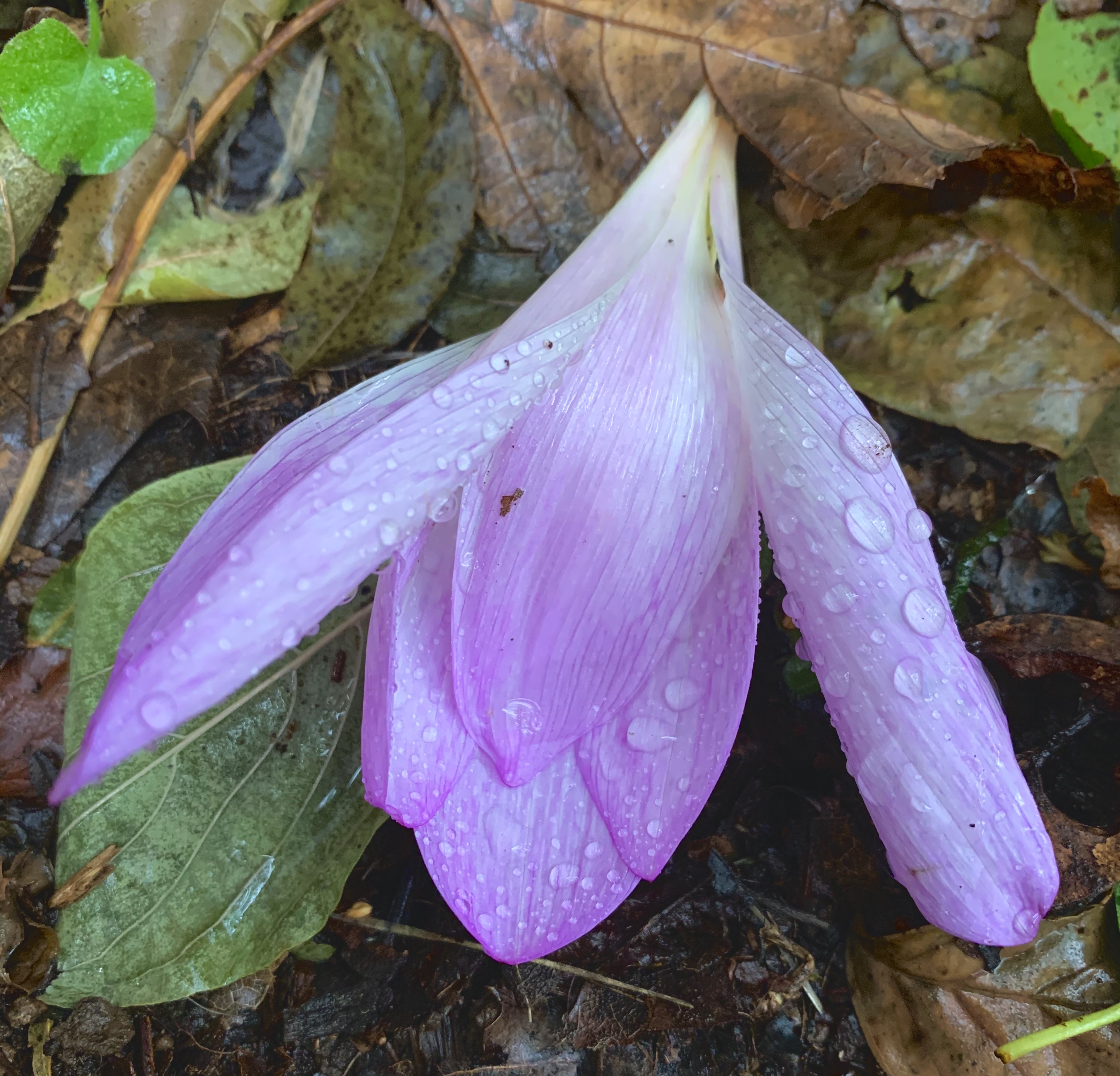
In the end, they quickly wilt, deeply bruised and purple – our lives made manifest as they fall defeated, inglorious, and frail, melting back to dust.
Yet we are assured – these blossoms remind us – they will rise again, as will we.
One-Time
Monthly
Yearly
Make a one-time or recurring donation to support daily Barnstorming posts
When we look long at one another, we soften, we relent, listen,
might forgive. We allow for silence —and when we see each other,
are known, and in that moment might change
though nothing has moved or been spoken.
There are some who say the walls cannot be broken,
but suddenly we are in a free place, and the fields
that extend from its center stretch for miles
as if out of the pupil and the iris of that momentary kingdom. ~Annie Lighthart “When We Look” from Pax
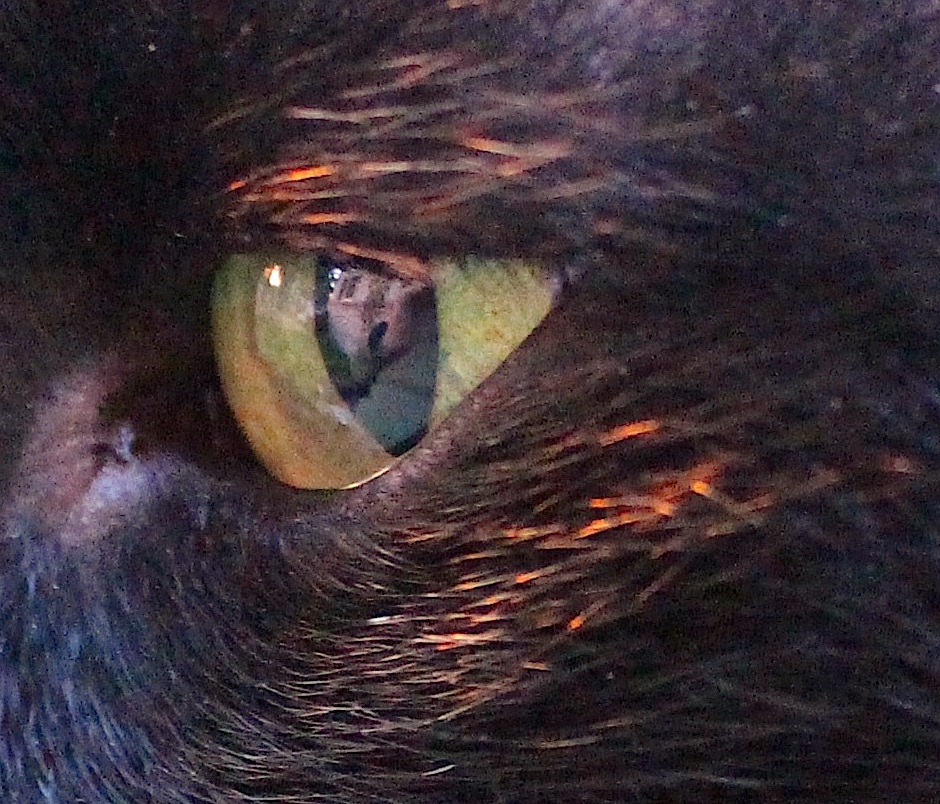
The weasel was stunned into stillness as he was emerging from beneath an enormous shaggy wild rose bush four feet away. I was stunned into stillness twisted backward on the tree trunk. Our eyes locked, and someone threw away the key.
Our look was as if two lovers, or deadly enemies, met unexpectedly on an overgrown path when each had been thinking of something else: a clearing blow to the gut.
It was also a bright blow to the brain, or a sudden beating of brains, with all the charge and intimate grate of rubbed balloons. It emptied our lungs. It felled the forest, moved the fields, and drained the pond; the world dismantled and tumbled into that black hole of eyes.
If you and I looked at each other that way, our skulls would split and drop to our shoulders. But we don’t. We keep our skulls. So. ~Annie Dillard from “Living Like Weasels”
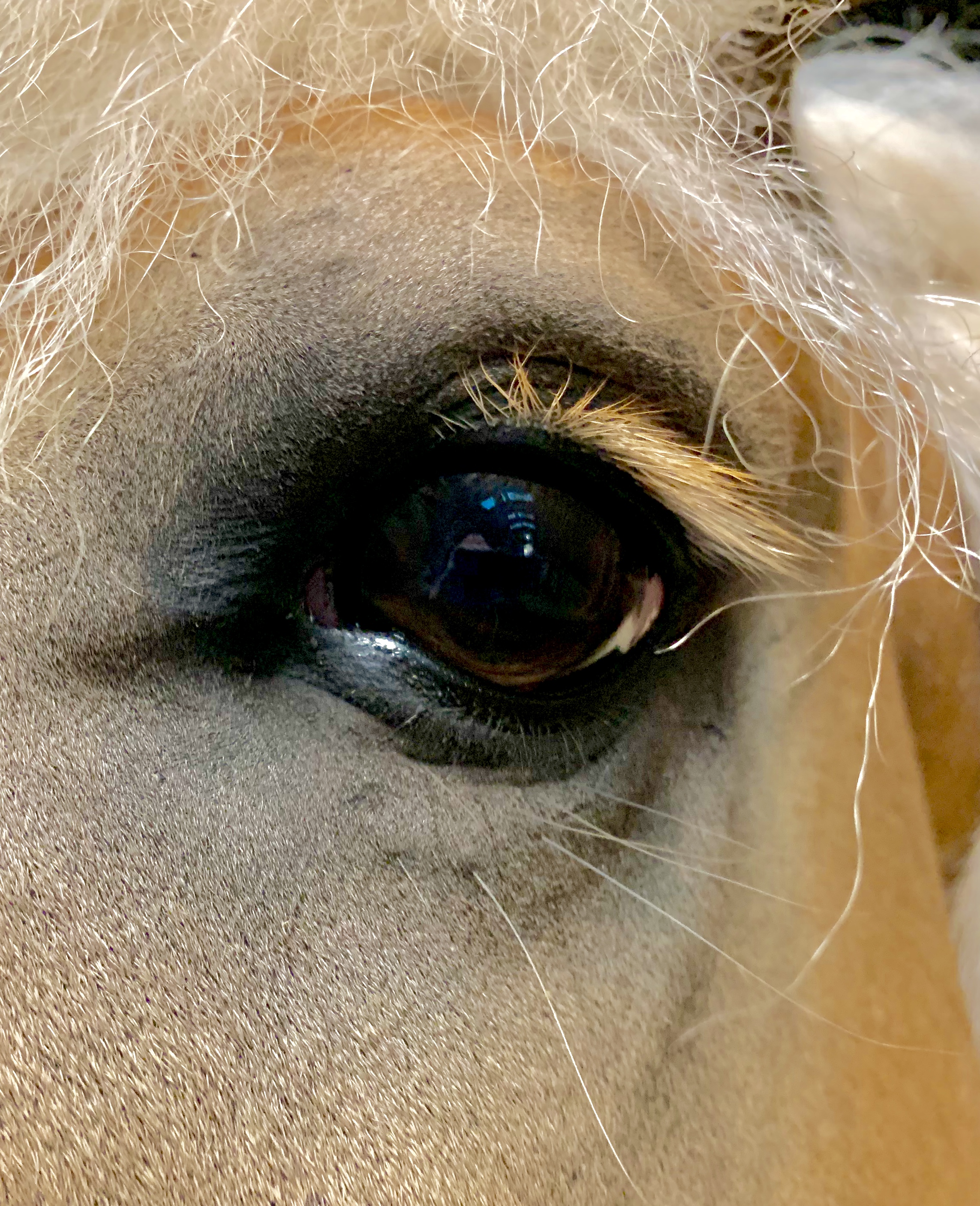
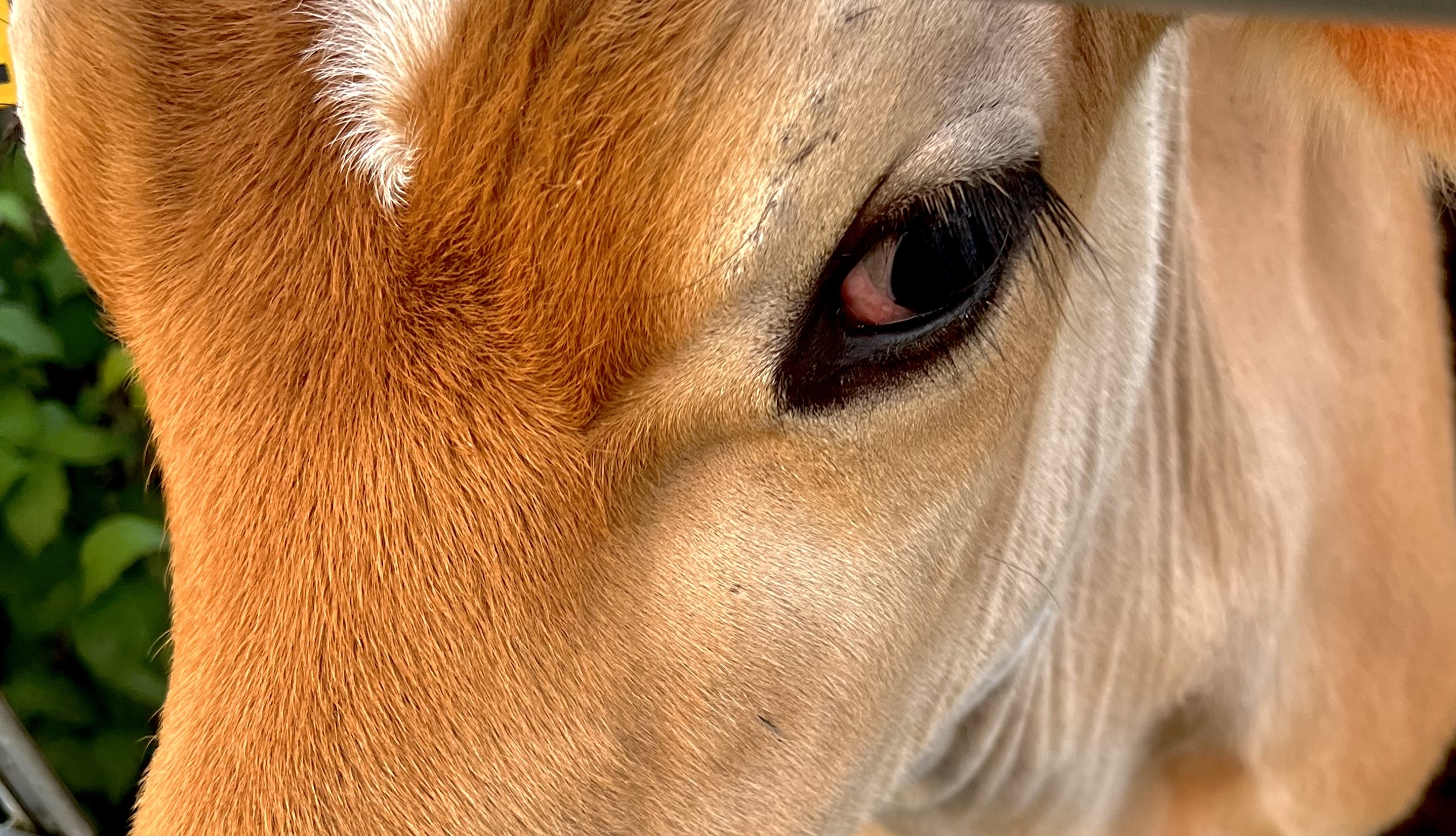
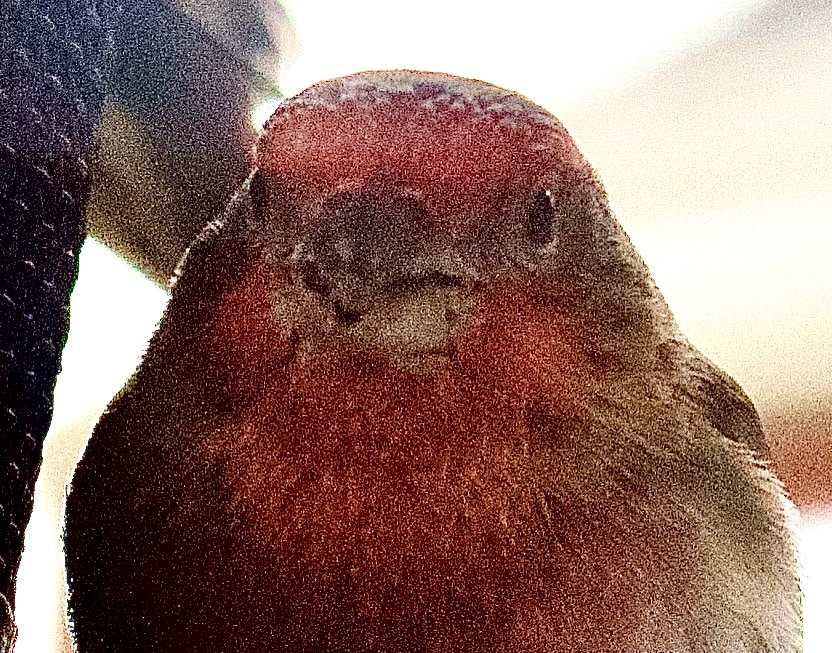
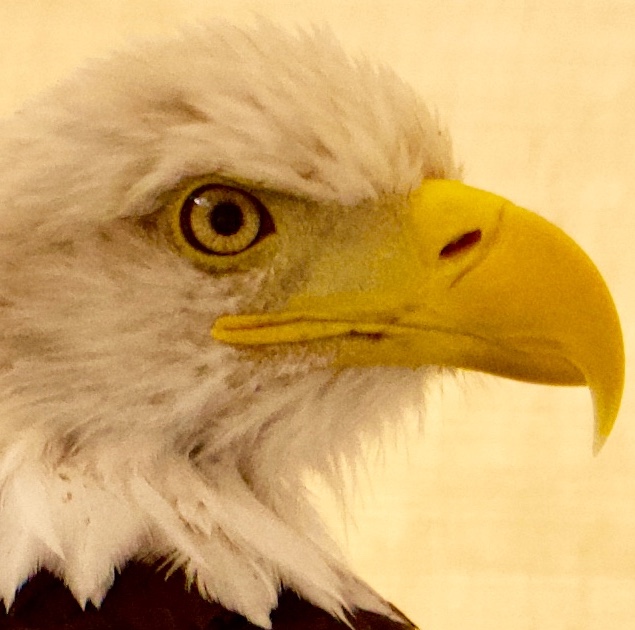
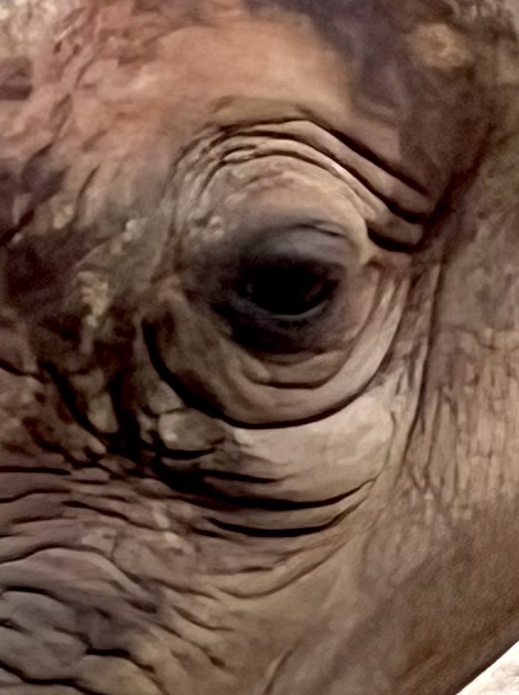
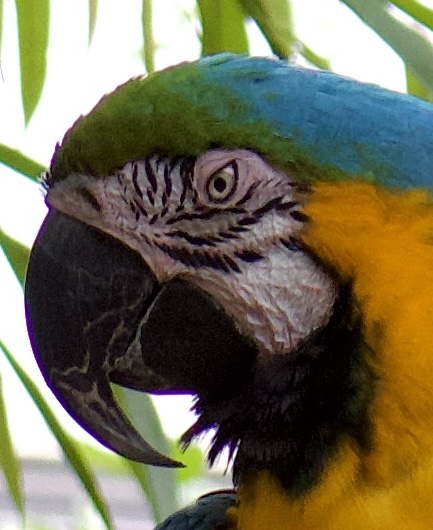
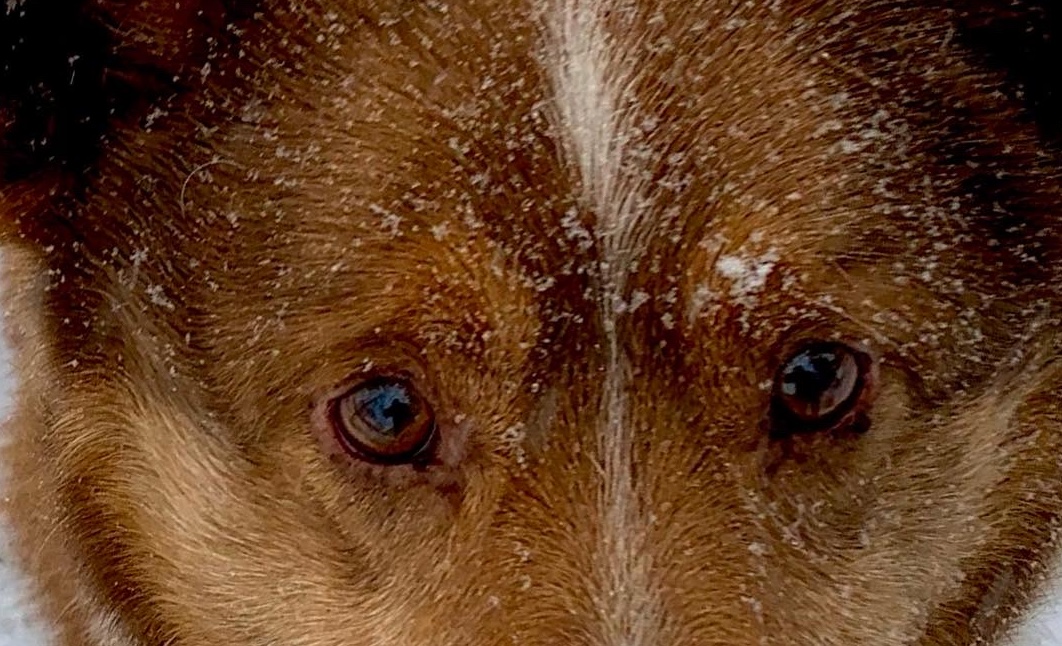
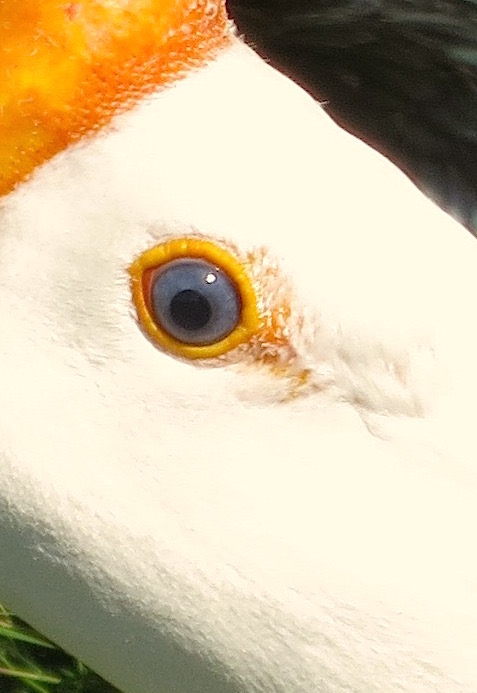
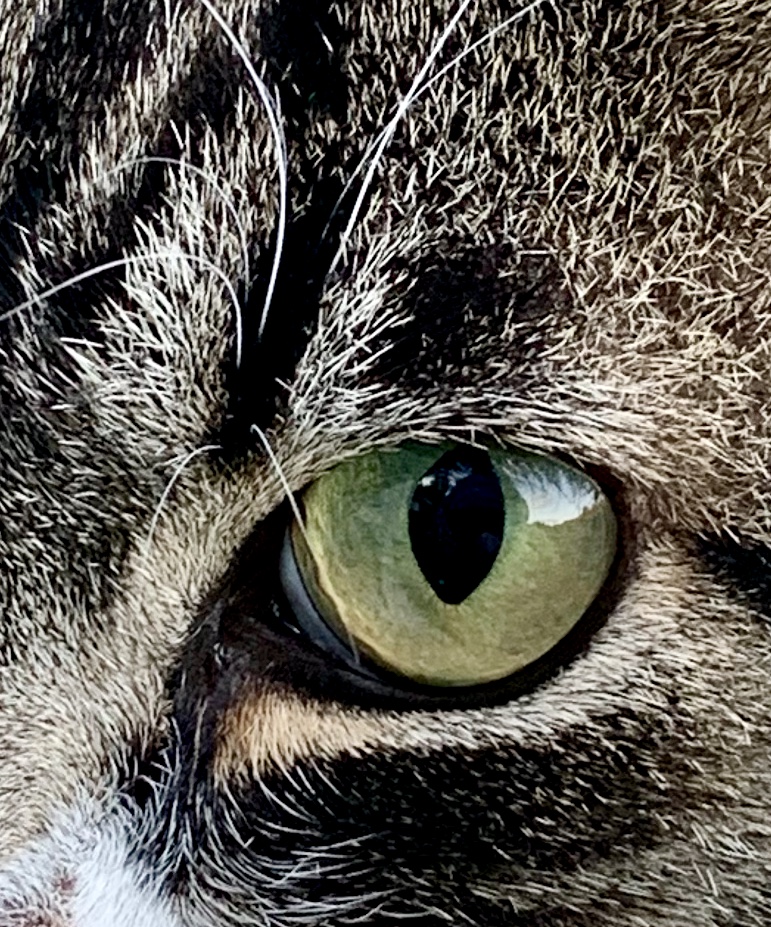
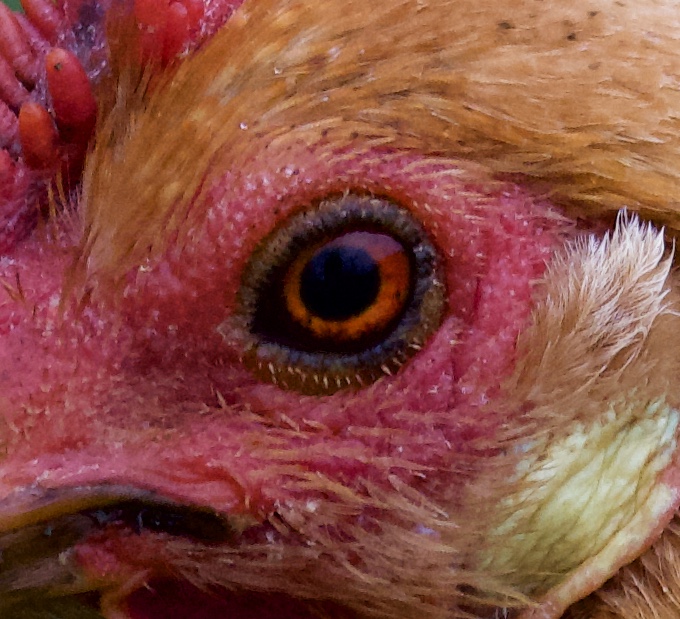
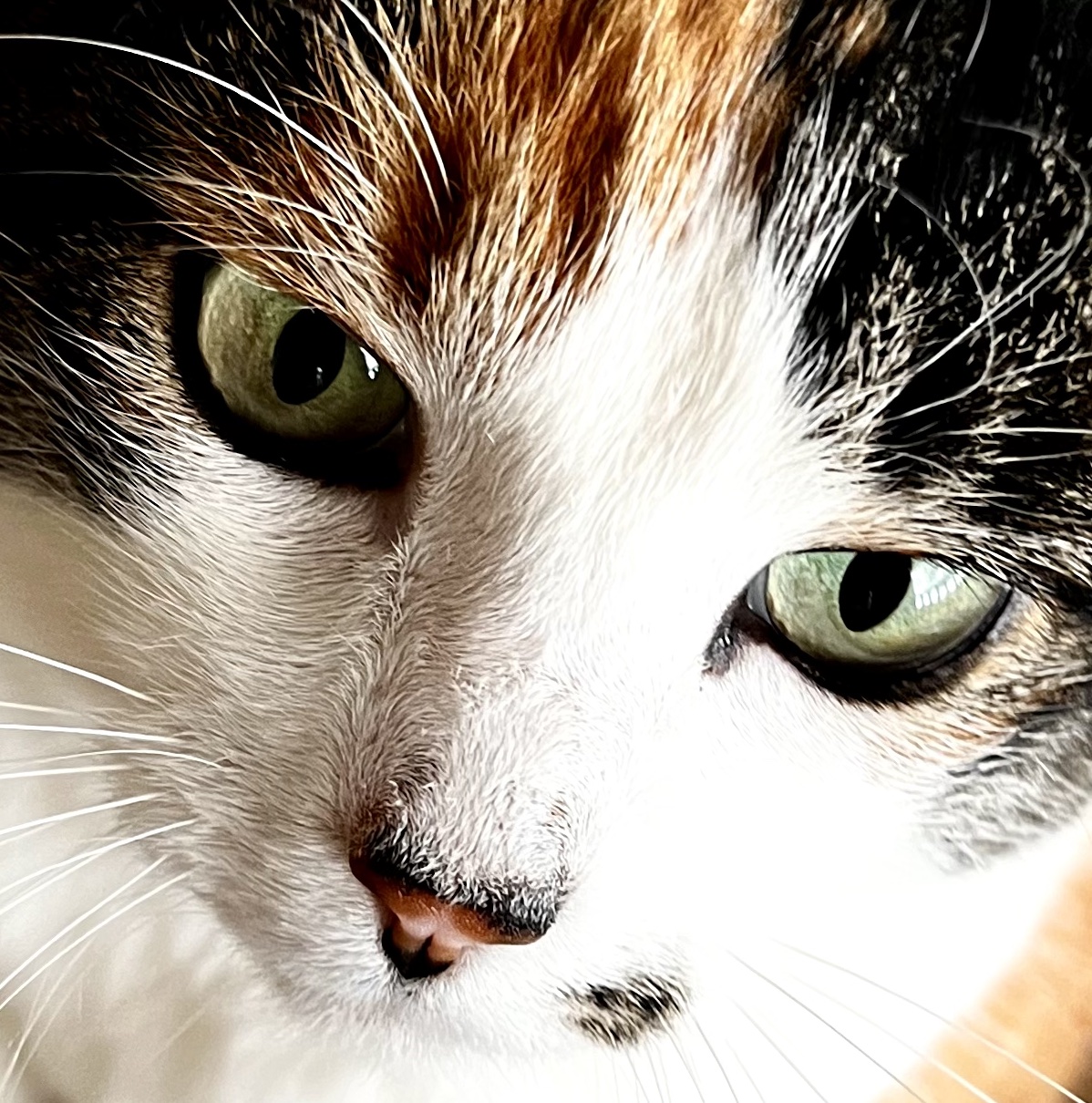
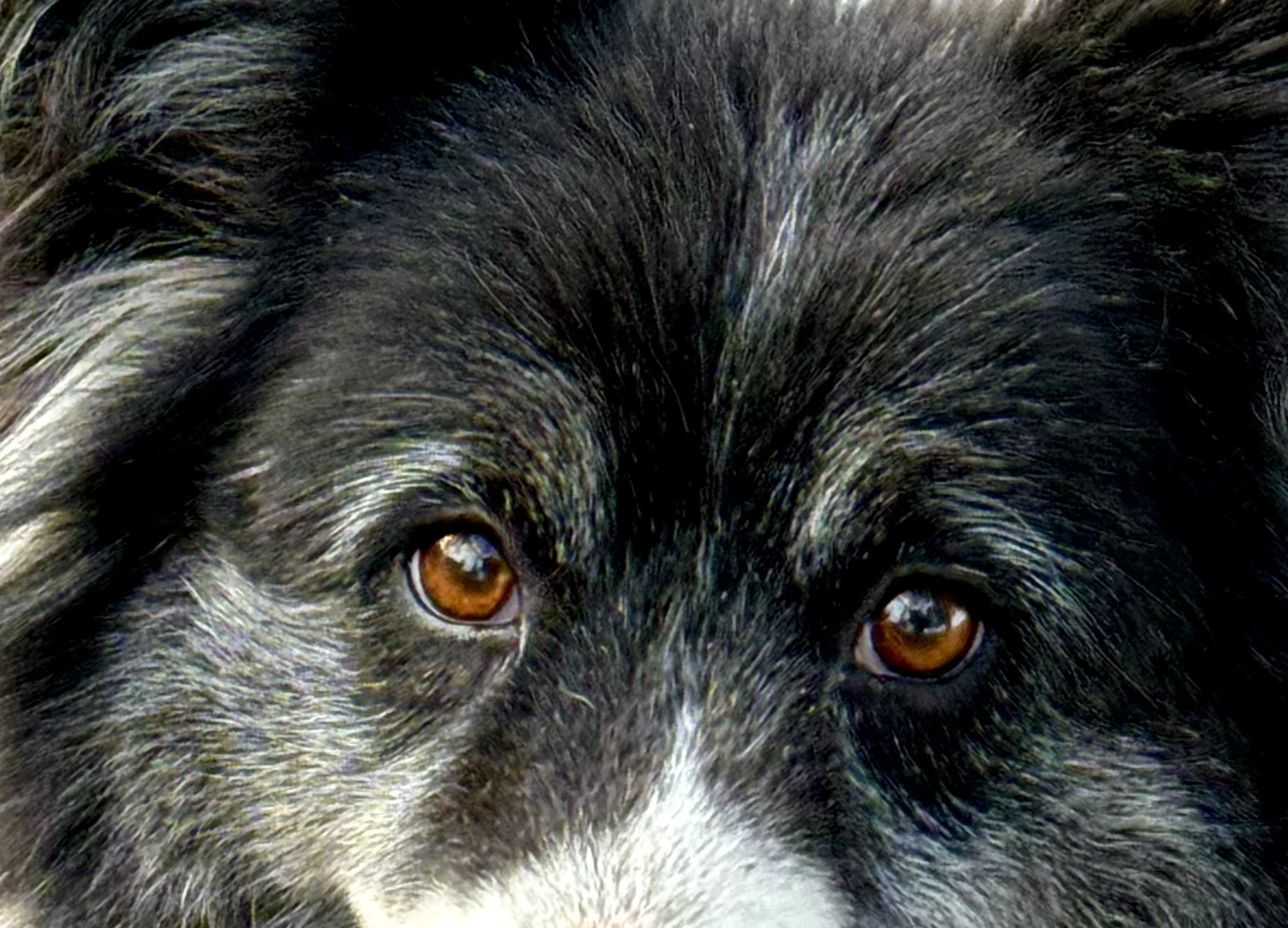
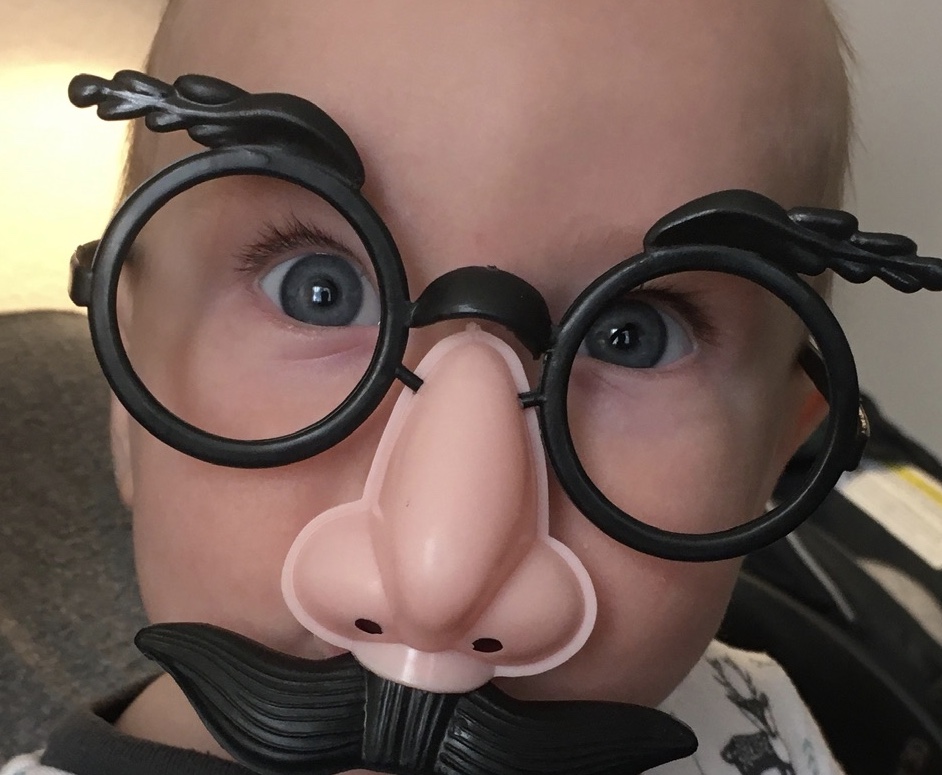
The pupil and iris are a portal to our thoughts, our dreams, our passions and our fears. They are simultaneously window and mirror, revealing feelings we try to keep to ourselves.
Locking eyes can be one of the most thrilling, stomach-butterflies, ecstatic moments of connection. It can be tender, loving, reassuring and encouraging.
Or it can be intimidating and terrifying. I tend to avoid eye contact when passing a stranger on a dark street, or when engaged in a very stressful public interaction. I don’t want to reveal my insecurity, vulnerability, or worry through direct eye contact. While studying primates in Africa, I learned never to look a baboon in the eye as it can communicate aggression and instigate an attack.
So instead, I learned to look at my feet.
I’d much rather lock eyes and learn everything I can about you. I want to dive deep into who you are, breaking down the walls and dismantle the barriers that keep us apart from one another. Then I’m letting you in too. The black holes of our inner universe.
After all, this is preparation when we see the face of God and allow Him to lock into our eyes, knowing our truth.
No keys needed forevermore.
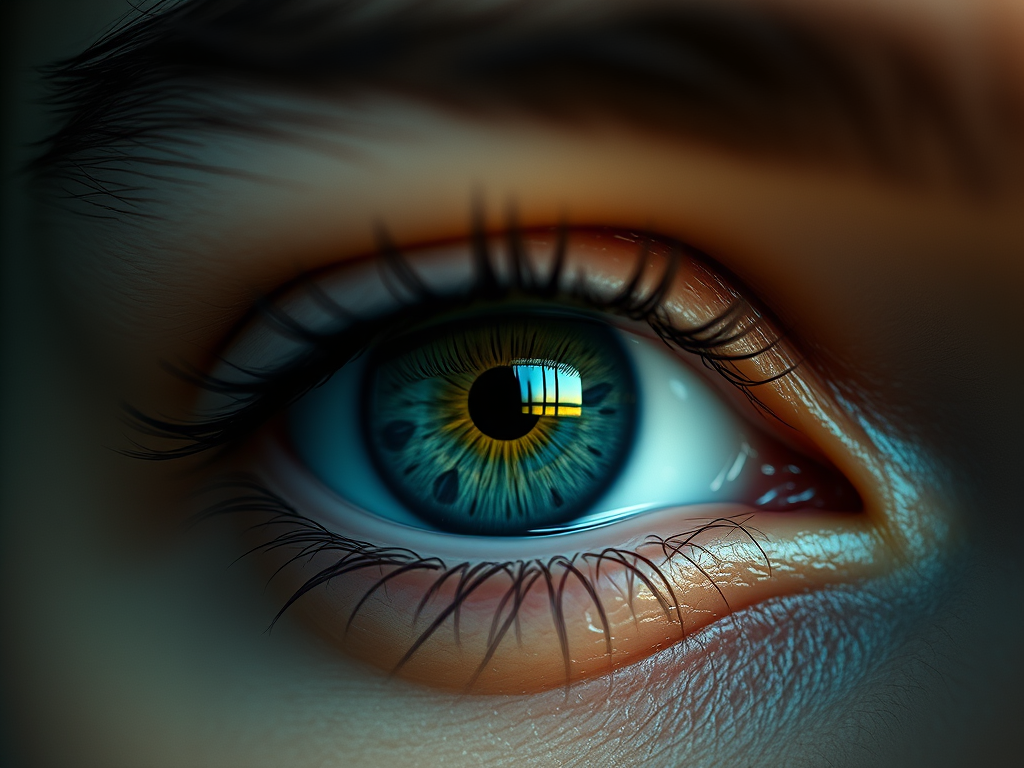
AI image created for this post
One-Time
Monthly
Yearly
Make a one-time or recurring donation to support daily Barnstorming posts
You can hide nothing from God. The mask you wear before men will do you no good before Him. He wants to see you as you are, He wants to be gracious to you. You do not have to go on lying to yourself and your brothers, as if you were without sin; you can dare to be a sinner. ~Dietrich Bonhoeffer from Life Together
In your hands
The dog, the donkey, surely they know They are alive. Who would argue otherwise?
But now, after years of consideration, I am getting beyond that. What about the sunflowers? What about The tulips, and the pines?
Listen, all you have to do is start and There’ll be no stopping. What about mountains? What about water Slipping over rocks?
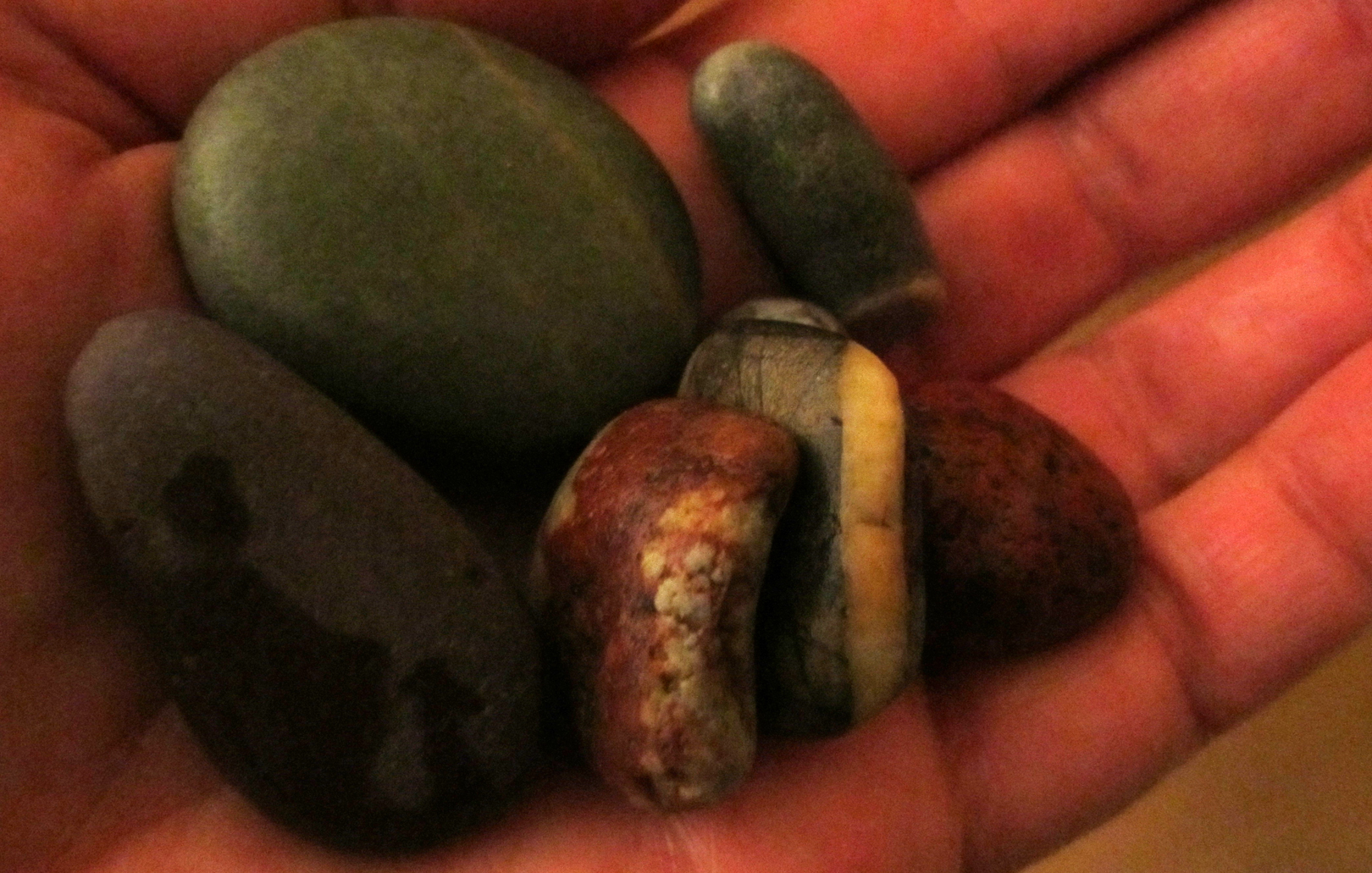
And speaking of stones, what about The little ones you can Hold in your hands, their heartbeats So secret, so hidden it may take years
Before, finally, you hear them? ~Mary Oliver “in your hands” from Swan: Prose and Poems
When I take myself to the doctor, I trust I’m seeing someone who tries to know me thoroughly enough that he or she can help me move out of illness into better health.
This is how acceptance feels: trusting someone enough to come out of hiding, allowing them to see the parts of me I prefer to keep hidden.
As a physician myself, I am reminded by the amount of “noticing” I did in the course of my work. Each patient, and there were so many, deserved my full attention for the few minutes we were together. I started my clinical evaluation the minute I entered the room and I began taking in all the complex verbal and non-verbal clues offered up, sometimes unwittingly, by another human being.
During the COVID pandemic, my interactions with patients became all “virtual” so I didn’t have the ability to observe as thoroughly as I usually did. Instead, I needed them to tell me outright what was going on in their lives, their minds and their hearts in both spoken or written words. I couldn’t ‘see’ them, even on a screen, in the same way as face to face in the same room.
How can someone call out their worries to me when they are hidden behind a camera lens?
I can’t witness first hand the trembling hands, their sweatiness, their scars of self injury. Still, I am their audience and a witness to their struggle; even more, I must understand their fears to best help them. My brain must rise to the occasion of taking in another person, accepting them for who they are, with every wart and blemish, offering them the gift of compassion and simply be there for them at that moment.
God isn’t blinded in His Holy work as I am in my clinical duties. He knows us thoroughly because He made us; He knows our thoughts before we put them into words. There is no point in trying to stay hidden from Him.
He holds us, little pebbles that we are, in His Hand, and He listens to our secret heartbeats.
Those of us who believe we can remain effectively hidden will never be invisible to God.
AI image created for this post
One-Time
Monthly
Yearly
Make a one-time or recurring donation to support daily Barnstorming posts





















 Barnstorming