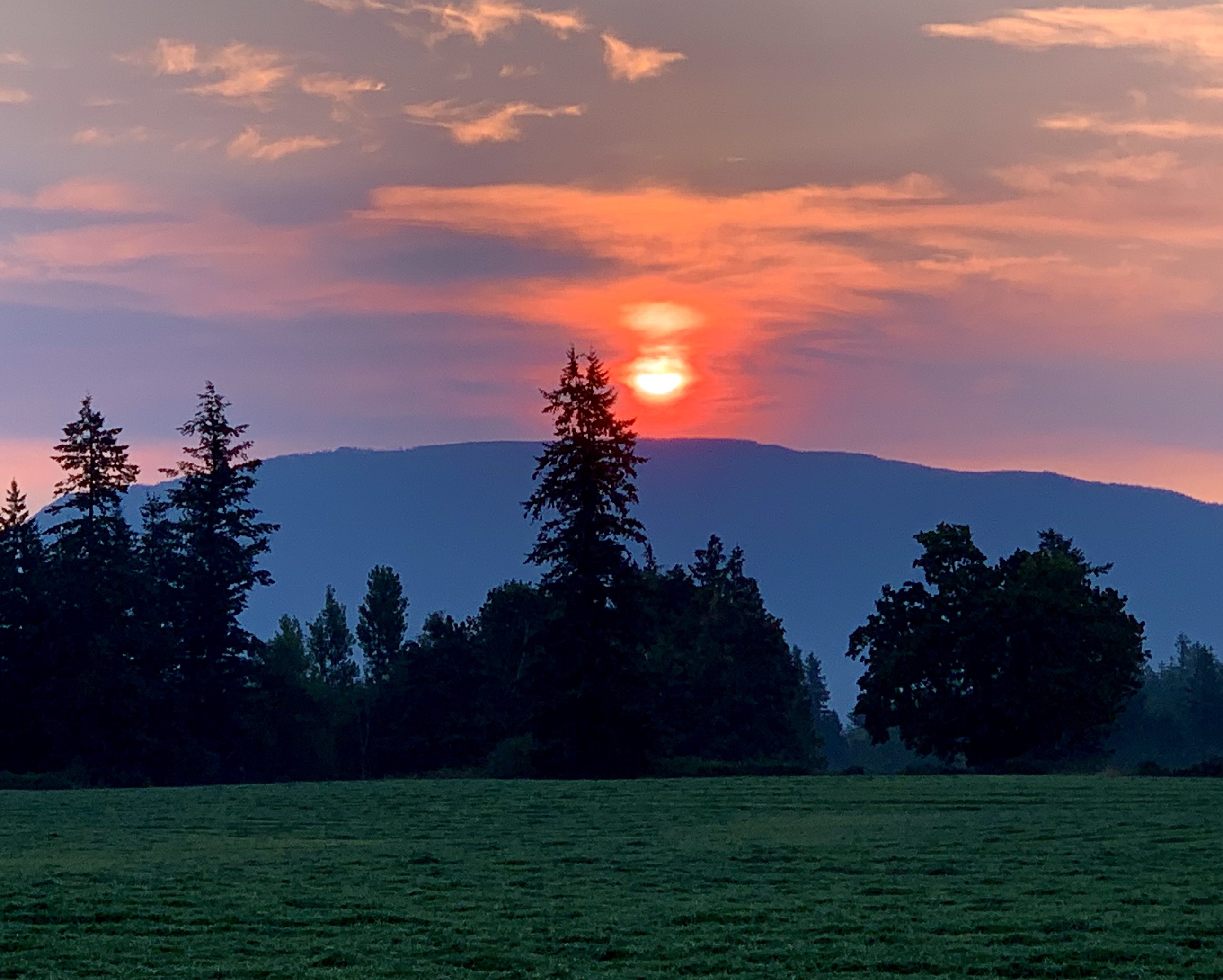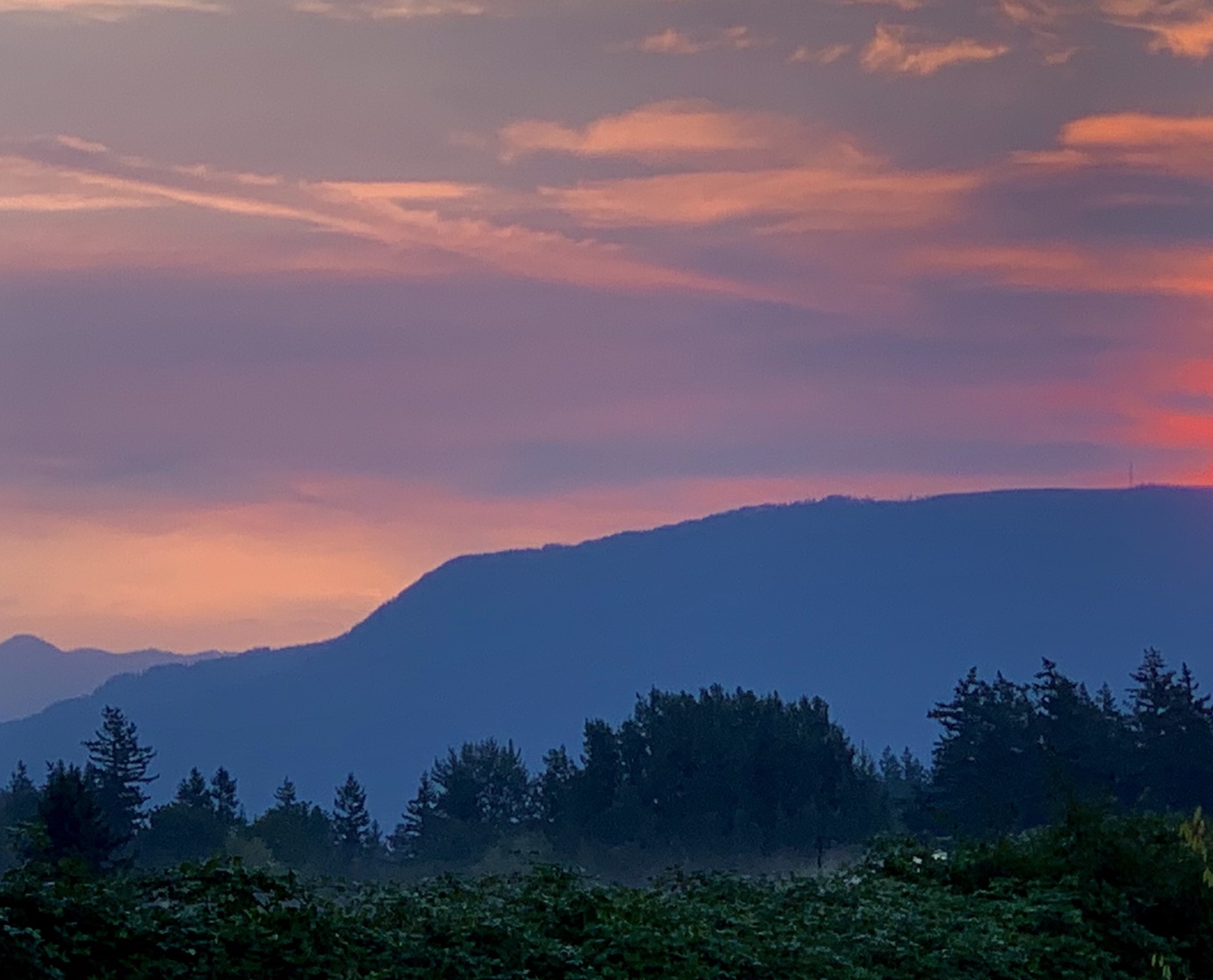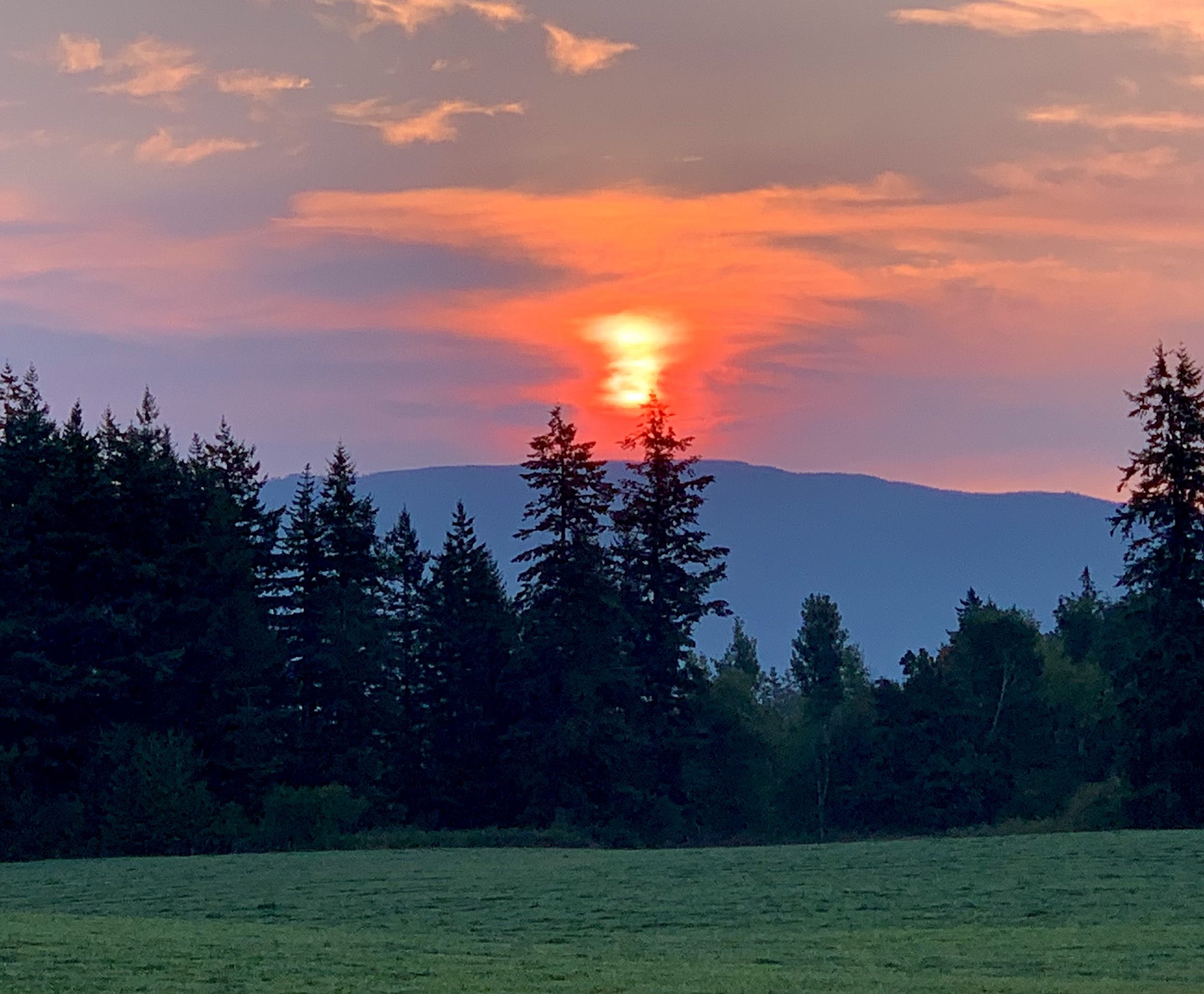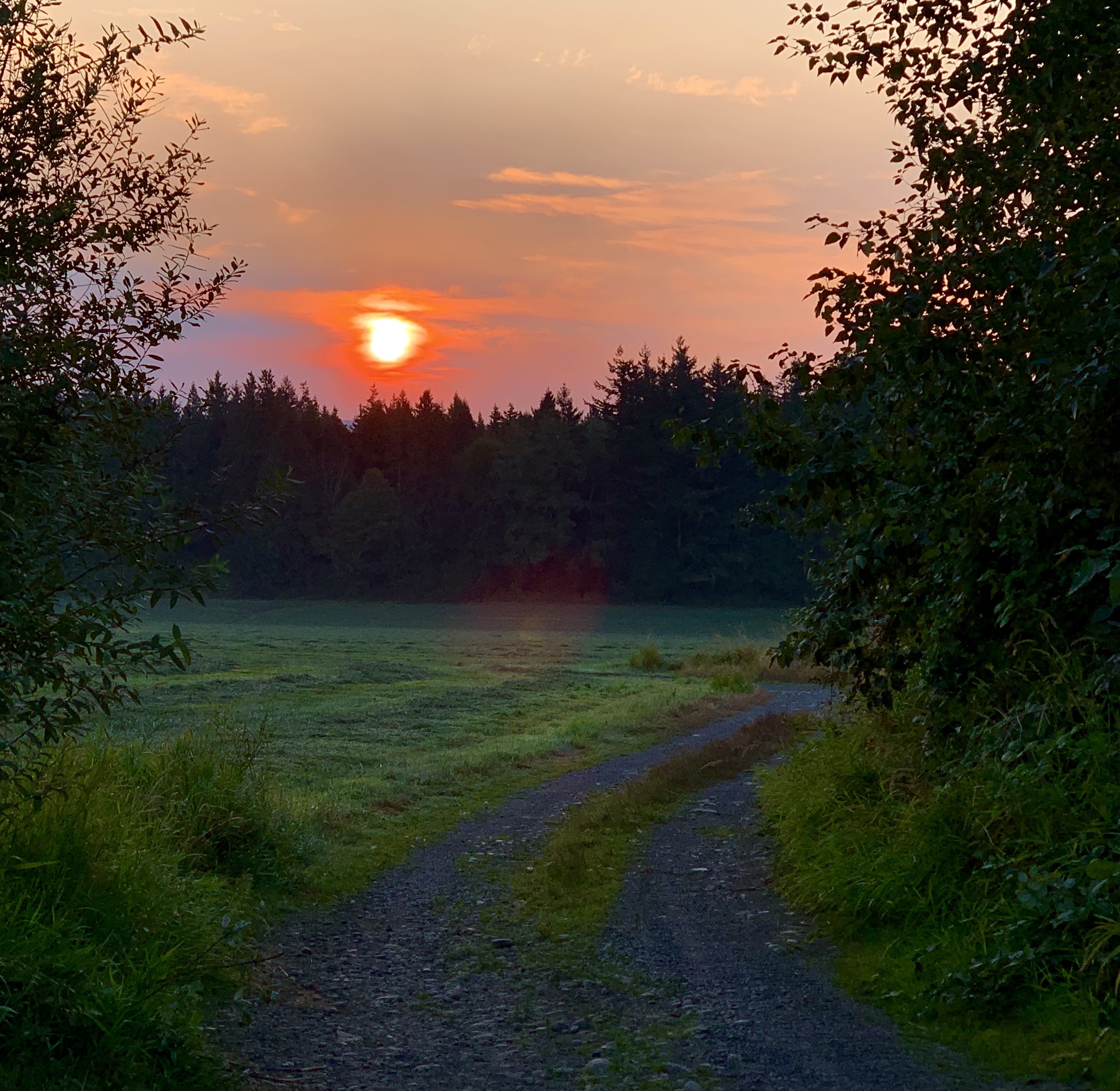
Why Did I Cry Today?

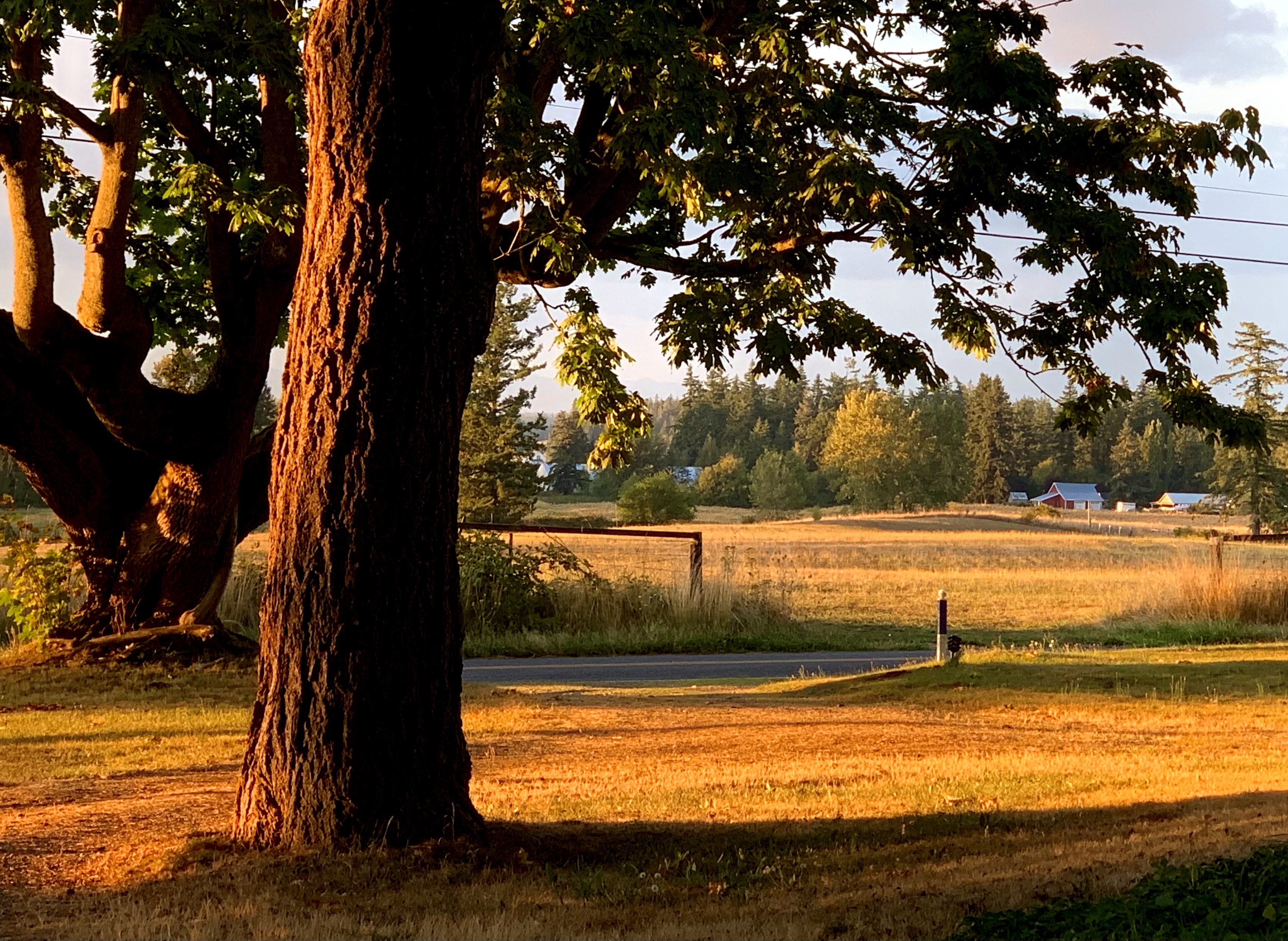
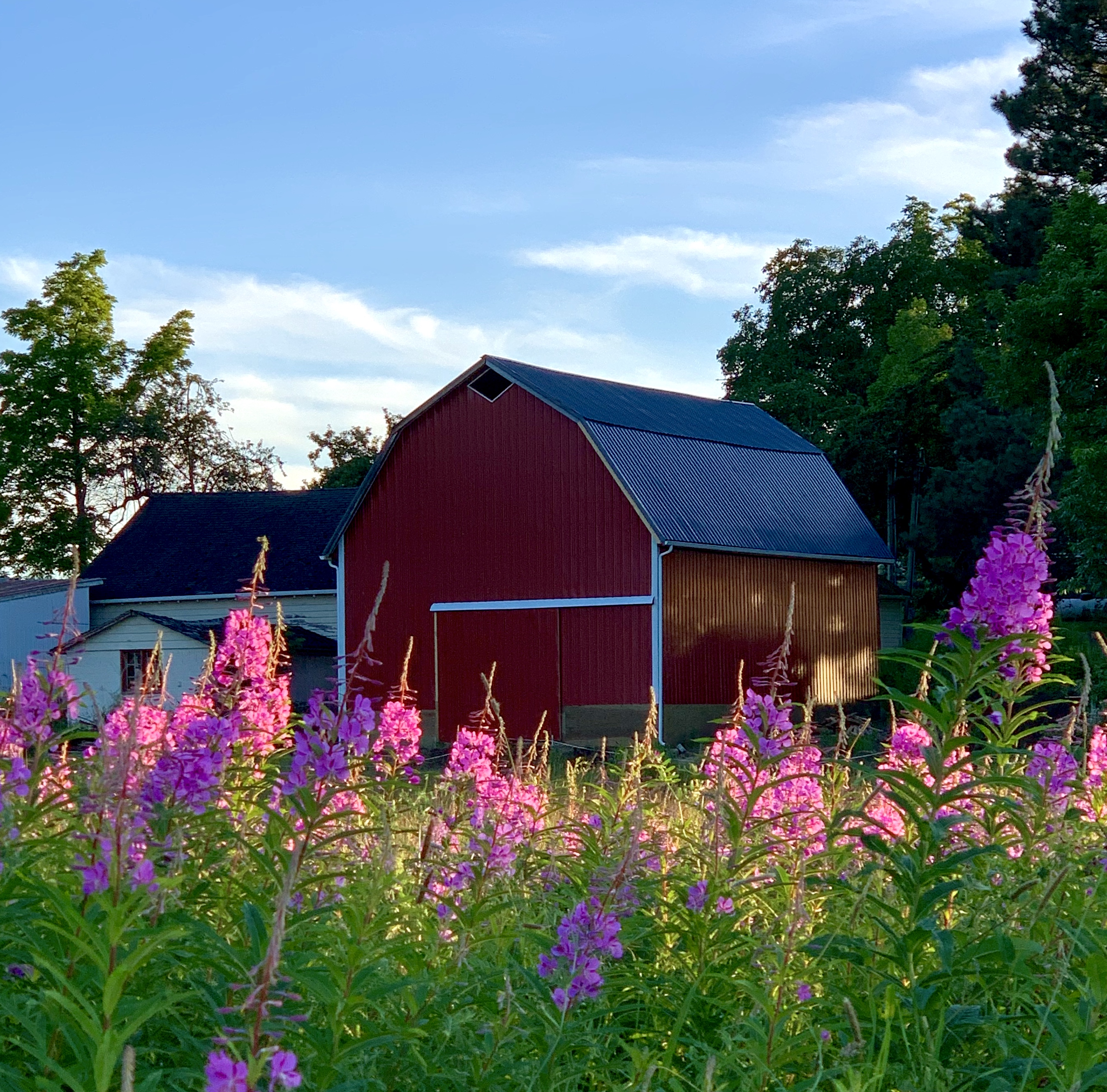
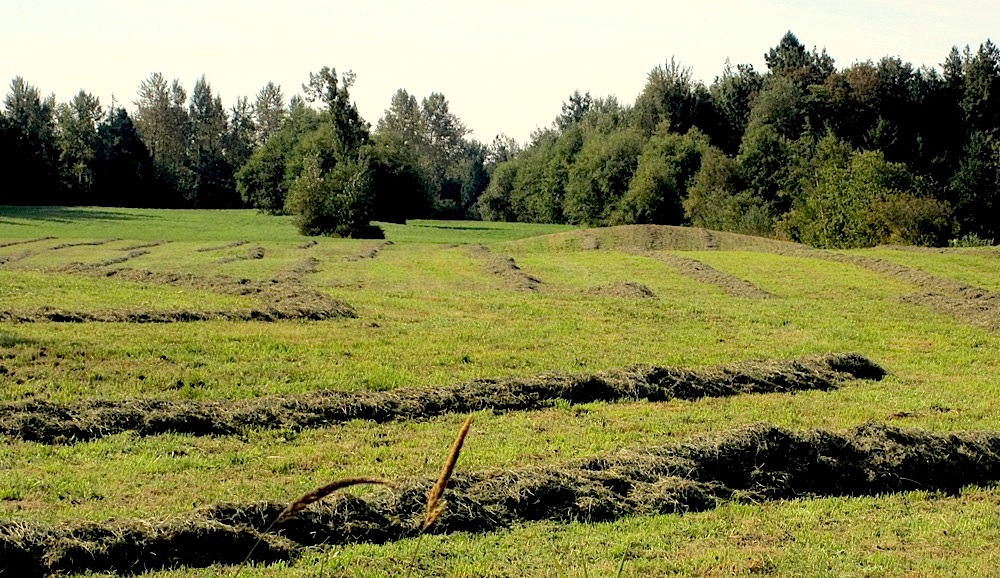
A second crop of hay lies cut   
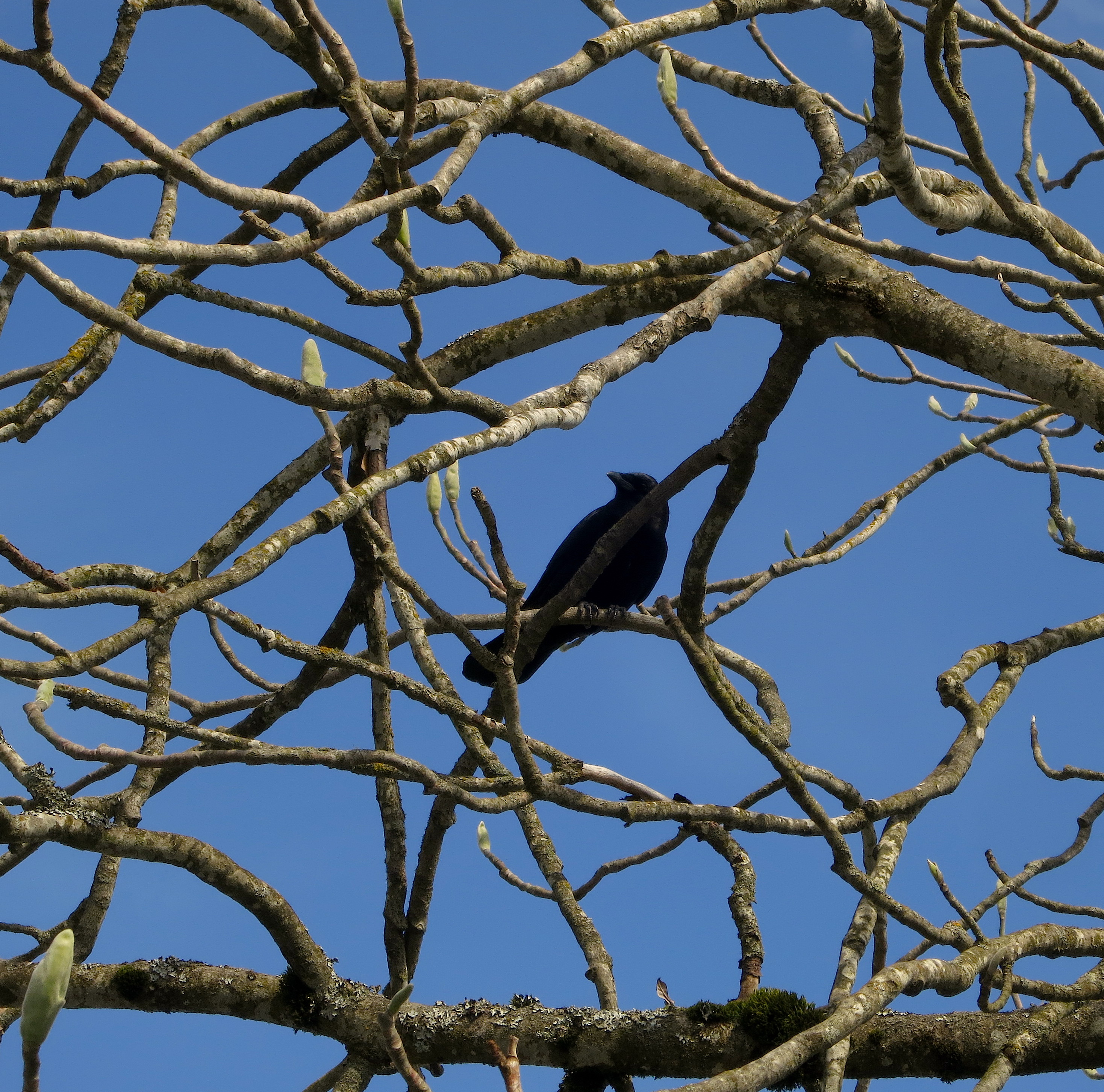
and turned. Five gleaming crows   
search and peck between the rows.
They make a low, companionable squawk,   
and like midwives and undertakers   
possess a weird authority.

Crickets leap from the stubble,   
parting before me like the Red Sea.   
The garden sprawls and spoils.

Cloud shadows rush over drying hay,   
fences, dusty lane, and railroad ravine.   
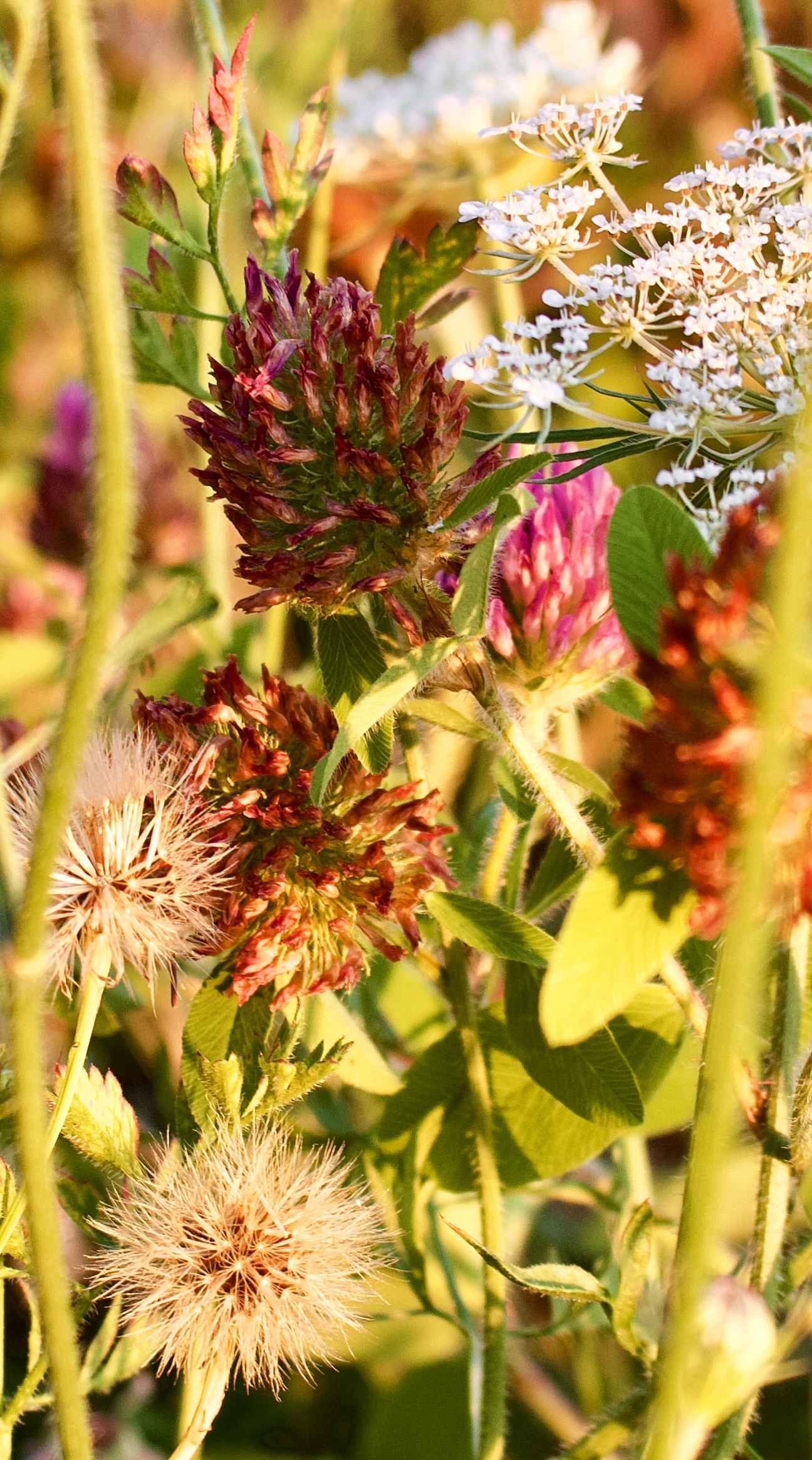
The first yellowing fronds of goldenrod   
brighten the margins of the woods.

Schoolbooks, carpools, pleated skirts;   
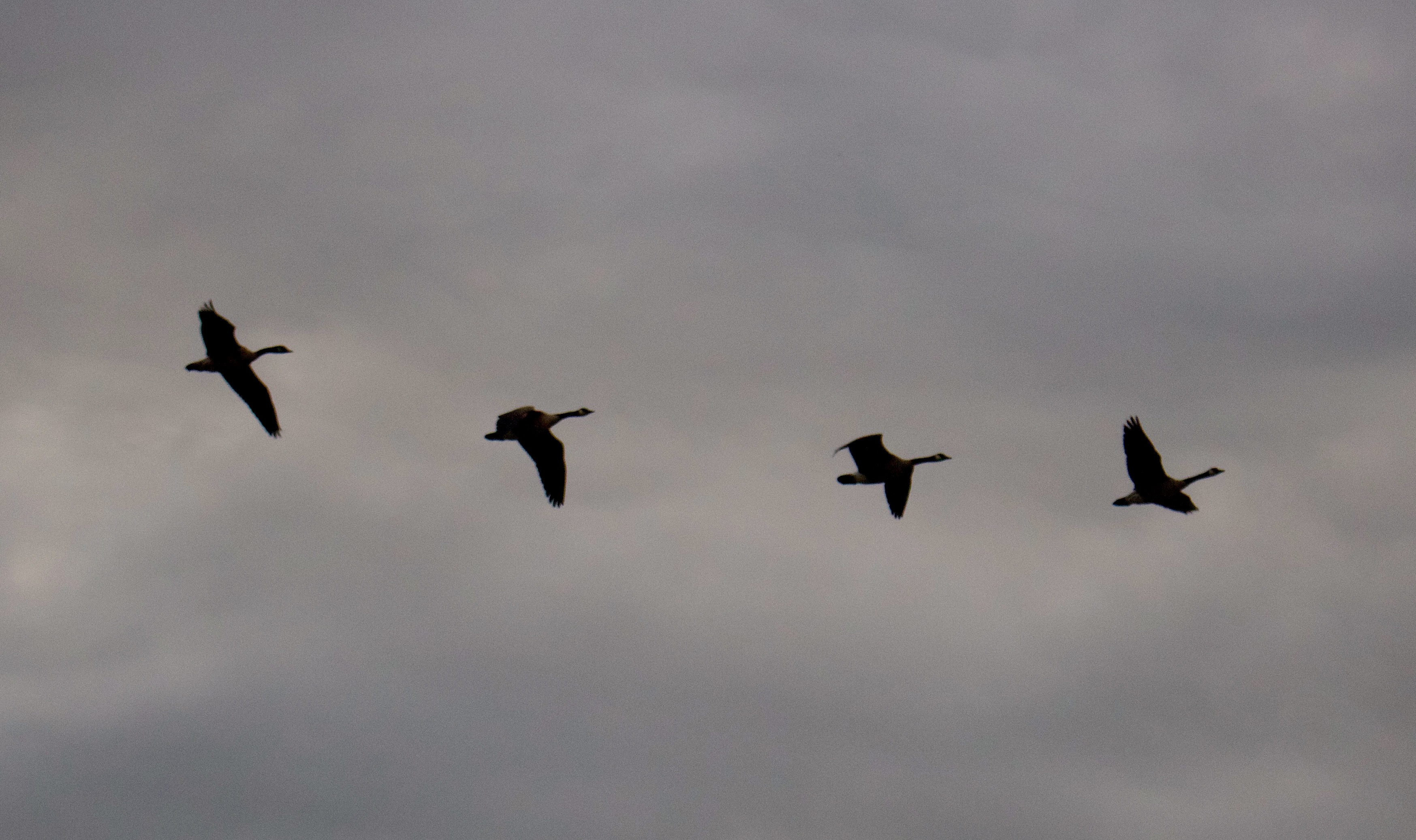
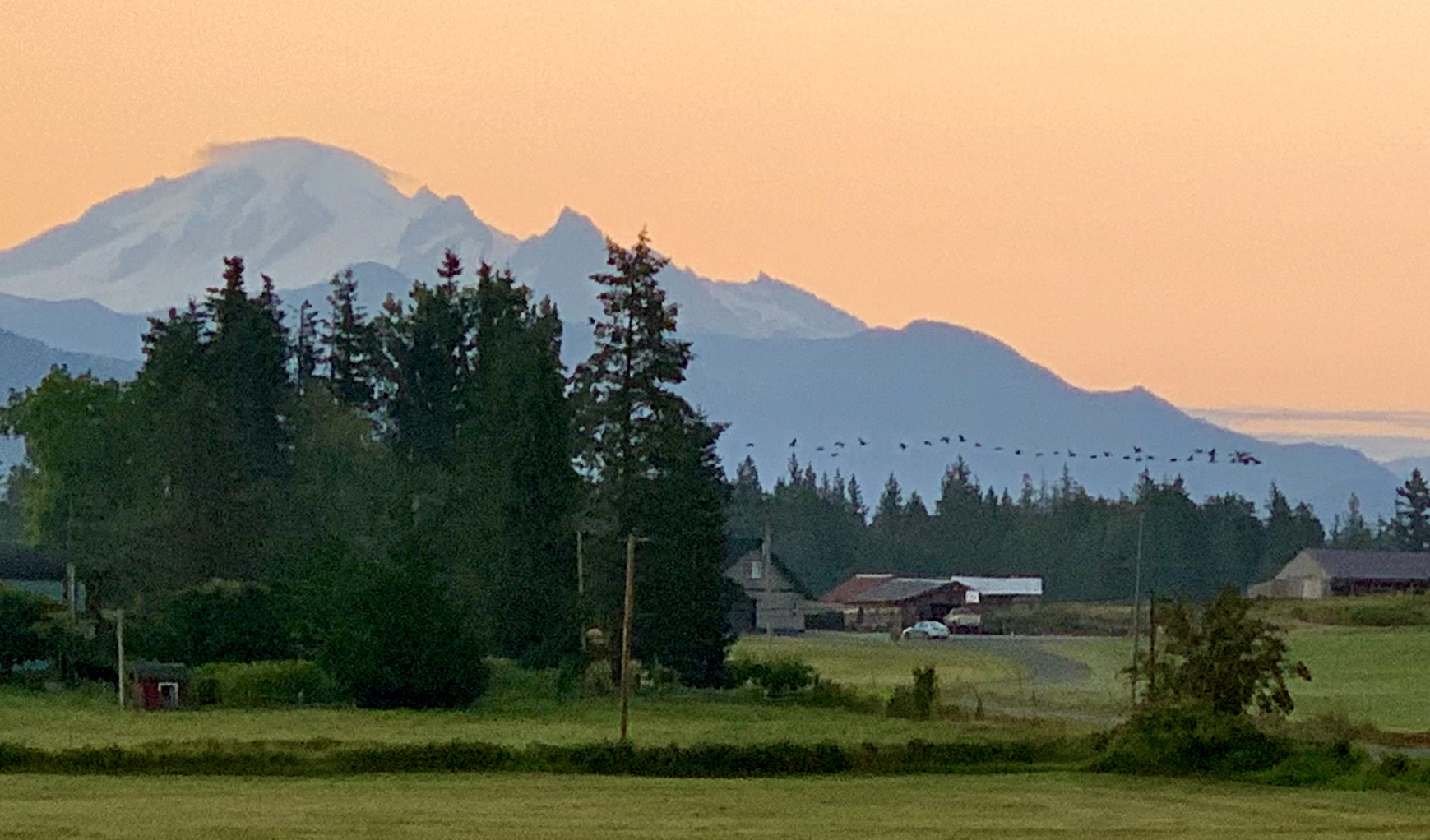
water, silver-still, and a vee of geese.

*

The cicada’s dry monotony breaks   
over me. The days are bright   
and free, bright and free.

Then why did I cry today   
for an hour, with my whole   
body, the way babies cry?

*

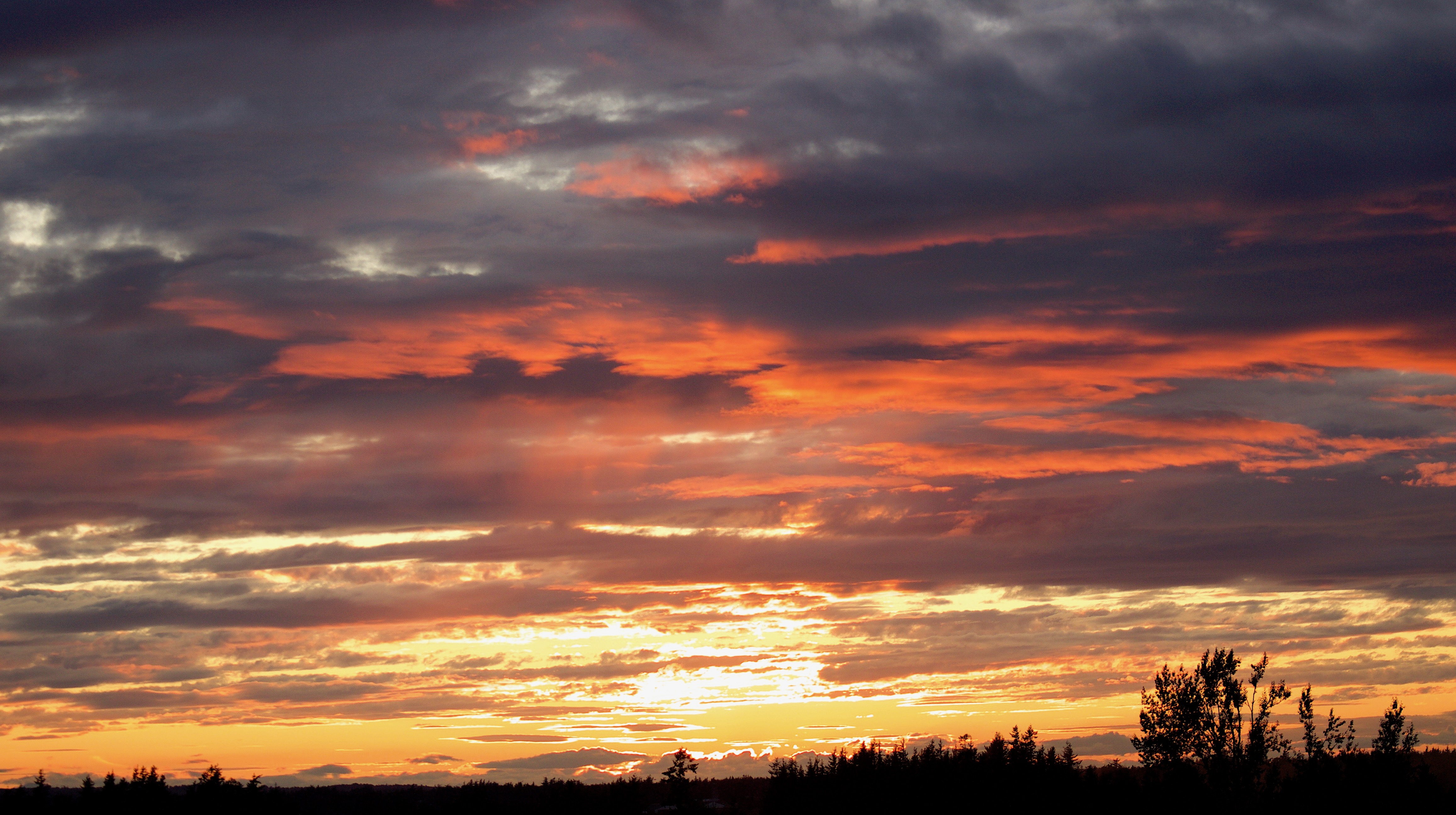
A white, indifferent morning sky,   
and a crow, hectoring from its nest   
high in the hemlock, a nest as big   
as a laundry basket …
                                    In my childhood   
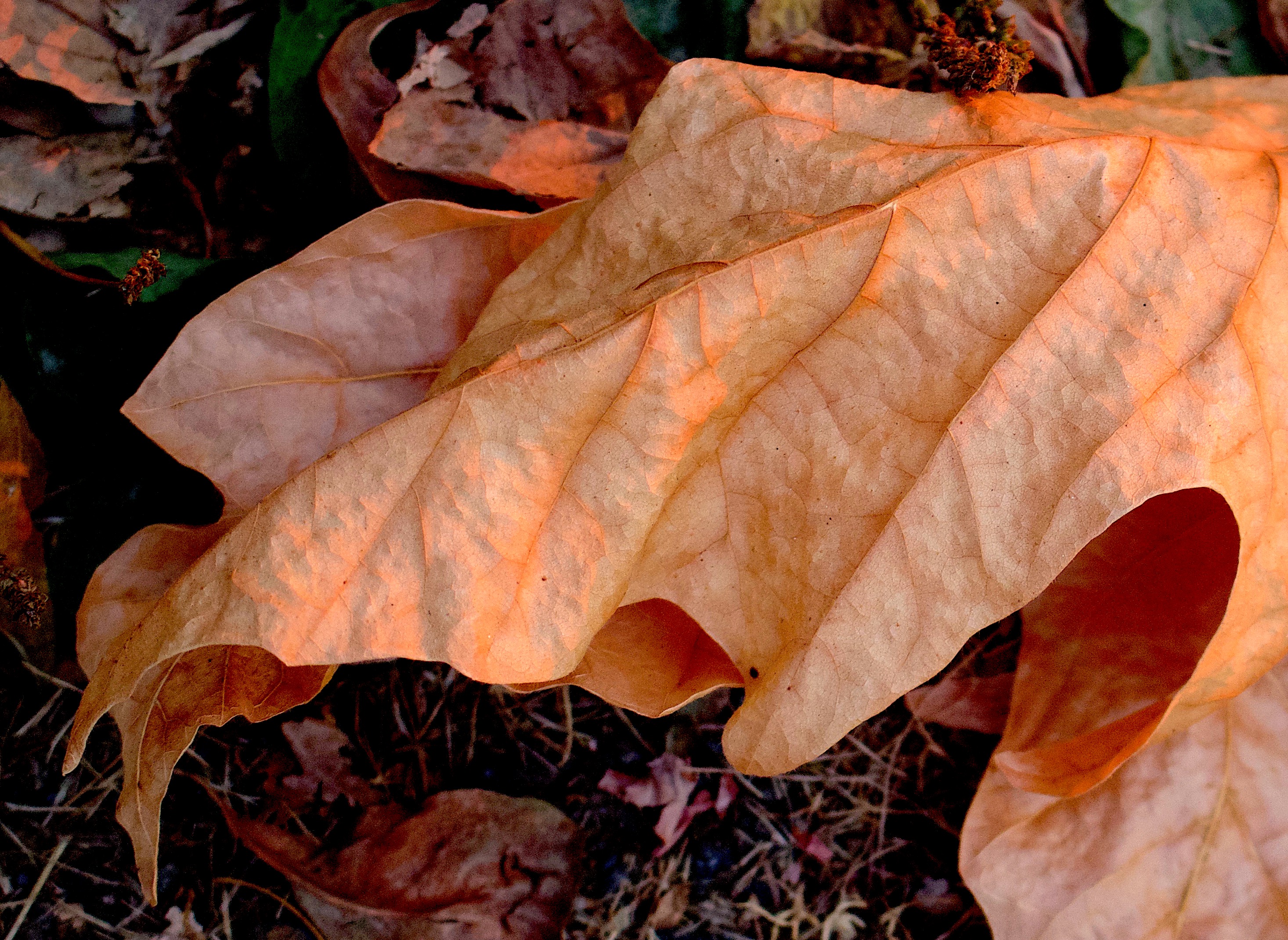
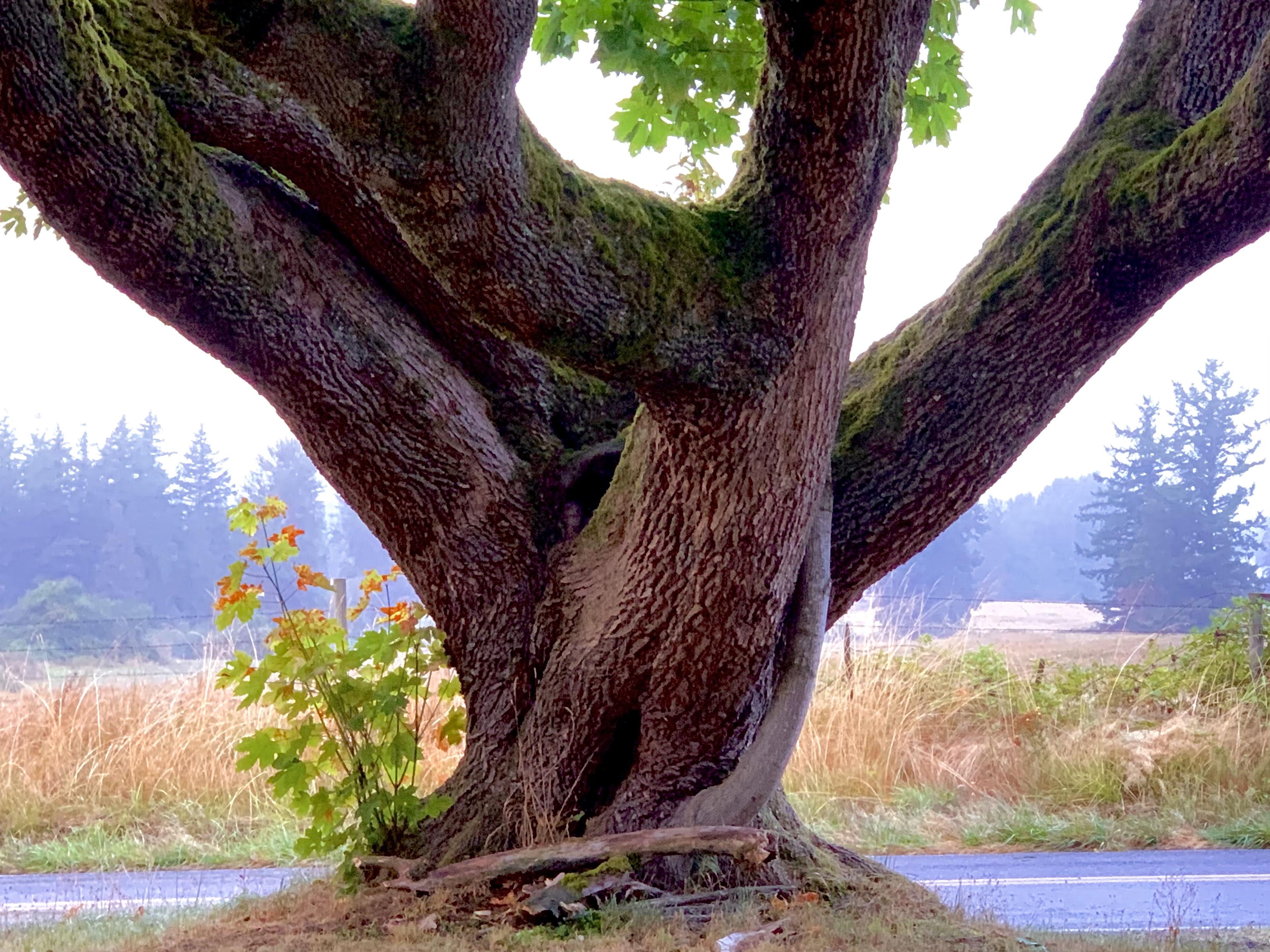
I stood under a dripping oak,
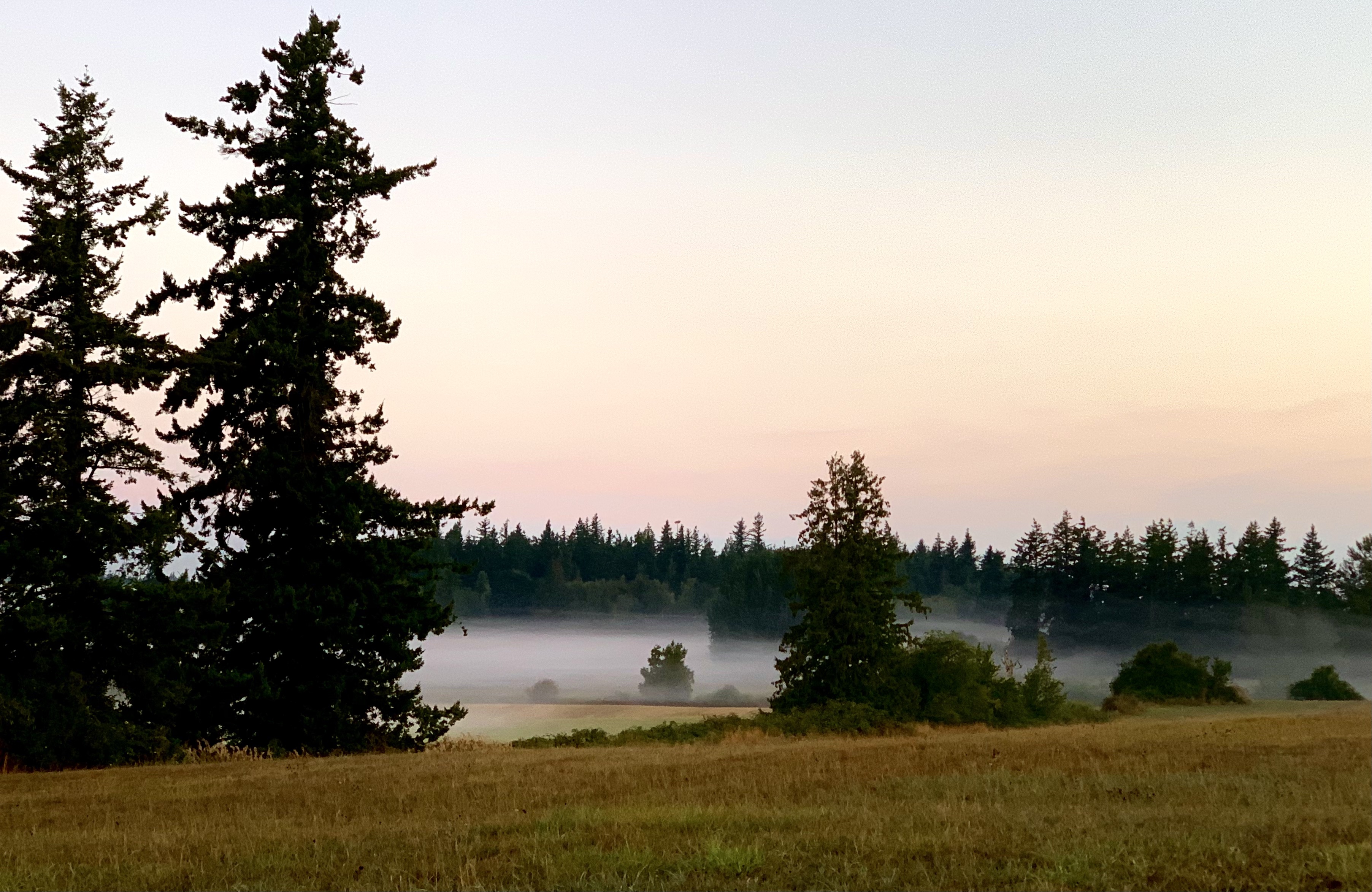
while autumnal fog eddied around my feet,   
waiting for the school bus
with a dread that took my breath away.

The damp dirt road gave off   
this same complex organic scent.

I had the new books—words, numbers,   
and operations with numbers I did not   
comprehend—and crayons, unspoiled   
by use, in a blue canvas satchel
with red leather straps.

Spruce, inadequate, and alien   
I stood at the side of the road.   
It was the only life I had.

~Jane Kenyon, “Three Songs at the End of Summer” from Collected Poems.
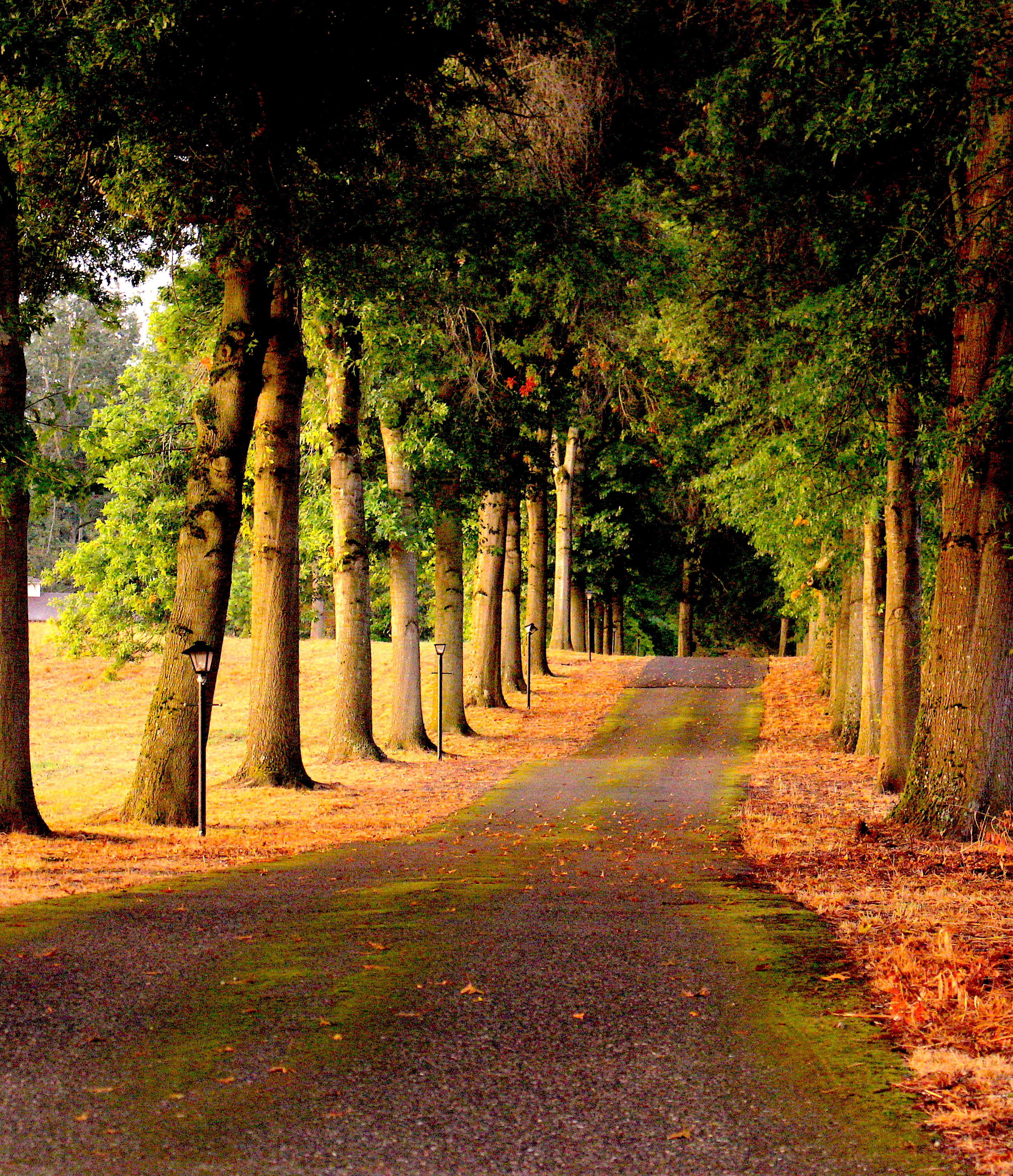
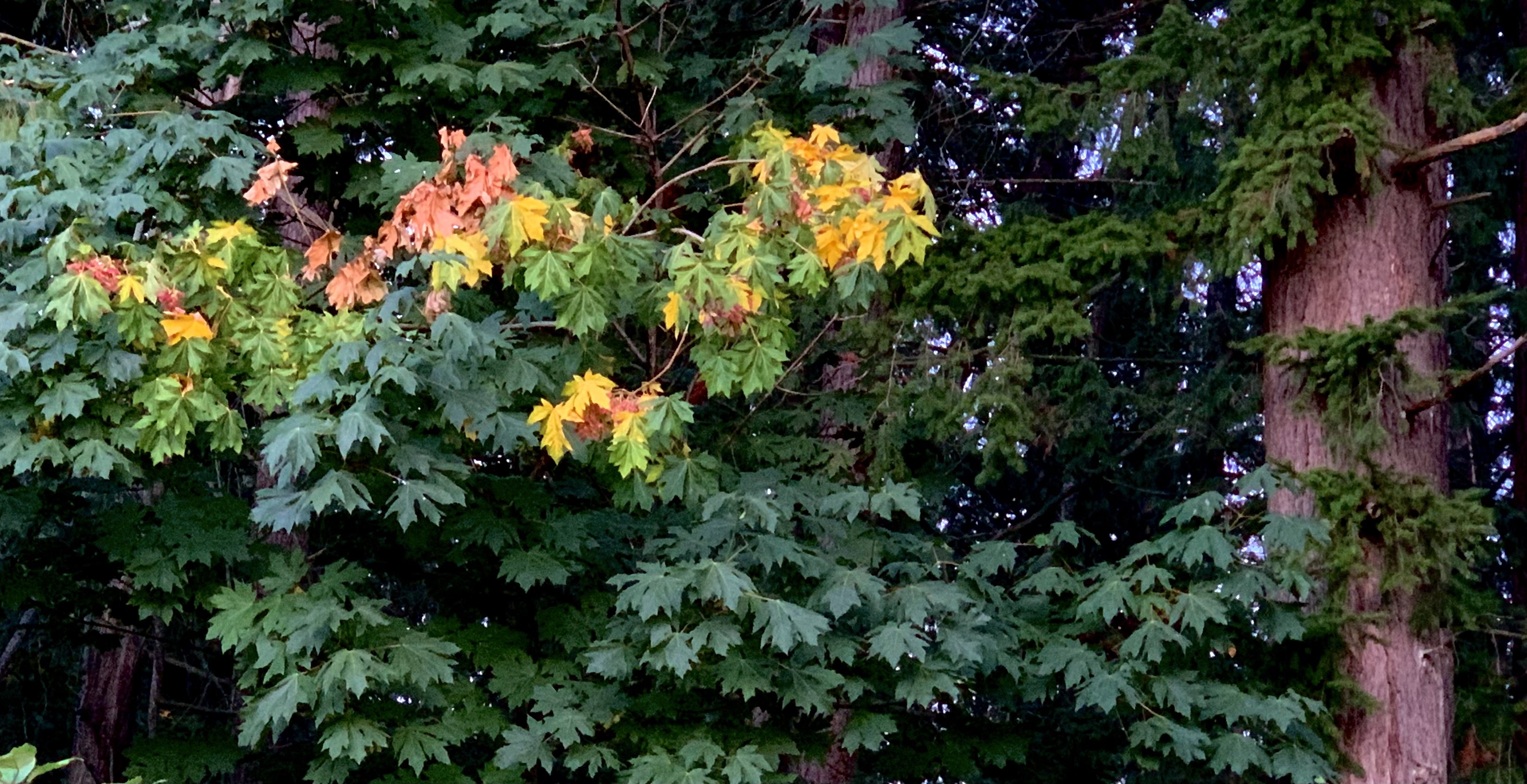
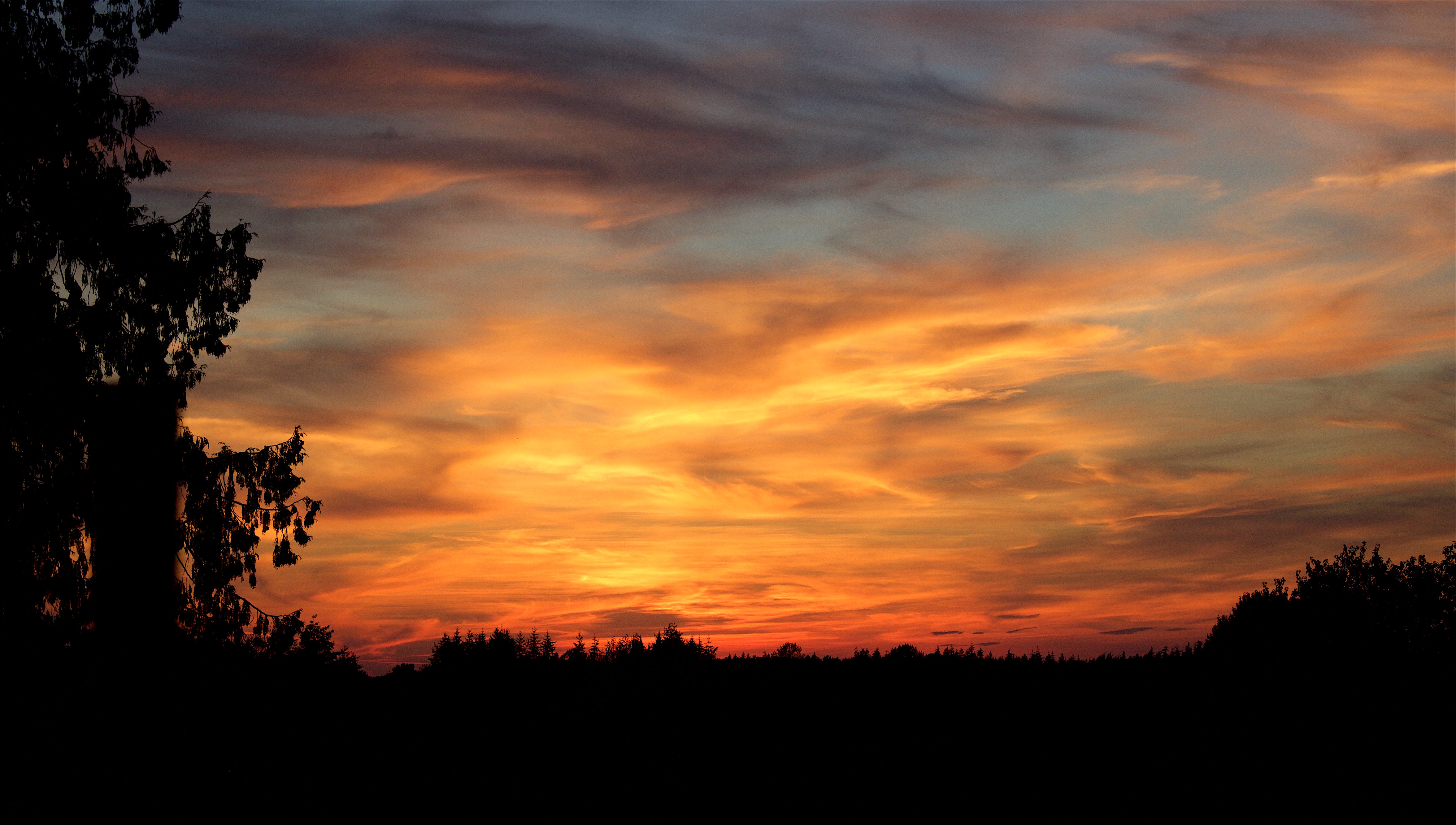
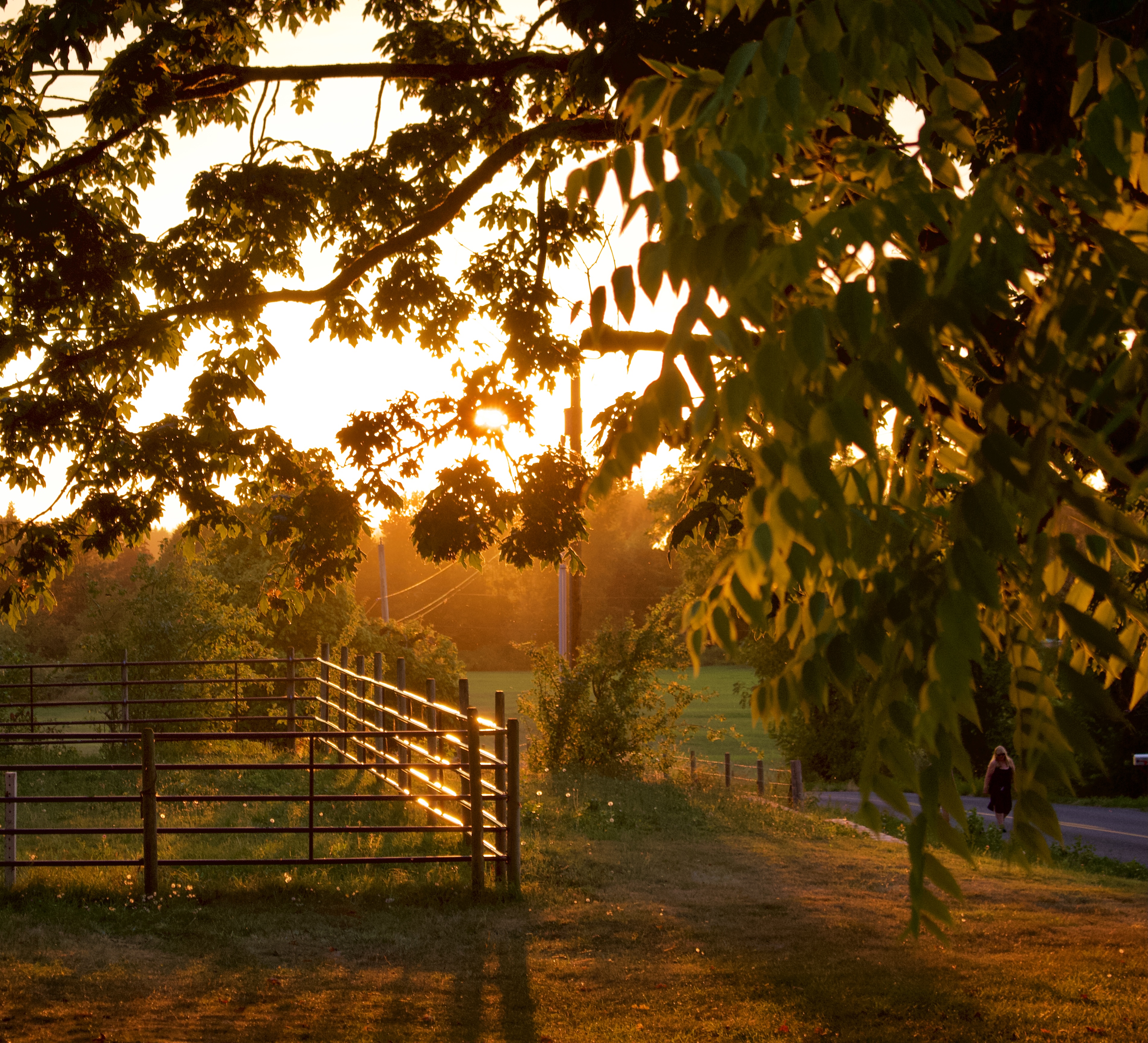
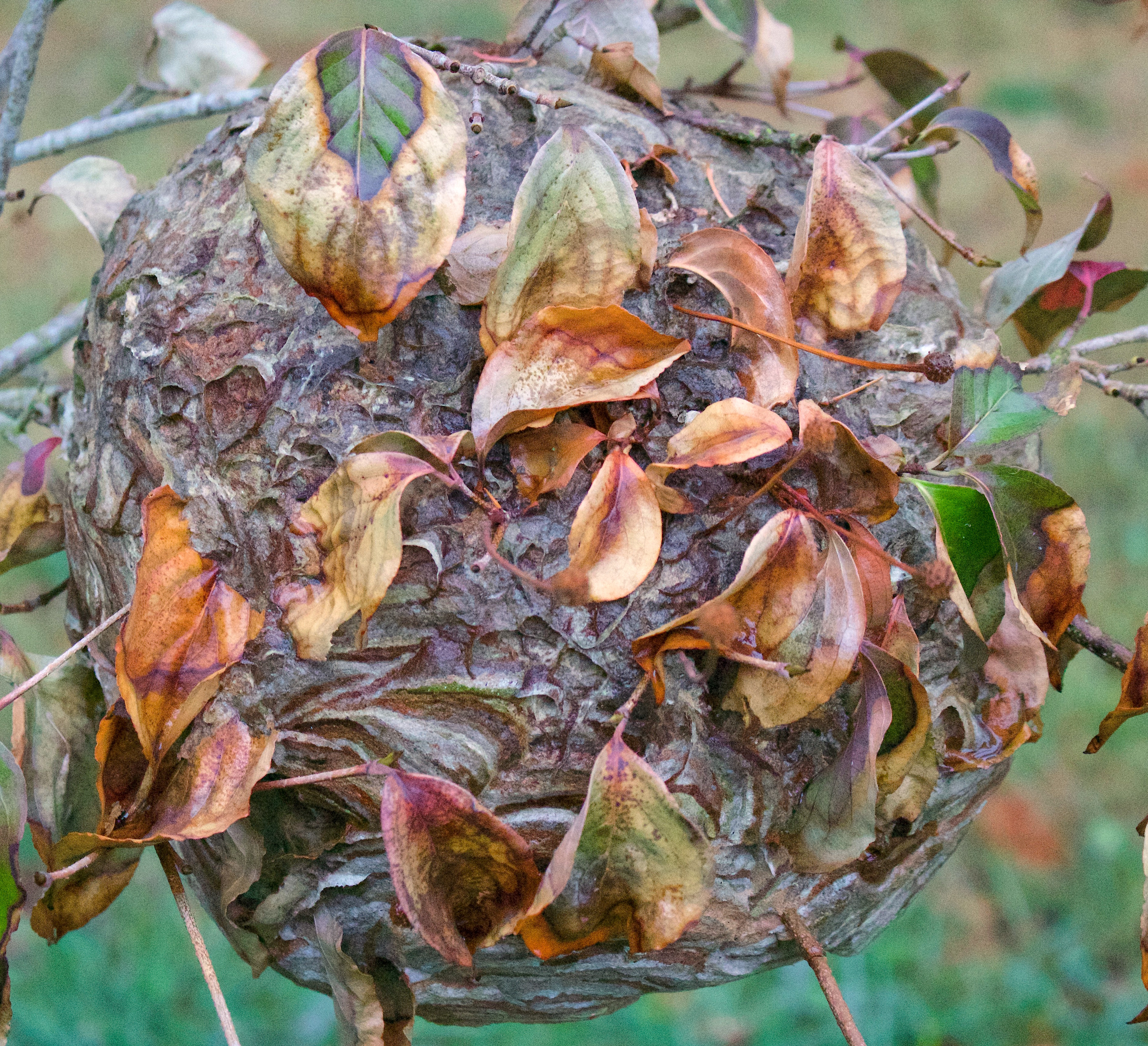
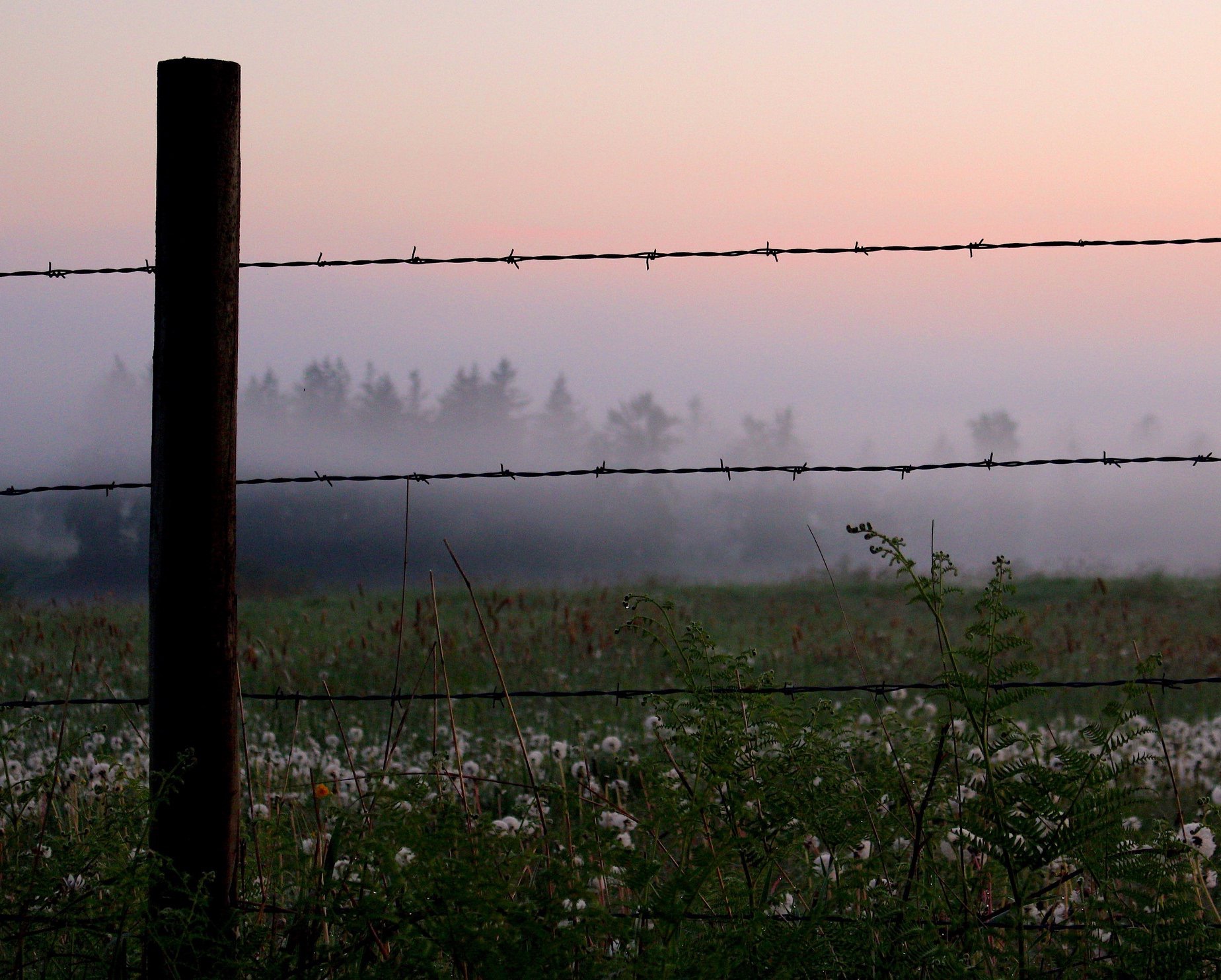
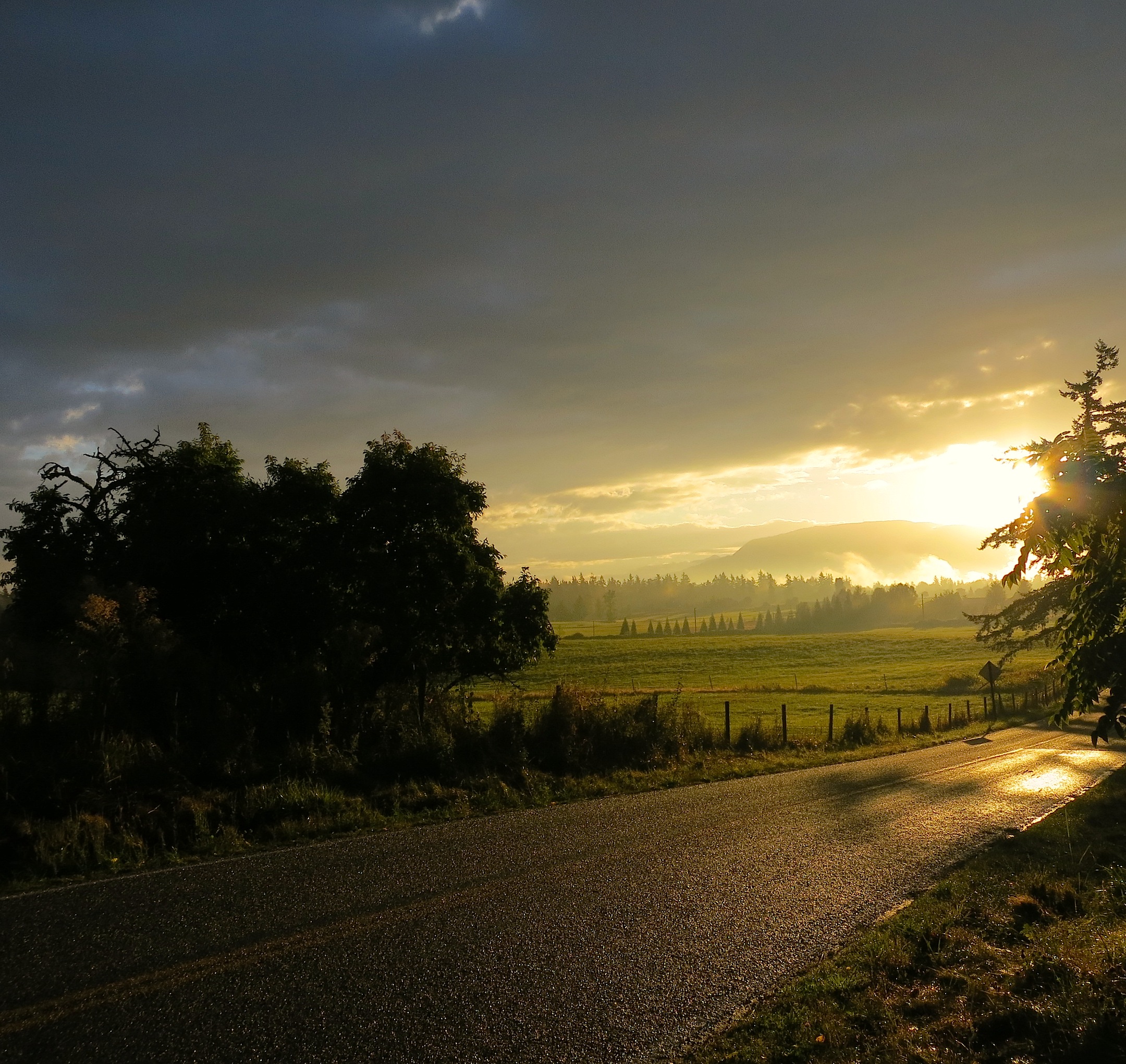
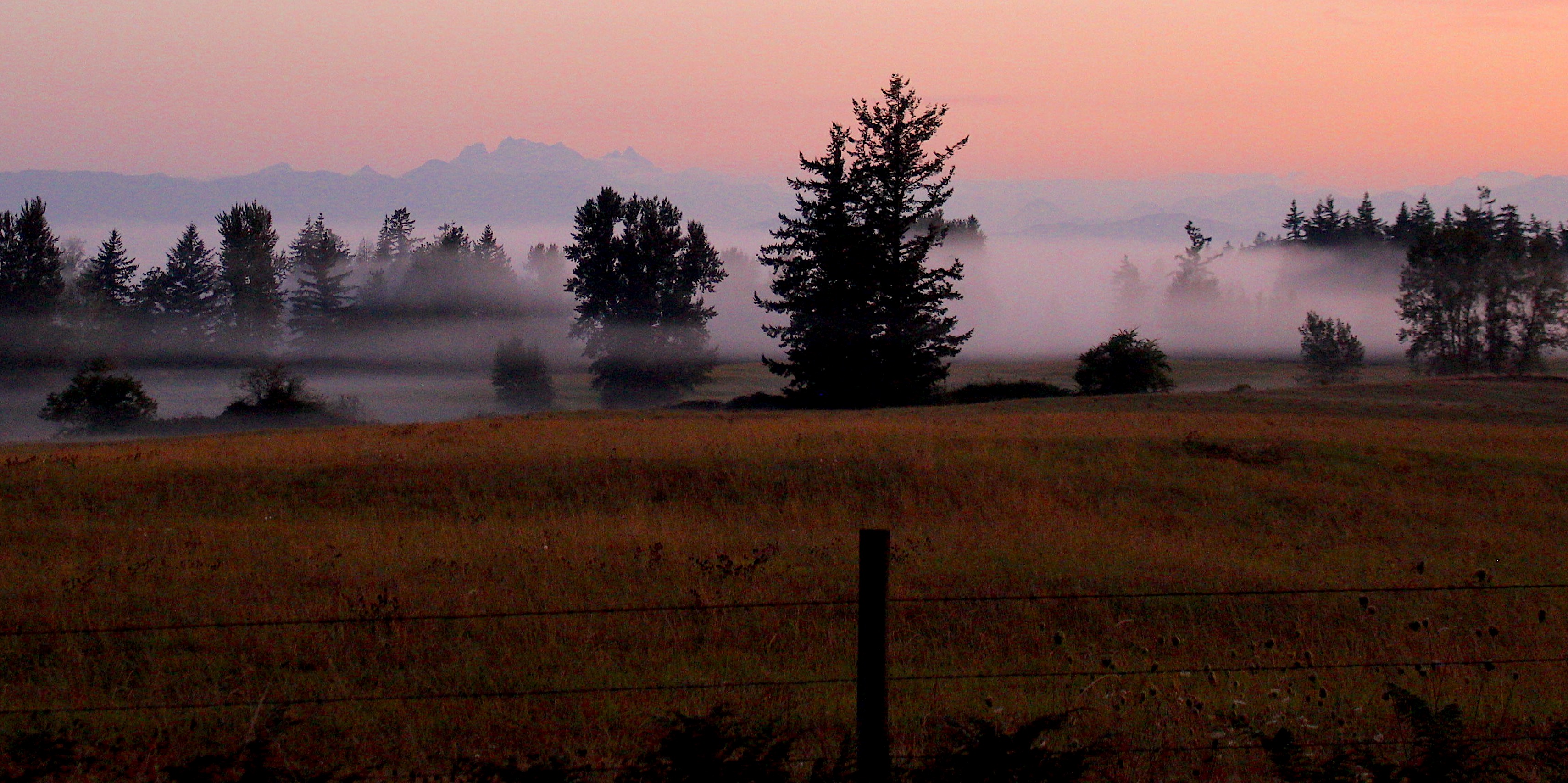
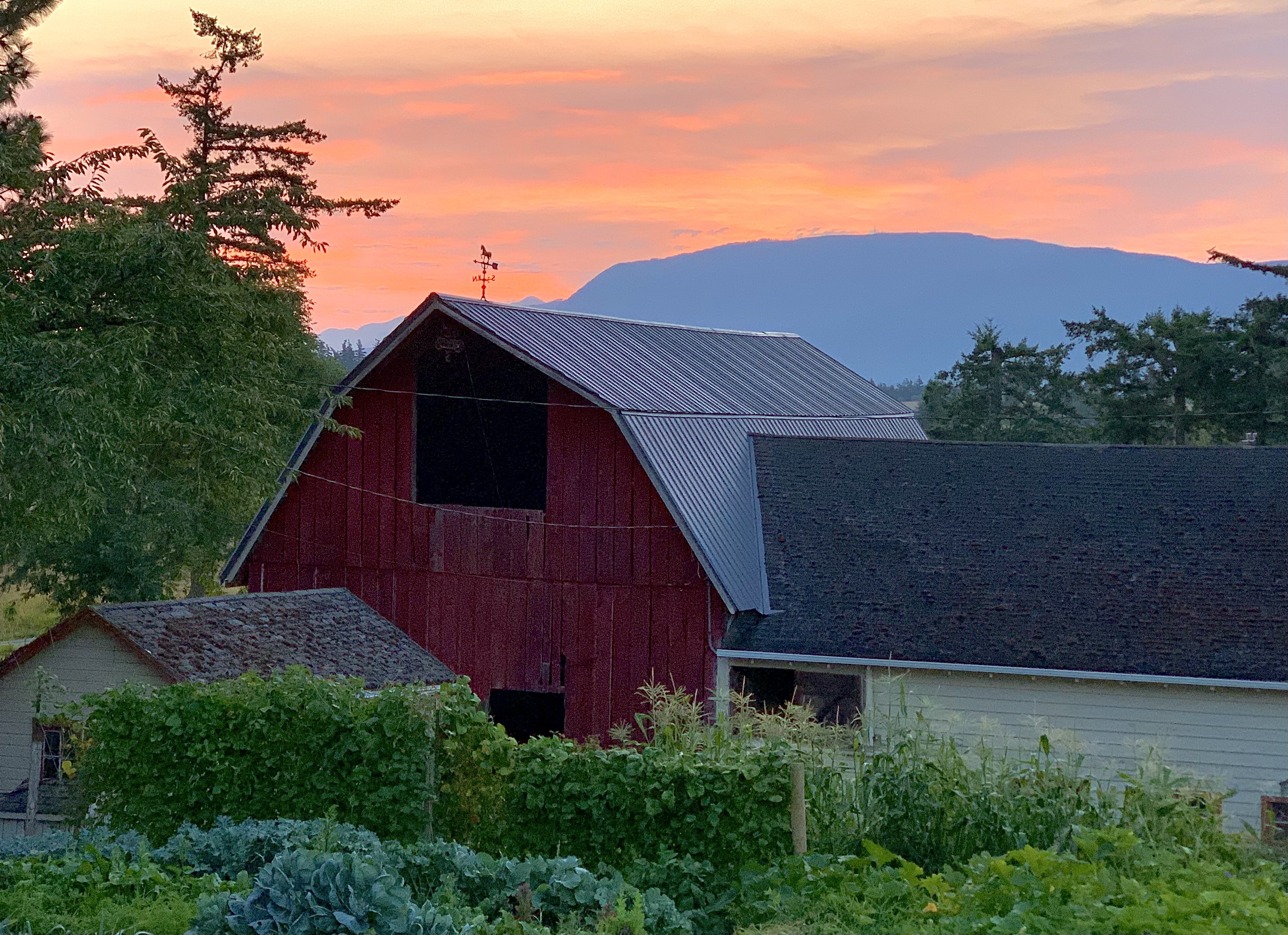
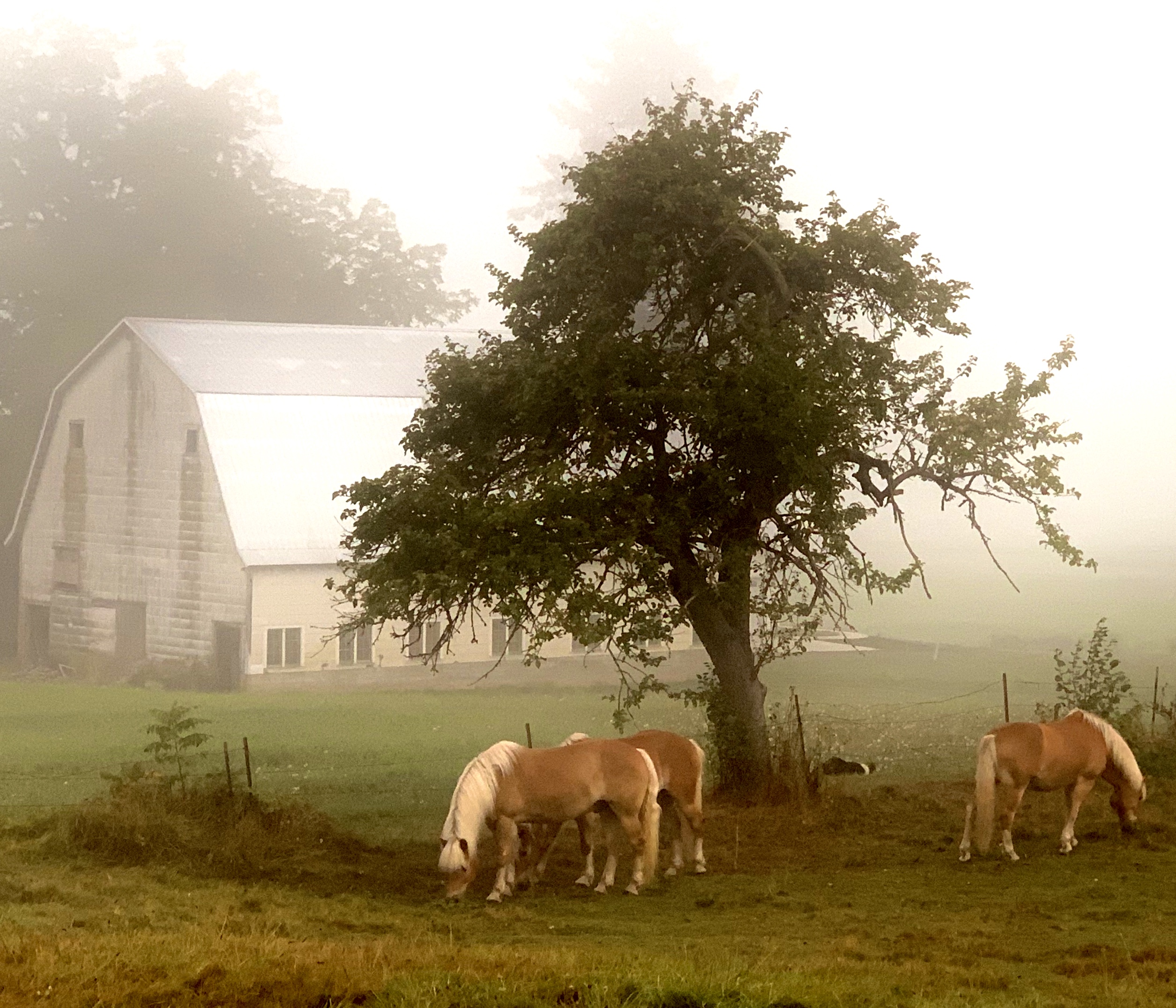
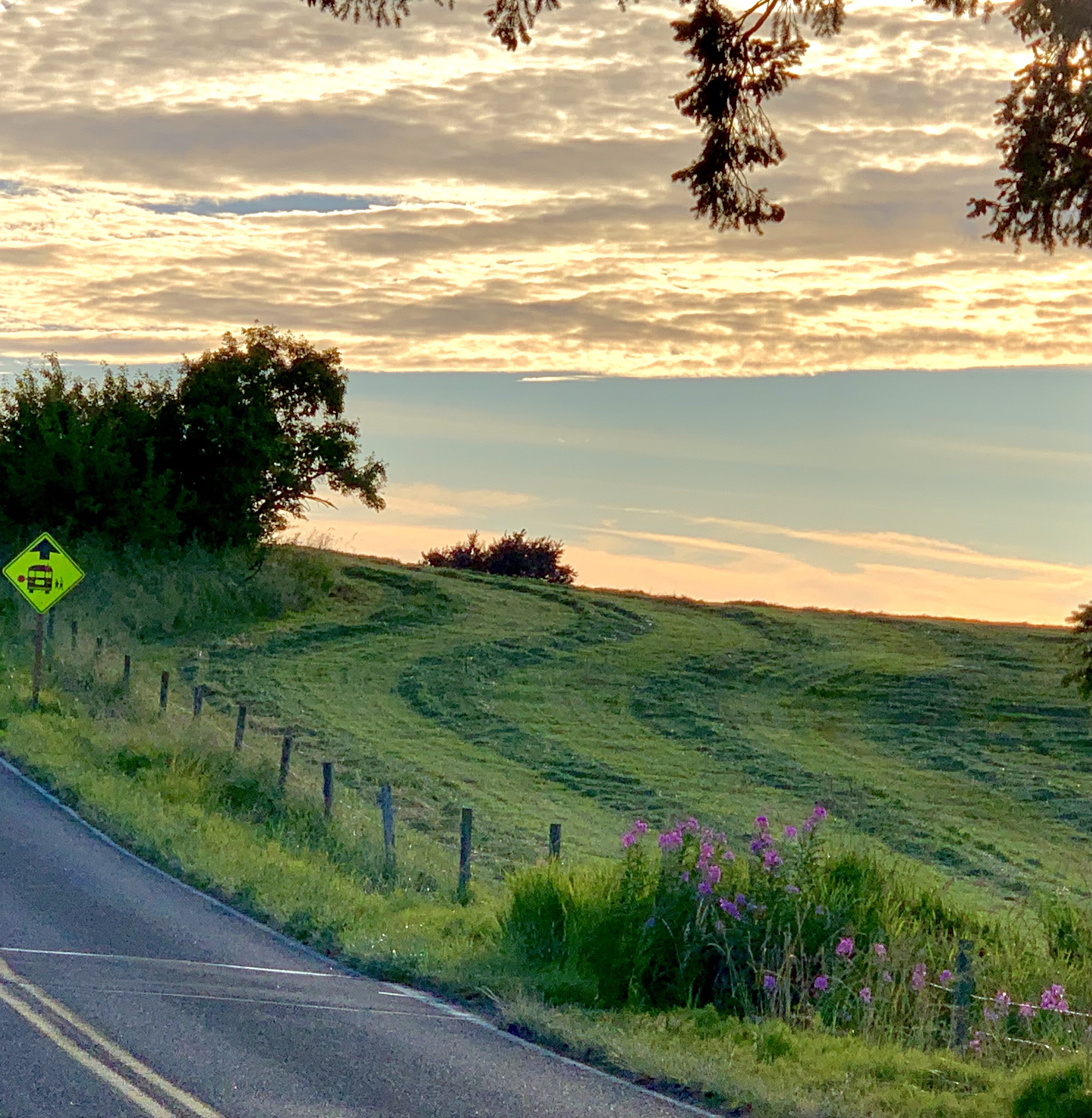
The first day back to school isn’t always the day after Labor Day as it was when I was growing up. Some students have been in classes for a couple weeks now, others started a few days ago to ease into the transition more gently, especially adjusting to classrooms and masking after a year of remote learning for so many.  Some will be return to the routine tomorrow: school buses will roar past our farm brimming with young faces under fresh masks, new clothes and shoes, stuffed back packs amid a fair amount of dread and anxiety.

I remember well that foreboding that accompanied a return to school — the strict schedule, the inflexible rules and the painful reconfiguration of social hierarchies and friend groups.  Even as a good learner and obedient student, I was a square peg being pushed into a round hole when I returned to the classroom; the students who struggled academically and who pushed against the boundaries of rules must have felt even more so. We all felt alien and inadequate to the immense task before us to fit in with one another, allow teachers to open our minds to new thoughts, and to become something and someone more than who we were before.

Growth is so very hard, our stretching so painful, the tug and pull of potential friendships stressful.  Two of my own children now make this annual transition to a new school year as veteran teachers.

For the first time in over thirty years, I won’t have yet another “first day” or new students under my care — it all feels new and unfamiliar yet again.

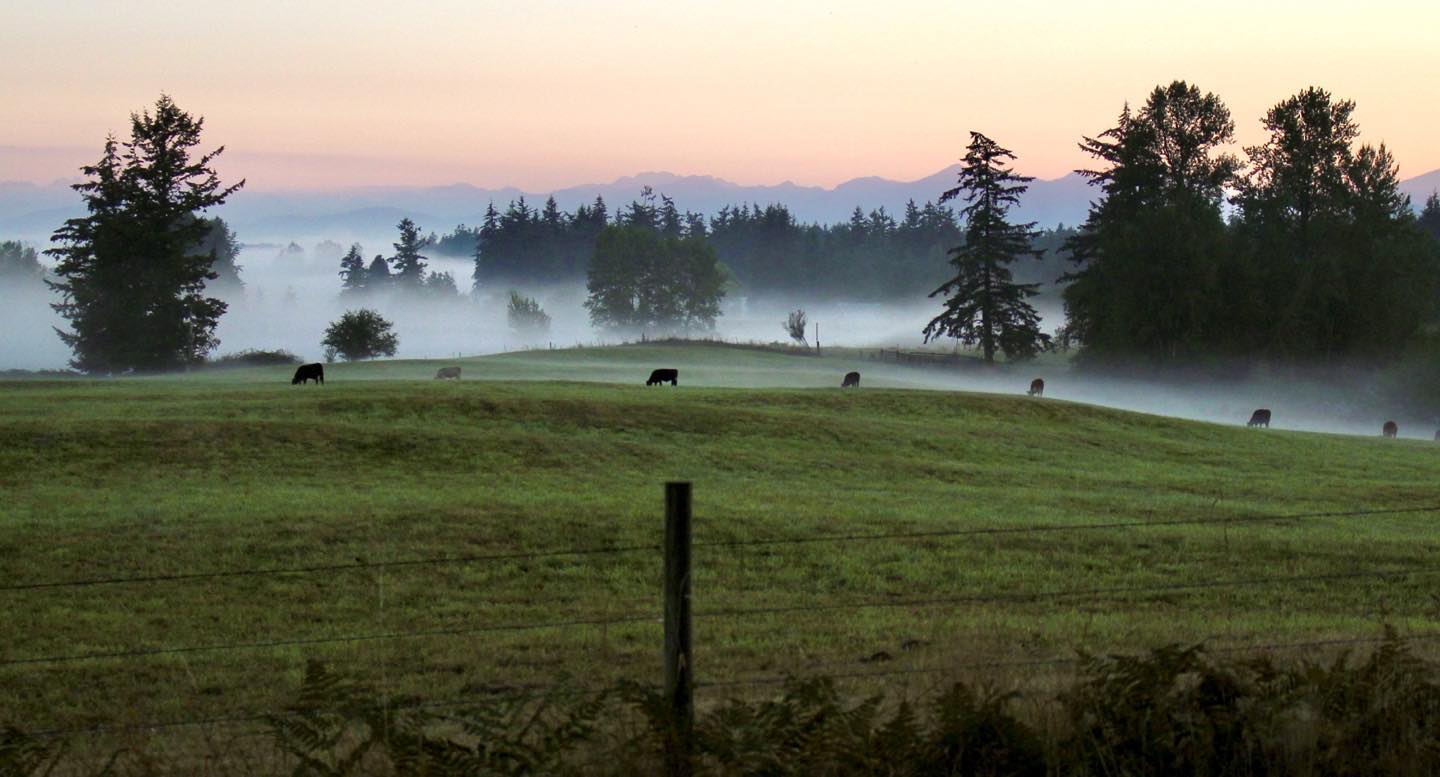
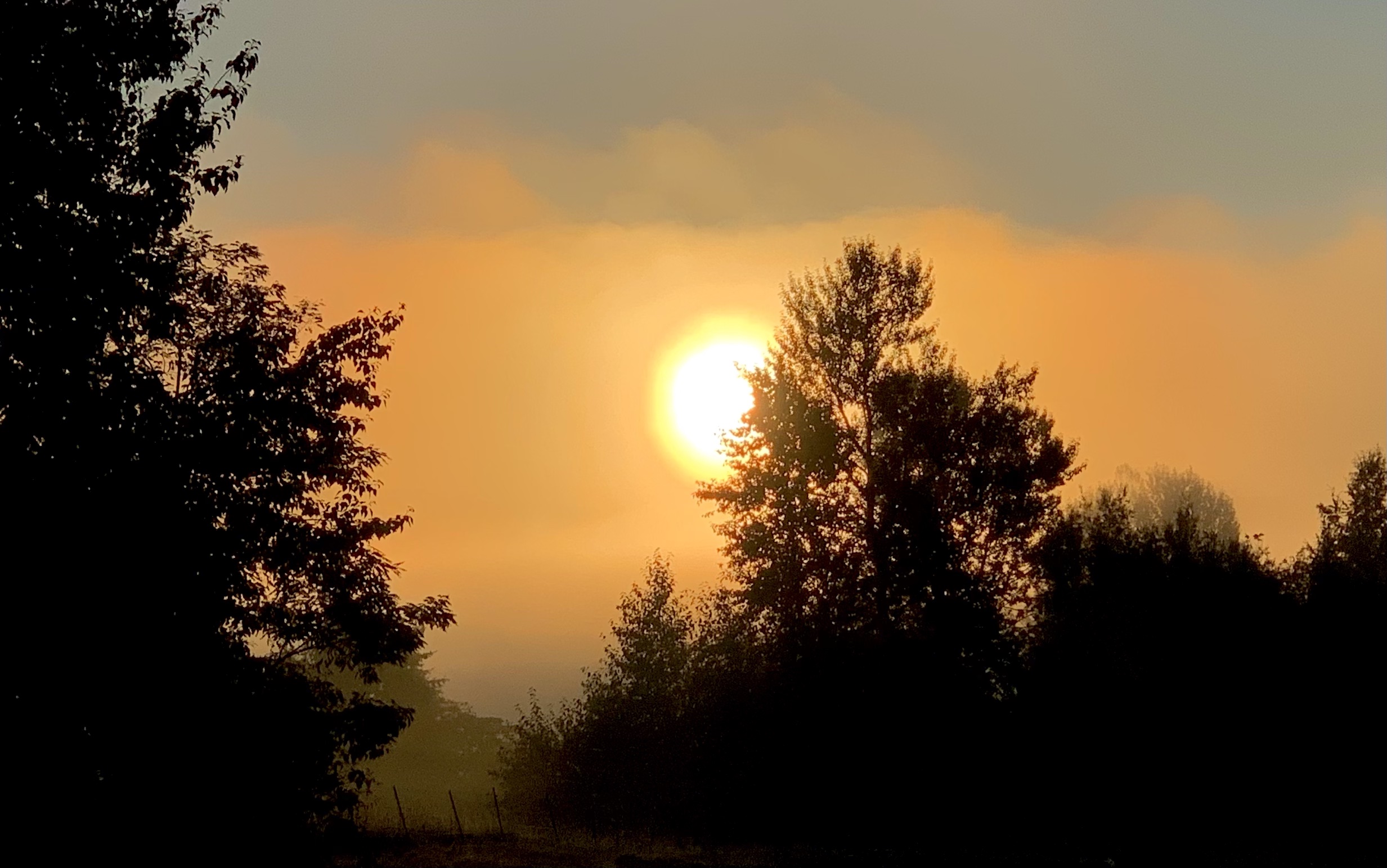
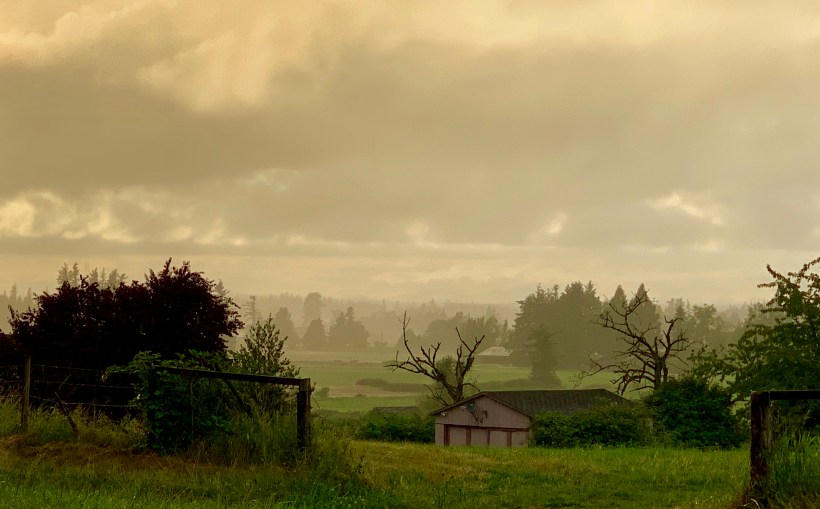
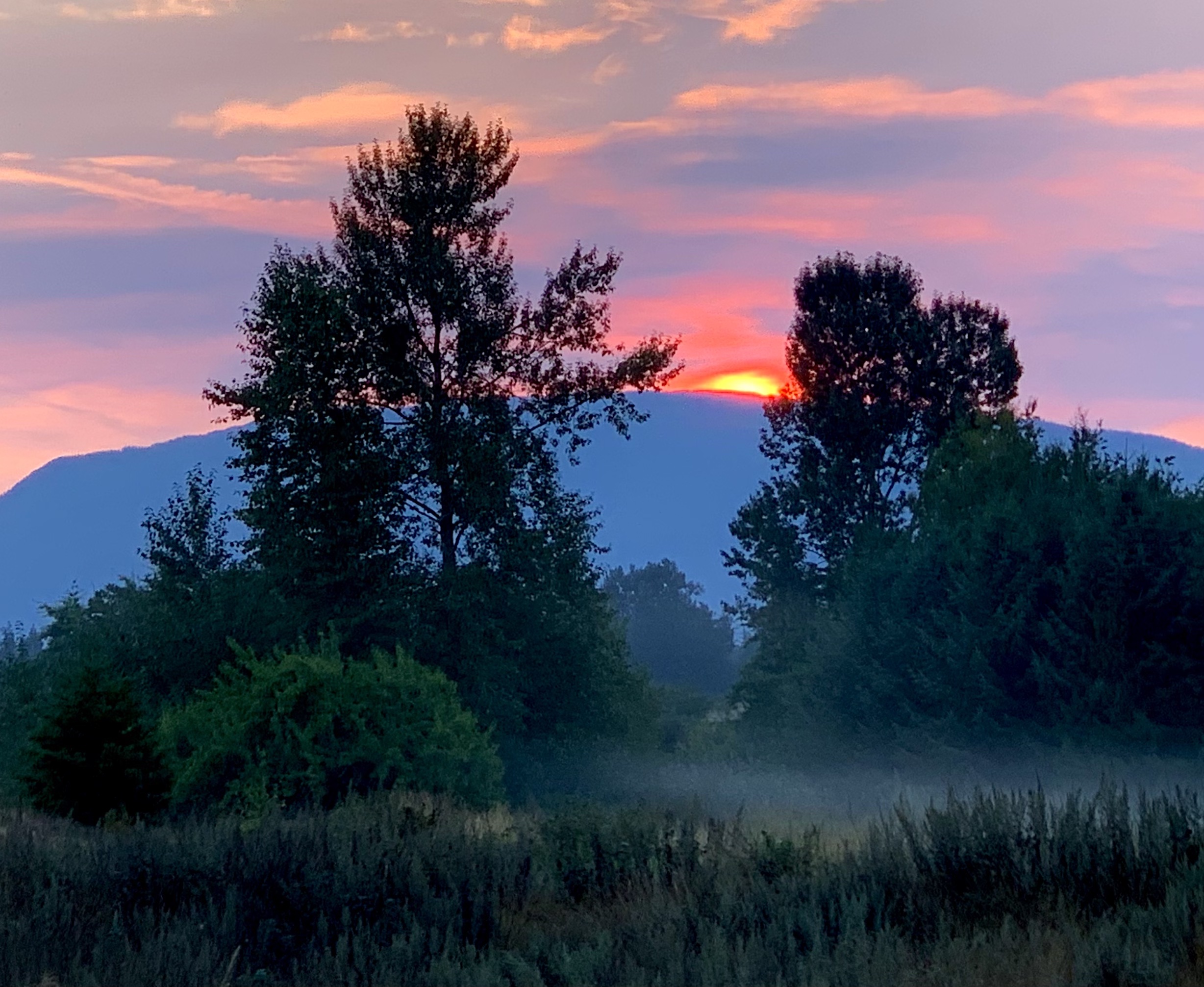
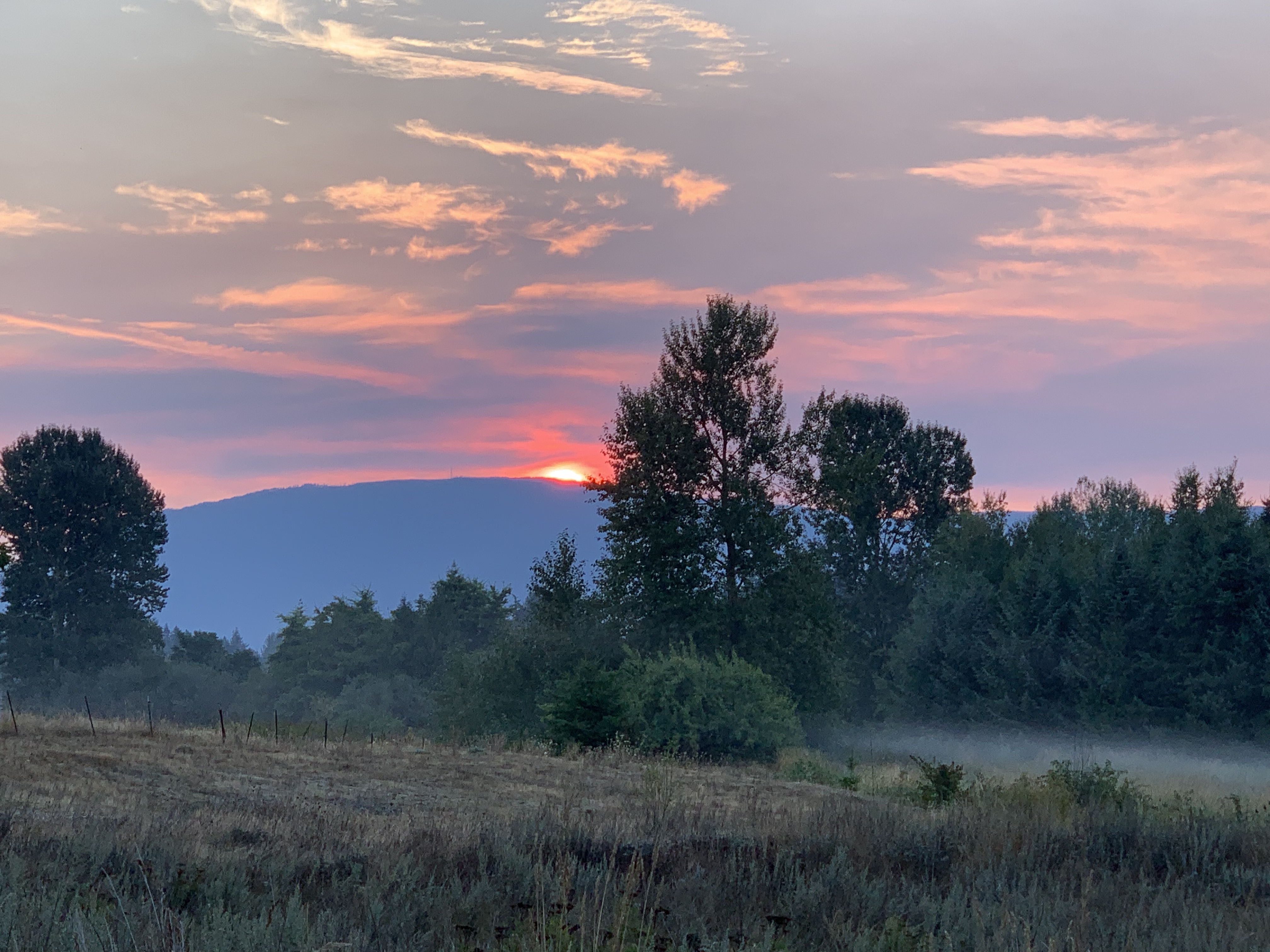
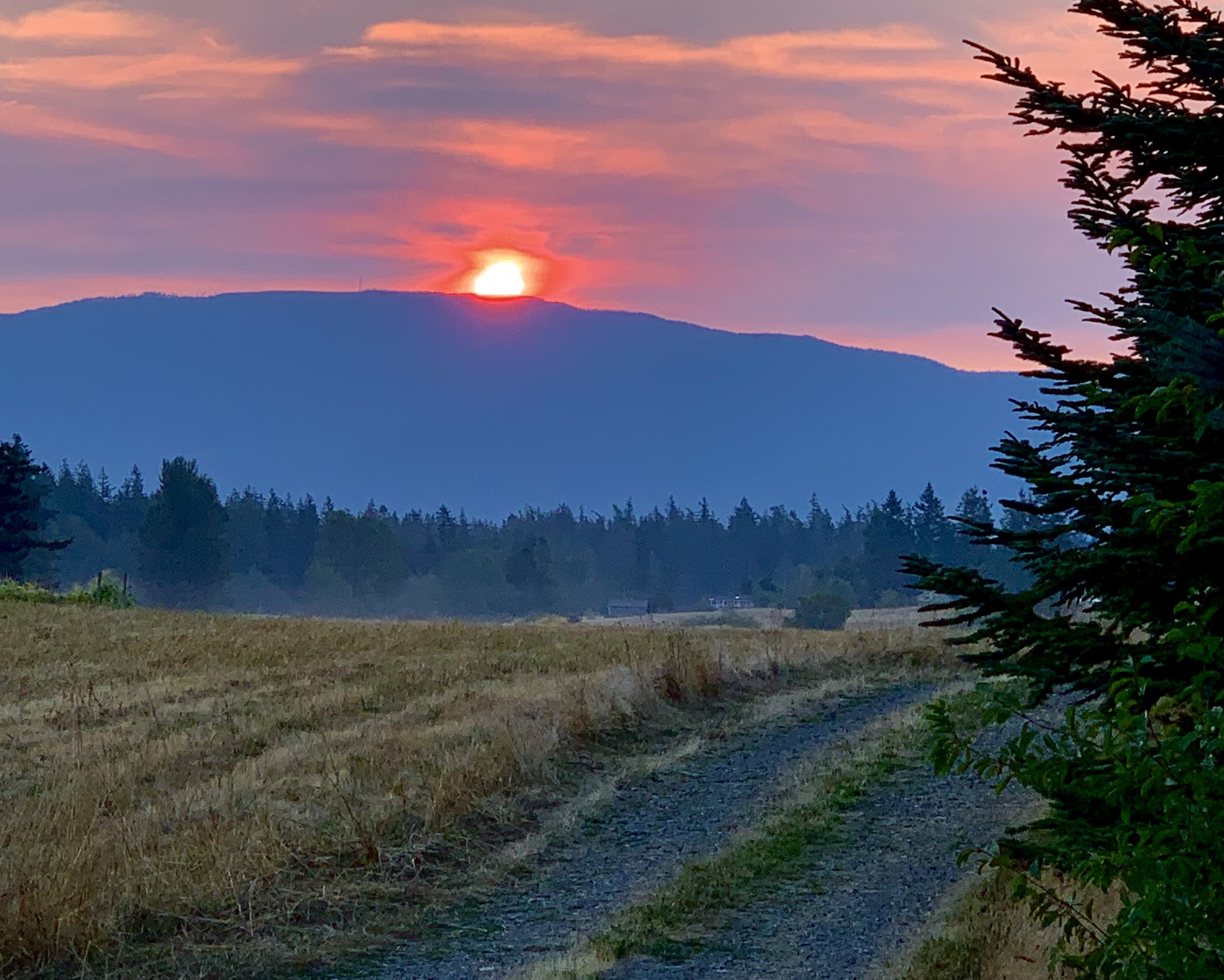
So I take a deep breath on this foggy Labor Day morning and am immediately taken back to the anxieties and fears of a skinny little girl in a new home-made corduroy jumper and saddle shoes, waiting for the schoolbus on a drippy wooded country road.

She is still me — just buried deeply in the fog of who I became after all those years of schooling, hidden somewhere under all the piled-on layers of learning and growing and hurting and stretching — but I do remember her well.

Like every student starting a new adventure tomorrow,
she could use a hug.
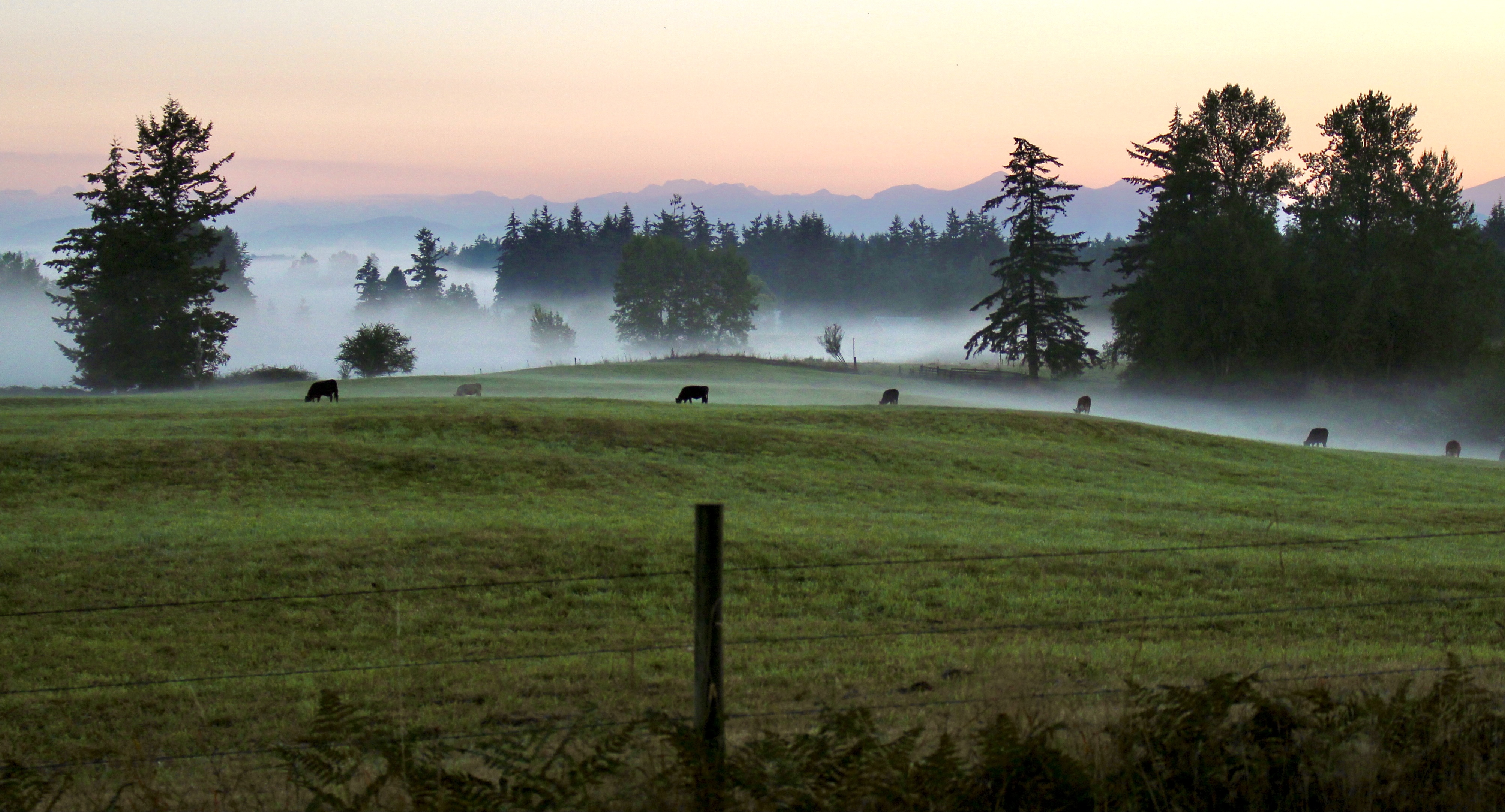
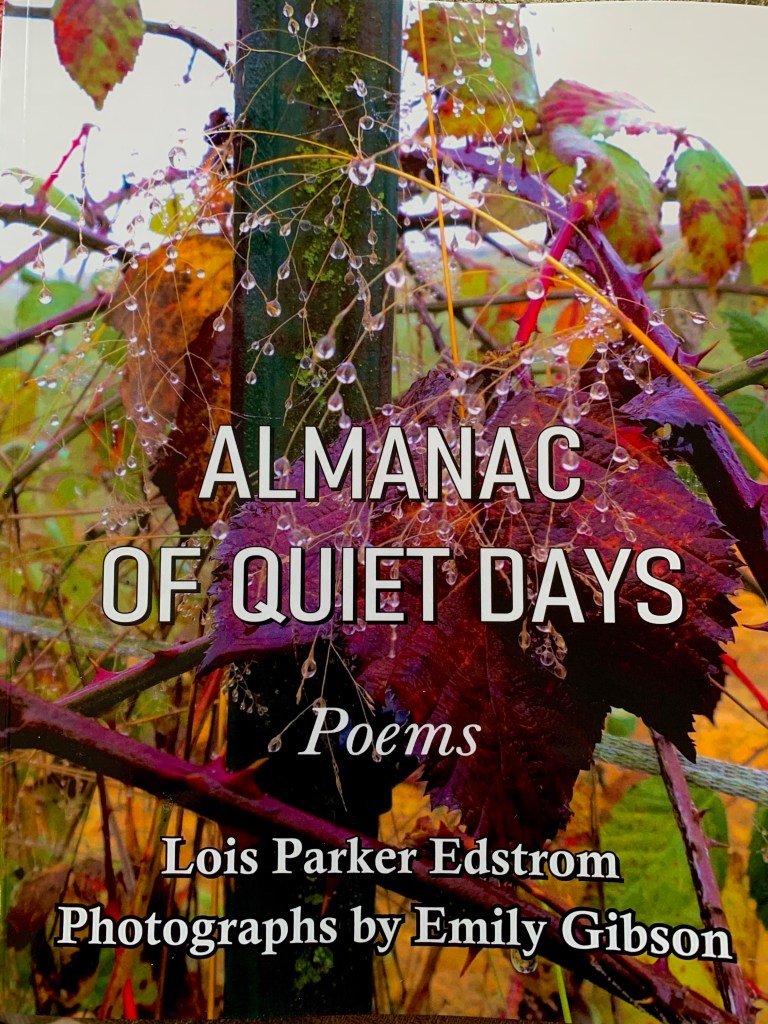
More like this is found in photos and words in this book from Barnstorming, available to order here:
Madly in Love

How is it they live for eons in such harmony
– the billions of stars –
when most men can barely go a minute
without declaring war in their mind

against someone they know.

There are wars where no one marches with a flag,

though that does not keep casualties from mounting.

Our hearts irrigate this earth. 
We are fields before each other.
How can we live in harmony?


First we need to know 

we are all madly in love
with the same God.

O Lord my God, make me
submissive without protest,

poor without discouragement,
chaste without regret,
patient without complaint,
humble without posturing,
cheerful without frivolity,
mature without gloom,
and quick-witted without flippancy.


Grant that I may know
what You require me to do.
Bestow upon me
the power to accomplish Your will,
as is necessary and fitting
for the salvation of my soul.

~St. Thomas Aquinas

I look at headline news through my fingers, cringing.  

Amid the centuries of posturing between governments and every imaginable tribe and faction, the names and faces change but the nature of hatred of the “other” doesn’t.

We’ve seen this all before, over and over through history.  Over 150 years ago it was in the Gettysburg fields that blood of rival armies intermingled and irrigated U.S. soil.  Though now we stand side by side with Germany and Japan, our bitter adversaries a mere eighty years ago, our world continually brews new enemies and ignites new conflicts.

We can barely go a minute without declaring war in our minds even against our neighbor, even those we consider friends and family. There is yelling from the streets in angry protest and screaming at school board meetings. Casualties mount in our bitterness toward one another.

And who am I to point fingers or squint through them at the news of the day?
I am as prone to this as anyone.

Am I myself capable of submission without protest, remaining patient and uncomplaining even when I disagree? Can I embody humility without having a hidden agenda? Can I remain selfless when my true nature is wholly selfish?

How can there ever be harmony? 
How can I overcome my own rancorous heart?

As critical as it seems, It is not love for one another that comes first.
I must first know, love and trust the only God who has loved the unloveable so much He became one with us, overpowering our tendency to hate one another by taking it all upon Himself.

Jesus found us dying in a world desperately drying up; His bleeding heart poured itself out onto our thirsting soil. We have been handed salvation.

It is, in fact, God who is madly in love with us and though we’ve done nothing to deserve it, it is our turn to show love to one another.

A book from Barnstorming is available for order here:

Straining to Win the Sky

The tree is more than first a seed,
then a stem,
then a living trunk,
and then dead timber.
The tree is a slow,
enduring force
straining to win the sky.
~Antoine de Saint-Exupéry, The Wisdom of the Sands

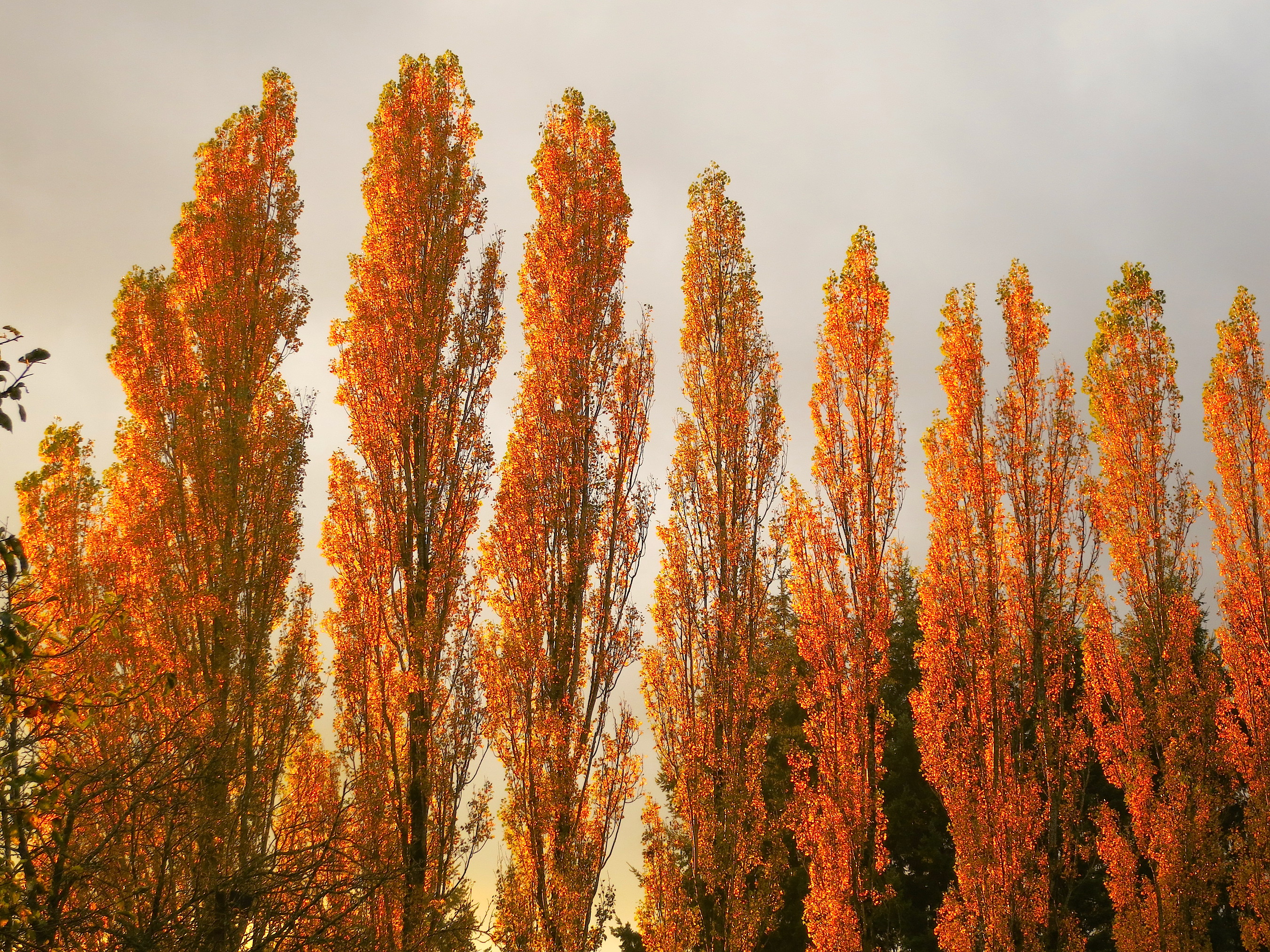
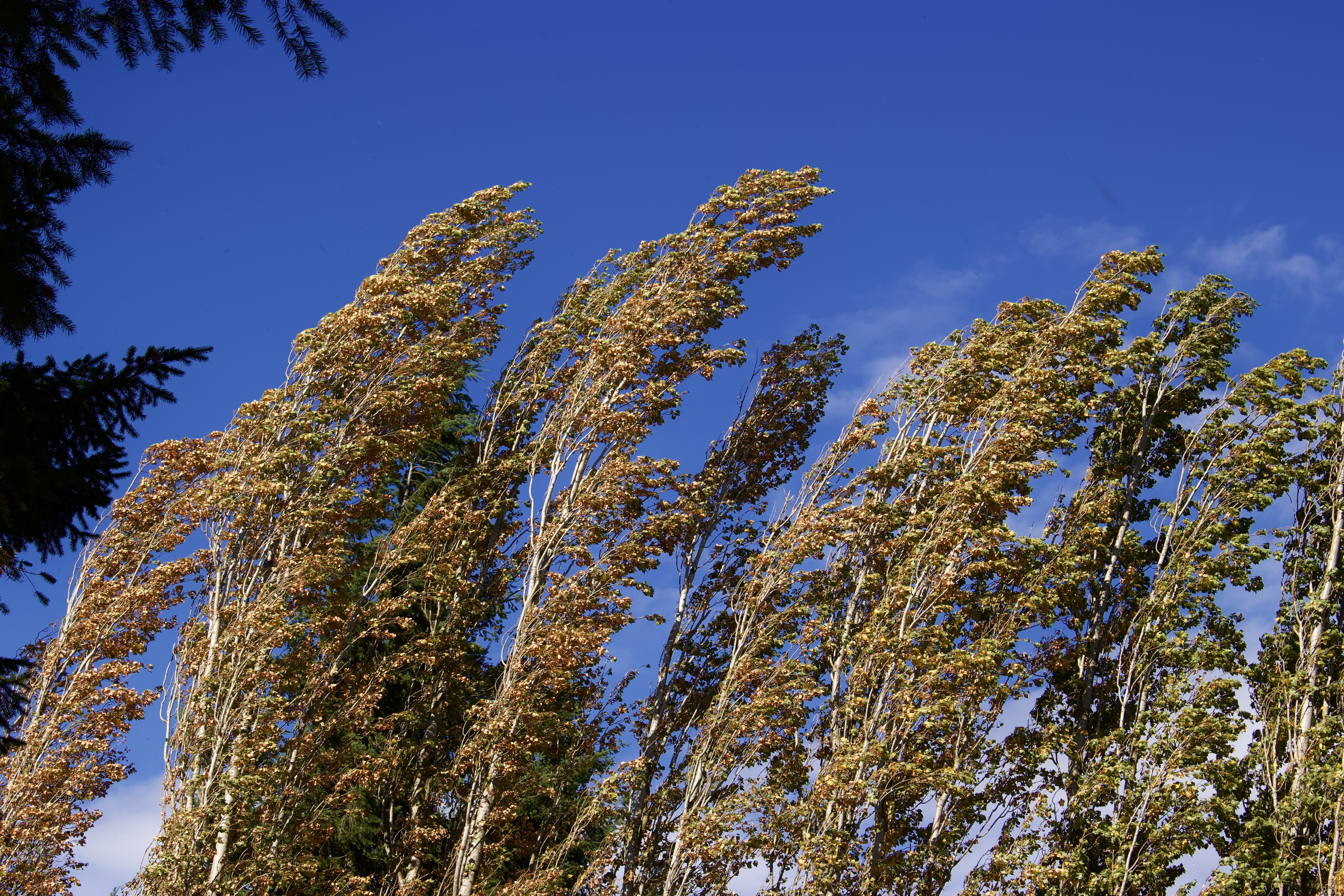
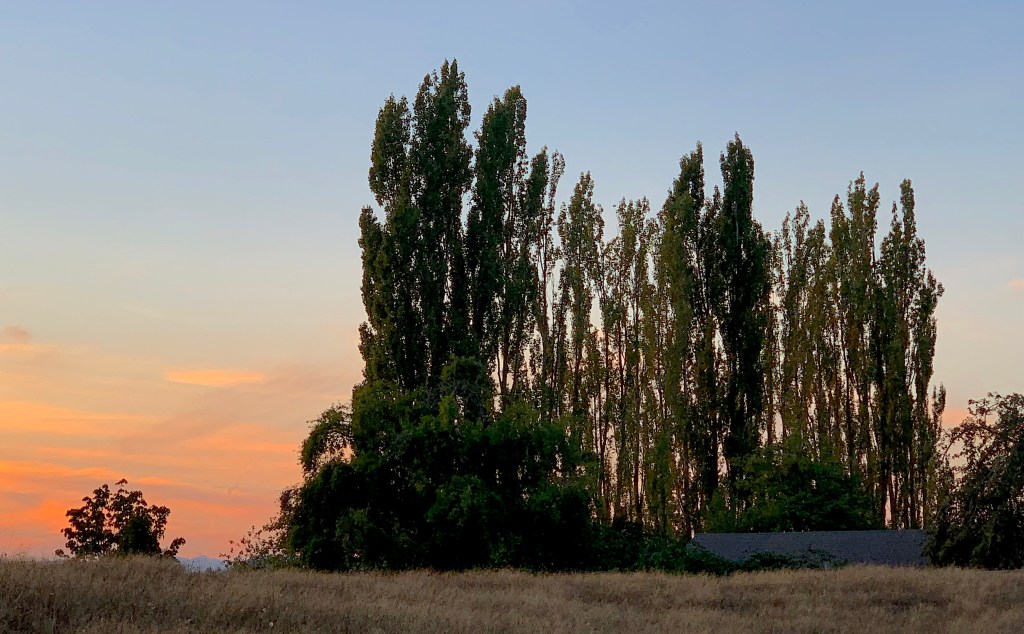
It is always a difficult decision to take down decades-old trees that have become a risk of falling in a windstorm or losing branches that can cause damage. The time had come for the row of Lombardy poplars lining our western property line, originally planted in the 70s to create a buffer for a newly constructed farm building at our neighbors’ place. In their old age, the poplars were breaking and failing.

Yesterday they were felled by a tree expert who knew exactly how to bring them down in a tight area, leaving an open expanse we are adjusting to seeing. We are considering what might eventually take their place.

We have a few other dying trees on the farm we must part with soon, victims of recent drought years. It feels like parting with old friends. Each one reached to win the sky, but like us, must end up as dust.

And so we too are so much more than mere life cycle:
like trees, we are infinite variety and fascinating diversity,
clothed in finery yet at times naked and vulnerable;
we lift burdens in our arms and harbor the frail,
dig our roots deep and hold fast,
shade those overcome by the sun, and sing in the breeze.

Most of all, we aim high to touch and win a sky which remains beyond our grasp.

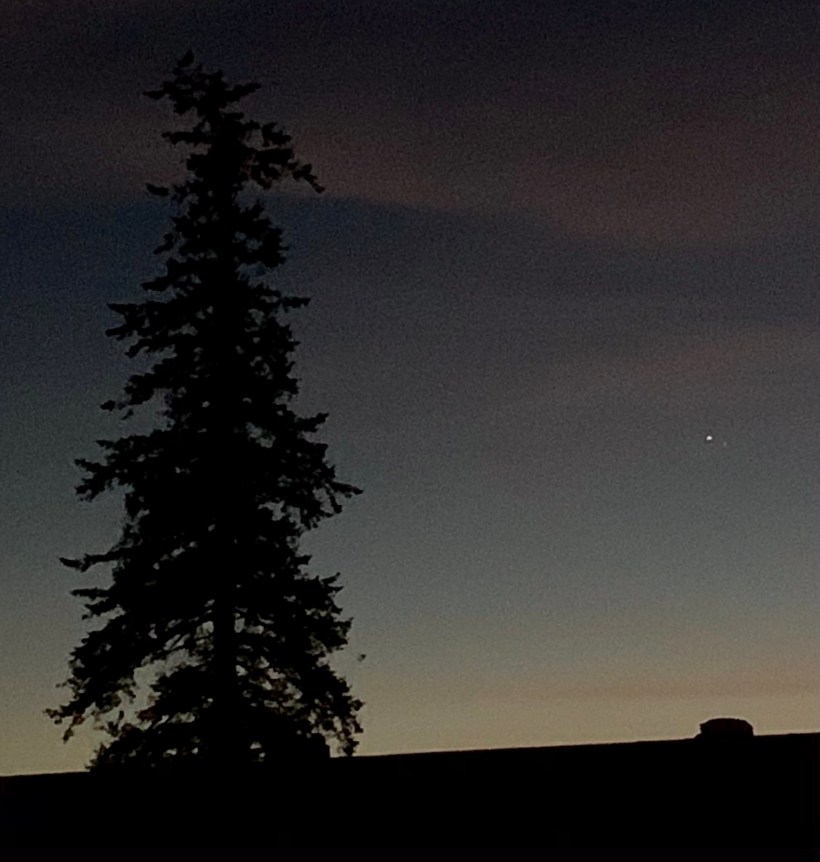
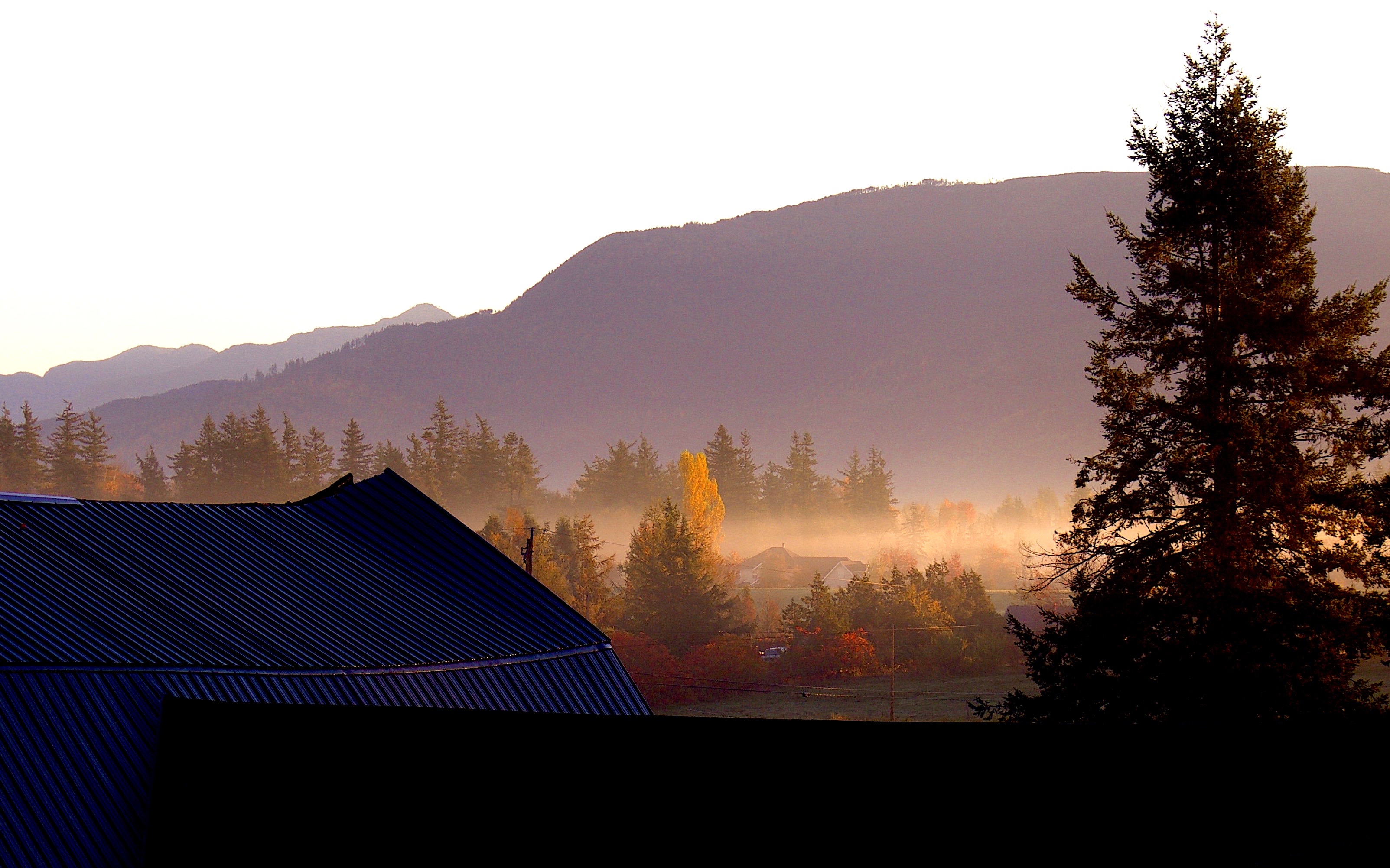
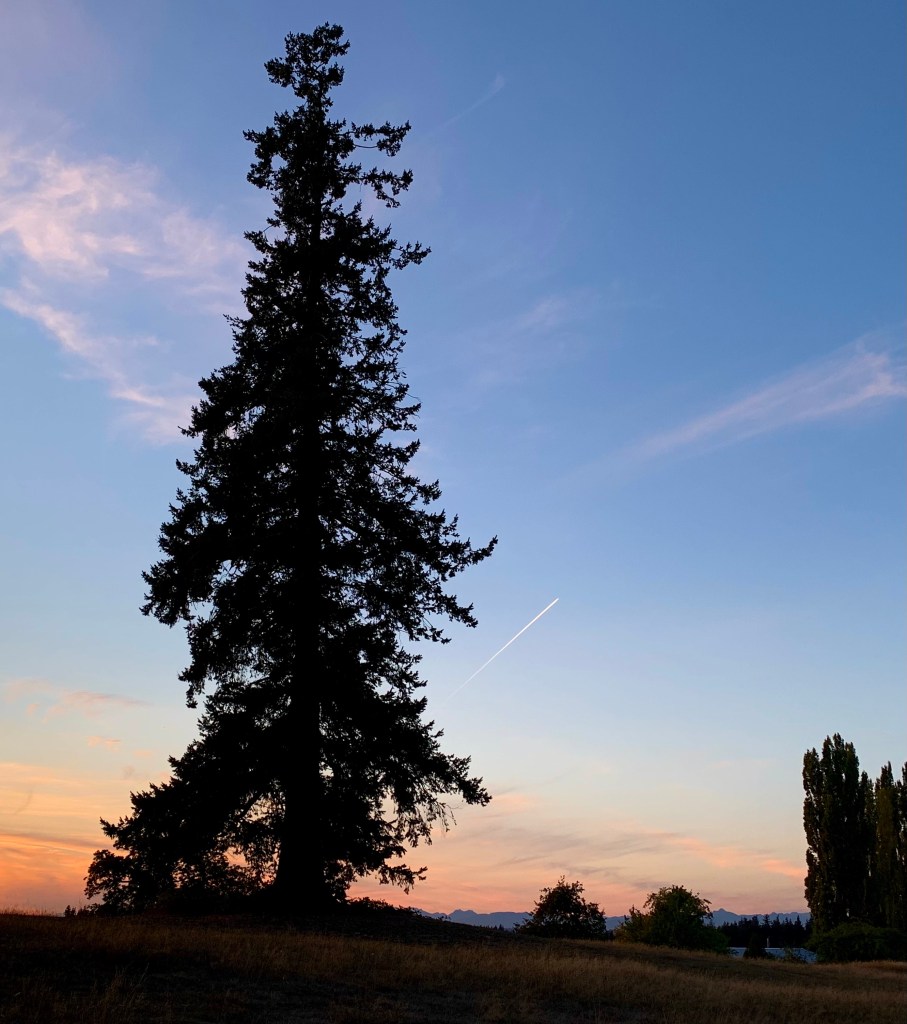
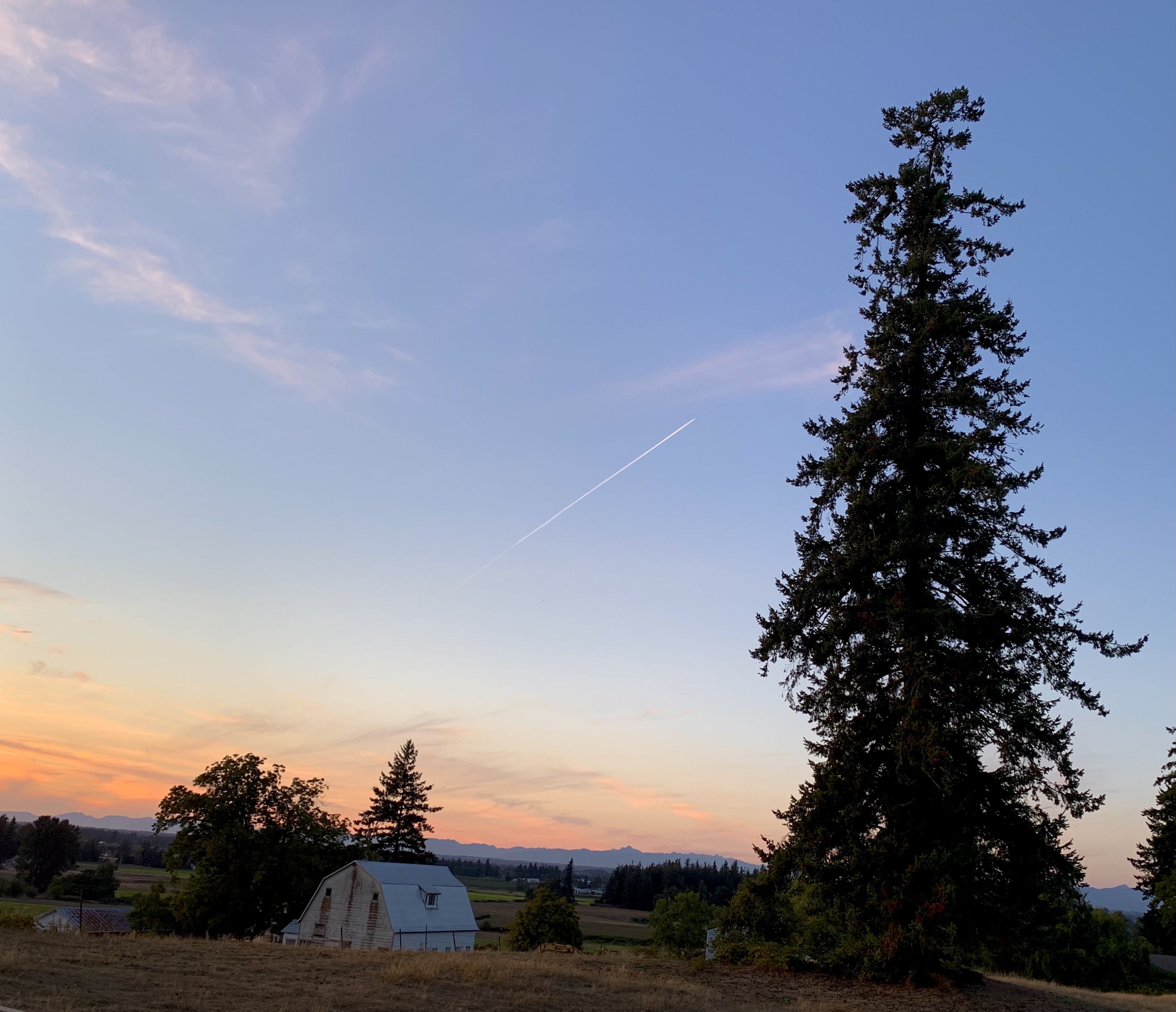
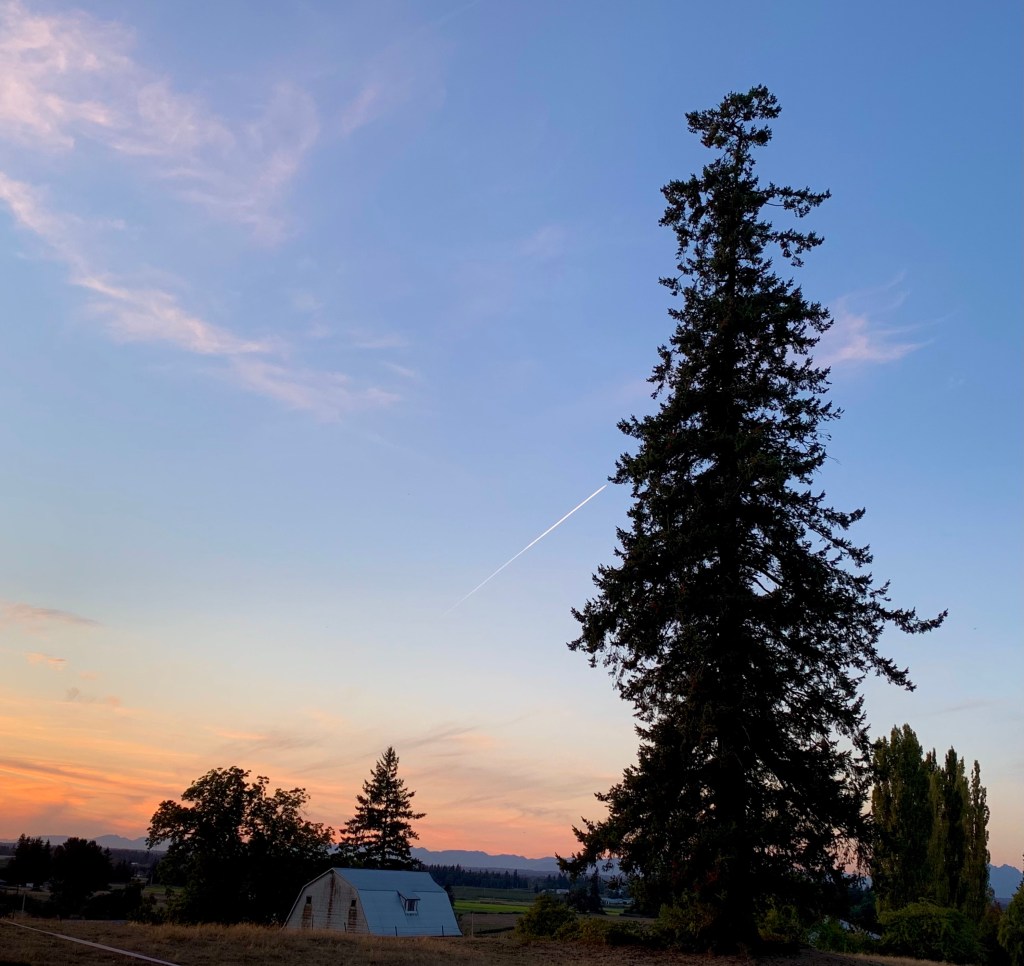
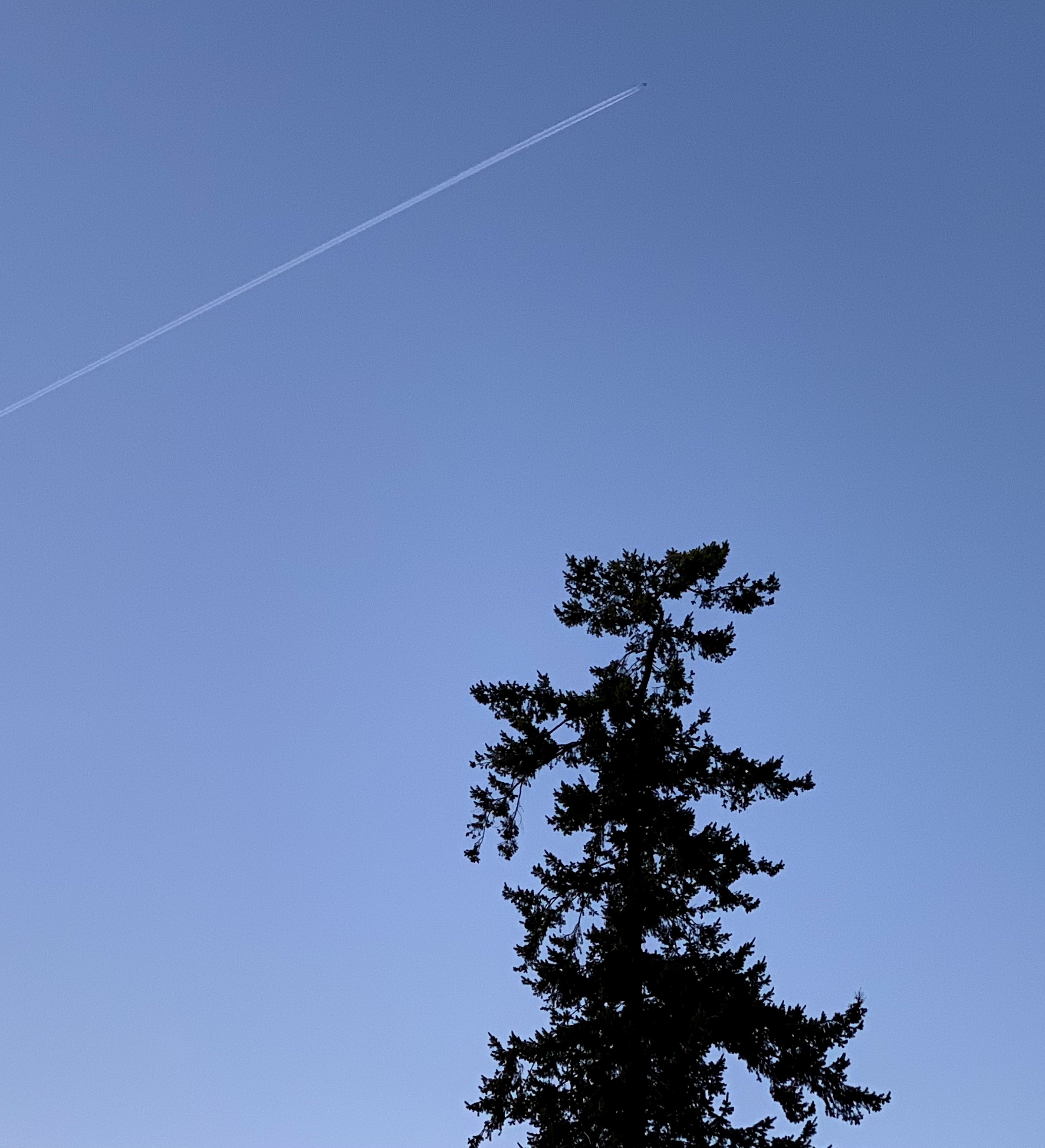
(Our lone fir on top of the hill is doing just fine and she remains our sentinel tree and farm focal point, trying to touch the jet planes that ascend from the nearby Vancouver, B.C. airport in the top pictures)

The night before they were felled
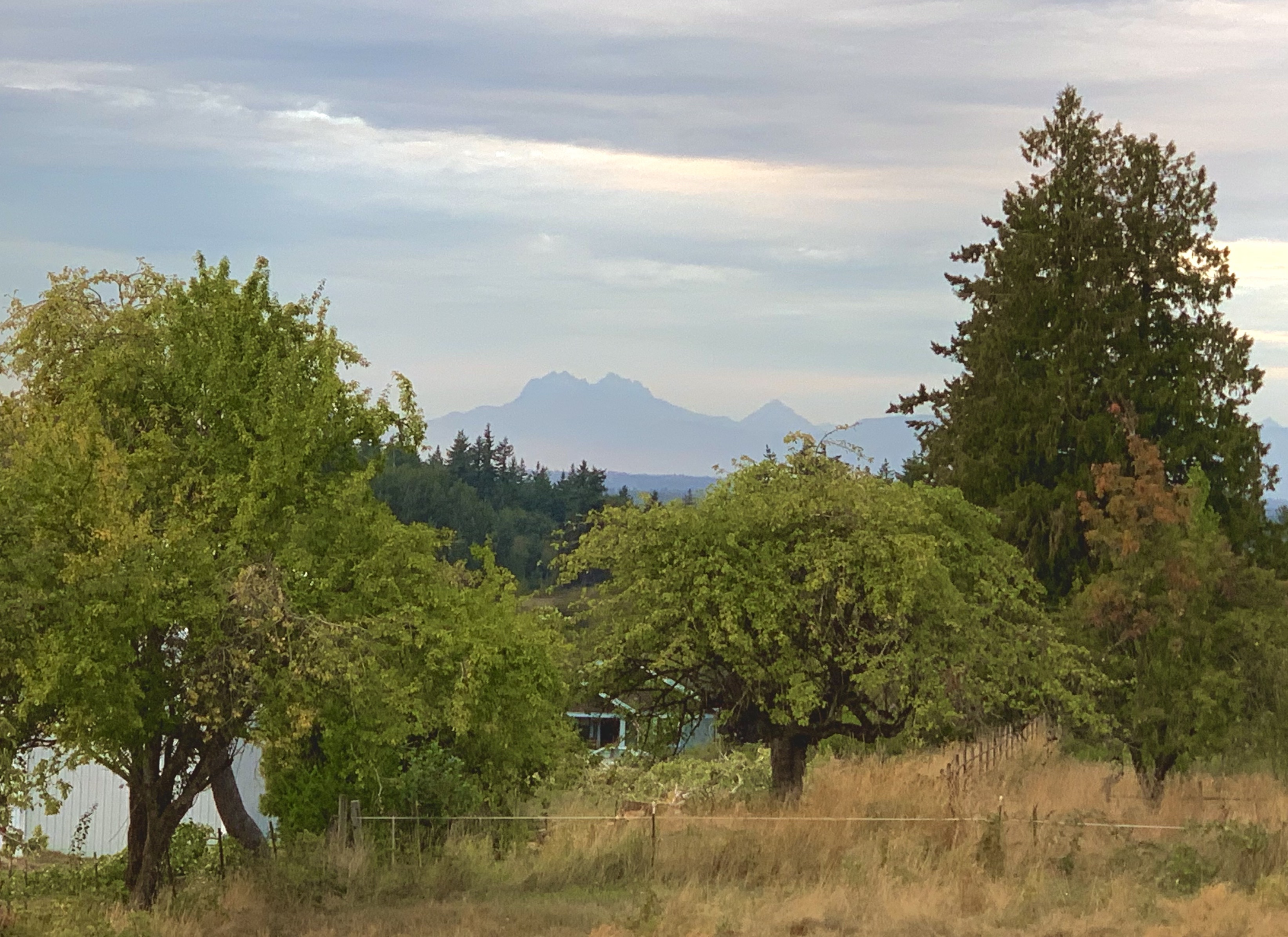
Last night, the missing poplar row revealed a new mountain view to the north

If you enjoy these Barnstorming posts, you’ll enjoy this book which is available to order here:
The Beauty of a Fogbow

We don’t need to understand why a rainbow or fogbow is formed in order to appreciate its beauty, of course, but understanding the physics of rainbows does give us a new set of eyes. I call this the beauty of knowledge.
~Walter Lewin from For the Love of Physics

Ghaist o a gaw that few hae seen
paintit on fog lyk a fugue o thi scheme
Noah supposit thi Lord tae mean
     when aa were drooned,
ither hauf o yin o His een
     thon runic roond.

Rope o smoke lyk a loop on a cable,
Grisaille Cain tae thi rainbow’s Abel,
ultra-blank tae infra-sable,
     auld noose o tow;
Yin that’s strang whaur Yang is faible:
     faur are ye now?
~WN Herbert “The Fogbow” from Omnesia

(this is my best guess of the meaning of Herbert’s inventive English/Gaelic/Scottish)

Ghost of a rainbow bruise that few have seen
painted on fog like a fugue of this scheme
Noah supposed the Lord to mean
when all were drowned
the other half of the dark cold earth is
a mysterious rune ruined.

A rope of smoke like a loop on a cable
a gray pallid Cain to the rainbow’s Abel,
outer-white to inner-black
old noose in tow;
the cold and dark is strong where warmth and light is feeble:
where are you now?

Look at a rainbow.
While it lasts, it is or appears to be,
a great arc of many colours occupying a position out there in space….
And now, before it fades, recollect all you have ever been told about the rainbow and its causes, and ask yourself the question,
Is it really there?
You know from memory that if you walked to the place where the rainbow ends, or seems to end, it would certainly not be ‘there’. In a word, reflection will assure you that the rainbow is the outcome of the sun, the raindrops and your own vision.
~Owen Barfield writing about “The Rainbow”

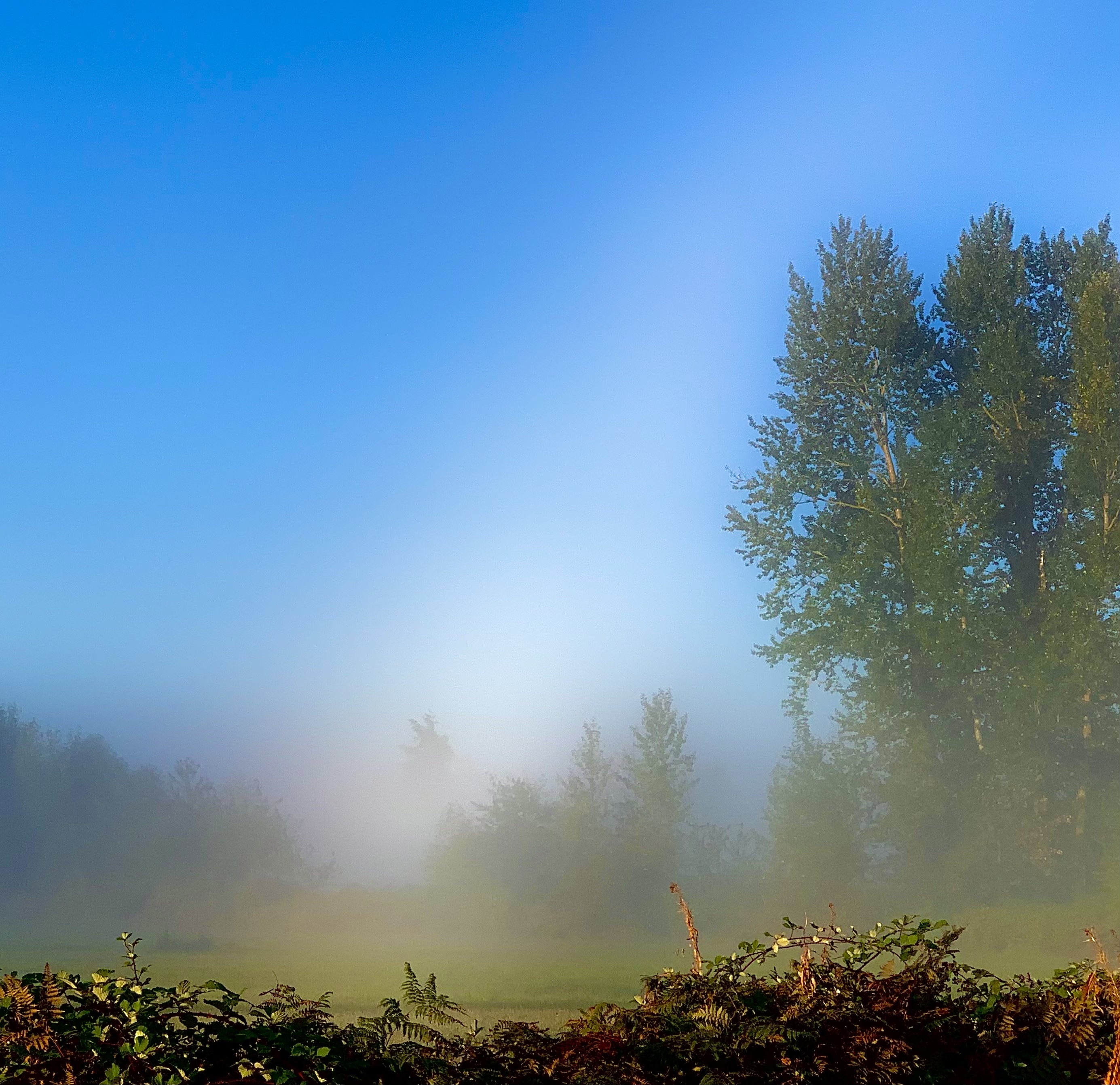
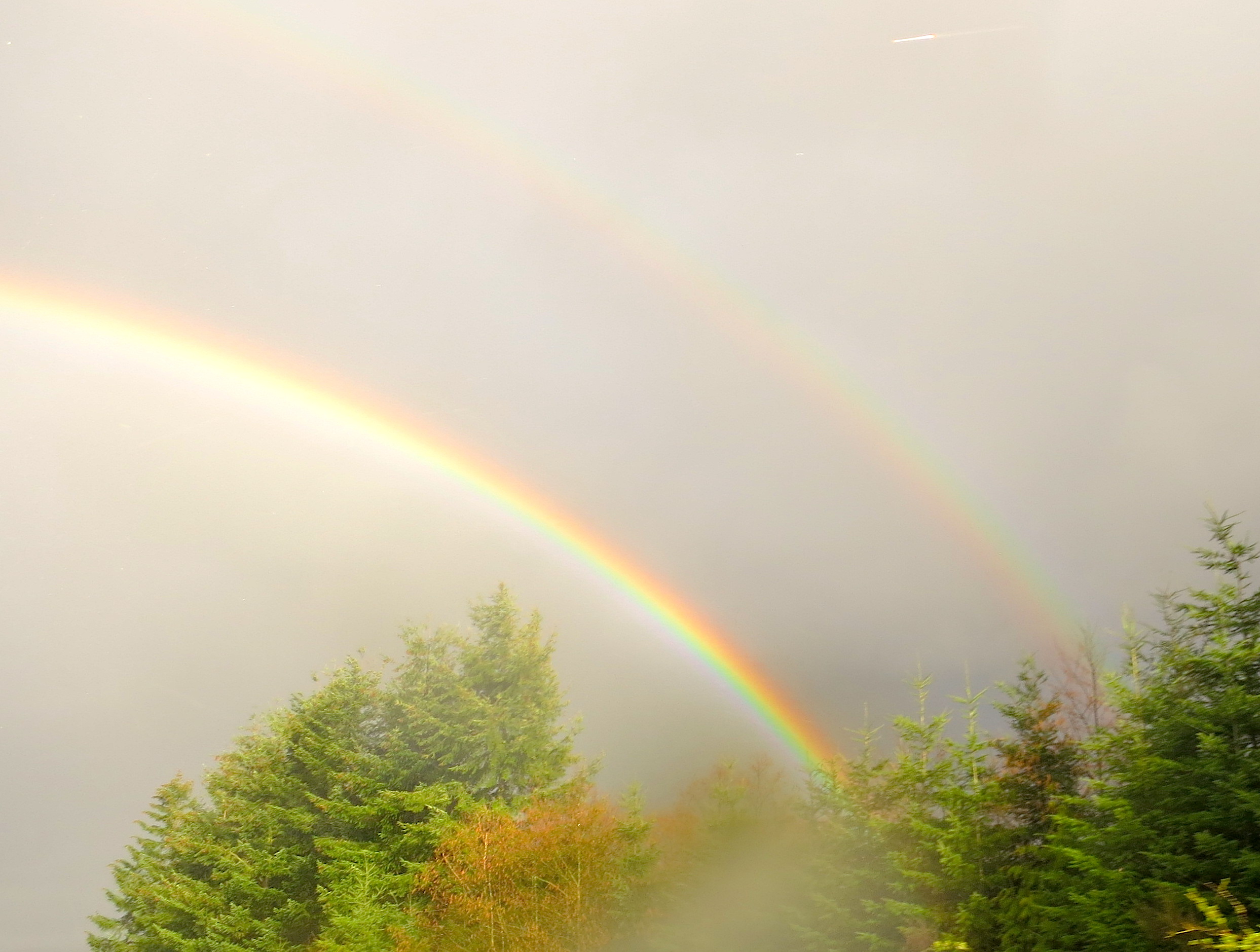
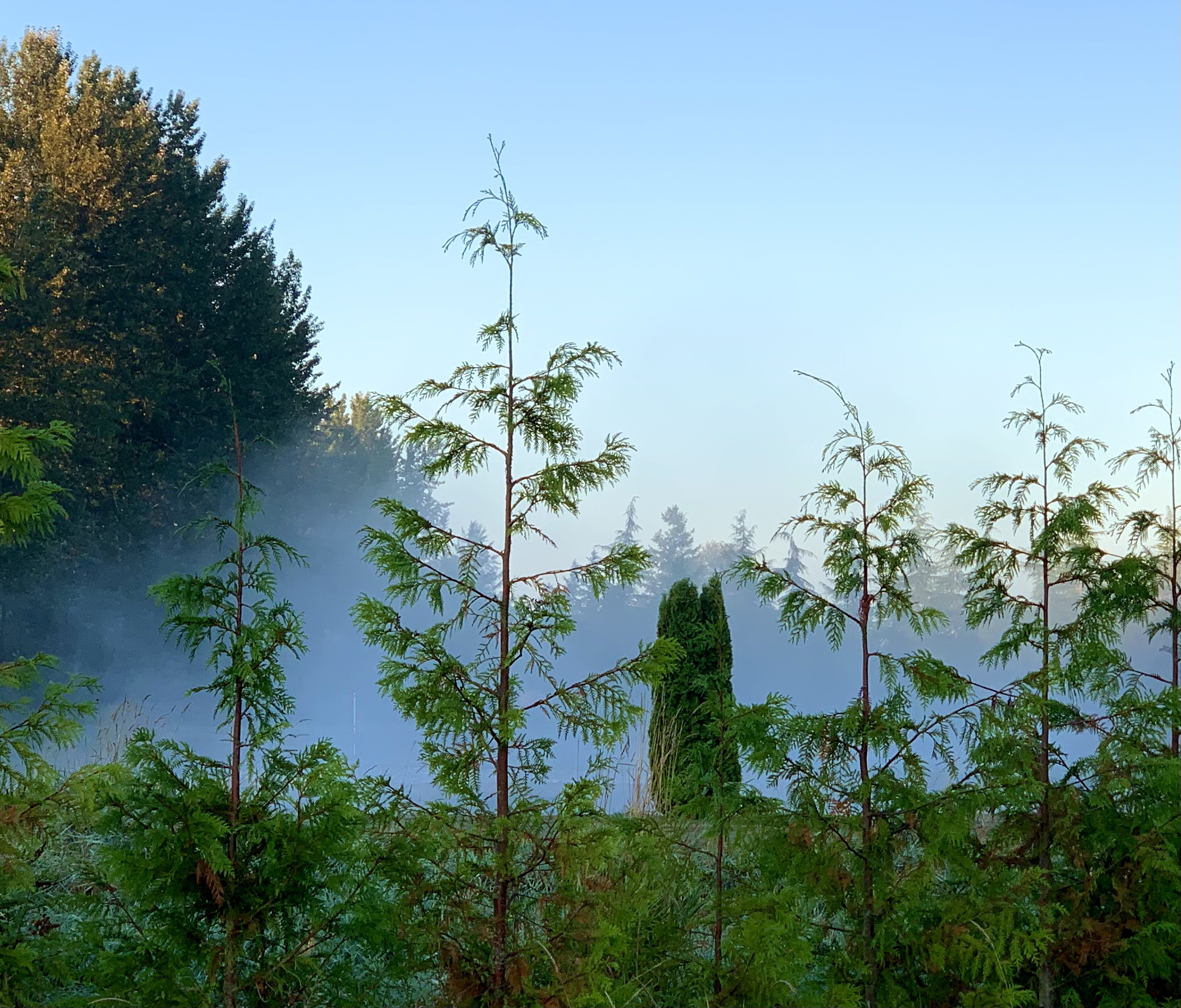
We saw our first “fogbow” or “ghost rainbow” early yesterday on our morning walk. It happened as we were heading east toward the sun, with the fog thickening, filling in behind us. We had just turned around to check the road to be sure no cars were coming before we crossed to the other side and there was this spectral image of foggy columns curving upward over the road to barely touch one another at the top. As we moved away from it, it vanished, as they say, “into thin air.”

This is an unusual phenomenon where the light and moisture in the air needs to be just right – reading about the physics of the fogbow helps to explain it and to render it even more beautiful. But the knowledge of how it happens isn’t nearly as impactful as the fact it was there at all for us to witness. Without our vision, it wasn’t really “there.”

The “bruised” rainbow color in the sky is God’s Old Testament promise to Noah to never destroy the world by flood again, establishing an everlasting covenant with His people while giving us the capacity to witness His promise. Perhaps the fogbow is ghostly reminder of those who have perished, whose blood, like Abel’s, cried out to God from the earth.

But where are we now? Do we seek to understand, believing the promises God made to us? Or do we walk right past God and His miraculous physics of creation, oblivious to what would not even exist without our ability to see it?

Somewhere, over the fogbow, way up high…

If you enjoy these posts, this book from Barnstorming may be of interest for yourself or as a gift to someone who loves beautiful photography and words of wisdom (from Lois Edstrom) – available to order here:
Tomorrows Less Long

Let me enjoy
this late-summer day of my heart
while the leaves are still green
and I won’t look so close

as to see that first tint
of pale yellow slowly creep in.
I will cease endless running

and then look to the sky
ask the sun to embrace me
and then hope she won’t tell

of tomorrows less long than today.
Let me spend just this time

in the slow-cooling glow
of warm afternoon light
and I’d think

I will still have the strength
for just one more

last fling of my heart.
– Jonathan Bohrn, Late August

August rushes by like desert rainfall,
A flood of frenzied upheaval,
Expected,
But still catching me unprepared.
Like a match flame
Bursting on the scene,
Heat and haze of crimson sunsets.
Like a dream
Of moon and dark barely recalled,
A moment,
Shadows caught in a blink.
Like a quick kiss;
One wishes for more
But it suddenly turns to leave,
Dragging summer away.
–  Elizabeth Maua Taylor, August 
 

I’m in the time of life when what is to come is ever so much shorter than what has been. I muse now at my sudden revelation as a five year old that a time would come when I would cease to be on this earth. I had no idea how soon that would come or whether I would have many years to think about how I might come to an end. That knowledge has colored all my days, knowing they are numbered and finite.

Now, like the drying leaves, I watch my edges curling and changing color in preparation – a kind of beauty preceding an eventual letting go.

I remember thinking, in my kindergarten-size brain, that I could not waste a minute of this life and needed to pay attention to everything. That has been much harder than I imagined: there is pain in attending to wars and famine, illness and injury, tragedy and tribulation. I was given my ears to hear, my eyes to see, my mouth to speak – for good reason. Though my heart hurts to read headlines, I must fling it into the messiness around me.

Even the leaves bleed red as tomorrow is less long.

It is the waning light and shortening days that colors my view like smoky haze in the sky painting a sunset deep orange.  The coming darkness is temporary and, like me, is inevitably finite; it will never conquer the light that is everlasting.

More Barnstorming photography and poetry from Lois Edstrom can be ordered in this book available here:

When August Weather Breaks

My mother, who hates thunder storms,
Holds up each summer day and shakes
It out suspiciously, lest swarms
Of grape-dark clouds are lurking there;
But when the August weather breaks
And rains begin, and brittle frost
Sharpens the bird-abandoned air,
Her worried summer look is lost,

And I her son, though summer-born
And summer-loving, none the less
Am easier when the leaves are gone
Too often summer days appear
Emblems of perfect happiness
I can’t confront: I must await
A time less bold, less rich, less clear:
An autumn more appropriate.

~Philip Larkin “Mother, Summer, I”

August weather has broken to clouds,
sprinkles, nights with chill breezes,
and leaves landing on brown ground.

This summer ended up being simply too much –
an excess of everything meant to make us happy
yet overwhelming and exhausting.

From endless hours of daylight,
to high rising temperatures,
to palettes of exuberant clouds
to fruitfulness and abundant blooms.

While summer always fills a void left empty
after enduring the many cold bare dark days
of the rest of the year,
I depend on winter days returning all too soon.

I will welcome them back, realizing
how much I miss that longing
for the fullness of summer.

If you enjoy Barnstorming posts, consider this new book available to order here:

The River of Light

So we found the end of our journey,
So we stood alive in the river of light,
Among the creatures of light, creatures of light.

~Ted Hughes from the end of his poem “That Morning” from River

One river gives
Its journey to the next.

We give because someone gave to us.
We give because nobody gave to us.

We give because giving has changed us.
We give because giving could have changed us.

We have been better for it,
We have been wounded by it—

Giving has many faces: It is loud and quiet,
Big, though small, diamond in wood-nails.

Its story is old, the plot worn and the pages too,
But we read this book, anyway, over and again:

Giving is, first and every time, hand to hand,
Mine to yours, yours to mine.

You gave me blue and I gave you yellow.
Together we are simple green. You gave me

What you did not have, and I gave you
What I had to give—together, we made

Something greater from the difference.
~Alberto Rios “When Giving is All We Have”

We were created as creatures of light invited to walk alongside our Creator – joyfully made in His image and gifted with managing a productive and beautiful world.

Yet even this wasn’t enough for us, this garden of wonders. We were free to do what was right in our own eyes rather than live in gratitude, faith and obedience, and made our choice at tremendous cost.

Now we struggle with the reality of daily life in a fallen world, experiencing conflict, disorder, illness and tragedy. Hurricanes bear down on vulnerable people, tornados rip apart towns, fires ravage homes, earthquakes level and destroy, tsunamis flood and overwhelm, pandemics kill indiscriminately.

Yet God has not abandoned us as we deserve. He has gifted Himself to His Created yet again, coming from heaven in a river of light to wash us clean, to invite us once again to walk beside Him, die with Him, live with Him.

What we are asked for in return is simple belief – by acknowledging a God who is greater than anything or anyone, admitting we are thirsty and filthy, in dire need of cleansing.

He is our river of light and life, glorious and ever-flowing.

Consider giving a gift of beautiful photos and words, available for order here:
To Gather Paradise

I dwell in Possibility –
A fairer House than Prose –
More numerous of Windows –
Superior – for Doors –

Of Chambers as the Cedars –
Impregnable of eye –
And for an everlasting Roof
The Gambrels of the Sky –

Of Visitors – the fairest –
For Occupation – This –
The spreading wide my narrow Hands
To gather Paradise –

~Emily Dickinson

The possibilities contained within a Dickinson poem are doors and windows standing wide open for interpretation and comprehension. When I visit Emily’s dwelling full of mysterious capitalizations, inscrutable dashes and sideways rhymes, I am blind, get easily lost, stumbling over this and that, and end up wondering where she is leading me and how far I’m willing to go.


Yet she tells me
– This –
to get my attention, hold it fast, to look up and out, beyond, and into forever.

-This-
is what I must do when I read her carefully chosen words and dashes
-This-
is what I ask of a reader who opens my email or comes to my daily post
-This-
is us dwelling in possibility for a moment or an eternity,
all eyes and windows and doors wide open to grasp a glimpse of Paradise.

-This-
is our hands spread, ready
to gather, to hold, to embrace, to pray, to fold
to prepare us for Whatever Comes Next…

photo by Sara Larsen

If you enjoy these Barnstorming posts, consider ordering this Barnstorming book – available here:

Summer, Go Not Yet Away

Fair Summer droops, droop men and beasts therefore:
So fair a summer look for never more.
All good things vanish less than in a day,
Peace, plenty, pleasure, suddenly decay.
Go not yet away, bright soul of the sad year;
The earth is hell when thou leavest to appear…. 

What, shall those flowers that decked thy garland erst,
Upon thy grave be wastefully dispersed?
O trees, consume your sap in sorrow’s course,
Streams, turn to tears your tributary course.
Go not yet hence, bright soul of the sad year;
The earth is hell when thou leav’st to appear.

Ah, who shall hide us from the winter’s face?
Cold doth increase, the sickness will not cease,
And here we lie, God knows, with little ease.
From winter, plague, & pestilence, good Lord, deliver us.

~Thomas Nashe from “Summer’s Last Will and Testament” (from a stage play performed in 1592)

Summer 2021 so far has been hell for much of the world and we still have nearly a month left of more Summer to endure: the fall of Afghanistan, another earthquake in Haiti, floods in Europe and central U.S., storms in the east with drought and fires in the west, and last but certainly not least, the explosion of the Delta COVID variant everywhere.

COVID has demonstrated that plague and pestilence clearly isn’t limited to cold weather and winter. This virus enjoys easy transmission among those who continue to live without any defenses – the unmasked and those who remain unvaccinated either by choice or lack of access to vaccine. We, through our behavior, have invited an opportunistic virus to spread among us through this “bright soul” of the year which ordinarily should be “plague-free.”

Will we continue to roll out the red carpet for COVID, welcoming it into ours and other’s homes, noses and lungs, even as summer itself dies away along with thousands of more pandemic victims?

Deliver us, O Lord, from our own reluctance to accept that viruses care not whom they infect, particularly those with little defense.

Deliver us, O Lord, from our preference for our own self-determination over a concern for the needs and vulnerability of others.

Deliver us, O Lord, from our continued blindness – doing what is right in our own eyes without seeing what is best for all.

Go not yet away, fair Summer, as here we lie, God knows, with little ease.

If you appreciate Barnstorming posts, you’ll enjoy this book, available for order here:
Riding at Dusk

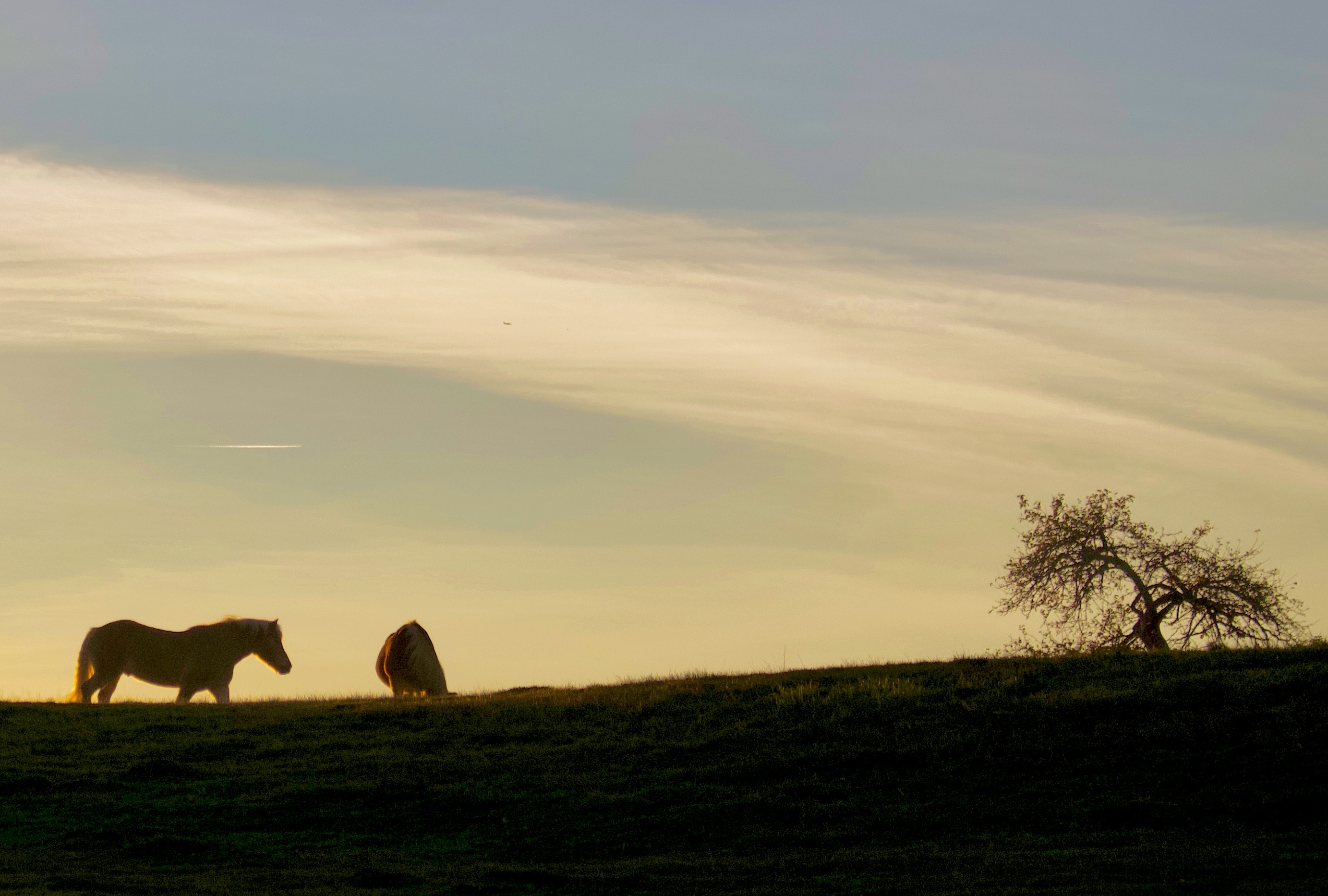
At dusk, everything blurs and softens…

The horse bears me along, like grace,
making me better than what I am,
and what I think or say or see
is whole in these moments, is neither
small nor broken.  Who then
is better made to say be well, be glad,

or who to long that we, as one,
might course over the entire valley,
over all valleys, as a bird in a great embrace
of flight, who presses against her breast,
in grief and tenderness,
the whole weeping body of the world?
~Linda McCarriston from “Riding Out At Evening”

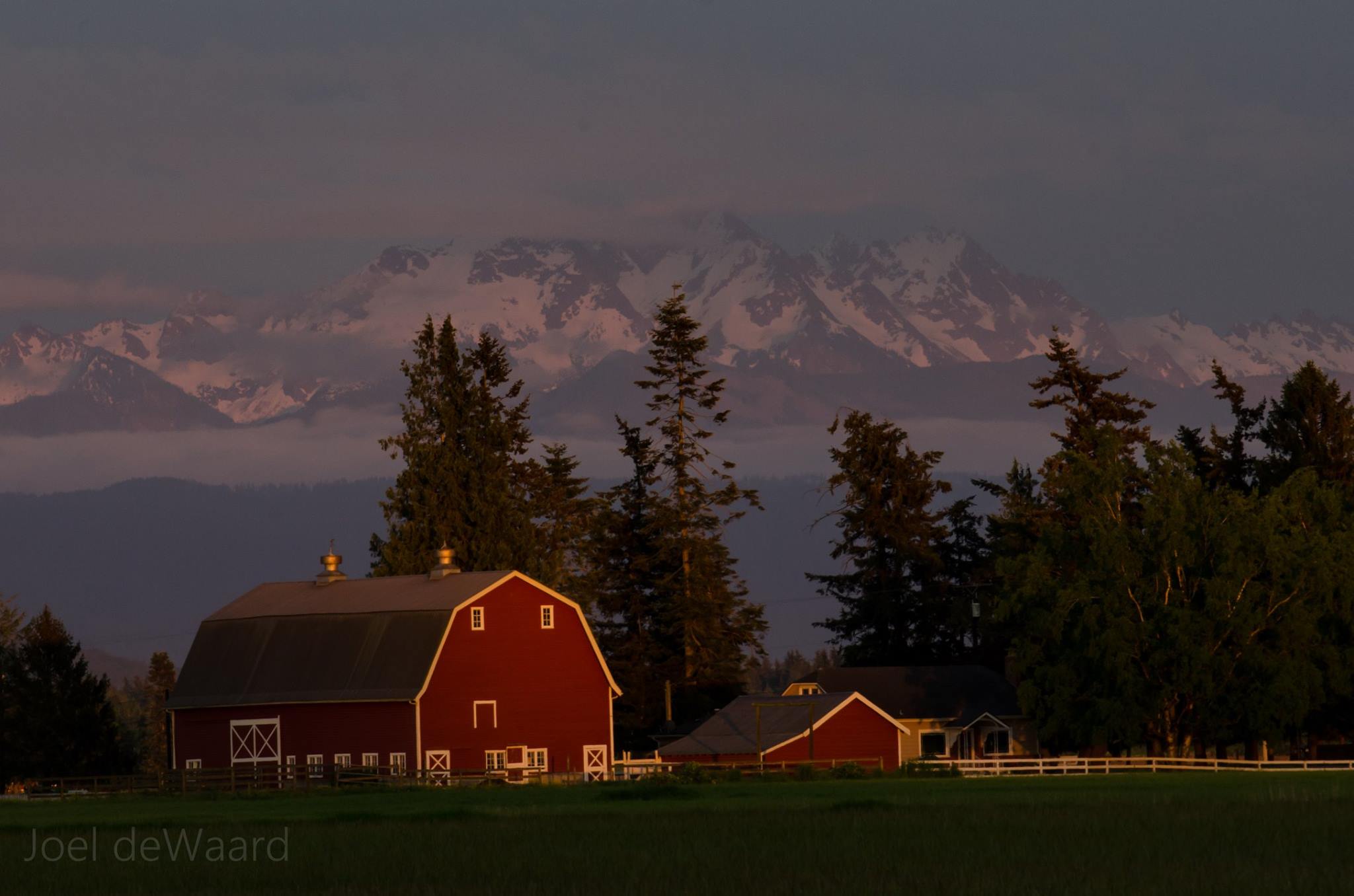
“Last Light” photo of Twin Sisters at dusk by Joel de Waard

We all need to remember transcendent moments in our lives, those brief times when all was well, our worries left behind in the dust.

Wounds healed, hearts full, senses filled with wonder, feeling whole rather than broken.

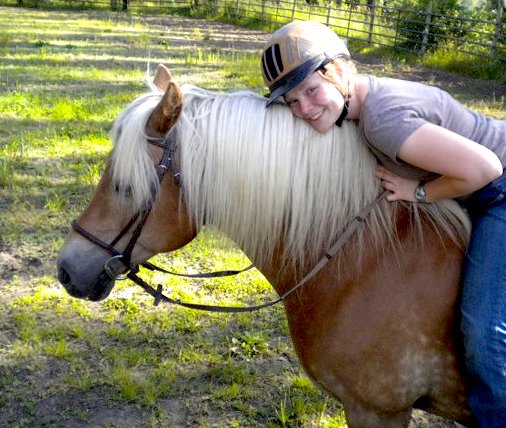
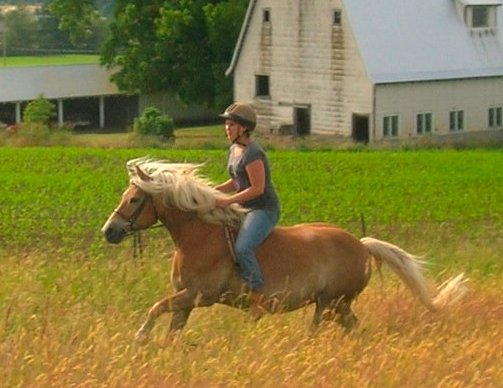
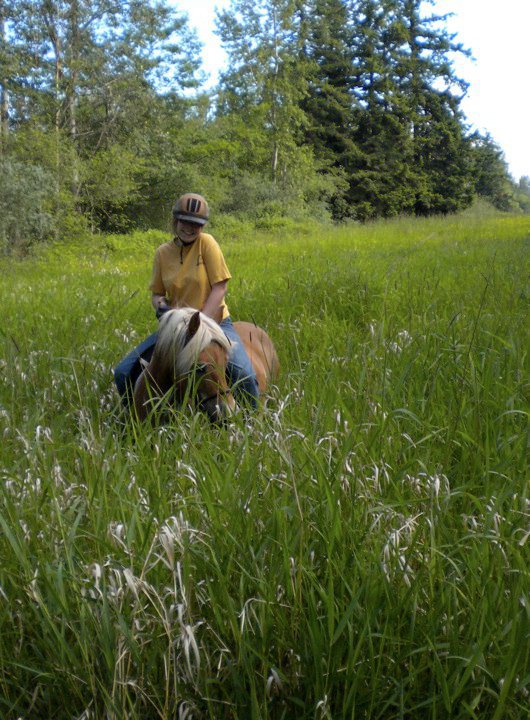
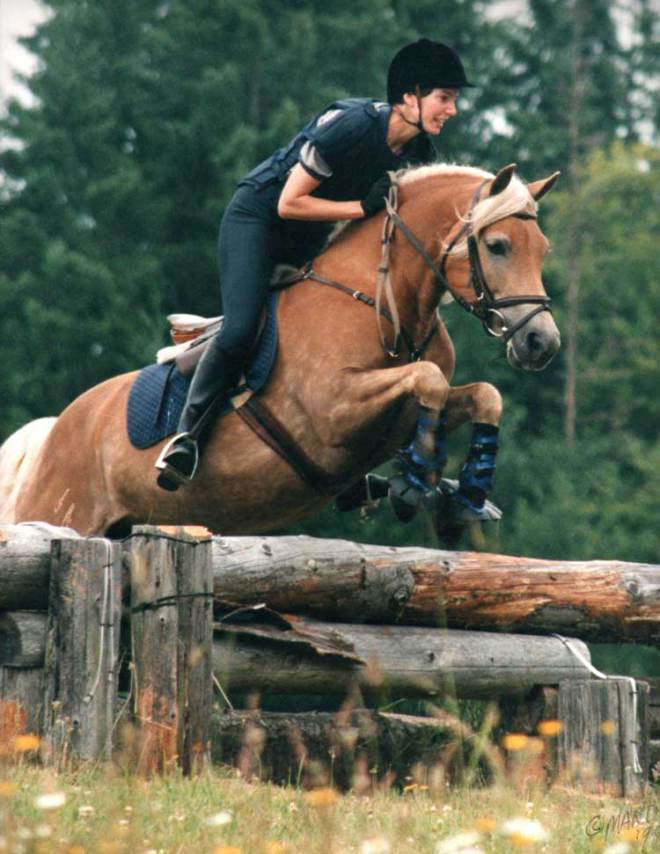
The summer evening rides of my younger years were just such a time: lifted by such powerful grace and transported to another time and place. It can feel like flying but mostly it feels like an embrace, one creature with another, exploring the world together.
All these years later, I am held fast by the memories and in remembering, I weep.

Surely, someday,
heaven will be something like this.

Sure on this shining night
Of star made shadows round,
Kindness must watch for me
This side the ground.
The late year lies down the north.
All is healed, all is health.
High summer holds the earth.
Hearts all whole.
Sure on this shining night I weep for wonder wand’ring far
alone
Of shadows on the stars.

~James Agee

More photos like this in a new book from Barnstorming, available to order here: