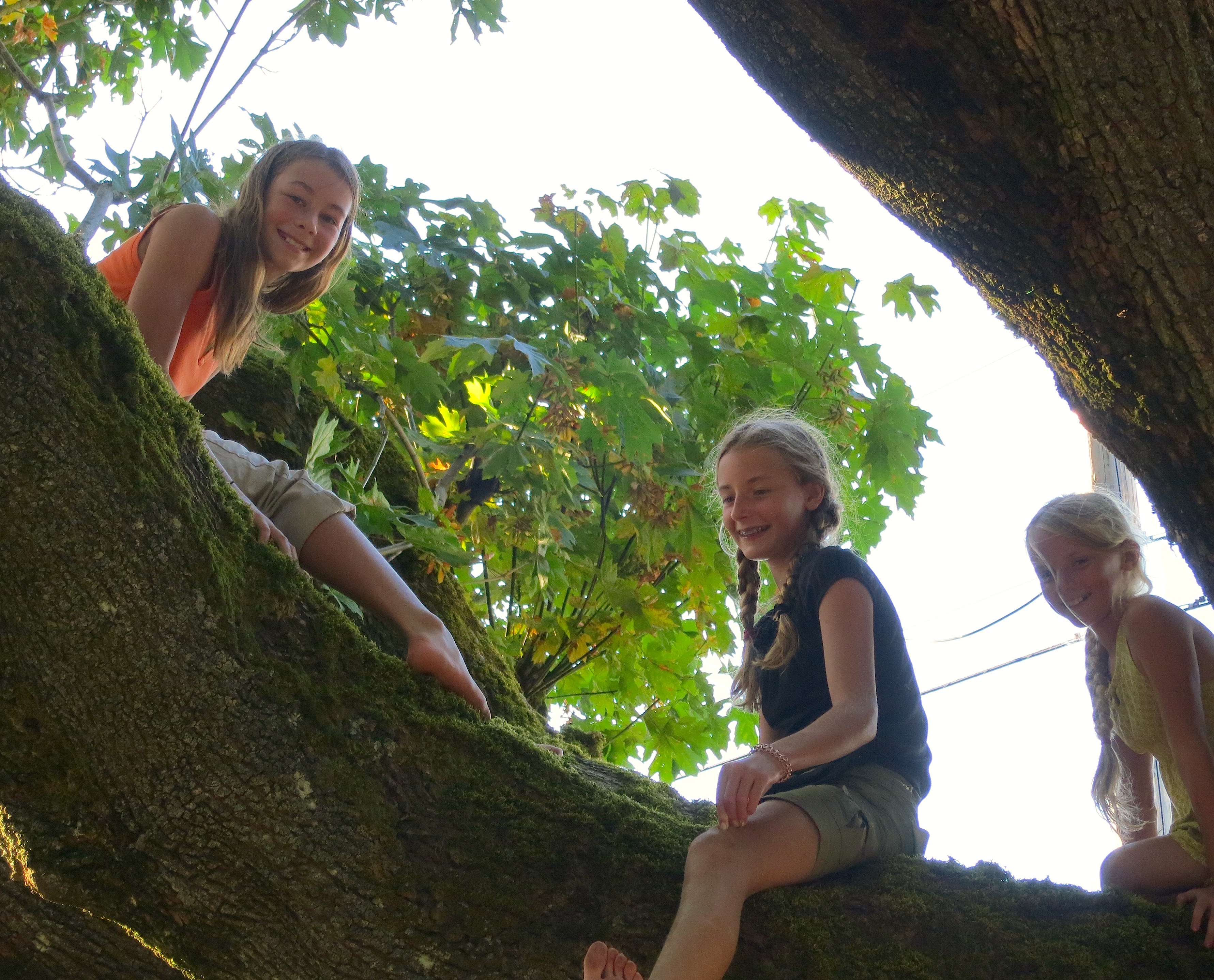
The crust of sleep is broken Abruptly— I look drowsily Through the wide crack. I do not know whether I see Three minds, bird-shaped, Flashing upon the bough of morning; Or three delicately tinted souls Butterflying in the sun; Or three brown-fleshed, husky children Sprawling hilarious Over my bed And me. ~Jeanne D’Orge “Matins”(published in 1917)
This morning I broke through the misty tides of my dreams, surfacing to cool morning air and prelude of a dawn bird chorus.
Today I wake imagining who I might be from a myriad of dreams…
Sometimes I wake as if once again a young girl, sun coming through frilly curtains to shower my face with a warming light.
Sometimes I wake as if once again a sleep-thirsty student, hoping to snooze another 15 minutes before class.
Sometimes I wake once again as if a new mother, dripping and leaking at the sound of my baby’s cries.
Sometimes I wake as if once again a weary farmer, up much of the night with a laboring mare and slow-to-suck foal.
Sometimes I wake as if once again a preoccupied physician, mentally reviewing the night’s phone calls and concerns.
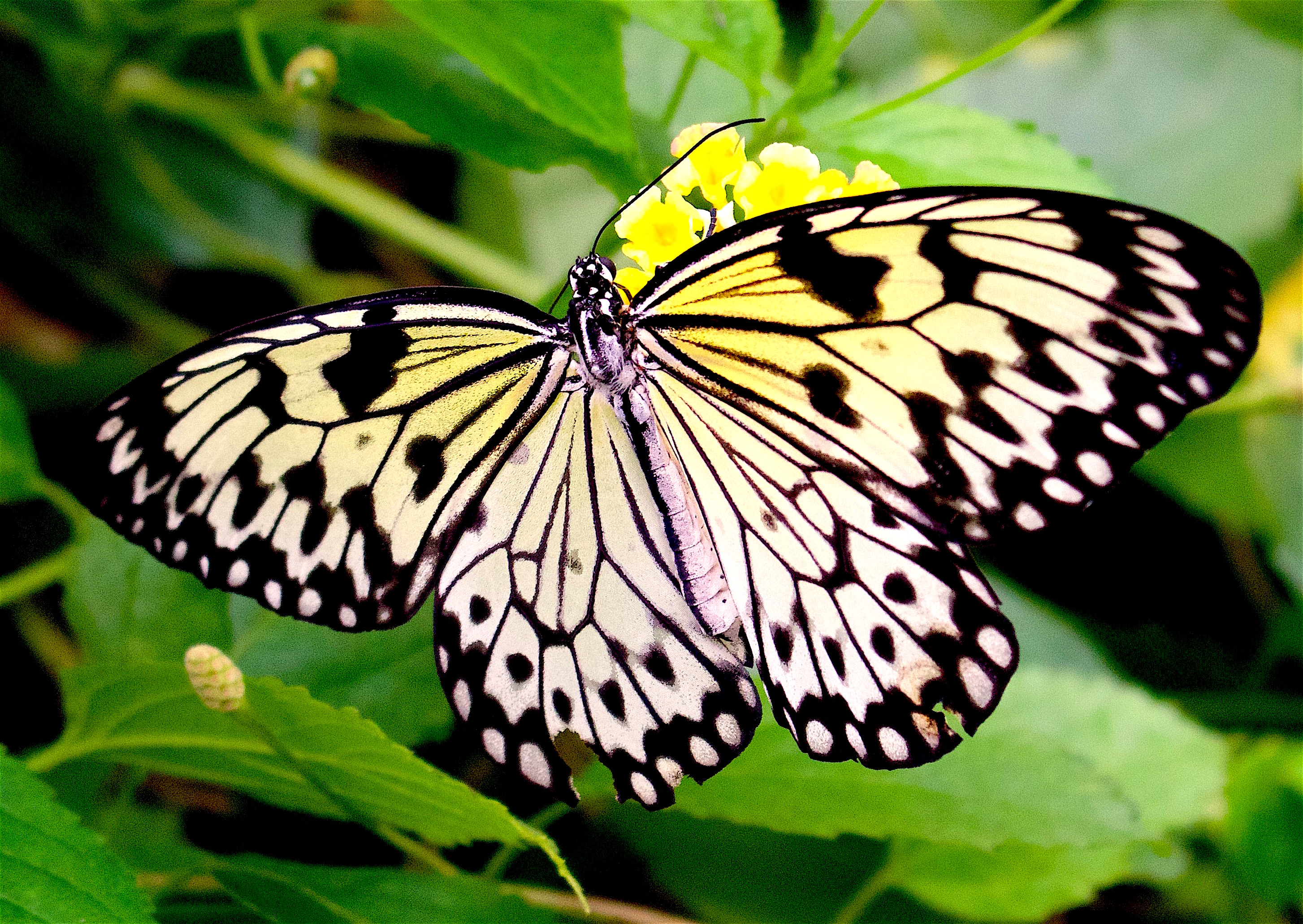
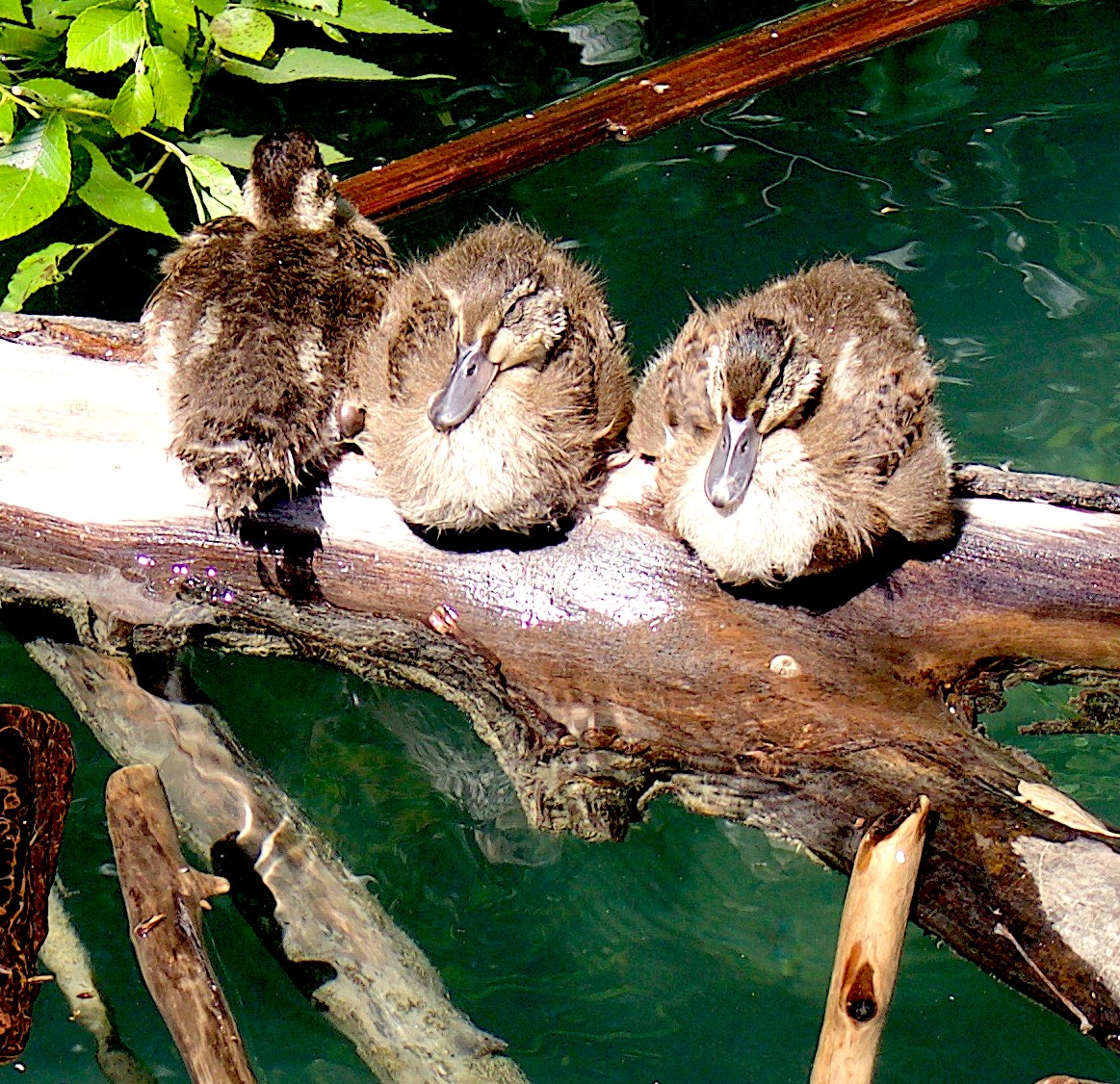
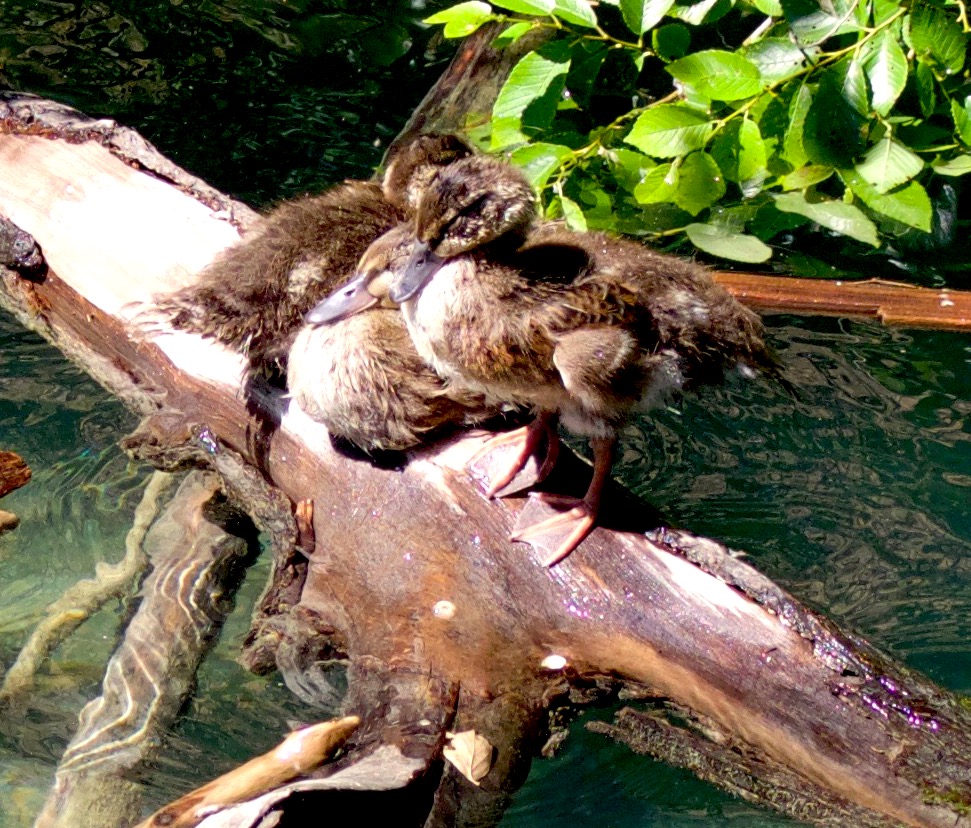
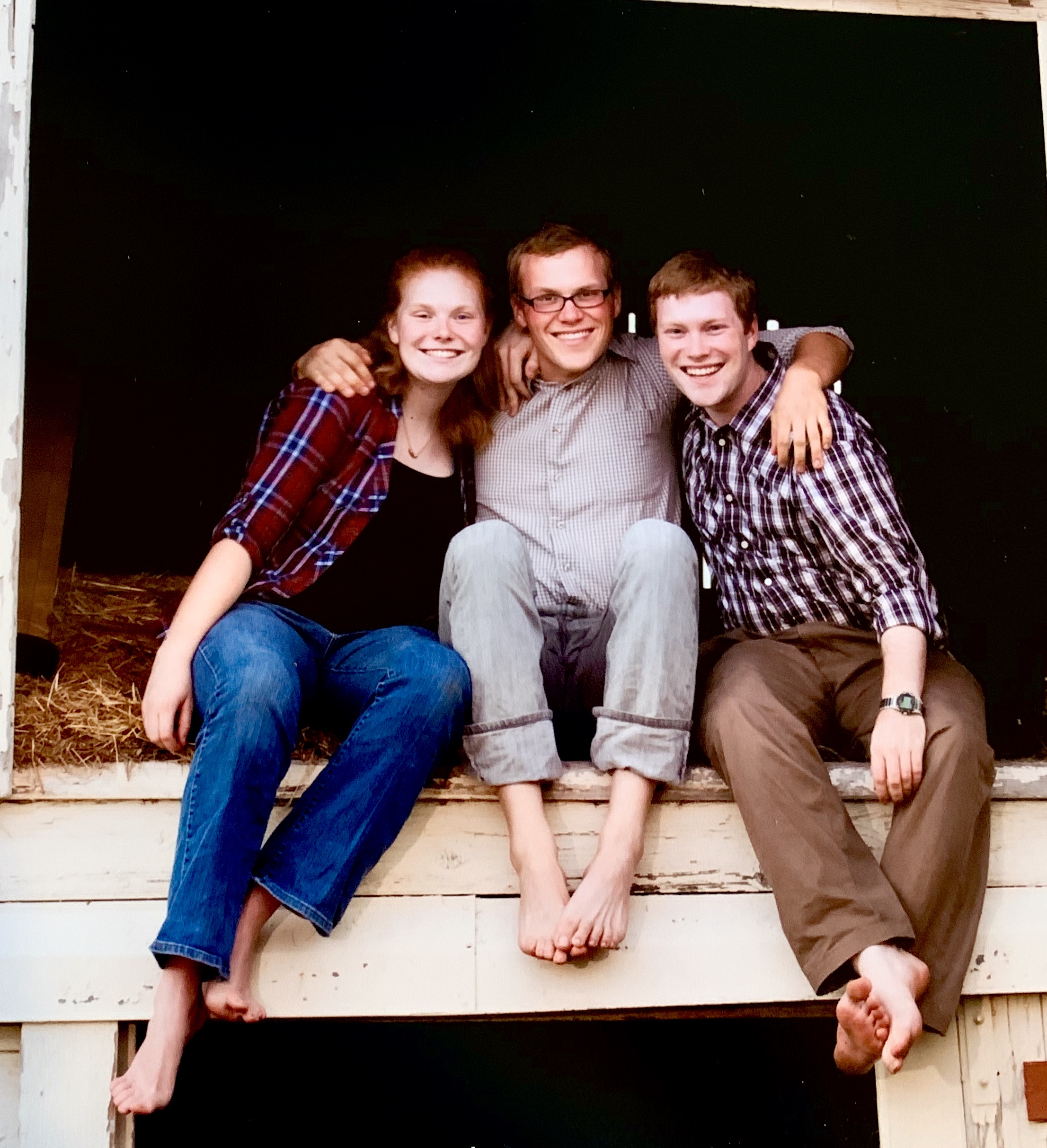
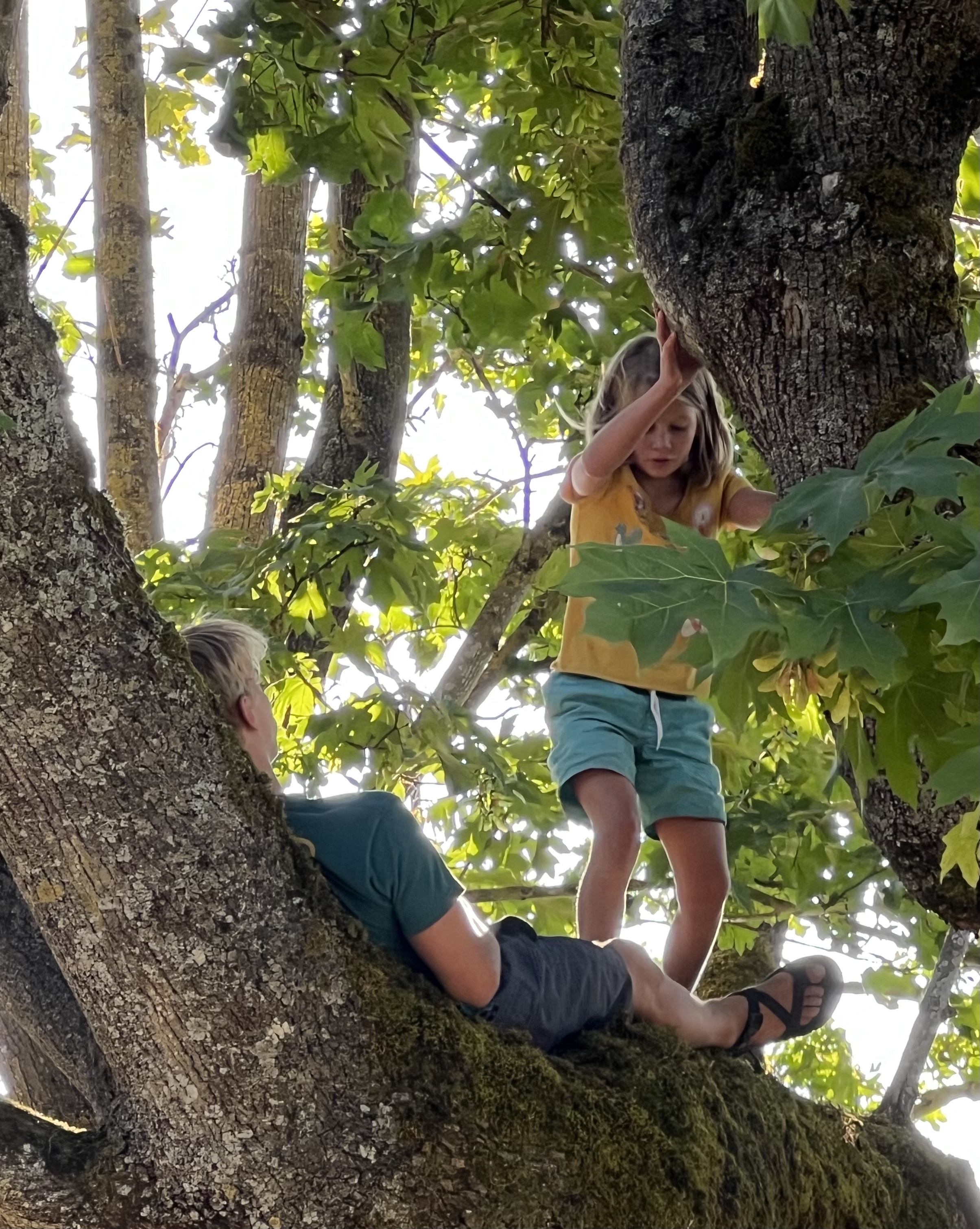
Today I wake as a grandma, wishing my bed would bounce with a pile of birds and butterflies and jubilant children, wishing me good morning and eager to see me up and at ’em.
So who am I?
I was, I am, I will be all those things, as I hang tight to the bough of morning.
One-Time
Monthly
Yearly
Make a one-time or recurring donation to support daily Barnstorming posts
I thought of happiness, how it is woven Out of the silence in the empty house each day And how it is not sudden and it is not given But is creation itself like the growth of a tree. No one has seen it happen, but inside the bark Another circle is growing in the expanding ring. No one has heard the root go deeper in the dark, But the tree is lifted by this inward work And its plumes shine, and its leaves are glittering.
For what is happiness but growth in peace, And as the air moves, so the old dreams stir The shining leaves of present happiness? No one has heard thought or listened to a mind, But where people have lived in inwardness The air is charged with blessing and does bless; Windows look out on mountains and the walls are kind. ~ May Sarton, from “The Work of Happiness” in Collected Poems, 1930-1993
The settled happiness and security which we all desire, God withholds from us by the very nature of the world: but joy, pleasure, and merriment, he has scattered broadcast. We are never safe, but we have plenty of fun, and some ecstasy. It is not hard to see why.
The security we crave would teach us to rest our hearts in this world and oppose an obstacle to our return to God: a few moments of happy love, a landscape, a symphony, a merry meeting with our friends, a bath or a football match, have no such tendency.
Our Father refreshes us on the journey with some pleasant inns, but will not encourage us to mistake them for home. ~C.S. Lewis from The Problem of Pain
I am reminded every day, as headlines proclaim bad news: this is not our home. I am only a wayfarer, not a settler.
Just like the distress of my four year old grandson, staying overnight and waking with a bad dream, appearing at my bedside at 3 AM, saying simply “I need a hug!”
We need reassurance that all this scary stuff is not forever.
Sometimes I lose focus on the “why” of my journey on this troubled earth: so much of my time and energy is understandably spent seeking safety and security, striving on a journey I hope will be filled with happiness, joy and contentment, as if that is my ultimate destination and purpose.
Yet the nature of a fallen world filled with faltering souls such as myself leads me down boulder-strewn paths filled with potholes and sheer cliffs and yes, bad dreams.
At times nowhere feels safe or secure and I overthink my next step.
God hears my fear of the unknown destination, as only He can know what lies ahead on my or anyone’s journey. God in His mercy does not leave us homeless, without hope and unable to wake from the bad dream.
We breathe air charged with His blessing. He gifts Himself; I can breathe because of Him.
I need a hug…
AI image created for this post
One-Time
Monthly
Yearly
Make a one-time or recurring donation to support daily Barnstorming posts
The older children pedal past Stable as little gyros, spinning hard To supper, bath, and bed, until at last We also quit, silent and tired Beside the darkening yard where trees Now shadow up instead of down. Their predictable lengths can only tease Her as, head lowered, she walks her bike alone Somewhere between her wanting to ride And her certainty she will always fall.
Tomorrow, though I will run behind, Arms out to catch her, she’ll tilt then balance wide Of my reach, till distance makes her small, Smaller, beyond the place I stop and know That to teach her I had to follow And when she learned I had to let her go. ~Wyatt Prunty, “Learning the Bicycle” from Unarmed and Dangerous.
—For Lea
The summer you learned to swim was the summer I learned to be at peace with myself. In May you were afraid to put your face in the water but by August, I was standing in the pool once more when you dove in, then retreated to the wall saying You forgot to say Sugar! So I said Come on Sugar, you can do it and you pushed off and swam to me and held on laughing, your hair stuck to your cheeks— you hiccupped with joy and swam off again. And I dove in too, trying new things. I tried not giving advice. I tried waking early to pray. I tried not rising in anger. Watching you I grew stronger— your courage washed away my fear. All day I worked hard thinking of you. In the evening I walked the long hill home. You were at the top, waving your small arms, pittering down the slope to me and I lifted you high so high to the moon. That summer all the world was soul and water, light glancing off peaks. You learned the turtle, the cannonball, the froggy, and the flutter and I learned to stand and wait for you to swim to me. ~Michael Simms“The Summer You Learned to Swim”from American Ash
Learning to swim, balancing on a bike, riding a horse – these are skills that require an adult to let go of a child.
Terrifying for everyone. But eventually necessary.
This summer, our two grandkids are taking their first swimming lessons and I’m learning as they learn.
There are some things I can’t do for them. With good teaching and guidance and encouragement, they learn to do it themselves and be stronger for it, even when there are bruises and sputters and tears.
Lord, help me learn to just stand and watch and follow their journey to independence.
AI image created for this post
One-Time
Monthly
Yearly
Make a one-time or recurring donation to support daily Barnstorming posts
(I wrote this 15 years ago on July 6 and have updated it with an addendum)
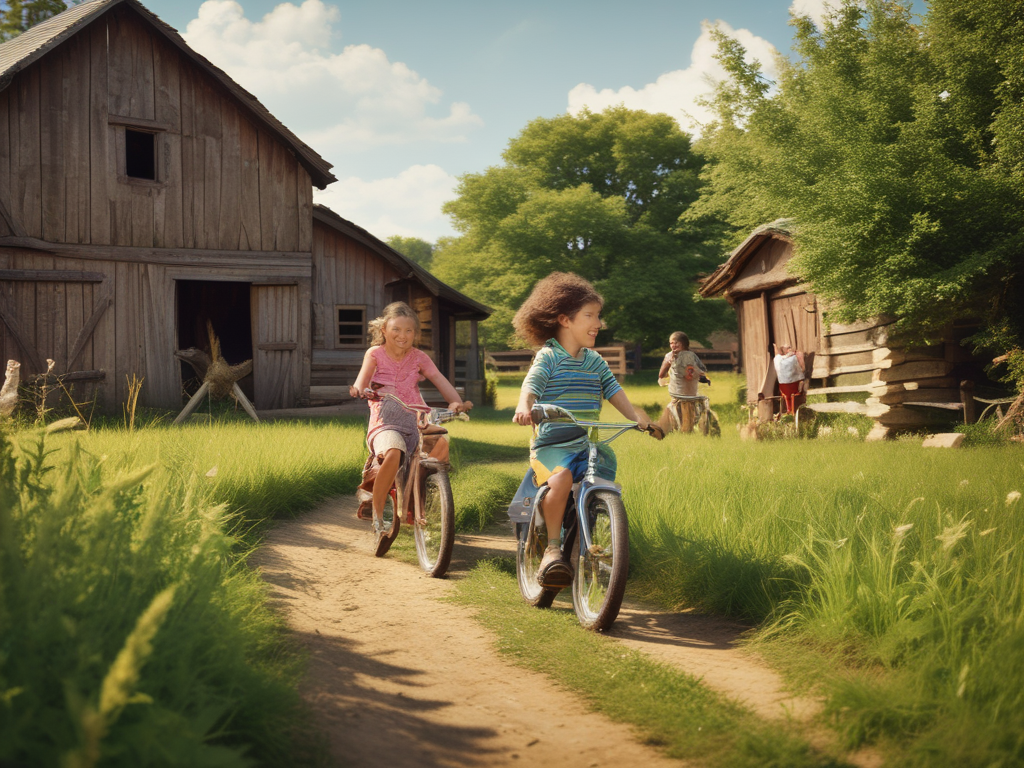
I remember childhood summers as 3 months of full-out celebration– long lazy days stretching into nights that didn’t seem to really darken until 11 PM and bright birdsong mornings starting out at 4:30 AM. Not only were there the brief family vacations at the beach or to visit cousins, but there was the Fourth of July, Daily Vacation Bible School, the county fair, family reunions, and of course and most importantly, my July birthday. Yes, there were mundane chores to be done, a garden to tend, a barn to clean, berries to pick, a lawn to mow and all that stuff, but my memories of summer are mostly about fluff and frolic.
So where are the summer parties now? Who is out there celebrating without me? Nothing seems to be spontaneous as it was when I was a child. Instead, most grown-ups have to go to work most days in the summer.
I’m finding myself in the midst of my 55th summer and I have to create celebrations if they are going to happen in my life. Without that perspective, the bird song at 4:30 AM can feel more irritant than blessing and the long days often mean I fall asleep nodding over a book at 9 PM. I want to treasure every, every minute of this precious time yet they flow through my fingers like so much water, faster and faster.
I realize there will be very few “family” summers left as I watch my children grow into adults and spread their wings. They will be on to new adventures in future summers. So each family ritual and experience together takes on special meaning and needs to be appreciated and remembered.
So….for this summer my family has crammed as much in as we can in celebration of the season:
We just spent some time in the hayfields bringing in the bales with friends–our little crew of seven–sweating and itchy and exhausted, but the sight and smell of several hundred hay bales, grown on our own land, harvested without being rained on and piled in the barn is sweet indeed. Weekly we are out on the softball field in church league, yelling encouragement and high-fiving each other, hooting at the good hits and the bad, the great catches and the near misses, and getting dirty and sprained, and as happy to lose as to win. We had a wonderful July 4 barbeque with good friends culminating in the fireworks show on our farm’s hill overlooking miles of valley around us, appreciating everyone else’s backyard displays as well as our own.
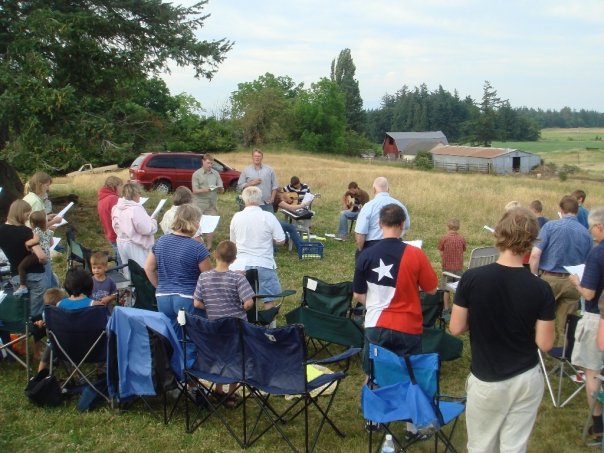
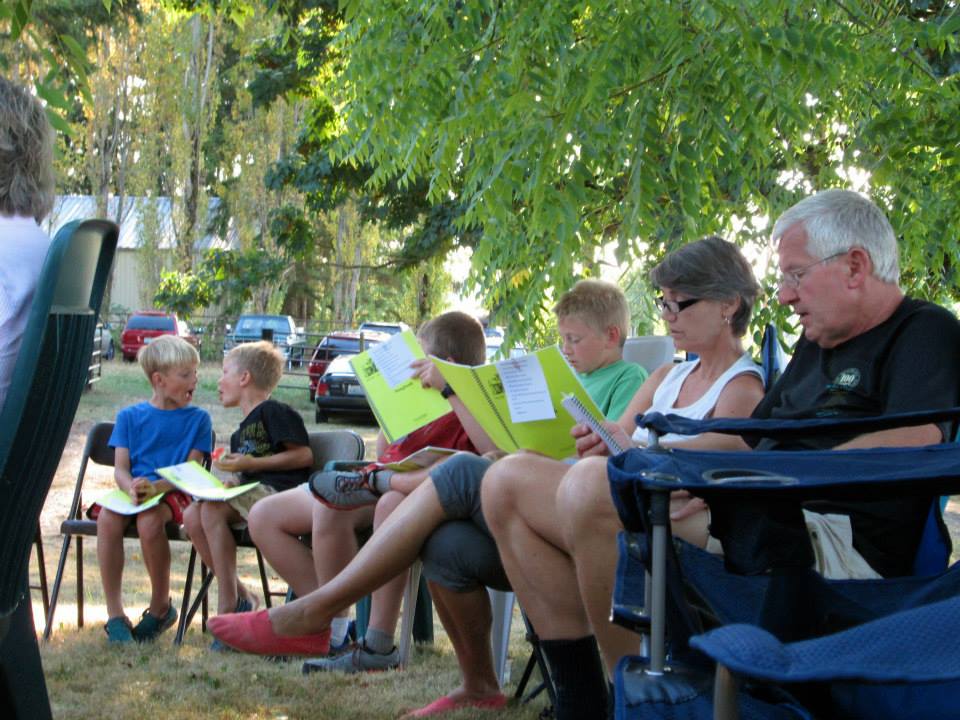
We are now able to sing hymns in church in four part harmony, and last night our children helped lead the singing last night in an evening “campfire church” for over fifty fellow worshipers on our hill. In a couple weeks, we’ll take to the beach for three days of playing in the sand, roasting hot dogs. reading good books, and playing board games. We’ll try to make the trek down to Seattle by train to spend the day watching the Mariners play (and likely lose).
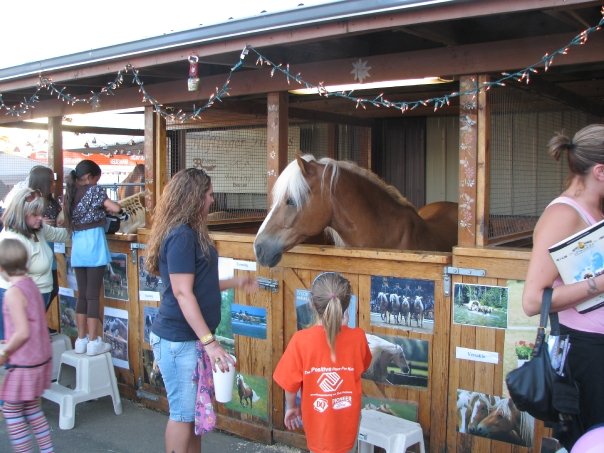
One change after seventeen years of hosting a display of our horses at the Lynden Fair: due to “off the farm” work and school schedules, we can’t muster the necessary round-the-clock crew of being there for our little part of small town agricultural pursuits.
Yet the real party happens right here every day in small ways without any special planning. It doesn’t require money or special food or traveling beyond our own soil. It is the smiles and good laughs we share together, and the hugs for kids taller than I am. It’s adult conversations with the new adults in our family–no longer adolescents.
It’s finding delight in fresh cherries from our own trees, currants and berries from our own bushes, greens from the garden, flowers for the table from the yard.
It is the Haflingers in the field that come right up to us to enjoy rubs and scratches and follow us like puppies. It is babysitting for neighborhood toddlers who remind us of the old days of having small children, and who give us a glimpse of future grandparenthood. It is good friends coming from far away to ride our horses and learn farm skills.
It is an early morning walk in the woods or a late evening stroll over the hills. It is daily contact with aging parents who no longer hear well or feel well but nevertheless share of themselves in the ways they are able. It is the awesome power of an evening sunset filled with hope and the calming promise of a new day somewhere else in this world of ours.
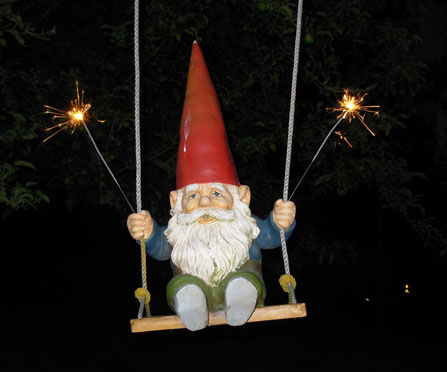
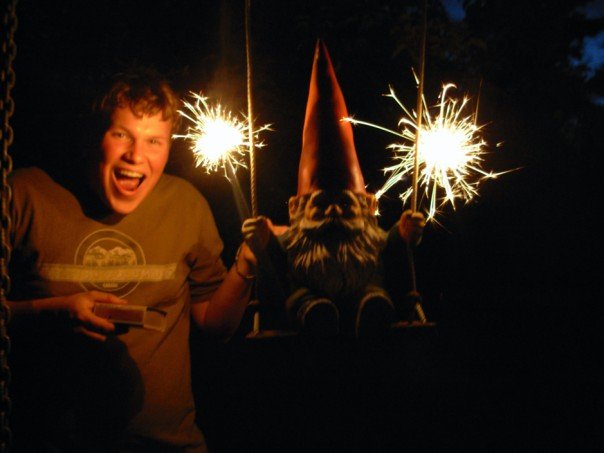
Some days may not look or feel like there’s a summer party happening, but that is only because I haven’t searched hard enough. The party is here, sparklers and all, even if only in my own mind.
Addendum: Fifteen years have passed since this was written and I’m glad I can look back and be reminded how full of life those family summers were. We seldom have the full-meal-deal of everyone together at one time, and since our parents have passed on to eternal summers in heaven, we have now the blessings of six grandchildren. Freckles abound!
We still can make a party happen, if only in our own minds.
AI image created for this post
One-Time
Monthly
Yearly
Make a one-time or recurring donation to support daily Barnstorming posts
And the seasons they go round and round And the painted ponies go up and down We’re captive on the carousel of time We can’t return, we can only look behind From where we came And go round and round and round In the circle game… ~Joni Mitchell “The Circle Game”
those lovely horses, that galloped me, moving the world, piston push and pull, into the past—dream to where? there, when the clouds swayed by then trees, as a tire swing swung me under—rope groan. now, the brass beam, holds my bent face, calliope cadence—O where have I been? ~Rick Maxson “Carousel at Seventy”
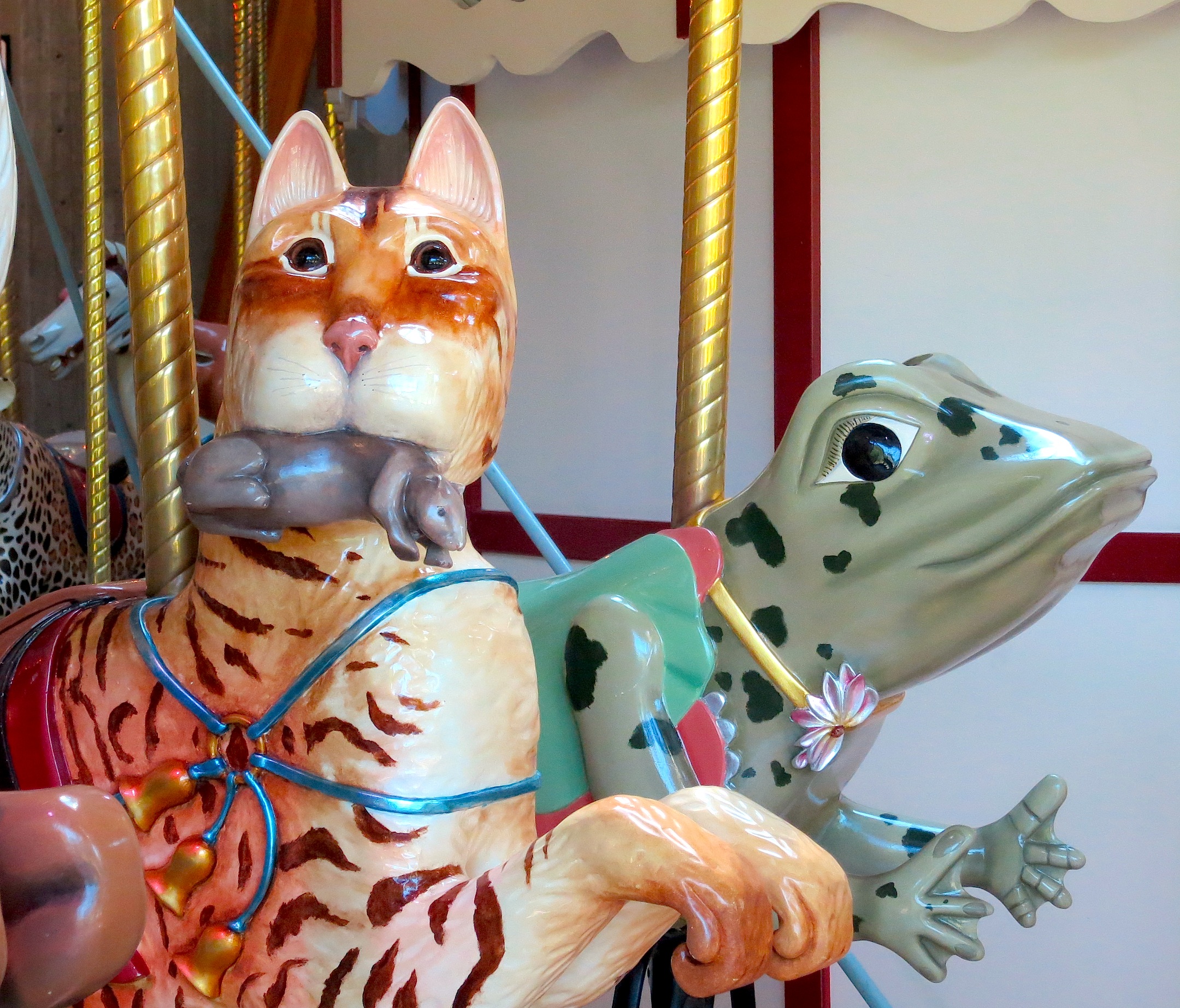
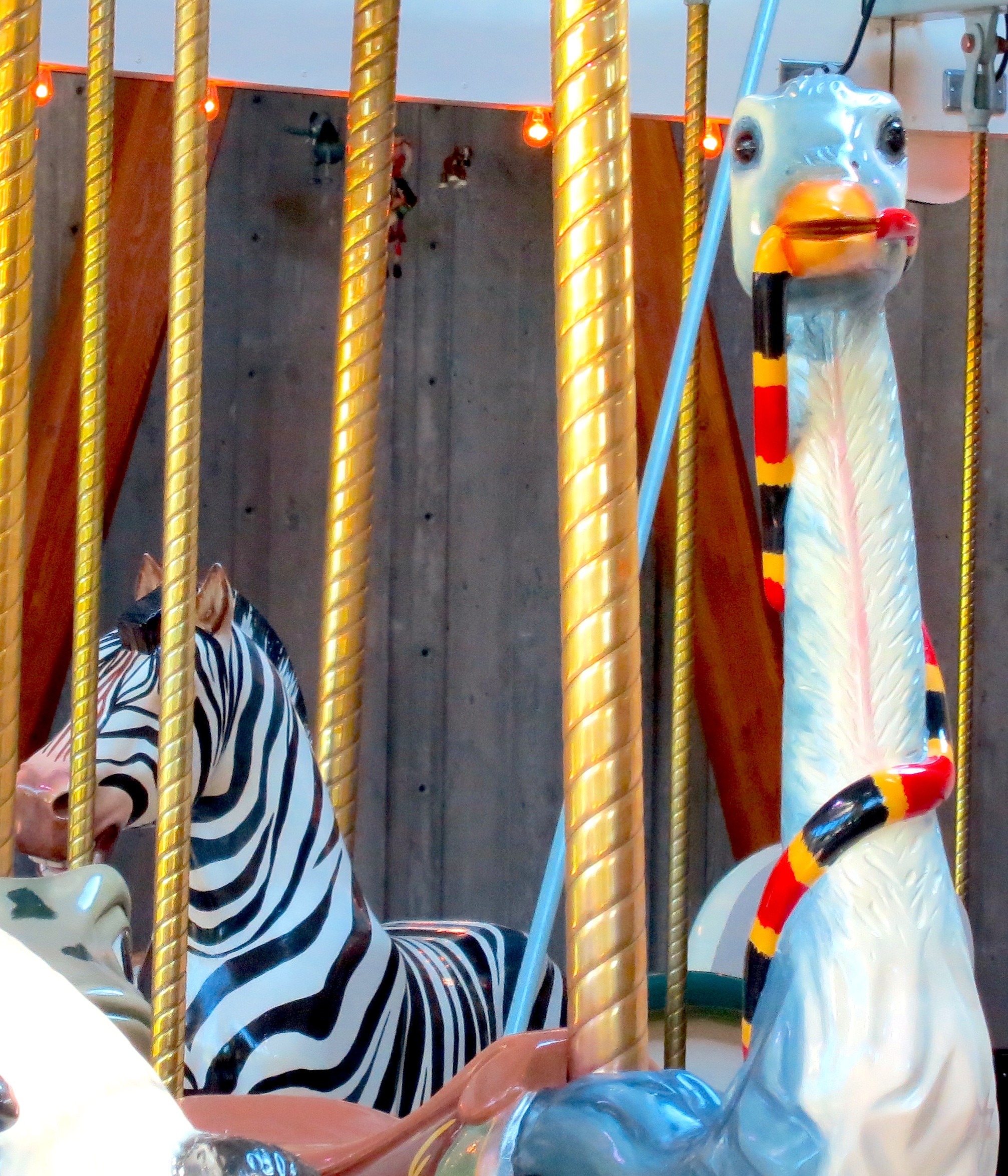
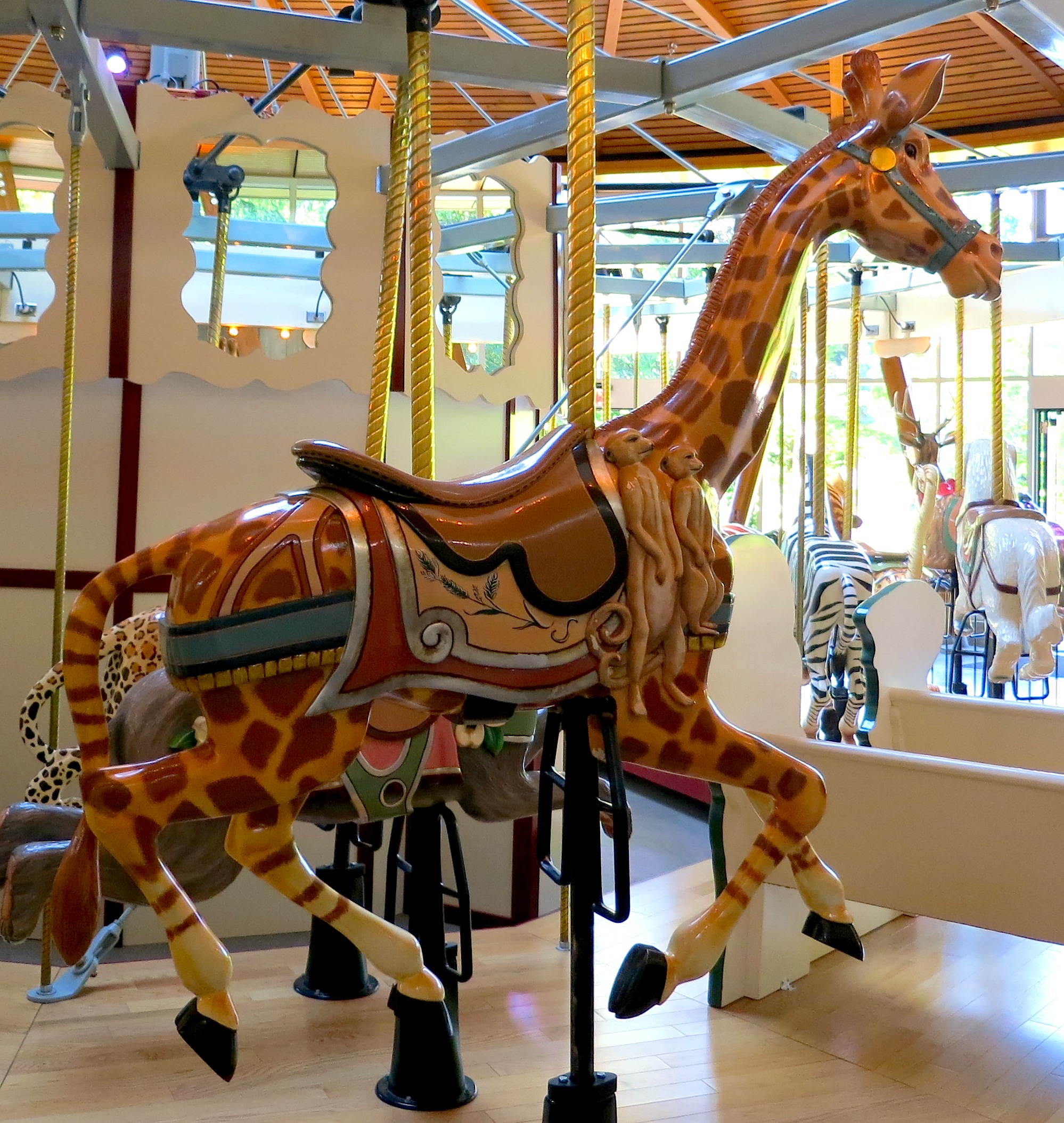
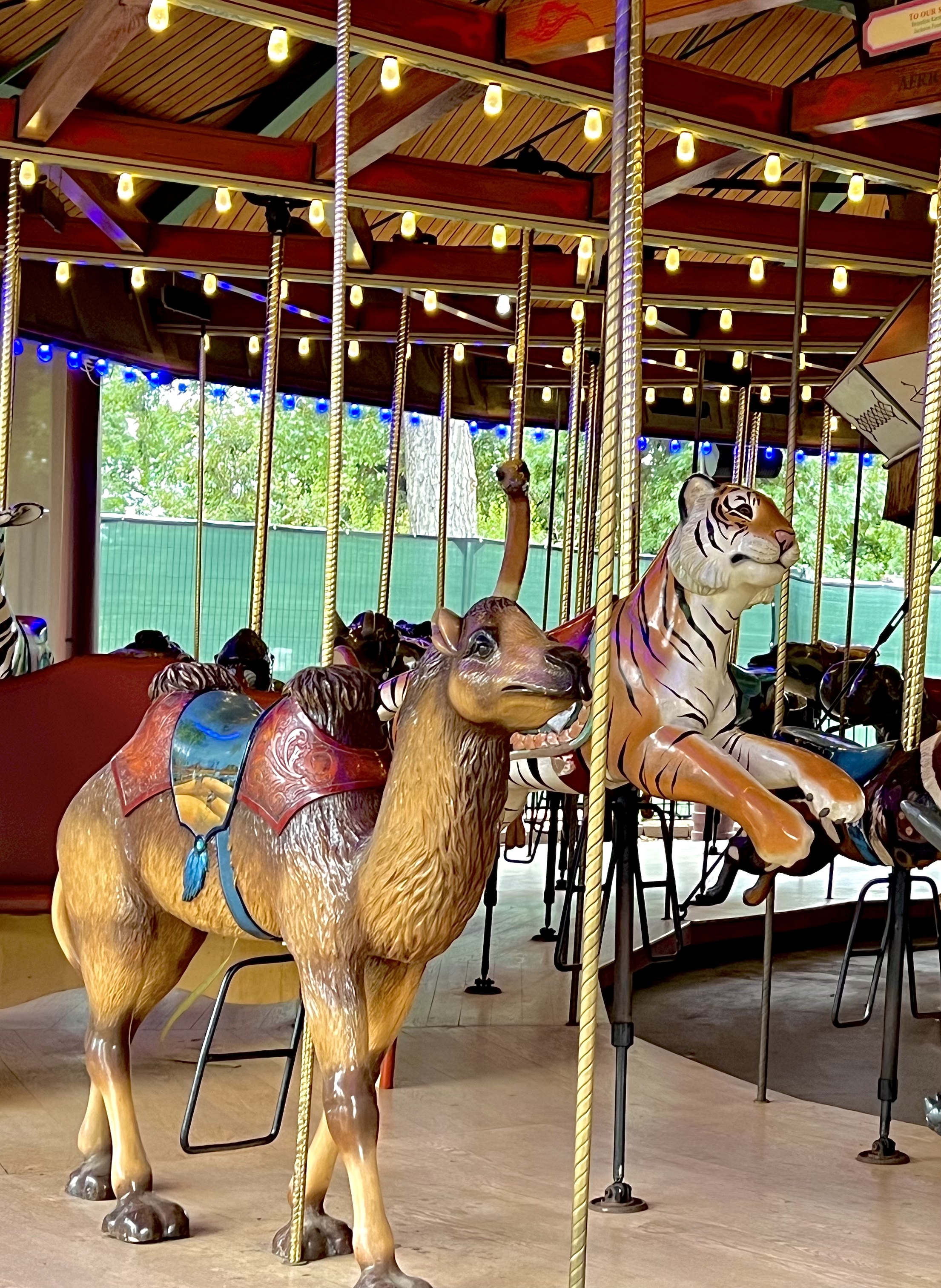
On thin golden poles gliding up, sliding down, a kingdom of horses goes spinning around.
Jumper, Brown Beauty, Dark Thunder, Sir Snow, a medley of ponies parade in a row.
Settled in saddles, their riders hold on to reins of soft leather while circling along
on chestnut or charcoal, on sleek Arctic white, on silver they gallop in place day and night.
Such spinning is magic, (to dream as you sail) with lavender saddle and ebony tail,
whirling to music in moonlight, spellbound, galloping, galloping, merrily go round. ~Rebecca Kai Dotlich “Carousel”
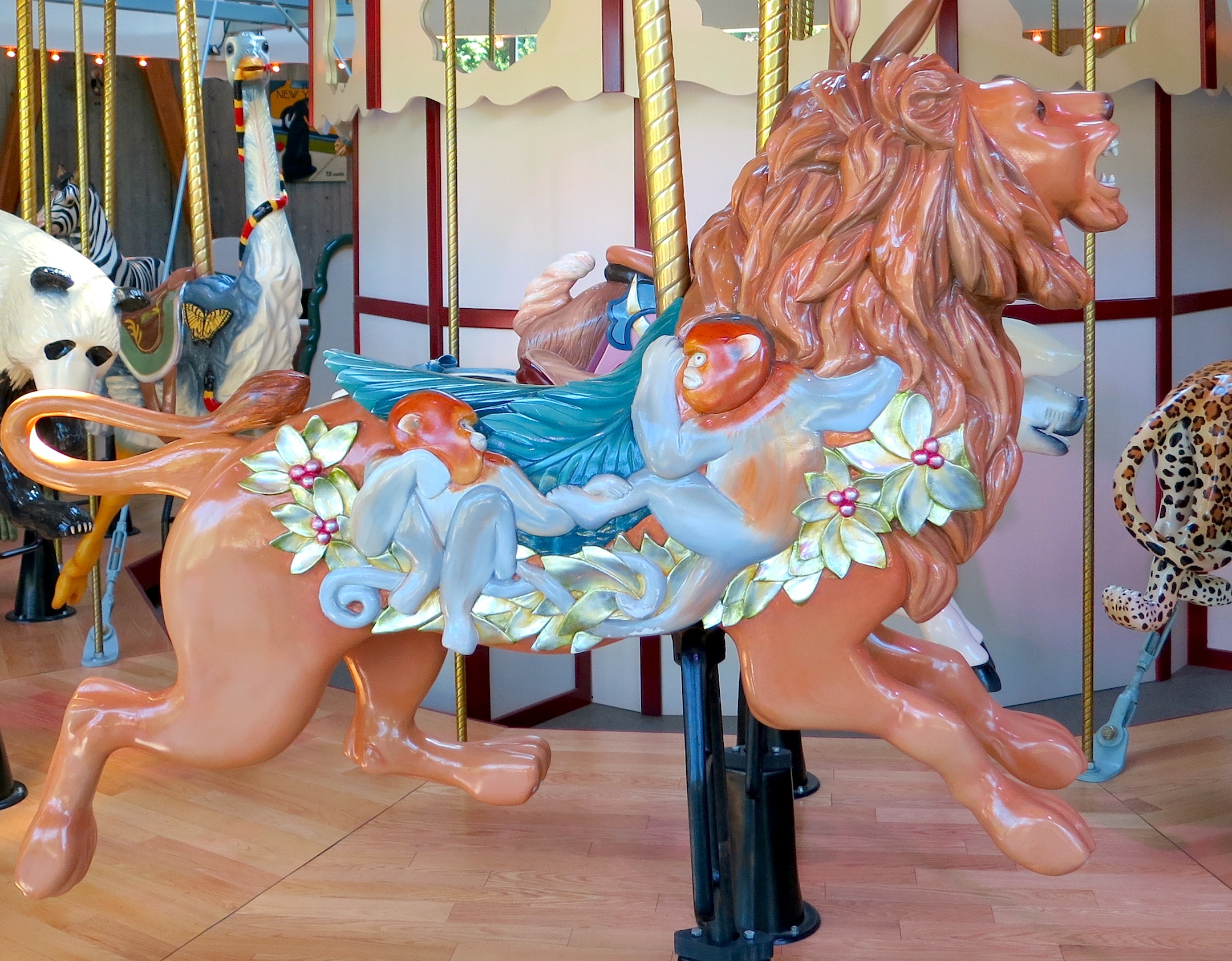
Under its canopy, in the shade it casts, turns a world with painted horses, all from a land that lingers a while before it disappears. Some, it’s true, are harnessed to a wagon, but all have valor in their eyes. A fierce red lion leaps among them, and here comes ’round a snow-white elephant.
Even a stag appears, straight from the forest, except for the saddle he wears, and, buckled on it, a small boy in blue.
And a boy in white rides the lion, gripping it with small clenched hands, while the lion flashes teeth and tongue.
And here comes ’round a snow-white elephant.
And riding past on charging horses come girls, bright-eyed, almost too old now for this children’s play. With the horses rising under them, they are looking up and off to what awaits. ~Rainer Maria Rilke from “Jardin de Luxembourg”
A fewJuly memories:
Sixty-five years ago, I was a five year old having her first ride on the historic carousel at Woodland Park Zoo before we moved from Stanwood to Olympia. Fifty-four years ago — a teenager working in a nursing home as a nurses’ aide after three days of training. Forty-nine years ago – returned home early from my studies in Tanzania after four chimpanzee researcher friends were held hostage for ransom and eventually released Forty-three years ago — deep in the guts of a hospital working forty hour long shifts, thinking about the man I was soon to marry Thirty-four years ago — my husband and I picking up bales of hay in our own farm field, two young children in tow after accepting a new position doctoring at the local university Twenty-seven years ago — raising three children and completed farm house remodel, supporting three parents with health issues, raising Haflinger horses, helping design a new clinic building at work, playing piano and teaching Sunday School at church Twenty-whatever years ago – life spinning faster, blurring with work at home, on the farm, at clinic, at church. I begin writing to grab and hang on to what I can. Sixteen years ago — one son about to move to Japan to teach and the other son to teach at Pine Ridge in South Dakota, daughter at home with a new driver’s license working with migrant children, a mother slowly bidding goodbye to life at a local care center, farming less about horse raising and more about gardening, maintaining and preserving. Ten years ago — two sons married, daughter working as a camp counselor so our first summer without children at home. Perfect time to raise a new puppy! Five years ago – A two year old granddaughter and two new grandsons! Daughter teaching, engaged to be married. Two years ago – completed forty-two years of non-stop doctoring so I bid it goodbye. Now – Three more grandsons! Two retired grandparents! Big garden on the farm but we’re slowing down.
The puppy’s face and our hair are turning white…
O where have I been? We can only look behind from where we came and await what is ahead.
The decades pass, round and round – there is comfort knowing that through the ups and downs of daily life, we still hang on. If we slip and fall, there is Someone ready to catch us.
Looking behind you, where have you been? What awaits you where you are heading?
AI image created for this post
One-Time
Monthly
Yearly
Make a one-time or recurring donation to support daily Barnstorming posts
On the green hill with the river beyond it long ago and my father there and my grandmother standing in her faded clothes wrinkled high-laced black shoes in the spring grass among the few gravestones inside their low fence by the small white wooden church the clear panes of its windows letting the scene through from the windows on the other side of the empty room and a view of the trees over there my grandmother hardly turned her head staring like a cloud at the empty air not looking at the green glass gravestone with the name on it of the man to whom she had been married and who had been my father’s father she went on saying nothing her eyes wandering above the trees that hid the river from where we were a place where she had stood with him one time when they were young and the bell kept ringing ~W. S. Merwin “Widnoon” from The Moon Before Morning
I remember my grandfather as a somber quiet man who used to slowly rock in a wooden chair that now happens to sit empty here in our home.
For most of his life, my Grandpa drank heavily but he wasn’t just any drunk. He was a mean drunk. Surly, cursing, prone to throwing things and people, especially at home.
Grandma used to say he learned to drink in the logging camps and I suspect that is true. He started working as a logger before he was fully grown, dropping out of school, leaving home around age sixteen and heading up to the hills where real money could be made. He learned more than how to cut down huge old growth Douglas Fir trees, skid them down the hills using a team of horses, and then roll them onto waiting wagons to be hauled to the mills. He learned how to live with a group of men who surfaced once or twice a month from the hills to take a bath, bootleg booze during prohibition and maybe go to church with their womenfolk.
Mostly the loggers taught him how to curse and drink.
He headed home to the farm with muscles and attitude a few years later, and started the process of felling trees, creating a “stump farm” that was a challenge to work because huge stumps dotted the fields and hills. He slowly worked at blasting them out of the ground so the land could be tilled. It proved more than he had strength and motivation to do, so his fields were never very fruitful, mostly growing hay for his own animals. He went to work in the local saw mill to make ends meet.
He cleaned up some when he met my grandmother, who at eighteen was seven years younger, and eager to escape her role as chief cook and bottle washer for her widowed father and younger brother. She was devout, lively and full of energy and talked constantly while he, especially when sober, preferred to let others do the talking. It was an unusual match but he liked her cooking and she was ready to escape the drudgery of her father’s household and be wooed.
They settled on the stump farm and began raising a family, trying to eke out what living they could from the land, from the sporadic work he found at the saw mill, and every Sunday, took the wagon a mile down the road to the Bible Church where they both sang with gusto.
He still drank when he had the money, blowing his pay in the local tavern, and stumbling in the back door roaring and burping, falling into bed with his shoes on. Grandma was a teetotaler and yelled into his ruddy face about the wrath of God anytime he drank, their four children hiding when the dishes started to fly, and when he would whip off his belt to hit anyone who looked sideways at him.
When their eldest daughter took sick and died of lymphoma at age eight despite the little doctoring that was available, Grandpa got sober for awhile. He saw it as punishment from God, or at least that is what Grandma told him through her sobs as she struggled to cope with her loss.
Over the years, he relapsed many times, losing fingers in his work at the mill, and losing the respect of his wife, his children and the people in the community. Grandma took the kids for several months to cook in a boarding house in a neighboring town, simply to be able to feed her family while Grandpa squandered what he had on drink. Reconciled over and over again, Grandma would come back to him, sending their only son to fetch him from the tavern for the night. My Dad would bicycle to that dark and smoky place, stand Grandpa up and guide him staggering out to their truck for the weaving drive home on country roads. On more than one occasion, Grandpa, belligerent as ever, would resist leaving and throw a punch at his boy, usually missing by a mile.
But once the boy grew taller and strong enough to fight back, managing to knock Grandpa to the ground in self-defense, the punching and resistance stopped. The boozing didn’t.
Grandpa sobered up for good while his boy fought in the war overseas in the forties, striking a bargain with God that his boy would come home safe to work the farm as long as Grandpa left alcohol alone. It stuck and he stayed sober. His boy came home. Grandpa saw it as a promise kept and became an elder in his Bible Church, taught Sunday School and gave his extra cash to the church rather than the tavern. He and Grandma donated a house on their property to the church for a parsonage.
Some twelve years later, sitting in a Christmas Sunday School program one Christmas Eve, Grandpa leaned toward Grandma and she saw his face broken out in sweat, his face ashen.
“It’s hot in here, I need air, “ he said and collapsed in her lap. He was gone, just like that. He left the rest of his family behind while he sat in church, sober as can be, on the day before Christmas.
There is no question in my mind he knew he was forgiven. He headed home one more time, not weaving or swerving but traveling straight and narrow.
AI image created for this postAI image created for this post
One-Time
Monthly
Yearly
Make a one-time or recurring donation to support daily Barnstorming posts
Ask the questions that have no answers. Invest in the millenium. Plant sequoias. Say that your main crop is the forest that you did not plant, that you will not live to harvest. Practice resurrection. ~Wendell Berry from “Manifesto: The Mad Farmer Liberation Front”
If I have to pick a side, let me side with the bees, with summer blossoms and winter snowdrifts. Let me side with the children I know and the ones I don’t, with the late-shift nurse and his aching back, with the grandmother digging in her garden. Let me side with the earth in all her sighing, the stars in all their singing, with stray dogs and street artists, with orphans and widows. Like Berry, let me say everything was for love of the forest I will never see, the harvest I will never reap. I pledge my allegiance to the world to come. ~Jen Rose Yokel “Choosing Sides”
photo by Danyale Tamminga photo by Nate Lovegren
We are each here in this life for such a short time…
What we leave behind is a shadow of the gifts we received at birth – given the chance, we can renew and rebuild this struggling earth. Listening to the sighs of a world in distress, I try to plant words and living things to last beyond my time here.
Every day we choose sides. Standing alone in our choices, we wonder how we will ever connect to one another.
I want to wrap my arms around anyone who needs a hug right now.
I know I do. Maybe you do too.
Starry Night – Van Gogh
photo by Sara LenssenAI image created for this post
One-Time
Monthly
Yearly
Make a one-time or recurring donation to support daily Barnstorming posts
Some things are very dear to me— Such things as flowers bathed by rain Or patterns traced upon the sea Or crocuses where snow has lain … the iridescence of a gem, The moon’s cool opalescent light, Azaleas and the scent of them, And honeysuckles in the night. And many sounds are also dear— Like winds that sing among the trees Or crickets calling from the weir Or Negroes humming melodies. But dearer far than all surmise Are sudden tear-drops in your eyes. ~Gwendolyn Brooks “Sonnet 2”
We human beings do real harm. History could make a stone weep. ~Marilynne Robinson from Gilead
I am an easy cryer. It takes very little to tip me over the edge: a hymn, a poem, simply witnessing a child’s joy. Suddenly my eyes fill up. I blame this on my paternal grandmother who was in tears much of her time when visiting our family, crying happy, crying sad, crying frustrated and angry tears.
Somehow after her visit, she was always smiling, so I think her weeping was cathartic emptying of her stress.
My greatest trigger to weep myself is watching someone else tear up. I think my grandmother left behind some powerful empathy genes.
I had to desensitize my response to tears to be effective as a physician/healer. Witnessing tears in the exam room is a normal part of the job: patients are anxious, ill, in pain or simply need to decompress in safety. I learned early on to be unobtrusive and not interrupt, letting the flow of tears be part of how the patient was trying to communicate. It was a struggle when my inclination was to cry right along with them. But I needed to be the rock in the room, solid and steady. I could understand their tears as yet another symptom of a clinical presentation, allowing me to observe without being clouded by my own emotional response.
Sometimes that worked. Sometimes not. At times overwhelmed, I wept at births, I wept at deaths, I wept at the sharing of bad news.
Now, liberated from the exam room, I freely weep at the state of the world, or when I read of disaster and tragedy, and especially when I witness intentional harm and meanness in others. I’m no longer a barely responsive stone, but more like an over-filled sponge being squeezed – everything builds up until I can hold it no more. Reading headlines in the news is sometimes more than I can bear.
I cry myself dry.
And that is okay. Once emptied out, I can be filled again by so much that is good and precious in this life.
That is worth weeping over.
AI image created for this post
Detail from “Descent from the Cross” by Rogier van der Weyden
One-Time
Monthly
Yearly
Make a one-time or recurring donation to support daily Barnstorming posts
What does it feel like to be alive? Living, you stand under a waterfall… It is time pounding at you, time. Knowing you are alive is watching on every side your generation’s short time falling away as fast as rivers drop through air, and feeling it hit.
I had hopes for my rough edges. I wanted to use them as a can opener, to cut myself a hole in the world’s surface, and exit through it. ~Annie Dillard from An American Childhood
I saw a mom take her raincoat off and give it to her young daughter when a storm took over the afternoon. My god, I thought, my whole life I’ve been under her raincoat thinking it was somehow a marvel that I never got wet. ~Ada Limón from “The Raincoat”
Mothering can be like standing under a waterfall, impacted breathless by the incredible 24/7 responsibility of birthing and raising children. And a mother does whatever she must to protect her children from also getting soaked in the barrage of each drop of time, knowing they too can feel overwhelmed by the rapid passage of life.
As I tried my best to keep my children covered and dry until it was their turn to raise kids and stand under the same waterfall, my own rough edges have been impacted, smoothed and soothed by the flow of time.
I’m well aware rough edges still surface, unbidden and unwarranted, ready to cut a hole in the world for an escape hatch from troubles. So my children and grandchildren polish me even as I still try to protect them from inevitable downpours.
No longer is my reach enough nor must it be.
Life keeps pounding away, but oh so gentler on grandmothers. I know it is still ruffing and buffing me — each drop of time passing over me becomes a mixed blessing.
Each moment so precious, never to come again, yet leaving me forever and wonderfully changed.
One-Time
Monthly
Yearly
Make a one-time or recurring donation to support daily Barnstorming posts
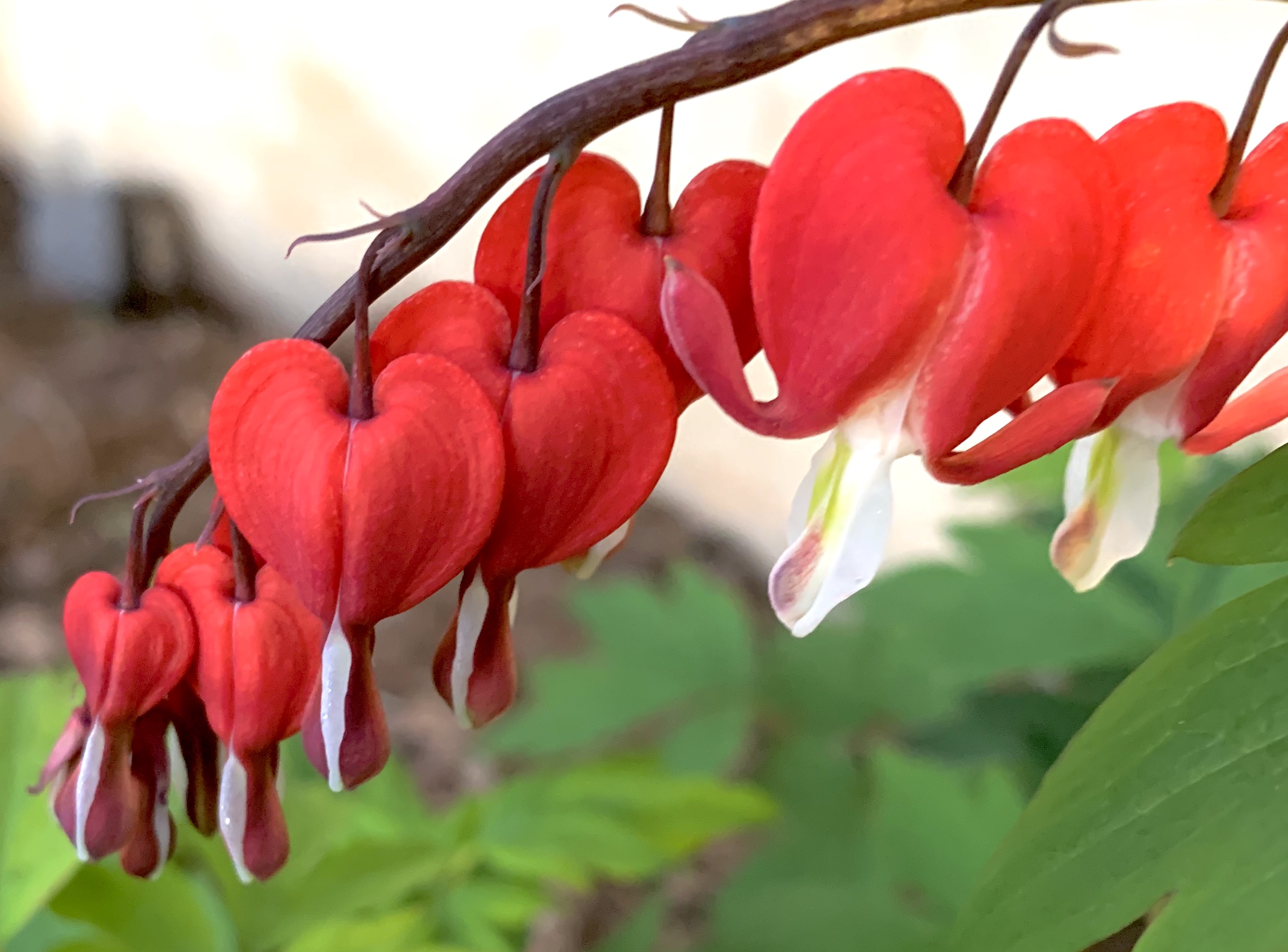
I know a bleeding-heart plant that has thrived for sixty years if not more, and has never missed a spring without rising and spreading itself into a glossy bush, with many small red hearts dangling. Don’t you think that deserves a little thought? The woman who planted it has been gone for a long time, and everyone who saw it in that time has also died or moved away and so, like so many stories, this one can’t get finished properly. Most things that are important, have you noticed, lack a certain neatness. More delicious, anyway, is to remember my grandmother’s pleasure when the dissolve of winter was over and the green knobs appeared and began to rise, and to cre- ate their many hearts. One would say she was a simple woman, made happy by simple things. I think this was true. And more than once, in my long life, I have wished to be her. ~Mary Oliver “The Bleeding-Heart”from New and Selected Poems Volume Two
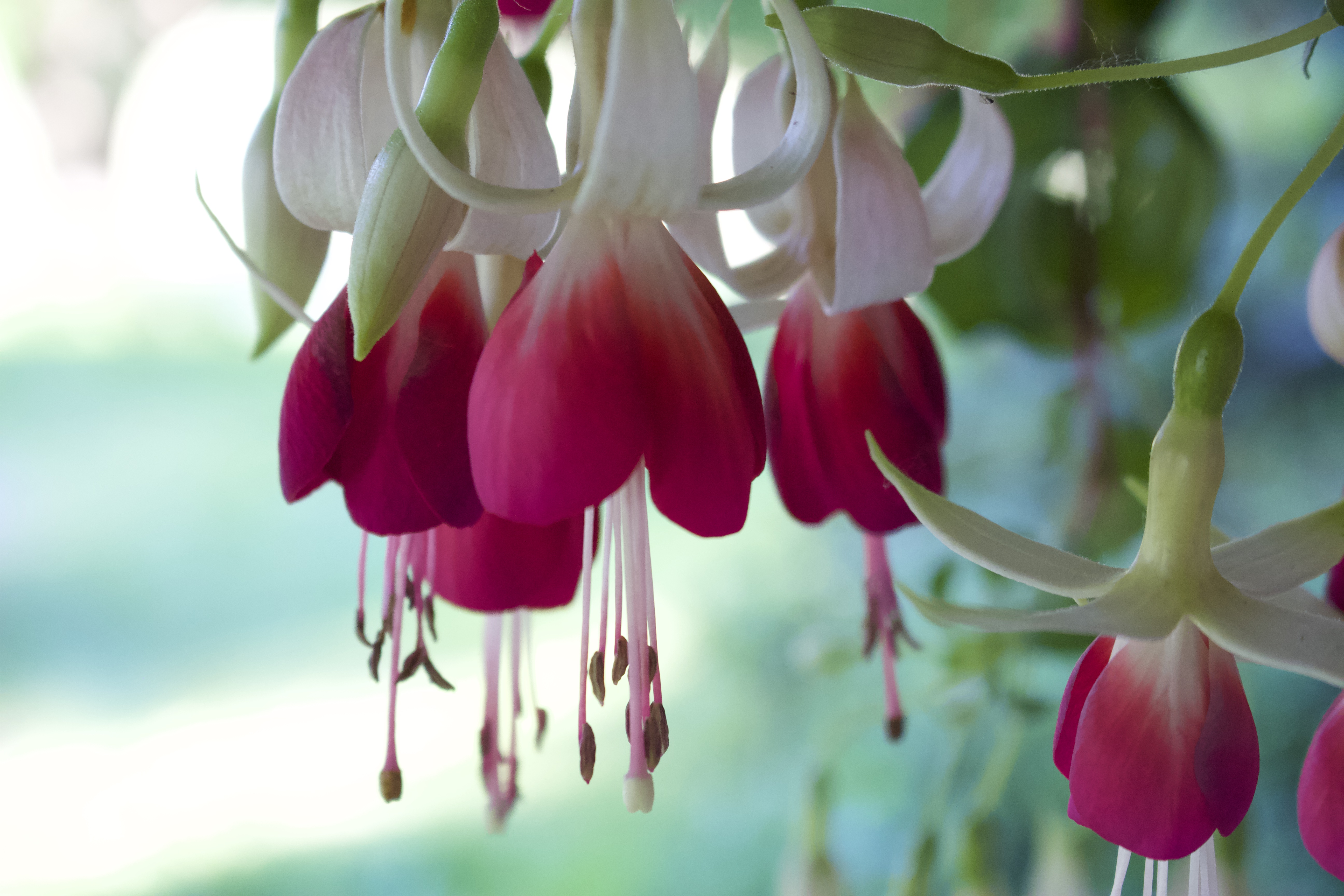
My Grandma Kittie grew flowers–lots of them. Her garden stretched along both sides of the sidewalk to her old two story farm house, in window boxes and beds around the perimeter, in little islands scattered about the yard anchored by a tree, or a piece of driftwood, a gold fish pond or a large rock. Wisteria hung like a thick curtain of purple braids from the roof of her chicken coop, and her greenhouse, far bigger than her home, smelled moist and mossy with hanging fuschia baskets. For her it was full time joy disguised as a job: she sold seedlings, and ready-to-display baskets, and fresh flower arrangements.
She often said she was sure heaven would be full of flowers needing tending, and she was just practicing for the day when she could make herself useful as a gardener for God.
Visiting Grandma meant spending summer evenings in her yard heavy with wafting flower perfume. She especially loved her bleeding hearts bushes that returned every spring, dripping their red blossoms over her unruly lawn.
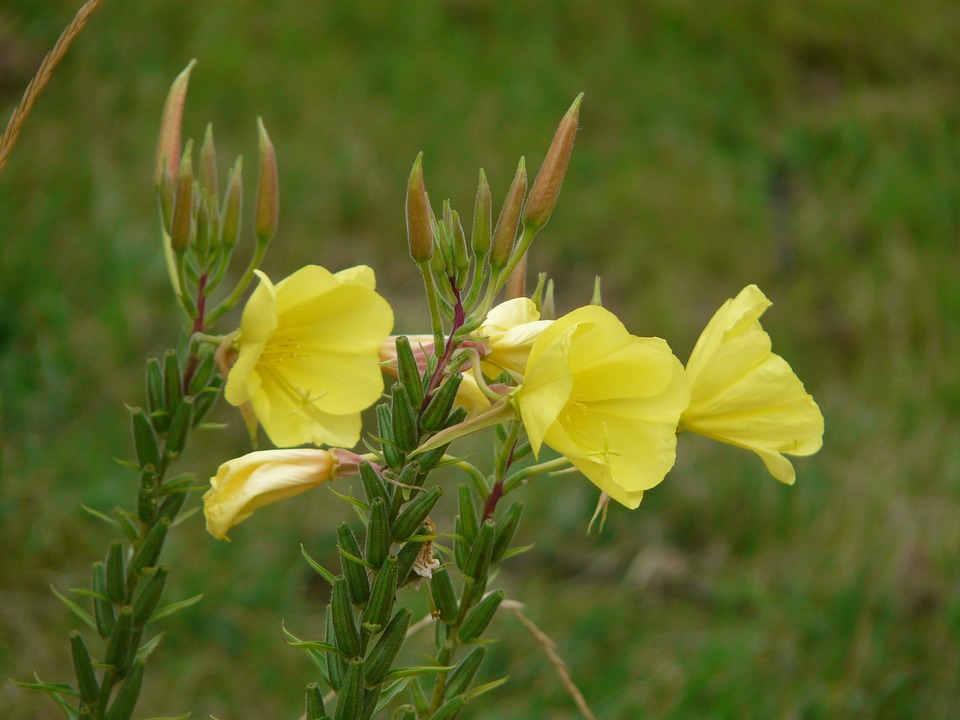
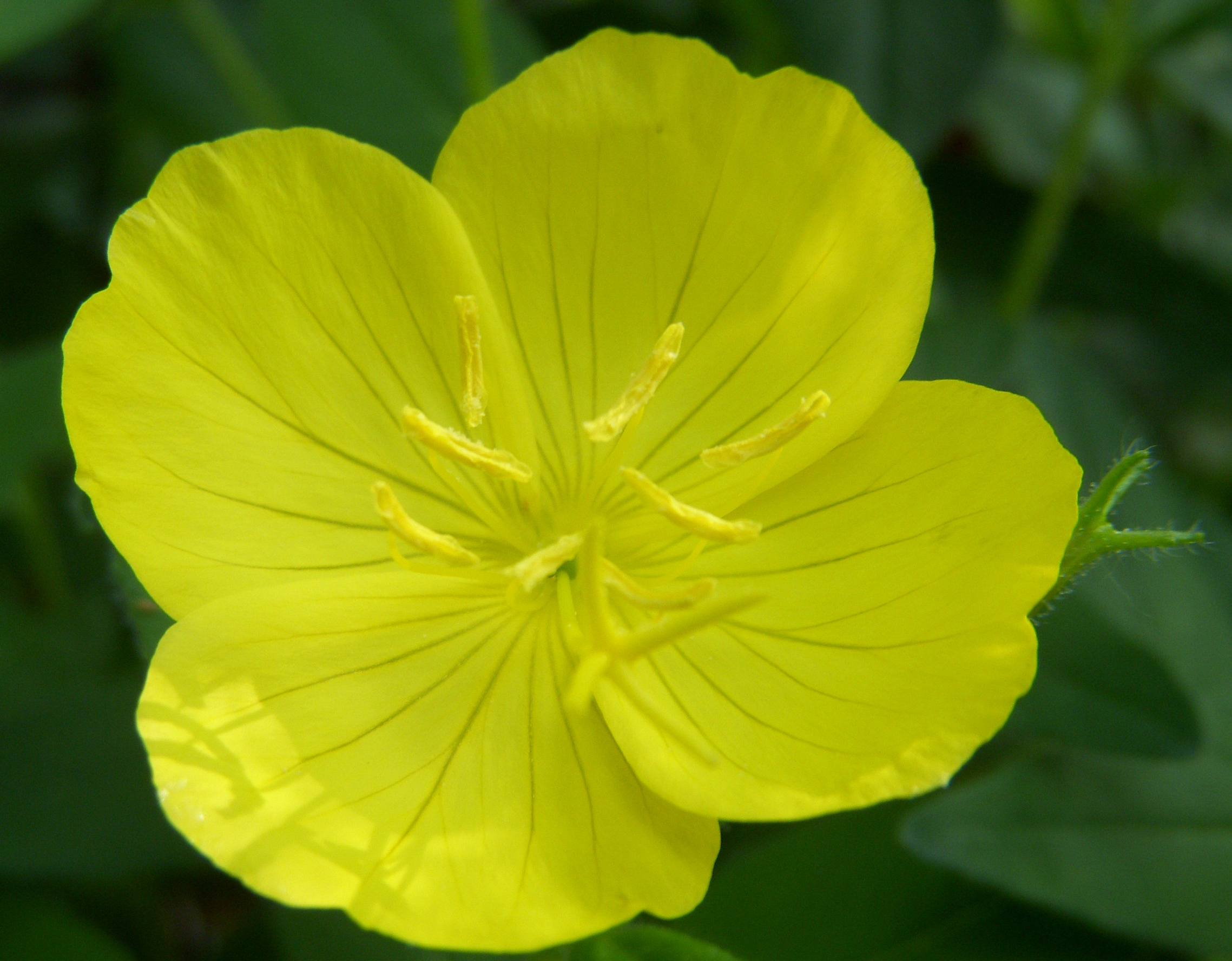
Another of her favorite flowers was the evening primrose. It was one of a few night blooming plants meant to attract pollinating moths. Its tall stems were adorned by lance shaped leaves, with multiple buds and blooms per stem. Each evening, and it was possible to set one’s watch by its punctuality, only one green wrapped bud per stem would open, revealing a bright yellow blossom with four delicate veined petals, a rosette of stamens and a cross-shaped stigma in the center, rising far above the blossom. The yellow was so vivid and lively, it seemed almost like a drop of sun had been left on earth to light the night. By morning, the bloom would begin to wither and wilt under the real sunlight, somehow overcome with the brightness, and would blush a pinkish orange as it folded upon itself, ready to die and drop from the plant in only a day or two, leaving a bulging seed pod behind.
I would settle down on the damp lawn at twilight, usually right before dusk fell, to watch the choreography of opening of blossoms on stem after stem of evening primrose. Whatever the trigger was for the process of unfolding, there would be a sudden loosening of the protective green calyces, in an almost audible release. Then over the course of about a minute, the overlapping yellow petals would unfurl, slowly, gently, purposefully, revealing their pollen treasure trove inside. It was like watching time lapse cinematography, only this was an accelerated, real time flourish of beauty, happening right before my eyes. I always felt privileged to witness each unveiling as Grandma liked to remind me that few flowers ever allowed us to behold both their birth and death. The evening primrose was not at all shy about sharing itself and it would enhance the show with a sweet lingering fragrance.
Grandma knew how much I enjoyed the evening primrose display, so she saved seeds from the seed pods for me, and helped me plant them at our house during one of her spring time visits. I remember scattering the seeds with her in a specially chosen spot, in anticipation of the “drops of sun” that would grace our yard come summertime. However, Grandma was more tired than usual on this particular visit, taking naps and not as eager to go for walks or eat the special meals cooked in honor of her visit. Her usually resonant laughing brown eyes appeared dull, almost muddy.
The day she was to return to her home, she came into the kitchen at breakfast time, wearily setting down her packed bags. She gave me a hug and I looked at her. Something was dreadfully wrong. Grandma’s eyes were turning yellow.
Instead of returning home that day, she went to the hospital. Within a day, she had surgery and within two days, was told she had terminal pancreatic cancer. She did not last long, her skin becoming more jaundiced by the day, her eyes more icteric and far away. She soon left her earthly gardens to cultivate those in heaven.
I’ve kept bleeding hearts and evening primrose in my garden ever since. Grandma’s heart dangles from the bushes and she is released from each primrose bloom as it unfolds precipitously in the evening. She wafts across the yard in its perfume. Her spirit, a drop of sun coming to rest, luminous, for a brief stay upon the earth, only to fall before we’re ready to let it go. But as the wilted bloom lets go, its seeds have already begun to form.
I’m sure Grandma is still growing flowers. And my soil-covered hands look more like hers every day.
The grass withers and the flowers fall, because the breath of the Lord blows on them. Surely the people are grass. The grass withers and the flowers fall, but the word of our God endures forever. Isaiah 40: 7-8
This Lenten season I reflect on the words of the 19th century southern spiritual hymn “What Wondrous Love is This”
One-Time
Monthly
Yearly
Make a one-time or recurring donation to support daily Barnstorming posts























 Barnstorming