When you go home tell them of us and say – “For your tomorrow we gave our today” ~John Maxwell Edmonds from “The Kohima Epitaph”
They shall grow not old, as we that are left grow old: Age shall not weary them, nor the years condemn. At the going down of the sun and in the morning We will remember them. ~Lawrence Binyon from “For the Fallen” (1914)
We are the Dead. Short days ago We lived, felt dawn, saw sunset glow, Loved and were loved, and now we lie In Flanders fields. ~LtCol (Dr.) John McCrae from “In Flanders Fields”
We who are left, how shall we look again Happily on the sun, or feel the rain, Without remembering how they who went Ungrudgingly, and spent Their all for us, loved, too, the sun and rain?
A bird upon the rain-wet lilac sings — But we, how shall we turn to little things And listen to the birds and winds and streams Made holy by their dreams, Nor feel the heartbreak in the heart of things? ~Wilfred Wilson Gibson “A Lament”
November pierces with its bleak remembrance Of all the bitterness and waste of war. Our silence tries but fails to make a semblance Of that lost peace they thought worth fighting for. Our silence seethes instead with wraiths and whispers, And all the restless rumour of new wars, The shells are falling all around our vespers, No moment is unscarred, there is no pause, In every instant bloodied innocence Falls to the weary earth ,and whilst we stand Quiescence ends again in acquiescence, And Abel’s blood still cries in every land One silence only might redeem that blood Only the silence of a dying God. ~Malcolm Guite “Silence: a Sonnet for Remembrance Day”
To our military veterans here and abroad – in deep appreciation and gratitude– for the freedoms you have defended on behalf of us all:
No one is left untouched and unscarred in the bitterness of war.
My father was one of the fortunate ones who came home, returning to a quiet farm life after three years serving in the Pacific with the Marines Corp from 1942 to 1945. Hundreds of thousands of his colleagues didn’t come home, dying on beaches and battlefields. Tens of thousands more came home forever marked, through physical or psychological injury, by the experience of war and witness of death and mayhem all around them.
No matter how one views wars our nation has fought and may be obligated to fight in the future, we must support and care for the men and women who have made, on our behalf, the commitment and sacrifice to be on the front line for freedom’s sake.
Even our God died so we could stop fighting each other (and Him). What a waste we have not stopped to listen and understand His sacrifice enough to finally lay down our weapons against one another forever.
I am not resigned to the shutting away of loving hearts in the hard ground. So it is, and so it will be, for so it has been, time out of mind: Into the darkness they go, the wise and the lovely. Crowned With lilies and with laurel they go; but I am not resigned.
Lovers and thinkers, into the earth with you. Be one with the dull, the indiscriminate dust. A fragment of what you felt, of what you knew, A formula, a phrase remains,—but the best is lost.
The answers quick and keen, the honest look, the laughter, the love,— They are gone. They are gone to feed the roses. Elegant and curled Is the blossom. Fragrant is the blossom. I know. But I do not approve. More precious was the light in your eyes than all the roses in the world.
Down, down, down into the darkness of the grave Gently they go, the beautiful, the tender, the kind; Quietly they go, the intelligent, the witty, the brave. I know. But I do not approve. And I am not resigned. ~Edna St. Vincent Millay “Dirge Without Music”
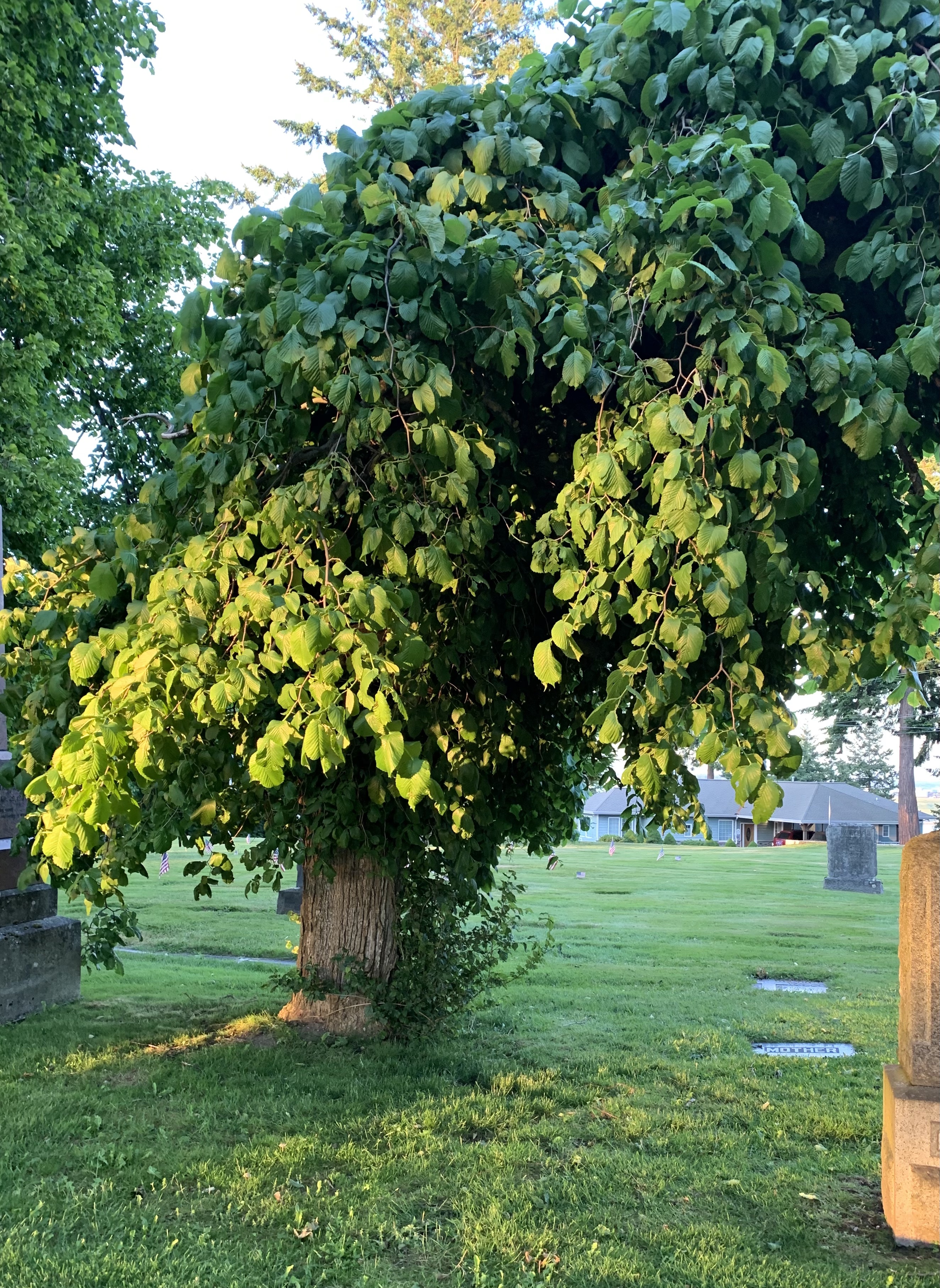
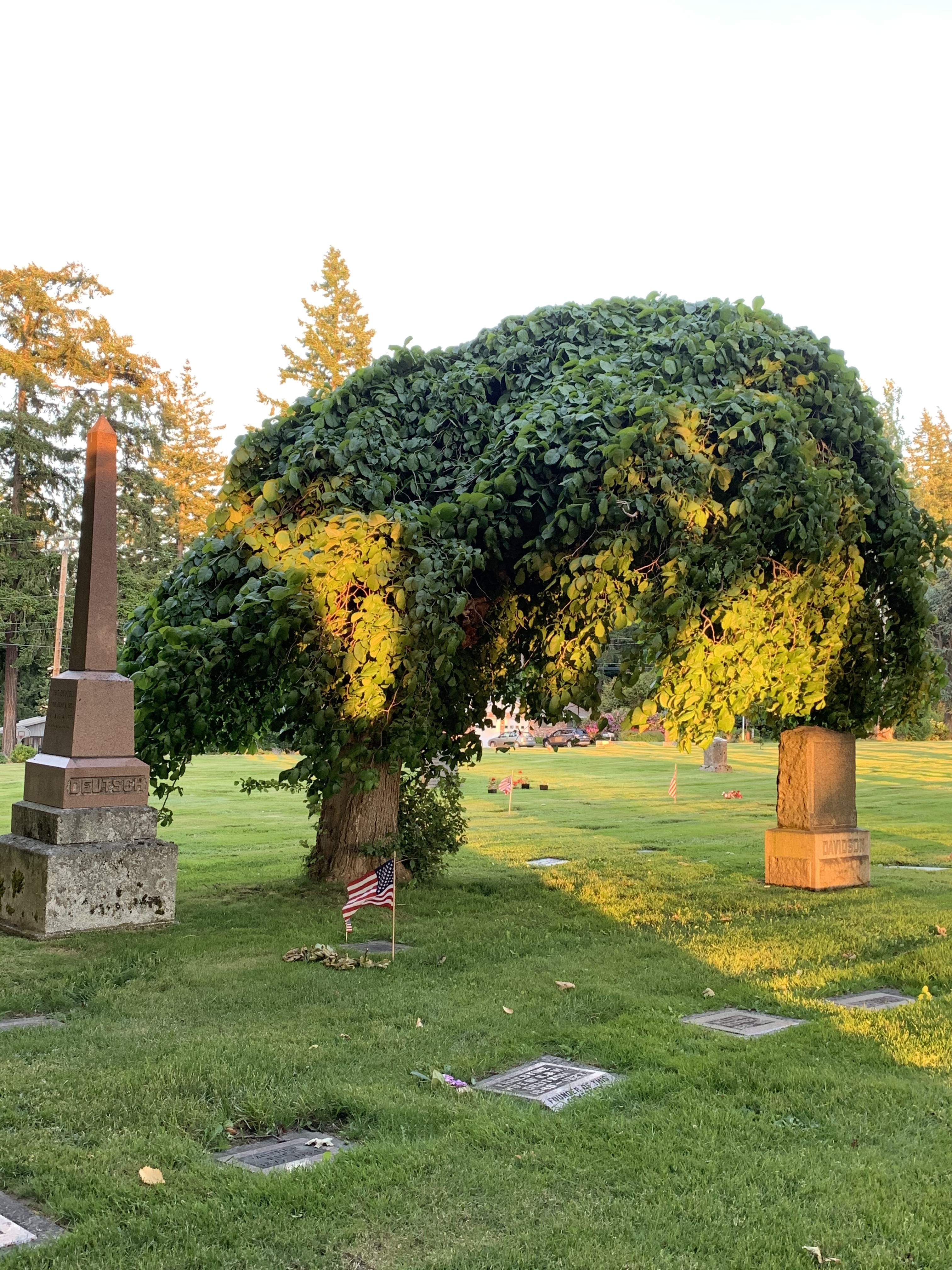
Each Memorial Day weekend without fail, we gather with family, have lunch, reminisce, and trek to a cemetery high above Puget Sound to catch up with our relatives who lie there, still.
Some for over 110 years, some for barely more than a decade, some we knew and loved and miss every day, others not so much as they are unknown to us except on genealogy charts, names and dates and stones and stories:
the red-haired great-grandmother who died too young, the aunt who was eight when lymphoma took her, the grandmother who dreamed of world travel too late, the great-grandfather Yukon river boat captain, the grandfather logger and stump farmer, the great aunt unmarried school teacher who hid an oil well, the two in-laws who forever lie next to each other but could not co-exist in the same room while they lived and breathed.
Yet we know each of these (as we know ourselves and others)
could be tender and kind, though flawed and broken, had been beautiful and strong, though wrinkled and frail, was hopeful and faithful, though too soon in the ground.
We know this about them as we know it about ourselves: someday we too will feed roses, the light in our eyes transformed into elegant swirls emitting the fragrant scent of heaven.
No one asks if we approve. Nor am I resigned to this though I know: So it is, so it has been, so it will be for me someday.
AI image created for this post
One-Time
Monthly
Yearly
Make a one-time or recurring donation to support daily Barnstorming posts
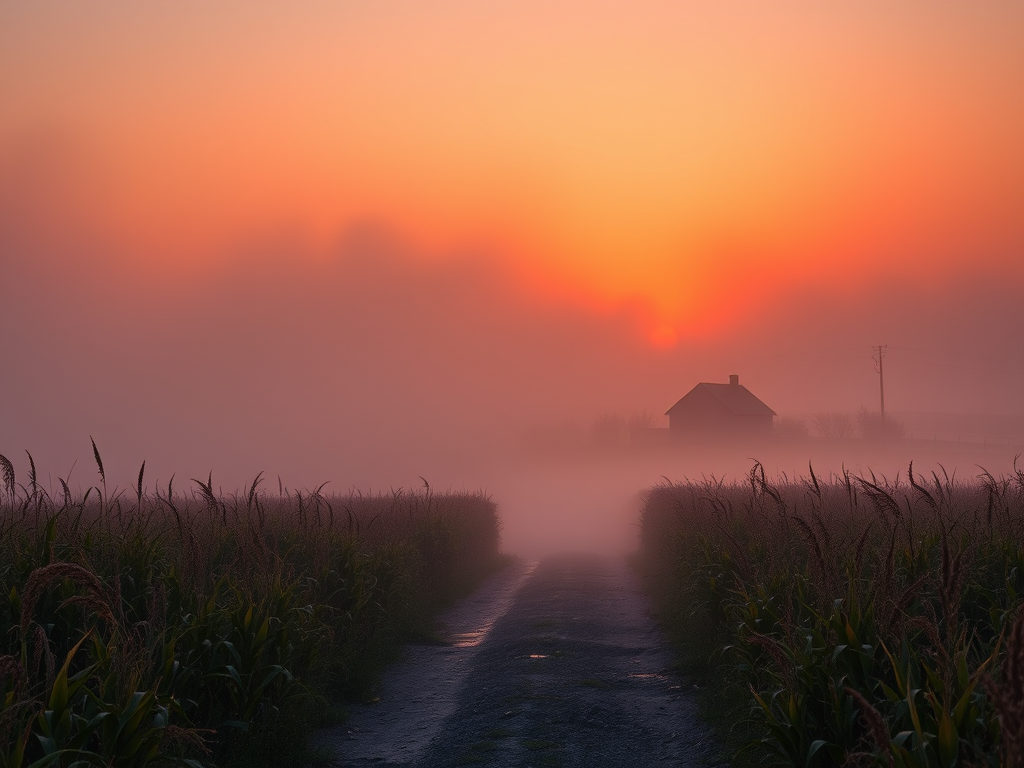
In the quiet misty morning When the moon has gone to bed, When the sparrows stop their singing And the sky is clear and red, When the summer’s ceased its gleaming When the corn is past its prime, When adventure’s lost its meaning – I’ll be homeward bound in time
Bind me not to the pasture Chain me not to the plow Set me free to find my calling And I’ll return to you somehow
If you find it’s me you’re missing If you’re hoping I’ll return, To your thoughts I’ll soon be listening, And in the road I’ll stop and turn Then the wind will set me racing As my journey nears its end And the path I’ll be retracing When I’m homeward bound again
Bind me not to the pasture Chain me not to the plow Set me free to find my calling And I’ll return to you somehow
In the quiet misty morning When the moon has gone to bed, When the sparrows stop their singing I’ll be homeward bound again. ~Marta Keen “Homeward Bound”
Eighty-two years ago, my parents married on Christmas Eve. It was not a conventional wedding day but a date of necessity, only because a justice of the peace was available to marry a score of war-time couples in Quantico, Virginia, shortly before the newly trained Marine officers were shipped out to the South Pacific to fight in WWII.
When I look at my parents’ young faces – ages 22 and just turned 21 — in their only wedding portrait, I see a hint of the impulsive decision that led to that wedding just a week before my father left for 30 months. They had known each other at college for over a year, had talked about a future together, but with my mother starting a teaching job in a rural Eastern Washington town, and the war potentially impacting all young men’s lives very directly, they had not set a date.
My father put his college education on hold to enlist, knowing that would give him some options he wouldn’t have if drafted, so they went their separate ways as he headed east to Virginia for his Marine officer training, and Mom started her high school teaching career as a speech and drama teacher. One day in early December of 1942, he called her and said, “If we’re going to get married, it’ll need to be before the end of the year. I’m shipping out the first week in January.” Mom went to her high school principal, asked for a two week leave of absence which was granted, told her astonished parents, bought a dress, and headed east on the train with a friend who had received a similar call from her boyfriend.
This was a completely uncharacteristic thing for my overly cautious mother to do, so… it must have been love.
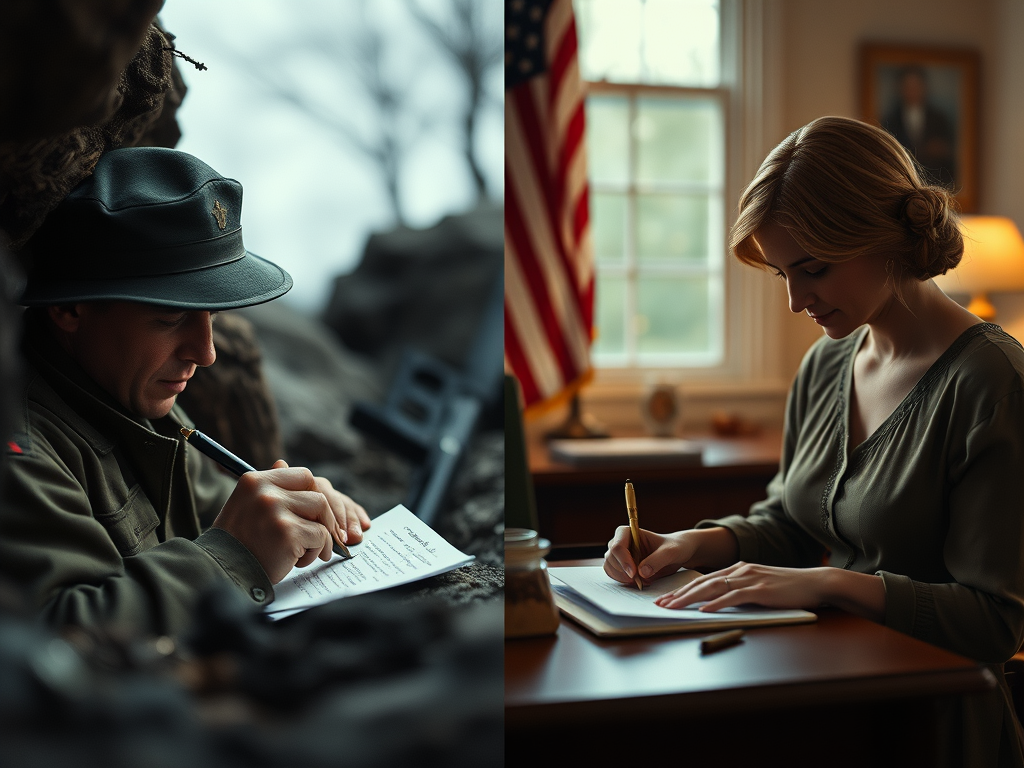
They were married in a brief civil ceremony with another couple as the witnesses. They stayed in Virginia only a couple days and took the train back to San Diego, and my father was shipped out. Just like that. Mom returned to her teaching position and the first three years of their married life was composed of letter correspondence only, with gaps of up to a month during certain island battles when no mail could be delivered or posted.
As I sorted through my mother’s things following her death over a decade ago, I found their war-time letters to each other, stacked neatly and tied together in a box.
In my father’s nearly daily letters home to my mother during WWII, month after month after month, he would say, over and over, while apologizing for the repetition:
“I will come home to you, I will return, I will not let this change me, we will be joined again…”
This was his way of convincing himself even as he carried the dead and dying after island battles: men he knew well and the enemy he did not know. He knew they were never returning to the home they died protecting and to those who loved them.
He shared little of battle in his letters as each letter was reviewed and signed off by a censor before being sealed and sent. This story, however, made it through:
“You mentioned a story of Navy landing craft taking the Marines into Tarawa. It reminded me of something which impressed me a great deal and something I’m sure I’ll never forget.
So you’ll understand what I mean I’ll try to start with an explanation. In training – close order drill- etc. there is a command that is given always when the men form in the morning – various times during the day– after firing– and always before a formation is dismissed. The command is INSPECTION – ARMS. On the command of EXECUTION- ARMS each man opens the bolt of his rifle. It is supposed to be done in unison so you hear just one sound as the bolts are opened. Usually it is pretty good and sounds O.K.
Just to show you how the morale of the men going to the beach was – and how much it impressed me — we were on our way in – I was forward, watching the beach thru a little slit in the ramp – the men were crouched in the bottom of the boat, just waiting. You see- we enter the landing boats with unloaded rifles and wait till it’s advisable before loading. When we got about to the right distance in my estimation I turned around and said – LOAD and LOCK – I didn’t realize it, but every man had been crouching with his hand on the operating handle and when I said that — SLAM! — every bolt was open at once – I’ve never heard it done better – and those men meant business when they loaded those rifles.
A man couldn’t be afraid with men like that behind him.”
My father did return home to my mother after nearly three years of separation. He finished his college education to become an agriculture teacher to teach others how to farm the land while he himself became bound to the pasture and chained to the plow.
He never forgot those who died, making it possible for him to return home. I won’t forget either.
My mother and father could not have foretold the struggles that lay ahead for them. The War itself seemed struggle enough for the millions of couples who endured the separation, the losses and grieving, as well as the eventual injuries–both physical and psychological. It did not seem possible that beyond those harsh and horrible realities, things could go sour after reuniting.
The hope and expectation of happiness and bliss must have been overwhelming, and real life doesn’t often deliver. After raising three children, their 35 year marriage fell apart with traumatic finality. When my father returned home (again) over a decade later, asking for forgiveness, they remarried and had five more years together before my father died in 1995.
Christmas is a time of joy, a celebration of new beginnings and new life when God became man, humble, vulnerable and tender. But it also gives us a foretaste for the profound sacrifice made in giving up this earthly life, not always so gently.
As I peer at my father’s and mother’s faces in their wedding photo, I remember those eyes, then so trusting and unaware of what was to come. I find peace in knowing they both have returned home to behold the Light, the Salvation and the Glory~~the ultimate Christmas~~in His presence.
AI image created for this postAI image created for this post
One-Time
Monthly
Yearly
Make a one-time or recurring donation to support daily Barnstorming posts
They shall grow not old, as we that are left grow old: Age shall not weary them, nor the years condemn. At the going down of the sun and in the morning We will remember them. ~Lawrence Binyon from “For the Fallen” (1914)
In Flanders fields the poppies blow Between the crosses, row on row, That mark our place; and in the sky The larks, still bravely singing, fly Scarce heard amid the guns below.
We are the Dead. Short days ago We lived, felt dawn, saw sunset glow, Loved and were loved, and now we lie, In Flanders fields.
Take up our quarrel with the foe: To you from failing hands we throw The torch; be yours to hold it high. If ye break faith with us who died We shall not sleep, though poppies grow In Flanders fields. ~John McCrae “In Flanders Fields”
When you go home tell them of us and say – “For your tomorrow we gave our today” ~John Maxwell Edmonds from “The Kohima Epitaph”
November pierces with its bleak remembrance Of all the bitterness and waste of war. Our silence tries but fails to make a semblance Of that lost peace they thought worth fighting for. Our silence seethes instead with wraiths and whispers, And all the restless rumour of new wars, The shells are falling all around our vespers, No moment is unscarred, there is no pause, In every instant bloodied innocence Falls to the weary earth ,and whilst we stand Quiescence ends again in acquiescence, And Abel’s blood still cries in every land One silence only might redeem that blood Only the silence of a dying God. ~Malcolm Guite “Silence: a Sonnet for Remembrance Day”
To our military veterans here and abroad – in deep appreciation and gratitude for the freedoms you have defended on behalf of us all.
No one is left untouched and unscarred in the bitterness of war: those of you who died in service, those of you wounded in service, those of you who bore visible and invisible scars all your lives.
You are heroes to the cause of freedom.
As G.K. Chesterton said, “Courage is a strong desire to live taking the form of a readiness to die.”
My father was one of the fortunate ones who came home, returning to a quiet life of farming and teaching after three years serving in the Pacific with the Marines Corp from 1942 to 1945. Hundreds of thousands of his colleagues didn’t come home, dying on beaches and battlefields. Tens of thousands more came home forever marked, through physical or psychological injury, by the experience of war and witness of death and mayhem all around them.
In my medical training in the 1970’s, I cared for veterans hospitalized for mental health care after serving in WWII, Korea and Vietnam. I witnessed for myself the sacrifices of these soldiers, and the limits of our therapies.
No matter how one views wars our nation has fought and may be obligated to fight in the future, we must support and care for the men and women who have made, on our behalf, the commitment to be on the front line for freedom’s sake.
Even our God died so we could stop fighting each other (and Him). What a waste we have not stopped to listen and understand His sacrifice enough to finally lay down our weapons against one another forever.
I am what you make me; nothing more. I swing before your eyes as a bright gleam of color, a symbol of yourself. ~Franklin K. Lane, Secretary of the Interior, 1914 Flag Day address
Sometimes, as a child, when I was bored, I’d grab a step ladder, pull it into our hallway, climb half way up and carefully lift the plywood hatch that was the portal to our dark attic. It took some effort to climb up into the attic from the ladder, juggling a flashlight at the same time, but once seated safely on the beams above our ceiling, being careful not to put my foot through the carpet of insulation, I could explore what was stowed and normally inaccessible to me.
All the usual attic-type things were put up there: Christmas ornaments and lights, baby cribs and high chairs, lamps and toys no longer used. Secrets to my parents’ past were stored away there too. It was difficult imagining them as young children growing up on opposite sides of the state of Washington, in very different circumstances, or as attractive college students who met at a dance, or as young marrieds unencumbered by the daily responsibilities of a family. The attic held those images and memories like a three dimensional photo album.
My father’s dark green Marine Corps cargo trunk was up there, the one that followed him from Officer Training in Quantico, Virginia, to beach and mountain battles on Tarawa, Tinian and Saipan in the South Pacific, and three years later back home again. It had his name and rank stenciled on the side in dark black lettering. The buckles were stiff but could be opened with effort, and in the dark attic, there was always the thrill of unlatching the lid, and shining the flashlight across the contents. His Marine Corps dress uniform lay inside underneath his stiff brimmed cap. There were books about protocol, and a photo album which contained pictures of “his men” that he led in his battalion, and the collection of photos my mother sent of herself as she worked as a teacher of high school students back home.
Most fascinating was a folded Japanese flag inside a small drawstring bag, made of thin white see-through cloth with the bold red sun in the middle. Surrounding the red sun were the delicate inked characters of many Japanese hands as if painted by artists, each wishing a soldier well in his fight for the empire. Yet there it was, a symbol of that soldier’s demise, itself buried in an American attic, being gently and curiously held by an American daughter of a Marine Corps captain. It would occur to me in the 1960s that some of the people who wrote on this flag might still be living, and certainly members of the soldier’s family would still be living. I asked my father once about how he obtained the flag, and he, protecting both me and himself, waved me away, saying he couldn’t remember. I know better now. He knew but could not possibly tell me the truth.
These flags, charms of good luck for the departing Japanese soldier as he left his neighborhood or village for war, are called Hinomaru Yosegaki (日の丸寄せ書き). Tens of thousands of these flags came home with American soldiers; it is clear they were not the talisman hoped for. A few of these flags are now finding their way back to their home country, to the original villages, to descendants of the lost soldiers. So now has this flag.
Eighty years ago doesn’t seem that long, a mere drop in the river of time. There are more than mere mementos that have flowed from the broken dam of WWII, flooding subsequent generations of Americans, Japanese, Europeans with memories that are now lost as the oldest surviving soldiers pass, scores of them daily, taking their stories of pain and loss and heroism with them. My father could never talk with a person of Asian descent, Japanese or not, without being visibly uneasy. As a child, I saw and felt this from him, but heard little from his mouth.
When he was twenty two years old, pressed flat against the rocks of Tarawa, trying to melt into the ground to become invisible to the bullets whizzing overhead, he could not have conceived that sixty-five years later his twenty two year old grandson would disembark from a jumbo jet at Narita in Tokyo, making his way to an international school to teach Japanese children. My father would have been shocked that his grandson would settle happily into a culture so foreign, so seemingly threatening, so apparently abhorrent. Yet this irony is the direct result of the horrors of that too-long horrible bloody war of devastation: Americans and Japanese, despite so many differences, have become the strongest of allies, happily exchanging the grandchildren of those bitterly warring soldiers back and forth across the Pacific. It too was my privilege to care for Japanese exchange students daily in my University health clinic, peering intently into their open faces and never once seeing the enemy that my father feared.
Now all these decades later, our son taught for 13 years in Tokyo, with deep admiration and appreciation for each of his students, some of whom were great-grandchildren of WWII Japanese soldiers. He married a granddaughter of those my father fought. Their two children are the perfect amalgam of once warring, yet now peaceful, cultures; a symbol of blended and blending peoples overcoming the hatred of past generations, creating a new world.
Our son and daughter-in-law, having now settled their family in the States, are adapting to a different language, culture and flag. I pray our son – having devoted part of his life as teacher and missionary to the land of the rising sun – has redeemed his grandfather, the soldier-warrior of the past century.
(U.S. Air Force photo by Staff Sgt. Peter Reft)
One-Time
Monthly
Yearly
Make a one-time or recurring donation to support daily Barnstorming posts
I am the whole dream of these things You see, I am alive, I am alive
I stand in good relation to all that is beautiful You see, I am alive, I am alive ~N.Scott Momaday from “The Delight Song of Tsoai-talee” from In the Presence of the Sun: Stories and Poems
I wonder if, in the dark night of the sea, the octopus dreams of me. ~N. Scott Momaday
If I am brutally honest with myself, one of my worst fears is to have lived on this earth for a few decades and then pass away forgotten, inconsequential, having left behind no legacy of significance whatsoever. I know it is self-absorbed to feel the need to leave a mark, but my search for purpose and meaning lasting beyond my time here provides new momentum for each day.
The forgetting can happen so fast. Most people know very little about their great great grandparents, if they even know their names. A mere four generations, a century, renders us dust, not just in flesh, but in memory as well. There may be a yellowed photograph in a box somewhere, perhaps a tattered postcard or letter written in elegant script, but the essence of who this person was is long lost and forgotten. We owe it to our descendants to write down or record the stories about who we were while we lived on this earth. We need to share why we lived, for whom we lived, for what we lived.
I suspect however, unless I try every day to record some part of who I am, it will be no different with me and those who come after me. Whether or not we are remembered by great great grandchildren or become part of the dreams of creatures in the depths of the seas: we came from dust and will return to dust- there is no changing that.
Good thing this is not our only home. Good thing we are created to be more than memory and dreams. Good thing there is an eternity that transcends good works or long memories or legacies left behind. Good thing we are loved that much and always will be, Forever and ever, Amen.
One-Time
Monthly
Yearly
Make a one-time or recurring donation to support daily Barnstorming posts
We are the hollow men We are the stuffed men Leaning together Headpiece filled with straw. Alas! Our dried voices, when We whisper together Are quiet and meaningless As wind in dry grass Or rats’ feet over broken glass In our dry cellar
Shape without form, shade without colour, Paralysed force, gesture without motion;
Those who have crossed With direct eyes, to death’s other Kingdom Remember us—if at all—not as lost Violent souls, but only As the hollow men The stuffed men.
Here we go round the prickly pear Prickly pear prickly pear Here we go round the prickly pear At five o’clock in the morning.
Between the idea And the reality Between the motion And the act Falls the Shadow For Thine is the Kingdom
Between the conception And the creation Between the emotion And the response Falls the Shadow Life is very long
Between the desire And the spasm Between the potency And the existence Between the essence And the descent Falls the Shadow For Thine is the Kingdom
For Thine is Life is For Thine is the
This is the way the world ends This is the way the world ends This is the way the world ends Not with a bang but a whimper. ~T.S. Eliot from “The Hollow Men”
Of course, the world has never existed without war. One would hope that those who are in leadership positions would pay attention to the mistakes made over the course of history and endeavor never to repeat them.
But the world is too often controlled by hollow men, headpieces stuffed with straw. They want what they want when they want it, no matter the consequences to living breathing human beings or the land where they dwell.
The shadow has fallen in Ukraine at 5 AM this morning with flashes and smoke and destruction.
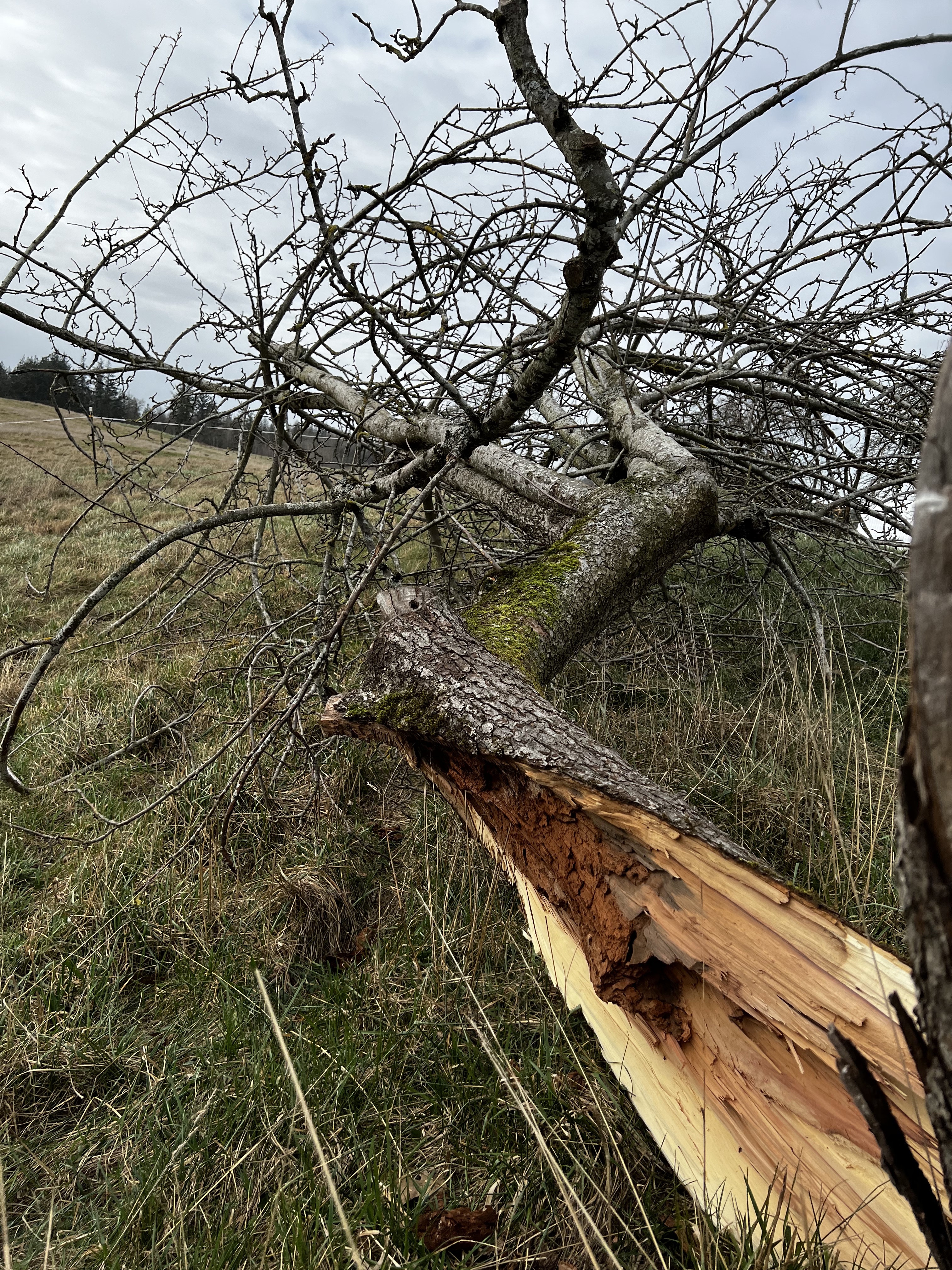
Life is very long – a crippled 100+ year old apple tree in our farm orchard toppled over in a strong northeaster this week. It had been so fruitful only a few months ago; it was remarkable to find its fallen trunk rotted and hollowed. It could no longer survive the forces of the world around it having hidden its weakness so effectively for so many decades.
Yet it came down, as all hollow things must.
For Thine is the Kingdom, not ours. Anyone who crosses borders in aggression will learn this undeniable history lesson once again. For God’s Kingdom is not hollow, never hollow and is not toppled, no matter what forces beat against it.
God’s Kingdom is forever hallowed. As a result, so are we.
One-Time
Monthly
Yearly
Make a one-time or recurring donation to support daily Barnstorming posts
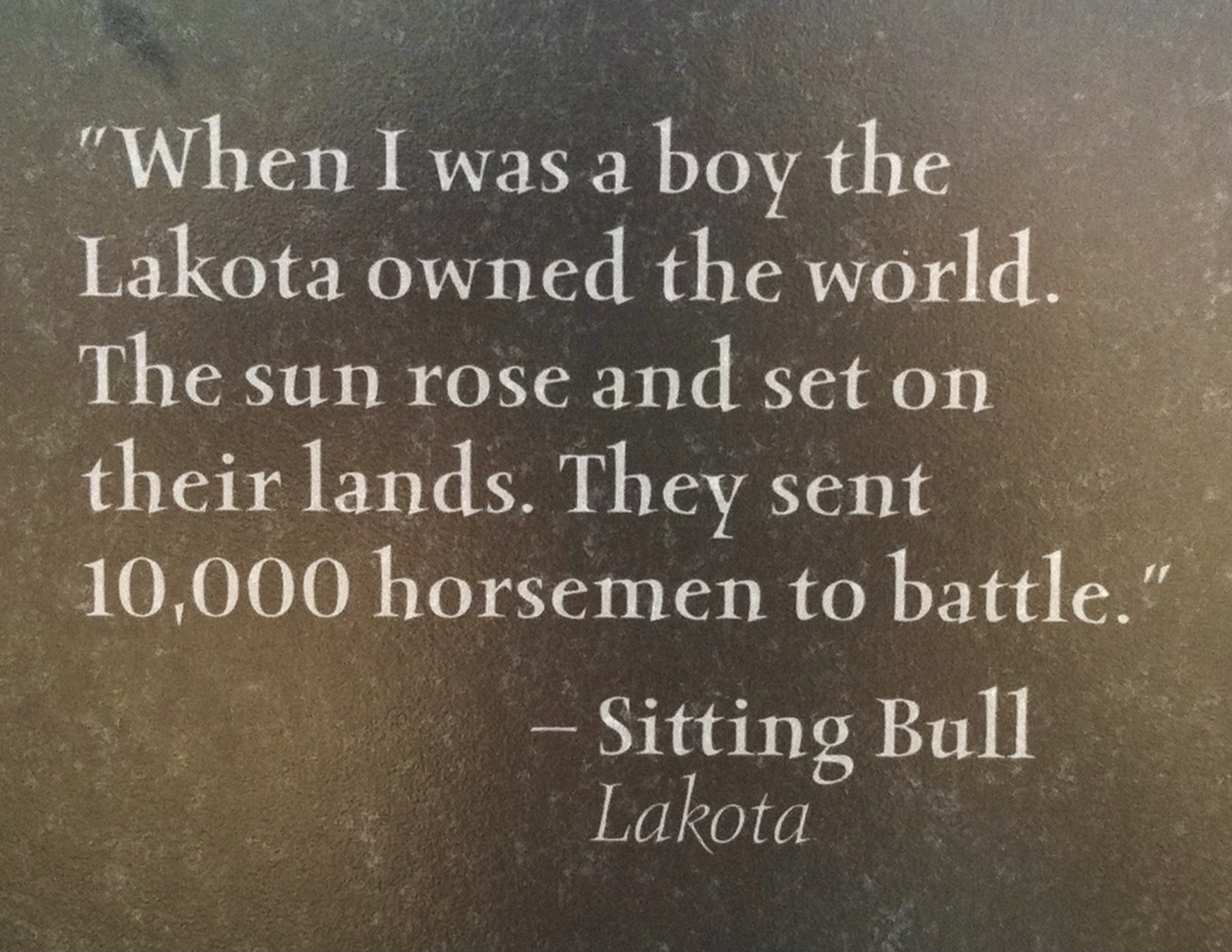
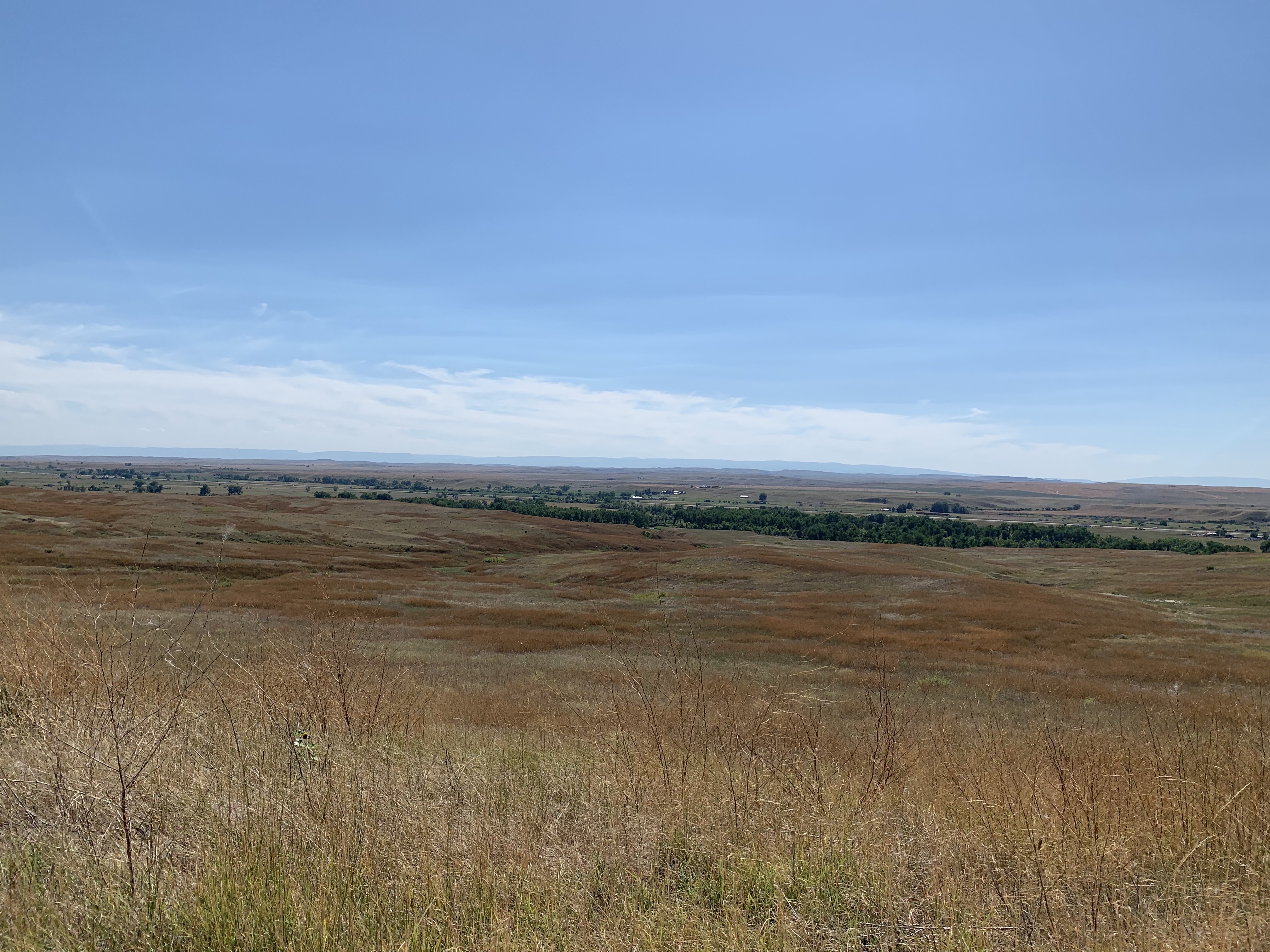
He is a hard one to write a poem about. Like Napoleon. Hannibal. Genghis Khan. Already so large in history. To do it right, I have to sit down with him. At a place of his own choosing. Probably a steakhouse. We take a table in a corner. But people still recognize him, come up and slap him on the back, say how much they enjoyed studying about him in school and ask for his autograph. After he eats, he leans back and lights up a cigar and asks me what I want to know. Notebook in hand, I suggest that we start with the Little Big Horn and work our way back. But I realize I have offended him. That he would rather take it the other way around. So he rants on about the Civil War, the way west, the loyalty of good soldiers and now and then twists his long yellow hair with his fingers. But when he gets to the part about Sitting Bull, about Crazy Horse, he develops a twitch above his right eye, raises his finger for the waiter, excuses himself and goes to the restroom while I sit there along the bluffs with the entire Sioux nation, awaiting his return. ~David Shumate “Custer” from High Water Mark
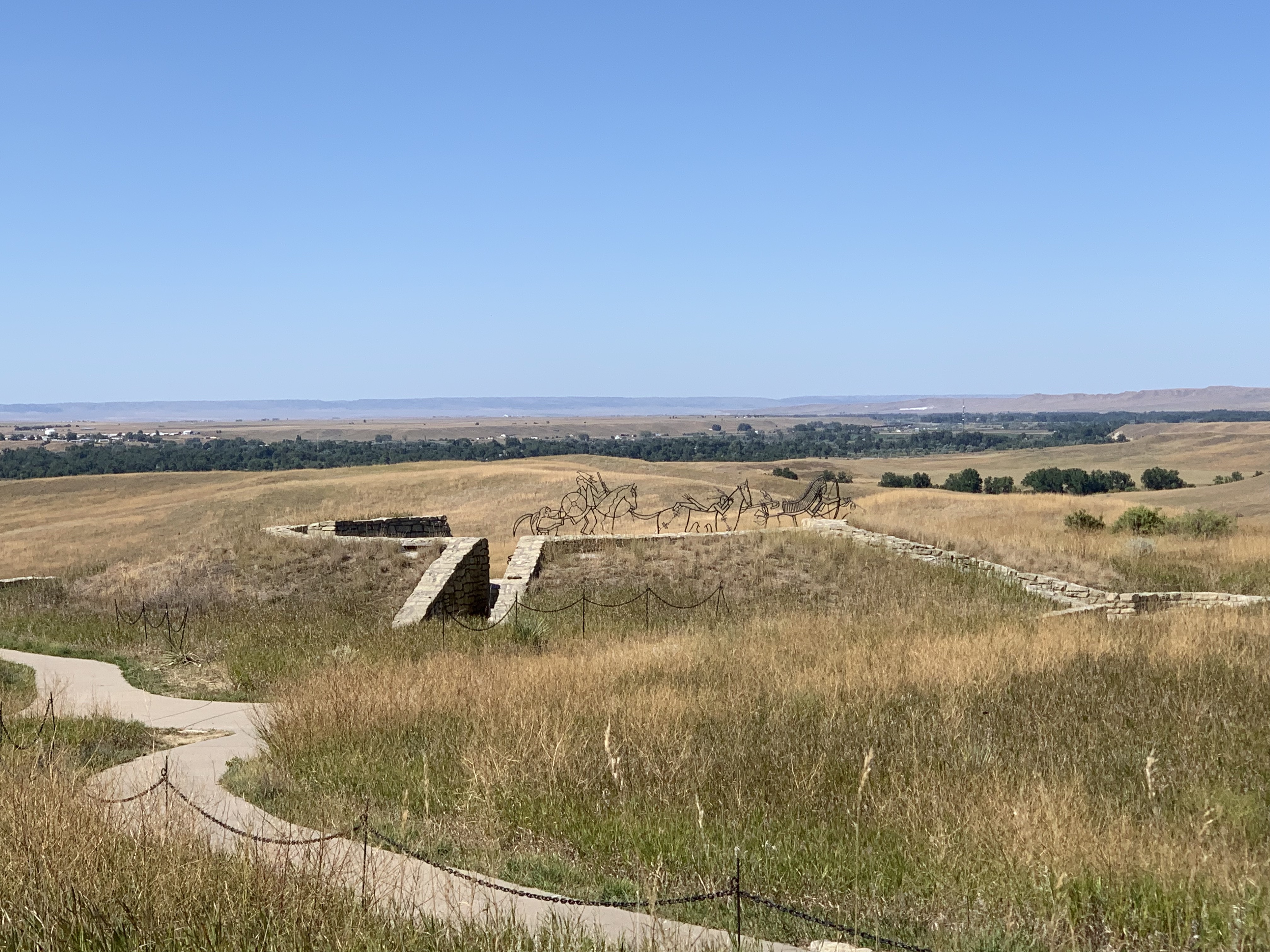
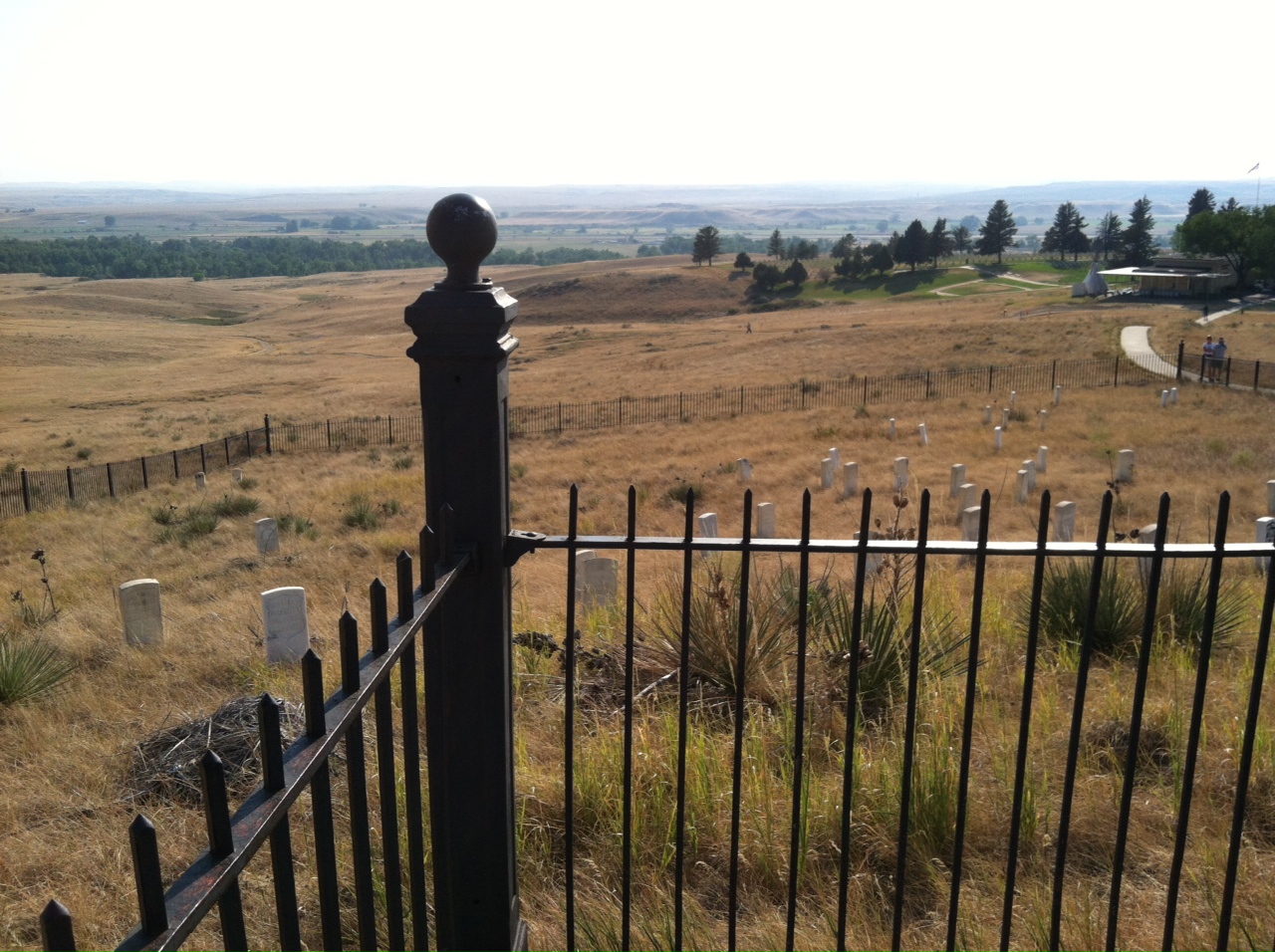
Bighorn Battlefield – National Park Service photo
When my family took two cross-country trips by car, once in 1963 and another in 1965, my father, a former officer and battalion leader in the Marines during WWII, was the primary driver and keeper of maps and deadlines. He could be convinced to stop at any number of state and national parks, points of interest and historical markers, but all four times we passed the sign indicating the Battle of the Little Bighorn, he would not stop despite our pleading.
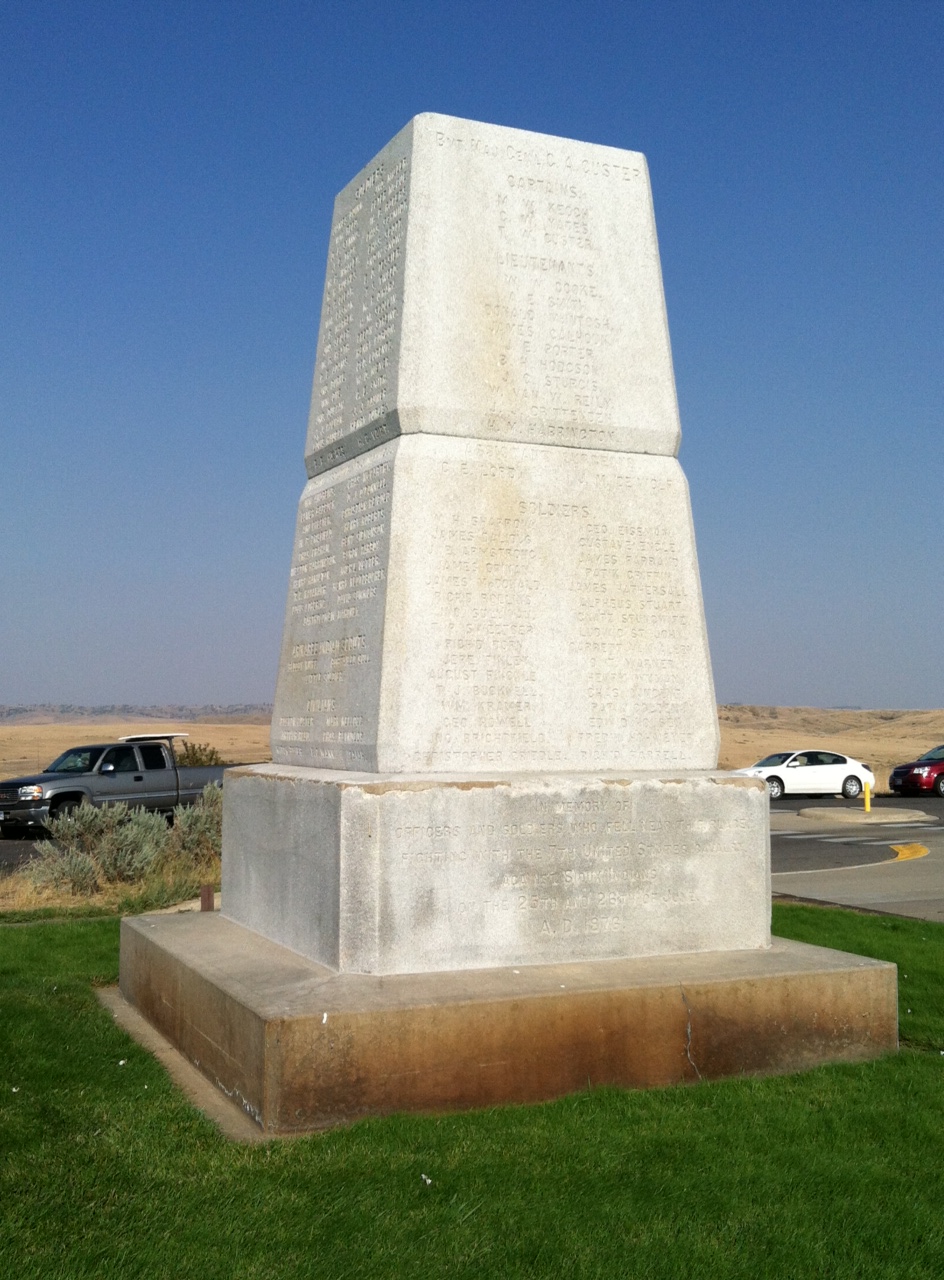
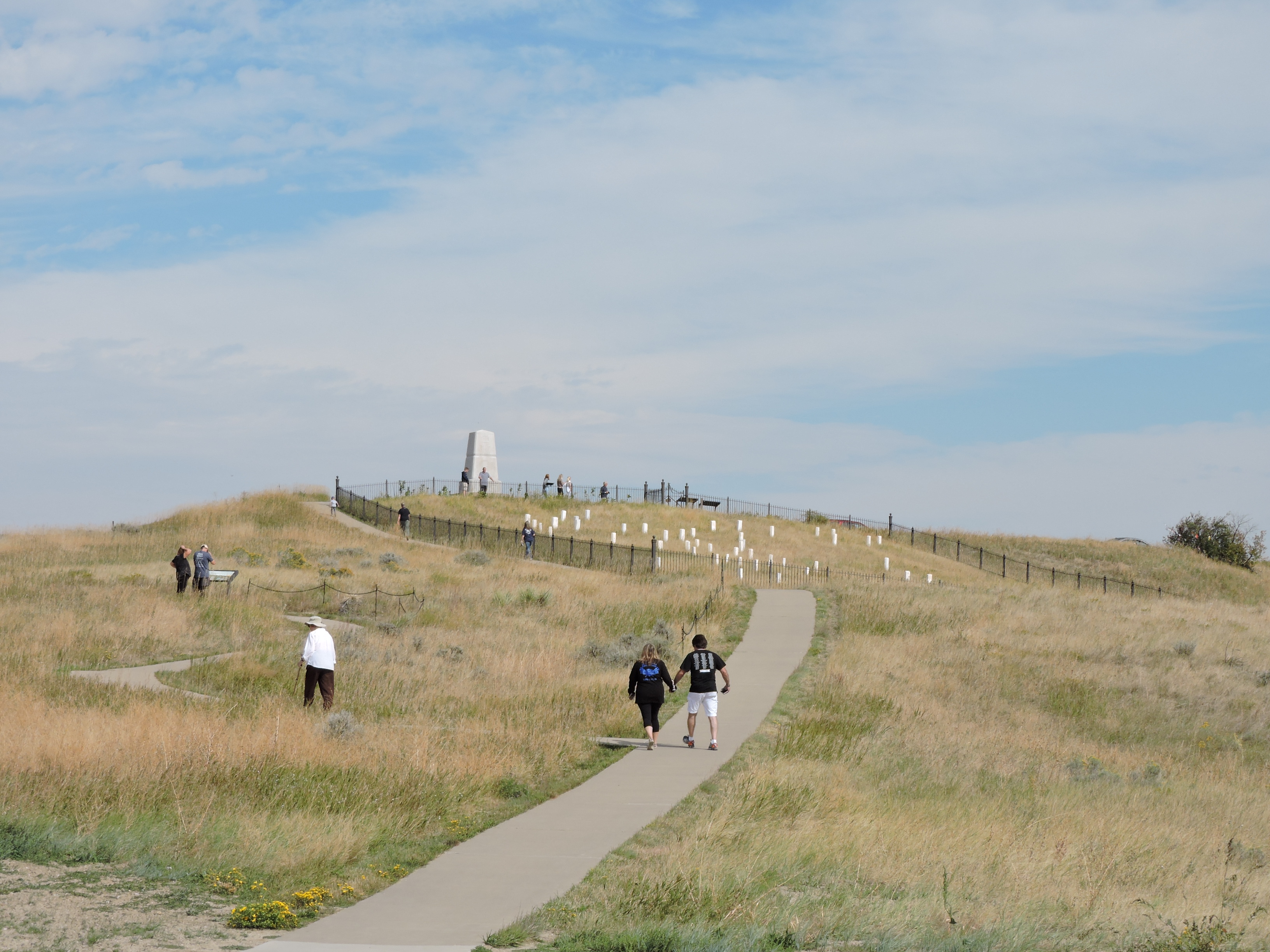
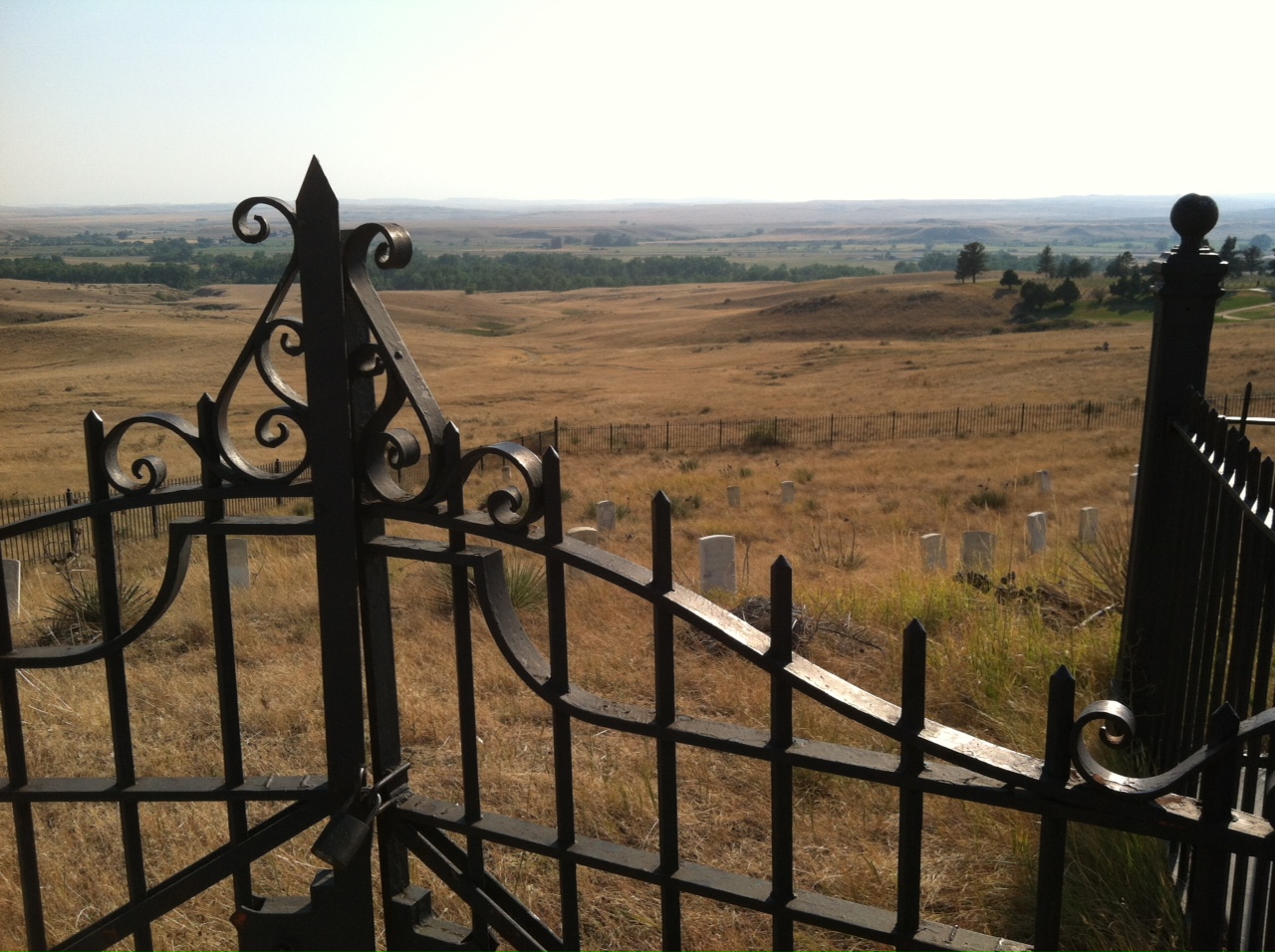
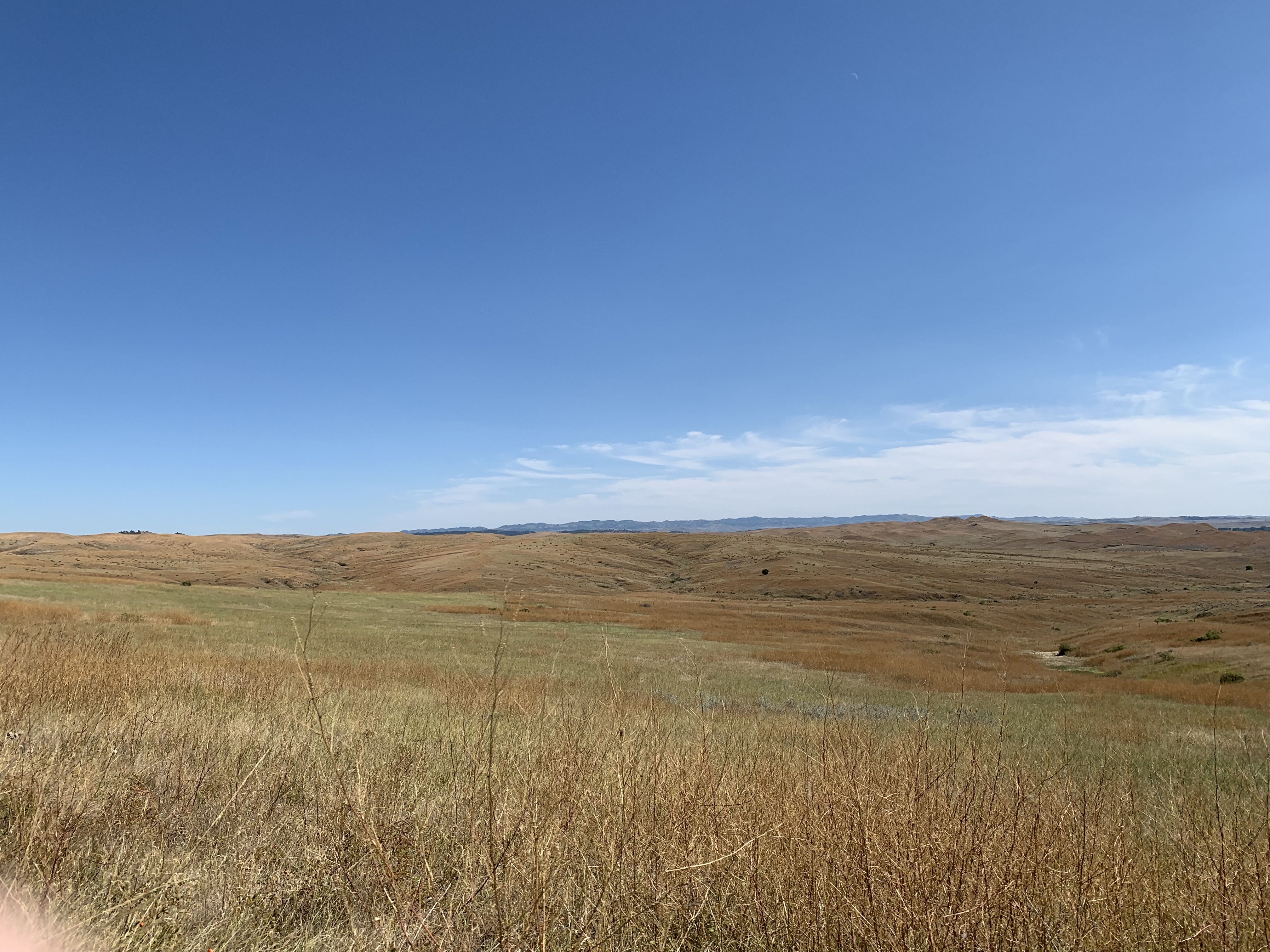
“You’ve seen as much as there is up there,” he would say as we sped past, pointing at the marble monolith at the top of the hill where the battle took place. I would look around at the desolate countryside of brown grass with no trees, in the middle of nowhere, and wonder how this place could ever have warranted a battle to the death.
Then I would get mad at my dad’s refusal to stop to learn more.
I had certainly learned about General George Custer’s Last Stand in my elementary school history lessons. But my interest was primarily driven by a 1958 Disney movie “Tonka Wakan” that I had seen in the theater and then later on Sunday nights on “Walt Disney’s Wonderful World of Color.” I thought I understood the tragedy of that day from the standpoint of the U.S. Calvary and the only surviving horse Comanche, who in the Disney-imagined version of the battle, was raised and trained by a young Indian boy who turned the horse over to the calvary and then later was part of the Little Bighorn Battle in defense of Indian territory.
So I had a very skewed and Disney-fied version of history and my father was not helping me understand more deeply. It wasn’t until much later that I realized the likely reason he was so reluctant to stop and examine the history of the Battle of the Little Bighorn.
My father was ashamed of it. He was a humble man who knew there could be no pride or sense of honor in that place.
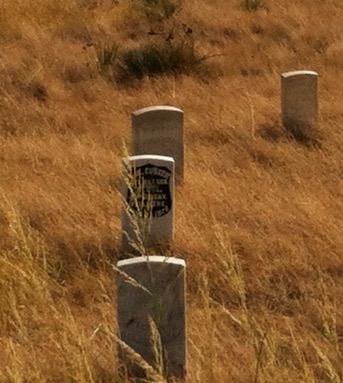
He had very likely been trained in his Marine Officer’s Training in 1942 to understand that the poor decision-making of a cocky, overly self-assured General Custer led to the slaughter of five companies of the 7th Calvary Regiment as well as their Indian scouts in addition to dozens of Lakota and Dakota Sioux, Cheyenne and Arapahoe warriors.
My father had lived through three South Pacific island battles where poor decision-making was a death sentence. He didn’t feel the need to rehash the history in this desolate part of Montana.
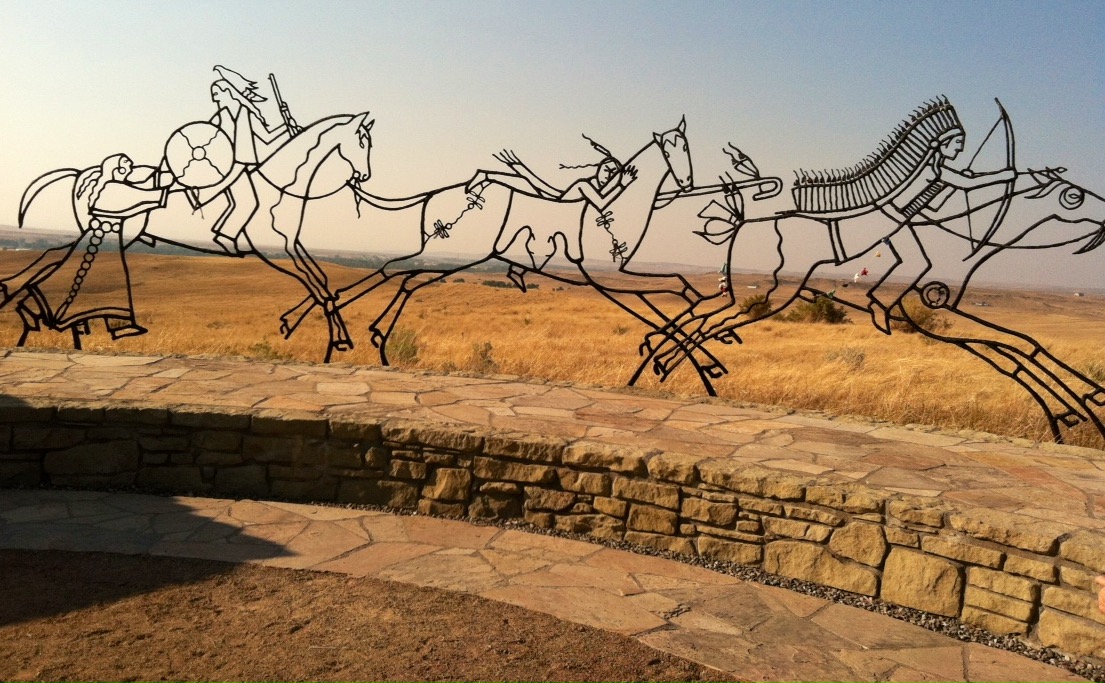
As an adult, I’ve visited the Battlefield with my husband and children several times, have learned more about what led to the battle, what took place that day and how the indigenous people of the region have memorialized the spot from their own perspective. When we approach this spot on our cross-country drives, I’m filled with regret and remorse at the loss of life and the eventual loss of a Native American culture that could never again be as it was, despite the defeat they handed to the cavalry that day. I learned more when our son lived and taught high school math on the Pine Ridge Reservation of the Lakota Sioux people and we visited the site of Wounded Knee, another tear-drenched place in U.S. Cavalry and Native American history.
We, all descendants of immigrant Americans, comprise the U.S. government and military which doesn’t always make the best or wisest decisions. This is haunting us again this week in the miserably managed ending of the twenty-year war in Afghanistan that has cost so many American and Afghan lives – certainly beyond the scale of the horrific one day defeat at the Little Bighorn River. This long drawn-out complicated response to the attacks we suffered on 9/11/01, ended with yet more tragic bloodshed as we left so many vulnerable behind.
War, suffering, loss and death cannot and should not be Disney-fied. History is more complex than a paragraph in a textbook.
We have so much to learn about our shame and our need for greater humility. We need to understand who we have offended, not just how offended we feel. We can’t hide in the bathroom or drive on past the sites of these bloody conflicts, hoping it will all be forgotten.
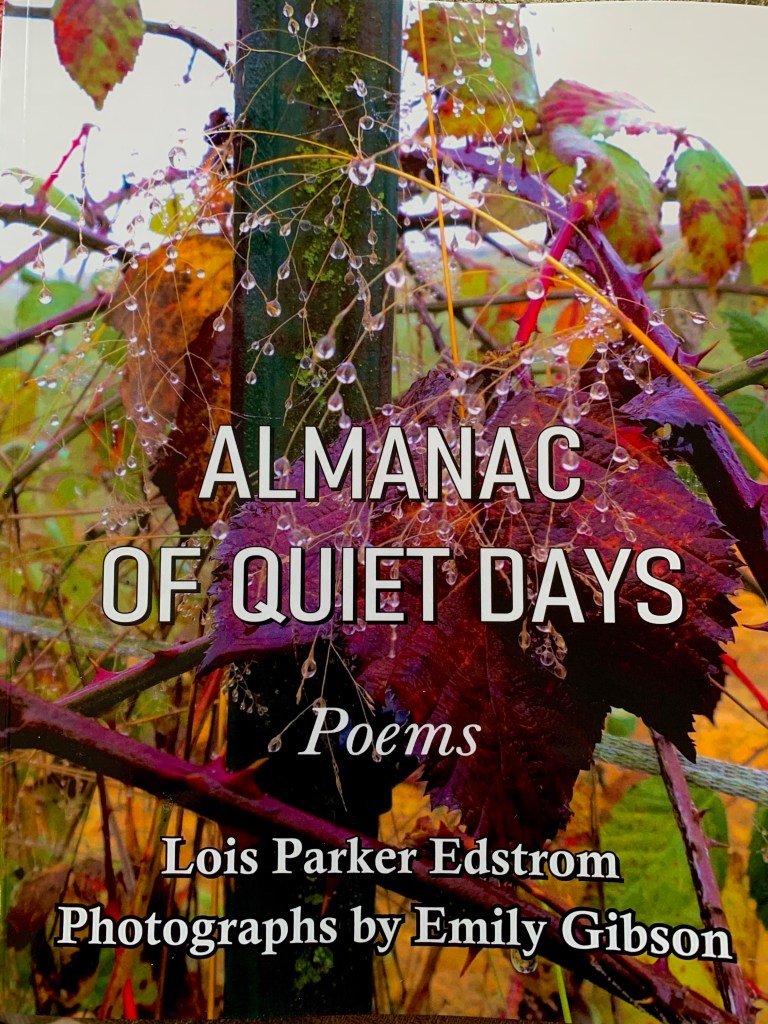
A book of Barnstorming photography and Lois Edstrom’s poetry is available to order here:
I have walked through many lives, some of them my own, and I am not who I was, though some principle of being abides, from which I struggle not to stray. When I look behind, as I am compelled to look before I can gather strength to proceed on my journey, I see the milestones dwindling toward the horizon
How shall the heart be reconciled to its feast of losses?
Yet I turn, I turn, exulting somewhat, with my will intact to go wherever I need to go, and every stone on the road precious to me. In my darkest night, when the moon was covered and I roamed through wreckage, a nimbus-clouded voice directed me: “Live in the layers, not on the litter.” Though I lack the art to decipher it, no doubt the next chapter in my book of transformations is already written. I am not done with my changes. ~Stanley Kunitz from “The Layers”
A child is asleep. Her private life unwinds inside skin and skull; only as she sheds childhood, first one decade and then another, can she locate the actual, historical stream, see the setting of her dreaming private life—the nation, the city, the neighborhood, the house where the family lives—as an actual project under way, a project living people willed, and made well or failed, and are still making, herself among them.
I breathed the air of history all unaware, and walked oblivious through its littered layers. ~Annie Dillard from An American Childhood
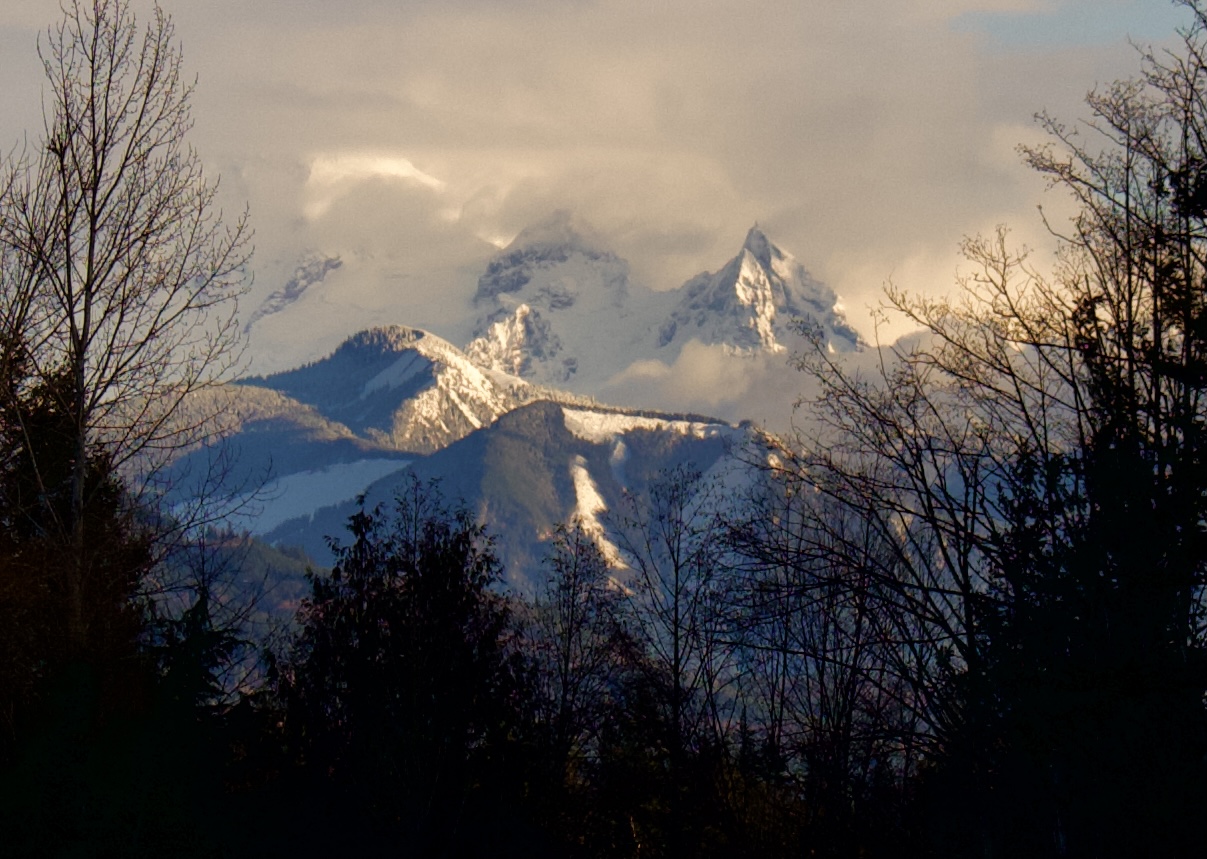
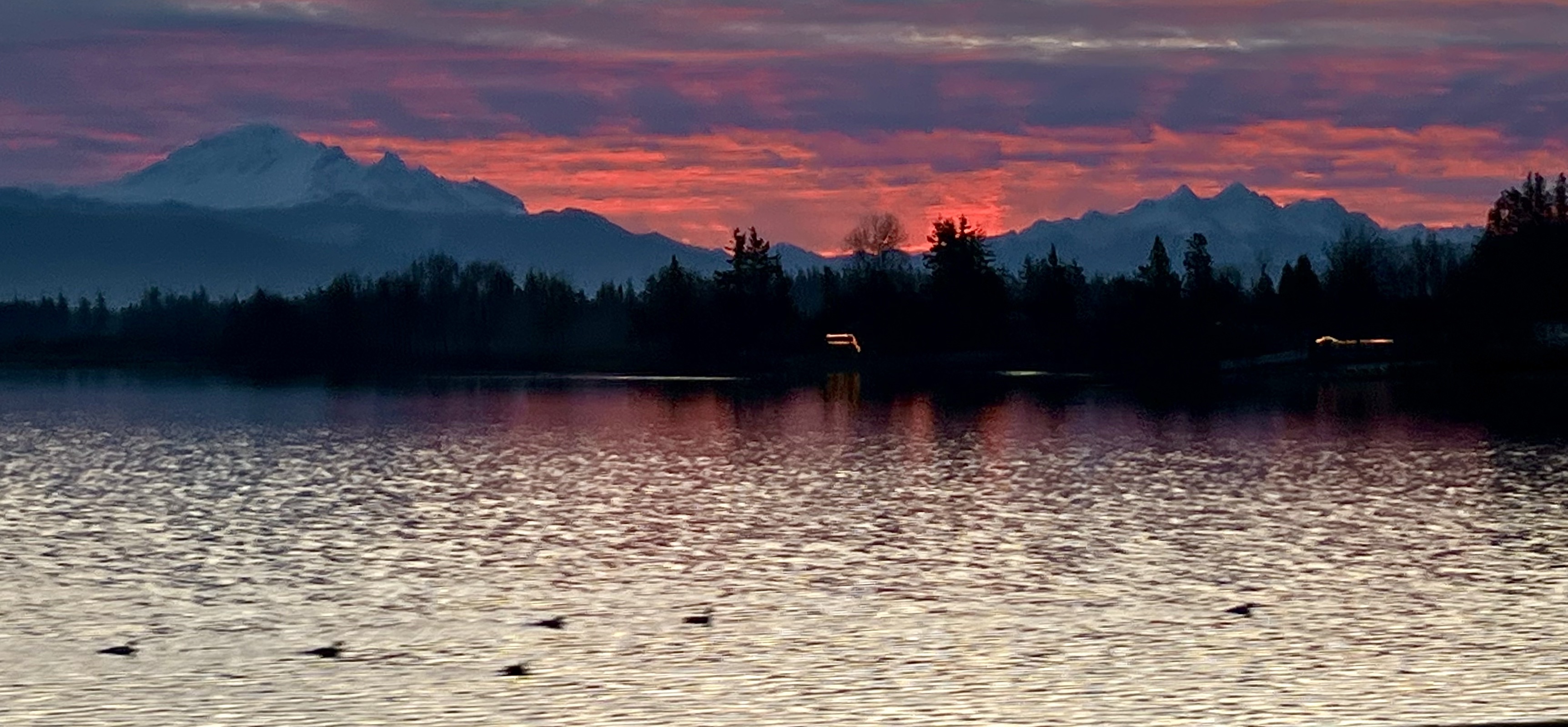
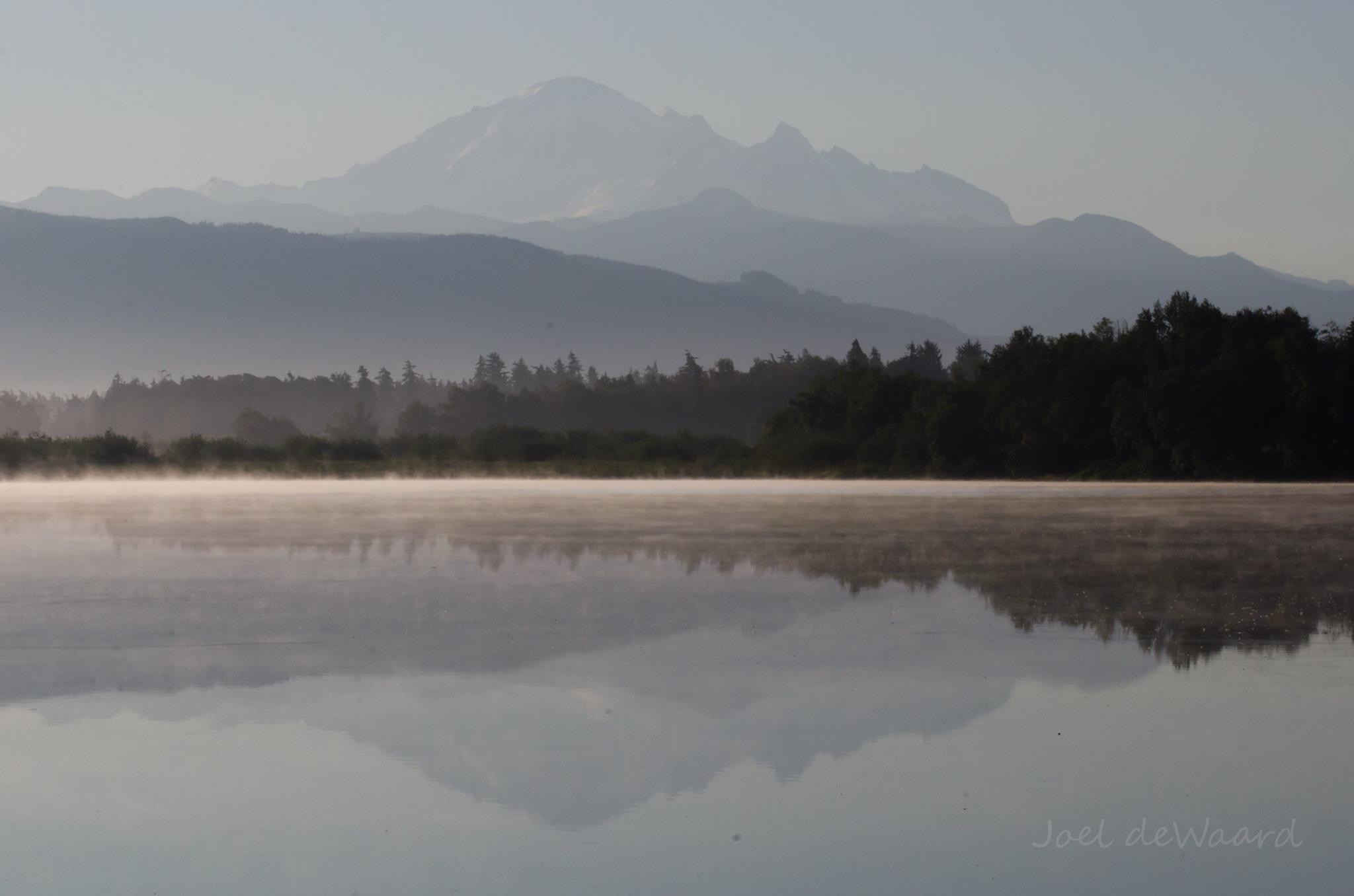
photo of Wiser Lake and Mt. Baker by Joel de Waard
…we become whole by having the courage to revisit and embrace all the layers of our lives, denying none of them, so that we’re finally able to say, “Yes, all of this is me, and all of this has helped make me who I am.”
When we get to that point, amazingly, we can look at all the layers together and see the beauty of the whole. ~Parker Palmer from “Embracing All the Layers of Your Life” in On Being
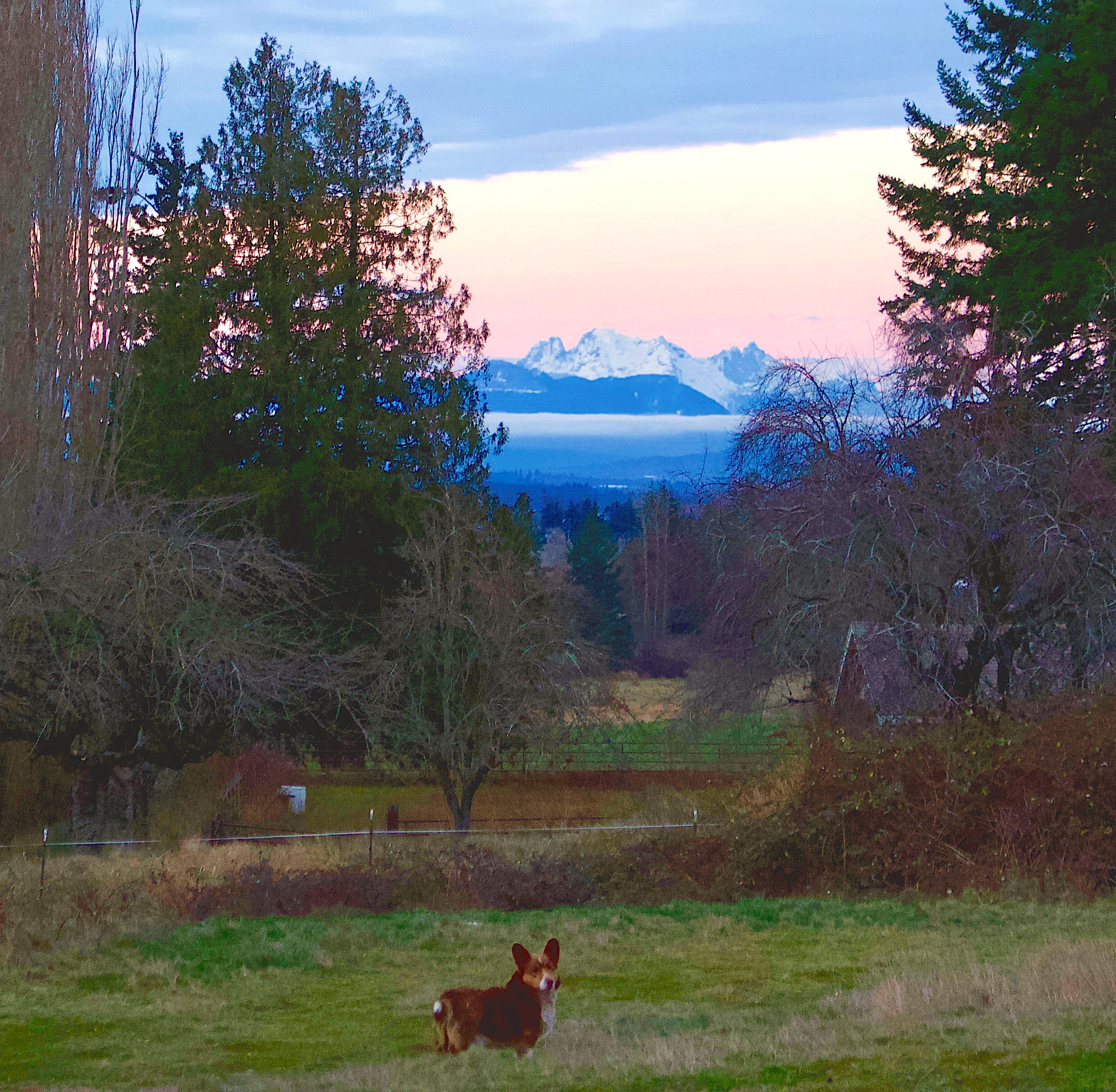
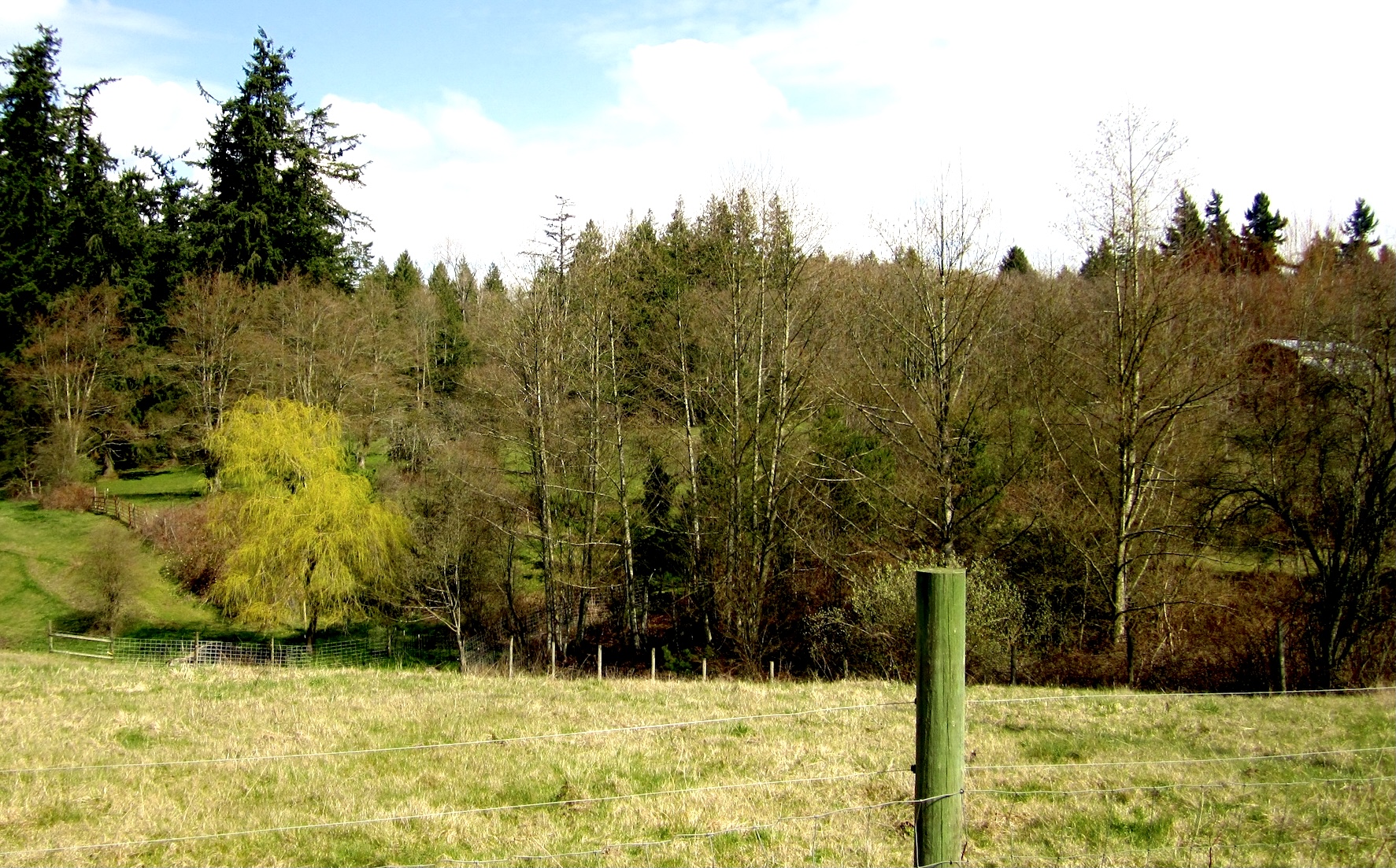
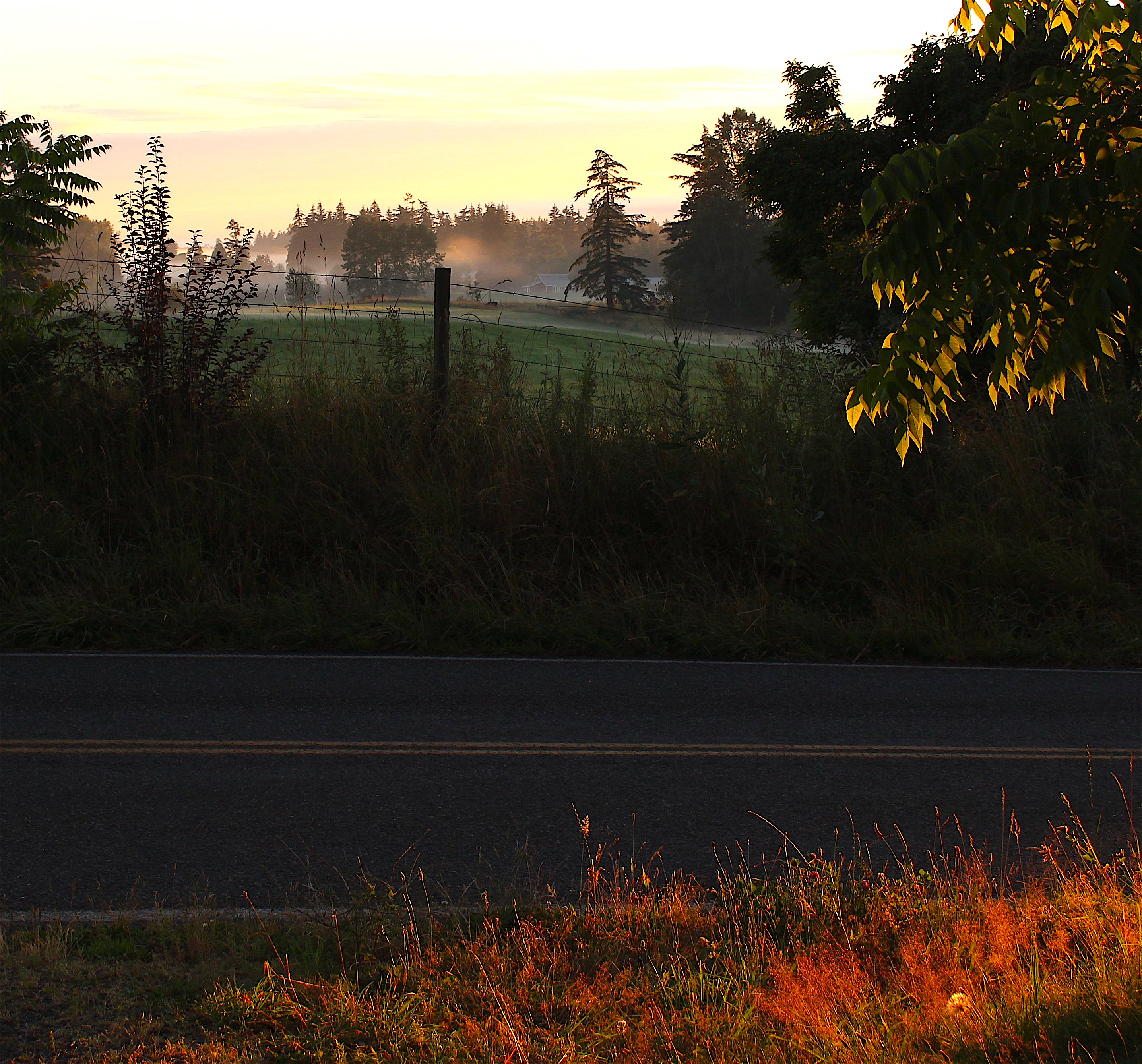
My favorite scenes are ones where there are several “layers” to study, whether it is a still life of petals or a deep landscape with a foreground, middle and backdrop. The challenge is to decide where to look first, what to draw into sharp focus, and how to absorb it all as a whole. In fact, if I only see one aspect, I miss the entire point of the composition. It is wonderfully multi-faceted and multi-layered because that is how my own life is – complex with so much diverse and subtle shading.
If I try to suppress some darker part of my own life I wish to forget and blur out, I ignore the beauty of the contrast with the light that illuminates the rest.
The layers reflect who I was created to be as an image-bearer – complex, nuanced, illuminated in the presence of dark.
Beautifully composed and ultimately transformed.
Enjoying Barnstorming posts like this? You can order this book from Barnstorming here:
I like farming. I like the work. I like the livestock and the pastures and the woods. It’s not necessarily a good living, but it’s a good life. I now suspect that if we work with machines the world will seem to us to be a machine, but if we work with living creatures the world will appear to us as a living creature. That’s what I’ve spent my life doing, trying to create an authentic grounds for hope. ~Wendell Berry, horse farmer, essayist, poet, professor
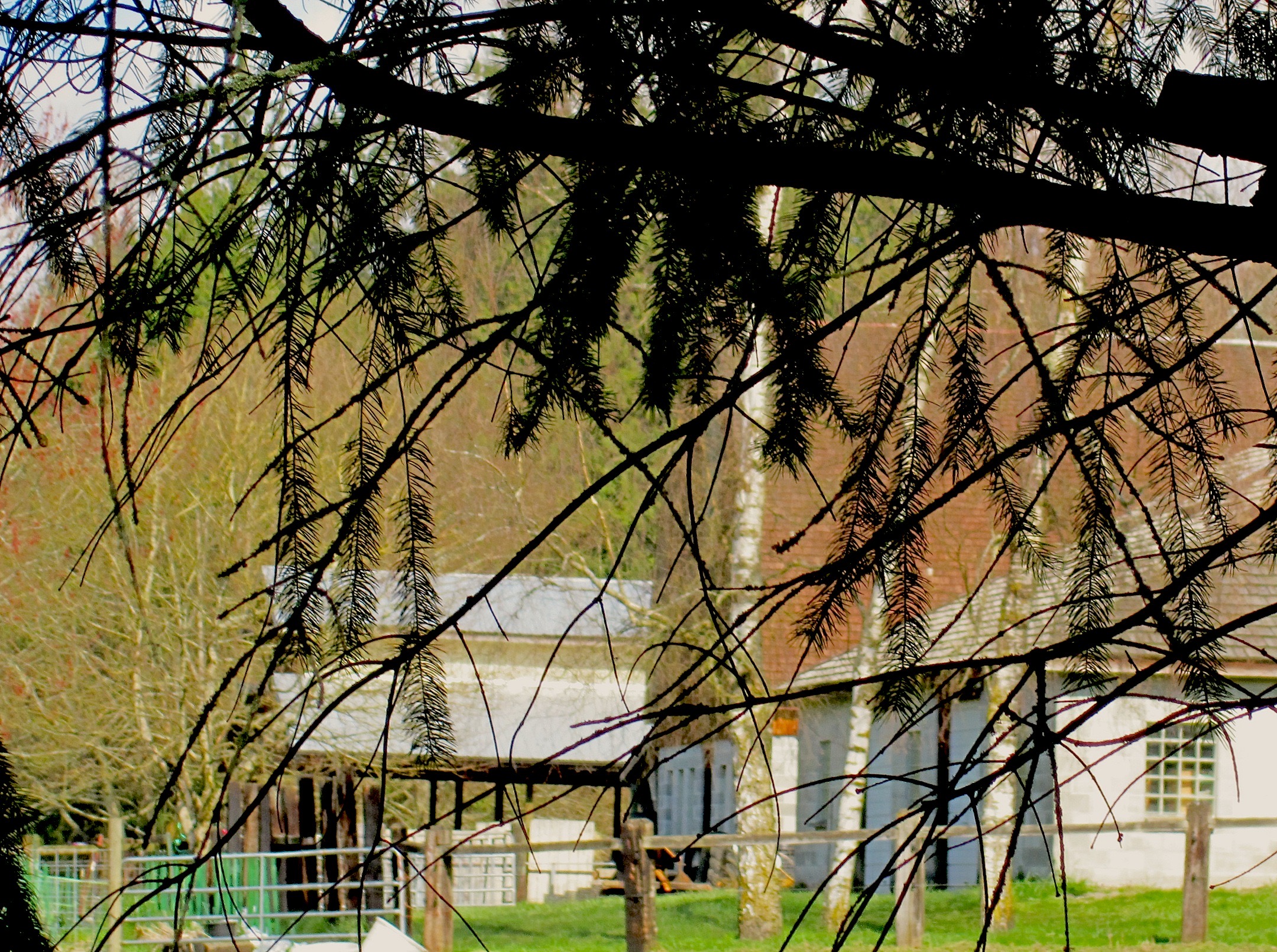
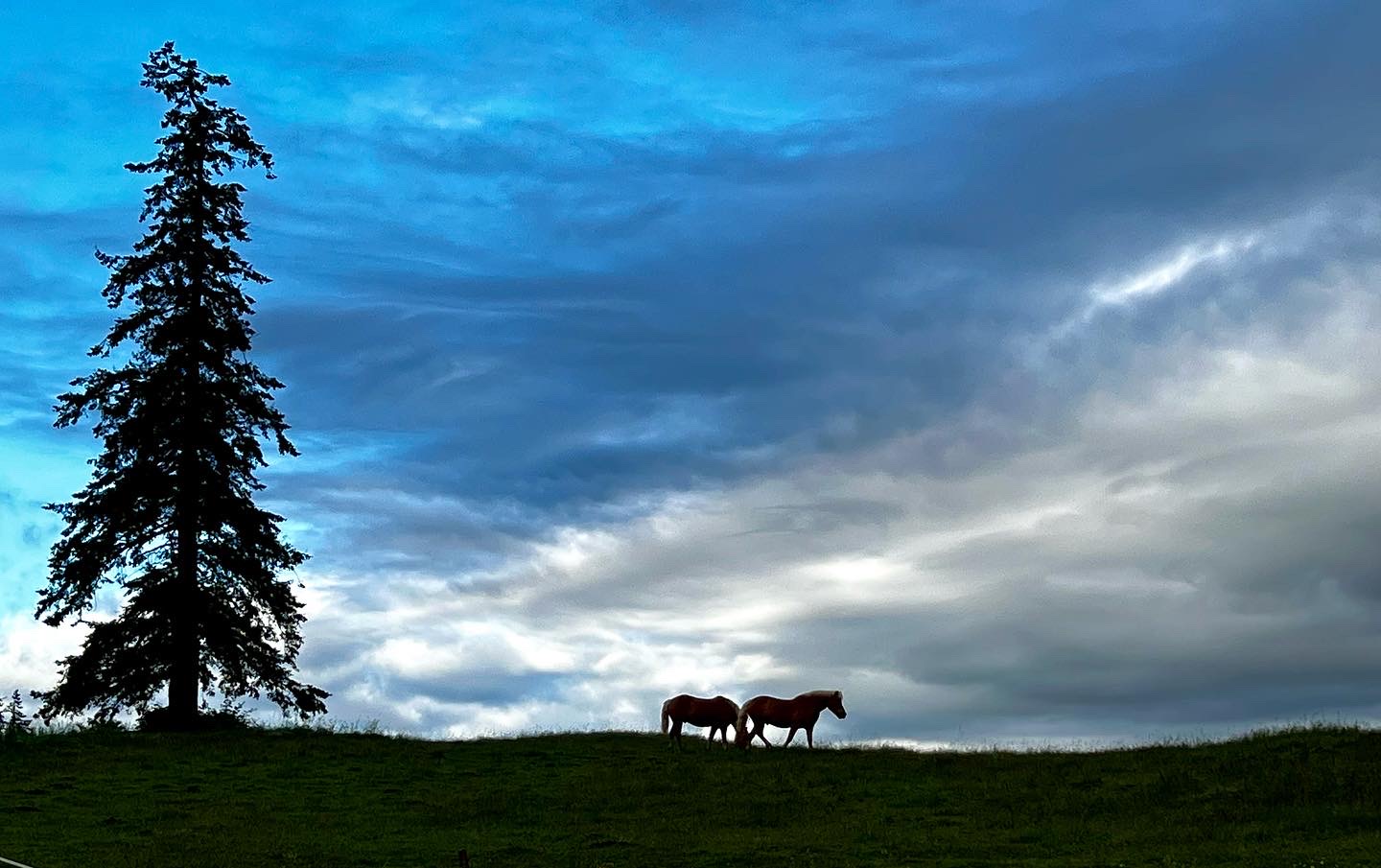
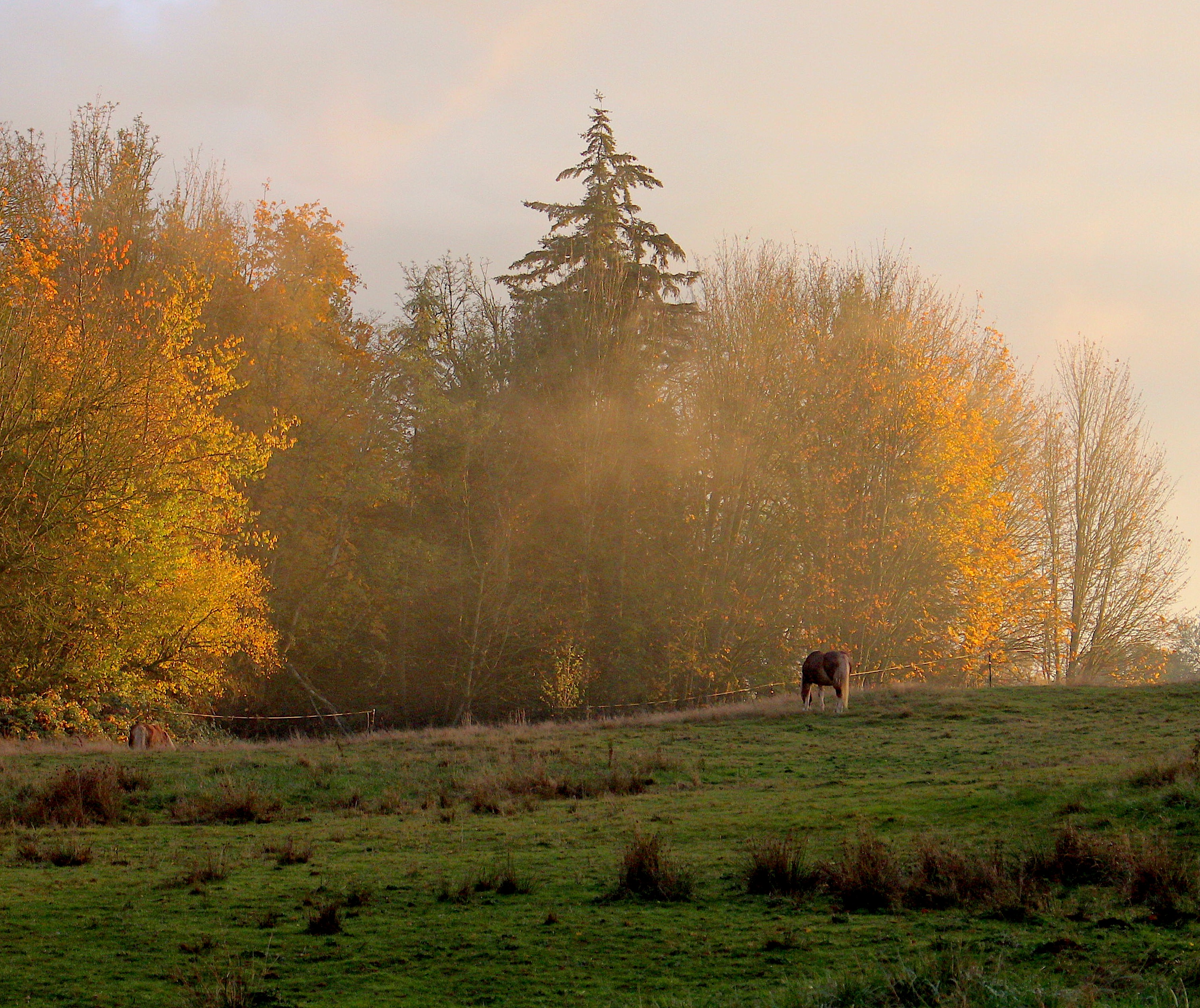
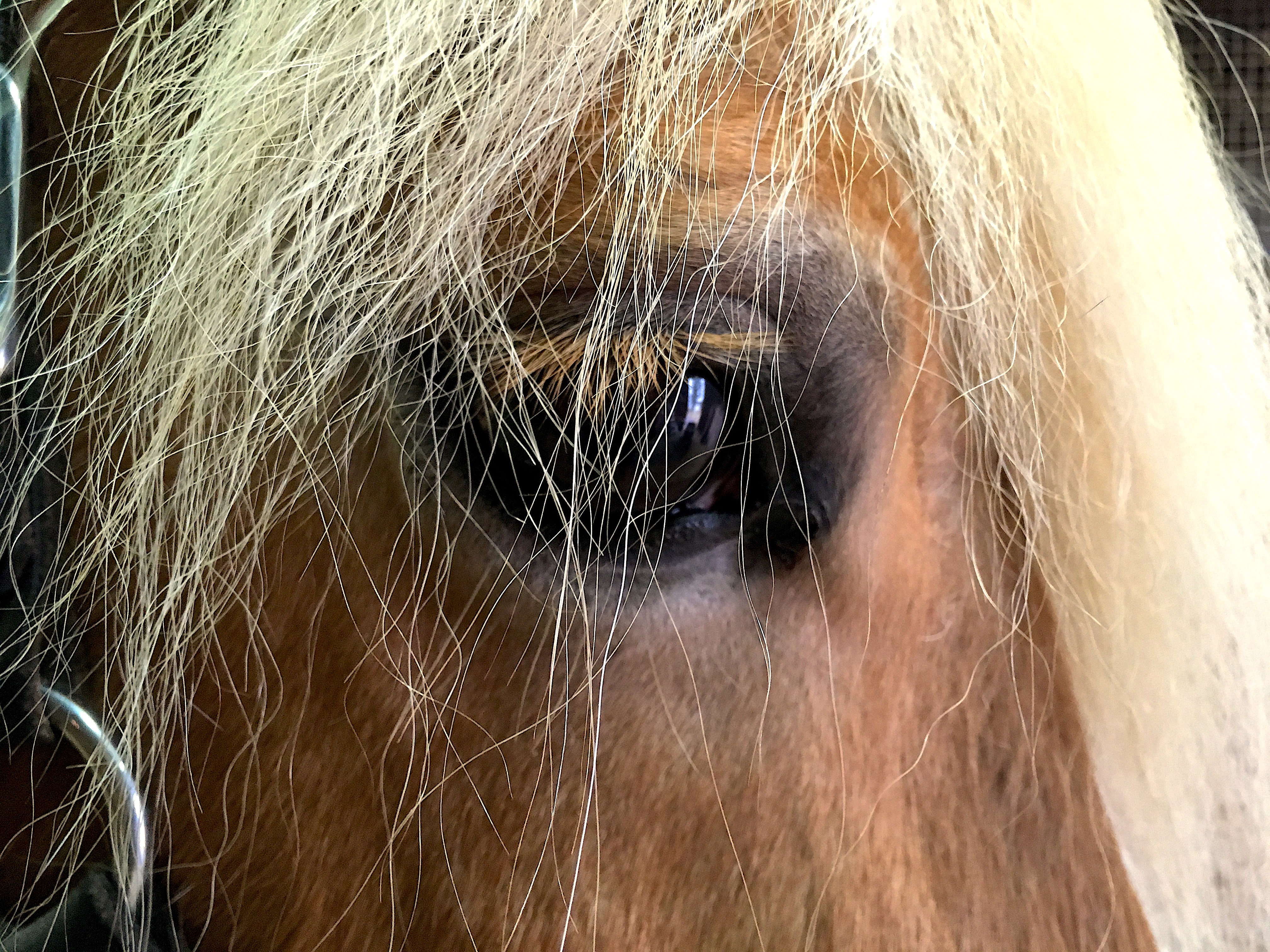
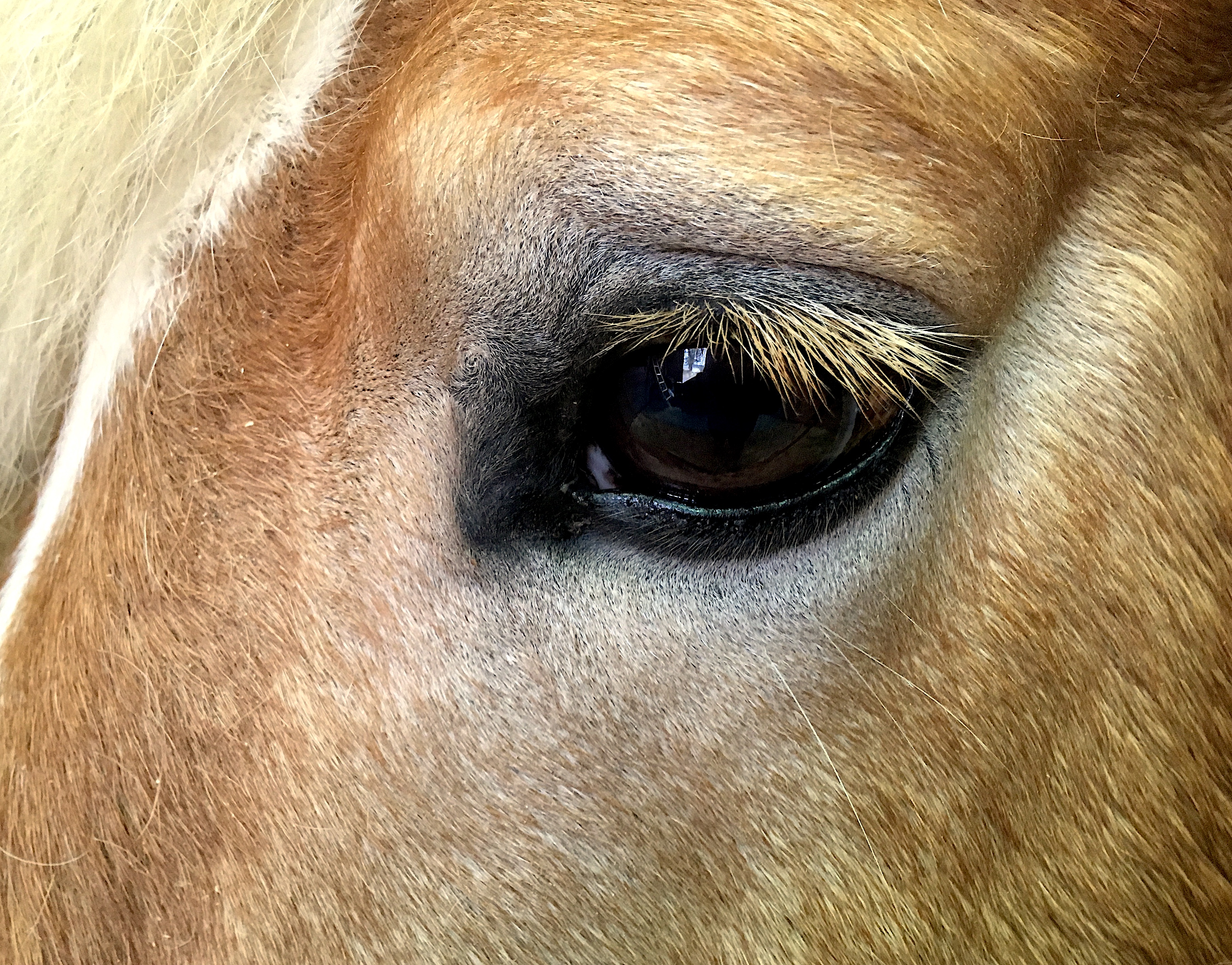
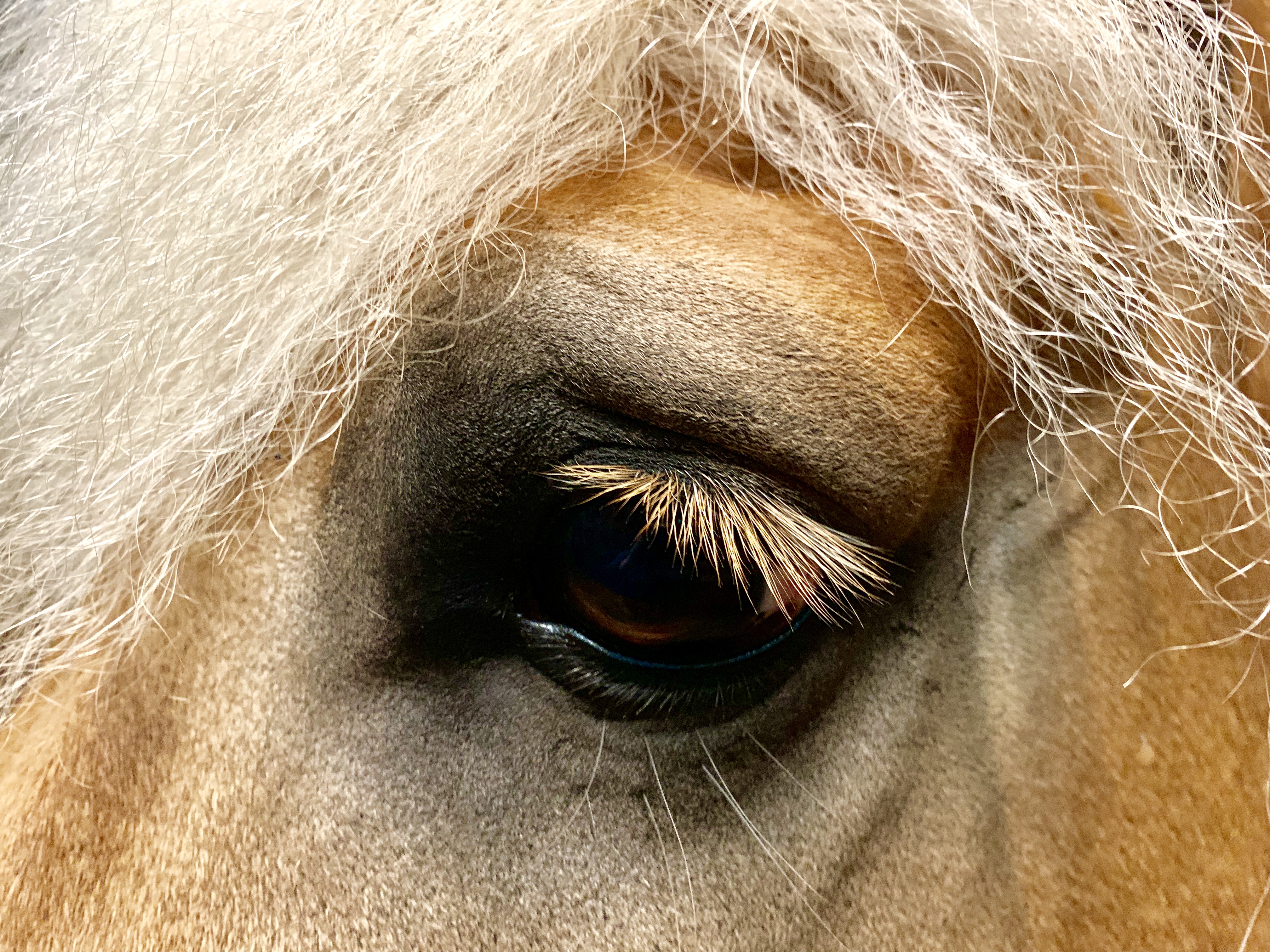
When I pull open the barn doors, every morning and each evening, as my grandparents did one hundred years ago, six rumbling voices rise in greeting. We exchange scents, nuzzle each others’ ears.
I do my chores faithfully as my grandparents once did– draw fresh water into buckets, wheel away the pungent mess underfoot, release an armful of summer from the bale, reach under heavy manes to stroke silken necks.
I don’t depend on our horses’ strength and willingness to don harness to carry me to town or move the logs or till the soil as my grandparents did.
Instead, these soft eyed souls, born on this farm two or three long decades ago, are simply grateful for my constancy morning and night to serve their needs until the day comes they need no more.
I depend on them to depend on me to be there to open the doors; their low whispering welcome gives voice to the blessings of living on a farm ripe with rhythms and seasons, as if today and tomorrow are just like one hundred years ago.







































 Barnstorming