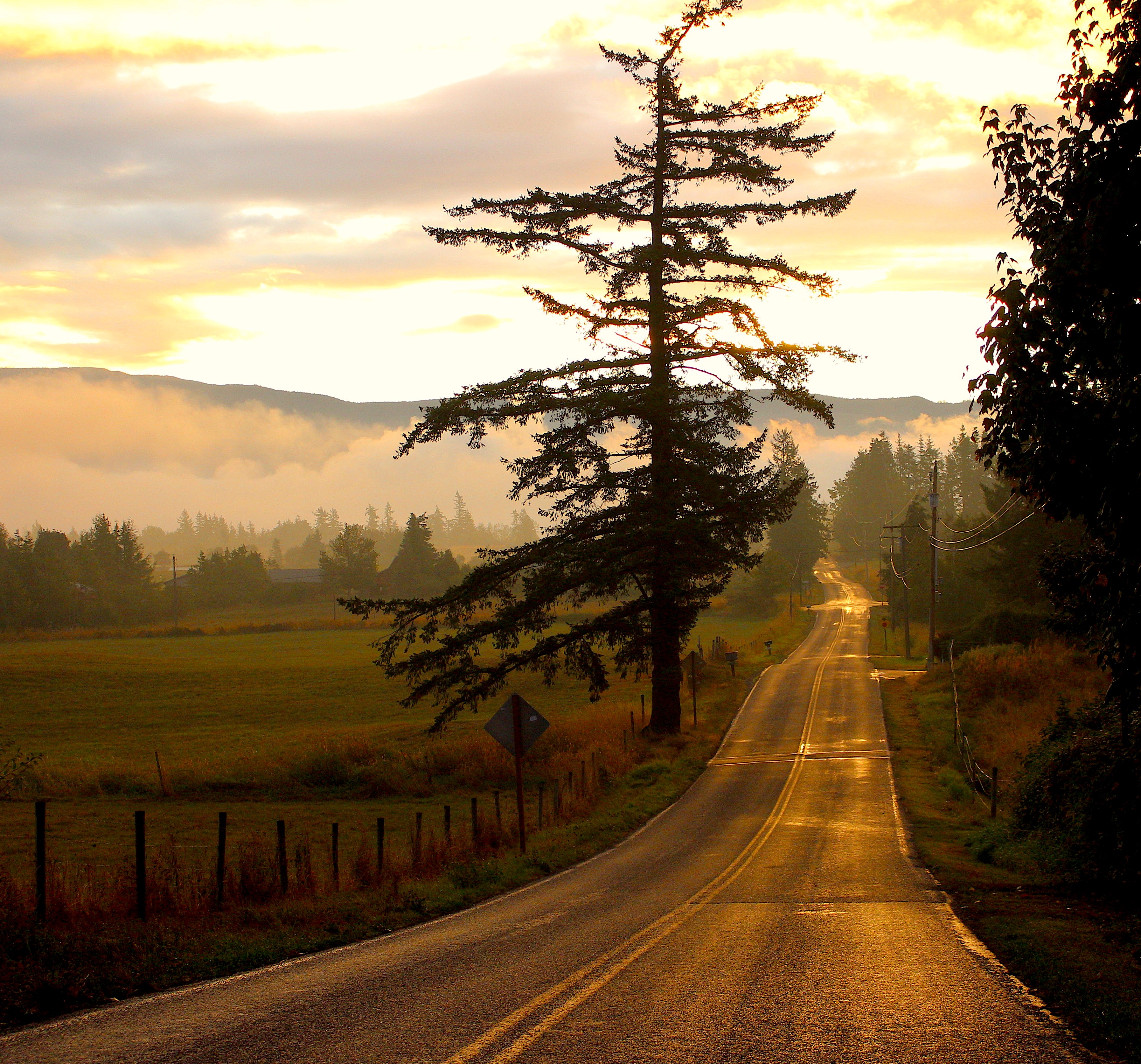
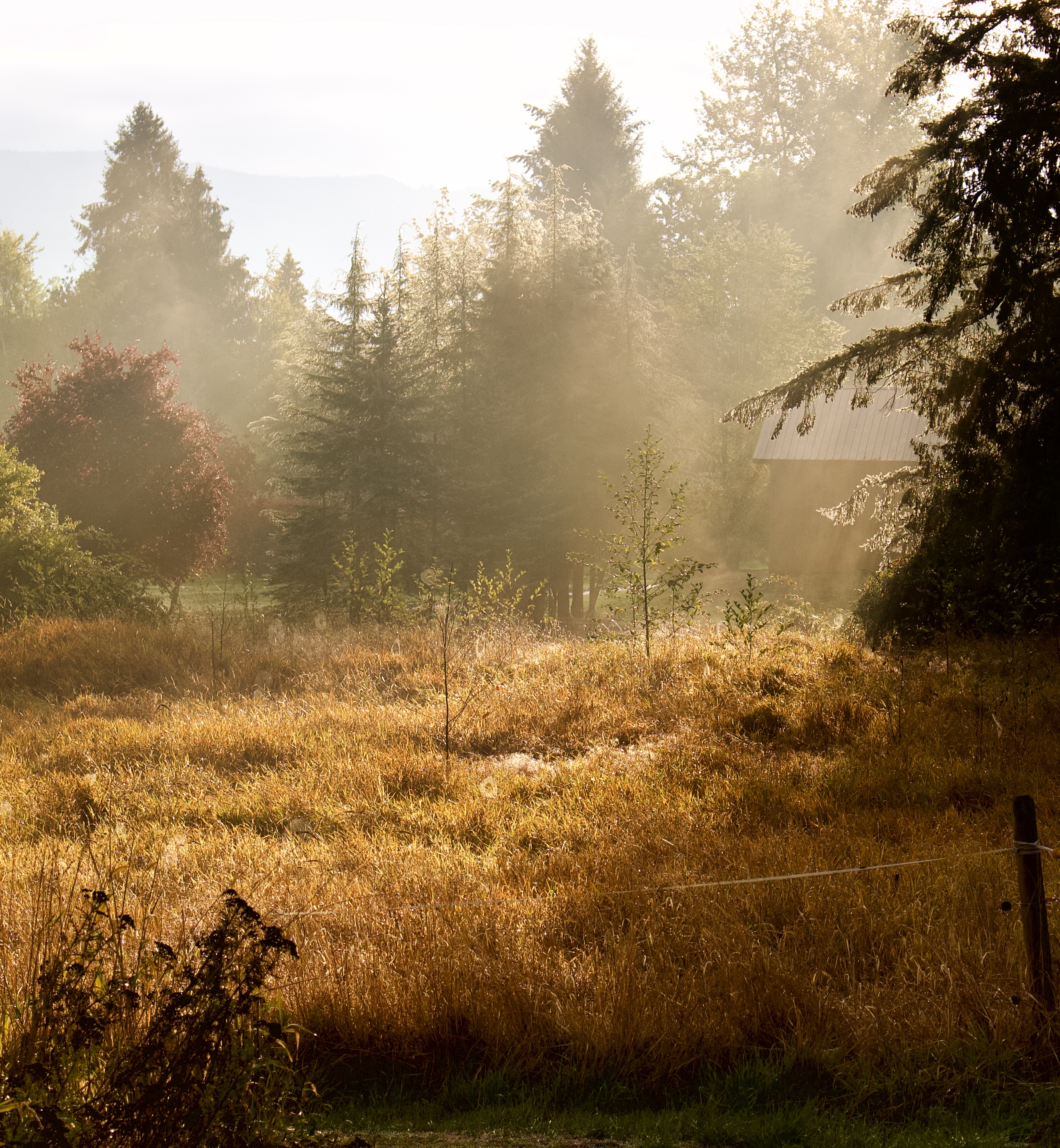
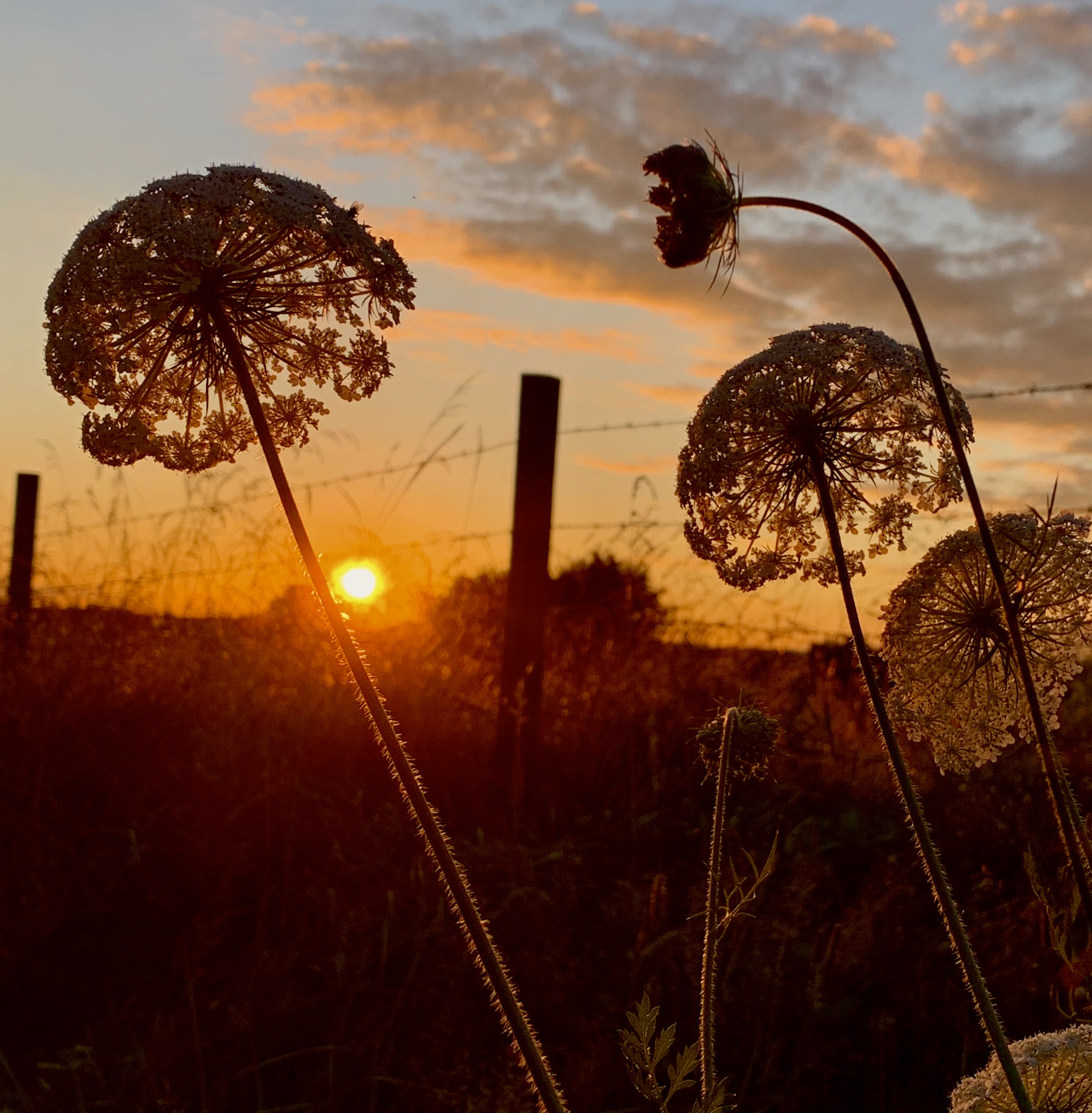
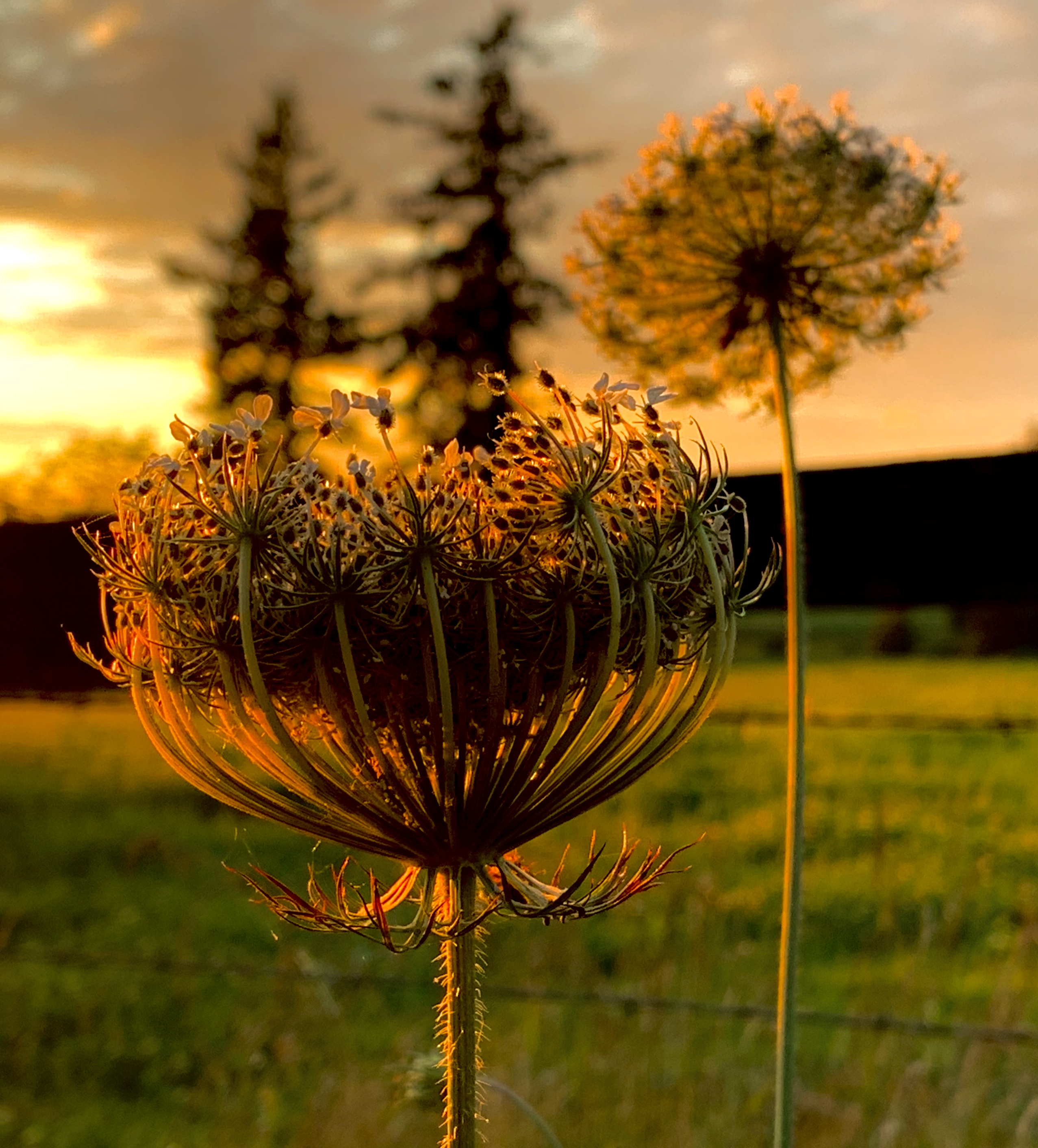
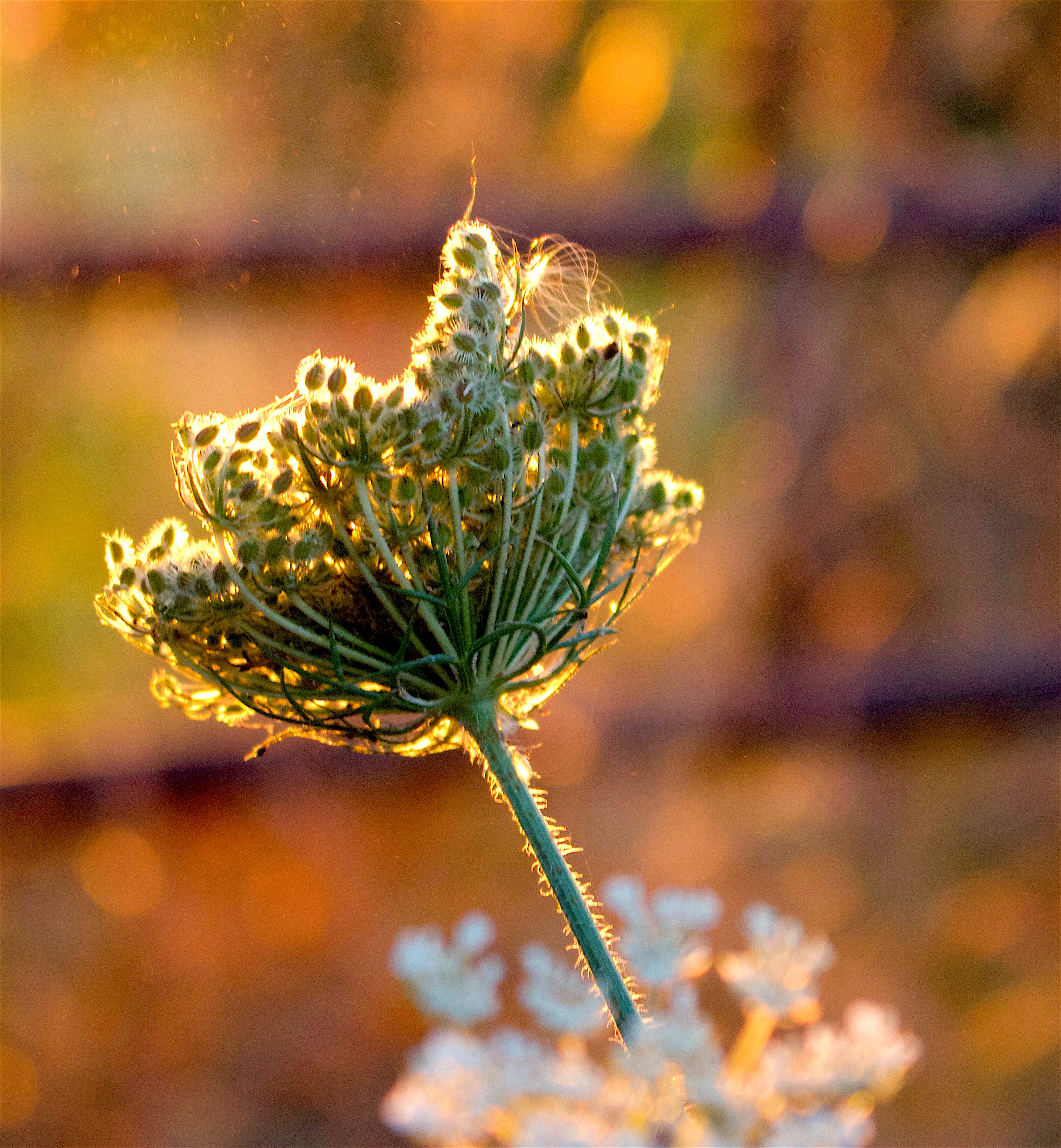
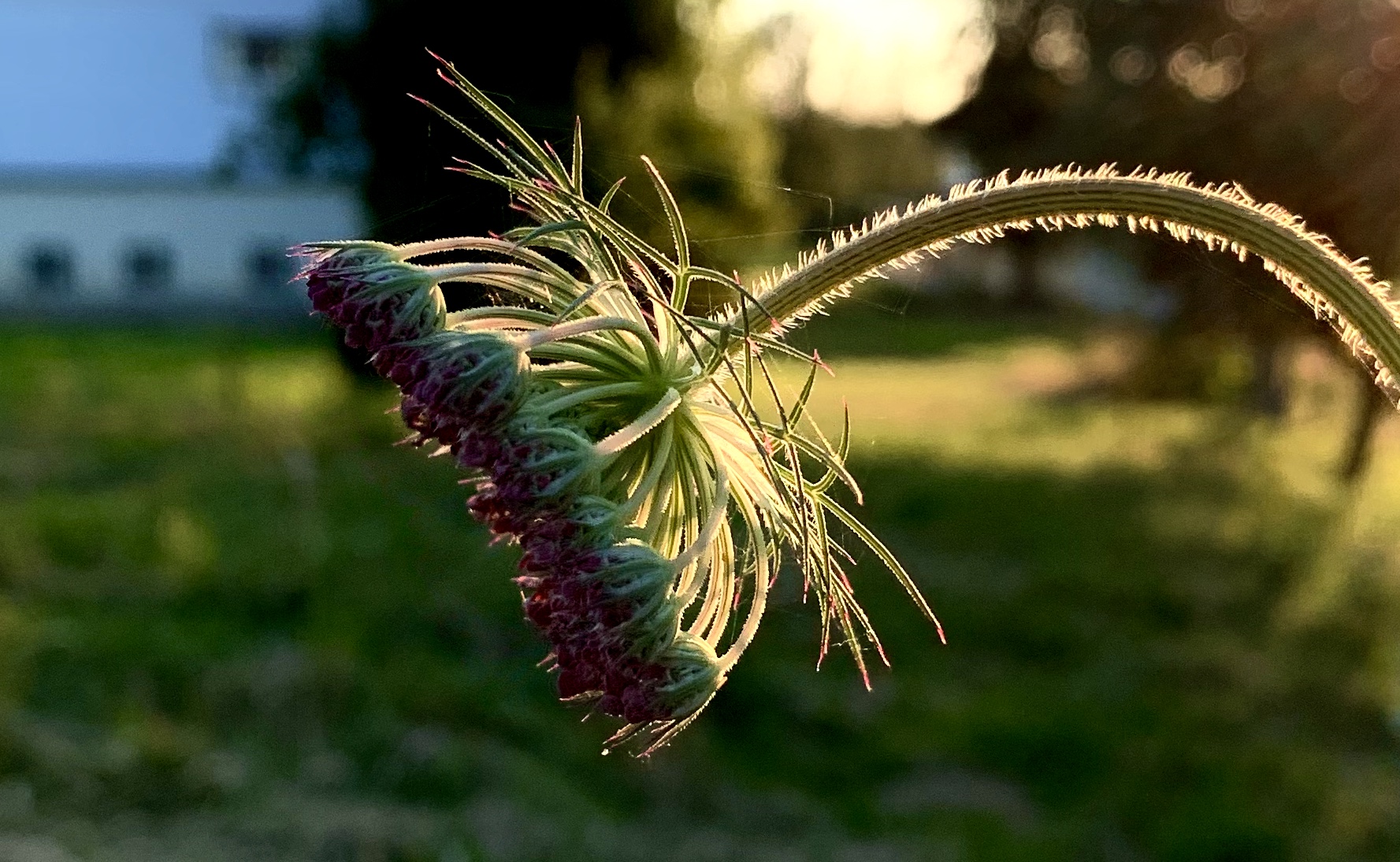
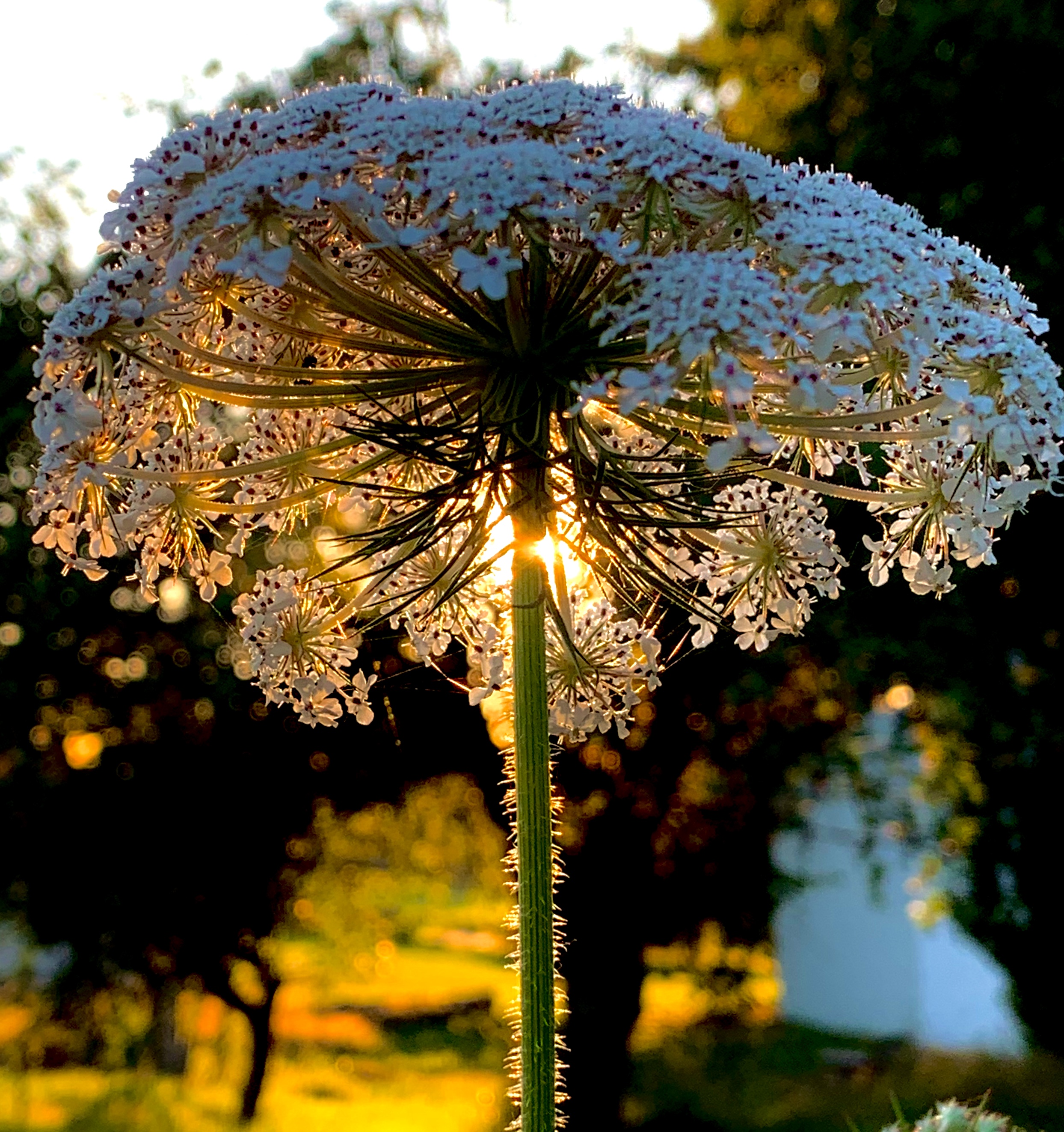
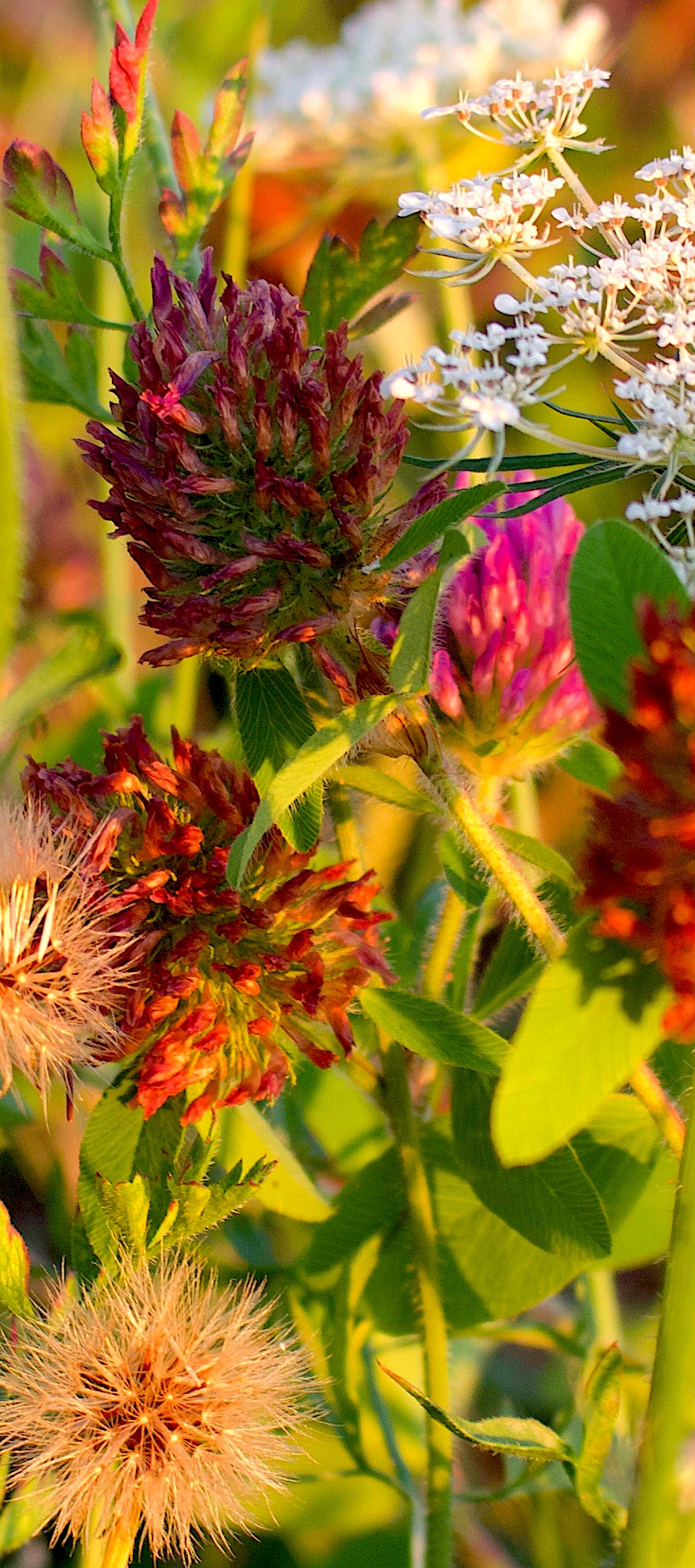
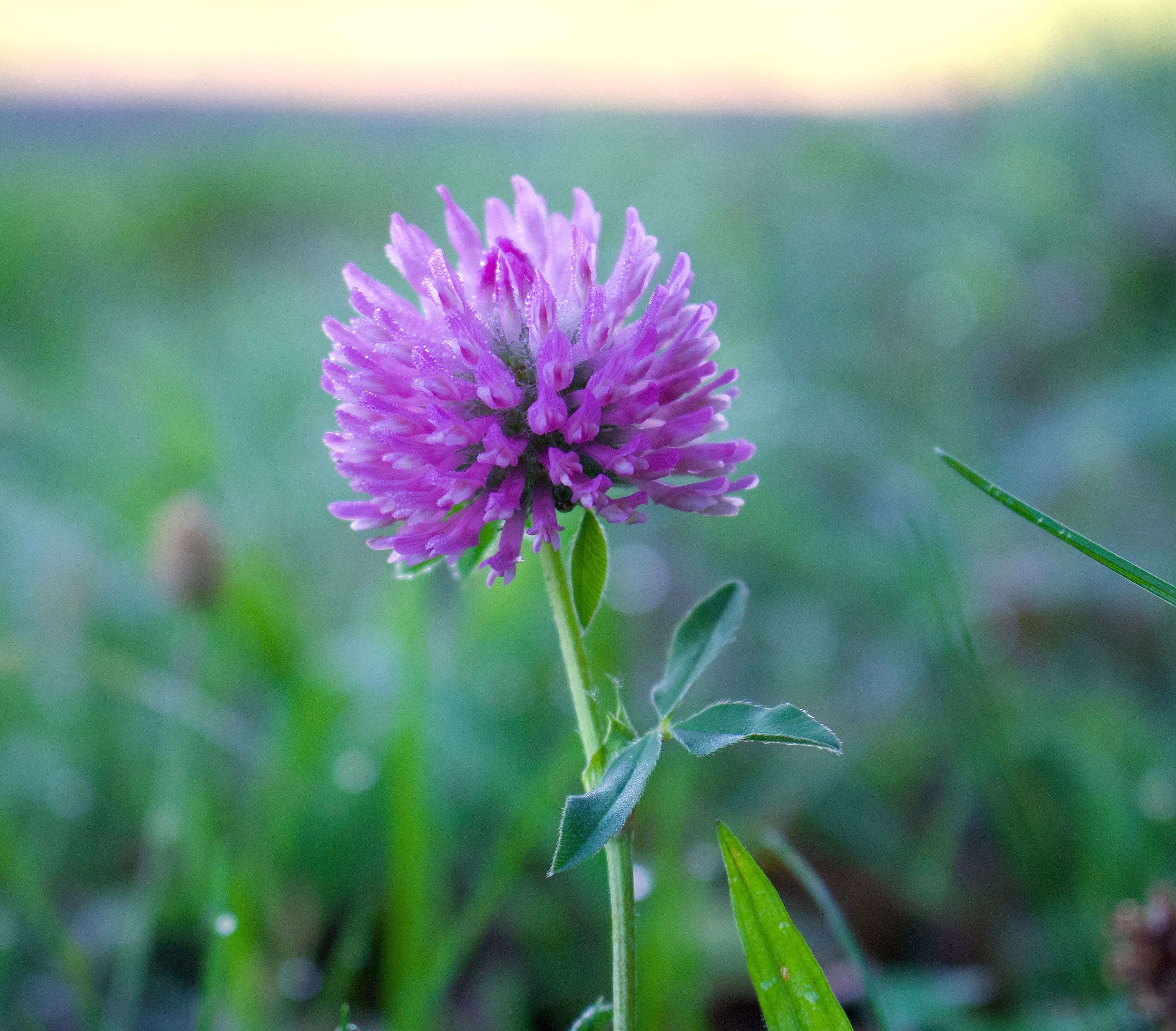
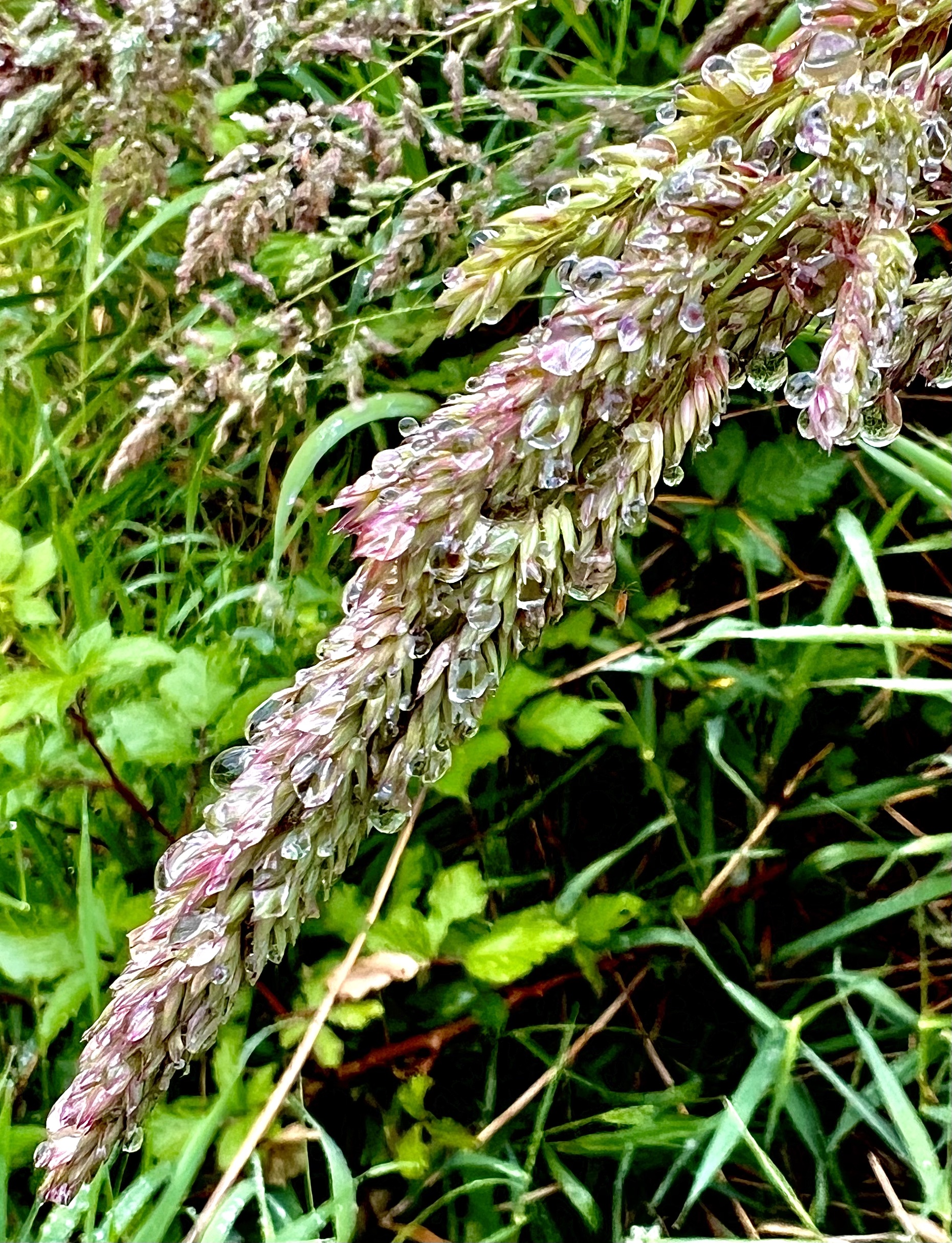
One wading a Fall meadow finds on all sides The Queen Anne’s Lace lying like lilies On water; it glides So from the walker, it turns Dry grass to a lake, as the slightest shade of you Valleys my mind in fabulous blue Lucernes.
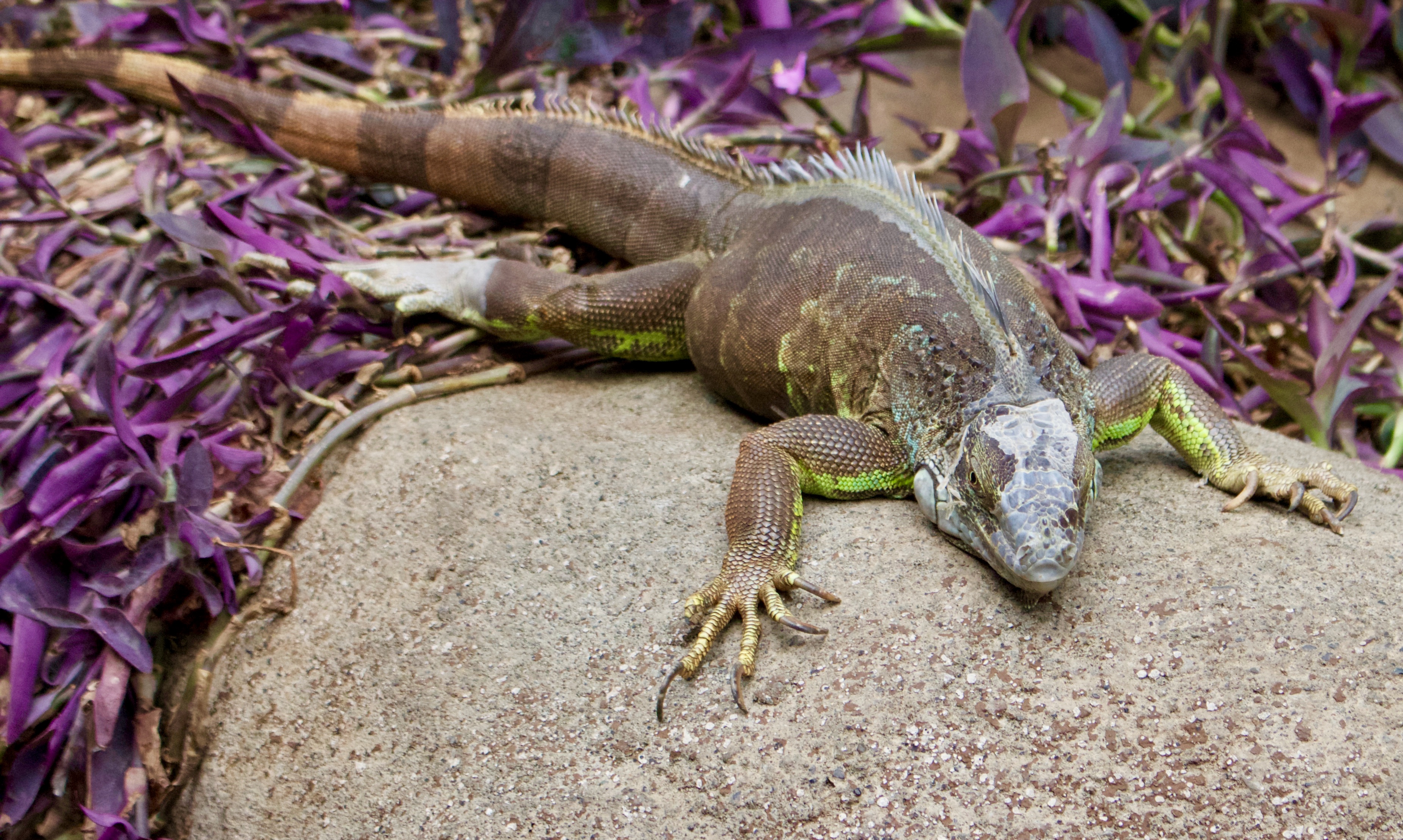
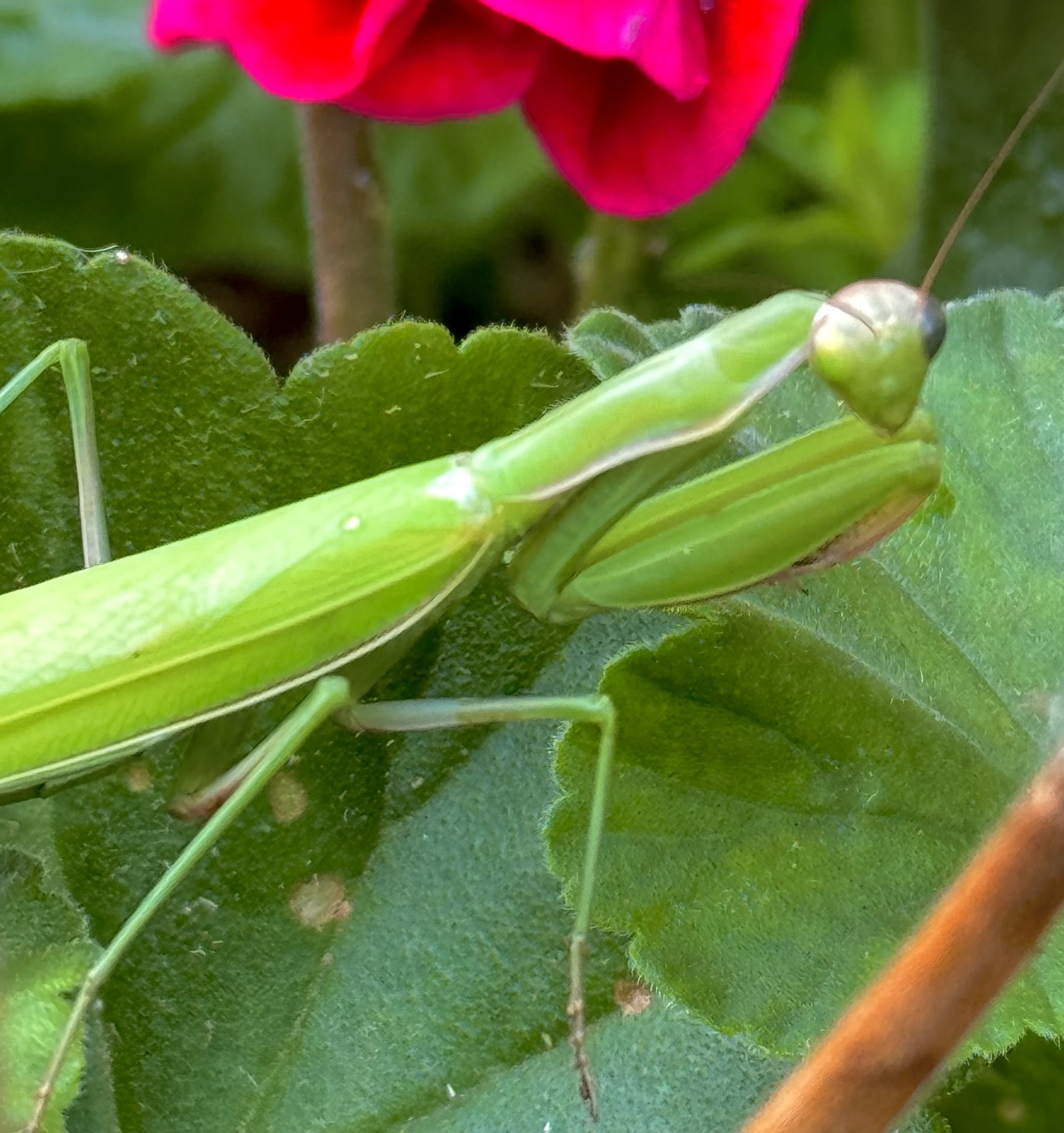
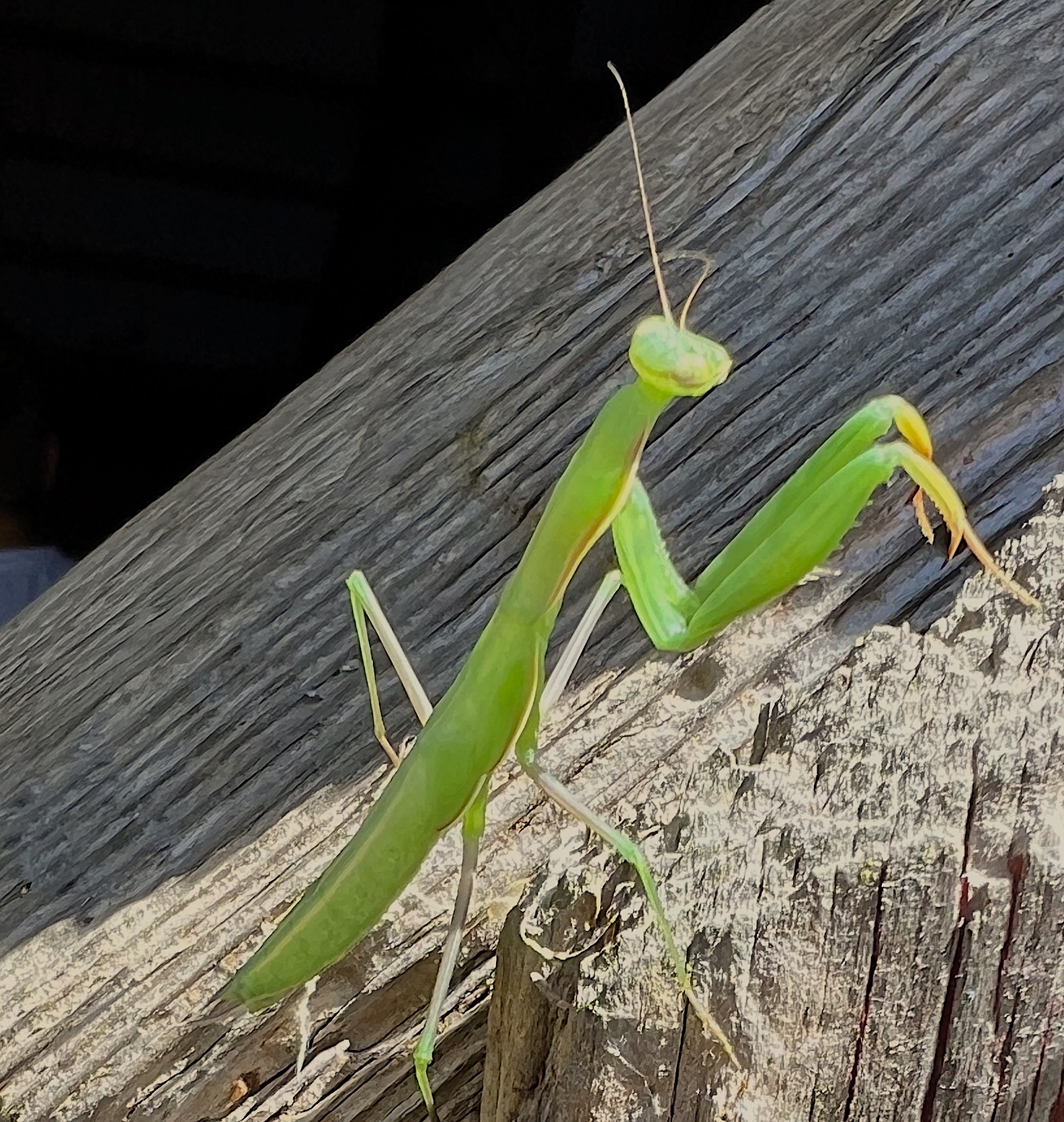
The beautiful changes as a forest is changed By a chameleon’s tuning his skin to it; As a mantis, arranged On a green leaf, grows Into it, makes the leaf leafier, and proves Any greenness is deeper than anyone knows.
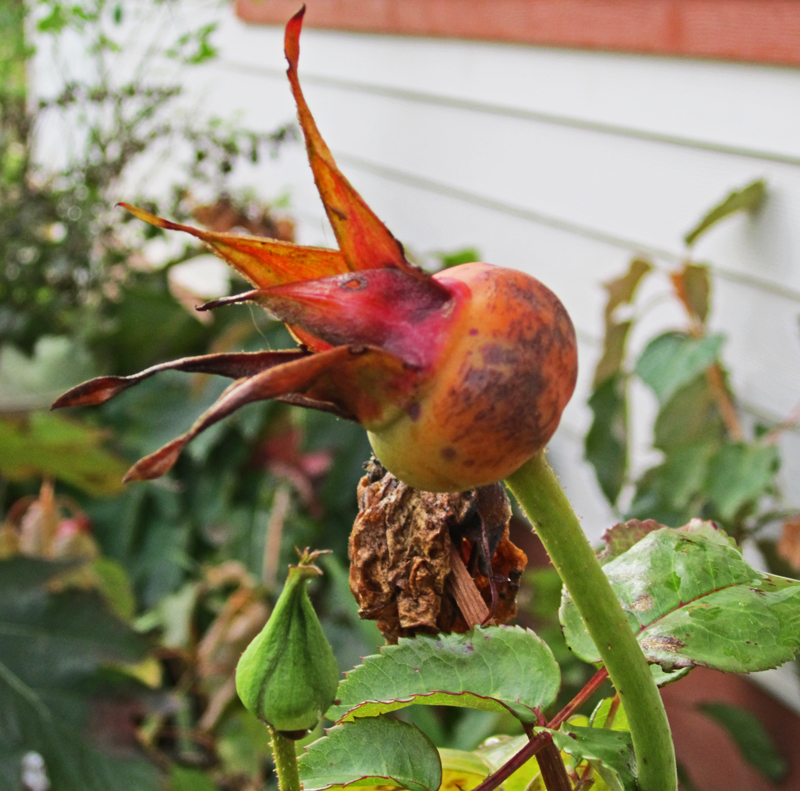
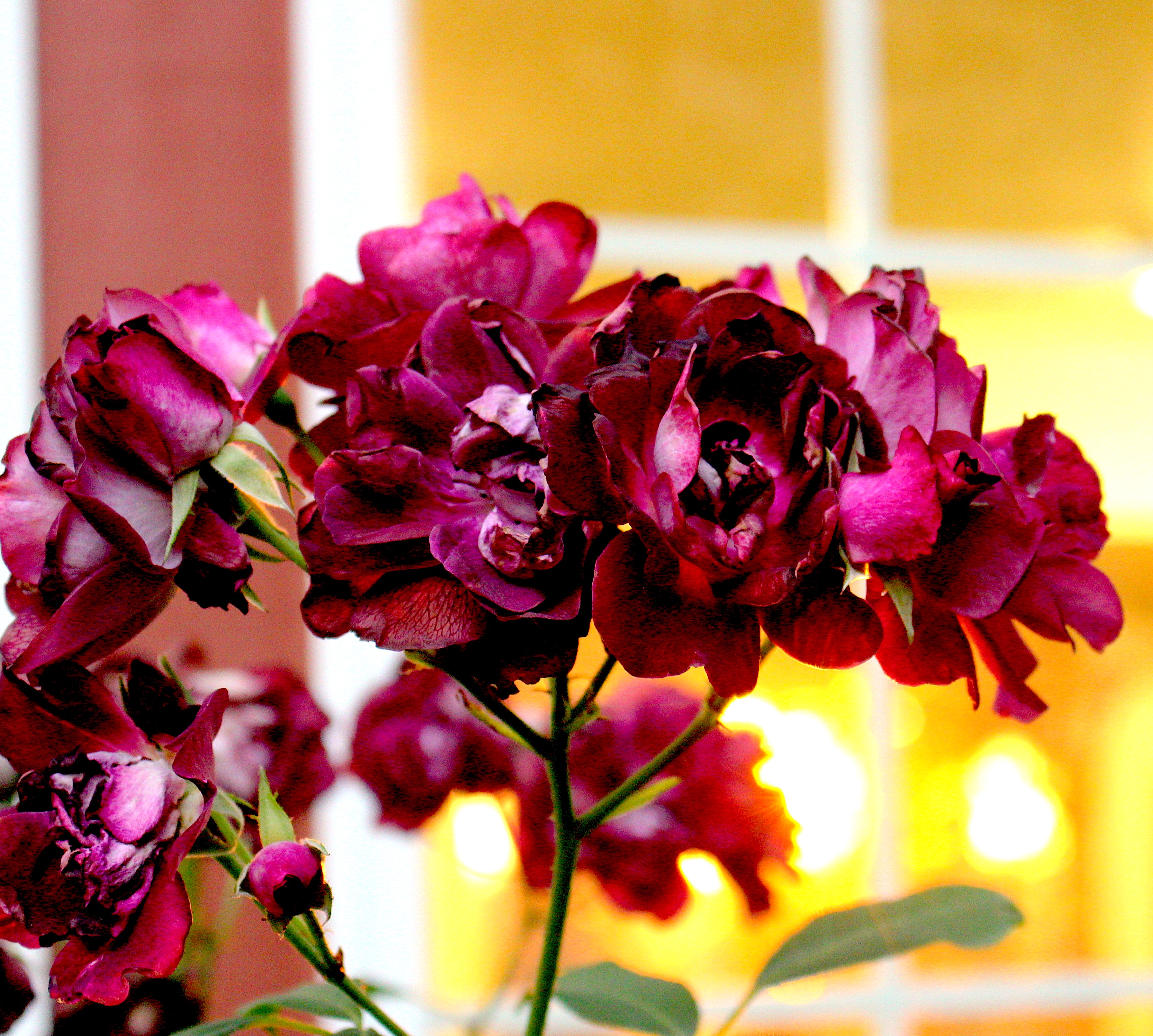
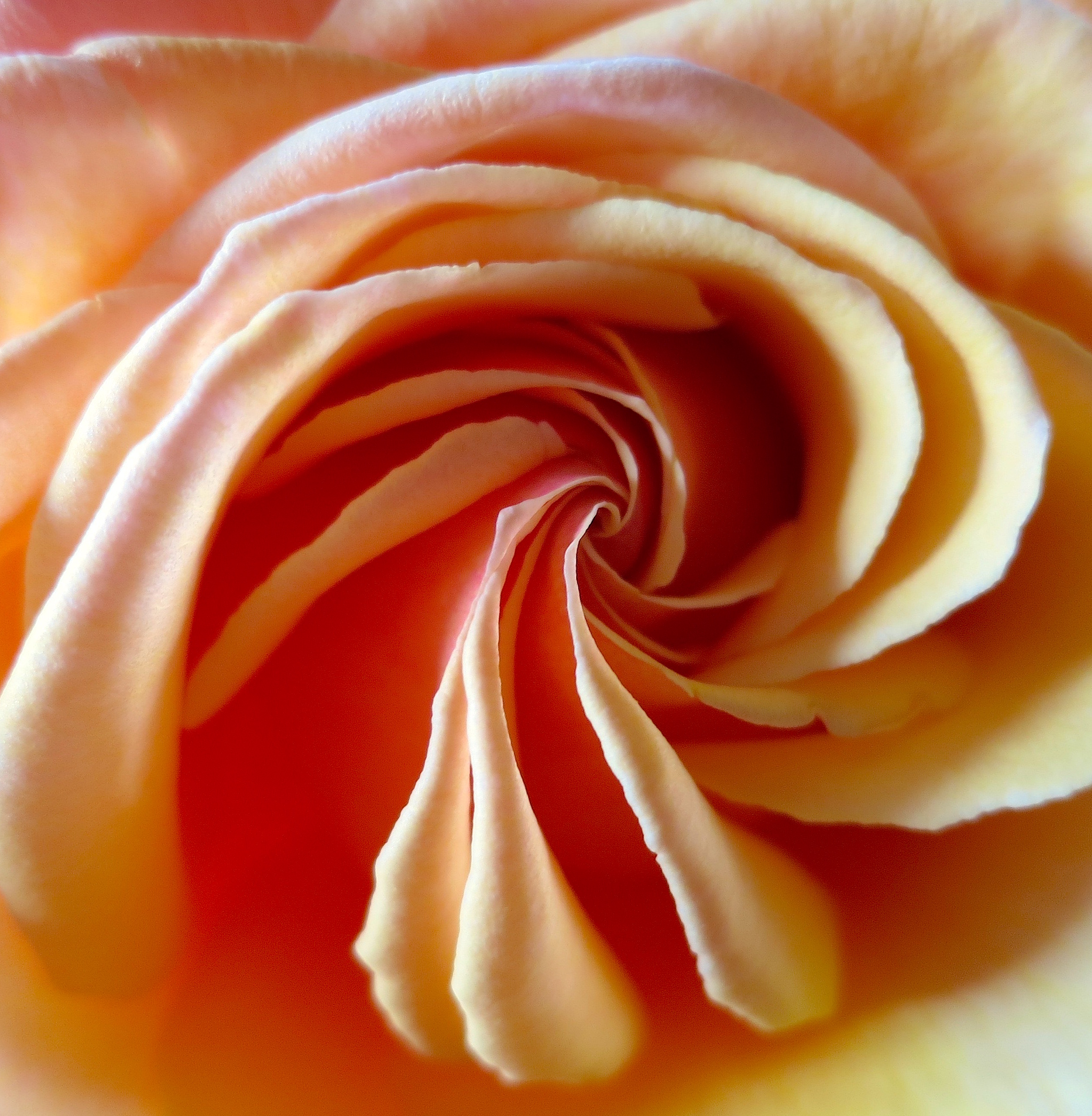
Your hands hold roses always in a way that says They are not only yours; the beautiful changes In such kind ways, Wishing ever to sunder Things and things’ selves for a second finding, to lose For a moment all that it touches back to wonder. ~Richard Wilbur “The Beautiful Changes”
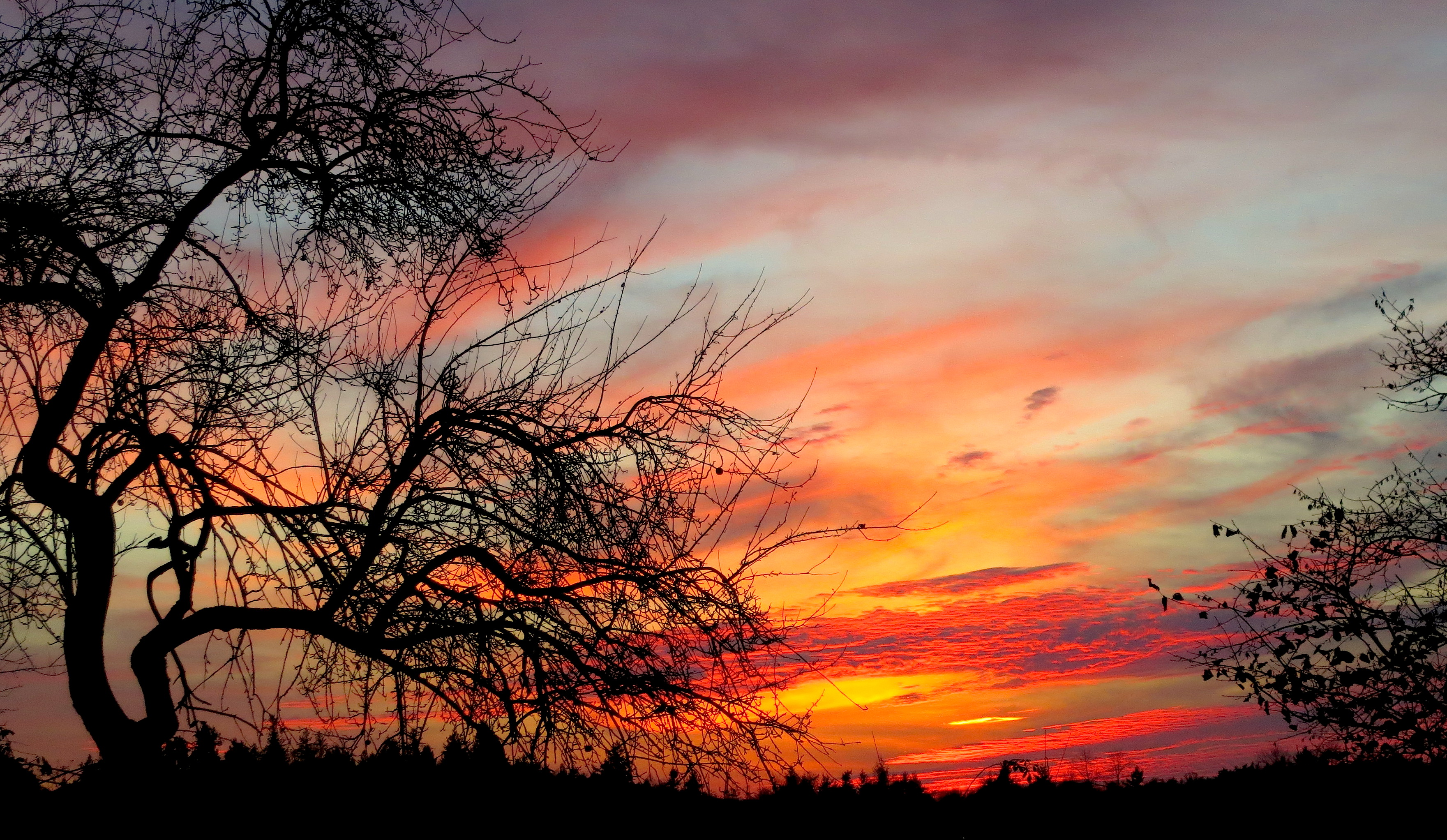
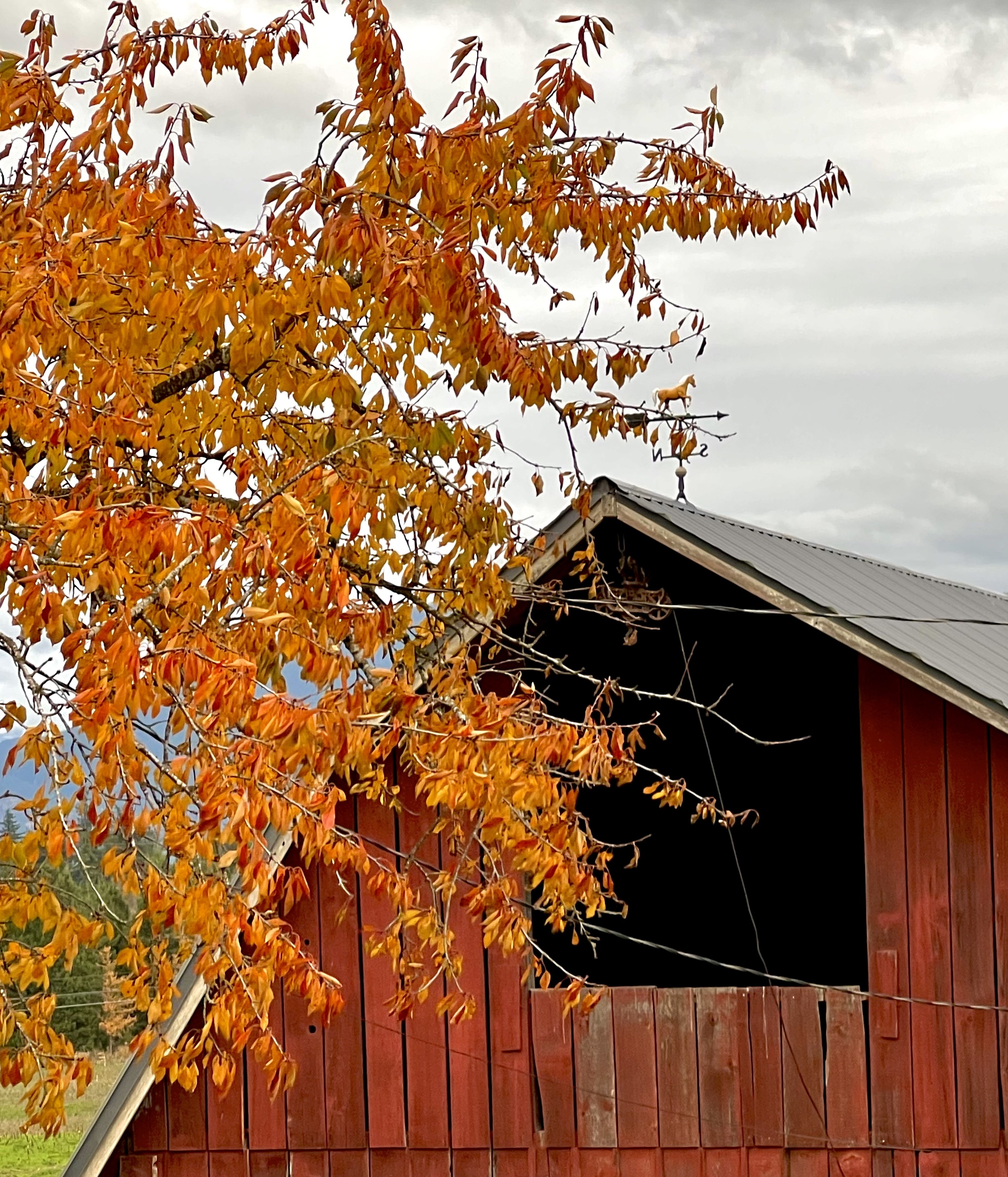
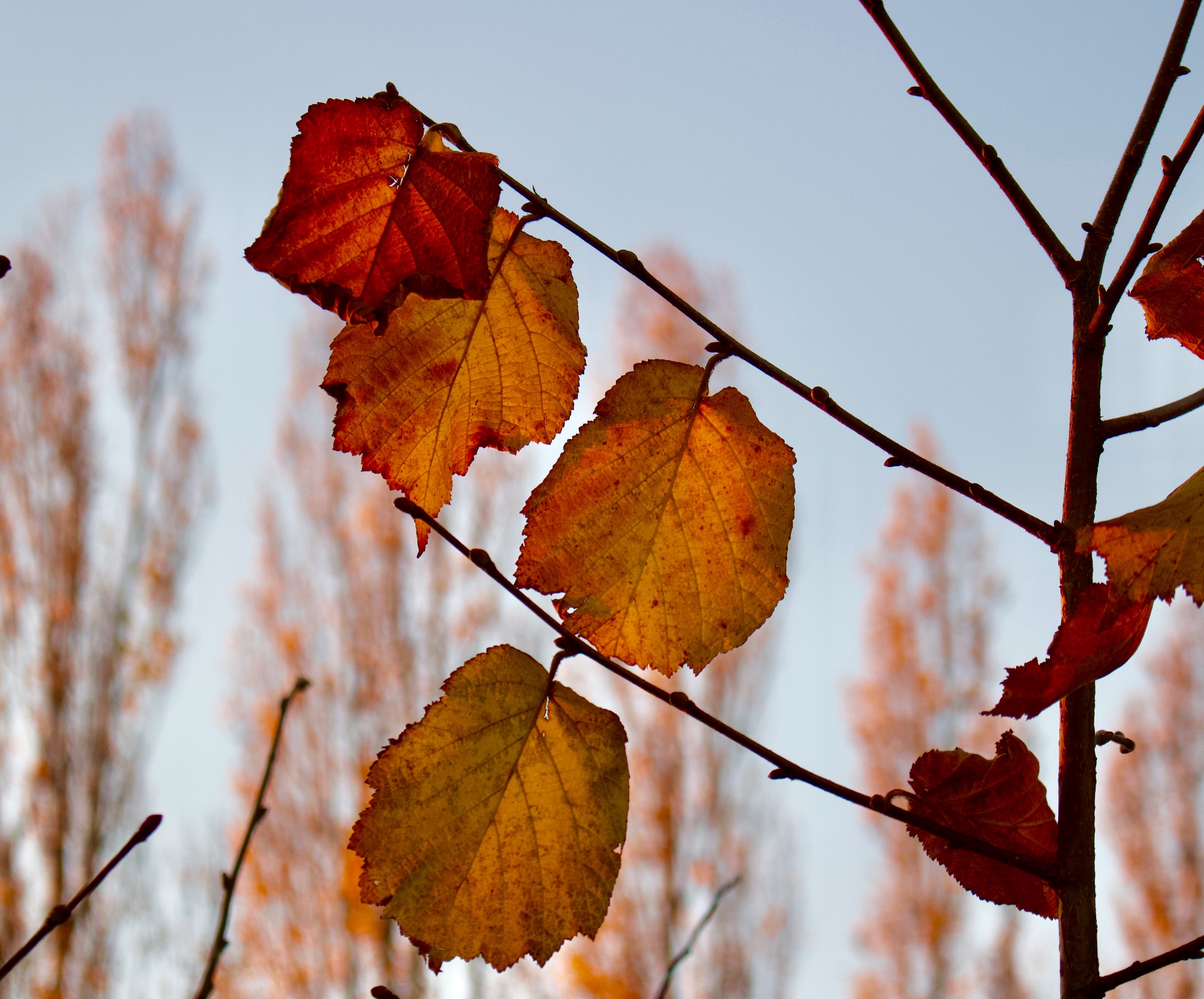
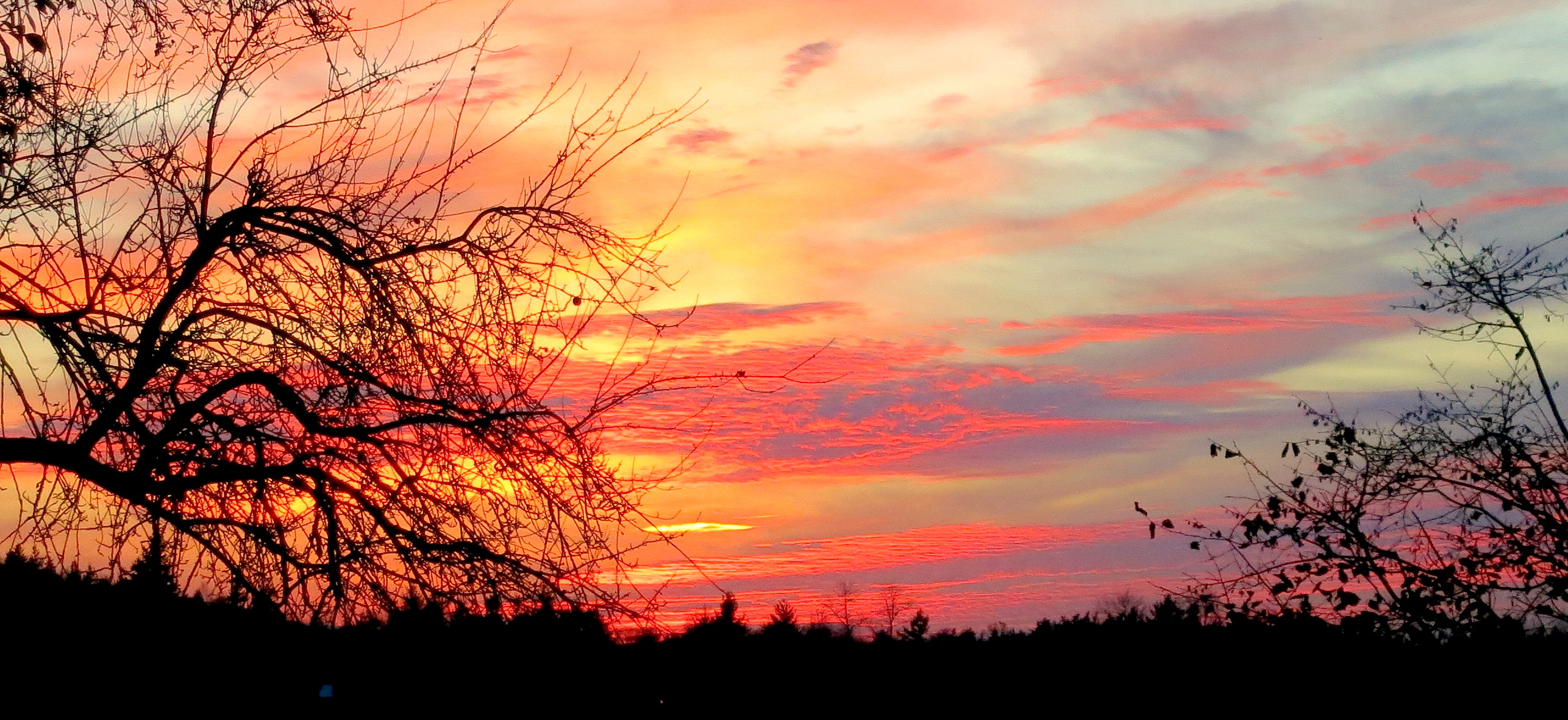
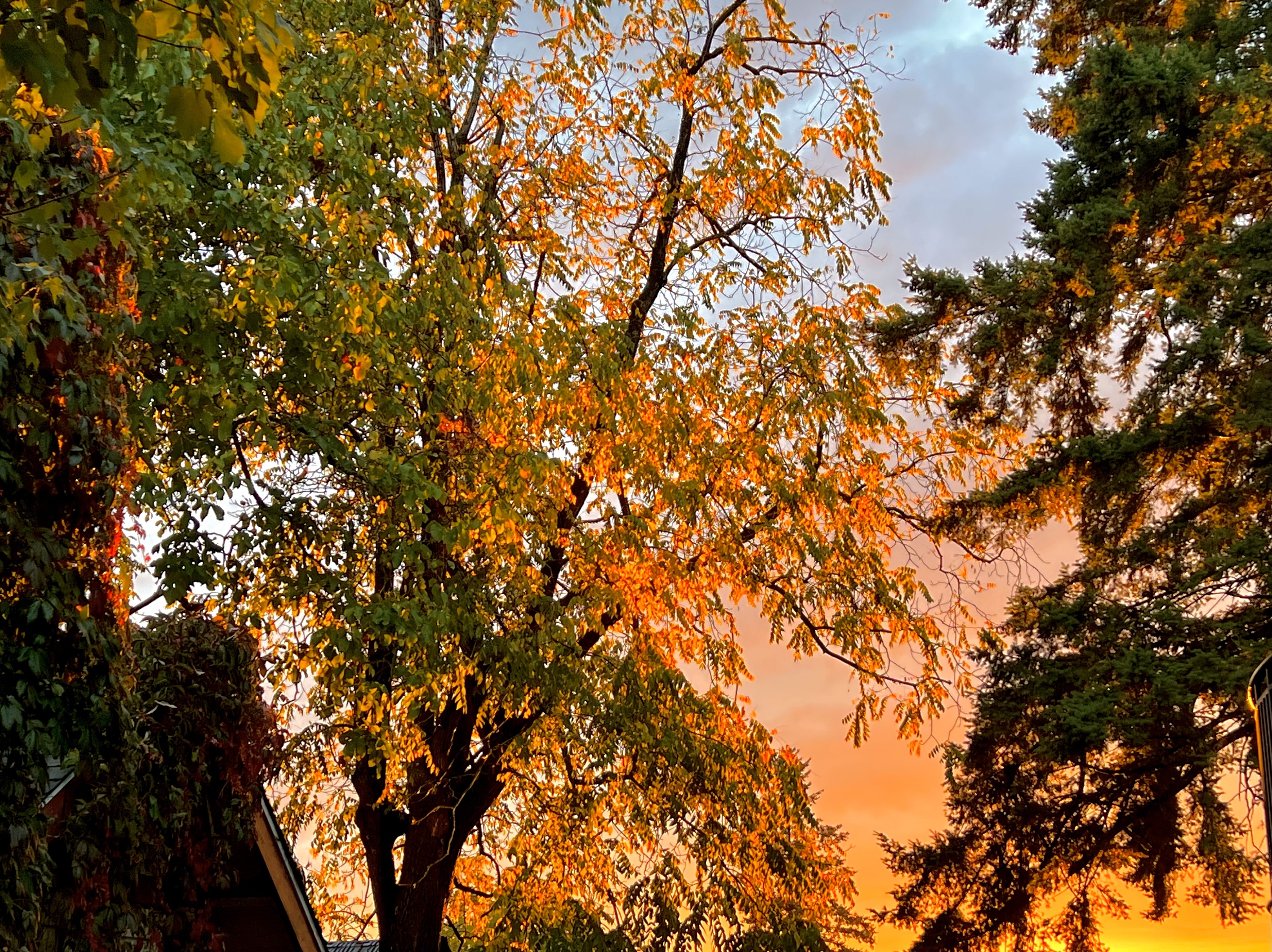
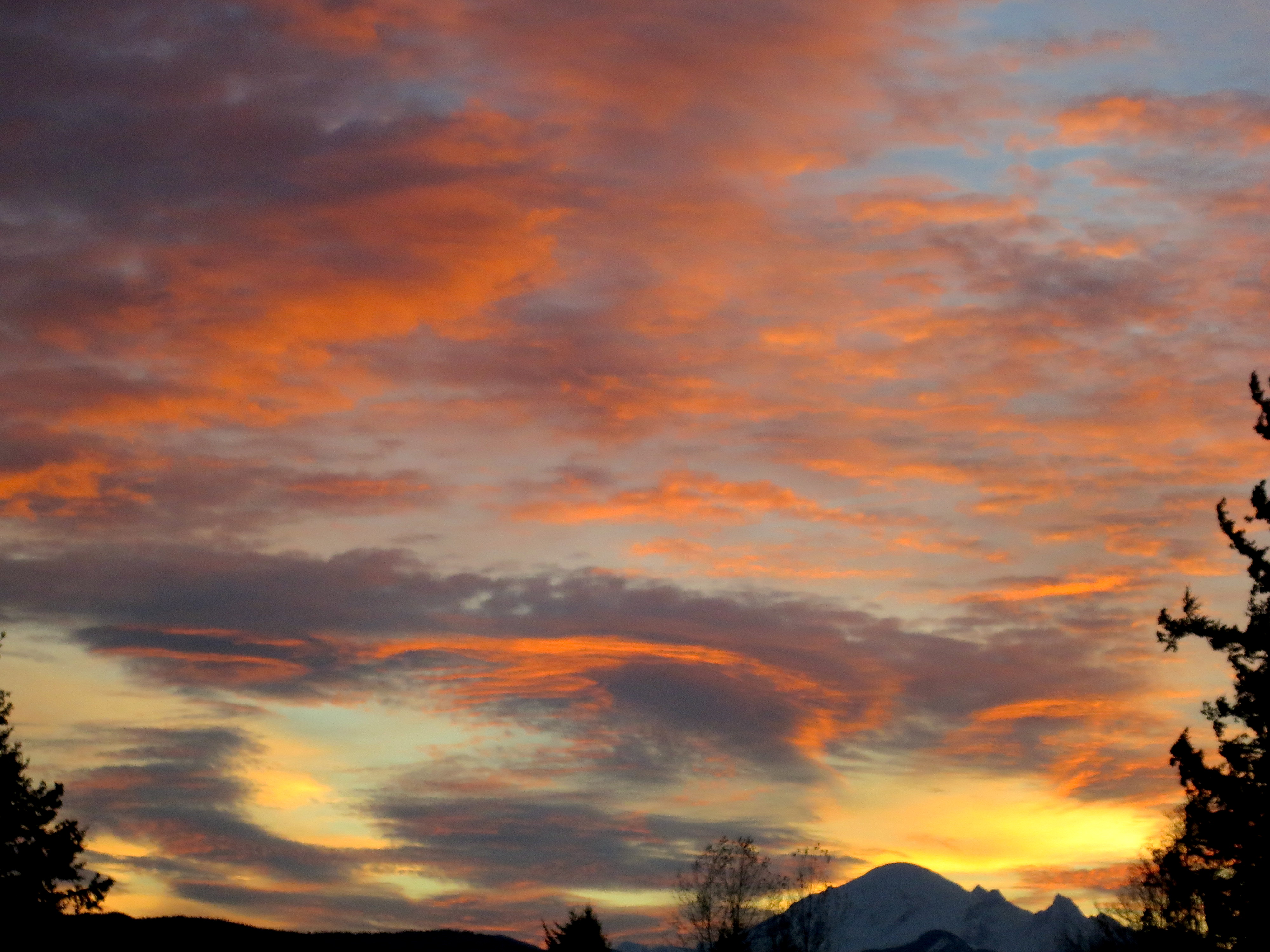
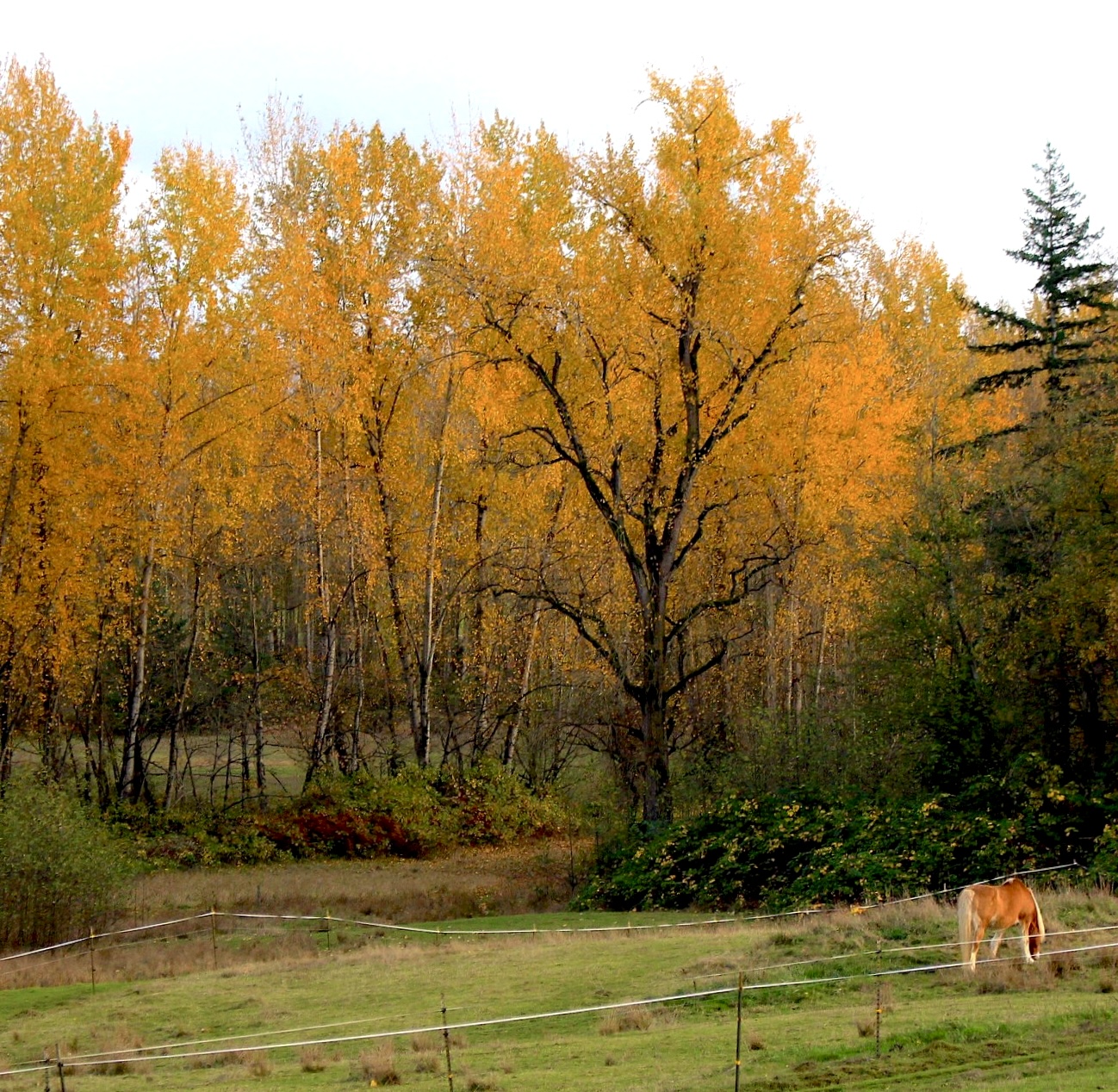
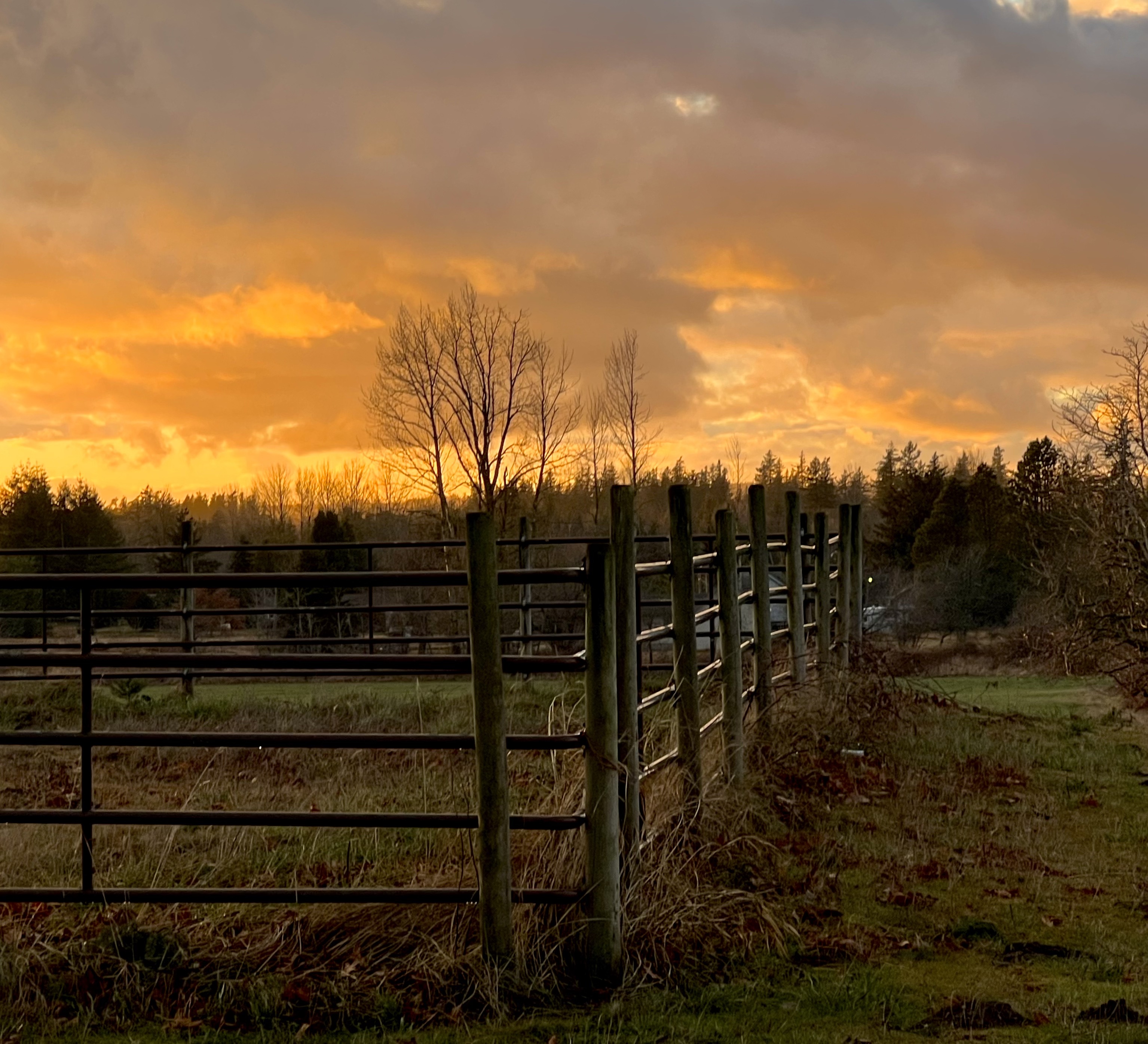
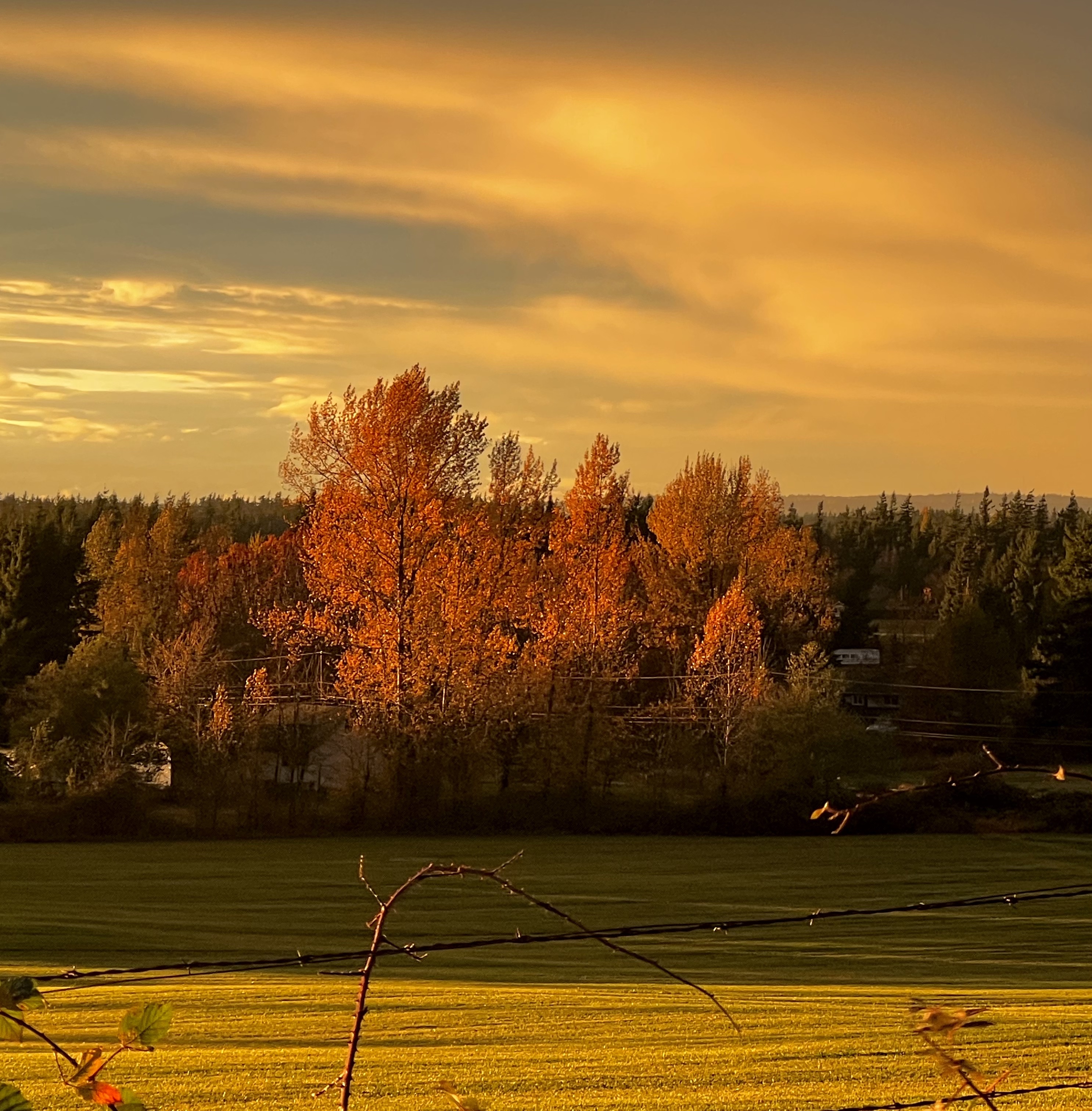
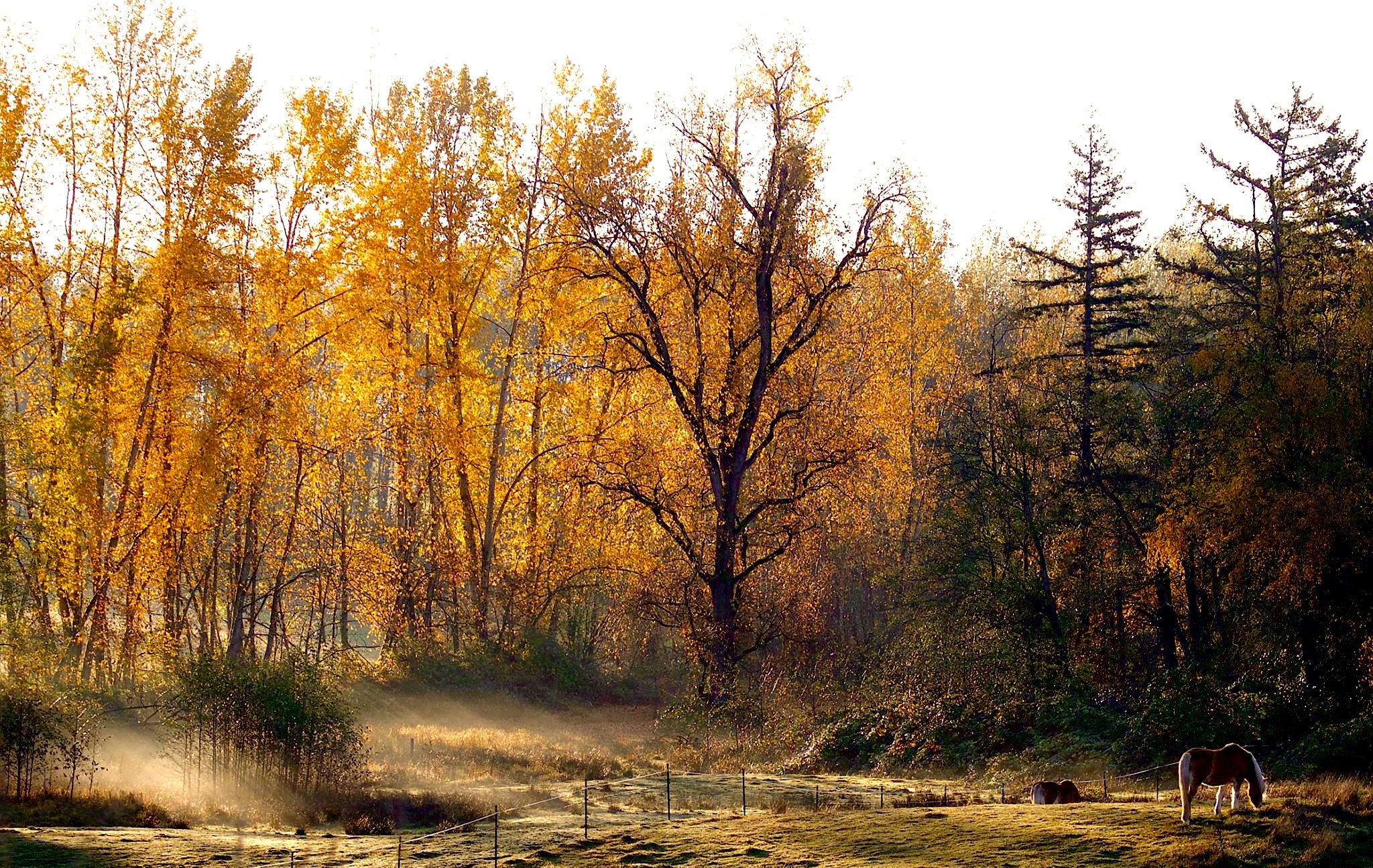
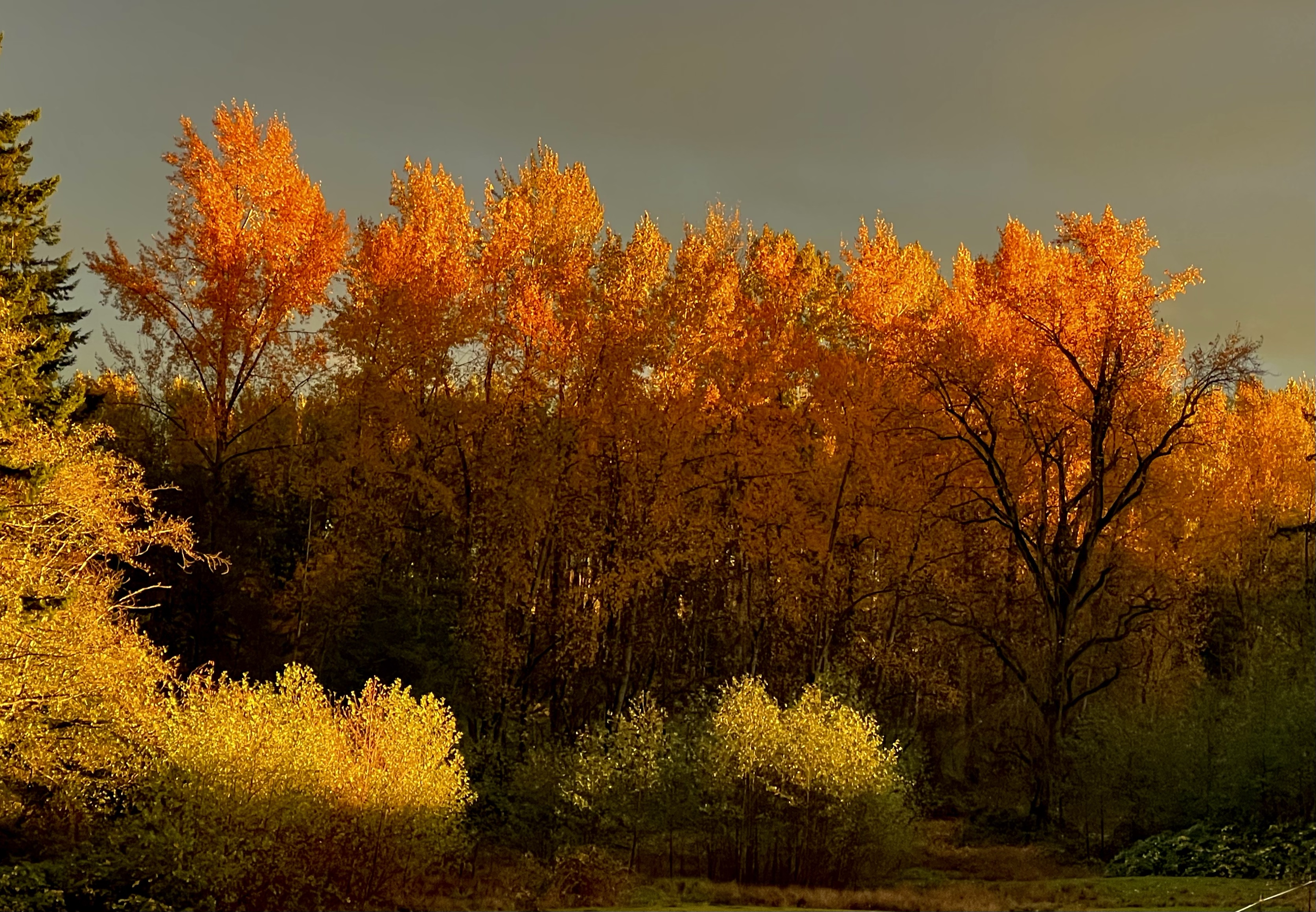
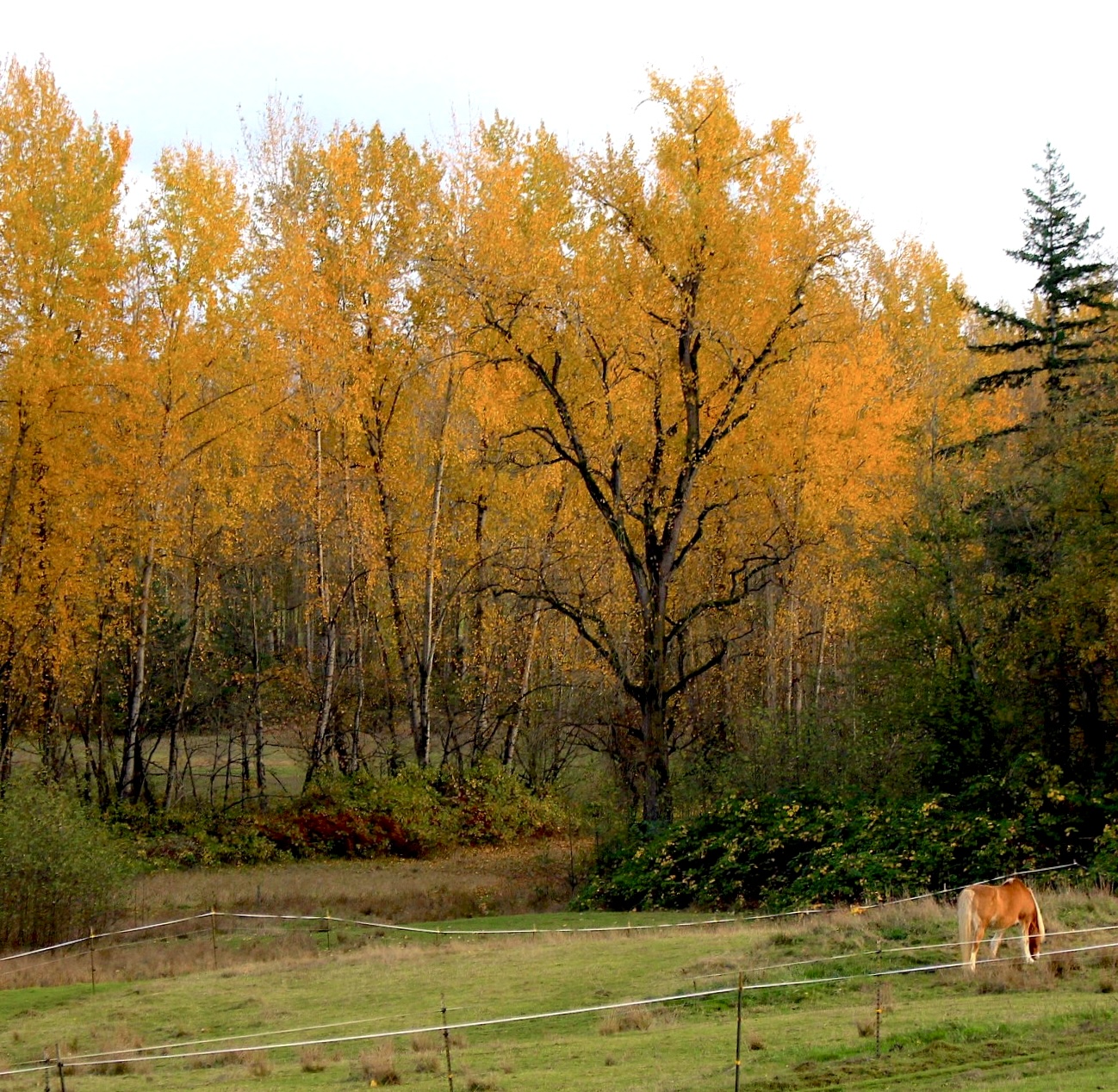
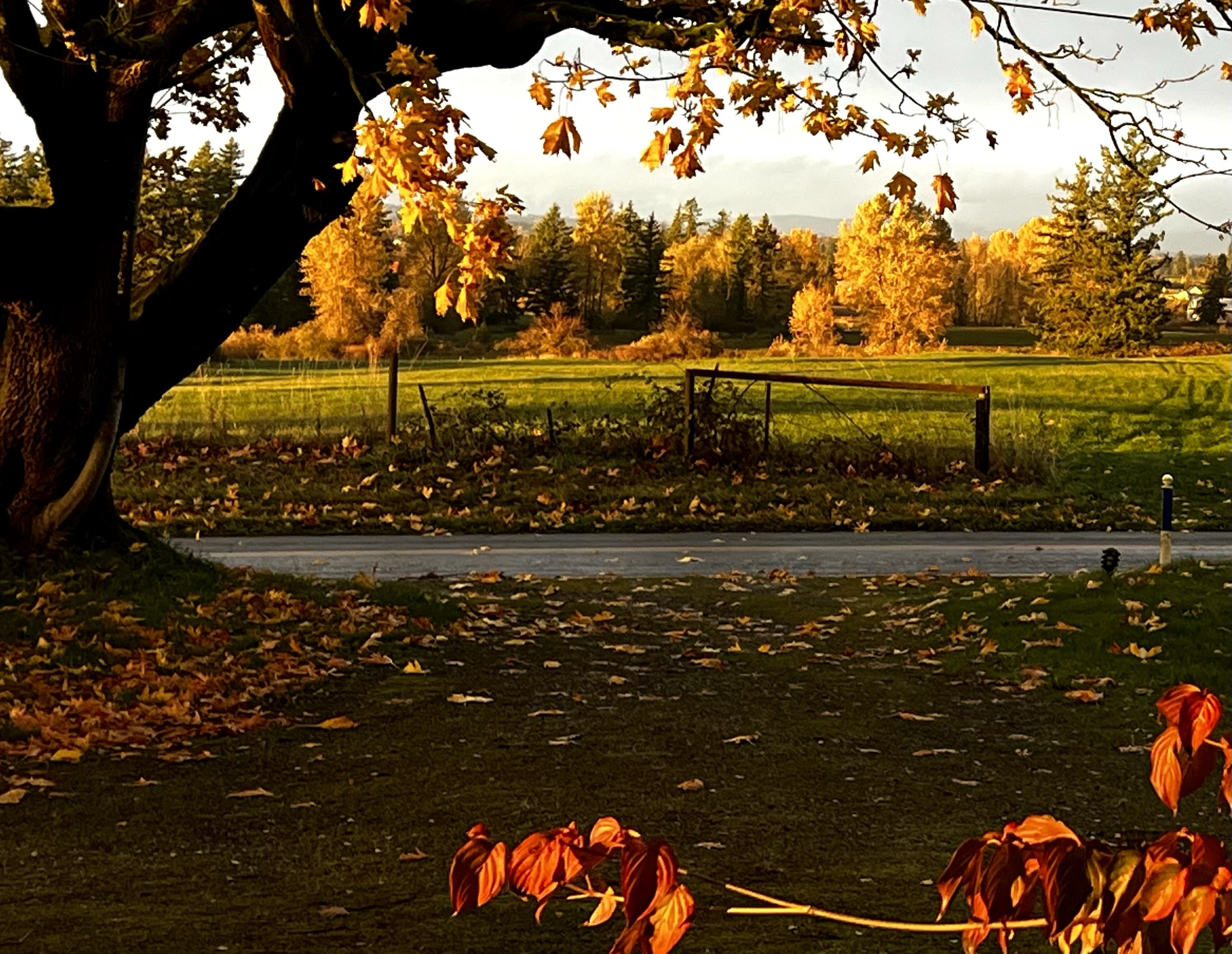
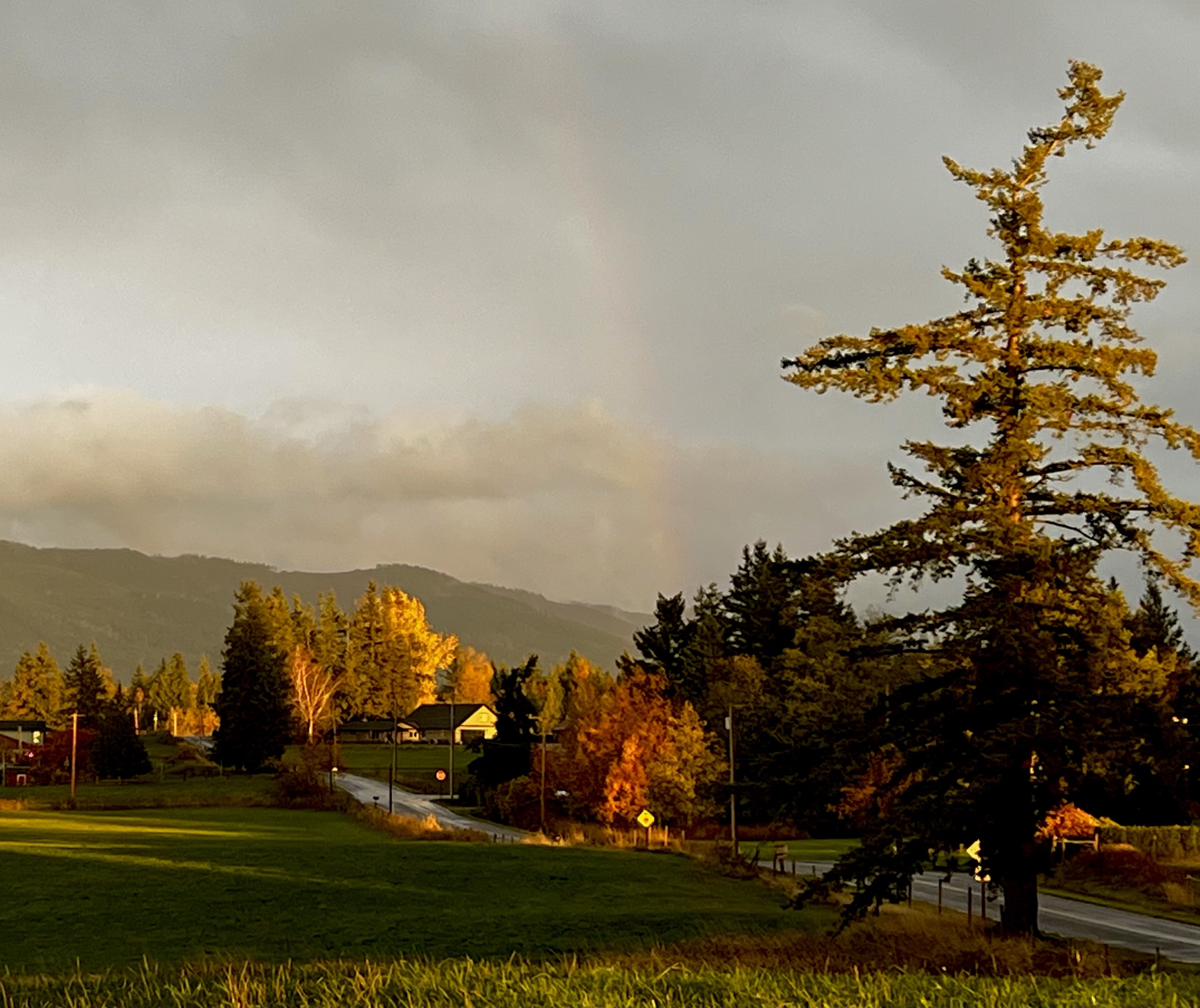
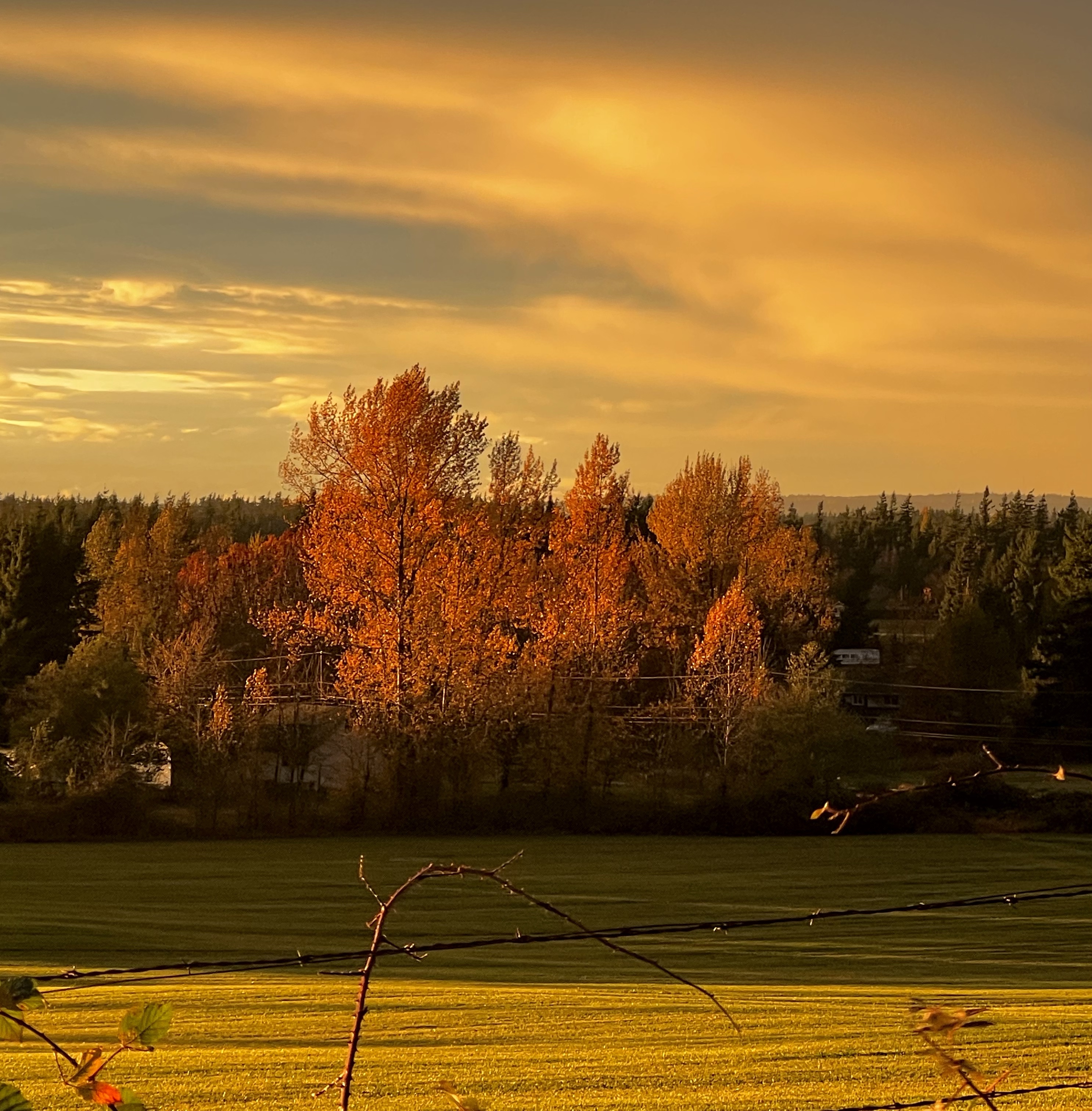
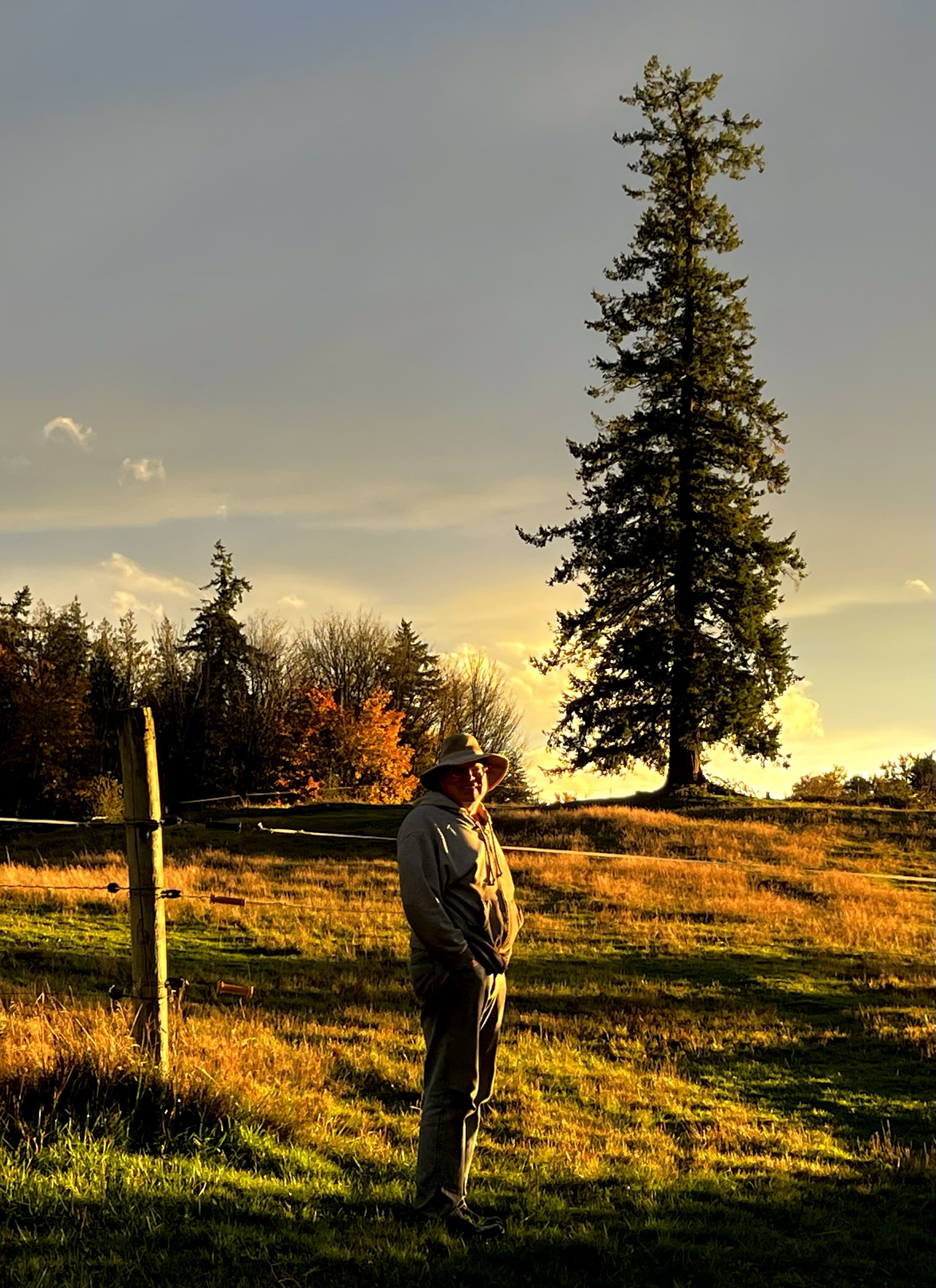
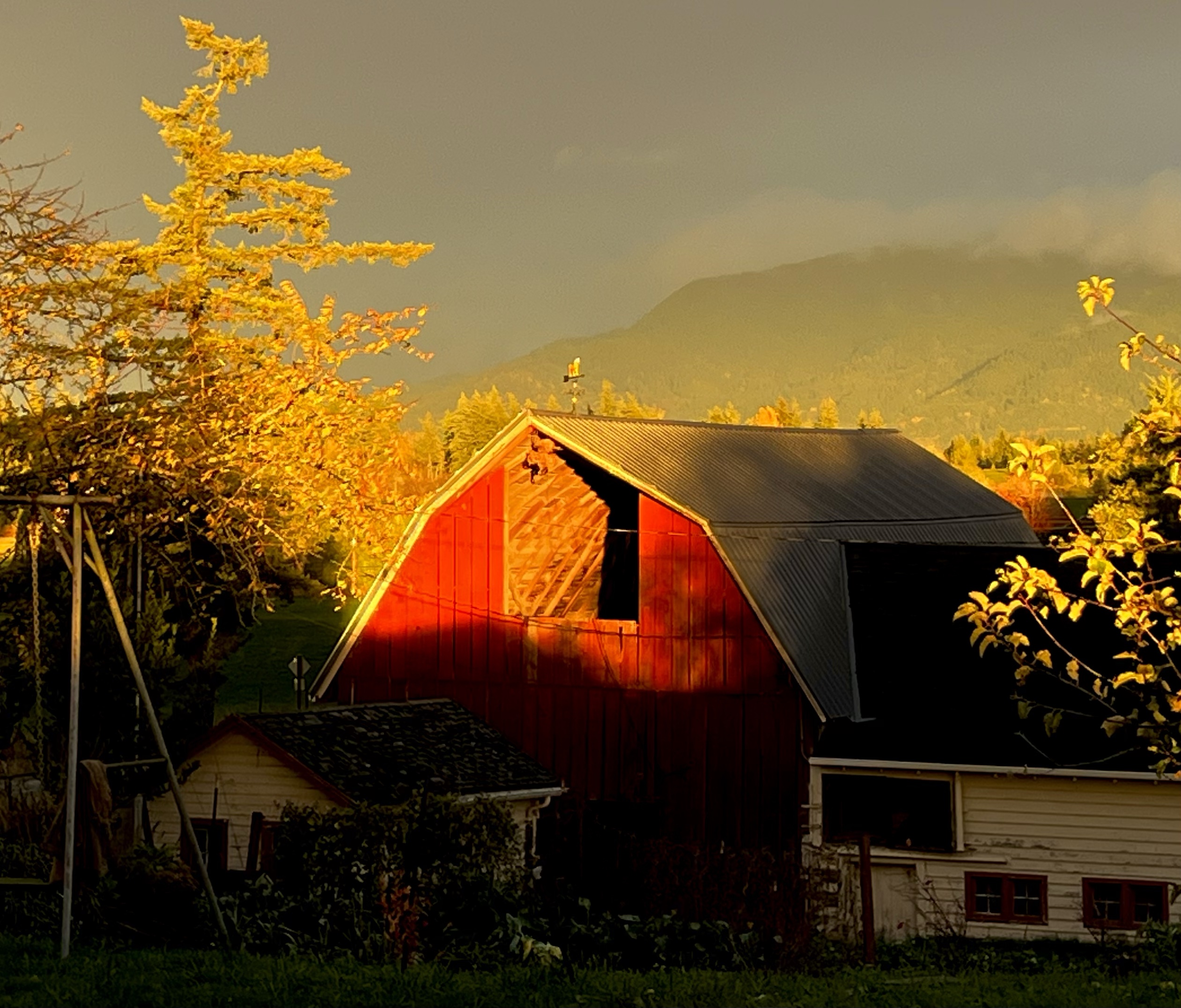
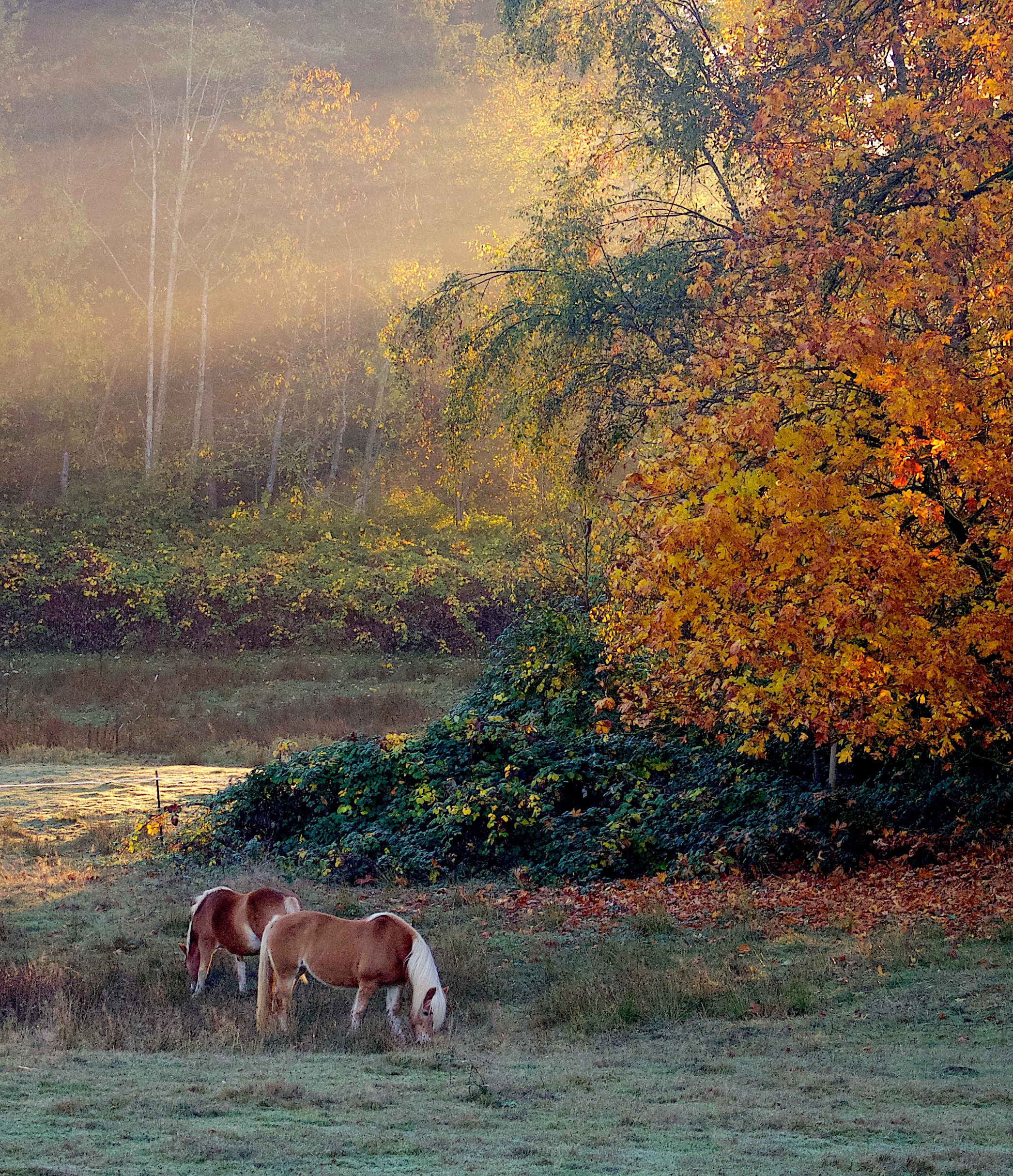
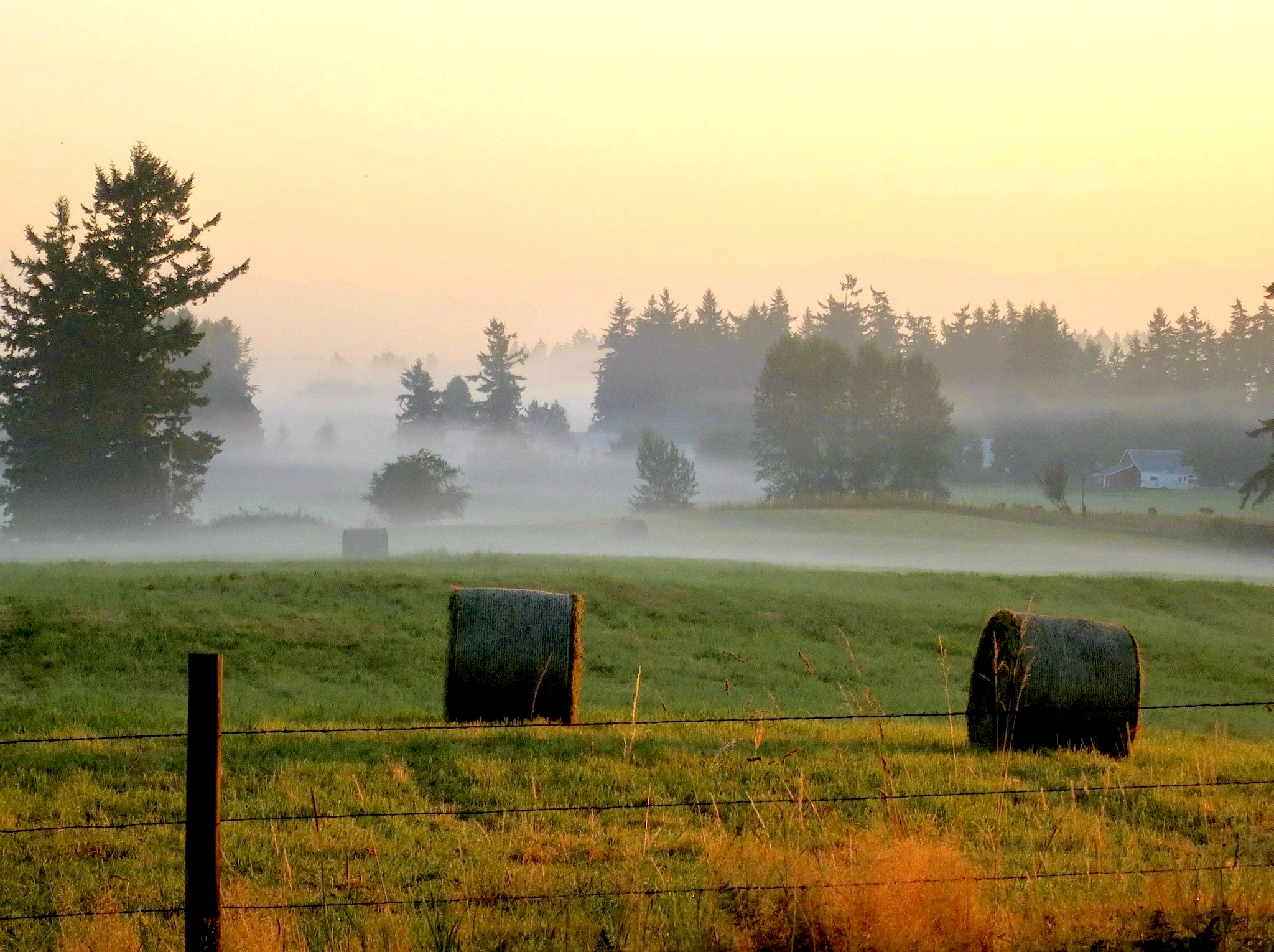
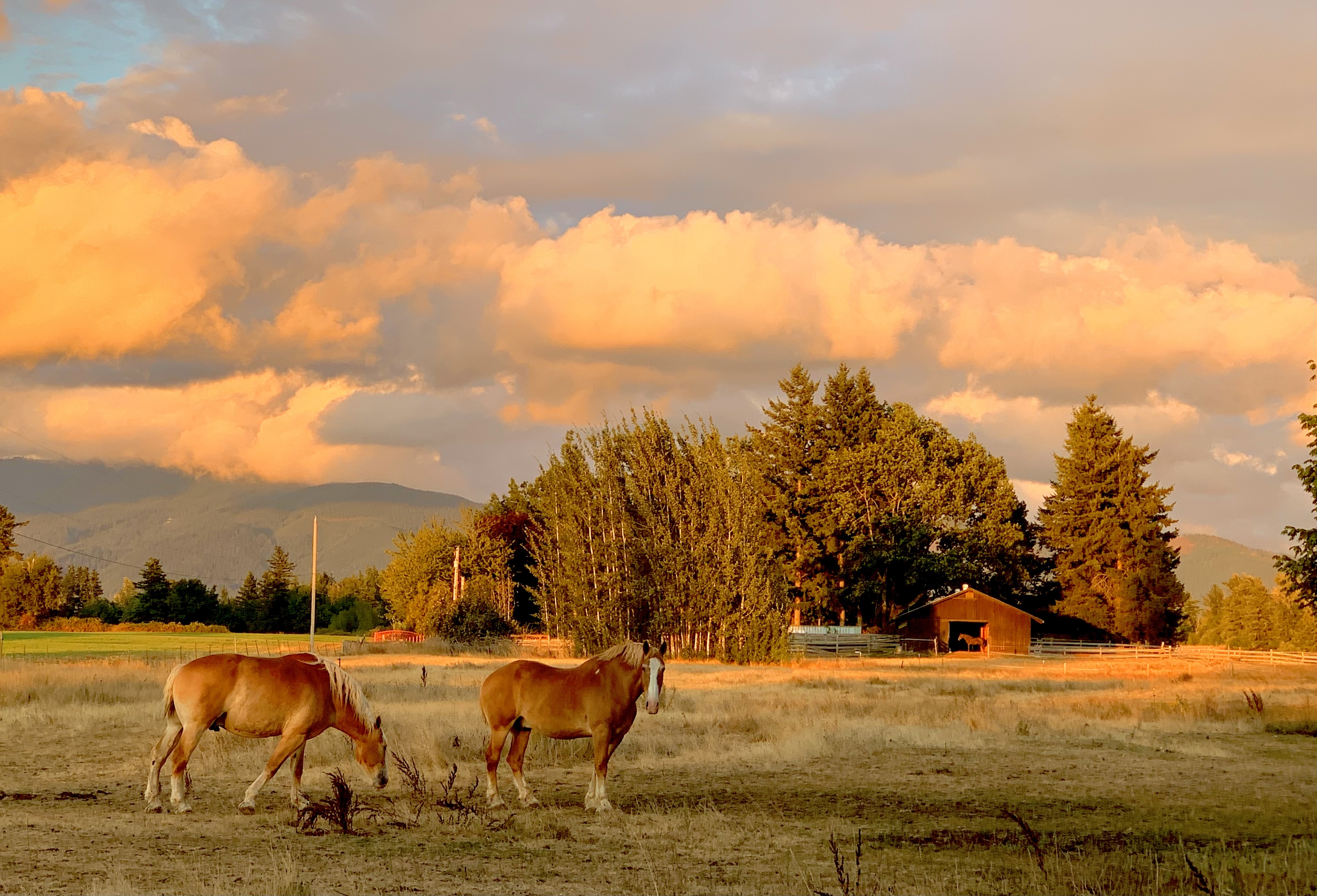
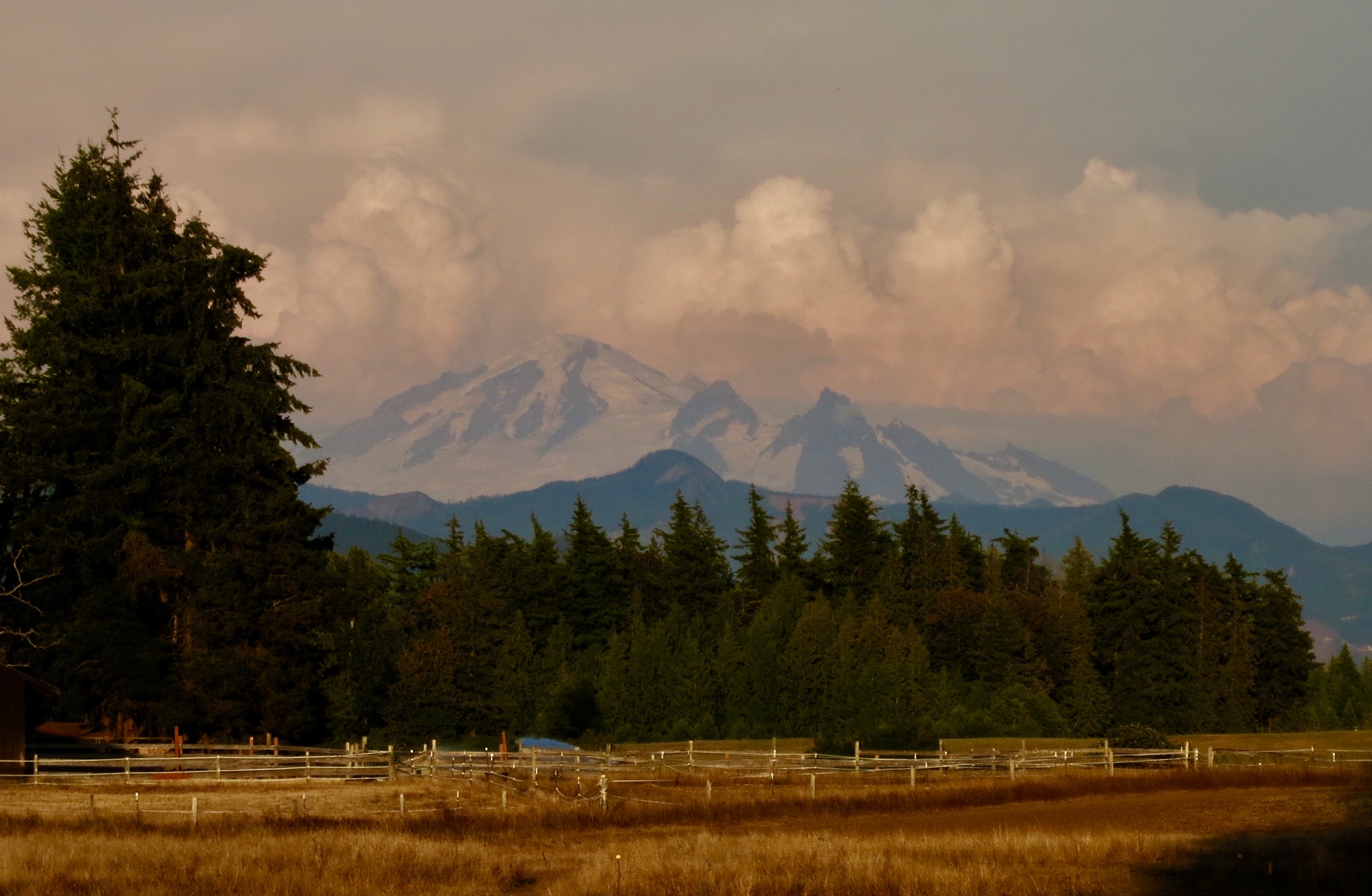
I am changed again, as I blend into autumn.
We can’t help but be transformed by everything around us, you know.
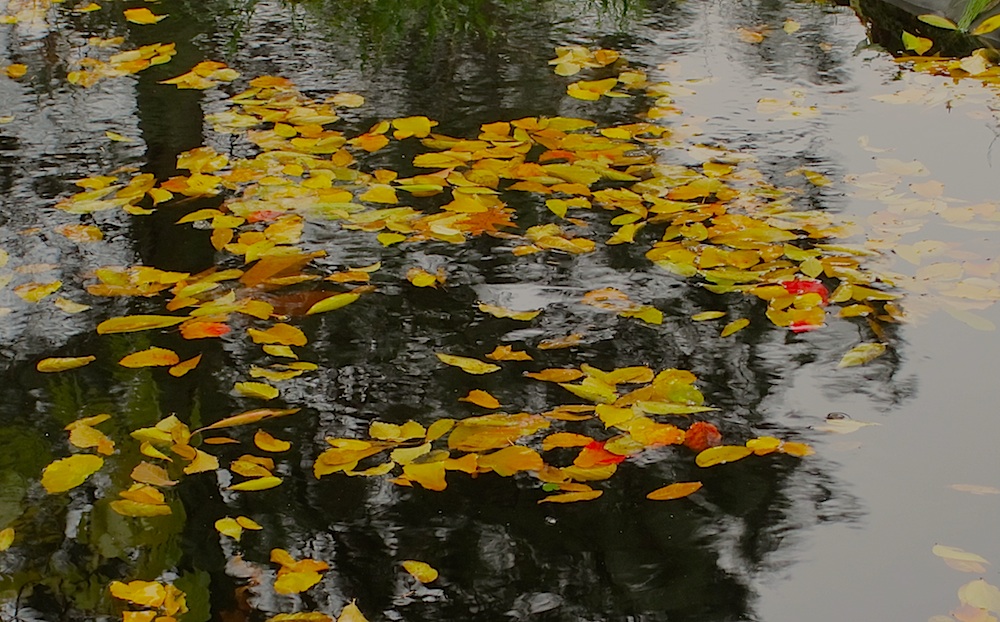
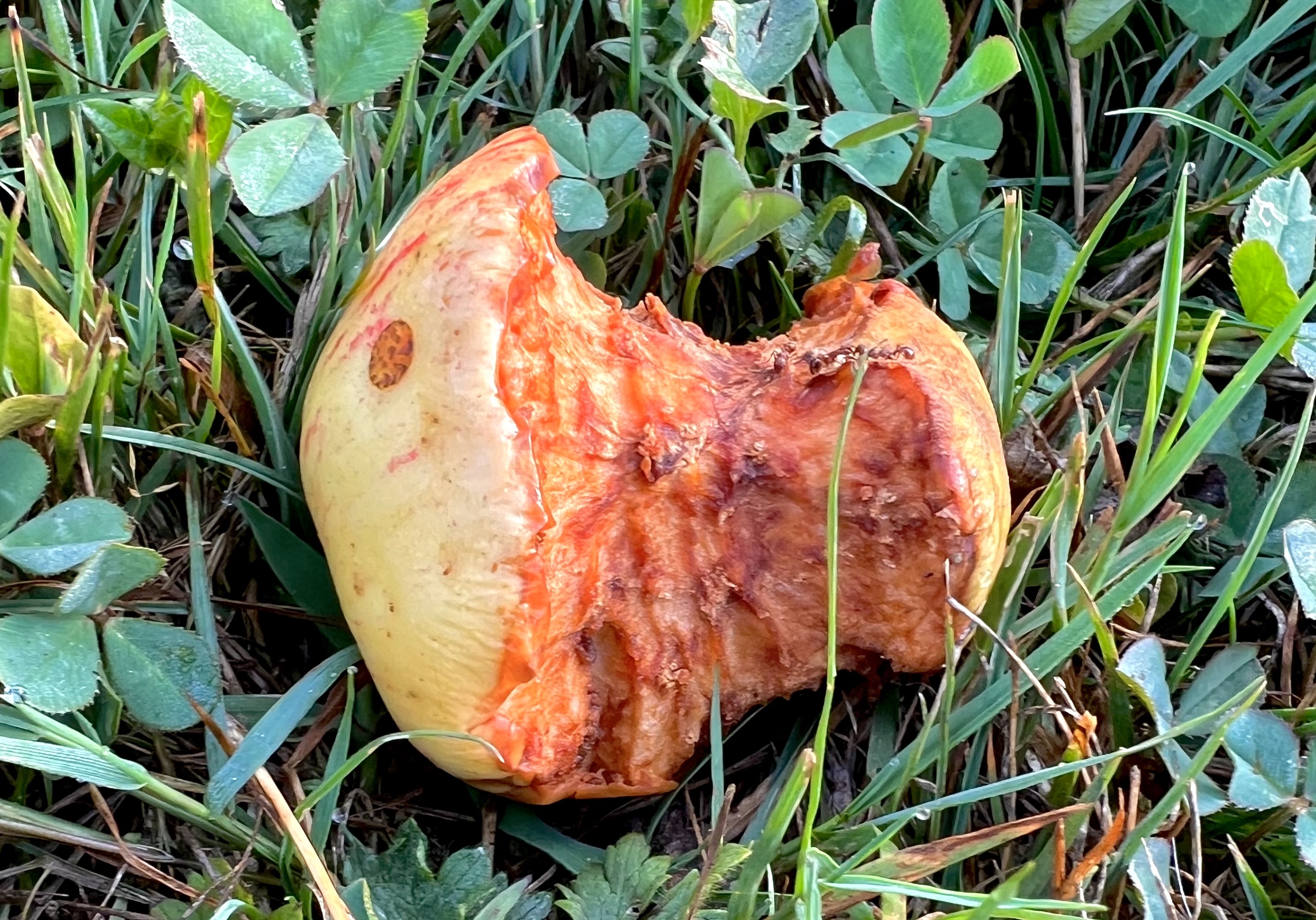
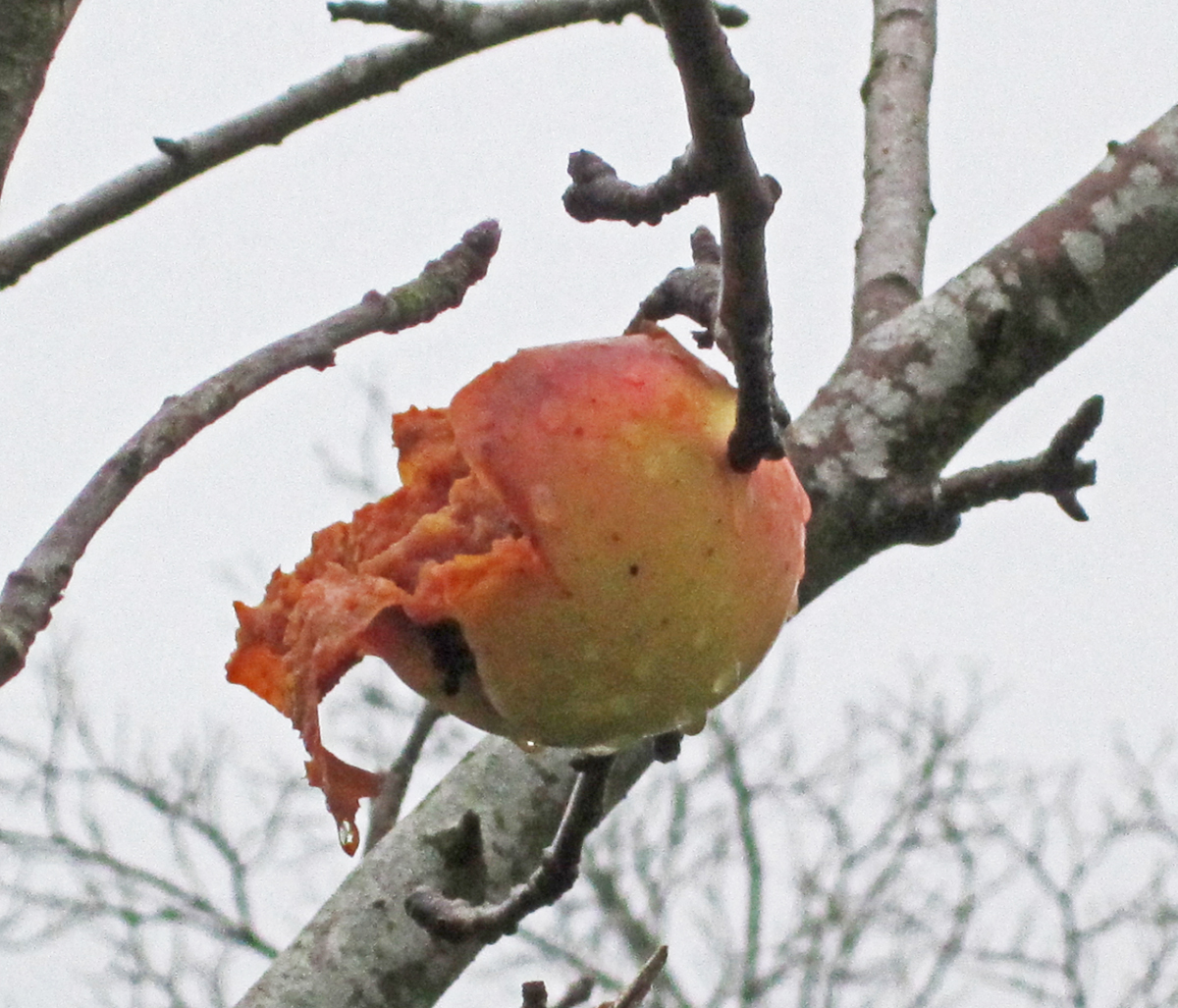
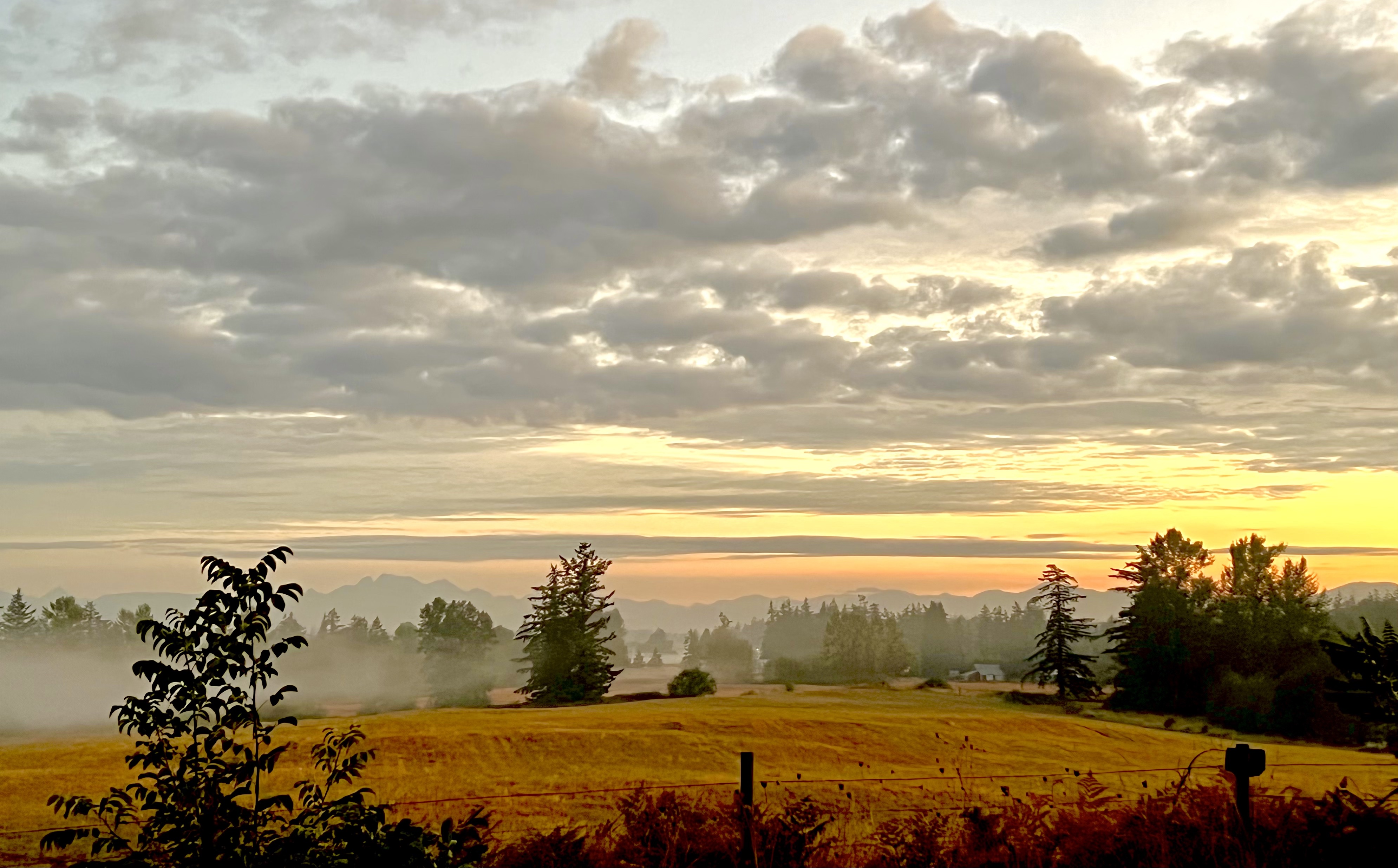
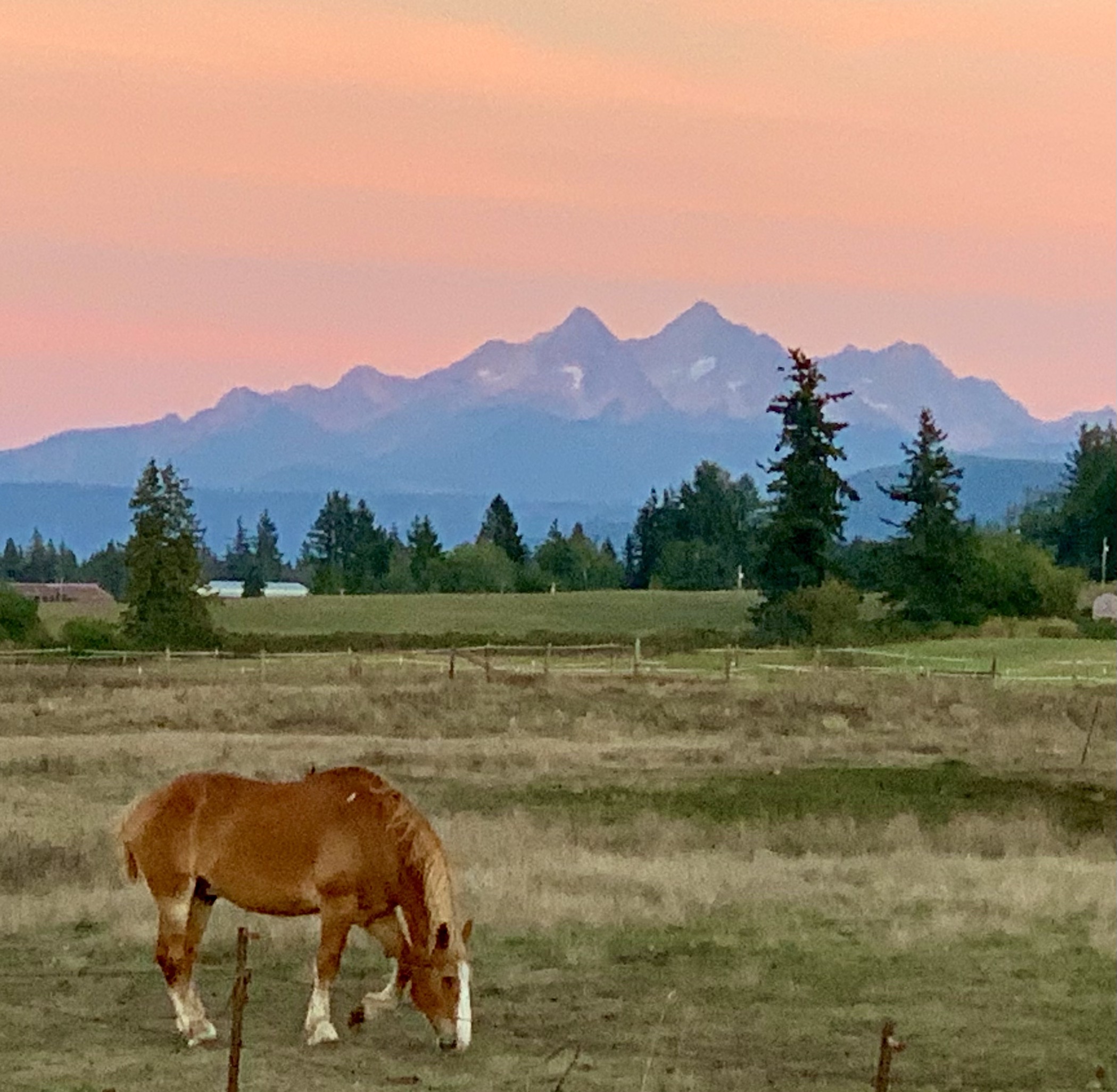
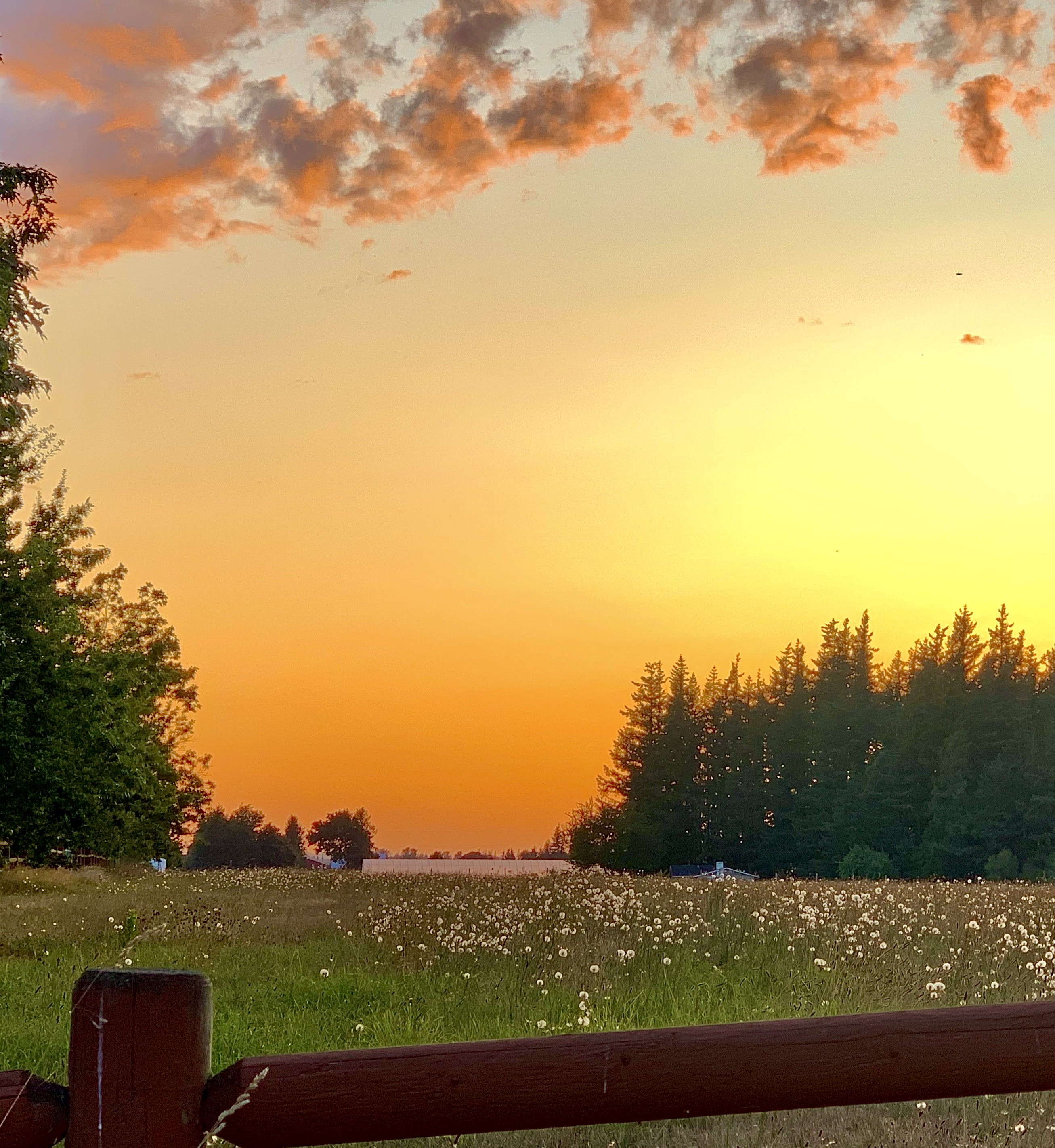
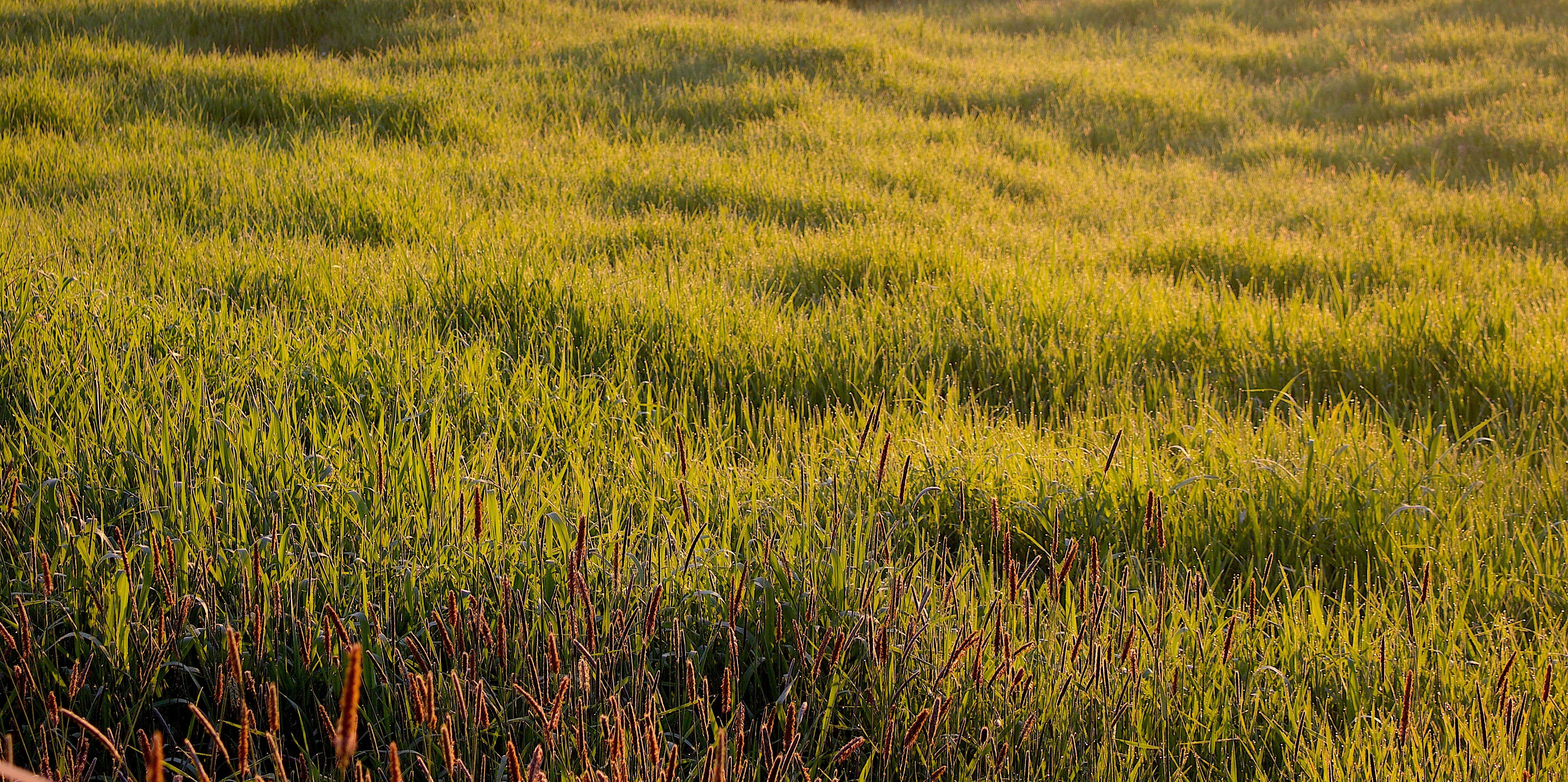
Beautiful is the dying meadow, the shedding of dry reddened leaves, the tidal wave of wildflowers nodding goodbye until next summer.
Beauty is beheld with wonder and then lost to the ages. We cannot change what we see, but treasure its transience, as we cherish our own brief moments here.
We hold on lightly, ready to let go when the time comes. What comes next is beautiful beyond imagining.
One-Time
Monthly
Yearly
Make a one-time or recurring donation to support daily Barnstorming posts
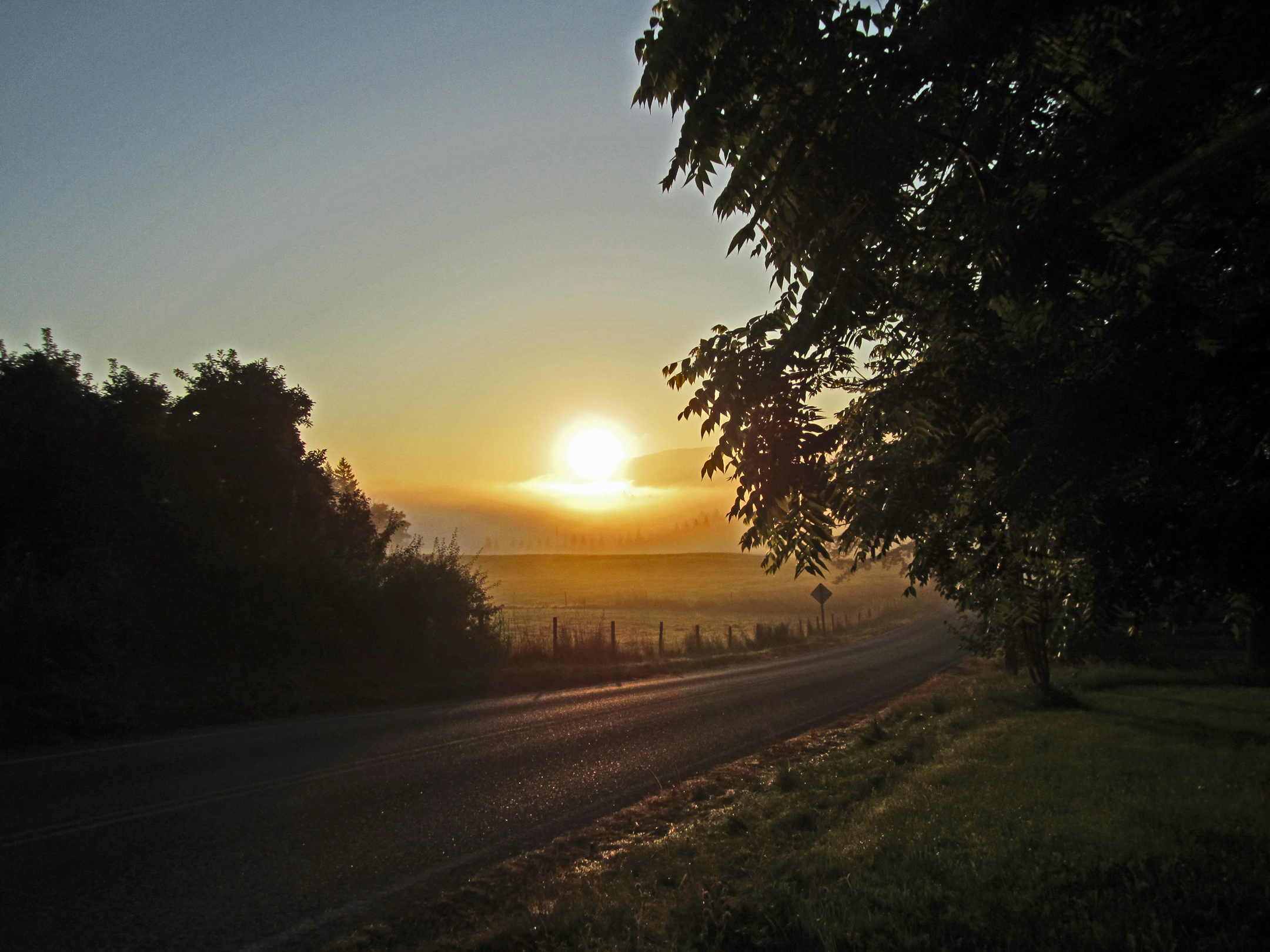
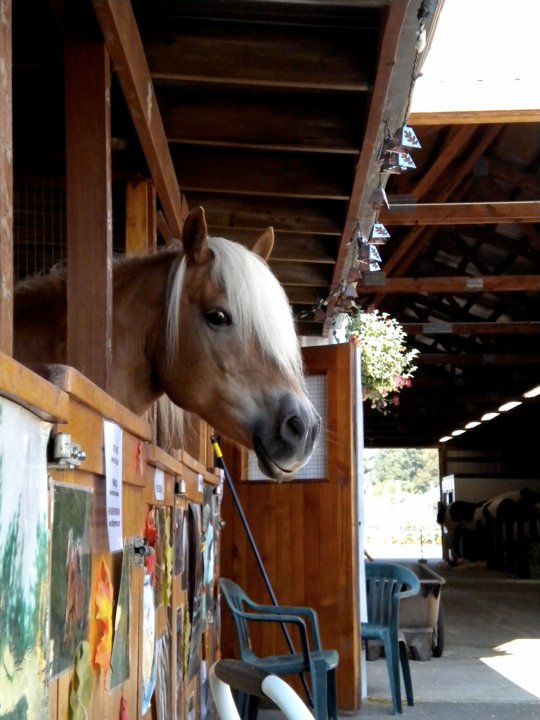
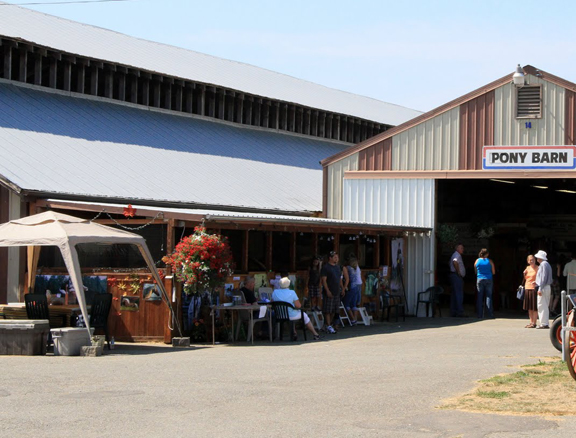
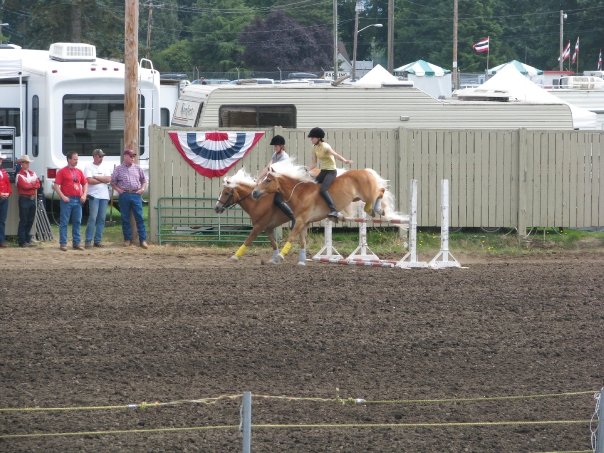
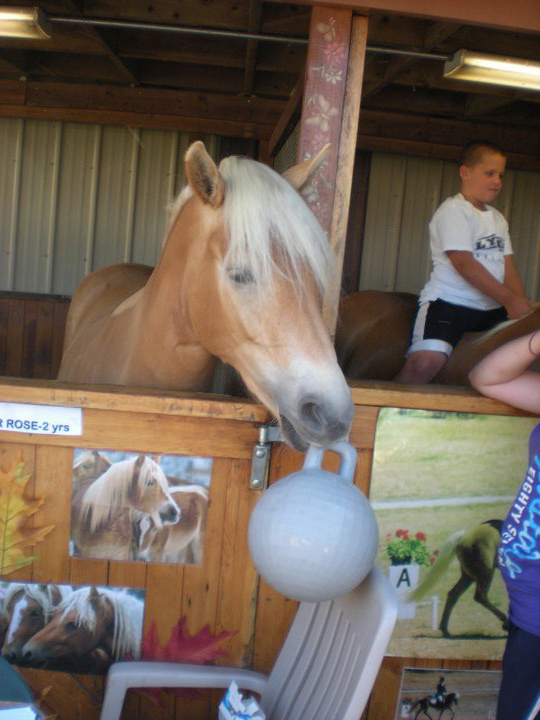
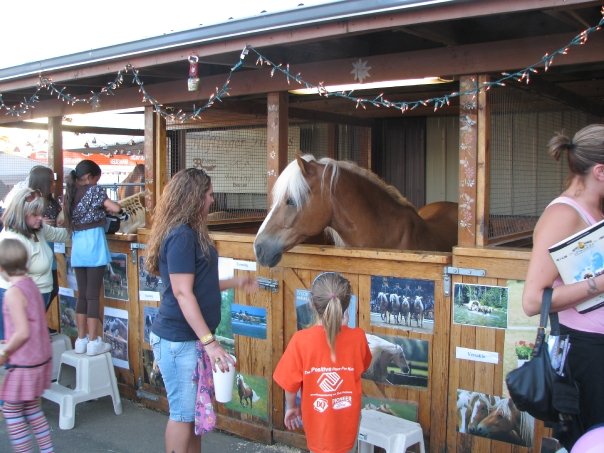
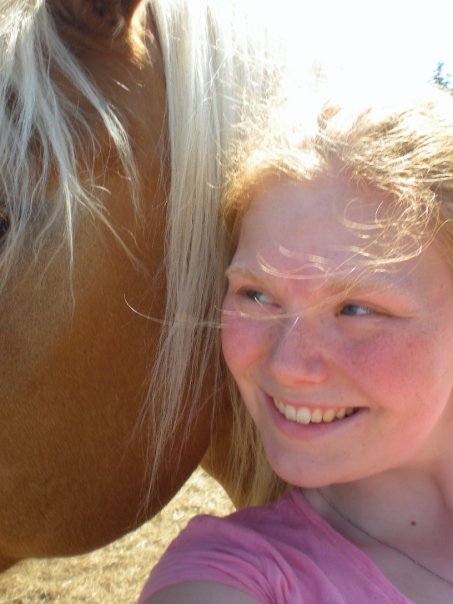
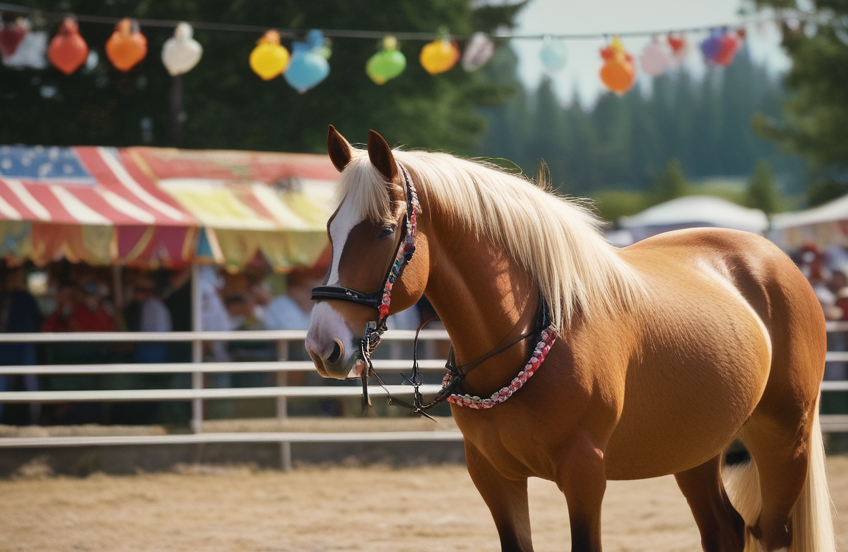
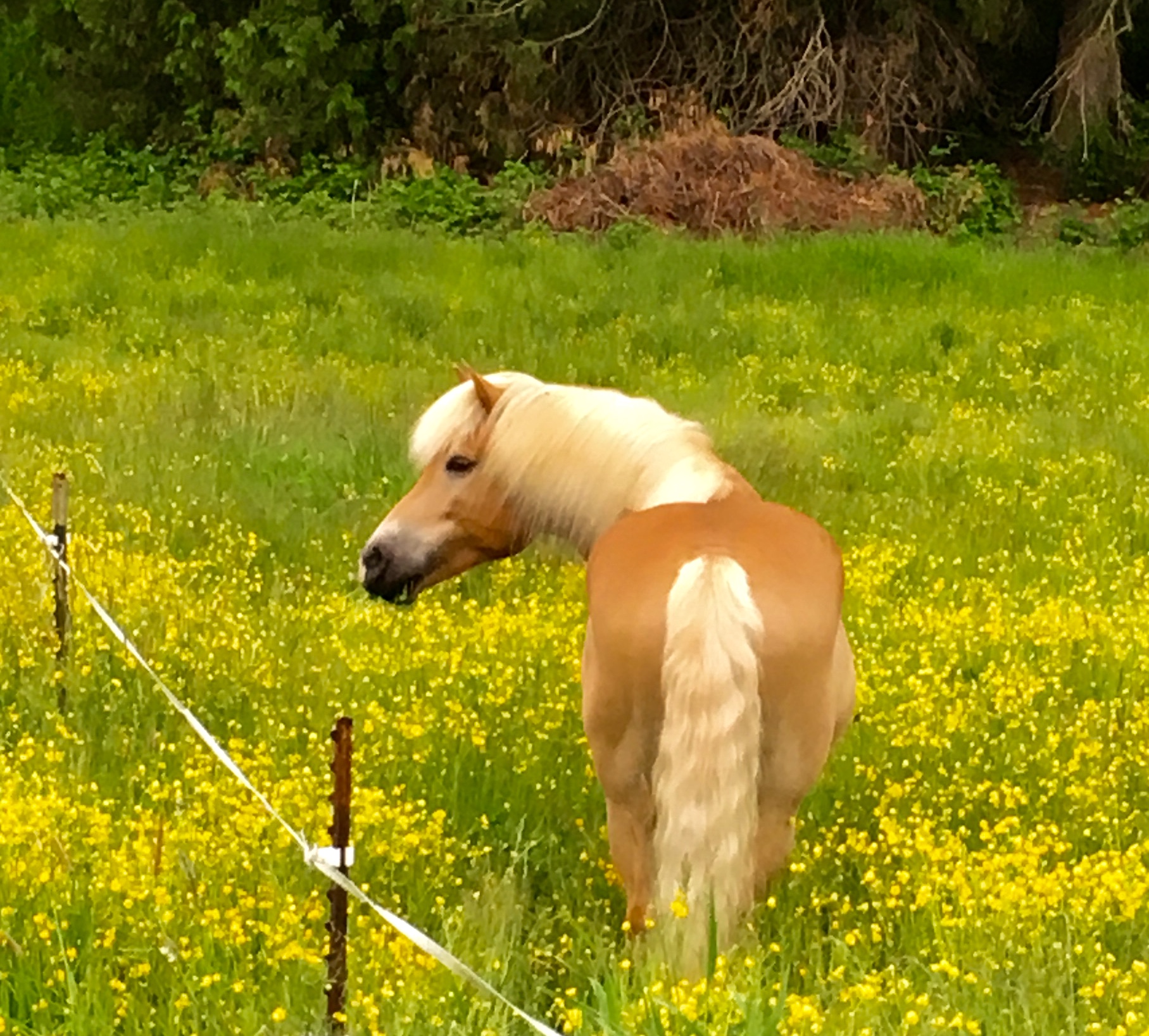
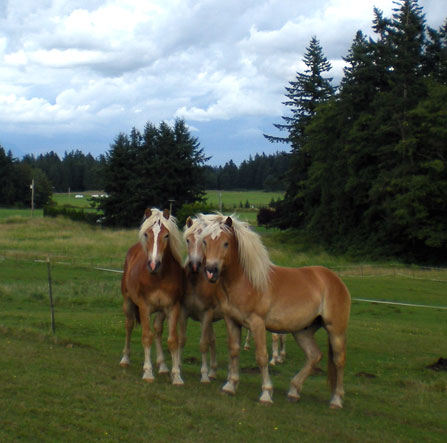
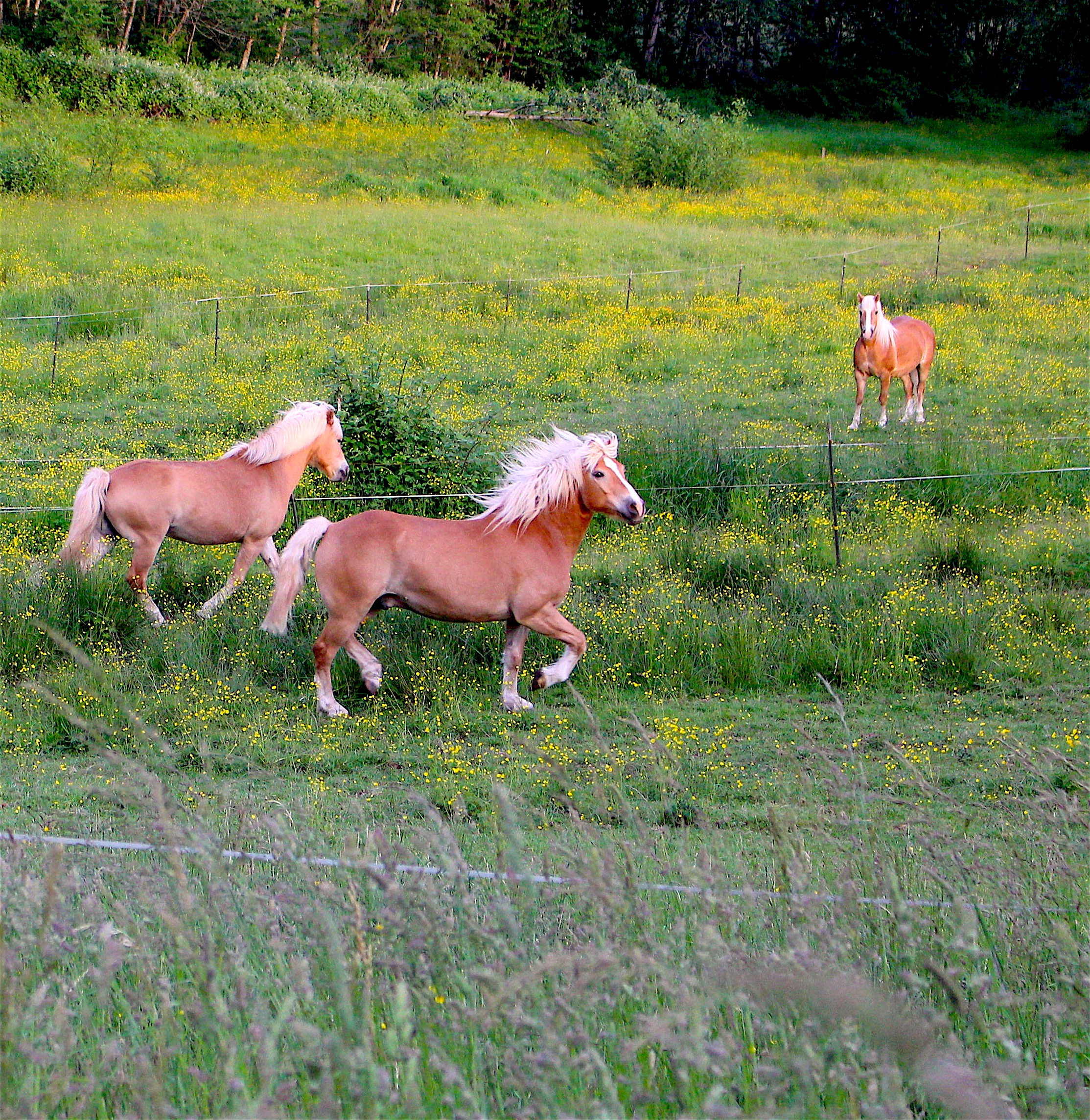
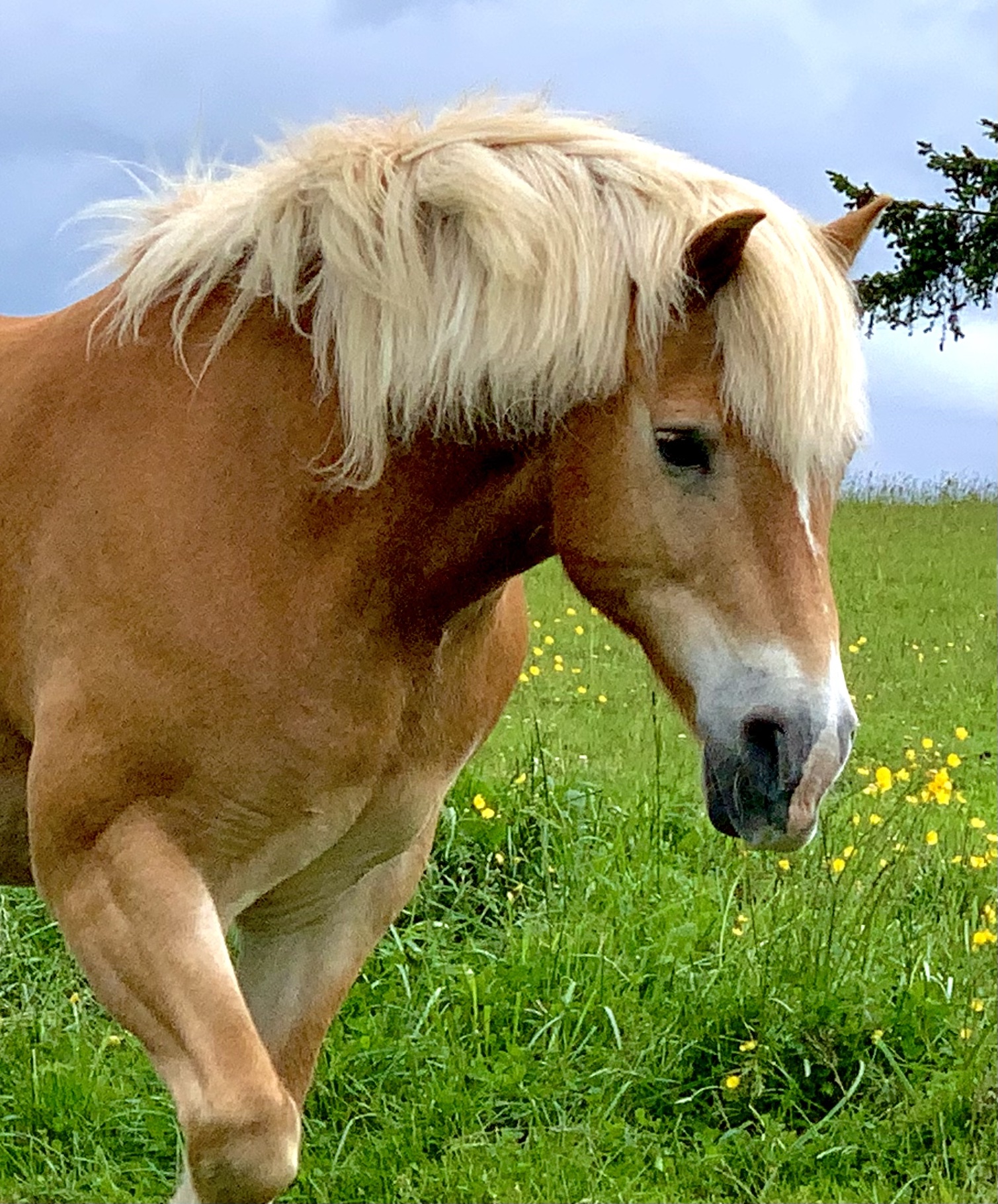
The Northwest Washington Fair in Lynden is under way again this week and instead of being part of the fun and hub-bub, our Haflinger horses are staying home, out on pasture. It’s been over a decade since they were cleaned up, curried, braided and trailered into town for a week to help make dreams come true for thousands of fairgoers.
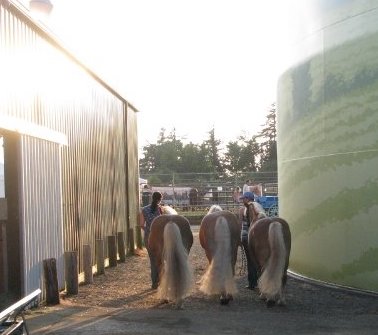
I feel a bit wistful as I wake up early on this foggy mid-August morning, remembering the twenty years of 5:30 AM dawns where I would gather up our sleepy children and their friends and head into the fairgrounds to clean the Haflingers’ stalls, walk the horses for exercise and prepare for a busy day of people strolling by and admiring them.
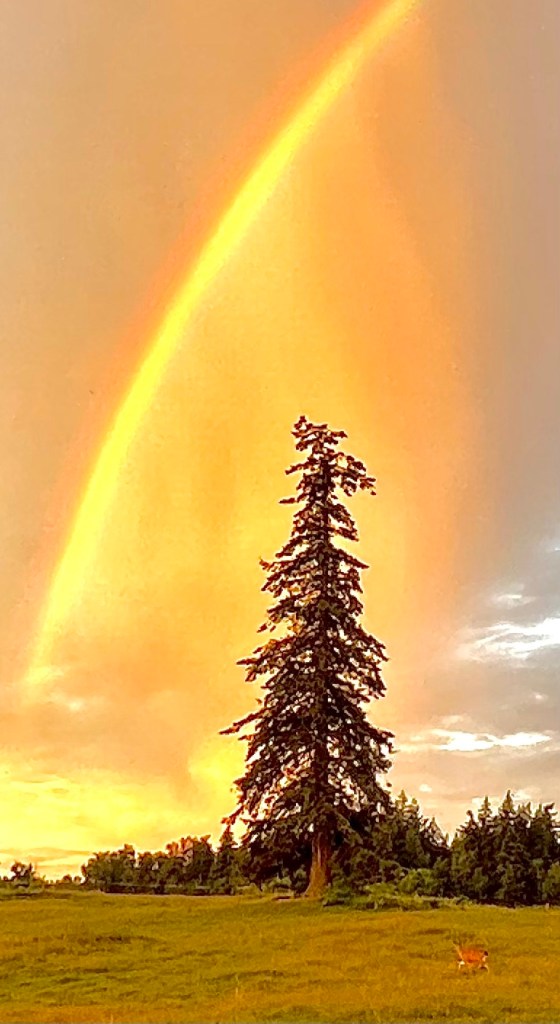
We stopped “doing” the fair as a Haflinger farm. Now that I’m 70 years old, rather than 40, 50, or 60, I’m okay about that. It was great while it lasted but this aging human and my equines relish our retirement, especially since the fair expanded to a 10 day rather than just a 6 day commitment. I so admire the draft horse families that have kept their six horse hitches active with their Belgians, Percherons and Clydesdales – some families are now in their fourth generation at the fair with teamsters, still driving the hitches, well into their eighties.
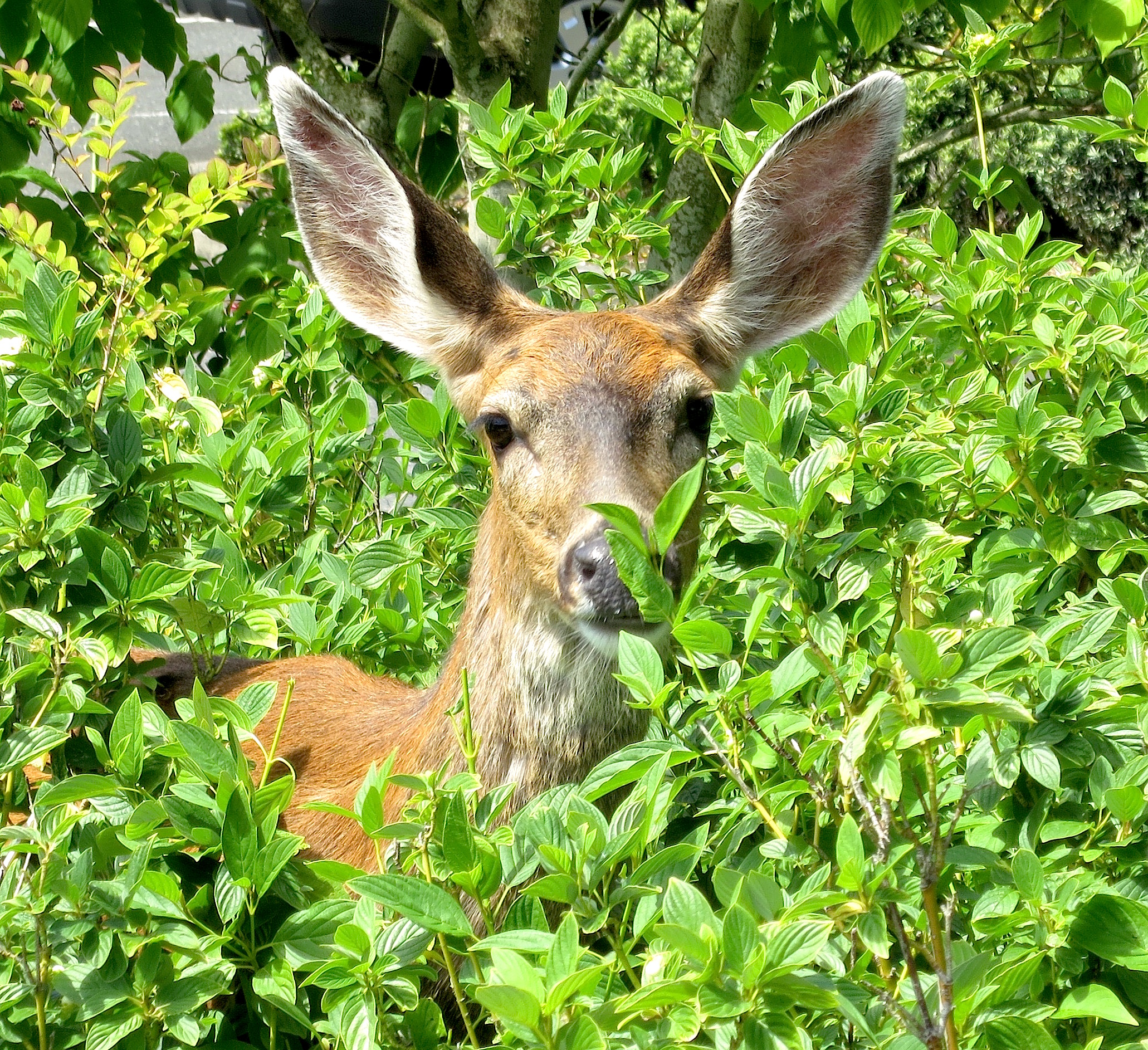
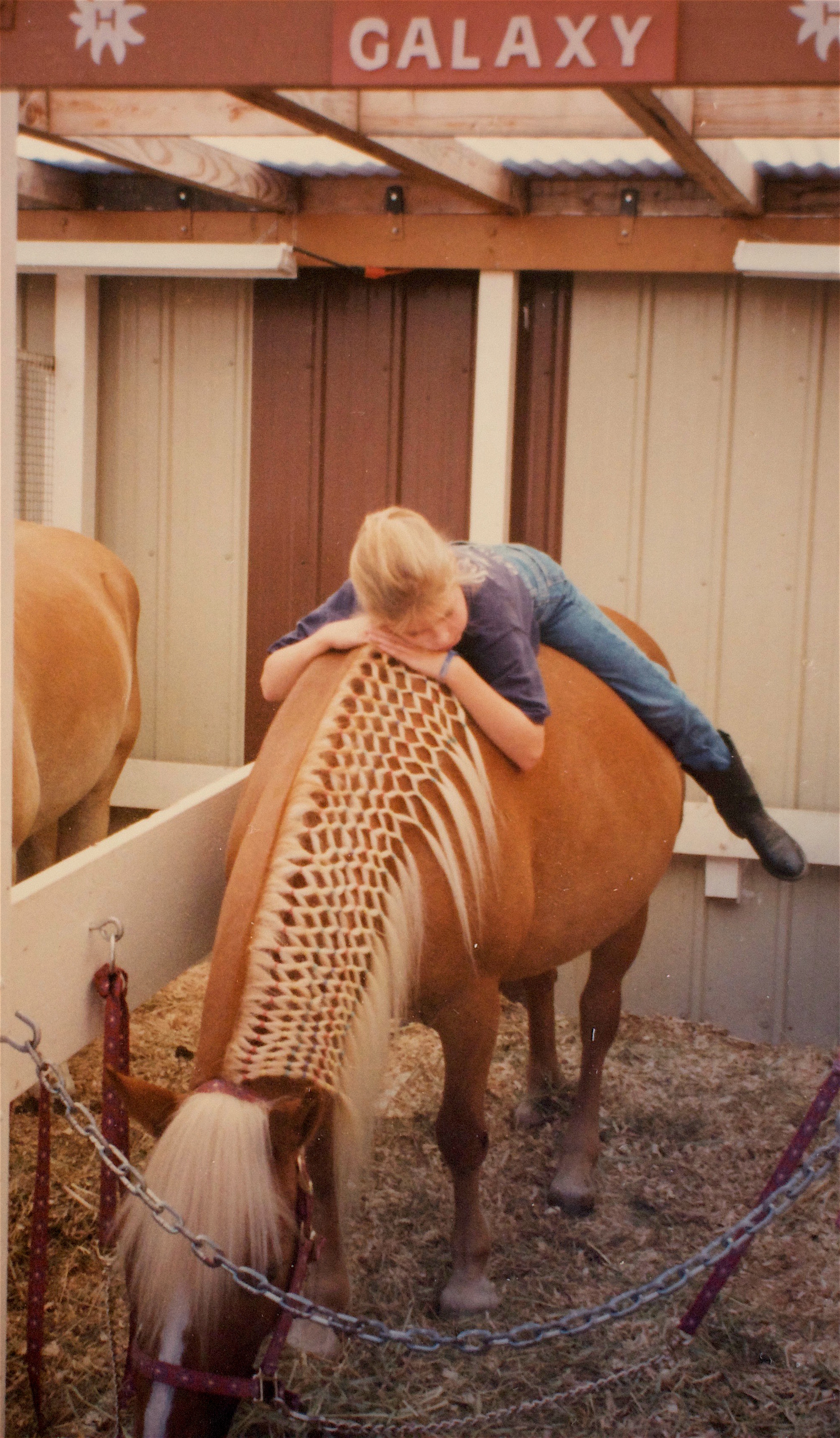
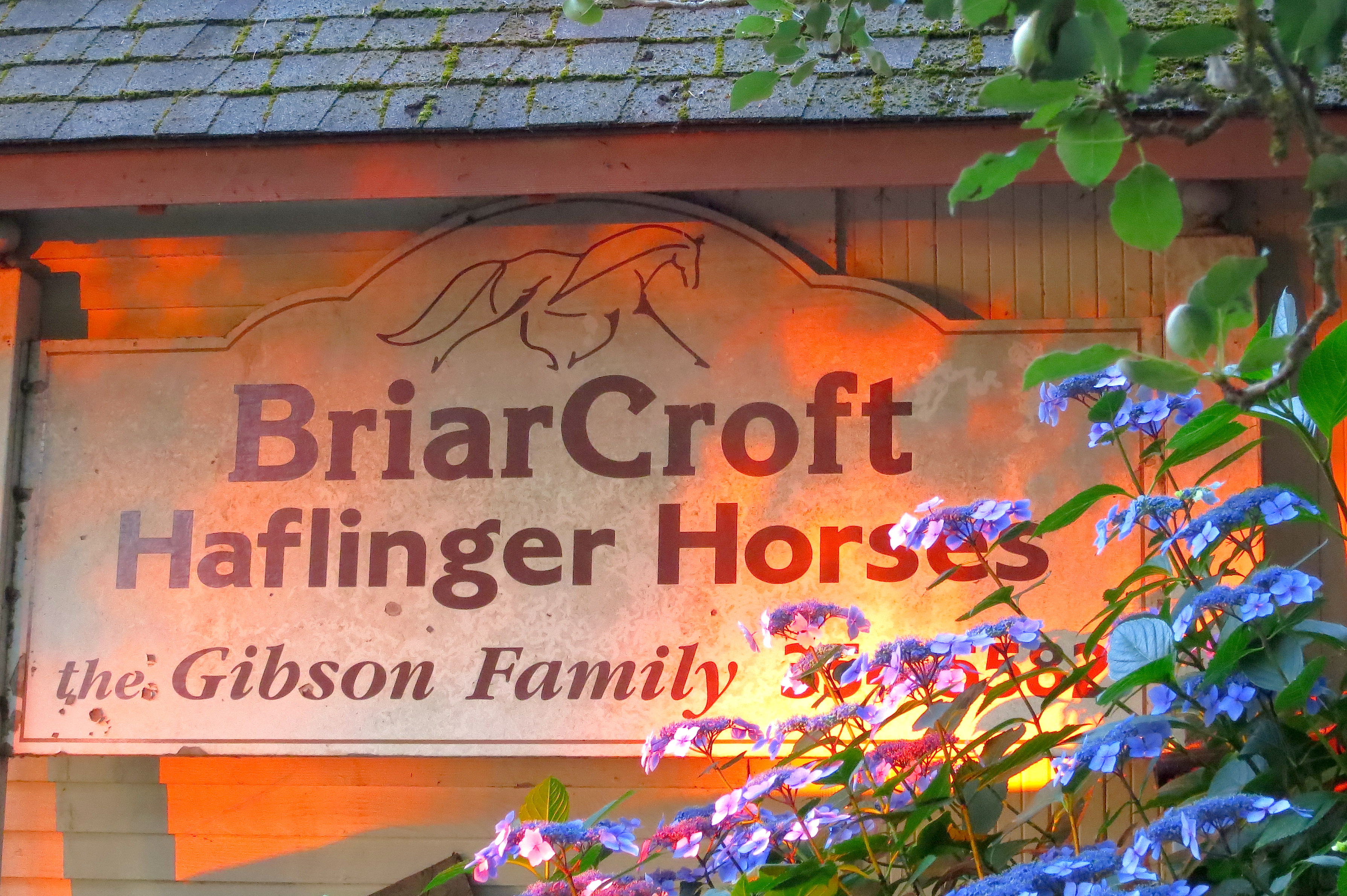
Our BriarCroft Haflingers display was a consistent presence at this regional fair for two decades, promoting the Haflinger breed in well-decorated stalls. Part of our commitment was to provide a 24-hr-a-day human presence with the horses. We had petitioned the Fair Board for 5 years in the late 1980s to allow us a spot at the fair, and they finally said “okay, here’s the space, build it yourself”, so we did.
We didn’t ask for classes, competition, or ribbons. We were there because fairgoers enjoyed seeing and touching our Haflingers and we enjoyed talking to all the people.
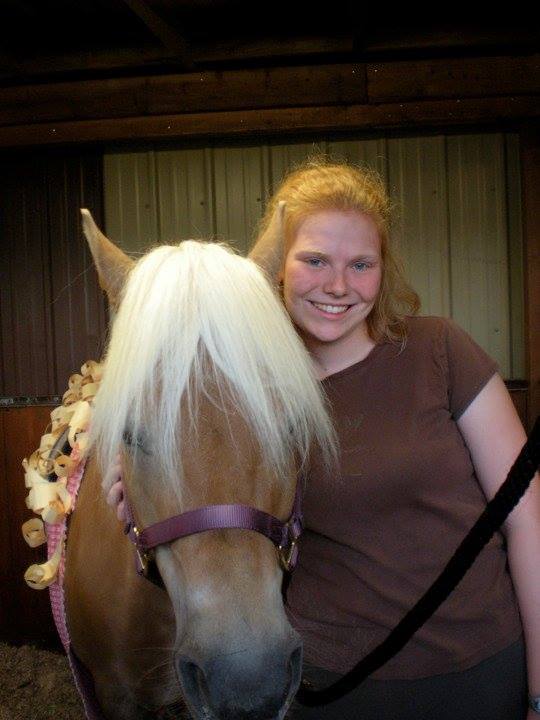
Once our children and their friends had careers and children of their own, they were no longer available to help “man” the horse stalls. I still miss spending such concentrated time with all the young nieces, nephews, neighbors, church and school friends who hung out with us over the years. I hope they still have fond memories of their time helping us at the fair.
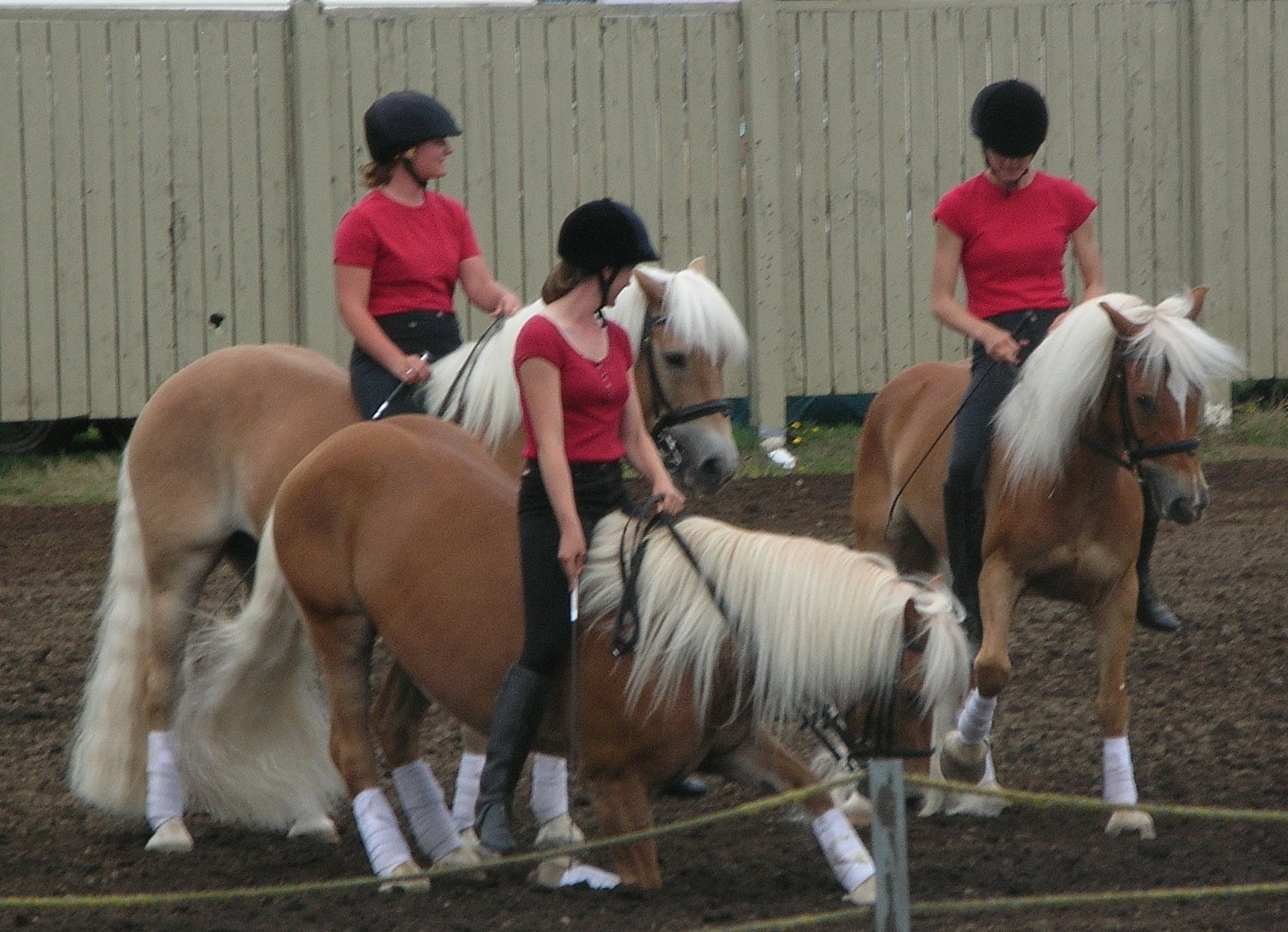
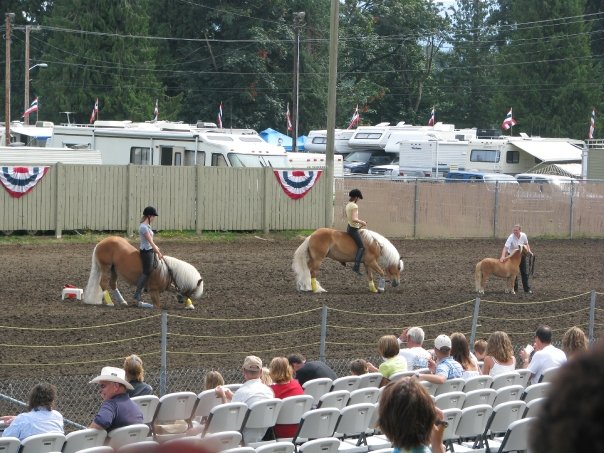
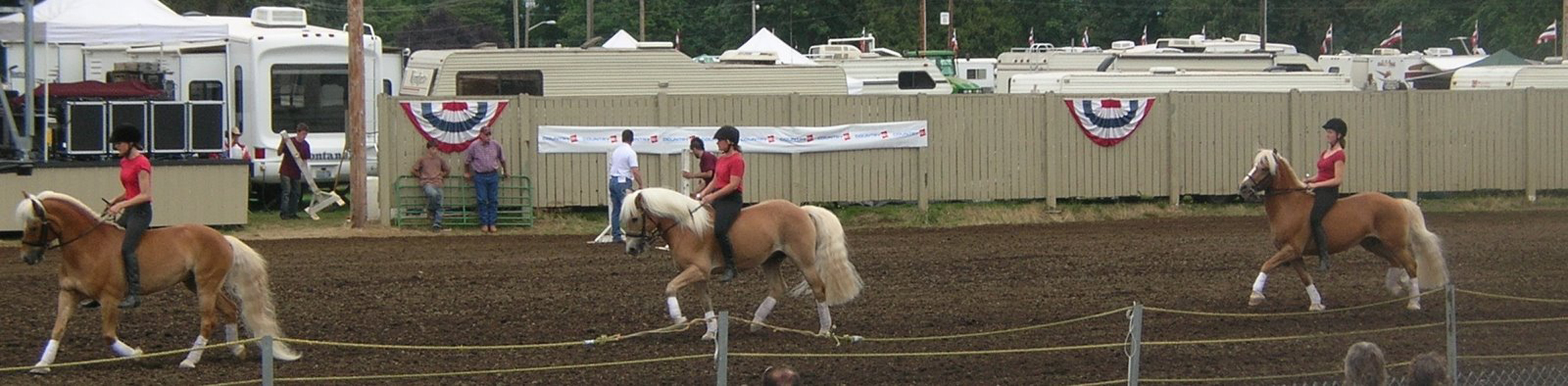
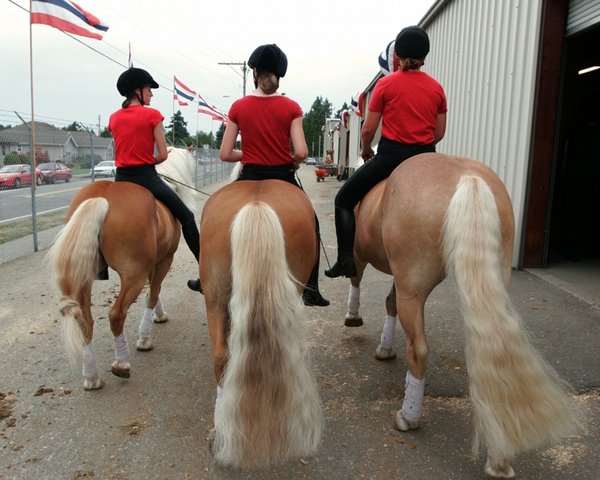
Every year from 1992 onward, we evaluated whether we had the energy and resources to do it again. Initially, Dan and I juggled our small children as well as horses at the fair and at home, taking a week of vacation from our jobs. Then, with the help of two other Haflinger breeding farms, and several young women who did a crowd-pleasing Haflinger “trick” riding demo in front of the grandstand, we rotated duties. The older kids watched the younger kids, the in-between kids did most of the horse stall cleaning duty, and the adults could sit and shoot the breeze.
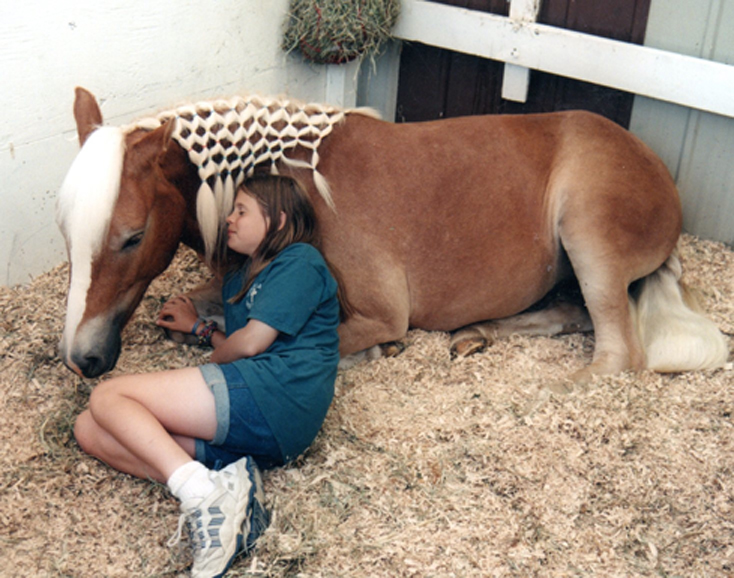
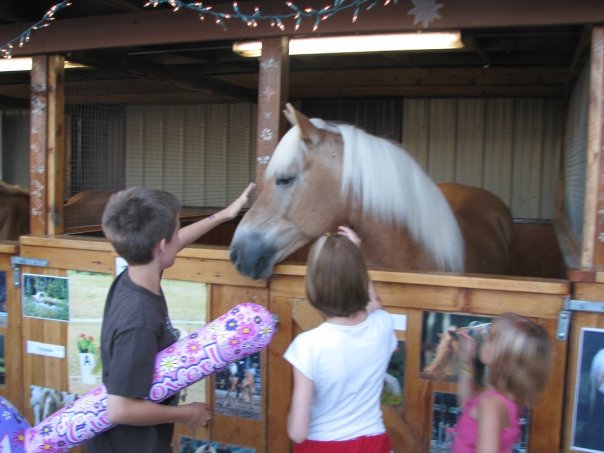
This created good will for the fair visitors who depended on us every year to be there with horses that they and their children could actually pet (and sit on) without worry, who enjoyed our braiding demonstrations, and our Haflinger trivia contests and prizes.
We continued to do this for so long because our horses were friendly and happy to give fair-goers a chance to safely get up close. These Haflingers became what dreams are made of.
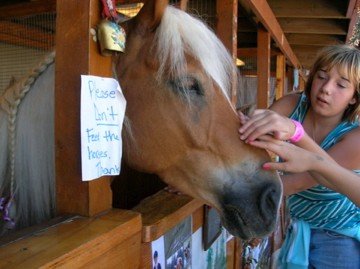
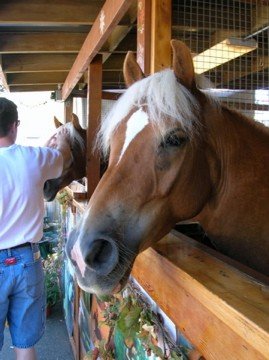
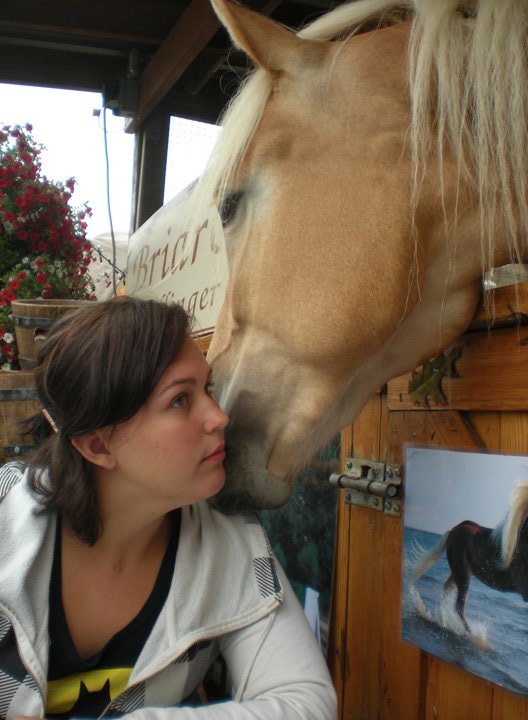
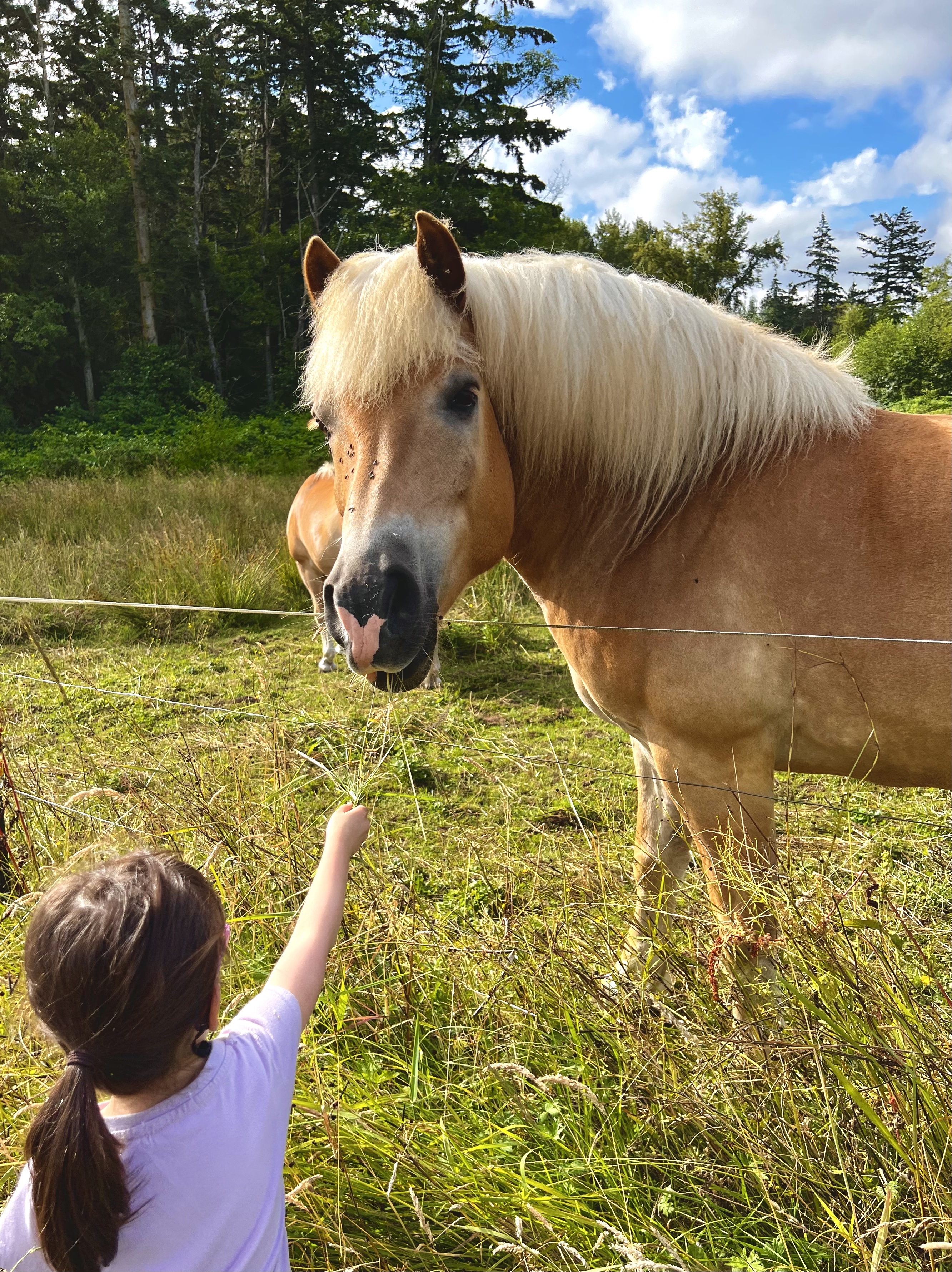
Countless times a day a bright eyed child approached our stalls, climbed up on the step stools and reached up to pet a Haflinger nose or neck and look deep into those big brown eyes. They will not forget the moment when a horse they had never met before loved them back. Haflingers are magic with children and we saw that over and over again.
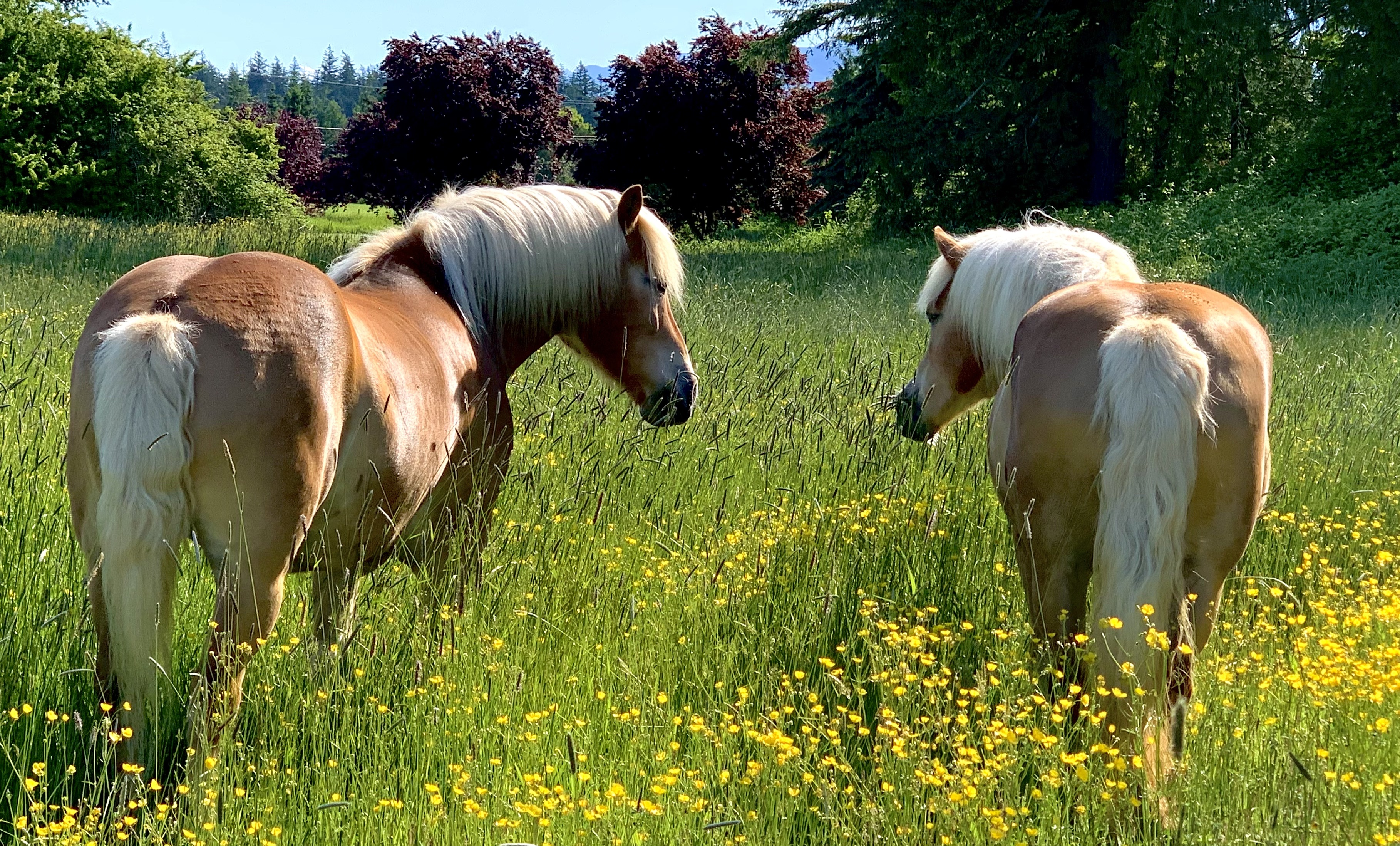
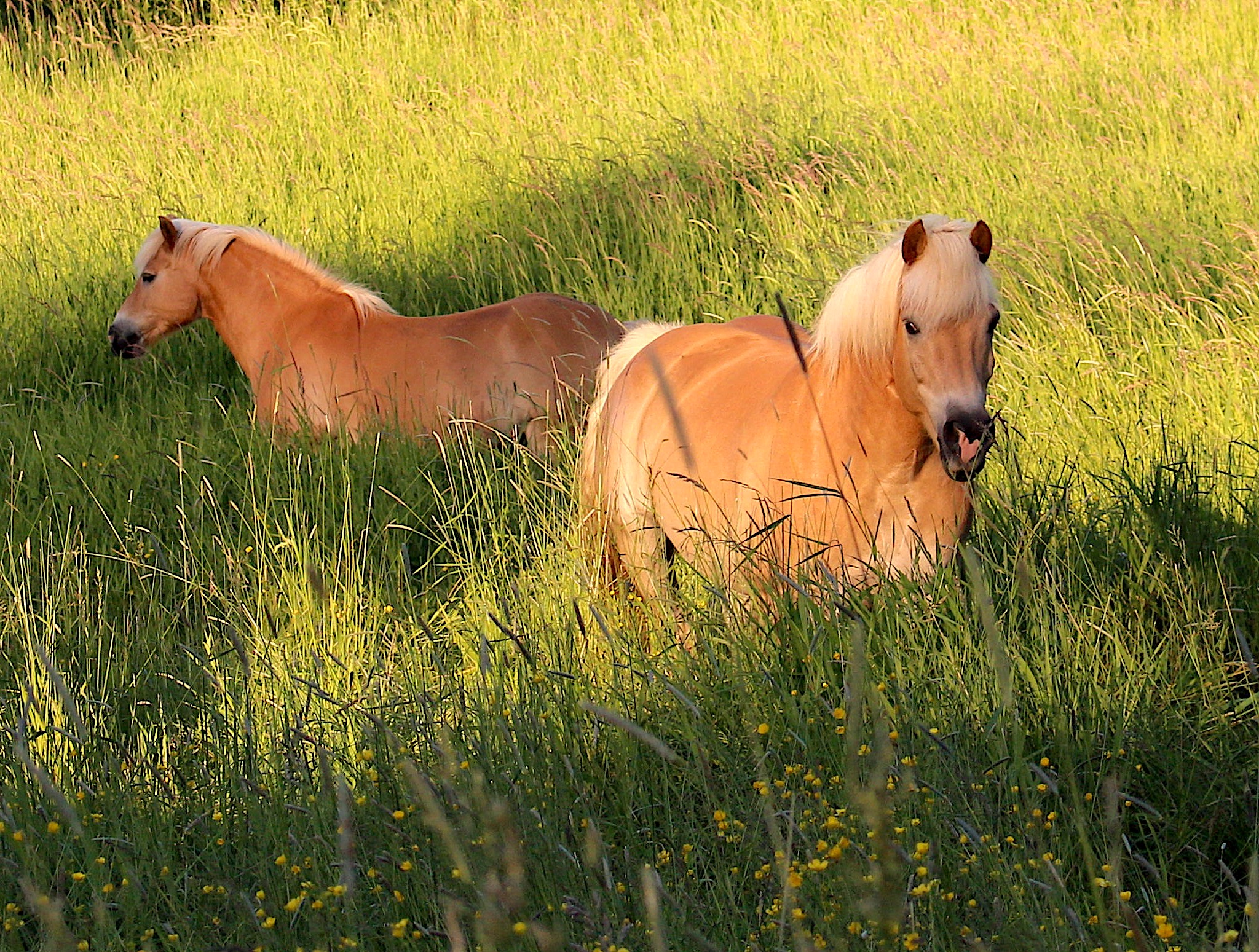
So on this foggy August morning years later, instead of heading to the fairgrounds to clean stalls and braid manes, I’m turning out our retired, dusty, unbathed Haflingers into the field as usual. They barely recall all the excitement they are missing.
Even if our horses don’t remember much about those fair weeks so long ago, I know some fair-goers still miss the friendly golden horses with the big brown eyes who tried, even if for a day, to make their dreams come true.
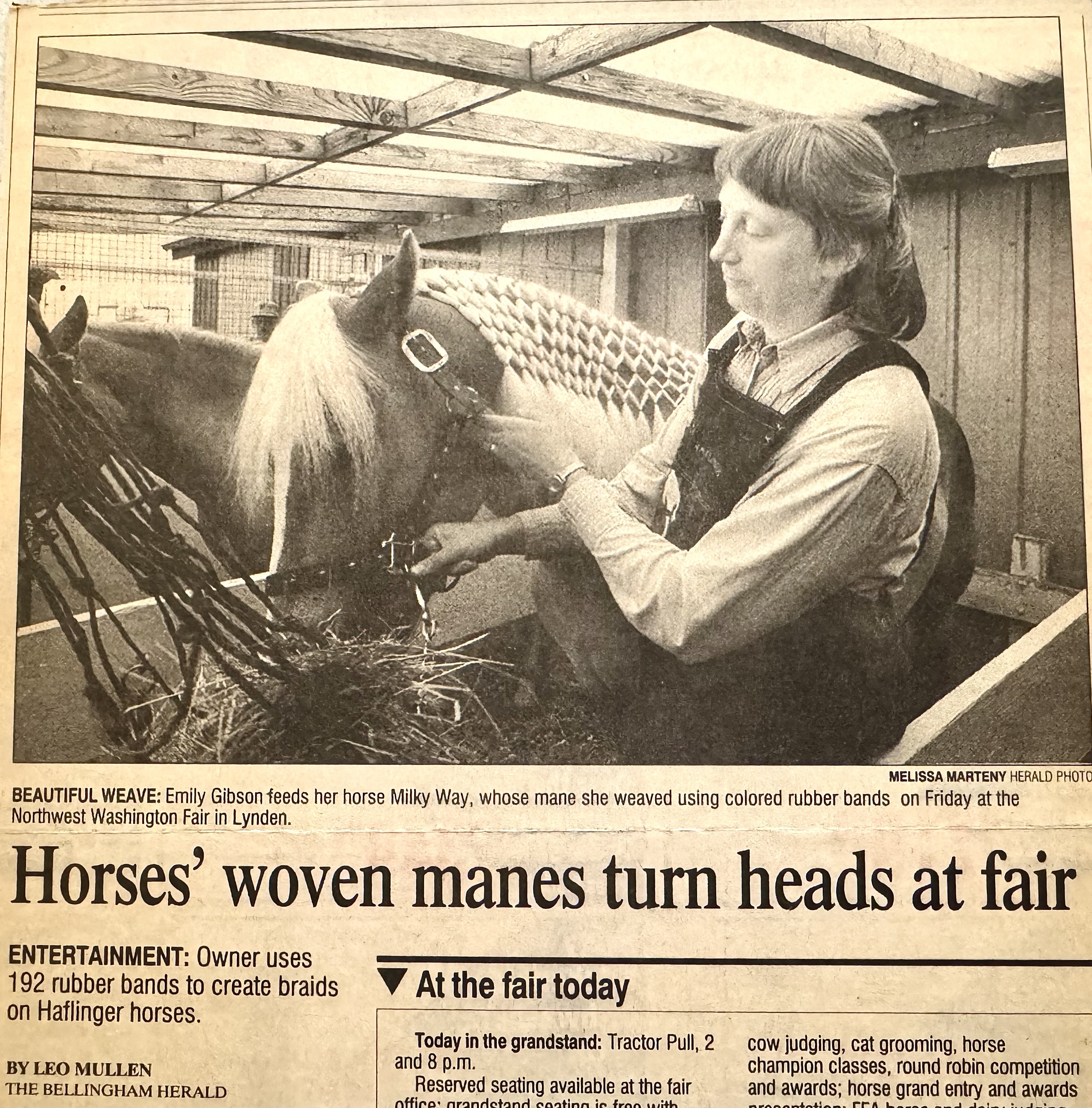
29 years ago, Milky Way and I were featured in our fair display on the front page of the local Bellingham Herald
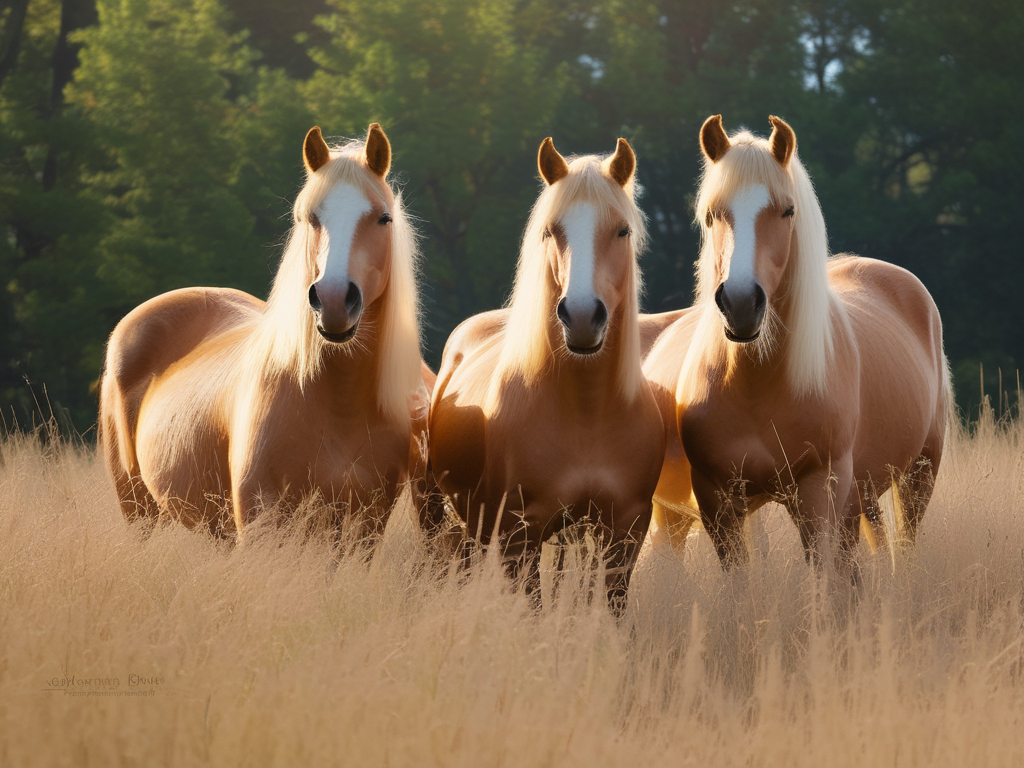
AI image created for this post
One-Time
Monthly
Yearly
Make a one-time or recurring donation to support daily Barnstorming posts
Broad August burns in milky skies, The world is blanched with hazy heat; The vast green pasture, even, lies Too hot and bright for eyes and feet.
Amid the grassy levels rears The sycamore against the sun The dark boughs of a hundred years, The emerald foliage of one.
Lulled in a dream of shade and sheen, Within the clement twilight thrown By that great cloud of floating green, A horse is standing, still as stone.
He stirs nor head nor hoof, although The grass is fresh beneath the branch; His tail alone swings to and fro In graceful curves from haunch to haunch.
He stands quite lost, indifferent To rack or pasture, trace or rein; He feels the vaguely sweet content Of perfect sloth in limb and brain. ~William Canton “Standing Still”
Sweet contentment is a horse dozing in the summer field, completely sated by grass and clover, tail switching and skin rippling automatically to discourage flies.
I too wish at times for that stillness of mind and body, allowing myself to simply “be” without concern about yesterday’s travails, or what duties await me tomorrow.
I flunked sloth long ago. Perhaps I was born driven. My older sister, never a morning person, was thoroughly annoyed to share a bedroom with a toddler who awoke chirpy and cheerful, singing “Twinkle Twinkle” for all to hear and ready to conquer the day.
Since retiring, I admit I am becoming accustomed now to sloth-dom, though I am still too chipper in the early morning. It is a distinct character flaw.
Even so, I’m not immune to the attractions of a hot hazy day of doing absolutely nothing but standing still switching at flies. I envy our retired ponies in the pasture who spend the day grazing, moseying, and lazing. I worked hard many years to make that life possible for them.
I want to use my days well. I want to be worthy. I want to know there is a reason to be here beyond just warning the flies away.
It is absolutely enough to enjoy the glory of it all.
One-Time
Monthly
Yearly
Make a one-time or recurring donation to support daily Barnstorming posts
He’s not so absorbed in the life around him That he never looks up on clear nights To admire the starry face of the sky. But he’s awed even more by the earth he lives on, By how much, for instance, its fertility Depends on the unseen toil of earthworms. Who would believe that over decades Every inch of the field behind his house Passes through their bodies again and again As they feed on the dirt they tunnel through? So much tireless turning over of loam, So much natural harrowing, shredding, and leveling. Yes, their work has undermined the stone wall That marks the edge of his garden. But that’s a small price For soil that nurtures the berries and grains He enjoys at breakfast. Why turn from the table To write a lament on the power of time To undermine human effort when he can describe How the work of worms helps sustain us? Not to bother with them because they aren’t aware Of his existence—how small-minded That would seem to him in a species that prides itself On understanding its place in the scheme of things, As small-minded as thinking less of the stars Because they aren’t twinkling for his benefit. But the stars aren’t likely to go unnoticed By a species quick to admire what’s distant, Serene, and glittering, as opposed to what’s near, Busy, and inconspicuous, Working an inch beneath the grass. ~Carl Dennis “Near Darwin”
Aren’t you glad at least that the earthworms Under the grass are ignorant, as they eat the earth, Of the good they confer on us, that their silence Isn’t a silent reproof for our bad manners, Our never casting earthward a crumb of thanks For their keeping the soil from packing so tight That no root, however determined, could pierce it?
Imagine if they suspected how much we owe them, How the weight of our debt would crush us Even if they enjoyed keeping the grass alive, The garden flowers and vegetables, the clover, And wanted nothing that we could give them, Not even the merest nod of acknowledgment.
A debt to angels would be easy in comparison, Bright, weightless creatures of cloud, who serve An even brighter and lighter master. Lucky for us they don’t know what they’re doing, These puny anonymous creatures of dark and damp Who eat simply to live, with no more sense of mission Than nature feels in providing for our survival. …the tunneling earthworms, tireless, silent, As they persist, oblivious, in their service. ~Carl Dennis from “Worms”
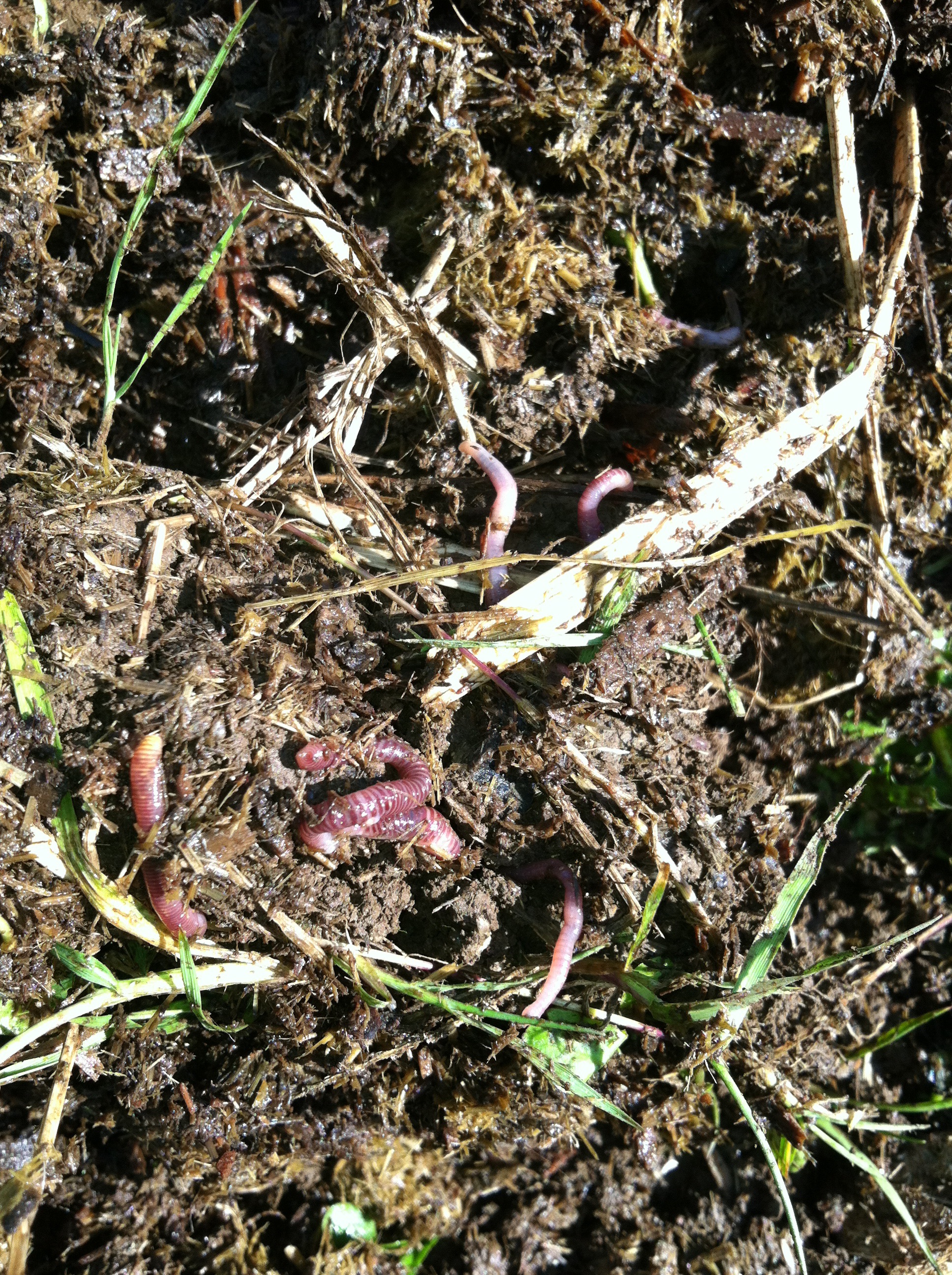
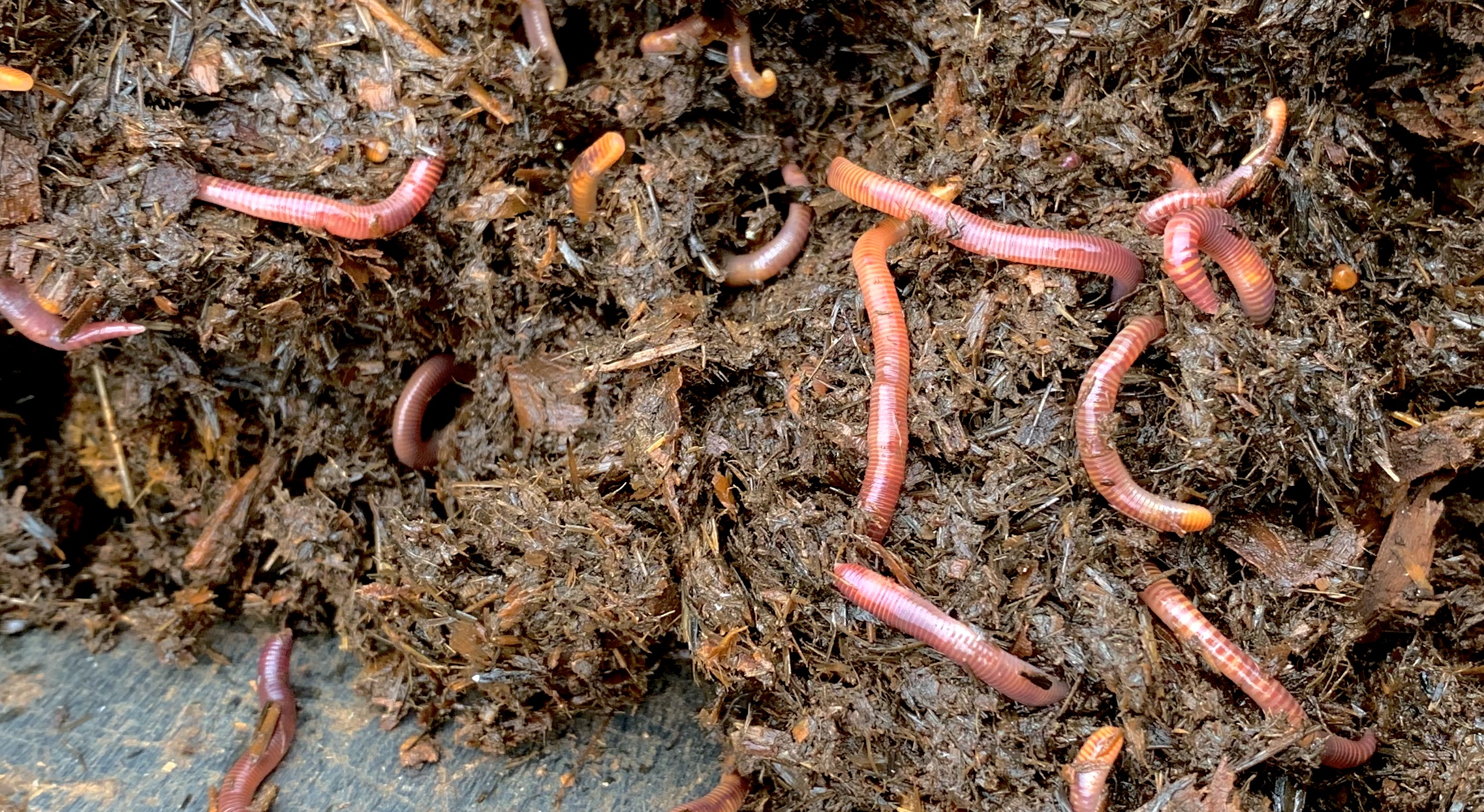
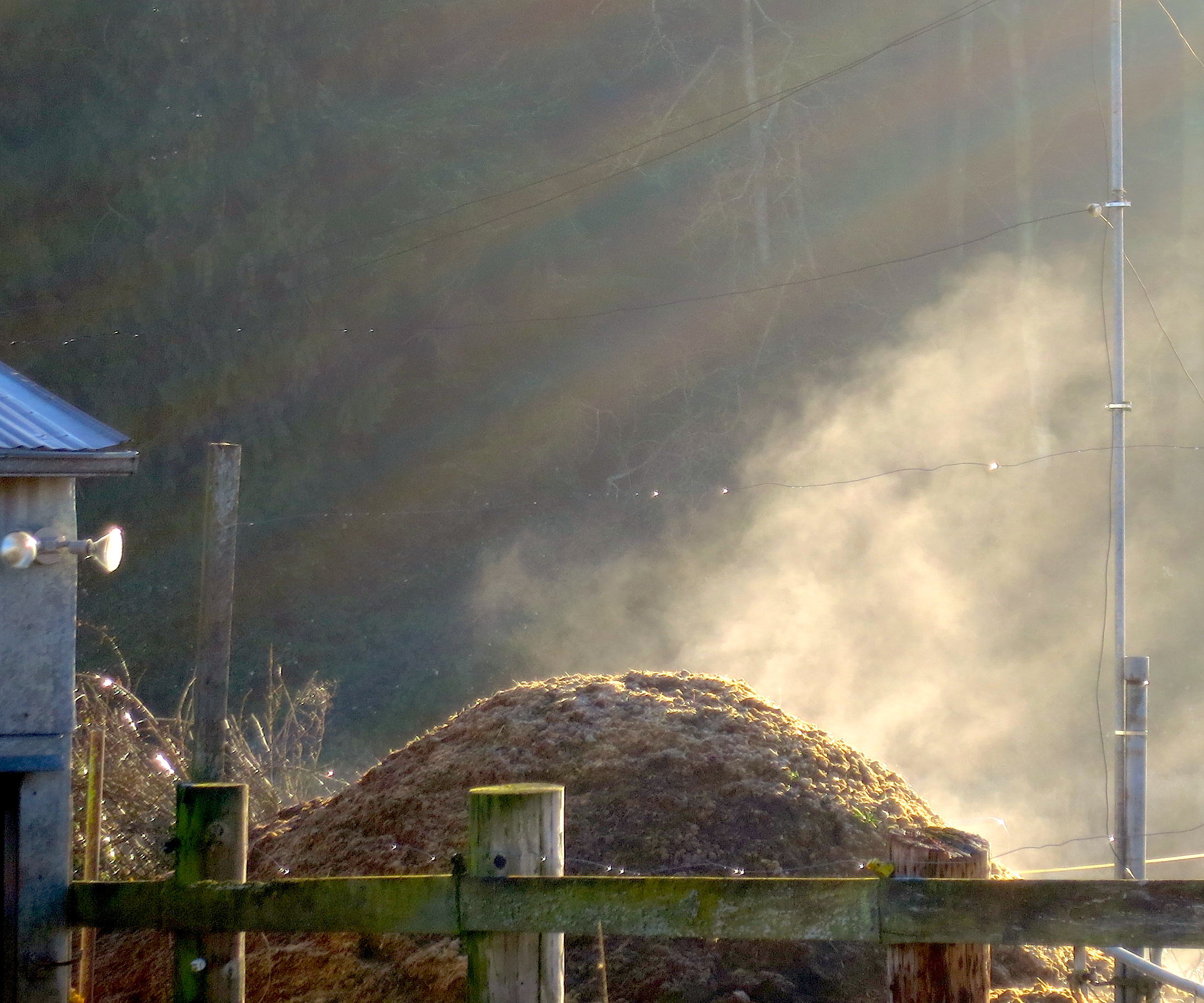
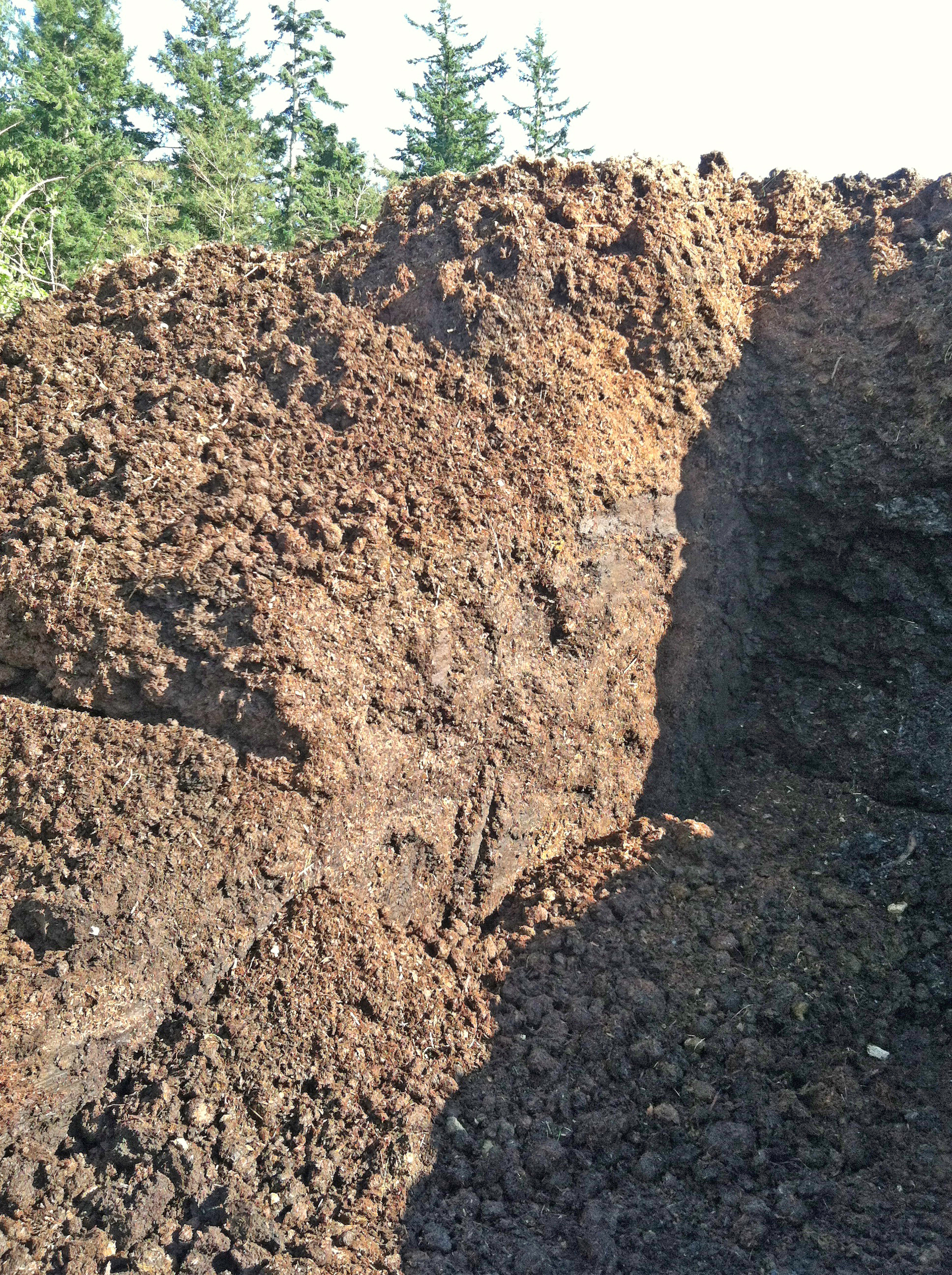
We’ve been composting horse manure for several decades behind the barn, and we dig in to the tall pile to spread on our garden plots. As Dan pushes the tractor’s front loader into the pile, steam rises from its compost innards. As the rich soil is scooped, thousands of newly exposed red wiggler worms immediately dive for cover. Within seconds, thousands of naked little creatures have, well, …wormed their way back into the security of warm dirt, being rudely interrupted from their routine. I can’t say I blame them.
Hundreds of thousands of wigglers end up being forced in the spring to adapt to new quarters, leaving the security of the manure mountain behind. As we smooth the topping of compost over the garden plot, the worms–gracious creatures that they are–tolerate being rolled and raked and lifted and turned over, waving their little bodies expectantly in the cool air before slipping back down into the dark. There they begin their work of digesting, aerating and renewing the soil of the garden, reproducing in their unique hermaphroditic way, leaving voluminous castings behind to further feed future seedlings to be planted.
Worms are unjustly denigrated by humans primarily because we don’t like to be surprised by them. We don’t like to see one in our food, especially only part of one, and are particularly distressed to see them after we’ve digested our food. Once we get past that bit of squeamishness, we can greatly appreciate their role as the ultimate recyclers, leaving the earth under our feet a lot better off once they are finished with their work.
We humans actually suffer by comparison: to be called “a worm” is really not as bad as it sounds at first. It is possible the worm may be offended by the association.
I hope to prove a worthy innkeeper for these new tenants. May they live long and prosper only an inch beneath the grass, so much more accessible than the infinite stars in the sky. May each worm forgive the disruption perpetrated by our rake and shovel. May I smile appreciatively the next time someone calls me a mere worm.
a cross section of 30 months of composted manure
AI image created for this post
One-Time
Monthly
Yearly
Make a one-time or recurring donation to support daily Barnstorming posts
Because I have come to the fence at night, the horses arrive also from their ancient stable. They let me stroke their long faces, and I note in the light of the now-merging moon
how they, a Morgan and a Quarter, have been by shake-guttered raindrops spotted around their rumps and thus made Appaloosas, the ancestral horses of this place.
Maybe because it is night, they are nervous, or maybe because they too sense what they have become, they seem to be waiting for me to say something
to whatever ancient spirits might still abide here, that they might awaken from this strange dream, in which there are fences and stables and a man who doesn’t know a single word they understand. ~Robert Wrigley “After a Rainstorm”from Beautiful Country
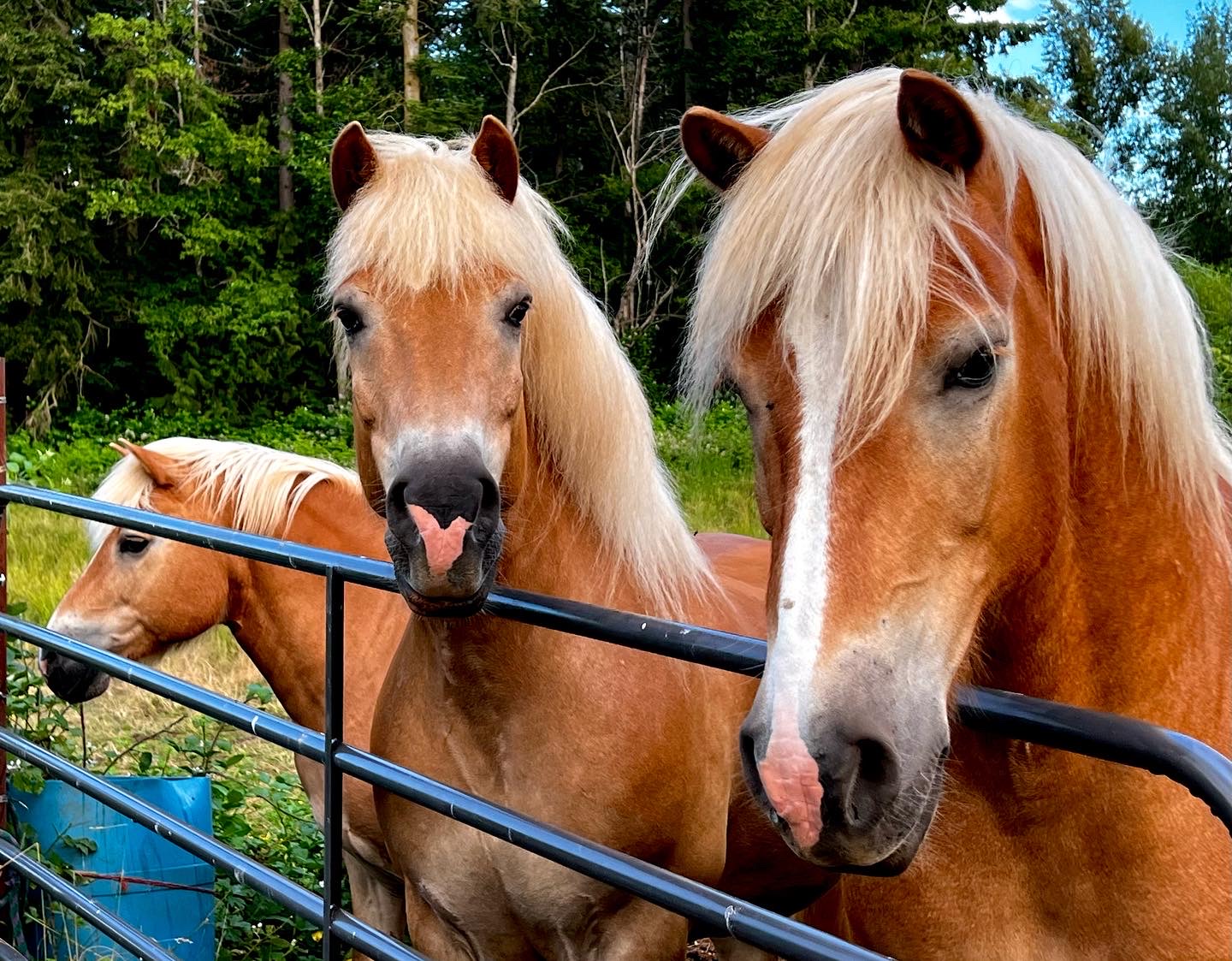
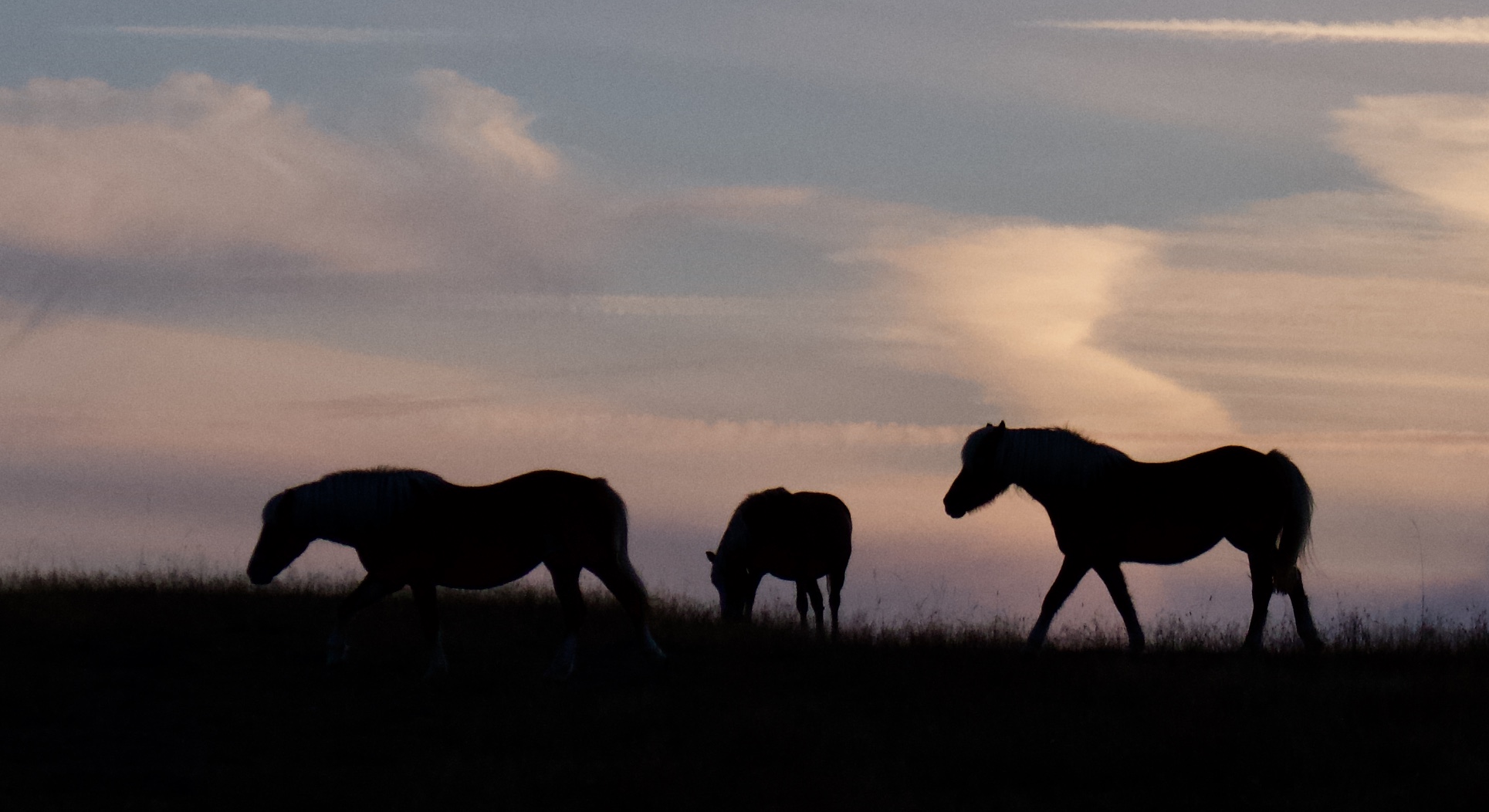
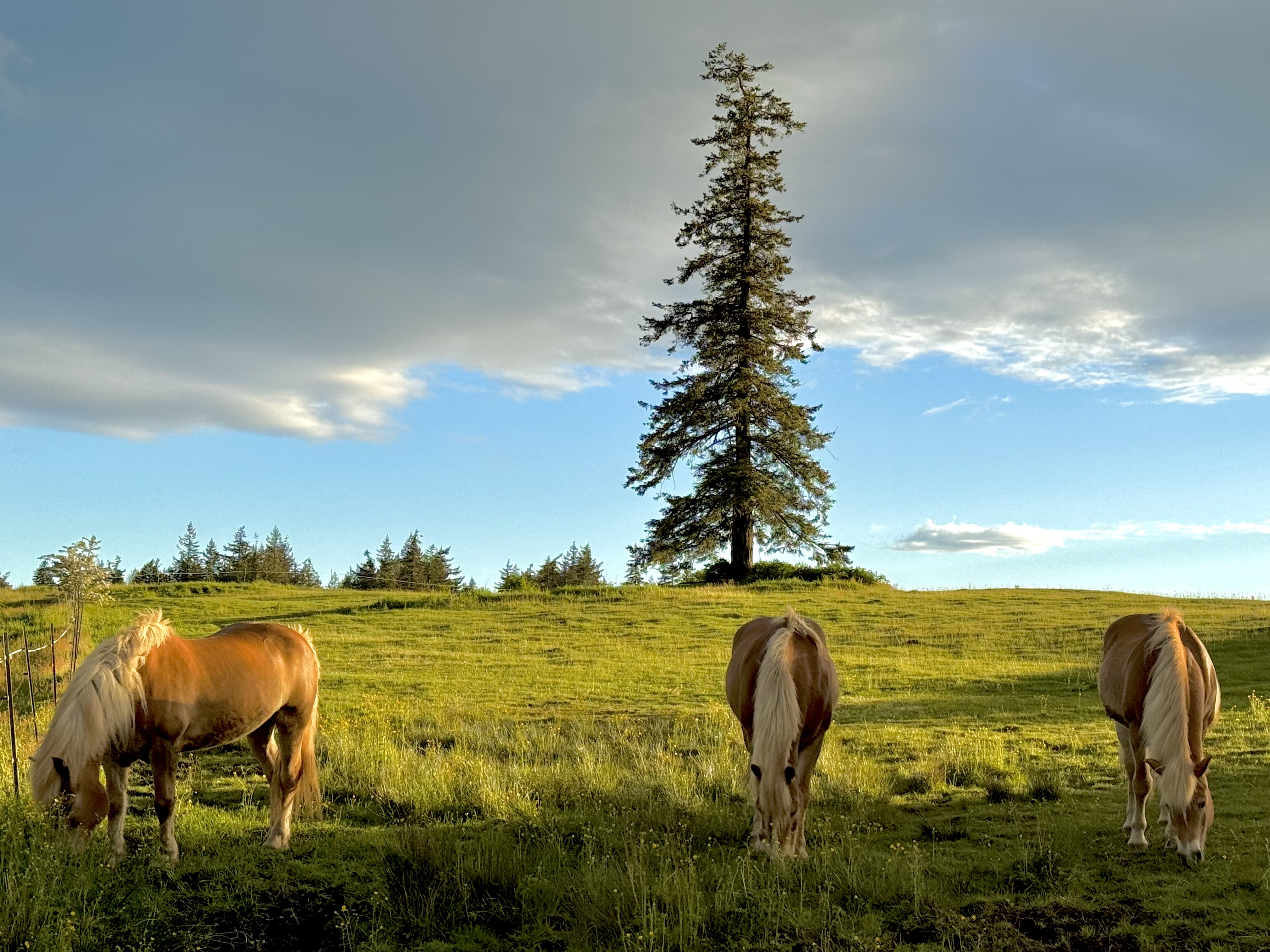
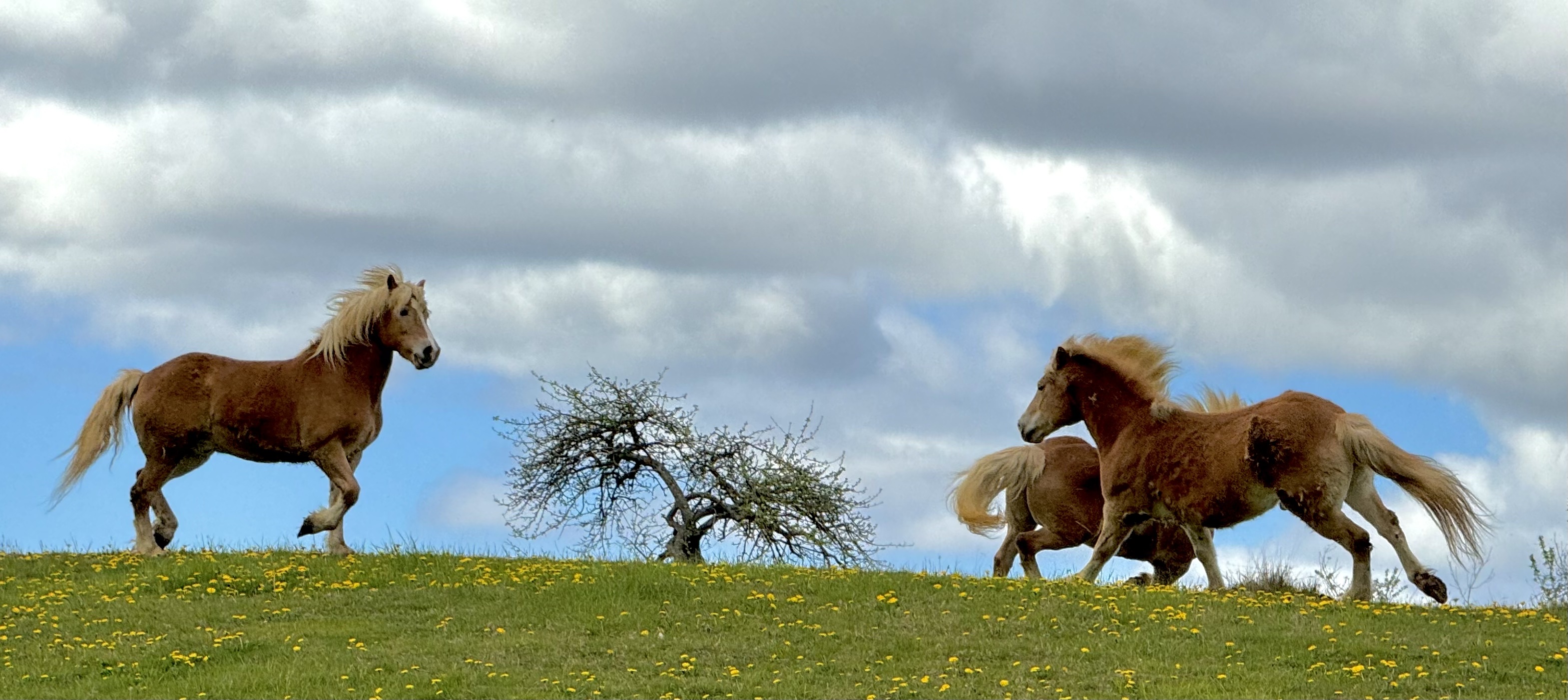
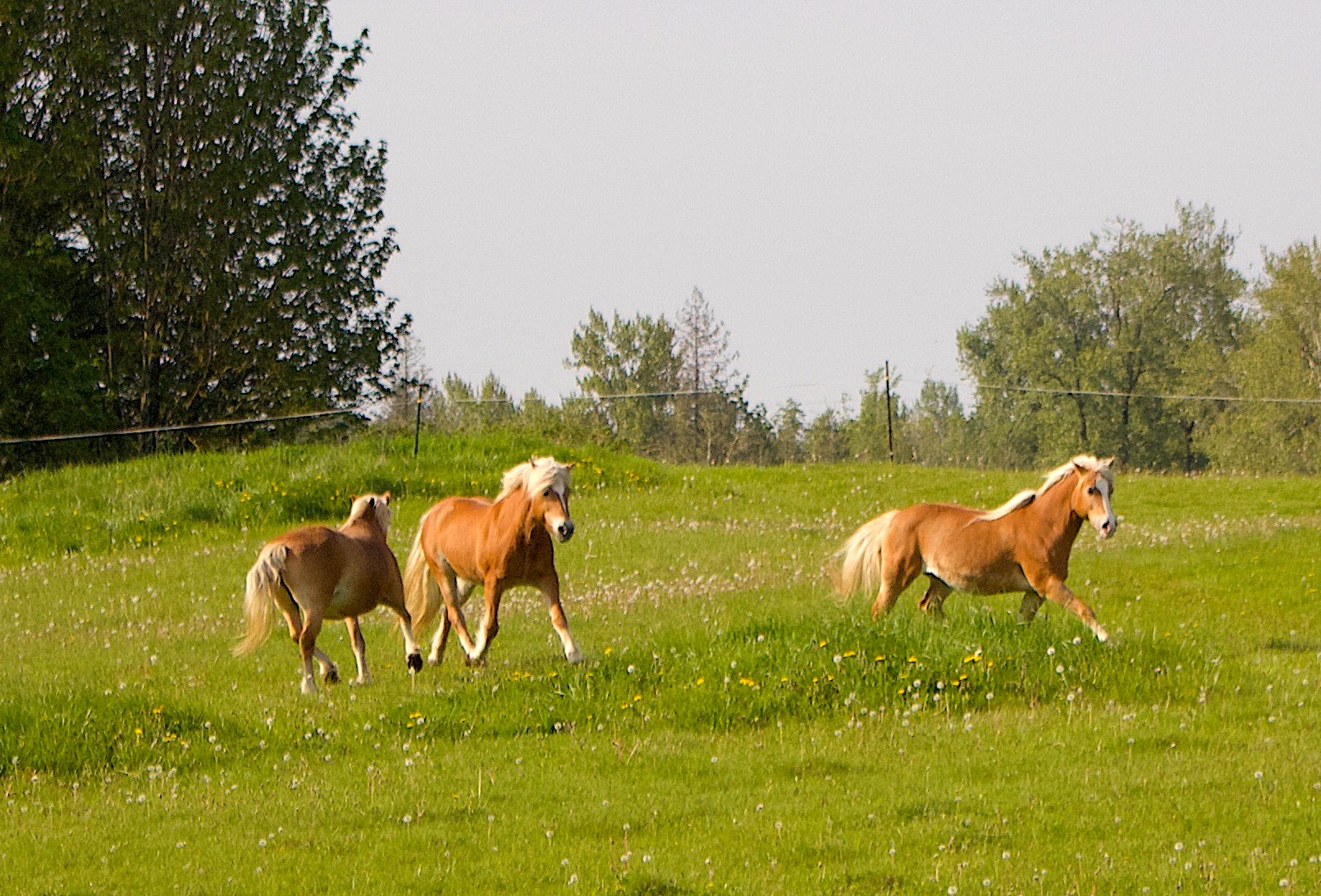
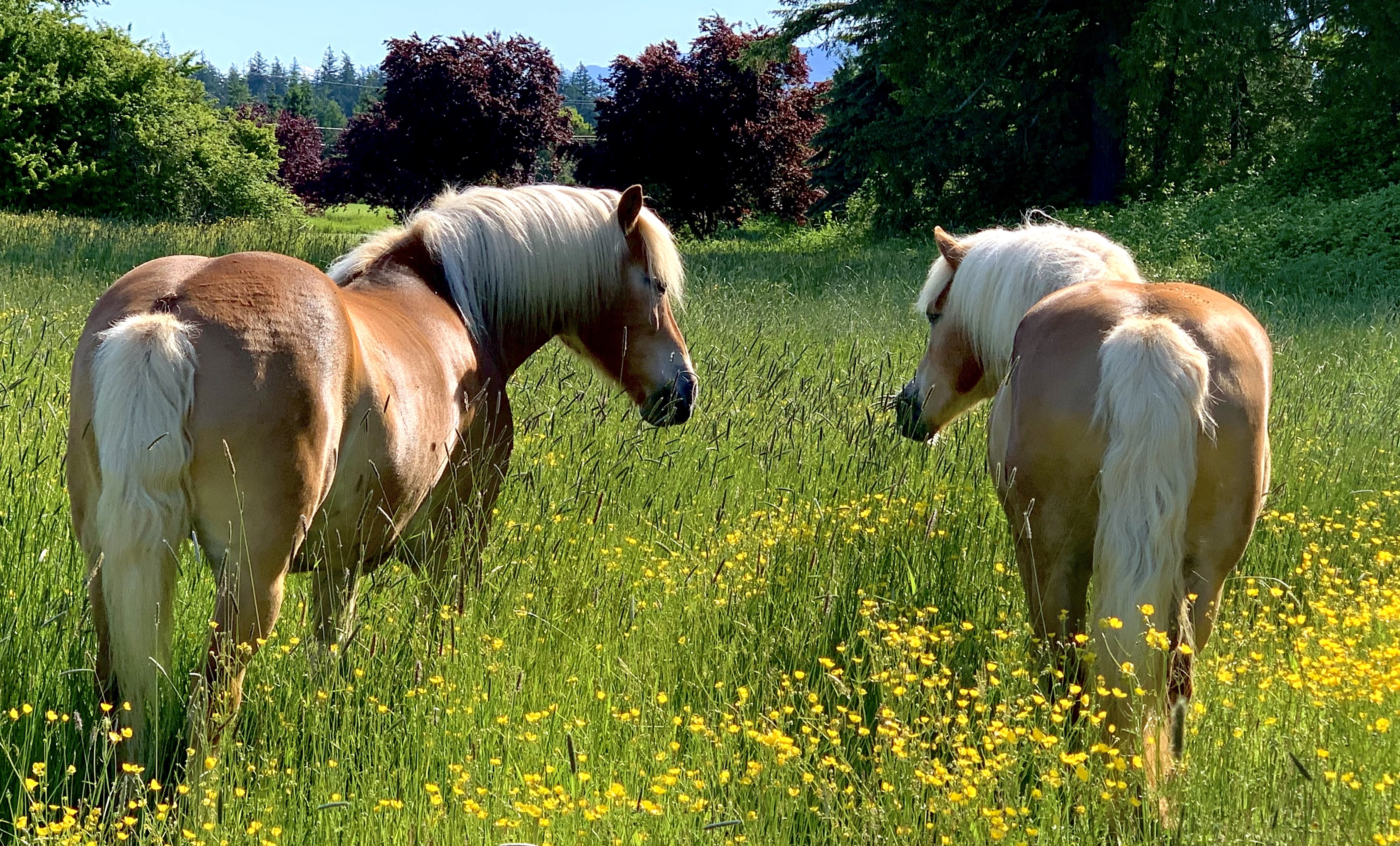
During our three decades of Haflinger horse ownership, I figured out long ago that Haflingers must have a migration center in their brain that tells them that it is time to move on to other territory – a move based on quality of forage, the seasons, or maybe simply a sudden urge for a change in scenery. This thrifty mountain breed adapted over hundreds of years to living in rather sparse Alpen meadows. They needed to move on to another feeding area enmasse on a pretty regular basis, or when the weather was starting to get crummy.
Or perhaps the next valley over had a better view, who knows? Trouble is, my Haflingers seem to have the desire to “move to other pastures” even if the grass in their own territory is plentiful and the view is great. And there doesn’t seem to be much in the way of natural or man-made barrier that will discourage them.
I have a trio of geldings I dub the “Three Musketeers”) who are particularly afflicted with wanderlust. There is not a field yet that has held them when they decide together that it is time to move on. We are a hotwire and white tape fenced farm–something that has worked fairly well over the years, as it is inexpensive, easily repaired and best of all, easily moved if we need to change the fencing arrangement in our pasture rotation between five different 2 acre pastures.
Previous generations of Haflingers have tested the hotwire and learned not to bother it again. No problem.
But not the Three Musketeers.
They know when the wire is grounding out somewhere, so the current is low. They know when the weather is so dry that conduction is poor through the wire. They know when I’ve absent-mindedly left the fencer unplugged because I’ve had someone visit and we wanted to climb unshocked through the fences to walk from field to field.
These three actually have little conferences out in the field together about this. I’ve seen them huddled together, discussing their strategy, and fifteen minutes later, I’ll look out my kitchen window and they are in another field altogether and the wire and tape is strewn everywhere and there’s not a mark on any of them. Even more mysteriously, often I can’t really tell where they made their escape as they leave no trace–I think one holds up the top wire with his teeth and the others carefully step over the bottom wire. I’m convinced they do this just to make me crazy.
Last night, when I brought them in from a totally different field from where they had started in the morning, they all smirked at me as they marched to their stalls as if to say, “guess what you have waiting for you out there.” It was too dark to survey the damage last night but I got up extra early to check it out this morning before I turned them out again.
Sure enough, in the back corner of the field they had been put in yesterday morning, (which has plenty of grass), the tape had been stretched, but not broken, and the wires popped off their insulators and dragging on the ground and in a huge tangled mass. I enjoyed 45 minutes of Pacific Northwest summer morning putting it all back together. Then I put them out in the field they had escaped to last night, thinking, “okay, if you like this field so well, this is where you’ll stay”.
Tonight, they were back in the first field where they started out yesterday morning. Just to prove they could do it. They are thoroughly enjoying this sport. I’m ready to buy a grand poobah mega-wattage fry-their-whiskers fence charger.
But then, I’d be spoiling their fun and their travels. As long as they stay off the road, out of our garden, and out of my kitchen, they can have the run of the place. I too remember being afflicted with wanderlust, long long ago, and wanting to see the big wide world, no matter what obstacles had to be overcome or shocks I had to endure to get there. And I got there after all that trouble and effort and realized that home was really where I wanted to be.
Now, prying me away from my little corner of the world gets more difficult every year. I hope my Haflinger trio will eventually decide that staying home is the best thing after all. Maybe they will listen to what I have to say this time.
AI image created for this post
One-Time
Monthly
Yearly
Make a one-time or recurring donation to support daily Barnstorming posts
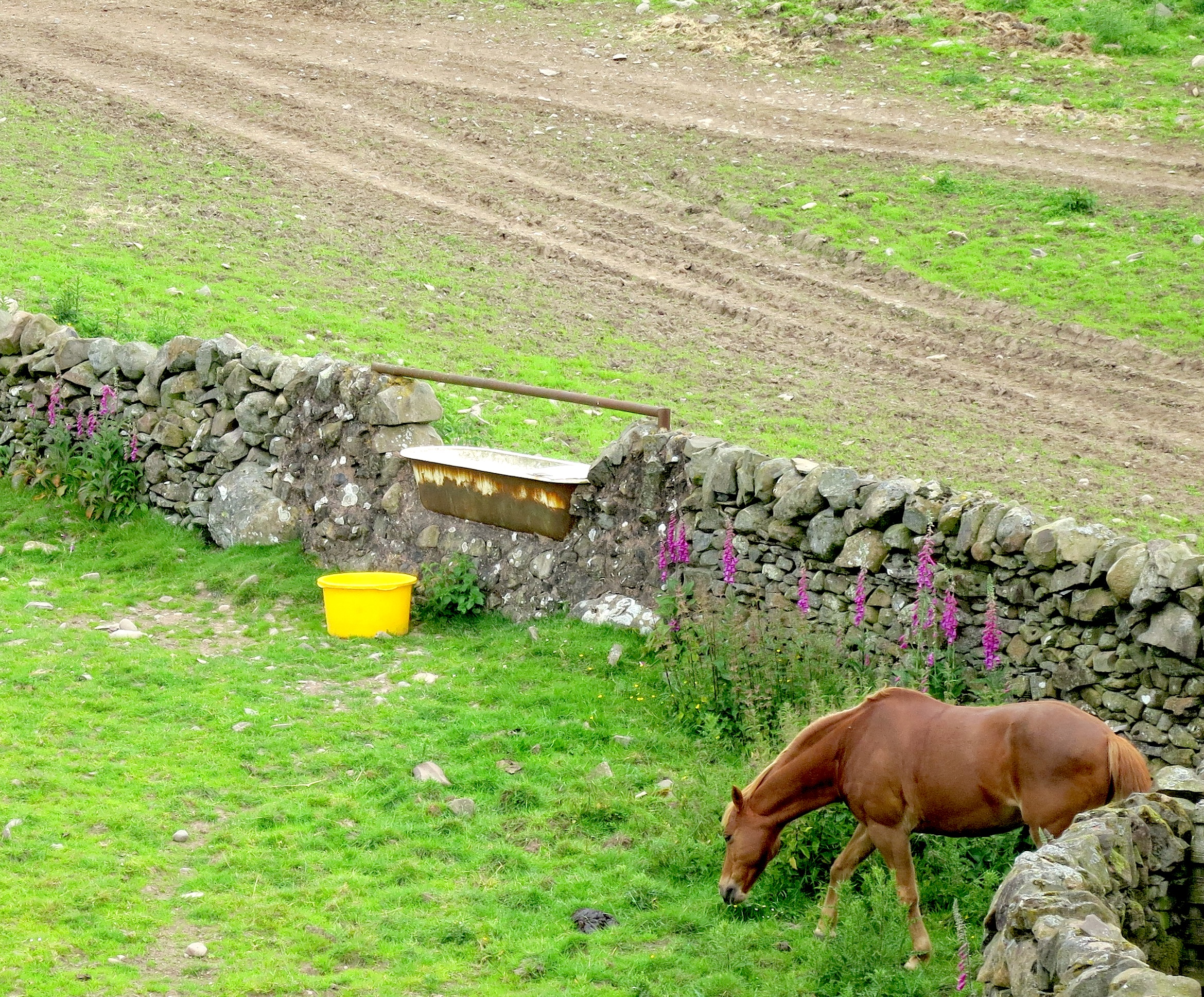
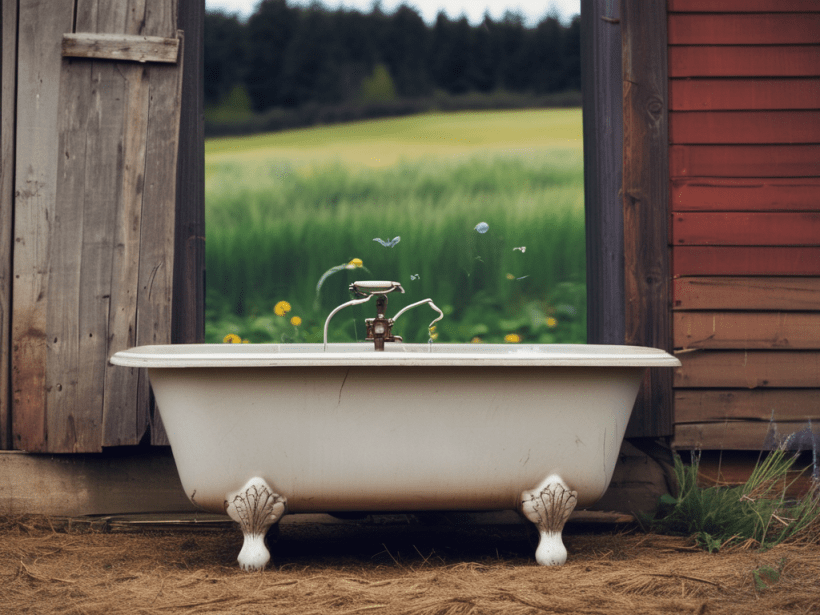
Let the end of all bathtubs be this putting out to pasture of four Victorian bowlegs anchored in grasses.
Let all longnecked browsers come drink from the shallows while faucets grow rusty and porcelain yellows.
Where once our nude forebears soaped up in this vessel come, cows, and come, horses.
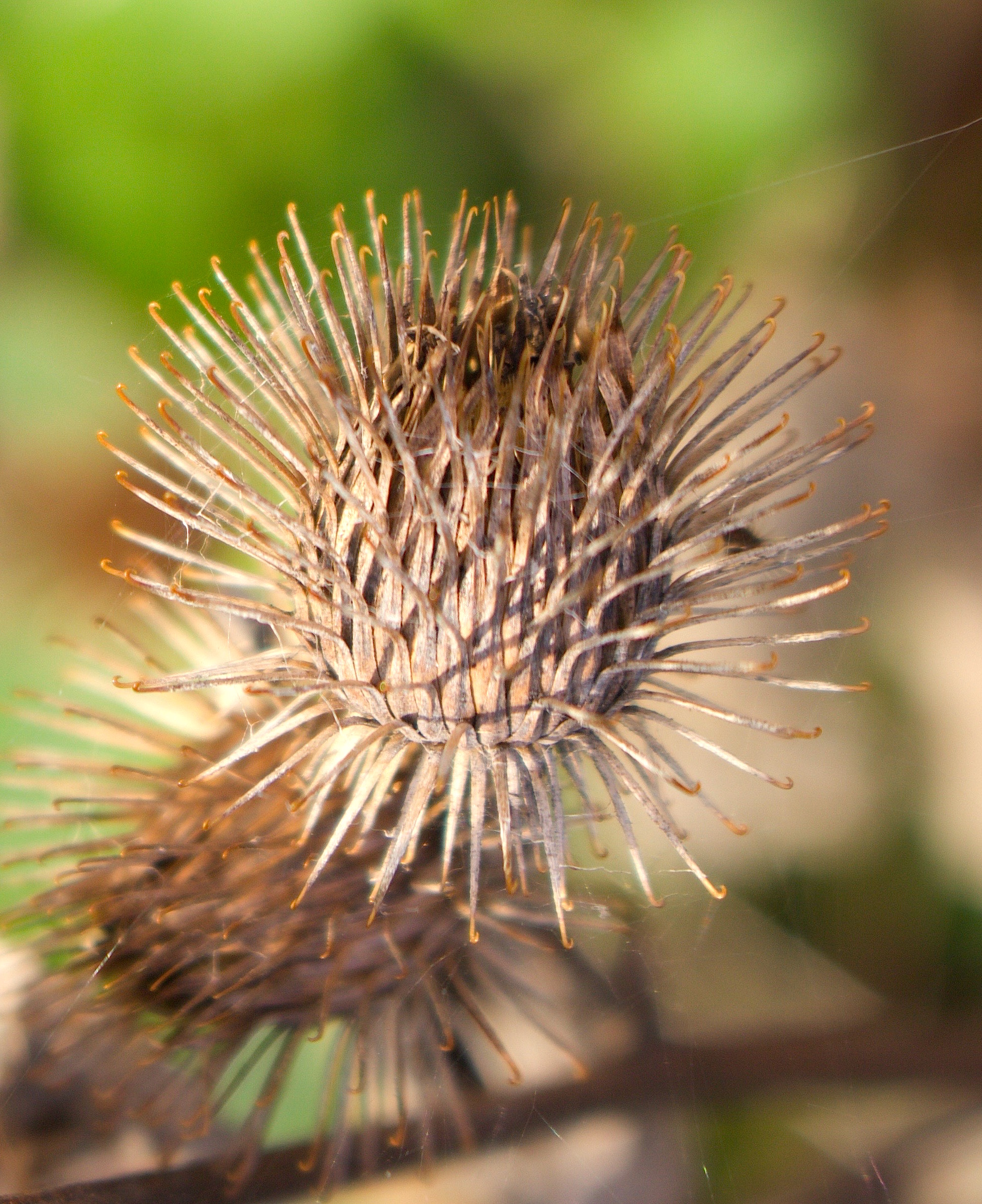
Bring burdock and thistle, come slaver the scum of timothy and clover on the cast-iron lip that our grandsires climbed over
and let there be always green water for sipping that muzzles may enter thoughtful and rise dripping. ~Maxine Kumin “Watering Trough” from Selected Poems
photo by Emily Vander Haak
Farmers became the original recyclers before it was a word or an expectation — there isn’t anything that can’t be used twice or thrice for whatever is needed, wherever and whenever, especially far from the nearest retail outlet or farm supply store.
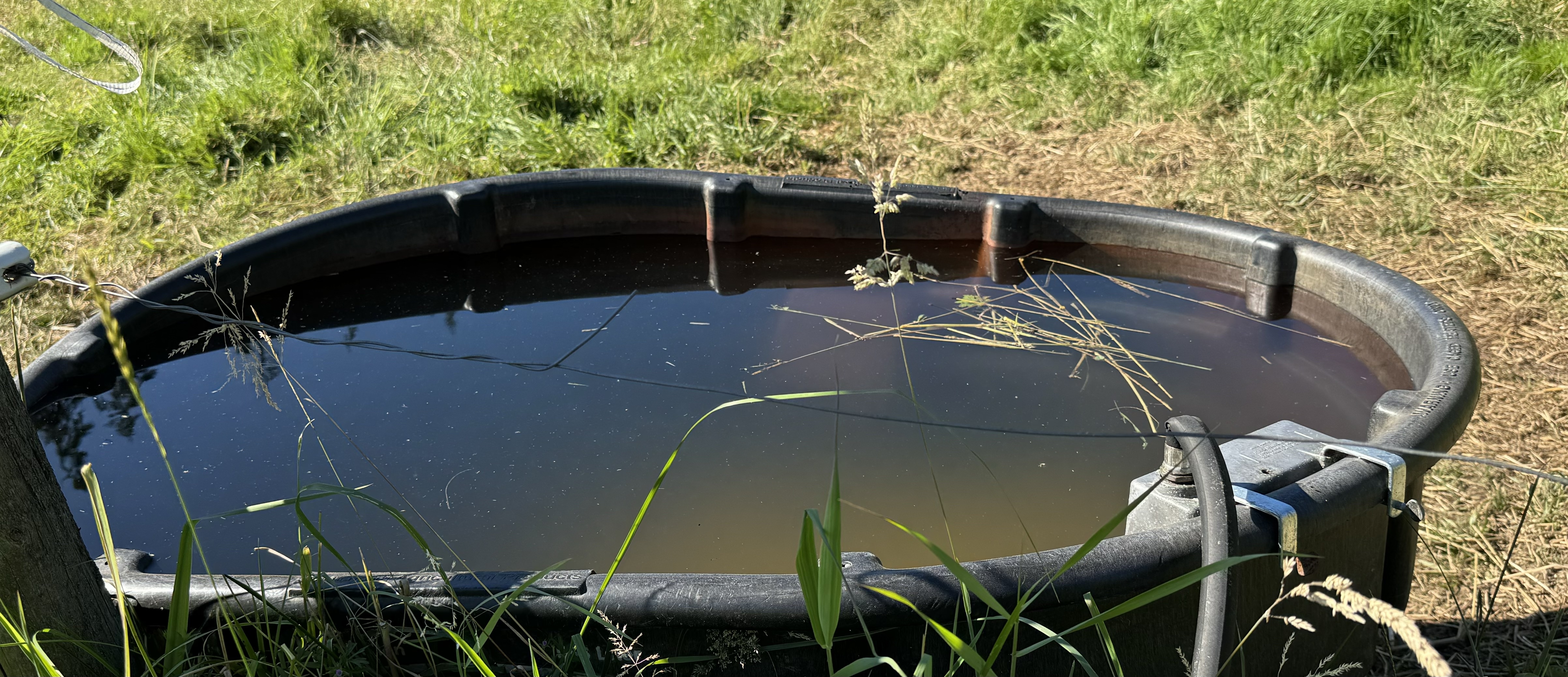
The water troughs on the farm where I grew up were cast-off four-legged bath tubs hauled home from the dump, exactly like the old tub I bathed in when staying overnight at my grandma’s farm house. She needed her tub to stay put right in the bathroom, never considering an upgrade and remodel; she would never offer it up to her cows.
But there were people who could afford to install showers and molded tubs so out their tubs went to find new life and purpose on farms like ours.
When I was a kid, we kept goldfish in our bathtub water trough, to keep the algae at bay and for the amusement of the farm cats. The horses and cows would stand idle, drowsing by the tub, their muzzles dripping, mesmerized by flashes of orange circling the plugged drain.
I often wondered what they thought of sharing their drinking water with fish, but I suspect they had more weighty things to ponder: where the next lush patch of grass might be, how to reach that belly itch, and finding the best shade with fewest flies for that summer afternoon nap.
When it comes to sharing a tub, maybe farm animals aren’t that different from their farmer keepers after all: they both stand dripping and thoughtful alongside the tub, contemplating what comes next. After a long hot summer day, it may well be a well-earned rest.
AI image created for this post
One-Time
Monthly
Yearly
Make a one-time or recurring donation to support daily Barnstorming posts
…war spreading, families dying, the world in danger, I walk the rocky hillside, sowing clover… ~Wendell Berry “February 2, 1968”
However you may come, You’ll see it suddenly Lie open to the light Amid the woods: a farm Little enough to see Or call across—cornfield, Hayfield, and pasture, clear As if remembered, dreamed And yearned for long ago, Neat as a blossom now With all the pastures mowed And the dew fresh upon it, Bird music all around. That is the vision, seen As on a Sabbath walk: The possibility Of human life whose terms Are Heaven’s and this earth’s.
The land must have its Sabbath Or take it when we starve. The ground is mellow now, Friable and porous: rich. Mid-August is the time To sow this field in clover And grass, to cut for hay Two years, pasture a while, And then return to corn.
This way you come to know That something moves in time That time does not contain. For by this timely work You keep yourself alive As you came into time, And as you’ll leave: God’s dust, God’s breath, a little Light. ~Wendell Berry from The Farm
These are fragrant acres where Evening comes long hours late And the still unmoving air Cools the fevered hands of Fate.
Meadows where the afternoon Hangs suspended in a flower And the moments of our doom Drift upon a weightless hour.
And we who thought that surely night Would bring us triumph or defeat Only find that stars are white Clover at our naked feet. ~Tennessee Williams “Clover”
Farming is daily work outside of the constraints of time – labor done this day is caring for what is eternal, despite weather, war, uncertainty.
There is a timelessness about summer: the preparing and planting and preserving, a cycle of living and dying repeating through generations.
We, like our farming forebears, will become God’s dust again.
I’m reminded, walking through our pasture’s clover, I become seed and soil for the next generation. Like a blossom so plain and unnoticed during its life, I enfolds myself back to the ground, sighing and dying.
Perhaps it is the breath of clover we should remember at the last, as God’s own breath.
Inhale deeply of Him in the dust of the clover field.
AI image created for this post
One-Time
Monthly
Yearly
Make a one-time or recurring donation to support daily Barnstorming posts
Light and wind are running over the headed grass as though the hill had melted and now flowed. ~Wendell Berry “June Wind” from New Collected Poems
Cut grass lies frail: Brief is the breath Mown stalks exhale. Long, long the death
It dies in the white hours Of young-leafed June With chestnut flowers, With hedges snowlike strewn,
White lilac bowed, Lost lanes of Queen Anne’s lace, And that high-builded cloud Moving at summer’s pace. ~Philip Larkin “Cut Grass” from The Complete Poems
June is the month when grass grows abundantly.
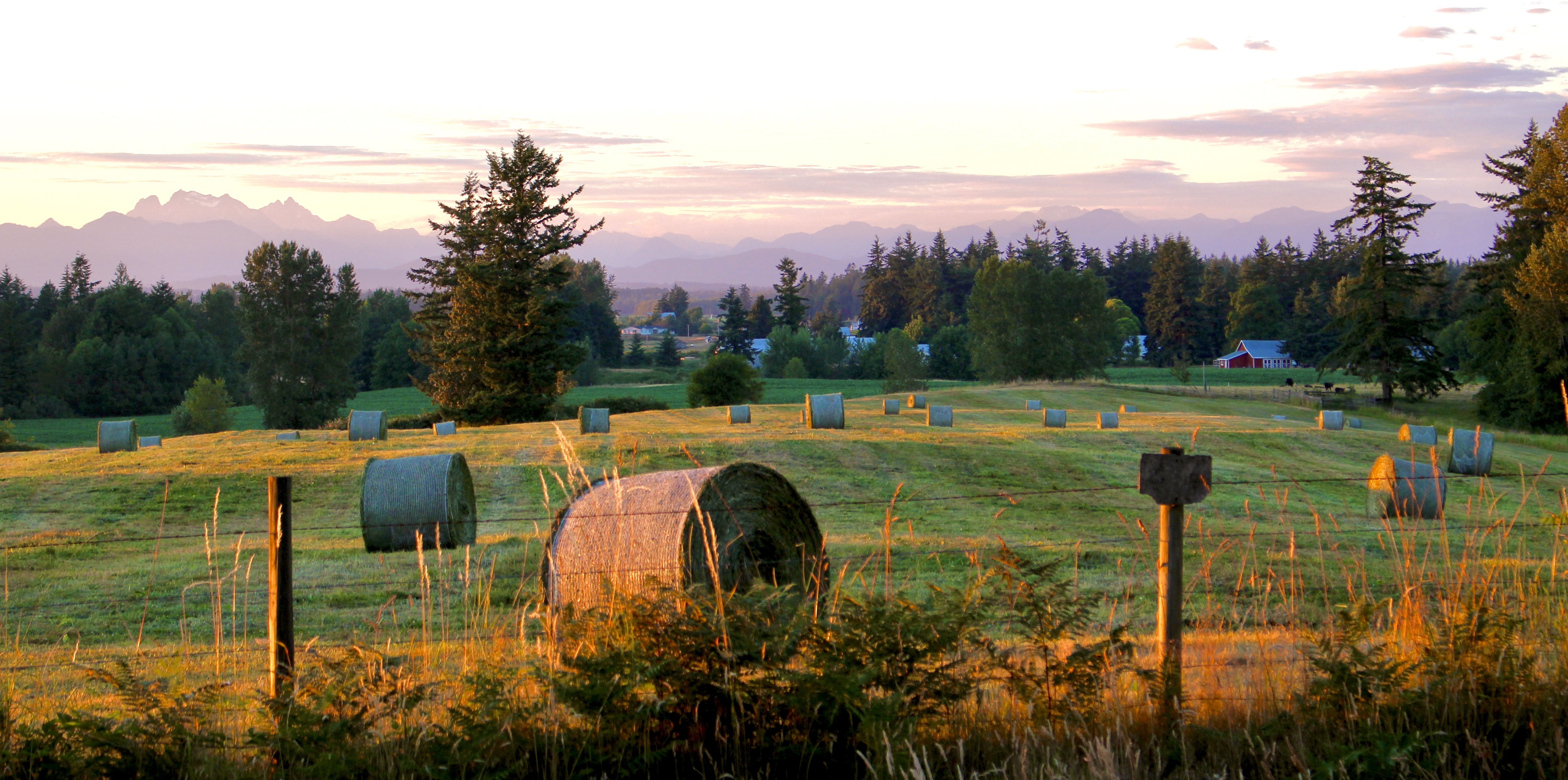
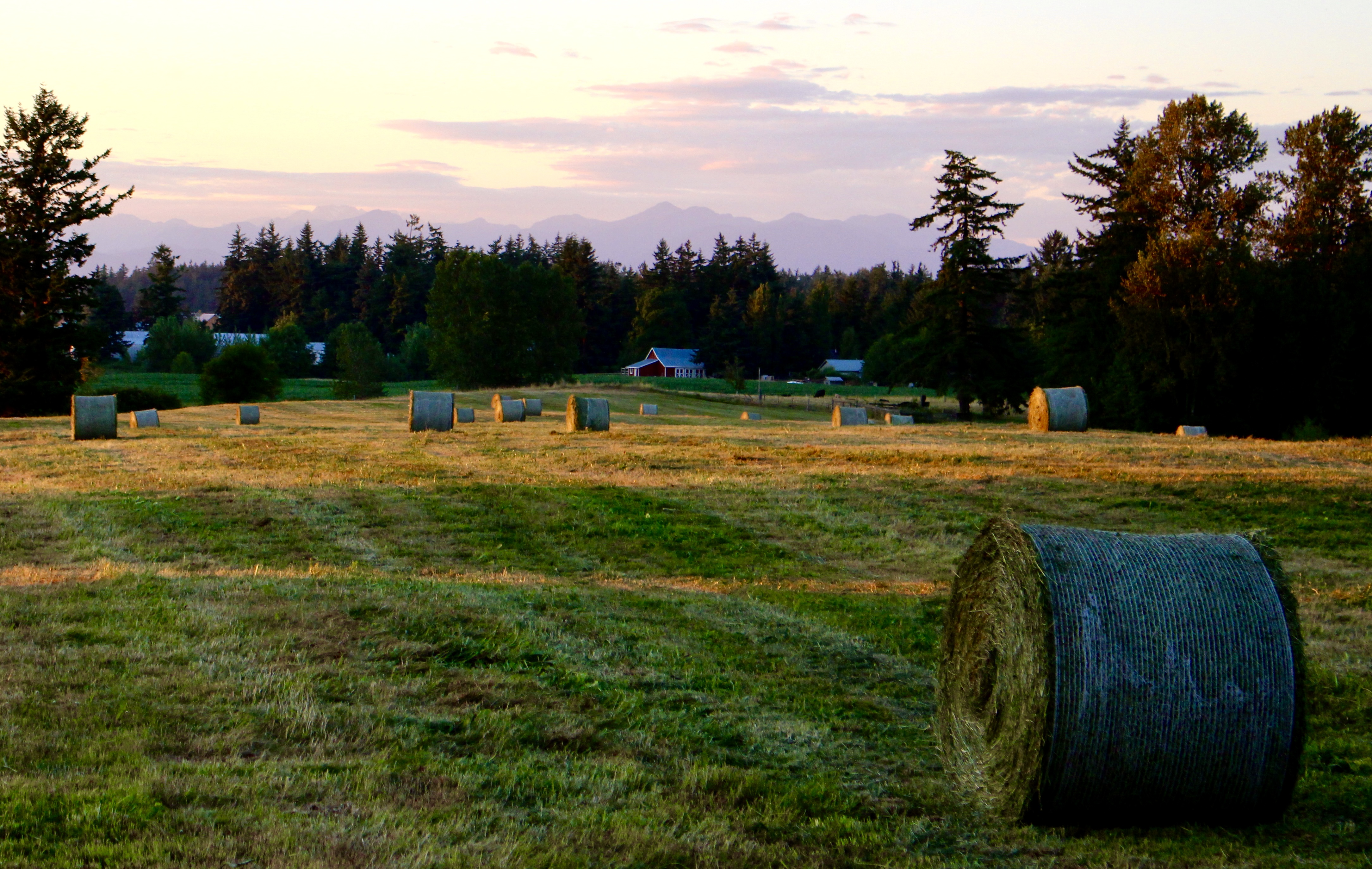
Light and wind work magic on a field of flowing tall grass. The blades of the mower lay it to the ground in green streams that course up and down the slopes. It lies orderly in stoneless cemetery rows.
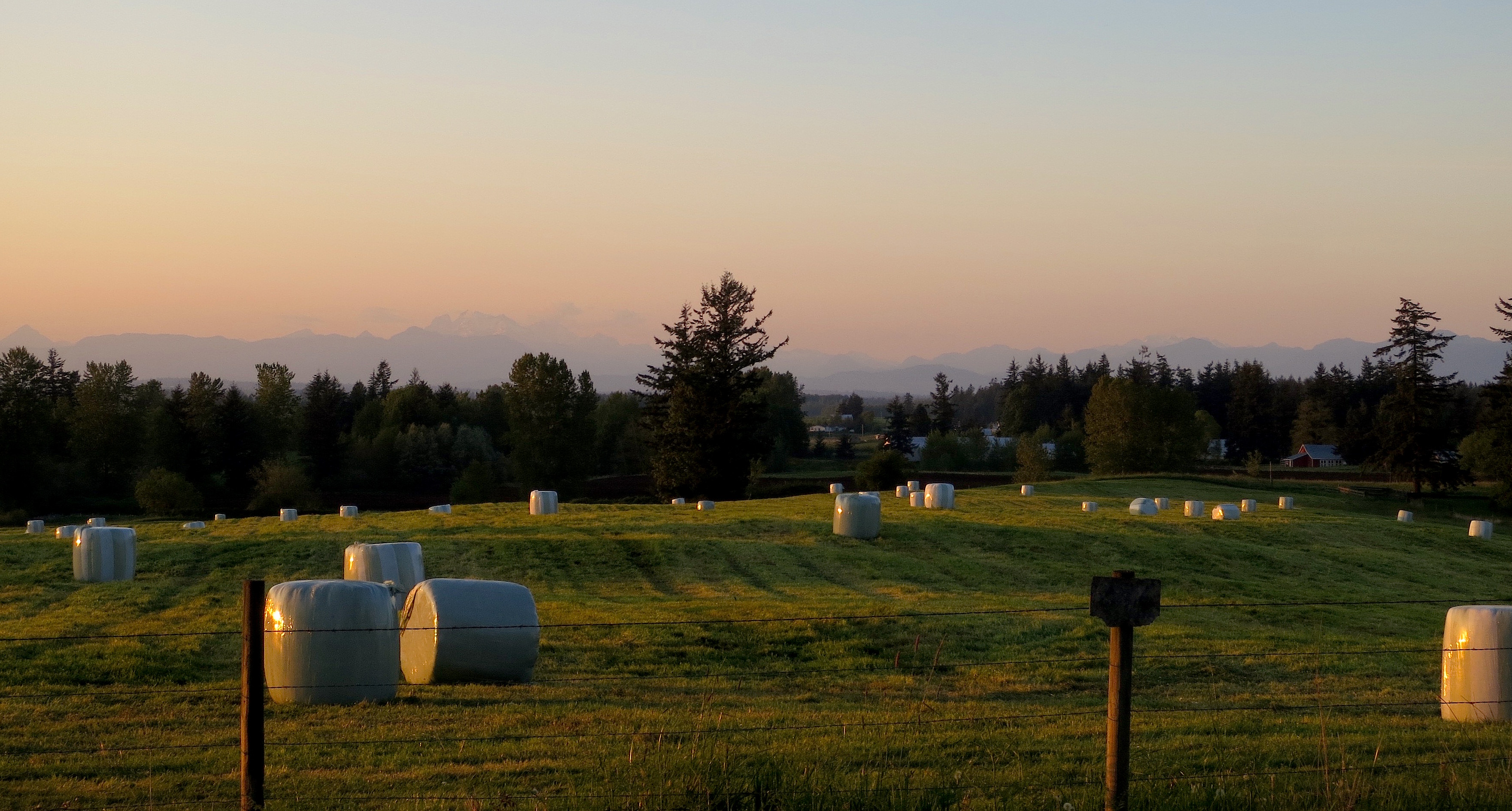
Farmer’s fields are lined with rows of mown grass, a precious commodity to be harvested for the livestock to eat the rest of the year. Some of the green is bagged up like big marshmallows for easy storage and some put in silos for later in the winter.
The grass’ death is critical to the life of the animals we raise.
What was once waving and bowing to the wind is cut and crushed: no longer bending but bent, no longer flowing but flown, no longer growing but mown.
At summer’s pace, while the clouds saunter overhead, the grasses are stored as fodder for the beasts of the farm on those cold nights when the wind beats at the doors.
It will melt in their mouths. As we watch them chew, we’ll remember the overflowing abundance of summer in June.
AI image created by this post
One-Time
Monthly
Yearly
Make a one-time or recurring donation to support daily Barnstorming posts
To enrich the earth I have sowed clover and grass to grow and die. I have plowed in the seeds of winter grains and of various legumes, their growth to be plowed in to enrich the earth. I have stirred into the ground the offal and the decay of the growth of past seasons and so mended the earth and made its yield increase. All this serves the dark. I am slowly falling into the fund of things. And yet to serve the earth, not knowing what I serve, gives a wideness and a delight to the air, and my days do not wholly pass. It is the mind’s service, for when the will fails so do the hands and one lives at the expense of life. After death, willing or not, the body serves, entering the earth. And so what was heaviest and most mute is at last raised up into song. ~Wendell Berry “Enriching the Earth” from Collected Poems
It was the face of spring, it was the face of summer, it was the warmness of clover breath. Pomegranate glowed in her lips, and the noon sky in her eyes. And all of this, this breath-warmness and plum-tenderness was held forever… ~Ray Bradbury from Dandelion Wine
To make a prairie it takes a clover and one bee, One clover, and a bee, And revery. The revery alone will do, If bees are few. Emily Dickinson
Every autumn my father, an agriculture teacher by training, brought home gunny sacks of grass seed from the feed and seed store. He would start up his 1954 Farmall Cub tractor, proceed to disc and harrow an acre of bare ground in our field, and then fill the seeder, distributing seed on the soil for his annual agronomy cover crop over winter growing experiment. The little sprouts would wait to appear in the warming spring weather, an initial green haziness spread over the brown dirt, almost like damp green mold. Within days they would form a plush and inviting velveteen green cushion, substantial enough for a little wiggle of blades in the breezes. A few weeks later the cover would be a full fledged head of waving green hair, the wind blowing it wantonly, bending the stems to its will. It was botanical pasture magic, renewable and marvelous, only to be mowed and stubble turned over with the plow back into the soil as nutrition for the summer planting to come. It was the sacrificial nature of cover crops to be briefly beautiful on top of the ground, but the foundational nurture once underground.
One spring the expected grassy carpet growth didn’t look quite the same after germination–the sprouts were little round leaves, not sharp edged blades. Instead of identical uniform upright stems, the field was producing curly chaotic ovoid and spherical shapes and sizes. Clover didn’t abide by the same rules as grasses. It had a mind of its own with a burgeoning and bumpy napped surface that didn’t bend with breezes, all its effort invested instead in producing blossoms.
A hint of pink one morning was so subtle it was almost hallucinatory. Within a day it was unmistakeably reddening and real. Within a week the green sea flowed with bobbing crimson heads. We had never seen such vibrancy spring from our soil before. It exuded scented clover breath, the fragrance calling honey bees far and near. True reverie.
The field of crimson dreams and sated honey bees lasted several weeks before my father headed back out on the Farmall to turn it under with the plow, burying the fading blossoms into the ground. Their sacrifice bled red into the soil, their fragrant breath halted, their memory barely recognizable in the next summer crop germination. Yet the crimson heads were there, feeding the growth of the next generation, deepening the green as it reached to the sun.
Such a sweet thing, alive a thousand summers hence in the soil.
What a beautiful feeling.
Crimson and clover, over and over.
AI image created for this post
One-Time
Monthly
Yearly
Make a one-time or recurring donation to support daily Barnstorming posts
Not much to me is yonder lane Where I go every day; But when there’s been a shower of rain And hedge-birds whistle gay, I know my lad that’s out in France With fearsome things to see Would give his eyes for just one glance At our white hawthorn tree.
. . . .
Not much to me is yonder lane Where he so longs to tread: But when there’s been a shower of rain I think I’ll never weep again Until I’ve heard he’s dead. ~Siegfried Sassoon“The Hawthorn Tree”
I drove West in the season between seasons. I left behind suburban gardens. Lawnmowers. Small talk.
Under low skies, past splashes of coltsfoot, I assumed the hard shyness of Atlantic light and the superstitious aura of hawthorn.
All I wanted then was to fill my arms with sharp flowers, to seem from a distance, to be part of that ivory, downhill rush. But I knew,
I had always known, the custom was not to touch hawthorn. Not to bring it indoors for the sake of
the luck such constraint would forfeit– a child might die, perhaps, or an unexplained fever speckle heifers. So I left it
stirring on those hills with a fluency only water has. And, like water, able to redefine land. And free to seem to be–
The bird-sowed hawthorn bush along the lane to our back field has suddenly become a blooming tree, staking out its place alongside the trail the horses follow to their pasture. This May, it is a white flame against the dark woods.
Though we didn’t intend for it to be there, we’ll leave it be. Hawthorns are great bird habitat and a haven for honeybees. They are found in most hedge rows in the United Kingdom, impenetrable due to their fierce thorns and criss-cross network of branches, a historic symbol of the toughness and persistence of the Celtic people. Though we don’t need a hedge row here, I appreciate the tree’s reminder it has a place in myth and lore.
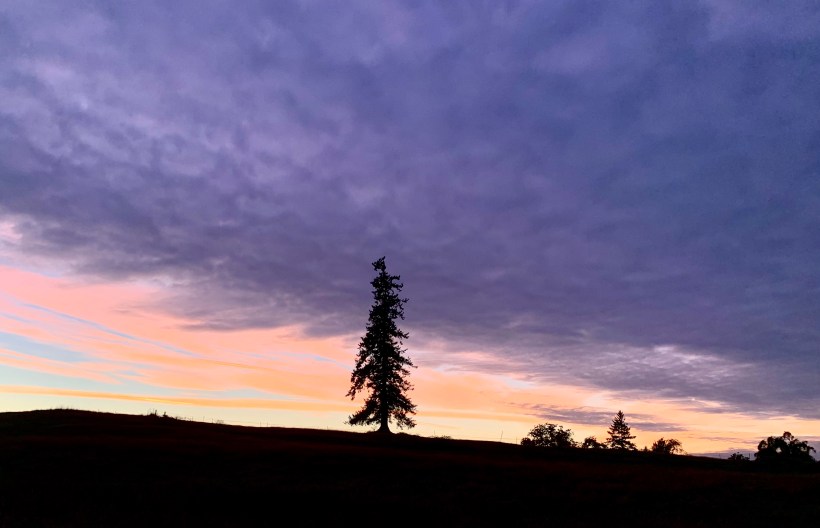
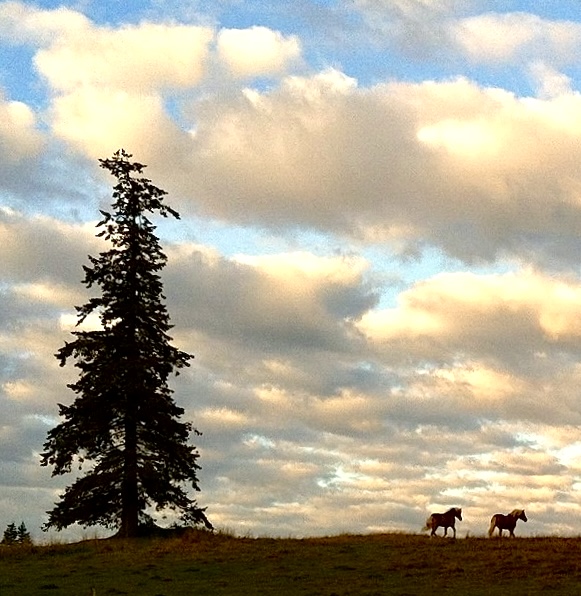
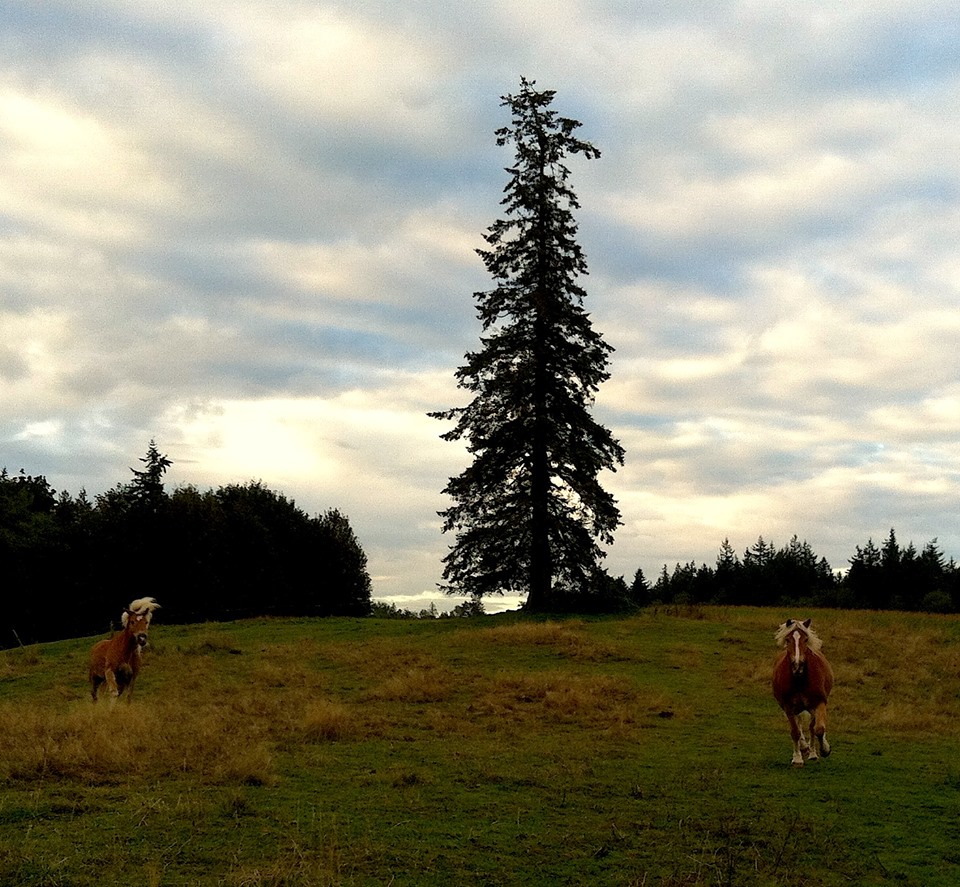
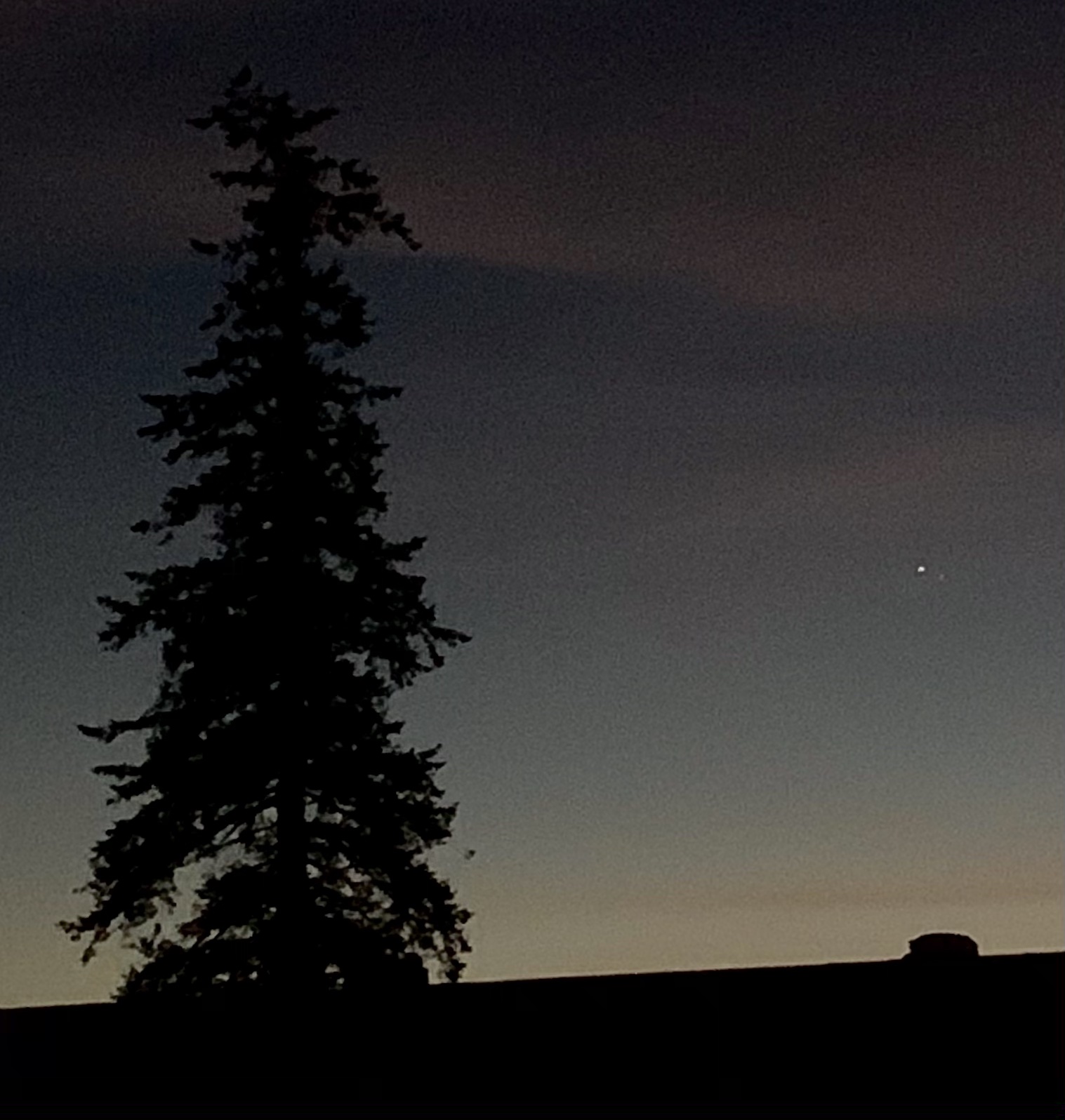
It will never be a hospitable tree like the lone fir tree that graces our hill, or the big leaf maple where children climb, or the black walnut whose branches support the treehouse. But it will be a white beacon every May, portending the summer to come, and if it bears fruit, it will feed the birds that nest in its interior.
And like the poem written by WWI soldier/poet Sassoon, it will be a bittersweet reminder of the familiar comfort of home, even though sharp thorns abound among the blossoms. Those thorns are nothing compared to the despair found in the fearsome trenches of warfare.
AI image created for this postSiegfried Sassoon’s handwritten poem
along fair Arran’s shores the swans sing soft of tale of yore, of a young love taken to sea
the two were hand in glove like sparrows bound in sacred love a tune that only they can sing
a tree of unity they planted by the green eyed sea the branch would hold their love through time
a sailor lad was he he said,”dont cry my lovely, mhari before the moon is full i’ll return”
I’ll wait for thee and she sang to him
the moon shone full and bright and home he sailed mid-summers night the tree so young and blossoming
they slept among the green the world was light and dreams serene the fires in their hearts burned bright
Where moss-grown boulders stand, he took her by the lily hand and there they wed at break of day
the seas know not of hearts and once again the two must part. “it wont be long, i swear to thee.
please wait for me.” and she sang to him
The hawthorn tree has grown, 10 years she walked shores alone, she hears his whisper in the leaves
Home is the sailor lad, home in the sea, forever plaid, Under the wide and starry sky
Yes, I will wait for thee, By mountain, sea and tree; And on the wind you’ll hear my love,
for at the fall of day Beneath the leaves where once we lay I’ll sit and sing i’ll wait for thee
come back to me…. music and lyrics by Fae Wiedenhoeft
One-Time
Monthly
Yearly
Make a one-time or recurring donation to support daily Barnstorming posts