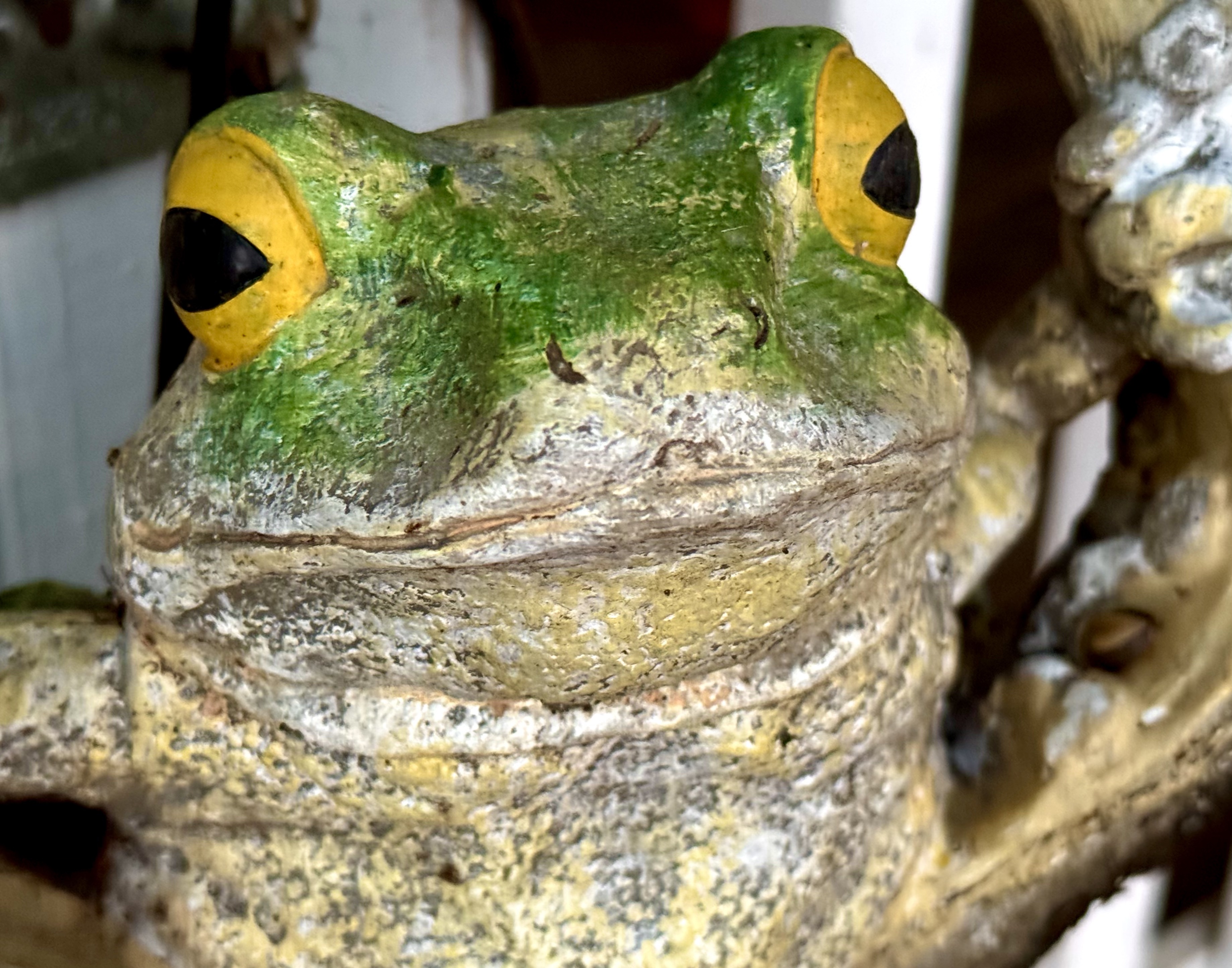
A Marshy Cacophony

Cold, wet leaves
Floating on moss-coloured water   
And the croaking of frogs—
Cracked bell-notes in the twilight.

~Amy Lowell “The Pond”

Poets who know no better
rhapsodize about the peace of nature,
but a well-populated marsh is a cacophony.
~Bern Keating
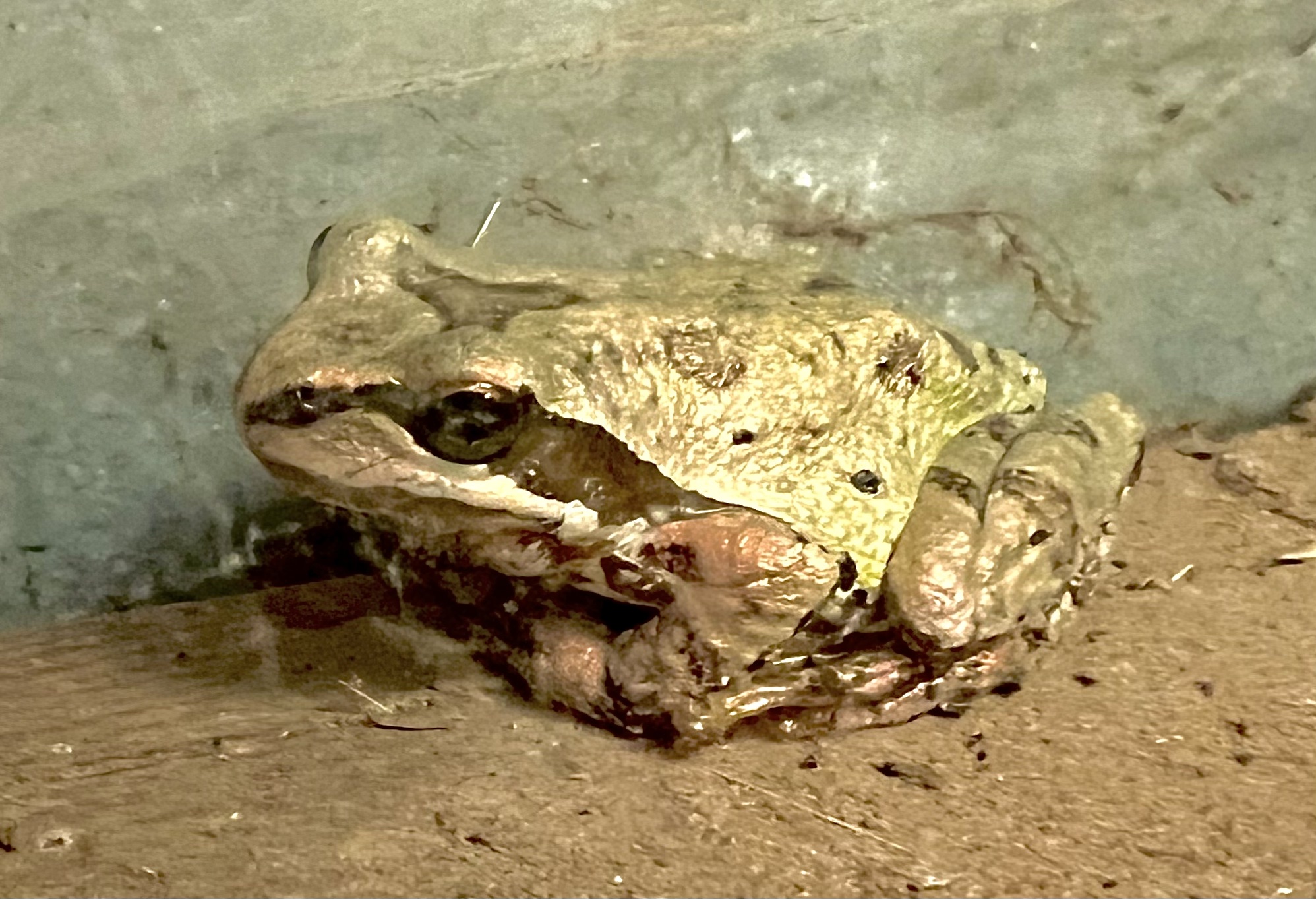
O, I love to hear the frogs
When they first begin to sing;
How they vocalize the bogs,
And vociferate the Spring.
How they carol as they croak,
How they mingle jest and joke
With their solemn chant and dirge
On the river’s slimy verge.

O, I love to hear the frogs,
For their monotone uncouth
Is the music of the cogs
Of the mill wheel of my youth.
And I listen half asleep,
And the eyes of mem’ry peep
Through the bars that hold me fast,
From the pleasures of the past.

O, I love to hear the frogs,
For their melody is health
To the heart that worry flogs
With the lash of want or wealth.
And the cares of life take wing,
And its pleasures lose their sting,
And love’s channel way unclogs
In the croaking of the frogs.

~Harry Edward Mills “The Early Frogs”
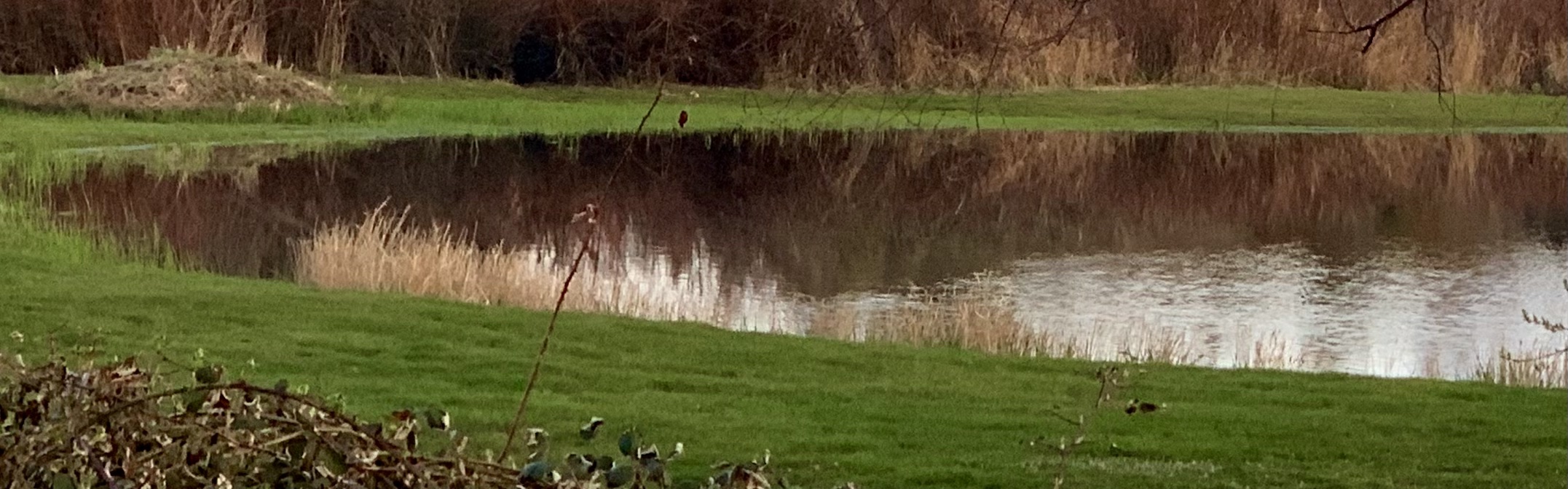
I wanted to speak at length about
The happiness of my body and the
Delight of my mind

But something in myself for maybe
From somewhere other said: not too
Many words, please, in the muddy shallows the
Frogs are singing.

~Mary Oliver, from “April”
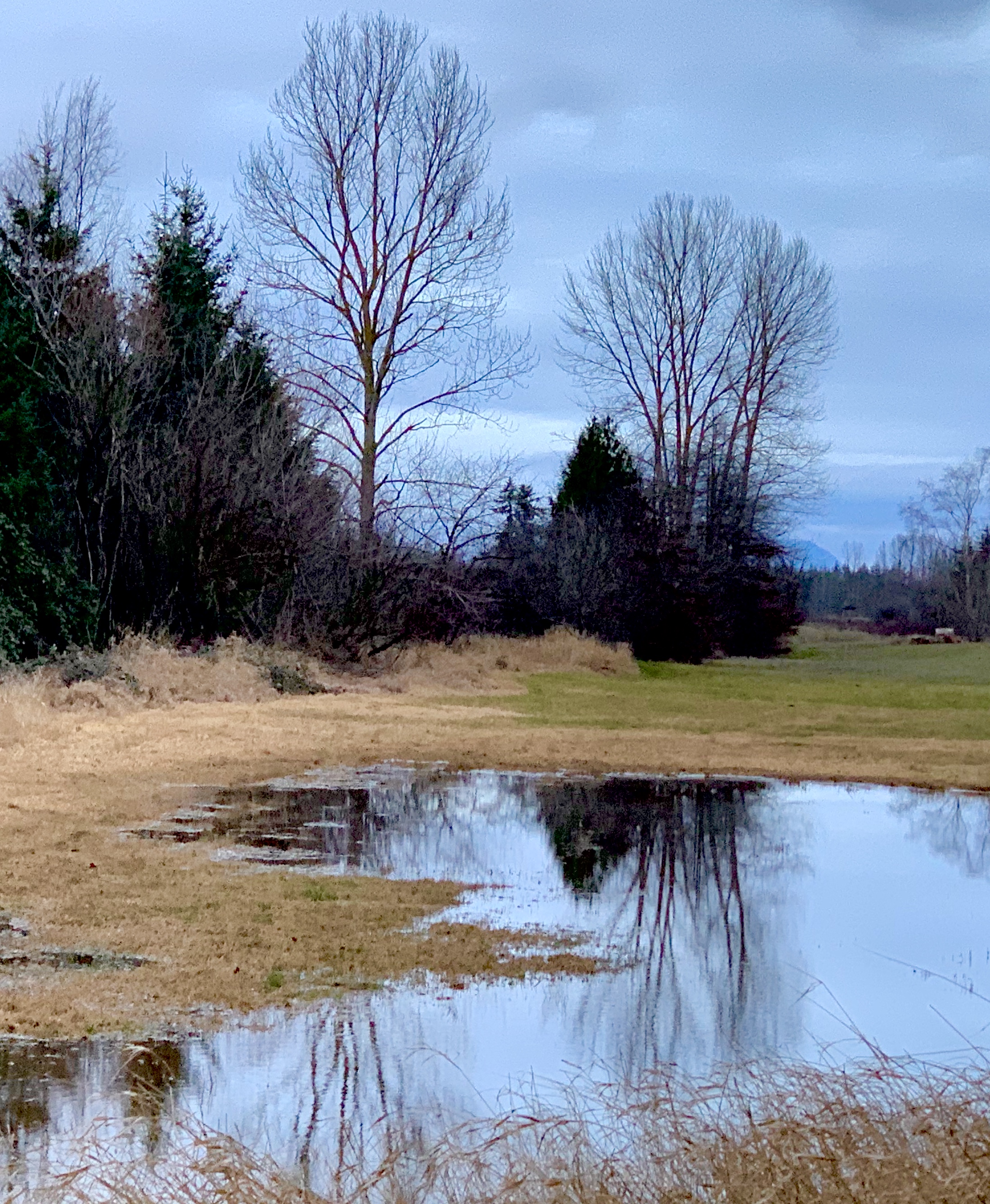
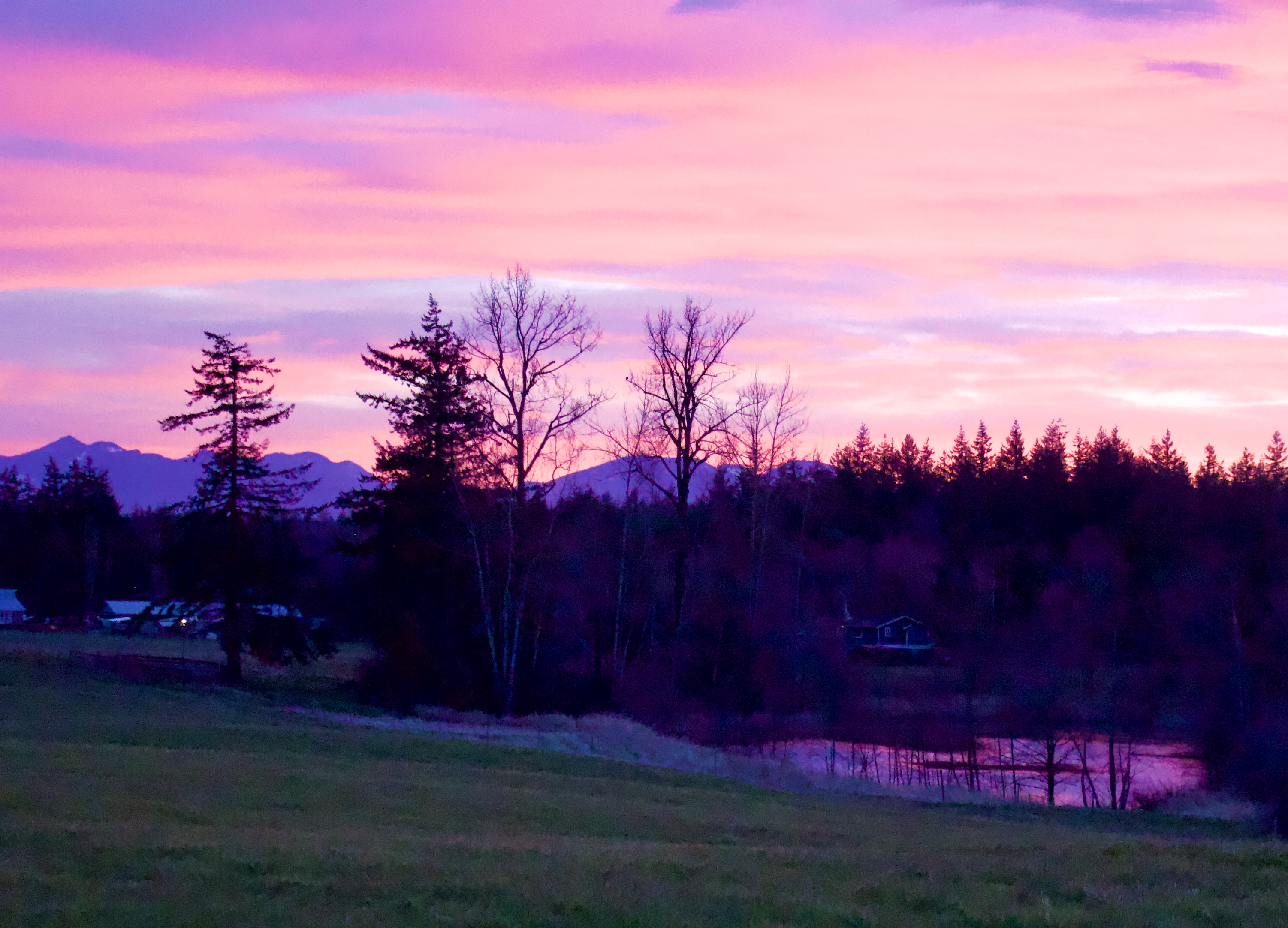
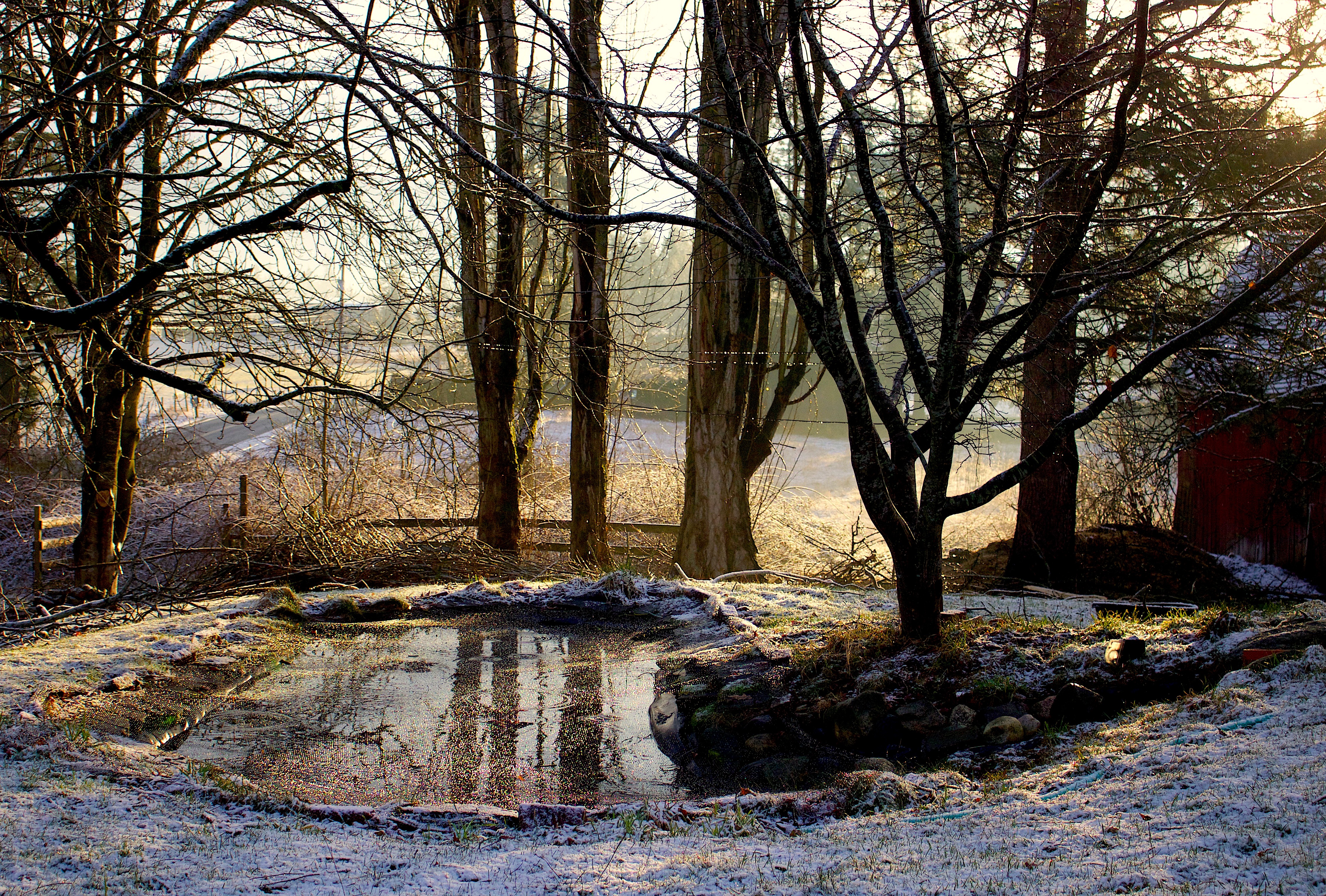
About two weeks ago, music from the wetlands became faintly detectable in the distance. We were only a little over a month into winter, yet due to unduly mild temperatures, the chorus had begun.

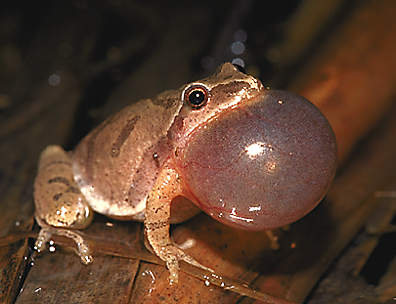
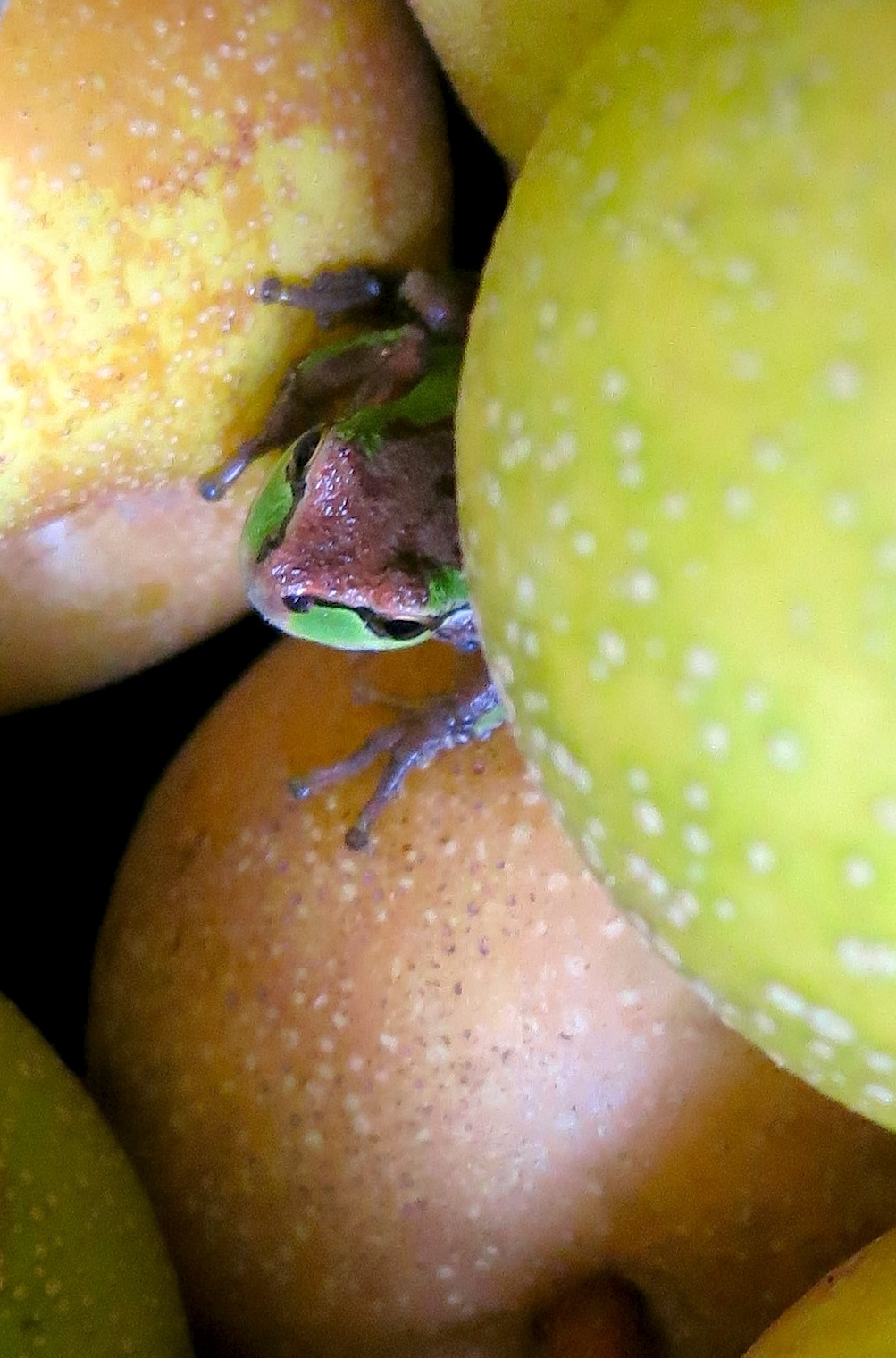
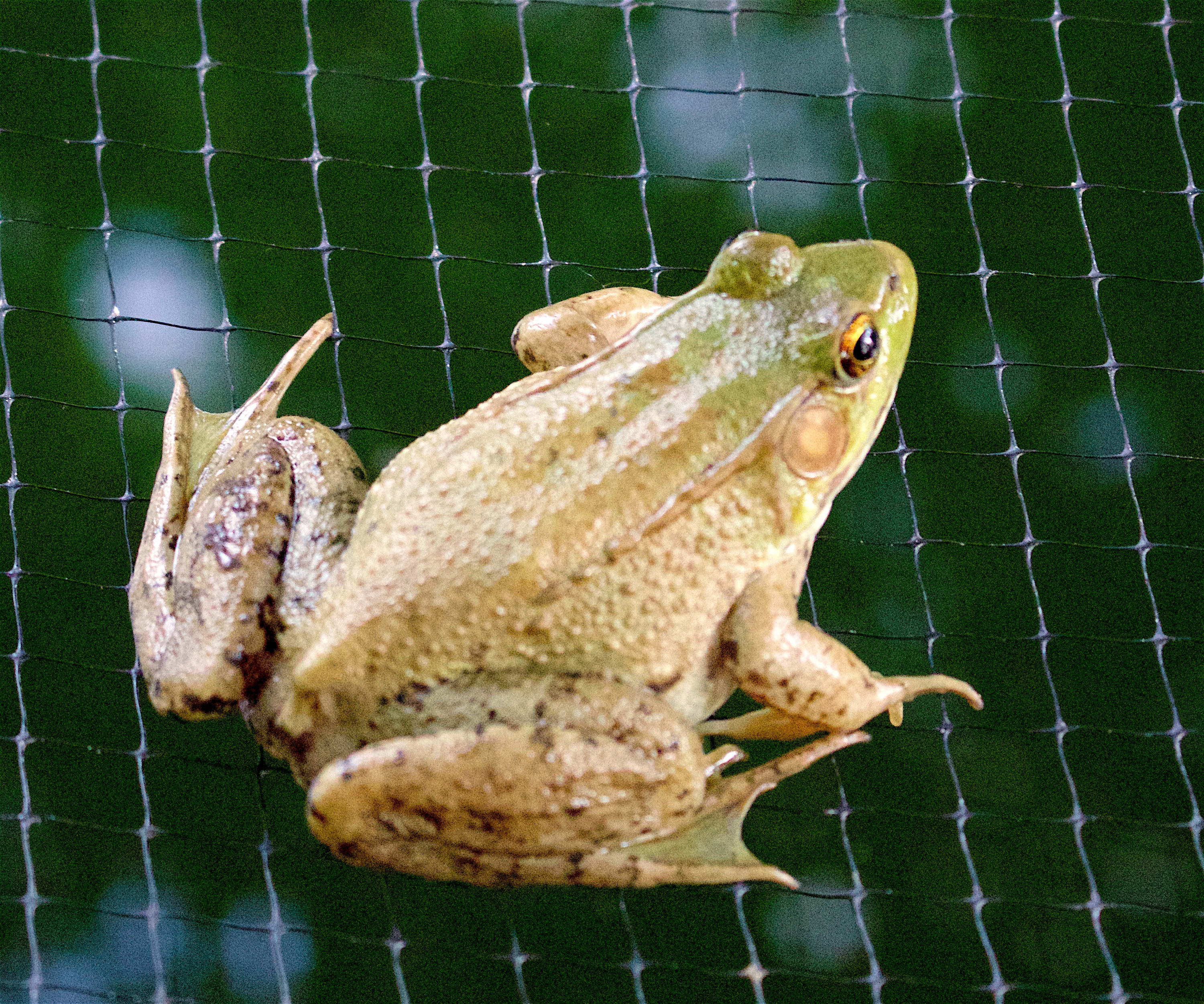
The sleigh-bell jingle song of the Pacific Chorus Frogs now fills the air each evening, rising from the ponds and standing water that surround our farm. I stand still for a moment to soak up that song that heralds spring–a certainty that the muddy marshes are thawed enough to invite the frogs out of their sleep and start their courting rituals.

Now winter won’t return anytime soon with any seriousness.

This marsh music is disorienting this early, along with daffodils budding in late January and lawns needing mowing in February. With voices so numerous, strong and insistent, it feels as though a New York City of frogs has moved in next door; we are seated in the balcony of Carnegie Hall. 

They seem to be directed by an unseen conductor, as their voices rise and fall together and then cut off suddenly with a slice of the baton, plunging the landscape into uncomfortable silence at the slightest provocation, as if they hold an extended fermata for minutes on end.

The frogs’ repertoire is limited but their wind power, stamina and ability to project their voices impressive. They are most tenacious at making their presence known to any other peeper within a mile radius. Their mystical, twilight symphony of love and territory has begun, soft and surging, welcome and reassuring.

There’s a spring a-comin’, the peepers proclaim. 
Nothing can be sweeter.

I know all the behaviorist theories about frog chorus being about territoriality –the “I’m here and you’re not” view of the animal kingdom’s staking their claims. Knowing that theory somehow distorts the cheer I feel when I hear these songs. I want the frogs (and birds) to be singing out of the sheer joy of living. Instead, they are singing to defend their piece of mud or branch.

Then I remember, that’s not so different from people. Our voices tend to be loudest when we are being insistently territorial: we own this and you do not, and we are irresistibly better than you.

I’m not sure anyone enjoys human cacophony in the same way I enjoy listening to the chorus of frogs at night or birdsong in the morning. We humans are most harmonic when we choose to listen. Instead of sounding off, we should soak up. Instead of shouting “this is mine,” we should sit expectant and grateful.

Perhaps that is why the most beloved human choruses are derived from prayers and praise – singing out in joy and gratitude rather than in warning.

I’ll try to remember this when I get into my own righteous and “territorial” mode. I don’t bring joy to the listener nor to myself. When it comes right down to it, all that noise I make is nothing more than a croaking cacophony in a smelly mucky swamp.
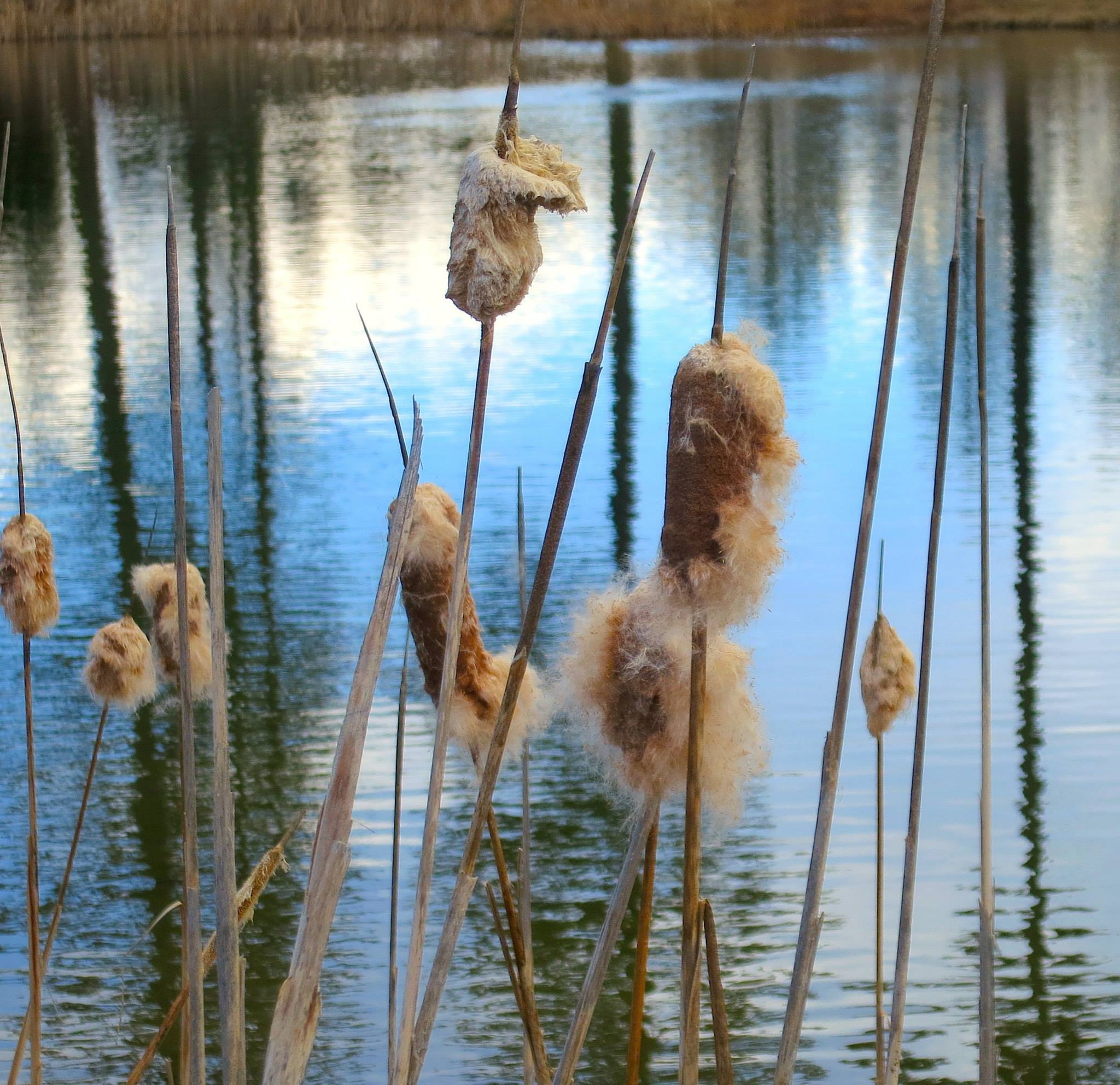
Here’s what it sounds like all around us: https://www.facebook.com/share/v/1Ab4EBKYx9

One-Time
Monthly
Yearly

Make a one-time or recurring donation to support daily Barnstorming posts

Make a monthly donation

Make a yearly donation

Choose an amount

$10.00
$25.00
$50.00
$5.00
$15.00
$100.00
$5.00
$15.00
$100.00

Or enter a custom amount

$

Your contribution is deeply appreciated.

Your contribution is appreciated.

Your contribution is appreciated.

DonateDonate monthlyDonate yearly
A Leap Into Nothingness

Toads are smarter than frogs. Like all of us who are not good-
looking they have to rely on their wits. A woman around the
beginning of the last century who was in love with frogs wrote
a wonderful book on frogs and toads. In it she says if you place
a frog and a toad on a table they will both hop. The toad will
stop just at the table’s edge, but the frog with its smooth skin
and pretty eyes will leap with all its beauty out into nothing-
ness. I tried it out on my kitchen table and it is true. That may
explain why toads live twice as long as frogs. Frogs are better at
romance though. A pair of spring peepers were once observed
whispering sweet nothings for thirty-four hours. Not by me.
The toad and I have not moved.
~Tom Hennen  “Plains Spadefoot Toad”

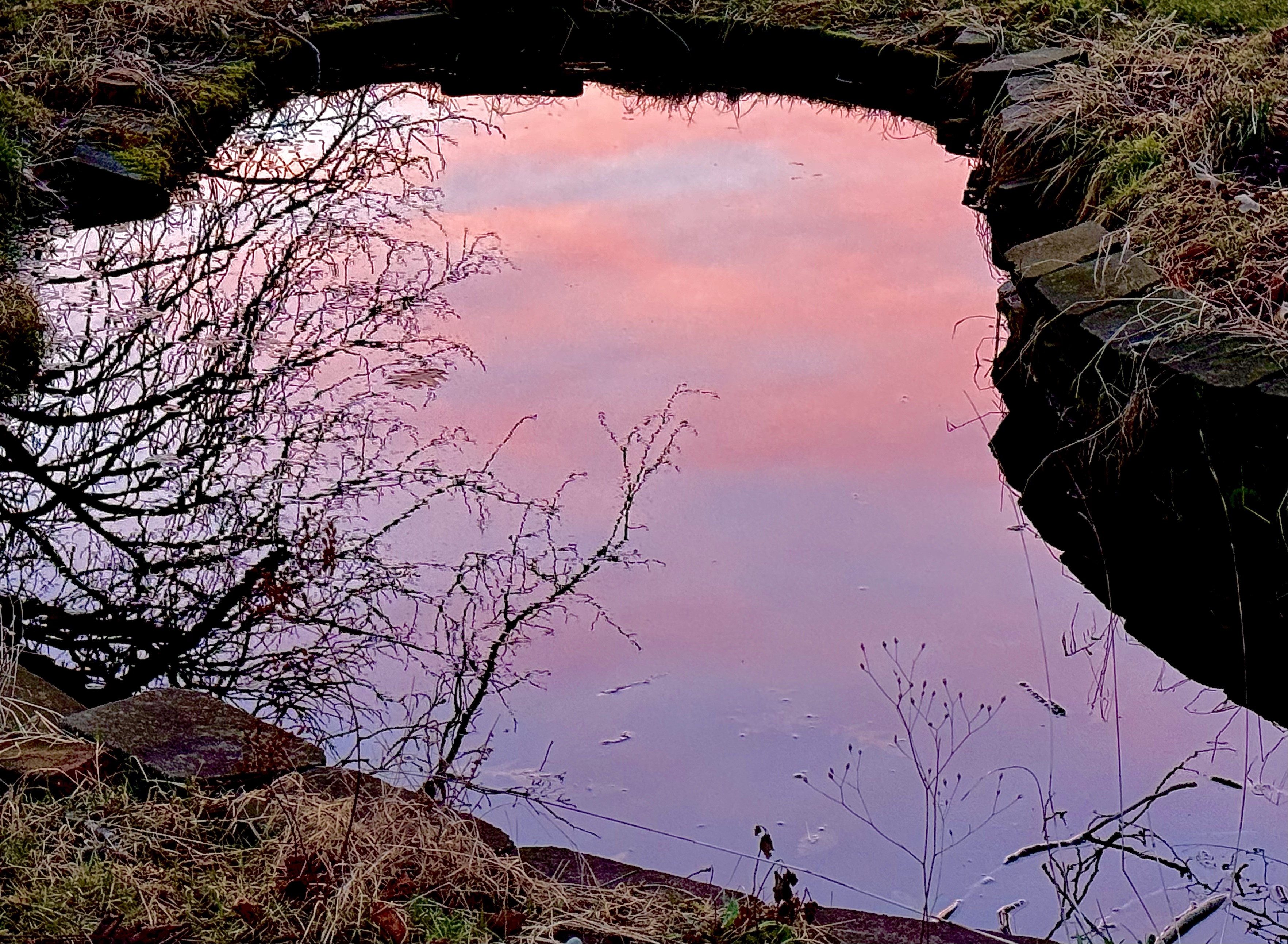
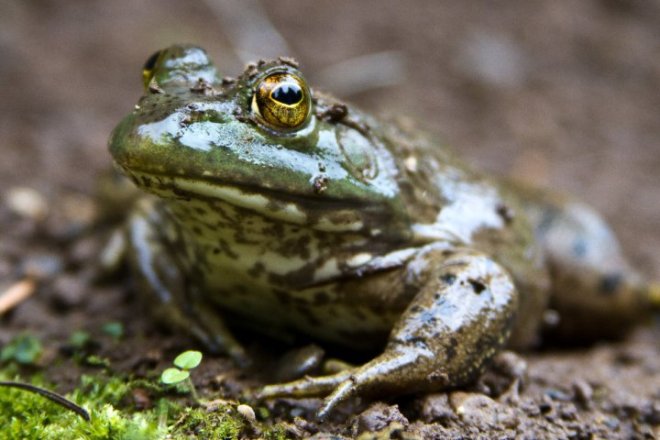
toad photo by Josh Scholten
photo by Kate Steensma

I am too much like a toad.

Plain, bumpy, staid,
cautious, contemplative,
tending to plop or splat
rather than risk
a graceful, carefree
leap into nothingness.

Someone has to hold down the swamp,
while peering over the edge of the abyss,
belching out an occasional thoughtful croak
while thousands of dainty peepers sing their hearts out
like so many sleighbells jingling gaily
throughout the endless, late winter night.

We all sing together…

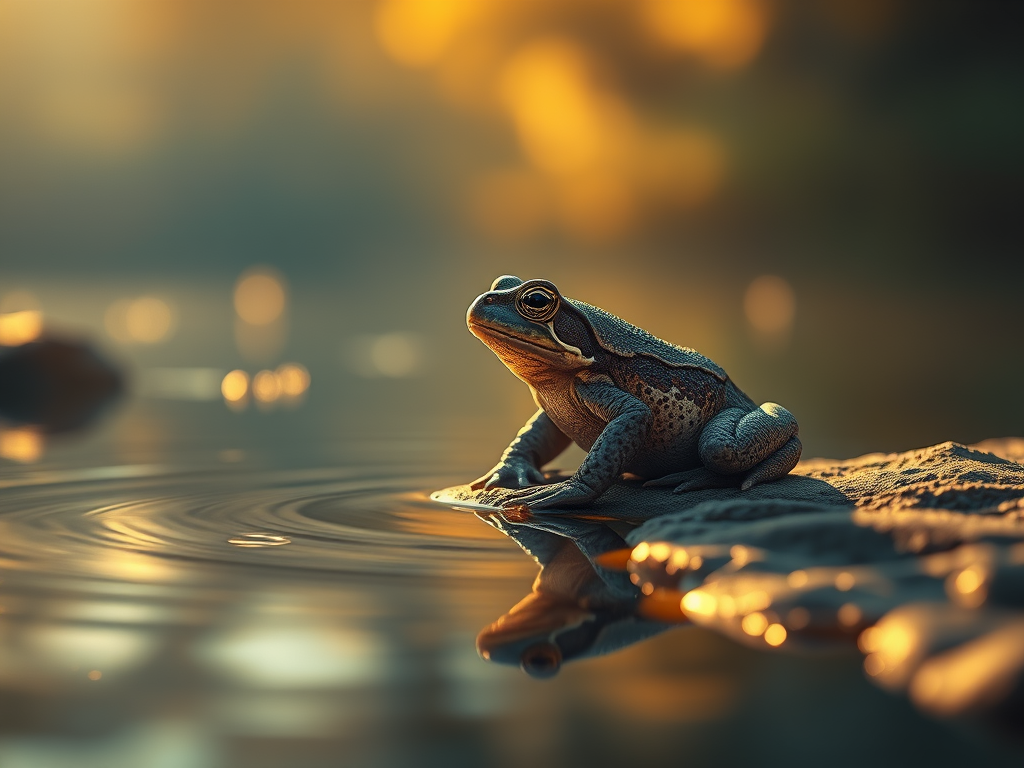
AI image created for this post

Poets who know no better rhapsodize about the peace of nature, but a well-populated marsh is a cacophony.
~Bern Keating

One-Time
Monthly
Yearly

Make a one-time or recurring donation to support daily Barnstorming posts

Make a monthly donation

Make a yearly donation

Choose an amount

$10.00
$25.00
$50.00
$5.00
$15.00
$100.00
$5.00
$15.00
$100.00

Or enter a custom amount

$

Your contribution is deeply appreciated.

Your contribution is appreciated.

Your contribution is appreciated.

DonateDonate monthlyDonate yearly
An Ache Nothing Can Satisfy

At the alder-darkened brink
Where the stream slows to a lucid jet
I lean to the water, dinting its top with sweat,
And see, before I can drink,

A startled inchling trout
Of spotted near-transparency,
Trawling a shadow solider than he.
He swerves now, darting out

To where, in a flicked slew
Of sparks and glittering silt, he weaves
Through stream-bed rocks, disturbing foundered leaves,
And butts then out of view

Beneath a sliding glass
Crazed by the skimming of a brace
Of burnished dragon-flies across its face,
In which deep cloudlets pass

And a white precipice
Of mirrored birch-trees plunges down
Toward where the azures of the zenith drown.
How shall I drink all this?

Joy’s trick is to supply
Dry lips with what can cool and slake,
Leaving them dumbstruck also with an ache
Nothing can satisfy.

~Richard Wilbur “Hamlen Brook”

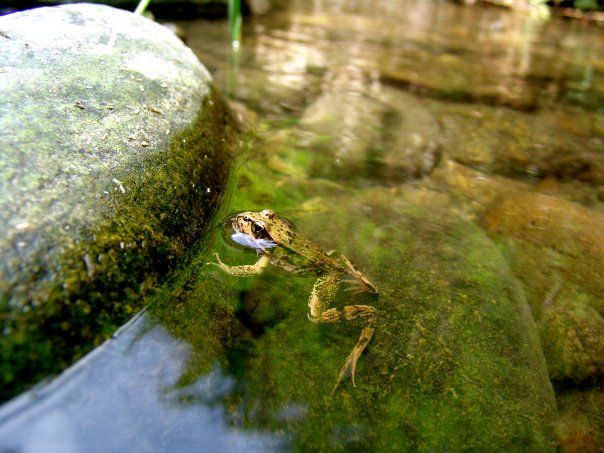
photo by Josh Scholten

How can I take it all in?

Like so many others right now, I’m thirsty for honest, respectful discussion and debate about the state of the world. Instead, I’m left dry and wanting, ready to blow away with the next gust.

So I ache to witness fading colors, fallen leaves, swift winds and pouring rain, as all creatures great and small prepare for winter’s chill. There is stark honesty among all soon to fall asleep.

I yearn to hear God’s Truth spoken out loud.
How amazing it would be — to be dumbstruck with joy.

One-Time
Monthly
Yearly

Make a one-time or recurring donation to support daily Barnstorming posts

Make a monthly donation

Make a yearly donation

Choose an amount

$10.00
$25.00
$50.00
$5.00
$15.00
$100.00
$5.00
$15.00
$100.00

Or enter a custom amount

$

Your contribution is deeply appreciated.

Your contribution is appreciated.

Your contribution is appreciated.

DonateDonate monthlyDonate yearly
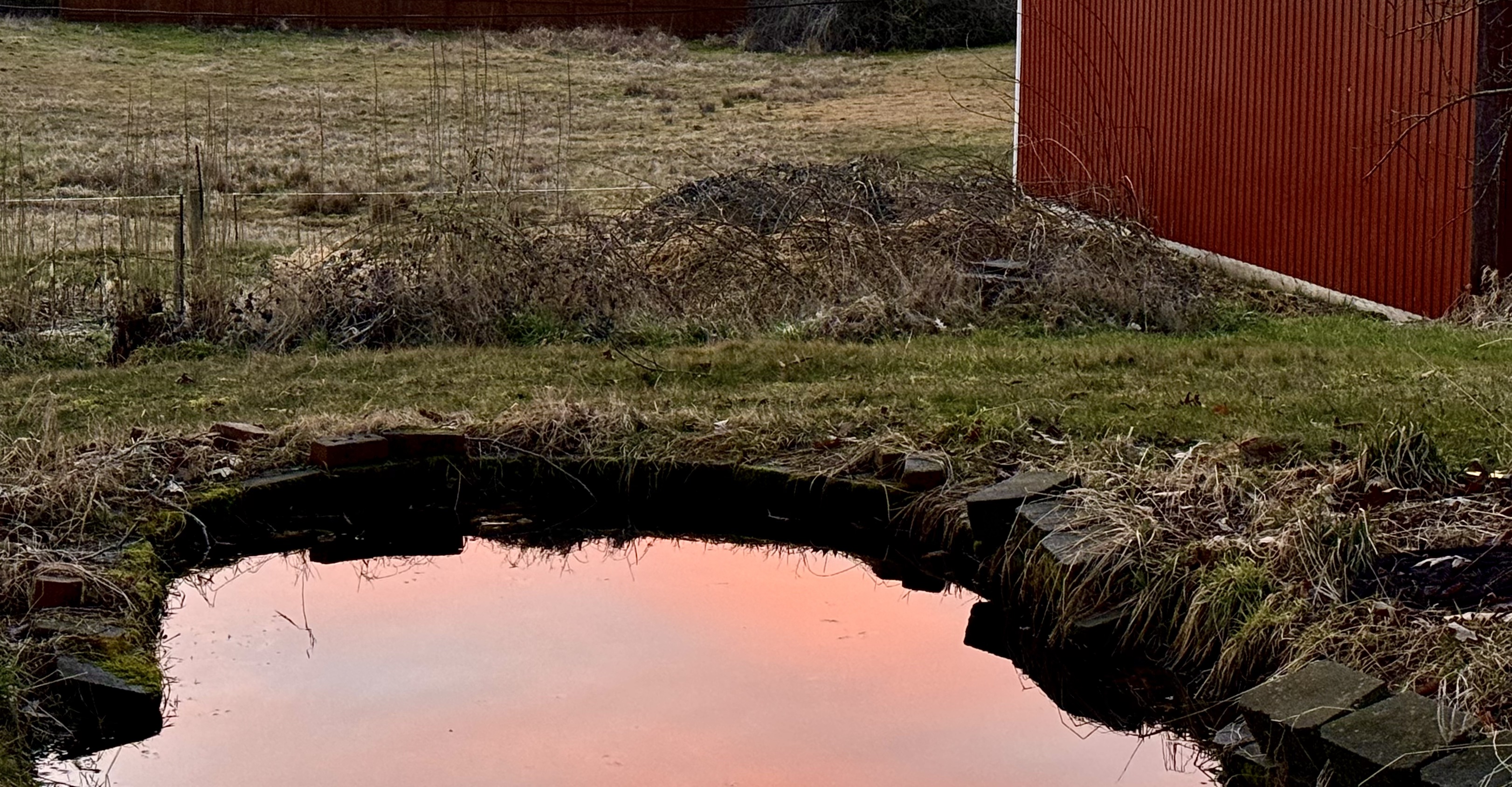
The Smell of Water

At the soft place in the snowbank
Warmed to dripping by the sun
There is the smell of water.
On the western wind the hint of glacier.
A cottonwood tree warmed by the same sun
On the same day,
My back against its rough bark
Same west wind mild in my face.
A piece of spring
Pierced me with love for this empty place
Where a prairie creek runs
Under its cover of clear ice
And the sound it makes,
Mysterious as a heartbeat,
New as a lamb.
~Tom Hennen, “In the Late Season” from Darkness Sticks to Everything: Collected and New Poems. 

While walking the sloping hillside of our farm,
if I listen carefully,
I can hear trickling under the snow.
I can’t see it but I can hear and feel and smell the water;
as a hidden and mysterious melt happens.
Thawing under my feet-
as winter drains away,
spring is on the move.

I witness that which I have no control over,
this subtle softening of frozen ground-
unseen, yet as evident as the steady beating of my heart
as I too begin to thaw and melt
through the miracle of flowing grace
into whatever comes next.


The Marvelous Light

 Lord,
              when you send the rain
              think about it, please,
              a little?
      Do
              not get carried away
              by the sound of falling water,
              the marvelous light
              on the falling water.
          I
              am beneath that water.
              It falls with great force
              and the light
Blinds
              me to the light.
~James Baldwin, “Untitled” from Jimmy’s Blues

The good Lord sends what He knows we need even if we don’t know we need it. Then we’re puzzled and not just a little perturbed, especially when it doesn’t fit our plans, our timeline, our desires, our hopes and dreams.
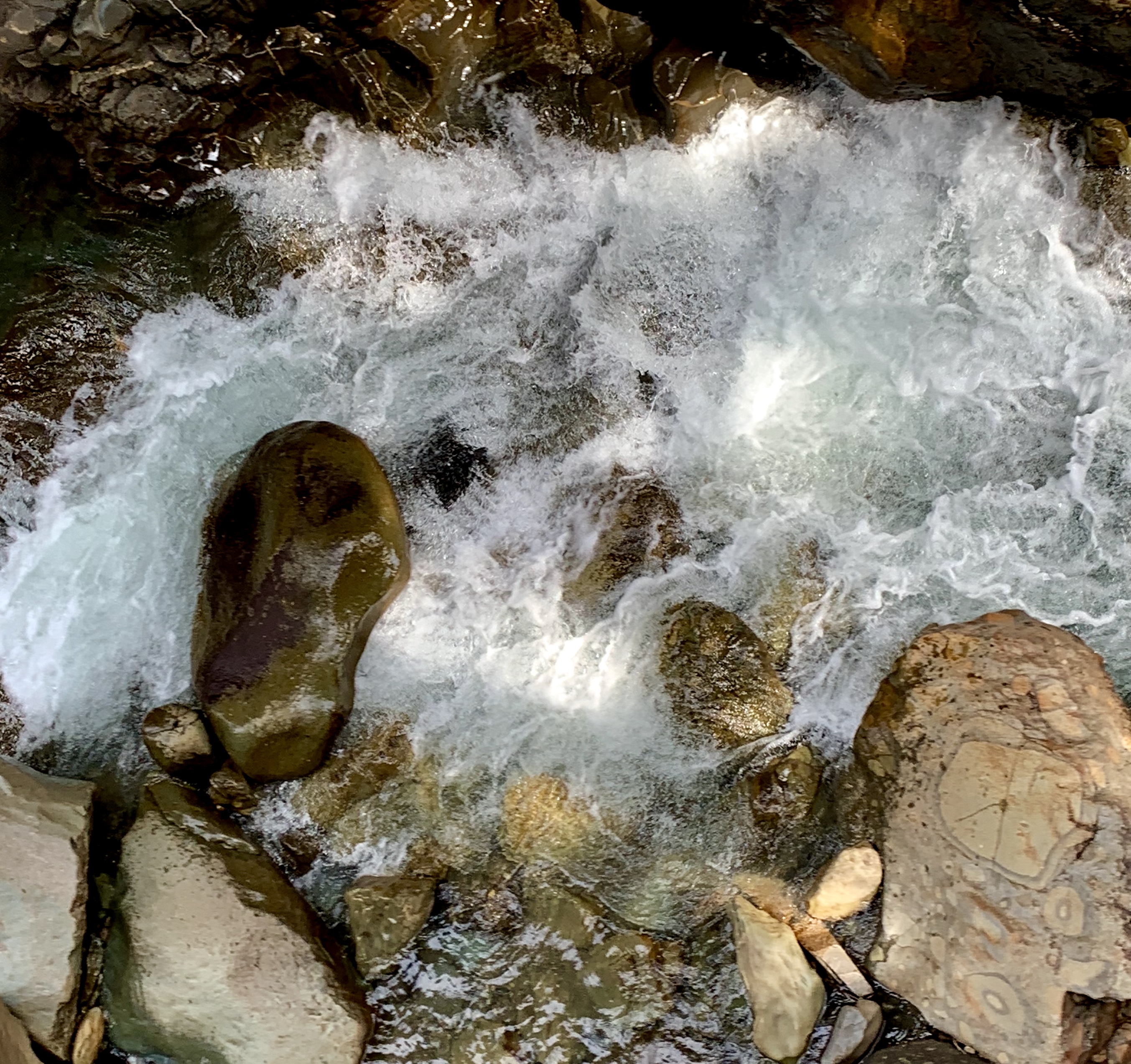
Anyone ask for this year’s chaos and grief? Can I see a show of hands?

No one I know sent up prayers
for a viral scourge to sicken 40 million
and kill over a one million in a matter of months,
or for ever-widening political divides and disagreements,
or increasing distrust and less cooperation between nuclear powers,
or devastating unemployment and economic hardship,
or triggers for riots in the streets,
or being unable to visit my 100 year old aunt in her long term care facility.
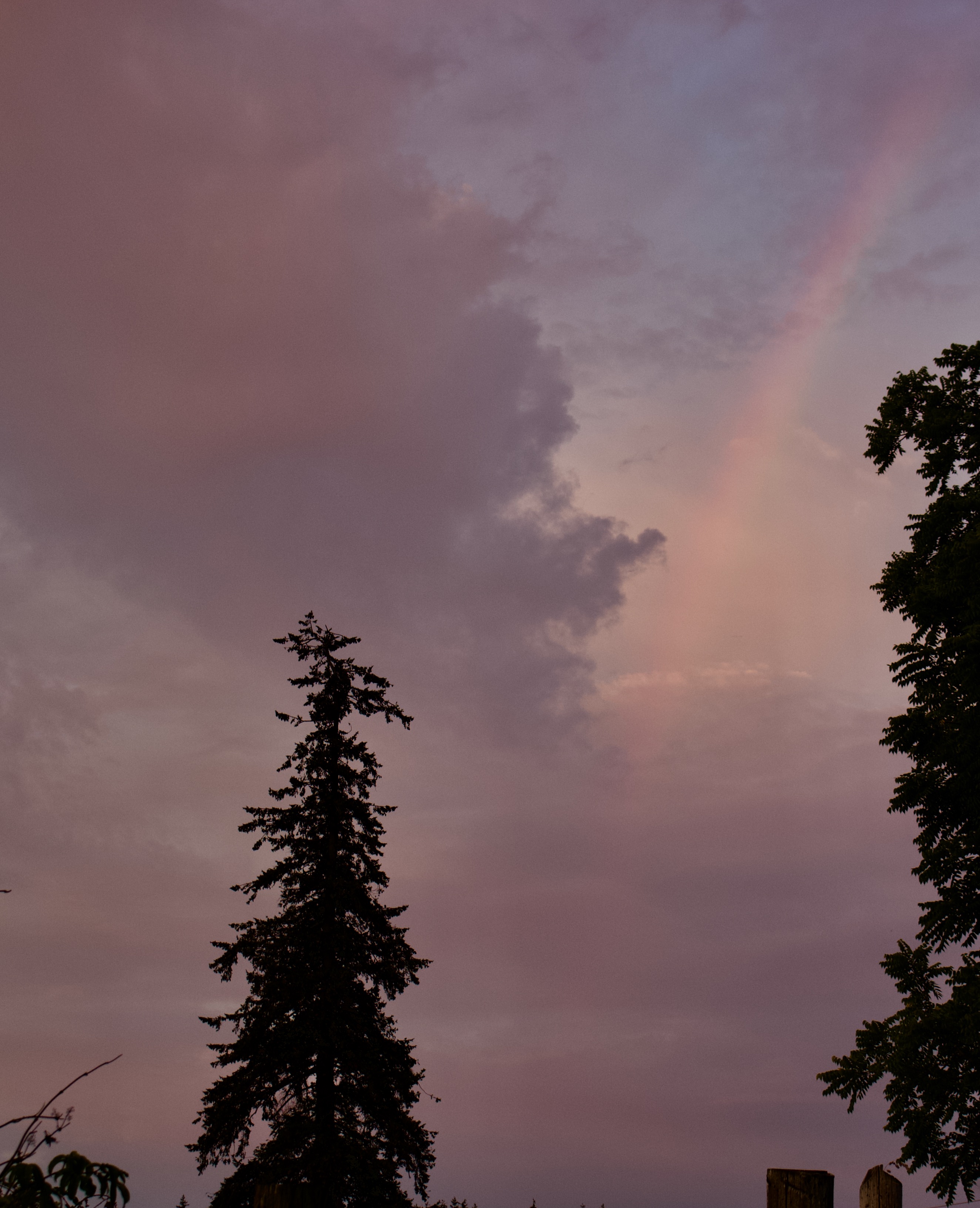
Maybe, just maybe,
we are too blinded by the force of this deluge pounding and battering us
to acknowledge the nearly-drowned soaking we bring upon ourselves.

Maybe, just maybe,
the Lord thinks a bit about what He sends,
just as He has done before
and has ever promised to do:
a Light in the midst of the storm,
that Marvelous Light,
if only we would open our eyes enough to see it.

The Face of a Frog

I miss the friendship with the pine tree and the birds
that I had when I was ten.
And it has been forever since I pushed my head
under the wild silk skirt of the waterfall.

The big rock on the shore was the skull of a dead king
whose name we could almost remember.
Under the rooty bank you could dimly see
the bunk beds of the turtles.

Nobody I know mentions these things anymore.
It’s as if their memories have been seized, erased, and relocated
among flowcharts and complex dinner-party calendars.

Now I want to turn and run back the other way,
barefoot into the underbrush,
getting raked by thorns, being slapped in the face by branches.

Down to the muddy bed of the little stream
where my cupped hands make a house, and

I tilt up the roof
to look at the face of the frog.
~Tony Hoagland, from “Nature” Unincorporated Persons in the Late Honda Dynasty

I grew up on a small farm with several acres of woodland. It was my near-daily retreat until I left for college: I walked among twittering birds, skittering wild bunnies, squirrels and chipmunks, busy ant hills and trails, blowing leaves, swimming tadpoles, falling nuts, waving wildflowers, large firs, pines, cottonwoods, maples and alder trees.

I had a favorite “secret” spot sitting perched on a stump where a large rock provided a favorite warm sunning spot for salamanders. They and I would make eye contact and ponder what the other was thinking.

It was where I felt closest to Creation, more so than the house I slept in with my family, the busy classrooms, the dentist office and retirement home where I worked.

Only our church sanctuary was such a thin place with a “can almost touch the hem of God” reality.

At college I searched for a place as private, as quiet, as serene, as full of the voices of creation – nothing ever matched the woods of my childhood home. I gave up as I lived a decade in the city and almost forgot what a familiar woods felt like.

I’ve come close again on this farm we’ve stewarded for thirty years, but the constant distractions are much greater now than when I was a child. I can’t empty out my head and heart as completely to receive the gifts of the field and trees and woodlands. I have greater worries, bigger responsibilities, places to go, people to see, things to do, a shorter timeline to get what I want to accomplish done …

Perhaps the time will come again to simply gaze into the eyes of a fellow creature, and invite them in with a head and heart ready to receive what they and our Creator have to give.


Let Them Be Left

The darksome burn, horseback brown,
His rollrock highroad roaring down,
In coop and in comb the fleece of his foam
Flutes and low to the lake falls home.

A windpuff-bonnet of fawn-froth
Turns and twindles over the broth
Of a pool so pitchblack, fell-frowning,
It rounds and rounds Despair to drowning.

Degged with dew, dappled with dew,
Are the groins of the braes that the brook treads through,
Wiry heathpacks, flitches of fern,
And the beadbonny ash that sits over the burn.

What would the world be, once bereft
Of wet and wildness?
Let them be left,
O let them be left, wildness and wet;
Long live the weeds and the wilderness yet.
~Gerard Manley Hopkins “Inversnaid”

There is despair in the wilderness of untamed hearts.
Such wildness lies just beneath the surface;
it rounds and rounds, almost out of reach. 
How are we spared drowning in its pitchblack pool?
How can we thrill to the beauty rather than be sucked into the darkness?

He came not to destroy the world’s wildness,
but to pull us, gasping,
from its unforgiving clutches as we sink in deep.

As weeds surviving in the wilderness,
we must grow, flourish, and witness to a wild world bereft.

O let us be left.
Let us be left.

I Sha’n’t Be Gone Long — You Come Too

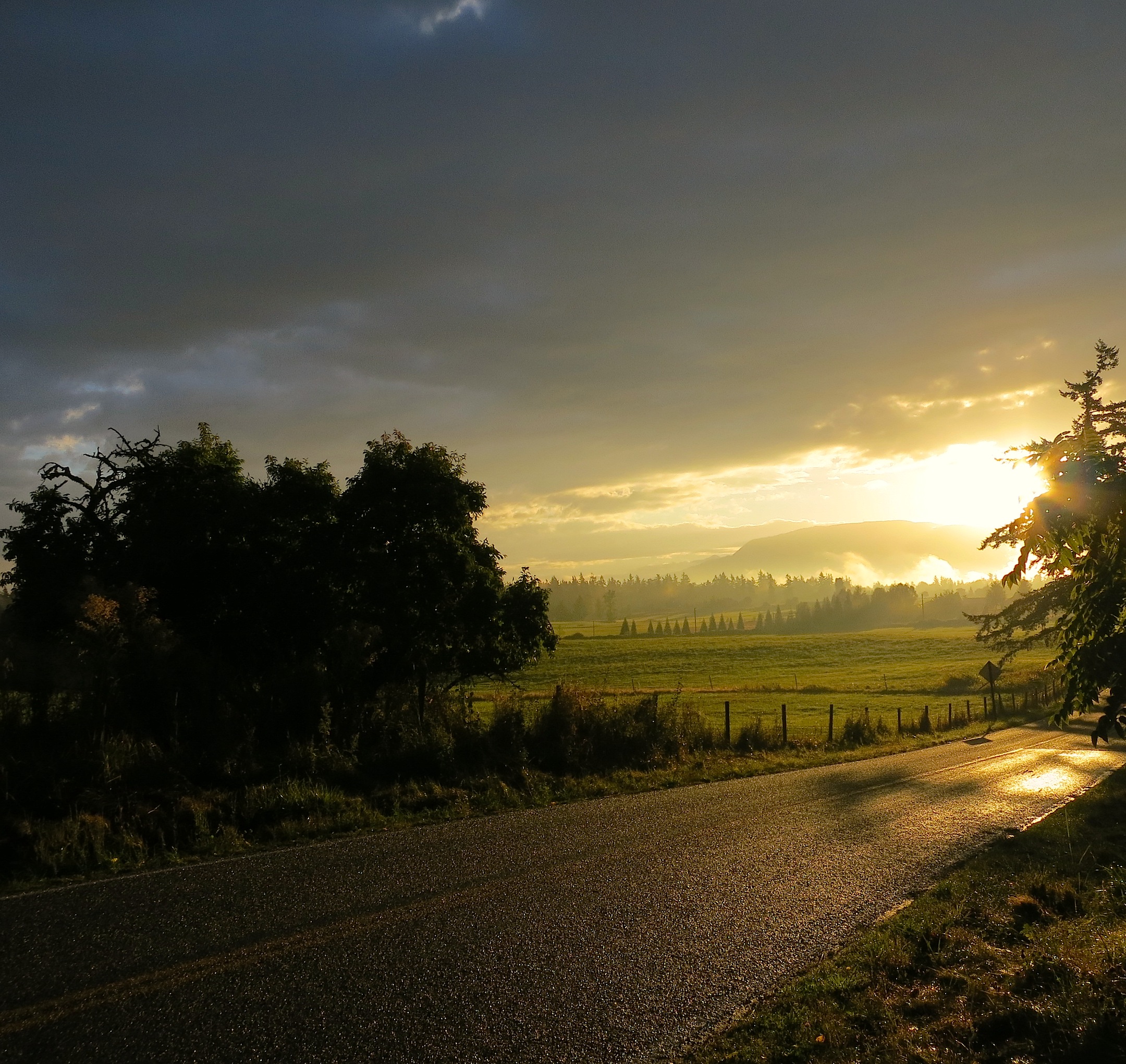
sunrise94141


I’m going out to clean the pasture spring;
I’ll only stop to rake the leaves away
(And wait to watch the water clear, I may):
I sha’n’t be gone long.—You come too.

I’m going out to fetch the little calf
That’s standing by the mother. It’s so young,
It totters when she licks it with her tongue.
I sha’n’t be gone long.—You come too.
~Robert Frost “The Pasture”

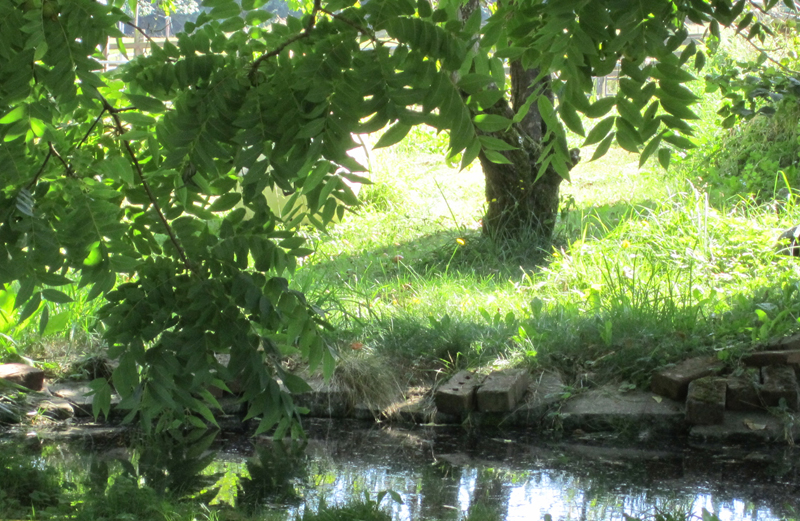
fishpond
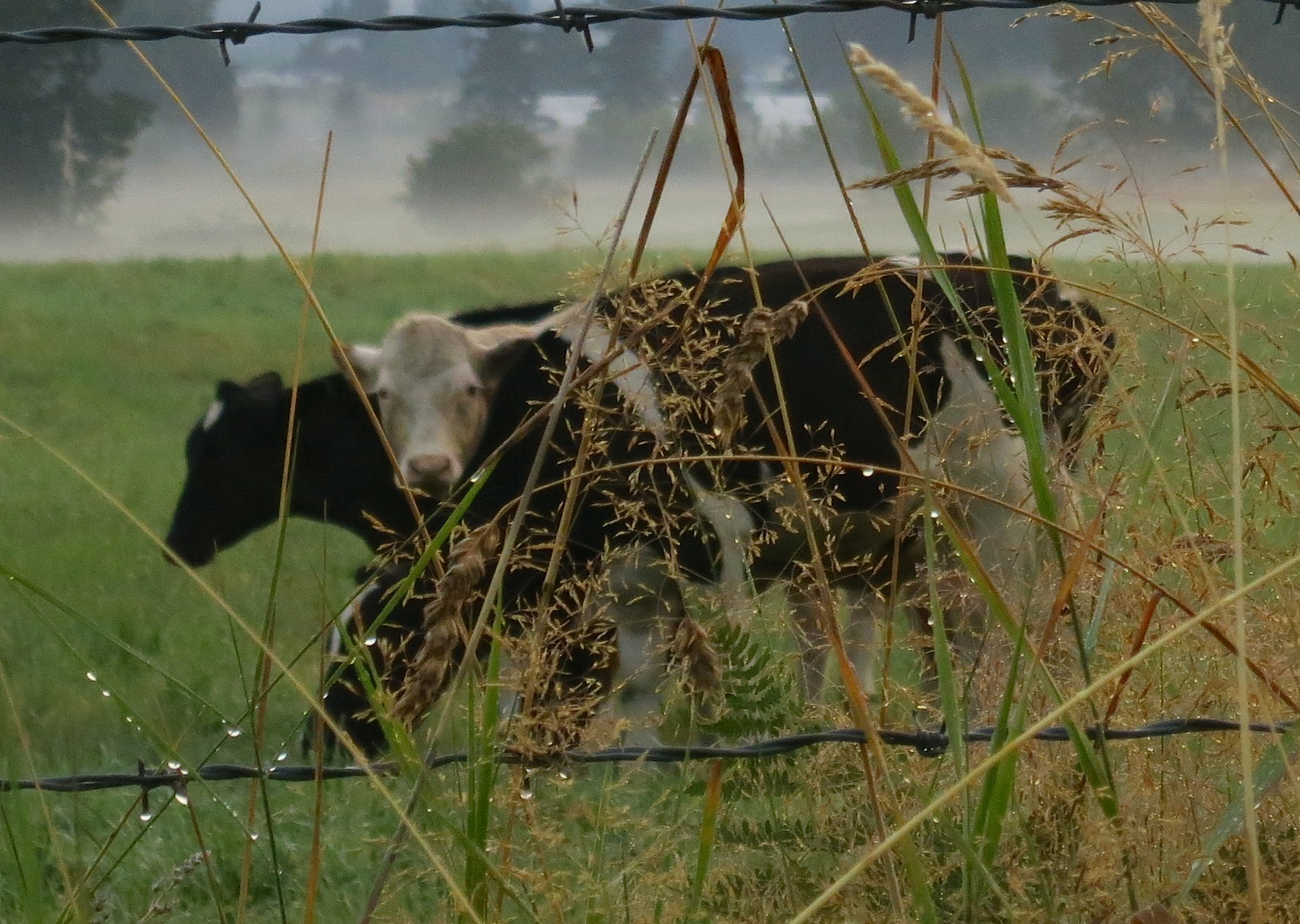
cowmorning
We all need an invitation to work together about now.  In these times when it feels like everything is going to hell in a handbasket, we all have some picking up and cleaning and clearing to do — and we can accomplish more if we do it side by side.
The world is continually trying to renew itself despite our attempts to destroy it so we need to pay attention.  The air and water can clear if we put in some effort,  there is new life all around us ready to thrive if we tend it lovingly like a mother.
Come with me to do what needs to be done.  You are invited.  We sha’n’t be gone long.
sunrise830
sunrise9414

Financial Support for the Barnstorming Blog from our Readers

Your financial support helps to keep this blog an ad-free daily offering. Your contribution of any amount is encouragement to me and deeply appreciated.

$10.00

Music Against the Hard Edges

galena


waterfalljasper1


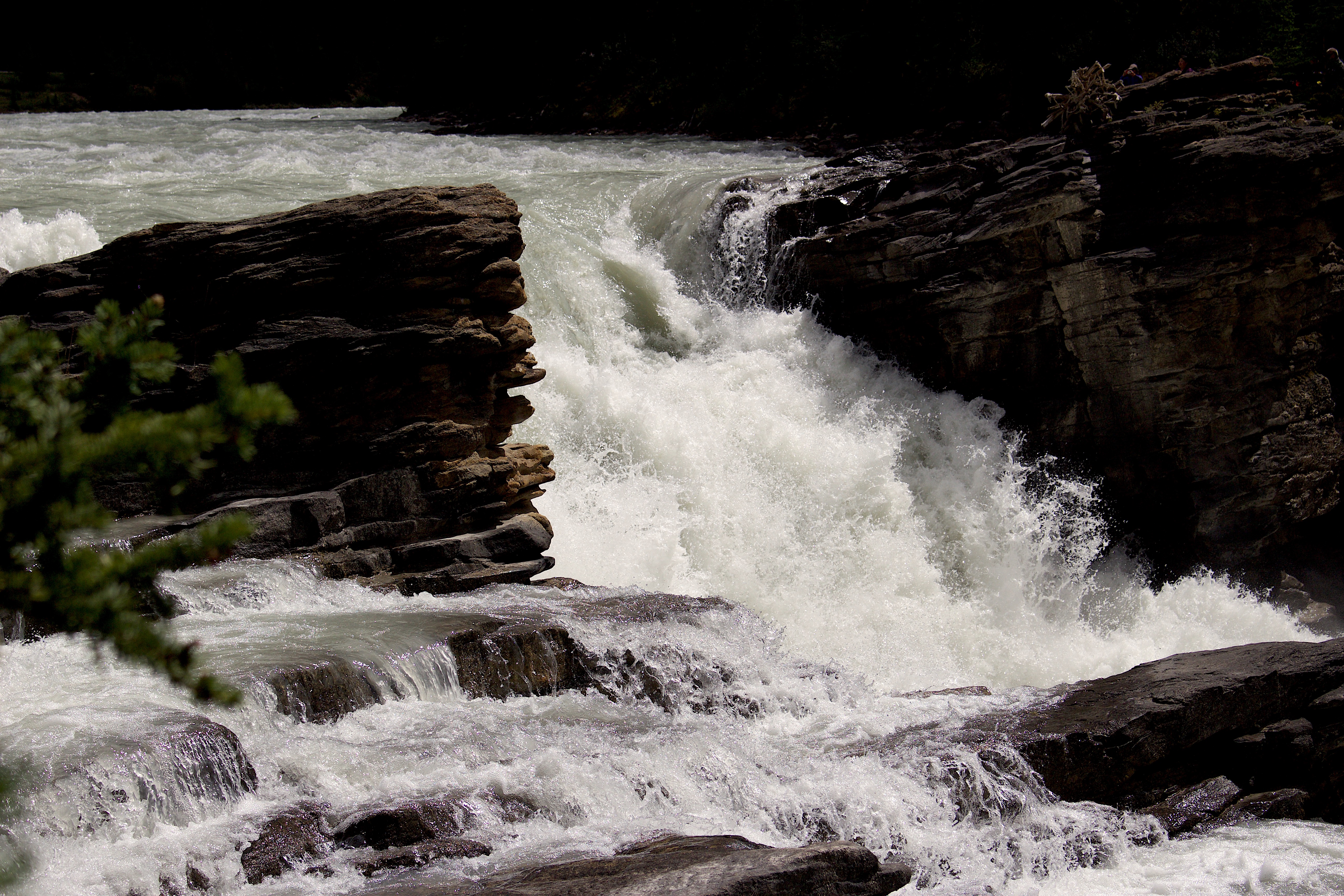
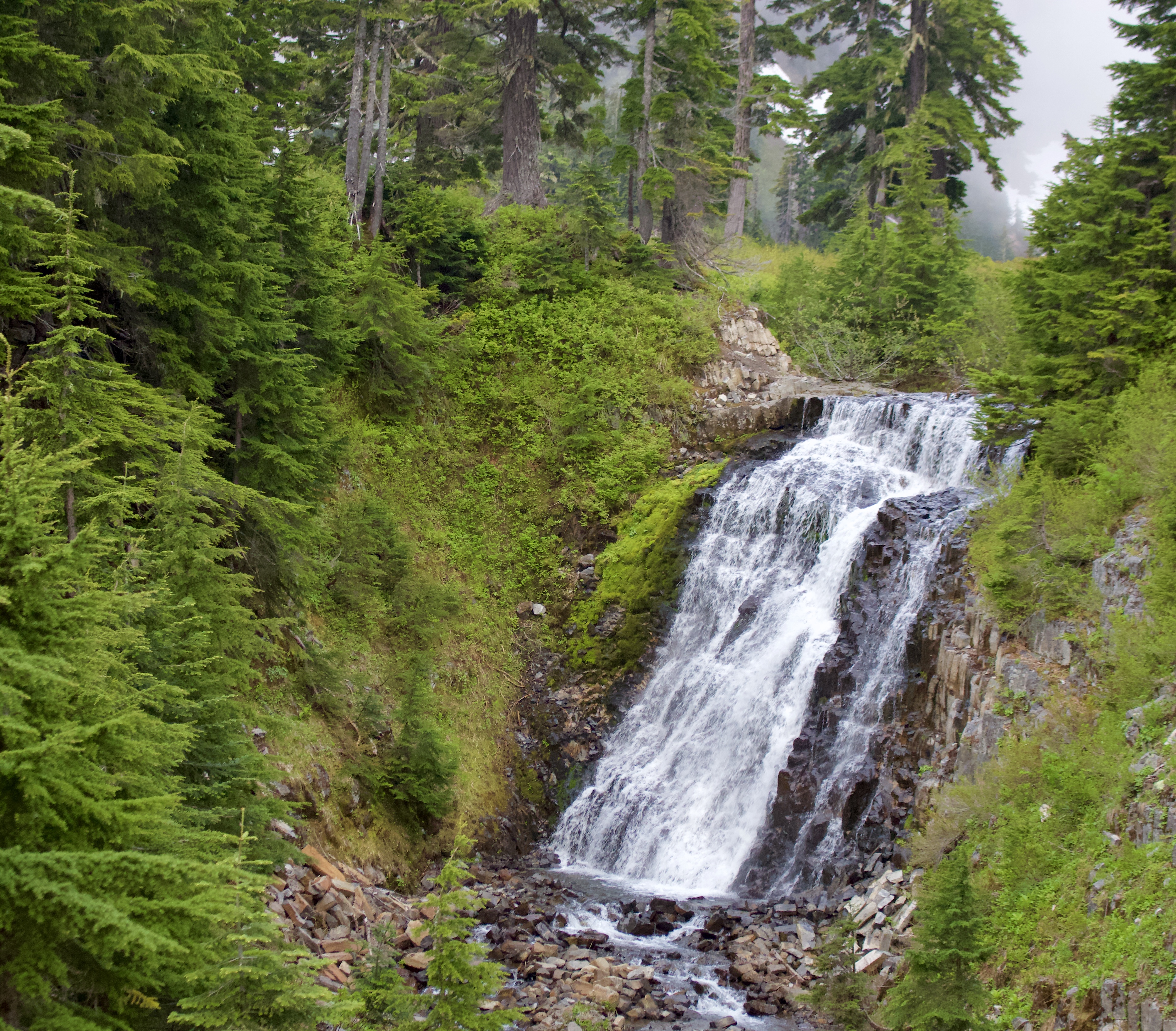
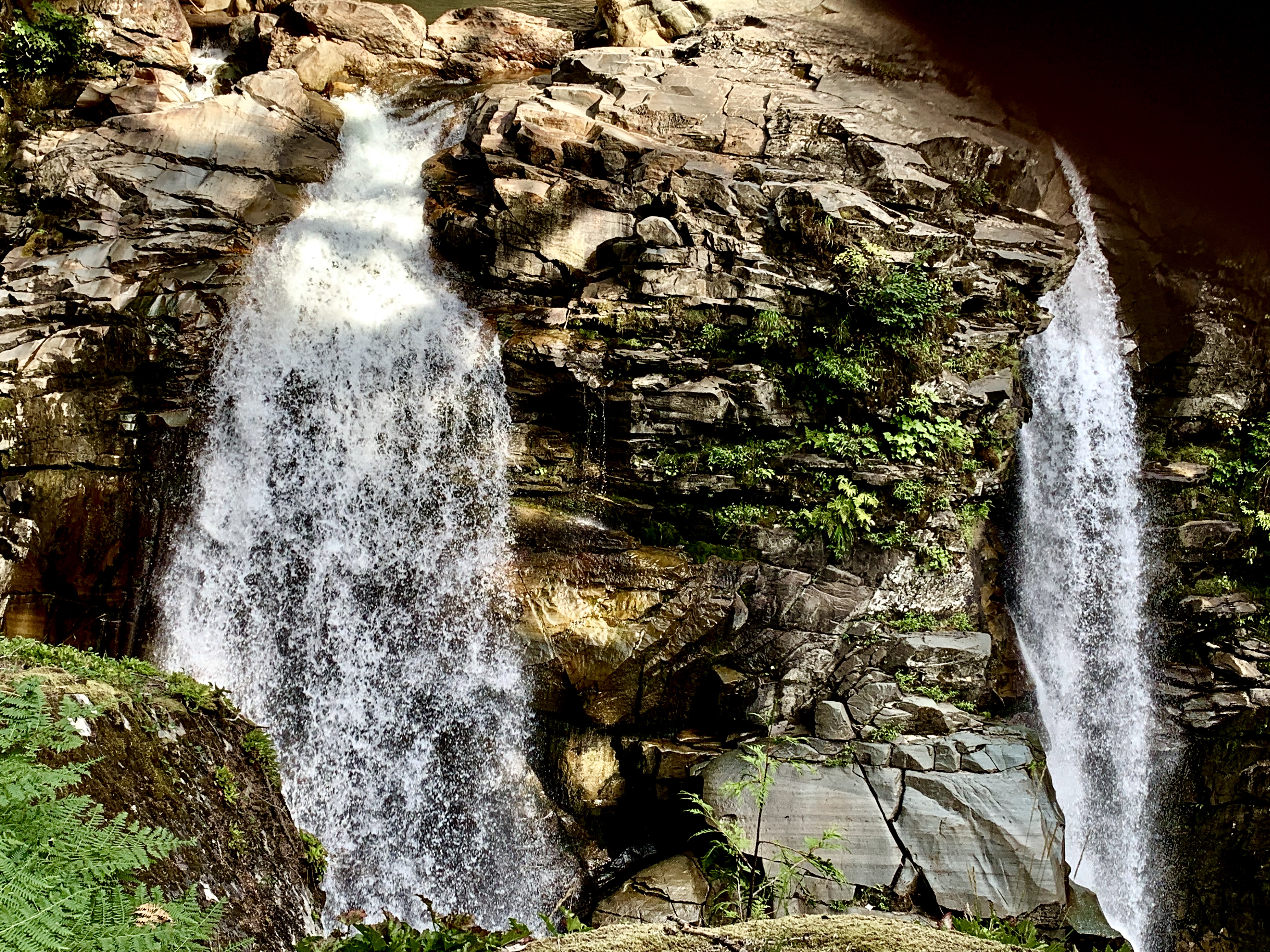
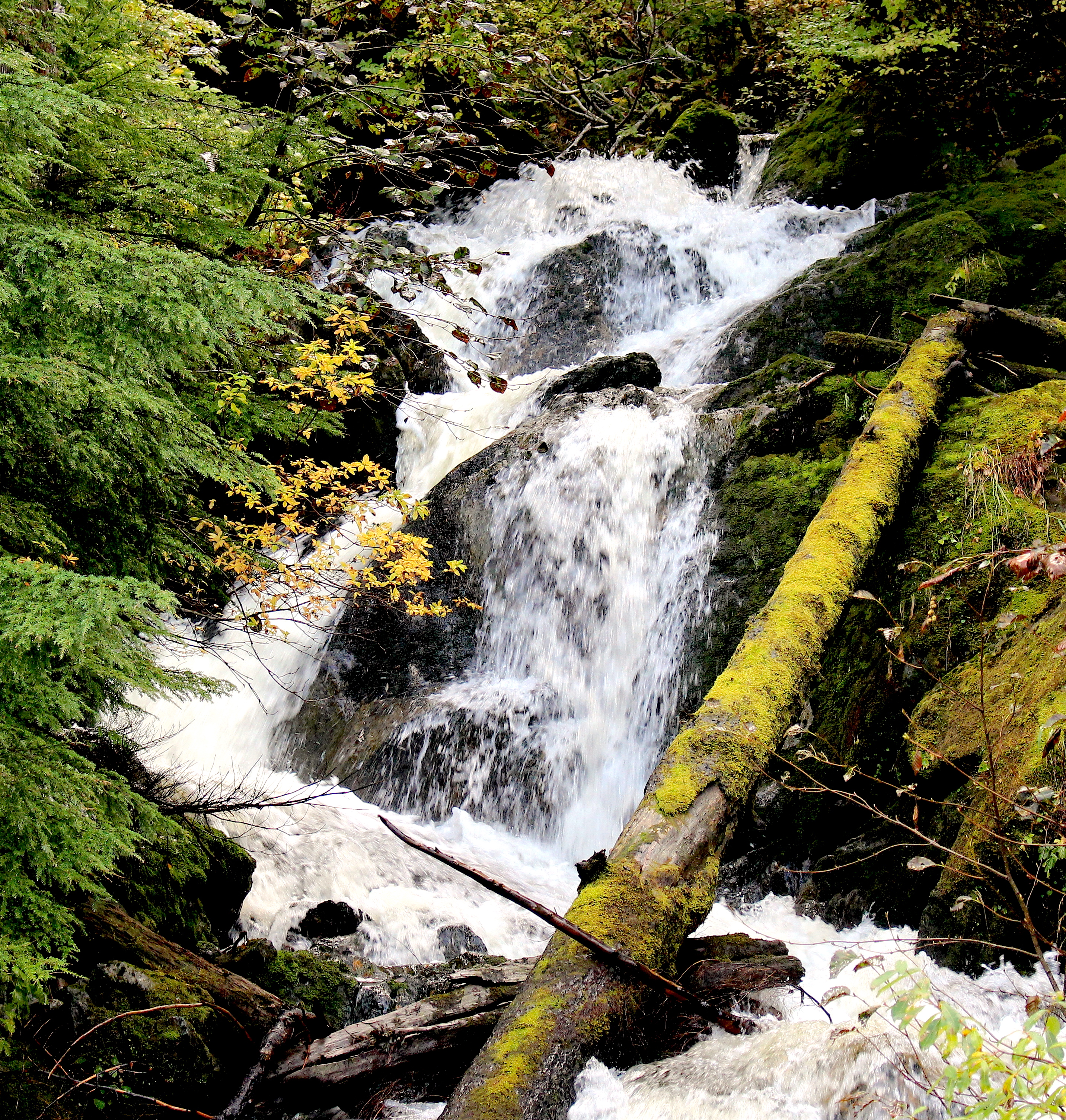
In all the woods that day I was
the only living thing
fretful, exhausted, or unsure.
Giant fir and spruce and cedar trees
that had stood their ground
three hundred years
stretched in sunlight calmly
unimpressed by whatever
it was that held me
hunched and tense above the stream,
biting my nails, calculating all
my impossibilities.
Nor did the water pause
to reflect or enter into
my considerations.
It found its way
over and around a crowd
of rocks in easy flourishes,
in laughing evasions and
shifts in direction.
Nothing could slow it down for long.
It even made a little song
out of all the things
that got in its way,
a music against the hard edges
of whatever might interrupt its going.
~John Brehm “Passage”


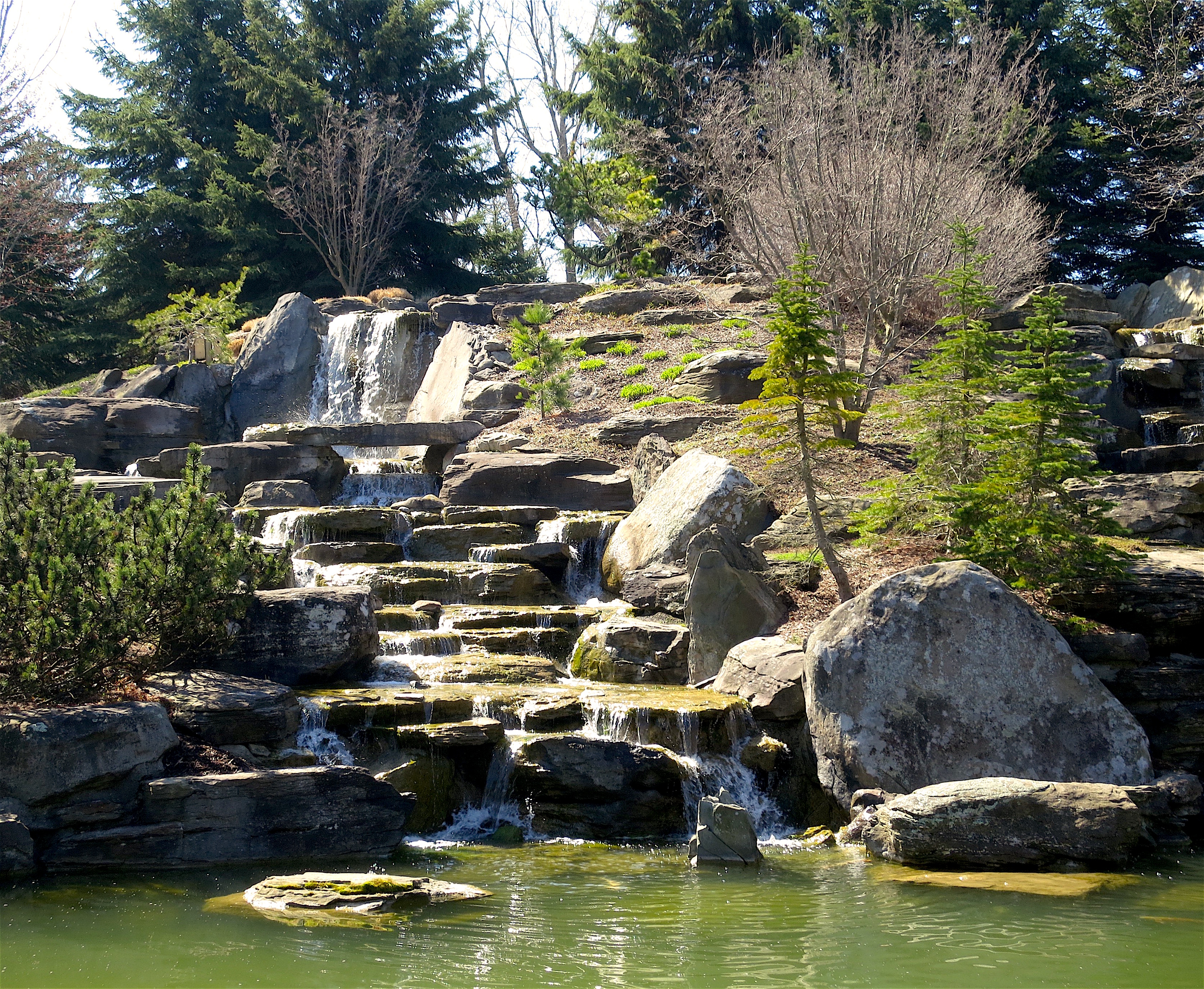
waterfall


It may be that when we no longer know what to do
we have come to our real work,

and that when we no longer know which way to go
we have come to our real journey.

The mind that is not baffled is not employed.

The impeded stream is the one that sings.
~Wendell Berry “The Real Work”


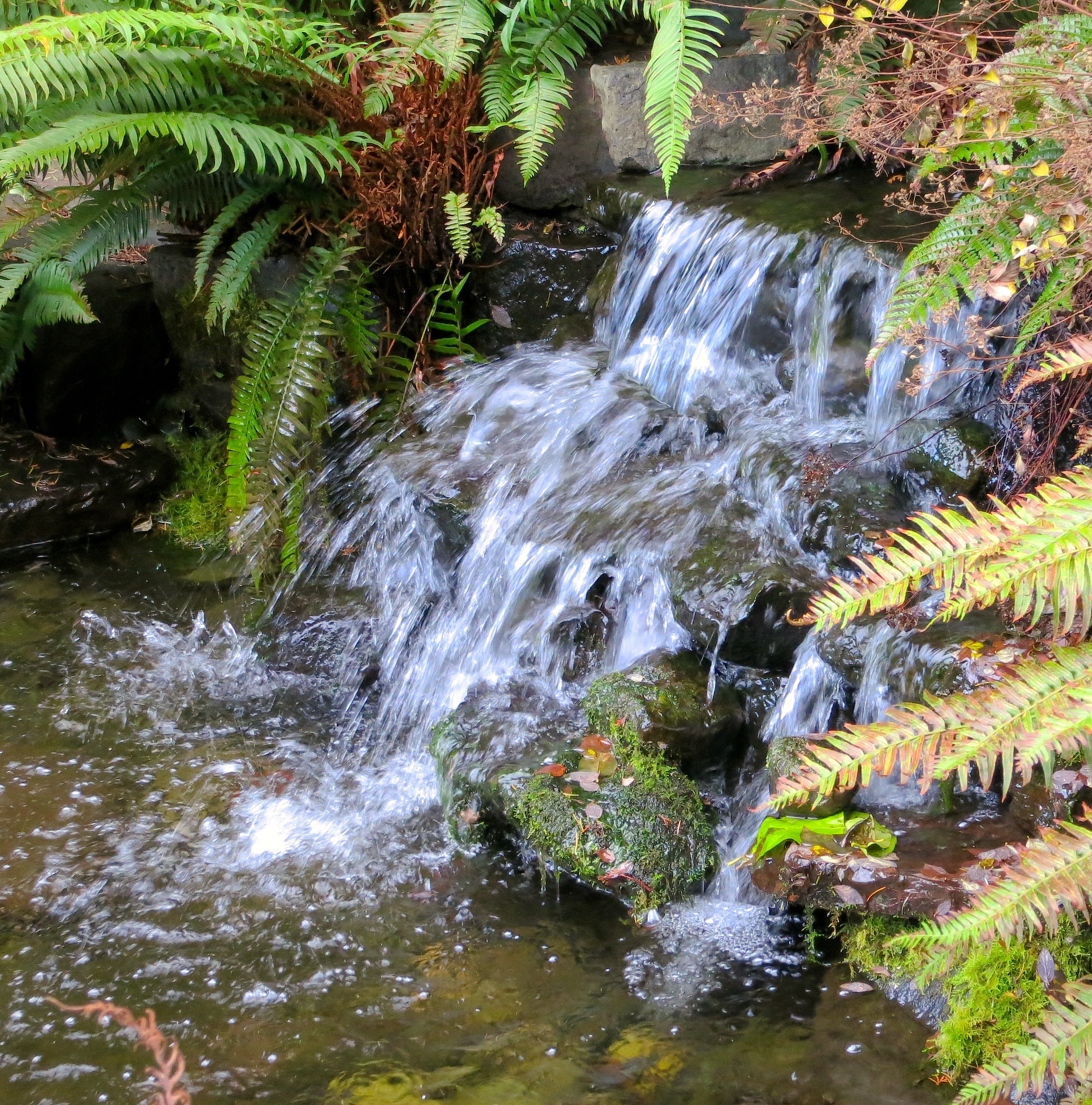
mejierwaterfall


Who among us knows with certainty each morning
what we are meant to do that day
or where we are to go?
Or do we make our best guess by
putting one foot ahead of the other
until the day is done and it is time to rest.

For me, I wake baffled each day
that I am allowed
to eavesdrop on heartbeats,
touch tender bellies,
sew up broken skin,
listen to tearful stories
of those no longer wish to live
and those who never want to let go of life.

I wake humbled with commitment
to keep going even when too tired,
to offer care even when rejected.
to keep trying even if impeded.

It is only then I learn that
daily obstacles slow
but cannot stop
the offer of help,
the gift of caring,
the flow of time given freely
which overflows its banks with
uncertain certainty:
my real work and journey
through life.

May I wade in deep~
listening~
ready to raise my voice
for those who hurt
and sing along.


poliswaterfall2

Divine Glee

tiredbug

nasturtiumleaf

What is this unfolding, this slow-
going unraveling of gift held
in hands open
to the wonder and enchantment of it all?

What is this growing, this rare
showing, like blossoming
of purple spotted forests
by roadsides grown weary with winter months?

Seasons affected, routinely disordered
by playful disturbance of divine glee
weaving through limbs with
sharpened shards of mirrored light,
cutting dark spaces, interlacing creation,
commanding life with whimsical delight.

What is this breaking, this hopeful
re-making, shifting stones, addressing dry bones,
dizzying me with blessings,
intercepting my grieving
and raising the dead all around me?~Enuma Okoro “Morning Reflections”


mush1

IMG_6616

galena