Frightening the foliage from its sleep, we travel along the Quinault Lake Loop in our big red truck.
Roofed by dank rainforest, we know we are not alone, though we see no bird, no beast.
You say, It’s beautiful, but do we really belong here where creatures hide? Then an elk herd stomps across
the dirt road, and you brake, shocked. The fattest turns to stare over his long beard. To know or warn us.
Yes, my love, we belong, but on soil-stained knees, asking for each wild thing’s consent to stand. ~Lauren Davis, Home Beneath the Church
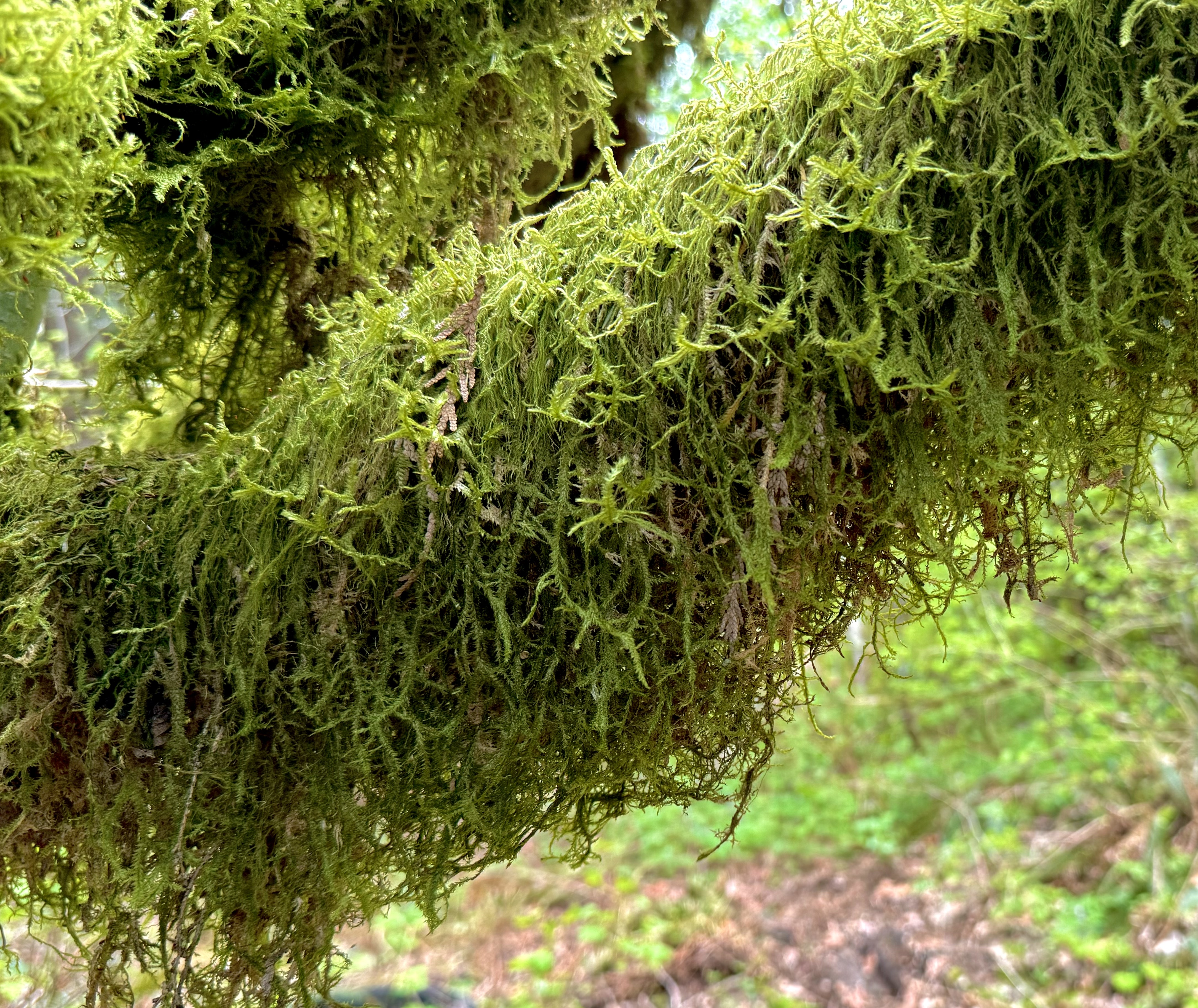
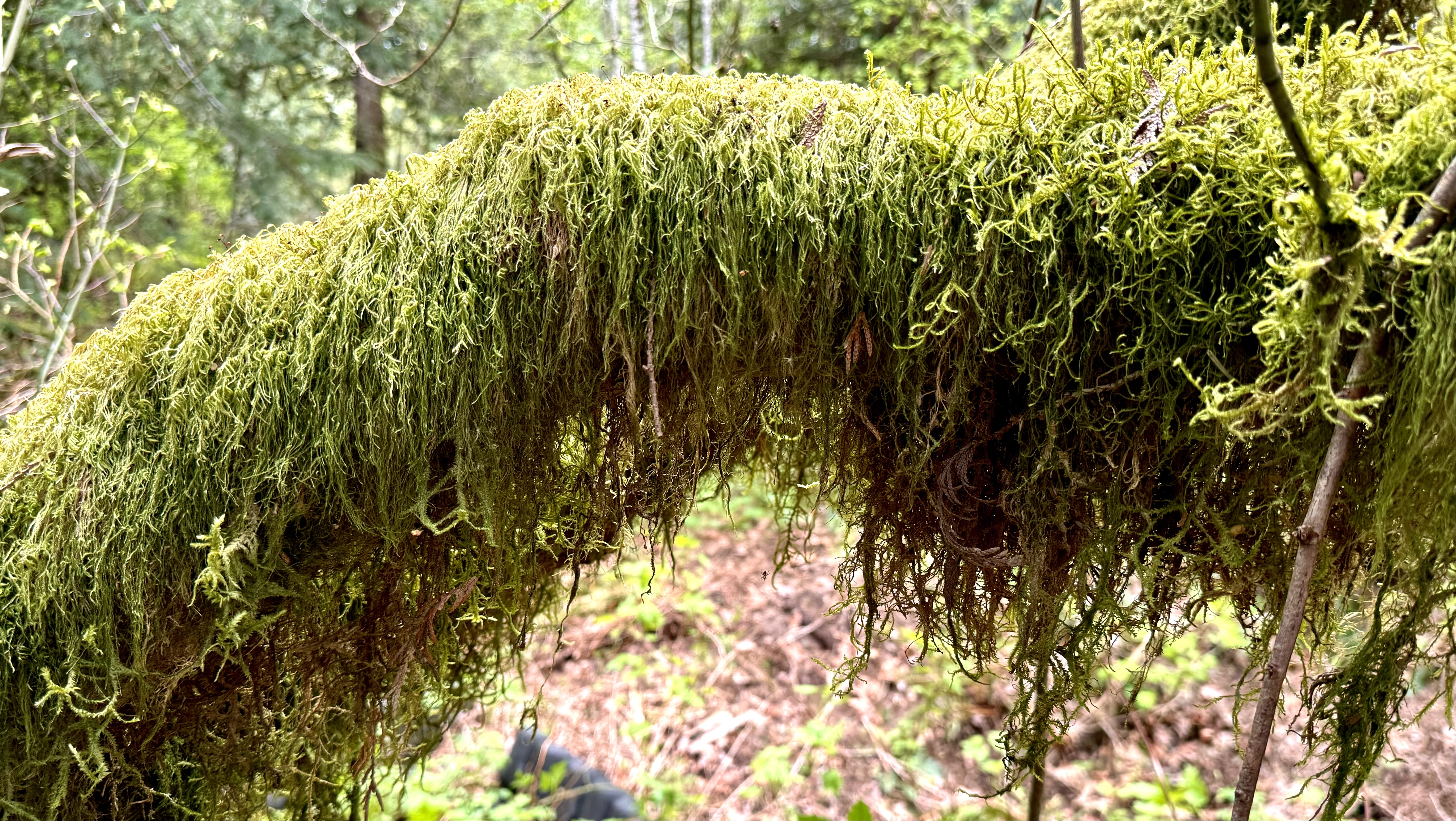
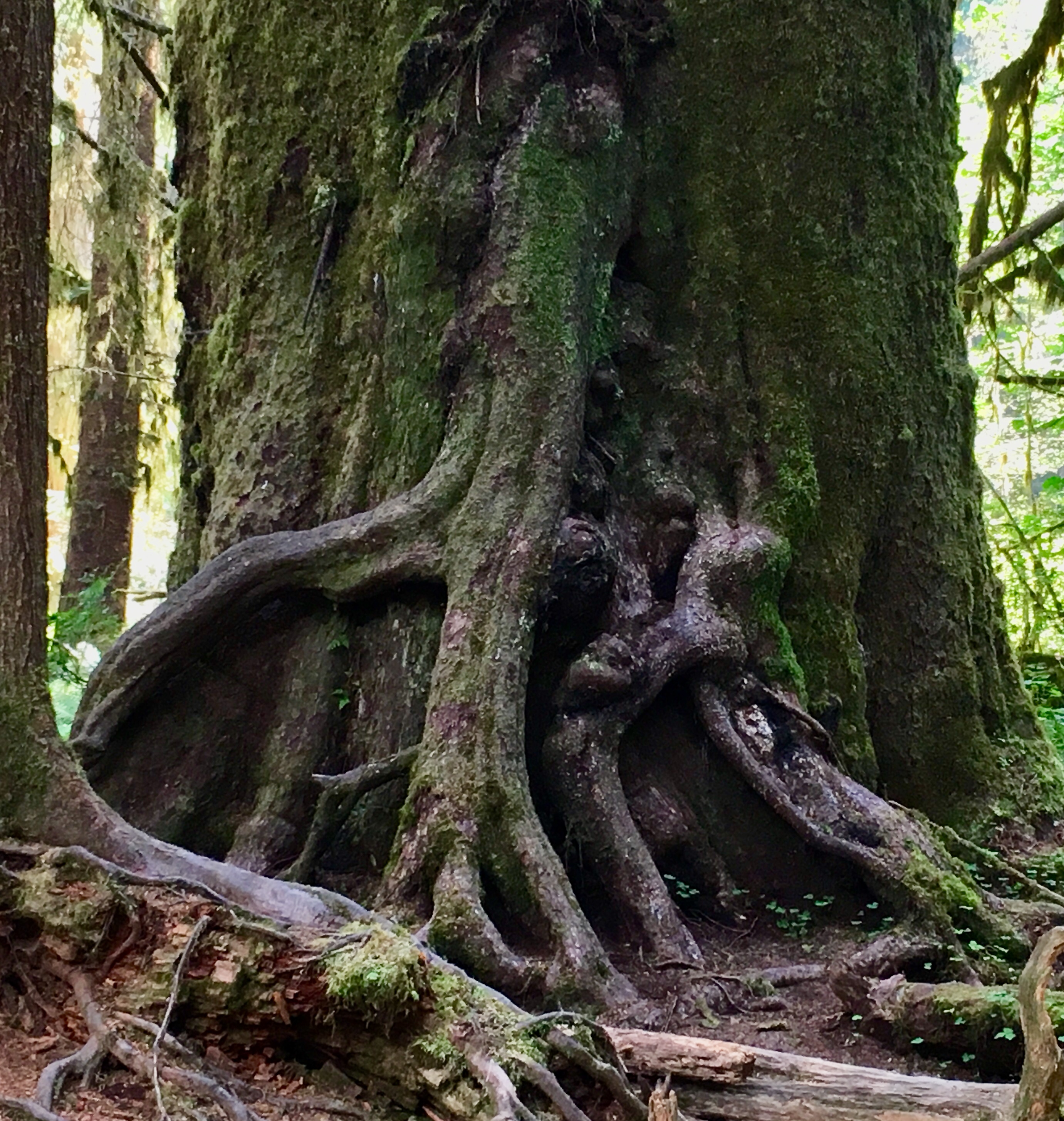
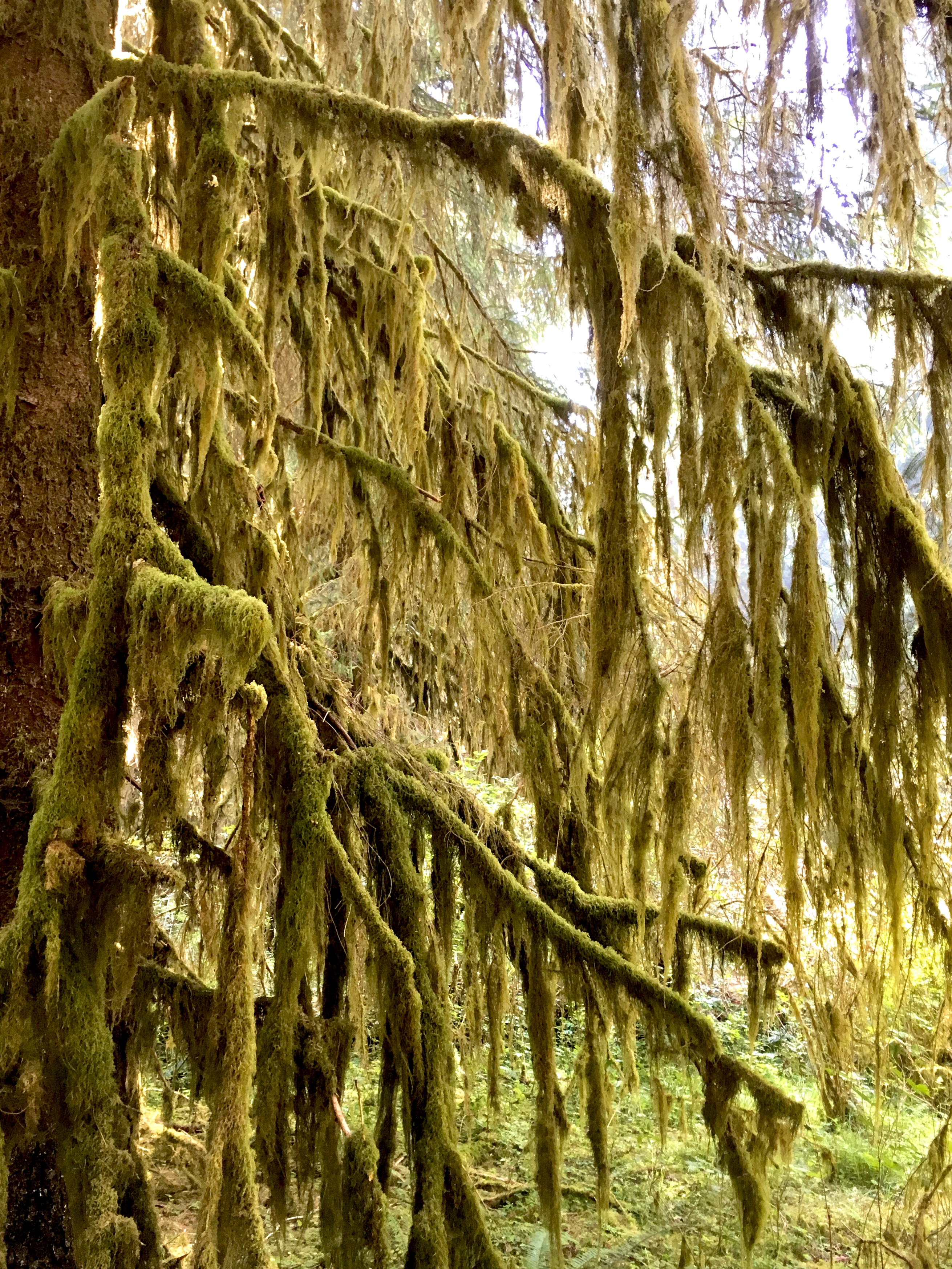
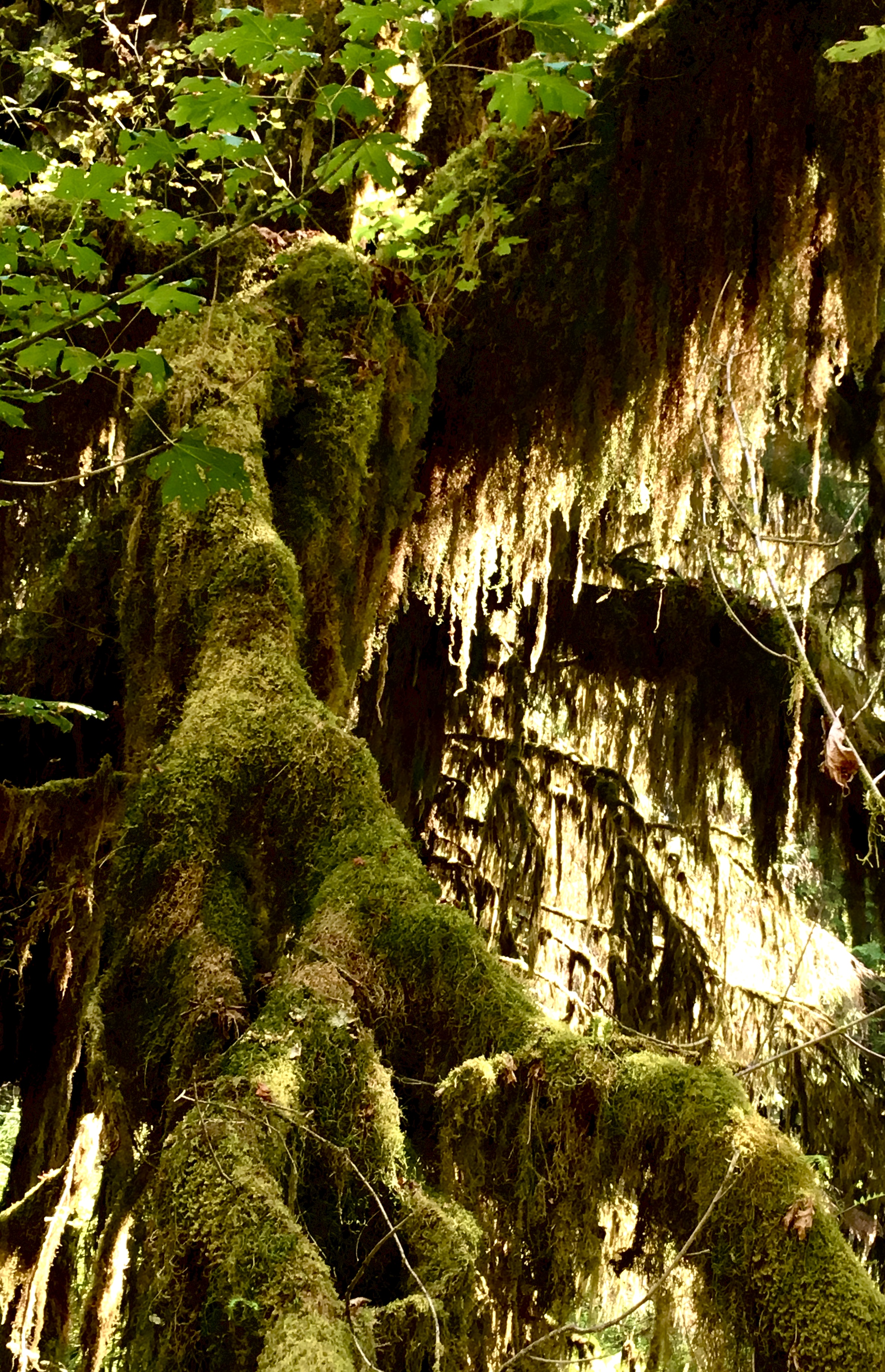
I’ve been to the temperate rainforest on the Olympic Peninsula, only a short ferry ride and two hour drive away, where 300 year old trees tethered to one another with connecting crepe of dangling moss, hiding the creatures within, taking all down with them if they someday fall to the wind, lying still, nursing the growth of the next generation’s seeds from long rotting trunks.
We can only pass through this place, having been banished from the Garden.
We are not to dwell or cut or shoot or burn or slash, at risk of being ensnared by reaching fingers of moss seeking yet another woody heart to soften
Whispering grassfeet steal through us fir-fingers touch one another where the paths meet thick dripping resin glues us together summer-greedy woodpeckers hammer at hardy seed-hiding hearts ~Inger Christensen trans. Susanna Nied
AI image created for this post
One-Time
Monthly
Yearly
Make a one-time or recurring donation to support daily Barnstorming posts
It can be a gift or a private kind of distress, depending on if you’ve found your purpose. My friend, a physician and farmer, blends her two passions into a life of caring.
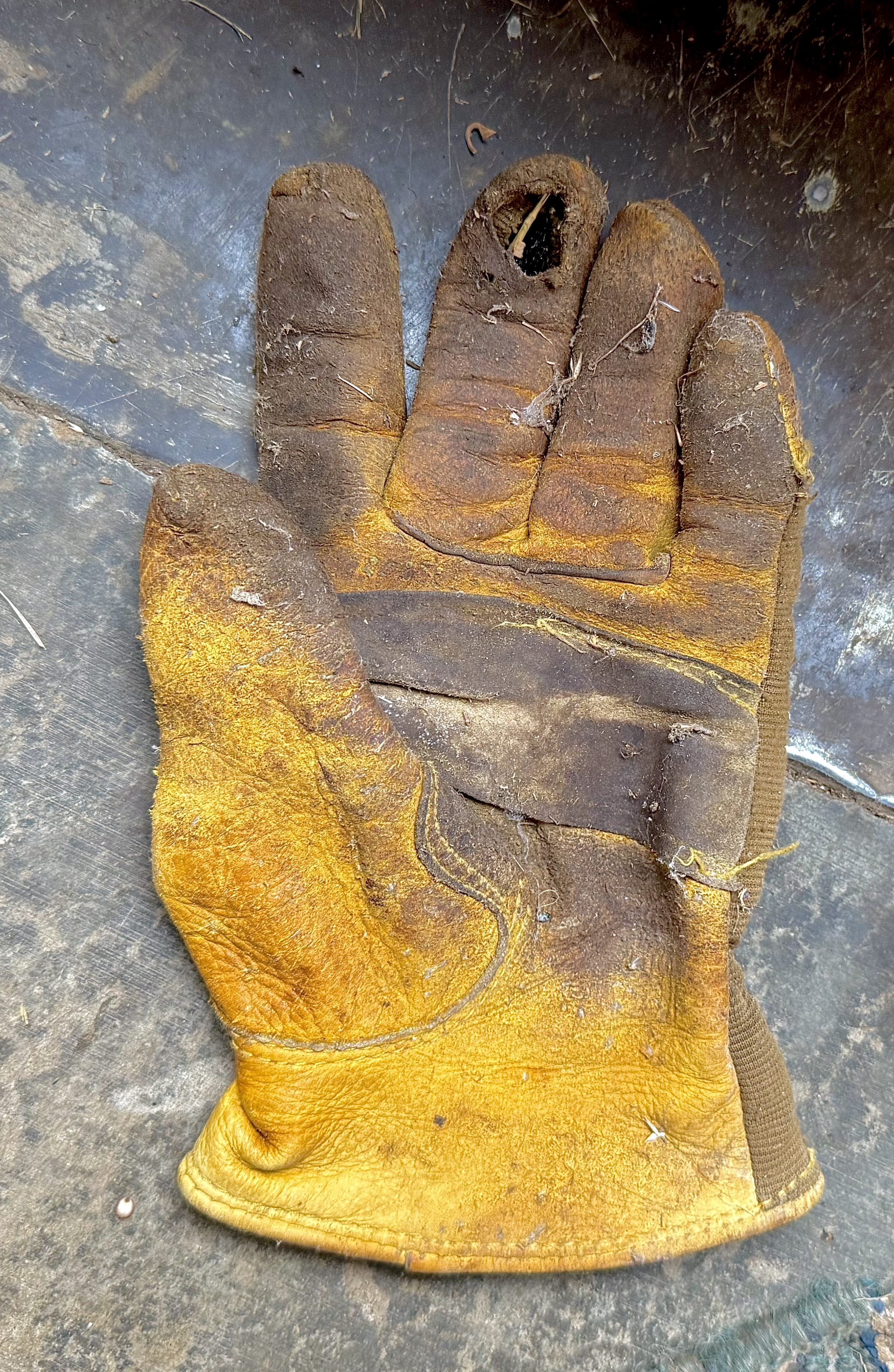
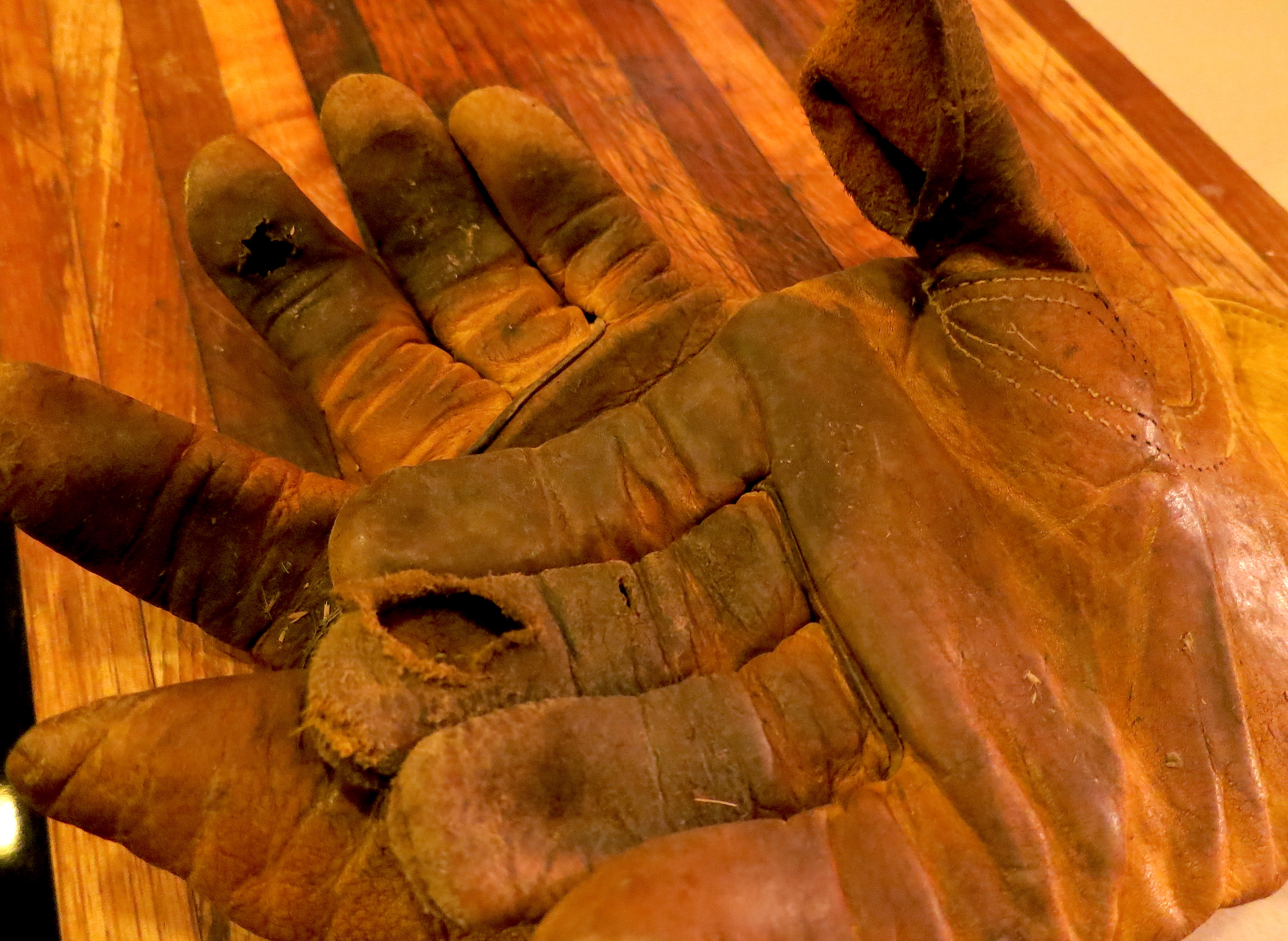
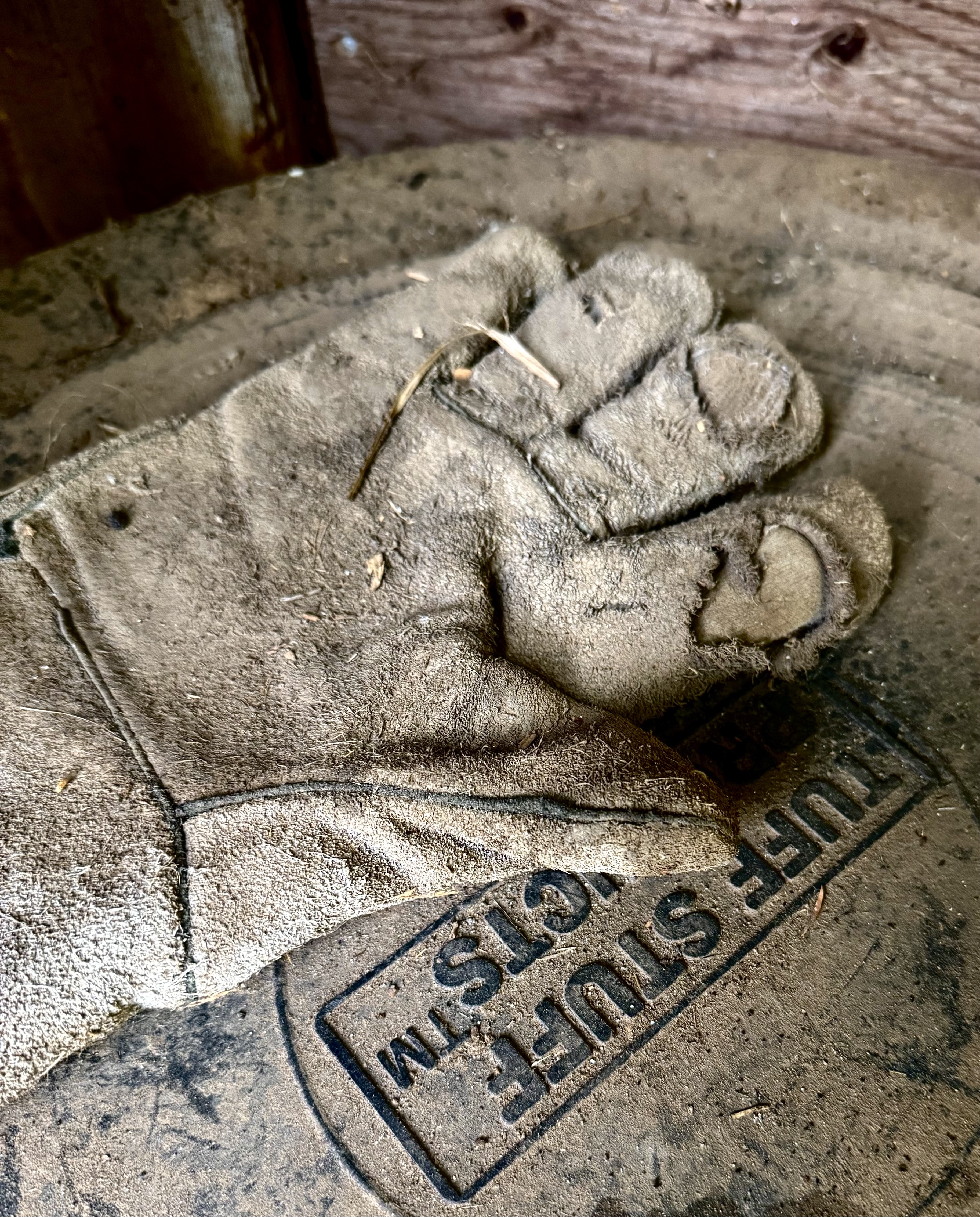
Leaving her surgical gloves in the treatment room, she dons leather work gloves when she returns to the farm. This evening the old work gloves are nestled together on a bench by the back door
as if one couldn’t function without the other. They hold the form of her hands. The gloves are dirty, the leather wrinkled, a hole worn through the tip of the index finger, right hand.
Over years of service, gloves have protected her hands as she treated deep wounds in the clinic and in the barn. This gift! Dare I say, her work fits her like a glove? ~Lois Edstrom “Gift of Work” from A Fragile Light
Nothing much to look at lying on the shelf, one on top of the other, an old man resting his hands on a cane. Dried-out yellow cowhide, lines cut deep into the palms from stones, weeds pulled. Fingers crumpled, swollen like grub worms shoveled up in planting. An extra pair of hands helping with lawn work, flower beds, shrubs, whatever else comes along. A grief pulled on to bury the old cat some kid in a speeding pickup knocked out of the street like he’d kick a can. Or kneeling last fall to unearth the blooming rose suddenly plucked by an ice storm, then shaking rich compost loose from its twisted fingers still clenched, holding on for dear life. ~Ron Stottlemyer “Work Gloves”
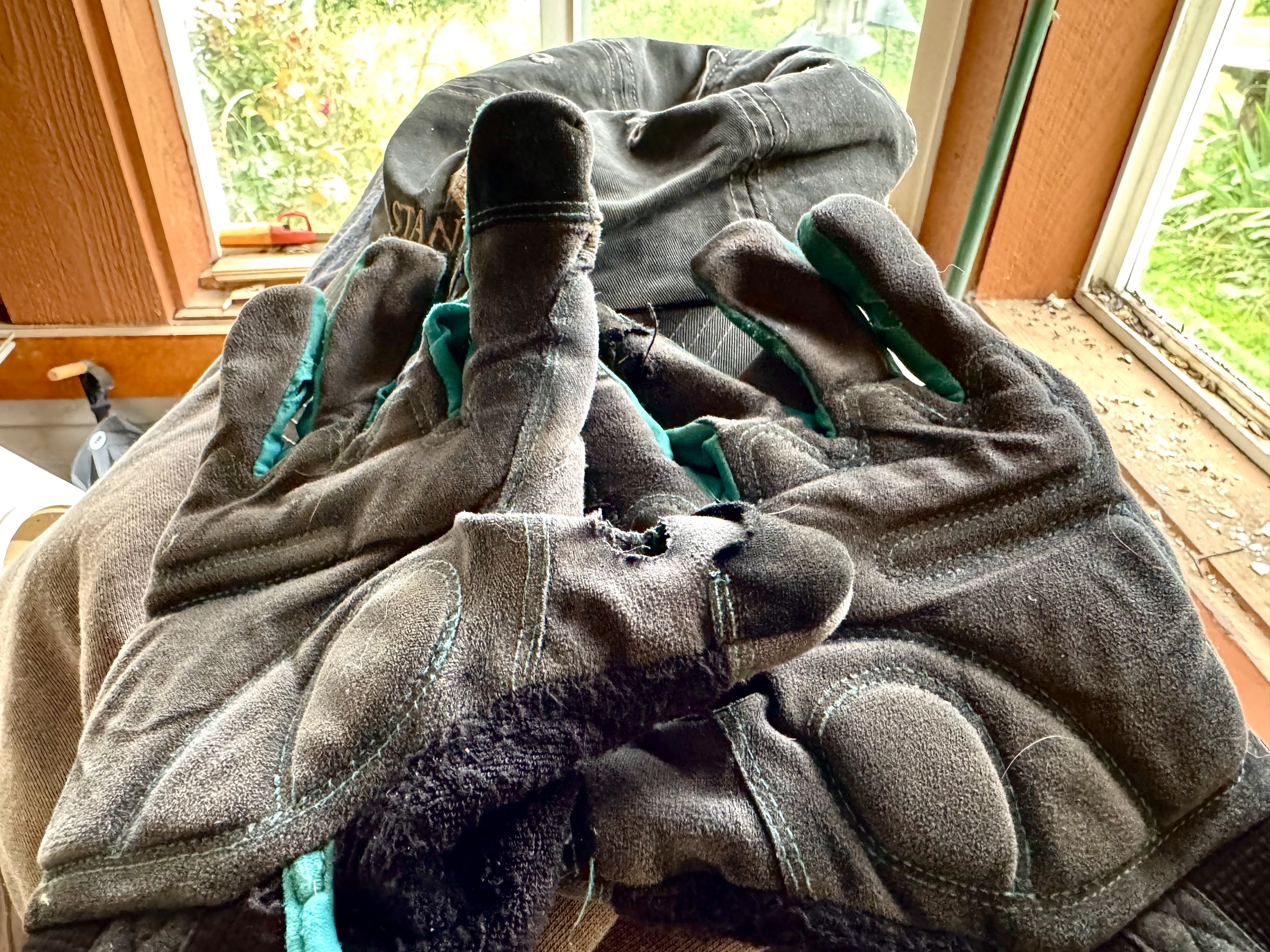
My farm work gloves tend to look ragged at the end of a year of service. I always depend on being gifted a new pair at Christmas to start afresh. It can take awhile to break them in to the point where they feel like a “second skin.”
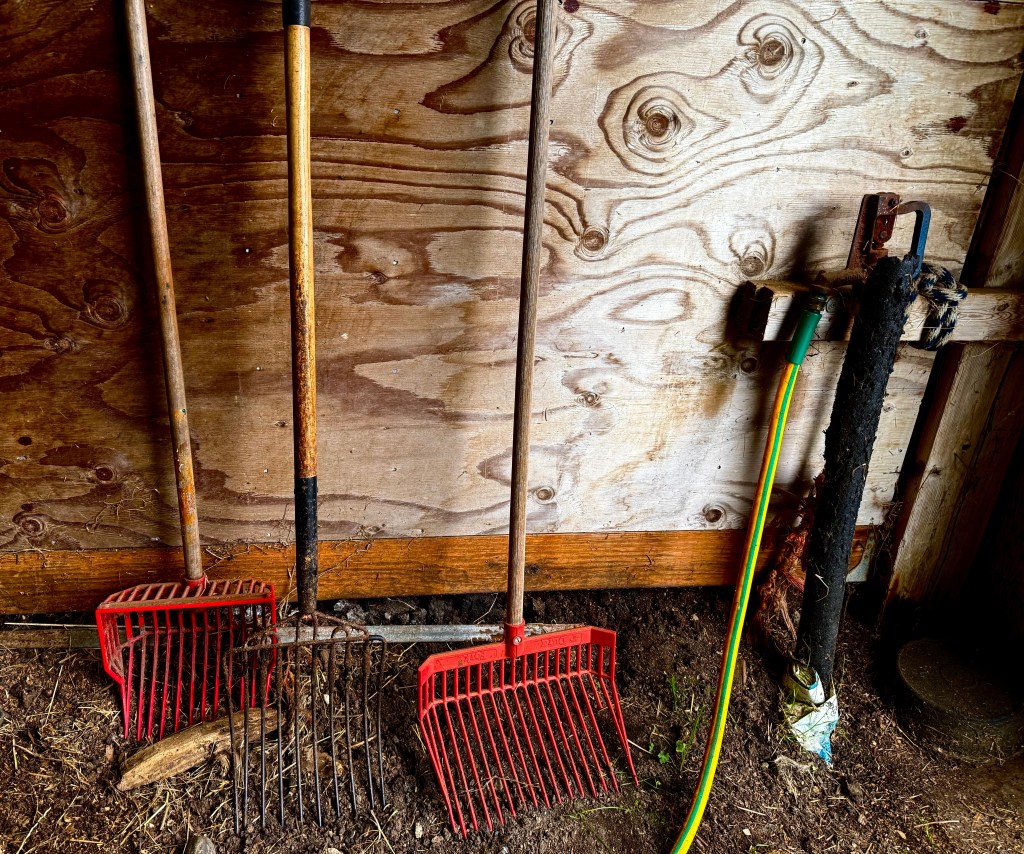
These gloves keep me from blistering while forking innumerable loads of smelly manure into wheelbarrows, but also help me unkink frozen hoses, tear away blackberry vines from fencing, pull thistle from the field and heavy hay bales from the haymow.
Over the years, I’ve gone through a few dozen work gloves which have protected my hands as I’ve cleaned and bandaged deep wounds on legs and hooves, pulled on foals during the hard contractions of difficult births, held the head of dying animals as they fall asleep one final time.
Without wearing my protective farm gloves over the years, my hands would be looking very much scarred up like my tired gloves do, full of rips and holes from the thorns and barbs of the world, sustaining scratches, callouses and blisters from the hard work of life.
But they don’t.
Thanks to these gloves, before I retired, I was presentable for my “day” work as a doctor where I would don a different set of gloves many times a day as I tended to my patients’ wounds and worry.
But my work gloves don’t tell my whole story of gratitude.
I’m thankful to a Creator God who doesn’t wear gloves when He goes to work in our world: -He gathers us up even when we are dirty, smelly, and unworthy. -He eases us into this life when we are vulnerable and weak, and carries us gently home as we leave this world, weak and vulnerable. -He holds us as we bleed from self and other-inflicted wounds. -He won’t let us go, even when we fight back, or try not to pay attention, or care who He is.
He hangs on to us for dear life.
And this God came to live beside us with hands just like ours~ tender, beautiful, easy-to-wound hands that bled because He didn’t need or want to wear gloves for what He came to do~
His hands bear evidence of His love…
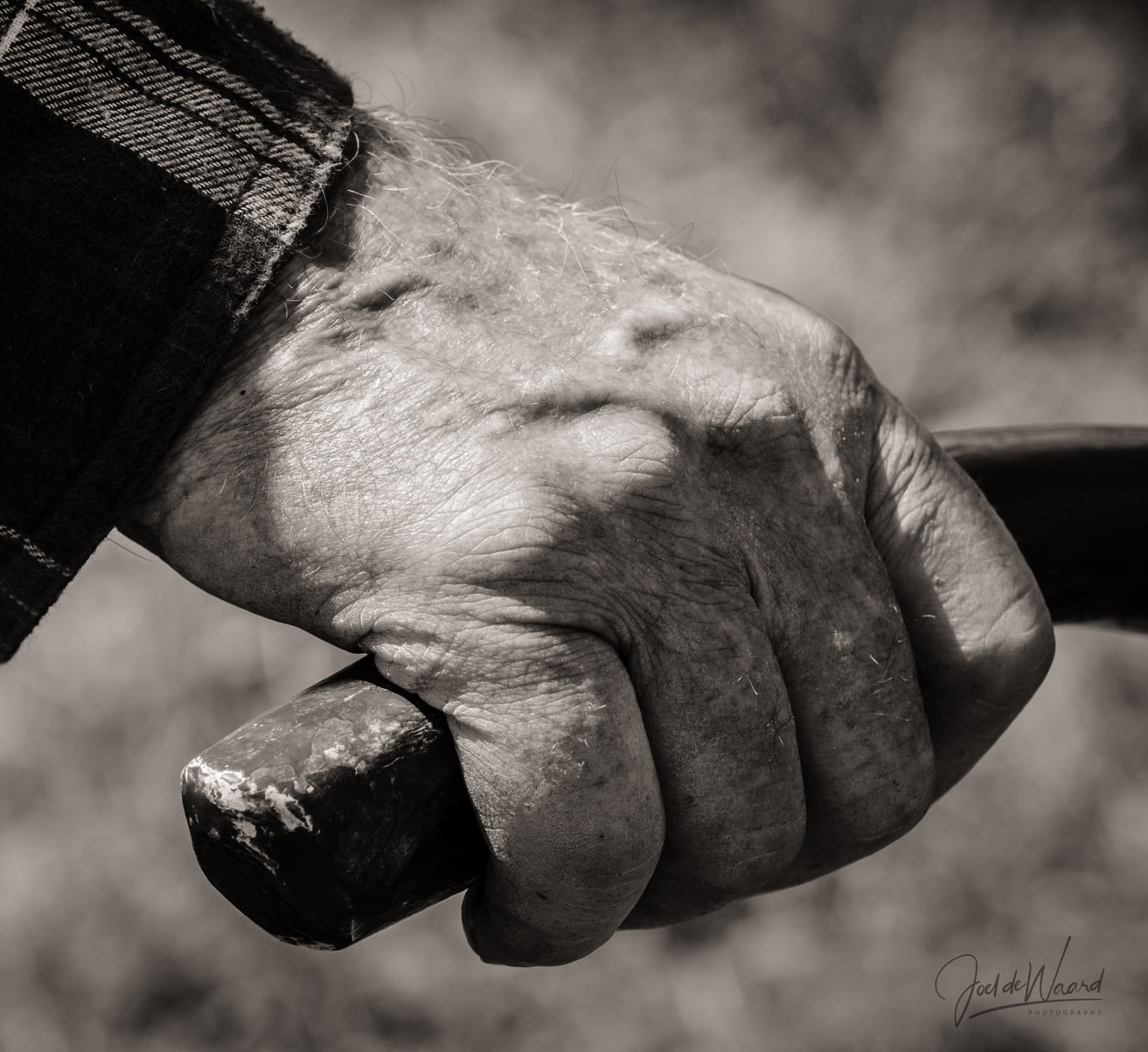
photo of a plowman teamster’s hand by Joel De WaardAI image created for this post
contains these lyrics by Kim Andre Arnesen: Moving like the rise and fall of wings Hands that shape our calling voice On the edge of answers You’ve heard our cry, you’ve known our cry…
One-Time
Monthly
Yearly
Make a one-time or recurring donation to support daily Barnstorming posts
Evening, and all the birds In a chorus of shimmering sound Are easing their hearts of joy For miles around.
The air is blue and sweet, The few first stars are white,– Oh let me like the birds Sing before night. ~Sara Teasdale “Dusk in June”
I am half agony, half hope… ~Jane Austen from Persuasion
Sure on this shining night Of star made shadows round, Kindness must watch for me This side the ground. The late year lies down the north. All is healed, all is health. High summer holds the earth. Hearts all whole. Sure on this shining night I weep for wonder wand’ring far alone Of shadows on the stars. ~James Agee “Sure on this Shining Night”
This time of uncertainty holds the earth captive; our hearts fearful of war in a shimmering summer dusk.
I weep for wonder in hope for a healing peace, at this time, at this place, singing under these stars.
May we rest assured, on another shining night, sometime, we know not when, we know not how, we will lay down arms and live without threat of war.
Amen and Amen.
One-Time
Monthly
Yearly
Make a one-time or recurring donation to support daily Barnstorming posts
…And when the sun rises we are afraid it might not remain when the sun sets we are afraid it might not rise in the morning when our stomachs are full we are afraid of indigestion when our stomachs are empty we are afraid we may never eat again when we are loved we are afraid love will vanish when we are alone we are afraid love will never return and when we speak we are afraid our words will not be heard nor welcomed but when we are silent we are still afraid
So it is better to speak remembering we were never meant to survive. ~Audre Lorde from “A Litany for Survival”
We are all here so briefly, just trying to survive.
Although designed to live forever, we are fallen, running the clock out as long as we can.
Just one day more, we say. Give us just one more.
From the first, there has been struggle – the pain of our birth, the cry of our laboring mother, then feeding and protection of our children, keeping them safe from the bombs of war and the ravages of disease, followed by weakening of our frail aging bodies.
If there is a reason for all this (and there is): life’s struggles redeem us.
Heaven knows, each life means something to God, each death echoes His sorrow.
We fear we fail to make a difference in such a short time. So we speak. Hear our voices. Just one day more, Lord. Please – one day more.
Tomorrow we’ll discover What our God in Heaven has in store One more dawn One more day One day more… ~from Les Miserable
AI image created for this post
One-Time
Monthly
Yearly
Make a one-time or recurring donation to support daily Barnstorming posts
One grief, all evening—: I’ve stumbled upon another animal merely being itself and still cuffing me to grace.
This time a bumblebee, black and staggered above some wet sidewalk litter. When I stop at what I think is dying
to deny loneliness one more triumph, I see instead a thing drunk with discovery—the bee entangled
with blossom after pale, rain-dropped blossom gathered beneath a dogwood. And suddenly I receive the cold curves and severe angles
from this morning’s difficult dreams about faith:—certain as light, arriving; certain as light, dimming to another shadowed wait.
How many strokes of undivided wonder will have me cross the next border, my hands emptied of questions? ~Geffrey Davis “West Virginia Nocturne”from Night Angler
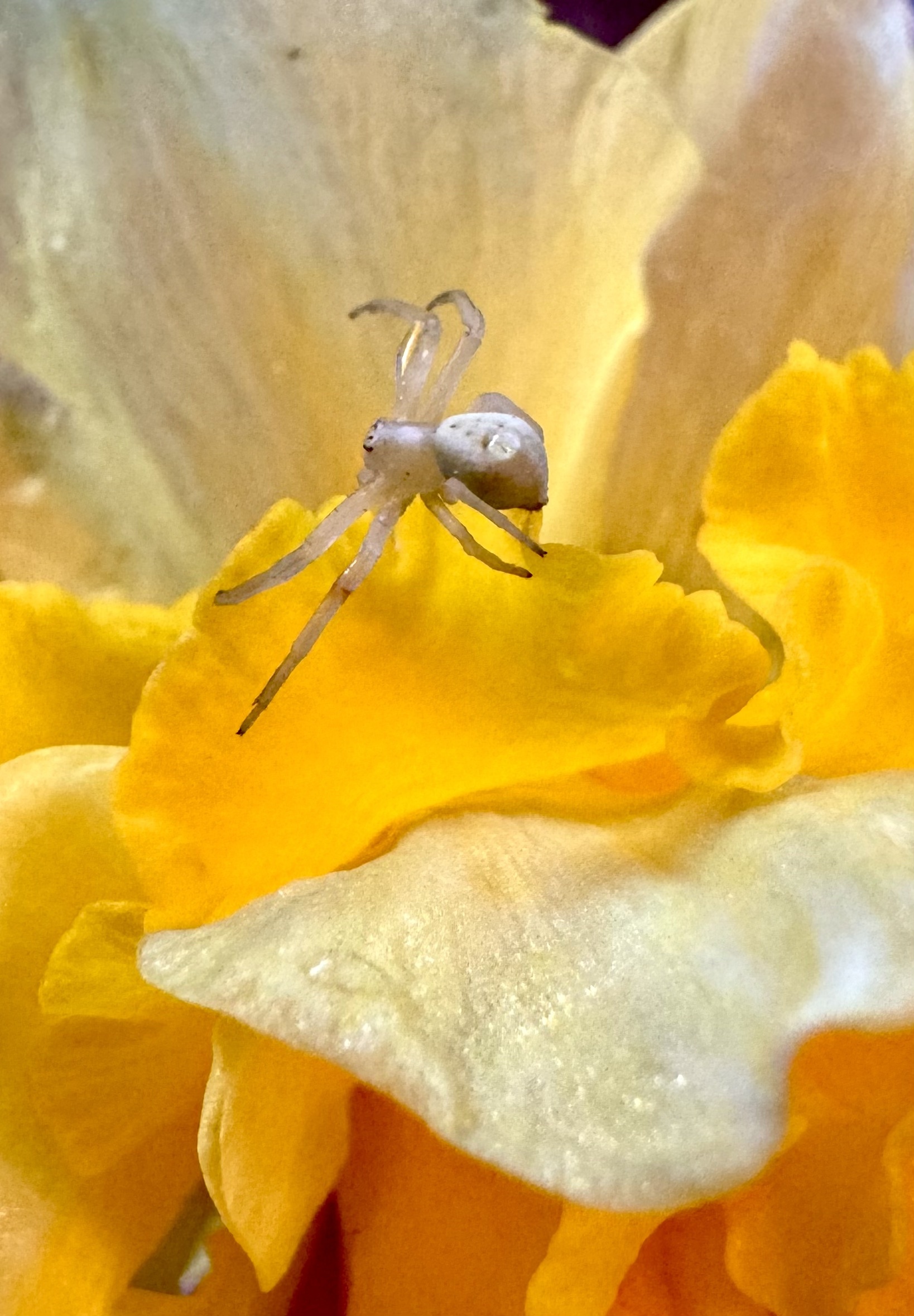
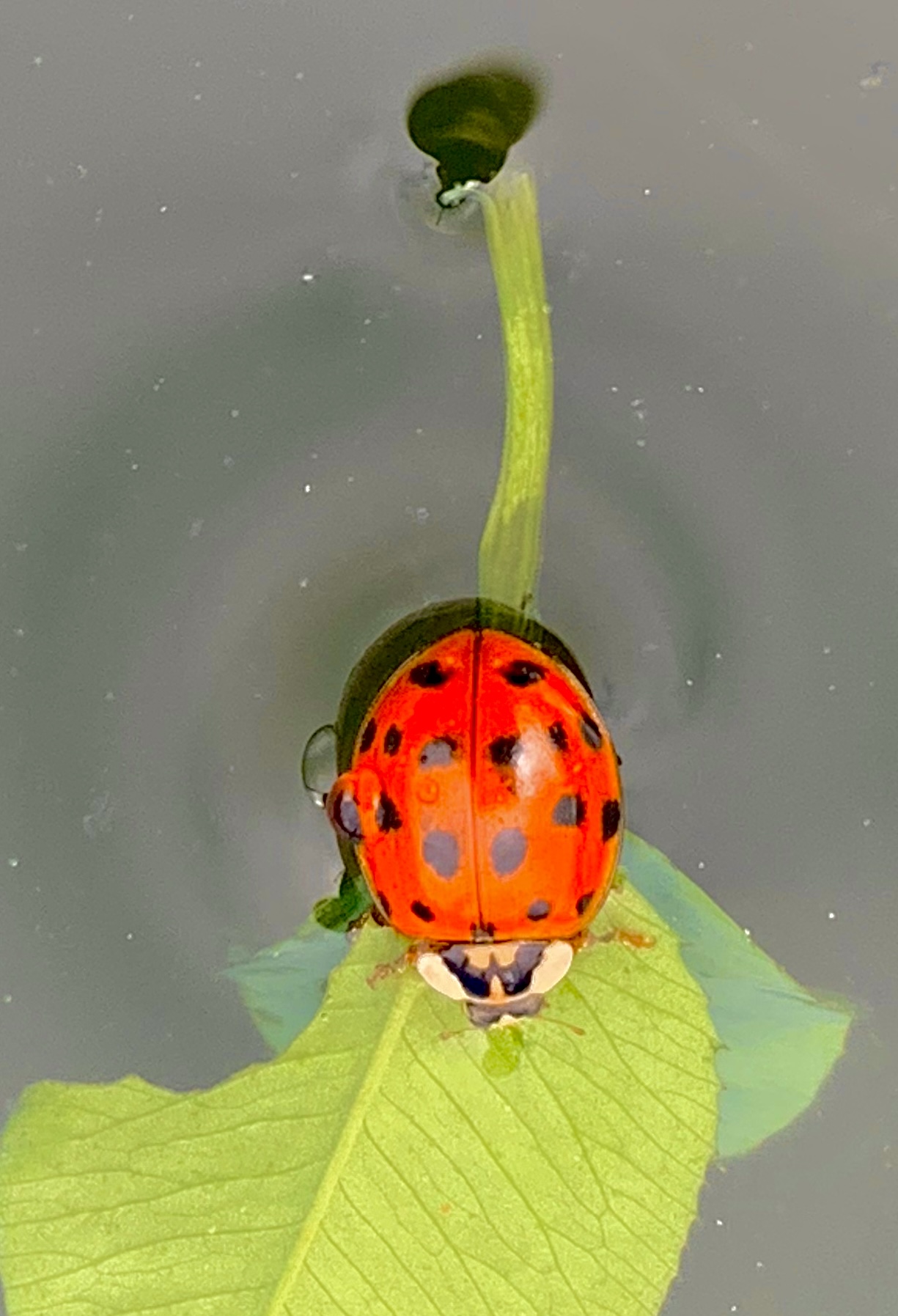
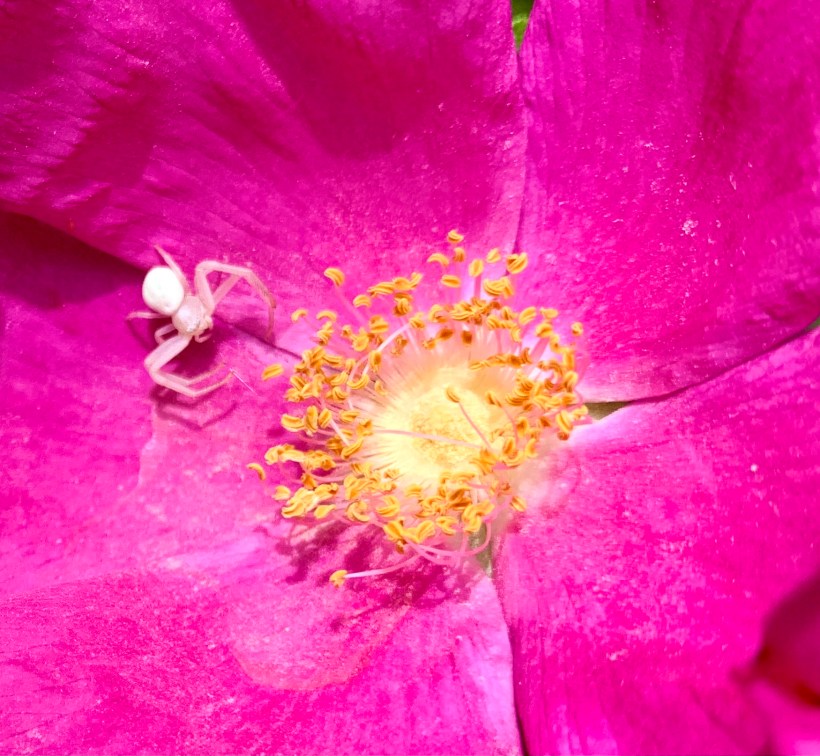
So much happens in the lives of creatures in the world above, around, and beneath our feet. The dewy immobilized bumblebee, the ladybug floating, rescued by a cloverleaf, the translucent spider hiding in a blossom fold.
Most of the time we are oblivious, absorbed in our own joys, fears, and sorrows, struggling to understand our own place in the world, unsure if we people are the only image of our Creator.
But life’s drama doesn’t just belong to us.
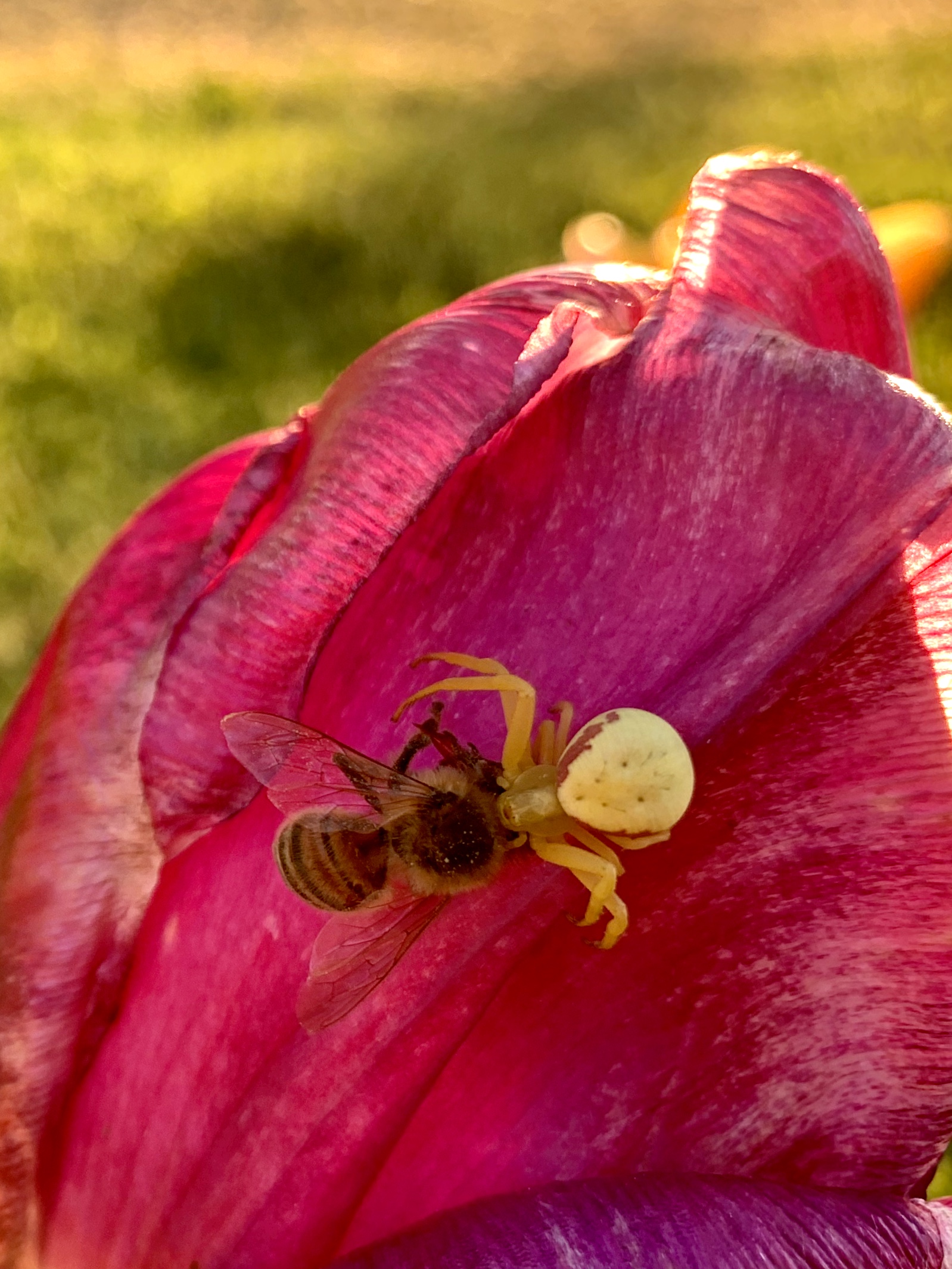
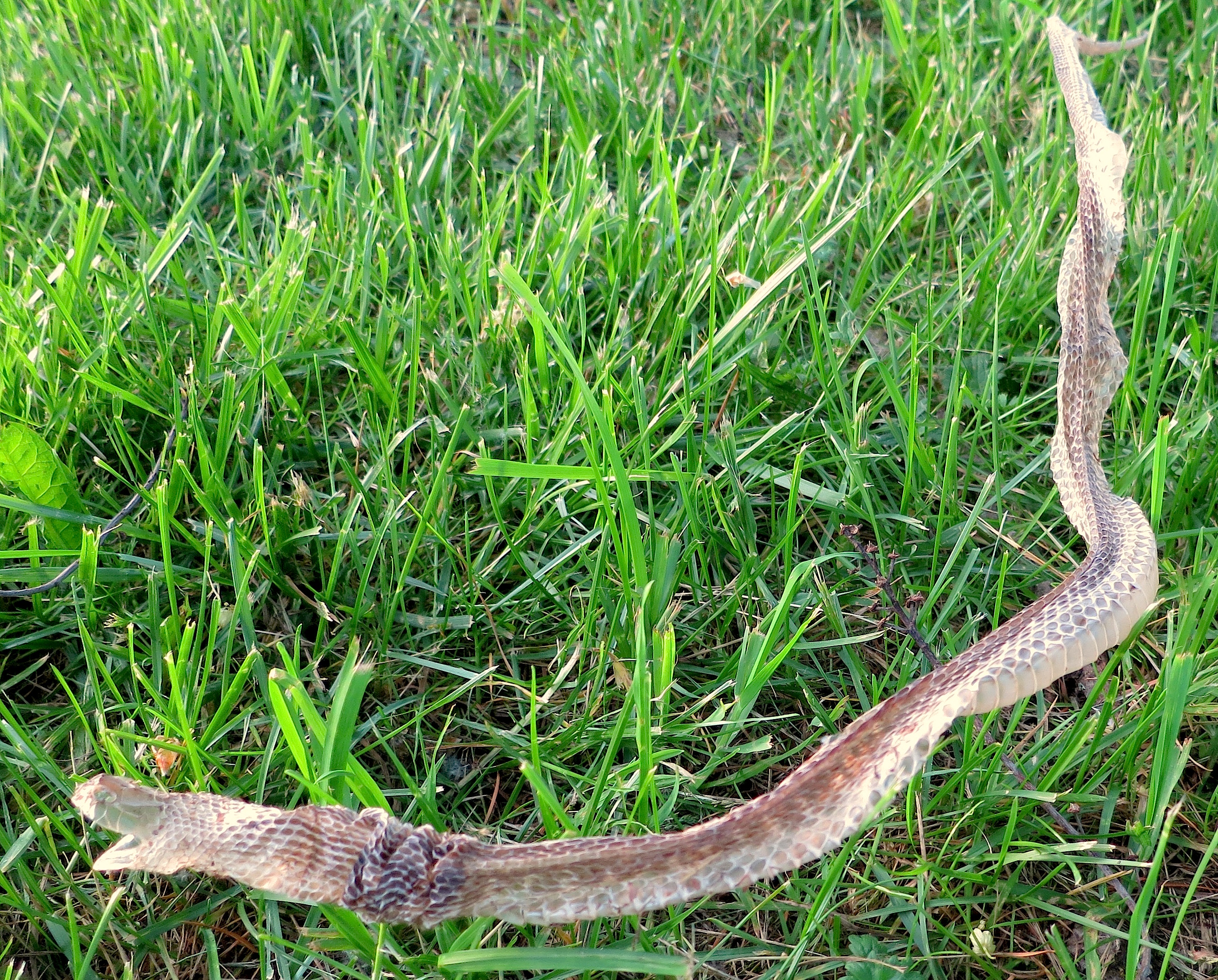
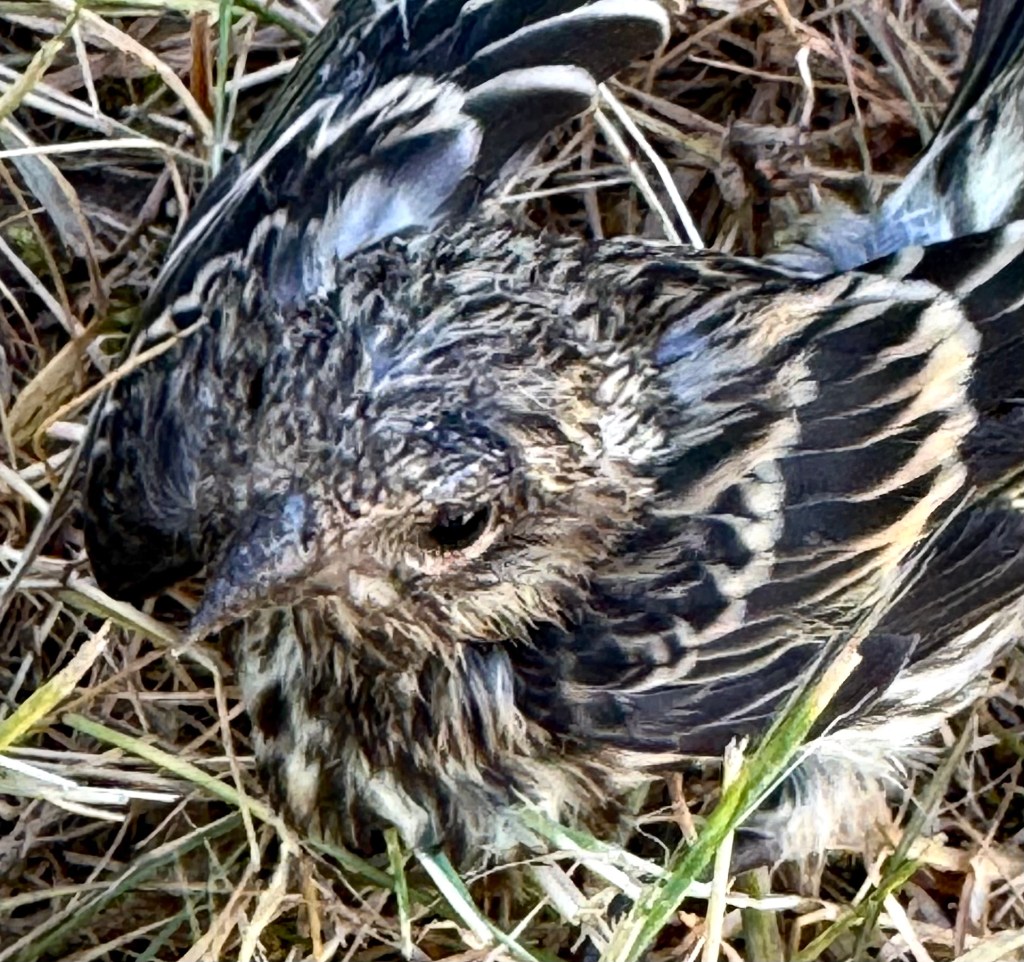
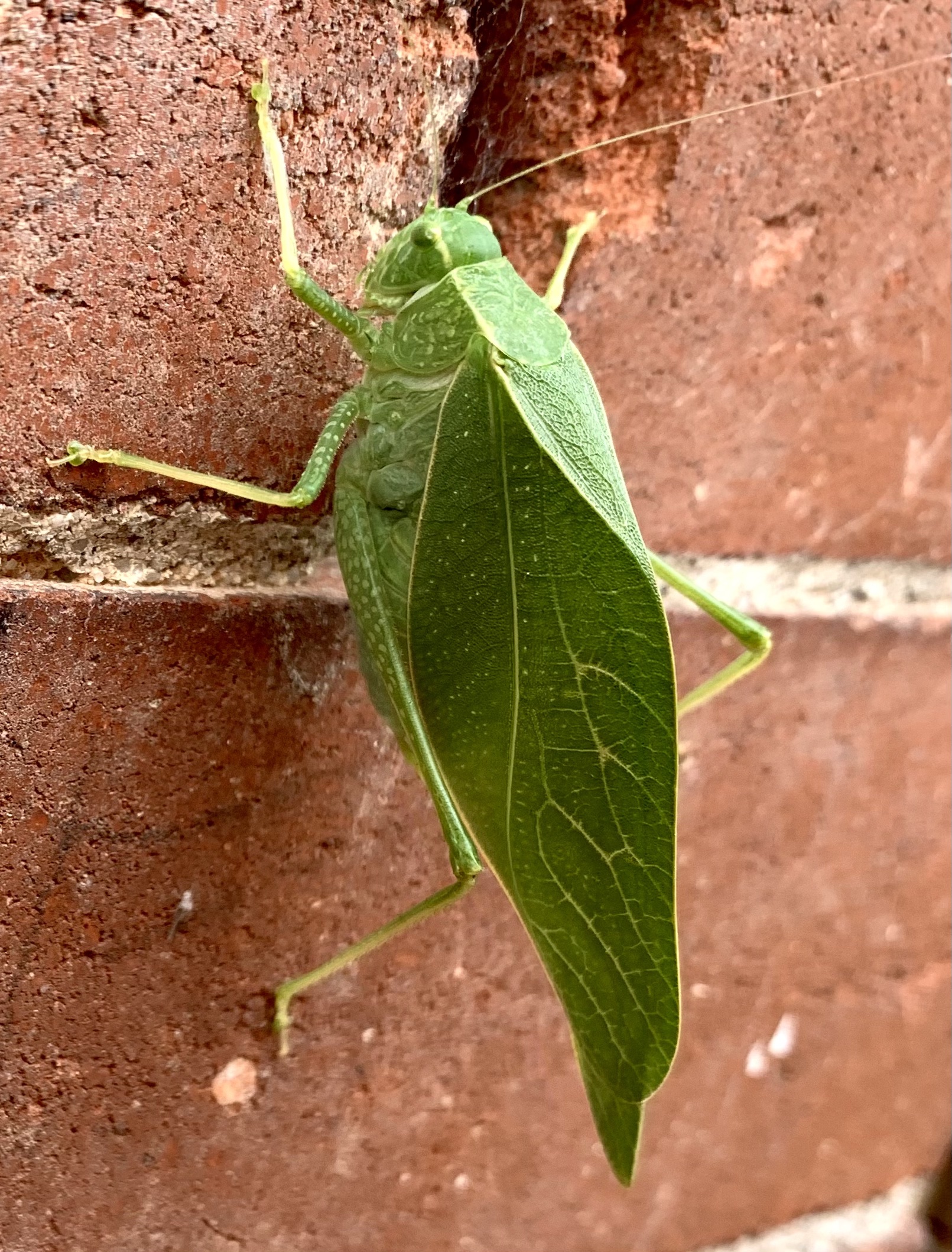
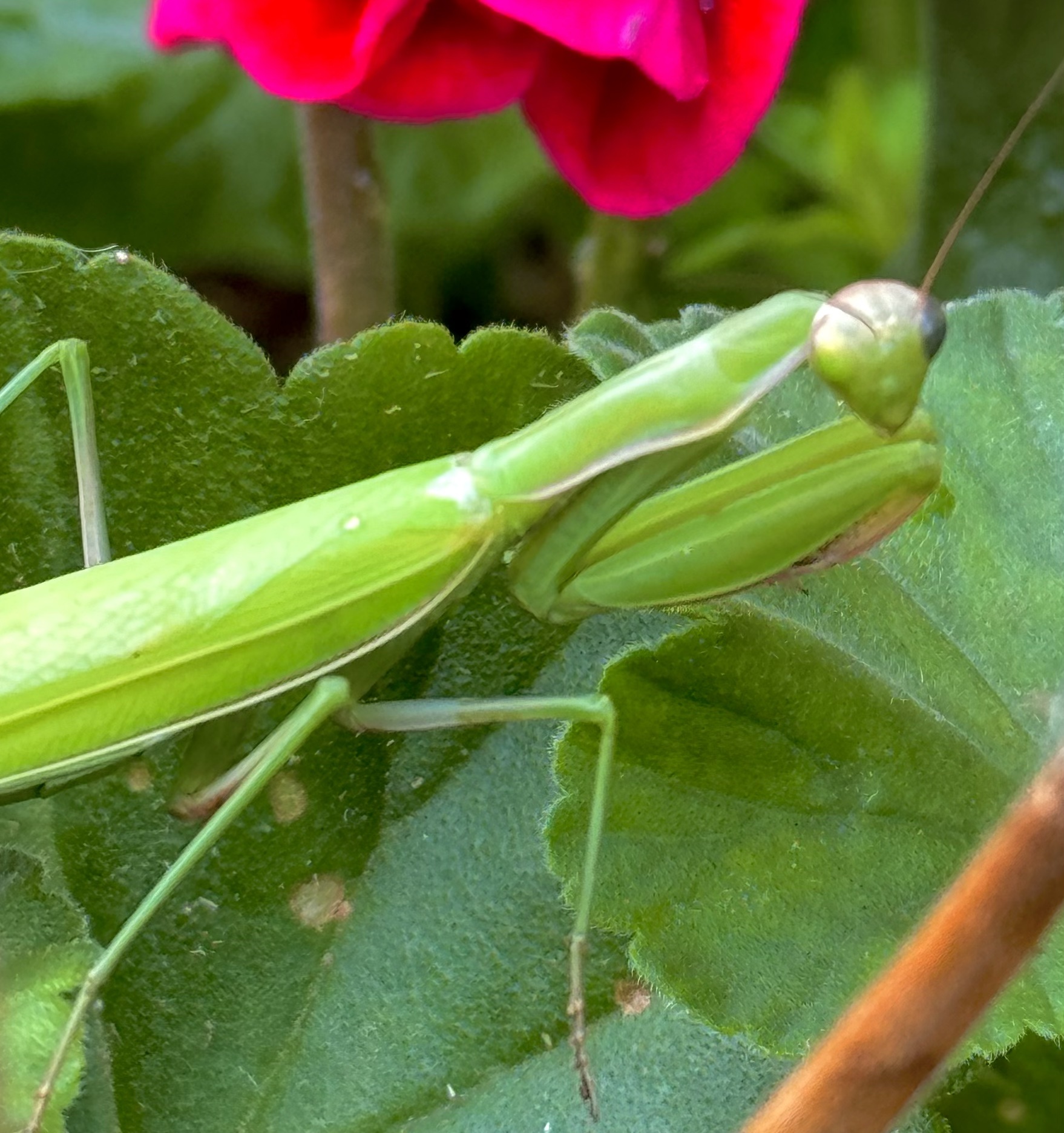
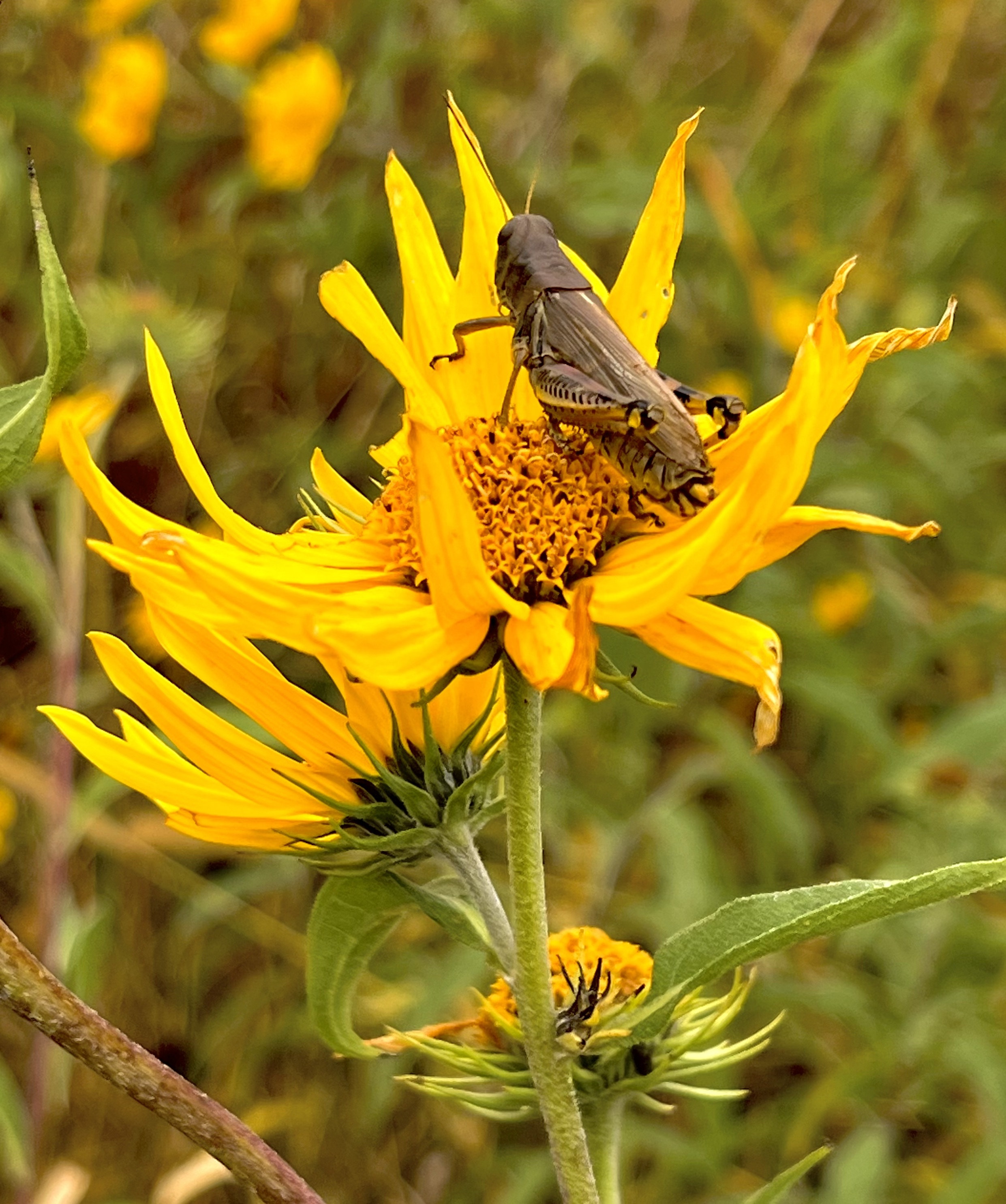
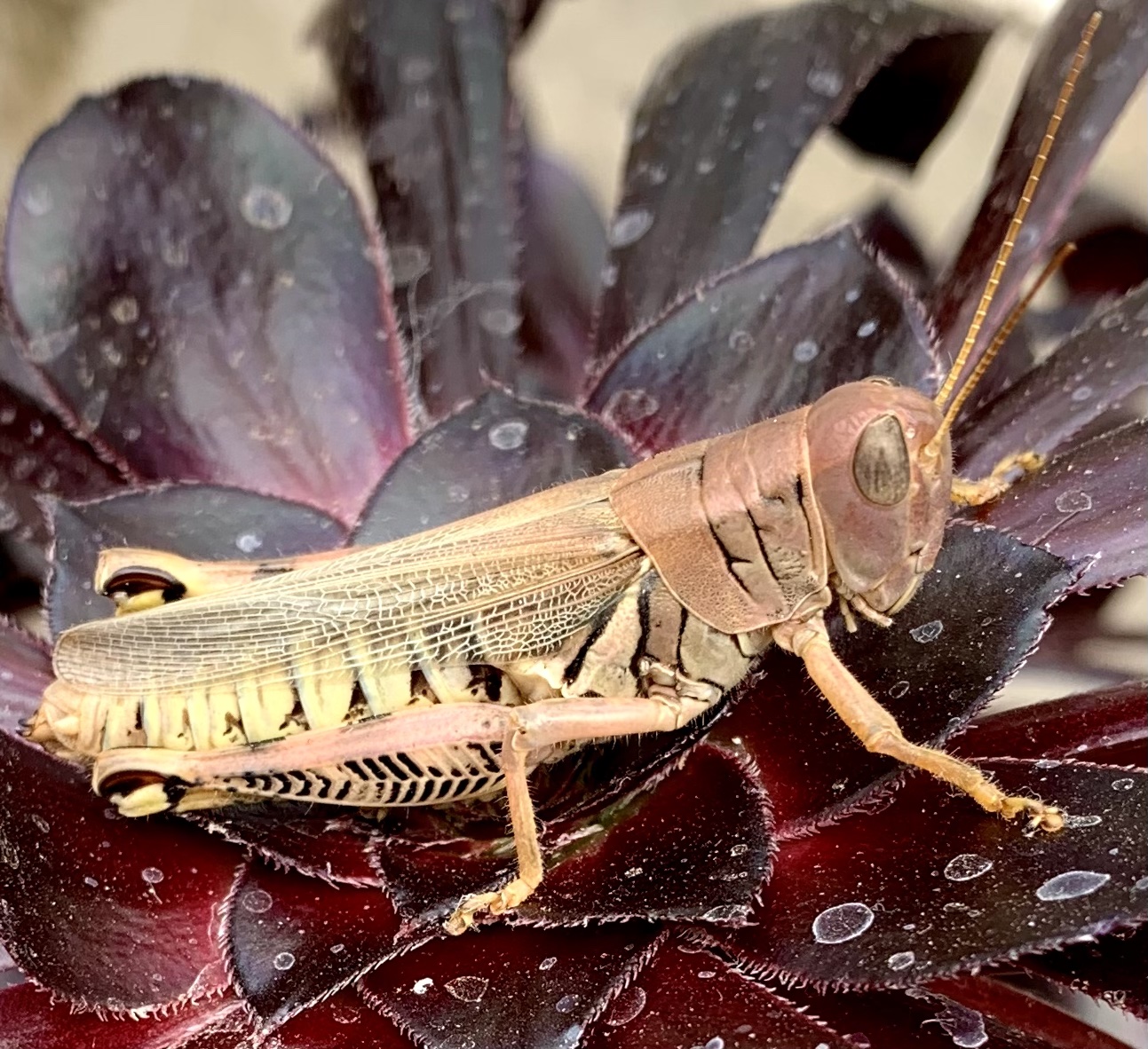
It is the baby bird fallen from the nest too young, rescued from mouth of the barn cat. It is the farmyard snake abandoning its ghost-like skin. It is the spider residing in the tulip, ready to grab the honey bee. It is the praying mantis poised to swallow the fly. It is the katydid, the cricket, the grasshopper trying to blend in.
When I struggle with my faith in this often cruel world, I realize not every question, not every doubt, needs answers. It is enough, as a trusting witness of all that is wondrous around me, to pray someday it will no longer be mysterious.
One-Time
Monthly
Yearly
Make a one-time or recurring donation to support daily Barnstorming posts
I am not resigned to the shutting away of loving hearts in the hard ground. So it is, and so it will be, for so it has been, time out of mind: Into the darkness they go, the wise and the lovely. Crowned With lilies and with laurel they go; but I am not resigned.
Lovers and thinkers, into the earth with you. Be one with the dull, the indiscriminate dust. A fragment of what you felt, of what you knew, A formula, a phrase remains,—but the best is lost.
The answers quick and keen, the honest look, the laughter, the love,— They are gone. They are gone to feed the roses. Elegant and curled Is the blossom. Fragrant is the blossom. I know. But I do not approve. More precious was the light in your eyes than all the roses in the world.
Down, down, down into the darkness of the grave Gently they go, the beautiful, the tender, the kind; Quietly they go, the intelligent, the witty, the brave. I know. But I do not approve. And I am not resigned. ~Edna St. Vincent Millay “Dirge Without Music”
Each Memorial Day weekend without fail, we gather with family, have lunch, reminisce, and trek to a cemetery high above Puget Sound to catch up with our relatives who lie there, still.
Some for over 110 years, some for barely more than a decade, some we knew and loved and miss every day, others not so much as they are unknown to us except on genealogy charts, names and dates and stones and stories:
the red-haired great-grandmother who died too young, the aunt who was eight when lymphoma took her, the grandmother who dreamed of world travel too late, the great-grandfather Yukon river boat captain, the grandfather logger and stump farmer, the great aunt unmarried school teacher who hid an oil well, the two in-laws who forever lie next to each other but could not co-exist in the same room while they lived and breathed.
Yet we know each of these (as we know ourselves and others)
could be tender and kind, though flawed and broken, had been beautiful and strong, though wrinkled and frail, was hopeful and faithful, though too soon in the ground.
We know this about them as we know it about ourselves: someday we too will feed roses, the light in our eyes transformed into elegant swirls emitting the fragrant scent of heaven.
No one asks if we approve. Nor am I resigned to this though I know: So it is, so it has been, so it will be for me someday.
AI image created for this post
One-Time
Monthly
Yearly
Make a one-time or recurring donation to support daily Barnstorming posts
People have said, “Don’t cry” to other people for years and years, and all it has ever meant is, “I’m too uncomfortable when you show your feelings. Don’t cry.” I’d rather have them say, “Go ahead and cry. I’m here to be with you.”
I cry easily, always have. Certain songs and hymns will trigger tears, and of course, any rituals surrounding baptisms, funerals, weddings, and graduations.
Tears don’t bother me, whether they are my own or someone else’s. My medical office and exam rooms were always well- stocked with boxes of tissues as a safe place to cry it out.
One of my routine mental health history questions was “what will bring tears to your eyes – dicing onions doesn’t count?”
Some patients would look at me blankly, not sure they ever remember crying, and others will weep at the mere suggestion.
No matter what the reason for someone’s tears, it is a powerful outward expression of human feeling, like a laugh or a grimace of pain. I watch for those cues and sometimes feel their emotion as surely as if it were my own.
Even tears can bring peace – like a river.
I am with you. And always intend to be.
One-Time
Monthly
Yearly
Make a one-time donation to support daily Barnstorming posts
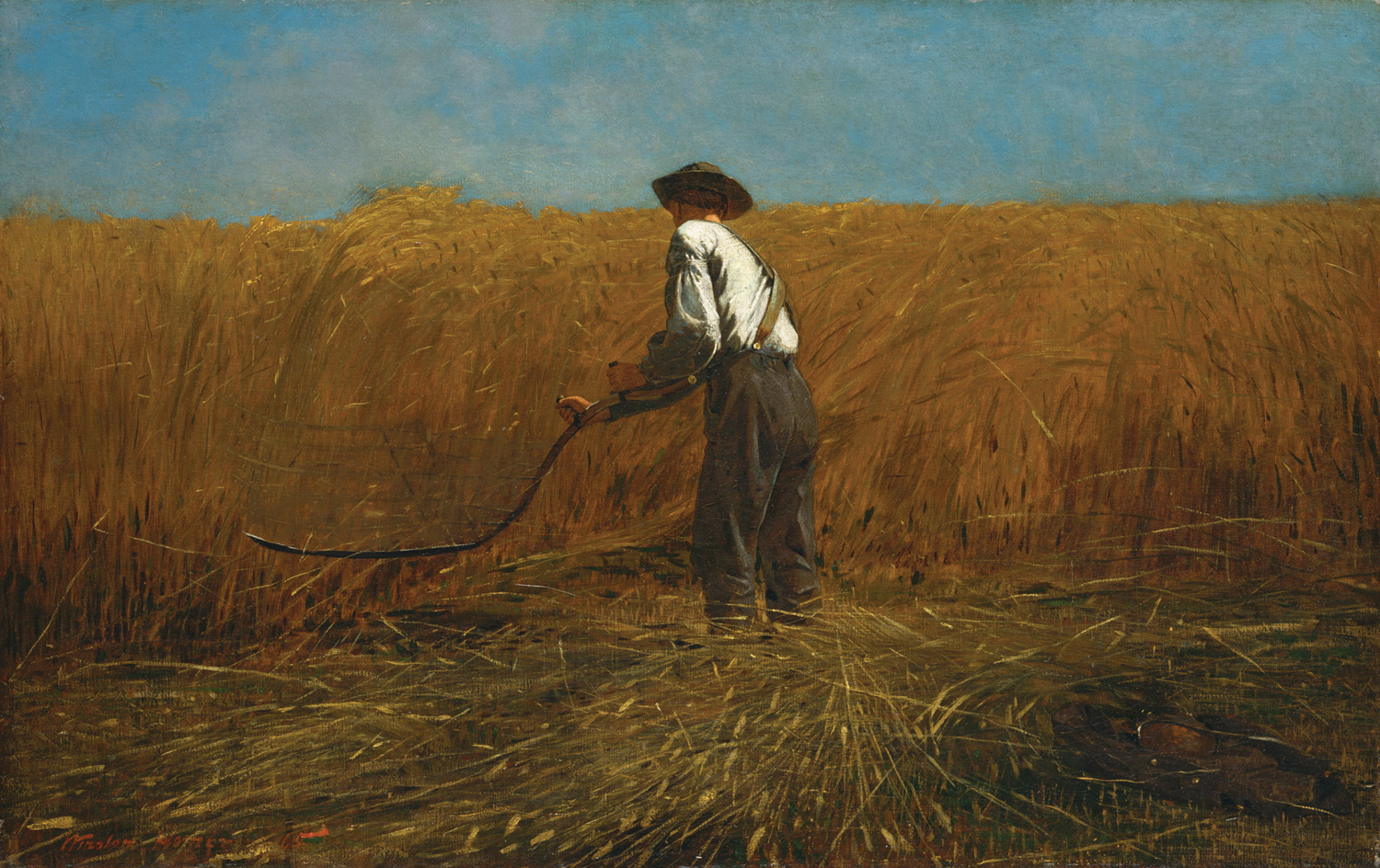
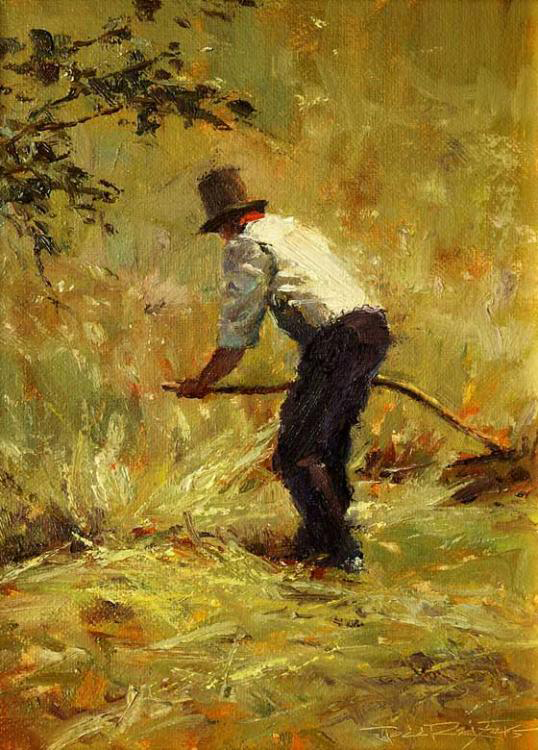
Winslow Homer’s The Veteran in a New FieldMan Scything Hay by Todd Reifers
There was never a sound beside the wood but one, And that was my long scythe whispering to the ground. What was it it whispered? I knew not well myself; Perhaps it was something about the heat of the sun, Something, perhaps, about the lack of sound— And that was why it whispered and did not speak. To the earnest love that laid the swale in rows, The fact is the sweetest dream that labor knows. My long scythe whispered and left the hay to make. ~Robert Frost in “Mowing”
Mowers, weary and brown, and blithe, What is the word methinks ye know, Endless over-word that the Scythe Sings to the blades of the grass below? Scythes that swing in the grass and clover, Something still, they say as they pass; What is the word that, over and over, Sings the Scythe to the flowers and grass?
Hush, ah hush, the Scythes are saying, Hush, and heed not, and fall asleep; Hush, they say to the grasses swaying, Hush, they sing to the clover deep! Hush – ’tis the lullaby Time is singing – Hush, and heed not, for all things pass, Hush, ah hush! and the Scythes are swinging Over the clover and over the grass! ~Andrew Lang (1844-1912) “The ScytheSong”
It is blue May. There is work to be done. The spring’s eye blind with algae, the stopped water silent. The garden fills with nettle and briar. Dylan drags branches away. I wade forward with my scythe.
There is stickiness on the blade. Yolk on my hands. Albumen and blood. Fragments of shell are baby-bones, the scythe a scalpel, bloodied and guilty with crushed feathers, mosses, the cut cords of the grass. We shout at each other each hurting with a separate pain.
From the crown of the hawthorn tree to the ground the willow warbler drops. All day in silence she repeats her question. I too return to the place holding the pieces, at first still hot from the knife, recall how warm birth fluids are. ~Gillian Clarke“Scything” from Letter from a Far Country (1982)
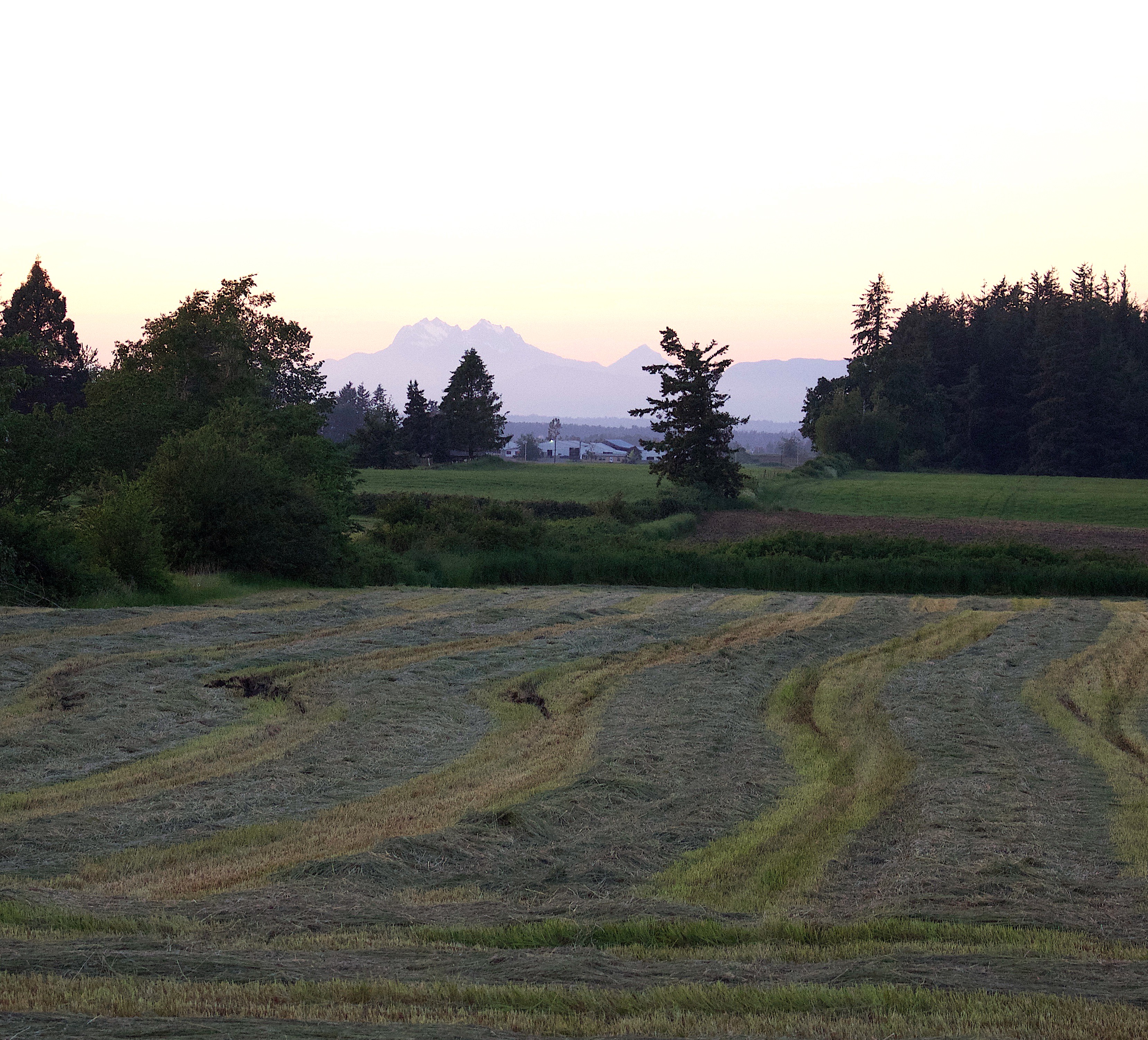
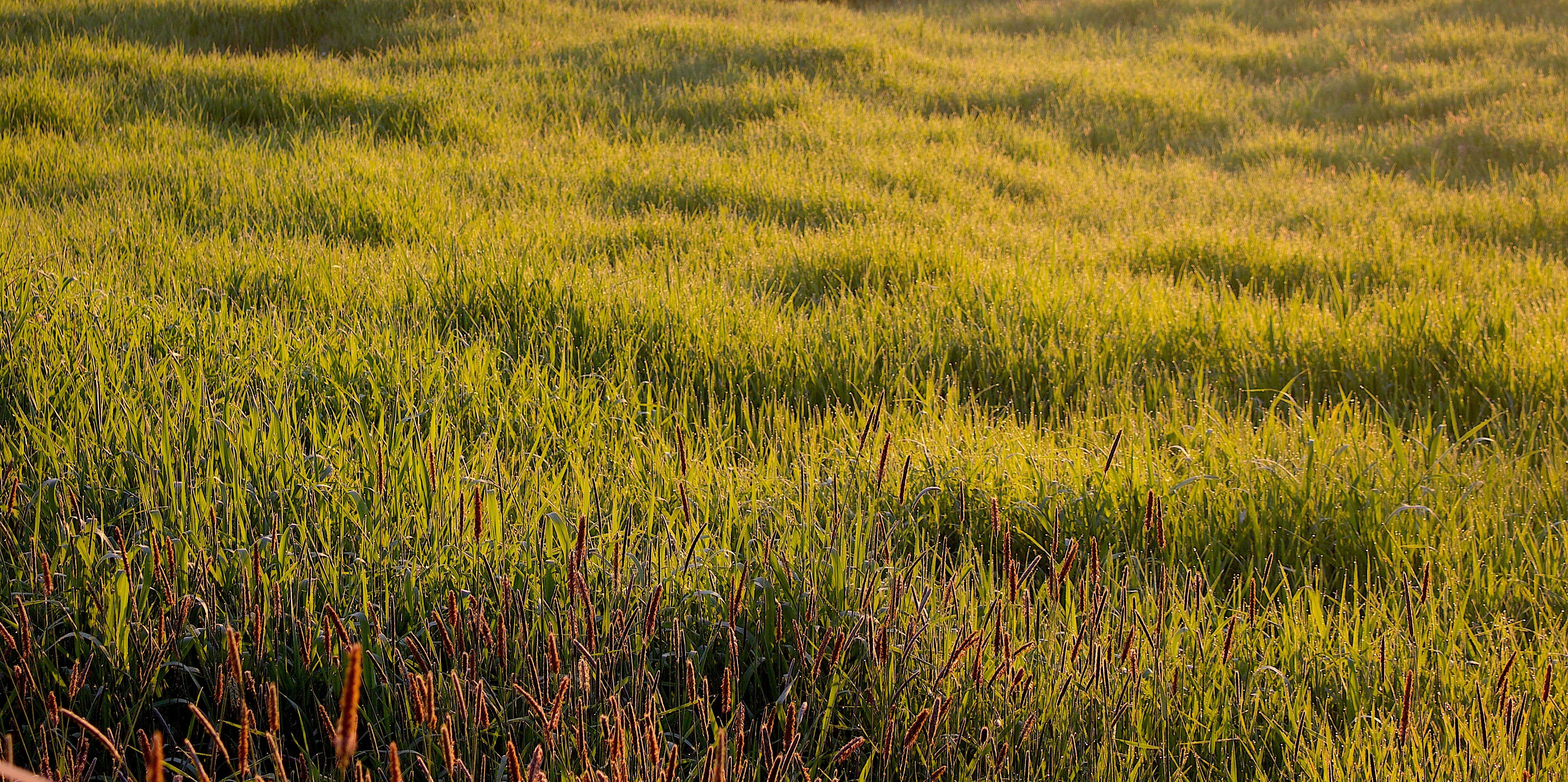
The grass around our orchard and yet-to-be-planted garden is now thigh-high. It practically squeaks while it grows. Anything that used to be in plain sight on the ground is rapidly being swallowed up in a sea of green: a ball, a pet dish, a garden gnome, a hose, a tractor implement, a bucket. In an effort to stem this tidal flood of grass, I grab the scythe out of the garden shed and plan my attack.
When the pastures are too wet yet for heavy hooves, I have hungry horses to provide for and there is more than plenty fodder to cut down for them.
I’m not a weed whacker kind of gal. First there is the necessary fuel, the noise necessitating ear plugs, the risk of flying particles requiring goggles–it all seems too much like an act of war to be remotely enjoyable. Instead, I have tried to take scything lessons from my husband.
Emphasis on “tried.”
I grew up watching my father scythe our hay in our field because he couldn’t afford a mower for his tractor. He enjoyed physical labor in the fields and woods–his other favorite hand tool was a brush cutter that he’d take to blackberry bushes. He would head out to the field with the scythe over this shoulder, grim reaper style. Once he was standing on the edge of the grass needing to be mowed, he would then lower the scythe, curved blade to the ground, turn slightly, positioning his hands on the two handles just so, raise the scythe up past his shoulders, and then in a full body twist almost like a golf swing, he’d bring the blade down. It would follow a smooth arc through the base of the standing grass, laying clumps flat in a tidy pile alongside the 2 inch stubble left behind. It was a swift, silky muscle movement — a thing of beauty.
Once, when I was three years old, I quietly approached my dad in the field while he was busily scything grass for our cows, but I didn’t announce my presence. The handle of his scythe connected with me as he swung it, laying me flat with a bleeding eyebrow. I still bear the scar, somewhat proudly, as he abruptly stopped his fieldwork to lift me up as I bawled and bled on his sweaty shirt. He must have felt so badly to have injured his little girl and drove my mom and I to the local doctor who patched my brow with sticky tape rather than stitches.
So I identify a bit with the grass laid low by the scythe. I forgave my father, of course, and learned never again to surprise him when he was working in the field.
Instead of copying my father’s graceful mowing technique, I tended to chop and mangle rather than effect an efficient slicing blow to the stems. I unintentionally trampled the grass I meant to cut. I got blisters from holding the handles too tightly. It felt hopeless that I’d ever perfect that whispery rise and fall of the scythe, with the rhythmic shush sound of the slice that is almost hypnotic.
Not only did I become an ineffective scything human, I also learned what it is like to be the grass laid flat, on the receiving end of a glancing blow. Over a long career, I bore plenty of footprints from the trampling. It can take awhile to stand back up after being cut down.
Sometimes it makes more sense to simply start over as the oozing stubble bleeds green, with deep roots that no one can reach. As I have grown back over the years, singing rather than squeaking or bawling, I realize, I forgave the scythe every time it came down on my head.
photo by Nate Gibson
One-Time
Monthly
Yearly
Make a one-time or recurring donation to support daily Barnstorming posts
Here at the centre everything is still Before the stir and movement of our grief Which bears it’s pain with rhythm, ritual, Beautiful useless gestures of relief. So they anoint the skin that cannot feel Soothing his ruined flesh with tender care, Kissing the wounds they know they cannot heal, With incense scenting only empty air. He blesses every love that weeps and grieves And makes our grief the pangs of a new birth. The love that’s poured in silence at old graves Renewing flowers, tending the bare earth, Is never lost. In him all love is found And sown with him, a seed in the rich ground. ~Malcolm Guite “Station XIV of the Cross”
The Holy Saturday of our life must be the preparation for Easter, the persistent hope for the final glory of God. The virtue of our daily life is the hope which does what is possible and expects God to do the impossible. To express it somewhat paradoxically, but nevertheless seriously: the worst has actually already happened; we exist, and even death cannot deprive us of this. Now is the Holy Saturday of our ordinary life, but there will also be Easter, our true and eternal life. ~Karl Rahner “Holy Saturday” in The Great Church Year
I said to my mind, be still, and wait without hope For hope would be hope for the wrong thing; wait without love For love would be love of the wrong thing; yet there is faith But the faith and the hope and the love are all in the waiting. Wait without thought, for you are not ready for thought: So the darkness shall be light, and the stillness the dancing. ~T. S. Eliot, from “East Coker” The Four Quartets
The happy ending has never been easy to believe in. After the Crucifixion the defeated little band of disciples had no hope, no expectation of Resurrection. Everything they believed in had died on the cross with Jesus. The world was right, and they had been wrong. Even when the women told the disciples that Jesus had left the stone-sealed tomb, the disciples found it nearly impossible to believe that it was not all over. The truth was, it was just beginning. Madeleine L’Engle from “Waiting for Judas” in Plough Magazine
This in-between day after all had gone so wrong: the rejection, the denials, the trumped-up charges, the beatings, the burden, the jeering, the thorns, the nails, the thirst, the despair of being forsaken.
This in-between day before all will go so right: the forgiveness and compassion, the grace and sacrifice, the debt paid in full, the immovable stone rolled away, our name on His lips, our hearts burning to hear His words.
What does it take to move the stone? When it is an effort to till the untillable, creating a place where simple seed can drop, be covered and sprout and thrive, it takes muscle and sweat and blisters and tears.
What does it take to move the stone? When it is a day when no one will speak out of fear, the silent will be moved to cry out the truth, heard and known and never forgotten.
What does it take to move the stone? When it is a day when all had given up, gone behind locked doors in grief.
When two came to tend the dead, there would be no dead to tend.
Only a gaping hole left Only an empty tomb Only a weeping weary silence broken by Love calling our name and we turn to greet Him as if hearing it for the first time.
We cannot imagine what is to come in the dawn tomorrow as the stone lifted and rolled, giving way so our separation is bridged, darkness overwhelmed by light, the crushed and broken rising to dance, and inexplicably, from the waiting stillness He stirs and we, finding death emptied, greet Him with trembling and are forever moved, just like the stone.
This year’s Lenten theme:
…where you go I will go… Ruth 1:16
One-Time
Monthly
Yearly
Make a one-time or recurring donation to support daily Barnstorming posts
…having loved his own who were in the world, he now showed them the full extent of his love. John 13:1
What e’er the soul has felt or suffered long, Oh, heart! this one thing should not be forgot: Christ washed the feet of Judas. ~George Marion McClellan from “The Feet of Judas” in The Book of American Negro Poetry 1922
Here is the source of every sacrament, The all-transforming presence of the Lord, Replenishing our every element Remaking us in his creative Word.
For here the earth herself gives bread and wine, The air delights to bear his Spirit’s speech, The fire dances where the candles shine, The waters cleanse us with His gentle touch.
And here He shows the full extent of love To us whose love is always incomplete, In vain we search the heavens high above, The God of love is kneeling at our feet.
Though we betray Him, though it is the night. He meets us here and loves us into light. ~Malcolm Guite “Maundy Thursday”
May the power of your love, Lord Christ, fiery and sweet as honey, so absorb our hearts as to withdraw them from all that is under heaven. Grant that we may be ready to die for love of your love, as you died for love of our love. ~St. Francis of Assisi
On Maundy Thursday, this is how to love Jesus’s love:
No arguing over who is the greatest. No hiding dirty feet needing washing. No making promises we don’t keep. No holding back the most precious of gifts. No falling asleep when asked to keep watch. No selling out with a kiss. No drawing of swords. No turning and running away. No lying and denying. No covering up our face and identity. No looking back. No clinging to the comforts of the world.
But of course I fail again and again when I’m fearful. My heart resists leaving behind the familiar.
Plucked from the crowd, we must pick up and carry His load (which is, of course, our load) for Him. Now is our turn to hold on and not let go, as if life depends on it. Which it does — requiring no nails.
The fire of His love leaves our sin in ashes. The cleansing of His sacrifice washes us. The food of His body nurtures our souls.
From nurture and washing and ashes rises new life: Love of His love for our love.
This year’s Lenten theme:
…where you go I will go… Ruth 1:16
AI image created for this post
Lyrics: Angels where you soar up to God’s own light take my own lost bird on your hearts tonight and as grief once more mounts to heaven and sings let my love be heard
Lyrics: I, your Lord and Master, Now become your servant. I who made the moon and stars Will kneel to wash your feet. This is My commandment: To love as I have loved you.
Kneel to wash each other’s feet As I have done for you. All the world will know You are My disciples By the love that you offer, The kindness you show. You have heard the voice of God In the words that I have spoken. You beheld Heaven’s glory And have seen the face of God.
One-Time
Monthly
Yearly
Make a one-time or recurring donation to support daily Barnstorming posts






























 Barnstorming