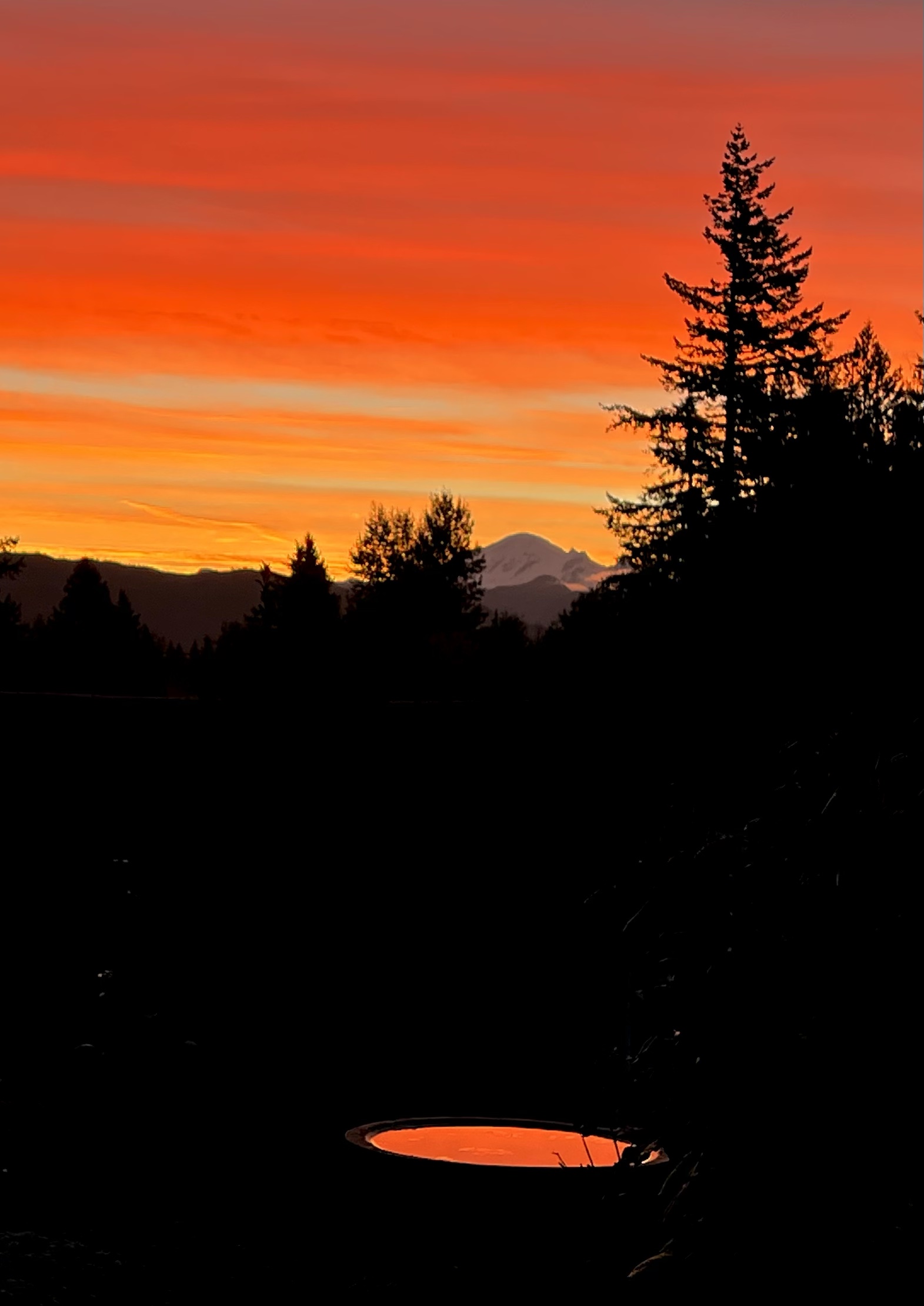
To a Heaven of Impermanence

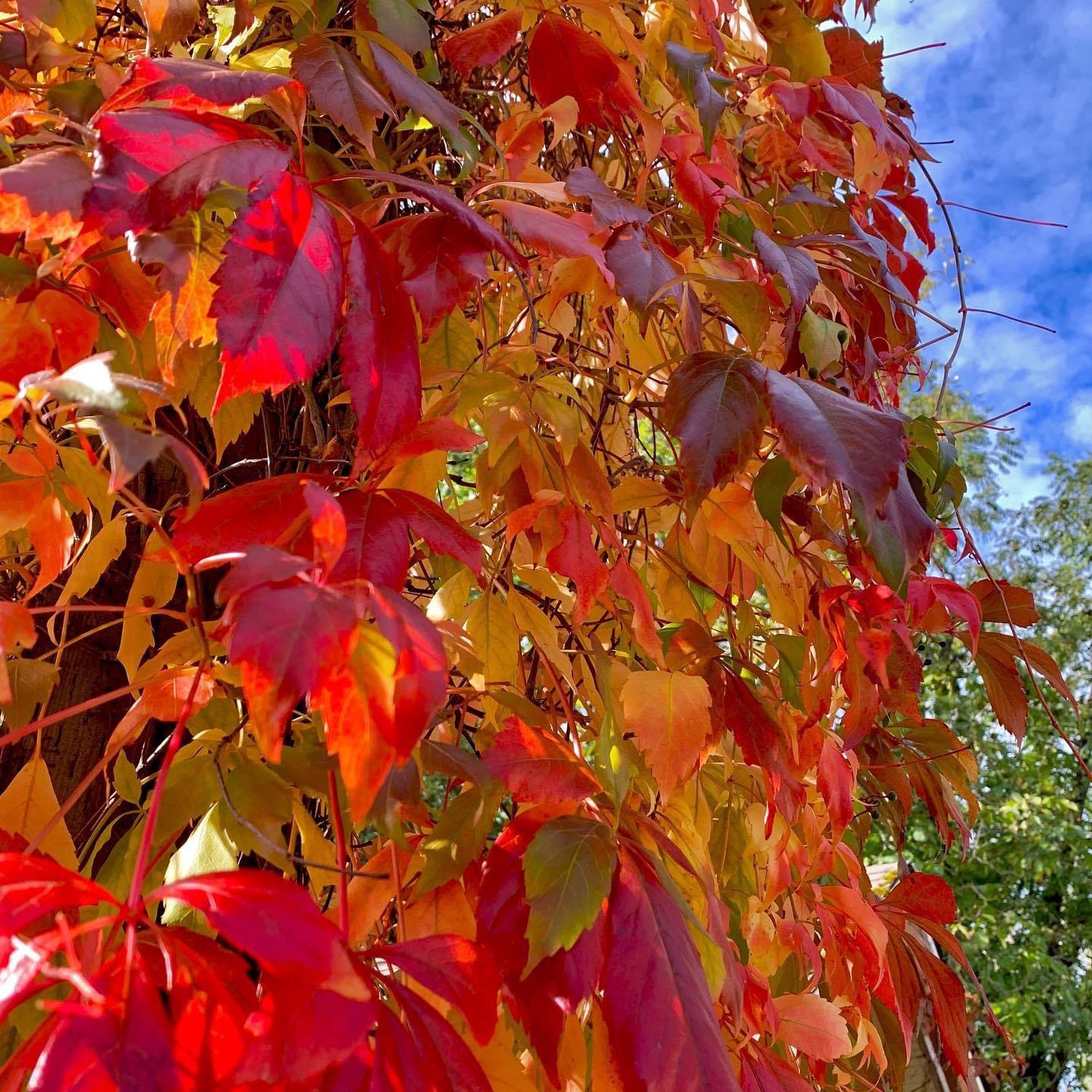
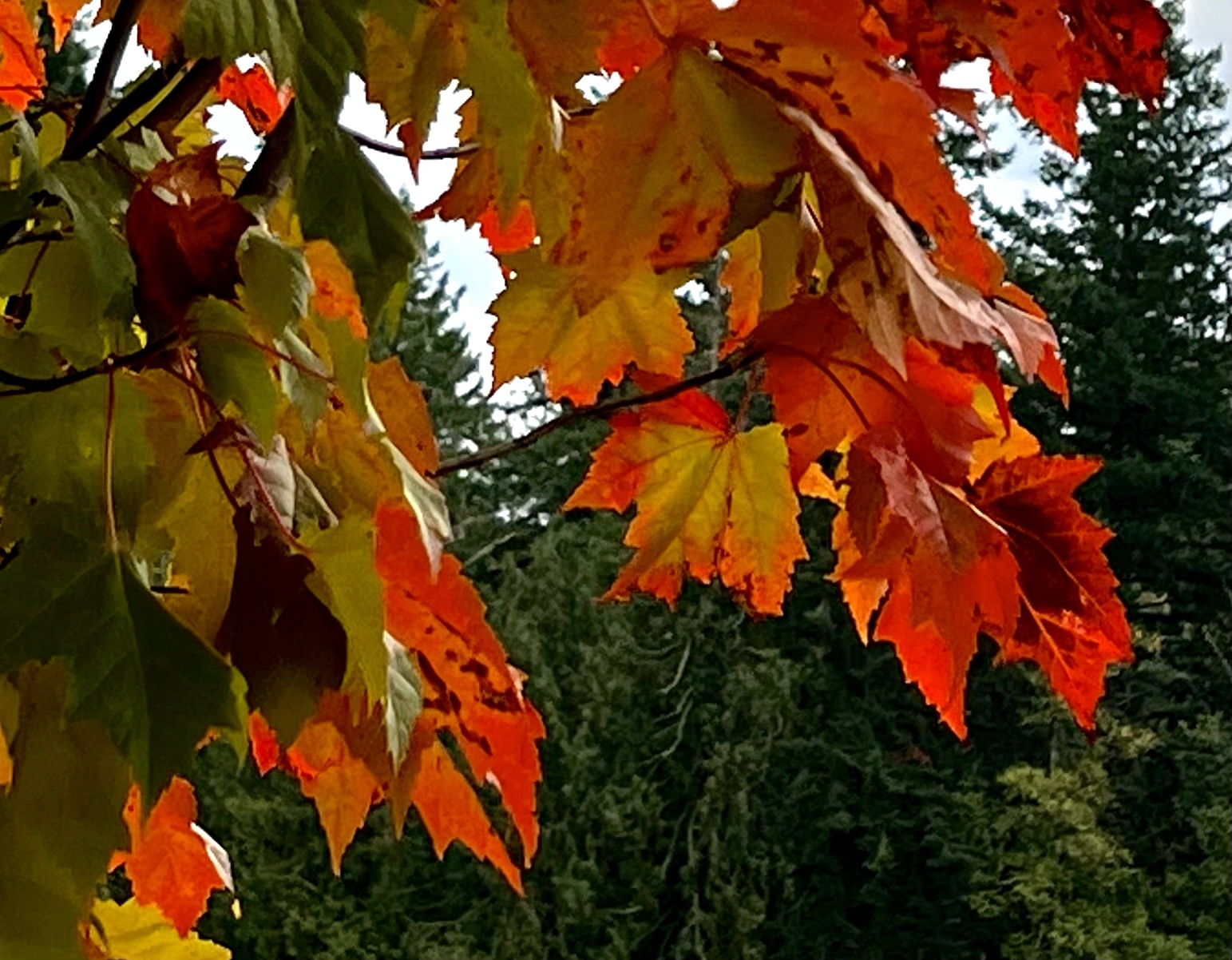
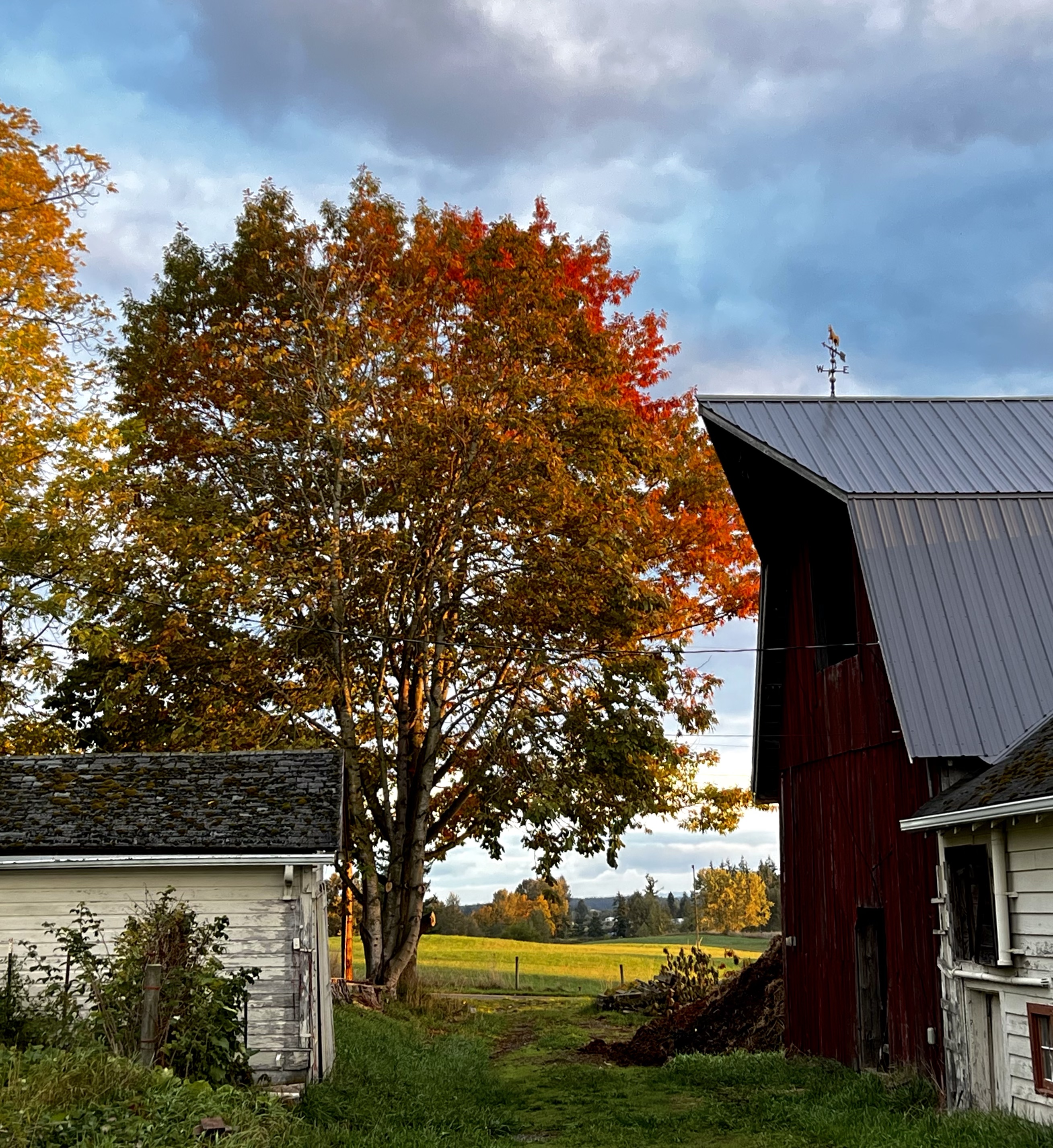
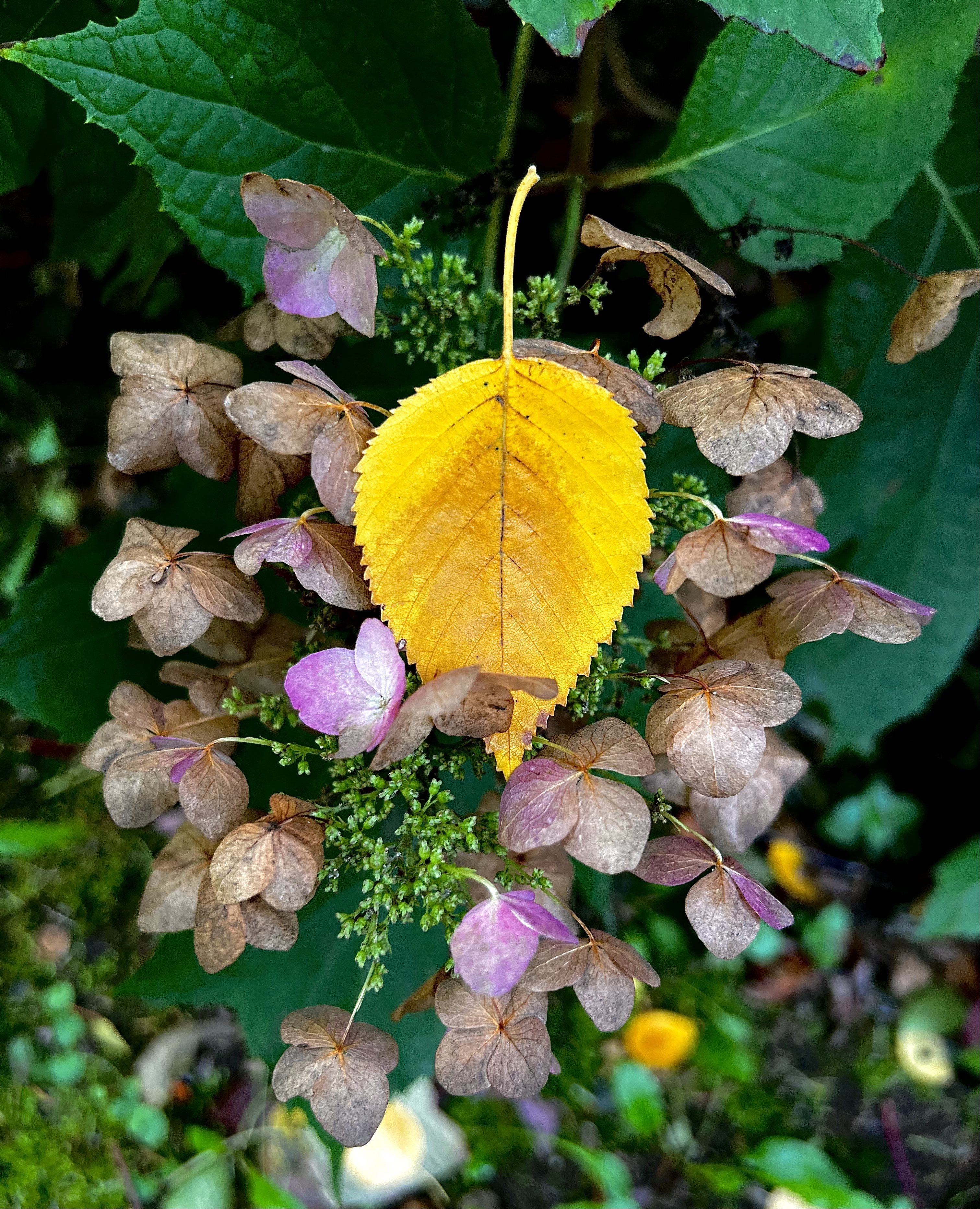
In heaven it is always autumn.
~John Donne

The leaves are always near to falling there
but never fall, and pairs of souls out walking
heaven’s paths no longer feel the weight of years upon them.
Safe in heaven’s calm, they take each other’s arm,
the light shining through them, all joy and terror gone.
But we are far from heaven here, in a garden ragged and unkept
as Eden would be with the walls knocked down,
    the paths littered
with the unswept leaves of many years, bright keepsakes
for children of the Fall. The light is gold, the sun pulling
the long shadow soul out of each thing, disclosing an outcome.
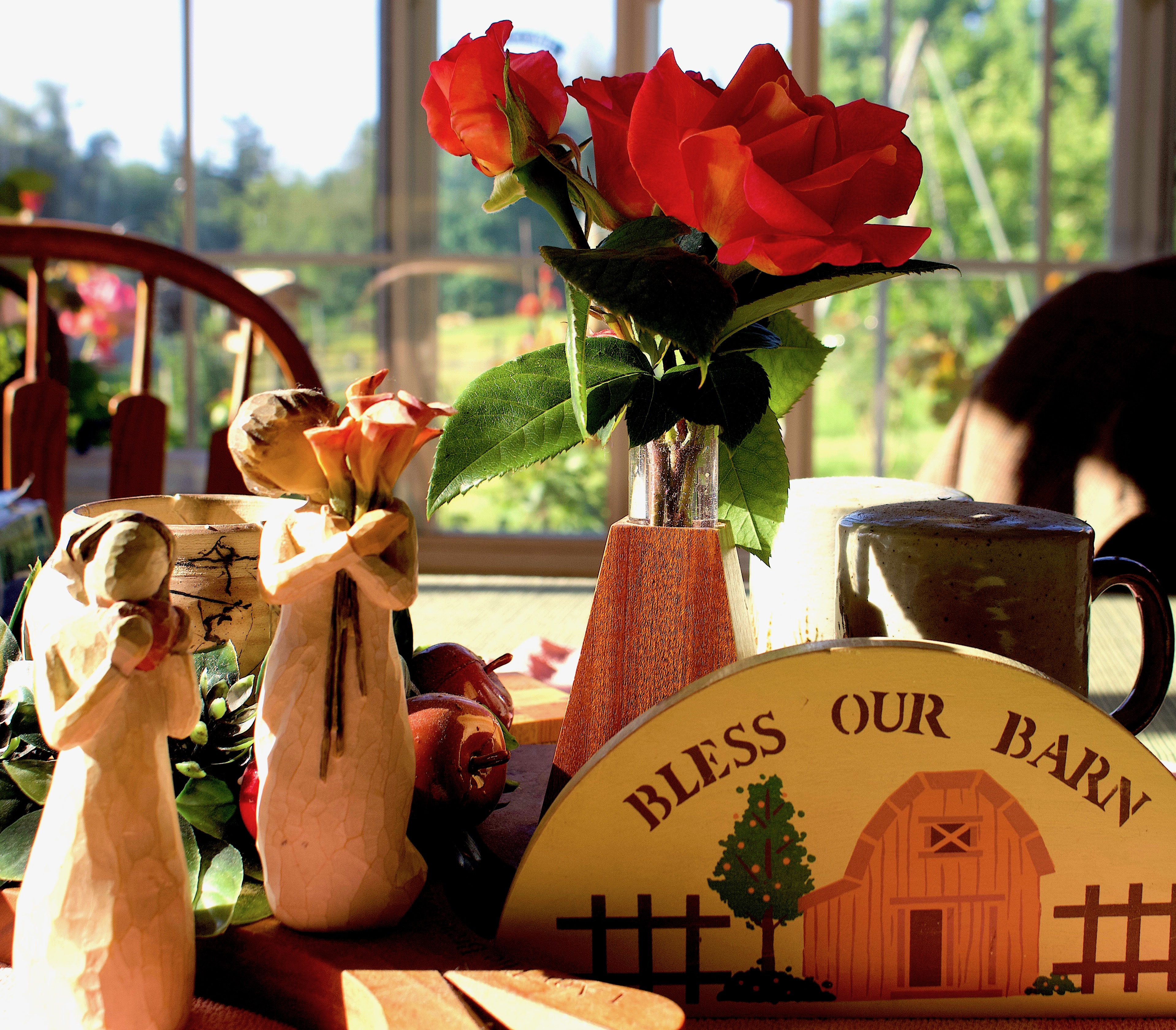
The last roses of the year nod their frail heads,
like listeners listening to all that’s said, to ask,
What brought us here? What seed? What rain? What light?
What forced us upward through dark earth? What made us bloom?
What wind shall take us soon, sweeping the garden bare?
Their voiceless voices hang there, as ours might,
if we were roses, too. Their beds are blanketed with leaves,
tended by an absent gardener whose life is elsewhere.
It is the last of many last days. Is it enough?
To rest in this moment? To turn our faces to the sun?
To watch the lineaments of a world passing?
To feel the metal of a black iron chair, cool and eternal,
press against our skin? To apprehend a chill as clouds
pass overhead, turning us to shivering shade and shadow?
And then to be restored, small miracle, the sun
    shining brightly

as before? We go on, you leading the way, a figure
leaning on a cane that leaves its mark on the earth.
My friend, you have led me farther than I have ever been.
To a garden in autumn. To a heaven of impermanence
where the final falling off is slow, a slow and radiant happening.
The light is gold. And while we’re here, I think it must
    be heaven.
~Elizabeth Spires “In Heaven It Is Always Autumn” from Now the Green Blade Rises
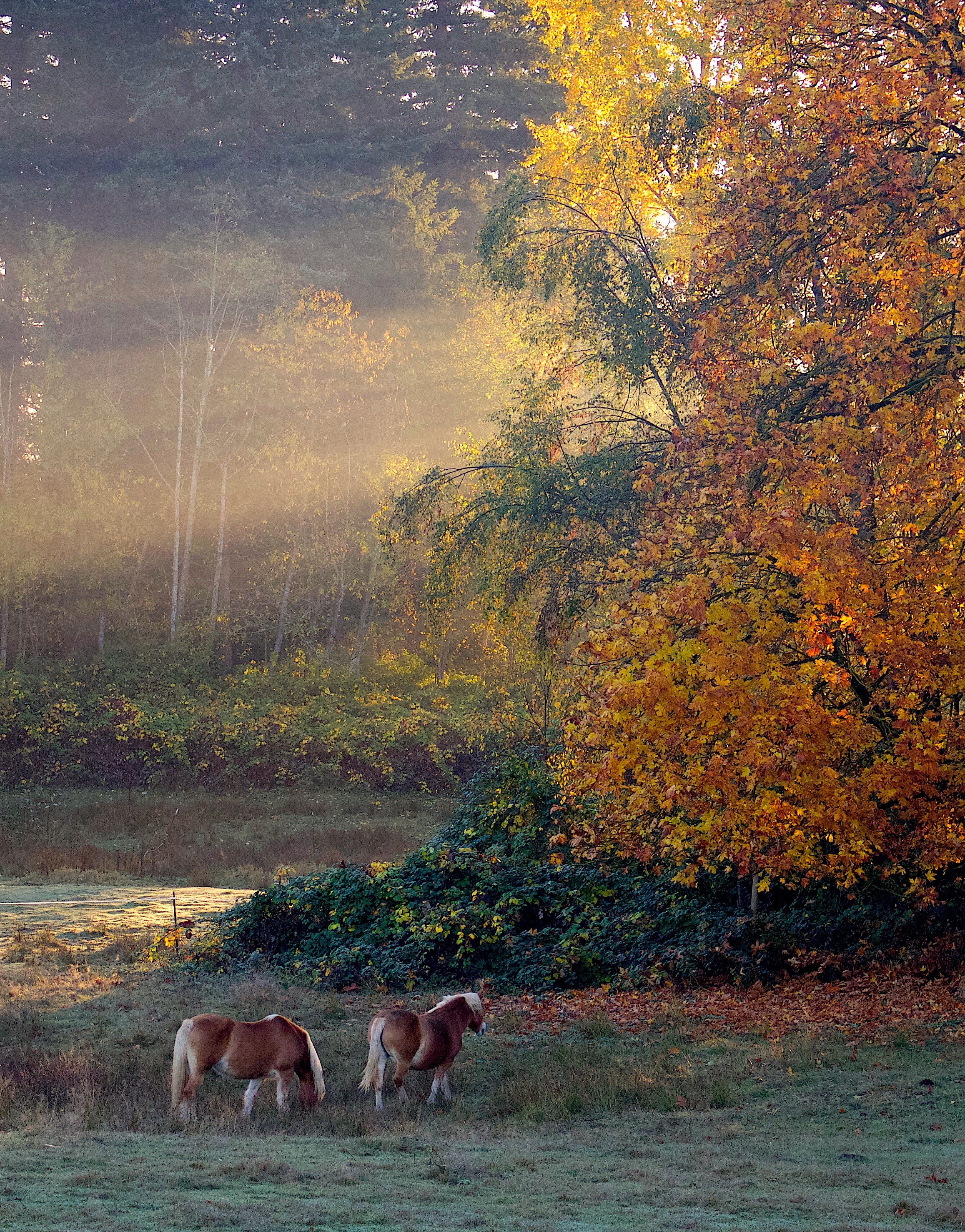
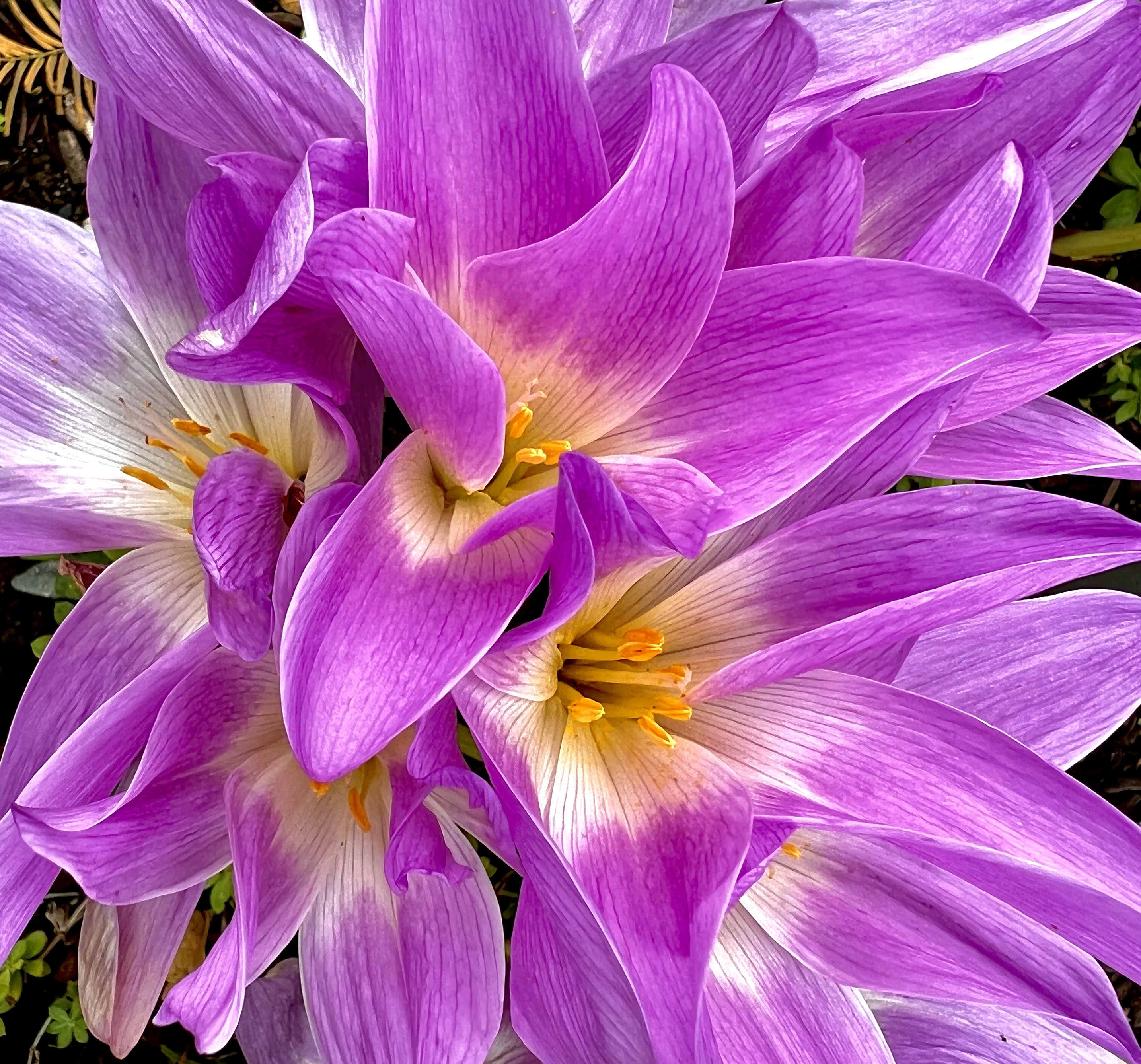
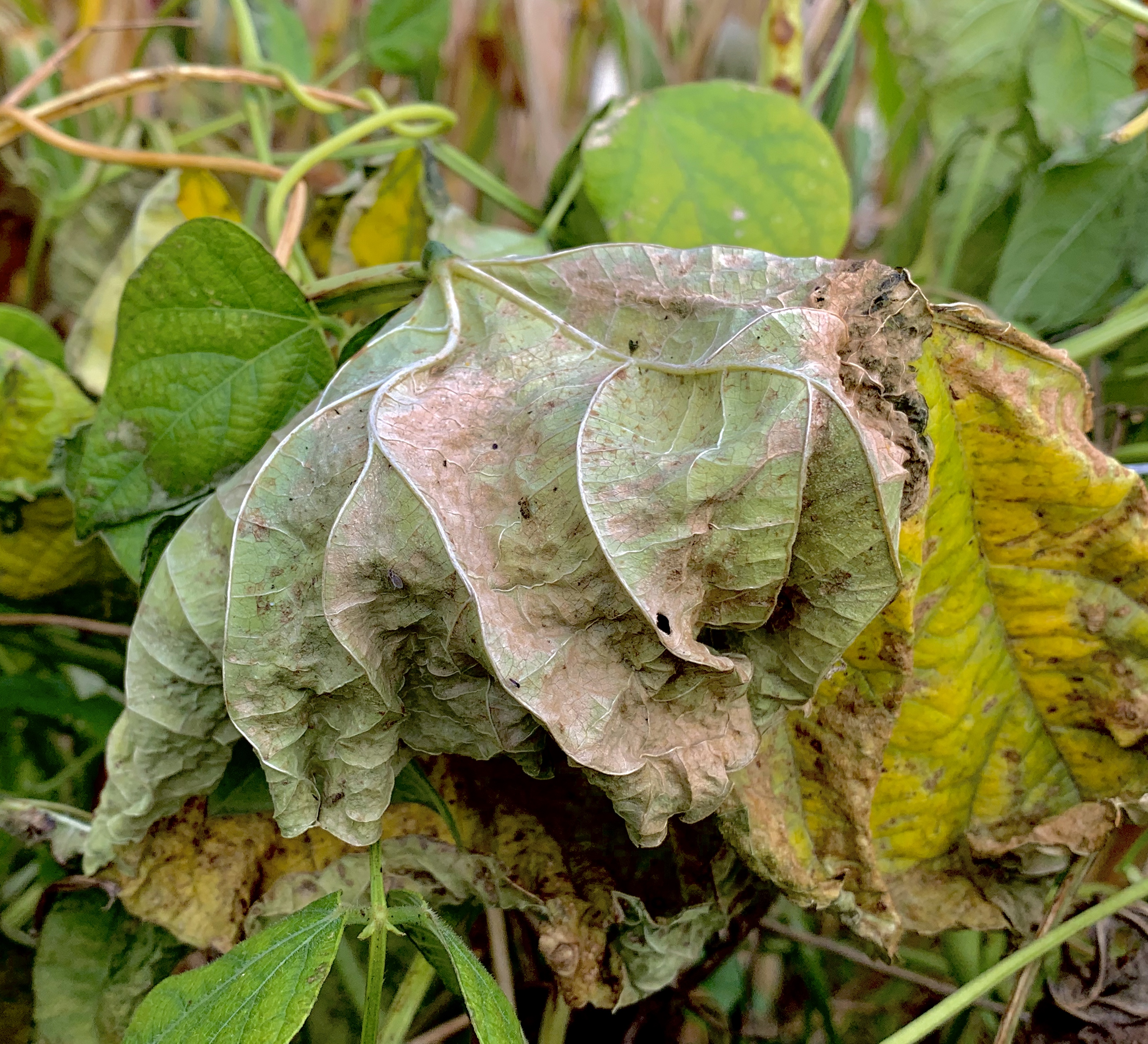
I wander the autumn garden mystified at the passing of the weeks since the seed was first sown, weeds pulled, peapods picked. It could not possibly be done so soon–this patch of productivity and beauty, now wilted and brown, vines crushed to the ground, no longer fruitful.

The root cellar is filling up, the freezer is packed.  The work of putting away is almost done.

So why do I go back to the now barren soil we so carefully worked, numb in the knowledge I will pick no more this season, nor feel the burst of a cherry tomato exploding in my mouth or the green freshness of a bean or peapod straight off the vine?

Because for a few fertile weeks, only a few weeks, the garden was a bit of heaven on earth, impermanent but a real taste nonetheless.   We may have once mistaken our Lord for the gardener when He appeared to us radiant, suddenly unfamiliar, but it was He who offered us the care of the garden, to bring in the sheaves, to share the forever mercies in the form of daily bread grown right here and now.

When He says my name, then I will know Him. 
He will lead me farther than I have ever been.
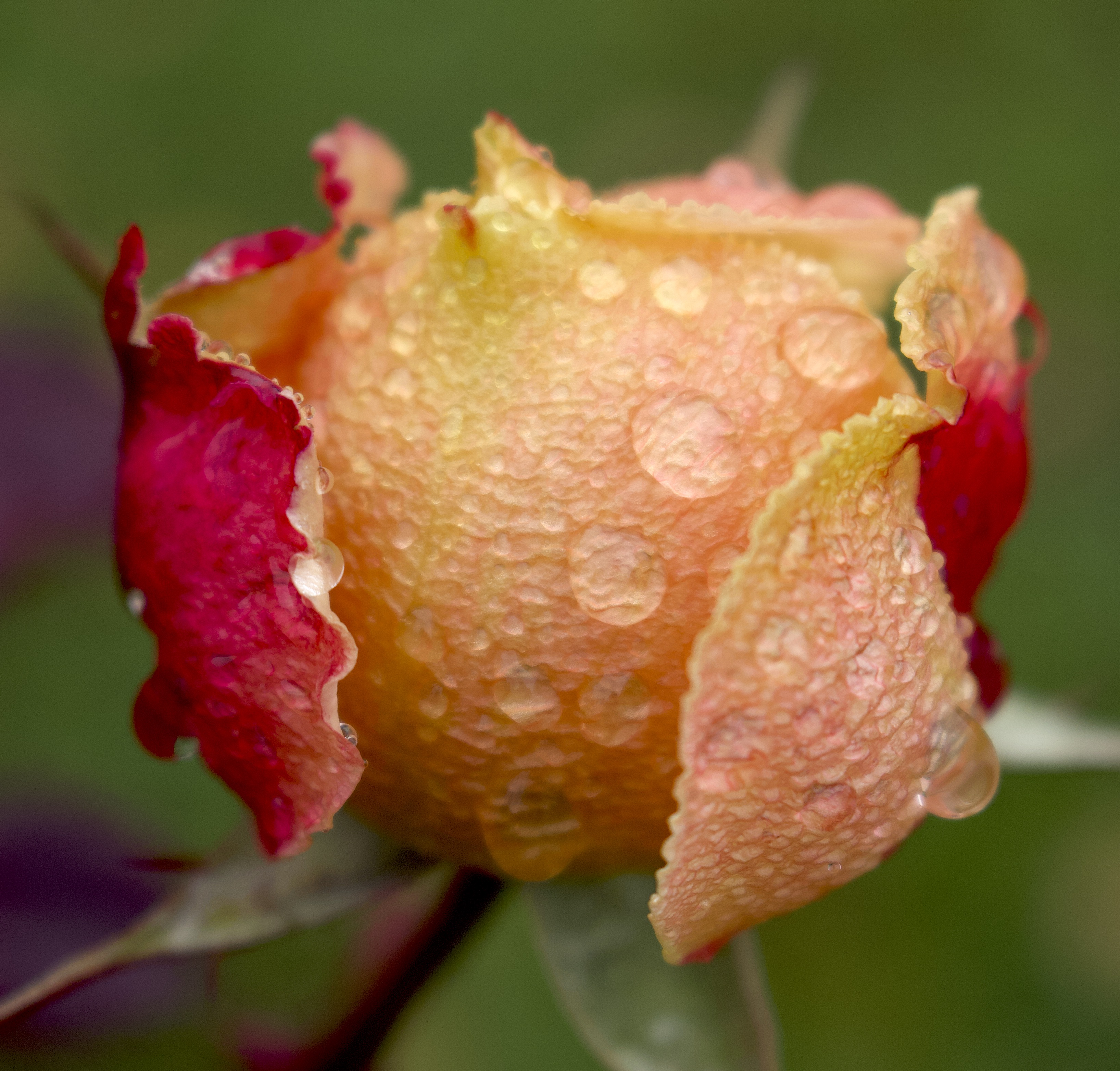
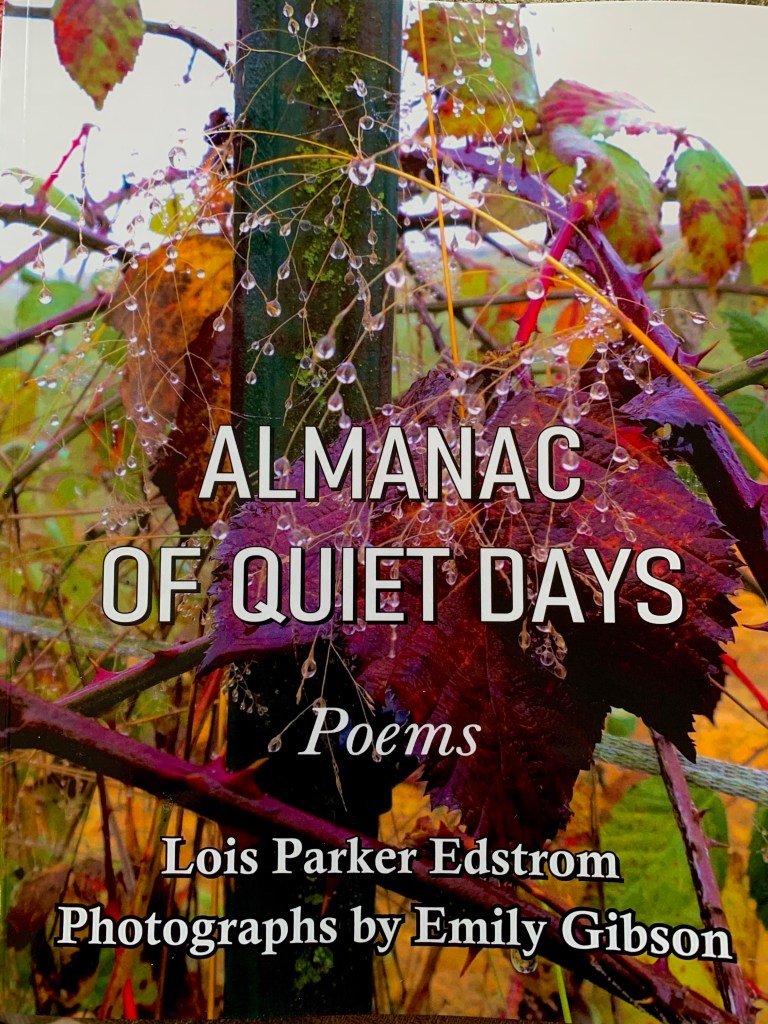
A book of beauty in words and photography is available to order here:
Into a Commonwealth of Joy

The meaning of marriage begins in the giving of words. We cannot join ourselves to one another without giving our word. And this must be an unconditional giving, for in joining ourselves to one another we join ourselves to the unknown.
~Wendell Berry from “Poetry and Marriage” in Standing By Words

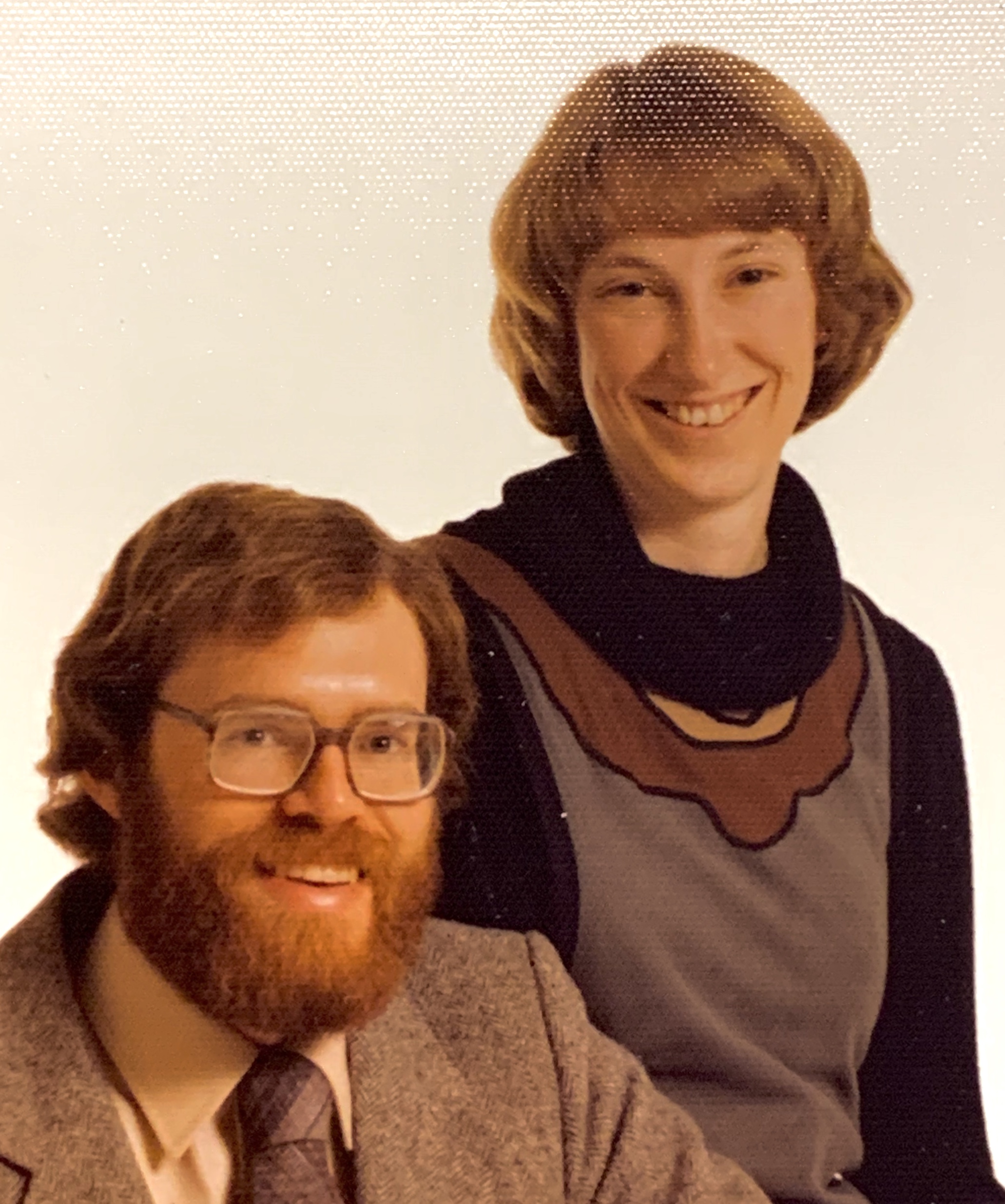
Our vows to one another forty years ago today:

Before God and this gathering, I vow from my heart and spirit that I will be your wife/husband for as long as we both shall live.

I will love you with faithfulness, knowing its importance in sustaining us through good times and bad.

I will love you with respect, serving your greatest good and supporting your continued growth.

I will love you with compassion, knowing the strength and power of forgiveness.

I will love you with hope, remembering our shared belief in the grace of God and His guidance of our marriage.

“And at home, by the fire, whenever you look up, there I shall be–and whenever I look up, there will be you.”

(our wedding vows for our September 19, 1981 wedding at First Seattle Christian Reformed Church — the last line adapted from Thomas Hardy’s  “Far From the Madding Crowd”)

Sometimes our life reminds me
of a forest in which there is a graceful clearing
and in that opening a house,
an orchard and garden,
comfortable shades, and flowers
red and yellow in the sun, a pattern
made in the light for the light to return to.
The forest is mostly dark, its ways
to be made anew day after day, the dark
richer than the light and more blessed,
provided we stay brave
enough to keep on going in.

We enter, willing to die,
into the commonwealth of its joy.
~Wendell Berry from “A Country of Marriage”

…Marriage… joins two living souls as closely as, in this world, they can be joined. This joining of two who know, love, and trust one another brings them in the same breath into the freedom of sexual consent and into the fullest earthly realization of the image of God.  From their joining, other living souls come into being, and with them great responsibilities that are unending, fearful, and joyful. The marriage of two lovers joins them to one another, to forebears, to descendants, to the community, to heaven and earth. It is the fundamental connection without which nothing holds, and trust is its necessity.
~Wendell Berry from Sex, Economy, Freedom and Community

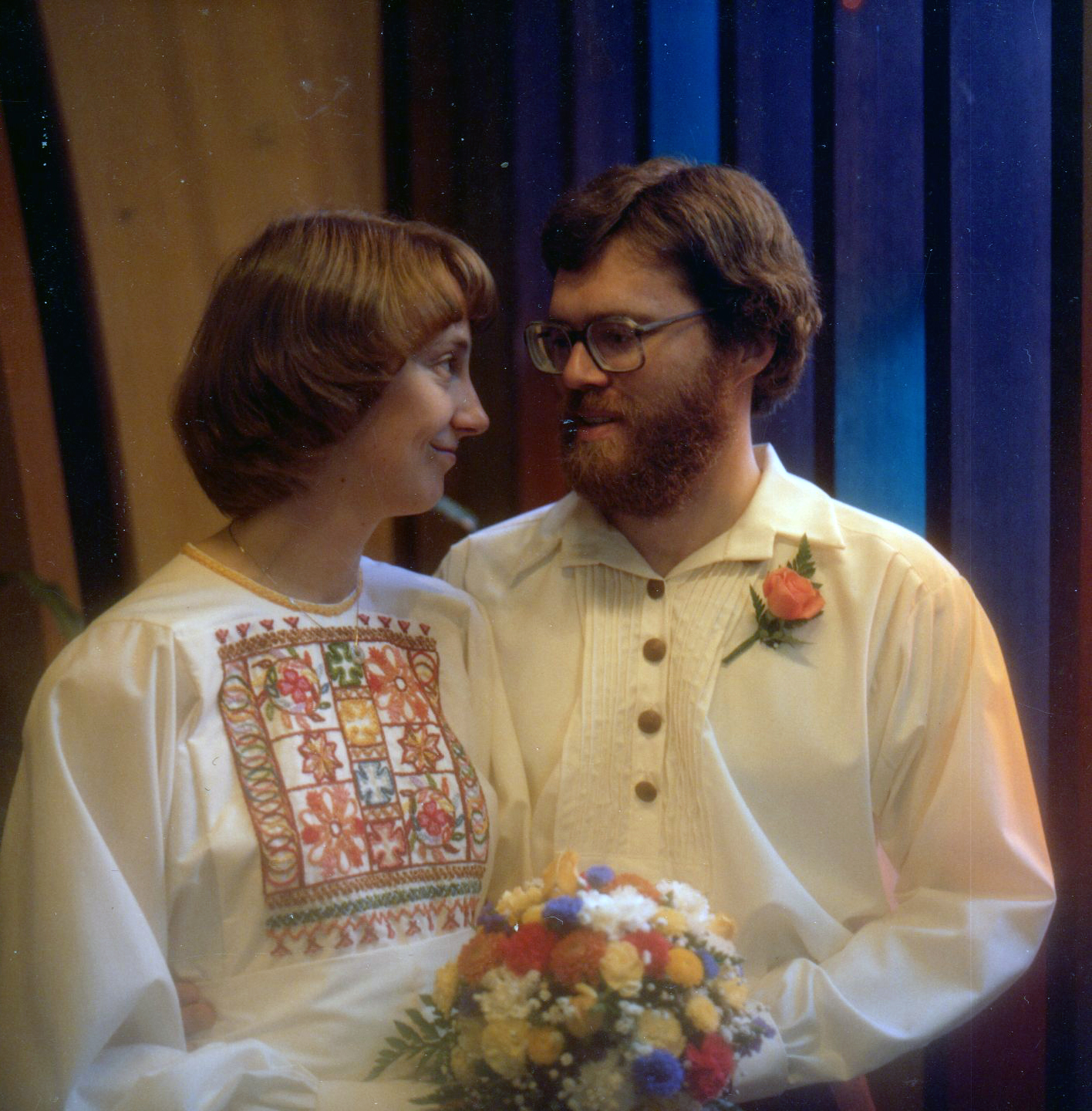
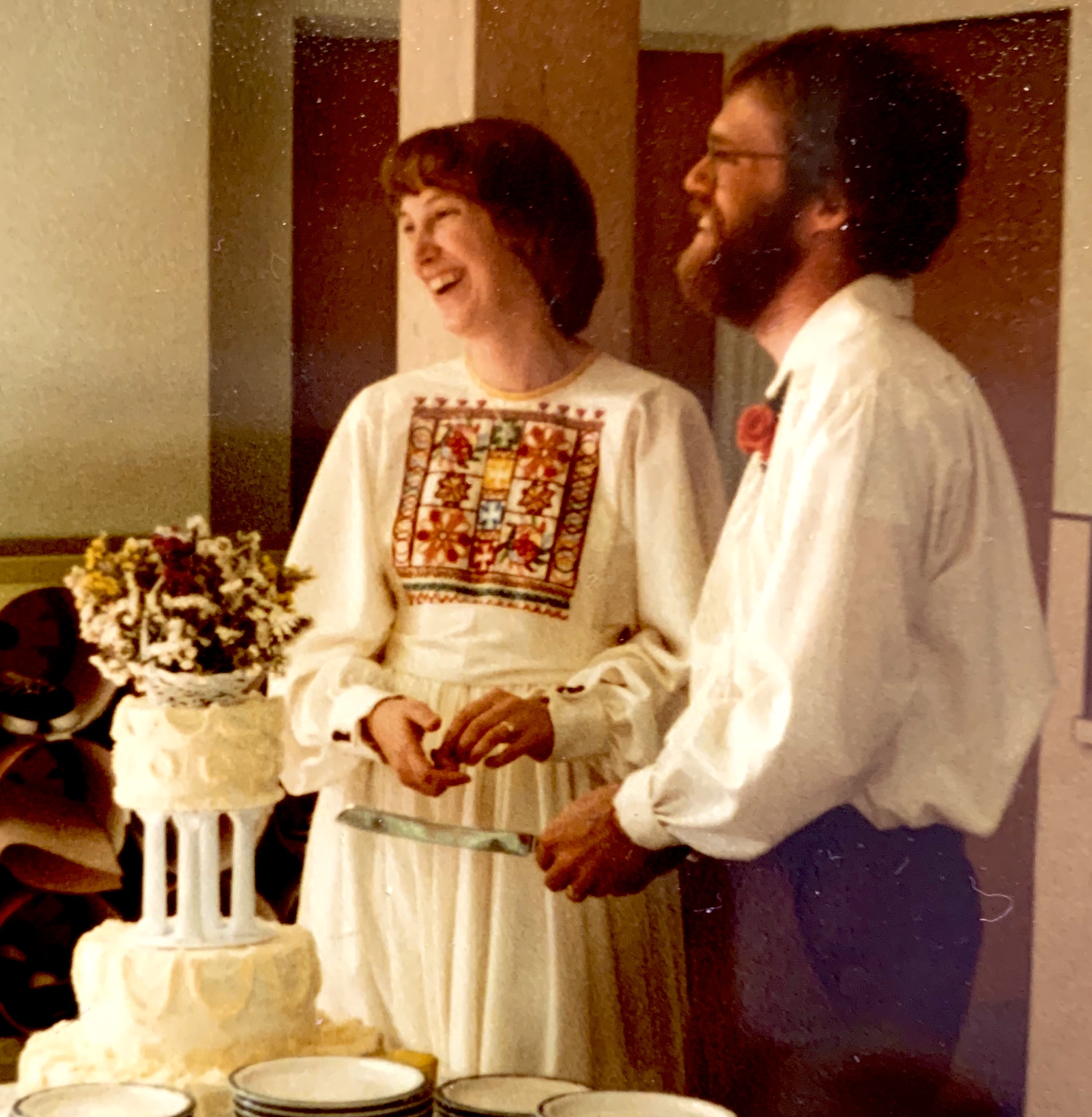
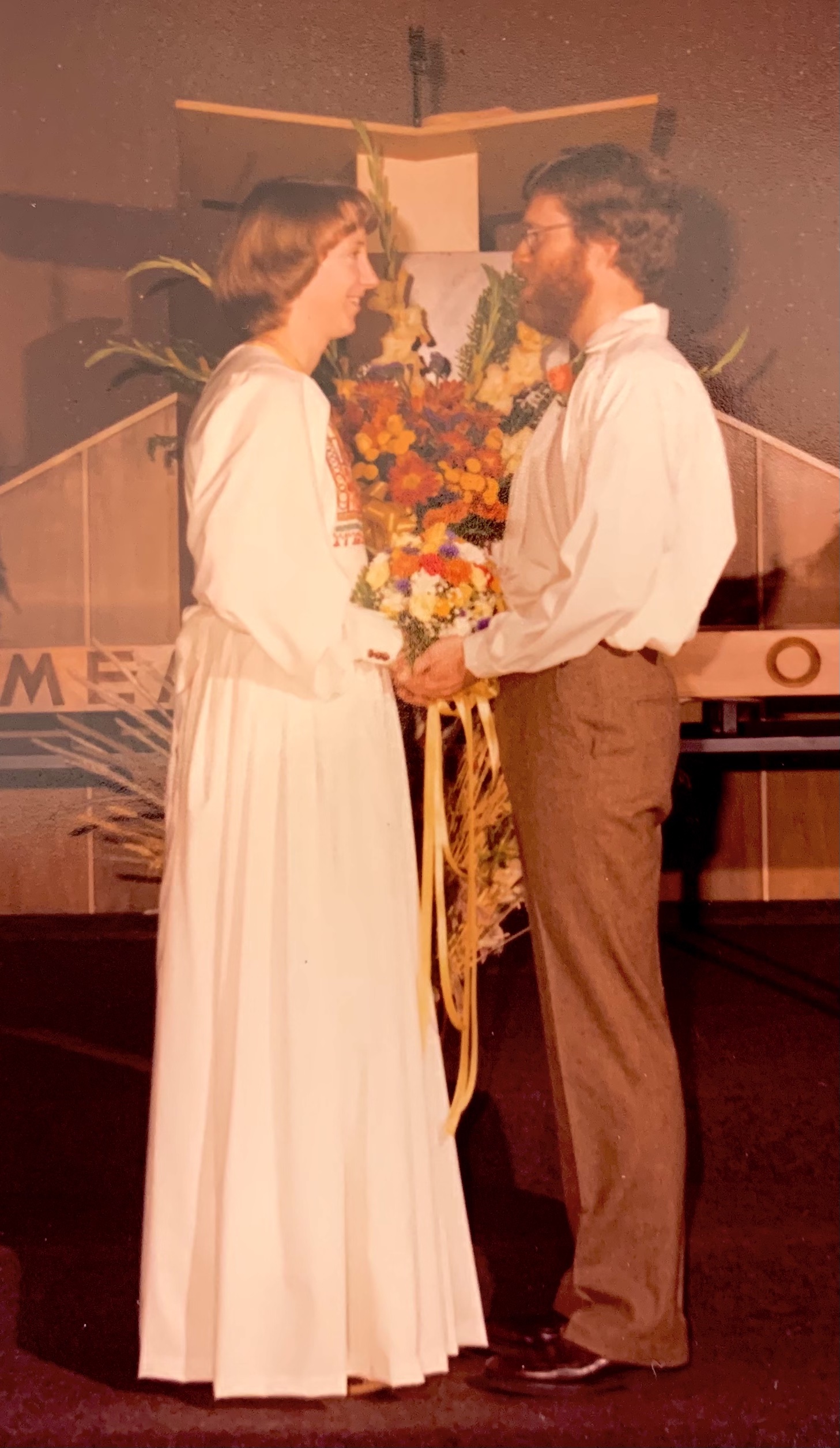
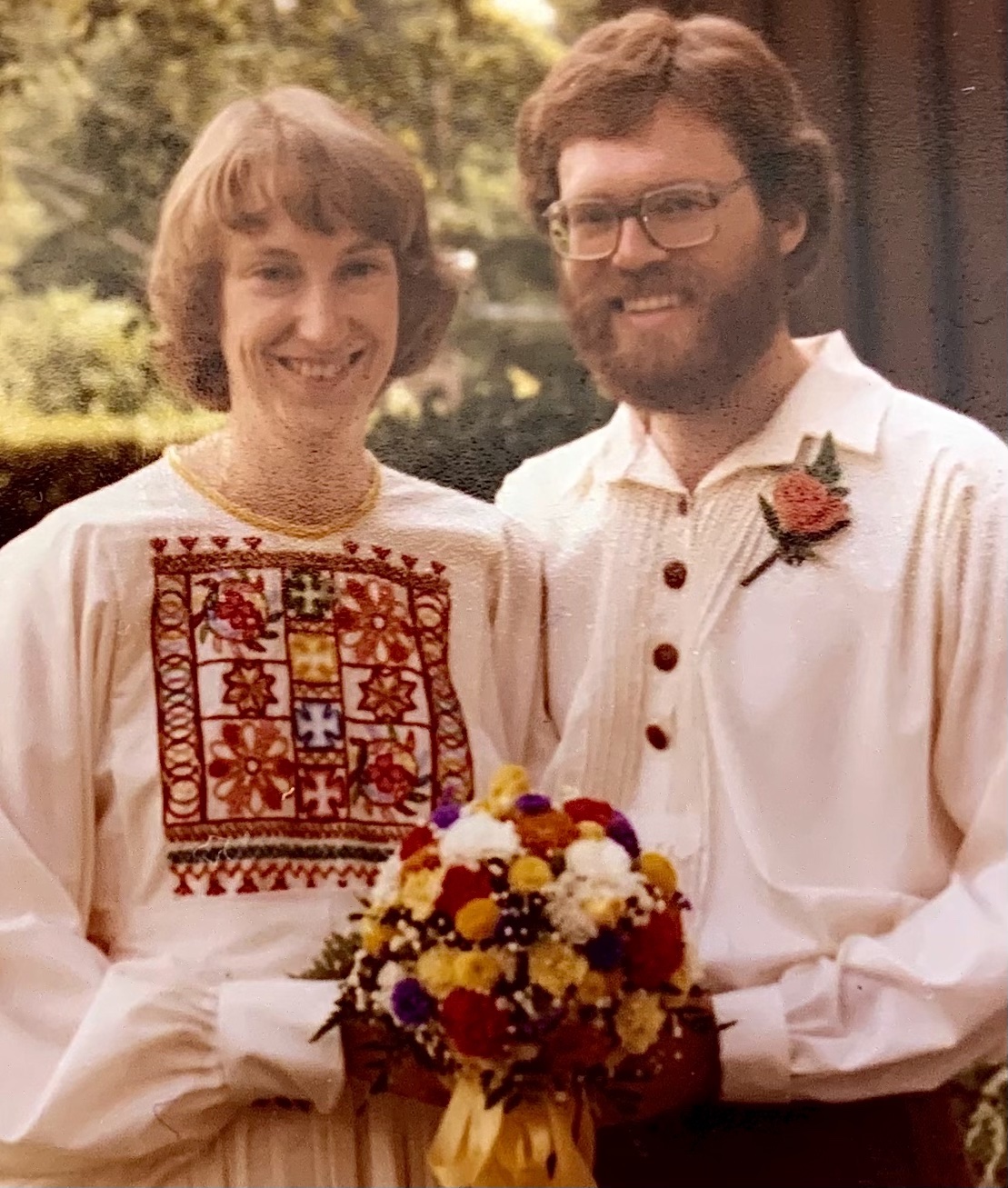
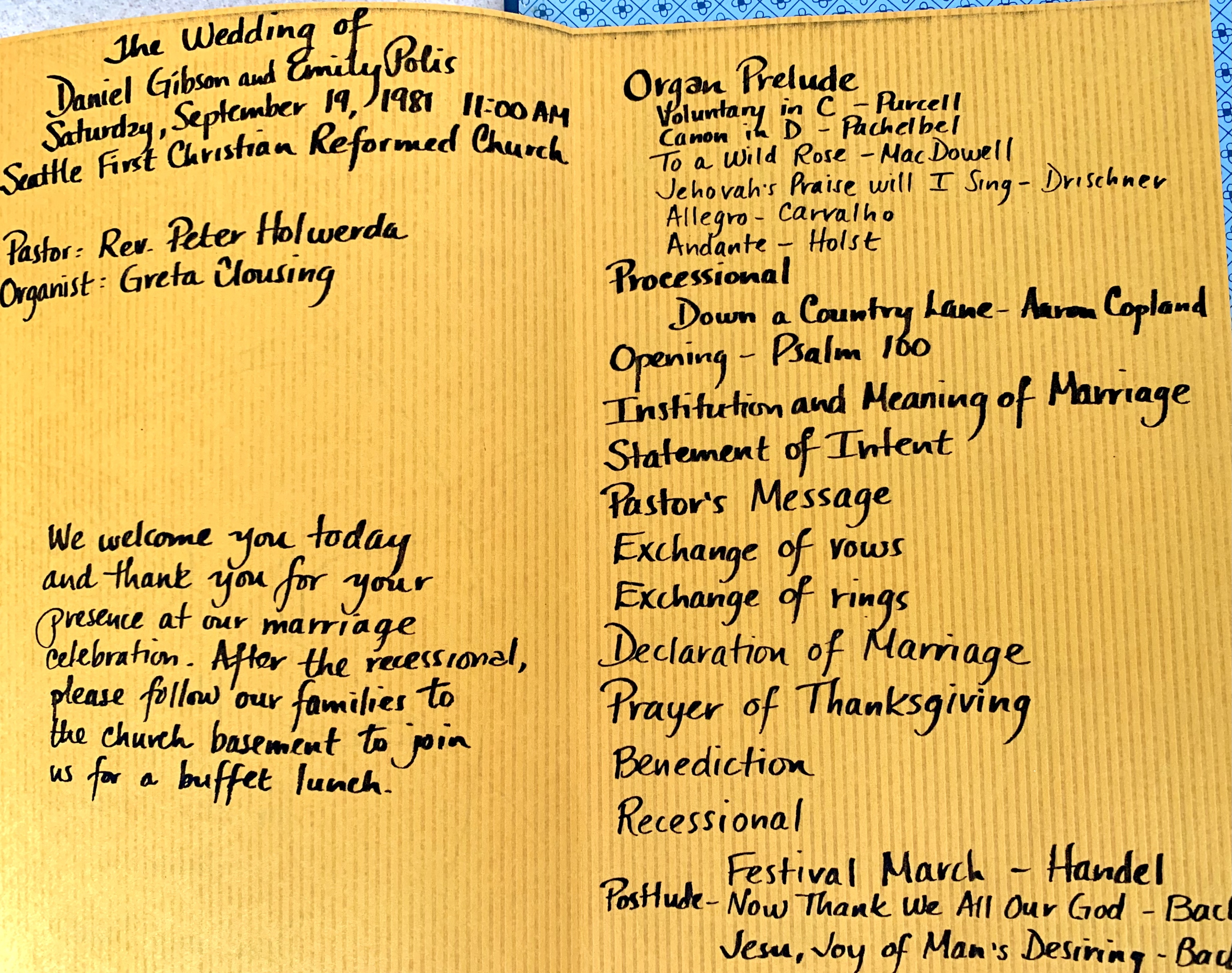
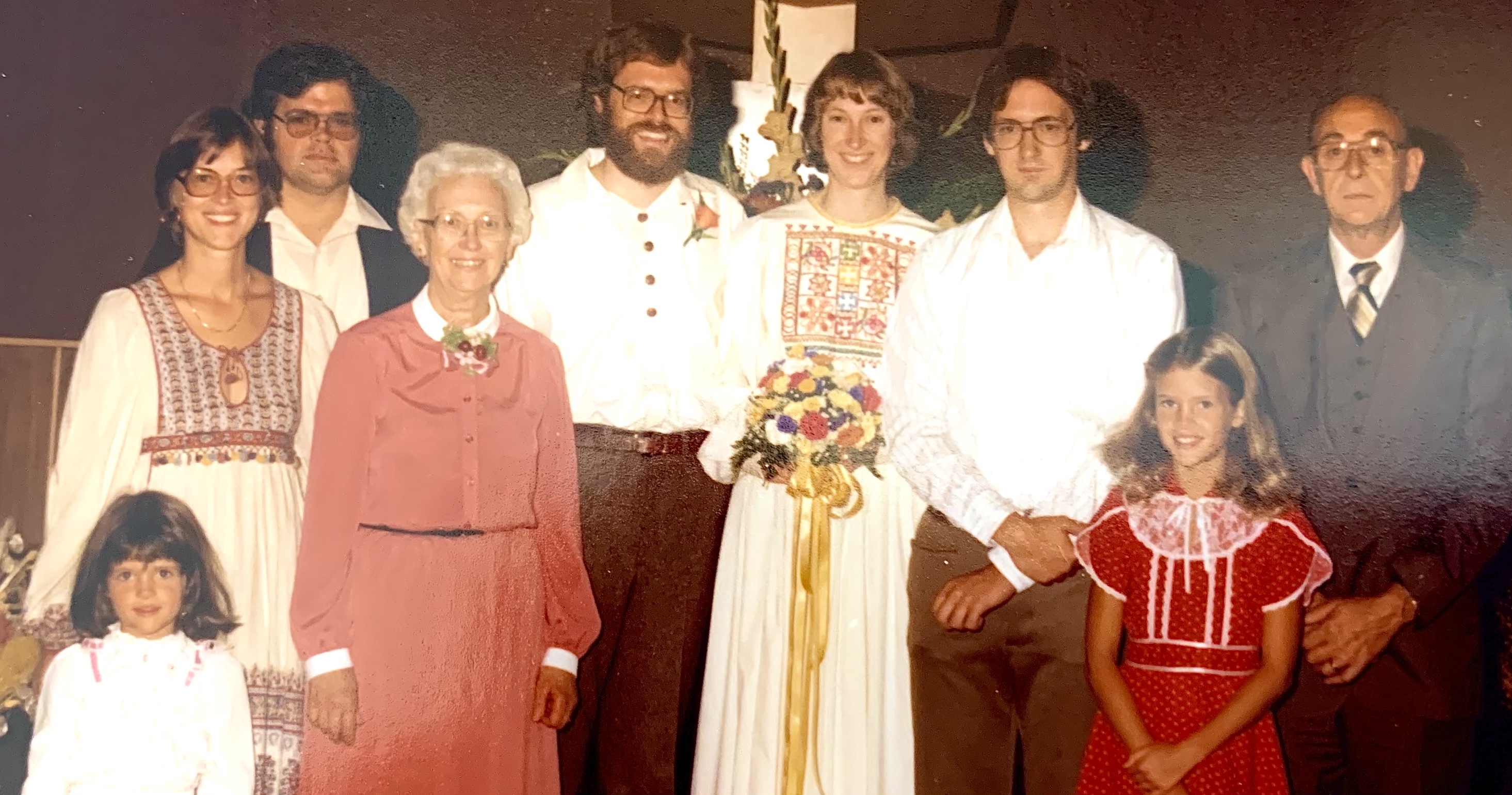
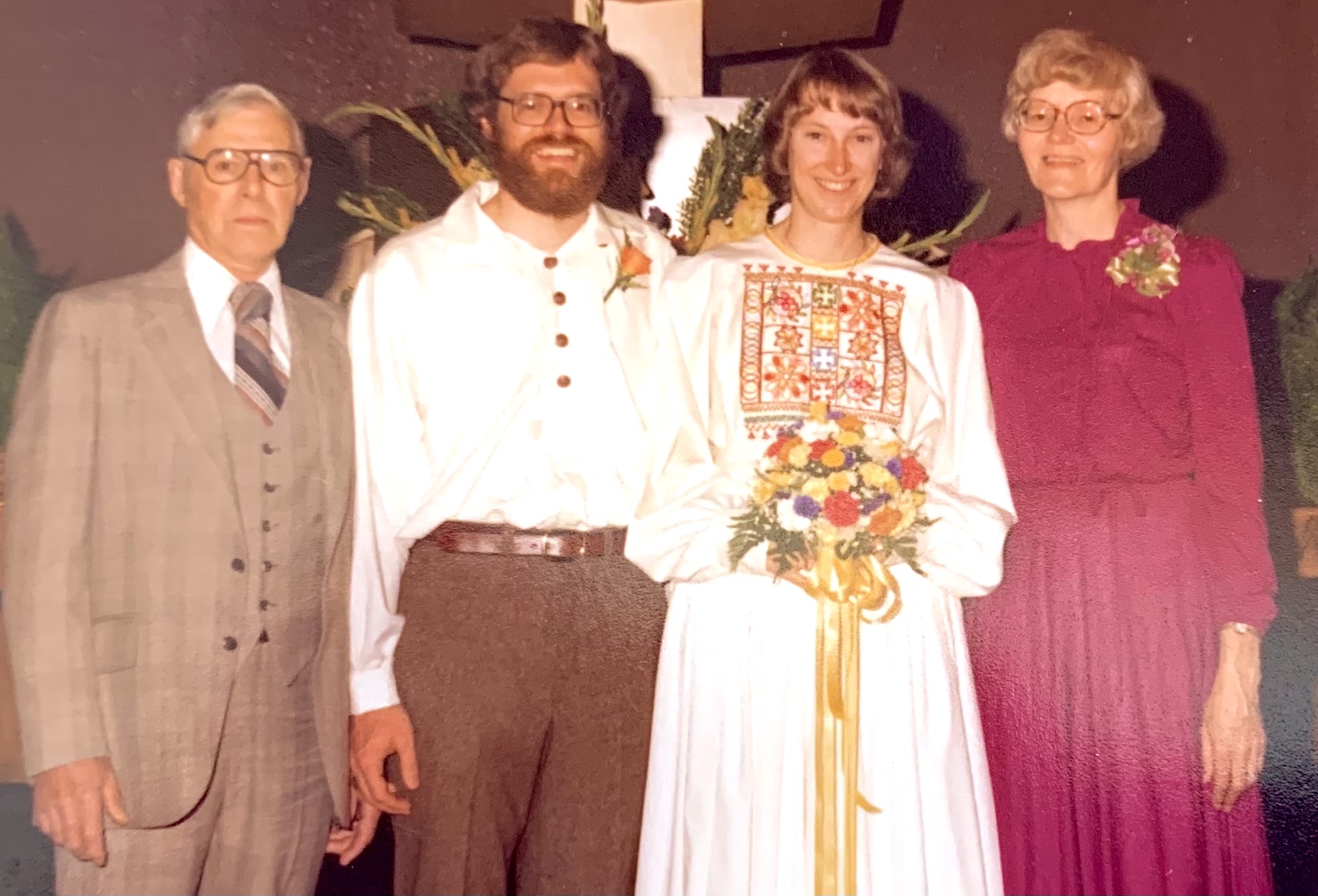
We married in our Seattle church with our pastor officiating, with a small group of family and friends as witnesses.

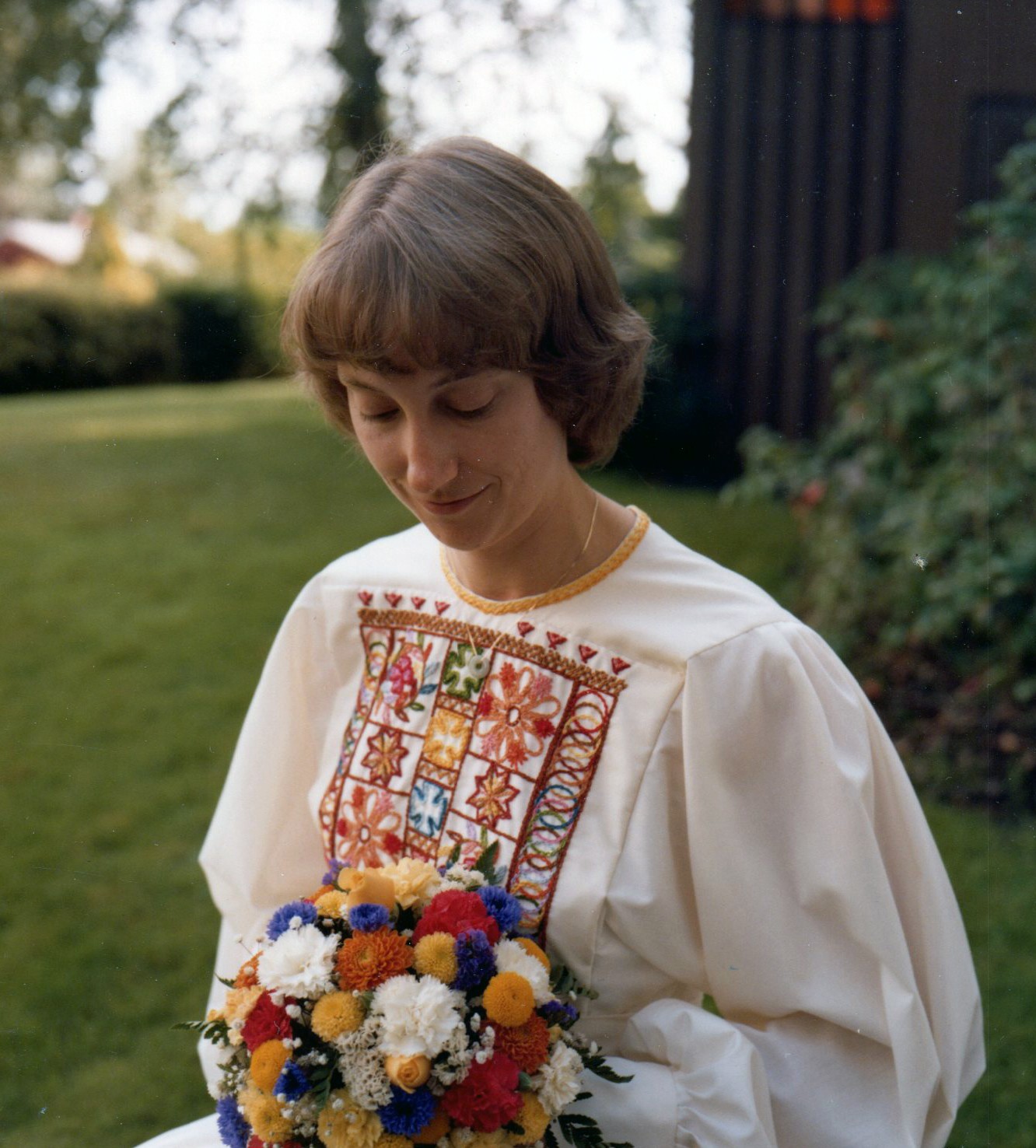
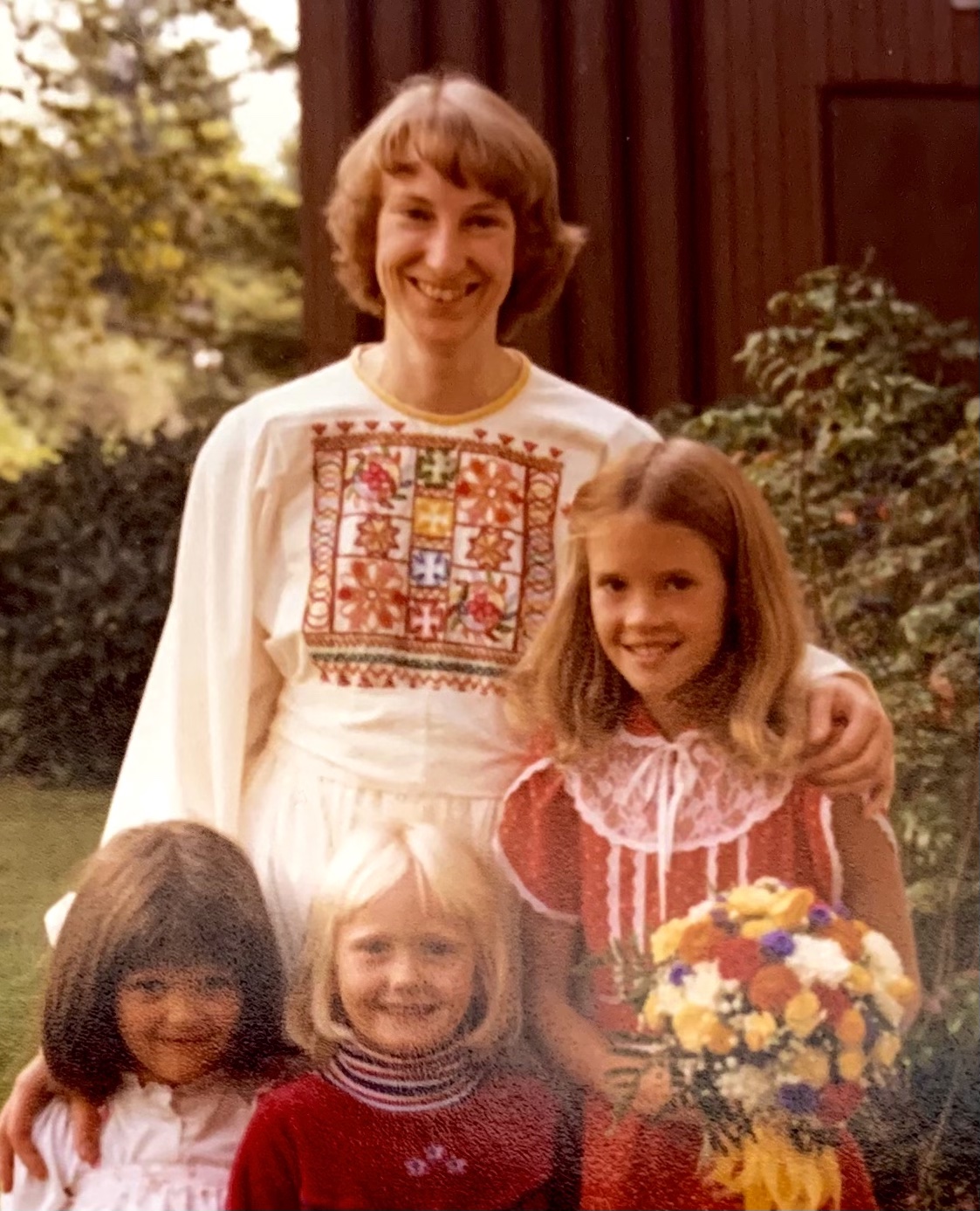
It was a wedding created by two frugal people with little to spend – I sewed my dress and Dan’s shirt from muslin, we grew our own flowers, our families helped potluck the lunch afterward and our tiered carrot cake was made by a friend.

Yet our vows to one another were not frugal and held nothing back.
They were extravagant and comprehensive, coming from our hearts and spirits. The music we asked our amazing organist to play (versions below) inspired us by its simplicity and complexity – very much like the families that raised us and the God we worship.

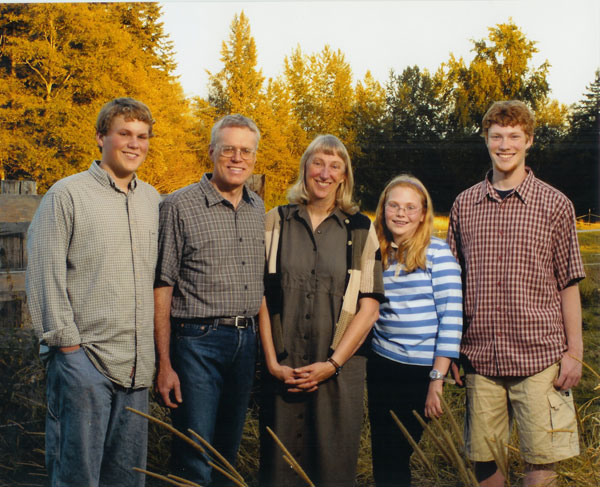
Our vows have taken us from the city to the countryside, to the raising and rejoicing in three amazing children (each of whom wrote movingly to us today) and now four grandchildren. We served more than forty years as a public-employed attorney and physician, have laid down those responsibilities, and picked up the tools of farm and garden along with church and community service for as long as we are able.

We treasure each day of living together in faithfulness, respect, compassion and hope – knowing that how we love and find joy in one another mirrors how God loves and revels in His people.

We are praying for many more days to fill us with what endures.

A pot of red lentils
simmers on the kitchen stove.
All afternoon dense kernels
surrender to the fertile
juices, their tender bellies
swelling with delight.

In the yard we plant
rhubarb, cauliflower, and artichokes,
cupping wet earth over tubers,
our labor the germ
of later sustenance and renewal.

Across the field the sound of a baby crying
as we carry in the last carrots,
whorls of butter lettuce,
a basket of red potatoes.

I want to remember us this way—
late September sun streaming through
the window, bread loaves and golden
bunches of grapes on the table,
spoonfuls of hot soup rising
to our lips, filling us
with what endures.
~Peter Pereira from “A Pot of Red Lentils”

Here are versions of the organ music we selected for prelude, processional, recessional and postlude

It’s Being Easy in the Harness

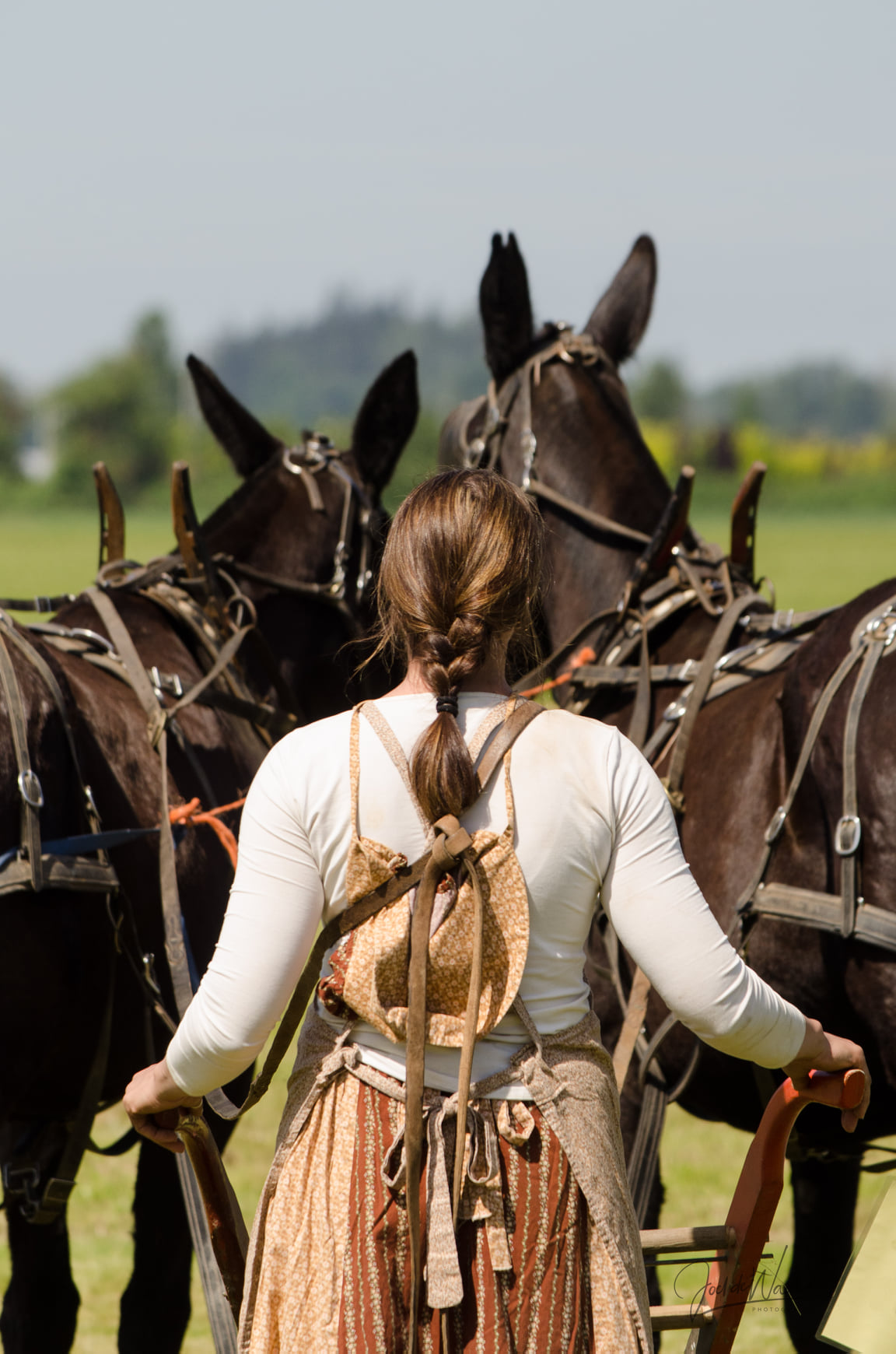
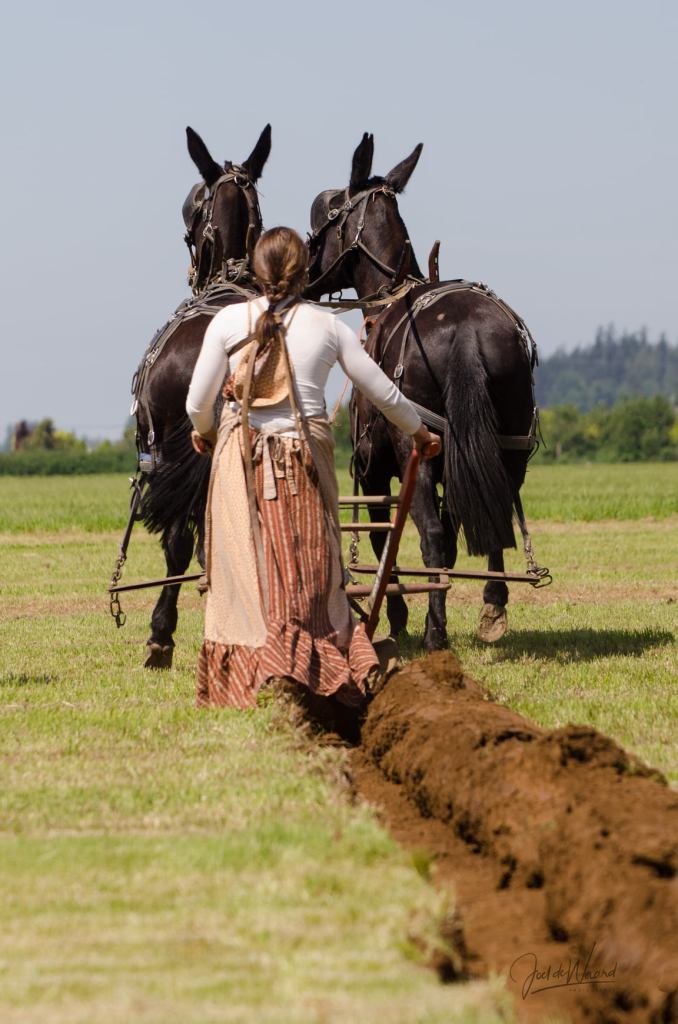
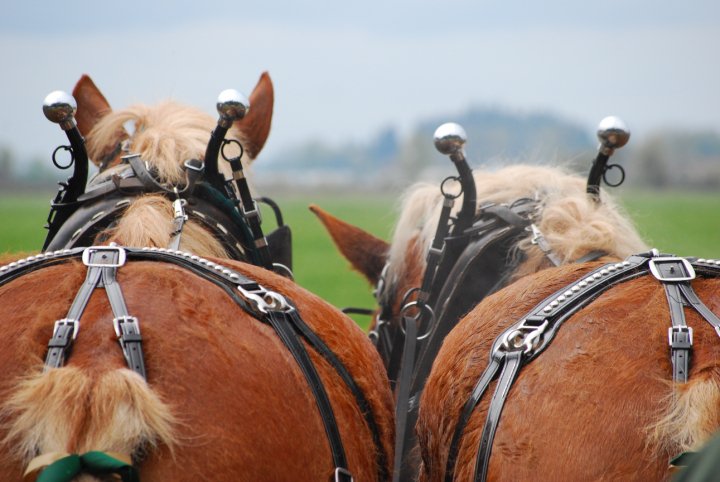
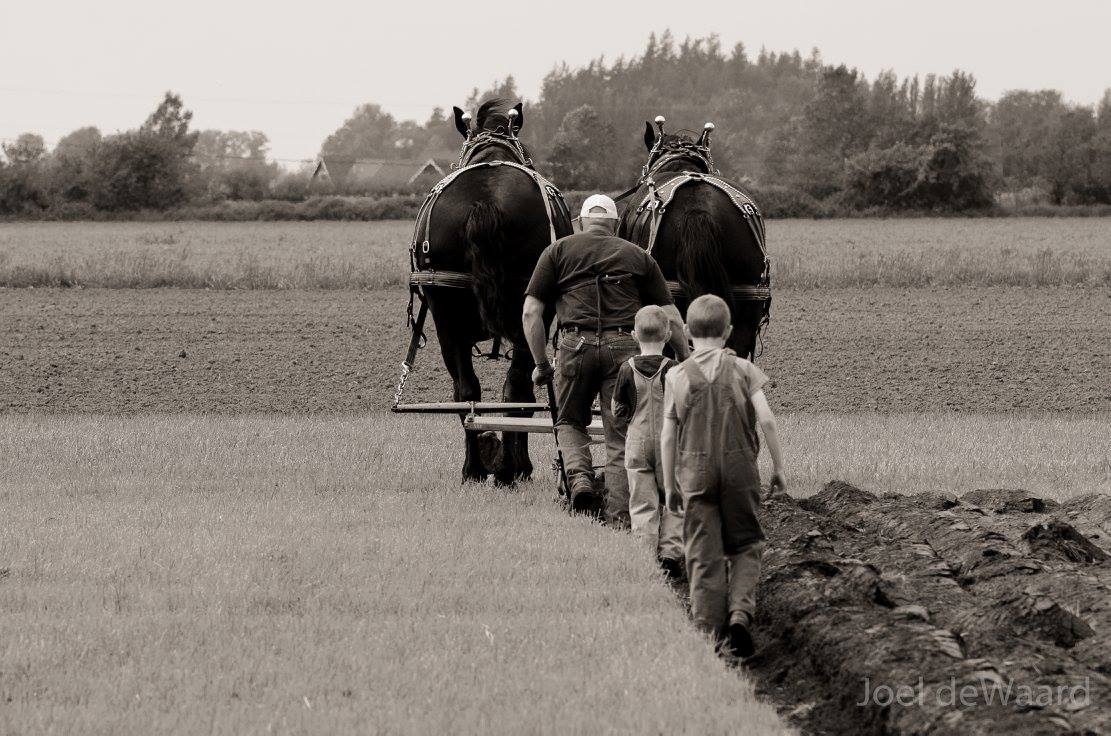
Photo by Joel deWaard
photo by Joel deWaard

I find my greatest freedom on the farm.
I can be a bad farmer or a lazy farmer and it’s my own business.
A definition of freedom:
It’s being easy in your harness.

~Robert Frost in 1954, at a news conference on the eve of his 80th birthday

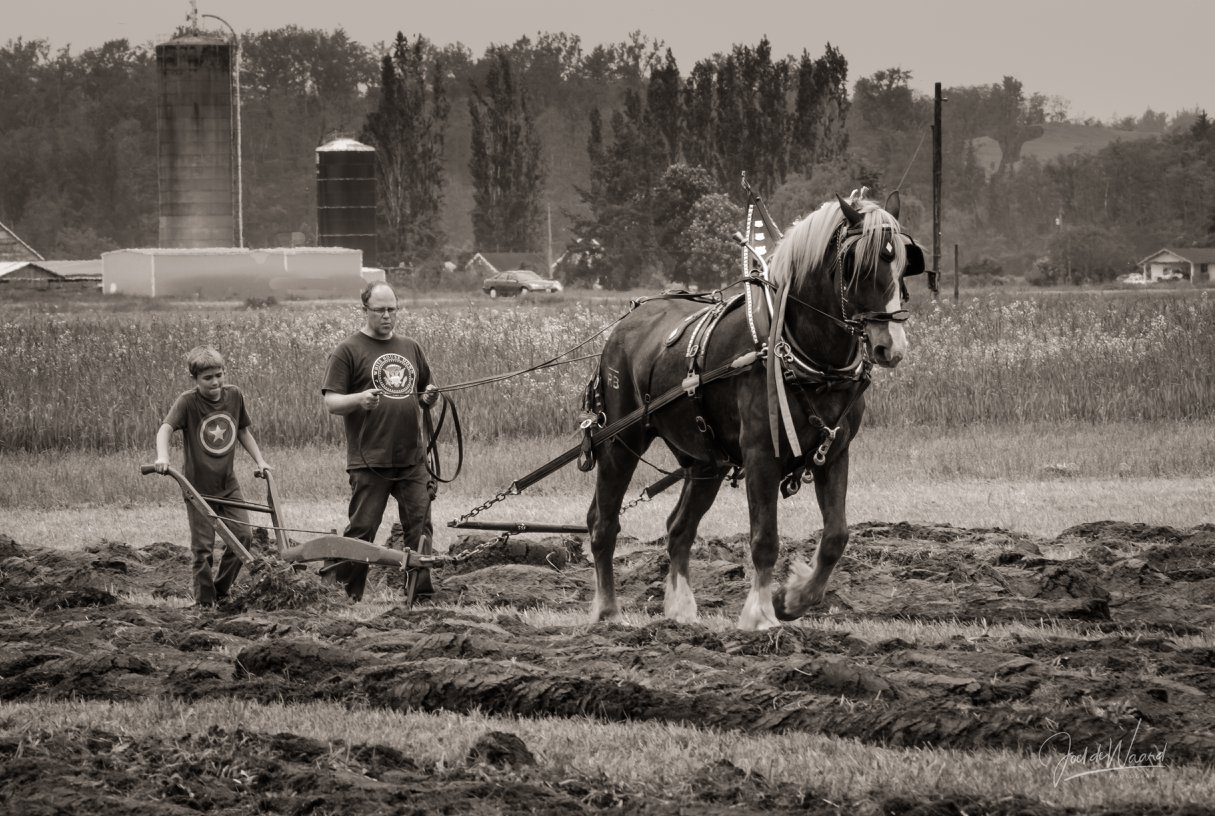
photo by Joel deWaard

The past was faded like a dream; 
There come the jingling of a team, 
A ploughman’s voice, a clink of chain, 
Slow hoofs, and harness under strain. 
Up the slow slope a team came bowing, 
Old Callow at his autumn ploughing, 
Old Callow, stooped above the hales, 
Ploughing the stubble into wales. 
His grave eyes looking straight ahead, 
Shearing a long straight furrow red; 
His plough-foot high to give it earth 
To bring new food for men to birth. 

O wet red swathe of earth laid bare,
O truth, O strength, O gleaming share,
O patient eyes that watch the goal,
O ploughman of the sinner’s soul.
O Jesus, drive the coulter deep
To plough my living man from sleep…

At top of rise the plough team stopped, 
The fore-horse bent his head and cropped. 
Then the chains chack, the brasses jingle, 

The lean reins gather through the cringle, 
The figures move against the sky, 
The clay wave breaks as they go by. 
I kneeled there in the muddy fallow, 
I knew that Christ was there with Callow, 
That Christ was standing there with me, 
That Christ had taught me what to be, 
That I should plough, and as I ploughed 
My Saviour Christ would sing aloud, 
And as I drove the clods apart 
Christ would be ploughing in my heart, 
Through rest-harrow and bitter roots, 
Through all my bad life’s rotten fruits.

Lo, all my heart’s field red and torn,
And Thou wilt bring the young green corn,
And when the field is fresh and fair
Thy blessed feet shall glitter there,
And we will walk the weeded field,
And tell the golden harvest’s yield,
The corn that makes the holy bread
By which the soul of man is fed,
The holy bread, the food unpriced,
Thy everlasting mercy, Christ.
~John Masefield from The Everlasting Mercy

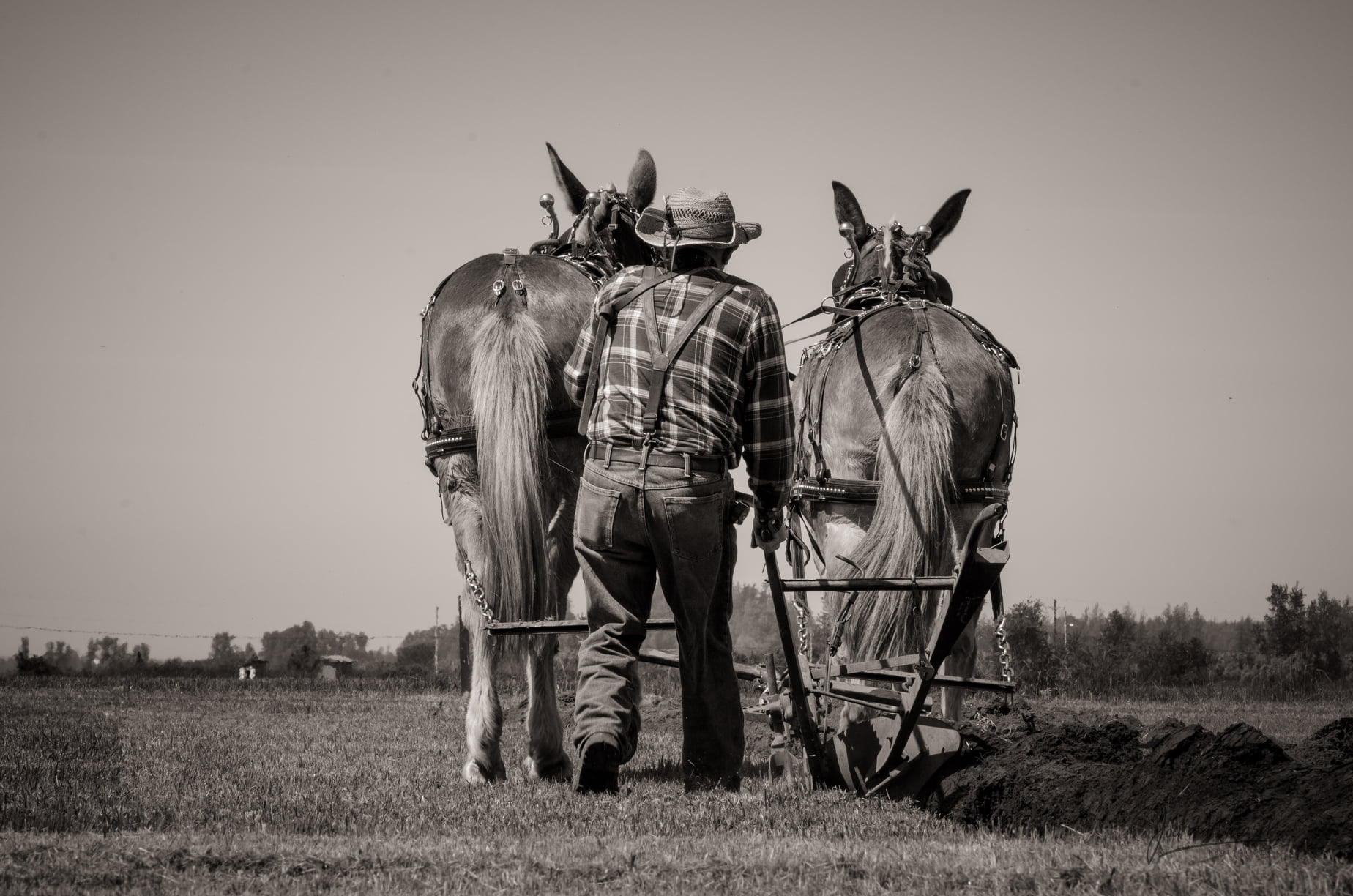
photo by Joel deWaard

We shoulder much burden in the pursuit of happiness and freedom,
worth every ounce of sweat,
every sore muscle,
every drop of blood,
every tear.

Our heart land is plowed,
yielding to the plowshare
digging deep with the pull of the harness.
The furrow should be straight and narrow.

We are tread upon
yet still bloom;
we are turned upside down
yet still produce bread.

The plowing under brings freshness to the surface,
a new face upturned to the cleansing dew,
knots of worms now making fertile our simple dust.

Plow deep our hearts this day of celebrating freedom, Dear Lord.
This is the day of rest You made for us
and let us remember to worship You, and not ourselves.

May we plow, sow, grow, and harvest what is needed
to feed your vast and hungry children
everywhere.

photo by Joel deWaard

Thank you once again to Joel deWaard, local farmer, craftsman and photographer, who graciously shares his photos of the Annual International Lynden (Washington) Plowing Match

A new book from Barnstorming is available for order here:

Leaving the Wilderness: For Love of Our Love

May the power of your love, Lord Christ, 
fiery and sweet as honey, 
so absorb our hearts 
as to withdraw them 
from all that is under heaven. 
Grant that we may be ready to die 
for love of your love, 
as you died for love of our love. 
~St. Francis of Assisi

Maundy Thursday is a day of letting go while still holding on.

If I am to see Jesus and know the power of His love,
I must let go of this life and walk with Him with every step to the cross.
I have only a tenuous grip on this world, utterly dependent on the Lord taking care of me.

This day, I am reminded of a few basics:
No arguing over who is best.
No hiding my dirty feet.
No holding back on the most precious of gifts.
No falling asleep.
No selling out.
No turning and running away.
No covering my face in denial.
No looking back.
No clinging to the comforts of the world.

But of course I fail again and again.
My heart resists leaving behind what I know.

Plucked from the crowd,
I must grasp and carry His load (which is, of course, my load) alongside Him.
Now is my turn to hold on and not let go, as if life depends on it.
Which it does — requiring no nails.

The fire of His love leaves my sin in ashes.
The food of His body nurtures my soul.
From that soul and ashes rises new life.
Love of His love of our love.

Waiting in Wilderness: Already Not Yet

For in this hope we were saved.
But hope that is seen is no hope at all.
Who hopes for what they already have?
But if we hope for what we do not yet have,
we wait for it patiently.

Romans 8:24-25

Morning of buttered toast;
of coffee, sweetened, with milk.

Out the window,
snow-spruces step from their cobwebs.
Flurry of chickadees, feeding then gone.
A single cardinal stipples an empty branch—
one maple leaf lifted back.

I turn my blessings like photographs into the light;
over my shoulder the god of Not-Yet looks on:

Not-yet-dead, not-yet-lost, not-yet-taken.
Not-yet-shattered, not-yet-sectioned,
not-yet-strewn.

Ample litany, sparing nothing I hate or love,
not-yet-silenced, not-yet-fractured; not-yet-

Not-yet-not.

I move my ear a little closer to that humming figure,
I ask him only to stay.
~Jane Hirshfield “Not Yet” from The Lives of the Heart.

To wait for the “not yet” is a hard sweet tension.

There is tension in knowing that something profound is happening–a vanishing sunset, a vernal equinox, a life change or transition, but the transformation is not yet complete, and I’m not sure when it will be.

I am still unfinished business.

In two weeks I will be reminded of what is yet to come. I will know the shock of the empty tomb. My heart will burn within me as more is revealed, through the simple act of bread breaking.

It is hard not yet having what I know will be coming.
But it is sweet to have certainty it is coming
because of what we have already been given.
Like the labor of childbirth,
I groan knowing what it will take to get there,
and I am full to brimming already.

The waiting won’t be easy;
it will often be painful to be patient,
staying alert to possibility and hope when I am exhausted,
barely able to function.
Others won’t understand why I wait,
nor do they comprehend what I could possibly be waiting for.

Yet we persevere together, with patience, watching and hoping –
a community groaning together in expectation of what is to come in the morning.

It has been finished on our behalf, while we wait, while we wait.

It is up to me to be all-ready.

Waiting in Wilderness: Something Understood

Prayer the church’s banquet, angel’s age,
God’s breath in man returning to his birth,
The soul in paraphrase, heart in pilgrimage,
The Christian plummet sounding heav’n and earth
Engine against th’ Almighty, sinner’s tow’r,
Reversed thunder, Christ-side-piercing spear,
The six-days world transposing in an hour,
A kind of tune, which all things hear and fear;
Softness, and peace, and joy, and love, and bliss,
Exalted manna, gladness of the best,
Heaven in ordinary, man well drest,
The milky way, the bird of Paradise,
Church-bells beyond the stars heard, the soul’s blood,
The land of spices; something understood.
~George Herbert “Prayer”

portrait of Dan’s mom, Emma Gibson, praying, by granddaughter Sara Larsen

Prayer is my refuge – a renewal, refreshment, reconciliation, reassurance.
My time to weep.
My time for awe.
My time to praise.
My time for gratitude:
A kind of tune, which all things hear and fear;
Softness, and peace, and joy, and love, and bliss,
Exalted manna, gladness of the best,
Heaven in ordinary

How else can I know I have the ear of God
who puts heaven within my reach of
my voice and my words–
I am understood
by the Creator of the Universe,
no less than He.

May you see God’s light on the path ahead
when the road you walk is dark.
May you always hear even in your hour of sorrow
the gentle singing of the lark.
When times are hard may hardness
never turn your heart to stone.
May you always remember when the shadows fall–
You do not walk alone.
~Traditional Irish Blessing

Waiting in Wilderness: A Time of Treading Life
This is the wilderness time,
when every path is obscure
and thorns have grown around the words of hope.

This is the time of stone, not bread,
when even the sunrise feels uncertain
and everything tastes of bitterness.

This is the time of ashes and dust,
when darkness clothes our dreams
and no star shines a guiding light.

This is the time of treading life,
waiting for the swells to subside and for the chaos to clear.

Be the wings of our strength, O God,
in this time of wilderness waiting.
– Keri Wehlander from “600 Blessings and Prayers from around the world” compiled by Geoffrey Duncan

He will cover you with his feathers,
    and under his wings you will find refuge;
    his faithfulness will be your shield and rampart.
Psalm 91:4

To be commanded to love God at all, let alone in the wilderness,
is like being commanded to be well when we are sick,
to sing for joy when we are dying of thirst,
to run when our legs are broken.
But this is the first and great commandment nonetheless.
Even in the wilderness- especially in the wilderness – you shall love him.   
~Frederick Buechner from A Room Called Remember:Uncollected Pieces

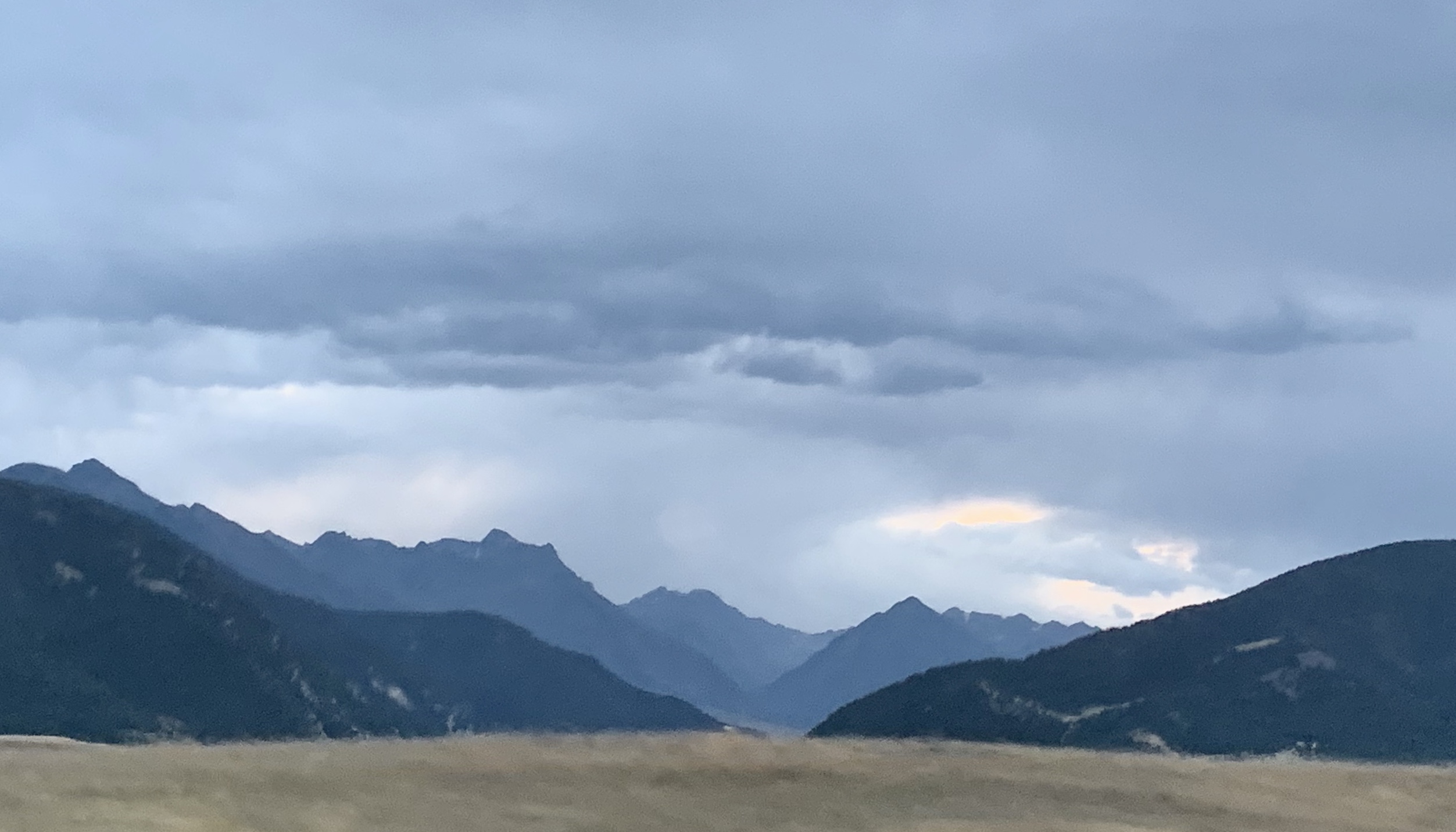
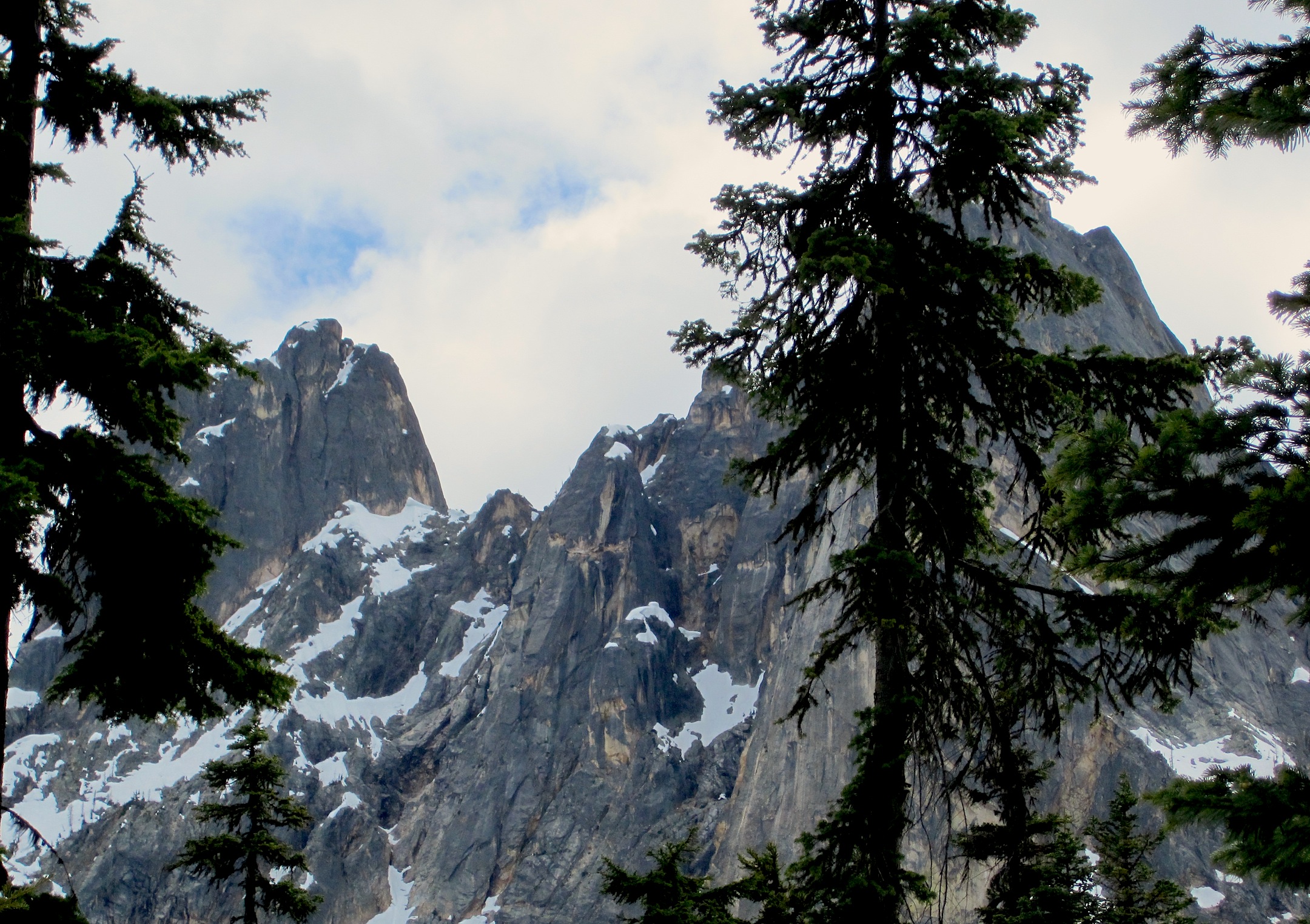
I usually think of wilderness as a distant peak far removed from anything or anyone.  From my farmhouse window on a clear day, I can see a number of distant peaks if the cloud cover moves away to reveal them.

Or perhaps the wilderness is a desolate plain that extends for miles without relief in sight.

Wilderness is also found in an isolated corner of my human heart. I keep it far removed from anything and anyone. During my televisit computer work,  I witness this wilderness in others, many times every day.

A diagnosis of “wilderness of the heart” doesn’t require a psychiatric manual: 
there is despair, discouragement, disappointment, lack of gratitude, lack of hope. 
One possible treatment to tame that wilderness is a covenantal obedience to God and others. It reaches so deep no corner is left untouched.

There come times in one’s life, and this past year especially, when loving God as commanded seems impossible. We are too broken, too frightened, too ill and too wary to trust God with faith and devotion.  We are treading life simply to stay afloat.

During this second Lenten pandemic, God’s love becomes respite and rescue from the wilderness of my own making. He is the sweet cure for a bitter and broken heart.

The Pang of Salt

What a person desires in life
    is a properly boiled egg.
This isn’t as easy as it seems.
There must be gas and a stove,
    the gas requires pipelines, mastodon drills,
    banks that dispense the lozenge of capital.
There must be a pot, the product of mines
    and furnaces and factories,
    of dim early mornings and night-owl shifts,
    of women in kerchiefs and men with
    sweat-soaked hair.
Then water, the stuff of clouds and skies
    and God knows what causes it to happen.
There seems always too much or too little
    of it and more pipelines, meters, pumping
    stations, towers, tanks.
And salt-a miracle of the first order,
    the ace in any argument for God.
Only God could have imagined from
    nothingness the pang of salt.
Political peace too. It should be quiet
    when one eats an egg. No political hoodlums
    knocking down doors…
It should be quiet, so quiet you can hear
    the chicken, a creature usually mocked as a type
    of fool, a cluck chained to the chore of her body.
Listen, she is there, pecking at a bit of grain
    that came from nowhere.

~Baron Wormser, from “A Quiet Life” from Scattered Chapters.

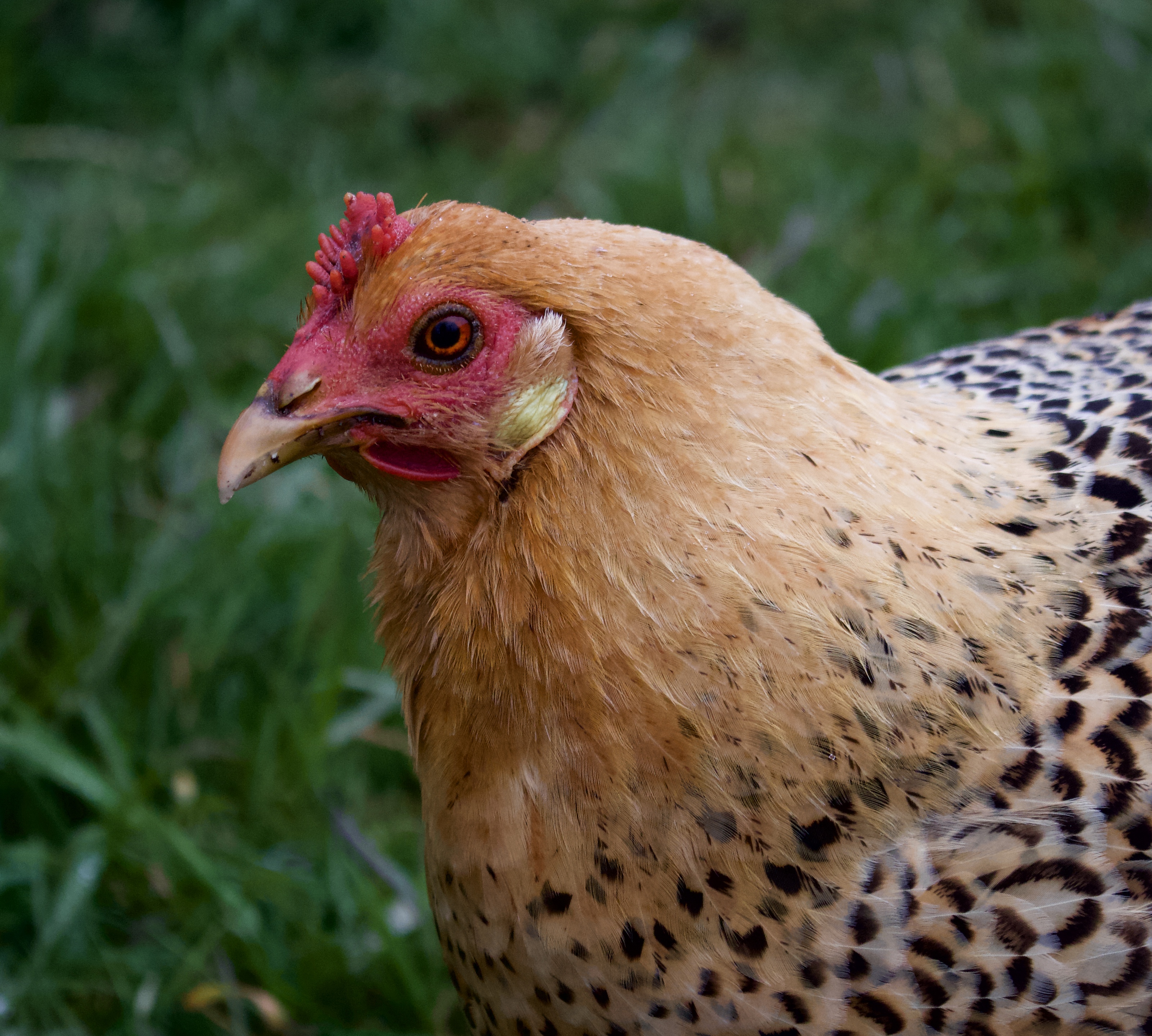
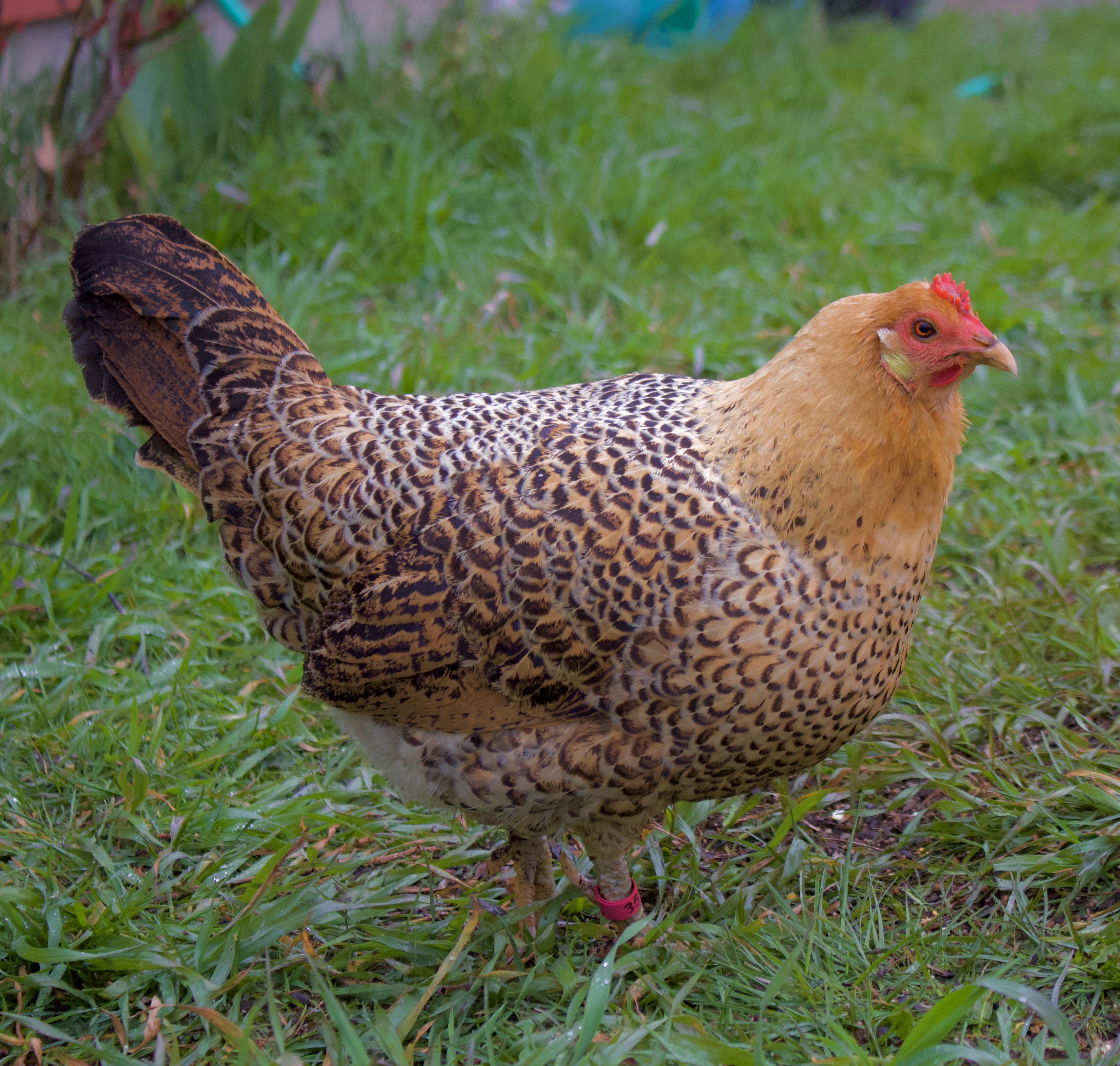
So much depends on the cluck of a chicken, on her self-satisfied cackle when she releases her perfect egg into the nest.

I wish I could be so flawless as her egg but am far from it.
The simple things in life season me with meaning and flavor,
all God-given mercy making it possible that I am here at all:
walking this earth for the time I am granted,
talking with those who listen intently,
healing those who seek my help,
writing for those who read kindly,
loving those who, like me, thrive
solely on being fed God’s gentle grace
salted over my forgiven flaws:
I’m a boiled egg peeled imperfectly
with divets and bits of shell still attached,
yet formed from a clucking chicken fed generously
from His holy hand.

Diagnosing a Case of the Dwindles

Morning without you is a dwindled dawn.
~Emily Dickinson in a letter to a friend April 1885

For the past year, the most common search term bringing new readers to my Barnstorming blog is “dwindled dawn.” I have written about Emily Dickinson’s “dwindles” on occasions, but had not really been diagnosed with a serious case myself until recently.

I am not the only one. It has spread across the globe and I regularly recognize the symptomatology of the dwindles in my clinical work with patients.

There really isn’t a pill or other therapy that works well for this. One of the most effective treatments I might prescribe is breaking bread with friends and family all in the same room at the same table while the sun rises around us, lingering in conversation because there could not be anything more important for us to do.

Just being together would be the ultimate cure.

Maybe experiencing friend and family deficiency helps us understand how vital they are to our well-being. You don’t know what you have ’till they’re gone, sadly some now forever.

Point well-taken; it is high time to replenish the reservoir before dwindling away to nothing.

So if you are visiting these words for the first time because you too searched for “dwindled dawn,” welcome to Barnstorming. We can dwindle together in our shared isolation.

Because mornings without you all diminishes me.
I just wanted you to know.

This One Life is a Gift

When I can no longer say thank you
for this new day and the waking into it,
for the cold scrape of the kitchen chair
and the ticking of the space heater glowing
orange as it warms the floor near my feet,
I know it is because I’ve been fooled again
by the selfish, unruly man who lives in me
and believes he deserves only safety
and comfort. But if I pause as I do now,
and watch the streetlights outside winking
off one by one like old men closing their
cloudy eyes, if I listen to my tired neighbors
slamming car doors hard against the morning
and see the steaming coffee in their mugs
kissing their chapped lips as they sip and
exhale each of their worries white into
the icy air around their faces—then I can
remember this one life is a gift each of us
was handed and told to open: Untie the bow
and tear off the paper, look inside
and be grateful for whatever you find
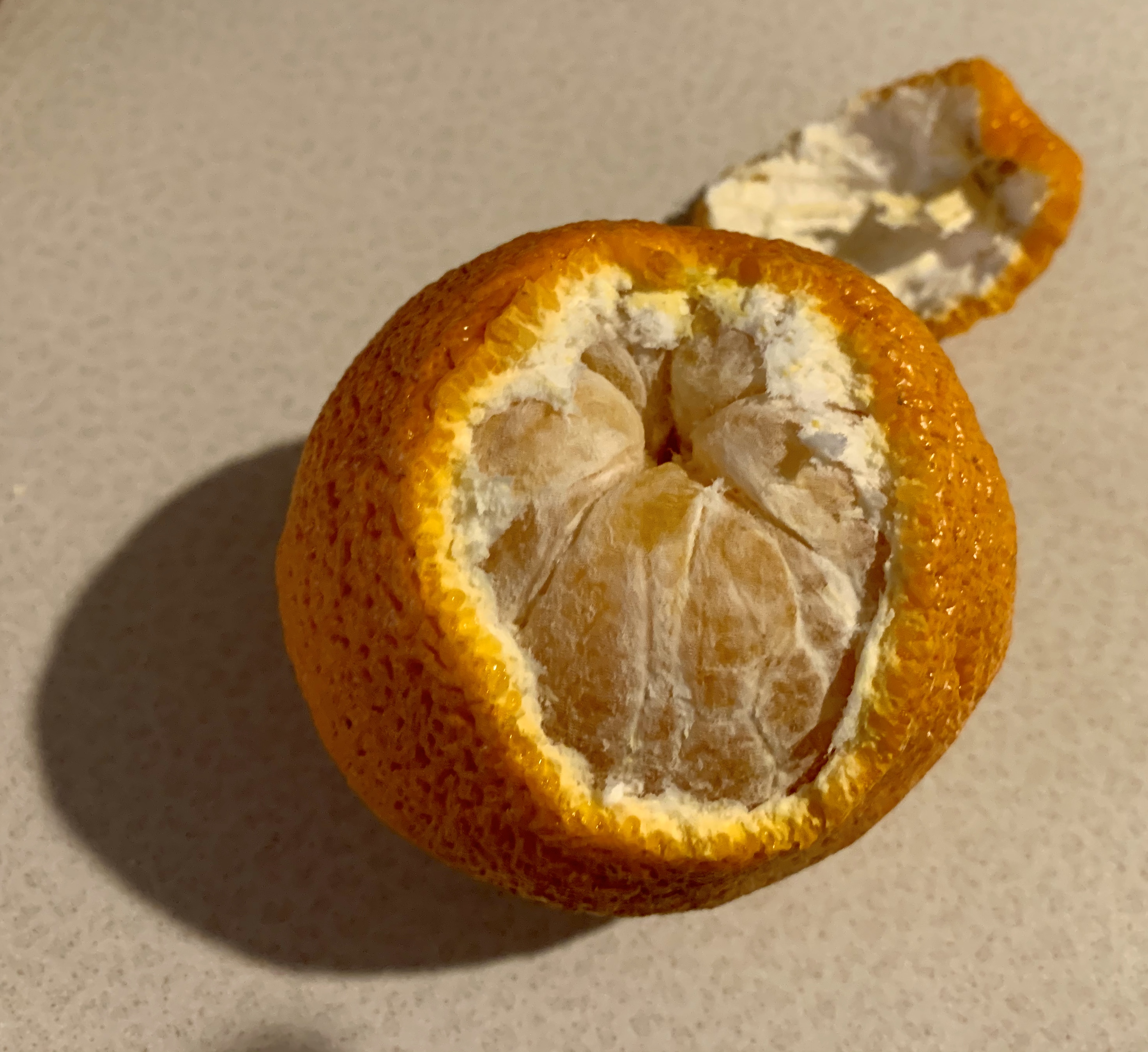
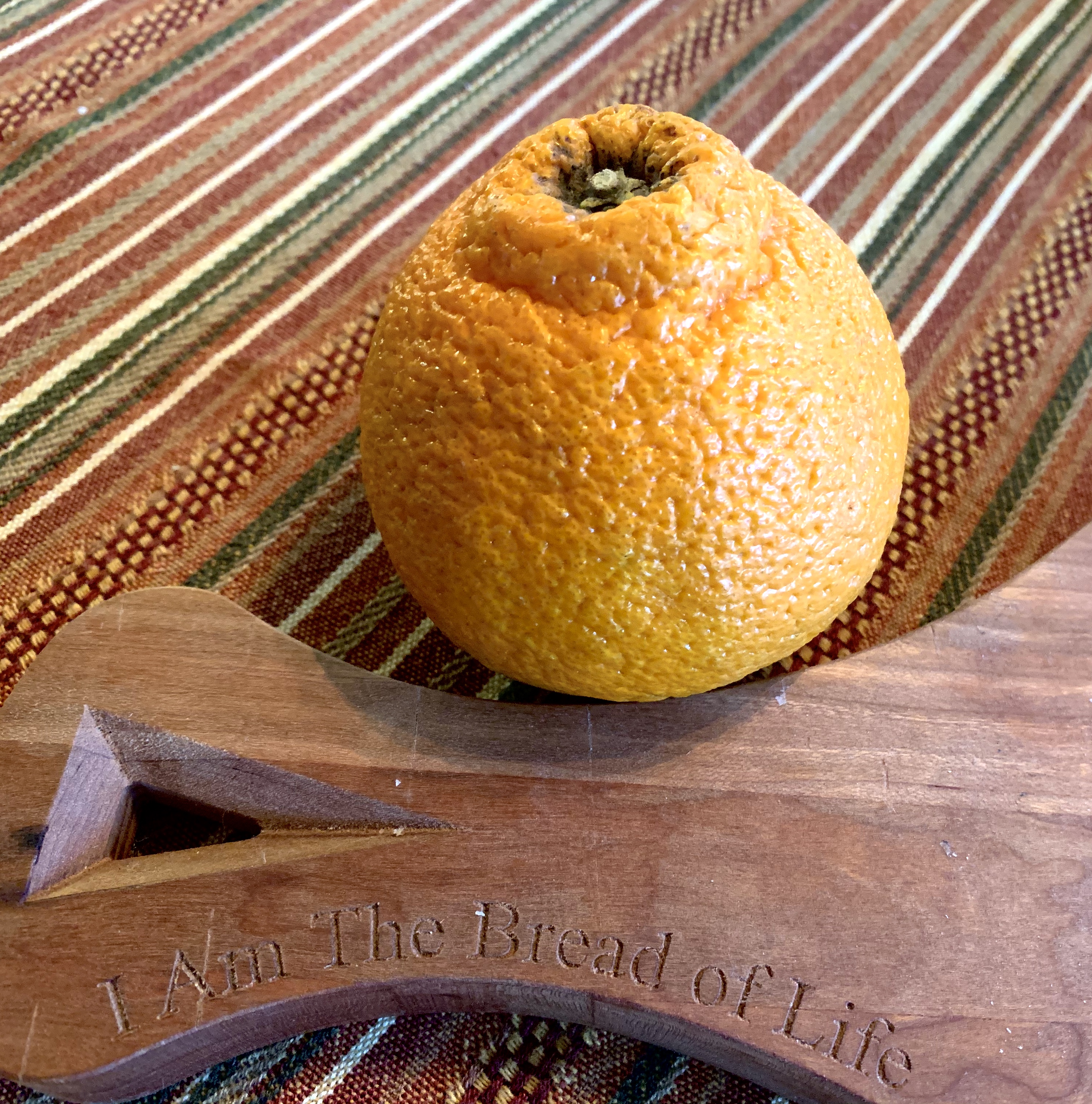
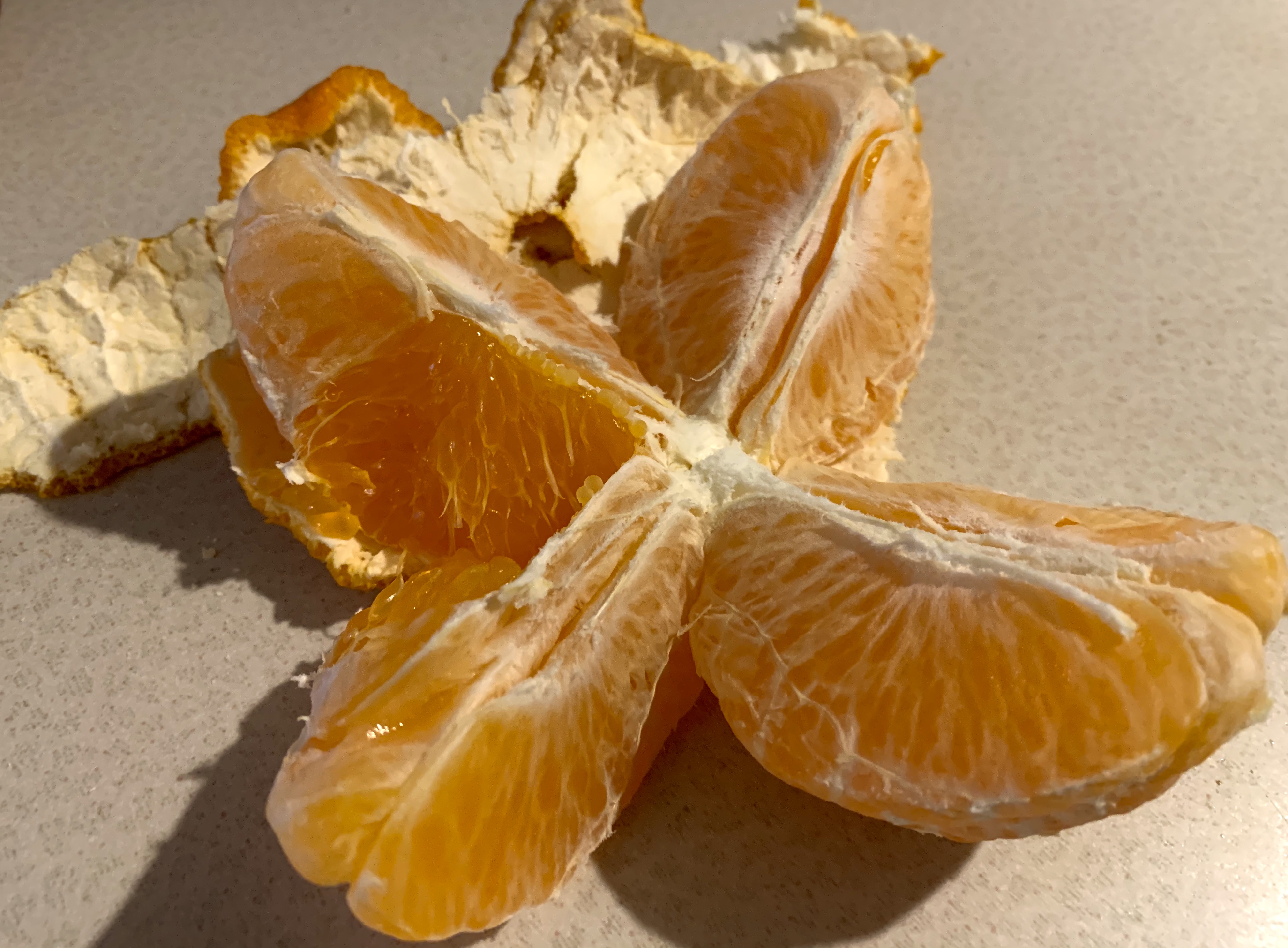
even if it is only the scent of a tangerine
that lingers on the fingers long after
you’ve finished eating it.

~James Crews, “Winter Morning” from How to Love the World: Poems of Gratitude and Hope

I close my eyes, savor a wafer of
sacred cake on my tongue and
try to taste my mother, to discern
the message she baked in these loaves
when she was too ill to eat them:

I love you.
It will end.
Leave something of sweetness
and substance
in the mouth of the world.
~Anna Belle Kaufman “Cold Solace”

Each day, even now,
brings something new and special to my life,
for which I am so grateful;
I peel it carefully
to find what hides inside,
all the while inhaling its fragrance
then carefully, slowly, gently
lifting it to my mouth to
savor it, knowing
only love,
only loving,
only the gift of sacrifice
could taste this sweet.