
For My Soul: This is Going to Hurt

September.
Second-year medical student.
An early patient interview
at the Massachusetts General Hospital
Routine hernia repair planned, not done.
Abdomen opened and closed.
Filled with disease, cancer.

The patient is fifty-six,
a workingman, Irish
I sit with him, notice
the St. Christopher medal
around his neck.
Can’t hurt, can it? he laughs.
I have become his friend.

I bring him a coloring book picture
that shows this thing, this unfamiliar
organ that melted beneath our hands
at dissection:
Pancreas.

Leaving his room, crying,
avoiding classmates,
I take the back stairs.
I find myself locked,
coatless in the courtyard outside.

~Kelley Jean White “Pandora”
At seventeen years old, I thought I had things figured out. I had graduated near the top of my senior class, was heading off to college, and felt confident about who I was becoming. I had attended church all my life but my commitment to my faith was actually waning rather than strengthening.

In anticipation of college tuition bills, I took a summer job at a local nursing home for $1.25 an hour as a nurses’ aide. My total training was two days following a more experienced aide on her rounds of feeding, pottying, dressing and undressing, and bathing her elderly patients. Then I was assigned patients of my own and during a typical shift I carried a load of 13 patients. It didn’t take long for me to learn the rhythm of caretaking, and I enjoyed the work and my patients.

One woman in particular remains vivid in my memory 52 years later. Irene was in her 80’s with no nearby family, bedridden with a painful bone disease that had crippled her for a decade or more. She was unable to do any of her own self care but her mind remained sharp and her eyes bright. Her hearty greeting cheered me when I’d come in her room several times a shift to turn her on her egg-crate mattress bed to prevent pressure sores on her hips and shoulders.

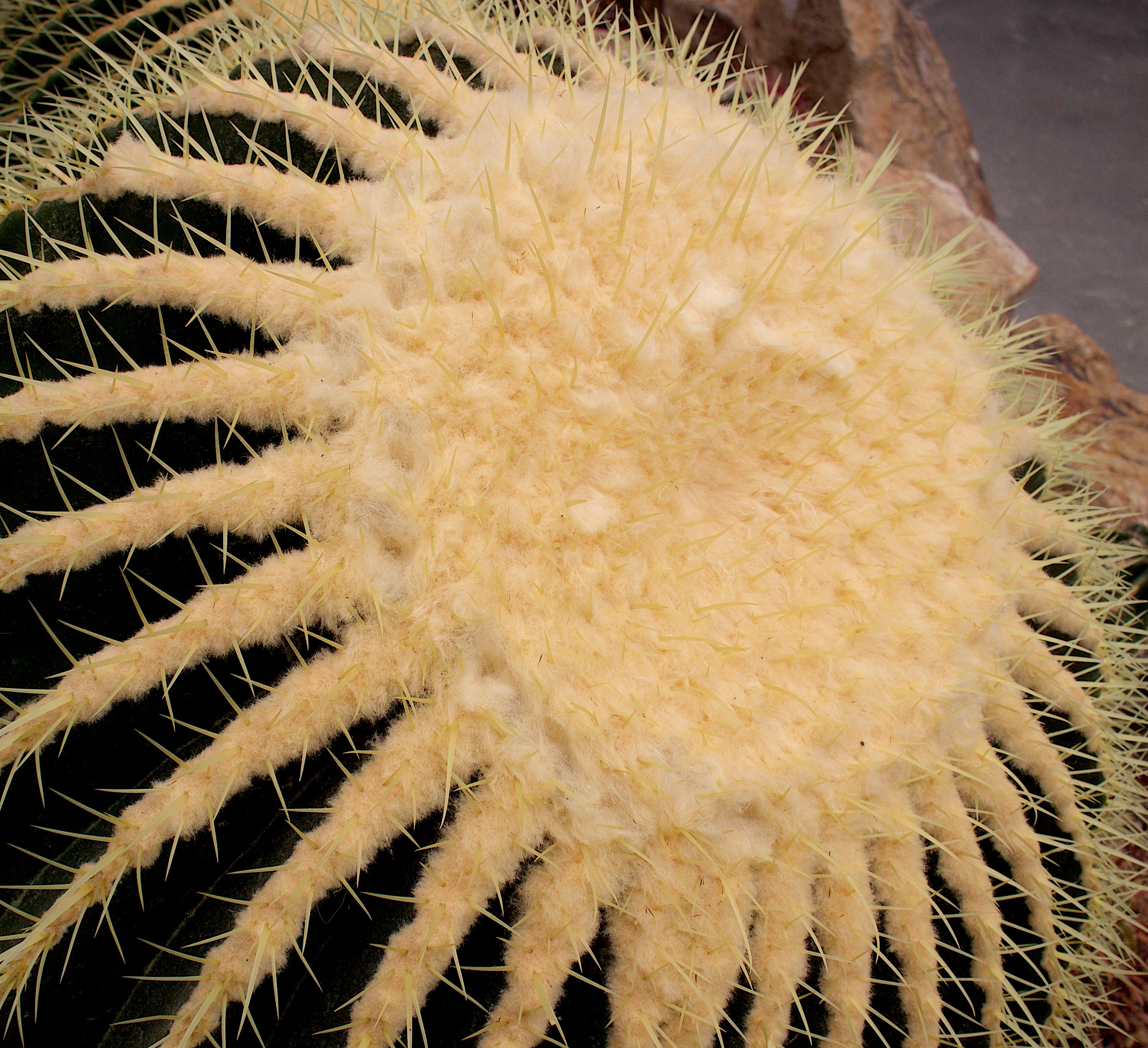
The simple act of turning her in her bed was an ordeal beyond imagining – it always hurt her. I felt as though I was impaling her on hundreds of sharp needles.

I would prepare her for the turn by cushioning her little body with pads and pillows, but no matter how careful I was, her brittle bones would crackle and crunch like Rice Crispies cereal with every movement. Tears would flow from her eyes and she’d always call out “Oh Oh Oh Oh” during the process but then once settled in her new position, she’d look up at me and say “thank you, dear, for making that so much easier for me.”

I would nearly weep in gratitude at her graciousness when I could do so little to alleviate her suffering.

Before I’d leave the room, Irene would grab my hand and ask when I would be returning. Then she’d say “I know the Lord prepared you to take care of me” and she would murmur a prayer to herself.

As difficult as each “turning” was for both of us, I started to look forward to it. I knew she prayed not only for herself, but I knew she prayed for me as well. I felt her blessing each time I walked into her room knowing she was waiting for me. She trusted me to do my best.

One evening I came to work and was told Irene was running a high fever, and struggling to breathe. She was being given oxygen and was having difficulty taking fluids. The nurse I worked under asked that I check Irene more frequently than my usual routine.

As I approached her bed, Irene reached out and held my hand. She was still alert but very weak. She looked me in the eye and said “You know the Lord is coming for me today?” All I could say was “I know you have waited for Him a long time.” She murmured “Come back soon” and closed her eyes.

I returned to her room as often as I could and found her becoming less responsive, yet still breathing, sometimes short shallow breaths and sometimes long and deep. Near the end of my shift, as morning was dawning, when I entered the room, I knew He had come for her.

She lay silent and relaxed for the first time since I had met her. Her little body, so tight with pain only hours before, seemed at ease. It was my job to prepare her for the mortuary workers who would soon come for her. Her body still warm to touch, I washed and dried her skin and brushed her hair and wrapped her in a fresh sheet, wondering at how I could now turn her easily with no pain and no tears. I could see a trace of a smile at the corners of her mouth. I knew then the Lord had lifted her soul from her imprisonment. He had rewarded her faithful perseverance.

I rejoice in the hope of the glory of the Lord, thanks to Irene. She showed me what it means to watch for the morning when He will come. Though immobile in bed, crippled and wracked with pain, her perseverance led to loving a young teenager uncertain in her faith, and helped point me to my future profession in medicine.

Irene brought the Lord home to me when she went home to Him.
And we rejoice in the hope of the glory of God. Not only so, but we also rejoice in our sufferings, because we know that suffering produces perseverance
Romans 5:2b-3

This Lenten season I reflect on the words of the 19th century southern spiritual hymn “What Wondrous Love is This”

One-Time
Monthly
Yearly

Make a one-time or recurring donation to support daily Barnstorming posts

Make a monthly donation

Make a yearly donation

Choose an amount

$10.00
$25.00
$50.00
$5.00
$15.00
$100.00
$5.00
$15.00
$100.00

Or enter a custom amount

$

Your contribution is deeply appreciated.

Your contribution is appreciated.

Your contribution is appreciated.

DonateDonate monthlyDonate yearly
To Bear the Dreadful Curse: Every Limb Lit

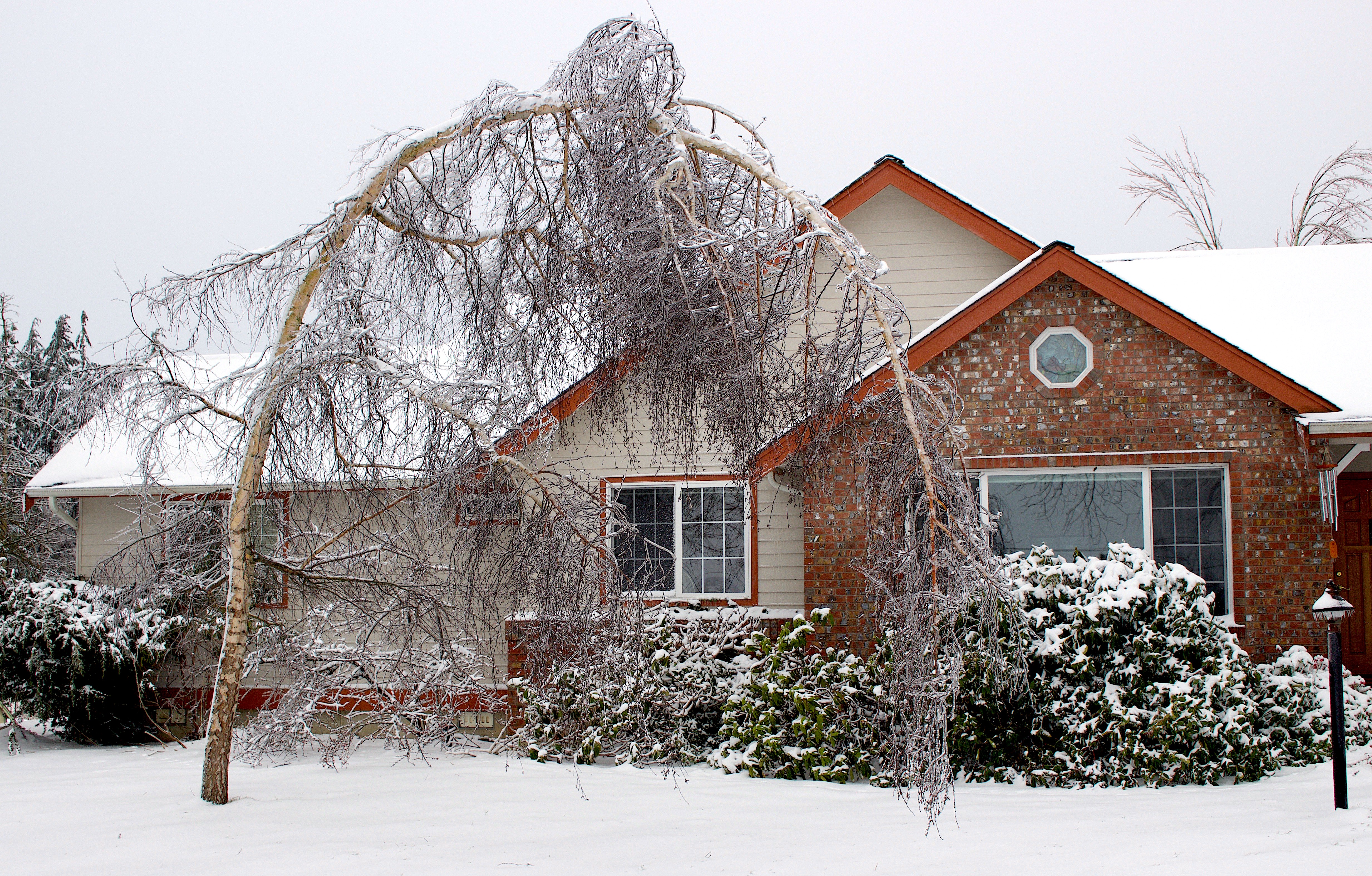
My sorrow’s flower was so small a joy
It took a winter seeing to see it as such.
Numb, unsteady, stunned at all the evidence
Of winter’s blind imperative to destroy,
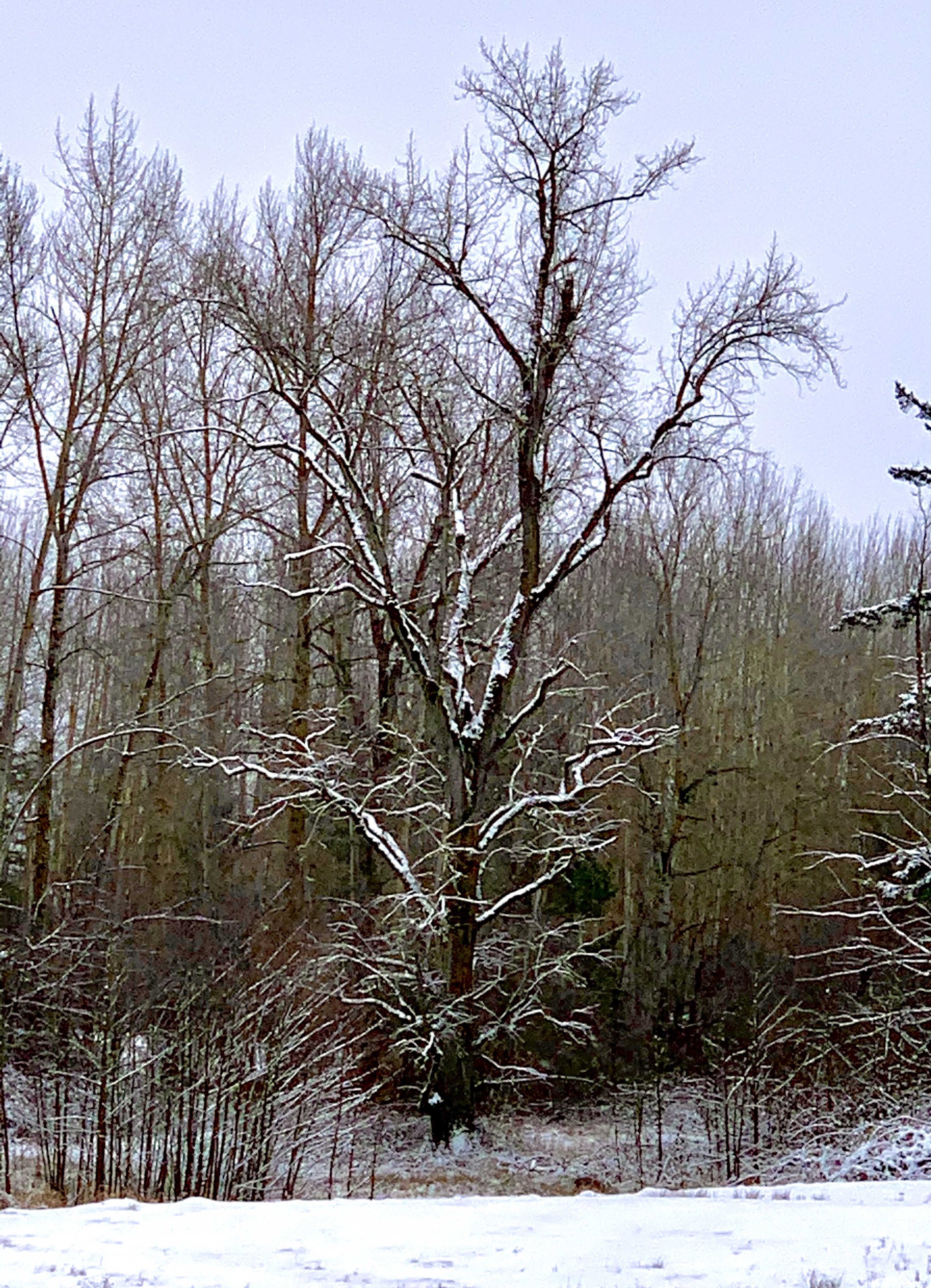
I looked up, and saw the bare abundance
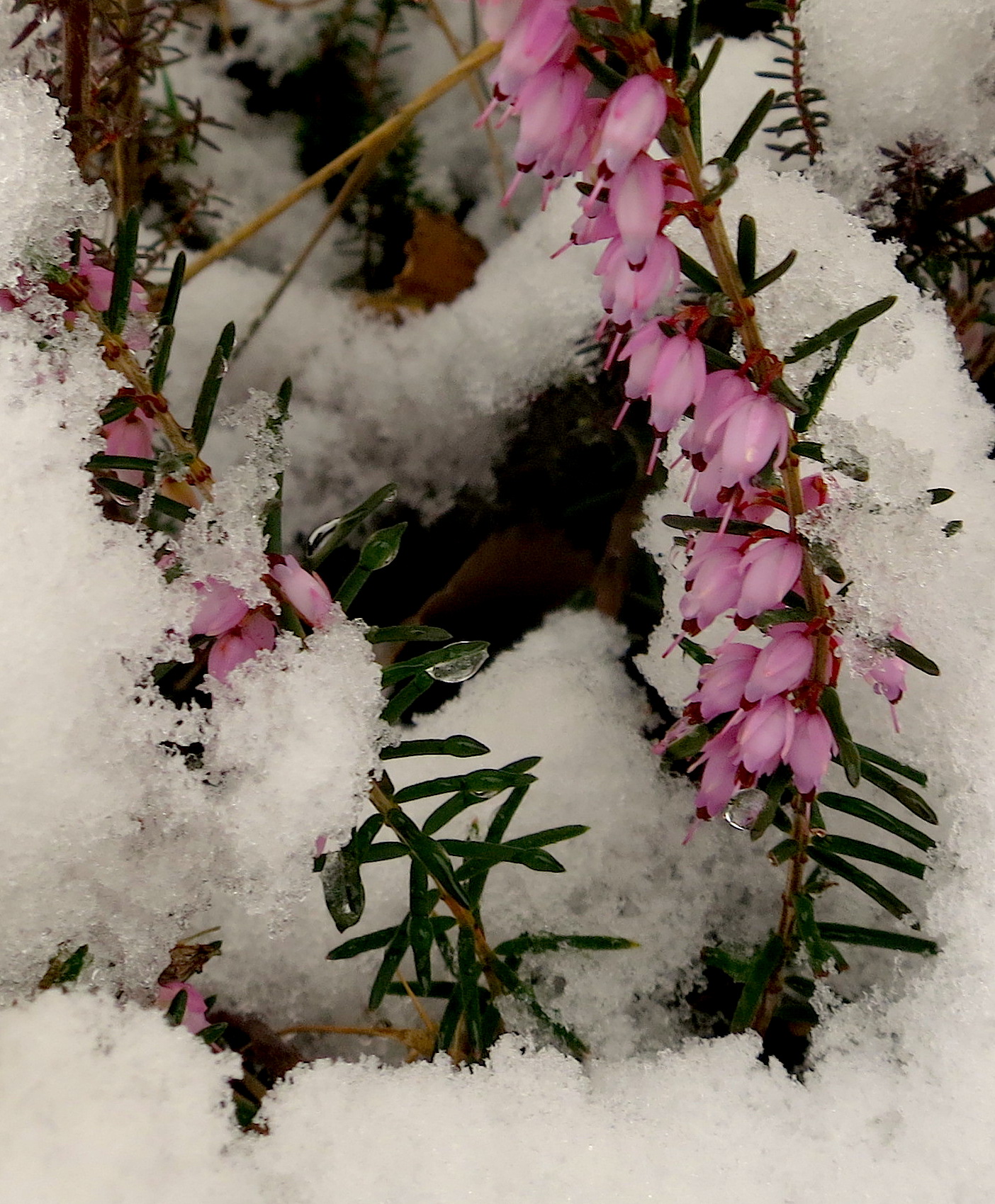
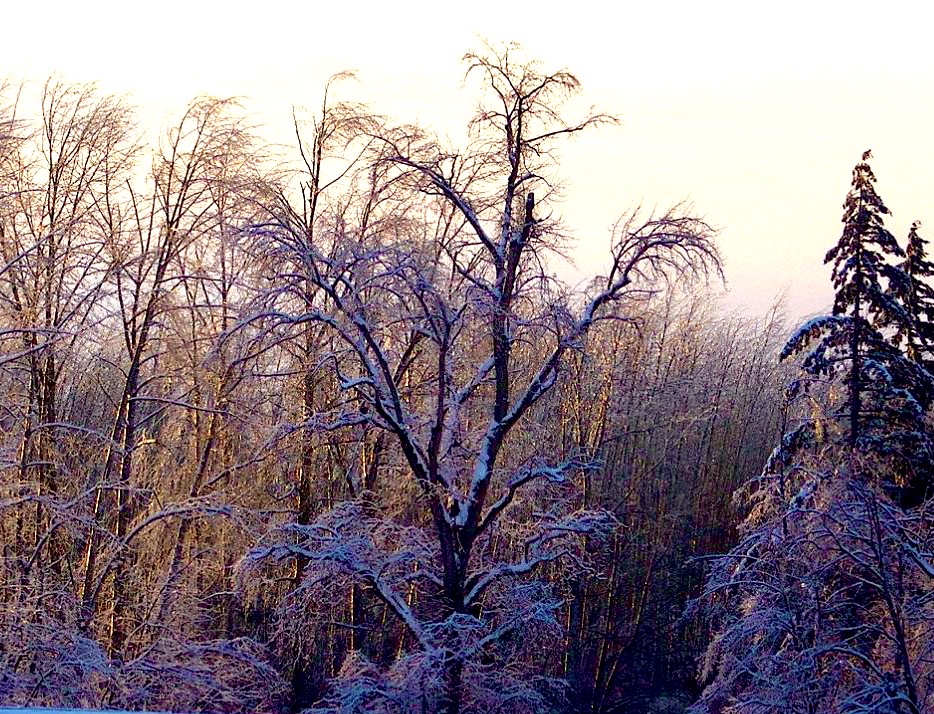
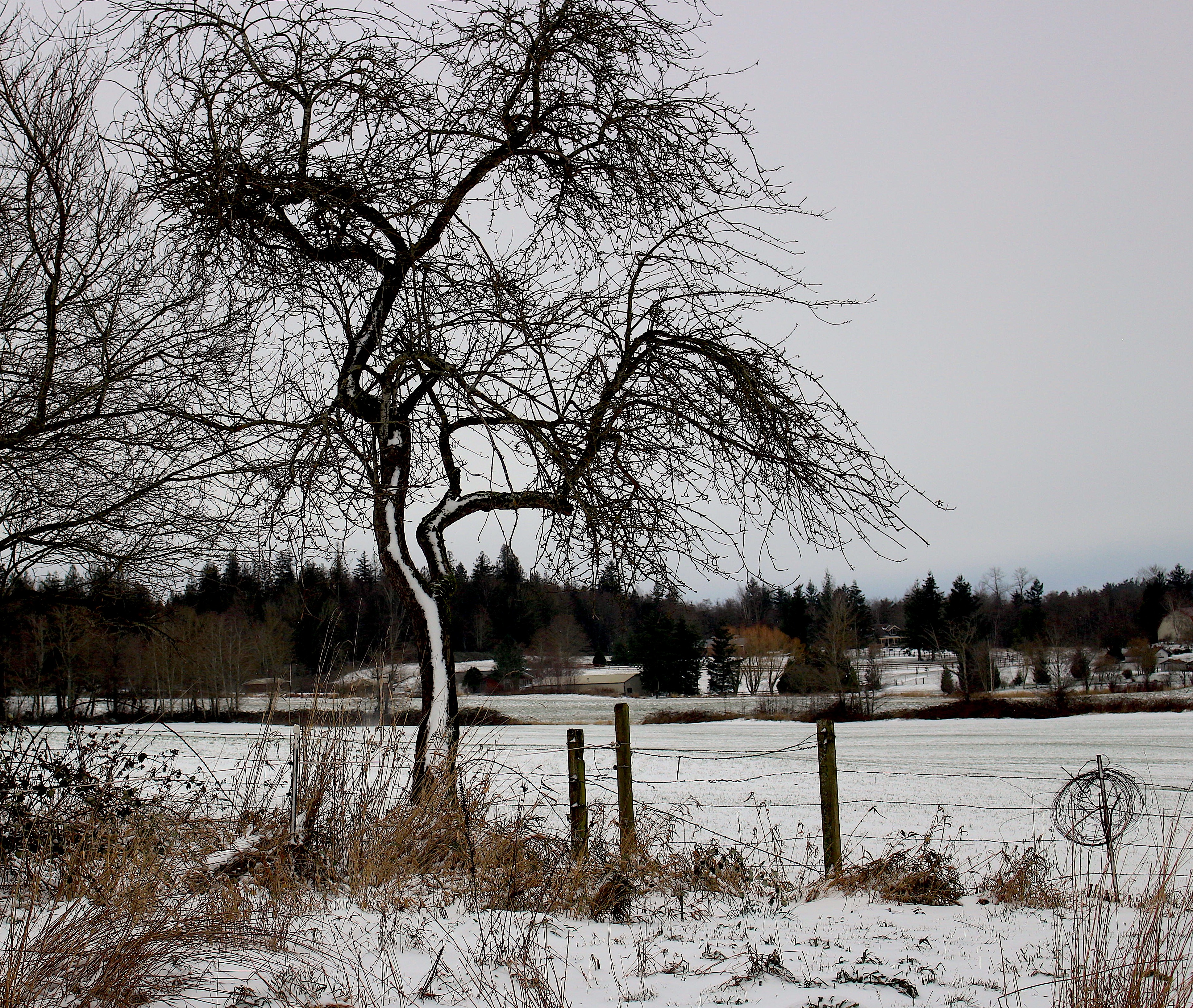
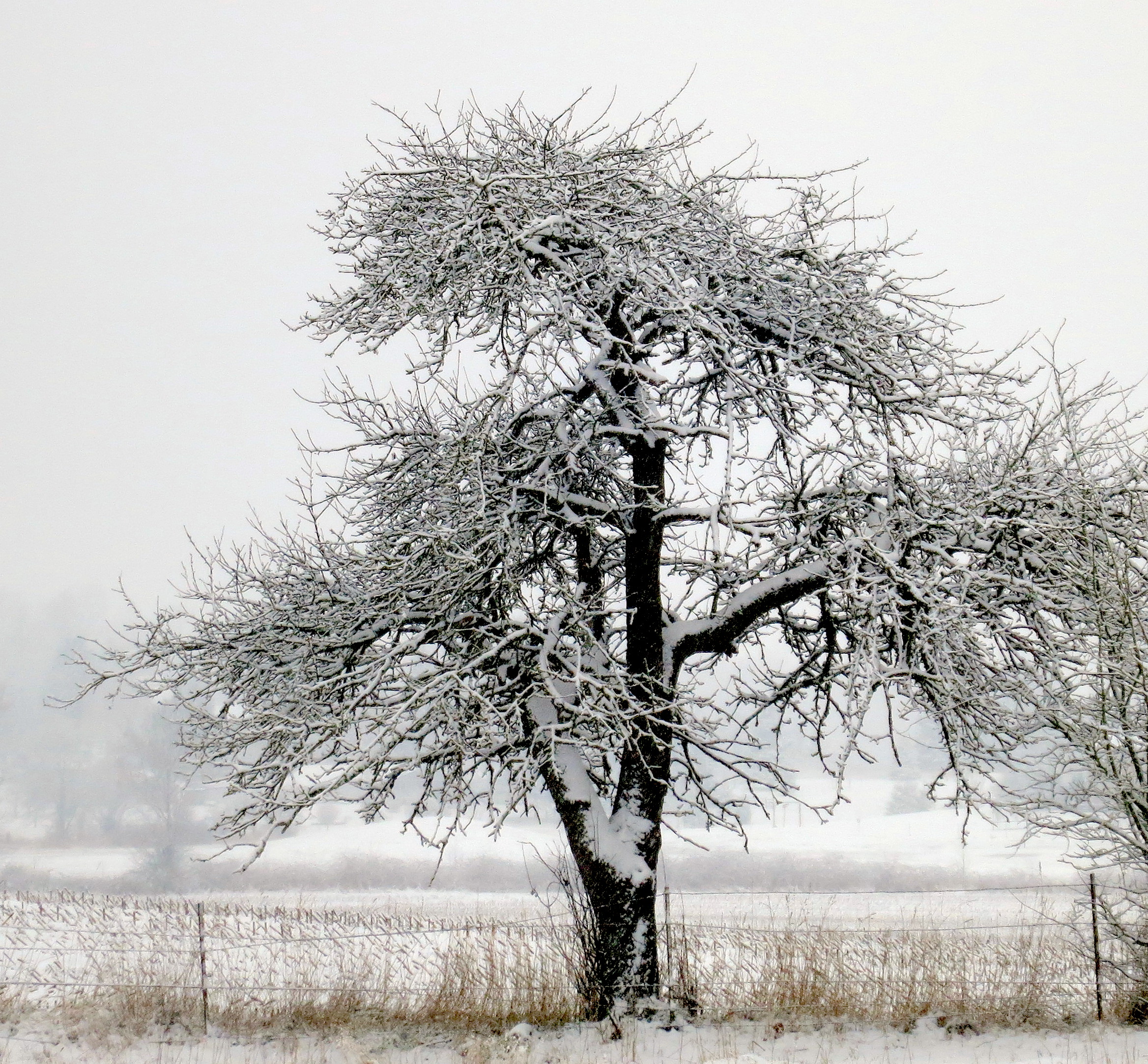
Of a tree whose every limb was lit and fraught with snow.
What I was seeing then I did not quite know
But knew that one mite more would have been too much.
~Christian Wiman “After a Storm” from Once in the West: Poems

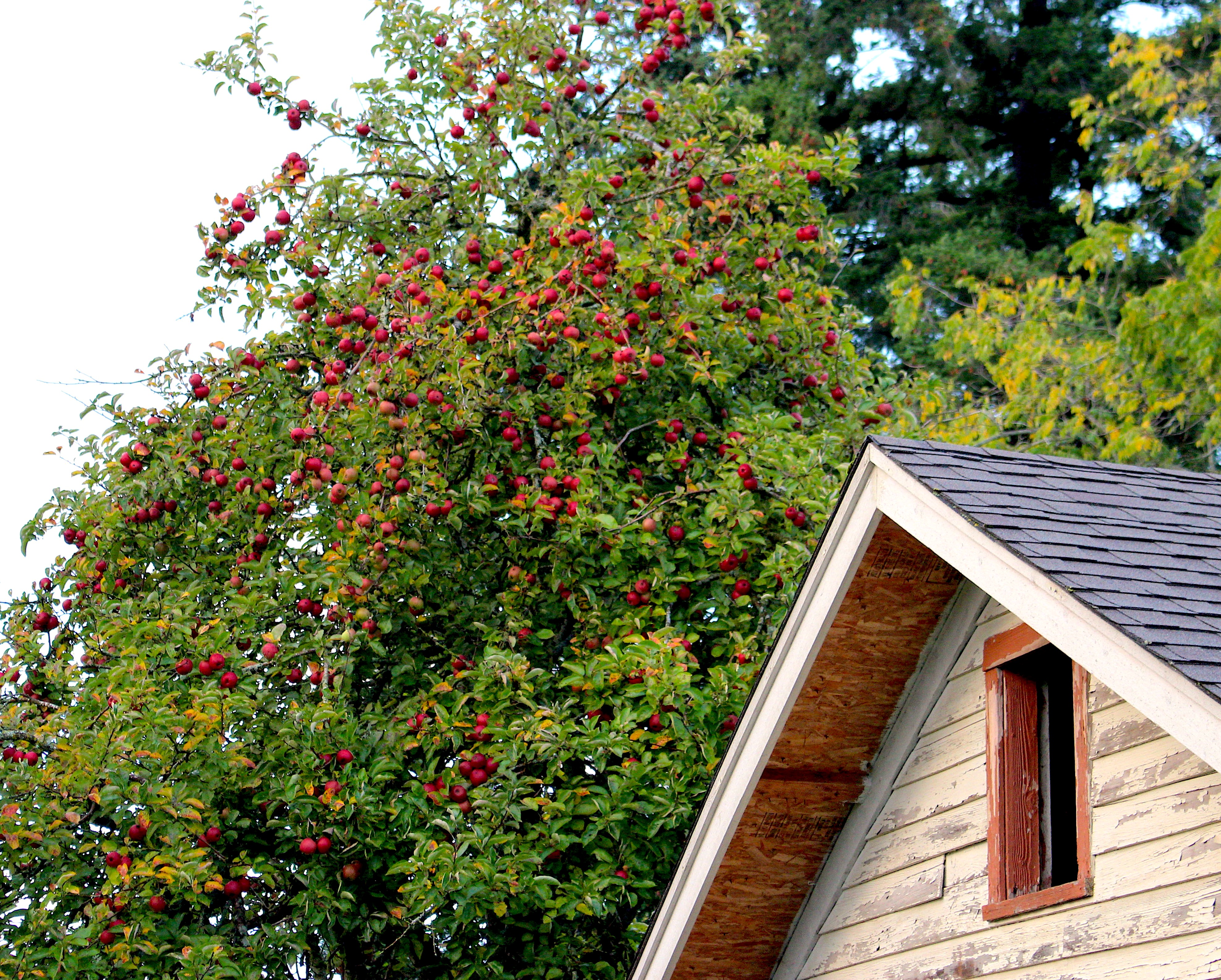
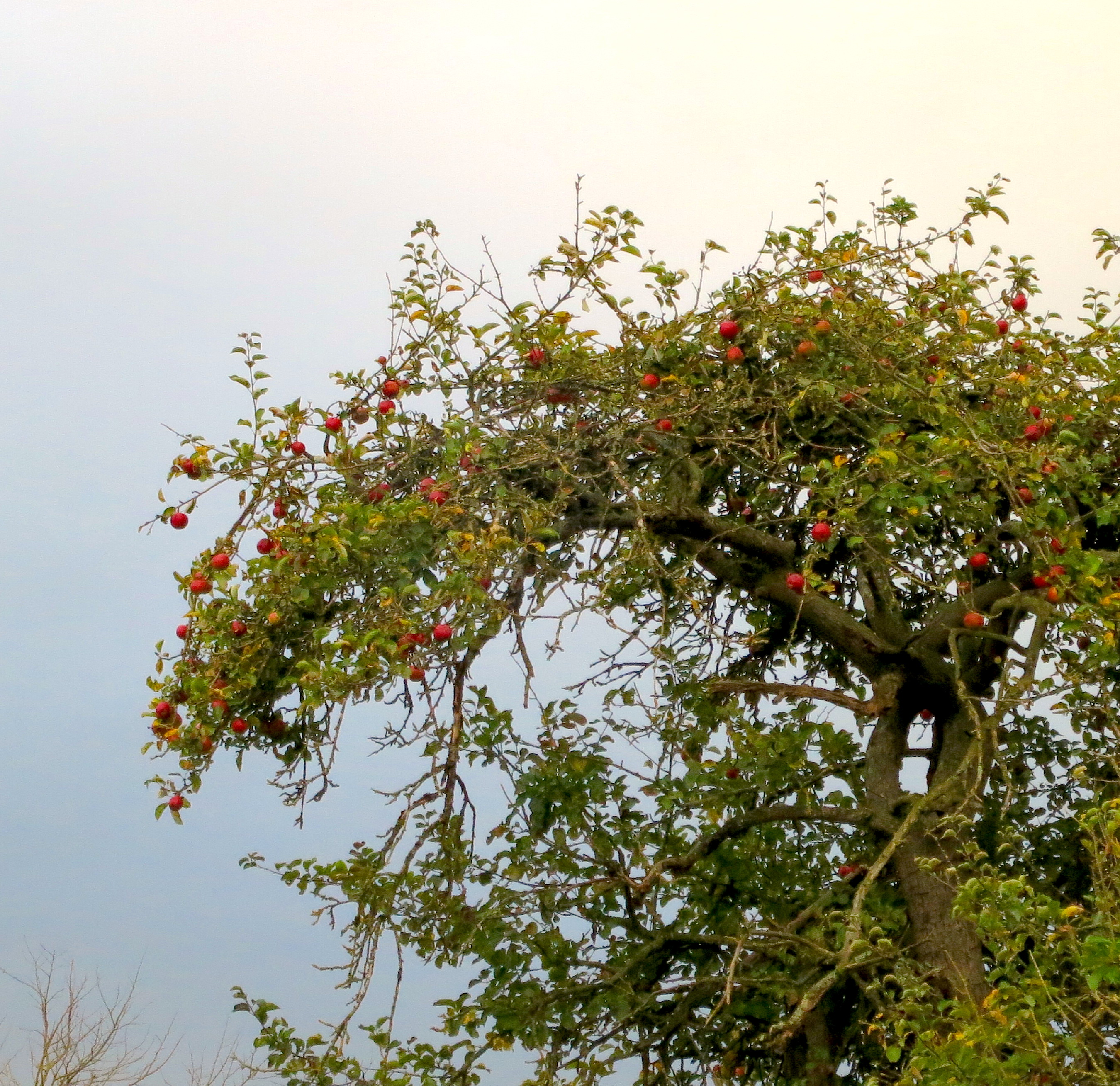
Though a weak branch strains mightily to bear
a summer’s bounty of fruit without breaking, it will sustain the load.

Then comes winter wind and ice storms
and a snowflake becomes the mite too much.

Even so, a painful pruning is endured,
when even the strongest limbs are trimmed back,
urged to fearlessly grow on and be more fruitful.

I am the true vine, and my Father is the gardener.  He cuts off every branch in me that bears no fruit, while every branch that does bear fruit he prunes so that it will be even more fruitful. 
John 15: 1-2

This Lenten season I reflect on the words of the 19th century southern spiritual hymn “What Wondrous Love is This”

One-Time
Monthly
Yearly

Make a one-time or recurring donation to support daily Barnstorming posts

Make a monthly donation

Make a yearly donation

Choose an amount

$10.00
$25.00
$50.00
$5.00
$15.00
$100.00
$5.00
$15.00
$100.00

Or enter a custom amount

$

Your contribution is deeply appreciated.

Your contribution is appreciated.

Your contribution is appreciated.

DonateDonate monthlyDonate yearly
What Wondrous Love: Something Way Down Deep

We all know that something is eternal. 
And it ain’t houses and it ain’t names, 
and it ain’t earth, and it ain’t even the stars 
. . . everybody knows in their bones that something is eternal, 
and that something has to do with human beings. 
All the greatest people ever lived have been telling us that 
for five thousand years and yet you’d be surprised 
how people are always losing hold of it. 
There’s something way down deep 
that’s eternal about every human being.
~Thornton Wilder, from “Our Town”

Love bade me welcome. Yet my soul drew back
Guilty of dust and sin.
But quick-eyed Love, observing me grow slack
From my first entrance in,
Drew nearer to me, sweetly questioning,
If I lacked any thing.

A guest, I answered, worthy to be here:
Love said, You shall be he.
I the unkind, ungrateful? Ah my dear,
I cannot look on thee.
Love took my hand, and smiling did reply,
Who made the eyes but I?

Truth Lord, but I have marred them: let my shame
Go where it doth deserve.
And know you not, says Love, who bore the blame?
My dear, then I will serve.
You must sit down, says Love, and taste my meat:
So I did sit and eat.

~George Herbert “Love III”

Write as if you were dying.
At the same time, assume you write for an audience consisting solely of terminal patients.
That is, after all, the case.
~Annie Dillard from “Write Till You Drop”

I began to write regularly after September 11, 2001 because more than on any previous day, it became obvious to me I was dying, though more slowly than the thousands who vanished that day in fire and ash, their voices obliterated with their bodies into eternity.  

Nearly each day since, while I still have voice and a new dawn to greet, I speak through my fingers to others dying with and around me.

We are, after all, terminal patients — some of us more prepared than others to move on — as if our readiness had anything to do with the timing.

Each day I get a little closer to the eternal, but I write in order to feel a little more ready.  Each day I want to detach just a little bit, leaving a trace of my voice behind.  Eventually, through unmerited grace, so much of me will be left on the page there won’t be anything or anyone left to do the typing.

There is no time or word to waste.

Listen, I tell you a mystery: 
We will not all sleep, but we will all be changed— in a flash, in the twinkling of an eye, at the last trumpet.
1 Corinthians 15: 51-52

This Lenten season I reflect on the words of the 19th century southern spiritual hymn “What Wondrous Love is This”

One-Time
Monthly
Yearly

Make a one-time or recurring donation to support daily Barnstorming posts

Make a monthly donation

Make a yearly donation

Choose an amount

$10.00
$25.00
$50.00
$5.00
$15.00
$100.00
$5.00
$15.00
$100.00

Or enter a custom amount

$

Your contribution is deeply appreciated.

Your contribution is appreciated.

Your contribution is appreciated.

DonateDonate monthlyDonate yearly
Hope for the Past

Do you have hope for the future?
someone asked Robert Frost, toward the end.
Yes, and even for the past, he replied,
that it will turn out to have been all right
for what it was, something we can accept,
mistakes made by the selves we had to be,
not able to be, perhaps, what we wished,
or what looking back half the time it seems
we could so easily have been, or ought…
The future, yes, and even for the past,
that it will become something we can bear.
And I too, and my children, so I hope,
will recall as not too heavy the tug
of those albatrosses I sadly placed
upon their tender necks. Hope for the past,
yes, old Frost, your words provide that courage,
and it brings strange peace that itself passes
into past, easier to bear because
you said it, rather casually, as snow
went on falling in Vermont years ago.

~David Ray “Thanks, Robert Frost” from Music of Time

I have yet to meet someone who lives without regrets about their past.

Each of us has things we have done or said, or left undone and unsaid, which we wish we could change. It can weigh heavily as guilt, or shame, or a depressing burden to be carried through life.

Yet even the past can be redeemed. There can be transformation over time. I do believe this.

This is why I spend time every day gathering up the stuff that stinks from our barn, piling it high outside where it no longer can offend. It’s not gone, but I trust God, in His divine design, to change it, in time, to something productive and fruitful and helpful to grow the future.

So when I feel overwhelmed by the past, I humbly pile up my regrets. I can confess them , apologize for them when possible and find courage to face them. I can’t change what happened, or the hurt caused, but I can allow myself to be changed in order to flourish.

In time, in God’s providence, there can be wondrous results.

There is a worthwhile podcast conversation about this poem on “Growing Edge” between poets Carrie Newcomer and Parker Palmer.

One-Time
Monthly
Yearly

Make a one-time or recurring donation to support daily Barnstorming posts

Make a monthly donation

Make a yearly donation

Choose an amount

$10.00
$25.00
$50.00
$5.00
$15.00
$100.00
$5.00
$15.00
$100.00

Or enter a custom amount

$

Your contribution is deeply appreciated.

Your contribution is appreciated.

Your contribution is appreciated.

DonateDonate monthlyDonate yearly
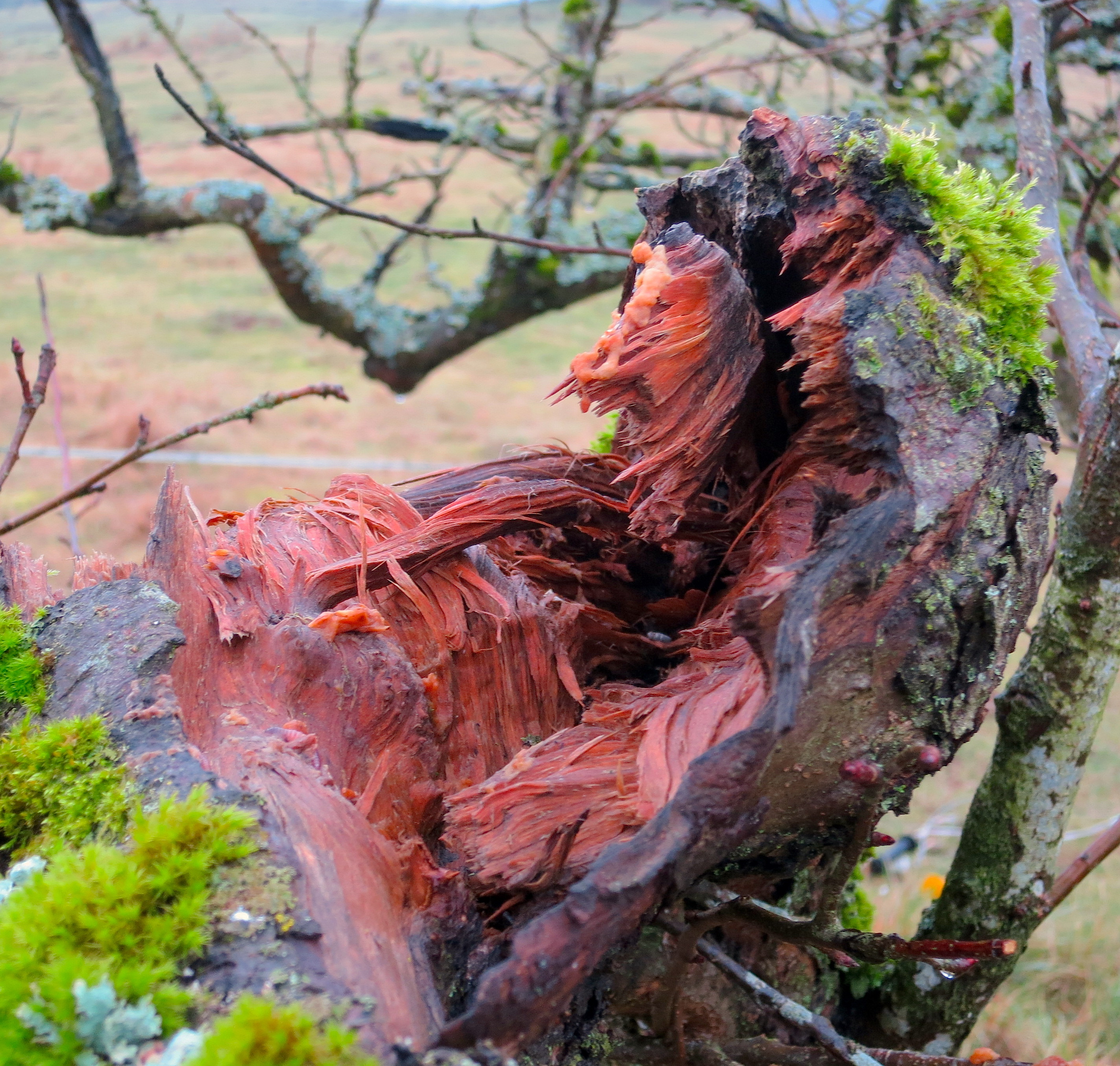
A Feather on the Bright Sky

N.Scott Momaday passed into eternity last week at age 89.

On the first day I took his class on Native American Mythology and Lore in 1974 at Stanford, a tall, young N.Scott Momaday strolled to the front, wrote the 60 words of an Emily Dickinson poem “Further in Summer”on the blackboard. He told us we would spend at least a week working out the meaning of what he considered the greatest poem written — this in a class devoted to Native American writing and oral tradition. In his resonant bass, he read the poem to us many times, rolling the words around his mouth as if to extract their sweetness. This man of the plains, a member of the Kiowa tribe, loved this poem put together by a New England recluse poet — someone as culturally distant from him and his people as possible.

But grace works to unite us, no matter our differences, and Scott knew this as he led us, mostly white students, through the poem. What on the surface appears a paean to late summer insect droning – doomed to extinction by the desolation of oncoming winter – is a statement of the transcendence of man beyond our understanding of nature and the world in which we, its creatures, find ourselves. As summer begins its descent into the dark death of winter, we, unlike cicadas and crickets, become all too aware we too are descending. There is no one as lonely as an individual facing their mortality and no one as lonely as a poet facing the empty page, in search of words to describe the sacrament of sacrifice and perishing.

Yet the written Word is not silent; the Word brings Grace unlike any other, even when the summer, pathetic and transient as it is, is gone. The Word brings Grace, like no other, to pathetic and transient man who will emerge transformed.

There is no furrow on the glow. There is no need to plow and seed our salvaged souls, already lovingly planted by our Creator God, yielding a fruited plain.

Scott was one of my most remarkable and influential teachers, teaching me to trust memories, to use the best words, and to describe beauty as best I can. I know his words will forever live on.

…<Dickinson’s Further in Summer is> one of the great poems of American literature. The statement of the poem is profound; it remarks the absolute separation between man and nature at a precise moment in time.  The poet looks as far as she can into the natural world, but what she sees at last is her isolation from that world.  She perceives, that is, the limits of her own perception. But that, we reason, is enough. This poem of just more than sixty words comprehends the human condition in relation to the universe:

So gradual the Grace
A pensive Custom it becomes
Enlarging Loneliness.

But this is a divine loneliness, the loneliness of a species evolved far beyond all others. The poem bespeaks a state of grace. In its precision, perception and eloquence it establishes the place of words within that state.  Words are indivisible with the highest realization of human being.
~N.Scott Momaday from The Man Made of Words

A Beginning of an Uprising

To clasp the hands in prayer is the beginning of an uprising against the disorder of the world.
~Karl Bart
h

Ah — a resting place,
where we come to understand
it is not required of us

to wrestle constantly and passionately
with our God —
nor pursue relentlessly
all God’s decrees as we understand them,
but only that we listen and wonder
and hope and pray,
that we might, perhaps,
make just a little difference,
one quiet grey day.

~Edwina Gateley “Just a Little Difference”

There is much shouting and gnashing of teeth going on in our country in the midst of a bitter “rerun” election battle ahead. Some of the noise is coming from political rallies, some from computer keyboards and TV screens, and some from the hallowed halls of courthouses and legislative buildings.

If only the nastiness could cease.
Instead, it is time to clasp hands together in prayer.

Prayer is always easier for the youngest among us.  It is amazingly spontaneous for kids — an outright exclamation of joy, a crying plea for help, a word of unprompted gratitude. As a child I can remember making up my own songs and monologues to God as I wandered alone in our farm’s woods, enjoying His company in my semi-solitude. I’m not sure when I began to silence myself out of self-conscious embarrassment, but I stayed silent for many years, unwilling to put voice to the prayers that rattled in my head. In my childhood, prayer in public schools had been hushed into a mere and meaningless moment of silence, and intuitively I knew silence never changed anything. The world became more and more disorderly in the 60’s and 70’s and in my increasingly indoctrinated mind, there was no prayer I could say that could possibly make a difference.

How wrong could I and my education be? Nothing can right the world until we are right with God through talking to Him from our depth of need and fear. Nothing can right the world until we submit ourselves wholly, bowed low, hands clasped, eyes closed, articulating the joy, the thanks, and the petitions weighing on our hearts.

An uprising is only possible when our voices come alive, unashamed, unselfconscious, rising up from within us, uttering words that beseech and thank and praise. To rise up with hands clasped together calls upon a power that claims no political party affiliation
~ only the Word ~
to overcome and overwhelm the shambles left of our world.

Nothing can be more victorious than the Amen, our Amen, at the end.

So be it and so shall it be.

Amen, and Amen again.

Whatever happens.
Whatever
what is is

is what I want.
Only that.

But that.
~Galway Kinnell “Prayer”

One-Time
Monthly
Yearly

Make a one-time or recurring donation to support daily Barnstorming posts

Make a monthly donation

Make a yearly donation

Choose an amount

$10.00
$25.00
$50.00
$5.00
$15.00
$100.00
$5.00
$15.00
$100.00

Or enter a custom amount

$

Your contribution is deeply appreciated.

Your contribution is appreciated.

Your contribution is appreciated.

DonateDonate monthlyDonate yearly
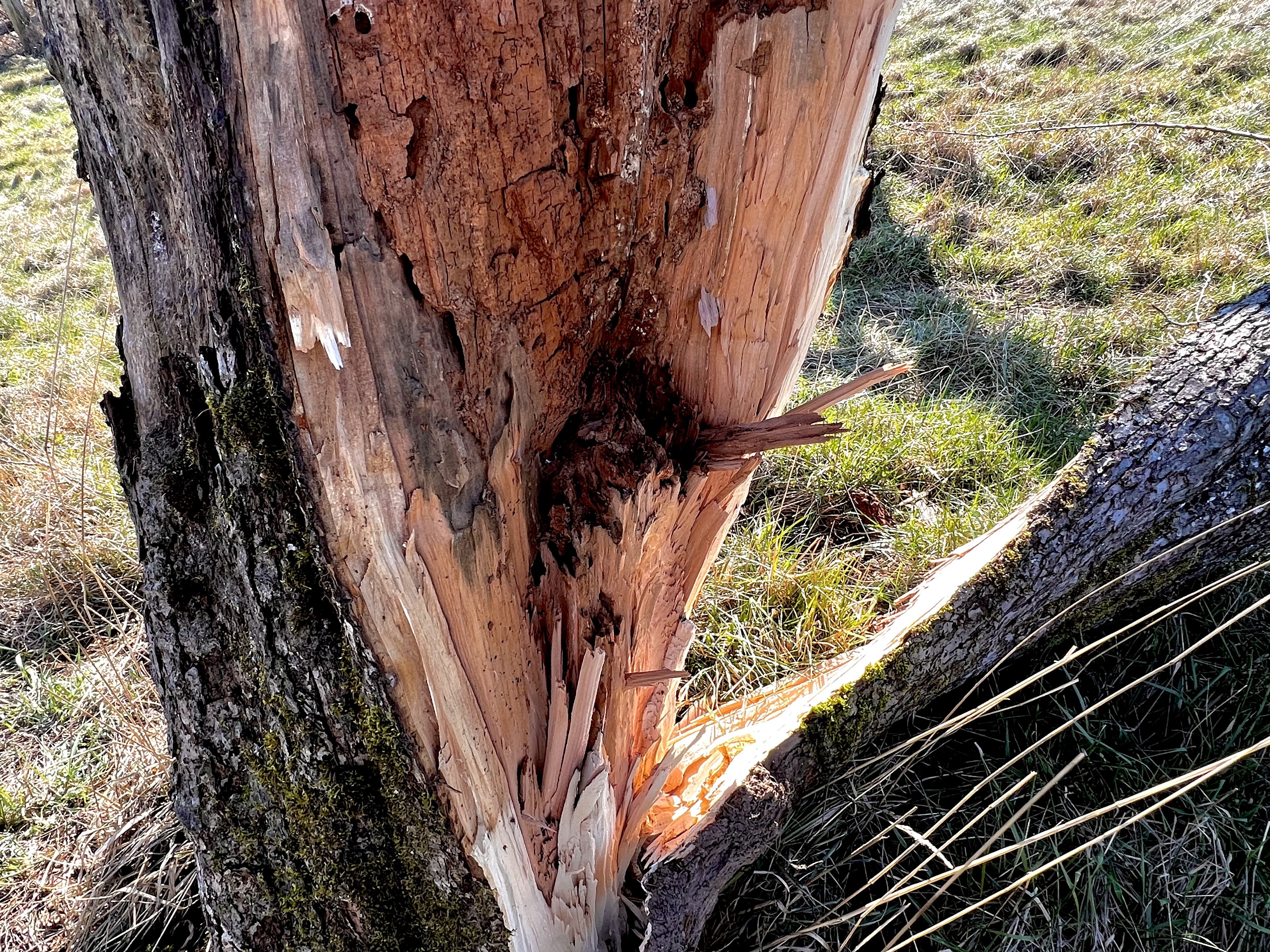
You Can Never Be Sure

You never know what may cause them. The sight of the ocean can do it, or a piece of music, or a face you’ve never seen before. A pair of somebody’s old shoes can do it. Almost any movie made before the great sadness that came over the world after the Second World War, a horse cantering across a meadow…

You can never be sure. But of this you can be sure. Whenever you find tears in your eyes, especially unexpected tears, it is well to pay the closest attention. They are not only telling you something about the secret of who you are, but more often than not God is speaking to you through them of the mystery of where you have come from and is summoning you to where, if your soul is to be saved, you should go next.
~Frederick Buechner from
 Whistling in the Dark

photo by Emily Vander Haak

I’m not paying close enough attention to the meaning of my leaking eyes if I’m constantly looking for kleenex to stem the flow. During the holidays, it seems I have more than ample opportunity to find out the secret of who I am, where I have come from, and where I am to be next.

So I keep my pockets loaded with kleenex, and there is a box ready in every room of the house.

It mostly has to do with welcoming our three children, their spouses, and six grandchildren back home for a few days to become a full-out, noisy, messy, chaotic household again. There will be puzzles and games and music and laughter and unending laundry and constant meal preparation and consumption. It is about singing grace together in five-part harmony before we eat, praying precious words of gratitude. 

It is about remembering the drama of our youngest’s birthday thirty-one years ago today, as if it were only yesterday, when her life was saved by a snowstorm. Now she and her husband bring their own son for visits back to the farm.

It certainly has to do with bidding farewell again, gathering them all in for that final hug and then letting go.

We have urged and encouraged them to go where their hearts are telling them they are needed and called to be, even if that means miles away from their one-time home on the farm. For our oldest son’s family, that means returning and settling in just down the road.

I too was let go once and though I would try to look back, too often in tears, I set my face toward the future. It led me here, to this marriage, this family, this farm, this work, our church, to more tears, to more letting go if I’m granted more years to weep again and again with gusto and grace and gravitas.

This is what I’m sure is the secret of me:
to love so much and so deeply that letting go is so hard that tears are no longer unexpected or a mystery to me or my children and grandchildren. It is a given that Grandma will weep at a drop of a hat, at a hug, or a hymn. My tears are the spill-over of fullness that can no longer be contained: God’s still small voice spills down my cheeks drop by drop like wax from a burning candle.

No kleenex are needed with these tears.

Let them flow as I let them go. It is as it should be.

One-Time
Monthly
Yearly

Make a one-time or recurring donation to support daily Barnstorming posts

Make a monthly donation

Make a yearly donation

Choose an amount

$10.00
$25.00
$50.00
$5.00
$15.00
$100.00
$5.00
$15.00
$100.00

Or enter a custom amount

$

Your contribution is deeply appreciated.

Your contribution is appreciated.

Your contribution is appreciated.

DonateDonate monthlyDonate yearly
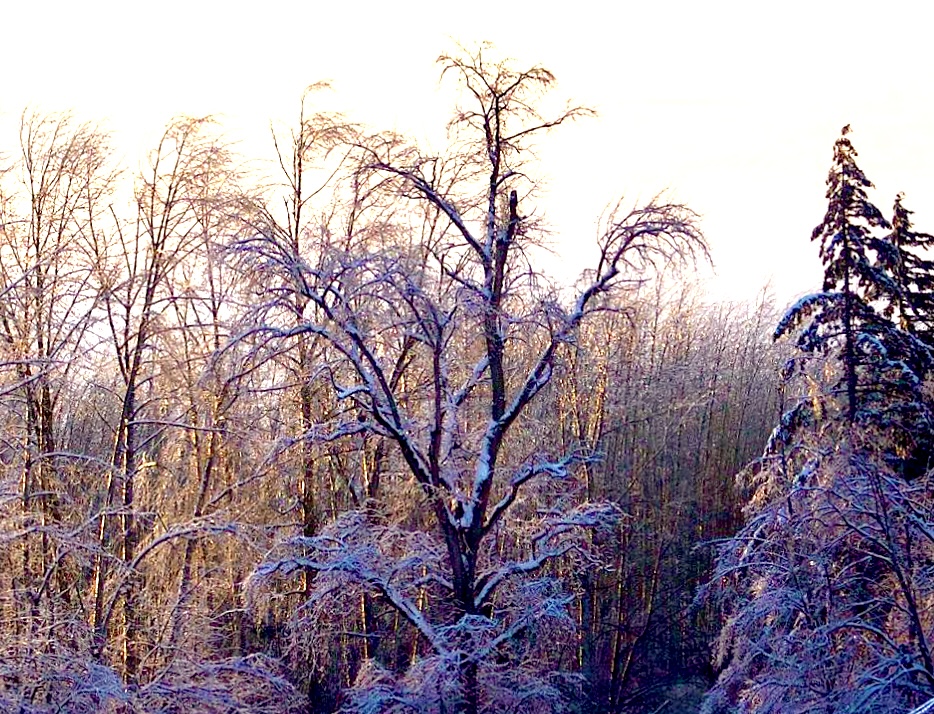
So Hope May Grow

I have a small grain of hope–

one small crystal that gleams
clear colours out of transparency.

I need more.

I break off a fragment
to send to you.

Please take
this grain of a grain of hope
so that mine won’t shrink.

Please share your fragment
so that yours will grow.

Only so, by division,
will hope increase,

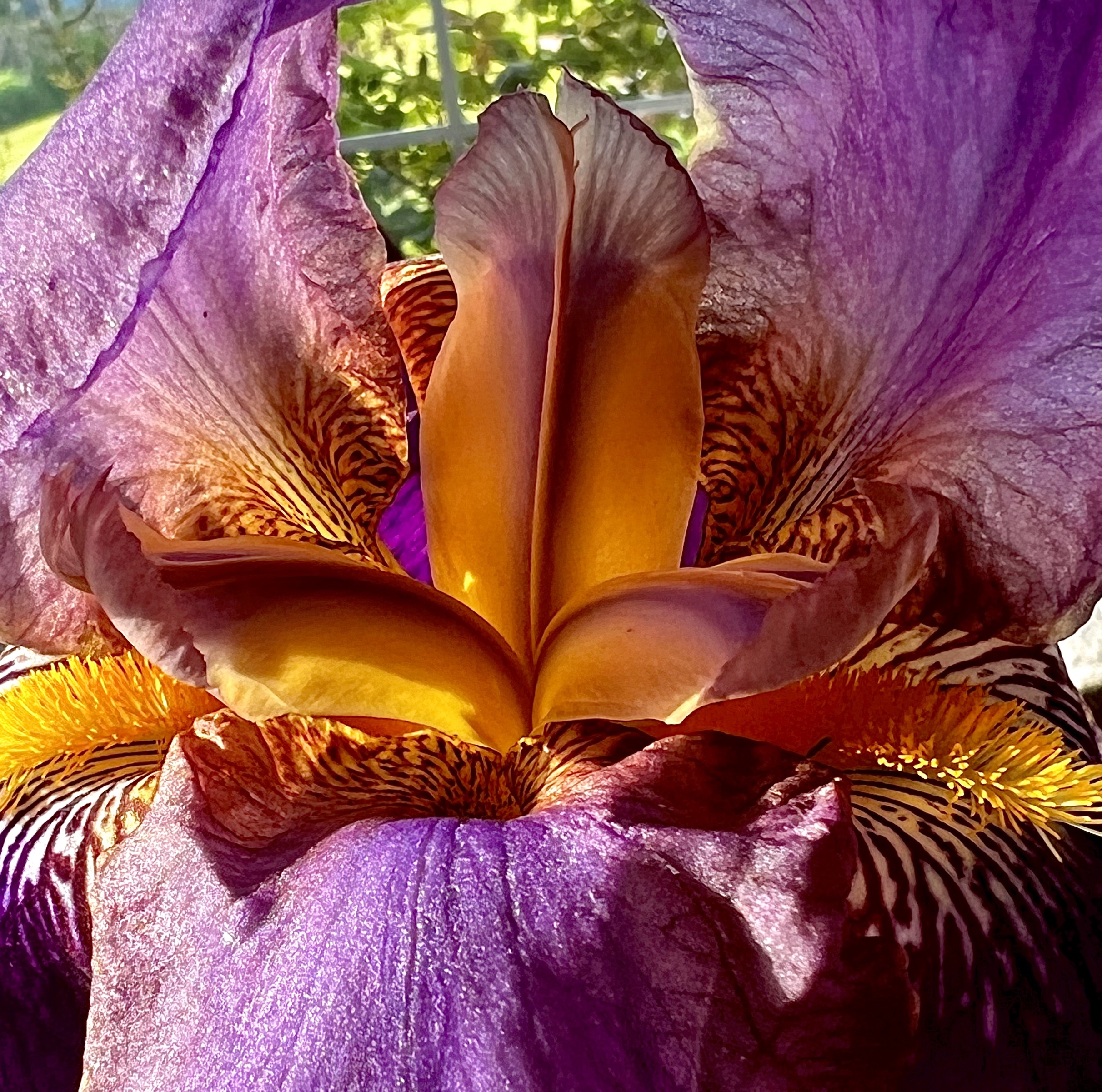
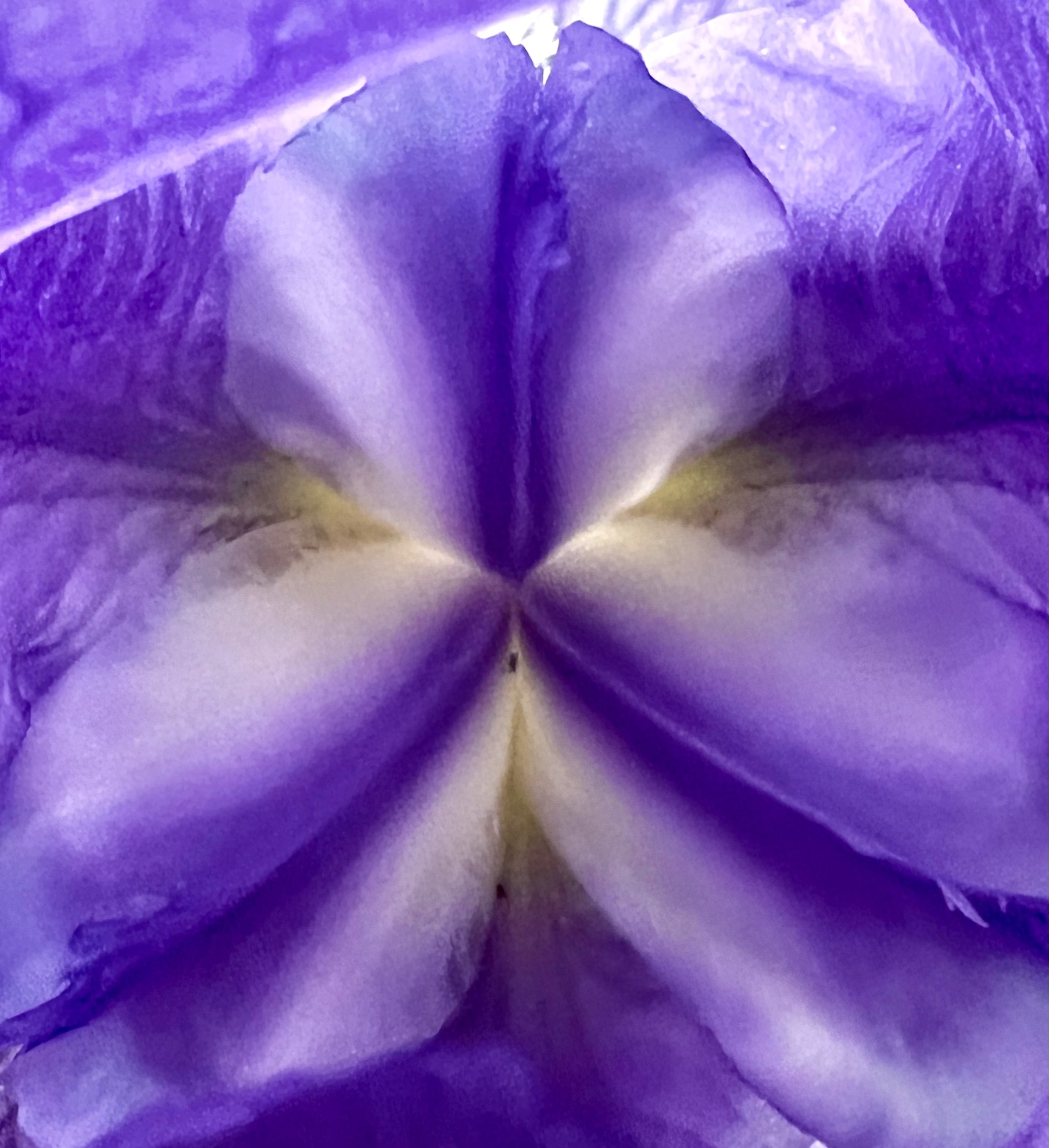
like a clump of irises, which will cease to flower
unless you distribute
the clustered roots, unlikely source–
clumsy and earth-covered–
of grace. 
~Denise Levertov “For the New Year, 1981”

As this year draws to its end,
We give thanks for the gifts it brought
And how they became inlaid within
Where neither time nor tide can touch them.

The days when the veil lifted
And the soul could see delight;
When a quiver caressed the heart
In the sheer exuberance of being here.

Surprises that came awake
In forgotten corners of old fields
Where expectation seemed to have quenched.

The slow, brooding times
When all was awkward
And the wave in the mind
Pierced every sore with salt.

The darkened days that stopped
The confidence of the dawn.

Days when beloved faces shone brighter
With light from beyond themselves;
And from the granite of some secret sorrow
A stream of buried tears loosened.

We bless this year for all we learned,
For all we loved and lost
And for the quiet way it brought us
Nearer to our invisible destination.

~John O’Donohue “At the End of the Year” from To Bless The Space Between 

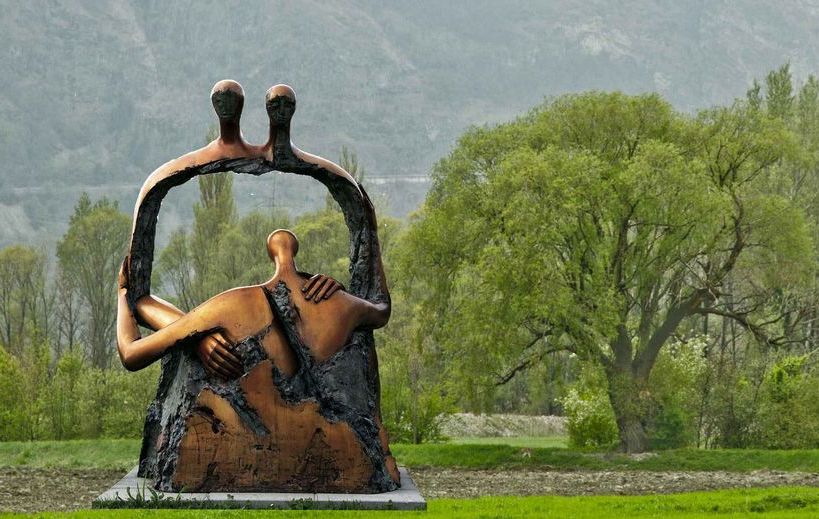
Sculpture by Artist Albert Gyorgy

Truly, we live with mysteries too marvelous
to be understood.

How grass can be nourishing in the
mouths of the lambs.

How rivers and stones are forever
in allegiance with gravity,
while we ourselves dream of rising.

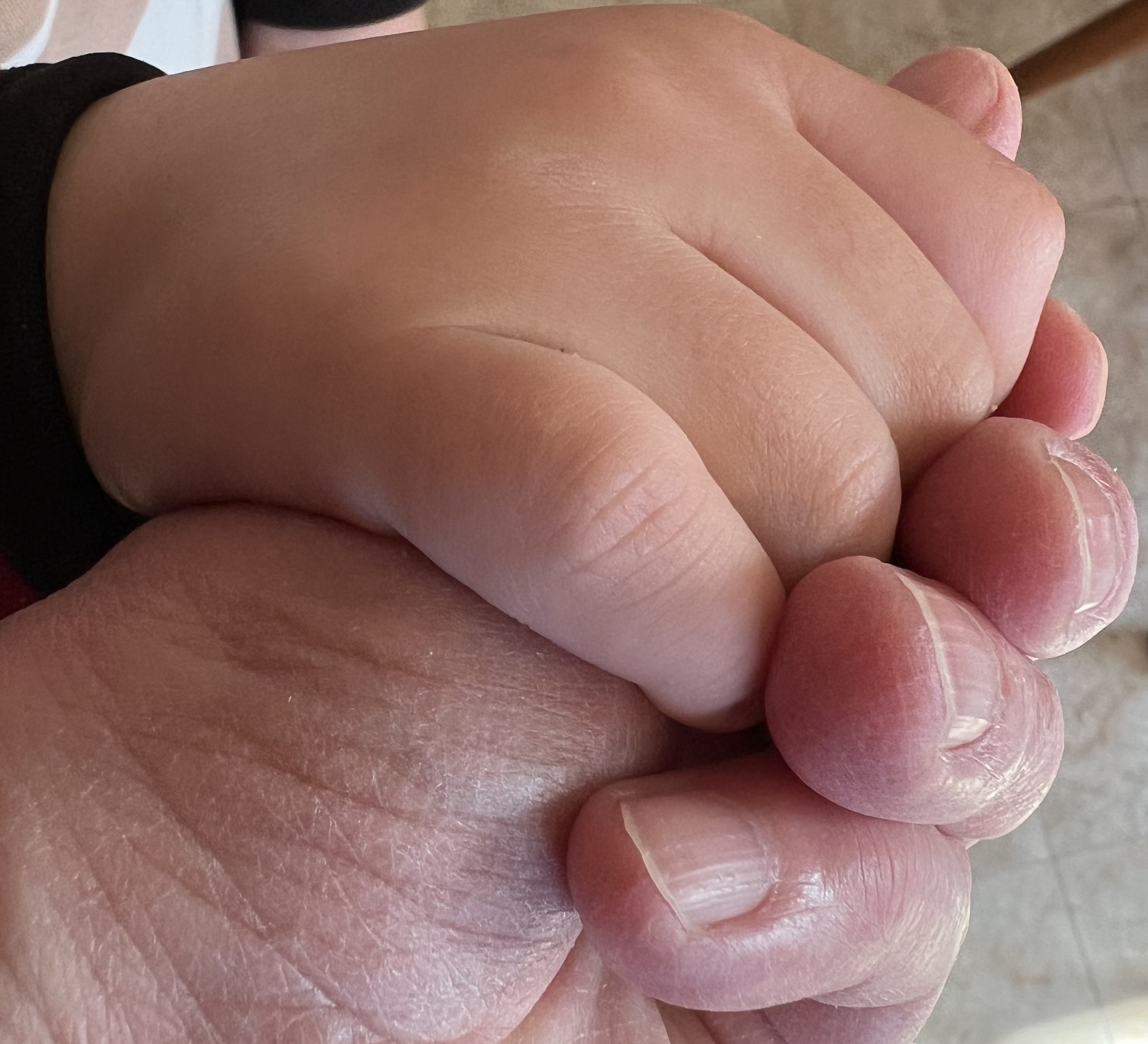
How two hands touch and the bonds will
never be broken.

How people come, from delight or the
scars of damage,
to the comfort of a poem.

Let me keep my distance, always, from those
who think they have the answers.

Let me keep company always with those who say
“Look!” And laugh in astonishment
and bow their heads.

~Mary Oliver “Mysteries, Yes” from Evidence: Poems

photo by Nate Gibson


Each day, for nearly twenty years,
I break off a grain of hope
from these dirt-covered, humble roots
I have dug up to share.

I hand off a grain of hope to you here,
as it will grow through your nurture,
a tiny marvel you break off someday
to hand on to someone else.

Together we can grow a garden of

delight despite damage,
grace despite grief,
wonder despite weeping,
contentment despite conflict,
singing despite sadness,
astonishment despite apathy,
beauty despite brokenness.

Together, we look together and laugh with joy.
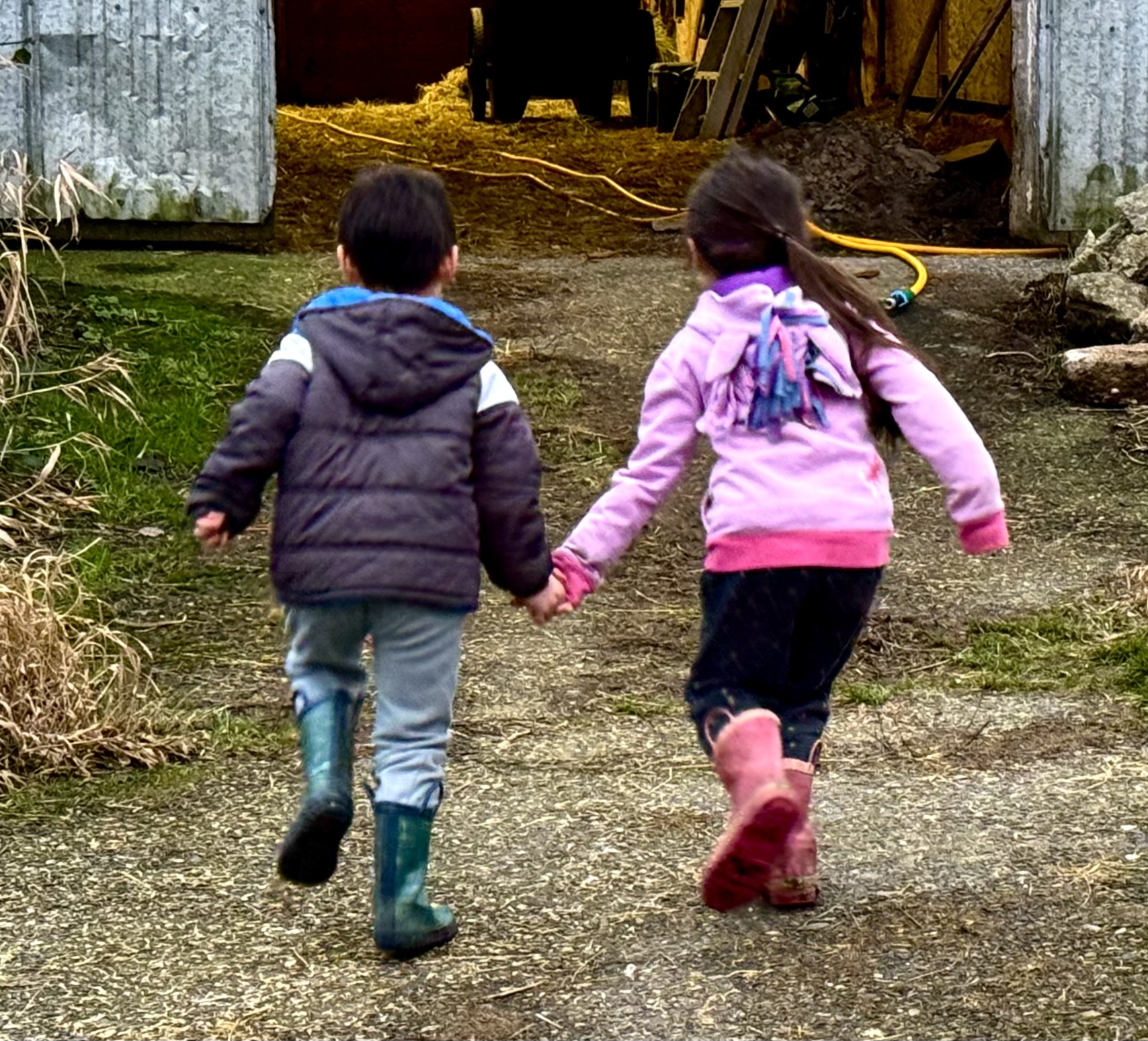
Together, we clasp hands and join the journey.
Together, we just might save the world.

One-Time
Monthly
Yearly

Make a one-time or recurring donation to support daily Barnstorming posts

Make a monthly donation

Make a yearly donation

Choose an amount

$10.00
$25.00
$50.00
$5.00
$15.00
$100.00
$5.00
$15.00
$100.00

Or enter a custom amount

$

Your contribution is deeply appreciated.

Your contribution is appreciated.

Your contribution is appreciated.

DonateDonate monthlyDonate yearly
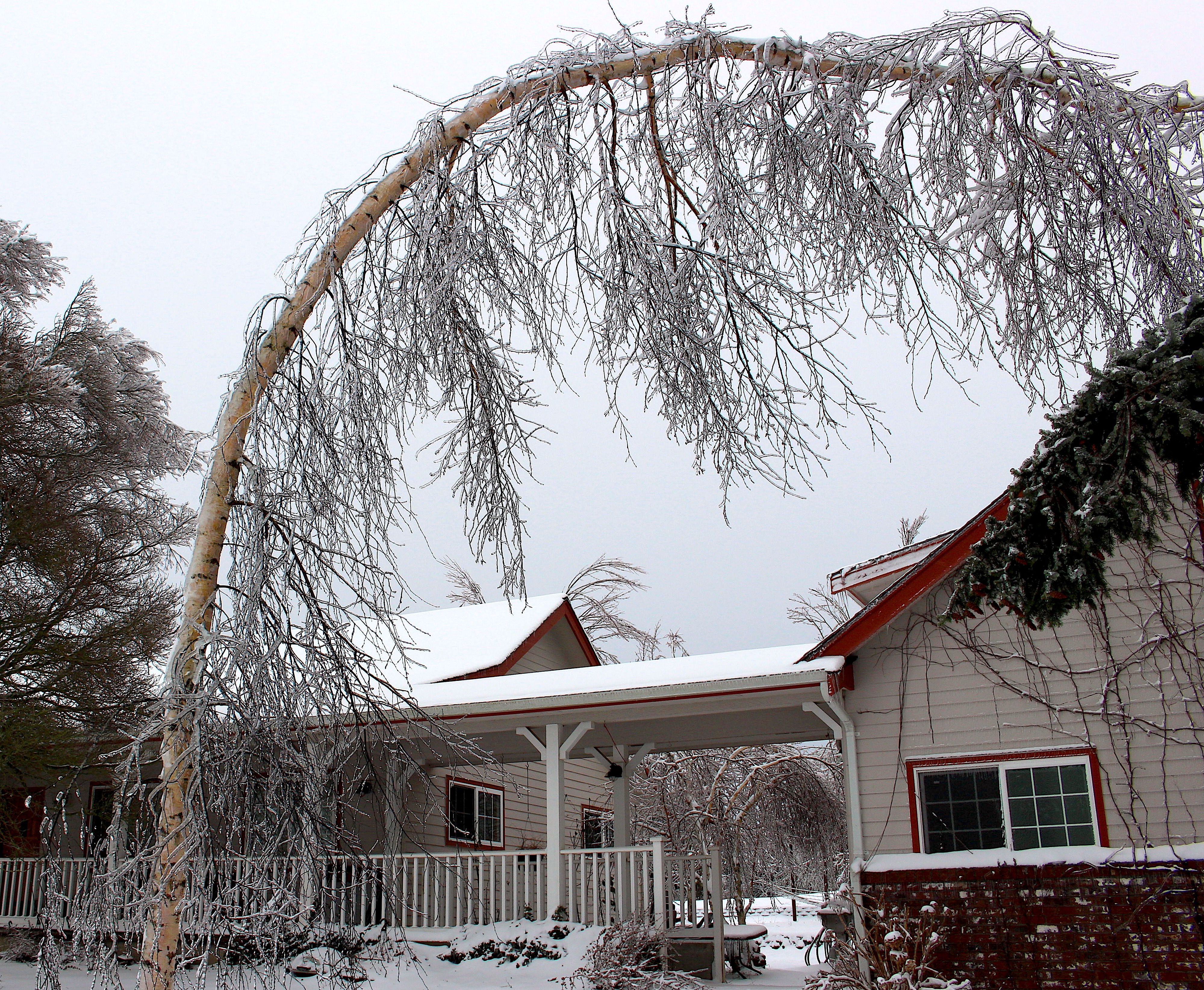


The Sunrise Shall Visit Us: Blossoming For Him

He who has come to men
dwells where we cannot tell
nor sight reveal him,
until the hour has struck
when the small heart does break
with hunger for him;

those who do merit least,
those whom no tongue does praise
the first to know him,
and on the face of the earth
the poorest village street
blossoming for him.
~Jane Tyson Clement

In the somber dark
of a near-solstice morning,
when there appears no hope for sun or warmth,
I hunger for solace only He can bring.

He calls me forth from my hiding place,
buried face down from the troubles of the world,
burrowed deep in quilt and pillows,
fearing the news of the day.

Only God glues together
what evil has shattered.
We must hand Him the shards
of our broken hearts.

His offered hand bloodied
by lifting us from the darkness~
into a growing light,
where together we burst

into untimely blossom.

Advent 2023 theme
because of the tender mercy of our God,
whereby the sunrise shall visit us from on high 
to give light to those who sit in darkness
and in the shadow of death,
to guide our feet into the way of peace.
Luke 1: 78-79 from Zechariah’s Song

One-Time
Monthly
Yearly

Make a one-time or recurring donation to support daily Barnstorming posts

Make a monthly donation

Make a yearly donation

Choose an amount

$10.00
$25.00
$50.00
$5.00
$15.00
$100.00
$5.00
$15.00
$100.00

Or enter a custom amount

$

Your contribution is deeply appreciated.

Your contribution is appreciated.

Your contribution is appreciated.

DonateDonate monthlyDonate yearly
The Sunrise Shall Visit Us: Love is on the Way

People, look east. The time is near
Of the crowning of the year.
Make your house fair as you are able,
Trim the hearth and set the table.
People, look east and sing today:
Love, the guest, is on the way.

photo by Joel De Waard


Furrows, be glad. Though earth is bare,
One more seed is planted there:
Give up your strength the seed to nourish,
That in course the flower may flourish.
People, look east and sing today:
Love, the rose, is on the way.


Birds, though you long have ceased to build,
Guard the nest that must be filled.
Even the hour when wings are frozen
God for fledging time has chosen.
People, look east and sing today:
Love, the bird, is on the way.

photo by Josh Scholten


Stars, keep the watch. When night is dim
One more light the bowl shall brim,
Shining beyond the frosty weather,
Bright as sun and moon together.
People, look east and sing today:
Love, the star, is on the way.


Angels, announce with shouts of mirth
Christ who brings new life to earth.
Set every peak and valley humming
With the word, the Lord is coming.
People, look east and sing today:
Love, the Lord, is on the way.
~Eleanor Farjeon “People, Look East”


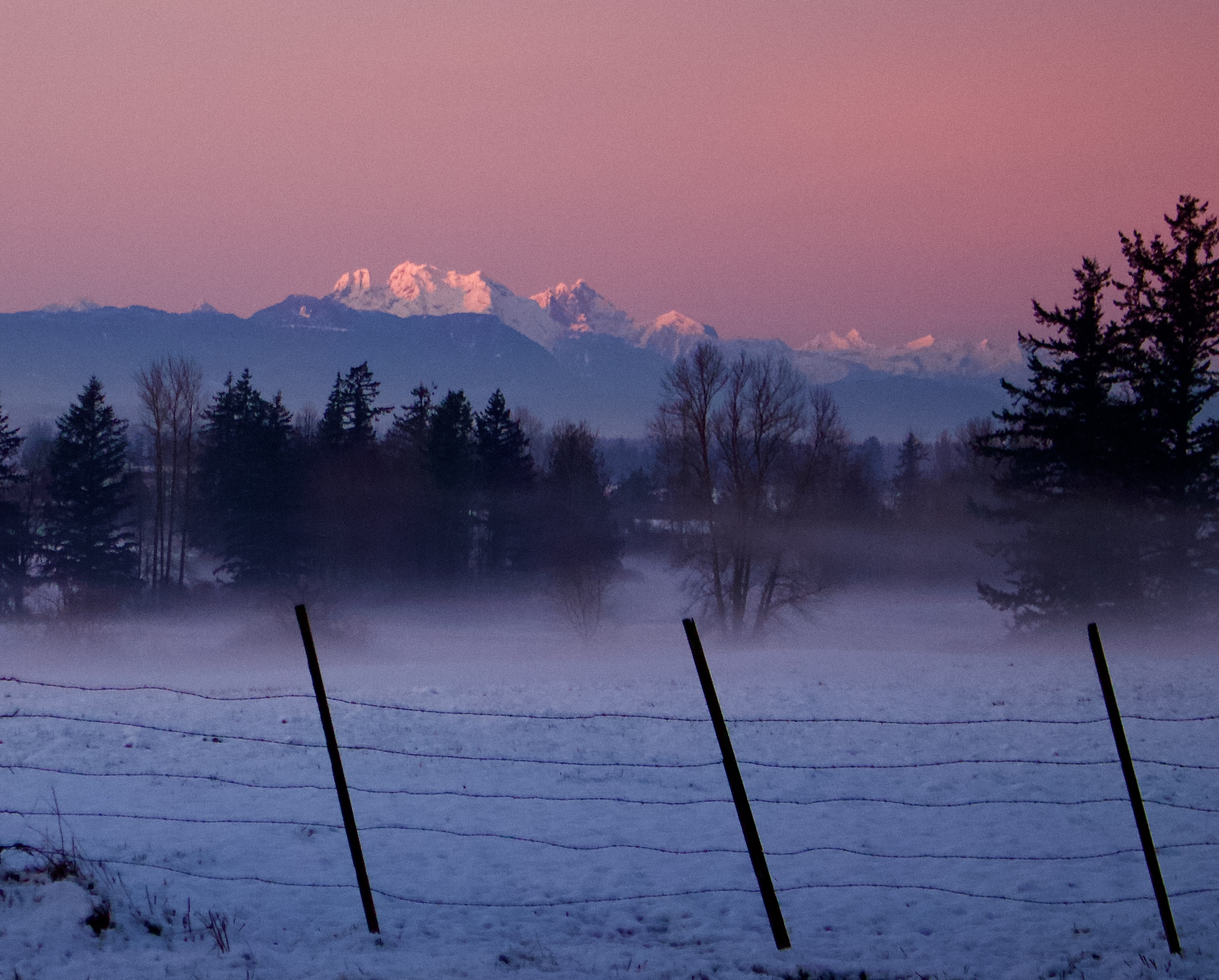
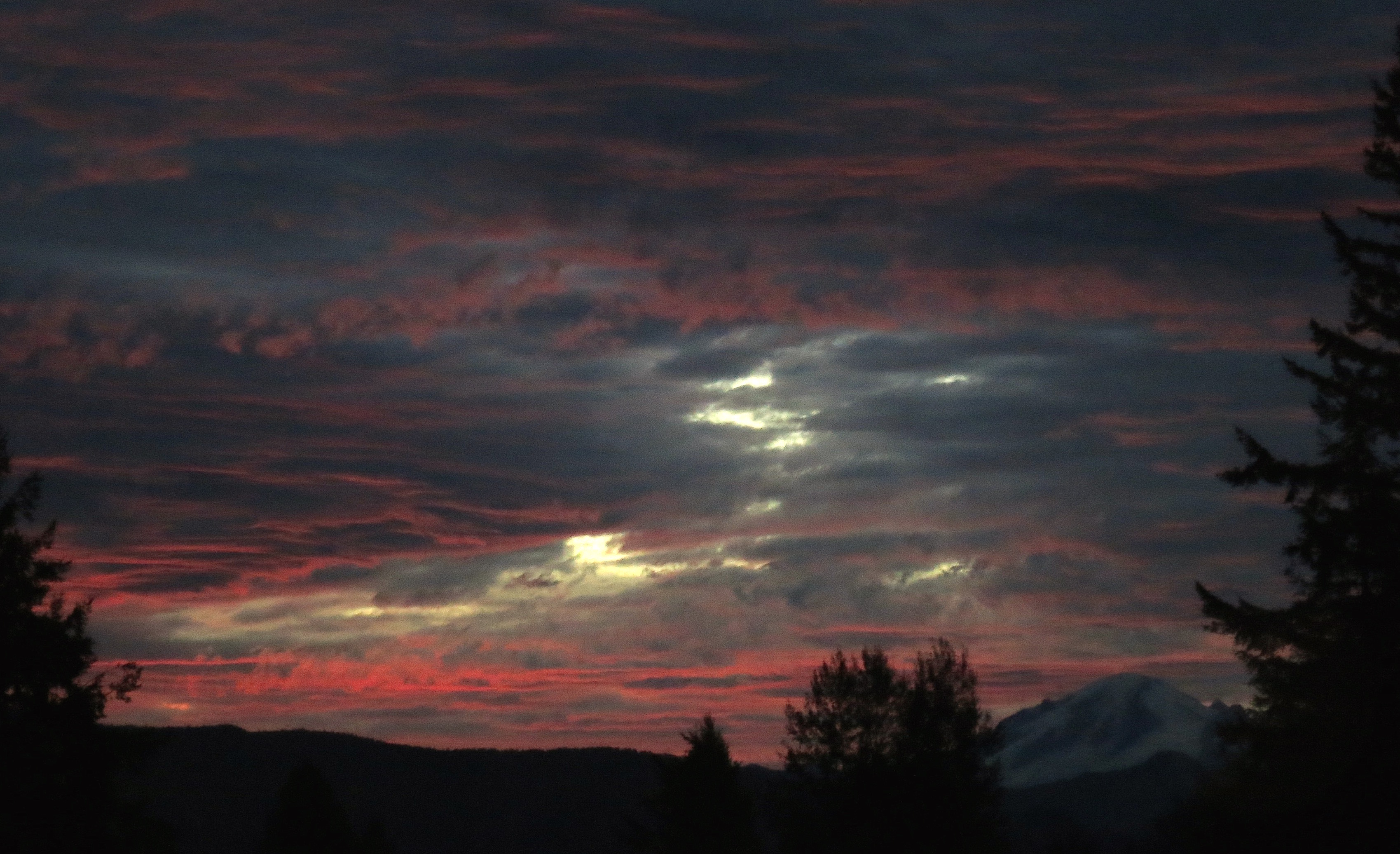
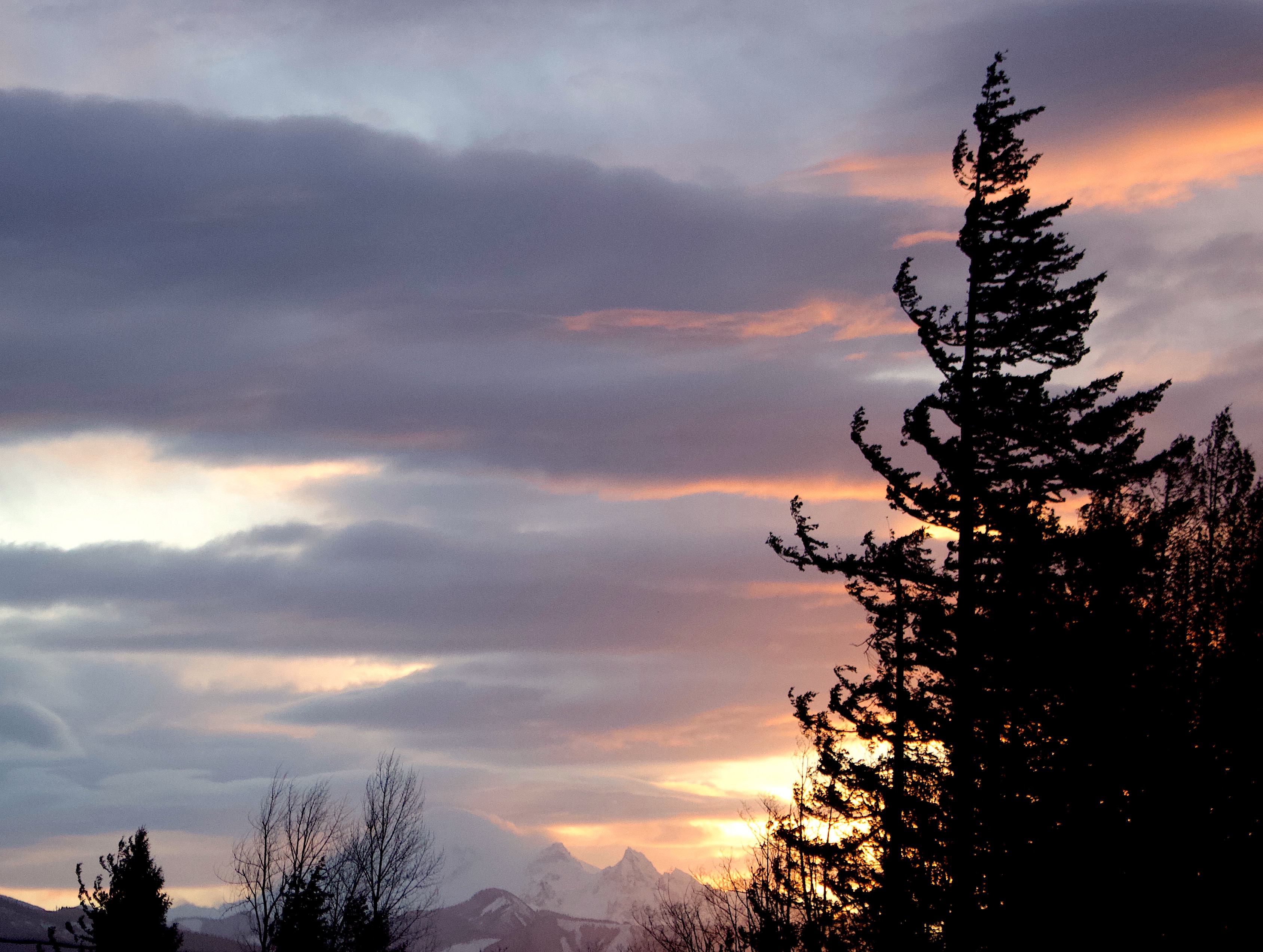
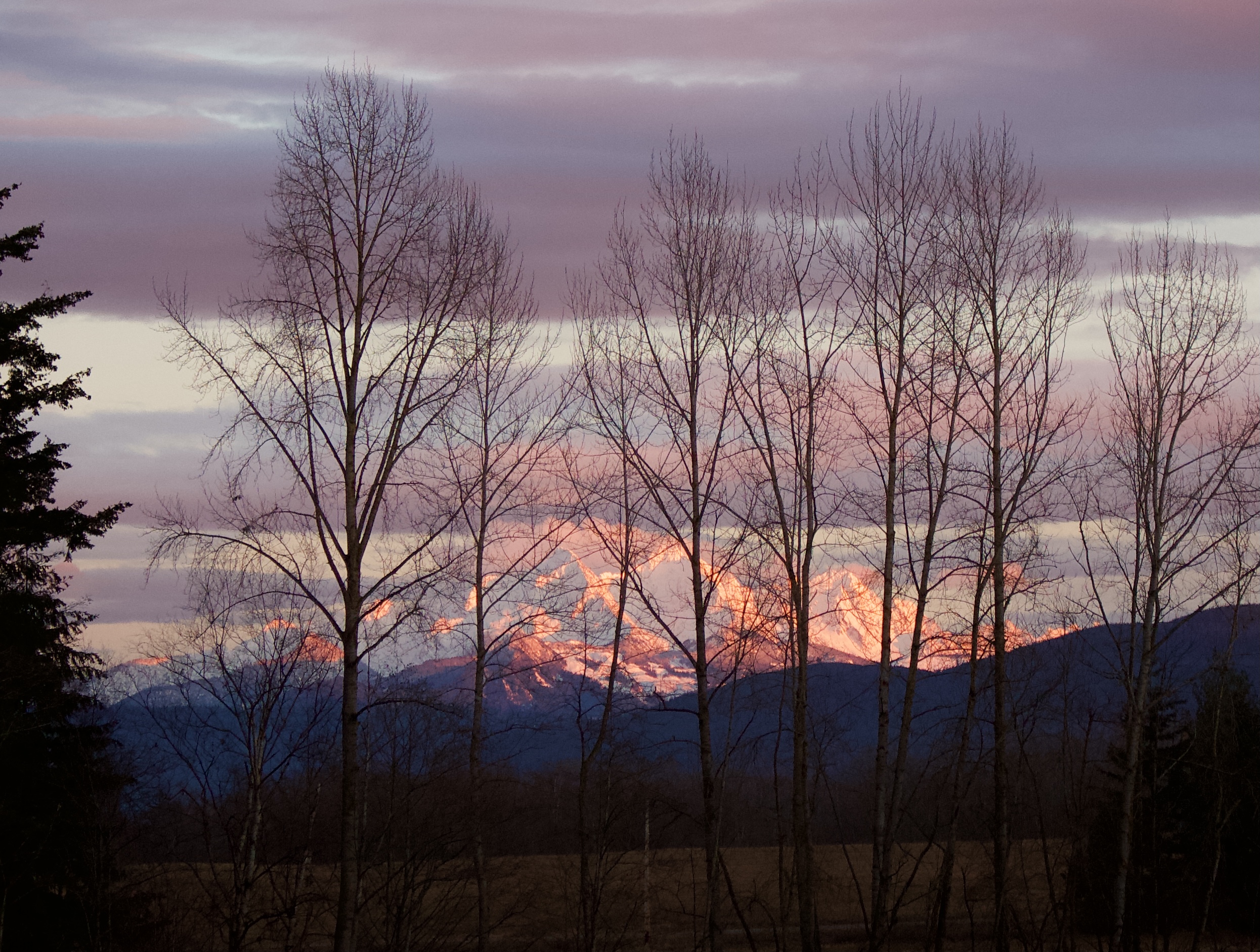
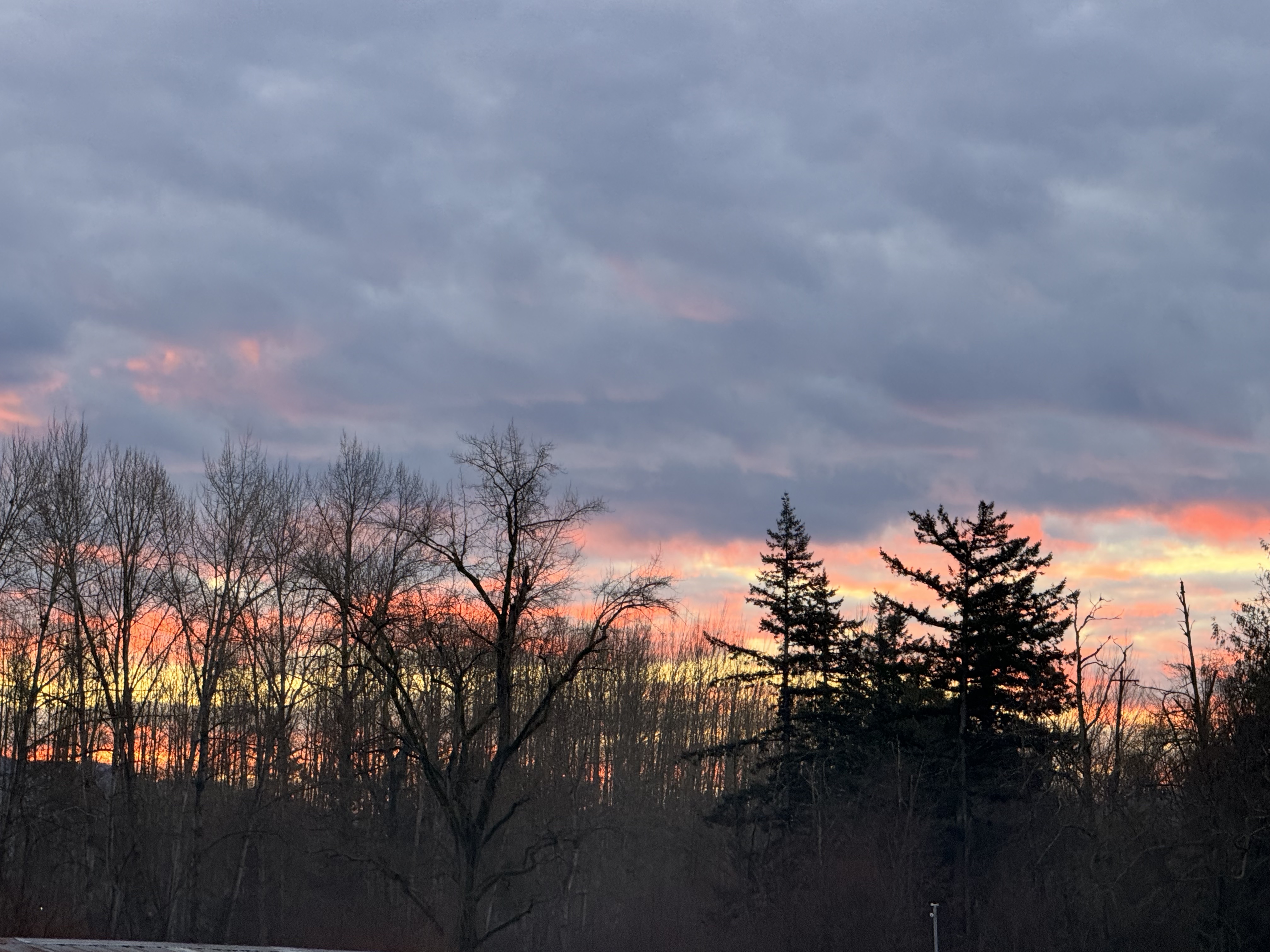
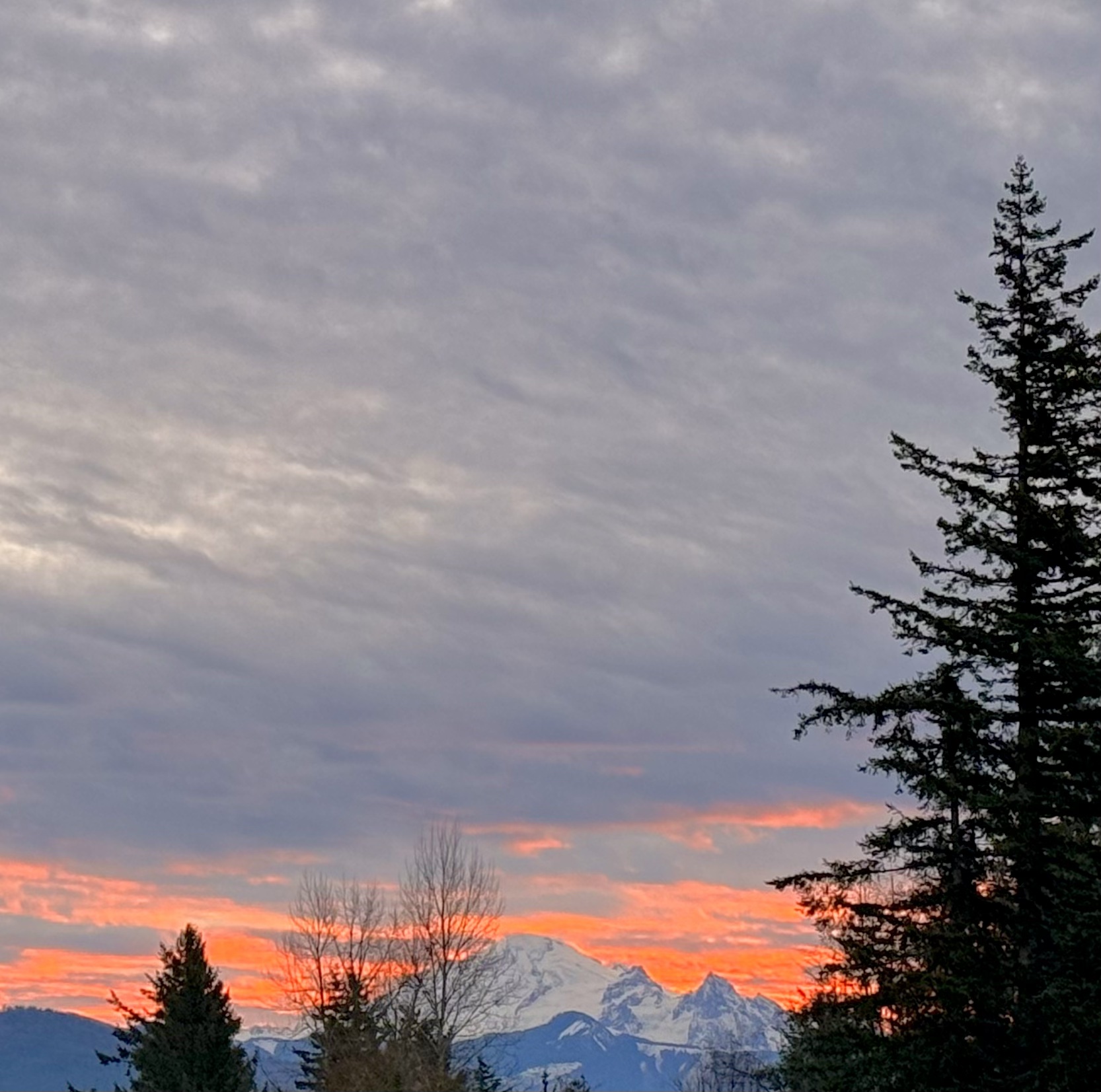
I watch the eastern sky from the moment I get up each day. Most mornings remain dark, rainy and gray but there are some dawns that start with a low simmer around the base of the Cascade peaks. The light crawls up the slopes and climbs to illuminate the summits, then explodes into the skies.

Christ started small and lowly, then slowly crawled, until He walked and stood beside us.
He climbed up willingly to sacrifice Himself.
Once risen, He returned to the brilliance of the heavens.

Look east, good people,
Love is on its way again, and again
and again.

Advent 2023 theme
because of the tender mercy of our God,
whereby the sunrise shall visit us from on high 
to give light to those who sit in darkness
and in the shadow of death,
to guide our feet into the way of peace.
Luke 1: 78-79 from Zechariah’s Song

One-Time
Monthly
Yearly

Make a one-time or recurring donation to support daily Barnstorming posts

Make a monthly donation

Make a yearly donation

Choose an amount

$10.00
$25.00
$50.00
$5.00
$15.00
$100.00
$5.00
$15.00
$100.00

Or enter a custom amount

$

Your contribution is deeply appreciated.

Your contribution is appreciated.

Your contribution is appreciated.

DonateDonate monthlyDonate yearly