On Sundays, when the rain held off, after lunch or later, I would go with my twelve year old daughter into town, and put down the time at junk sales, antique fairs.
There I would lean over tables, absorbed by lace, wooden frames, glass. My daughter stood at the other end of the room, her flame-coloured hair obvious whenever— which was not often—
I turned around. I turned around. She was gone. Grown. No longer ready to come with me, whenever a dry Sunday held out its promises of small histories. Endings.
Spirit of irony, my caustic author of the past, of memory,—
and of its pain, which returns hurts, stings—reproach me now, remind me that I was in those rooms, with my child, with my back turned to her, searching—oh irony!— for beautiful things. ~Eavan Boland from “The Necessity for Irony” in The Lost Land.
How is it we look past the golden treasure right in front of us, the beauty gifted generously to us, to pursue the glittery with no value in the long run?
If my history of misplaced focus be forgiven, it is only because of your own golden and generous grace – ironically, always the most beautiful object of my searching.
One-Time
Monthly
Yearly
Make a one-time or recurring donation to support daily Barnstorming posts
But you can have the fig tree and its fat leaves like clown hands gloved with green. You can have the touch of a single eleven-year-old finger on your cheek, waking you at one a.m. to say the hamster is back. You can have the purr of the cat and the soulful look of the black dog, the look that says, If I could I would bite every sorrow until it fled, and when it is August, you can have August and abundantly so. You can have love, though often it will be mysterious, like the white foam that bubbles up at the top of the bean pot over the red kidneys until you realize foam’s twin is blood.
You can speak a foreign language, sometimes, and it can mean something. You can visit the marker on the grave where your father wept openly. You can’t bring back the dead, but you can have the words forgive and forget hold hands as if they meant to spend a lifetime together. You can have your grandfather sitting on the side of your bed, at least for a while, you can have clouds and letters, the leaping of distances, and Indian food with yellow sauce like sunrise. You can’t count on grace to pick you out of a crowd but here is your friend to teach you how to high jump, how to throw yourself over the bar, backwards, until you learn about love, about sweet surrender, and here are periwinkles, buses that kneel, farms in the mind as real as Africa.
And when adulthood fails you, you can still summon the memory of the black swan on the pond of your childhood, the rye bread with peanut butter and bananas your grandmother gave you while the rest of the family slept. There is the voice you can still summon at will, like your mother’s, it will always whisper, you can’t have it all, but there is this. ~Barbara Ras from “You Can’t Have It All” from Bite Every Sorrow
My pragmatic mother gave up her teaching career for marriage and family so would remind me regularly that I couldn’t have it all: there was no way a woman can have a husband and children and a farm and a garden and animals and a profession and write and travel and volunteer in the community and not make a mess of it all and herself.
My father would listen to her and say to me softly under his breath: “you do whatever you put your mind to…you know what you are here for.”
They were both right.
The alluring abundance of this life has invited me to want to touch and feel and taste it all, not unlike another woman who was placed with purpose in the Garden to be a side-by-side companion and co-worker. Yet she demonstrated what happens when you want more than you are given and yes, she indeed made a mess of things.
Yet there is this: despite wanting it all and working hard for it all and believing I could do it all, I missed the point altogether.
Life is all gift, never earned. Life is all grace, not deserved. It is all August abundance, it is right now, sustaining us through the year’s droughts and floods and storms and drab gray weather.
And there is this: I know what I am here for.
One-Time
Monthly
Yearly
Make a one-time or recurring donation to support daily Barnstorming posts
Without realizing it, we fill important places in each others’ lives. It’s that way with the guy at the corner grocery, the mechanic at the local garage, the family doctor, teachers, neighbors, coworkers.
Good people who are always “there,” who can be relied upon in small,important ways. People who teach us, bless us, encourage us, support us, uplift us in the dailiness of life.
We never tell them. I don’t know why, but we don’t.
And, of course, we fill that role ourselves. There are those who depend on us,watch us, learn from us, take from us. And we never know.
You may never have proof of your importance, but you are more important than you think. There are always those who couldn’t do without you. The rub is that you don’t always know who. ~Robert Fulghumfrom All I Really Need to Know I Learned in Kindergarten
If there is one thing living through the pandemic taught me, it’s noticing the people in my life who may have not been as obvious to me before. I hadn’t realized how many folks truly are front-line serving others day-in and day-out.
It’s not only health care workers, grocery store clerks and school teachers but the list of essential workers is large, including law enforcement, plumbers and electricians, child care workers, water, sanitation and sewer maintenance, pastors, postal clerks, technicians who fix our cars and appliances and the farmers who tend the crops and livestock we need to live, as well as scores of others.
We are remarkably interdependent and need each other.
I realized how oblivious I had been before not taking the time to acknowledge the daily services I received from so many varied people. In fact, it has become more urgent for me to tell my family members and friends – some thousands of miles away from me – how much they mean to me.
Now, in non-pandemic times, I try to tell others – the grocery cashier, the medical assistant, the office receptionist – as simply and clearly as I can, whenever possible, that I appreciate what they have done and what they continue to do, how they make life better for us all.
I also need to continue to nurture relationships with family and friends crucial to my own well-being. I need them all.
I need you all.
And it is important to me that you know.
Well over a thousand of you receive these daily Barnstorming emails and posts – a handful of you communicate with me regularly. I treasure those messages, thank you!
We all need encouragement that we are making a positive difference in others’ lives and you all make a difference to me.
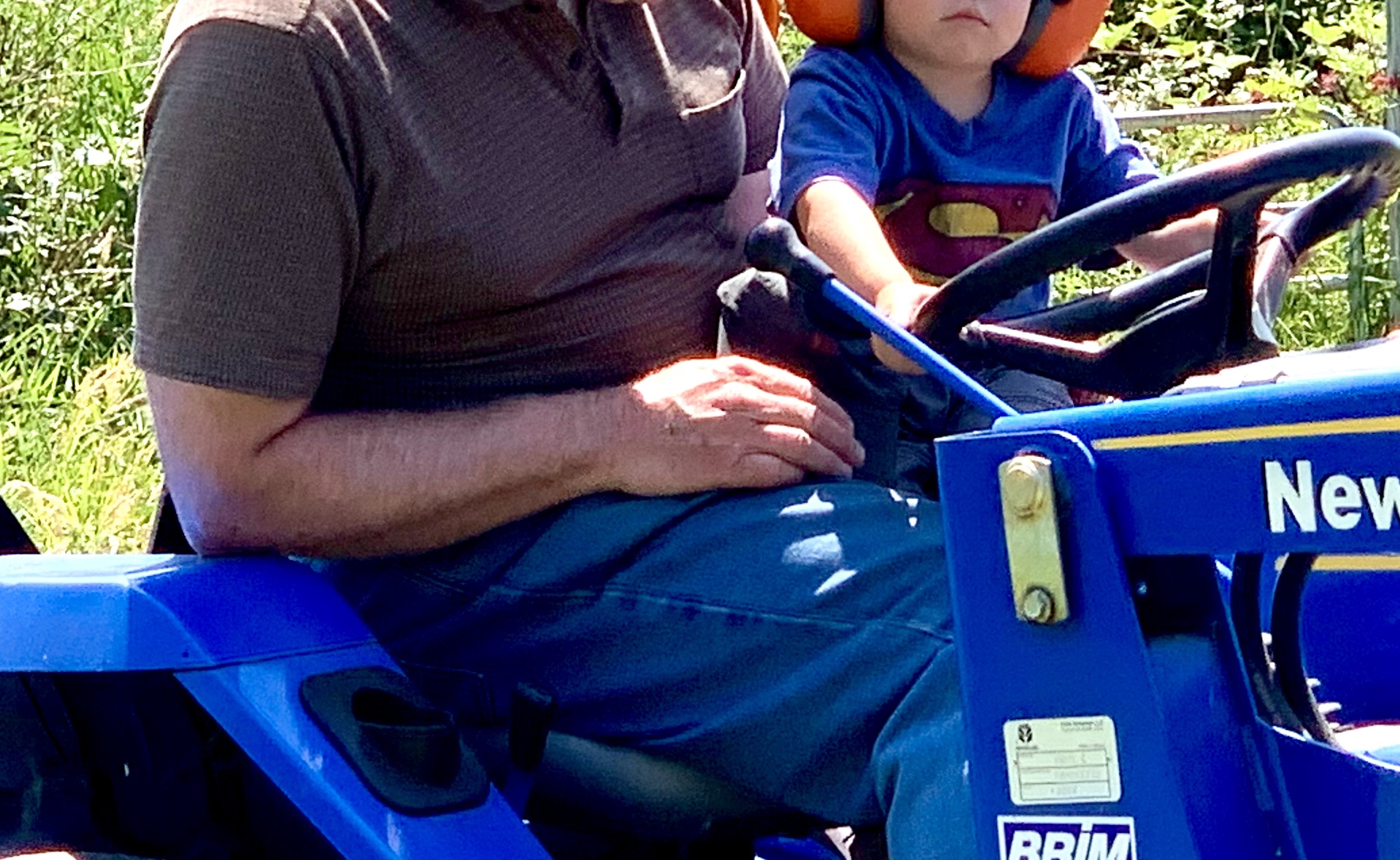
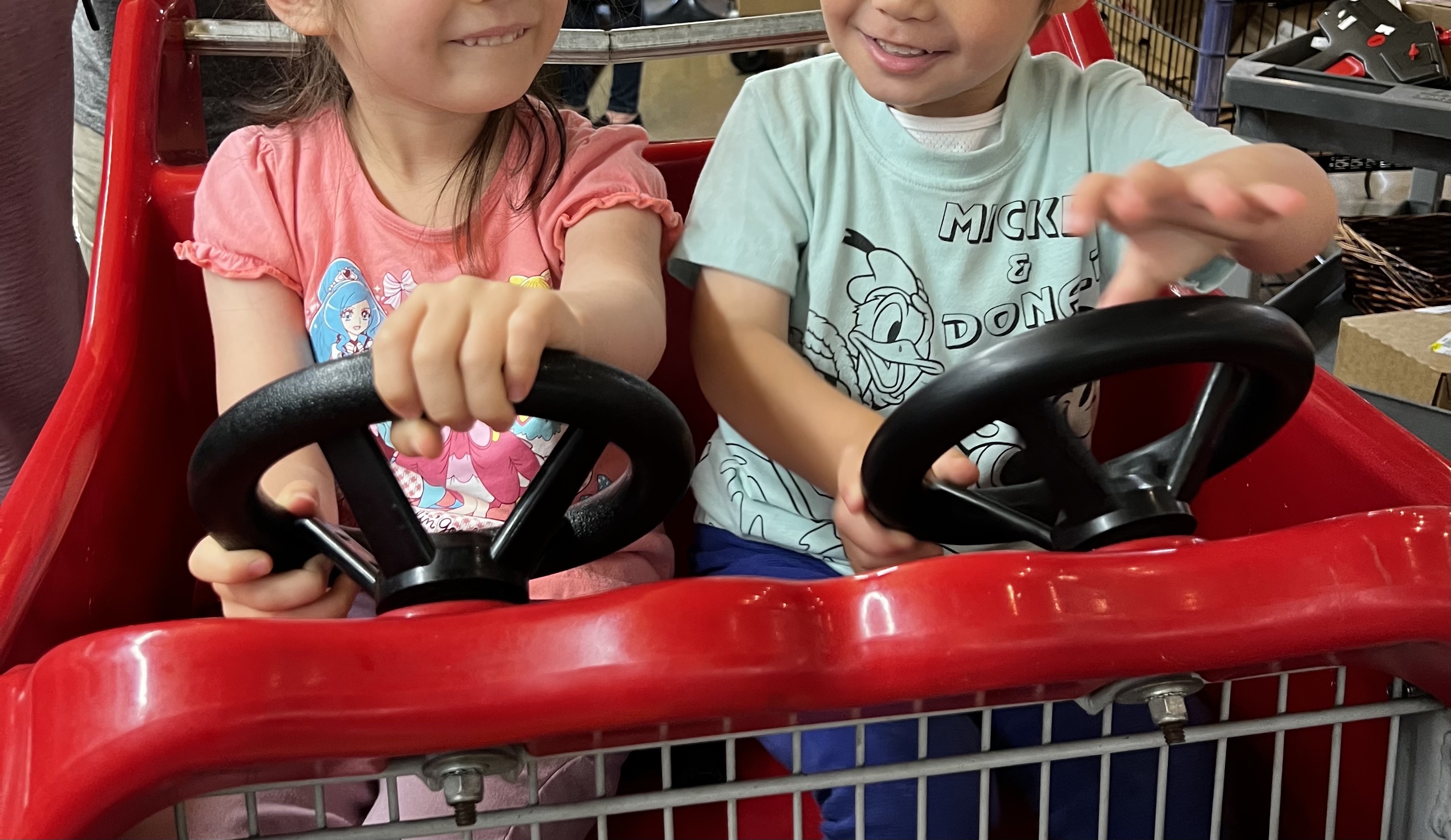
I heard an old man speak once, someone who had been sober for fifty years, a very prominent doctor. He said that he’d finally figured out a few years ago that his profound sense of control, in the world and over his life, is another addiction and a total illusion. He said that when he sees little kids sitting in the back seat of cars, in those car seats that have steering wheels, with grim expressions of concentration on their faces, clearly convinced that their efforts are causing the car to do whatever it is doing, he thinks of himself and his relationship with God: God who drives along silently, gently amused, in the real driver’s seat. ~Anne Lamott from Operating Instructions
The conversations I have with my grandchildren are the most unexpected and creative I have with anyone.
They lead, and I follow. Just to see where they are going to take me next.
They are curious what I think about things. And I want to know what they’ll say and do next, today and in the decades to come.
All the while, God, always in control, smiles at all He has made…
AI image created for this post
One-Time
Monthly
Yearly
Make a one-time or recurring donation to support daily Barnstorming posts
The cold remote islands And the blue estuaries Where what breathes, breathes The restless wind of the inlets, And what drinks, drinks The incoming tide;
Where shell and weed Wait upon the salt wash of the sea, And the clear nights of stars Swing their lights westward To set behind the land;
Where the pulse clinging to the rocks Renews itself forever; Where, again on cloudless nights, The water reflects The firmament’s partial setting;
—O remember In your narrowing dark hours That more things move Than blood in the heart. Louise Bogan “Night” from The Blue Estuaries
I know what my heart is like Since your love died: It is like a hollow ledge Holding a little pool Left there by the tide, A little tepid pool, Drying inward from the edge. ~Edna St. Vincent Millay “Ebb”
My mother was 58 when my father left her for a younger woman.
For months, she withered, her heart broken, her pulse erratic, crying until there were no more tears left.
She began drying inward from her edges despite the ebbing and flowing of her heartbeat.
It took ten years, but he came back like an overdue high tide.
She was sure her love had died but that tepid pool refilled with water cool to the touch, yet overflowing.
AI image created for this post
One-Time
Monthly
Yearly
Make a one-time or recurring donation to support daily Barnstorming posts
My father taught me how to eat breakfast those mornings when it was my turn to help him milk the cows. I loved rising up from
the darkness and coming quietly down the stairs while the others were still sleeping. I’d take a bowl from the cupboard, a spoon
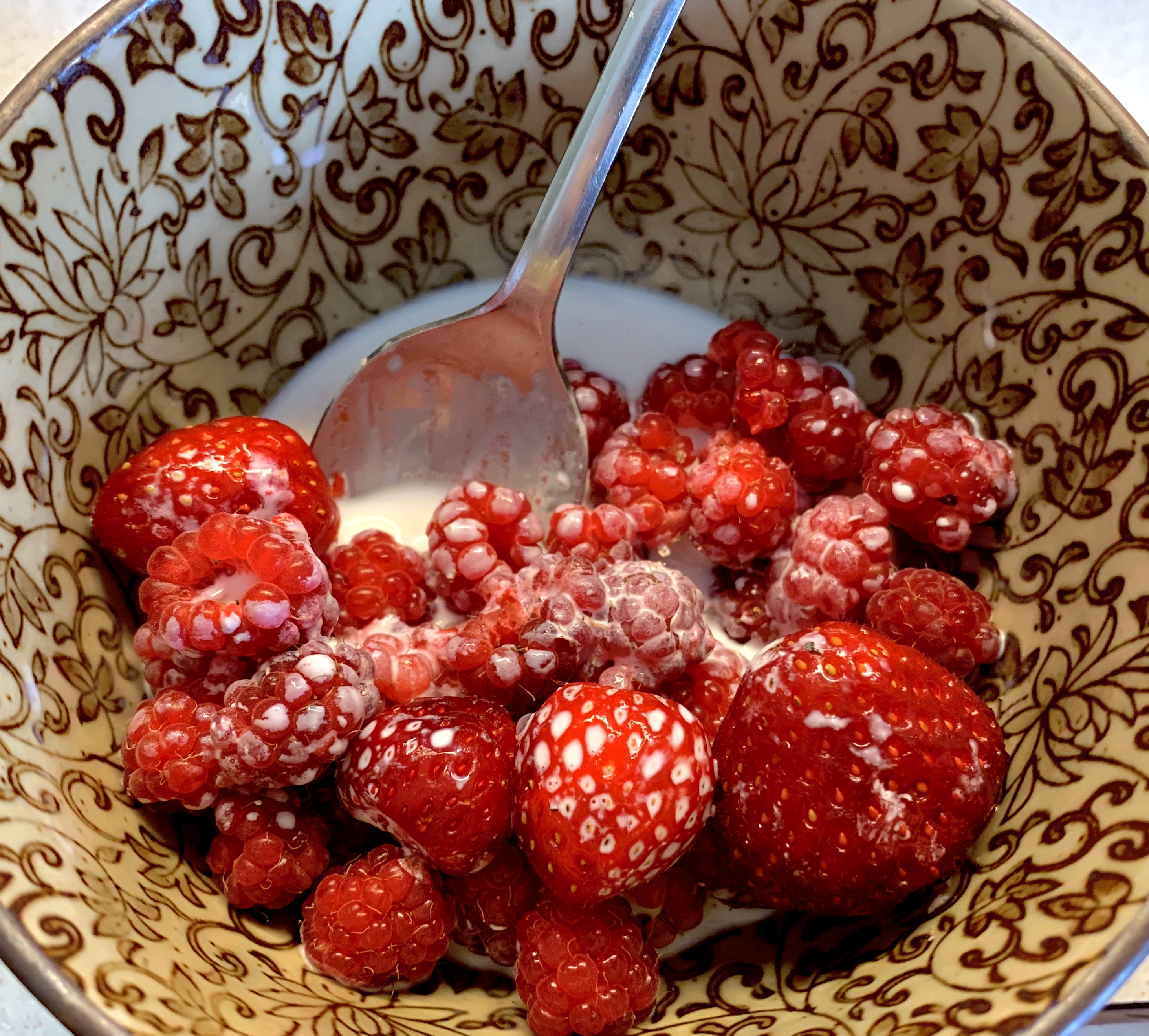
from the drawer, and slip into the pantry where he was already eating spoonfuls of cornflakes covered with mashed strawberries
from our own strawberry fields forever. Didn’t talk much—except to mention how good the strawberries tasted or the way
those clouds hung over the hay barn roof. Simple—that’s how we started up the day. ~Joyce Sutphen, “Breakfast” from First Words, Red Dragonfly.
By the time I was four years old, my family owned several Guernsey and Jersey dairy cows my father milked by hand twice a day. My mother pasteurized the milk on our wood stove and we grew up drinking the best milk on earth, as well as enjoying home-made butter and ice cream.
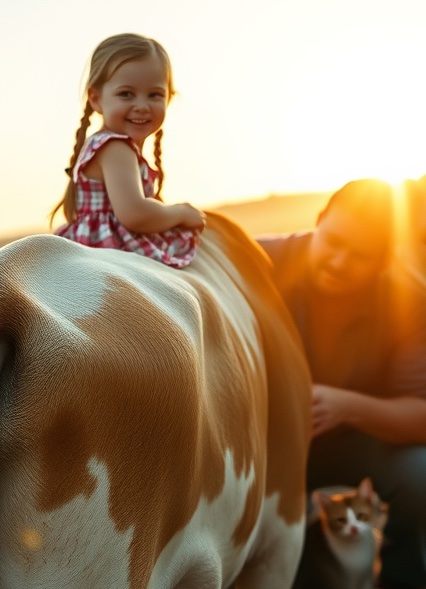
One of my fondest early memories is getting up early with my dad, before he needed to be at school teaching FFA agriculture students (Future Farmers of America). I would eat breakfast with him and then walk out into the foggy fall mornings with our dog to bring in the cows for milking. He would boost me up on top of a very bony-backed chestnut and white patchwork cow while he washed her udder and set to work milking.
I would sometimes sing songs from up there on my perch and my dad would whistle since he didn’t sing.
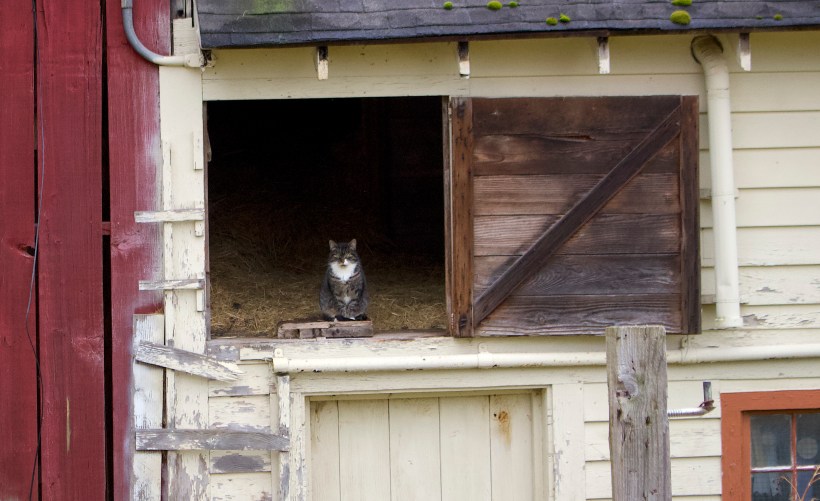
I can still hear the rhythmic sound of the milk squirting into the stainless steel bucket – the high-pitched metallic whoosh initially and then a more gurgling low wet sound as the bucket filled up. I can see my dad’s capped forehead resting against the flank of the cow as he leaned into the muscular work of squeezing the udder teats, each in turn. I can hear the cow’s chewing her breakfast of alfalfa and grain as I balanced on her prominent spine feeling her smooth hair over her ribs. The barn cats circulated around us, mewing, attracted by the warm milky fragrance in the air.
Those were preciously simple starts to the day for me and my father, whose thoughts he didn’t articulate nor I could ever quite discern. But I did know I wasn’t only his daughter on mornings like that – I was one of his future farmers of America he dedicated his life to teaching.
Dad, even without you saying much, those were mornings when my every sense was awakened. I’ve never forgotten that- the best start to the day.
AI image created for this post
One-Time
Monthly
Yearly
Make a one-time or recurring donation to support daily Barnstorming posts
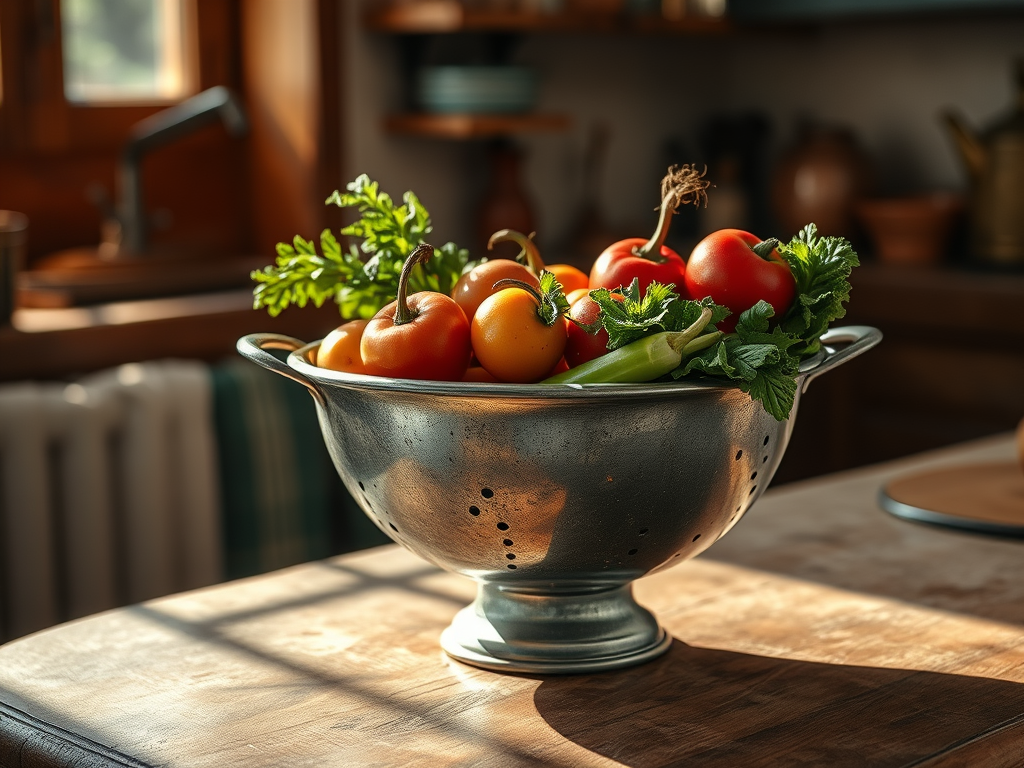
Holes in the shape of stars punched in gray tin, dented, cheap, beaten by each of her children with a wooden spoon.
Noodle catcher, spaghetti stopper, pouring cloudy rain into the sink, swirling counter clockwise down the drain, starch slime on the backside, caught in the piercings.
Scrubbed for sixty years, packed and unpacked, the baby’s helmet during the cold war, a sinking ship in the bathtub, little boat of holes.
Dirt scooped in with a plastic shovel, sifted to make cakes and castles. Wrestled from each other’s hands, its tin feet bent and re-bent.
Bowl daylight fell through onto freckled faces, noon stars on the pavement, the universe we circled aiming jagged stones, rung bells it caught and held. ~Dorianne Laux “My Mother’s Colander”
Many of my mother’s kitchen things, some over eighty years old, are still packed away in boxes that I haven’t had the emotional wherewithal to open. They sit waiting for me to sort and purge and save and weep.
It is as if I haven’t wanted to say goodbye after her death at age 88, now seventeen years ago.
This particular kitchen item- her old dented metal colander – found its way to me when I moved into my first apartment some 49 years ago. She had purchased a bright green plastic colander at a Tupperware party so she felt the old metal one was somehow outdated, overworked and plain, and ready for retirement.
It had held hundreds of pounds of rinsed garden vegetables during my childhood, had drained umpteen pasta noodles, had served as a sifter in our sandbox, and a helmet for many a pretend rocket launch to infinity and beyond.
Dented and battered, it still works fine, thank you very much, for all intended and some unintended purposes. It does make me wonder what other treasures may surprise me as I begin to open and sort my mother’s boxes. Her things have remained in suspended animation, waiting to be rediscovered.
I know there will be tons of tupperware, carefully saved yogurt containers with lids, and quite likely a hoard of pickle jars. As a child of the depression, she saved anything that could be potentially used again.
Perhaps these items have waited patiently to be touched lovingly and with distinct purpose as they once were, and be remembered for the part they played in one woman’s long sacrificial and faith-filled life.
Maybe, just maybe, it will feel like I’ve unpacked Mom once again and maybe this time it can be both a hello and a goodbye.
To infinity and beyond…
AI image created for this post
One-Time
Monthly
Yearly
Make a one-time or recurring donation to support daily Barnstorming posts
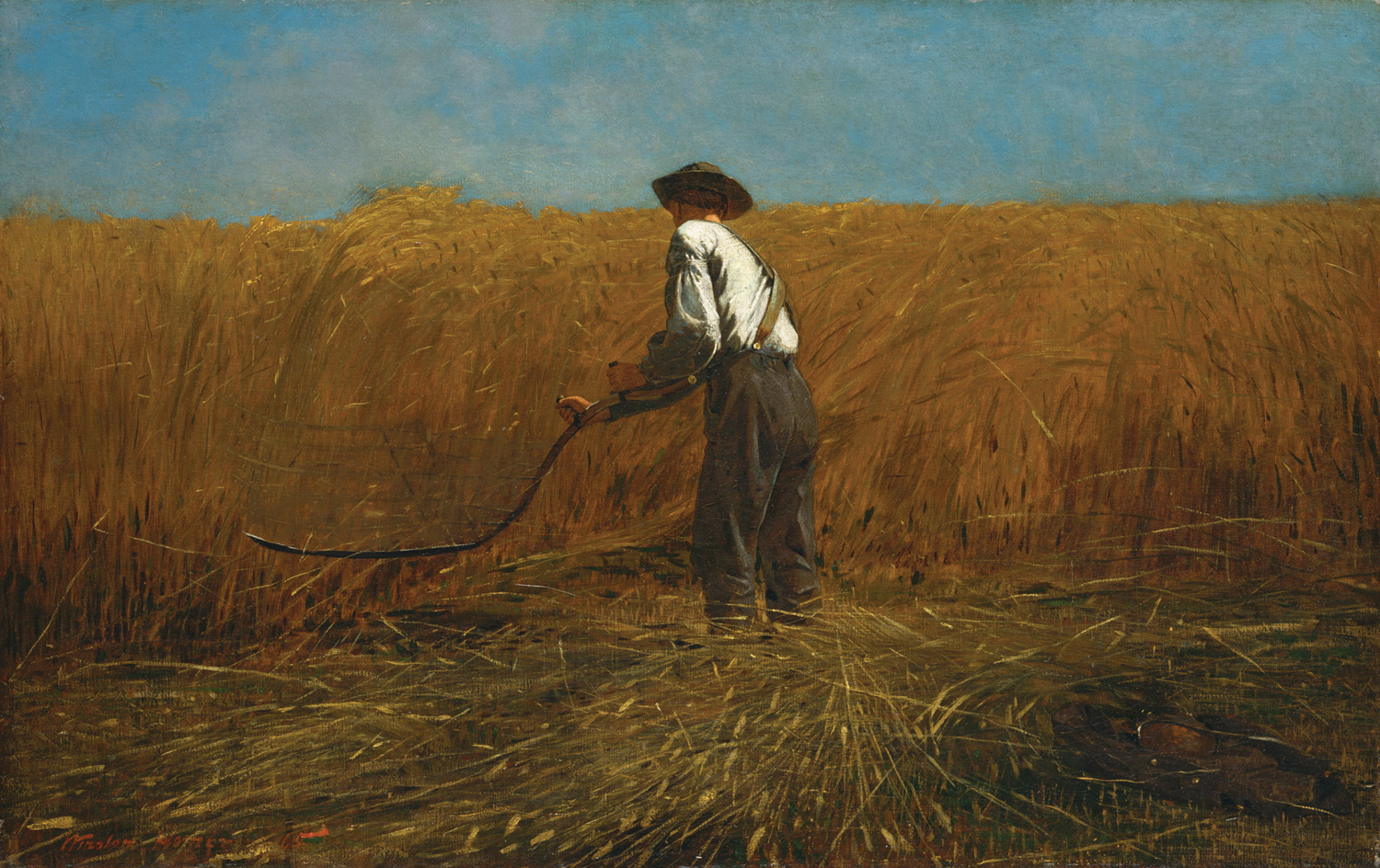
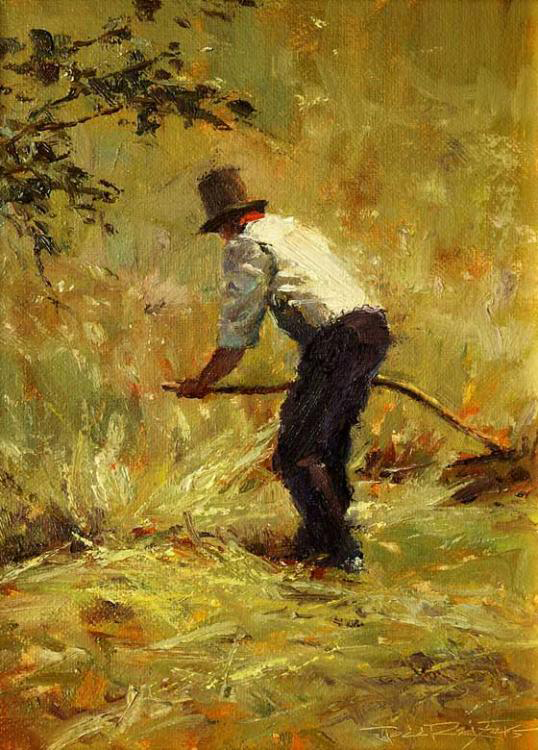
Winslow Homer’s The Veteran in a New FieldMan Scything Hay by Todd Reifers
There was never a sound beside the wood but one, And that was my long scythe whispering to the ground. What was it it whispered? I knew not well myself; Perhaps it was something about the heat of the sun, Something, perhaps, about the lack of sound— And that was why it whispered and did not speak. To the earnest love that laid the swale in rows, The fact is the sweetest dream that labor knows. My long scythe whispered and left the hay to make. ~Robert Frost in “Mowing”
Mowers, weary and brown, and blithe, What is the word methinks ye know, Endless over-word that the Scythe Sings to the blades of the grass below? Scythes that swing in the grass and clover, Something still, they say as they pass; What is the word that, over and over, Sings the Scythe to the flowers and grass?
Hush, ah hush, the Scythes are saying, Hush, and heed not, and fall asleep; Hush, they say to the grasses swaying, Hush, they sing to the clover deep! Hush – ’tis the lullaby Time is singing – Hush, and heed not, for all things pass, Hush, ah hush! and the Scythes are swinging Over the clover and over the grass! ~Andrew Lang (1844-1912) “The ScytheSong”
It is blue May. There is work to be done. The spring’s eye blind with algae, the stopped water silent. The garden fills with nettle and briar. Dylan drags branches away. I wade forward with my scythe.
There is stickiness on the blade. Yolk on my hands. Albumen and blood. Fragments of shell are baby-bones, the scythe a scalpel, bloodied and guilty with crushed feathers, mosses, the cut cords of the grass. We shout at each other each hurting with a separate pain.
From the crown of the hawthorn tree to the ground the willow warbler drops. All day in silence she repeats her question. I too return to the place holding the pieces, at first still hot from the knife, recall how warm birth fluids are. ~Gillian Clarke“Scything” from Letter from a Far Country (1982)
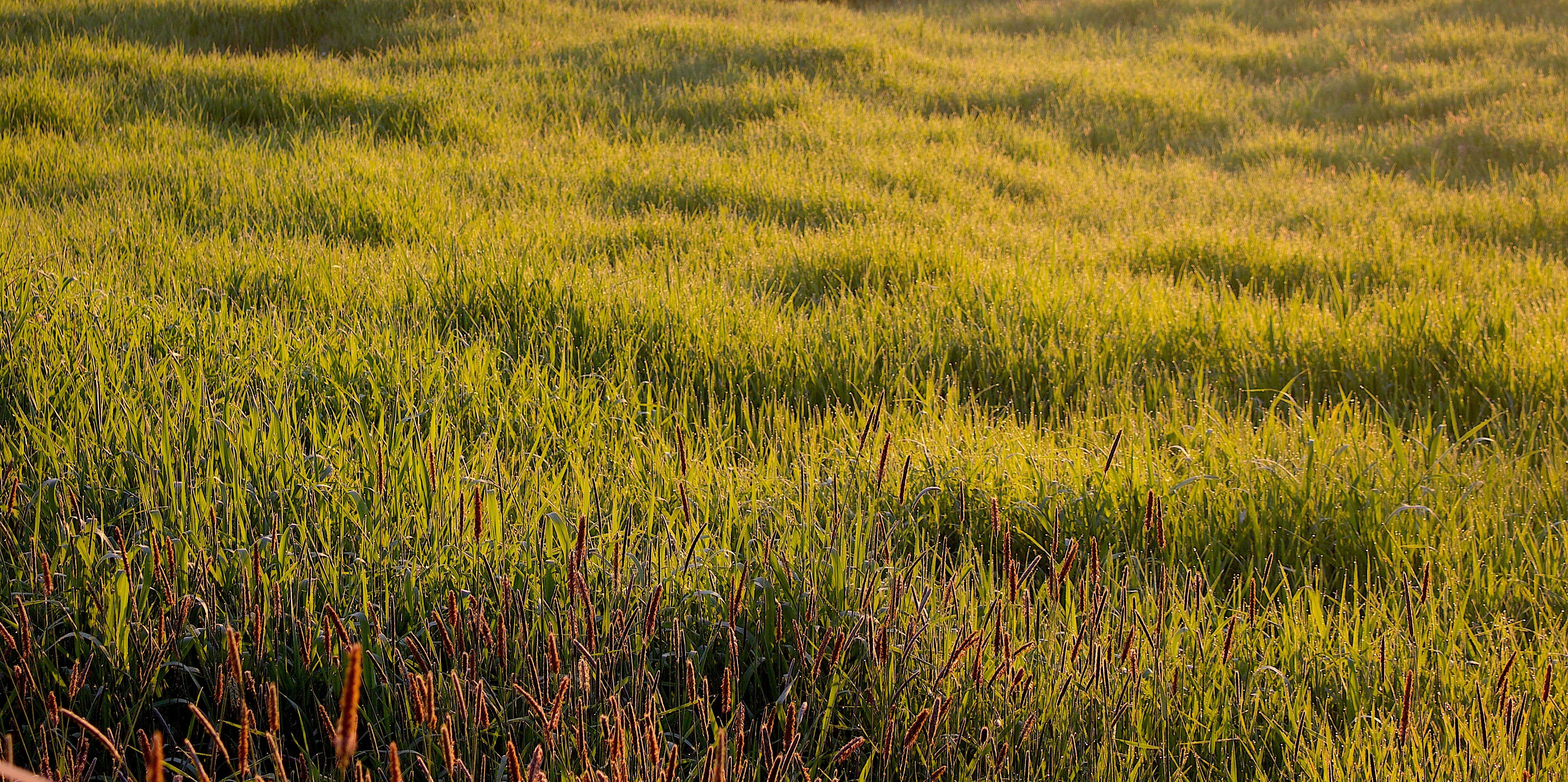
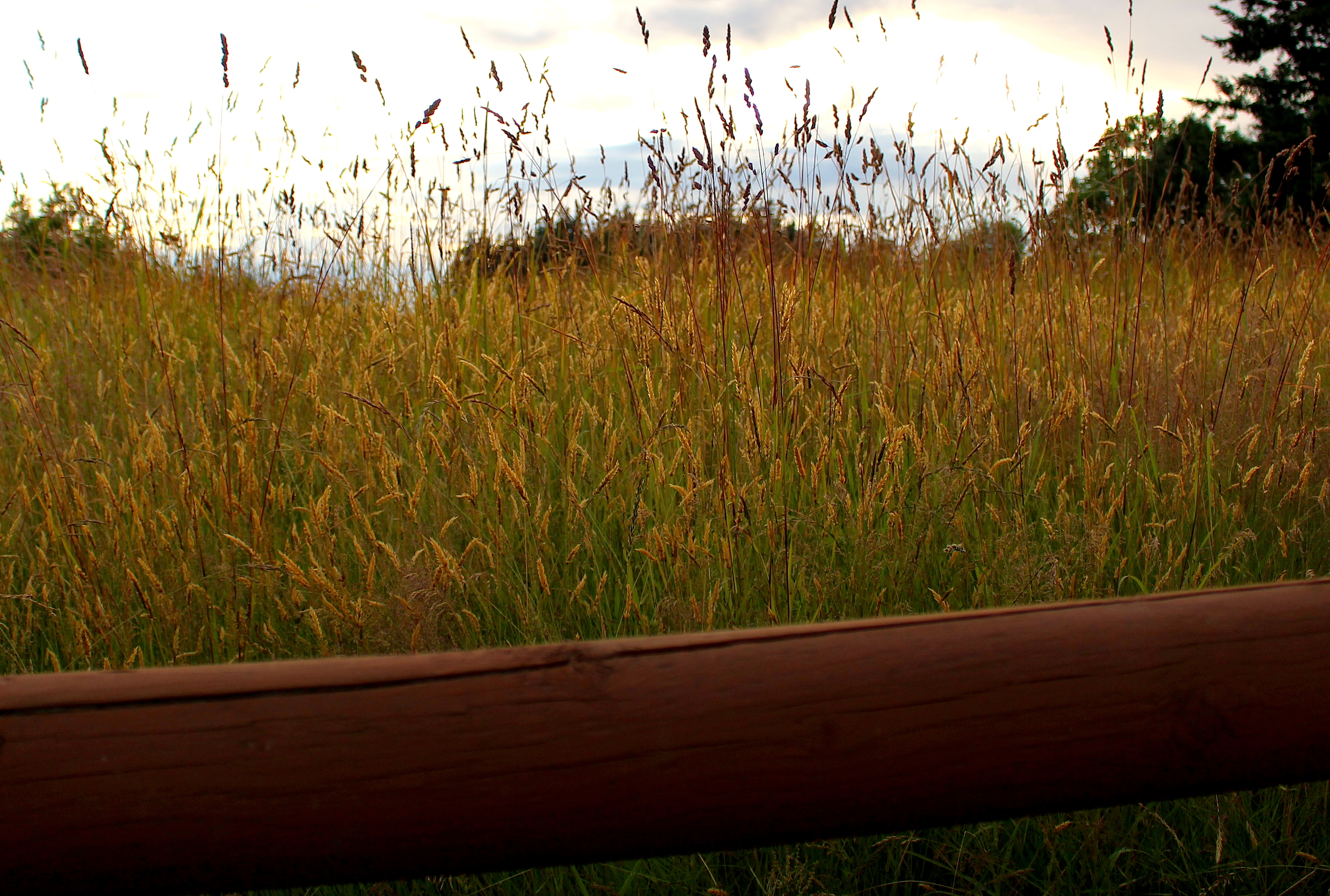
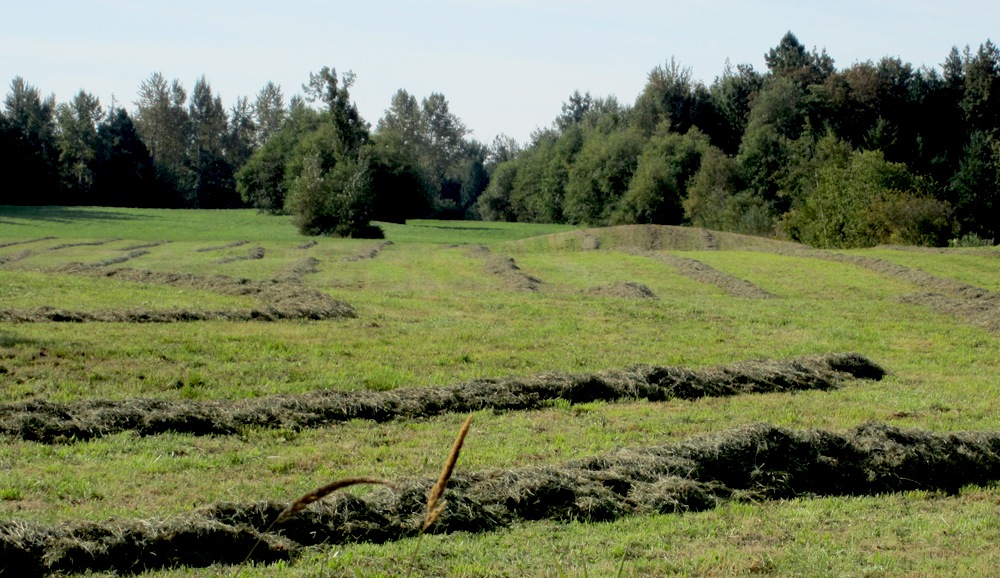
The grass around our orchard and yet-to-be-planted garden is now thigh-high. It practically squeaks while it grows. Anything that used to be in plain sight on the ground is rapidly being swallowed up in a sea of green: a ball, a pet dish, a garden gnome, a hose, a tractor implement, a bucket. In an effort to stem this tidal flood of grass, I grab the scythe out of the garden shed and plan my attack.
When the pastures are too wet yet for heavy hooves, I have hungry horses to provide for and there is more than plenty fodder to cut down for them.
I’m not a weed whacker kind of gal. First there is the necessary fuel, the noise necessitating ear plugs, the risk of flying particles requiring goggles–it all seems too much like an act of war to be remotely enjoyable. Instead, I have tried to take scything lessons from my husband.
Emphasis on “tried.”
I grew up watching my father scythe our hay in our field because he couldn’t afford a mower for his tractor. He enjoyed physical labor in the fields and woods–his other favorite hand tool was a brush cutter that he’d take to blackberry bushes. He would head out to the field with the scythe over this shoulder, grim reaper style. Once he was standing on the edge of the grass needing to be mowed, he would then lower the scythe, curved blade to the ground, turn slightly, positioning his hands on the two handles just so, raise the scythe up past his shoulders, and then in a full body twist almost like a golf swing, he’d bring the blade down. It would follow a smooth arc through the base of the standing grass, laying clumps flat in a tidy pile alongside the 2 inch stubble left behind. It was a swift, silky muscle movement — a thing of beauty.
Once, when I was three years old, I quietly approached my dad in the field while he was busily scything grass for our cows, but I didn’t announce my presence. The handle of his scythe connected with me as he swung it, laying me flat with a bleeding eyebrow. I still bear the scar, somewhat proudly, as he abruptly stopped his fieldwork to lift me up as I bawled and bled on his sweaty shirt. He must have felt so badly to have injured his little girl and drove my mom and I to the local doctor who patched my brow with sticky tape rather than stitches.
So I identify a bit with the grass laid low by the scythe. I forgave my father, of course, and learned never again to surprise him when he was working in the field.
Instead of copying my father’s graceful mowing technique, I tended to chop and mangle rather than effect an efficient slicing blow to the stems. I unintentionally trampled the grass I meant to cut. I got blisters from holding the handles too tightly. It felt hopeless that I’d ever perfect that whispery rise and fall of the scythe, with the rhythmic shush sound of the slice that is almost hypnotic.
Not only did I become an ineffective scything human, I also learned what it is like to be the grass laid flat, on the receiving end of a glancing blow. Over a long career, I bore plenty of footprints from the trampling. It can take awhile to stand back up after being cut down.
Sometimes it makes more sense to simply start over as the oozing stubble bleeds green, with deep roots that no one can reach. As I have grown back over the years, singing rather than squeaking or bawling, I realize, I forgave the scythe every time it came down on my head.
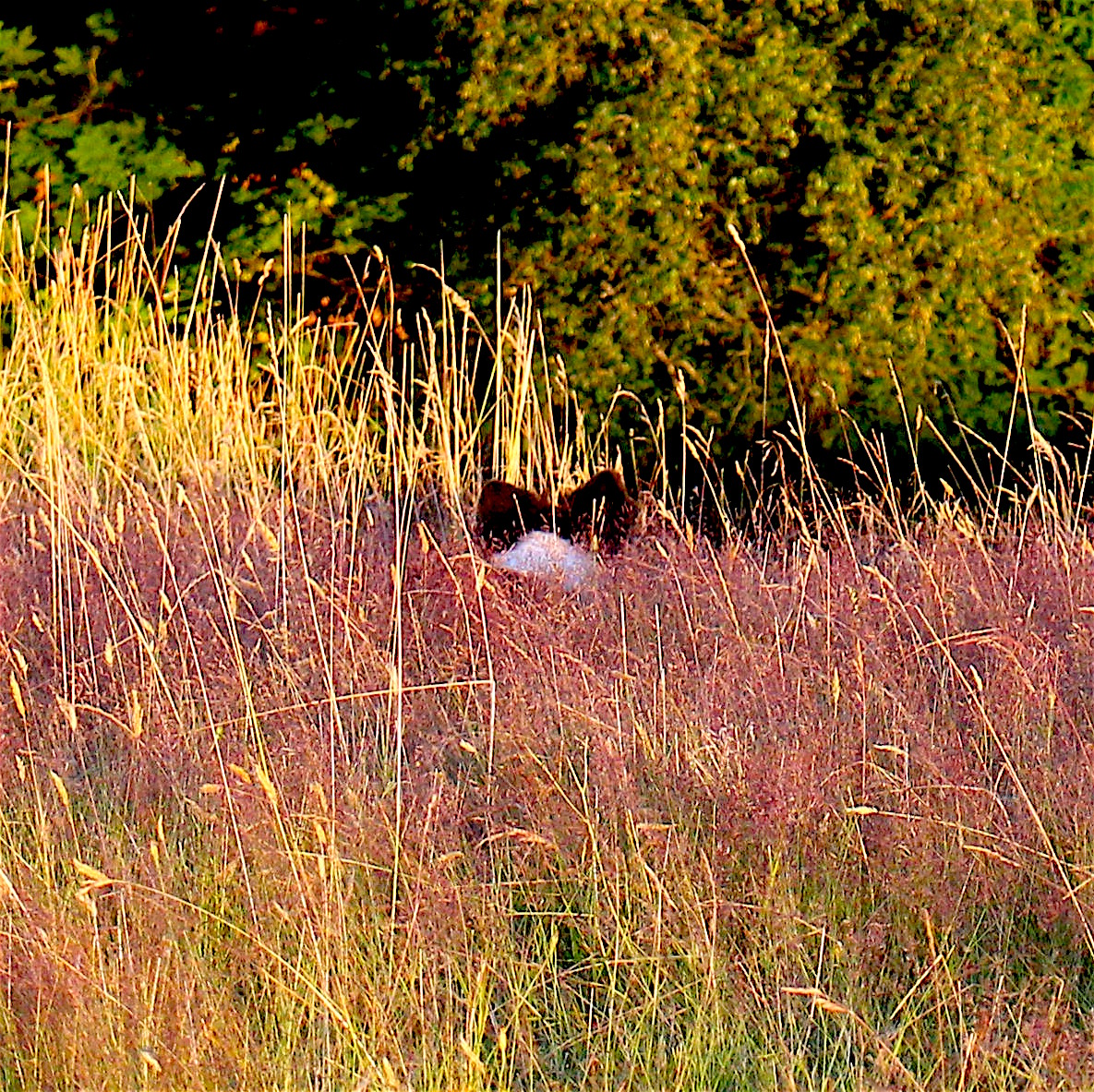
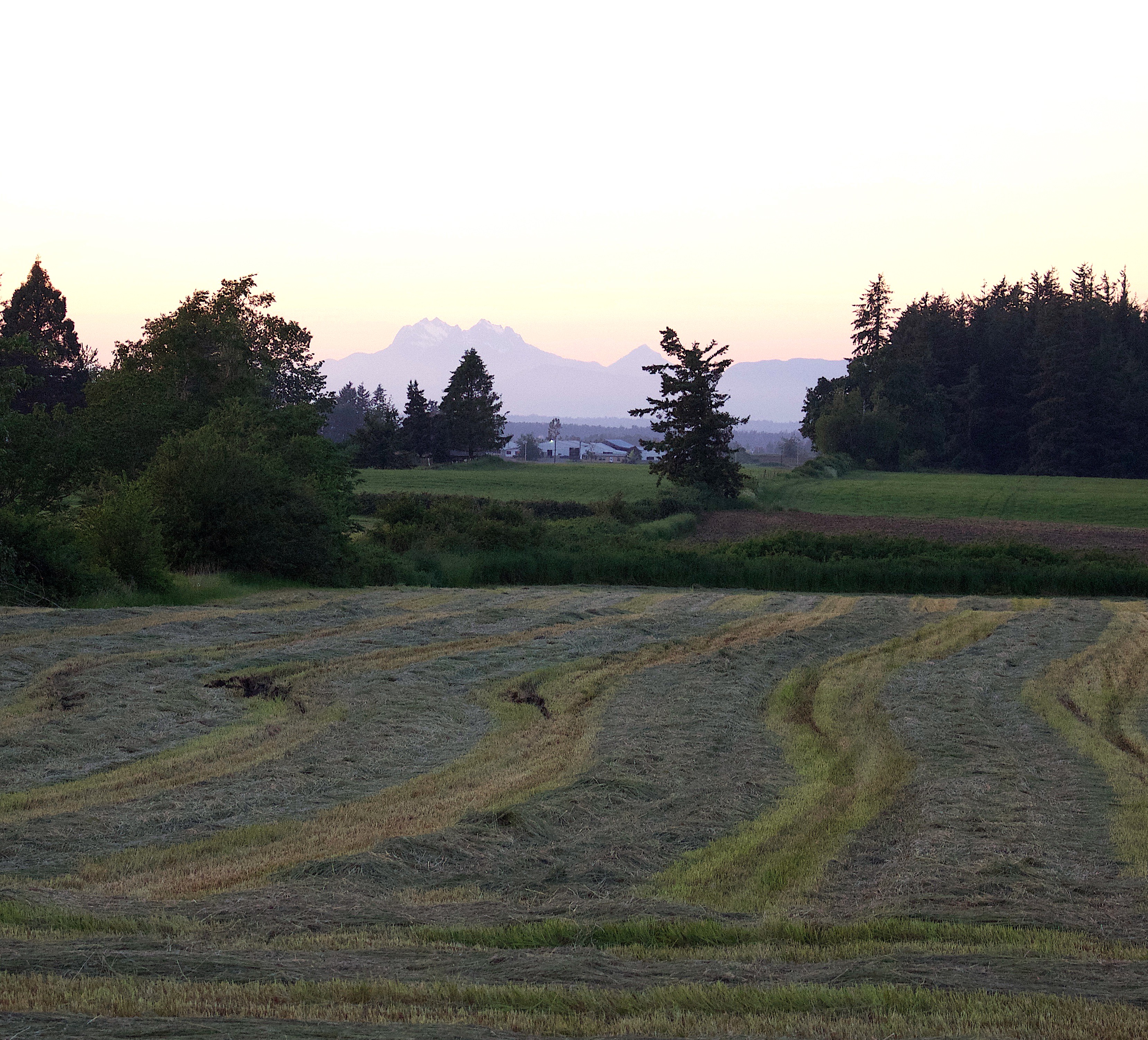
photo by Nate Gibson
One-Time
Monthly
Yearly
Make a one-time or recurring donation to support daily Barnstorming posts
I wake and feel the fell of dark, not day. Whathours, O what black hours we have spent This night! what sights you, heart, saw; ways you went! And moremust, in yet longer light’s delay.
With witness I speak this. But where I say Hours I mean years, mean life. And my lament Is cries countless, cries like dead letters sent To dearest him that lives alas! away.
I am gall, I am heartburn. God’s most deep decree Bitter would have me taste: my taste was me; Bones built in me, flesh filled, blood brimmed the curse.
Selfyeast of spirit a dull dough sours. I see The lost are like this, and their scourge to be As I am mine, their sweating selves; but worse. ~Gerard Manley Hopkins “I wake and feel the fell of dark”
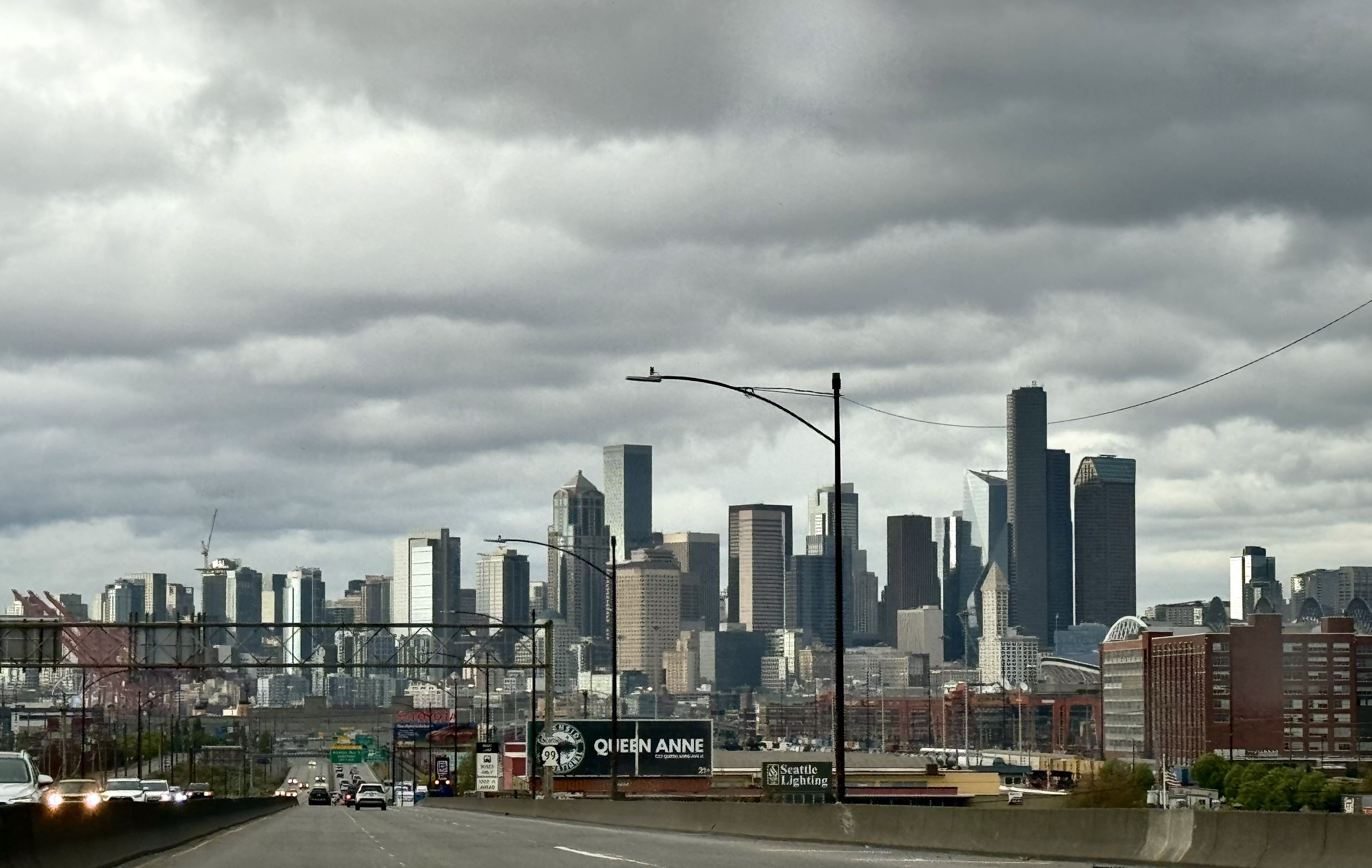
Surfacing to the street from a thirty two hour hospital shift usually means my eyes blink mole-like, adjusting to searing daylight after being too long in darkened windowless halls. This particular January day is different. As the doors open, I am immersed in a subdued gray Seattle afternoon, with horizontal rain soaking my scrubs.
Finally remembering where I had parked my car in pre-dawn dark the day before, I start the ignition, putting the windshield wipers on full speed. I merge onto the freeway, pinching myself to stay awake long enough to reach my apartment and my pillow.
The freeway is a flowing river current of head and tail lights. Semitrucks toss up tsunami waves cleared briefly by my wipers frantically whacking back and forth.
Just ahead in the lane to my right, a car catches my eye — it looks just like my Dad’s new Buick. I blink to clear my eyes and my mind, switching lanes to get behind. The license plate confirms it is indeed my Dad, oddly 100 miles from home in the middle of the week. I smiled, realizing he and Mom have probably planned to surprise me by taking me out for dinner.
I decide to surprise them first, switching lanes to their left and accelerating up alongside. As our cars travel side by side in the downpour, I glance over to my right to see if I can catch my Dad’s eye through streaming side windows. He is looking away to the right at that moment, obviously in conversation. It is then I realize something is amiss. When my Dad looks back at the road, he is smiling in a way I have never seen before. There are arms wrapped around his neck and shoulder, and a woman’s auburn head is snuggled into his chest.
My mother’s hair is gray.
My initial confusion turns instantly to fury. Despite the rivers of rain obscuring their view, I desperately want them to see me. I think about honking, I think about pulling in front of them so my father would know I have seen and I know. I think about ramming them with my car so that we’d perish all, unrecognizable, in an explosive storm-soaked mangle.
At that moment, my father glances over at me and our eyes meet across the lanes. His face is a mask of betrayal, bewilderment and then shock, and as he tenses, she straightens up and looks at me quizzically.
I can’t bear to look any longer.
I leave them behind, speeding beyond, splashing them with my wake. Every breath burns my lungs and pierces my heart. I can not distinguish whether the rivers obscuring my view are from my eyes or my windshield.
Somehow I made it home to my apartment, my heart still pounding in my ears. The phone rings and remains unanswered.
I throw myself on my bed, bury my wet face in my pillow and pray for sleep without dreams, without secrets, without lies, without the burden of knowing a truth I alone now knew and wished I didn’t..
Postscript: I didn’t tell anyone what I saw that day. My father never asked. He divorced my mother, and was remarried quickly, my mother and two families shattered as a result. Ten years later, his second wife died due to a relentless cancer, and he returned to my mother, asking her forgiveness and wanting to remarry. Within months, he too was diagnosed with cancer and Mom nursed him through his treatment, remission, recurrence and then hospice.
We became a family again, not the same as before, yet put back together for good reason – forgiving and forgiven.
This year’s Lenten theme:
…where you go I will go… Ruth 1:16
AI image created for this post
One-Time
Monthly
Yearly
Make a one-time or recurring donation to support daily Barnstorming posts



















 Barnstorming