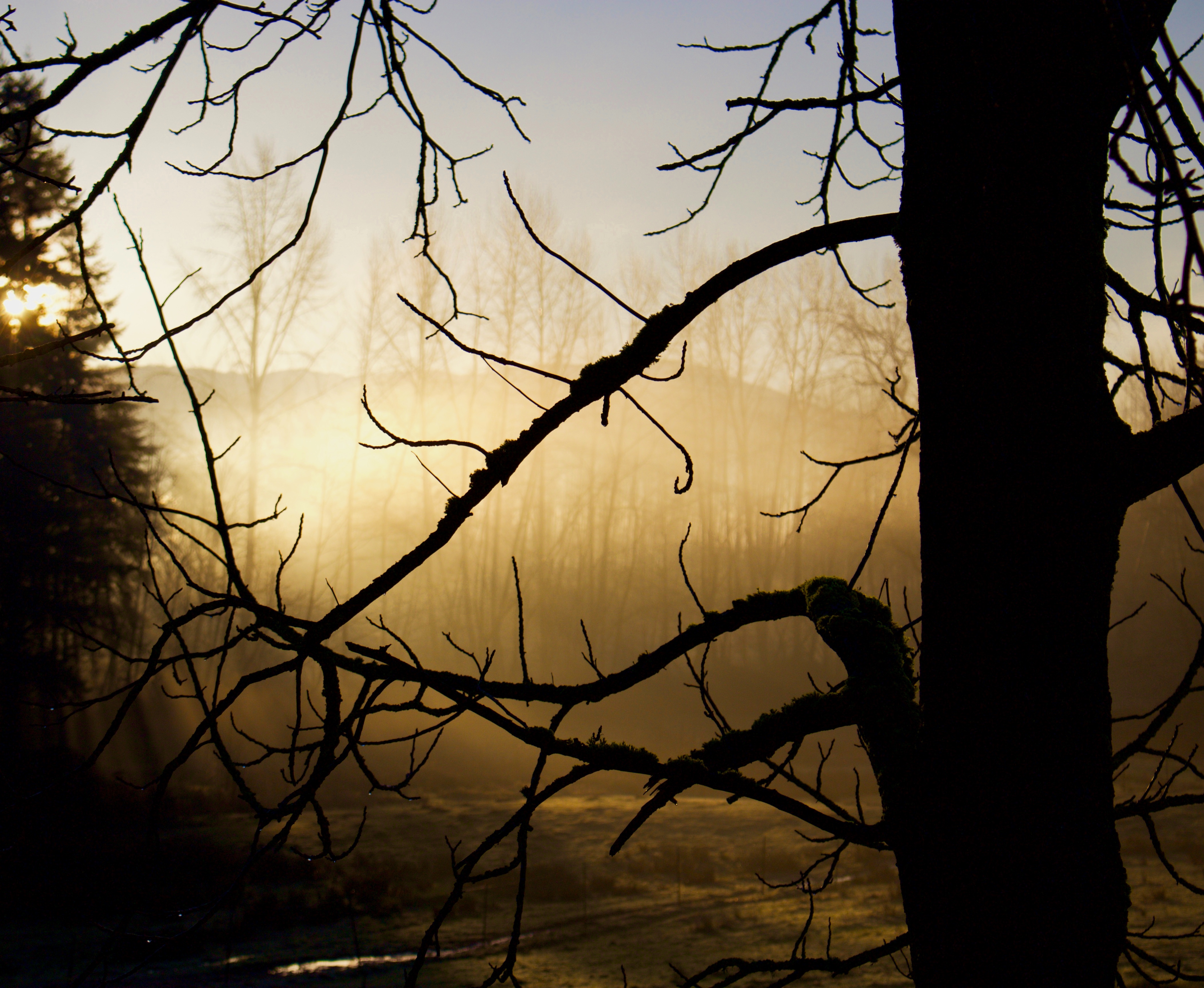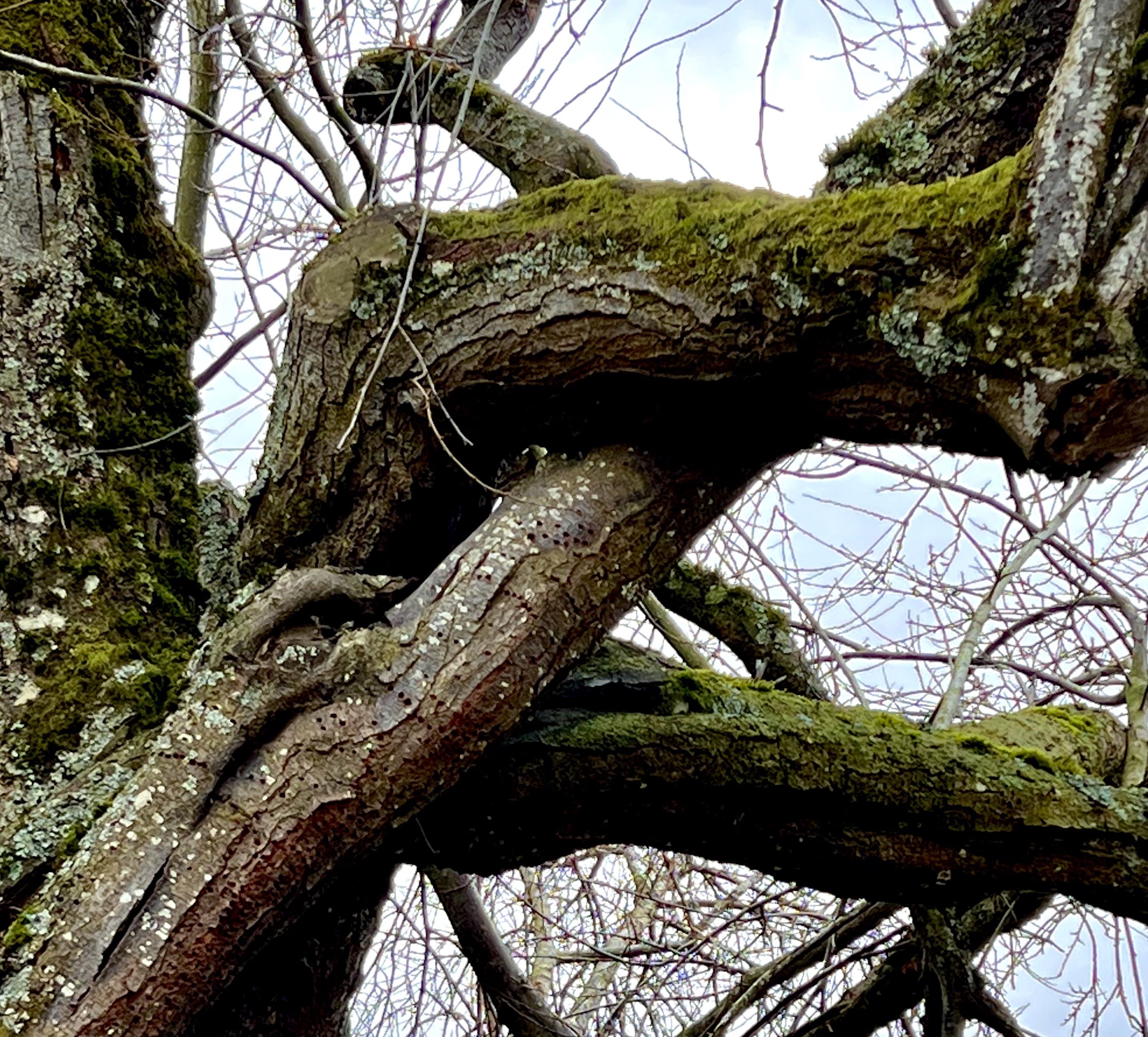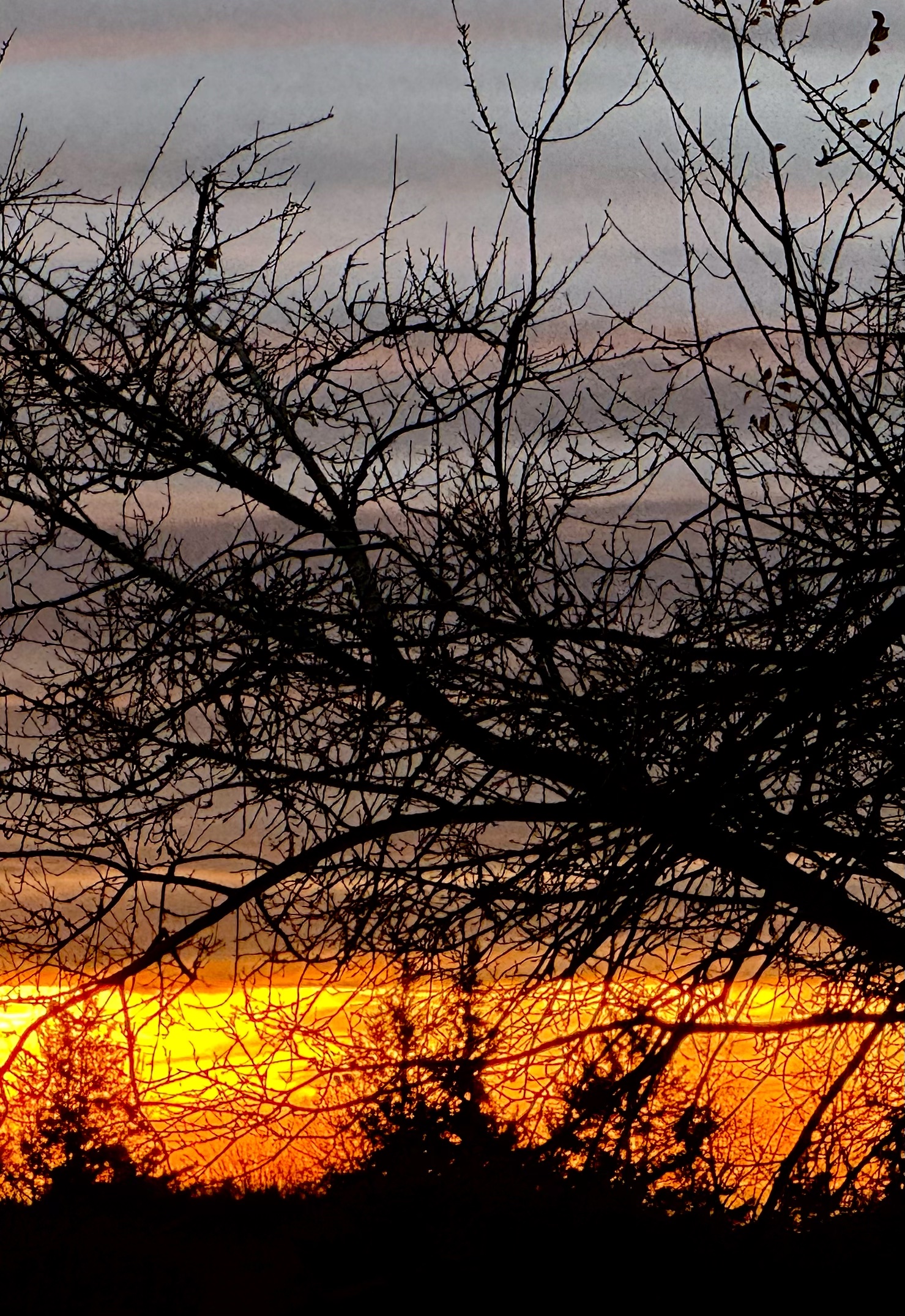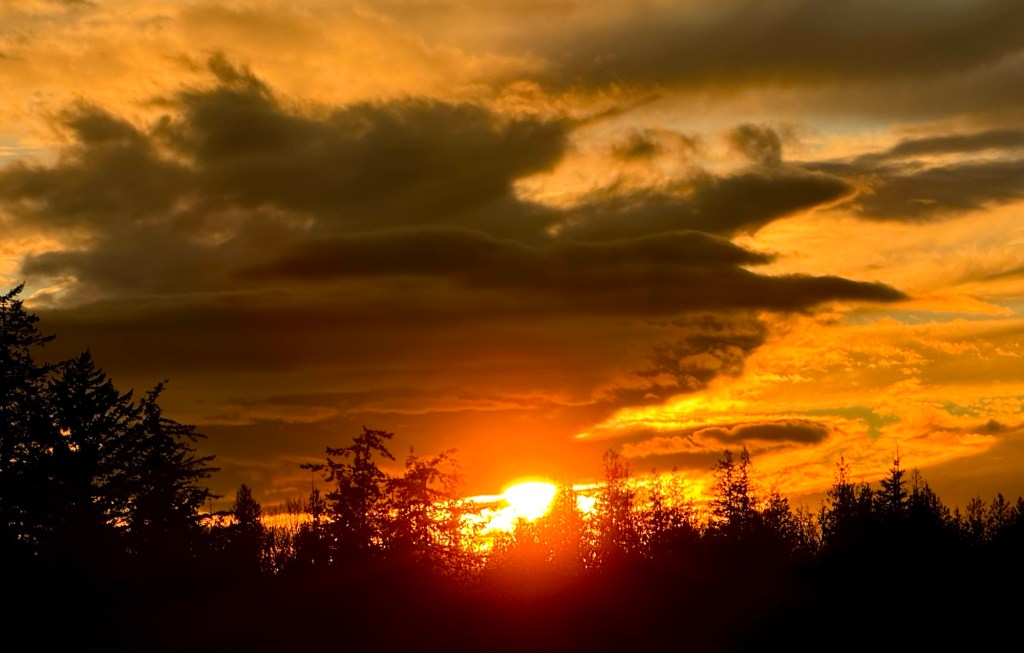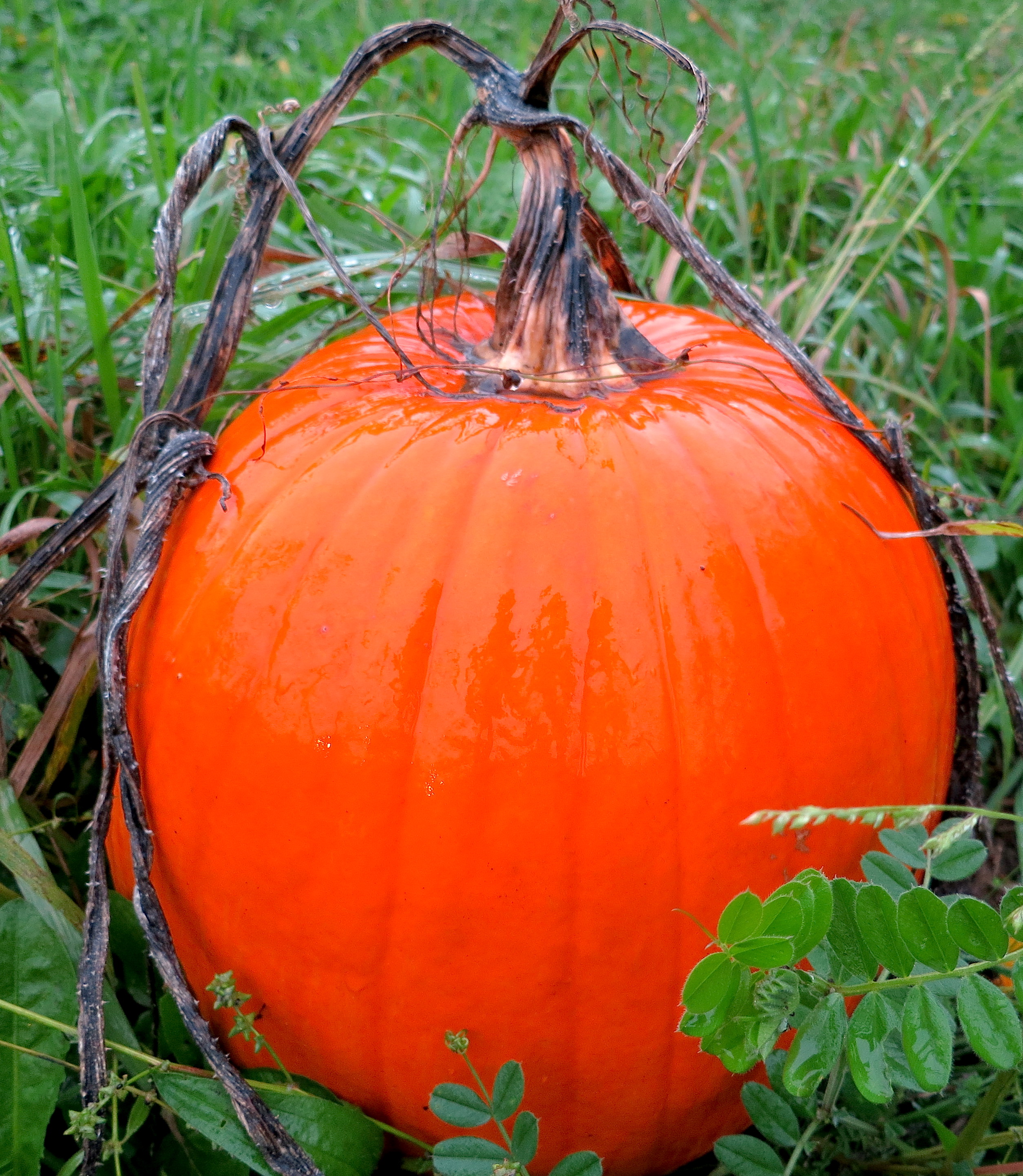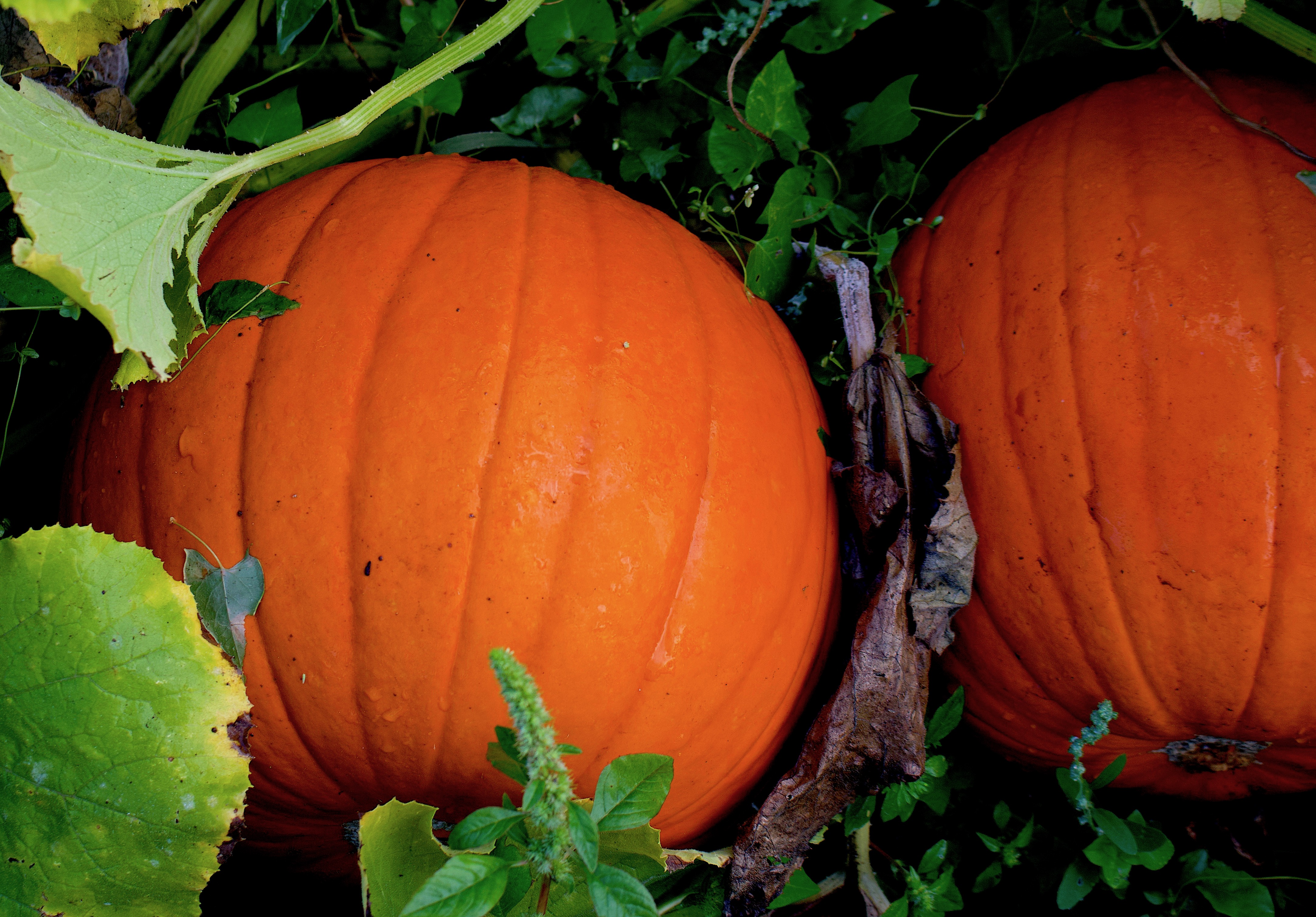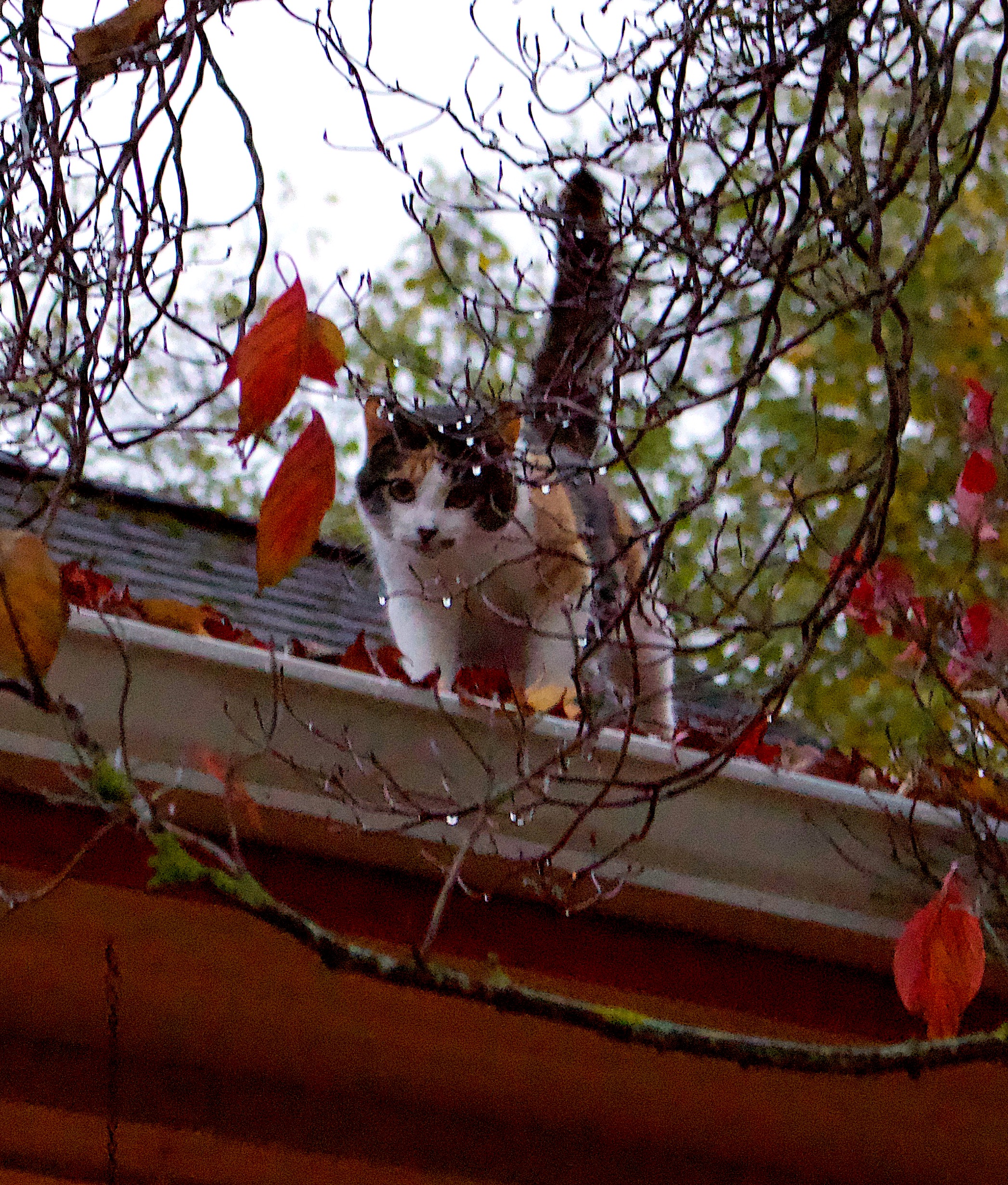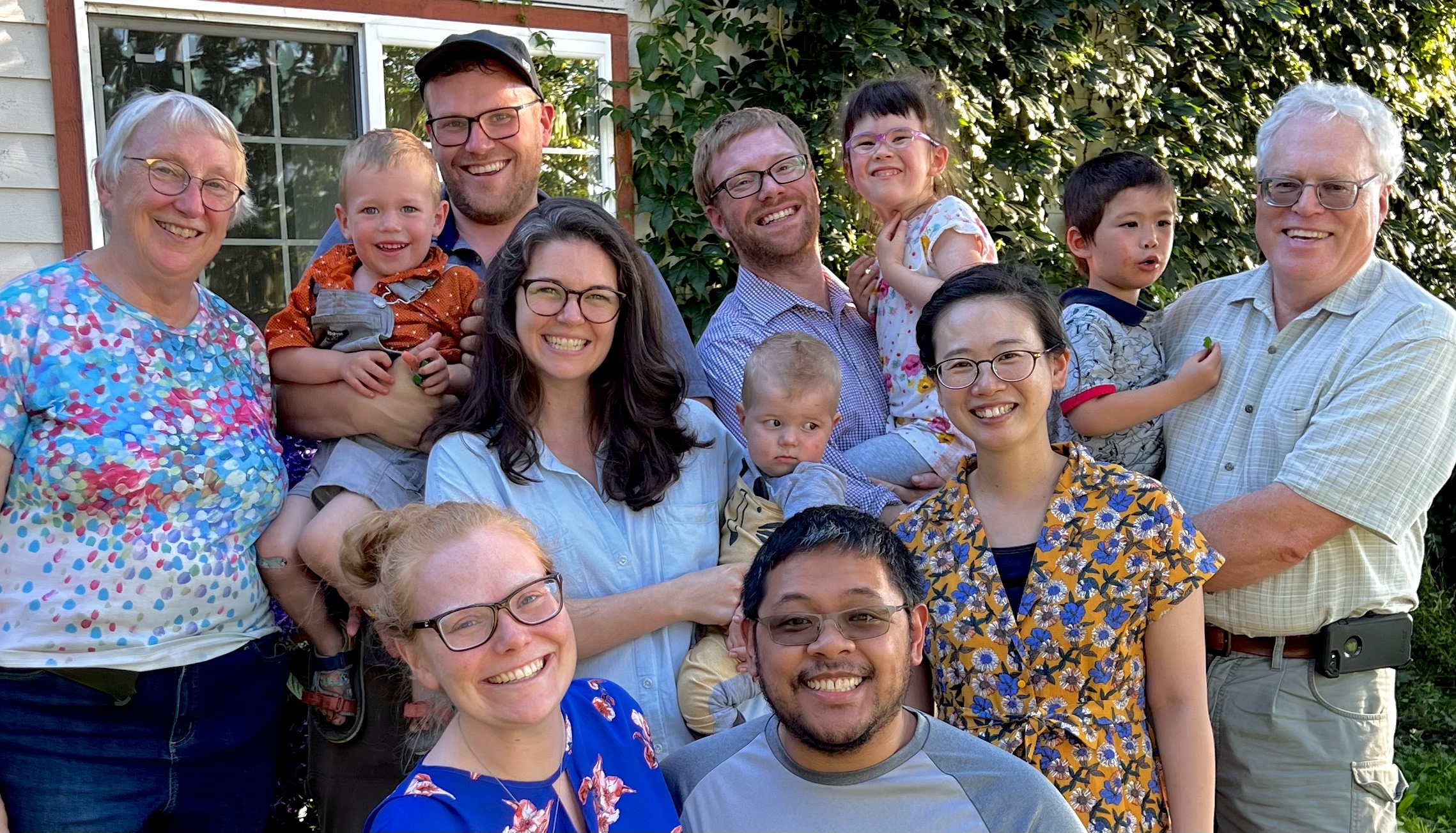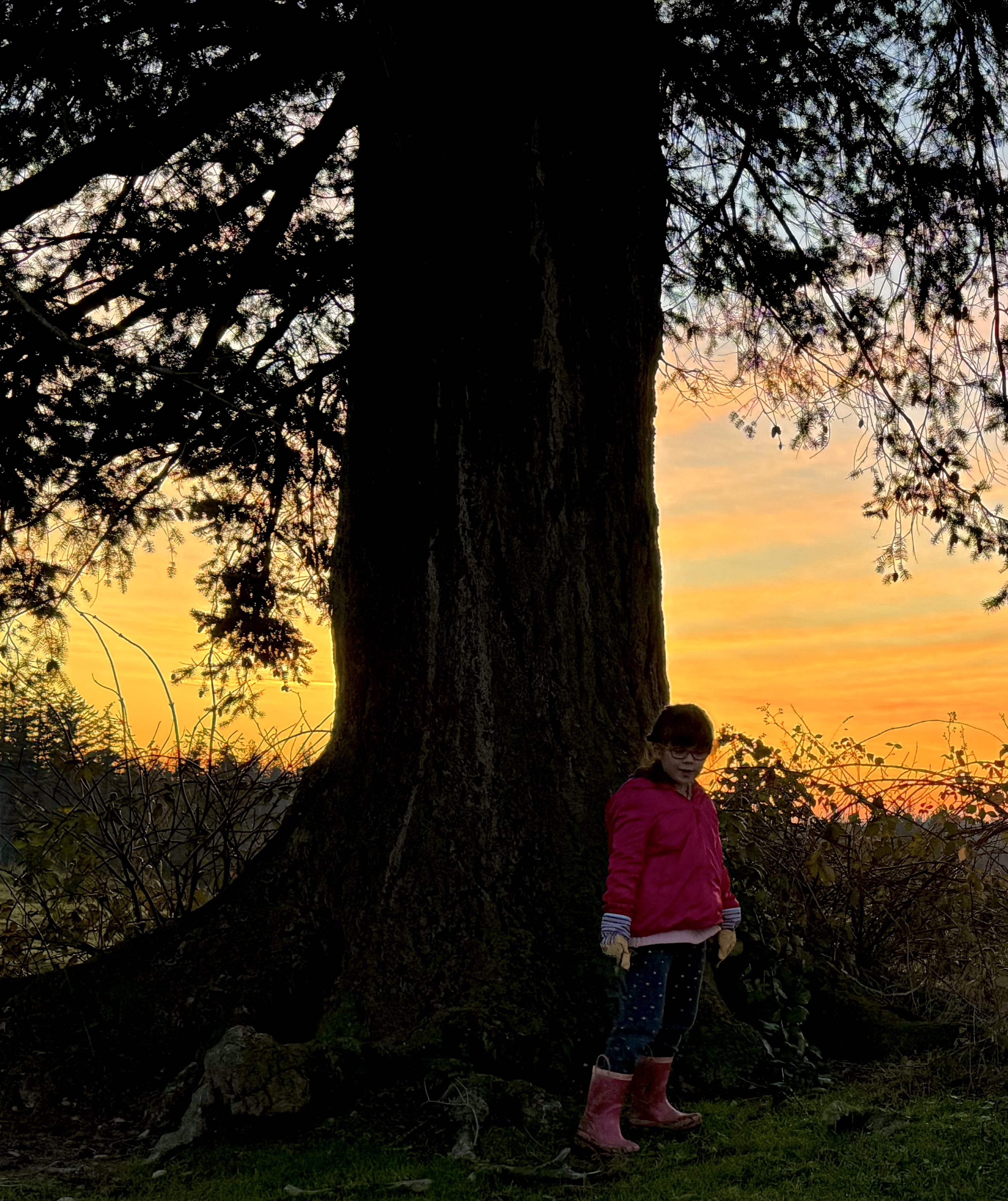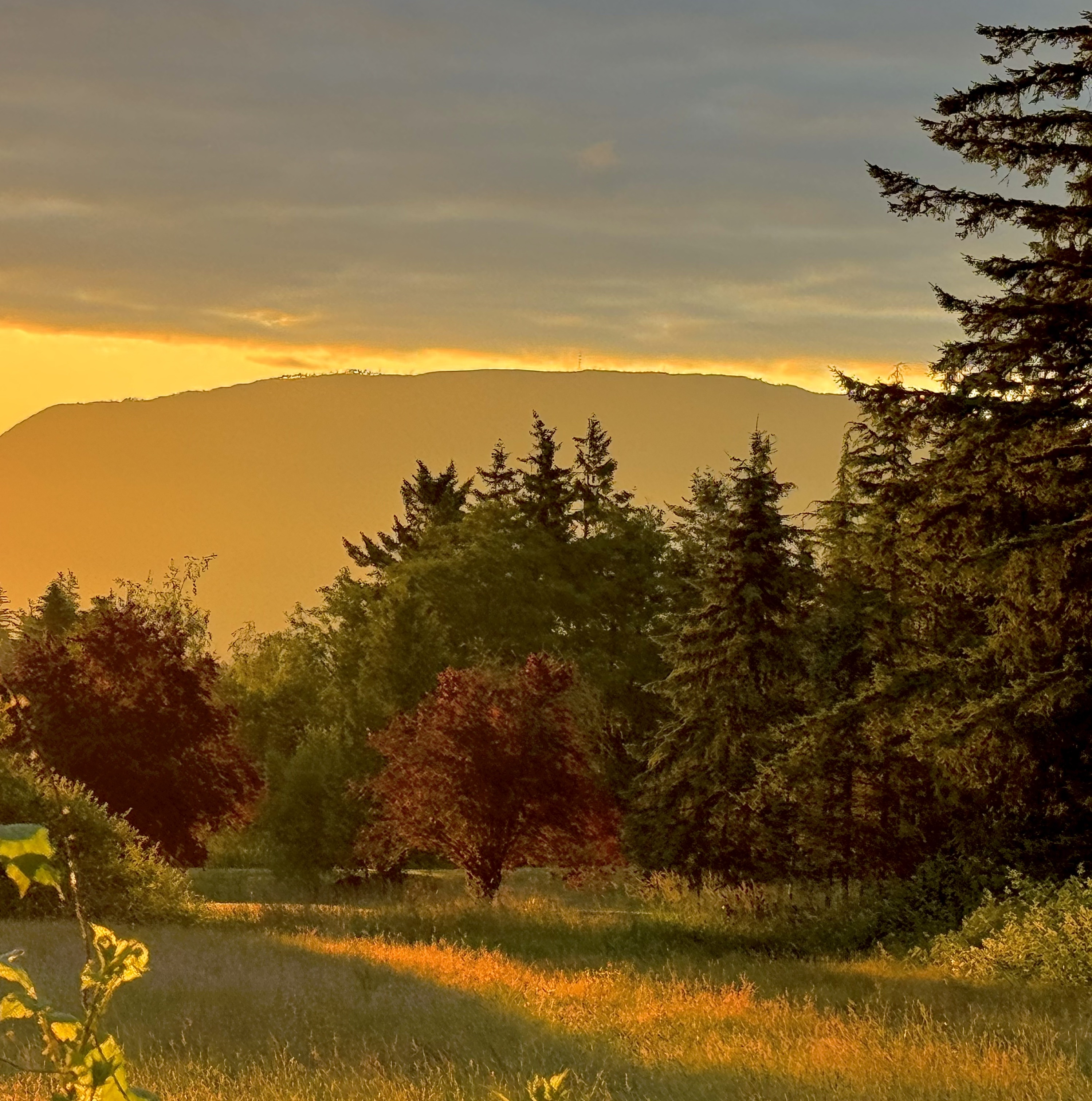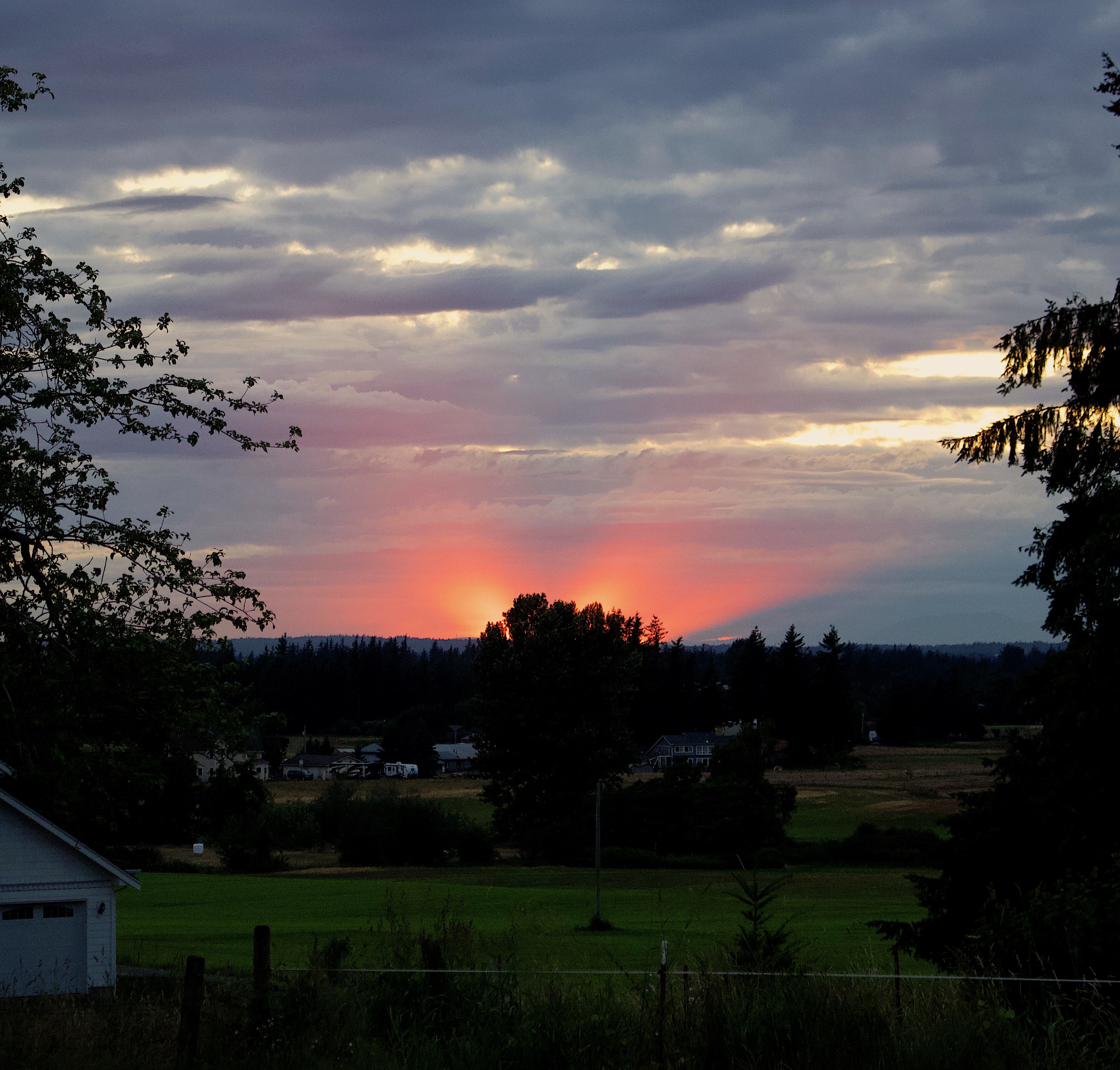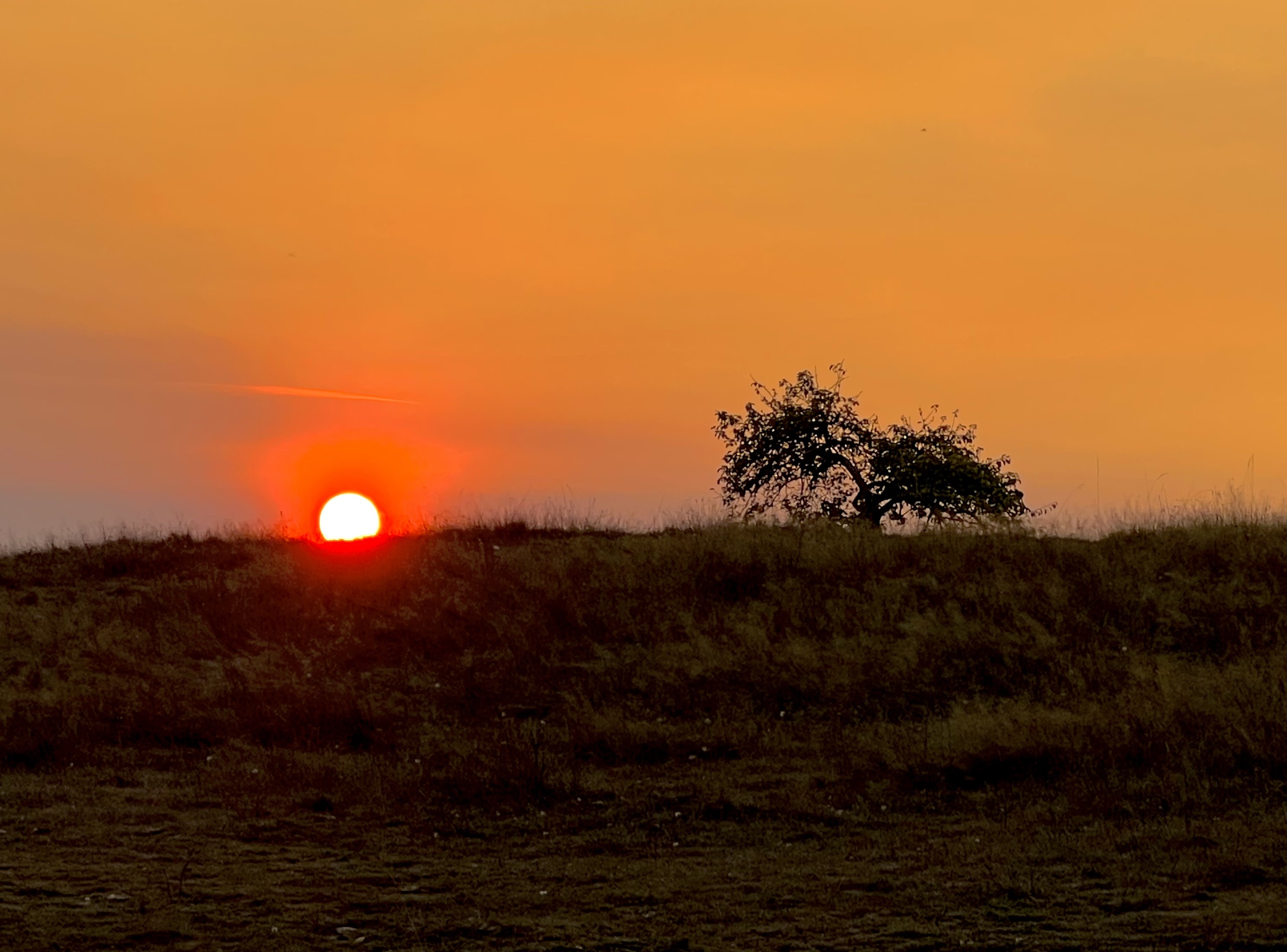
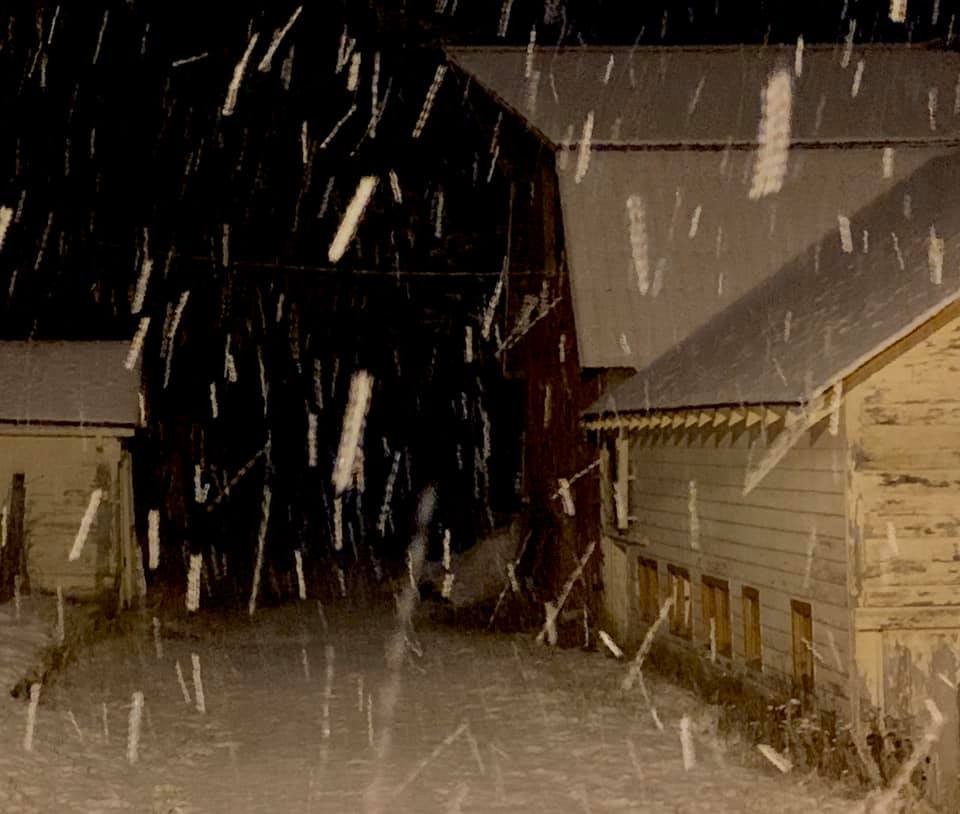
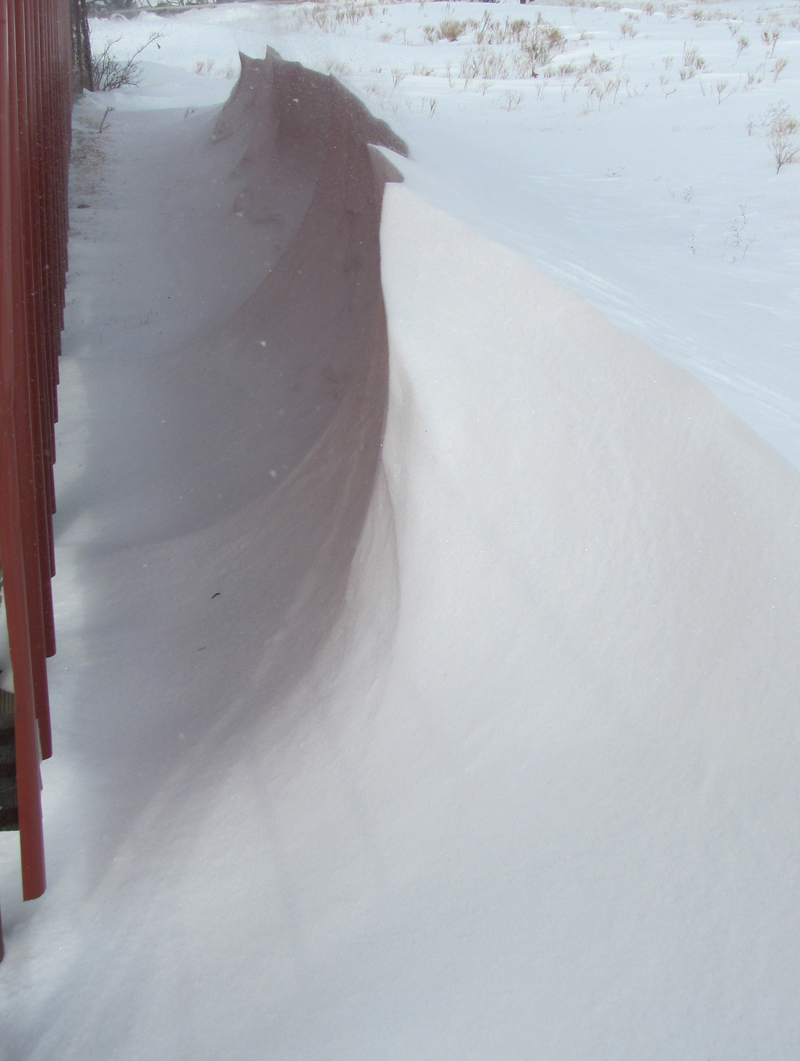
But you can have the fig tree and its fat leaves like clown hands gloved with green. You can have the touch of a single eleven-year-old finger on your cheek, waking you at one a.m. to say the hamster is back. You can have the purr of the cat and the soulful look of the black dog, the look that says, If I could I would bite every sorrow until it fled, and when it is August, you can have August and abundantly so. You can have love, though often it will be mysterious, like the white foam that bubbles up at the top of the bean pot over the red kidneys until you realize foam’s twin is blood.
You can speak a foreign language, sometimes, and it can mean something. You can visit the marker on the grave where your father wept openly. You can’t bring back the dead, but you can have the words forgive and forget hold hands as if they meant to spend a lifetime together. You can have your grandfather sitting on the side of your bed, at least for a while, you can have clouds and letters, the leaping of distances, and Indian food with yellow sauce like sunrise. You can’t count on grace to pick you out of a crowd but here is your friend to teach you how to high jump, how to throw yourself over the bar, backwards, until you learn about love, about sweet surrender, and here are periwinkles, buses that kneel, farms in the mind as real as Africa.
And when adulthood fails you, you can still summon the memory of the black swan on the pond of your childhood, the rye bread with peanut butter and bananas your grandmother gave you while the rest of the family slept. There is the voice you can still summon at will, like your mother’s, it will always whisper, you can’t have it all, but there is this. ~Barbara Ras from “You Can’t Have It All” from Bite Every Sorrow
My pragmatic mother gave up her teaching career for marriage and family so would remind me regularly that I couldn’t have it all: there was no way a woman can have a husband and children and a farm and a garden and animals and a profession and write and travel and volunteer in the community and not make a mess of it all and herself.
My father would listen to her and say to me softly under his breath: “you do whatever you put your mind to…you know what you are here for.”
They were both right.
The alluring abundance of this life has invited me to want to touch and feel and taste it all, not unlike another woman who was placed with purpose in the Garden to be a side-by-side companion and co-worker. Yet she demonstrated what happens when you want more than you are given and yes, she indeed made a mess of things.
Yet there is this: despite wanting it all and working hard for it all and believing I could do it all, I missed the point altogether.
Life is all gift, never earned. Life is all grace, not deserved. It is all August abundance, it is right now, sustaining us through the year’s droughts and floods and storms and drab gray weather.
And there is this: I know what I am here for.
One-Time
Monthly
Yearly

Make a one-time or recurring donation to support daily Barnstorming posts
In none of her other ages had she noted her age or its burden and bounty of expectations. The future was as flexible as the past, and, in between, moments like unstrung pearls strewn across velvet grieved and gladdened her and always astonished her with their perfection. There was no nothingness: there was only being.
Slowly she wakes from what had seemed a dream to realize that this is her final age— of indeterminate length and quality. Things are ending, or have ended, or will end. The pearls are strung with care, it is quite clear. There is no nothingness—but she can almost, some days, picture the world without her in it. ~Jane Greer “In none of her other ages” (Jane died after a short illness last week at the age of 72)
I have always been well aware we each arrive here with an expiration date hidden from view.
We may live for decades assuming the circled length of our own string of pearls will continue indefinitely with the latch closed and tight.
A few months ago, my clasp opened unexpectedly, my finite days of carefully strung pearls threatening to spill, forever lost to me.
I realized things could end without any hugged goodbyes.
Later, having been emergently restrung, at least for the time being, the look in my eyes prompted the surgeon to say “now you can live out your full life span.”
What I wanted to ask him but couldn’t: “and just how long might that be?” knowing he had no true reassurance for something only God can promise:
There is no nothingness.
By grace and a surgeon’s skill, I gained nearly six months of pearls. I’m still here, looking back at the carefully strung hours and days and weeks behind and before me.

Right now I remain clasped tight, hugging and held secure, though one day I know it will be time to let go.
There we shall rest and we shall see; we shall see and we shall love; we shall love and we shall praise. Behold what shall be in the end and shall not end. ~Augustine of Hippo from The City of God, Bk. XXII, Chap. 30
One-Time
Monthly
Yearly

Make a one-time or recurring donation to support daily Barnstorming posts

Let us go forward quietly, forever making for the light, and lifting up our hearts in the knowledge that we are as others are (and that others are as we are), and that it is right to love one another in the best possible way – believing all things, hoping for all things, and enduring all things. ~Vincent Van Gogh from a Letterto Theo Van Gogh – 3 April 1878
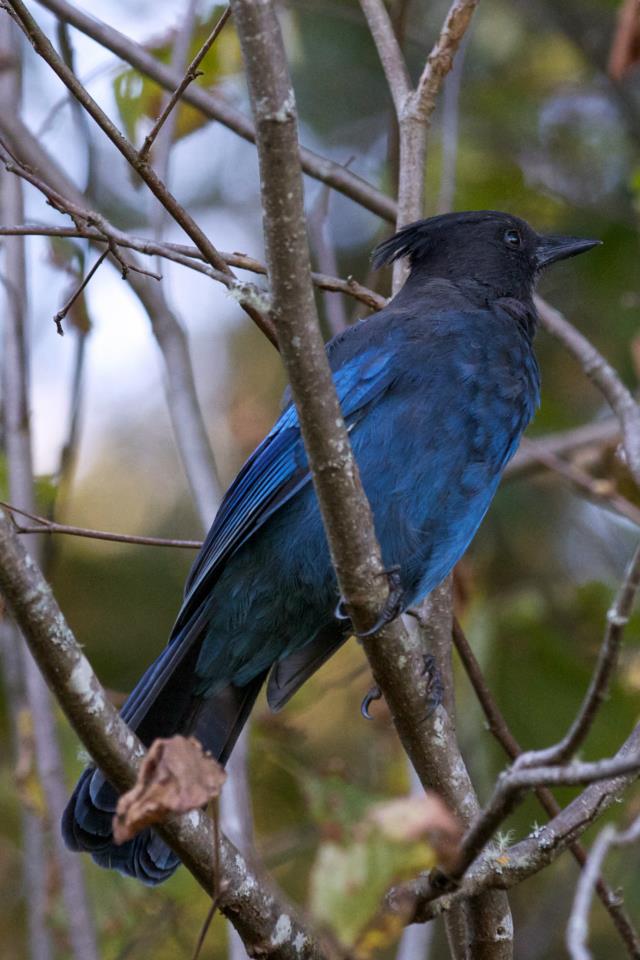
I have lived so long On the cold hills alone . . . I loved the rock And the lean pine trees, Hated the life in the turfy meadow, Hated the heavy, sensuous bees. I have lived so long Under the high monotony of starry skies, I am so cased about With the clean wind and the cold nights, People will not let me in To their warm gardens Full of bees. ~Janet Loxley Lewis “Austerity”
Everywhere transience is plunging into the depths of Being. It is our task to imprint this temporary, perishable earth into ourselves, so deeply, so painfully and passionately, that its essence can rise again, invisible, inside of us. We are the bees of the invisible. We wildly collect the honey of the visible, to store it in the great golden hive of the invisible. ~Rainier Maria Rilke in a letter to his friend Witold Hulewicz, 1925
I am convinced, reading the news, too many people are forced to survive in a world cold and cruel, without warmth or safety, too many empty stomachs, no healing hands for injury or disease.
Our country was trying to help up until the last few months when so much has been pulled away.
No longer are we, the helper bees, sent to the invisible, bringing tangible hope and light, food and meds, to those who have so little.
No longer do we bring collected honey to the suffering, the ill, the poor and invisible who share this planet.
Oh Lord, turn us away from such austerity. Let us not forget how to share the humming riches of Your warm garden.
AI image created for this post
One-Time
Monthly
Yearly
Make a one-time or recurring donation to support daily Barnstorming posts
Now a red, sleepy sun above the rim Of twilight stares along the quiet weald, And the kind, simple country shines revealed In solitudes of peace, no longer dim. The old horse lifts his face and thanks the light, Then stretches down his head to crop the green. All things that he has loved are in his sight; The places where his happiness has been Are in his eyes, his heart, and they are good. ~Siegfried Sassoon from “Break of Day”
My husband and I grow old along with our horses – we are now past 70, just as a couple of our horses in “horse” years.
None of us, horses or humans, need to climb in the harness or put on the saddle to pull or carry the heavy loads of our former work lives.
It is a good life – each day treasured for its ordinariness.
Our retired horses feel the morning sun on their withers and the green blades under their feet, they scan the pasture for the sweetest tender patch to munch in the fields they know and love so well. They nap more now than in their younger years, taking breaks to let their heads hang relaxed and nodding, their tails slowly swishing at flies.
This morning was not so ordinary.
Waldheer van de Wortel (Wally), imported from Holland as a foal 27 years ago to be our herd stallion, let me know he wasn’t feeling well. He repeatedly pawed at the ground and the pasture gates, biting at his flank, trying to lie down and then get back up, not eating – clearly experiencing colicky belly pain that was getting worse.
I wondered if Wally’s time had come to bid him farewell. I had made a promise to my geriatric horses that I would not allow them to live in pain just because I didn’t want to let them go.
The vet came quickly and we talked about Wally’s options. She remarked about how he didn’t look his age, was holding weight well, his coat so sleek and shiny, his long-lashed eyes still bright and curious. But she said an older horse could often have repeated bouts of colic before the end, even if they temporarily improve with medical treatment.
I decided it was the right time to let him go to Haflinger heaven on a sunny summer morning, nibbling a mouthful of clover I offered him.
He was laid to sleep where he had lived nearly three decades.
He leaves behind two sons who were his pasture buddies, a couple dozen offspring scattered around the country, and people who loved his ambassadorship for the Haflinger breed. In his younger days, he was an enthusiastic eventer in the northwest region, ridden by his trainer Jessica Heidemann. They both had an enthusiastic fan-following.
In his later years, Wally was patient and loving with our grandchildren and with us. He lived a good life in his place of happiness. I wanted him to die peacefully at home, without a worry.
It just doesn’t get much better than that.
Waldheer van de Wortel, 1998 foal in Holland27 year old WallyArt work made by a fan of Waldheer
One-Time
Monthly
Yearly
Make a one-time or recurring donation to support daily Barnstorming posts
I’m sorry I won’t be around a hundred years from now. I’d like to see how it all turns out. What language most of you are speaking. What country is swaggering across the globe. I’m curious to know if your medicines cure what ails us now. And how intelligent your children are as they parachute down through the womb. Have you invented new vegetables? Have you trained spiders to do your bidding? Have baseball and opera merged into one melodic sport? A hundred years…. My grandfather lived almost that long. The doctor who came to the farmhouse to deliver him arrived in a horse-drawn carriage. Do you still have horses? ~David Shumate “A Hundred Years from Now” from Kimonos in the Closet
When the local obituary notices lists someone who had lived nearly a century, I stop to think what societal changes have taken place over those 100 years.
Over the past century, our melting pot country has absorbed a panoply of languages and nationalities, in addition to being the source of plenty of political swagger.
There have been many new medical discoveries and public health measures resulting in longer life expectancy and lower child mortality rates, despite what our swaggering politicos currently say.
Although neither of my parents lived past 90 years of age, when they were born in the early 1920s, rural transportation was primarily horse and buggy, most babies were born at home, antibiotics had not been developed and only smallpox vaccination was routinely administered to children.
Everyone wrote postcards or letters to one another to stay in touch, and photographs were done by professionals.
The moon had not been visited, the web was something your face ran into on a foggy morning, and nuclear referred to a center of a cell.
Oh, and yes, we still have horses.
Not many horses still labor on behalf of humans as they did on a daily basis 100 years ago. Ours have a pretty sweet life here on our farm, living well into their thirties – a century in horse years.
Thinking ahead to a century from now? So much more will happen that we can’t begin to imagine.
But I hope there will always be horses…
Aunt Lois, nearly 100Aunt Betty, age 99
Great Grandma Elna, age 88
Great Grandpa Harry holding baby Emerson, photo by mama Abby MobleyGreat Grandma Emma, granddaughter Andrea, great-grandson Zealandmy paternal grandparents in the early 1910sAI image created for this post
One-Time
Monthly
Yearly
Make a one-time or recurring donation to support daily Barnstorming posts
“Open thy mouth wide, and I will fill it,” reads the needlepoint above the dentist’s door, beyond which “Little Learners” are doing time in the chair. One at a time, up and down, they practice how to be not afraid, to tip their chins, spit. And then to brush in circles gently for two minutes. No blood today, no needles, drills, just a plastic sack of gifts: a magnet of a happy tooth, a purple toothbrush, paste. …when they’re all lined up and holding hands in pairs, they lift their faces as if toward God to the camera. Having been happily trained for pain, they flash their unharmed smiles, and in my mind, I exit with them, all my ex-selves, mittens attached to their jackets, bright and unbreakable. ~Dierdre O’Connor from “At the Dentist’s” from The Cupped Field
One thing I like less than most things is sitting in a dentist chair with my mouth wide open. And that I will never have to do it again is a hope that I am against hope hopen.
Because some tortures are physical and some are mental, But the one that is both is dental. It is hard to be self-possessed With your jaw digging into your chest.
So hard to retain your calm When your fingernails are making serious alterations in your life line or love line or some other important line in your palm;
So hard to give your usual effect of cheery benignity When you know your position is one of the two or three in life most lacking in dignity.
And your mouth is like a section of road that is being worked on. And it is all cluttered up with stone crushers and concrete mixers and drills and steam rollers and there isn’t a nerve in your head that you aren’t being irked on.
Oh, some people are unfortunate enough to be strung up by thumbs. And others have things done to their gums, And your teeth are supposed to be being polished, But you have reason to believe they are being demolished. And the circumstance that adds most to your terror Is that it’s all done with a mirror, Because the dentist may be a bear, or as the Romans used to say, only they were referring to a feminine bear when they said it, an ursa, But all the same how can you be sure when he takes his crowbar in one hand and mirror in the other he won’t get mixed up, the way you do when you try to tie a bow tie with the aid of a mirror, and forget that left is right and vice versa?
And then at last he says That will be all; but it isn’t because he then coats your mouth from cellar to roof With something that I suspect is generally used to put a shine on a horse’s hoof.
And you totter to your feet and think. Well it’s all over now and after all it was only this once. And he says come back in three monce. And this, O Fate, is I think the most vicious circle that thou ever sentest, That Man has to go continually to the dentist to keep his teeth in good condition when the chief reason he wants his teeth in good condition is so that he won’t have to go to the dentist. ~Ogden Nash “This is Going to Hurt a Little Bit”
Yesterday, as I rested comfortably in the dental chair for a repair of two decades-old fillings in my front teeth, I thought about my childhood dental experiences over 60 years ago.
There was the little round basin with swirling water next to the chair where I was told to spit the bloody stuff accumulating in my mouth as they drilled out the cavities.
Cavities were drilled and filled without novocaine for children. The injection was considered more traumatic than the sensation of the drill. I was a very compliant child, stoic when I was told to be, but tightly gripped the arm rests of that old dental chair as the high-pitched whir of the drill sent pain from my tooth into my brain.
It was, in a word, torture. But that’s how things were done back then.
I did get novocaine injections for several tooth extractions necessary for orthodontia to correct my crooked teeth. No numbing gel, no slow infiltration of the anesthetic into the gums, just one scary giant needle into the gums or hard palate.
I gripped the arm rests even tighter for that.
Dentists back didn’t want to torture children. They simply weren’t trained to do it differently. They didn’t wear gloves, only washing their hands between patients. And they had plenty of on-the-job hazards themselves with mercury exposure and being bitten.
In fact, my childhood dentist was so impressed with my stoicism, he later hired me as a high schooler to be his chair-side assistant several days a week after school. I learned many skills, helping people of all ages cope with a painful experience, but also learned I didn’t have what it takes to be a patient dentist.
I love my current dentist’s gentle technique, his pain-free injection of anesthesia, his reassuring banter and frequent check-ins (“you doing okay?”). Too many older adults still struggle all these years later with dentist-phobia, avoiding routine cleanings and check-ups. I still have all my teeth thanks to several incredibly skilled dental artisans over the decades who have saved my enamel with their sculpted crowns and fillings. I am beyond grateful for their care.
So I sit in the dental chair, put on the sunglasses, and gladly open wide for them.
But, I can’t help it, out of habit and reflex, I still grip the arm rests too tightly.
One-Time
Monthly
Yearly
Make a one-time or recurring donation to support daily Barnstorming posts
It can be a gift or a private kind of distress, depending on if you’ve found your purpose. My friend, a physician and farmer, blends her two passions into a life of caring.
Leaving her surgical gloves in the treatment room, she dons leather work gloves when she returns to the farm. This evening the old work gloves are nestled together on a bench by the back door
as if one couldn’t function without the other. They hold the form of her hands. The gloves are dirty, the leather wrinkled, a hole worn through the tip of the index finger, right hand.
Over years of service, gloves have protected her hands as she treated deep wounds in the clinic and in the barn. This gift! Dare I say, her work fits her like a glove? ~Lois Edstrom “Gift of Work” from A Fragile Light
Nothing much to look at lying on the shelf, one on top of the other, an old man resting his hands on a cane. Dried-out yellow cowhide, lines cut deep into the palms from stones, weeds pulled. Fingers crumpled, swollen like grub worms shoveled up in planting. An extra pair of hands helping with lawn work, flower beds, shrubs, whatever else comes along. A grief pulled on to bury the old cat some kid in a speeding pickup knocked out of the street like he’d kick a can. Or kneeling last fall to unearth the blooming rose suddenly plucked by an ice storm, then shaking rich compost loose from its twisted fingers still clenched, holding on for dear life. ~Ron Stottlemyer “Work Gloves”
My farm work gloves tend to look ragged at the end of a year of service. I always depend on being gifted a new pair at Christmas to start afresh. It can take awhile to break them in to the point where they feel like a “second skin.”
These gloves keep me from blistering while forking innumerable loads of smelly manure into wheelbarrows, but also help me unkink frozen hoses, tear away blackberry vines from fencing, pull thistle from the field and heavy hay bales from the haymow.
Over the years, I’ve gone through a few dozen work gloves which have protected my hands as I’ve cleaned and bandaged deep wounds on legs and hooves, pulled on foals during the hard contractions of difficult births, held the head of dying animals as they fall asleep one final time.
Without wearing my protective farm gloves over the years, my hands would be looking very much scarred up like my tired gloves do, full of rips and holes from the thorns and barbs of the world, sustaining scratches, callouses and blisters from the hard work of life.
But they don’t.
Thanks to these gloves, before I retired, I was presentable for my “day” work as a doctor where I would don a different set of gloves many times a day as I tended to my patients’ wounds and worry.
But my work gloves don’t tell my whole story of gratitude.
I’m thankful to a Creator God who doesn’t wear gloves when He goes to work in our world: -He gathers us up even when we are dirty, smelly, and unworthy. -He eases us into this life when we are vulnerable and weak, and carries us gently home as we leave this world, weak and vulnerable. -He holds us as we bleed from self and other-inflicted wounds. -He won’t let us go, even when we fight back, or try not to pay attention, or care who He is.
He hangs on to us for dear life.
And this God came to live beside us with hands just like ours~ tender, beautiful, easy-to-wound hands that bled because He didn’t need or want to wear gloves for what He came to do~
His hands bear evidence of His love…
photo of a plowman teamster’s hand by Joel De WaardAI image created for this post
contains these lyrics by Kim Andre Arnesen: Moving like the rise and fall of wings Hands that shape our calling voice On the edge of answers You’ve heard our cry, you’ve known our cry…
One-Time
Monthly
Yearly
Make a one-time or recurring donation to support daily Barnstorming posts
People have said, “Don’t cry” to other people for years and years, and all it has ever meant is, “I’m too uncomfortable when you show your feelings. Don’t cry.” I’d rather have them say, “Go ahead and cry. I’m here to be with you.”
I cry easily, always have. Certain songs and hymns will trigger tears, and of course, any rituals surrounding baptisms, funerals, weddings, and graduations.
Tears don’t bother me, whether they are my own or someone else’s. My medical office and exam rooms were always well- stocked with boxes of tissues as a safe place to cry it out.
One of my routine mental health history questions was “what will bring tears to your eyes – dicing onions doesn’t count?”
Some patients would look at me blankly, not sure they ever remember crying, and others will weep at the mere suggestion.
No matter what the reason for someone’s tears, it is a powerful outward expression of human feeling, like a laugh or a grimace of pain. I watch for those cues and sometimes feel their emotion as surely as if it were my own.
Even tears can bring peace – like a river.
I am with you. And always intend to be.
One-Time
Monthly
Yearly
Make a one-time donation to support daily Barnstorming posts
…you mustn’t be frightened … if a sadness rises in front of you, larger than any you have ever seen; if an anxiety, like light and cloud-shadows, moves over your hands and over everything you do. You must realize that something is happening to you, that life has not forgotten you, that it holds you in its hand and will not let you fall. Why do you want to shut out of your life any uneasiness, any misery, any depression, since after all you don’t know what work these conditions are doing inside you? ~Rainer Maria Rilke from Letters to a Young Poet
…difficulties are magnified out of all proportion simply by fear and anxiety. From the moment we wake until we fall asleep we must commend other people wholly and unreservedly to God and leave them in his hands, and transform our anxiety for them into prayers on their behalf: With sorrow and with grief… God will not be distracted. ~Dietrich Bonhoeffer in Letters from Prison
During my decades as a primary care physician for a university health center, my clinic days were often filled with young adults who were so consumed by anxiety they were immobilized in their ability to move forward through life’s inevitable obstacles and difficulties. They were so stuck in overwhelming feelings, they couldn’t sleep or eat or think clearly. They tended to self-medicate, self-injure and self-hate. Unable to nurture themselves or others, they withered like a flower without roots deep enough to reach the vast reservoir untapped beneath them. In epidemic numbers, some decide to die, even before life really has fully begun for them.
My role was to help find healing solutions, whether it was counseling therapy, a break from school, or a medicine that may give some form of relief.
My heart knows the ultimate answer is not as simple as choosing the right prescription – light and cloud shadows differ for each person – it can feel like the sun is blocked forever, all that is left is rain and snow and gray.
I too have known anxiety and how it can distort every thought.
We who are anxious can depend upon a Creator who is not distracted from His care for us even if we have turned away in our worry and sorrow, unable to look past our own eyelashes.
Like a thirsty withering plant, we need to reach higher and deeper: asking for help and support, working through solutions with those helpers, acknowledging there exists a healing power greater than ourselves.
So we are called to pray for ourselves and for others. Self compassion and caring for others can disable anxiety and fear by transforming it to growth, gratitude and grace.
No longer withering, we just might bloom.
AI image created for this post
One-Time
Monthly
Yearly
Make a one-time or recurring donation to support daily Barnstorming posts
The second before the sun went out we saw a wall of dark shadow come speeding at us. We no sooner saw it than it was upon us, like thunder. It roared up the valley. It slammed our hill and knocked us out. It was the monstrous swift shadow cone of the moon. I have since read that this wave of shadow moves 1,800 miles an hour. Language can give no sense of this sort of speed—1,800 miles an hour. It was 195 miles wide. No end was in sight—you saw only the edge. It rolled at you across the land at 1,800 miles an hour, hauling darkness like plague behind it. Seeing it, and knowing it was coming straight for you, was like feeling a slug of anesthetic shoot up your arm. If you think very fast, you may have time to think, “Soon it will hit my brain.” You can feel the deadness race up your arm; you can feel the appalling, inhuman speed of your own blood. We saw the wall of shadow coming, and screamed before it hit.
This was the universe about which we have read so much and never before felt: the universe as a clockwork of loose spheres flung at stupefying, unauthorized speeds. How could anything moving so fast not crash, not veer from its orbit amok like a car out of control on a turn?
Less than two minutes later, when the sun emerged, the trailing edge of the shadow cone sped away. It coursed down our hill and raced eastward over the plain, faster than the eye could believe; it swept over the plain and dropped over the planet’s rim in a twinkling. It had clobbered us, and now it roared away. We blinked in the light. It was as though an enormous, loping god in the sky had reached down and slapped the Earth’s face.
When the sun appeared as a blinding bead on the ring’s side, the eclipse was over. The black lens cover appeared again, back-lighted, and slid away. At once the yellow light made the sky blue again; the black lid dissolved and vanished. The real world began there. I remember now: We all hurried away.
We never looked back. It was a general vamoose … but enough is enough. One turns at last even from glory itself with a sigh of relief. From the depths of mystery, and even from the heights of splendor, we bounce back and hurry for the latitudes of home. ~Annie Dillard from her essay “Total Eclipse” in The Atlantic about the February 1979 eclipse in Washington State
From my six week psychiatric inpatient rotation at a Veteran’s Hospital—late winter 1979
Sixty eight year old male catatonic with depression
He lies still, so very still under the sheet, eyes closed; the only clue that he is living is the slight rise and fall of his chest. His face is skull- like framing his sunken eyes, his facial bones standing out like shelves above the hollows of his cheeks, his hands lie skeletal next to an emaciated body. He looks as if he is dying of cancer but without the smell of decay. He rouses a little when touched, not at all when spoken to. His eyes open only when it is demanded of him, and he focuses with difficulty. His tongue is thick and dry, his whispered words mostly indecipherable, heard best by bending down low to the bed, holding an ear almost to his cracked lips.
He has stopped feeding himself, not caring about hunger pangs, not salivating at enticing aromas or enjoying the taste of beloved coffee. His meals are fed through a beige rubber tube running through a hole in his abdominal wall emptying into his stomach, dripping a yeasty smelling concoction of thick white fluid full of calories. He ‘eats’ without tasting and without caring. His sedating antidepressant pills are crushed, pushed through the tube, oozing into him, deepening his sleep, but are designed to eventually wake him from his deep debilitating melancholy.
After two weeks of treatment and nutrition, his cheeks start to fill in, and his eyes are closed less often. He watches people as they move around the room and he responds a little faster to questions and starts to look us in the eye. He asks for coffee, then pudding and eventually he asks for steak. By the third week he is sitting up in a chair, reading the paper.
After a month, he walks out of the hospital, 15 pounds heavier than when he was wheeled in. His lips, no longer dried and cracking, have begun to smile again.
Thirty two year old male rescued by the Coast Guard at 3 AM in the middle of the bay
As he shouts, his eyes dart, his voice breaks, his head tosses back and forth, his back arches and then collapses as he lies tethered to the gurney with leather restraints. He writhes constantly, his arm and leg muscles flexing against the wrist and ankle bracelets.
“The angels are waiting!! They’re calling me to come!! Can’t you hear them? What’s wrong with you? I’m Jesus Christ, King of Kings!! Lord of Lords!! If you don’t let me return to them, I can’t stop the destruction!”
He finally falls asleep by mid-morning after being given enough antipsychotic medication to kill a horse. He sleeps uninterrupted for nine hours. Then suddenly his eyes fly open, and he looks startled.
He glares at me. “Where am I? How did I get here?”
“You are hospitalized in the VA psych ward after being picked up by the Coast Guard after swimming out into the bay in the middle of the night. You said you were trying to reach the angels.”
He turns his head away, his fists relaxing in the restraints, and begins to weep uncontrollably, the tears streaming down his face.
“Forgive them, Father, for they know not what they do.”
Twenty two year old male with auditory and visual hallucinations
He seems serene, much more comfortable in his own skin when compared to the others on the ward. Walking up and down the long hallways alone, he is always in deep conversation. He takes turns talking, but more often is listening, nodding, almost conspiratorial.
During a one-on-one session, he looks at me briefly, but his attention continues to be diverted, first watching an invisible something or someone enter the room, move from the door to the middle of the room, until finally, his eyes lock on an empty chair to my left. I ask him what he sees next to me.
“Jesus wants you to know He loves you.”
It takes all my will power not to turn and look at the empty chair.
Fifty four year old male with chronic paranoid schizophrenia
He has been disabled with psychiatric illness for thirty years, having his first psychotic break while serving in World War II. His only time living outside of institutions has been spent sharing a home with his mother who is now in her eighties. This hospitalization was precipitated by his increasing delusion that his mother is the devil and the voices in his head commanded that he kill her. He had become increasingly agitated and angry, had threatened her with a knife, so she called the police, pleading with them not to arrest him, but to bring him to the hospital for medication adjustment.
His eyes have taken on the glassy staring look of the overmedicated psychotic, and he sits in the day room much of the day sleeping in a chair, drool dripping off his lower lip. When awake he answers questions calmly and appropriately with no indication of the delusions or agitation that led to his hospitalization. His mother visits him almost daily, bringing him his favorite foods from home which he gratefully accepts and eats with enthusiasm. By the second week, he is able to take short passes to go home with her, spending a lunch time together and then returning to the ward for dinner and overnight. By the third week, he is ready for discharge, his mother gratefully thanking the doctors for the improvement she sees in her son. I watch them walk down the long hallway together to be let through the locked doors to freedom.
Two days later, a headline in the local paper:
“Veteran Beheads Elderly Mother”
Forty five year old male — bipolar disorder with psychotic features
He has been on the ward for almost a year, his unique high pitched laughter heard easily from behind closed doors, his eyes intense in his effort to conceal his struggles. Trying to follow his line of thinking is challenging, as he talks quickly, with frequent brilliant off topic tangents, and at times he lapses into a “word salad” of almost nonsensical sentences. Every day as I meet with him I become more confused about what is going on with him, and am unclear what is expected of me in my interactions with him. He senses my discomfort and tries to ease my concern.
“Listen, this is not your problem to fix but I’m bipolar and regularly hear command voices and have intrusive thoughts. My medication keeps me under good control. But just tell me if you think I’m not making sense because I don’t always recognize it in myself.”
During my rotation, his tenuous tether to sanity is close to breaking. He starts to listen more intently to the voices in his head, becoming frightened and anxious, often mumbling and murmuring under his breath as he goes about his day.
On a particular morning, all the patients are more anxious than usual, pacing and wringing their hands as the light outdoors slowly fades, with noon being transformed to an oddly shadowy dusk. The street lights turn on automatically and cars are driving with headlights shining. We stand at the windows in the hospital, watching the city become dark as night in the middle of the day. The unstable patients are sure the world is ending and extra doses of medication are dispensed as needed while the light slowly returns to the streets outside. Within an hour the sunlight is back, and all the patients are napping soundly.
The psychiatrist locks himself in his office and doesn’t respond to knocks on the door or calls on his desk phone.
Stressed by the recent homicide by one of his discharged patients, and identifying with his patients due to his own mental illness, he is overwhelmed by the eclipse. The nurses call the hospital administrator who comes to the ward with two security guards. They unlock the door and lead the psychiatrist off the ward. We watch him leave, knowing he won’t be back.
It is as if the light had left and only his shadow remains.
AI image created for this post
Lyrics: Measure me, sky! Tell me I reach by a song Nearer the stars; I have been little so long.
Weigh me, high wind! What will your wild scales record? Profit of pain, Joy by the weight of a word.
Horizon, reach out! Catch at my hands, stretch me taut, Rim of the world: Widen my eyes by a thought.
Sky, be my depth, Wind, be my width and my height, World, my heart’s span; Loveliness, wings for my flight. ~Leonora Speyer
One-Time
Monthly
Yearly
Make a one-time or recurring donation to support daily Barnstorming posts