Mucking About

I’ve banked nothing, or everything.
Every day
the chores need doing again.
Early in the morning,

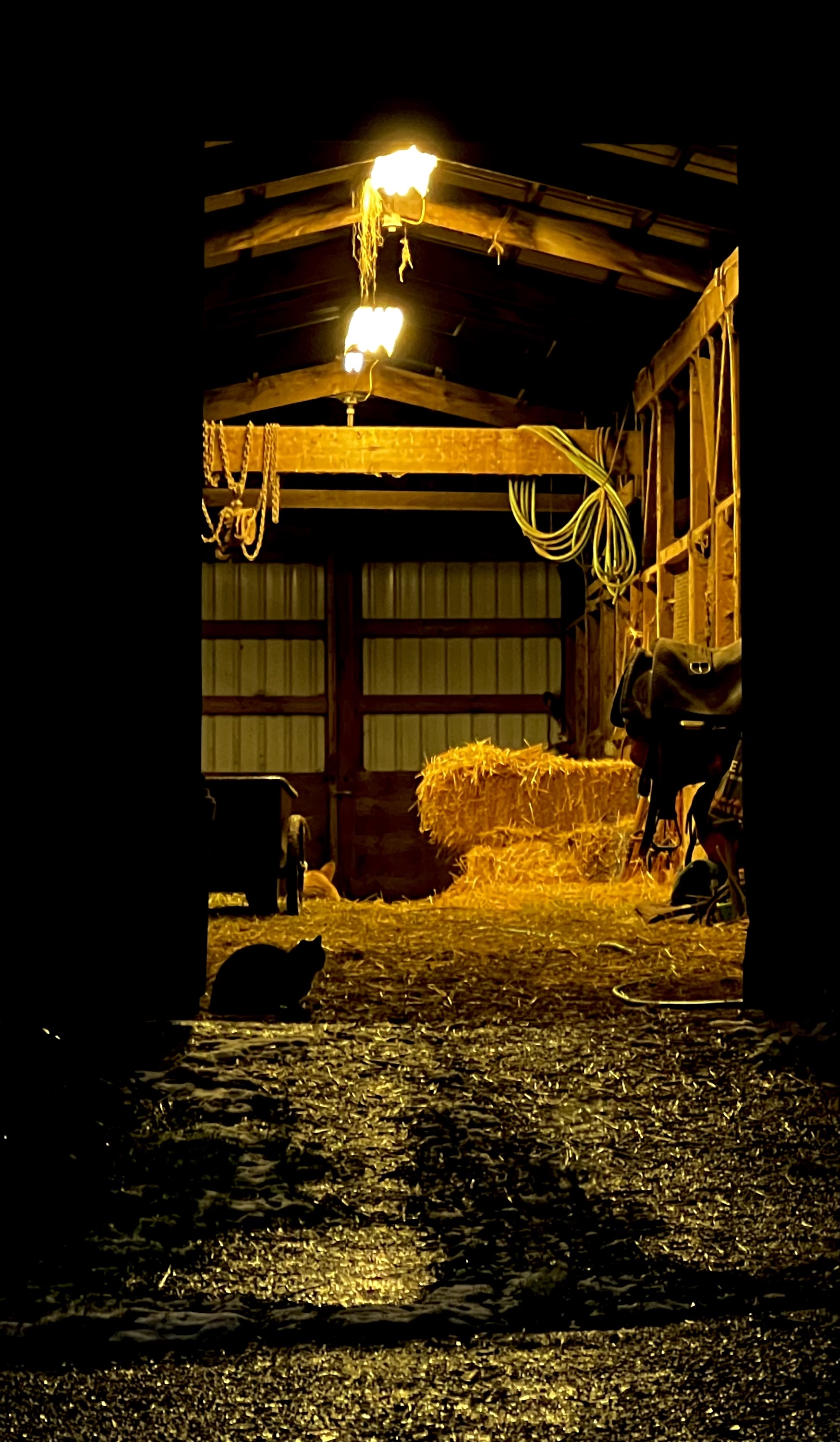
I clean the horse barn with a manure fork.
Every morning, it feels as though it could be

the day before or a year ago or a year before that.
With every pass, I give the fork one final upward flick
to keep the manure from falling out, and every day I remember

where I learned to do that and from whom.
Time all but stops.
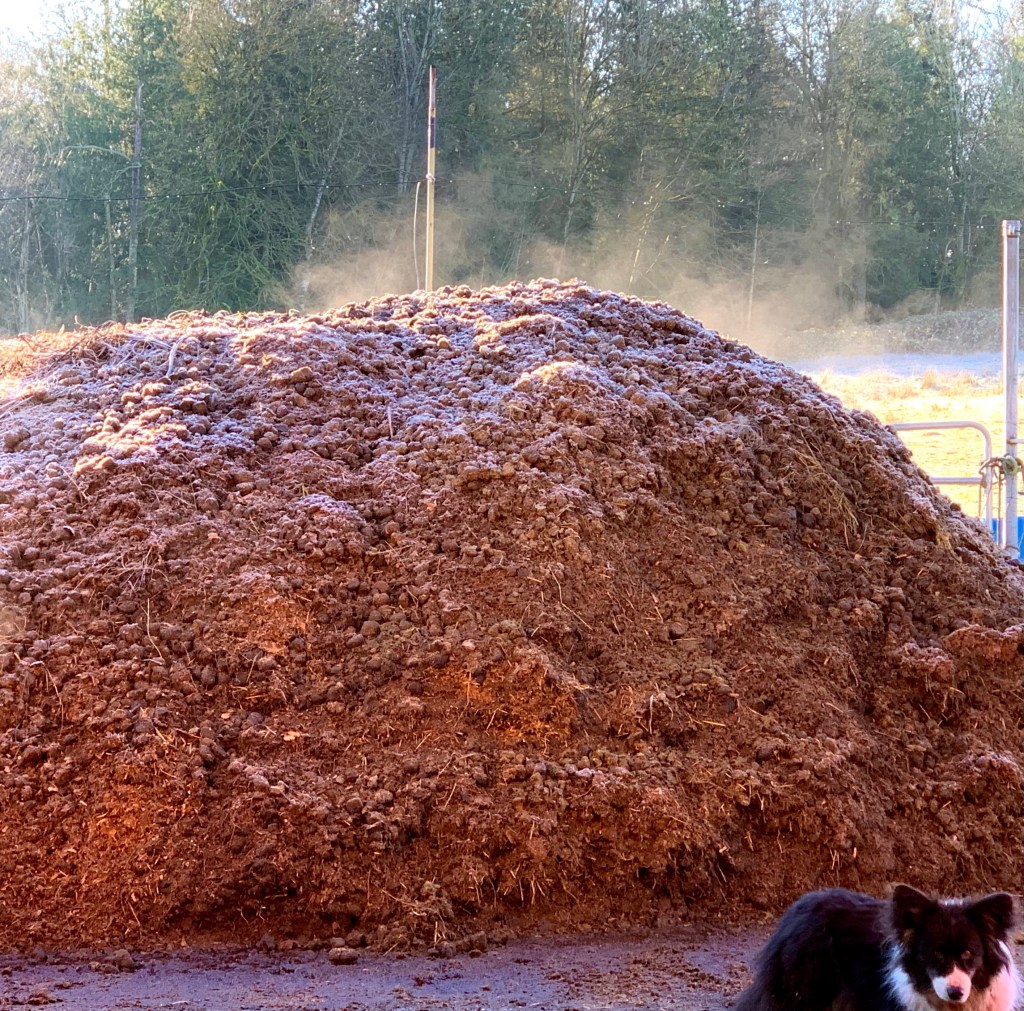
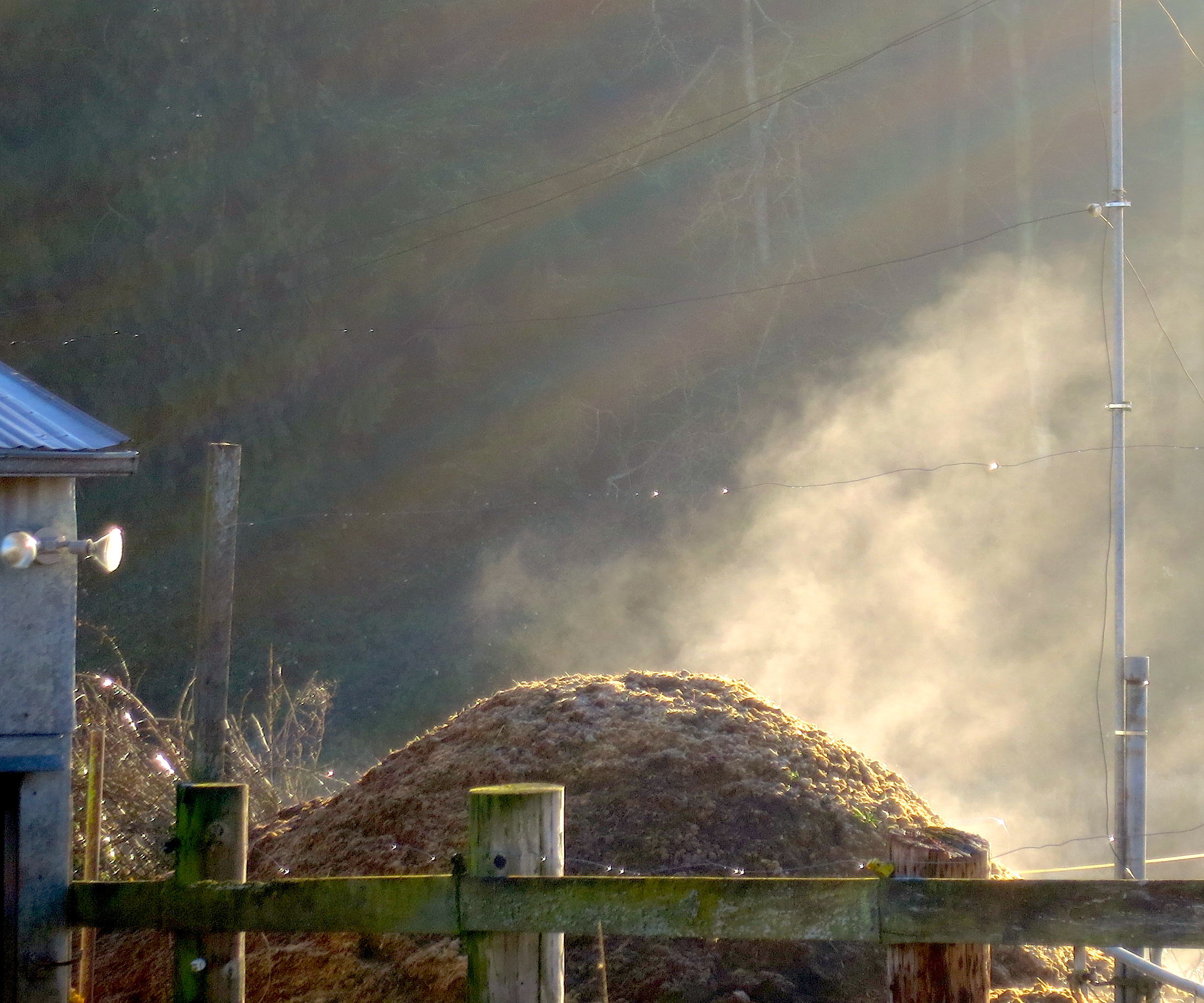
But then I dump the cart on the compost pile.
I bring out the tractor and turn the pile,

once every three or four days.
The bucket bites and lifts,

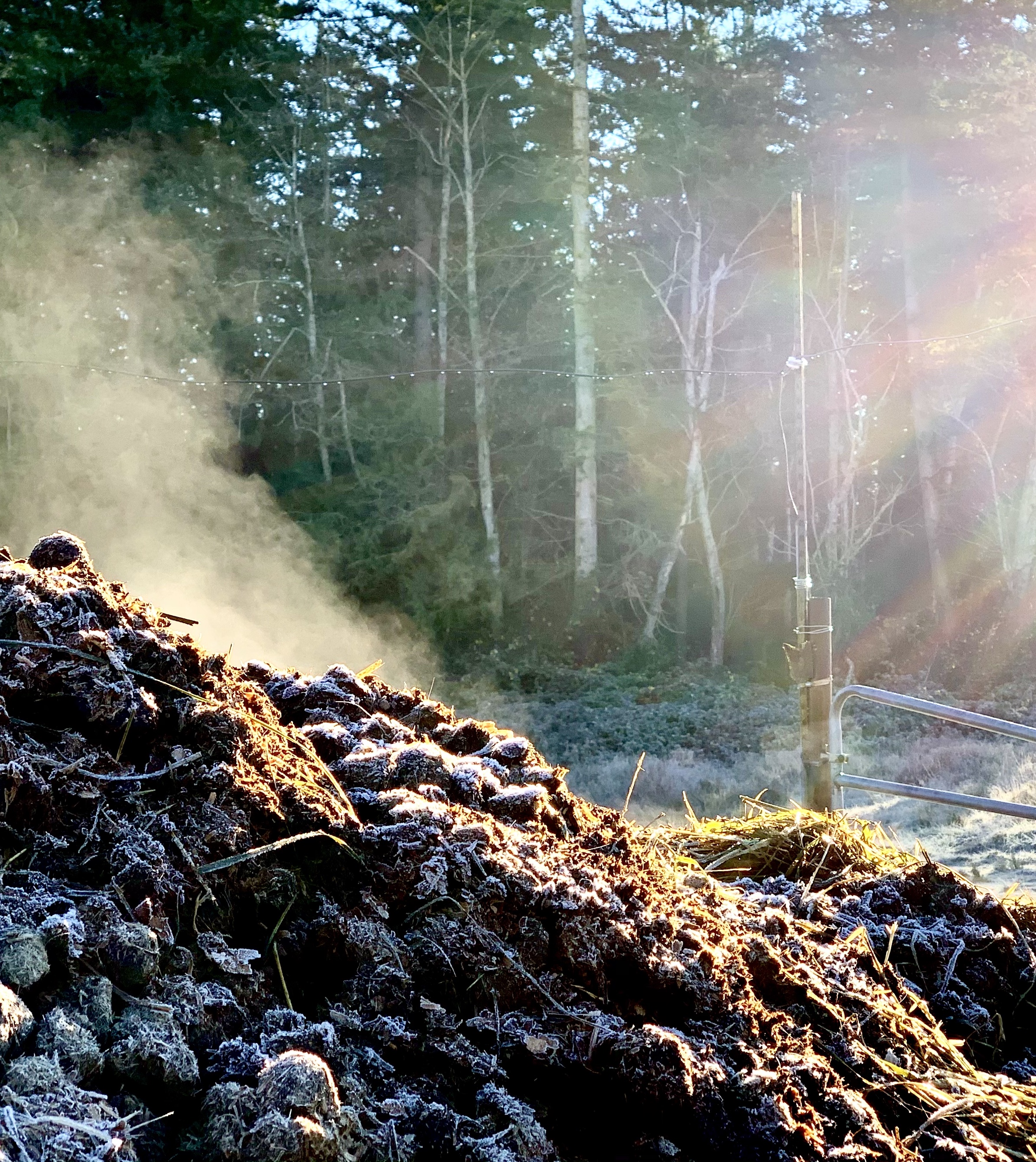
and steam comes billowing out of the heap.
It’s my assurance that time is really moving forward,
decomposing us all in the process.
~Verlyn Klinkenborg from More Scenes from the Rural Life
He <the professor> asked
what I made of the other Oxford students
so I told him:
They were okay, but they were all very similar…
they’d never failed at anything or been nobodies,
and they thought they would always win.
But this isn’t most people’s experience of life.

He asked me what could be done about it.
I told him the answer was to send them all out for a year
to do some dead-end job
like working in a chicken processing plant
or spreading muck with a tractor.
It would do more good than a gap year in Peru. 

He laughed and thought this was tremendously witty.
It wasn’t meant to be funny.

~James Rebanks from The Shepherd’s Life
(how a sheep farmer succeeds at Oxford and then goes back to the farm)
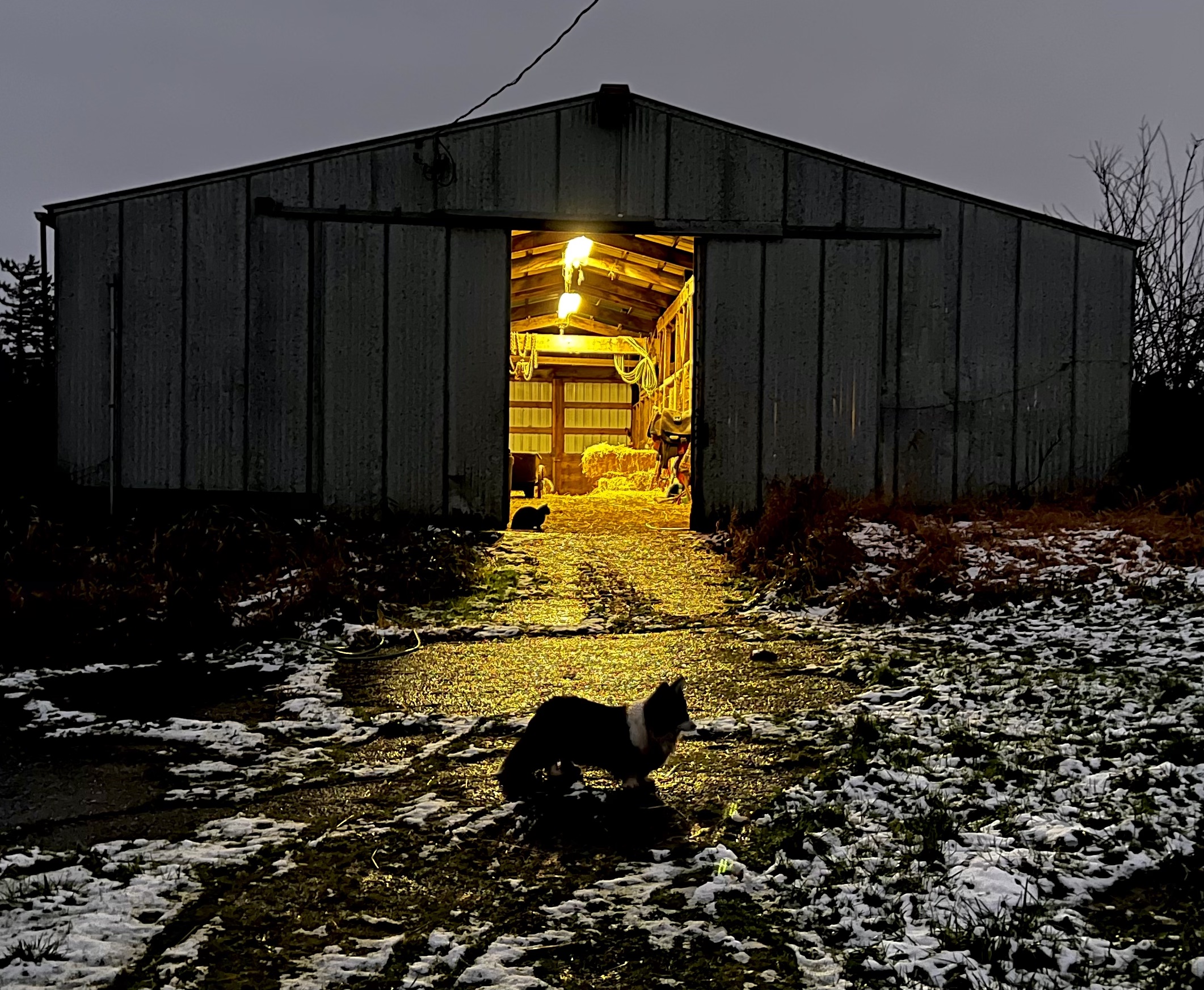
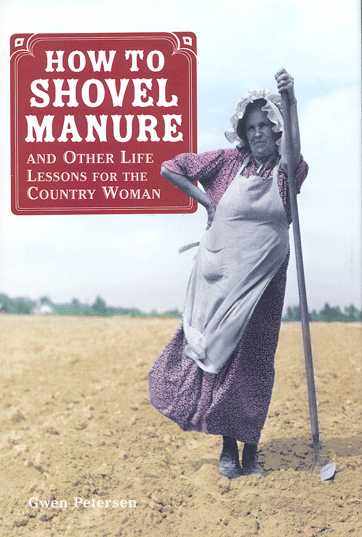
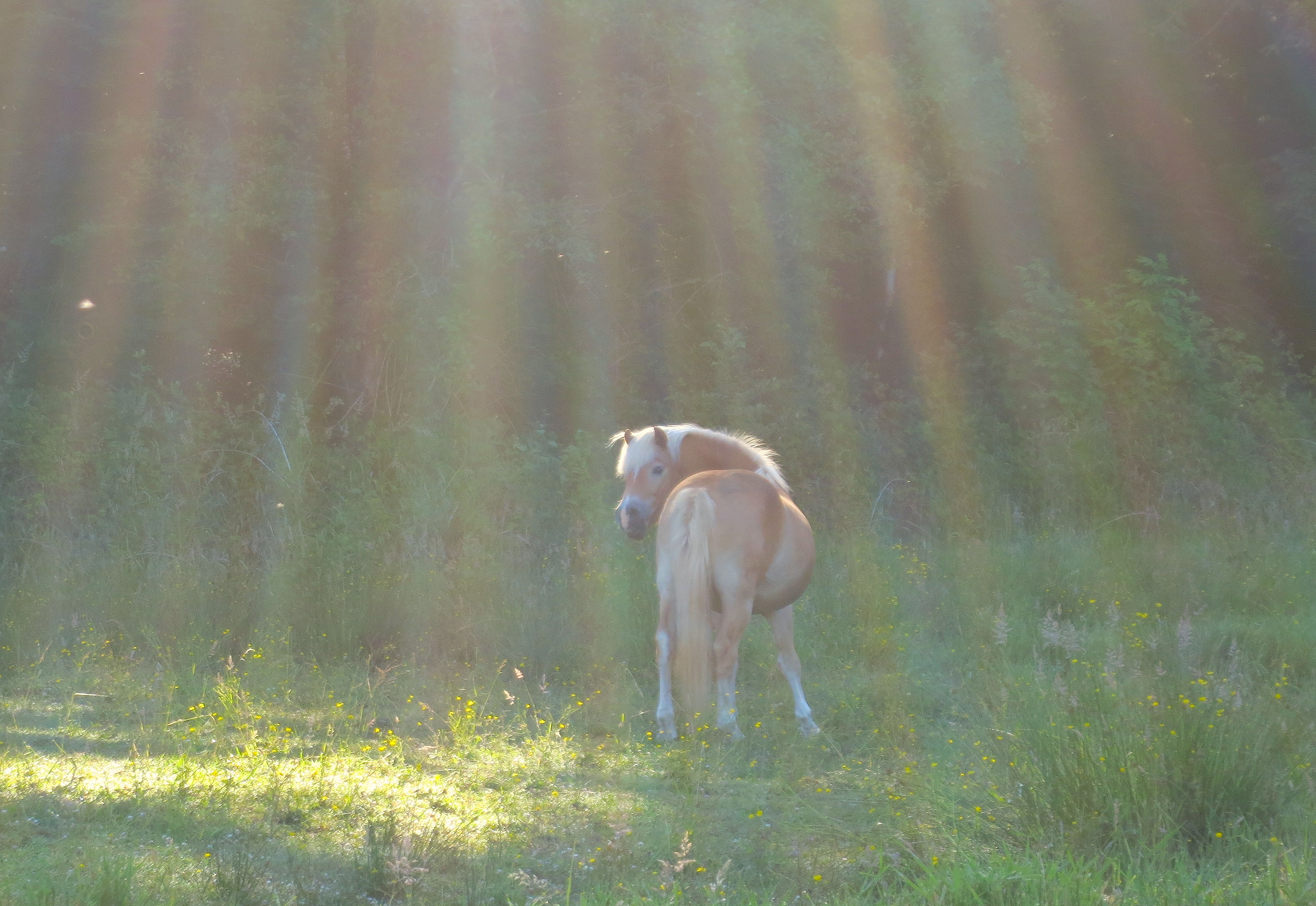
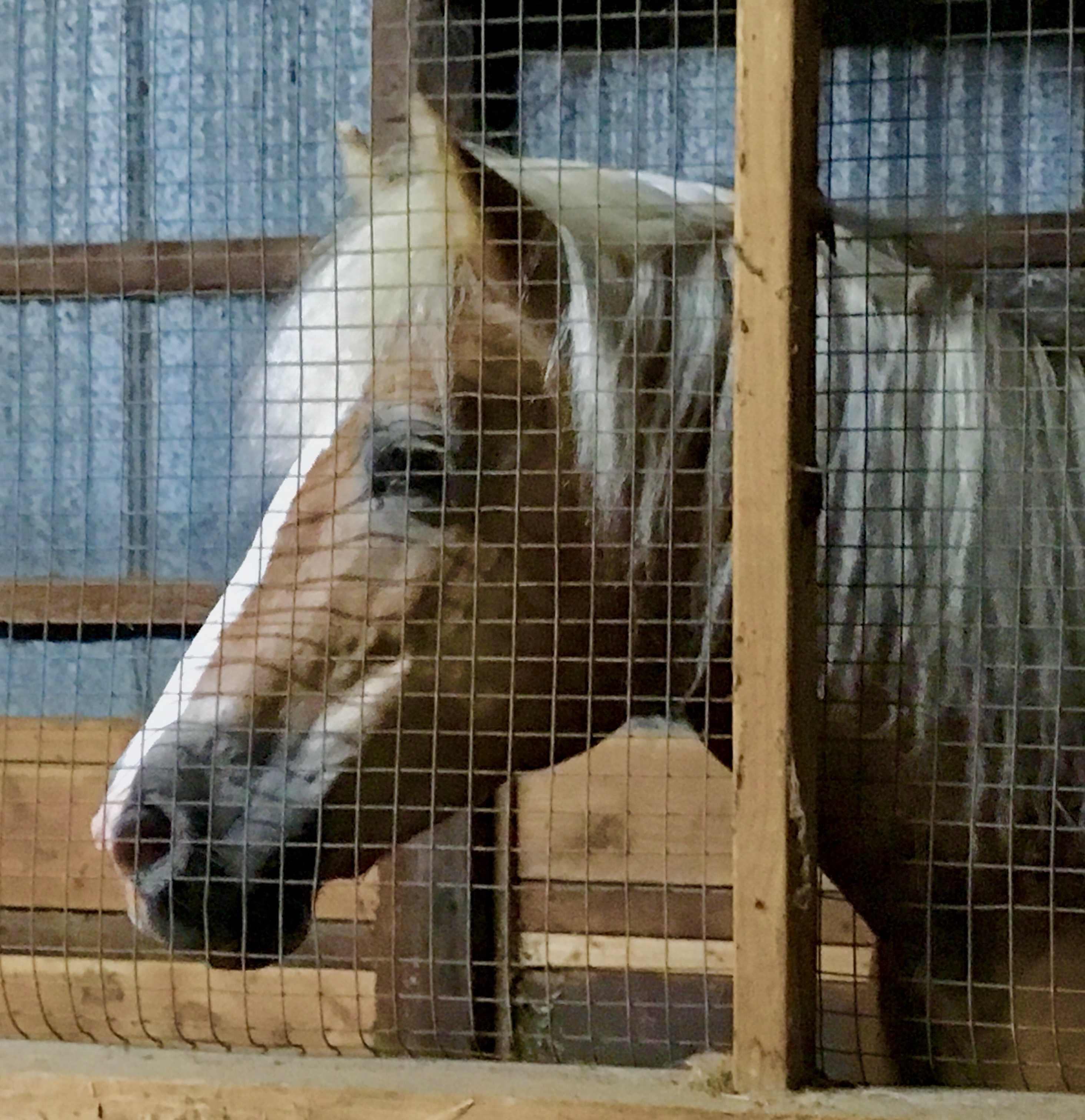
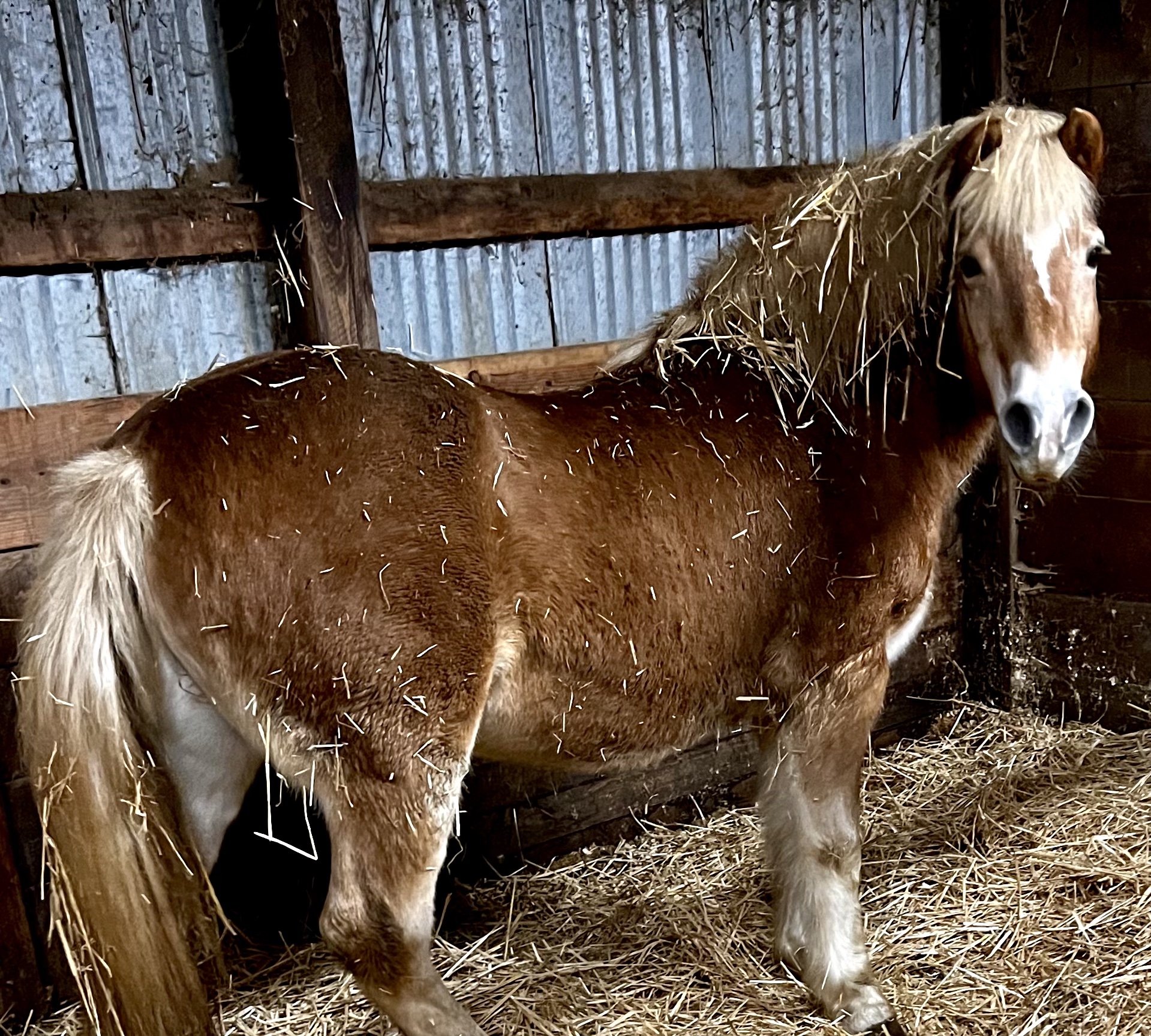
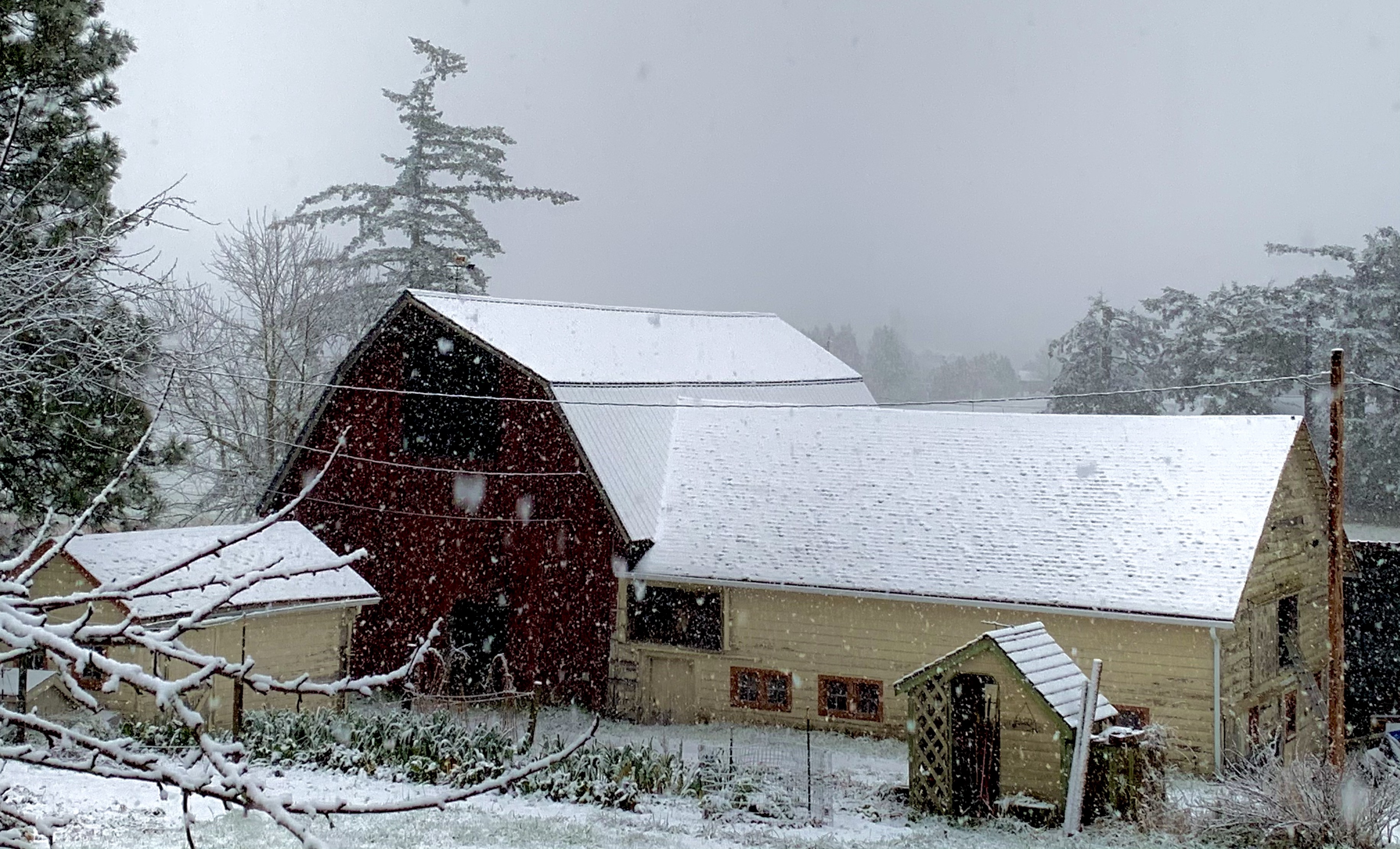
For well over thirty years, my husband and I have spent about an hour a day shoveling manure out of numerous horse stalls and I’m a better person for it. The last few weeks of sub-freezing snow/icy weather while running low on trucked-in supplies of shavings and straw bedding has been a particular character-building experience. It feels like everything, myself included, is in a process of decomposition.

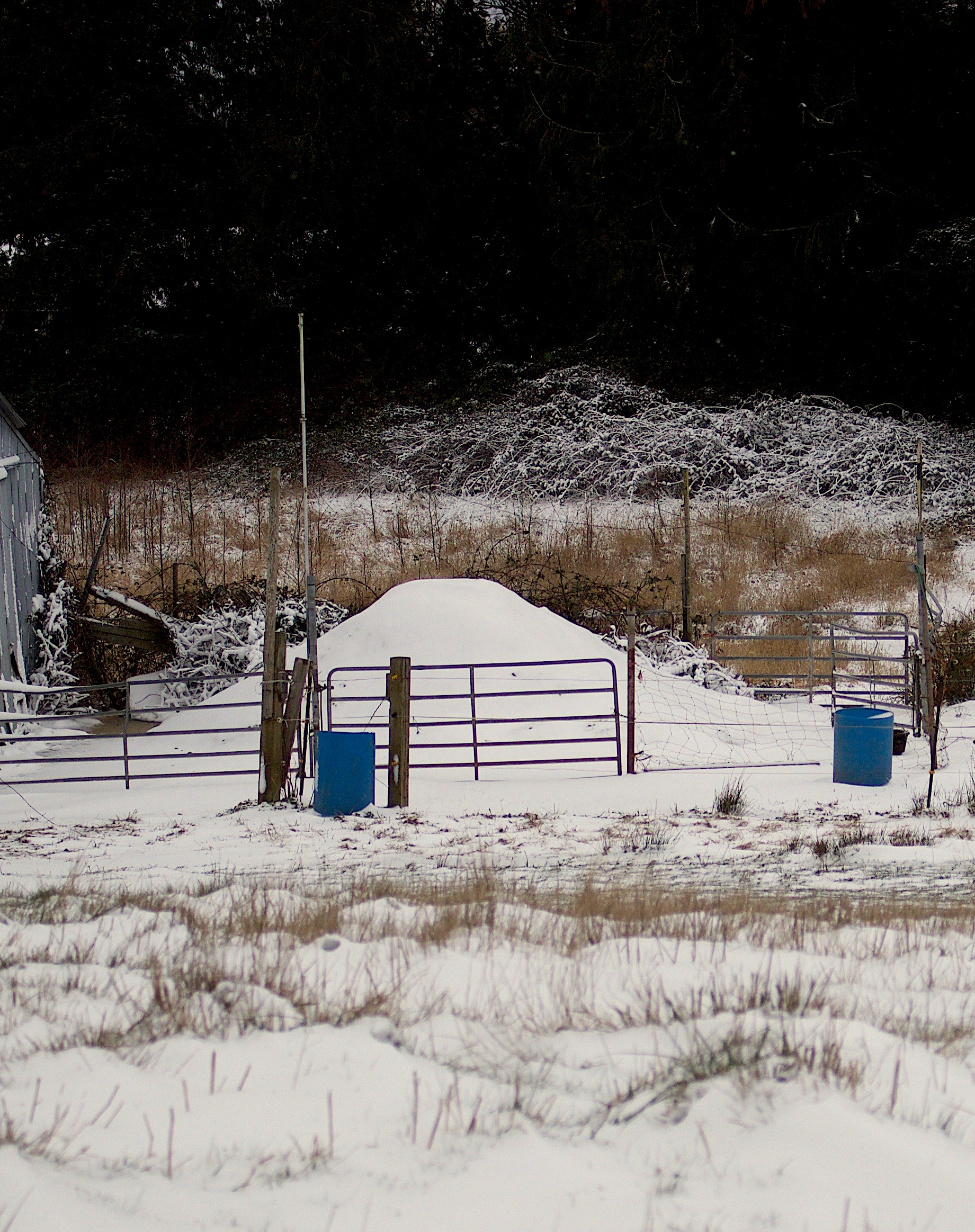
Wheeled to a mountainous pile in our barnyard,  our daily collection of manure happily composts year round, becoming rich fertilizer in a matter of months through a crucible-like heating process of organic chemistry, bacteria and earthworms.  Nothing mankind has achieved quite matches the drama of useless and basically disgusting stuff transforming into the essential elements needed for productive growth and survival.   This is a metaphor I can <ahem> happily muck about in.

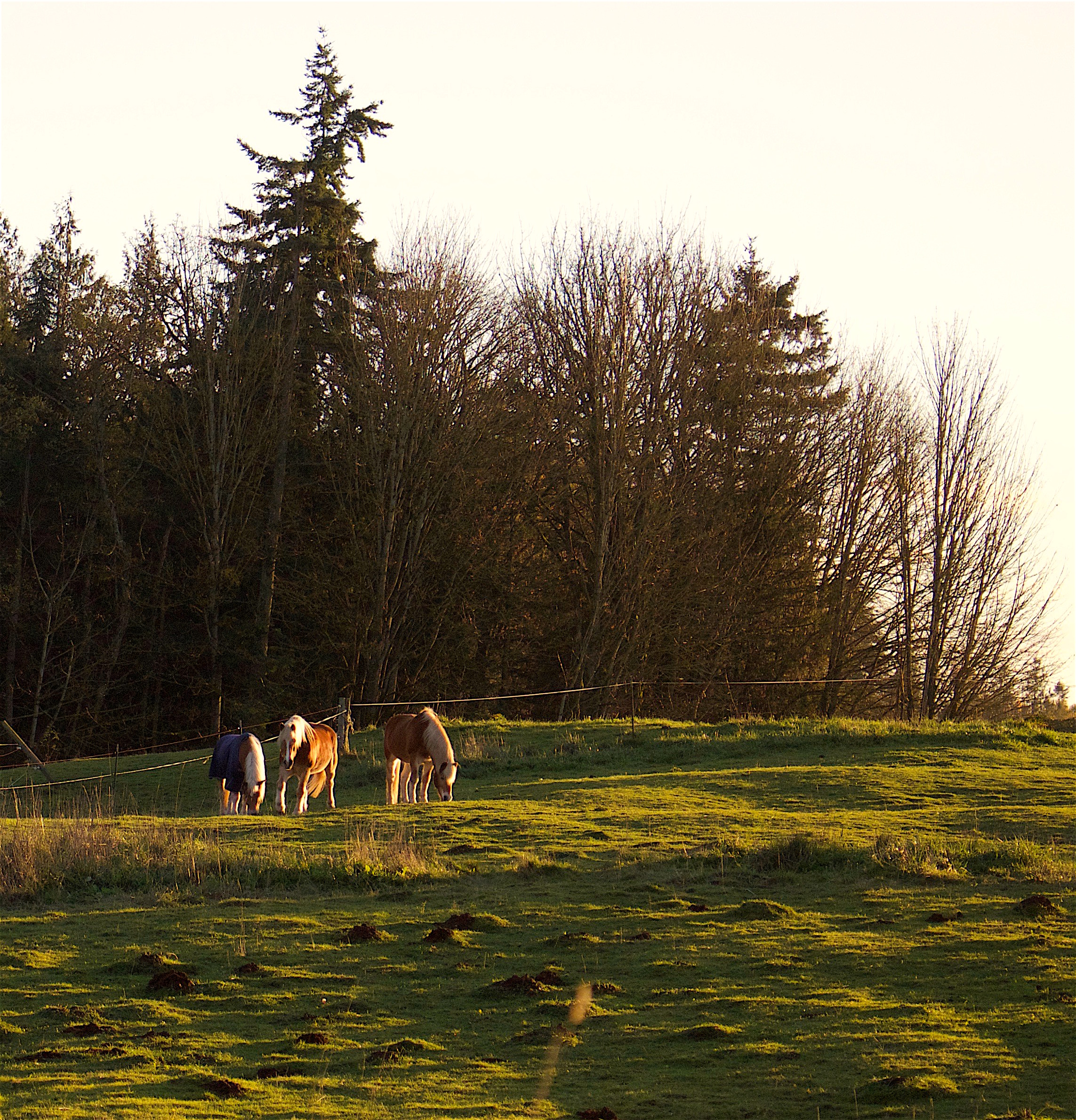
I’m in awe, every day, at being part of this process — in many ways a far more tangible improvement to the state of the world than anything else I manage to accomplish every day.  The horses, major contributors that they are, act underwhelmed by my enthusiasm.  I guess some miracles are relative, depending on one’s perspective, but if the horses understood that the grass they contentedly eat in the pasture, or the hay they munch on during the winter months, was grown thanks to their carefully recycled waste products, they might be more impressed.

Their nonchalance about the daily mucking routine is understandable.  If they are outside, they probably don’t notice their beds are clean when they return to the stalls at night.  If they are inside during the heavy rain days, they feel duty-bound to be in our faces as we move about their stall, toting a pitchfork and pushing a wheelbarrow.  I’m a source of constant amusement as they nose my jacket pockets for treats that I never carry, as they beg for scratches on their unreachable itchy spots, and as they attempt to overturn an almost full load, just to see balls of manure roll to all corners of the stall like breaking a rack of billiard balls in a game of pool.

Good thing I’m a patient person always seeking an object lesson in whatever I see or do ~ mucking out stalls every day helps me tolerate the proverbial muck I encounter every day off the farm.  And spending an hour a day getting dirty in the real stuff somehow makes the virtual manure less noxious. 

Everyone should be spending time daily mucking out;
I think the world would generally be a better place.

Wally, our former stallion, now gelded, discovered a way to make my life easier rather than complicating it.  He hauled a rubber tub into his stall from his paddock, by tossing it into the air with his teeth and throwing it, and it finally settled against one wall.  Then he began to consistently pile his manure, with precise aim, right in the tub.  I didn’t ask him to do this.  It had never occurred to me.  I hadn’t even thought it was possible for a horse to house train himself.  But there it is, proof that some horses prefer neat and tidy rather than the whirlwind eggbeater approach to manure distribution.  After a day of his manure pile plopping, it is actually too heavy for me to pick up and dump into the wheelbarrow all in one tub load, but it takes 1/4 of the time to clean his stall than the others, and he spares all this bedding.

What a guy.  He provides me unending inspiration in how to keep my own personal muck concentrated rather than spreading it about,  contaminating the rest of the world.

Now, once I teach him to put the seat back down when he’s done, he’s welcome to move into the house…
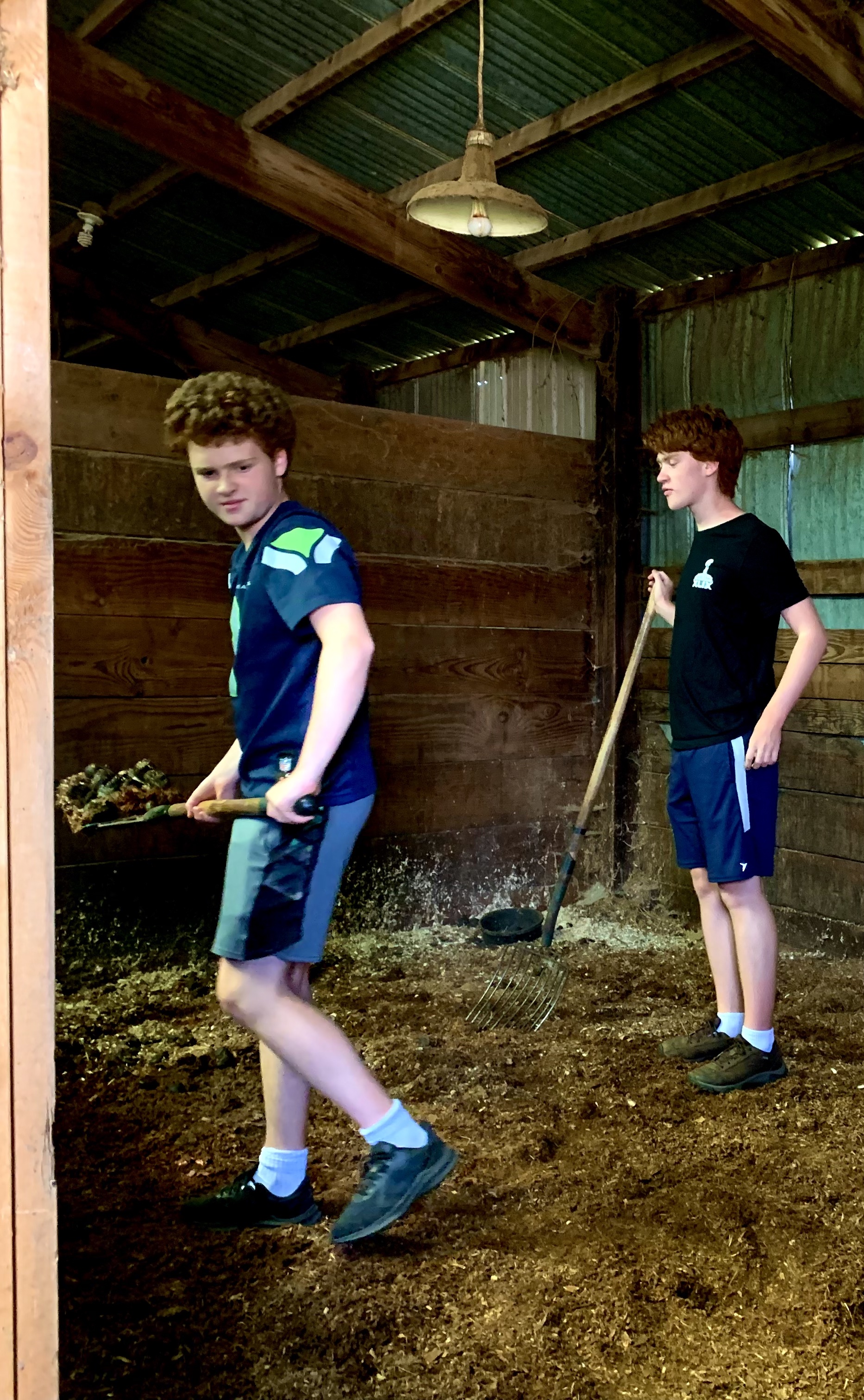
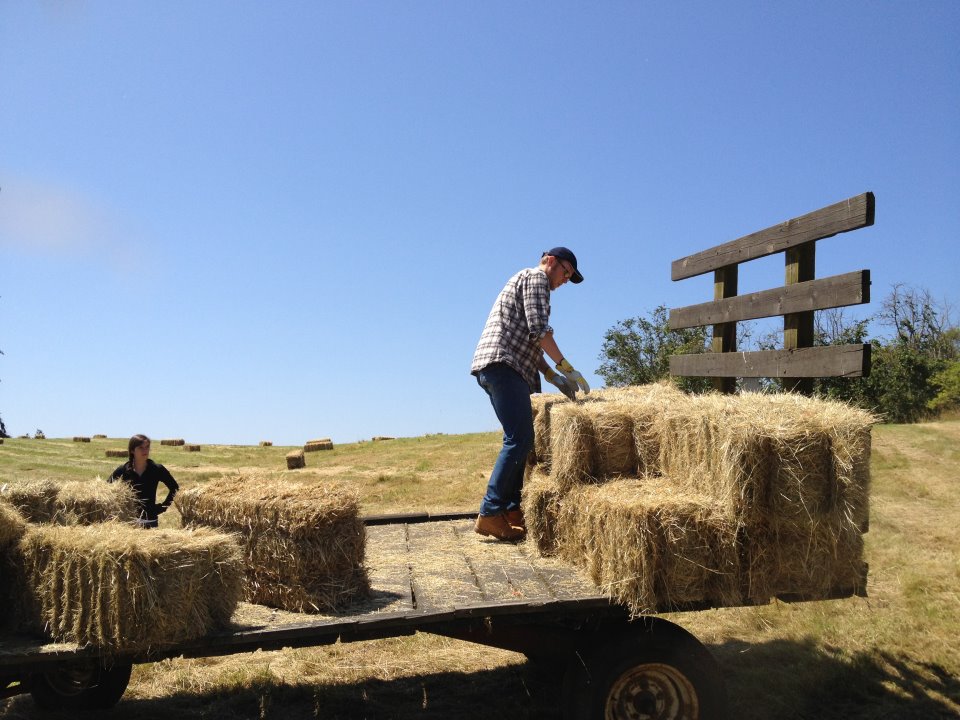
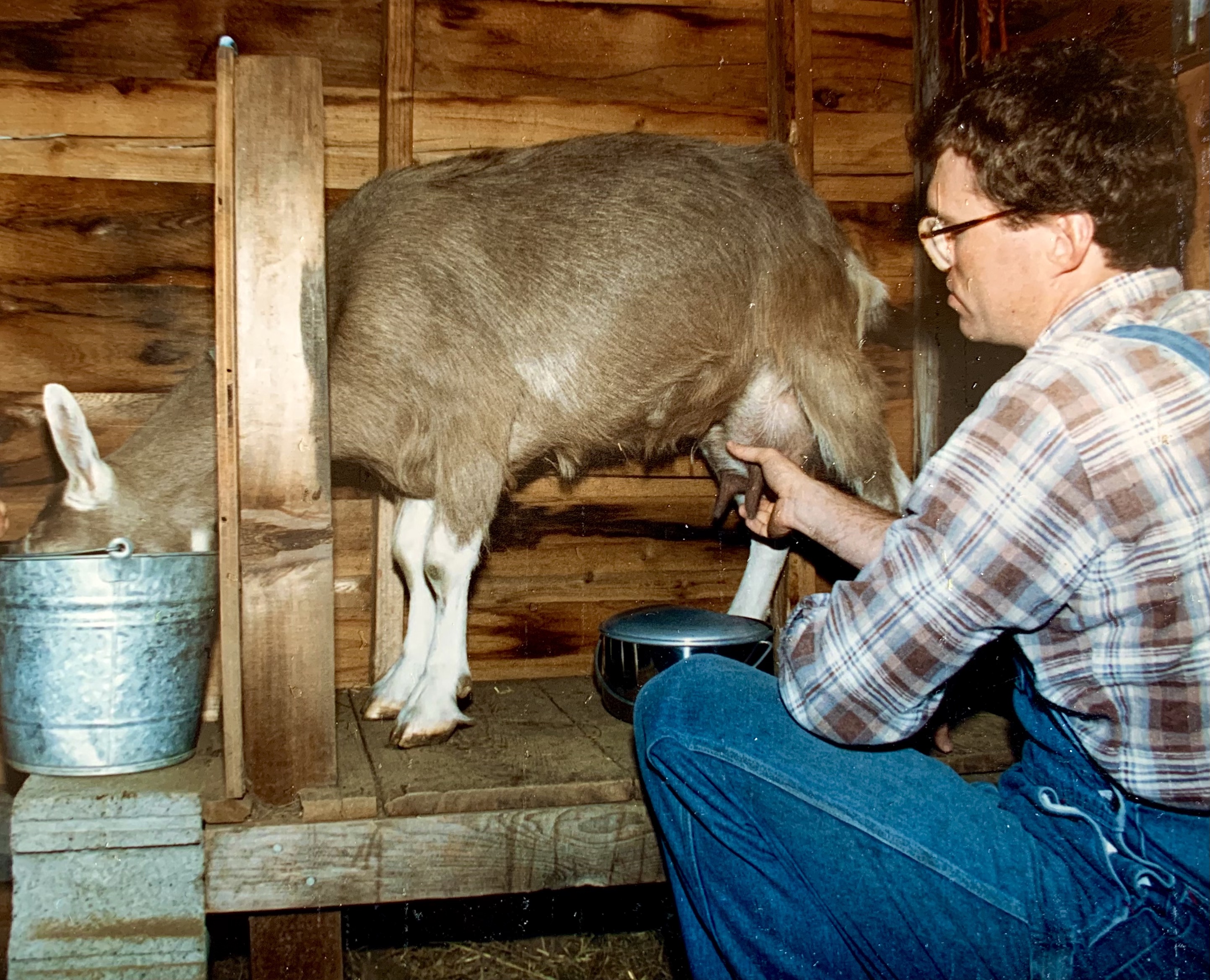
teaching my city nephews how to muck out a stall
Wally’s purposeful pile

One-Time
Monthly
Yearly

Make a one-time or recurring donation to support Barnstorming

Make a monthly donation

Make a yearly donation

Choose an amount

¤5.00
¤10.00
¤20.00
¤5.00
¤15.00
¤100.00
¤5.00
¤15.00
¤100.00

Or enter a custom amount

¤

Your contribution is deeply appreciated.

Your contribution is appreciated.

Your contribution is appreciated.

DonateDonate monthlyDonate yearly
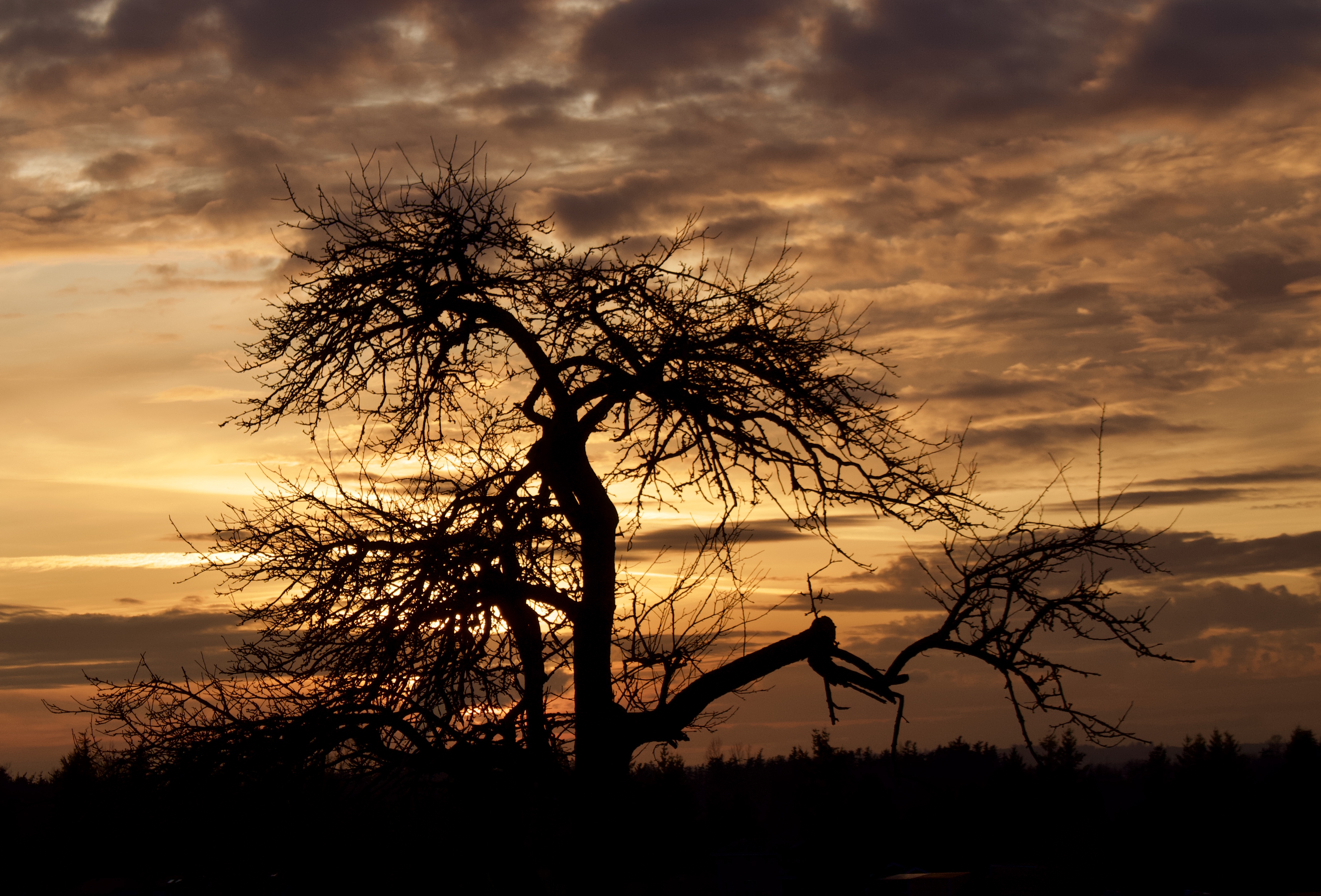
My Delight to Linger

Yet one smile more, departing, distant sun!
One mellow smile through the soft vapory air,
Ere, o’er the frozen earth, the loud winds run,
Or snows are sifted o’er the meadows bare.
One smile on the brown hills and naked trees,
And the dark rocks whose summer wreaths are cast,
And the blue gentian flower, that, in the breeze,
Nods lonely, of her beauteous race the last.
Yet a few sunny days, in which the bee
Shall murmur by the hedge that skirts the way,
The cricket chirp upon the russet lea,
And man delight to linger in thy ray.
Yet one rich smile, and we will try to bear
The piercing winter frost, and winds, and darkened air.
~William Cullen Bryant “November”

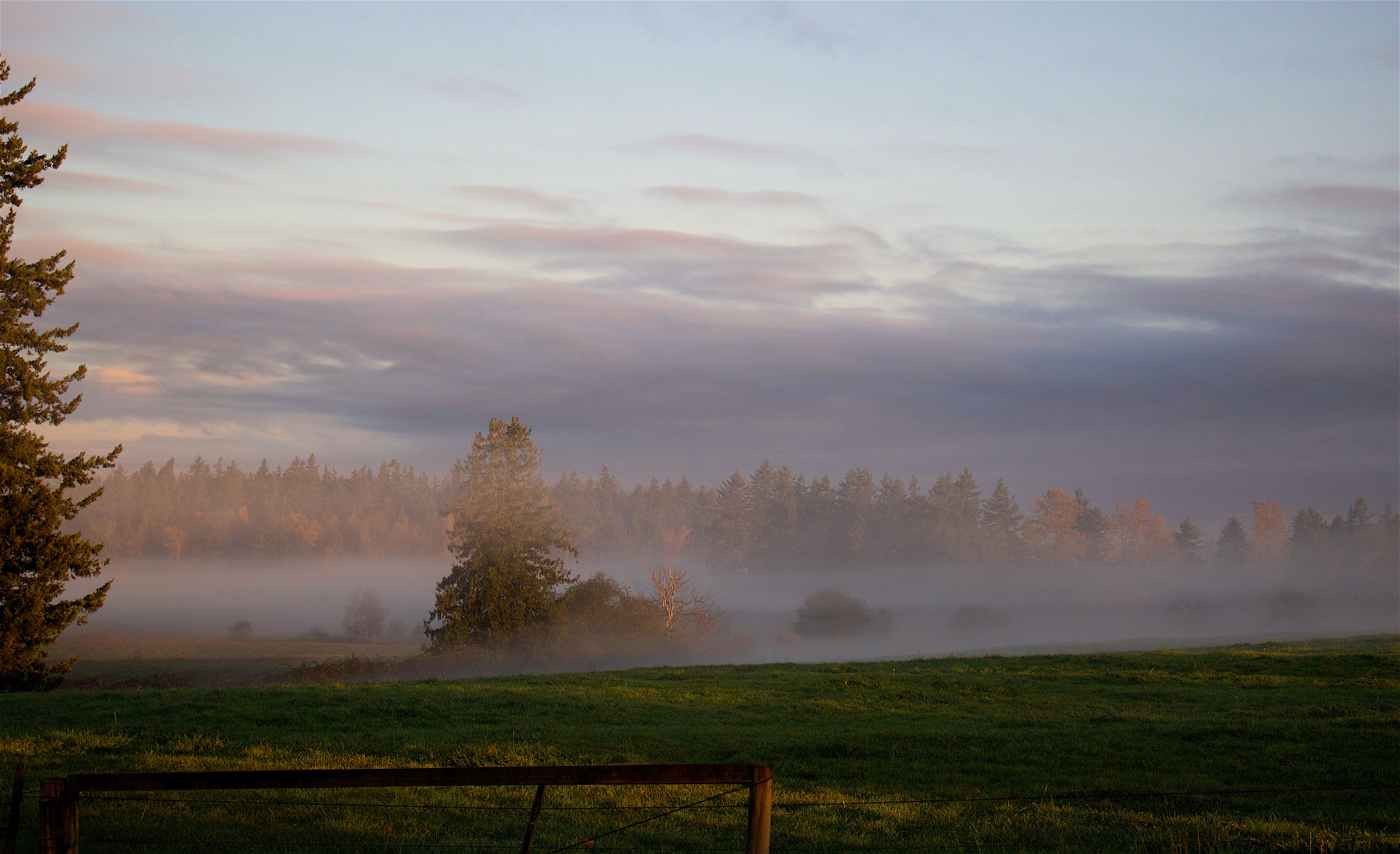
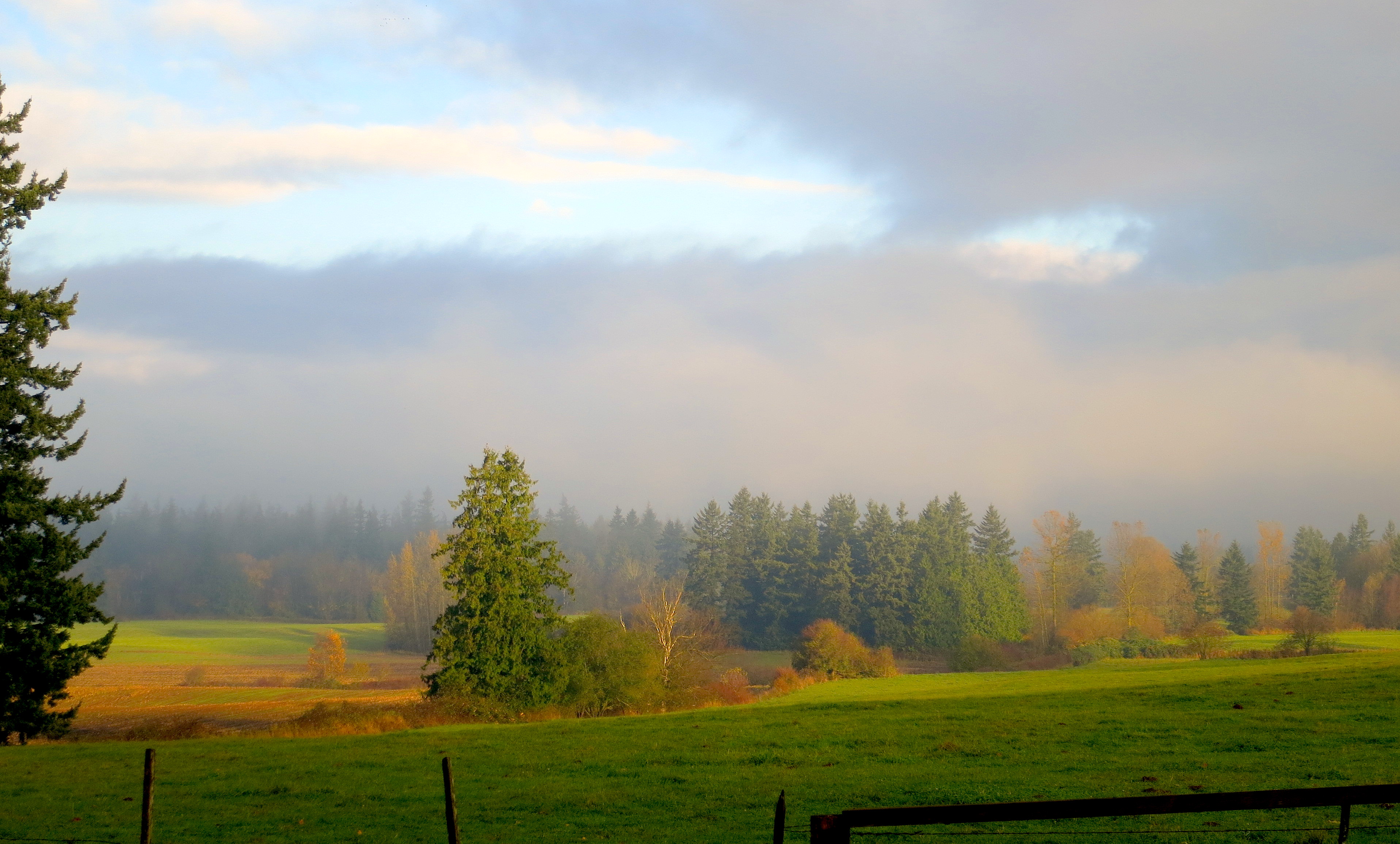
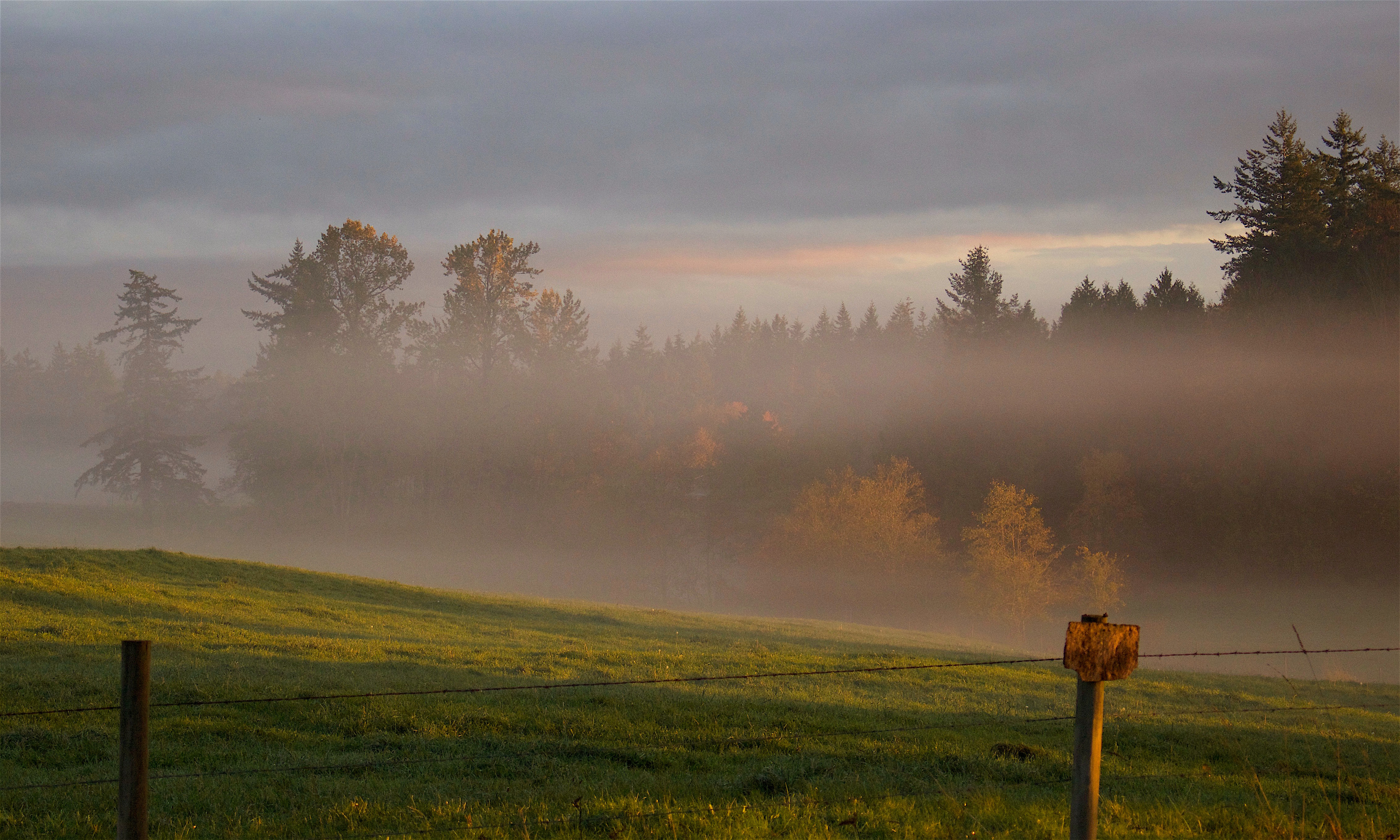
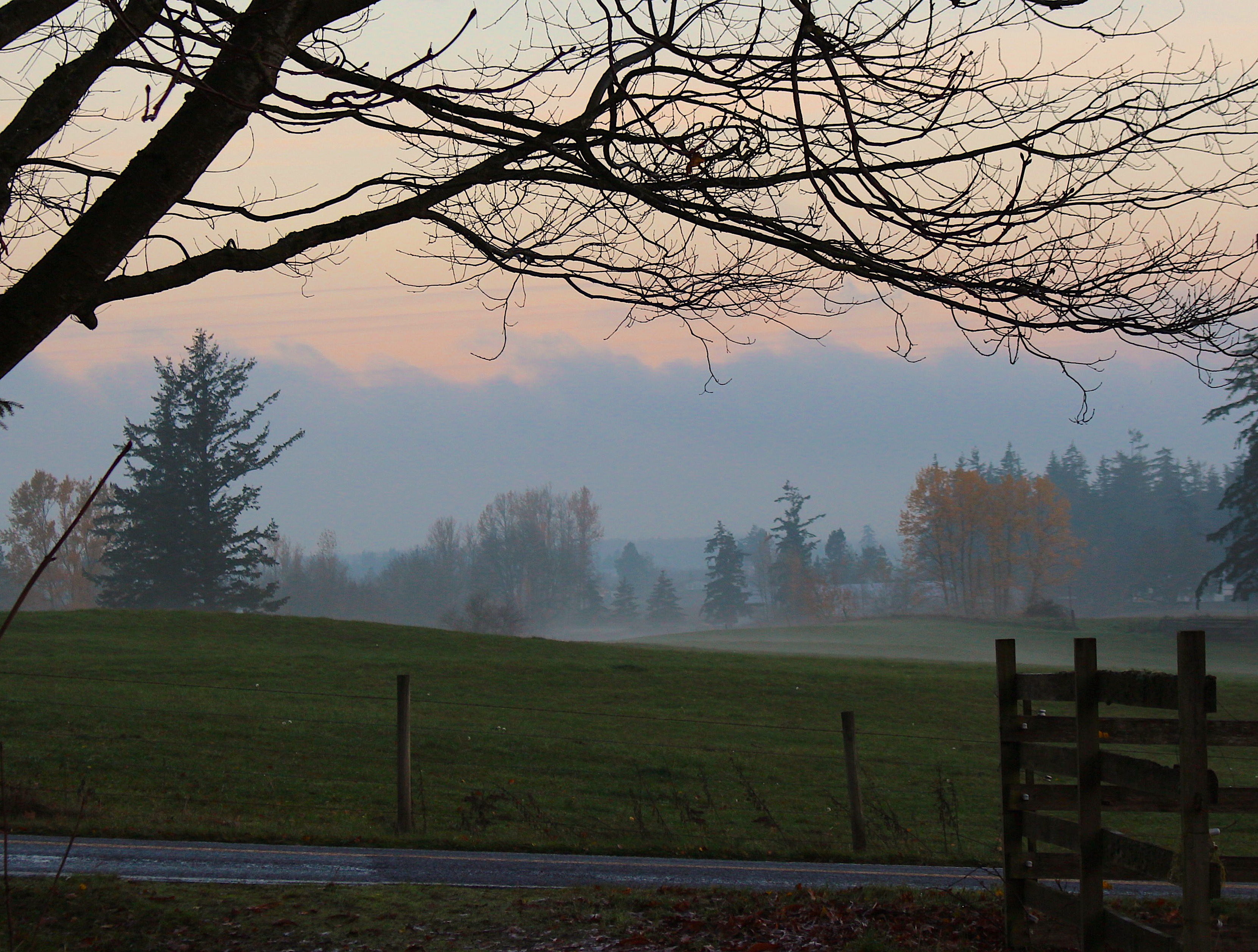
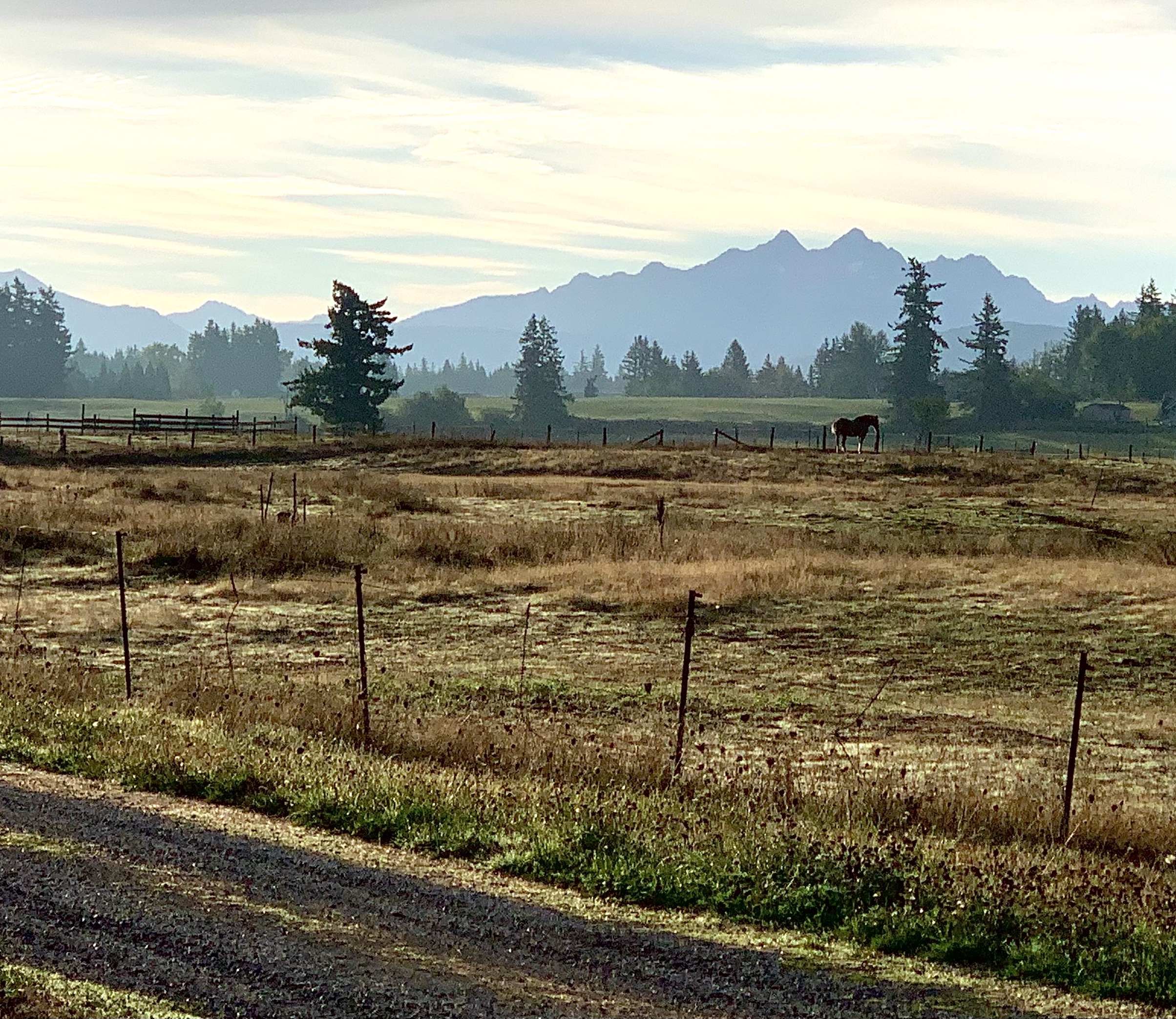
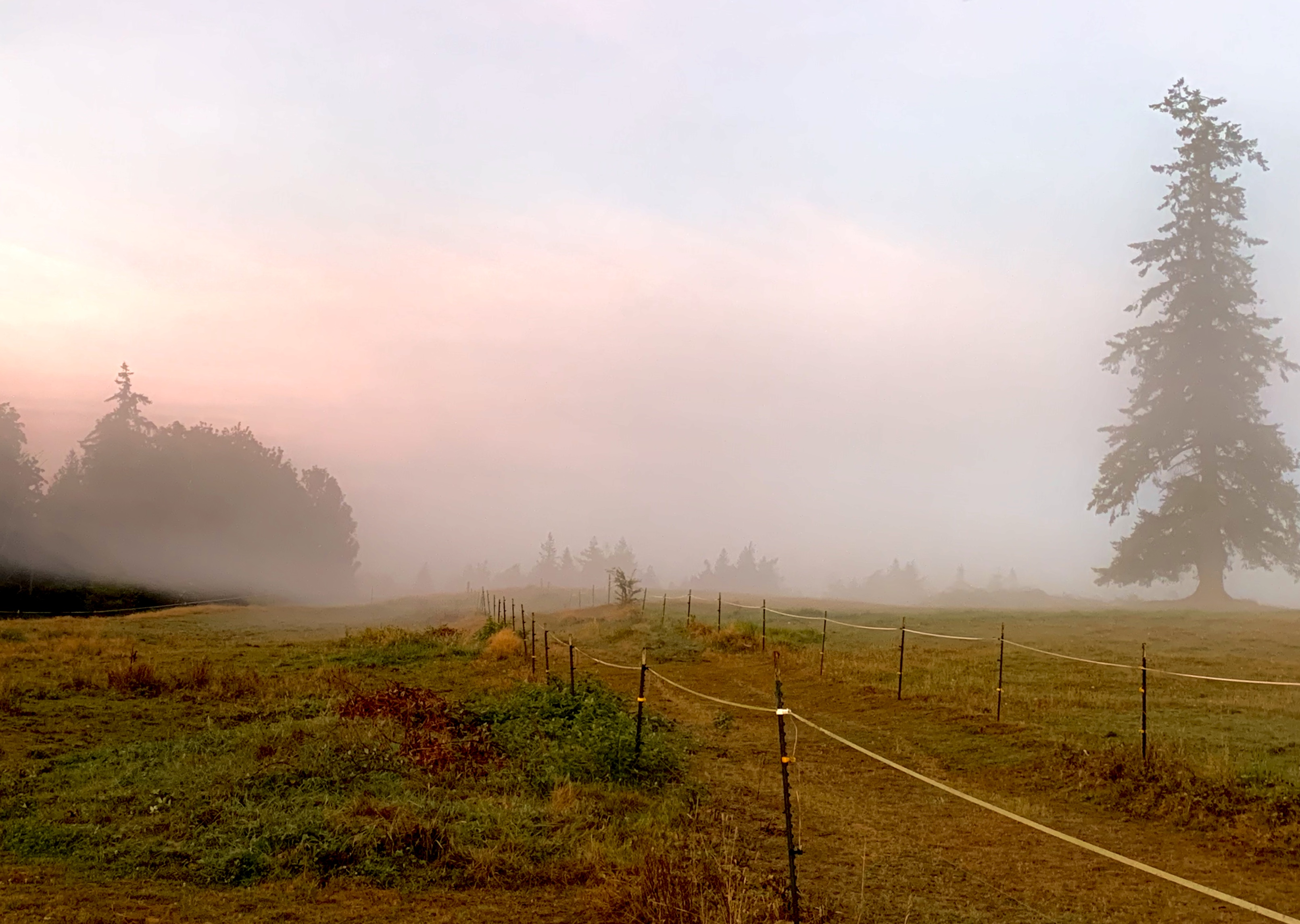
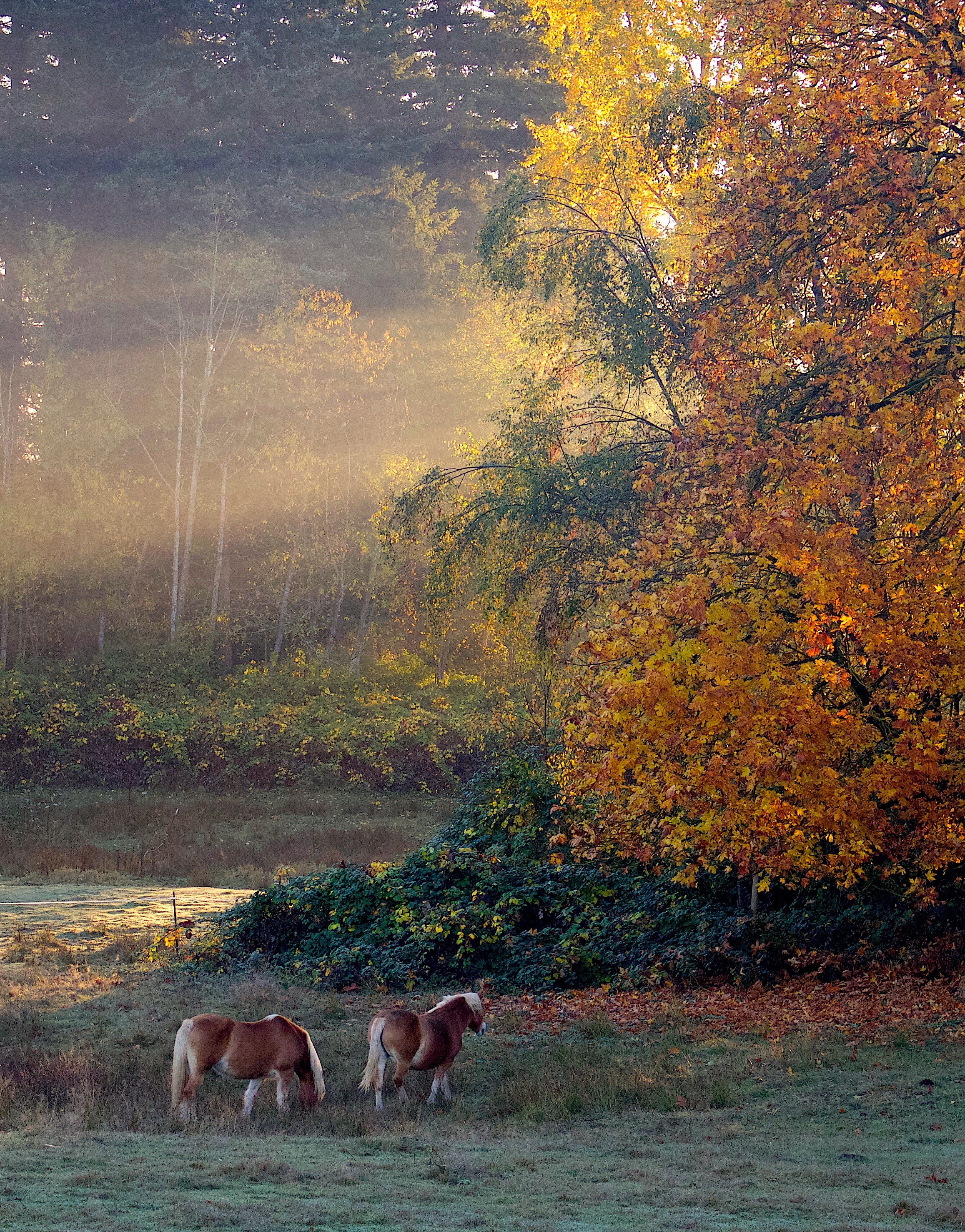
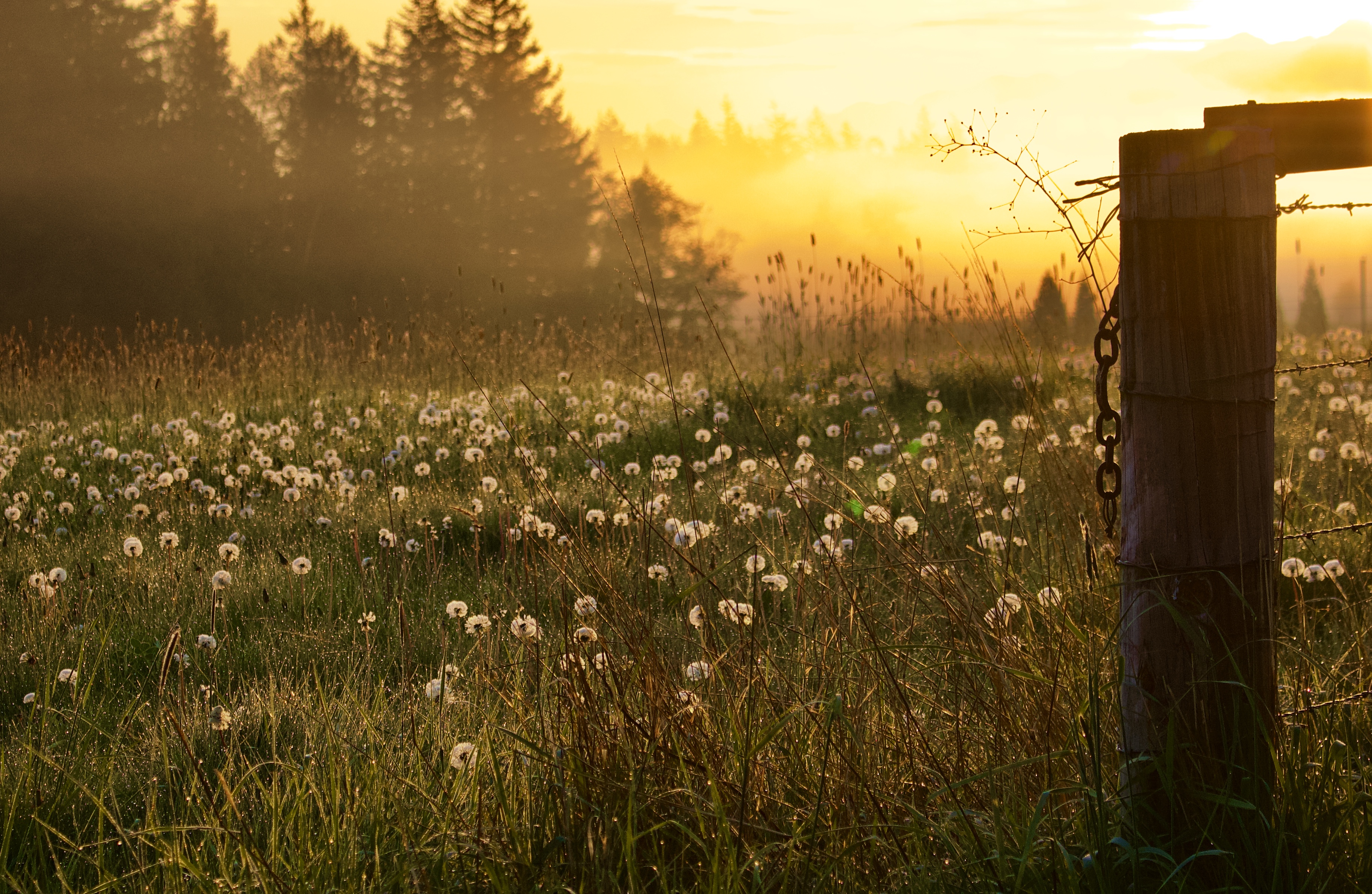
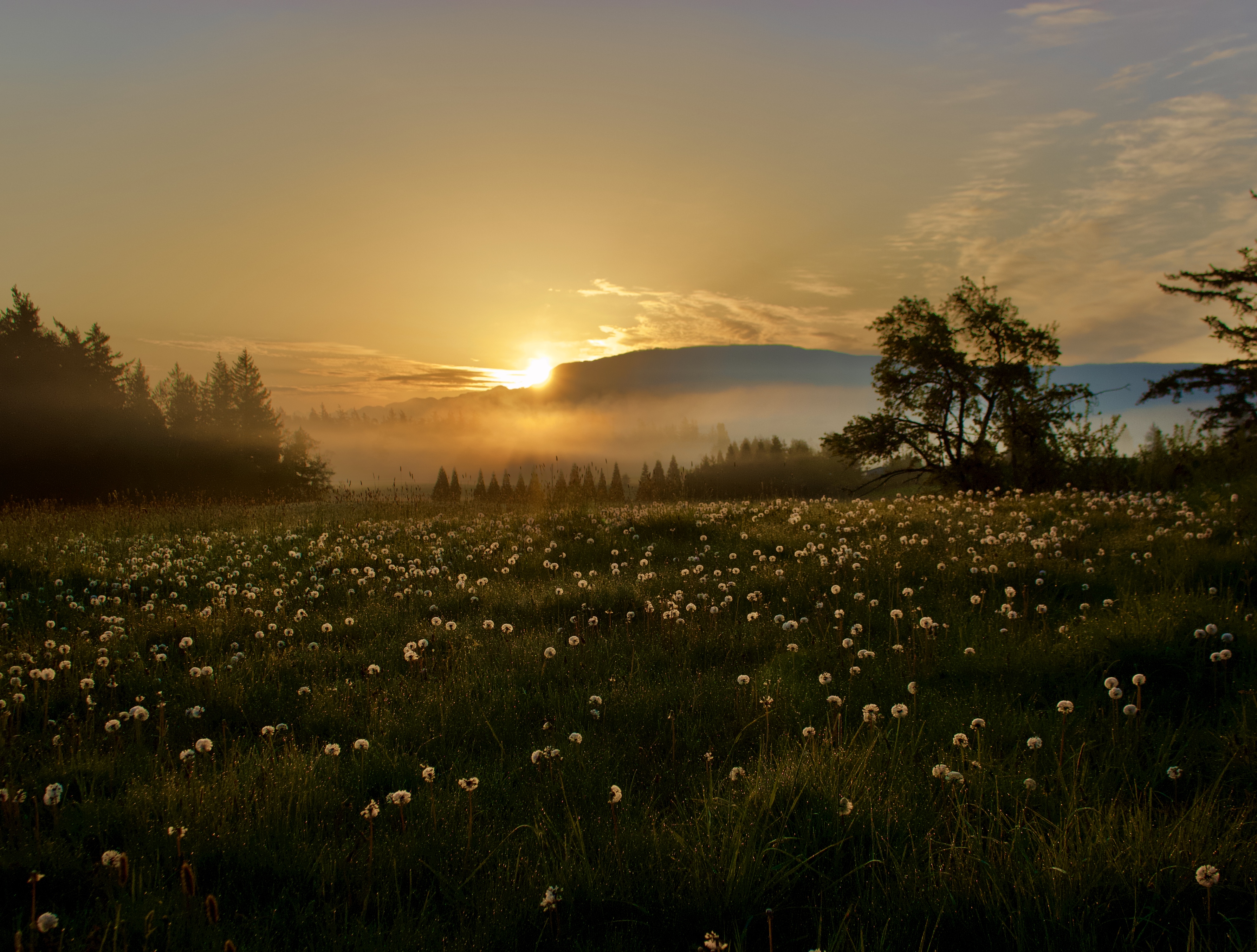
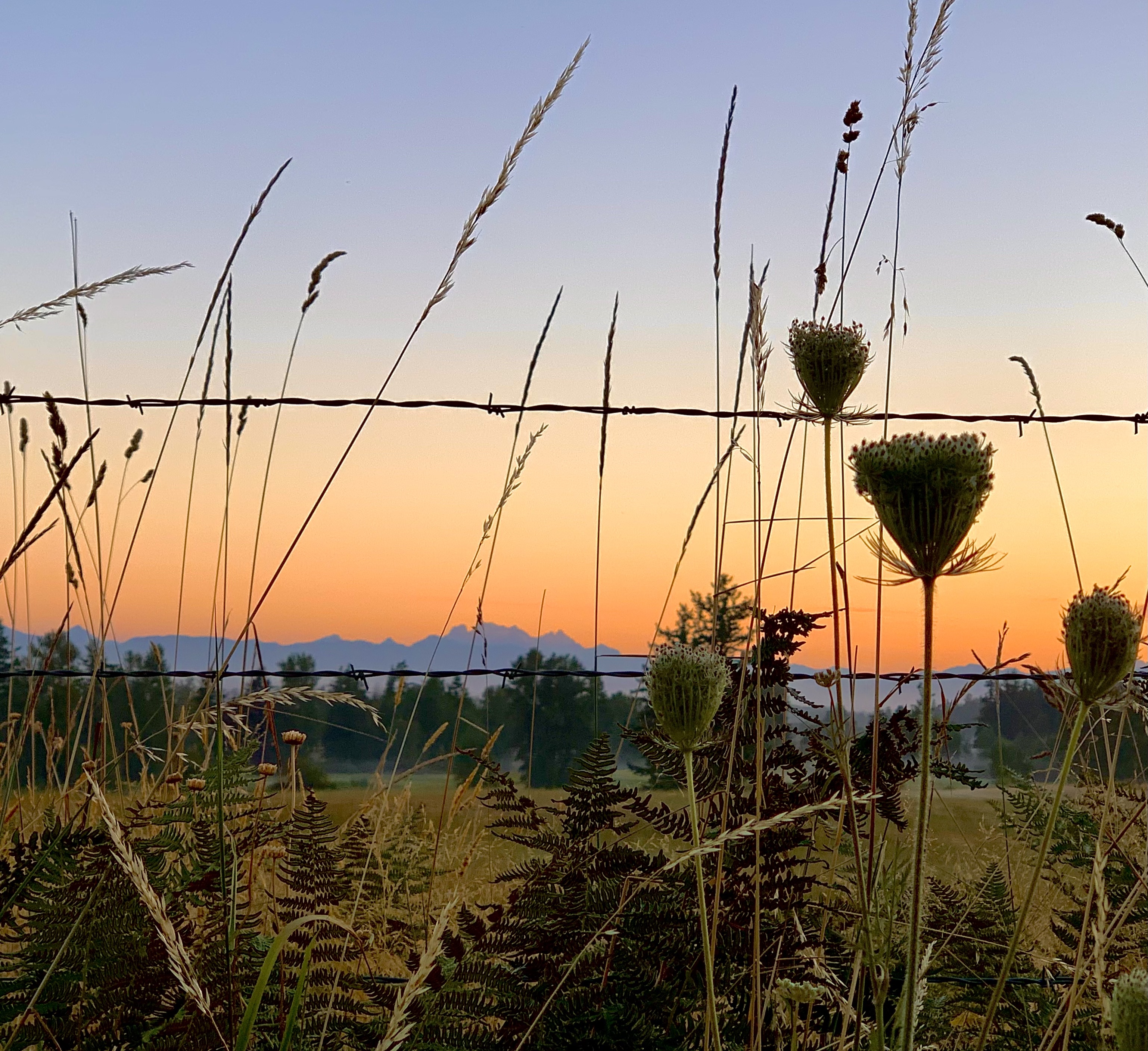
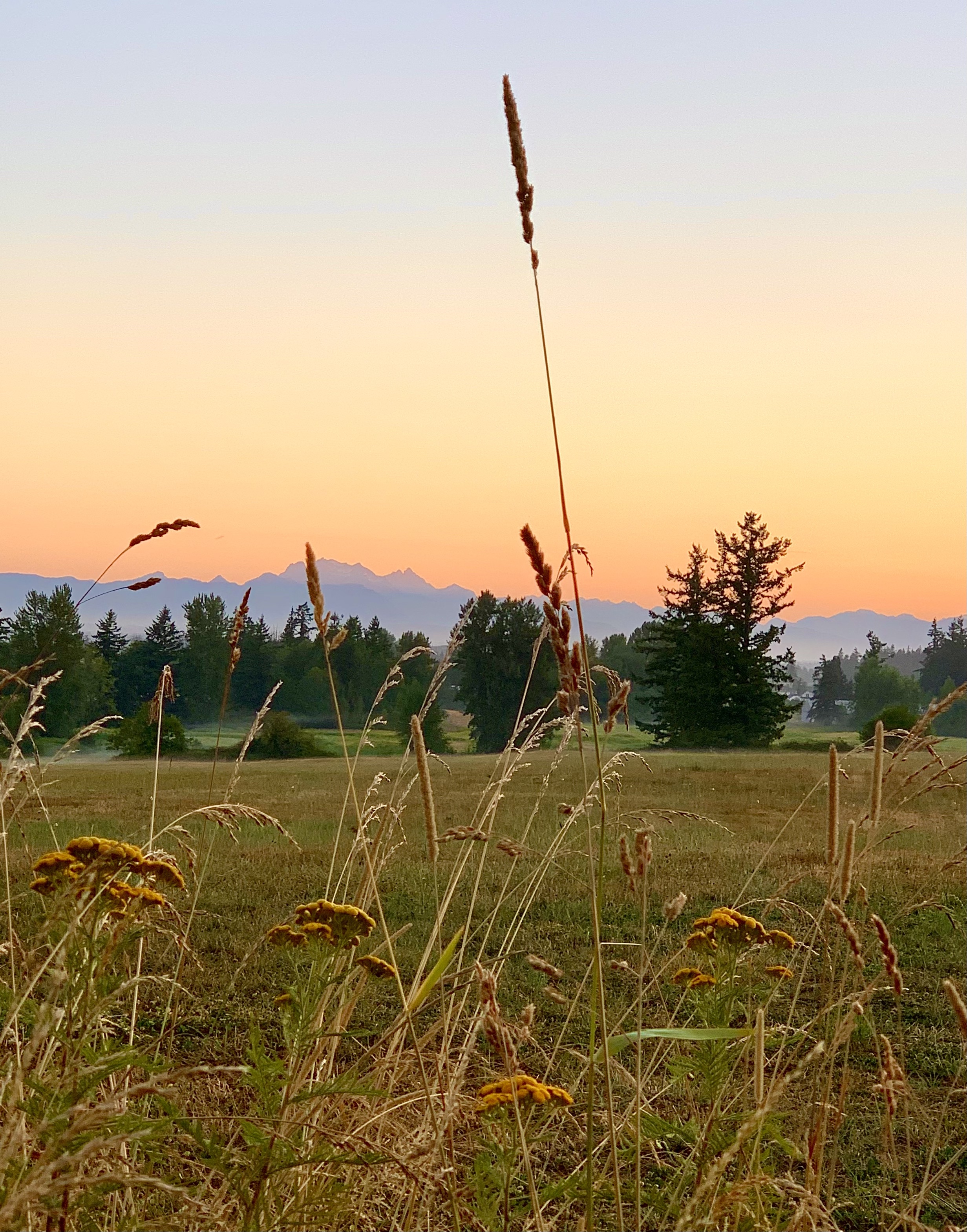
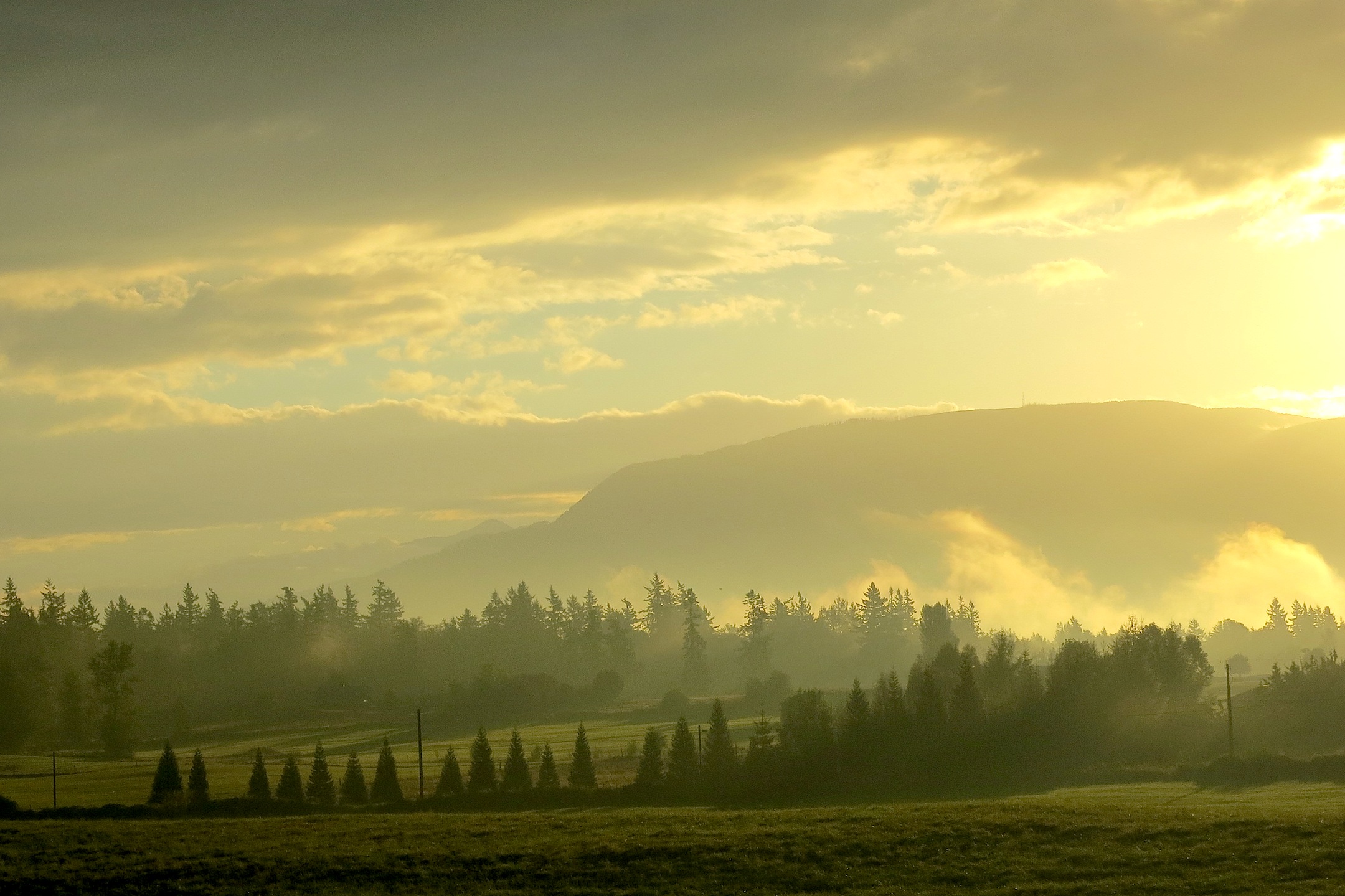
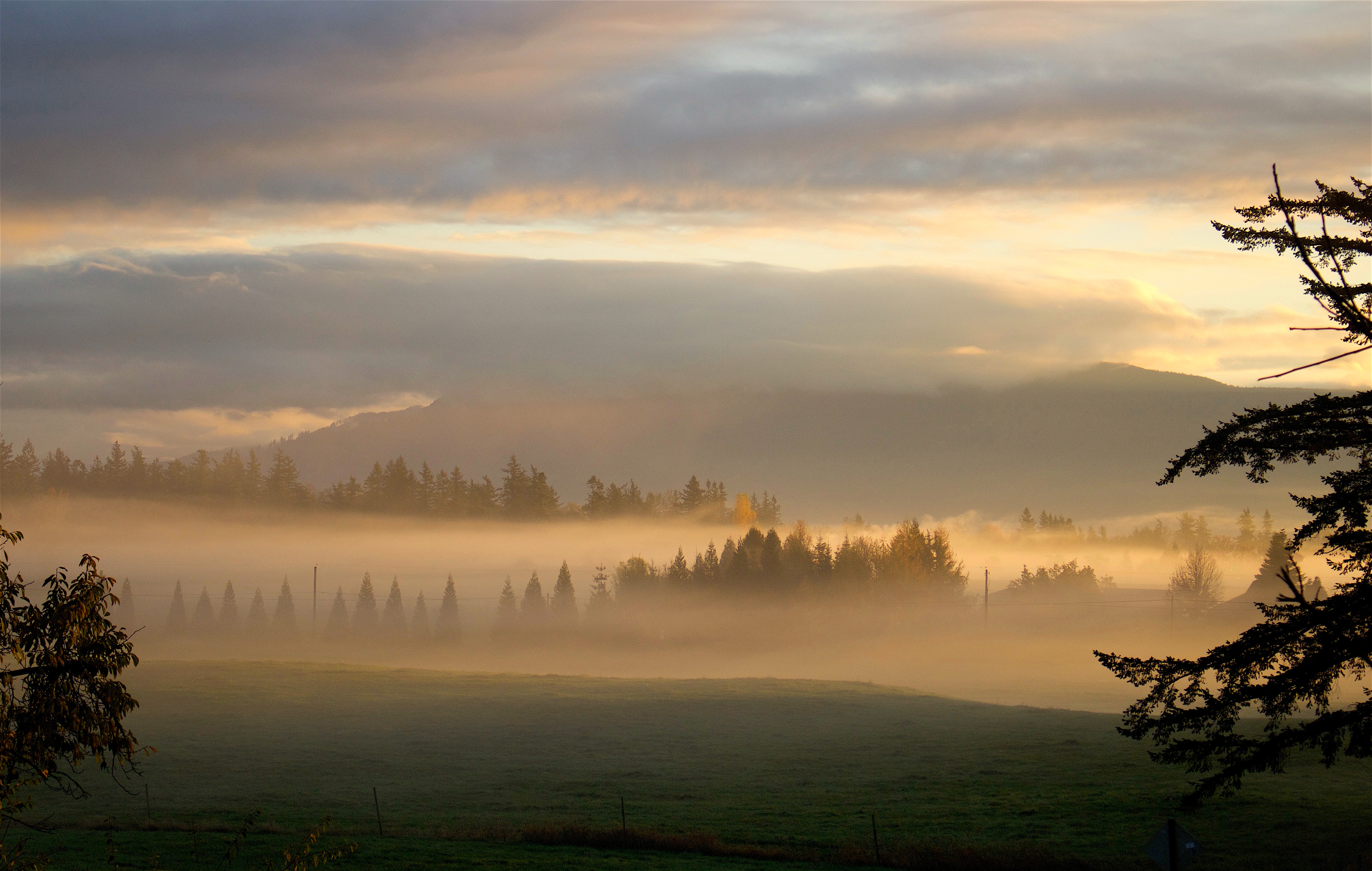
The window of richness is brief these early November mornings,
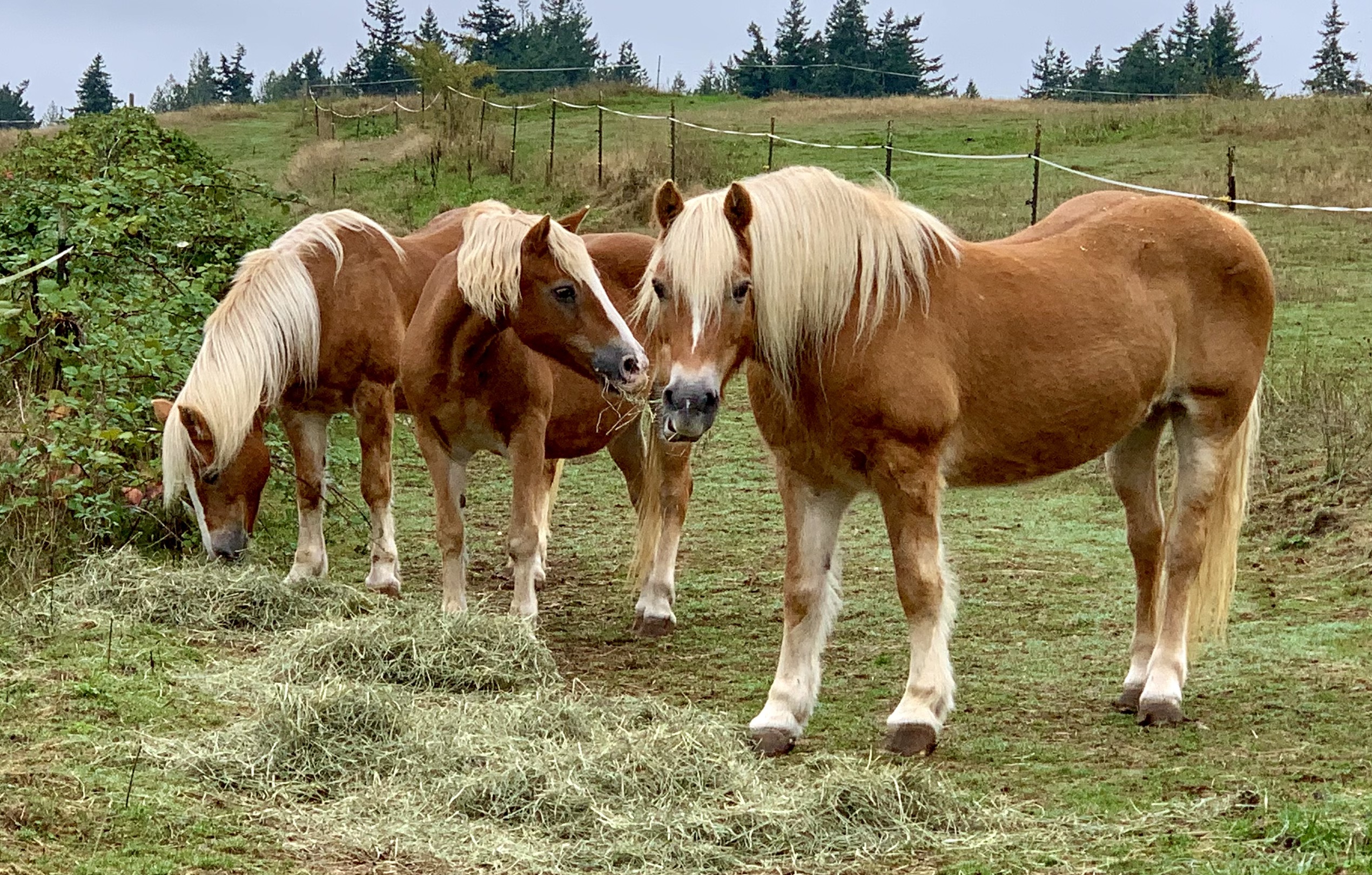
enough time to feed and water animals,
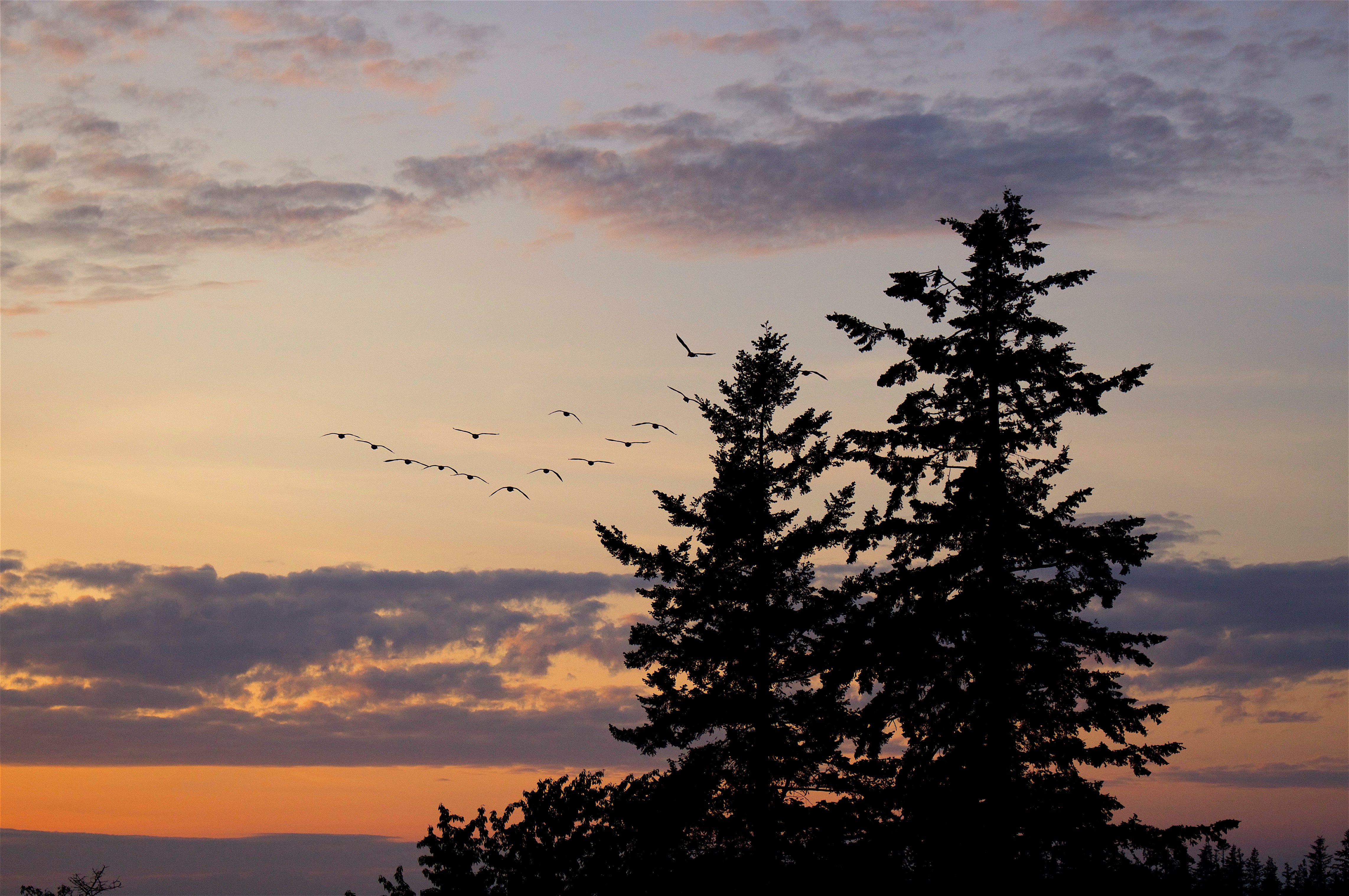
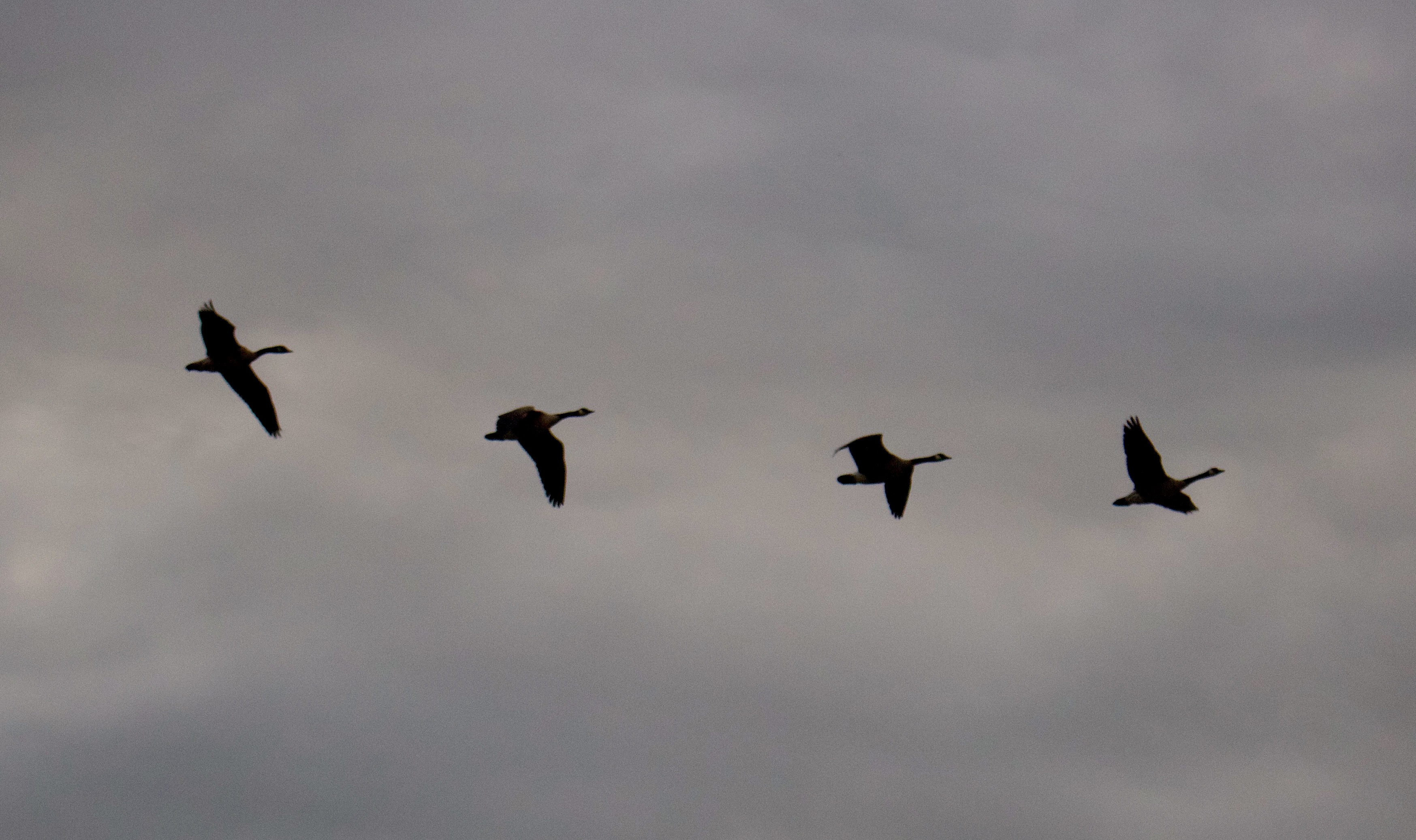
watch the geese fly overhead,
capture the light and fog in soft vapory air
before it dissipates back to
just another ordinary day.
This blessing of light is
beyond my understanding,
beyond my ability to preserve,
beyond any gratitude I can offer.
It is freely given with a smile
and I delight to linger…

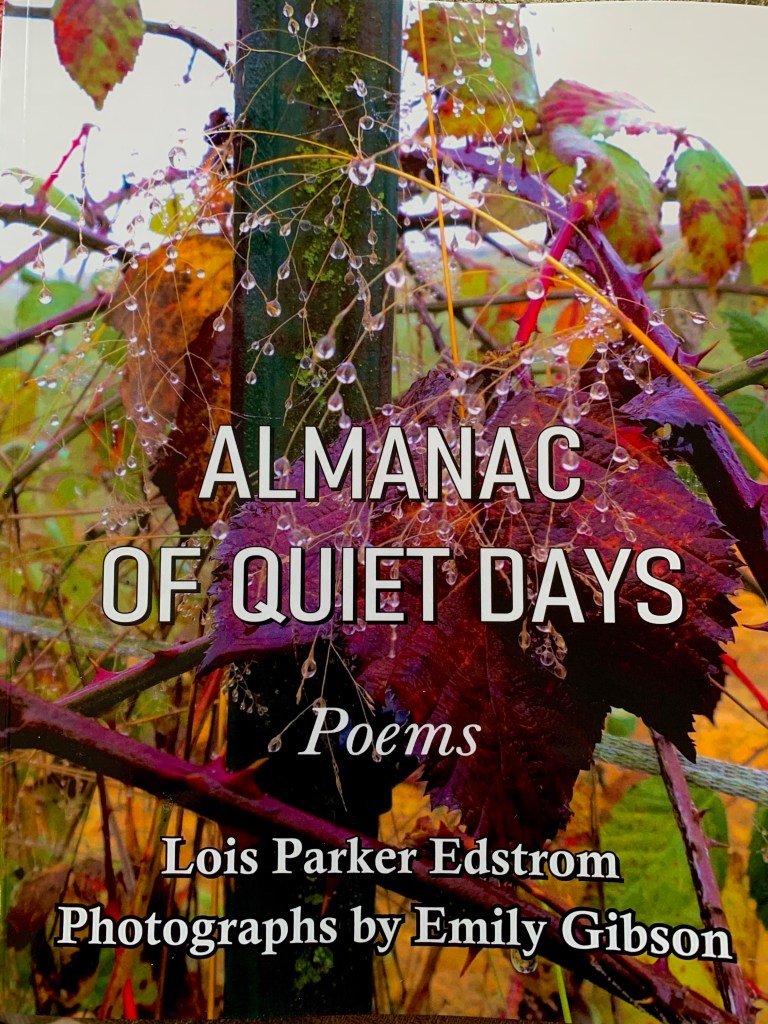
A book of beauty in words and photography – available to order here:

October Colors Shout and Sing

After the keen still days of September, 
the October sun filled the world with mellow warmth…
The maple tree in front of the doorstep burned like a gigantic red torch. 
The oaks along the roadway glowed yellow and bronze. 
The fields stretched like a carpet of jewels, 
emerald and topaz and garnet. 
Everywhere she walked the color shouted and sang around her…
In October any wonderful unexpected thing might be possible.
~Elizabeth George Speare from The Witch of Blackbird Pond

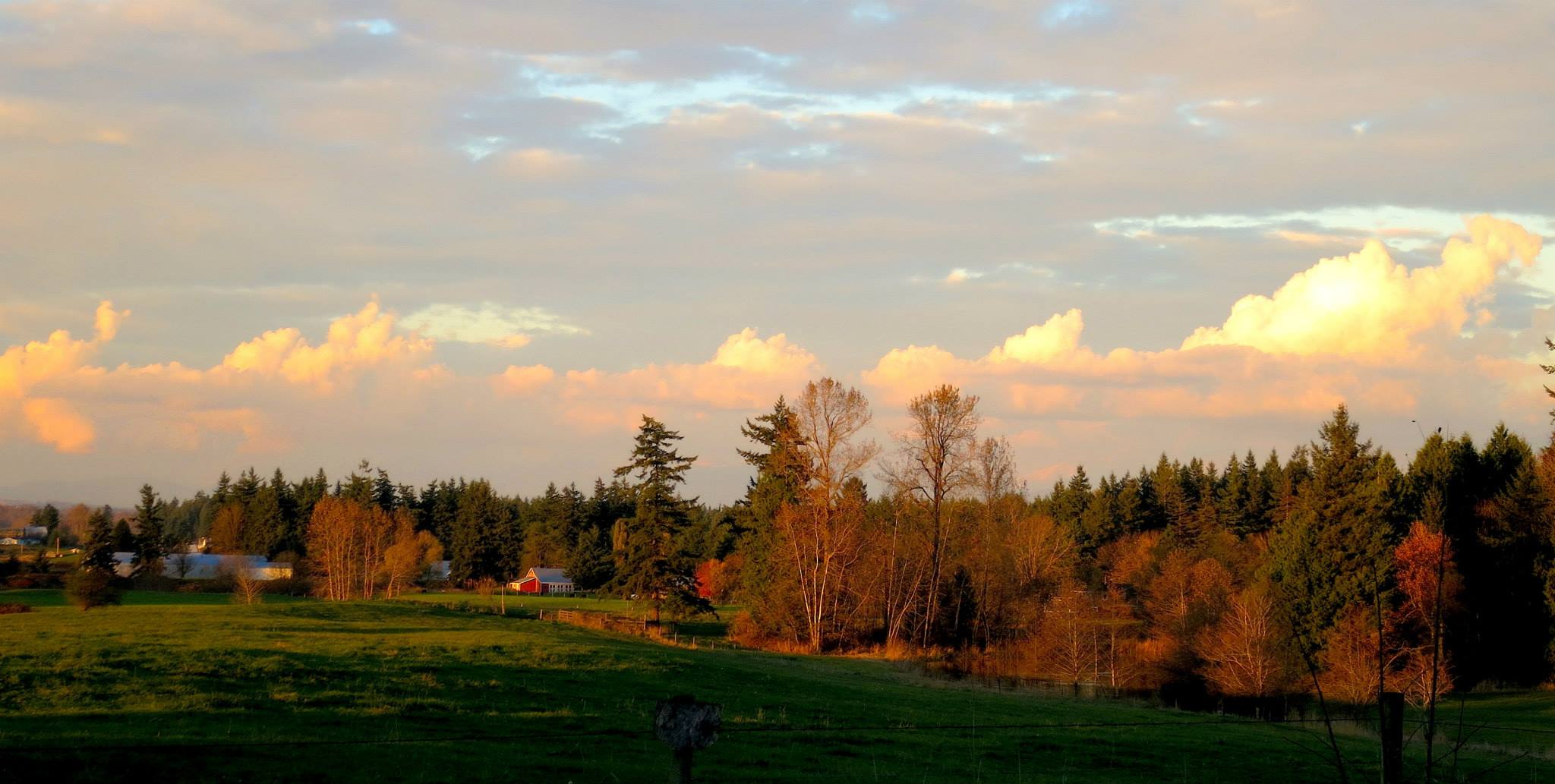
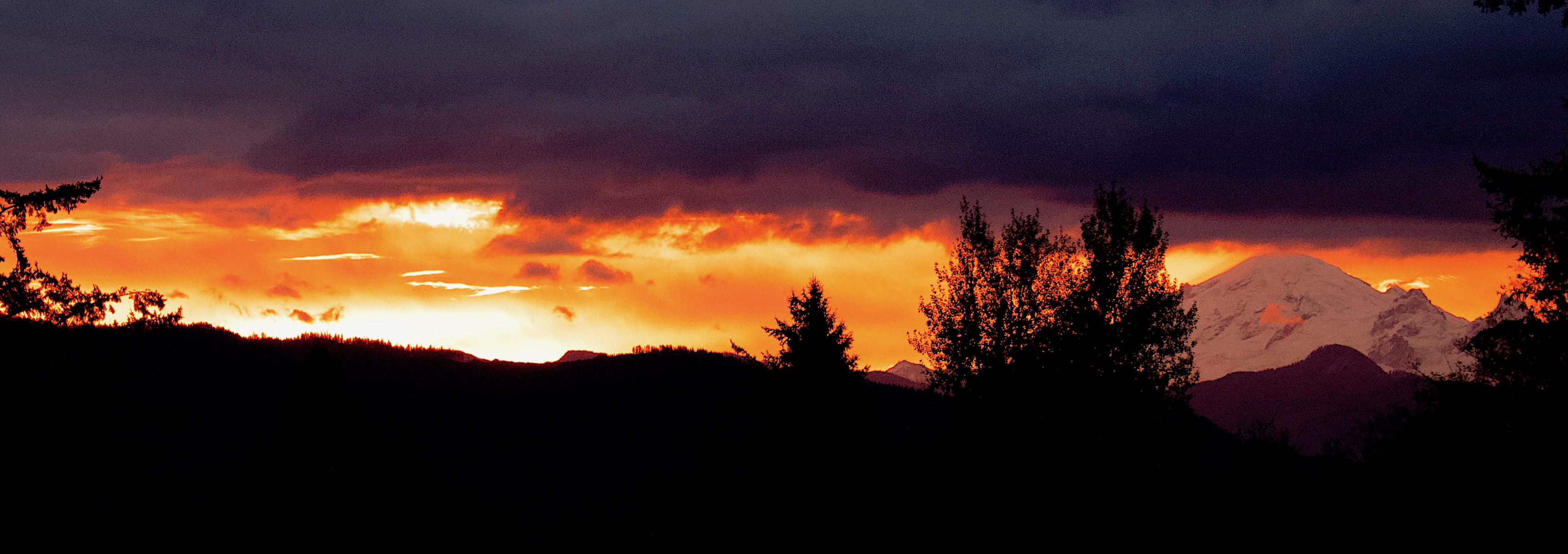
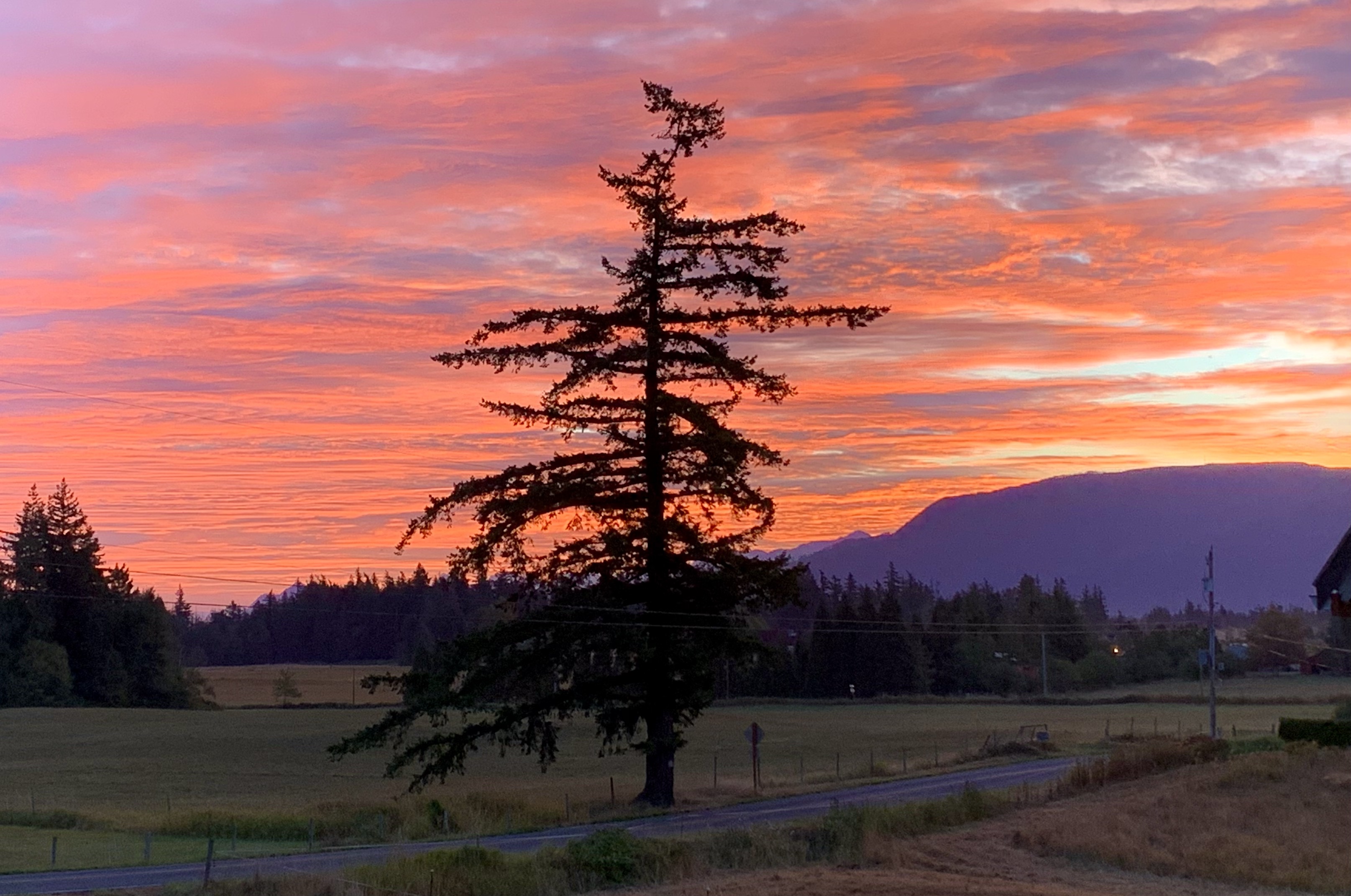
On this early morning
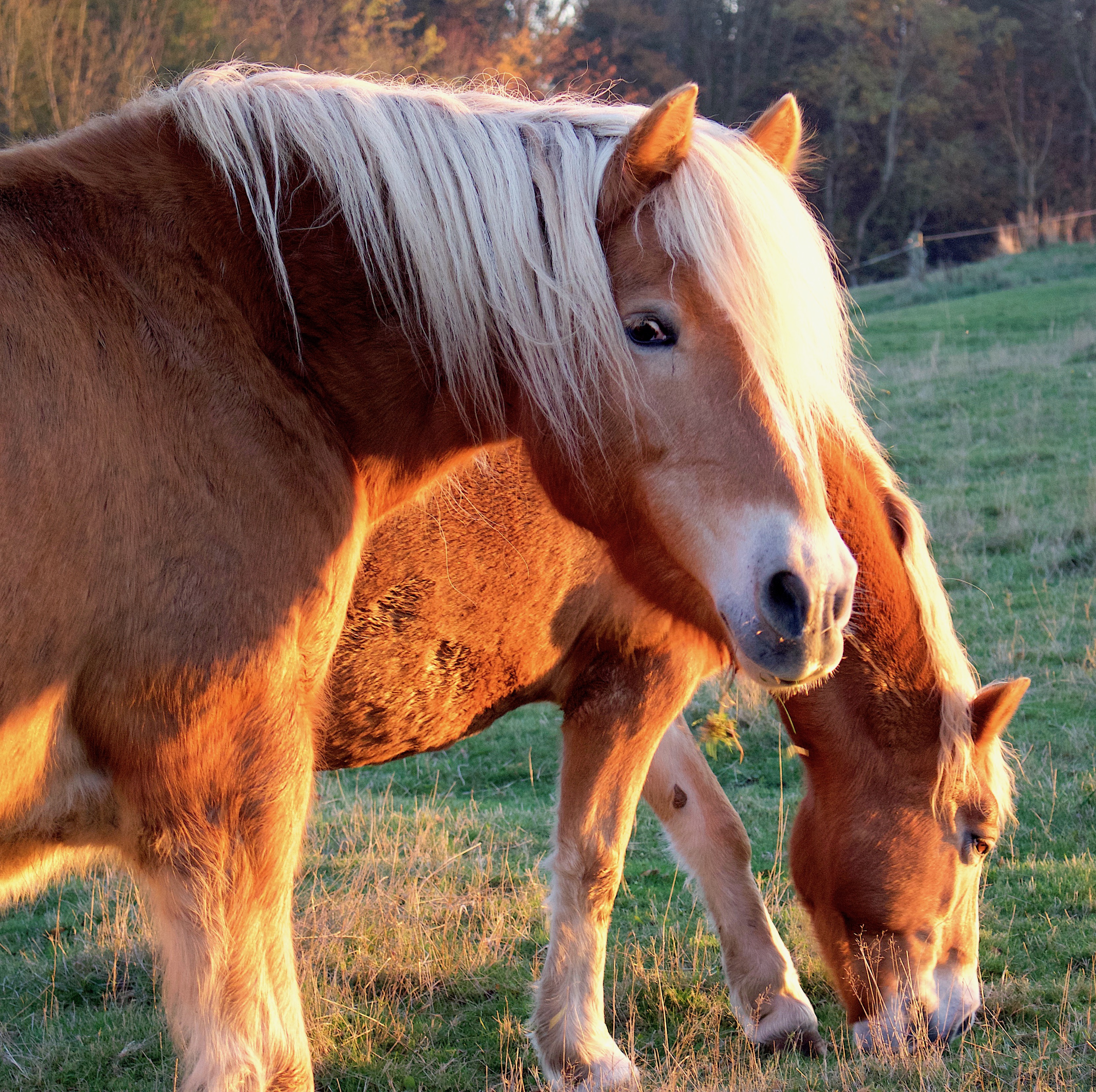
gray clouds lie heavy and unrelenting
hovering low over the eastern hills,
when a moment’s light snuck out from under the covers
throwing back the blankets
to glow golden over the mountain.

Only a minute of unexpected light underneath the gray
gone in a heartbeat
(as are we) yet
O!  the Glory when we too are luminous.

A book of beauty in words and photography, available to order here:

And It Was Autumn…

it rained in my sleep
and in the morning the fields were wet
I dreamed of artillery
of the thunder of horses

in the morning the fields were strewn
with twigs and leaves
as if after a battle
or a sudden journey
I went to sleep in the summer
I dreamed of rain
in the morning the fields were wet
and it was autumn
~Linda Pastan “September” from Carnival Evening

photo by Harry Rodenberger

The dogs eat hoof slivers and lie under the porch.
A strand of human hair hangs strangely from a fruit tree
like a cry in the throat. The sky is clay for the child who is past
being tired, who wanders in waist-deep
grasses. Gnats rise in a vapor,
in a long mounting whine around her forehead and ears.

The sun is an indistinct moon. Frail sticks
of grass poke her ankles,
and a wet froth of spiders touches her legs
like wet fingers. The musk and smell
of air are as hot as the savory
terrible exhales from a tired horse.

At evening a breeze dries and crumbles
the sky and the clouds float like undershirts
and cotton dresses on a clothesline. Horses
rock to their feet and race or graze.
Parents open their shutters and call
the lonely, happy child home.
The child who hates silences talks and talks
of cicadas and the manes of horses.
~Carol Frost – lines from “All Summer Long” from Love and Scorn: New and Collected Poems.

I was one of those lonely but happy youngsters who dreamt of horses all summer long, immersed in my own made-up stories of forest rides on hidden trails, of spending hours decorating long manes and tails of golden horses, of performing daring rescues and races, of battles and bravery I didn’t experience in real life. The imaginings took me beyond the mundane into the fanciful where I could be completely lost until I was called to come in for dinner or return to the confines of a school classroom.

Some dreams do come true when you want them badly enough: I’ve now had decades gazing out at fields of grass with those thundering hooves, back-dropped by endless skies of ever-changing clouds. I’ve also found that fairy tales can have broken fences and growing manure piles.

It has been worth it for a kid whose own story bloomed when I became a wife, a mother, a physician and a horse farmer. As this summer yet again has transitioned to autumn, so does my story: it is full of aging horses and tired fields, yet still I find myself dreaming like a kid as I comb out those long flowing manes.

Consider this book of beautiful words and photography, available to order here:

We May Or Might Never, Meet Here Again

My great grandfather had some fields in North Carolina
and he willed those fields to his sons and his sons
willed them to their sons so there is a two-hundred-year-old
farm house on that land where several generations
of my family fried chicken and laughed and hung

their laundry beneath the trees. There are things you
know when your family has lived close to the earth:
things that make magic seem likely. Dig a hole on the new
of the moon and you will have dirt to throw away
but dig one on the old of the moon and you won’t have

enough to fill it back up again: I learned this trick
in the backyard of childhood with my hands. If you know
the way the moon pulls at everything then you can feel
it on the streets of a city where you cannot see the sky.

I may walk the streets
of this century and make my living in an office
but my blood is old farming blood and my true
self is underground like a potato.

I have taken root in my grandfather’s
fields: I am hanging my laundry beneath his trees.
~Faith Shearin from “Fields”

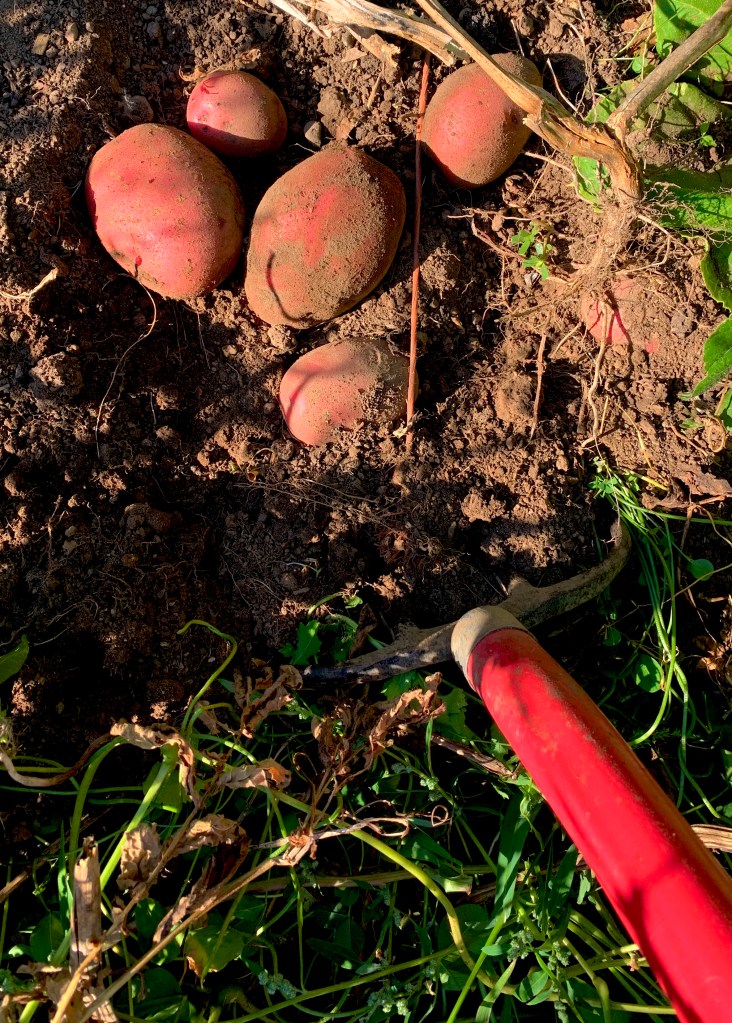
It just isn’t possible to completely take me off the farm – I have generations of farmers extending back on both sides of my family, so I have dug myself a hole here, resting easy in the soil like a potato and ventured out only as I needed to in order to actually make a living.

A gathering of all my vaccinated clinic colleagues came to our farm yesterday to help me celebrate my retiring from office life. They brought beautiful flowers, plentiful food, kind and restoring words, thirty year old photos and lovely parting gifts, as well as my singing doctor buddy sharing a sea shanty about bittersweet parting. It is helping ease my sorrow at leaving regular doctoring behind, knowing there are more days to come, more time to grow things in the ground, more blissing out over sunrises and sunsets and more hanging laundry on the clothesline.

My dear friends know where they can find me – on the hill above our farm – we may or might never, meet here again but it was such a fine time together yesterday, thank you!

Kind Friend and Companions, Come join me in rhyme,
Come lift up your voices, In chorus with mine,
Come lift up your voices, all grief to refrain,
For we may or might never, all meet here again
Here’s a health to the company and one to my lass,
Let us drink and be merry, all out of one glass,
Let us drink and be merry, all grief to refrain
For we may or might never, all meet here again
Here’s a health to the dear lass, that I love so well,
For her style and her beauty, sure none can excel,
There’s a smile on her countenance, as she sits on my knee,
There’s no man in this wide world, as happy as me,
Here’s a health to the company, and one to my lass
Let us drink and be merry, all out of one glass,
Let us drink and be merry, all grief to refrain
For we may or might never, all meet here again,
Our ship lies at anchor, she’s ready to dock,
I wish her safe landing, without any shock,
If ever I should meet you, by land or by sea,
I will always remember, your kindness to me,
Here’s a health to the company and one to my lass,
Let us drink and be merry, all out of one glass,
Let us drink and be merry, all grief to refrain
For we may or might never, all meet here again
Here’s a health to the company and one to my lass,
Let us drink and be merry, all out of one glass,
Let us drink and be merry, all grief to refrain
For we may or might never, all meet here again

You may well love this book of Barnstorming photos, available to order here:

Riding at Dusk

At dusk, everything blurs and softens…

The horse bears me along, like grace,
making me better than what I am,
and what I think or say or see
is whole in these moments, is neither
small nor broken.  Who then
is better made to say be well, be glad,

or who to long that we, as one,
might course over the entire valley,
over all valleys, as a bird in a great embrace
of flight, who presses against her breast,
in grief and tenderness,
the whole weeping body of the world?
~Linda McCarriston from “Riding Out At Evening”

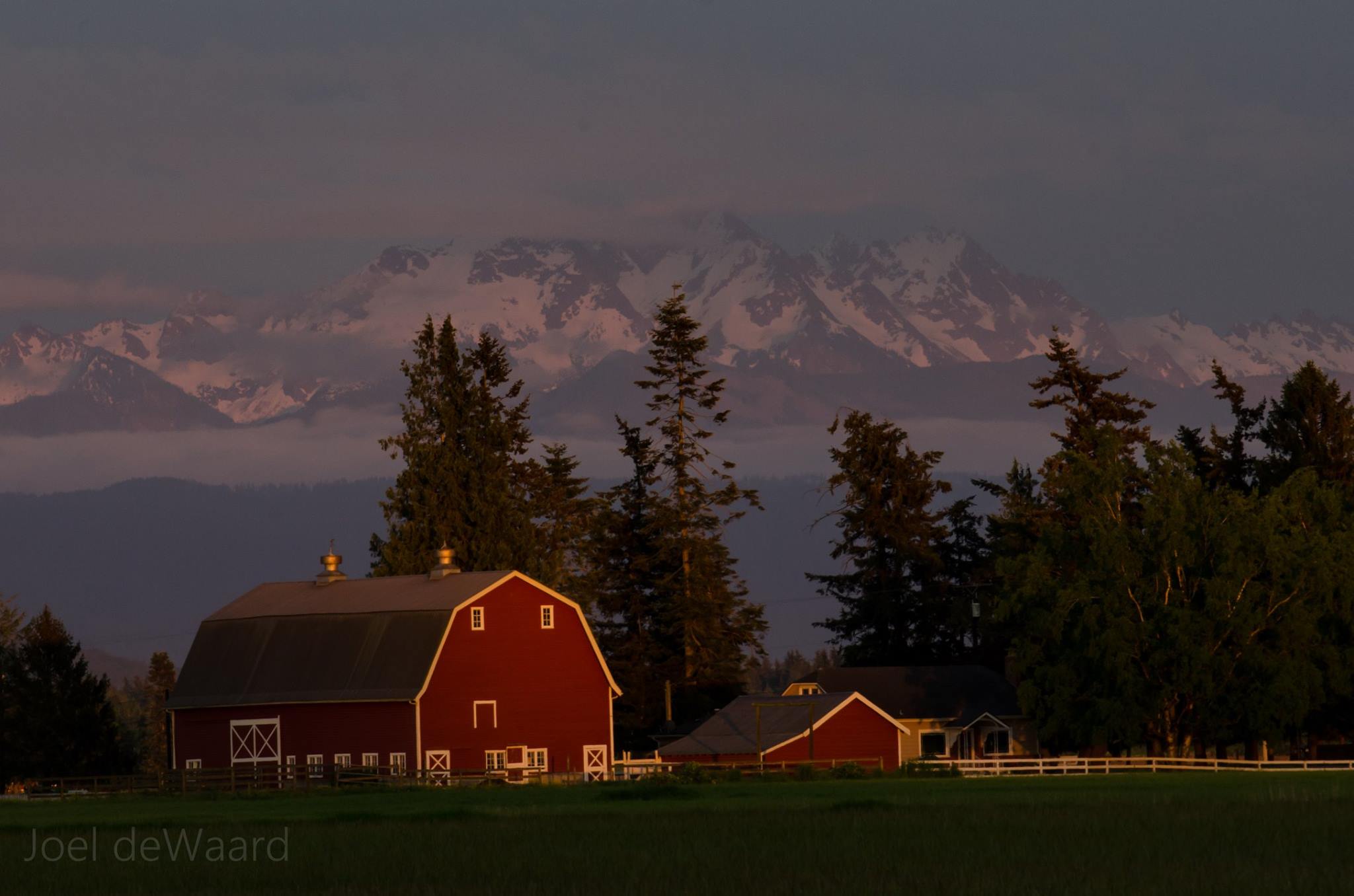
“Last Light” photo of Twin Sisters at dusk by Joel de Waard

We all need to remember transcendent moments in our lives, those brief times when all was well, our worries left behind in the dust.

Wounds healed, hearts full, senses filled with wonder, feeling whole rather than broken.

The summer evening rides of my younger years were just such a time: lifted by such powerful grace and transported to another time and place. It can feel like flying but mostly it feels like an embrace, one creature with another, exploring the world together.

All these years later, I am held fast by the memories and in remembering, I weep.

Surely, someday,
heaven will be something like this.

Sure on this shining night
Of star made shadows round,
Kindness must watch for me
This side the ground.
The late year lies down the north.
All is healed, all is health.
High summer holds the earth.
Hearts all whole.
Sure on this shining night I weep for wonder wand’ring far
alone
Of shadows on the stars.

~James Agee

More photos like this in a new book from Barnstorming, available to order here:

Middle Age Gals Stick Together

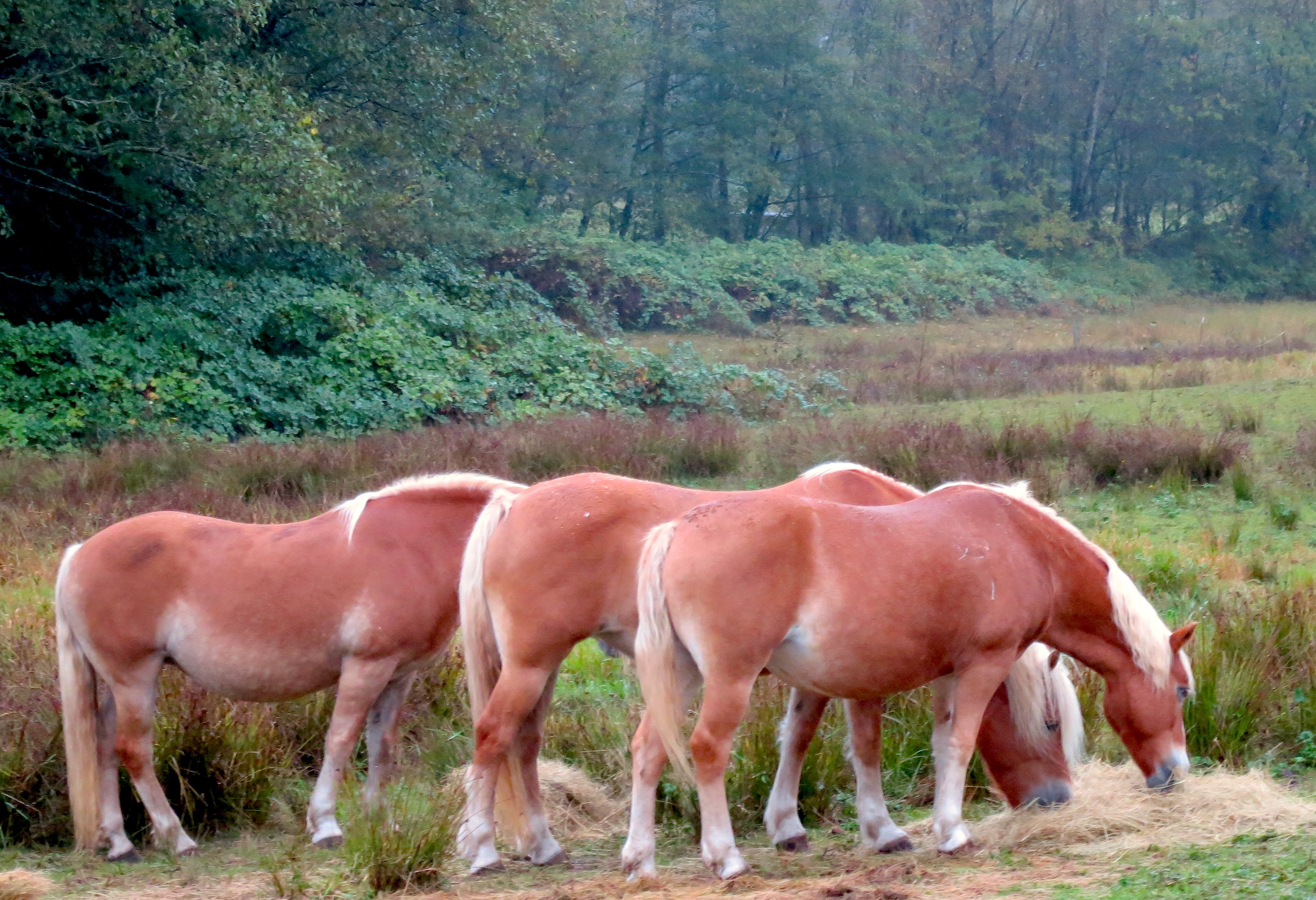
I’m deep into my sixties now and some days I’m reminded how deep more than others. Though I’m well past the hot flashes of my fifties, I now deal with the typical aches and pains of my seventh decade on earth. Every once in awhile, I compare notes with our aging Haflinger mares (now all well into their twenties) on our farm and watch how well they too are coping with their advancing years.

For instance:

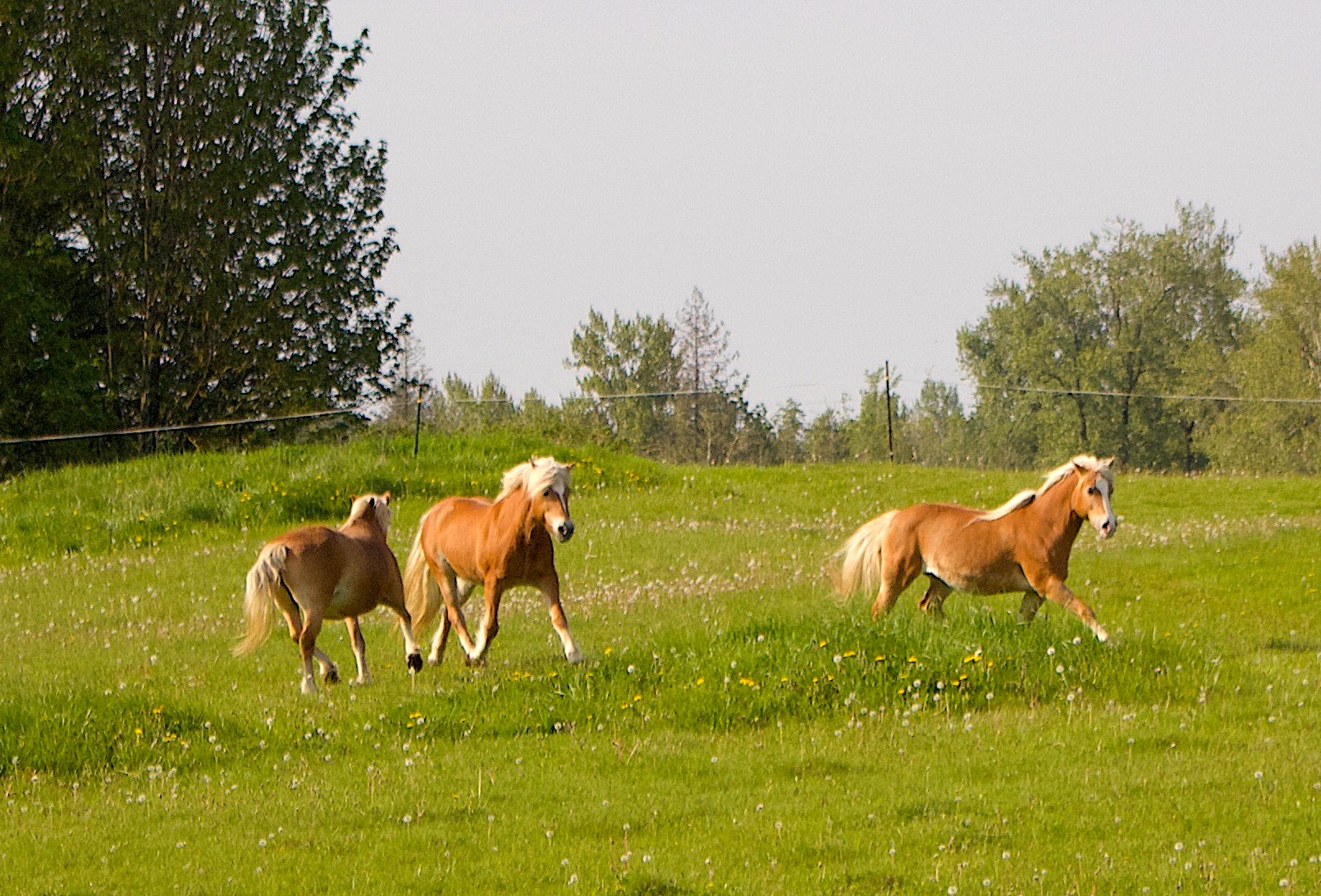
These mares still have a lot of life left. They sometimes run like the wind when turned loose, their manes and tails flying in the wind. They can buck, kick and fart with the best of them. And then limp around for the rest of the day, regretting their momentary indiscretion.

These mares know who they are. There is no identity crisis here. They are mothers who have finished their mothering years, and are well into the grandmothering years. Even so, they still like to flirt – although they aren’t sure they remember why they want to attract attention from a certain fella in the neighboring field.

These mares aren’t thrilled about work anymore. They are a bit out of shape with a tendency toward the fluffy side of fitness, so require a moment to catch their breath once in awhile. Their muscles hurt the next day. They break out in sweat easily. They appreciate a break for a mid-day nap – or two – or three.

These mares are opinionated. There is no question they know their own minds, what they want and how they are going to get it and they keep no one around them guessing. They want to make sure everyone else knows how right they are even if they (so very rarely) are wrong.

These mares are stubborn. Once they’ve decided something, it takes more than soft sweet persuasion, like a whack on the behind, to change course. Once they’ve decided they don’t like another horse, the only way to change that opinion is for the other horse to adopt an attitude of complete servitude and submission, giving way whenever approached and grooming the boss mare whenever asked.

These mares are hungry. Always. See “fluffy” above although chewing isn’t as easy as it used to be. Grazing is now classified as “work.”

These mares don’t sleep all that much, but wish they could sleep more.  Even though they might look like they are napping (see “mid-day naps” above), they are actually meditating, with their eyes closed, on the next plan of action.

These mares’ feet and joints hurt at times – sometimes dealing with broken and cracked nails, trouble walking over uneven surfaces, and being impatient and touchy about manicures.

These mares are not as fussy about their appearance as they used to be. Their fur coats are no longer as sleek and smooth – their hair can stick out at weird angles, their beards grow long and their eyes aren’t quite as clear. Their four foot manes have been rubbed down to two foot manes and have a few more tangles in them. Their tails have stains (don’t ask why). They stride through mud puddles without a second thought, whereas when they were younger, there was no way one hoof was going to set foot in such mucky stuff.

These mares don’t keep as tidy a bedroom as they used to. Why bother? Life is too short for making neat piles in pristine surroundings.

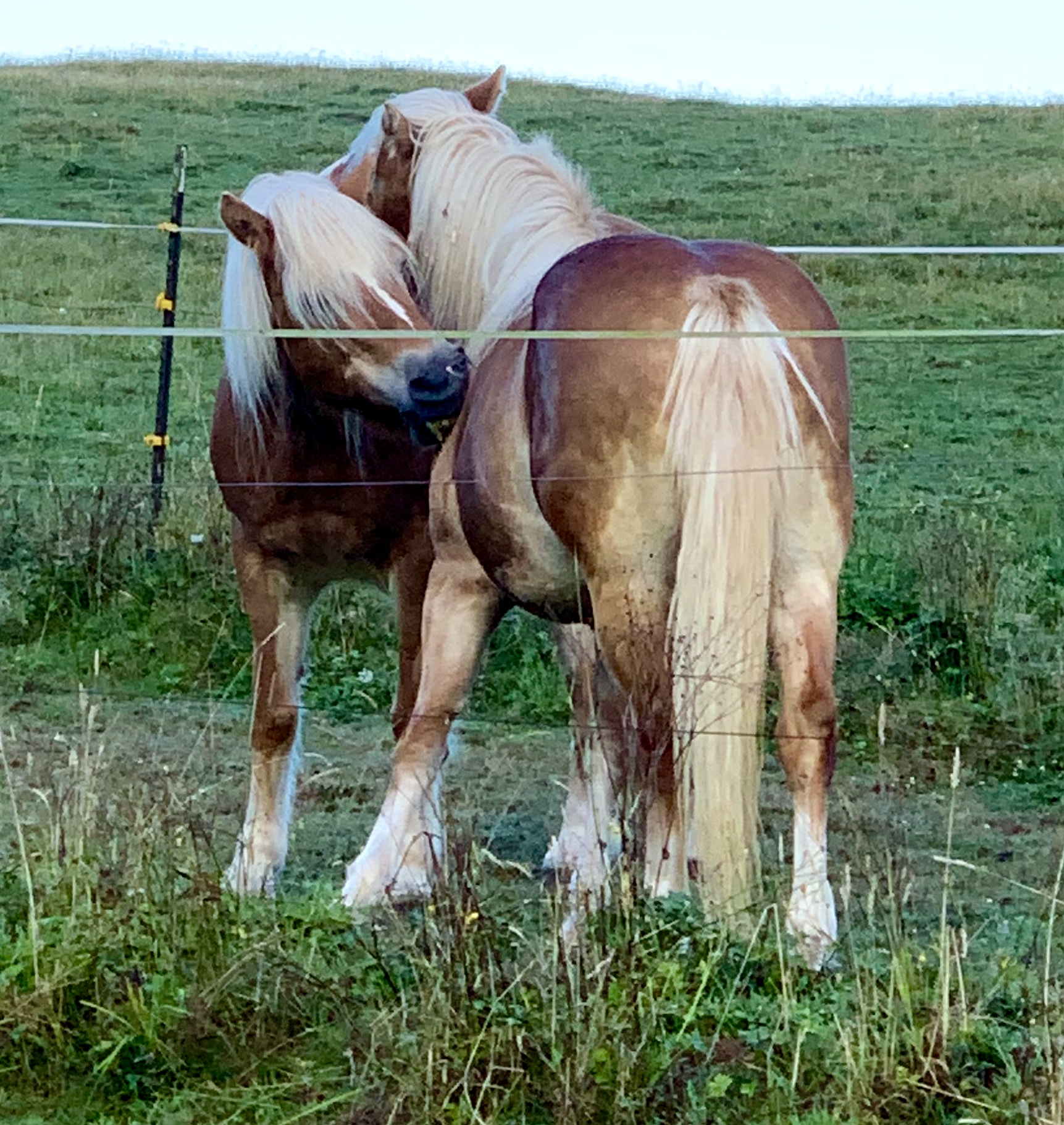
These mares know how to be the best of friends. If their best forever friend is not turned out with them in the field, they will stand at the gate, and call nonstop for an hour asking where she is. And when they are reunited, they mutually groom for a long time, until their mouths are so full of hair they can’t stand each other – until tomorrow, that is.

These mares know how to give great kisses and hugs. Especially if you are hiding a carrot on your person, you’ll be mugged.

Yes, we “deep-in-the-middle ages” gals, human and equine, do seem to have a lot in common.

I do appreciate knowing we can always stick together, through thick and …well, thick.

Enjoy this post from Barnstorming? You’ll enjoy this book available to order here:

Wired With Alertness

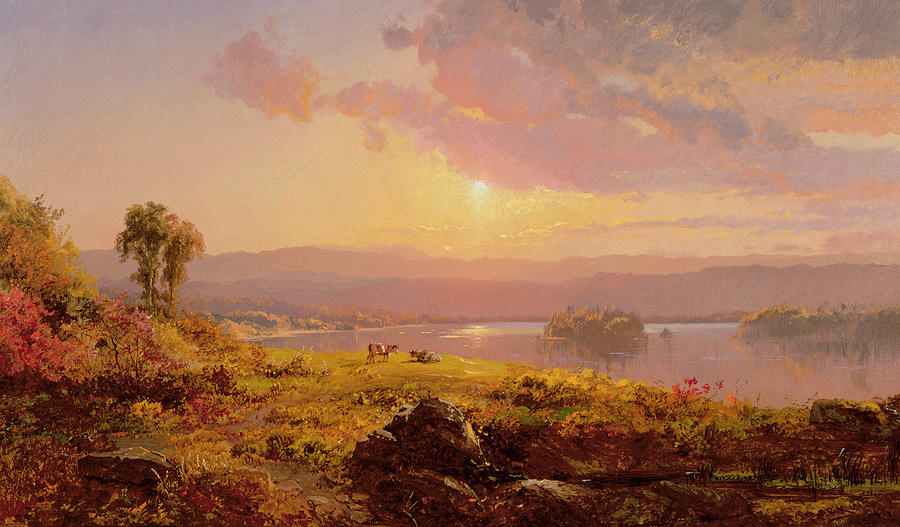
Edmund Darch Lewis – Susquehanna
Agnes Wallace by Robert Sivell

I have never been fishing on the Susquehanna
or on any river for that matter
to be perfectly honest.


Not in July or any month
have I had the pleasure — if it is a pleasure —
of fishing on the Susquehanna.


I am more likely to be found
in a quiet room like this one —
a painting of a woman on the wall,


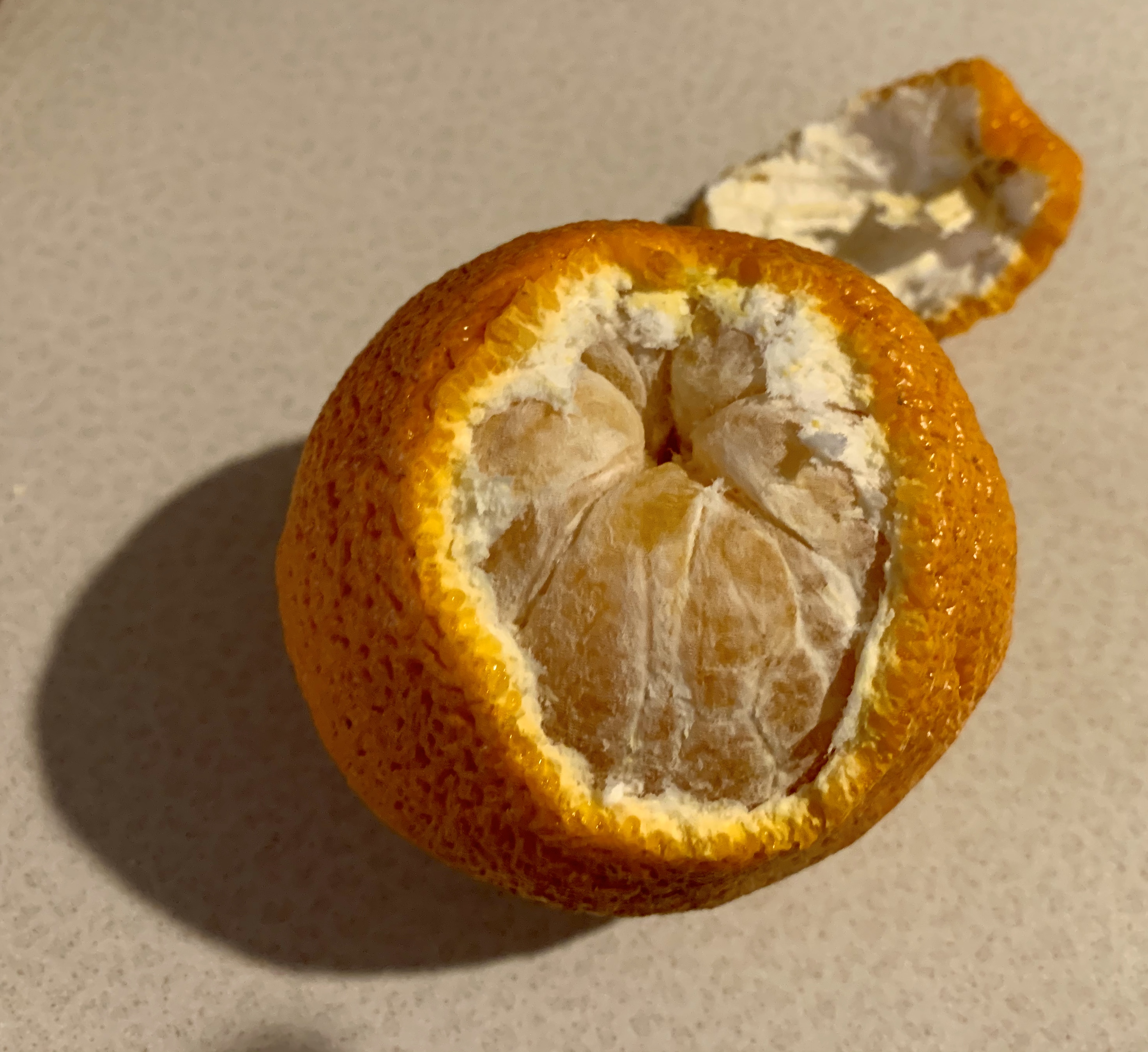
a bowl of tangerines on the table —
trying to manufacture the sensation
of fishing on the Susquehanna.


There is little doubt
that others have been fishing
on the Susquehanna,


rowing upstream in a wooden boat,
sliding the oars under the water
then raising them to drip in the light.


But the nearest I have ever come to
fishing on the Susquehanna
was one afternoon in a museum in Philadelphia,


when I balanced a little egg of time
in front of a painting
in which that river curled around a bend


under a blue cloud-ruffled sky,
dense trees along the banks,
and a fellow with a red bandana


sitting in a small, green
flat-bottom boat
holding the thin whip of a pole.


That is something I am unlikely

ever to do, I remember
saying to myself and the person next to me.


Then I blinked and moved on
to other American scenes
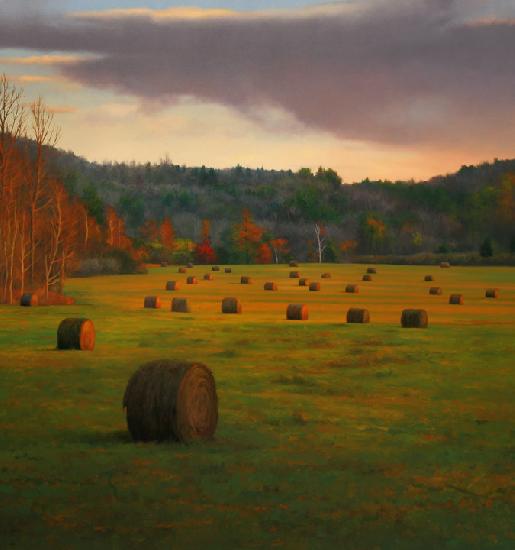
of haystacks, water whitening over rocks,


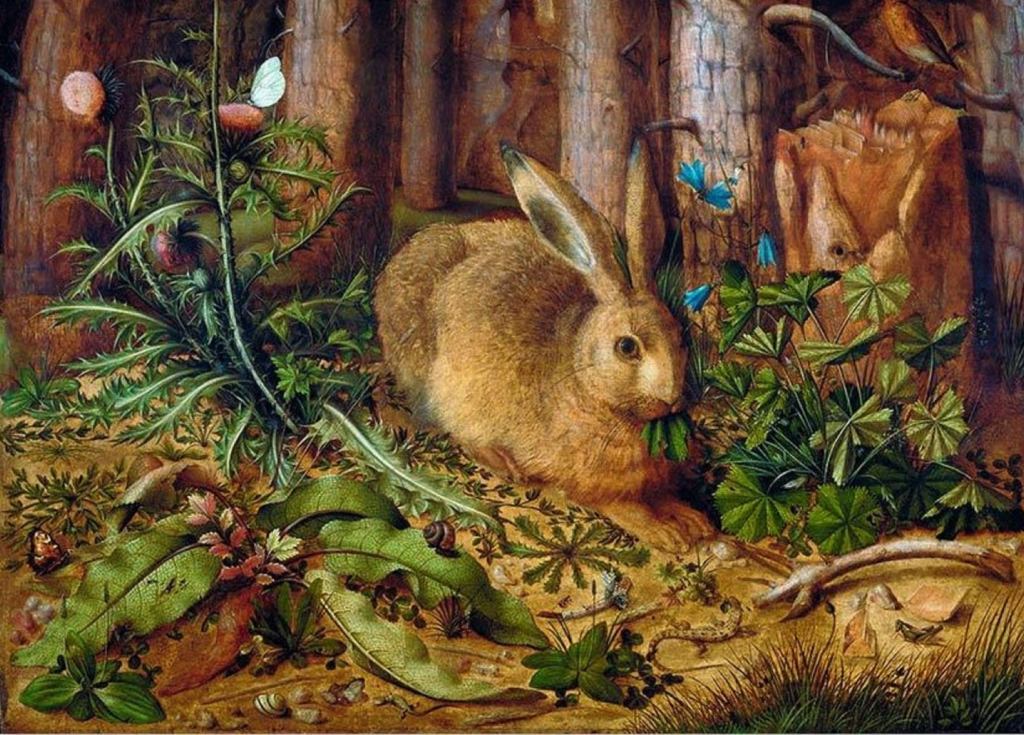
even one of a brown hare
who seemed so wired with alertness
I imagined him springing right out of the frame. 
~Billy Collins Fishing On The Susquehanna In July

A Hare in the Forest by Hans Hoffman (Getty Museum)
Susquehanna by Jasper Francis Cropsey
Hayfield–oil painting by Scott Prior http://www.scottpriorart.com

I live a quiet life in a quiet place. There are many experiences not on my bucket list that I’m content to simply imagine.

I’m not a rock climber or a zip liner or willing to jump out of an airplane. I won’t ride a horse over a four foot jump or race one around a track. Not for me waterskis or unicycles or motorcycles.

I’m grateful there are those who are eagerly wired with alertness for the next experience: adventurers who seek out the extremes of life so the rest of us can sit back and admire their courage and applaud their explorations and achievement.

My mind’s eye and imagination is powerful enough, thanks to the words and pictures of others. I find I’m content to explore the corners of my quiet places, both inside and outside, to see what I can build from what I find right here under my nose.

When the light is right, and I’m open enough to it, what I see is ready to spring right out of the frame.

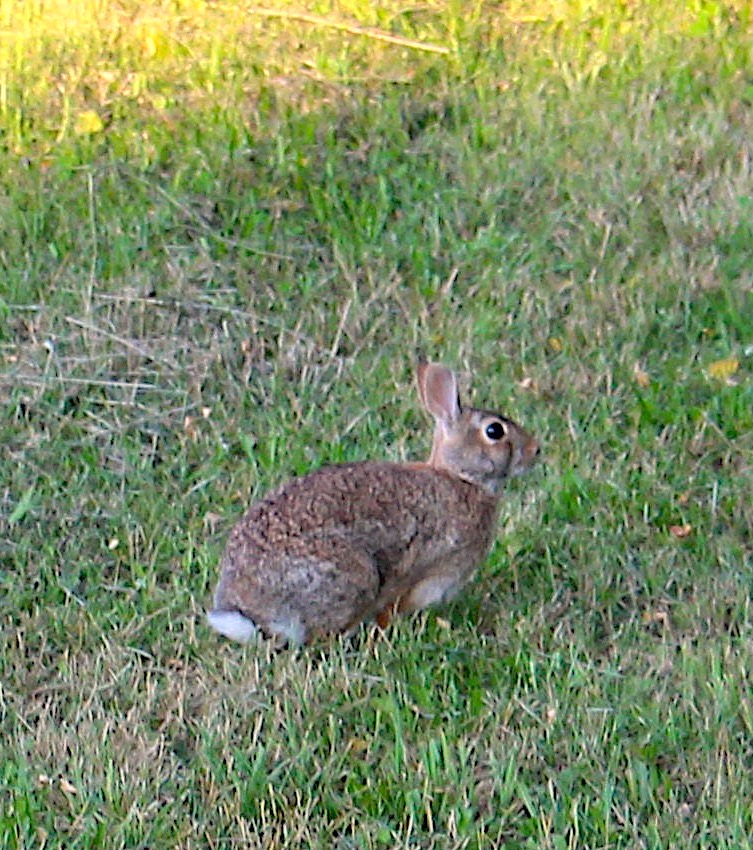
The difficulty to think at the end of day,
When the shapeless shadow covers the sun
And nothing is left except light on your fur—

….and August the most peaceful month.

To be, in the grass, in the peacefullest time,
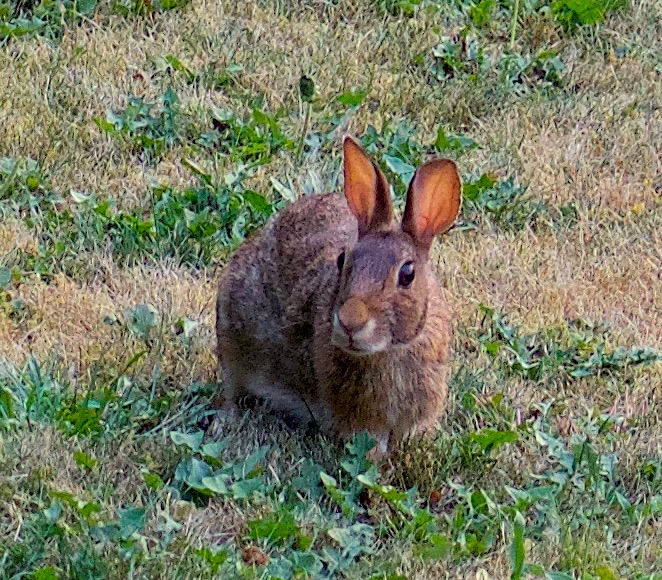
And to feel that the light is a rabbit-light
In which everything is meant for you
And nothing need be explained;

You become a self that fills the four corners of
night.
~Wallace Stevens, from “A Rabbit As King of the Ghosts”

More of my images along with Lois Edstrom’s ekphrastic poetry can be found in this book, available for order here:

Much Too Beautiful to Stay

I love the look, austere, immaculate,
Of landscapes drawn in pearly monotones.
There’s something in my very blood that owns
Bare hills, cold silver on a sky of slate,
A thread of water, churned to milky spate
Streaming through slanted pastures fenced with stones.

I love those skies, thin blue or snowy gray,
Those fields sparse-planted, rendering meagre sheaves;
That spring, briefer than apple-blossom’s breath,
Summer, so much too beautiful to stay,
Swift autumn, like a bonfire of leaves,
And sleepy winter, like the sleep of death.

~Elinor Wylie from “Wild Peaches”

An amber light stretches from sky to ground
this beautiful morning, another mid-summer dawning-
today a clone of yesterday’s and the day before.

A stretch of forty identical days cannot last and will not stay.
I long again for rain and chill nights.

Drying up and pock-marked with holes,
I feel punched and withering in this browning landscape,
wondering on this Sabbath day of communing together
where holiness is to be found.

Enjoying daily Barnstorming posts? Here is our new book available for order here:

Sweating Under the High Arc of Midsummer

What is the hayfield in late afternoon
that it can fly in the face of time,

and light can be centuries old, and even
the rusted black truck I am driving

can seem to be an implement born
of some ancient harvest,

and the rhythmic baler, which spits out
massive bricks tied up in twine,

can seem part of a time before now
because light glitters on the hay dust,

because the sun is sinking and we sweat
under the high arc of mid-summer,

because our bodies cast such long shadows–
Rebecca, with the baby strapped to her back,

the men who throw impossible weight
to the top of the truck, the black and white

dog that races after mice or moles
whose lives have been suddenly exposed.

How does the taste of my sweat take me
down through the gate of childhood,

spinning backwards to land in a field
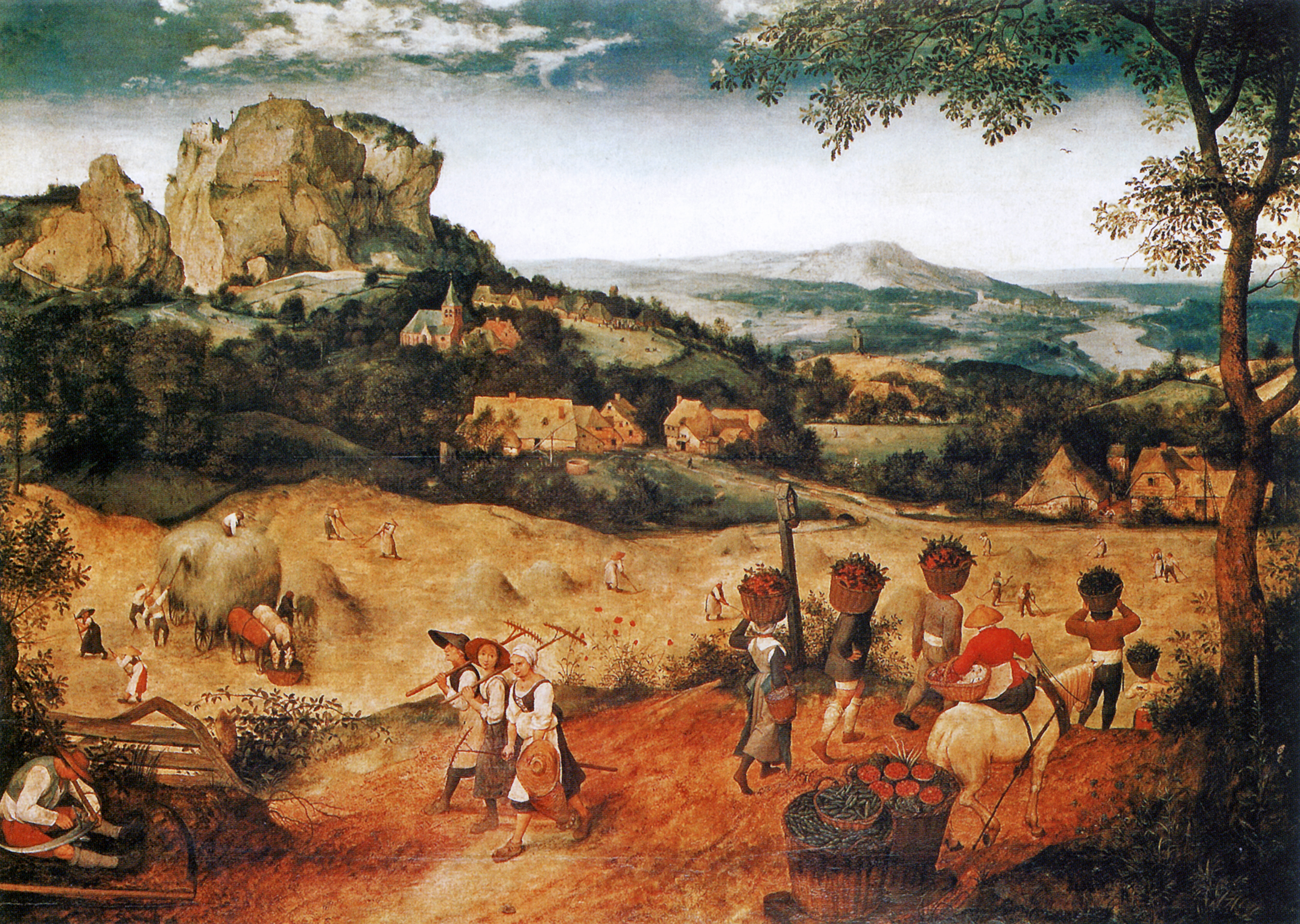
painted by Bruigel, where the taste of salt

is the same, and the same heat
rises in waves off a newly flattened field.

In the duskiness of slanted light, we laugh
just as we laughed then, because there is

joy in what the earth gives, allowing
our bodies to mingle with it, our voices

small on the field, our work assuring the goats
can give milk, the sheep can grow wool,

and we will have in our bones the taste
of something so old it travels in light.
~Susie Patlove “First Cutting” from Quickening

photo by Nate Gibson
1994
2005
2011

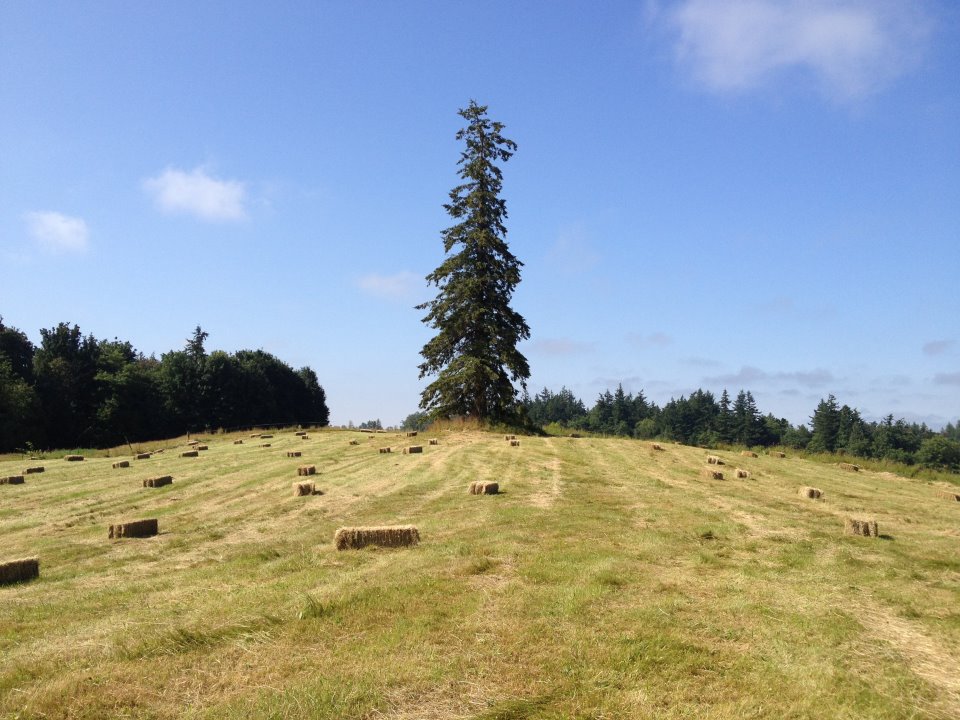
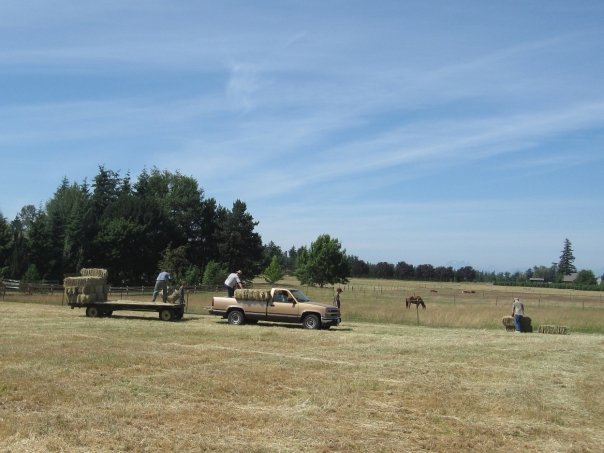
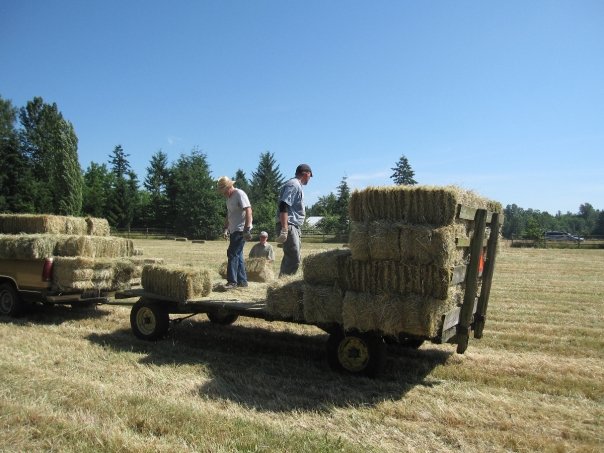
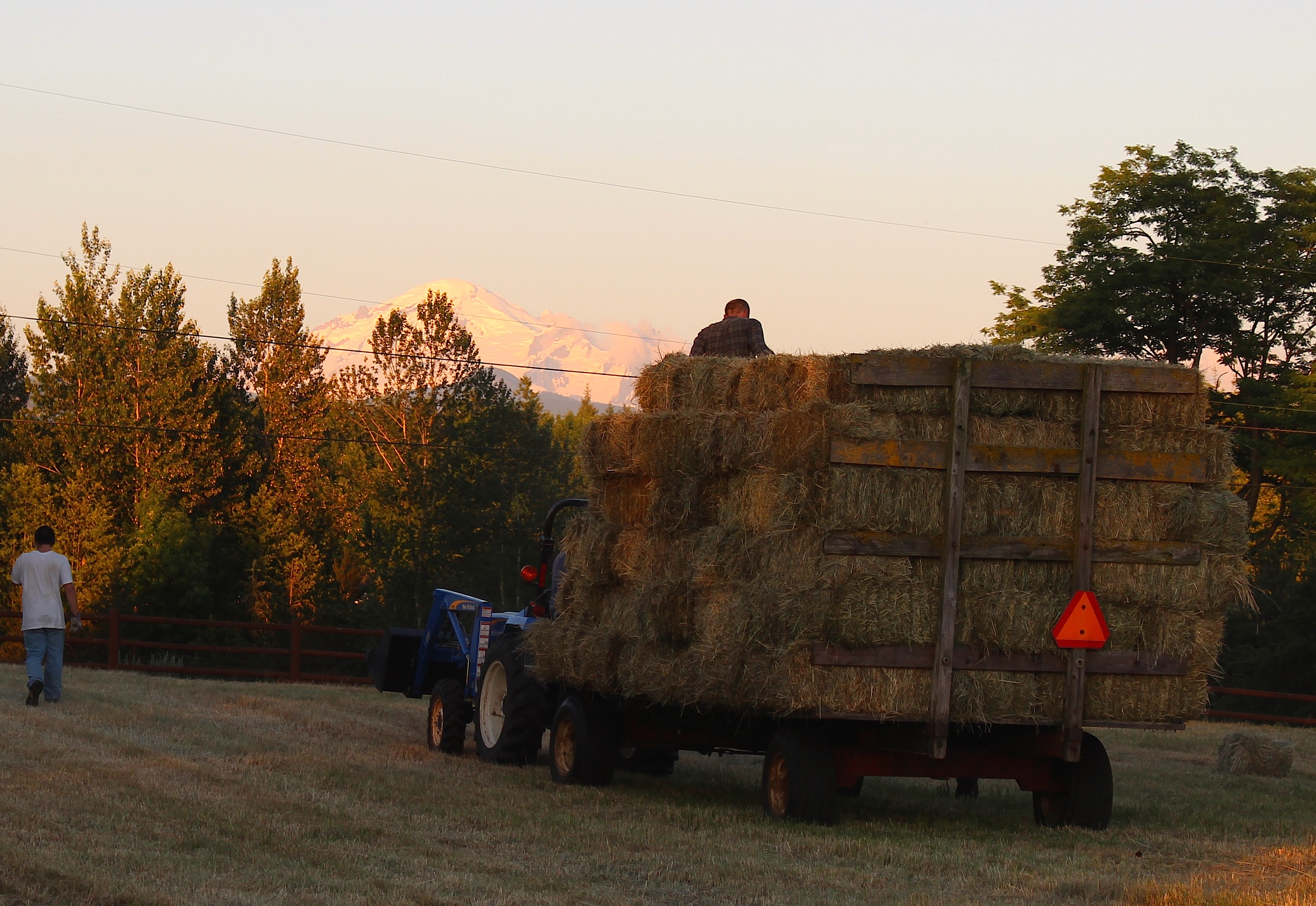
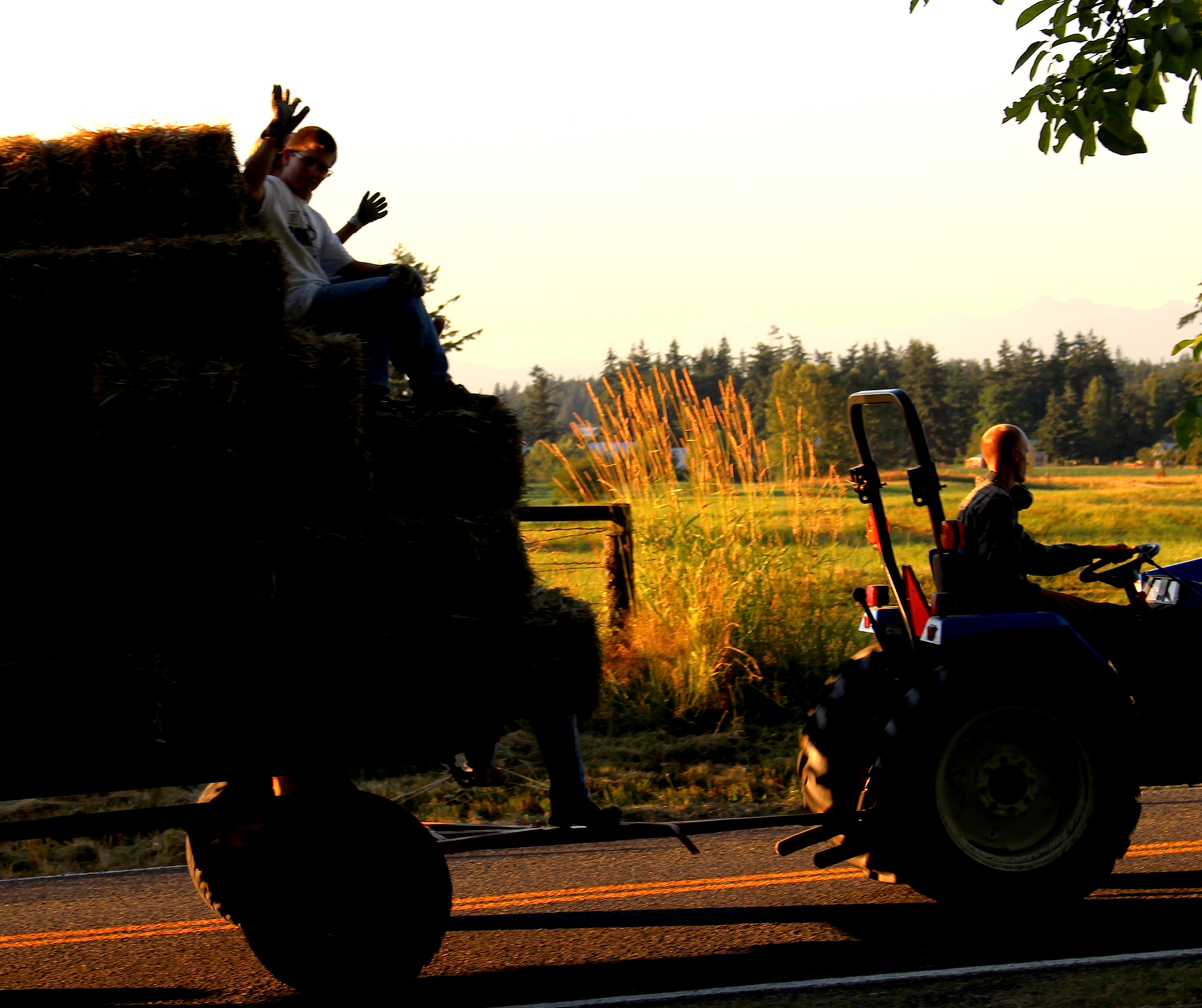
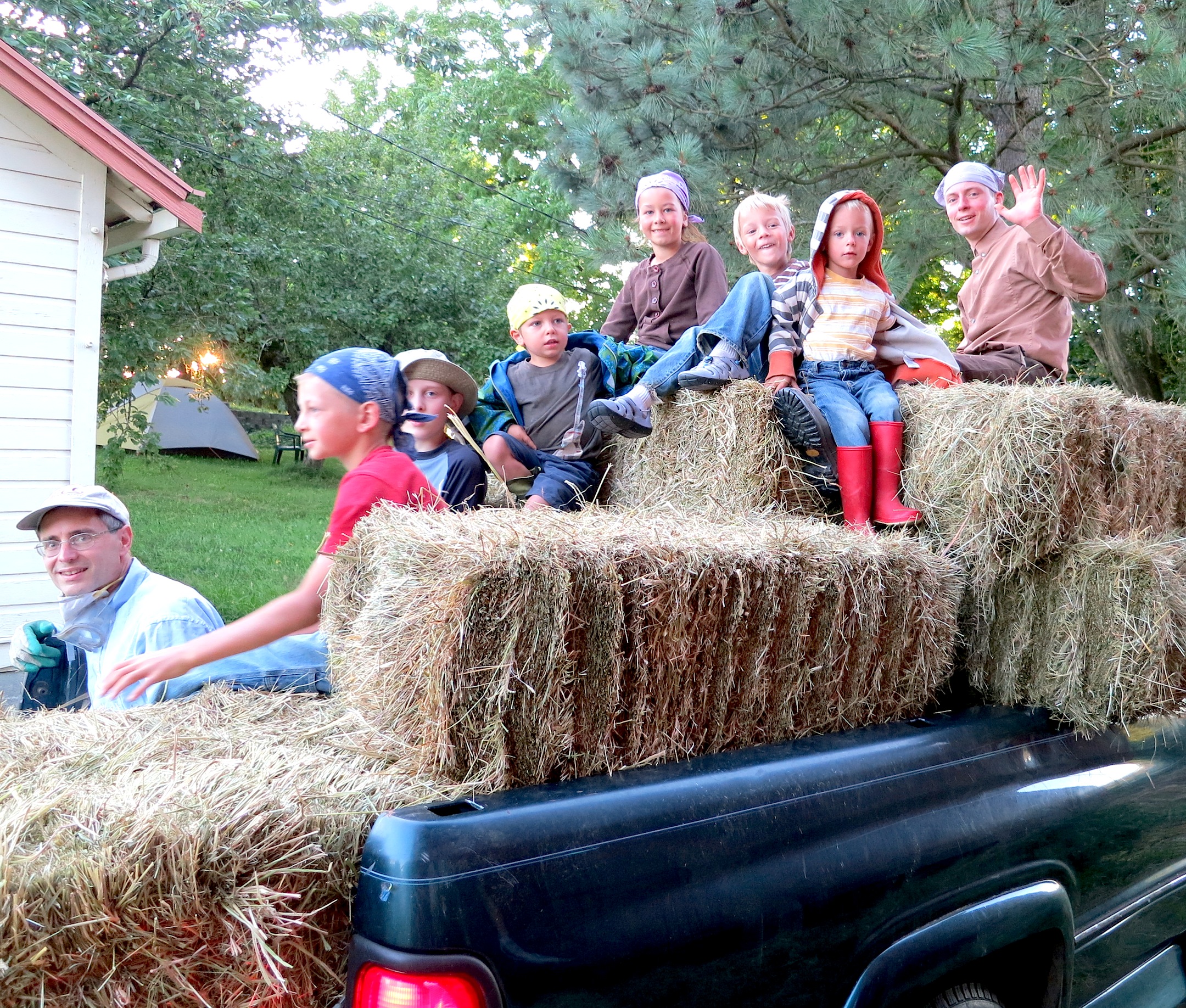
There is a timelessness to mid-summer hay harvest that goes back generations on both sides of our family. The cutting, raking and gathering of hay has evolved from horse-drawn implements and gathering loose shocks of hay to 100+ horse power air-conditioned tractors and huge round bales wrapped and stored in plastic sheathing rather than in barns.

Our farm is happily stuck somewhere in-between: we still prefer filling the haybarn with bales that I can still lift and move myself to feed our animals. True hay harvest involves sweat and dust and a neighborhood coming together to preserve summer in tangible form.

I grew up on a farm with a hayfield – I still have the scar over my eyebrow where I collided with the handle of my father’s scythe when, as a toddler, I came too close behind him as he was taking a swing at cutting a field of grass one swath at a time. I remember the huge claws of the hay hook reaching down onto loose hay piled up on our wagon. The hook would gather up a huge load, lift it high in the air to be moved by pulley on a track into our spacious hay loft. It was the perfect place to play and jump freely into the fragrant memories of a summer day, even in the dark of winter.

But these days it is the slanted light of summer I remember most:
-the weightlessness of dust motes swirling down sun rays coming through the slats of the barn walls as the hay bales are stacked
-the long shadows and distant alpenglow in the mountains
-the dusk that goes on and on as owls and bats come out to hunt above us

Most of all, I will remember the sweaty days of mid-summer as I open the bales of hay in mid-winter – the light and fragrance of those grassy fields spilling forth into the chill and darkness, in communion of blessing for our animals.

photo by Tayler Rae
Pieter Bruegel “Hay Harvest”
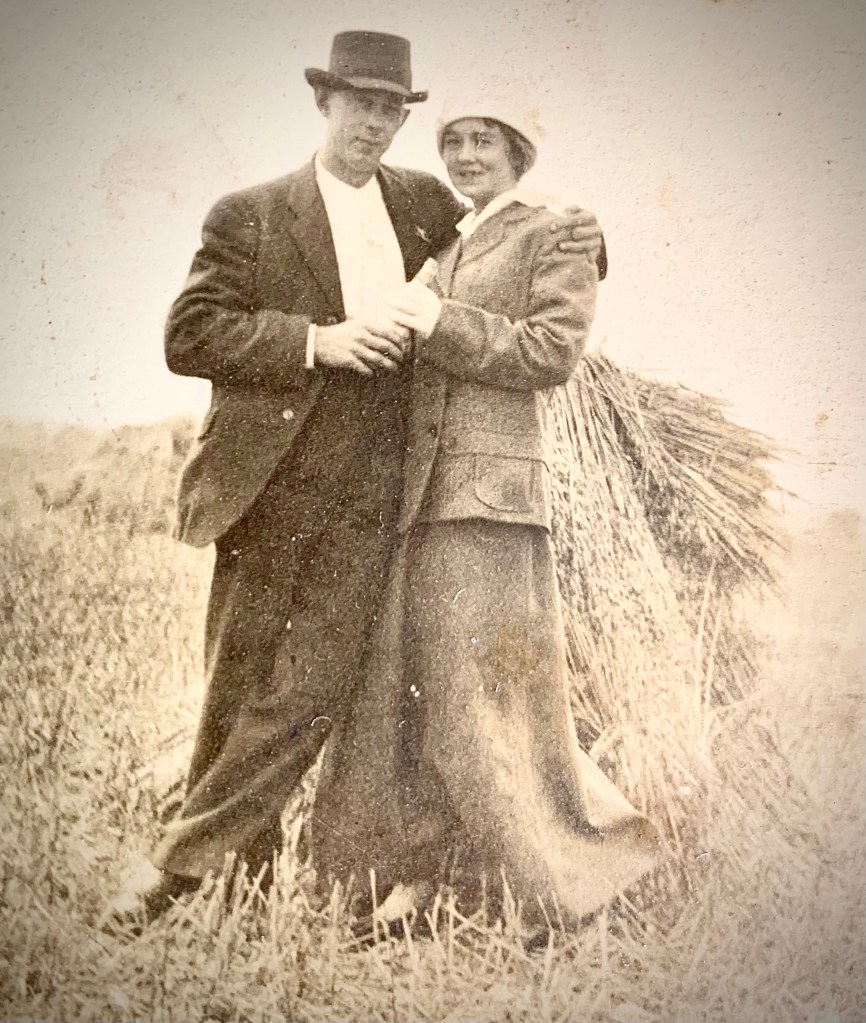
My grandparents Leslie Polis and Kittie Lovelace standing in a hayfield with loose hay shocks — 1915

Enjoy this blog post? A new book from Barnstorming is available to order here: