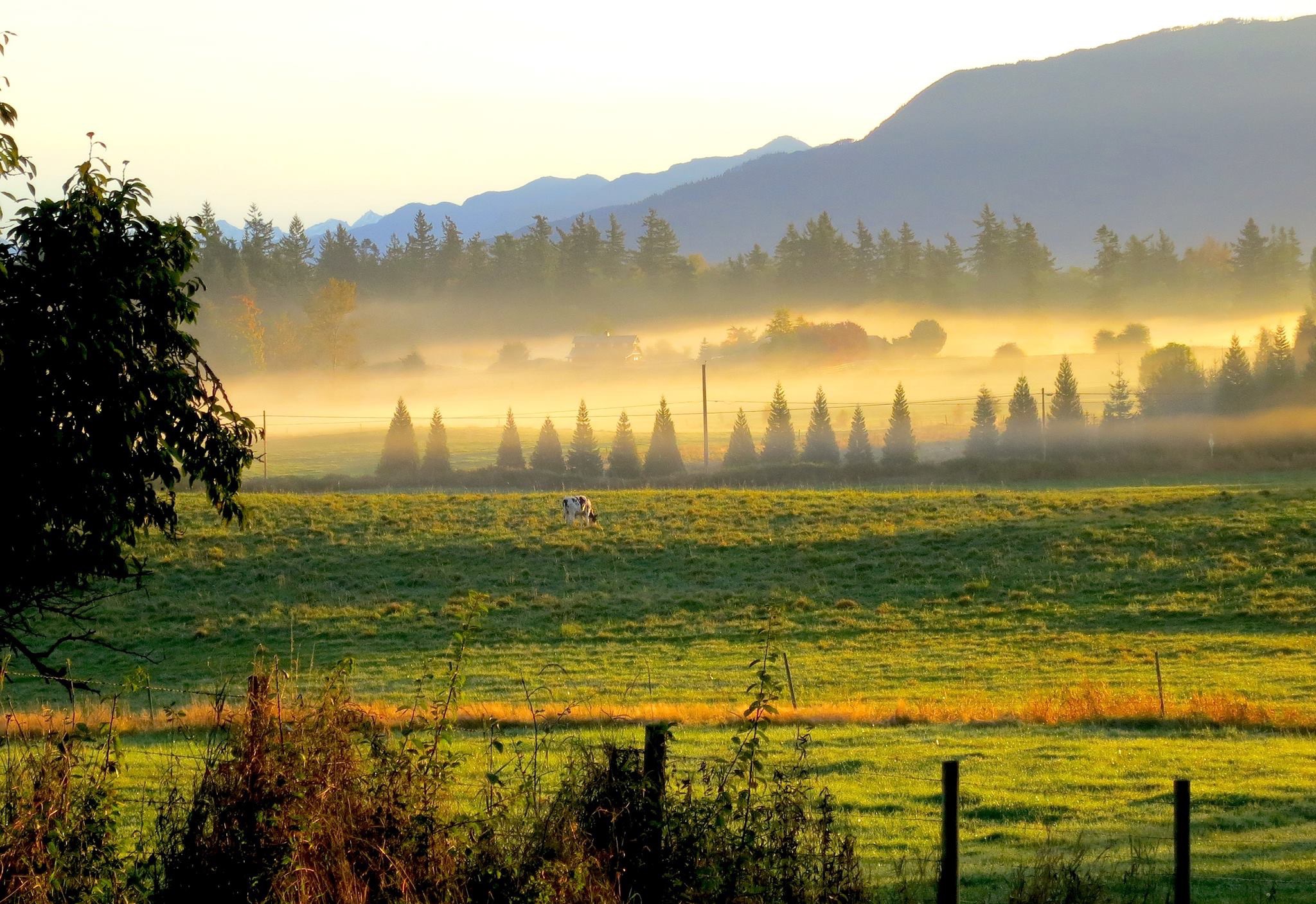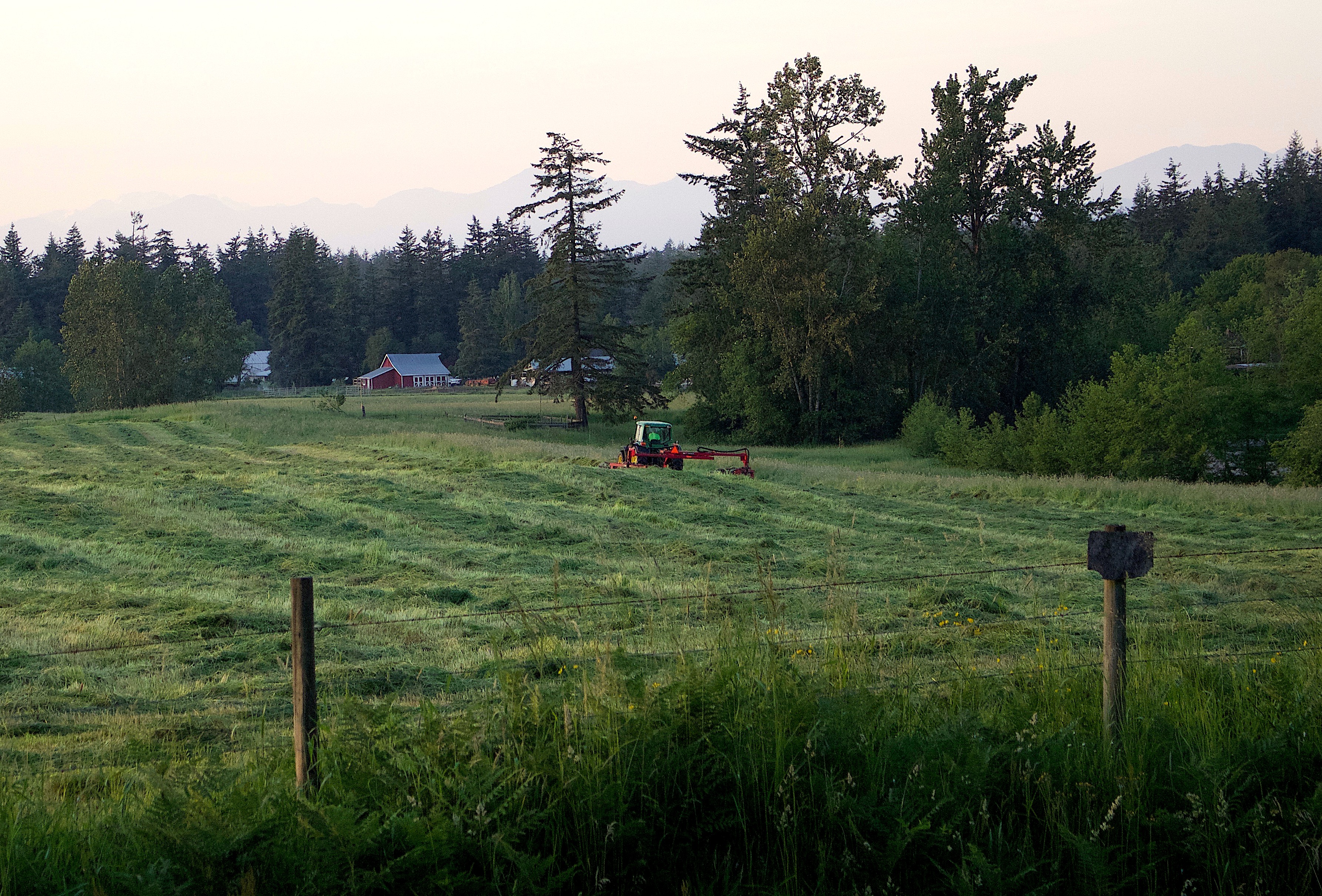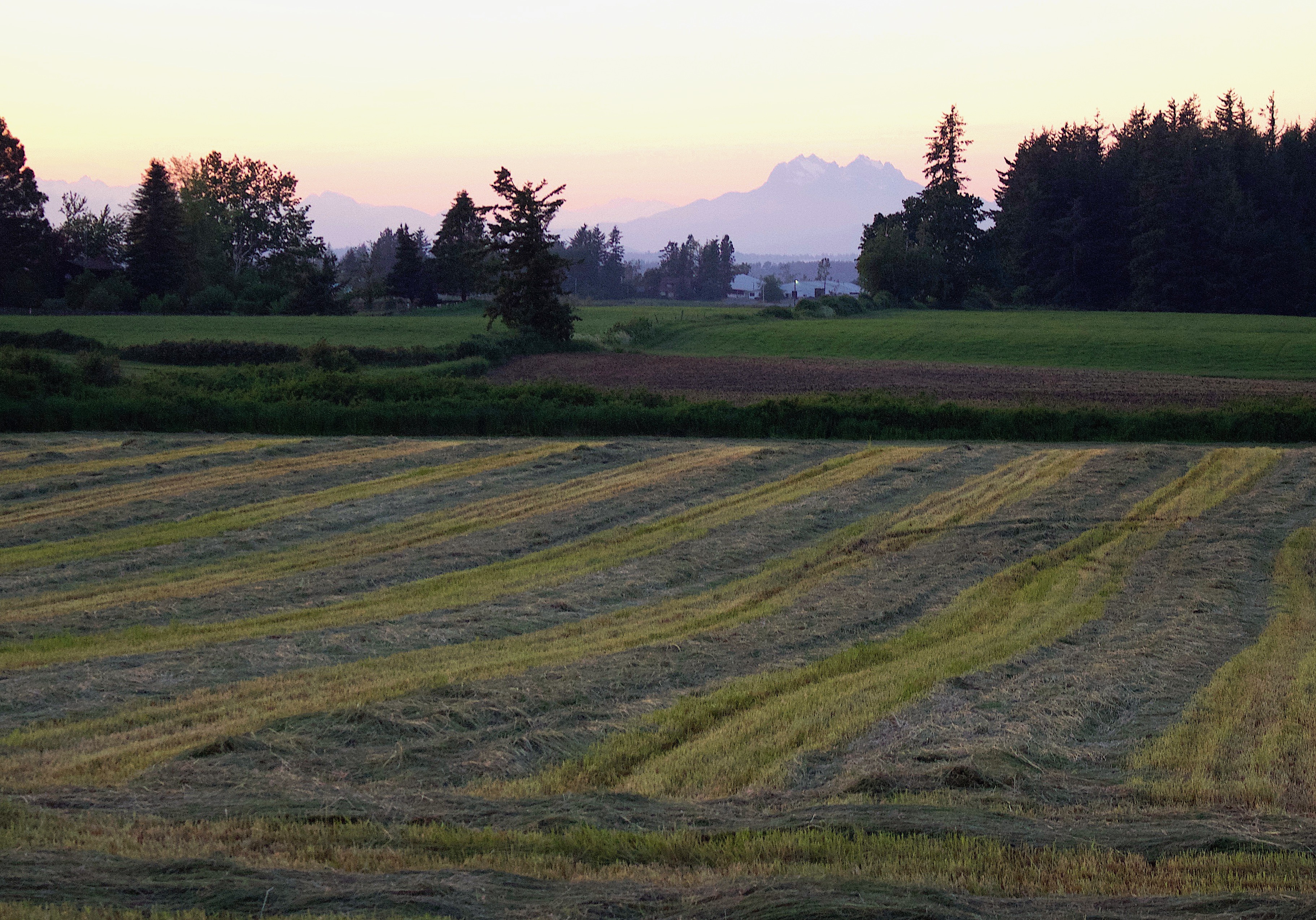
In a Cloud of Gold

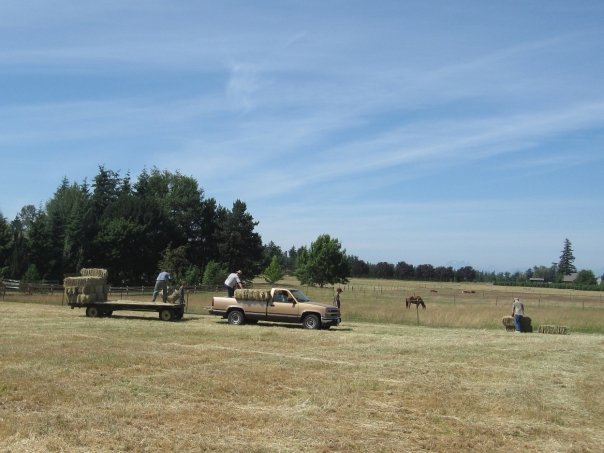
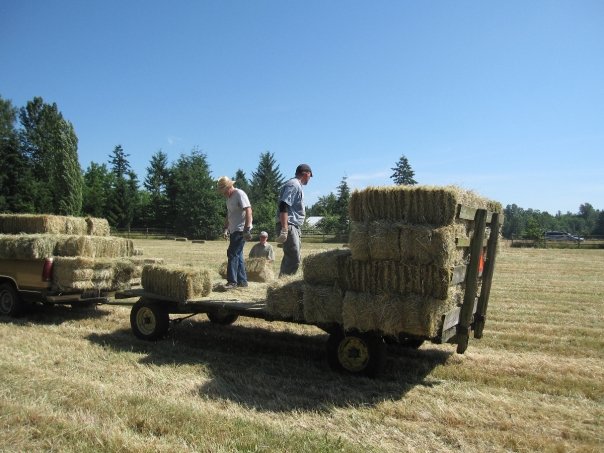
Photo of Aaron Janicki haying with his Oberlander team in Skagit County courtesy of Tayler Rae
Benjamin Janicki of Sedro Woolley raking hay with his team of Oberlanders

Travel as a backward step.
You journey until you find
a meadow where wildflowers
grow with pre-factory-farming
copiousness, a horse-drawn
landscape where hay is saved
in older ways, to revive
the life you lived once,
catch up with your past.
~Dennis O’Driscoll from Time Pieces (2002)
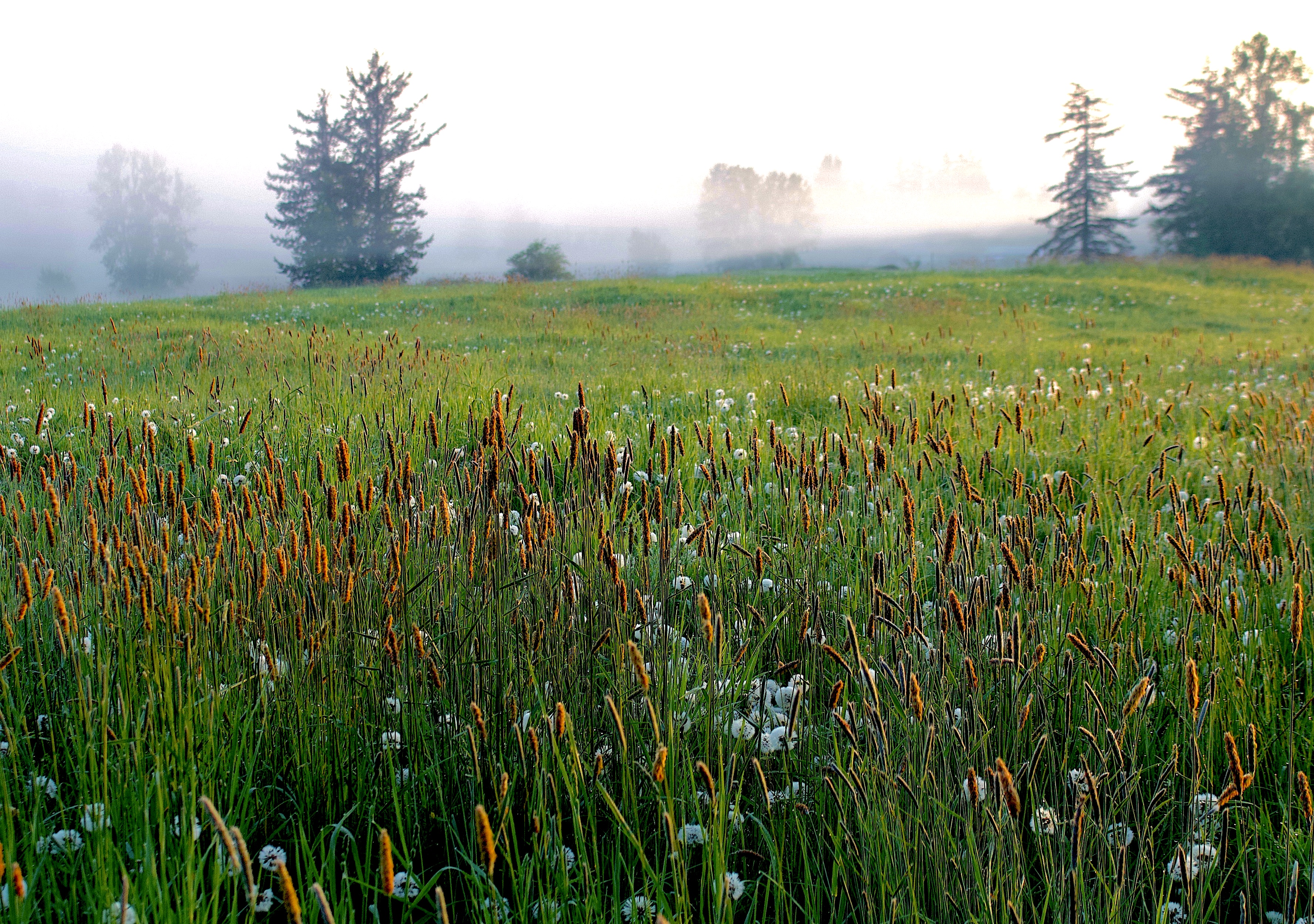
… The Amish have maintained what I like to think is a proper scale, largely by staying with the horse. The horse has restricted unlimited expansion. Not only does working with horses limit farm size, but horses are ideally suited to family life. With horses you unhitch at noon to water and feed the teams and then the family eats what we still call dinner. While the teams rest there is usually time for a short nap. And because God didn’t create the horse with headlights, we don’t work nights.
Amish farmer David Kline in Great Possessions

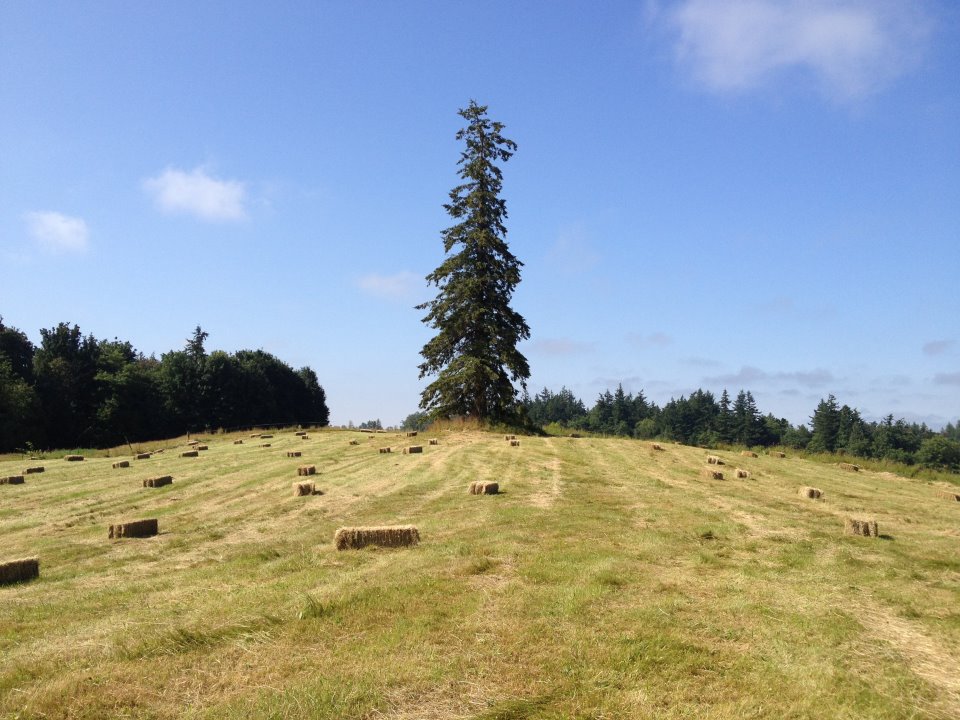
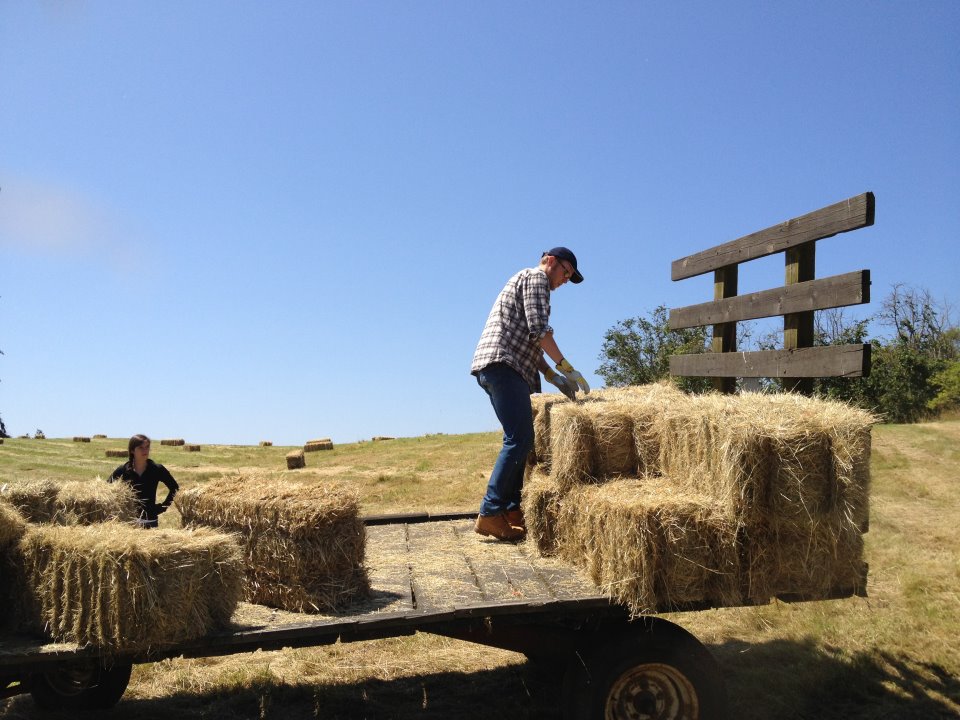
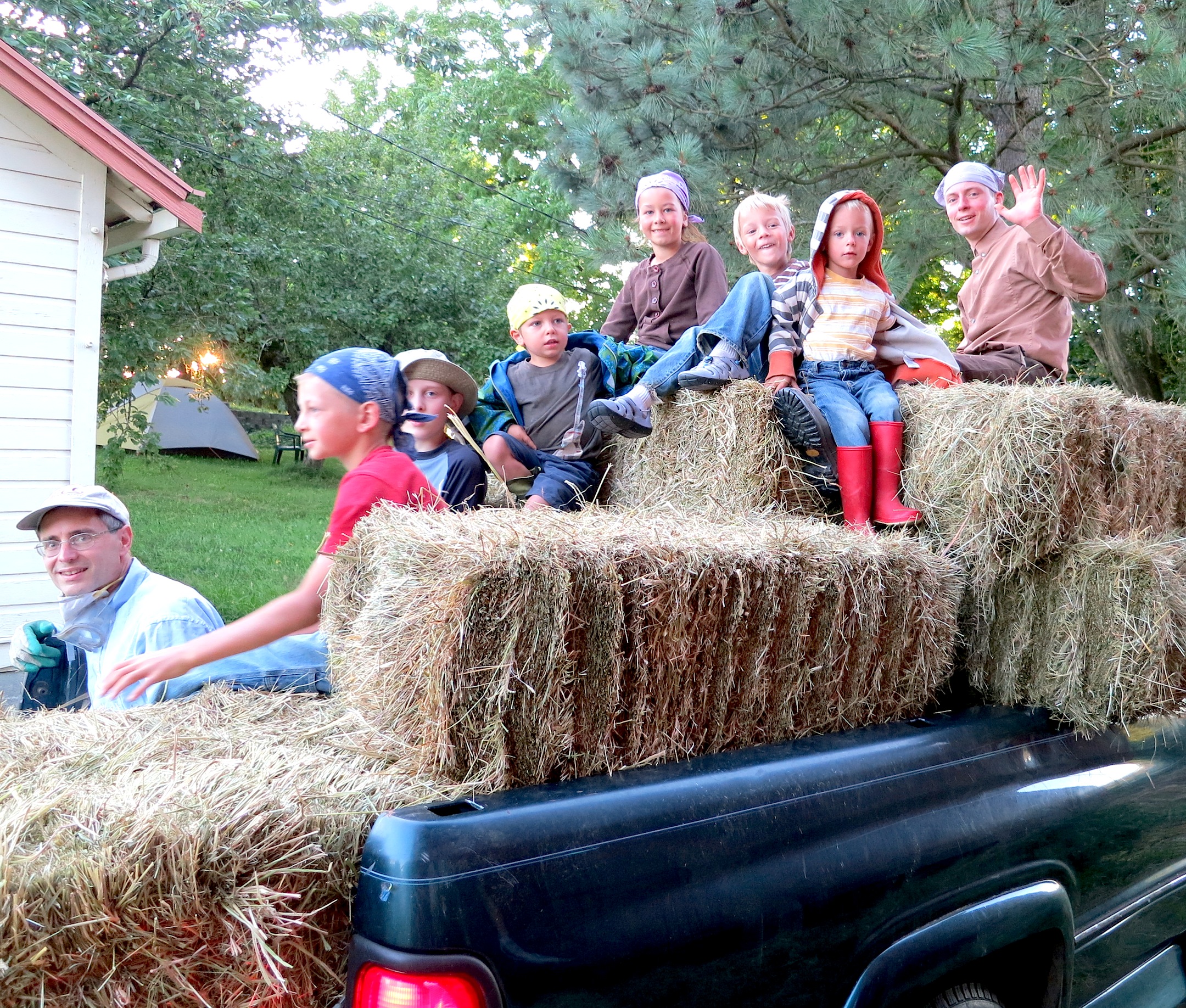
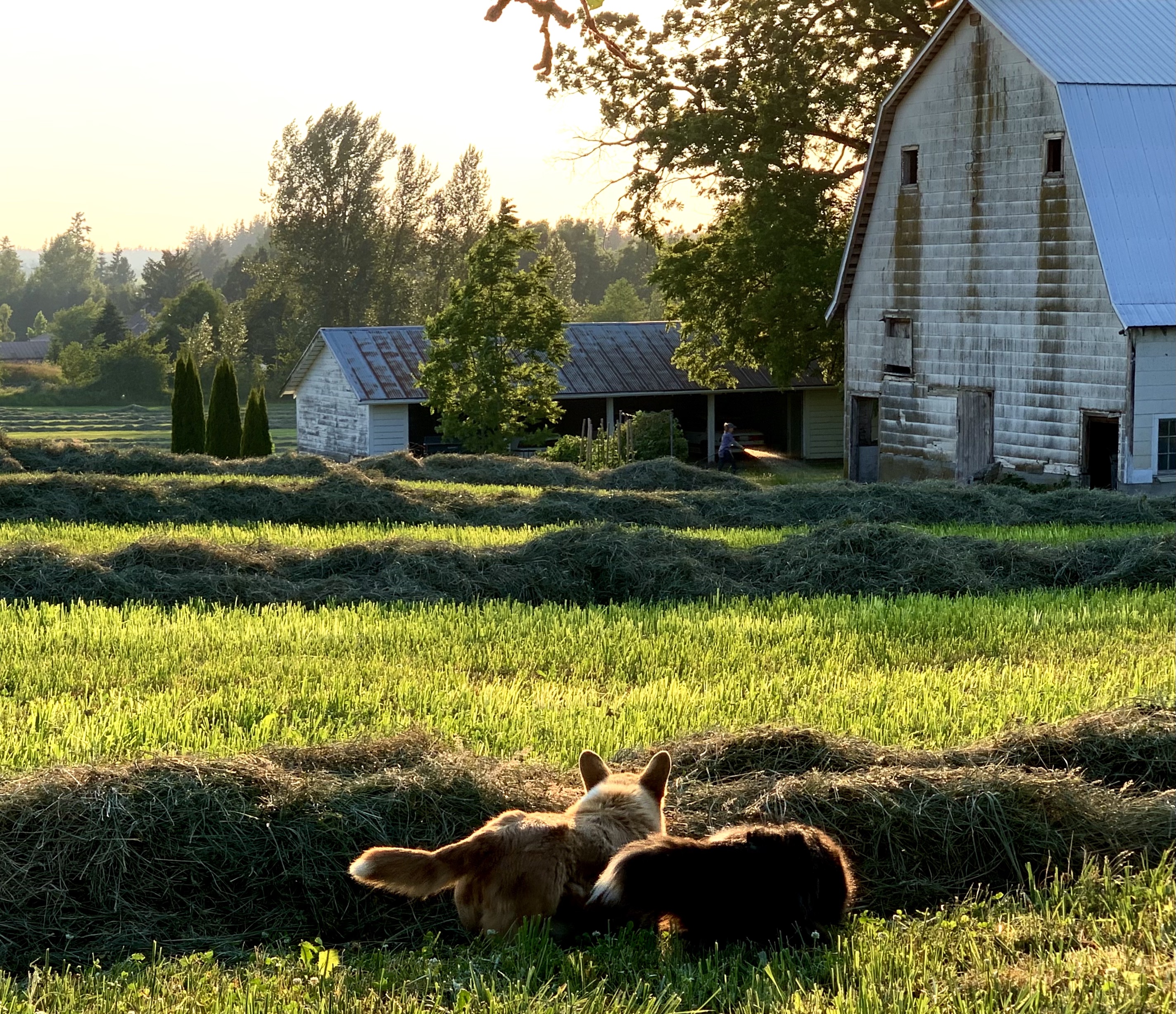
photo by Tayler Rae

One evening I stopped by the field to watch the hay rake
drawn toward me by two black, tall, ponderous horses
who stepped like conquerors over the fallen oat stalks,
light-shot dust at their heels, long shadows before them.
At the ditch the driver turned back in a wide arc,
the off-horse scrambling, the near-horse pivoting neatly.
The big side-delivery rake came about with a shriek—
its tines were crashing, the iron-bound tongue groaned aloud—
then, Hup, Diamond! Hup, Duke! and they set off west,
trace-deep in dust, going straight into the low sun.

The clangor grew faint, distance and light consumed them;
a fiery chariot rolled away in a cloud of gold
and faded slowly, brightness dying into brightness.
The groaning iron, the prophesying wheels,
the mighty horses with their necks like storms—
all disappeared; nothing was left but a track
of dust that climbed like smoke up the evening wind.

~Kate Barnes “The Hay Rake” from Where the Deer Are
My grandparents owned the land,
worked the land, bound
to the earth by seasons of planting
and harvest.

They watched the sky, the habits
of birds, hues of sunset,
the moods of moon and clouds,
the disposition of air.
They inhaled the coming season,
let it brighten their blood
for the work ahead.

Soil sifted through their fingers
imbedded beneath their nails
and this is what they knew;
this rhythm circling the years.
They never left their land;
each in their own time
settled deeper.
~Lois Parker Edstrom “Almanac” from Night Beyond Black.

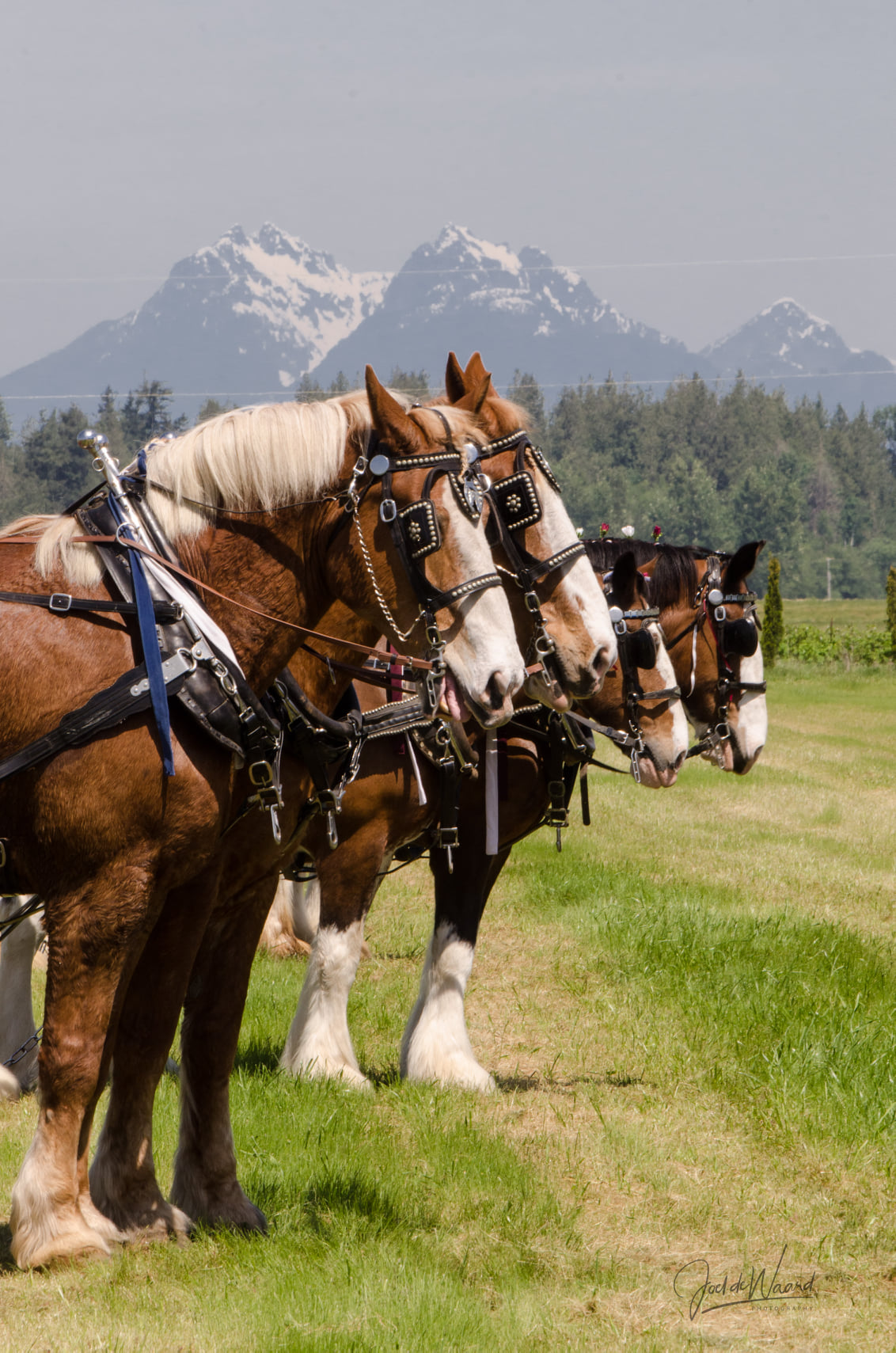
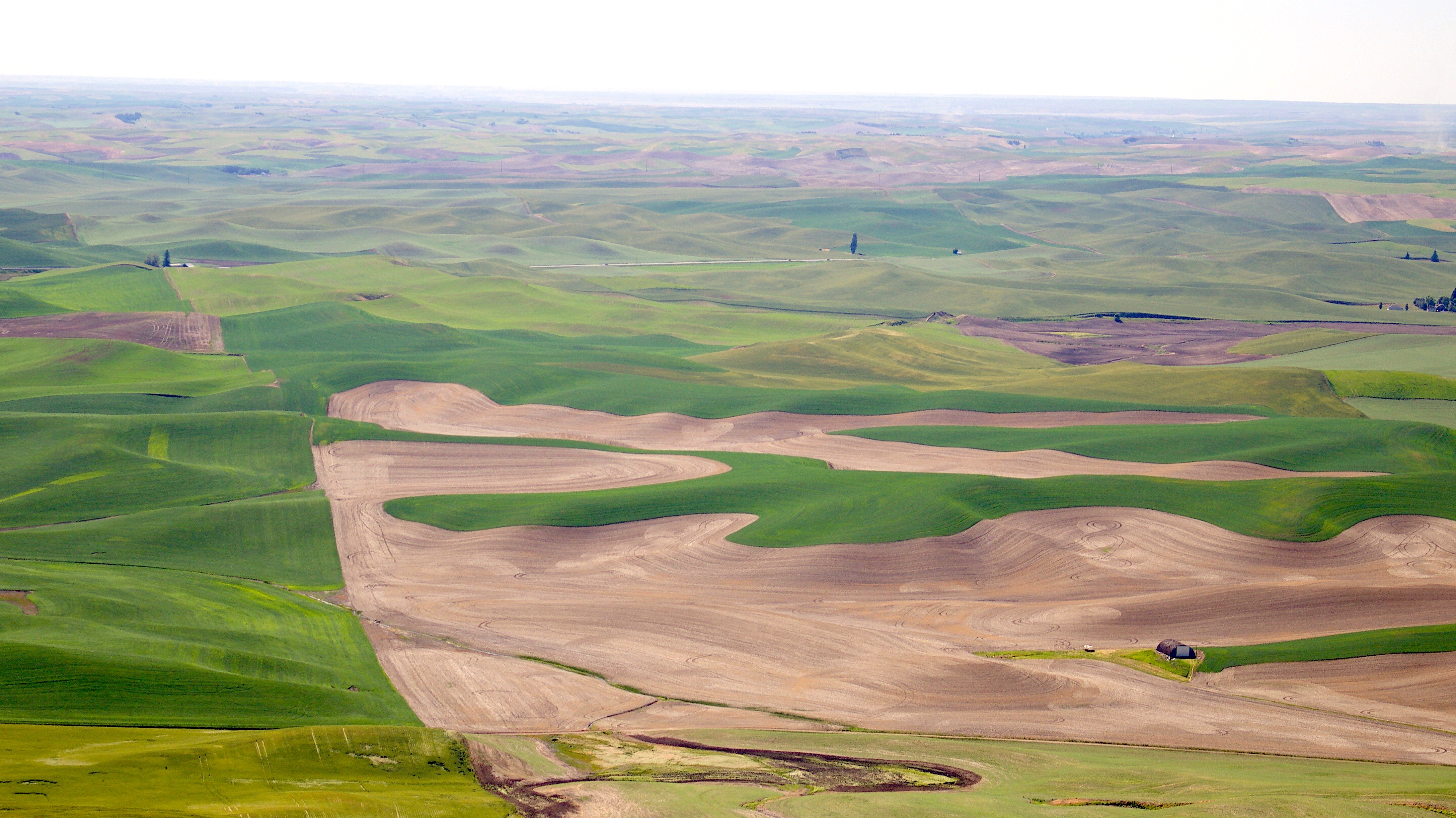
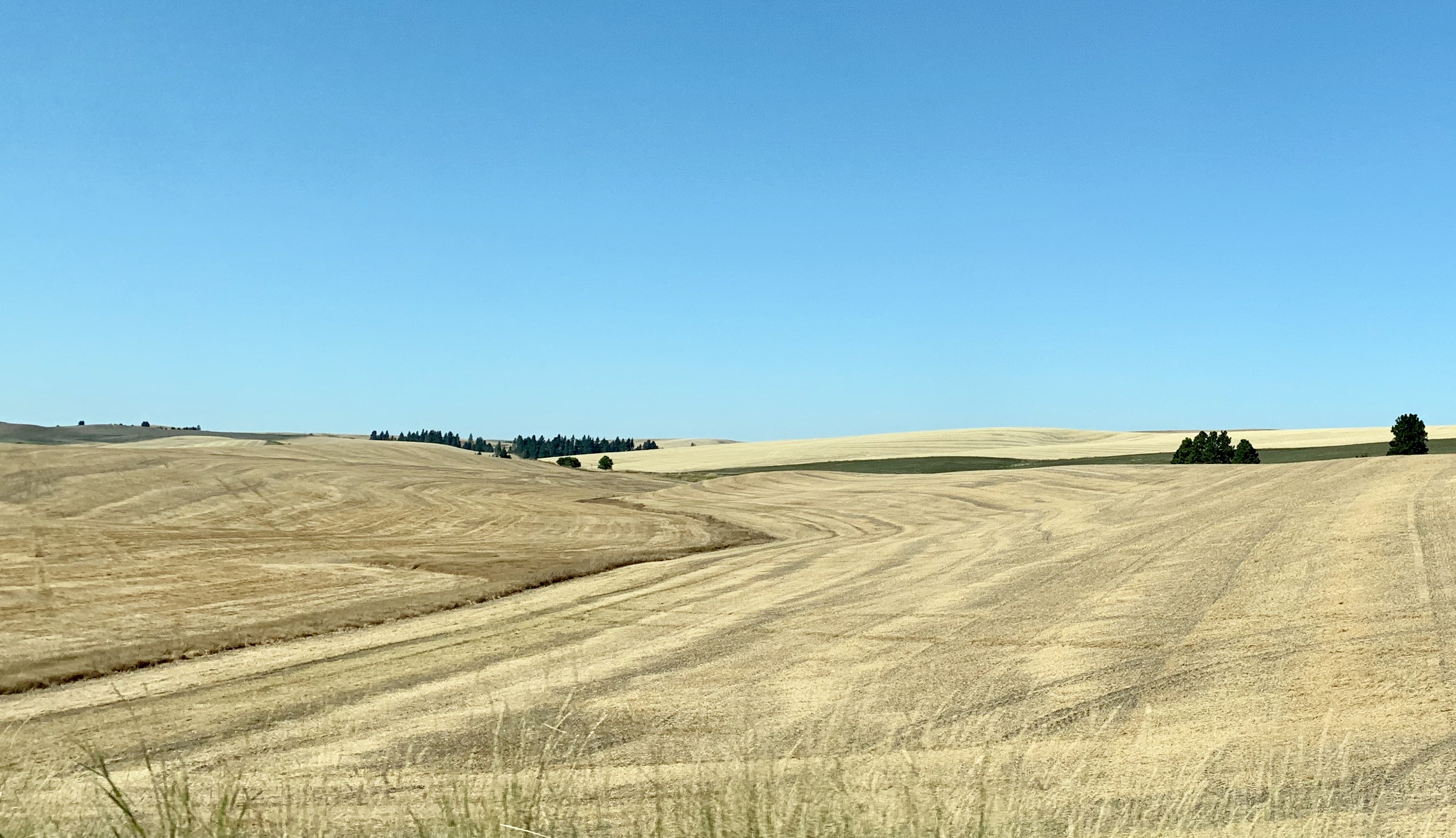
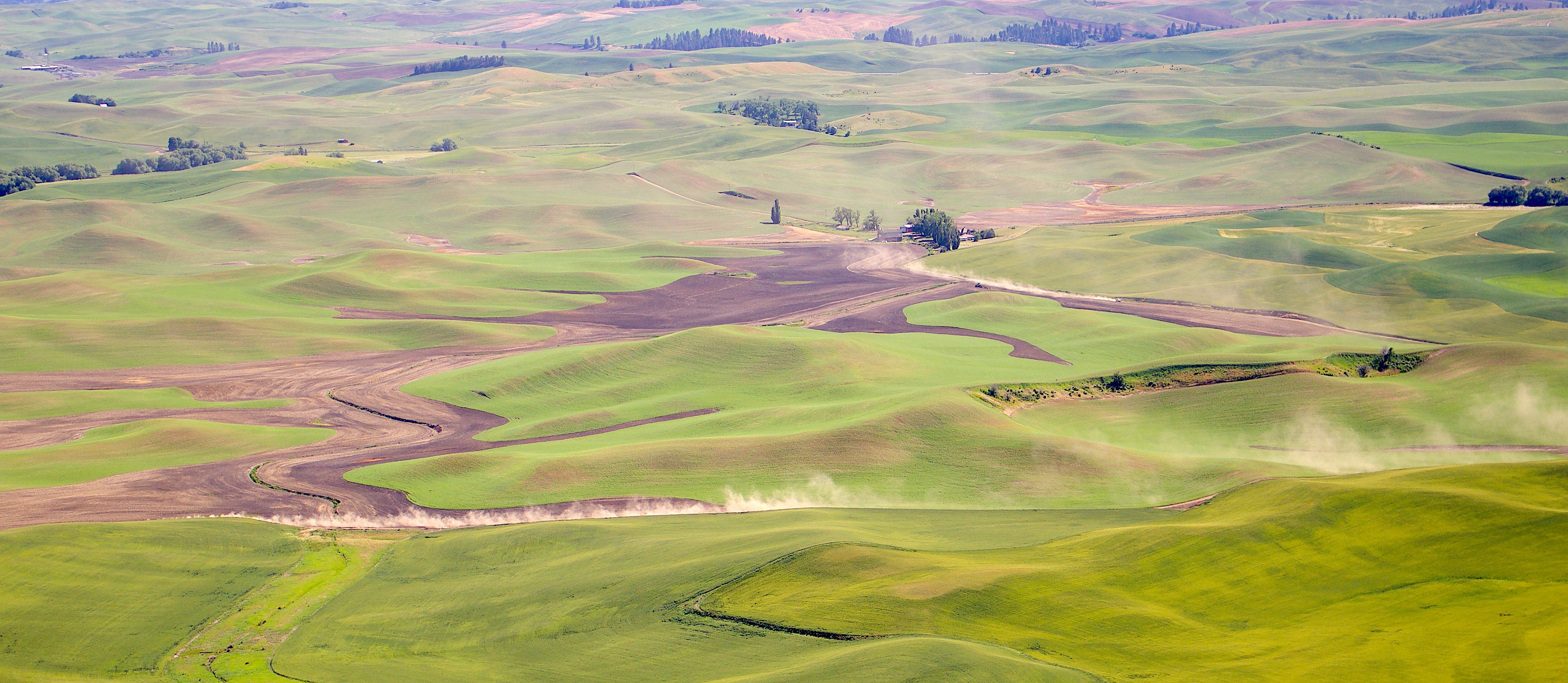
Nearing 68, I am old enough to have parents who both grew up on farms worked by horses, one raising wheat and lentils in the Palouse country of eastern Washington and the other logging in the woodlands of Fidalgo Island of western Washington.  The horses were crucial to my grandfathers’ success in caring for and tilling the land, seeding and harvesting the crops and bringing supplies from town miles away.  Theirs was a hardscrabble life in the early 20th century with few conveniences.  Work was year round from dawn to dusk; caring for the animals came before any human comforts.  Once night fell, work ceased and sleep was welcome respite for man and beast.

In the rural countryside where we live now, we’ve been fortunate enough to know people who still dabble in horse farming, whose draft teams are hitched to plows and mowers and manure spreaders as they head out to the fields to recapture the past.  Watching a good team work with no diesel motor running means hearing bird calls from the field, the steady footfall of the horses, the harness chains jingling, the leather straps creaking, the machinery shushing quietly as gears turn and grass lays over in submission.  No ear protection is needed.  There is no clock needed to pace the day.   There is a rhythm of nurture when animals instead of engines are part of the work day.   The gauge for taking a break is the amount of foamy sweat on the horses and how fast they are breathing. It is time to stop and take a breather, it is time to start back up do a few more rows, it is time to water, it is time for a meal, it is time for a nap, it is time for a rest in a shady spot.  This is gentle use of the land with four footed stewards who deposit right back to the soil the digested forage they have eaten only hours before.

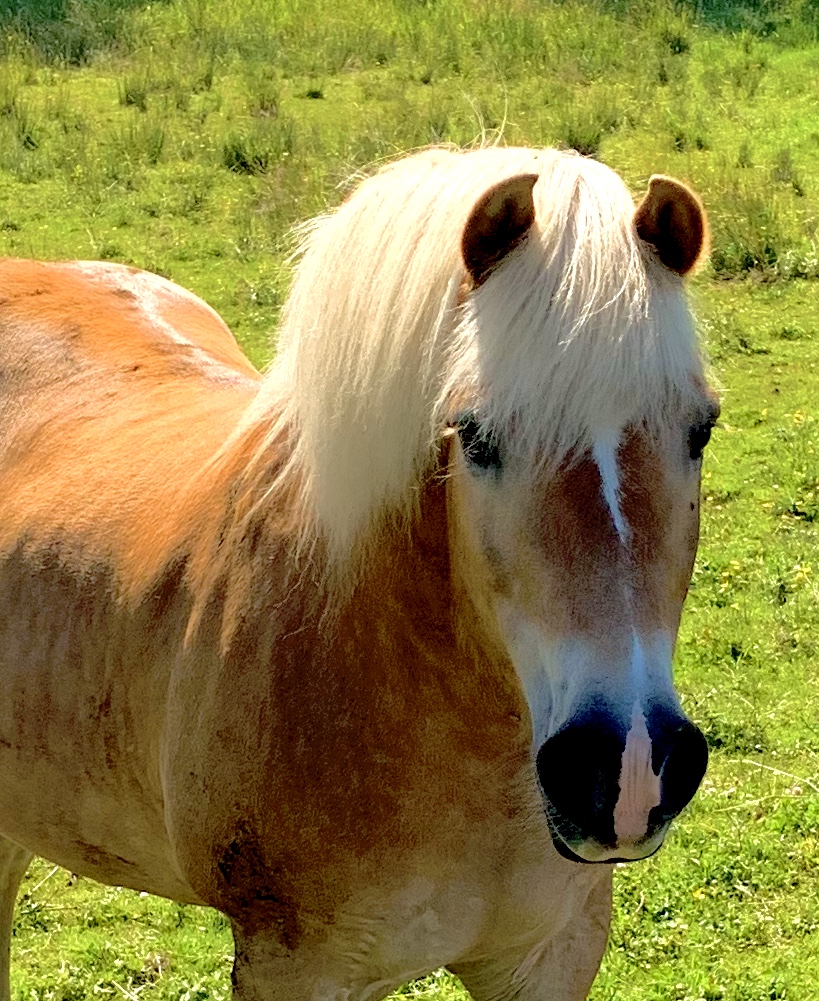
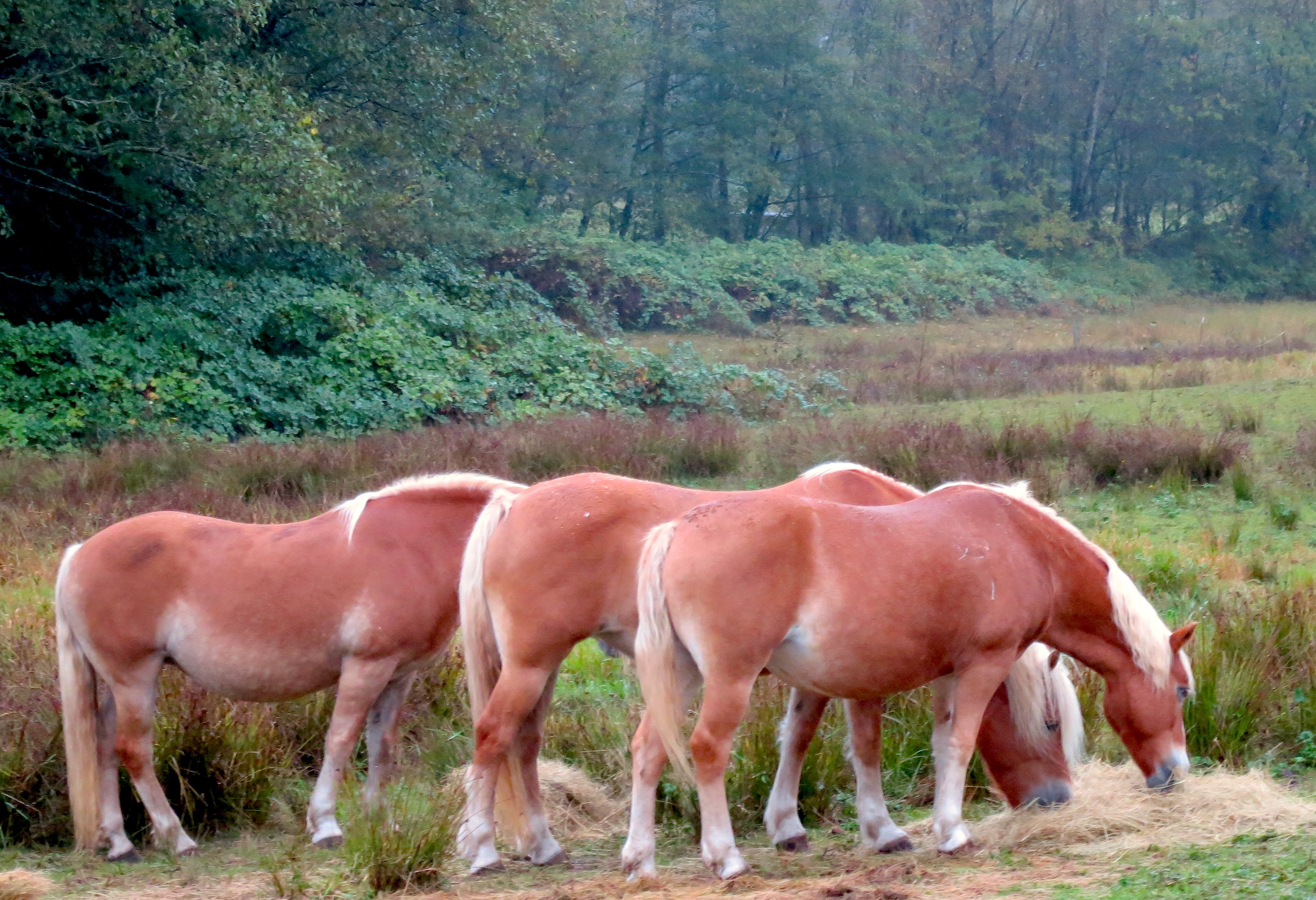
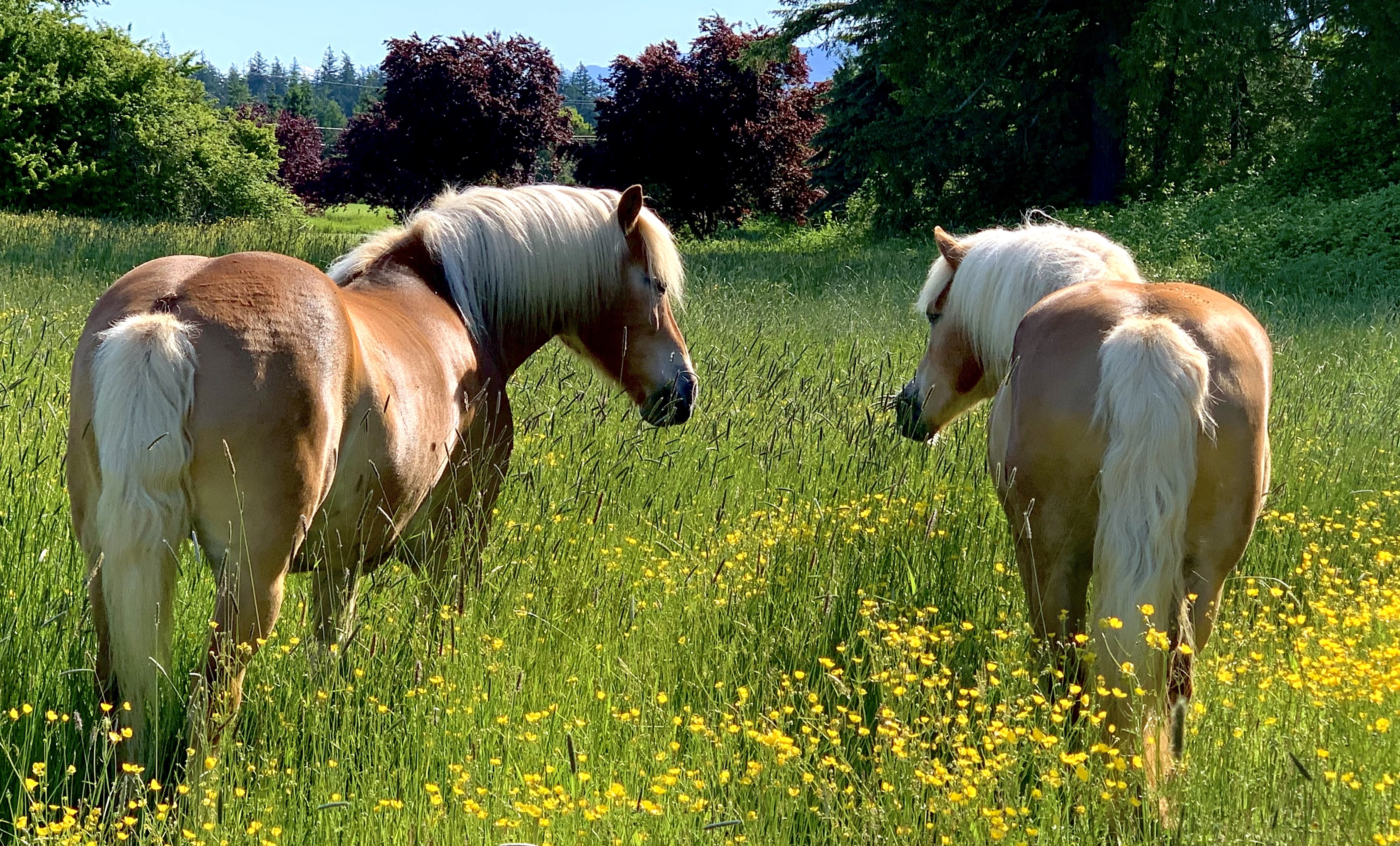
Our modern agribusiness megafarm fossil-fuel-powered approach to food production has bypassed the small family farm which was so dependent on the muscle power of humans and animals.  In our move away from horses worked by skilled teamsters,  what has been gained in high production values has meant loss of self-sufficiency and dedicated stewardship of a particular plot of ground.  Draft breeds, including the Haflinger horses we raise, now are bred for higher energy with lighter refined bone structure meant more for eye appeal and floating movement,  rather than the sturdy conformation and unflappable low maintenance mindset needed for pulling work.   Modern children are bred for different purpose as well, no longer raised to work together with other family members for a common purpose of daily survival.   Their focus at school is waning as they have no morning farm chores when they get up, too little physical work to do before they arrive at their desks in the morning.   Their physical energy, if directed at all,  is directed to competitive sports, engaged in fantasy combat rather than winning a very real victory over hunger.

I am encouraged when young people still reach for horse collars and bridles, hitch up their horses and do the work as it used to be done.   All is not lost if we can still make incremental daily progress,  harnessed together as a team with our horses, tilling for truth and harvesting hope.
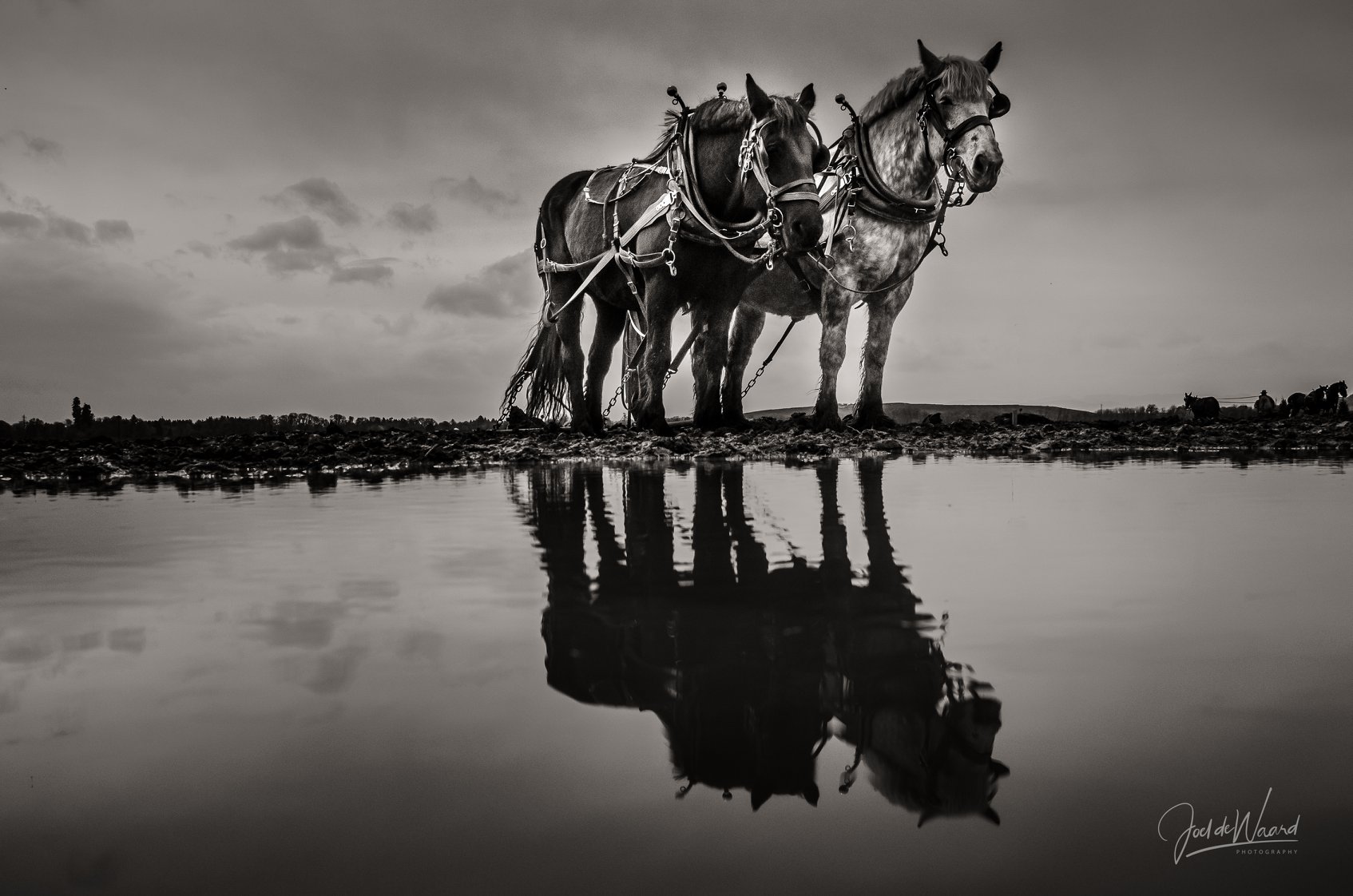
photo by Joel DeWaard


I like farming. I like the work. I like the livestock and the pastures and the woods.  It’s not necessarily a good living, but it’s a good life.  I now suspect that if we work with machines the world will seem to us to be a machine, but if we work with living creatures the world will appear to us as a living creature.  That’s what I’ve spent my life doing, trying to create an authentic grounds for hope. ~Wendell Berry, horse farmer, essayist, poet, professor

One-Time
Monthly
Yearly

Make a one-time or recurring donation to support daily Barnstorming posts

Make a monthly donation

Make a yearly donation

Choose an amount

¤5.00
¤10.00
¤20.00
¤5.00
¤15.00
¤100.00
¤5.00
¤15.00
¤100.00

Or enter a custom amount

¤

Your contribution is deeply appreciated.

Your contribution is appreciated.

Your contribution is appreciated.

DonateDonate monthlyDonate yearly
Wired With Alertness

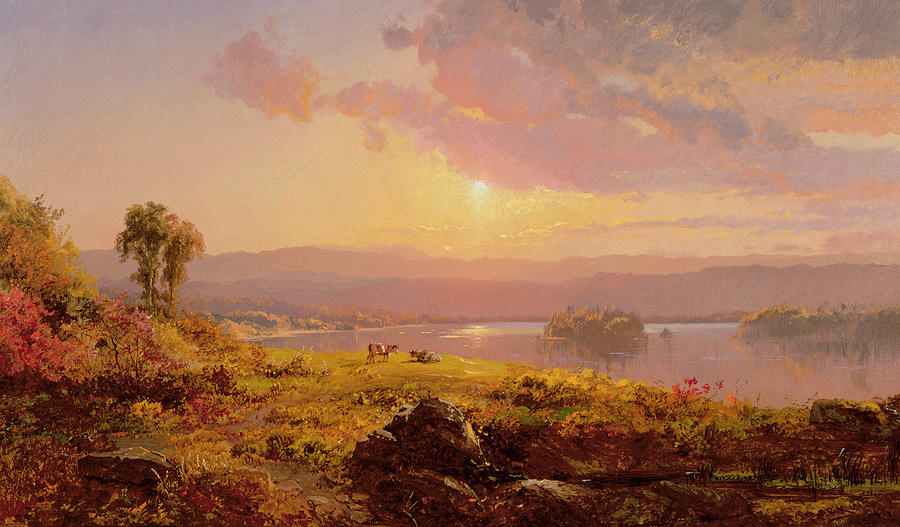
Edmund Darch Lewis – Susquehanna
Agnes Wallace by Robert Sivell

I have never been fishing on the Susquehanna
or on any river for that matter
to be perfectly honest.


Not in July or any month
have I had the pleasure — if it is a pleasure —
of fishing on the Susquehanna.


I am more likely to be found
in a quiet room like this one —
a painting of a woman on the wall,


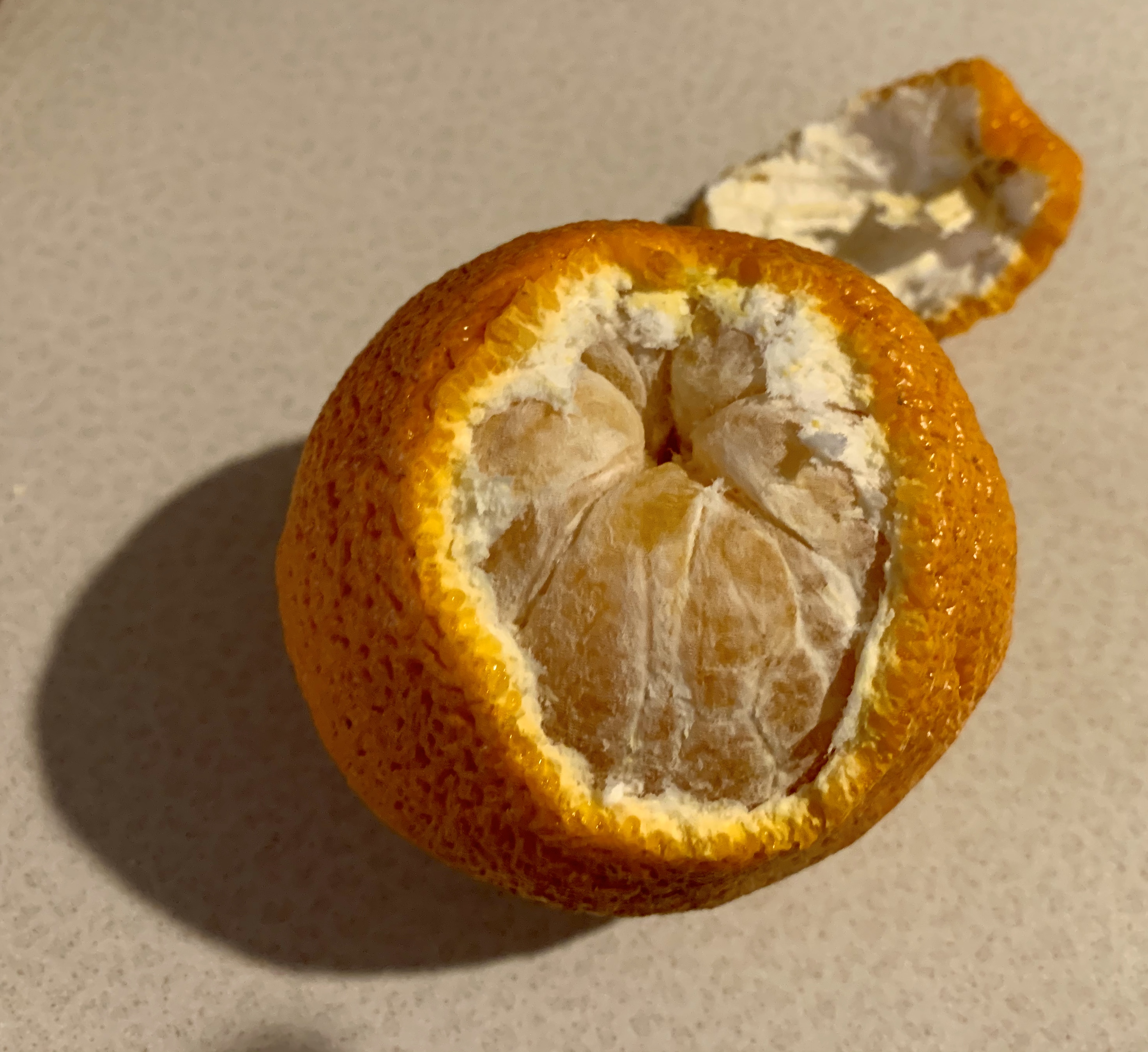
a bowl of tangerines on the table —
trying to manufacture the sensation
of fishing on the Susquehanna.


There is little doubt
that others have been fishing
on the Susquehanna,


rowing upstream in a wooden boat,
sliding the oars under the water
then raising them to drip in the light.


But the nearest I have ever come to
fishing on the Susquehanna
was one afternoon in a museum in Philadelphia,


when I balanced a little egg of time
in front of a painting
in which that river curled around a bend


under a blue cloud-ruffled sky,
dense trees along the banks,
and a fellow with a red bandana


sitting in a small, green
flat-bottom boat
holding the thin whip of a pole.


That is something I am unlikely

ever to do, I remember
saying to myself and the person next to me.


Then I blinked and moved on
to other American scenes
of haystacks, water whitening over rocks,


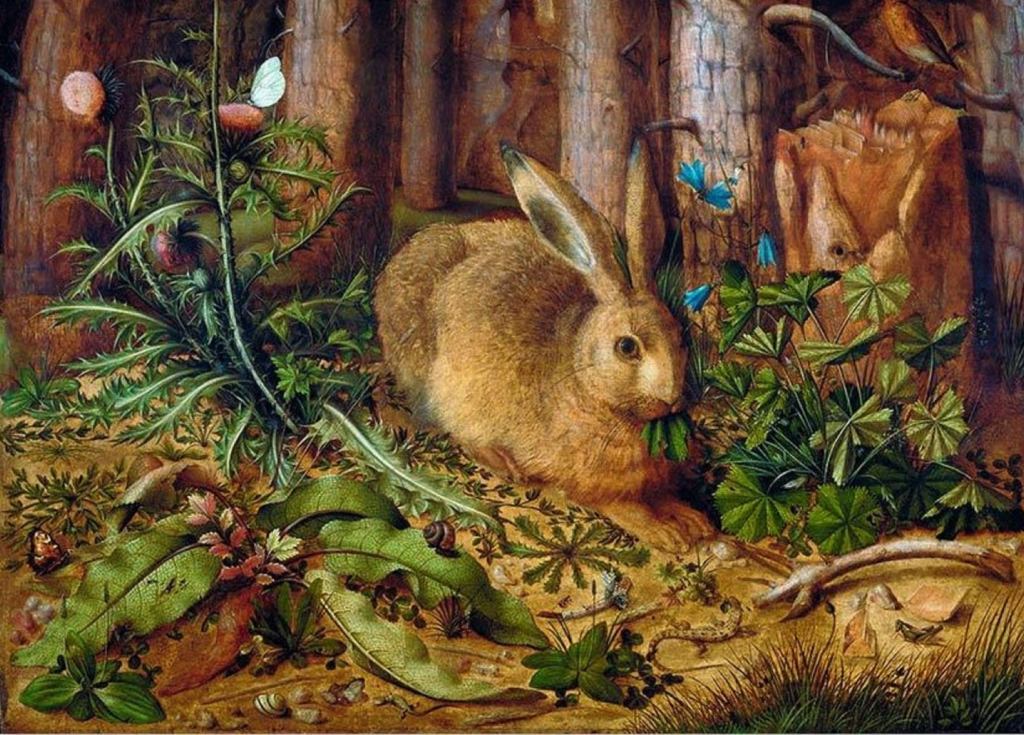
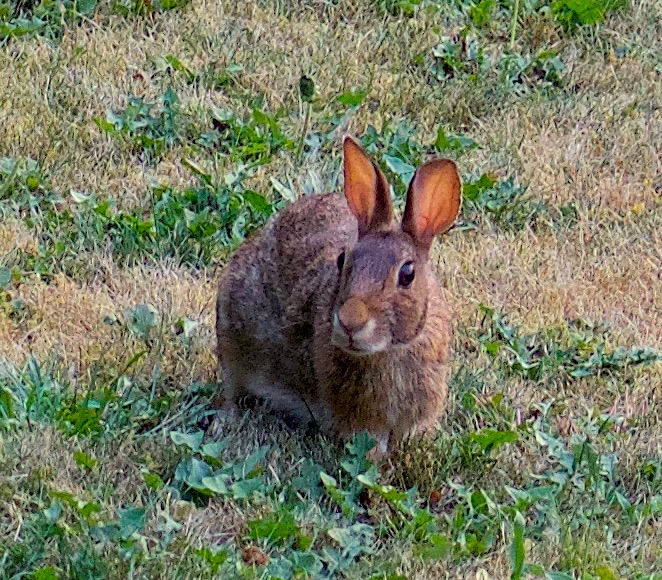
even one of a brown hare
who seemed so wired with alertness
I imagined him springing right out of the frame. 
~Billy Collins Fishing On The Susquehanna In July

A Hare in the Forest by Hans Hoffman (Getty Museum)
Susquehanna by Jasper Francis Cropsey
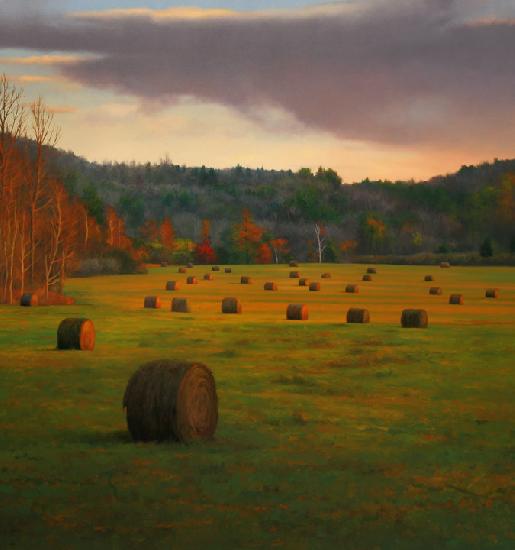
Hayfield–oil painting by Scott Prior http://www.scottpriorart.com

I live a quiet life in a quiet place. There are many experiences not on my bucket list that I’m content to simply imagine.

I’m not a rock climber or a zip liner or willing to jump out of an airplane. I won’t ride a horse over a four foot jump or race one around a track. Not for me waterskis or unicycles or motorcycles.

I’m grateful there are those who are eagerly wired with alertness for the next experience: adventurers who seek out the extremes of life so the rest of us can sit back and admire their courage and applaud their explorations and achievement.

My mind’s eye and imagination is powerful enough, thanks to the words and pictures of others. I find I’m content to explore the corners of my quiet places, both inside and outside, to see what I can build from what I find right here under my nose.

When the light is right, and I’m open enough to it, what I see is ready to spring right out of the frame.

The difficulty to think at the end of day,
When the shapeless shadow covers the sun
And nothing is left except light on your fur—

….and August the most peaceful month.

To be, in the grass, in the peacefullest time,
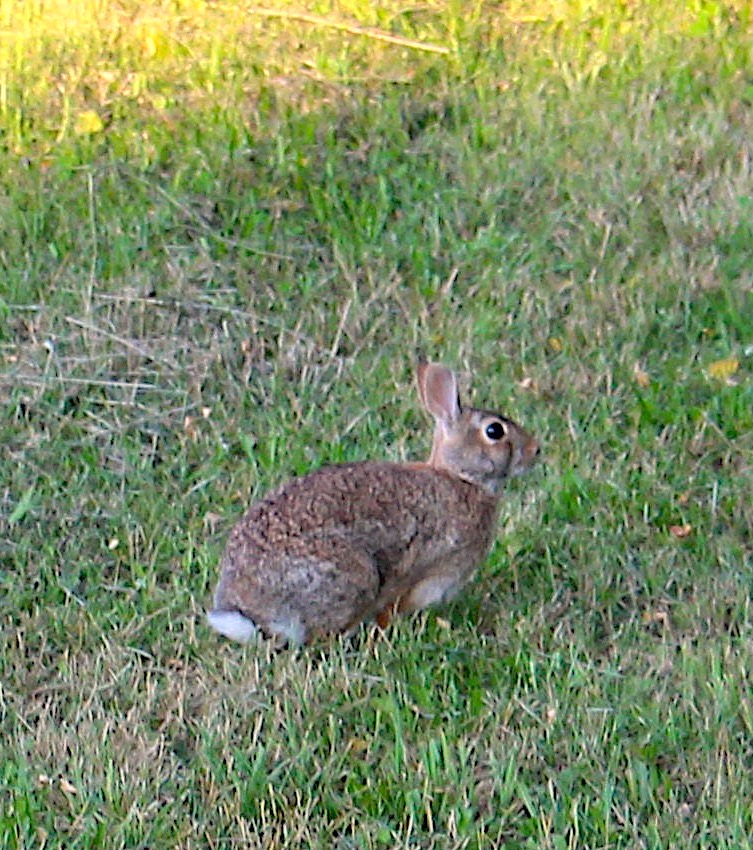
And to feel that the light is a rabbit-light
In which everything is meant for you
And nothing need be explained;

You become a self that fills the four corners of
night.
~Wallace Stevens, from “A Rabbit As King of the Ghosts”

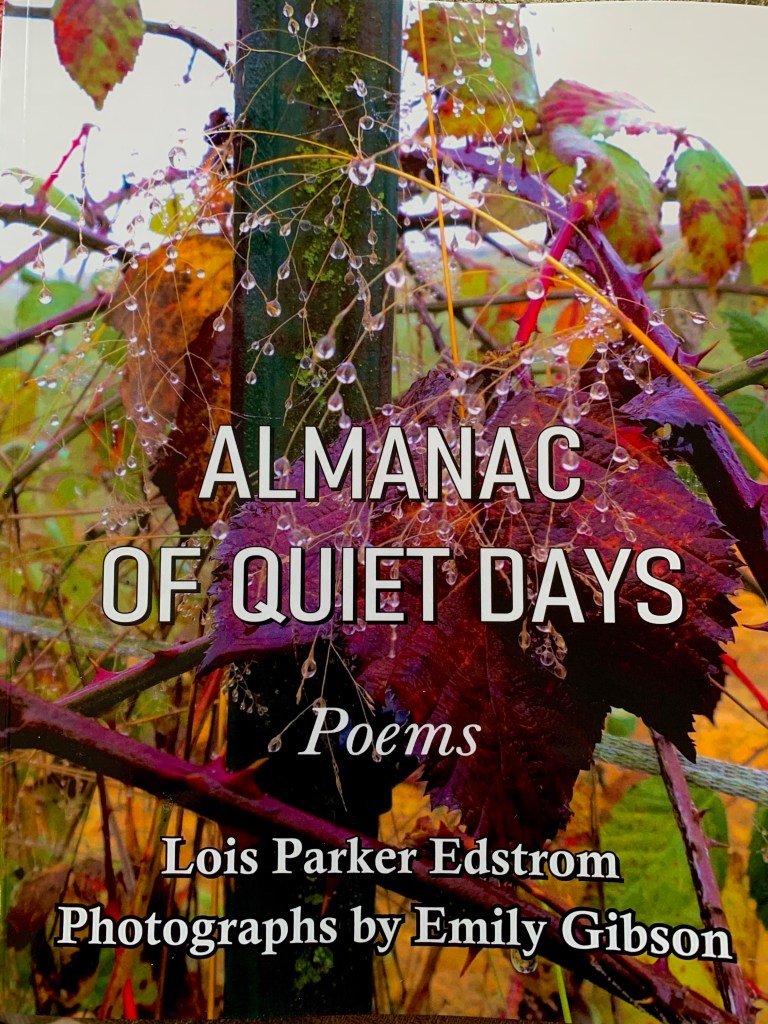
More of my images along with Lois Edstrom’s ekphrastic poetry can be found in this book, available for order here:

Sweating Under the High Arc of Midsummer

What is the hayfield in late afternoon
that it can fly in the face of time,

and light can be centuries old, and even
the rusted black truck I am driving

can seem to be an implement born
of some ancient harvest,

and the rhythmic baler, which spits out
massive bricks tied up in twine,

can seem part of a time before now
because light glitters on the hay dust,

because the sun is sinking and we sweat
under the high arc of mid-summer,

because our bodies cast such long shadows–
Rebecca, with the baby strapped to her back,

the men who throw impossible weight
to the top of the truck, the black and white

dog that races after mice or moles
whose lives have been suddenly exposed.

How does the taste of my sweat take me
down through the gate of childhood,

spinning backwards to land in a field
painted by Bruigel, where the taste of salt

is the same, and the same heat
rises in waves off a newly flattened field.

In the duskiness of slanted light, we laugh
just as we laughed then, because there is

joy in what the earth gives, allowing
our bodies to mingle with it, our voices

small on the field, our work assuring the goats
can give milk, the sheep can grow wool,

and we will have in our bones the taste
of something so old it travels in light.
~Susie Patlove “First Cutting” from Quickening

photo by Nate Gibson
1994
2005
2011

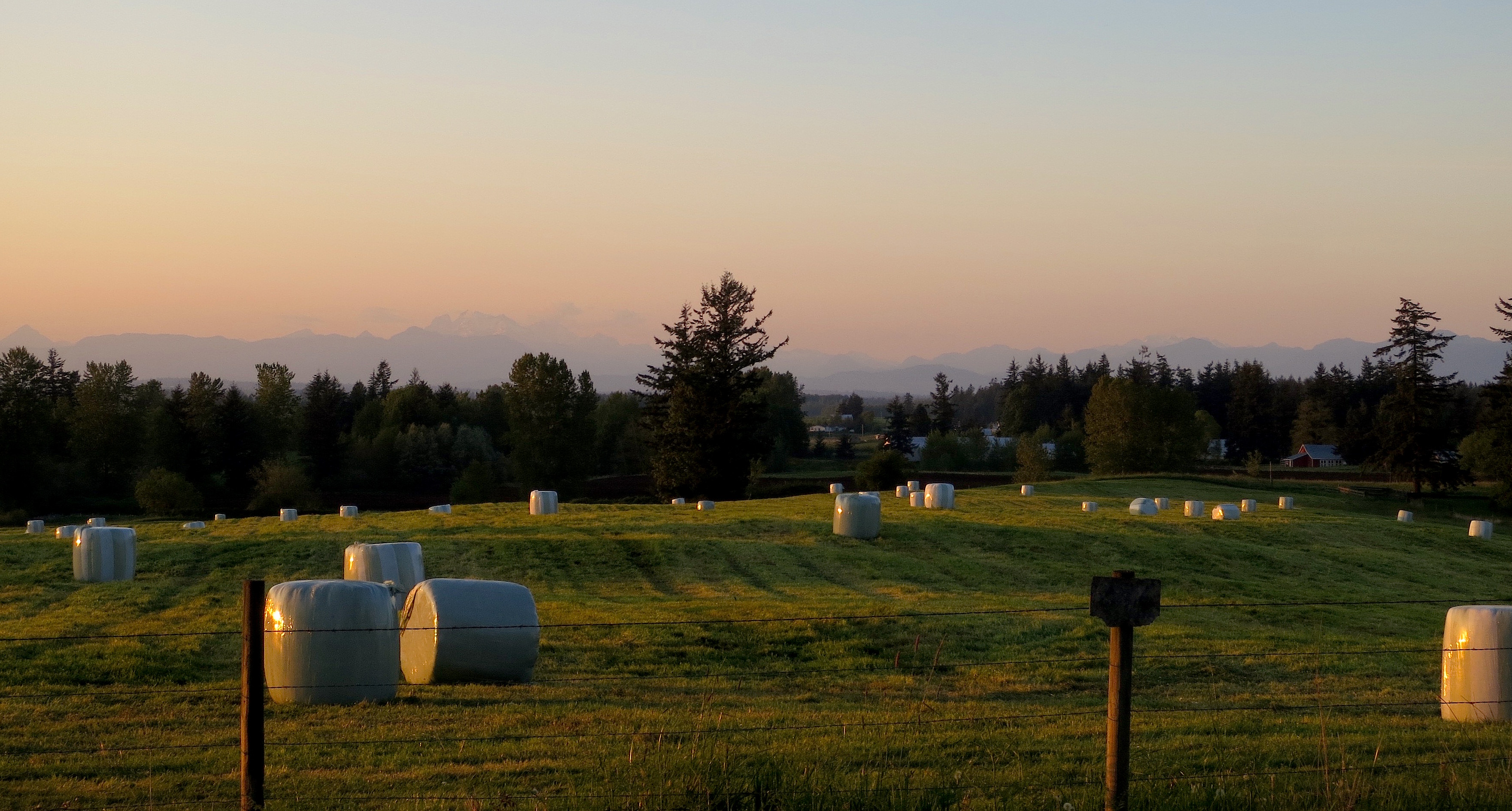
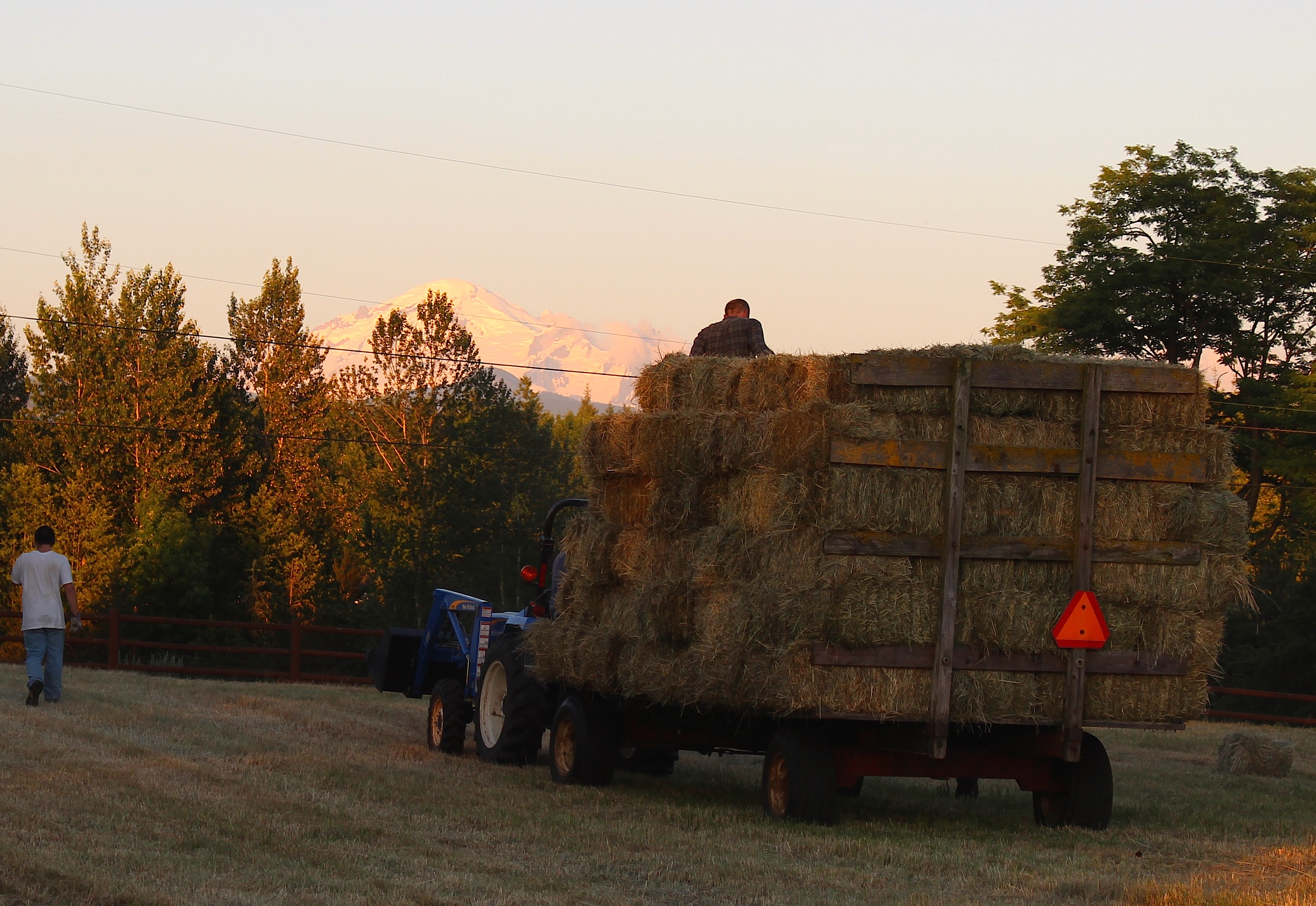
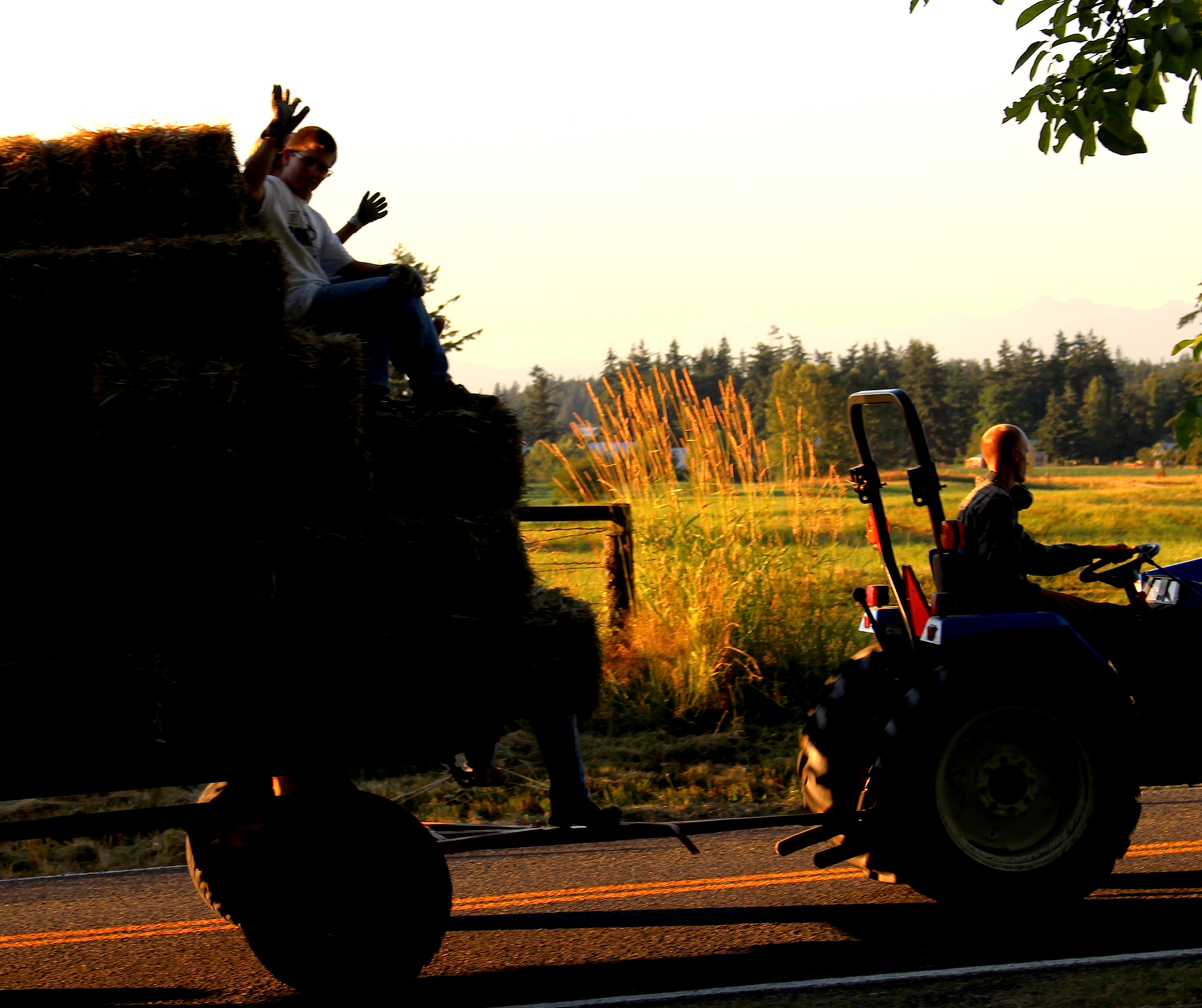
There is a timelessness to mid-summer hay harvest that goes back generations on both sides of our family. The cutting, raking and gathering of hay has evolved from horse-drawn implements and gathering loose shocks of hay to 100+ horse power air-conditioned tractors and huge round bales wrapped and stored in plastic sheathing rather than in barns.

Our farm is happily stuck somewhere in-between: we still prefer filling the haybarn with bales that I can still lift and move myself to feed our animals. True hay harvest involves sweat and dust and a neighborhood coming together to preserve summer in tangible form.

I grew up on a farm with a hayfield – I still have the scar over my eyebrow where I collided with the handle of my father’s scythe when, as a toddler, I came too close behind him as he was taking a swing at cutting a field of grass one swath at a time. I remember the huge claws of the hay hook reaching down onto loose hay piled up on our wagon. The hook would gather up a huge load, lift it high in the air to be moved by pulley on a track into our spacious hay loft. It was the perfect place to play and jump freely into the fragrant memories of a summer day, even in the dark of winter.

But these days it is the slanted light of summer I remember most:
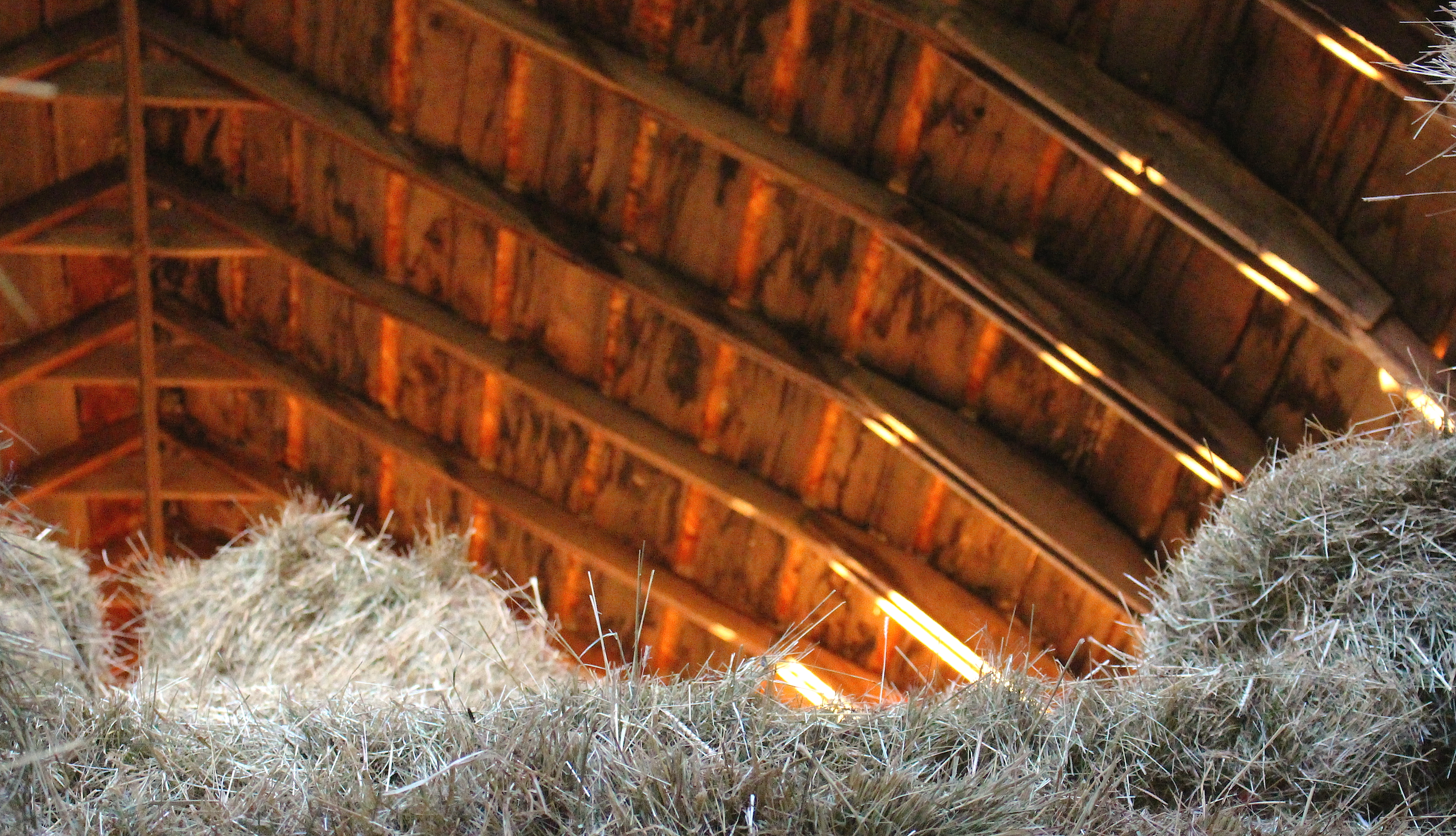
-the weightlessness of dust motes swirling down sun rays coming through the slats of the barn walls as the hay bales are stacked
-the long shadows and distant alpenglow in the mountains
-the dusk that goes on and on as owls and bats come out to hunt above us

Most of all, I will remember the sweaty days of mid-summer as I open the bales of hay in mid-winter – the light and fragrance of those grassy fields spilling forth into the chill and darkness, in communion of blessing for our animals.

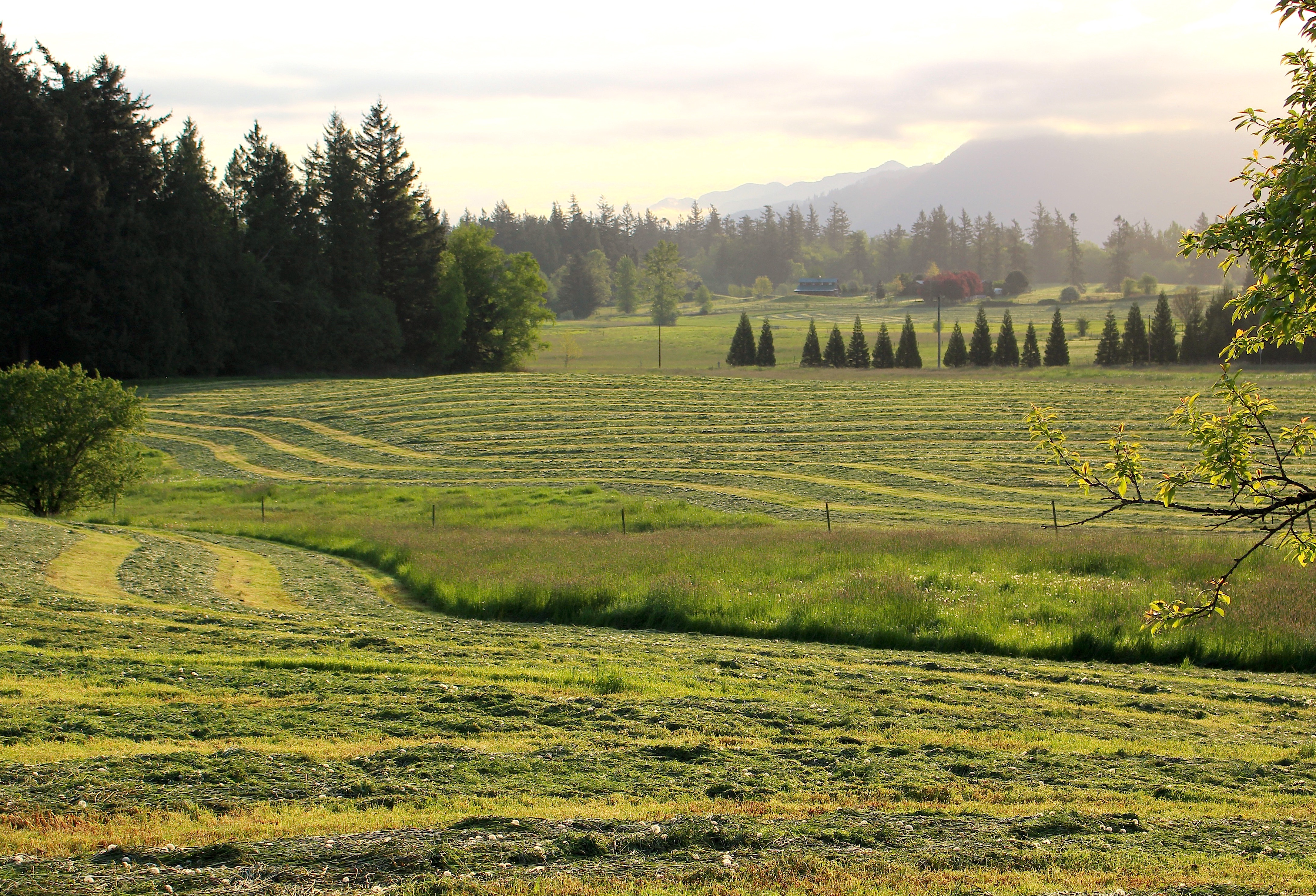
photo by Tayler Rae
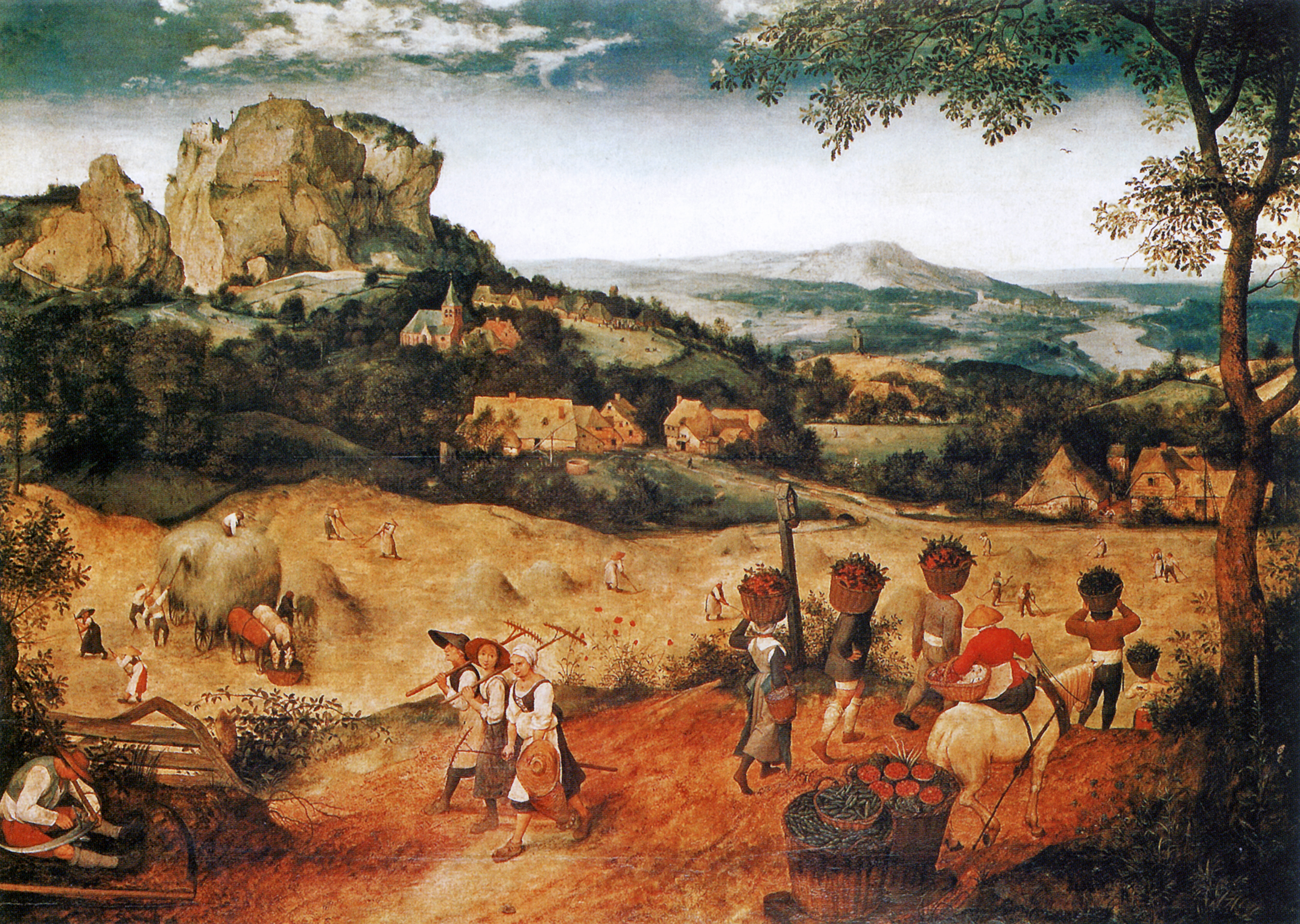
Pieter Bruegel “Hay Harvest”
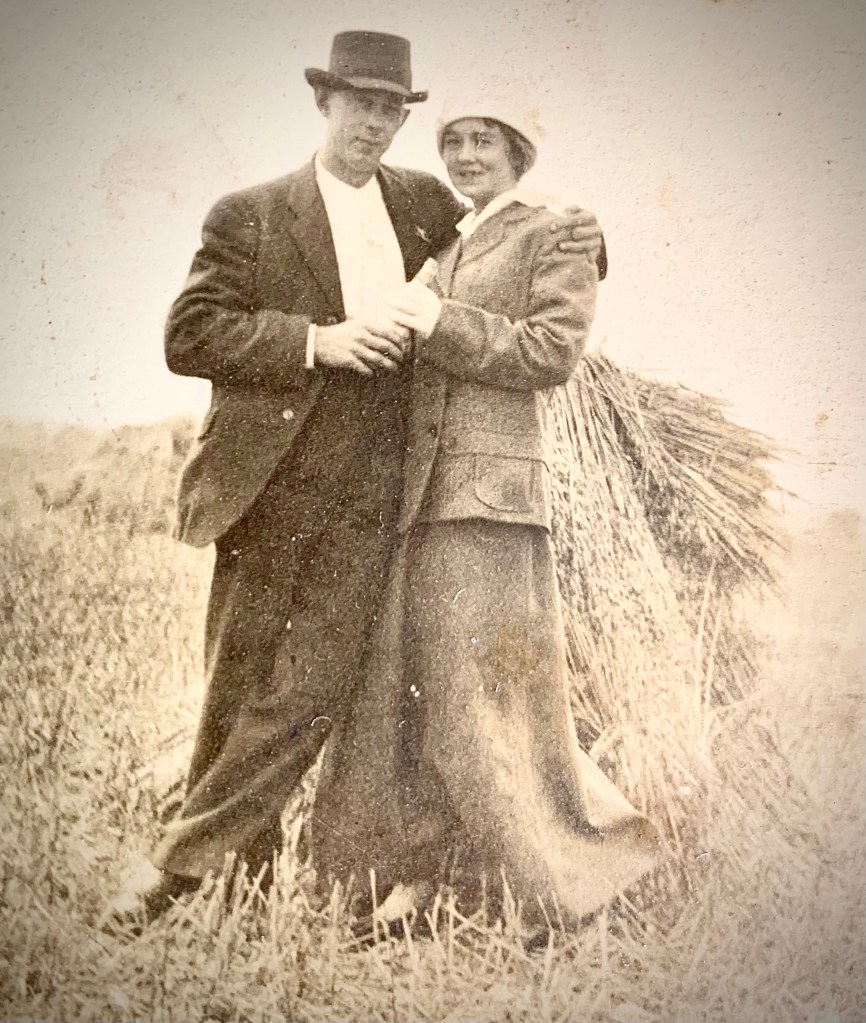
My grandparents Leslie Polis and Kittie Lovelace standing in a hayfield with loose hay shocks — 1915

Enjoy this blog post? A new book from Barnstorming is available to order here:

Through Grass and Grain

Mown meadows skirt the standing wheat;
I linger, for the hay is sweet,
New-cut and curing in the sun.
Like furrows, straight, the windrows run,
Fallen, gallant ranks that tossed and bent
When, yesterday, the west wind went
A-rioting through grass and grain.
To-day no least breath stirs the plain;
Only the hot air, quivering, yields
Illusive motion to the fields
Where not the slenderest tassel swings.
Across the wheat flash sky-blue wings;
A goldfinch dangles from a tall,
Full-flowered yellow mullein; all
The world seems turning blue and gold.
Unstartled, since, even from of old,
Beauty has brought keen sense of her,
I feel the withering grasses stir;
Along the edges of the wheat,
I hear the rustle of her feet:
And yet I know the whole sea lies,
And half the earth, between our eyes.
~Sophie Jewett “In Harvest”

Autumn harvest happens outside of me
despite sudden coolness of the air,
thanks to showers that green the fields
for one more month of grazing,
midst the smell of the dying of vines and roots.

Autumn harvest is happening inside of me
as I slow down my walk,
curl up within the lengthening nights,
the color of my thoughts
turning to bronze and gold and red

before I let go
before I let go

A book of beauty in words and photographs, available for order here:

Get Up and Go About the Day

Light wakes us – there’s the sun
climbing the mountains’ rim, spilling across the valley,
finding our faces.
It is July,

between the hay and harvest,
a time at arm’s length from all other time…

It is the time
to set aside all vigil, good or ill,
to loosen the fixed gaze of our attention
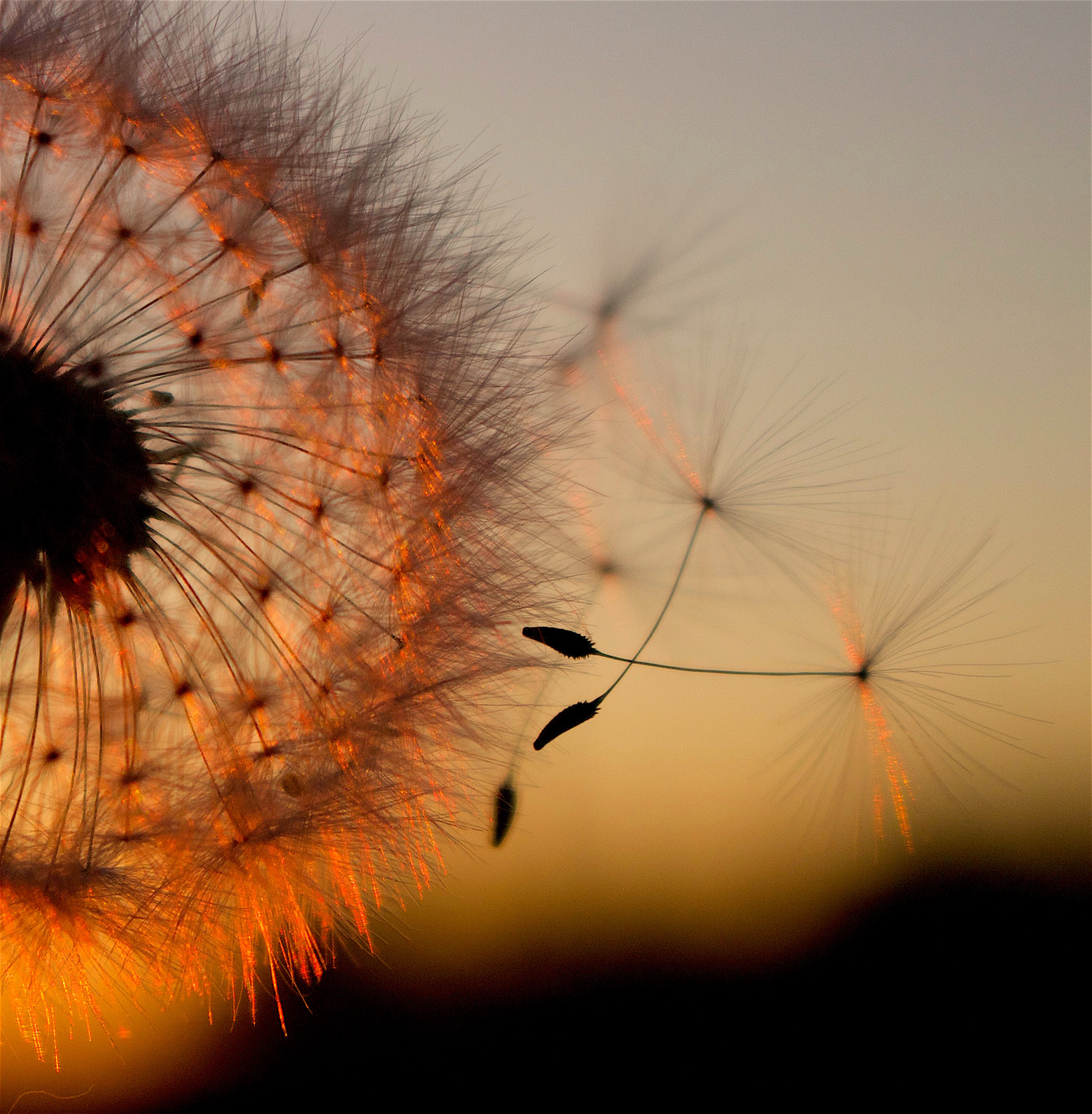
as dandelions let seedlings to the wind.
Wake with the light.
Get up and go about the day and watch
its surfaces that brighten with the sun.
~Kerry Hardie from “Sleep in Summer”

Saying good-bye to July
is admitting summer is already half-baked
and so are we–
we are still doughy
and not nearly done enough.

The rush to autumn is breathless.
We want to hold on tight
to our longish days
and our sweaty nights
for just a little while longer…

Please, oh please
grant us light
and steady us for the task
of getting ready and letting go.

A Barn Revival

Just down the road… around the bend,
Stands an old empty barn; nearing the end.
It has sheltered no animals for many years;
No dairy cows, no horses, no sheep, no steers.
The neigh of a horse; the low of a cow;
Those sounds have been absent for some time now.
There was a time when the loft was full of hay,
And the resounding echoes of children at play.
At one time the paint was a bold shade of red;
Gradually faded by weather and the sun overhead.
The doors swing in the wind… the hinges are loose,
Windows and siding have taken a lot of abuse.
The fork, rope and pulleys lifted hay to the mow,
A task that always brought sweat to the brow.
But those good days are gone; forever it seems,
And that old barn now stands with sagging beams.
It is now home to pigeons, rats and mice;

The interior is tattered and doesn’t look very nice.
Old, abandoned barns have become a trend,
Just down the road… around the bend.

~Vance Oliphant “Old Barn”

photo by Nate Gibson

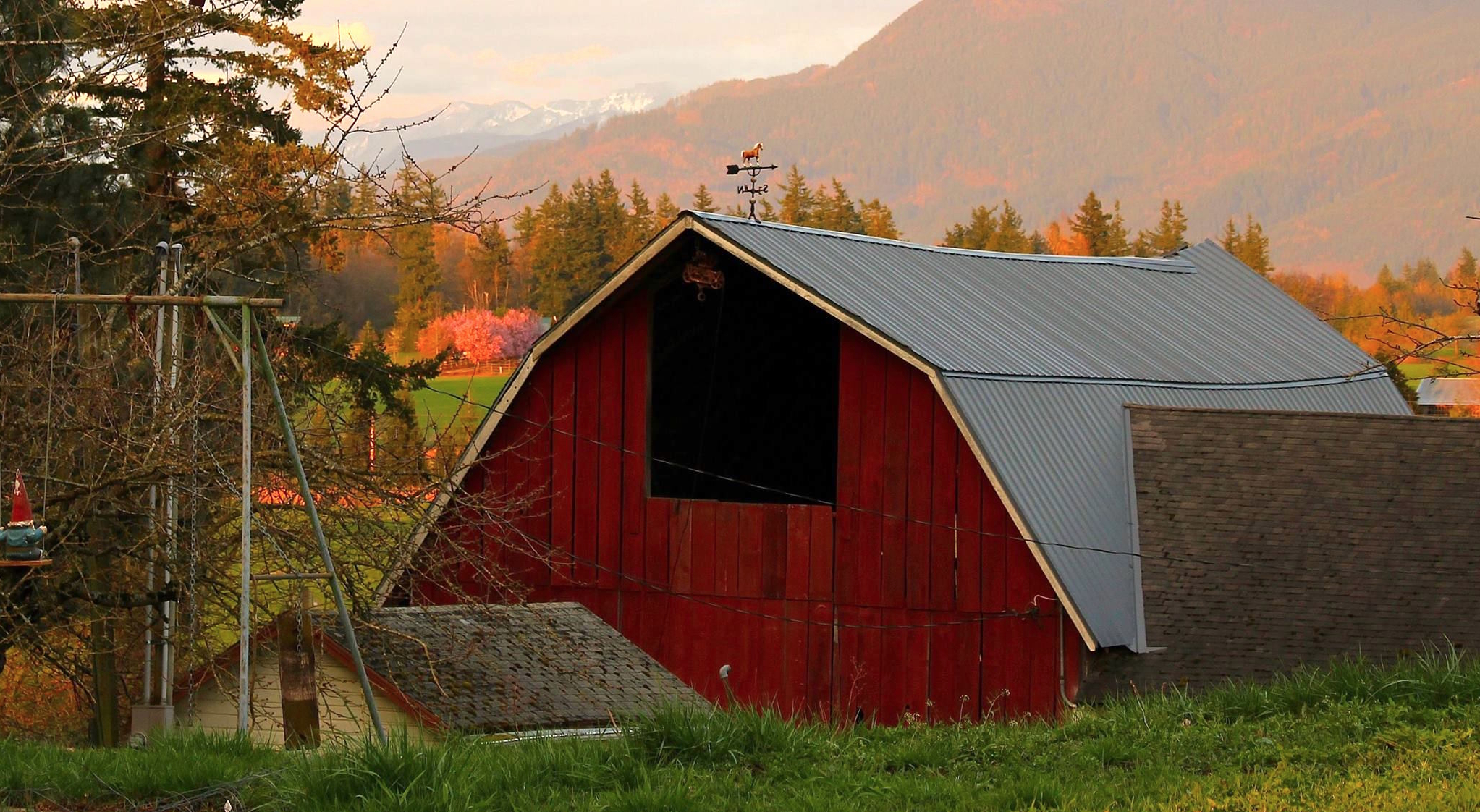
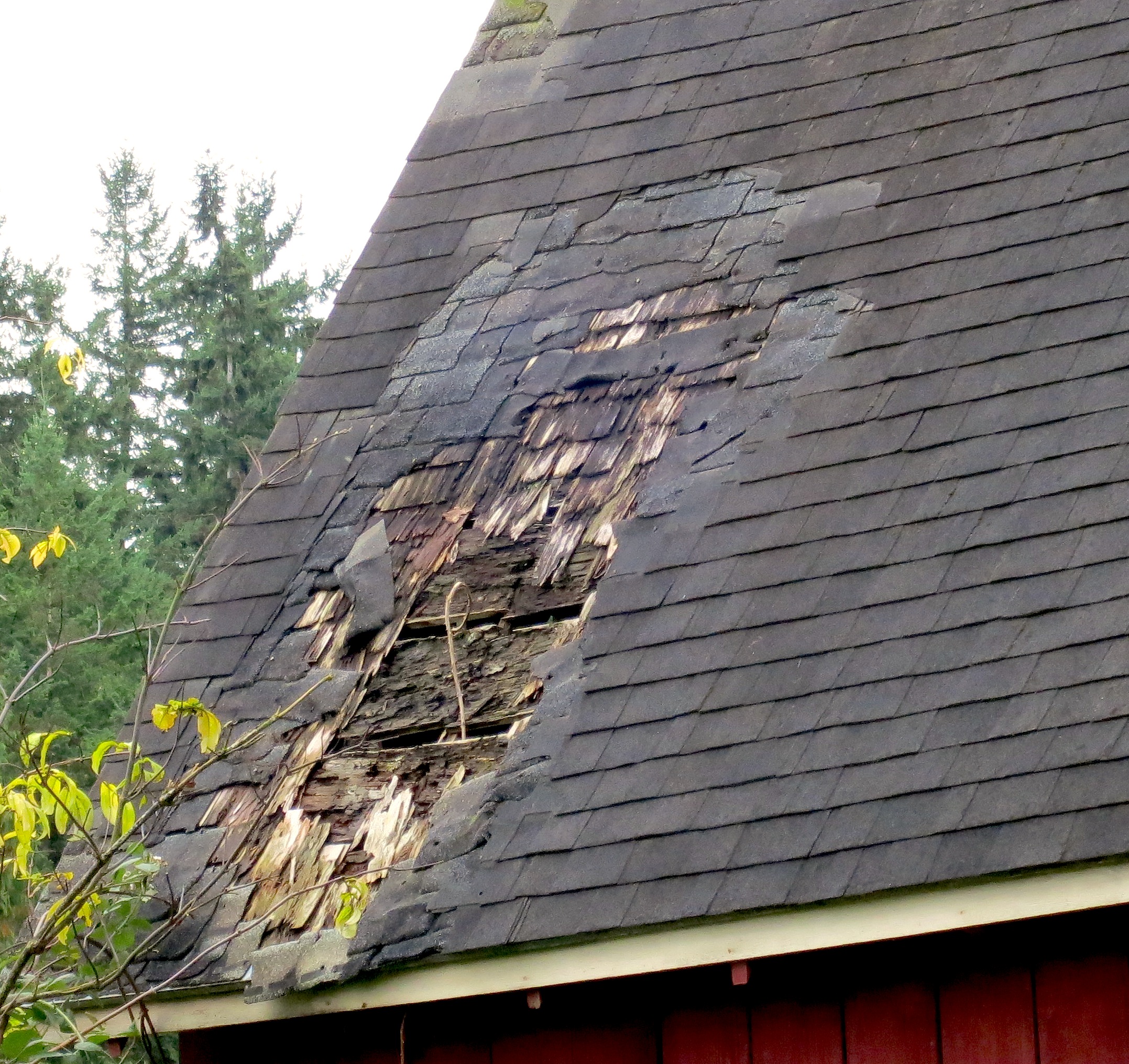
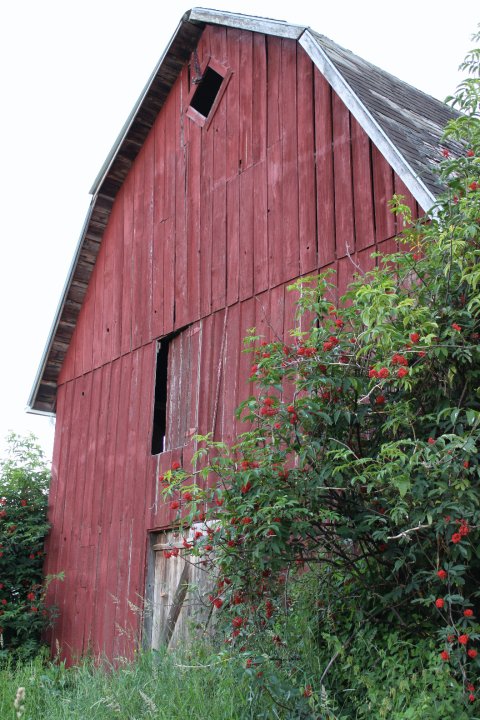
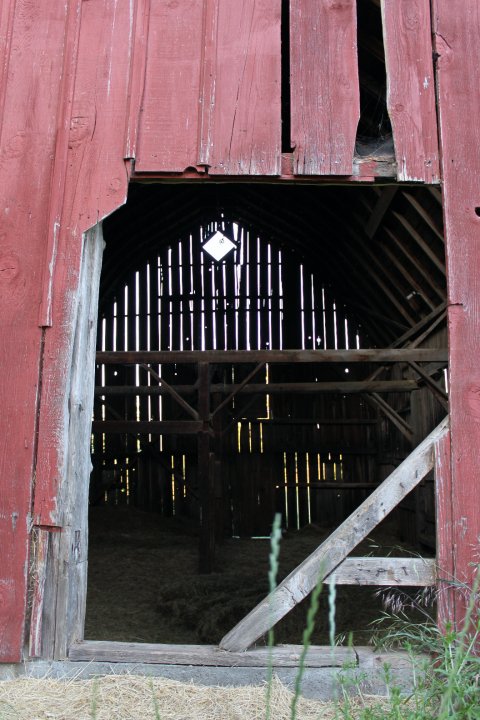
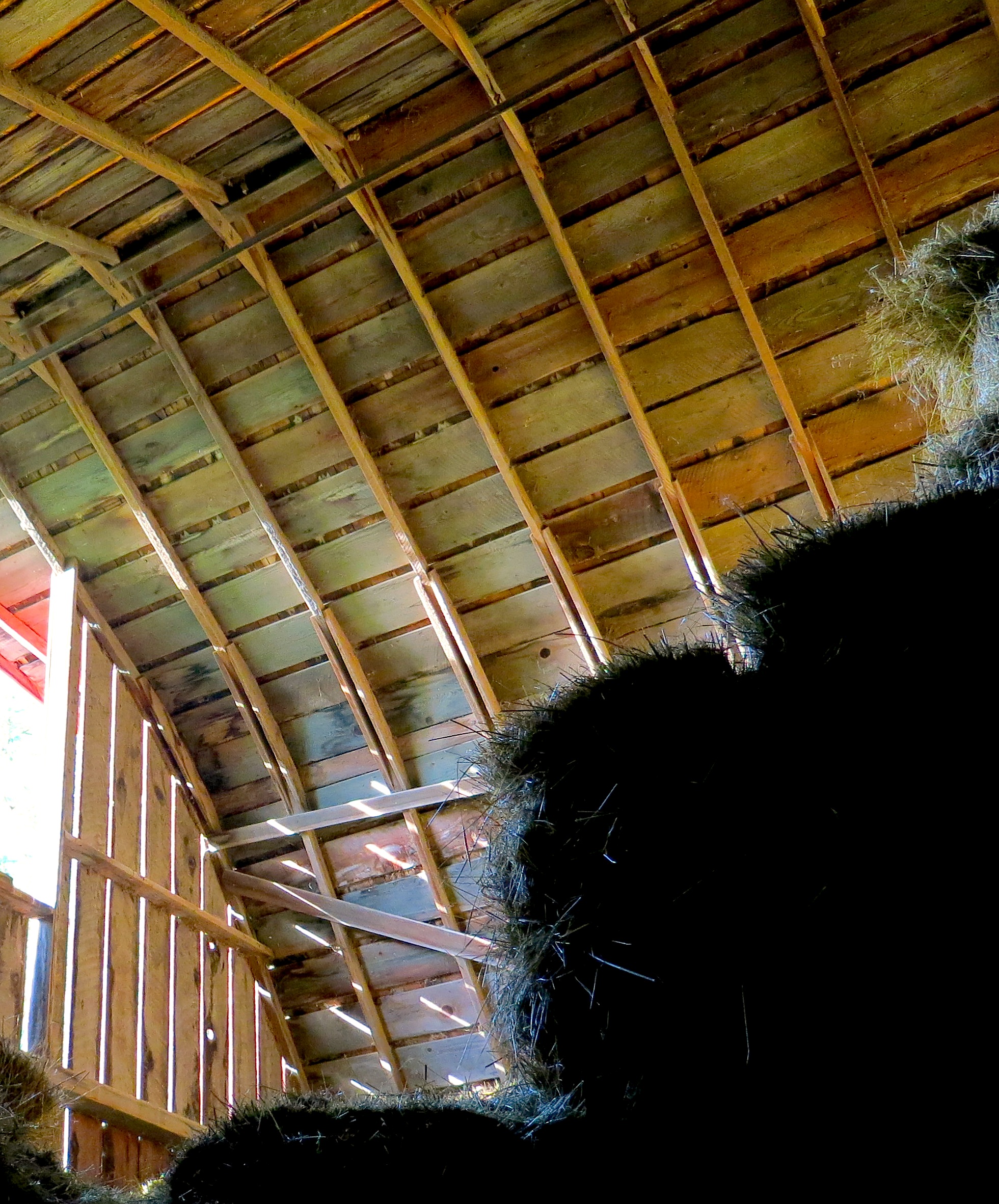
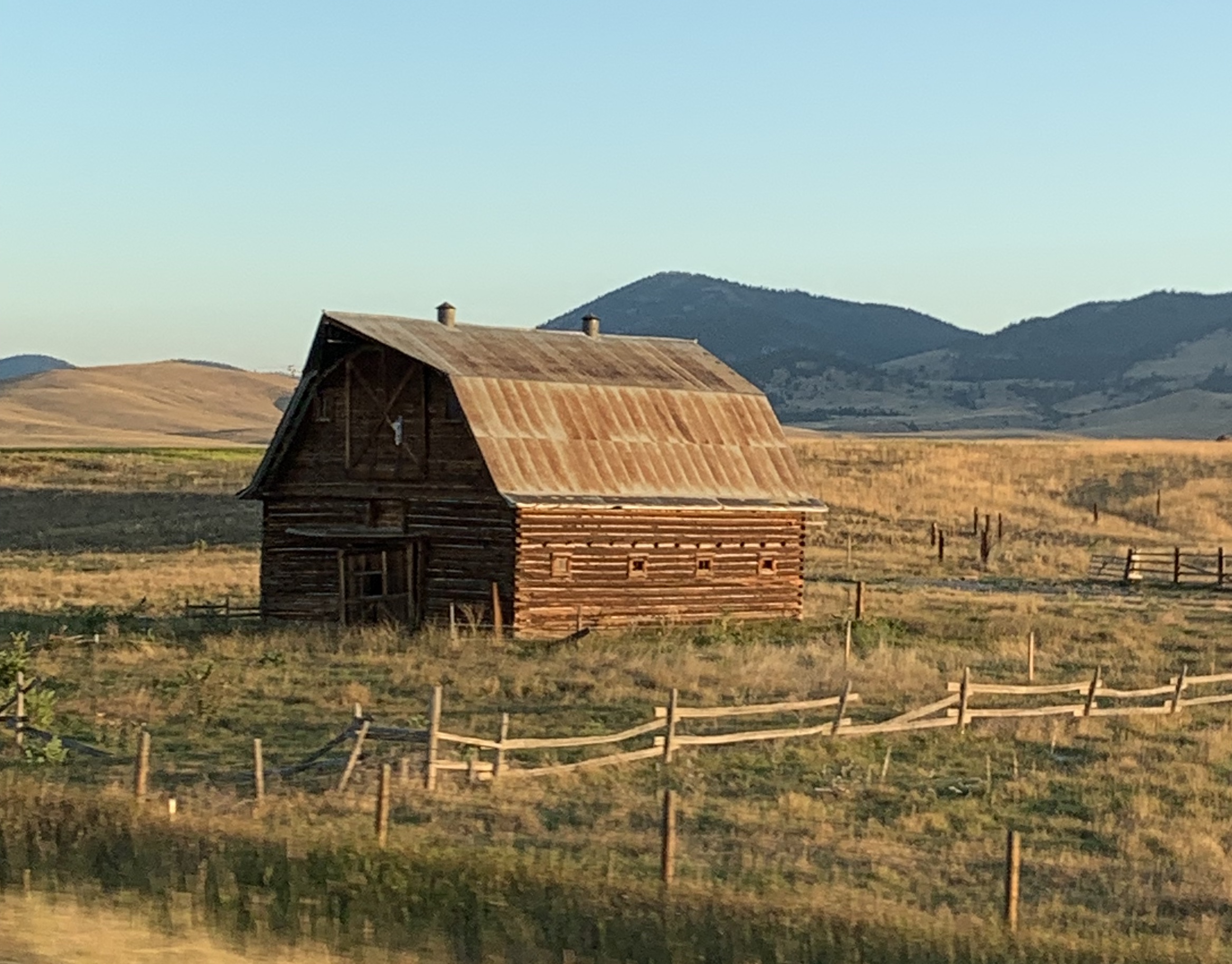
There is something very lonely about a barn completely empty of its hay stores. Our old barn has stood empty for several years; we and our neighbors who have used it for years to house a winter hay supply have found other more convenient places to put our hay. The winter winds have worn away its majesty: missing shingles have torn away holes in the roof, the mighty beams providing foundational support were sinking and rotting in the ground, a gap opened in the sagging roof crest, and most devastating of all, two walls collapsed in a particularly harsh blow.

The old barn was in death throes after over one hundred years of history.
Its hollow interior echoes with a century of farmers’ voices:
soothing an upset cow during a difficult milking,
uncovering a litter of kittens high in a hay loft,
shouting orders to a steady workhorse,
singing a soft hymn while cleaning stalls,
startling out loud as a barn owl or bat flies low overhead.
Dust motes lazily drift by in the twilight,
seemingly forever suspended above the straw covered wood floor, floating protected from the cooling evening breezes.

There was no heart beat left in this dying barn. It was in full arrest, all life blood drained out, vital signs flat lined. I could hardly bear to go inside much less take pictures of its deteriorating shell.

We had people show up at our front door offering to demolish it for the lumber, now all the fad for expensive modern “vintage” look in new house construction. A photo of our barn showed up in local media declaring “another grand old barn in the county has met its end.” That stung. Meanwhile we were saving our money, waiting until we could afford to bring our old red barn back to life.

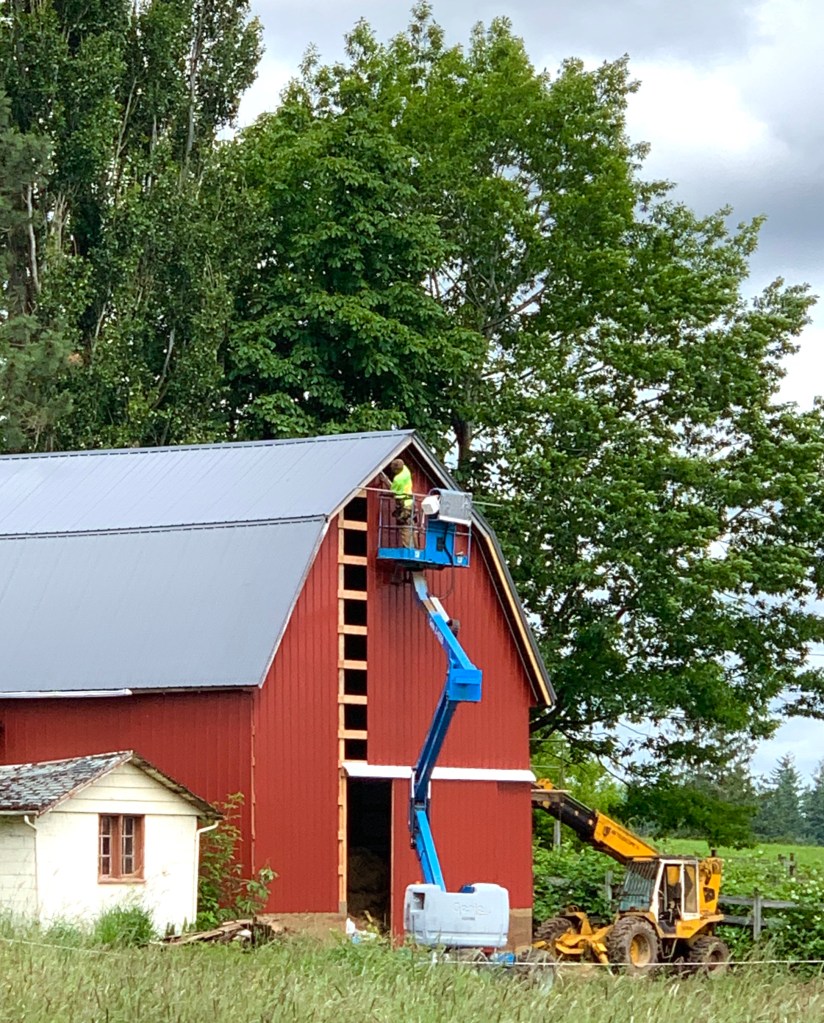
It started with one strong young man digging out the support posts to locate the rot. Then another remarkable young man was able to jack up the posts one by one, putting in reinforcing steel and concrete and straightening the gaping sagging roof line, providing the old barn its first ever foundation.

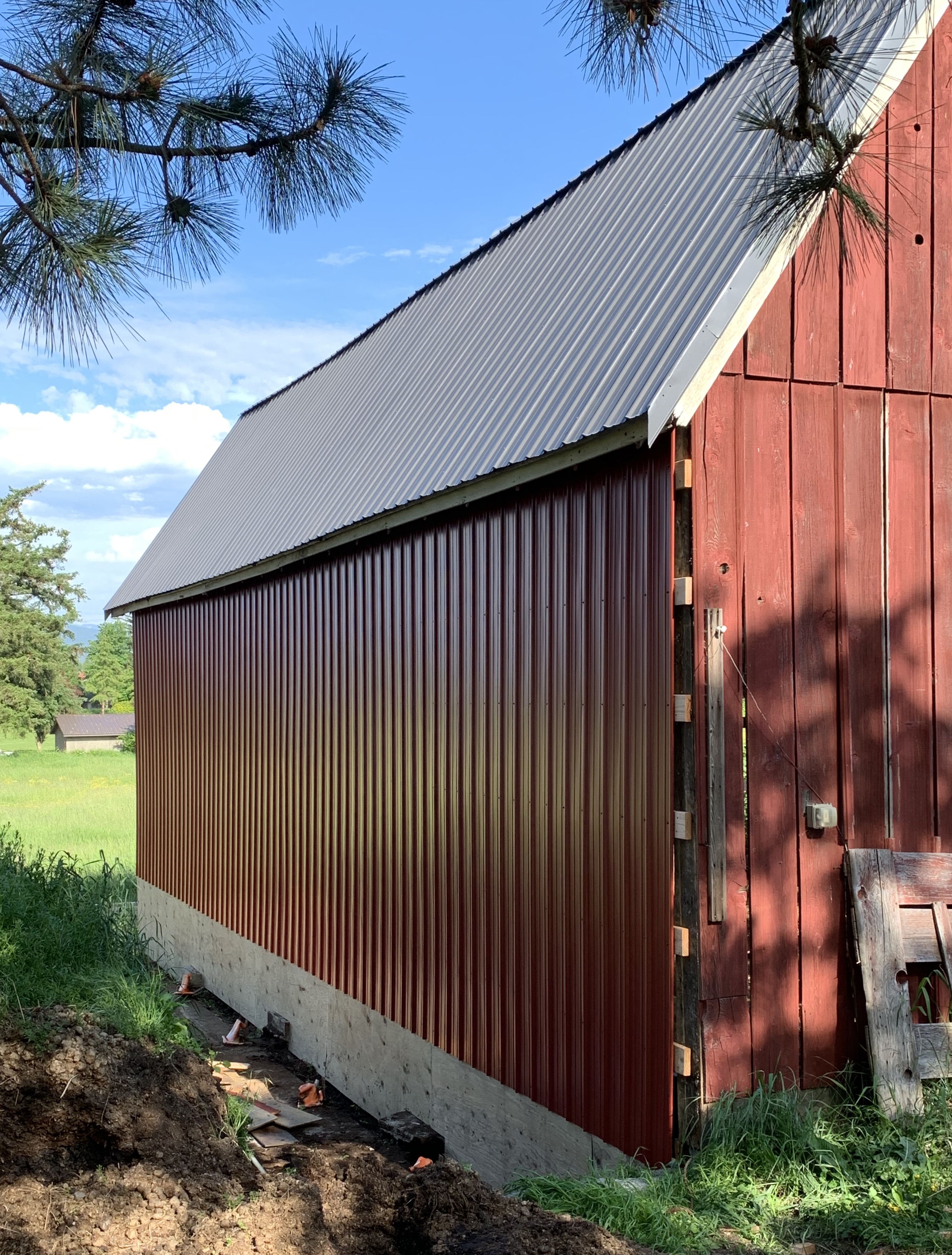
And over the last two weeks a crew of two men have replaced the damaged roof and absent walls with metal siding. The barn is looking whole again.

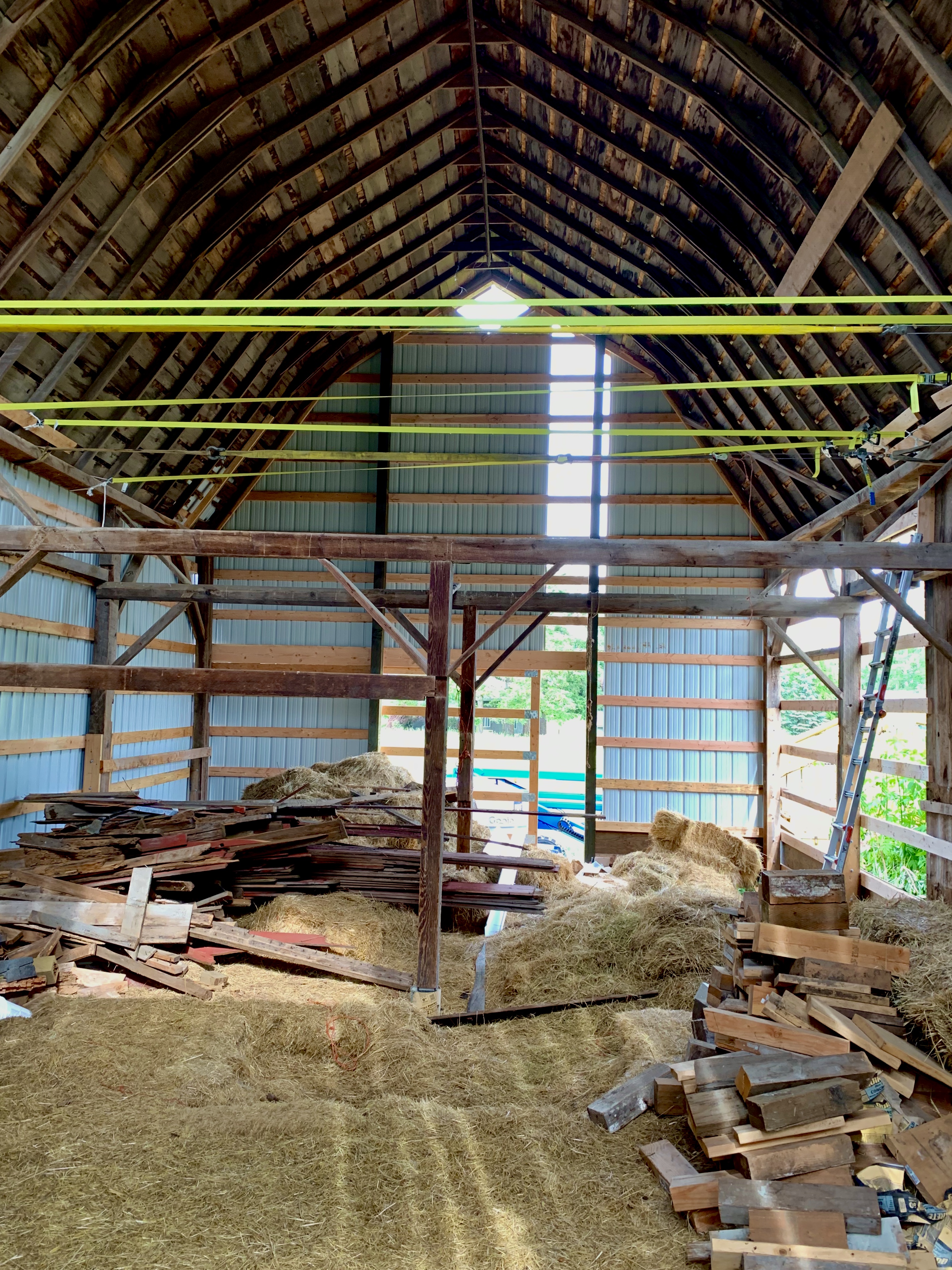
There is a lot of clean up left to do inside: decades of old hay build up and damaged lumber and untold numbers of abandoned mouse nests and scattered barn owl pellets.

Soon, the barn will be shocked back to a pulse, with the throb of voices, music blaring, dust and pollen flying chaotically, the rattle of the electric “elevator” hauling bales from wagon to loft, the grunts and groans of the crew as they heft and heave the bales into place in the stack. It will go on late into the night, the barn ablaze with lights, the barnyard buzzing with excitement and activity.

It will once again serve as the back up sanctuary on Easter morning when we are rained out up on the hill for Sunrise Service.

Now vital signs measurable, rhythm restored, volume depletion reversed, prognosis good for another 100 years.

Another old barn is resuscitated back to life when so many are left to die. It is revived and breathing on its own again. Its floor will creak with the weight of the hay bales and walls will groan with the pressure of stacks.

I must remember there is always hope for the shattered and weary among us. If an old barn can be saved, then so can we.

So can we.

photo by Nate Gibson

Something Finished

Gold of a ripe oat straw, gold of a southwest moon,
What is there for you in the birds, the birds, the birds, crying
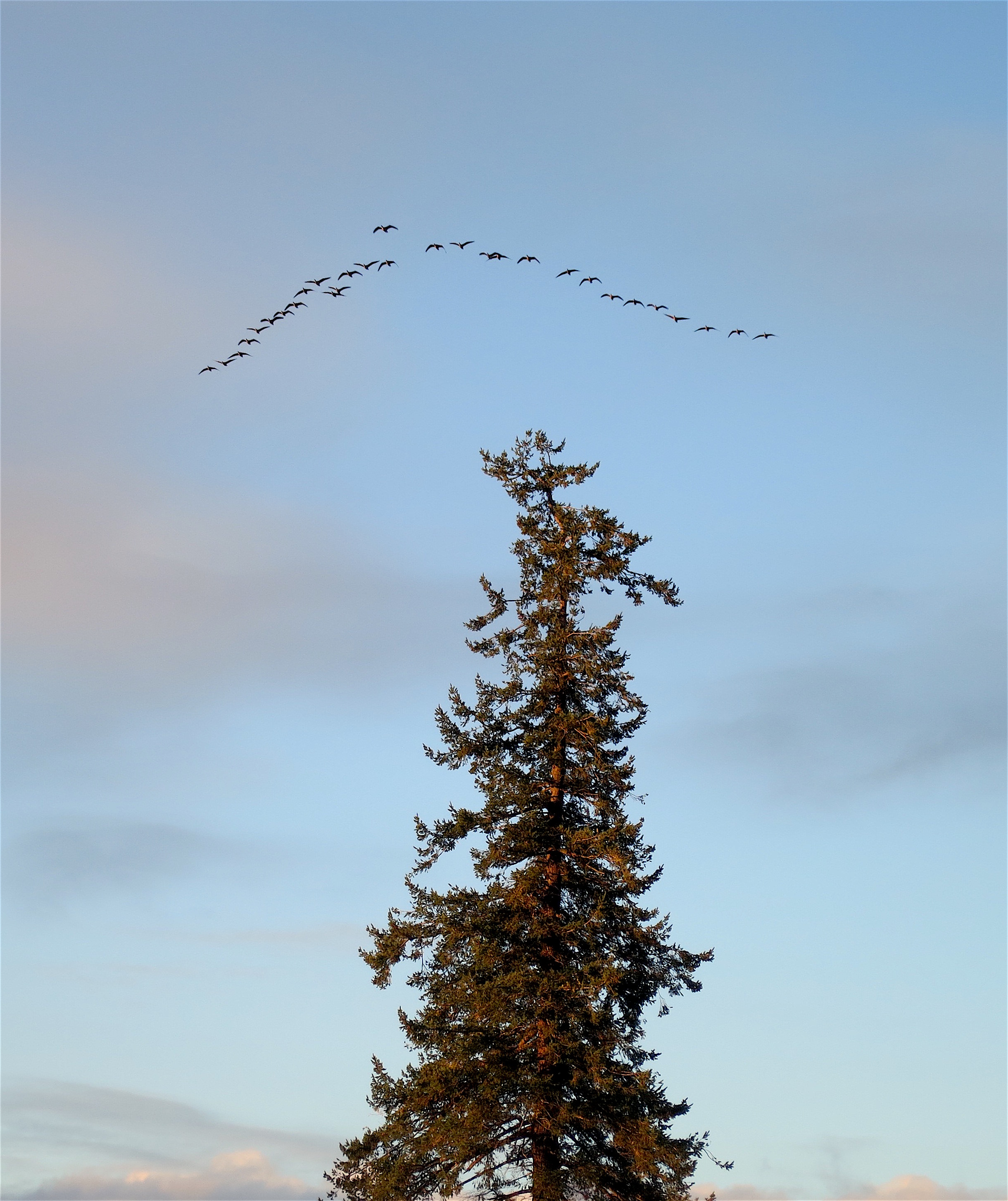
down on the north wind in September, acres of birds spotting
the air going south?

Is there something finished? And some new beginning on the
way?

I cried over beautiful things knowing no beautiful thing lasts.
~Carl Sandburg from “Fall Time” and “Autumn Movement”

My summer of “no doctoring” finishes today. I return to part-time clinical work tomorrow; a new beginning is on the way.

I am readying myself.

I consider how it will feel to put the stethoscope back on and return to spending most of my daylight hours in window-less rooms. Several months of freedom to wander and wonder will be tough to give up.

However, when I meet my first patient of the day, I’m “all in.” Someone is needing my help more than I need time off. The wind has shifted, it is time to migrate back to the work I was called to do over forty years ago.

Still I will look for beautiful things where I can find them, knowing that even though they don’t last, they will always be well worth the weeping.

The Ebb and Flow of Sound

What I remember is the ebb and flow of sound
That summer morning as the mower came and went
And came again, crescendo and diminuendo,
And always when the sound was loudest how it ceased
A moment while he backed the horses for the turn,
The rapid clatter giving place to the slow click
And the mower’s voice. That was the sound I listened for,
The voice did what the horses did. It shared the action
As sympathetic magic does or incantation.
The voice hauled and the horses hauled. The strength of one
Was in the other and in the strength was impatience.
Over and over as the mower made his rounds
I heard his voice and only once or twice he backed
And turned and went ahead and spoke no word at all.
~Robert Francis “The Sound I Listened For” from Collected Poems

In the rural countryside where we live, we’ve been fortunate enough to know people who still dabble in horse farming, whose draft teams are hitched to plows and mowers and manure spreaders as they head out to the fields to recapture the past and experience working the land in a way that honors the traditions of our forebears.

A good teamster primarily works with his horses using his voice. No diesel engine means hearing bird calls from the surrounding fields and woods, along with the steady footfall of the horses, the harness chains jingling, the leather straps creaking, the machinery shushing quietly as gears turn and grass lays over in submission. No ear protection is needed. There is no clock needed to pace the day.

There is a rhythm of nurture when animals instead of motors are part of the work day. The gauge for taking a break is the amount of foamy sweat on the horses and how fast they are breathing — time to stop and take a breather, time to start back up and do a few more rows, time to water, time for a meal, time for a nap, time for a rest in a shady spot.

This is gentle use of the land with four footed stewards who deposit right back to the soil the digested forage they have eaten only hours before. This is gentle to our ears and our souls, measuring the ebb and flow of sound and silence.

The horse-drawn field mower is a sound I listen for, if not next door then in my dreams.

Photo courtesy of Aaron Janicki

Moving at Summer’s Pace

mowingfield


Cut grass lies frail:
Brief is the breath
Mown stalks exhale.
Long, long the death

It dies in the white hours
Of young-leafed June
With chestnut flowers,
With hedges snowlike strewn,

White lilac bowed,
Lost lanes of Queen Anne’s lace,
And that high-builded cloud
Moving at summer’s pace.~
~Philip Larkin “Cut Grass” from The Complete Poems

Light and wind are running
over the headed grass
as though the hill had 
melted and now flowed.
~Wendell Berry “June Wind”

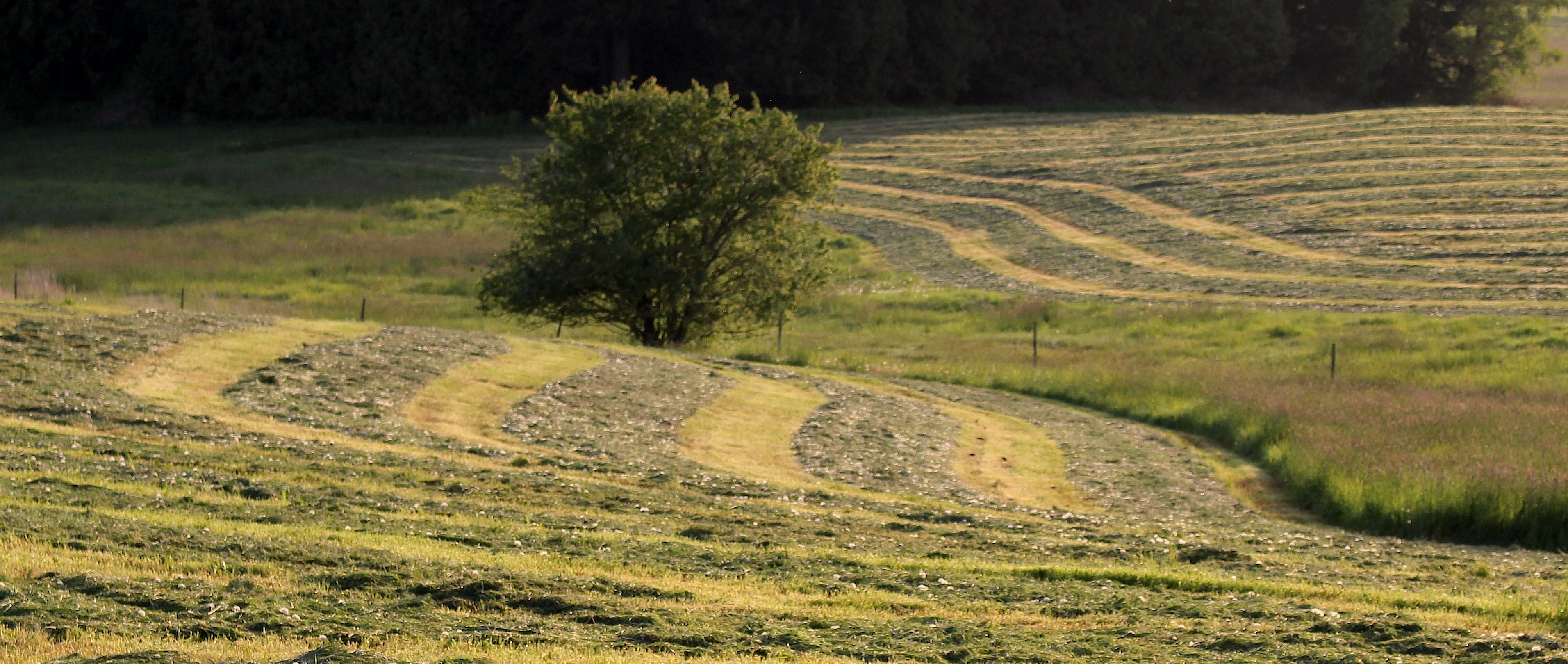
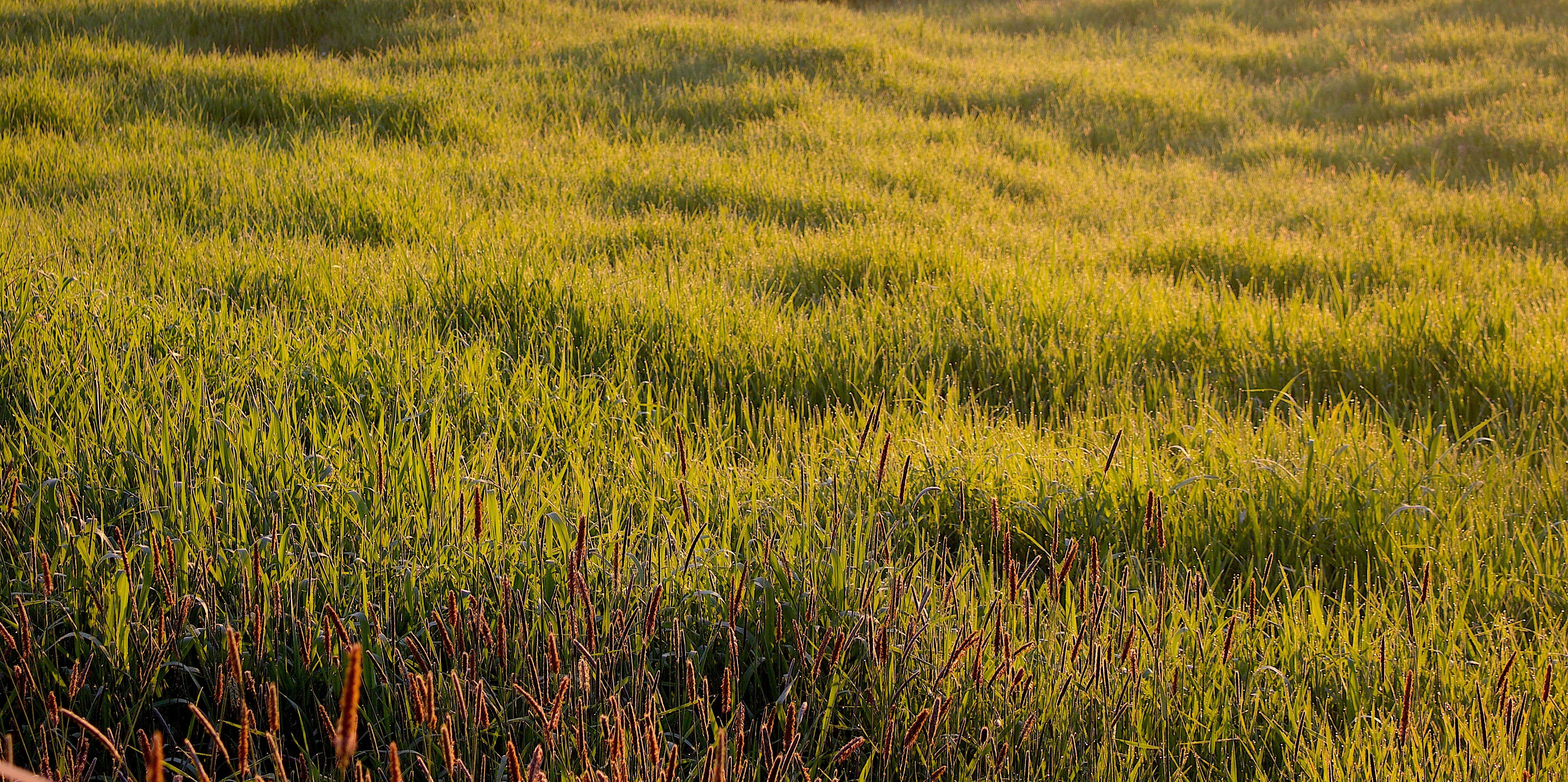
The uncut field grass is growing heavier, falling over, lodged before it can be cut; the undulations of summer breezes urge it back upright.  It has matured too fast, rising up too lush, too overcome with itself so that it can no longer stand unsupported.  We must work fast to save it and more rain is on the way.

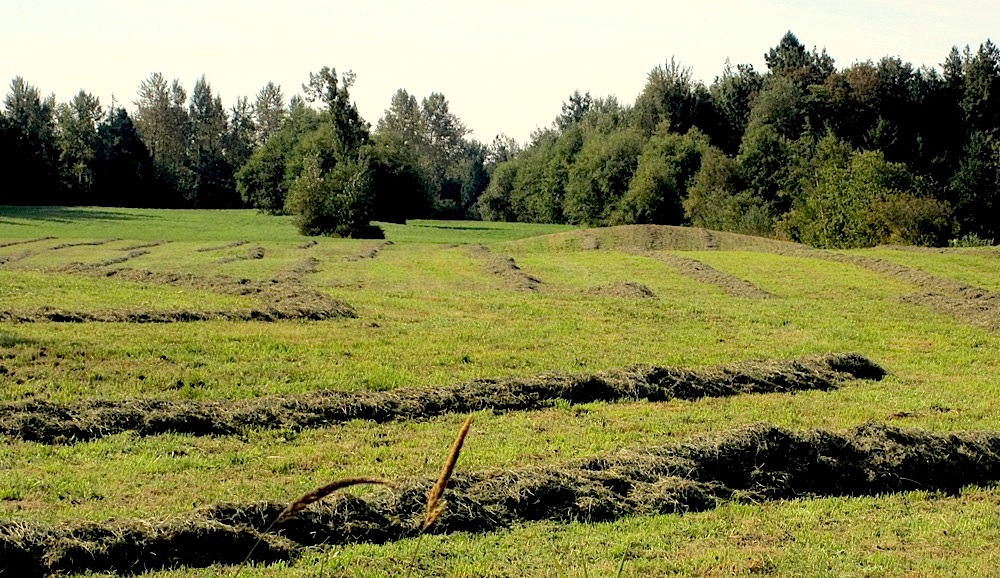
Light and wind work magic on a field of melting tall grass.  The blades of the mower will come to lay it to the ground in green streams that flow up and down the slopes.  It will lie comfortless in its stoneless cemetery rows, until tossed about by the tedder into random piles to dry, then raked back into a semblance of order in mounded lines flowing over the landscape.

It will be crushed and bound together for transport to the barn,
no longer bending but bent,
no longer flowing but flown,
no longer growing but grown

We move at summer’s pace to ensure the grasses become fodder for the beasts of the farm during the cold nights when the wind beats at the doors. It will melt in their mouths, as it was meant to be.  

In a Burst of Summertime

In Summer, in a burst of summertime
Following falls and falls of rain,
When the air was sweet-and-sour of the flown fineflower of
Those goldnails and their gaylinks that hang along a lime;
~Gerard Manley Hopkins from “Cheery Beggar”

Open the window, and let the air 
Freshly blow upon face and hair, 
And fill the room, as it fills the night, 
With the breath of the rain’s sweet might.
 

Nought will I have, not a window-pane, 
‘Twixt me and the air and the great good rain, 
Which ever shall sing me sharp lullabies; 
And God’s own darkness shall close mine eyes; 
And I will sleep, with all things blest, 
In the pure earth-shadow of natural rest.

~James Henry Leigh Hunt from “A Night-Rain in Summer”

Sweet and sour extends far beyond a Chinese menu;
it is the daily air I breathe.

I am but a cheery beggar in this summer world,
hanging tight to the sweetness of each glorious moment
yet knowing it cannot last:

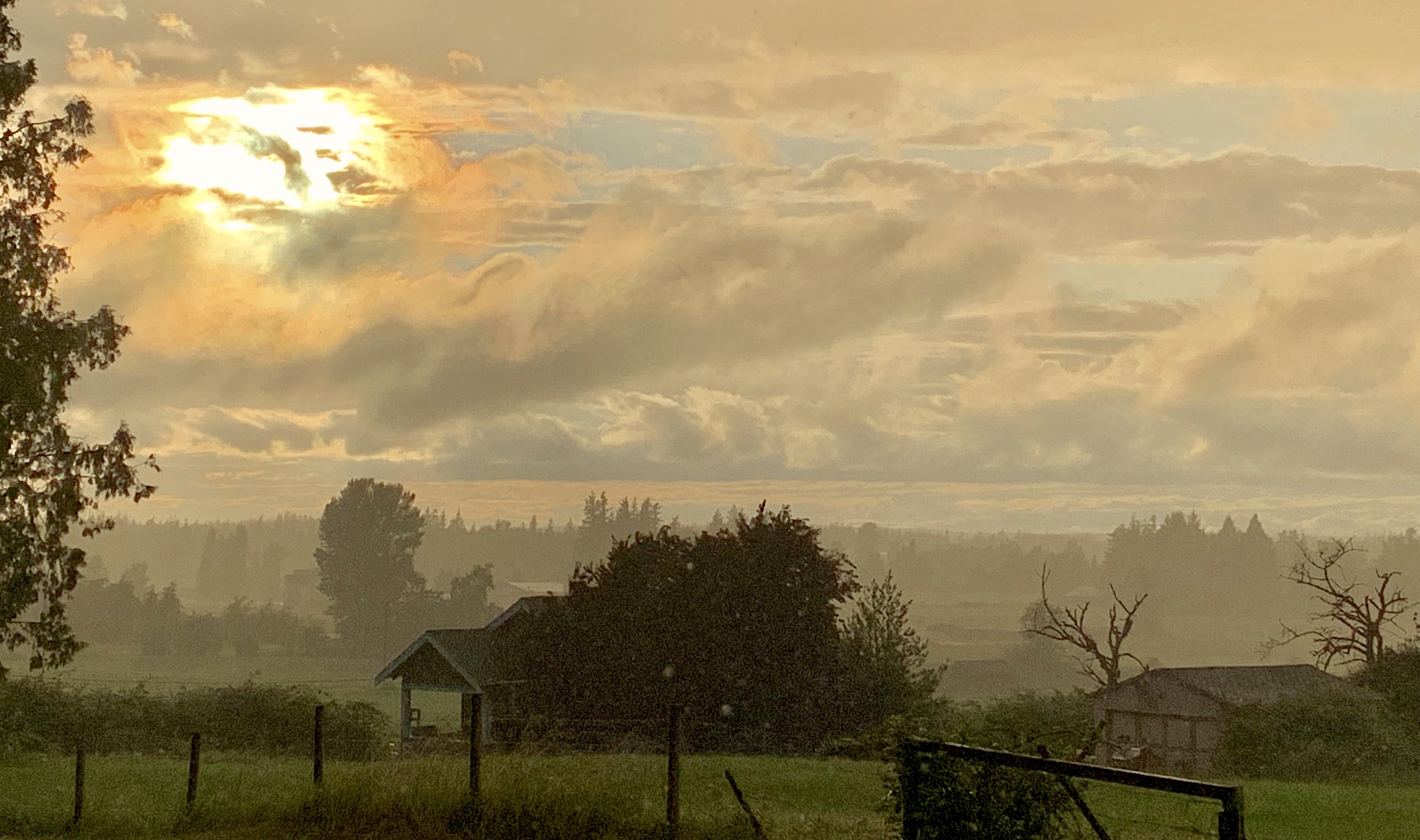
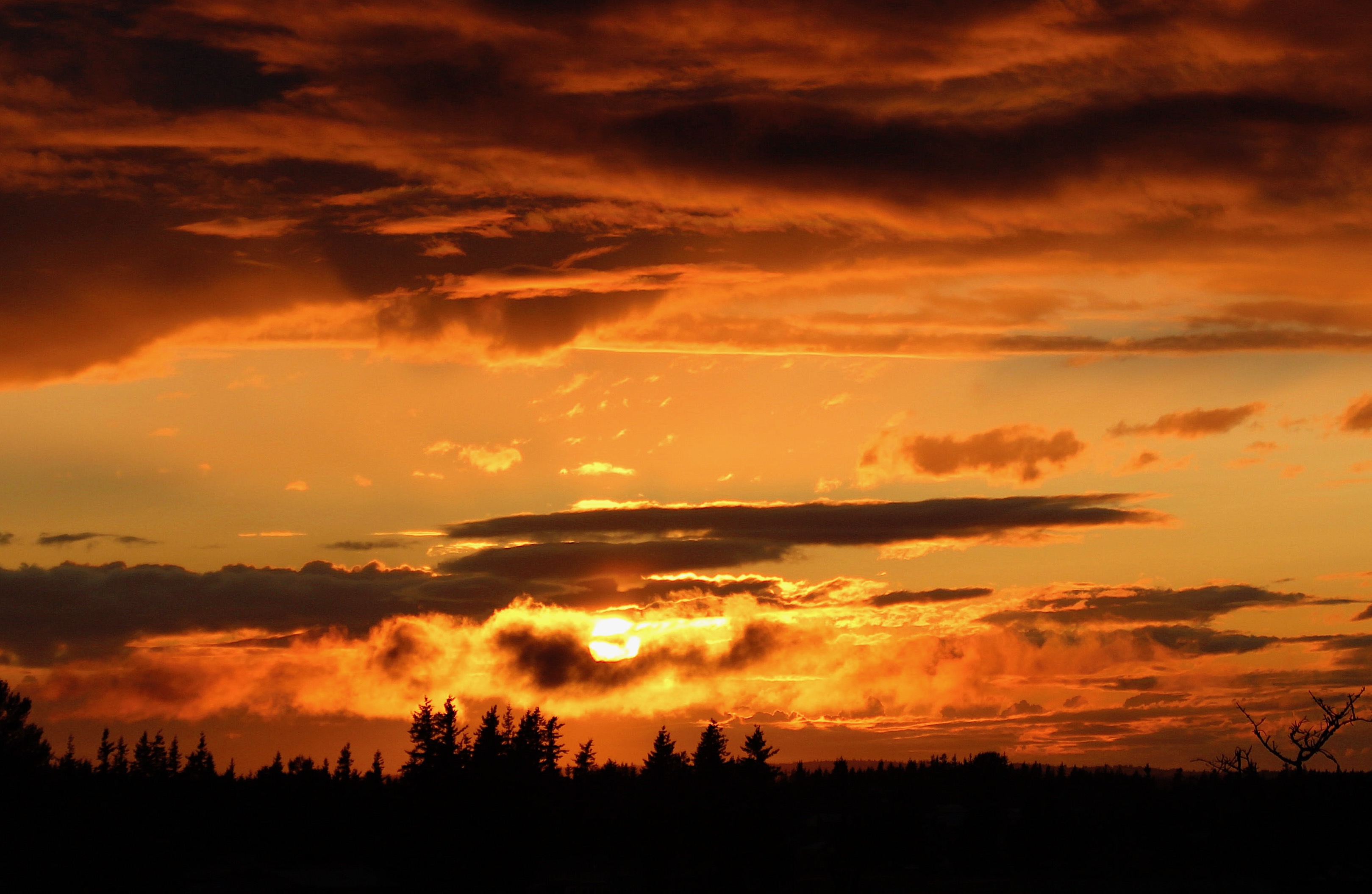
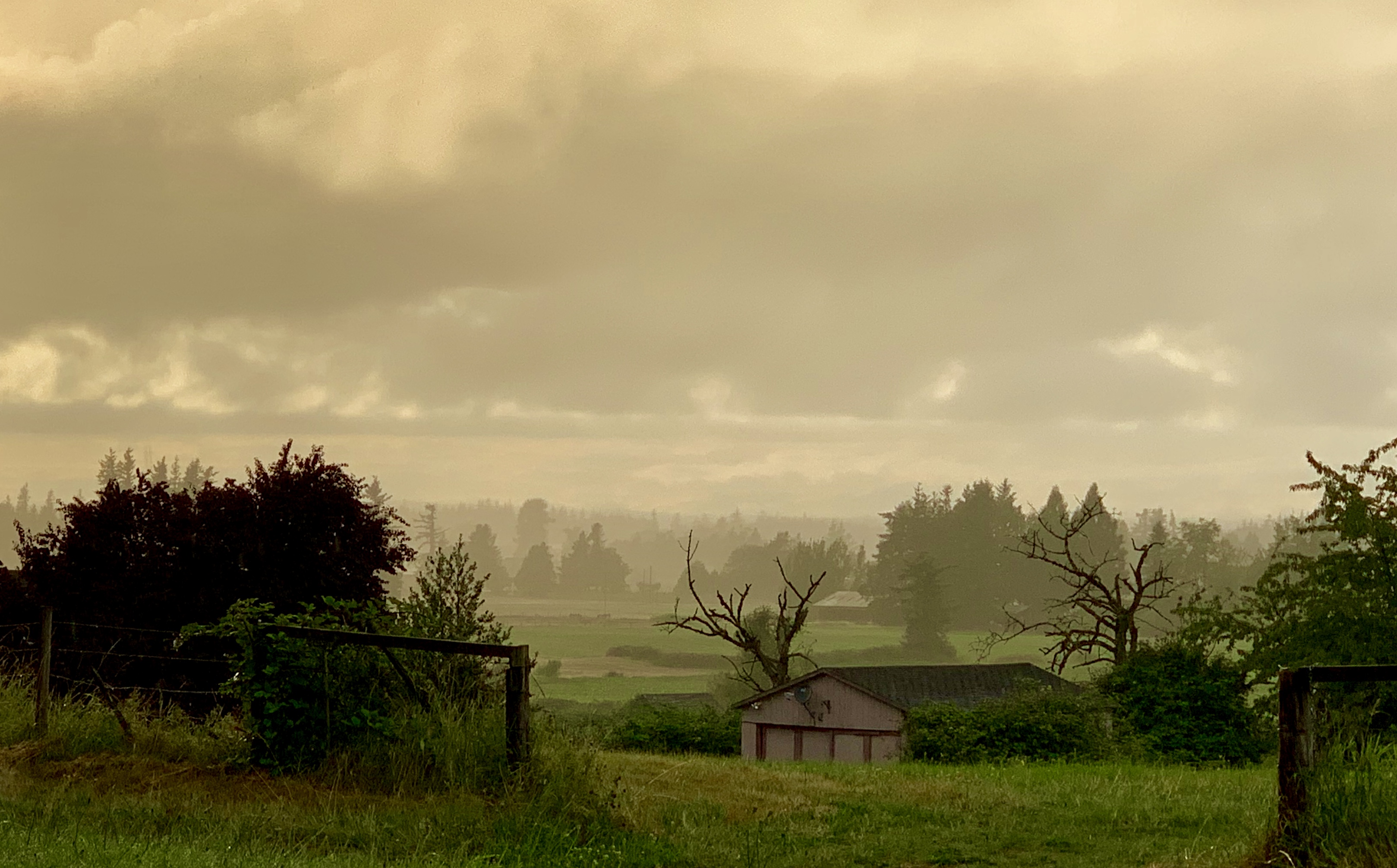
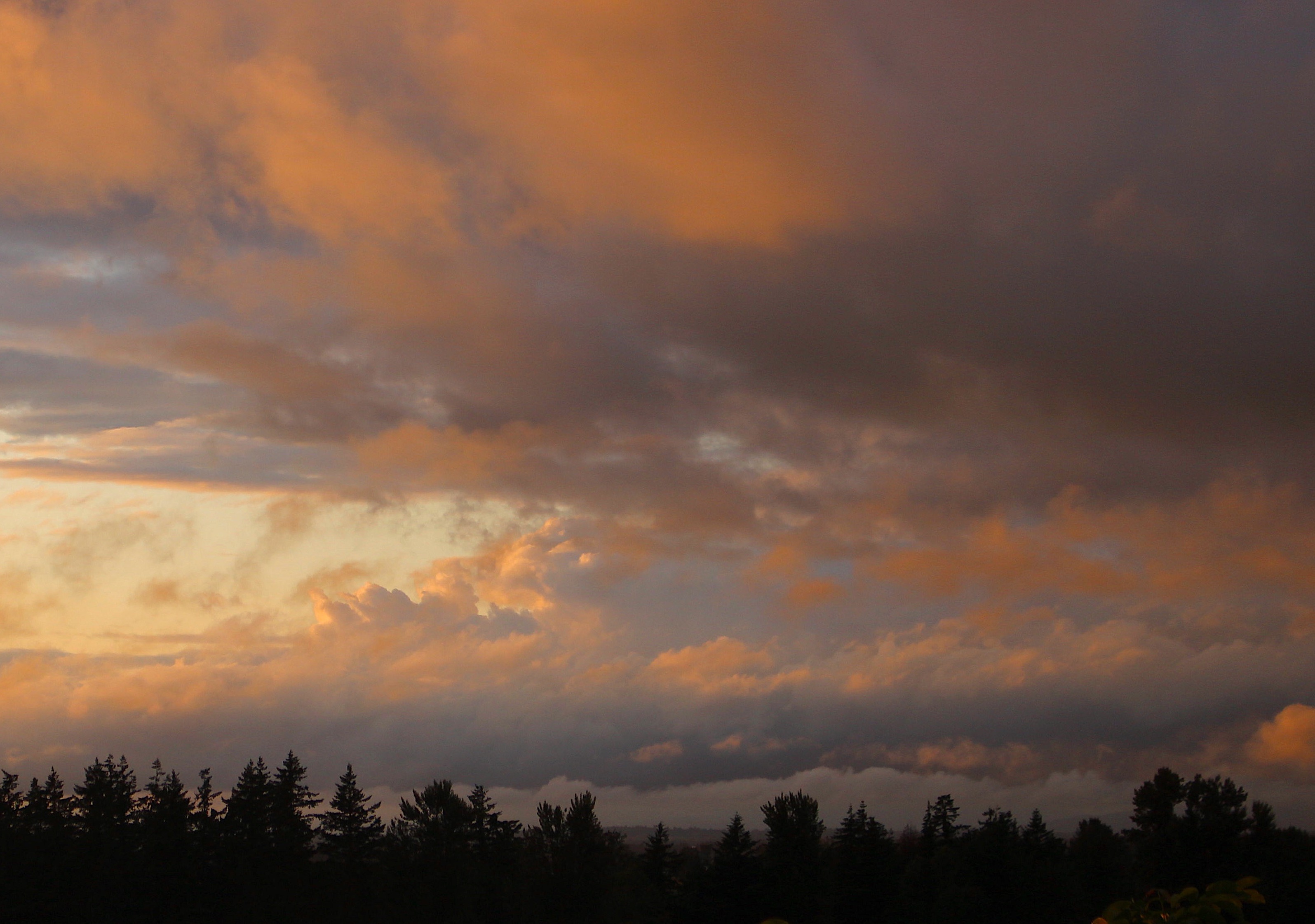
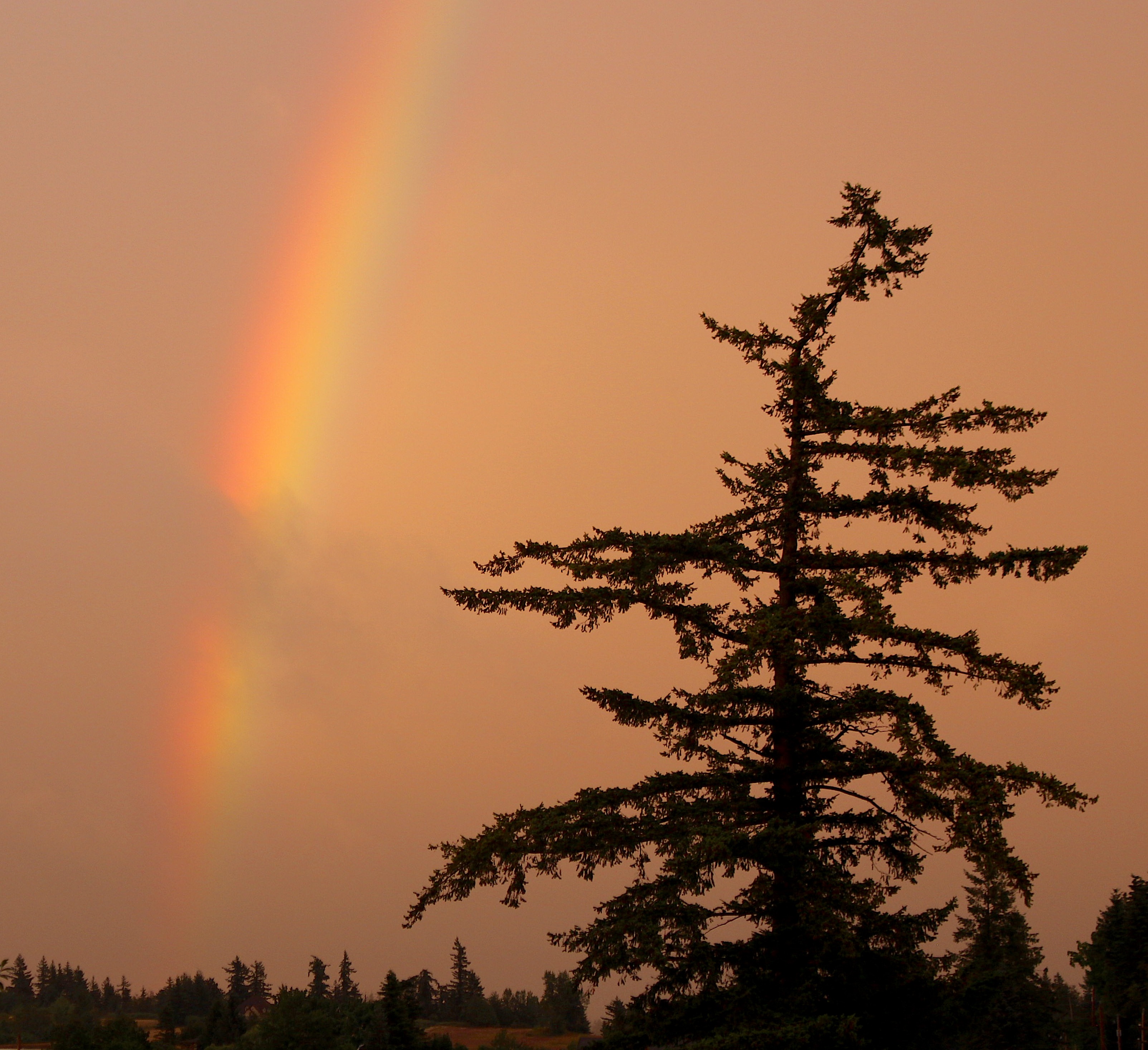
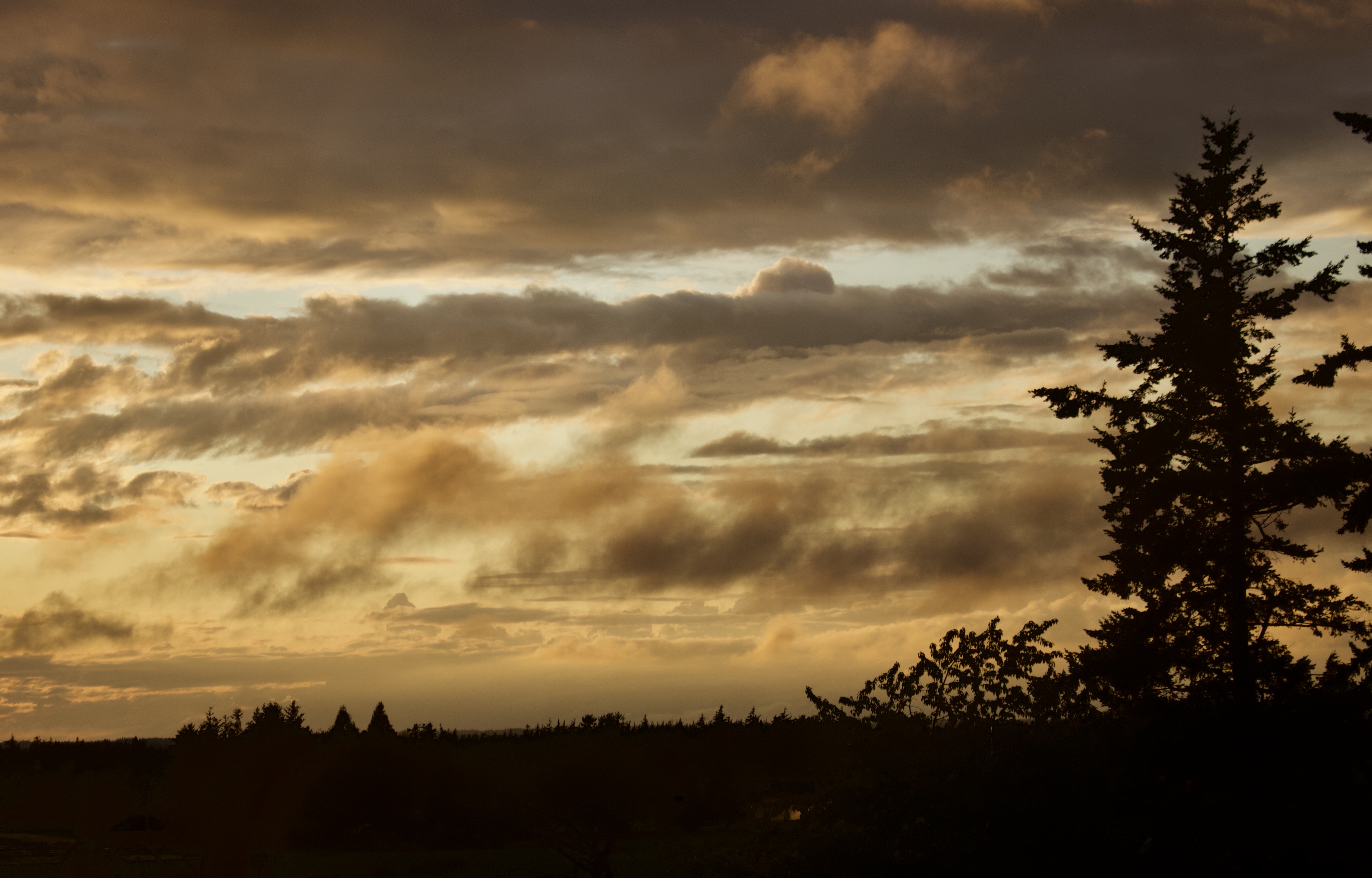
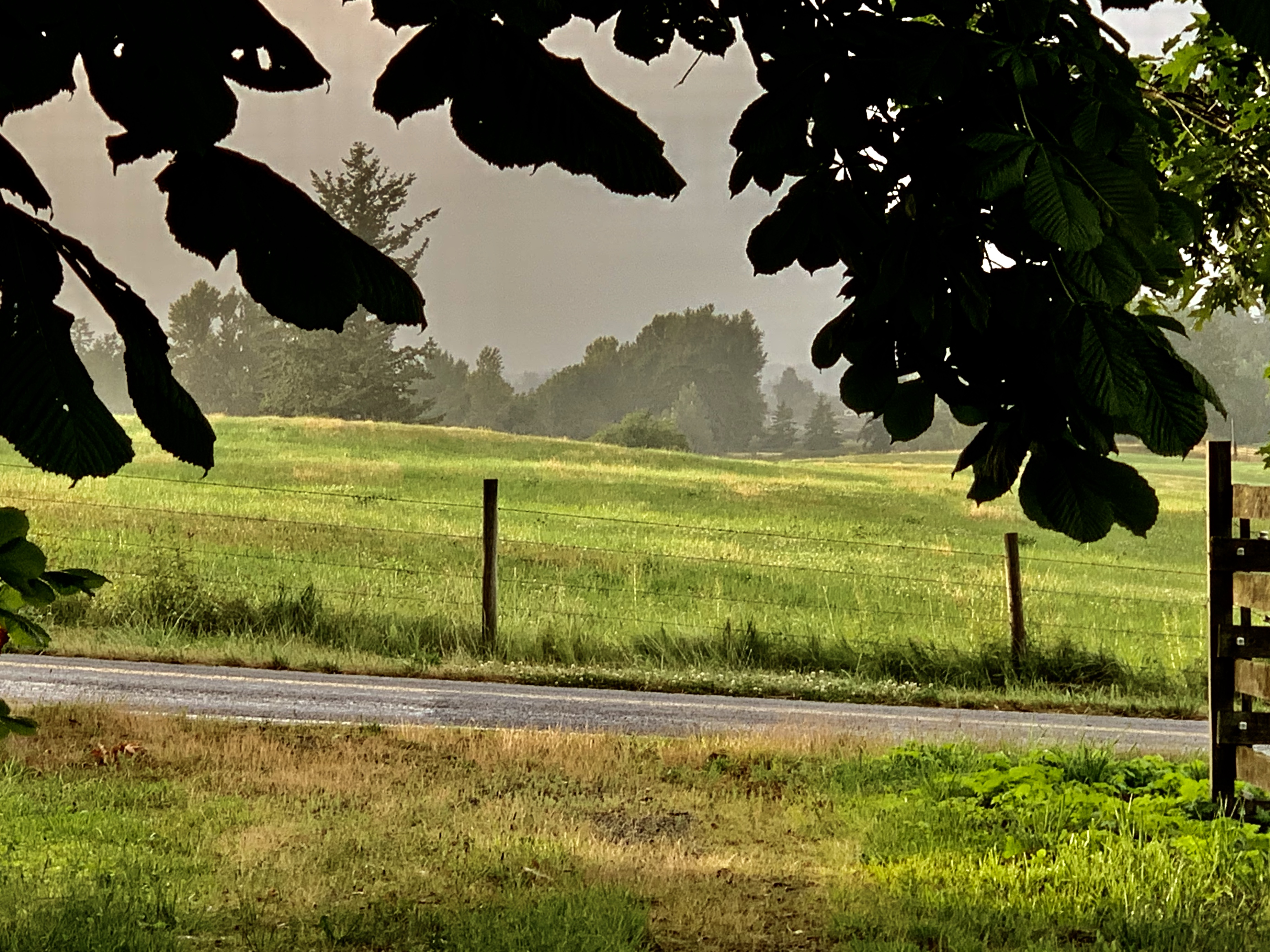
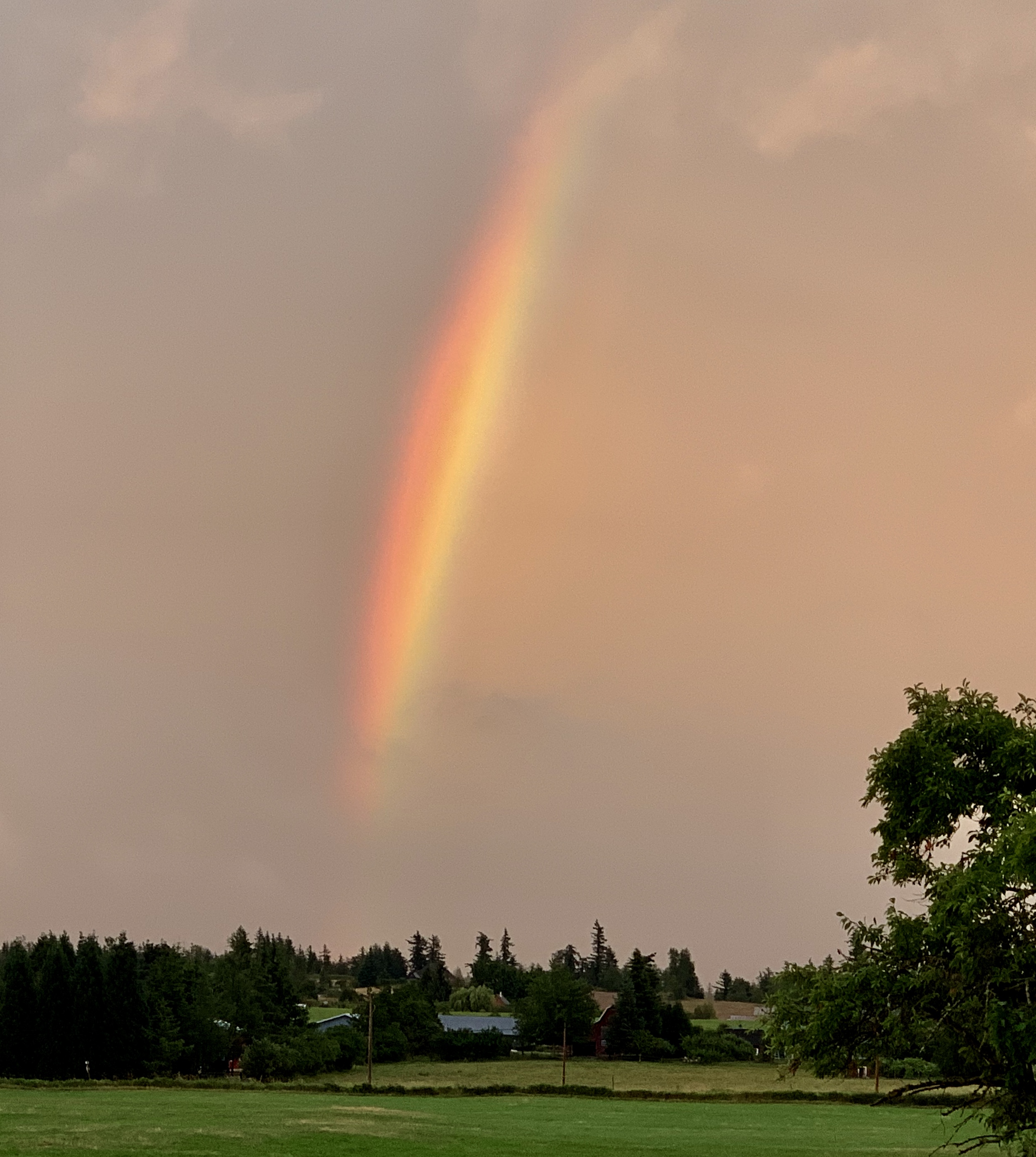
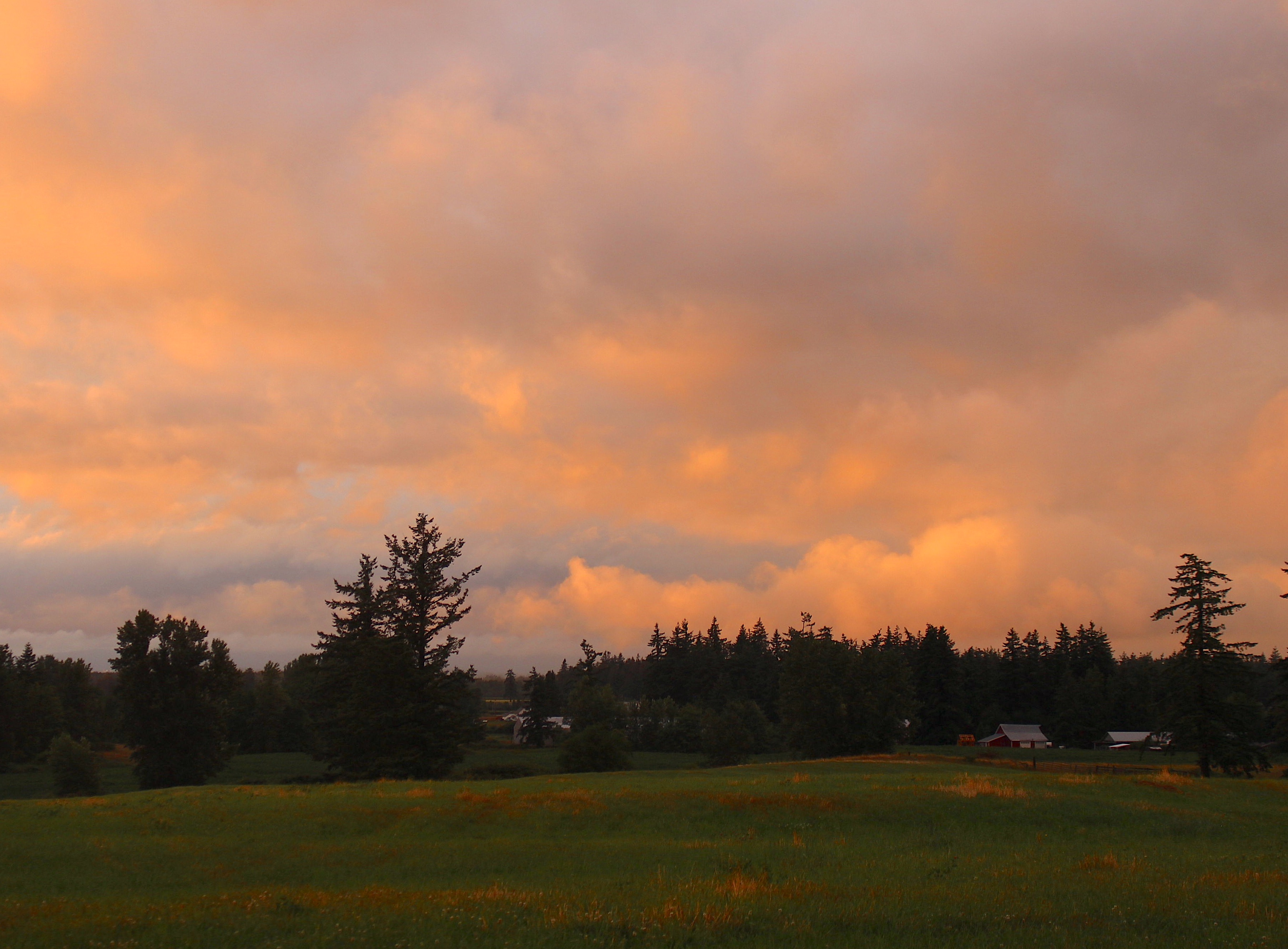
the startling twilight gold of a July rain,
the intense green of thirsty fields,
a rainbow suspended in misty haze,
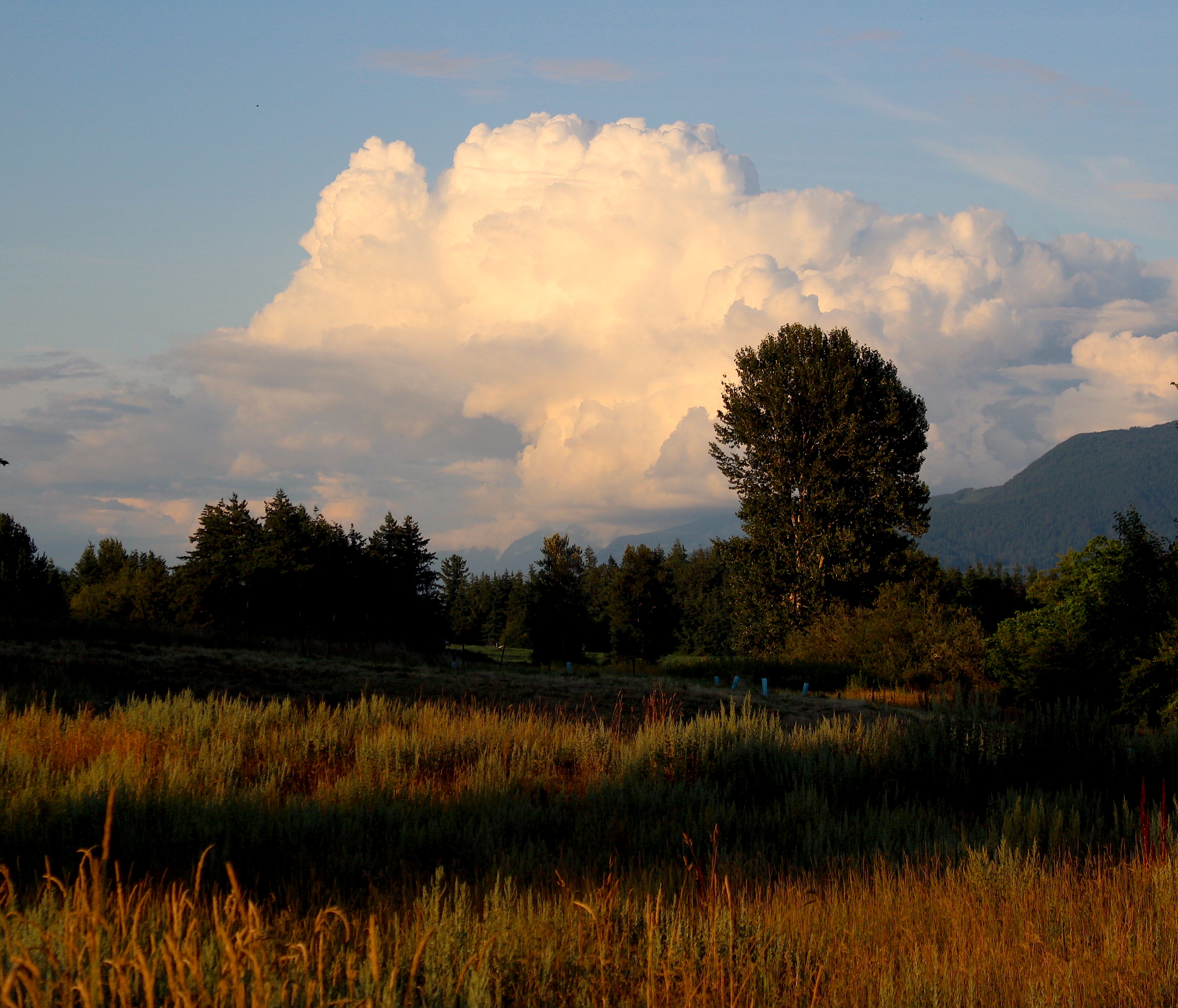
the clouds racing to win the day’s finish line.

But as beggars aren’t choosers,
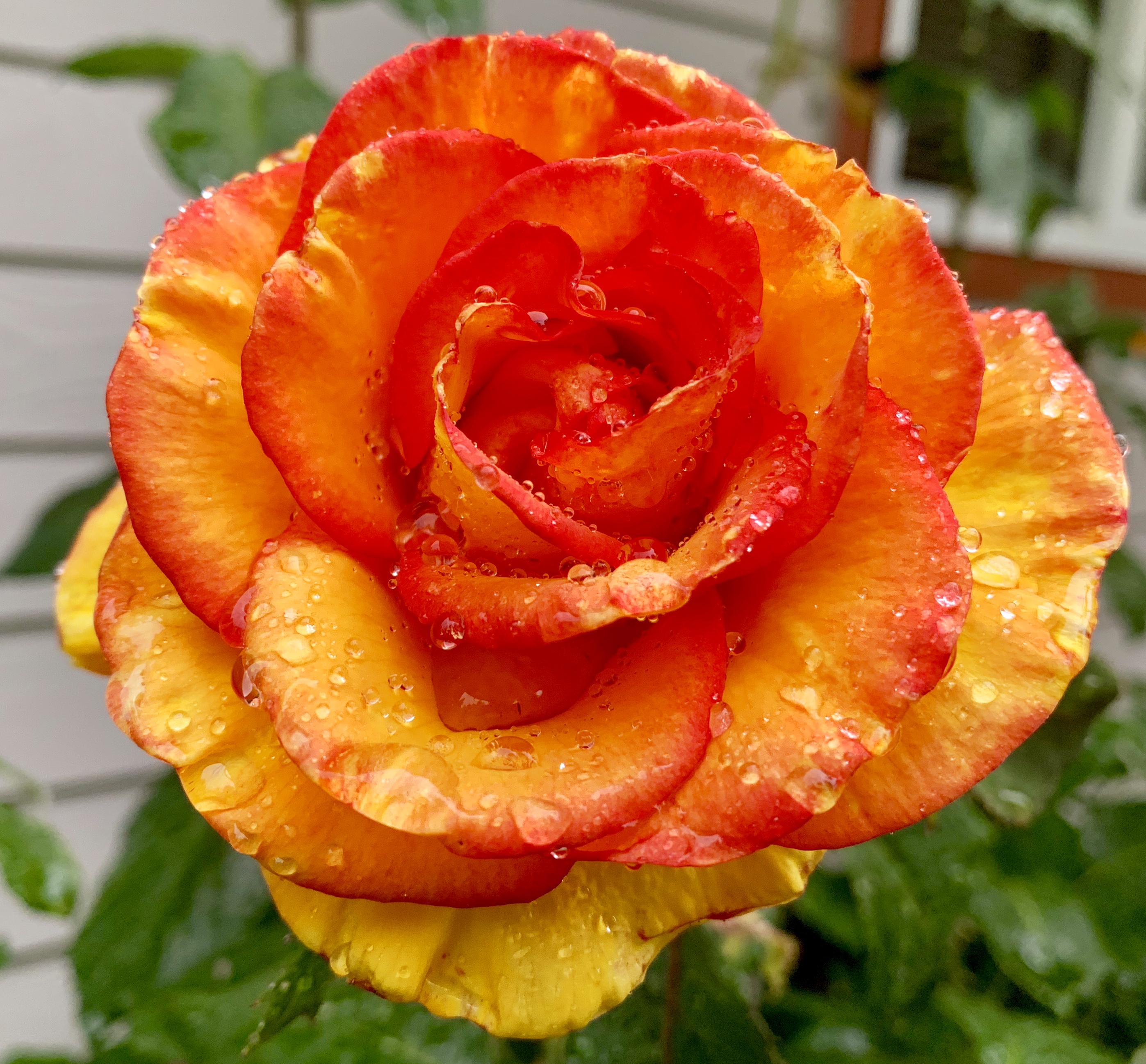
sweet rain ruins hay harvest
and berries turn to mold on the vine.

The sky stooping to kiss the earth
may bring mud and flood.

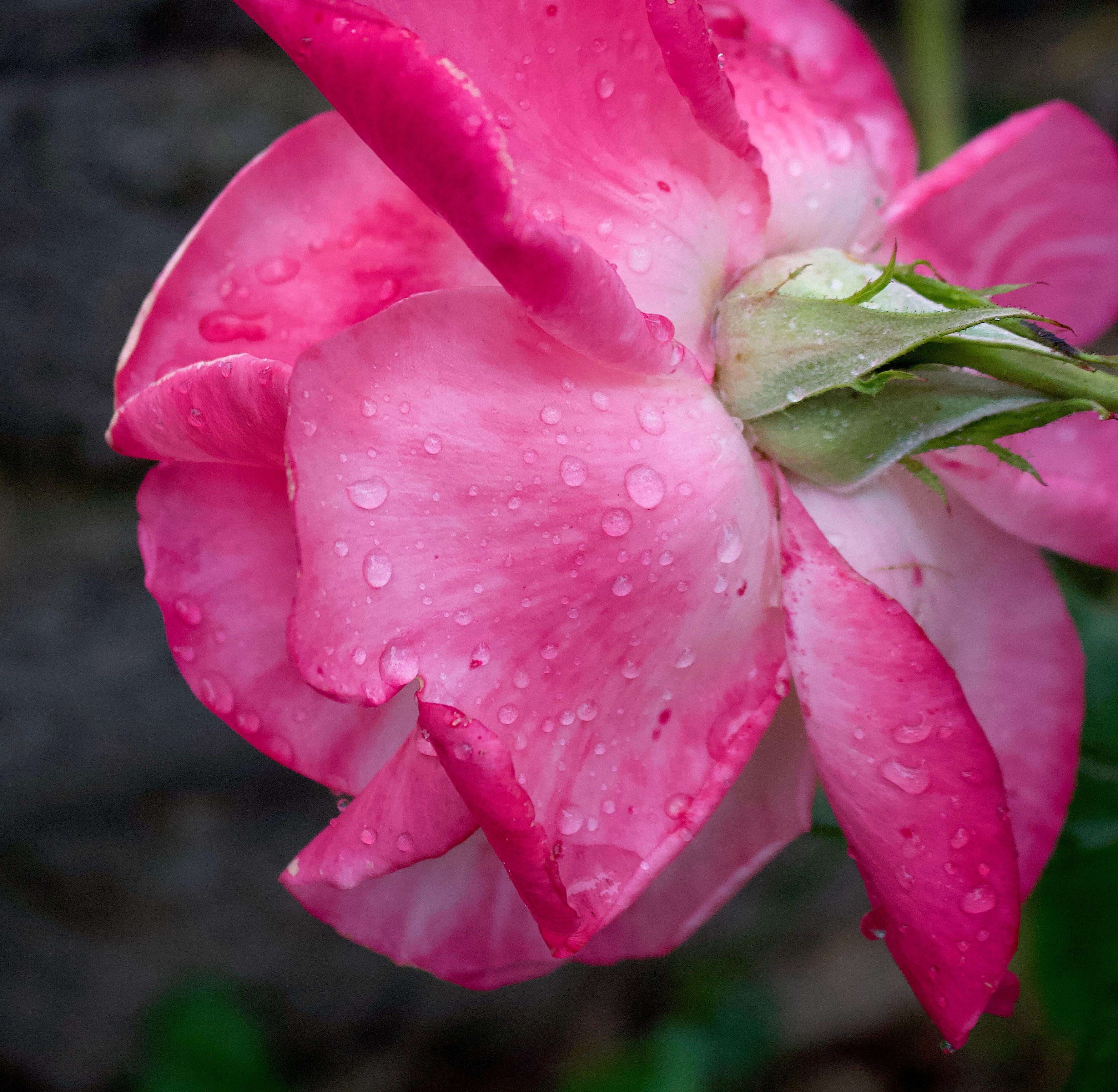
I breathe deeply now of petrichor:
the scent of raindrops falling on dry land
as if I could wear it like perfume
on those sour days of drought.