There Goes the Neighborhood

She lingered in that charming little garden to say hello to the gnomes,
such a glorious infestation!
How few wizards realize just how much we can learn
from the wise little gnomes-
or, to give them their correct names, the Gernumbli gardensi.
‘Ours do know a lot of excellent swear words,’ said Ron…
J.K. Rowling in Harry Potter and the Deathly Hallows
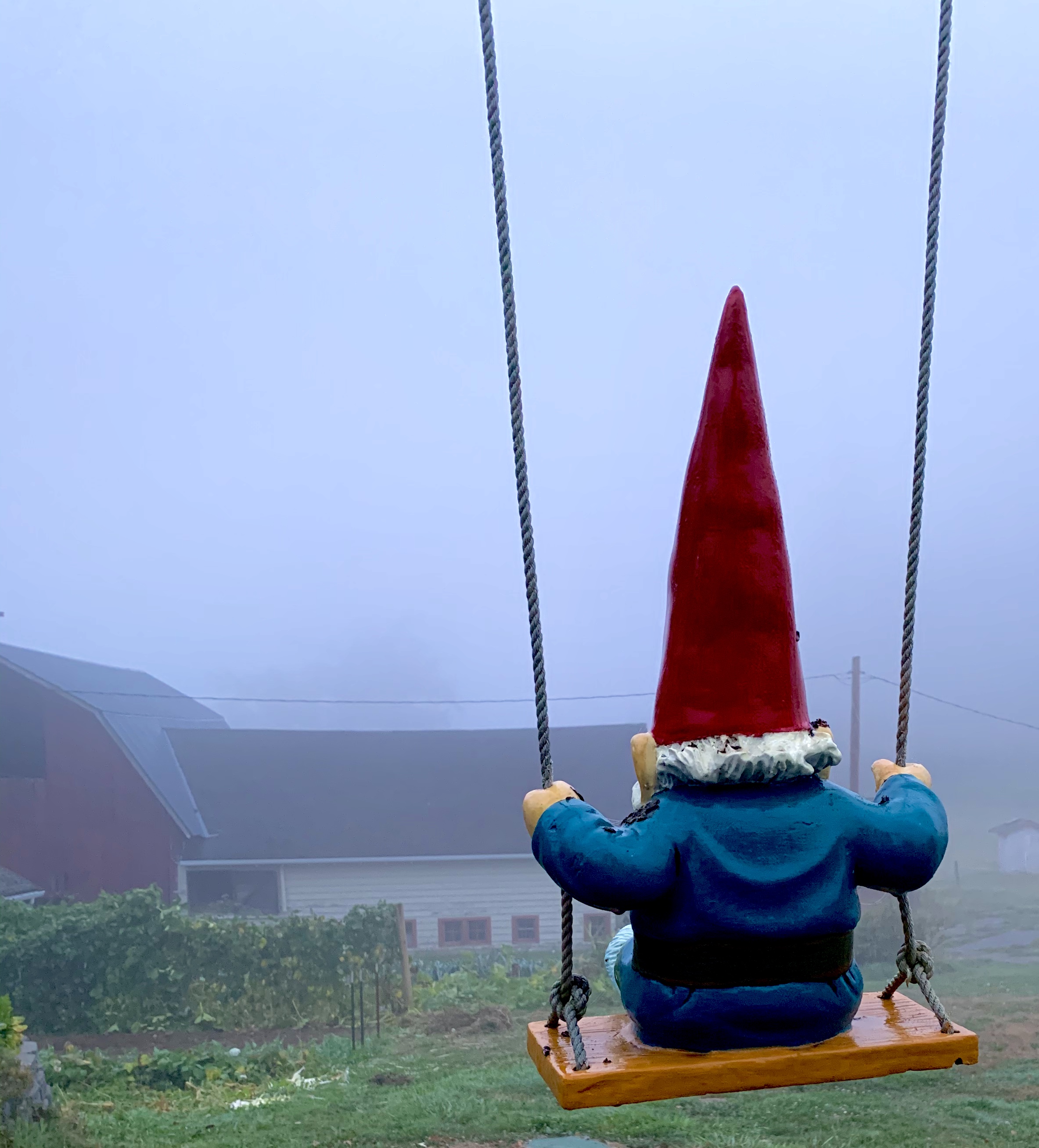
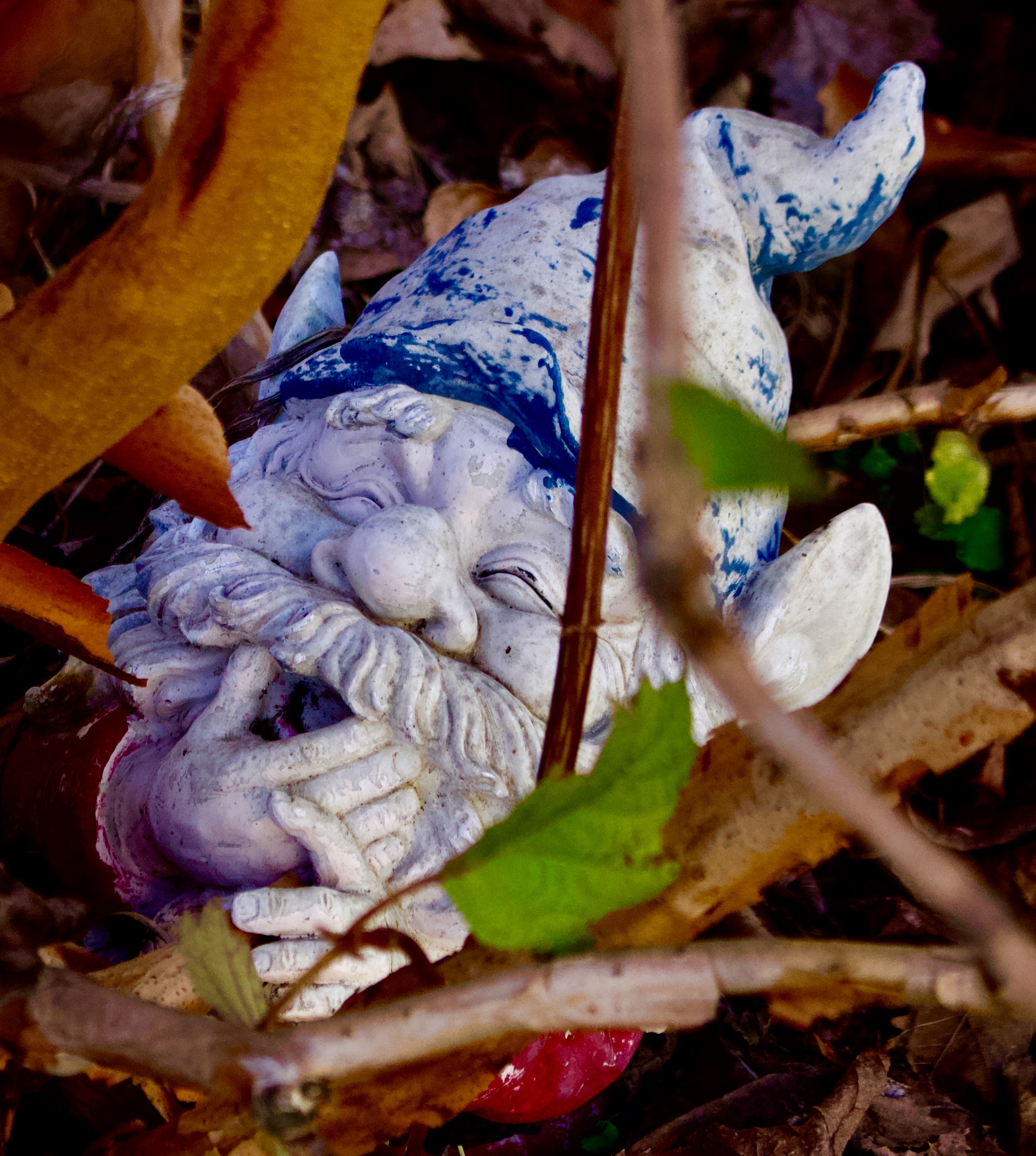
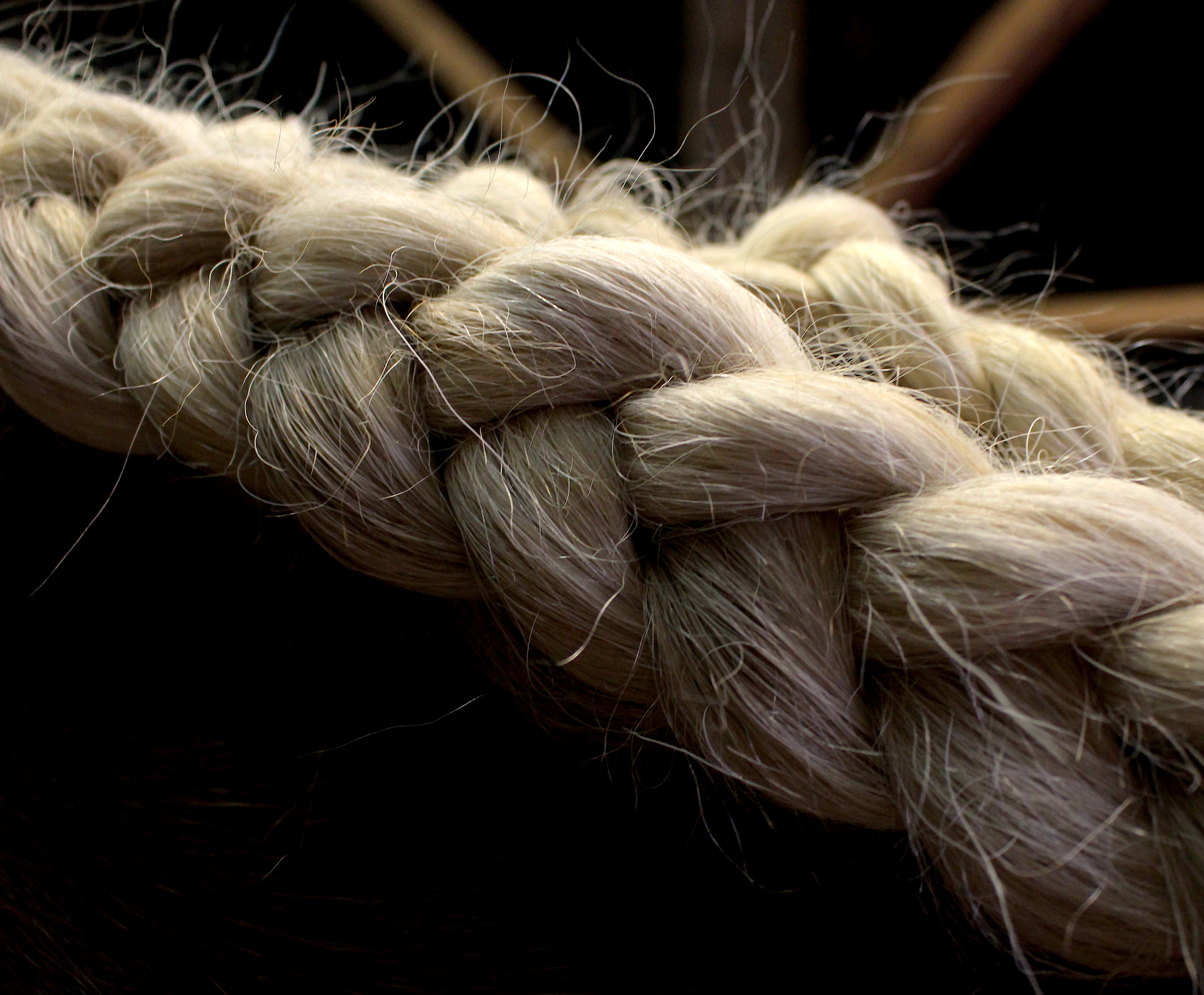
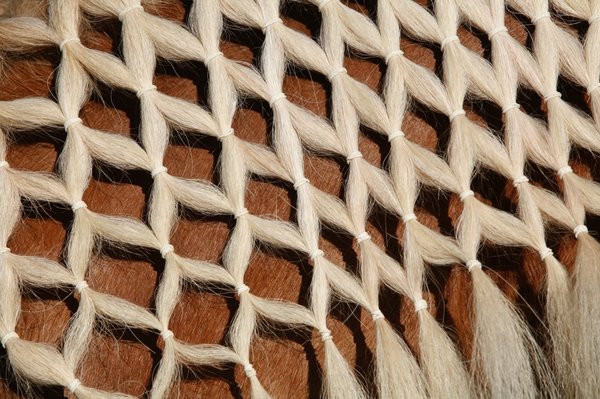
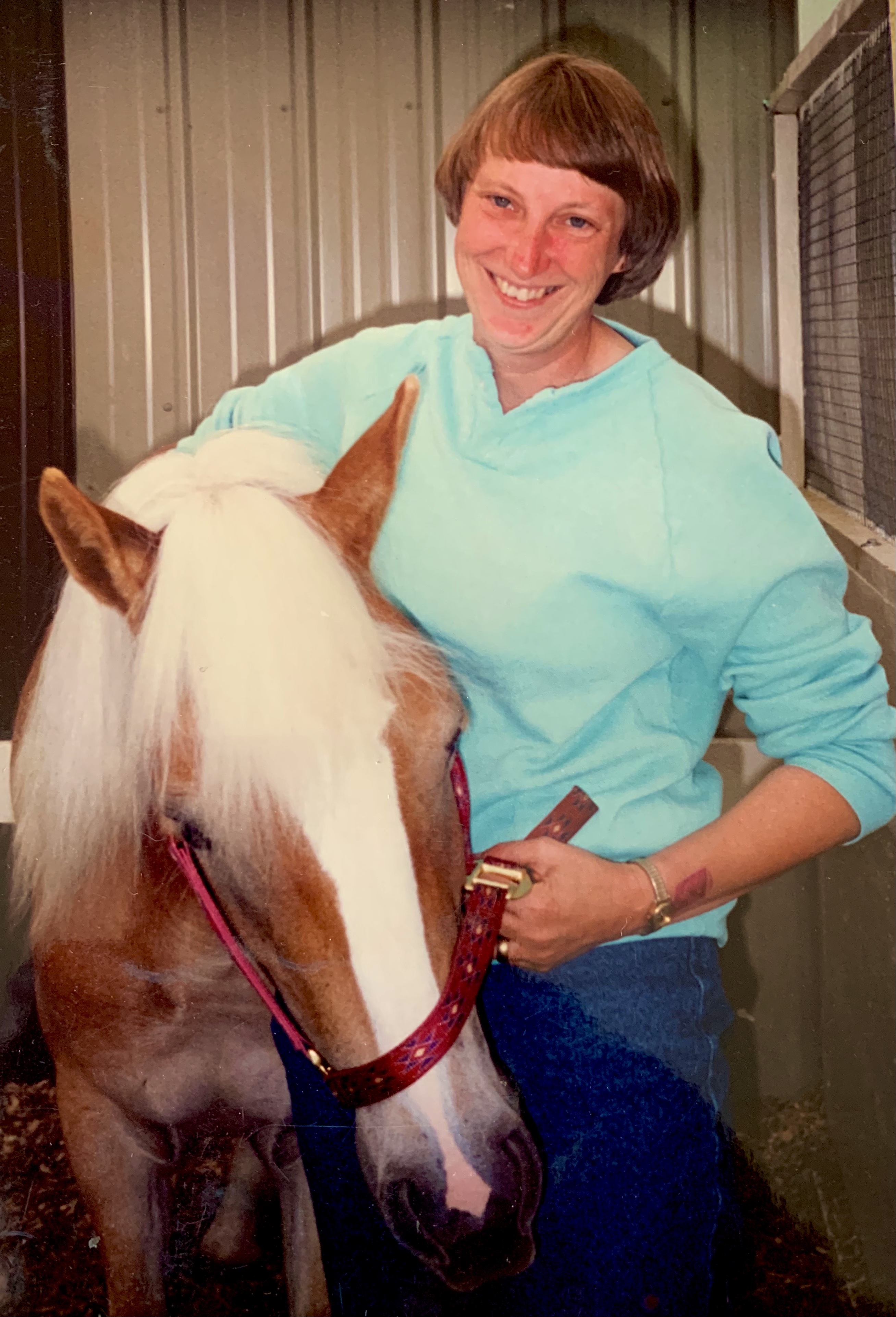
It is hard to say exactly when the first one moved in.  This farm was distinctly gnome-less when we bought it over thirty years ago, largely due to twenty-seven hungry barn cats residing here at the time in various stages of pregnancy, growth, development and aging.  It took awhile for the feline numbers to whittle down to an equilibrium that matched the rodent population.  In the mean time, our horse numbers increased from three to seven to over fifteen with a resultant exponential increase in barn chores.   One spring twenty years ago,  I was surprised to walk in the barn one morning to find numerous complex knots tied in the Haflingers’ manes.  Puzzling as I took precious time to undo them, literally adding hours to my chores, I knew I needed to find the cause or culprit.
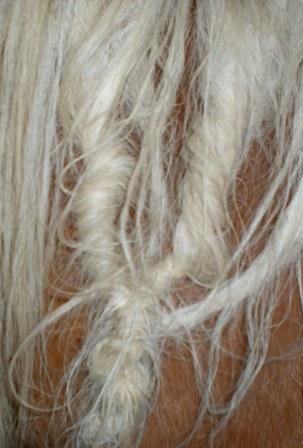
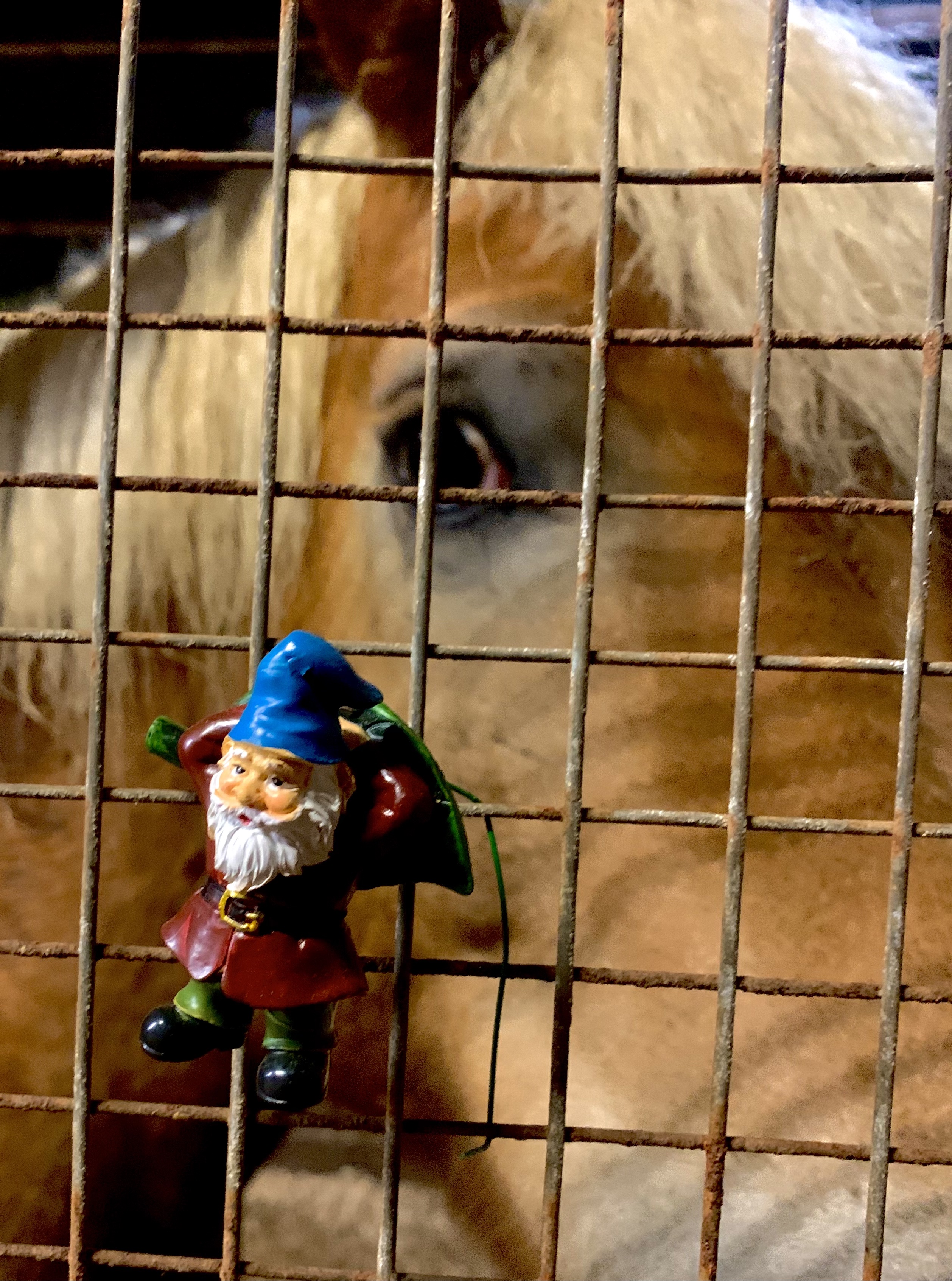
It took some research to determine the probable origin of these tight tangles.  Based on everything I researched, they appeared to be the work of Gernumbli faenilesi, a usually transient species of gnome preferring to live in barns and haylofts in close proximity to heavy maned ponies.  In this case, as the tangles persisted for months, they clearly had moved in, lock, stock and barrel.   The complicated knots were their signature pride and joy, their artistic way of showing their devotion to a happy farm.

All well and good, but the extra work was killing my fingers and thinning my horses’ hair.  I plotted ways to get them to cease and desist.

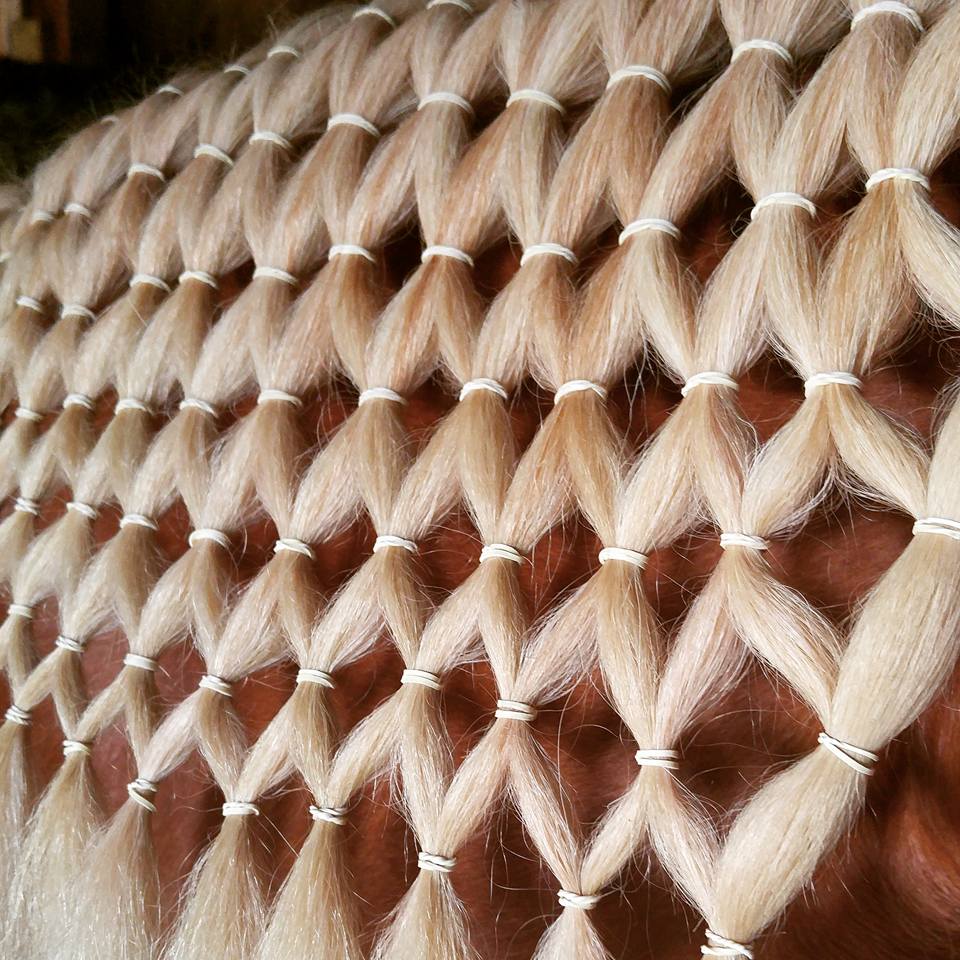
I set live traps of cheese and peanut butter cracker sandwiches, hoping to lure them into cages for a “catch and release”. Hoping to drive them away, I played polka music on the radio in the barn at night.  Hoping to be preemptive, I braided the manes up to be less tempting but even those got twisted and jumbled.  Just as I was becoming ever more desperate and about to round up more feral cats, the tangling stopped.

It appeared the gnomes had moved on to a more hospitable habitat.  Apparently I had succeeded in my gnome eradication plan. 

Or so I thought.
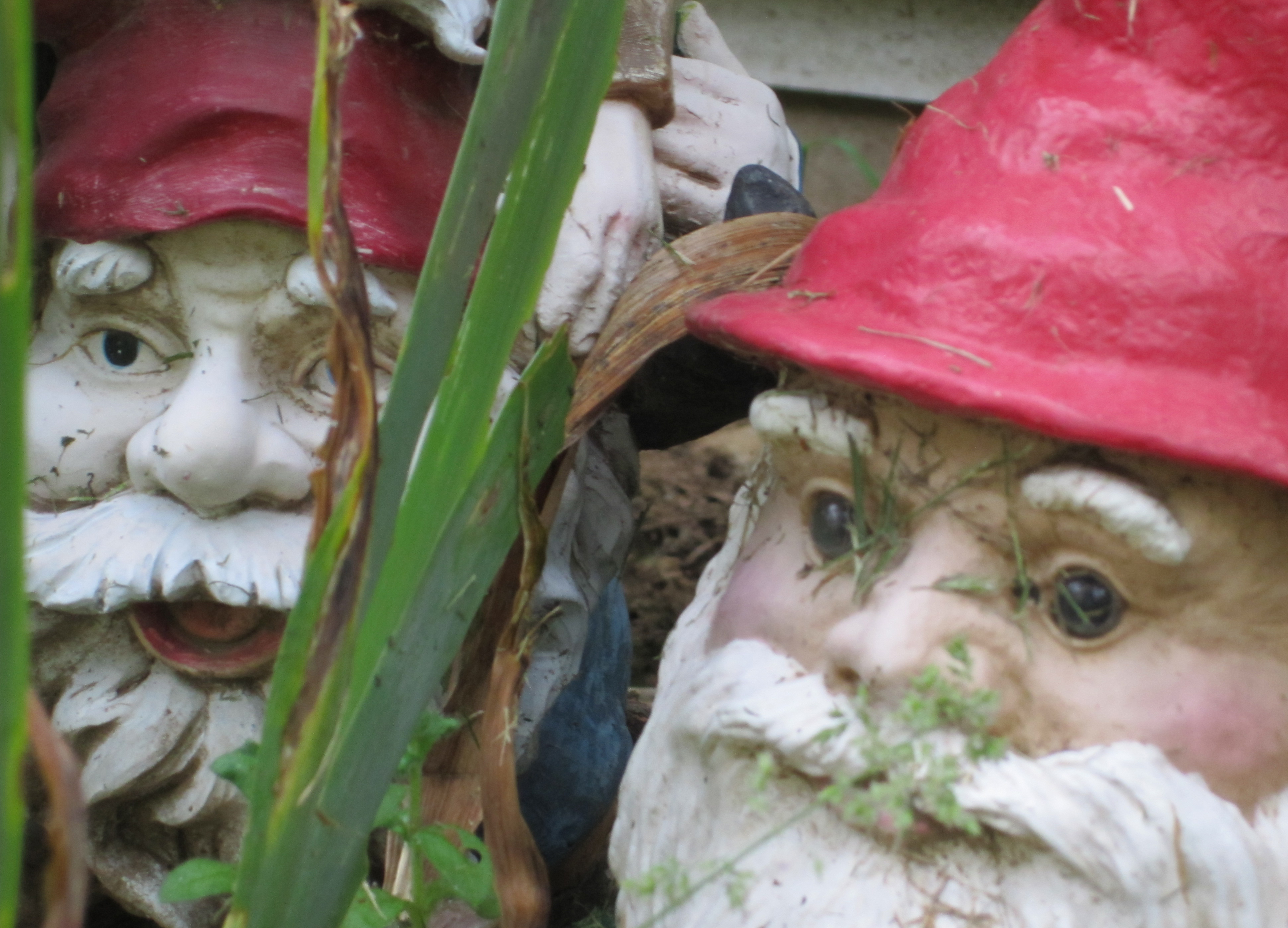
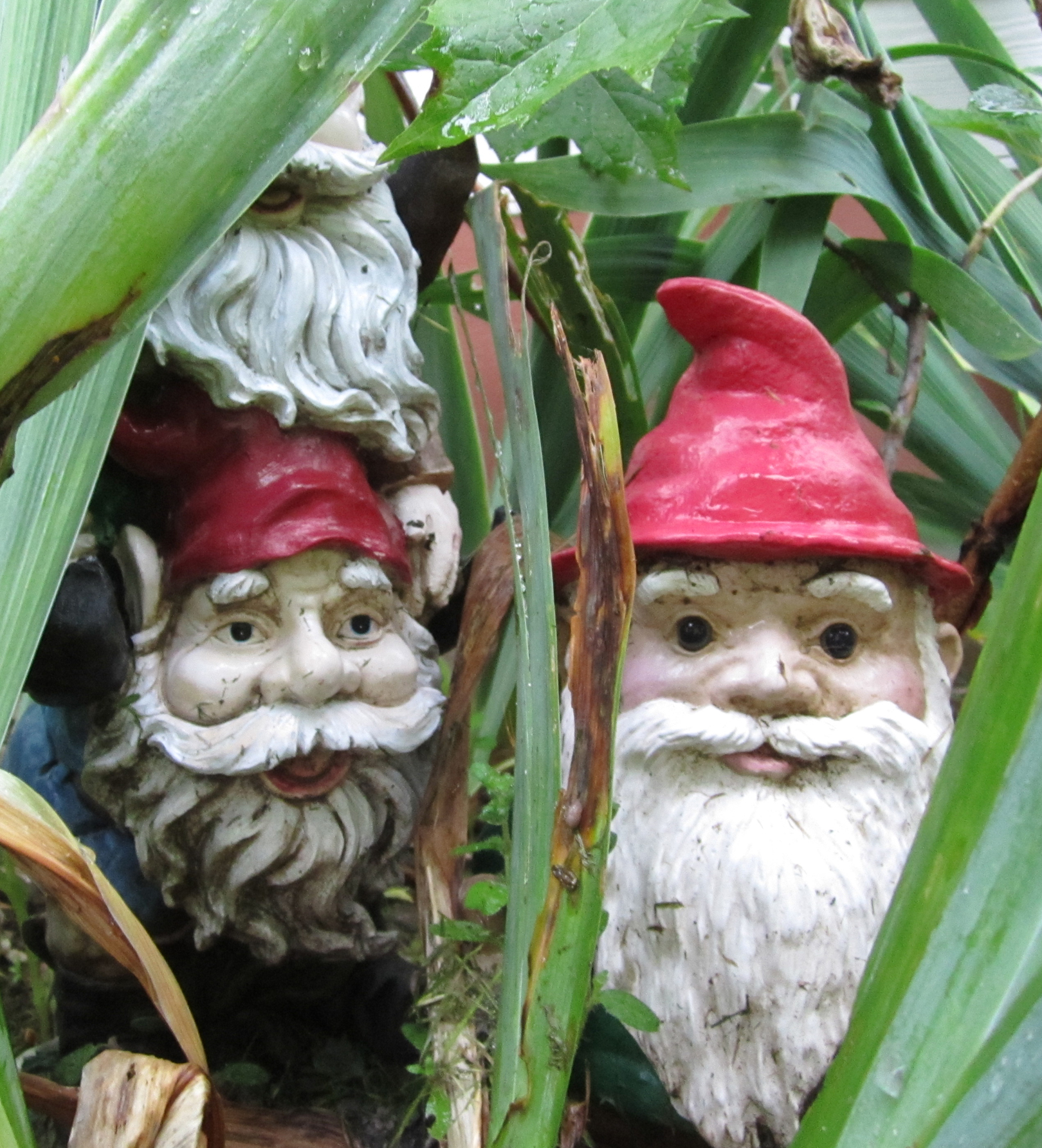
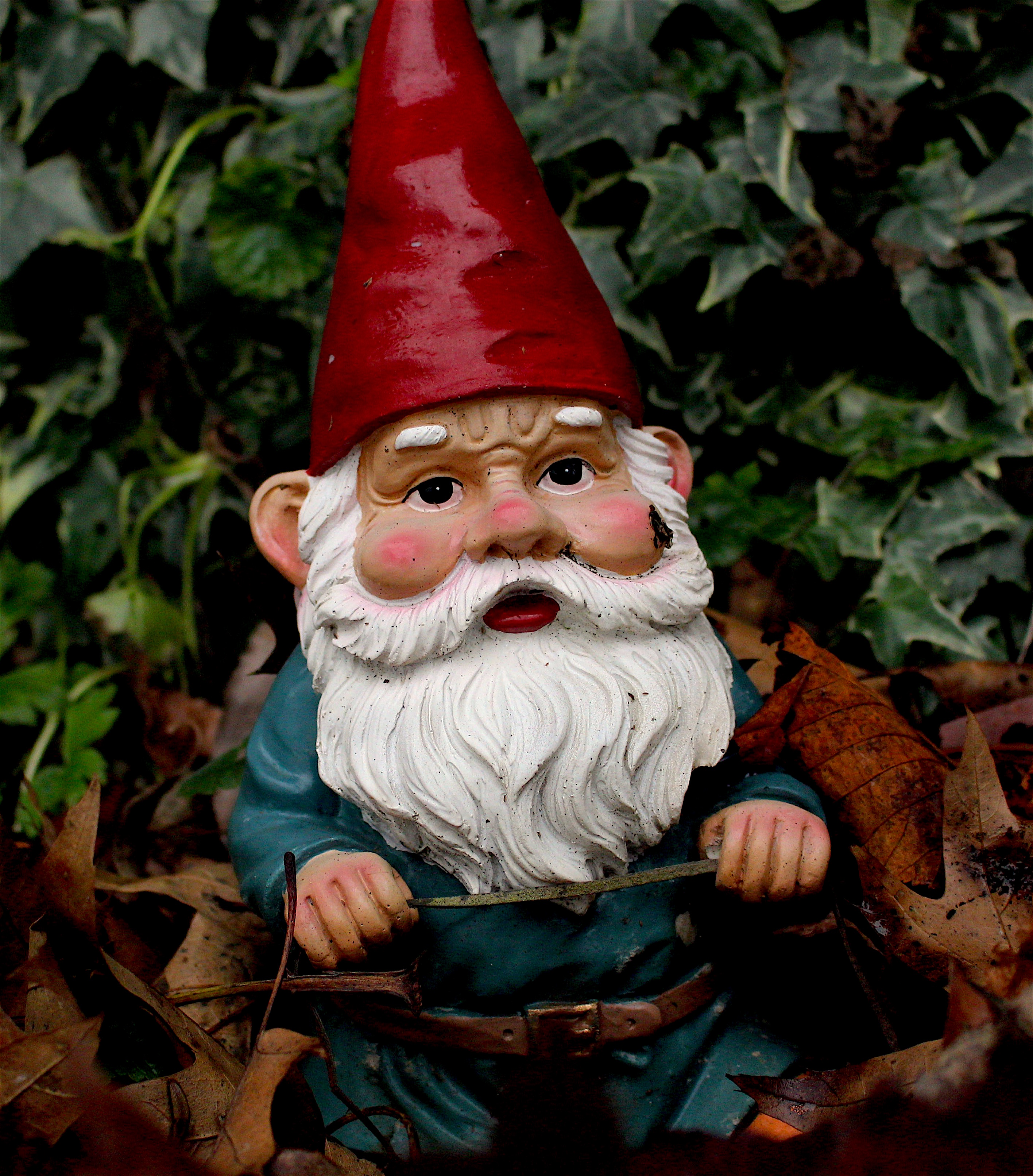
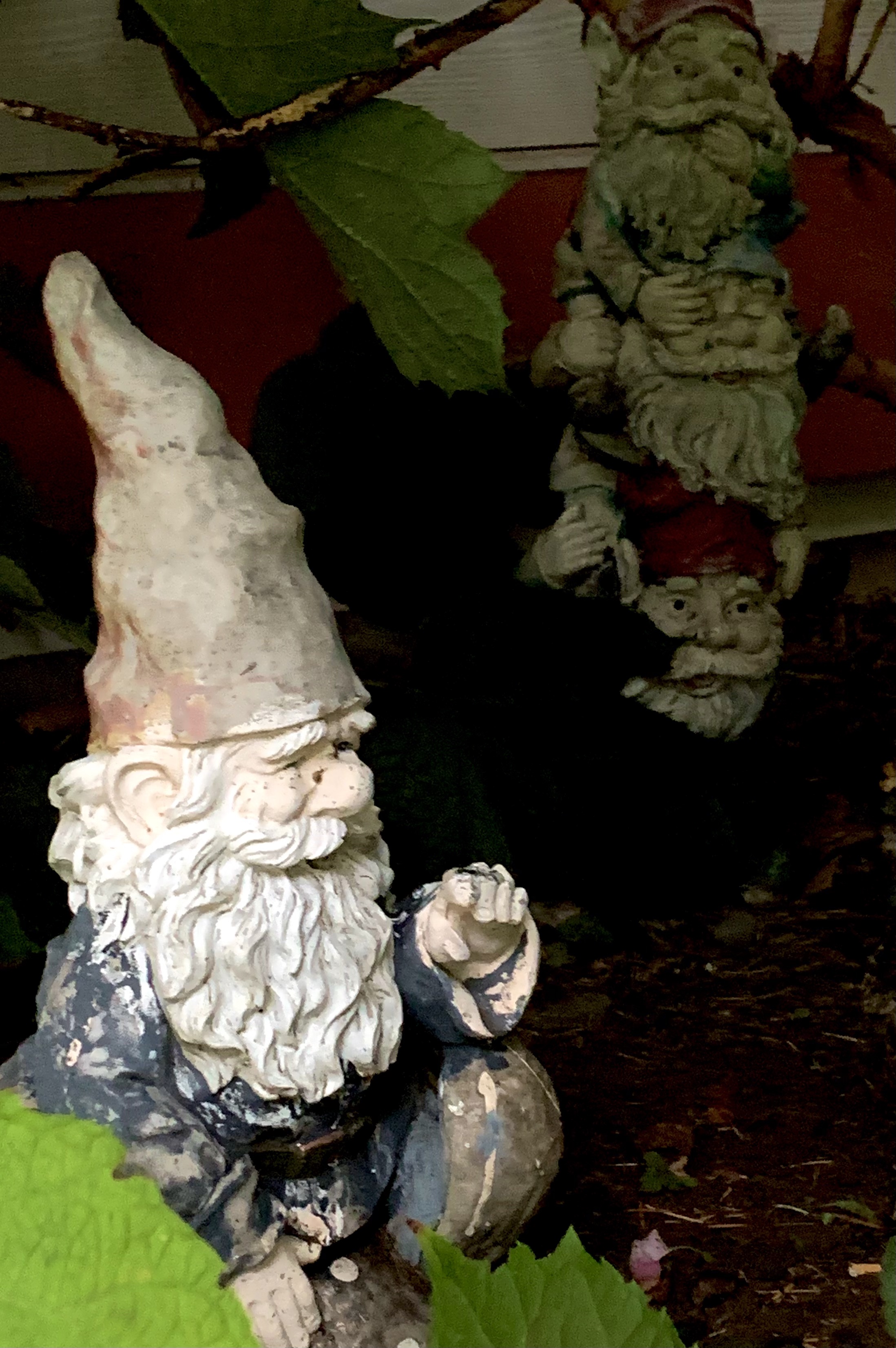
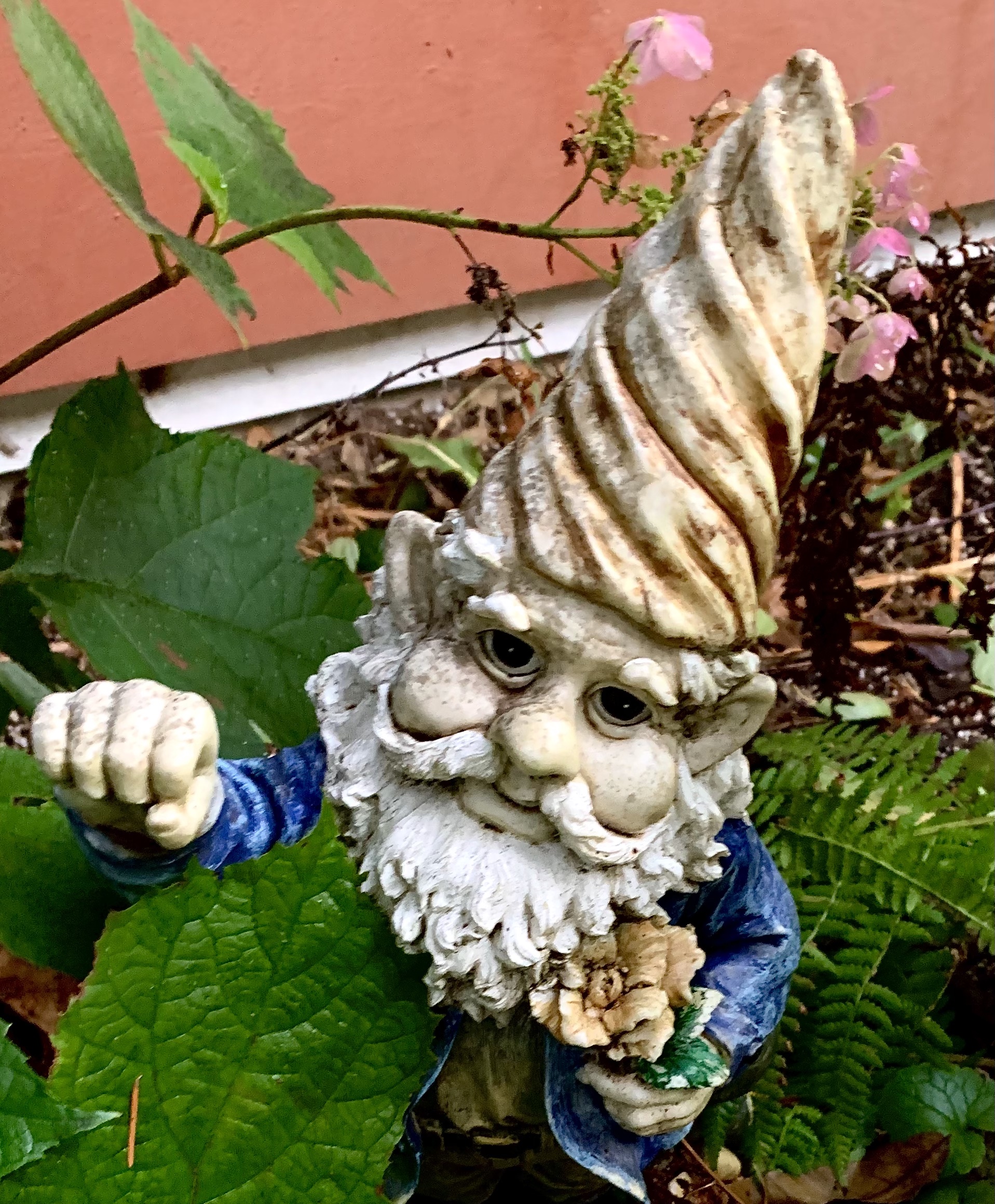
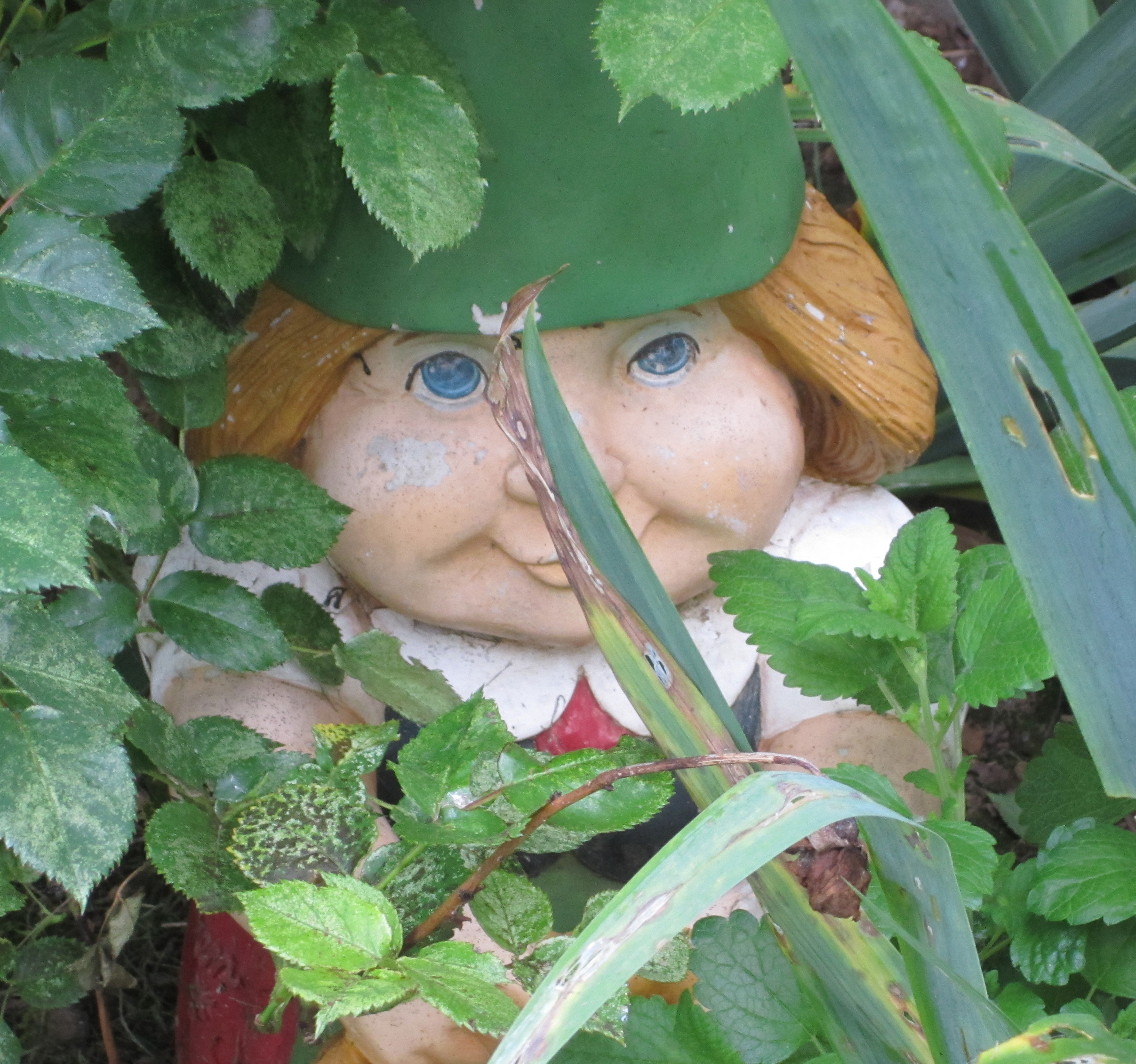
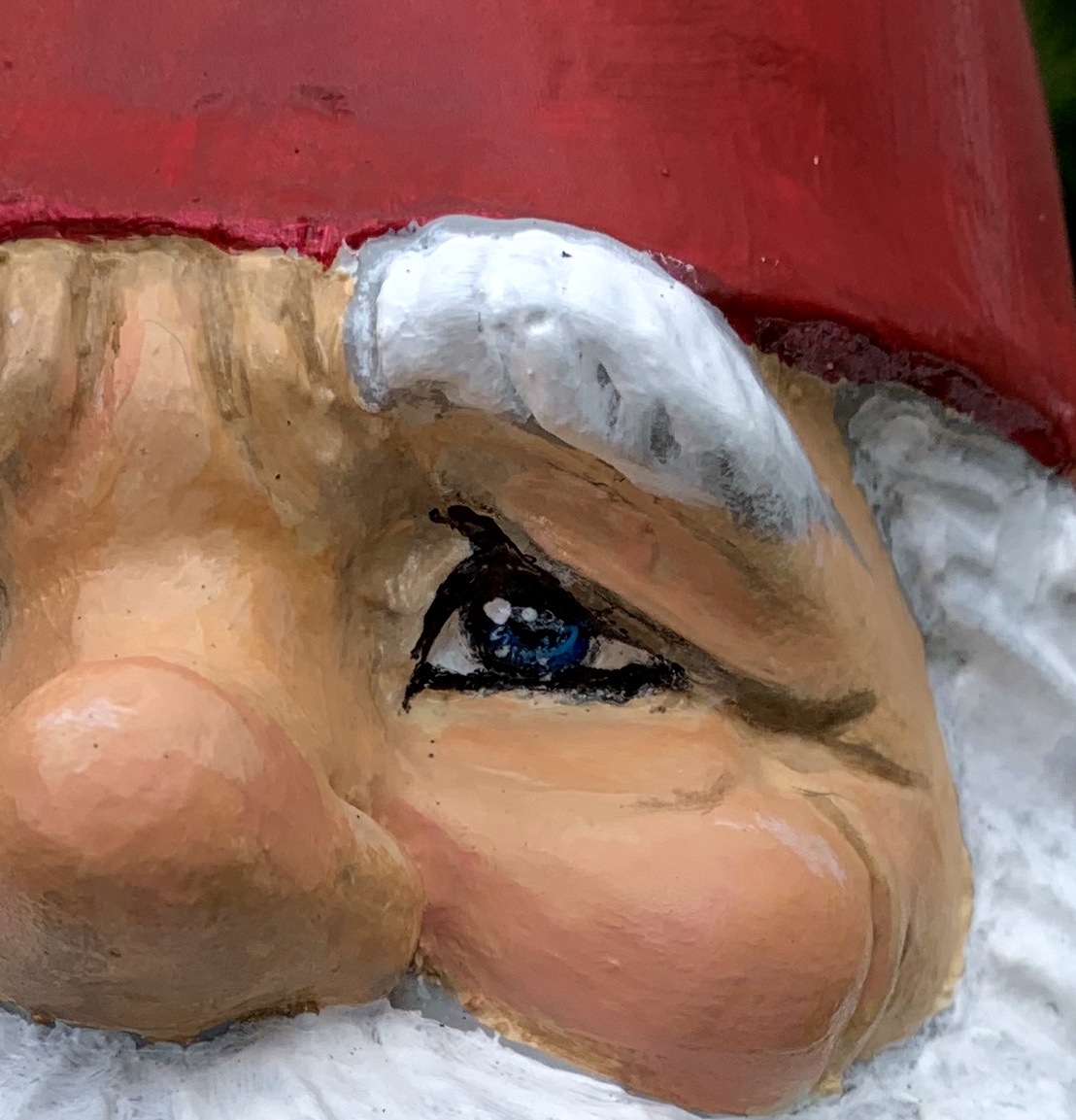
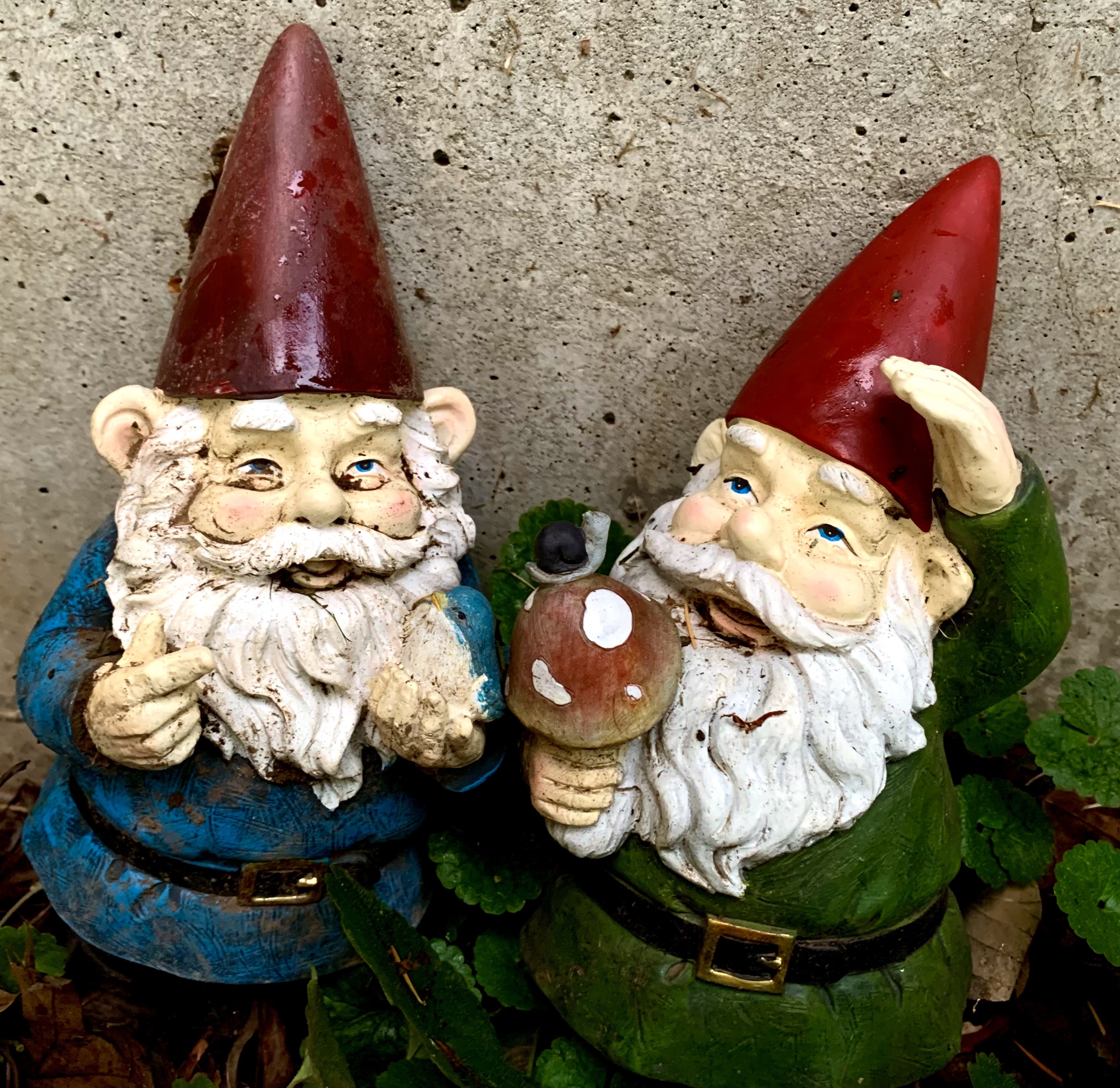
Not long after, I had the distinct feeling of being watched as I walked past some rose bushes in the yard.  I stopped to take a look, expecting to spy the shining eyes of one of the pesky raccoons that frequents our yard to steal from the cats’ food dish.  Instead, beneath the thorny foliage, I saw two round blue eyes peering at me serenely.   This little gal was not at all intimidated by me, and made no move to escape.   She was an ideal example of Gernumbli gardensi, a garden gnome known for their ability to keep varmints and vermin away from plants and flowers.  They also happen to actively feud with Gernumbli Faenilesi so that explained the sudden disappearance of my little knot-tying pests in the barn.

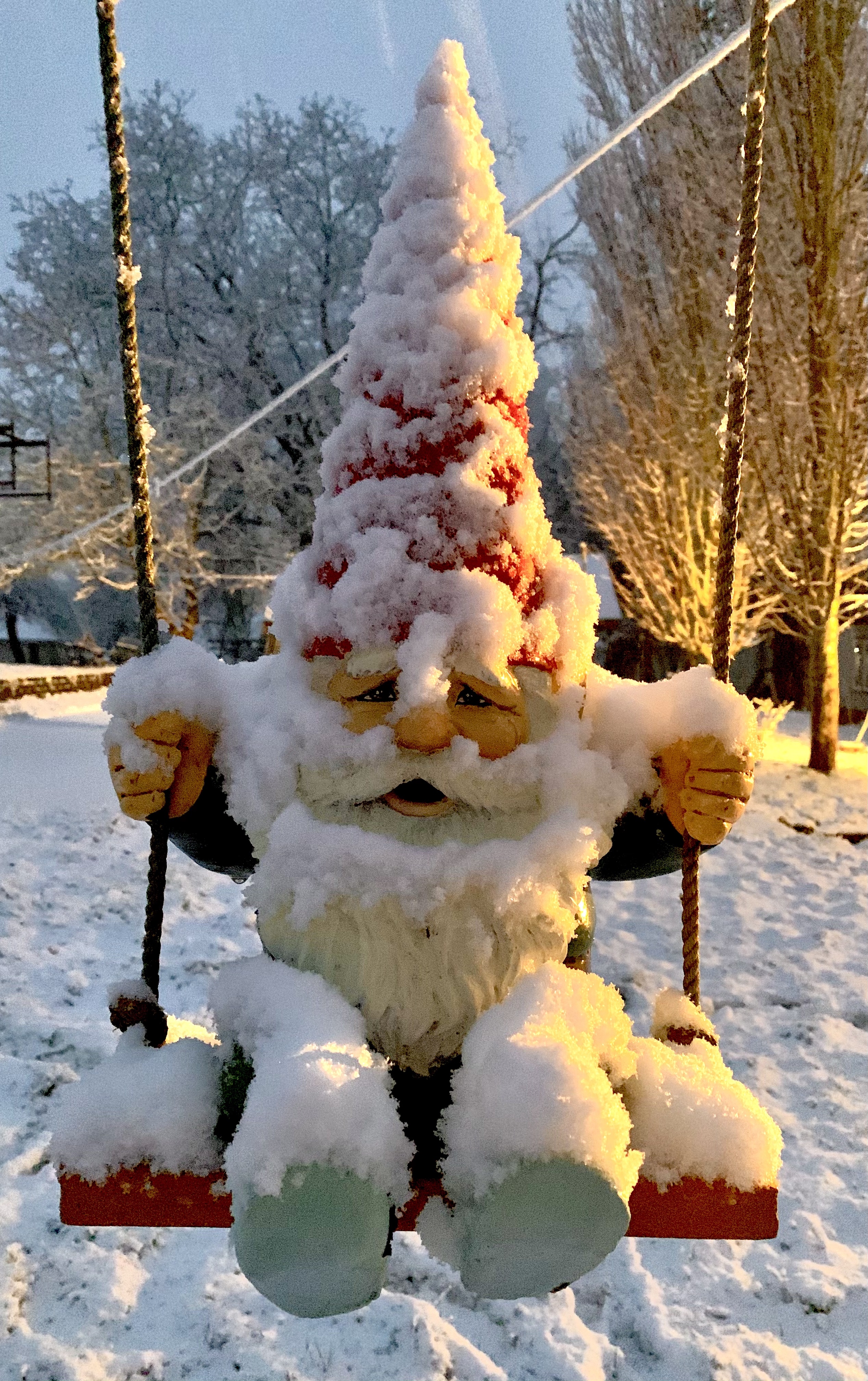
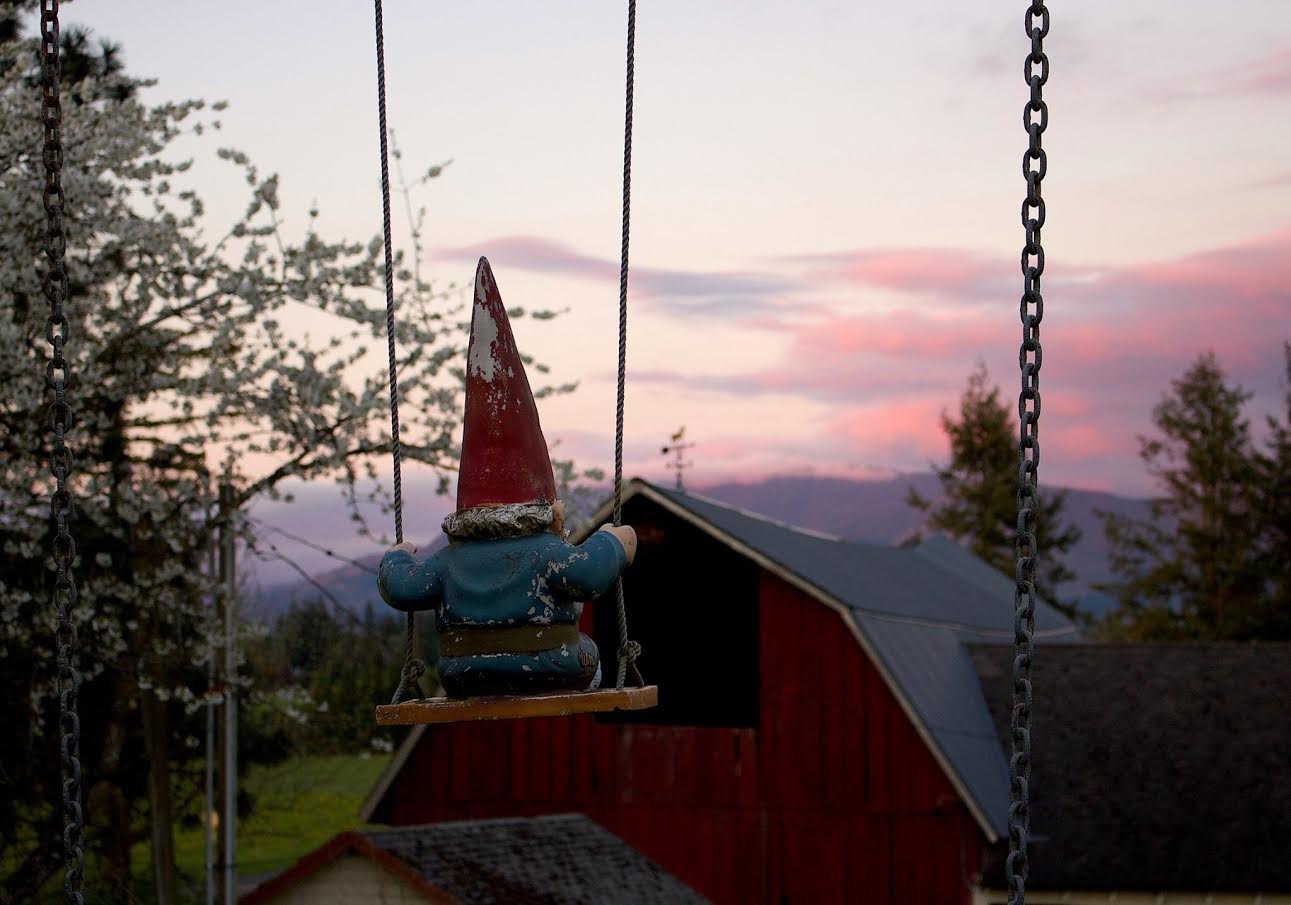
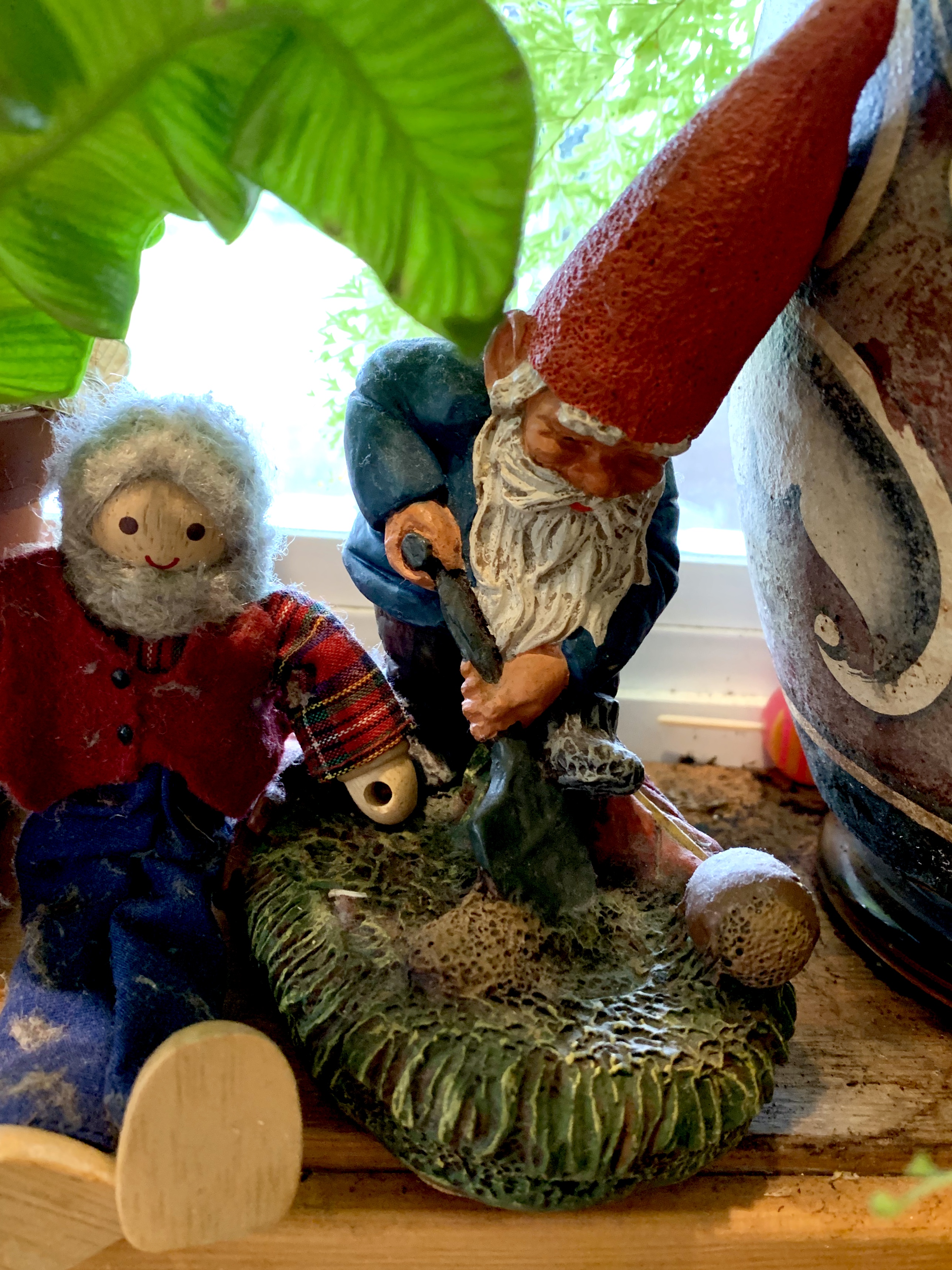
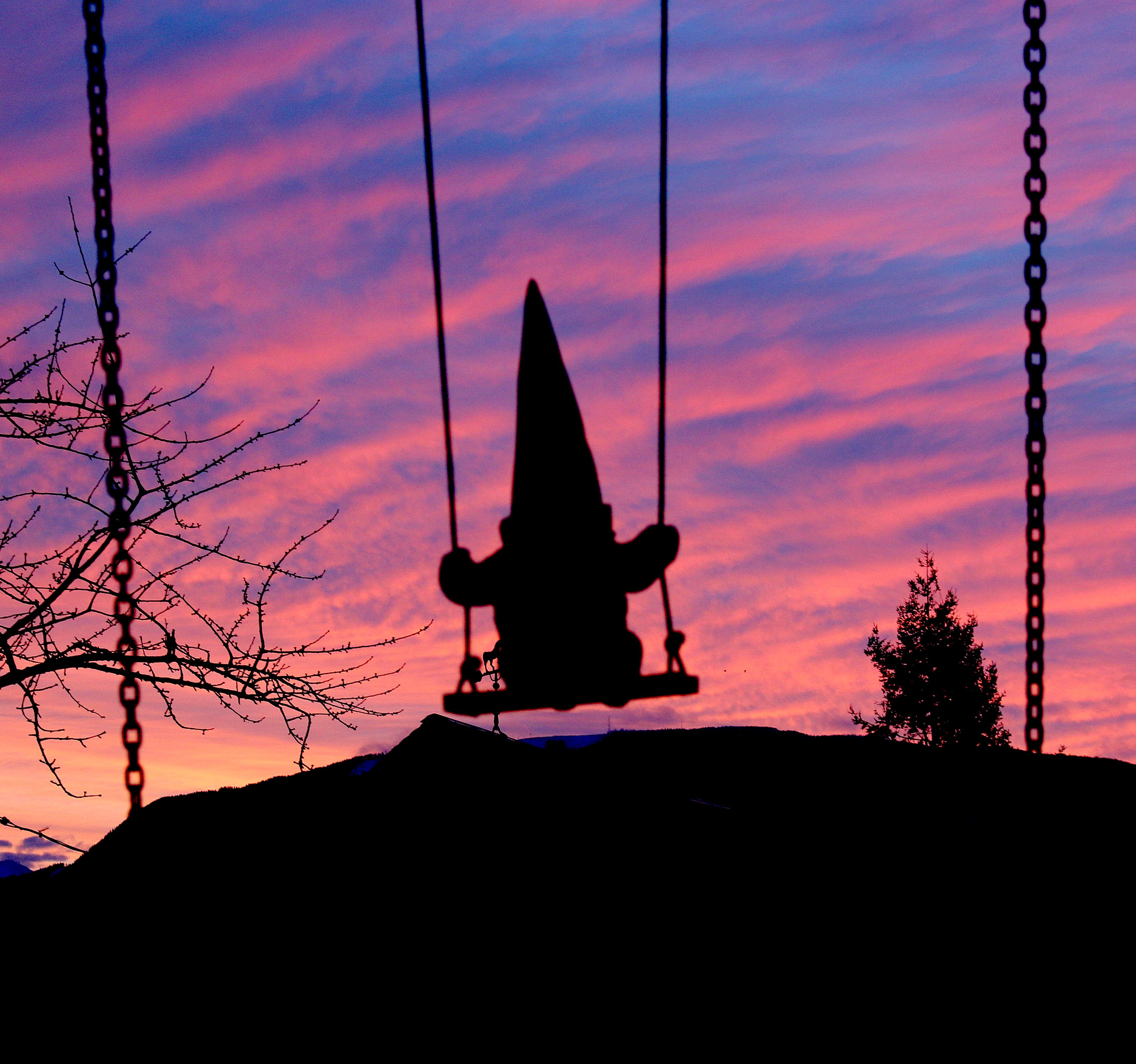
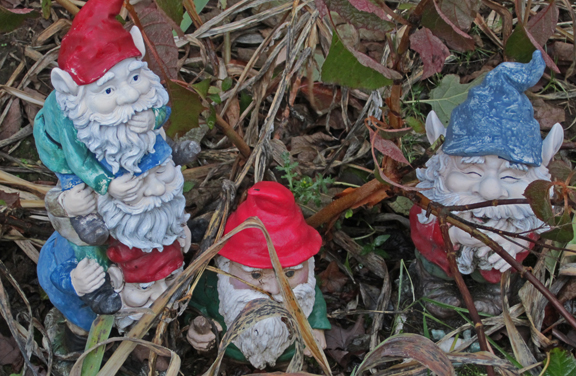
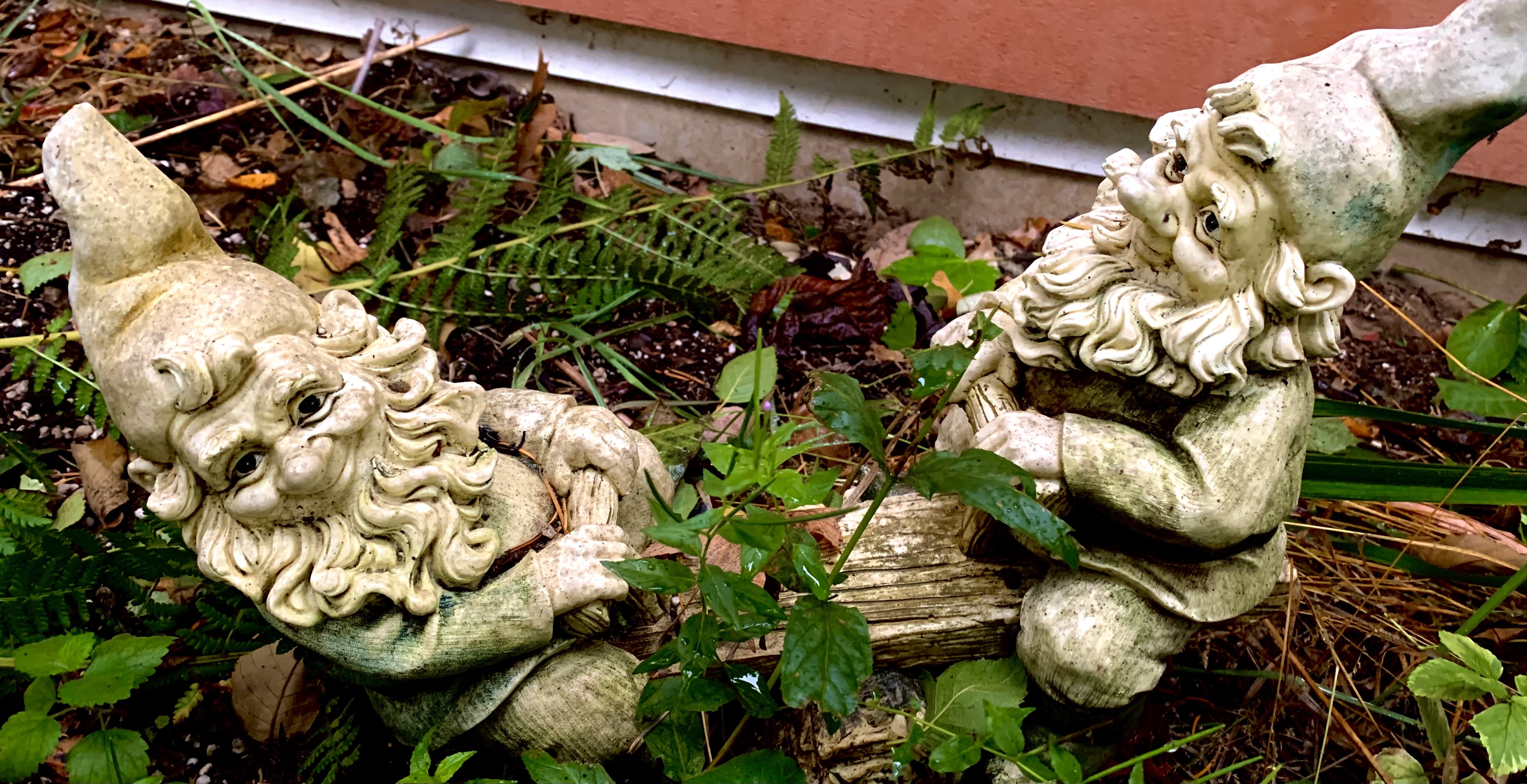
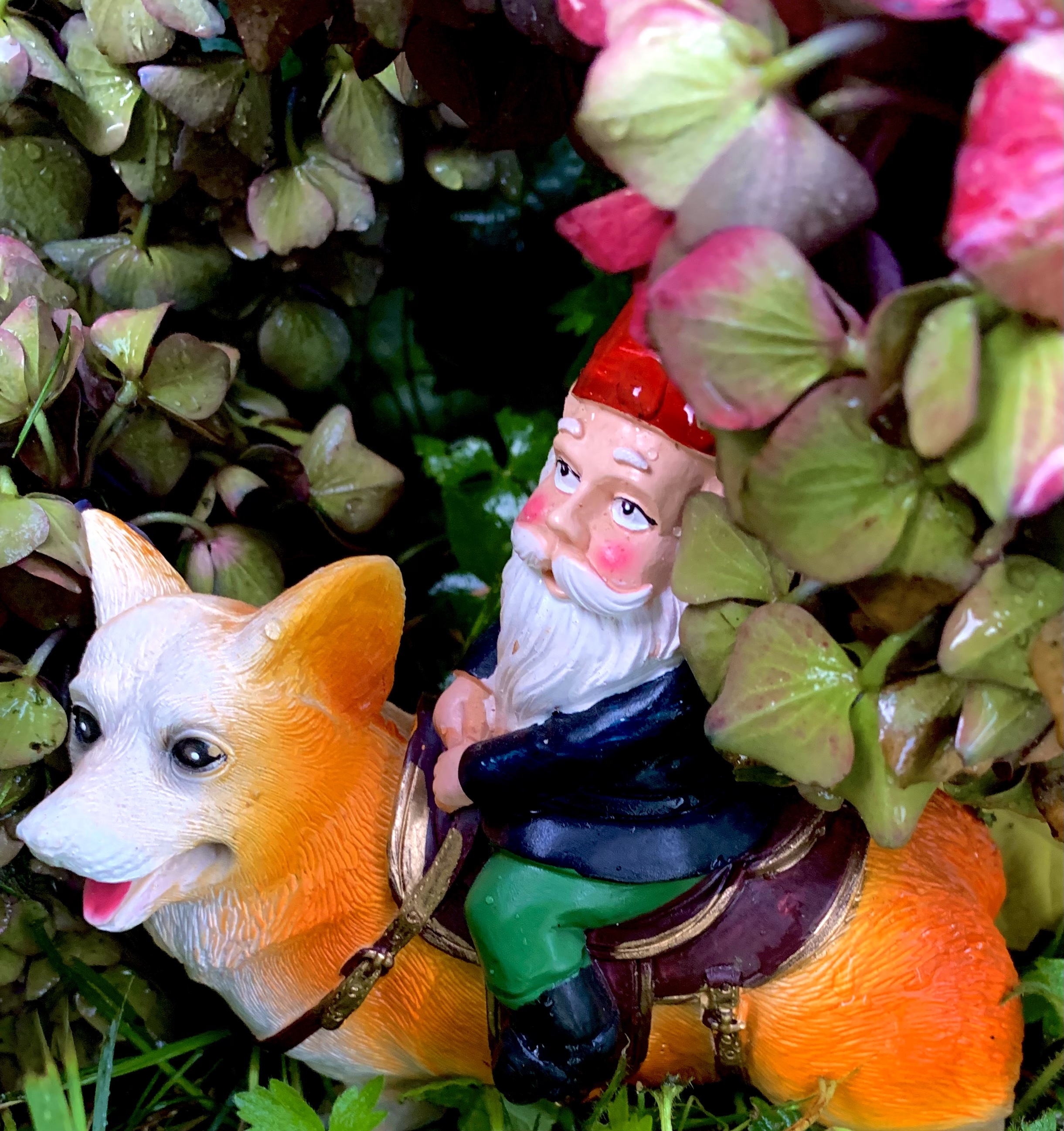
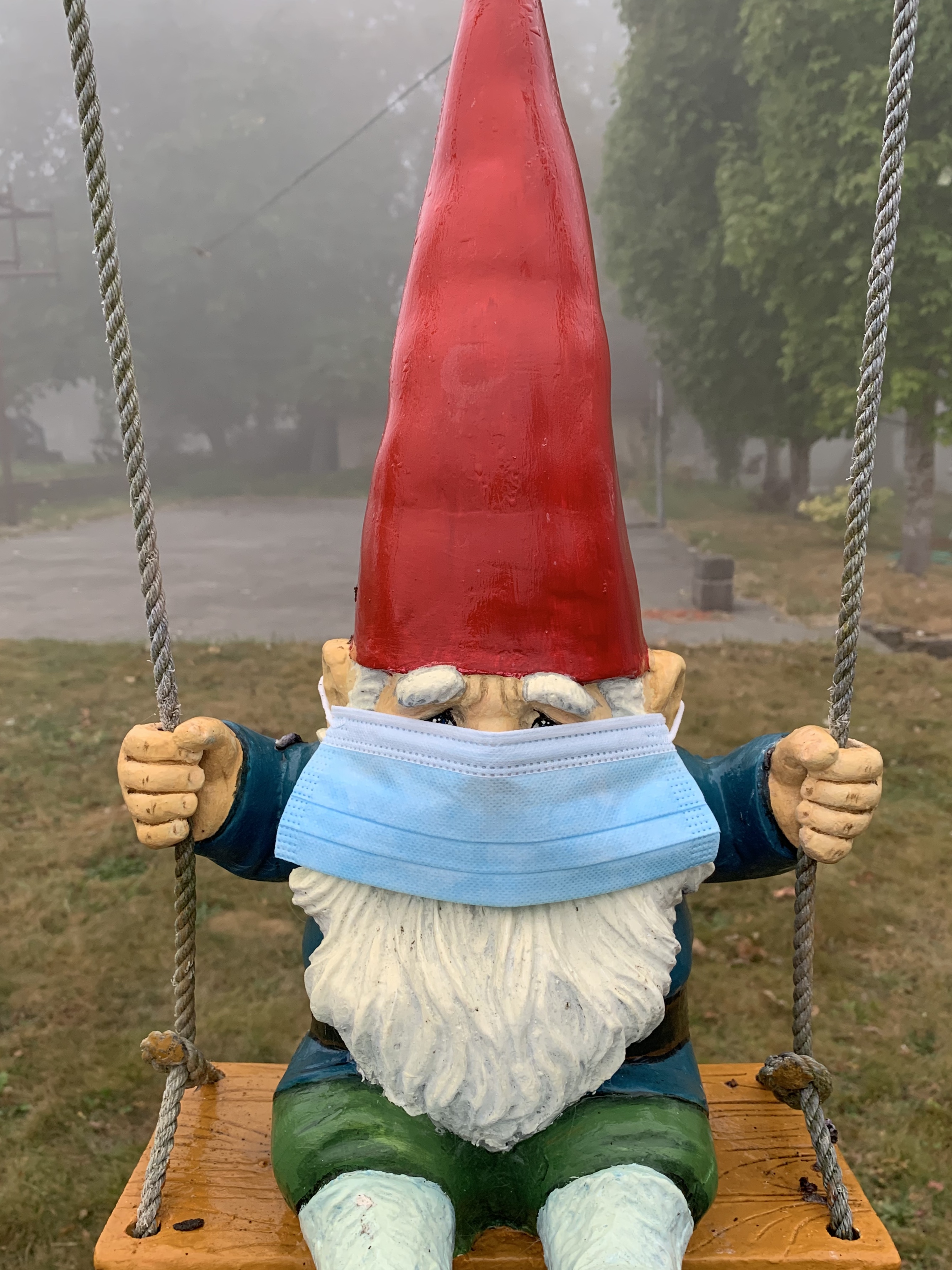
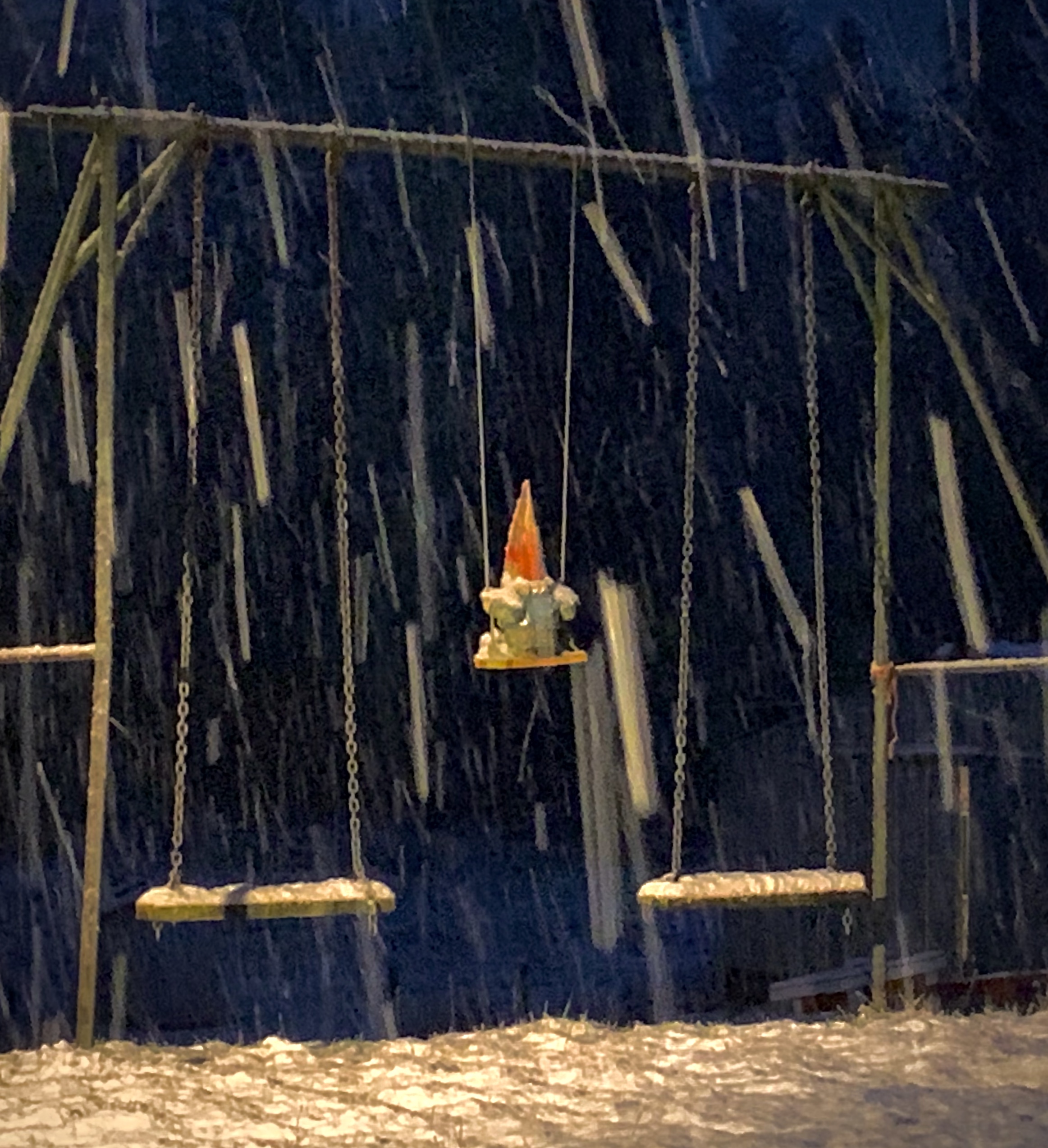
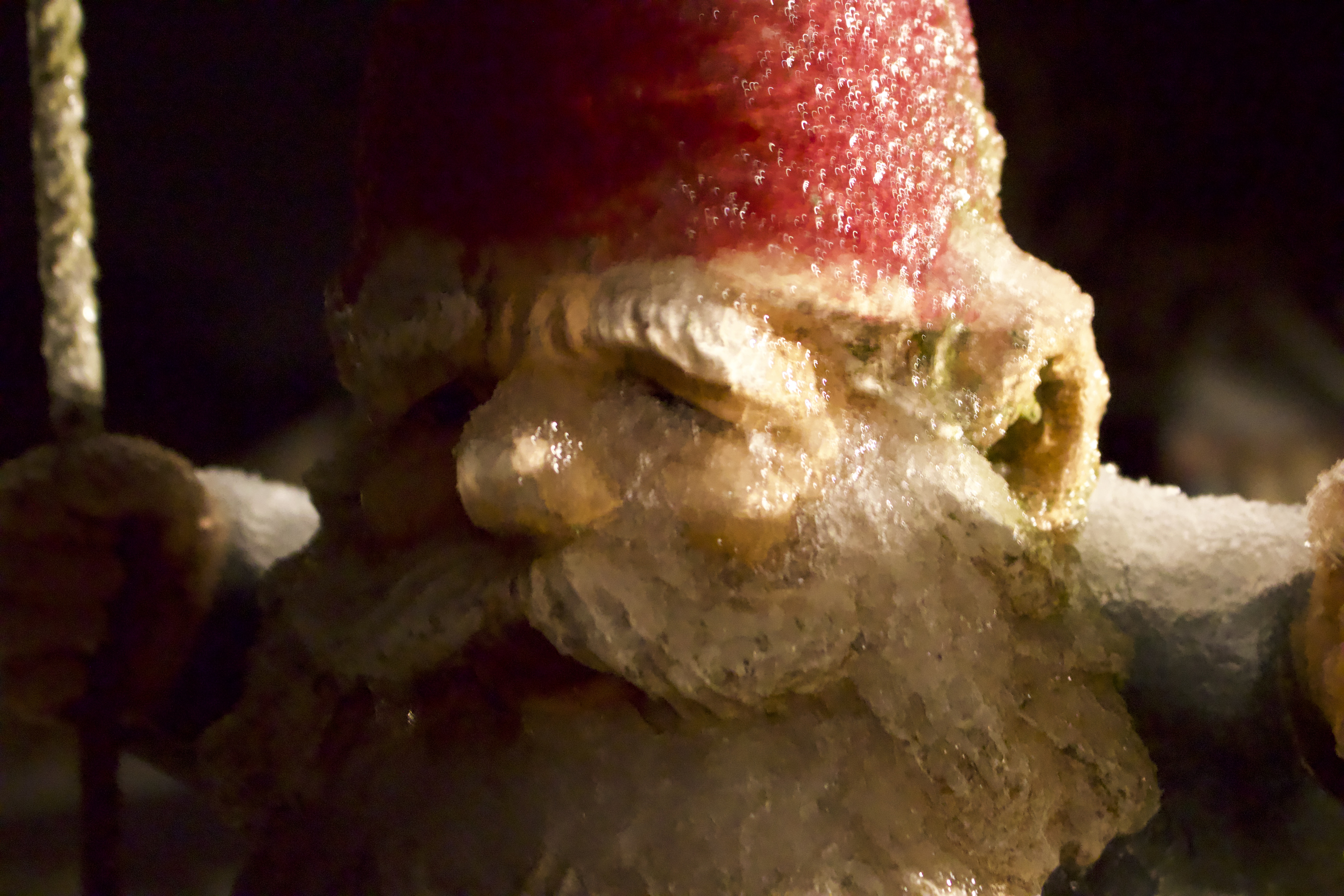
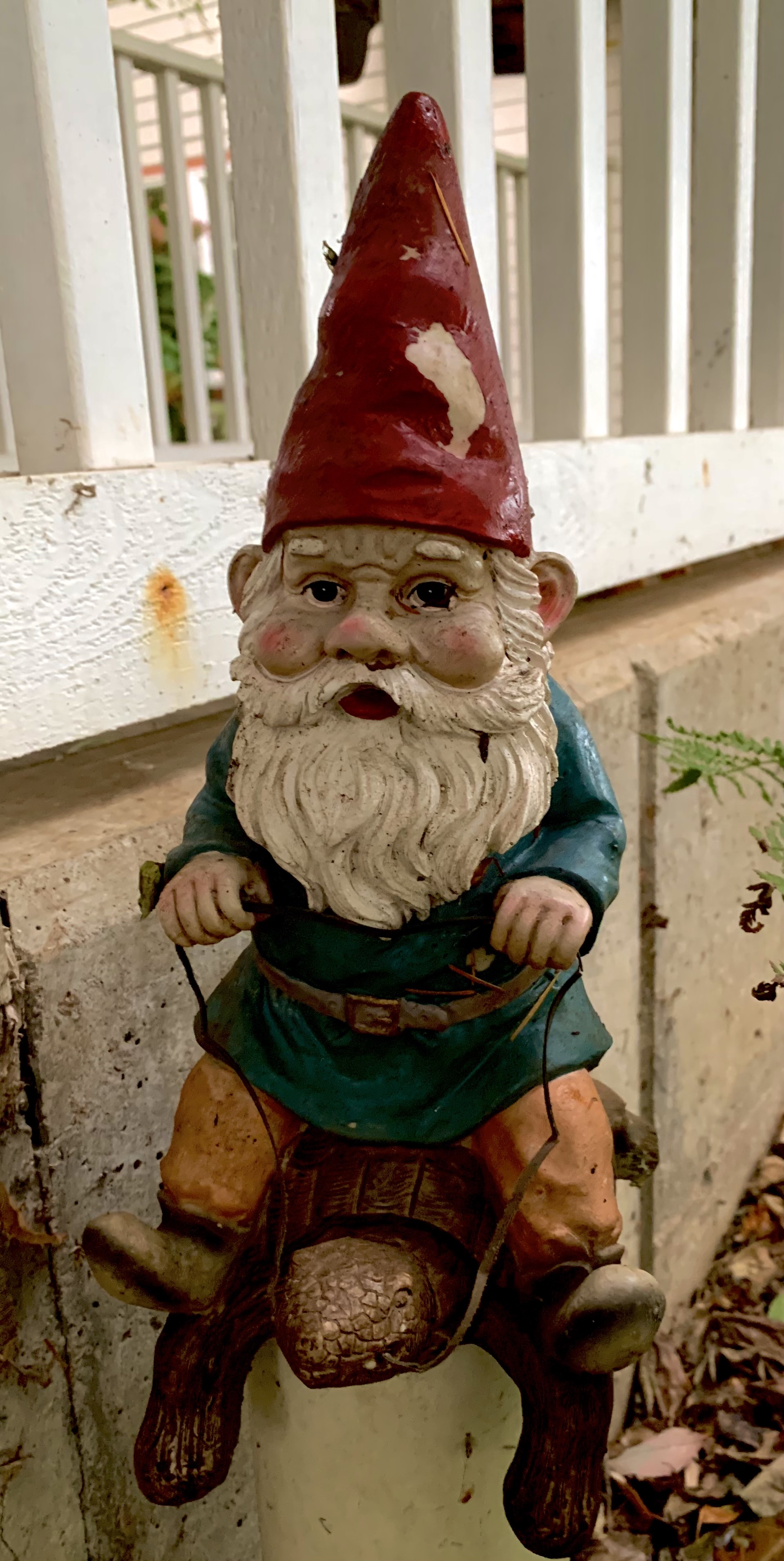
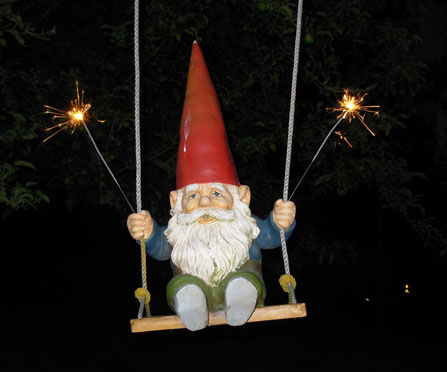
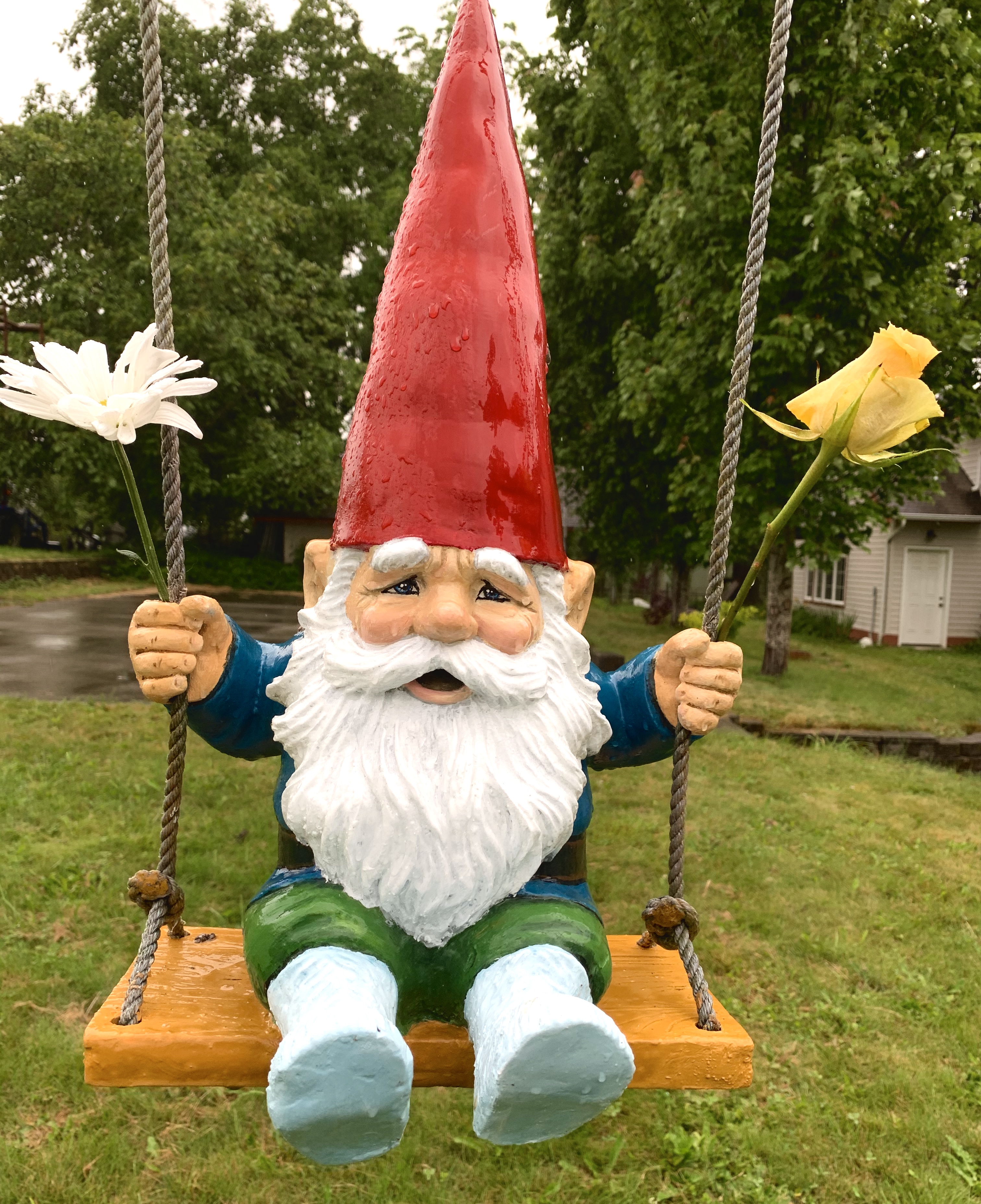
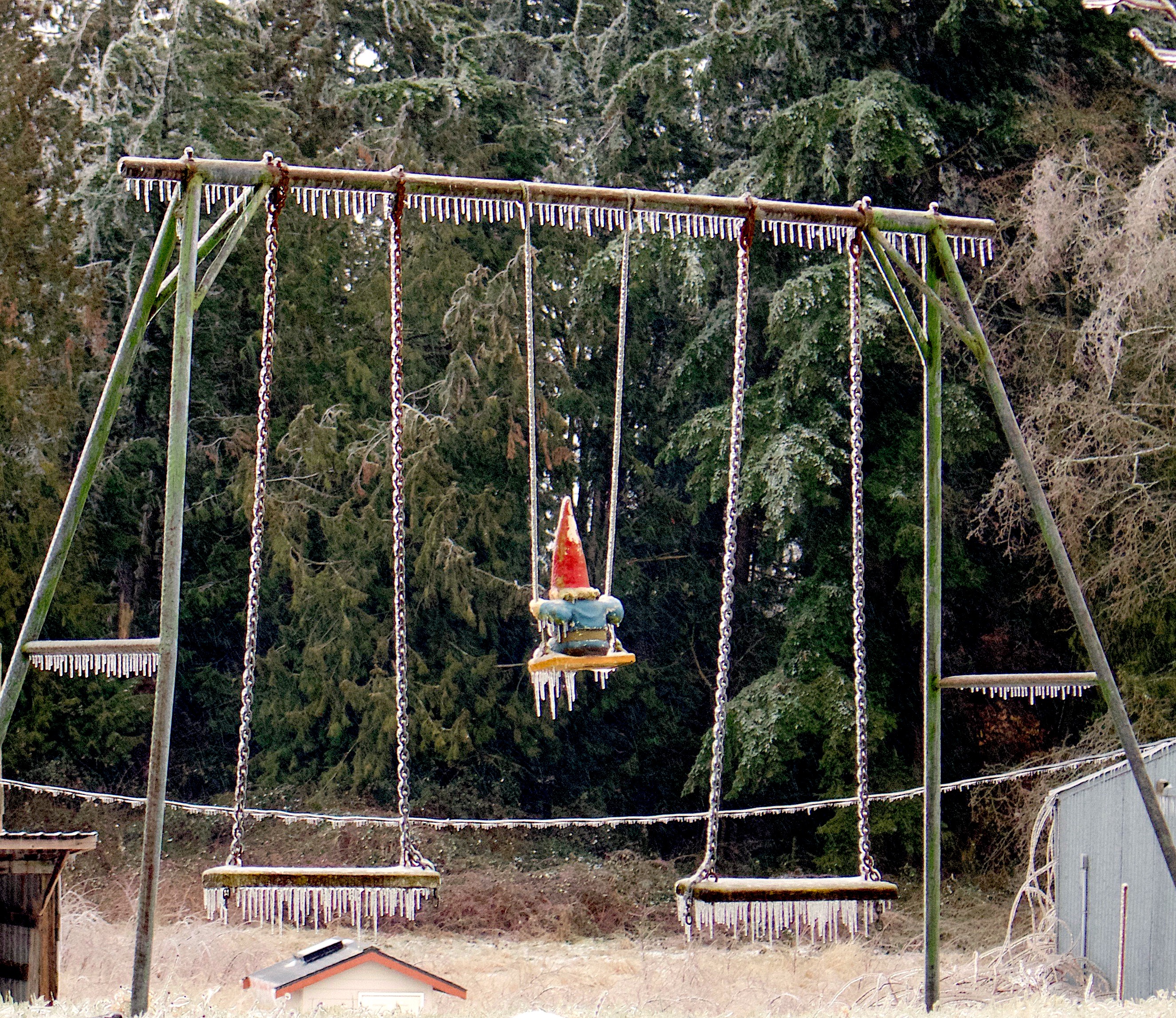
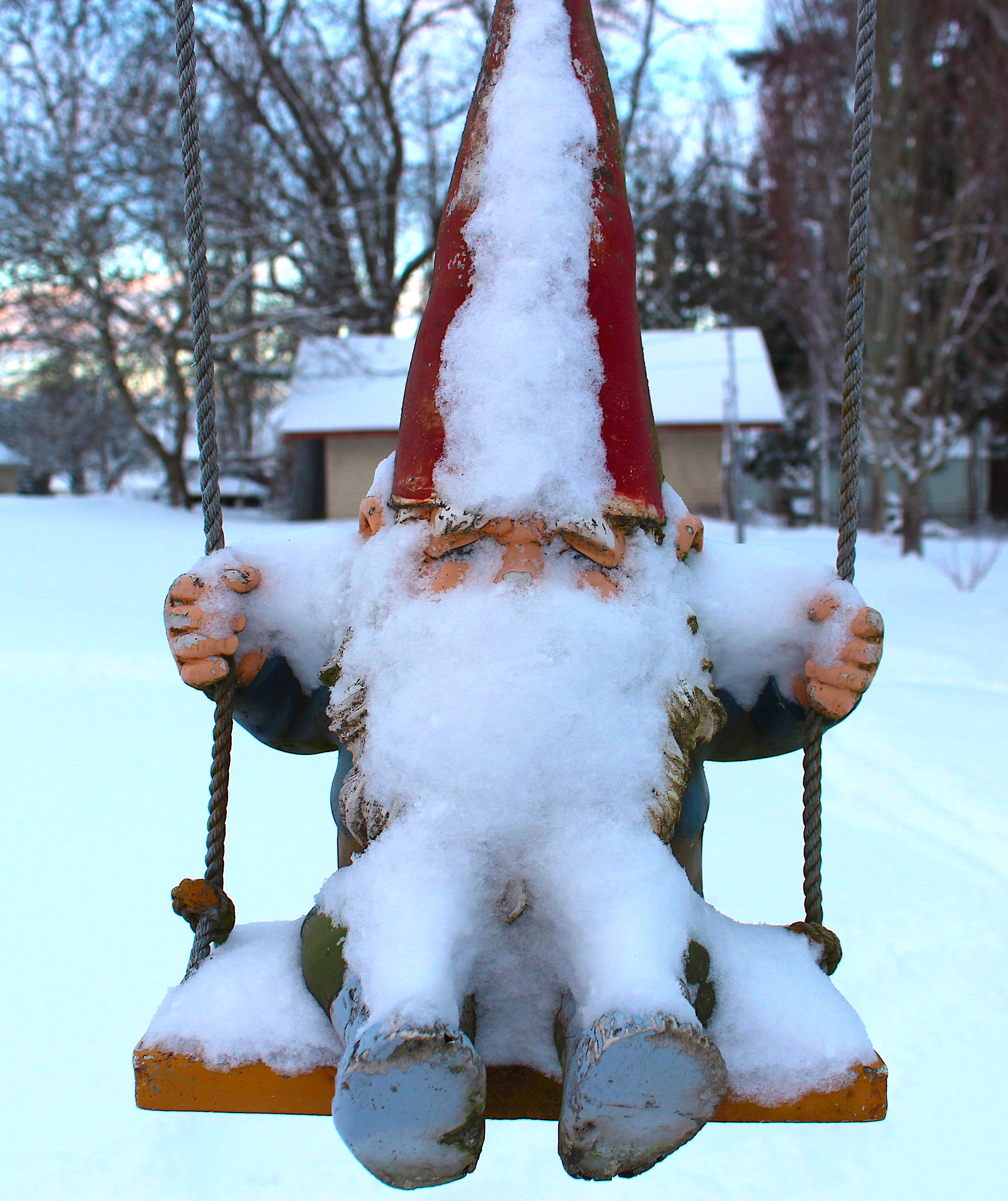
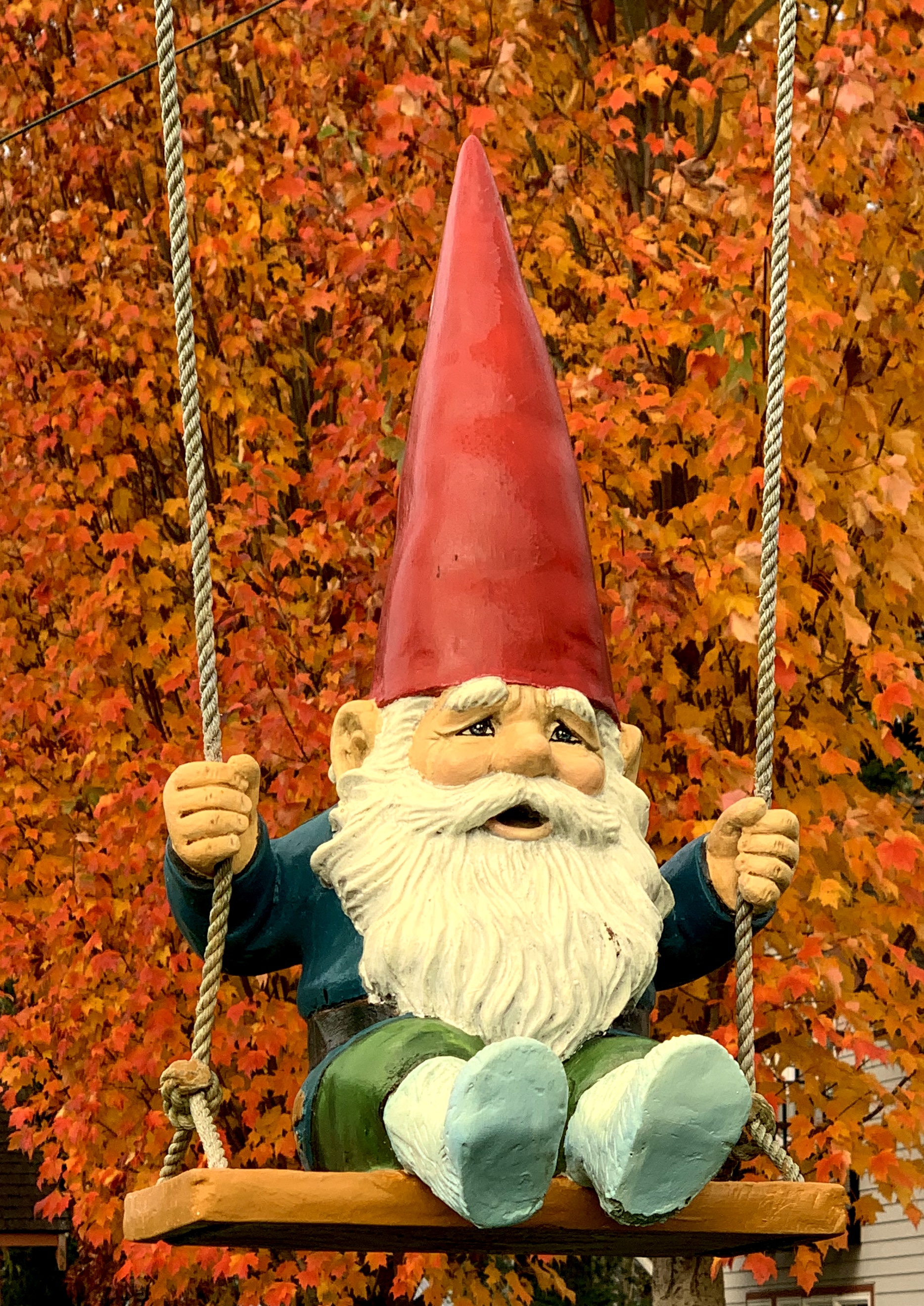
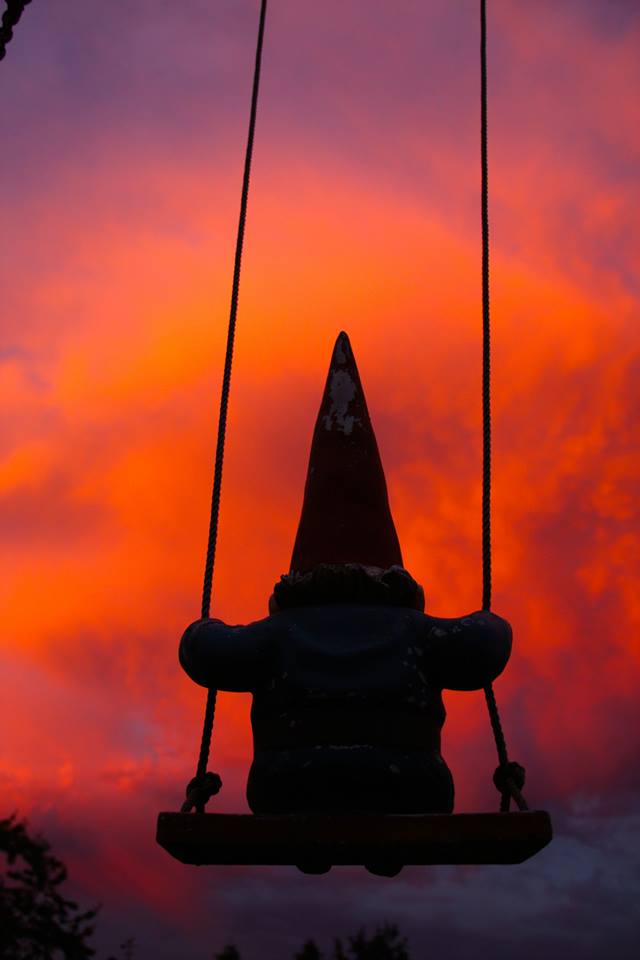
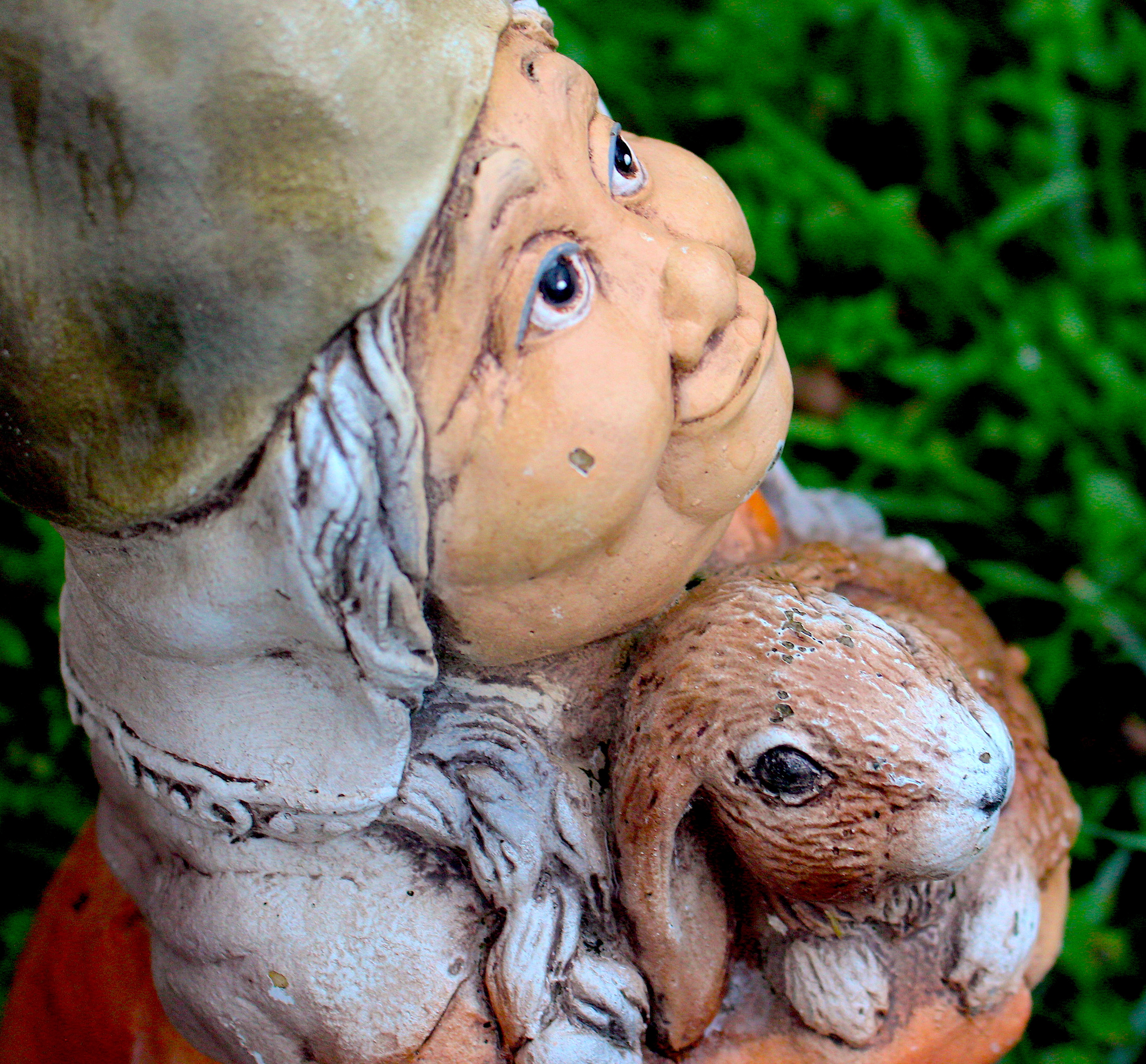
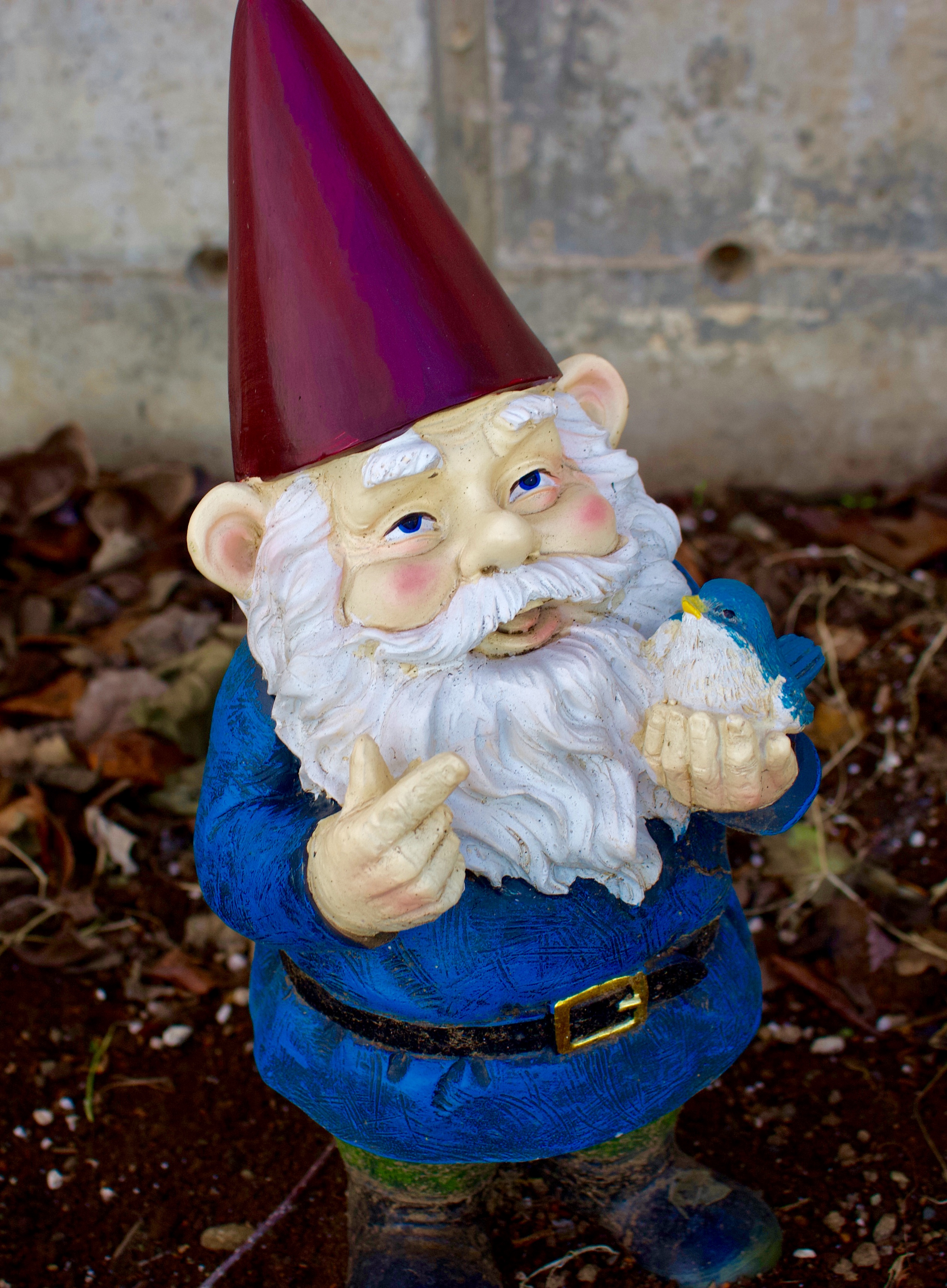
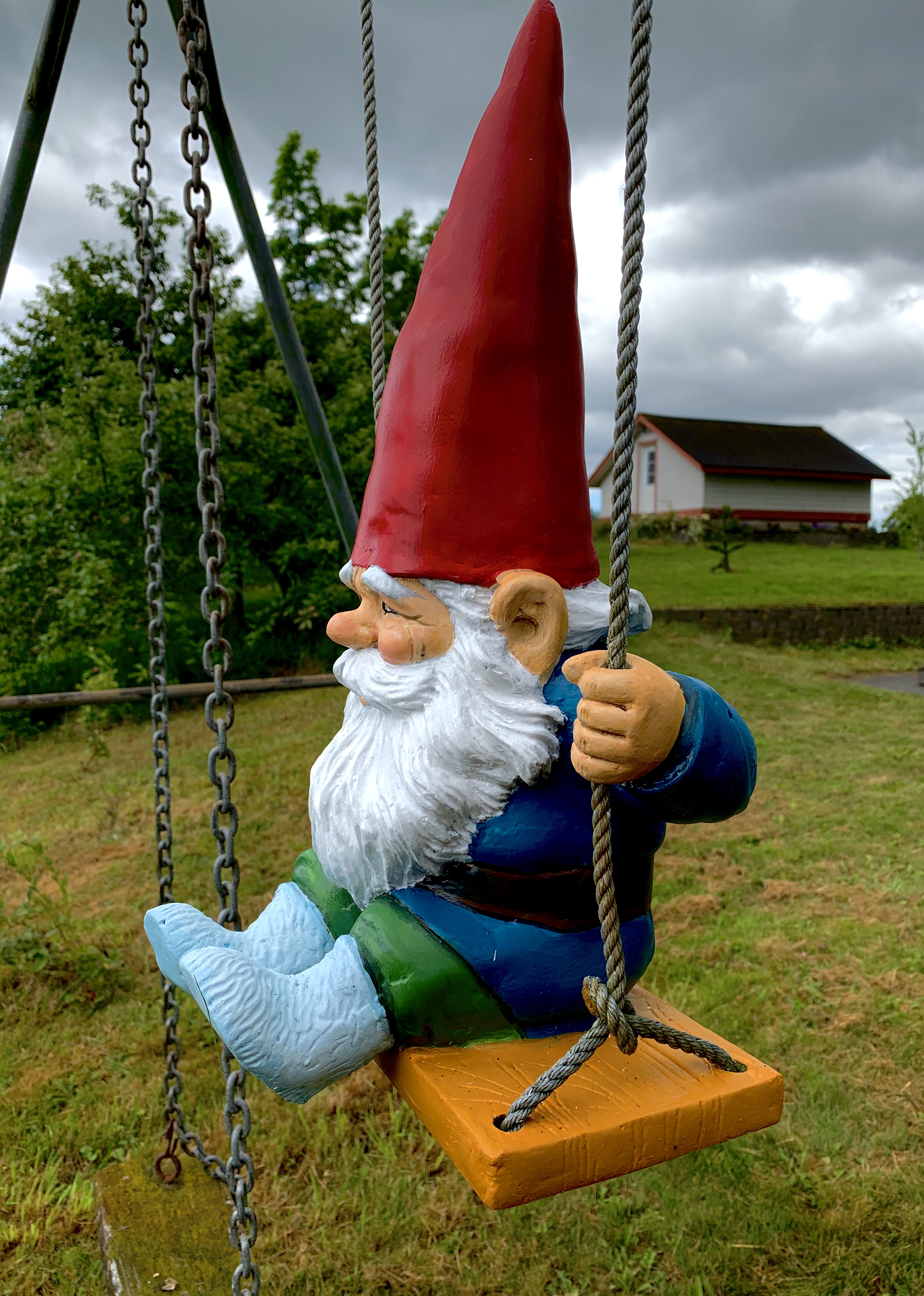
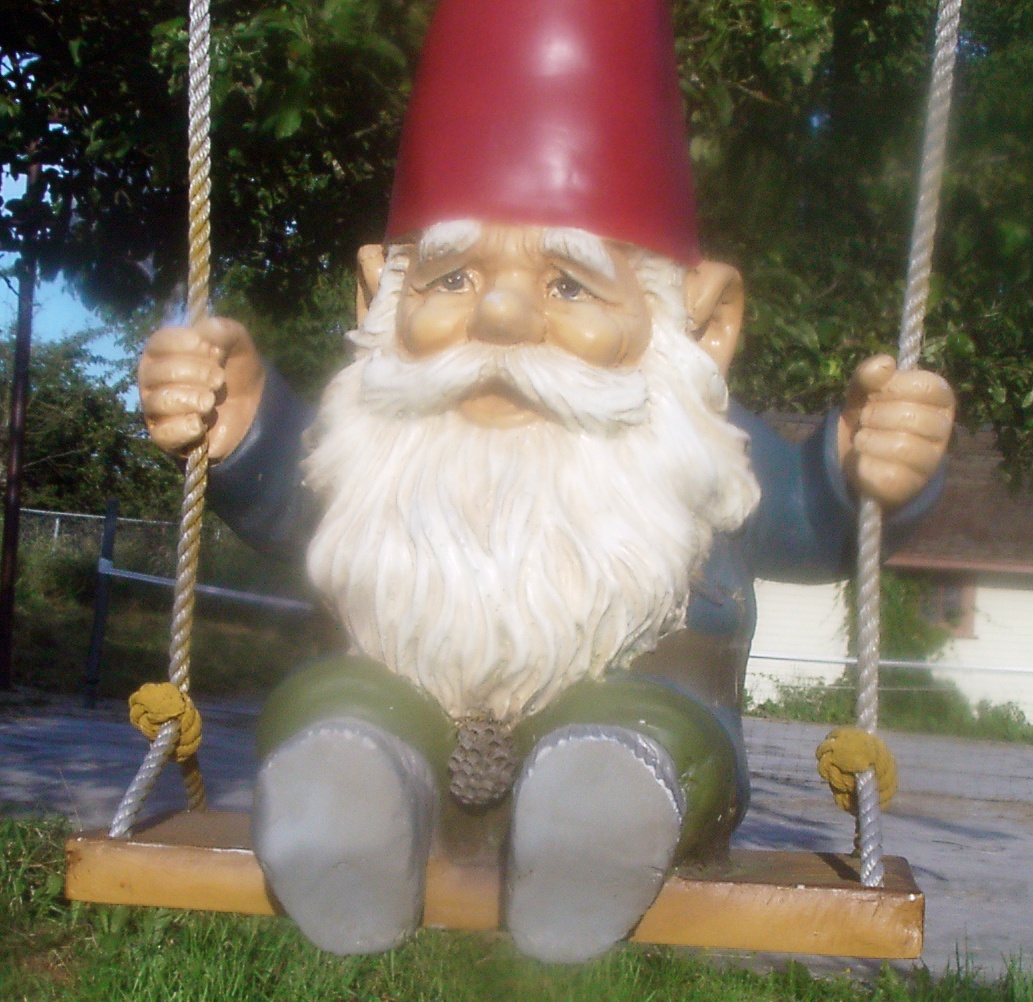
It wasn’t long before more Gardensi moved in, a gnomey infestation.  They tend to arrive in pairs and bunches, bringing their turtles and dogs with them, like to play music, smoke pipes, play on a teeter totter, work with garden tools, take naps on sun-warmed rocks and one even prefers a swing, day and night through all four seasons.  They are a bit of a rowdy bunch and always up for a party, but I enjoy their happy presence and jovial demeanor.   I haven’t yet heard any bad language as we have a “keep it clean” policy about bad words around here.  They seem quite hardy, stoically withstand extremes in weather, wear masks when asked and only seem fearful when hornets build a nest right in their lap.
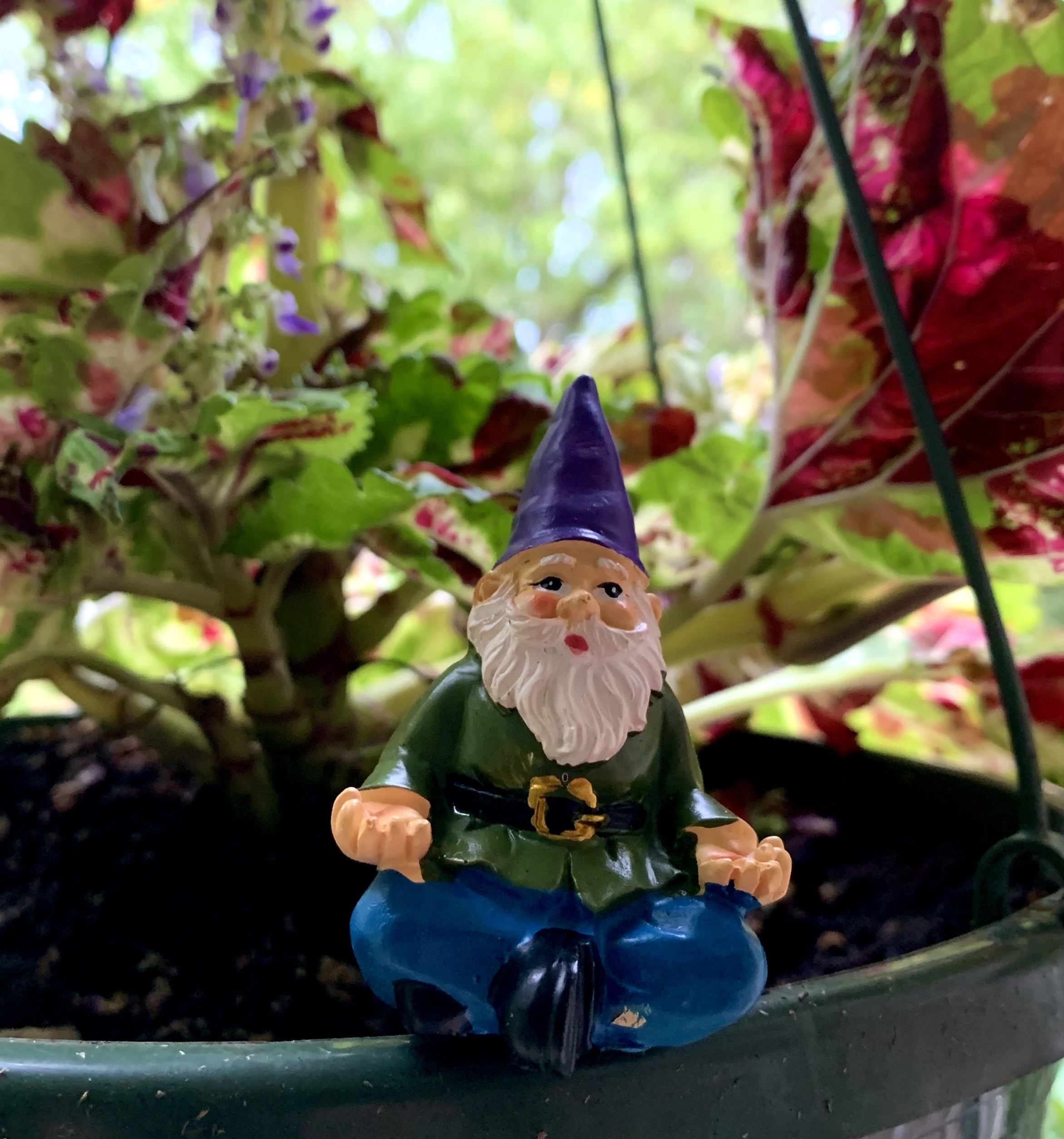
As long as they continue to coexist peaceably with us and each other, keep the varmints and their knot tying cousins away,  and avoid bad habits and swear words, I’m quite happy they are here.  Actually, I’ve given them the run of the place.  I’ve been told to be cautious as there are now news reports of an even more invasive species of gnome, Gernumbli kitschsi, that could move in and take over if I’m not careful. In fact, several new little fellows moved into my hanging baskets and back into the barn this week – someone obviously had put the word out this is a great place to winter over. Now I need to watch for more mane tangles again.

A gnome explosion.

I shudder to think.  There goes the neighborhood.
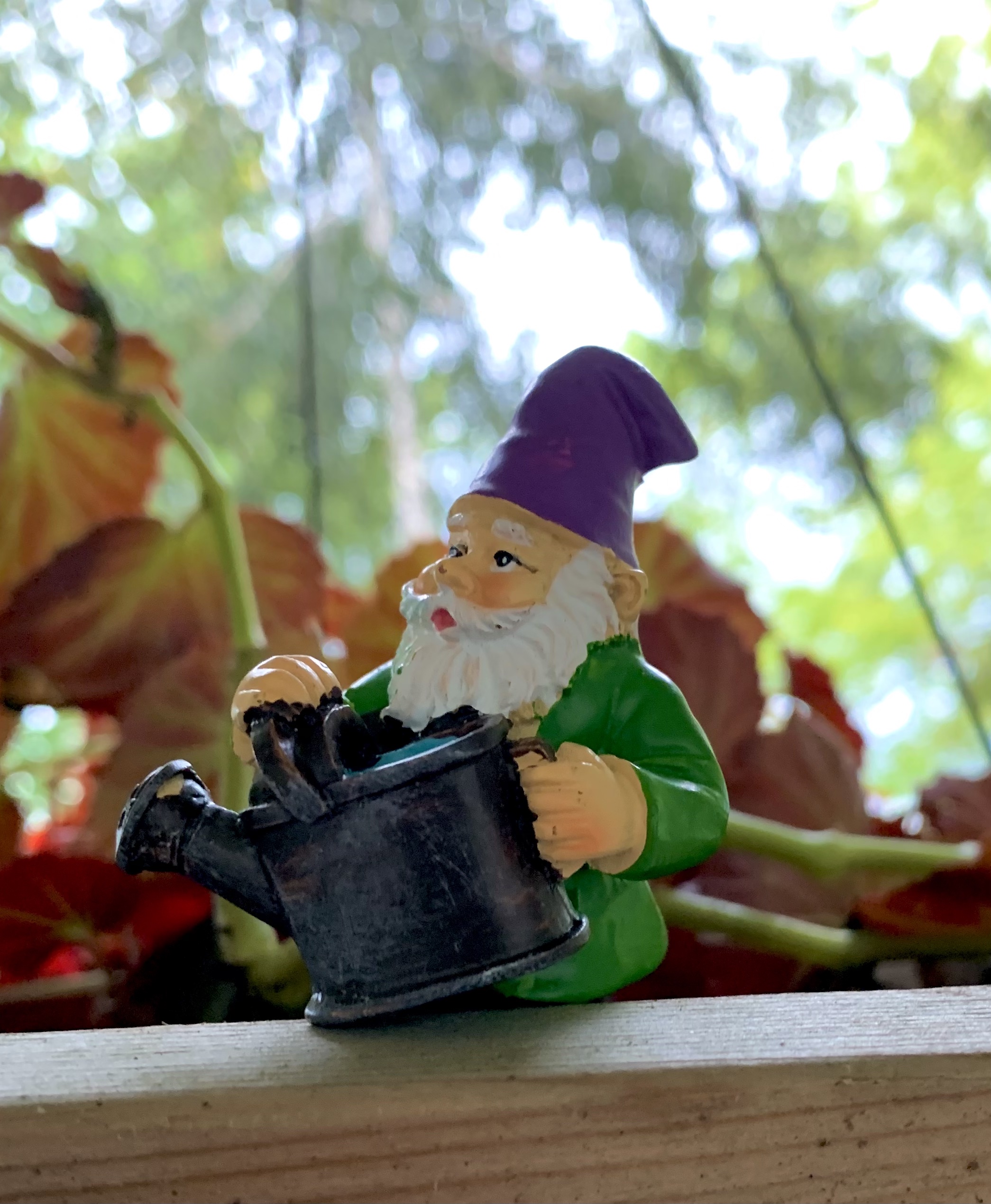
photo by Tomomi Gibson

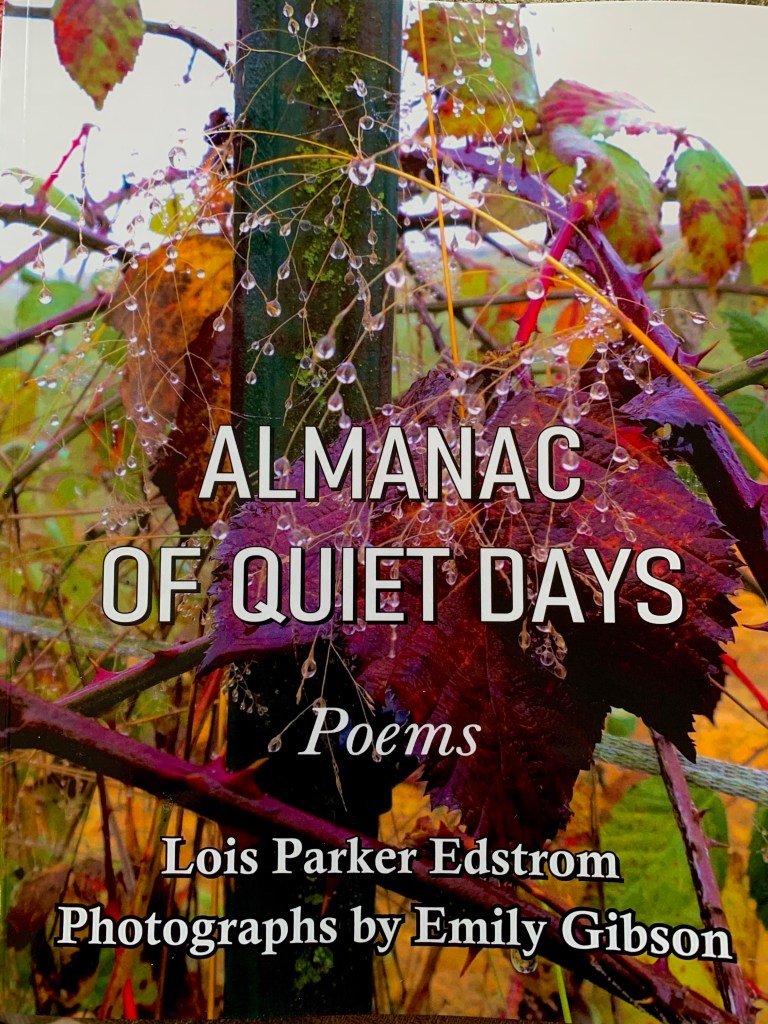
I promise – not a single photo of a gnome in this book – available for order here:
We May Or Might Never, Meet Here Again

My great grandfather had some fields in North Carolina
and he willed those fields to his sons and his sons
willed them to their sons so there is a two-hundred-year-old
farm house on that land where several generations
of my family fried chicken and laughed and hung

their laundry beneath the trees. There are things you
know when your family has lived close to the earth:
things that make magic seem likely. Dig a hole on the new
of the moon and you will have dirt to throw away
but dig one on the old of the moon and you won’t have

enough to fill it back up again: I learned this trick
in the backyard of childhood with my hands. If you know
the way the moon pulls at everything then you can feel
it on the streets of a city where you cannot see the sky.

I may walk the streets
of this century and make my living in an office
but my blood is old farming blood and my true
self is underground like a potato.

I have taken root in my grandfather’s
fields: I am hanging my laundry beneath his trees.
~Faith Shearin from “Fields”

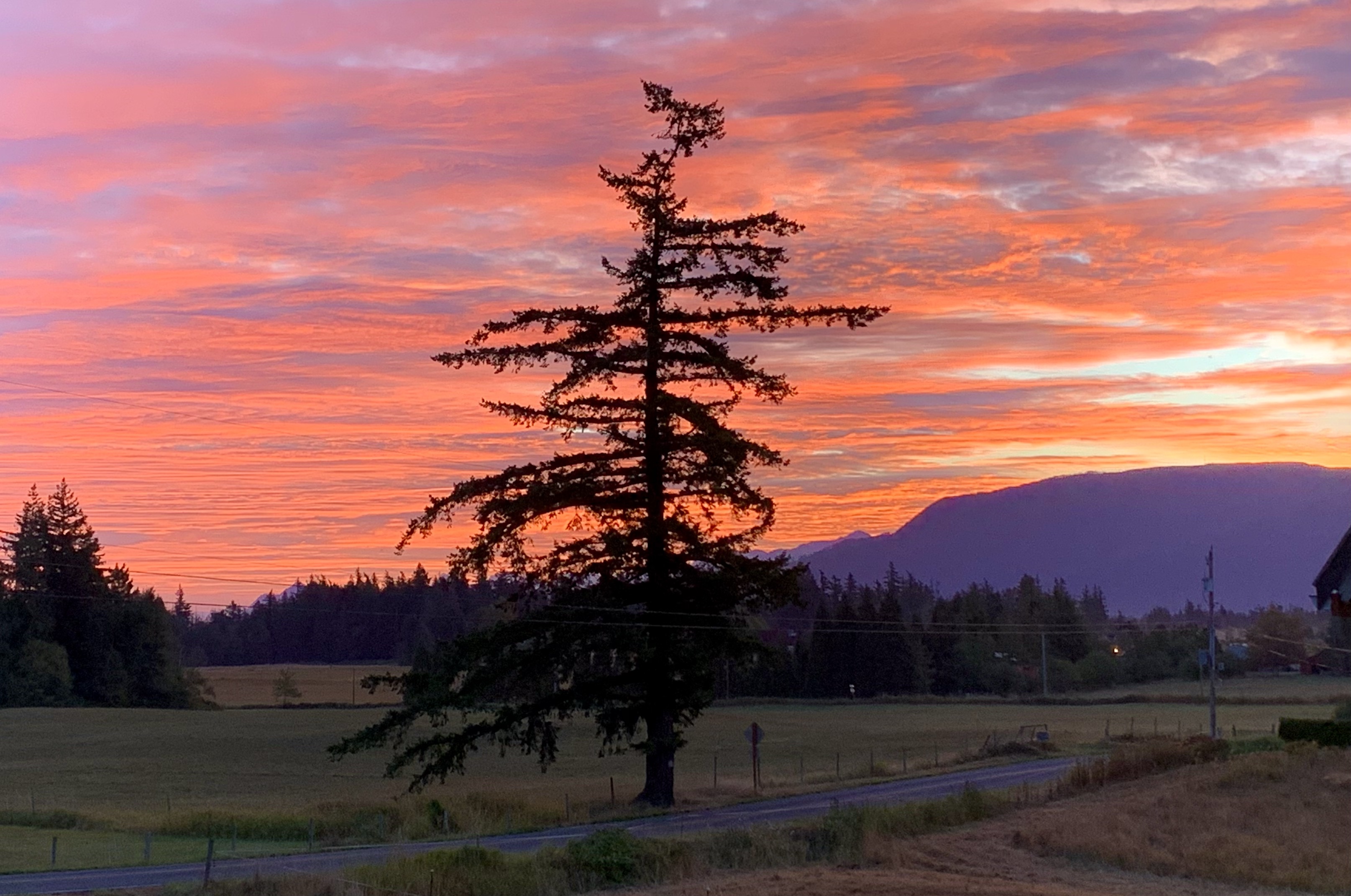
It just isn’t possible to completely take me off the farm – I have generations of farmers extending back on both sides of my family, so I have dug myself a hole here, resting easy in the soil like a potato and ventured out only as I needed to in order to actually make a living.

A gathering of all my vaccinated clinic colleagues came to our farm yesterday to help me celebrate my retiring from office life. They brought beautiful flowers, plentiful food, kind and restoring words, thirty year old photos and lovely parting gifts, as well as my singing doctor buddy sharing a sea shanty about bittersweet parting. It is helping ease my sorrow at leaving regular doctoring behind, knowing there are more days to come, more time to grow things in the ground, more blissing out over sunrises and sunsets and more hanging laundry on the clothesline.

My dear friends know where they can find me – on the hill above our farm – we may or might never, meet here again but it was such a fine time together yesterday, thank you!

Kind Friend and Companions, Come join me in rhyme,
Come lift up your voices, In chorus with mine,
Come lift up your voices, all grief to refrain,
For we may or might never, all meet here again
Here’s a health to the company and one to my lass,
Let us drink and be merry, all out of one glass,
Let us drink and be merry, all grief to refrain
For we may or might never, all meet here again
Here’s a health to the dear lass, that I love so well,
For her style and her beauty, sure none can excel,
There’s a smile on her countenance, as she sits on my knee,
There’s no man in this wide world, as happy as me,
Here’s a health to the company, and one to my lass
Let us drink and be merry, all out of one glass,
Let us drink and be merry, all grief to refrain
For we may or might never, all meet here again,
Our ship lies at anchor, she’s ready to dock,
I wish her safe landing, without any shock,
If ever I should meet you, by land or by sea,
I will always remember, your kindness to me,
Here’s a health to the company and one to my lass,
Let us drink and be merry, all out of one glass,
Let us drink and be merry, all grief to refrain
For we may or might never, all meet here again
Here’s a health to the company and one to my lass,
Let us drink and be merry, all out of one glass,
Let us drink and be merry, all grief to refrain
For we may or might never, all meet here again

You may well love this book of Barnstorming photos, available to order here:

The Soul’s Sap Quivers

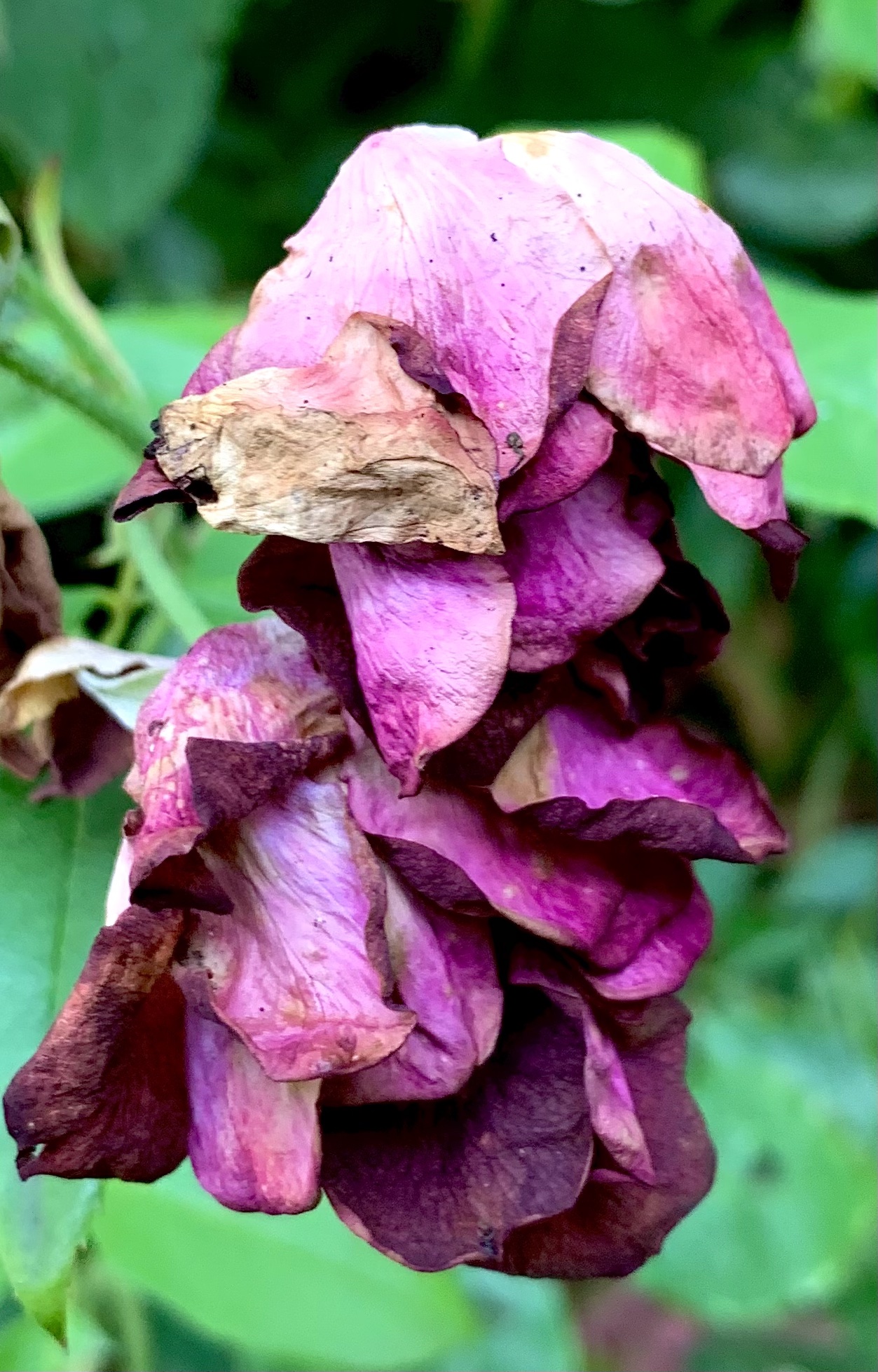
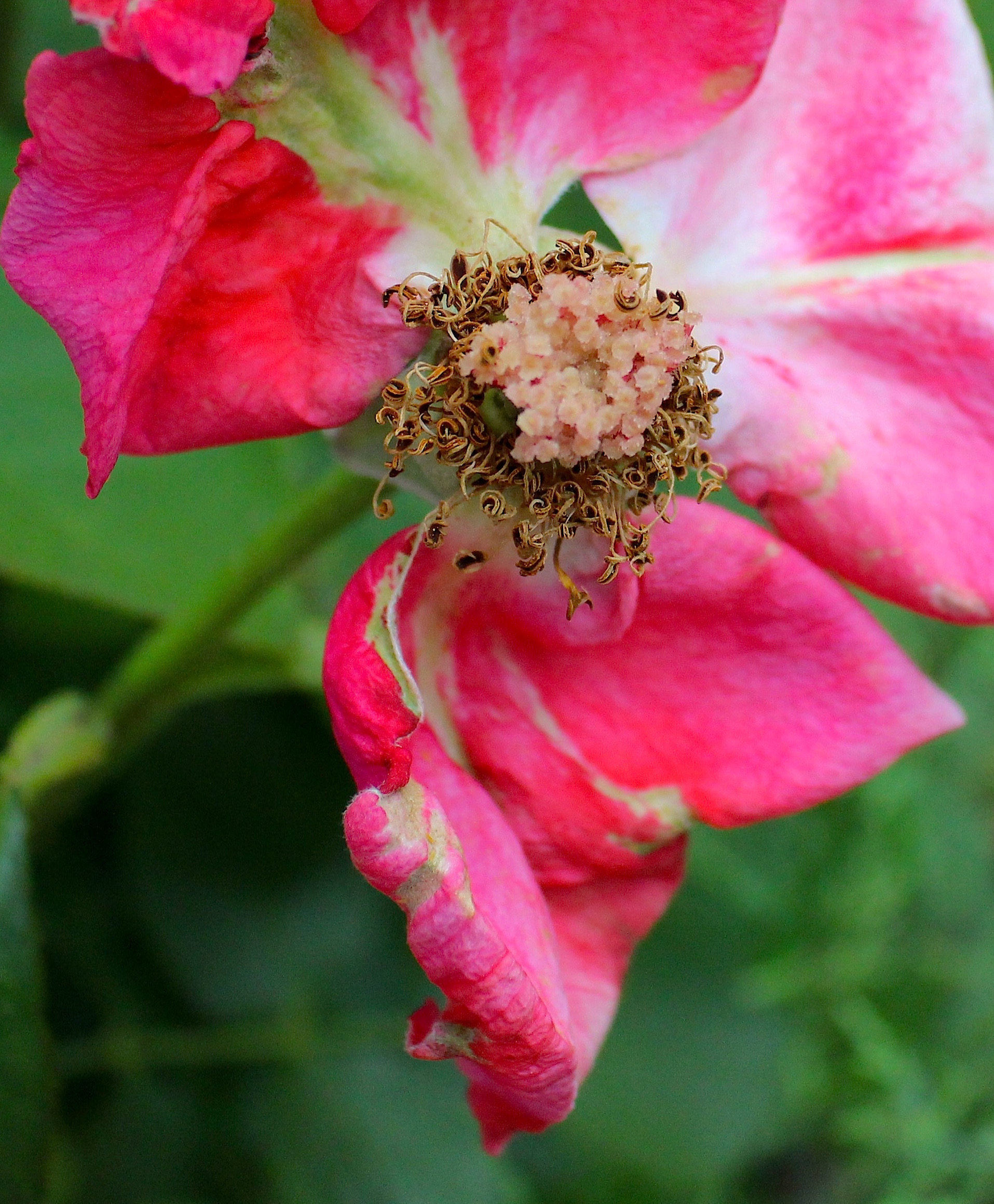
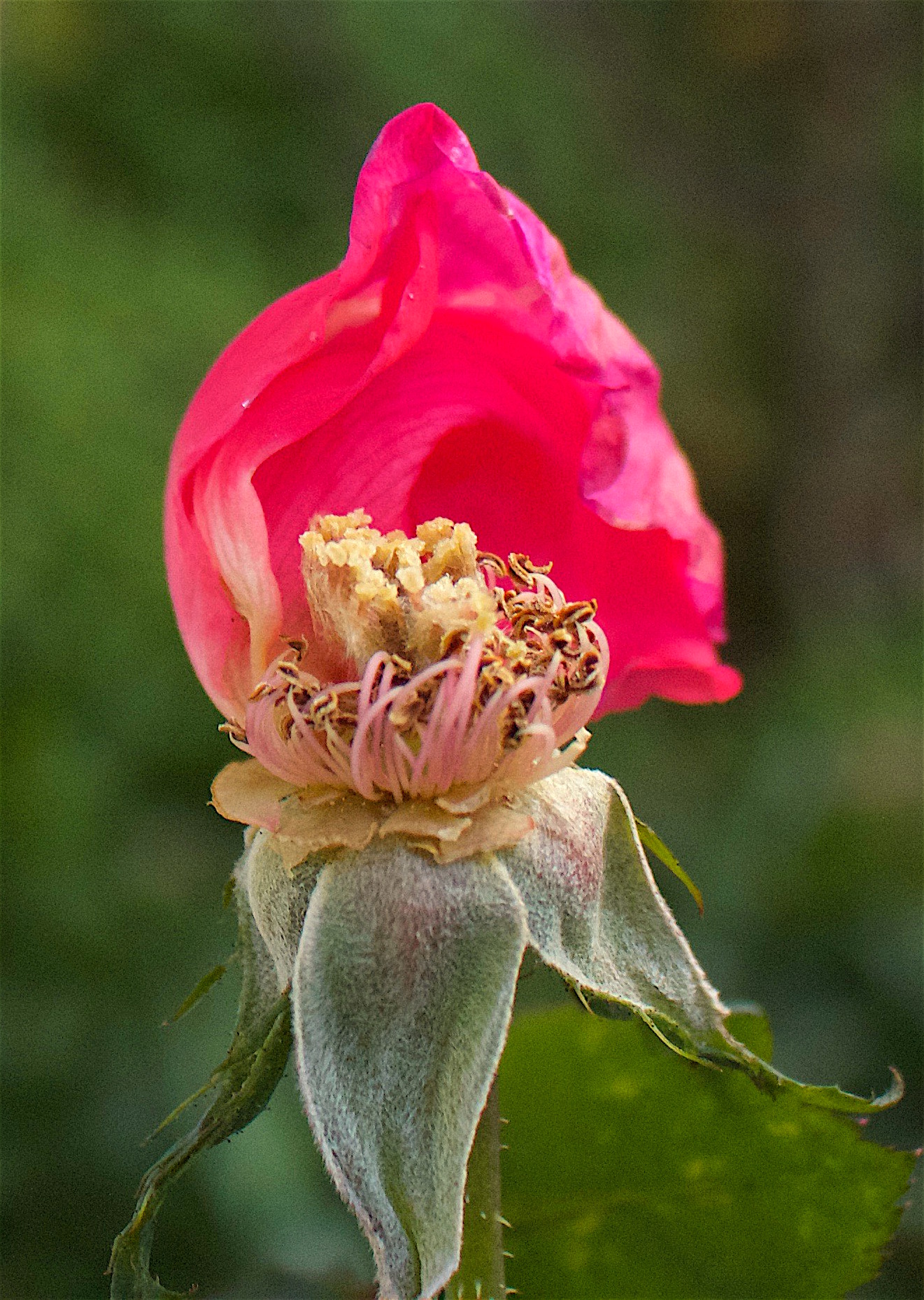
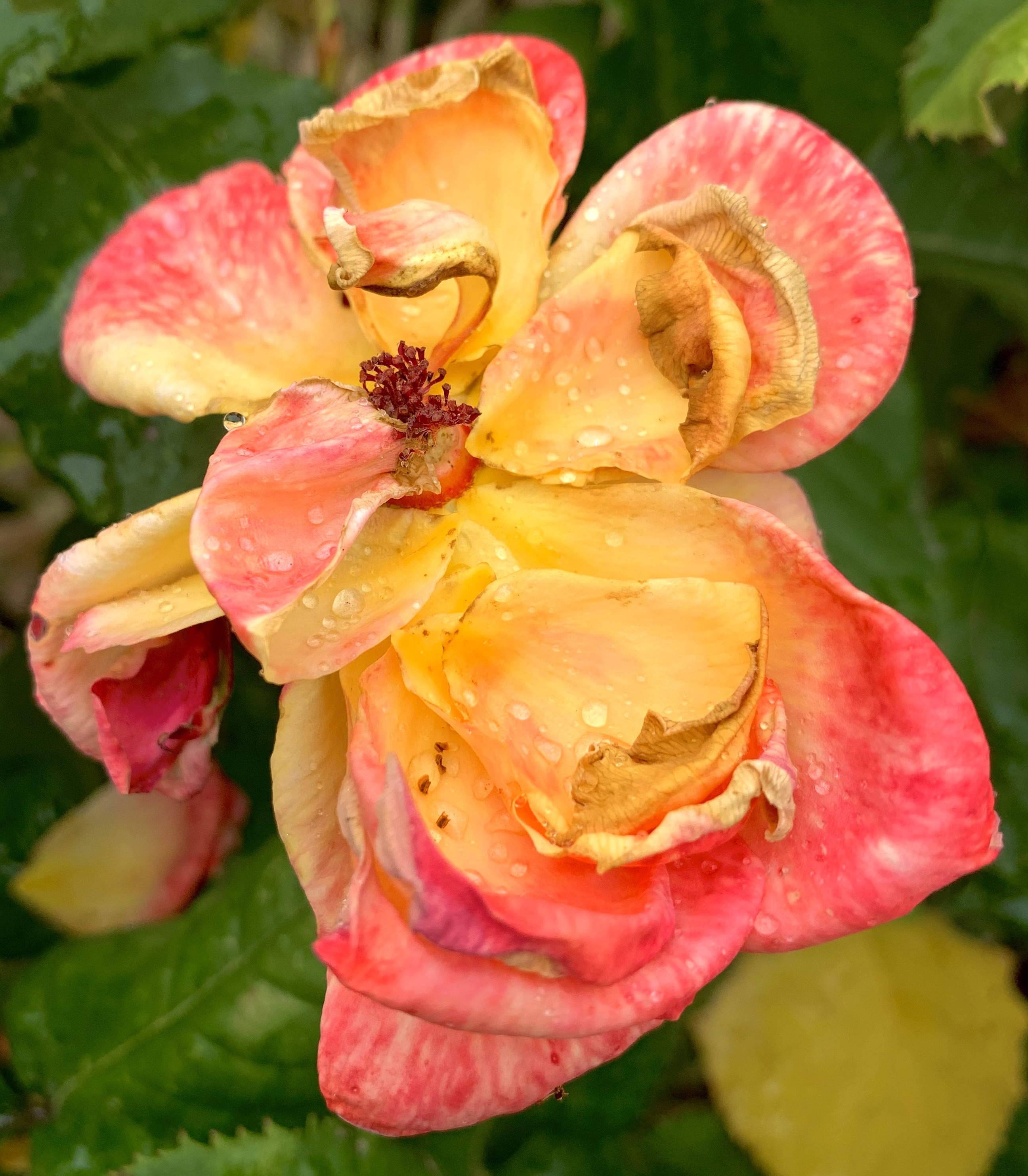
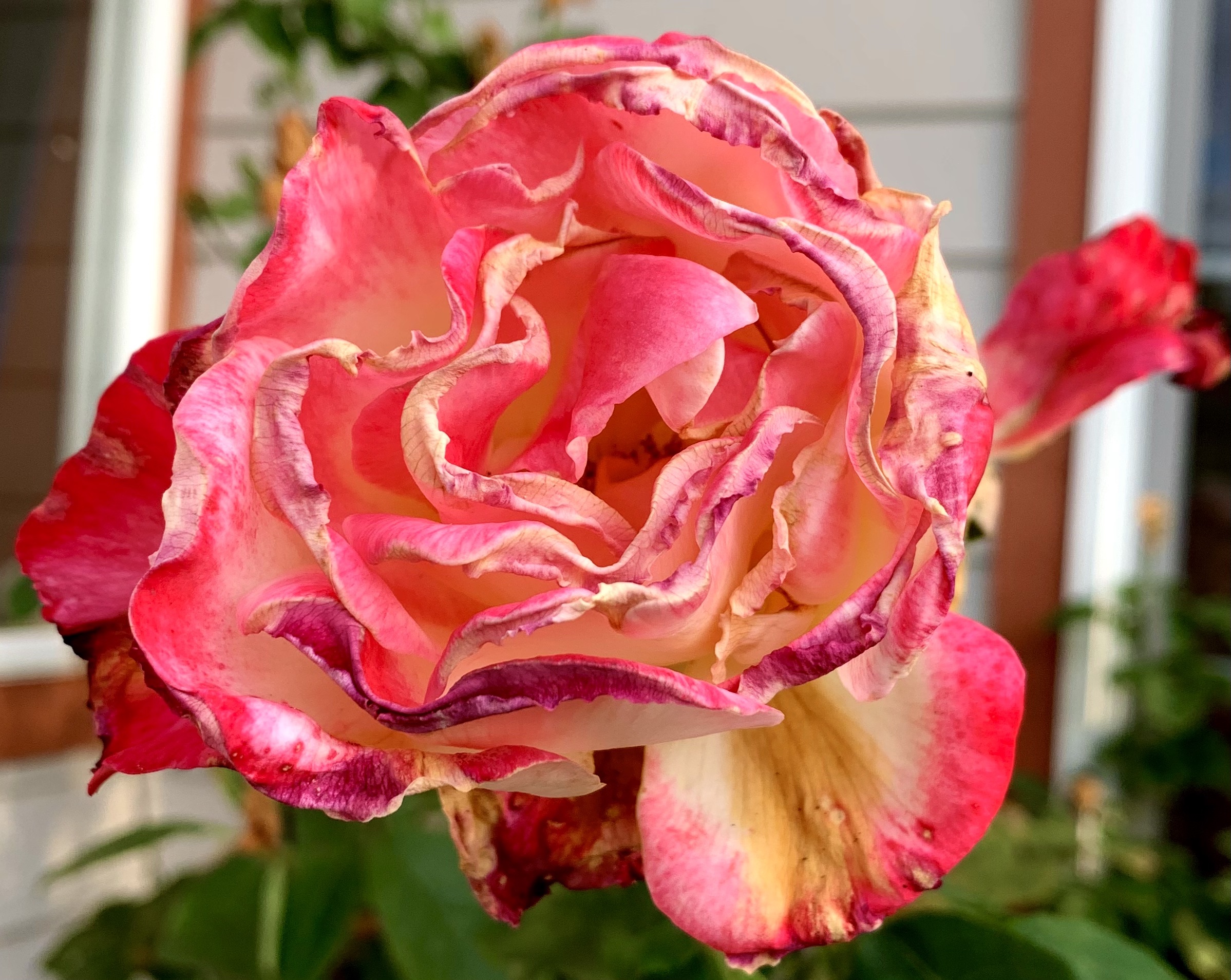
To think that this meaningless thing was ever a rose,
Scentless, colourless, this!
Will it ever be thus (who knows?)
Thus with our bliss,
If we wait till the close?


Though we care not to wait for the end, there comes the end
Sooner, later, at last,
Which nothing can mar, nothing mend:

An end locked fast,
Bent we cannot re-bend.

~Christina Rossetti “Summer is Ended”

The soul’s sap quivers. There is no earth smell
Or smell of living thing. This is the spring time
But not in time’s covenant. Now the hedgerow
Is blanched for an hour with transitory blossom
Of snow, a bloom more sudden
Than that of summer, neither budding nor fading,
Not in the scheme of generation.
Where is the summer, the unimaginable Zero summer?

We shall not cease from exploration
And the end of all our exploring
Will be to arrive where we started
And know the place for the first time.
Through the unknown, unremembered gate
When the last of earth left to discover
Is that which was the beginning;


And all shall be well and
All manner of thing shall be well
When the tongues of flames are in-folded
Into the crowned knot of fire
And the fire and the rose are one.

~T.S. Eliot – lines taken from “Little Gidding”

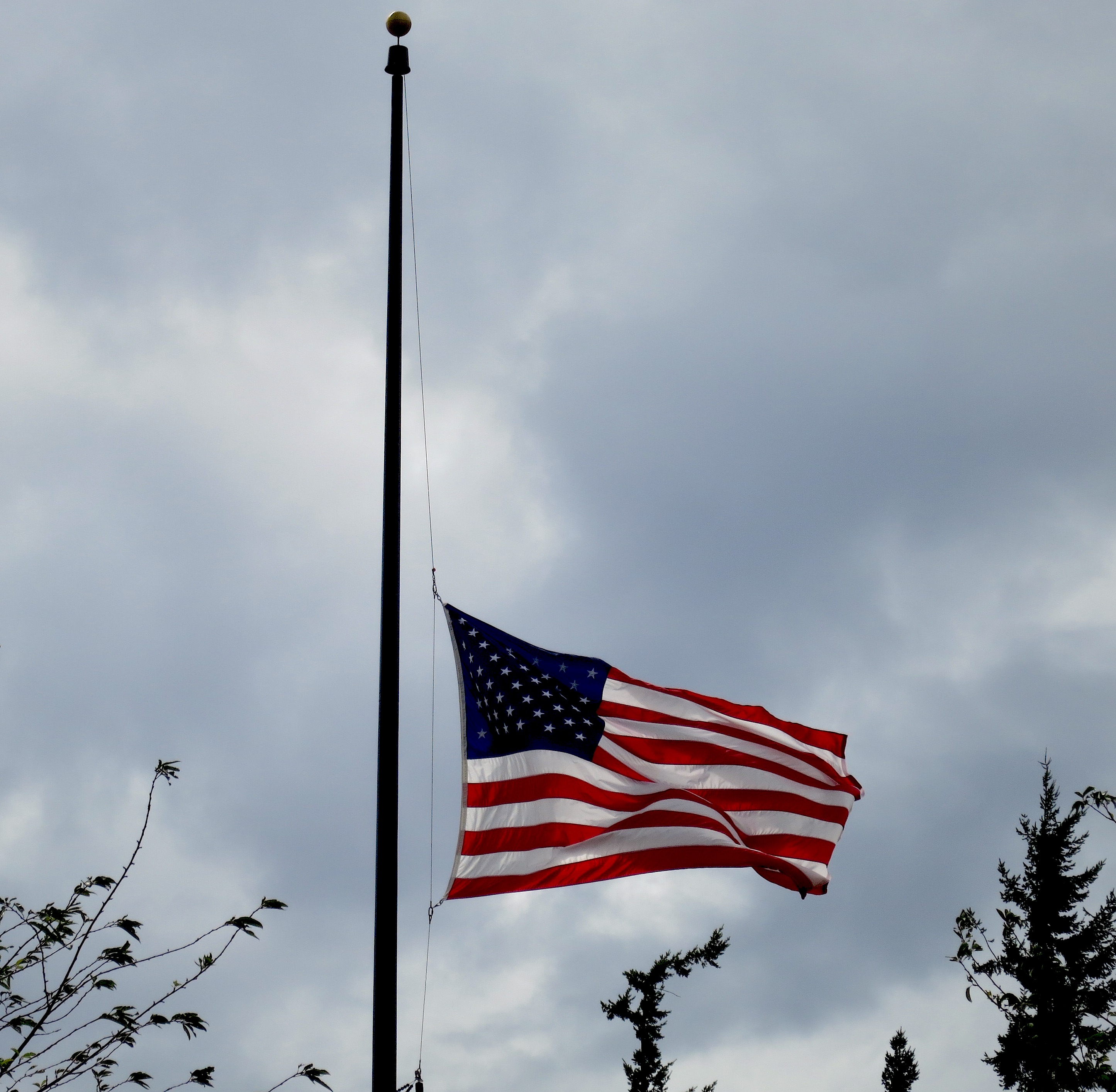
As a grade school child in November 1963, I learned the import of the U.S. flag being lowered to half mast in response to the shocking and violent death of our President. The lowering of the flag was so rare when I was growing up, it had dramatic effect on all who passed by — our soul’s sap quivers — something very sad had happened to our country, something or someone had tragically ended, warranting our silence and our stillness.

For twenty years since 9/11/01, our flag has spent significant time at half mast, so much so that I’m befuddled instead of contemplative, puzzling over what the latest loss might be as there are so many, sometimes all happening in the same time frame.  We no longer are silenced by this gesture of honor and respect and we certainly are not stilled, personally and corporately instigating and suffering the same mistakes against humanity over and over again.

We are so bent. Will we ever be mended again?

Eliot wrote the prescient words of the Four Quartets in the midst of the WWII German bombing raids that destroyed people and neighborhoods. Perhaps he sensed the destruction he witnessed would not be the last time in history that evil visits the innocent, leaving them in ashes. There would be so many more losses to come, not least being the horror of 9/11/01.

There remains so much more sadness to be borne, such abundance of grief that our world has become overwhelmed and stricken. Yet Eliot was right: we have yet to live in a Zero summer of endless hope and fruitfulness, of spiritual awakening and understanding.  Where is it indeed? When will rise again the summer Rose of beauty and fragrance?

We must return, as people of faith to Eliot’s still point to which we are called on a day such as today.  We must be stilled; we must be silenced. We must grieve the losses of this turning world and pray for release from the suffering we cause and we endure.  Only in the asking, only in the kneeling down and pleading, are we surrounded by God’s unbounded grace and His Rose may bloom recognizable again.  

“There Are No Words” written on 9/11/2001
by Kitty Donohoe

there are no words there is no song
is there a balm that can heal these wounds that will last a lifetime long
and when the stars have burned to dust
hand in hand we still will stand because we must

in one single hour in one single day
we were changed forever something taken away
and there is no fire that can melt this heavy stone
that can bring back the voices and the spirits of our own

all the brothers, sisters and lovers all the friends that are gone
all the chairs that will be empty in the lives that will go on
can we ever forgive though we never will forget
can we believe in the milk of human goodness yet

we were forged in freedom we were born in liberty
we came here to stop the twisted arrows cast by tyranny
and we won’t bow down we are strong of heart
we are a chain together that won’t be pulled apart

Please consider owning this book from Barnstorming – more information about the book and how to order here:

Madly in Love

How is it they live for eons in such harmony
– the billions of stars –
when most men can barely go a minute
without declaring war in their mind

against someone they know.

There are wars where no one marches with a flag,

though that does not keep casualties from mounting.

Our hearts irrigate this earth. 
We are fields before each other.
How can we live in harmony?


First we need to know 

we are all madly in love
with the same God.

O Lord my God, make me
submissive without protest,

poor without discouragement,
chaste without regret,
patient without complaint,
humble without posturing,
cheerful without frivolity,
mature without gloom,
and quick-witted without flippancy.


Grant that I may know
what You require me to do.
Bestow upon me
the power to accomplish Your will,
as is necessary and fitting
for the salvation of my soul.

~St. Thomas Aquinas

I look at headline news through my fingers, cringing.  

Amid the centuries of posturing between governments and every imaginable tribe and faction, the names and faces change but the nature of hatred of the “other” doesn’t.

We’ve seen this all before, over and over through history.  Over 150 years ago it was in the Gettysburg fields that blood of rival armies intermingled and irrigated U.S. soil.  Though now we stand side by side with Germany and Japan, our bitter adversaries a mere eighty years ago, our world continually brews new enemies and ignites new conflicts.

We can barely go a minute without declaring war in our minds even against our neighbor, even those we consider friends and family. There is yelling from the streets in angry protest and screaming at school board meetings. Casualties mount in our bitterness toward one another.

And who am I to point fingers or squint through them at the news of the day?
I am as prone to this as anyone.

Am I myself capable of submission without protest, remaining patient and uncomplaining even when I disagree? Can I embody humility without having a hidden agenda? Can I remain selfless when my true nature is wholly selfish?

How can there ever be harmony? 
How can I overcome my own rancorous heart?

As critical as it seems, It is not love for one another that comes first.
I must first know, love and trust the only God who has loved the unloveable so much He became one with us, overpowering our tendency to hate one another by taking it all upon Himself.

Jesus found us dying in a world desperately drying up; His bleeding heart poured itself out onto our thirsting soil. We have been handed salvation.

It is, in fact, God who is madly in love with us and though we’ve done nothing to deserve it, it is our turn to show love to one another.

A book from Barnstorming is available for order here:
Realizing Who I Have Offended

He is a hard one to write a poem about. Like Napoleon.
Hannibal. Genghis Khan. Already so large in history. To do it
right, I have to sit down with him. At a place of his own
choosing. Probably a steakhouse. We take a table in a corner.
But people still recognize him, come up and slap him on the
back, say how much they enjoyed studying about him in school
and ask for his autograph. After he eats, he leans back and
lights up a cigar and asks me what I want to know. Notebook in
hand, I suggest that we start with the Little Big Horn and work
our way back. But I realize I have offended him. That he
would rather take it the other way around. So he rants on
about the Civil War, the way west, the loyalty of good soldiers
and now and then twists his long yellow hair with his fingers.
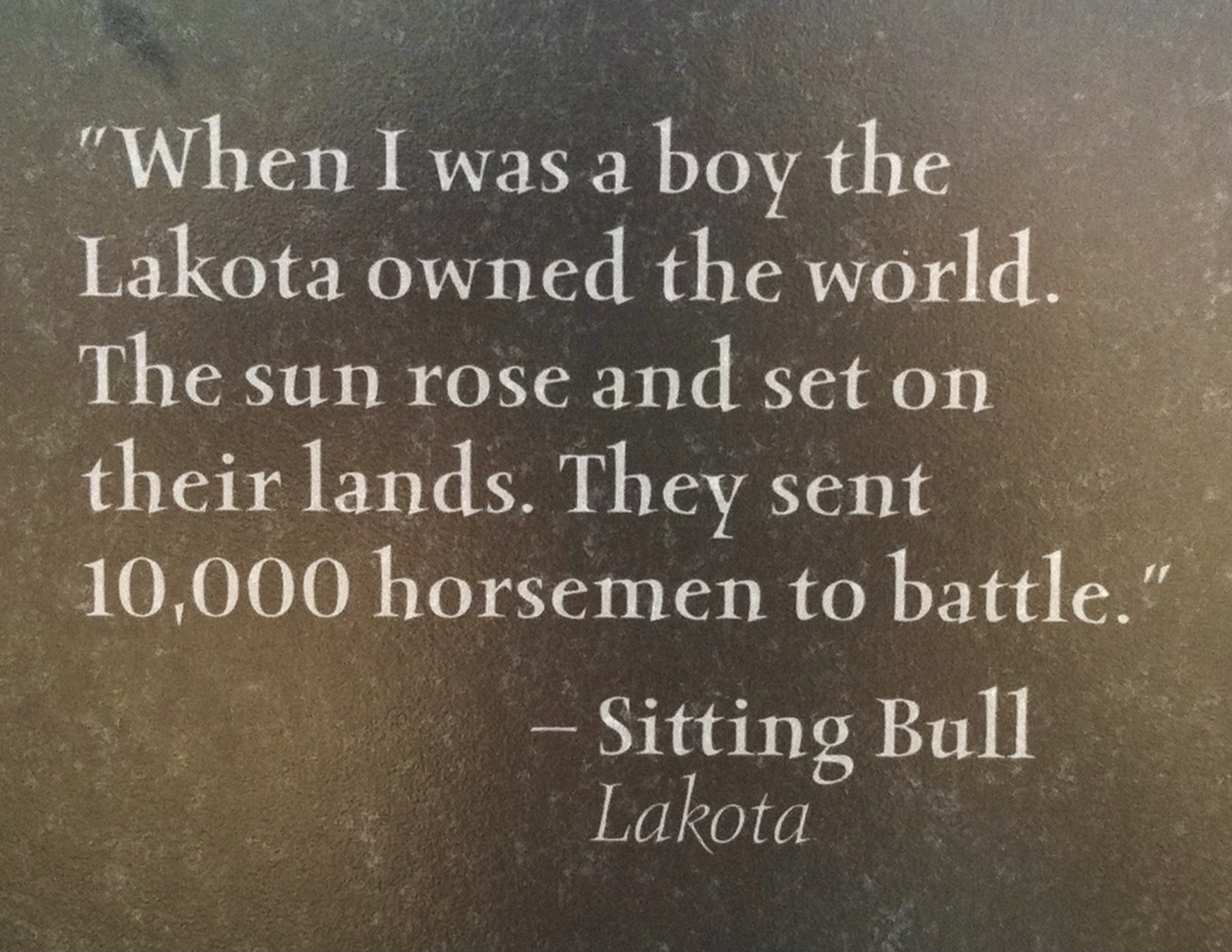
But when he gets to the part about Sitting Bull, about Crazy
Horse, he develops a twitch above his right eye, raises his
finger for the waiter, excuses himself and goes to the restroom
while I sit there along the bluffs with the entire Sioux nation,
awaiting his return.
~David Shumate “Custer” from High Water Mark

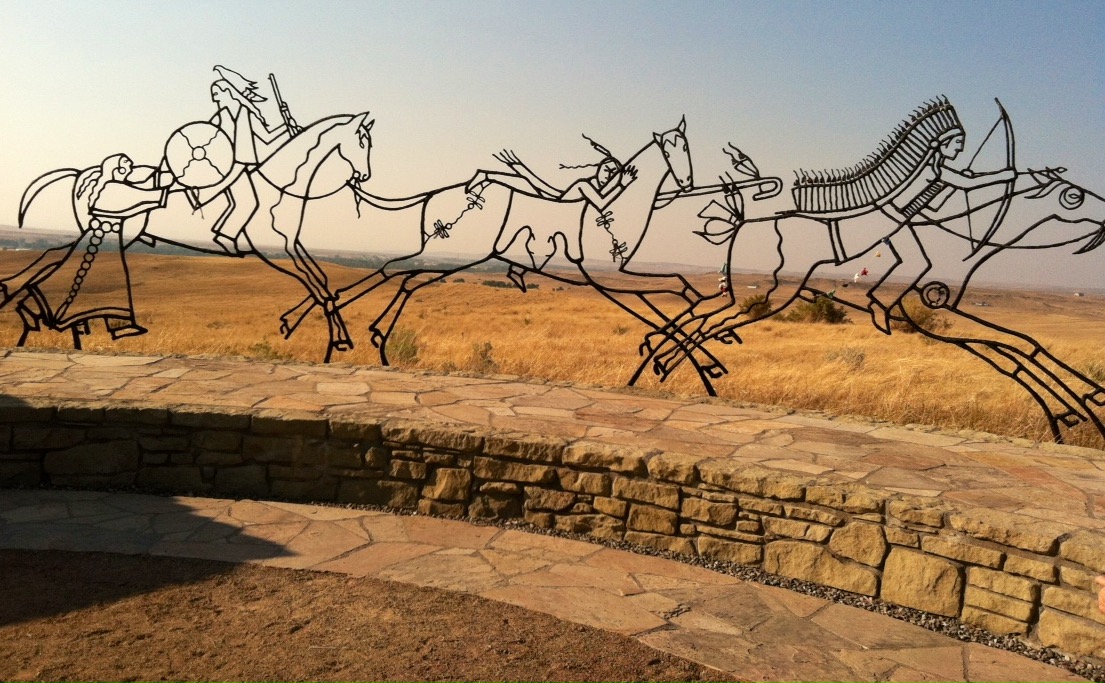
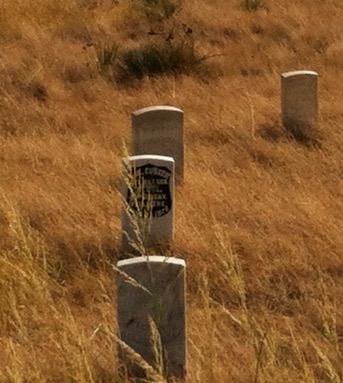
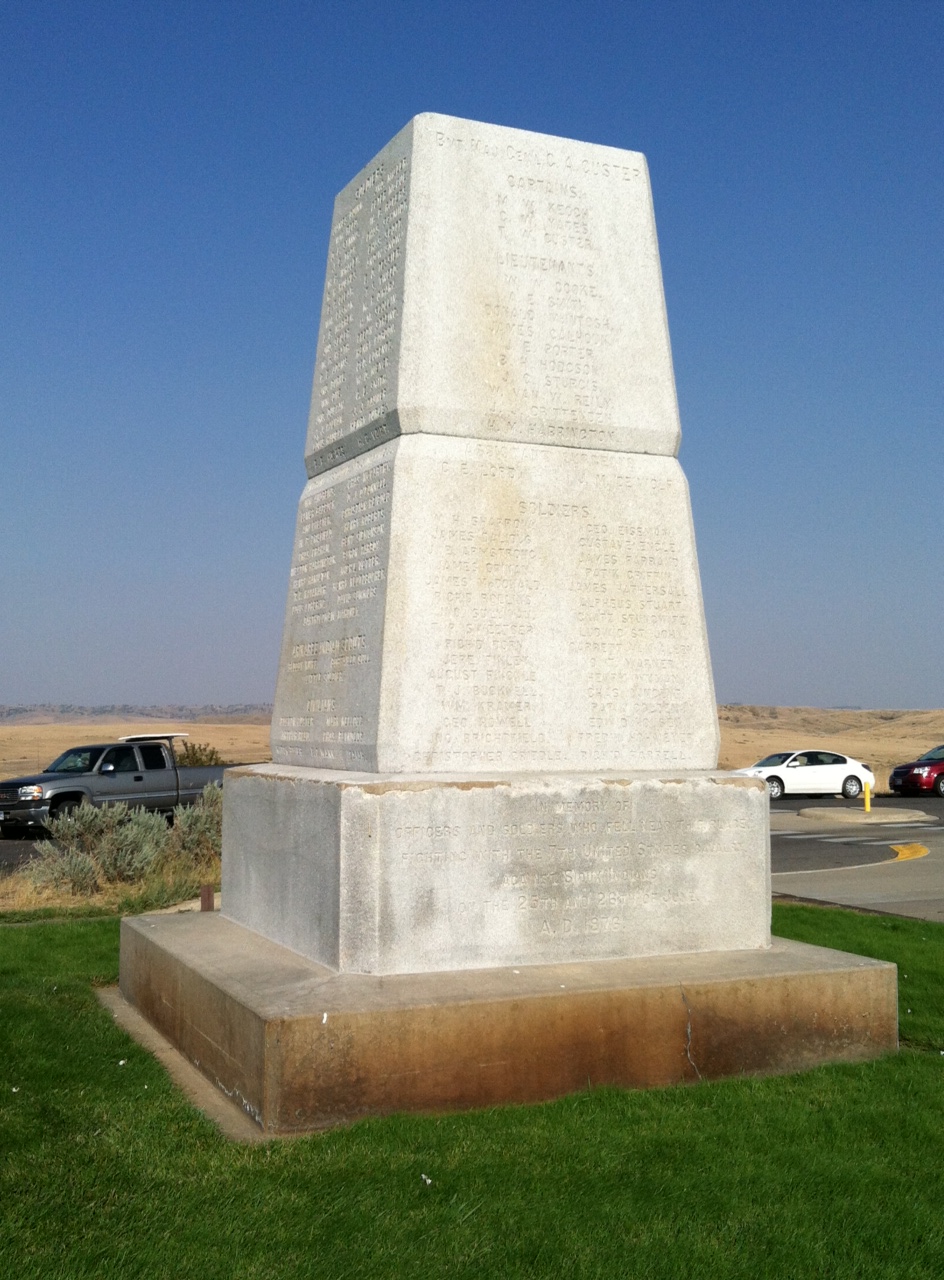
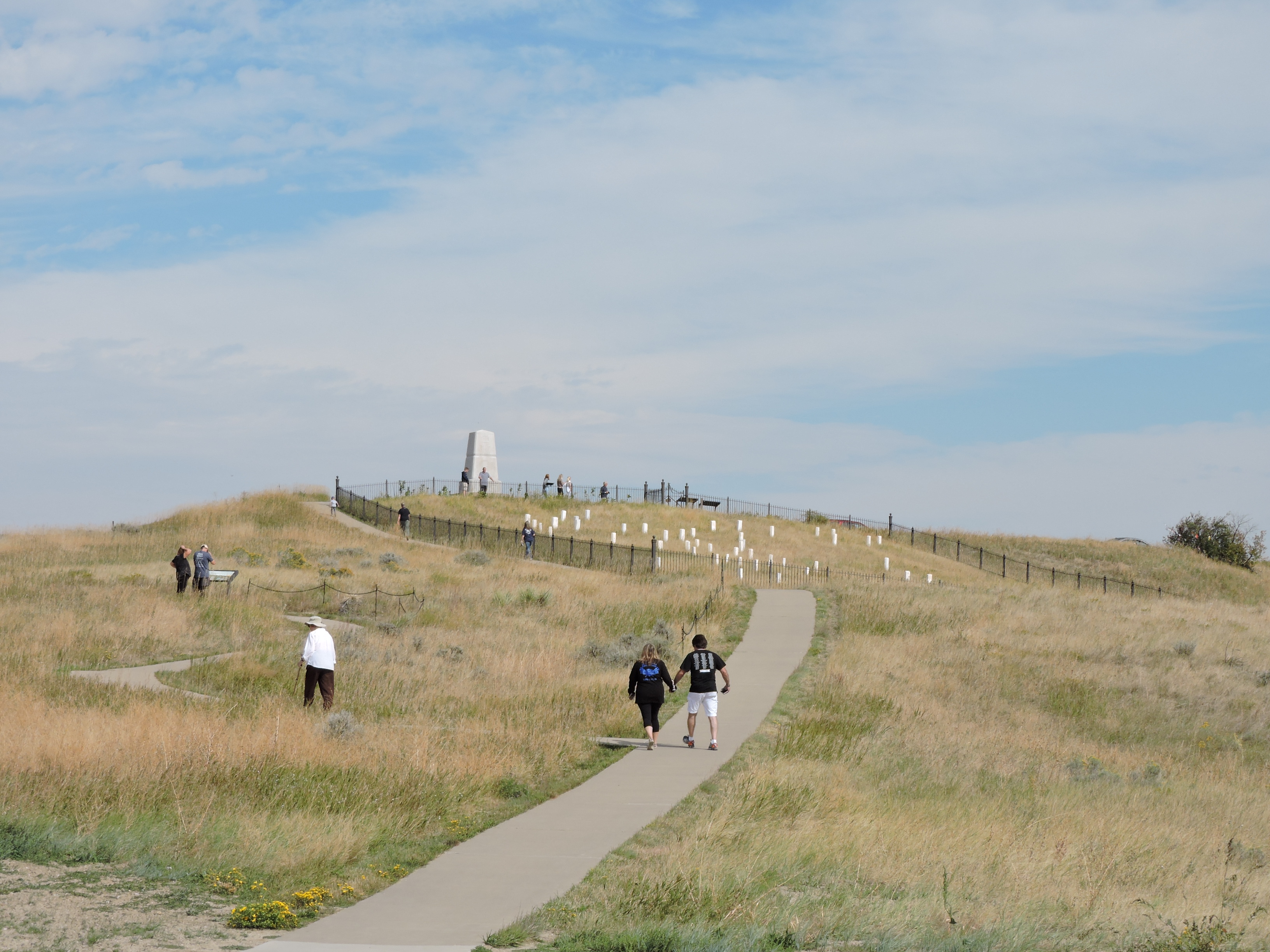
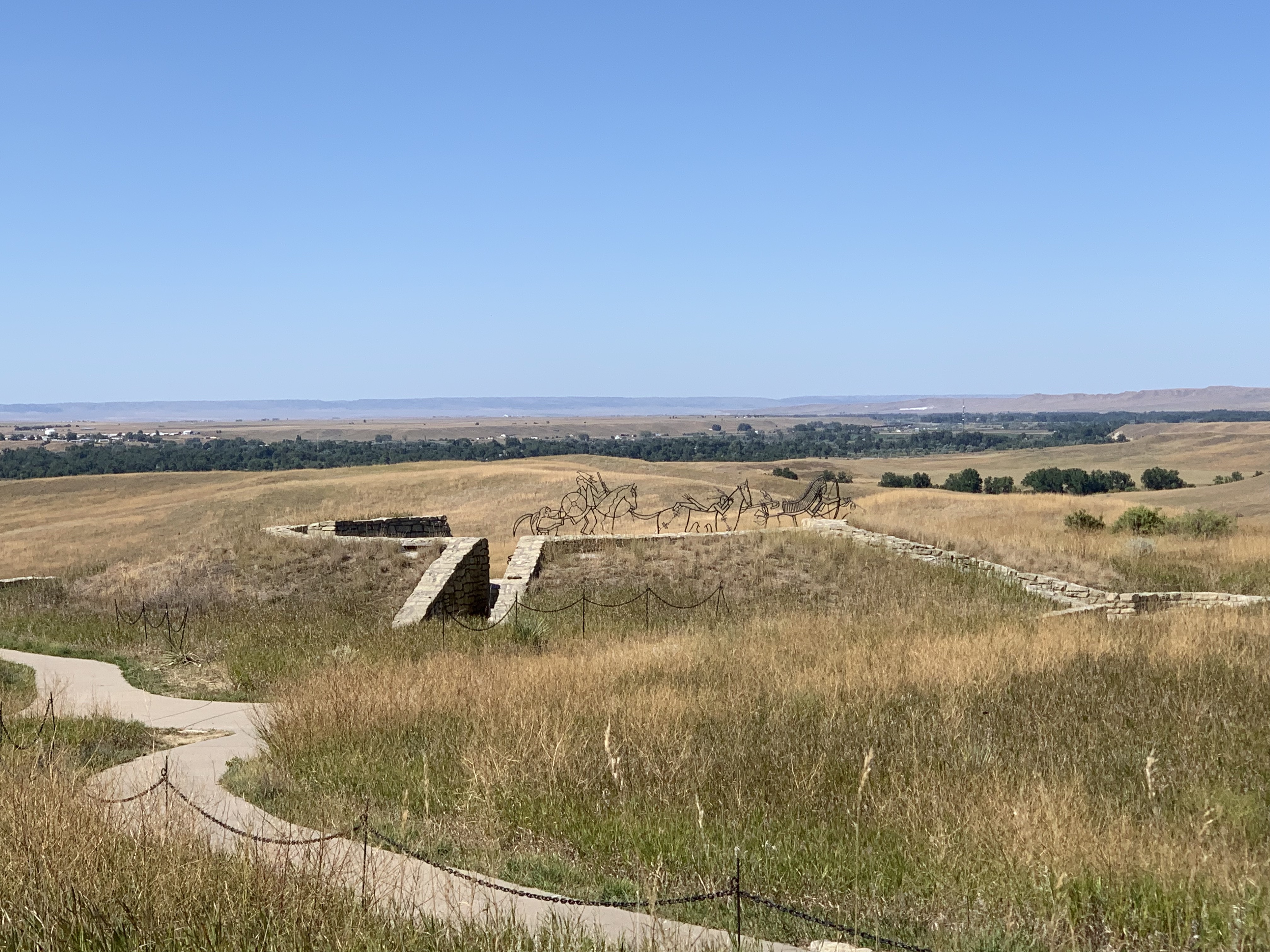
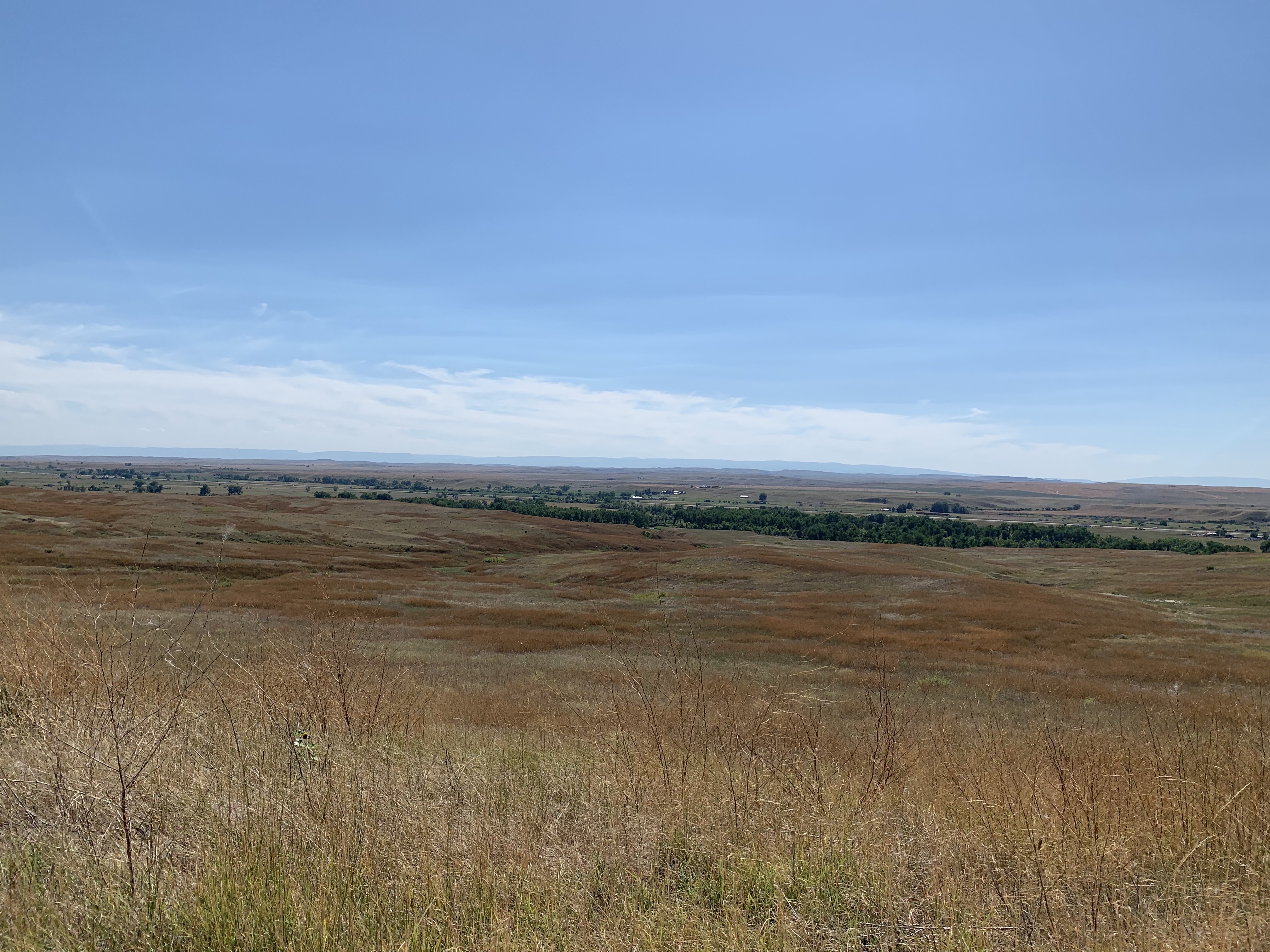
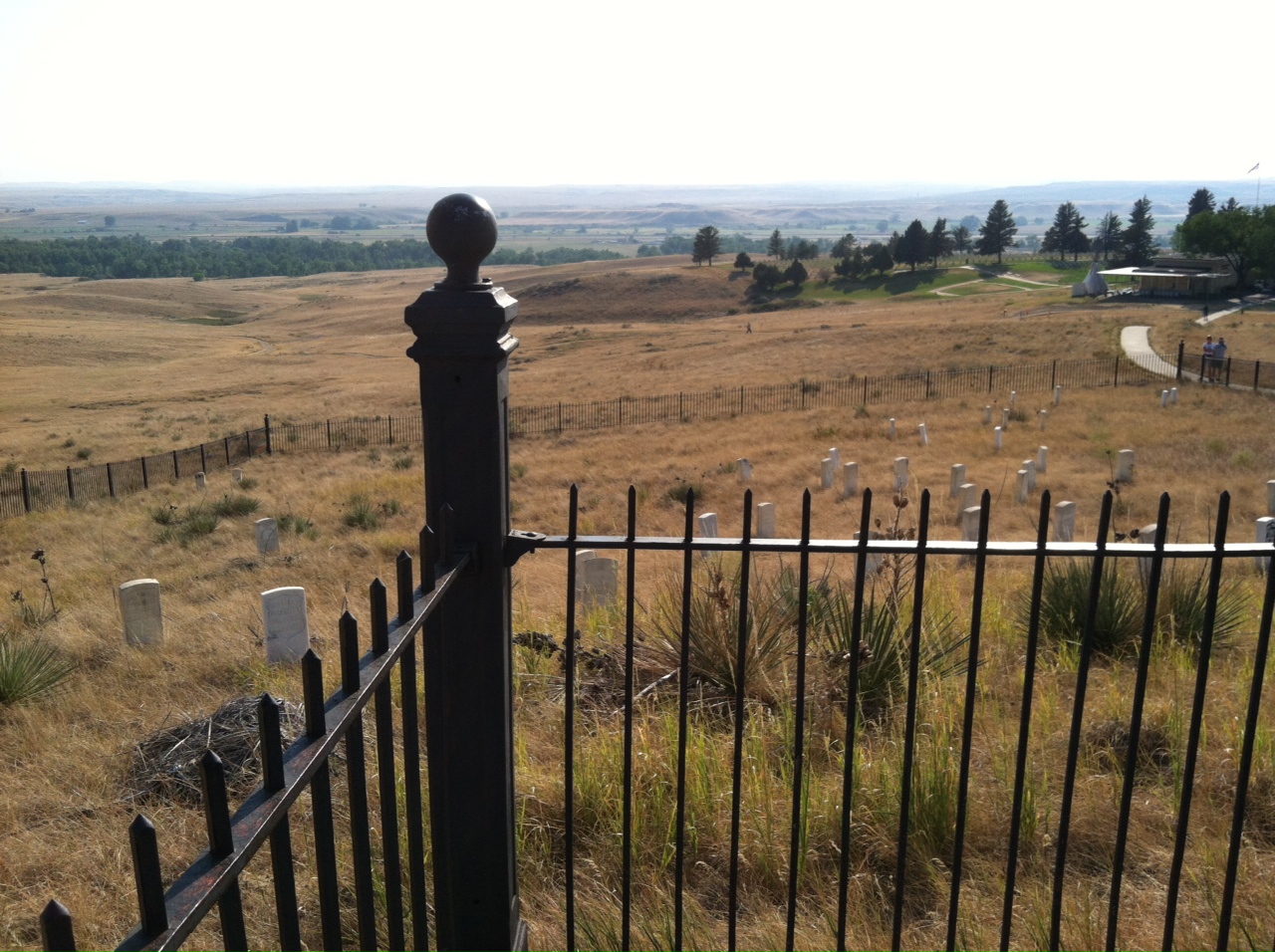
Bighorn Battlefield – National Park Service photo

When my family took two cross-country trips by car, once in 1963 and another in 1965, my father, a former officer and battalion leader in the Marines during WWII, was the primary driver and keeper of maps and deadlines. He could be convinced to stop at any number of state and national parks, points of interest and historical markers, but all four times we passed the sign indicating the Battle of the Little Bighorn, he would not stop despite our pleading.

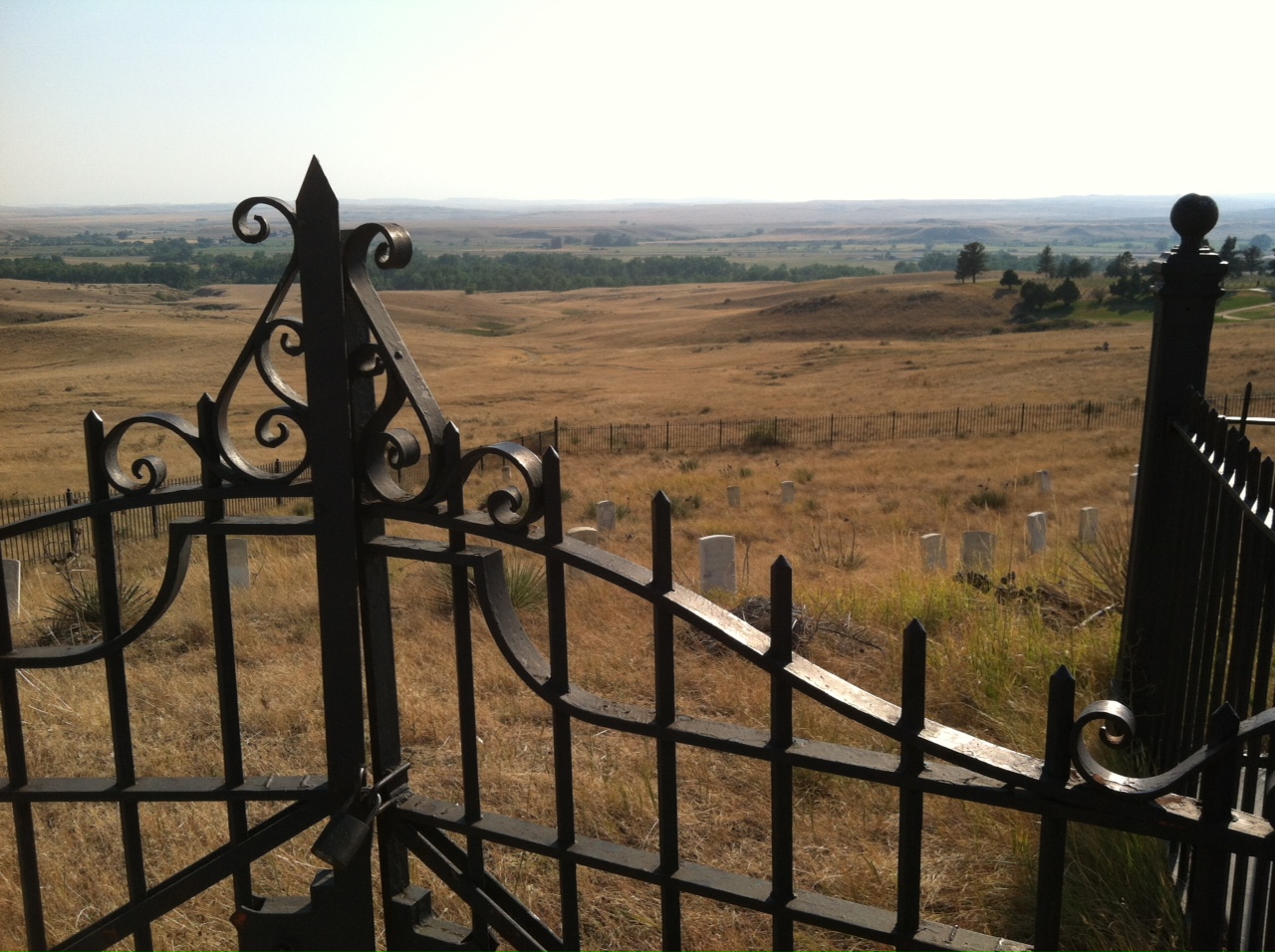
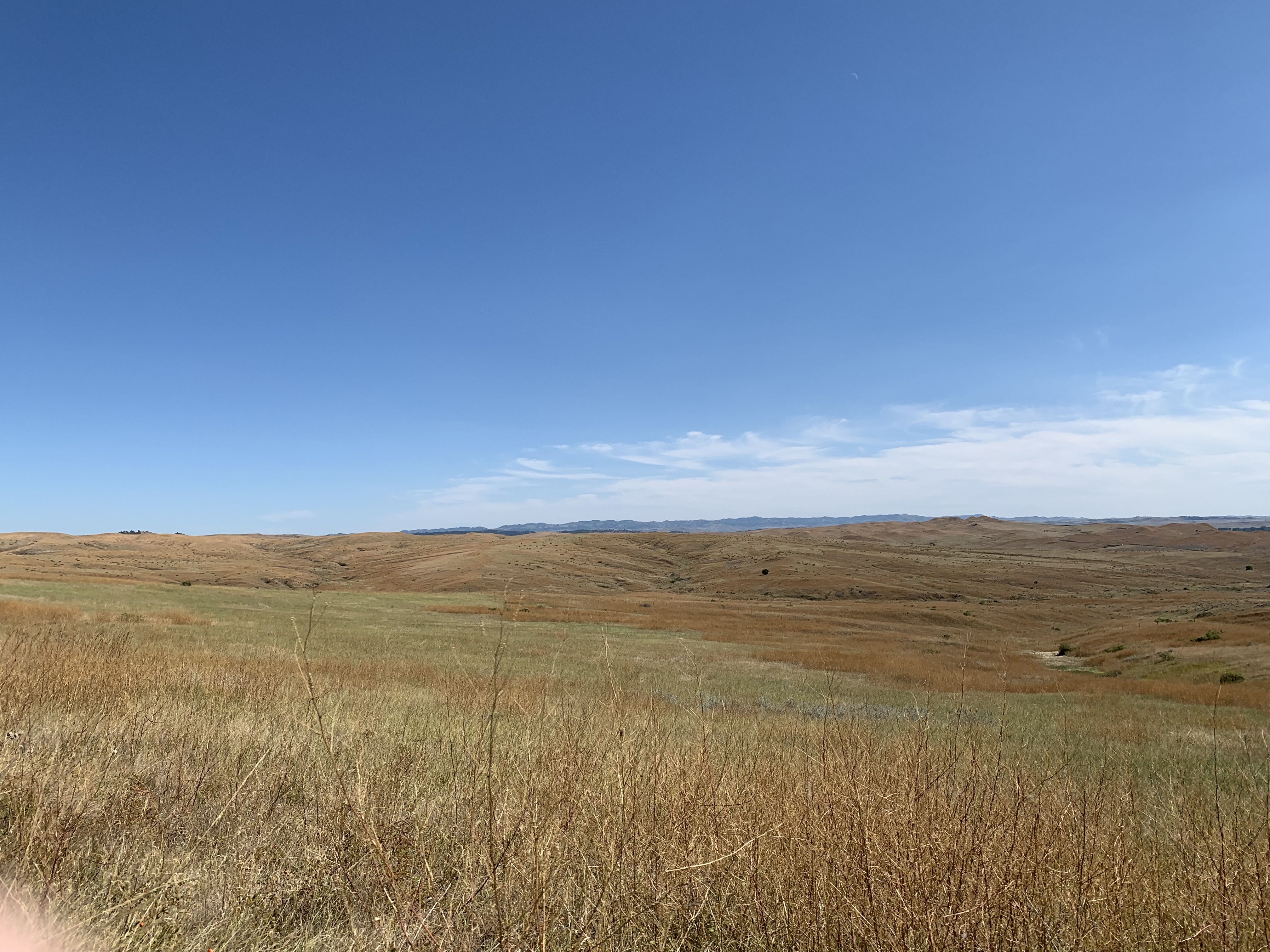
“You’ve seen as much as there is up there,” he would say as we sped past, pointing at the marble monolith at the top of the hill where the battle took place. I would look around at the desolate countryside of brown grass with no trees, in the middle of nowhere, and wonder how this place could ever have warranted a battle to the death.

Then I would get mad at my dad’s refusal to stop to learn more.

I had certainly learned about General George Custer’s Last Stand in my elementary school history lessons. But my interest was primarily driven by a 1958 Disney movie “Tonka Wakan” that I had seen in the theater and then later on Sunday nights on “Walt Disney’s Wonderful World of Color.” I thought I understood the tragedy of that day from the standpoint of the U.S. Calvary and the only surviving horse Comanche, who in the Disney-imagined version of the battle, was raised and trained by a young Indian boy who turned the horse over to the calvary and then later was part of the Little Bighorn Battle in defense of Indian territory.

So I had a very skewed and Disney-fied version of history and my father was not helping me understand more deeply. It wasn’t until much later that I realized the likely reason he was so reluctant to stop and examine the history of the Battle of the Little Bighorn.

My father was ashamed of it. He was a humble man who knew there could be no pride or sense of honor in that place.

He had very likely been trained in his Marine Officer’s Training in 1942 to understand that the poor decision-making of a cocky, overly self-assured General Custer led to the slaughter of five companies of the 7th Calvary Regiment as well as their Indian scouts in addition to dozens of Lakota and Dakota Sioux, Cheyenne and Arapahoe warriors.

My father had lived through three South Pacific island battles where poor decision-making was a death sentence. He didn’t feel the need to rehash the history in this desolate part of Montana.

As an adult, I’ve visited the Battlefield with my husband and children several times, have learned more about what led to the battle, what took place that day and how the indigenous people of the region have memorialized the spot from their own perspective. When we approach this spot on our cross-country drives, I’m filled with regret and remorse at the loss of life and the eventual loss of a Native American culture that could never again be as it was, despite the defeat they handed to the cavalry that day. I learned more when our son lived and taught high school math on the Pine Ridge Reservation of the Lakota Sioux people and we visited the site of Wounded Knee, another tear-drenched place in U.S. Cavalry and Native American history.

We, all descendants of immigrant Americans, comprise the U.S. government and military which doesn’t always make the best or wisest decisions. This is haunting us again this week in the miserably managed ending of the twenty-year war in Afghanistan that has cost so many American and Afghan lives – certainly beyond the scale of the horrific one day defeat at the Little Bighorn River. This long drawn-out complicated response to the attacks we suffered on 9/11/01, ended with yet more tragic bloodshed as we left so many vulnerable behind.

War, suffering, loss and death cannot and should not be Disney-fied. History is more complex than a paragraph in a textbook.

We have so much to learn about our shame and our need for greater humility. We need to understand who we have offended, not just how offended we feel. We can’t hide in the bathroom or drive on past the sites of these bloody conflicts, hoping it will all be forgotten.

A book of Barnstorming photography and Lois Edstrom’s poetry is available to order here:

To Gather Paradise

I dwell in Possibility –
A fairer House than Prose –
More numerous of Windows –
Superior – for Doors –

Of Chambers as the Cedars –
Impregnable of eye –
And for an everlasting Roof
The Gambrels of the Sky –

Of Visitors – the fairest –
For Occupation – This –
The spreading wide my narrow Hands
To gather Paradise –

~Emily Dickinson

The possibilities contained within a Dickinson poem are doors and windows standing wide open for interpretation and comprehension. When I visit Emily’s dwelling full of mysterious capitalizations, inscrutable dashes and sideways rhymes, I am blind, get easily lost, stumbling over this and that, and end up wondering where she is leading me and how far I’m willing to go.


Yet she tells me
– This –
to get my attention, hold it fast, to look up and out, beyond, and into forever.

-This-
is what I must do when I read her carefully chosen words and dashes
-This-
is what I ask of a reader who opens my email or comes to my daily post
-This-
is us dwelling in possibility for a moment or an eternity,
all eyes and windows and doors wide open to grasp a glimpse of Paradise.

-This-
is our hands spread, ready
to gather, to hold, to embrace, to pray, to fold
to prepare us for Whatever Comes Next…

photo by Sara Larsen

If you enjoy these Barnstorming posts, consider ordering this Barnstorming book – available here:

Thorny Doubts and Tangled Angers

I remember
the first day,
how I looked down,
hoping you wouldn’t see
me,
and when I glanced up,
I saw your smile
shining like a soft light
from deep inside you.

“I’m listening,” you encourage us.
“Come on!
Join our conversation,
let us hear your neon certainties,
thorny doubts, tangled angers,”
but for weeks I hid inside.


I read and reread your notes
praising
my writing,
and you whispered,
“We need you
and your stories
and questions
that like a fresh path
will take us to new vistas.”

Slowly, your faith grew
into my courage
and for you—
instead of handing you
a note or apple or flowers—
I raised my hand.

I carry your smile
and faith inside like I carry
my dog’s face,
my sister’s laugh,
creamy melodies,
the softness of sunrise,
steady blessings of stars,
autumn smell of gingerbread,
the security of a sweater on a chilly day.
~Pat Mora, “Ode To Teachers” from Dizzy in Your Eyes.

School is back in session for some and will be soon for others. We cross our fingers it can remain in person, masked face-to-masked face, rather than via screens.

Students and teachers will find their way back to one another – learning each other’s stories and how to transform one another through sharing those stories.

Two of our children are school teachers – one at elementary level and the other in high school, while the third spent two years teaching high school math on the Pine Ridge reservation in South Dakota. They were transformed by their own teachers, inspired to do what had made such a difference in their own lives. They have become the teachers who I wish would teach me.

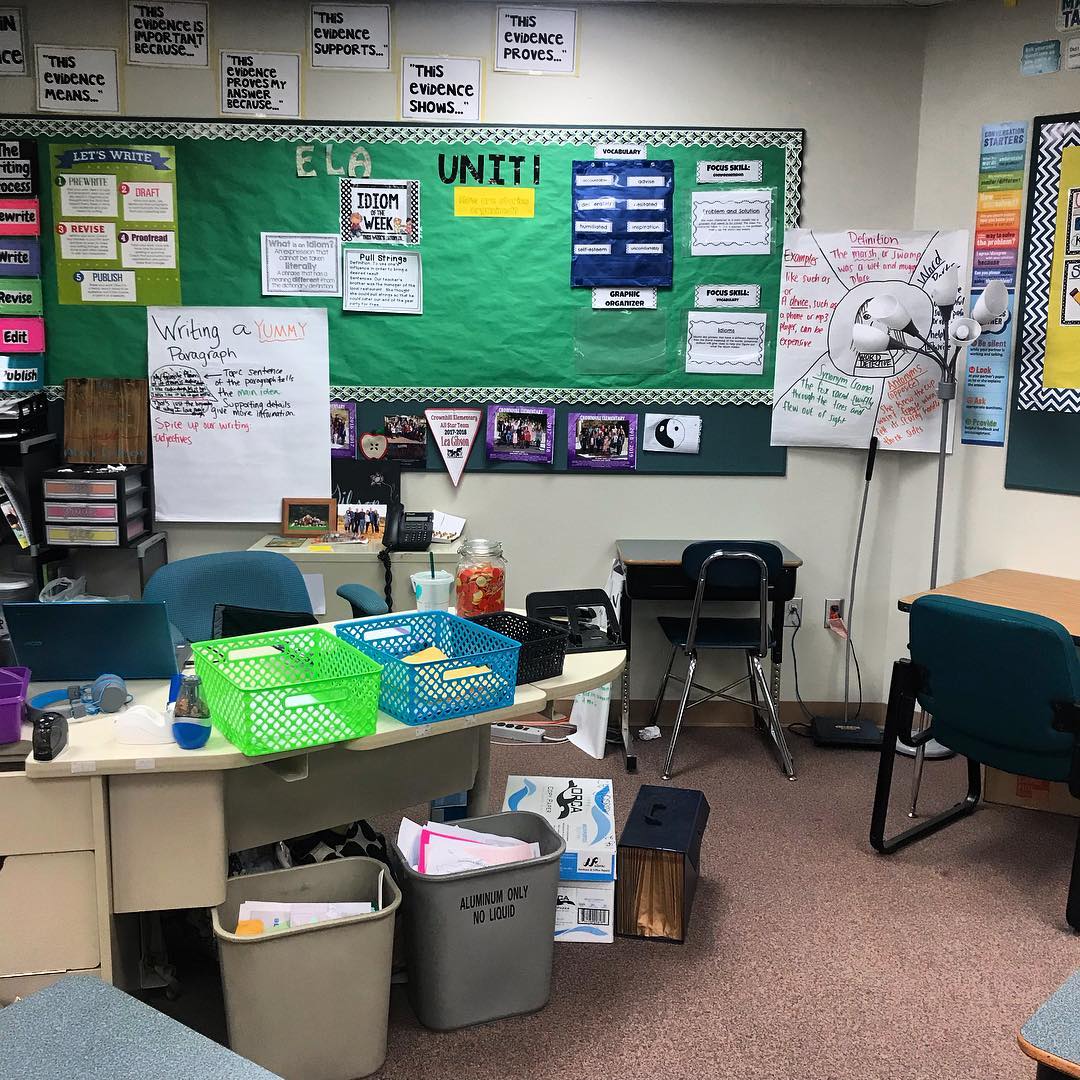
Some of my own teachers helped transform me in those early years, encouraging me in my shyness to raise my hand despite my thorny doubts, tell my story despite my tangled angers, share something of myself when I felt I had nothing of value to give.

I think of you and thank you – Mrs. Neil, Mr. Duffy, Mrs. MacMurray – for helping me break out of my broken shell in my grade school years. You taught me to wholly trust to this day those who love enough to push me to become a better me.

Looking for a book of beauty in photos and words? Consider this book available for order here:
Summer, Go Not Yet Away

Fair Summer droops, droop men and beasts therefore:
So fair a summer look for never more.
All good things vanish less than in a day,
Peace, plenty, pleasure, suddenly decay.
Go not yet away, bright soul of the sad year;
The earth is hell when thou leavest to appear…. 

What, shall those flowers that decked thy garland erst,
Upon thy grave be wastefully dispersed?
O trees, consume your sap in sorrow’s course,
Streams, turn to tears your tributary course.
Go not yet hence, bright soul of the sad year;
The earth is hell when thou leav’st to appear.

Ah, who shall hide us from the winter’s face?
Cold doth increase, the sickness will not cease,
And here we lie, God knows, with little ease.
From winter, plague, & pestilence, good Lord, deliver us.

~Thomas Nashe from “Summer’s Last Will and Testament” (from a stage play performed in 1592)

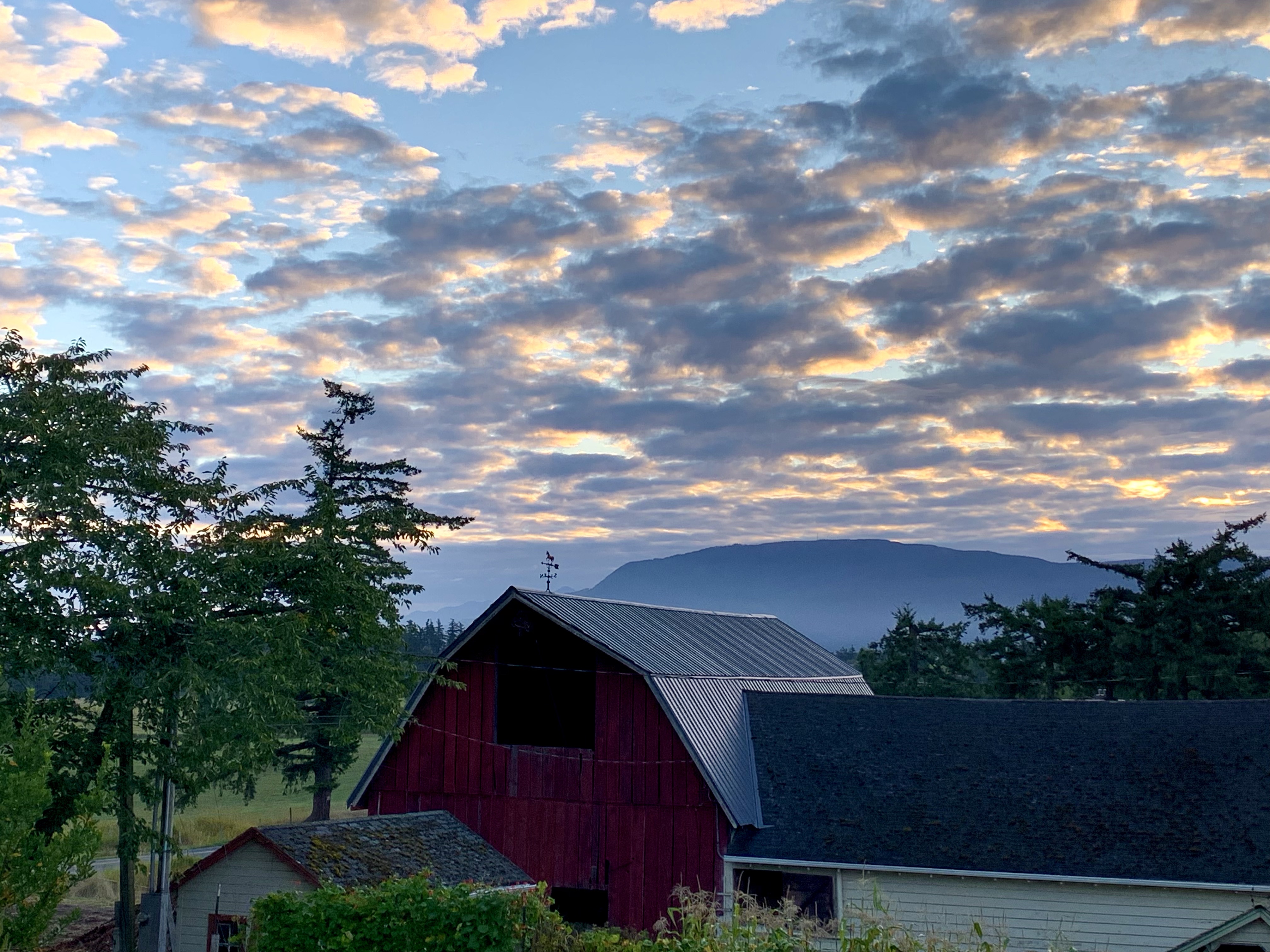
Summer 2021 so far has been hell for much of the world and we still have nearly a month left of more Summer to endure: the fall of Afghanistan, another earthquake in Haiti, floods in Europe and central U.S., storms in the east with drought and fires in the west, and last but certainly not least, the explosion of the Delta COVID variant everywhere.

COVID has demonstrated that plague and pestilence clearly isn’t limited to cold weather and winter. This virus enjoys easy transmission among those who continue to live without any defenses – the unmasked and those who remain unvaccinated either by choice or lack of access to vaccine. We, through our behavior, have invited an opportunistic virus to spread among us through this “bright soul” of the year which ordinarily should be “plague-free.”

Will we continue to roll out the red carpet for COVID, welcoming it into ours and other’s homes, noses and lungs, even as summer itself dies away along with thousands of more pandemic victims?

Deliver us, O Lord, from our own reluctance to accept that viruses care not whom they infect, particularly those with little defense.

Deliver us, O Lord, from our preference for our own self-determination over a concern for the needs and vulnerability of others.

Deliver us, O Lord, from our continued blindness – doing what is right in our own eyes without seeing what is best for all.

Go not yet away, fair Summer, as here we lie, God knows, with little ease.

If you appreciate Barnstorming posts, you’ll enjoy this book, available for order here:
A Zone of Stink

Like a piece of rotten meat
which not only stinks right on its own surface
but also surrounds itself
with a stinking molecular cloud of stink,
so, too, each island of the archipelago
created and supported a zone of stink around itself.

~ Aleksandr Solzhenitsyn, The Gulag Archipelago, 1918-1956: An Experiment in Literary Investigation, Books III-IV

If you’re looking for sympathy
you’ll find it between shit and syphilis in the dictionary.
— David Sedaris (Barrel Fever: Stories and Essays)

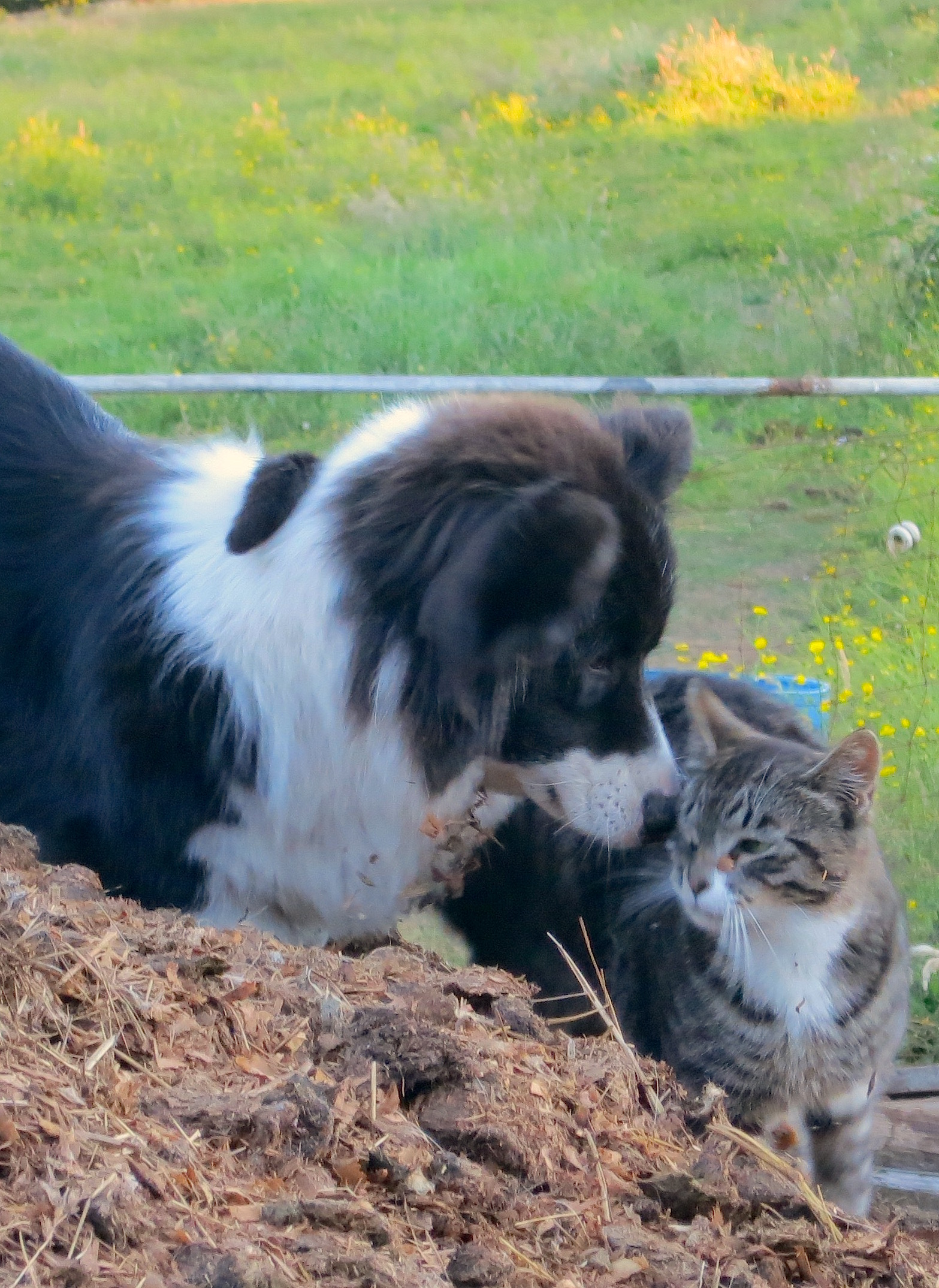
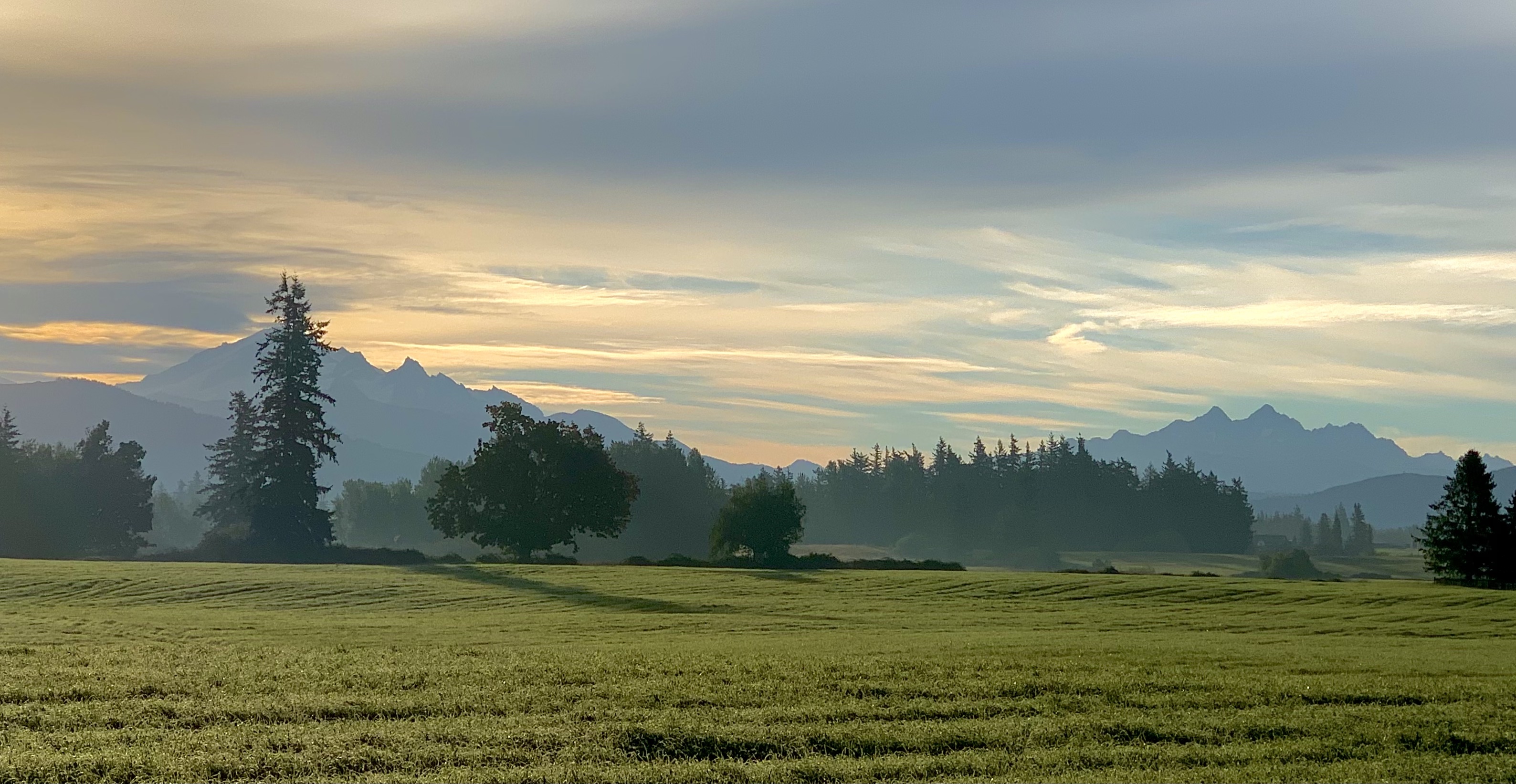
As I’ve written elsewhere, I spend over an hour a day dealing with the excrement of my farm critters. This is therapeutic time for me as I have deep respect for the necessity to clean up and compost what is smelly/stinky/yucky and biblically objectionable. (Deuteronomy 23:12-14) None of us, including God, want to take a walk having to pick our way around poop.

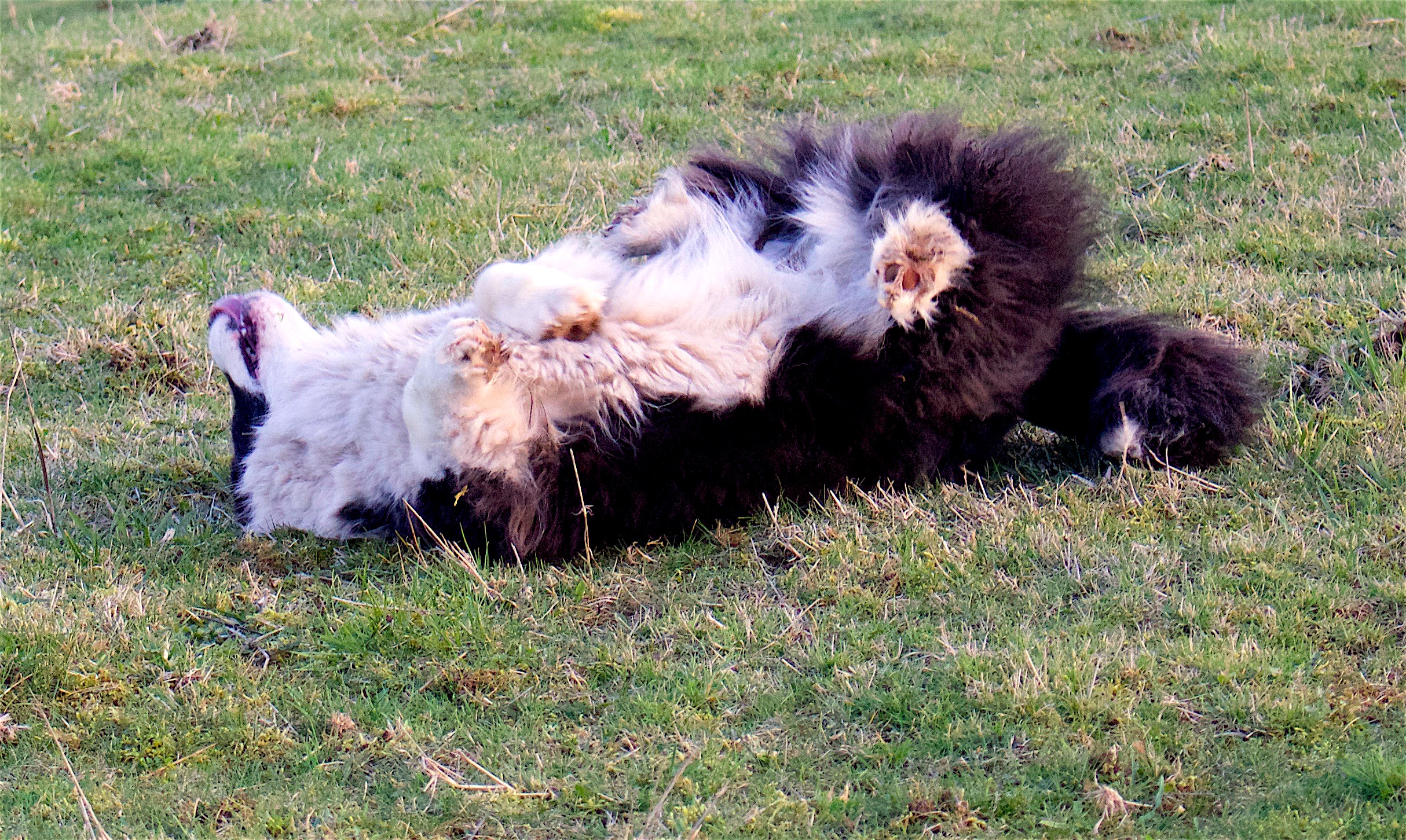
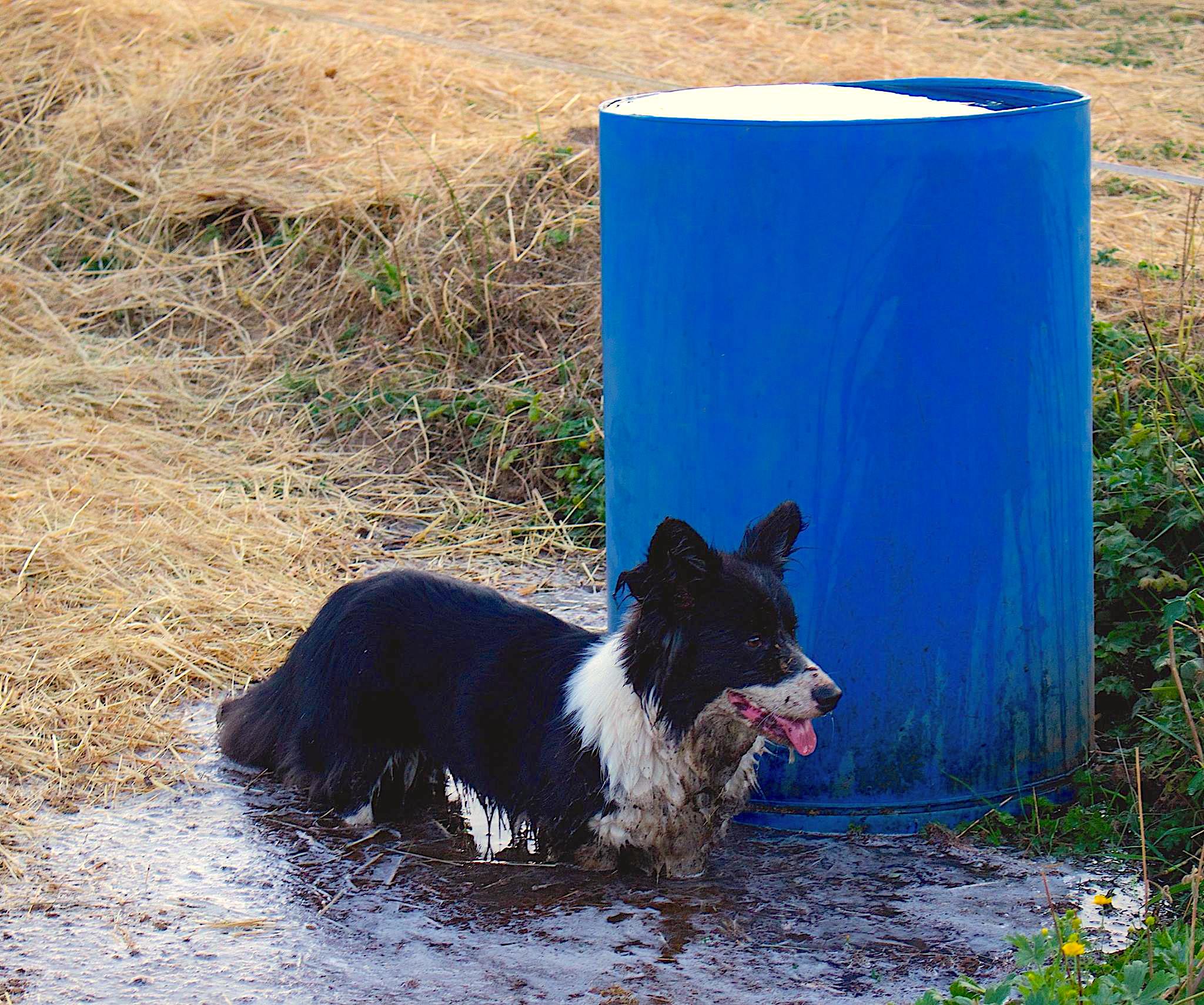
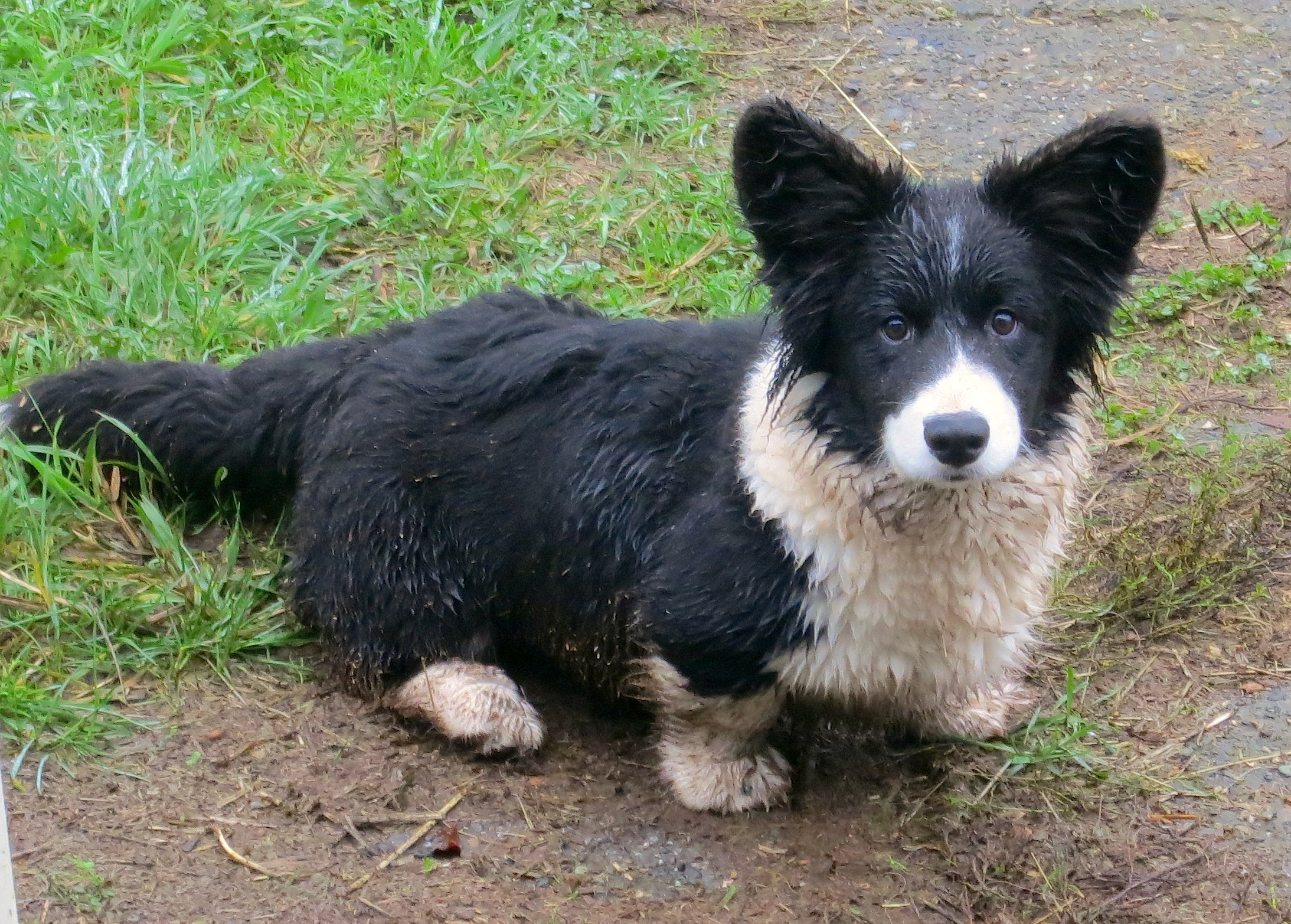
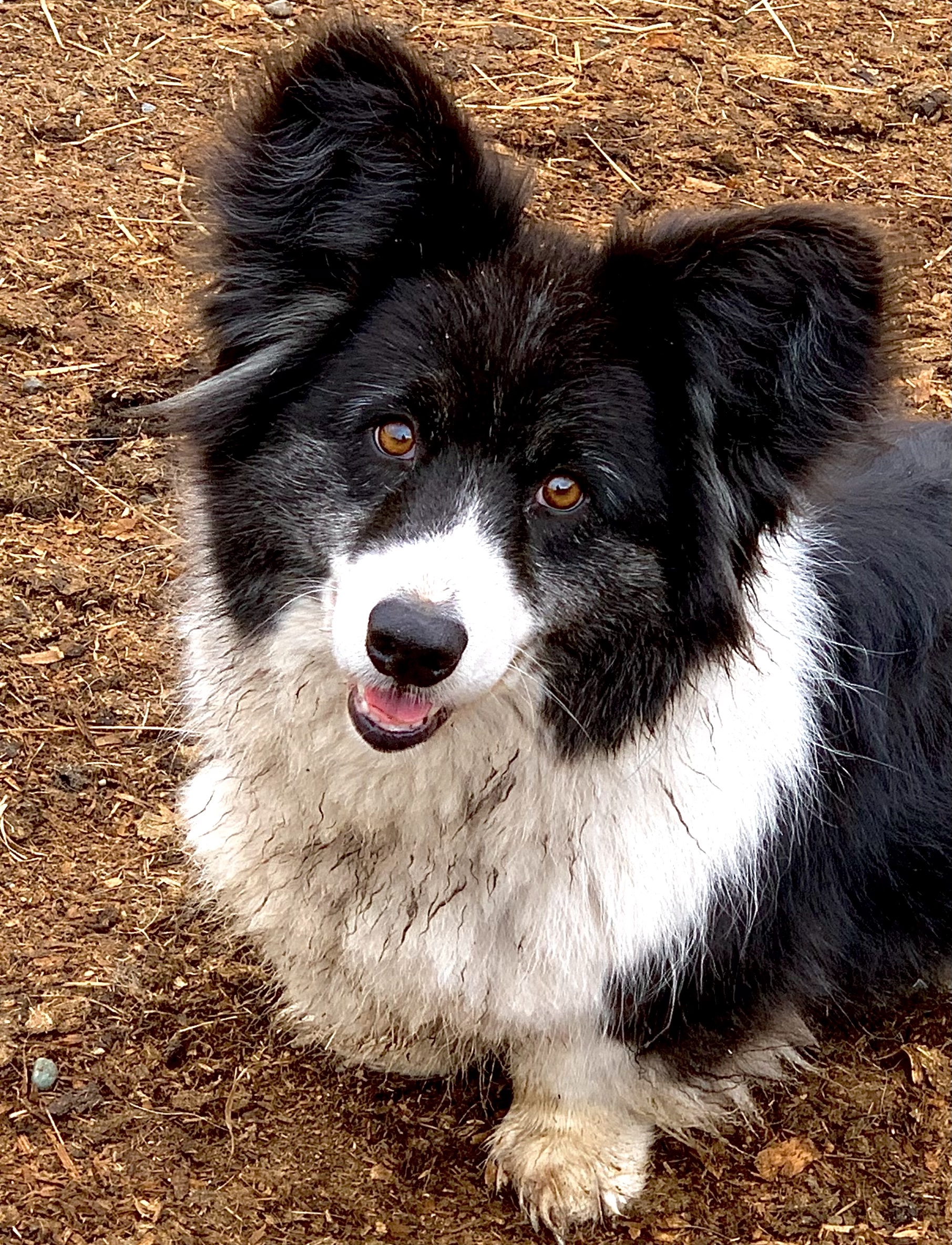
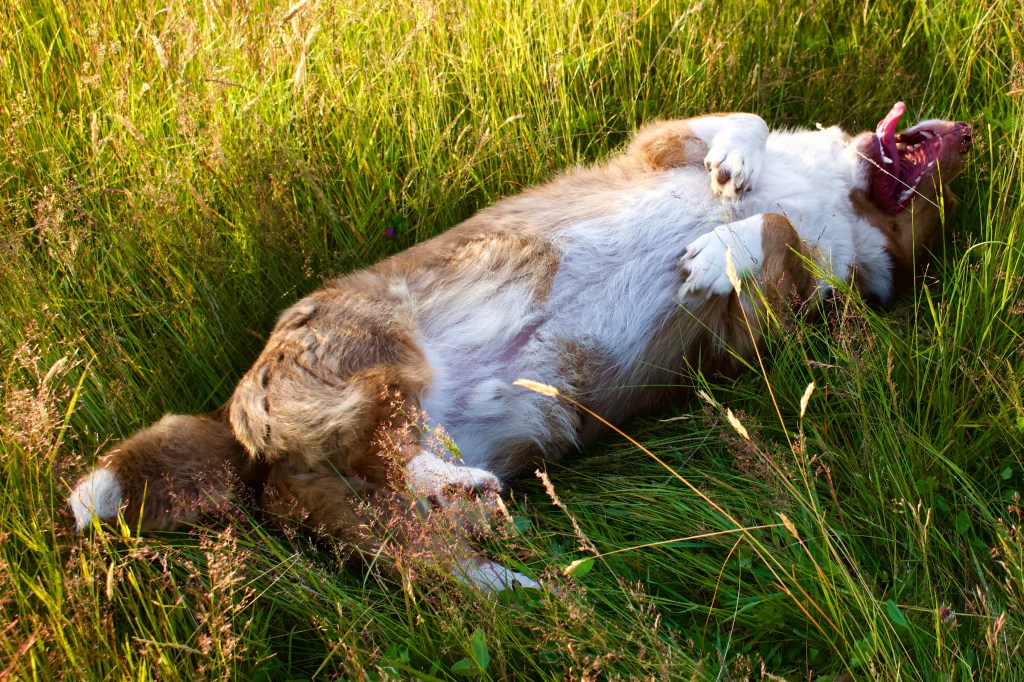
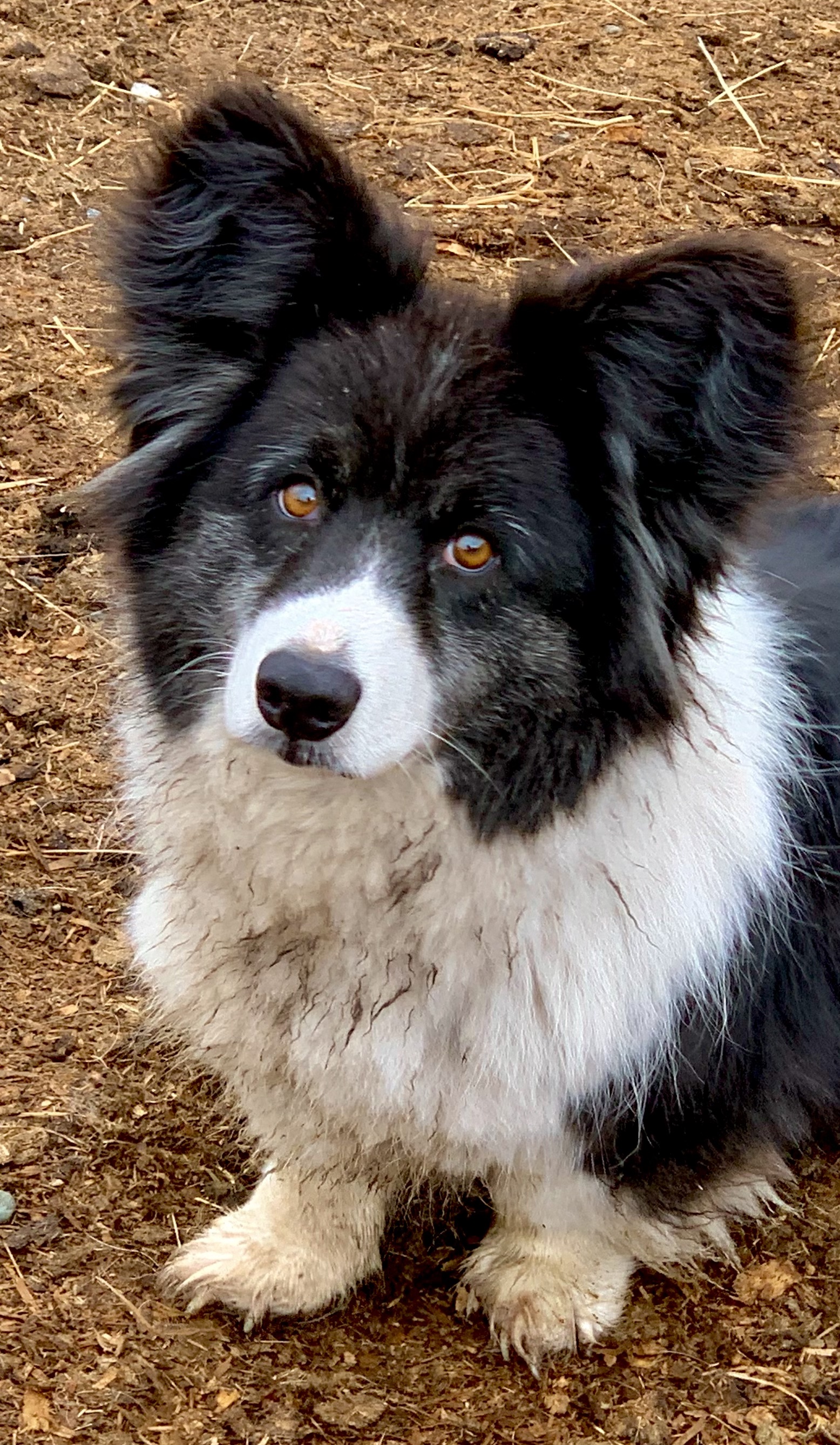
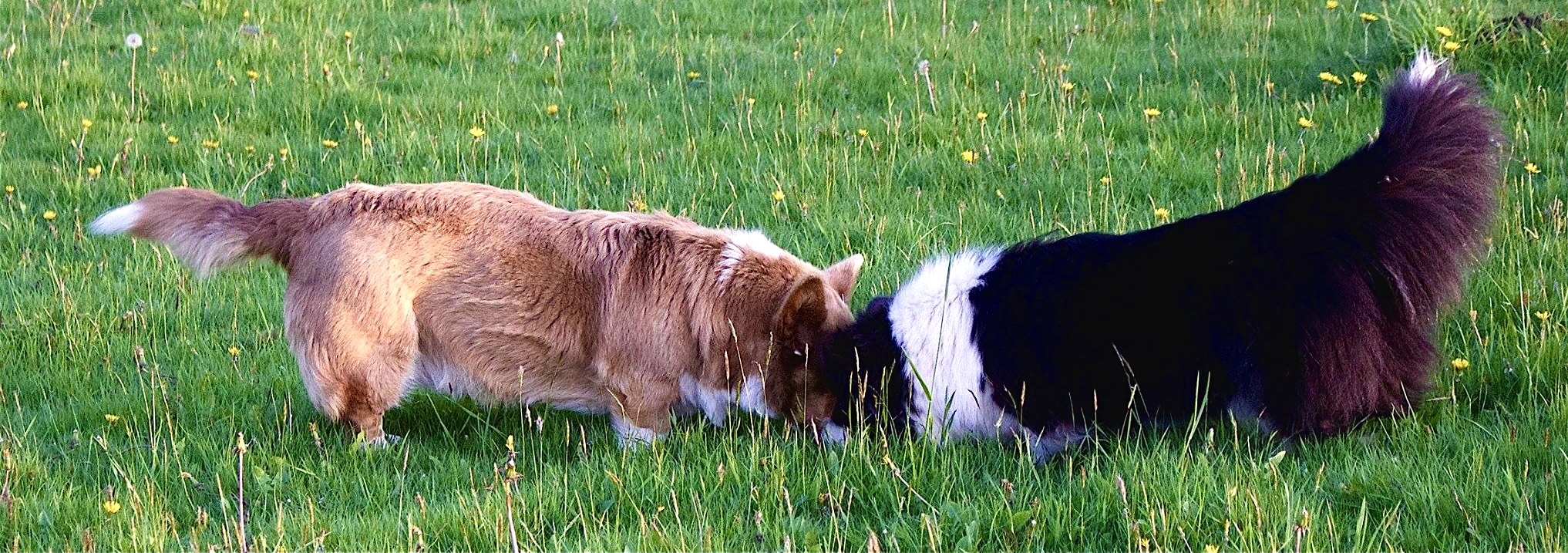
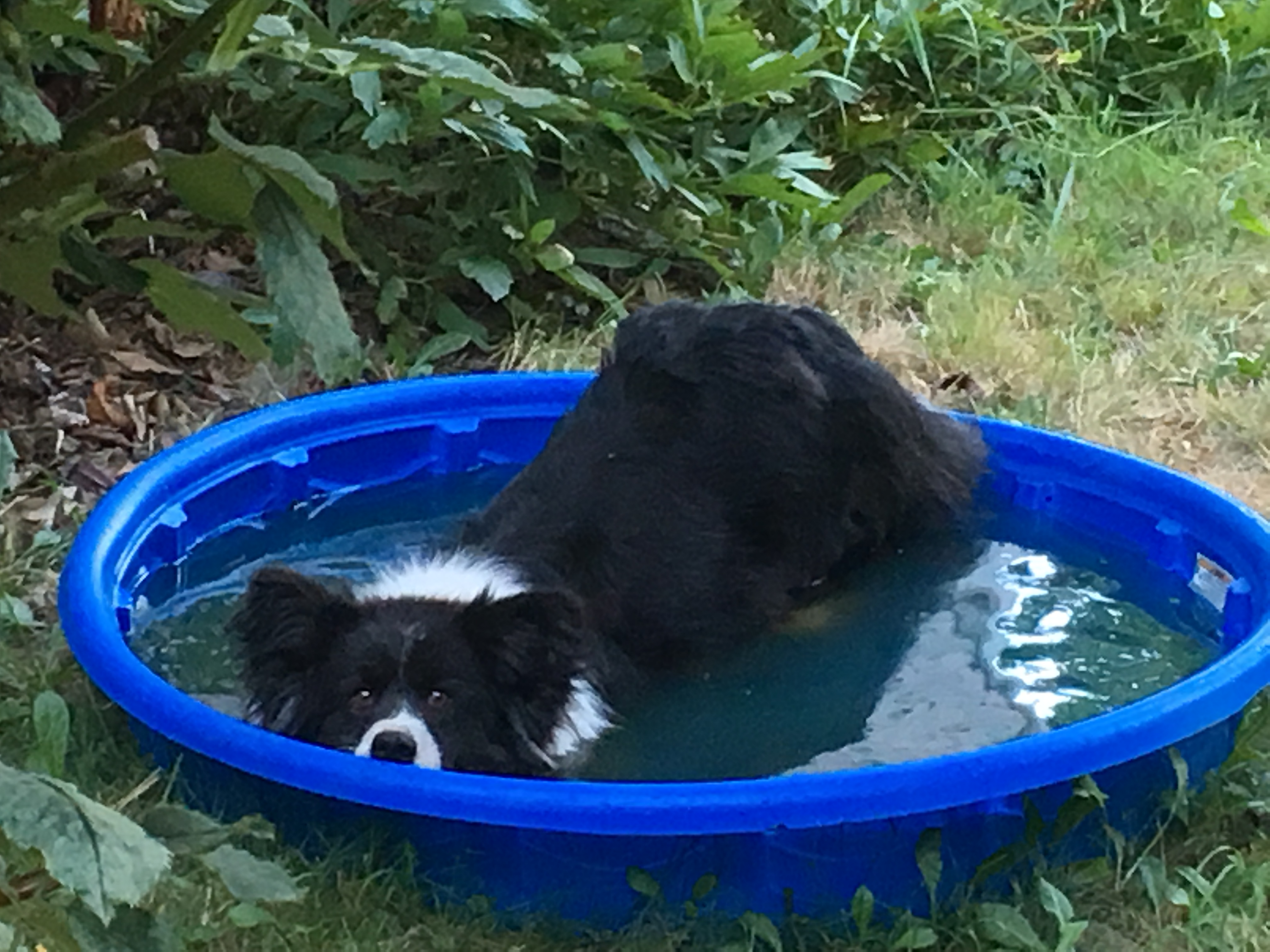
As I’m busy picking up manure, I watch our dogs seek out the smelliest, most vile things they can find in the barn or field (preferably dead) and roll themselves around in it one after another until they are just as stinky as the stuff they found. They are clearly joyous about it, especially when they do it together. It is curious throw-back behavior that I’ve assumed, wearing my animal behaviorist hat, was about a wild predator covering up their scent in order to stalk and capture prey more effectively without being detected – except they are really truly so smelly that any prey could sense them coming from a mile away and would learn quickly that a moving creature that smells like poop or a dead carcass is bad news and to be avoided.

This is the main reason our farm dogs live full time outdoors. We prefer to avoid stinky dirty creatures too. So I’ve tried to understand this behavior for what adaptive purpose it may have.

Here are some interesting theories at this link.

What makes the most sense to me is the “pack mentality” that suggests that once one dog/wolf rolls in something objectionable, that the rest of the pack does too. This is a unifying theme for anxious individuals – they aren’t really on their own if they smell and blend in with the rest of the pack. So they spread the “wealth”, so to speak. Stink up one, stink up all. Like team spirit, it seems to improve morale – until it doesn’t anymore.

I’ve been feeling covered with stink myself lately as I’ve searched for those sympathetic around me and found myself stuck between shit and syphilis. There are so many divisive opinions right now about a variety of current issues; vile nonsense has been flying right and left on social media as well as face to face. The theory is if all stink the same from rolling in piles of misinformation, we are then no longer alone.

Yet our destiny does not have to include believing, sharing and “flinging” the stuff that stinks to see who it will stick to. I no longer want to be a target.

Time for a bath.
Time for soap and cleansing and some serious self-examination.
Time to stop joyously rolling around in it.
Time to bury the excrement so we’re not staring at the ground, picking our way around the piles and can actually hold our heads up to see where we’re heading.

A new book from Barnstorming is available to order here:

Fairing Well

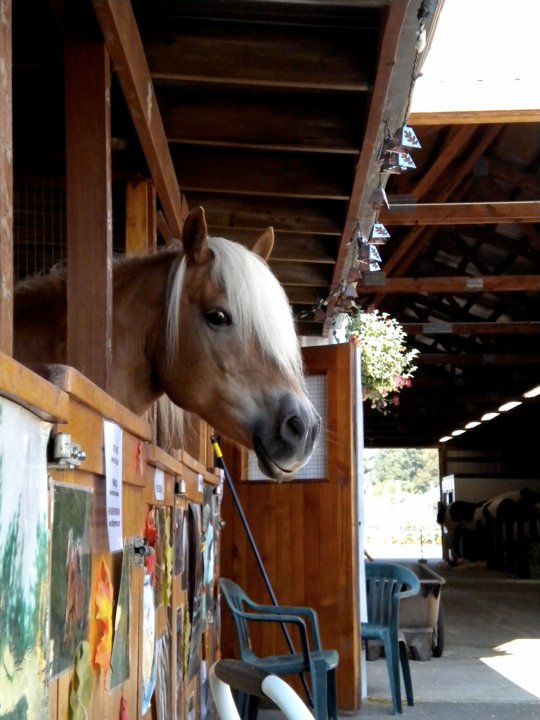
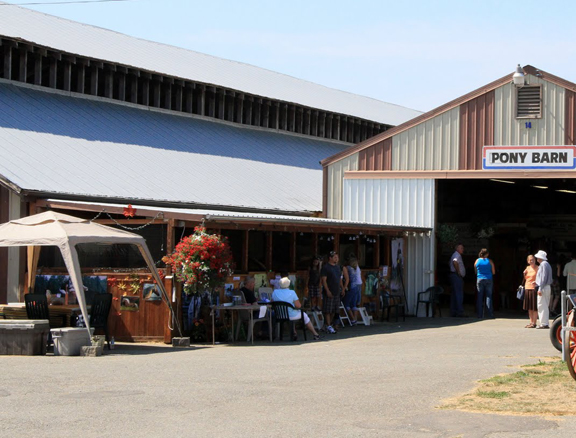
The Northwest Washington Fair in Lynden is underway this week and for the ninth year in a row, our Haflinger horses aren’t there on display.  I feel wistful as I wake up too early on a foggy summer morning, remembering the twenty years where I would gather up our sleepy children and their friends and head into the fairgrounds to clean stalls, walk the ponies and prepare for the day.  We are no long “doing” the fair as a farm, and I’m still a little bit sad about that.

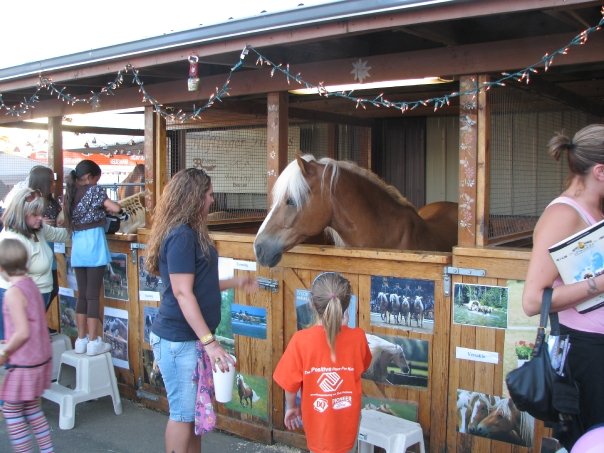
Our farm, BriarCroft, had been a consistent presence at this fair for nearly two decades, promoting the Haflinger breed in a well-decorated outdoor display, providing 24 hour a day coverage for the horses for the 6 days of the fair. We petitioned the Fair Board for 5 years in the late 1980s to allow us to display at the fair, and they finally said “okay, here’s the space, build it yourself” and we did! We were not there for classes, competition, or ribbons. We were there because people enjoyed our Haflingers and we enjoyed the people.

But now that our children are all grown up and moved away, we lack their help to “man” the horse stalls. I miss spending that intense one week time with all of the several dozen “kid” helpers from over the years, most of them now with children of their own.

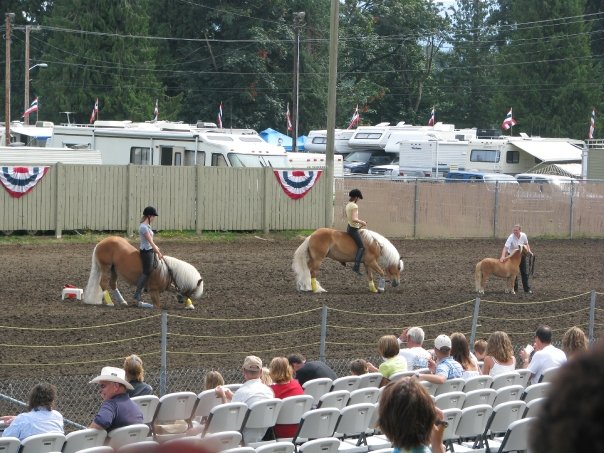
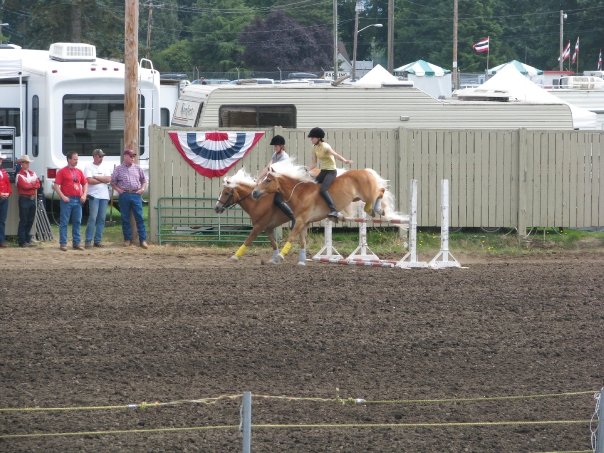
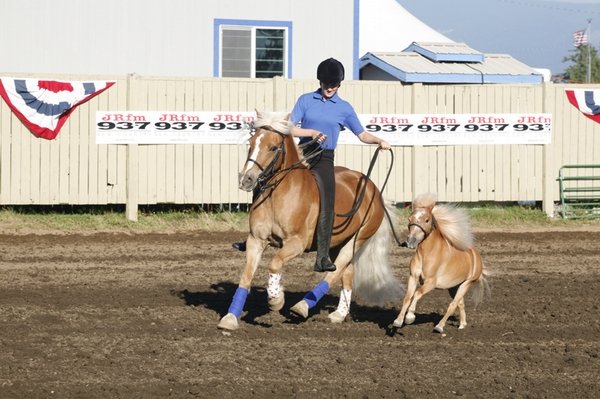
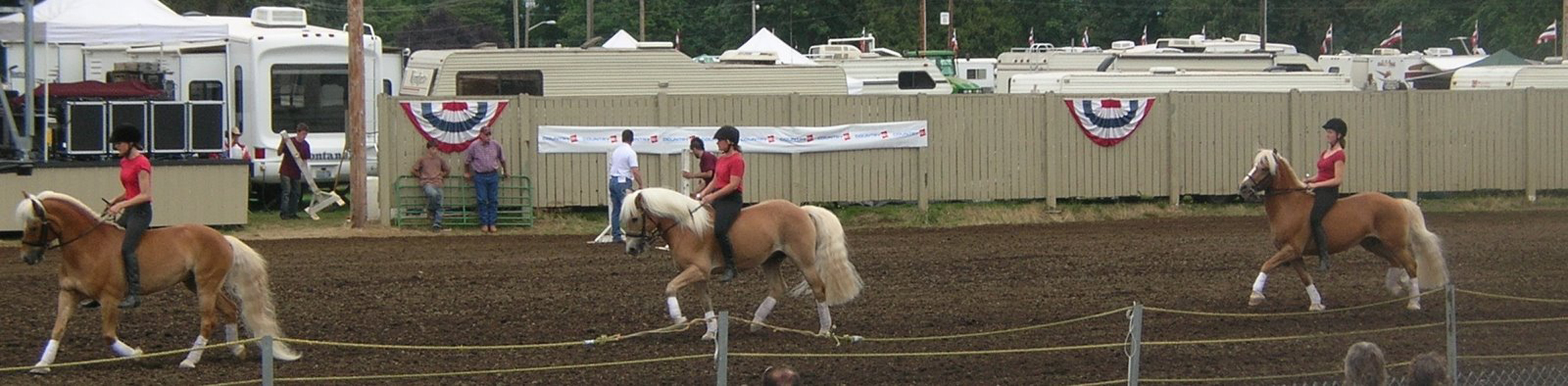
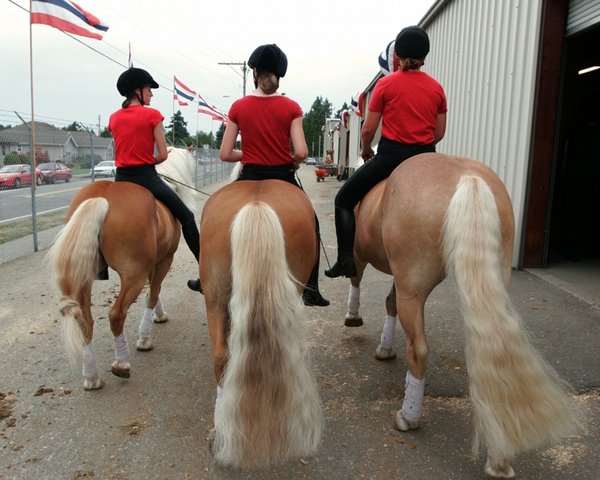
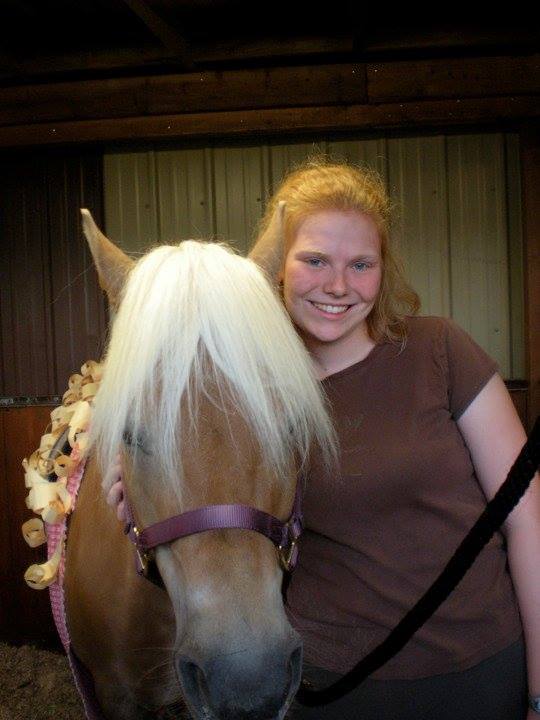
Every year between 1992 and 2012, we were there, sometimes sharing space and duties with other Haflinger farms (Rodenbergers and McKees), along with several brave young women (Kelsy Smith, Chesna Klimek and Emily Vander Haak) who did Haflinger “trick riding” as part of the daily Grandstand show. The older kids watched the younger kids, the in-between kids did most of the horse stall cleaning duty, and we adults sat and shot the breeze.

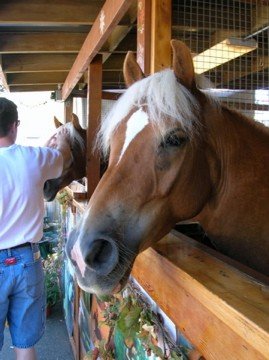
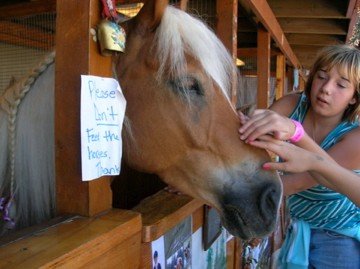
Our display created good will for the fair visitors who depended on us every year to be there with horses that they and their children could actually pet (and sit on) without fear, who enjoyed our braiding demonstrations, and our various Haflinger trivia contests with prizes. Our horses came to represent what dreams are made of.

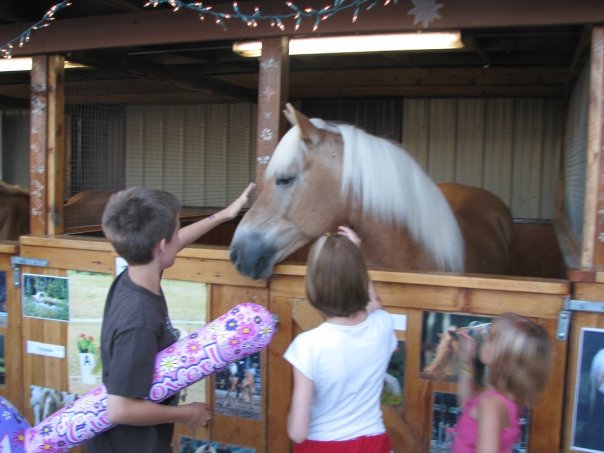
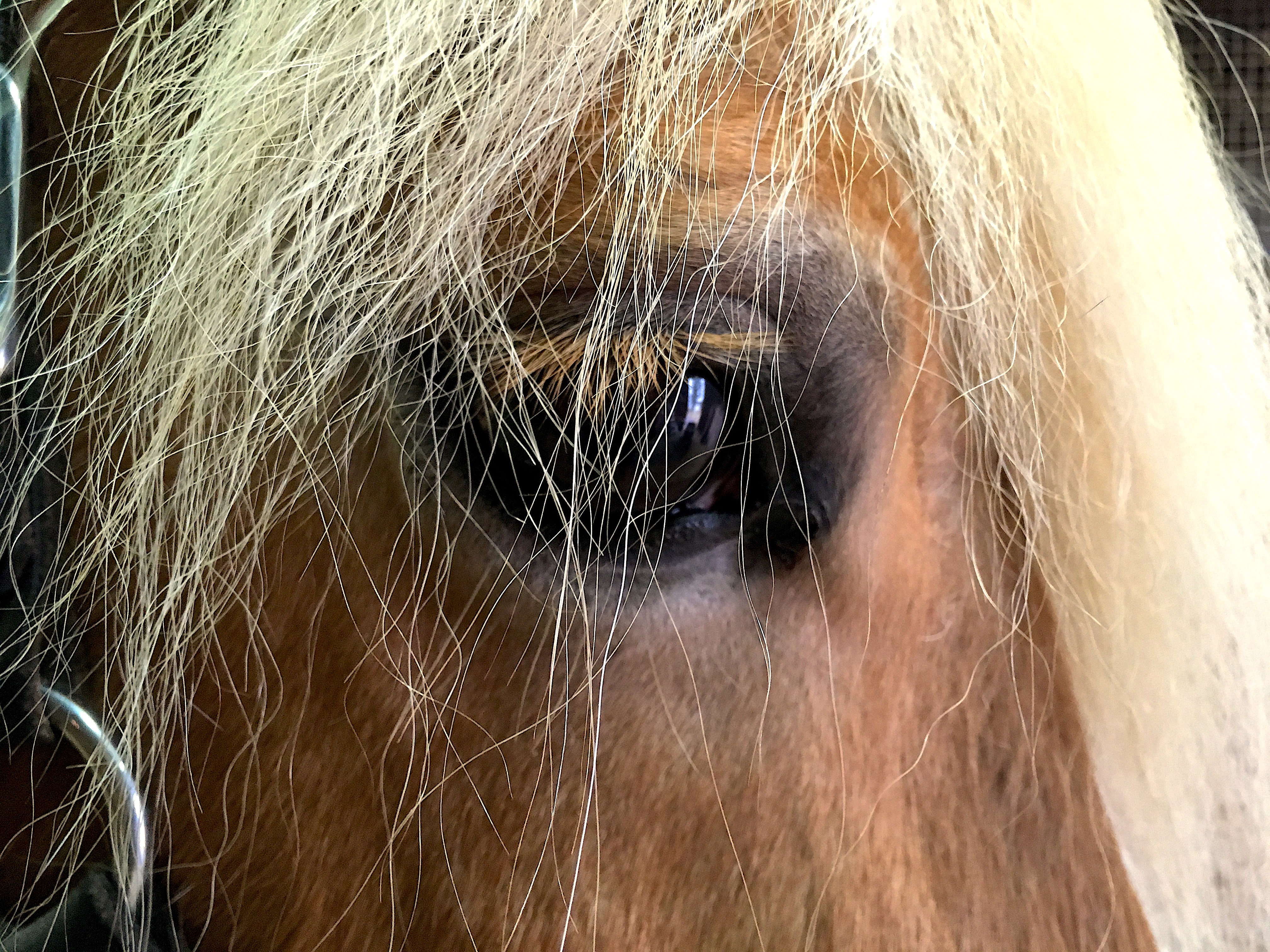
Countless times a day there would be a bright eyed child who approached our stalls, climbed up on the step stools and reached up to pet a Haflinger nose or neck and looked deep into those big brown Haflinger eyes, and lost their heart forever to the breed. They will not forget that moment when a horse they had never met before loved them back. Haflingers are magic with children and we saw that over and over again.

Our first year, in 1992, a mom and her 6 year old son came up to our stalls, as do some 10,000 people a day, and spent a long time petting the horses and talking to them, and enjoying them. They walked off, with the little boy looking over his shoulder at the Haflingers until they turned a corner and went out of sight. An hour later they were back and spent more time with the Haflingers. I offered the little boy a chance to sit on a Haflinger, and he agreed readily, and sat and sat and sat, playing with the mane and petting the shoulder and neck and was simply in heaven, quietly dreaming his own dreams on the back of a horse. His mom told me that they lived in a suburb near Seattle, but always spent this particular week in August at a local beach cabin, and the fair was one of their favorite activities each year. Her son Gary had never had an opportunity to sit on a horse before.

Next year, they were back, and Gary was a little taller, but still a quiet boy, and he kept dragging his mom back to the Haflingers, and she’d sit and visit as he’d sit on the Haflingers. He watched as we watered the horses, or fed them hay, or cleaned their stalls, and pretty soon he was asking if he could do the scooping, or dump the buckets or brush the horses. So he became, out of his own initiative, a helper.

By the time he was 8, he was spending several hours at a time with us at the stalls, taking his turn at the chores, and his mom, trusting that he was in good hands, and that he certainly wasn’t going to wander away from the Haflingers, would check back with him now and then to see if he wanted to go on rides, or see a performance, and his response was always “no, I can do that anytime, but I don’t get to see Haflingers very often!” He would talk a little about his hope someday to have a farm where he could raise Haflingers, and one year even said that his folks were looking at property to buy with acreage, but apparently a job for his dad didn’t materialize, so he remained a city kid in reality, even if he was a future farm kid in his heart.

Gary was one of our regular kid helpers every year until he was 12 when he started turning out for junior high football, and the football summer camp coincided with our fair week, so we’d only see him briefly on Saturdays as he got into his teens. He’d stop by to say hi, pet the horses, catch up on the Haflinger news, and because he only had a few hours to spend at the fair, he’d head off to other things. I really missed him and his happy smile around the stalls.

When he was 15, I missed seeing him because I was working when he stopped by. When he stopped by at age 16, he strolled up to me and I found I was looking up at this young man who I had to study to recognize. I’m a tall woman of 5’10”–he was at least 4 inches taller than me! He told me he wanted to come by because some of his best summer memories were of spending time with the Haflingers at the fair and he wanted me to know that. He thanked me for welcoming him and allowing him to “hang out” with the Haflingers. He told me his hope and dream someday was to live somewhere where he could raise Haflingers, and he was working hard in school so he could make that happen. He was a  4.0 student and the first string quarterback on his high school football team. I was as proud as if he was my own son.

This young man received a full scholarship to play football at a major university, and over four years waited his turn to be the starting quarterback.  Once he had his chance, after only a few games of being the starter, he was tackled hard, sustaining a neck fracture which thankfully resulted in no permanent damage, but his college football career was suddenly over.

I have lost track of Gary over the years and I hope he is faring well. I hope his connection with our horses left him with a legacy of love for animals he’ll pass onto his children someday.

So on this misty late summer morning, instead of heading to the fairgrounds to clean stalls, I’m going to turn our dusty, unbathed Haflingers out in the field as usual.  They don’t even know all the excitement they are missing.

I do hope the fair-goers still miss the friendly golden horses, with the big brown eyes, who helped make dreams come true.

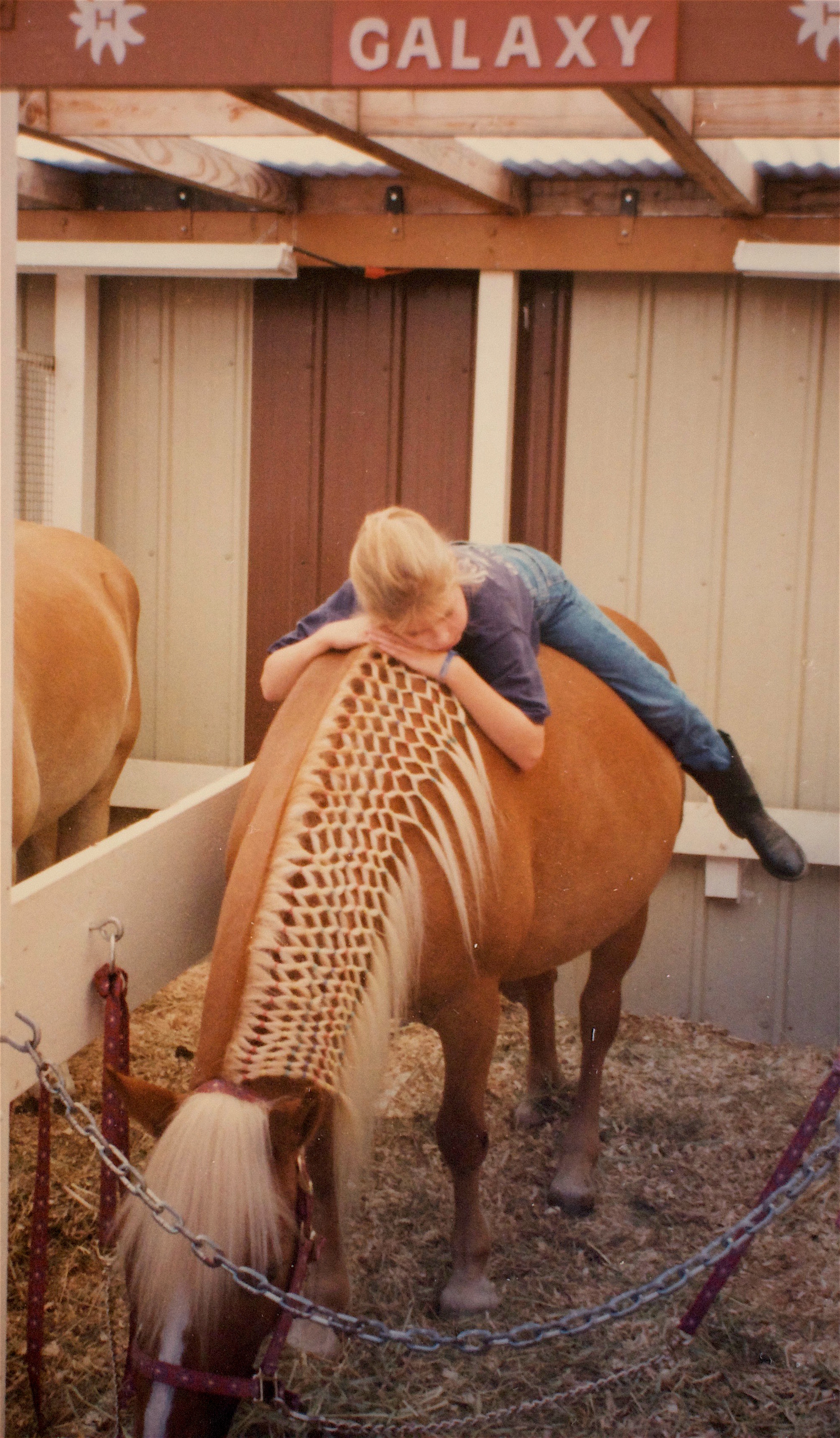
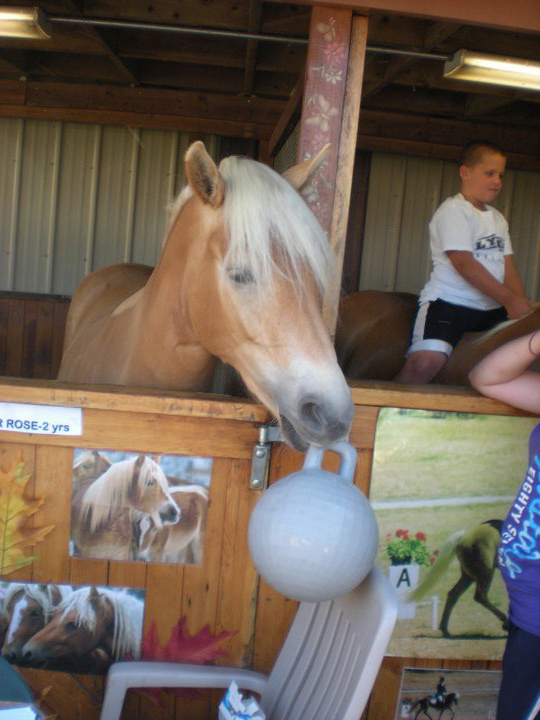
Our Haflinger display at the NW Washington Fair
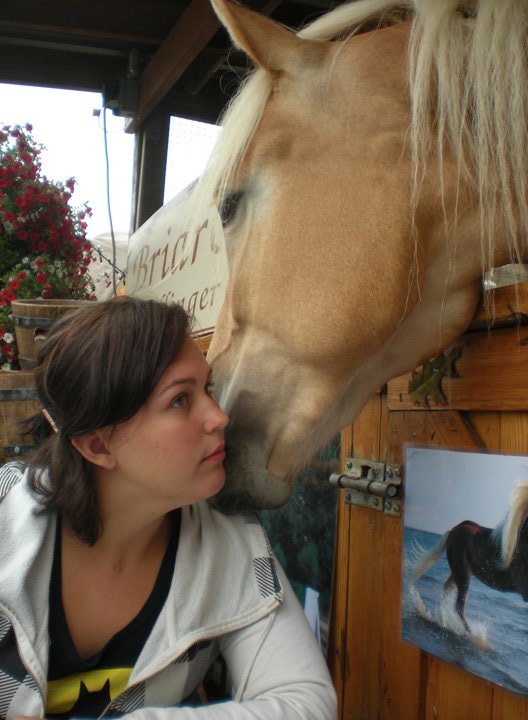
Trillium as a yearling with me at the fair 1993 – she is still part of our herd at age 29

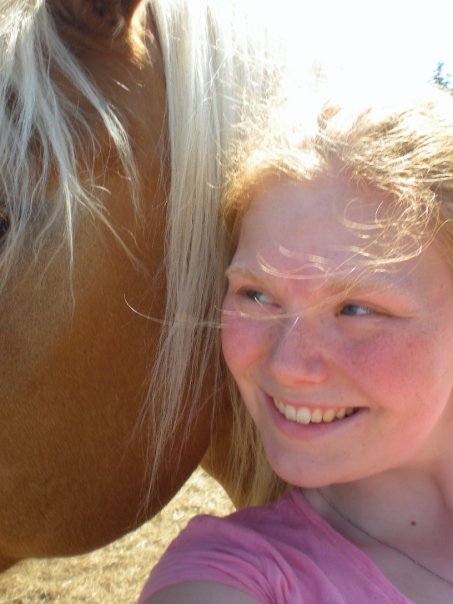
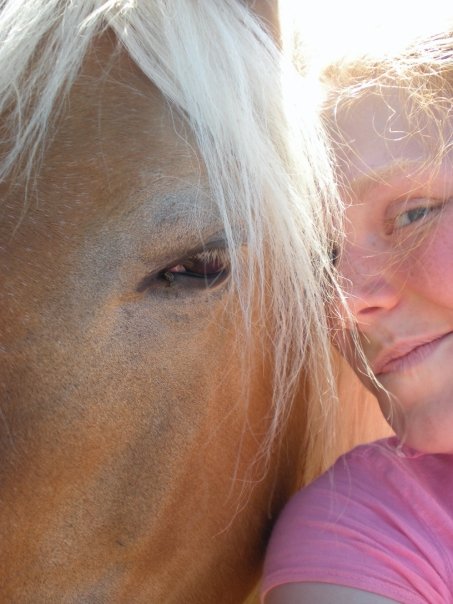
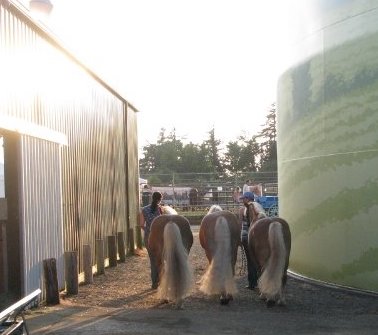
Thank you to Lea Gibson Lozano, Emily Vander Haak, Kelsy Smith, and Chesna Klimek for their photos in this collection.

A photo of our Haflingers and poems are found in this new book from Barnstorming, available to order here: