For the bark, dulled argent, roundly wrapped And pigeon-collared.
For the splitter-splatter, guttering Rain-flirt leaves.
For the snub and clot of the first green cones, Smelted emerald, chlorophyll.
For the scut and scat of cones in winter, So rattle-skinned, so fossil-brittle.
For the alder-wood, flame-red when torn Branch from branch.
But mostly for the swinging locks Of yellow catkins.
Plant it, plant it, Streel-head in the rain. ~Seamus Heaney “Planting the Alder”with an explanation of some of the poet’s poetic words here
Alder catkin, weightless as down, only blow it away and all changes utterly, and life, it appears, is not such a trifling matter, when nothing about it seems merely a trifle. …an alder catkin lies in my palm, and quivers, as if living.. ~Yevgeny Yevtushenko from “Alder Catkin” translated by Arthur Boyars and Simon Franklin
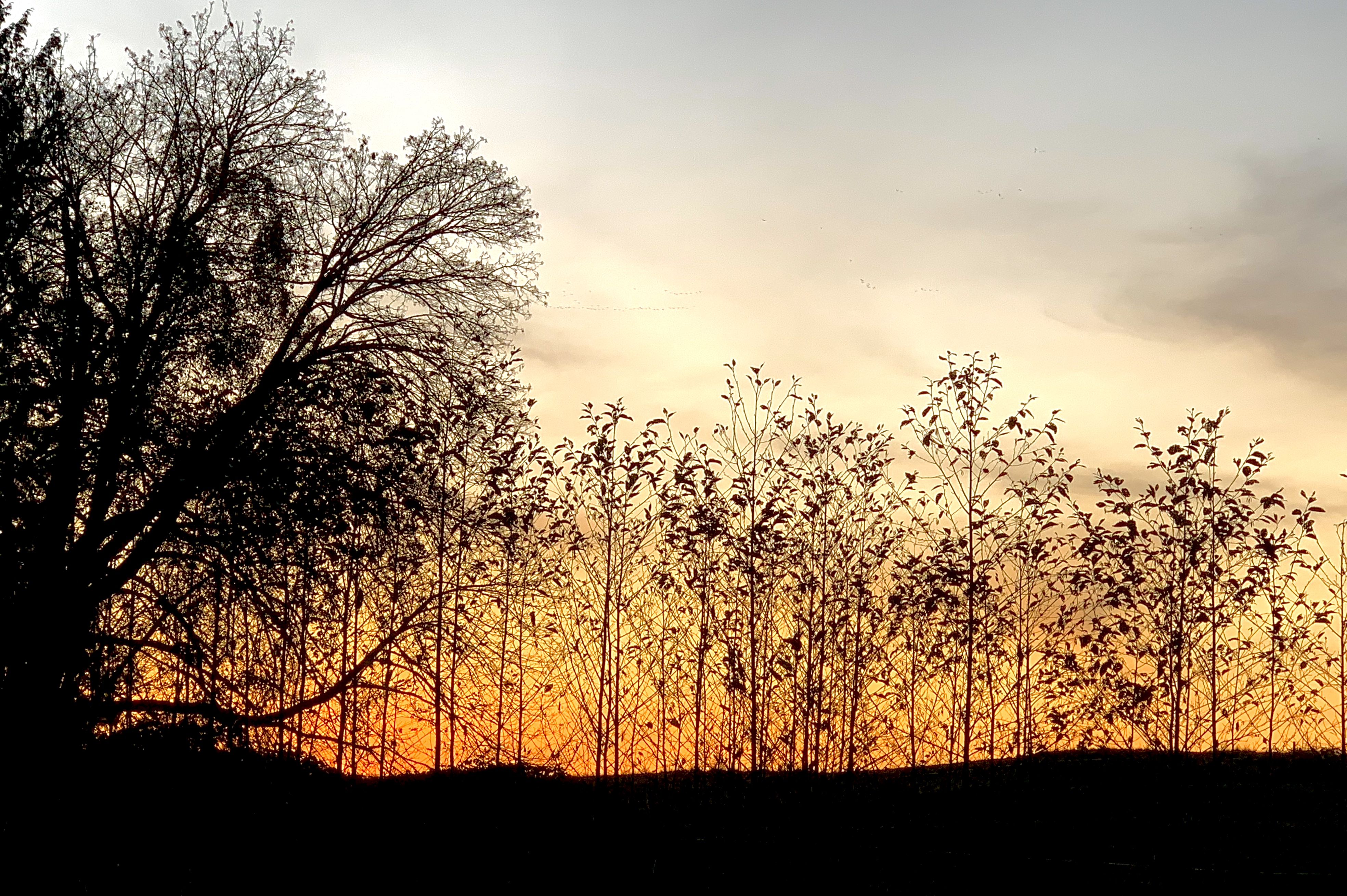
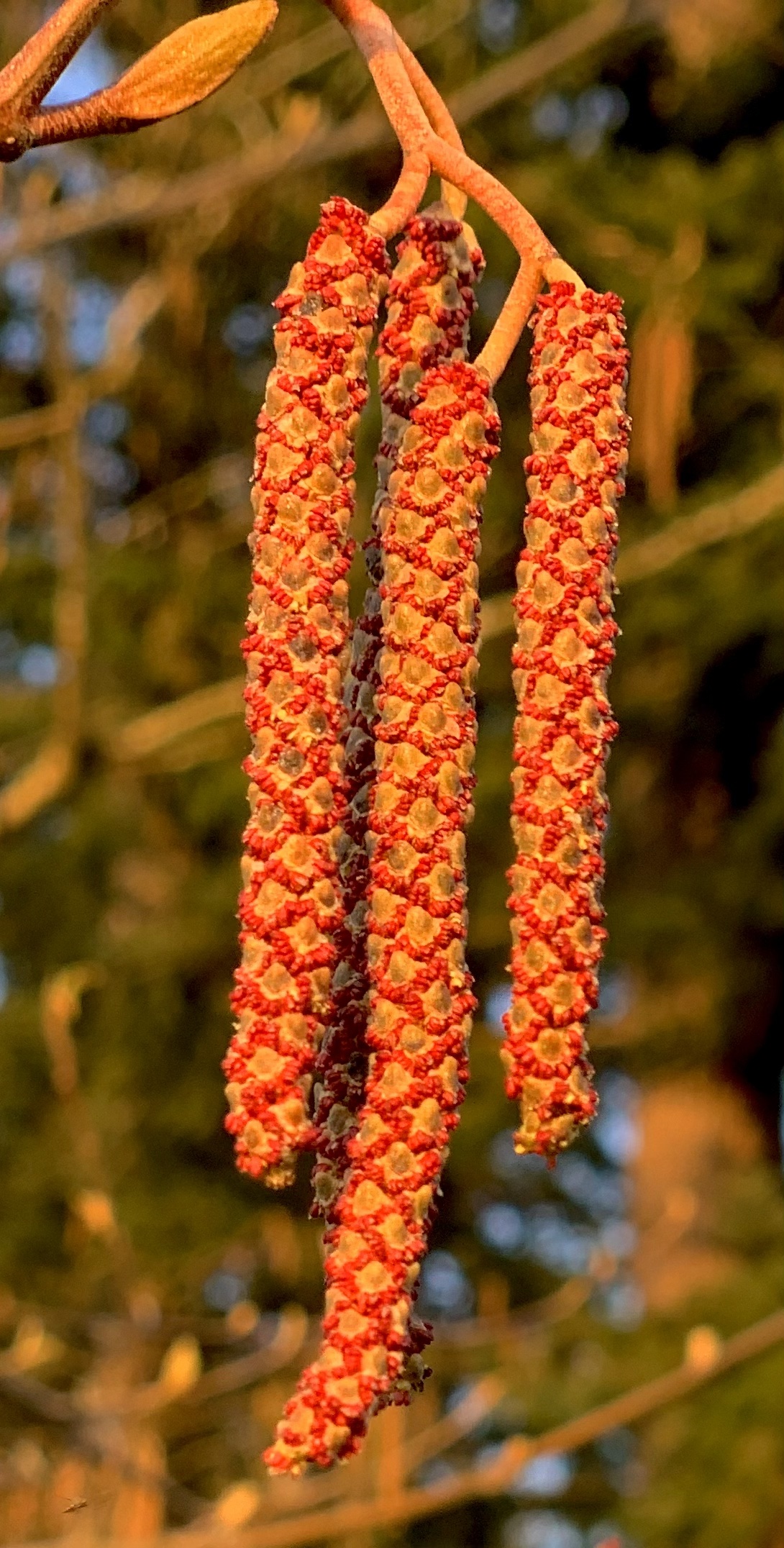
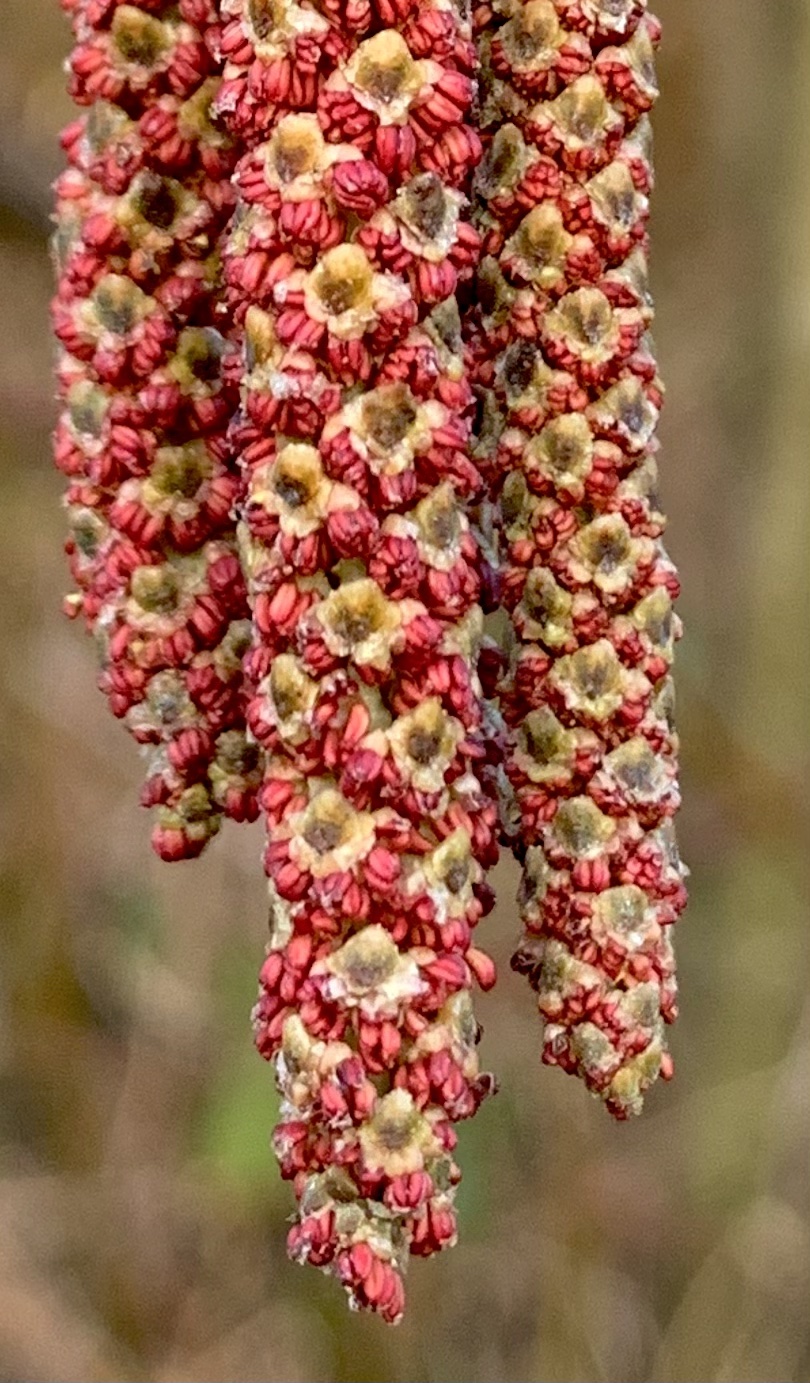
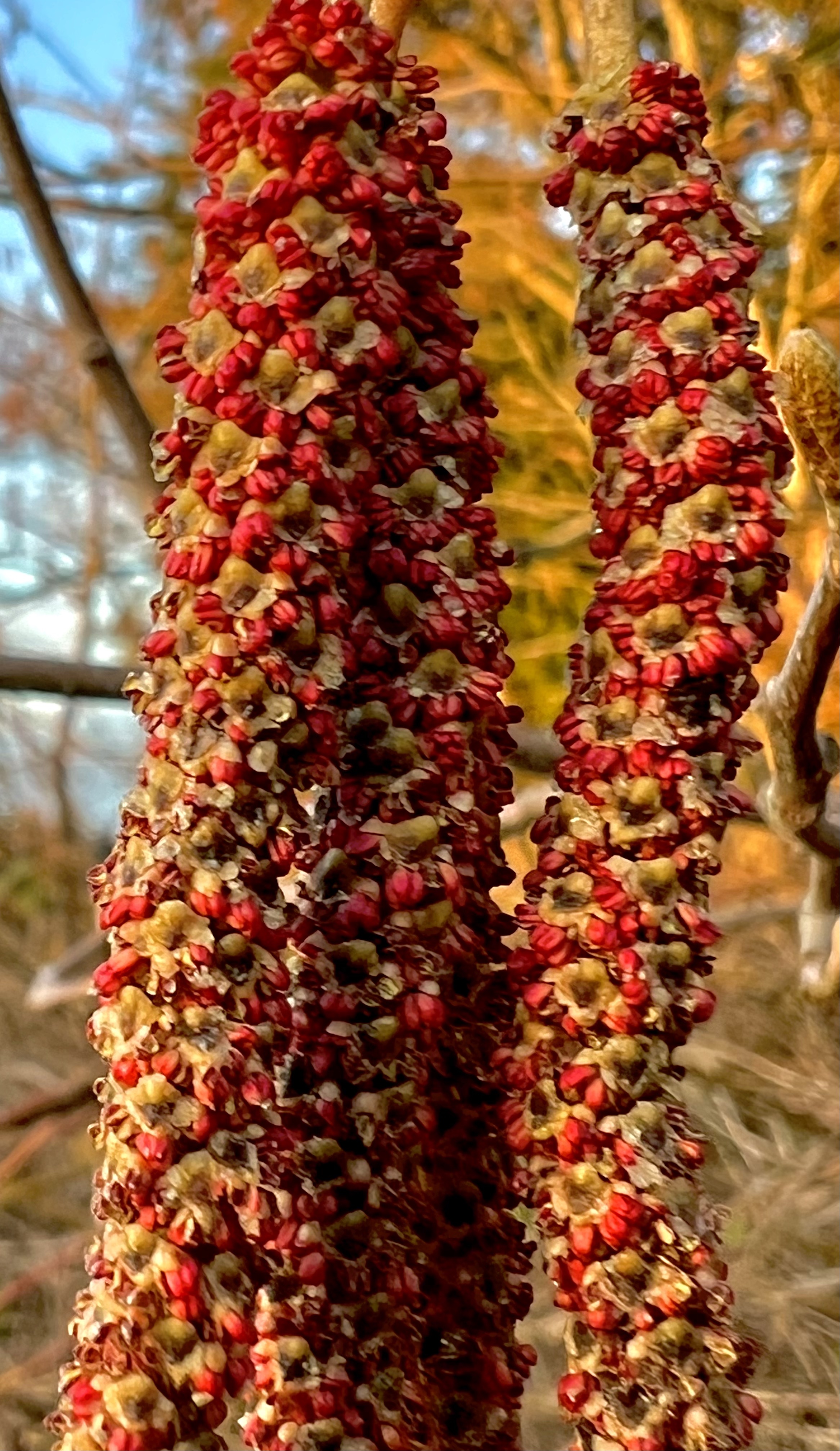
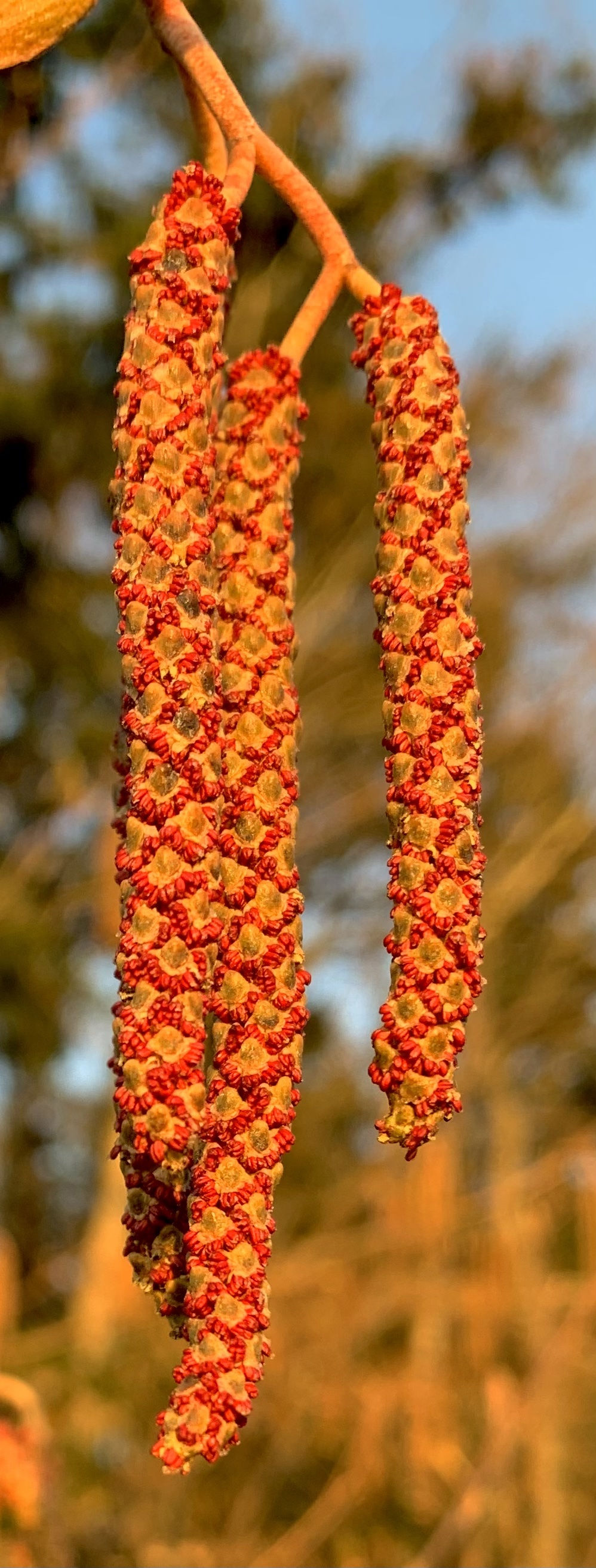
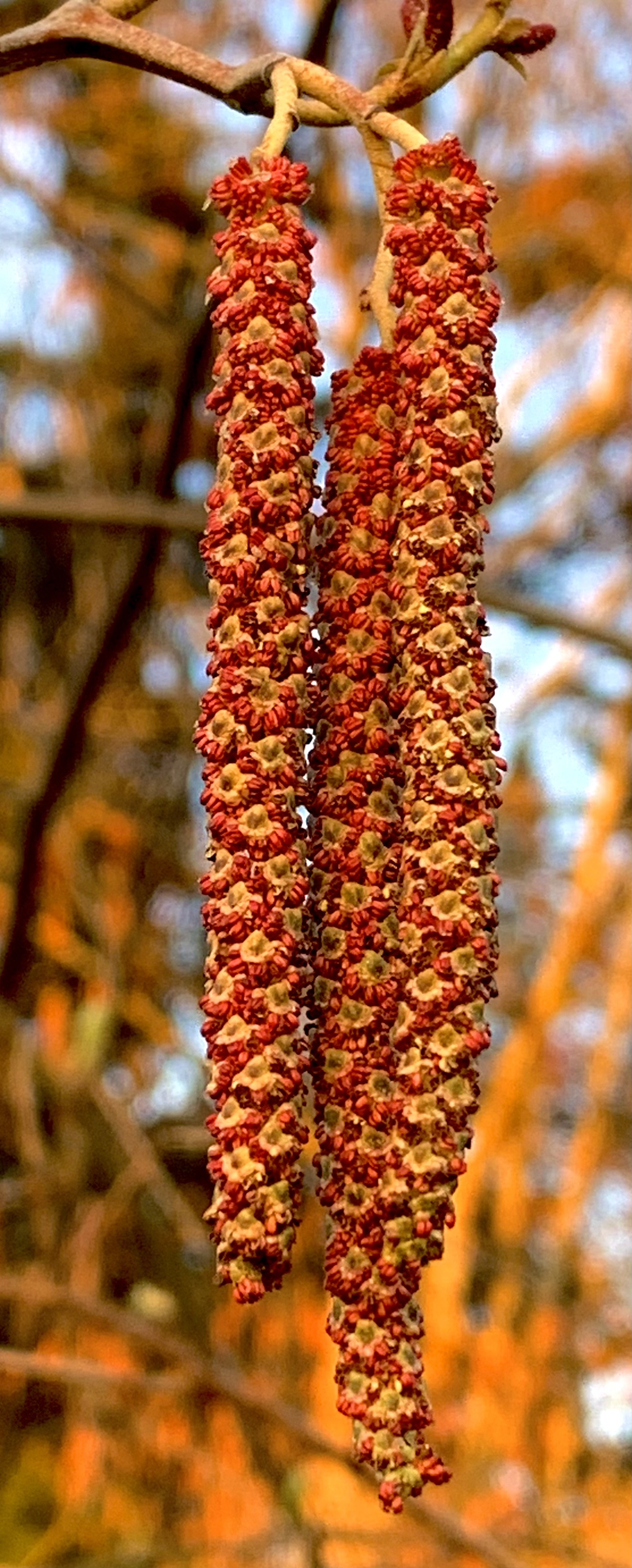
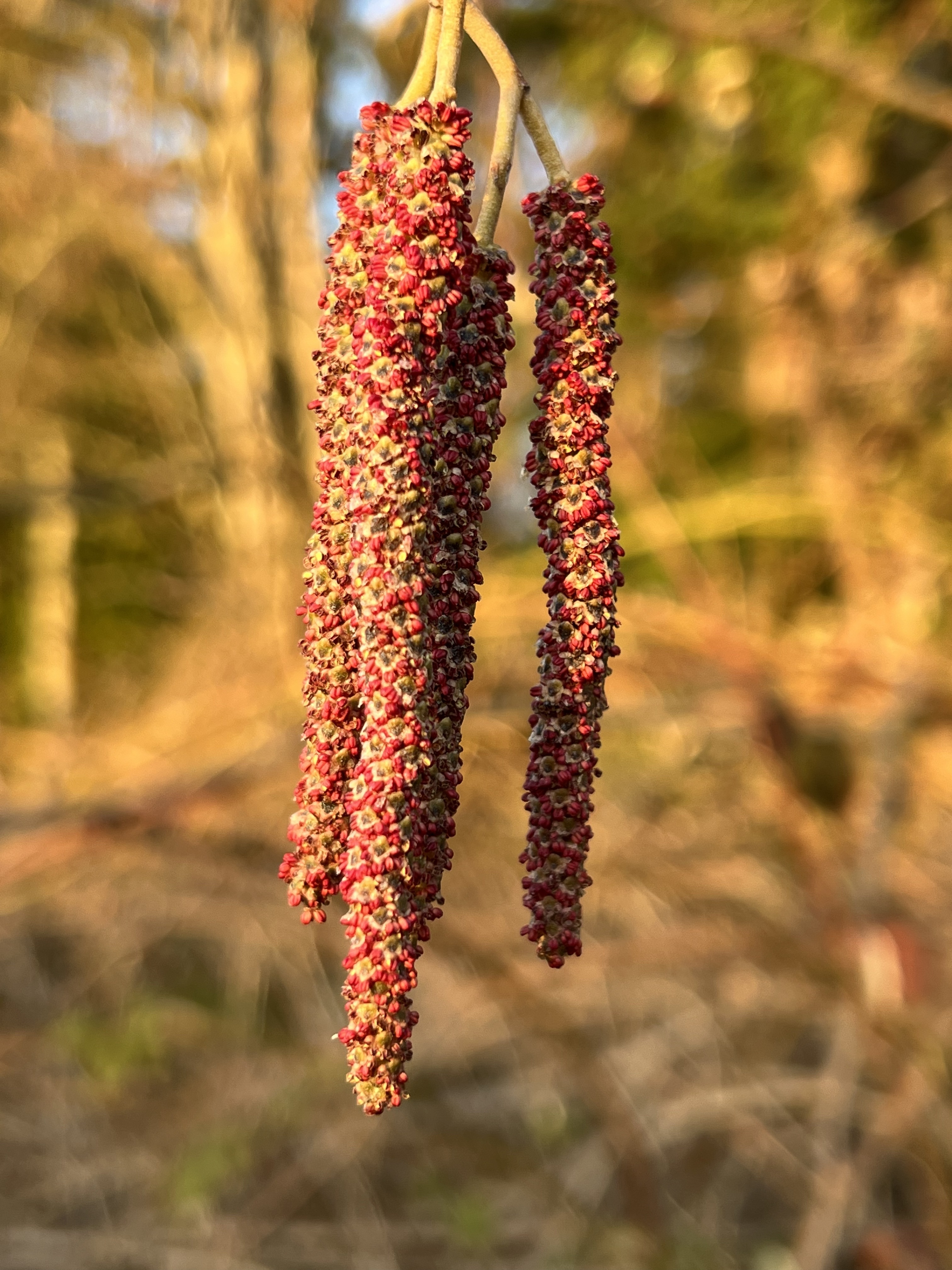
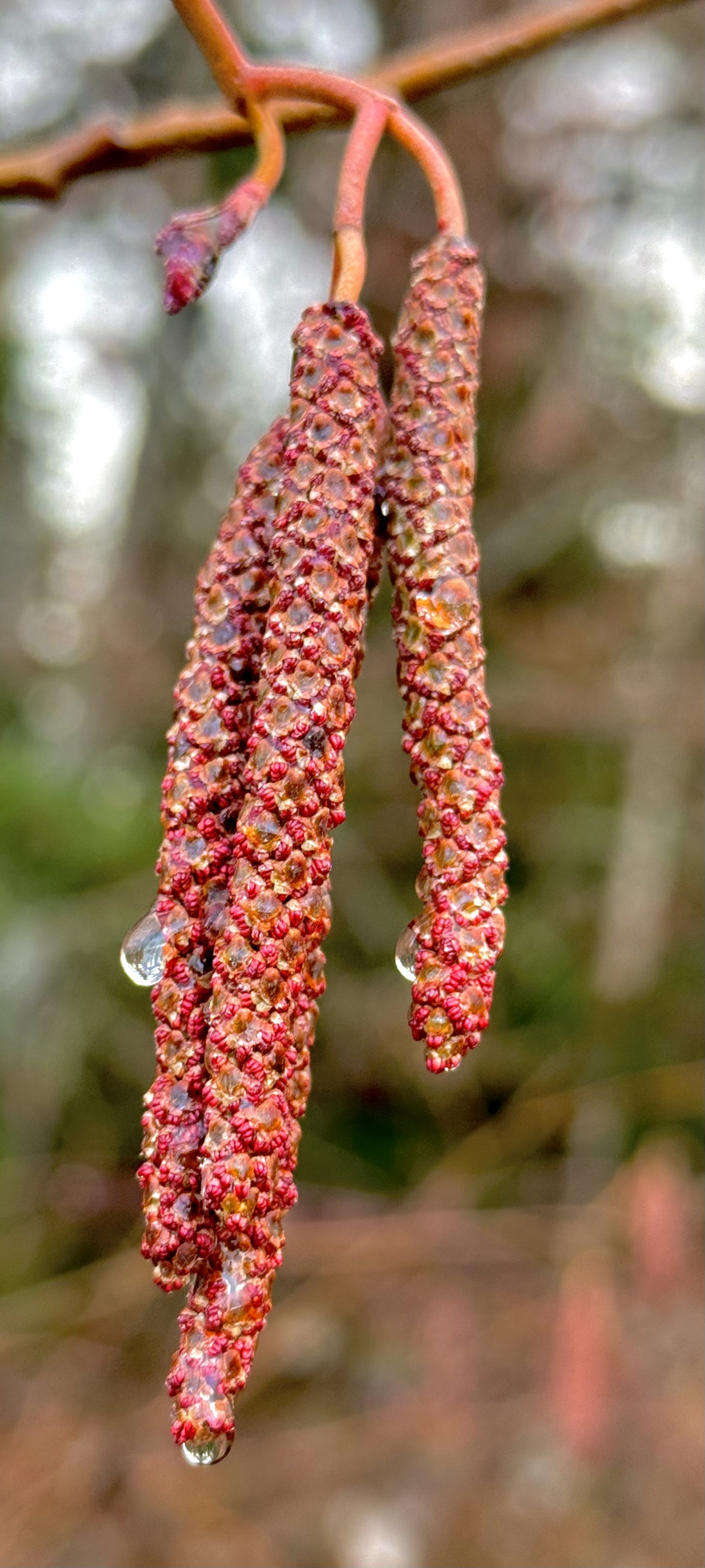
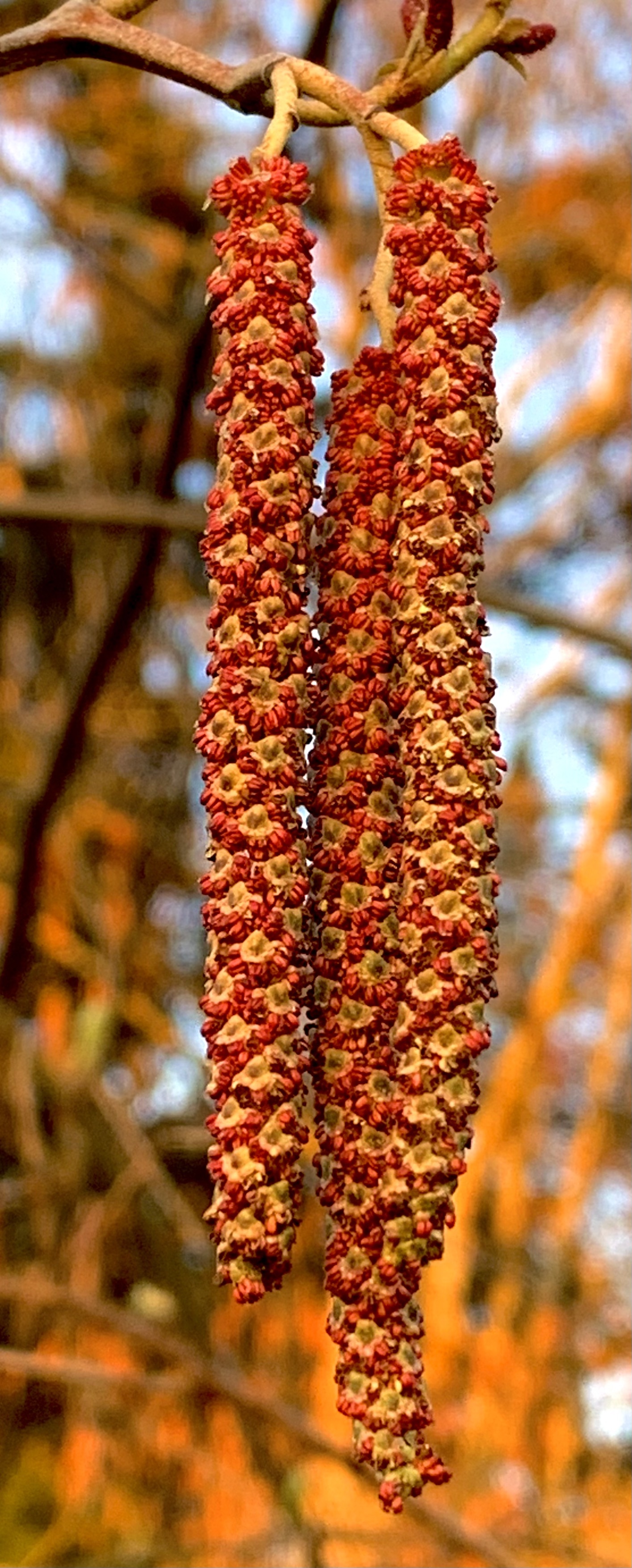
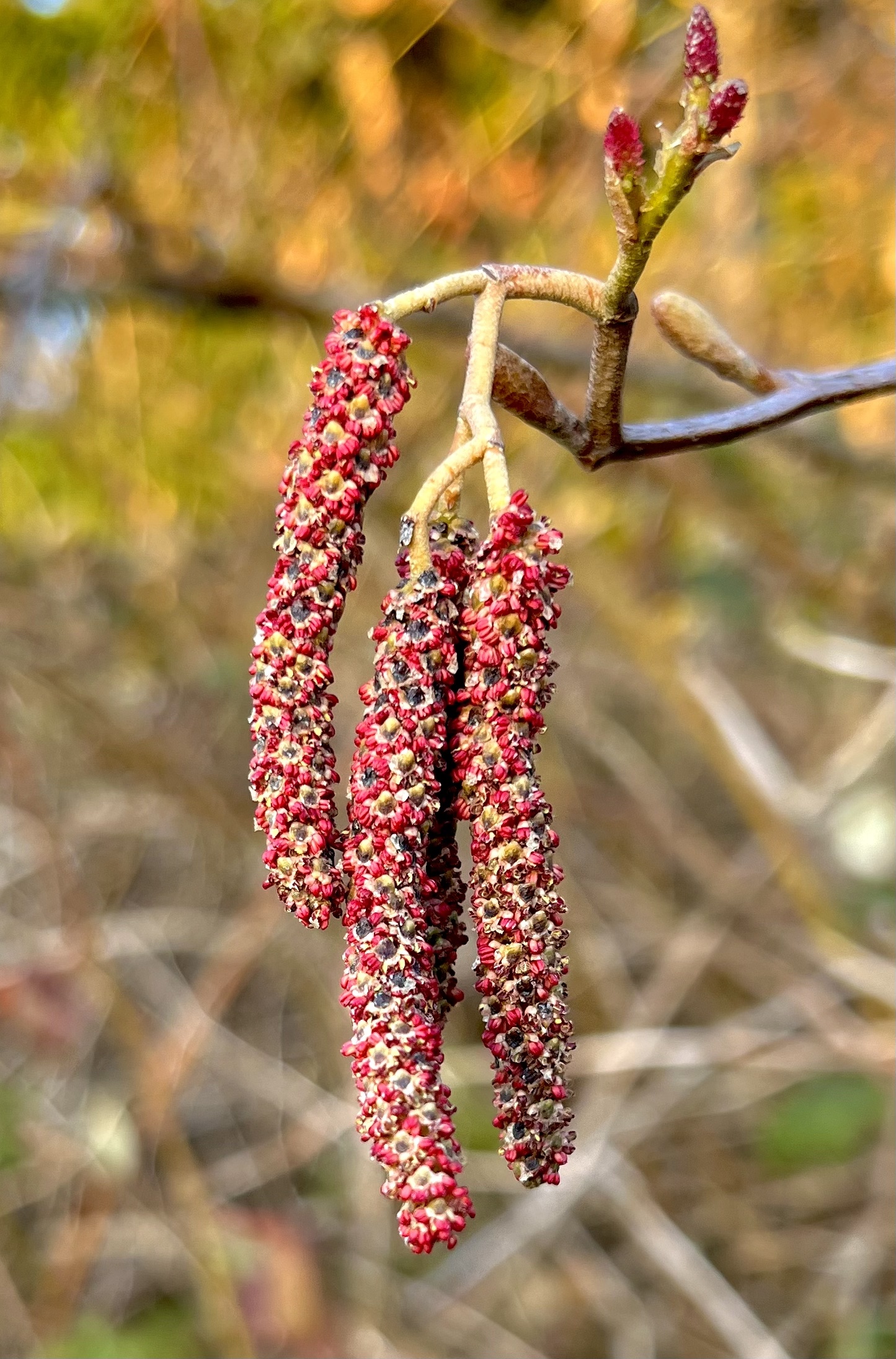
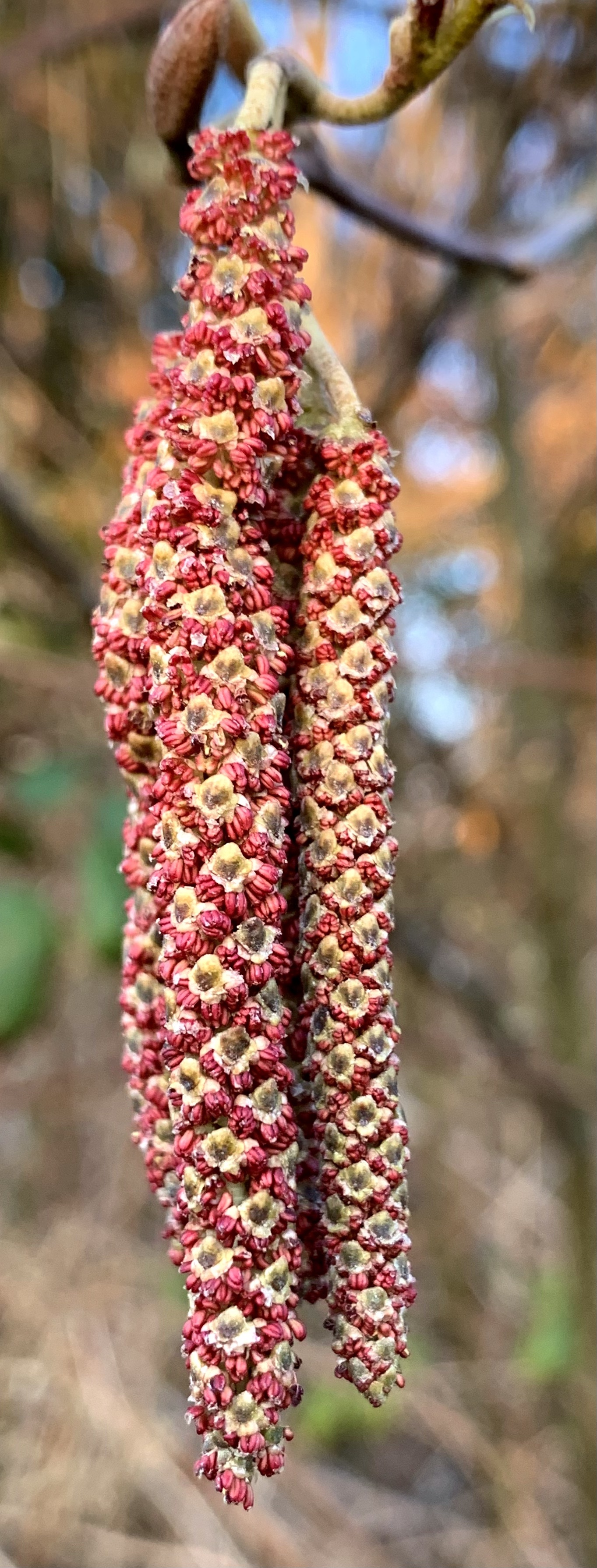
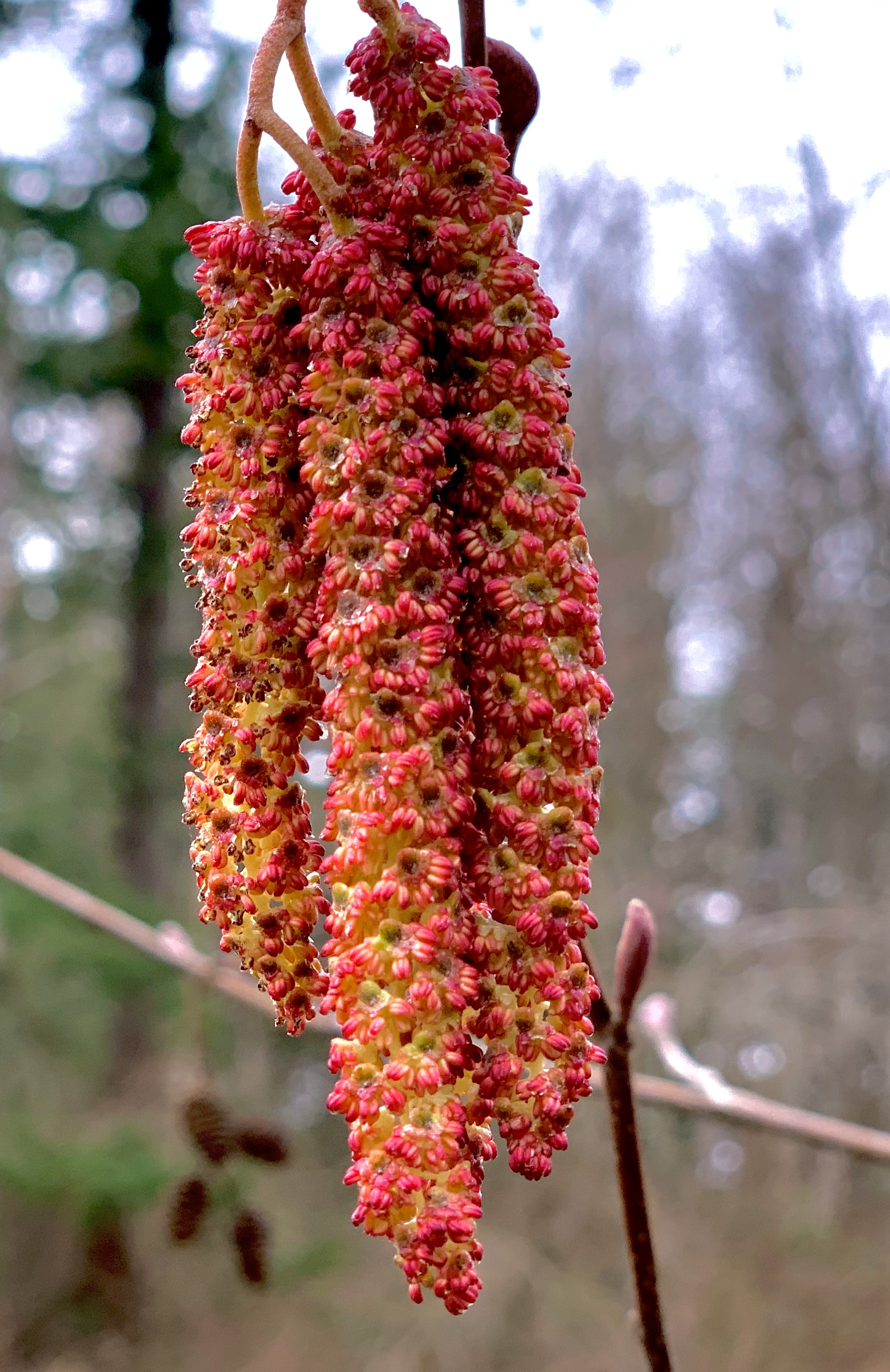
The alder tree branches are still winter-naked as their catkins start to emerge, other-worldly in appearance.
The swinging catkins search out every breeze to spread pollen as far as possible, engaging in serious alder-production business. It’s effective, as annually our pastures fill with baby alder trees, eager to form their own dense community in the wet ground of our lowlands.
In its desire to dominate the woodlands and allergies here in the northwest, the alder catkin is nothing to trifle with. Though we don’t want a field full of them, I can’t help but admire them this time of year for their bold color and knobby texture, reminiscent of the upholstery of my family’s well-loved 1950’s davenport sofa which converted to a bed for sick kids or visiting cousins.
Another world, another life-time full of dreams…
One-Time
Monthly
Yearly
Make a one-time or recurring donation to support daily Barnstorming posts
Yes, I know my mind is a fickle little bee doting on a thousand thoughts, but I’m getting better at chasing my mind back to the moment
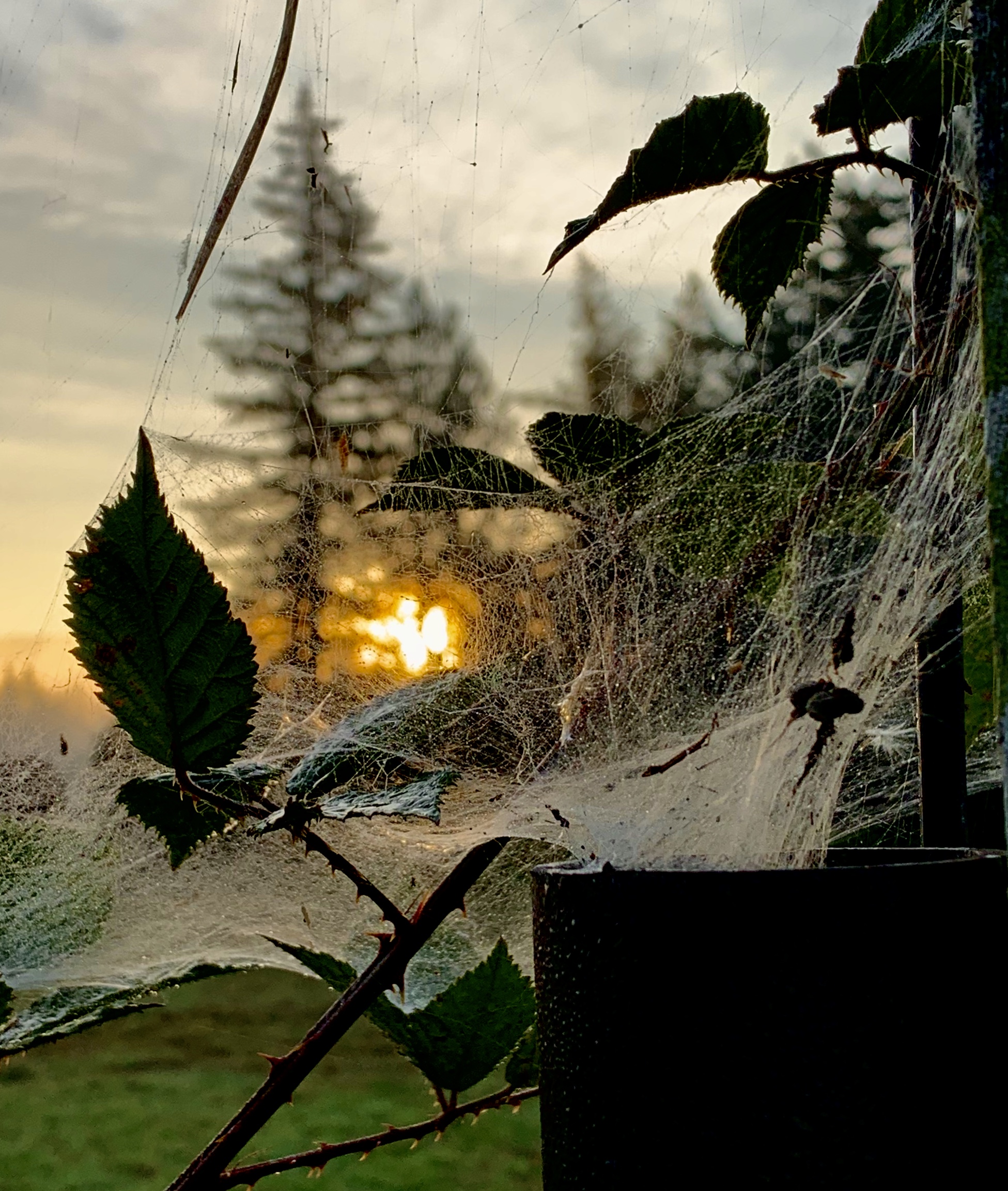
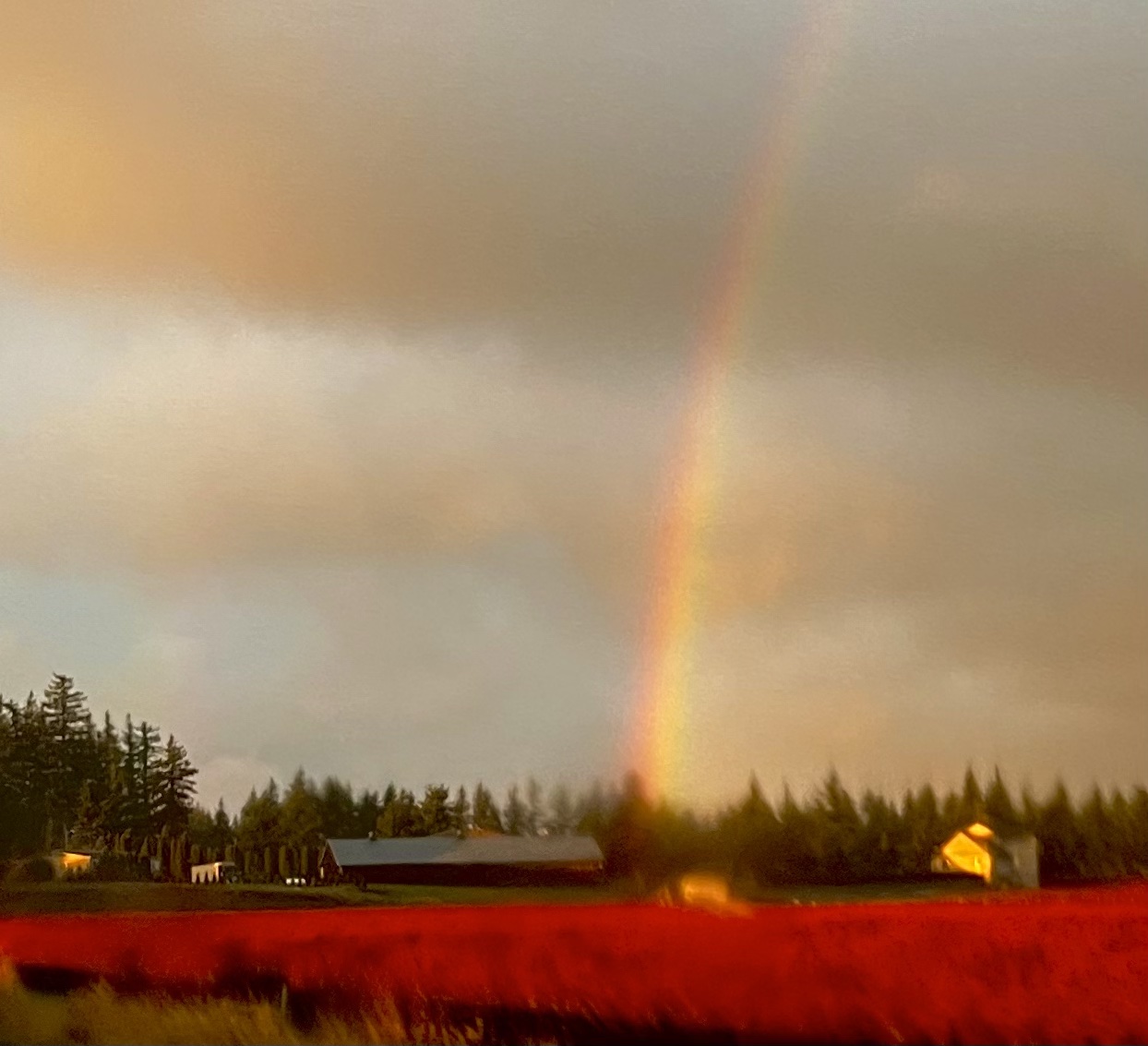
so I can see the spiderwebs making hammocks the color of the moon. My son tries to photograph a rainbow outside the car window. It’s impossible,
of course, this wonder, the trying to hold it. But I do what I can. I’ve stopped waiting to enjoy the cinnamon tea. I take deeper breaths and listen
to the flutter of strings floating down from café speakers. I don’t want to be a pilgrim of memory anymore. I want to pop the champagne and salute
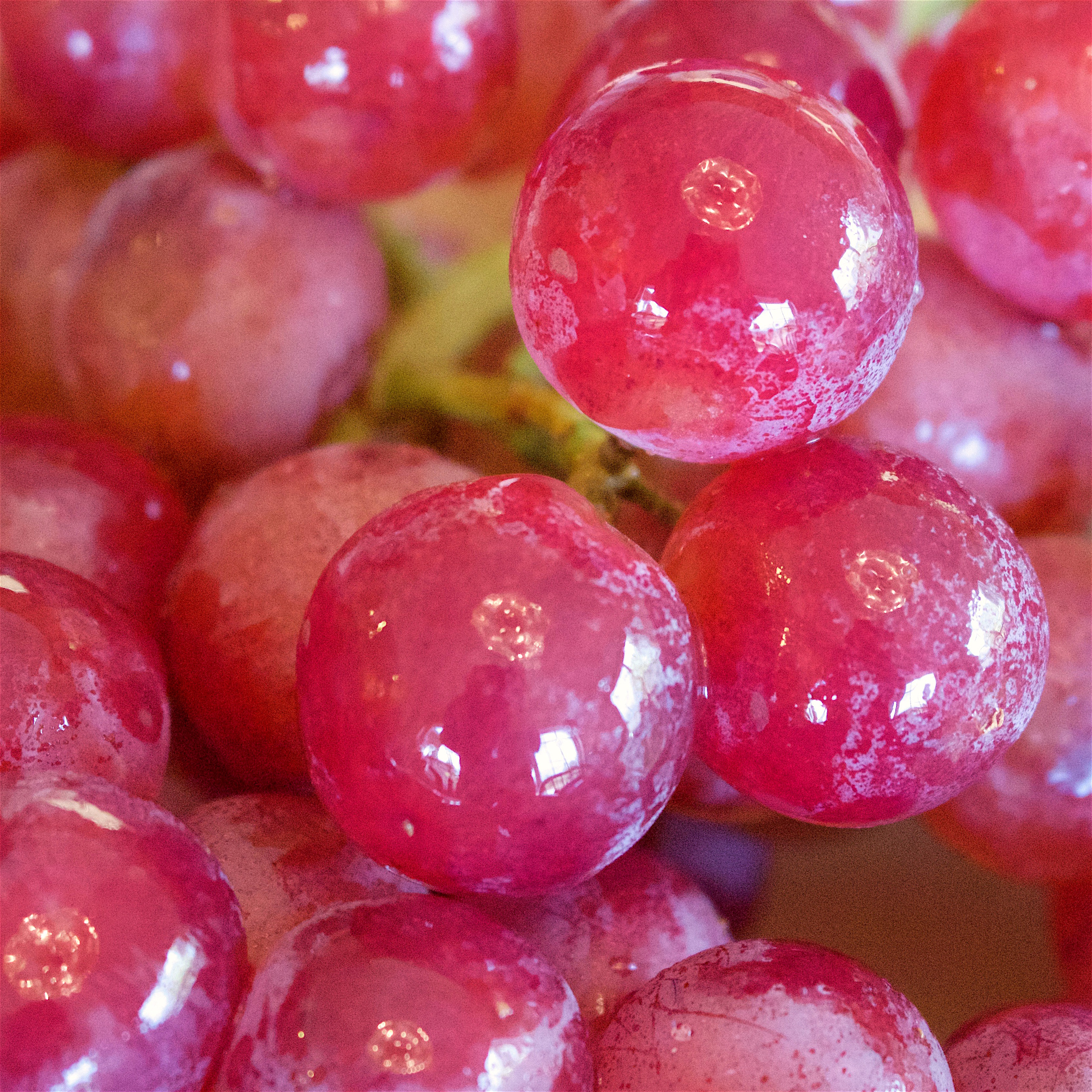
this now, and this one with soft brie, dried apricots, and the sunset celebration another anniversary of light while I eat fists of grapes the same shade
and sweetness of night. Congratulations, Time. Look at you and your gorgeous minutes full of everything. Three cheers for the temp agency that hired this
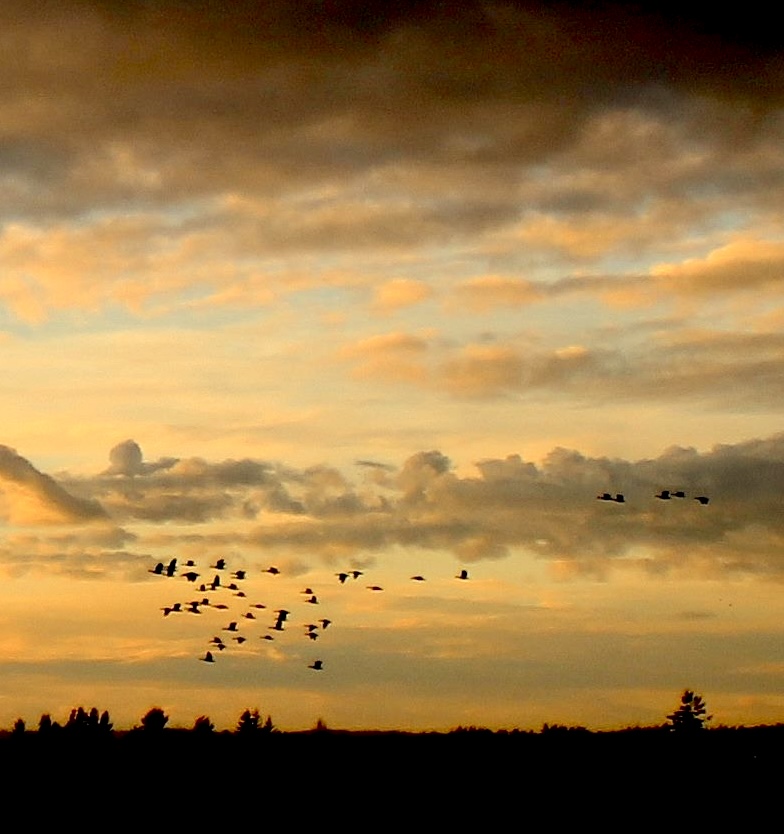
particular day, these particular clouds, this set of honking geese migrating through it. I want to be better at being alive, so I’ve been picturing my heart
as a fox—which means wild and nocturnal, not terrorizing the neighbor’s chickens. My love says most equations in quantum field theory give infinity
as an answer, which is not meaningful because all infinities are the same. In that case, let’s stop reaching so hard for it. I’ll take this infinity’s morning where
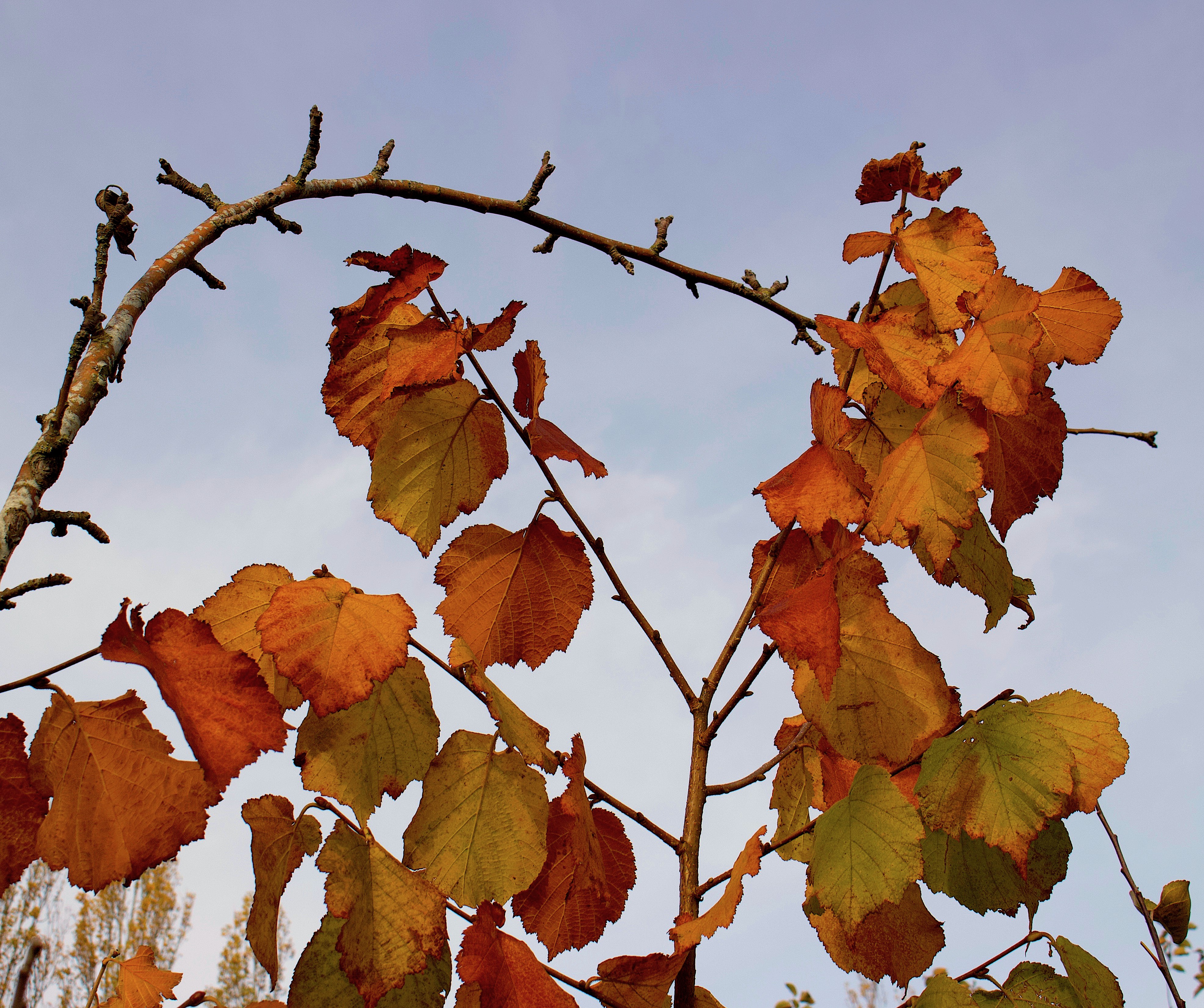
my son and I confused falling leaves for monarchs. Every time we thought we saw a butterfly, it was just a leaf with the gentlest falling. We laughed at
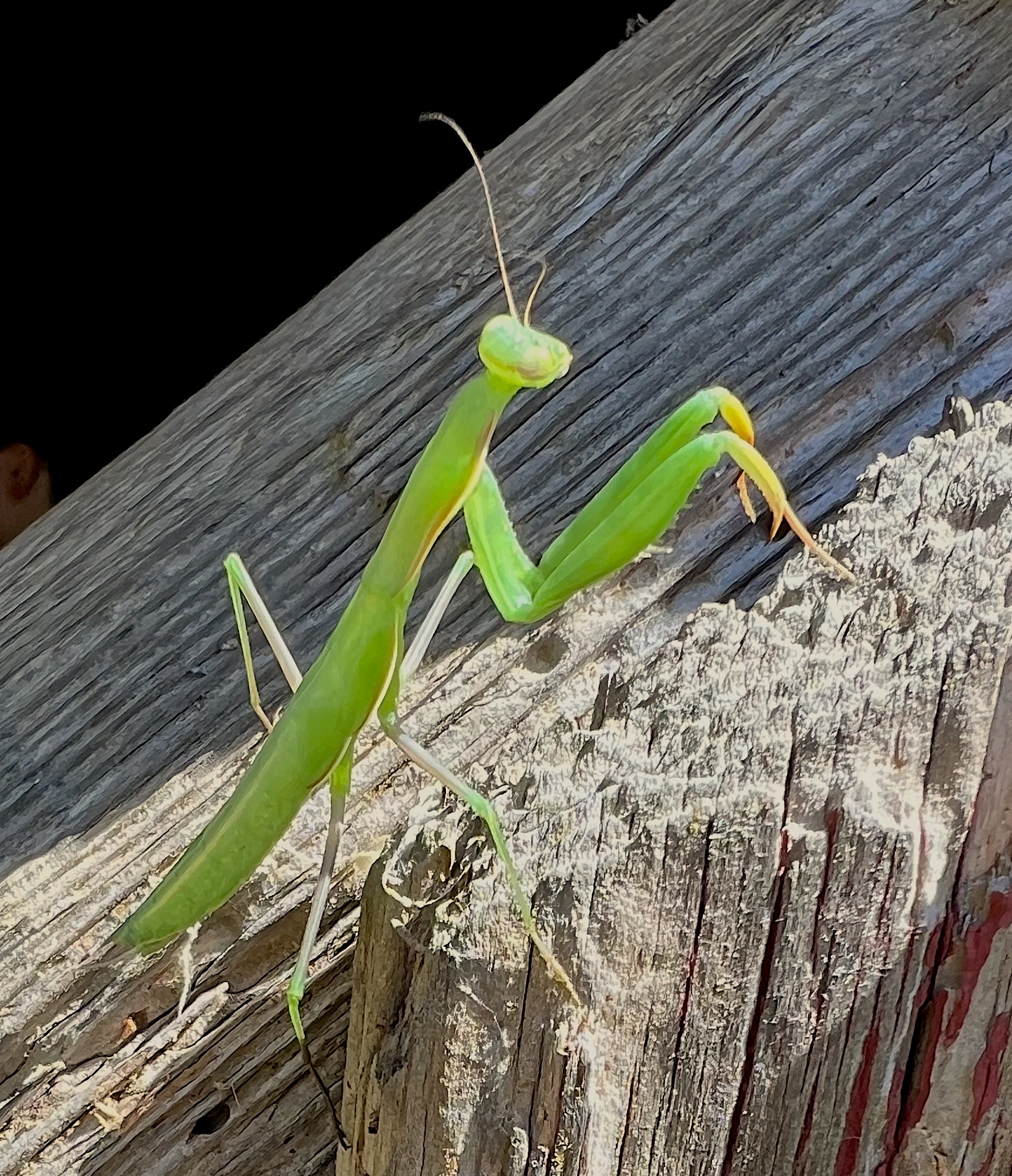
every mistake, and he said, That was a beautiful confusion. Sometimes when the moment doesn’t offer a praying mantis on the porch or a charismatic sky,
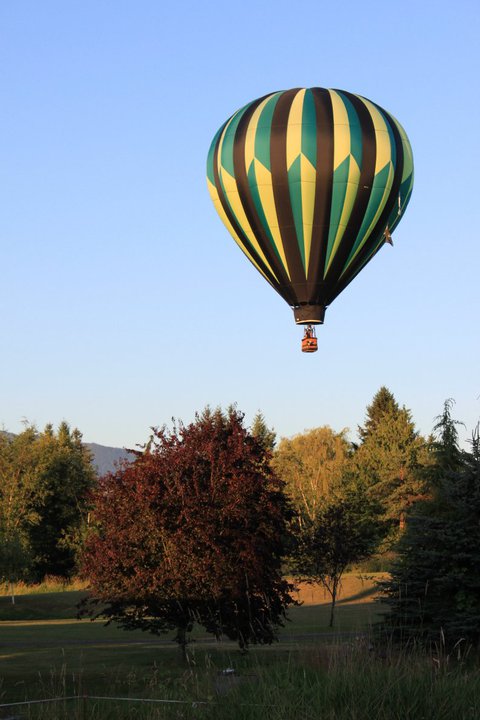
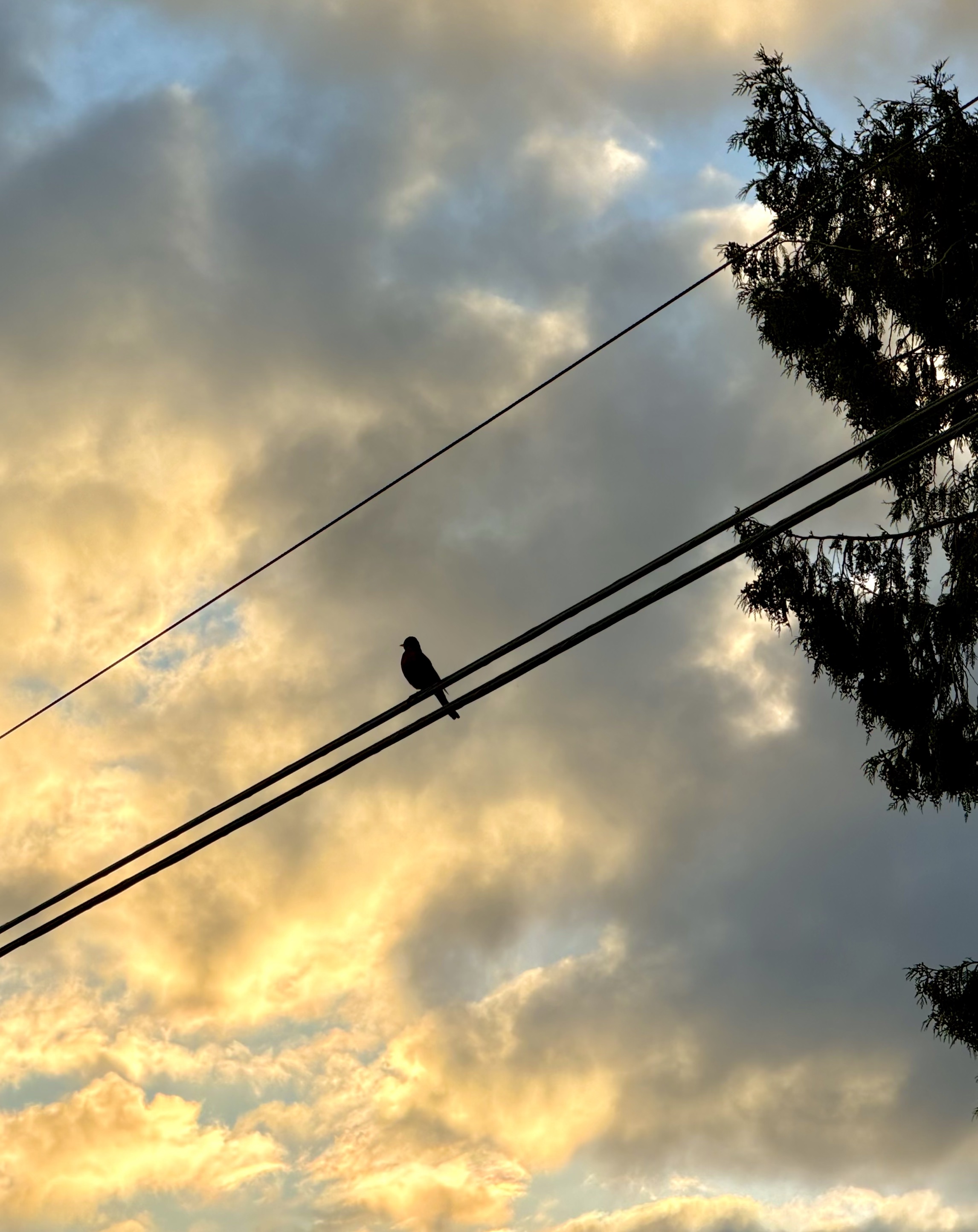
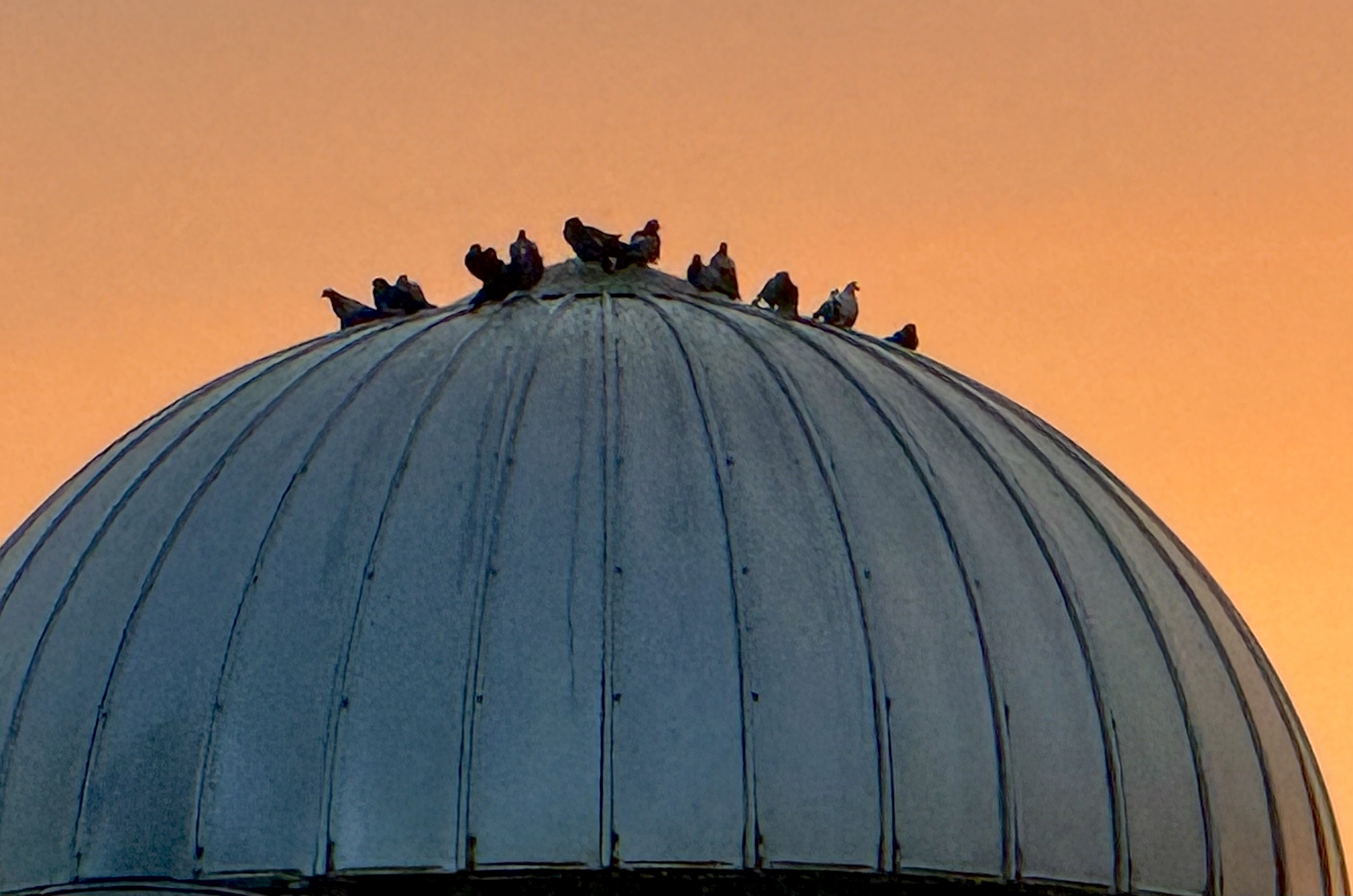
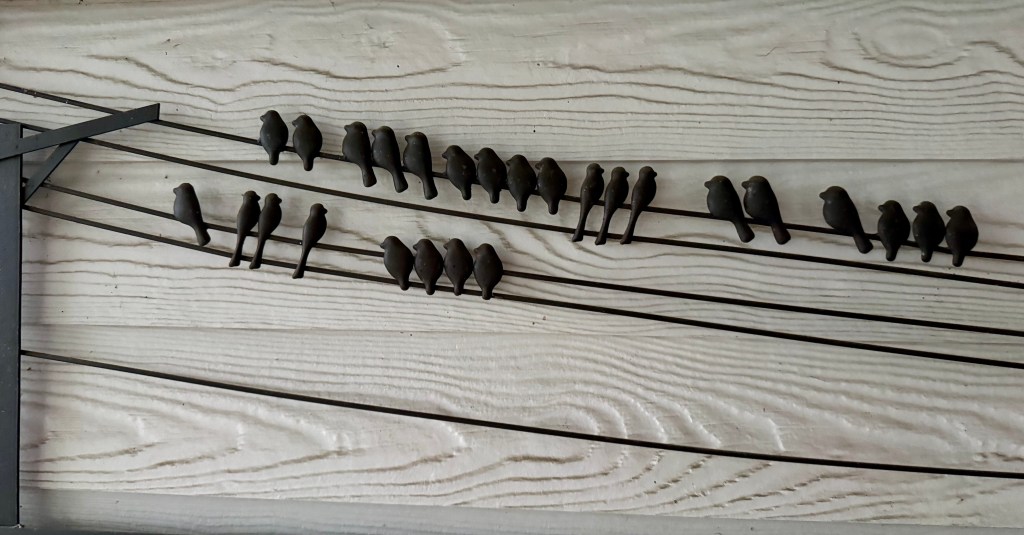
I imagine my heart is my son’s face, and I am back in love with the day, its astonishments like hot-air balloons, and the daily present of power lines strung
with starlings like dozens of music notes. Let me be more bound to my living in each moment, be held by this hum, that cloud, this breath, that shroud. ~Traci Brimhall “This Beautiful Confusion” from Love Prodigal
Some Monday mornings, my mind is going in a thousand different directions. So I follow, knowing there will never be another Monday morning quite like this one. I hope there will be a few hundred more Monday mornings to come.
I want to be better at being alive, noticing, remembering, connecting, and grateful to be breathing.
Perhaps you are here because — you do too…
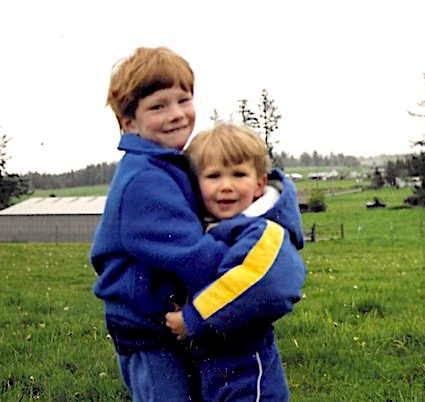
our sons – 1990
One-Time
Monthly
Yearly
Make a one-time and recurring donation to support daily Barnstorming posts
I wondered if that was how forgiveness budded; not with the fanfare of epiphany, but with pain gathering its things, packing up, and slipping away unannounced in the middle of the night. — Khaled Hosseini from The Kite Runner
The time is ripe for looking back over the day, the week, the year, and trying to figure out where we have come from and where we are going to, for sifting through the things we have done and the things we have left undone for a clue to who we are and who, for better or worse, we are becoming.
We cling to the present out of wariness of the past.
But there is a deeper need yet, I think, and that is the need—not all the time, surely, but from time to time—to enter that still room within us all where the past lives on as a part of the present, where the dead are alive again, where we are most alive ourselves to turnings and to where our journeys have brought us.
The name of the room is Remember—the room where with patience, with charity, with quietness of heart, we remember consciously to remember the lives we have lived. ~Frederick Buechner from A Room Called Remember
age nineage 14age 15
Something went wrong, says the empty house in the weed-choked yard. Stones in the fields say he was not a farmer; the still-sealed jars in the cellar say she left in a nervous haste. And the child? Its toys are strewn in the yard like branches after a storm—a rubber cow, a rusty tractor with a broken plow, a doll in overalls. Something went wrong, they say. ~Ted Kooser, from “Abandoned Farmhouse” from Sure Signs: New and Selected Poems.
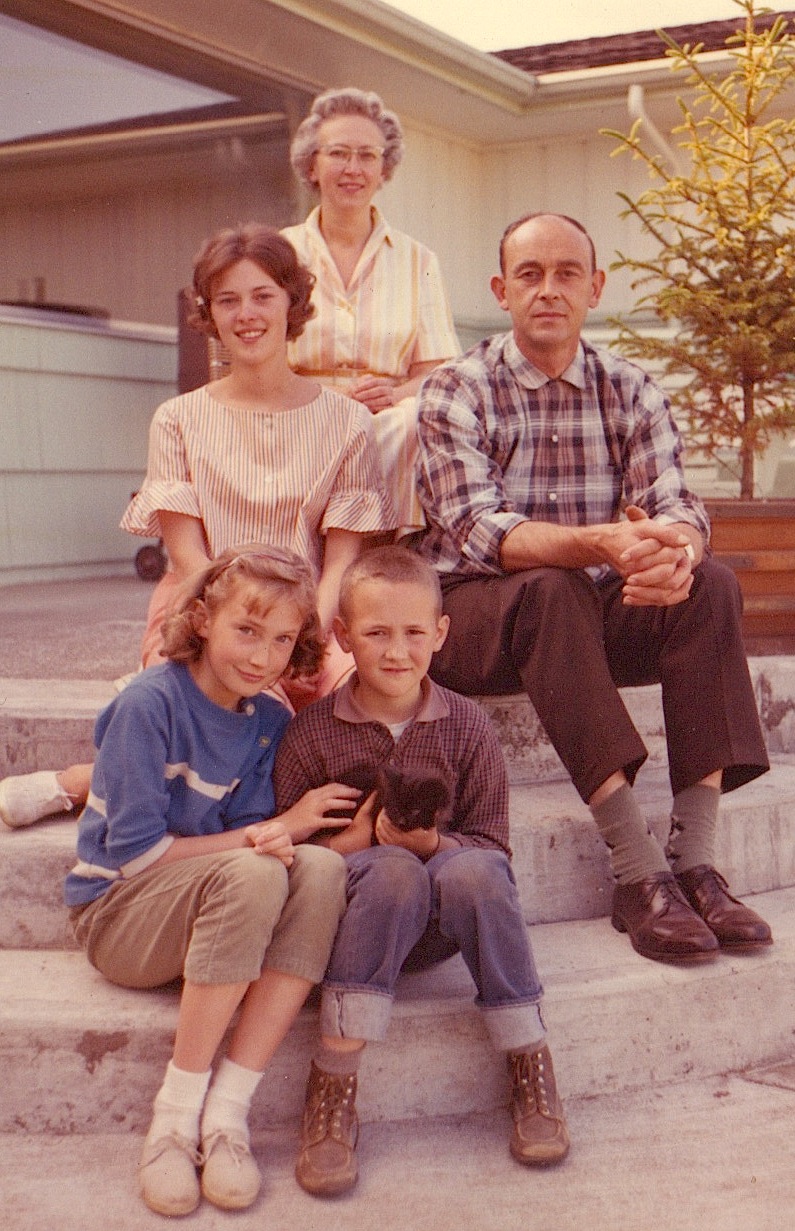
In 1959, when I was five years old, my father took a new job so our family moved from a large 3 story farm house in a rural community to a 1950’s newer rambler-style home just outside the city limits of the state capitol.
It was a big adjustment to move to a much smaller house without a basement or upper story, no garage, and no large haybarn nor chicken coop. It meant most things we owned didn’t make the move with us.
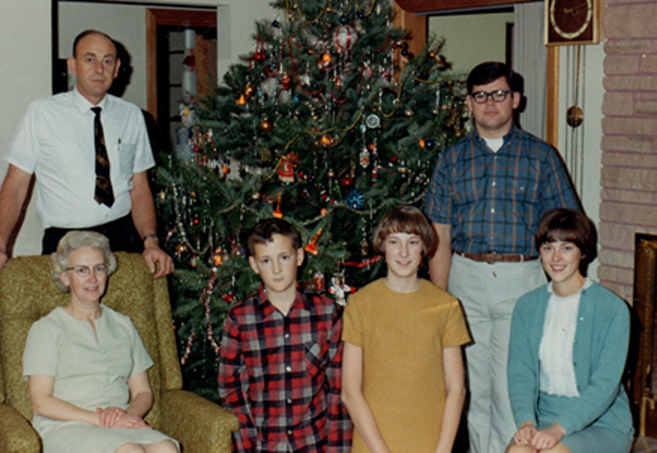
The rambler had two side-by-side mirror image rooms as the primary central living space between the kitchen/dining area on one side and the hallway to the bedrooms on the other. The living room could only be entered through the front door and the family room was accessed through the back door with a shared sandstone hearth in the center, containing a fireplace in each room. The only opening between the rooms had a folding door shut most of the year. In December, the door was opened to accommodate a Christmas tree, so it sat partially in the living room and depending on its generous width, spilled over into the family room. That way it was visible from both rooms, and didn’t take up too much floor space.
The living room, because it contained the only carpeting in the house, and our “best” furniture, was strictly off-limits. In order to keep our two matching sectional knobby gray fabric sofas, a green upholstered chair and gold crushed velvet covered love seat in pristine condition, the room was to be avoided unless we had company. The carpet was never to develop a traffic pattern, there would be no food, beverage, or pet ever allowed in that room, and the front door was not to be used unless a visitor arrived. The hearth never saw a fire lit on that side because of the potential of messy ashes or smoke smell.
This was not a room for toys or games. The chiming clock next to the hearth, wound with weighted cones on the end of chains, called out the hours without an audience.
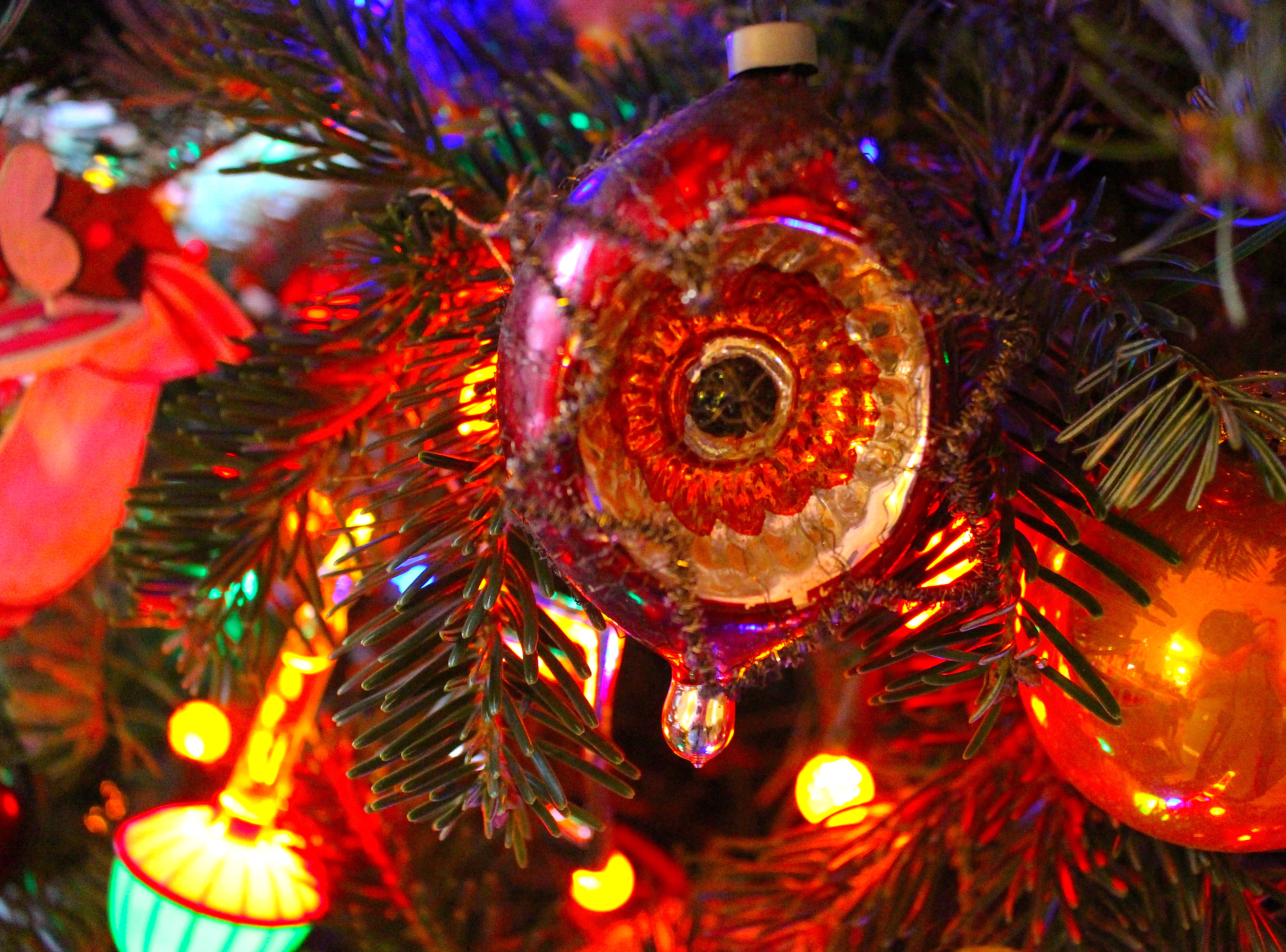
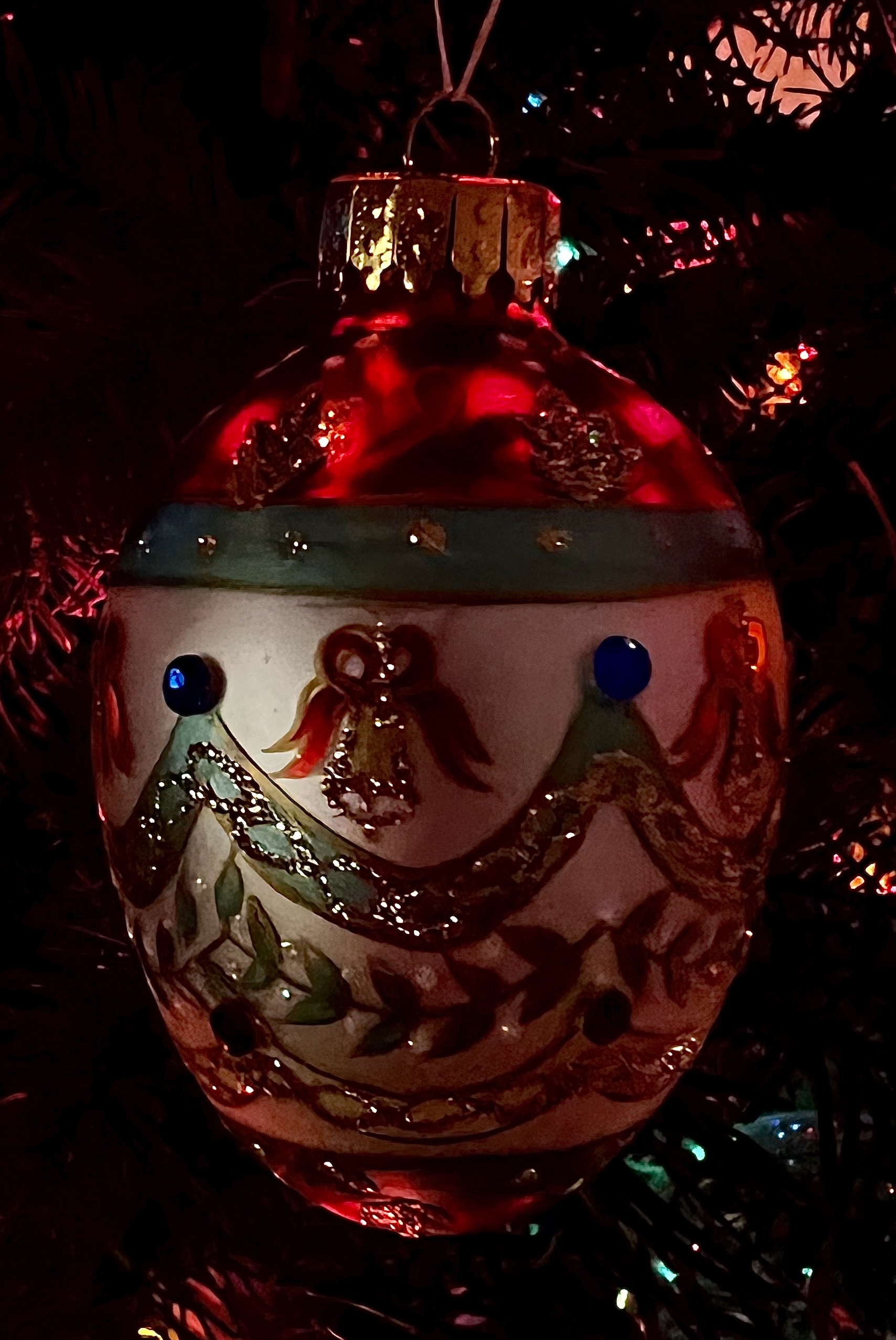
One week before Christmas, a tree was chosen to fit in the space where it could overflow into the family room. I particularly enjoyed decorating the “family room” side of the tree, using all my favorite ornaments that were less likely to break if they fell on the linoleum floor on that side of the door.
It was almost as if the Christmas tree itself became divided, with a “formal” side in the living room and a “real life” face on the other side where the living (and hurting) was actually taking place.
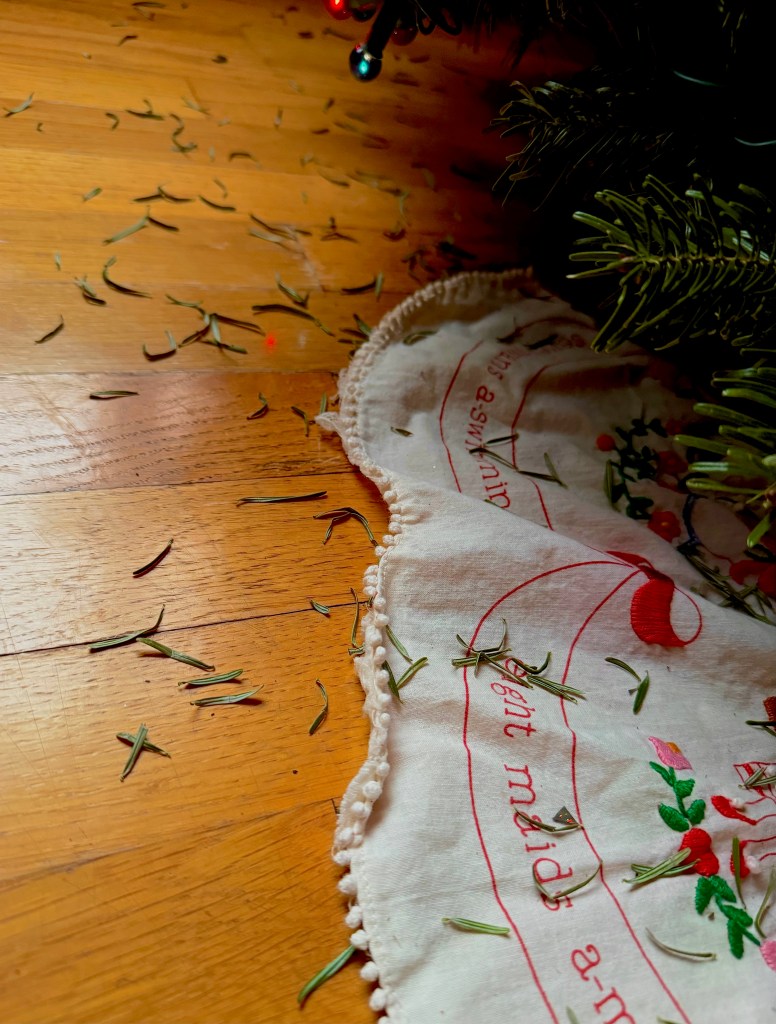
The tree straddled more than just two rooms. Every year that tree’s branches reached out to shelter a family that was slowly, almost imperceptibly, falling apart, like the fir needles dropping to the floor to be swept away.
Something was going wrong, only I didn’t see it at the time.
Each year since, our Christmas tree, bearing those old ornaments from my childhood, reminds me of that still room of memories.
No longer am I wary of the past. As I sweep up the fir needles that inevitably drop, I no longer weep.
One-Time
Monthly
Yearly
Make a one-time or recurring donation to support daily Barnstorming posts
I wonder if, in the dark night of the sea, the octopus dreams of me. ~N. Scott Momaday
photo by Nate Gibson
If I am brutally honest with myself after my recent cardiac brush with my mortality, one of my worst fears is to have lived on this earth for a handful of decades and then pass away forgotten, inconsequential, having left behind no legacy of significance whatsoever.
I’m well aware it is self-absorbed to feel the need to leave a mark, but a search for purpose and meaning lasting beyond my time here provides new momentum for each day. The forgetting can happen so fast.
Most people know little about their great-great-grandparents, if they even know their names. A mere four generations, a century, renders us dust, not just in flesh, but in memory as well. There may be a yellowed photograph in a box somewhere, perhaps a tattered postcard or letter written in elegant script, but the essence of this person is long lost and forgotten.
We owe it to our descendants to write down the stories about who we were while we lived on this earth. We need to share why we lived, for whom we lived, for what we lived.
I suspect, although I try every day to record some part of who I am, it will be no different with me and those who come after me. Whether or not we are remembered by great-great grandchildren or become part of the dreams of creatures in the depths of the seas:
we are just dust here and there is no changing that.
Good thing this is not our only home. Good thing we are more than mere memory and dreams. Good thing the river of life flows into an eternity that transcends good works or long memories or legacies left behind. Good thing we are loved that much and always will be. You see, we are alive, we are alive, forever and ever, Amen.
I remember your lectures, Professor Scott Momaday, now nearly two years after you passed from this earth at age 89 – your voice, your stories and your poetry live on.
You are alive. You are alive…
One-Time
Monthly
Yearly
Make a one-time or recurring donation to support daily Barnstorming posts
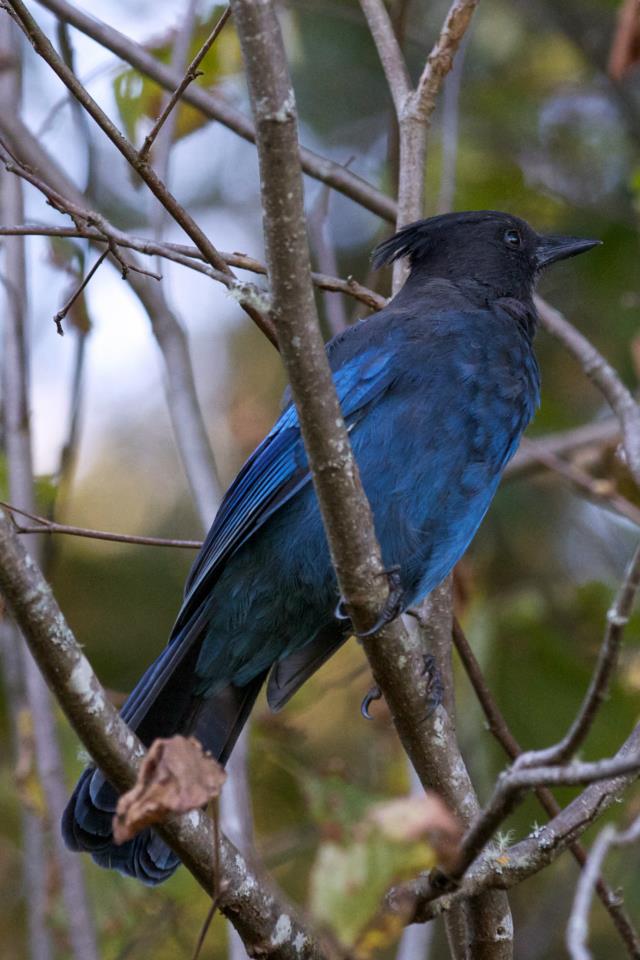
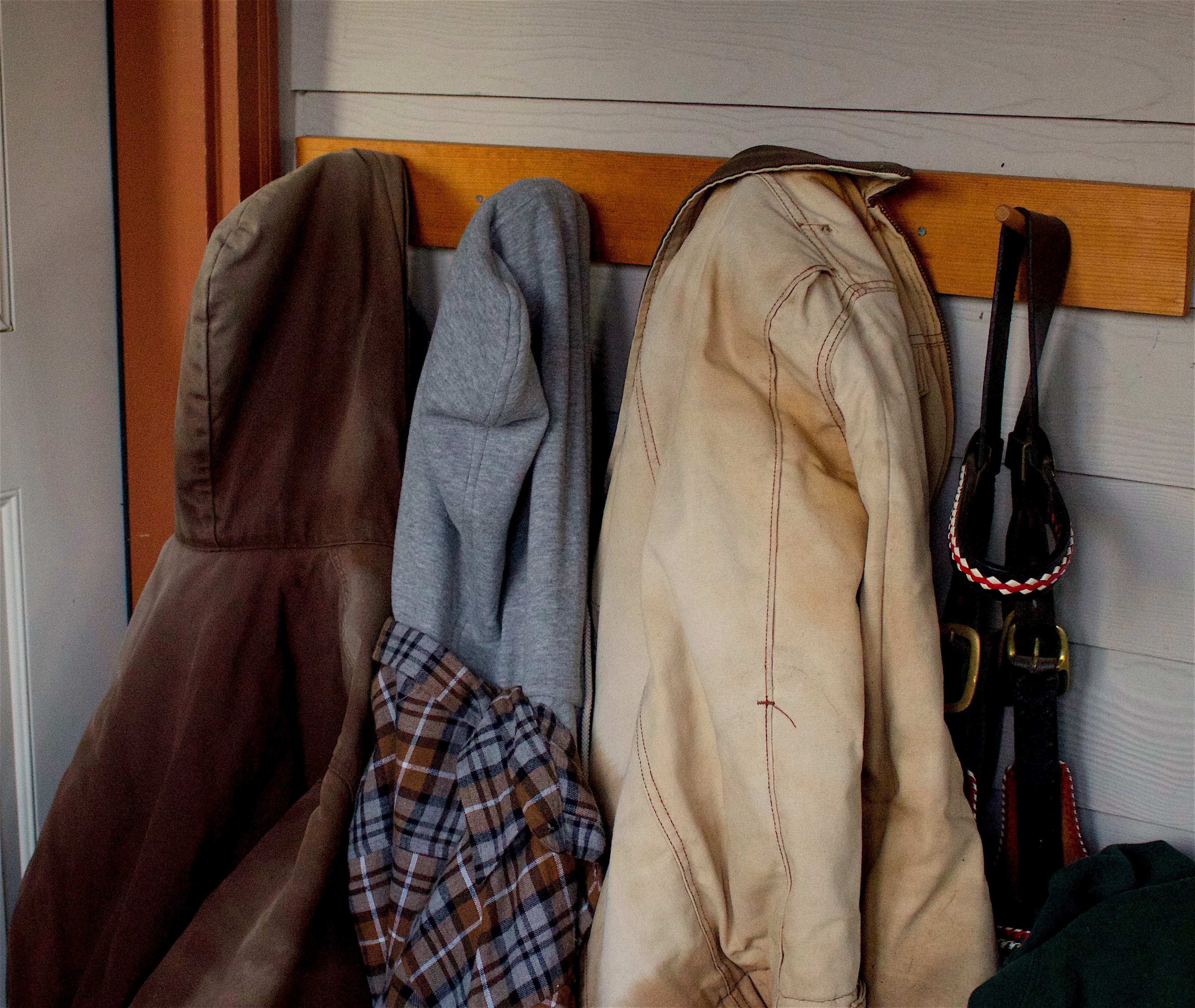
It is a dark fall day. The earth is slightly damp with rain. I hear a jay. The cry is blue. I have found you in the story again. Is there another word for “divine”? I need a song that will keep sky open in my mind. If I think behind me, I might break. If I think forward, I lose now. Forever will be a day like this Strung perfectly on the necklace of days. Slightly overcast Yellow leaves Your jacket hanging in the hallway Next to mine. ~Joy Harjo “Fall Song”
November 22 always has a sadness about it for those of us who listened to the tragic news reports and experienced the aftermath of that day…
In the seemingly endless, sometimes bleak string of fall days, each one differing little from the one before and the one that comes after, there is linkage to winter on its way, inescapable and unrelenting.
If I were to try to stop time now, hold tight to a particular moment, this necklace of days would break and scatter, as a sustaining connection depends on preserving what was before, breathing deeply of what is now, and praying for what is to come.
Each moment never in isolation from those surrounding it.
When you go home tell them of us and say – “For your tomorrow we gave our today” ~John Maxwell Edmonds from “The Kohima Epitaph”
They shall grow not old, as we that are left grow old: Age shall not weary them, nor the years condemn. At the going down of the sun and in the morning We will remember them. ~Lawrence Binyon from “For the Fallen” (1914)
We are the Dead. Short days ago We lived, felt dawn, saw sunset glow, Loved and were loved, and now we lie In Flanders fields. ~LtCol (Dr.) John McCrae from “In Flanders Fields”
We who are left, how shall we look again Happily on the sun, or feel the rain, Without remembering how they who went Ungrudgingly, and spent Their all for us, loved, too, the sun and rain?
A bird upon the rain-wet lilac sings — But we, how shall we turn to little things And listen to the birds and winds and streams Made holy by their dreams, Nor feel the heartbreak in the heart of things? ~Wilfred Wilson Gibson “A Lament”
November pierces with its bleak remembrance Of all the bitterness and waste of war. Our silence tries but fails to make a semblance Of that lost peace they thought worth fighting for. Our silence seethes instead with wraiths and whispers, And all the restless rumour of new wars, The shells are falling all around our vespers, No moment is unscarred, there is no pause, In every instant bloodied innocence Falls to the weary earth ,and whilst we stand Quiescence ends again in acquiescence, And Abel’s blood still cries in every land One silence only might redeem that blood Only the silence of a dying God. ~Malcolm Guite “Silence: a Sonnet for Remembrance Day”
To our military veterans here and abroad – in deep appreciation and gratitude– for the freedoms you have defended on behalf of us all:
No one is left untouched and unscarred in the bitterness of war.
My father was one of the fortunate ones who came home, returning to a quiet farm life after three years serving in the Pacific with the Marines Corp from 1942 to 1945. Hundreds of thousands of his colleagues didn’t come home, dying on beaches and battlefields. Tens of thousands more came home forever marked, through physical or psychological injury, by the experience of war and witness of death and mayhem all around them.
No matter how one views wars our nation has fought and may be obligated to fight in the future, we must support and care for the men and women who have made, on our behalf, the commitment and sacrifice to be on the front line for freedom’s sake.
Even our God died so we could stop fighting each other (and Him). What a waste we have not stopped to listen and understand His sacrifice enough to finally lay down our weapons against one another forever.
My grandfather stands on the front porch watching the dogs come back, reassembled
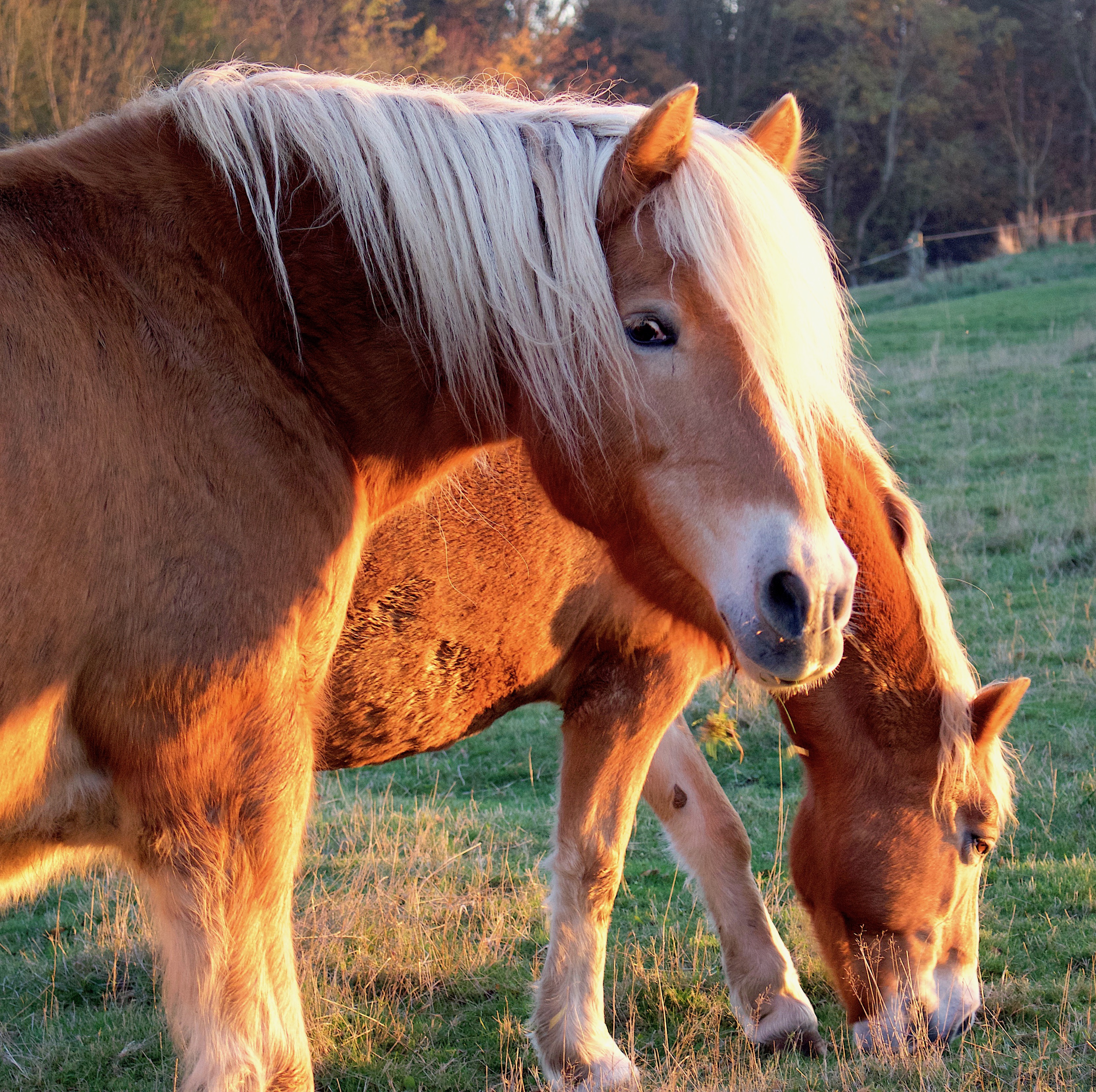
from hair and grit and eyeteeth. Now the twin mares browse by the fence
in their coats of dust. Nobody asks what they mean, appearing so suddenly
when nobody needed them, or called. In the back yard, the buried people —
great-grandmothers in spectator pumps, the great-grandfather who died of sneezing,
the first baby, never named — stay buried. It’s not their overshoes
lost in the grass behind the smokehouse, not their faces alive in anyone’s
memory. But my mother waits in the pecan tree’s fingered shadow,
holding a broken milk jug full of daylilies, waiting as if
she wanted someone to tell her again it’s all right to be born now,
now is as good a time as any. In a month we’ll find my grandfather’s glasses
in their case under the front seat of his car. “Oh goodness,” my aunt will say,
as if it were a matter of his forgetting them. As if we could
give them back. We’re all convinced we’ve missed the moment. We forget
that pause while a soul undoes its buttons, the world falls away,
and one by one we step out into this death, to be remembered. ~Sally Thomas “Reunion”
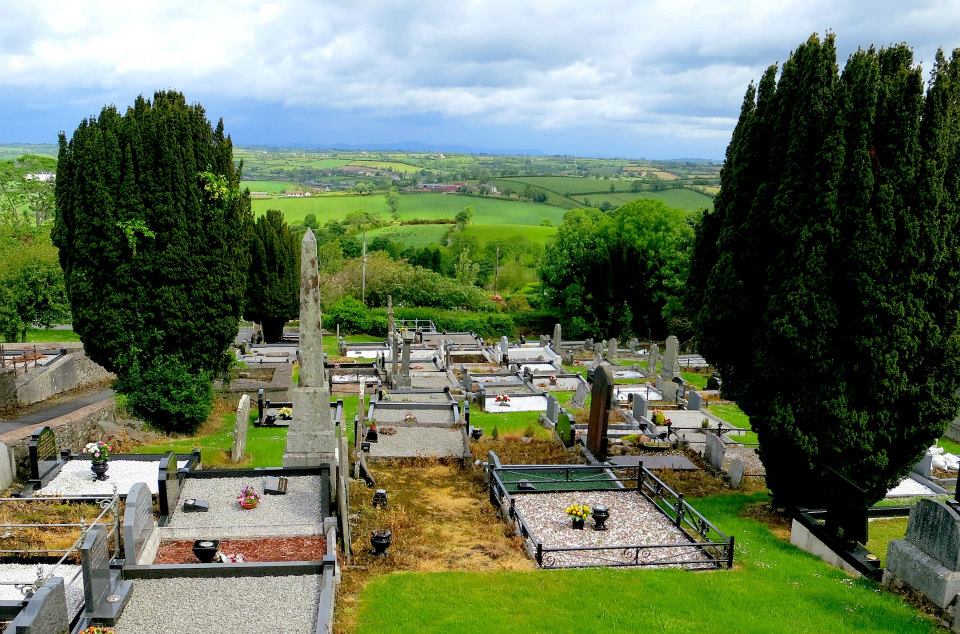
The sunlight now lay over the valley perfectly still. I went over to the graveyard beside the church and found them under the old cedars… I am finding it a little hard to say that I felt them resting there, but I did… I saw that, for me, this country would always be populated with presences and absences, presences of absences, the living and the dead. The world as it is would always be a reminder of the world that was, and of the world that is to come. Wendell Berry in Jayber Crow
When it’s over, I don’t want to wonder if I have made of my life something particular, and real. I don’t want to find myself sighing and frightened or full of argument.
I don’t want to end up simply having visited this world. ~Mary Oliver from “When Death Comes”
God is at home. It is we who have gone out for a walk. ~Meister Eckhart
And He awaits for our return. He keeps the light on, so we can find our way back, when we are weary, or fearful or hungry or simply longing for reunion, to be remembered.
I think of those who wait for me on the other side, including our baby lost before birth over 42 years ago.
I know God watches over all these reunions; He knows the moment when our fractured hearts heal whole once again.
I will see you soon enough, sweet ones. Soon enough.
One-Time
Monthly
Yearly
Make a one-time or recurring donation to support daily Barnstorming posts
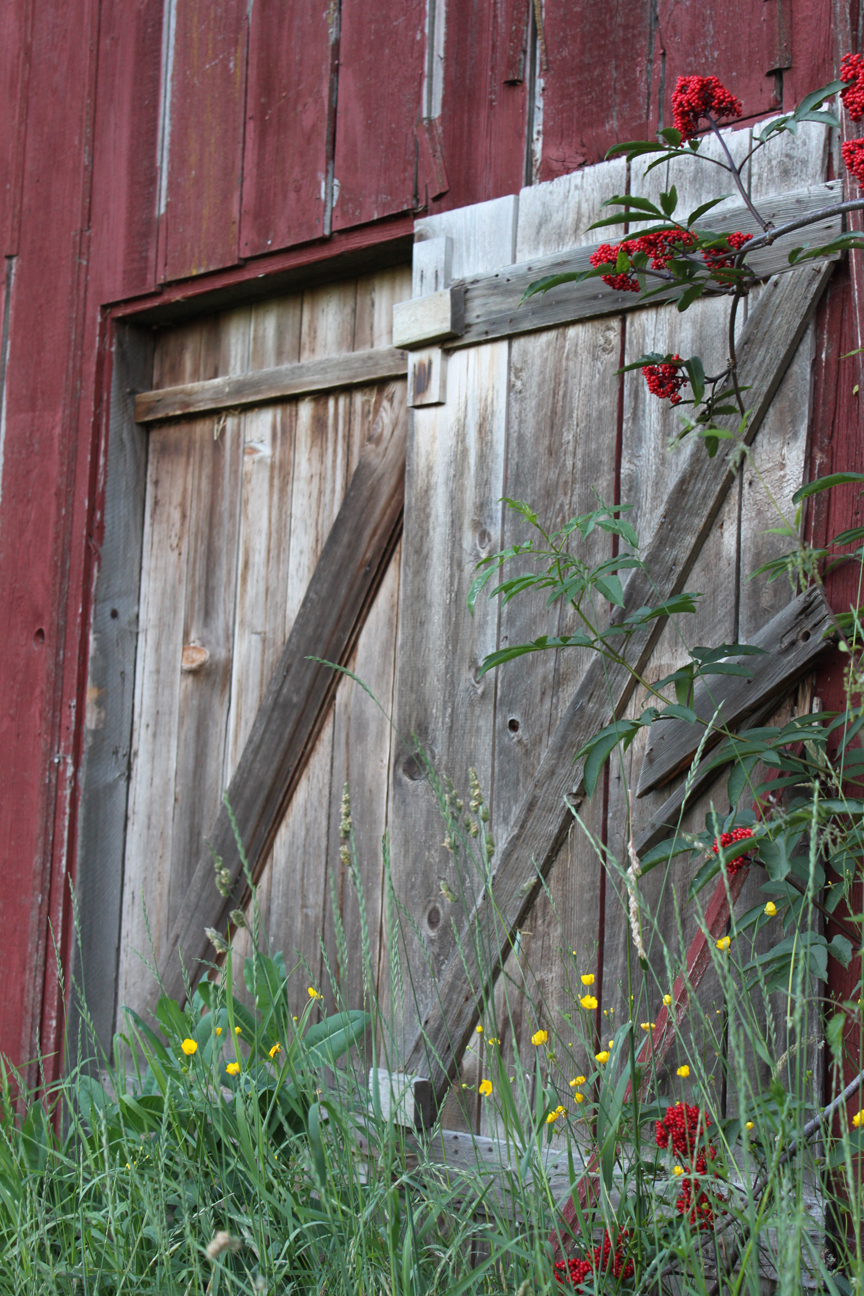
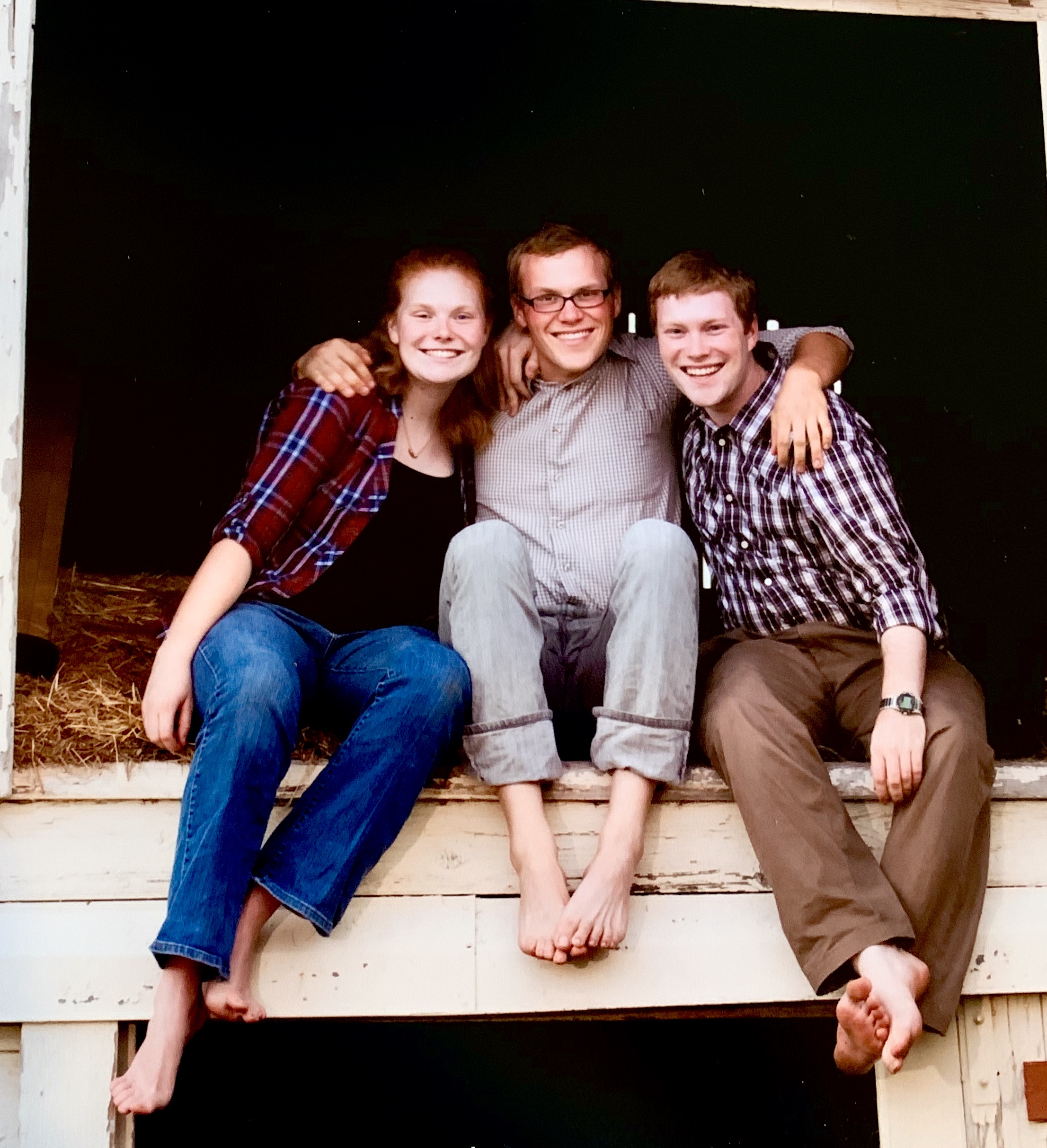
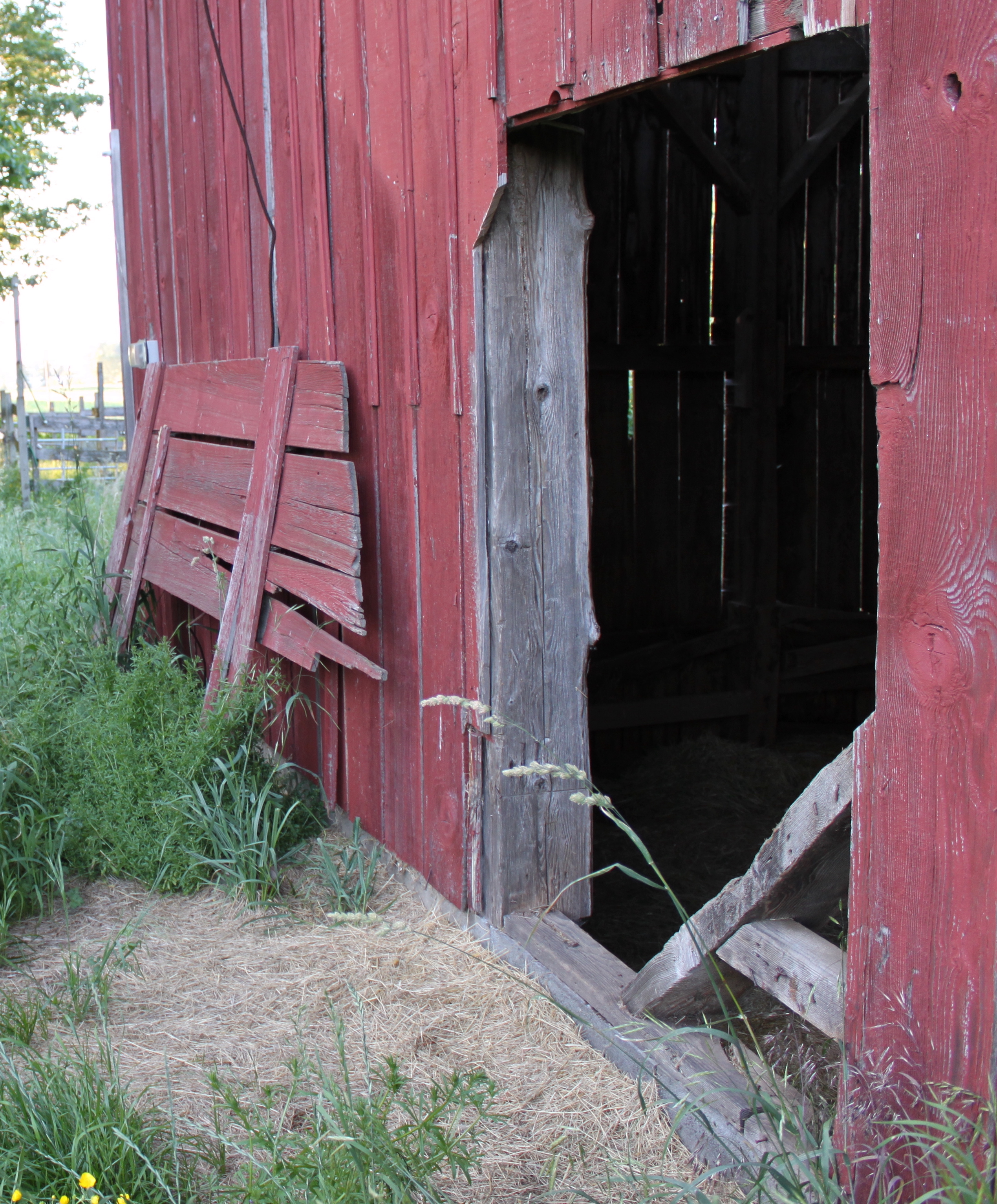
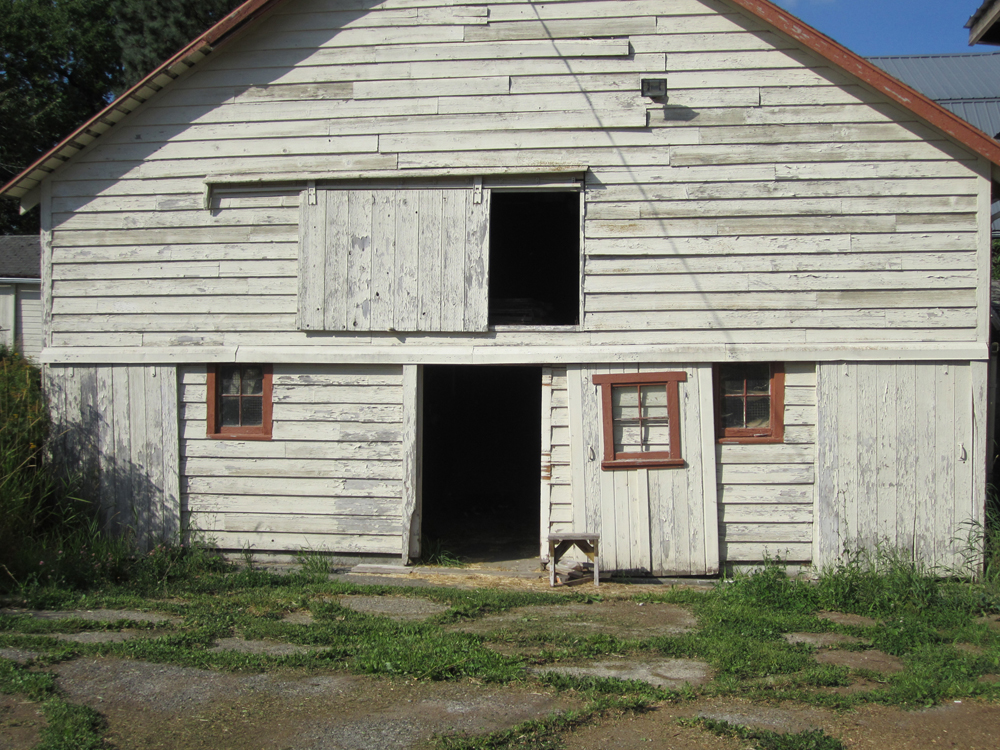
The partly open hay barn door, white frame around the darkness, the broken board, small enough for a child to slip through.
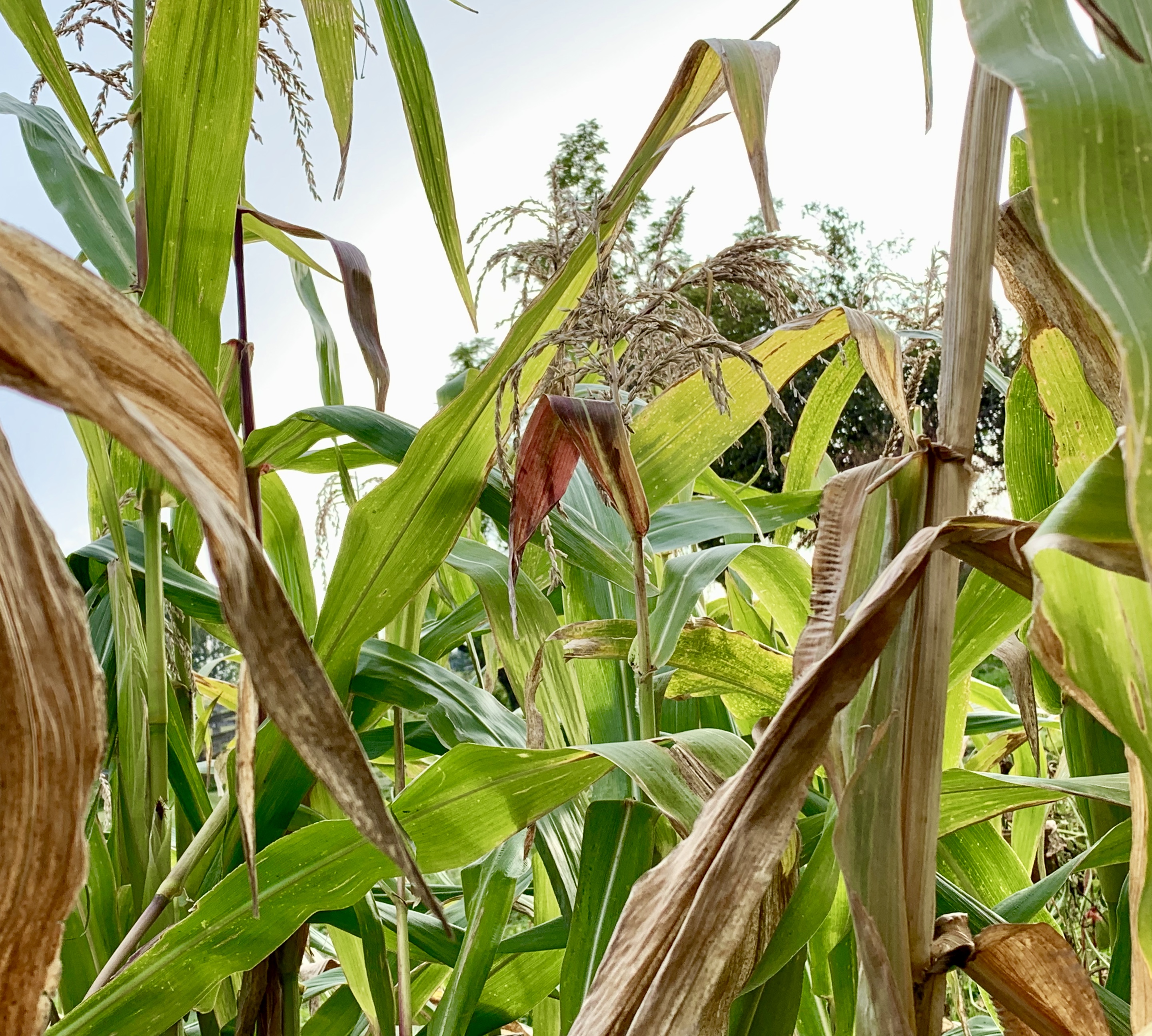
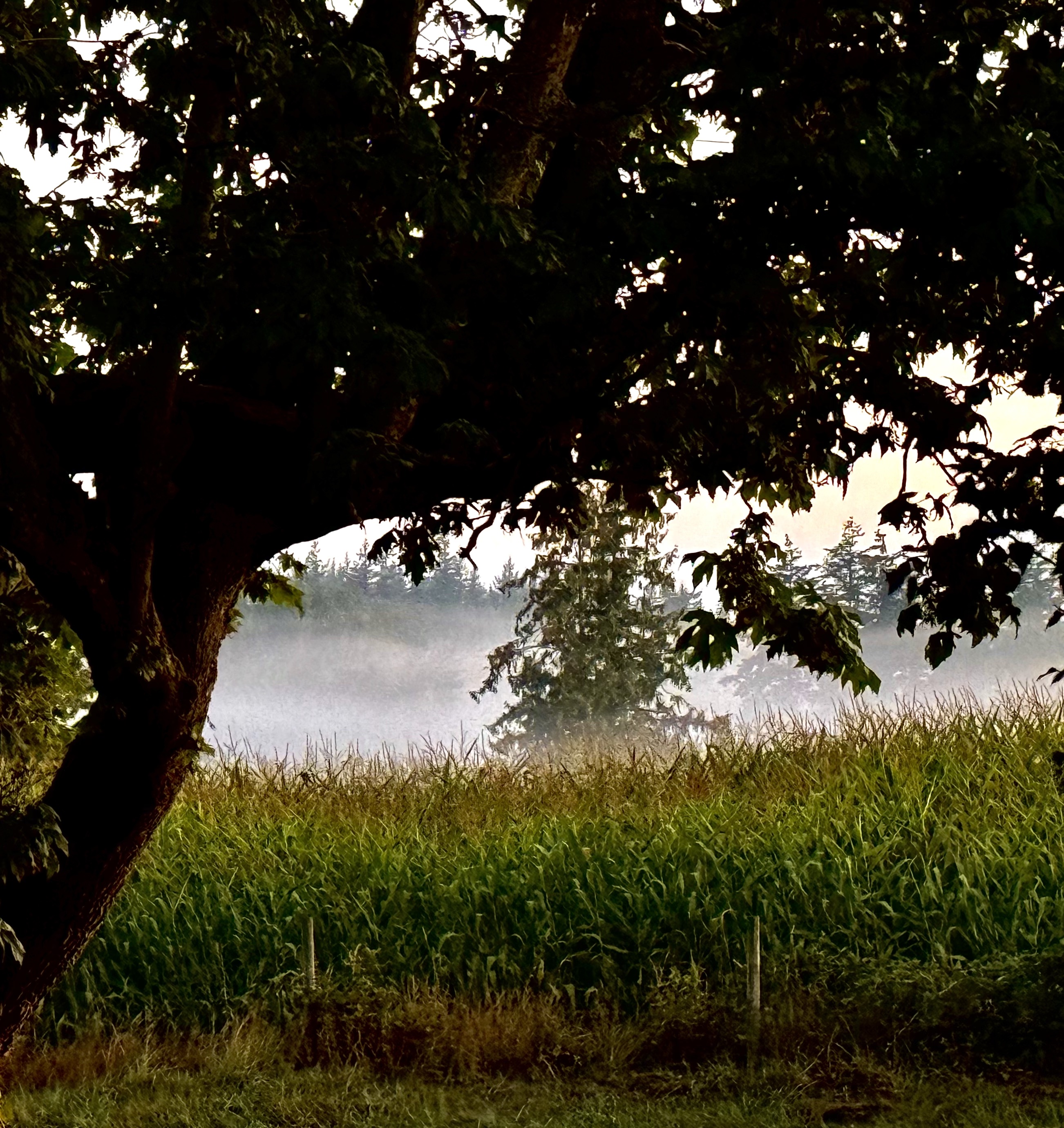
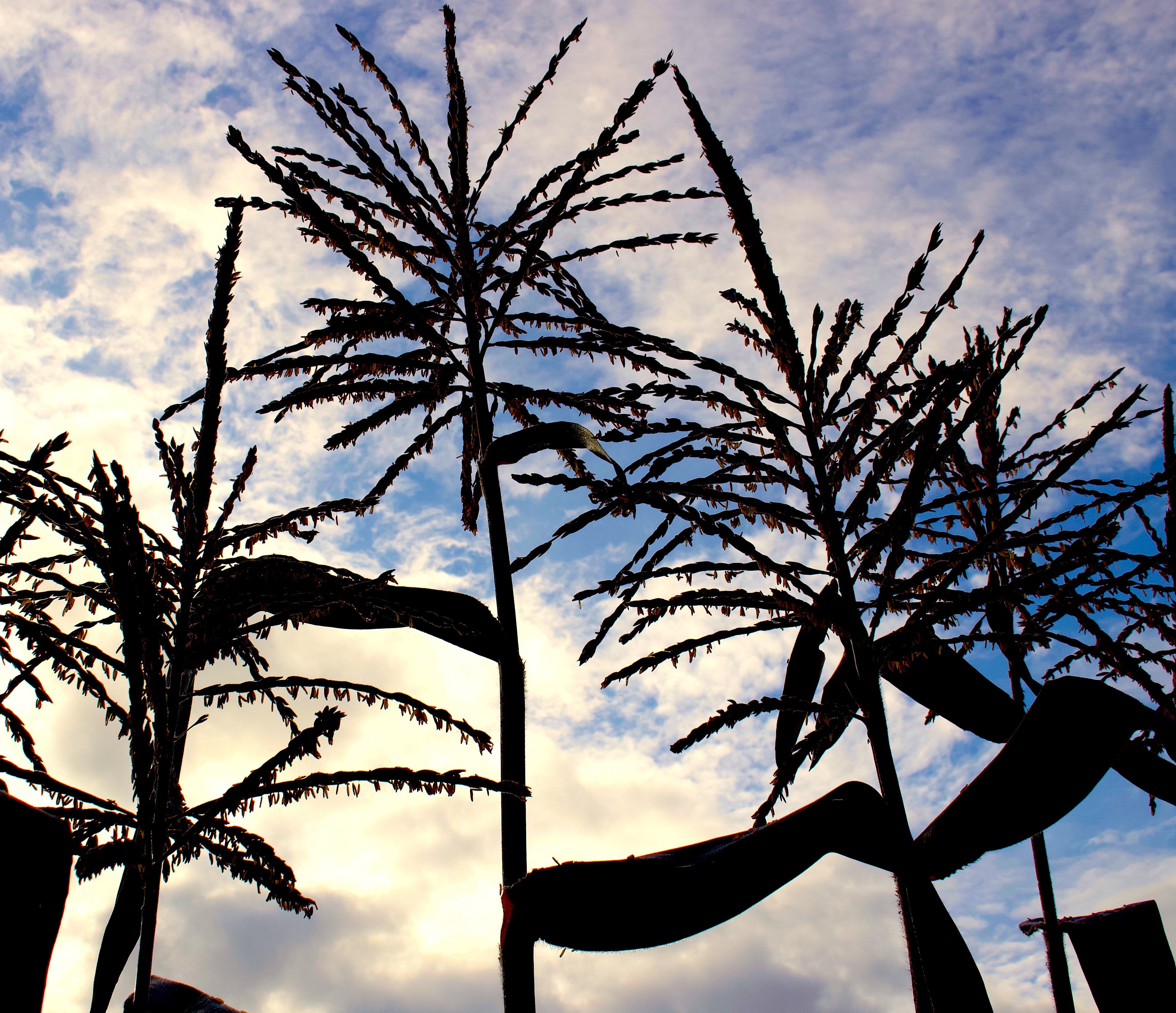
Walking in the cornfields in late July, green tassels overhead, the slap of flat leaves as we pass, silent and invisible from any road.
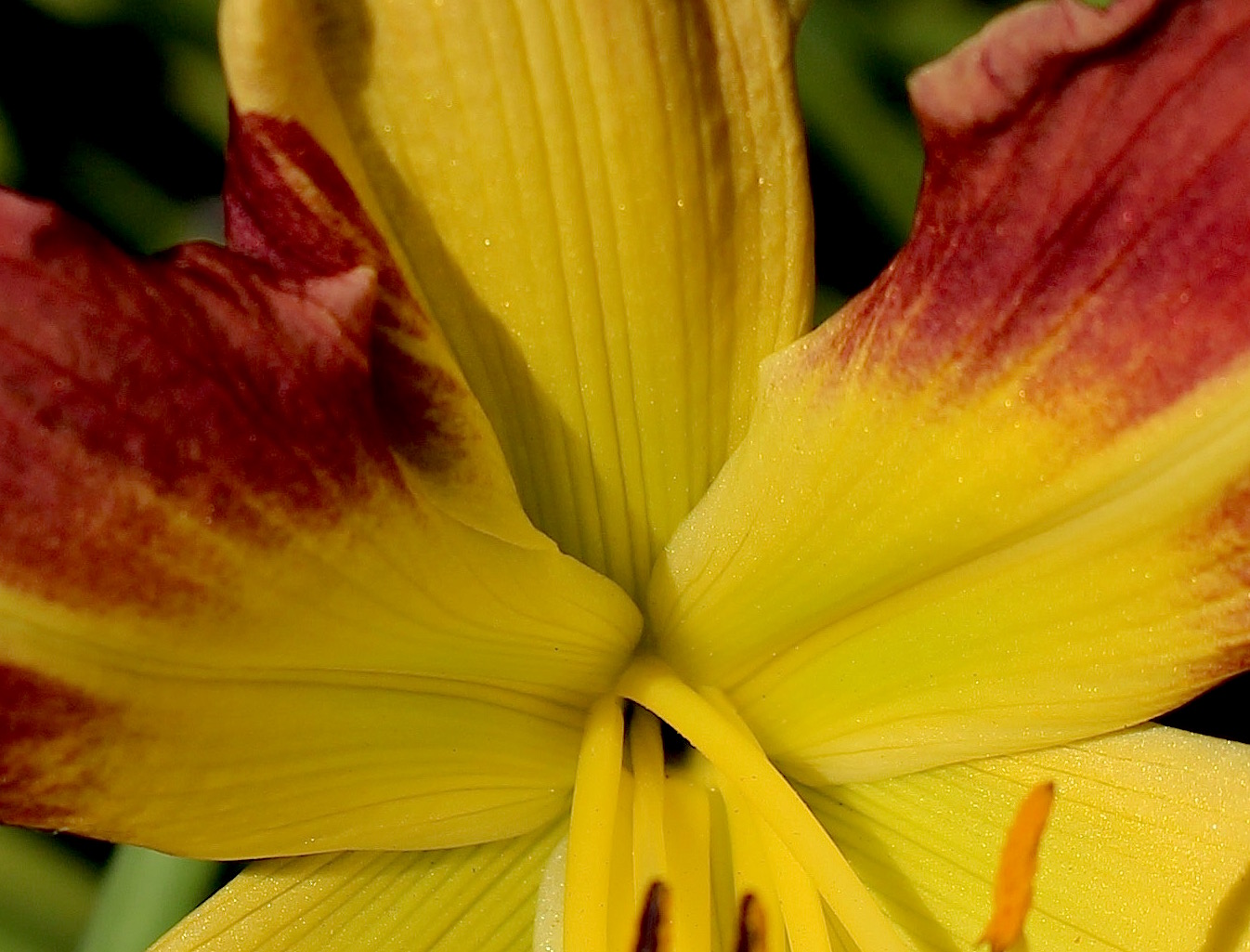
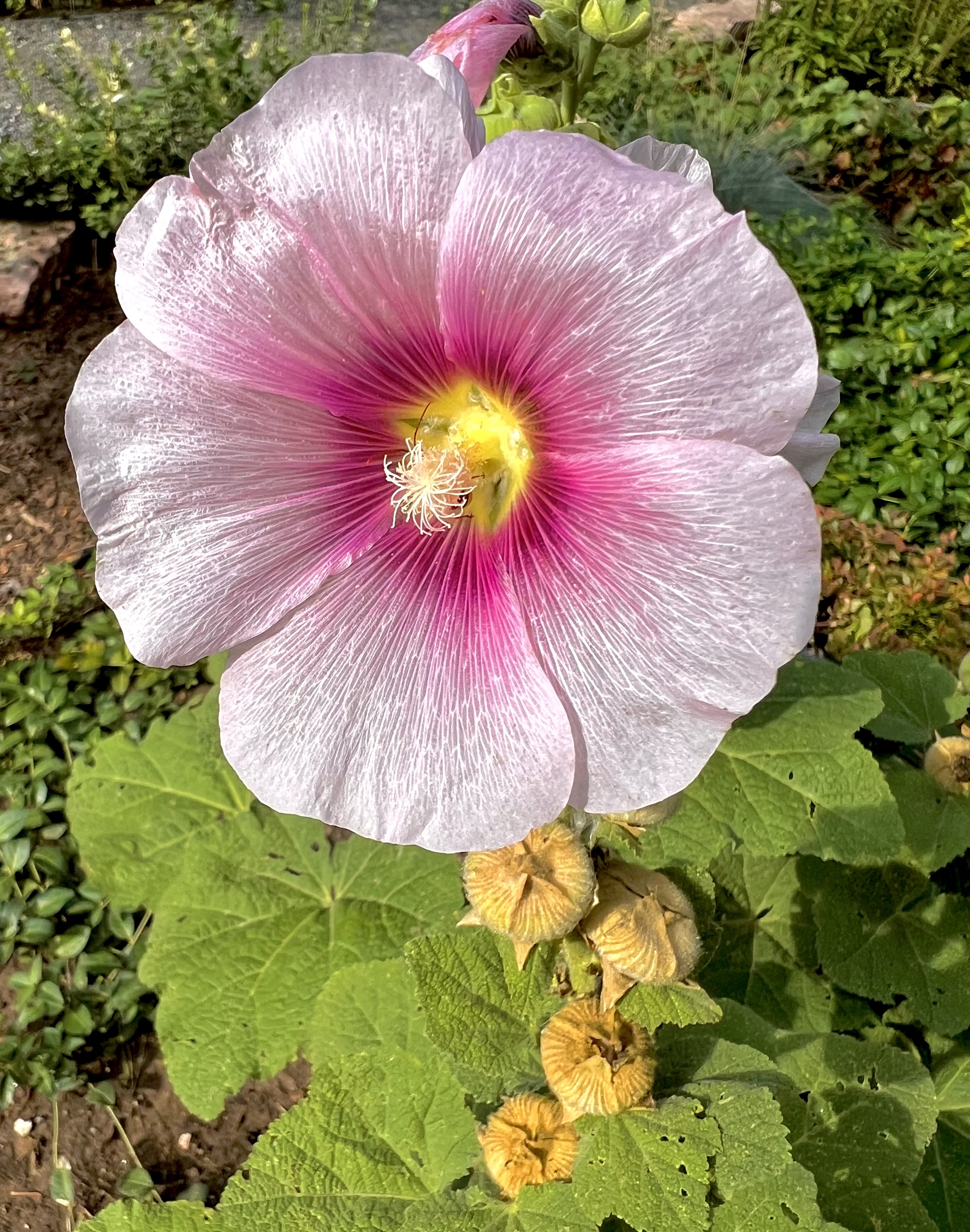
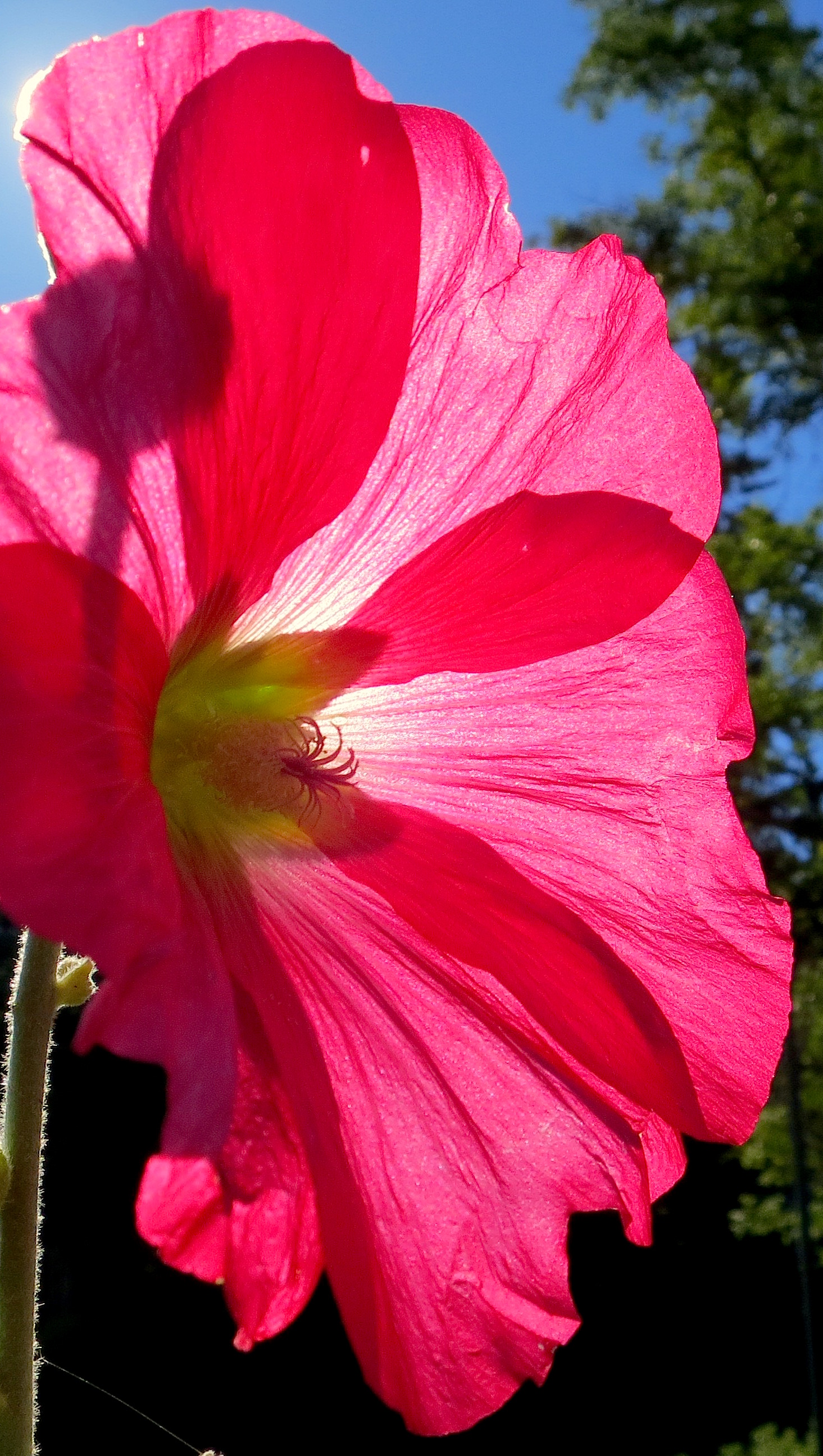
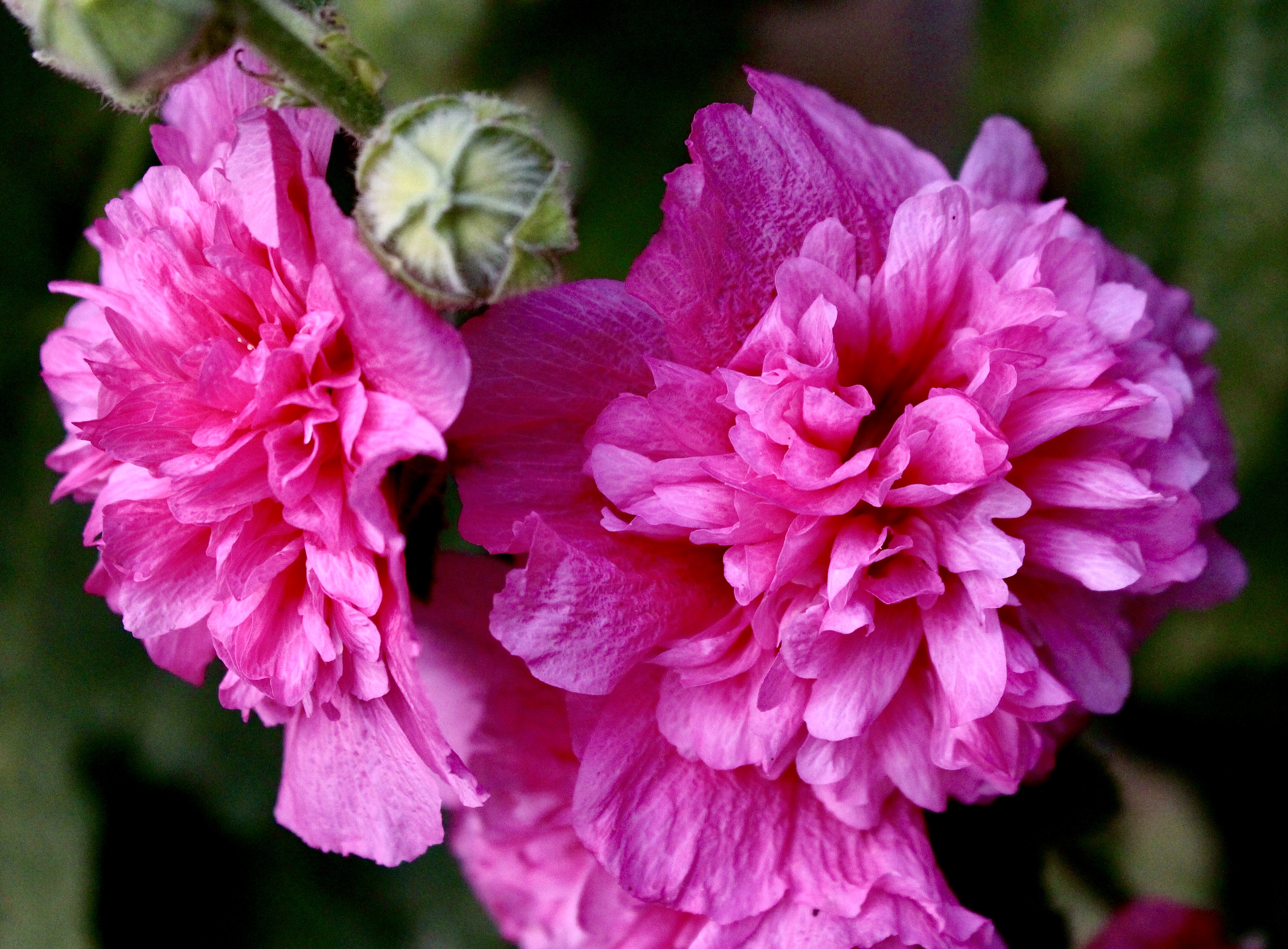
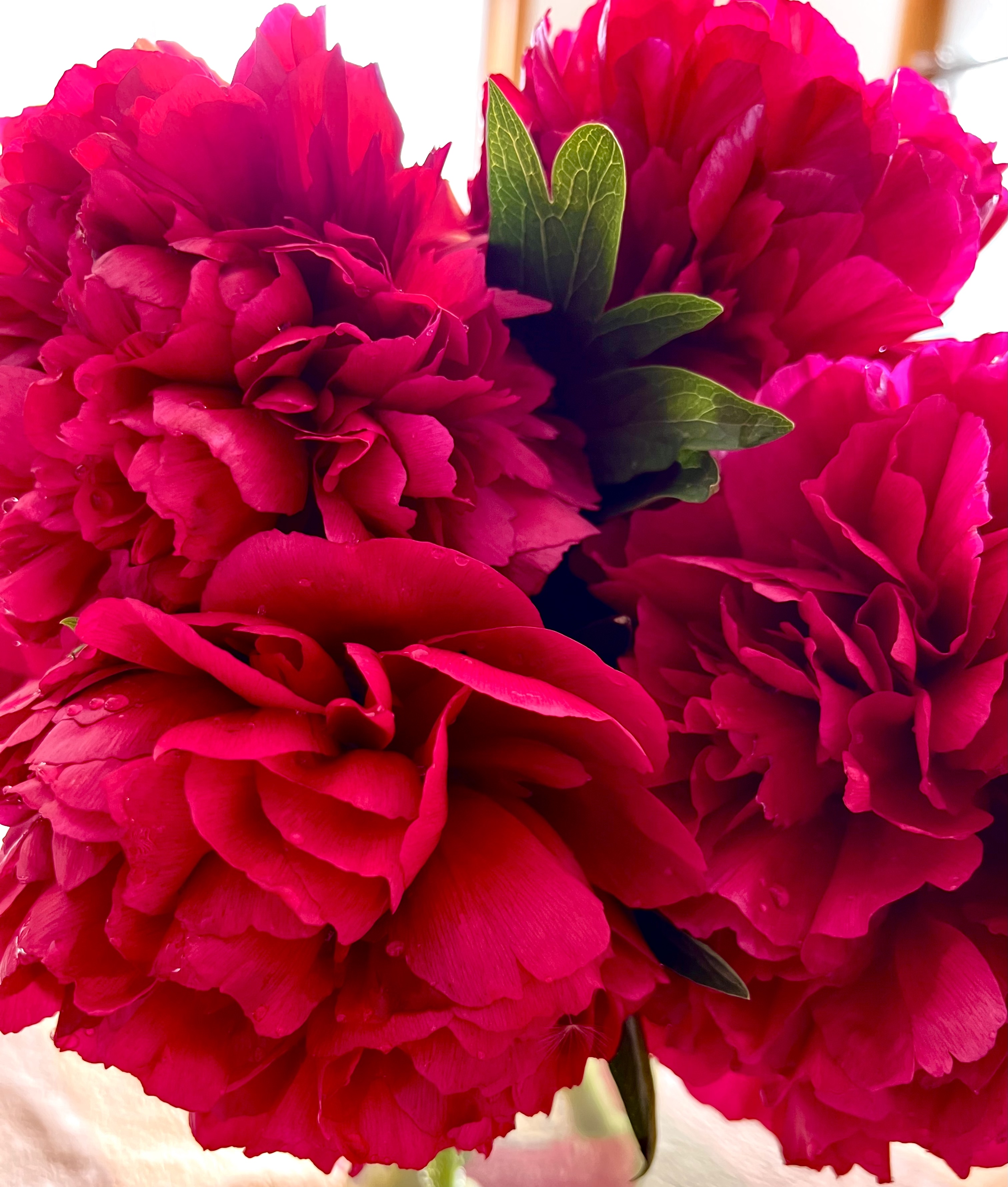
Hollyhocks leaning against the stucco house, peonies heavy as fruit, drooping their deep heads on the dog house roof.
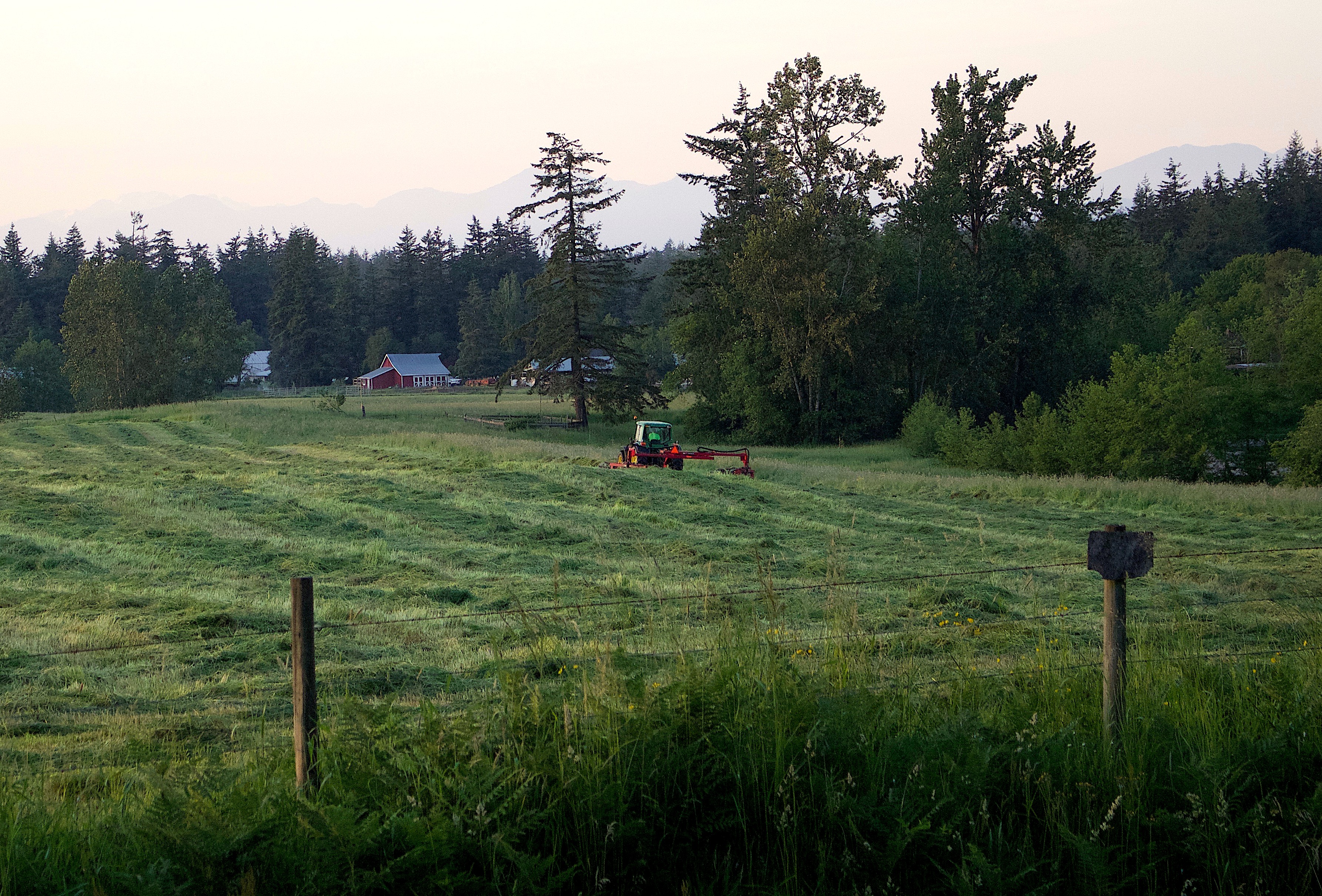
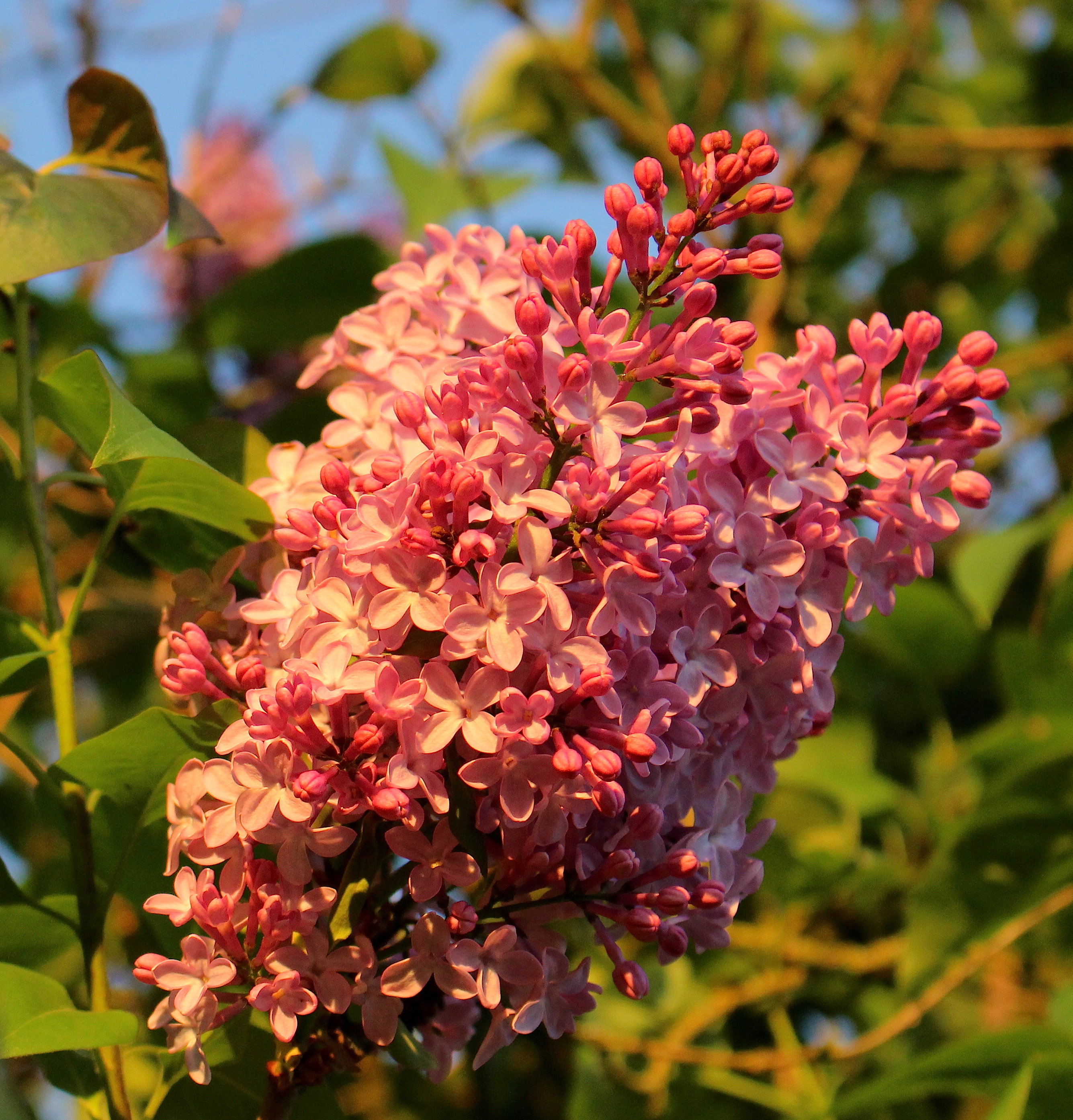
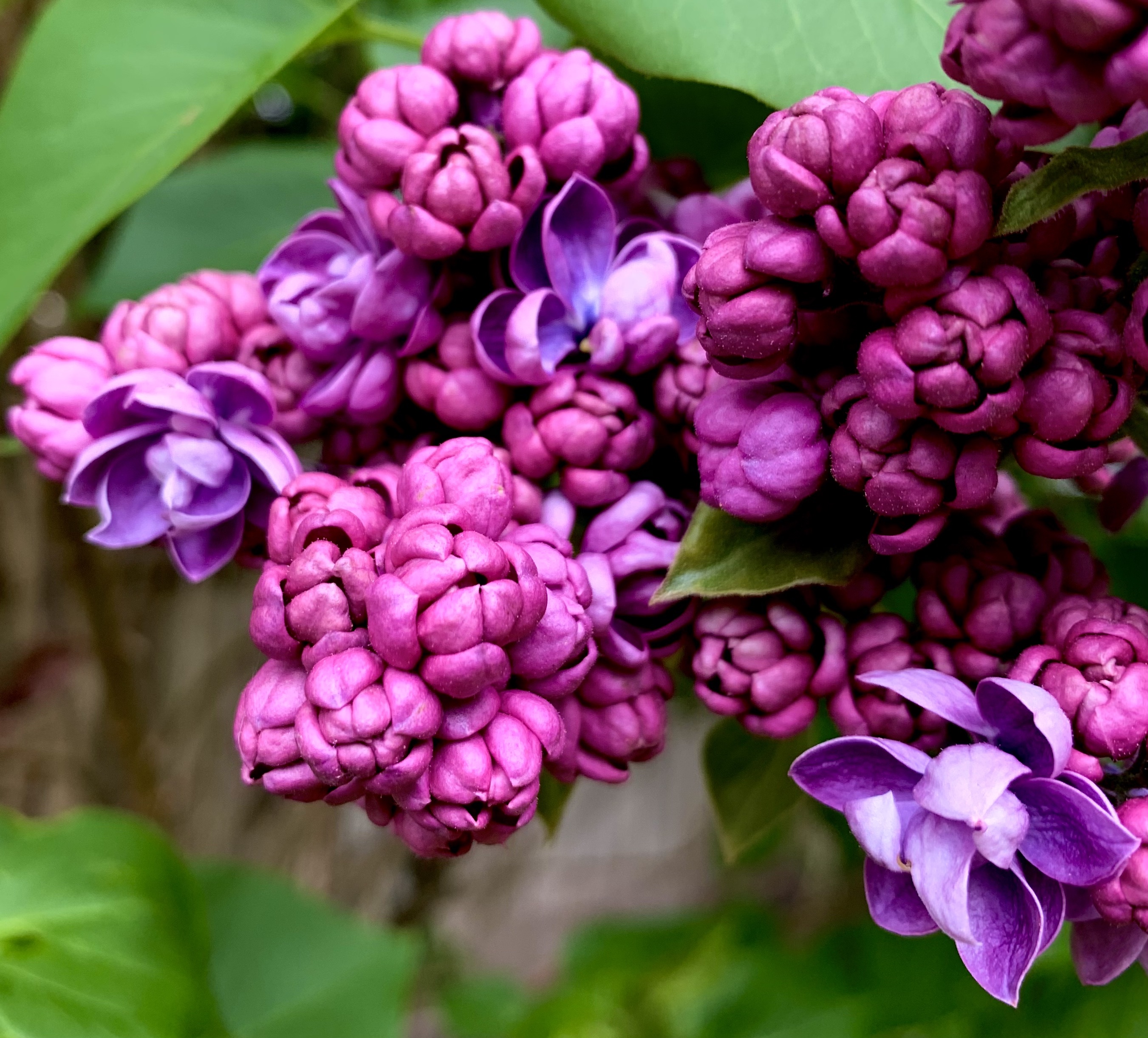
Lilac bushes between the lawn and the woods, a tractor shifting from one gear into the next, the throttle opened,
the smell of cut hay, rain coming across the river, the drone of the hammer mill, milk machines at dawn. ~Joyce Sutphen “The Last Things I’ll Remember” from First Words
I turn this seasonal corner, facing deep into autumn, summer fading in the rear view mirror.
Even as the air bares chill, and the clouds sopping soak, the riches of summer remain vivid.
Let me remember: even if I too fade away, readying for the next turn.
One-Time
Monthly
Yearly
Make a one-time or recurring donation to support daily Barnstorming posts
Let me remember you, voices of little insects, Weeds in the moonlight, fields that are tangled with asters, Let me remember, soon will the winter be on us, Snow-hushed and heavy.
Over my soul murmur your mute benediction, While I gaze, O fields that rest after harvest, As those who part look long in the eyes they lean to, Lest they forget them. ~Sara Teasdale from “September Midnight”
The tumult and the shouting dies; The Captains and the Kings depart: Still stands Thine ancient sacrifice, An humble and a contrite heart. Lord God of Hosts, be with us yet, Lest we forget—lest we forget! ~Rudyard Kipling from “Recessional”
If I were called upon to identify briefly the principal trait of the entire twentieth century, here too, I would be unable to find anything more precise and pithy than to repeat once again: Men have forgotten God. ~Aleksandr Solzhenitzyn from his 1983 acceptance speech for the Templeton Prize
Lest I forget…
I look long in the eyes I lean to…
whether a loved one, or the mountains, or summer-weary fields, or the face of God Himself.
I cannot risk forgetting Who must be remembered — He is encased in my heart like a treasured photograph, like a precious gem, like a benediction soothing me quiet when anxious.
It is His ultimate promise: Neither will He forget me – looking long in my eyes that lean in to Him.
[And the Lord answered] Can a woman forget her nursing child, that she should not have compassion on the son of her womb? Yes, they may forget, yet I will not forget you. Isaiah 49:15
One-Time
Monthly
Yearly
Make a one-time or recurring donation to support daily Barnstorming posts
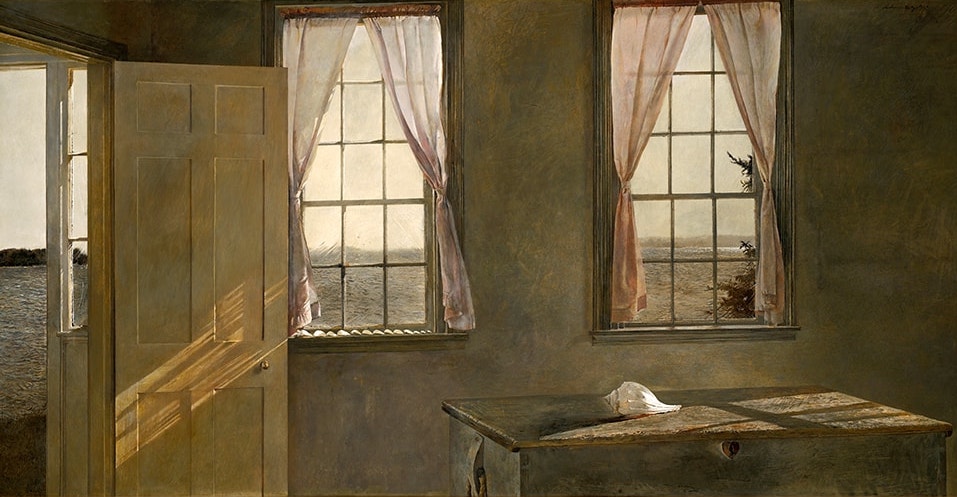
Needing them still, I come when I can, this time to the sea where we share a room: their double bed, my single. Morning fog paints the pale scene even paler. Lace curtains breathing, the chenille spread folded back, my father’s feet white sails furled at the edge of blue pajamas. Every child’s dream, a parent in each hand, though this child is fifty. Their bodies fit easily, with room to spare. When did they grow so small? Grow so small— as if it were possible to swell backwards into an earlier self.
“Her Room” by Andrew Wyeth in the Farnsworth Art Museum
My parents have been gone now for some time, my father 30 years, my mother, nearly 17 years. Their dying was a long process of counted breaths and pauses. I witnessed their bodies curling into themselves, shrinking smaller, worn down by illness and age.
I still miss them as I’m reminded of them by the events of my own life, still wanting them to take me by the hand as I navigate my own daily path.
After mom’s death, those possessions not distributed to family members have remained packed up and stored in our barn buildings. I know it is well past time to deal with their stuff as I become keenly aware of my own graying and aging.
In the house, next to where I write, is a box of over 500 letters written by my mother and father between 1941 and 1945. The letters began as they were getting to know each other at college, going from “pinned” to “engaged” and continue for three and a half more years after a hurried wedding Christmas Eve 1942. By mid-January 1943, my newly minted Marine officer father shipped out to spend the next three years of his life fighting on the battlefields of Saipan, Tinian and Tarawa in the Pacific Ocean, not to return again to the states until late summer of 1945.
My mother wrote her letters from the small rural eastern Washington community of Colville, living in a “teachers’ cottage” with other war wives who taught school while waiting for their husbands to return home – or not.
It took me a decade to find the courage and time to devote to reading these letters they treasured and never threw away. I sorted them unopened by postmark date into some semblance of order and sat down to start at the very beginning, which, of course, is my beginning as well. I opened each one with some trepidation and a lump in my throat about what I might find written there. I worried I may find things I didn’t want to know. I hoped I would find things that I desperately needed to know.
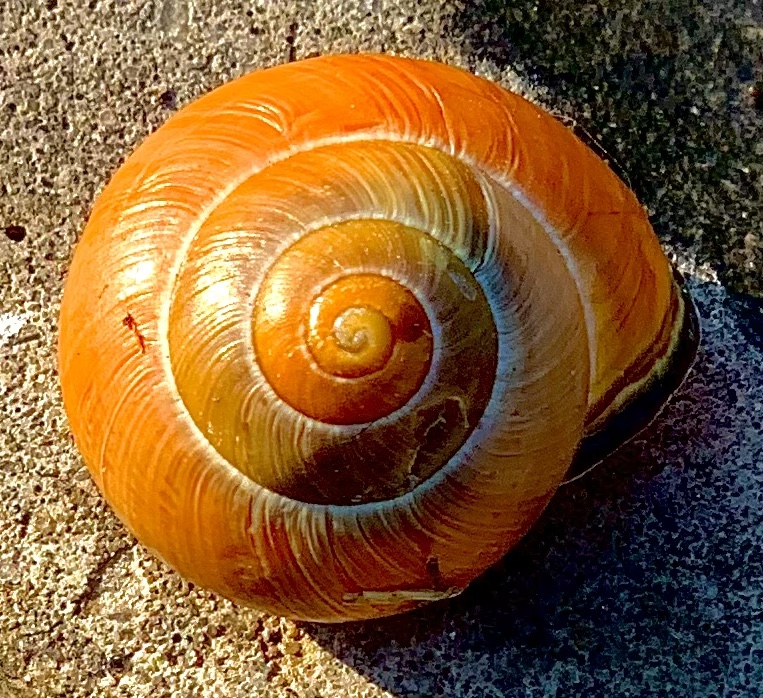
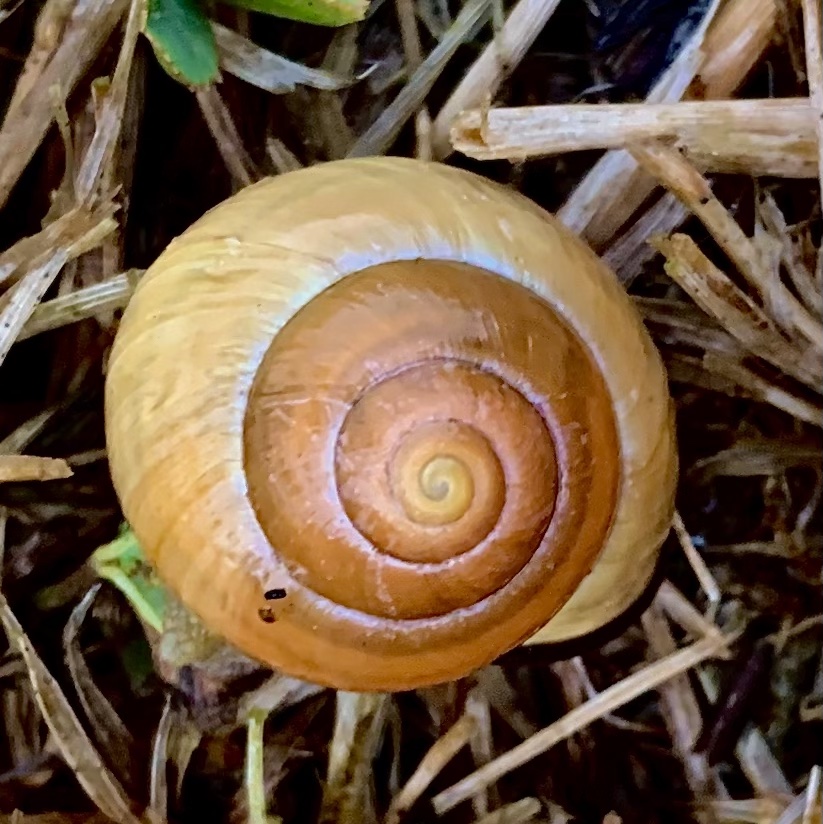
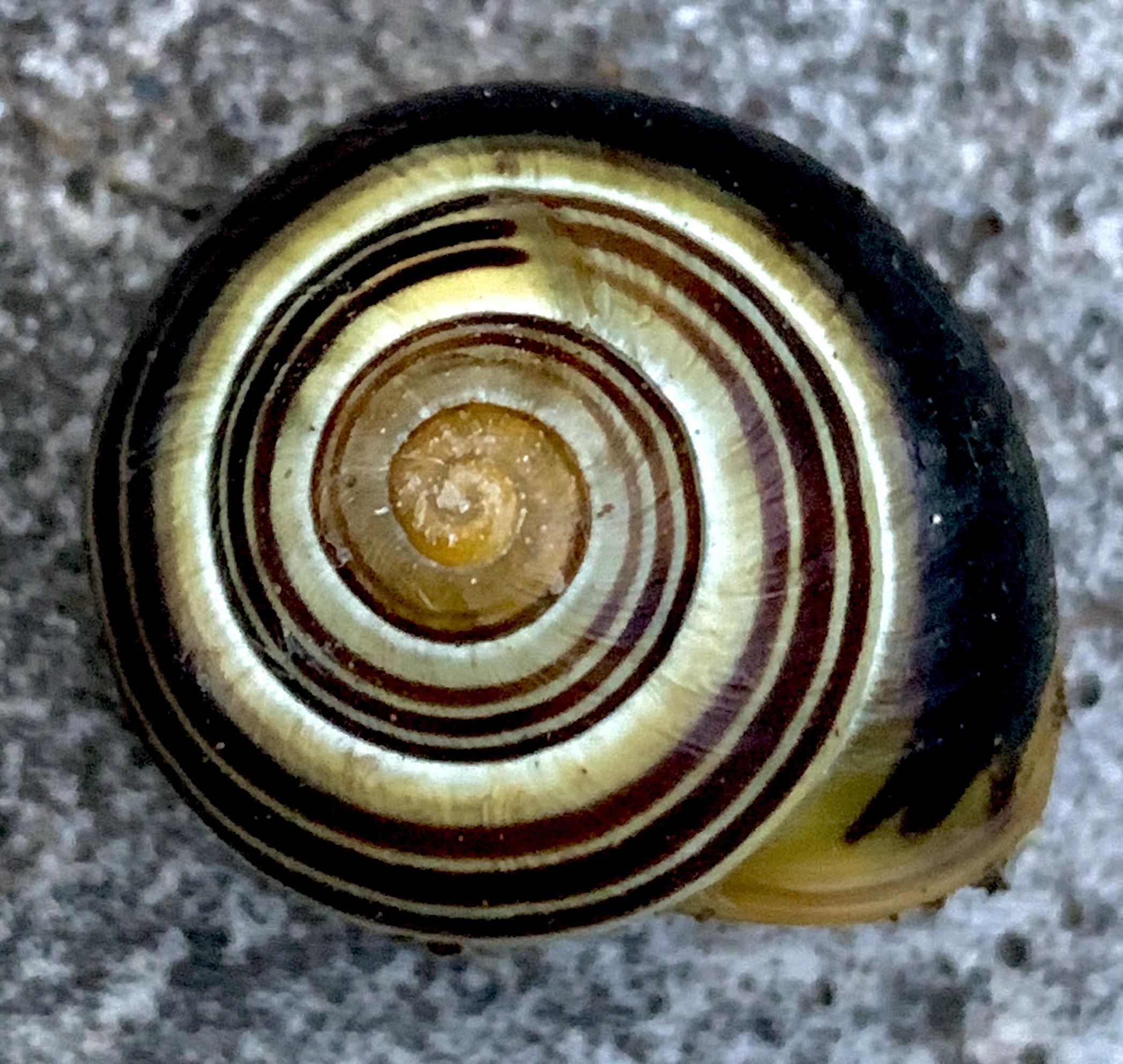
Most of all I wanted to understand the two people who became my parents within the coiled shell of their forty years together, though broken by a painful divorce which lasted a decade. Having lived through that awful time with them, I want to understand the origin of a love which eventually mended their cracked shell of companionship, gluing them back together for five more years before my father died.
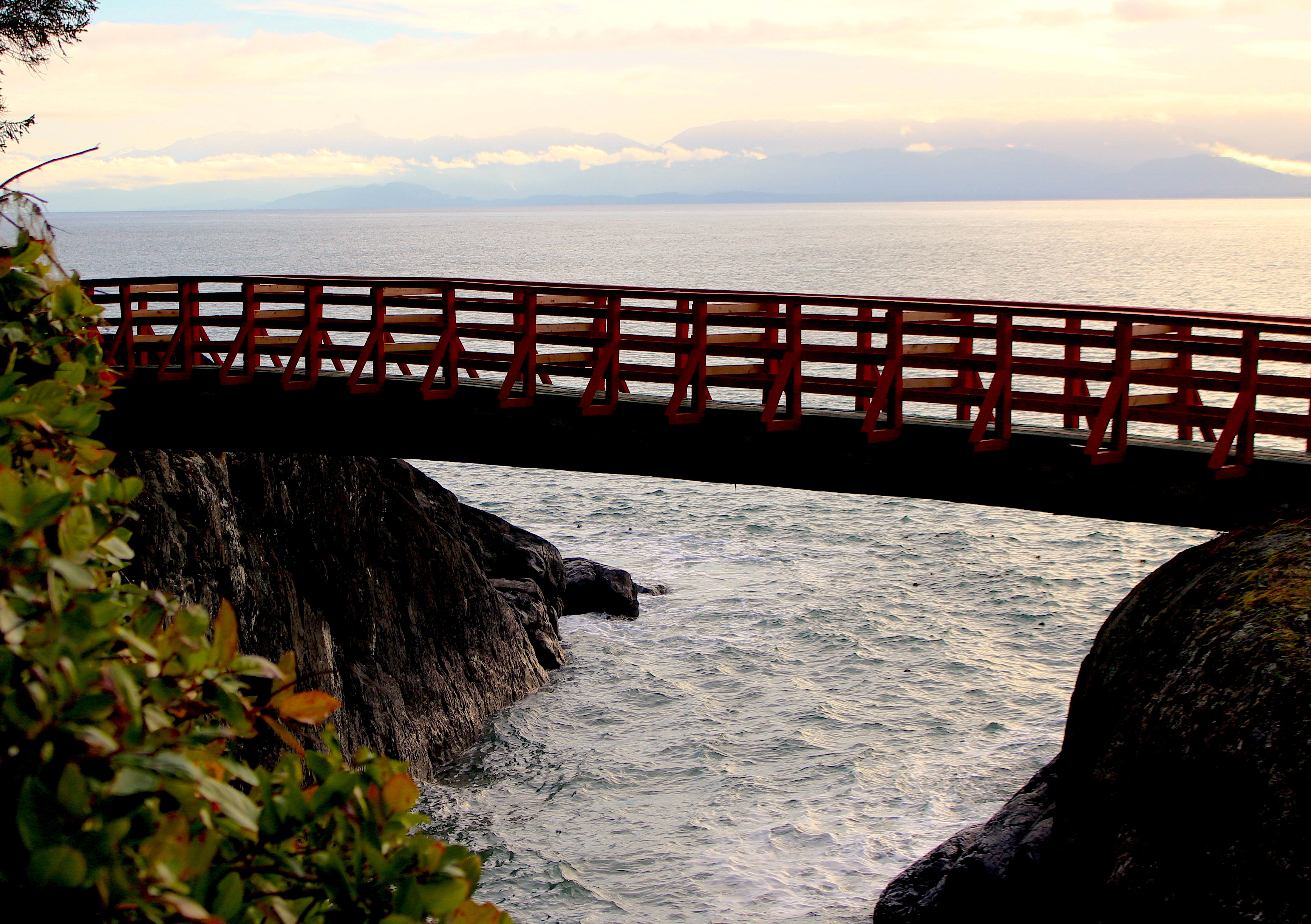
As I ponder their words, I too cross a bridge back to them both, my ear pressed to the coiled shell of those fading voices, as if I might still hear the sea, at times bringing them closer, then pulling them farther away.
AI image created for this post
One-Time
Monthly
Yearly
Make a one-time or recurring donation to support daily Barnstorming posts




























 Barnstorming