Between the Lashes of Your Eyes

This is what you shall do:
Love the earth and sun and the animals,
despise riches,
give alms to everyone that asks,
devote your income and labor to others,
hate tyrants,
argue not concerning God,
have patience and indulgence toward the people,
and your very flesh shall be a great poem,
and have the richest fluency, not only in its words,
but in the silent lines of its lips and face,
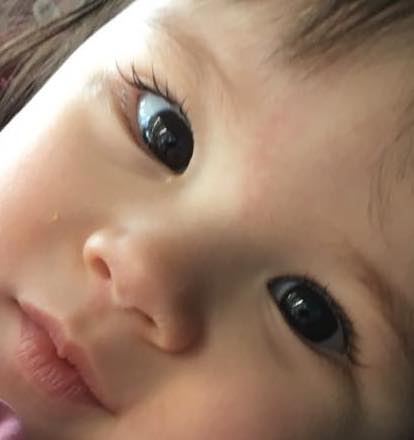
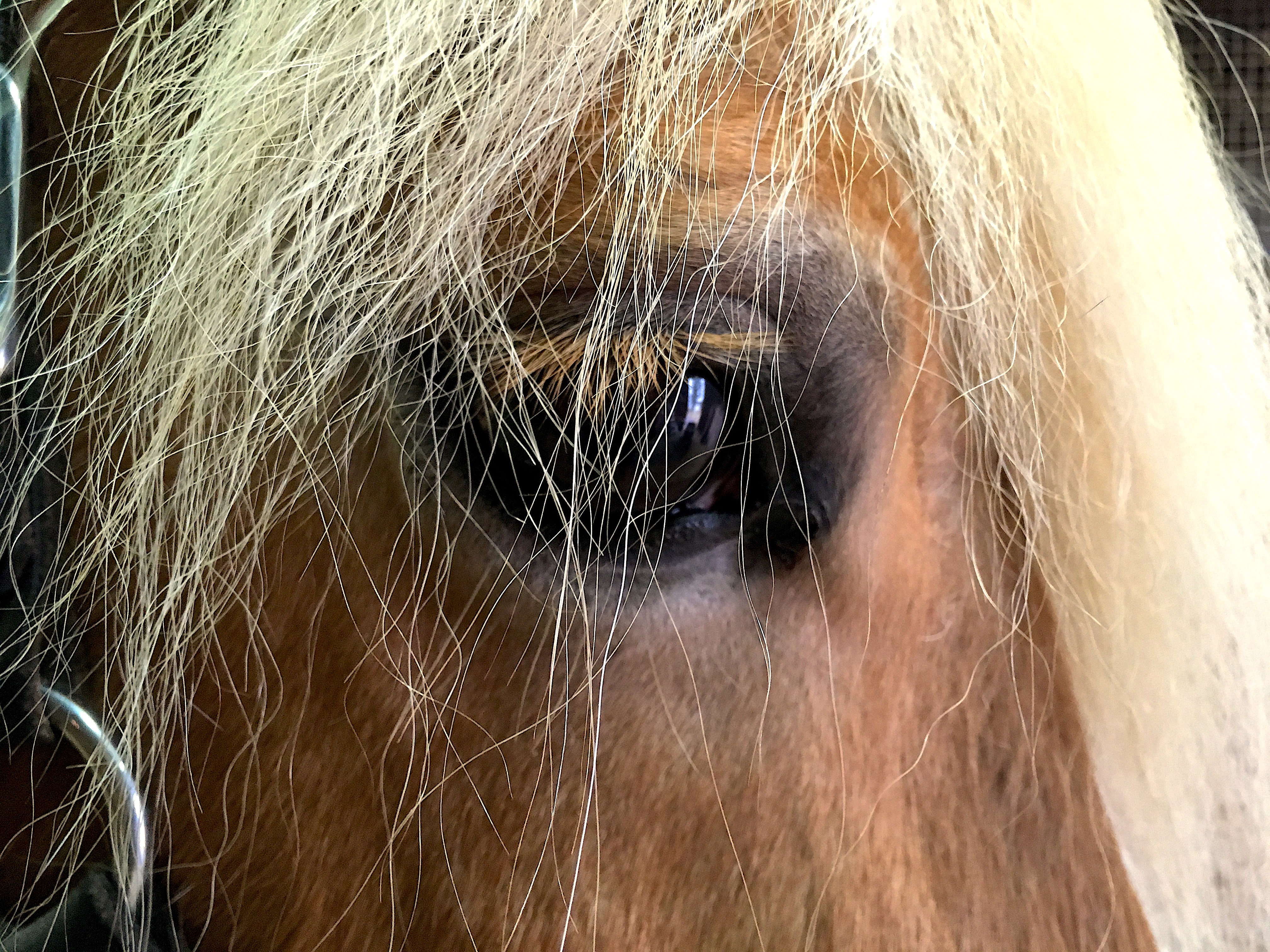
and between the lashes of your eyes,
and in every motion and joint of your body.
~Walt Whitman from his preface to “Leaves of Grass”
Time, in so many ways, has been standing still for us over the last few months, fueled by an unprecedented quarantine and social isolation. We anticipate “when things return to normal” but the reality is there will be no “normal” for those who have lost jobs and businesses and family members or their own robust health since February.

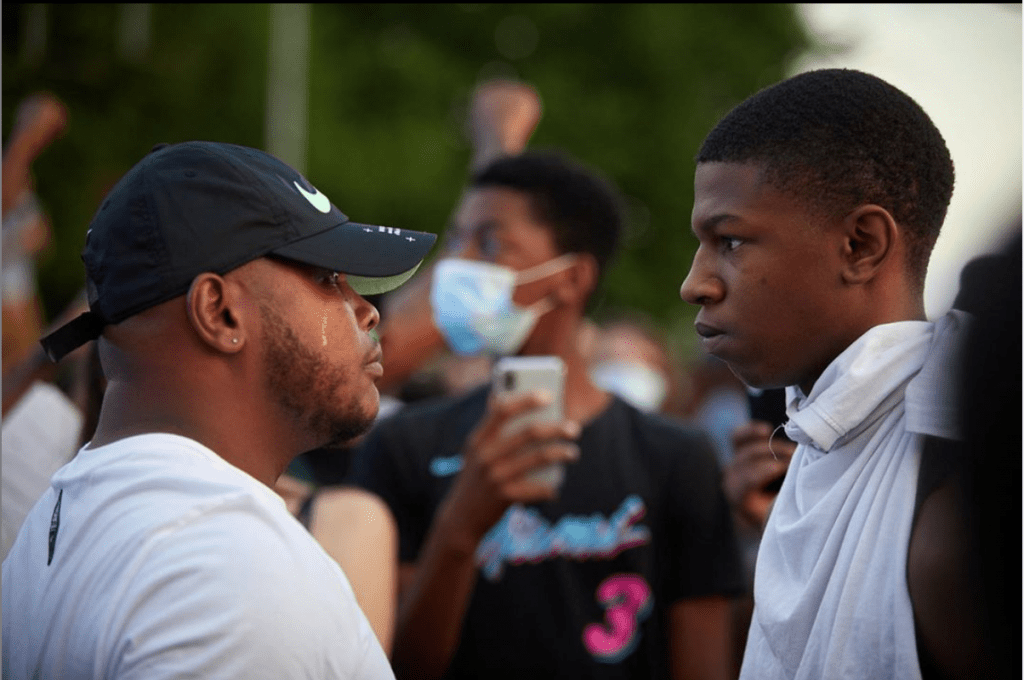
And now society finds itself in the midst of anger and argument, marching and shouting to defend those who have lived for generations with injustice and oppression, and continue to face that reality every day, and the majority of us were oblivious.

“Normal” holds no appeal when “normal” is living under a tyrant’s thumb or dying under a knee.

So how do we approach a change in seasons as we ourselves are irrevocably changed?

What shall we do?

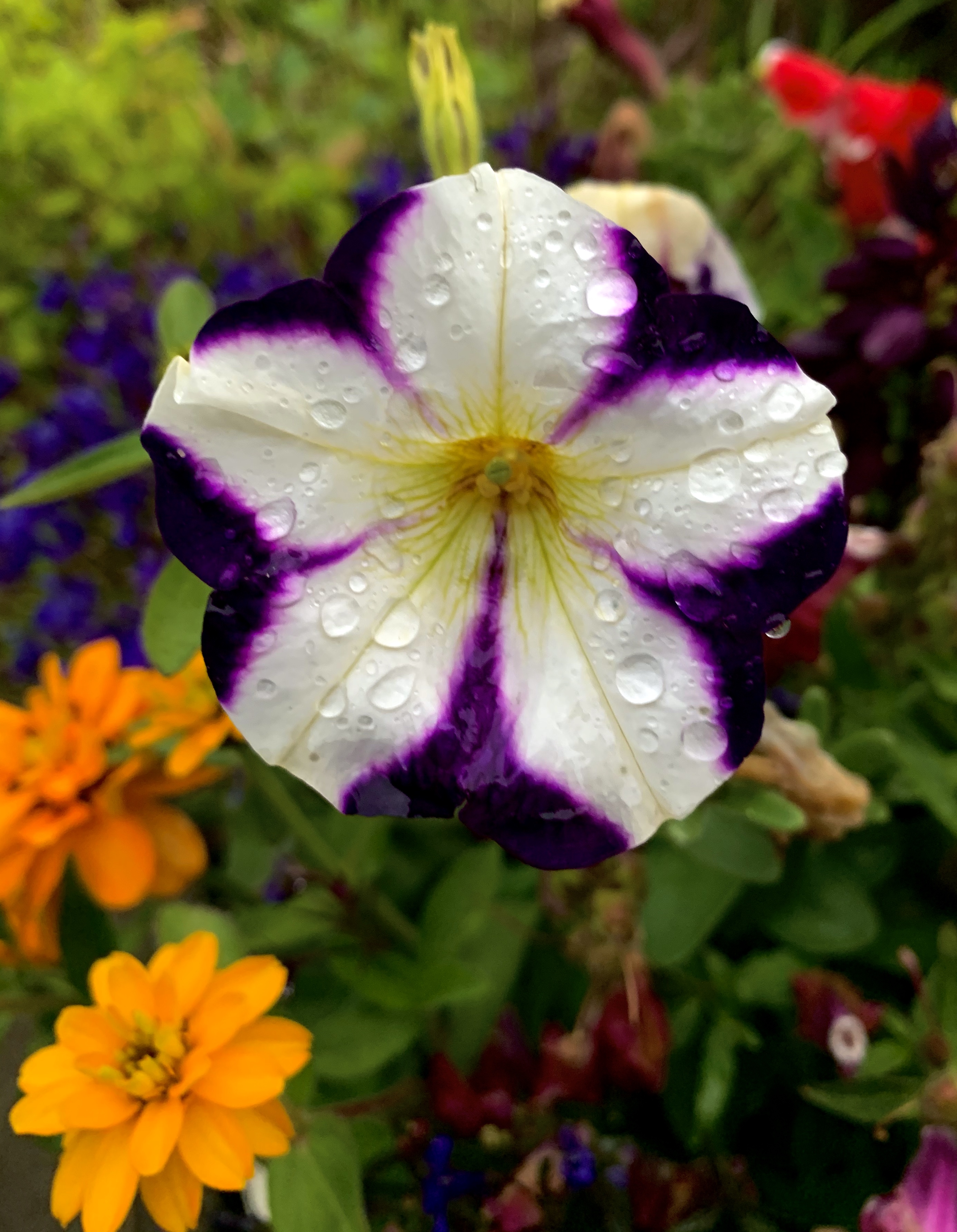
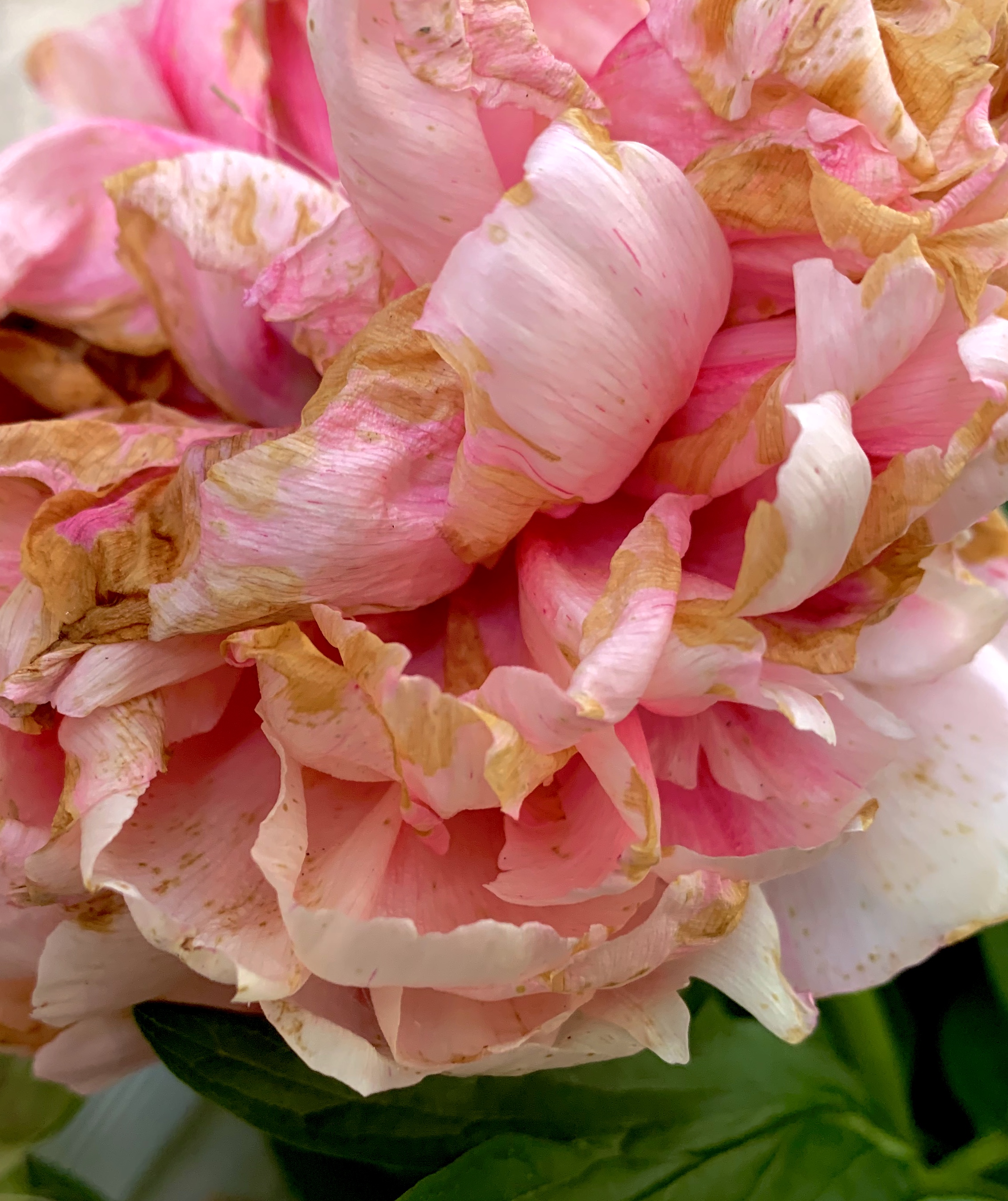
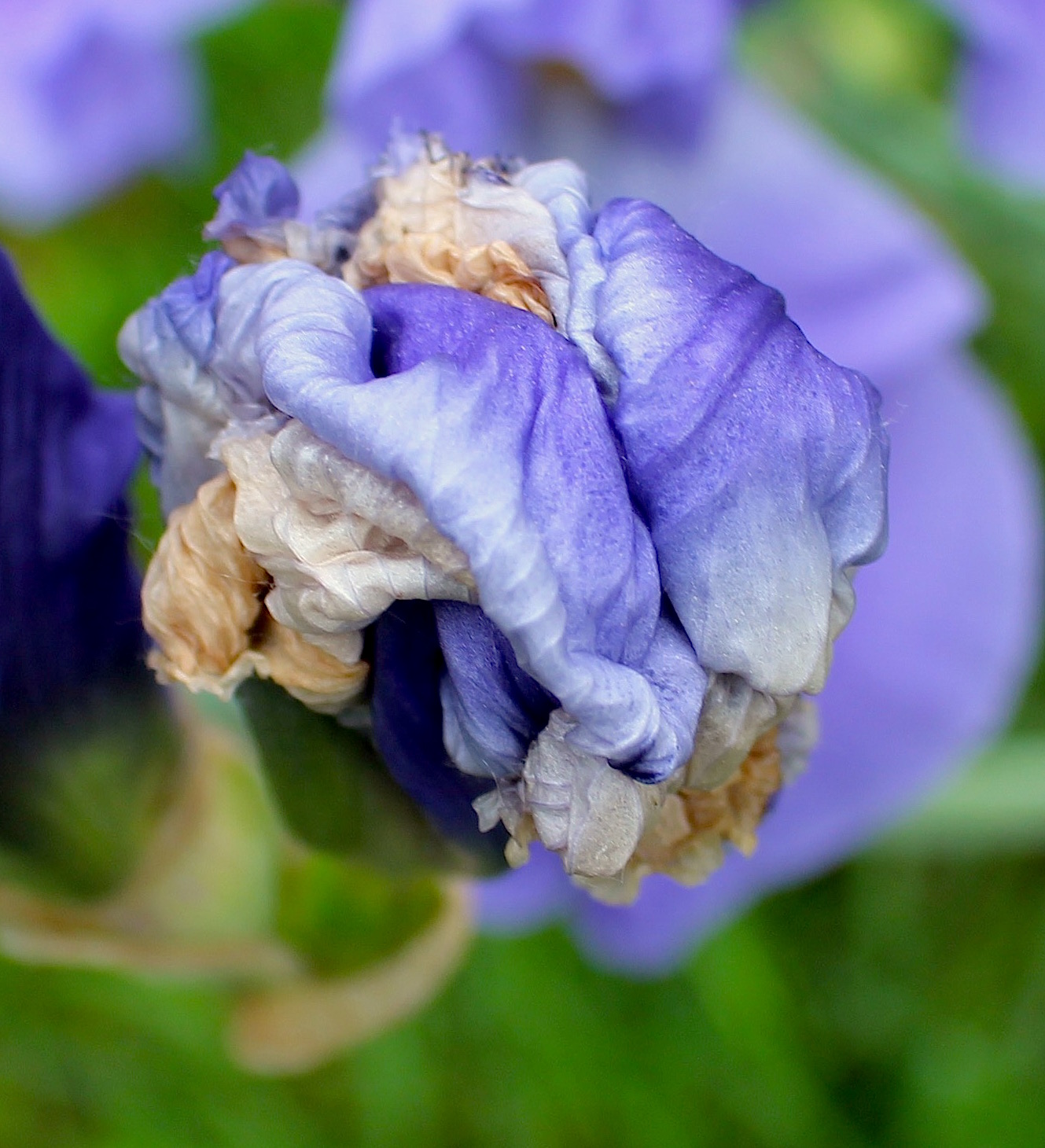
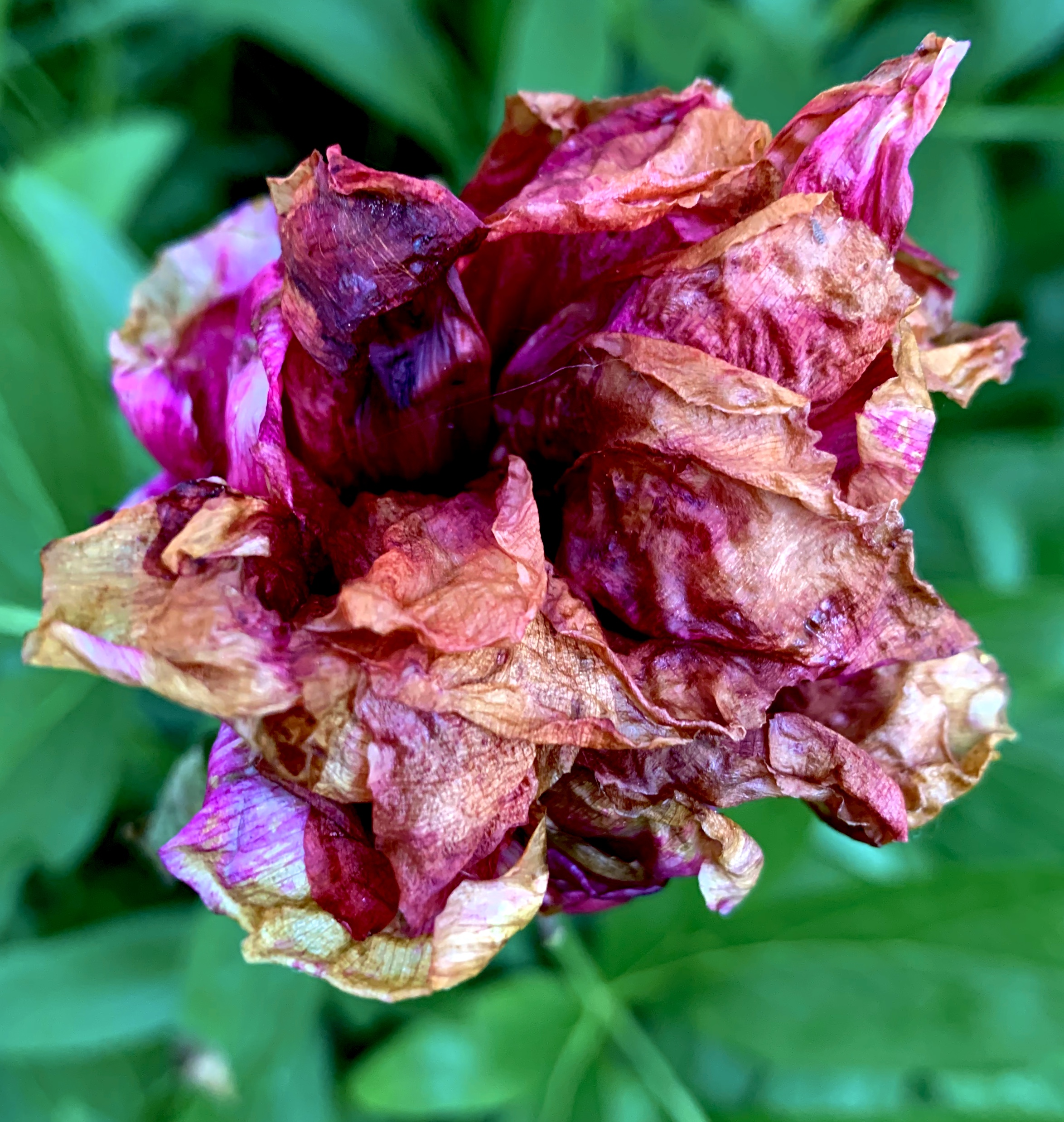
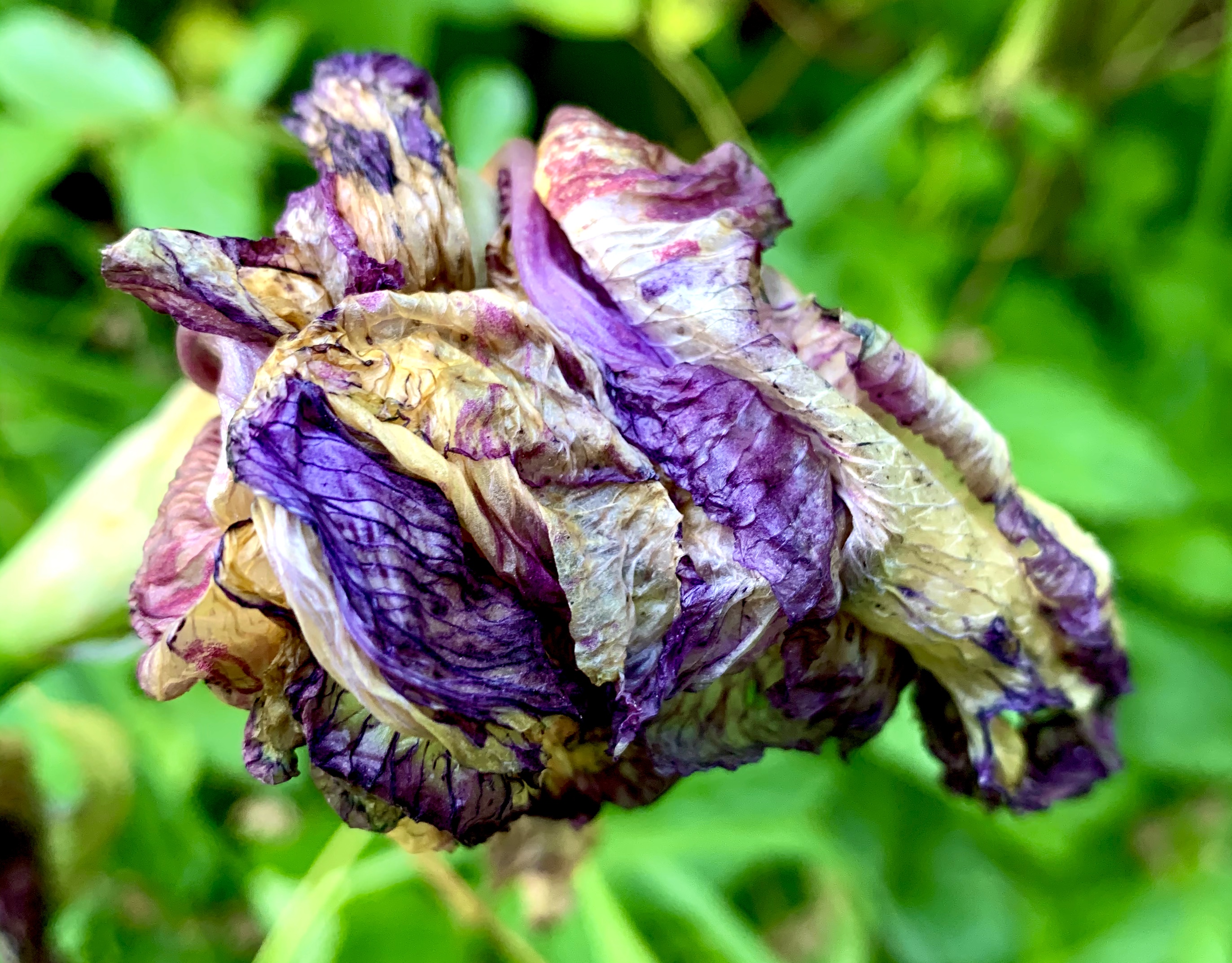
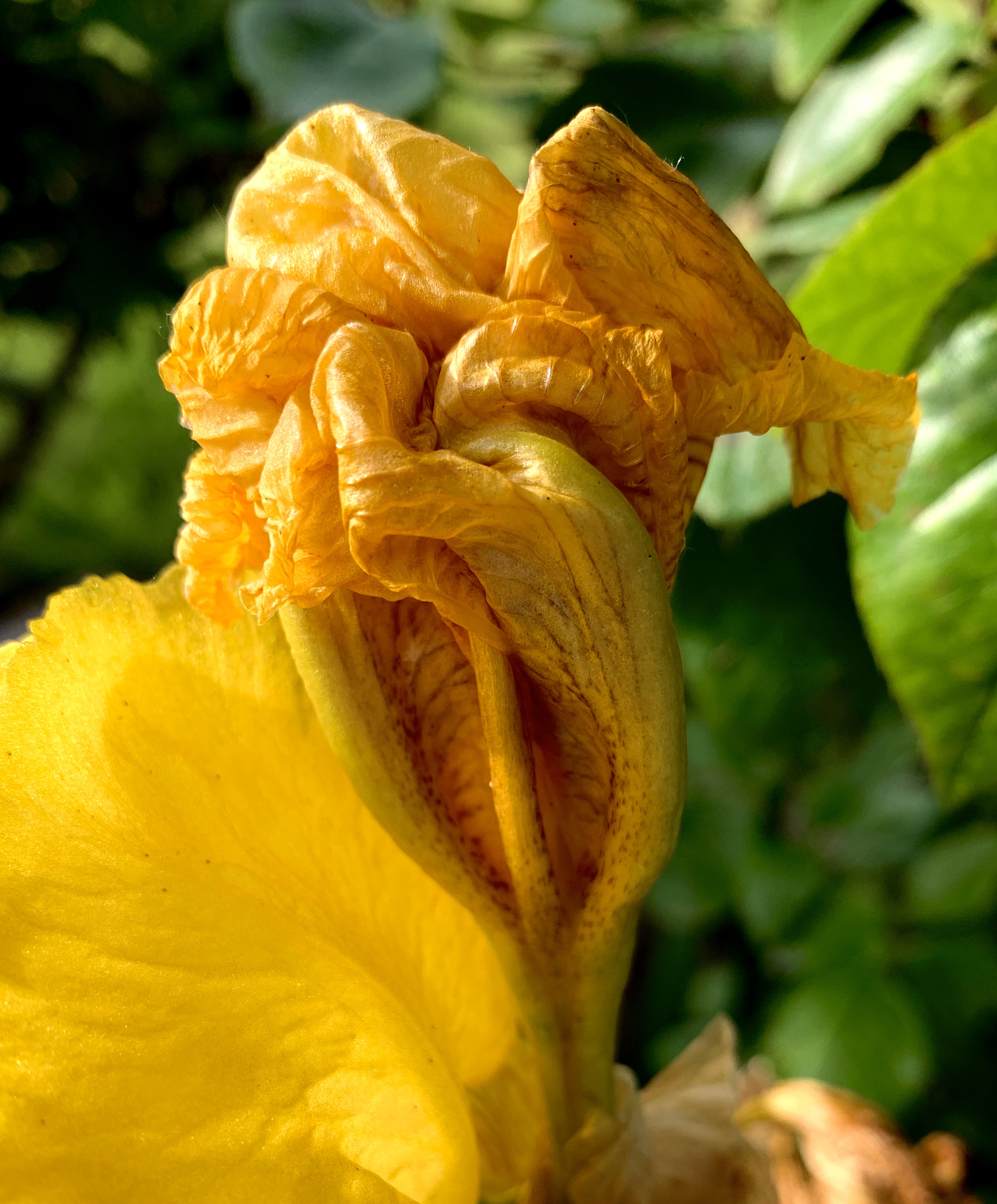
We are our flesh: all colors, flawed and fragile. We must look beyond the lashes of our eyes to see and understand the fluency of the poetry found in our bodies. We, each one of us, deserve the patience of being heard.

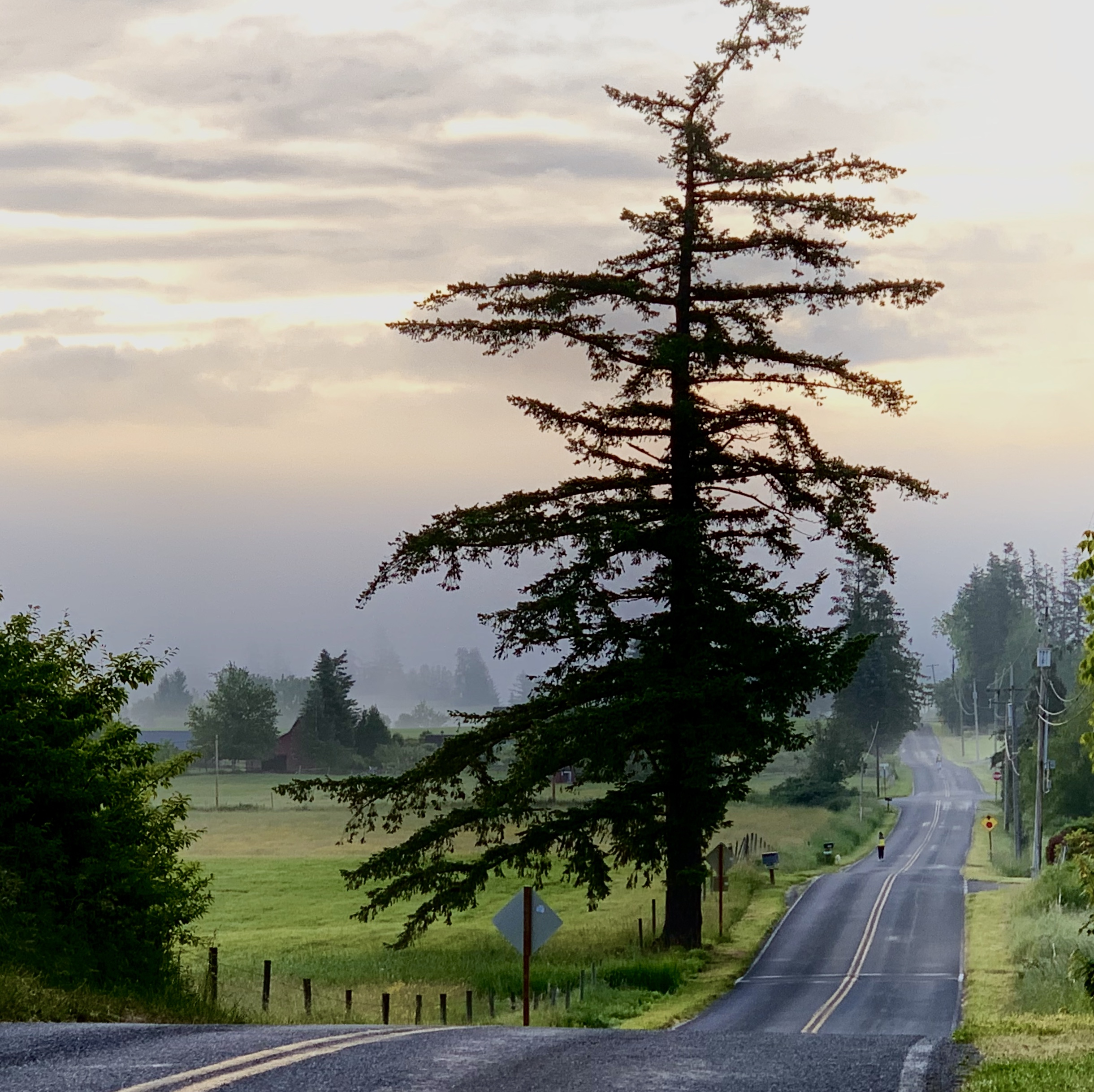
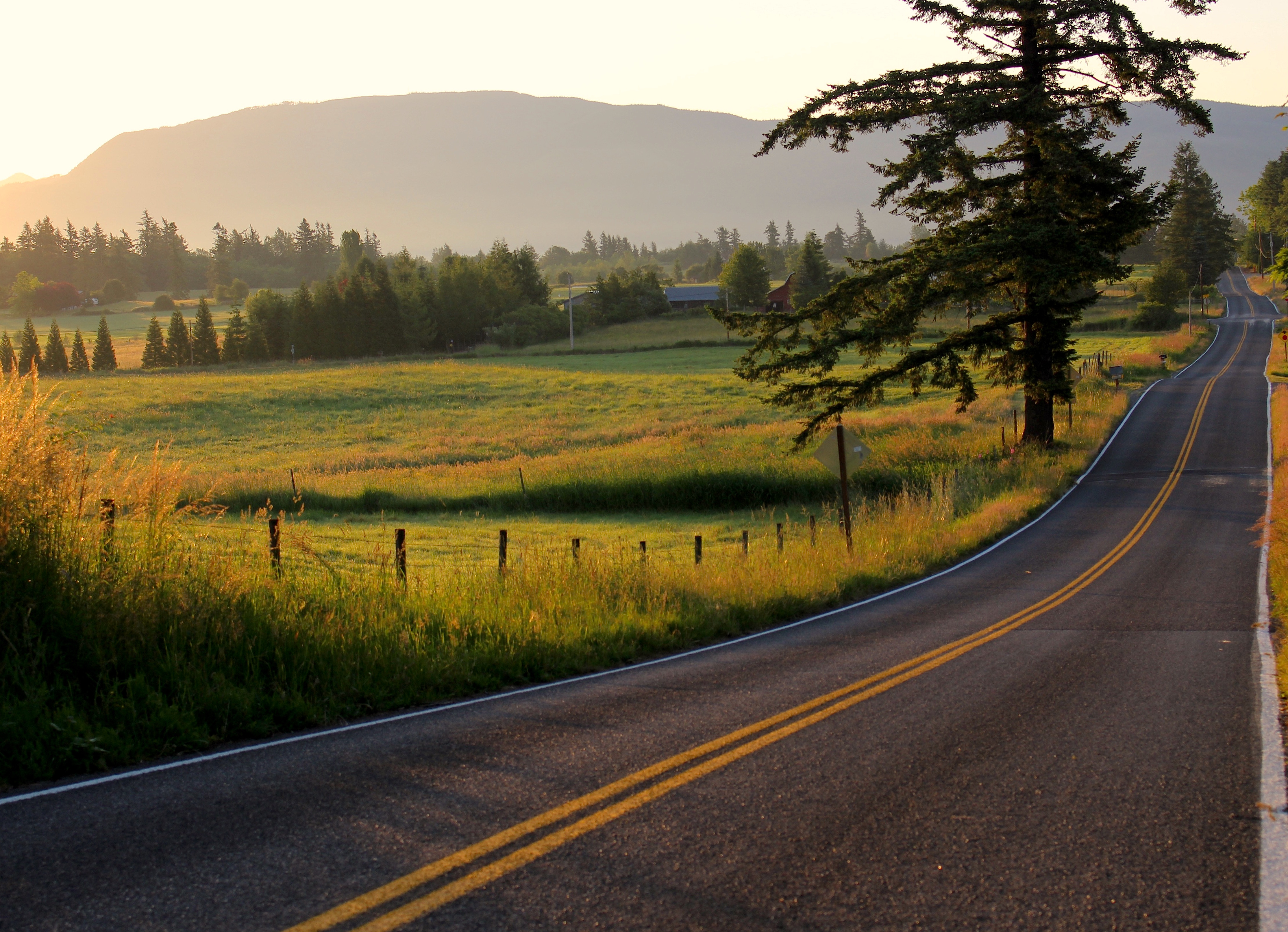
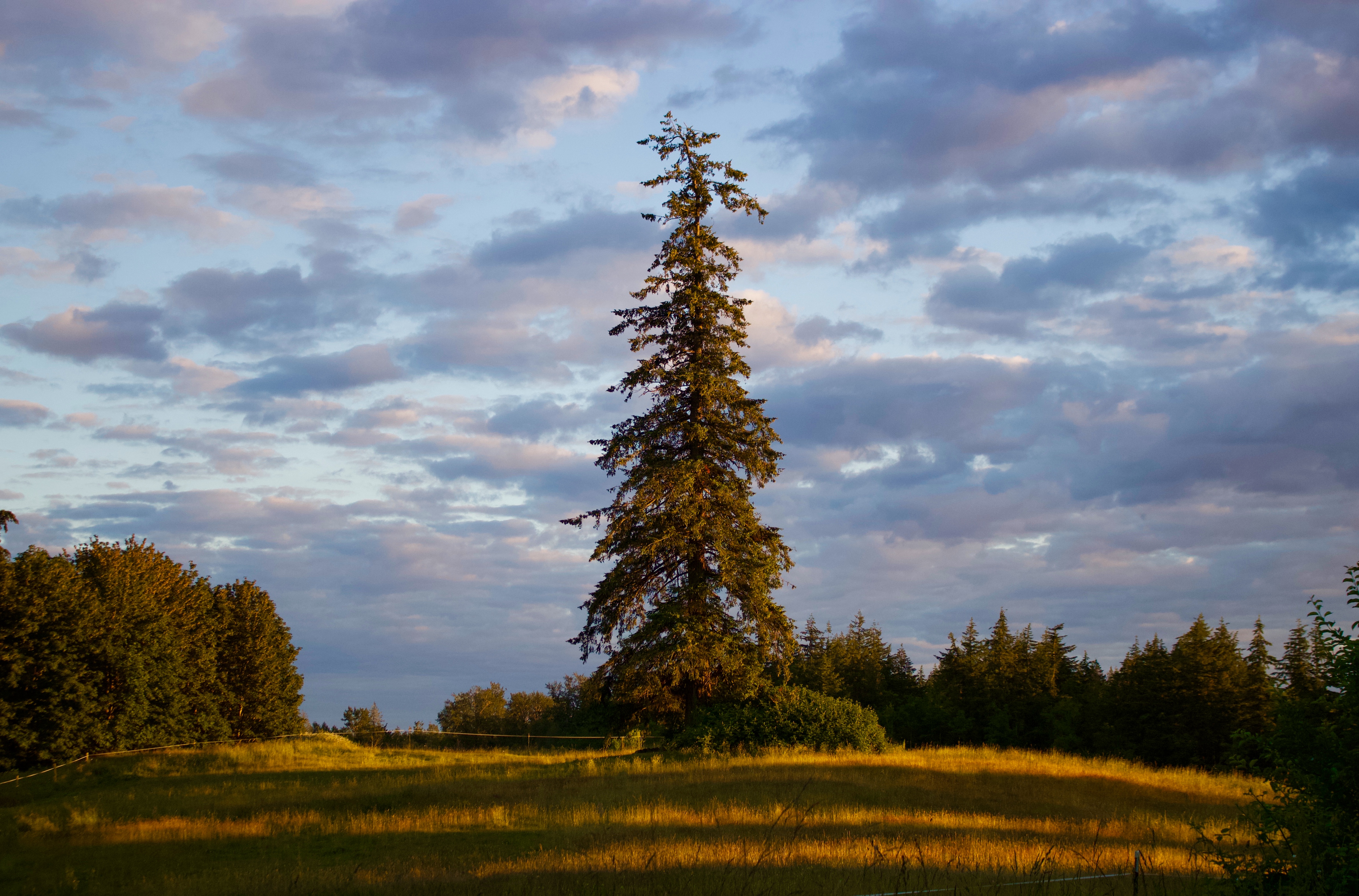
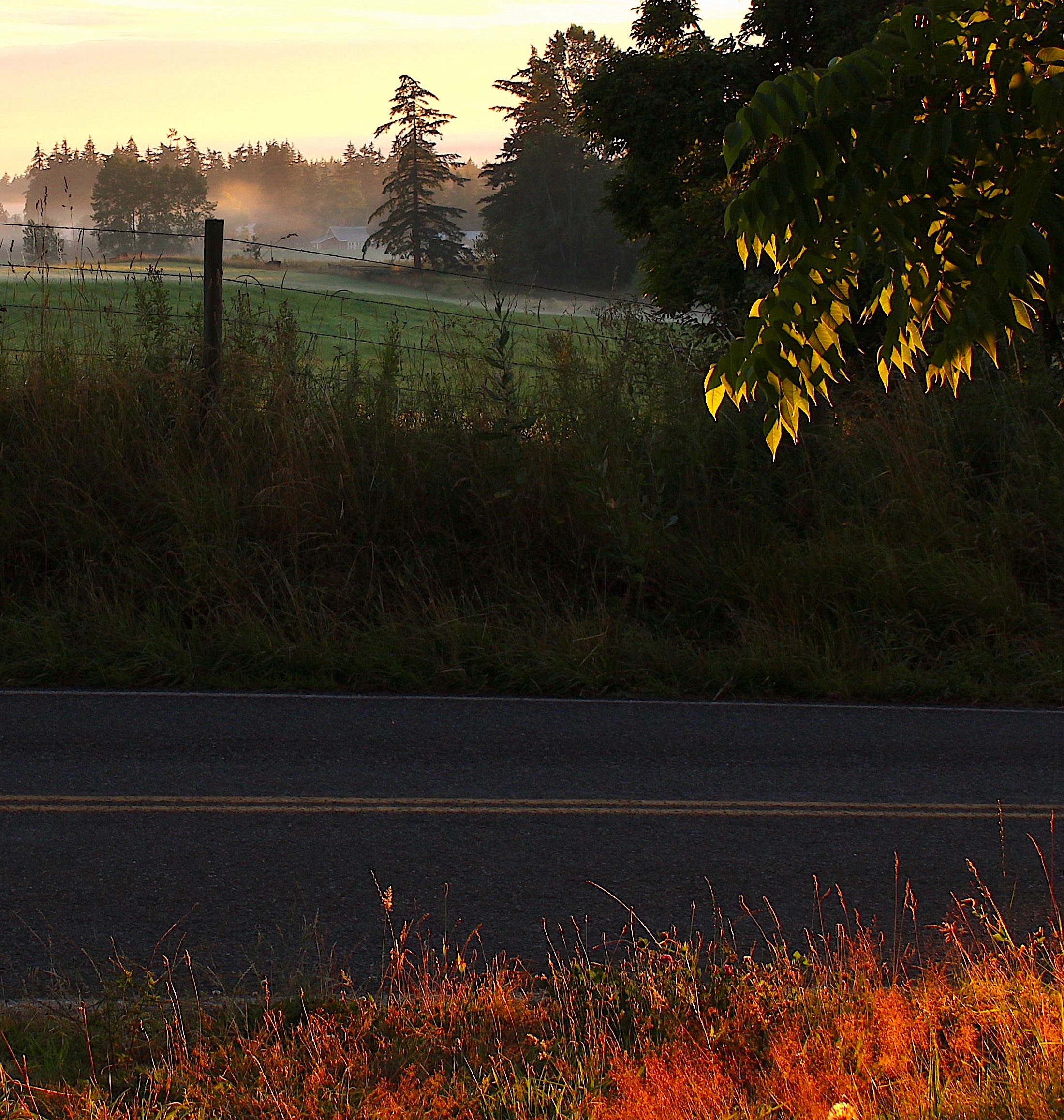
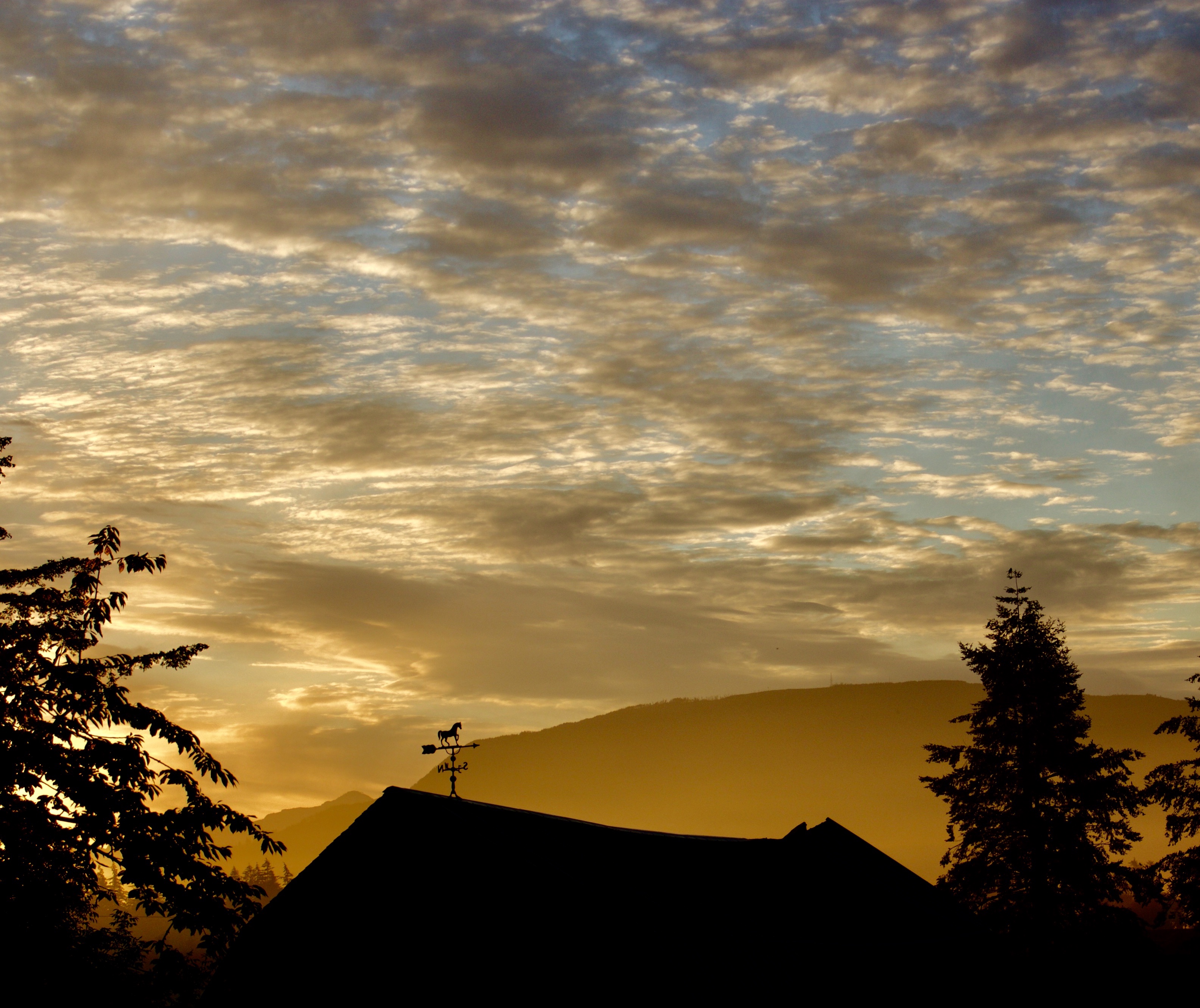
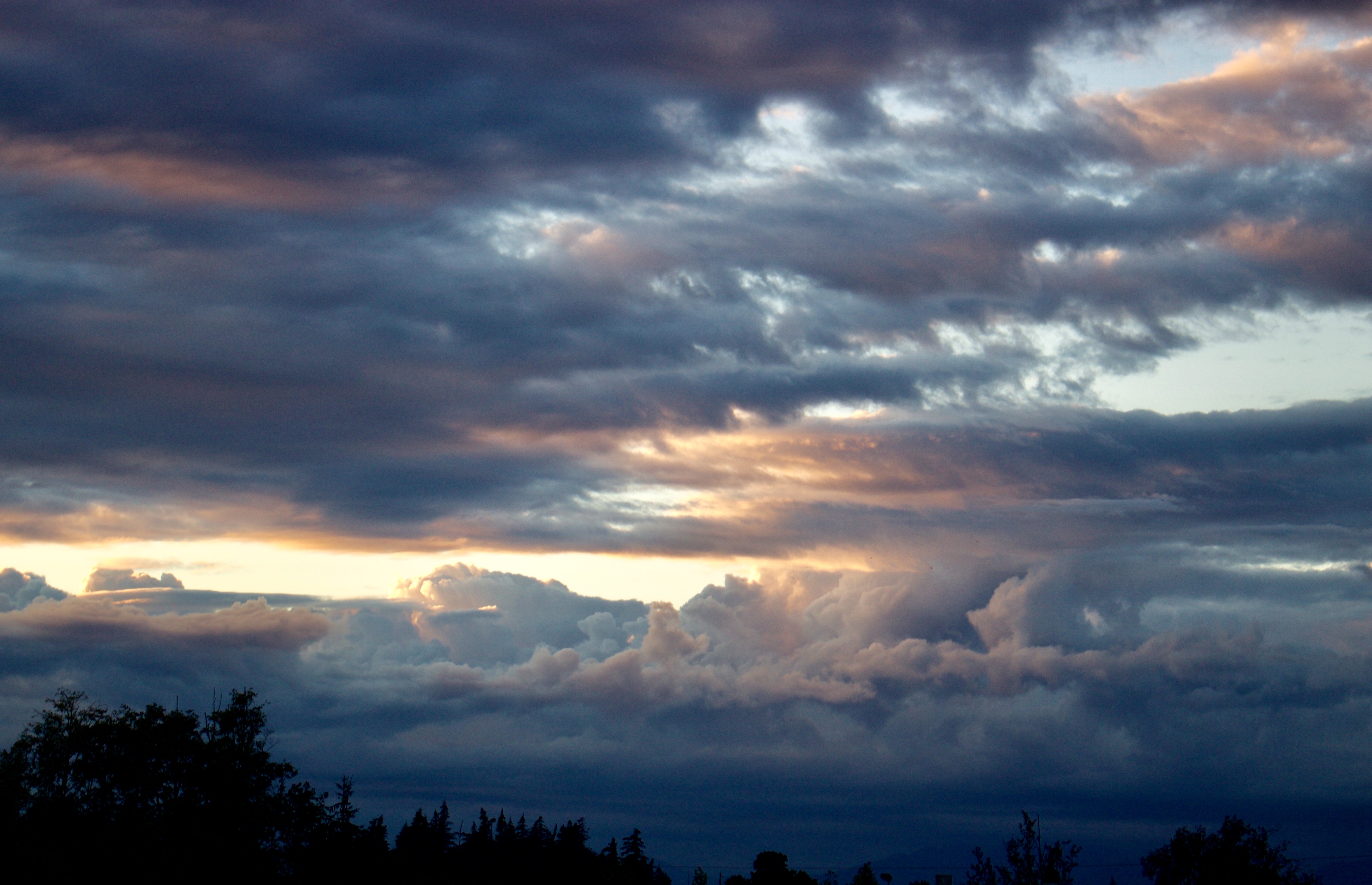
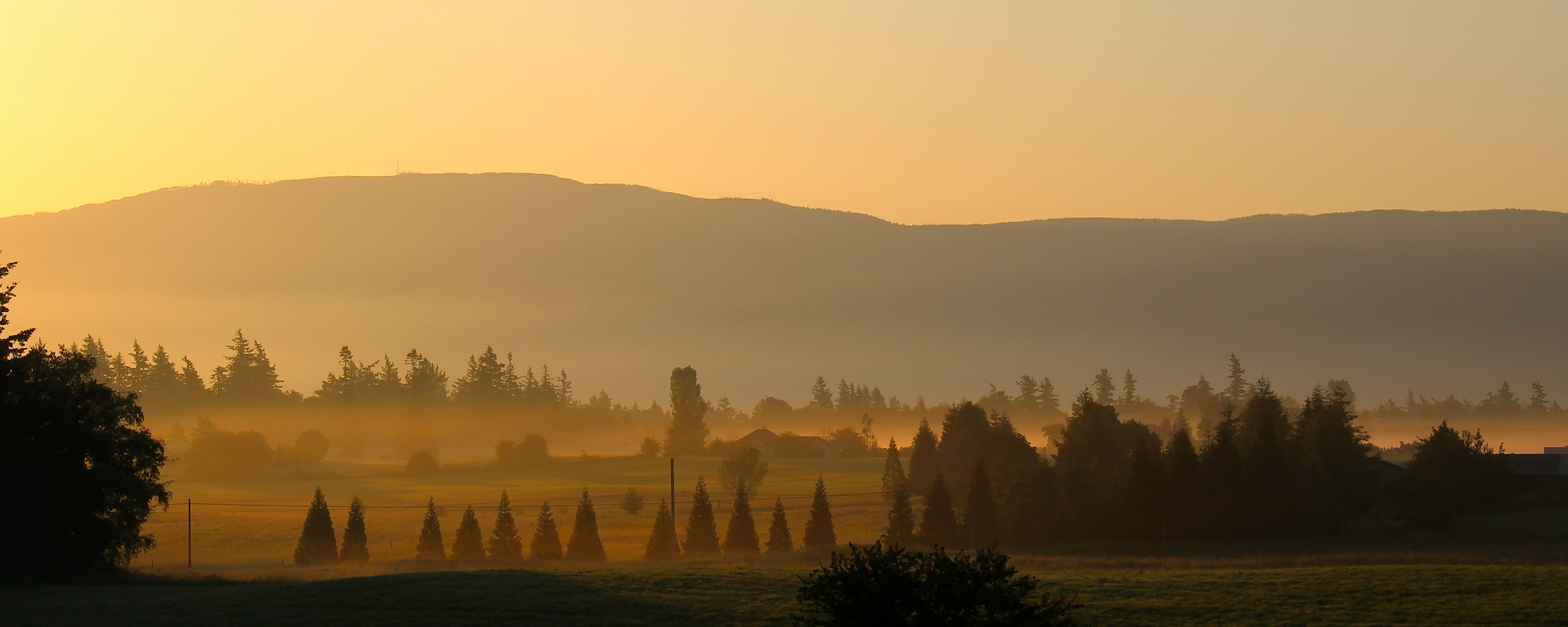
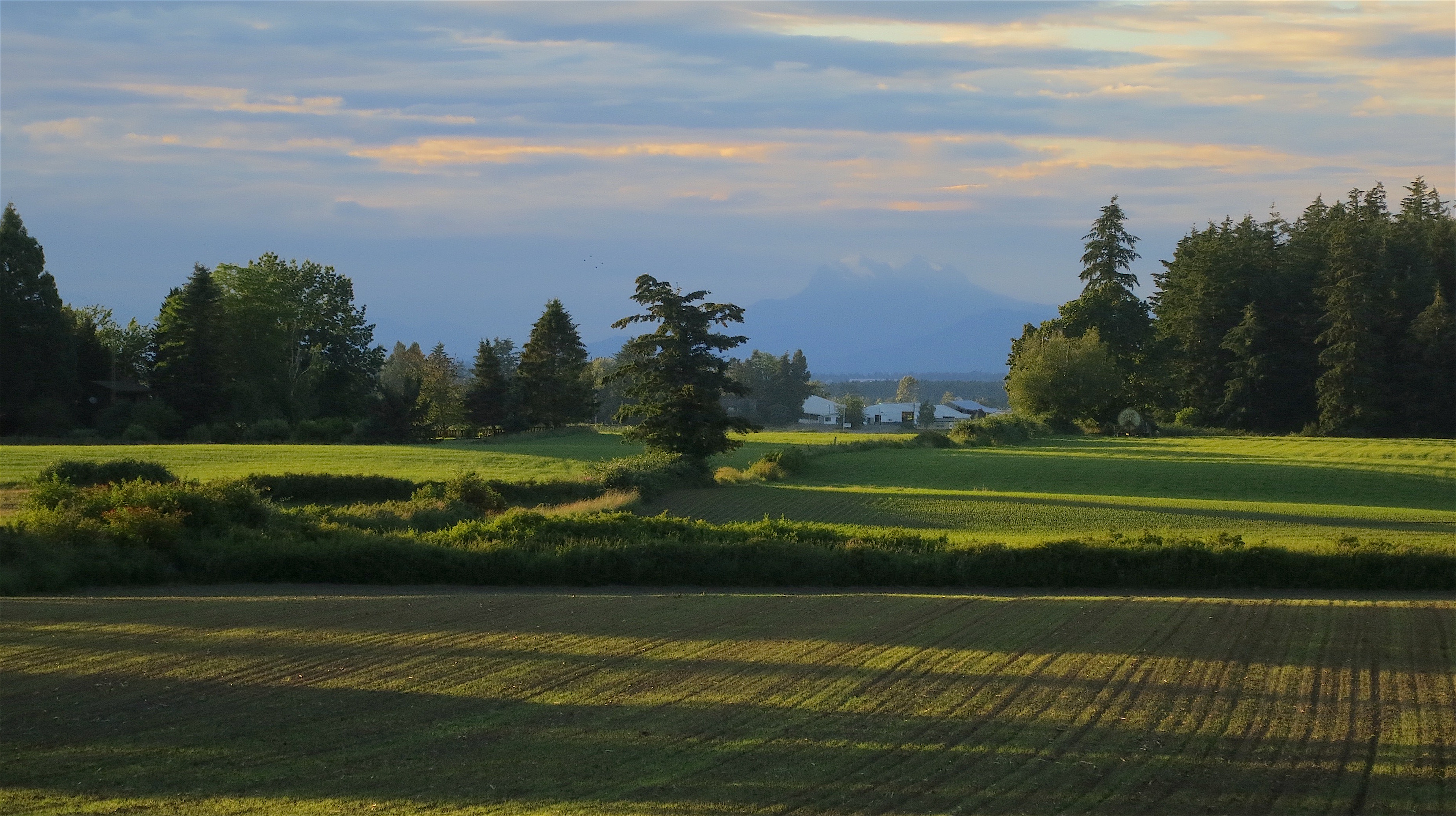
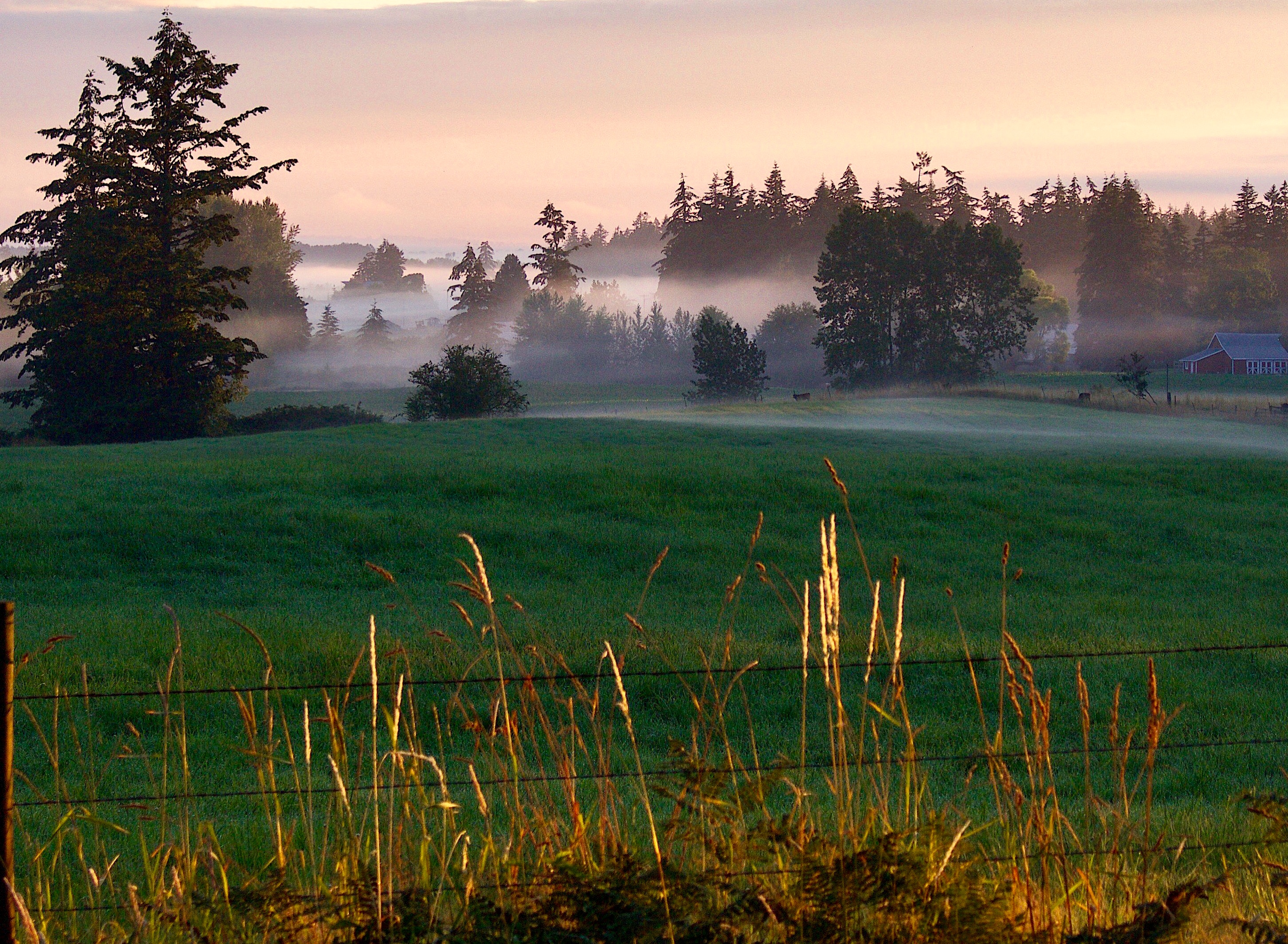
This summer will stand on its own in all its extravagant abundance of light and warmth and growth and color stretching deep within the rising and setting horizons. Each long day will feel like it must last forever, never ending, yet, like the unpredictable length of our fleshy days on earth, it will eventually wind down, spin itself out, darkening gradually into shadow.

That is the “normal” of our existence because summer always, always ends.

Yet another will reappear, somehow, somewhere, someday. The very poetry of our flesh, the very survival of our souls, depends on it. We will then see beyond our own eyelashes.

Surely a never-ending summer is what heaven itself will be. We shall all be changed, in the twinkling of an eye…
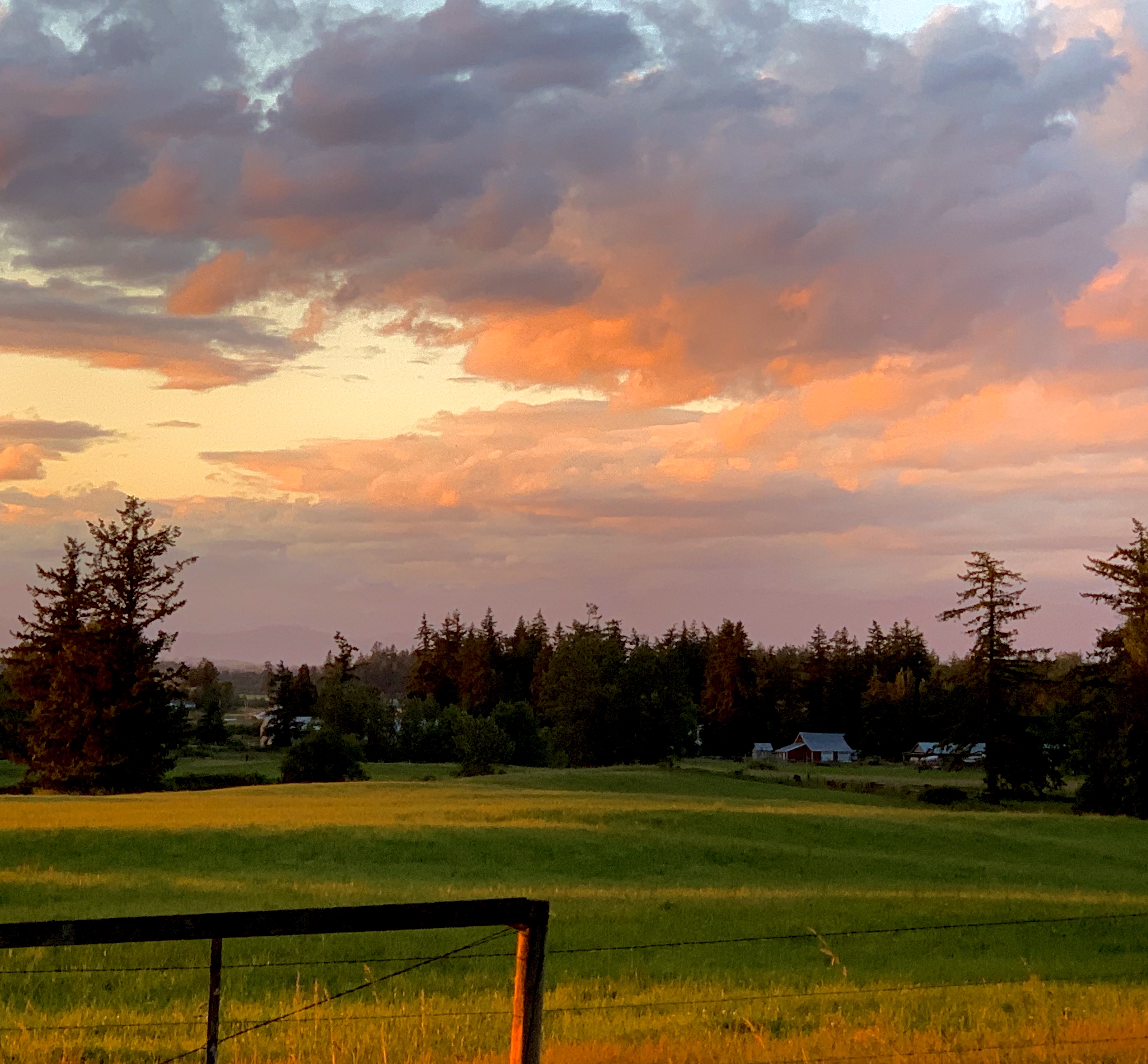
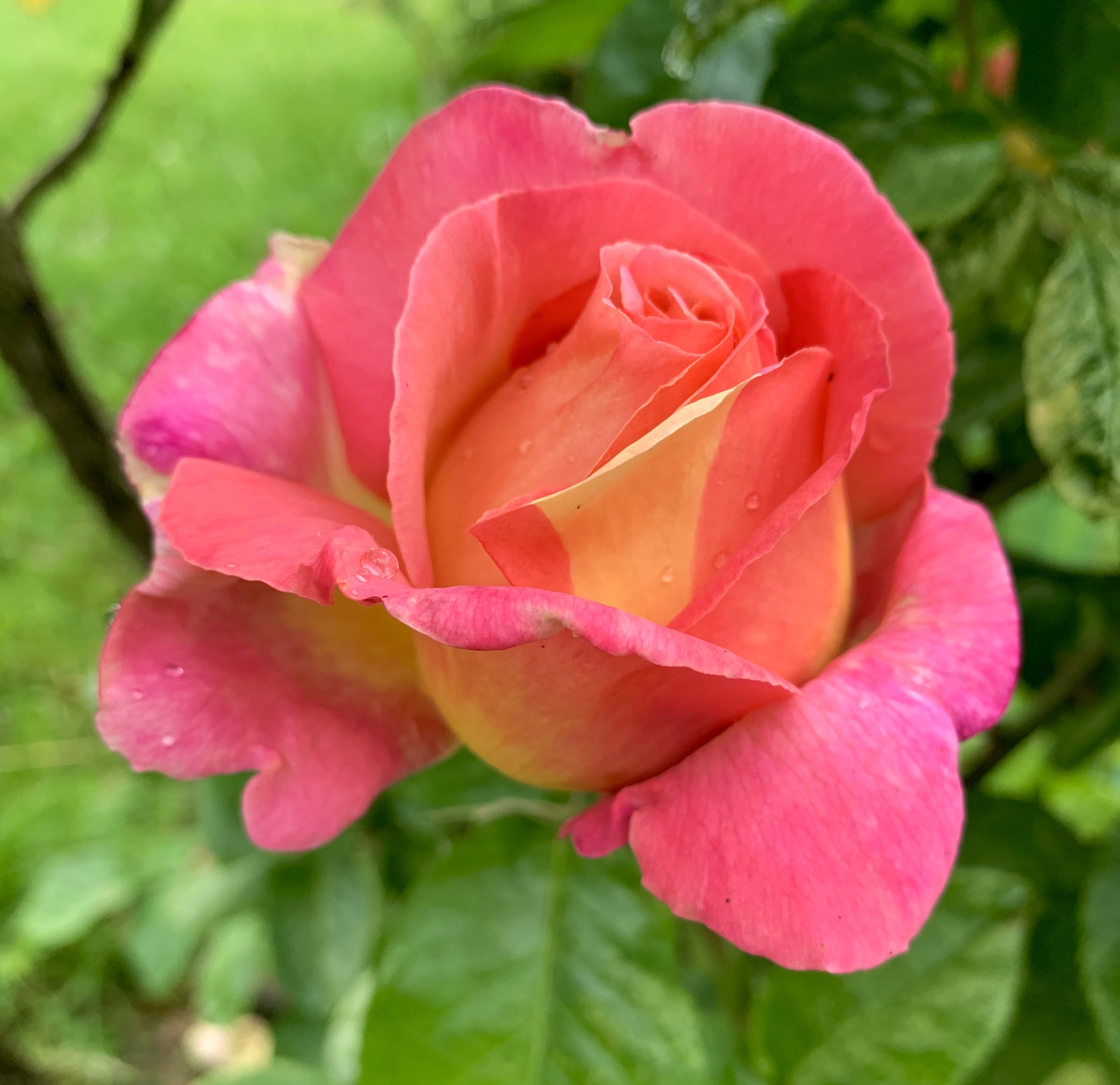
And Why Not

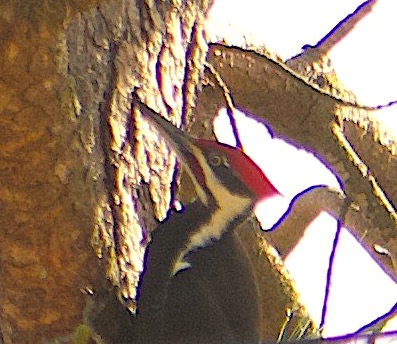
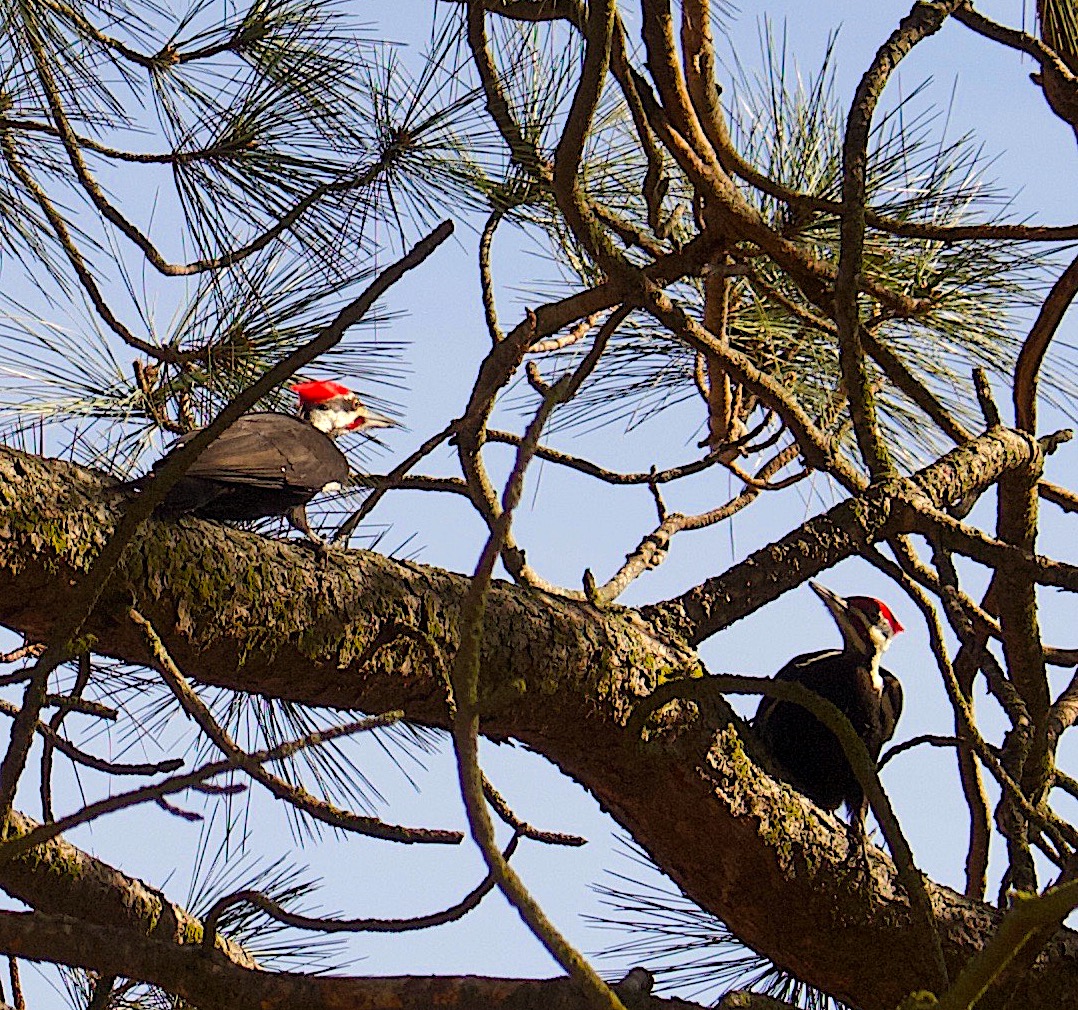
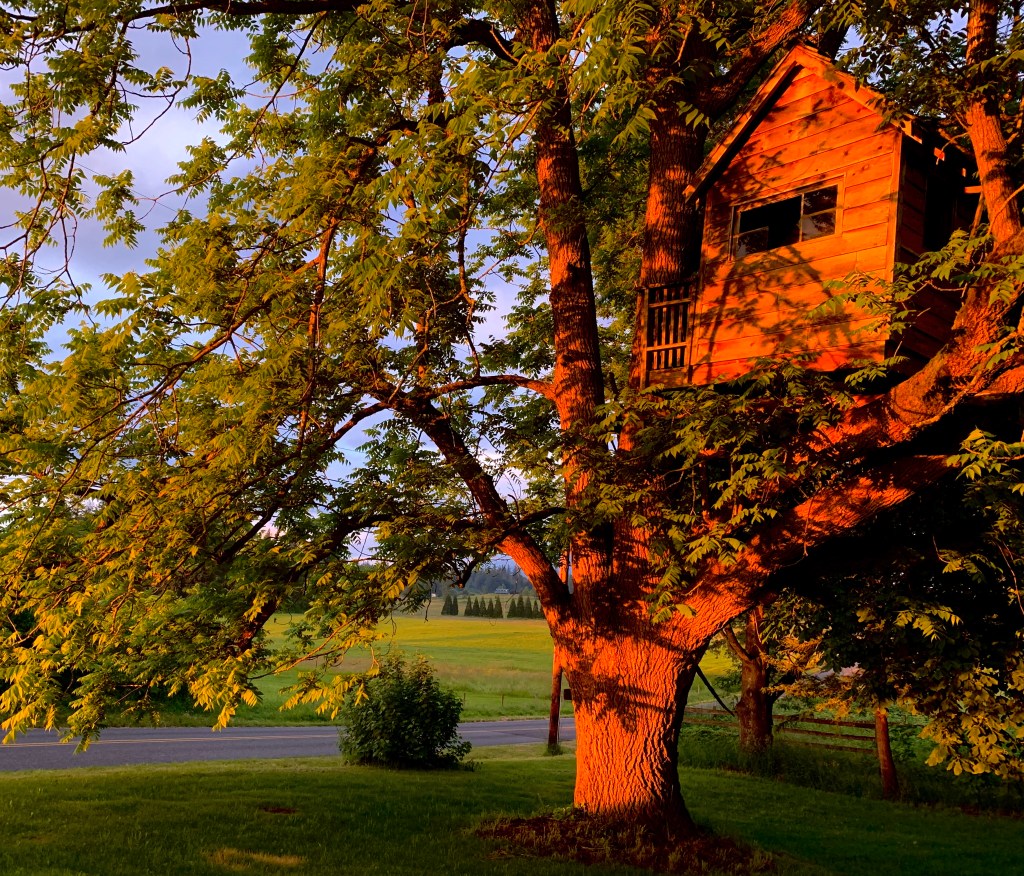
Underneath the tree on some
soft grass I sat, I


watched two happy
woodpeckers be dis-


turbed by my presence. And
why not, I thought to


myself, why
not.
~Robert Creeley “Like They Say”

We’re told the earth would be a much healthier place if man wasn’t here.
Our very presence disturbs the balance of nature: the climate has changed, we make messes, we don’t clean up after ourselves.

Yet we are here and were meant to be from the beginning – instructed to name and admire the creatures who came before us. The Creator Himself formed humans to be the disturbance nature must cope with from the beginning of time. And nature doesn’t take it lying down: it likes to flood and quake and blow and burn us to bits when it pleases. It is an uneasy relationship, to say the least.

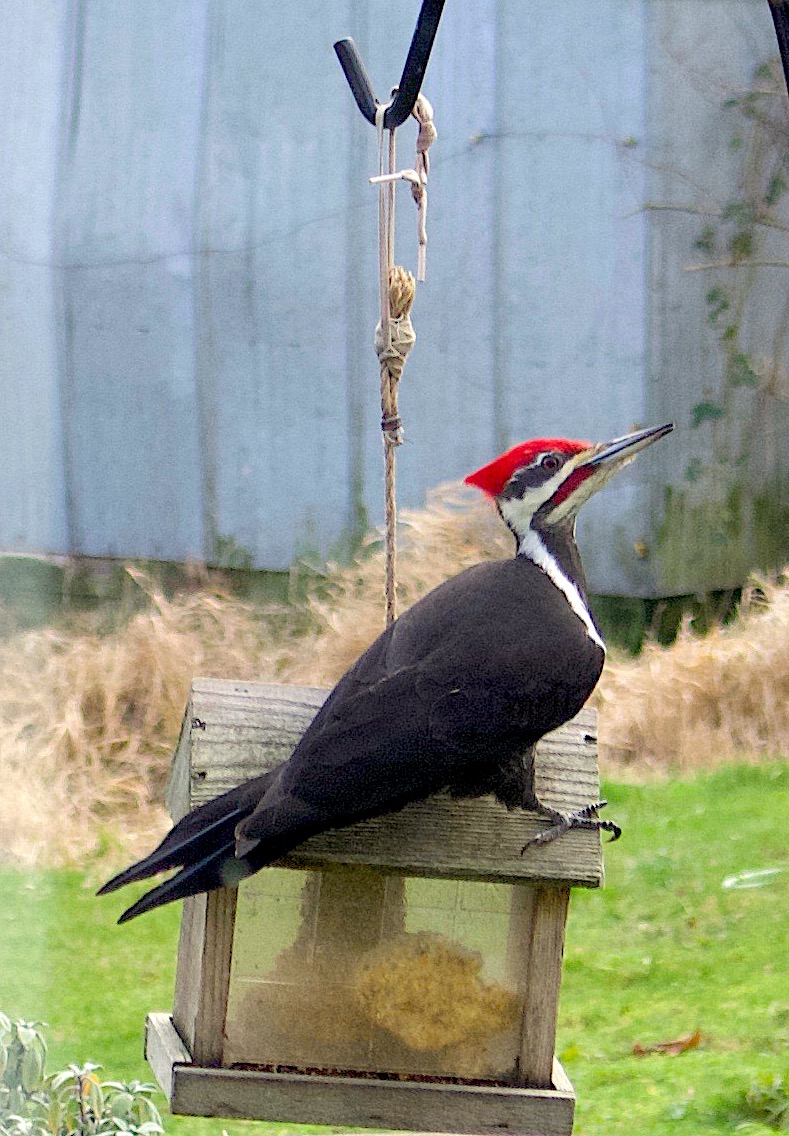
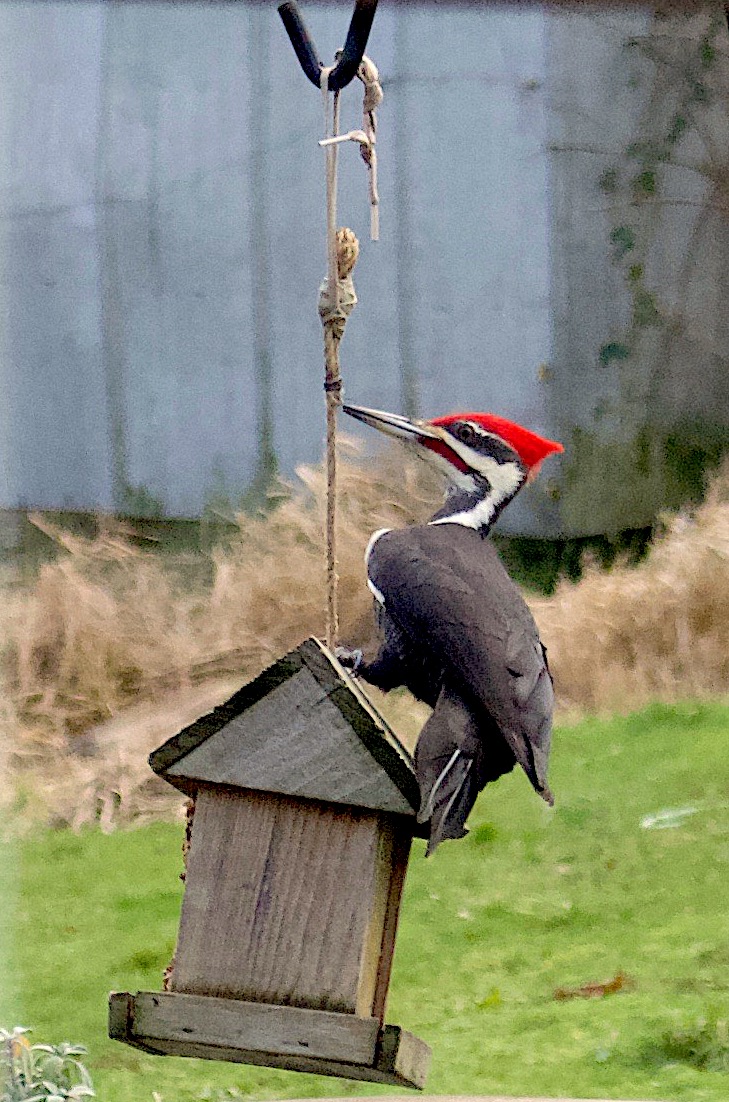
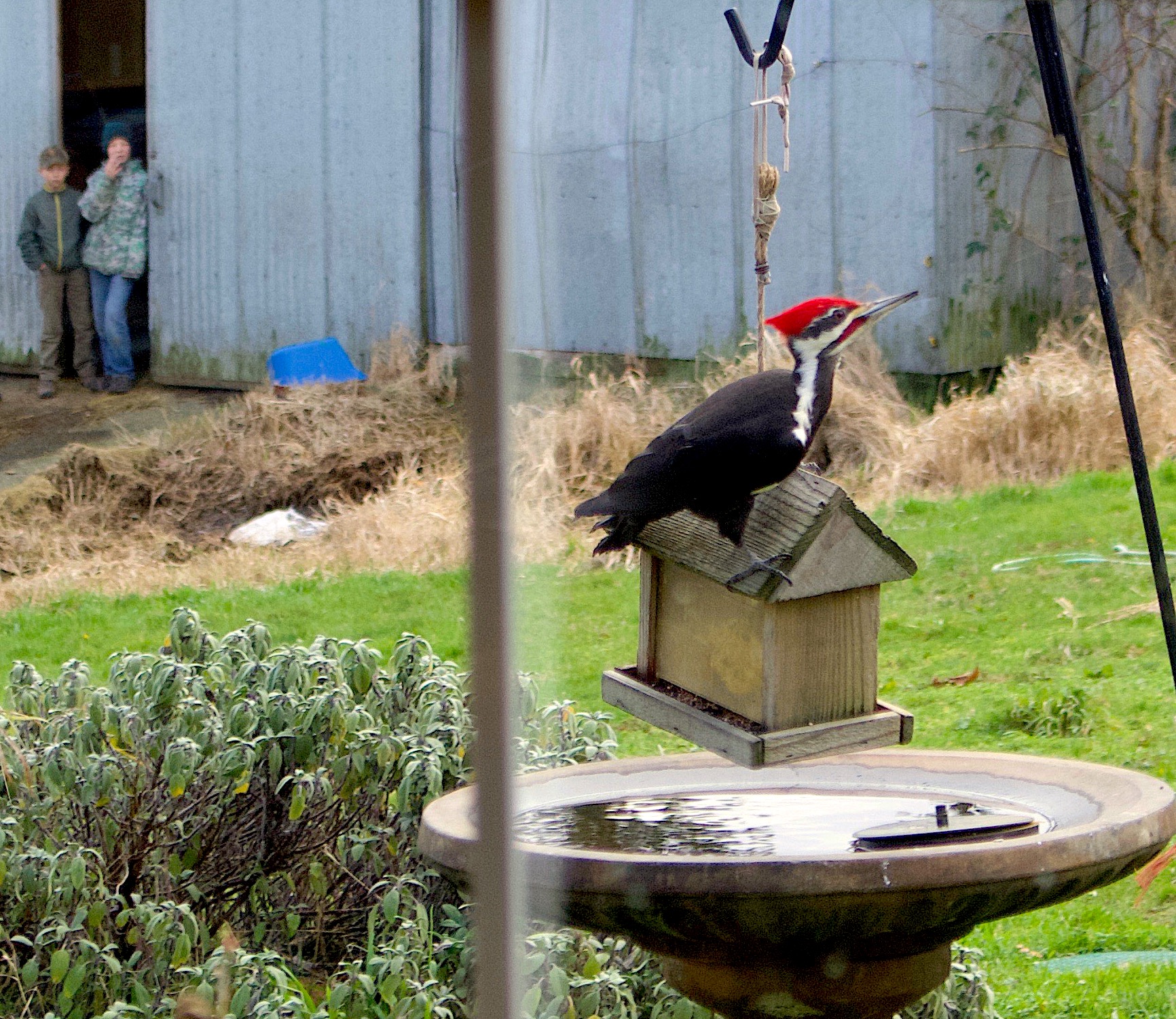
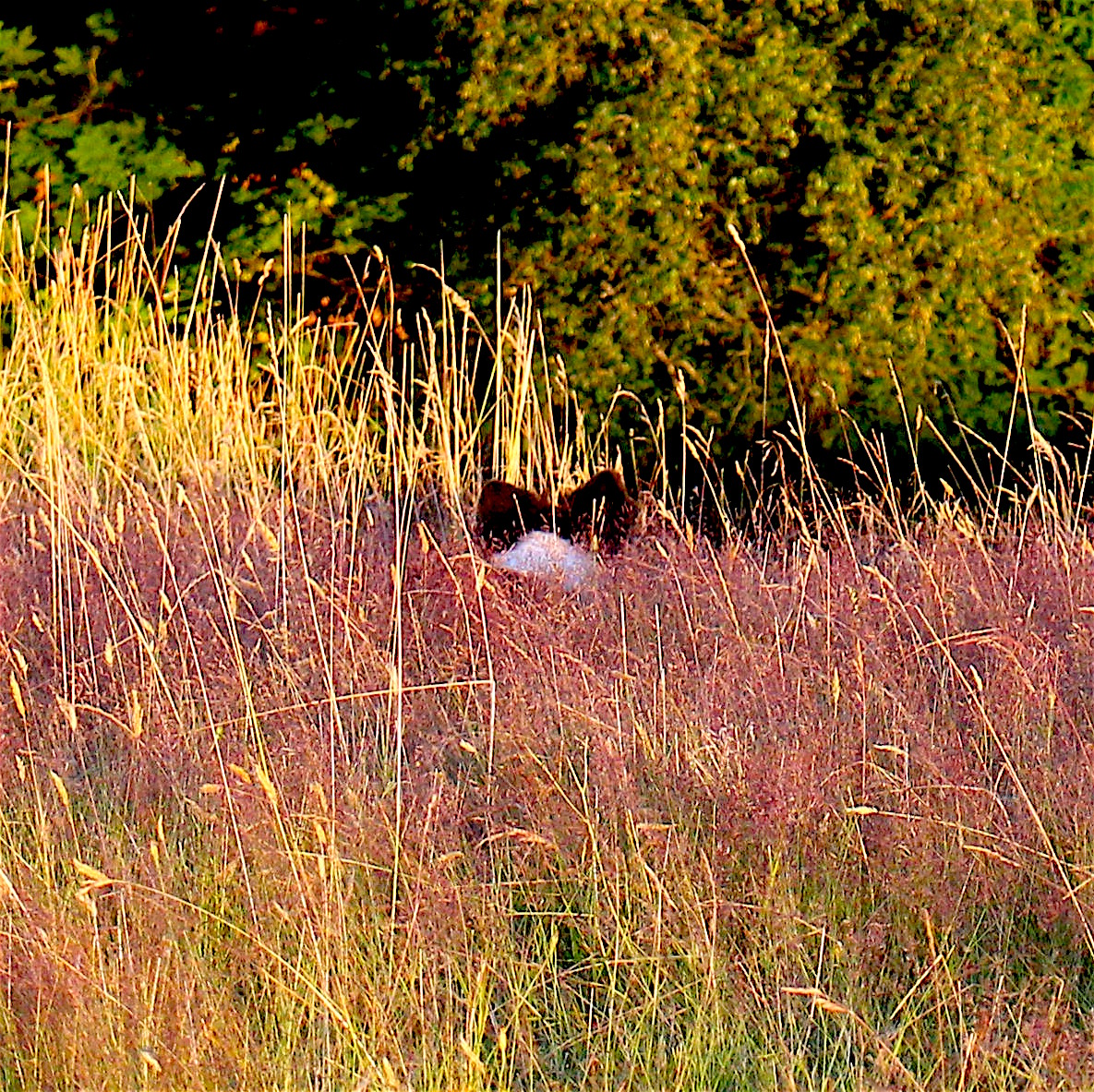
Yet who else is there to admire two shy woodpeckers who would prefer I simply go away?

Deal with it, woodpeckers.
I’m here to stay, just watching you watching me.

And why ever not?

Heaven Itself

It is possible, I suppose that sometime
we will learn everything
there is to learn: what the world is, for example,
and what it means. I think this as I am crossing
from one field to another…


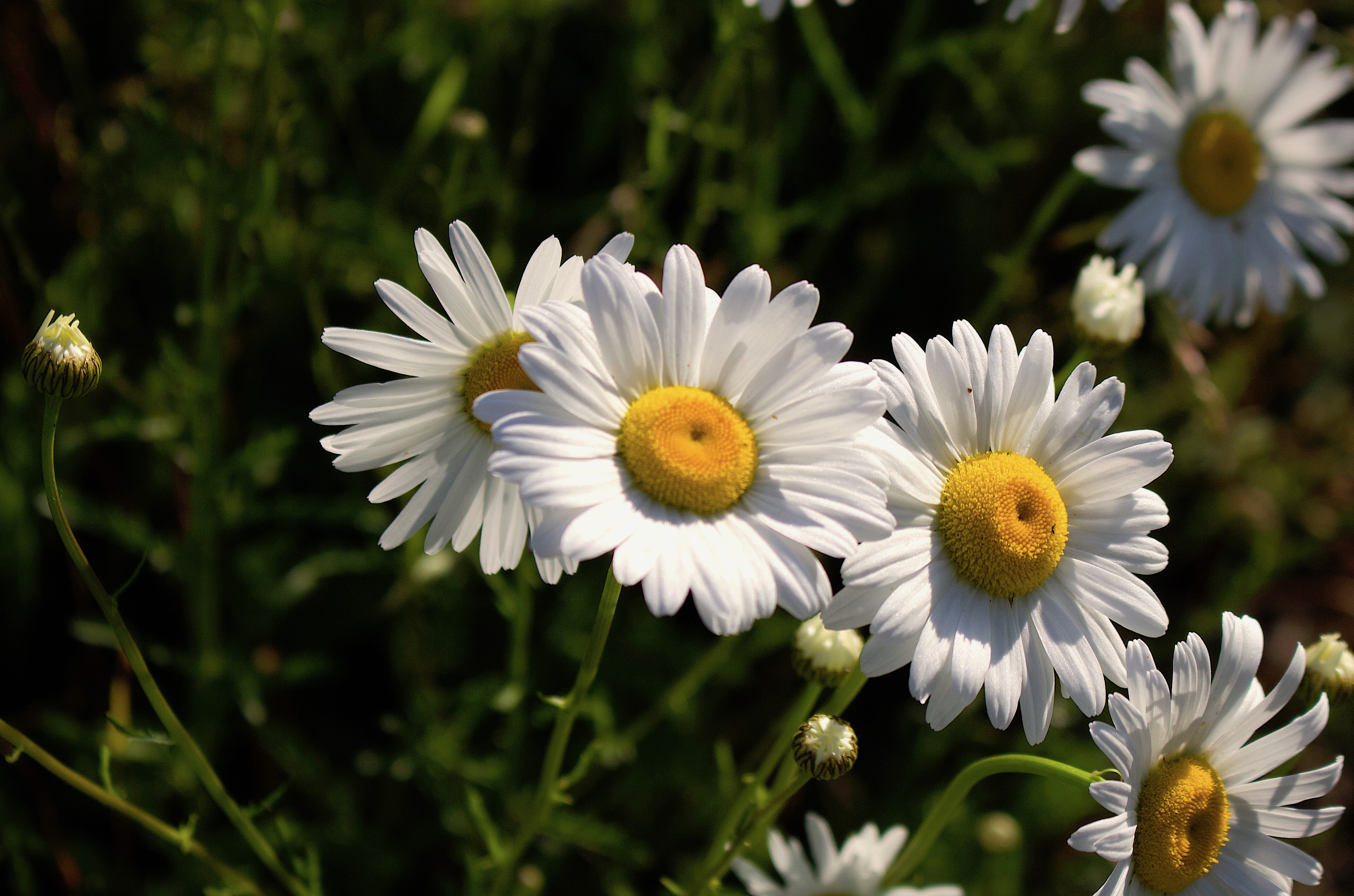
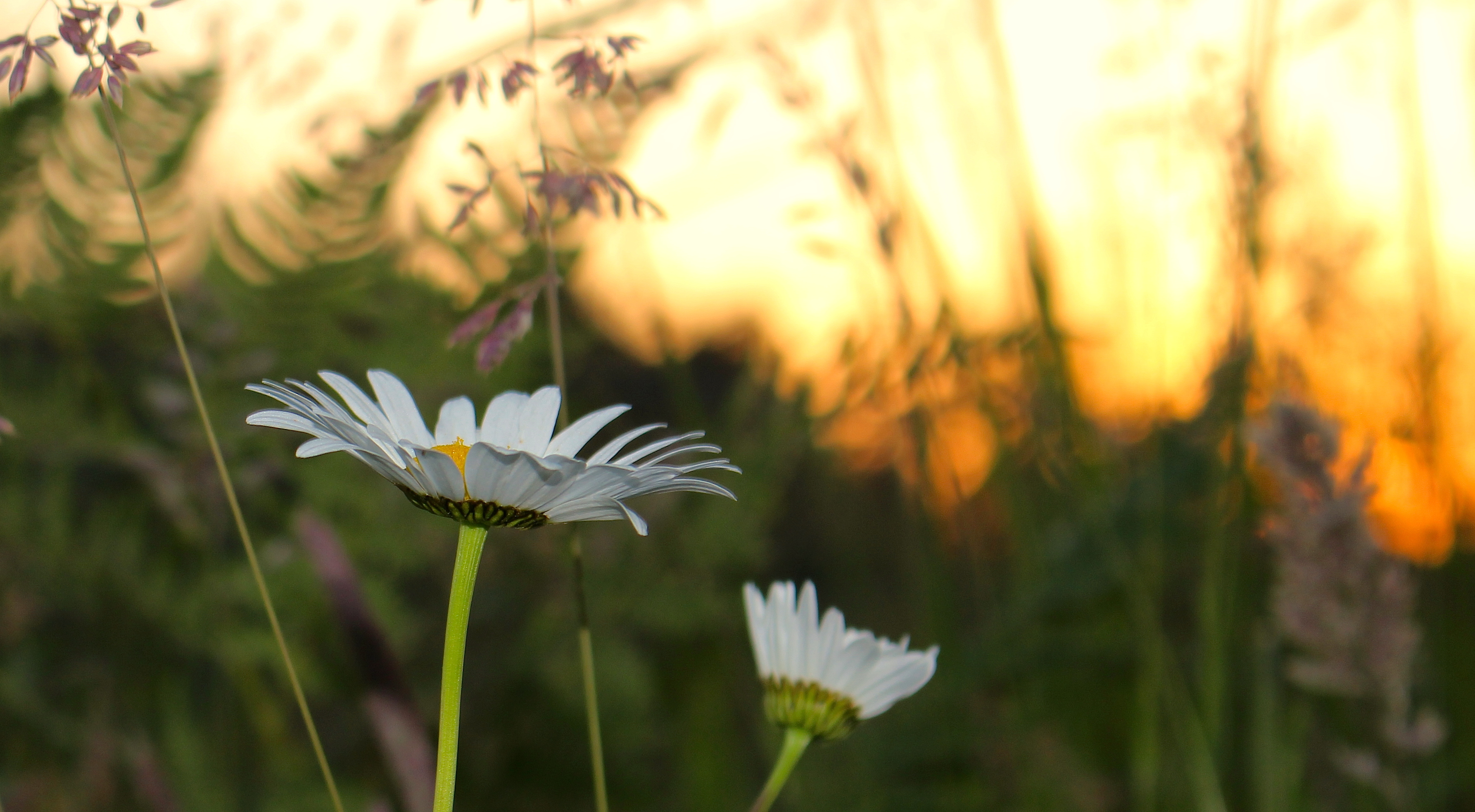
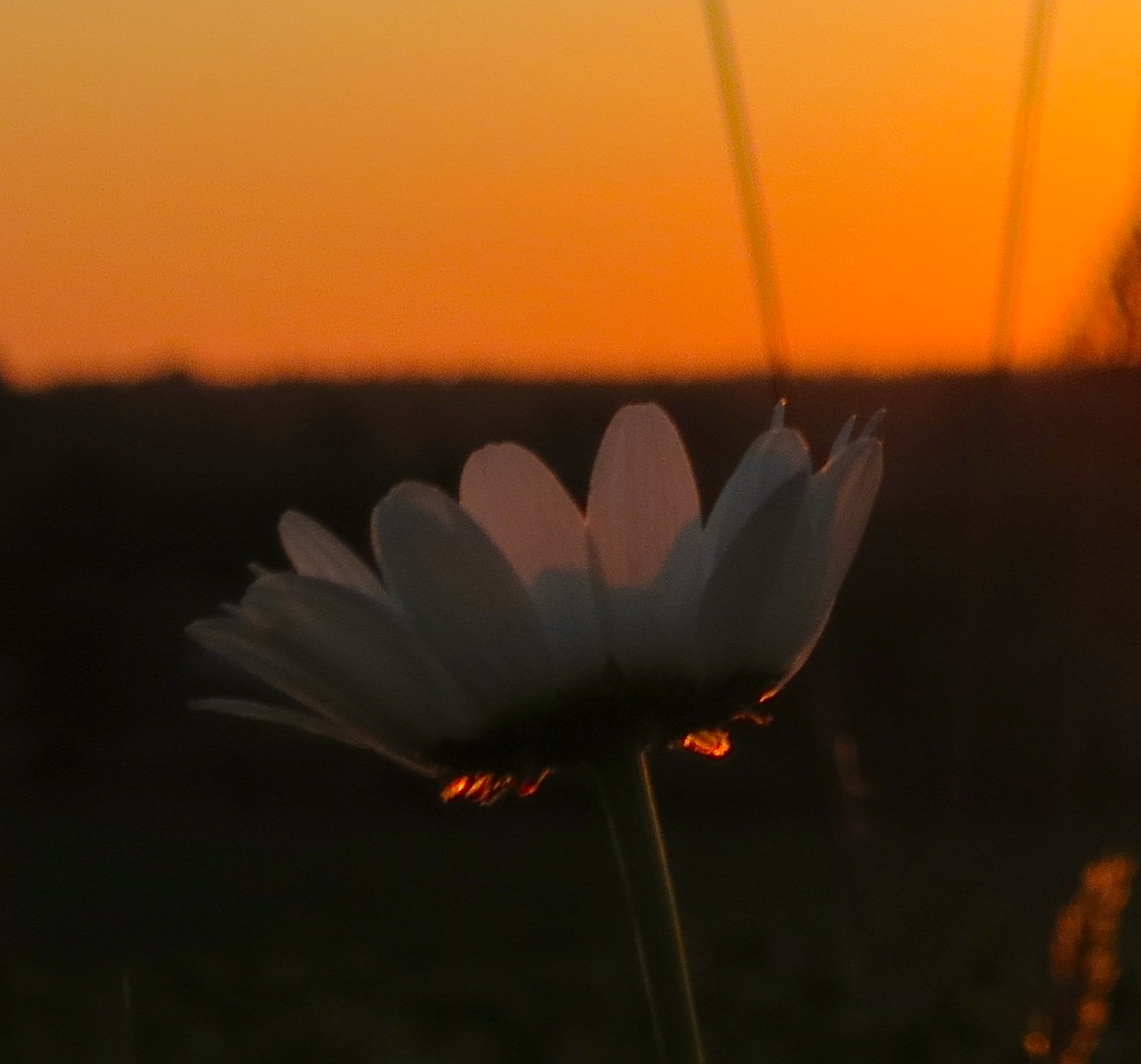
At my feet the white-petalled daisies display
the small suns of their center piece, their – if you don’t
mind my saying so – their hearts. Of course
I could be wrong, perhaps their hearts are pale and
narrow and hidden in the roots. What do I know?


But this: it is heaven itself to take what is given,
to see what is plain; what the sun lights up willingly;
for example – I think this
as I reach down, not to pick but merely to touch –
the suitability of the field for the daisies, and the
daisies for the field.

~Mary Oliver from “Daisies”

I am content realizing I won’t understand what this world means, (and why any of us matter when we are all made up of the same atoms as everything else in existence);

No, I will remain in the dark until I cross from this field to the next. I have to wait for heaven itself to see how the Sun illuminates what matters.

It is all mystery in the meantime, and sometimes a mean and joyless mystery – with pain and heartbreak and suffering, but just enough loving sacrifice to make it worthwhile.

How are our atoms different from that stone, or that tree or that daisy?

We are breathed on. As God’s breath surges within us, we laugh out loud, weep mightily and sing out His Words – struggling to be suitable for this field, so often trampled and broken, but with plans to flourish plentiful in the Sun of heaven.

The Same Unchangeableness

Spend your life trying to understand it, and you will lose your mind; but deny it and you will lose your soul.
~St. Augustine in his work “On the Trinity”

Here are two mysteries for the price of one — the plurality of persons within the unity of God, and the union of Godhead and manhood in the person of Jesus. . . . Nothing in fiction is so fantastic as is this truth of the Incarnation.
~J. L. Packer from Knowing God

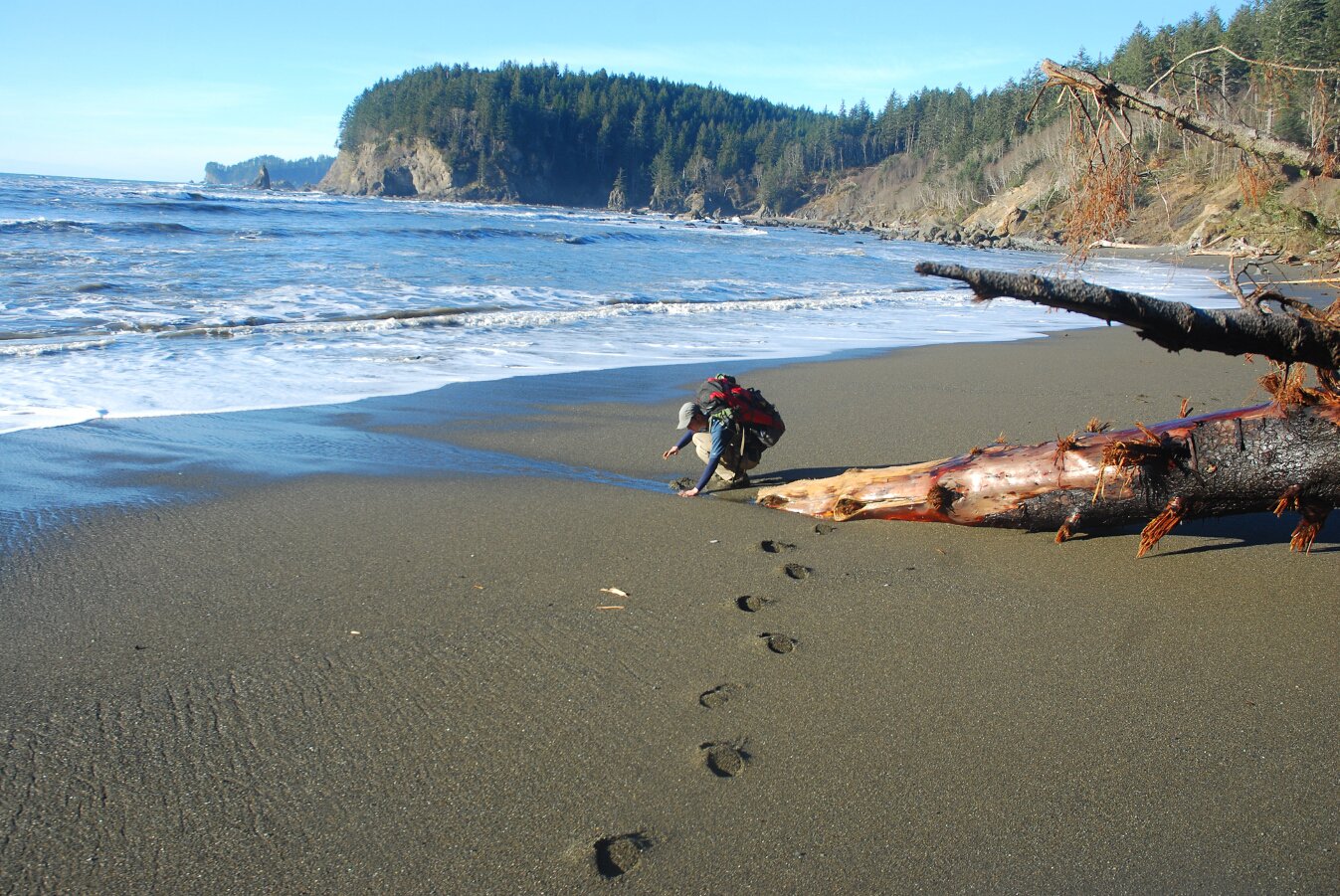
photo by Josh Scholten

The story goes that Augustine of Hippo was walking on the beach contemplating the mystery of the Trinity.  Then he saw a boy in front of him who had dug a hole in the sand and was going out to the sea again and again and bringing some water to pour into the hole.

Augustine asked him, “What are you doing?”
“I’m going to pour the entire ocean into this hole.”
“That is impossible, the whole ocean will not fit in the hole you have made” said Augustine.
The boy replied, “And you cannot fit the Trinity in your tiny little brain.”

I accept that my tiny brain, ever so much tinier than St. Augustine’s,  cannot possibly absorb or explain the Trinity–I will not try to put the entire ocean in that small hole.  The many analogies used to help human understanding of the Trinity are dangerously limited in scope:
three candles, one light
vapor, water, ice
shell, yolk, albumin
height, width, depth
apple peel, flesh, core
past, present, future.

It is sufficient for me to know, as expressed by the 19th century Anglican pastor J.C. Ryle:  It was the whole Trinity, which at the beginning of creation said, “Let us make man”. It was the whole Trinity again, which at the beginning of the Gospel seemed to say, “Let us save man”.

All one, equal, harmonious, unchangeable, bound to save us from ourselves.


“It is not easy to find a name that will suitably express so great an excellence, unless it is better to speak in this way:
the Trinity, one God, of whom are all things, through whom are all things, in whom are all things. 
Thus the Father and the Son and the Holy Spirit, and each of these by Himself, is God,
and at the same time they are all one God;
and each of them by Himself is a complete substance, and yet they are all one substance.

The Father is not the Son nor the Holy Spirit;
the Son is not the Father nor the Holy Spirit;
the Holy Spirit is not the Father nor the Son:
but the Father is only Father,
the Son is only Son,
and the Holy Spirit is only Holy Spirit.

To all three belong the same eternity, the same unchangeableness, the same majesty, the same power.
In the Father is unity, in the Son equality, in the Holy Spirit the harmony of unity and equality.

And these three attributes are all one because of the Father, all equal because of the Son, and all harmonious because of the Holy Spirit.”
–Augustine of Hippo, On Christian Doctrine, I.V.5.

The Way We Love

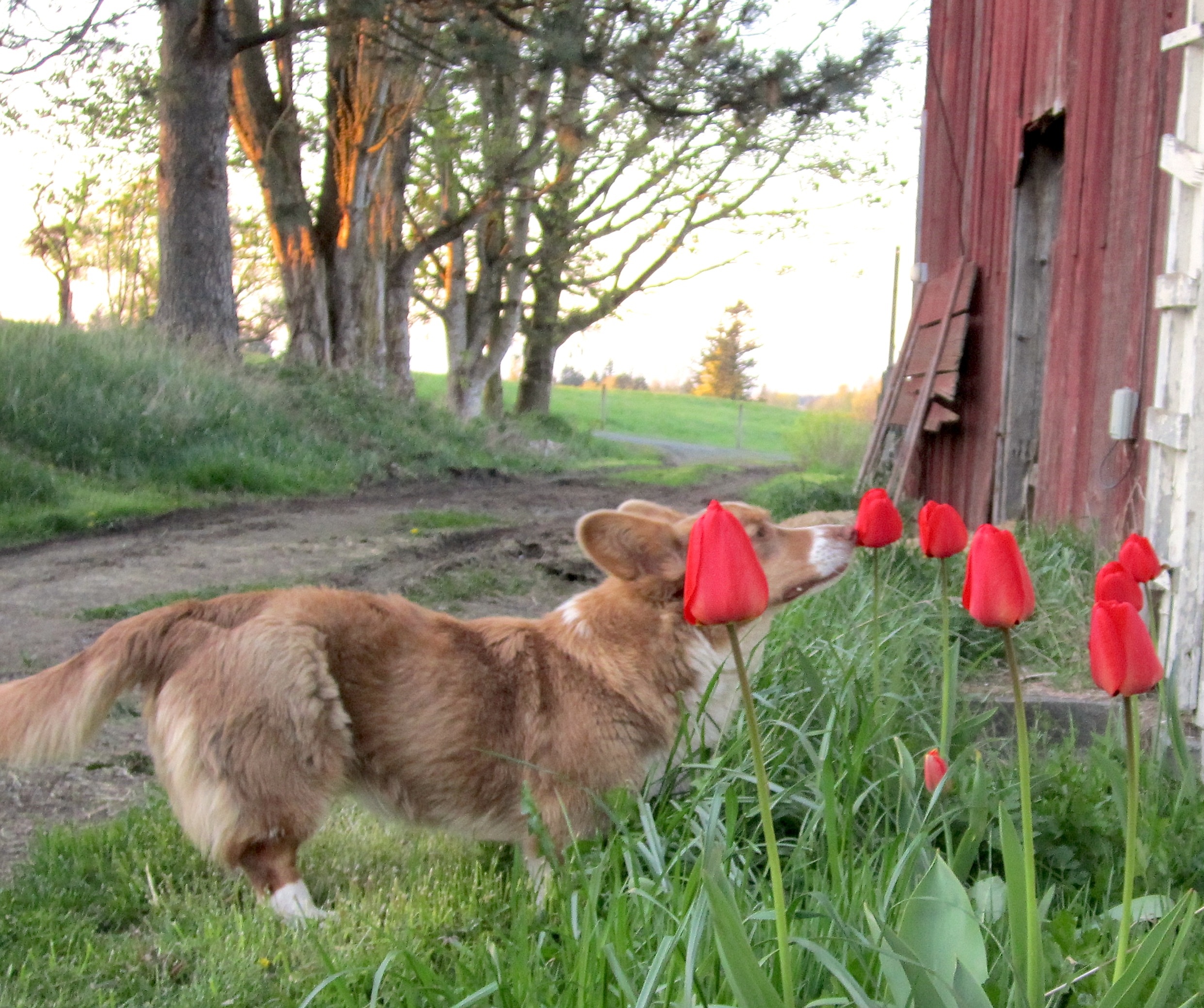
I had a dog
  who loved flowers.
    Briskly she went
        through the fields,

yet paused
  for the honeysuckle
    or the rose,
        her dark head

and her wet nose
  touching
    the face
         of every one

with its petals
  of silk,
    with its fragrance
         rising

into the air
  where the bees,
    their bodies
        heavy with pollen,

hovered—
  and easily
     she adored
        every blossom,

not in the serious,
  careful way
    that we choose
        this blossom or that blossom—

the way we praise or don’t praise—
  the way we love
     or don’t love—
        but the way

we long to be—
  that happy
    in the heaven of earth—
        that wild, that loving.

~Mary Oliver “Luke” from Dog Songs

Why do we not feel the joie de vivre,
the ebullience and fullness of every moment? 
What makes us hide our nakedness rather than join in the walk
in the garden in the cool of the day?
What makes us choose this blossom or that, this tree or that,
this fruit or that, judging for ourselves what is good, better and best? 

What has happened to wild loving appreciation of the heaven of earth?

We gave it up for one taste; we lost heaven and regretted it immediately.

Even so,  joie de vivre awaits,
beyond this, above this. 
We are invited, all expenses paid,
yet unearned,
to go back to the way we long to be:

The incredible grace of loving wildly what we’re given.

Giving Life or Draining It

In every encounter we either give life or drain it. There is no neutral exchange. We enhance human dignity or we diminish it. The success or failure of a given day is measured by the quality of our interest and compassion toward those around us.
~Brennan Manning
from Abba’s Child: The Cry of the Heart for Intimate Belonging

Forty years ago this week I graduated with an M.D. degree from the University of Washington and began a lifetime of trying to be life-giving rather than life-draining to others.

There have been times when I’ve failed miserably, my interest waning and my compassion fatigued.

But like tracing the path of a spiral from inside to outside, I continue to try to reach farther and encompass more with each step I take in the time I have left, remembering the dignity of each person I meet and being worthy of their time and trust.

May this young woman who embarked so enthusiastically on the physician journey so many decades ago never forget, after so much seasoning, what it took to get there and what it means to continue to be worthy.

A Barn Revival

Just down the road… around the bend,
Stands an old empty barn; nearing the end.
It has sheltered no animals for many years;
No dairy cows, no horses, no sheep, no steers.
The neigh of a horse; the low of a cow;
Those sounds have been absent for some time now.
There was a time when the loft was full of hay,
And the resounding echoes of children at play.
At one time the paint was a bold shade of red;
Gradually faded by weather and the sun overhead.
The doors swing in the wind… the hinges are loose,
Windows and siding have taken a lot of abuse.
The fork, rope and pulleys lifted hay to the mow,
A task that always brought sweat to the brow.
But those good days are gone; forever it seems,
And that old barn now stands with sagging beams.
It is now home to pigeons, rats and mice;

The interior is tattered and doesn’t look very nice.
Old, abandoned barns have become a trend,
Just down the road… around the bend.

~Vance Oliphant “Old Barn”

photo by Nate Gibson

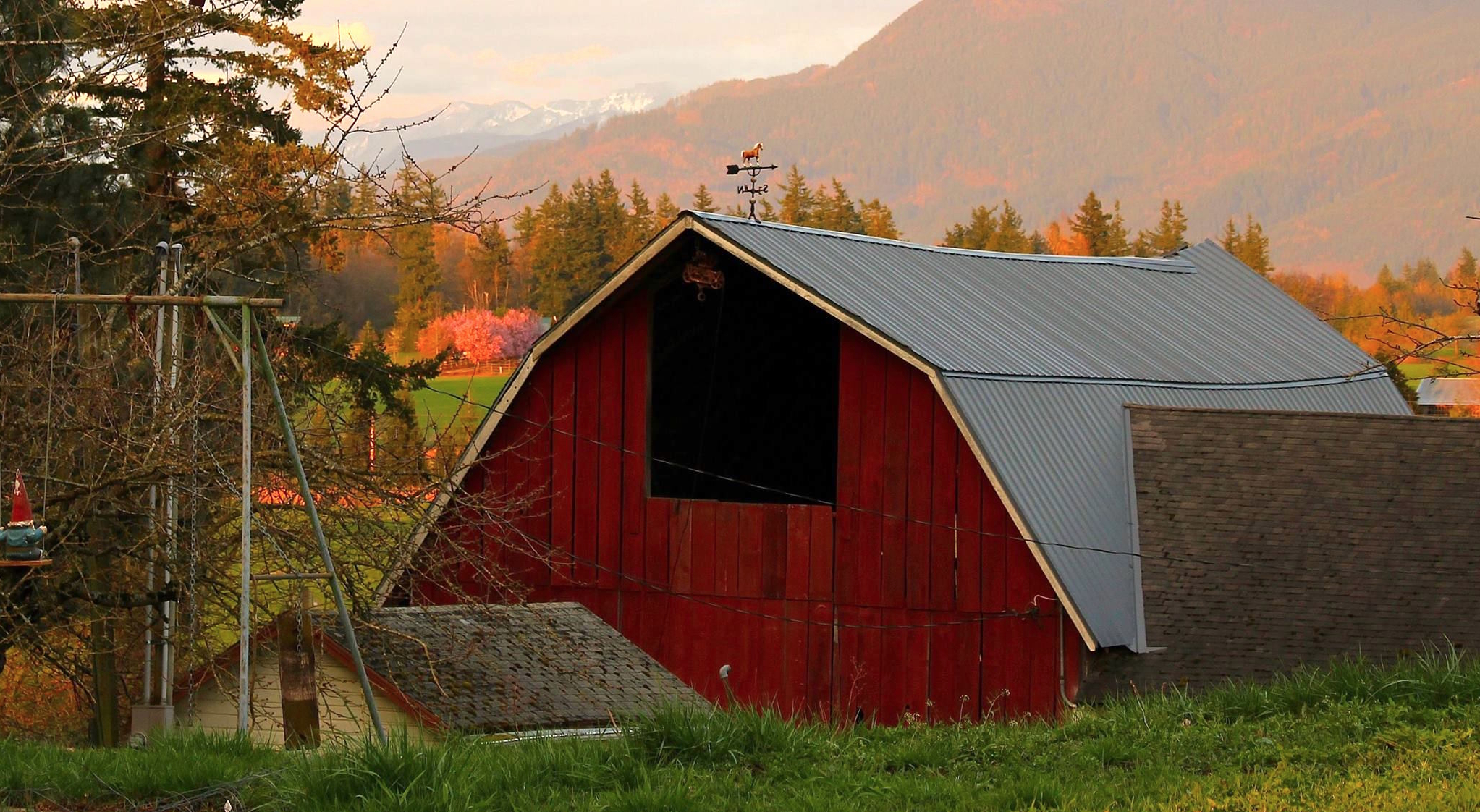
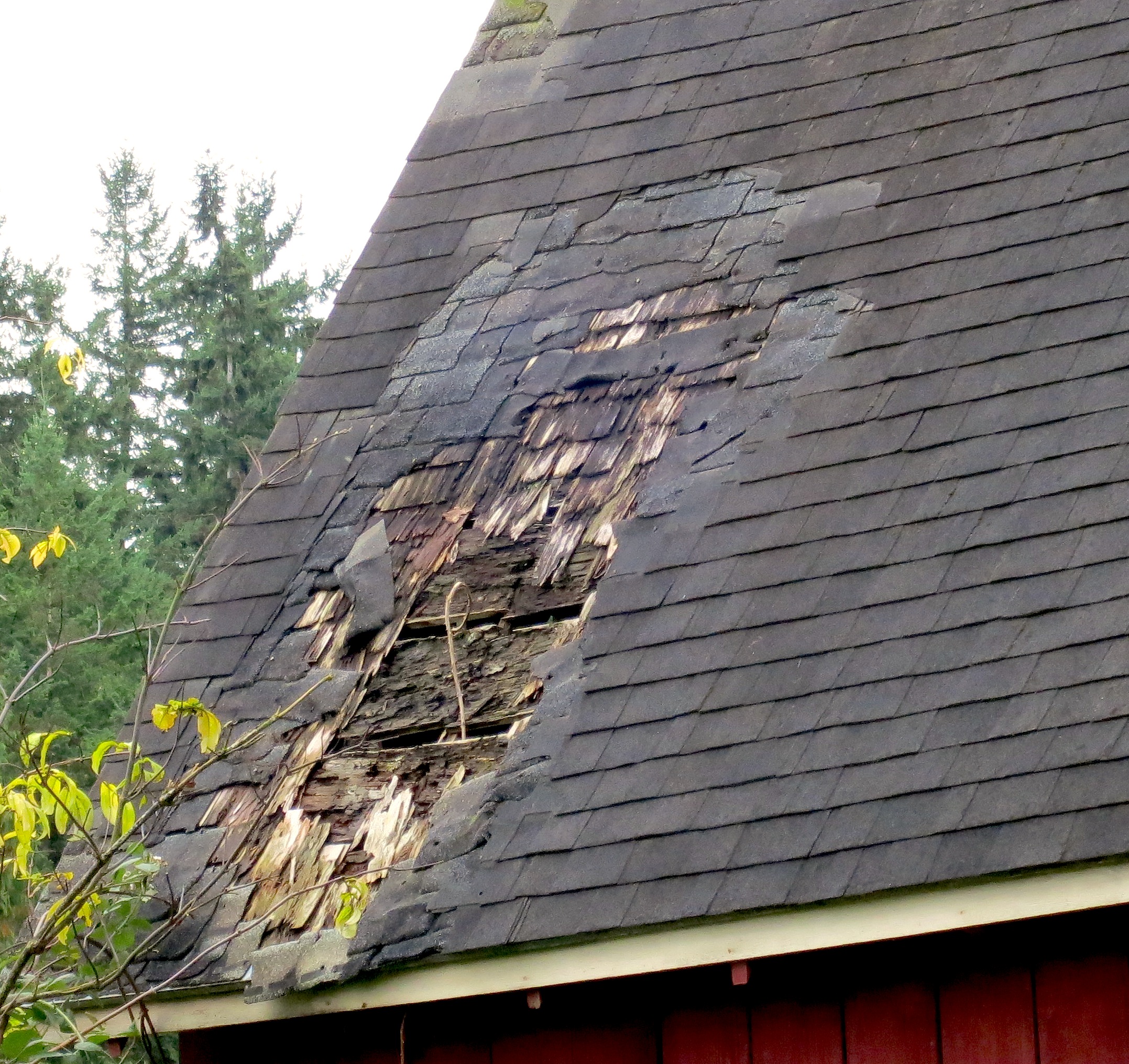
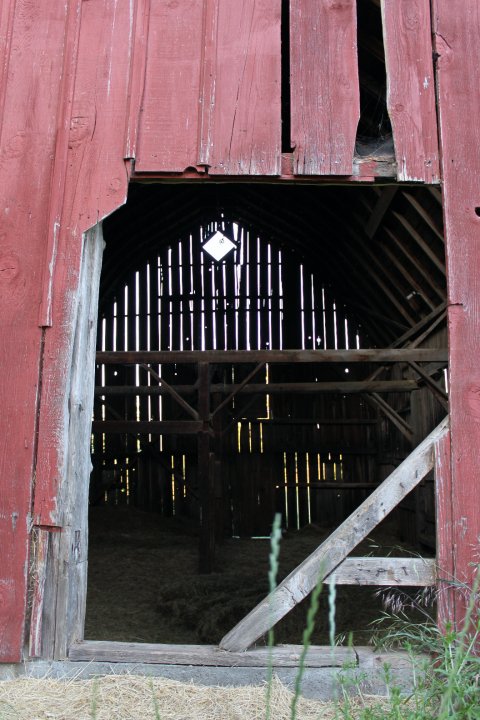
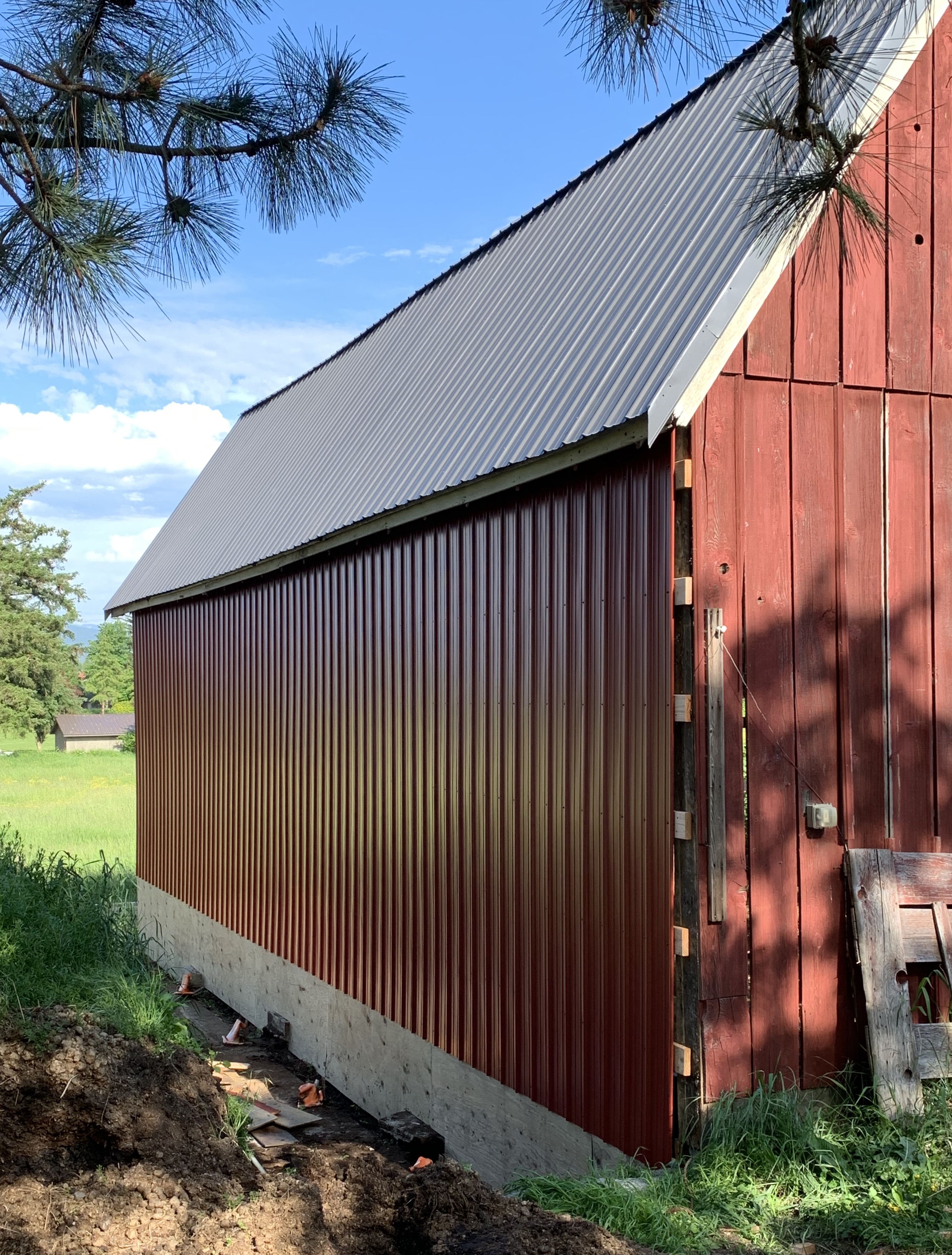
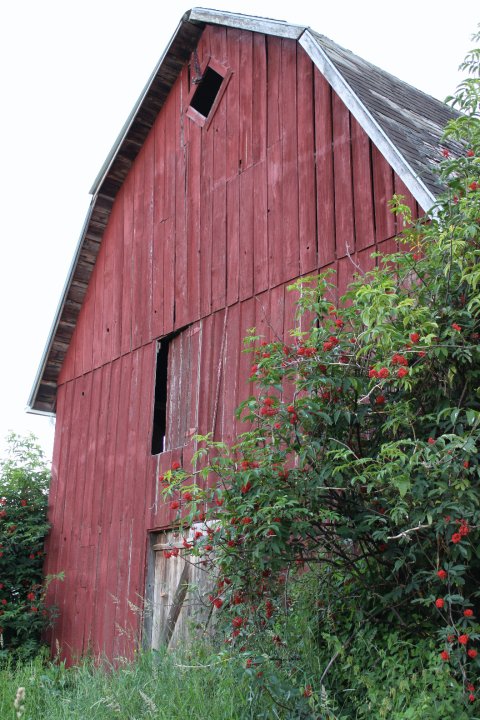
There is something very lonely about a barn completely empty of its hay stores. Our old barn has stood empty for several years; we and our neighbors who have used it for years to house a winter hay supply have found other more convenient places to put our hay. The winter winds have worn away its majesty: missing shingles have torn away holes in the roof, the mighty beams providing foundational support were sinking and rotting in the ground, a gap opened in the sagging roof crest, and most devastating of all, two walls collapsed in a particularly harsh blow.

The old barn was in death throes after over one hundred years of history.
Its hollow interior echoes with a century of farmers’ voices:
soothing an upset cow during a difficult milking,
uncovering a litter of kittens high in a hay loft,
shouting orders to a steady workhorse,
singing a soft hymn while cleaning stalls,
startling out loud as a barn owl or bat flies low overhead.
Dust motes lazily drift by in the twilight,
seemingly forever suspended above the straw covered wood floor, floating protected from the cooling evening breezes.

There was no heart beat left in this dying barn. It was in full arrest, all life blood drained out, vital signs flat lined. I could hardly bear to go inside much less take pictures of its deteriorating shell.

We had people show up at our front door offering to demolish it for the lumber, now all the fad for expensive modern “vintage” look in new house construction. A photo of our barn showed up in local media declaring “another grand old barn in the county has met its end.” That stung. Meanwhile we were saving our money, waiting until we could afford to bring our old red barn back to life.

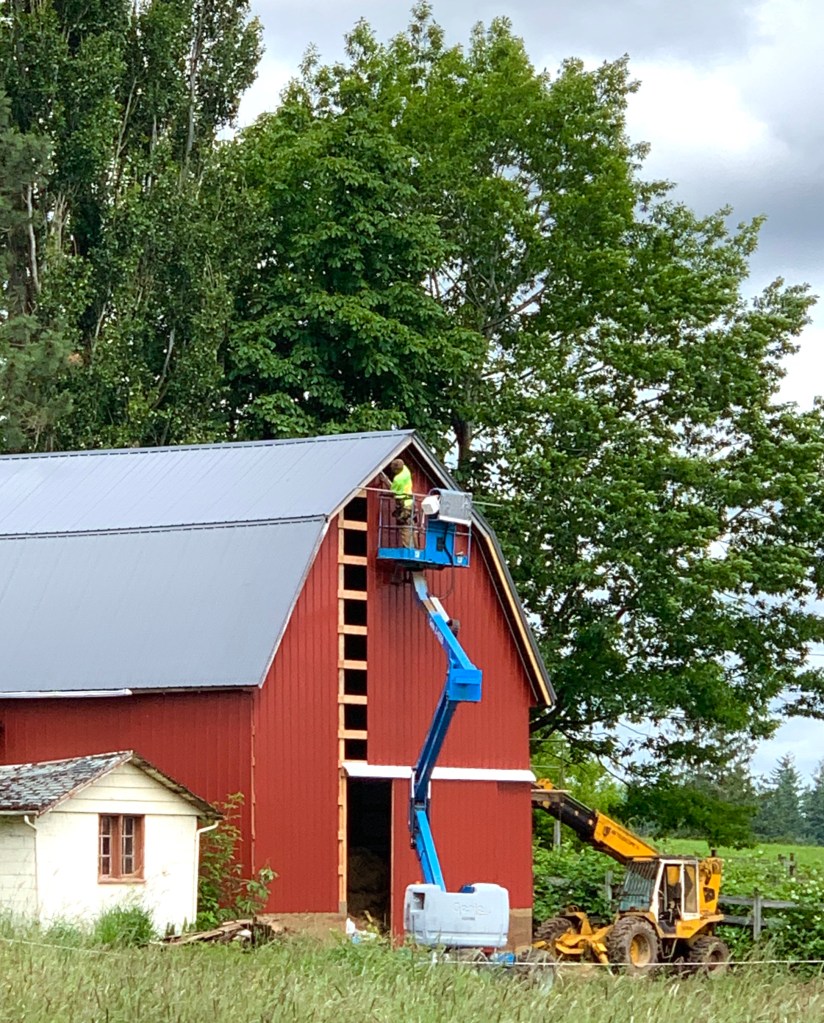
It started with one strong young man digging out the support posts to locate the rot. Then another remarkable young man was able to jack up the posts one by one, putting in reinforcing steel and concrete and straightening the gaping sagging roof line, providing the old barn its first ever foundation.

And over the last two weeks a crew of two men have replaced the damaged roof and absent walls with metal siding. The barn is looking whole again.

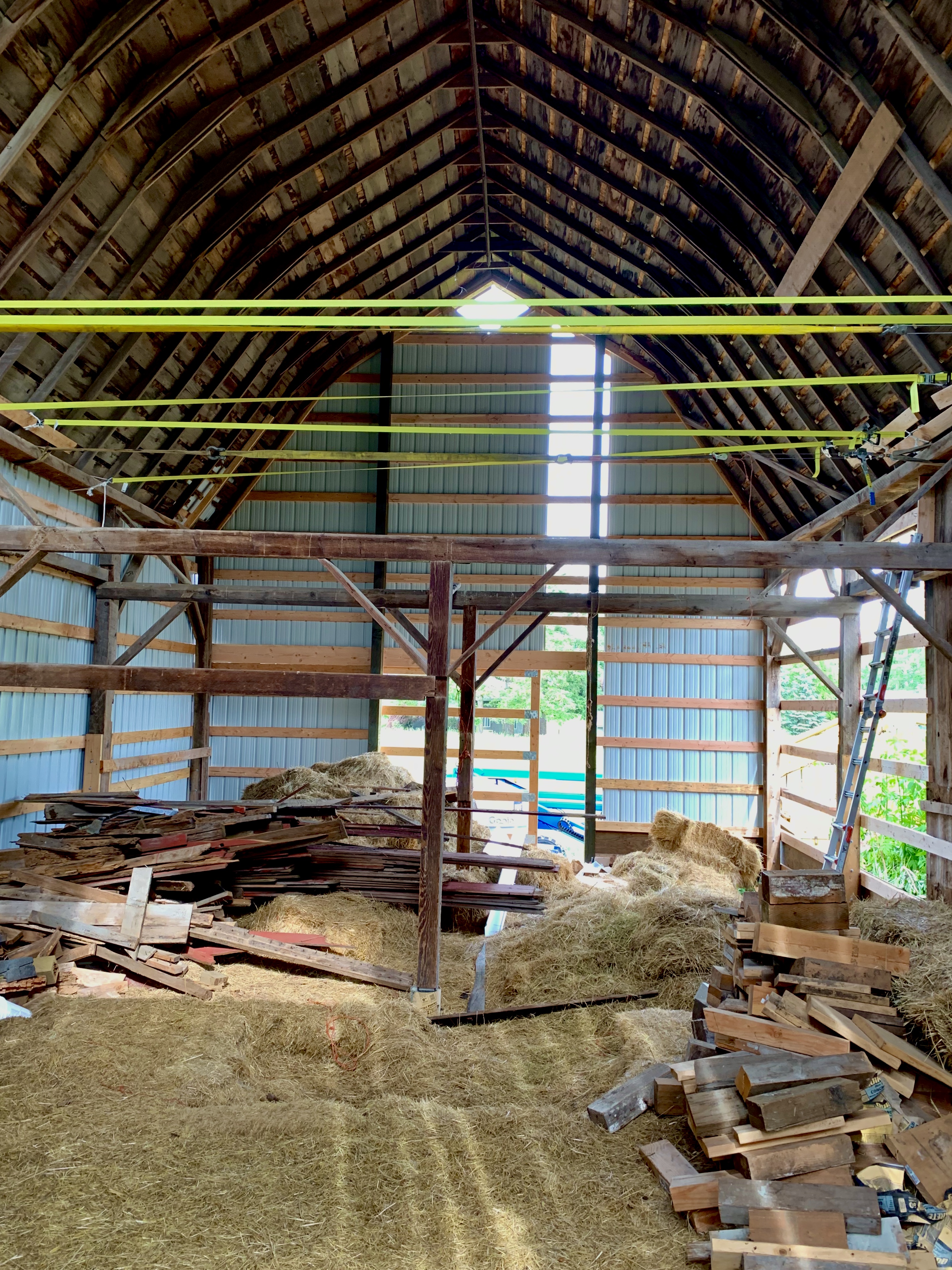
There is a lot of clean up left to do inside: decades of old hay build up and damaged lumber and untold numbers of abandoned mouse nests and scattered barn owl pellets.

Soon, the barn will be shocked back to a pulse, with the throb of voices, music blaring, dust and pollen flying chaotically, the rattle of the electric “elevator” hauling bales from wagon to loft, the grunts and groans of the crew as they heft and heave the bales into place in the stack. It will go on late into the night, the barn ablaze with lights, the barnyard buzzing with excitement and activity.

It will once again serve as the back up sanctuary on Easter morning when we are rained out up on the hill for Sunrise Service.

Now vital signs measurable, rhythm restored, volume depletion reversed, prognosis good for another 100 years.

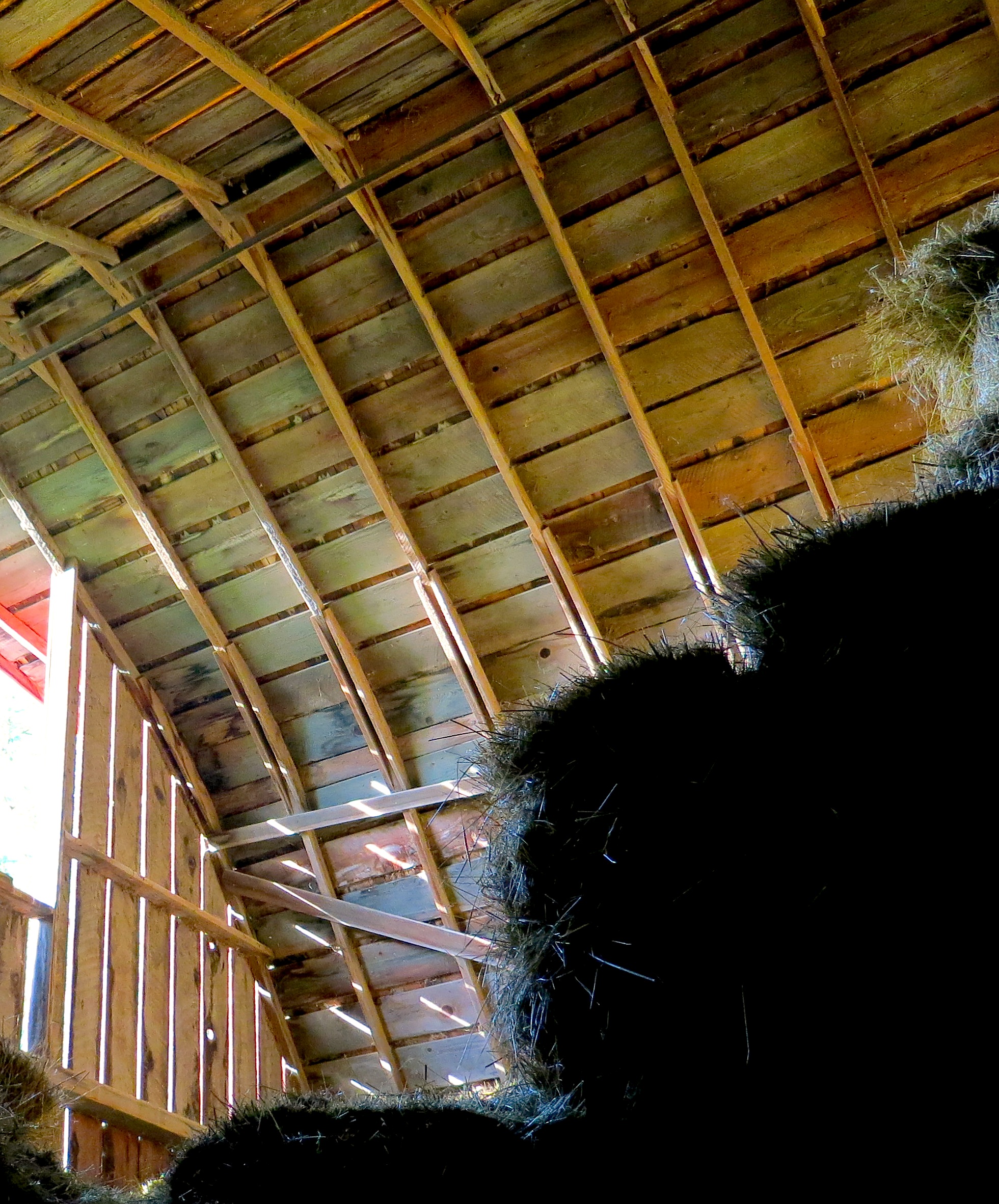
Another old barn is resuscitated back to life when so many are left to die. It is revived and breathing on its own again. Its floor will creak with the weight of the hay bales and walls will groan with the pressure of stacks.

I must remember there is always hope for the shattered and weary among us. If an old barn can be saved, then so can we.

So can we.

photo by Nate Gibson

From Cut and From Tumble…
God keep my jewel this day from danger;
From tinker and pooka and bad-hearted stranger.
From harm of the water, from hurt of the fire.
From the horns of the cows going home to the byre.
From the sight of the fairies that maybe might change her.
From teasing the ass when he’s tied to the manger.
From stones that would bruise her, from thorns of the briar.
From evil red berries that wake her desire.
From hunting the gander and vexing the goat.
From the depths o’ sea water by Danny’s old boat.
From cut and from tumble, from sickness and weeping;
May God have my jewel this day in his keeping.
~Winifred Lett (1882-1973) Prayer for a Child

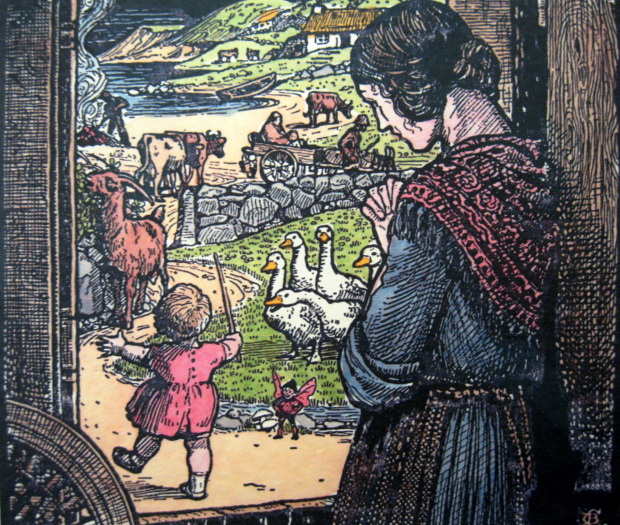
This prayer has hung in our home for almost three decades, purchased when I was pregnant with our first child.  When I first saw it with its drawing of the praying mother watching her toddler leave the safety of the home to explore the wide world, I knew it addressed most of my worries as a new mother, in language that helped me smile at my often irrational fears.  I would glance at it dozens of time a day, and it would remind me of God’s care for our children through every scary thing, real or imagined.

And I continue to pray for our grown children, their spouses, and now for three precious grandchildren who live far from us. I do this because I can’t help myself but do it, and because I’m helpless without the care and compassion of our sovereign God.

Right now, this week, I pray for all children who are growing up in an increasingly divisive and conflicted world, who cannot understand why skin color should make a difference to one’s hopes and dreams and freedom to walk anywhere without feeling threatened.

May I be changed in my prayers.
May we all be changed, in a twinkling of an eye.

I pray because I can’t help myself.
I pray because I’m helpless.
I pray because the need flows out of me all the time

— waking and sleeping.
It doesn’t change God — it changes me.

~C.S. Lewis

Equality In The Air We Breathe, If Allowed to Breathe

Let America be America again.
Let it be the dream it used to be.
Let it be the pioneer on the plain
Seeking a home where he himself is free.

(America never was America to me.)

Let America be the dream the dreamers dreamed—
Let it be that great strong land of love
Where never kings connive nor tyrants scheme
That any man be crushed by one above.

(It never was America to me.)

O, let my land be a land where Liberty
Is crowned with no false patriotic wreath,
But opportunity is real, and life is free,
Equality is in the air we breathe.

(There’s never been equality for me,
Nor freedom in this “homeland of the free.”)

Say, who are you that mumbles in the dark?
And who are you that draws your veil across the stars?

I am the poor white, fooled and pushed apart,
I am the Negro bearing slavery’s scars.
I am the red man driven from the land,
I am the immigrant clutching the hope I seek—
And finding only the same old stupid plan
Of dog eat dog, of mighty crush the weak.

I am the farmer, bondsman to the soil.
I am the worker sold to the machine.
I am the Negro, servant to you all.
I am the people, humble, hungry, mean—
Hungry yet today despite the dream.
Beaten yet today—O, Pioneers!

I am the man who never got ahead,
The poorest worker bartered through the years.
Yet I’m the one who dreamt our basic dream
In the Old World while still a serf of kings,
Who dreamt a dream so strong, so brave, so true,
That even yet its mighty daring sings
In every brick and stone, in every furrow turned
That’s made America the land it has become.

O, I’m the man who sailed those early seas
In search of what I meant to be my home—
For I’m the one who left dark Ireland’s shore,
And Poland’s plain, and England’s grassy lea,
And torn from Black Africa’s strand I came
To build a “homeland of the free.”

The free?
Who said the free? Not me?
Surely not me? The millions on relief today?
The millions shot down when we strike?
The millions who have nothing for our pay?
For all the dreams we’ve dreamed
And all the songs we’ve sung
And all the hopes we’ve held
And all the flags we’ve hung,
The millions who have nothing for our pay—
Except the dream that’s almost dead today.

O, let America be America again—
The land that never has been yet—
And yet must be—the land where every man is free.
The land that’s mine—the poor man’s, Indian’s, Negro’s, ME—
Who made America,
Whose sweat and blood, whose faith and pain,
Whose hand at the foundry, whose plow in the rain,
Must bring back our mighty dream again.

America!
O, yes,
I say it plain,
America never was America to me,
And yet I swear this oath—
America will be!

Out of the rack and ruin of our gangster death,
The rape and rot of graft, and stealth, and lies,
We, the people, must redeem
The land, the mines, the plants, the rivers.
The mountains and the endless plain—
All, all the stretch of these great green states—
And make America again!

~Langston Hughes from “Let America Be America Again” (1935)

When we remain silent in the face of injustice,
we loudly slap the face of God.
Because the person being abused
is the face of God.
~Ann Voskamp

What has changed in America since Langston Hughes wrote “Let America Be America” in 1935? How many angry generations have passed since then and how many more are to come?

When three generations stand side by side, with angry words and tear-streaked faces, admitting that nothing has changed, then things have to change.

We are withering together in our anger and our tears.

Our children should not be faced with the choice of putting themselves in harm’s way because they are not allowed to breathe the same air of equality as everyone else. They deserve breath because God breathed them into existence, like everyone else. Instead, we are destroying their future as they are suffocated in the streets.

It has never been about “making America great again.”

It is about let America be America, once and for all.

Abundant Overwhelming June

I wonder what it would be like to live in a world
where it was always June.
~L. M. Montgomery from Anne of the Island

Each month is special in its own way:  I tend to favor April and October for how the light plays on the landscape during transitional times — a residual of what has been, with a hint of what lies ahead.

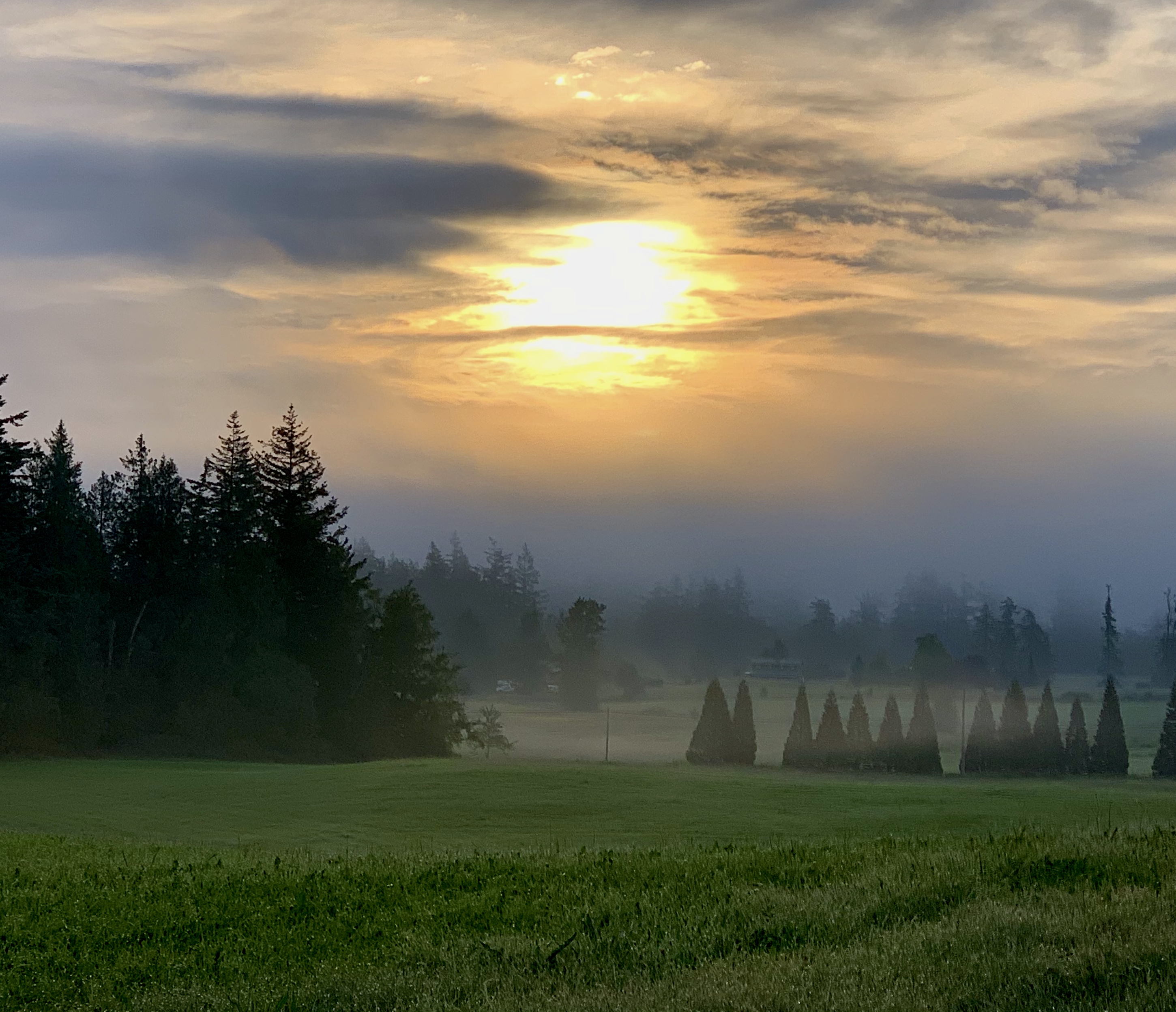
Then there is June.  Dear, gentle, abundant and overwhelming June.  Nothing is dried up, there is such a rich feeling of ascension into lushness of summer with an “out of school” attitude, even if one has graduated long ago.

And the light, and the birdsong and the dew and the greens — such vivid verdant greens.

As lovely as June is, 30 days is more than plenty or I would become completely saturated. Then I can be released from my sated stupor to wistfully hunger for June for 335 more.