
Where You Go, I Will Go: The Mourning Bench

…we all suffer.
For we all prize and love;
and in this present existence of ours,
prizing and loving yield suffering.
Love in our world is suffering love.


Some do not suffer much, though,
for they do not love much.
Suffering is for the loving.
This, said Jesus, is the command of the Holy One:
“You shall love your neighbor as yourself.”
In commanding us to love, God invites us to suffer
.

Over there, you are of no help.
What I need to hear from you is that you recognize how painful it is.
I need to hear from you that you are with me in my desperation.


To comfort me, you have to come close.
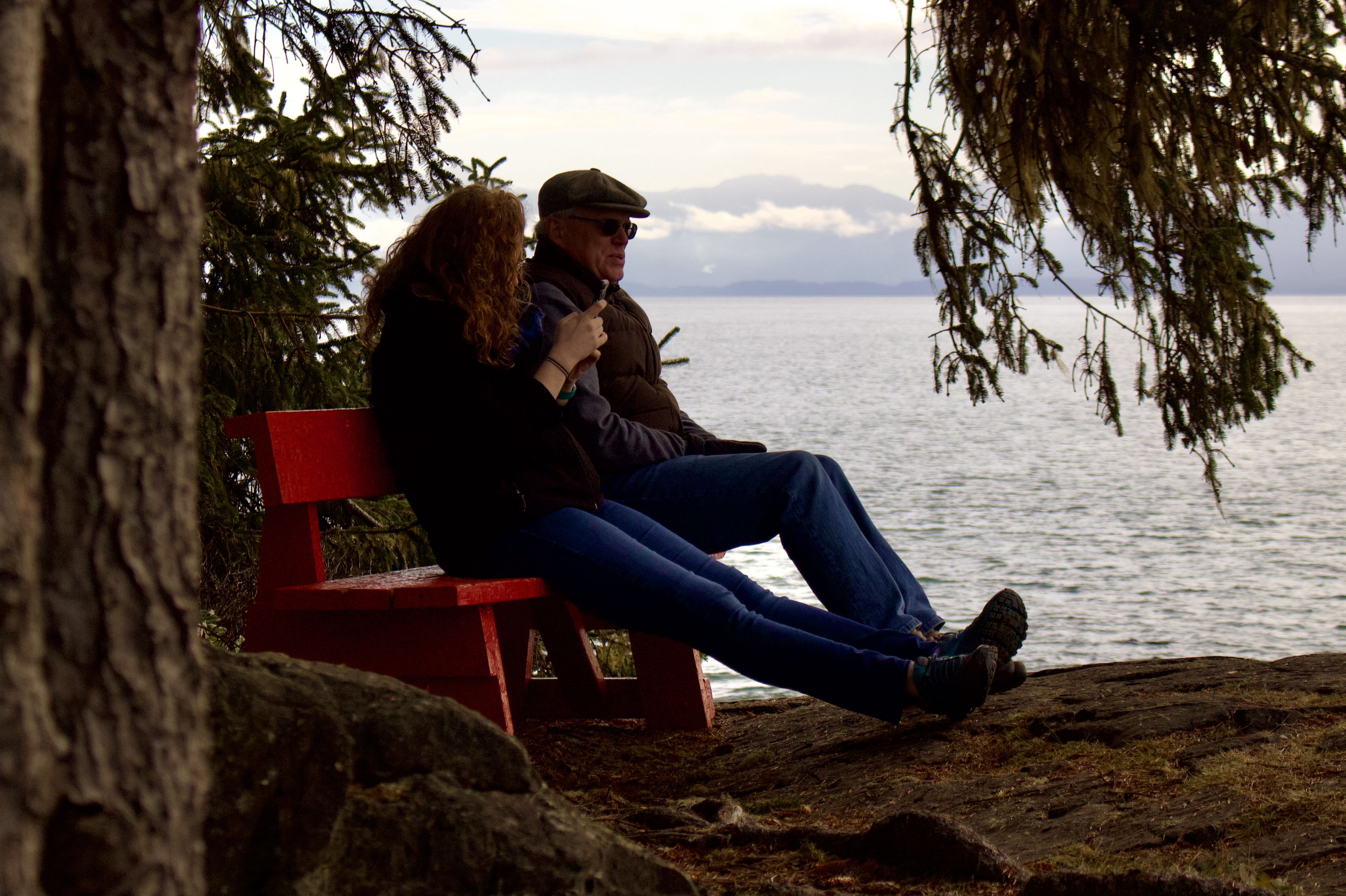
Come sit beside me on my mourning bench.
~Nicholas Wolterstorff from Lament for a Son
I wondered if 7:30 AM was too early to call her. As a sleep-deprived fourth year medical student finishing a long night admitting patients in the hospital, I selfishly needed to hear her voice.

I wanted to know how Margy was doing with the latest round of chemotherapy for breast cancer; I knew she was not sleeping well these days. She was wearing a new halo brace—a metal contraption that wrapped around her head like a scaffolding to secure her degenerating cervical spine from collapsing from metastatic tumor growths in her bones.

She knew, we all knew, she was trying to buy more time from a life of rapidly diminishing days.

Each patient I had seen the previous 24 hours while working in the Emergency Room benefited from the interviewing skills Margy had taught each medical student in our class. She reminded us that each patient had an important story to tell, and no matter how pressured our time, we needed to ask questions that gave permission for that story to be told. As a former nun now married with two teenage children, Margy had become our de facto therapist at a time no medical school hired supportive counselors.

She insisted physicians-in-training remember the suffering soul thriving inside the broken body.

“Just let the patient know with certainty, through your eyes, your body language, your words, that you want to hear what they have to say. You can heal so much hurt simply by sitting beside them and caring enough to listen…”

After her diagnosis with stage 4 cancer, Margy herself became the broken vessel who needed the glue of a good listener. She continued to teach, often from her bed at home. I planned to visit her that day, maybe help out by cleaning her house, or take her for a drive as a diversion.

Her phone rang only once after I dialed her number. There was a long pause; I could hear a clearing of her throat. A deep dam of tears welled behind a muffled “Hello?”

“Margy?”

“Yes? Emily? ”

“Margy? What is it? What’s wrong?”

Her voice shattered like glass into fragments, strangling on words that struggled to form.

“Gordy’s gone, Emily. He’s gone. He’s gone forever…”

“What? What are you saying?”

“A policeman just left. He told us our boy is dead.”

I sat in stunned silence, listening to her sobs, completely unequipped to know how to respond.

None of this made sense. I knew her son was on college spring break, heading to Mexico for a missions trip.

“I’m here, what’s happened?”

“The doorbell rang about an hour ago. Larry got up to answer it. I heard him talking to someone downstairs, so I decided to try to get up and go see what was going on. There was a policeman sitting with Larry on the couch. I knew it had to be about Gordy.”

She paused and took in a shuddering breath.

“The group was driving through the night in California. He was asleep in the back of the camper. They think he was sleepwalking and walked right out of the back of the moving camper and was hit by another car.”

Silence.  A strangling choking silence.

“They’ll bring him home to me, won’t they? I need to know I can see my boy again. I need to tell him how much I love him.”

“They’ll bring him home to you, Margy.
I’m on my way to help you get ready…

God is not only the God of the sufferers
but the God who suffers. …
It is said of God that no one can behold his face and live.
I always thought this meant
that no one could see his splendor and live.
A friend said perhaps it meant
that no one could see his sorrow and live.
Or perhaps his sorrow is splendor. …
Instead of explaining our suffering, God shares it.

~Nicholas Wolterstorff from Lament for a Son

This year’s Lenten theme:

…where you go I will go…
Ruth 1:16

One-Time
Monthly
Yearly

Make a one-time or recurring donation to support daily Barnstorming posts

Make a monthly donation

Make a yearly donation

Choose an amount

$10.00
$25.00
$50.00
$5.00
$15.00
$100.00
$5.00
$15.00
$100.00

Or enter a custom amount

$

Your contribution is deeply appreciated.

Your contribution is appreciated.

Your contribution is appreciated.

DonateDonate monthlyDonate yearly

Fresh Tears

When we have died,
and arms long empty of our memories,
reach to know love’s pure and sacred touch,
and to embrace a long sought, long anticipated place

when we have gone the way of all the earth,
and pain and sorrow are no more, not seen or heard or found,
no more the discontent of place or time or any lesser haste,
but only One whose love transcends our harsh and wearied days,

when we have died and gone and fallen fast asleep,
and found the settled light and our so much a sweeter sacral rest,
forever held in caring arms, yes,

held now everlasting in a wonder of it all,
then we have not gone down empty, we have not died alone.

~Henry Lewis from “When”

This event happened in 1975 while I was an undergraduate student researcher in Tanzania, East Africa, working alongside other researchers assisting Dr. Jane Goodall in her study of wild chimpanzees and baboons.

Several metal buildings were scattered along the shore at Gombe National Park, having been built over the years since Jane Goodall and her mother Vanne arrived on a bare beach in 1960. From the very beginning, one of the most powerful connections between these two British women and the Tanzanian villagers who lived up and down Lake Tanganyika was their provision of basic medical supplies and services when needed. Initially, under the cover of the camp tents, they tended to wounds, provided a few medications, and assisted whenever they were needed for help. 

Later, an actual dispensary was built as part of the park buildings, with storage for first aid supplies and medications, many of which were traditional Chinese medications, in little boxes with Chinese characters, and no translation. All we had was a sheet of paper explaining if a medication was to be used for headaches, fevers,  bleeding problems or infections.

There were “open” times in the dispensary and each of the research assistants took turns to see villagers as they came by to be seen for medical issues. We saw injuries that had never healed properly, some people with permanently crippled limbs, centipede bites that swelled legs, babies who were malnourished, malarial fevers.

It felt like so little to offer. None of us had medical training beyond first aid and CPR, but what small service we could provide was met with incredible gratitude. 

So it wasn’t a surprise when a villager arrived one afternoon, running and out of breath, asking that we come right away to help. There had been a terrible accident up the beach when a water taxi engine exploded while transporting two dozen villagers, along with their provisions, including goats and chickens. As people rushed to get away from the engine fire, the roofed boat overturned, with everyone trapped among the boxes, unable to escape. 

Even more tragic, Tanzanians were never taught to swim, so no one on shore could help in the rescue effort.

We dropped everything and six of us ran up the beach for a mile, and could see an overturned water taxi just off shore. The best swimmers went out and started searching for people who had been too long in the deep water. They began to pull the bloated bodies to shore, one by one, the lake water pouring from lifeless mouths and noses.  All we could do was line them up side by side on the beach, trying to keep the biting flies from covering them,  trying to make sense of what was so senseless. There were eight children of various ages, including two small babies, several older women, one pregnant woman, the rest men of all ages–twenty four souls in all, not a single survivor.

As a nurses’ aide, I had cared for the dying and helped to bathe their bodies after death, but I had never before seen so much death at once, and never a dead child.

Before long, relatives started arriving, their grief-stricken wails of loss filling the air on this remote African lakeshore. Husbands and wives wept, keening over a spouse. Children crouched, in shock, by a dead parent. Grandmothers clutched their dead children and grandchildren and would not let go. 

We had saved no one. We had no power to bring them back to life. 

We could only bear witness to the loss and grief with deep compassion for our neighbors who had come to depend on us to help. It became even clearer to me, in a way I had never understood before, how deep our need is for the mercy of God who is our only comfort when terrible things happen.

I have not forgotten those who were lost to the world that day fifty years ago. Still, all these years later, when I see photos of senseless violence and death, whether war or other disasters, I grieve for them anew with fresh tears, all over again.

Psalm 51:
Have mercy, O God…
according to your great compassion…

AI image created for this post
One-Time
Monthly
Yearly

Make a one-time or recurring donation to support daily Barnstorming posts

Make a monthly donation

Make a yearly donation

Choose an amount

$10.00
$25.00
$50.00
$5.00
$15.00
$100.00
$5.00
$15.00
$100.00

Or enter a custom amount

$

Your contribution is deeply appreciated.

Your contribution is appreciated.

Your contribution is appreciated.

DonateDonate monthlyDonate yearly

Nor Spare a Sigh…

~to a young child~

Márgarét, áre you gríeving
Over Goldengrove unleaving?
Leáves like the things of man, you
With your fresh thoughts care for, can you?
Ah! ás the heart grows older
It will come to such sights colder
By and by, nor spare a sigh
Though worlds of wanwood leafmeal lie;
And yet you wíll weep and know why.
Now no matter, child, the name:
Sórrow’s spríngs áre the same.
Nor mouth had, no nor mind, expressed
What heart heard of, ghost guessed:
It ís the blight man was born for,
It is Margaret you mourn for.
~Gerard Manley Hopkins “Spring and Fall”

As the leaves tumble down, I think of Hopkins’ Márgarét
and her vanishing goldengrove path,
she who weeps for the loss of autumn leaves,
not knowing or remembering they will return.

And I, now older, know spring comes again,
even though wistful and sighing deeply
at the loss of beauty and innocence each autumn,
weeping for what was and may never be again.

In this blighted plight,
I tend to forget the promise made:
there is much more to come after the Fall.

My grief is not for nothing.
Christ comforts those who weep,
who mourn loss and wander lost.

I have hope and faith.
I will see beauty again.
I follow the goldengrove that leads to Him.

AI image created for this post
One-Time
Monthly
Yearly

Make a one-time or recurring donation to support daily Barnstorming posts

Make a monthly donation

Make a yearly donation

Choose an amount

$10.00
$25.00
$50.00
$5.00
$15.00
$100.00
$5.00
$15.00
$100.00

Or enter a custom amount

$

Your contribution is deeply appreciated.

Your contribution is appreciated.

Your contribution is appreciated.

DonateDonate monthlyDonate yearly

Immortal Flowers

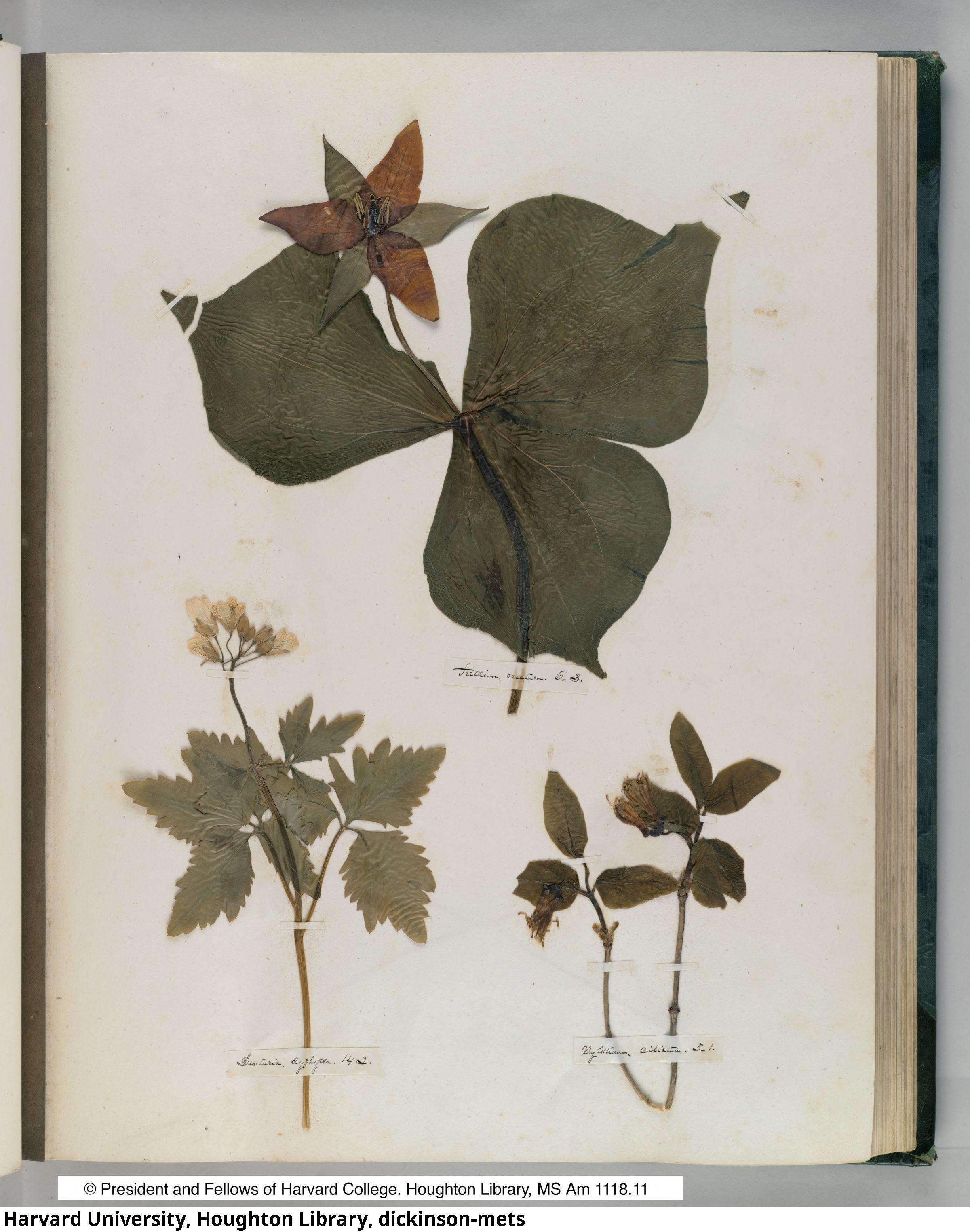
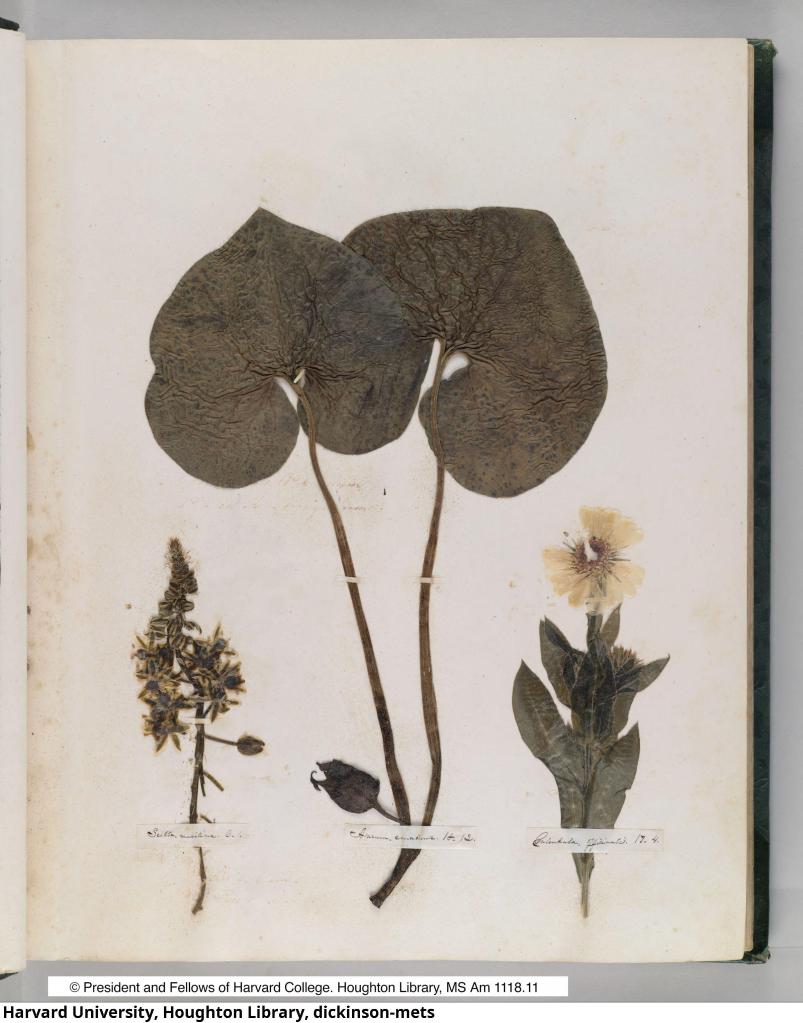
“Did you ever know that a flower, once withered and freshened again, becomes an immortal flower, – that is, that it rises again?”
~Emily Dickinson in a letter to a friend

Emily Dickinson Herbarium – preservation of trillium

Emily Dickinson herbarium- preservation of wild ginger (asarum)

While I was fearing it, it came—
But came with less of fear
Because that fearing it so long
Had almost made it fair—

There is a Fitting—a Dismay—
A Fitting—a Despair
’Tis harder knowing it is Due
Than knowing it is Here.

The Trying on the Utmost
The Morning it is new
Is Terribler than wearing it
A whole existence through.

~Emily Dickinson

Over a decade ago, as I was going through my mother’s boxed-up possessions after her death, I found the 1956 Webster’s New Dictionary of the Twentieth Century that I grew up with. This book was massive, easily weighing 10 pounds, and served as a booster seat for haircuts, a step stool for trying to reach the cookie jar on the kitchen cupboard, and of course, for looking up any obscure word that ever existed in all of history. Or so it seemed.

It was an amazing tome. And as I flipped through the pages, I found some old familiar friends that were neither black nor white nor read all over. They had survived over half a century.

Wildflowers had been carefully pressed between the pages–over two dozen specimens paper thin themselves, their existence squeezed into two dimensions–still showing faint pink or blue, or purple color, almost exuding a long ago fragrance from a summer over fifty years ago. As a child I regularly wandered out to our fields and woods to gather crimson clover blossoms, buttercup, dandelions, daisies, wild violets, wild ginger, calypso lady slippers for bouquets for my mother, and she would select the most perfect to slide between the pages of the dictionary. Occasionally she would pull one out to gently paste on a hand written card she sent to a friend.

Here were my perfect flowers, preserved and pressed for time, just waiting for the senior-citizen me to rediscover them lying between wonderful words that I love to roll in my mouth and type on a page. They are too fragile to paste to a greeting card, or even to handle due to their brittleness. They need to stay right where they are, for another generation or two or three to discover.

As a child, I was always very worried about losing my parents, fearing their death would be the end of me as well. But as Emily Dickinson writes “fearing it so long/Had almost made it fair” – as an adult, I was more prepared for the day each parted from this life. As the poet suggests, fearing it for years was much harder than the acceptance when that time had come.

Now I too am pressed for time, fading and more fragile, perhaps more brittle than I care to admit. My mother and father have blown away like the puff ball seeds of the dandelion, on to other horizons, but the sturdy old dictionary is going nowhere. It will be passed down, its delicate passengers preserved inside from a long-ago-far-away summer afternoon of flower gathering. They will be shared as a great grandchild opens the book to look up a favorite word sometime in the not-so-far-off future.

One-Time
Monthly
Yearly

Make a one-time or recurring donation to support daily Barnstorming posts

Make a monthly donation

Make a yearly donation

Choose an amount

¤10.00
¤20.00
¤50.00
¤5.00
¤15.00
¤100.00
¤5.00
¤15.00
¤100.00

Or enter a custom amount

¤

Your contribution is deeply appreciated.

Your contribution is appreciated.

Your contribution is appreciated.

DonateDonate monthlyDonate yearly

My Mourning Bench

…we all suffer.
For we all prize and love;
and in this present existence of ours,
prizing and loving yield suffering.
Love in our world is suffering love.
Some do not suffer much, though,
for they do not love much.
Suffering is for the loving.
This, said Jesus, is the command of the Holy One:
“You shall love your neighbor as yourself.”
In commanding us to love, God invites us to suffer.

Over there, you are of no help.
What I need to hear from you is that you recognize how painful it is.
I need to hear from you that you are with me in my desperation.
To comfort me, you have to come close.
Come sit beside me on my mourning bench.
~Nicholas Wolterstorff from Lament for a Son

Spring 1980

I wondered if 8:30 AM was too early to call my friend and mentor Margy. As a sleep-deprived fourth year medical student, I selfishly needed to hear her voice. I wanted to know how she was doing; she was not sleeping well either these days. She was wearing a new halo brace—a metal contraption that wrapped around her head like a scaffolding to secure her degenerating cervical spine from collapsing from metastatic breast cancer growth in her bones. When she was fitted into the brace, she named the two large screw-like fasteners anchored into her frontal skull her “Frankenstein bolts”.  I had reassured her that with a proper white veil draped around the metal halo, she would be more suited to be Frankenstein’s bride.
Each patient I had seen the previous 24 hours while working in the Emergency Room benefited from the interviewing skills Margy had taught each one of us medical students. She reminded us that each patient had an important story to tell, and no matter how pressured our time, we needed to ask questions that gave permission for that story to be told. As a former nun now married with two teenage children, Margy had become our de facto counselor, and insisted physicians-in-training remember the soul thriving inside the broken and hurting body.

“Just let the patient know with certainty, through your eyes, your body language, your words, that you want to hear what they have to say. You can heal so much hurt simply by sitting beside them and caring enough to listen…”

Now with her recent diagnosis of metastatic cancer, Margy herself had become the broken vessel who needed the glue of a good listener.   She continued to teach, often from her bed at home and I regularly visited, in need of her wisdom and she still needed her students.

That night I had felt uneasy about her all during my ER shift and felt compelled to visit her and her husband and daughter that day, maybe help out by cleaning their house, fixing them a meal or taking her for a drive as a diversion.

Her phone rang only once after I dialed her number. There was a long pause; I could hear a clearing of her throat. A deep dam of tears welled behind a muffled “Hello?” Something was deeply wrong.

Her voice shattered like glass into fragments, strangling on words that struggled to form. She sobbed out the words that their college son, Gordon, was dead. Earlier that morning, a police officer had knocked loudly on their door, awakening her and her husband with the news of a tragic highway accident.

I sat in stunned silence, listening to her sobs, completely unequipped to know how to respond. None of this made sense although I knew her son was on college spring break, heading to Mexico for a missions trip.

She paused and took in a shuddering breath.

“Gordy died as they were driving through the night. He was sleeping in the camper as they drove. They think he sleepwalked right out of the back of the moving camper, fell onto the highway and was hit by another car.“

I felt strangled by her words and could only imagine how difficult it was for her to keep breathing enough to say them.

“They’ll bring him home to us, won’t they? I need to know I can see him again. I need to tell him how much I love him.”

I assured Margy she would see him again, both in his broken body and, some day yet to be determined, whole.

Up until then, I knew in my head this life was full of sorrow, but I had been spared the full heart impact of grief until I witnessed such intensity of an acute unbelievable loss – how loving one so deeply meant suffering immeasurably.

I understood, for the first but surely not the last time, how it is the only way to love.

During the remaining few months of Margy’s life as she waited to join her son, she continued to teach me about how to come close in to the suffering and grief of others, and also how to sit together, even in silence, on that too-often lonesome mourning bench.

…for the Jude Veltkamp family who lost their teenage son, grandson, nephew, brother this week to a relentless cancer.

But our God is even more relentless in His love and comfort for His mourning children…

I knew this life was full of sorrow
But still I believed
That good times would follow
That the evil would falter
And true hearts would rise
True hearts would rise
That simple dream ended
On the night that you died

And even the sound of a whistle fading
Brings back the longing
And stirs up the aching
Peaceful companion that grounded my soul
You grounded my soul
The world spins without meaning
Now that you’re gone

Sometimes I still think
I will see you in New York
And we will meet on the platform of the train
And with your great leaning stride
You’ll cross back to my side
And my old life
Will be my life again

You were quiet as a winter sky
Where planets turn
And the North Star rides
My sweet brother, so reasoned, so calm
My brother, my own
The world spins without meaning
Now that you’re gone
~Fernando Ortega

A Benediction of Mourning

The waning October moon reluctantly rose,
pulling back from the full globe of a few nights before.

I drive a night darkened country road, white lines sweeping past,
aware of advancing frost in the evening haze,
anxious to return home to fireplace light.

Nearing a familiar corner, a stop sign loomed,
to the right, a rural cemetery sits silently expectant.

Open iron gates and tenebrous headstones,
in the middle path, incongruous, a car’s headlights beam bright.
I slowed, thinking: lovers or vandals would seek inky cover of night.

Instead, these lights illuminate a lone figure, kneeling graveside,
one hand resting heavily on a stone, head bowed in prayer.

A stark moment of solitary sorrow,
invisible grieving of the heart
focused by twin beams.

A benediction of mourning; light piercing their blackness,
as gentle fingertips trace the engraved letters of a beloved name.

An uneasy witness, I withdraw as if touched myself
and drive on into the night, struggling to see
through the thickening mist of my eyes and the road.

Angel of Grief–Stanford University

A book of beauty in words and photography, available for order here:

Go Out and Help Your Dad


It was hard work, dying, harder
than anything he’d ever done.


Whatever brutal, bruising, back-
Breaking chore he’d forced himself


to endure—it was nothing
compared to this. And it took


so long. When would the job
be over? Who would call him


home for supper? And it was
hard for us (his children)—


all of our lives we’d heard
my mother telling us to go out,


help your father, but this
was work we could not do.


He was way out beyond us,
in a field we could not reach.

~Joyce Sutphen, “My Father, Dying” from Carrying Water to the Field: New and Selected Poems.

We will grieve not, rather find                     
Strength in what remains behind;                     
In the primal sympathy                     
Which having been must ever be;  
                   

Thanks to the human heart by which we live,
Thanks to its tenderness, its joys, and fears,
To me the meanest flower that blows can give
Thoughts that do often lie too deep for tears.
~William Wordsworth from “Ode: Intimations of Immortality from Recollections of Early Childhood”
Twenty-six years ago today
we watched at your bedside as you labored,
readying yourself to die and we could not help
except to be there while we watched you
move farther away from us.


This dying, the hardest work you had ever done:

harder than handling the plow behind a team of draft horses,
harder than confronting a broken, alcoholic and abusive father,
harder than slashing brambles and branches to clear the woods,
harder than digging out stumps, cementing foundations, building roofs,
harder than shipping out, leaving behind a new wife after a week of marriage,
harder than leading a battalion of men to battle on Saipan, Tinian and Tarawa,
harder than returning home so changed there were no words,
harder than returning to school, working long hours to support family,
harder than running a farm with only muscle and will power,

harder than coping with an ill wife, infertility, job conflict, discontent,
harder than building your own pool, your own garage, your own house,
harder than your marriage ending, a second wife dying,
and returning home forgiven.

Dying was the hardest of all
as no amount of muscle or smarts could stop it crushing you,
taking away the strength you relied on for 73 years.

So as you lay helpless, moaning, struggling to breathe,
we knew your hard work was complete
and what was yet undone was up to us
to finish for you.

A new book from Barnstorming is available for order here:


Because They Are No More…

A voice is heard in Ramah,
    mourning and great weeping,

Rachel weeping for her children
    and refusing to be comforted,
    because they are no more.
Matthew 2:18 and Jeremiah 31:15

We think of him as safe beneath the steeple,
Or cosy in a crib beside the font,
But he is with a million displaced people|
On the long road of weariness and want.
For even as we sing our final carol
His family is up and on that road,
Fleeing the wrath of someone else’s quarrel,
Glancing behind and shouldering their load.

Whilst Herod rages still from his dark tower
Christ clings to Mary, fingers tightly curled,|
The lambs are slaughtered by the men of power,
And death squads spread their curse across the world.
But every Herod dies, and comes alone
To stand before the Lamb upon the throne.
~Malcolm Guite from Waiting on the Word

 …as you sit beneath your beautifully decorated tree, eat the rich food of celebration, and laugh with your loved ones, you must not let yourself forget the horror and violence at the beginning and end of the Christmas story. The story begins with the horrible slaughter of children and ends with the violent murder of the Son of God. The slaughter depicts how much the earth needs grace. The murder is the moment when that grace is given.

Look into that manger representing a new life and see the One who came to die. Hear the angels’ celebratory song and remember that sad death would be the only way that peace would be given. Look at your tree and remember another tree – one not decorated with shining ornaments, but stained with the blood of God.

As you celebrate, remember that the pathway to your celebration was the death of the One you celebrate, and be thankful.
~Paul Tripp

There can be no consolation;
only mourning and great weeping,
sobbing that wrings dry
every human cell,
leaving dust behind–
dust, only dust
which is beginning
and end.

He came to us
for times such as this,
born of
the dust of woman and
the breath of Spirit,
God who bent down to
lie in barn dust,
walk on roads of dust,
die and be laid to rest as dust
in order to conquer
such evil as this
that could terrify masses
and massacre innocents.

He became dust to be
like us
He began a mere speck in a womb
like us,
so easily washed away
as unexpected, unneeded, unwanted.

Lord, You are long expected.
You are needed
You are wanted.

Your heart beat
like ours
breathing each breath
like ours
until a fearful fallen world
took Your
and our breath
away.

You shine through
the shadows of death
to guide our stumbling uncertain feet.
Your tender mercies flow freely
when there is no consolation
when there is no comfort.

You hear our cries
as You cry too.
You know our tears
as You weep too.
You know our mourning
as You mourned too.
You know our dying
as You died too.

God weeps
as tragedy happens.
Evil comes not from God
yet humankind embraces it.
Sin is a choice
we made from the beginning,
a choice we continue to make.

Only God can glue together
what evil has shattered.
He just asks us to hand Him
the pieces of our broken hearts.

We will know His peace
when He comes
to bring us home,
our tears will finally be dried,
our cells no longer
just dust,
never only dust
as we are glued together
by the breath of God
forevermore.

the tender mercy of our God,
    by which the rising sun will come to us from heaven
to shine on those living in darkness
    and in the shadow of death,
to guide our feet into the path of peace.
Luke 1: 78-79

The Long Road of Weariness and Want

We think of him as safe beneath the steeple,
Or cosy in a crib beside the font,
But he is with a million displaced people
On the long road of weariness and want.
For even as we sing our final carol
His family is up and on that road,

Fleeing the wrath of someone else’s quarrel,
Glancing behind and shouldering their load.
Whilst Herod rages still from his dark tower
Christ clings to Mary, fingers tightly curled,
The lambs are slaughtered by the men of power,
And death squads spread their curse across the world.
But every Herod dies, and comes alone
To stand before the Lamb upon the throne.
~Malcolm Guite “Refugee”

…as you sit beneath your beautifully decorated tree, eat the rich food of celebration, and laugh with your loved ones, you must not let yourself forget the horror and violence at the beginning and end of the Christmas story. The story begins with the horrible slaughter of children and ends with the violent murder of the Son of God. The slaughter depicts how much the earth needs grace. The murder is the moment when that grace is given.

Look into that manger representing a new life and see the One who came to die. Hear the angels’ celebratory song and remember that sad death would be the only way that peace would be given. Look at your tree and remember another tree – one not decorated with shining ornaments, but stained with the blood of God.

As you celebrate, remember that the pathway to your celebration was the death of the One you celebrate, and be thankful.
~Paul Tripp

There can be no consolation;
only mourning and great weeping,
sobbing that wrings dry
every human cell,
leaving dust behind,
dust, only dust
which is beginning
and end.

He came to us
for times such as this,
born of
the dust of woman and
the breath of Spirit,
God who bent down to
lie in barn dust,
walk on roads of dust,
die and be laid to rest as dust
in order to conquer
such evil as this
that could terrify masses
and massacre innocents.

He became dust to be
like us
He began a mere speck in a womb
like us,
so easily washed away
as unexpected, unneeded, unwanted.

Lord, You are long expected.
You are needed
You are wanted.

Your heart beat
like ours
breathing each breath
like ours
until a fearful fallen world
took Your
and our breath
away.

You shine through
the shadows of death
to guide our stumbling uncertain feet.
Your tender mercies flow freely
when there is no consolation
when there is no comfort.

You hear our cries
as You cry too.
You know our tears
as You weep too.
You know our mourning
as You mourned too.
You know our dying
as You died too.

Only God can glue together
what evil has shattered.

We will know His peace
when He comes
to bring us home,
our tears finally dried,
our cells no longer
just dust,
as we are glued together
by the breath of God
forevermore.

the tender mercy of our God,
    by which the rising sun will come to us from heaven
to shine on those living in darkness
    and in the shadow of death,
to guide our feet into the path of peace.
Luke 1: 78-79

I Am Not Resigned

anna


homepristinerose


I am not resigned to the shutting away of loving hearts in the hard ground.
So it is, and so it will be, for so it has been, time out of mind:
Into the darkness they go, the wise and the lovely.  Crowned
With lilies and with laurel they go; but I am not resigned.
Lovers and thinkers, into the earth with you.
Be one with the dull, the indiscriminate dust.
A fragment of what you felt, of what you knew,
A formula, a phrase remains,—but the best is lost.
The answers quick and keen, the honest look, the laughter, the love,—
They are gone.  They are gone to feed the roses.  Elegant and curled
Is the blossom.  Fragrant is the blossom.  I know.  But I do not approve.
More precious was the light in your eyes than all the roses in the world.
Down, down, down into the darkness of the grave
Gently they go, the beautiful, the tender, the kind;
Quietly they go, the intelligent, the witty, the brave.
I know.  But I do not approve.  And I am not resigned.
~Edna St. Vincent Millay “Dirge Without Music”
weepingrose
bayviewanacortes
Each Memorial Day weekend without fail,
we gather with family, have lunch, reminisce,
and trek to a cemetery high above Puget Sound
to catch up with our relatives who lie there still.
Some for over 100 years, some for less than a decade,
some we knew and loved and miss every day,
others not so much, unknown to us
except on genealogy charts,
their names and dates and these stones
all that is left of them.
Yet we know each
(as we know for ourselves and others)
was tender and kind, though flawed and broken,
was beautiful and strong, though wrinkled and frail,
was hopeful and faithful, though too soon in the ground.

We know this about them
as we know it about ourselves:
someday we too will feed roses,
the light in our eyes transformed into elegant swirls
emitting the fragrant scent of heaven.

No one asks if we approve.
Nor am I resigned to this but only know:
So it is,  so it has been, so it will be.


roseonblack


peonyevening