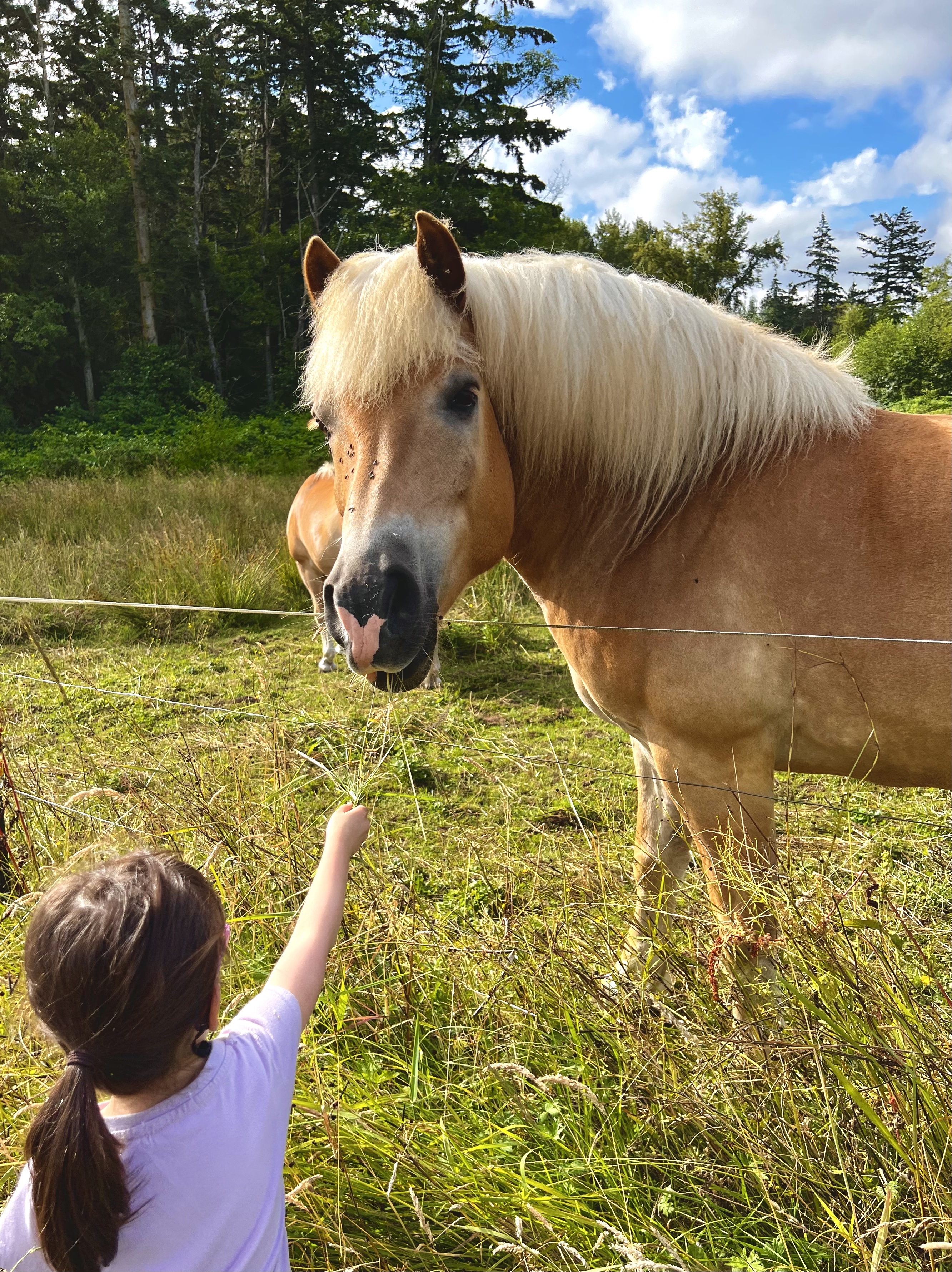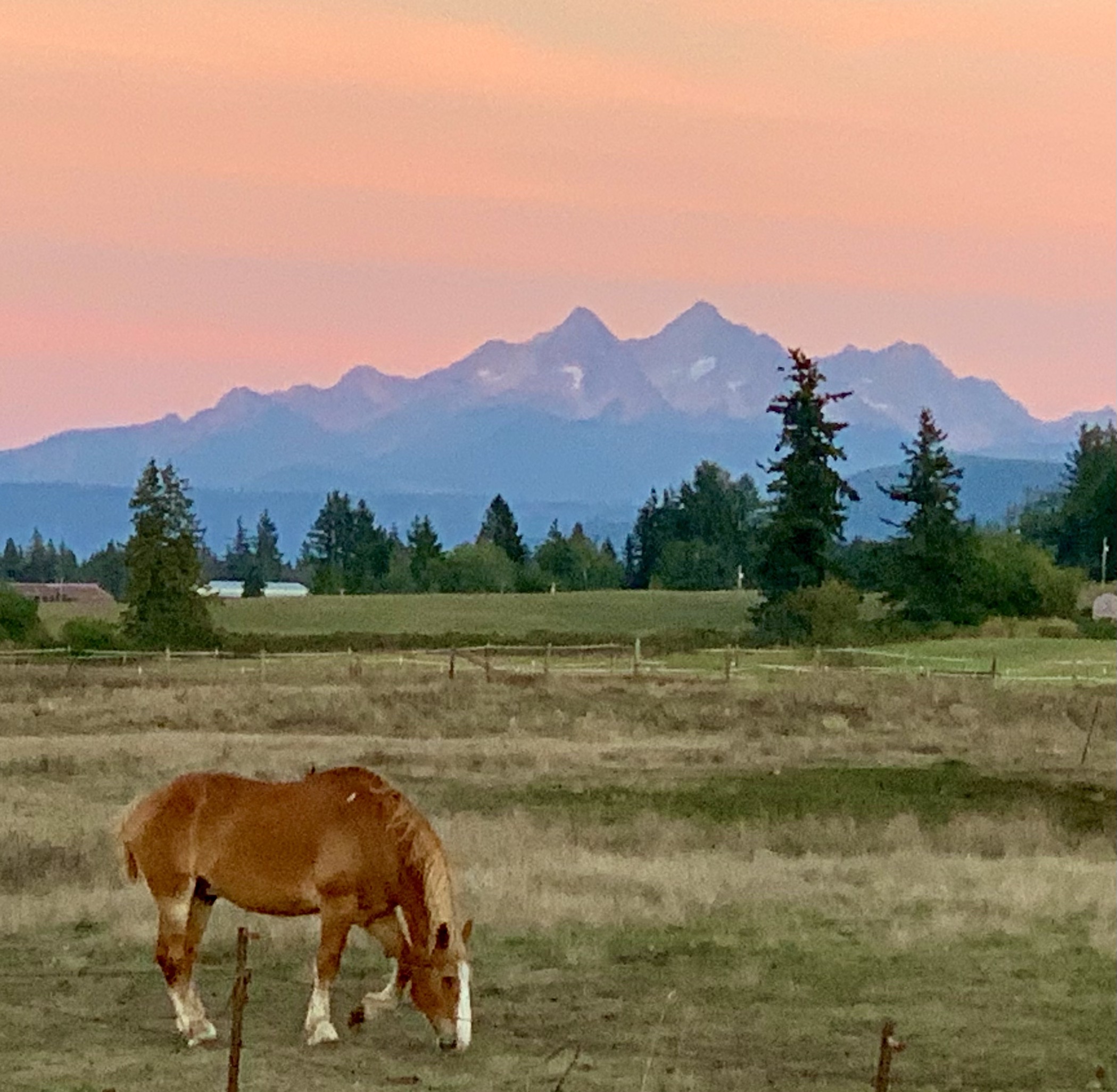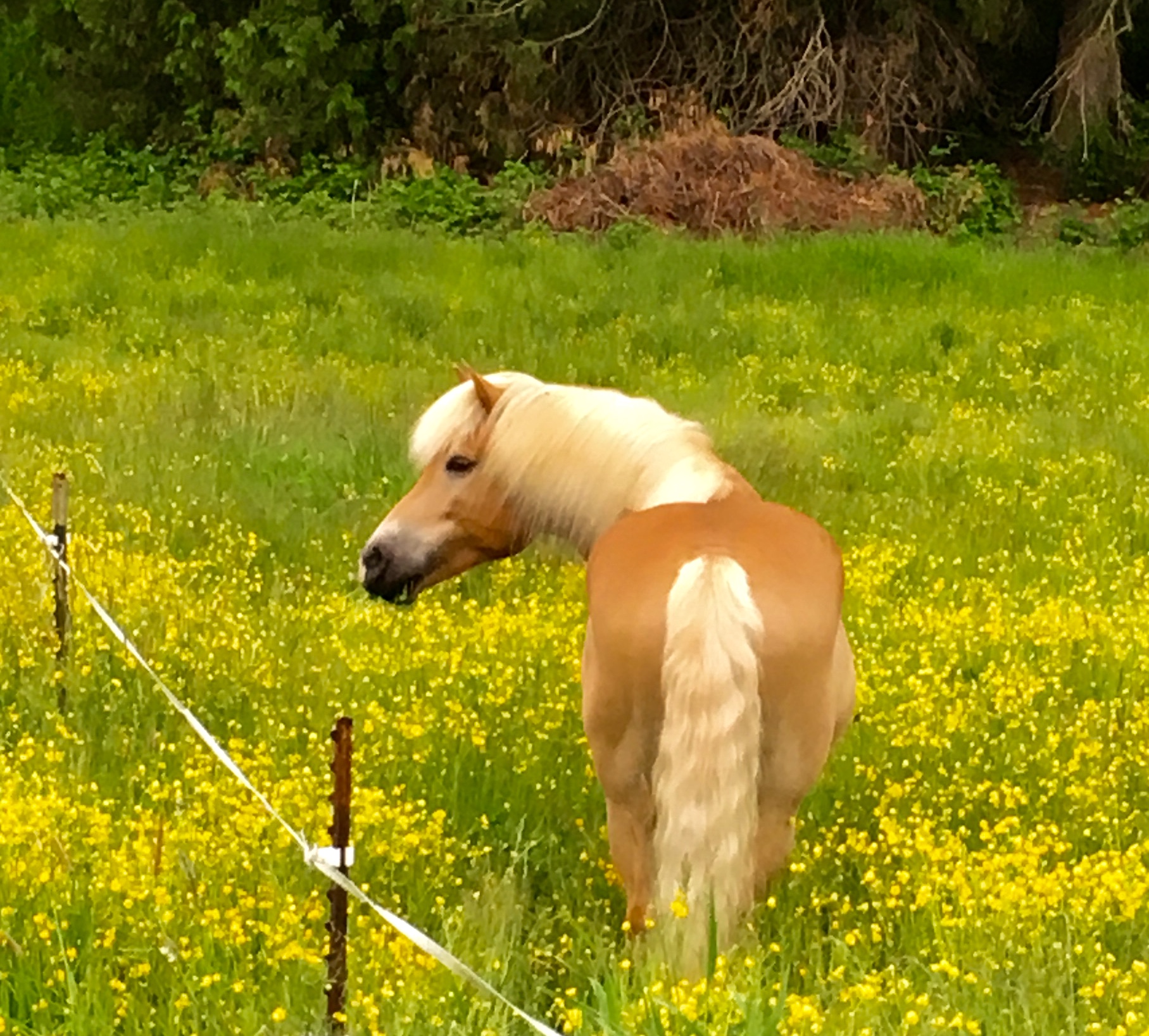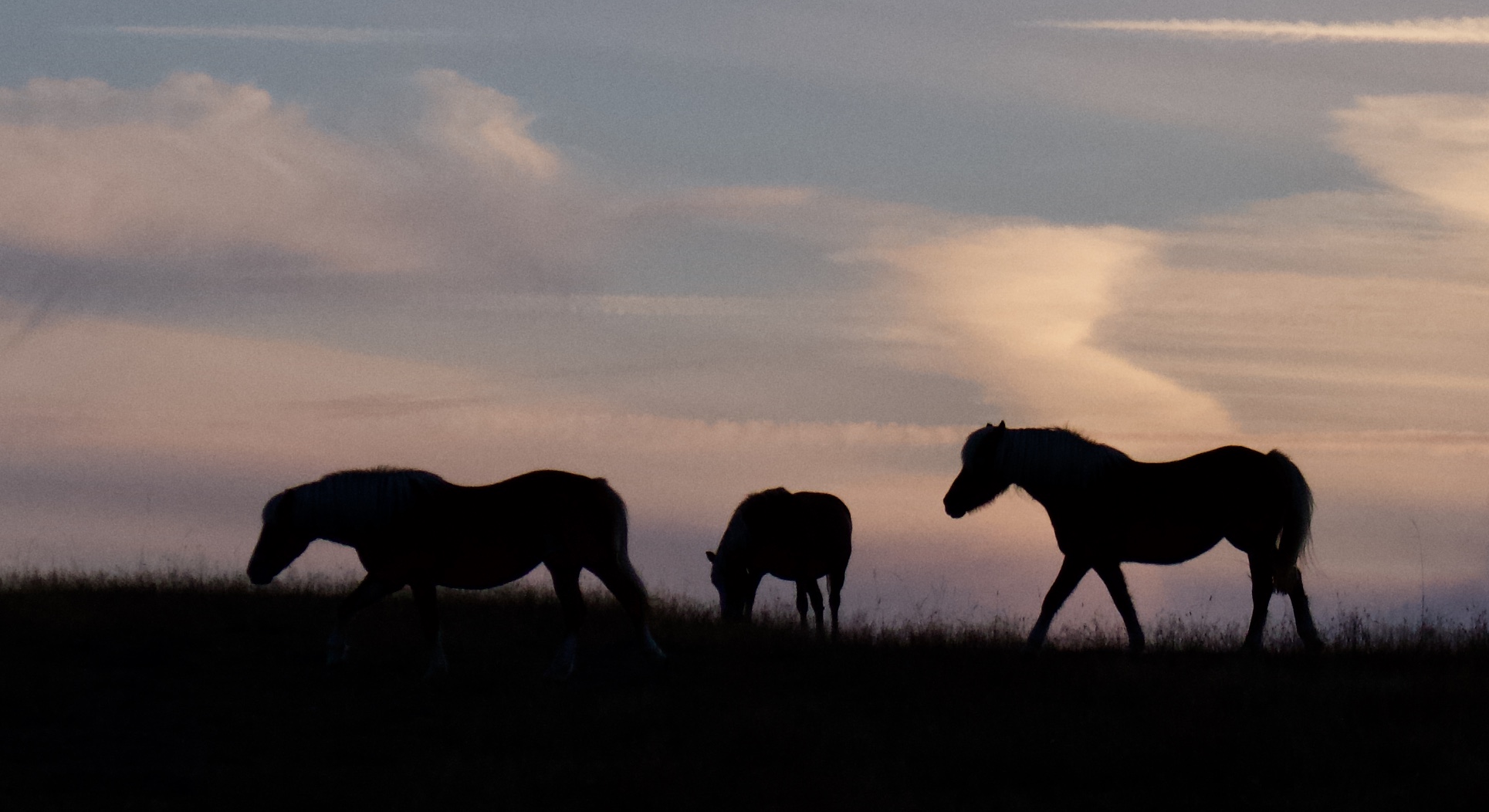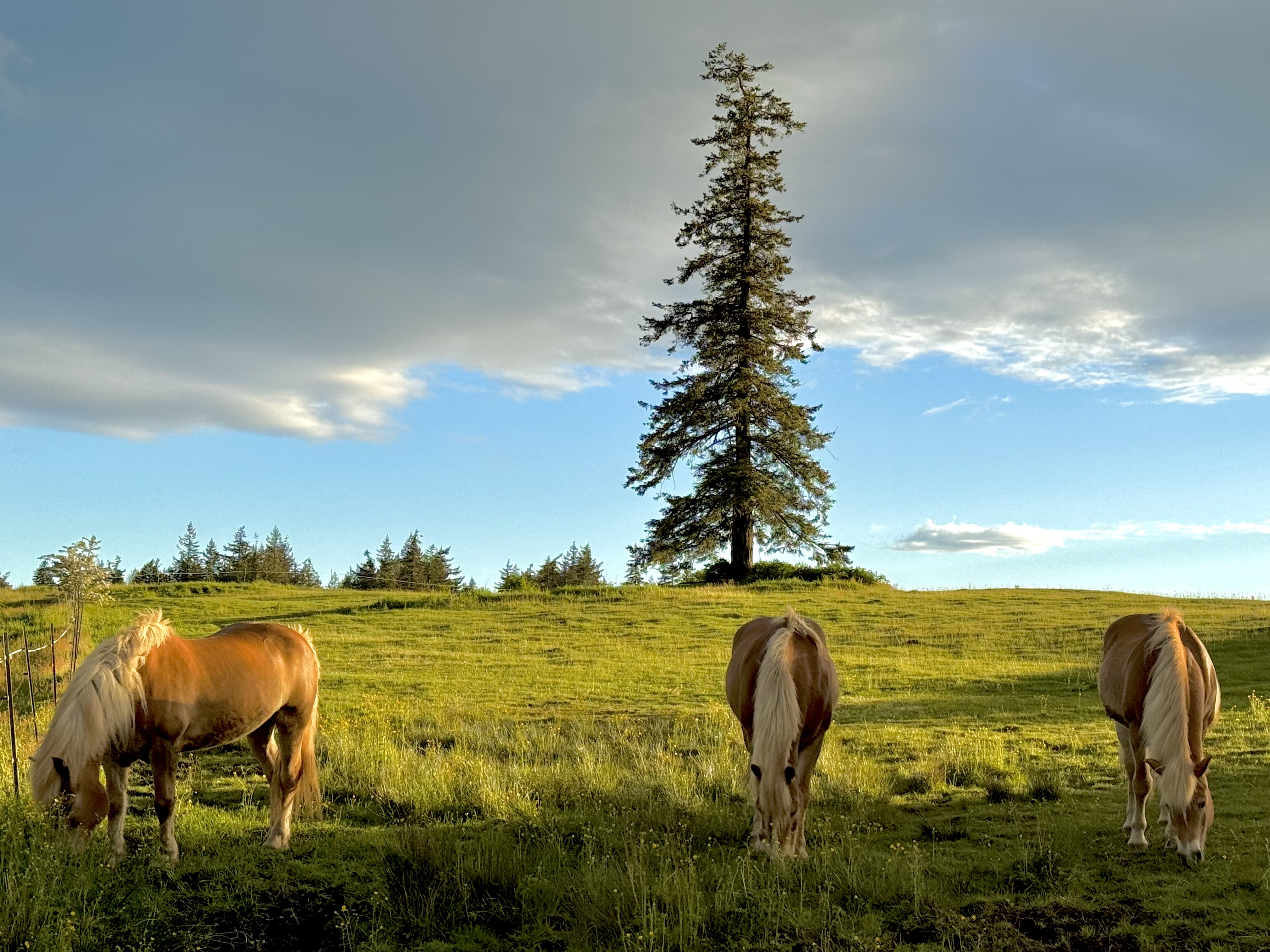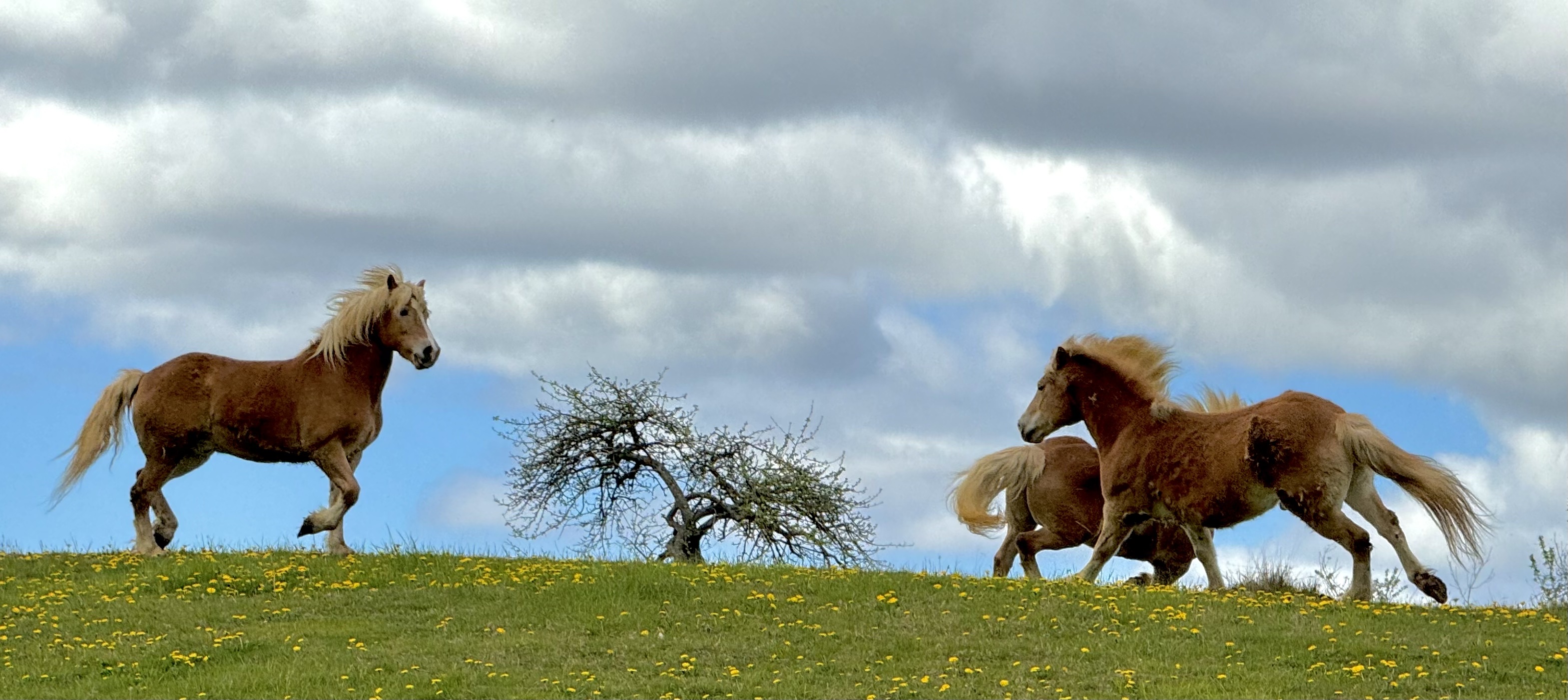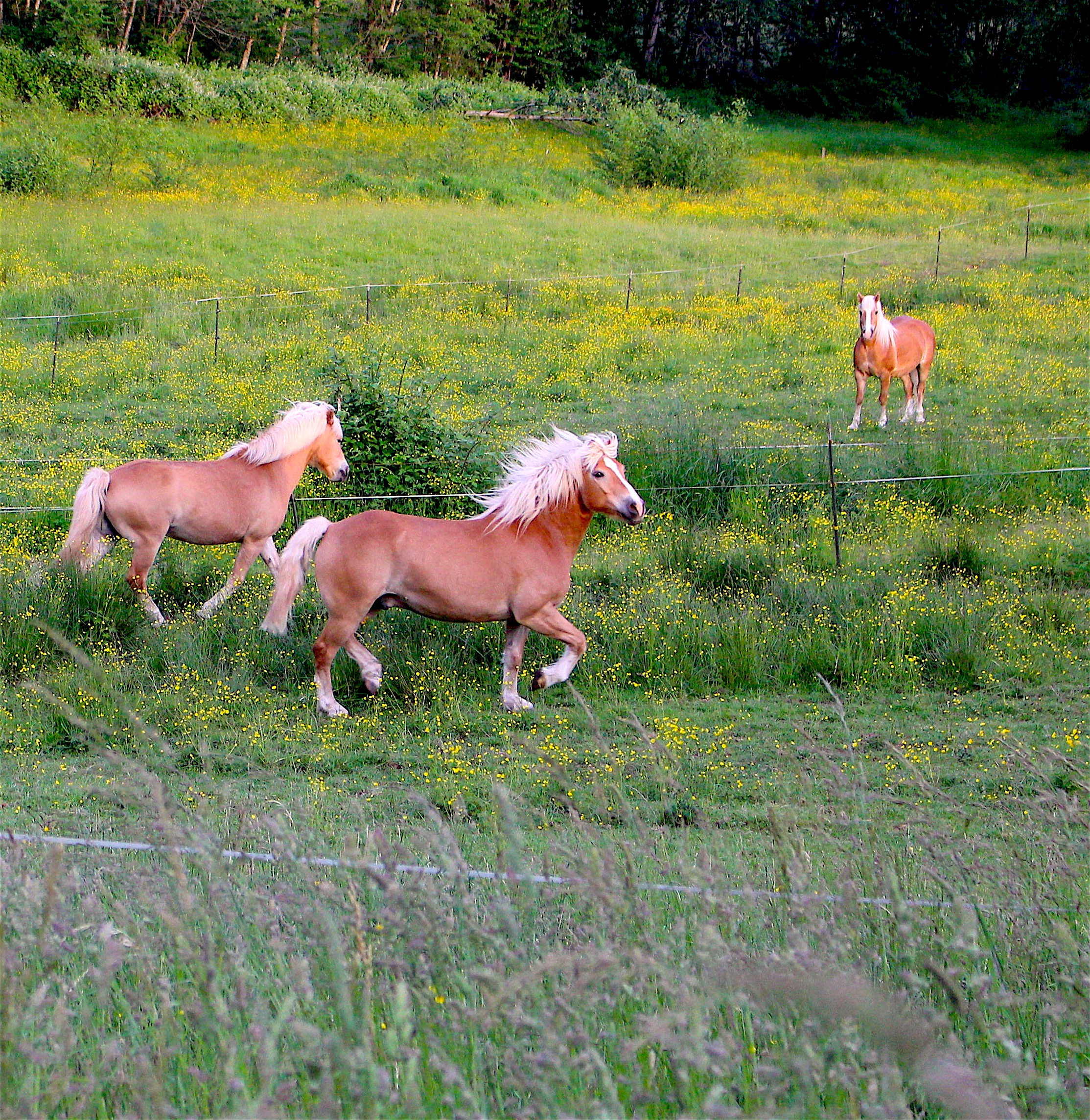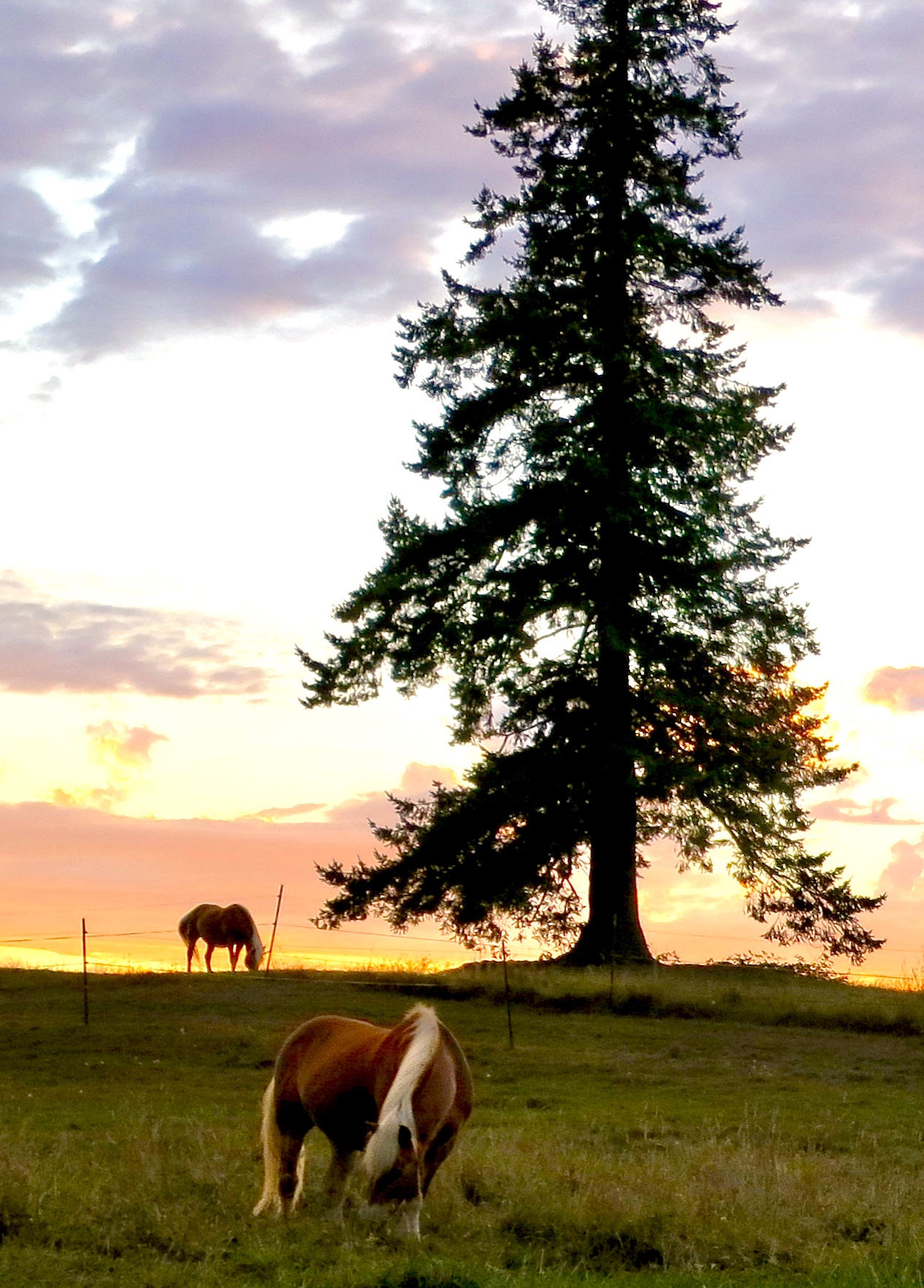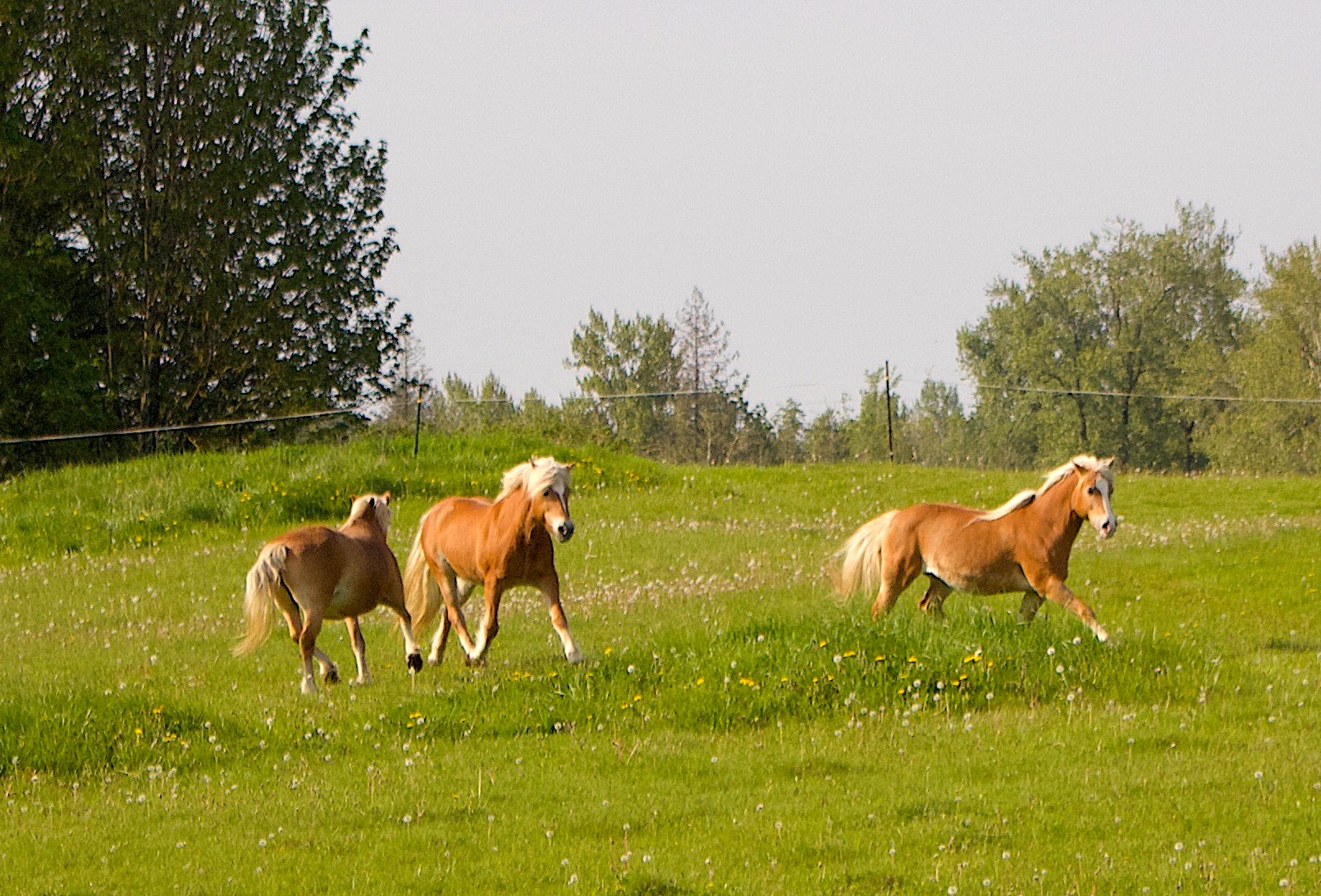
We who choose to surround ourselves with lives more temporary than our own, live within a fragile circle, easily and often breached.
Unable to accept its awful gaps, we still would live no other way.
The life of a horse, often half our own, seems endless until one day. That day has come and gone for me, and I am once again within a somewhat smaller circle. ~ Irving Townsend from Separate Lifetimes
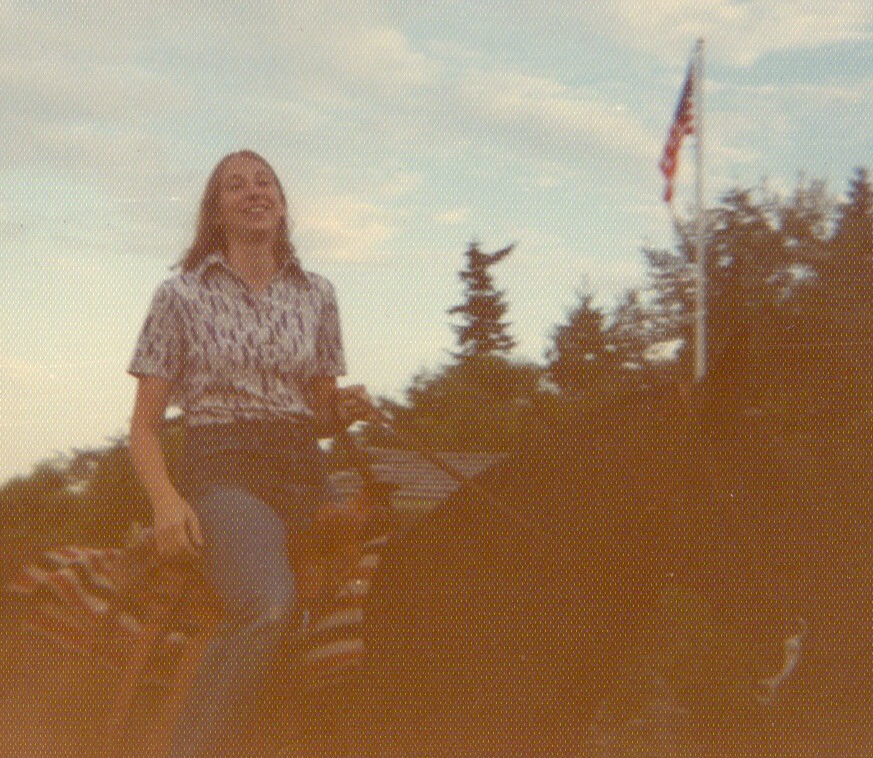
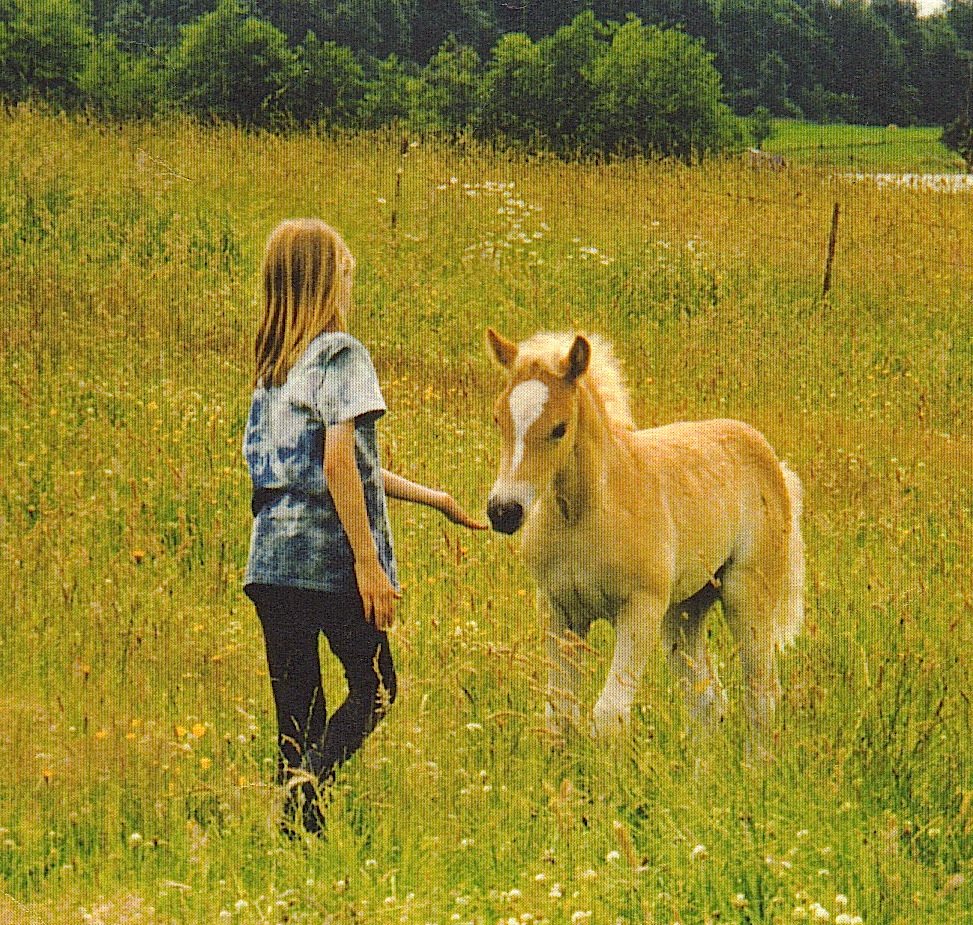
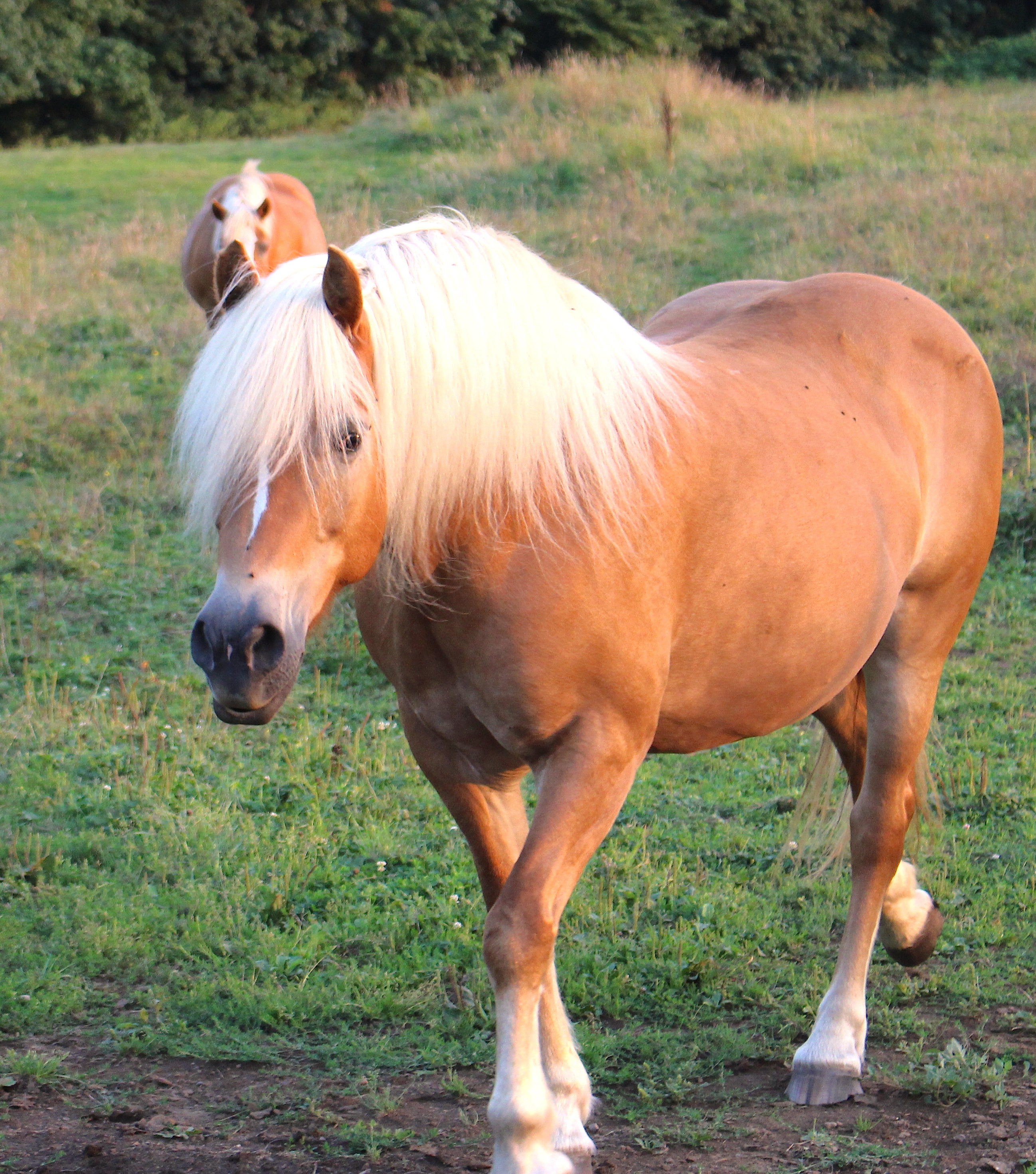
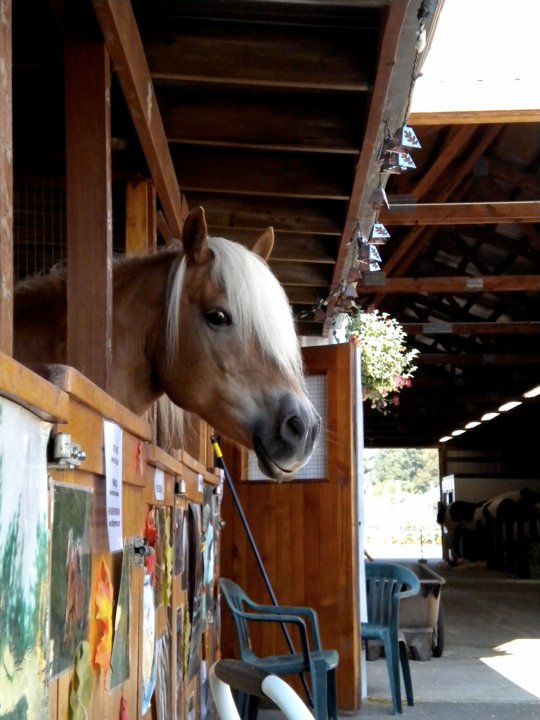
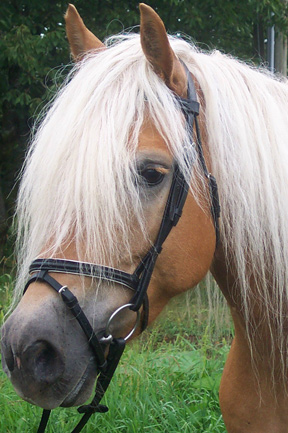
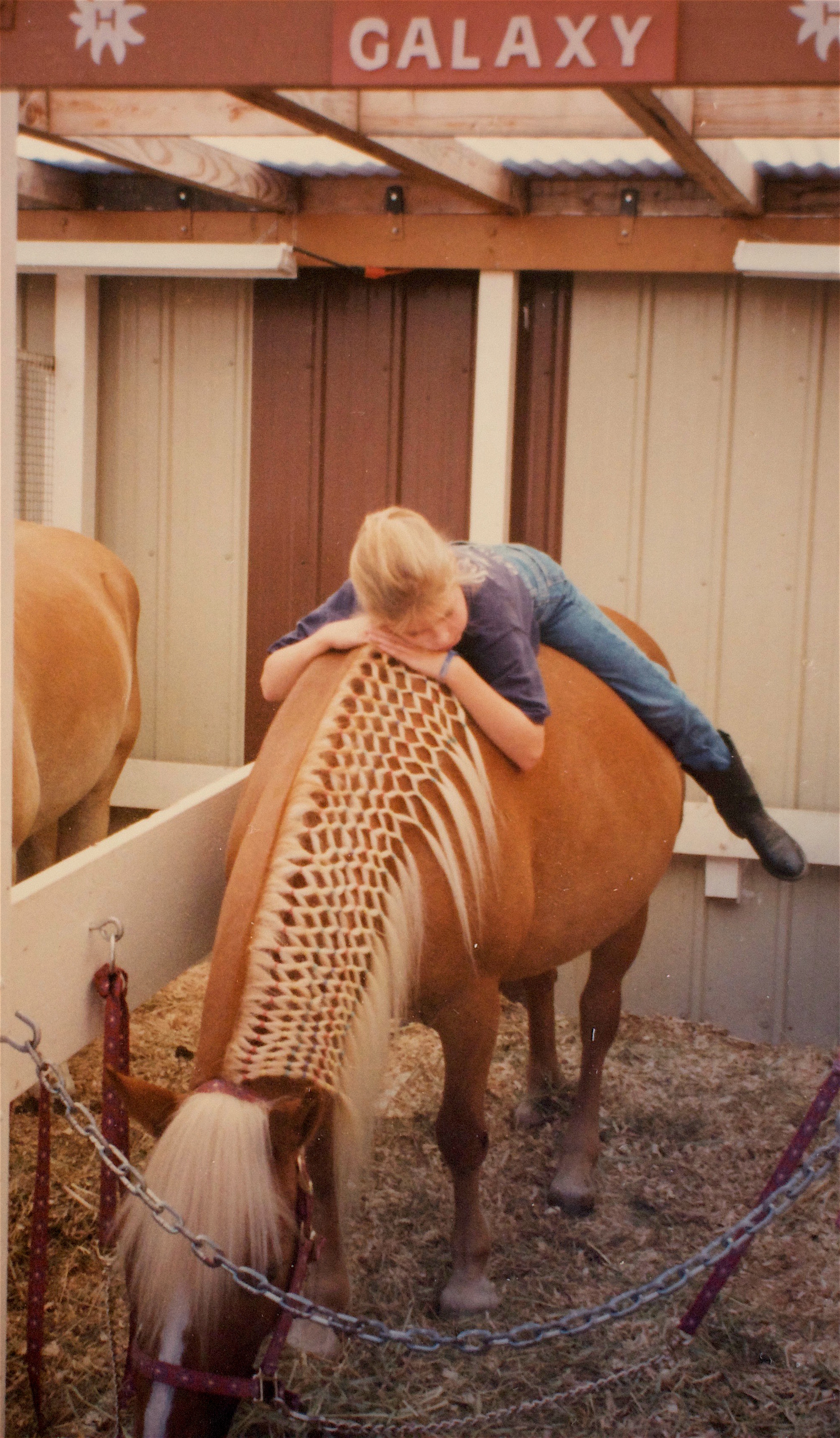
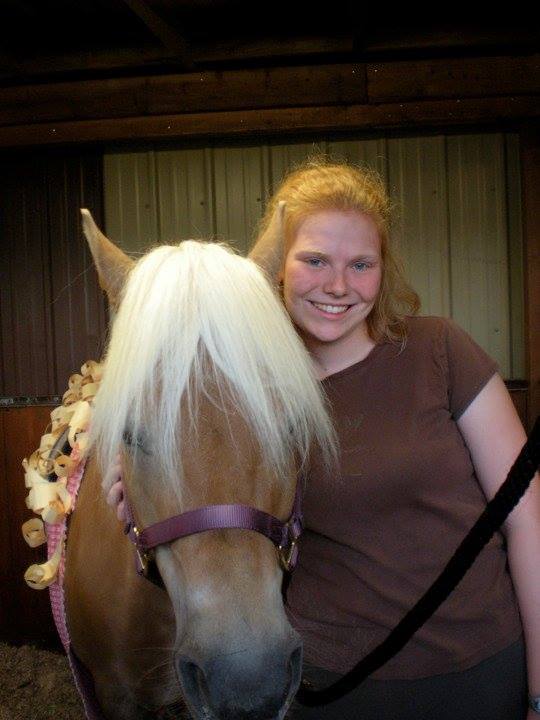
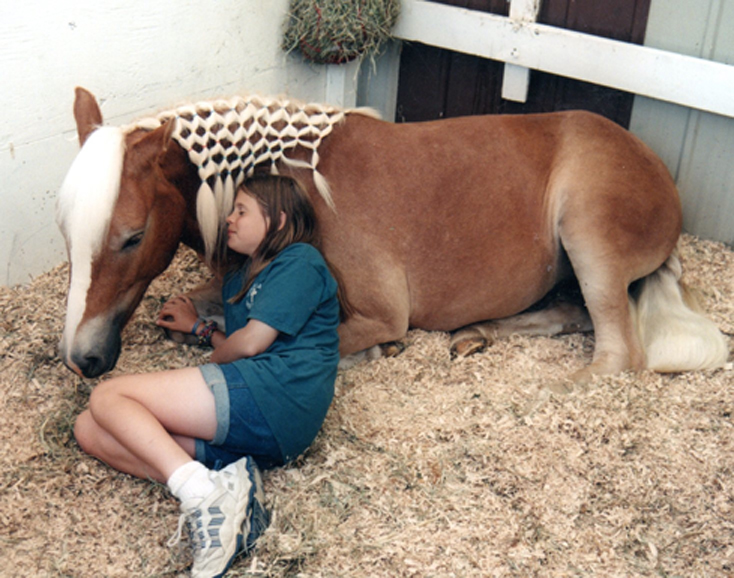
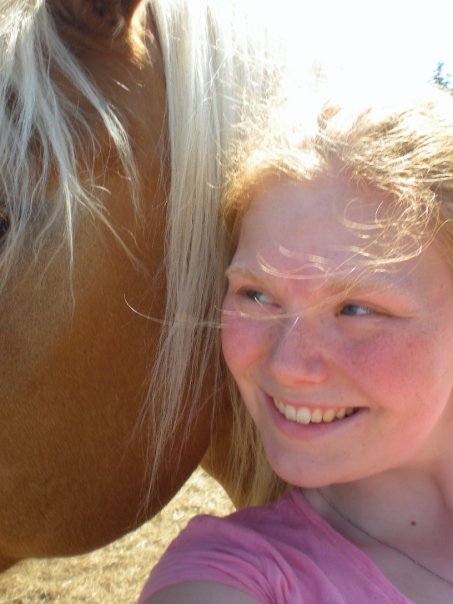
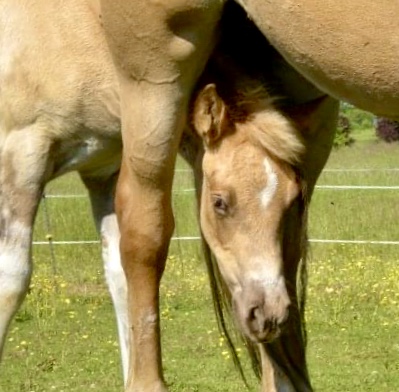
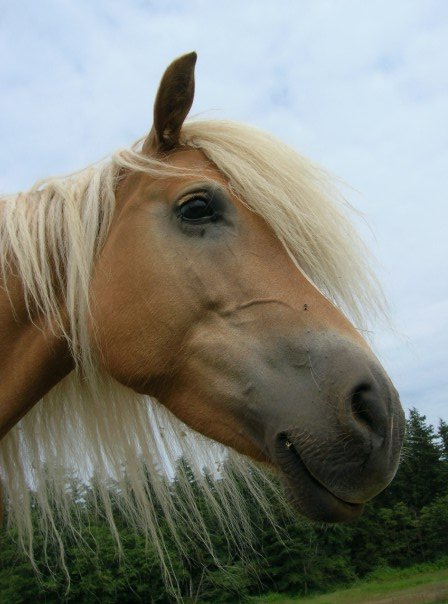
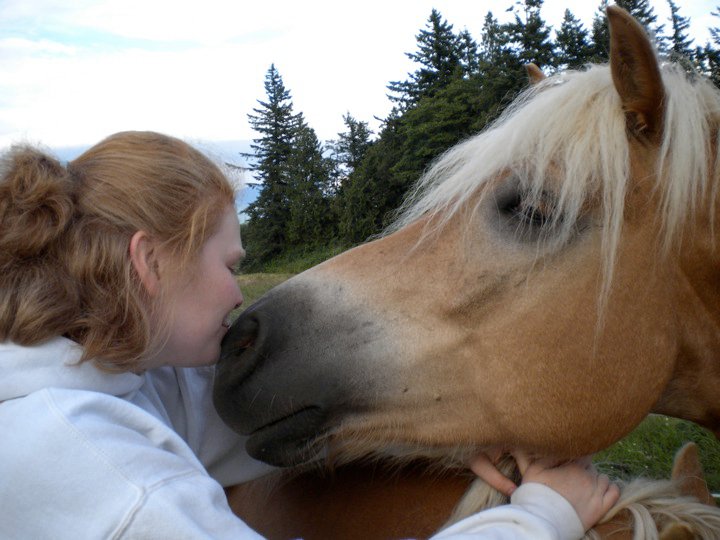
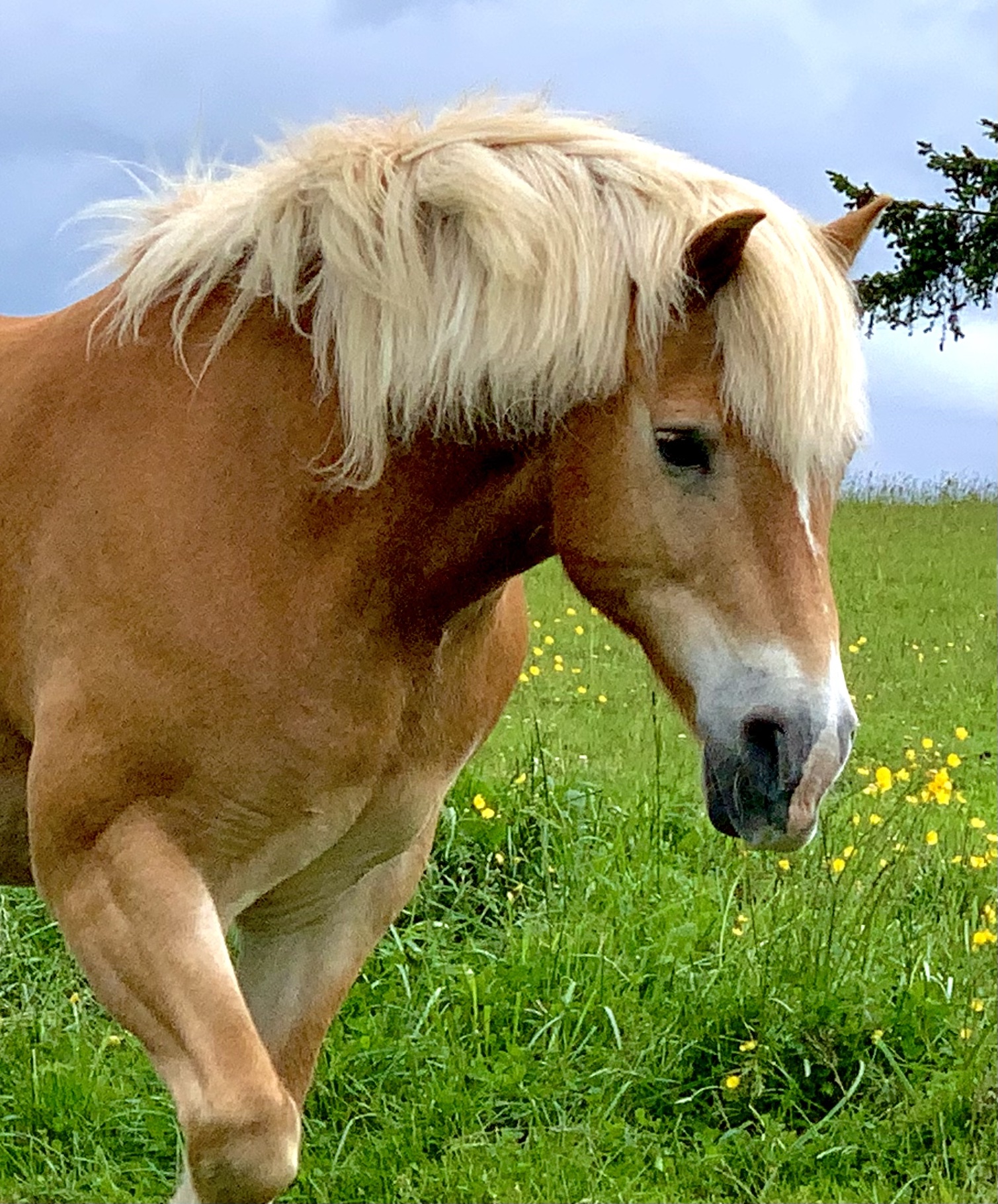
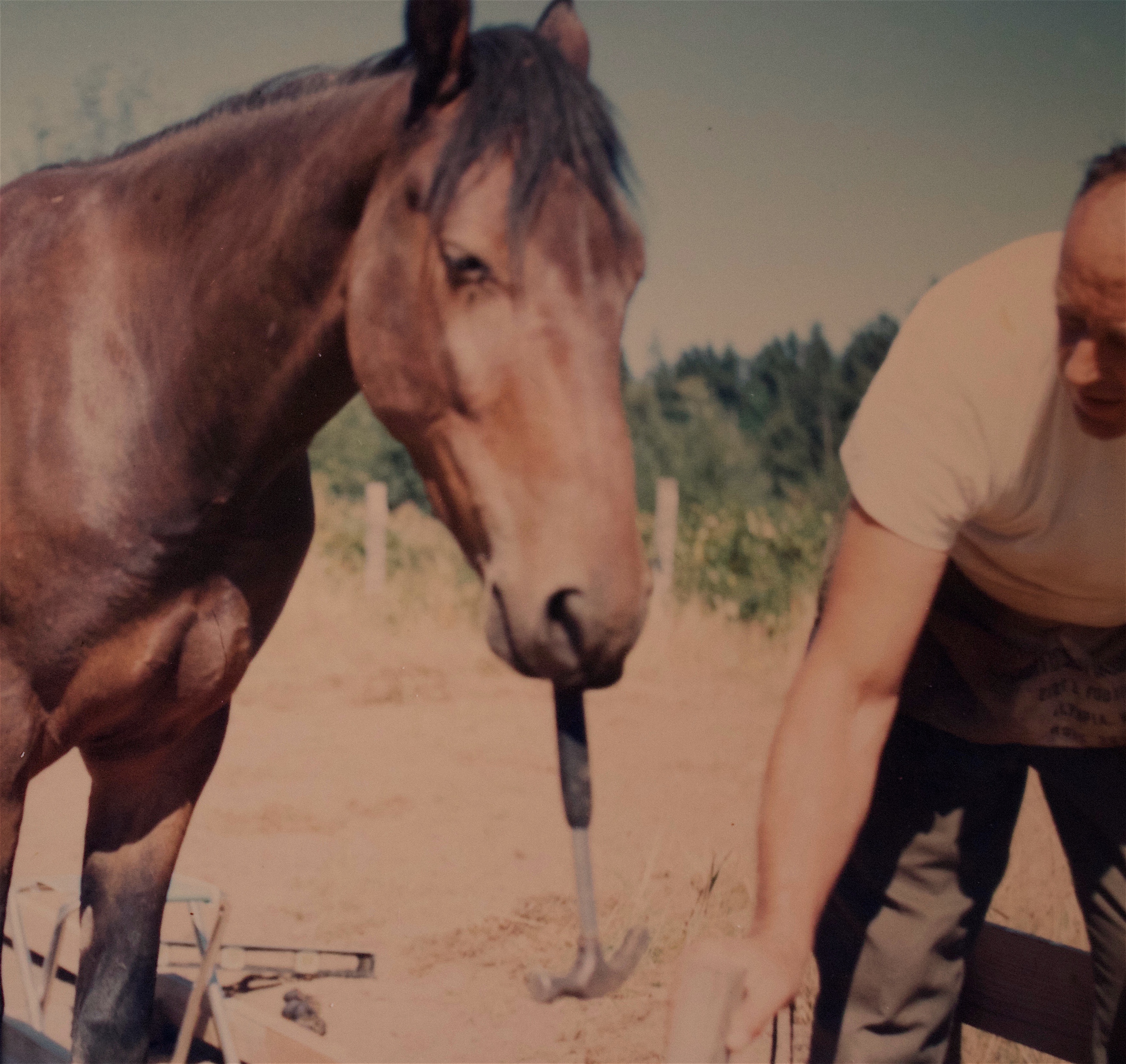
1996 photo of Noblesse with Chesna Klimek, taken by Norma Jenner
That day comes, yet not without warning.
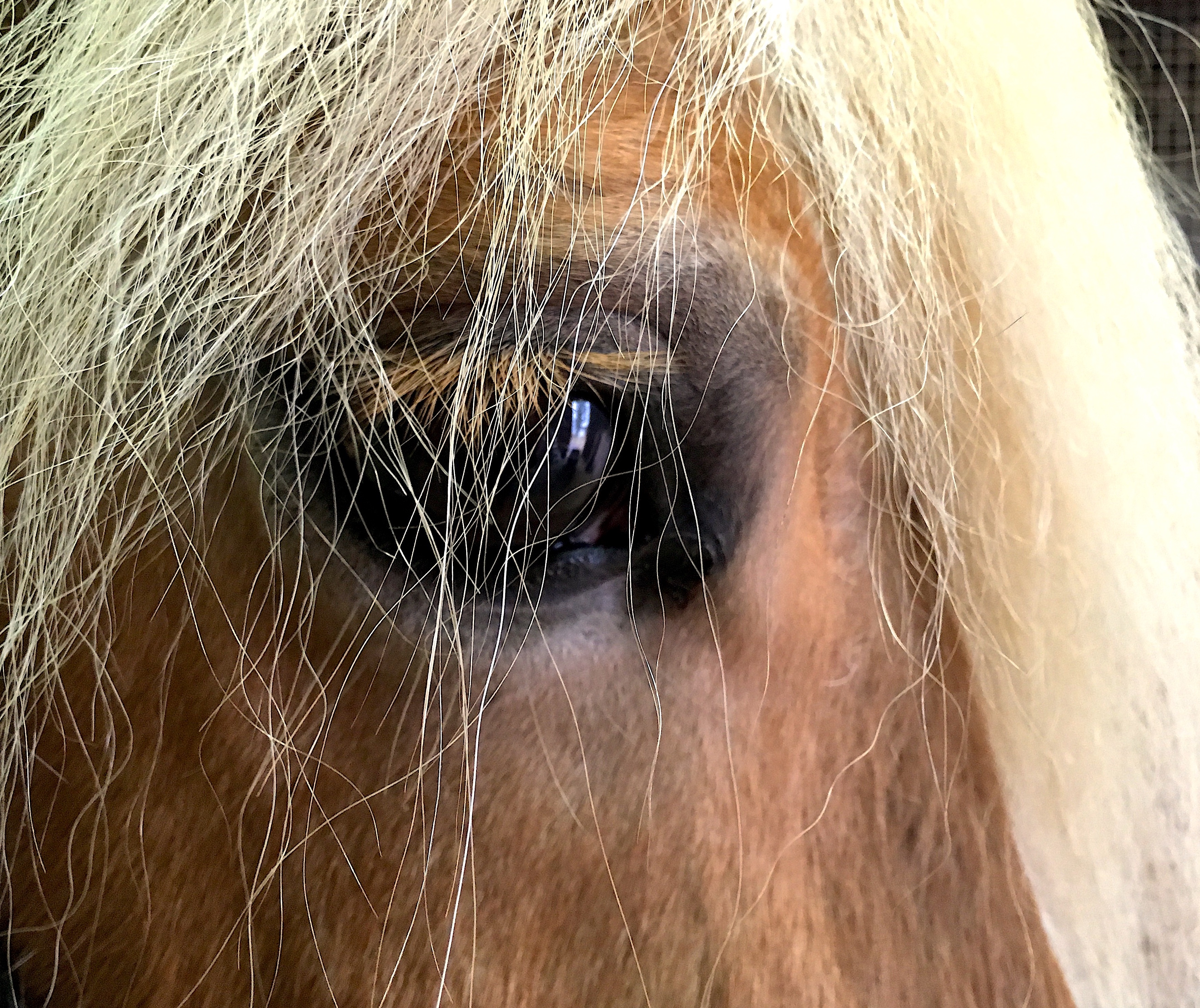
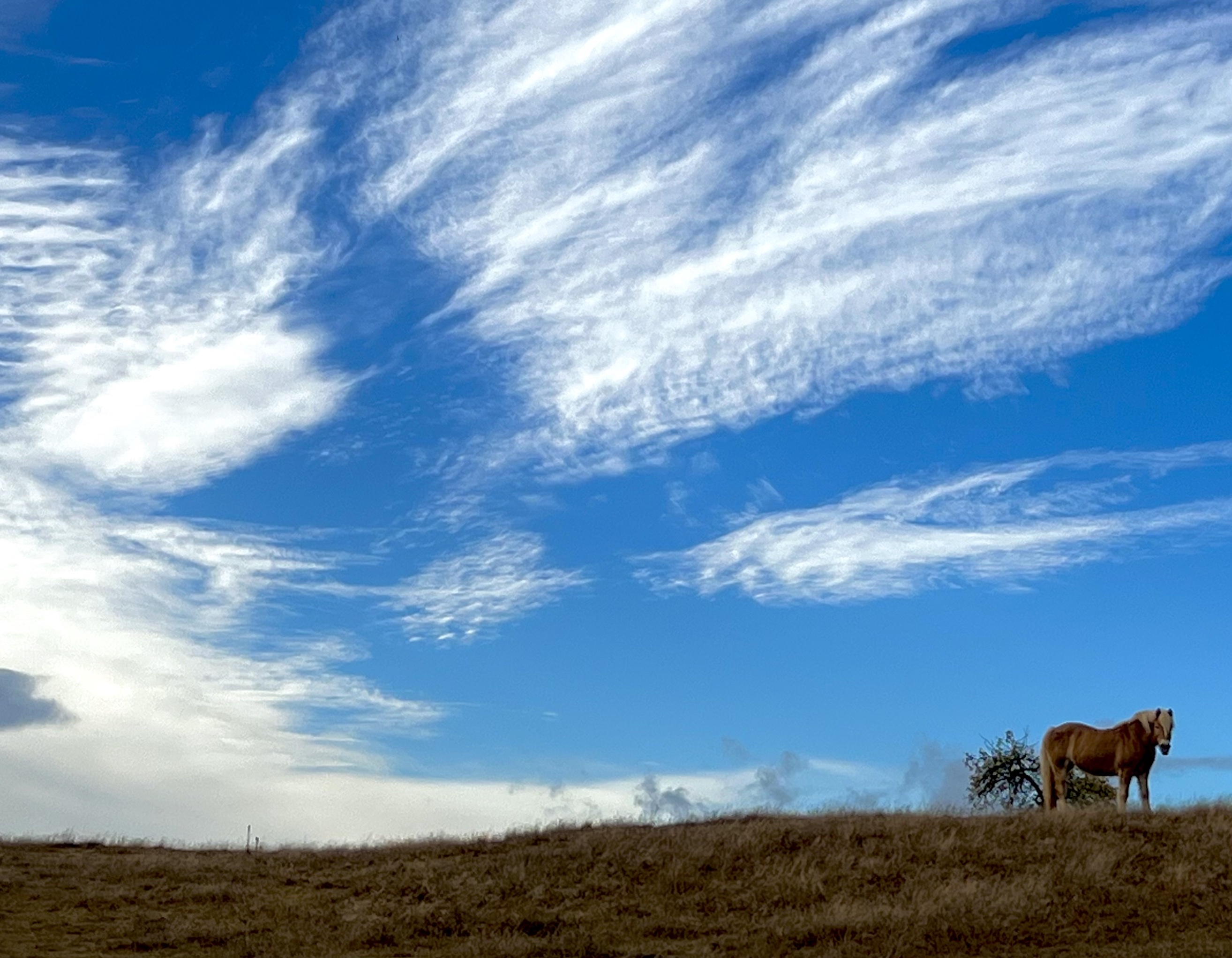
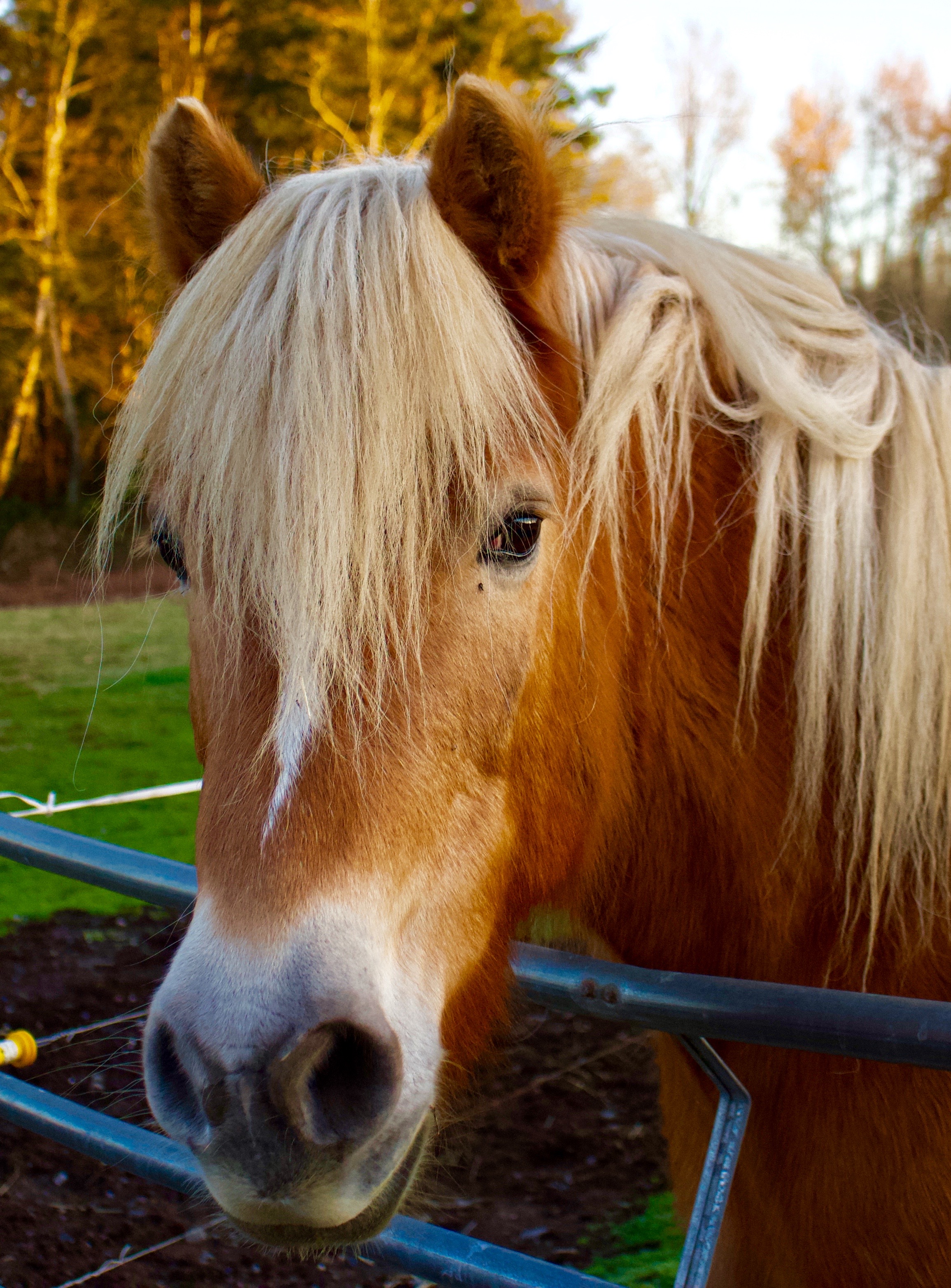
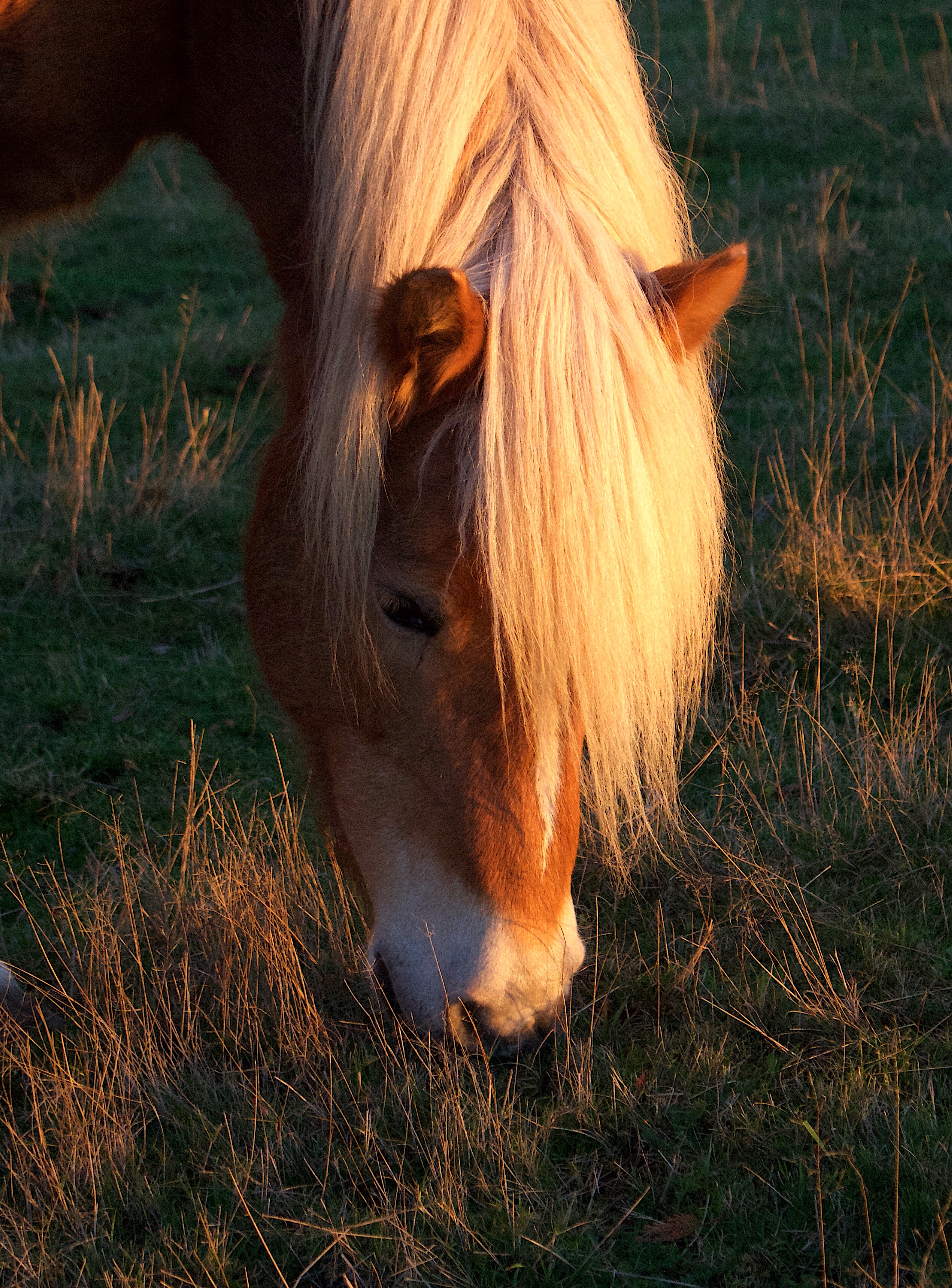
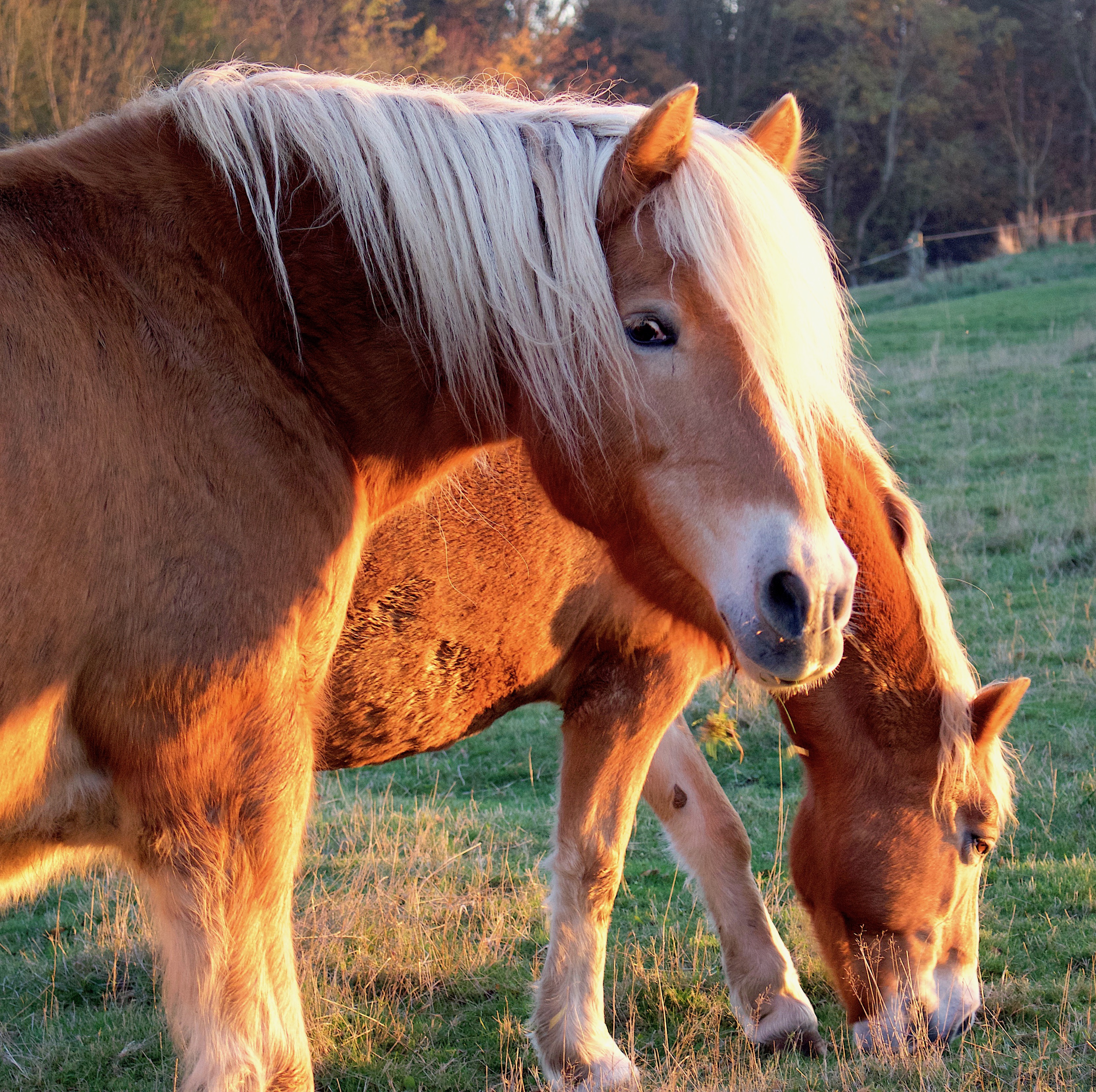
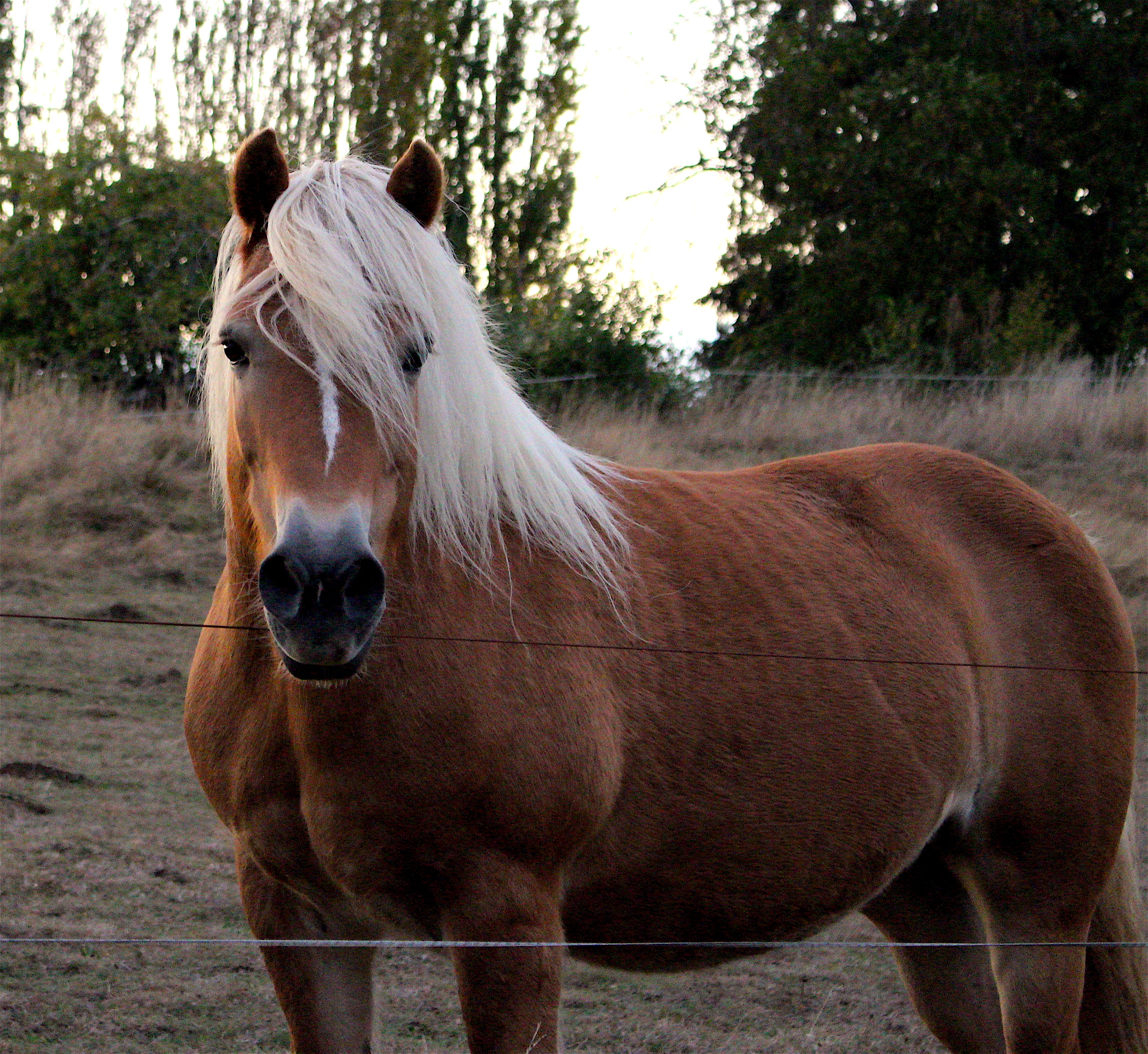
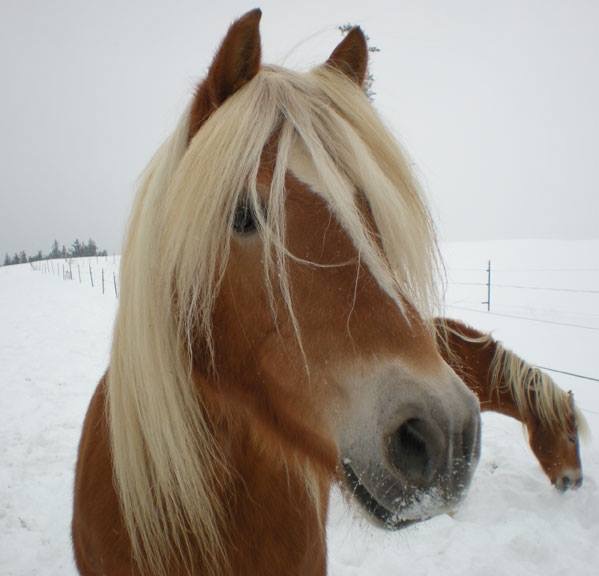
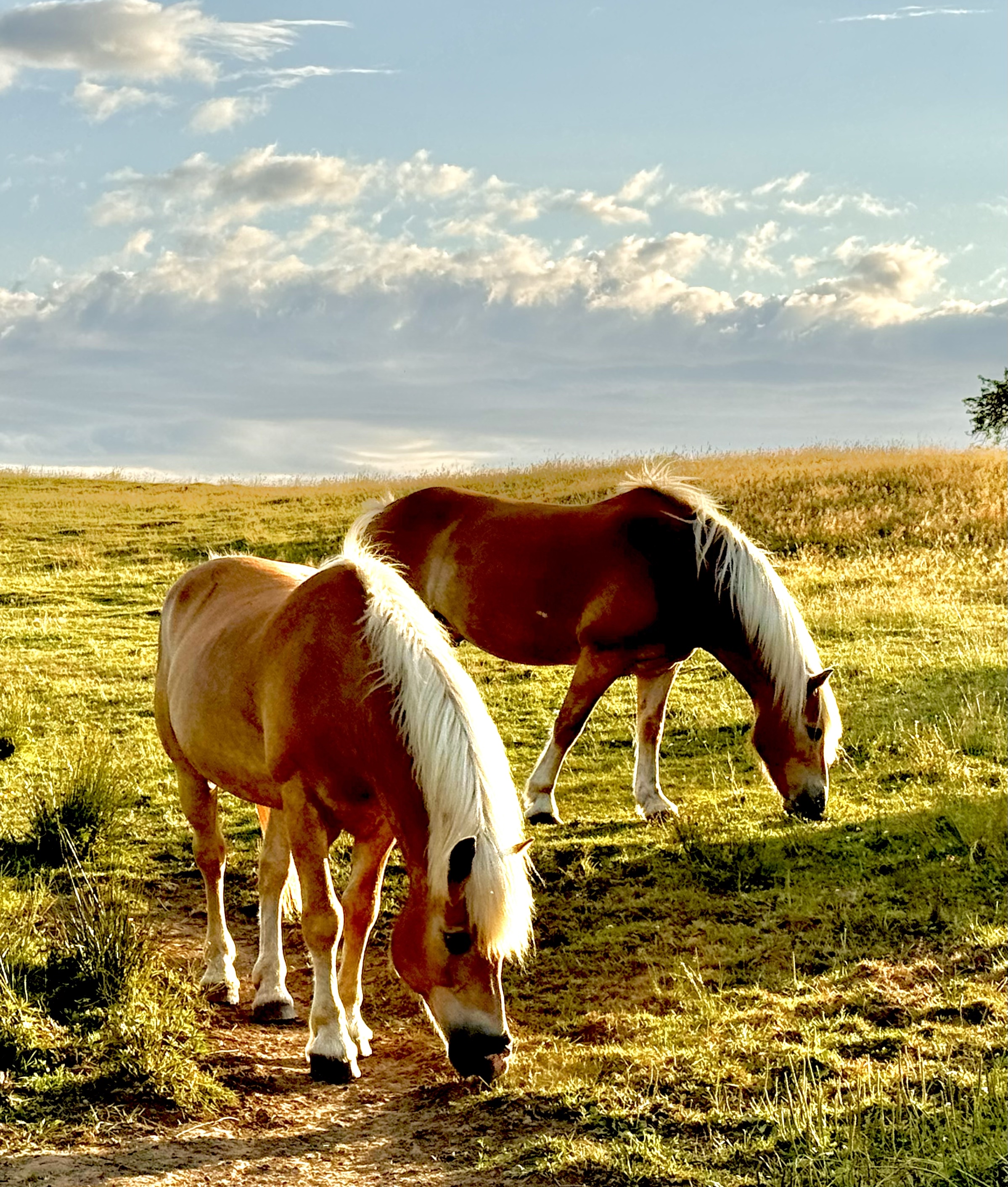
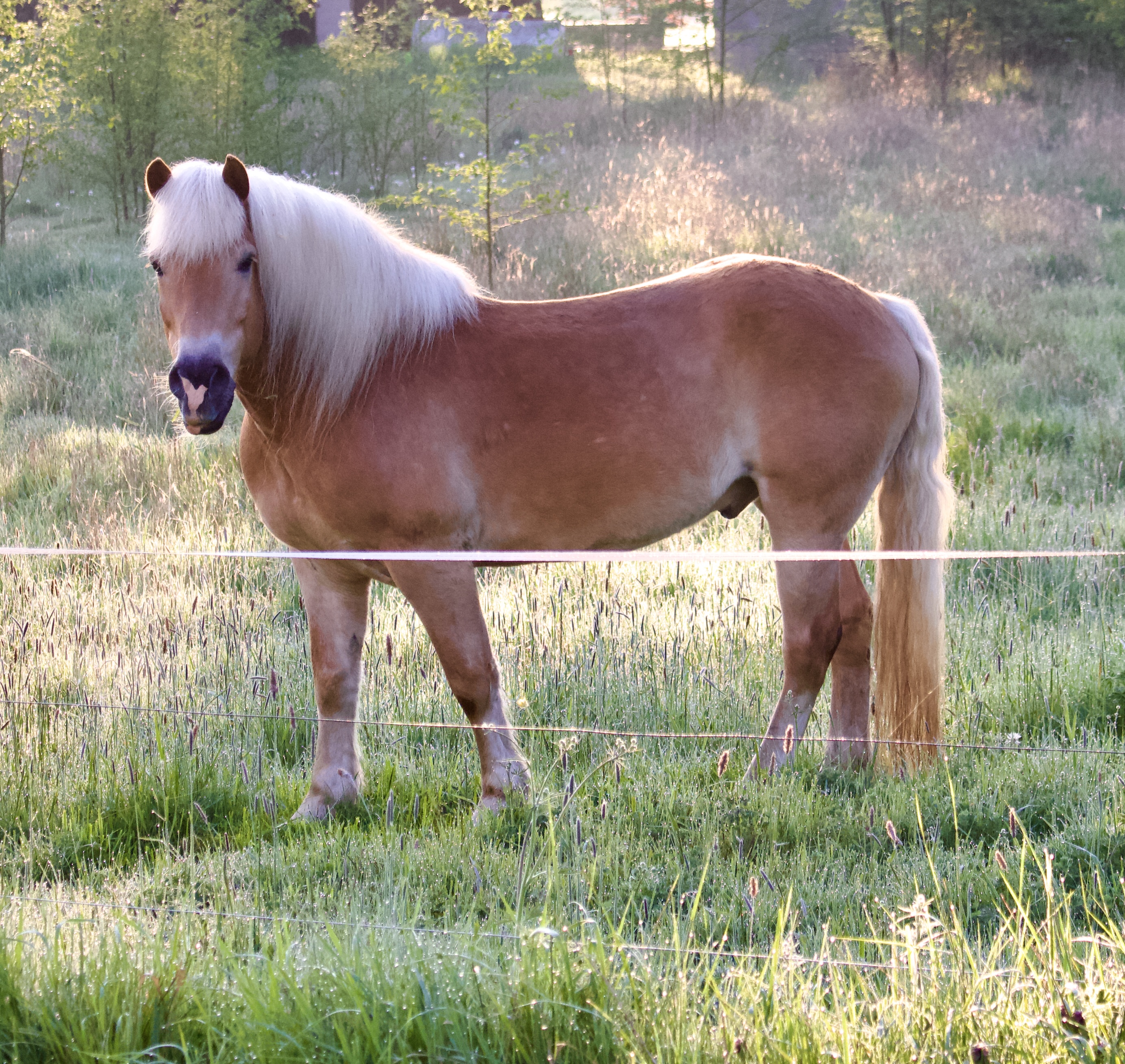
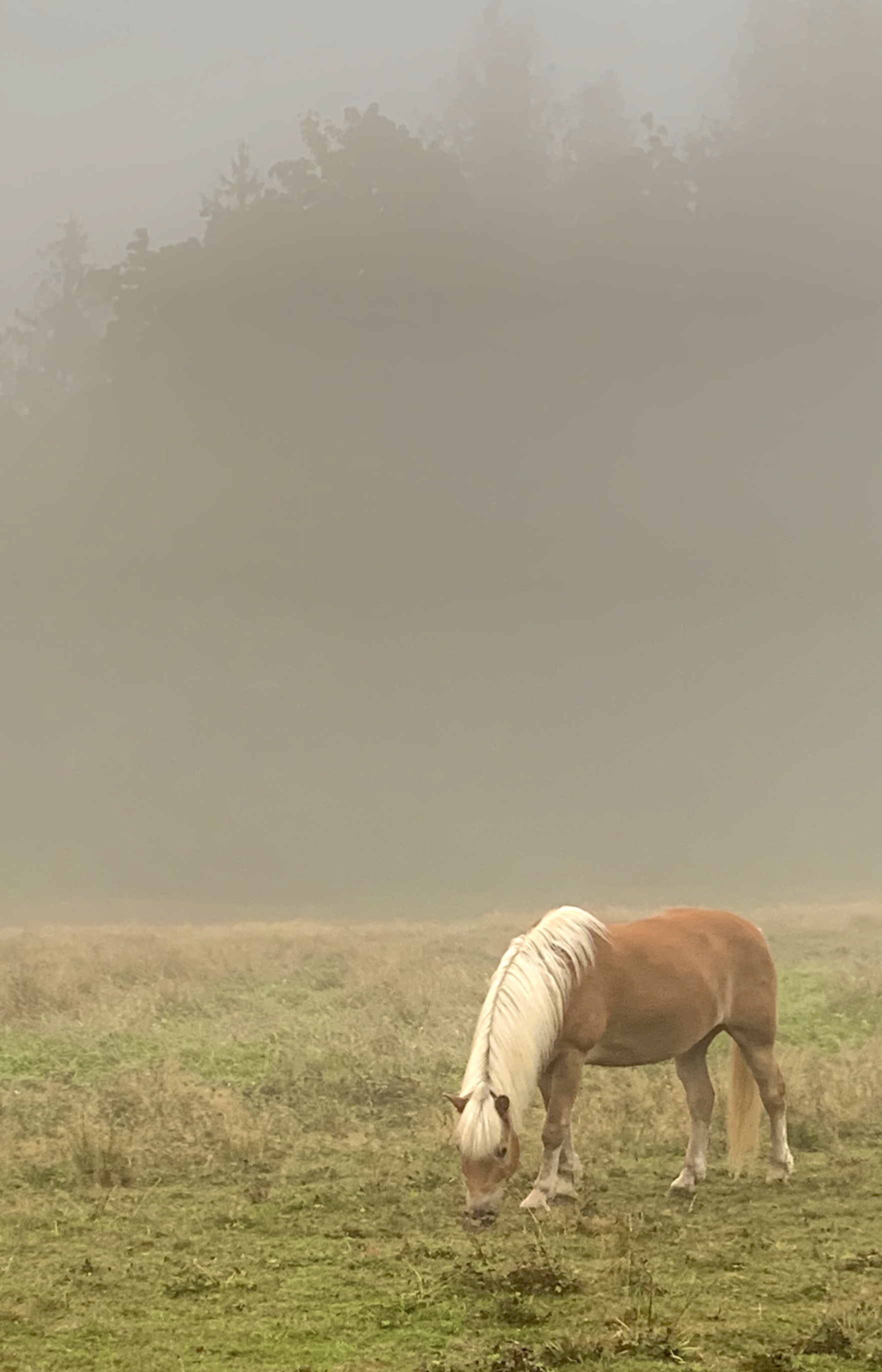
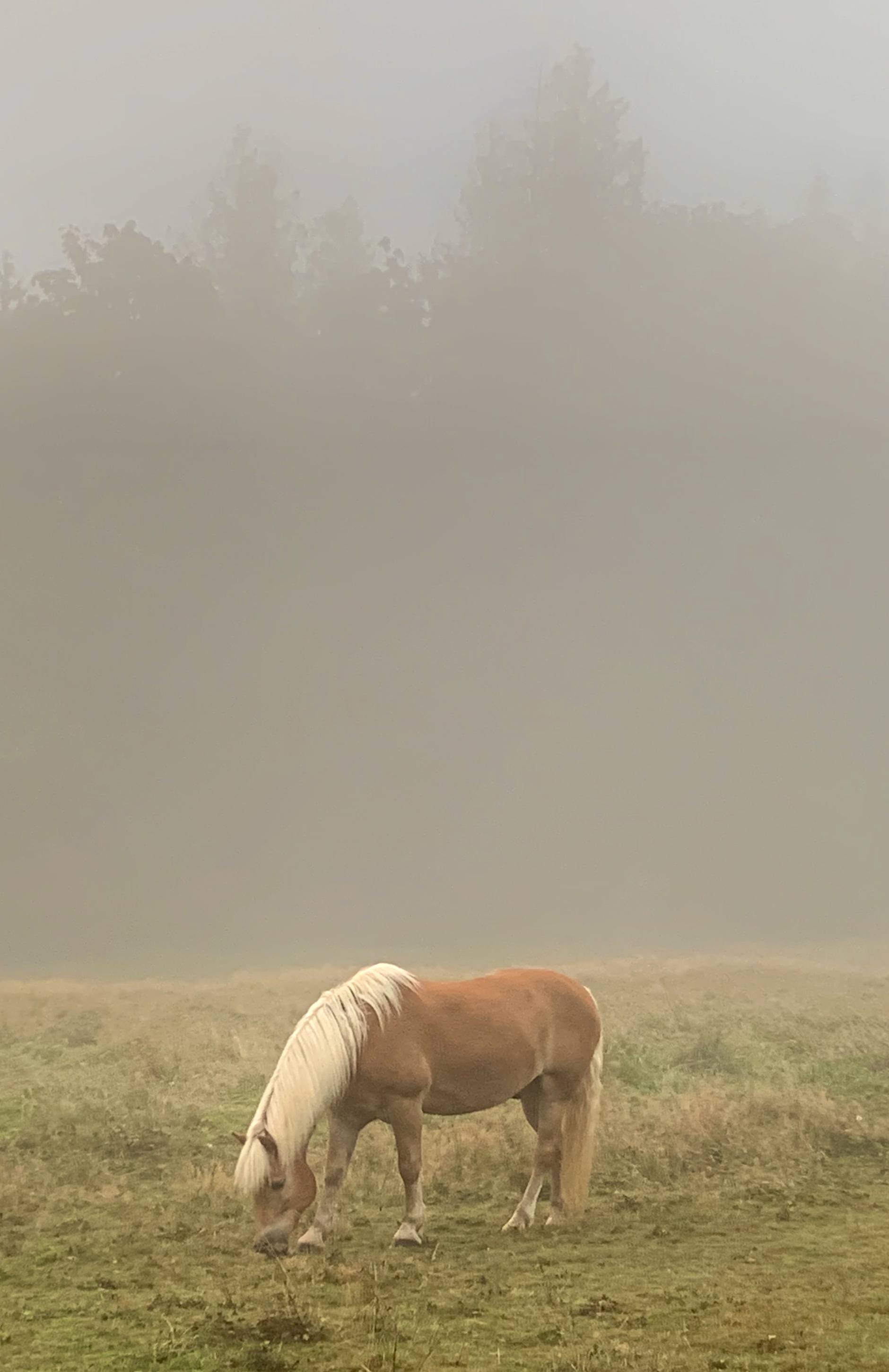
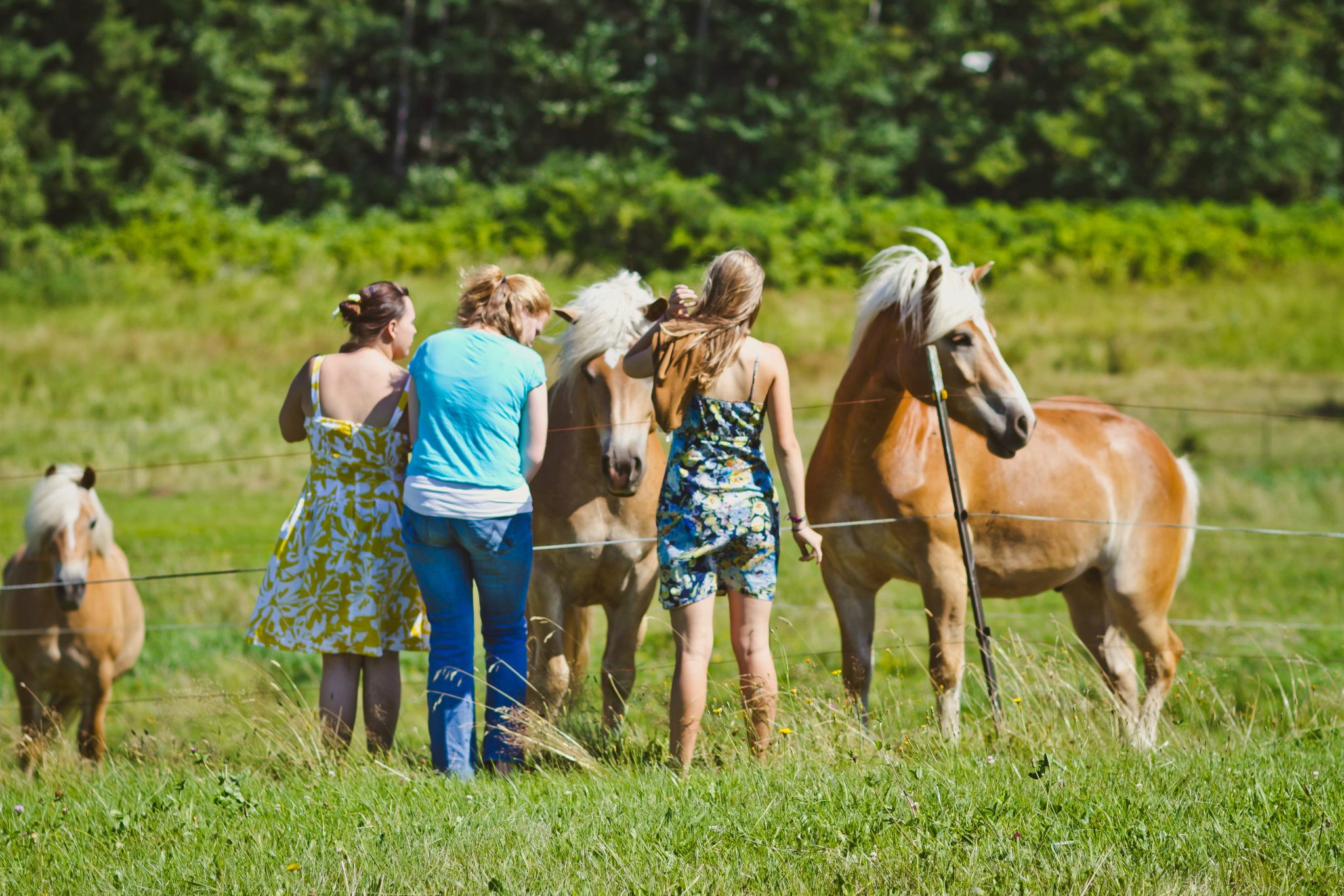
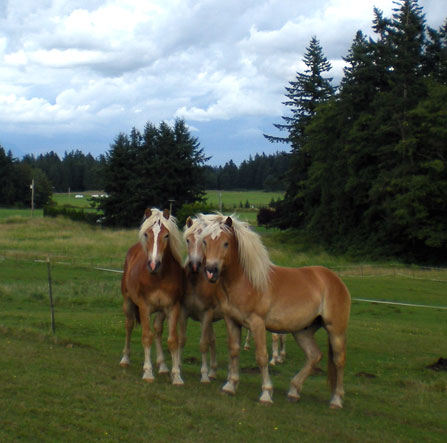
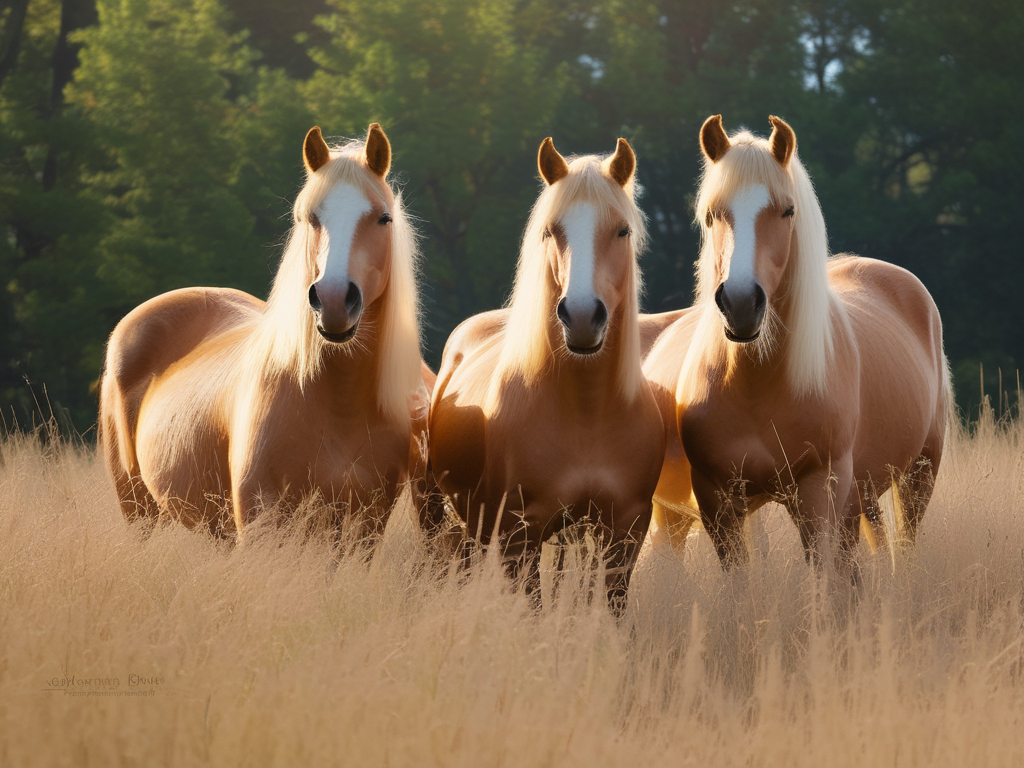
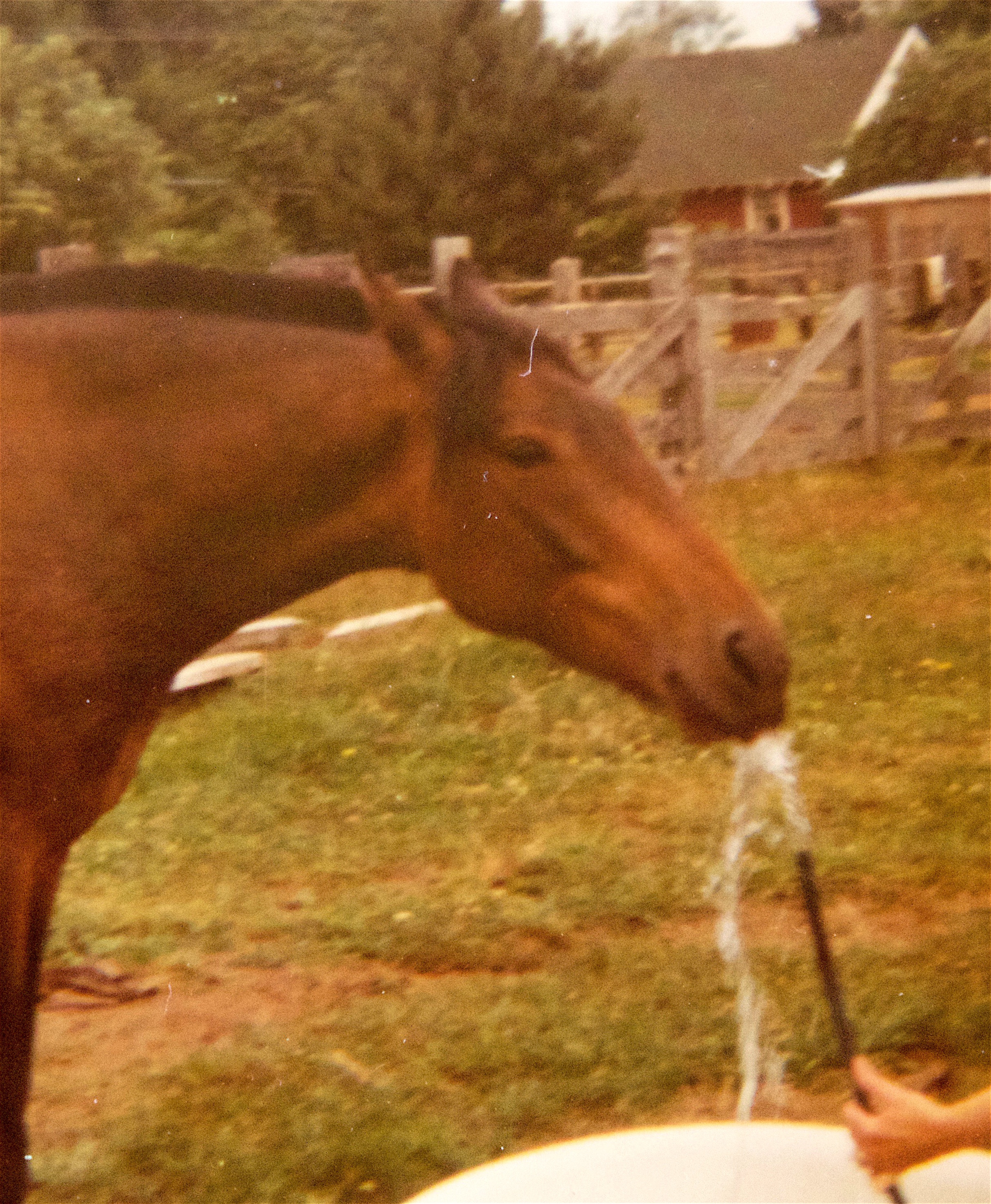
Noblesse, our oldest Haflinger mare, nearing 29 years old, kept convincing me this past summer she was living her best life and was not too old to keep enjoying more time on this earth. She came running when I whistled and would be the first to greet me when I came to the barn for chores.
It wasn’t all rainbows and roses for her. I would see her dozing more frequently, walking slowly due to joint pain, and showing the hallmark signs of metabolic dysfunction. I debated about calling the vet clinic to schedule her euthanasia. But then she would look at me defiantly: not yet, not yet…
This morning when I went out to the barn, she was standing with her head down, atypical for such an extroverted bossy mare who usually demands that I attend to her first. Then, she startled me by dropping down to roll and then rolled again. Not eating, reaching around to bite at her flanks. She was clearly miserable.
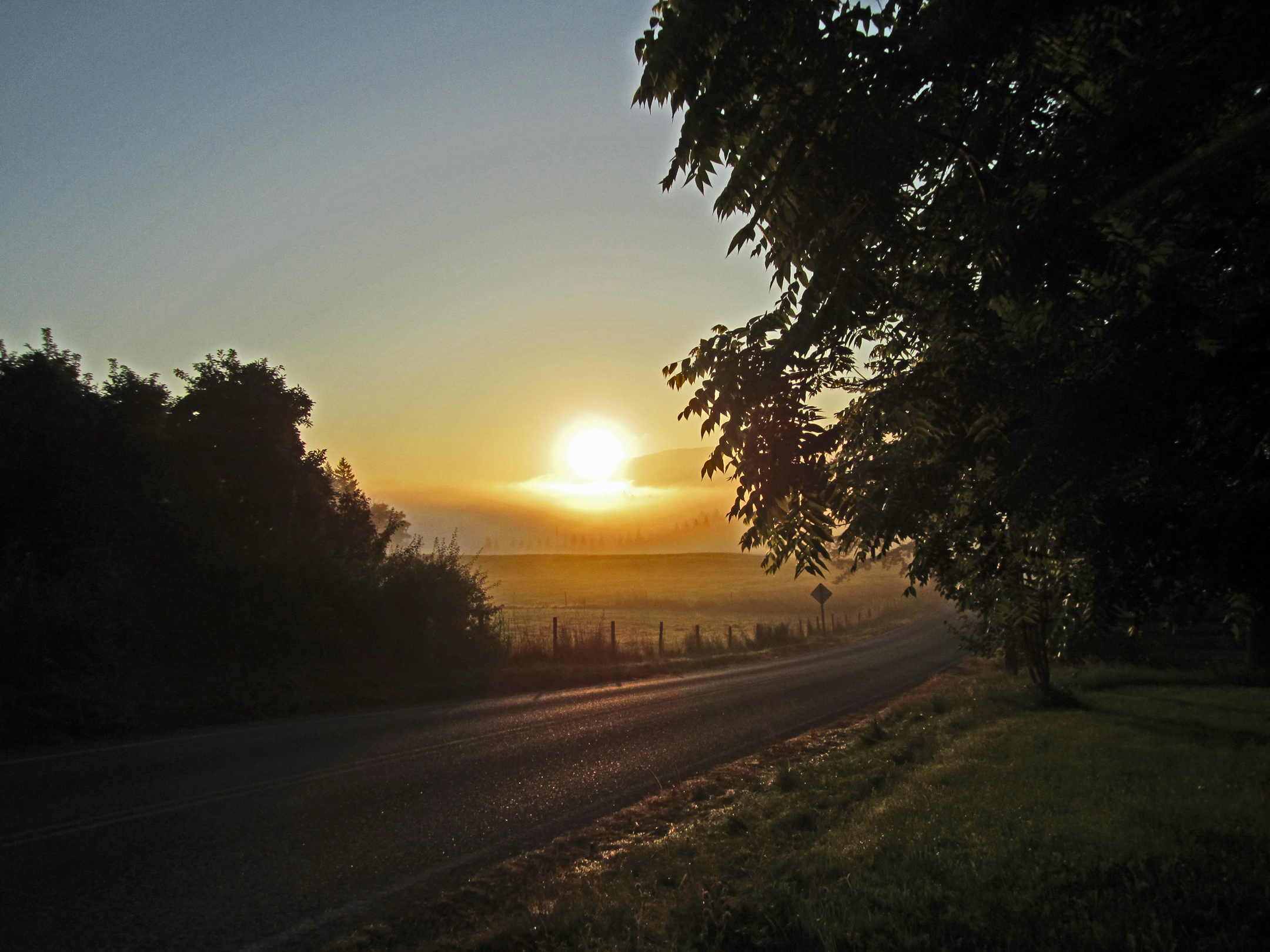
I knew then this was the day.
Within the hour, thanks to a responsive vet and his assistant, she was pain-free and no longer facing a cold wet winter ahead.
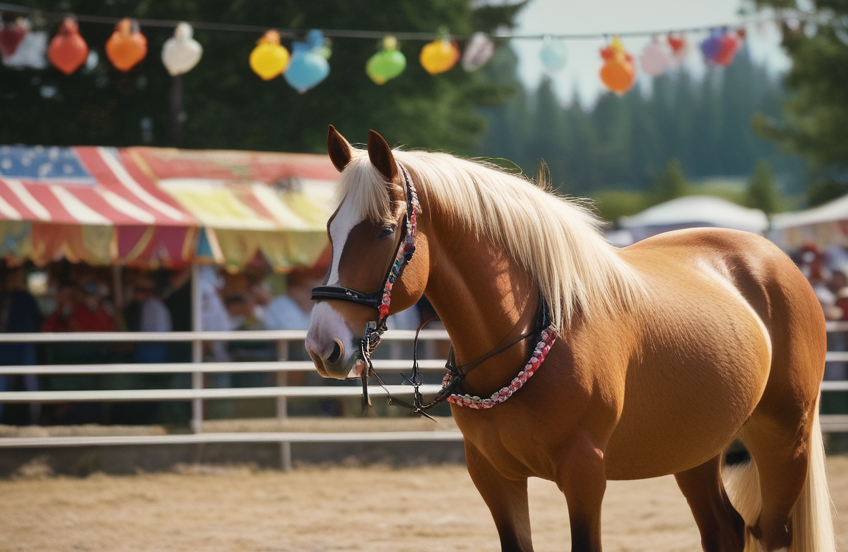
It is a wistful goodbye to Noblesse, given that she was born on this farm and raised her foals here. She was the first American-born gold-rated mare in AHR inspection and classification. Except for brief times away for training and always part of our Haflinger display at our regional fair, it was right and fitting that she should breathe her last on this farm.
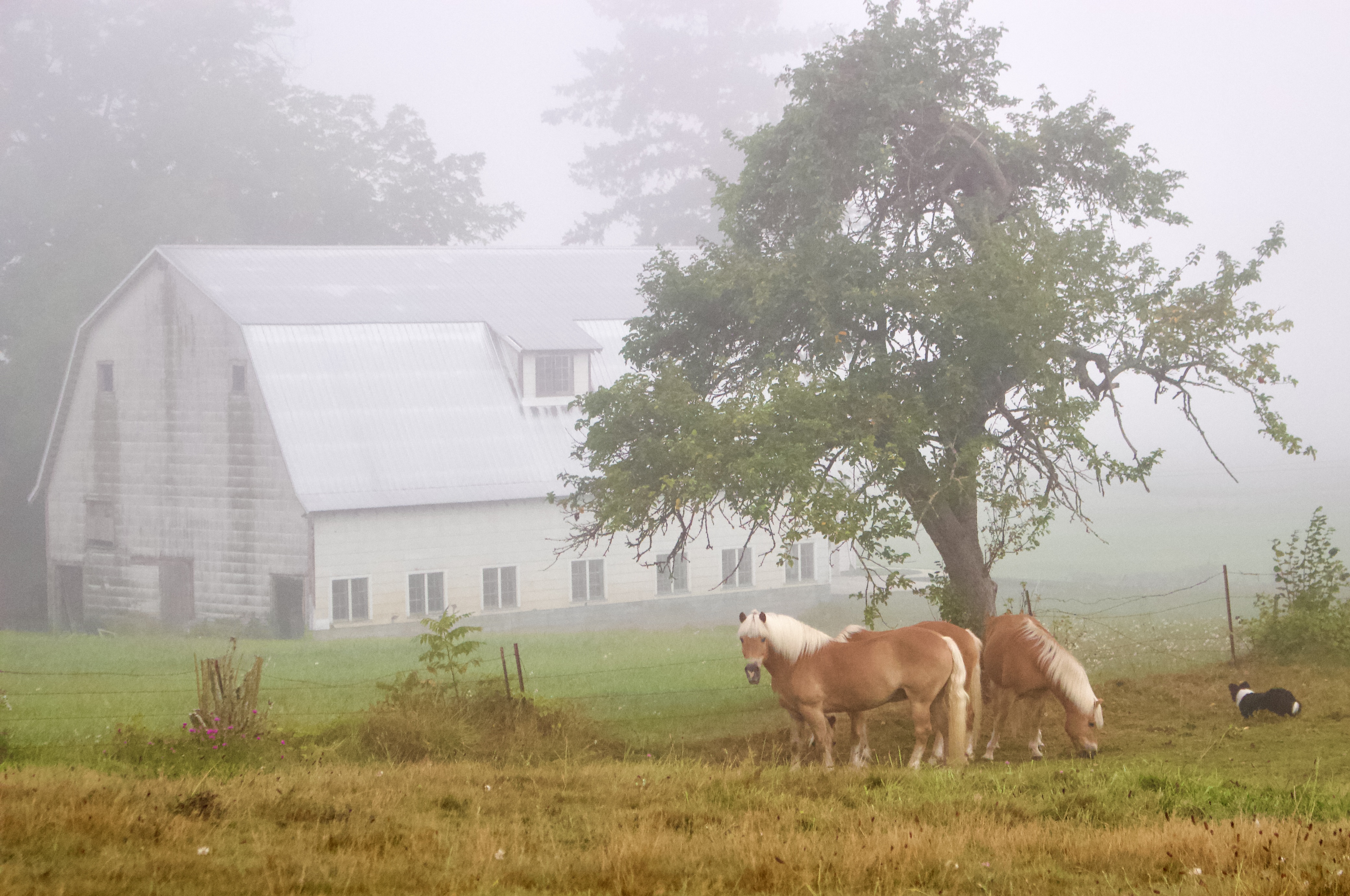
Our circle of aging Haflingers has just become smaller. Two are her sons.
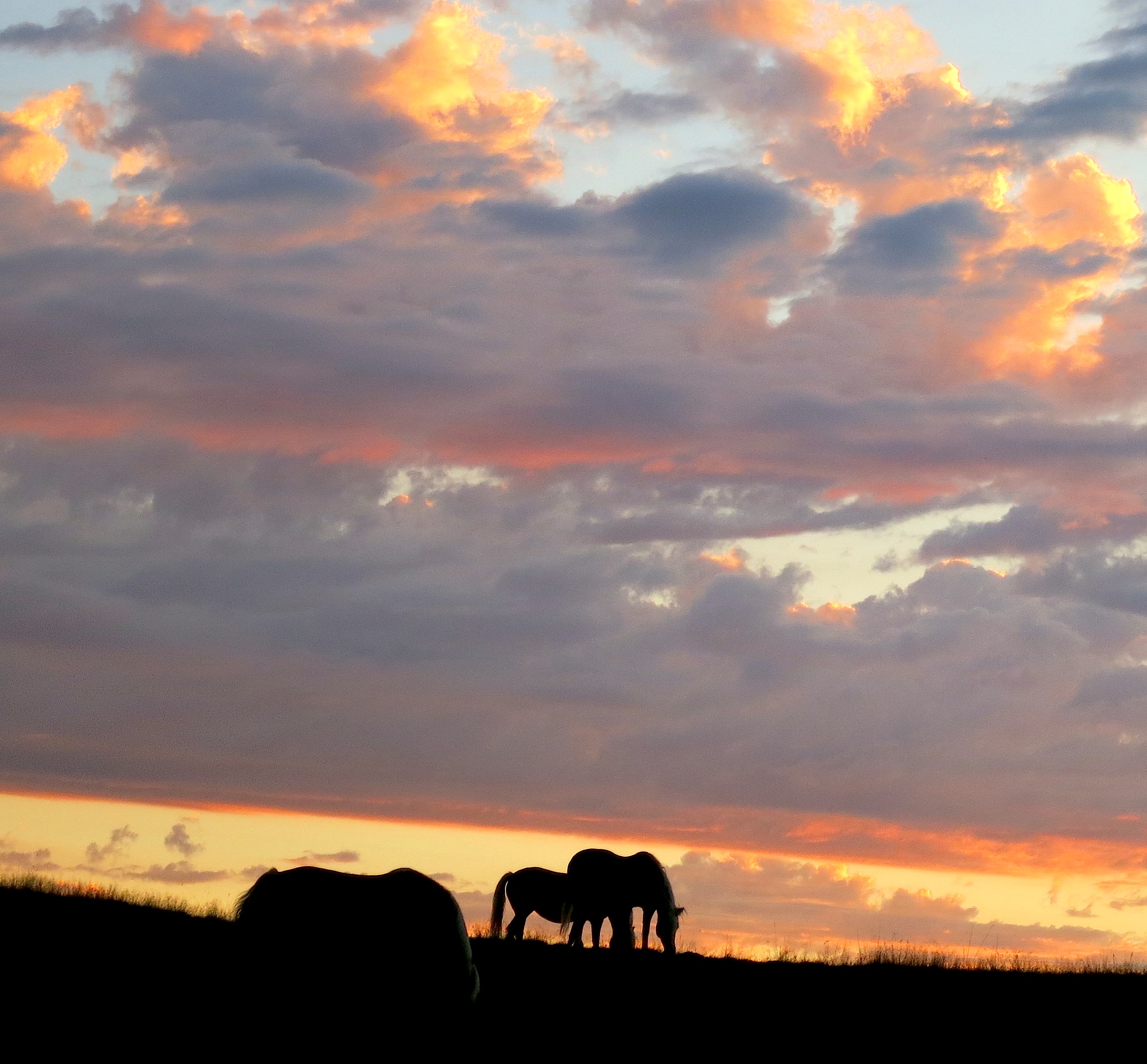
The life of a horse seems endless, until one day. For Noblesse, that day was today.
One-Time
Monthly
Yearly
Make a one-time or recurring donation to support daily Barnstorming posts
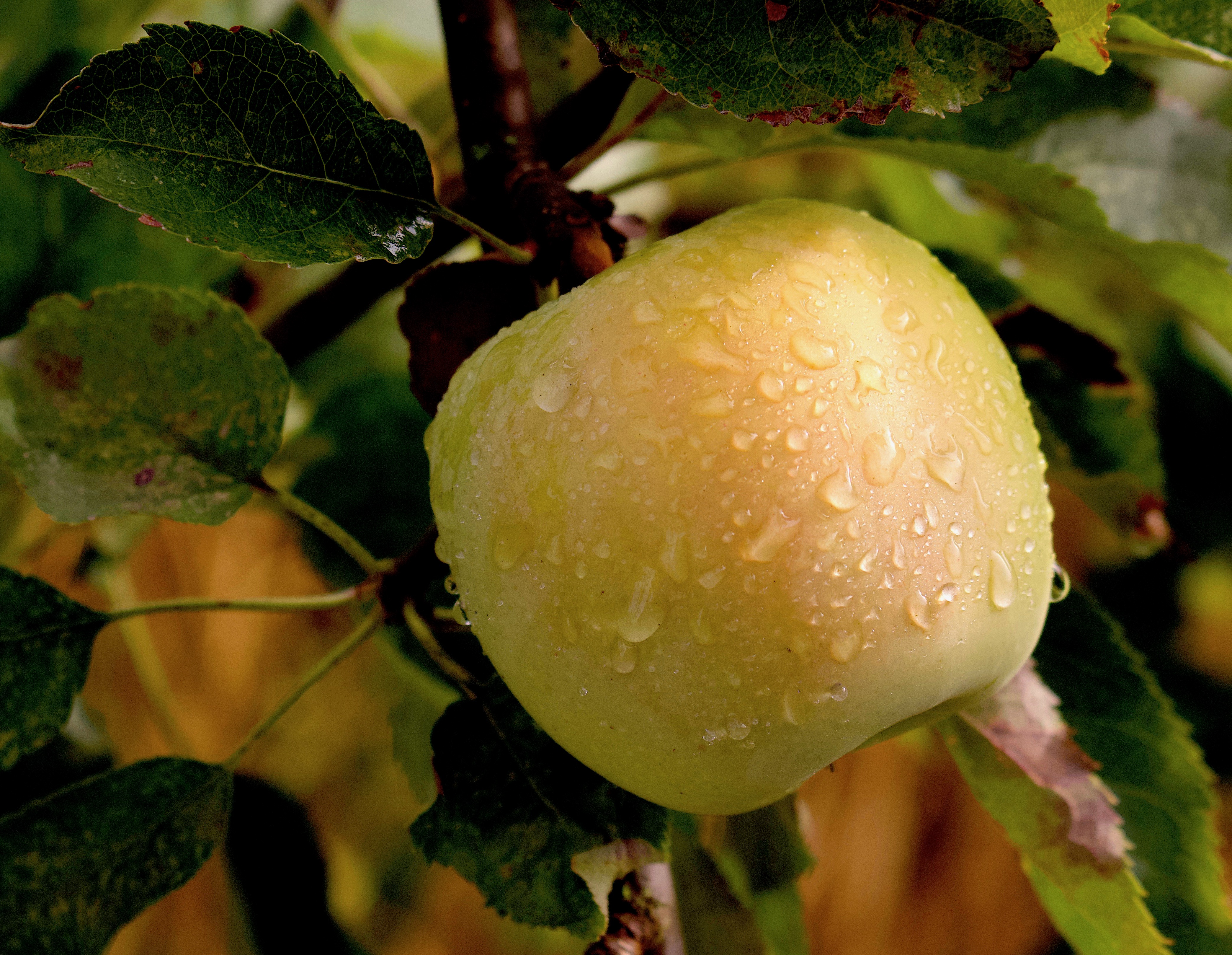
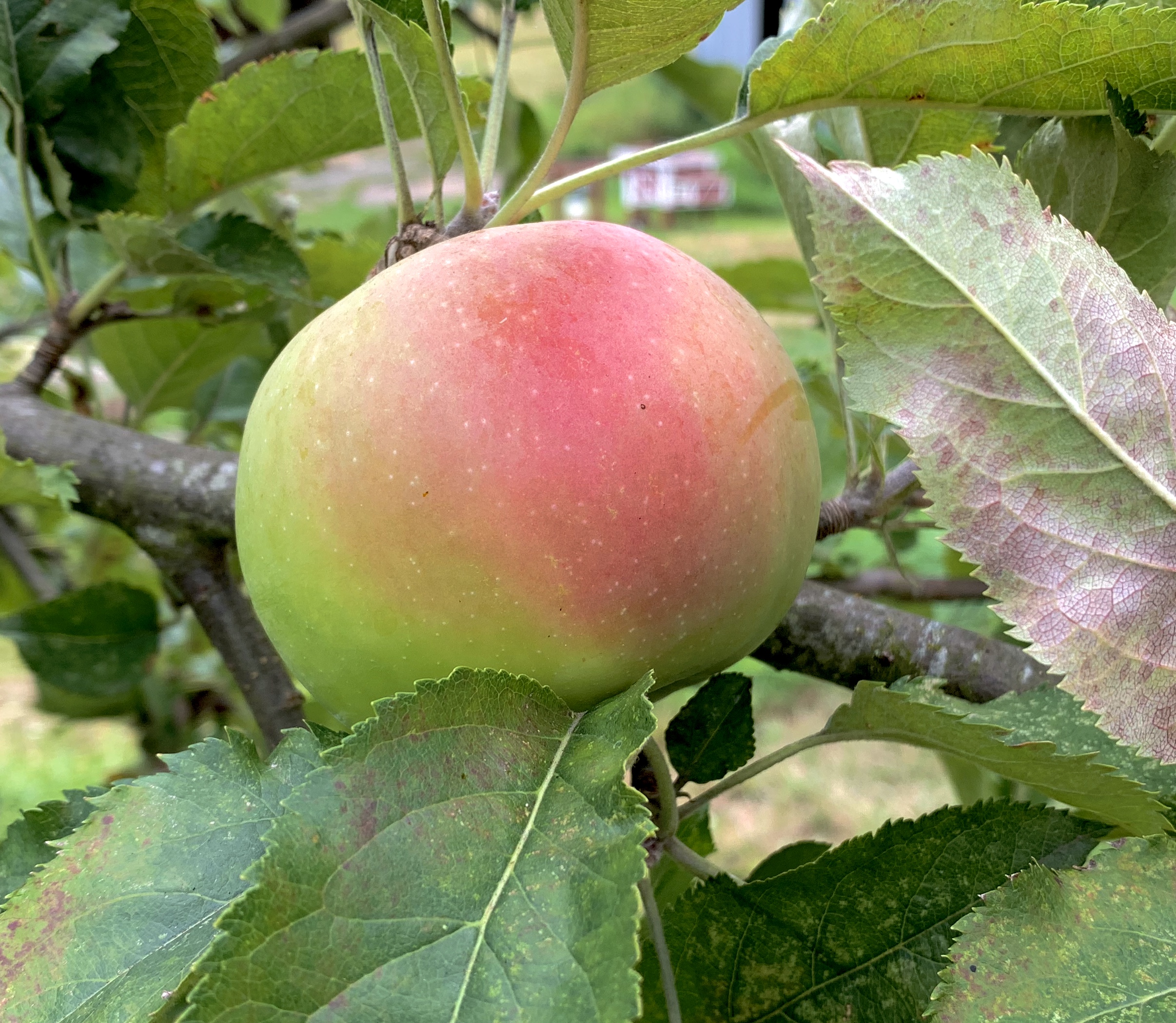
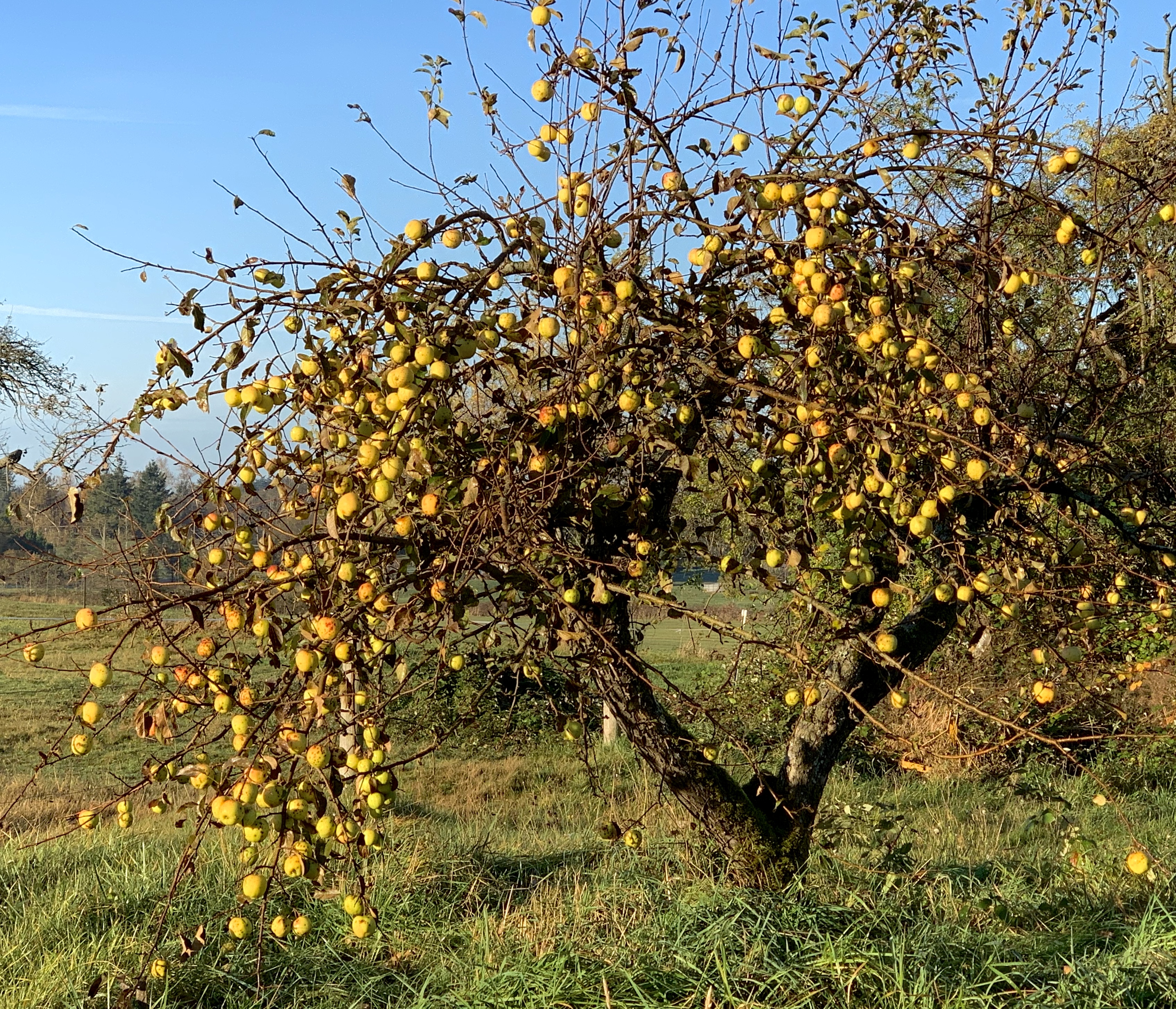
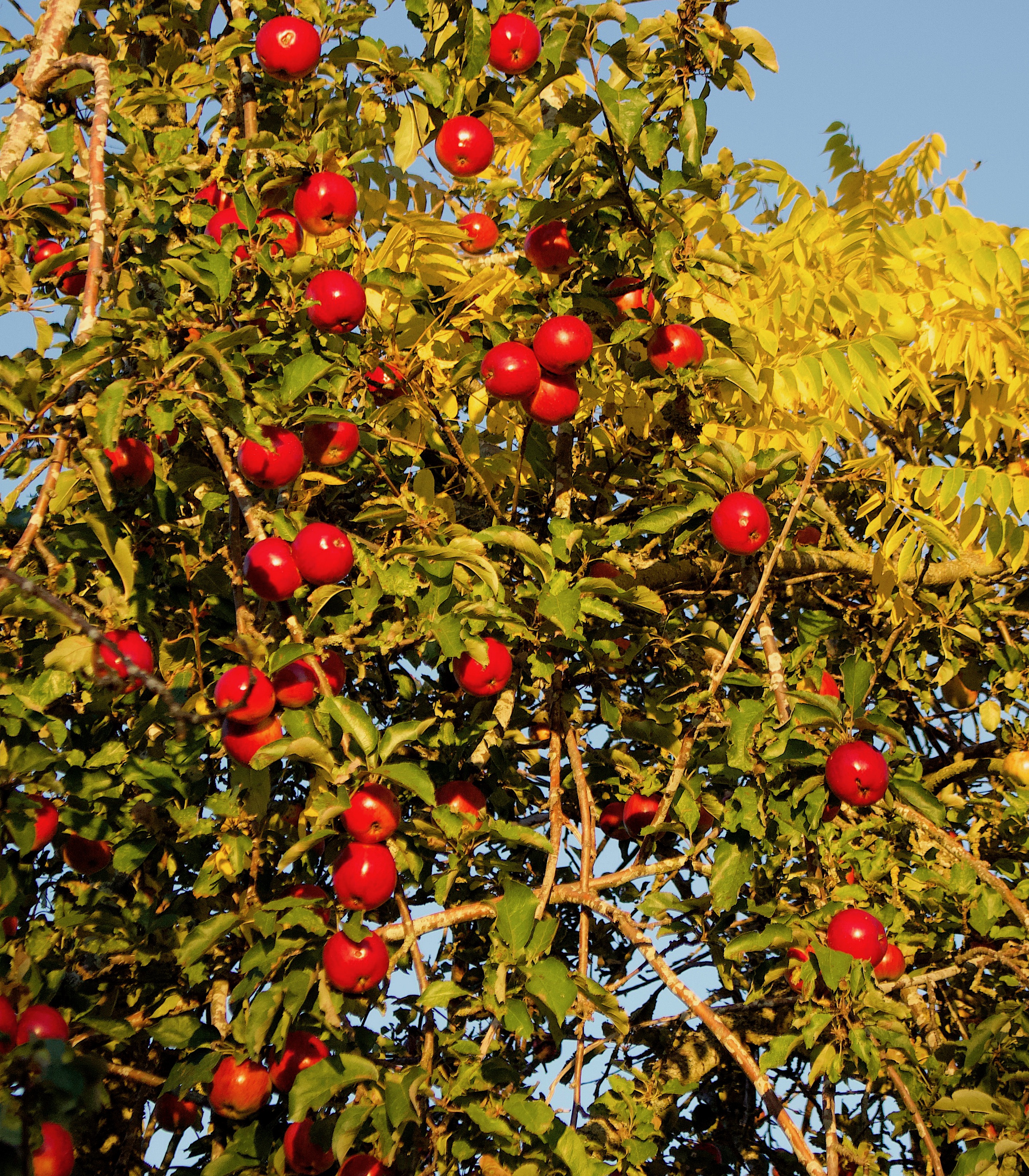
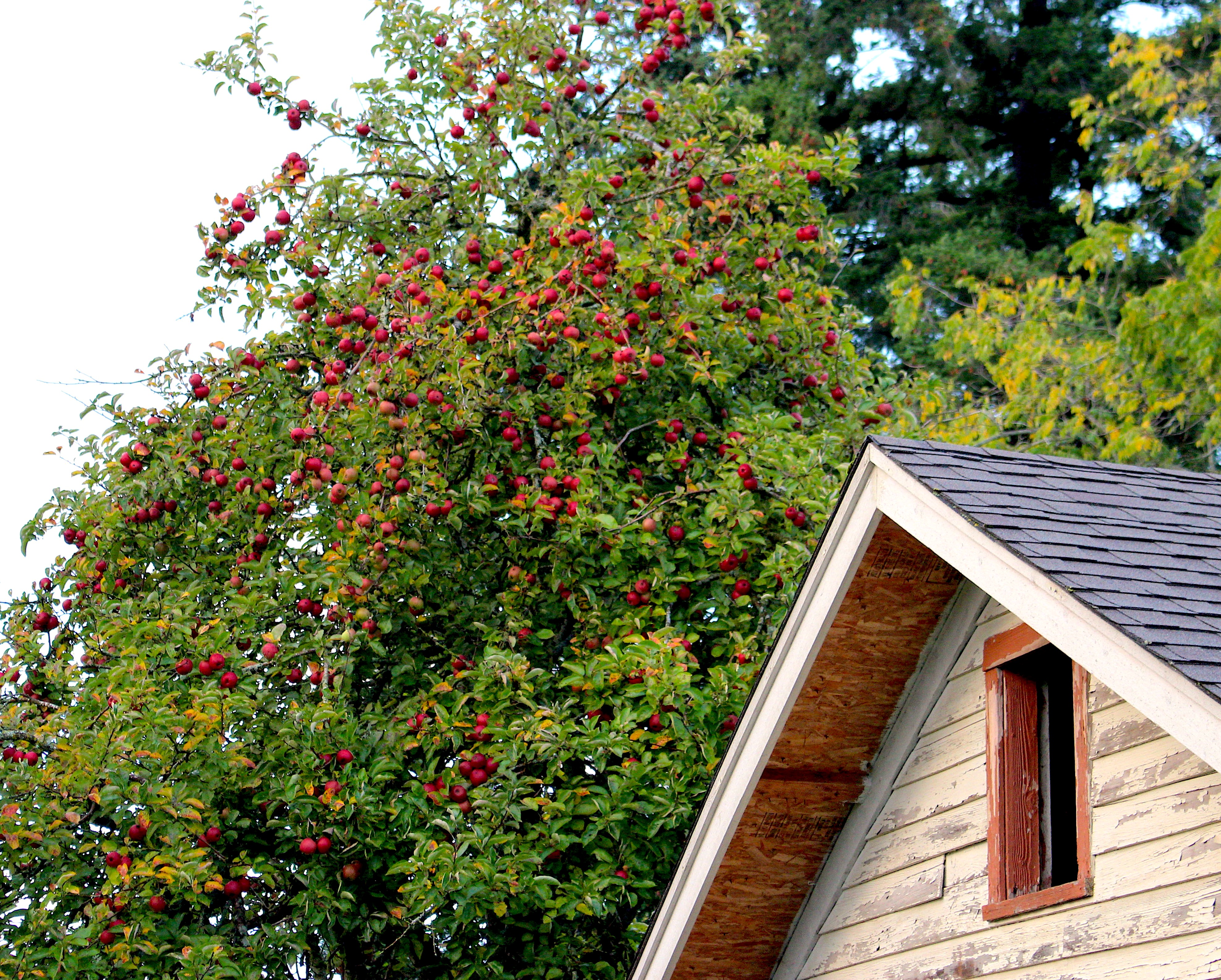
And then there is that day when all around, all around you hear the dropping of the apples, oneby one, from the trees. At first it is one here and one there, and then it is three and then it is four and then nine andtwenty, until the apples plummet like rain, fall like horse hoofsin the soft, darkening grass, and you are the last apple on thetree; and you wait for the wind to work you slowly free fromyour hold upon the sky, and drop you down and down. Longbefore you hit the grass you will have forgotten there everwas a tree, or other apples, or a summer, or green grass below, You will fall in darkness… ~Ray Bradbury from Dandelion Wine
But I am done with apple-picking now. Essence of winter sleep is on the night, The scent of apples: I am drowsing off. I cannot rub the strangeness from my sight I got from looking through a pane of glass I skimmed this morning from the drinking trough And held against the world of hoary grass. It melted, and I let it fall and break. But I was well Upon my way to sleep before it fell, And I could tell What form my dreaming was about to take. For I have had too much Of apple-picking: I am overtired Of the great harvest I myself desired. There were ten thousand thousand fruit to touch, Cherish in hand, lift down, and not let fall. For all That struck the earth, No matter if not bruised or spiked with stubble, Went surely to the cider-apple heap As of no worth. One can see what will trouble This sleep of mine, whatever sleep it is. Were he not gone, The woodchuck could say whether it’s like his Long sleep, as I describe its coming on, Or just some human sleep. ~Robert Frost from “After Apple-Picking”
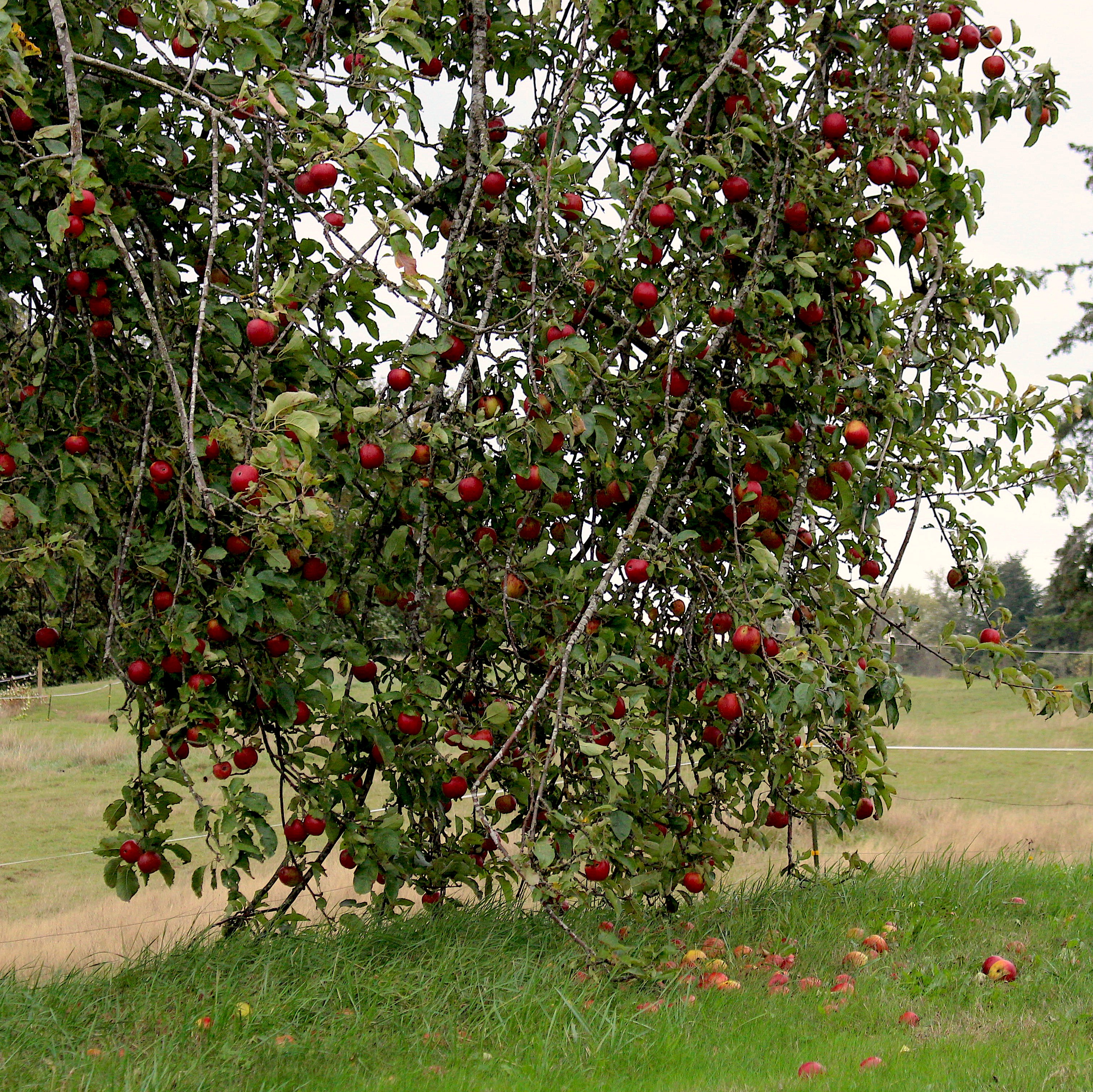
I pick up windfall apples to haul down to the barn for a special treat each night for the Haflingers. These are apples that we humans wouldn’t take a second glance at in all our satiety and fussiness, but the Haflingers certainly don’t mind a bruise, or a worm hole or slug trails over apple skin.
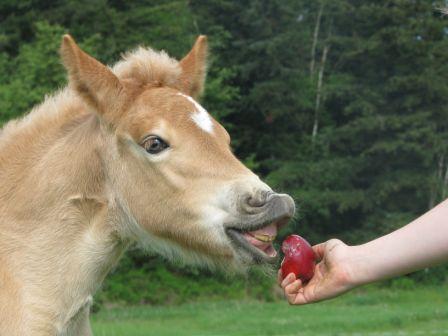
I’ve found over the years that our horses must be taught to eat apples–if they have no experience with them, they will bypass them lying in the field and not give them a second look. There simply is not enough odor to make them interesting or appealing–until they are cut in slices that is. Then they become irresistible and no apple is left alone from that point forward.
When I offer a whole apple to a young Haflinger who has never tasted one before, they will sniff it, perhaps roll it on my hand a bit with their lips, but I’ve yet to have one simply bite in and try. If I take the time to cut the apple up, they’ll pick up a section very gingerly, kind of hold it on their tongue and nod their head up and down trying to decide as they taste and test it if they should drop it or chew it, and finally, as they really bite in and the sweetness pours over their tongue, they get this look in their eye that is at once surprised and supremely pleased. The only parallel experience I’ve seen in humans is when you offer a five month old baby his first taste of ice cream on a spoon and at first he tightens his lips against its coldness, but once you slip a little into his mouth, his face screws up a bit and then his eyes get big and sparkly and his mouth rolls the taste around his tongue, savoring that sweet cold creaminess. His mouth immediately pops open for more.
It is the same with apples and horses. Once they have that first taste, they are our slaves forever in search of the next apple.
The Haflinger veteran apple eaters can see me coming with my sweat shirt front pocket stuffed with apples, a “pregnant” belly of fruit, as it were. They offer low nickers when I come up to their stalls and each horse has a different approach to their apple offering.
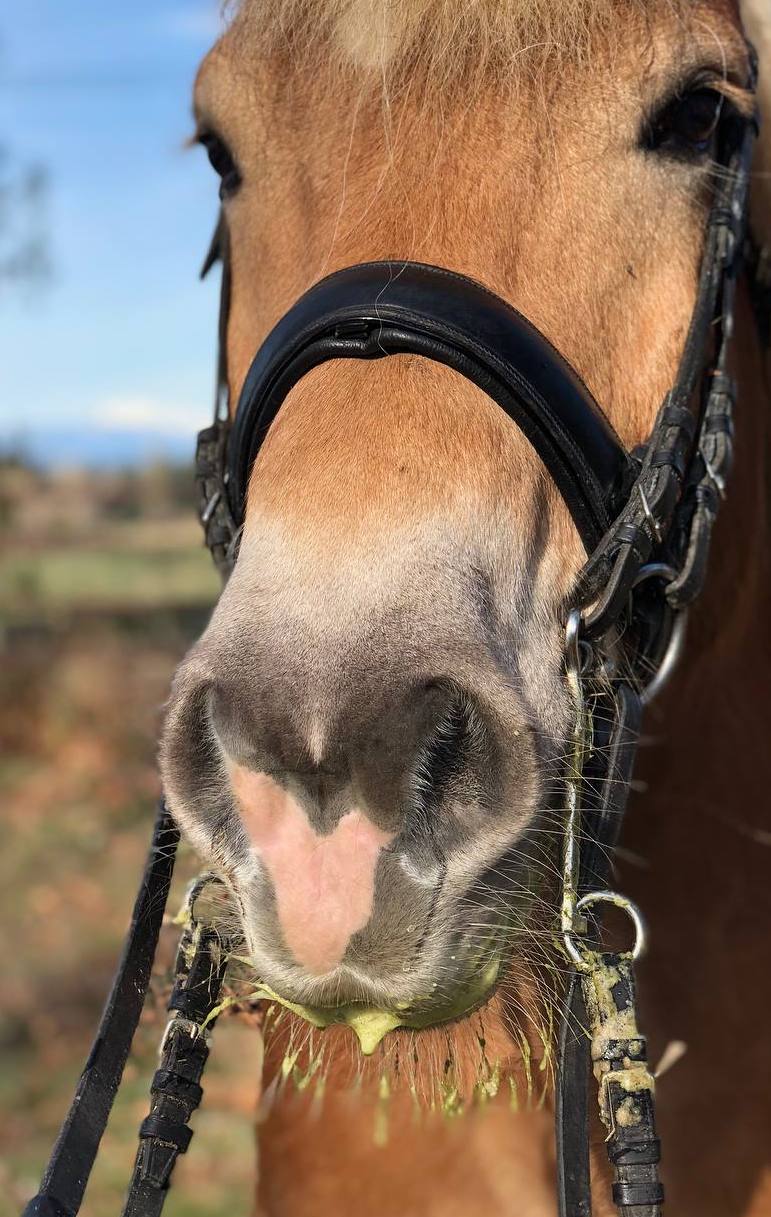
There is the “bite a little bit at a time” approach, which makes the apple last longer, and tends to be less messy in the long run. There is the “bite it in half” technique which leaves half the apple in your hand as they navigate the other half around their teeth, dripping and frothing sweet apple slobber. Lastly there is the greedy “take the whole thing at once” horse, which is the most challenging way to eat an apple, as it has to be moved back to the molars, and crunched, and then moved around the mouth to chew up the large pieces, and usually half the apple ends up falling to the ground, with all the foam that the juice and saliva create. No matter the technique used, the smell of an apple as it is being chewed by a horse is one of the best smells in the world. I can almost taste the sweetness too when I smell that smell.
What do we do when offered such a sublime gift from Someone’s hand? If it is something we have never experienced before, we possibly walk right by, not recognizing that it is a gift at all, missing the whole point and joy of experiencing what is being offered. How many wonderful opportunities are right under our noses, but we fail to notice, and bypass them because they are unfamiliar?
Perhaps if the Giver really cares enough to “teach” us to accept this gift of sweetness, by preparing it and making it irresistible to us, then we are overwhelmed with the magnitude of the generosity and are transformed by the simple act of receiving.
We must learn to take little bites, savoring each piece one at a time, making it last rather than greedily grab hold of the whole thing, struggling to control it, thereby losing some in the process. Either way, it is a gracious gift, and how we receive it makes all the difference.
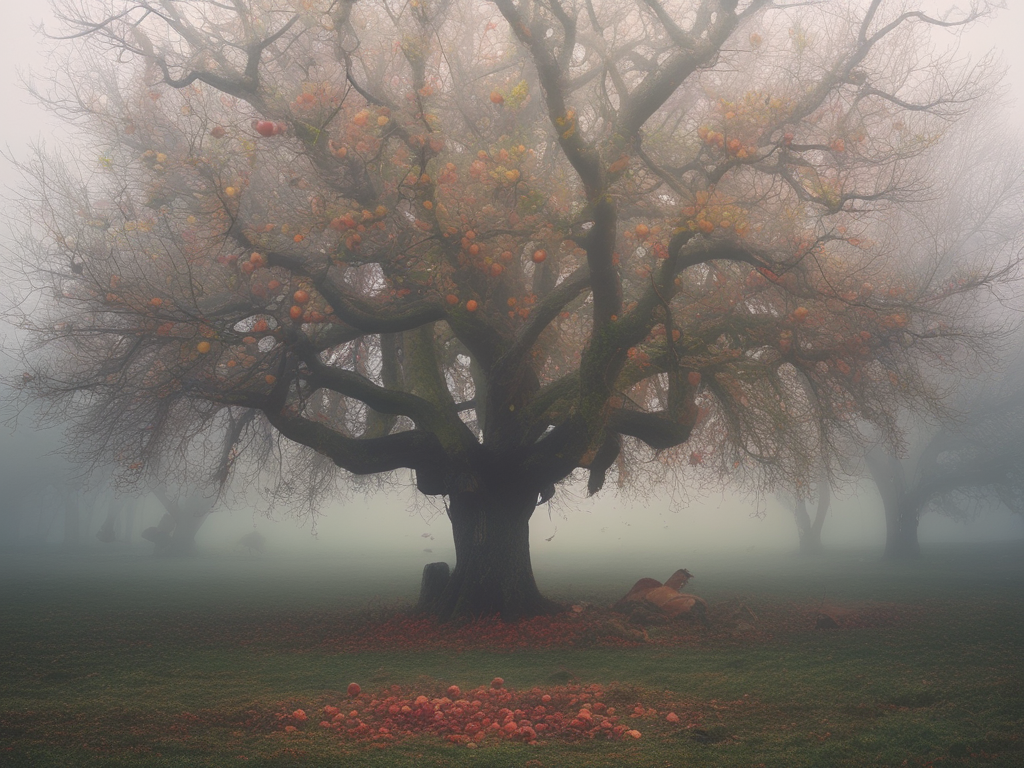
AI image created for this post
The tree of life my soul hath seen, Laden with fruit and always green; The trees of nature fruitless be, Compared with Christ the Apple Tree.
His beauty doth all things excel, By faith I know but ne’er can tell The glory which I now can see, In Jesus Christ the Appletree.
For happiness I long have sought, And pleasure dearly I have bought; I missed of all but now I see ‘Tis found in Christ the Appletree.
I’m weary with my former toil – Here I will sit and rest awhile, Under the shadow I will be, Of Jesus Christ the Appletree.
With great delight I’ll make my stay, There’s none shall fright my soul away; Among the sons of men I see There’s none like Christ the Appletree.
I’ll sit and eat this fruit divine, It cheers my heart like spirit’al wine; And now this fruit is sweet to me, That grows on Christ the Appletree.
This fruit doth make my soul to thrive, It keeps my dying faith alive; Which makes my soul in haste to be With Jesus Christ the Appletree.
One-Time
Monthly
Yearly
Make a one-time or recurring donation to support daily Barnstorming posts
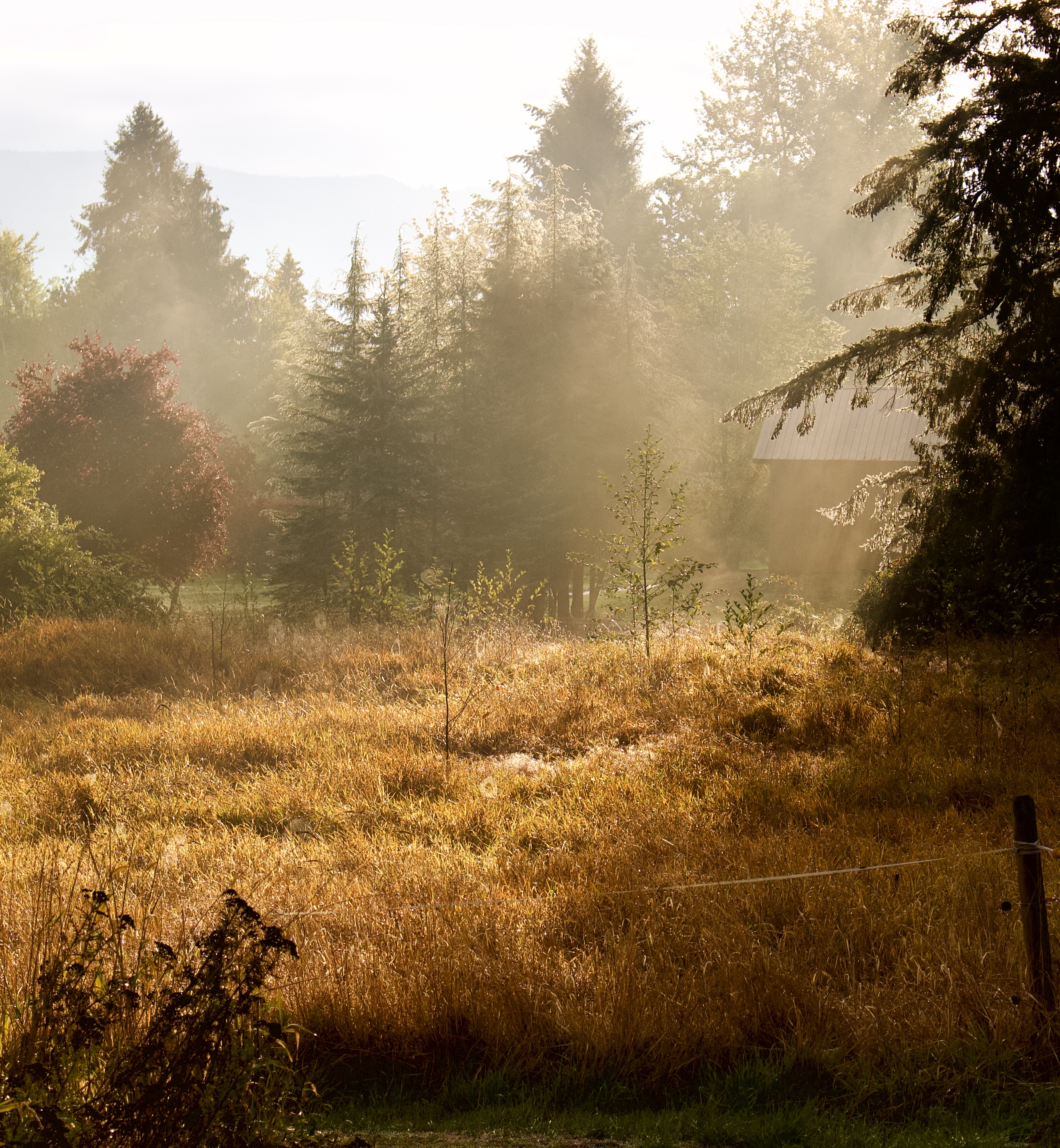
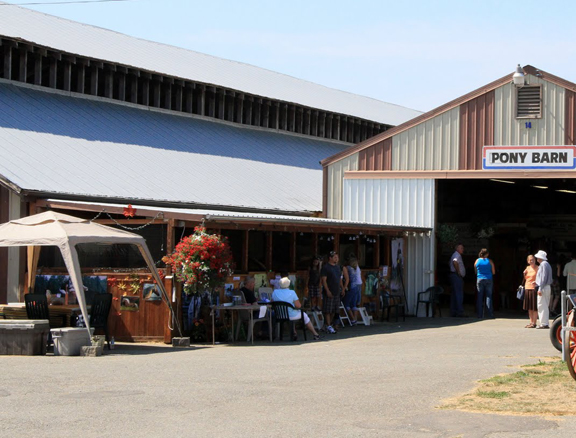
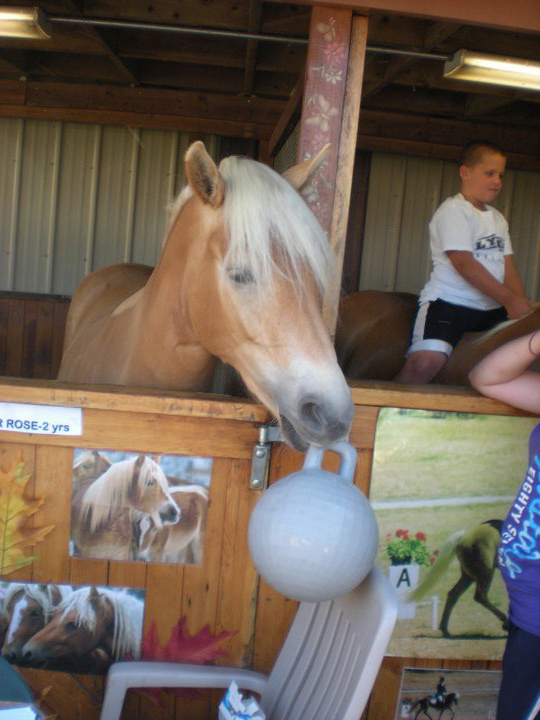
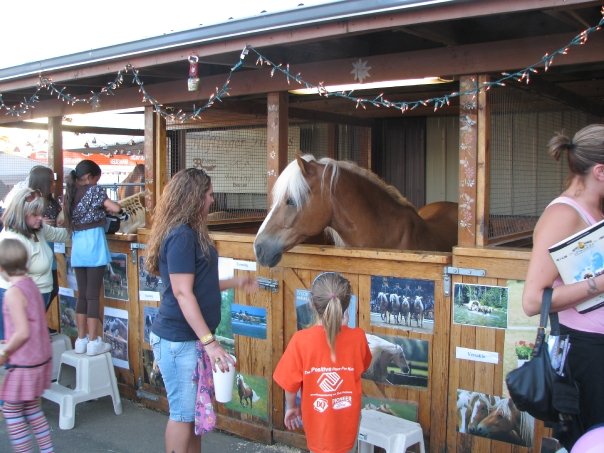
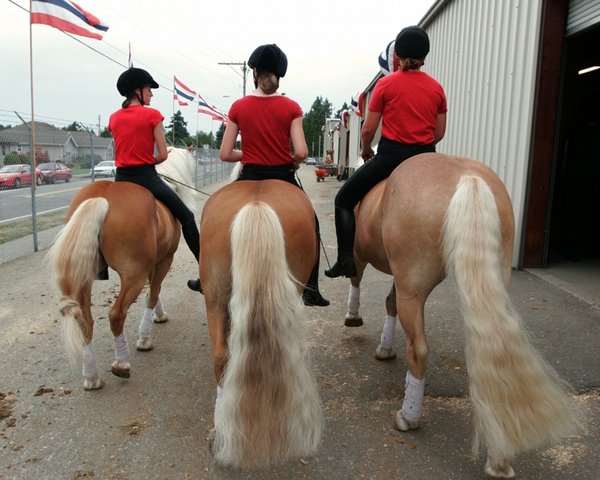
The Northwest Washington Fair in Lynden is under way again this week and instead of being part of the fun and hub-bub, our Haflinger horses are staying home, out on pasture. It’s been over a decade since they were cleaned up, curried, braided and trailered into town for a week to help make dreams come true for thousands of fairgoers.
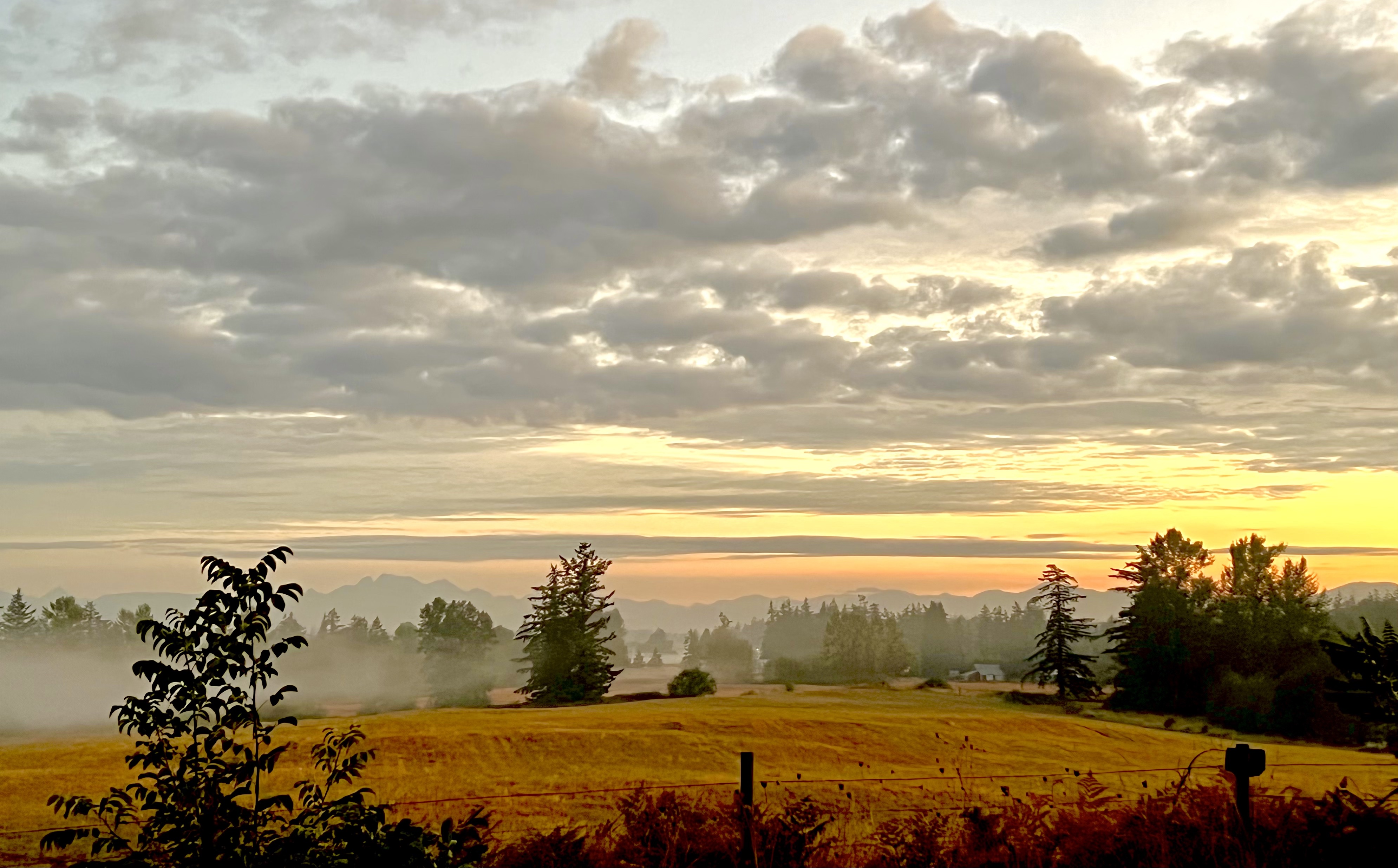
I feel a bit wistful as I wake up early on this foggy mid-August morning, remembering the twenty years of 5:30 AM dawns where I would gather up our sleepy children and their friends and head into the fairgrounds to clean the Haflingers’ stalls, walk the horses for exercise and prepare for a busy day of people strolling by and admiring them.
We stopped “doing” the fair as a Haflinger farm. Now that I’m 70 years old, rather than 40, 50, or 60, I’m okay about that. It was great while it lasted but this aging human and my equines relish our retirement, especially since the fair expanded to a 10 day rather than just a 6 day commitment. I so admire the draft horse families that have kept their six horse hitches active with their Belgians, Percherons and Clydesdales – some families are now in their fourth generation at the fair with teamsters, still driving the hitches, well into their eighties.
Our BriarCroft Haflingers display was a consistent presence at this regional fair for two decades, promoting the Haflinger breed in well-decorated stalls. Part of our commitment was to provide a 24-hr-a-day human presence with the horses. We had petitioned the Fair Board for 5 years in the late 1980s to allow us a spot at the fair, and they finally said “okay, here’s the space, build it yourself”, so we did.
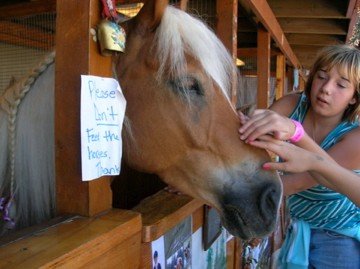
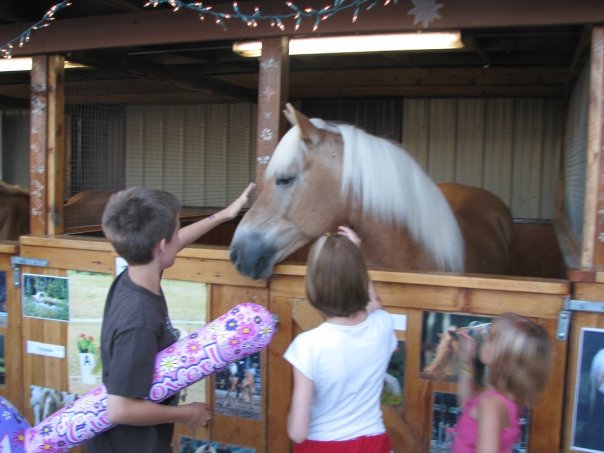
We didn’t ask for classes, competition, or ribbons. We were there because fairgoers enjoyed seeing and touching our Haflingers and we enjoyed talking to all the people.
Once our children and their friends had careers and children of their own, they were no longer available to help “man” the horse stalls. I still miss spending such concentrated time with all the young nieces, nephews, neighbors, church and school friends who hung out with us over the years. I hope they still have fond memories of their time helping us at the fair.
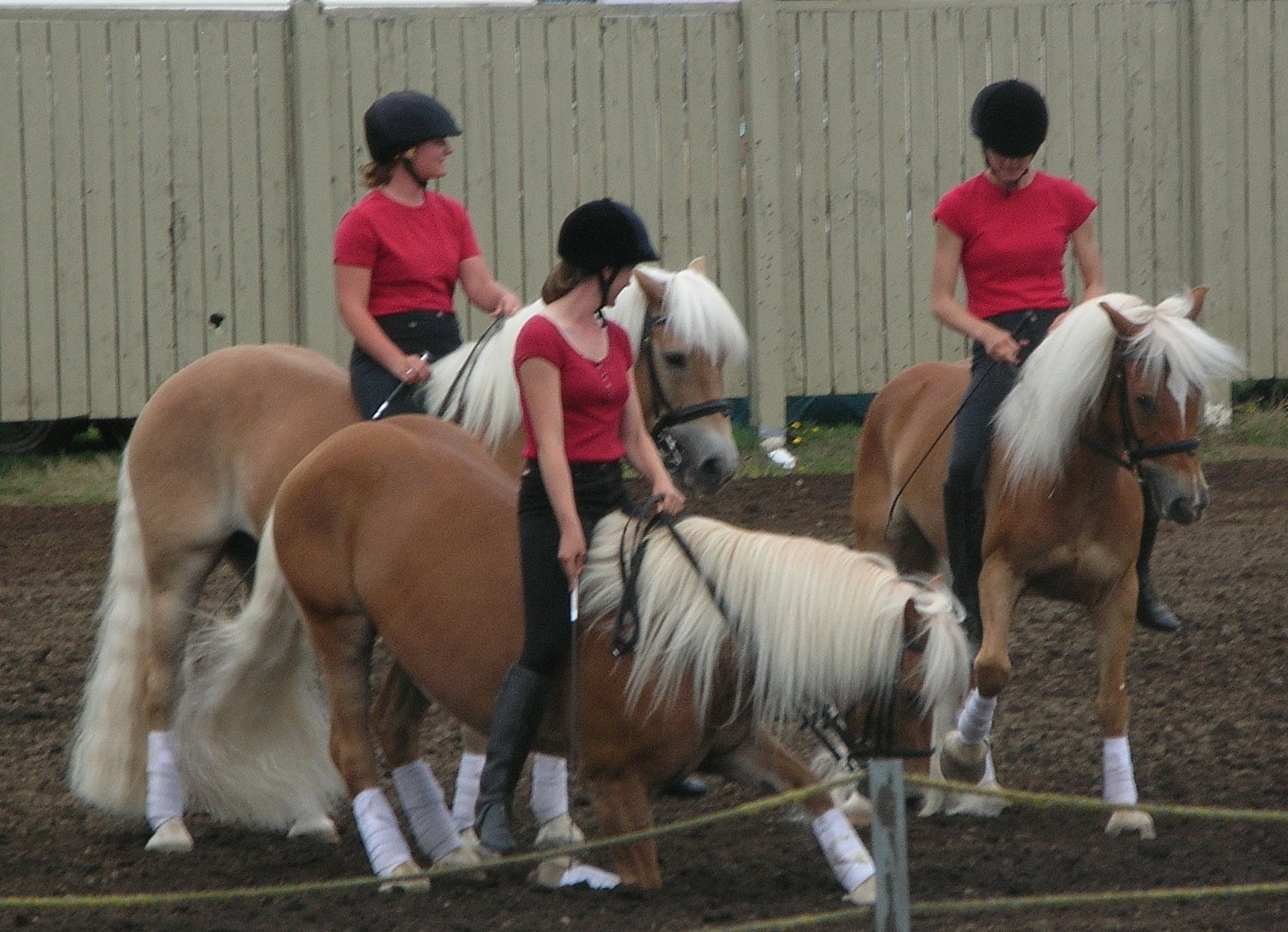
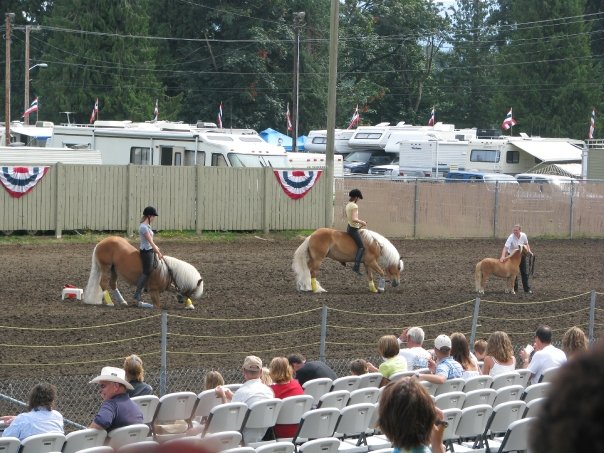
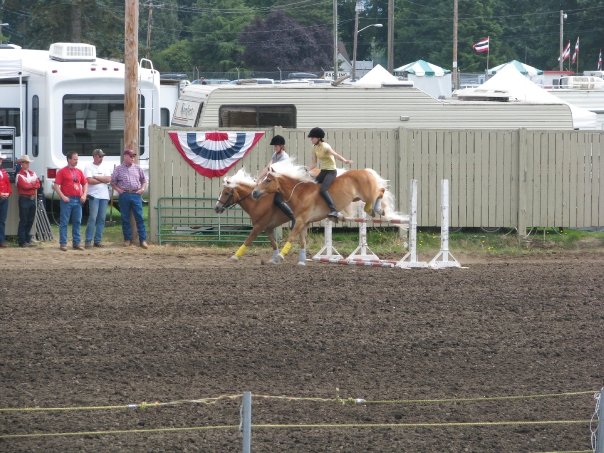
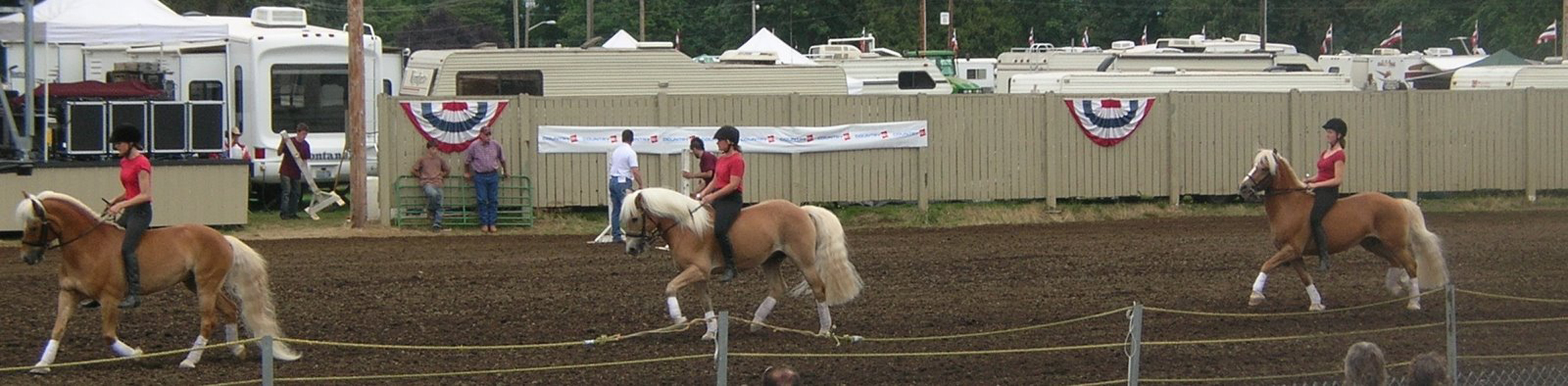
Every year from 1992 onward, we evaluated whether we had the energy and resources to do it again. Initially, Dan and I juggled our small children as well as horses at the fair and at home, taking a week of vacation from our jobs. Then, with the help of two other Haflinger breeding farms, and several young women who did a crowd-pleasing Haflinger “trick” riding demo in front of the grandstand, we rotated duties. The older kids watched the younger kids, the in-between kids did most of the horse stall cleaning duty, and the adults could sit and shoot the breeze.
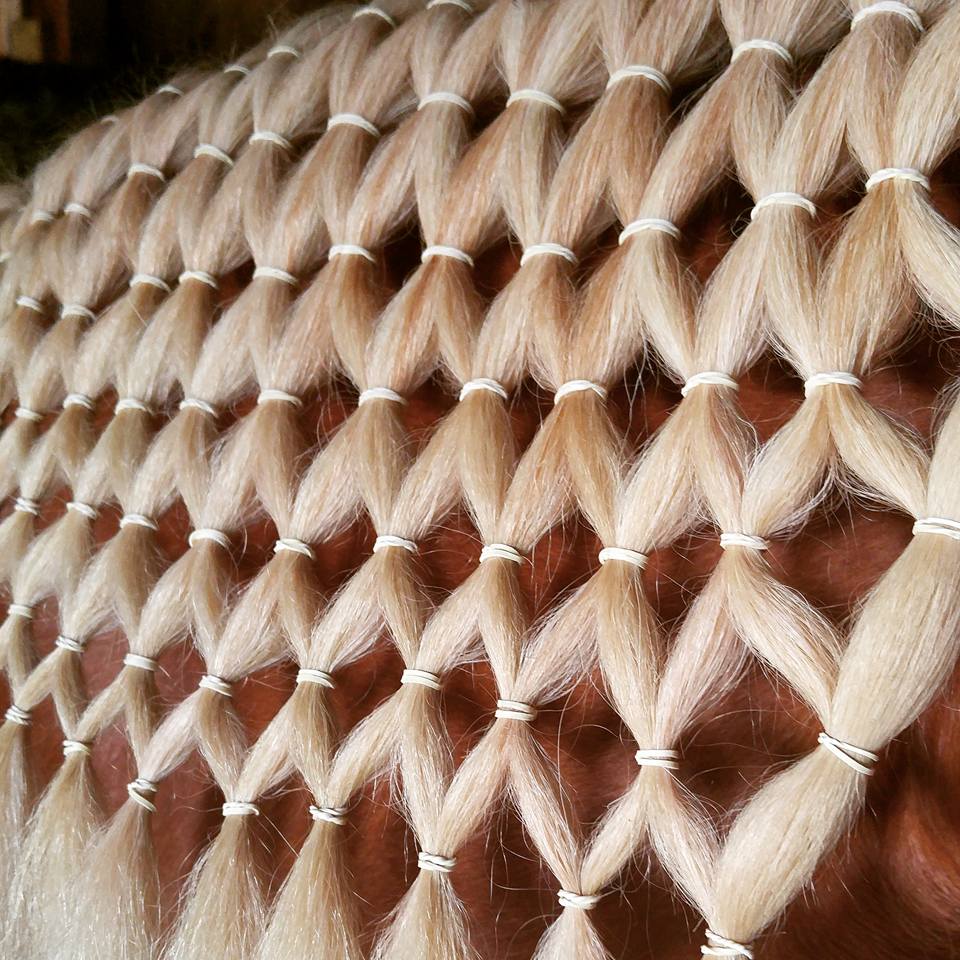
This created good will for the fair visitors who depended on us every year to be there with horses that they and their children could actually pet (and sit on) without worry, who enjoyed our braiding demonstrations, and our Haflinger trivia contests and prizes.
We continued to do this for so long because our horses were friendly and happy to give fair-goers a chance to safely get up close. These Haflingers became what dreams are made of.
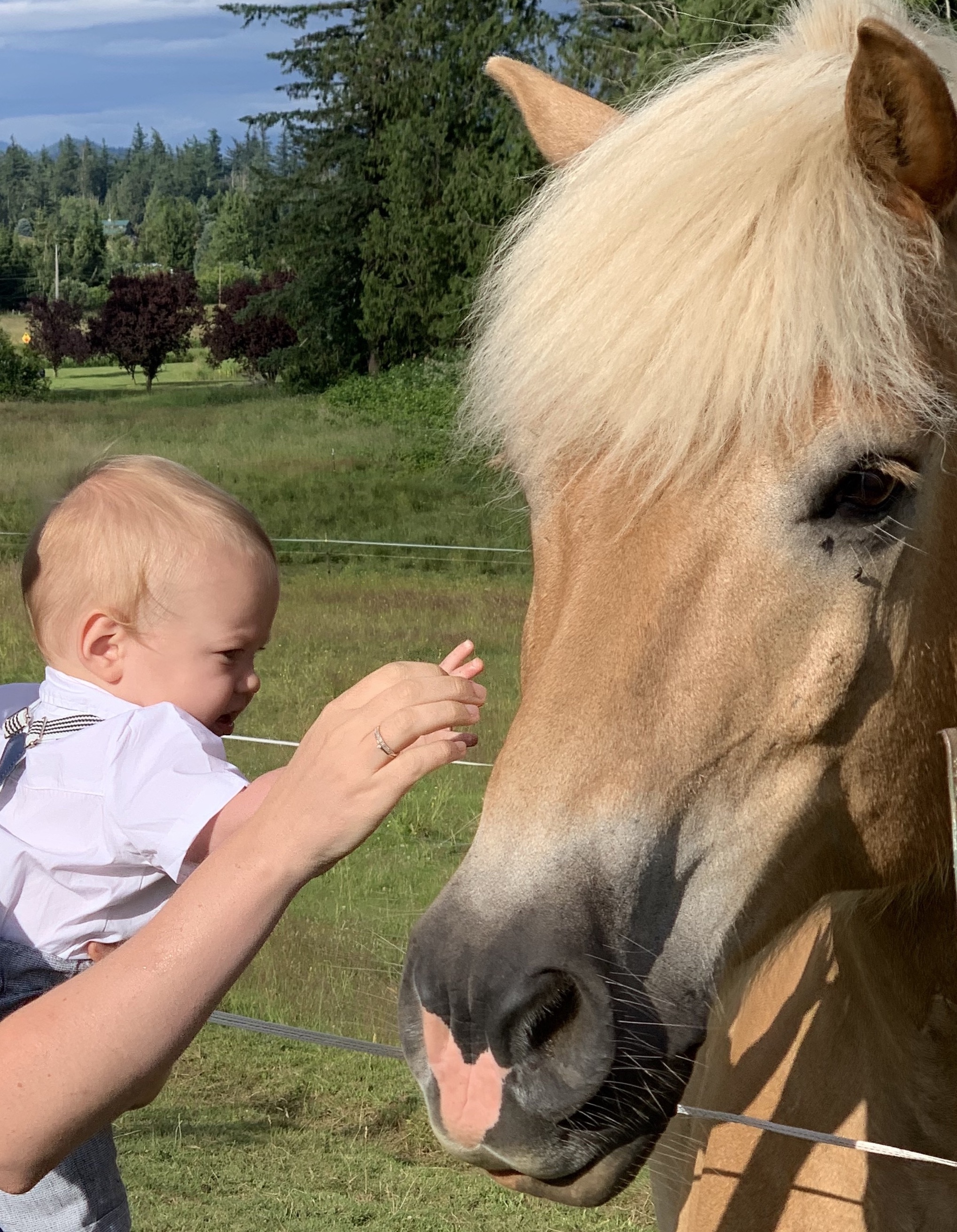
Countless times a day a bright eyed child approached our stalls, climbed up on the step stools and reached up to pet a Haflinger nose or neck and look deep into those big brown eyes. They will not forget the moment when a horse they had never met before loved them back. Haflingers are magic with children and we saw that over and over again.
So on this foggy August morning years later, instead of heading to the fairgrounds to clean stalls and braid manes, I’m turning out our retired, dusty, unbathed Haflingers into the field as usual. They barely recall all the excitement they are missing.
Even if our horses don’t remember much about those fair weeks so long ago, I know some fair-goers still miss the friendly golden horses with the big brown eyes who tried, even if for a day, to make their dreams come true.
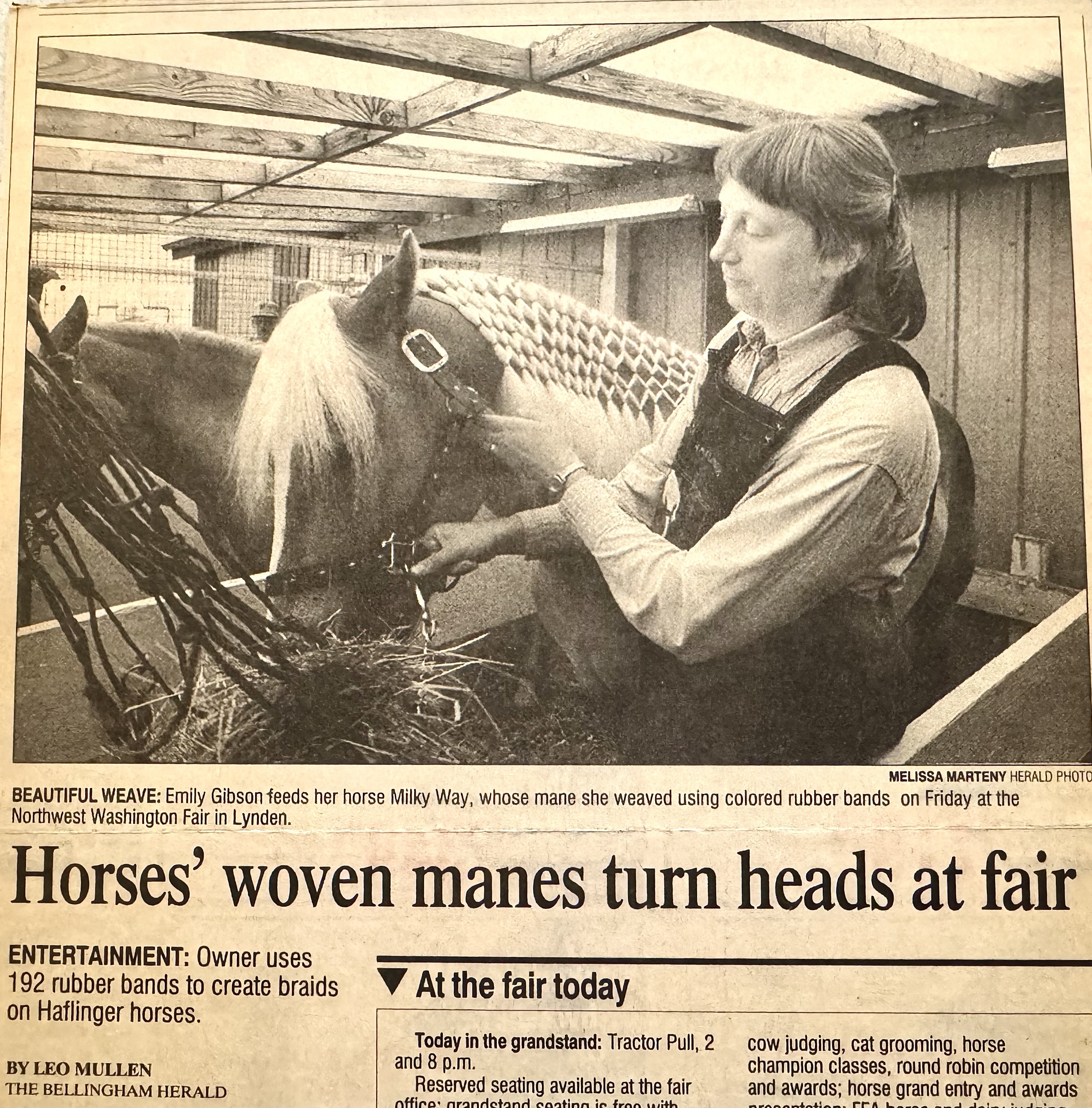
29 years ago, Milky Way and I were featured in our fair display on the front page of the local Bellingham Herald
AI image created for this post
One-Time
Monthly
Yearly
Make a one-time or recurring donation to support daily Barnstorming posts
Broad August burns in milky skies, The world is blanched with hazy heat; The vast green pasture, even, lies Too hot and bright for eyes and feet.
Amid the grassy levels rears The sycamore against the sun The dark boughs of a hundred years, The emerald foliage of one.
Lulled in a dream of shade and sheen, Within the clement twilight thrown By that great cloud of floating green, A horse is standing, still as stone.
He stirs nor head nor hoof, although The grass is fresh beneath the branch; His tail alone swings to and fro In graceful curves from haunch to haunch.
He stands quite lost, indifferent To rack or pasture, trace or rein; He feels the vaguely sweet content Of perfect sloth in limb and brain. ~William Canton “Standing Still”
Sweet contentment is a horse dozing in the summer field, completely sated by grass and clover, tail switching and skin rippling automatically to discourage flies.
I too wish at times for that stillness of mind and body, allowing myself to simply “be” without concern about yesterday’s travails, or what duties await me tomorrow.
I flunked sloth long ago. Perhaps I was born driven. My older sister, never a morning person, was thoroughly annoyed to share a bedroom with a toddler who awoke chirpy and cheerful, singing “Twinkle Twinkle” for all to hear and ready to conquer the day.
Since retiring, I admit I am becoming accustomed now to sloth-dom, though I am still too chipper in the early morning. It is a distinct character flaw.
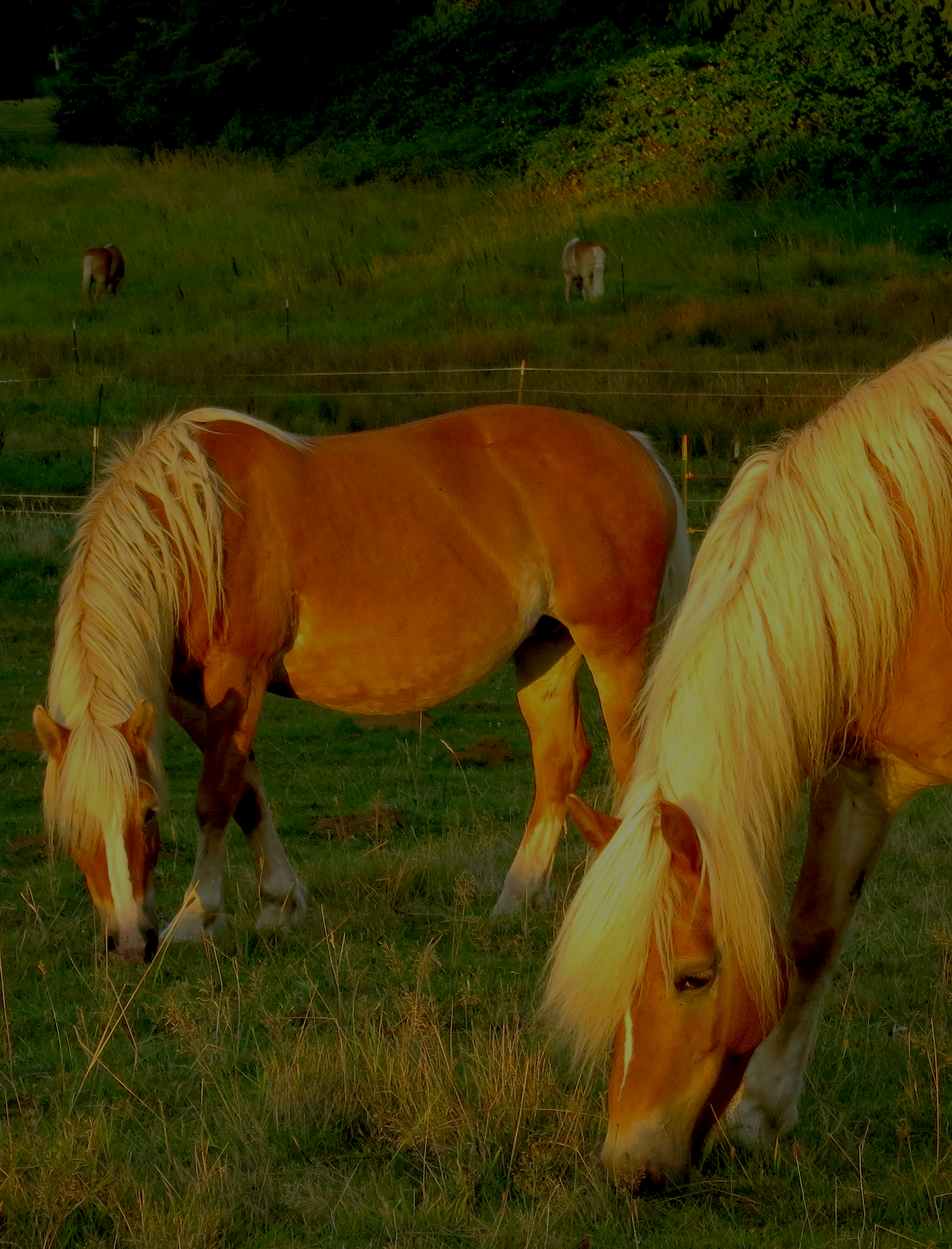
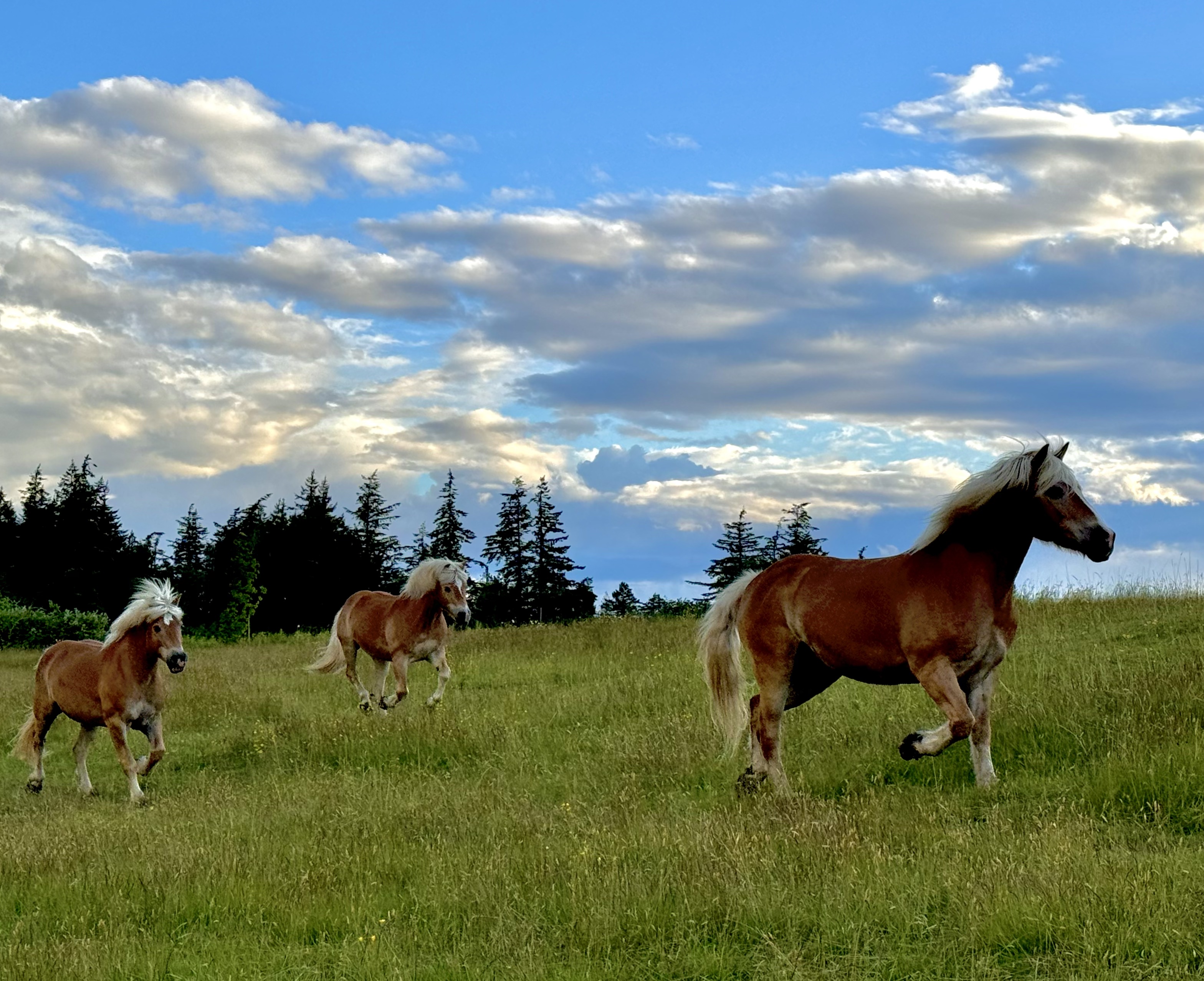
Even so, I’m not immune to the attractions of a hot hazy day of doing absolutely nothing but standing still switching at flies. I envy our retired ponies in the pasture who spend the day grazing, moseying, and lazing. I worked hard many years to make that life possible for them.
I want to use my days well. I want to be worthy. I want to know there is a reason to be here beyond just warning the flies away.
It is absolutely enough to enjoy the glory of it all.
One-Time
Monthly
Yearly
Make a one-time or recurring donation to support daily Barnstorming posts
On the second day of fog, she goes to meet it sits on the broad root of a broken down apple tree, remembers being a child in such fog, searching for fairy houses. She hears movement in the grass, keeps very still while the veil of haze rises to treetops bronzed by the burn of the sun. Slowly horses and deer appear all around her, they graze close together, nosing fallen apples, until she forgets this is still a fallen world. ~Lonnie Hull DuPont, “On the Second Day of Fog” from She Calls the Moon by Its Name
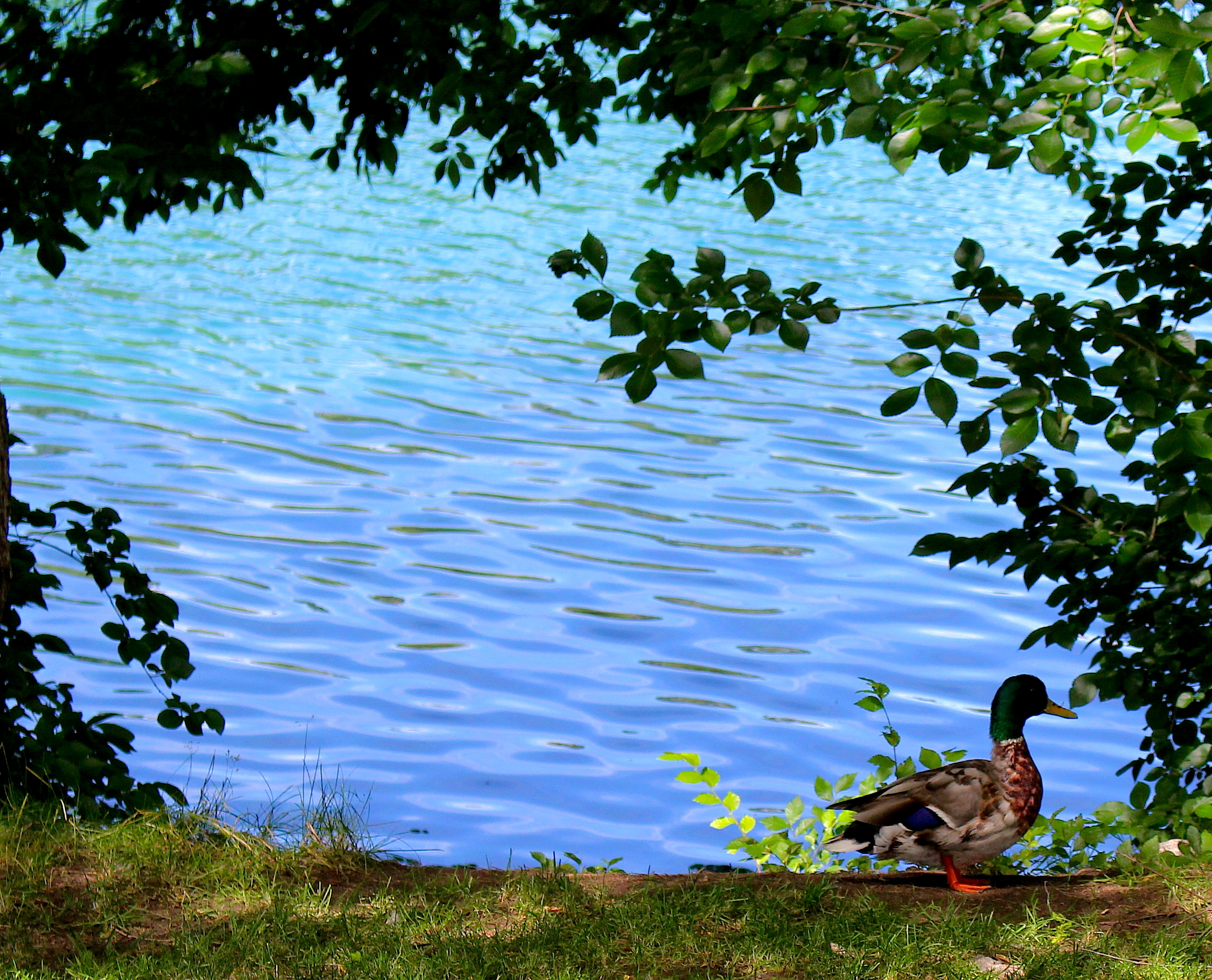
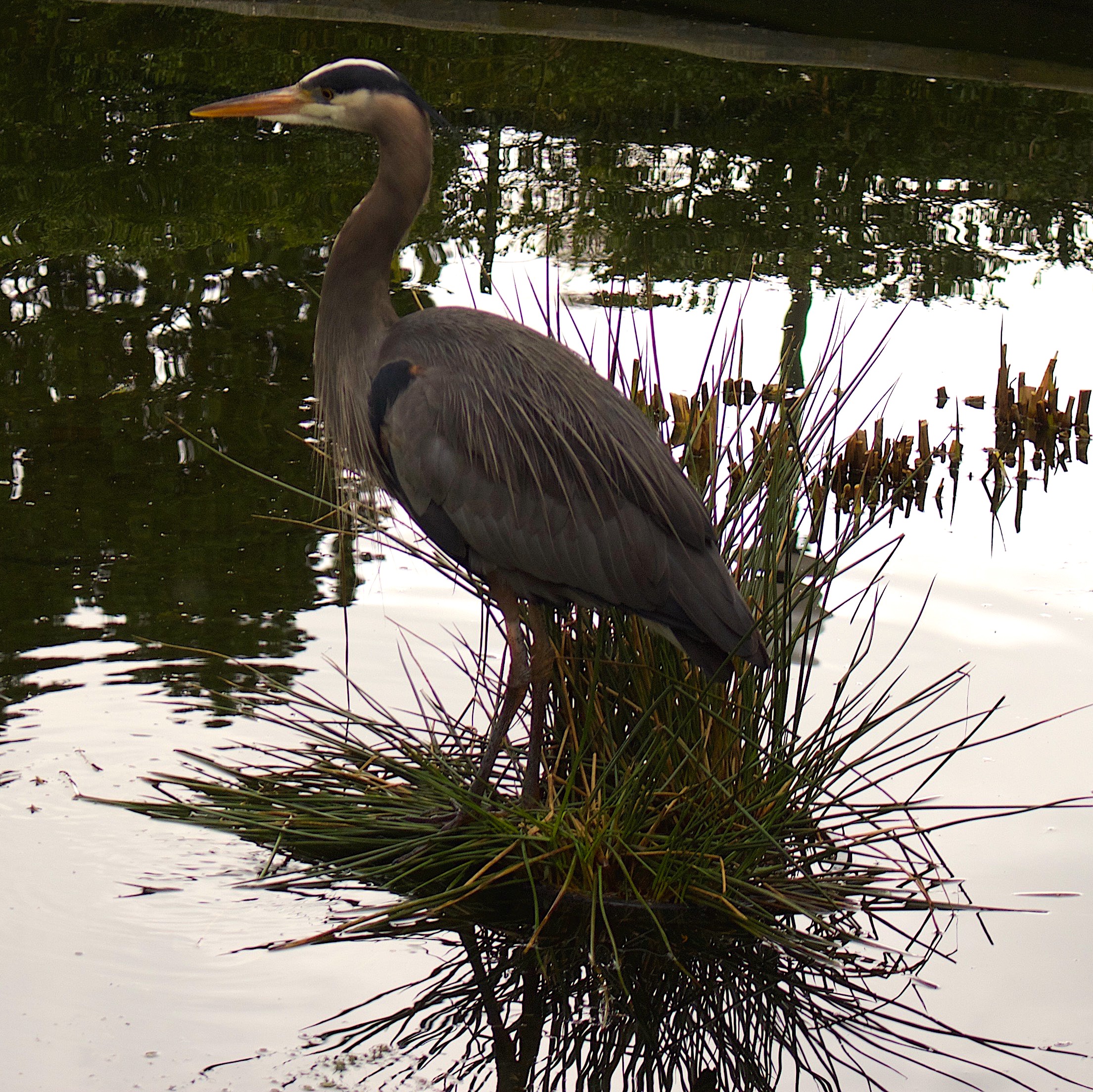
When despair for the world grows in me and I wake in the night at the least sound in fear of what my life and my children’s lives may be, I go and lie down where the wood drake rests in his beauty on the water, and the great heron feeds. I come into the peace of wild things who do not tax their lives with forethought of grief. I come into the presence of still water. And I feel above me the day-blind stars waiting with their light. For a time I rest in the grace of the world, and am free. ~Wendell Berry “The Peace of Wild Things“
When our grandchildren come to visit, I watch as yet another generation rediscovers the mystery of what we know about the joys and sorrows of this fallen but redeemed world.
I am reminded there is light beyond the fearsome darkness, there is peace amid the chaos, there is a smile behind the tears, there is stillness within the noisiness there is rest despite the restlessness, there is grace – ah, there is grace as inevitably the old gives way to the new.
One-Time
Monthly
Yearly
Make a one-time or recurring donation to support daily Barnstorming posts
I stop the car along the pasture edge, gather up bags of corncobs from the back, and get out. Two whistles, one for each, and familiar sounds draw close in darkness— cadence of hoof on hardened bottomland, twinned blowing of air through nostrils curious, flared. They come deepened and muscular movements conjured out of sleep: each small noise and scent heavy with earth, simple beyond communion, beyond the stretched-out hand from which they calmly take corncobs, pulling away as I hold until the mid-points snap. They are careful of my fingers, offering that animal-knowledge, the respect which is due to strangers; and in the night, their mares’ eyes shine, reflecting stars, the entire, outer light of the world here. ~Jane Hirshfield “After Work” from Of Gravity and Angels
photo by Emily VanderHaak
Just off the highway to Rochester, Minnesota, Twilight bounds softly forth on the grass. And the eyes of those two Indian ponies Darken with kindness. They have come gladly out of the willows To welcome my friend and me. We step over the barbed wire into the pasture Where they have been grazing all day, alone. They ripple tensely, they can hardly contain their happiness That we have come. They bow shyly as wet swans. They love each other. There is no loneliness like theirs. At home once more, They begin munching the young tufts of spring in the darkness. I would like to hold the slenderer one in my arms, For she has walked over to me And nuzzled my left hand. She is black and white, Her mane falls wild on her forehead, And the light breeze moves me to caress her long ear That is delicate as the skin over a girl’s wrist. Suddenly I realize That if I stepped out of my body I would break Into blossom. ~James Wright, “A Blessing” from Above the River: The Complete Poems
Horses have been a daily part of my life for over fifty years, though while I attended school and worked in the city, I was forced to limit myself to goldfish.
Eventually living on a farm in the country was my goal, rather than a seeking out a prestigious career in the city. Raising horses (and cattle and goats and chickens and geese and ducks and dogs and cats…) was always my hope and dream.
And dreams sometimes come true.
As I get older, I realize how much easier goldfish are in comparison. Horses are so much bigger and stronger than I am; I’m far more aware of where I am and where they are so I don’t have an unscheduled landing.
As they get older (in their second and third decades of life), the horses have plenty of opinions, deeply trusting they belong here on this farm. They know the routine, the lay of the land, they know each other and they know me.
As the person who does their daily feeding and watering and brushing and bed cleaning, I expect them to be respectful and polite and they expect the same of me. Sometimes we mutually bump into senior citizen stubbornness.
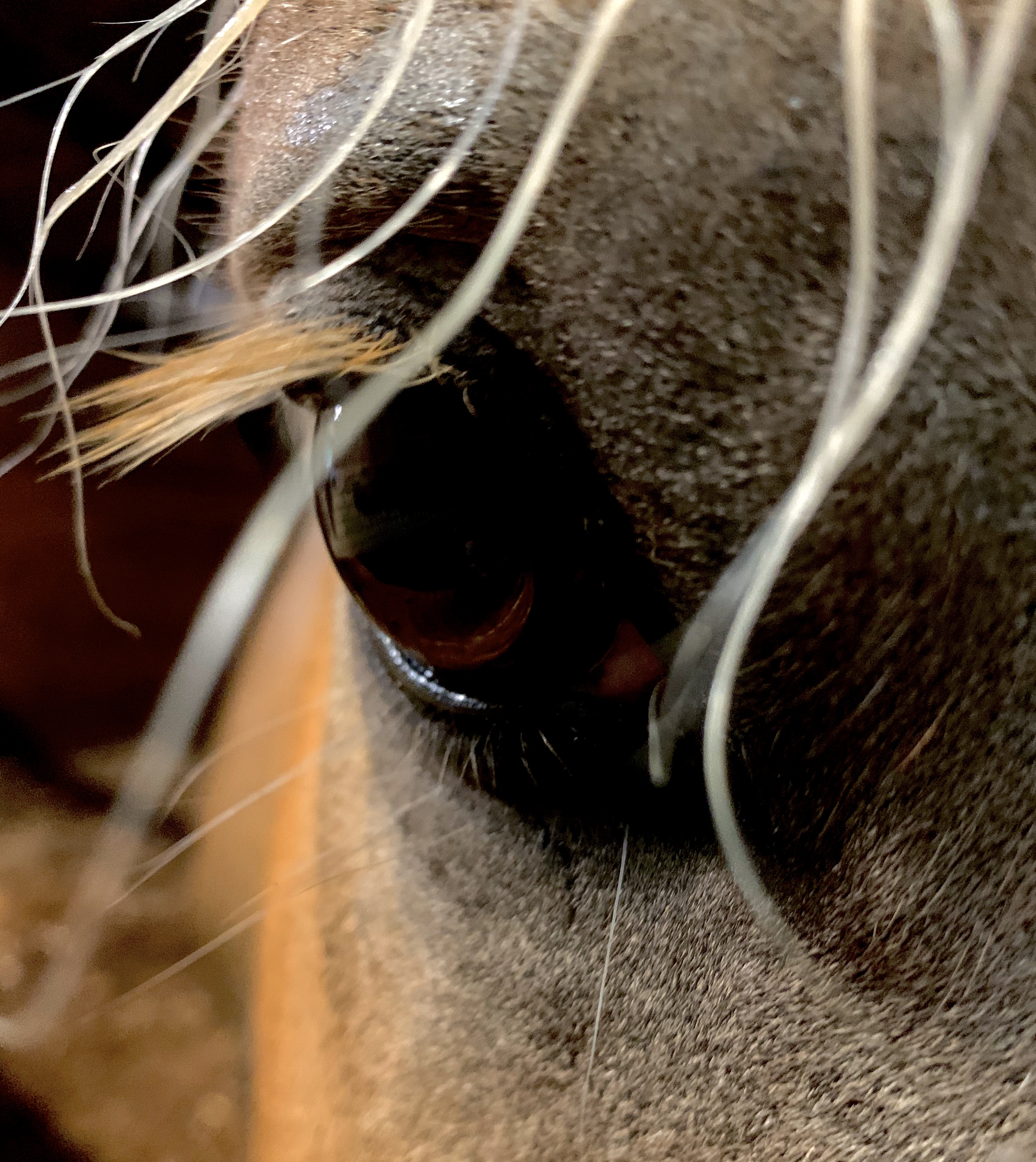
Even so, for as long as we all shall live, I find it a pure blessing to look into their shining eyes.
AI image created for this post
One-Time
Monthly
Yearly
Make a one-time or recurring donation to support daily Barnstorming posts
Because I have come to the fence at night, the horses arrive also from their ancient stable. They let me stroke their long faces, and I note in the light of the now-merging moon
how they, a Morgan and a Quarter, have been by shake-guttered raindrops spotted around their rumps and thus made Appaloosas, the ancestral horses of this place.
Maybe because it is night, they are nervous, or maybe because they too sense what they have become, they seem to be waiting for me to say something
to whatever ancient spirits might still abide here, that they might awaken from this strange dream, in which there are fences and stables and a man who doesn’t know a single word they understand. ~Robert Wrigley “After a Rainstorm”from Beautiful Country
During our three decades of Haflinger horse ownership, I figured out long ago that Haflingers must have a migration center in their brain that tells them that it is time to move on to other territory – a move based on quality of forage, the seasons, or maybe simply a sudden urge for a change in scenery. This thrifty mountain breed adapted over hundreds of years to living in rather sparse Alpen meadows. They needed to move on to another feeding area enmasse on a pretty regular basis, or when the weather was starting to get crummy.
Or perhaps the next valley over had a better view, who knows? Trouble is, my Haflingers seem to have the desire to “move to other pastures” even if the grass in their own territory is plentiful and the view is great. And there doesn’t seem to be much in the way of natural or man-made barrier that will discourage them.
I have a trio of geldings I dub the “Three Musketeers”) who are particularly afflicted with wanderlust. There is not a field yet that has held them when they decide together that it is time to move on. We are a hotwire and white tape fenced farm–something that has worked fairly well over the years, as it is inexpensive, easily repaired and best of all, easily moved if we need to change the fencing arrangement in our pasture rotation between five different 2 acre pastures.
Previous generations of Haflingers have tested the hotwire and learned not to bother it again. No problem.
But not the Three Musketeers.
They know when the wire is grounding out somewhere, so the current is low. They know when the weather is so dry that conduction is poor through the wire. They know when I’ve absent-mindedly left the fencer unplugged because I’ve had someone visit and we wanted to climb unshocked through the fences to walk from field to field.
These three actually have little conferences out in the field together about this. I’ve seen them huddled together, discussing their strategy, and fifteen minutes later, I’ll look out my kitchen window and they are in another field altogether and the wire and tape is strewn everywhere and there’s not a mark on any of them. Even more mysteriously, often I can’t really tell where they made their escape as they leave no trace–I think one holds up the top wire with his teeth and the others carefully step over the bottom wire. I’m convinced they do this just to make me crazy.
Last night, when I brought them in from a totally different field from where they had started in the morning, they all smirked at me as they marched to their stalls as if to say, “guess what you have waiting for you out there.” It was too dark to survey the damage last night but I got up extra early to check it out this morning before I turned them out again.
Sure enough, in the back corner of the field they had been put in yesterday morning, (which has plenty of grass), the tape had been stretched, but not broken, and the wires popped off their insulators and dragging on the ground and in a huge tangled mass. I enjoyed 45 minutes of Pacific Northwest summer morning putting it all back together. Then I put them out in the field they had escaped to last night, thinking, “okay, if you like this field so well, this is where you’ll stay”.
Tonight, they were back in the first field where they started out yesterday morning. Just to prove they could do it. They are thoroughly enjoying this sport. I’m ready to buy a grand poobah mega-wattage fry-their-whiskers fence charger.
But then, I’d be spoiling their fun and their travels. As long as they stay off the road, out of our garden, and out of my kitchen, they can have the run of the place. I too remember being afflicted with wanderlust, long long ago, and wanting to see the big wide world, no matter what obstacles had to be overcome or shocks I had to endure to get there. And I got there after all that trouble and effort and realized that home was really where I wanted to be.
Now, prying me away from my little corner of the world gets more difficult every year. I hope my Haflinger trio will eventually decide that staying home is the best thing after all. Maybe they will listen to what I have to say this time.
AI image created for this post
One-Time
Monthly
Yearly
Make a one-time or recurring donation to support daily Barnstorming posts
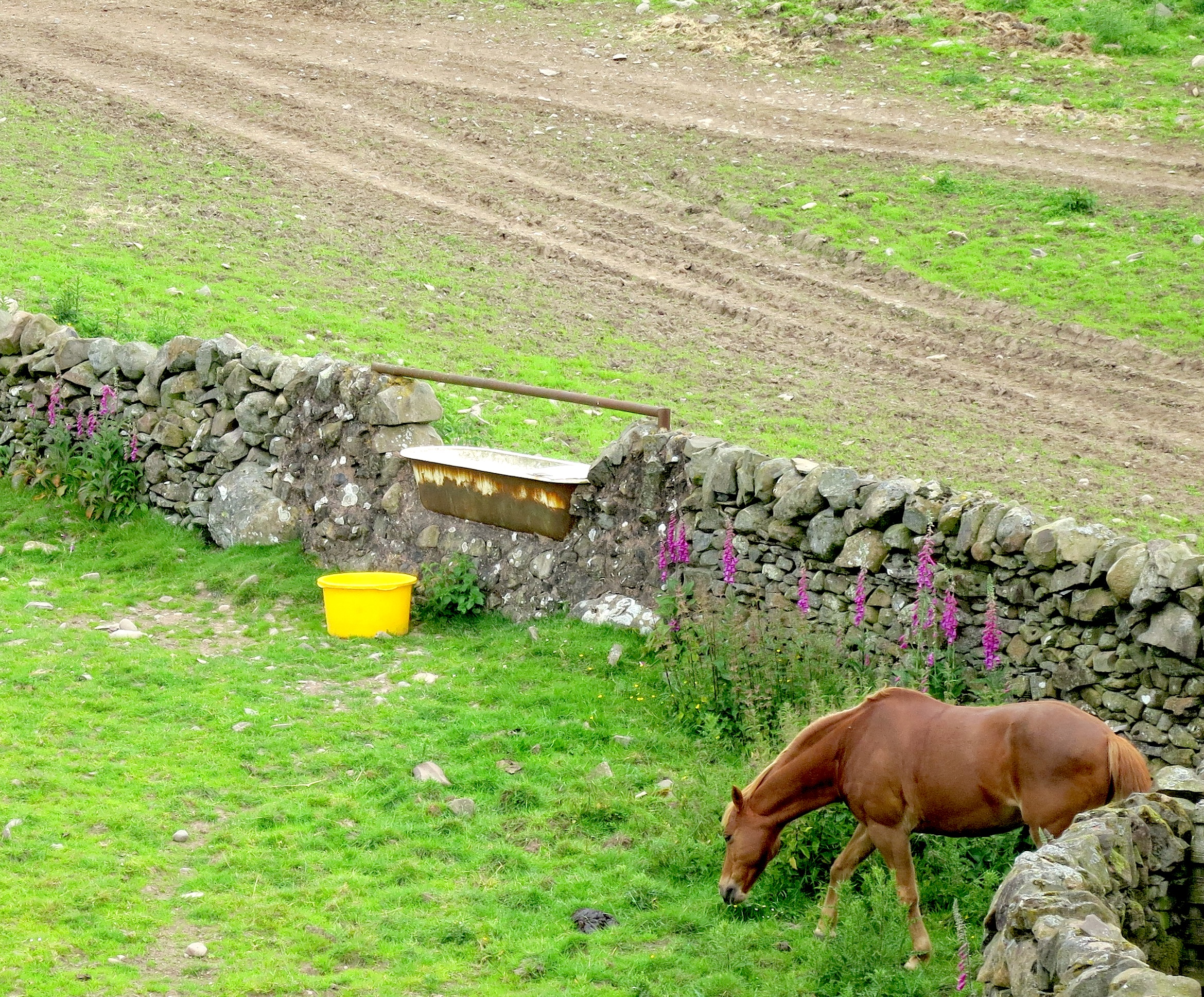
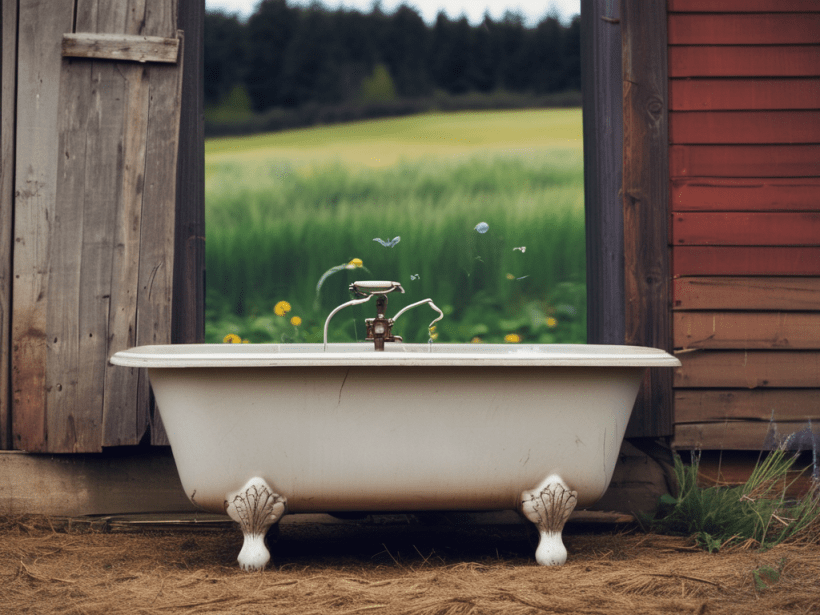
Let the end of all bathtubs be this putting out to pasture of four Victorian bowlegs anchored in grasses.
Let all longnecked browsers come drink from the shallows while faucets grow rusty and porcelain yellows.
Where once our nude forebears soaped up in this vessel come, cows, and come, horses.
Bring burdock and thistle, come slaver the scum of timothy and clover on the cast-iron lip that our grandsires climbed over
and let there be always green water for sipping that muzzles may enter thoughtful and rise dripping. ~Maxine Kumin “Watering Trough” from Selected Poems
photo by Emily Vander Haak
Farmers became the original recyclers before it was a word or an expectation — there isn’t anything that can’t be used twice or thrice for whatever is needed, wherever and whenever, especially far from the nearest retail outlet or farm supply store.
The water troughs on the farm where I grew up were cast-off four-legged bath tubs hauled home from the dump, exactly like the old tub I bathed in when staying overnight at my grandma’s farm house. She needed her tub to stay put right in the bathroom, never considering an upgrade and remodel; she would never offer it up to her cows.
But there were people who could afford to install showers and molded tubs so out their tubs went to find new life and purpose on farms like ours.
When I was a kid, we kept goldfish in our bathtub water trough, to keep the algae at bay and for the amusement of the farm cats. The horses and cows would stand idle, drowsing by the tub, their muzzles dripping, mesmerized by flashes of orange circling the plugged drain.
I often wondered what they thought of sharing their drinking water with fish, but I suspect they had more weighty things to ponder: where the next lush patch of grass might be, how to reach that belly itch, and finding the best shade with fewest flies for that summer afternoon nap.
When it comes to sharing a tub, maybe farm animals aren’t that different from their farmer keepers after all: they both stand dripping and thoughtful alongside the tub, contemplating what comes next. After a long hot summer day, it may well be a well-earned rest.
AI image created for this post
One-Time
Monthly
Yearly
Make a one-time or recurring donation to support daily Barnstorming posts
Let us not with one stone kill one bird, much less two. Let us never put a cat in a bag nor skin them, regardless of how many ways there are to do so. And let us never take the bull, especially by his gorgeous horns. What I mean is
we could watch our tongues or keep silent. What I mean is we could scrub the violence from our speech. And if we find truth in a horse’s mouth, let us bless her
ground-down molars, no matter how old she is, especially if she was given as a gift. Again, let’s open her mouth——that of the horse, I mean——let us touch that interdental space where no teeth grow, where the cold bit was made to grip. Touch her there, gently now, touch that gentle
empty between her incisors and molars, rub her aching, vulnerable gums. Don’t worry: doing so calms her. Besides, she’s old now; she’s what we call broken; she won’t bite. She’s lived through two thirteen-year emergences of cicadas
and thought their rising a god infestation, thought each insect roiling up an iteration of the many names of god, because god to her is the grasses so what comes up from grass is god. She would not say it that way. Nor would she
say the word cicada——words are hindrances to what can be spoken through the body, are what she tolerates when straddled, giddy-up on one side then whoa on the other. After, it’s all good girl, Mable, good girl, before the saddle sweat is rinsed cool with water from the hose and a carrot is offered flat from the palm. Yes, words being
generally useless she listens instead to the confused rooster stuttering when the sun burns overhead, when it’s warm enough for those time-keepers to tunnel up from the dark and fill their wings to make them stiff and capable of flight. To her, it is the sound
of winter-coming in her mane or the sound of winter-leaving in her mane—— yes, that sound——a liquid shushing like the blood-fill of stallion desire she knew once but crisper, a dry crinkle of fall leaves. Yes, that sound, as they fill their new wings then lumber to the canopy to demand come here, come here, come here, now come.
If this is a parable you don’t understand, then, dear human, stop listening for words. Listen instead for mane, wind, wings, wind, mane, wings, wings, wings. The lesson here is of the mare and of the insects, even of the rooster puffed and strutting past. Because now, now there is only one thing worth hearing, and it is the plea of every living being in that field we call ours, is the two-word commandment trilling from the trees: let live, let live, let live. Can you hear it? Please, they say. Please. Let us live. ~Nickole Brown “Parable”
When a governor writes about her decision to shoot her wayward dog and stinky goat, our reaction is about the injustice perpetrated on the dog more than her decision to play god with any animal she has responsibility for. I feel a twinge of guilt at the accusation. Who among us can throw stones?
God is clear we are meant to be caretakers of His Creation. Yet I still swat flies and trap mice – there is no pleasure in doing so, so I still ask for forgiveness for my lack of charity and decision to make my own existence more comfortable at the expense of another living thing.
I admit I fail Creation in myriad ways.
I have owned animals whose behavior brought me to my knees, sometimes literally with my face in the muck. I have wept over the loss of a deformed stillbirth foal and a pond of koi frozen in a bitter winter storm. The stories abound of my helplessness in the face of sadness and loss and frustration but I never wanted to become executioner.
I don’t live with cycles of cicada population booms but have experienced their overwhelming din and understood we are mere witnesses and not in control. We are not “little g” gods on this earth. We are its stewards.