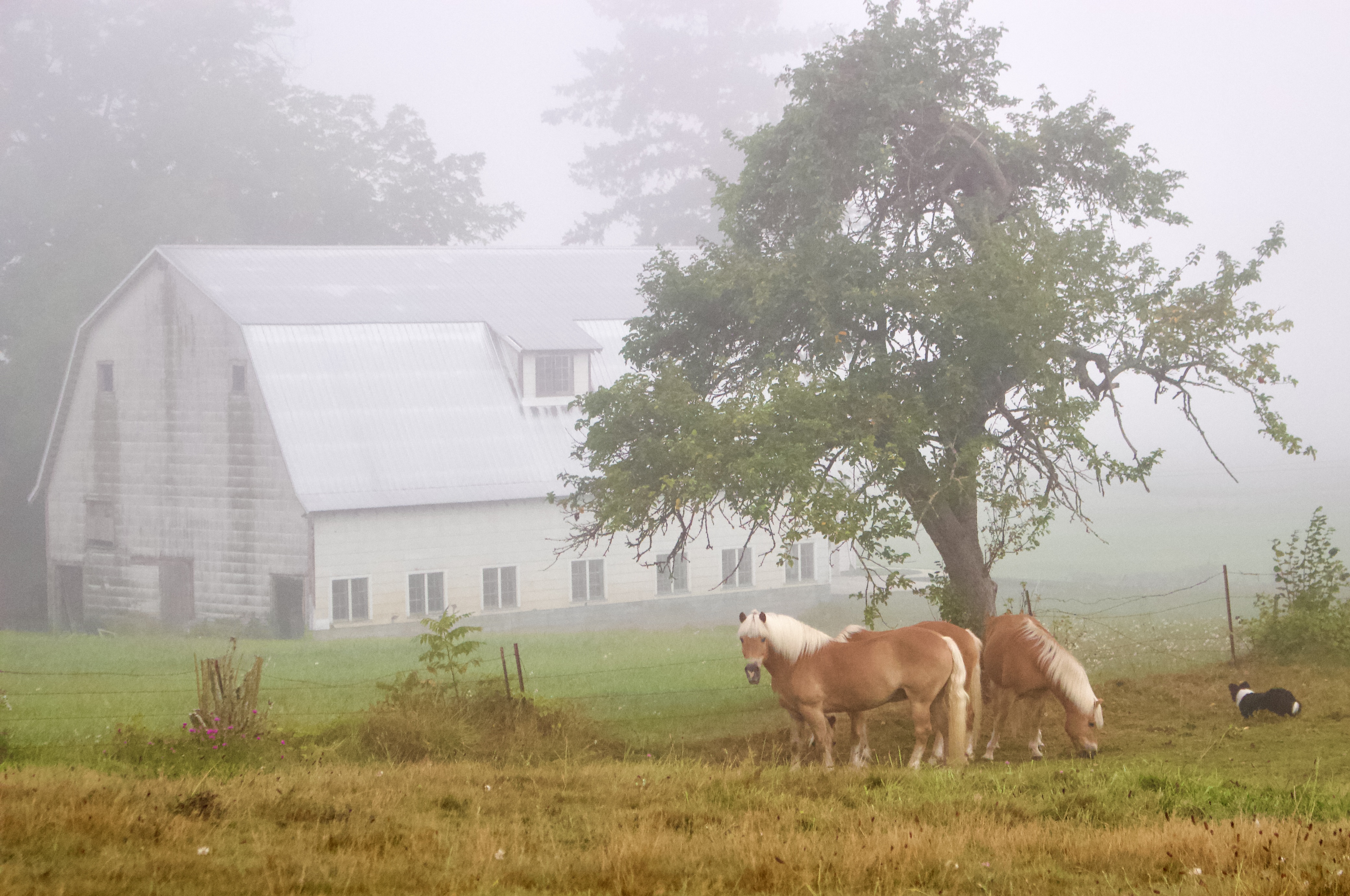
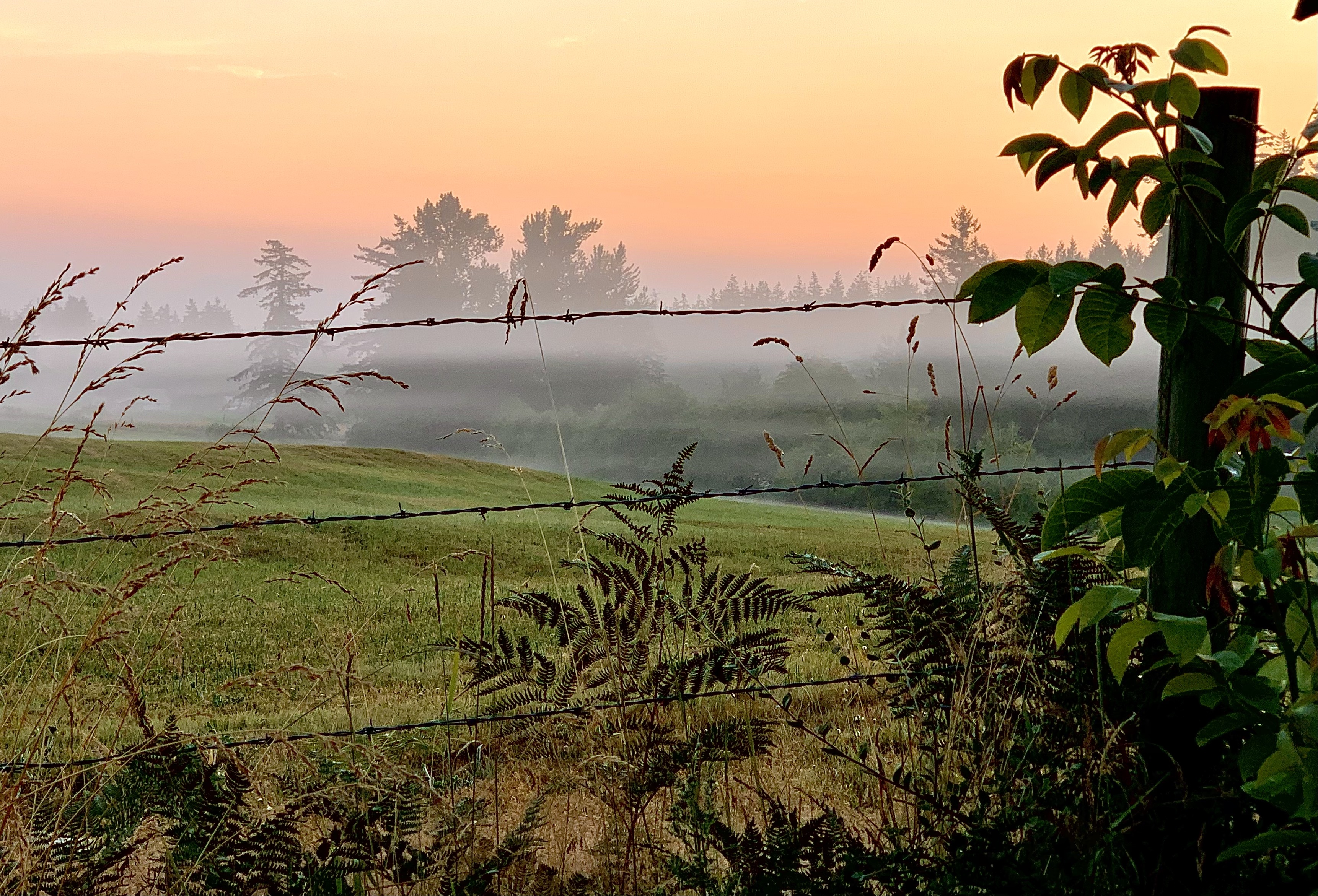
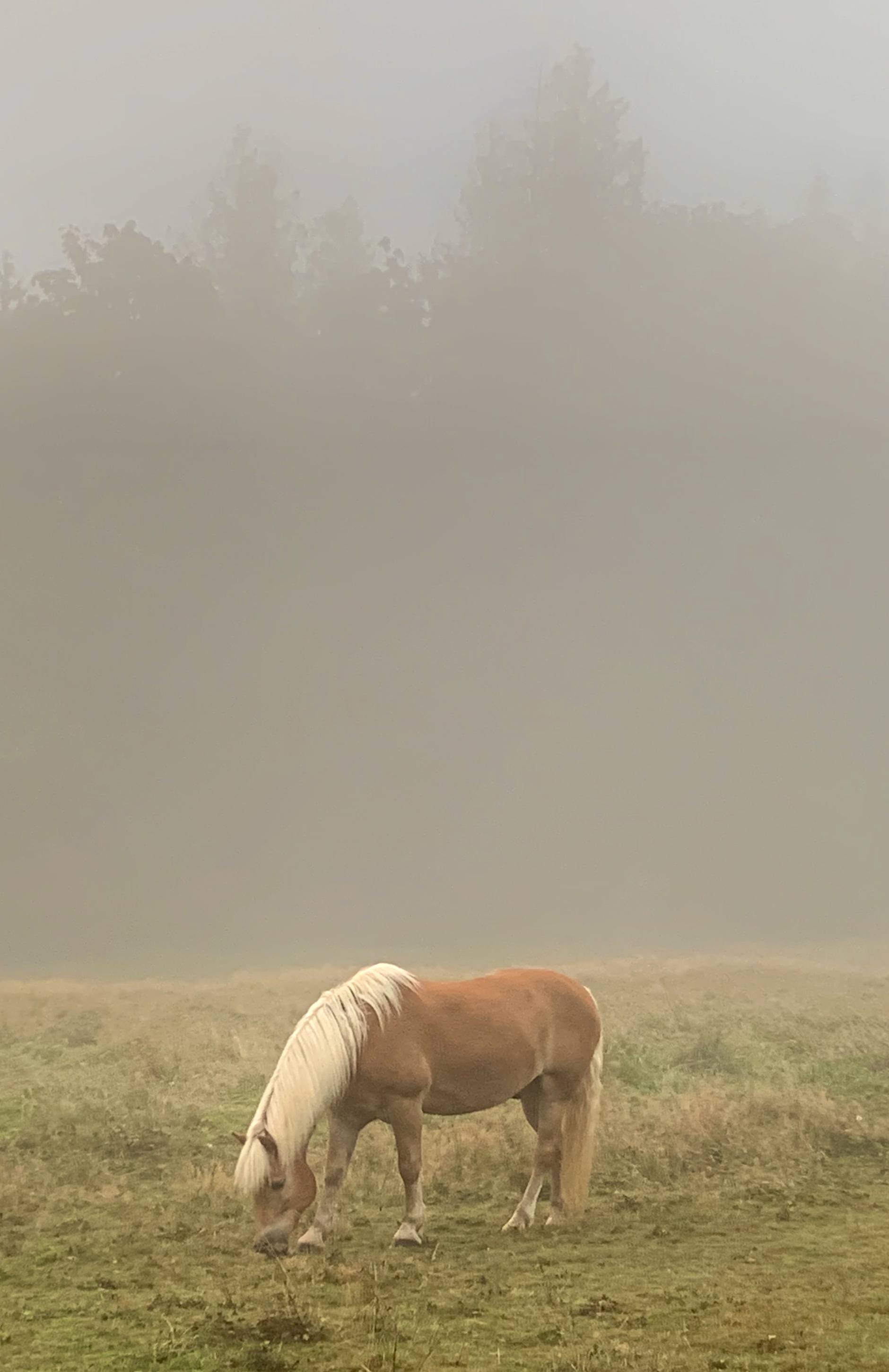
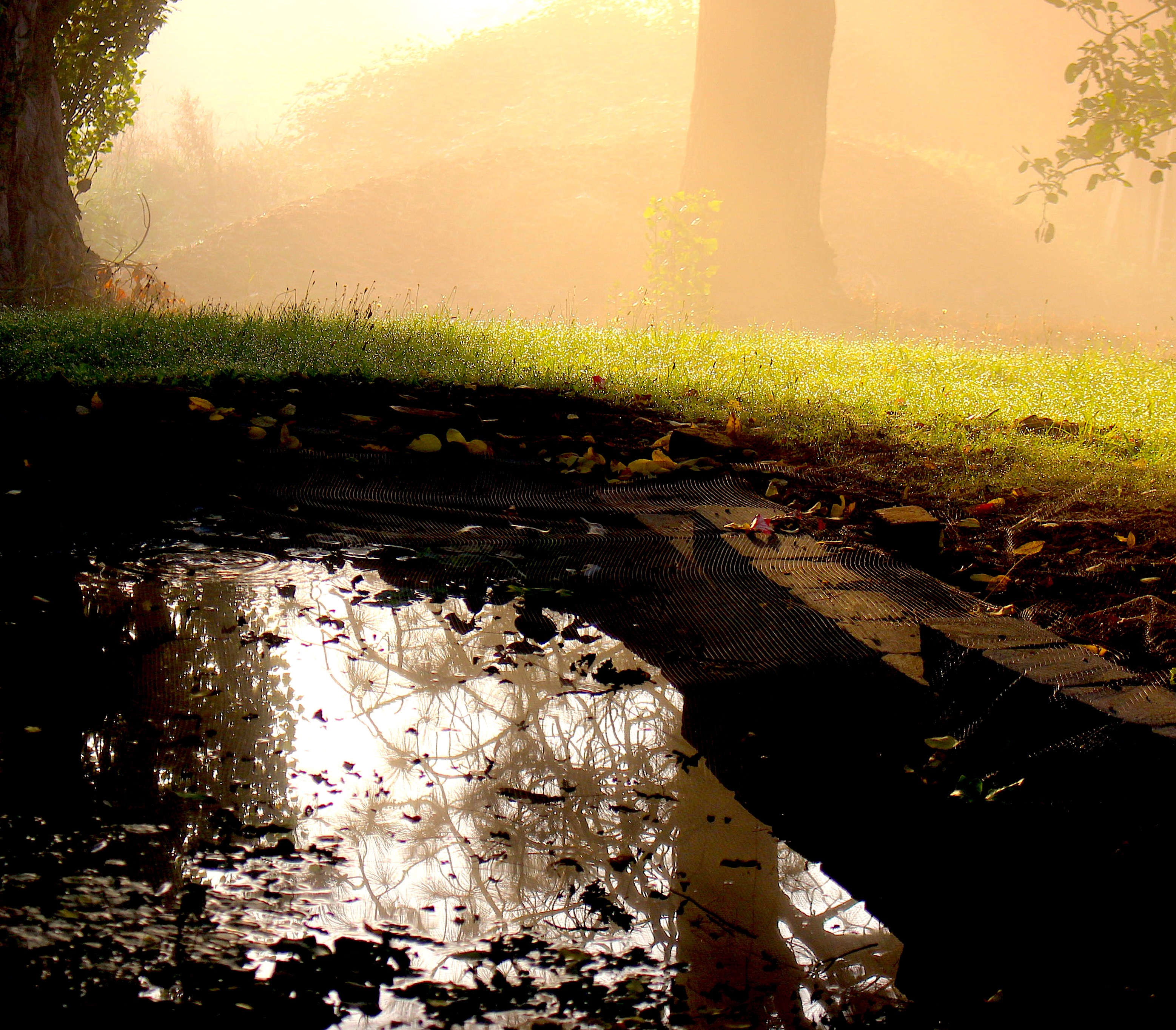
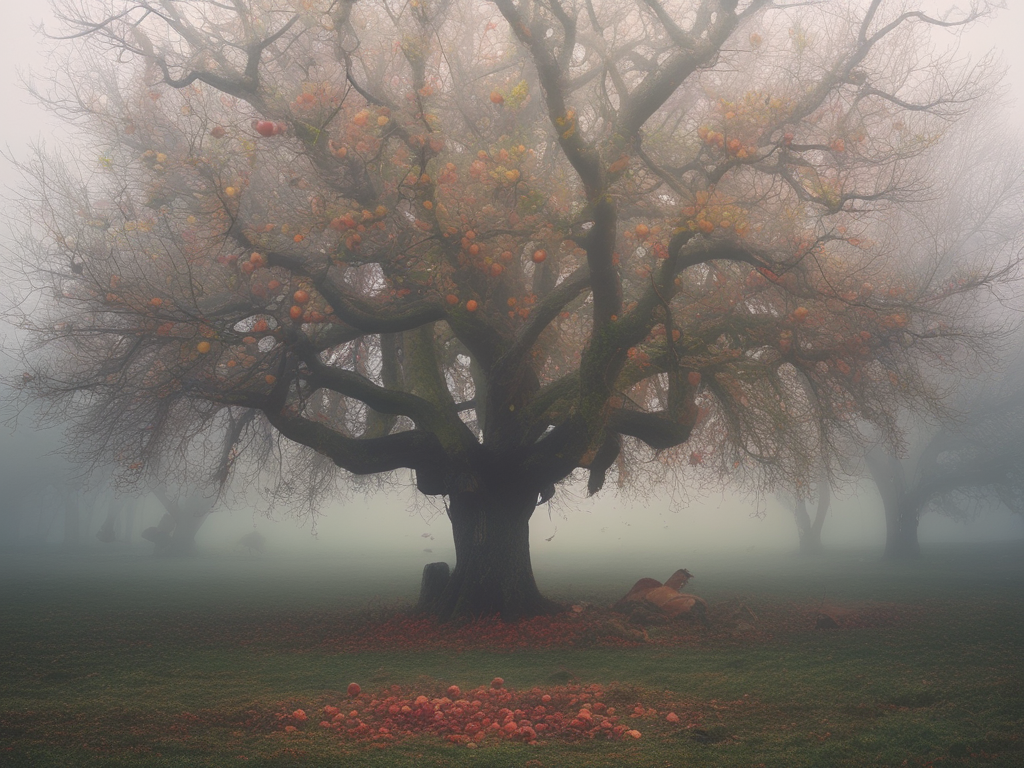
On the second day of fog, she goes to meet it sits on the broad root of a broken down apple tree, remembers being a child in such fog, searching for fairy houses. She hears movement in the grass, keeps very still while the veil of haze rises to treetops bronzed by the burn of the sun. Slowly horses and deer appear all around her, they graze close together, nosing fallen apples, until she forgets this is still a fallen world. ~Lonnie Hull DuPont, “On the Second Day of Fog” from She Calls the Moon by Its Name
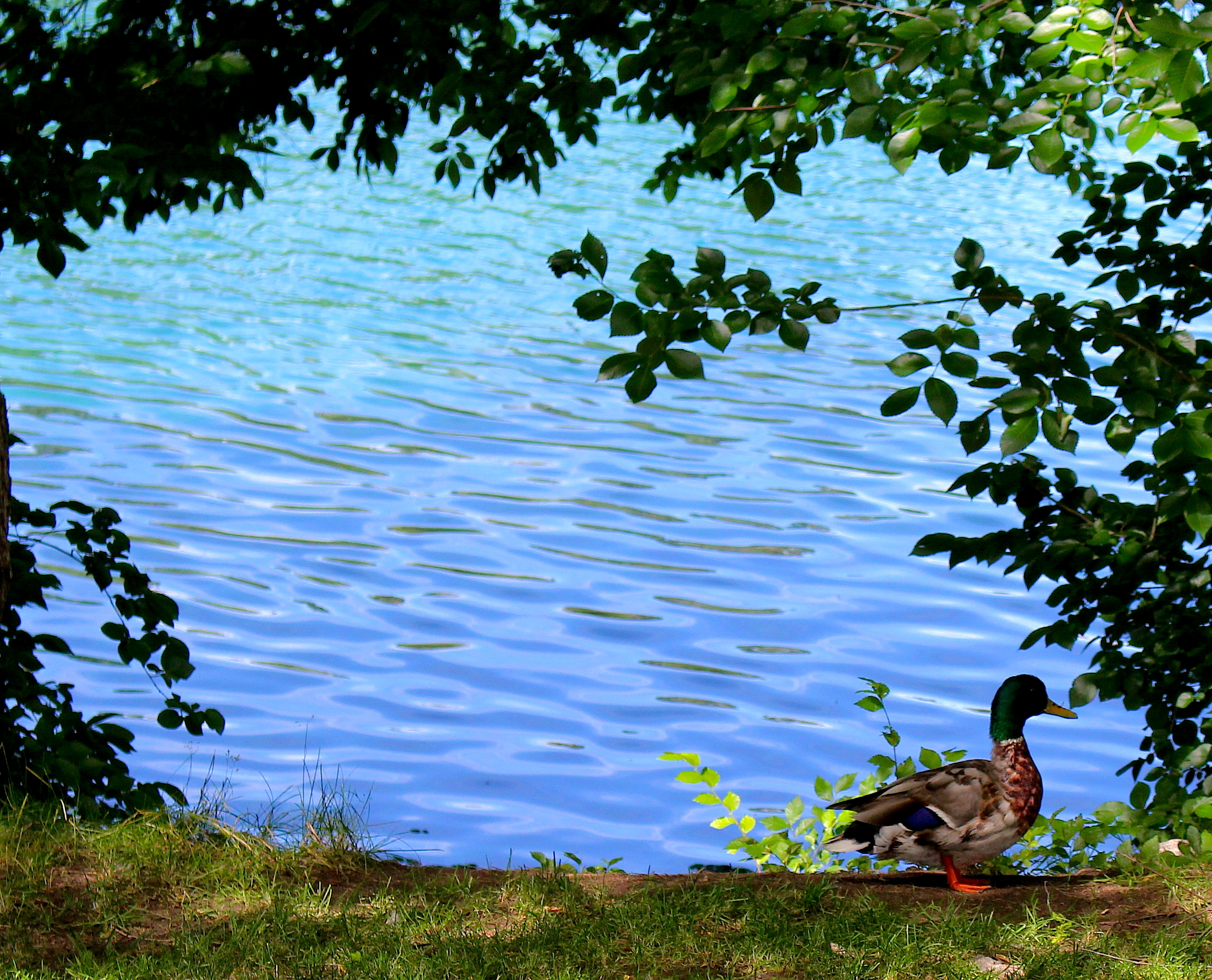
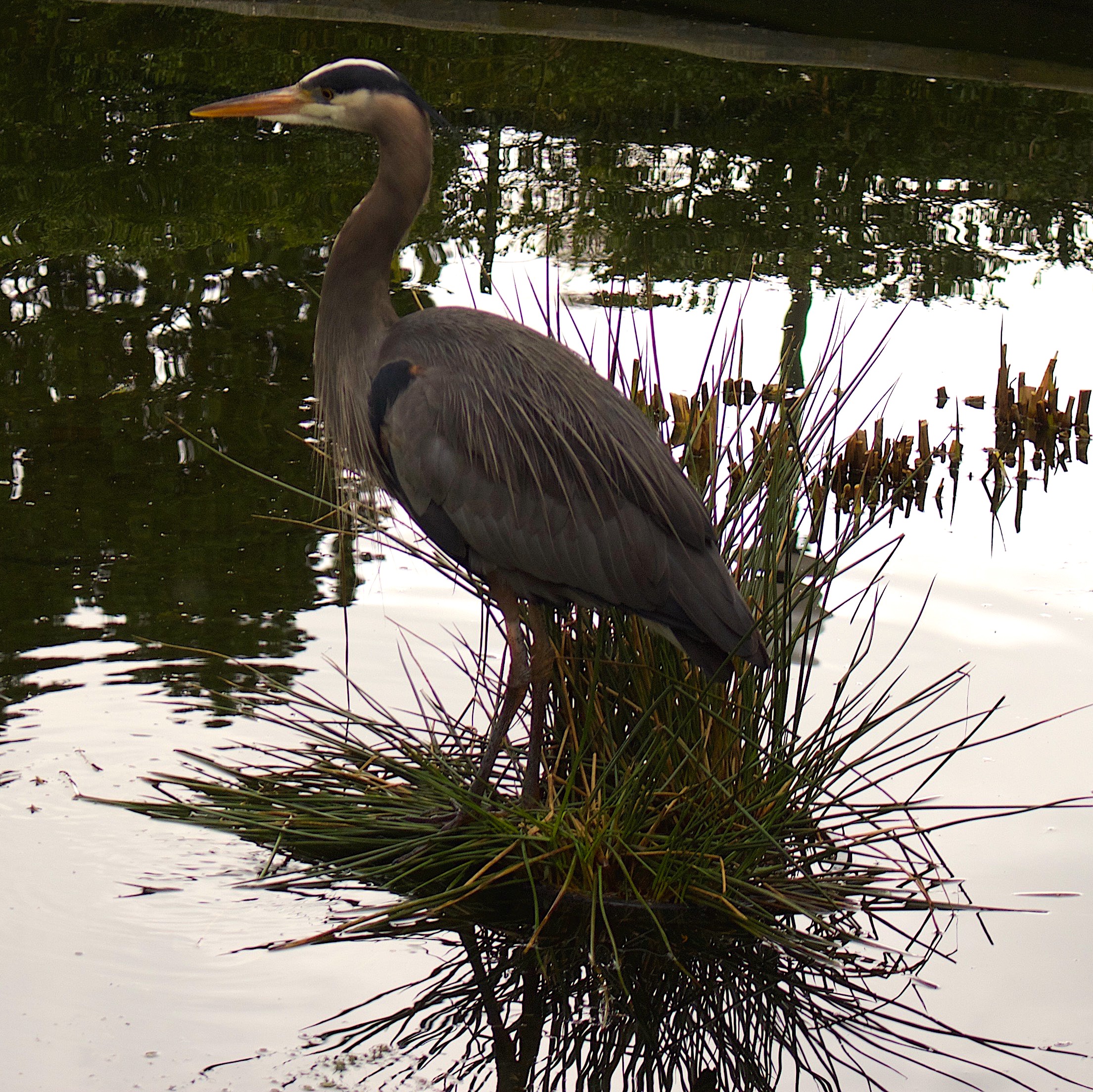
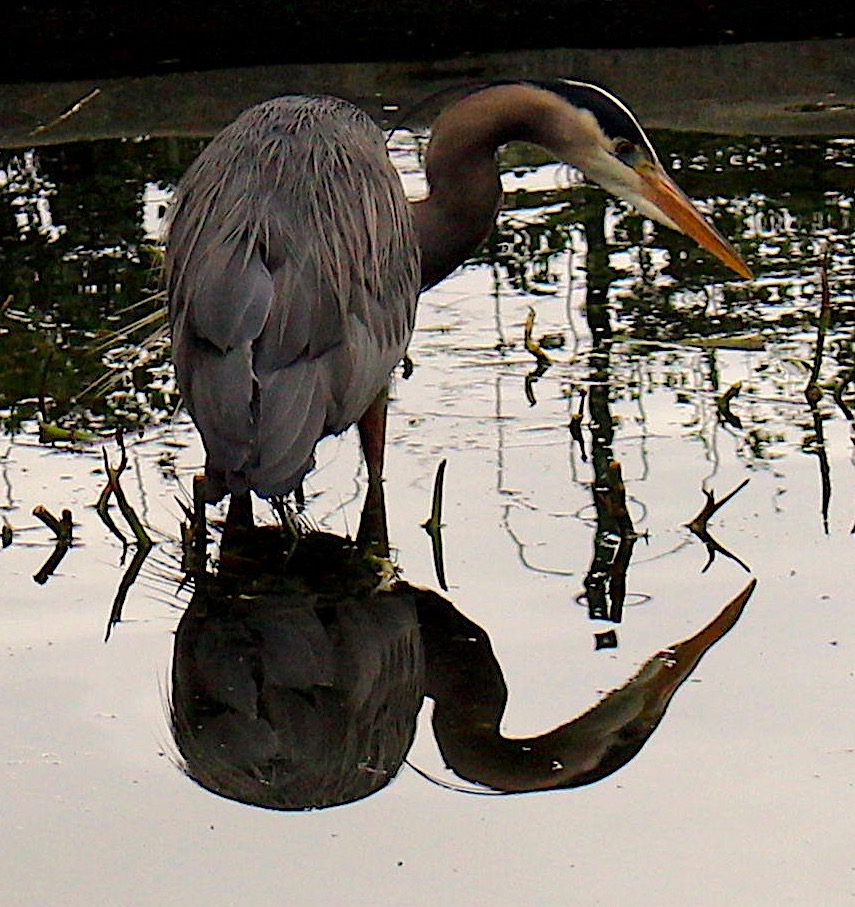
When despair for the world grows in me and I wake in the night at the least sound in fear of what my life and my children’s lives may be, I go and lie down where the wood drake rests in his beauty on the water, and the great heron feeds. I come into the peace of wild things who do not tax their lives with forethought of grief. I come into the presence of still water. And I feel above me the day-blind stars waiting with their light. For a time I rest in the grace of the world, and am free. ~Wendell Berry “The Peace of Wild Things“
When our grandchildren come to visit, I watch as yet another generation rediscovers the mystery of what we know about the joys and sorrows of this fallen but redeemed world.
I am reminded there is light beyond the fearsome darkness, there is peace amid the chaos, there is a smile behind the tears, there is stillness within the noisiness there is rest despite the restlessness, there is grace – ah, there is grace as inevitably the old gives way to the new.
One-Time
Monthly
Yearly
Make a one-time or recurring donation to support daily Barnstorming posts
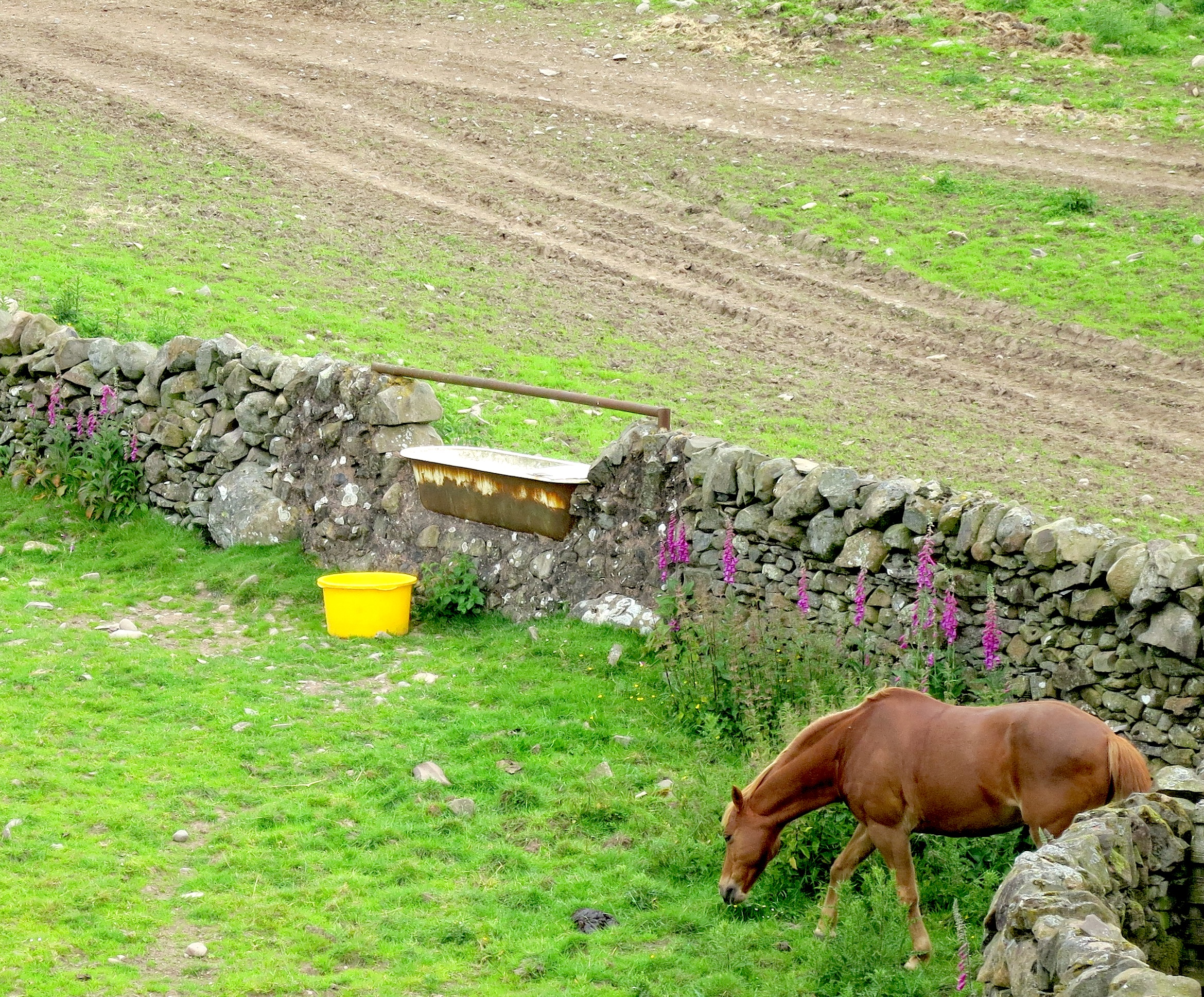
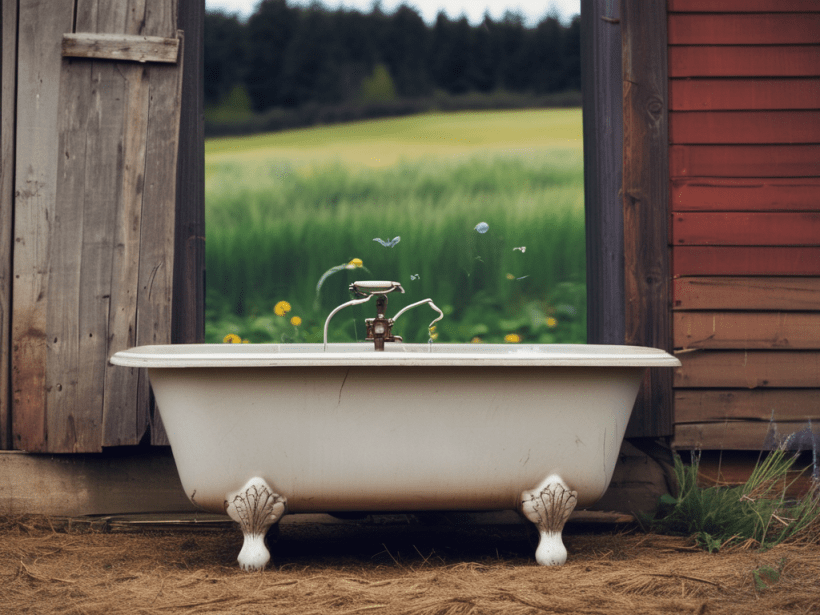
Let the end of all bathtubs be this putting out to pasture of four Victorian bowlegs anchored in grasses.
Let all longnecked browsers come drink from the shallows while faucets grow rusty and porcelain yellows.
Where once our nude forebears soaped up in this vessel come, cows, and come, horses.
Bring burdock and thistle, come slaver the scum of timothy and clover on the cast-iron lip that our grandsires climbed over
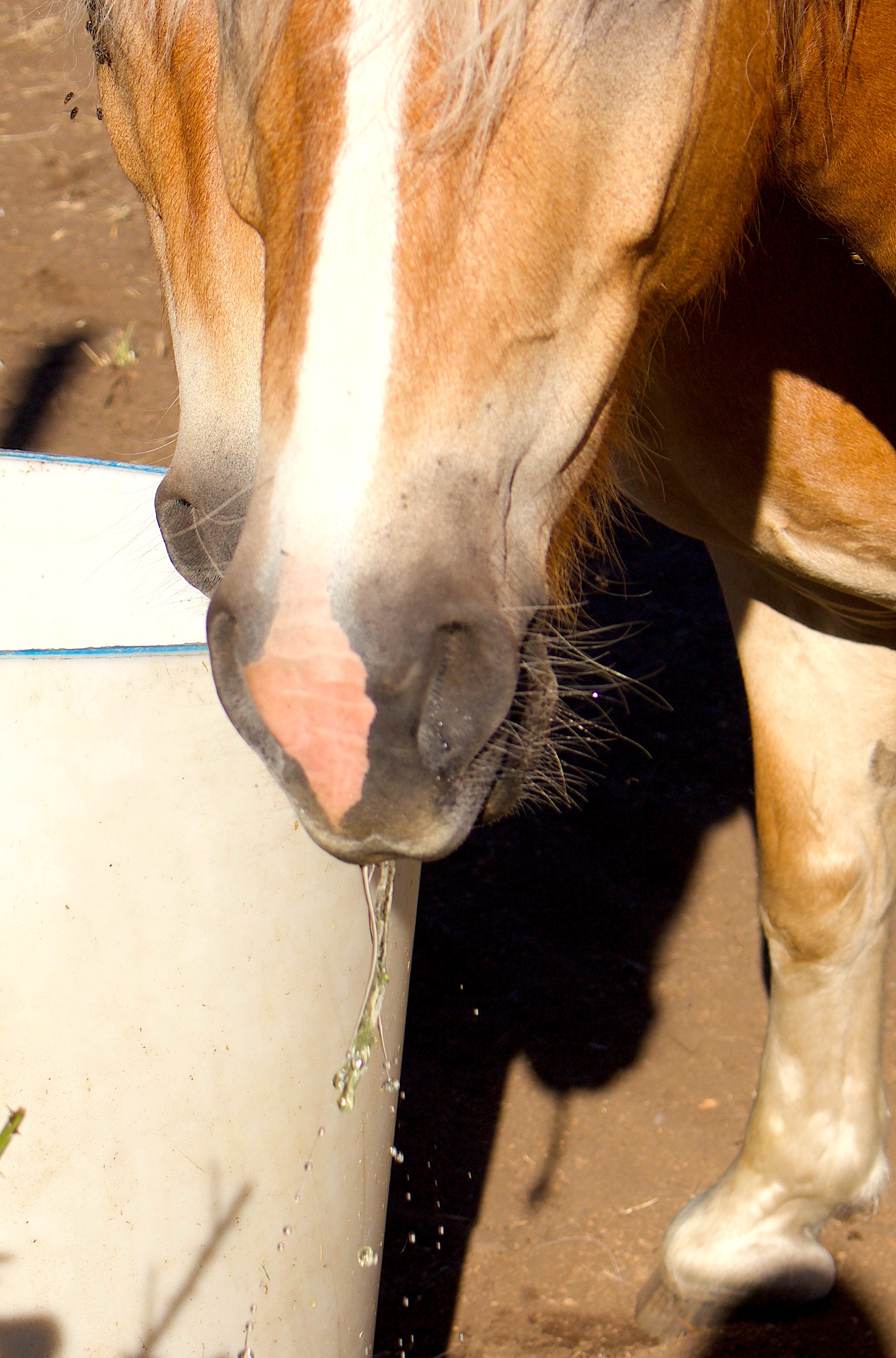
and let there be always green water for sipping that muzzles may enter thoughtful and rise dripping. ~Maxine Kumin “Watering Trough” from Selected Poems
photo by Emily Vander Haak
Farmers became the original recyclers before it was a word or an expectation — there isn’t anything that can’t be used twice or thrice for whatever is needed, wherever and whenever, especially far from the nearest retail outlet or farm supply store.
The water troughs on the farm where I grew up were cast-off four-legged bath tubs hauled home from the dump, exactly like the old tub I bathed in when staying overnight at my grandma’s farm house. She needed her tub to stay put right in the bathroom, never considering an upgrade and remodel; she would never offer it up to her cows.
But there were people who could afford to install showers and molded tubs so out their tubs went to find new life and purpose on farms like ours.
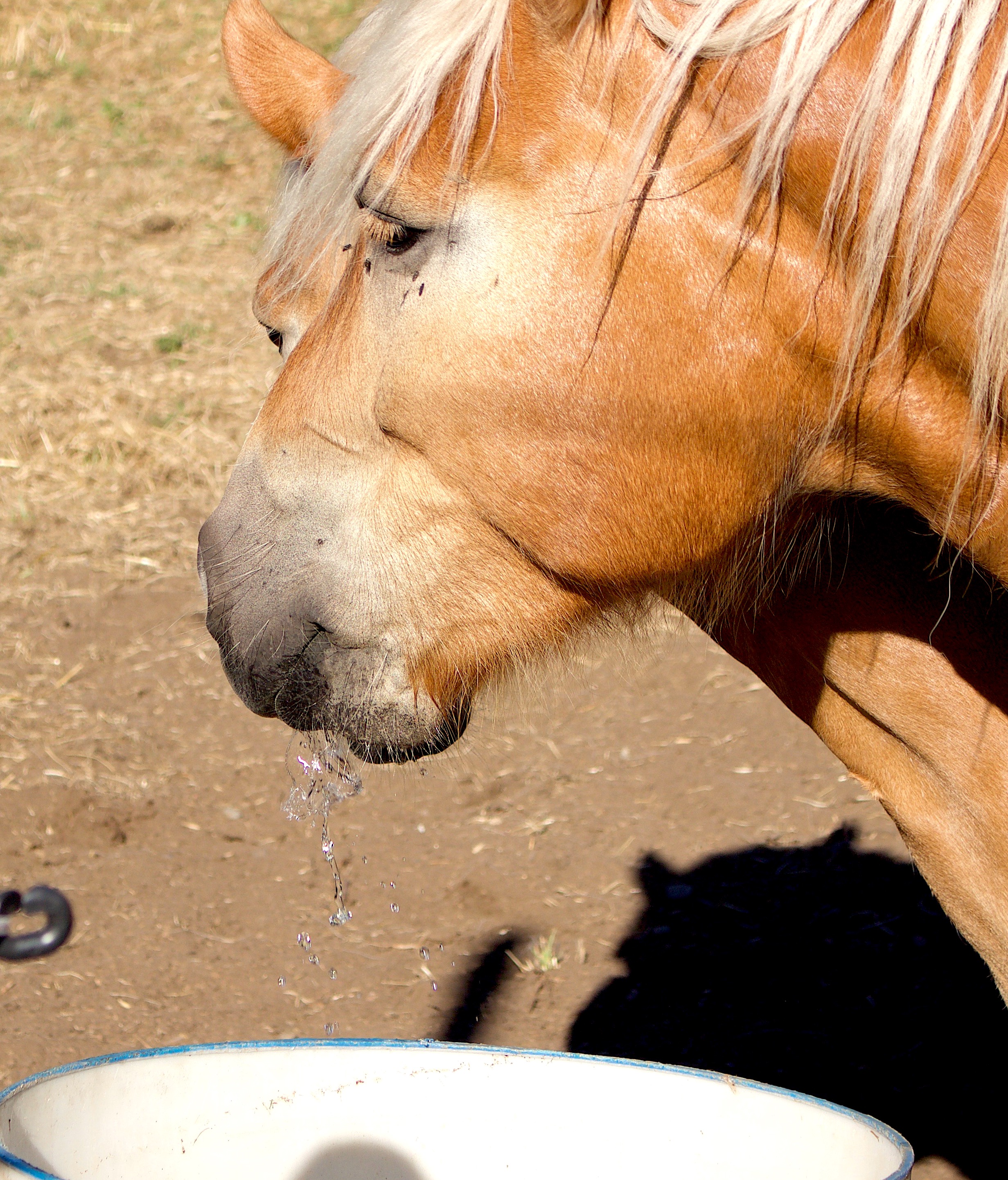
When I was a kid, we kept goldfish in our bathtub water trough, to keep the algae at bay and for the amusement of the farm cats. The horses and cows would stand idle, drowsing by the tub, their muzzles dripping, mesmerized by flashes of orange circling the plugged drain.
I often wondered what they thought of sharing their drinking water with fish, but I suspect they had more weighty things to ponder: where the next lush patch of grass might be, how to reach that belly itch, and finding the best shade with fewest flies for that summer afternoon nap.
When it comes to sharing a tub, maybe farm animals aren’t that different from their farmer keepers after all: they both stand dripping and thoughtful alongside the tub, contemplating what comes next. After a long hot summer day, it may well be a well-earned rest.
AI image created for this post
One-Time
Monthly
Yearly
Make a one-time or recurring donation to support daily Barnstorming posts
Little soul, you and I will become the memory of a memory of a memory. A horse released of the traces forgets the weight of the wagon. ~Jane Hirshfield “Harness”
My grandmothers were strong. They followed plows and bent to toil. They moved through fields sowing seed. They touched earth and grain grew. They were full of sturdiness and singing. My grandmothers were strong.
My grandmothers are full of memories Smelling of soap and onions and wet clay With veins rolling roughly over quick hands They have many clean words to say. My grandmothers were strong. Why am I not as they? ~Margaret Walker “Lineage”
So many years of shouldering huge burdens while waiting for freedom from the harness: grandmothers, grandfathers, parents, children struggling through every ounce of sweat, every sore muscle, every drop of blood, every tear.
How can one forget the weight of the plow as it turns over the earth where someday all will rest as dust?
The soil of strong hearts is well-tilled, yielding to the plowshare, furrowed deep and straight by the hard pull of the traces.
Although black hearts and minds are still tread upon yet do they bloom; even when turned inside out yet do they flourish.
Plow deep our hearts this day, oh Lord, to celebrate freedom declared for all God’s children.
May we never forget the strength it took to hold on… to plow, sow, grow, gather and harvest that freedom, the steady pull on the traces in order to raise up strong children and grandchildren evermore and everywhere.
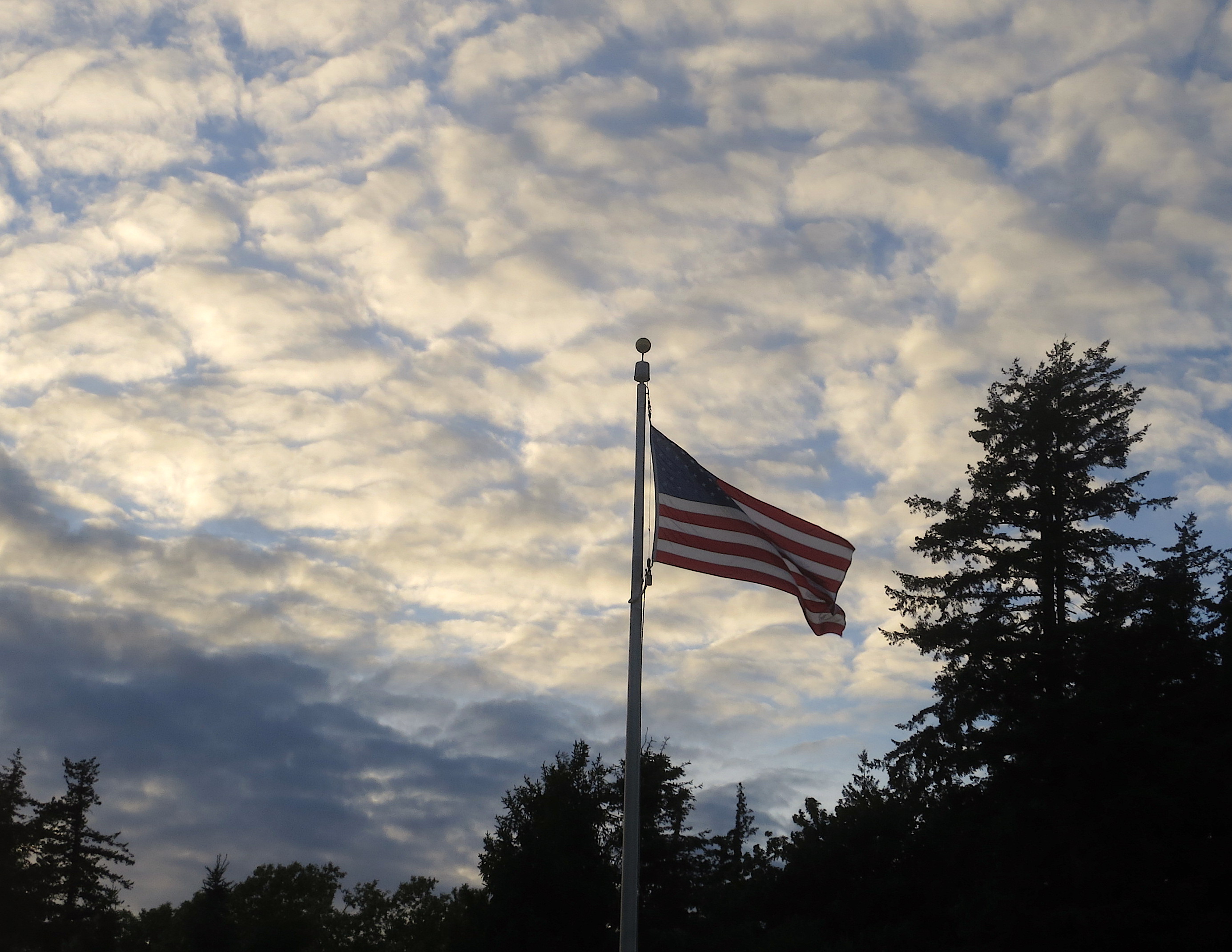
I am what you make me; nothing more. I swing before your eyes as a bright gleam of color, a symbol of yourself. ~Franklin K. Lane, Secretary of the Interior, 1914 Flag Day address
Sometimes, as a child, when I was bored, I’d grab a step ladder, pull it into our hallway, climb half way up and carefully lift the plywood hatch that was the portal to our dark attic. It took some effort to climb up into the attic from the ladder, juggling a flashlight at the same time, but once seated safely on the beams above our ceiling, being careful not to put my foot through the carpet of insulation, I could explore what was stowed and normally inaccessible to me.
All the usual attic-type things were put up there: Christmas ornaments and lights, baby cribs and high chairs, lamps and toys no longer used. Secrets to my parents’ past were stored away there too. It was difficult imagining them as young children growing up on opposite sides of the state of Washington, in very different circumstances, or as attractive college students who met at a dance, or as young marrieds unencumbered by the daily responsibilities of a family. The attic held those images and memories like a three dimensional photo album.
My father’s dark green Marine Corps cargo trunk was up there, the one that followed him from Officer Training in Quantico, Virginia, to beach and mountain battles on Tarawa, Tinian and Saipan in the South Pacific, and three years later back home again. It had his name and rank stenciled on the side in dark black lettering. The buckles were stiff but could be opened with effort, and in the dark attic, there was always the thrill of unlatching the lid, and shining the flashlight across the contents. His Marine Corps dress uniform lay inside underneath his stiff brimmed cap. There were books about protocol, and a photo album which contained pictures of “his men” that he led in his battalion, and the collection of photos my mother sent of herself as she worked as a teacher of high school students back home.
Most fascinating was a folded Japanese flag inside a small drawstring bag, made of thin white see-through cloth with the bold red sun in the middle. Surrounding the red sun were the delicate inked characters of many Japanese hands as if painted by artists, each wishing a soldier well in his fight for the empire. Yet there it was, a symbol of that soldier’s demise, itself buried in an American attic, being gently and curiously held by an American daughter of a Marine Corps captain. It would occur to me in the 1960s that some of the people who wrote on this flag might still be living, and certainly members of the soldier’s family would still be living. I asked my father once about how he obtained the flag, and he, protecting both me and himself, waved me away, saying he couldn’t remember. I know better now. He knew but could not possibly tell me the truth.
These flags, charms of good luck for the departing Japanese soldier as he left his neighborhood or village for war, are called Hinomaru Yosegaki (日の丸寄せ書き). Tens of thousands of these flags came home with American soldiers; it is clear they were not the talisman hoped for. A few of these flags are now finding their way back to their home country, to the original villages, to descendants of the lost soldiers. So now has this flag.
Eighty years ago doesn’t seem that long, a mere drop in the river of time. There are more than mere mementos that have flowed from the broken dam of WWII, flooding subsequent generations of Americans, Japanese, Europeans with memories that are now lost as the oldest surviving soldiers pass, scores of them daily, taking their stories of pain and loss and heroism with them. My father could never talk with a person of Asian descent, Japanese or not, without being visibly uneasy. As a child, I saw and felt this from him, but heard little from his mouth.
When he was twenty two years old, pressed flat against the rocks of Tarawa, trying to melt into the ground to become invisible to the bullets whizzing overhead, he could not have conceived that sixty-five years later his twenty two year old grandson would disembark from a jumbo jet at Narita in Tokyo, making his way to an international school to teach Japanese children. My father would have been shocked that his grandson would settle happily into a culture so foreign, so seemingly threatening, so apparently abhorrent. Yet this irony is the direct result of the horrors of that too-long horrible bloody war of devastation: Americans and Japanese, despite so many differences, have become the strongest of allies, happily exchanging the grandchildren of those bitterly warring soldiers back and forth across the Pacific. It too was my privilege to care for Japanese exchange students daily in my University health clinic, peering intently into their open faces and never once seeing the enemy that my father feared.
Now all these decades later, our son taught for 13 years in Tokyo, with deep admiration and appreciation for each of his students, some of whom were great-grandchildren of WWII Japanese soldiers. He married a granddaughter of those my father fought. Their two children are the perfect amalgam of once warring, yet now peaceful, cultures; a symbol of blended and blending peoples overcoming the hatred of past generations, creating a new world.
Our son and daughter-in-law, having now settled their family in the States, are adapting to a different language, culture and flag. I pray our son – having devoted part of his life as teacher and missionary to the land of the rising sun – has redeemed his grandfather, the soldier-warrior of the past century.
(U.S. Air Force photo by Staff Sgt. Peter Reft)
One-Time
Monthly
Yearly
Make a one-time or recurring donation to support daily Barnstorming posts
At once whatever happened starts receding. —Philip Larkin
Last night I walked the woods lit by the final moon of the month.
Days don’t count here beneath the centuries-old pines
where my grandmother took her solace on hard farm days, passing up
the washboard or jam-making for the eternal whooshing
of the forest as much serenity as yearning. ~Dave Malone “Walk in the Woods” from Tornado Drill
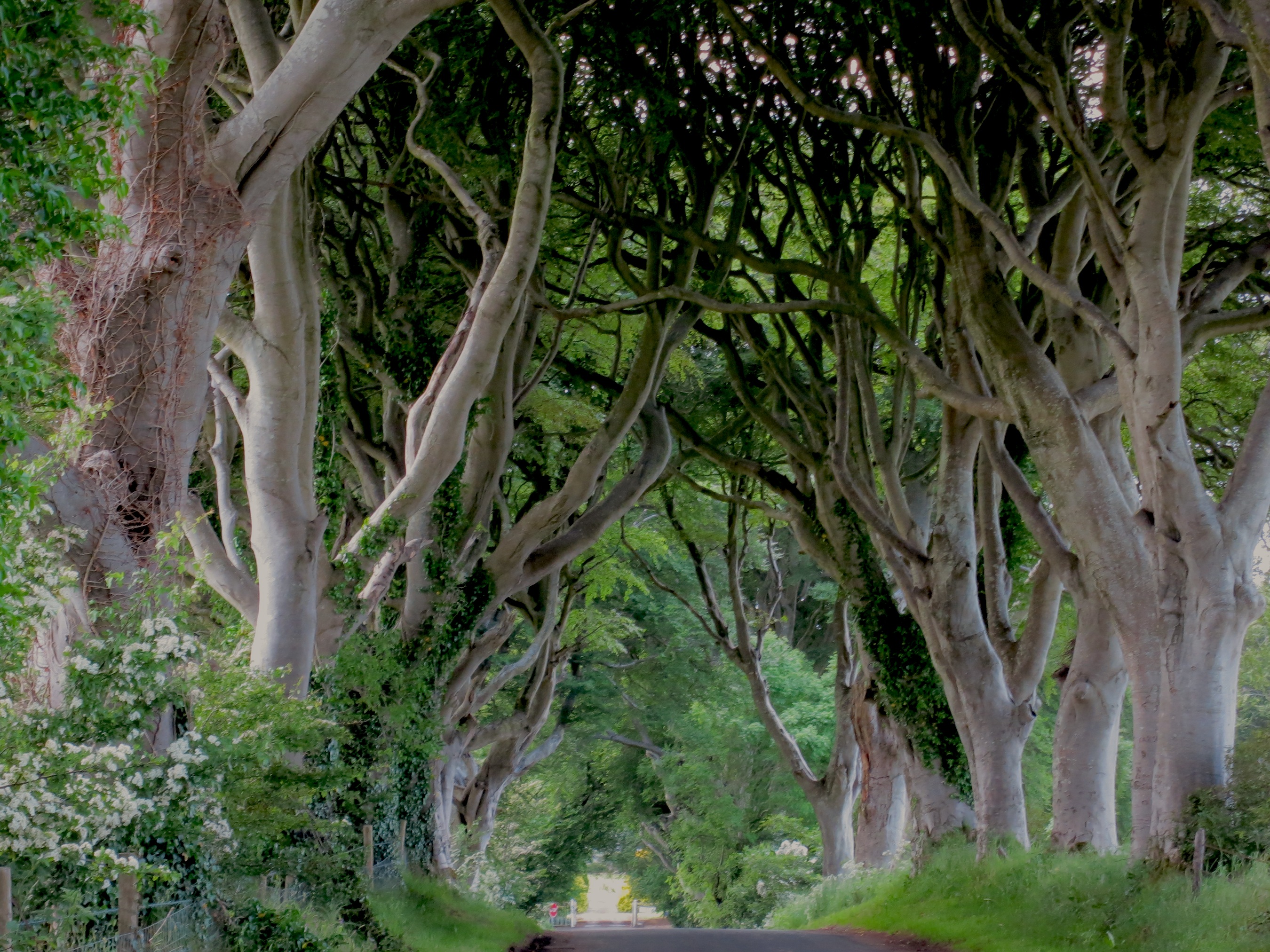
Over my seventy years, I’ve had the opportunity to walk through woods in different parts of the world – from my childhood home near Puget Sound, to the Bay Area in California, from central Africa above Lake Tanganyika to the forests of Northern Ireland and the coastline of Vancouver Island.
Here on the farm, we have some dense woods that our grandson has designated “the haunted forest” because of its many downed trees from windstorms. He is convinced BigFoot lives somewhere in the dense underbrush, and he may well be right.
During a walk in the woods, no matter where it may be, I find solace in a world where there is teeming life thriving under the ground, at eye level, and overhead. I feel a palpable vibrance with each step I take, while experiencing sounds and smells I find nowhere else.
So, I too leave behind the work of the day – the laundry, the cleaning and cooking – if only for an hour or so. And once again, I sync my own heartbeat to the pulse of the mysterious life I find, ongoing and eternal, in the woods.
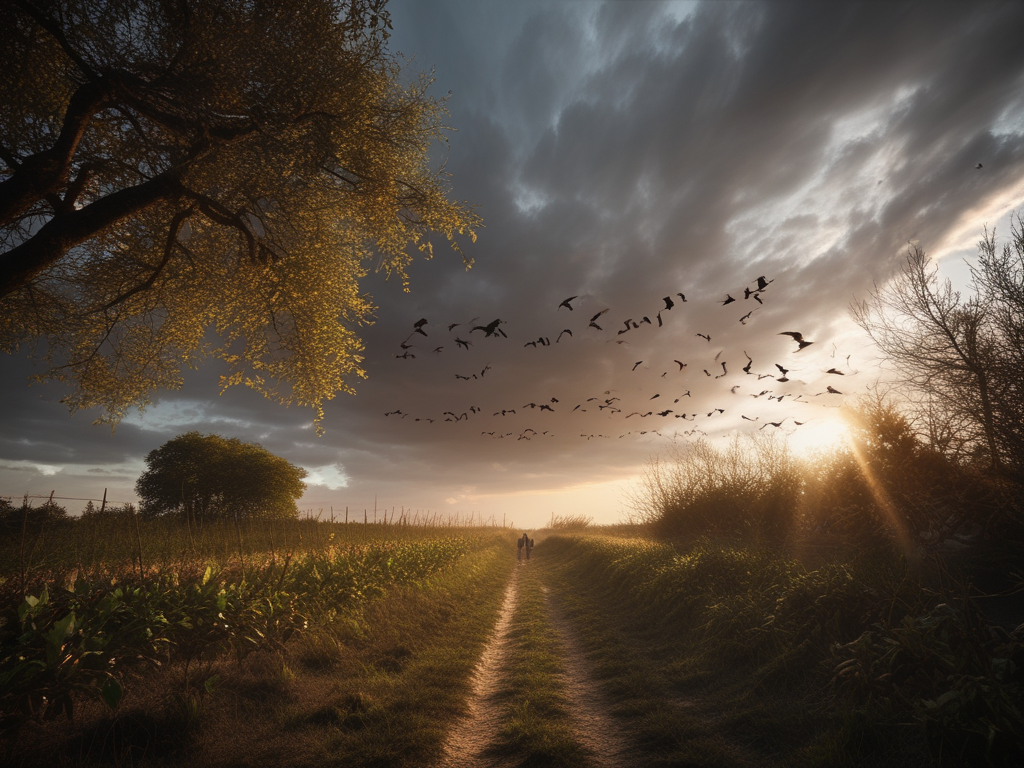
AI image created for this post
One-Time
Monthly
Yearly
Make a one-time or recurring donation to support daily Barnstorming posts
Light burrows out of darkness. Our skin is covered with silvery sheen like cherries polished by spring rain. The terribly hard days flood by— gone to where they are not needed anymore.
Light finds us through layers of clothes, woolen blankets, cool sheets smelling of orange-sunshine. Light always finds the hidden and exposes it.
Our hair reminds light of damp earth when buds first break free in rapture—they cannot wait or cannot get enough of it.
God is no longer untouchable. We are cleansed. Our bones are transitory voices, flocking geese practicing for that long journey to an end they cannot imagine— but there it is, the end in sight, calling from the distance, Come here, come here, I am waiting for you.
We reach what we have been reaching for, and it is more than we expected it to be. ~Martin Willitts Jr., “Light” from Leave Nothing Behind
We reach through our darkness toward a Light we have been told about.
It seems untouchable and unknowable, like birds called together to fly away, without imagining where they might go.
Yet the Light is reachable, it is touchable and welcoming. God is waiting for our approach.
Once again, always again – darkness is overwhelmed.
AI image created for this postAI image created for this post
Through love to light! Oh, wonderful the way That leads from darkness to the perfect day! From darkness and from sorrow of the night To morning that comes singing o’er the sea. Through love to light! Through light, O God, to thee, Who art the love of love, the eternal light of light!
One-Time
Monthly
Yearly
Make a one-time or recurring donation to support daily Barnstorming posts
I was enjoying everything: the rain, the path wherever it was taking me, the earth roots beginning to stir. I didn’t intend to start thinking about God, it just happened. How God, or the gods, are invisible, quite understandable But holiness is visible, entirely. It’s wonderful to walk along like that, thought not the usual intention to reach an answer but merely drifting. Like clouds that only seem weightless. but of course are not. Are really important. I mean, terribly important. Not decoration by any means. By next week the violets will be blooming.
Anyway, this was my delicious walk in the rain. What was it actually about?
Think about what it is that music is trying to say. It was something like that. ~Mary Oliver “Drifting”from Blue Horses
Wet things smell stronger, and I suppose his main regret is that he can sniff just one at a time. In a frenzy of delight he runs way up the sandy road— scored by freshets after five days of rain. Every pebble gleams, every leaf.
When I whistle he halts abruptly and steps in a circle, swings his extravagant tail. Then he rolls and rubs his muzzle in a particular place, while the drizzle falls without cease, and Queen Anne’s lace and Goldenrod bend low.
The top of the logging road stands open and light. Another day, before hunting starts, we’ll see how far it goes, leaving word first at home. The footing is ambiguous.
Soaked and muddy, the dog drops, panting, and looks up with what amounts to a grin. It’s so good to be uphill with him, nicely winded, and looking down on the pond.
A sound commences in my left ear like the sound of the sea in a shell; a downward, vertiginous drag comes with it. Time to head home. I wait until we’re nearly out to the main road to put him back on the leash, and he —the designated optimist— imagines to the end that he is free. ~Jane Kenyon “After an Illness, Walking the Dog”
This morning’s drizzly walk and every surface is baptized with gentle, loving sprinkles from God. It reminds us how visible is our holiness; His covering grace makes us free.
AI image created for this post
One-Time
Monthly
Yearly
Make a one-time or recurring donation to support daily Barnstorming posts
Just looking at them I grow greedy, as if they were freshly baked loaves waiting on their shelves to be broken open—that one and that—and I make my choice in a mood of exalted luck, browsing among them like a cow in sweetest pasture.
For life is continuous as long as they wait to be read—these inked paths opening into the future, page after page, every book its own receding horizon. And I hold them, one in each hand, a curious ballast weighting me here to the earth. ~Linda Pastan “The Bookstall” from Carnival Evening
…for people who love books and need To touch them, open them, browse for a while, And find some common good––that’s why we read. Readers and writers are two sides of the same gold coin. You write and I read and in that moment I find A union more perfect than any club I could join: The simple intimacy of being one mind. Here in a book-filled sun-lit room below the street, Strangers––some living, some dead––are hoping to meet. ~Garrison Keillor
You know who you are.
You are the person who stockpiles stacks of books on the bedside table and next to your favorite chair.
The person who sacrifices sleep to read just one more page.
The person who reads the cereal box when nothing else is available near the breakfast table.
The girl who falls into an uncovered manhole walking down a busy street while reading.
The objects of your affection may be as precious as the Book of Kells.
or as sappy as an Archie and Jughead comic book.
It’s the words, the words, that keep zipping by, telegraphing
an urgent message:What’s next? What’s next? ~Lois Edstrom “Bookworm” from Almanac of Quiet Days
Most of my life has been a reading rather than a writing life. For too many decades, I spent most of my time reading scientific and medical journals, to keep up with the changing knowledge in my profession. Even as a retired physician, I try to spend an hour a day reading medical articles but now have the time to dabble in books of memoir, biography, poetry and the occasional novel.
As a reader, I am no longer a stranger to the author or poet whose words I read. In a few instances, I’ve had the honor and privilege to meet my favorite authors in real life and to interact with them on line. Some are friends on the page as well as in my life.
I am no longer a stranger to many of you who read my words here on Barnstorming every day – I have been able to meet a number of you over the years. There is no greater privilege than to share our stories with one another.
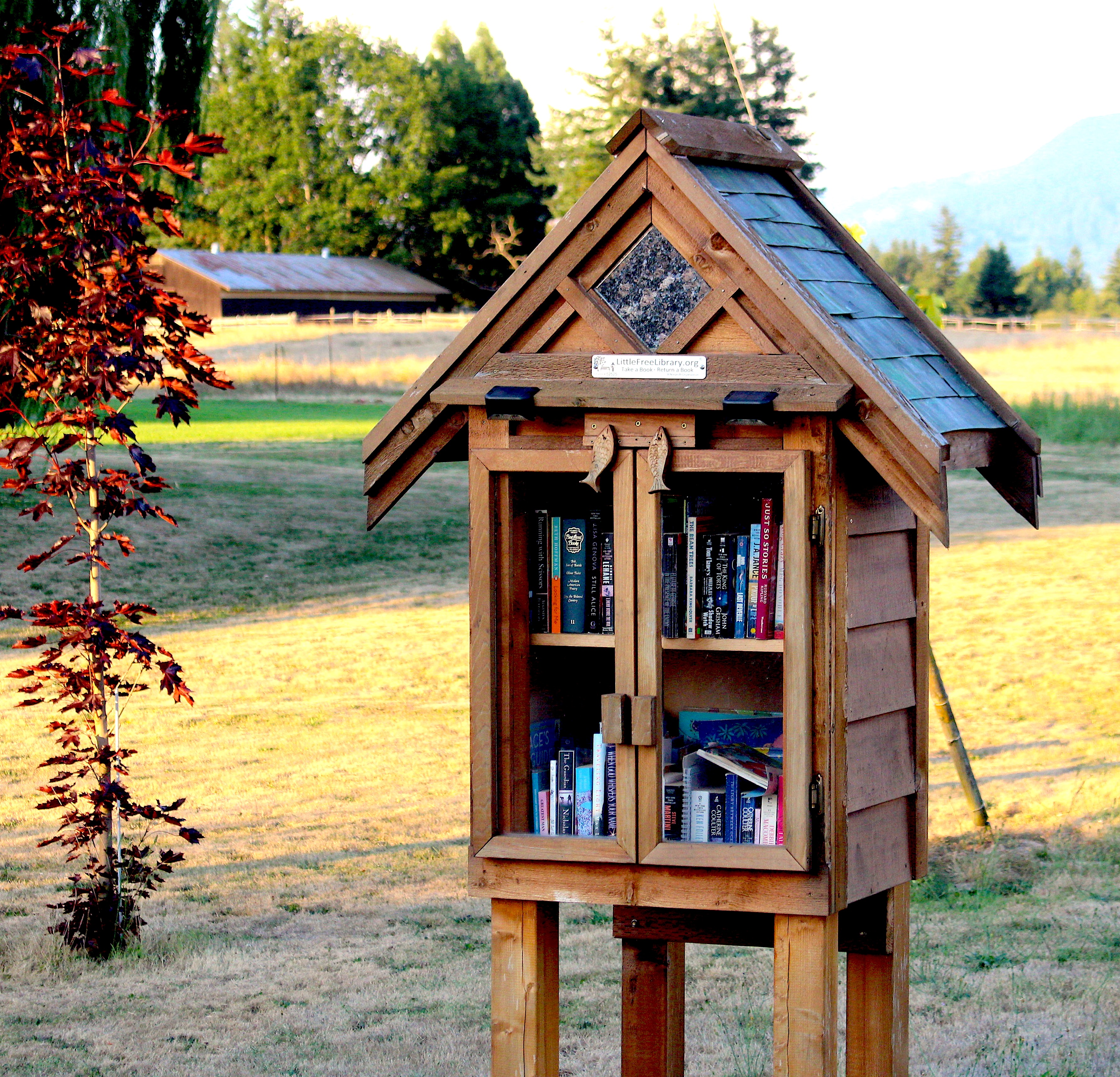
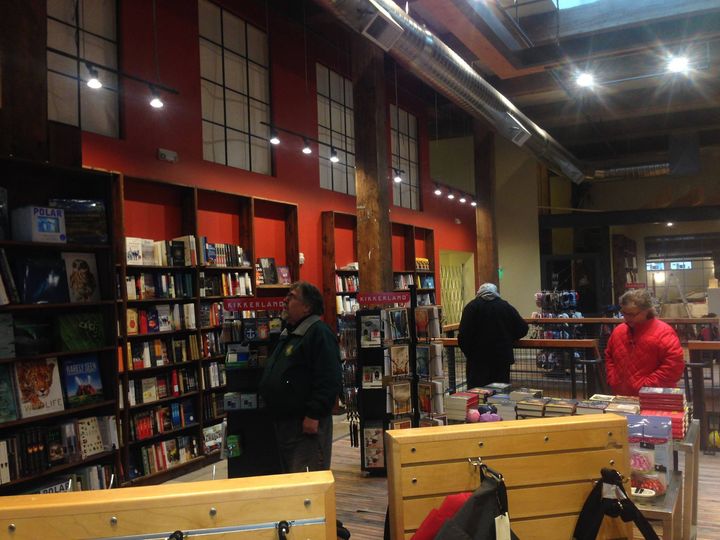
No matter where I discover books – in an independent bookstore, in a little free library standing along the roadside, or inside the world’s treasured libraries filled with books of antiquity – I seek out the privileged sanctuary of turning page after page written by those who graciously give me a glimpse of their inner world.
If librarians were honest, they would say, No one spends time here without being changed. Maybe you should go home. While you still can. ~Joseph Mills from “If Librarians Were Honest”
One-Time
Monthly
Yearly
Make a one-time or recurring donation to support daily Barnstorming posts
I pray because I can’t help myself. I pray because I’m helpless. I pray because the need flows out of me all the time — waking and sleeping. It doesn’t change God — it changes me. ~attributed to C.S. Lewis in “Shadowlands”
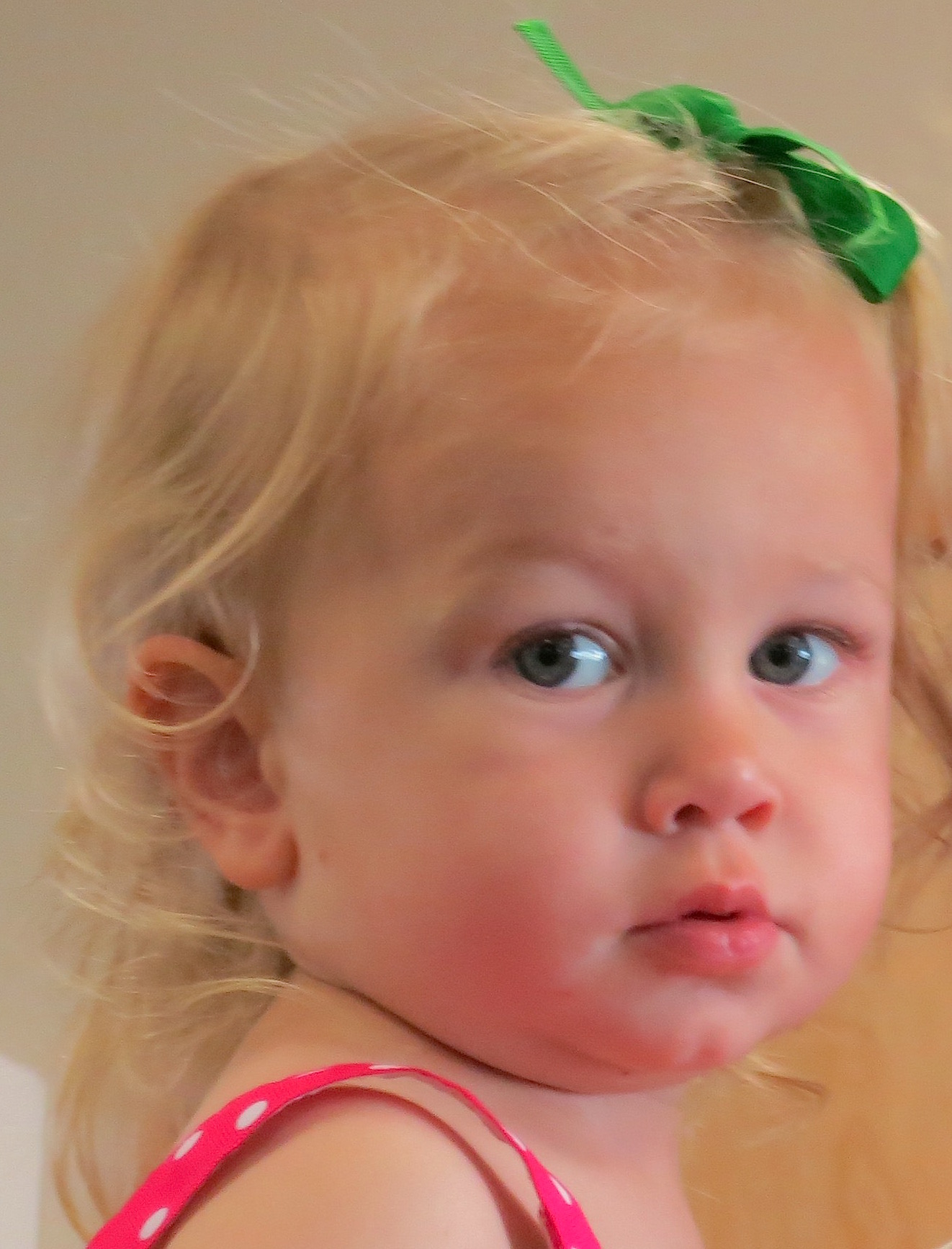
A recovering Faye with her sister Merry
Last week, on May 1, I found a surprise hanging on our front door – a little May Day basket full of little perennial blooms, along with a cheery message and a rainbow sticker. It hung from the door handle as a symbol of spring renewal, as well as a bit of a mystery – the flowers came with no hint of who had left them.
So I did a little sleuthing (actually A LOT of sleuthing) and found out they were delivered by our nearby neighbor Faye, who turned 11 just last week. She has a very special history some of you may remember:
Nine years ago, on this Barnstorming blog, I wrote about our little neighbor, two year old Faye, sickened by E.Coli 0157 infection/toxin to the point of becoming critically ill with Hemolytic Uremic Syndrome (plummeting cell counts and renal failure requiring dialysis to keep her alive). My original post about her illness is found here. I asked for your prayers on her (and others’) behalf.
At the worst point of her hospitalization at Seattle Children’s, when the doctors were sounding very worried on her behalf, Faye’s mother Danyale, in the midst of her helplessness, wrote to our Wiser Lake Chapel Pastor Bert Hitchcock with a plea for prayers from our church.
Here is how Pastor Bert responded to Danyale and her husband Jesse who remained at home, caring for their four other children:
“I understand that Faye (and everyone dealing with her) is fighting for her life. And that’s the way I am praying: that God in his merciful power, would deliver her, even if her condition looks hopeless.
If you were able to be in church this morning, you might hear my sense of urgency, for I have chosen this benediction, with which to close the service — and I give it to you right now, from the mouth of our Lord:
Jesus said: “Do not be afraid, Danyale! I am the First and the Last. I am the Living One. I died, but look – I am alive forever and ever! And I hold the keys of death and the grave.
Neither you nor I know how this will turn out — the possibilities are terrifying. But we do know who holds the keys of life and health and death; He is the Life-giver, who heals all our diseases — nothing can rip our lives (or little Faye’s life) out of His hands. And, when He does allow these bodies to give out, He promises to give us glorious new life, safe forever in His presence. These are not pious platitudes; these are the rock-hard promises of the one who loves us more than life, and who is absolutely in control of what is happening today.
Safe in the arms of Jesus, Safe on His gentle breast; There by His love o’ershaded, Sweetly my soul shall rest.
I’m praying for you all; and your Chapel Family will be praying this morning, as we gather in the Lord’s presence.
Love you, and yours, Danyale, Pastor Bert Hitchcock
That week, Faye’s renal failure reversed itself. She was able to return home with normal kidney function and improved cell counts, having also survived a bout with pneumonia.
Here is what her mother wrote to share with you all once she came home:
“Dear Friends and readers of Barnstorming,
Some of you we know, but so many of you we do not. Whichever the case, Emily tells me you have prayed for our little girl, Faye, throughout her sickness and into her recovery. What can parents say when people–many of whom we may never be privileged to meet in this life–have come alongside us to beseech the Lord for our daughter’s life and pray for her healing? Thank you. Thank you!
Faye is doing so well; stronger every day, more and more herself! It is wonderful to see.
This week we head back down to Seattle Children’s for a check up–we’ll get to say hello to the good folks who saw her through her sickness. A special stop will be made on the dialysis unit to see Nurse Kathy, a favorite of Faye’s. We anticipate a good report!
Thanks again for your love and support, far and wide. Truly astounding. Danyale and Jesse, for Faye, too
—————————————
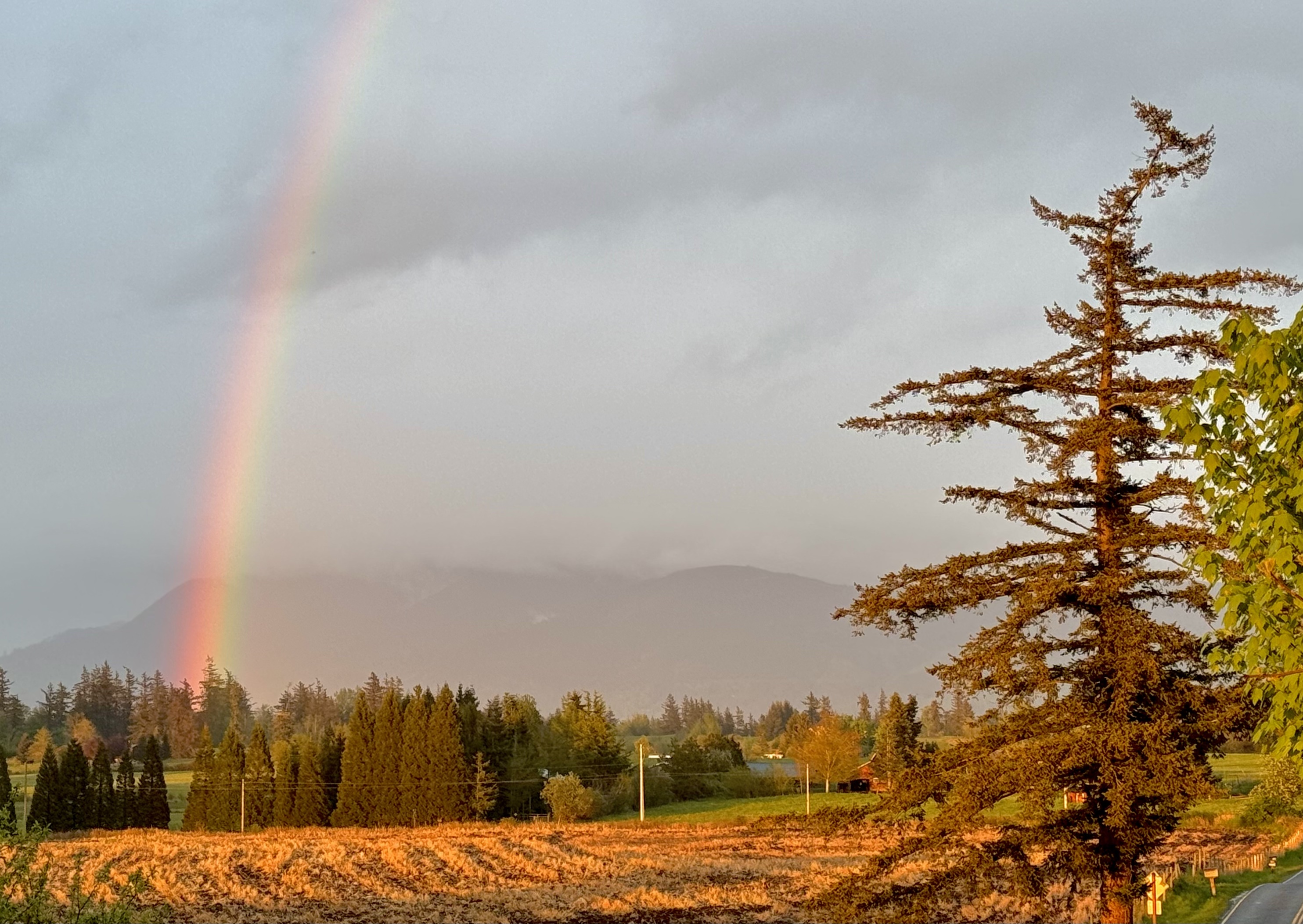
Now Faye is a delightful, healthy eleven year old girl who secretly blessed me with a basket of May Day flowers. She doesn’t remember the crisis that nearly took her from us nine years ago, but she does know about God’s rainbow promises. And she certainly knows about the power of prayer in the face of helplessness.
As Pastor Bert said: our faith in an unchanging and steadfast God who loves and holds us, can change us – forever.
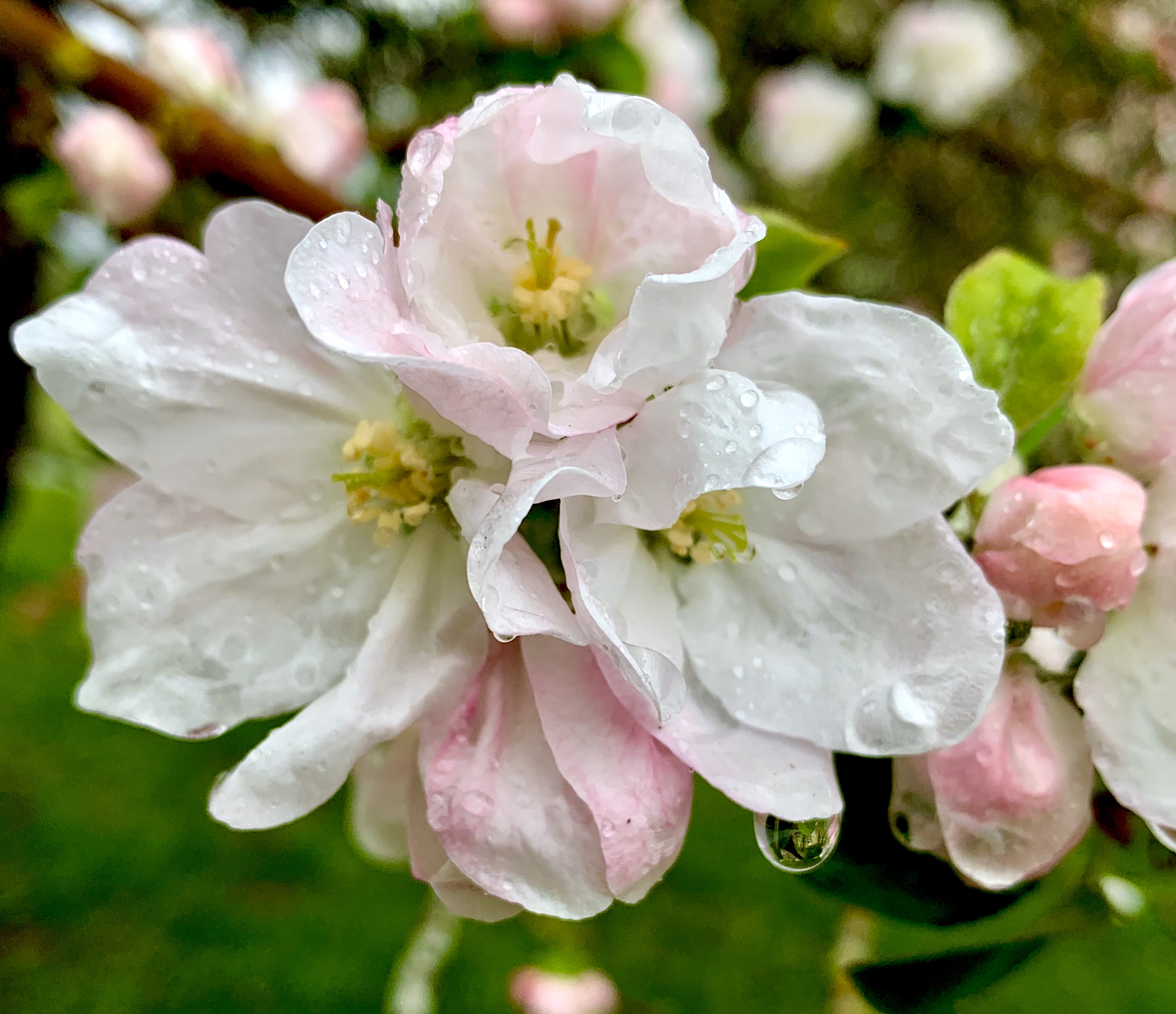
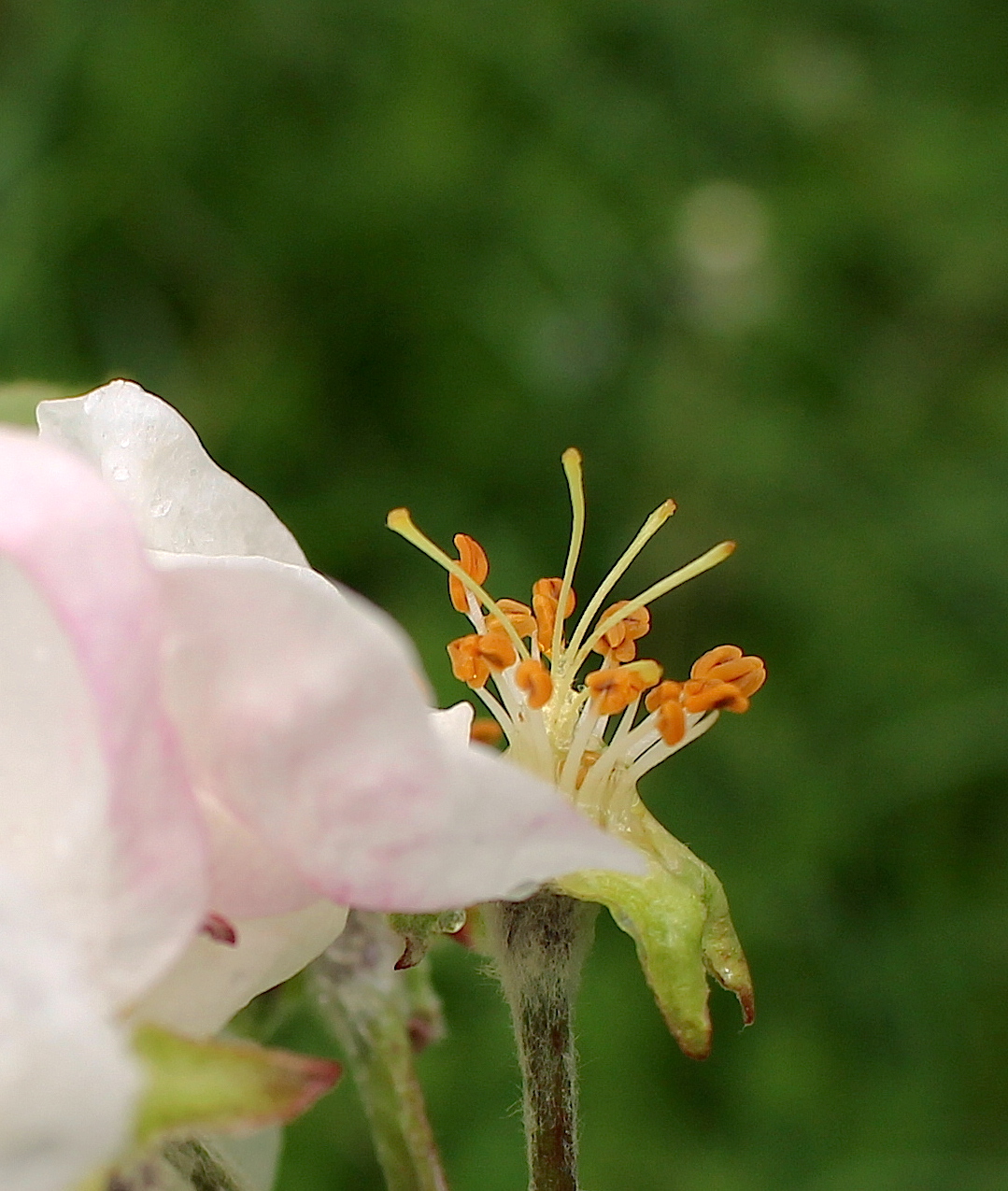
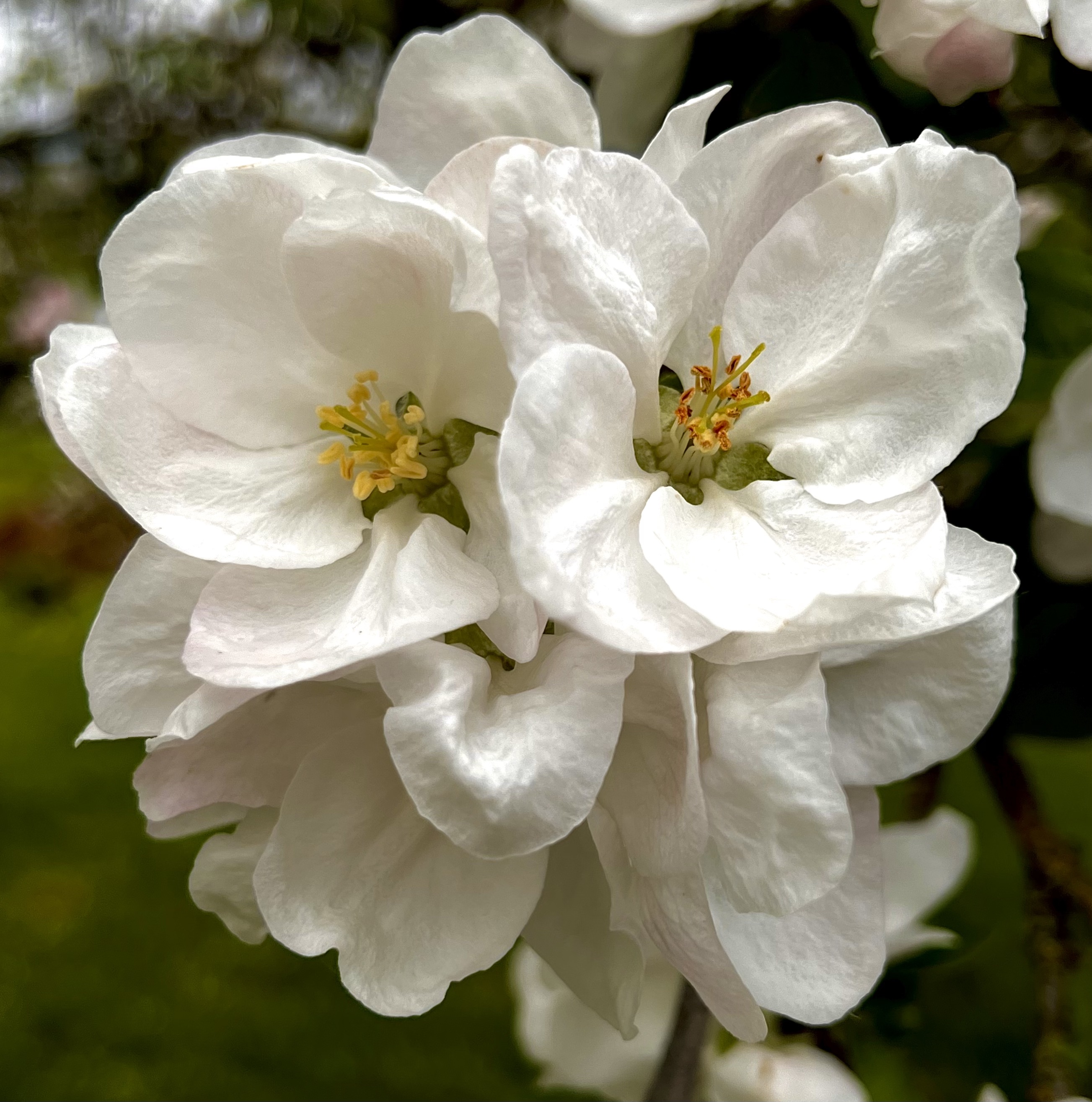
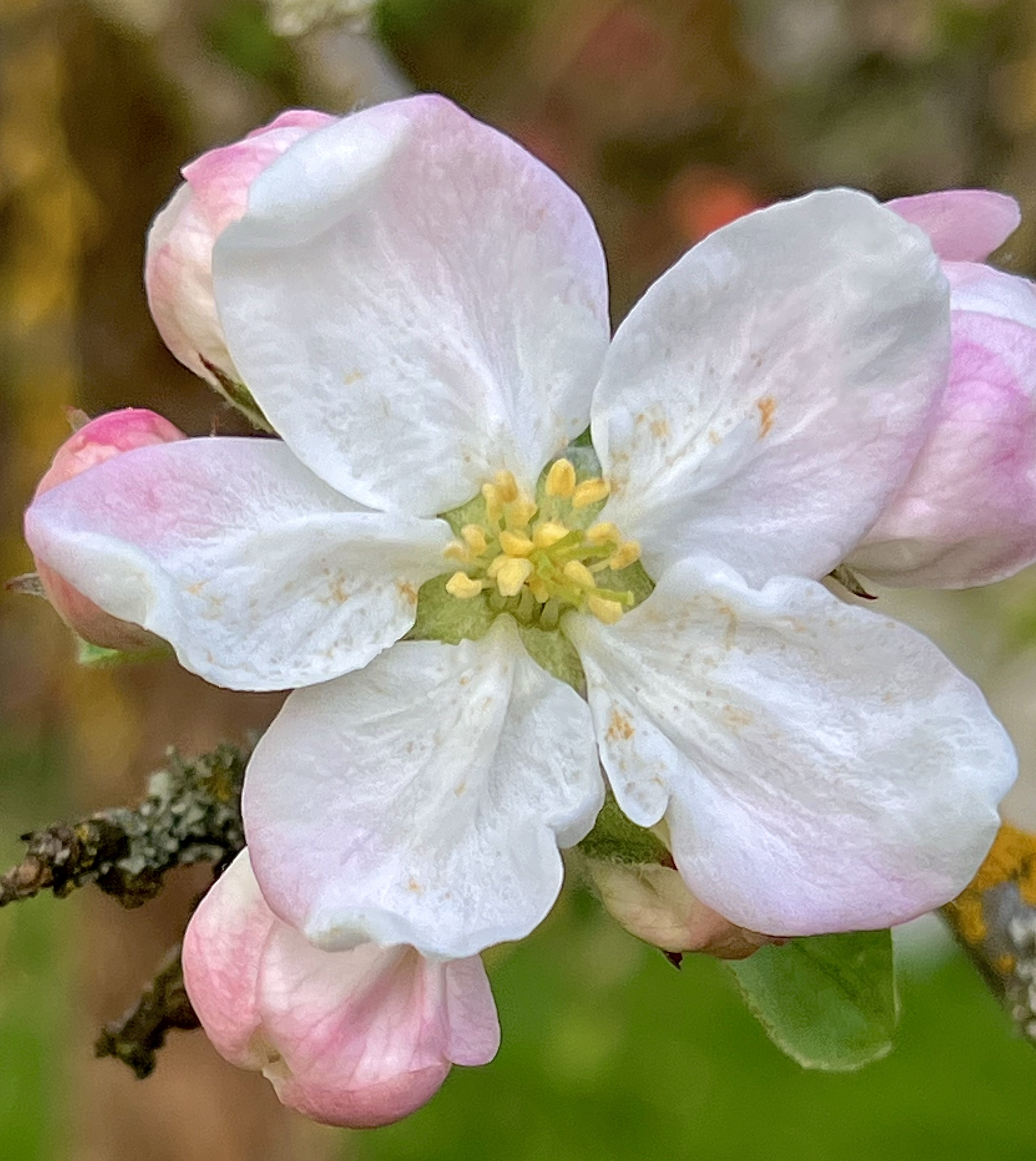
The year Dylan’s mother died I picked sprays of apple blossom, wound its pink, off-white shades in raffia for you to take to him.
Every year it’s out I think of us, the children, how apples bring the tree so low, until they thud to the lawn, drumming the end
of summer. The blossom was heavy when Dylan’s mother was dying – old wood doing its best again – and he, like you, was so young. ~Jackie Wills “Apple Blossom”
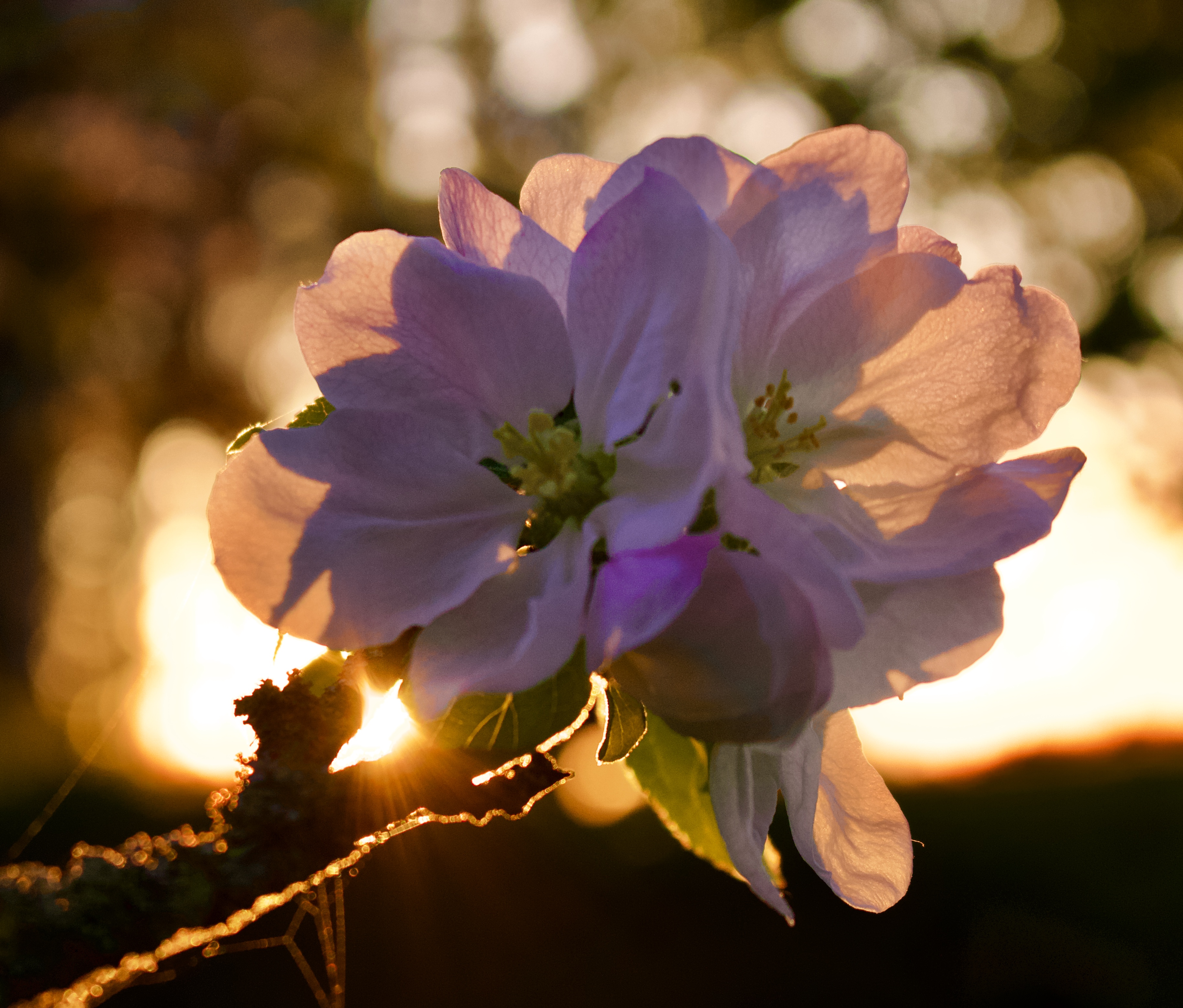
I can see, through the rifts of the apple-boughs, The delicate blue of the sky, And the changing clouds with their marvellous tints That drift so lazily by. And strange, sweet thoughts sing through my brain, And Heaven, it seemeth near; Oh, is it not a rare, sweet time, The blossoming time of the year? ~Horatio Alger, Jr. from “Apple Blossoms”
Is there anything in Spring so fair As apple blossoms falling through the air?
When from a hill there comes a sudden breeze That blows freshly through all the orchard trees.
The petals drop in clouds of pink and white, Noiseless like snow and shining in the light.
Making beautiful an old stone wall, Scattering a rich fragrance as they fall.
There is nothing I know of to compare With apple blossoms falling through the air. ~Henry Adams Parker “Apple Blossoms”
The rain eases long enough to allow blades of grass to stand back up expectant, refreshed yet unsuspecting, primed for the mower’s next cutting swath.
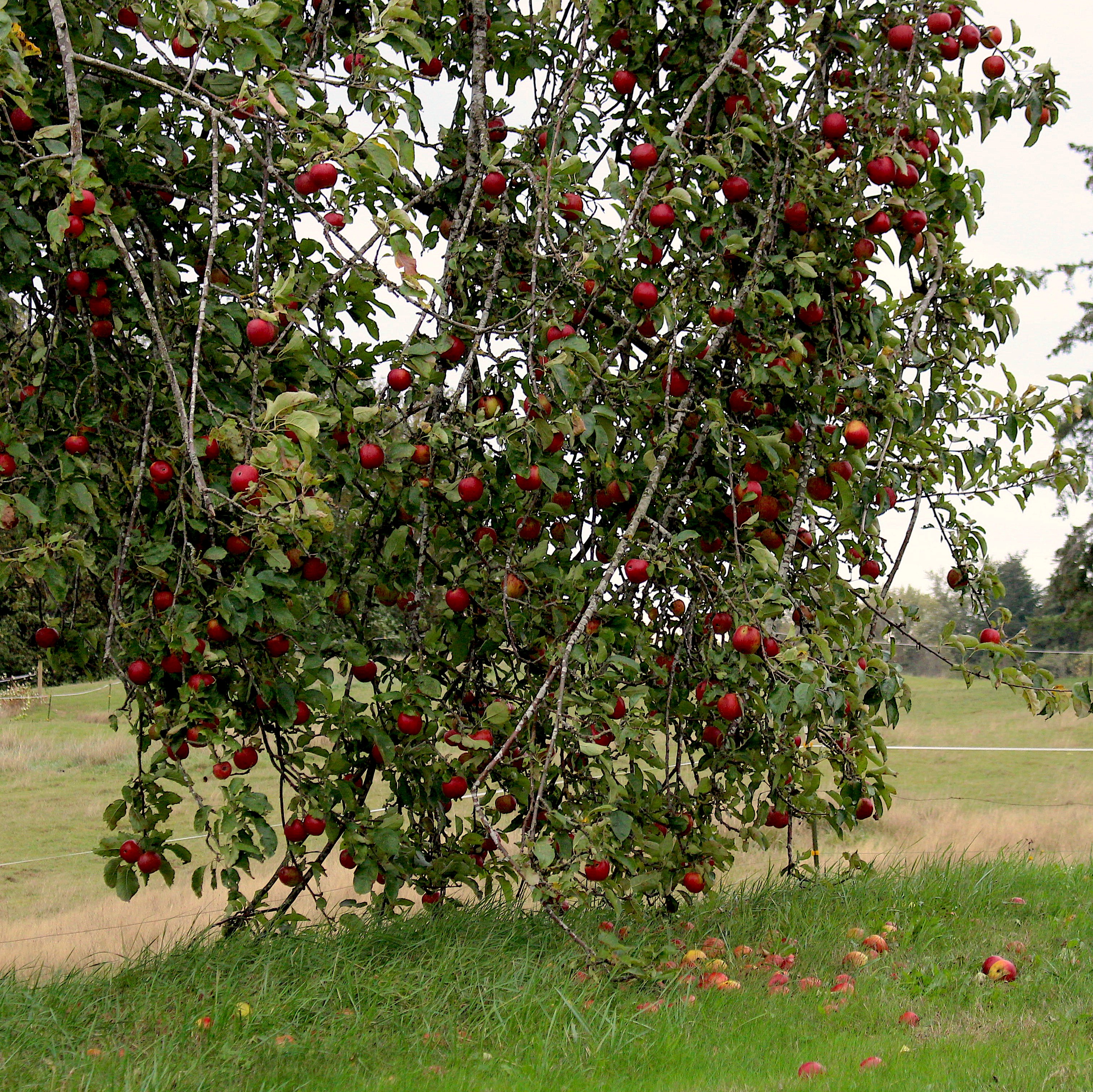
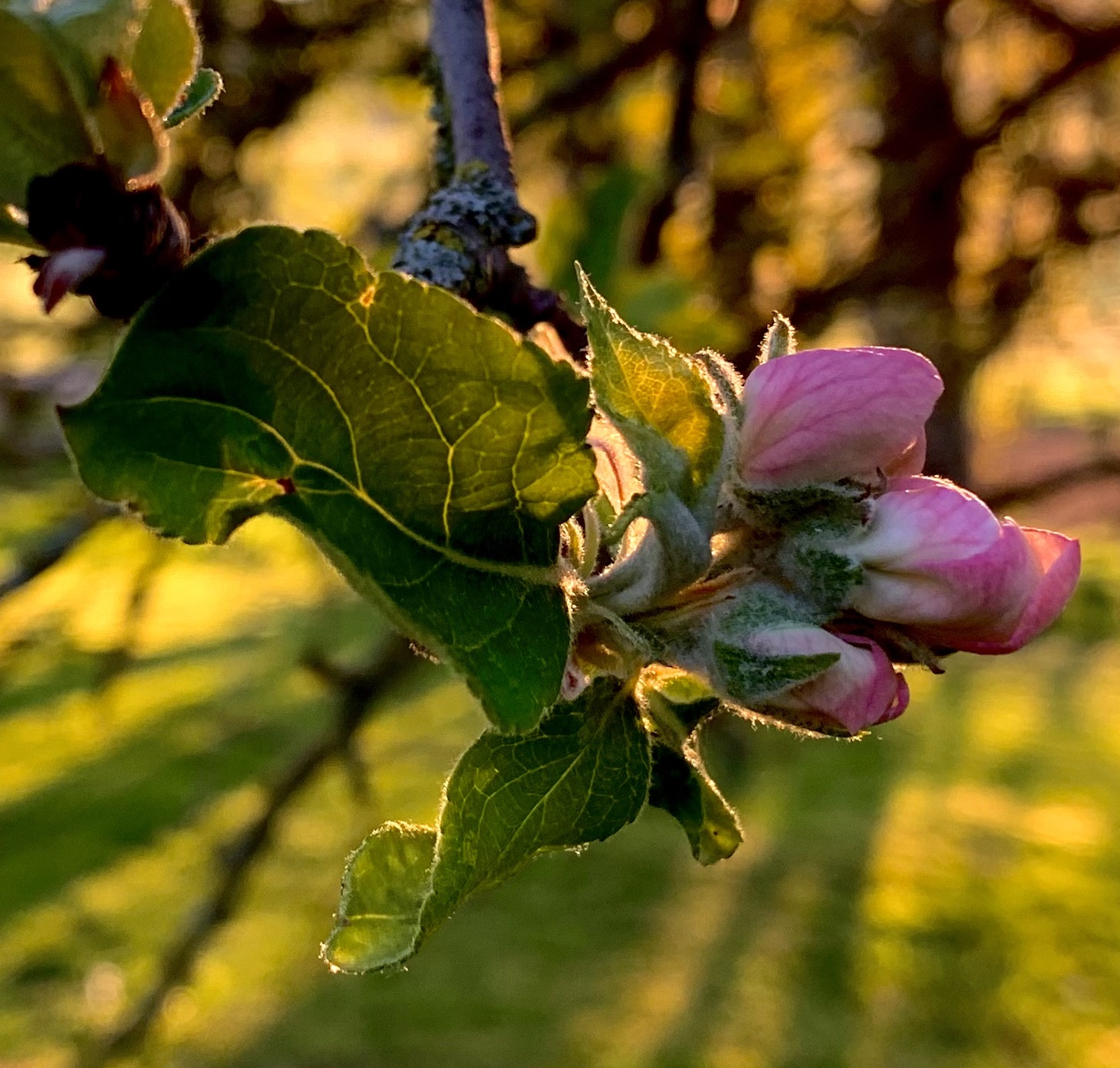
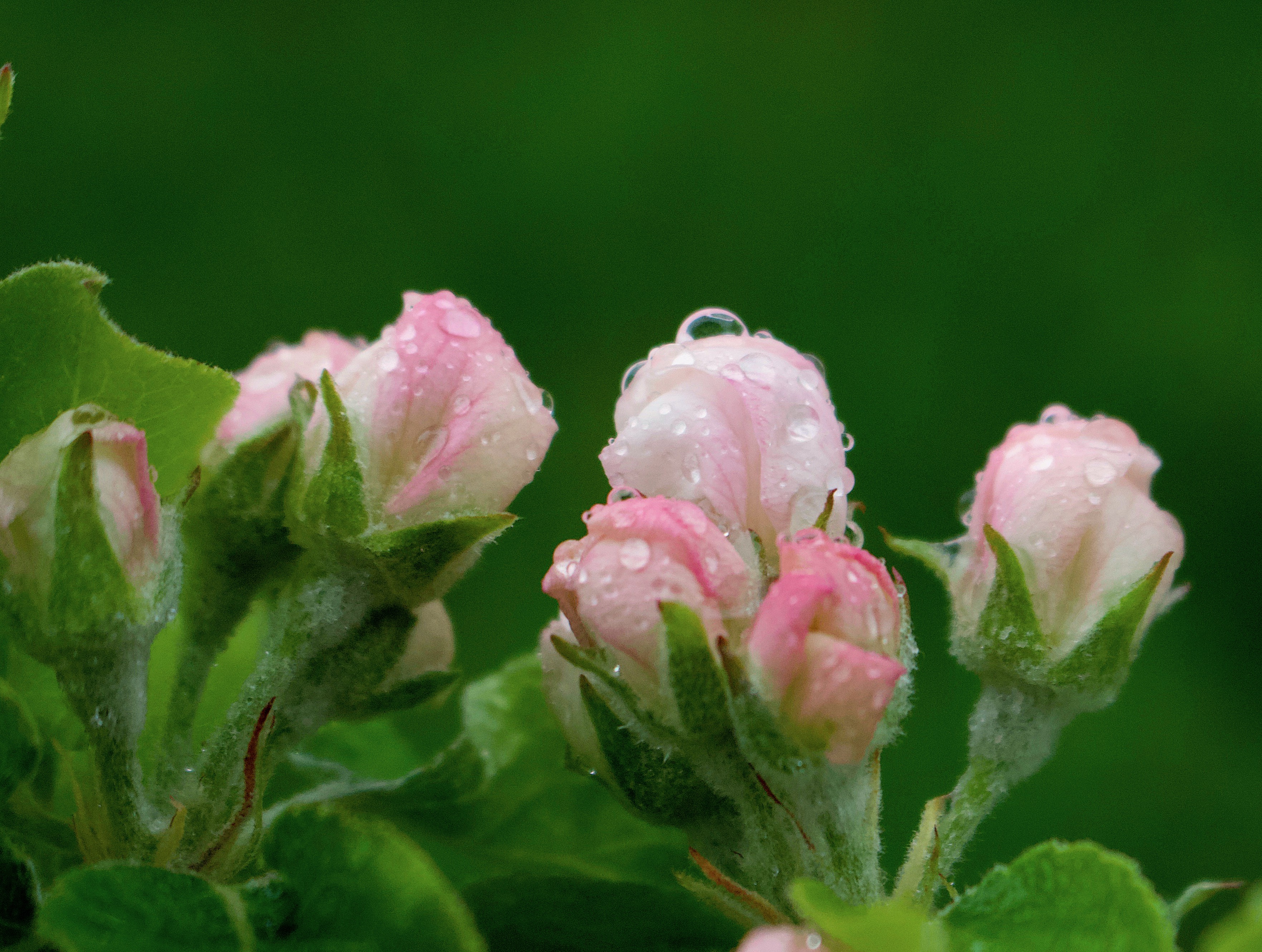
Clusters of pink tinged blossoms sway in response to my mower’s pass. Apple buds bulge on ancient branches in promise of fruit caressed by honeybees’ tickling legs.
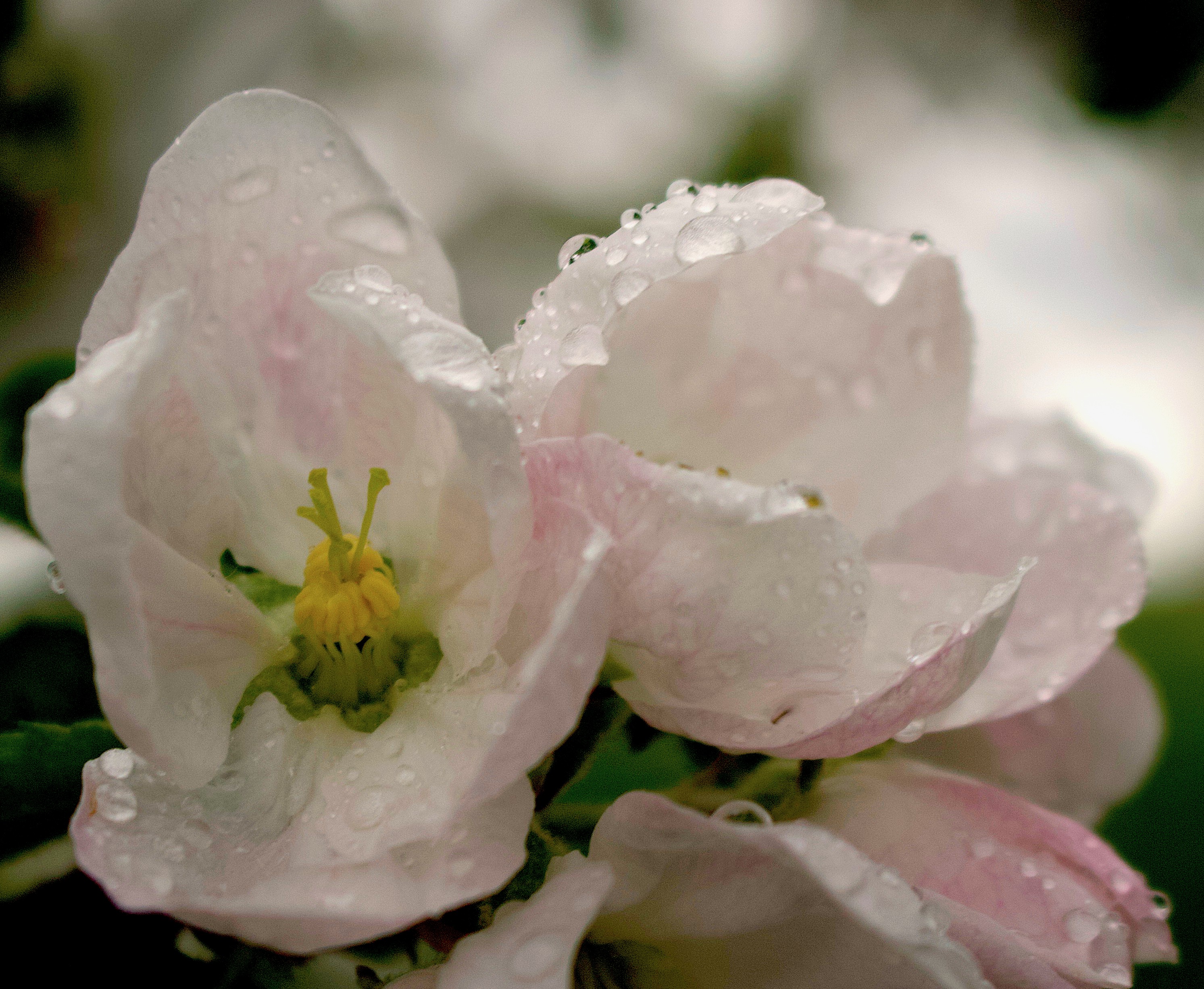
Though I bow low beneath the swollen blooms, I’m still caught by snagging branches; showers from hidden raindrop reservoirs collected within blushing petal cups.
My face is anointed by perfumed apple tears.
One-Time
Monthly
Yearly
Make a one-time or recurring donation to support daily Barnstorming posts




























 Barnstorming