The world does not need words. It articulates itself in sunlight, leaves, and shadows. The stones on the path are no less real for lying uncatalogued and uncounted. The fluent leaves speak only the dialect of pure being…
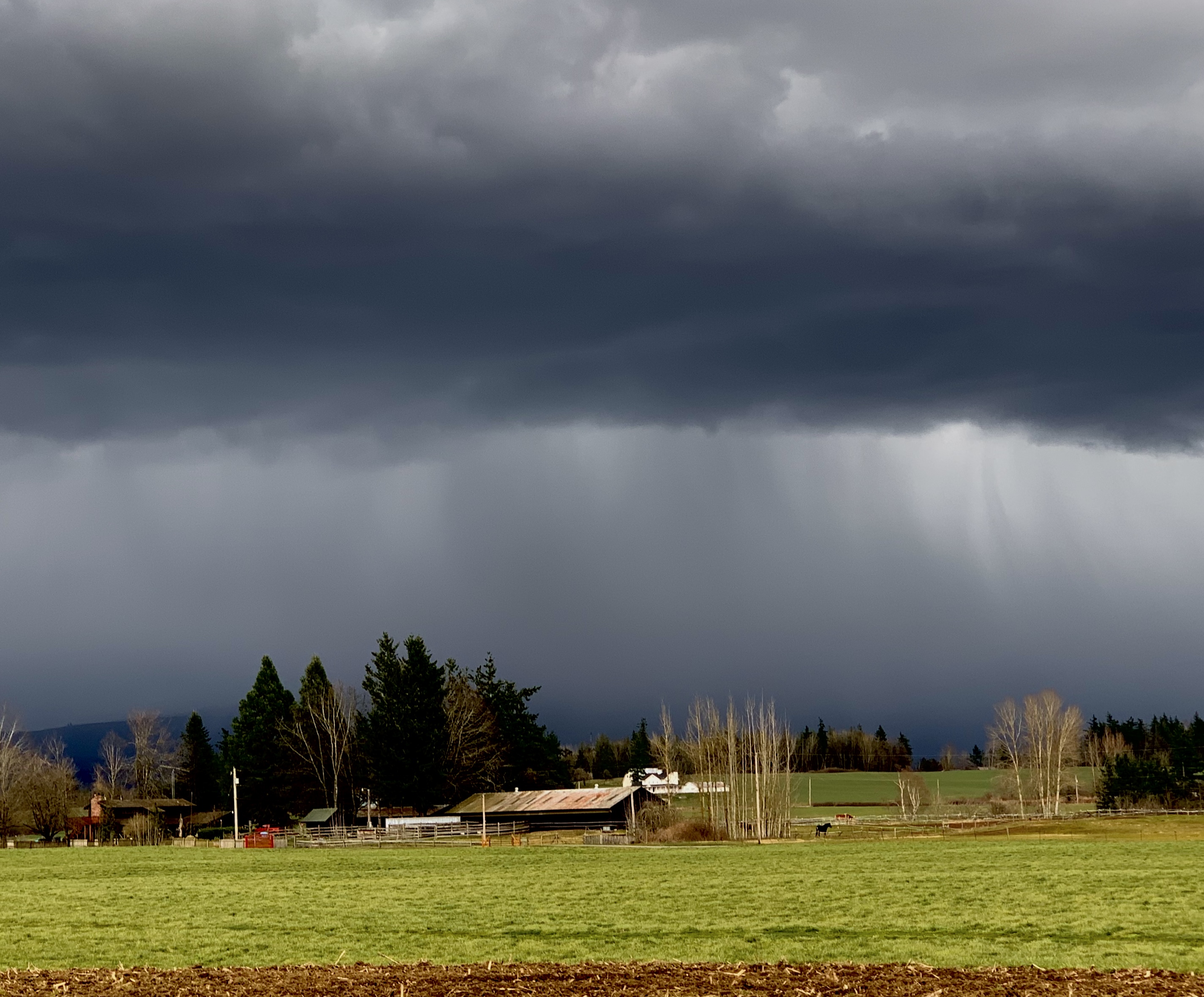
The sunlight needs no praise piercing the rainclouds, painting the rocks and leaves with light, then dissolving each lucent droplet back into the clouds that engendered it. The daylight needs no praise, and so we praise it always– greater than ourselves and all the airy words we summon. ~Dana Giola from “Words”
The words the world needs is only the Word itself; we exist because He breathed breath into us, saying it was good.
Whatever we have to say about His Creation pales compared to His it is good
But we try over and over again to use words of wonder and praise to express our awe and gratitude and amazement while painted golden by His breath of Light.
One-Time
Monthly
Yearly
Make a one-time or recurring donation to support daily Barnstorming posts
I like the lady horses best, how they make it all look easy, like running 40 miles per hour is as fun as taking a nap, or grass. I like their lady horse swagger, after winning. Ears up, girls, ears up! But mainly, let’s be honest, I like that they’re ladies. As if this big dangerous animal is also a part of me, that somewhere inside the delicate skin of my body, there pumps an 8-pound female horse heart, giant with power, heavy with blood. Don’t you want to believe it? Don’t you want to lift my shirt and see the huge beating genius machine that thinks, no, it knows, it’s going to come in first. ~Ada Limón “How to Triumph Like a Girl”
Primarily from my college training in animal behavior, I have an appreciation for social cues, both human and non-human: those often nonverbal signals that are communicated through subtle means–in people, perhaps it is a raised eyebrow, a rapid blink, a tensing of the lips, a fidgeting foot.
When I studied captive and wild chimpanzees, they showed very familiar facial expressions and nonverbal communication that could be understood readily by a human primate.
In horses, it can be harder to interpret but their nonverbal language is there for all to see. The herdmates and the human handler, with careful observation and interpretation, should not be surprised about “what is going to happen next.”
It is no mystery.
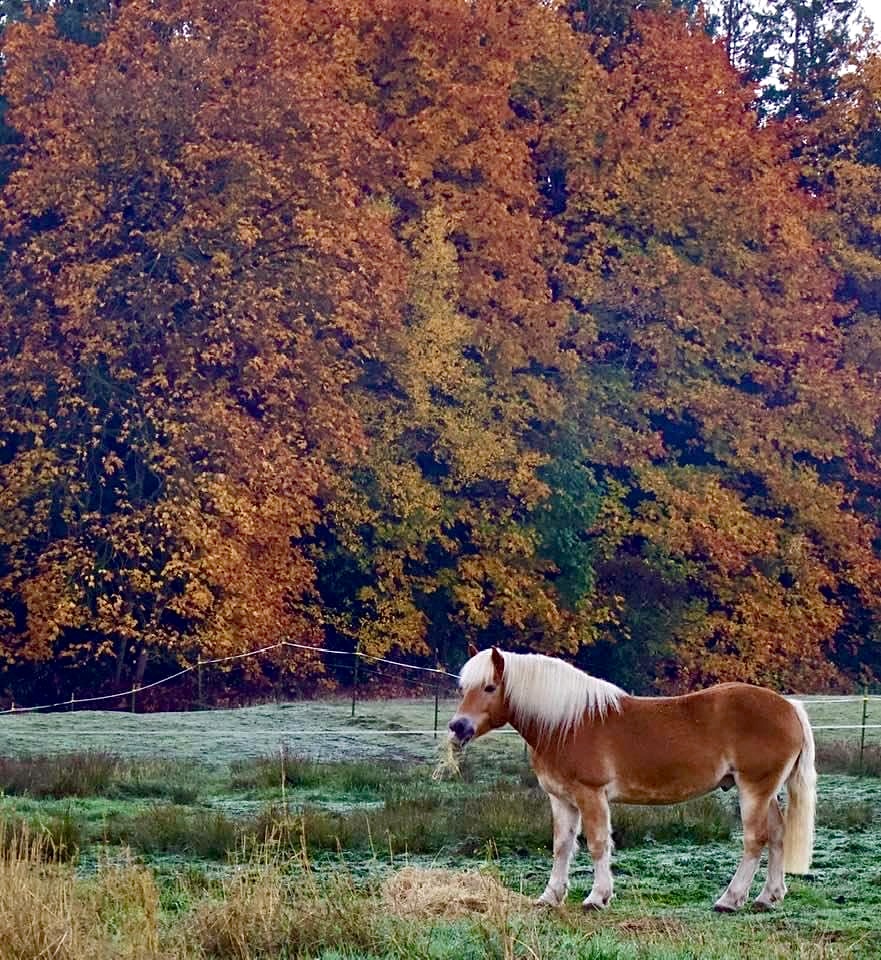
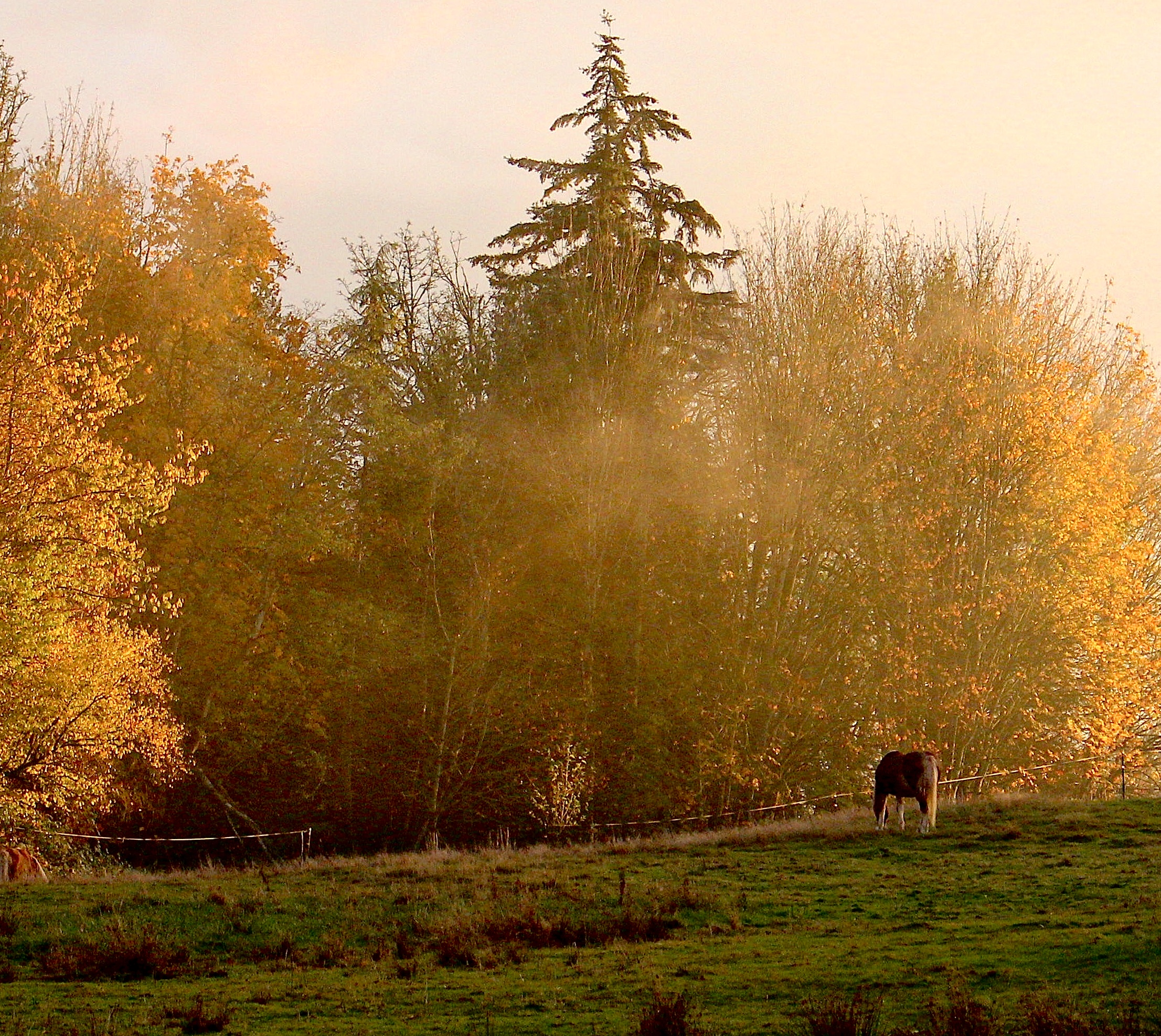
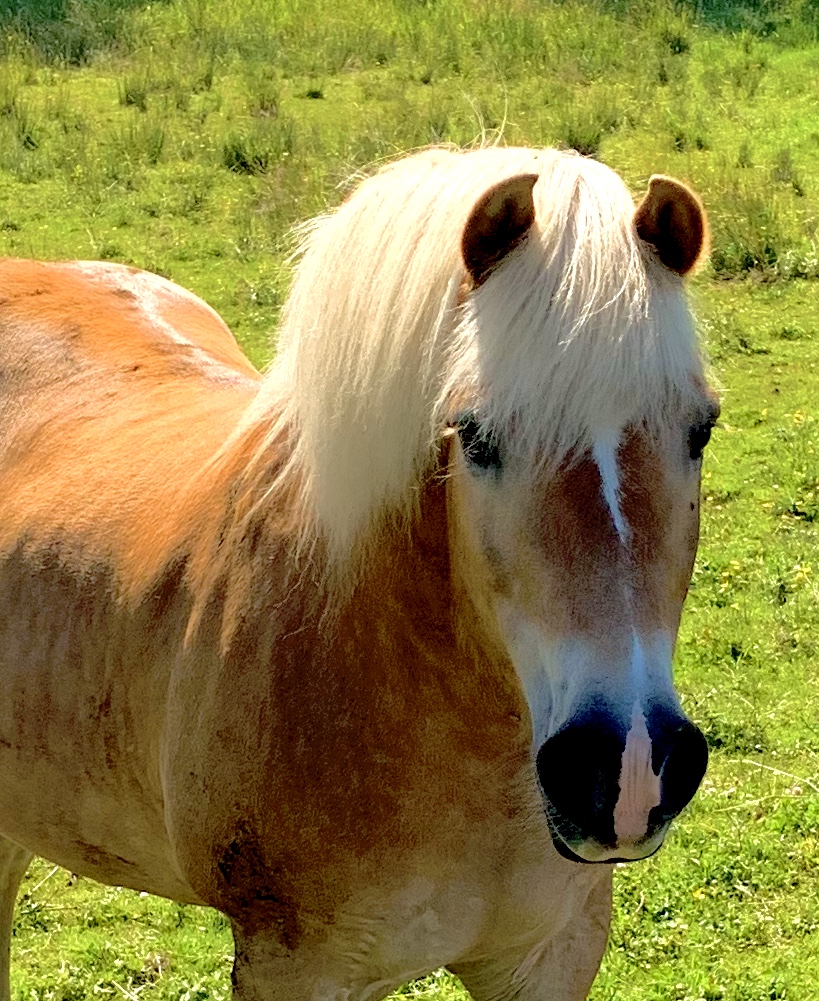
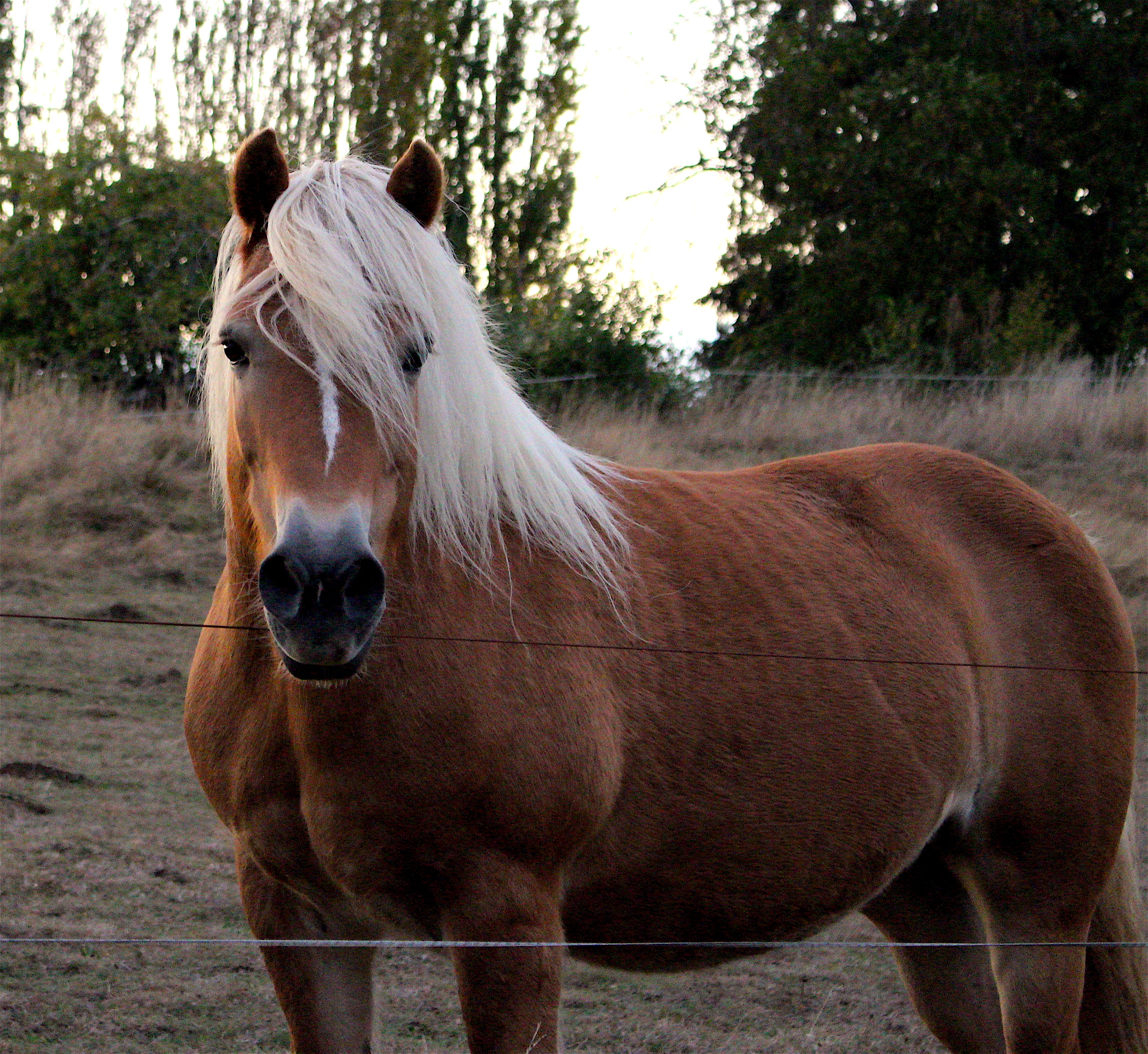
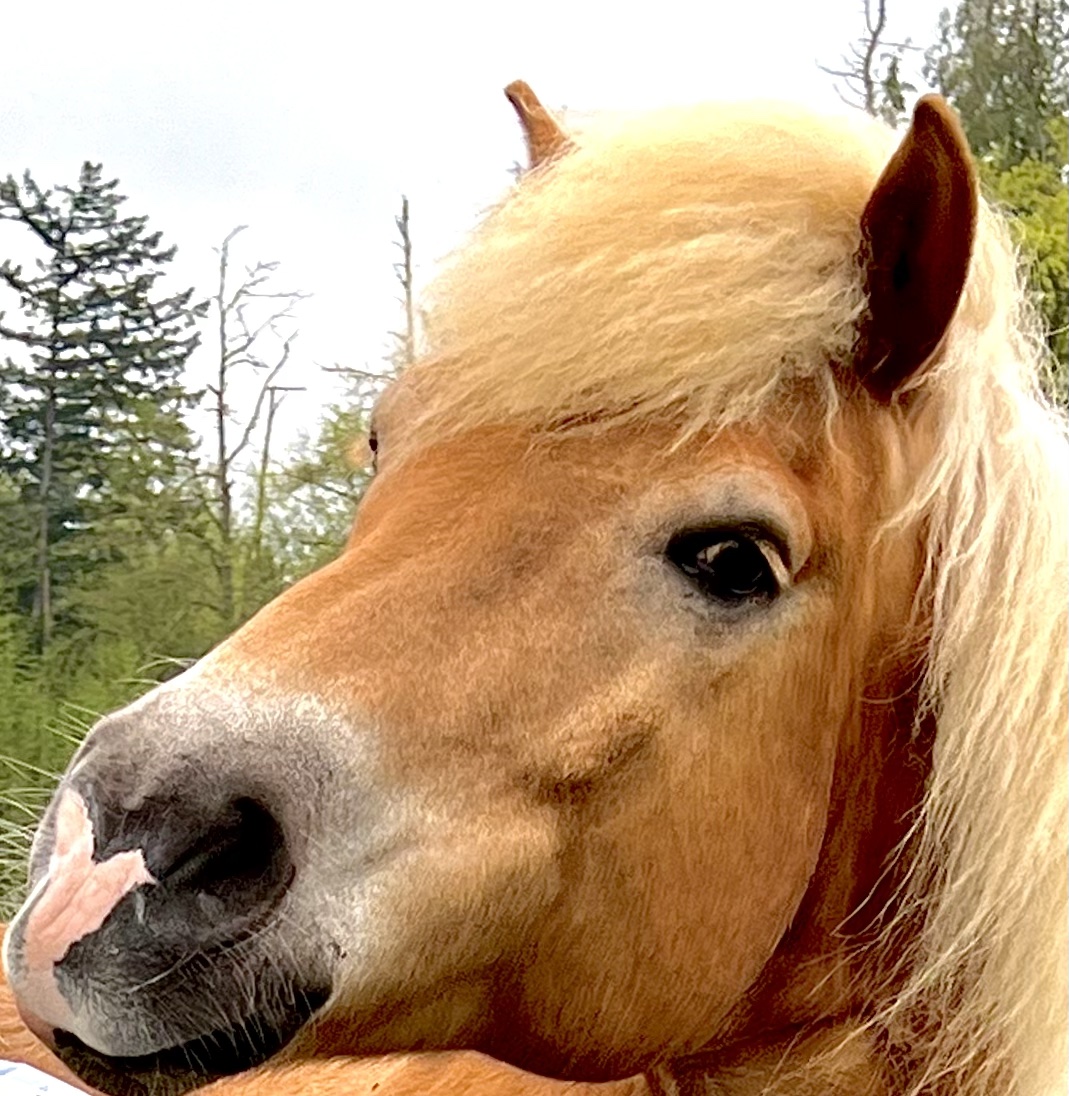
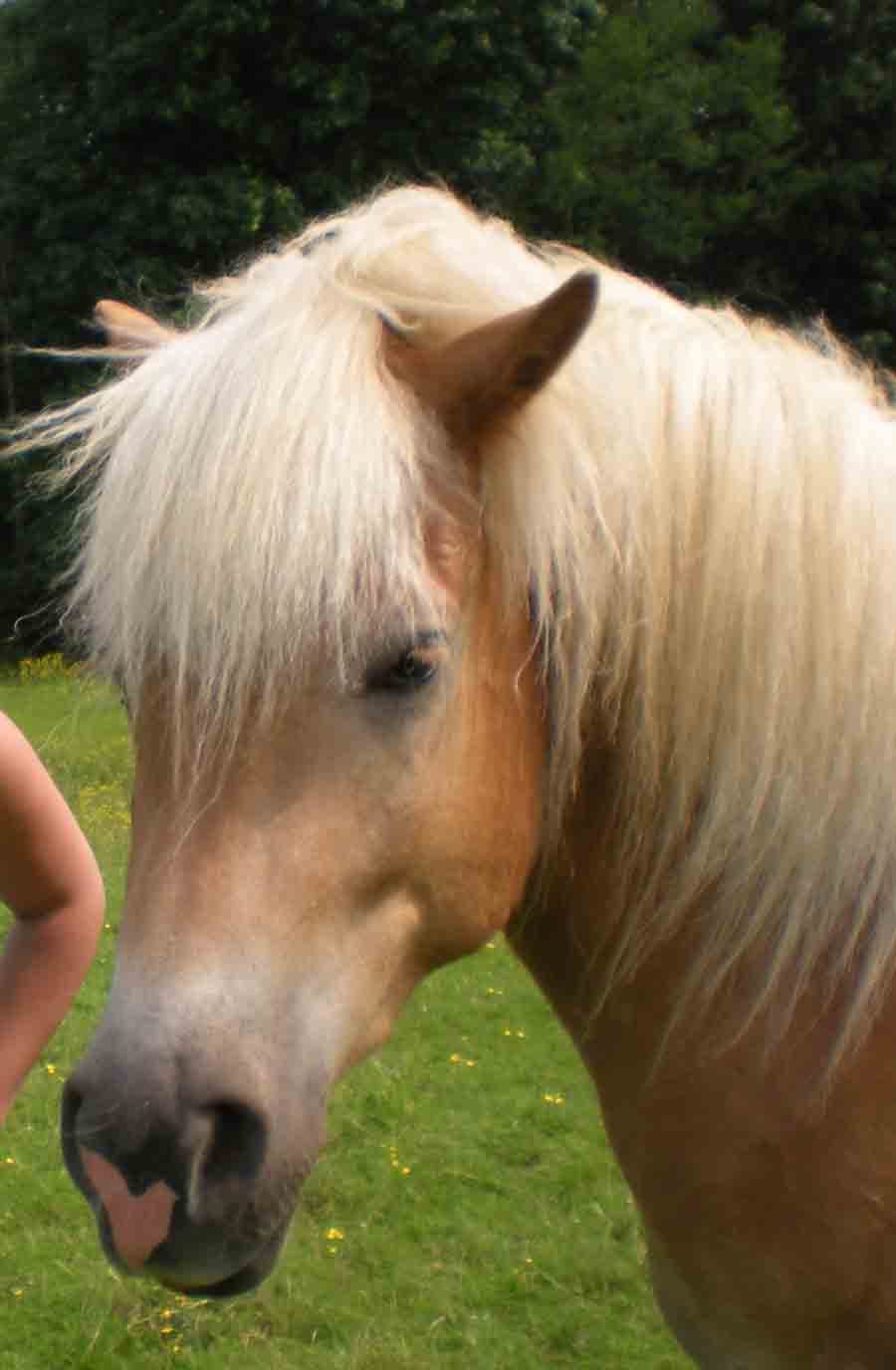
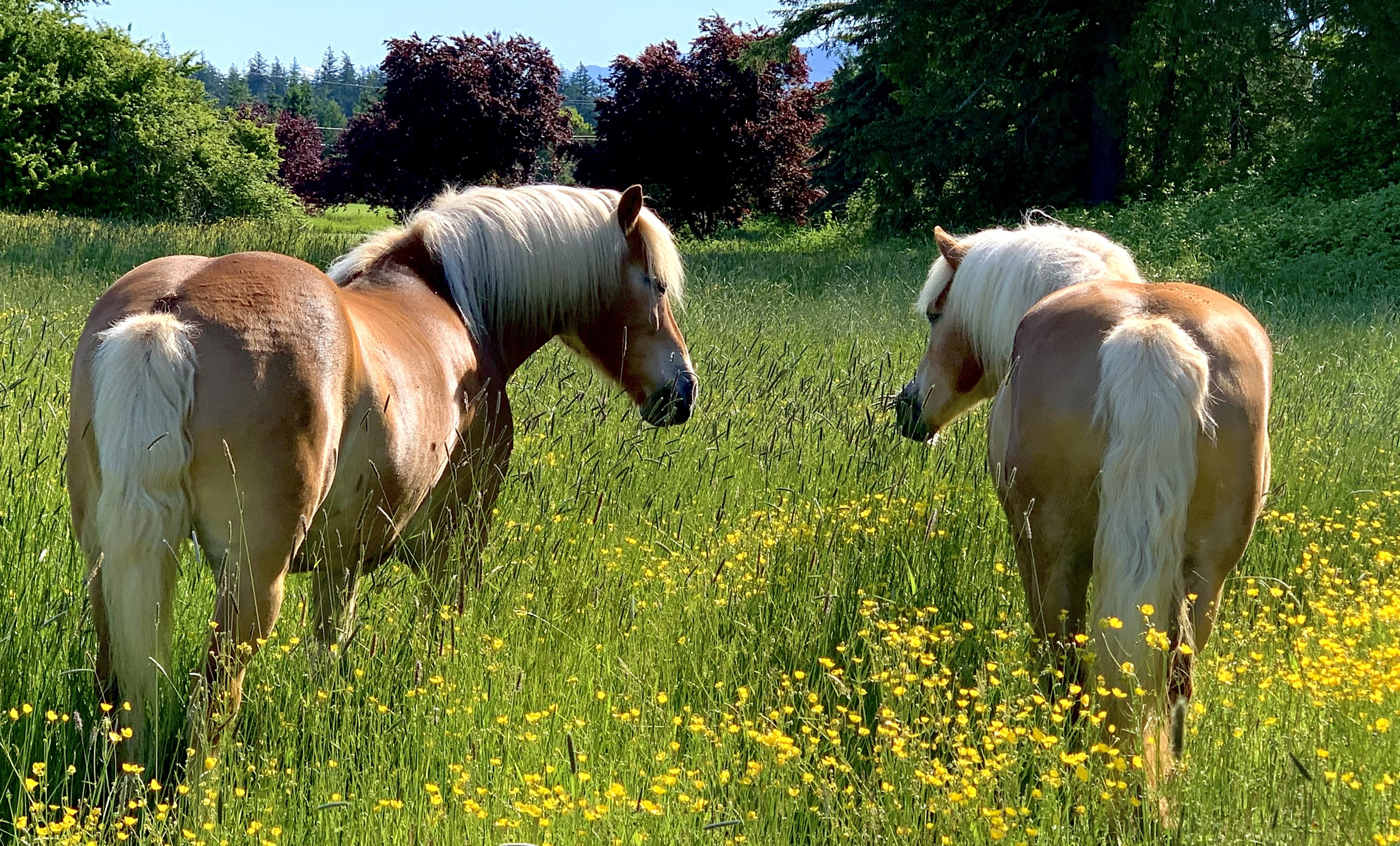
I don’t consider Haflinger horses particularly subtle in their communication with each other or with humans. They can tend to have a “bull in a china shop” approach to life; this is not a breed that evolved particularly plagued with the existence of many predators in the Austrian Alps, so the need to blend into the background was minimal. Haflingers tend to be “out there”: unafraid, bold, meeting one’s gaze, and curious what the human is thinking.
I’ve found over the years that the best way to interpret a Haflinger’s emotions is by watching their ears, and to a lesser extent, their lips and tails. They usually have “poker face” eyes, deceptive at times in their depth, calmness and serenity. I tend to get lost in the beauty of their eyes and not pay attention to what the rest of the horse is saying.
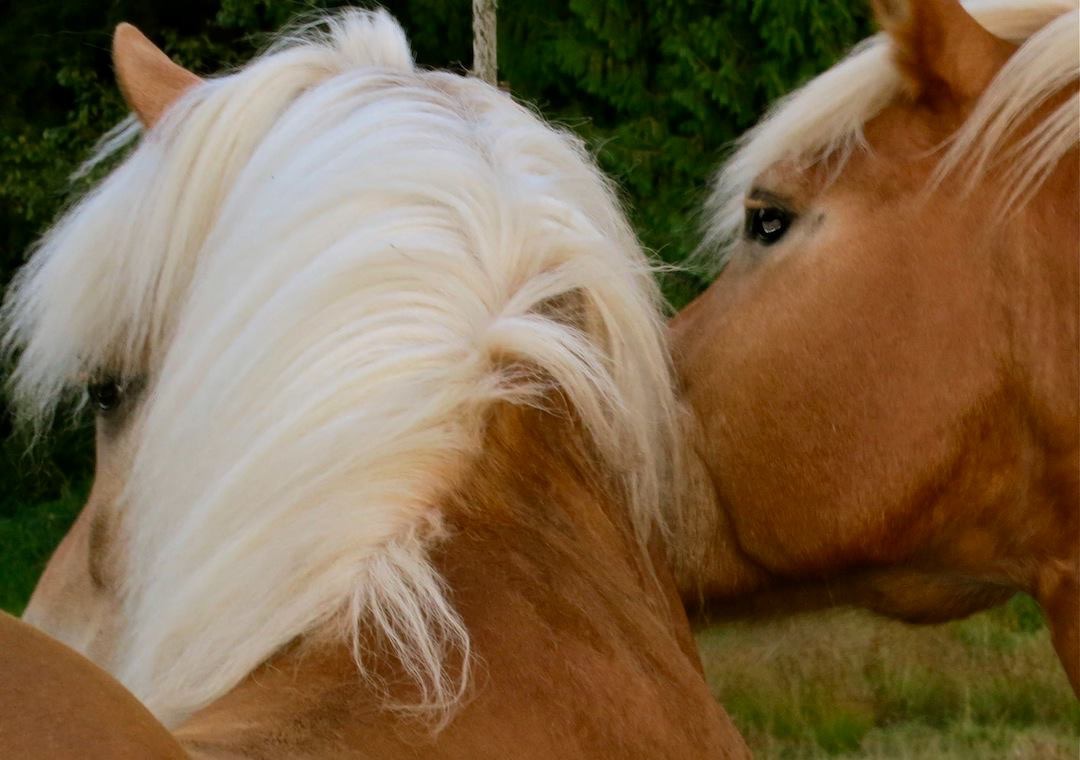
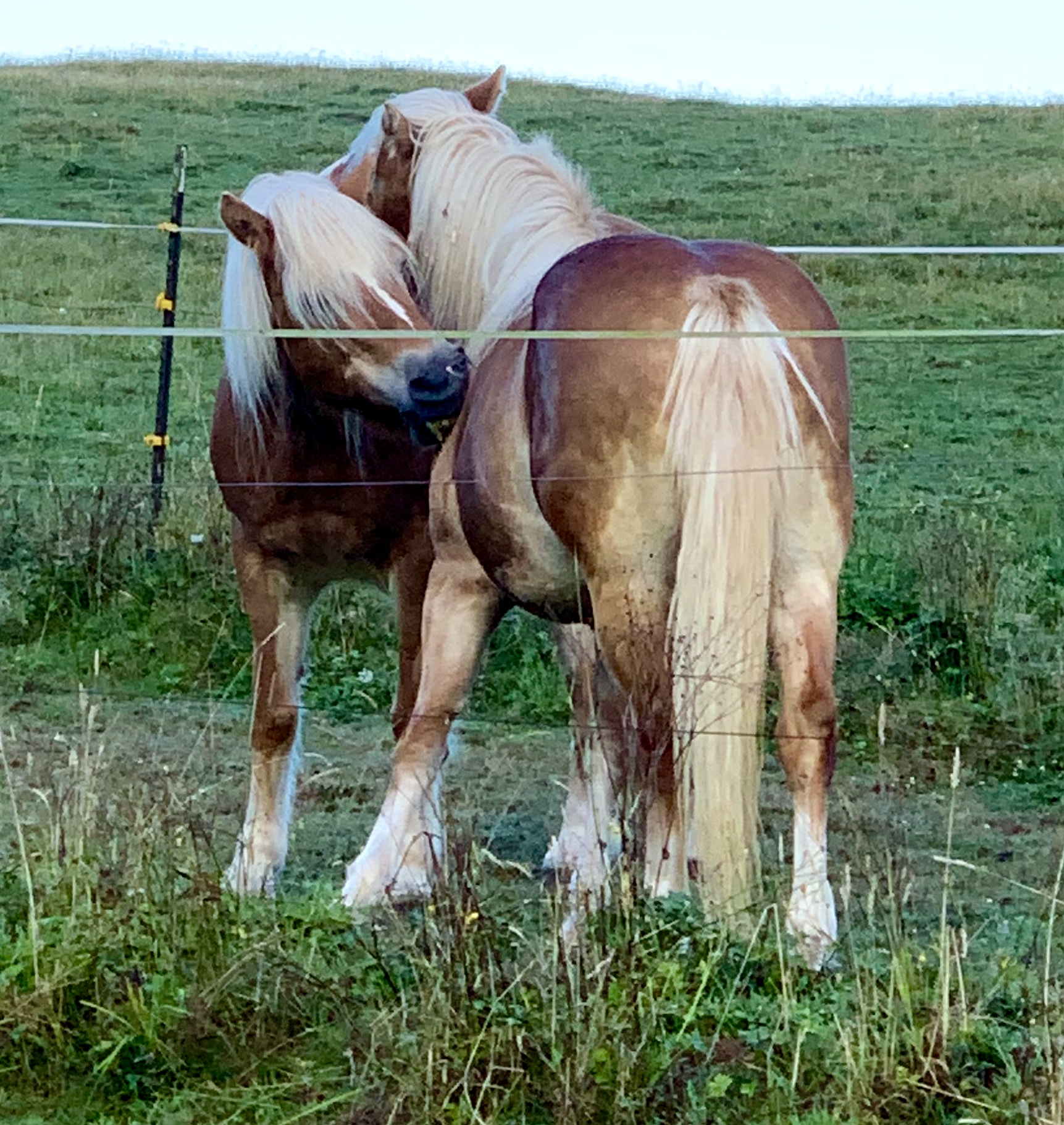
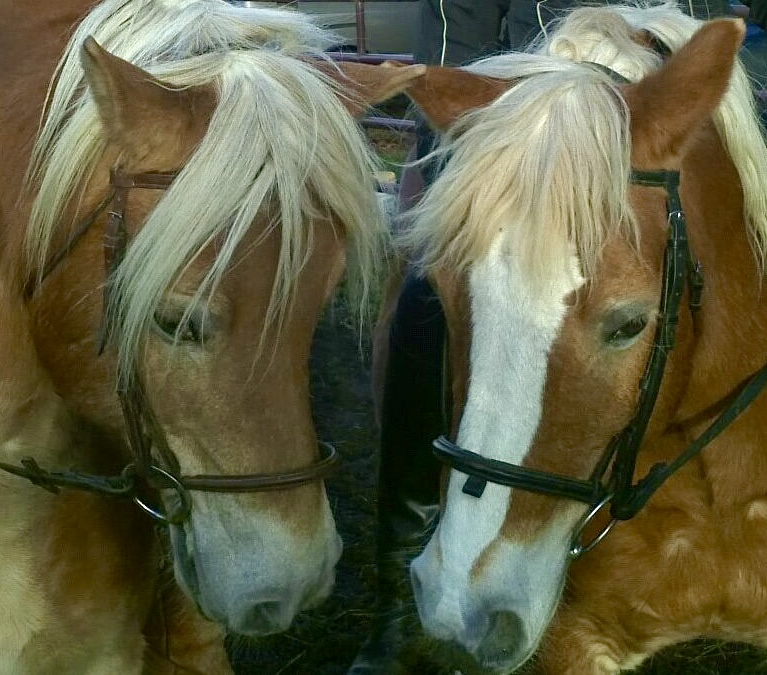
Watching them interact with each other, almost everything is said with their ears. A horse with a friendly approach has ears forward, receptive, eager. If the horse being approached is welcoming, the ears are relaxed. Two good friends grooming or grazing together have swiveling, loose ears, often pointing toward each other, almost like a unique conversation between the four ears themselves. So when a Haflinger is happy to approach, or be approached by humans, the ears always say so.
Ears that are swiveling back, tensing and tight, or pinning are another story altogether. It is the clear signal of “get outta my way!”, or “you are not sharing this pile of hay with me” or “you may think you are a cute colt, but if you climb on me one more time…”
Ears can signal impatience “you are not getting my grain fast enough”, or “I’ve been standing here tied for too long!” A simple change in ear position can cause a group of horses to part like the Red Sea.
I owned a mare who was orphaned at 3 days of age, and spent her early weeks with intensive handling by people, and then allowed to socialize with a patient older gelding until she was old enough to be among other weanlings. When she came to our farm at 6 months of age, she had not learned all the usual equine social cues of a mare herd, and though very astute at reading human gestures and behavior, took awhile to learn appropriate responses. When turned out with the herd, she was completely clueless–she’d approach the dominant alpha mare incorrectly, without proper submission, get herself bitten and kicked and was the bottom of the social heap for years, a lonesome little filly with few friends and very few social skills.
She had never learned submission with people either, and had to have many remedial lessons on her training path. Once she was a mature working mare, her relationship with people markedly improved as there was structure to her work and predictability for her, and after having her own foals, she picked up cues and signals that helped her keep her foal safe, though she has always been one of our most relaxed “do whatever you need to do” mothers when we handle her foals as she simply never learned that she needed to be concerned.
Over the years, as the herd changed, this mare became the alpha mare, largely by default and seniority, so I don’t believe she really trusted her position as “real”. She tended to bully, and react too quickly out of her own insecurity about her inherited position. She was very skilled with her ears but she is also a master at the tail “whip” and the tensed upper lip–no teeth, just a slight wrinkling of the lip. The herd scattered when they see her face change.
The irony of being on top of the herd hierarchy: she was more lonely than when she was at the bottom. She was a whole lot less happy as she had few grooming partners any more. She craved power more than friends.
I certainly see people like this at times in the world. Some are not at all attuned to social cues, blundering their way into situations without understanding the consequences and “blurting without thinking”. It takes lots of kicks and bites for them to learn how to read other people and behave appropriately. Sometimes they turn to bullying because it is communication that everyone understands and responds to, primarily by “getting out of their way”. Perhaps they are very lonely, insecure, and need friends but their need for power overcomes their need for support.
We see this too frequently in people in our news headlines.
I continue to “watch the ears”–both Haflinger and human. And I continue to refine my own way of communicating so that I’m not a mystery to those around me. Hopefully no one scatters when they see me coming…
One-Time
Monthly
Yearly
Make a one-time or recurring donation to support daily Barnstorming posts
Just as, when you keep watch on the ground ahead of where your boots kick up the leaves, the path goes vague and blurred, while
if you lift your eyes the far reach of the trail comes lucid as map; so when you look at tomorrow through next year,
the way, otherwise so tangled and burdensome, clears. And if the leaves are, as they likely are,
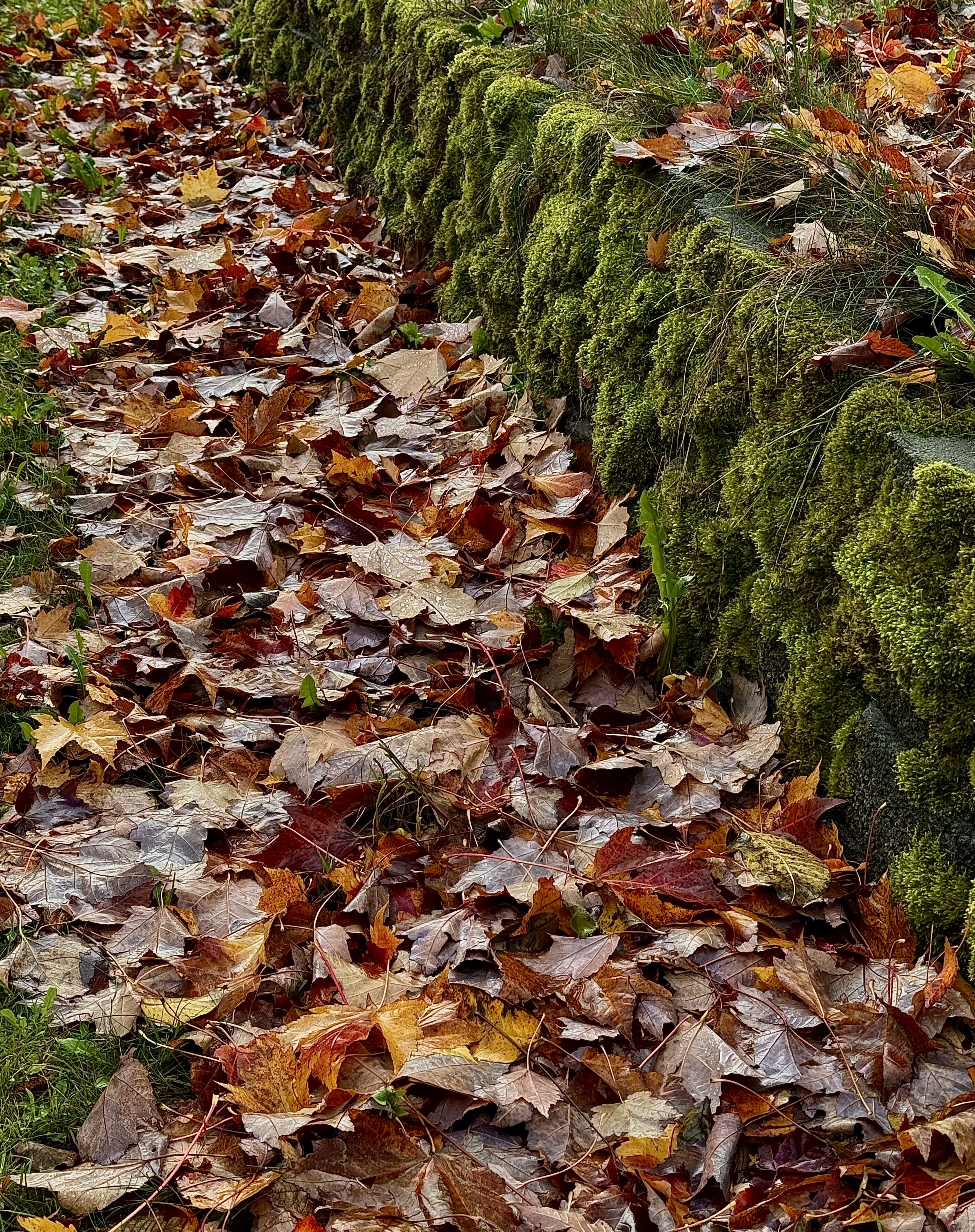
fallen from the trees around you, then you get to look deeper into things than spring allowed. ~Charles O. Hartman “Autumn Ordinance”
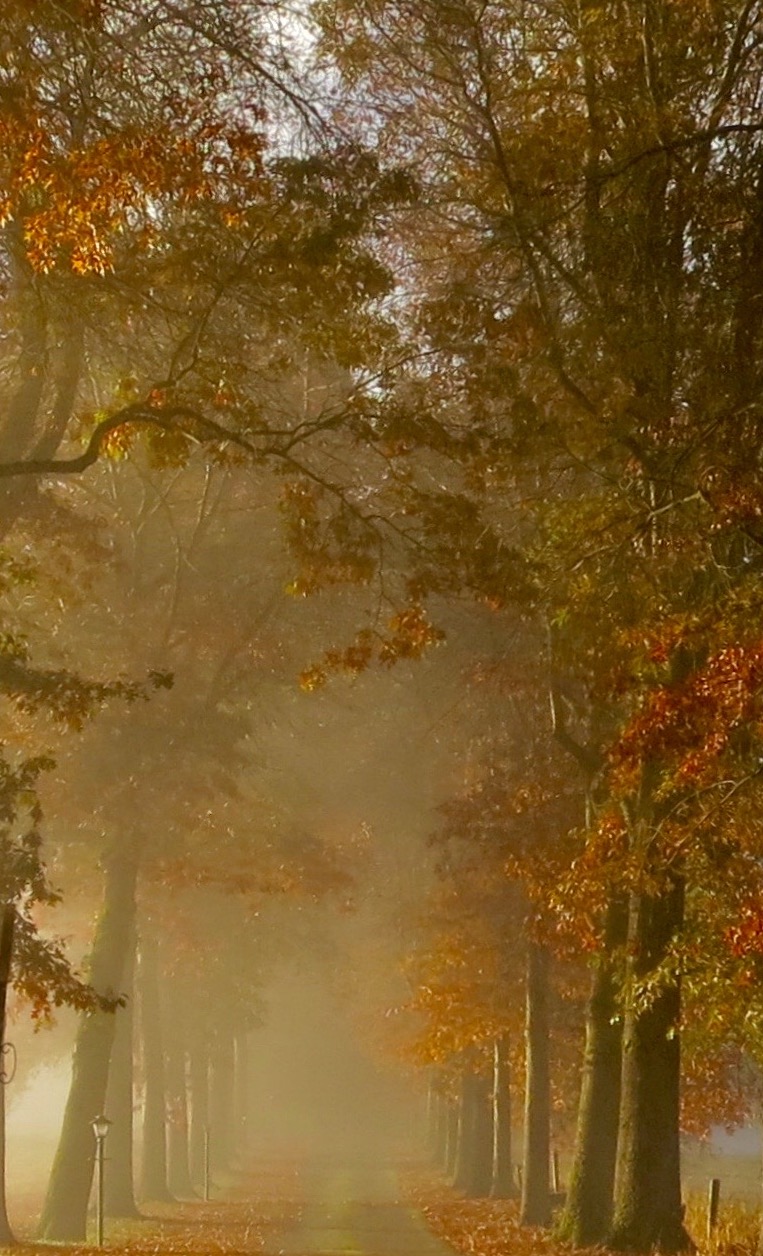
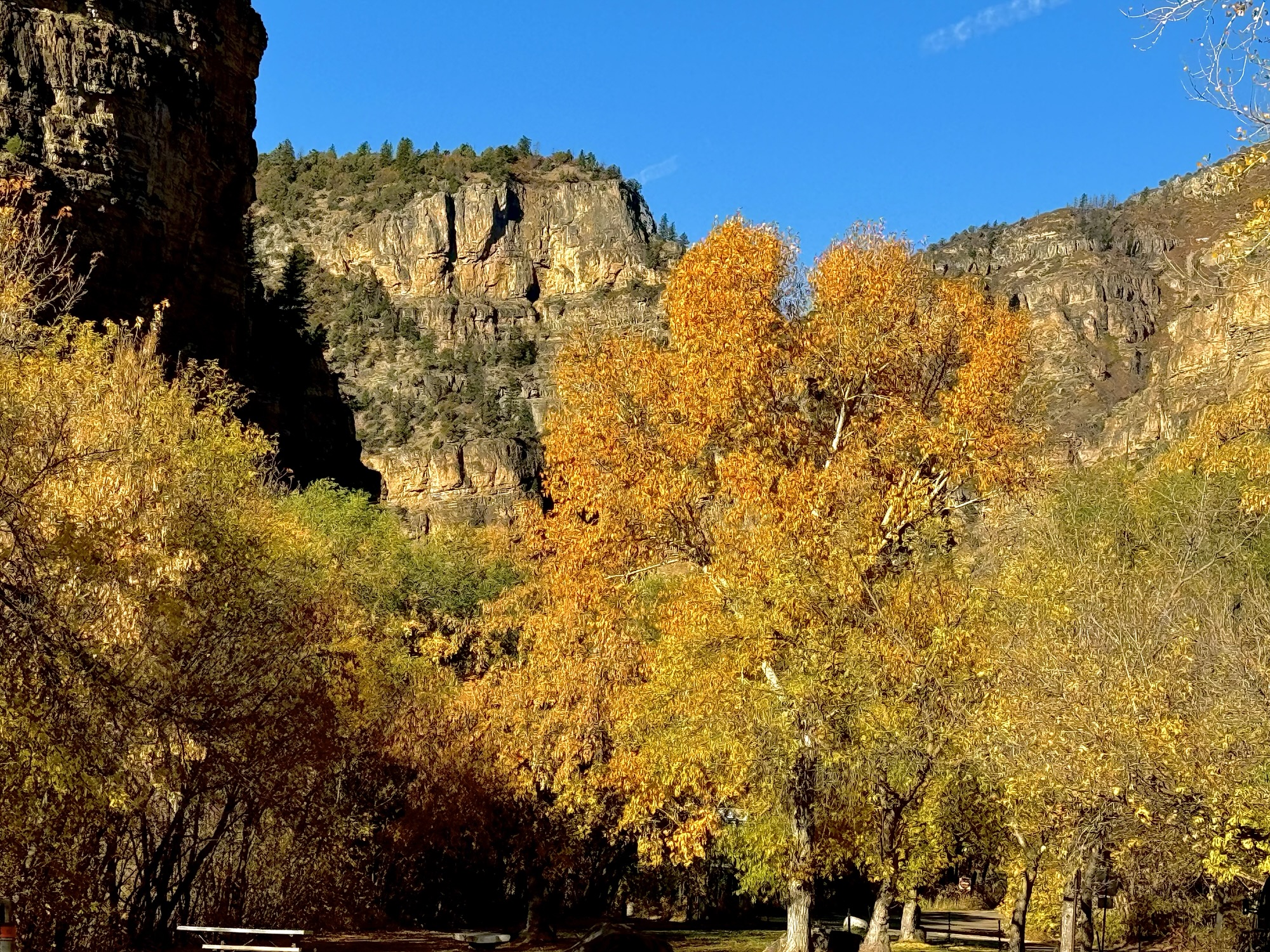
I remember it as October days are always remembered, cloudless, maple-flavored, the air gold and so clean it quivers. ~Leif Enger, from Peace Like a River
The air tastes like autumn, quivering on my tongue – no need for pumpkin-spice flavoring to feel the change.
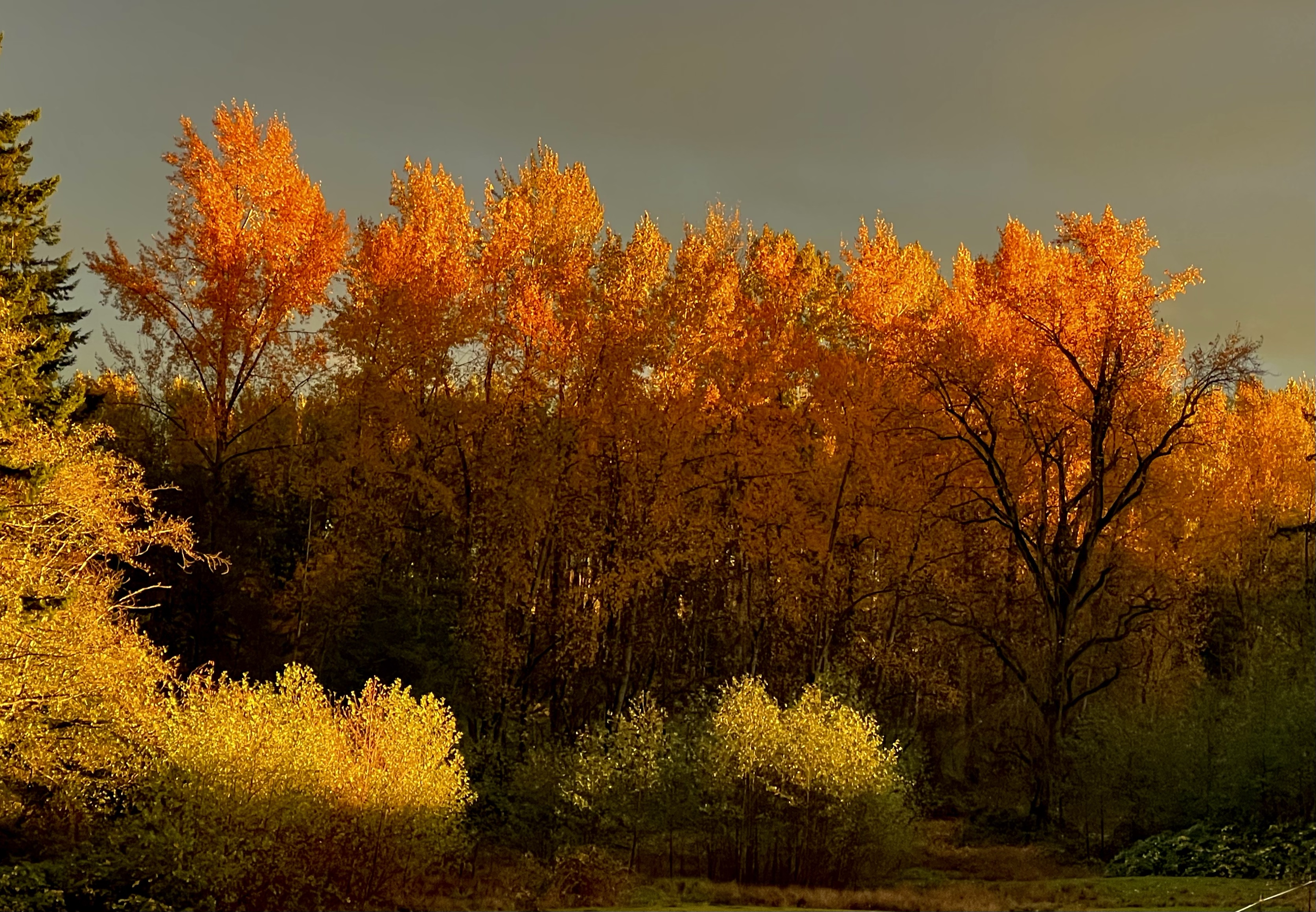
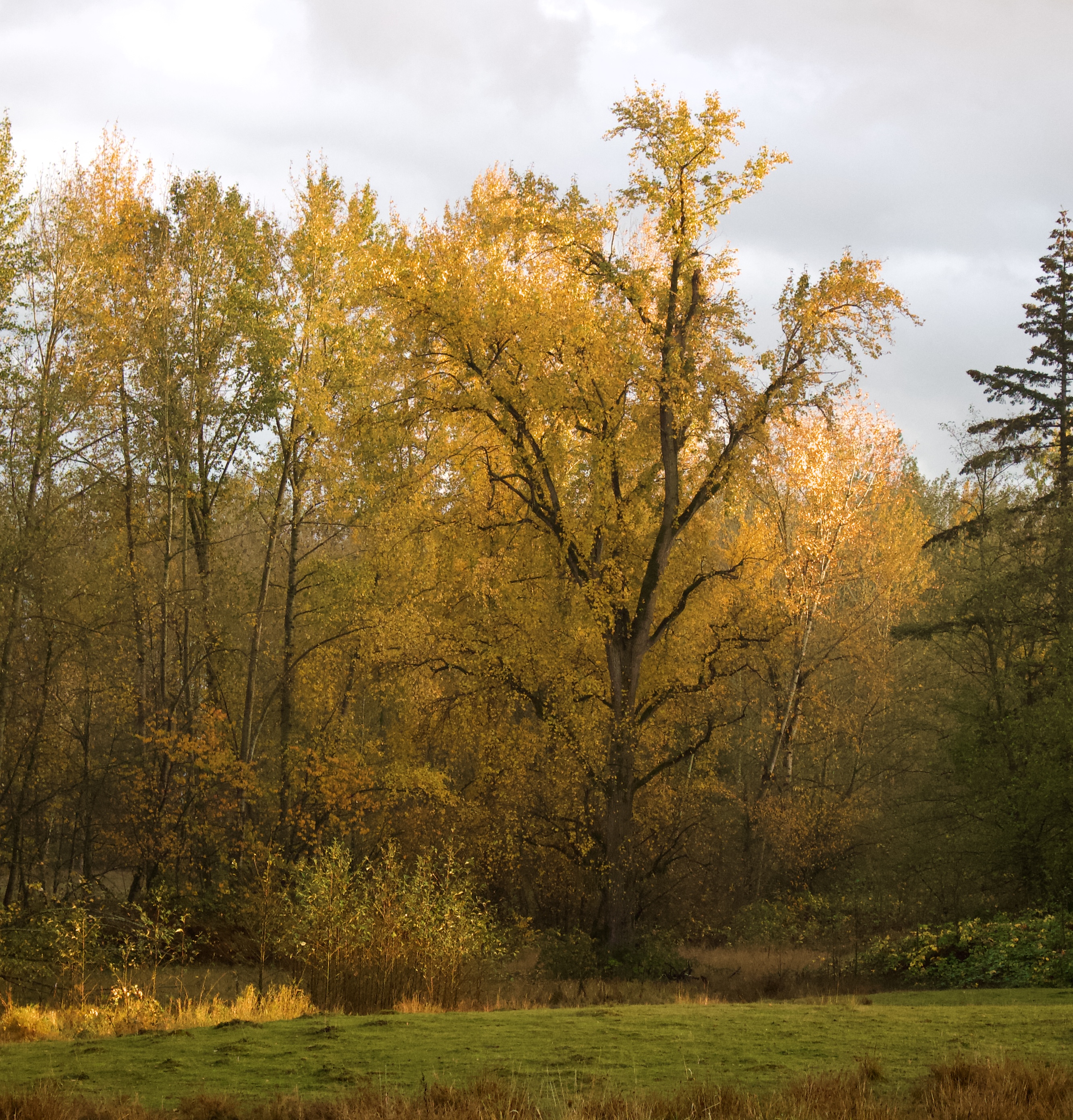
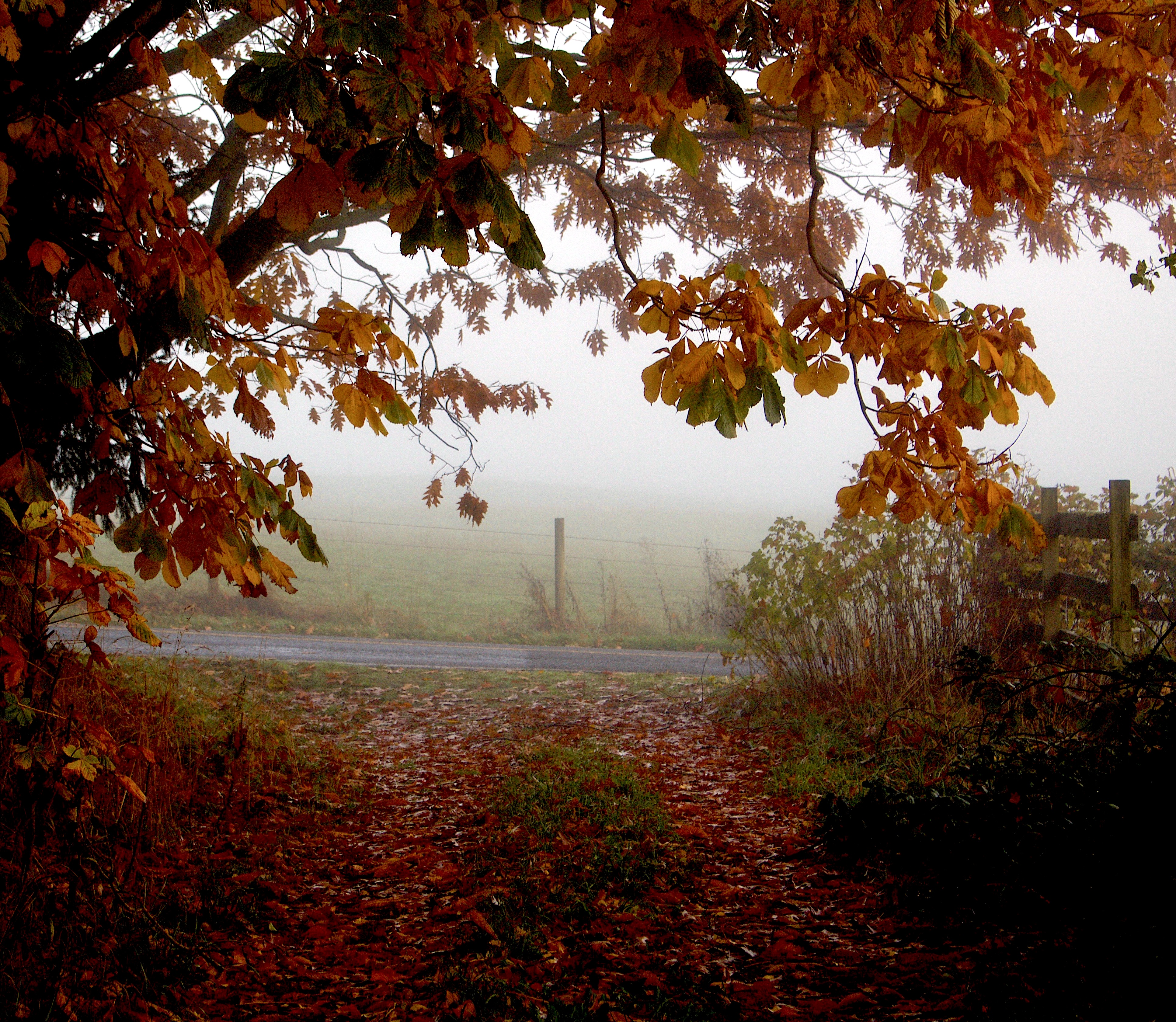
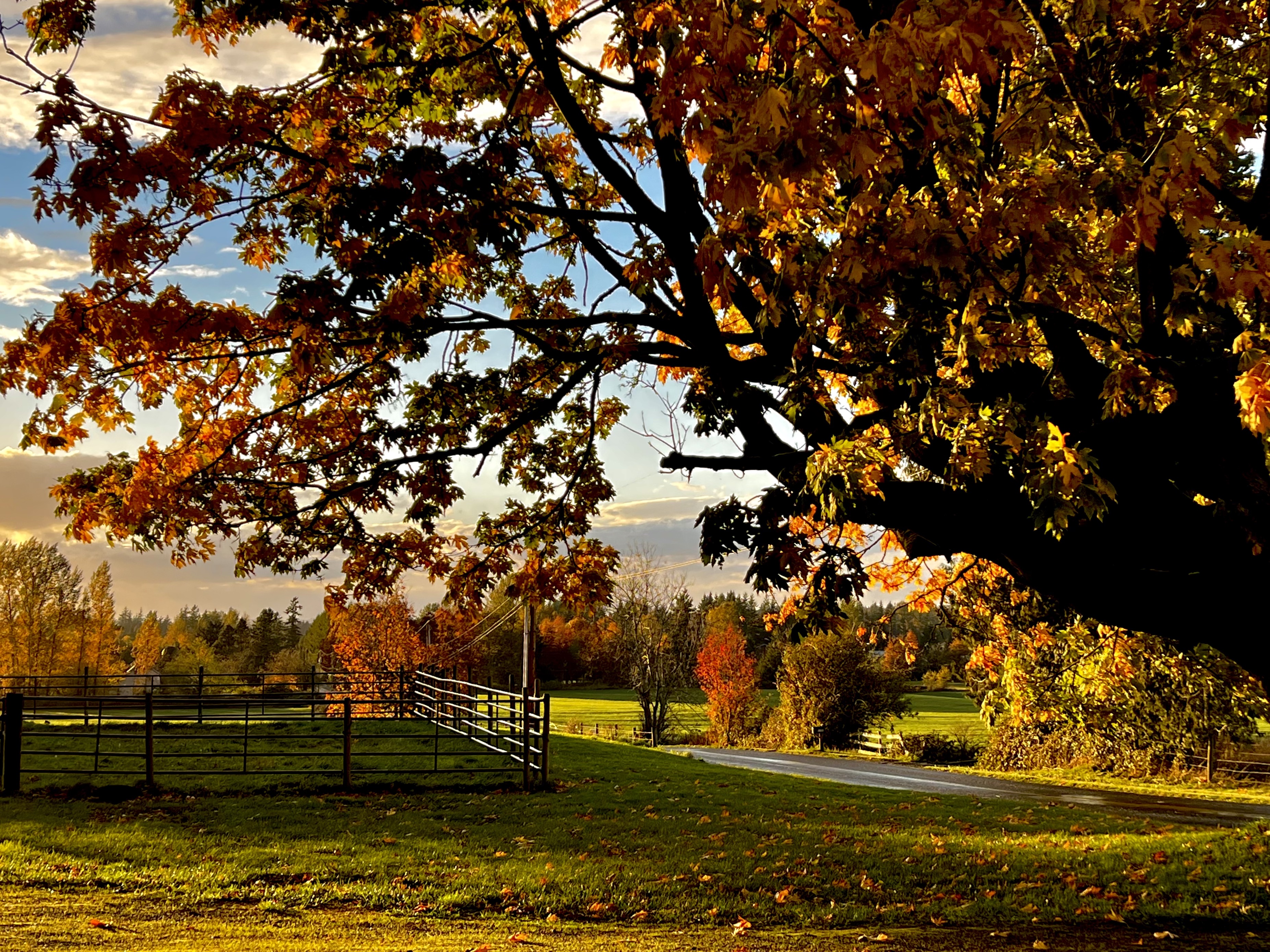
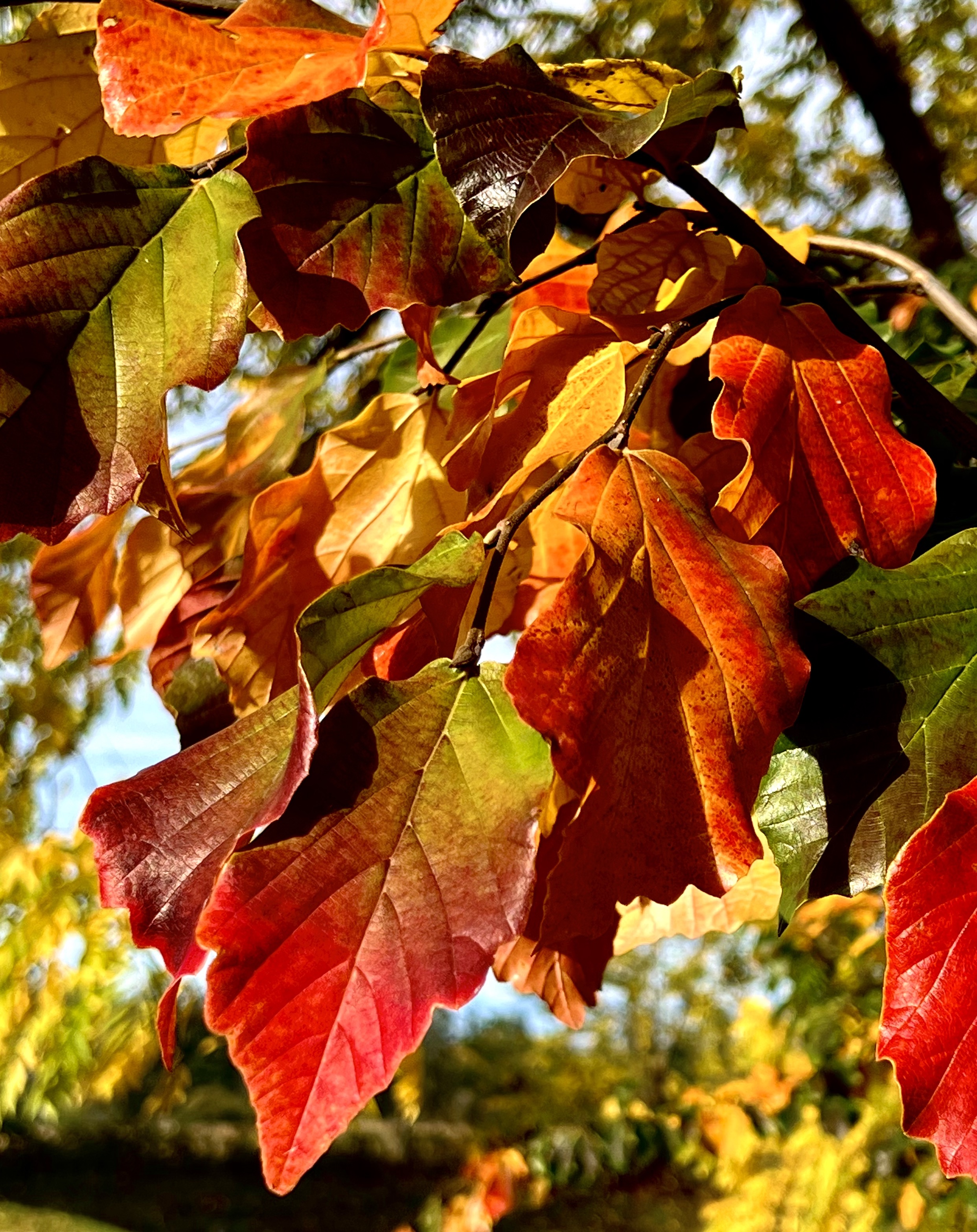
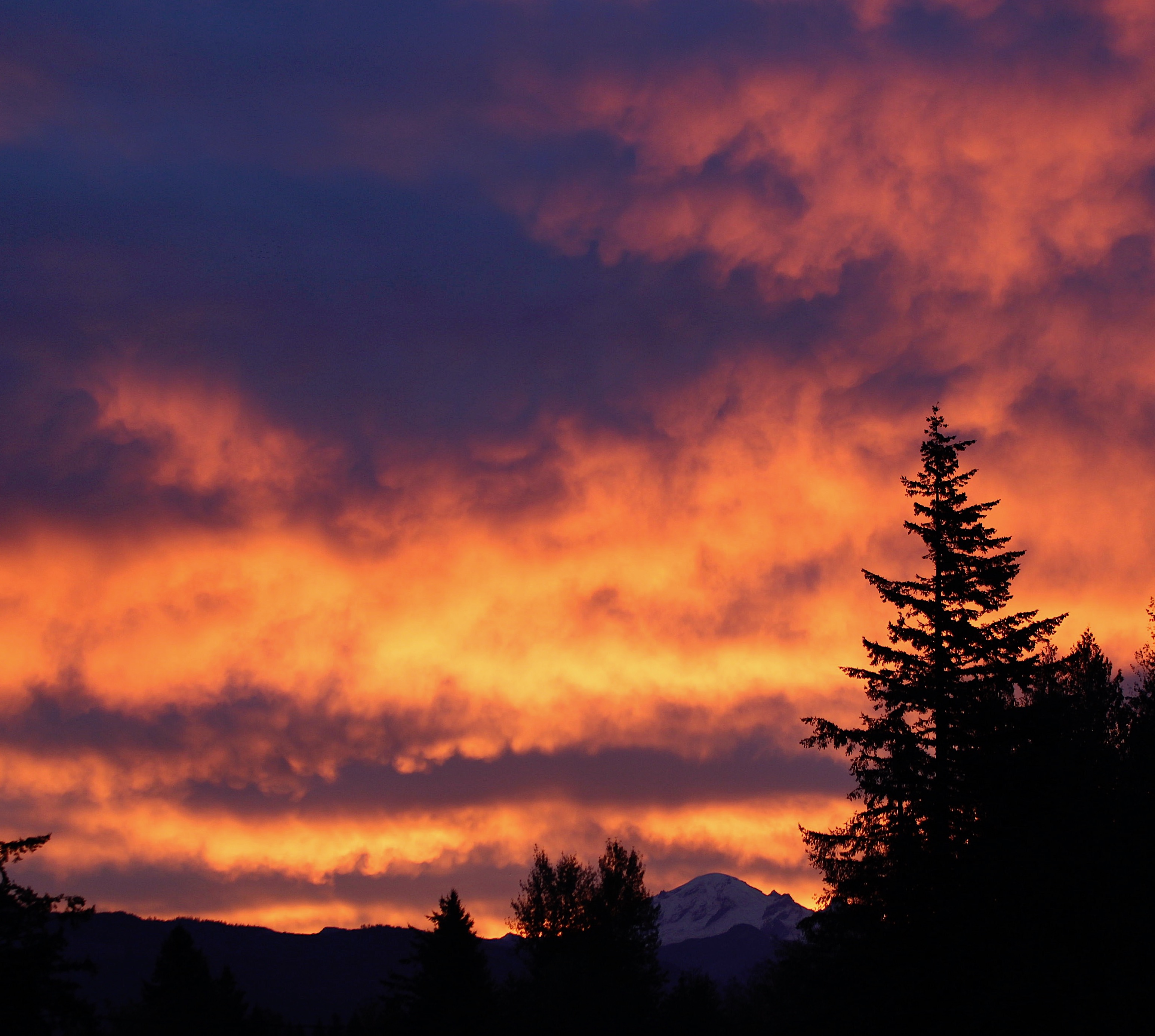
Revel in the gold and bronze tint to the sky, the cinnamon nutmeg dusting of the trees, the heavy sprinkling of hanging dew drops, the crisp and shivery breezes, the new landscape peering through bony branches.
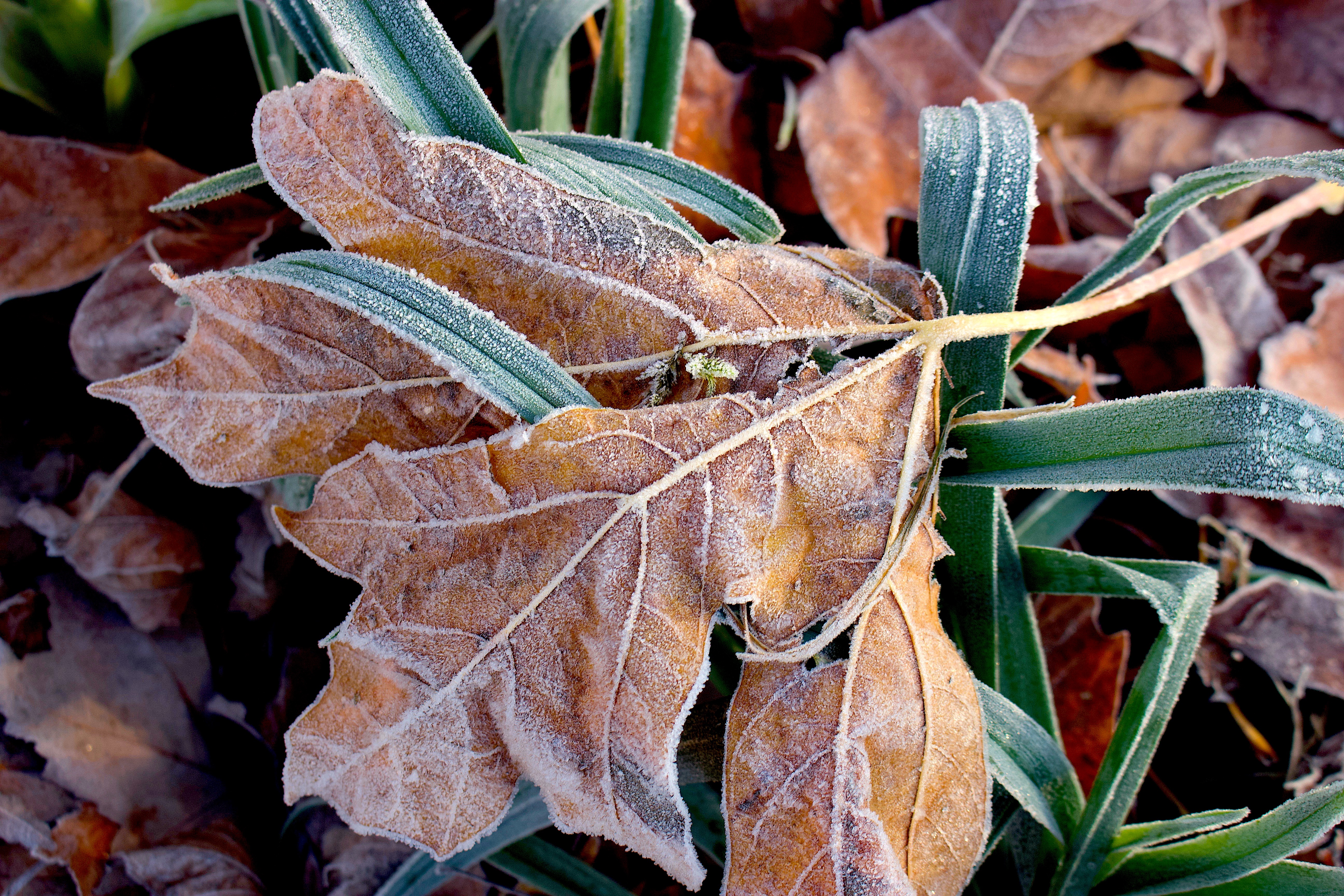
Soon the ground will be frosty instead of dusty, leaving a crunchy carpet rather than shady veil.
October is always a much-needed transition, keeping us fresh gazing at new horizons, reminding us to breathe deeply when life feels shallow, remembering we are immersed in the glory of a new day we have never lived before.
One-Time
Monthly
Yearly
Make a one-time or recurring donation to support daily Barnstorming posts
I want to be a passenger in your car again and shut my eyes while you sit at the wheel,
awake and assured in your own private world, seeing all the lines on the road ahead,
down a long stretch of empty highway without any other faces in sight.
I want to be a passenger in your car again and put my life back in your hands. ~Michael Miller “December”
I heard an old man speak once, someone who had been sober for fifty years, a very prominent doctor. He said that he’d finally figured out a few years ago that his profound sense of control, in the world and over his life, is another addiction and a total illusion. He said that when he sees little kids sitting in the back seat of cars, in those car seats that have steering wheels, with grim expressions of concentration on their faces, clearly convinced that their efforts are causing the car to do whatever it is doing, he thinks of himself and his relationship with God: God who drives along silently, gently amused, in the real driver’s seat. ~Anne Lamott from Operating Instructions
Up north, the dashboard lights of the family car gleam in memory, the radio plays to itself as I drive my father plied the highways while my mother talked, she tried to hide that low lilt, that Finnish brogue, in the back seat, my sisters and I our eyes always tied to the Big Dipper I watch it still on summer evenings, as the fireflies stream above the ditches and moths smack into the windshield and the wildlife’s red eyes bore out from the dark forests we flew by, then scattered like the last bit of star light years before. It’s like a different country, the past we made wishes on unnamed falling stars that I’ve forgotten, that maybe were granted because I wished for love. ~Sheila Packa “Driving At Night” from The Mother Tongue
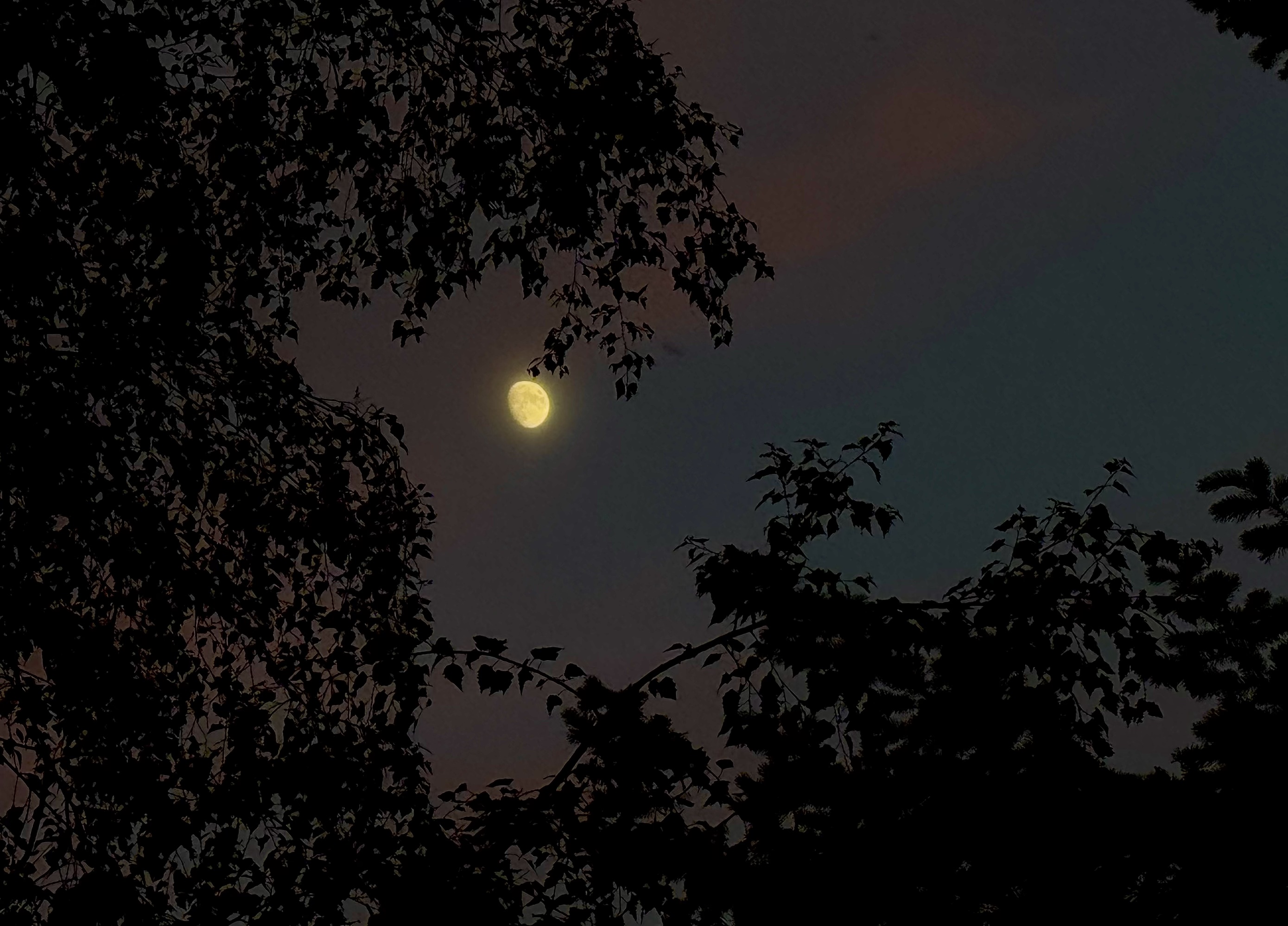
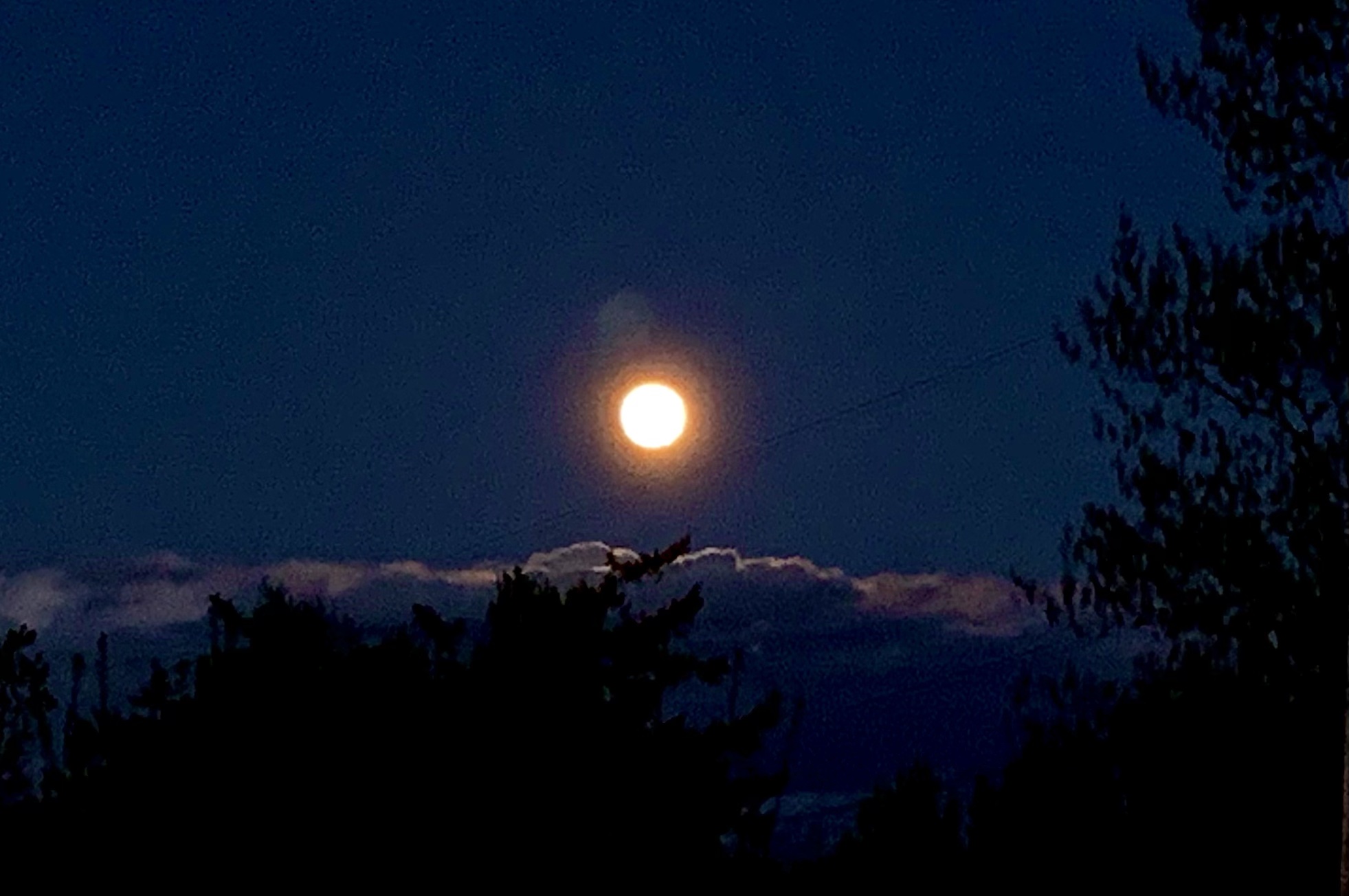
The moon was like a full cup tonight, too heavy, and sank in the mist soon after dark, leaving for light
faint stars and the silver leaves of milkweed beside the road, gleaming before my car.
Yet I like driving at night… the brown road through the mist
of mountain-dark, among farms so quiet, and the roadside willows opening out where I saw
the cows. Always a shock to remember them there, those great breathings close in the dark.
I stopped, and took my flashlight to the pasture fence. They turned to me where they lay, sad
and beautiful faces in the dark, and I counted them-forty near and far in the pasture…
I switched off my light.
But I did not want to go, not yet, nor knew what to do if I should stay, for how
in that great darkness could I explain anything, anything at all. I stood by the fence. And then
Some of my most cherished childhood memories come from long rides home in the car at night from holiday gatherings. My father always drove, my mother hummed “I See the Moon” in the front passenger seat, and we three kids sat in the back seat, drowsy and full of feasting.
The night world hypnotically passed by outside the car window. I wondered whether the rest of the world was as safe and content as I felt at that moment.
On clear nights, the moon followed us down the highway, shining a light on the road.
Now as a driver at night, transporting grandchildren from a family gathering, I want them to feel the same peaceful contentment that I did as a child. As an older driver, I don’t enjoy driving at night, especially dark rural roads in pouring rain. I understand the enormous responsibility I bear, transporting those whom I dearly love and want to keep safe.
In truth, I long to be a passenger again, with no worries or pressures – just along for the ride, watching the moon and the world drift by, knowing I’m well-cared for.
But of course, I fret about the immense burden I feel to make things right in this dark and troubled world.
I am a passenger on a planet that has a Driver who feels great responsibility and care for all He transports through the black night of the universe. He loves me and I can rest content in the knowledge that I am safe in His vigilant hands.
I am not the driver – He knows how to safely bring me home, even in the rain.
I see the moon, it’s shining from far away, Beckoning with ev‘ry beam. And though all the start above cast down their light, Still the moon is all that I see And it’s calling out, “Come run a way! And we’ll sail with the clouds for our sea, And we’ll travel on through the black of the night, ‘til we float back home on a dream!” The moon approaches my window pane, stretching itself to the ground. The moon sings softly and laughs and smiles, and yet never makes a sound! I see the moon! I see the moon! Part A And it’s calling out, “Come run a way! And we’ll sail with the clouds for our sea, And we’ll travel on through the black of the night, ‘til we float back home on a dream!” Part B I see the moon, it’s shining from far away, Beckoning with ev‘ry beam. And though all the stars above cast down their light, Still the moon is all that I see ~Douglas Beam
One-Time
Monthly
Yearly
Make a one-time or recurring donation to support daily Barnstorming posts
Love means to learn to look at yourself The way one looks at distant things For you are only one thing among many. And whoever sees that way heals his heart, Without knowing it, from various ills— A bird and a tree say to him: Friend.
Then he wants to use himself and things So that they stand in the glow of ripeness. It doesn’t matter whether he knows what he serves: Who serves best doesn’t always understand. ~Czeslaw Milosz “Love” from New and Collected Poems: 1931-2001
Let him kneel down, lower his face to the grass, And look at light reflected by the ground. There he will find everything we have lost… ~Czeslaw Milosz from “The Sun”
It’s not easy to subdue the needy ego and let the life-giving soul take control, even though doing so saves us grief and serves the world well. So if you see me on the street one day, quietly muttering, “Only one thing among many, only one thing among many…,” you’ll know I’m still working on it, or it’s still working on me. ~Parker Palmer “The Big Question: Does My Life Have Meaning?”
It is always tempting to be self-absorbed; since my heart stent placement nearly 8 months ago, I tend to analyze every sensation in my chest, fuss over how many steps I take daily, and get discouraged when the scale doesn’t register the sacrifices I think I’m making in my diet.
In other words, in my efforts to heal my physically-broken heart, I become the center of my attention, rather than just one among many things in the days/months/years I have left. I need to look at myself from a distance rather than under a microscope.
It is a skewed and futile perspective, seeking meaning and purpose in life by navel gazing.
Instead, I should be concentrating on the ripeness of each day. I’ve been given a second chance to recalibrate my journey through the time I have left, focusing outward, gazing at the wonders around me, sometimes getting down on my knees.
I don’t fully understand how I might serve others by what I share here online, or what I do in my local community with my hands and feet. I now know not to miss the moments basking in the glow of loving those around me, including you friends I may never meet on this side of the veil.
May you glow in ripeness as well.
One-Time
Monthly
Yearly
Make a one-time or recurring donation to support daily Barnstorming posts
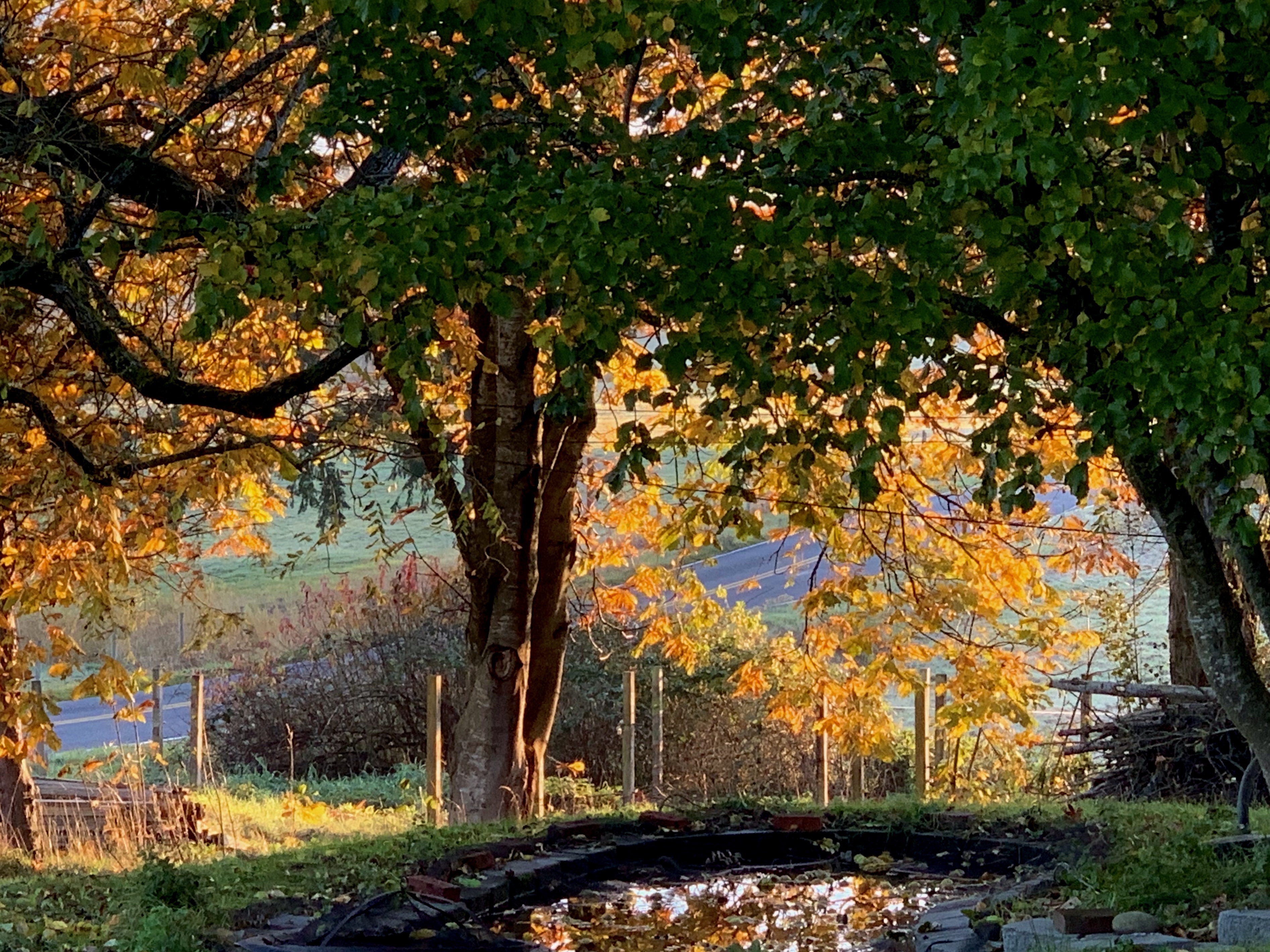
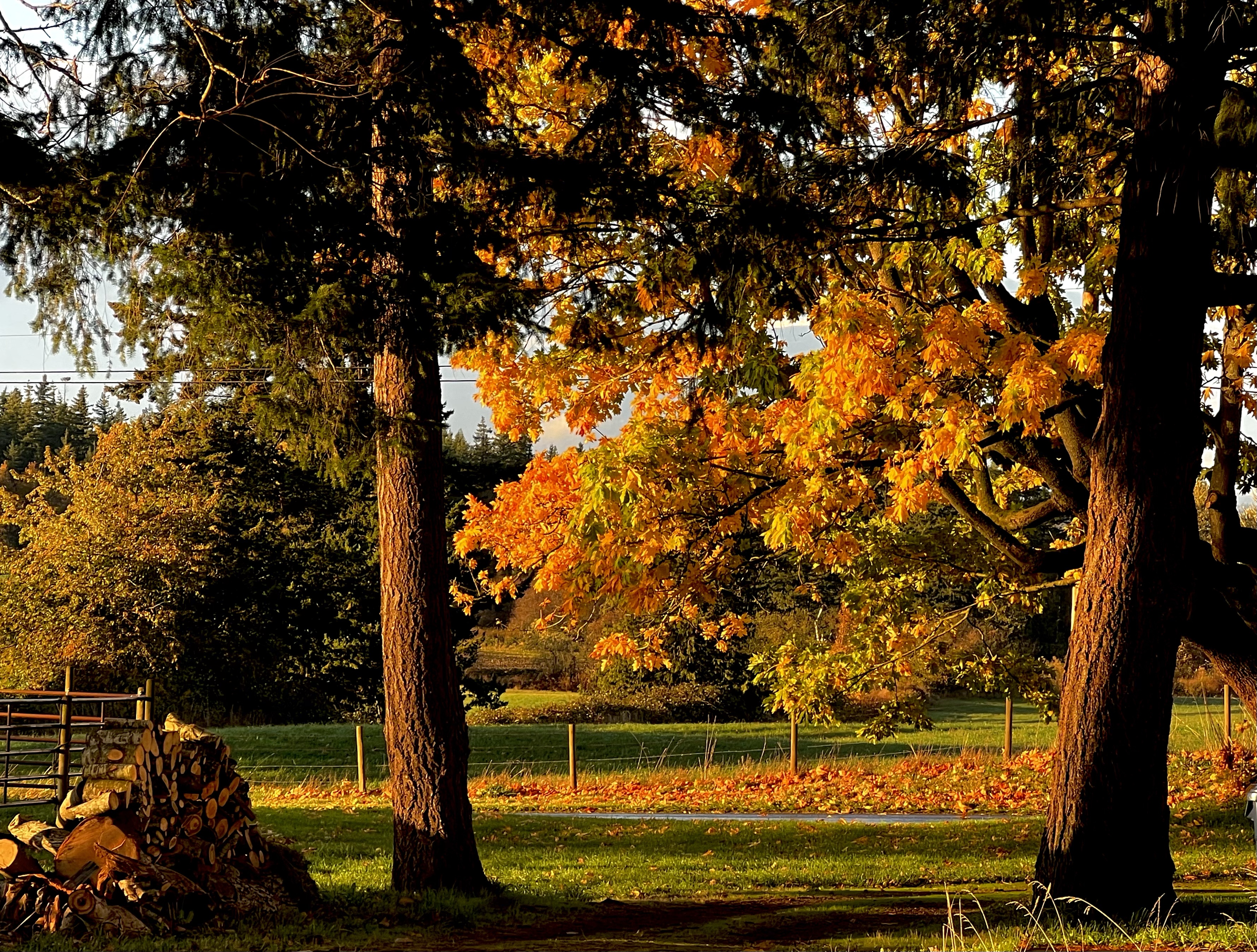
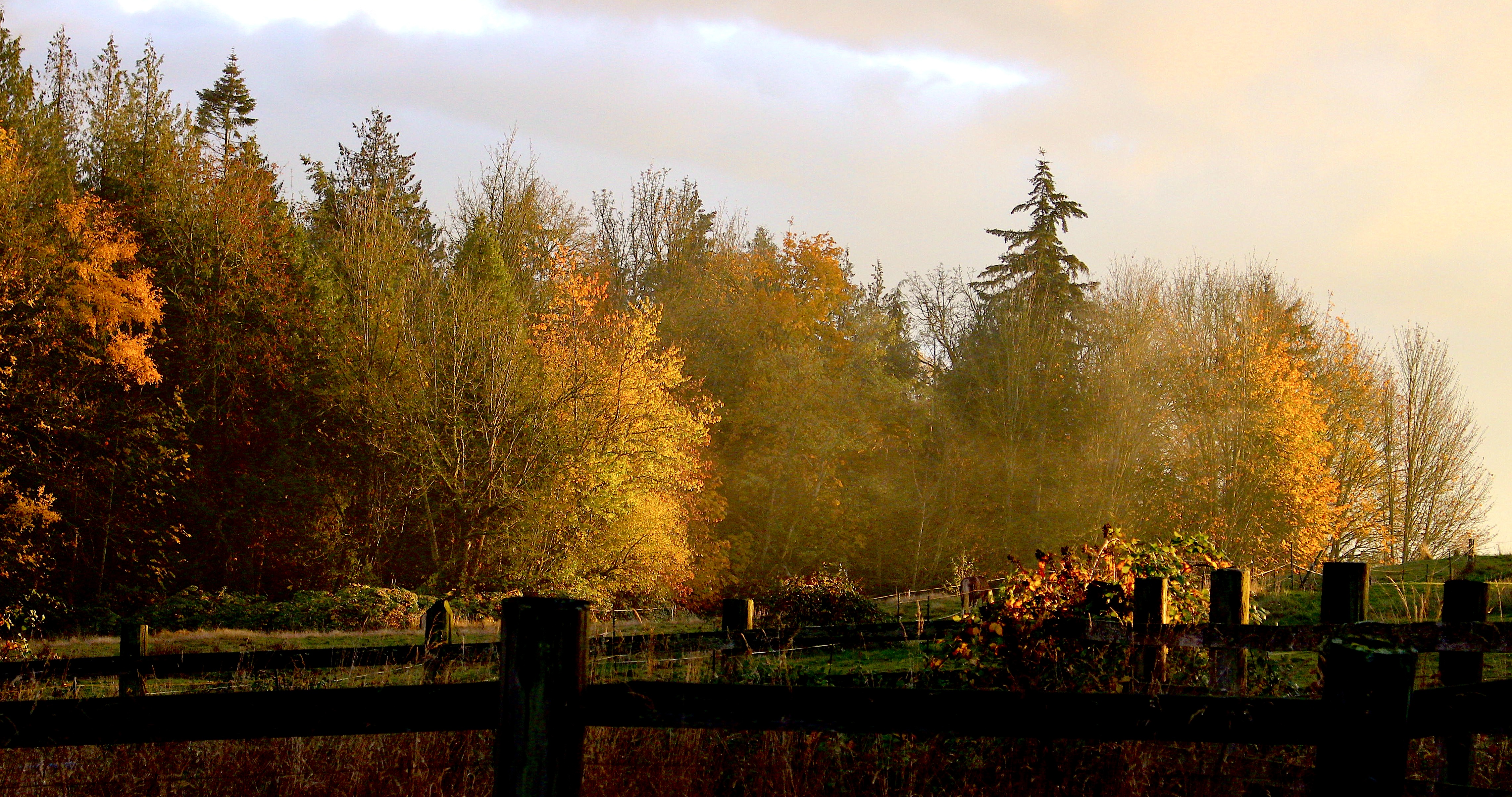
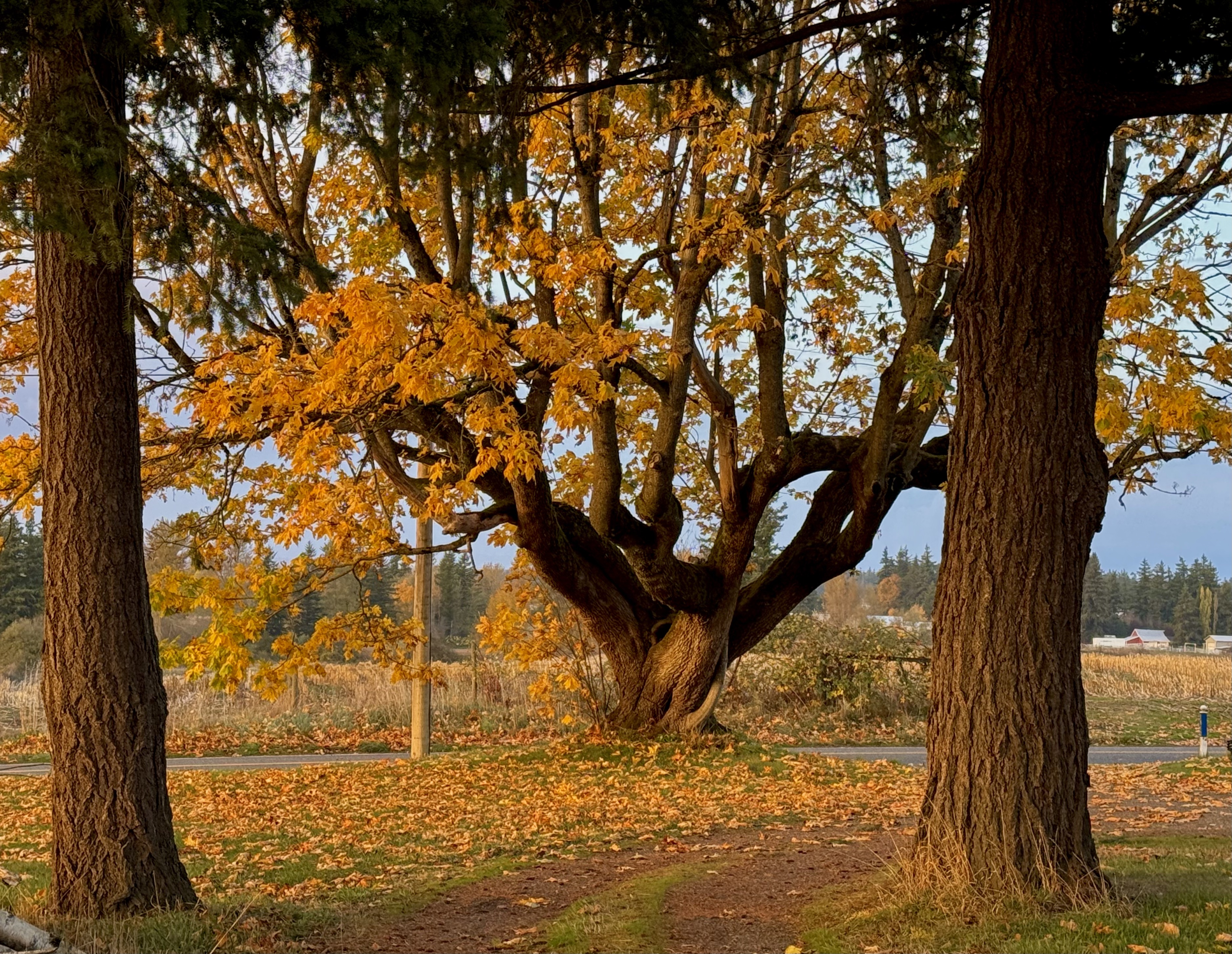
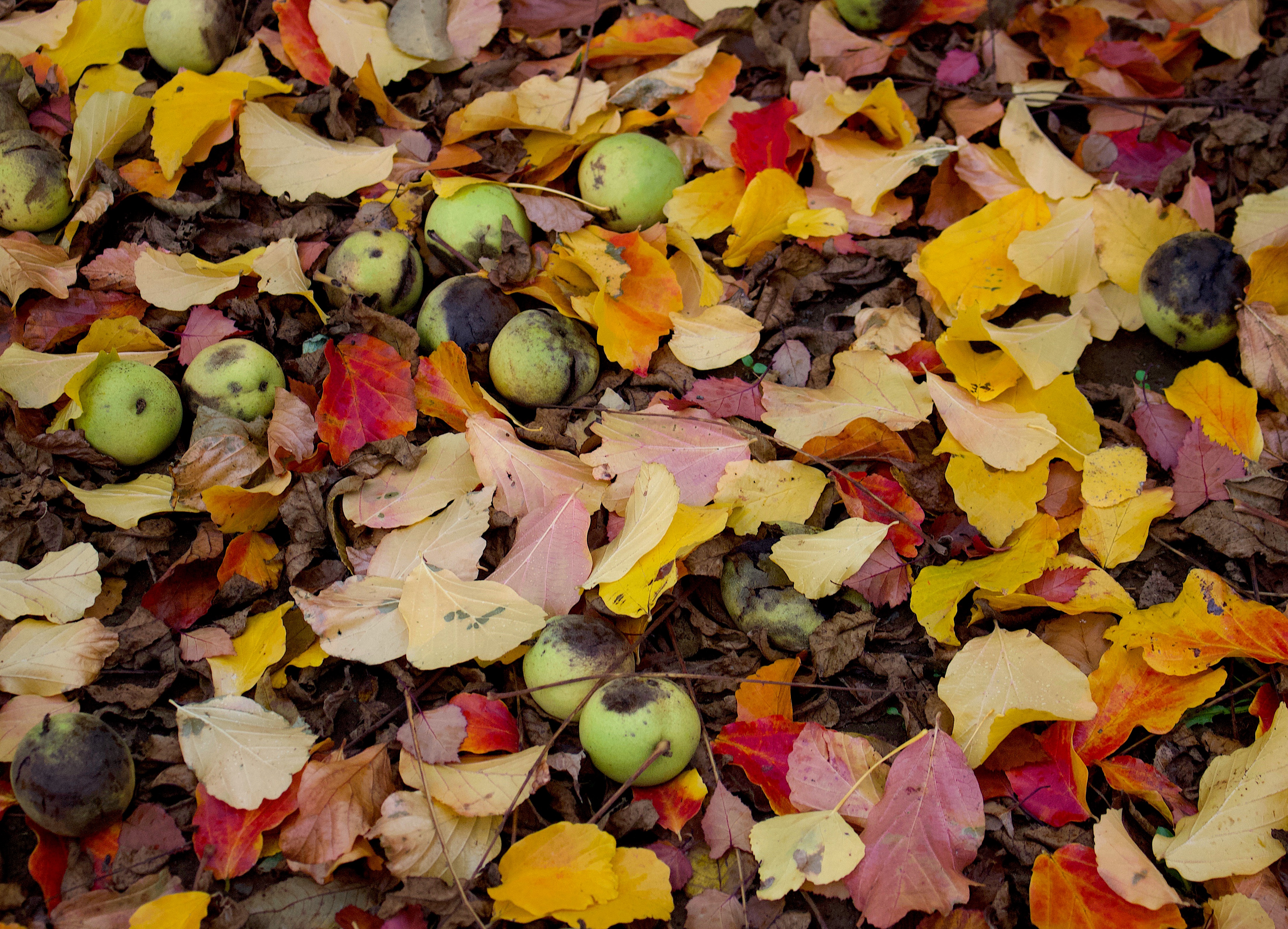
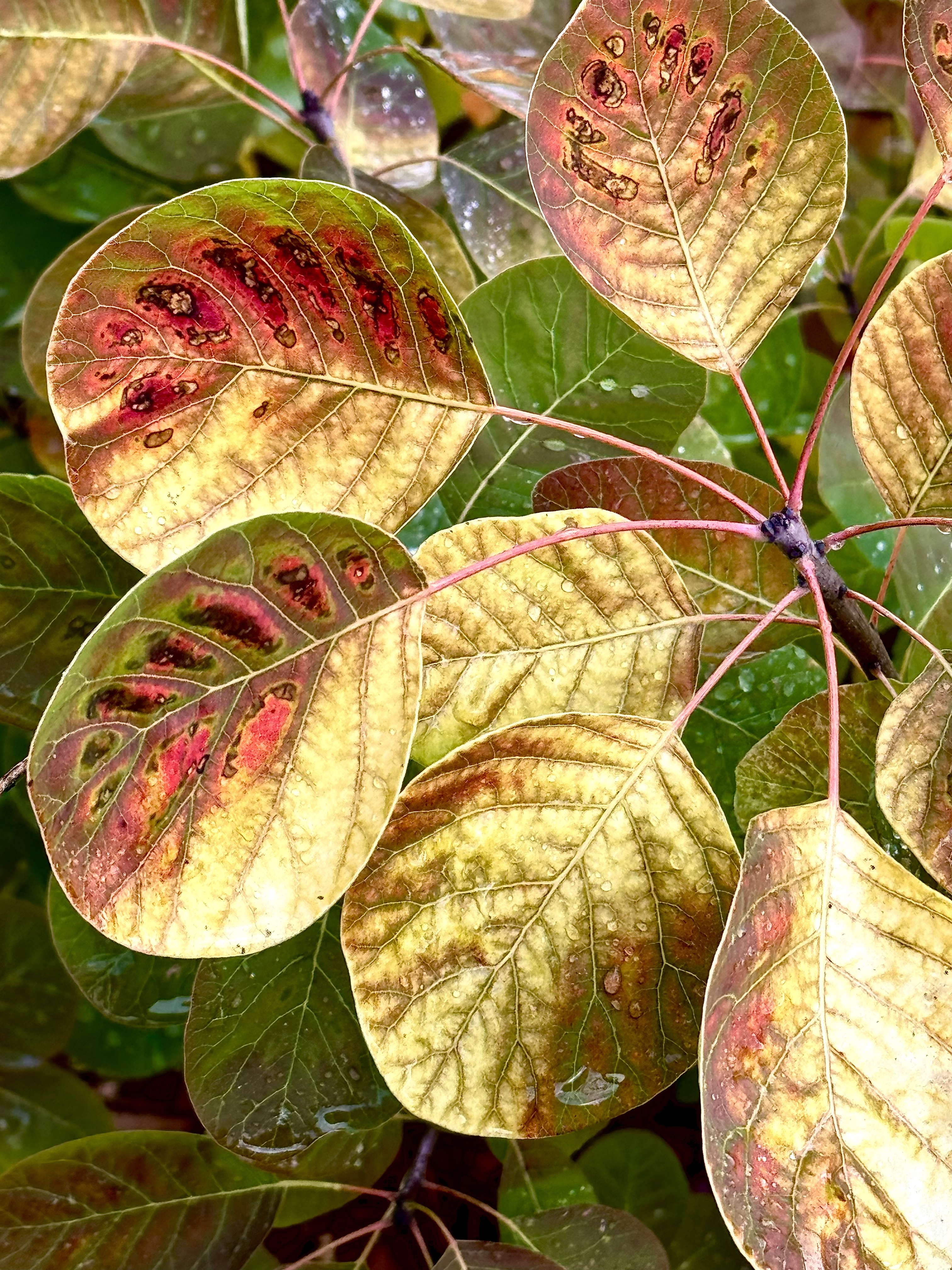
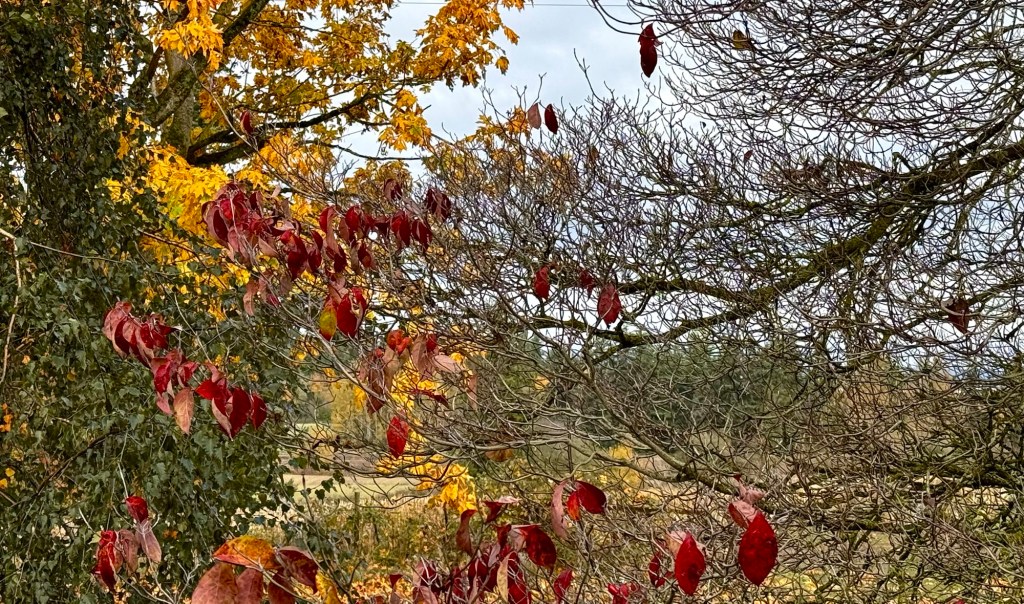
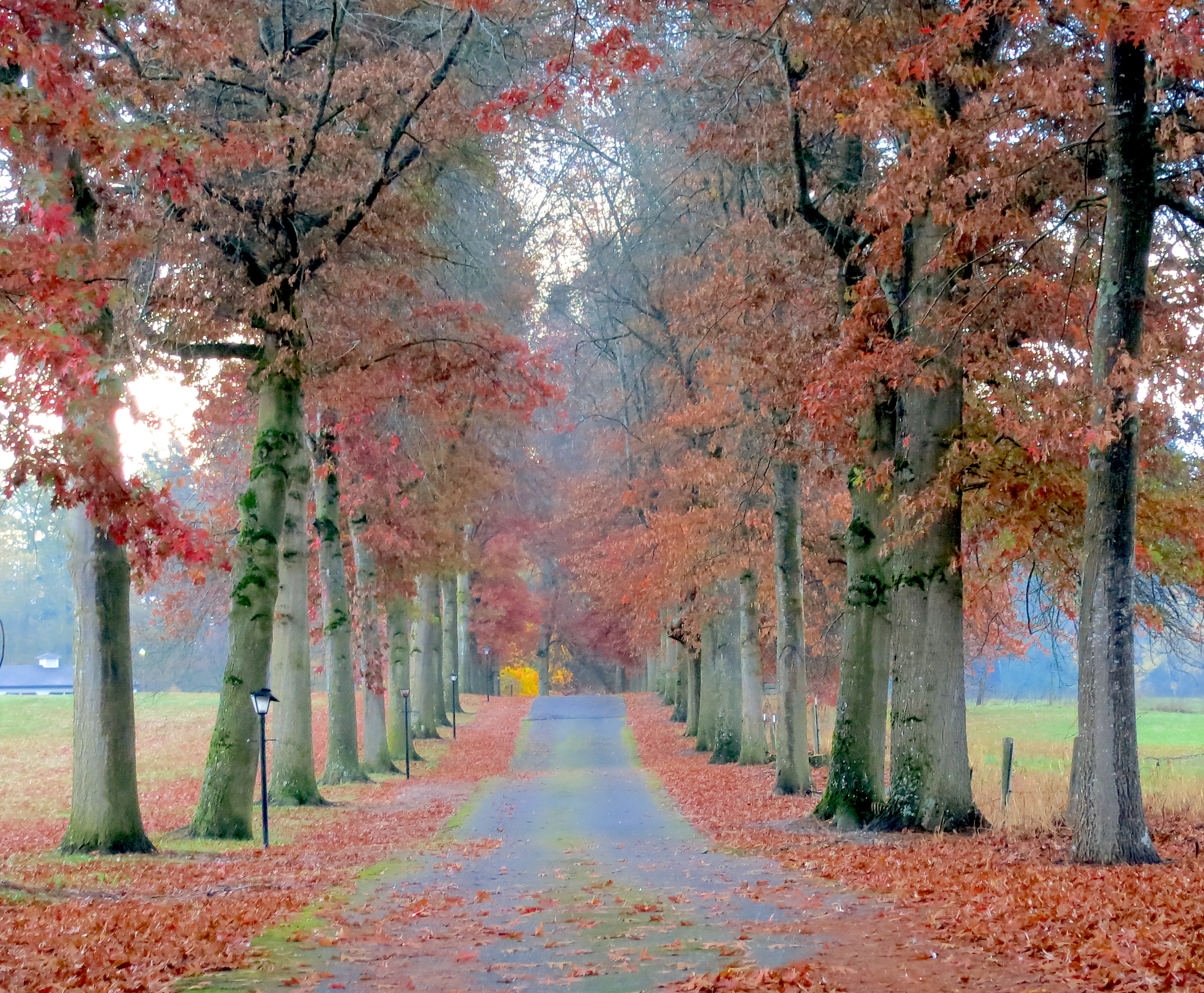
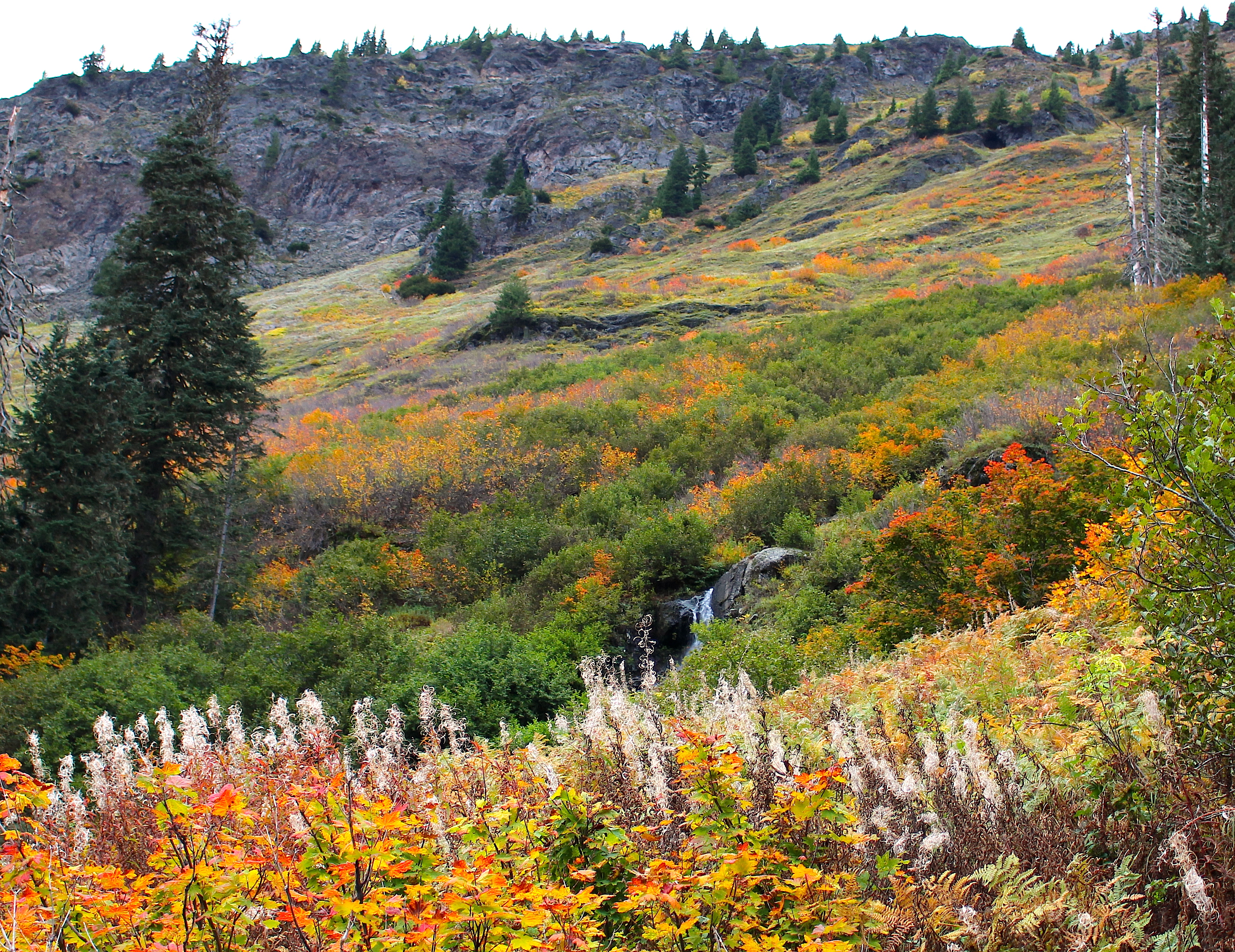
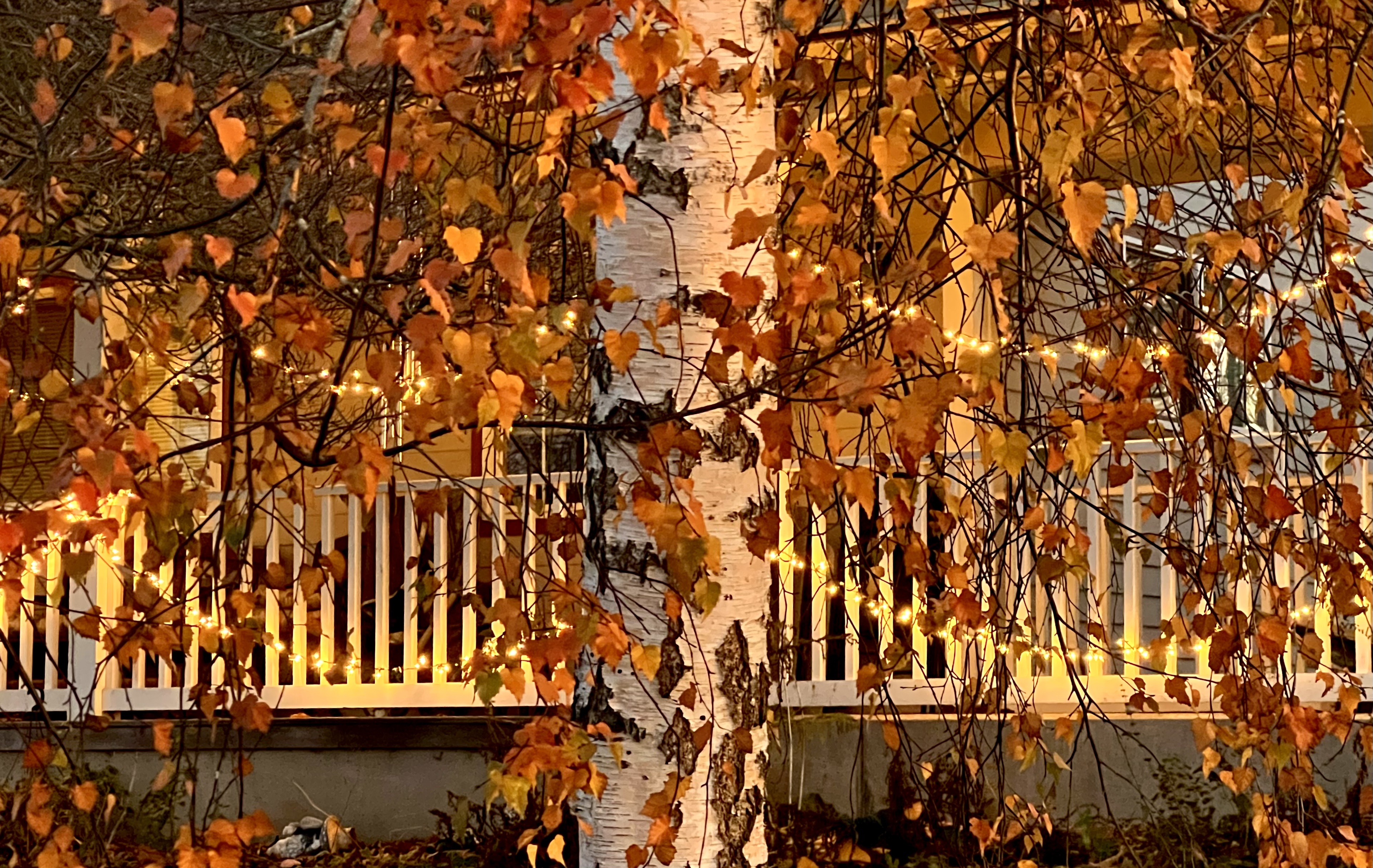
Every October it becomes important, no, necessary to see the leaves turning, to be surrounded by leaves turning; it’s not just the symbolism, to confront in the death of the year your death, one blazing farewell appearance, though the irony isn’t lost on you that nature is most seductive when it’s about to die, flaunting the dazzle of its incipient exit, an ending that at least so far the effects of human progress (pollution, acid rain) have not yet frightened you enough to make you believe is real; that is, you know this ending is a deception because of course nature is always renewing itself—
the trees don’t die, they just pretend, go out in style, and return in style: a new style.
3
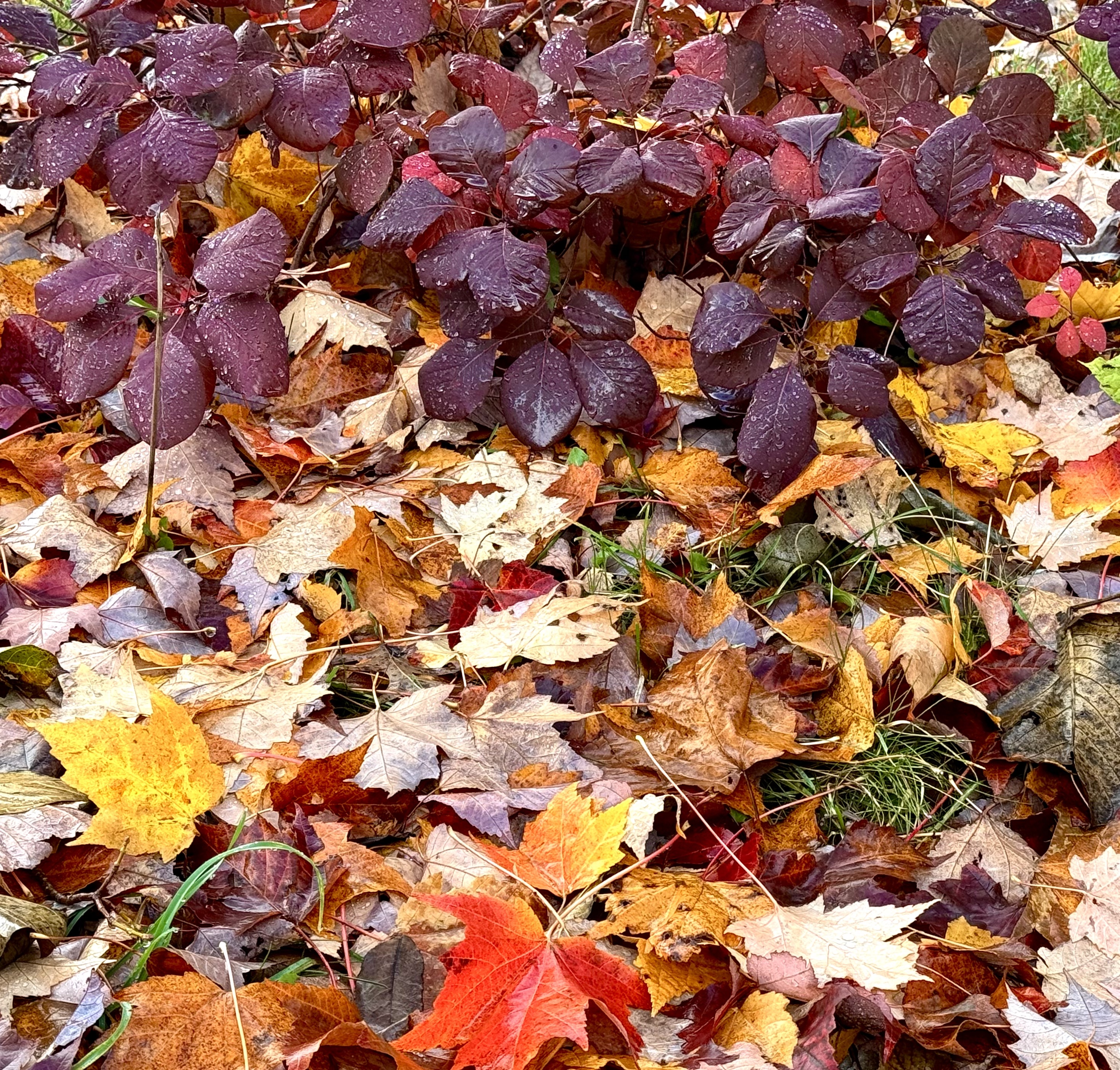
You’ll be driving along depressed when suddenly a cloud will move and the sun will muscle through and ignite the hills. It may not last. Probably won’t last. But for a moment the whole world comes to. Wakes up. Proves it lives. It lives— red, yellow, orange, brown, russet, ocher, vermilion, gold. Flame and rust. Flame and rust, the permutations of burning. You’re on fire. Your eyes are on fire. It won’t last, you don’t want it to last. You can’t stand any more. But you don’t want it to stop. It’s what you’ve come for. It’s what you’ll come back for. It won’t stay with you, but you’ll
remember that it felt like nothing else you’ve felt or something you’ve felt that also didn’t last. ~Lloyd Schwarz from “Leaves”
The world wakes up and comes to, with vivid, overwhelming color for a moment before it dies.
The landscape is simply acting out its part, perhaps just pretending. Nothing is really dying, just taking a nap under a brilliant blanket.
Rest well. See you next year.
One-Time
Monthly
Yearly
Make a one-time or recurring donation to support daily Barnstorming posts
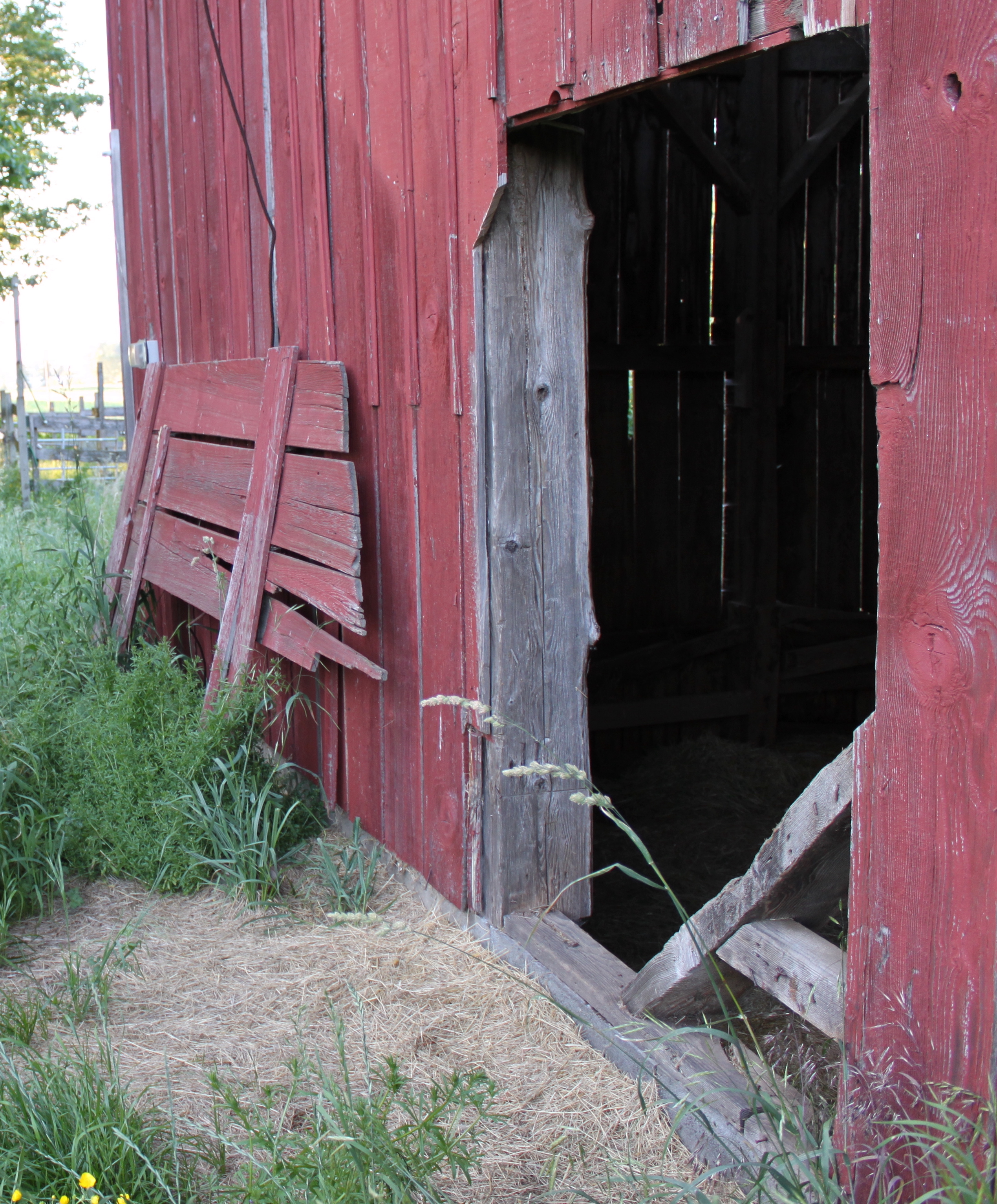
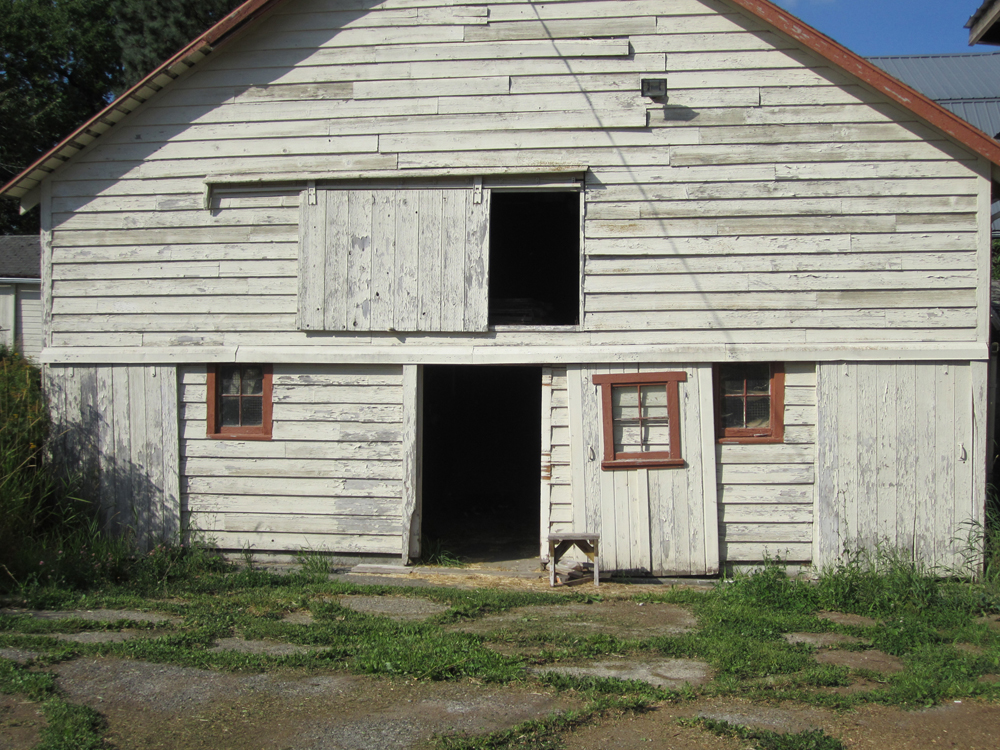
The partly open hay barn door, white frame around the darkness, the broken board, small enough for a child to slip through.
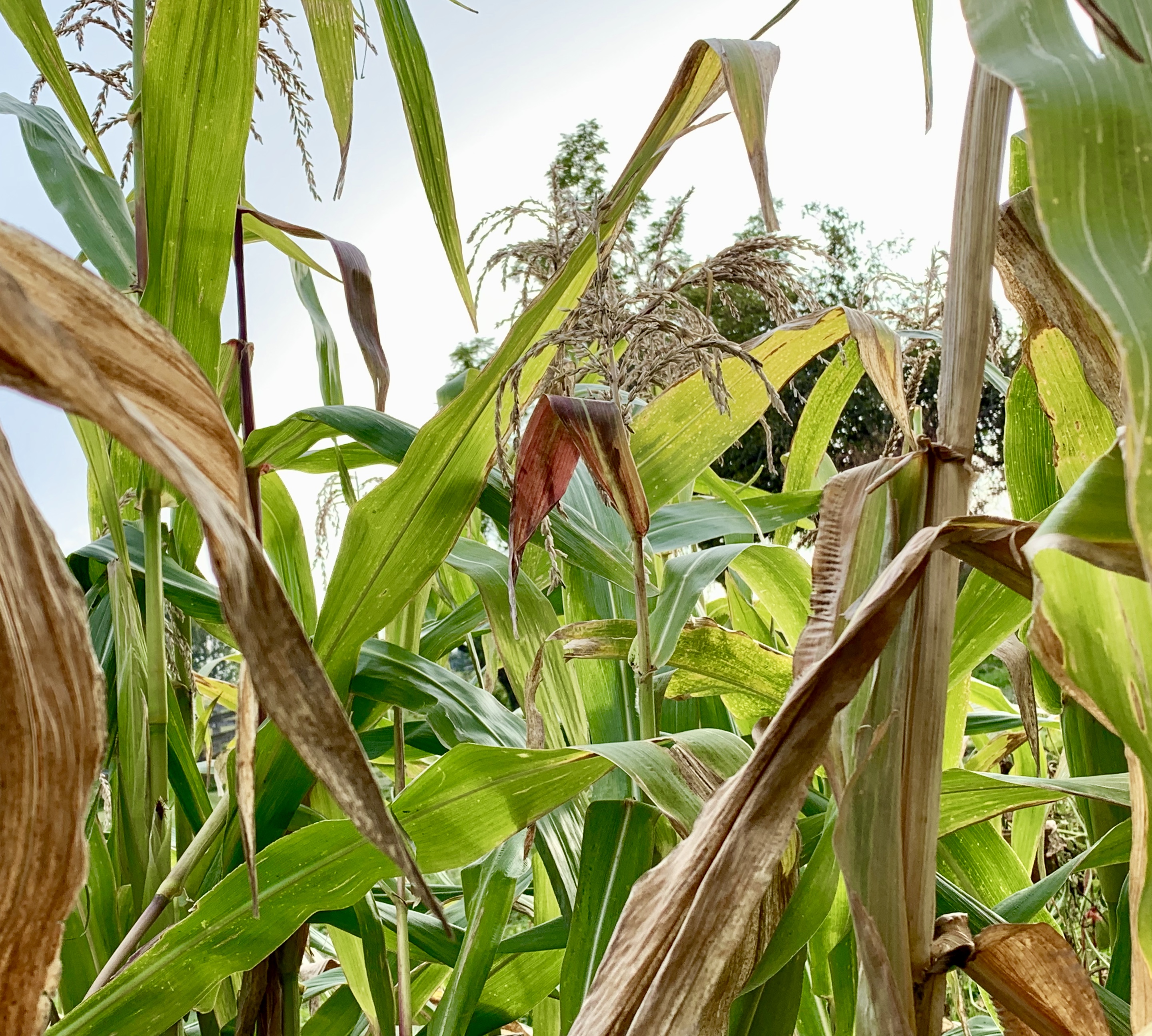
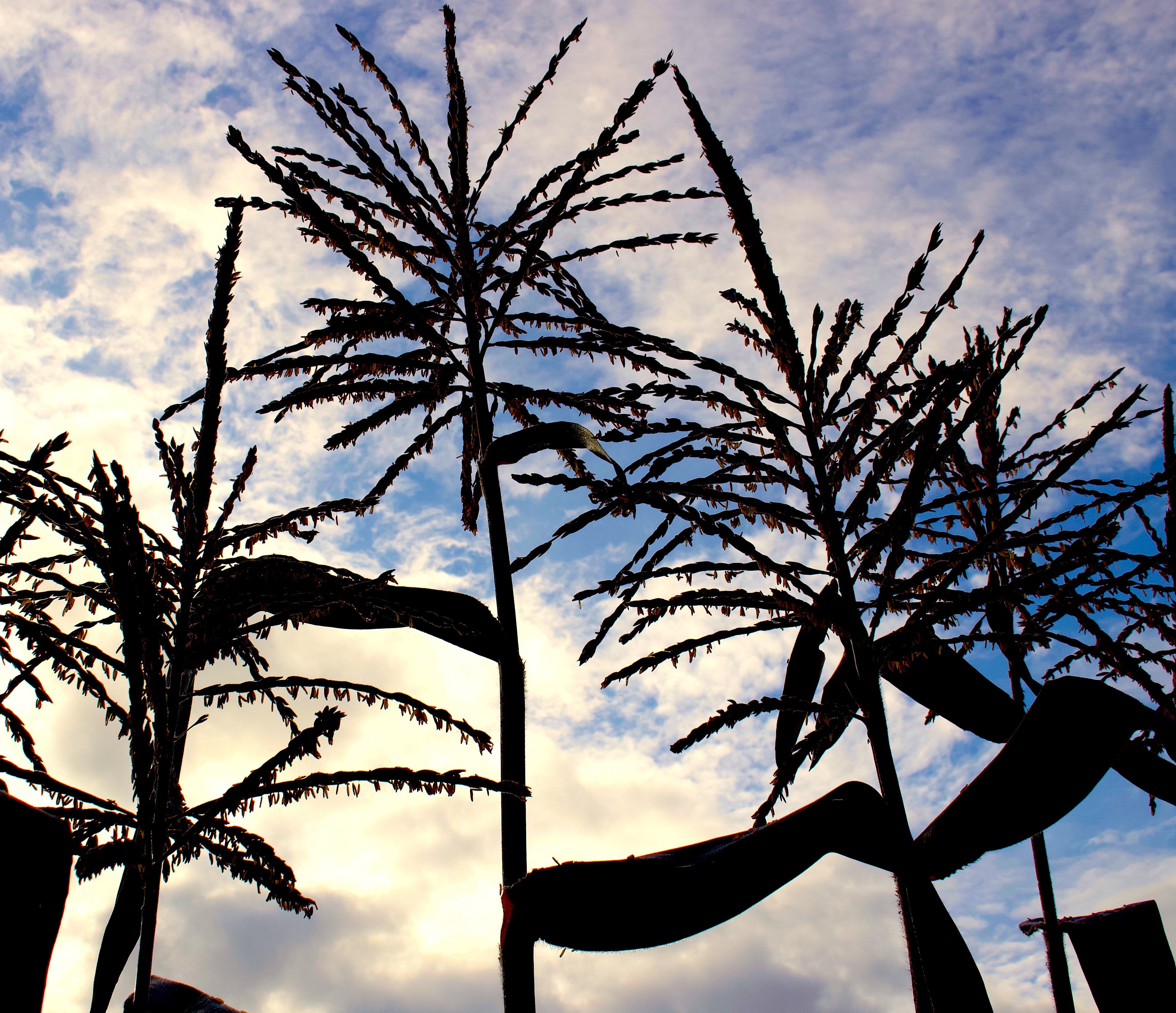
Walking in the cornfields in late July, green tassels overhead, the slap of flat leaves as we pass, silent and invisible from any road.
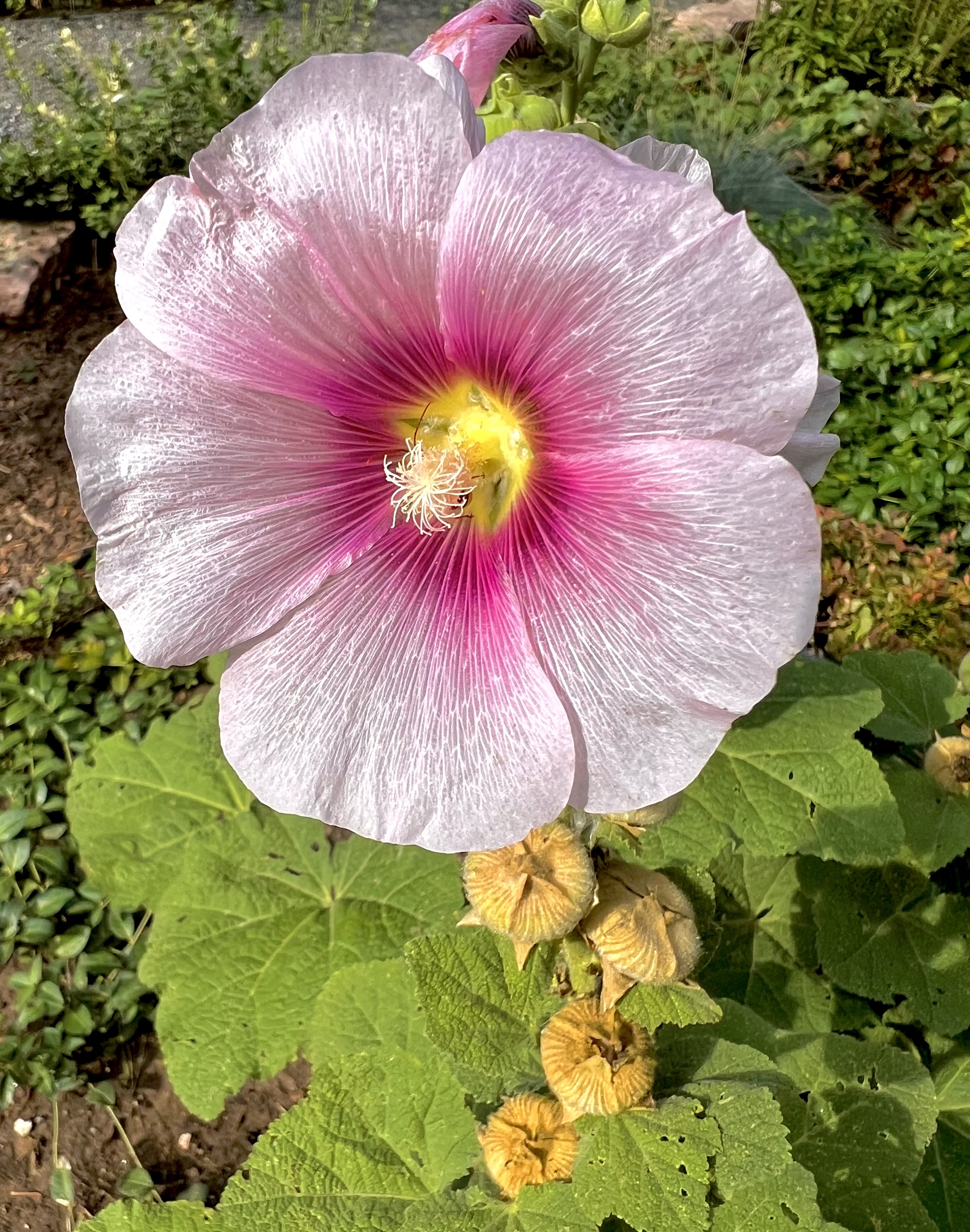
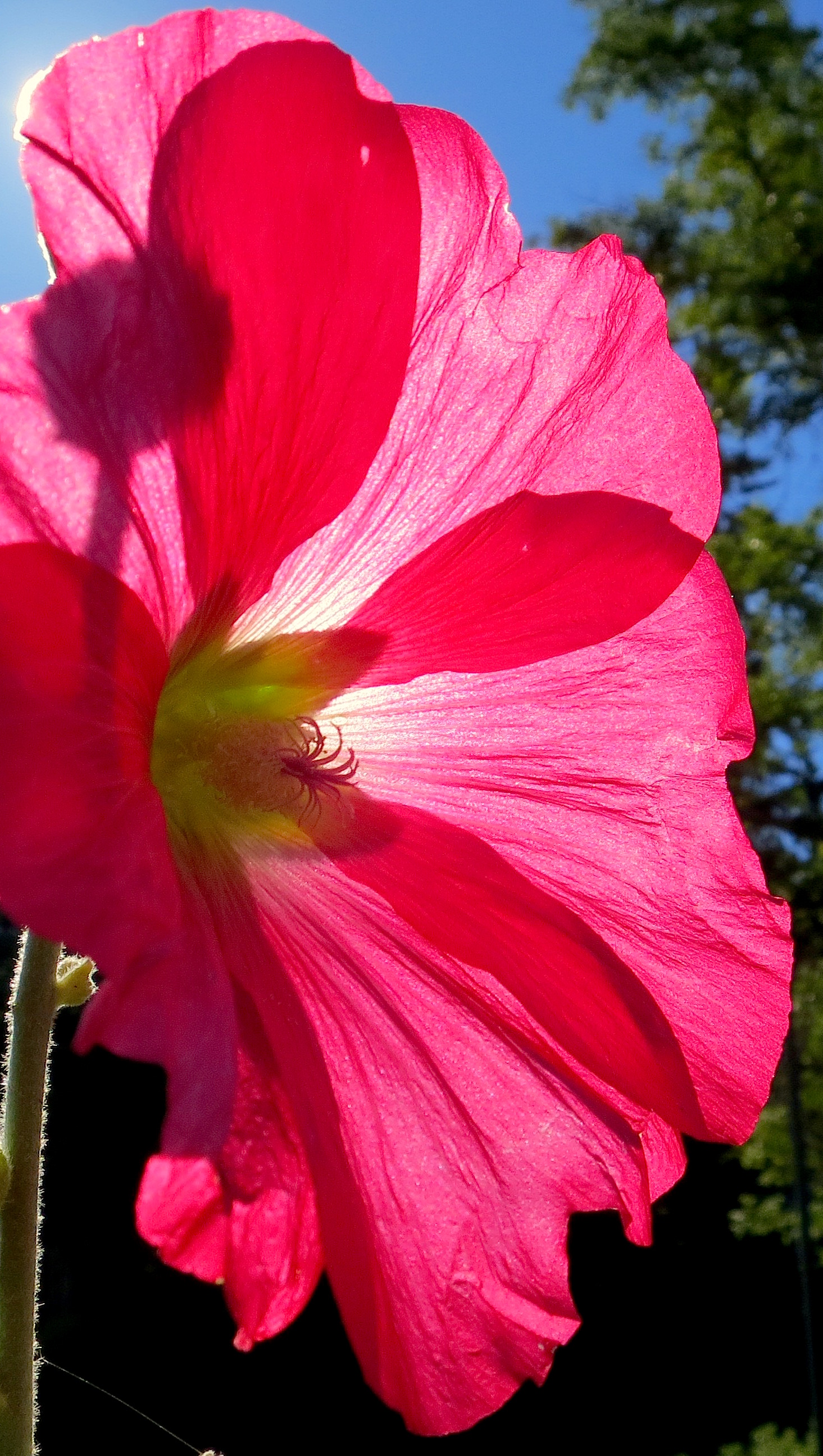
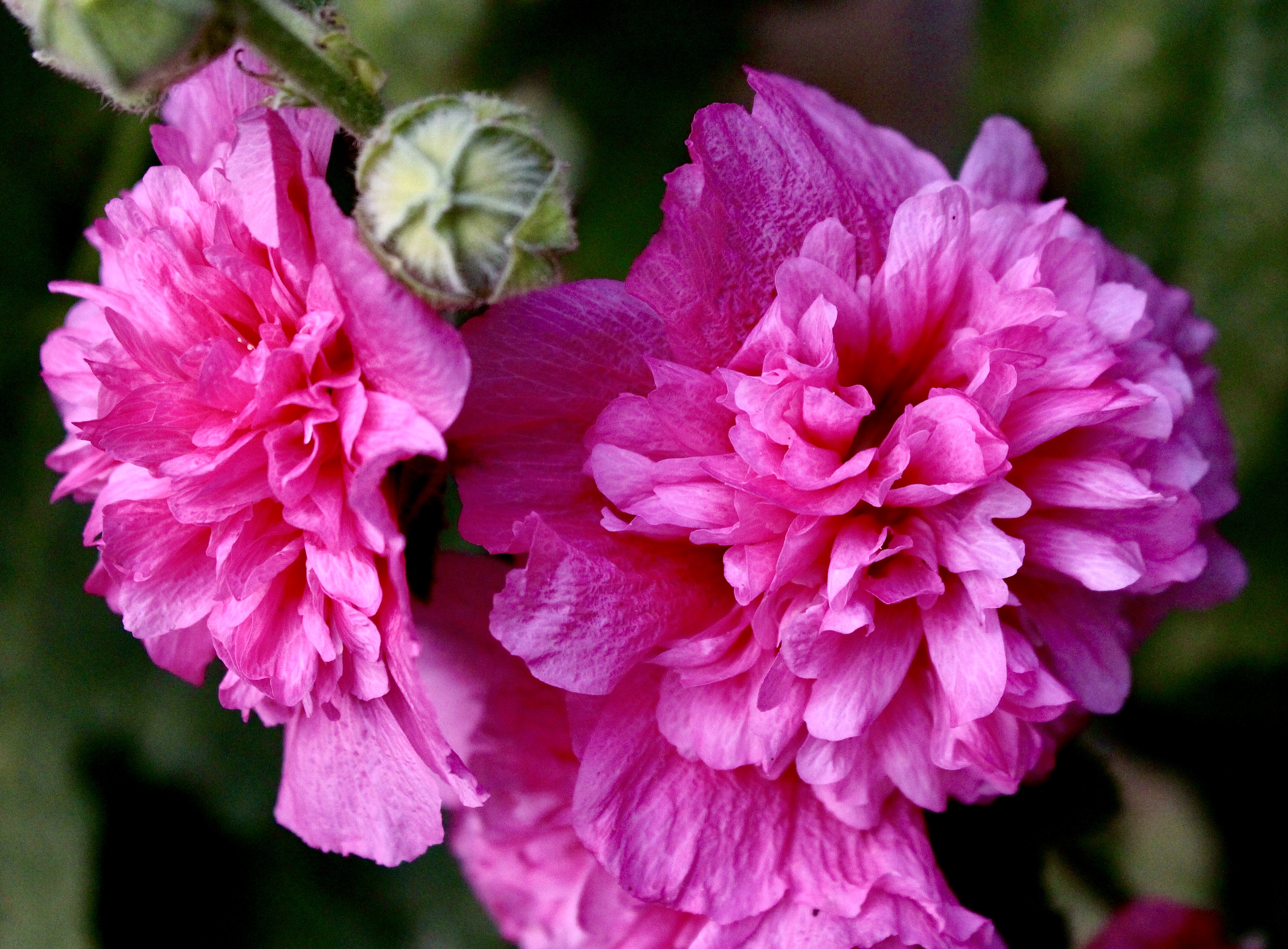
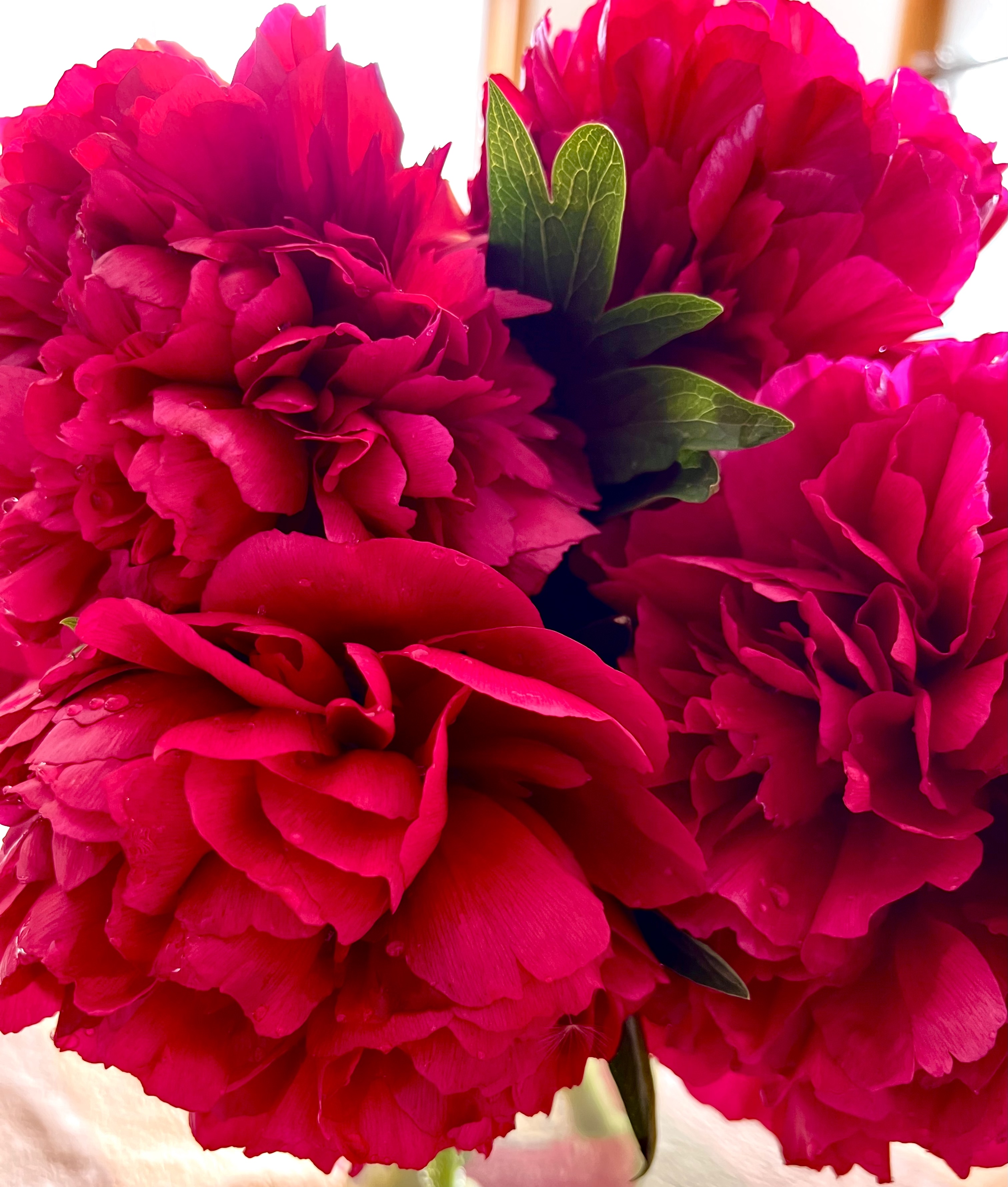
Hollyhocks leaning against the stucco house, peonies heavy as fruit, drooping their deep heads on the dog house roof.
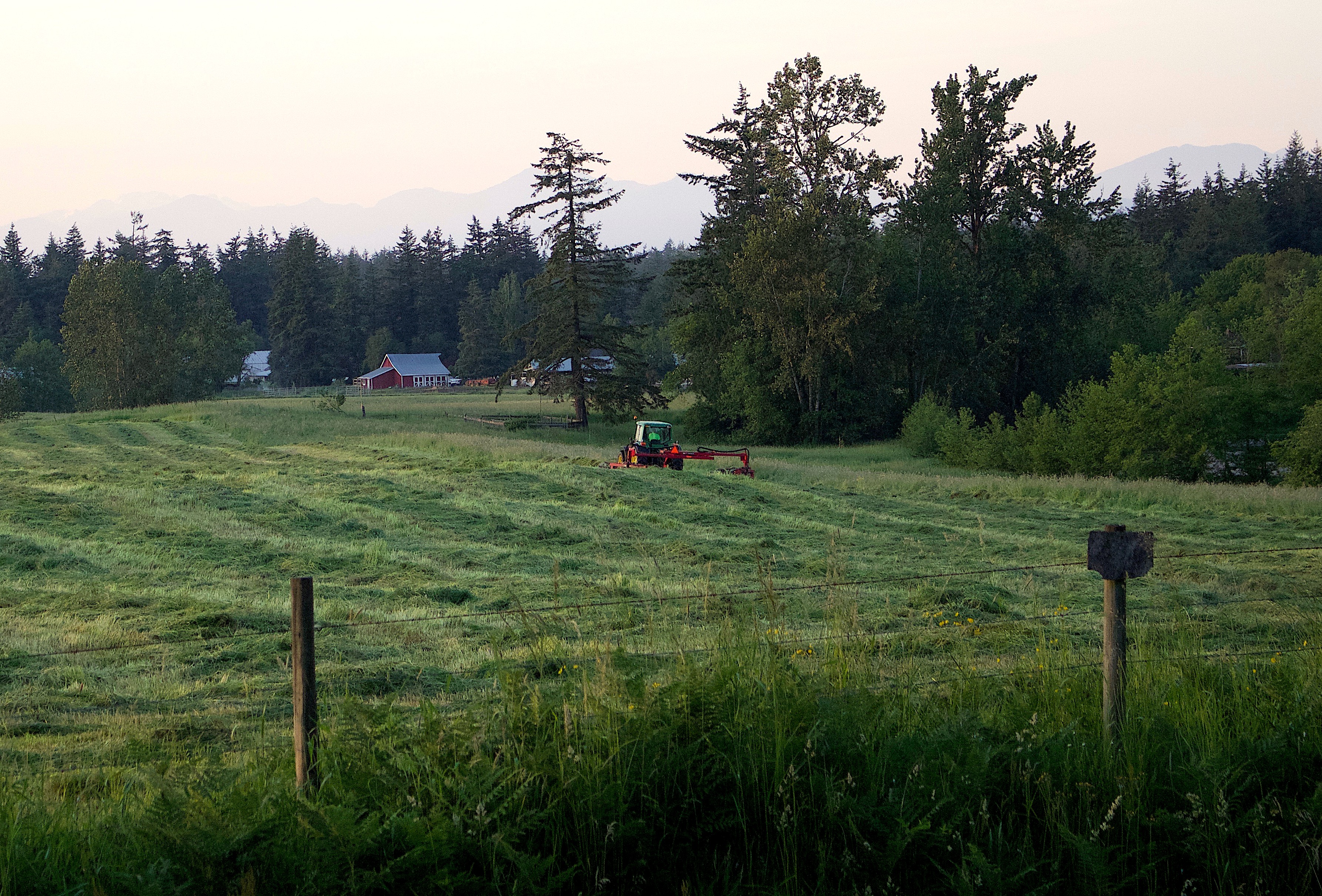
Lilac bushes between the lawn and the woods, a tractor shifting from one gear into the next, the throttle opened,
the smell of cut hay, rain coming across the river, the drone of the hammer mill, milk machines at dawn. ~Joyce Sutphen “The Last Things I’ll Remember” from First Words
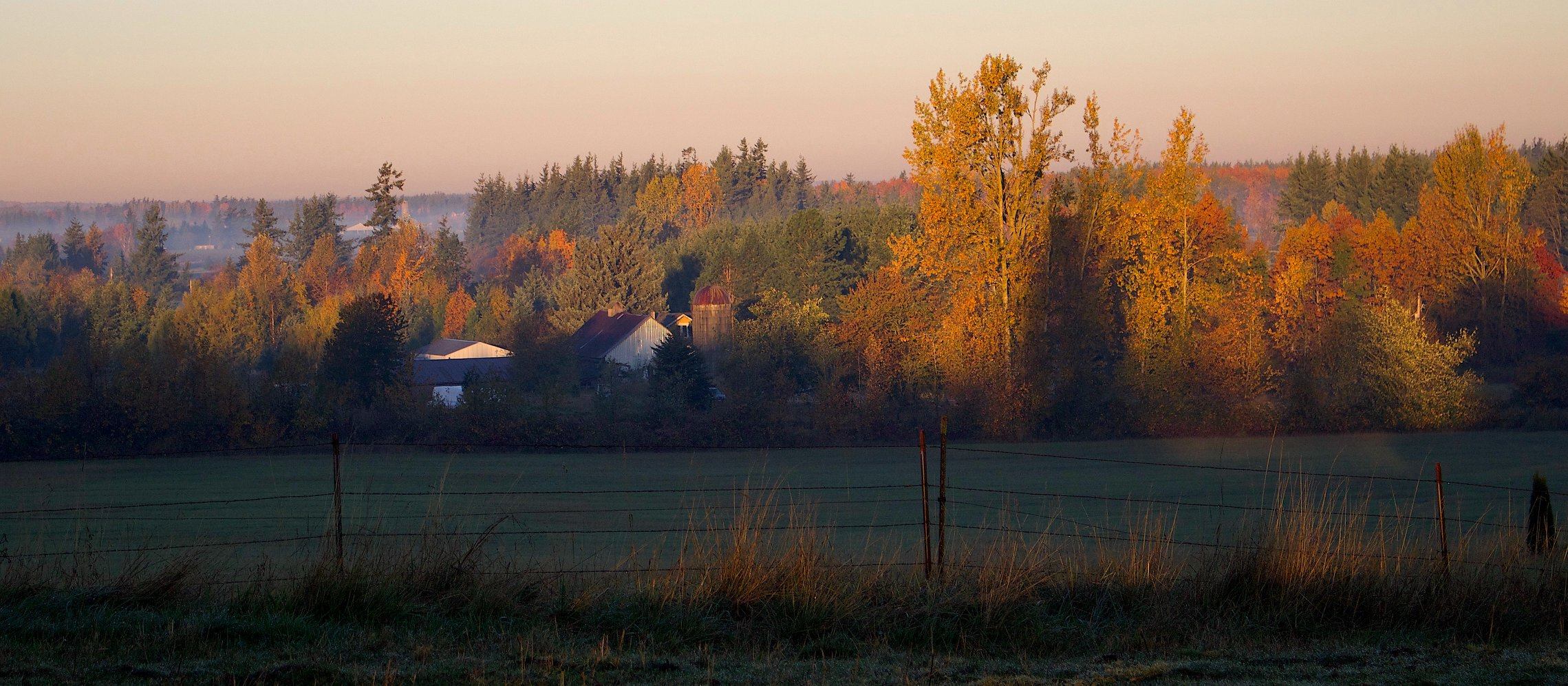
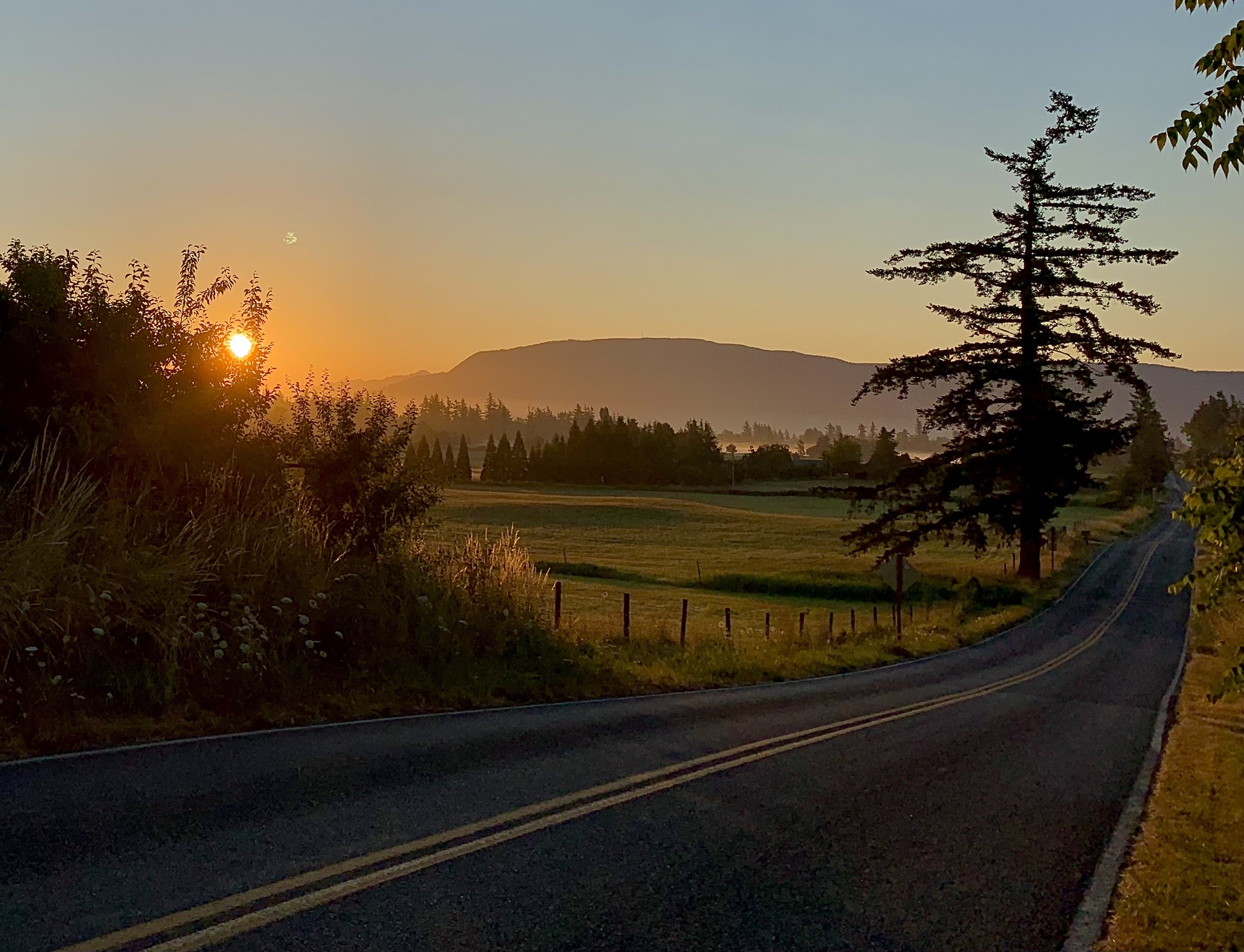
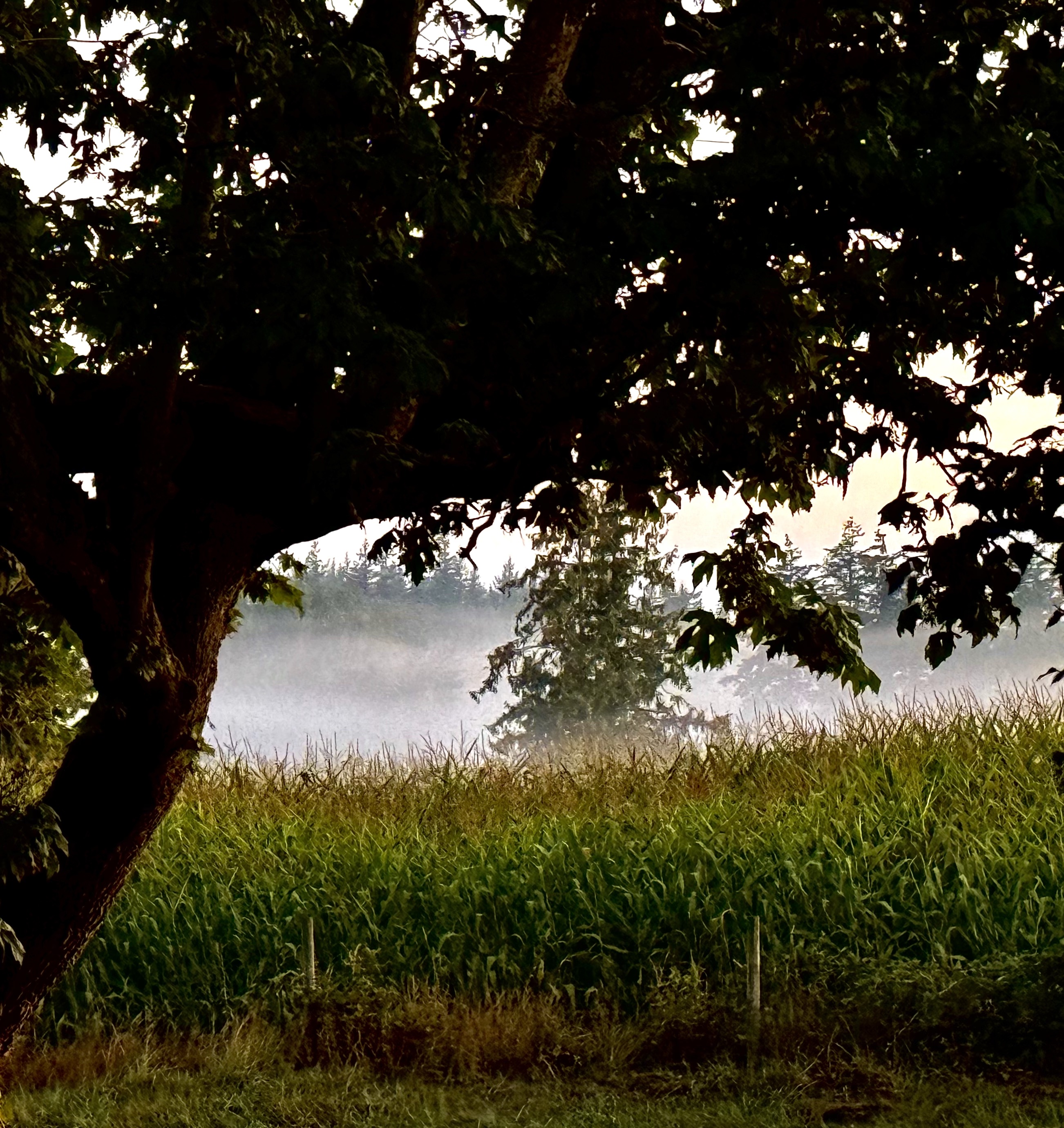
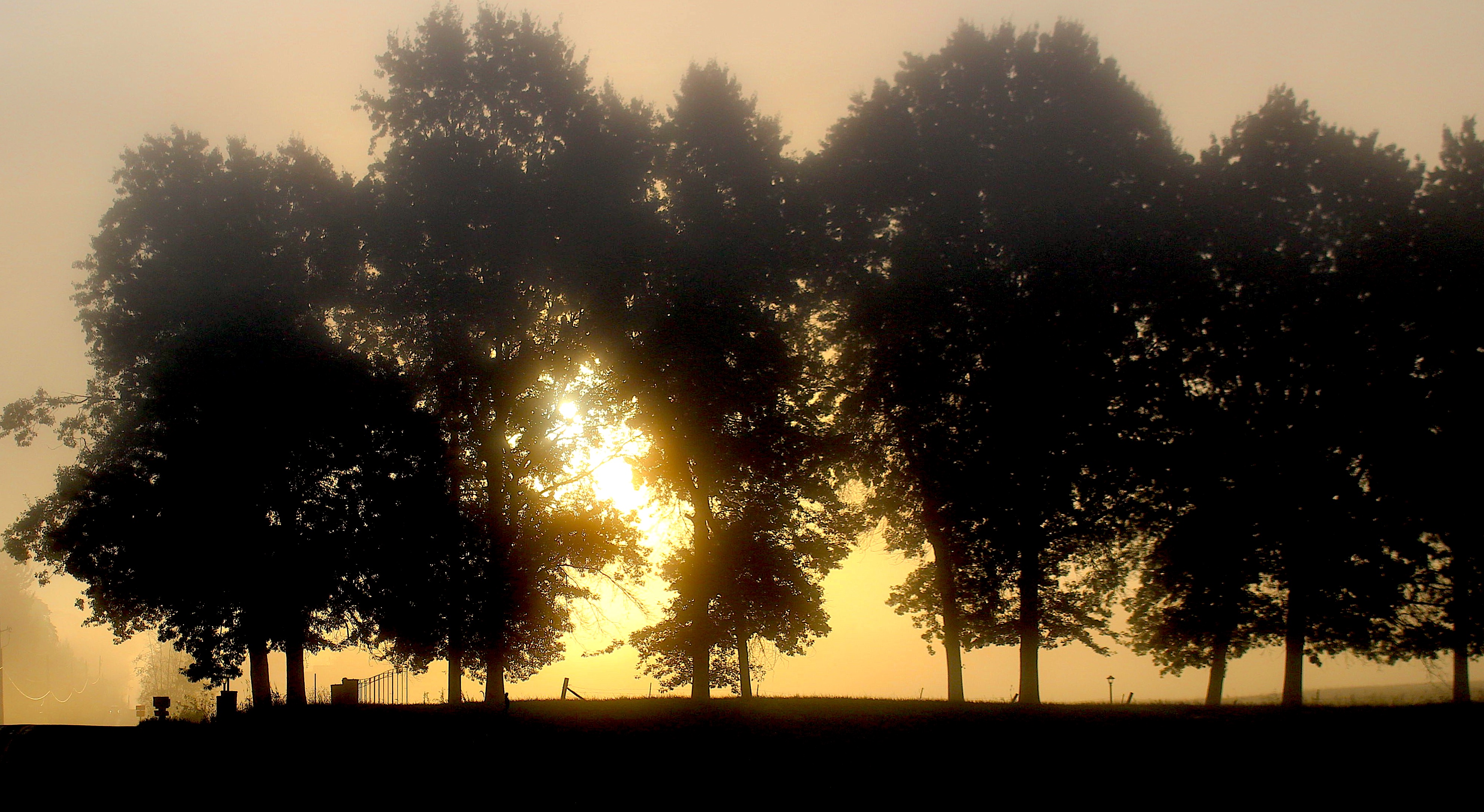
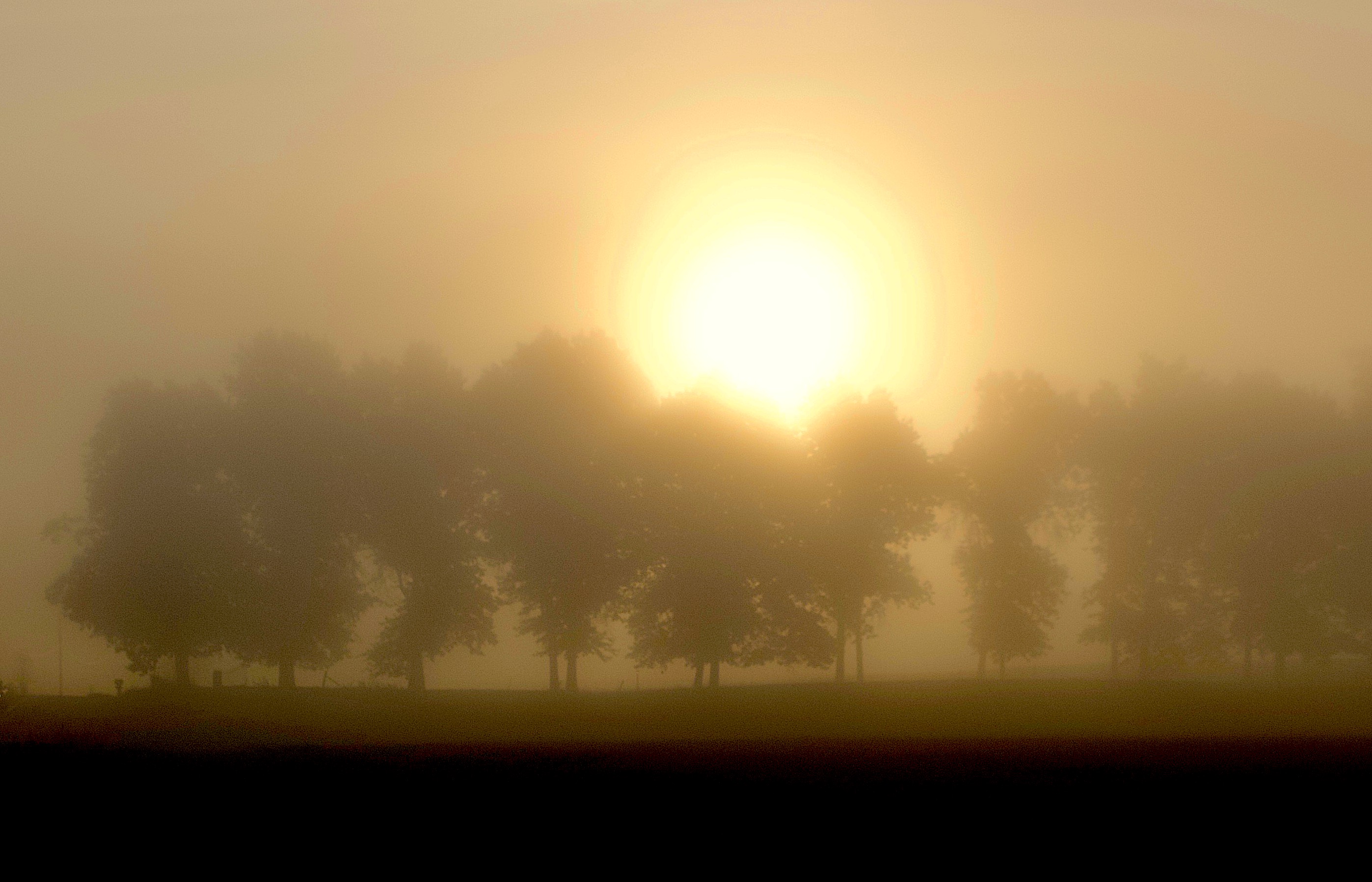
I turn this seasonal corner, facing deep into autumn, summer fading in the rear view mirror.
Even as the air bares chill, and the clouds sopping soak, the riches of summer remain vivid.
Let me remember: even if I too fade away, readying for the next turn.
One-Time
Monthly
Yearly
Make a one-time or recurring donation to support daily Barnstorming posts
Every morning I walk through folds of fields searching.
Slants of sun sink through triangled bones of leaves: bold cold refuted.
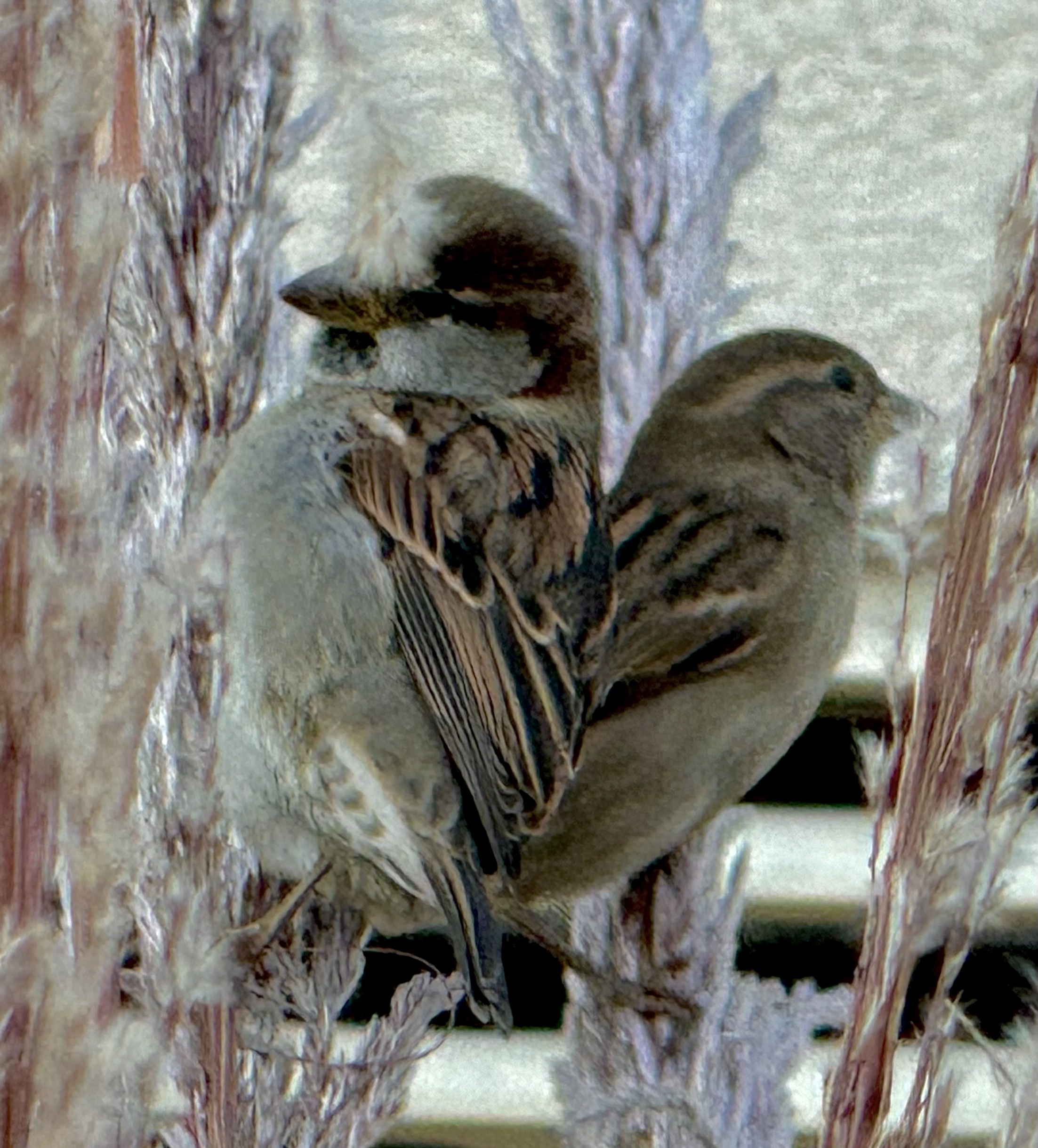
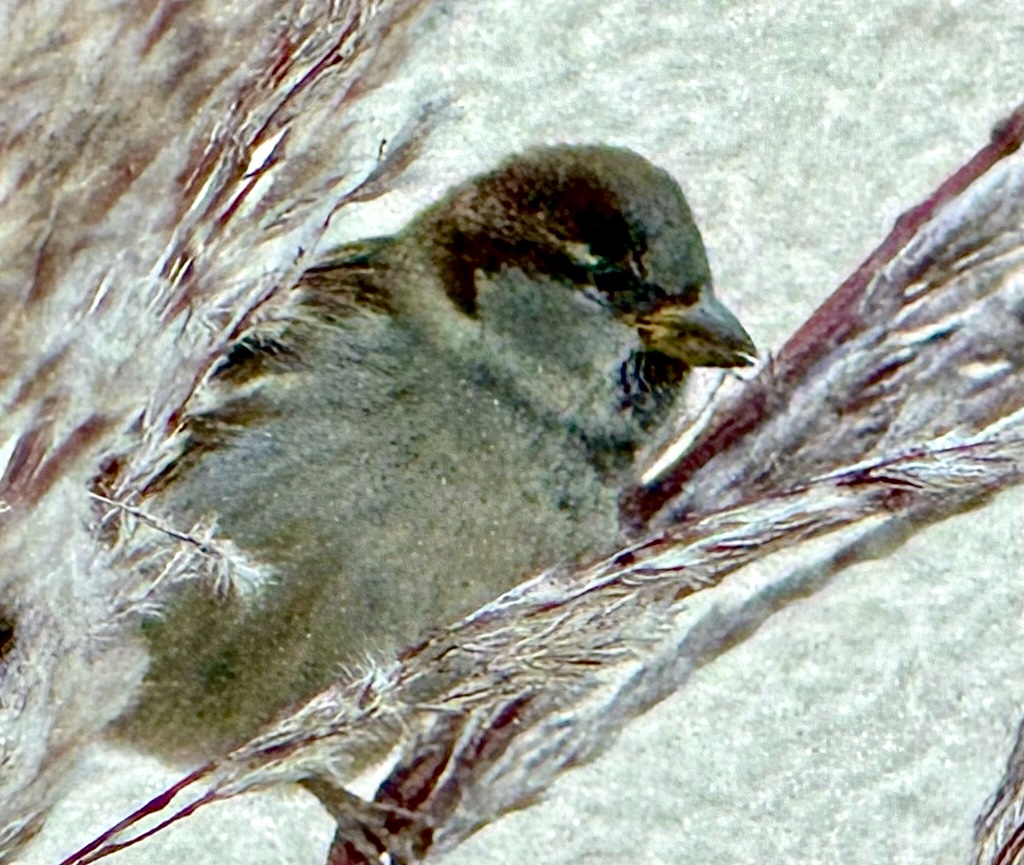
Sparrows flutter warm in given nests, ungriefed, caught, sustained by common grace.
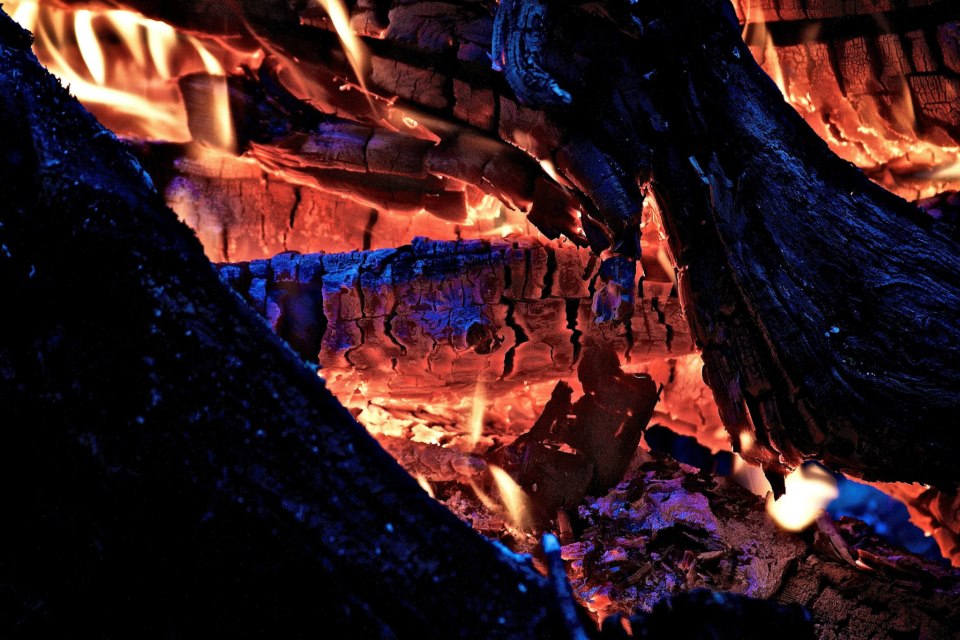
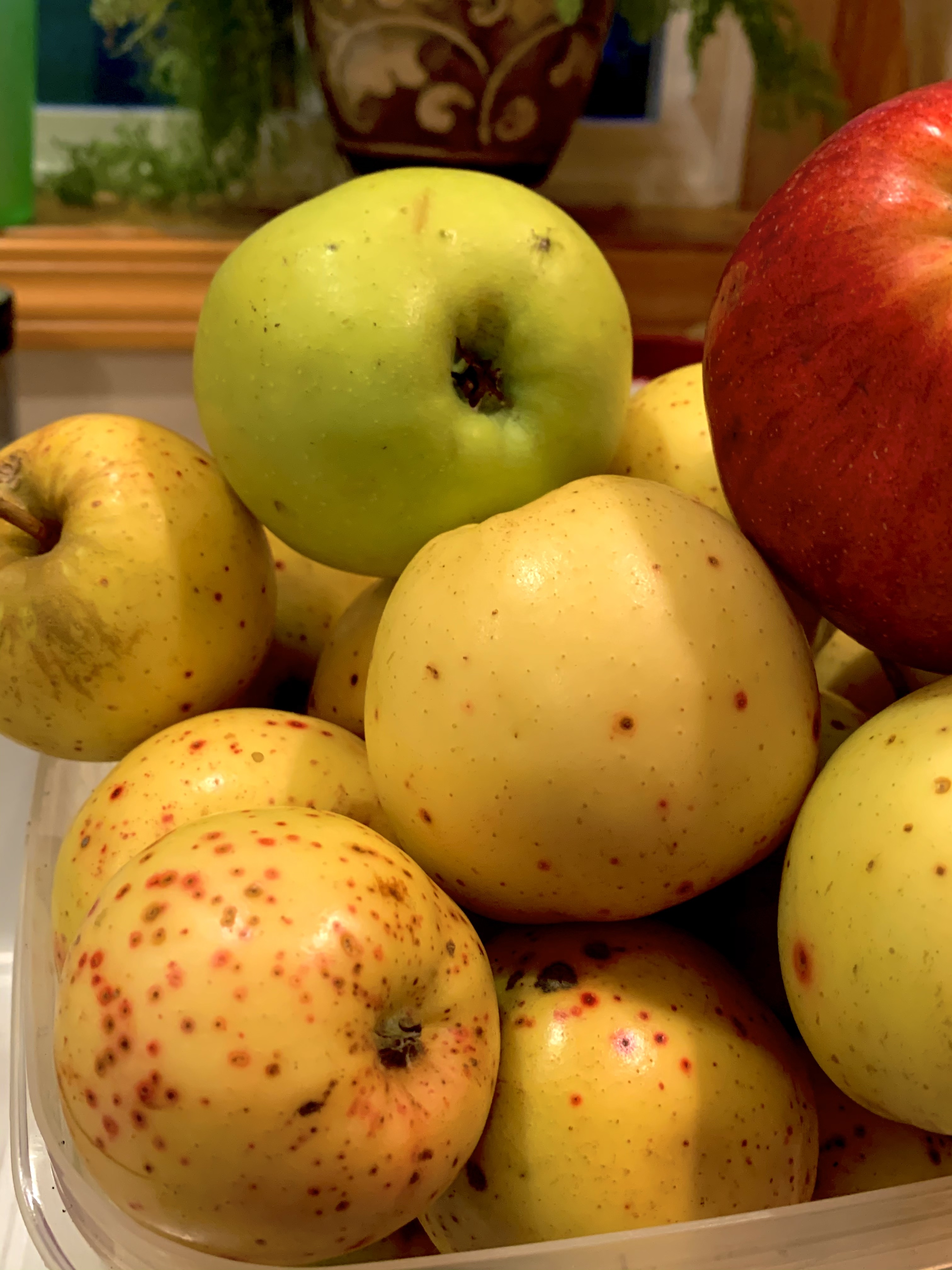
Faith is the tenderness of banked coals in a grate, Braeburn apples on a windowsill, winding crisp with possibility. The steadiness of conversations embered over decades; a fire that has never left off crackling – on this my soul has warmed her hands. Divine ardor: too strong and sweet for the many years I’ve walked on earth.
Love without hesitation has swept my floorboards for seasons. Deep and longing in and out of time the soul reaches out – and He, grasps entire. Hold – and tender. Incandescent. ~Claire Hellar “A Search in Autumn”
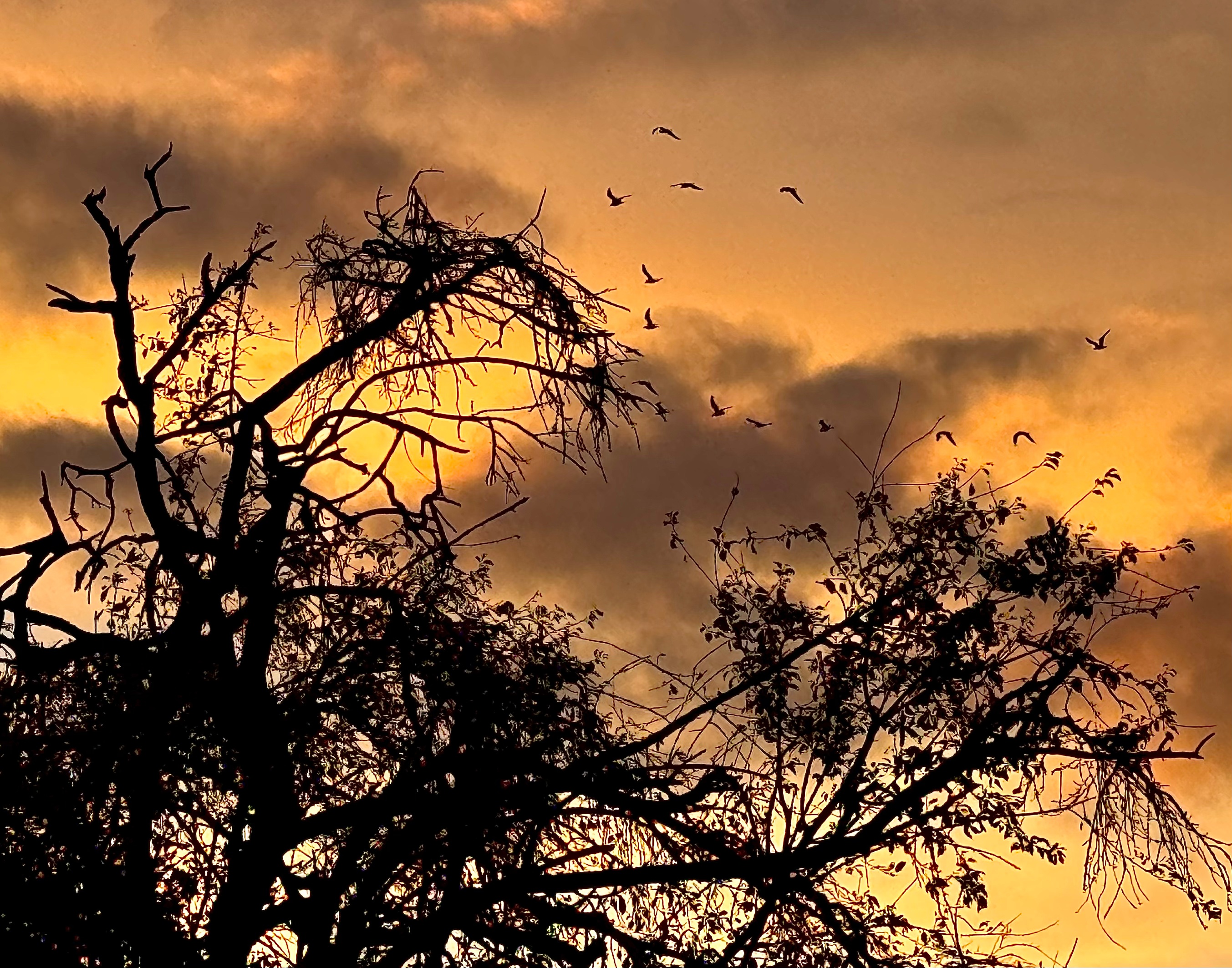
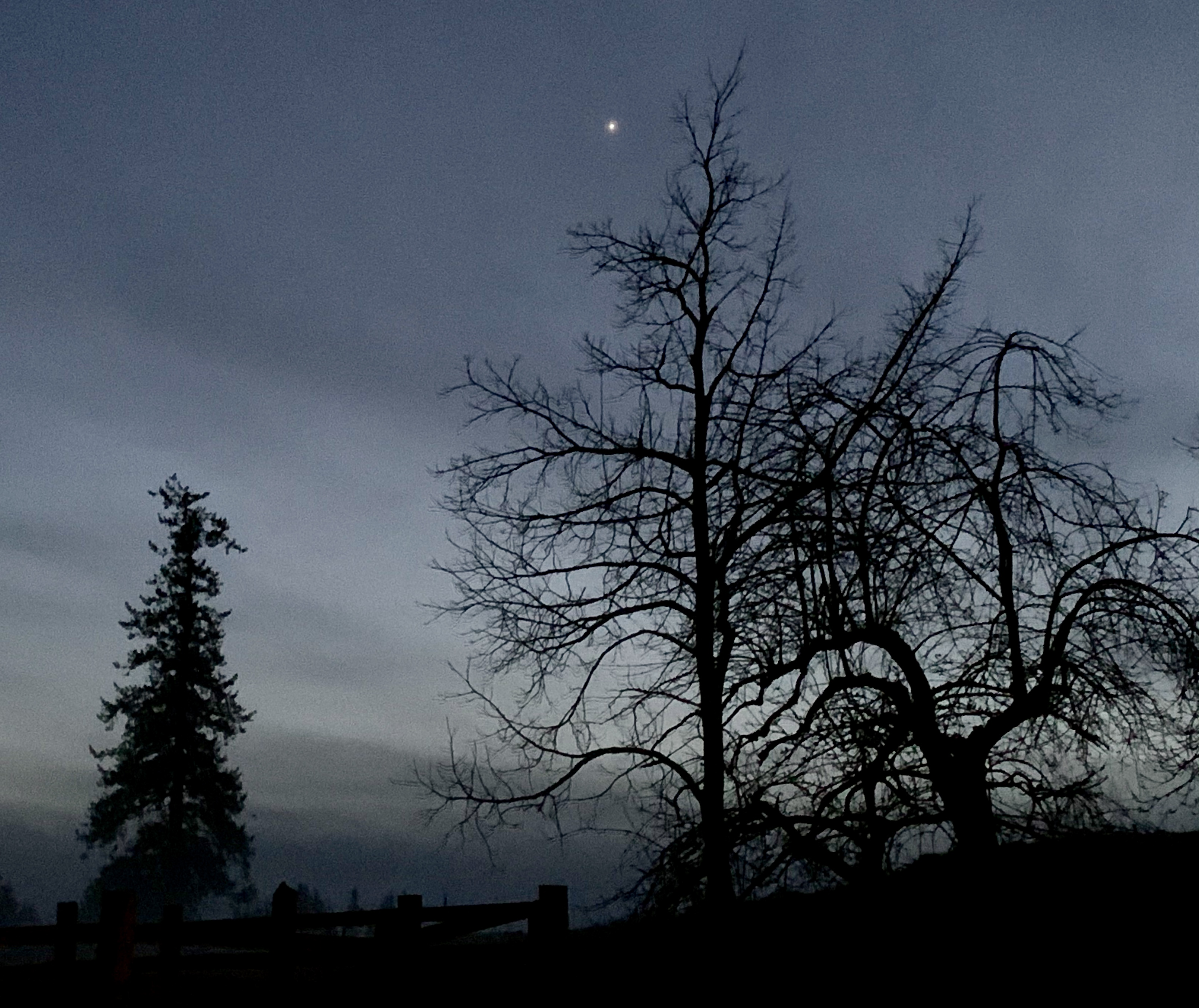
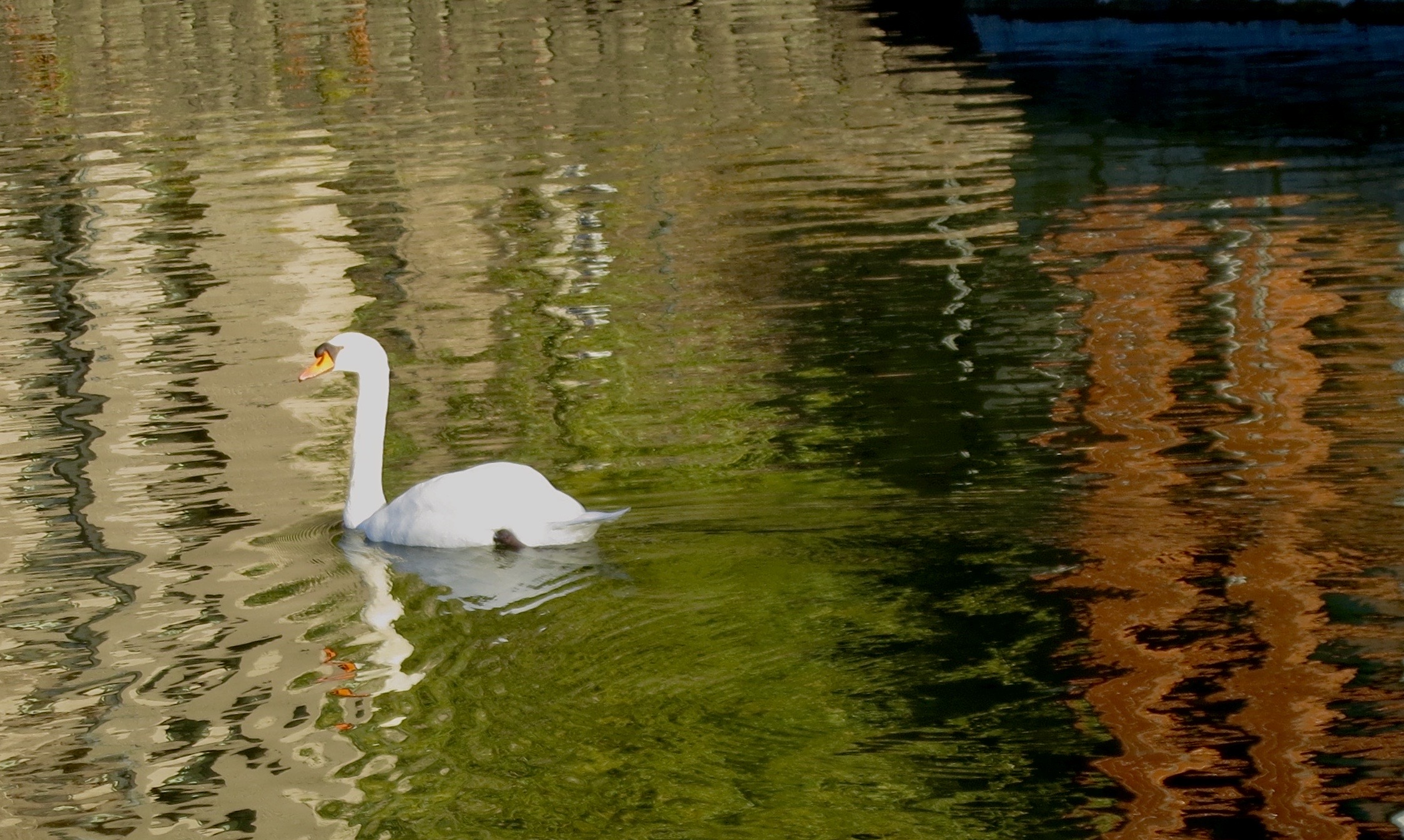
The sound of quiet. The sky indigo, steeping deeper from the top, like tea. In the absence of anything else, my own breathing became obscene. I heard the beating of bats’ wings before the air troubled above my head, turned to look and saw them gone. On the surface of the black lake, a swan and the moon stayed perfectly still. I knew this was a perfect moment. Which would only hurt me to remember and never live again. My God. How lucky to have lived a life I would die for. ~Leila Chatti “I Went Out to Hear” from Wildness Before Something Sublime
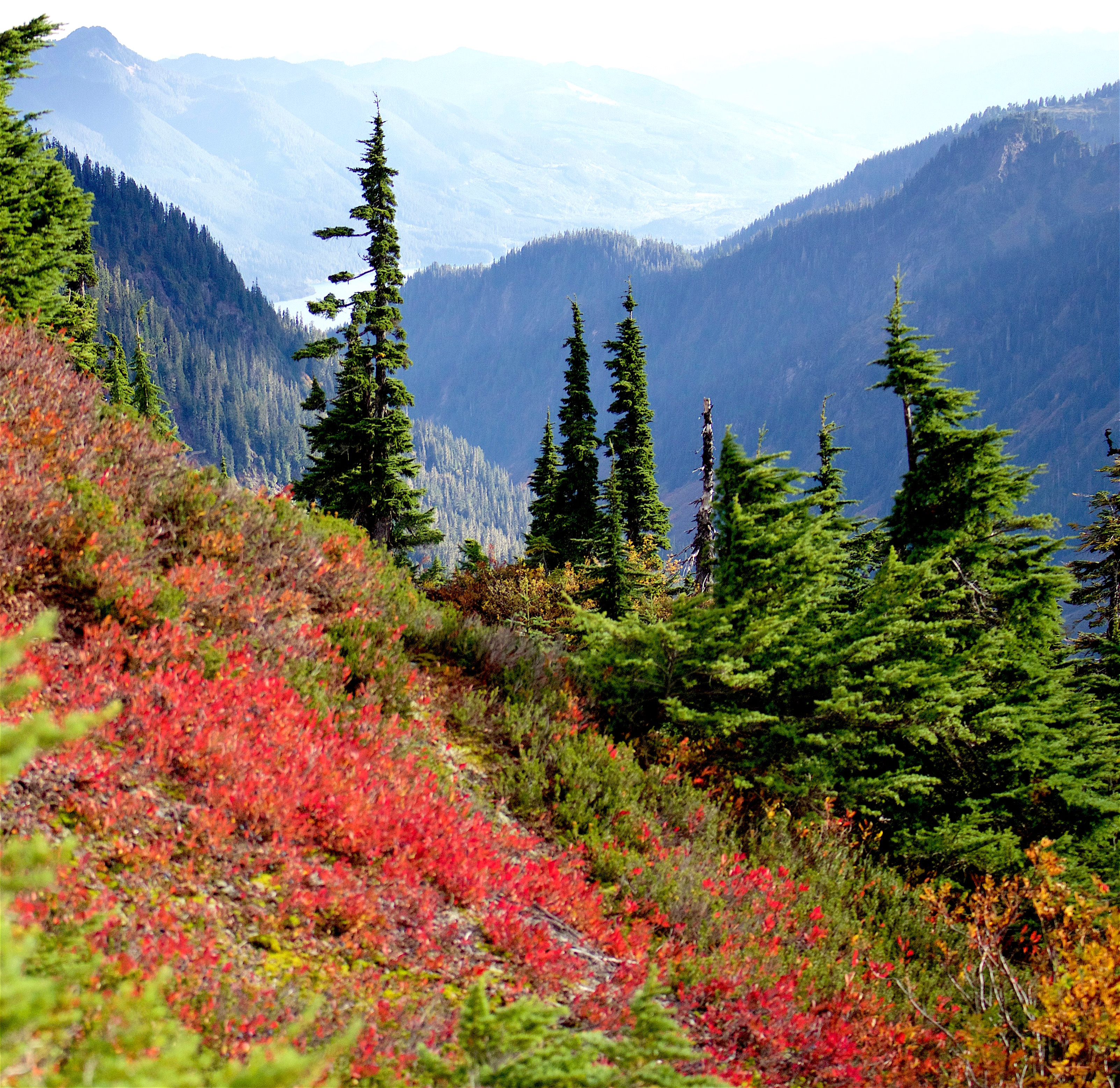
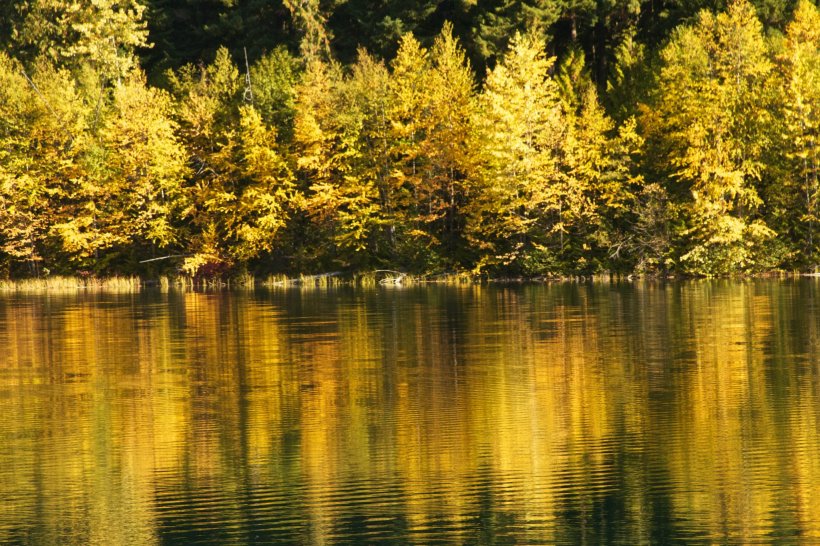
Look, the trees are turning their own bodies into pillars
of light, are giving off the rich fragrance of cinnamon and fulfillment,
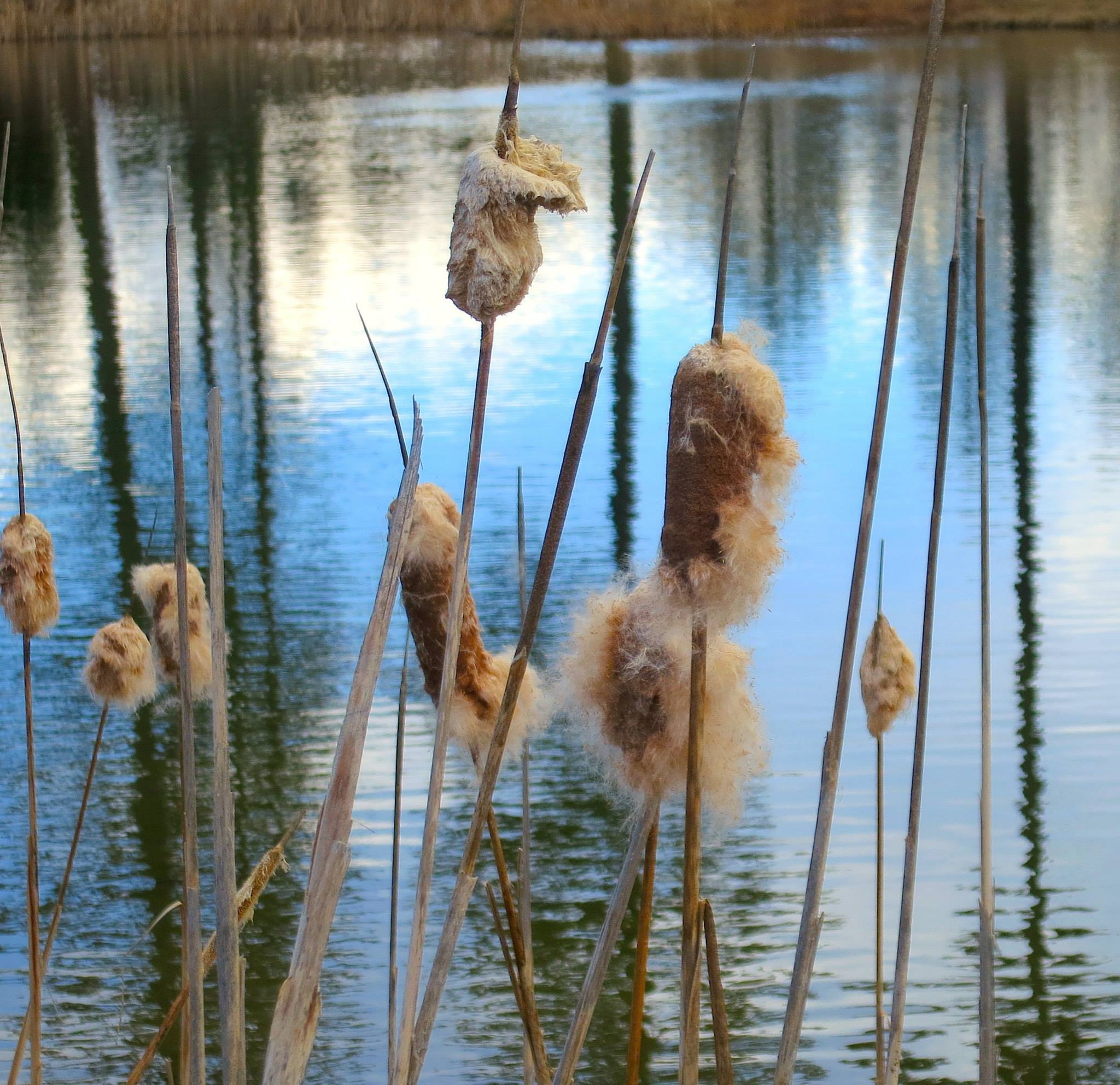
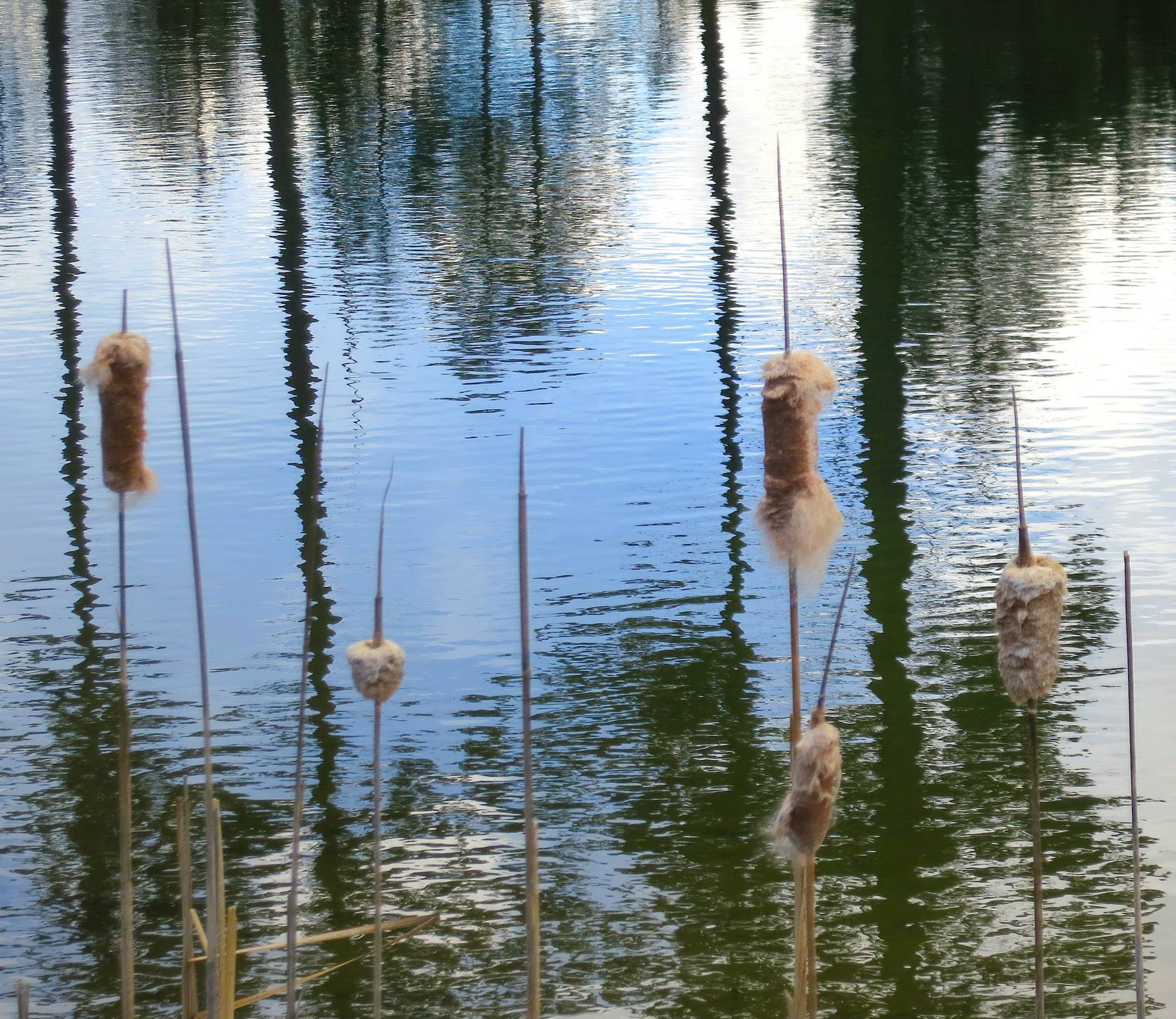
the long tapers of cattails are bursting and floating away over the blue shoulders
of the ponds, and every pond, no matter what its name is, is
nameless now. Every year everything I have ever learned
in my lifetime leads back to this: the fires and the black river of loss whose other side
is salvation, whose meaning none of us will ever know. To live in this world
you must be able to do three things: to love what is mortal; to hold it
against your bones knowing your own life depends on it; and, when the time comes to let it go, to let it go. ~Mary Oliver “In Blackwater Woods” from Devotions
(thinking today of God’s gift to the world of Jane Goodall, whose life was about keeping promises)
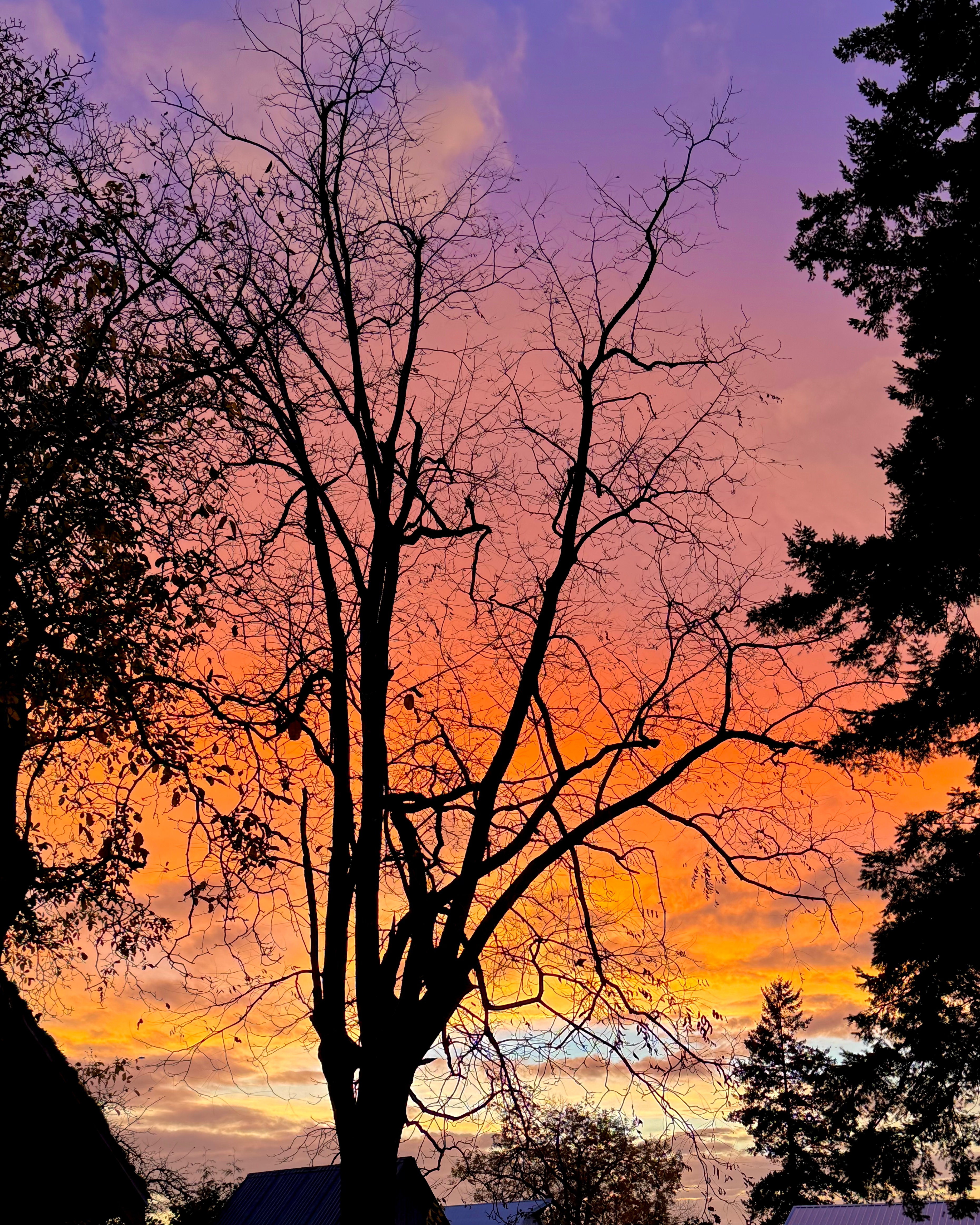
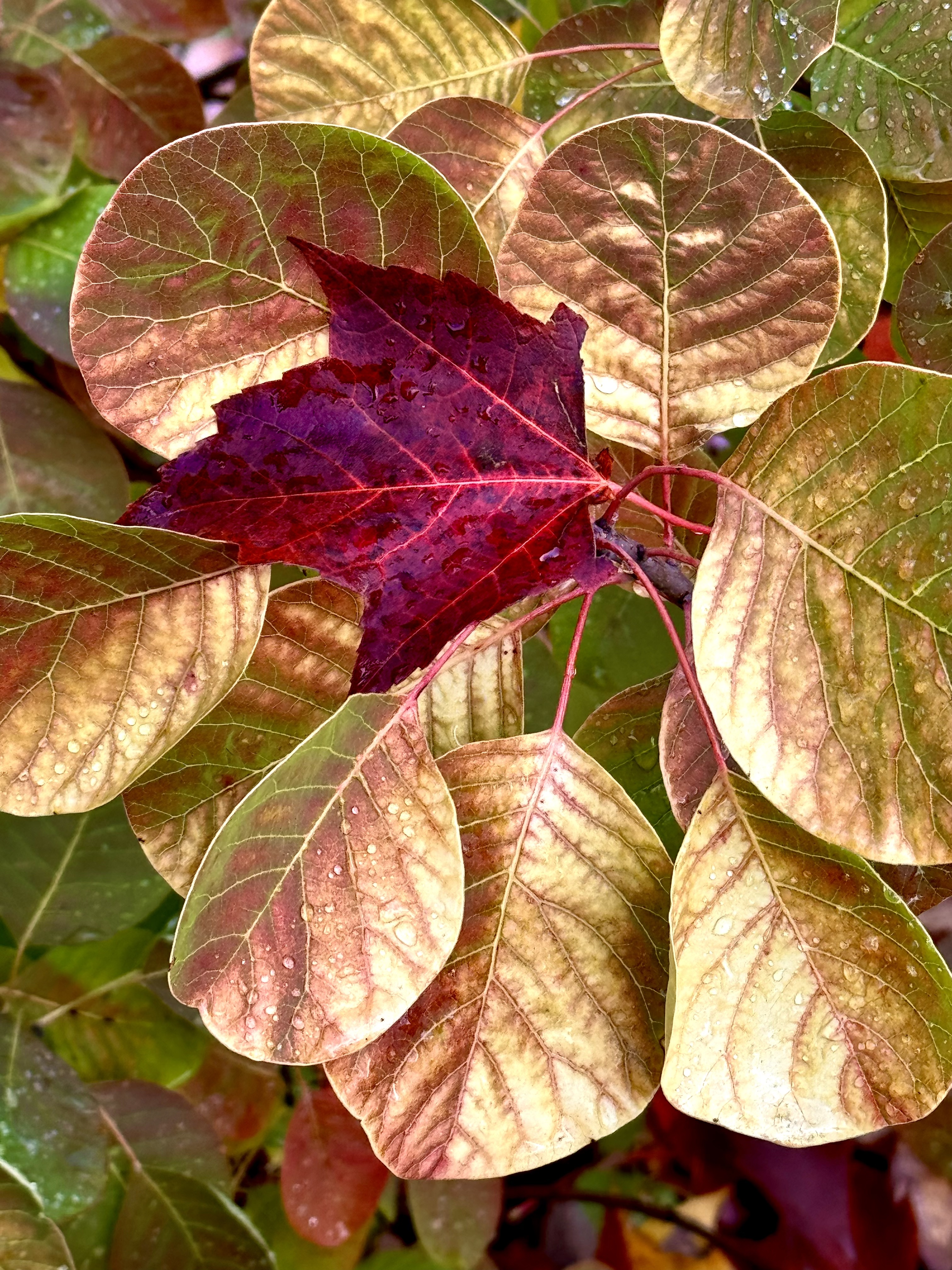
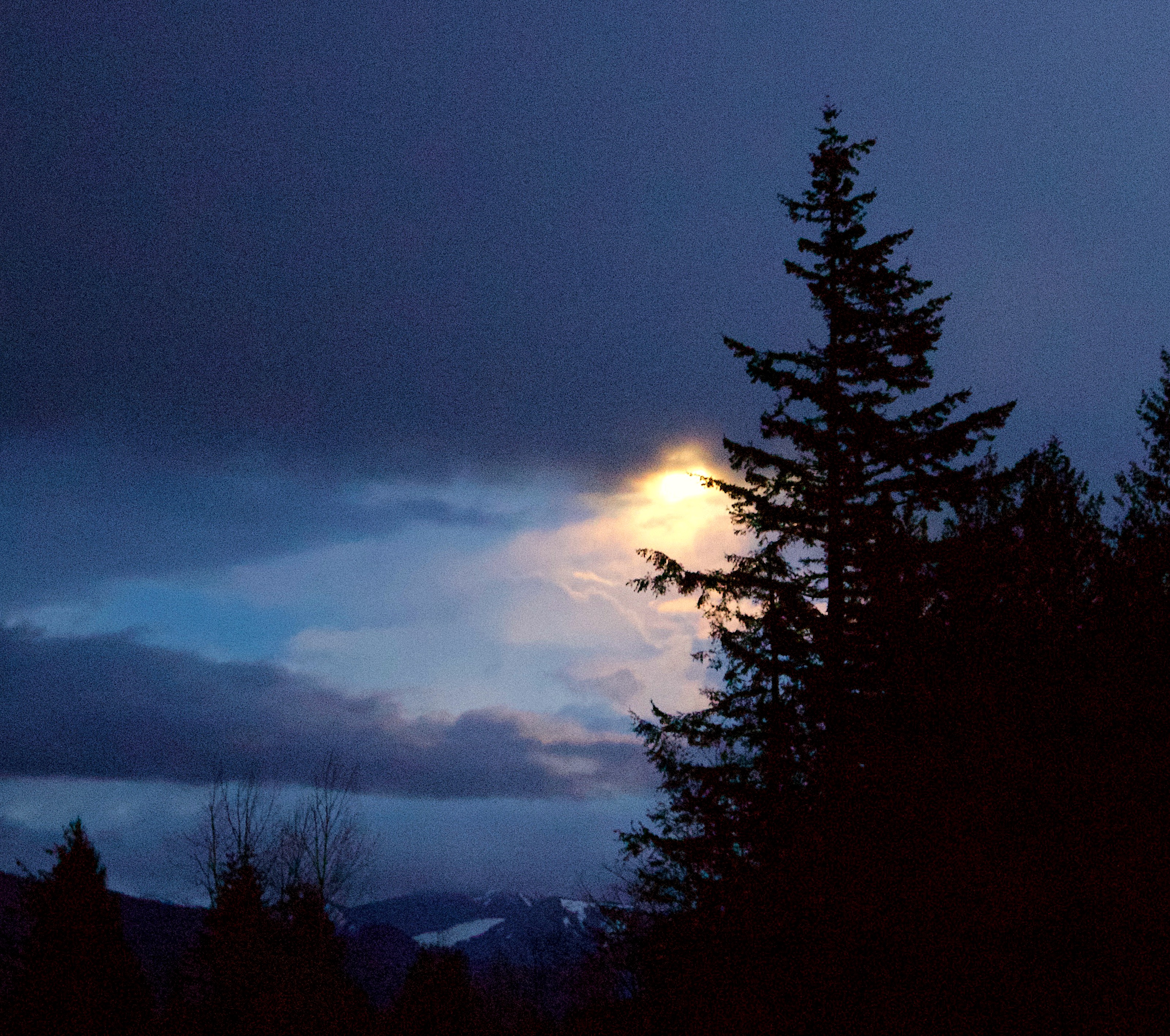
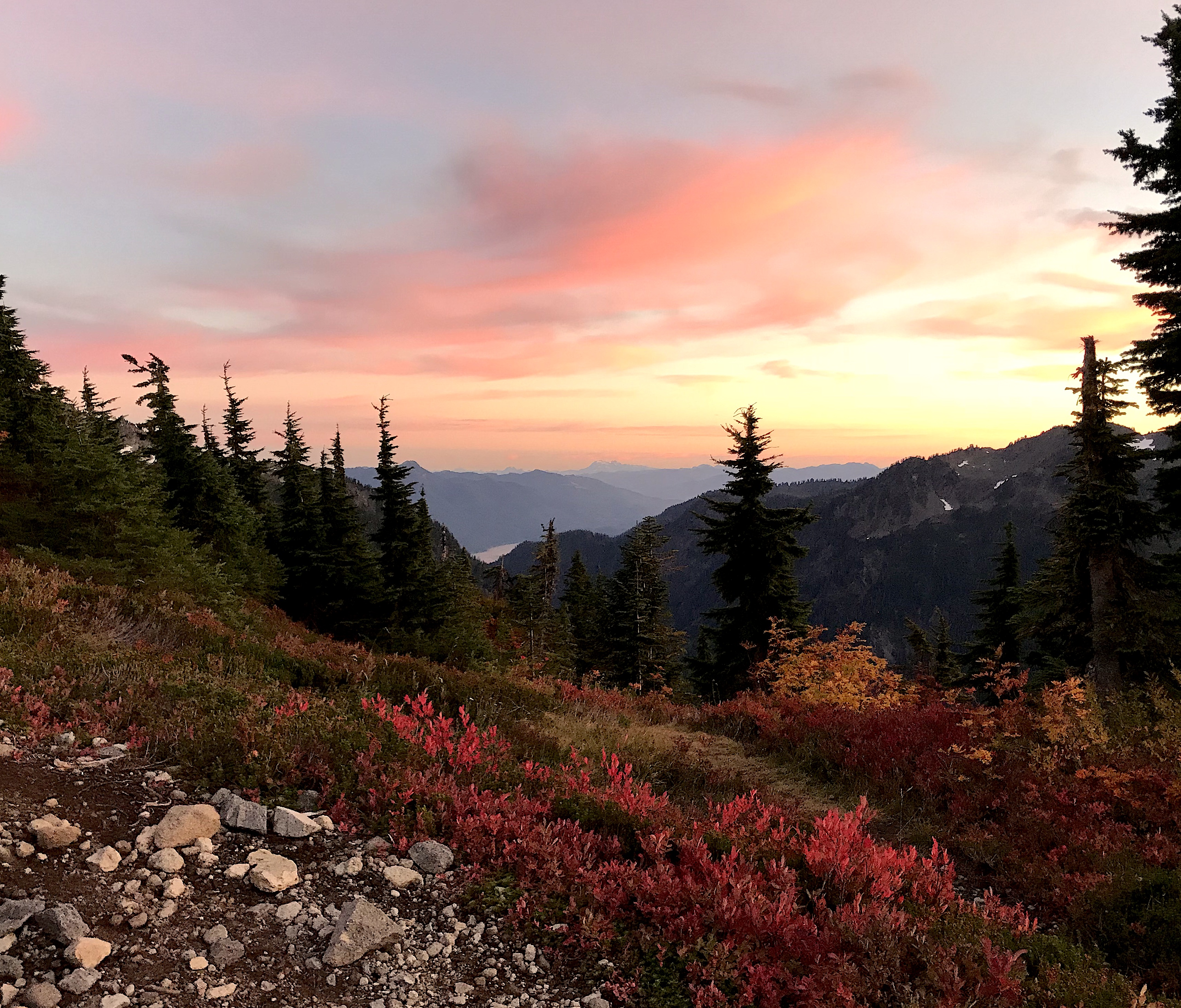
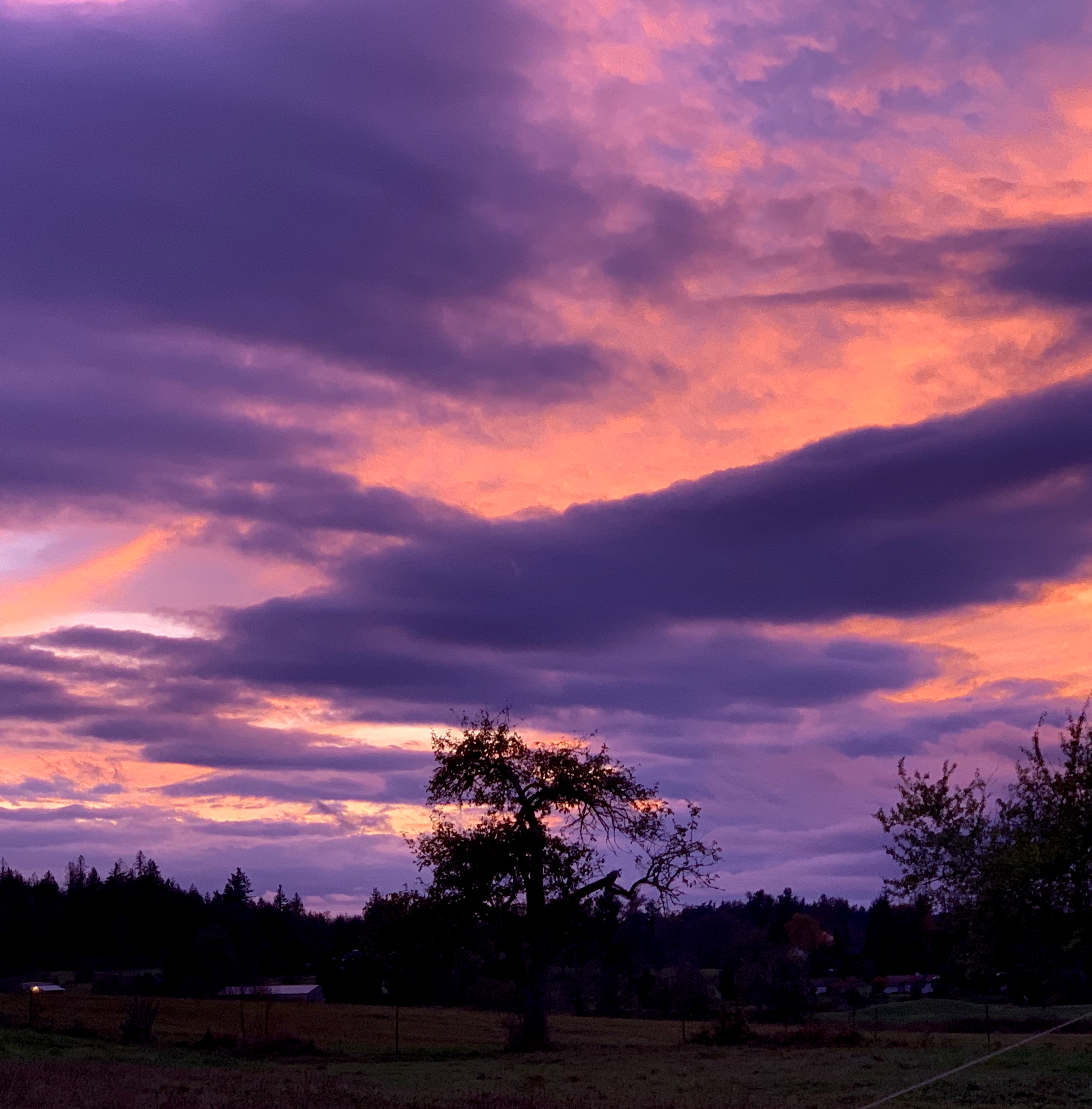
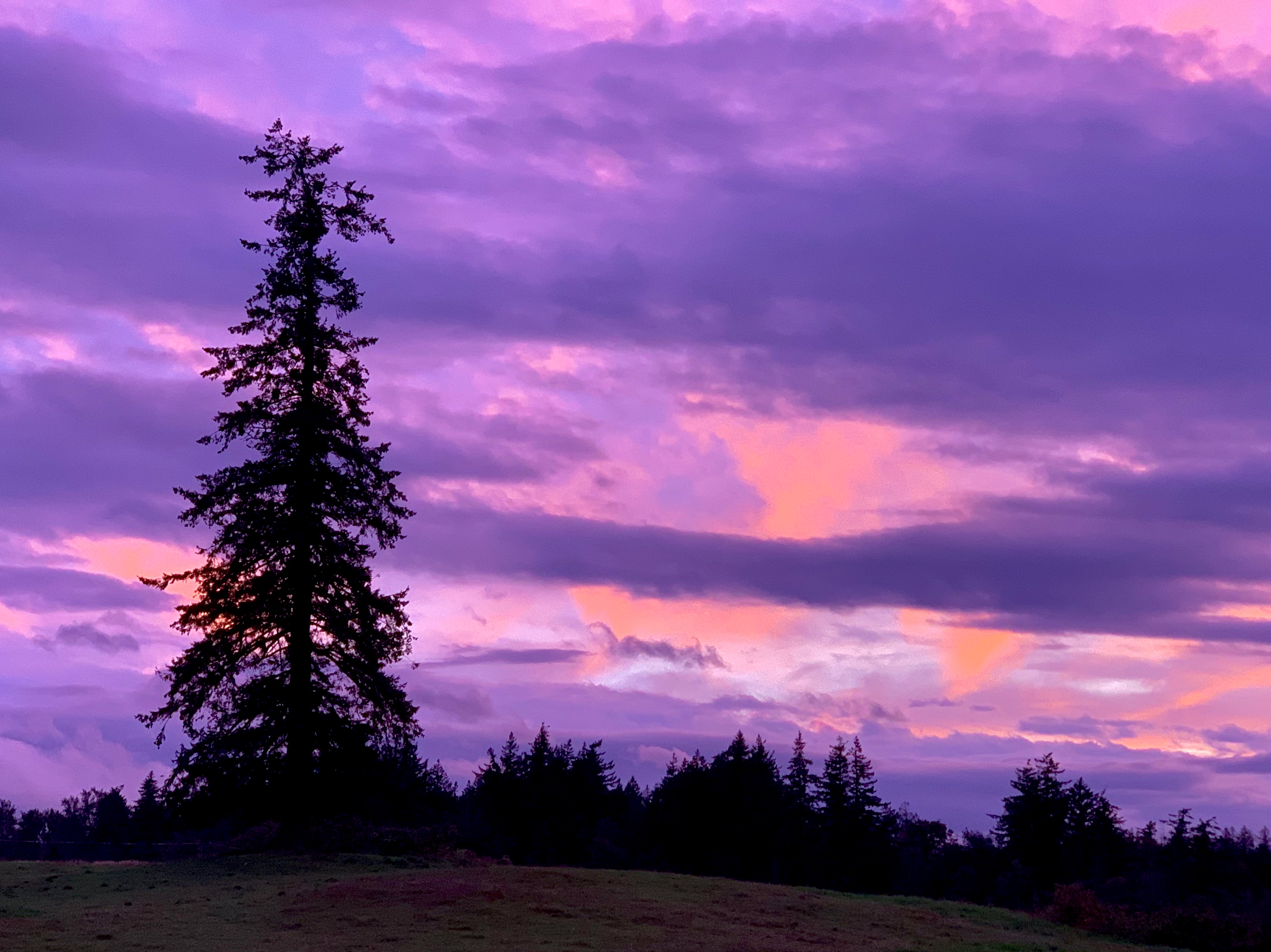
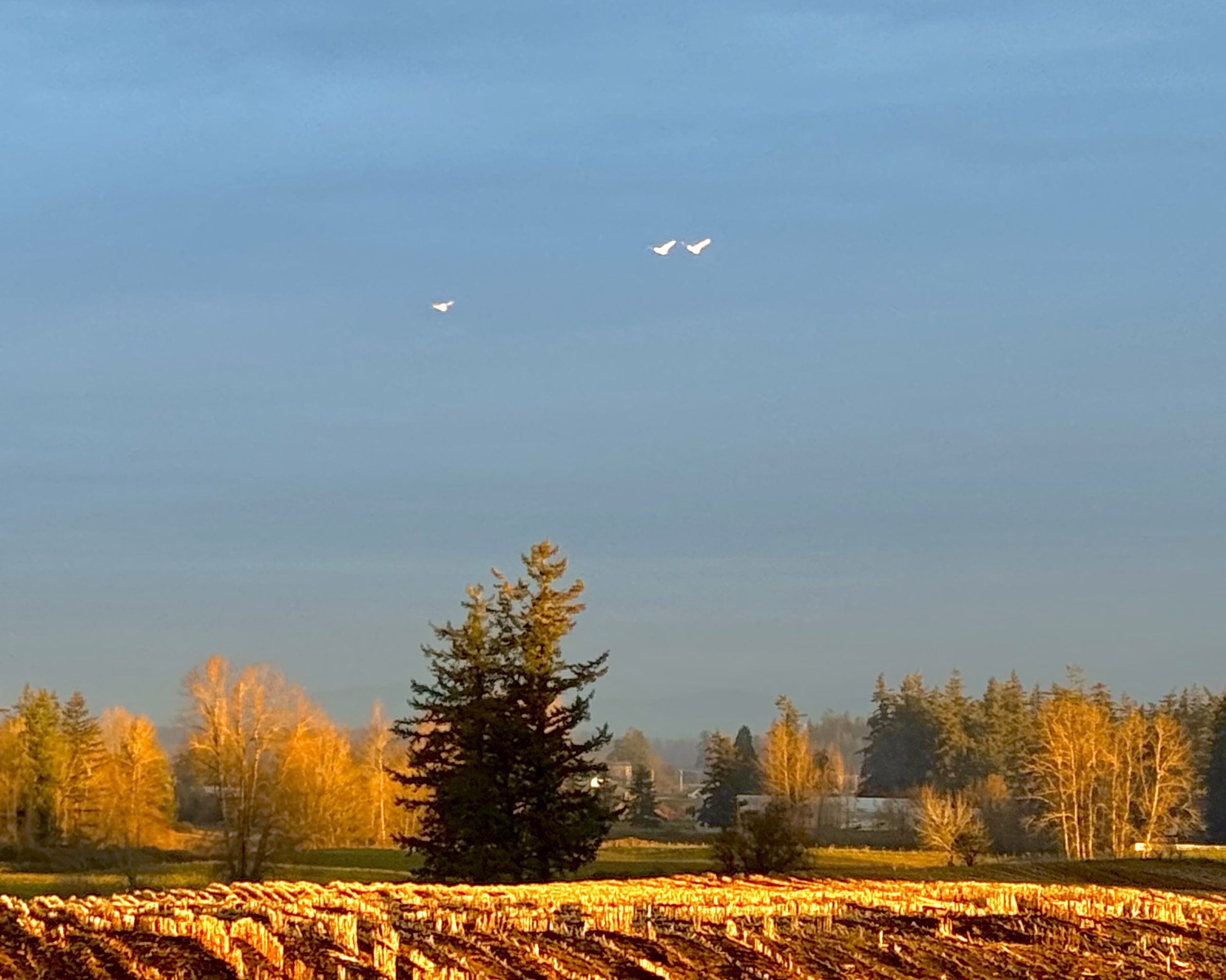
When the earth and all that is in it glows indigo in the angled light of October; opening my eyes as witness to beauty takes my breath away.
I can’t imagine letting go this life, yet the other side of ashes and loss is salvation.
My God. I am so finite. I hold this close to my bones with miles to go before I sleep.
My life depends on realizing I’m living a life I would die for.
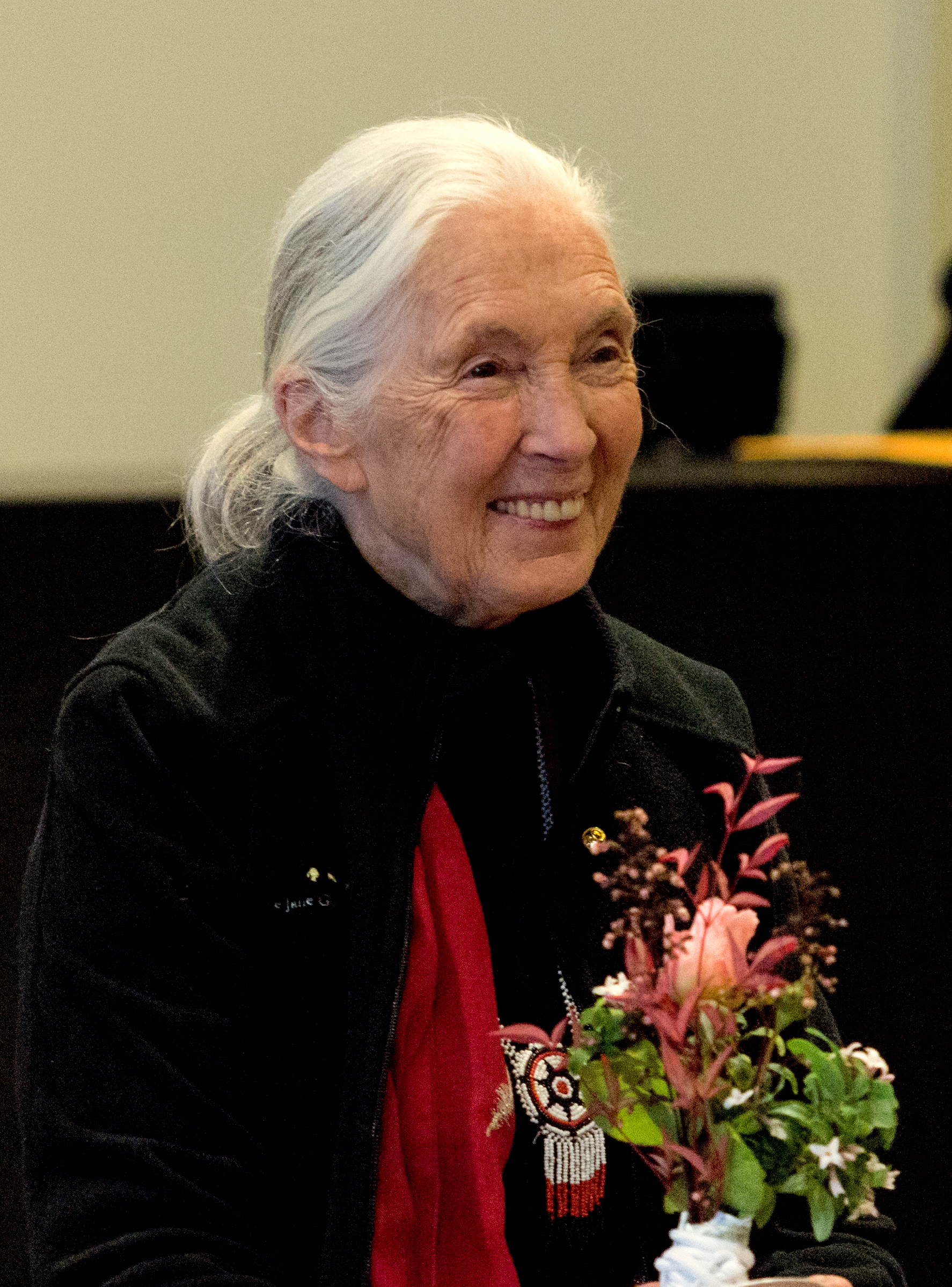
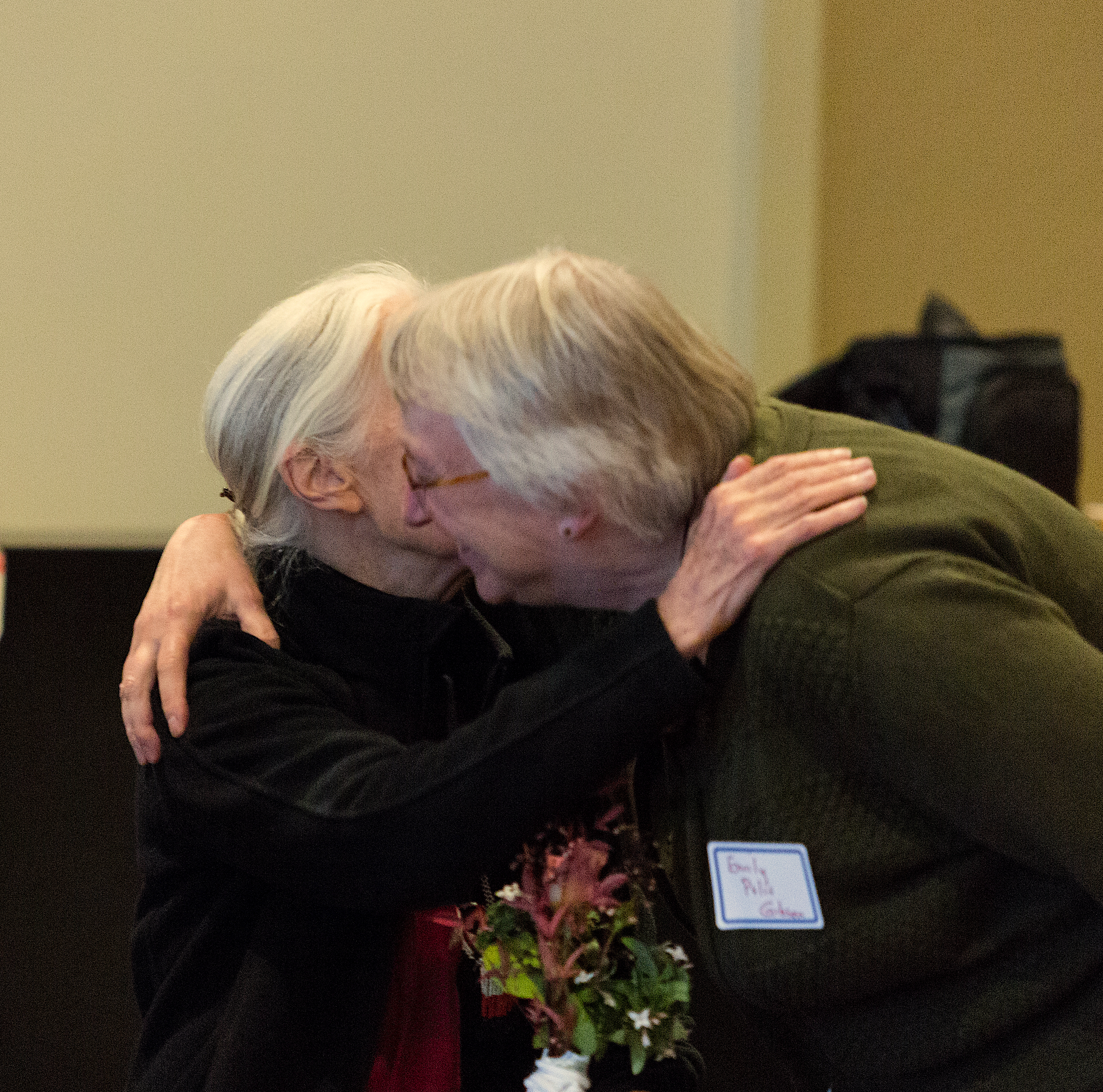
photo of Jane Goodall in 2018, smiling as I came up to give her a hug, courtesy of WWU University Communications
I wasn’t prepared to hear yesterday that my professor, mentor, and friend Dr. Jane Goodall had passed away at age 91, while in the midst of her lecture tour in the United States.
I nearly believed Jane would be immortal; she lived as if she were. She had a message to deliver and as long as she could, she would. She truly “died in the harness” after decades and decades of traveling the world, recruiting people to her cause to save the world for the next generation of plants, animals and humans, and the next and the next…
She was a born observer and storyteller, able to reach and move us with her verbal and writing ability to help place us in her shoes in the wild as she witnessed what no one else had. This was, of course, aided by Hugo van Lawick’s compelling wildlife photography and video every child of the 1950s and 60s grew up watching.
As a college student taking her class on non-human primate behavior, I was riveted by the content of her course lectures about the work she was doing at Gombe. I hoped I could somehow help in the long-term study there, and was ready to commit to a year of training preparation: recording captive chimpanzee behavior at Stanford, while learning Swahili.
On a spring day in May 1974:
Standing outside a non-descript door in a long dark windowless hallway of offices at the Stanford Medical Center, I took a deep breath and swallowed several times to clear my dry throat. I hoped I had found the correct office, as there was only a number– no nameplate to confirm who was inside.
I was about to meet my childhood hero, someone whose every book I’d read and every TV documentary I had watched. I knocked with what I hoped was the right combination of assertiveness (“I want to be here to talk with you and prove my interest”) and humility (“I hope this is a convenient time for you as I don’t want to intrude”).
I heard a soft voice on the other side say “Come in” so I slowly opened the door.
It was a bit like going through the wardrobe to enter Narnia.
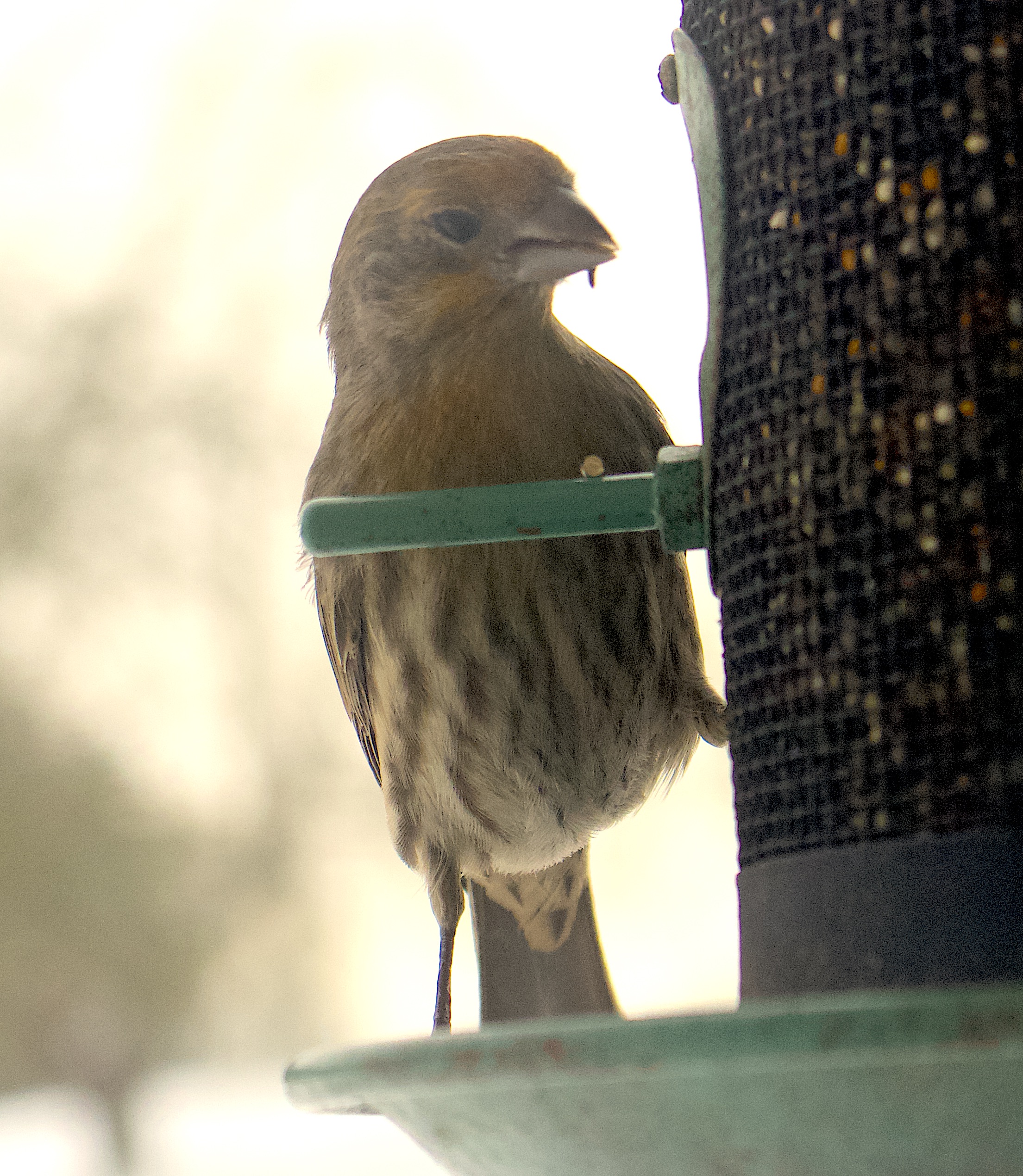
Bright sunlight streamed into the dark hallway as I stepped over the threshold. Squinting, I stepped inside and quickly shut the door behind me as I realized there were at least four birds flying about the room. They were taking off and landing, hopping about feeding on bird seed on the office floor and on the window sill. The windows were flung wide open with a spring breeze rustling papers on the desk. The birds were very happy occupying the sparsely furnished room, which contained only one desk, two chairs and Dr. Jane Goodall.
She stood up and extended her hand to me, saying, quite unnecessarily, “Hello, I’m Jane” and offered me the other chair when I told her my name. She was slighter than she appeared when speaking up at a lectern, or on film. Sitting back down at her desk, she busied herself reading and marking her papers, seemingly occupied for a bit and not to be disturbed.
It was as if I was not there at all.
It was disorienting. In the middle of a bustling urban office complex containing nothing resembling plants or a natural environment, I had unexpectedly stepped into a bird sanctuary instead of sitting down for a job interview. I wasn’t sure what I was supposed to do or say. Jane didn’t really ever look directly at me, yet I was clearly being observed.
So I waited, watching the birds making themselves at home in her office, and slowly feeling more at home myself. I felt my tight muscles start to relax and I loosened my grip on the arms of the chair.
There was silence except for the twittering of the finches as they flew about our heads.
Then she spoke, her eyes still perusing papers: “It really is the only way I can tolerate being here for any length of time. They keep me company. But don’t tell anyone; the people here at the medical center would think this is rather unsanitary.”
I said the only thing I could think of: “I think it is magical. It reminds me of home.”
Only then did she look at me. “Now tell me why you’d like to come work at Gombe…”
The next day I received a note from her letting me know I was accepted for the research assistant-ship to begin a year later, once I had completed all aspects of the training.
I had proven I could sit silently and expectantly, waiting for something, or perhaps nothing at all, to happen. For a farm girl who had never before traveled outside the United States, I had stepped through the wardrobe into Jane’s amazing world, about to embark on an adventure far beyond the barnyard.
(This essay was published in The Jane Effect in 2015 in honor of Jane’s 80th birthday)
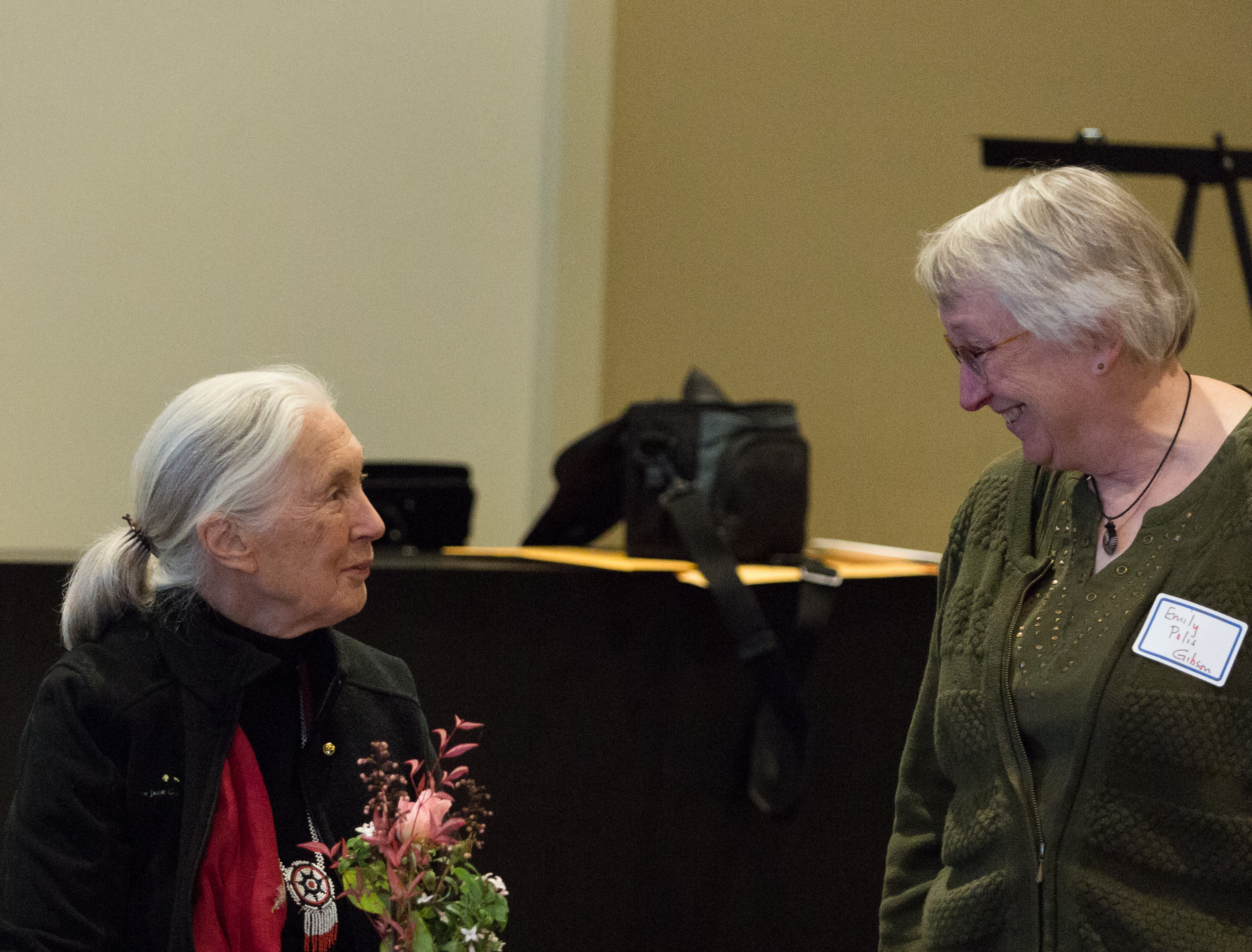
giving Jane a hug, courtesy of WWU Communications45 years since we met in her Stanford office full of wild birds
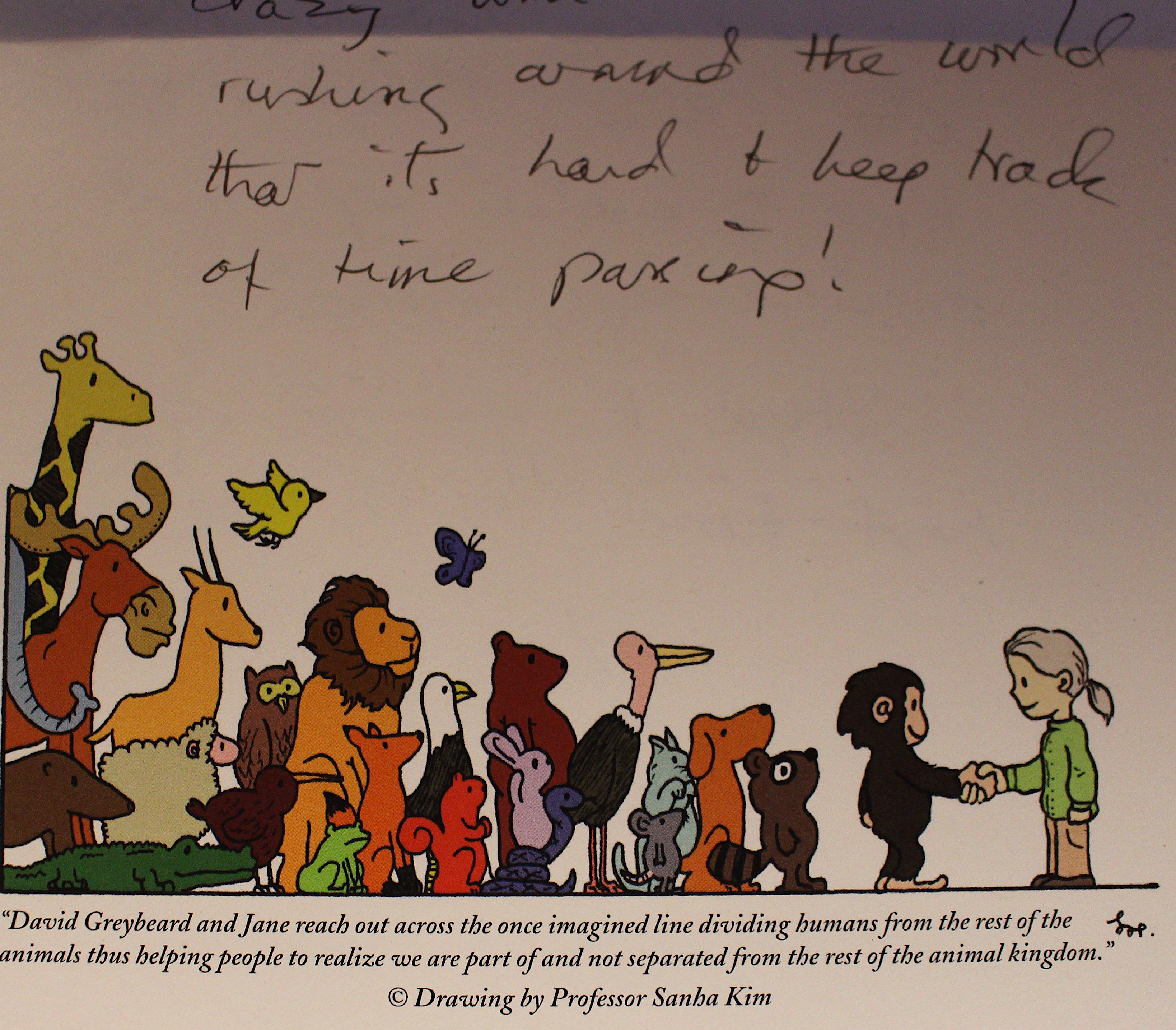
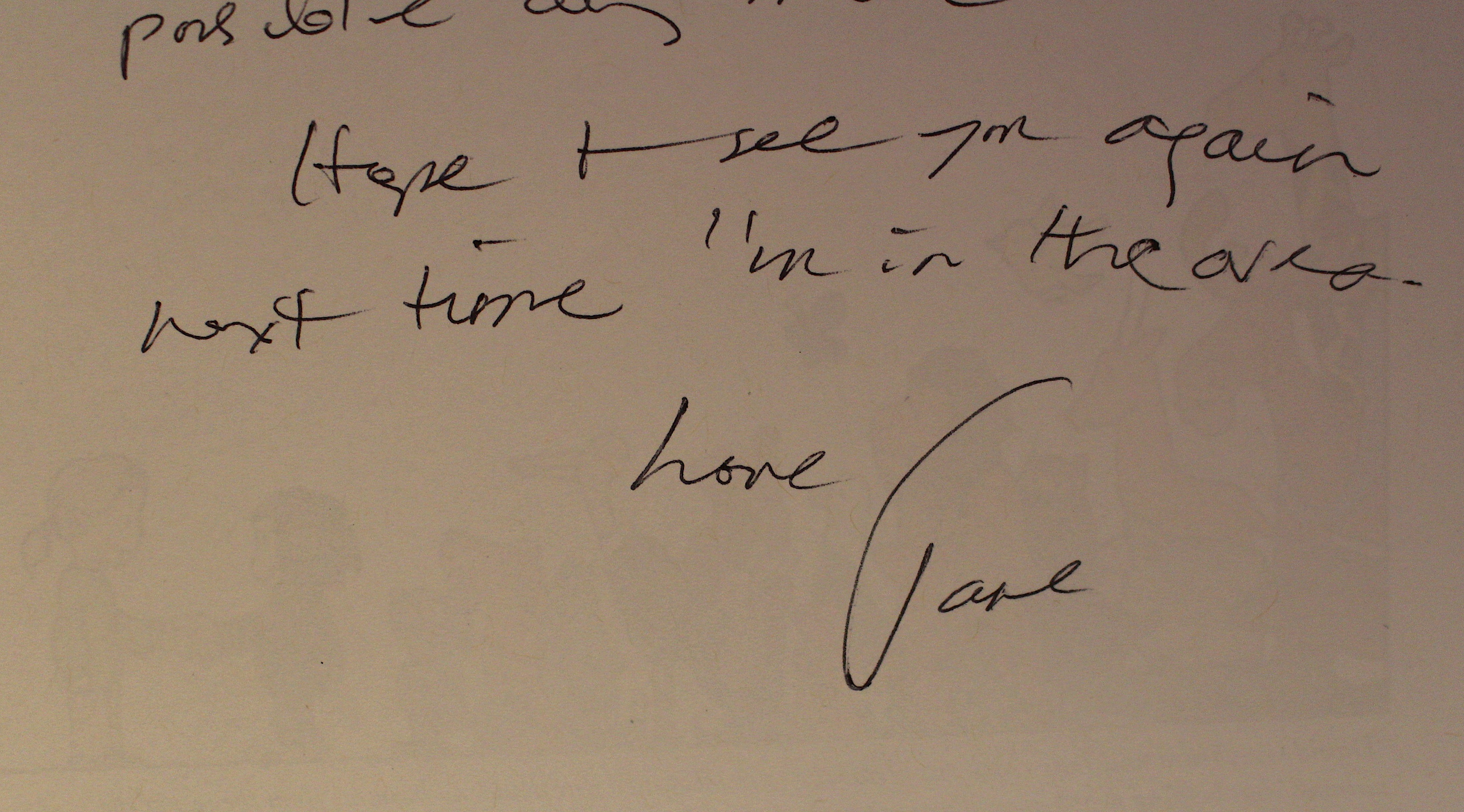
True to Jane’s tradition of impeccable graciousness, she sent me a hand-written note after her last visit in 2018 when she came to speak at Western Washington University in Bellingham.
I recommend the documentary “Jane” as the best review of Jane’s Gombe work. The Jane Goodall Institute will continue her legacy for decades to come.









 Barnstorming