Awake the mind’s hopeless so At a quarter to six I rise And run 2 or 3 miles in The pristine air of a dark And windy winter morning With a light rain falling And no sound but the pad Of my sneakers on the asphalt And the calls of the owls in The cypress trees on Mesa Road
And when I get back you’re Still asleep under the warm covers Because love is here to stay It’s another day and we’re both still alive ~Tom Clark – “Every Day” from Light & Shade: New and Selected Poems.
How joyful to be together, alone as when we first were joined in our little house by the river long ago, except that now we know
each other, as we did not then; and now instead of two stories fumbling to meet, we belong to one story that the two, joining, made. And now
we touch each other with the tenderness of mortals, who know themselves: how joyful to feel the heart quake
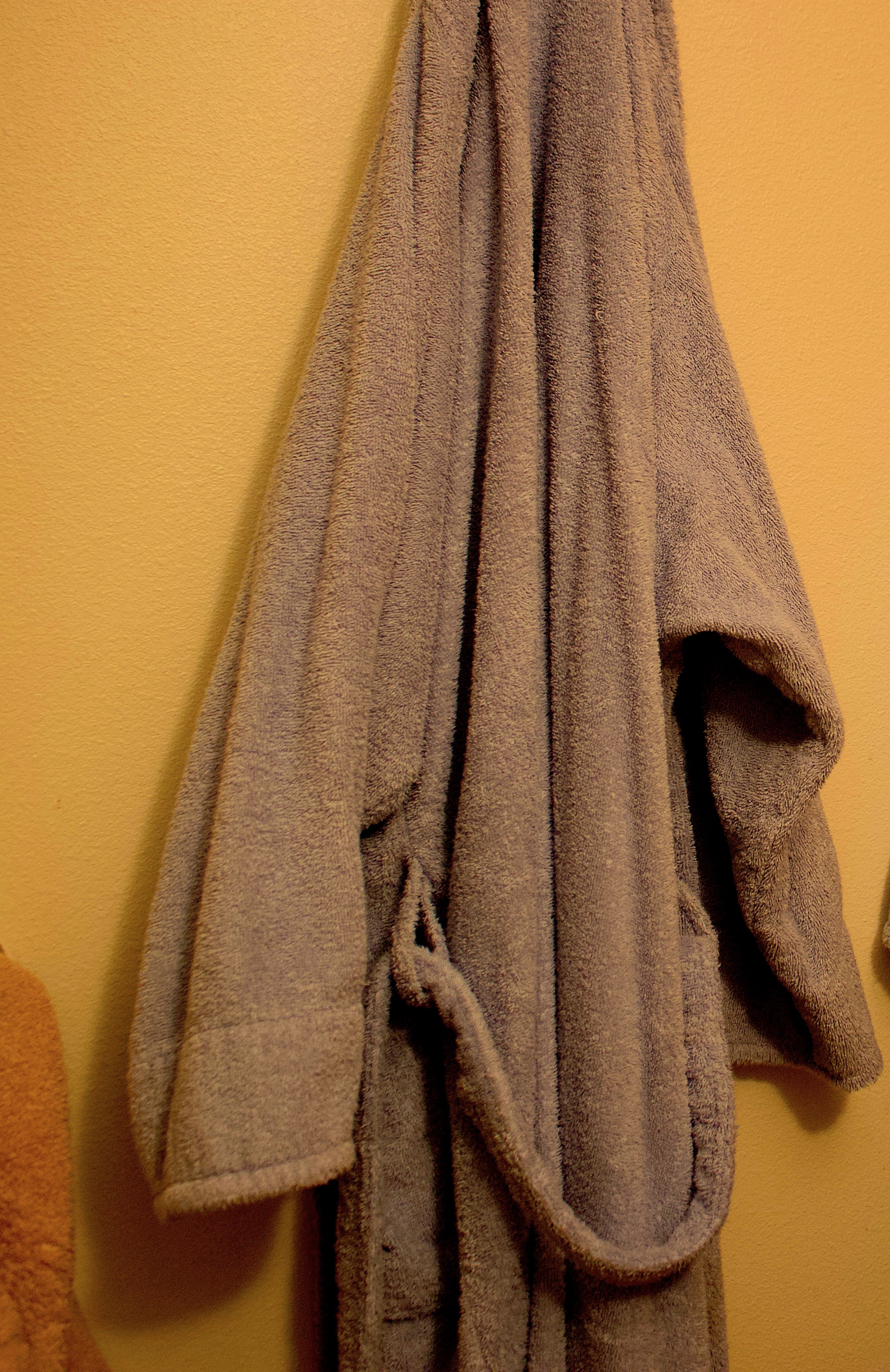
at the sight of a grandmother, old friend in the morning light, beautiful in her blue robe! ~Wendell Berry “The Blue Robe” from New Collected Poem
These winter mornings – waking early to part from your warm side, leaving behind my soft imprint, I wrap up in my robe to walk the gravel drive to deliver a letter to our mailbox.
Our hilltop farm lies silent amid fallow fields, moon shadows broad across my path star sparks overhead with orange paint beginning to lick awake the eastern mountain peaks.
I walk noiselessly; step out on the road then turn ~ startled as a flashlight approaches.
A walker and her dog illuminate me in my dawn disarray like a deer in headlights: my ruffled hair, my sleep-lined face. It is a grandma-caught-in-her-bathrobe surprise at sunrise and I’m simply glad to be alive.
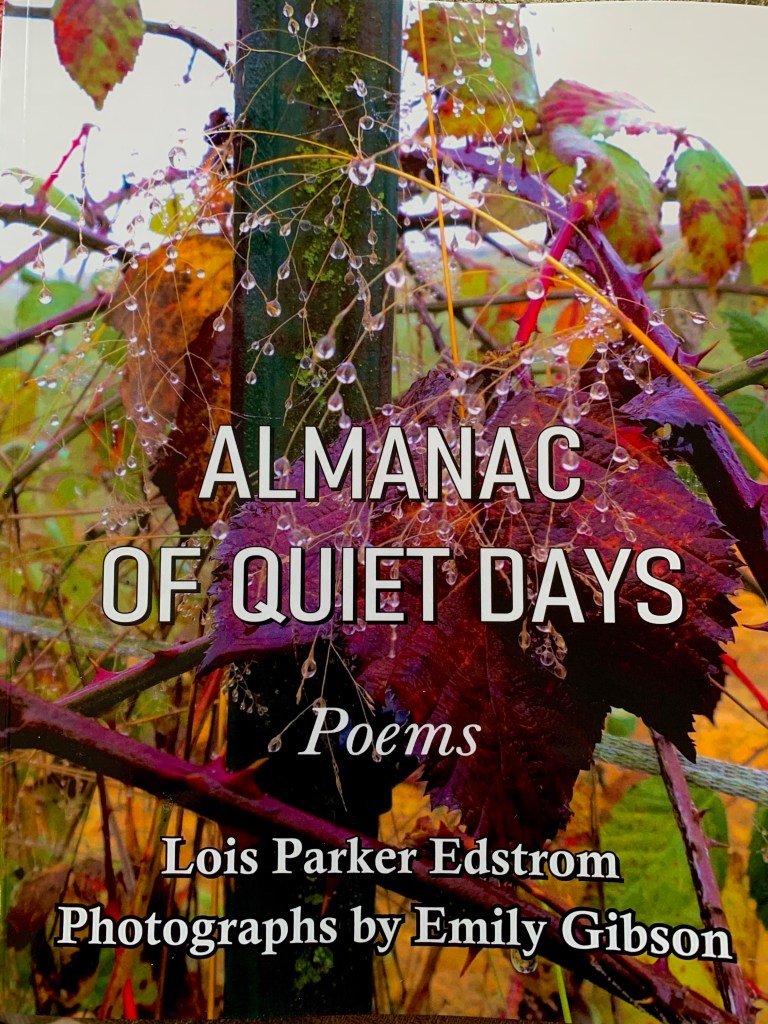
A book of beauty in words and photos, available for order here:
One-Time
Monthly
Yearly
Make a one-time or recurring donation to support Barnstorming
Body is something you need in order to stay on this planet and you only get one. And no matter which one you get, it will not be satisfactory. It will not be beautiful enough, it will not be fast enough, it will not keep on for days at a time, but will pull you down into a sleepy swamp and demand apples and coffee and chocolate cake.
Body is a thing you have to carry from one day into the next. Always the same eyebrows over the same eyes in the same skin when you look in the mirror, and the same creaky knee when you get up from the floor and the same wrist under the watchband. The changes you can make are small and costly—better to leave it as it is.
Body is a thing that you have to leave eventually. You know that because you have seen others do it, others who were once like you, living inside their pile of bones and flesh, smiling at you, loving you, leaning in the doorway, talking to you for hours and then one day they are gone. No forwarding address. ~Joyce Sutphen, “Living in the Body” from Coming Back to the Body.
All bodies are fragile vessels, right from the beginning. I know this because I live inside an aging one and experience its limitations daily. Yet it is the only one I’ll ever have, though an imperfect reflection of my Creator – like it or not. Frankly, I greatly respect it having kept me going for 68 years so far and hoping for a few more.
I grieve for the young and strong who are often dissatisfied with the body they are given, spending immense time and resources to change what they can and agonizing over what is unchangeable.
What is unchangeable is that we’ll leave this empty husk behind at some point when we move on, leaving no forwarding address other than @heavenabove. We have watched it happen to those we love who have died too young because of system failure from an impossible-to-survive insult, and it happens to those who simply ran out of breaths after multiple decades of functioning heart and lungs.
My imperfect body doesn’t define me as it didn’t define those who have left before me. It isn’t who I was when I came to be, and it isn’t who I will be after I depart. But it deserves my ongoing admiration, awe and honor, along with my commitment to keep it in running order as long as I am able.
And I’ll try to confirm a forwarding address before I go.
One-Time
Monthly
Yearly
Make a one-time or recurring donation to support Barnstorming
The meaning of marriage begins in the giving of words. We cannot join ourselves to one another without giving our word. And this must be an unconditional giving, for in joining ourselves to one another we join ourselves to the unknown. ~Wendell Berry from “Poetry and Marriage” in Standing By Words
Our vows to one another forty years ago today:
Before God and this gathering, I vow from my heart and spirit that I will be your wife/husband for as long as we both shall live.
I will love you with faithfulness, knowing its importance in sustaining us through good times and bad.
I will love you with respect, serving your greatest good and supporting your continued growth.
I will love you with compassion, knowing the strength and power of forgiveness.
I will love you with hope, remembering our shared belief in the grace of God and His guidance of our marriage.
“And at home, by the fire, whenever you look up, there I shall be–and whenever I look up, there will be you.”
(our wedding vows for our September 19, 1981 wedding at First Seattle Christian Reformed Church — the last line adapted from Thomas Hardy’s “Far From the Madding Crowd”)
Sometimes our life reminds me of a forest in which there is a graceful clearing and in that opening a house, an orchard and garden, comfortable shades, and flowers red and yellow in the sun, a pattern made in the light for the light to return to. The forest is mostly dark, its ways to be made anew day after day, the dark richer than the light and more blessed, provided we stay brave enough to keep on going in.
We enter, willing to die, into the commonwealth of its joy. ~Wendell Berry from “A Country of Marriage”
…Marriage… joins two living souls as closely as, in this world, they can be joined. This joining of two who know, love, and trust one another brings them in the same breath into the freedom of sexual consent and into the fullest earthly realization of the image of God. From their joining, other living souls come into being, and with them great responsibilities that are unending, fearful, and joyful. The marriage of two lovers joins them to one another, to forebears, to descendants, to the community, to heaven and earth. It is the fundamental connection without which nothing holds, and trust is its necessity. ~Wendell Berry from Sex, Economy, Freedom and Community
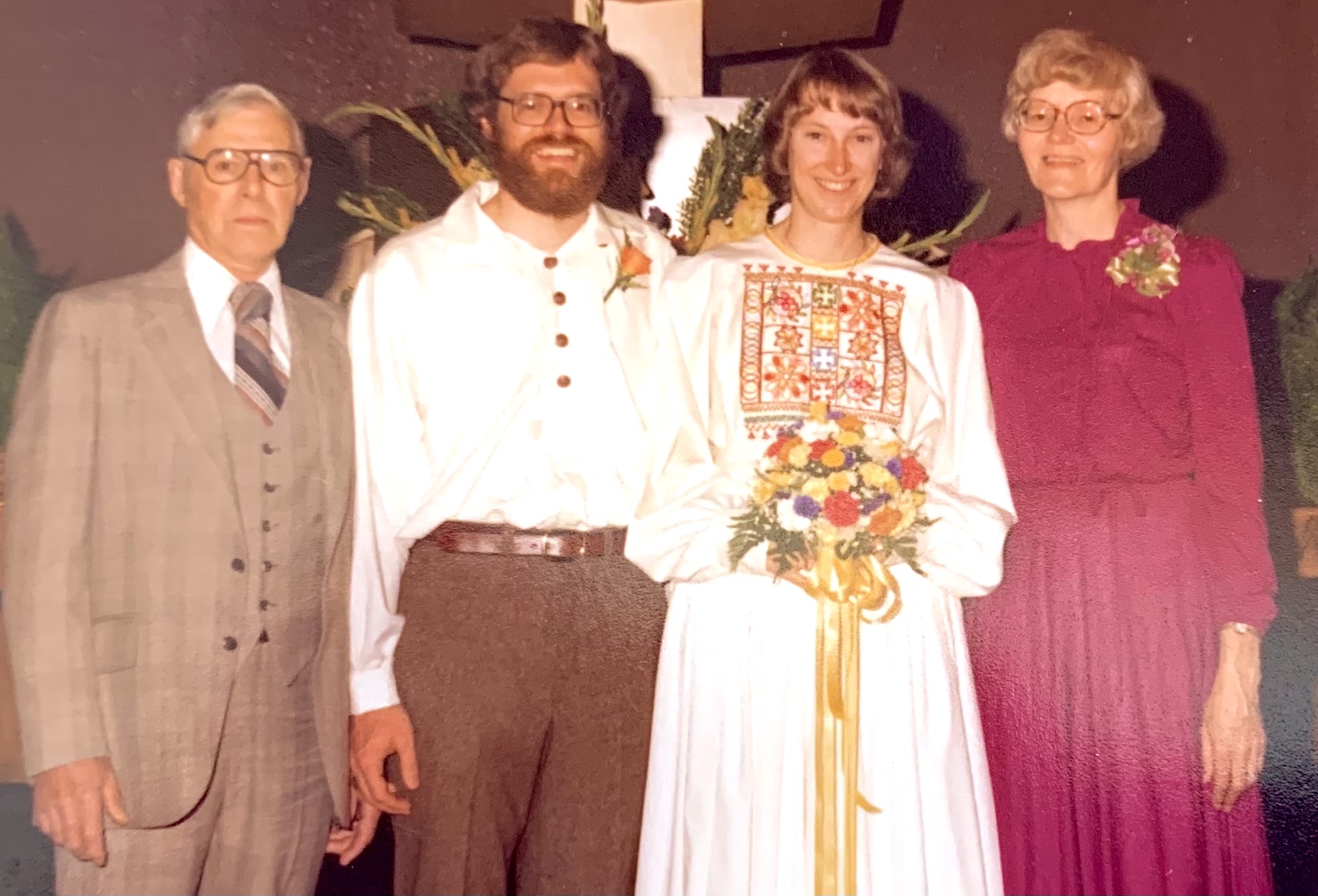
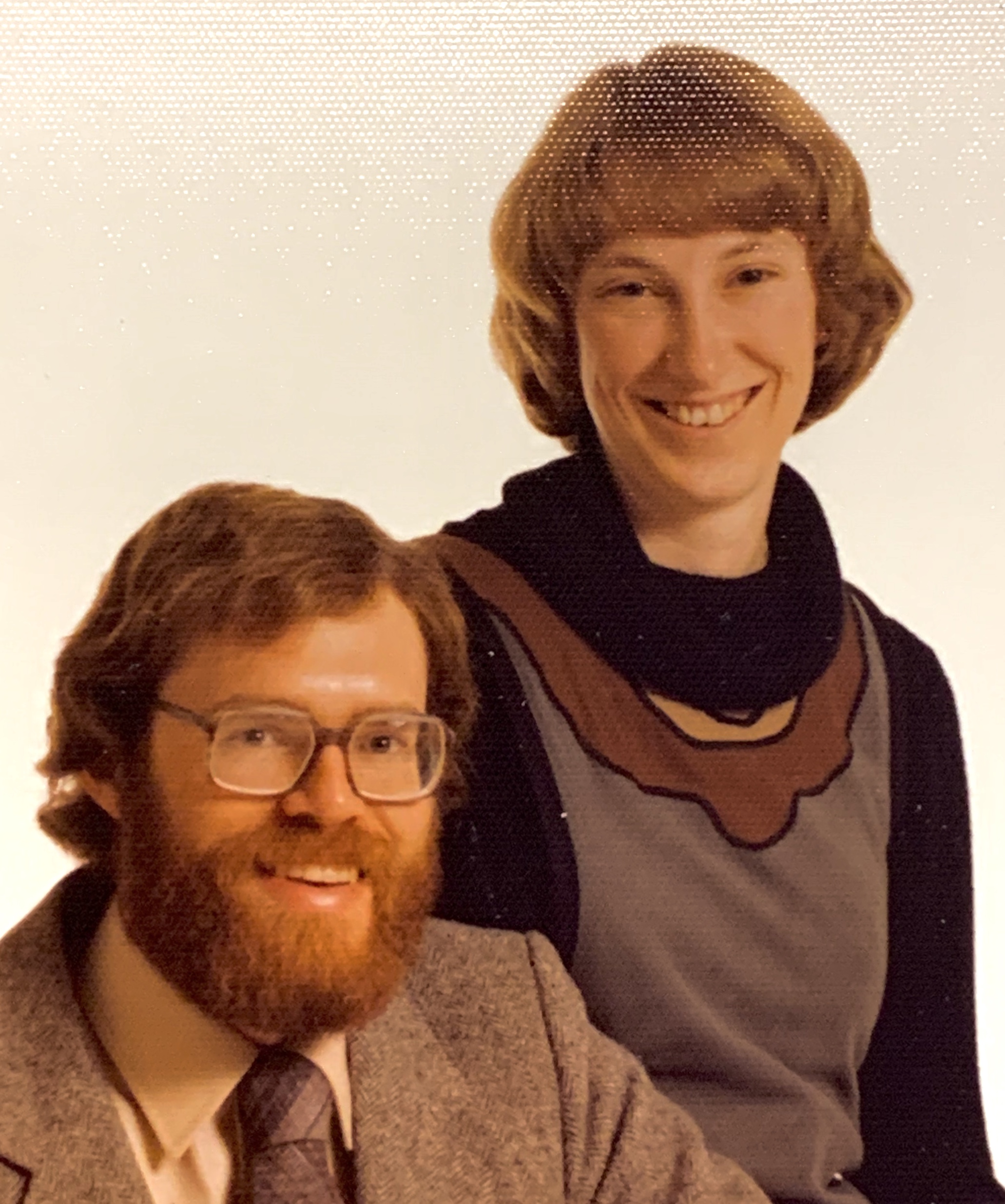
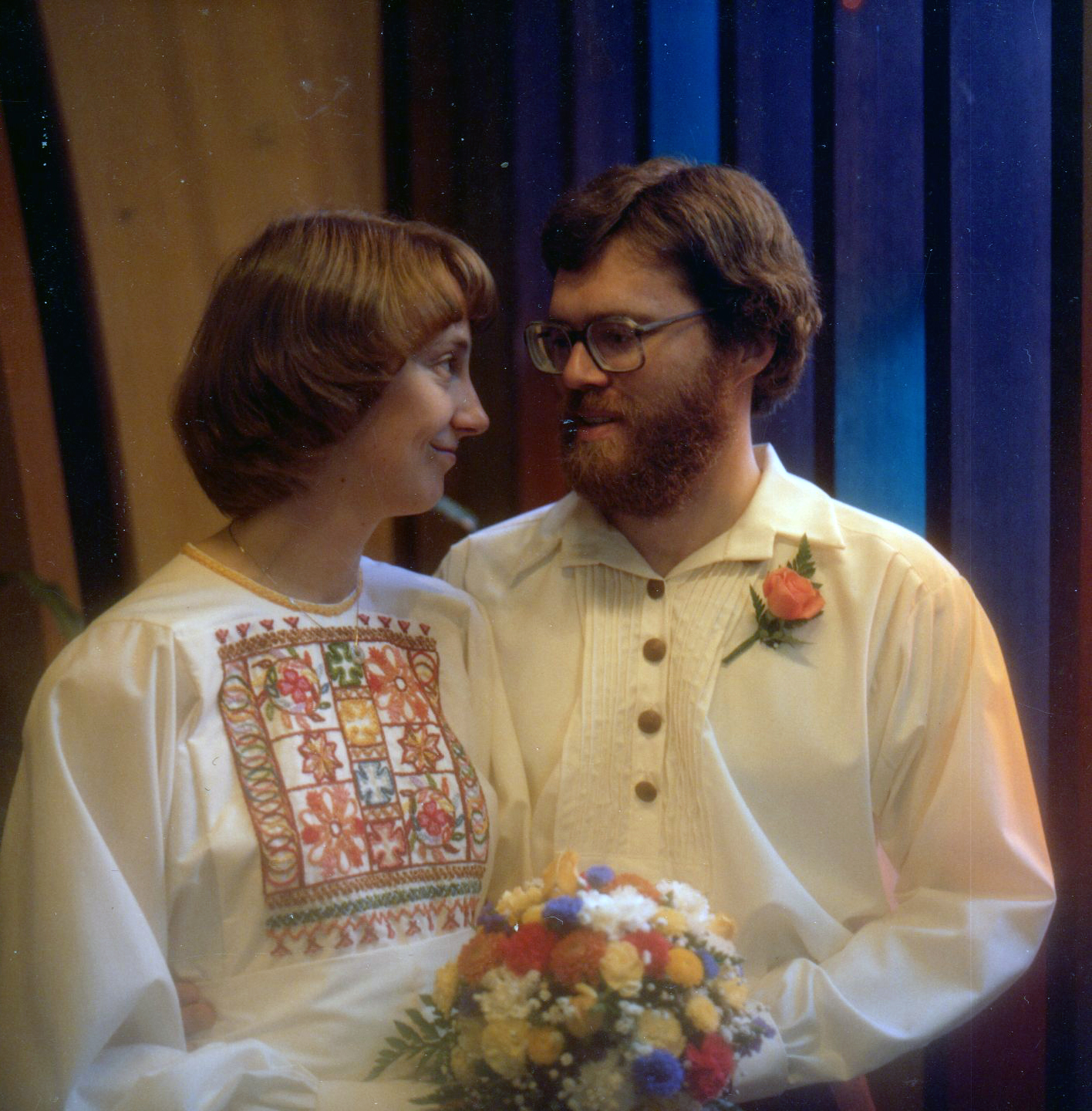
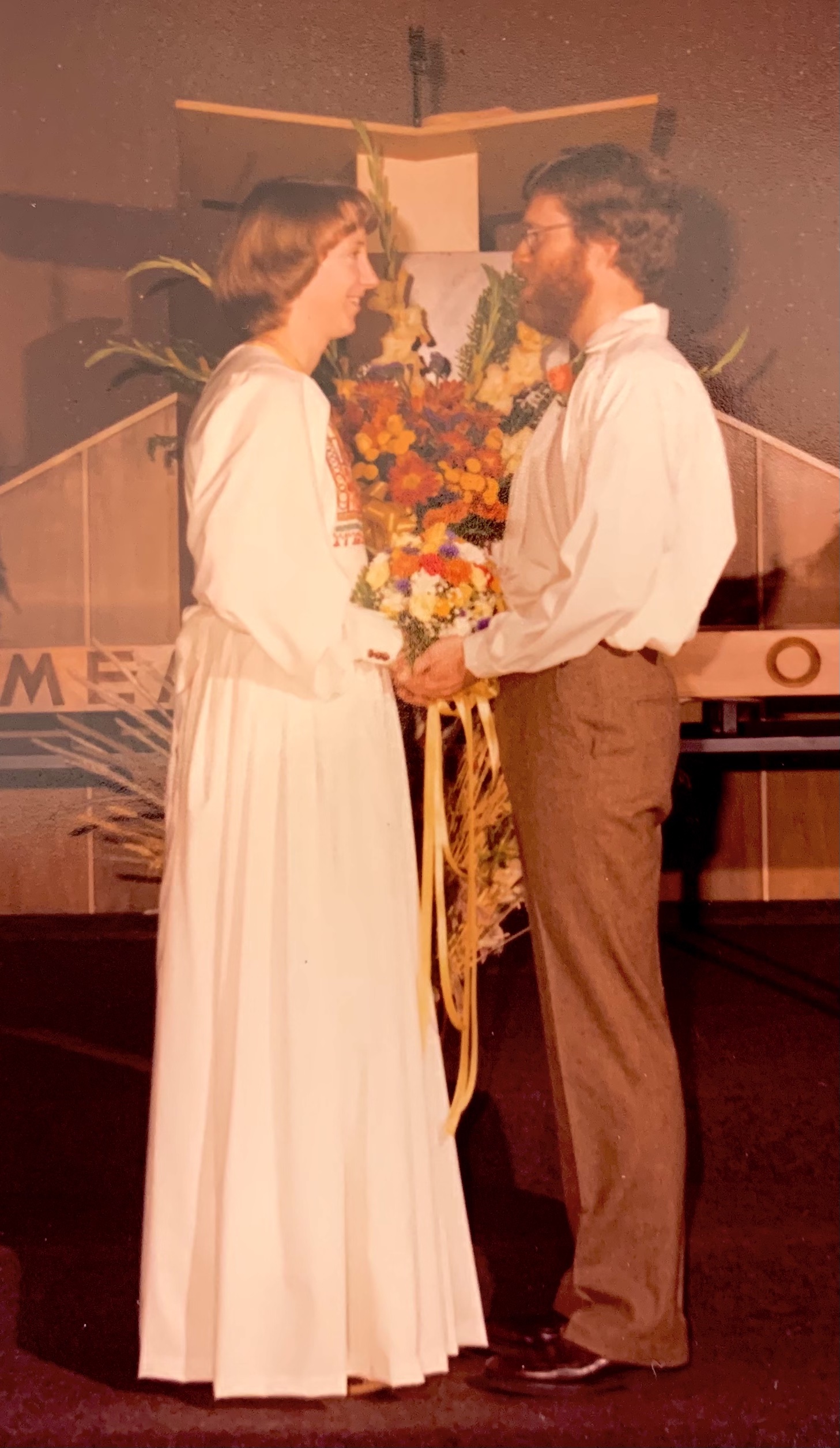
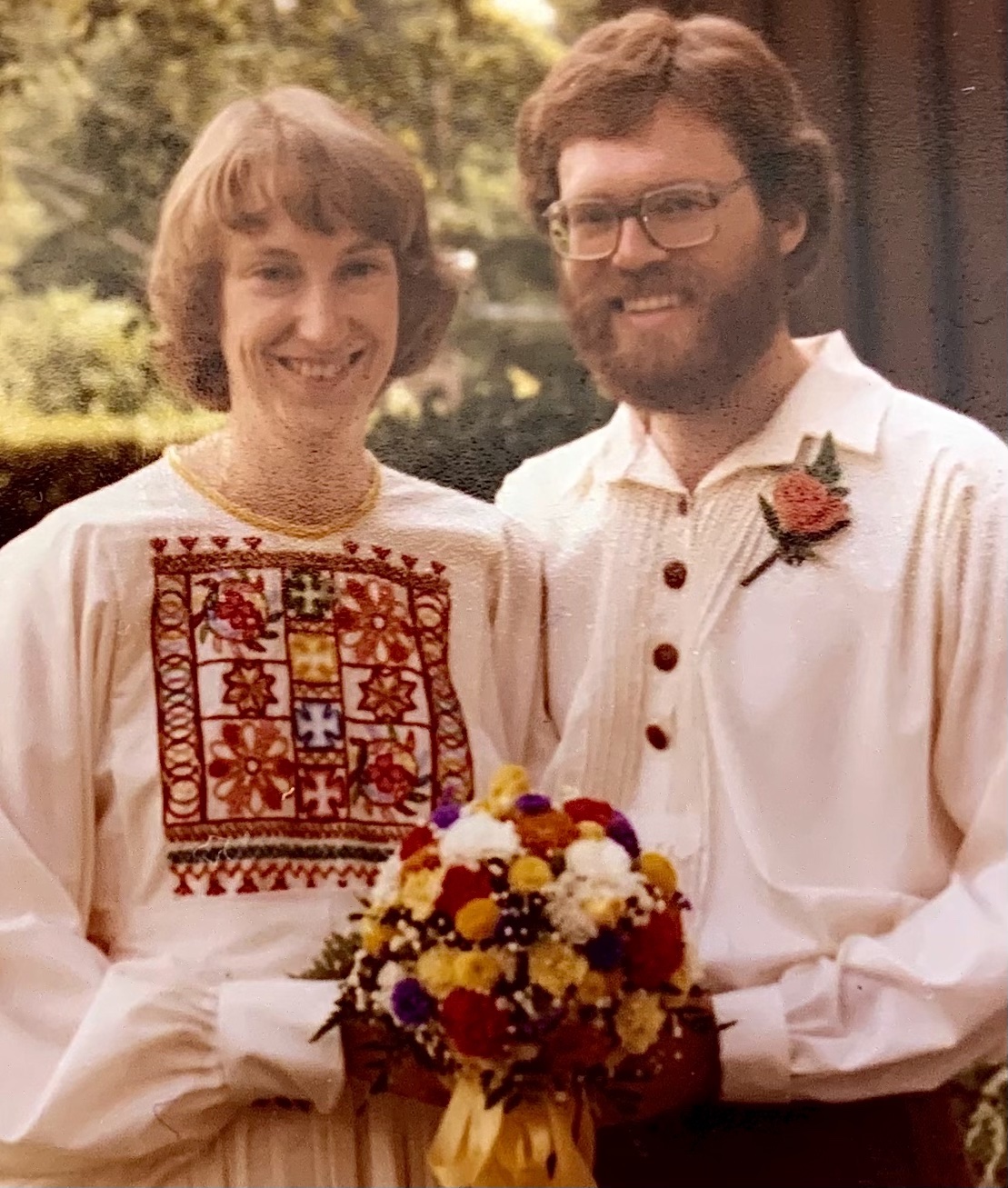
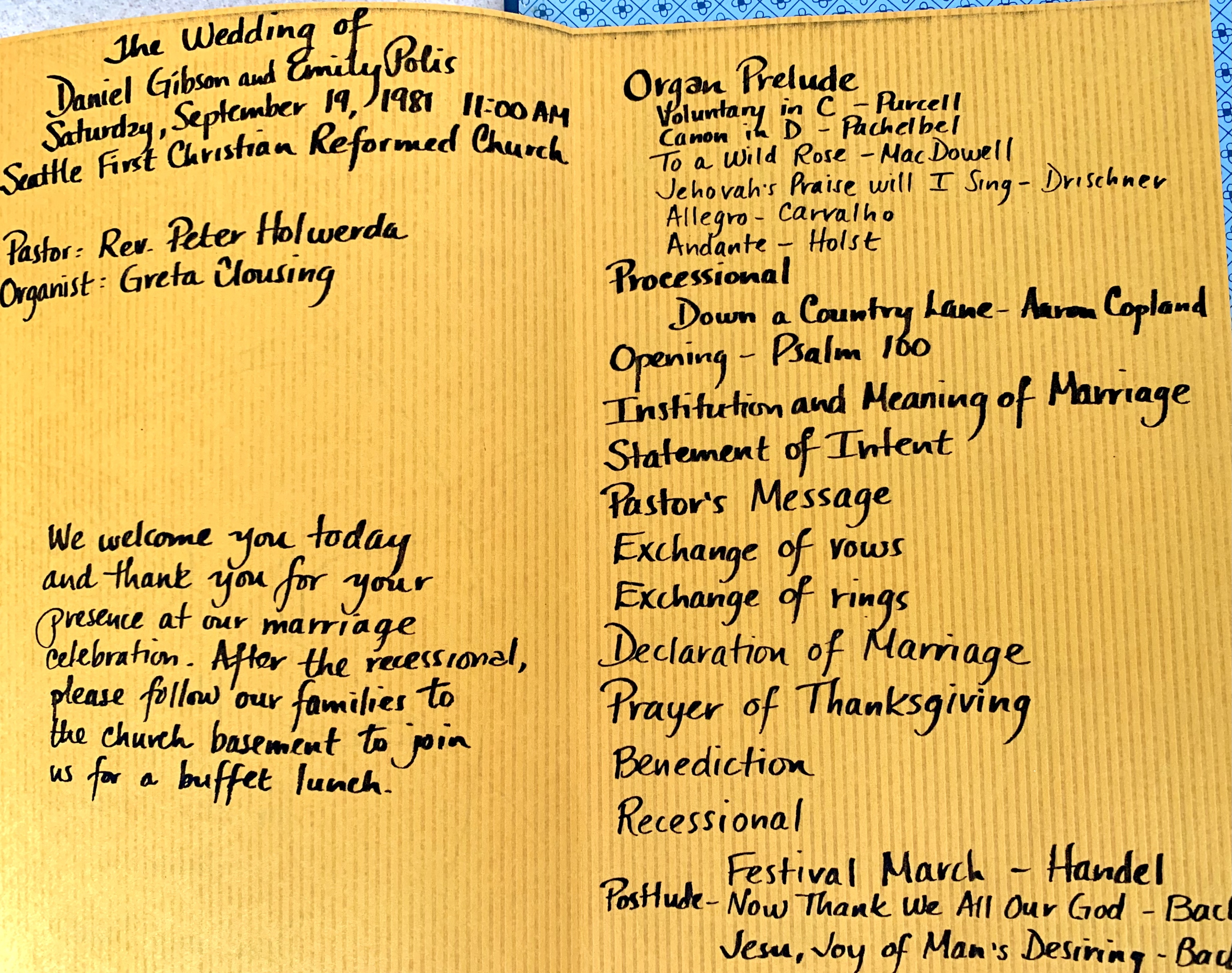
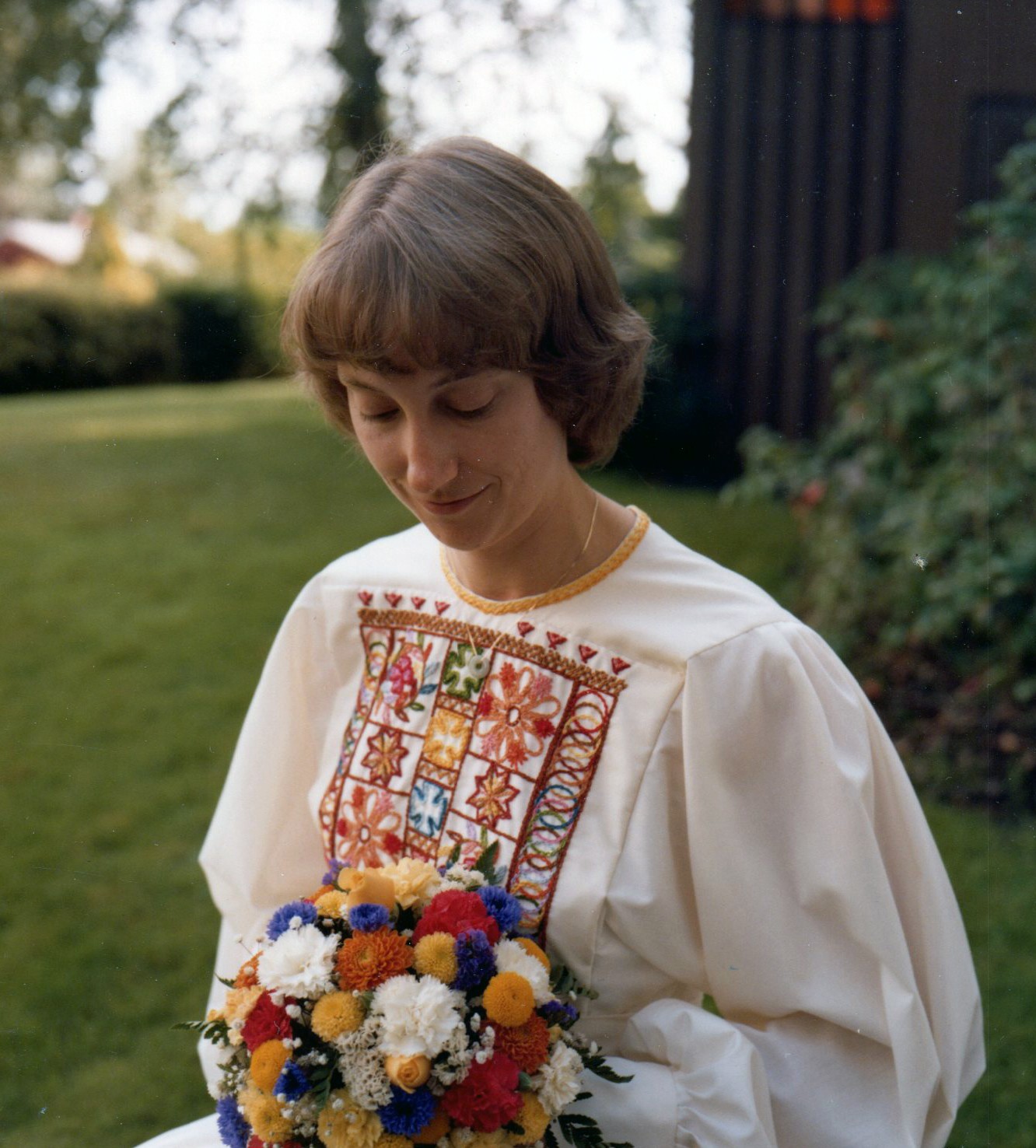
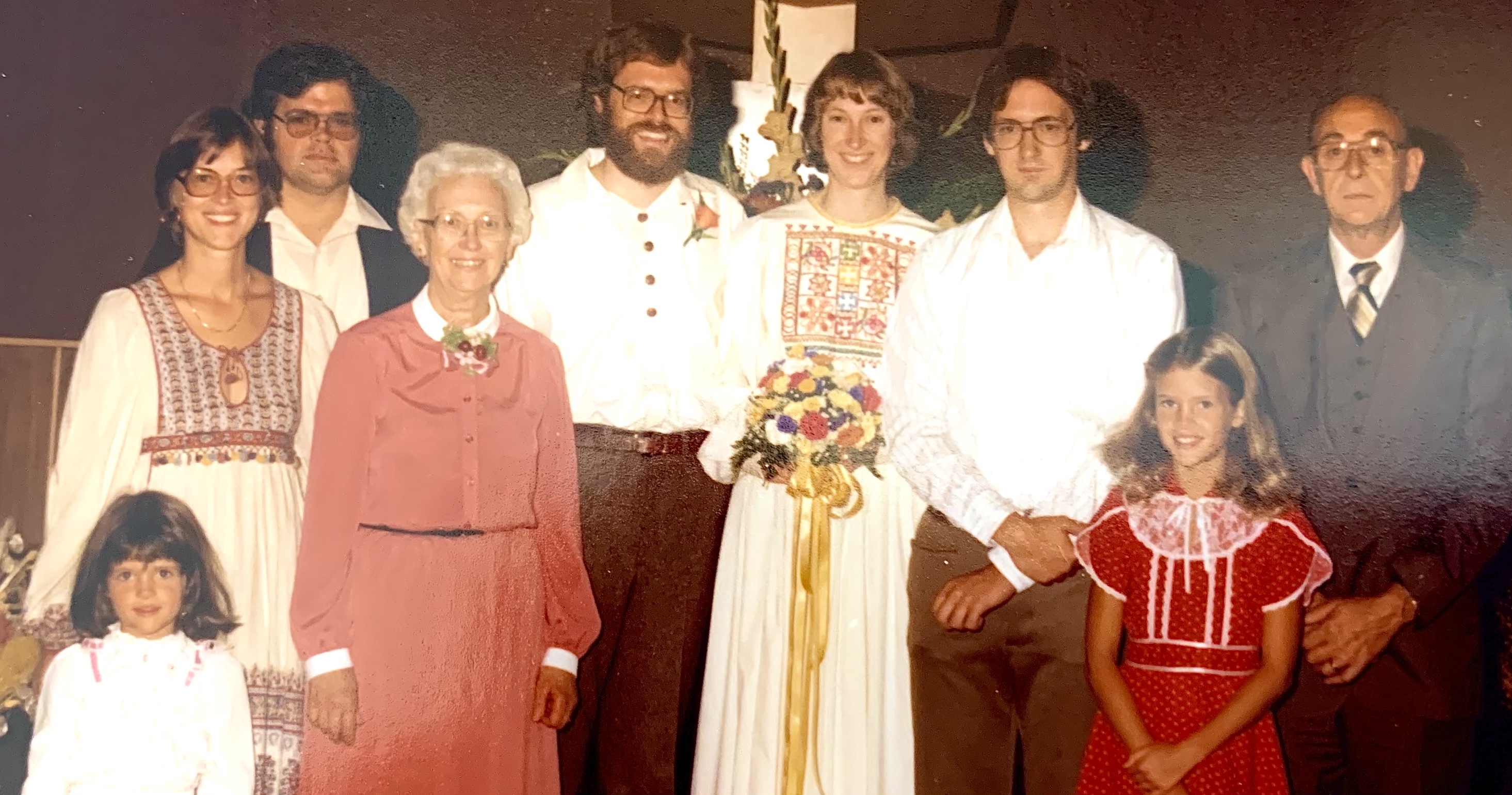
We married in our Seattle church with our pastor officiating, with a small group of family and friends as witnesses.
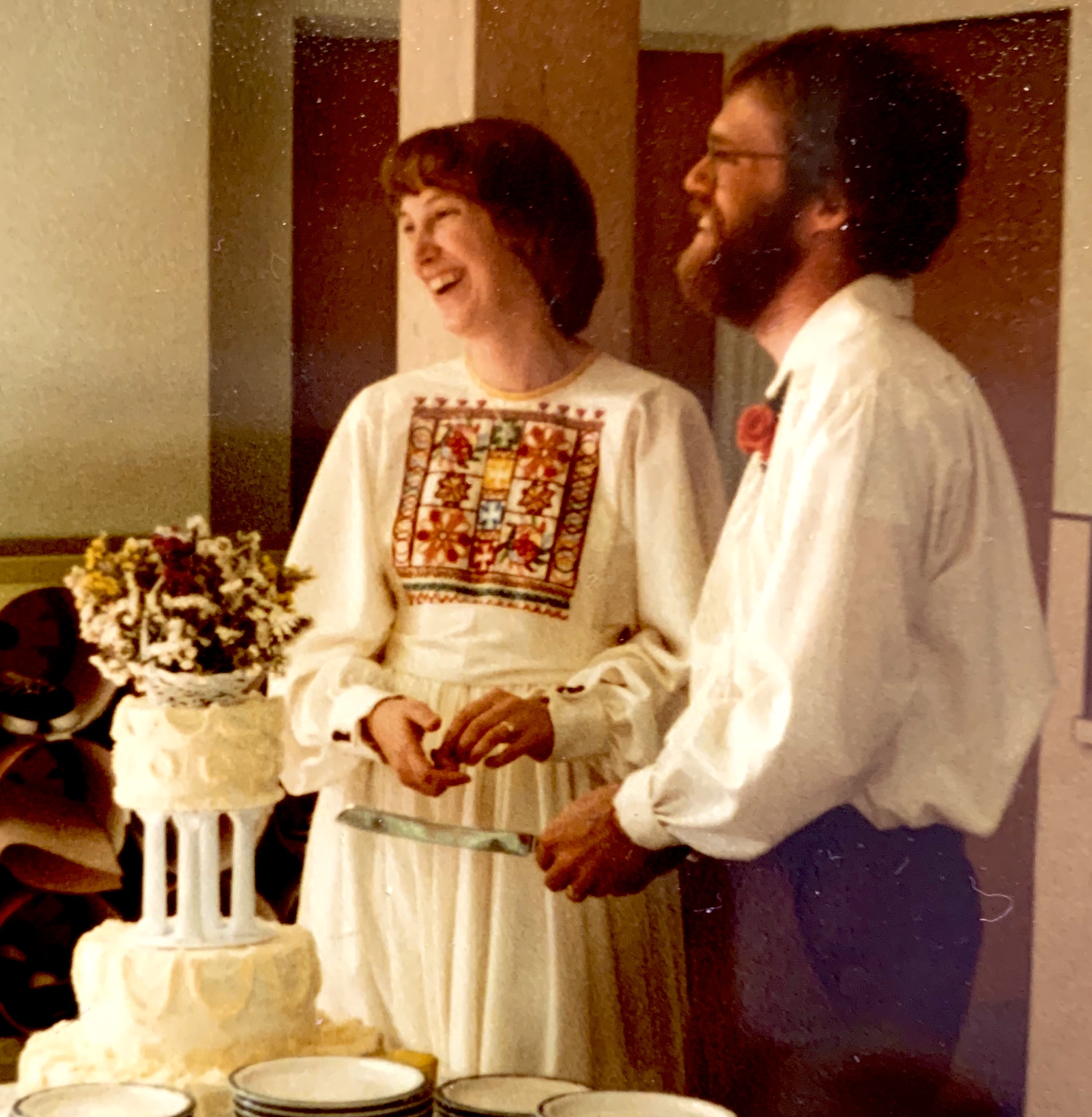
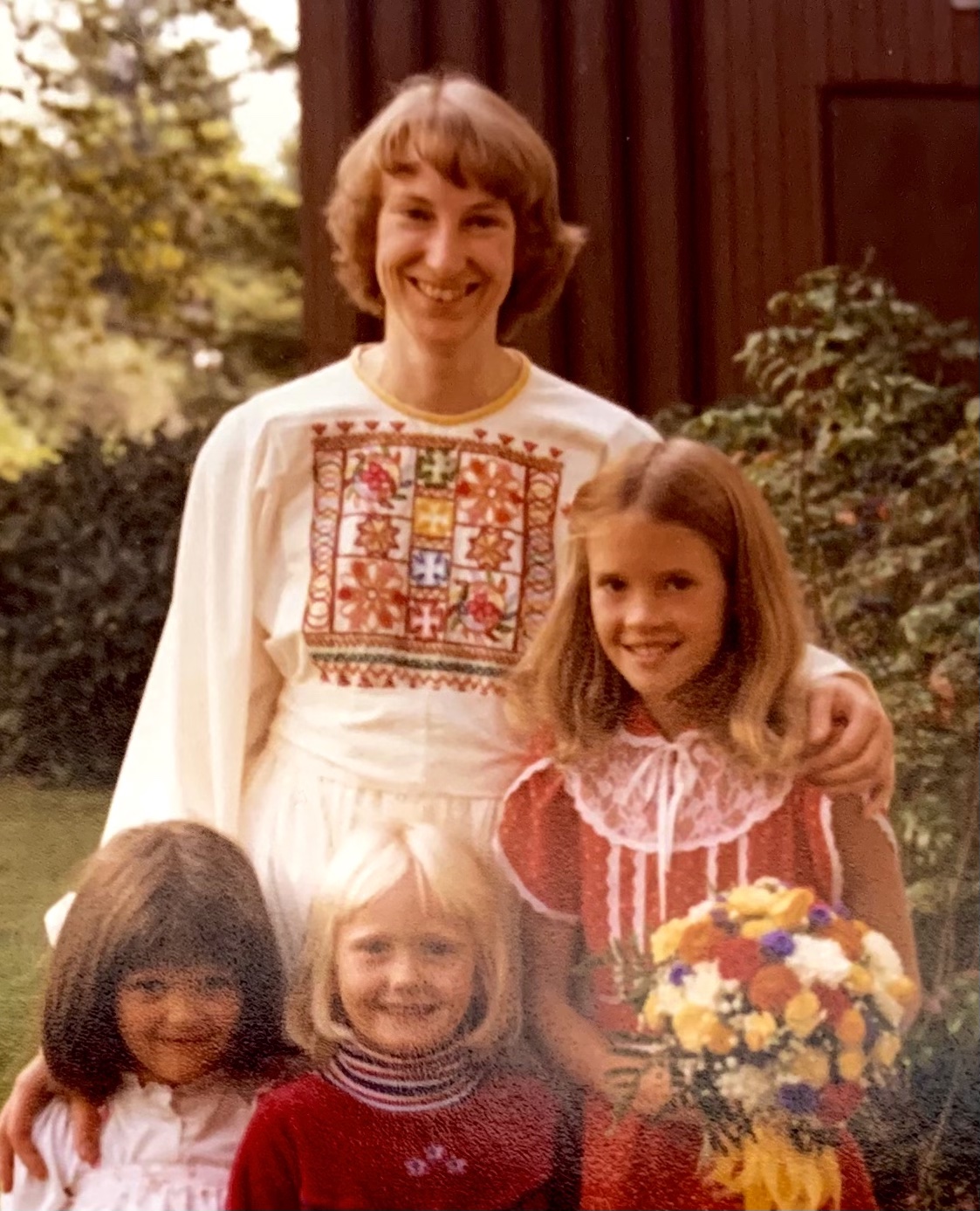
It was a wedding created by two frugal people with little to spend – I sewed my dress and Dan’s shirt from muslin, we grew our own flowers, our families helped potluck the lunch afterward and our tiered carrot cake was made by a friend.
Yet our vows to one another were not frugal and held nothing back. They were extravagant and comprehensive, coming from our hearts and spirits. The music we asked our amazing organist to play (versions below) inspired us by its simplicity and complexity – very much like the families that raised us and the God we worship.
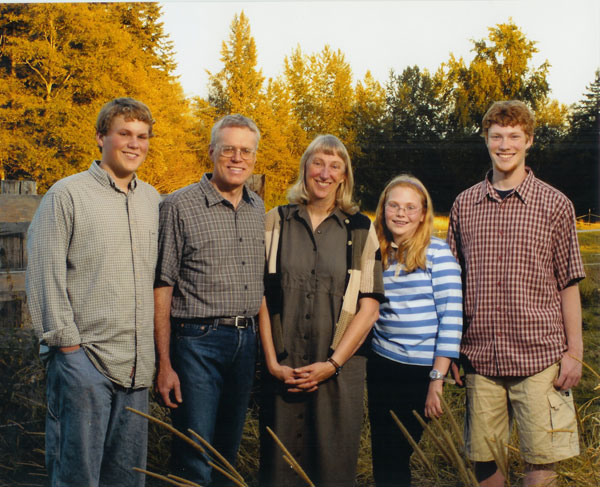
Our vows have taken us from the city to the countryside, to the raising and rejoicing in three amazing children (each of whom wrote movingly to us today) and now four grandchildren. We served more than forty years as a public-employed attorney and physician, have laid down those responsibilities, and picked up the tools of farm and garden along with church and community service for as long as we are able.
We treasure each day of living together in faithfulness, respect, compassion and hope – knowing that how we love and find joy in one another mirrors how God loves and revels in His people.
We are praying for many more days to fill us with what endures.
A pot of red lentils simmers on the kitchen stove. All afternoon dense kernels surrender to the fertile juices, their tender bellies swelling with delight.
In the yard we plant rhubarb, cauliflower, and artichokes, cupping wet earth over tubers, our labor the germ of later sustenance and renewal.
Across the field the sound of a baby crying as we carry in the last carrots, whorls of butter lettuce, a basket of red potatoes.
I want to remember us this way— late September sun streaming through the window, bread loaves and golden bunches of grapes on the table, spoonfuls of hot soup rising to our lips, filling us with what endures. ~Peter Pereira from “A Pot of Red Lentils”
Here are versions of the organ music we selected for prelude, processional, recessional and postlude
Behind the house in a field there’s a metal box I buried full of childhood treasure, a map of my secret place, a few lead pennies from 1943. The rest I’ve forgotten, forgotten even the exact spot I covered with moss and loam. Now I’m back and twenty years have made so little difference I suspect they never happened, this face in the mirror aged with pencil and putty. I suspect even the box has moved as a mole would move to a new place long ago. ~Dan Gerber “The Cache” from Particles
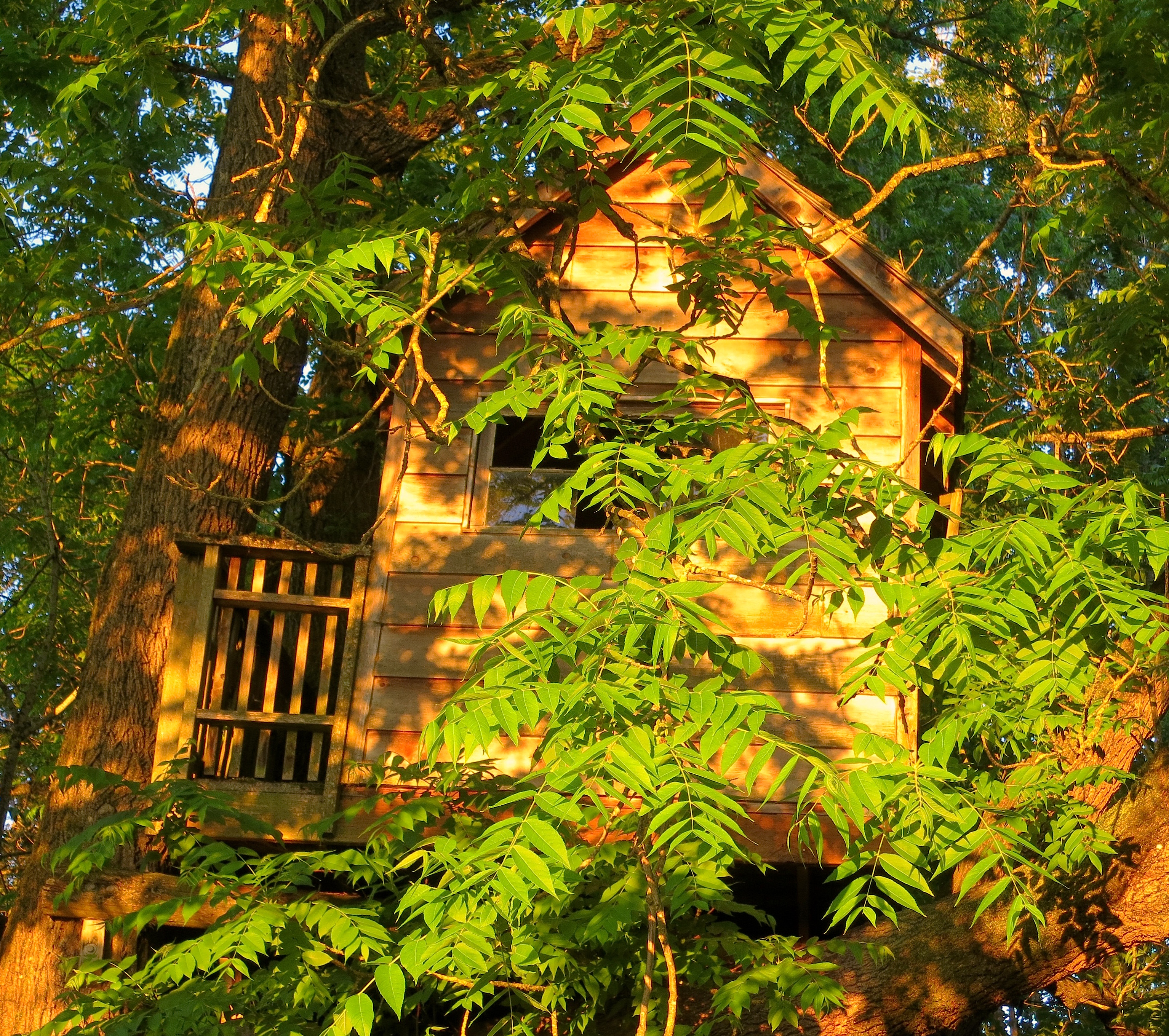
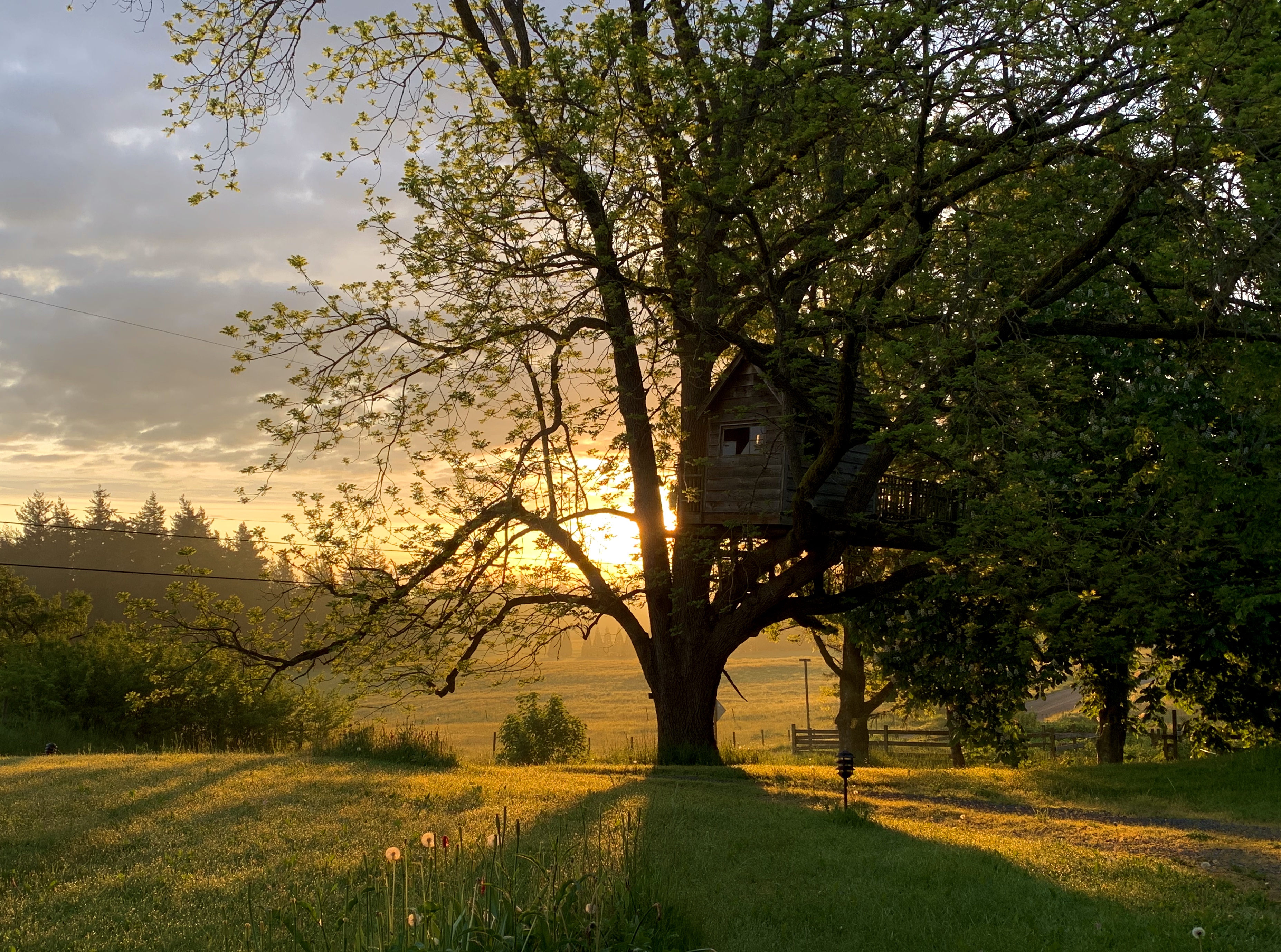
Icame upon an oak where once when I was twelve I had climbed up and screamed for Skip to get me down. It was a thousand miles to earth. I shut my eyes and yelled. My brother, richly compelled to mirth, gave shouts of laughter And scaled up to rescue me. “What were you doing there?” he said. I did not tell. Rather drop me dead. But I was there to place a note within a squirrel nest On which I’d written some old secret thing now long forgot.
{Now} I lay upon the limb a long while, thinking. I drank in all the leaves and clouds and weathers Going by as mindless As the days. What, what, what if? I thought. But no. Some forty years beyond!
I brought forth: The note.
I opened it. For now I had to know. I opened it, and wept. I clung then to the tree And let the tears flow out and down my chin. Dear boy, strange child, who must have known the years And reckoned time and smelled sweet death from flowers In the far churchyard. It was a message to the future, to myself. Knowing one day I must arrive, come, seek, return. From the young one to the old. From the me that was small And fresh to the me that was large and no longer new. What did it say that made me weep?
I remember you. I remember you. ~Ray Bradbury from “Remembrance”
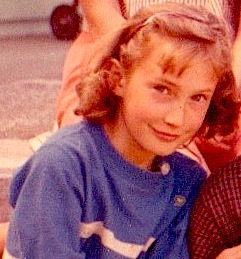
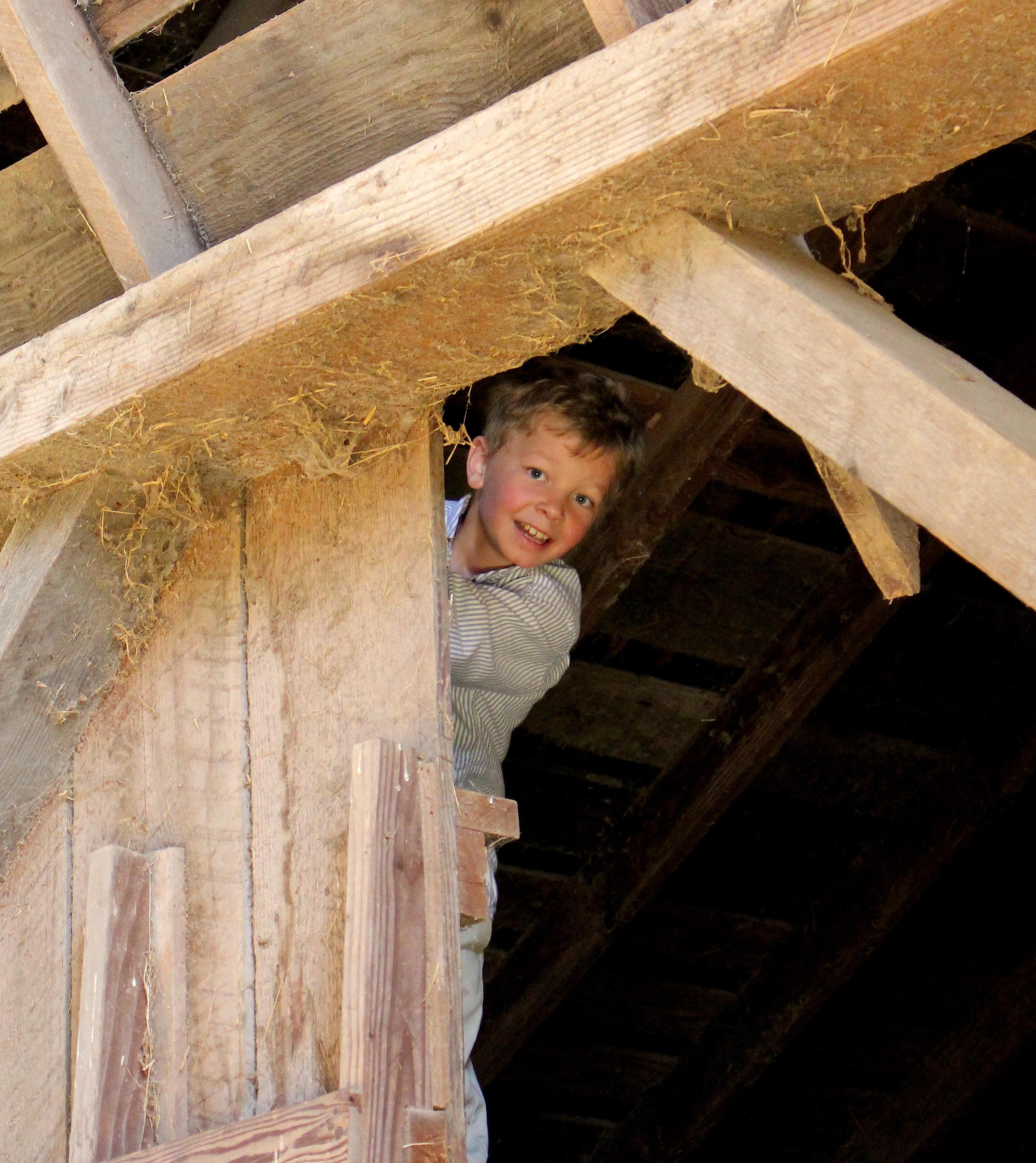
As a child, I left secret notes to my future self, in hidden crevices of old barns, and attic lofts up rickety stairs, and yes, even in trees, but never went back to retrieve them except in my rare dreams of growing up on Friendly Grove Road.
Back then my ten year old heart tried to imagine me sixty some years hence (counting out how old I would be in 2020 something) as I squirreled away in some secret place.
What fears and joys would pass through like pumping blood, what wounds would I bear and cause to bleed, what smiles and tears would trace my face?
I have not forgotten who I was then.
No, I have never forgotten that girl who kept secrets, who dreamed of a someday gray-haired grandma who now looks back to my secret places, and remembers being remembered.
A book of Barnstorming photos and poems by Lois Edstrom is available for order here:
When despair for the world grows in me and I wake in the night at the least sound in fear of what my life and my children’s lives may be, I go and lie down where the wood drake rests in his beauty on the water, and the green heron feeds. I come into the peace of wild things who do not tax their lives with forethought of grief. I come into the presence of still water. And I feel above me the day-blind stars waiting with their light. For a time I rest in the grace of the world, and am free. ~Wendell Berry “The Peace of Wild Things” fromThe Selected Poems of Wendell Berry
When our grandchildren visit our farm, I watch them rediscover what I know are the joys and sorrows of this world. I am reminded there is light beyond the darkness I fear, there is peace amid the chaos, there is a smile behind the tears, there is stillness within the noisiness there is rest despite my restlessness, there is grace as old gives way to new.
A new book from Barnstorming is available to order here:
What is the hayfield in late afternoon that it can fly in the face of time,
and light can be centuries old, and even the rusted black truck I am driving
can seem to be an implement born of some ancient harvest,
and the rhythmic baler, which spits out massive bricks tied up in twine,
can seem part of a time before now because light glitters on the hay dust,
because the sun is sinking and we sweat under the high arc of mid-summer,
because our bodies cast such long shadows– Rebecca, with the baby strapped to her back,
the men who throw impossible weight to the top of the truck, the black and white
dog that races after mice or moles whose lives have been suddenly exposed.
How does the taste of my sweat take me down through the gate of childhood,
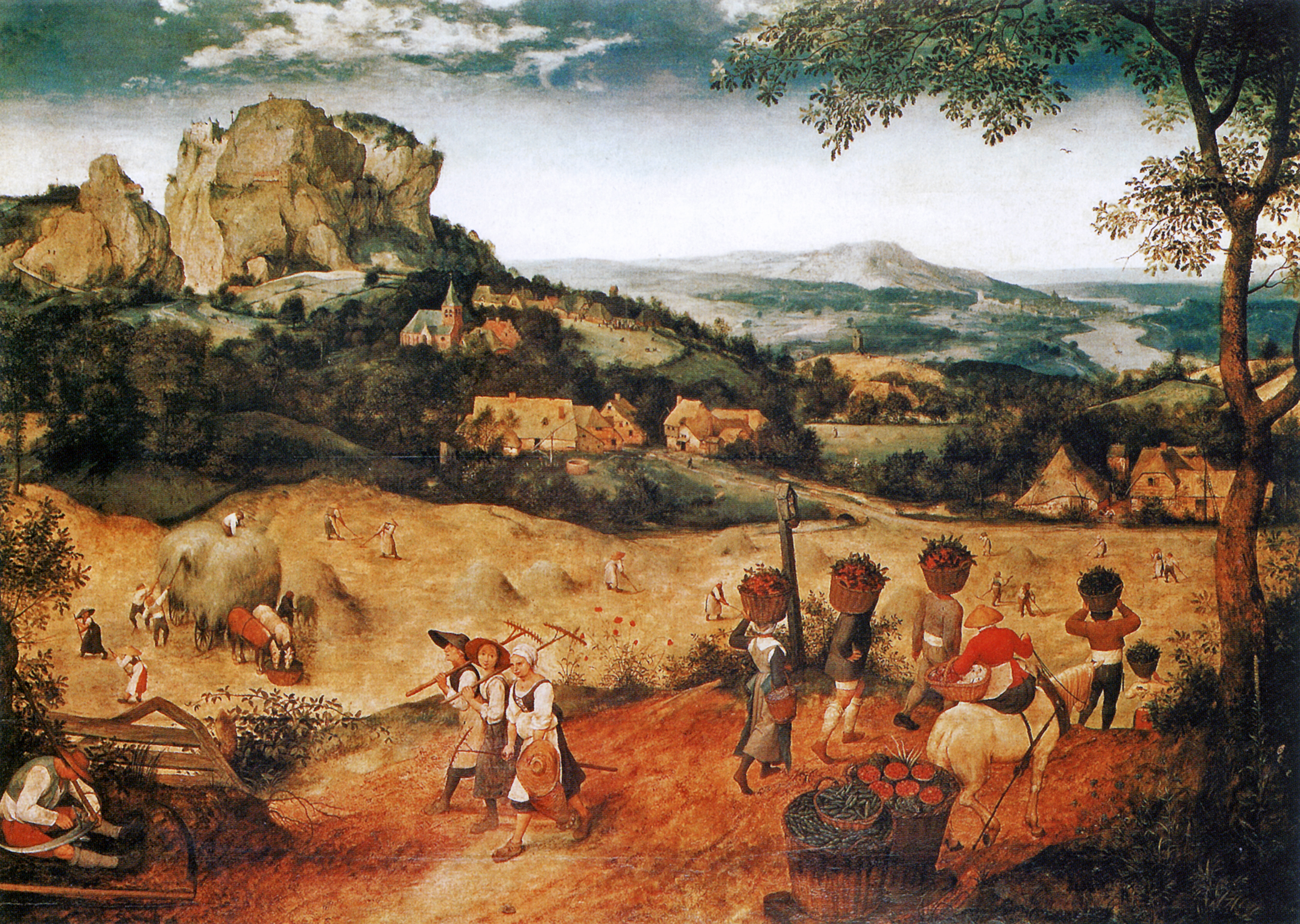
spinning backwards to land in a field painted by Bruigel, where the taste of salt
is the same, and the same heat rises in waves off a newly flattened field.
In the duskiness of slanted light, we laugh just as we laughed then, because there is
joy in what the earth gives, allowing our bodies to mingle with it, our voices
small on the field, our work assuring the goats can give milk, the sheep can grow wool,
and we will have in our bones the taste of something so old it travels in light. ~Susie Patlove “First Cutting” from Quickening
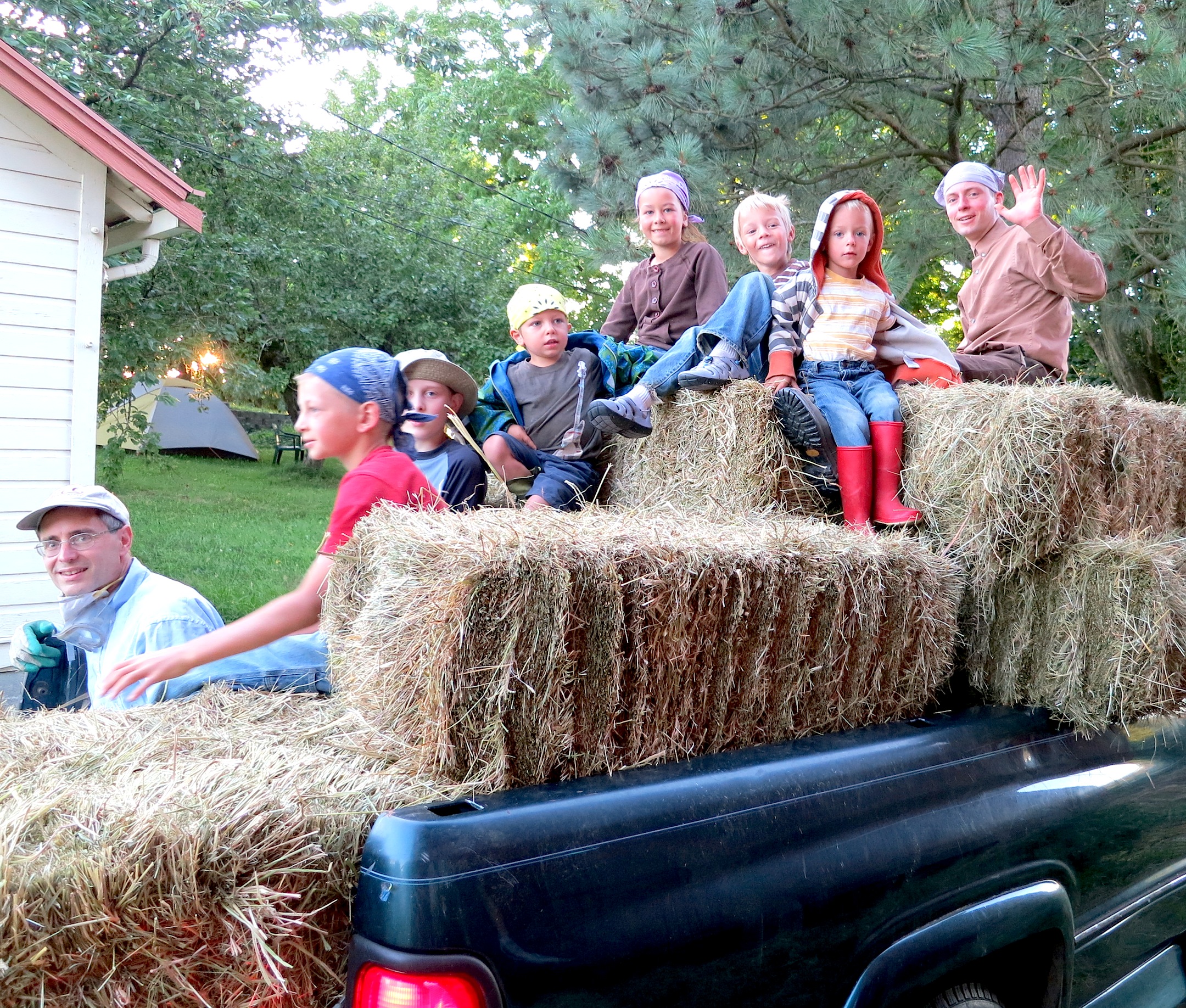
photo by Nate Gibsonphoto by Nate Gibson199420052011
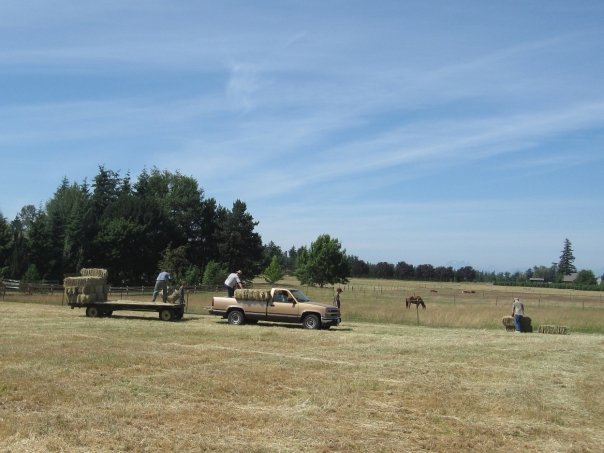
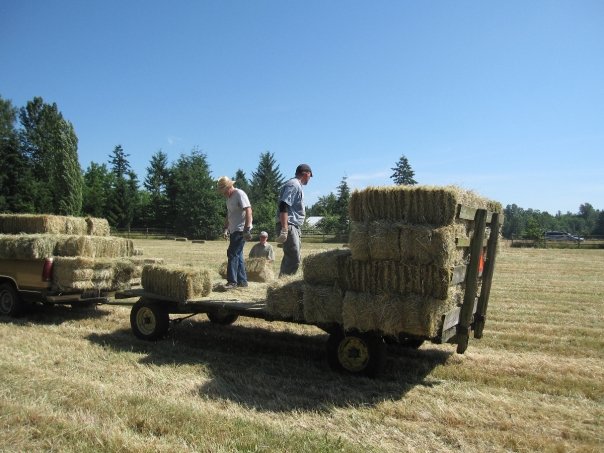
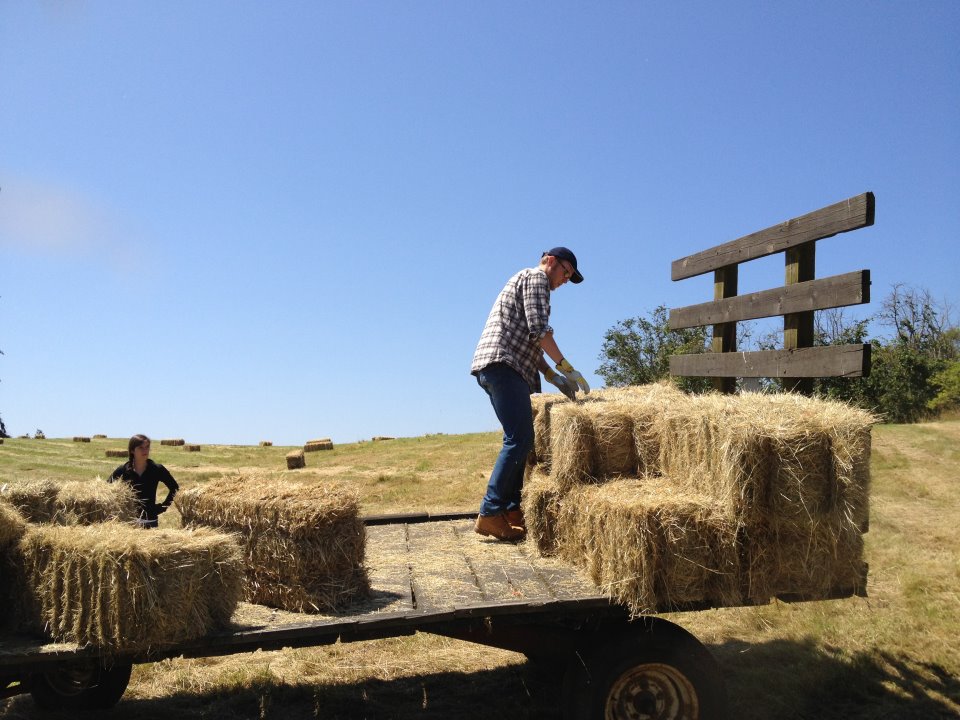
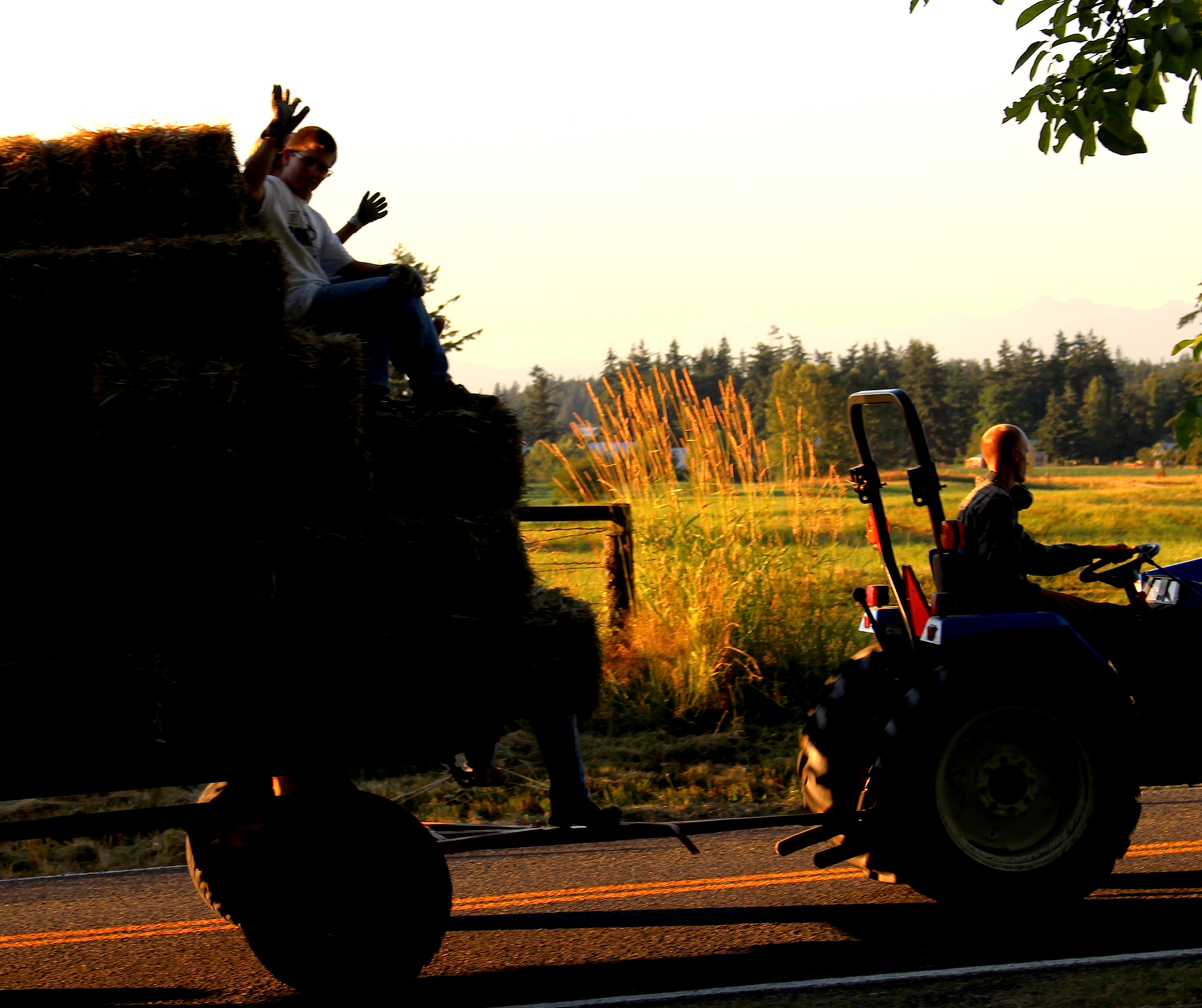
There is a timelessness to mid-summer hay harvest that goes back generations on both sides of our family. The cutting, raking and gathering of hay has evolved from horse-drawn implements and gathering loose shocks of hay to 100+ horse power air-conditioned tractors and huge round bales wrapped and stored in plastic sheathing rather than in barns.
Our farm is happily stuck somewhere in-between: we still prefer filling the haybarn with bales that I can still lift and move myself to feed our animals. True hay harvest involves sweat and dust and a neighborhood coming together to preserve summer in tangible form.
I grew up on a farm with a hayfield – I still have the scar over my eyebrow where I collided with the handle of my father’s scythe when, as a toddler, I came too close behind him as he was taking a swing at cutting a field of grass one swath at a time. I remember the huge claws of the hay hook reaching down onto loose hay piled up on our wagon. The hook would gather up a huge load, lift it high in the air to be moved by pulley on a track into our spacious hay loft. It was the perfect place to play and jump freely into the fragrant memories of a summer day, even in the dark of winter.
But these days it is the slanted light of summer I remember most: -the weightlessness of dust motes swirling down sun rays coming through the slats of the barn walls as the hay bales are stacked -the long shadows and distant alpenglow in the mountains -the dusk that goes on and on as owls and bats come out to hunt above us
Most of all, I will remember the sweaty days of mid-summer as I open the bales of hay in mid-winter – the light and fragrance of those grassy fields spilling forth into the chill and darkness, in communion of blessing for our animals.
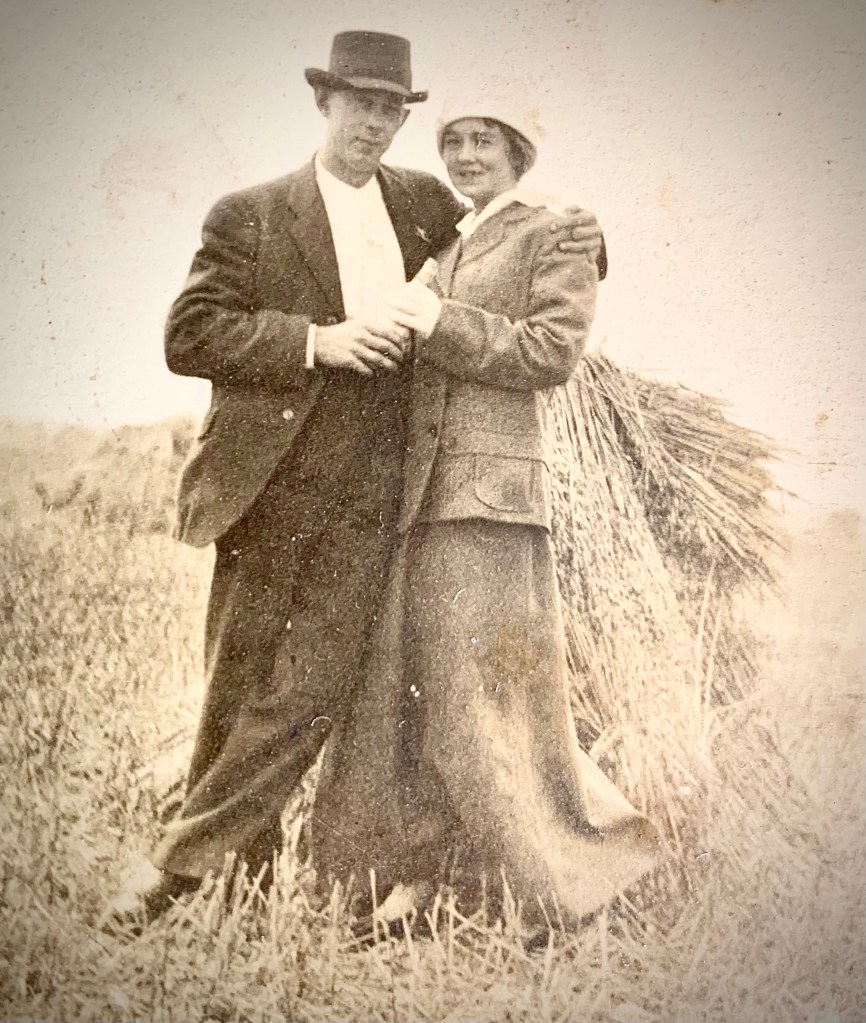
photo by Tayler RaePieter Bruegel “Hay Harvest”My grandparents Leslie Polis and Kittie Lovelace standing in a hayfield with loose hay shocks — 1915
Enjoy this blog post? A new book from Barnstorming is available to order here:
We will grieve not, rather find Strength in what remains behind; In the primal sympathy Which having been must ever be;
Thanks to the human heart by which we live, Thanks to its tenderness, its joys, and fears, To me the meanest flower that blows can give Thoughts that do often lie too deep for tears. ~William Wordsworth from “Ode: Intimations of Immortality from Recollections of Early Childhood”
Twenty-six years ago today we watched at your bedside as you labored, readying yourself to die and we could not help except to be there while we watched you move farther away from us.
This dying, the hardest work you had ever done:
harder than handling the plow behind a team of draft horses, harder than confronting a broken, alcoholic and abusive father, harder than slashing brambles and branches to clear the woods, harder than digging out stumps, cementing foundations, building roofs, harder than shipping out, leaving behind a new wife after a week of marriage, harder than leading a battalion of men to battle on Saipan, Tinian and Tarawa, harder than returning home so changed there were no words, harder than returning to school, working long hours to support family, harder than running a farm with only muscle and will power, harder than coping with an ill wife, infertility, job conflict, discontent, harder than building your own pool, your own garage, your own house, harder than your marriage ending, a second wife dying, and returning home forgiven.
Dying was the hardest of all as no amount of muscle or smarts could stop it crushing you, taking away the strength you relied on for 73 years.
So as you lay helpless, moaning, struggling to breathe, we knew your hard work was complete and what was yet undone was up to us to finish for you.
A new book from Barnstorming is available for order here:
The sunlight now lay over the valley perfectly still. I went over to the graveyard beside the church and found them under the old cedars… I am finding it a little hard to say that I felt them resting there, but I did…
I saw that, for me, this country would always be populated with presences and absences, presences of absences, the living and the dead. The world as it is would always be a reminder of the world that was, and of the world that is to come. ~Wendell Berry in Jayber Crow
Today, as always during the last weekend of May, we have a family reunion where most turn up missing. A handful of the living come together with a slew of the no-longer-living. Some, who have been caught napping for a century or more, are no-shows.
It is always on this day of cemetery visiting that I feel keenly the presence of their absence: the great greats I never knew, a great aunt who kept so many secrets, my alcoholic grandfather (who I remember as a very old man) who died of sudden cardiac arrest at the age I am now, my grandmother from whom I inherited inherent messiness and the love of things that bloom, my parents who divorced for ten years late in life, yet reunited long enough for their ashes to rest together for eternity.
These givers of my genes rest here in this beautiful place above Puget Sound, the Cascade Mountains with shining snow beside them. It is a peaceful spot to lay one’s dust for eternity.
It is good, as one of the still-for-now living, to approach these plots of grass with a wary weariness of the aging. But for the grace of God, there will I be sooner than I wish to be. There, thanks to the grace of God, will I one day be an absent presence for my children and grandchildren to ponder if they keep up this annual tradition of the cemetery-visit.
The world as it is…remembers the world that was.
The world to come calls us home in its time, where we all will be present and accounted for — our reunion celebration where we pray no one is missing.
All in good time. All in good time.
A new book from Barnstorming – available for order here
They disappear with friends near age 11. We lose them to baseball and tennis, garage bands, slumber parties, stages where they rehearse for the future, ripen in a tangle of love knots. With our artificial knees and hips we move into the back seats of their lives, obscure as dust behind our wrinkles, and sigh as we add the loss of them to our growing list of the missing.
Sometimes they come back, carting memories of sugar cookies and sandy beaches, memories of how we sided with them in their wars with parents, sided with them even as they slid out of our laps into the arms of others.
Sometimes they come back and hold onto our hands as if they were the thin strings of helium balloons about to drift off.
~Olivia Stiffler “Grandchildren”, from Otherwise, We Are Safe
Spending a few precious days with a grandchild who lives far away just whets the appetite for wanting more time. These are such short years before they are off to their own lives, leaving their grandparents (and parents) behind.
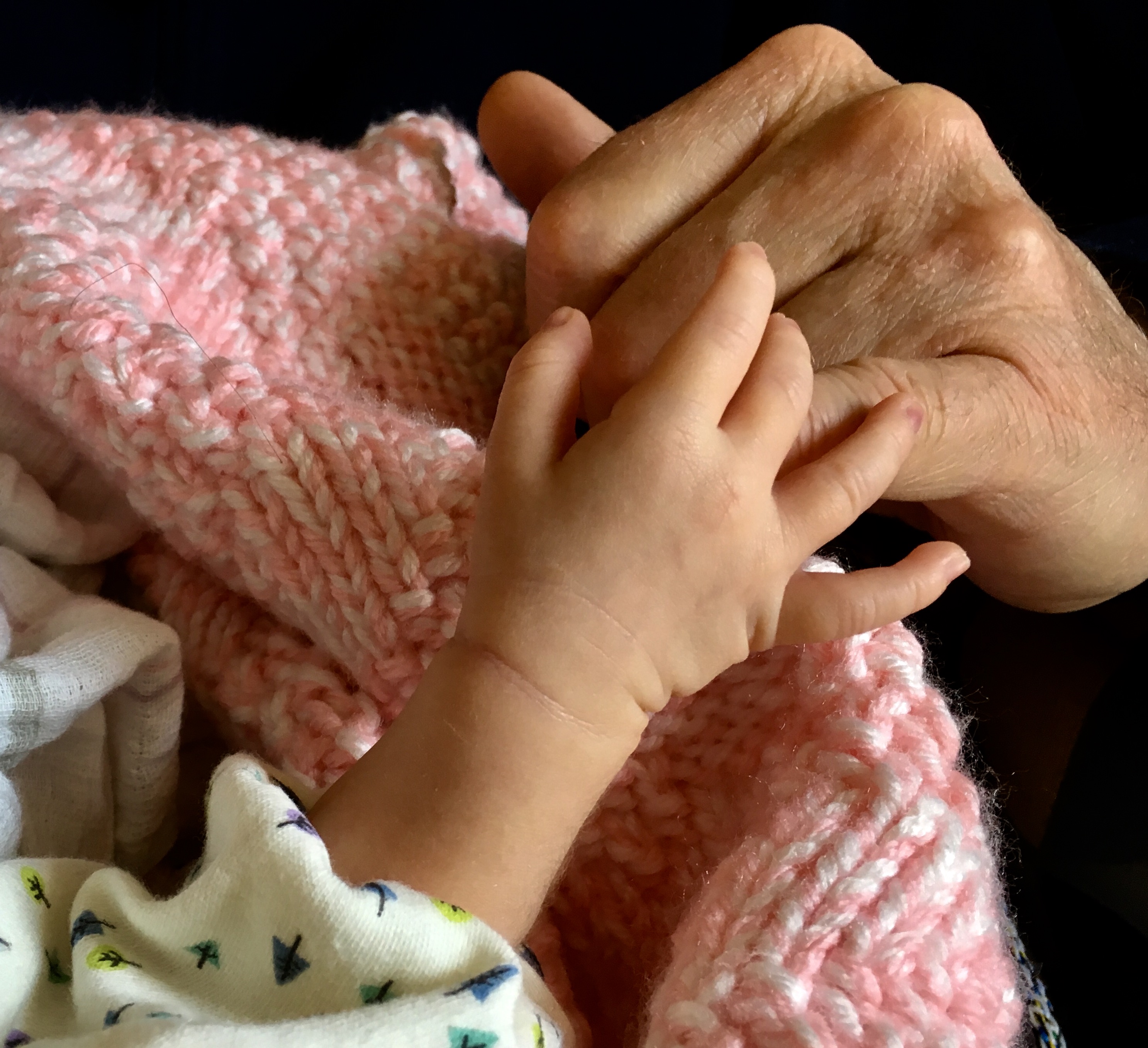
So when they take my hand, my heart melts, knowing I hold on loosely, knowing I must, someday, somehow, let go.
And before I do, they will come back to hold my hand loosely, knowing they need to let me go.
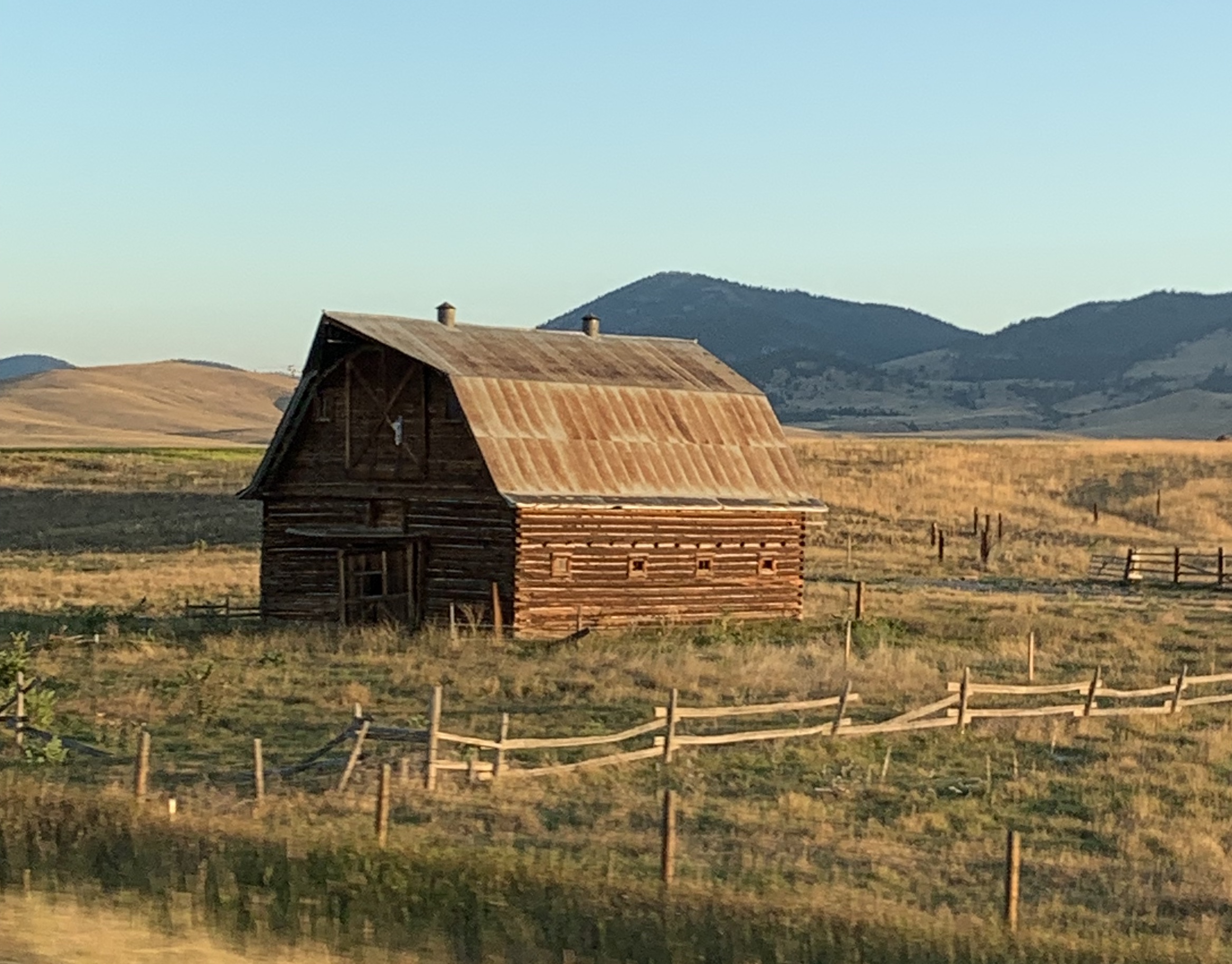
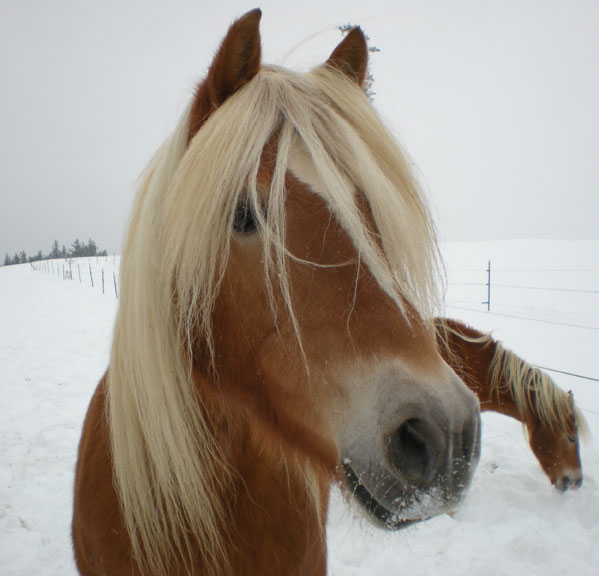
The barn roof sags like an ancient mare’s back. The field, overgrown, parts of it a marsh where the pond spills over. No hay or sacks of grain are stacked for the cold. In the harsh winters of my youth, Mama, with an axe, trudged tirelessly each day through deep snow, balanced on the steep bank, swung down to crack the ice so horses could drink. With each blow I feared she would fall, but she never slipped. Now Mama’s bent and withered, vacant gray eyes fixed on something I can’t see. I dip my head when she calls me Mom. What’s to say? The time we have’s still too short to master love, and then, the hollow that comes after. ~Kitty Carpenter “Farm Sonnet”
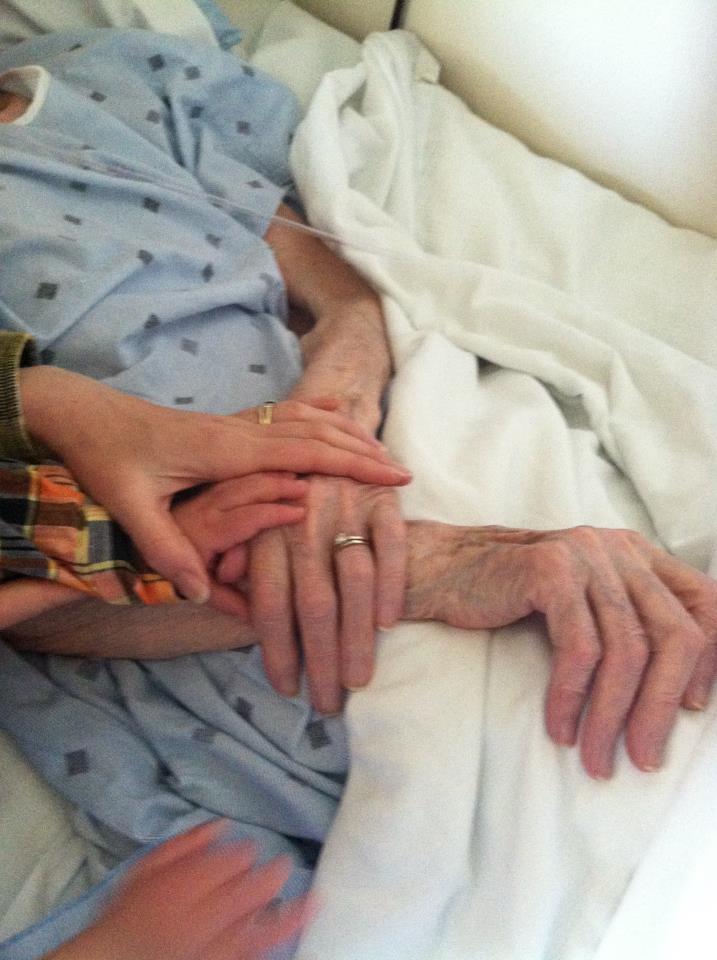
Vigil at my mother’s bedside
Lying still, your mouth gapes open as I wonder if you breathe your last. Your hair a white cloud Your skin baby soft No washing, digging, planting gardens Or raising children Anymore. Hollowed.
Where do your dreams take you? At times you wake in your childhood home of Rolling wheat fields, boundless days of freedom. Other naps take you to your student and teaching days Grammar and drama, speech and essays. Yesterday you were a young mother again Juggling babies, farm and your wistful dreams.
Today you looked about your empty nest Disguised as hospital bed, Wondering aloud about Children grown, flown. You still control through worry and tell me: Travel safely Get a good night’s sleep Take time to eat Call me when you get there
I dress you as you dressed me I clean you as you cleaned me I love you as you loved me You try my patience as I tried yours. I wonder if I have the strength to Mother my mother For as long as she needs.
When I tell you the truth Your brow furrows as it used to do When I disappointed you~ This cannot be A bed in a room in a sterile place Waiting for death Waiting for heaven Waiting
And I tell you: Travel safely Eat, please eat Sleep well Call me when you get there.




























 Barnstorming