Make no mistake: if He rose at all it was as His body; if the cells’ dissolution did not reverse, the molecules reknit, the amino acids rekindle, the Church will fall…
It was not as the flowers, each soft Spring recurrent; it was not as His Spirit in the mouths and fuddled eyes of the eleven apostles; it was as His Flesh: ours. ~John Updike from “Seven Stanzas at Easter”
Our flesh is so weak, so temporary, as ephemeral as a dew drop on a petal yet with our earthly vision it is all we know of ourselves and it is what we trust knowing of Him.
He was born as our flesh, from our flesh. He walked and hungered and thirsted and slept as our flesh. He died, His flesh hanging in tatters, blood spilling freely breath fading to nought, speaking Words our ears can never forget.
And He rose again as His flesh like ours to walk and hunger and thirst alongside us and here on this hill we meet together, –flesh of His flesh– here among us He is risen –flesh of our flesh– married forever as the Church and its fragile, flawed and everlasting body.
“Why do you look for the living among the dead? He is not here; he has risen!” Luke 24: 5-6
Thank you for following along during this Lenten season. May you have a blessed Easter celebration to carry with you through the weeks, months and years ahead.
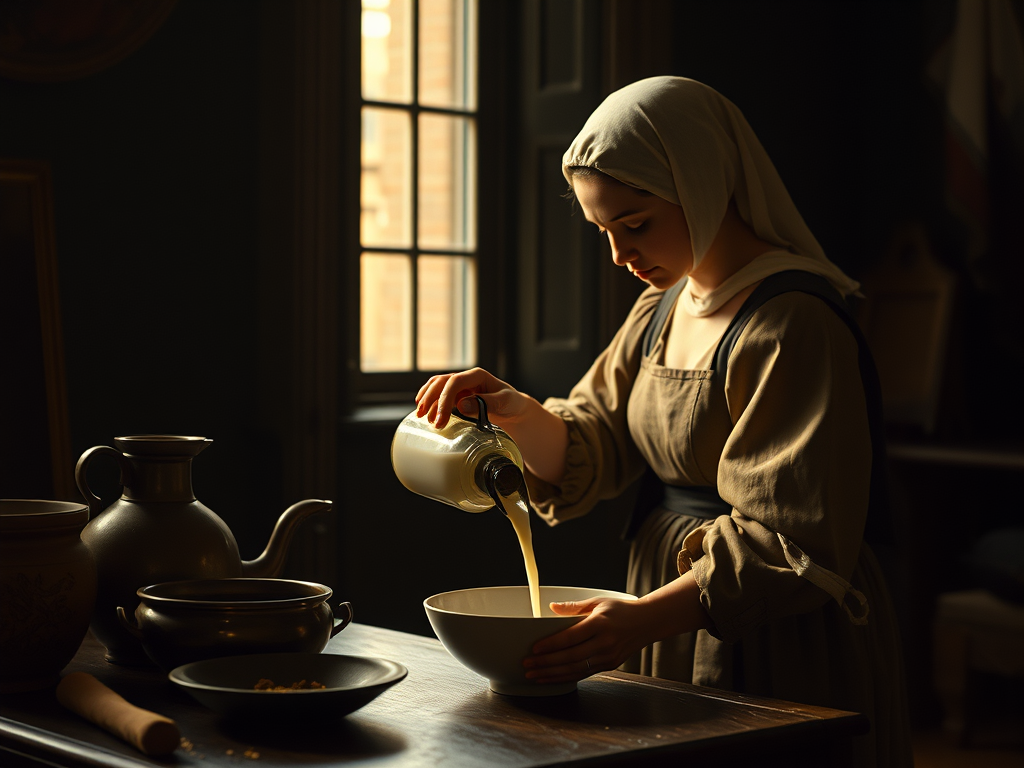
AI image created for this post
One-Time
Monthly
Yearly
Make a one-time or recurring donation to support daily Barnstorming posts
…having loved his own who were in the world, he now showed them the full extent of his love. John 13:1
What e’er the soul has felt or suffered long, Oh, heart! this one thing should not be forgot: Christ washed the feet of Judas. ~George Marion McClellan from “The Feet of Judas” in The Book of American Negro Poetry 1922
Here is the source of every sacrament, The all-transforming presence of the Lord, Replenishing our every element Remaking us in his creative Word.
For here the earth herself gives bread and wine, The air delights to bear his Spirit’s speech, The fire dances where the candles shine, The waters cleanse us with His gentle touch.
And here He shows the full extent of love To us whose love is always incomplete, In vain we search the heavens high above, The God of love is kneeling at our feet.
Though we betray Him, though it is the night. He meets us here and loves us into light. ~Malcolm Guite “Maundy Thursday”
May the power of your love, Lord Christ, fiery and sweet as honey, so absorb our hearts as to withdraw them from all that is under heaven. Grant that we may be ready to die for love of your love, as you died for love of our love. ~St. Francis of Assisi
On Maundy Thursday, this is how to love Jesus’s love:
No arguing over who is the greatest. No hiding dirty feet needing washing. No making promises we don’t keep. No holding back the most precious of gifts. No falling asleep when asked to keep watch. No selling out with a kiss. No drawing of swords. No turning and running away. No lying and denying. No covering up our face and identity. No looking back. No clinging to the comforts of the world.
But of course I fail again and again when I’m fearful. My heart resists leaving behind the familiar.
Plucked from the crowd, we must pick up and carry His load (which is, of course, our load) for Him. Now is our turn to hold on and not let go, as if life depends on it. Which it does — requiring no nails.
The fire of His love leaves our sin in ashes. The cleansing of His sacrifice washes us. The food of His body nurtures our souls.
From nurture and washing and ashes rises new life: Love of His love for our love.
This year’s Lenten theme:
…where you go I will go… Ruth 1:16
AI image created for this post
Lyrics: Angels where you soar up to God’s own light take my own lost bird on your hearts tonight and as grief once more mounts to heaven and sings let my love be heard
Lyrics: I, your Lord and Master, Now become your servant. I who made the moon and stars Will kneel to wash your feet. This is My commandment: To love as I have loved you.
Kneel to wash each other’s feet As I have done for you. All the world will know You are My disciples By the love that you offer, The kindness you show. You have heard the voice of God In the words that I have spoken. You beheld Heaven’s glory And have seen the face of God.
One-Time
Monthly
Yearly
Make a one-time or recurring donation to support daily Barnstorming posts
Morning of buttered toast; of coffee, sweetened, with milk.
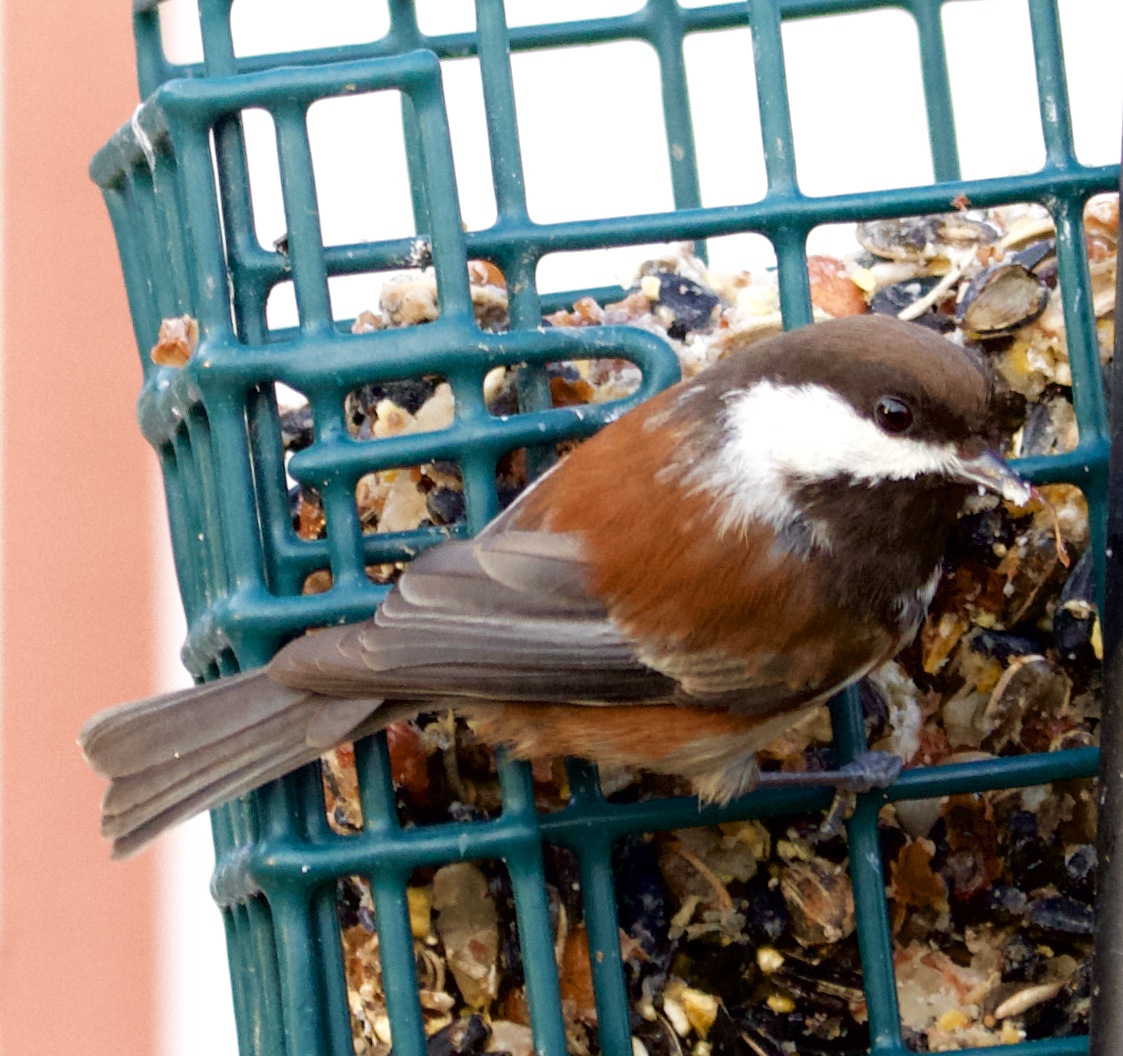
Out the window, snow-spruces step from their cobwebs. Flurry of chickadees, feeding then gone. A single cardinal stipples an empty branch— one maple leaf lifted back.
I turn my blessings like photographs into the light; over my shoulder the god of Not-Yet looks on:
Ample litany, sparing nothing I hate or love, not-yet-silenced, not-yet-fractured; not-yet-
Not-yet-not.
I move my ear a little closer to that humming figure, I ask him only to stay. ~Jane Hirshfield “Not Yet”from The Lives of the Heart.
To wait for the “not yet” is a hard sweet tension.
There is tension in knowing that something profound is happening – today’s vernal equinox, a brilliant sunrise, a fading sunset, new life growing, but the transformation is not yet complete, and I’m unsure when it will be.
I am still unfinished business and so is everyone else.
Soon, I will be reminded of what is yet to come.
I will know the shock of the empty tomb. My heart will burn within me as more is revealed, through the simple act of bread breaking.
Waiting is never easy; it is painful to be patient, to be unfinished, staying open to possibility and hope.
Others don’t understand why I wait, nor do they comprehend what I could possibly be waiting for.
I’m all-ready, not-yet-finished, but sometime soon.
This year’s Lenten theme:
…where you go I will go… Ruth 1:16
AI image created for this post
One-Time
Monthly
Yearly
Make a one-time or recurring donation to support daily Barnstorming posts
The church, I think, is God’s way of saying, “What I have in the pot is yours, and what I have is a group of misfits whom you need more than you know and who need you more than they know.”
“Take, and eat,” he says, “and take, and eat, until the day, and it is coming, that you knock on my door. I will open it, and you will see me face to face.”
He is preparing a table. He will welcome us in. Jesus will be there, smiling and holy, holding out a green bean casserole. And at that moment, what we say, what we think, and what we believe will be the same: “I didn’t know how badly I needed this.” ~Jeremy Clive Huggins from “The Church Potluck”
“When someone invites you to a wedding feast, do not take the place of honor, for a person more distinguished than you may have been invited. 9 If so, the host who invited both of you will come and say to you, ‘Give this person your seat.’ Then, humiliated, you will have to take the least important place. 10 But when you are invited, take the lowest place, so that when your host comes, he will say to you, ‘Friend, move up to a better place.’ Then you will be honored in the presence of all the other guests. 11 For all those who exalt themselves will be humbled, and those who humble themselves will be exalted.”
“When you give a luncheon or dinner, do not invite your friends, your brothers or sisters, your relatives, or your rich neighbors; if you do, they may invite you back and so you will be repaid. 13 But when you give a banquet, invite the poor, the crippled, the lame, the blind, 14 and you will be blessed. Although they cannot repay you, you will be repaid at the resurrection of the righteous.” Luke 14: 7-14
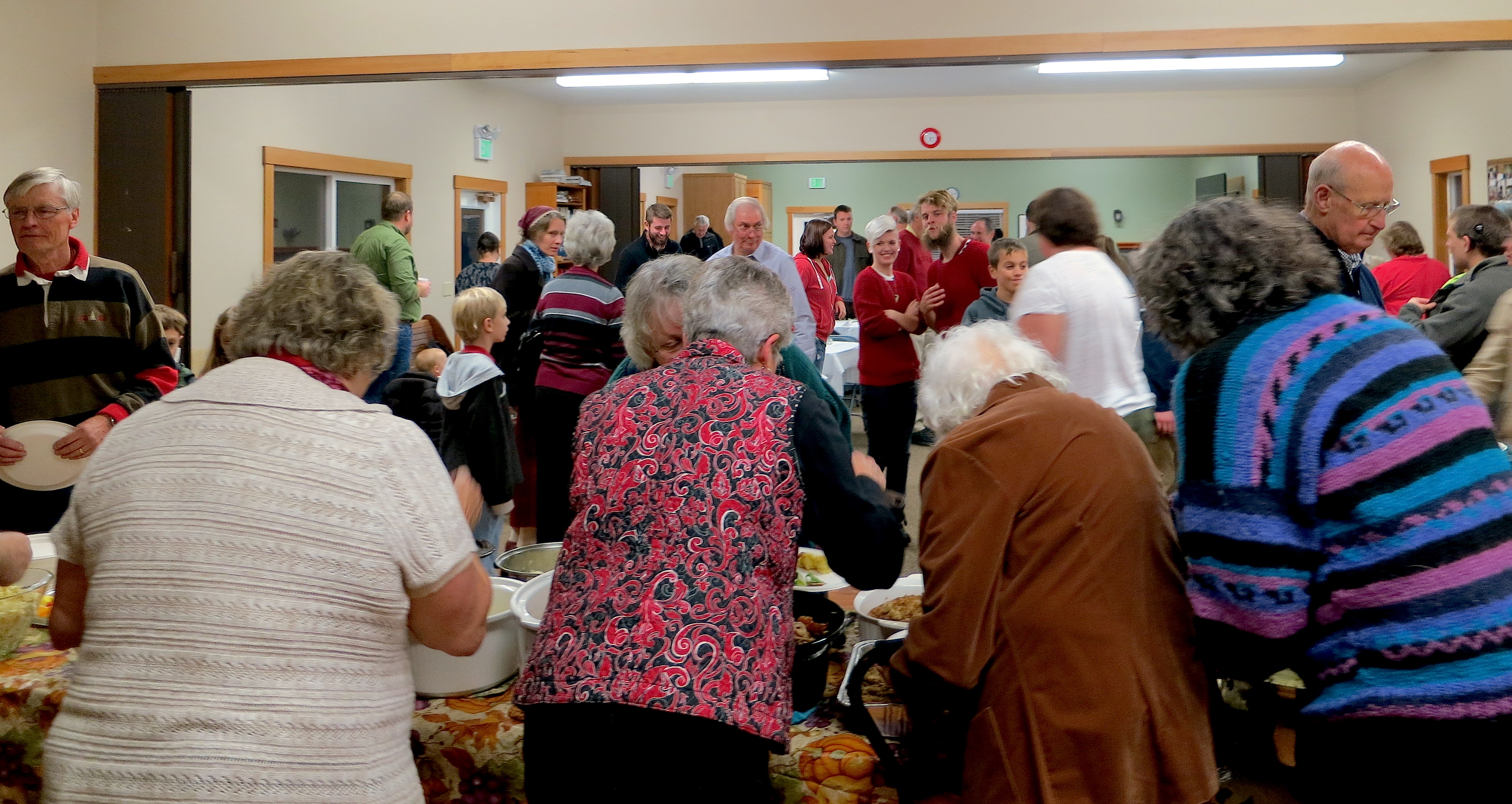
In the unspoken hierarchy of what makes a church function, I’m a kitchen lady and always will be. I remember those very women from my childhood church of the fifties and sixties– their tight-knit ability to function as if one organism, swarming in aprons among tables set up in the fellowship hall and bustling around in the back by the stoves with steaming pots and pans and the occasionally dropped plate.
They kept the rest of us alive, those church ladies, by feeding us efficiently and plentifully and never ever sitting down. I would occasionally see them eating standing up in the back of the hall, chatting amiably among themselves after the rest of us were served, but I knew they carefully wrapped up the leftovers during the clean up to deliver to shut-ins who couldn’t make it to the church supper.
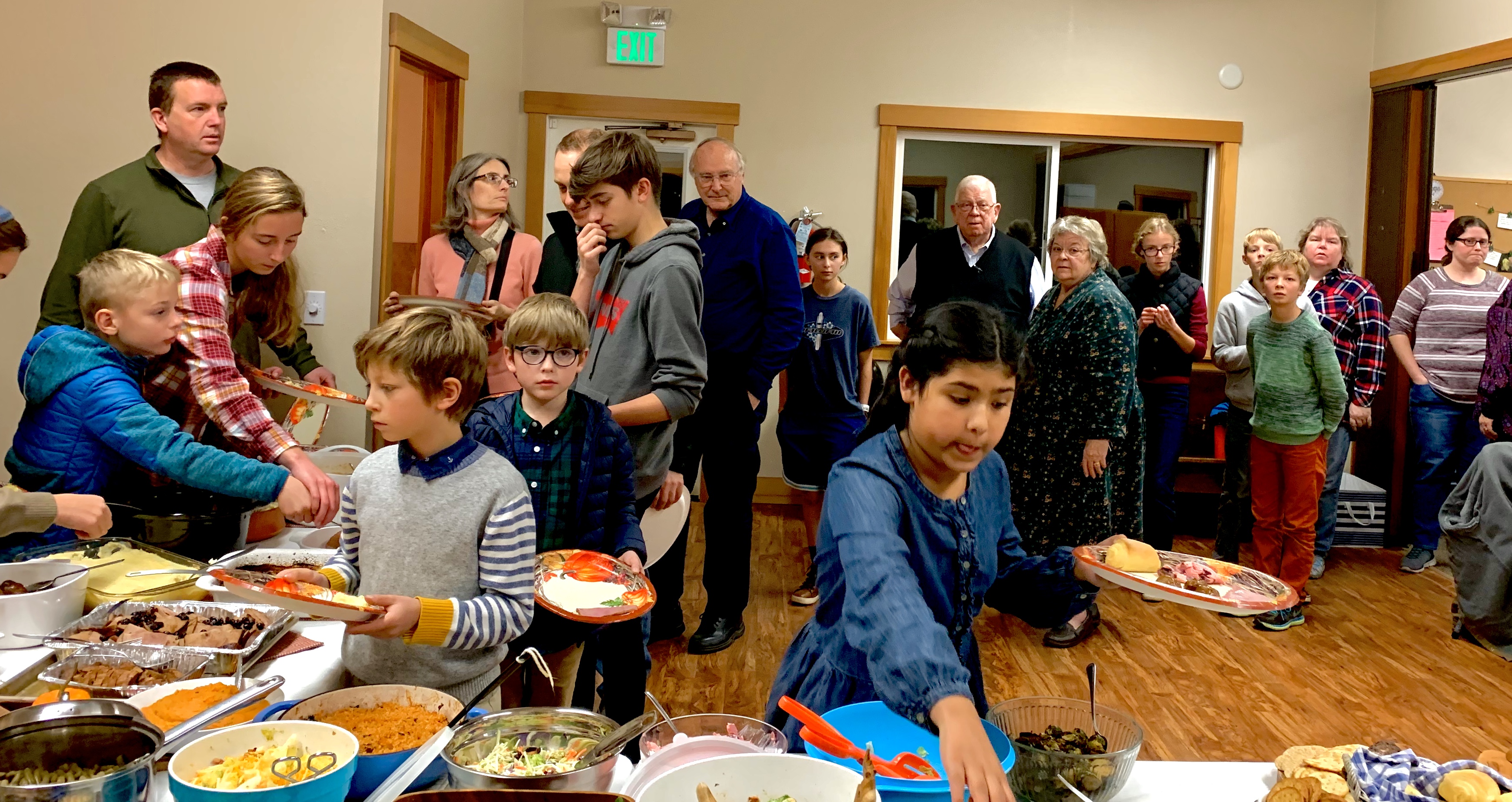
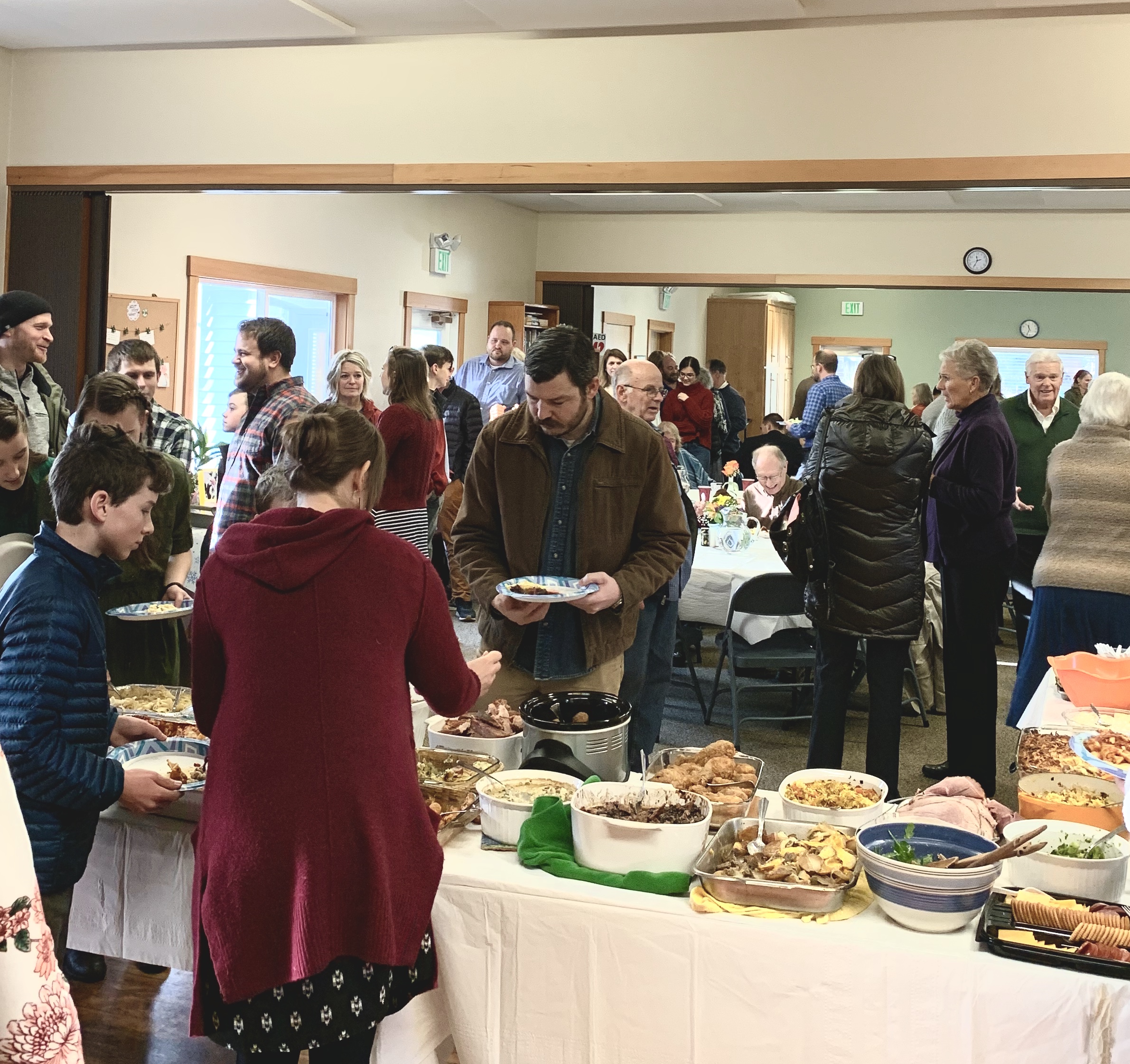
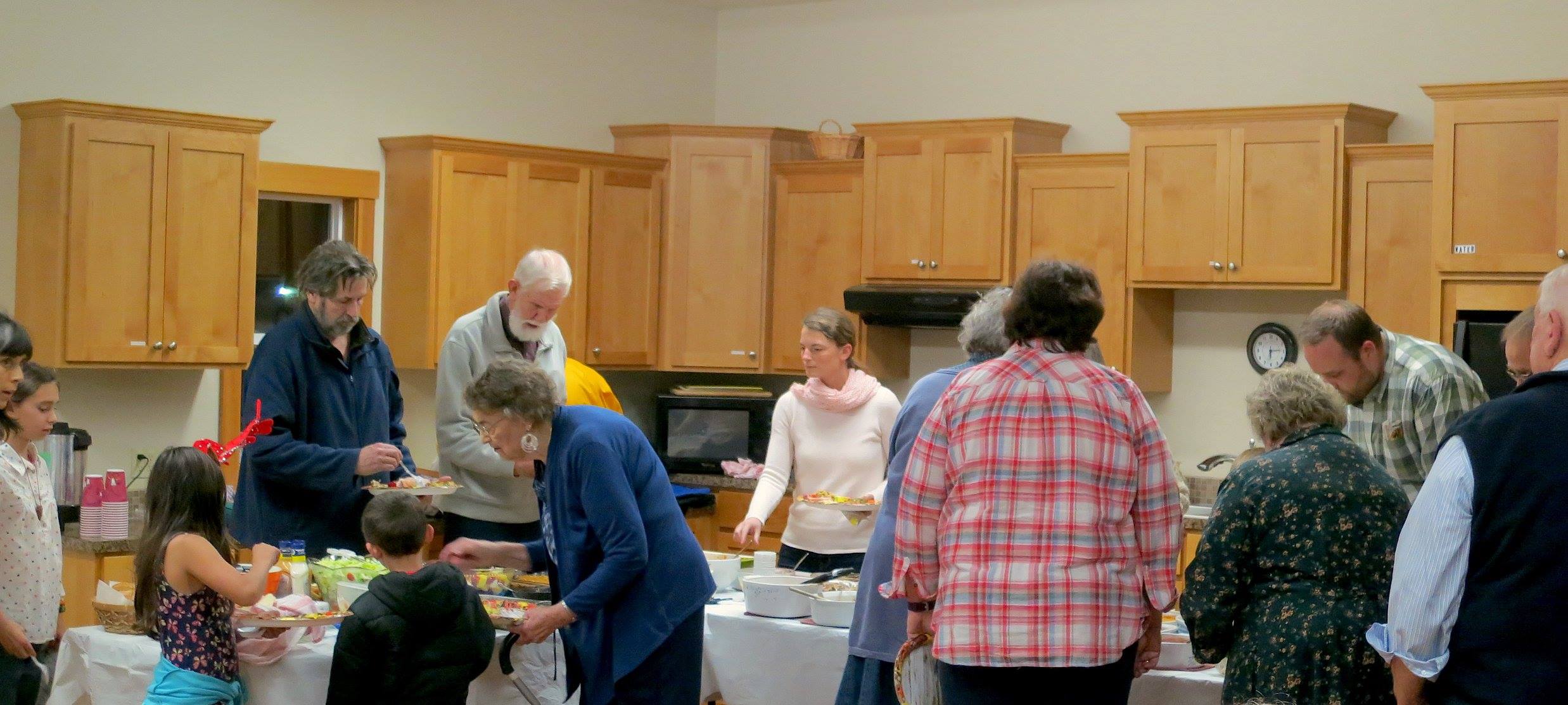
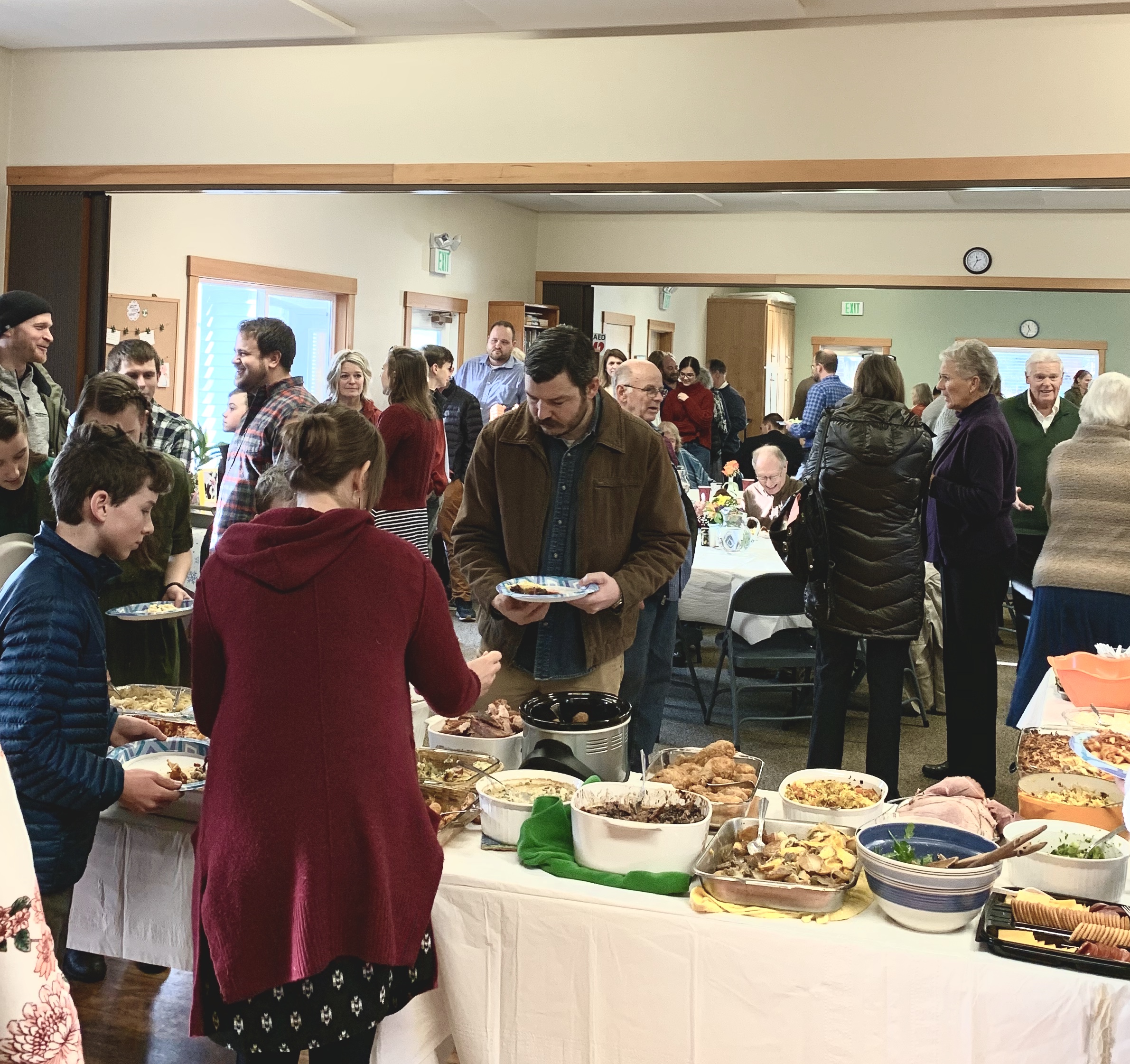
I knew I was destined to become a kitchen lady, shy and introverted as I am, hiding myself behind huge plates of food and piles of dish cloths. Our church potlucks together every Sunday after our evening worship. For me, it is a welcoming place of comfort and clean up filled with plenty of leftovers for anyone who needs them.
That perfectly describes the kingdom of God in my book and His Book.
AI image created for this post
This year’s Lenten theme:
…where you go I will go… Ruth 1:16
One-Time
Monthly
Yearly
Make a one-time or recurring donation to support daily Barnstorming posts
Schizomeno—meaning in Greek “ripped open.” It occurs twice in the Gospels: once when the temple veil is torn the day of Christ’s crucifixion. The other is when “the heavens opened” upon Christ’s baptism.
But they didn’t just “open.” They were ripped open. God broke into history with a voice and an act of salvation unlike any other.
To study the Bible with people of faith is to see it not only as an object of academic or antiquarian interest but also as a living word, a source of intellectual challenge, inspiration, comfort, uncomfortable ambiguities, and endless insights for people who gather in willingness to accept what seems to be God’s invitation: Wrestle with this.
Healthy churches wrestle, working out their salvation over coffee and concordances, knowing there is nothing pat or simple about the living Word, but that it invites us into subtle, supple, resilient relationship with the Word made flesh who dwells, still, among us. ~Marilyn McEntyre from“Choosing Church”
Passing down this story of Christ’s life, death, resurrection and ascension is not merely, or mainly, an exercise in cognition. Nor is it a divinely inspired game of telephone, where we simply whisper a message to the next generation through the ages.
Inevitably the story comes to us through ordinary people over dinner tables, at work, in songs, through worship, conflict, failure, repentance, ritual, liturgy, art, work and family.
Christianity is something we believe, but it is also a practice. Central to our practice is what Christians call sacraments, where the mysteries of faith are manifest through the ordinary stuff of earth—water and skin, bread and teeth. ~Tish Harrison Warren from “True Story”
photo by Barb Hoelle
Mom, You raised your hands while we sang this morning like I’ve never known you to, but I guess until recently I’ve never really known you in a church that let you feel alive.
I’m sure the last one did before it faded, but I was too young to distinguish church from habitual gathering and they wouldn’t have taught me grace if they’d wanted to,
and that was before I cracked our lives apart.
But it was then, wasn’t it, in the aftermath, that I saw more of your layers and saw that they were tapestries, punctured a thousand times and intricate, majestic, though they’ve been torn.
Ripped open to allow access – that is what God has done to enter into this ordinary stuff of earth, and giving us access to Him.
I enter the church sanctuary twice every Sunday to be reminded of this struggle: a wrestling match with ourselves, with each other, with everyday ordinary and ornery stuff, with the living Word of God.
None of this is easy and it isn’t meant to be. We must work for understanding and struggle for contentment and commitment.
I keep going back – gladly, knowing my guilt, eager to be transformed, not only because I choose to be in church, but because He chose to invite me there.
photo by Joel DeWaardAI image created for this post
One-Time
Monthly
Yearly
Make a one-time or recurring donation to support daily Barnstorming posts
How can I feel so warm Here in the dead center of January? I can Scarcely believe it, and yet I have to, this is The only life I have. ~James Wright from “A Winter Daybreak Above Vence”
Once I saw a chimpanzee gaze at a particularly beautiful sunset for a full 15 minutes, watching the changing colors [and then] retire to the forest without picking a pawpaw for supper. ~Adriaan Krotlandt, Dutch ethologist in Scientific American (1962)
To-day I shall be strong, No more shall yield to wrong, Shall squander life no more; Days lost, I know not how, I shall retrieve them now; Now I shall keep the vow I never kept before.
Ensanguining the skies How heavily it dies Into the west away; Past touch and sight and sound Not further to be found, How hopeless under ground Falls the remorseful day. ~A.E. Houseman from “How Clear, How Lovely Bright”
to the northwest
It was like a church to me. I entered it on soft foot, Breath held like a cap in the hand. It was quiet. What God there was made himself felt, Not listened to, in clean colours That brought a moistening of the eye, In a movement of the wind over grass. There were no prayers said. But stillness Of the heart’s passions — that was praise Enough; and the mind’s cession Of its kingdom. I walked on, Simple and poor, while the air crumbled And broke on me generously as bread. ~ R.S. Thomas “The Moor”
The dead center of January here in the Pacific Northwest is usually pouring-rain gray-skies monochrome-mist.
But at times, mid-January sunsets are an evolving array of crimson and purple color and patterns, streaks and swirls, gradation and gradual decline.
It all takes place in silence. No bird song, no wind, no spoken prayer. Yet communion takes place – the air breaks and feeds us like manna from heaven.
Filled to the brim with a reminder:
May I squander my life no more and treasure each moment.
May I vow to cherish God, church, family, friends, alongside those unknown and struggling in my community.
May I witness to the winter’s bleeding out at the last light of day.
AI image created for this post
One-Time
Monthly
Yearly
Make a one-time or recurring donation to support daily Barnstorming posts
Make a monthly donation
Make a yearly donation
Choose an amount
$10.00
$25.00
$50.00
$5.00
$15.00
$100.00
$5.00
$15.00
$100.00
Or enter a custom amount
$
Your contribution is deeply appreciated to help offset the cost of maintaining an ad-free website.
It is precisely because we are weary, and poor in spirit, that God can touch us with hope. This is not an easy truth. It means that we do accept our common lot, and take up our share of the cross. It means that we do not gloss over the evils we confront every day, both within ourselves and without. Our sacrifices may be great.
But as the martyred archbishop of El Salvador, Oscar Romero, once said, it is only the poor and hungry, those who know they need someone to come on their behalf, who can celebrate Christmas. We can ask for courage, however, and trust that God has not led us into this new land only to abandon us there. ~Kathleen Norrisfrom God With Us
photo by Joel DeWaard
On Epiphany day, we are still the people walking. We are still people in the dark, and the darkness looms large around us, beset as we are by fear, anxiety, brutality, violence, loss — a dozen alienations that we cannot manage.
We are — we could be — people of your light. So we pray for the light of your glorious presence as we wait for your appearing; we pray for the light of your wondrous grace as we exhaust our coping capacity; we pray for your gift of newness that will override our weariness; we pray that we may see and know and hear and trust in your good rule.
That we may have energy, courage, and freedom to enact your rule through the demands of this day. We submit our day to you and to your rule, with deep joy and high hope. ~Walter Brueggemann from Prayers for a Privileged People
When the song of the angels is stilled, when the star in the sky is gone, when the kings and princes are home, when the shepherds are back with their flocks, the work of Christmas begins: to find the lost, to heal the broken, to feed the hungry, to release the prisoner, to rebuild the nations, to bring peace among the people, to make music in the heart. ~Howard Thurman from The Mood of Christmas & Other Celebrations
O God, who am I now? Once, I was secure
in familiar territory in my sense of belonging
unquestioning of
the norms of my culture the assumptions built into my language the values shared by my society.
But now you have called me out and away from home and I do not know where you are leading. I am empty, unsure, uncomfortable. I have only a beckoning star to follow.
Journeying God, pitch your tent with mine so that I may not become deterred by hardship, strangeness, doubt. Show me the movement I must make
toward a wealth not dependent on possessions toward a wisdom not based on books toward a strength not bolstered by might toward a God not confined to heaven
All the Advent anticipation is over, Christmas and New Years are now past. Today is Epiphany, when I regret my energy and courage is waning just as the work of Christmas must begin.
I’ve swept up the last of the fir needles that dropped to the floor from a lovely Christmas tree that I watered faithfully in the house for over two weeks. But no amount of water could sustain what is rootless.
So it is with us.
I too am drying up, parts of me left behind for others to sweep up. I too must have roots of faith to survive in a troubled world.
The real work of Christmas is year-long — often very hard intensive work, not always the fun stuff of the last month, yet needed in the brokenness of hunger, disease, conflict, war and random violence, poverty, addictions, depression and pain.
We don’t need full stockings on the hearth, Christmas villages on the side table, or a blinking star on the top of the tree to reflect on the comfort of God’s care and the astounding beauty of His creation, all available to us without batteries, electrical plug ins, or the need of a ladder.
The real work of Christmas is God manifest on earth – “scandalously earthed” – in our own lives. We recognize Him in the homeless and forgotten. We are made alive to the possibility that we can make a difference in His name, to walk in others’ shoes, just as He walks in ours.
Every day. Twelve months. Life long.
Are we ready?
Unclench your fists Hold out your hands. Take mine. Let us hold each other. Thus is his Glory Manifest. ~Madeleine L’Engle “Epiphany”
One-Time
Monthly
Yearly
Make a one-time or recurring donation to support daily Barnstorming posts
Make a monthly donation
Make a yearly donation
Choose an amount
$10.00
$25.00
$50.00
$5.00
$15.00
$100.00
$5.00
$15.00
$100.00
Or enter a custom amount
$
Your contribution is deeply appreciated to help offset the costs of maintaining an ad-free website.
Giving from hand to hand— this is what Jesus was born to do: a connection so direct with those He met that He was able to give life to the dead, sight to the blind, heal those possessed.
We are told there were times He became overwhelmed by the demands He felt, and sought out solitude. As human beings who get weary, we understand His need for respite. No man can be a superhero 24/7, yet God promises to be our rescuer for eternity.
Jesus’ story starts with the giving of gifts to Him, from the awed presence of the shepherds to the wisdom of the magi. We are incapable of giving God anything He doesn’t already possess, yet He only asks us to show up.
He asks for our presence, nothing more, not just at Christmas and Easter but every day and every moment.
Like rivers flowing together to create something deep and wide and grand, the gift of ourselves becomes especially mighty when combined with so many others showing up. Something greater this way comes.
Let’s keep showing up after Christmas and keep giving what we don’t have as well as what we do have. Jesus makes it greater and so much greener than our wild imaginings.
One-Time
Monthly
Yearly
Make a one-time or recurring donation to support daily Barnstorming posts
The Almighty appeared on earth as a helpless human baby, needing to be fed and changed and taught to talk like any other child. The more you think about it, the more staggering it gets. Nothing in fiction is so fantastic as this truth of the Incarnation. ~J.I. Packer from Come, Thou Long-Expected Jesus: Experiencing the Peace and Promise of Christmas
I am the living bread that came down from heaven. Whoever eats this bread will live forever. ~John 6:51
Jesus replied, “They do not need to go away. You give them something to eat.” ~Matthew 14:16
He has filled the hungry with good things… ~Luke 1:53
If there is one thing universal about human beings, it is that we must eat to grow, stay healthy, and stay alive. Feeding a hungry person is one of the most nurturing and loving actions available to us in our outreach to others.
I learned this first as a nurses’ aide in a rest home when I was a teenager. The most disabled residents depended on me to feed them, bite full by bite full. I could not rush them or they might not swallow properly and could aspirate. I needed to be aware of what they liked and didn’t like or it might end up back in my lap in much less appetizing form.
Later, as a mother feeding my children, especially late at night rocking in our rocking chair, I found those times to be some of the most precious hours I ever spent with them. I was able to make a tangible difference in their lives with a gift from myself — of myself.
So too, we are fed by God–from His Word, from His Spirit, from His Hand at the Supper as He breaks the bread, from His Body. Our eyes are opened, our hearts burn within us.
But the ironic truth is that with the Incarnation, the world – we mere human beings – fed and nourished God Himself. He thrived, grew, and lived among us because His mother nourished Him from her own body and His earthly father had a trade that made it possible to feed his family.
Feeding others as we are fed. Feeding God when He chose to be helpless in our hands, trusting and needing us as much as we trust and need Him.
AI image created for this postAI image created for this post
This year’s Advent theme is from Dietrich Bonhoeffer’s sermon on the First Sunday in Advent, December 2, 1928:
The celebration of Advent is possible only to those who are troubled in soul, who know themselves to be poor and imperfect, and who look forward to something greater to come. For these, it is enough to wait in humble fear until the Holy One himself comes down to us, God in the child in the manager.
God comes.
He is, and always will be now, with us in our sin, in our suffering, and at our death. We are no longer alone. God is with us and we are no longer homeless. ~Dietrich Bonhoeffer – from Christmas Sermons
One-Time
Monthly
Yearly
Make a one-time or recurring donation to support daily Barnstorming posts
I finally have faith that no matter what happens to me, I will never be beyond help, because I have seen parents, friends and acquaintances live with catastrophe and illness. They were beautifully cared for by those who most loved them.
Twenty-nine years in a tiny church has proved to me that when two or more are gathered who believe in Goodness, they will take care of those in their community who are suffering,scared, lonely. So what are my closest people going to do when mytime comes? They will help me come through to whatever awaits. I’ve learned that we can bank on this. Graciousness almost always bats last. ~Anne Lamott from “Have a Little Faith” from Small Victories: Spotting Improbable Moments of Grace.
photo by Barb Hoelle
…when I experienced the warm, unpretentious reception of those who have nothing to boast about, and experienced a loving embrace from people who didn’t ask any questions, I began to discover that a true spiritual homecoming means a return to the poor in spirit to whom the kingdom of heaven belongs. ~Henri Nouwen from The Return of the Prodigal Son
I urge you to live a life worthy of the calling you have received.Be completely humble and gentle; be patient, bearing with one another in love.Make every effort to keep the unity of the Spirit through the bond of peace.There is one body and one Spirit, just as you were called to one hope when you were called;one Lord, one faith, one baptism;one God and Father of all, who is over all and through all and in all. But to each one of us grace has been given as Christ apportioned it. Ephesians 4:1-7
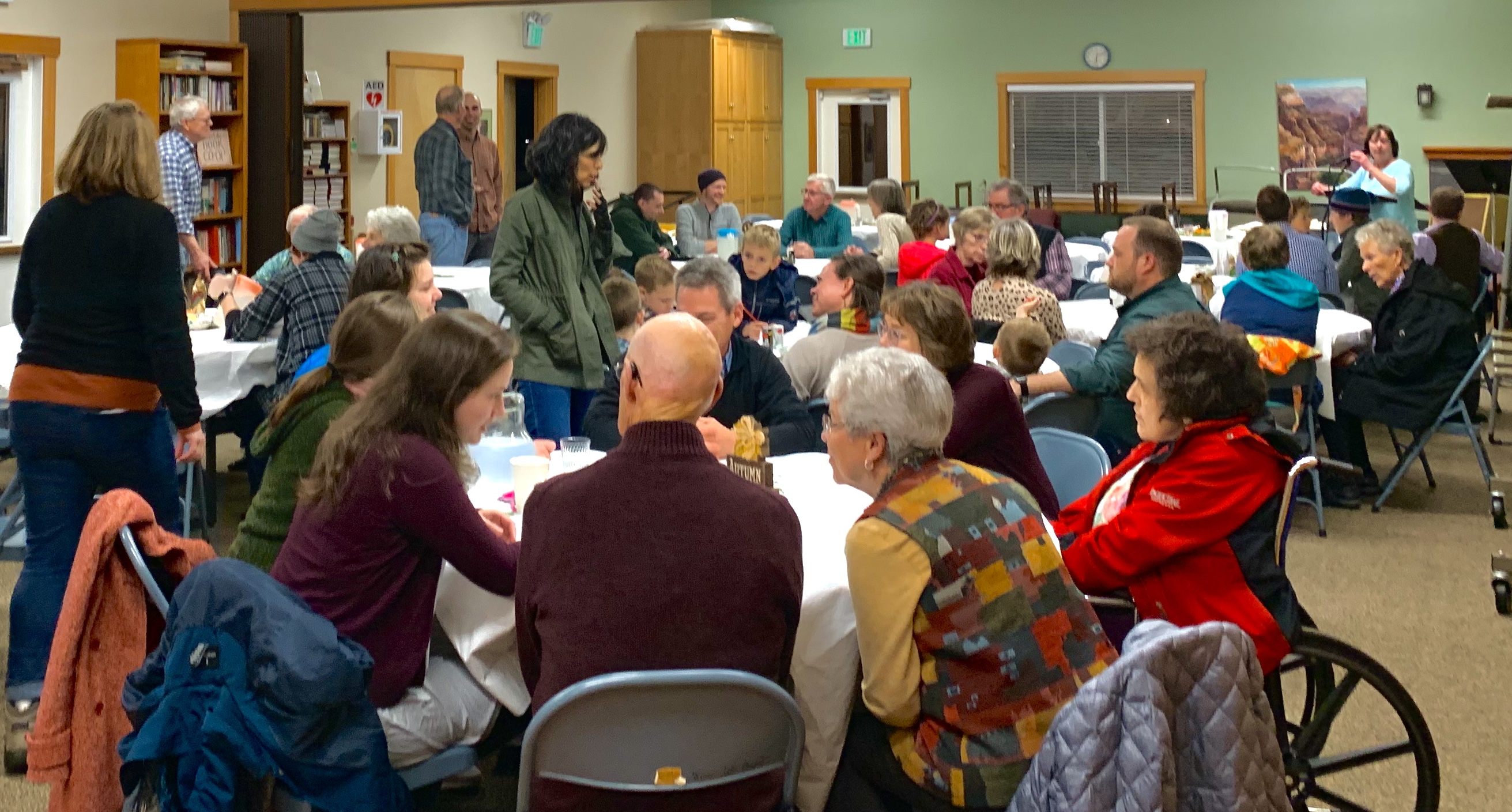
The Wiser Lake Chapel sanctuary was a warm and open space with a high lofted ceiling, dark wood trim accents matching the ancient pews, and a plain wooden cross above the pulpit in front. There was a pungent smell from fir bough garlands strung along high wainscoting, and a circle of candles standing lit on a small altar table. Apple pie was baking in the kitchen oven, blending with the aroma of good coffee and hot cocoa.
The service was a Sunday School Christmas program, with thirty some children of all ages and skin colors standing up front in bathrobes and white sheet angel gowns, wearing gold foil halos, tinfoil crowns and dish towels wrapped with string around their heads. They were prompted by their teachers through carols and readings of the Christmas story. The final song was Silent Night, sung by candle light, with each child and member of the congregation holding a lit candle. The evening ended in darkness, with the soft glow of candlelight illuminating faces of the young and old, some in tears streaming over their smiles.
It felt like home. We had found our church. We’ve never left. Over three decades it has had peeling paint and missing shingles, a basement that sometimes floods when the rain comes down hard, toilets that don’t always flush well, and though it smells heavenly on potluck days, there are times when it can be just a bit out of sorts and musty.

It also has a warmth and character and uniqueness that is unforgettable.
Like our pastors over the decades – Bruce Hemple, Stephen Tamminga, Albert Hitchcock and now Nathan Chambers – our chapel is humble and unpretentious yet envelops its people in a loving embrace of God’s Word, with warmth, character, grace and a uniqueness that is unforgettable.
That describes all the flawed folks who have gathered there over the years, once lost but now found.
We know we belong, such as we are, just as we are, gifted with grace by a God we worship together in this place.
Perhaps you belong at this old church too…
AI image created for this post
This year’s Advent theme is from Dietrich Bonhoeffer’s sermon on the First Sunday in Advent, December 2, 1928:
The celebration of Advent is possible only to those who are troubled in soul, who know themselves to be poor and imperfect, and who look forward to something greater to come. For these, it is enough to wait in humble fear until the Holy One himself comes down to us, God in the child in the manager.


God comes.
He is, and always will be now, with us in our sin, in our suffering, and at our death. We are no longer alone. God is with us and we are no longer homeless. ~Dietrich Bonhoeffer – from Christmas Sermons

One-Time
Monthly
Yearly
Make a one-time or recurring donation to support daily Barnstorming posts