Let me remember you, voices of little insects, Weeds in the moonlight, fields that are tangled with asters, Let me remember, soon will the winter be on us, Snow-hushed and heavy.
Over my soul murmur your mute benediction, While I gaze, O fields that rest after harvest, As those who part look long in the eyes they lean to, Lest they forget them. ~Sara Teasdale from “September Midnight”
The tumult and the shouting dies; The Captains and the Kings depart: Still stands Thine ancient sacrifice, An humble and a contrite heart. Lord God of Hosts, be with us yet, Lest we forget—lest we forget! ~Rudyard Kipling from “Recessional”
If I were called upon to identify briefly the principal trait of the entire twentieth century, here too, I would be unable to find anything more precise and pithy than to repeat once again: Men have forgotten God. ~Aleksandr Solzhenitzyn from his 1983 acceptance speech for the Templeton Prize
Lest I forget…
I look long in the eyes I lean to…
whether a loved one, or the mountains, or summer-weary fields, or the face of God Himself.
I cannot risk forgetting Who must be remembered — He is encased in my heart like a treasured photograph, like a precious gem, like a benediction soothing me quiet when anxious.
It is His ultimate promise: Neither will He forget me – looking long in my eyes that lean in to Him.
[And the Lord answered] Can a woman forget her nursing child, that she should not have compassion on the son of her womb? Yes, they may forget, yet I will not forget you. Isaiah 49:15
One-Time
Monthly
Yearly
Make a one-time or recurring donation to support daily Barnstorming posts
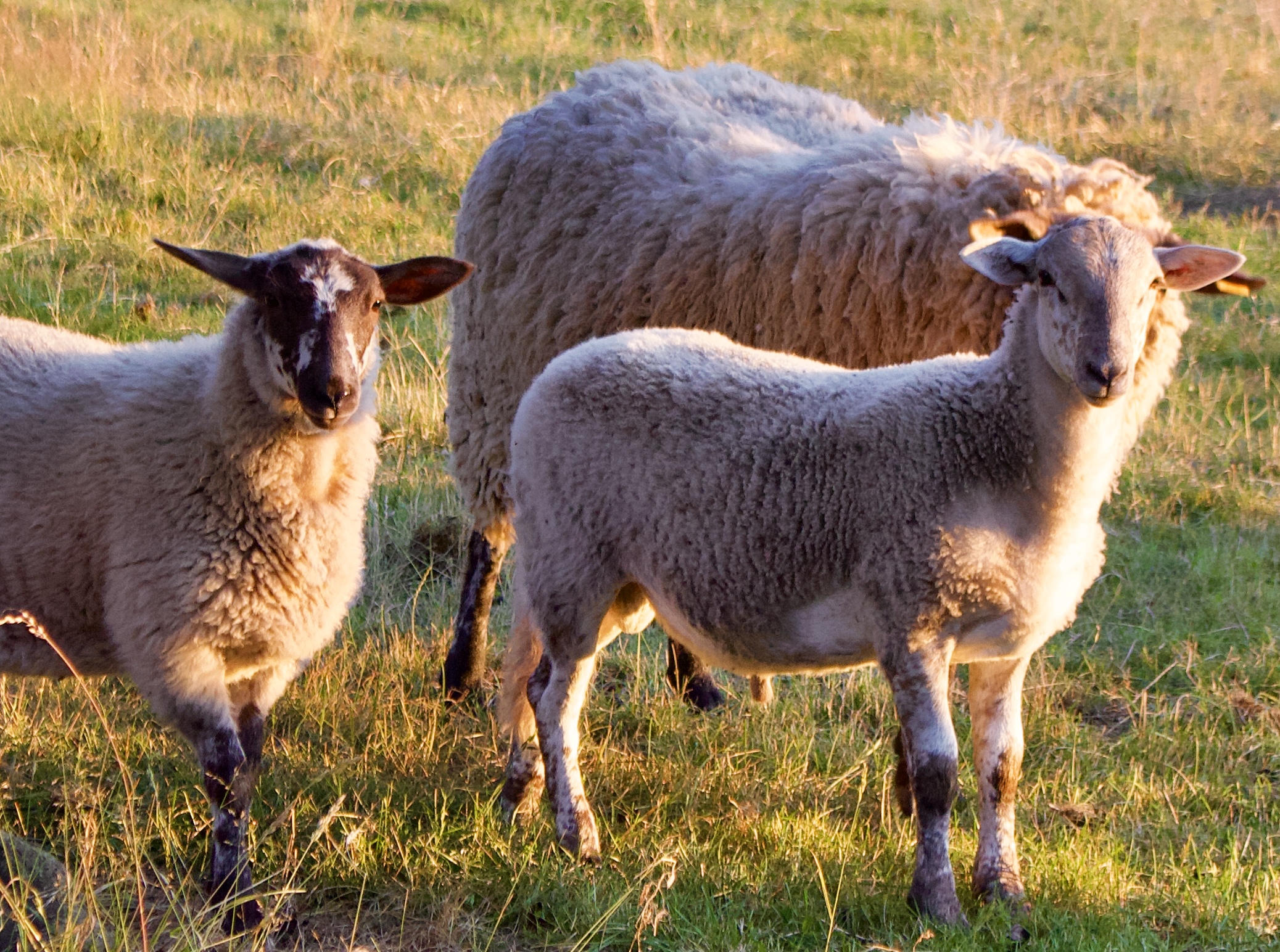
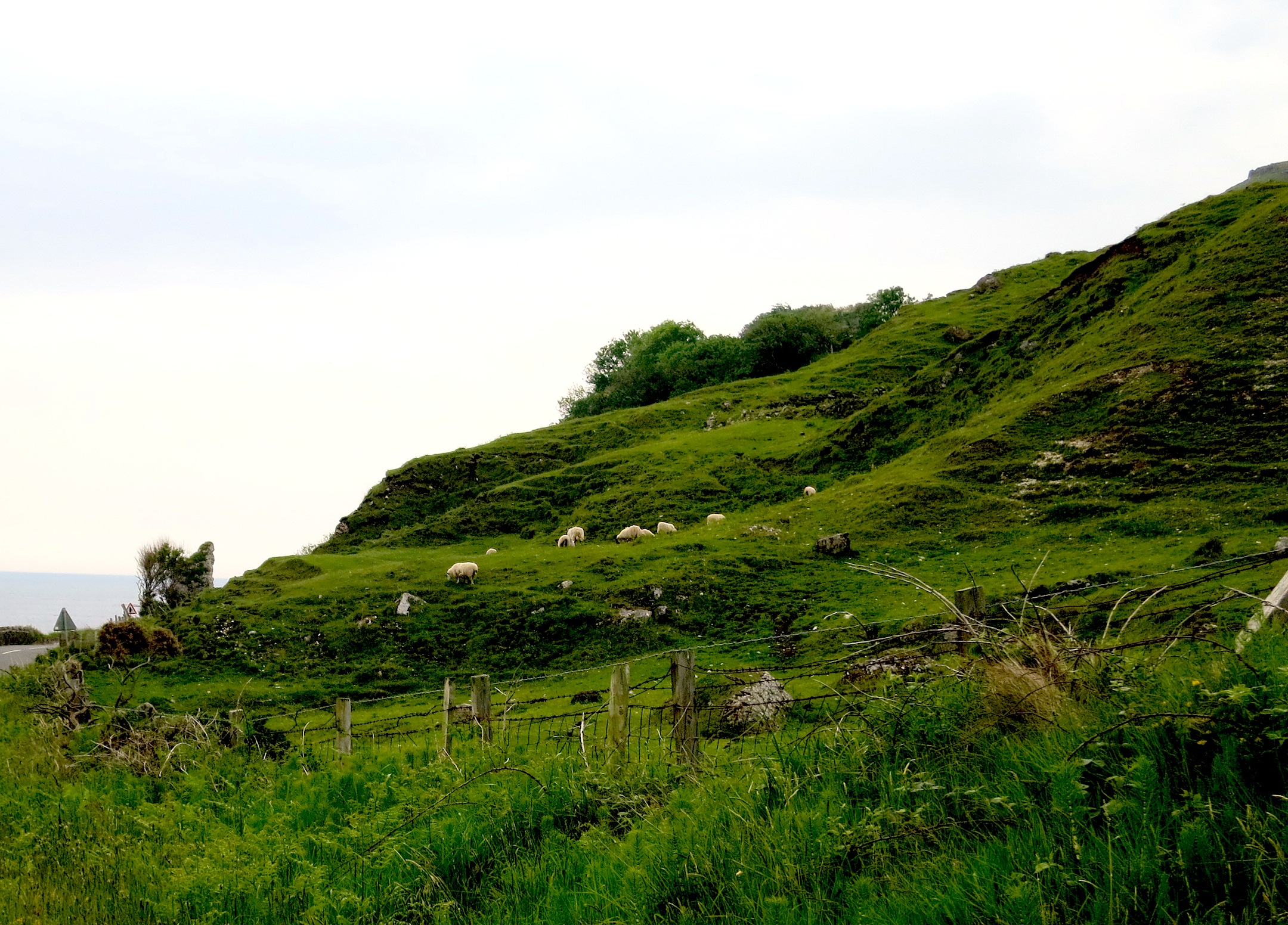
Cork, Ireland Poetry in small language is like a church bell in some remote village tolling mutely in the evening through the musty provincial air self-obliviously and quite self-sufficiently —one might add— if it weren’t for the pair of those ragged sheep huddled before the rain on the empty lot in front of a stone barn bobbing their whitish little heads here and there just to let you know that regardless of medium the message will always arrive at the destination. ~Damir Šodan“Poetry in Small Language” translated from the Croatian by James Meetze
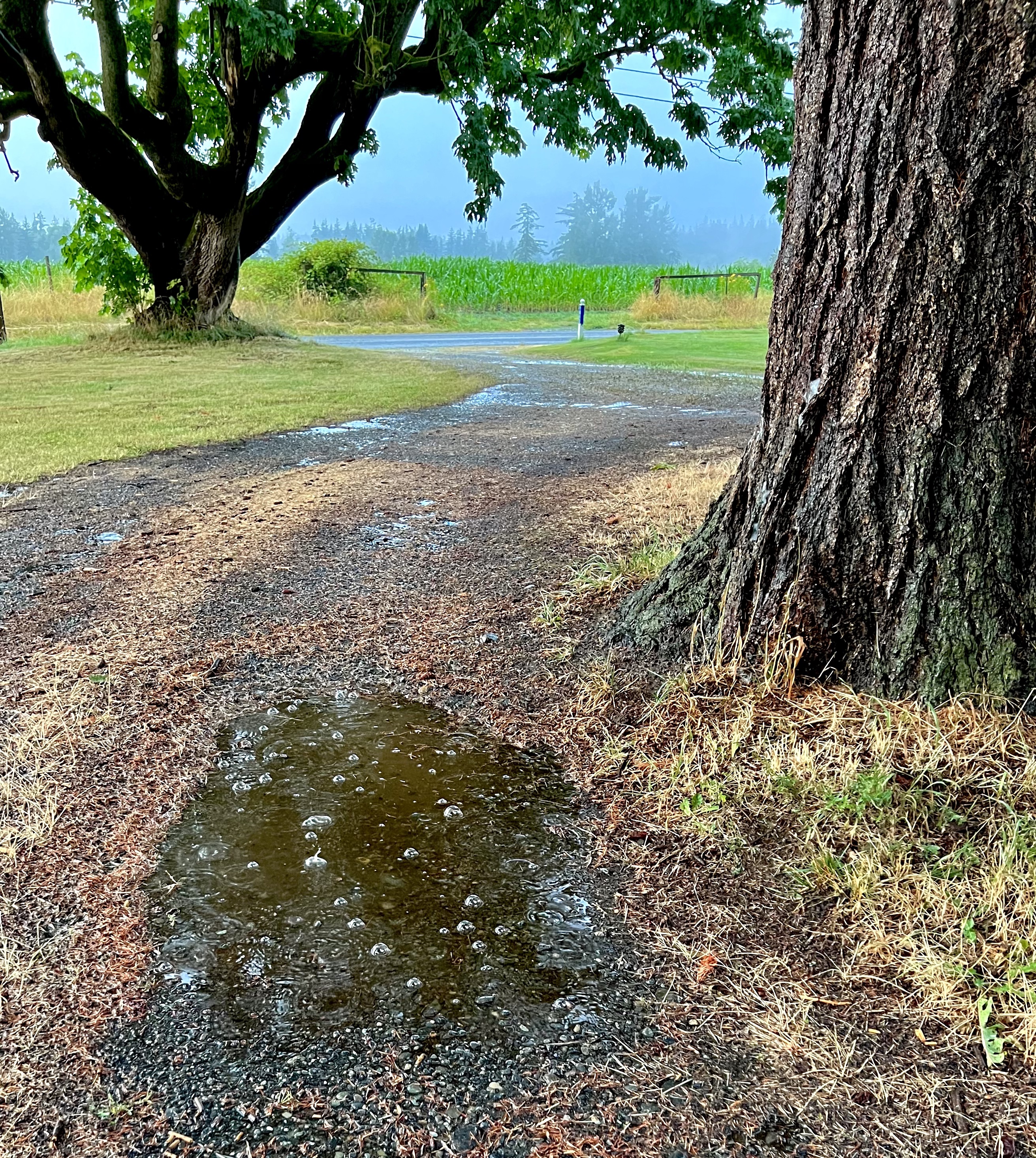
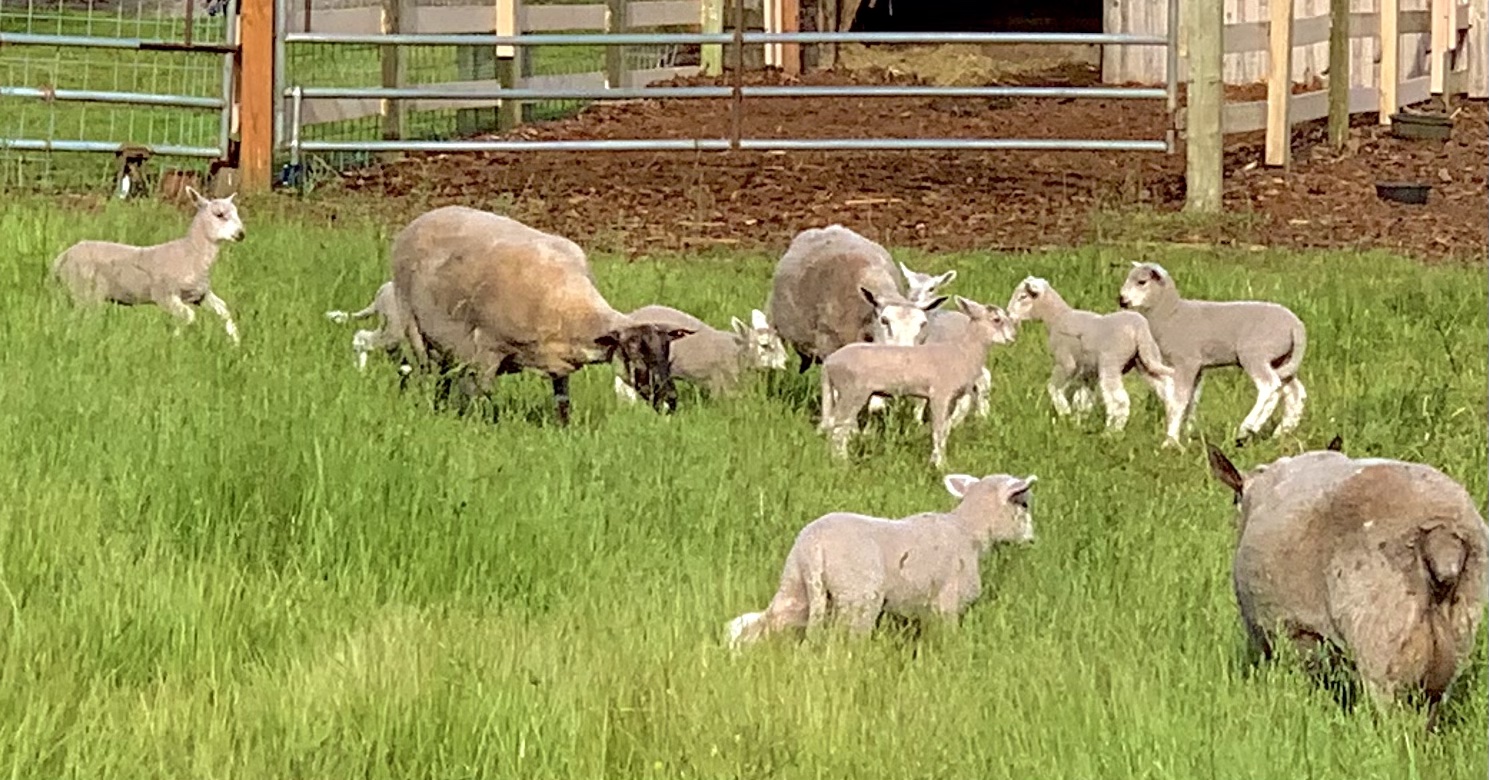
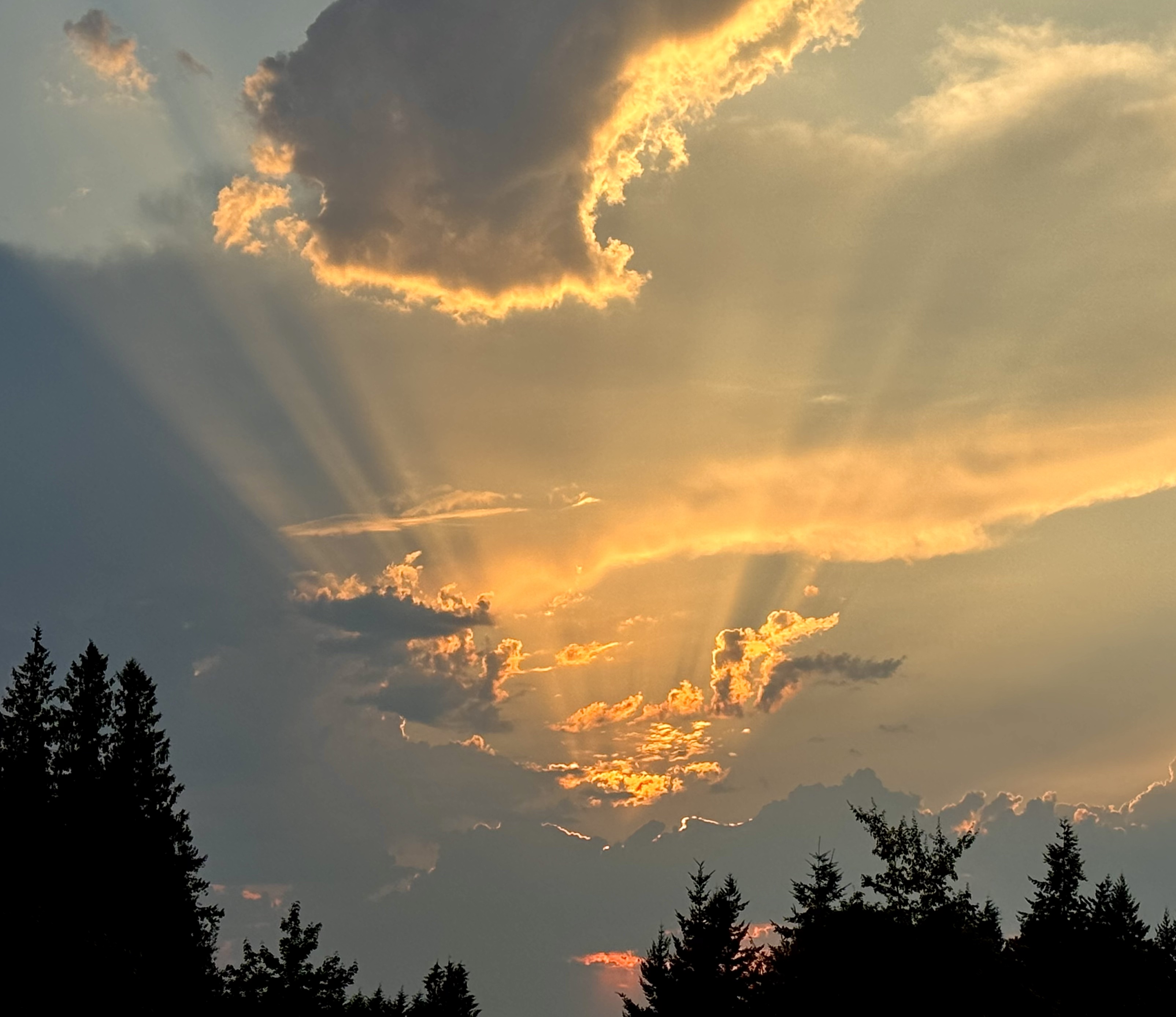
Sometimes poetry needs no words. It might be bells ringing from a church belfry, or raindrops streaming like tears on my face. It is how the light plays across the clouds, or watching new lambs leap together. Unless I’m watching or listening for it, I might miss the poetry in the air altogether. Yet somewhere, someone does, sometime. It finds just the person who needs it at that moment.
One-Time
Monthly
Yearly
Make a one-time or recurring donation to support daily Barnstorming posts
The sweetest thing in all my life has been the longing — to reach the Mountain, to find the place where all the beauty came from — my country, the place where I ought to have been born. Do you think it all meant nothing, all the longing? The longing for home? For indeed it now feels not like going, but like going back. ~ C. S. Lewis, Till We Have Faces
The soul must long for God in order to be set aflame by God’s love. But if the soul cannot yet feel this longing, then it must long for the longing. To long for the longing is also from God. ~Meister EckhartfromFreedom from Sinful Thoughts
I tend to get distracted, losing my sense of purpose and the reason I’m here; I become too absorbed by the troubles of the moment, or dwelling on the troubles of the past, or anticipating the troubles of tomorrow.
My feelings end up overwhelming all else – am I uncomfortable? restless? discouraged? peevish? worried? empty?
When my spirit grows cold, I need igniting. I long for the spark of God to set me aflame again, even at the risk of getting singed.
We’re all His kindling ready to be lit. I long for longing at the beginning and ending of every day.
Lyrics: From the love of my own comfort From the fear of having nothing From a life of worldly passions Deliver me O God
From the need to be understood From the need to be accepted From the fear of being lonely Deliver me O God Deliver me O God
And I shall not want, I shall not want when I taste Your goodness I shall not want when I taste Your goodness I shall not want
From the fear of serving others From the fear of death or trial From the fear of humility Deliver me O God Deliver me O God
One-Time
Monthly
Yearly
Make a one-time or recurring donation to support daily Barnstorming posts
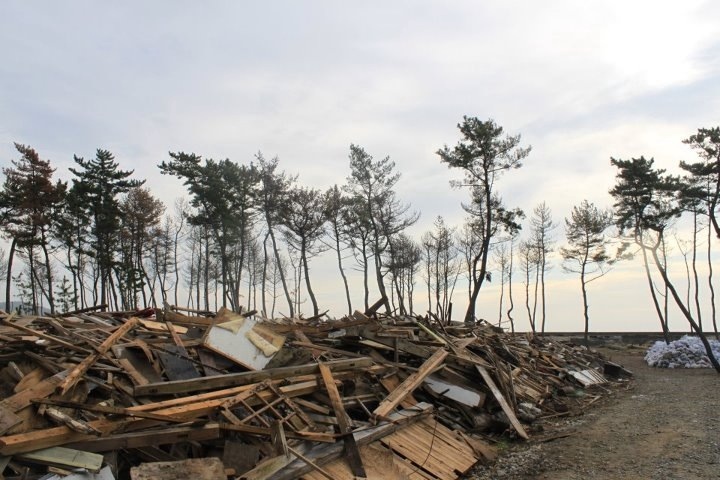
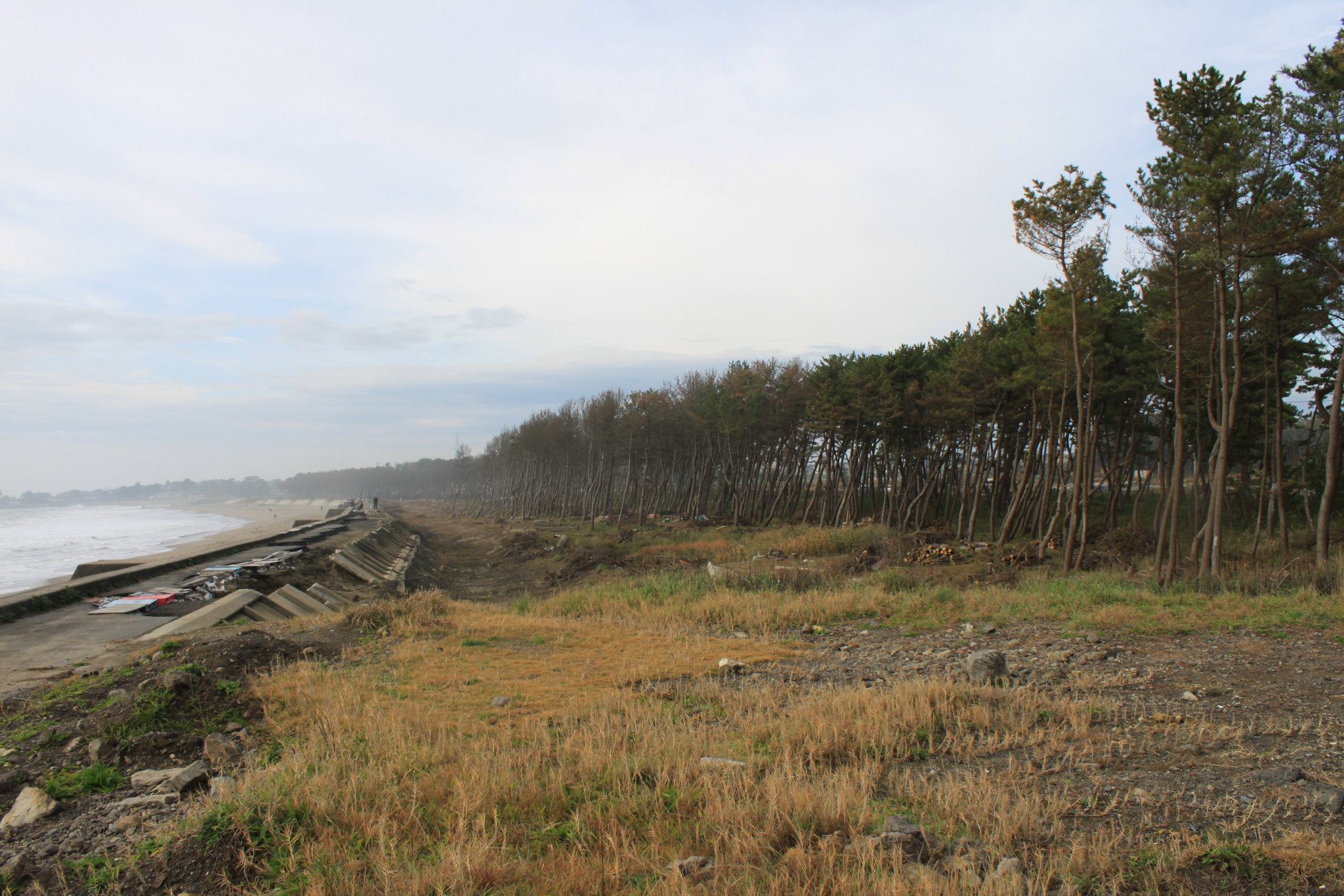
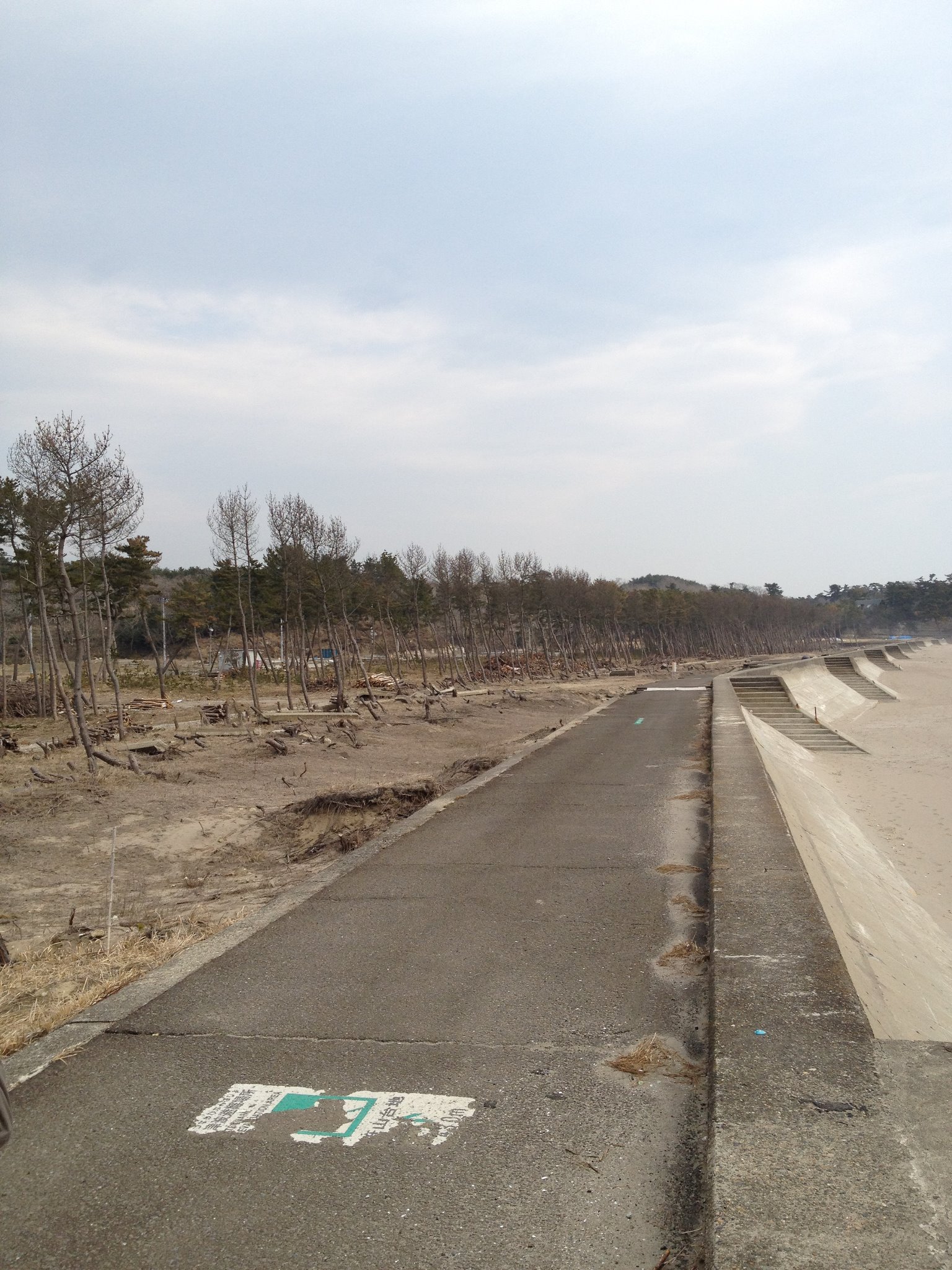
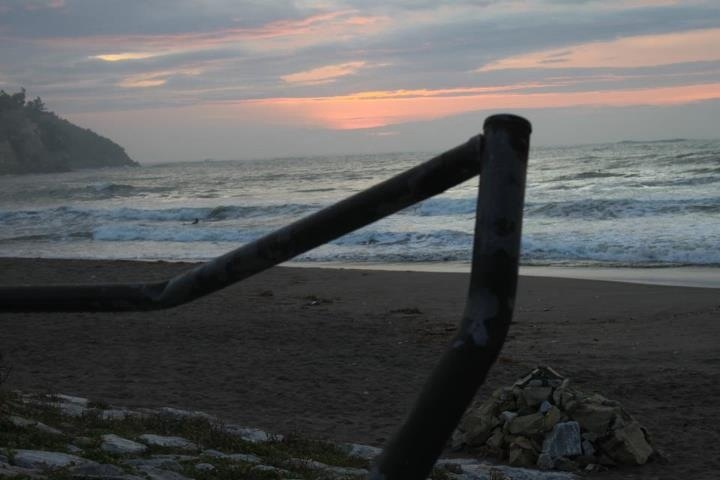
In 2012, we stayed with our friends Brian and Bette at their cabin on a bluff just above the Pacific Ocean at Sendai, Japan, just a few dozen feet above the devastation that wiped out an entire fishing village below during the 3/11/11 earthquake and tsunami.
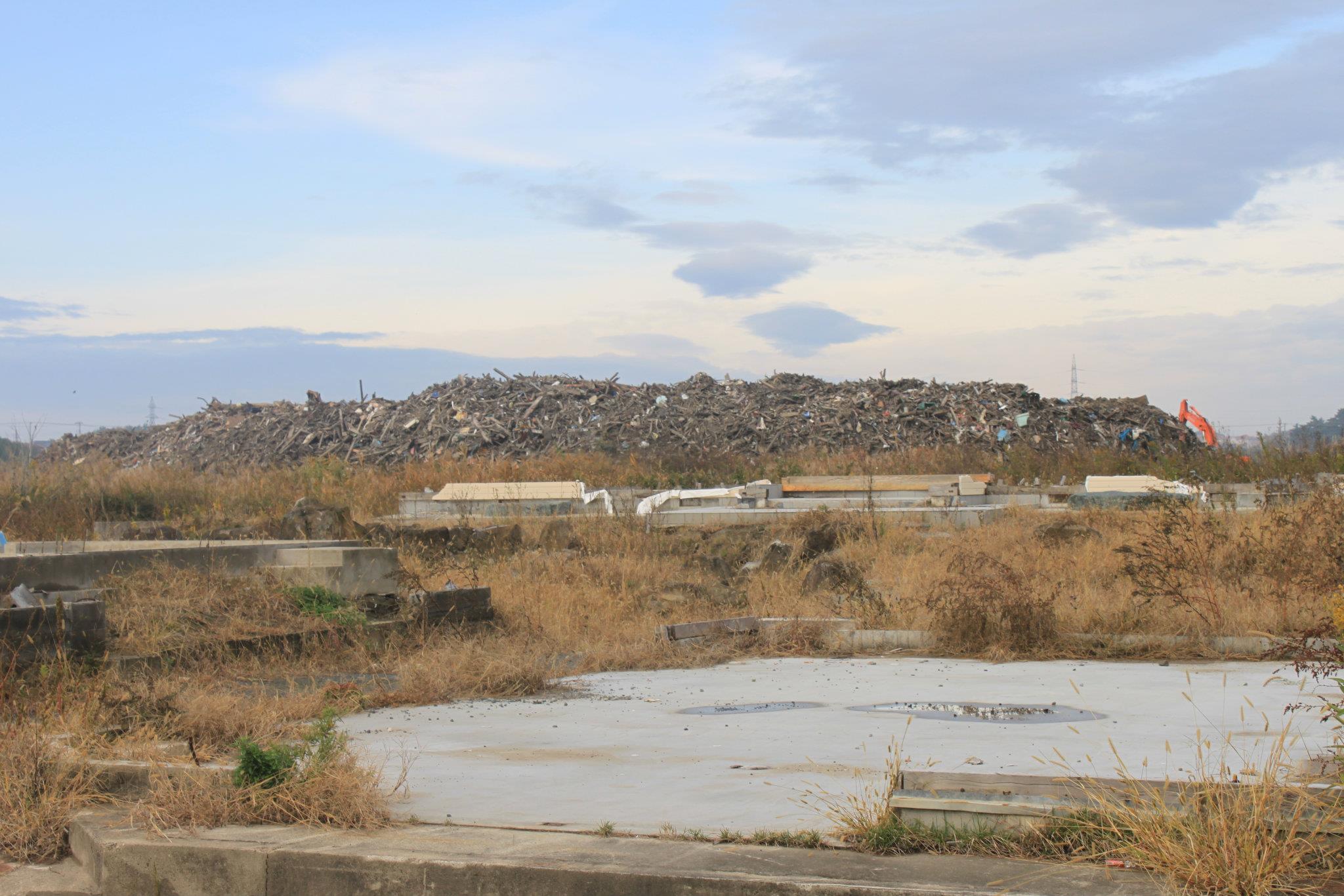
As we walked that stretch of beach, we heard the stories of the people who had lived there, some of whom did not survive the waves that swept their houses and cars away before they could escape. We walked past the footprints of foundations of hundreds of demolished homes, humbled by the rubble mountains yet to be hauled away a year later, to be burned or buried. There were acres of wrecked vehicles piled one on another, waiting to become scrap metal.
It was visual evidence of life so suddenly and dramatically disrupted and carried away.
This had been a place of recreation and respite for some who visited regularly, commerce and livelihood for others who stayed year round and, in ongoing recovery efforts, struggling to be restored to something familiar. Yet it looked like a foreign ghostly landscape. Many trees perished, lost, broken off, fish nets still stuck high on their scarred trunks. There were small memorials to lost family members within some home foundations, with stuffed animals and flowers wilting from the recent anniversary observance.
Tohoku is a powerful place of memories for those who still live there and know what it once was, how it once looked and felt, and painfully, what it became in a matter of minutes on 3/11/11. The waves swept in inexplicable suffering, then carried their former lives away. Happiness gave ground to such terrible pain that could never have hurt as much without the joy and contentment that preceded it.
We are tempted to ask God why He doesn’t do something about the suffering that happened in this place or anywhere a disaster occurs –but if we do, He will ask us the same question right back. We need to be ready with our answer and our action.
God knows suffering. Far more than we do. He took it all on Himself, feeling His pain amplified, as it was borne out of His love and joy in His creation.
This beautiful place, and its dedicated survivors have slowly recovered, but the inner and outer landscape is forever altered. What remains the same is the pulsing tempo of the waves, the tides, and the rhythm of the light and the night, happening just as originally created.
With that realization, pain will finally give way, unable to stand up to His love, His joy, and our response to His sacrifice.
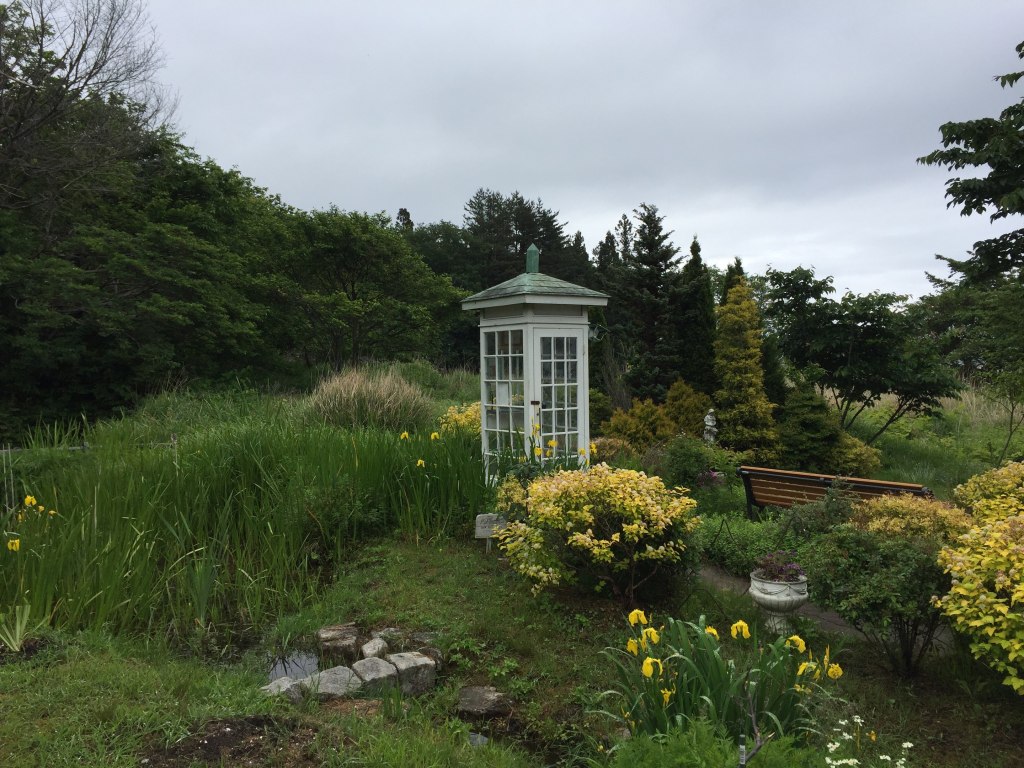
We can call Him up anytime and anywhere.
bent gate at Sendai beach -2012
One-Time
Monthly
Yearly
Make a one-time or recurring donation to support daily Barnstorming posts
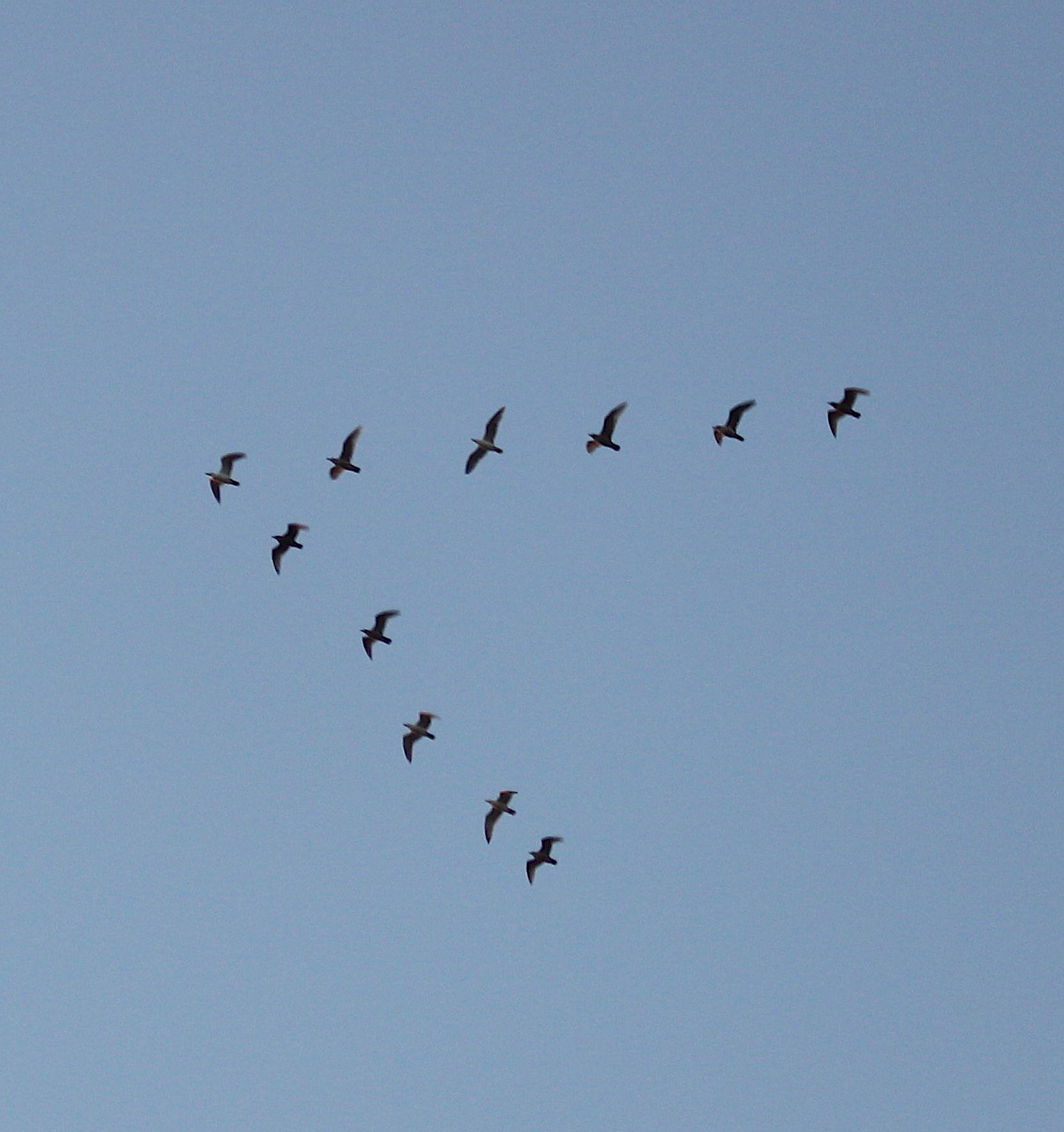
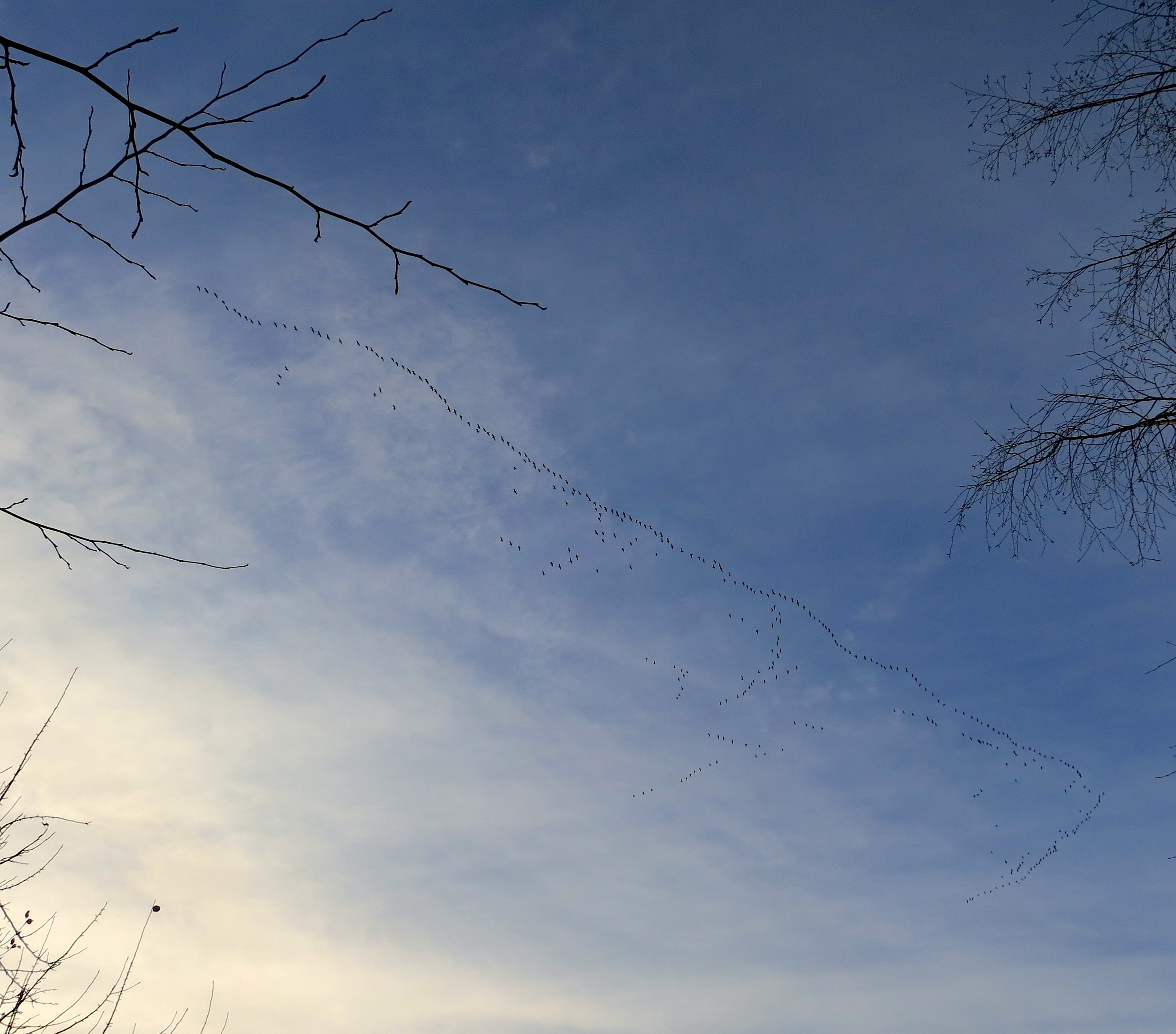
Once only when the summer was nearly over and my own hair had been white as the day’s clouds for more years than I was counting I looked across the garden at evening Paula was still weeding around flowers that open after dark and I looked up to the clear sky and saw the new moon and at that moment from behind me a band of dark birds and then another after it flying in silence long curving wings hardly moving the plovers just in from the sea and the flight clear from Alaska half their weight gone to get them home but home now arriving without a sound as it rose to meet them ~W.S. Merwin “Homecoming” from The Moon Before Morning
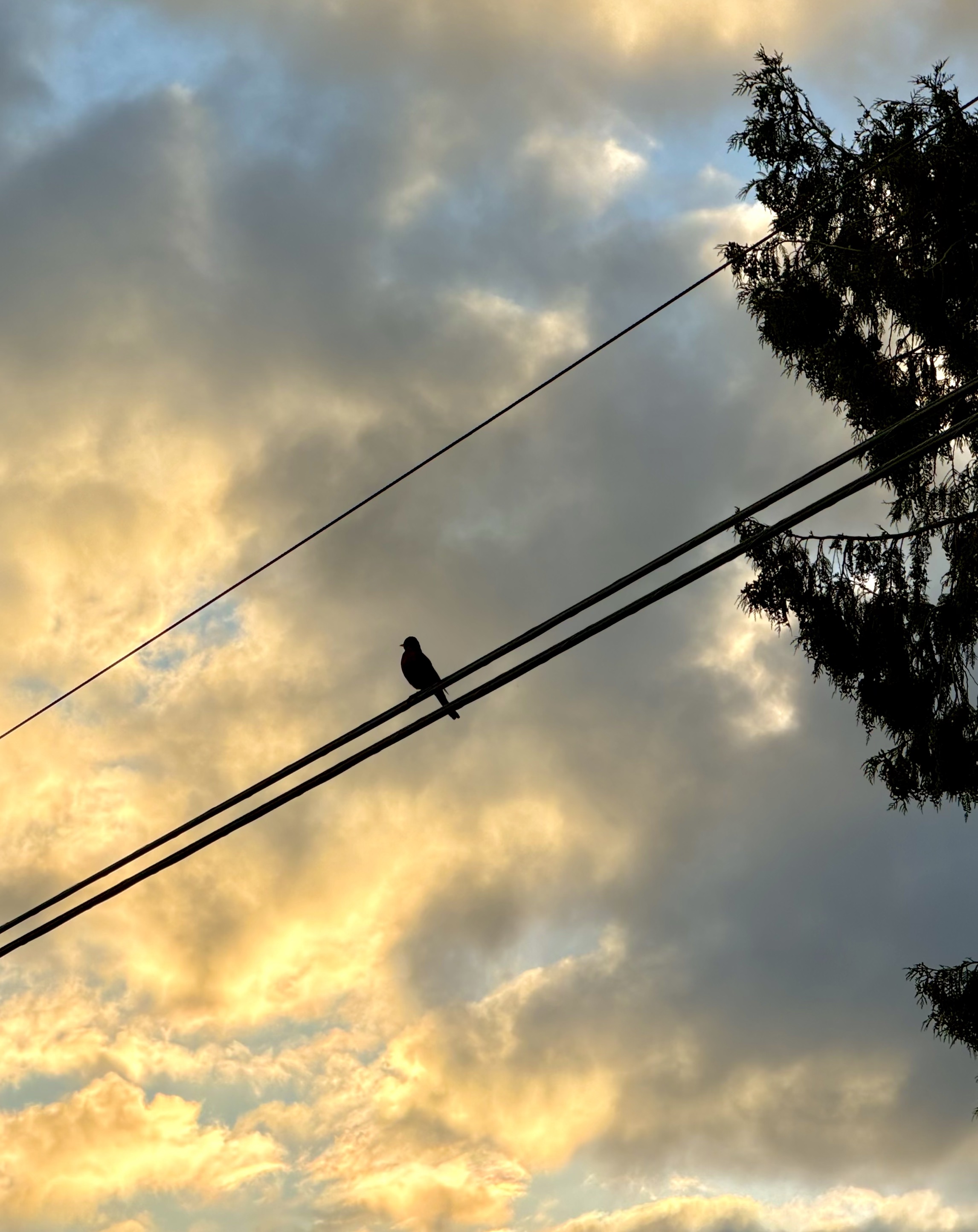
In late summer, the movement of birds above me has begun, like a prayer of promise among the clouds.
There are the noisy ones: geese, ducks, swans who can’t seem to travel without announcing it everywhere, like the booming basses from teenage vehicles speeding by.
Then there are the starlings and others who murmurate with wing wooshes, forming and unforming as a choreographed larger organism.
The quietest and most earnest are the gulls and plovers, some traveling only a few miles from shore to cornfields, and others traveling half a continent without resting. They direct their energy to their wings to silently carry them home.
Some of our prayers for a safe return home are bold and loud. Others are expressed through feathered wings and forward progress. Most are prayed without a sound being made, becoming a constant through the rhythms of the heart, a quiet recognition that our true home will rise to meet us when we arrive.
I will have nothing to do with a God who cares only occasionally. I need a God who is with us always, everywhere, in the deepest depths as well as the highest heights. It is when things go wrong, when good things do not happen, when our prayers seem to have been lost, that God is most present. We do not need the sheltering wings when things go smoothly. We are closest to God in the darkness, stumbling along blindly. ~Madeleine L’Engle
One-Time
Monthly
Yearly
Make a one-time or recurring donation to support daily Barnstorming posts
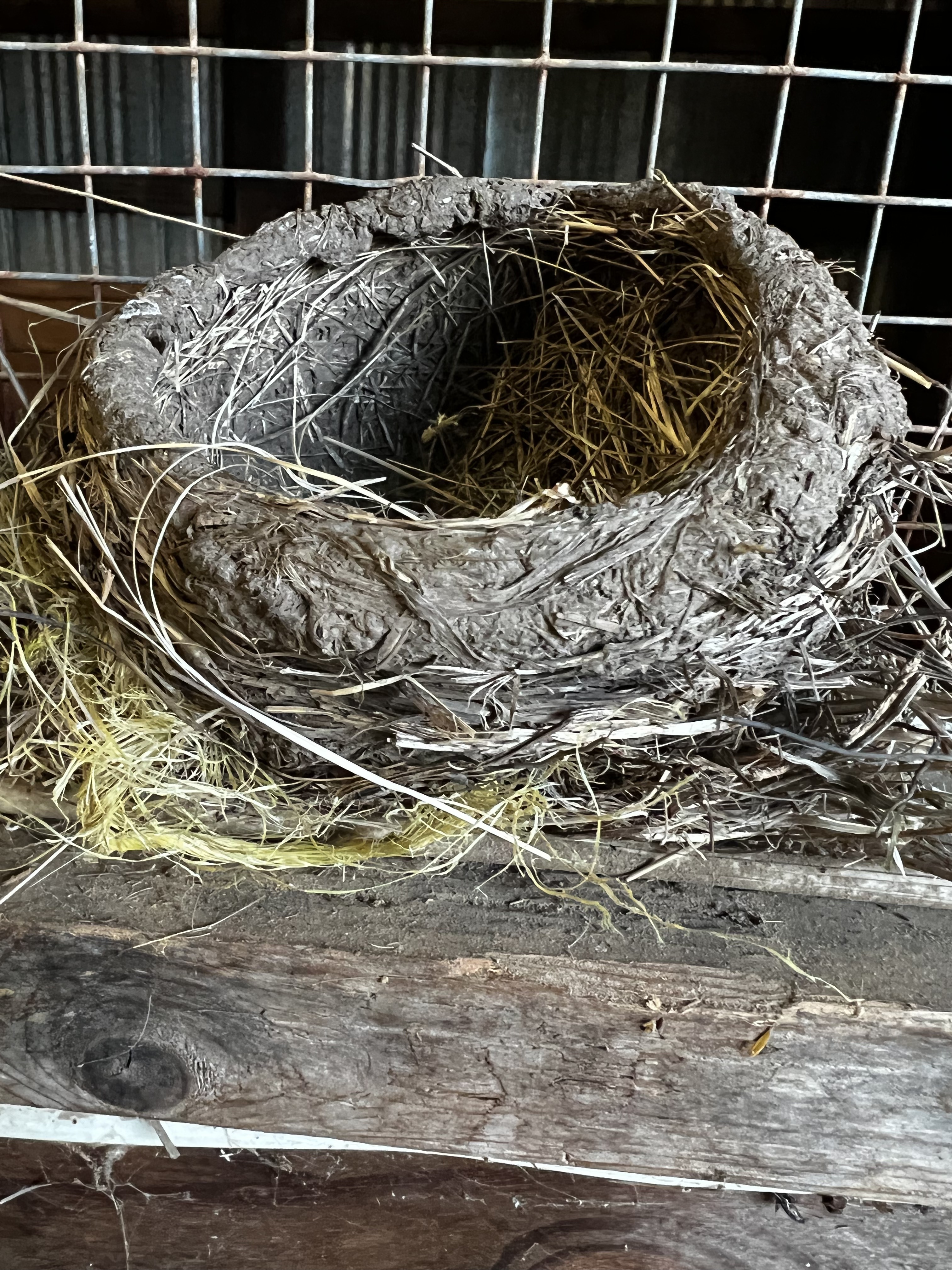
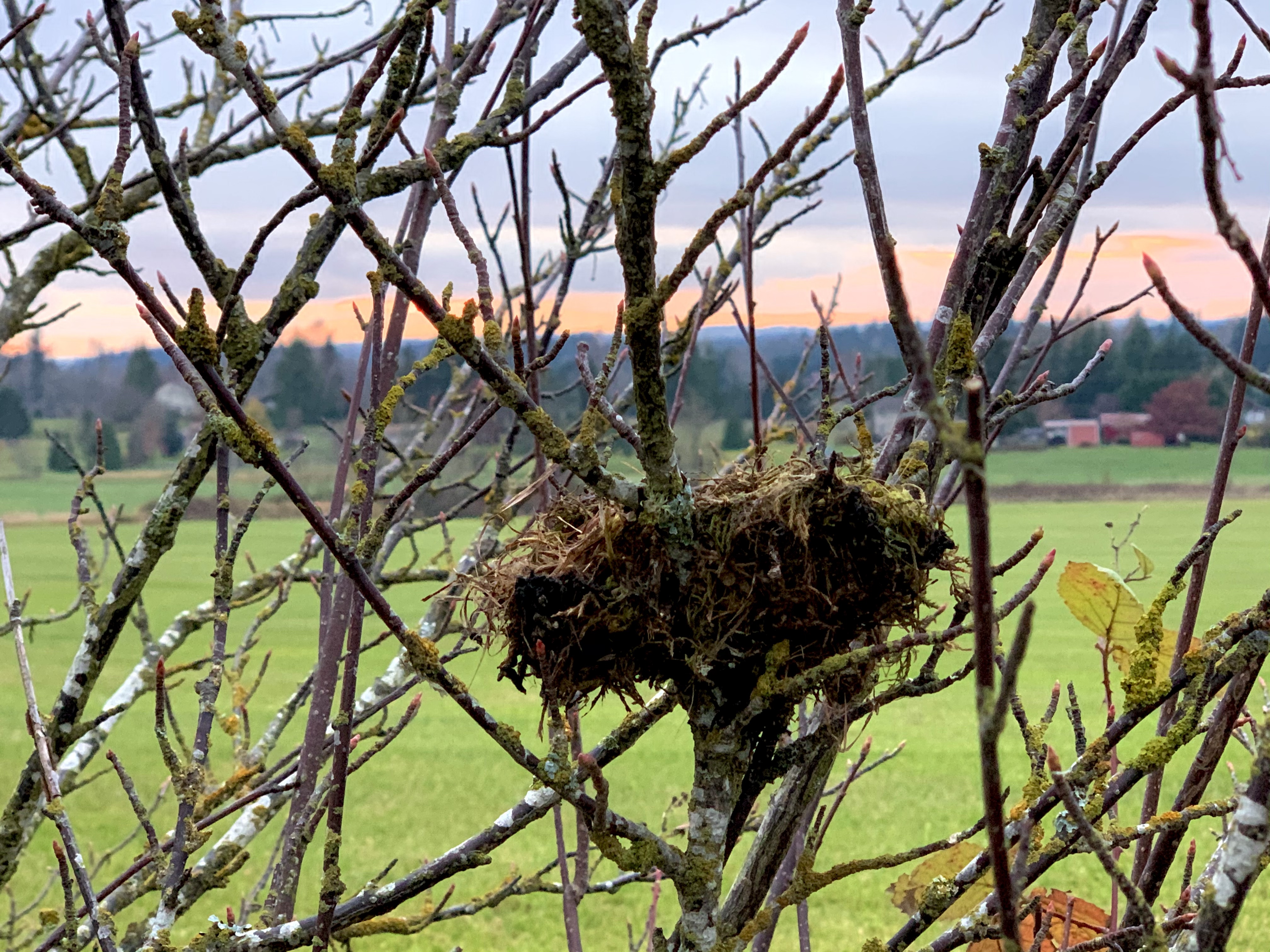
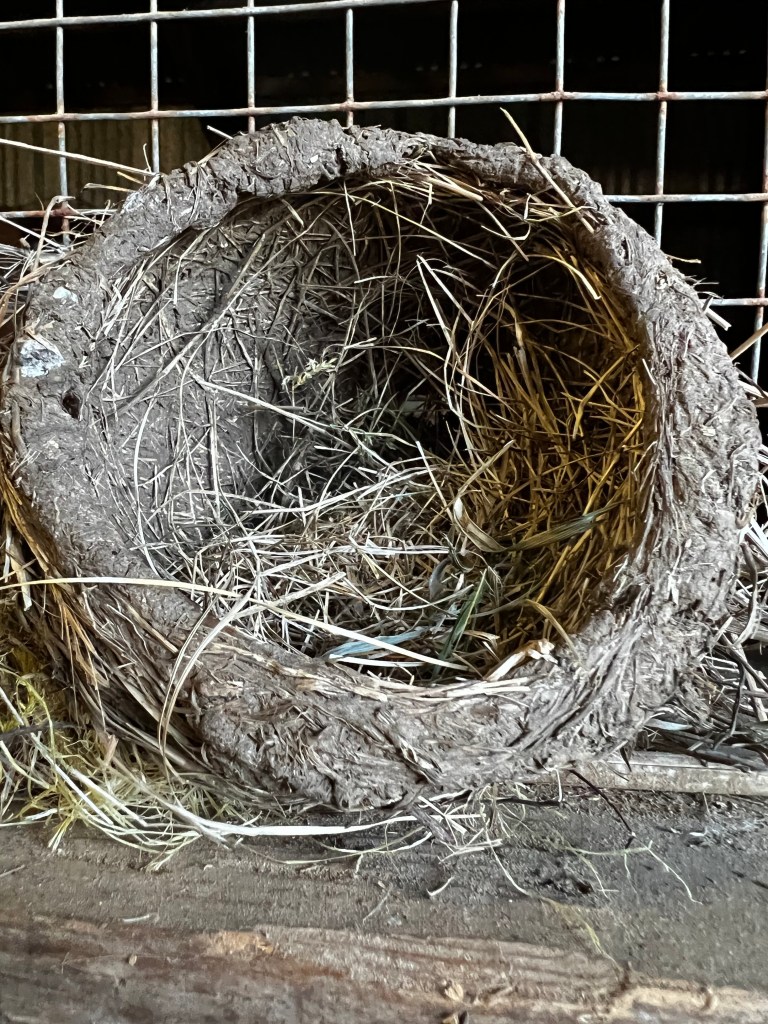
It’s not like losing a child where you just sit there and the child just sits there but you’re the only one doing the talking. It’s more like a placenta out of sticks and mud in the driveway, a former home where something was born and left, or maybe was born and never got to leave or was swept away by the wind that came through here last night, maybe more like having a house burn to the ground, no big deal if you have wings to take you somewhere else. ~Casey Killingsworth “A Nest Blew Down” from Freak Show
Every one of us knows loss. At times, lost things are replaceable; most are not.
When what we love is swept away, so are we. Who we were is no longer who we become in that instant of loss.
All things change; we become strangers in a new land, toppled over, empty, and gasping.
Wings won’t carry us away from ourselves. No matter where our wings take us, we depend on a God who refills our hollowed-out hearts.
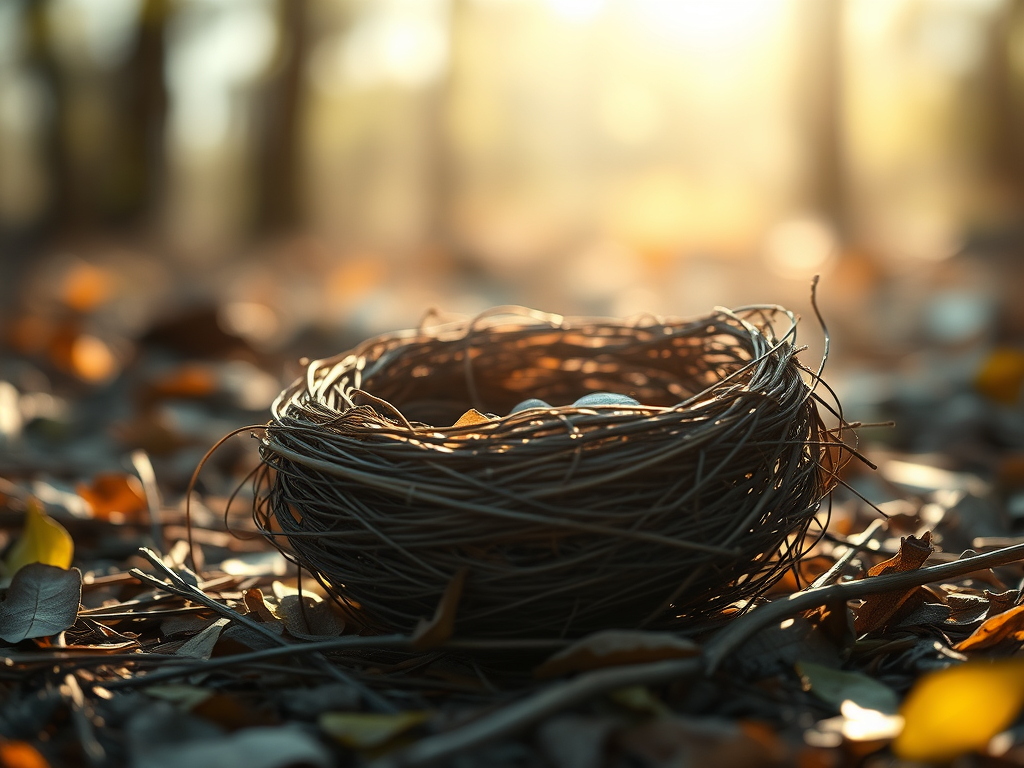
AI image created for this post
One-Time
Monthly
Yearly
Make a one-time or recurring donation to support daily Barnstorming posts
At the edge of the city, at the edge of the world, at the edge between the earth and endless sky, the moonshining place, the place where we hung our long summer legs over the edge and fought the urge to drop a shoe or sneak a real first kiss, the place where we played hide-and-go-seek and Tag, you’re it! until we couldn’t breathe or the sun went down, the place where we came on the quietest nights to feel the moon kiss the edge between our skin and endless sky. ~Sarah Kobrinsky, from Nighttime on the Otherside of Everything
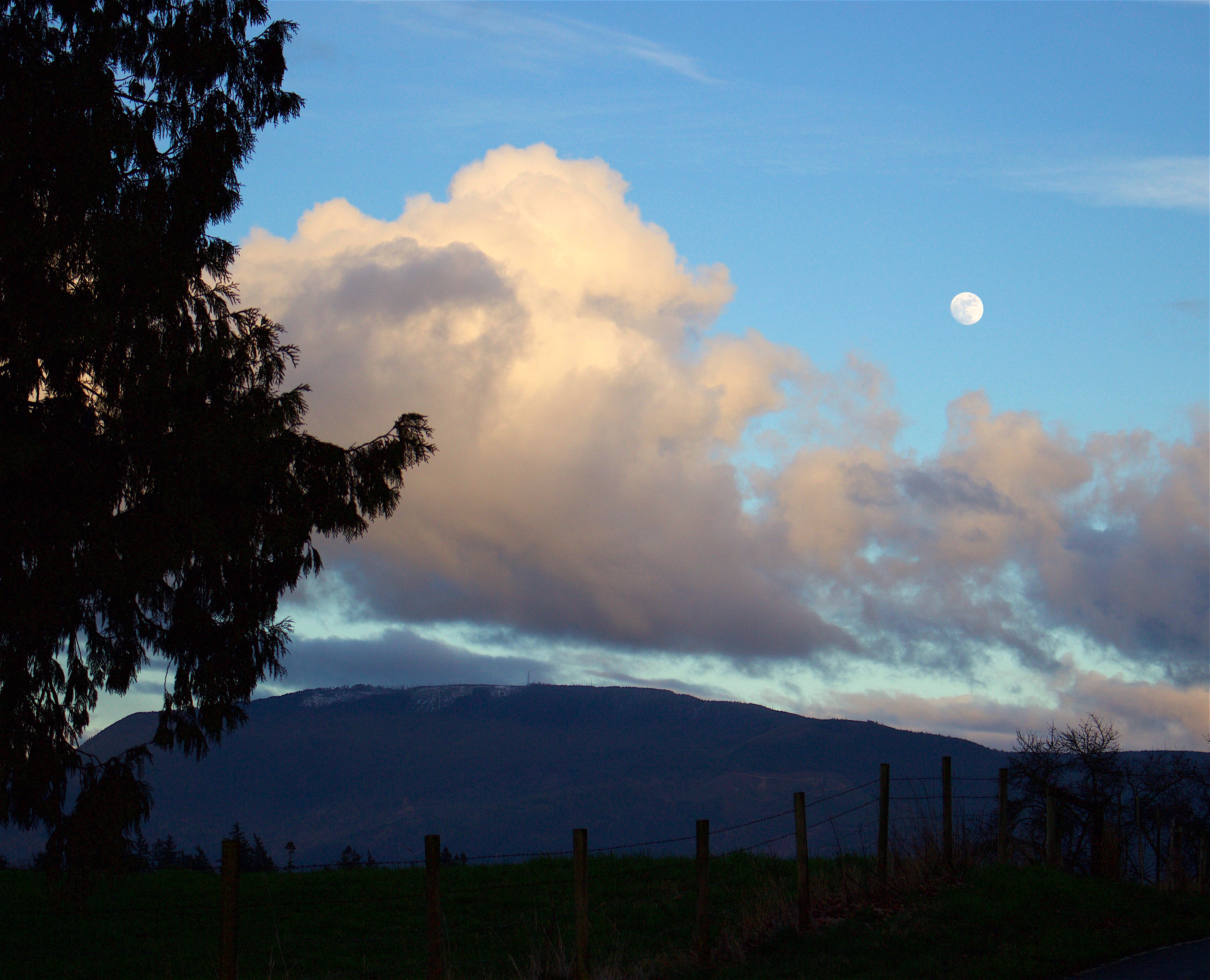
Once when we were playing hide-and-seek and it was time to go home, the rest gave up on the game before it was done and forgot I was still hiding. I remained hidden as a matter of honor until the moon rose. ~Galway Kinnell “Hide-and-Seek 1933” from Strong Is Your Hold.
Tomorrow there will be sun, scalloped by clouds, ushered in by a waterfall of birdsong. It will be a temperate seventy-five, low humidity. For twenty-four hours, all politicians will be silent. Reality programs will vanish from TV, replaced by the “snow” that used to decorate our screens when reception wasn’t working. Soldiers will toss their weapons in the grass. The oceans will stop their inexorable rise. No one will have to sit on a committee. When twilight falls, the aurora borealis will cut off cell phones, scramble the internet. We’ll play flashlight tag, hide and seek, decorate our hair with fireflies, spin until we’re dizzy, collapse on the dew-decked lawn and look up, perhaps for the first time, to read the long lines of cold code written in the stars…. ~Barbara Crooker “Tomorrow” from Some Glad Morning.
As a kid playing hide-n-seek, I always preferred to be the “seeker” as I was secretly afraid if I hid, I would be forgotten, everyone would go home and I wouldn’t be found.
Even so, I was too proud to quit the game and come out of hiding. Of course that never happened in real life. I was really lousy at hiding.
When I got older, I was no better at hiding, though I tried. God would always locate me, even without sending the tell-tale spotlight of the moon to find me.
I gave up hiding long ago. Once found, there is no point in trying to disappear from His sight.
His eye shines bright upon us all.
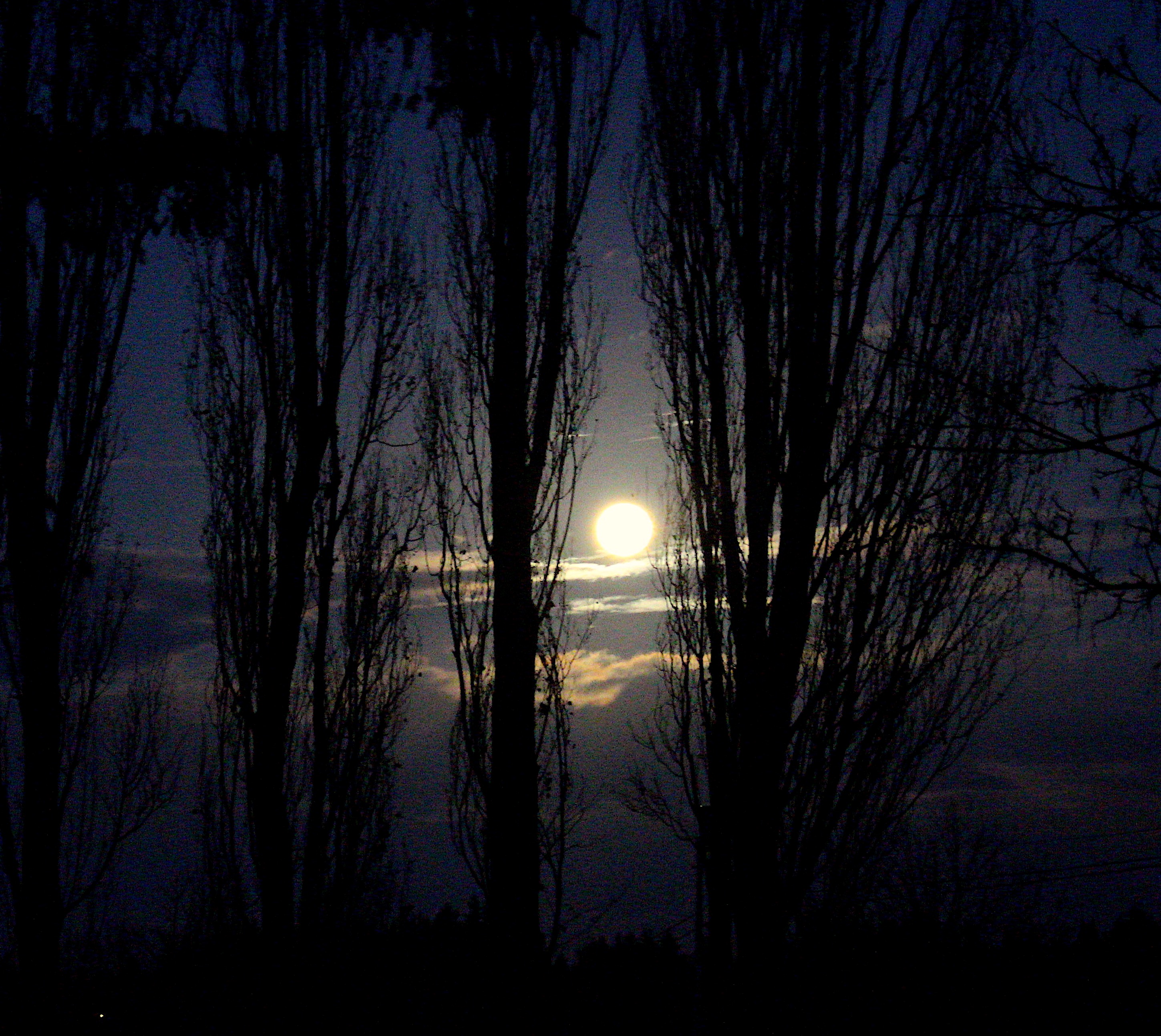
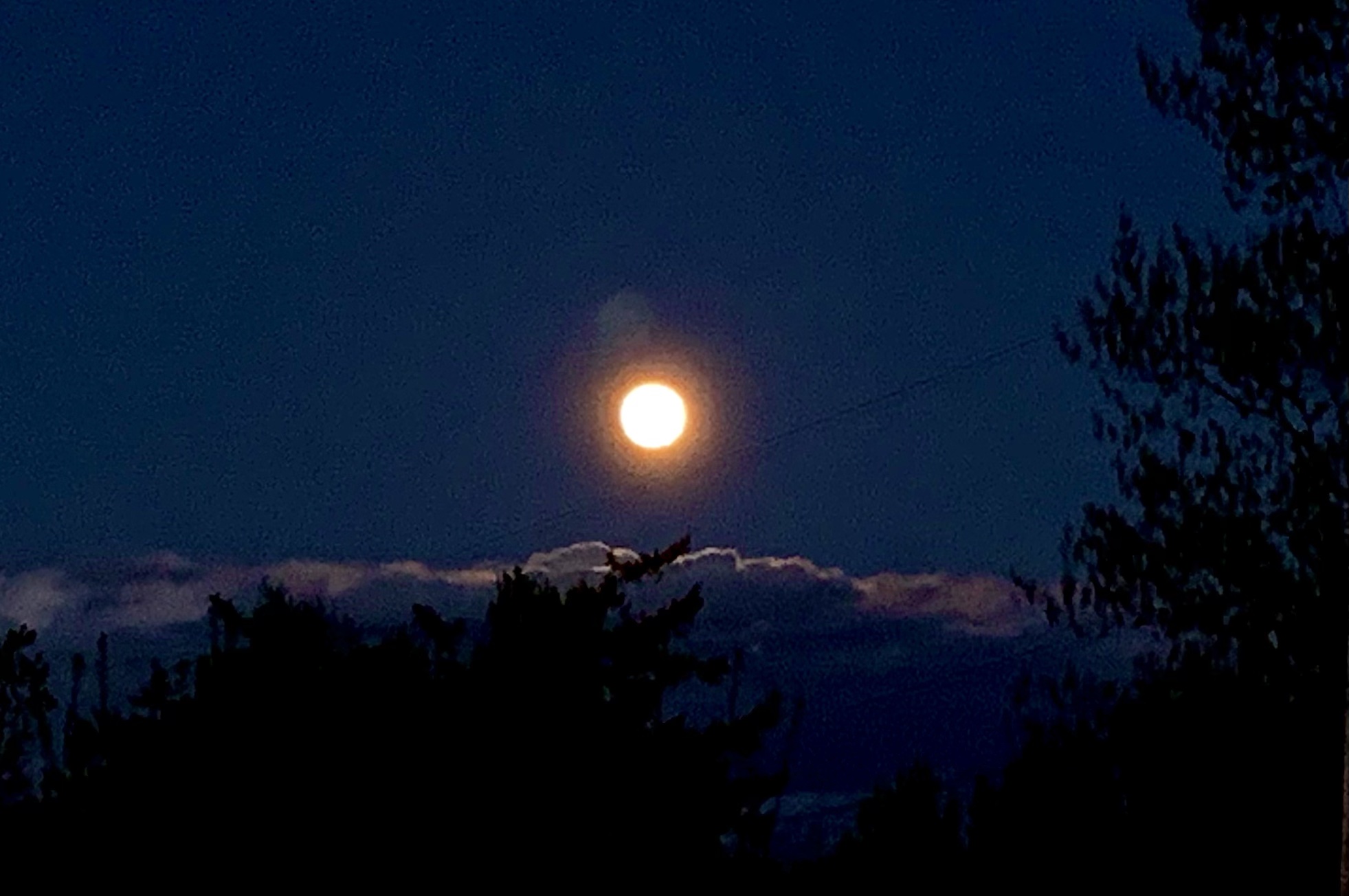
photo of supermoon by Harry Rodenbergerphoto of supermoon by Bob Tjoelker
One-Time
Monthly
Yearly
Make a one-time or recurring donation to support daily Barnstorming posts
Knowing God without knowing our own wretchedness makes for pride. Knowing our own wretchedness without knowing God makes for despair. Knowing Jesus Christ strikes the balance because he shows us both God and our own wretchedness. ~Blaise Pascalfrom Pensées
We yearn for perfection, to be flawless and faultless, unblemished, aiming for symmetry, remaining straight and smooth.
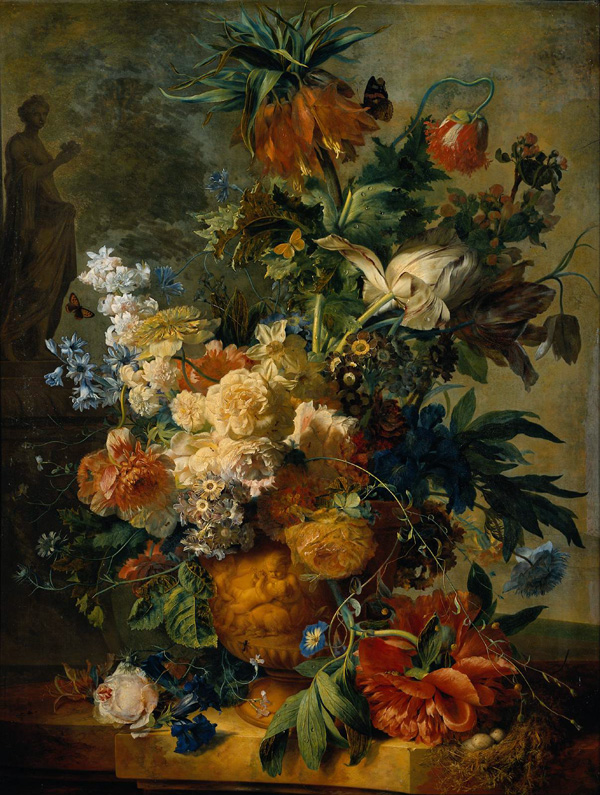
Life serves up something far different and our eye searches for what is broken like us: to find the cracks, scratches and damage, whether it is in a master’s still life portrait replete with crawling flying insects and broken blossoms, or in the not so still life of what is around us.
Somehow Christ bridges Himself between God and us, becoming a walkway for the wretched.
In the beginning we were created unblemished, image bearers of perfection.
No longer.
We bear witness to brokenness with our shattered lives, fragile minds and weakening bodies. It is our leaks and warts that stand out now.
To restore our lost relationship with Him, Christ strikes the balance and bridges the gap; He hung broken to mend us, to lift and carry us over the chasm, binding us to Him forever.
A second crop of hay lies cut and turned. Five gleaming crows search and peck between the rows. They make a low, companionable squawk, and like midwives and undertakers possess a weird authority.
Crickets leap from the stubble, parting before me like the Red Sea. The garden sprawls and spoils.
Cloud shadows rush over drying hay, fences, dusty lane, and railroad ravine. The first yellowing fronds of goldenrod brighten the margins of the woods.
Schoolbooks, carpools, pleated skirts; water, silver-still, and a vee of geese.
*
The cicada’s dry monotony breaks over me. The days are bright and free, bright and free.
Then why did I cry today for an hour, with my whole body, the way babies cry?
*
A white, indifferent morning sky, and a crow, hectoring from its nest high in the hemlock, a nest as big as a laundry basket …
In my childhood I stood under a dripping oak, while autumnal fog eddied around my feet, waiting for the school bus with a dread that took my breath away.
The damp dirt road gave off this same complex organic scent. I had the new books—words, numbers, and operations with numbers I did not comprehend—and crayons, unspoiled by use, in a blue canvas satchel with red leather straps.
Spruce, inadequate, and alien I stood at the side of the road. It was the only life I had. ~Jane Kenyon from “Three Songs at the End of Summer”
Yesterday, my son taught me the sign for lockdown— different than locking a door, or the shutdown we invented at the start of the pandemic. Little fistfuls of locks swept quickly between us, a sign designed especially for school.
My son spent his first years a different kind of locked up—an orphanage in Bangkok, where he didn’t speak and they couldn’t sign. He came home, age four, silent. We thought being here could open doors. It has, of course. He’s learned so much at the deaf school; the speech therapist calls it a Language Explosion. I keep lists of the words he’s gathered: vanilla, buckle, castle, stay. And lockdown. He absorbs it like the rest. Now the schools he builds with Magna-Tiles have lockdowns. I worry in trying to give him keys, we’ve only changed the locks.
To lock down a deaf school, we use a special strobe. When it flashes, we flip switches and sign through darkness. The children know to stay beneath the windows. Every five minutes a robot texts: “Shelter in place is still in effect. Please await further instructions.” Then we pull the fire alarm, a tactical move to unsettle the shooter. Hearing people can’t think with noise like that. A piercing thing we don’t detect, to cover the sounds we make, the sounds we don’t know we’re making. ~Sara Nović “Lockdown at the School for the Deaf”
The first day back to school now isn’t always the day after Labor Day as it was when I was growing up. Some students have been in classes for a couple weeks already, others started a few days ago to ease into the transition more gently.
Some return to the routine this morning – school buses roar past our farm brimming with eager young faces and stuffed back packs amid a combination of excitement and anxiety.
I remember well that foreboding that accompanied a return to school — the strict schedule, the inflexible rules and the often harsh adjustment of social hierarchies and friend groups. Even as a good learner and obedient student, I was a square peg being pushed into a round hole when I returned to the classroom. The students who struggled academically and who pushed against the boundaries of rules must have felt even more so. We all felt alien and inadequate to the immense task before us to fit in with one another, allow teachers to structure and open our minds to new thoughts, and to become something and someone more than who we were before.
Growth is so very hard, our stretching so painful, the tug and pull of friendships stressful. And for the last two decades, there is the additional fear of lockdowns and active shooters.
I worked with students on an academic calendar for over 30 years, yet though I’m now retired, I still don’t sleep well in anticipation of all this day means.
So I take a deep breath on a foggy post-Labor Day morning and am immediately taken back to the anxieties and fears of a skinny little girl in a new home-made corduroy jumper and saddle shoes, waiting for the schoolbus on our drippy wooded country road.
She is still me — just buried deeply in the fog of who I became after all those years of schooling, hidden somewhere under all the piled-on layers of learning and growing and hurting and stretching — I do remember her well.
Like every student starting a new adventure today, we could all use a hug.
Lo! I am come to autumn, When all the leaves are gold; Grey hairs and golden leaves cry out The year and I are old.
In youth I sought the prince of men, Captain in cosmic wars, Our Titan, even the weeds would show Defiant, to the stars.
But now a great thing in the street Seems any human nod, Where shift in strange democracy The million masks of God.
In youth I sought the golden flower Hidden in wood or wold, But I am come to autumn, When all the leaves are gold. ~G.K. Chesterton “Gold Leaves”
One-Time
Monthly
Yearly
Make a one-time or recurring donation to support daily Barnstorming posts
How much better it is to carry wood to the fire than to moan about your life. How much better to throw the garbage onto the compost, or to pin the clean sheet on the line, With a gray-brown wooden clothes pin. ~Jane Kenyon “The Clothespin”
Queen of my tub, I merrily sing, While the white foam rises high, And sturdily wash, and rinse, and wring, And fasten the clothes to dry; Then out in the free fresh air they swing, Under the sunny sky.
I wish we could wash from our hearts and our souls The stains of the week away, And let water and air by their magic make Ourselves as pure as they; Then on the earth there would be indeed A glorious washing-day!
Along the path of a useful life Will heart’s-ease ever bloom; The busy mind has no time to think Of sorrow, or care, or gloom; And anxious thoughts may be swept away As we busily wield a broom.
I am glad a task to me is given To labor at day by day; For it brings me health, and strength, and hope, And I cheerfully learn to say,— “Head, you may think; heart, you may feel; But hand, you shall work alway!” ~Louisa May Alcott “A Song from the Suds”
Silken web undulates, a lady’s private wash upon the wind. ~L.L. Barkat
All day the blanket snapped and swelled on the line, roused by a hot spring wind…. From there it witnessed the first sparrow, early flies lifting their sticky feet, and a green haze on the south-sloping hills. Clouds rose over the mountain….At dusk I took the blanket in, and we slept, restless, under its fragrant weight. ~Jane Kenyon “Wash”
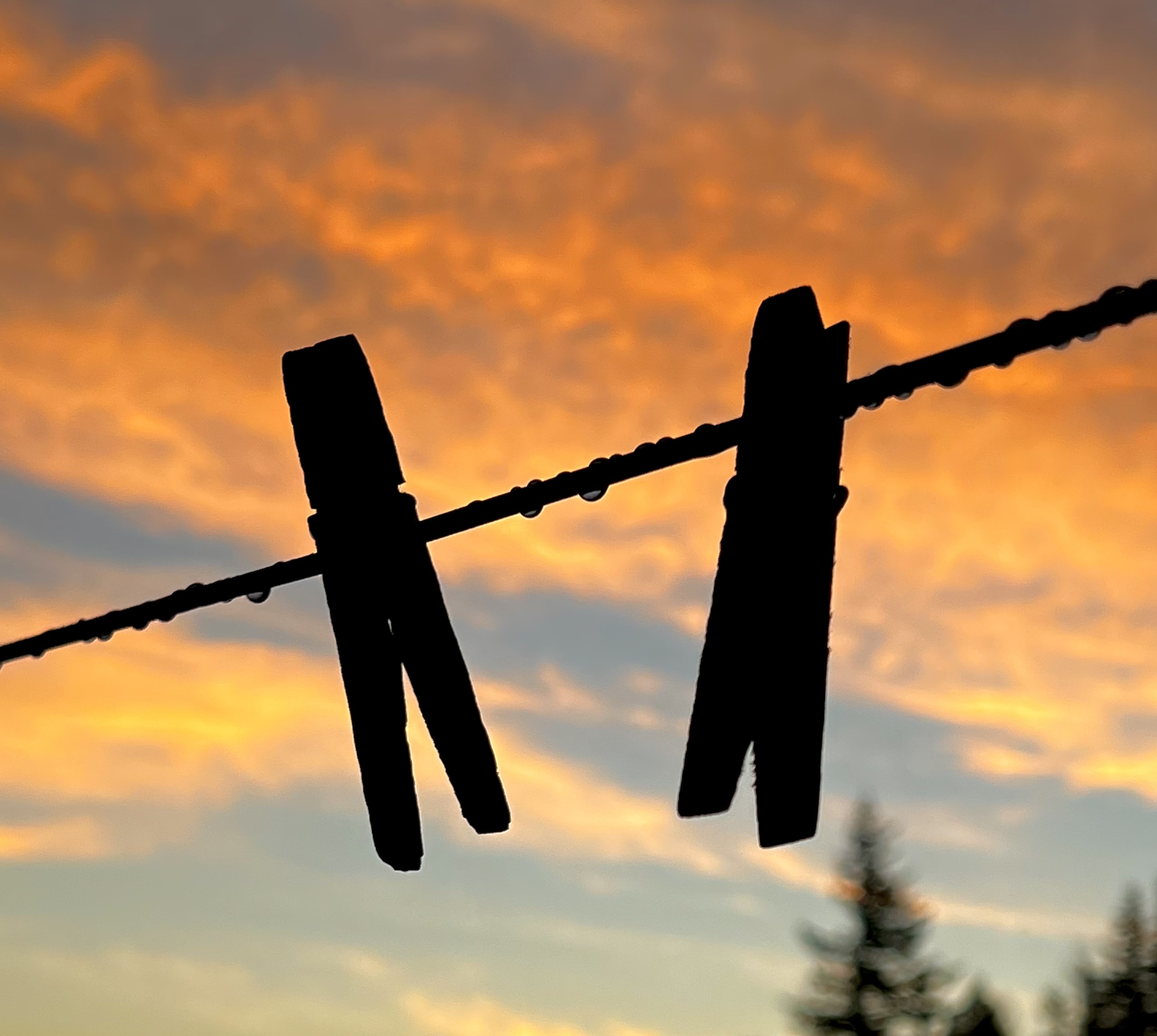
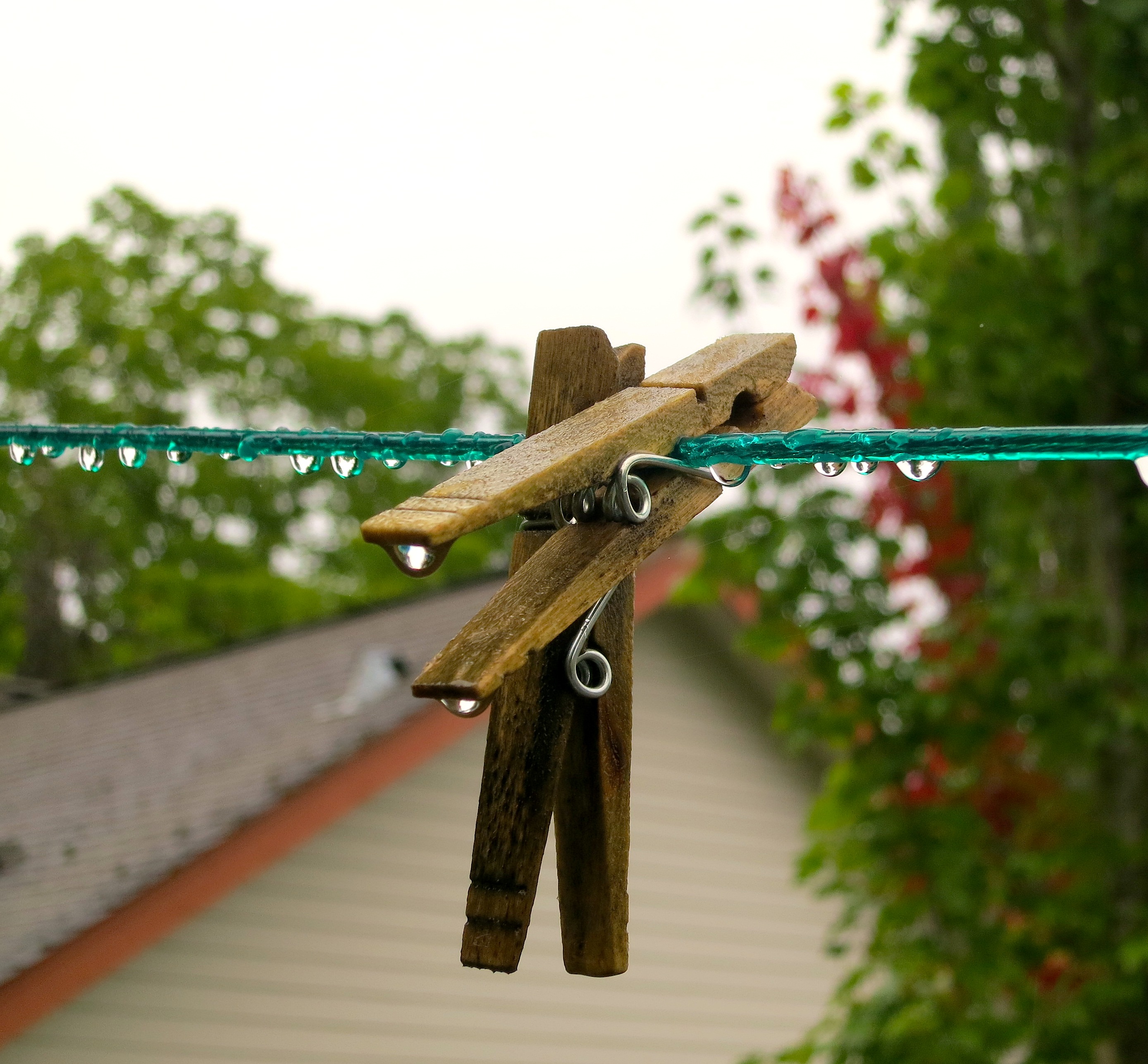
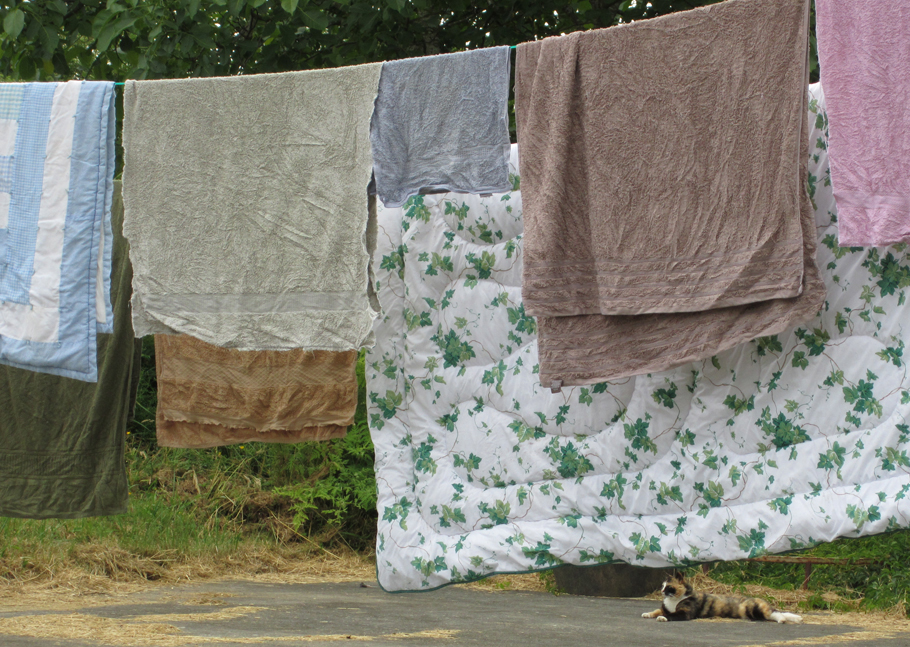
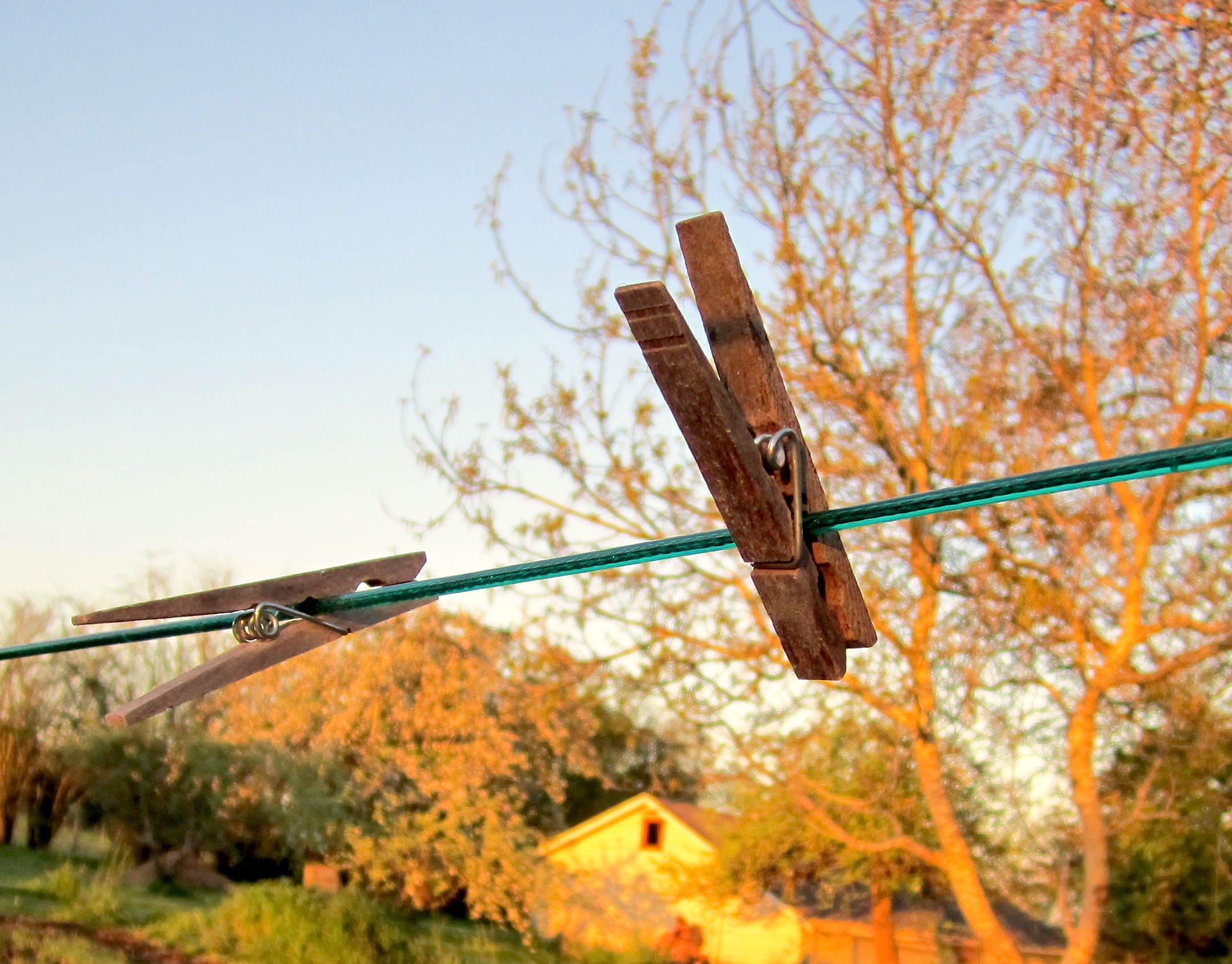
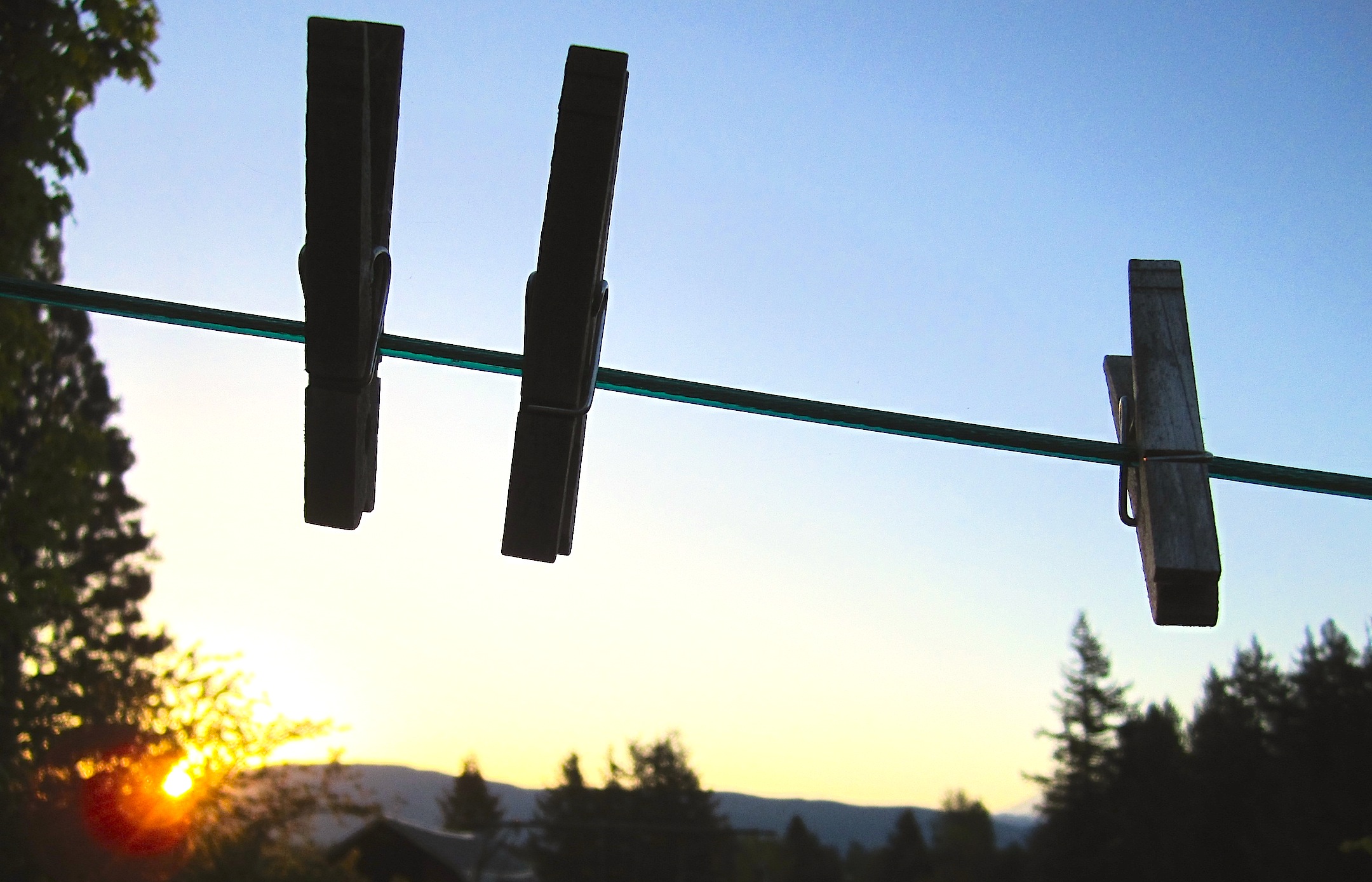
We have a clothesline that I use several times a week to take advantage of sunlight, breezes, fresh air fragrance – all at no cost but the time it takes to carry laundry outside, hang it up with my ancient clothespins, and then pull it back down at the end of the day.
It is well worth the effort; I have been fortunate to always live where there is a line and clothespins.
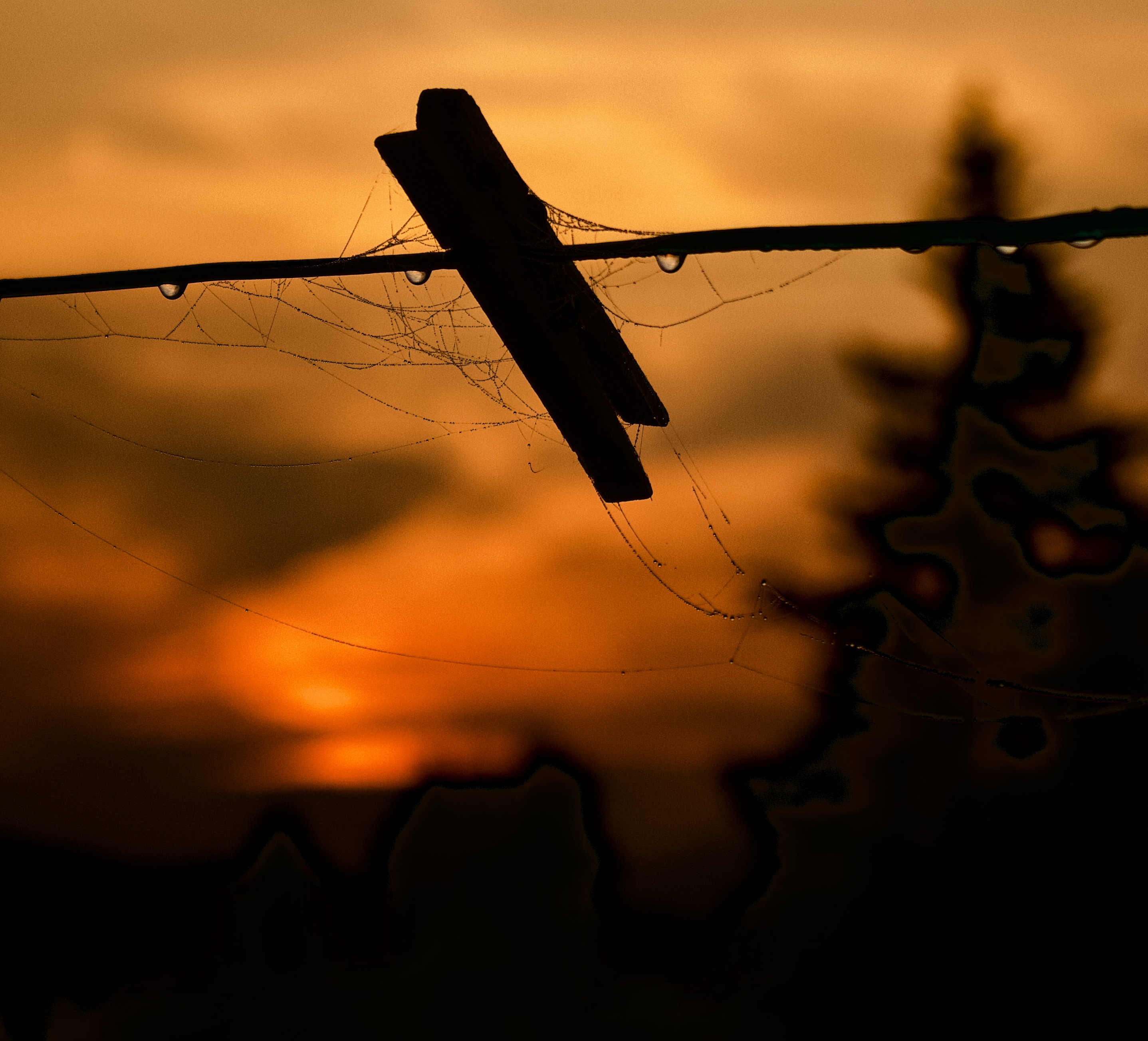
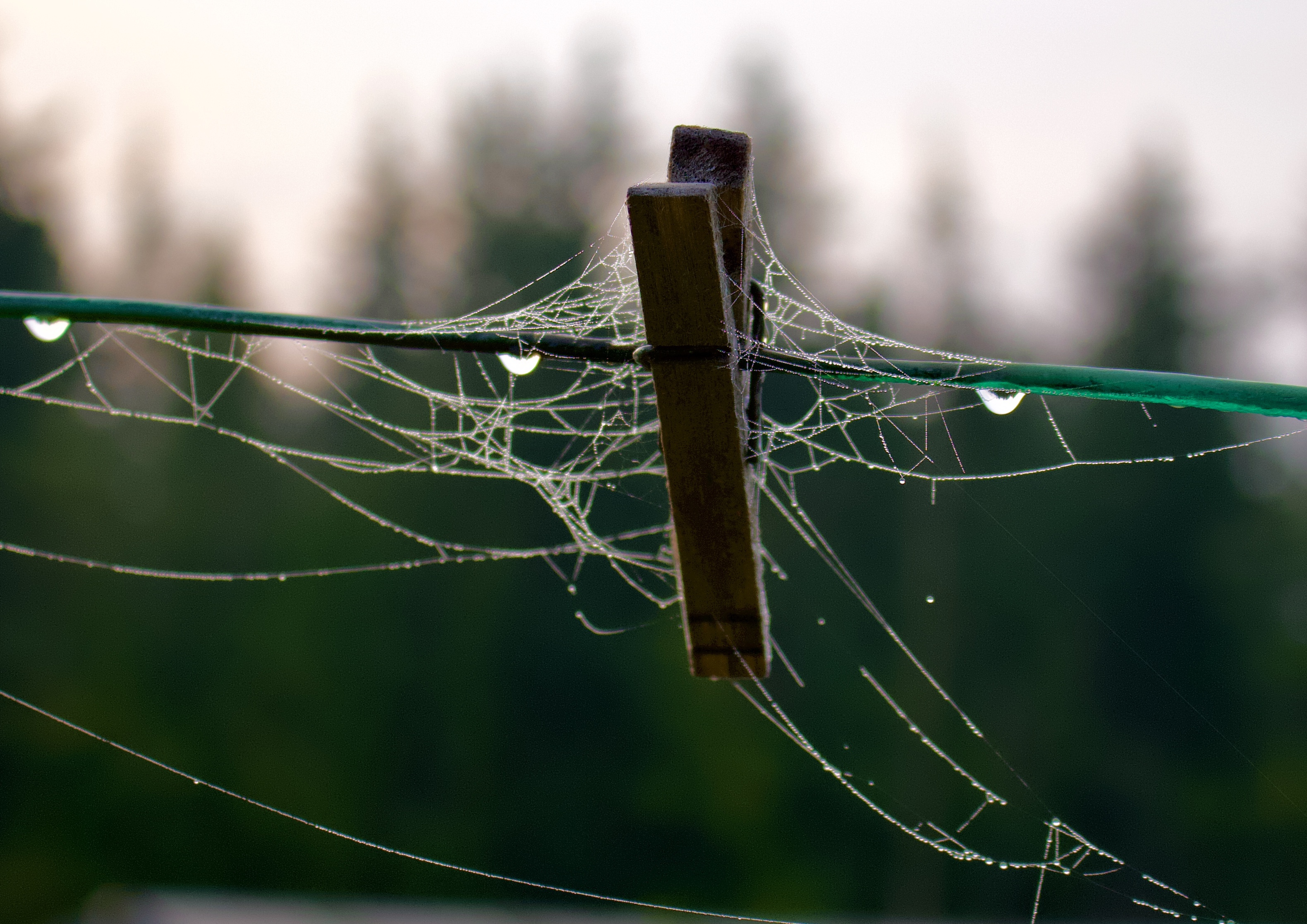
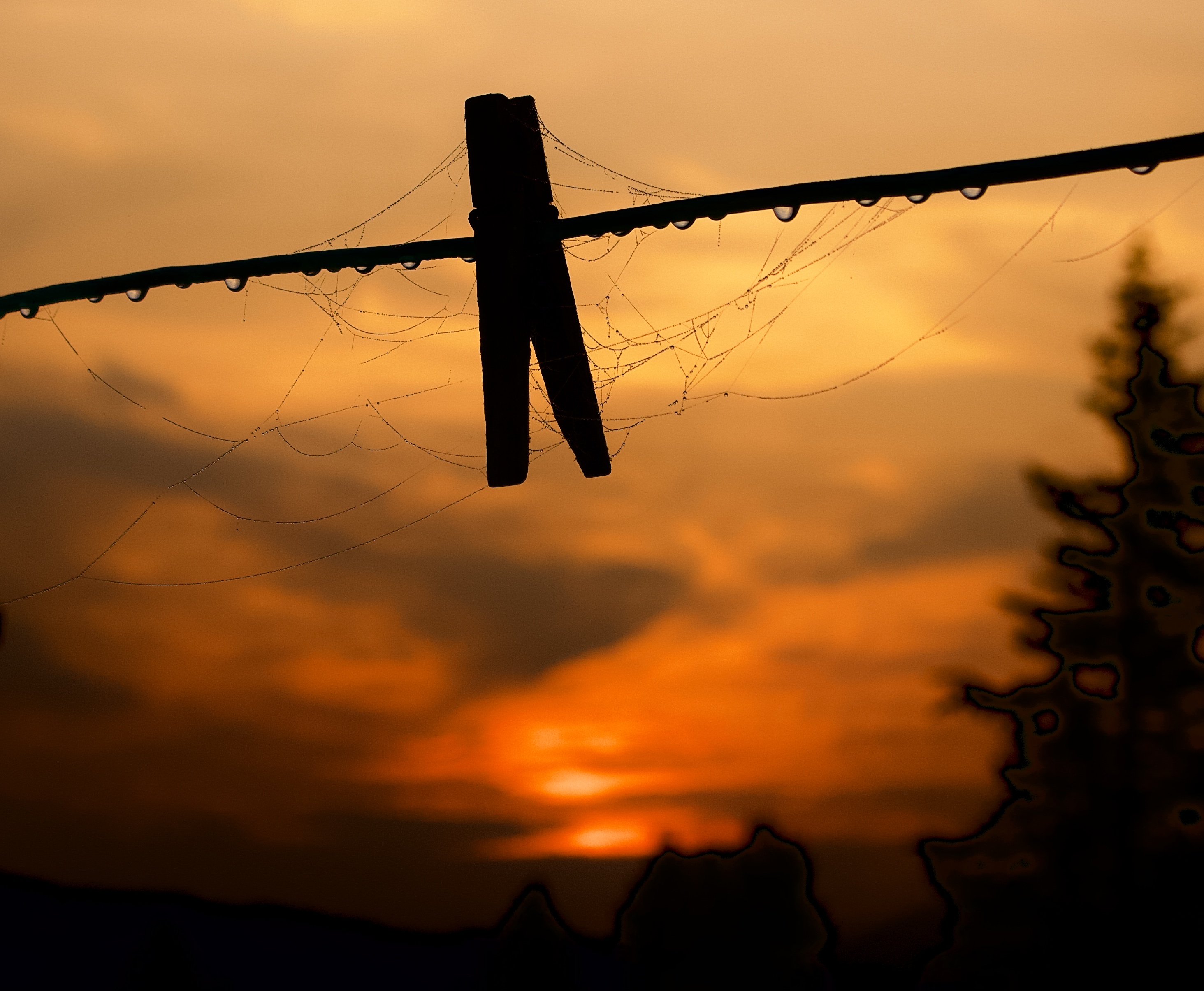
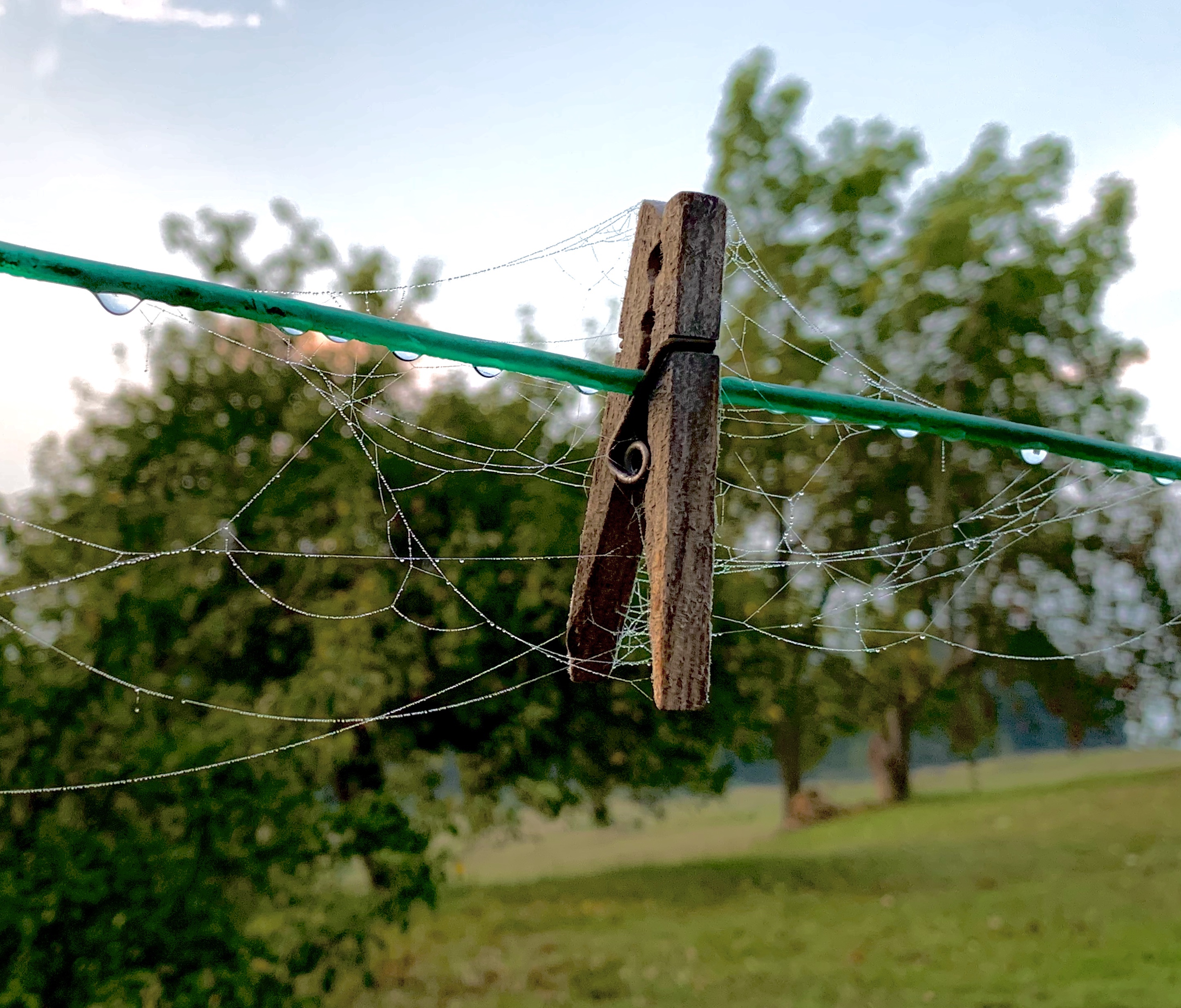
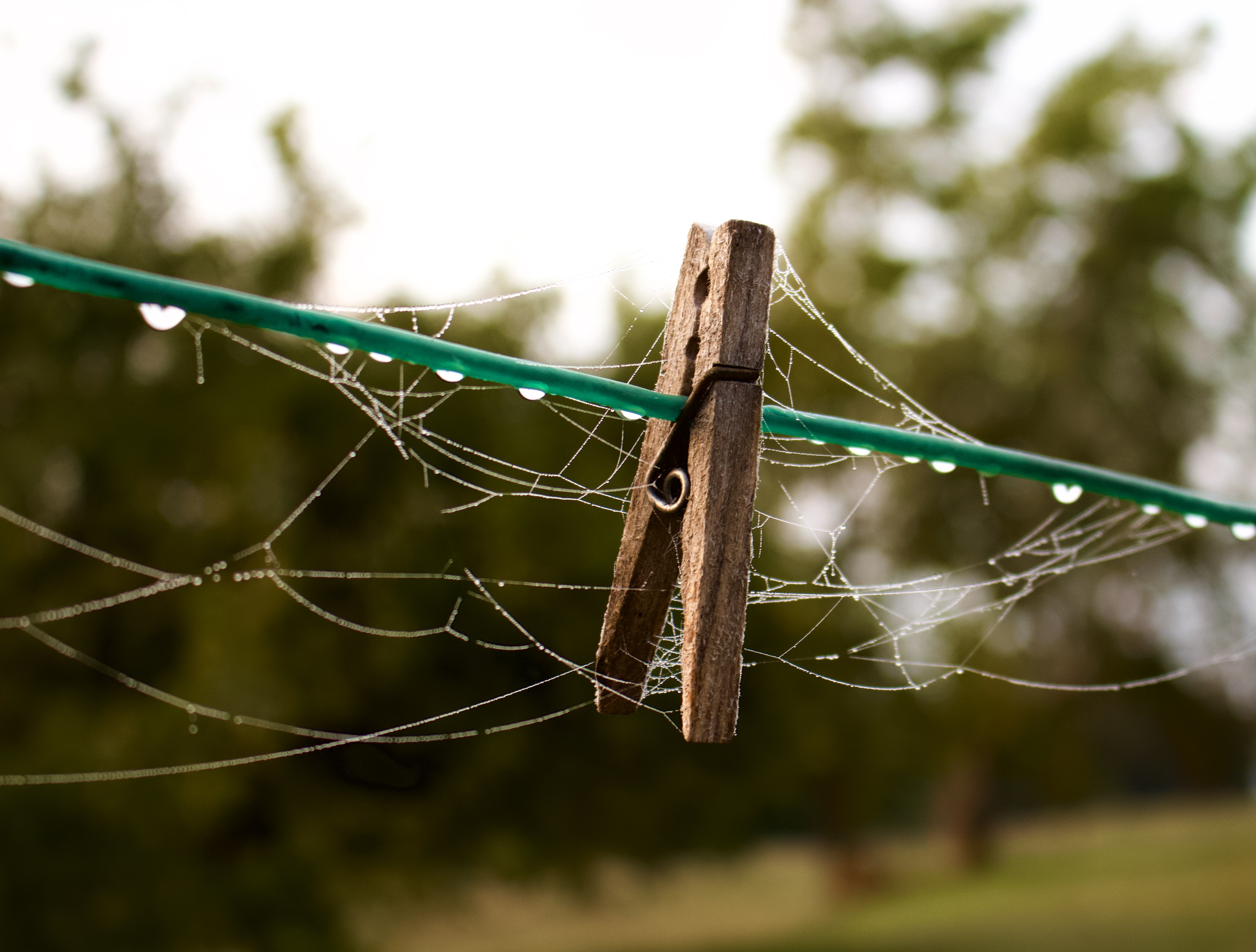
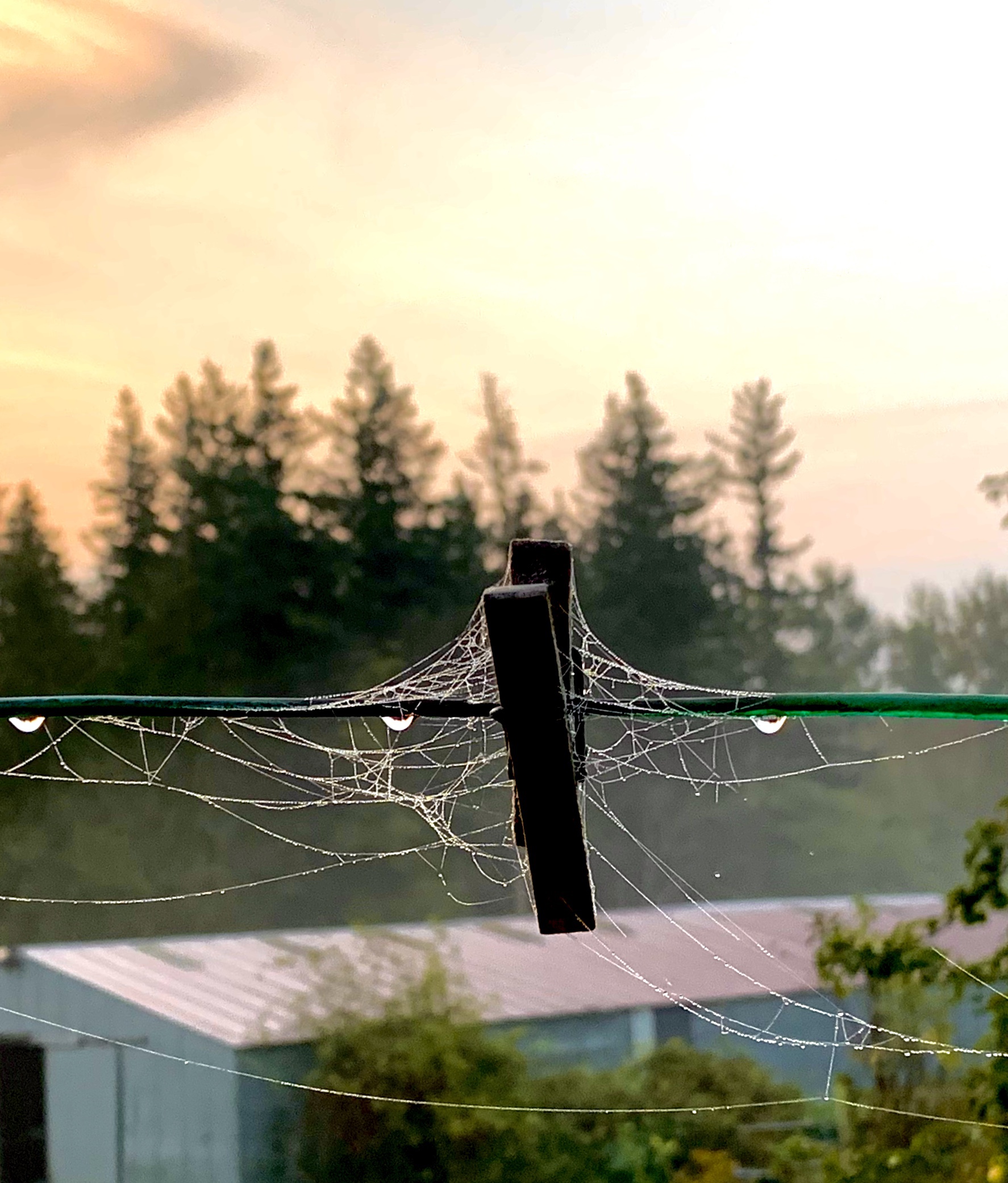
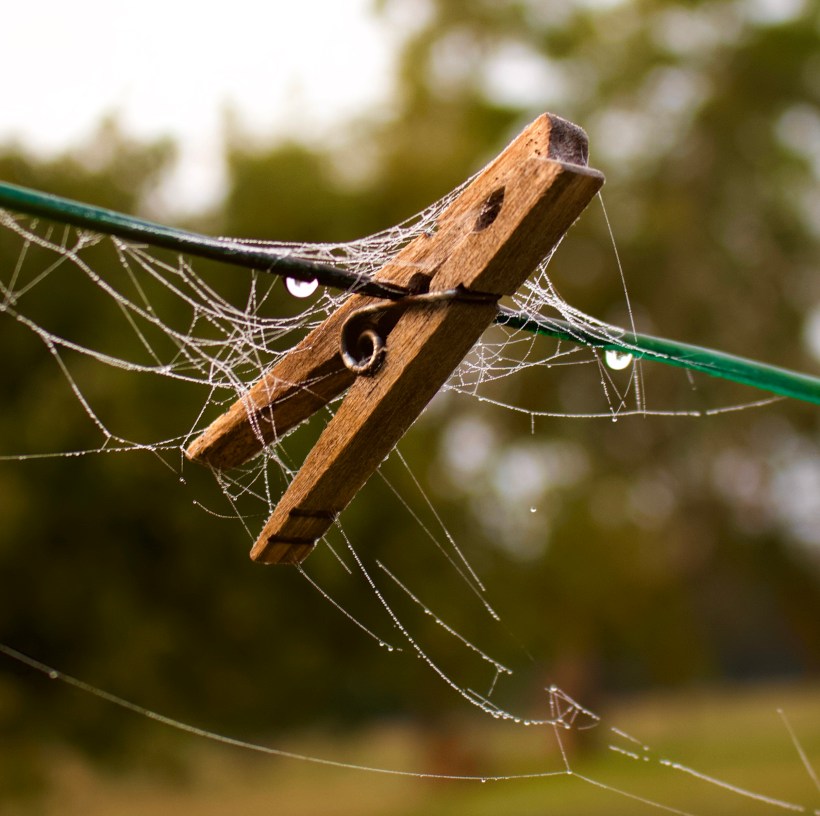
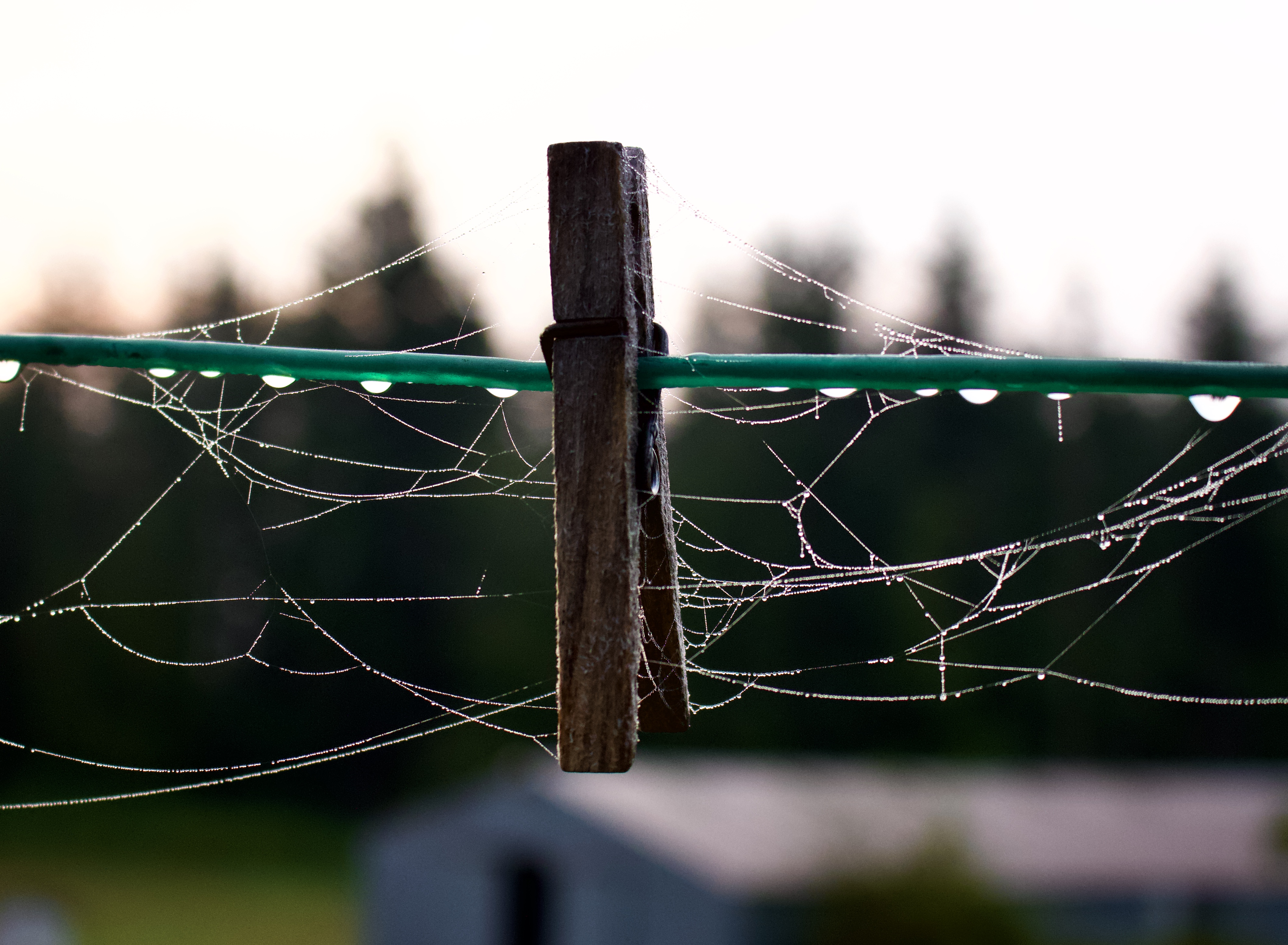
This morning, I found someone had been very busy during the night, securing the clothespins to the line to make sure the pins could not escape. Each pin and hinge were laced to the line with silken threads clinging tightly, just in case a pin might consider escaping.
I looked for this industrious spider, as it had trekked down a long line, working its webby magic through numerous clothespins, yet it had descended and snuck away on this foggy Labor Day, not even waiting to see what might happen to all its work.
The old and weathered clothespins patiently wait for their next job, to pinch together what I give them to hold on to tomorrow while blowing in the wind. In the meantime, they cling to fresh life, gaily festooned with gossamer silk.
One-Time
Monthly
Yearly
Make a one-time or recurring donation to support daily Barnstorming posts
















 Barnstorming