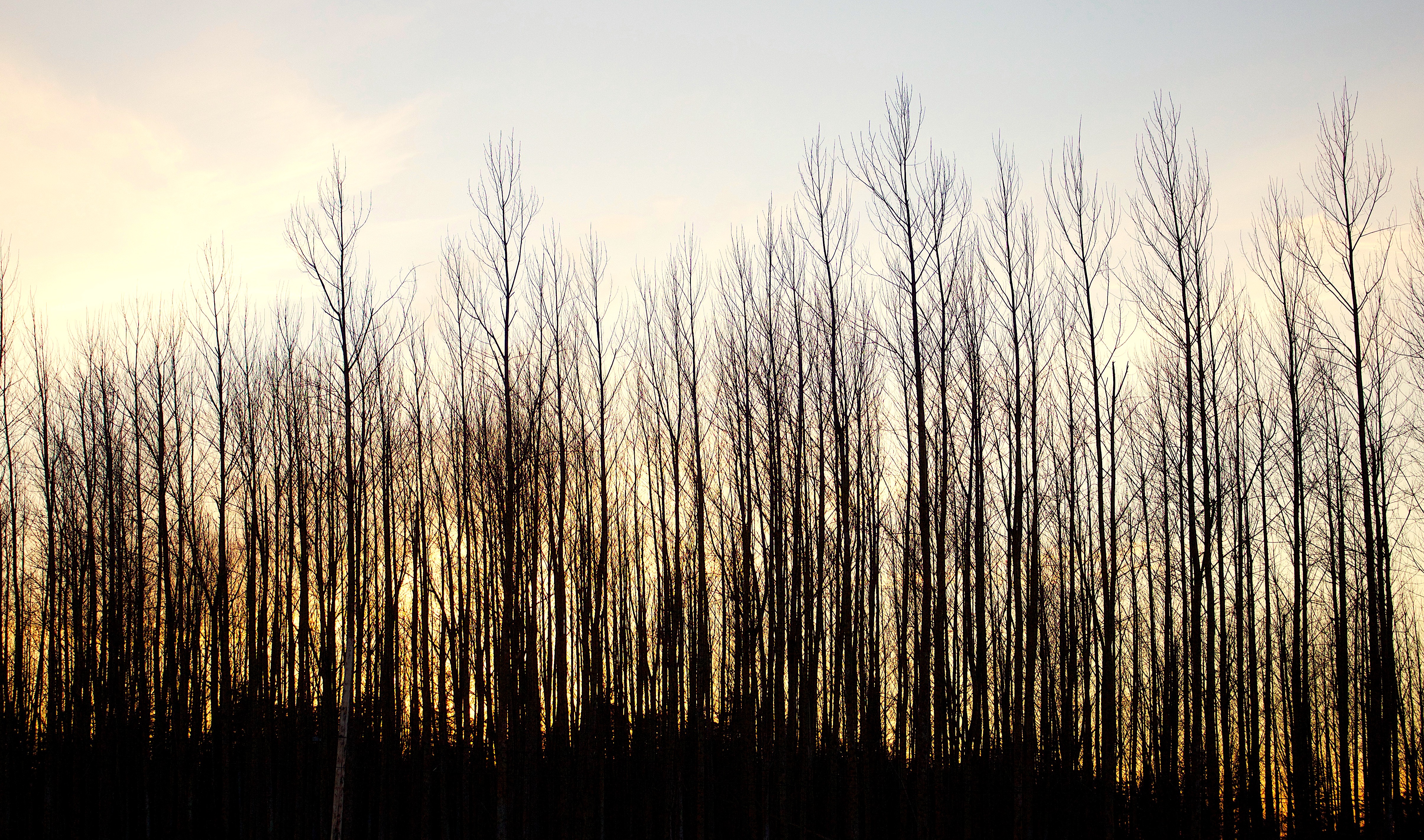
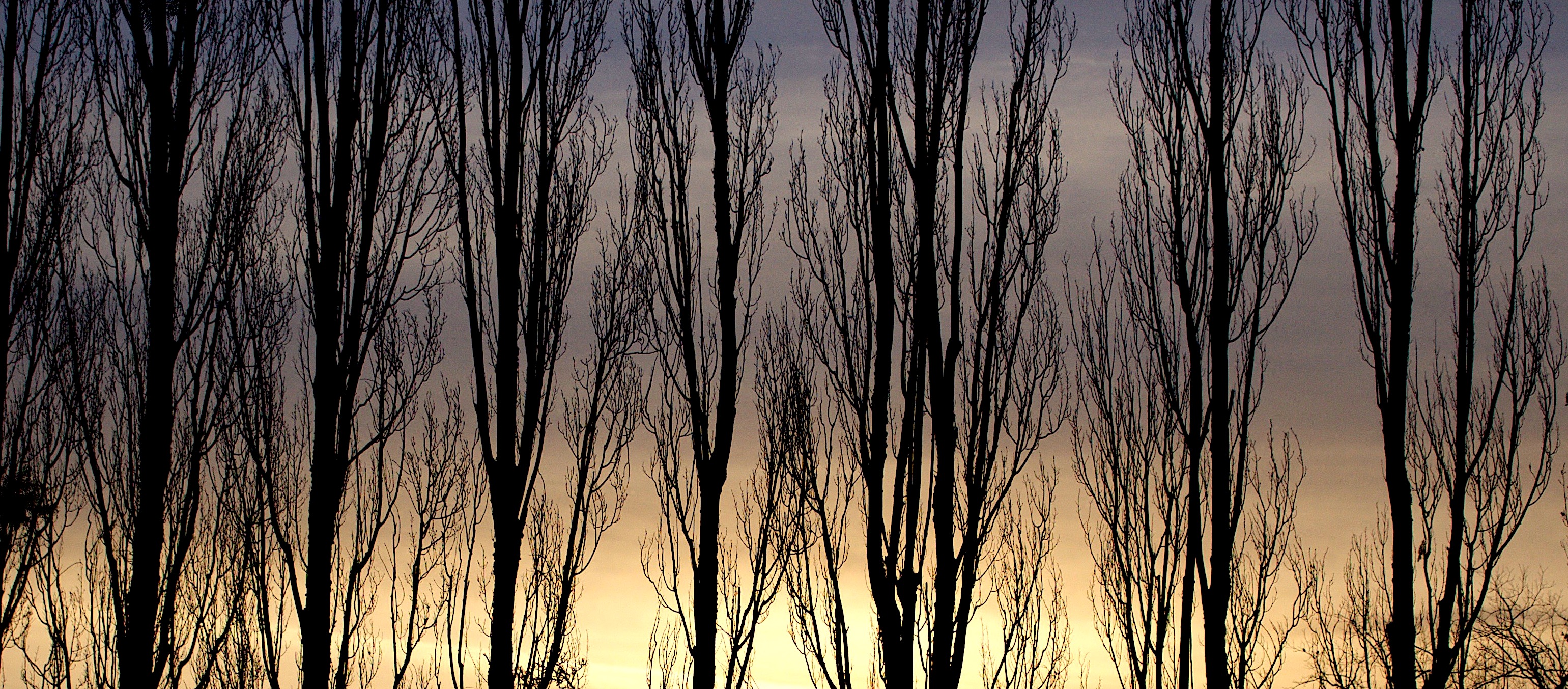
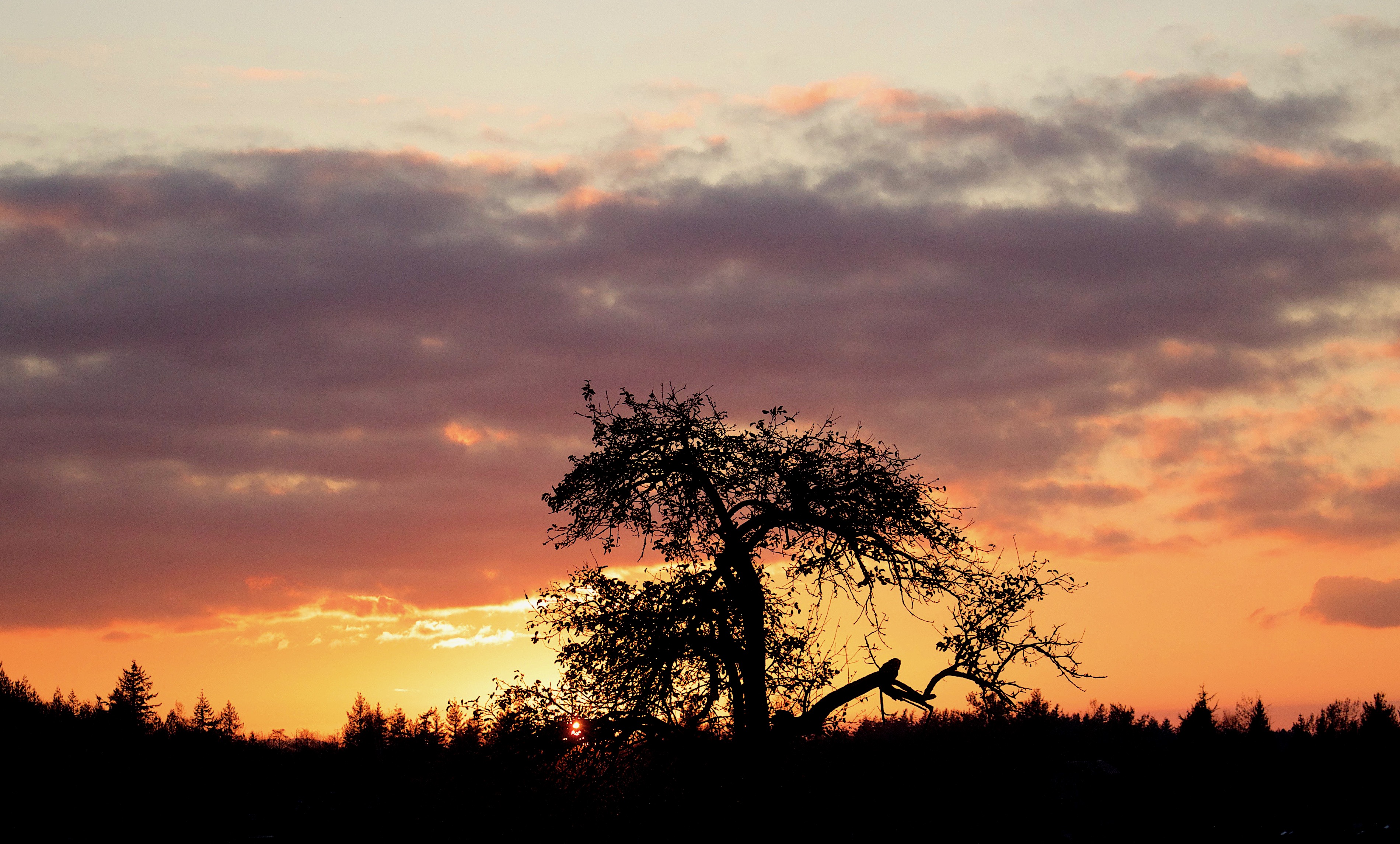
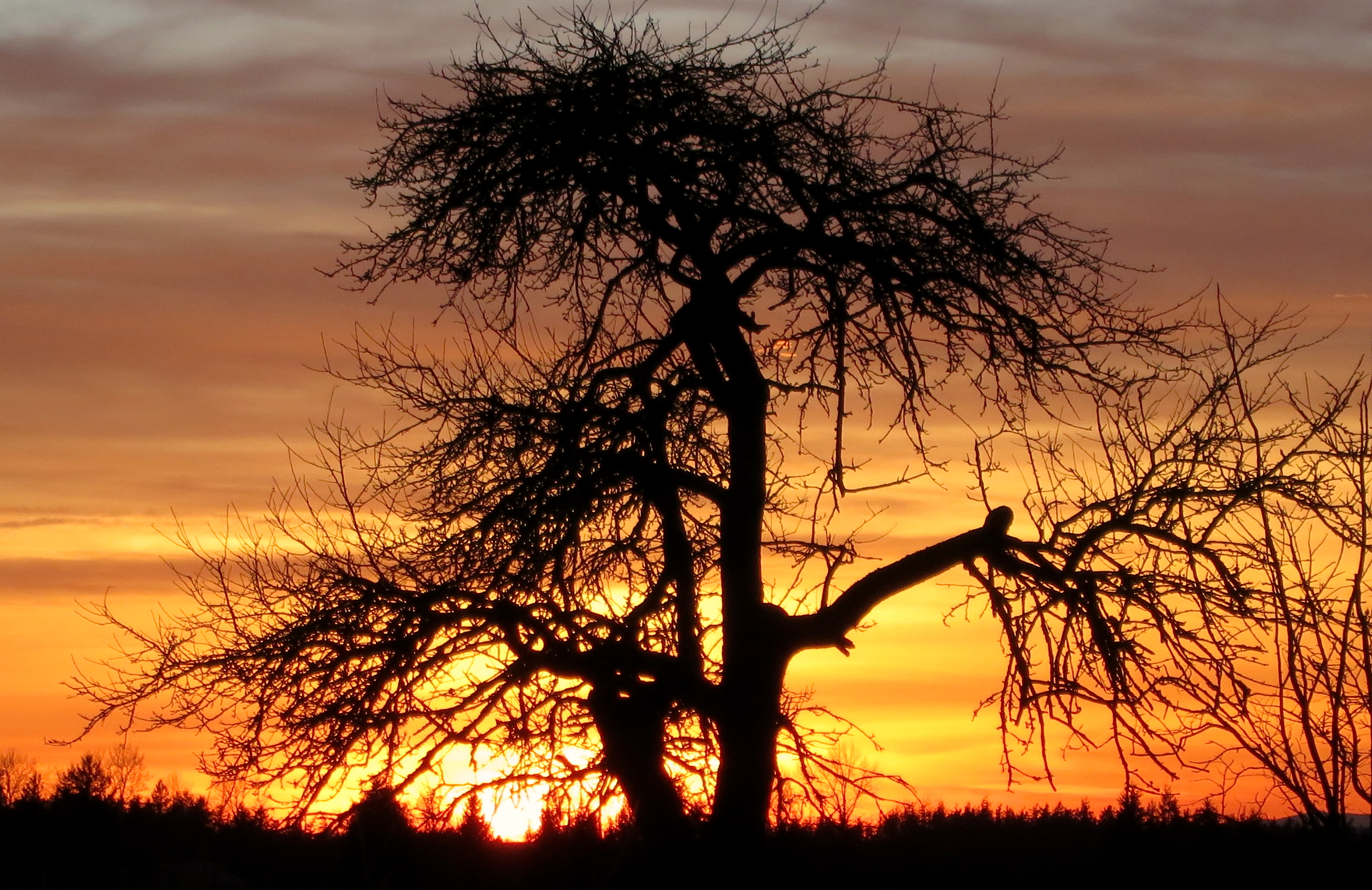
Sometimes when I watch trees sway, From the window or the door. I shall set forth for somewhere, I shall make the reckless choice Some day when they are in voice And tossing so as to scare The white clouds over them on. I shall have less to say, But I shall be gone. ~Robert Frost from “The Sound of Trees”
There is a thing in me that dreamed of trees, A quiet house, some green and modest acres A little way from every troubling town, Al little way from factories, schools, laments. I would have time, I thought, and time to spare, With only streams and birds for company, To build out of my life a few wild stanzas. And then it came to me, that so was death, A little way away from everywhere. ~Mary Oliver from “A Dream of Trees” from New and Selected Poems
As I wind down my work load, for once sharing the calls at night, and allowing others to manage the day time urgencies,
I wonder if I shall have less to say, and whether I will become less myself.
A life of non-stop doctoring means having little time for anything else. Soon I will have time and time to spare.
I wonder about the trees and how To build out of my life a few wild stanzas.
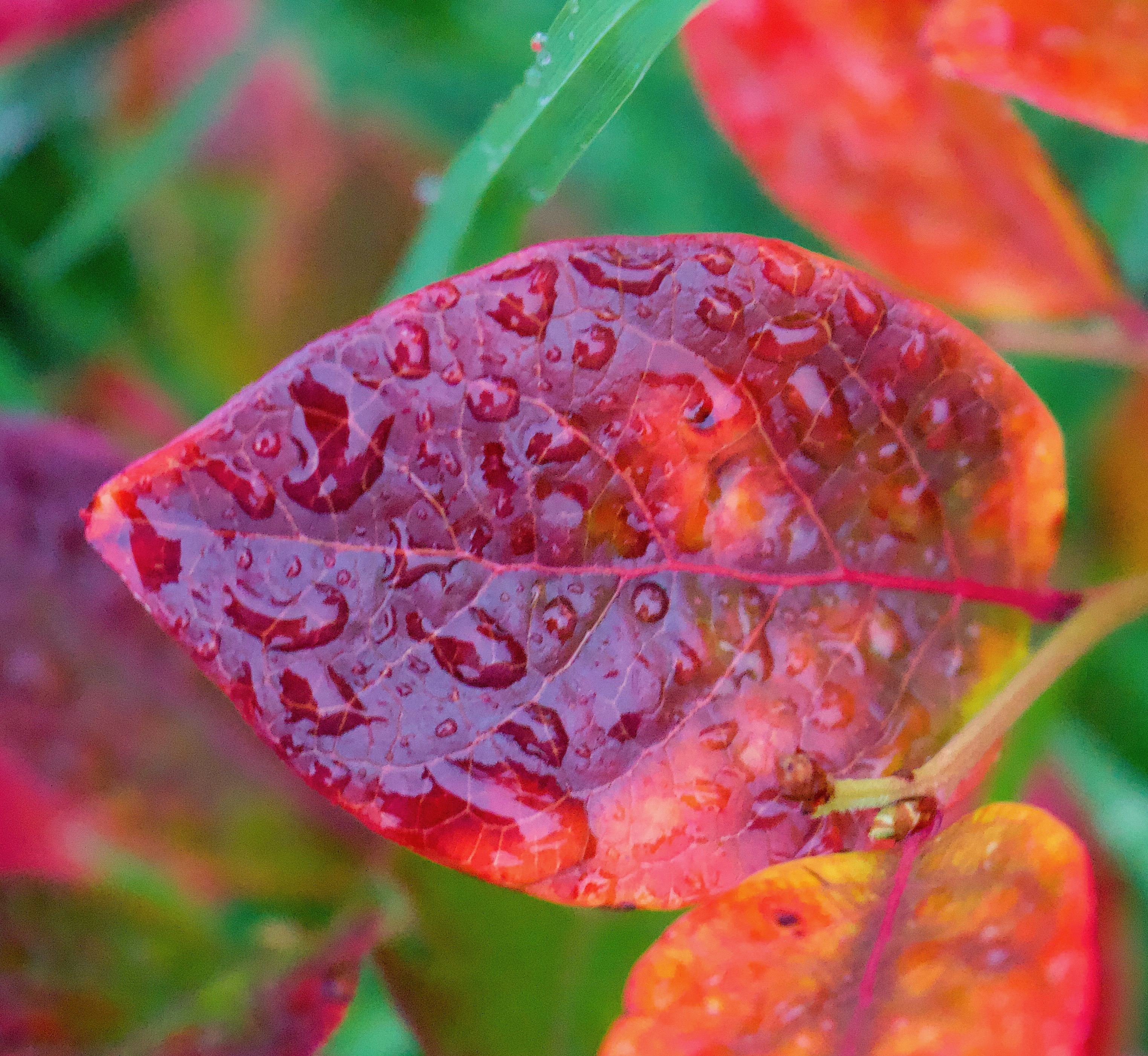
My Sorrow, when she’s here with me, Thinks these dark days of autumn rain Are beautiful as days can be; She loves the bare, the withered tree; She walks the sodden pasture lane.
Her pleasure will not let me stay. She talks and I am fain to list: She’s glad the birds are gone away, She’s glad her simple worsted gray Is silver now with clinging mist.
The desolate, deserted trees, The faded earth, the heavy sky, The beauties she so truly sees, She thinks I have no eye for these, And vexes me for reason why.
Not yesterday I learned to know The love of bare November days Before the coming of the snow, But it were vain to tell her so, And they are better for her praise. ~Robert Frost “My November Guest”
November,
this month of deepening darkening,
transforms itself
to a recounting of gratitude
of daily thanksgiving and blessings~~
it is good to dwell on our gifts,
even so,
it is right to invite Sorrow
to sit in silence with us,
her tears blending with ours.
These dark-dwelled days
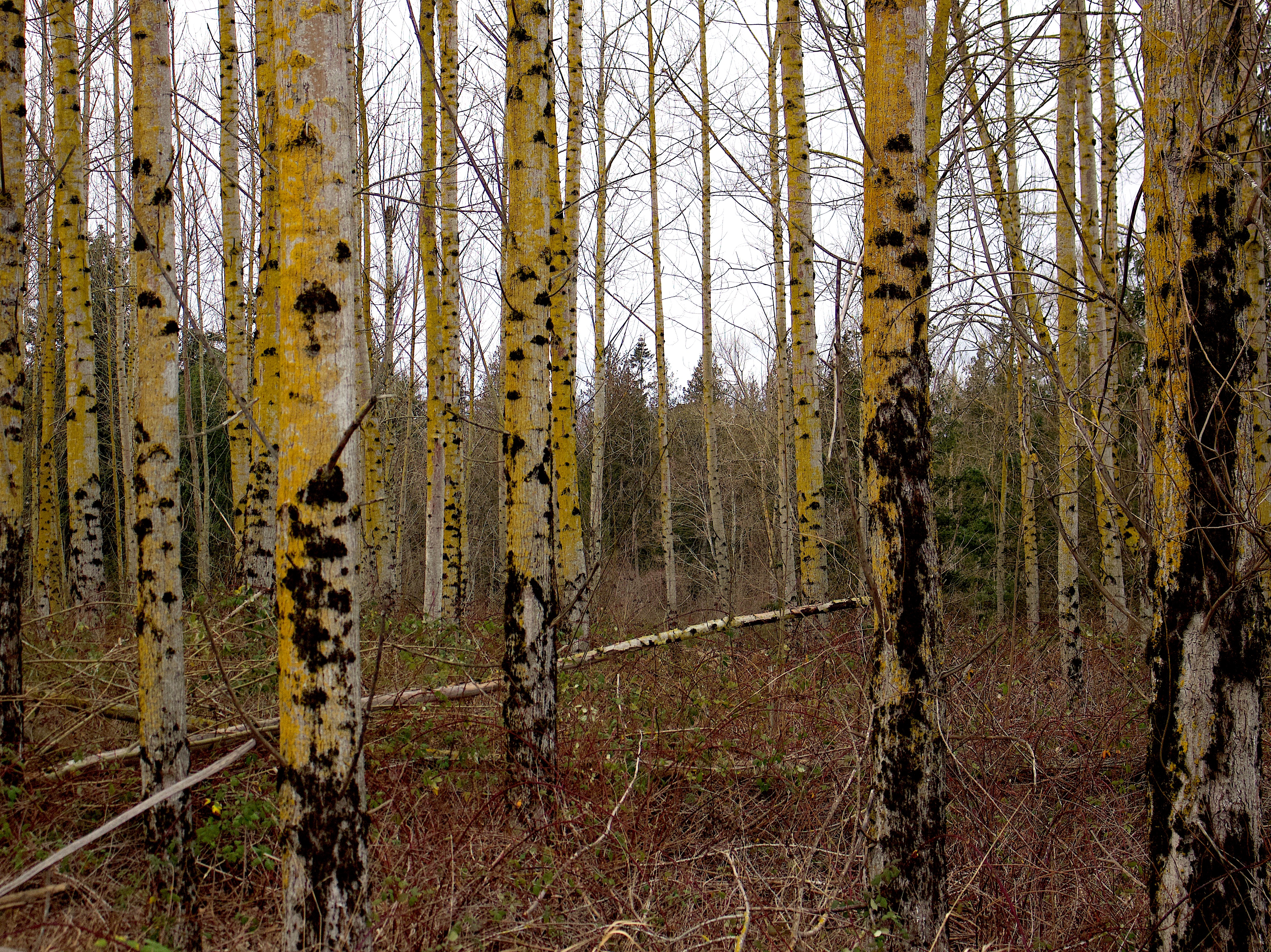
of bare stripped branches
feed our growing need
for the covering grace,
the shrouding
of His coming Light.
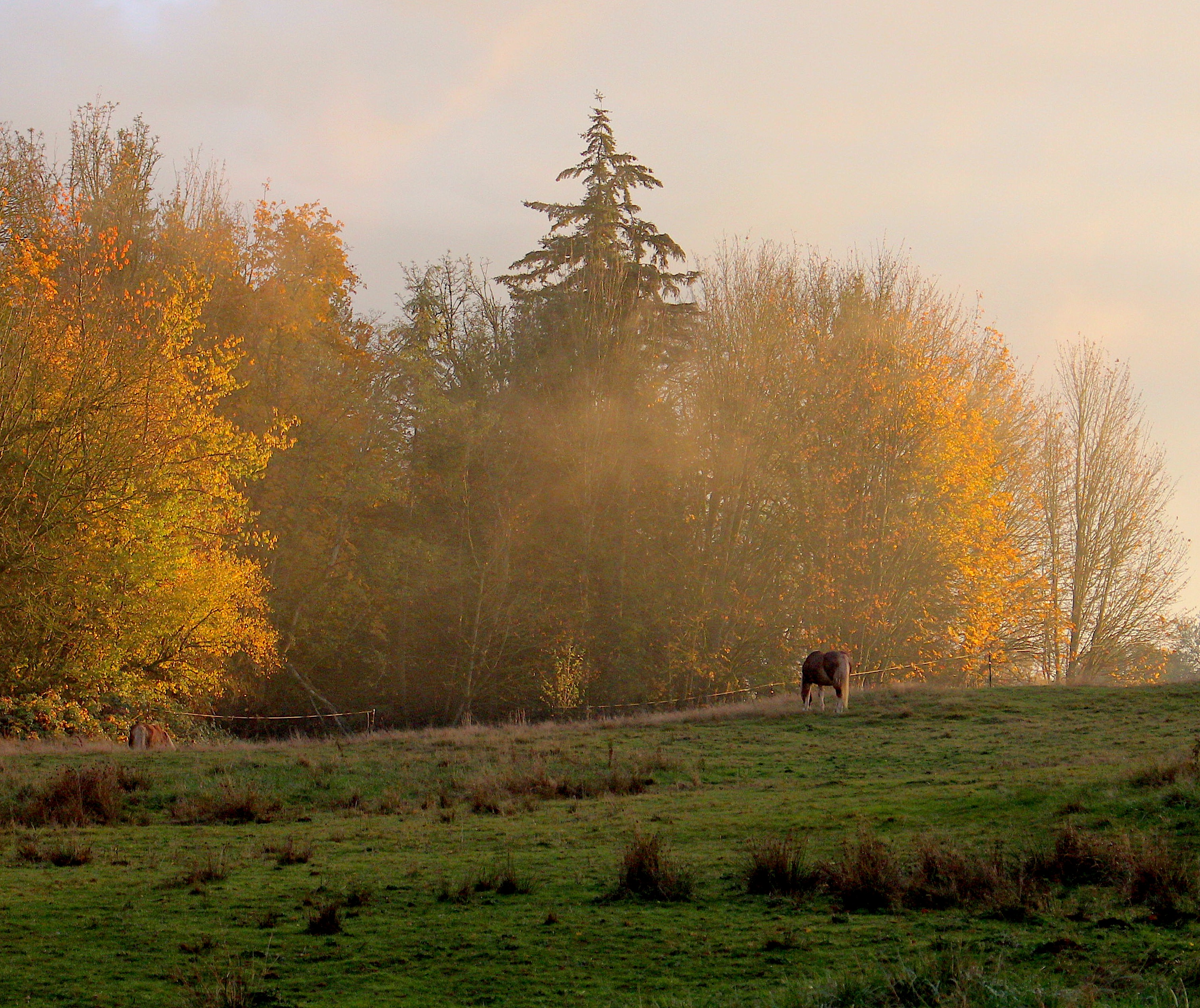
O hushed October morning mild, Thy leaves have ripened to the fall; Tomorrow’s wind, if it be wild, Should waste them all. The crows above the forest call; Tomorrow they may form and go. O hushed October morning mild, Begin the hours of this day slow. Make the day seem to us less brief. Hearts not averse to being beguiled, Beguile us in the way you know. Release one leaf at break of day; At noon release another leaf; One from our trees, one far away. Retard the sun with gentle mist; Enchant the land with amethyst. ~Robert Frost, from “October” in A Boy’s Will
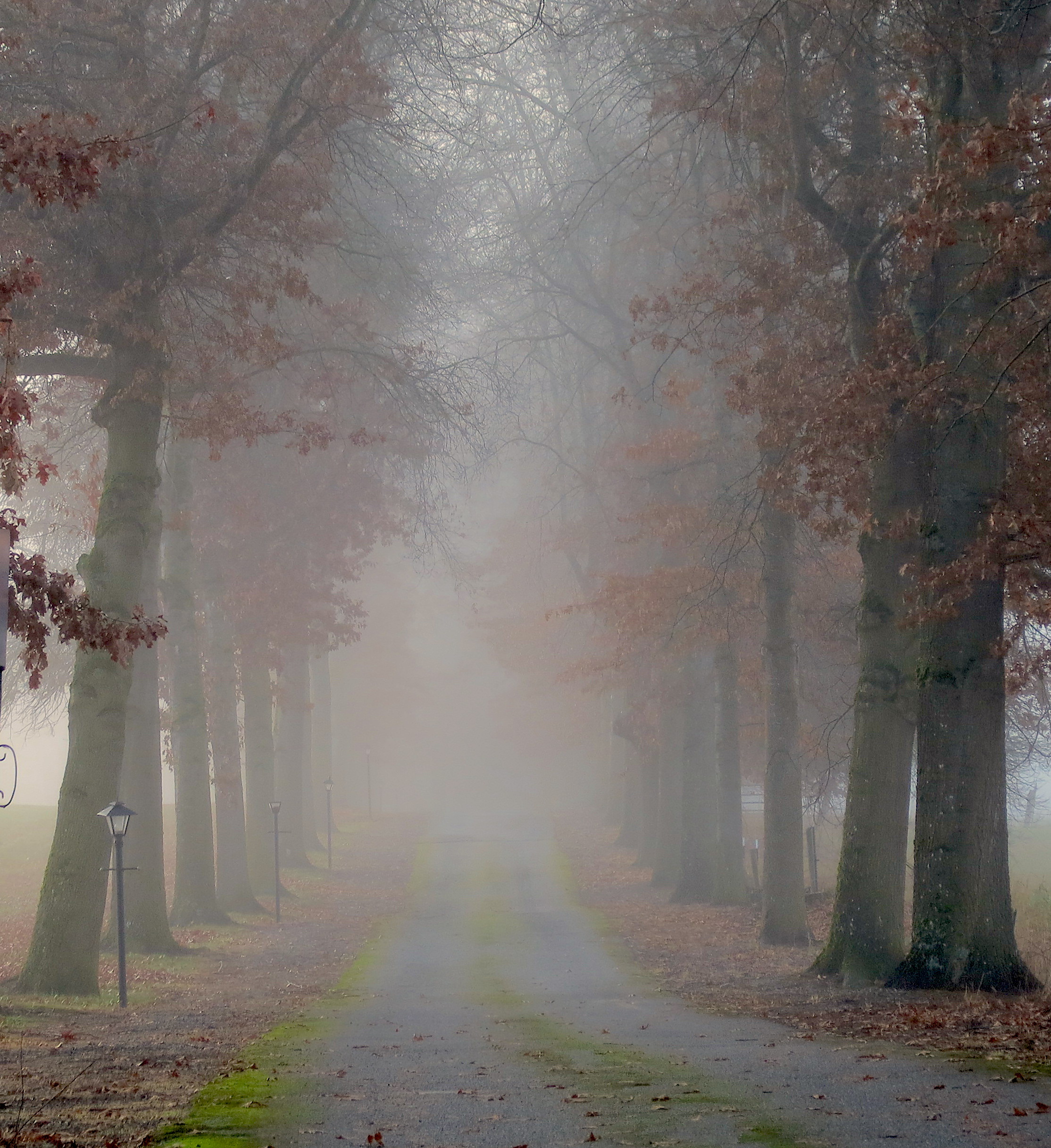
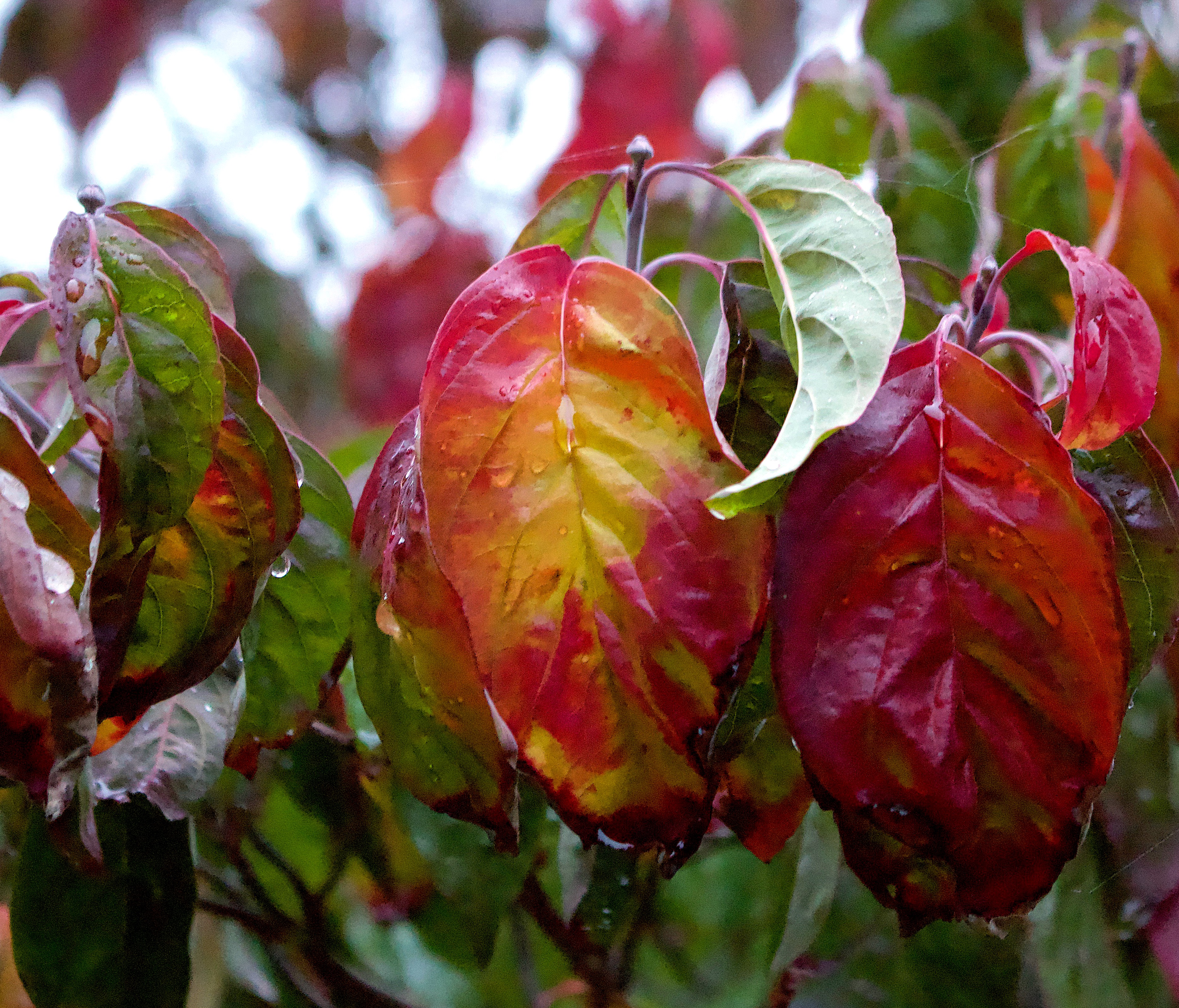
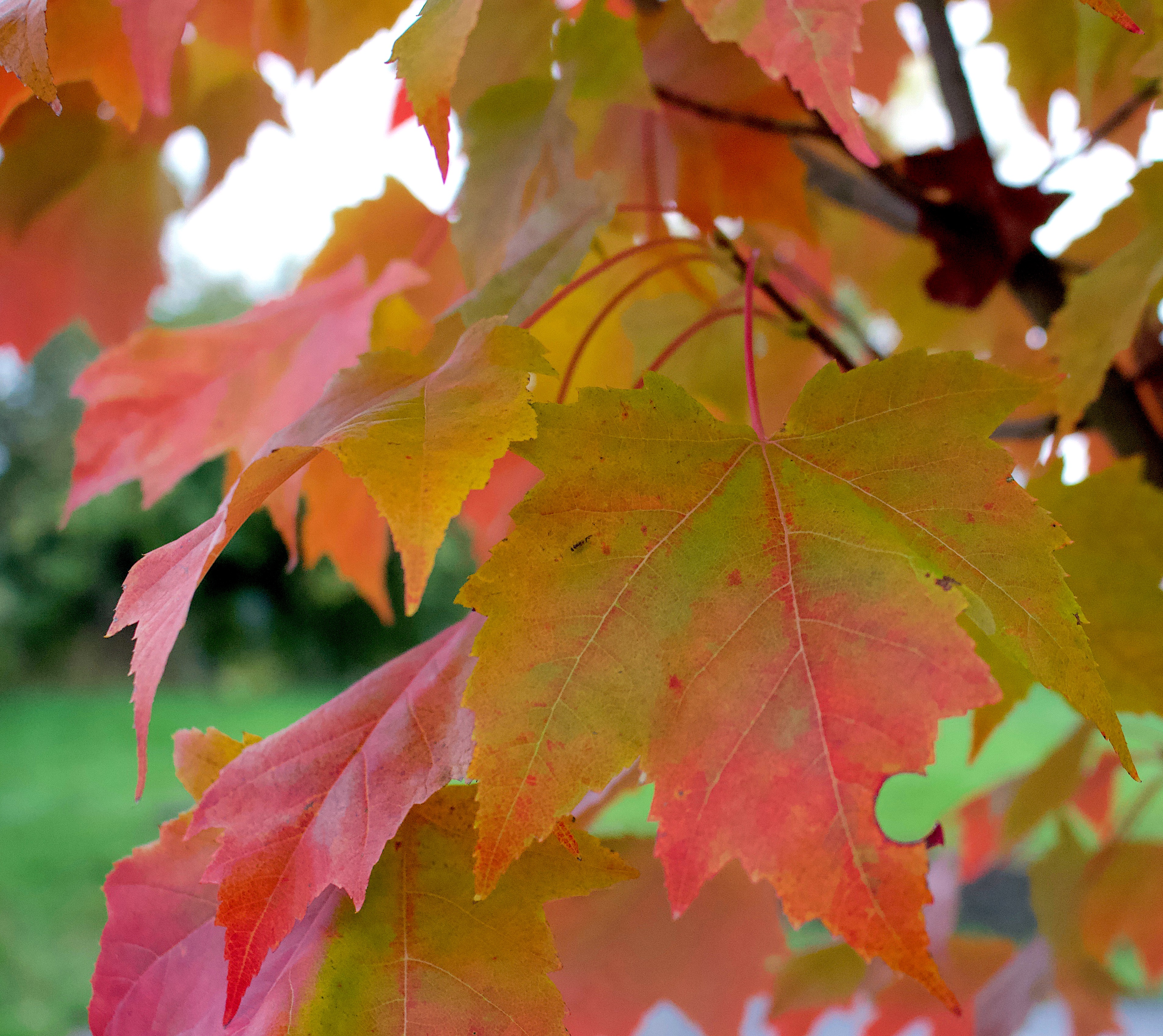
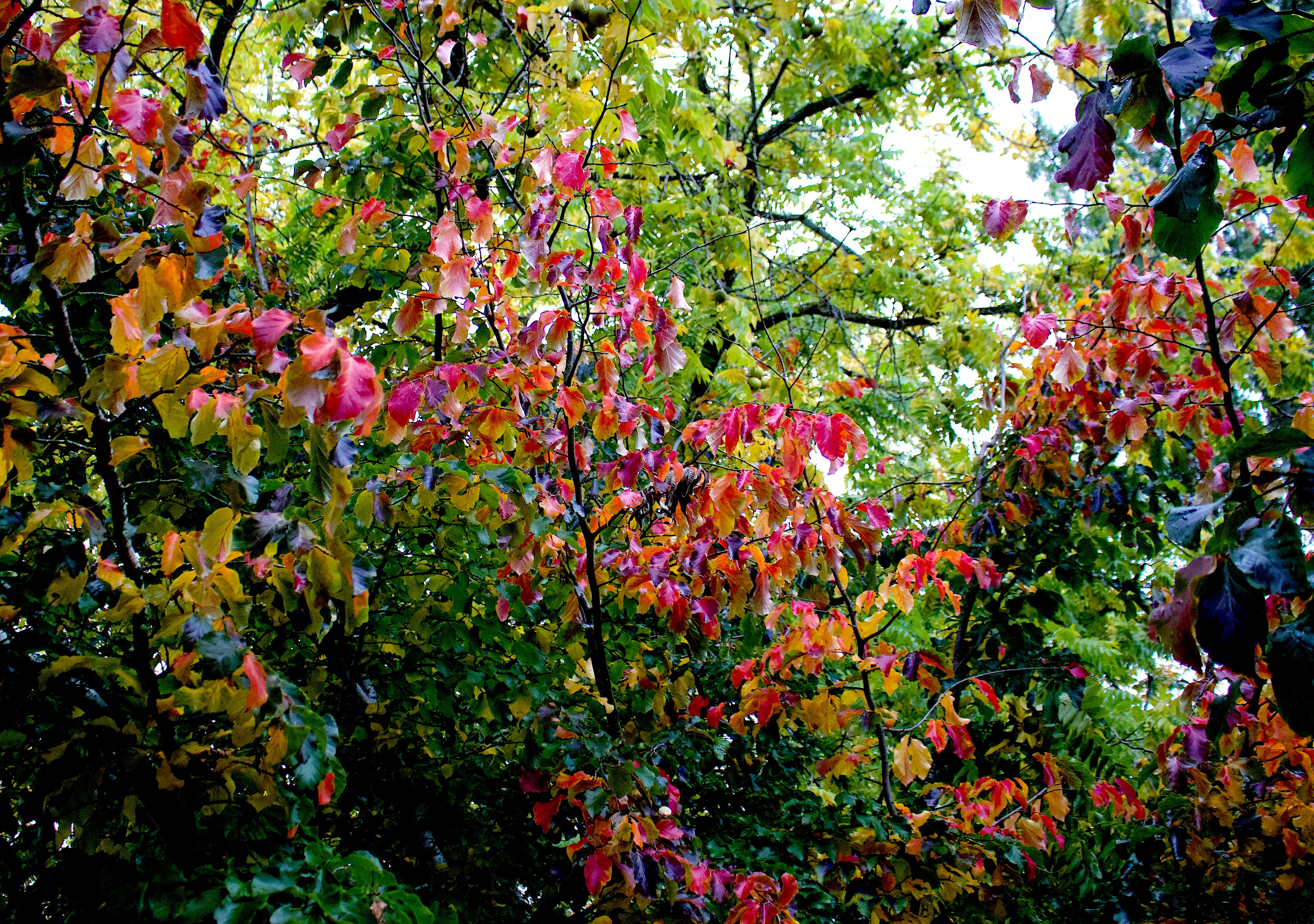
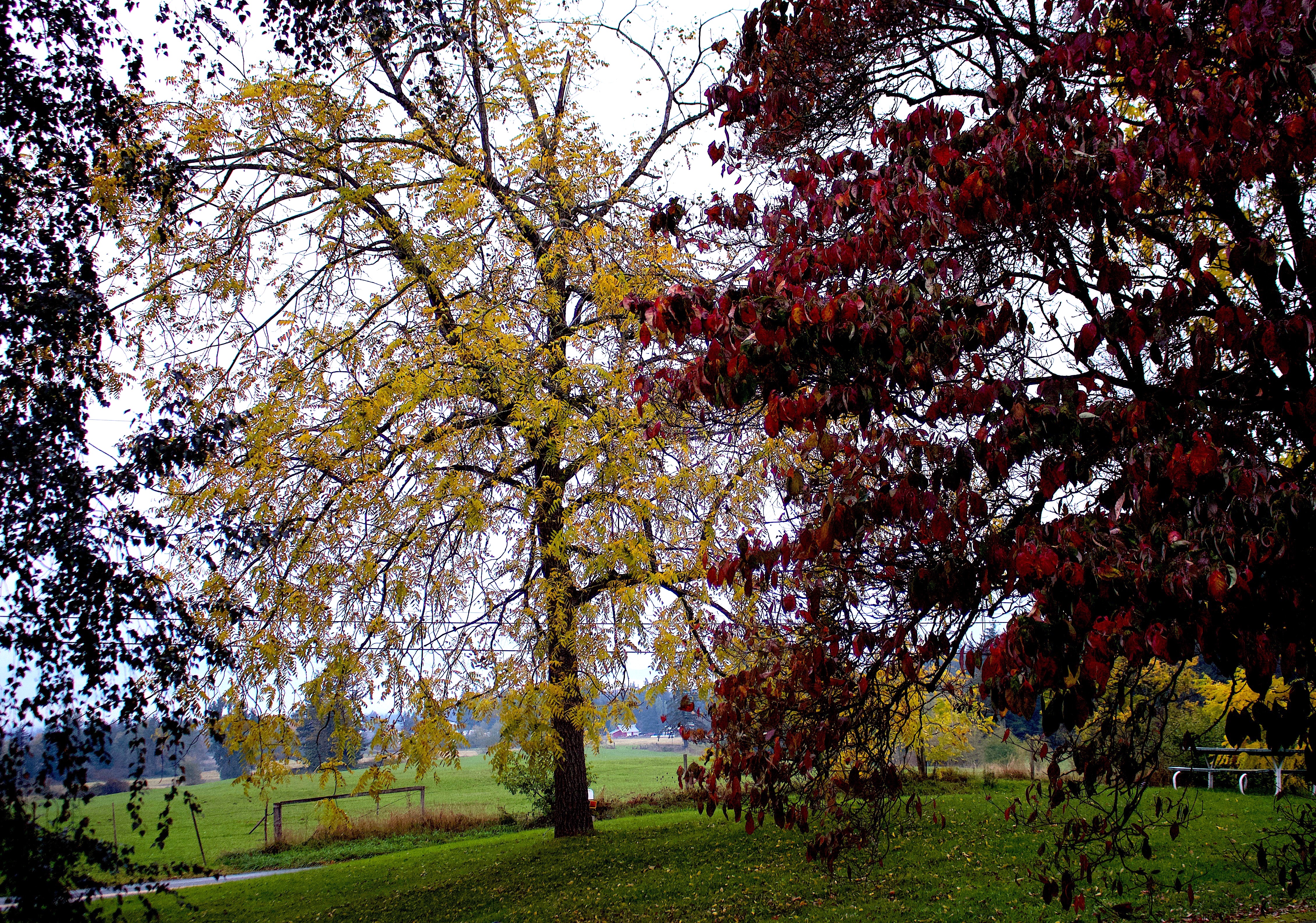
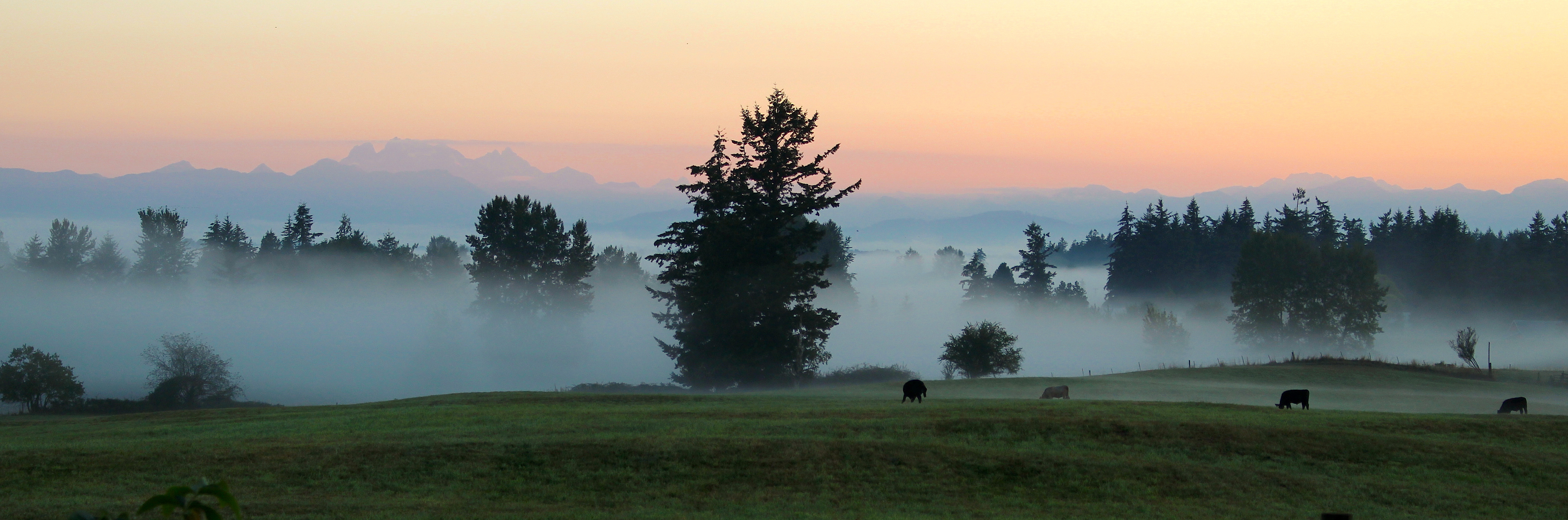
These mornings I wander stunned by light and mist
to see trees tremble inside their loosening cloaks,
a pulsing palette of color ready to detach,
revealing mere bones and branches.
I want to slow it down,
leave the leaves attached like a fitted mosaic
rather than randomly falling away.
Their release is not their choosing:
the trees know it is time for slowly letting go~
readying for sleep, for sprouts and buds, for fresh tapestry to be woven
from October’s leaves lying about their feet.
I find my greatest freedom on the farm.
I can be a bad farmer or a lazy farmer and it’s my own business.
A definition of freedom:
It’s being easy in your harness. ~Robert Frost in 1954, at a news conference on the eve of his 80th birthday
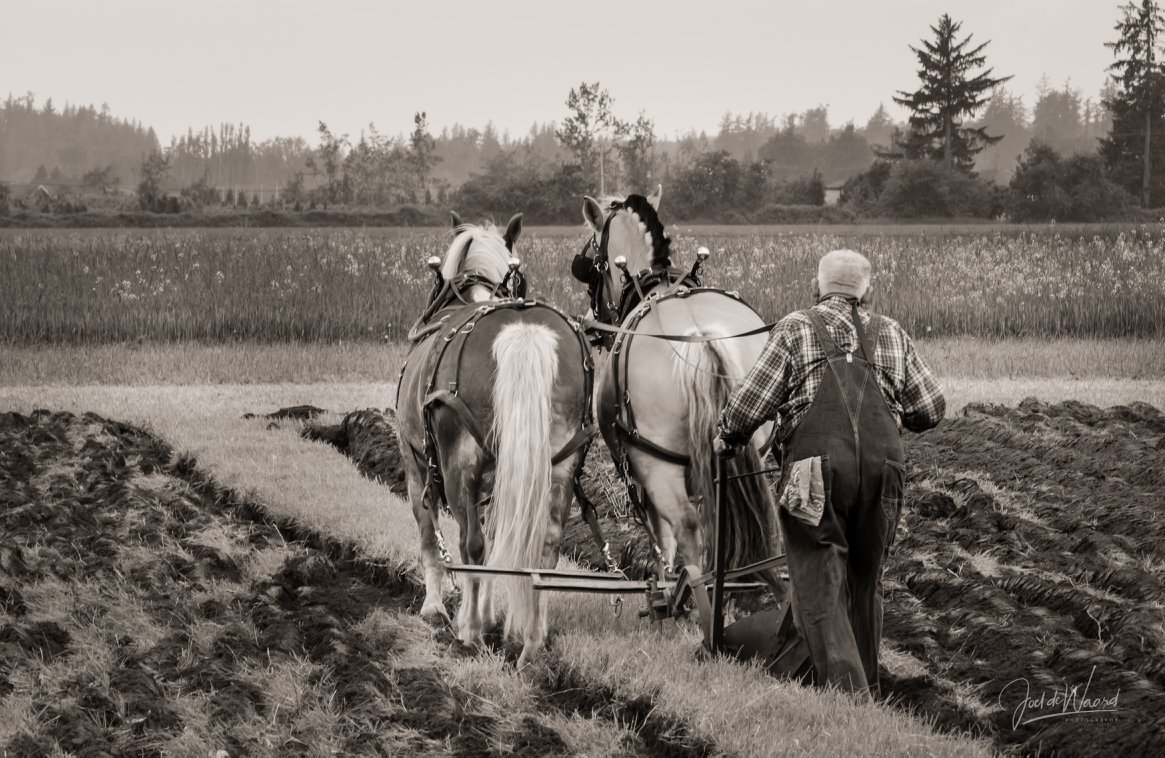
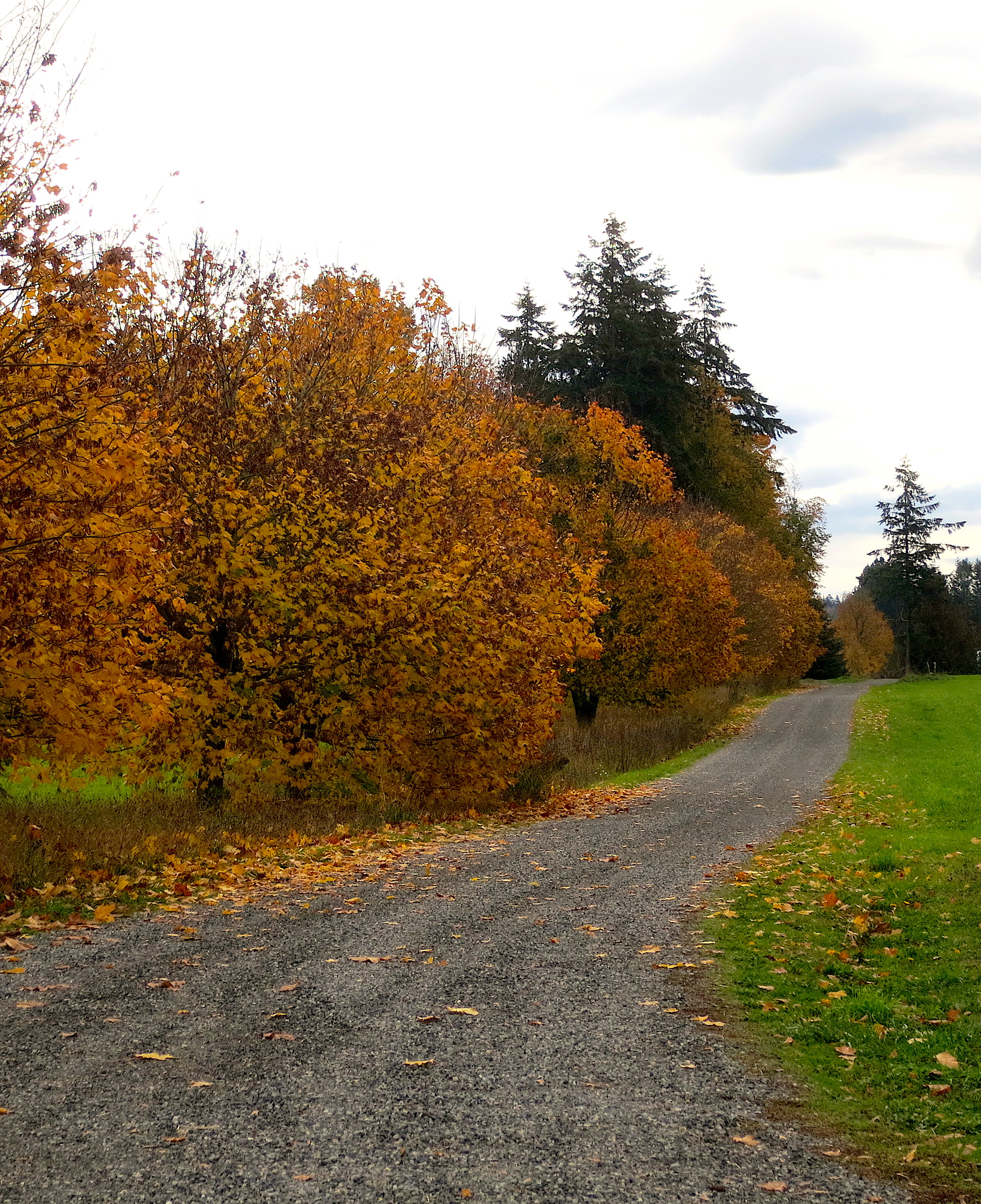
photo by Joel deWaard
The past was faded like a dream; There come the jingling of a team, A ploughman’s voice, a clink of chain, Slow hoofs, and harness under strain. Up the slow slope a team came bowing, Old Callow at his autumn ploughing, Old Callow, stooped above the hales, Ploughing the stubble into wales. His grave eyes looking straight ahead, Shearing a long straight furrow red; His plough-foot high to give it earth To bring new food for men to birth.
O wet red swathe of earth laid bare, O truth, O strength, O gleaming share, O patient eyes that watch the goal, O ploughman of the sinner’s soul. O Jesus, drive the coulter deep To plough my living man from sleep…
At top of rise the plough team stopped, The fore-horse bent his head and cropped. Then the chains chack, the brasses jingle, The lean reins gather through the cringle, The figures move against the sky, The clay wave breaks as they go by. I kneeled there in the muddy fallow, I knew that Christ was there with Callow, That Christ was standing there with me, That Christ had taught me what to be, That I should plough, and as I ploughed My Saviour Christ would sing aloud, And as I drove the clods apart Christ would be ploughing in my heart, Through rest-harrow and bitter roots, Through all my bad life’s rotten fruits.
Well-away and be it so,
To the stranger let them go.
Even cheerfully I yield
Pasture, orchard, mowing-field,
Yea and wish him all the gain
I required of them in vain.
Yea and I can yield him house,
Barn, and shed, with rat and mouse
To dispute possession of.
These I can unlearn to love.
Since I cannot help it? Good!
Only be it understood, It shall be no trespassing If I come again some spring In the grey disguise of years, Seeking ache of memory here. ~Robert Frost from “On the Sale of My Farm”
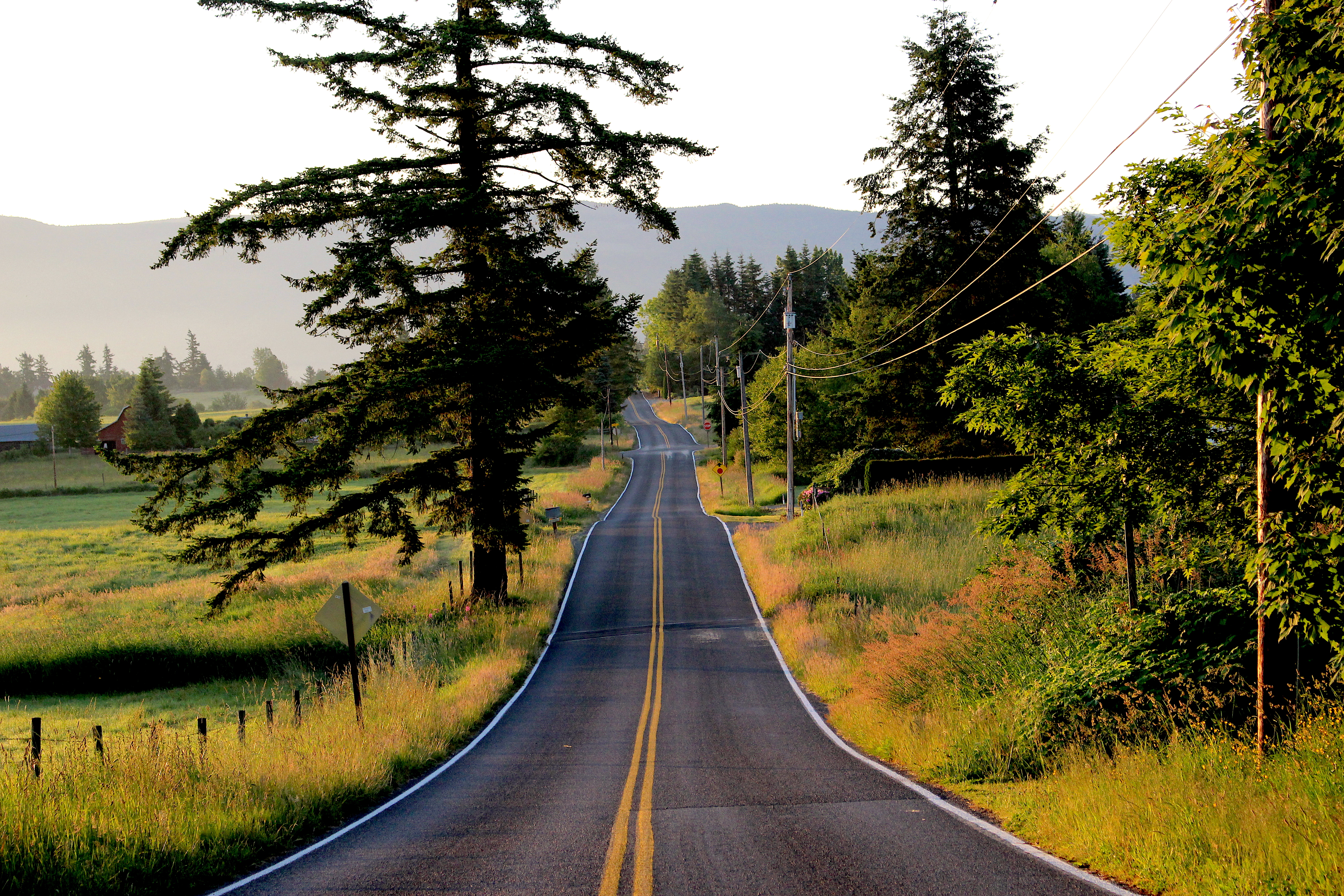
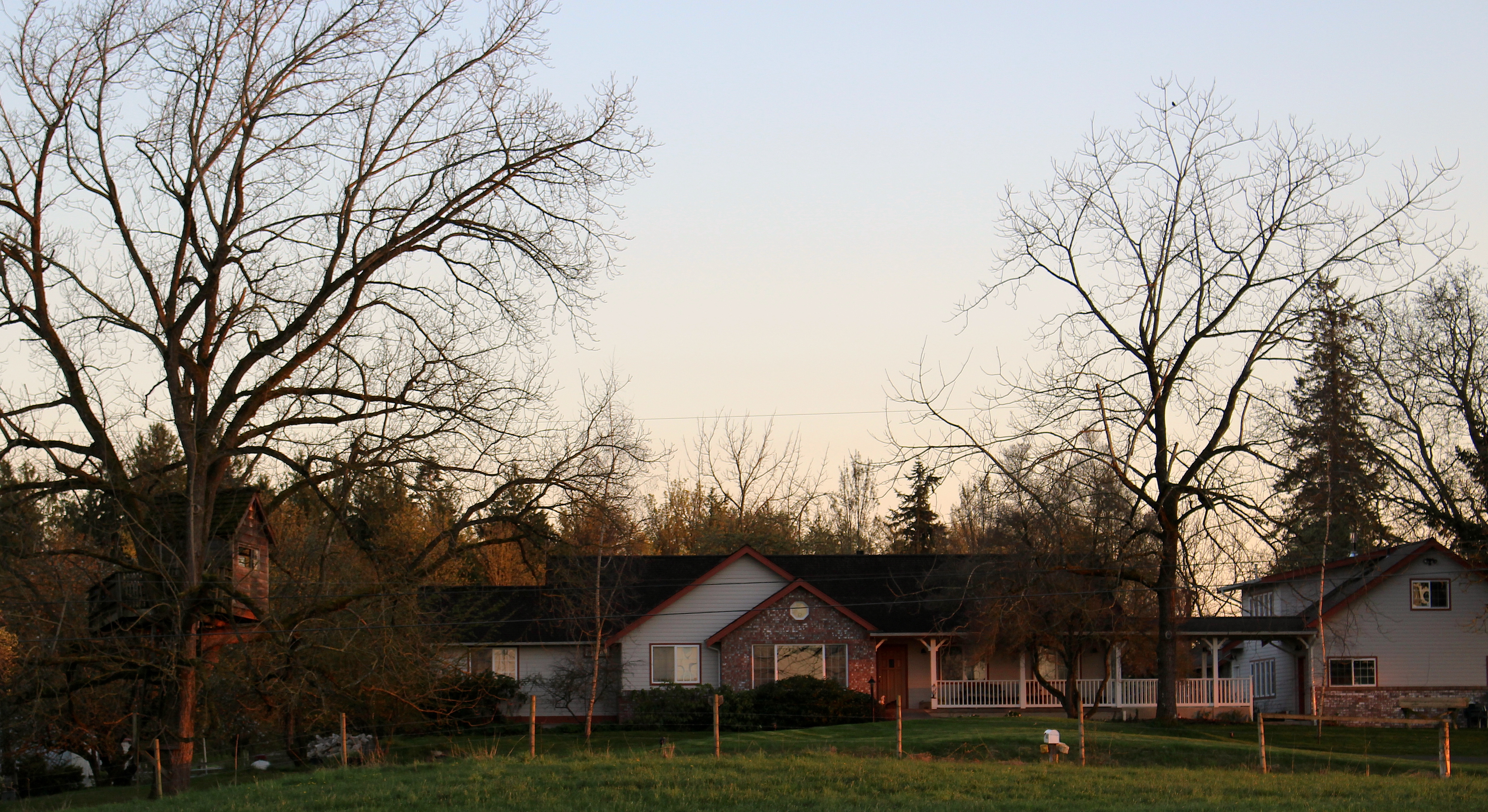
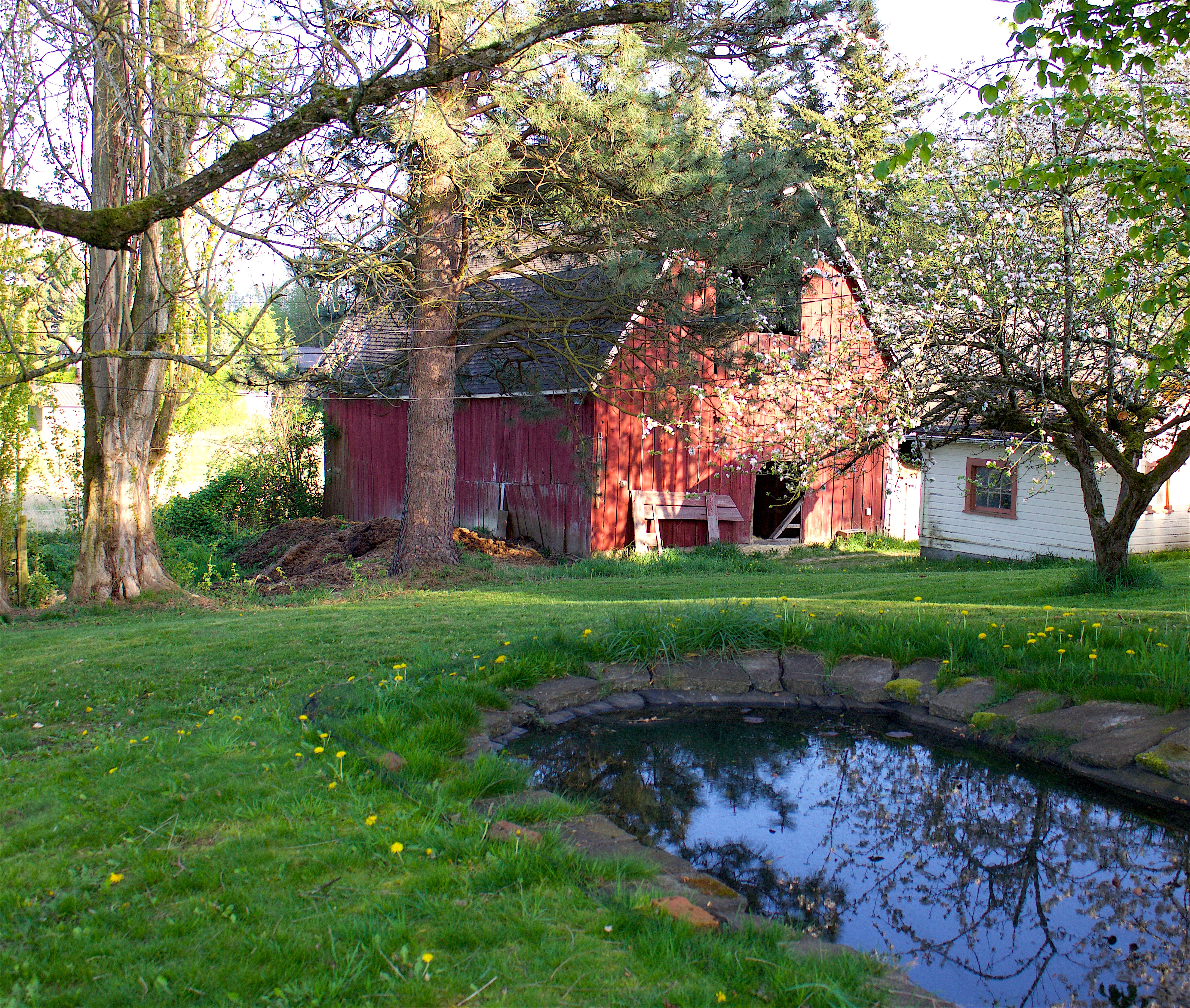
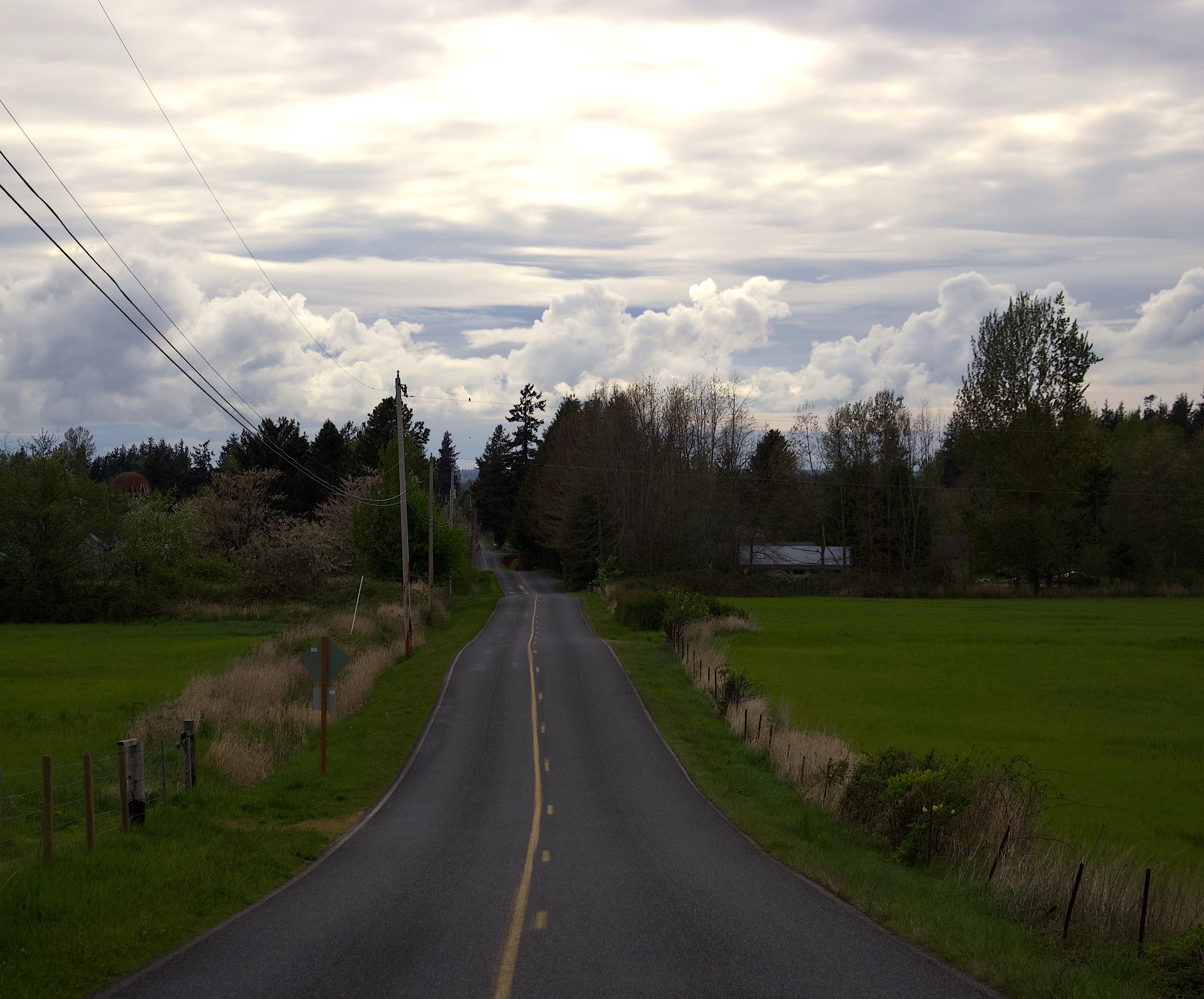
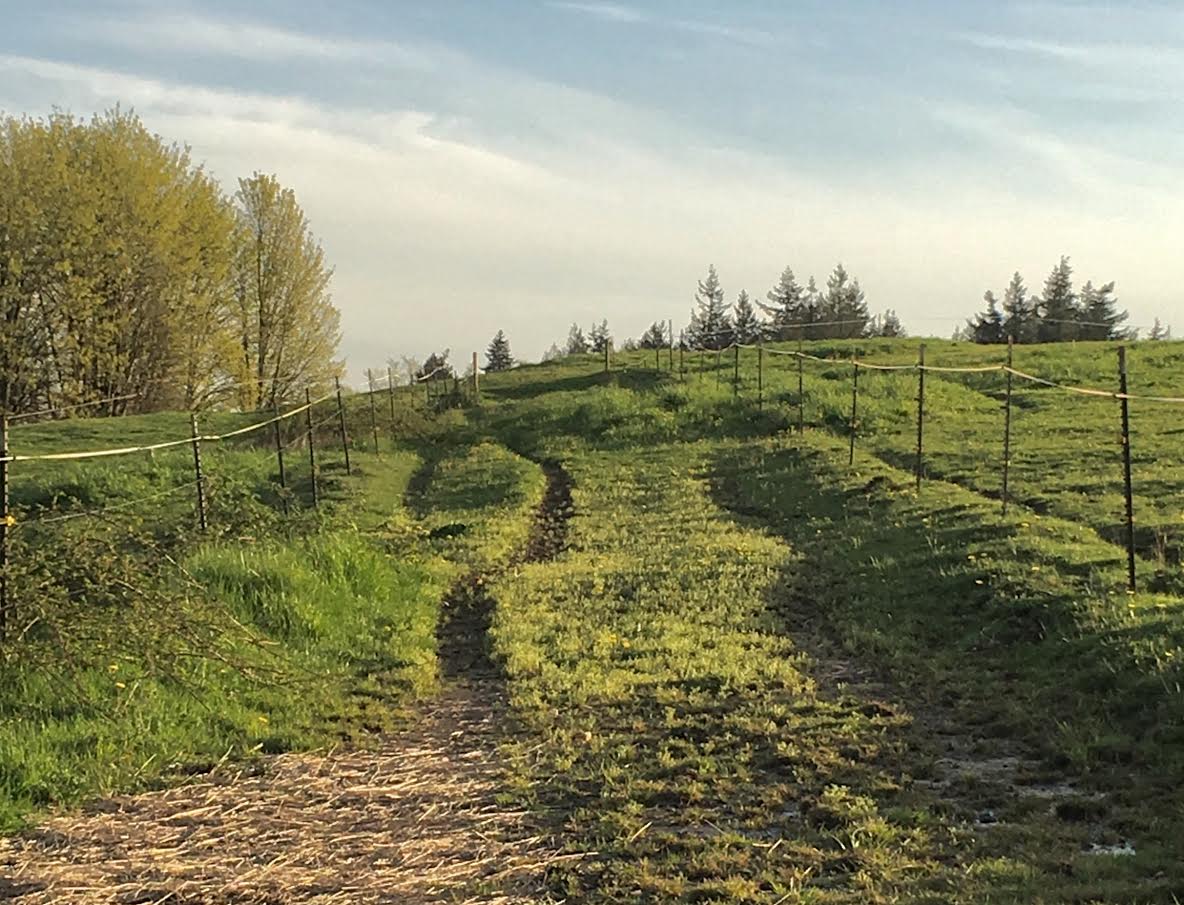
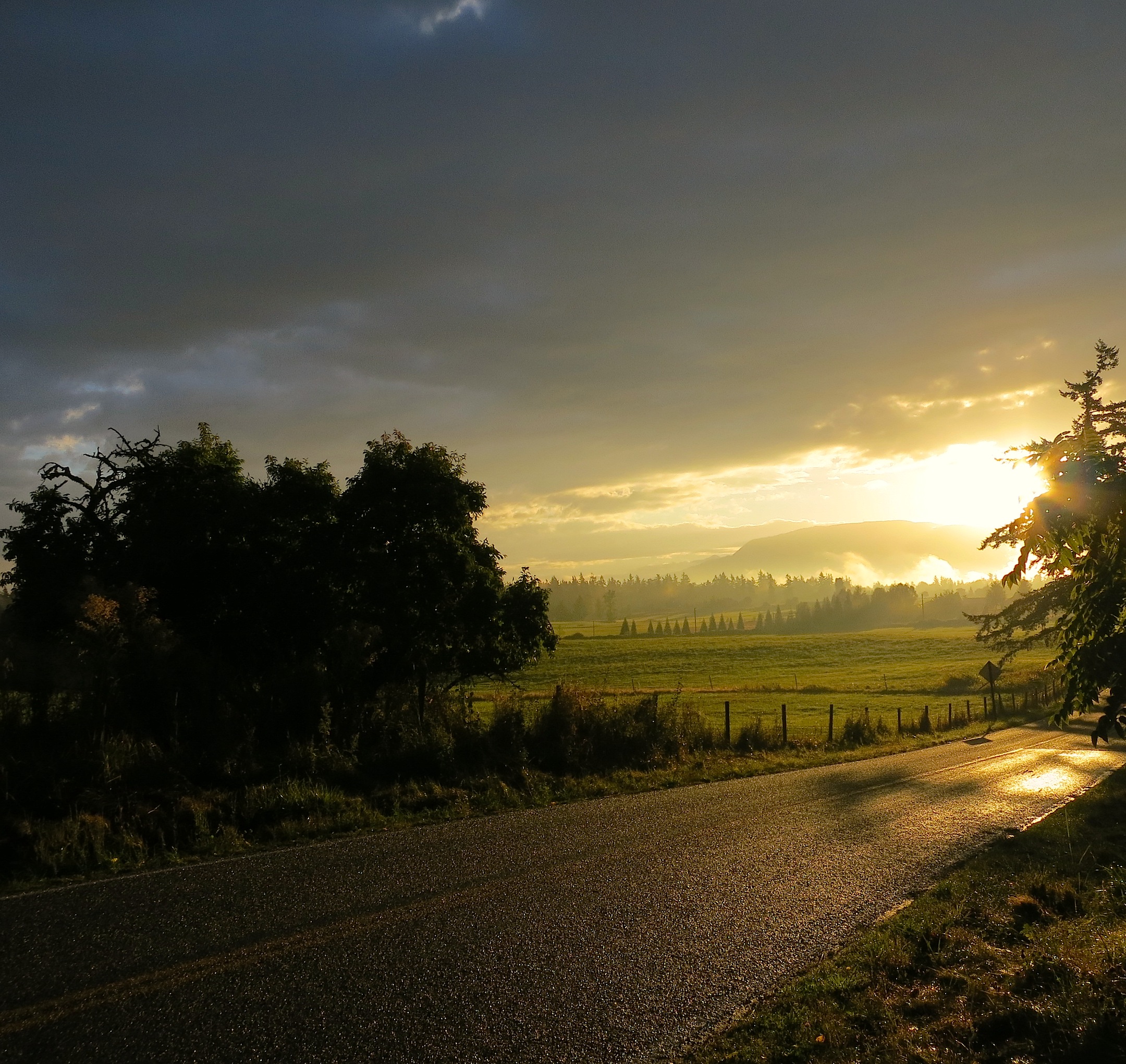
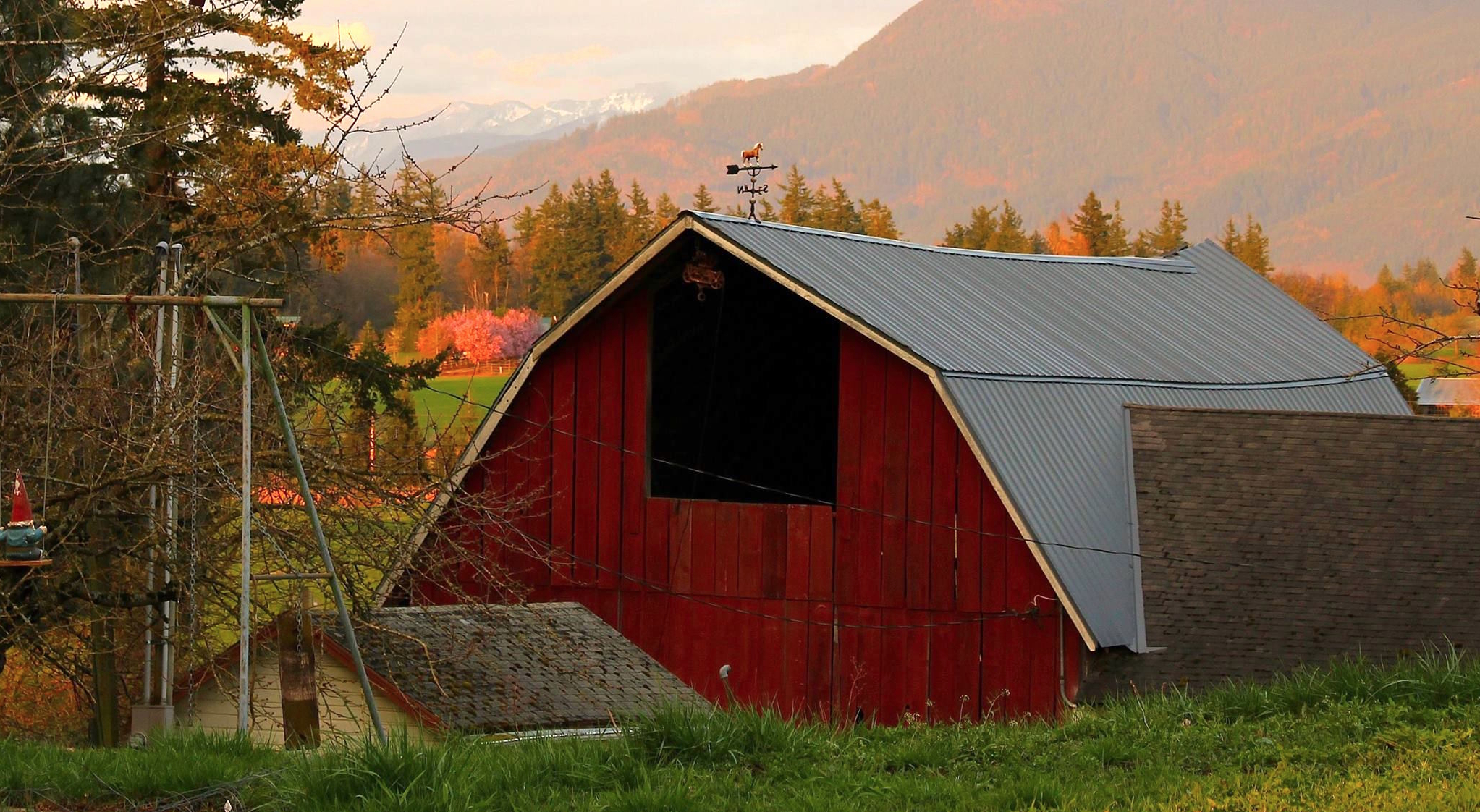
From the road, each of the two small farms where I grew up in western Washington state look nothing like they did in my childhood. When I drive past now, whether on Google Earth virtual reality or for real , the outbuildings have changed and are unfamiliar, fences pulled down, the trees exponentially taller, the fields no longer well-tended. Instead the familiarity is in the road to get there, the lean into the curves, the acceleration in and out of dips, the landscape which triggers a simultaneous comfort and disquiet deep in my DNA.
Though my younger brother recently stopped and looked around our long-ago childhood home, and sent me pictures that looked barely recognizable, I have never stopped to knock; instead I have driven slowly past to sense if I feel what I used to feel in these places. My memories are indeed triggered but feel a bit as if they must have happened to someone else.
One clinic day a few years ago, I glanced at the home address of a young man I was about to see for a medical issue and I realized he now lived in my childhood home over 100 miles away. When I greeted him I told him we had something in common: we had grown up under the same roof, inside the same walls, though children of two different generations. He was curious but skeptical — how could this gray-haired middle aged woman know anything about his home? He told me a bit about the house, the barn, the fields, the garden and how he experienced it felt altogether strange to me. He and I had shared nothing but a patch of real estate — our recollections were so completely disparate.
I worry for the fearsome ache if someday, due to age or finances, we must sell our current farm ~ this beloved place our children were raised, animals bred and cared for, fruit picked from an ancient orchard, plants tended and soil turned over. It will remain on the map surely as the other two farms of my past, visible as we pass by slowly on the road, but primarily alive in the words and photos I have harvested here. There will always be that sweet ache of seeking out what might be still familiar on the map of my memory.
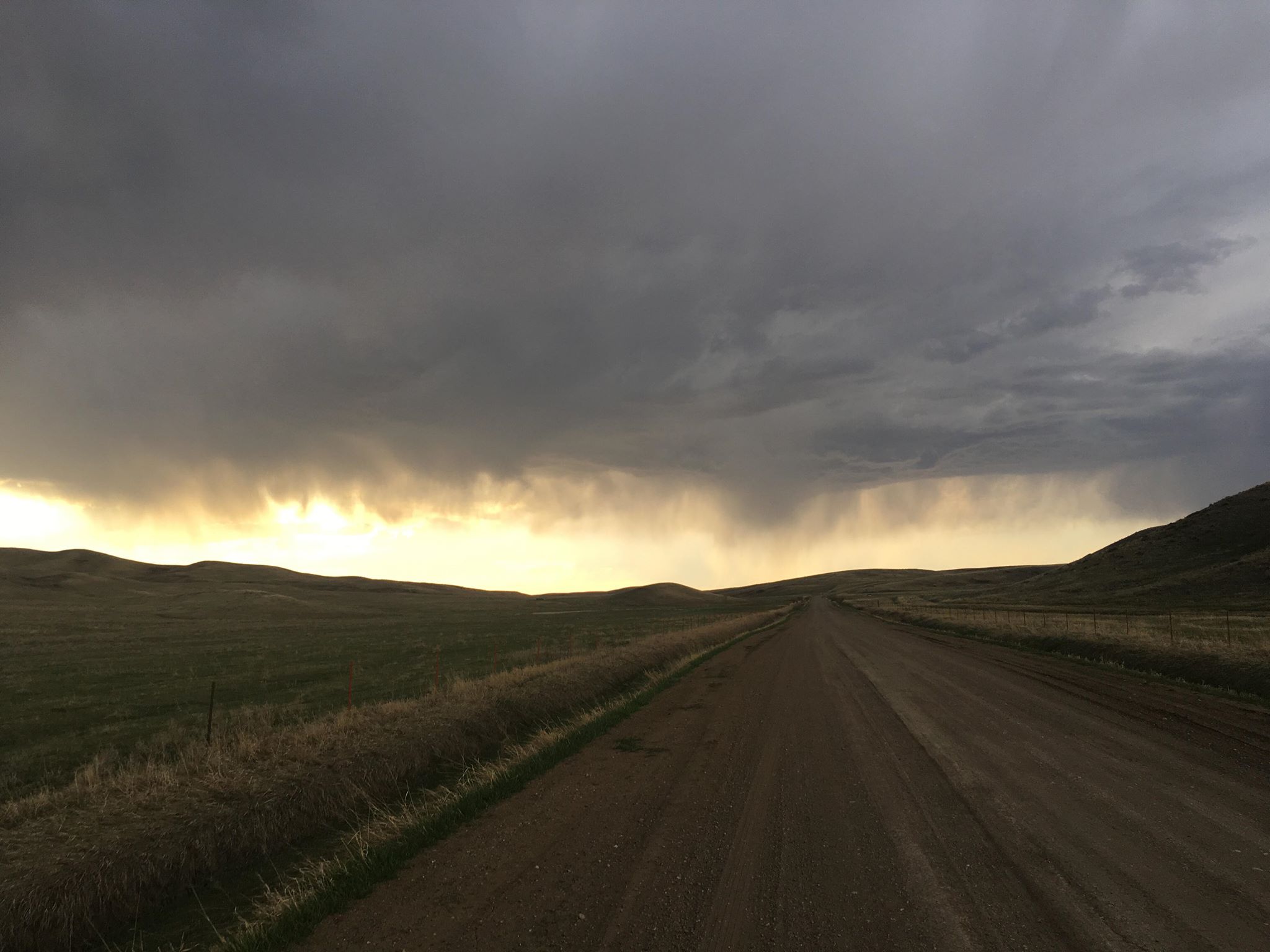
photo by Per Wolfisberg this morning from north-central Montana
Two lonely cross-roads that themselves cross each other I have walked several times this winter without meeting or overtaking so much as a single person on foot or on runners. The practically unbroken condition of both for several days after a snow or a blow proves that neither is much travelled.
Judge then how surprised I was the other evening as I came down one to see a man, who to my own unfamiliar eyes and in the dusk looked for all the world like myself, coming down the other, his approach to the point where our paths must intersect being so timed that unless one of us pulled up we must inevitably collide. I felt as if I was going to meet my own image in a slanting mirror. Or say I felt as we slowly converged on the same point with the same noiseless yet laborious stride as if we were two images about to float together with the uncrossing of someone’s eyes. I verily expected to take up or absorb this other self and feel the stronger by the addition for the three-mile journey home.
But I didn’t go forward to the touch. I stood still in wonderment and let him pass by; and that, too, with the fatal omission of not trying to find out by a comparison of lives and immediate and remote interests what could have brought us by crossing paths to the same point in a wilderness at the same moment of nightfall. Some purpose I doubt not, if we could but have made out.
I like a coincidence almost as well as an incongruity. ~Robert Frost from “Selected Letters”
When a man thinks happily, he finds no foot-track in the field he traverses. ~Ralph Waldo Emerson from “Quotation and Originality”
Robert Frost enjoyed how readers misinterpreted his ironic “The Road Not Taken” poem. His point was not “the road less traveled” “made all the difference” but that the roads were in fact the same. As humans living our daily lives, we have to make decisions that take us one way or the other, not knowing and very uncertain where our choices may lead us.
Our assurance lies in understanding the Hand that guides us, should we allow Him. We may choose a path that leads us astray; God continually puts up signposts that will guide us home. Our journey may be arduous, we may get terribly lost, we may walk alone for long stretches, we may end up crushed and bleeding in the ditch.
He follows the footprints we have left behind, and we are found, rescued and brought home, no matter what, and that — not the road we chose at the beginning — is what makes all the difference.
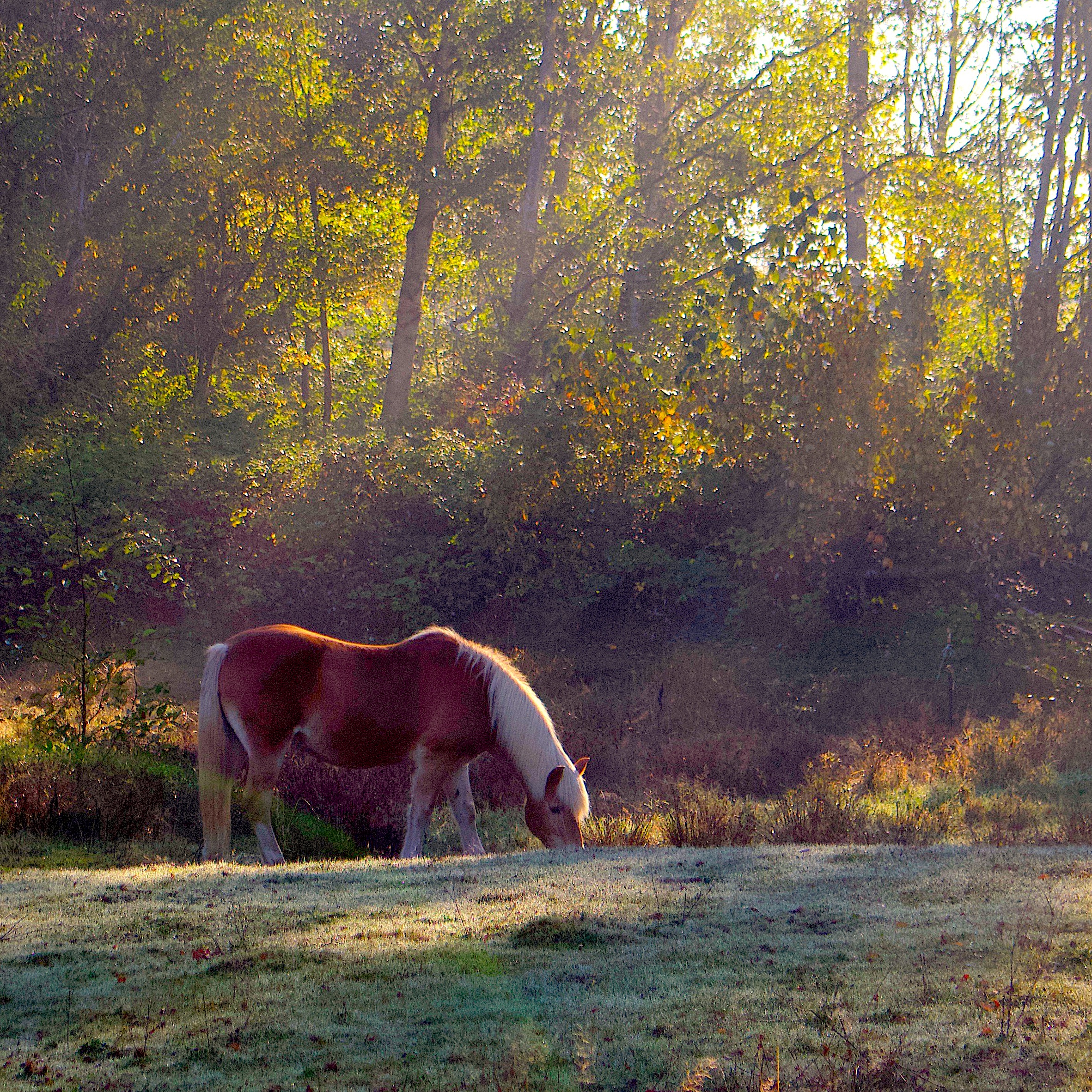
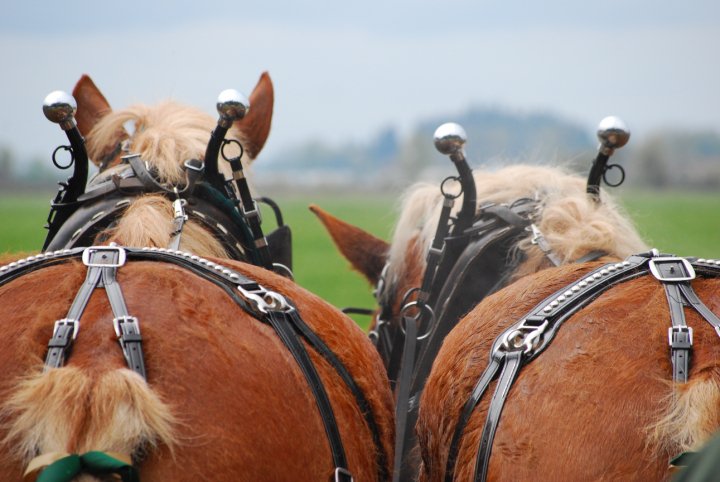
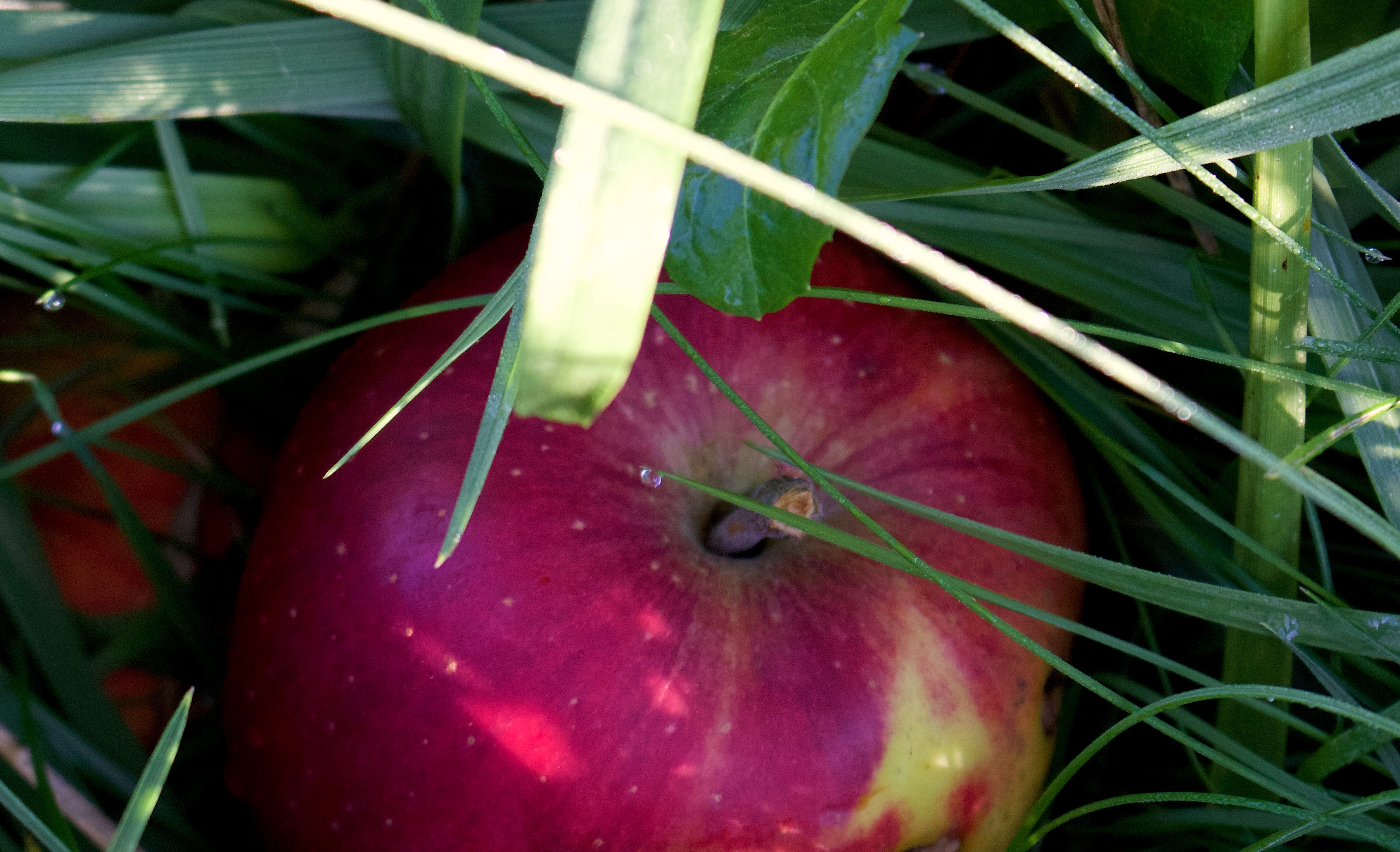
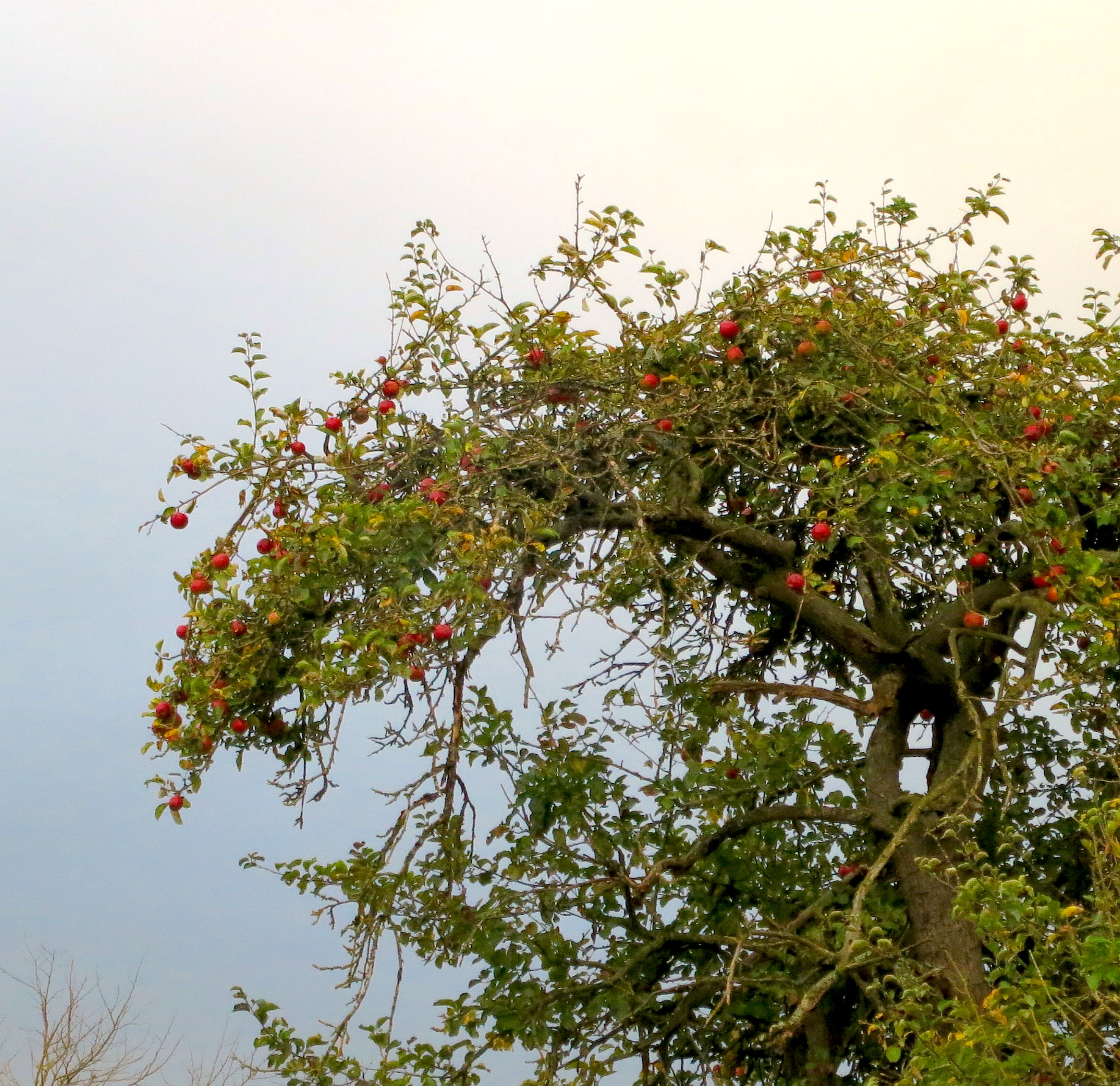
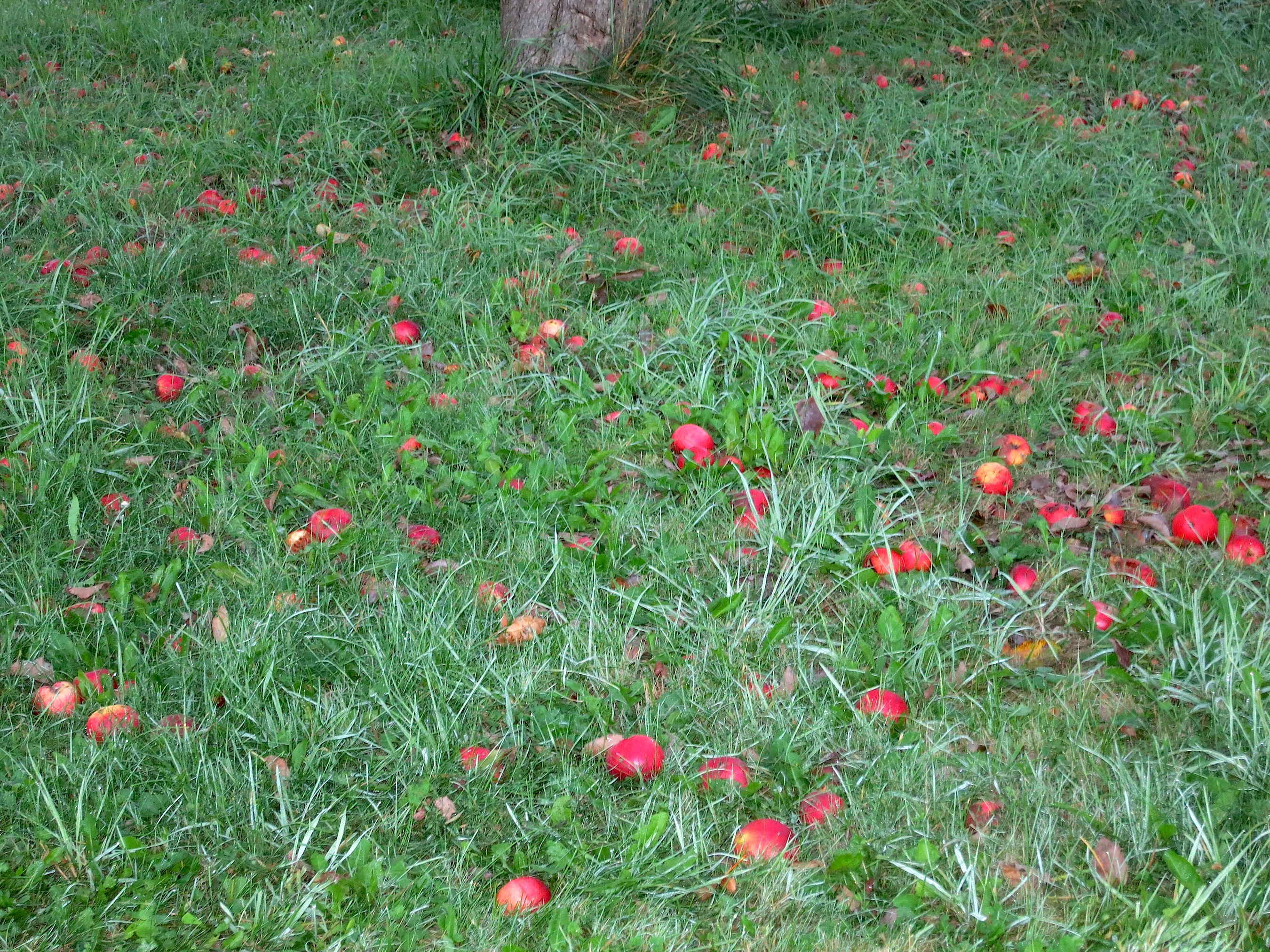
This fall I picked up windfall apples to haul down to the barn for a special treat each night for the Haflingers. These are apples that we humans wouldn’t take a second glance at in all our satiety and fussiness, but the Haflingers certainly don’t mind a bruise, or a worm hole or slug trails over apple skin.
I’ve found over the years that our horses must be taught to eat apples–if they have no experience with them, they will bypass them lying in the field and not give them a second look. There simply is not enough odor to make them interesting or appealing–until they are cut in slices that is. Then they become irresistible and no apple is left alone from that point forward.
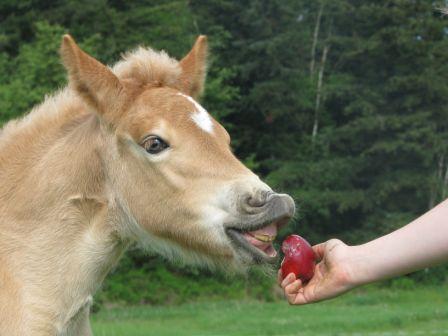
When I offer a whole apple to a young Haflinger who has never tasted one before, they will sniff it, perhaps roll it on my hand a bit with their lips, but I’ve yet to have one simply bite in and try. If I take the time to cut the apple up, they’ll pick up a section very gingerly, kind of hold it on their tongue and nod their head up and down trying to decide as they taste and test it if they should drop it or chew it, and finally, as they really bite in and the sweetness pours over their tongue, they get this look in their eye that is at once surprised and supremely pleased. The only parallel experience I’ve seen in humans is when you offer a five month old baby his first taste of ice cream on a spoon and at first he tightens his lips against its coldness, but once you slip a little into his mouth, his face screws up a bit and then his eyes get big and sparkly and his mouth rolls the taste around his tongue, savoring that sweet cold creaminess. His mouth immediately pops open for more.
It is the same with apples and horses. Once they have that first taste, they are our slaves forever in search of the next apple.
The Haflinger veteran apple eaters can see me coming with my sweat shirt front pocket stuffed with apples, a “pregnant” belly of fruit, as it were. They offer low nickers when I come up to their stalls and each horse has a different approach to their apple offering.
There is the “bite a little bit at a time” approach, which makes the apple last longer, and tends to be less messy in the long run. There is the “bite it in half” technique which leaves half the apple in your hand as they navigate the other half around their teeth, dripping and frothing sweet apple slobber. Lastly there is the greedy “take the whole thing at once” horse, which is the most challenging way to eat an apple, as it has to be moved back to the molars, and crunched, and then moved around the mouth to chew up the large pieces, and usually half the apple ends up falling to the ground, with all the foam that the juice and saliva create. No matter the technique used, the smell of an apple as it is being chewed by a horse is one of the best smells in the world. I can almost taste the sweetness too when I smell that smell.
What do we do when offered such a sublime gift from Someone’s hand? If it is something we have never experienced before, we possibly walk right by, not recognizing that it is a gift at all, missing the whole point and joy of experiencing what is being offered. How many wonderful opportunities are right under our noses, but we fail to notice, and bypass them because they are unfamiliar?
Perhaps if the Giver really cares enough to “teach” us to accept this gift of sweetness, by preparing it and making it irresistible to us, then we are overwhelmed with the magnitude of the generosity and are transformed by the simple act of receiving.
We must learn to take little bites, savoring each piece one at a time, making it last rather than greedily grab hold of the whole thing, struggling to control it, thereby losing some in the process. Either way, it is a gracious gift, and how we receive it makes all the difference.
1. The tree of life my soul hath seen, Laden with fruit and always green: The trees of nature fruitless be Compared with Christ the apple tree.
2. His beauty doth all things excel: By faith I know, but ne’er can tell The glory which I now can see In Jesus Christ the apple tree.
3. For happiness I long have sought, And pleasure dearly I have bought: I missed of all; but now I see ‘Tis found in Christ the apple tree.
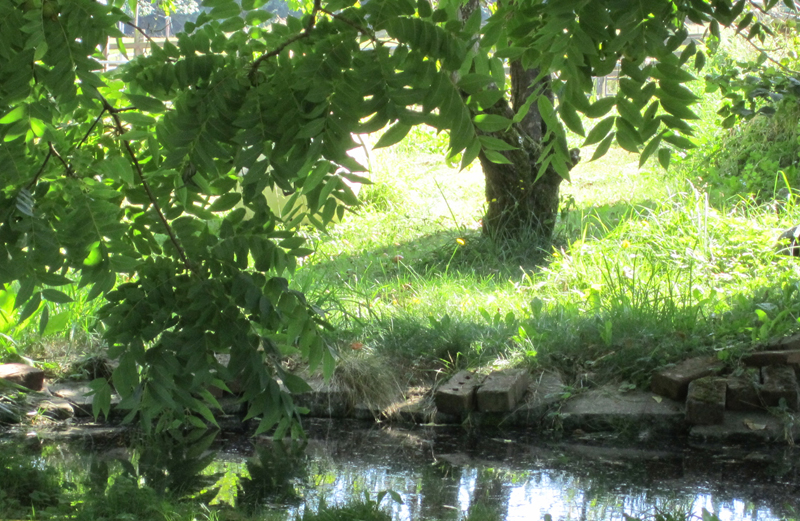
4. I’m weary with my former toil, Here I will sit and rest awhile: Under the shadow I will be, Of Jesus Christ the apple tree.
5. This fruit doth make my soul to thrive, It keeps my dying faith alive; Which makes my soul in haste to be With Jesus Christ the apple tree. ~Elizabeth Poston From Divine Hymns or Spiritual Songs, compiled by Joshua Smith, New Hampshire, 1784
(And wait to watch the water clear, I may): I sha’n’t be gone long.—You come too.
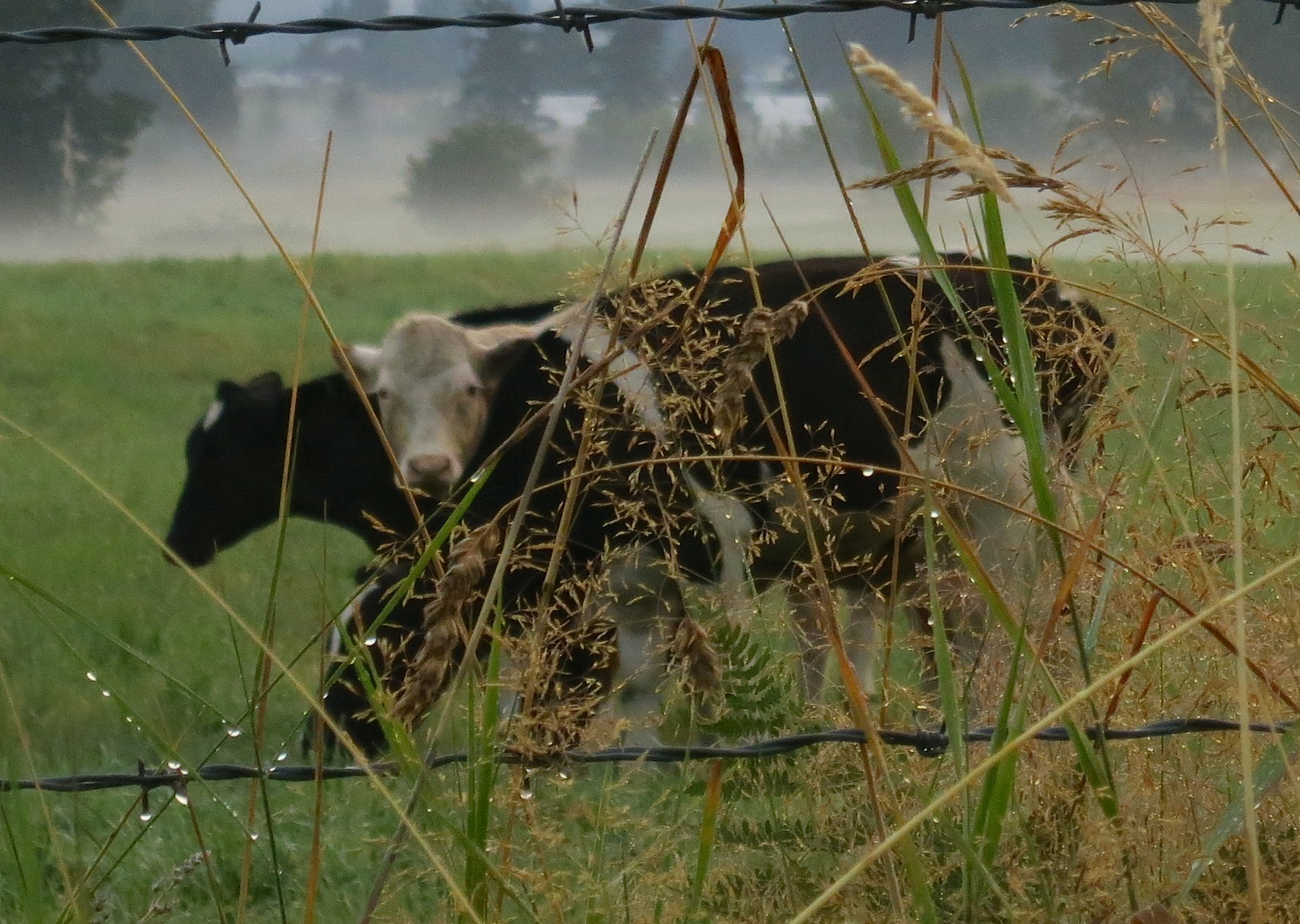
I’m going out to fetch the little calf That’s standing by the mother. It’s so young, It totters when she licks it with her tongue. I sha’n’t be gone long.—You come too. ~Robert Frost “The Pasture”
We all need an invitation to work together about now. In these times when it feels like everything is going to hell in a handbasket, we all have some picking up and cleaning and clearing to do — and we can accomplish more if we do it side by side.
The world is continually trying to renew itself despite our attempts to destroy it so we need to pay attention. The air and water can clear if we put in some effort, there is new life all around us ready to thrive if we tend it lovingly like a mother.
Come with me to do what needs to be done. You are invited. We sha’n’t be gone long.
Financial Support for the Barnstorming Blog from our Readers
Your financial support helps to keep this blog an ad-free daily offering. Your contribution of any amount is encouragement to me and deeply appreciated.
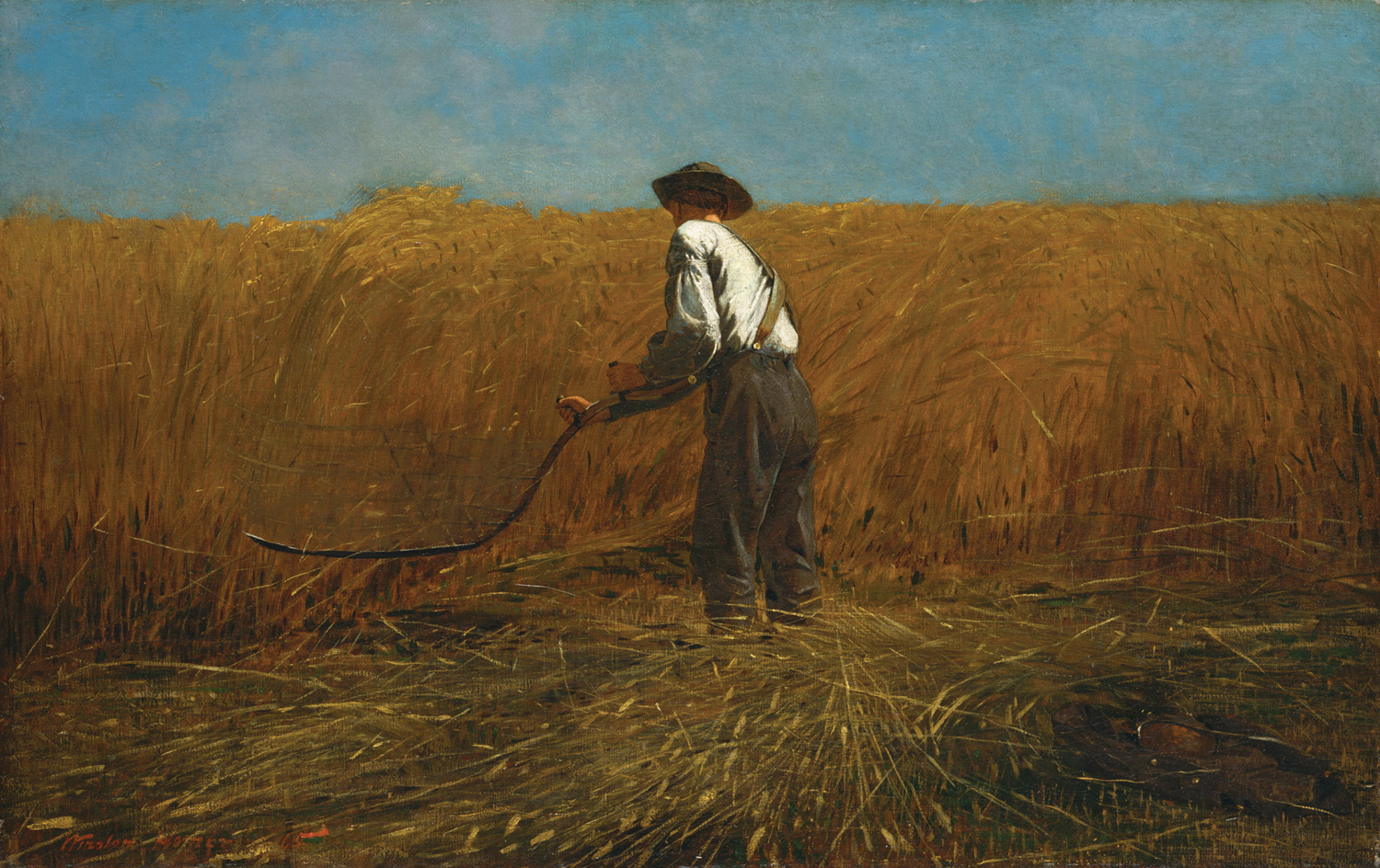
The fact is the sweetest dream that labor knows. My long scythe whispered and left the hay to make. ~Robert Frost in “Mowing”
Winslow Homer’s The Veteran in a New Field
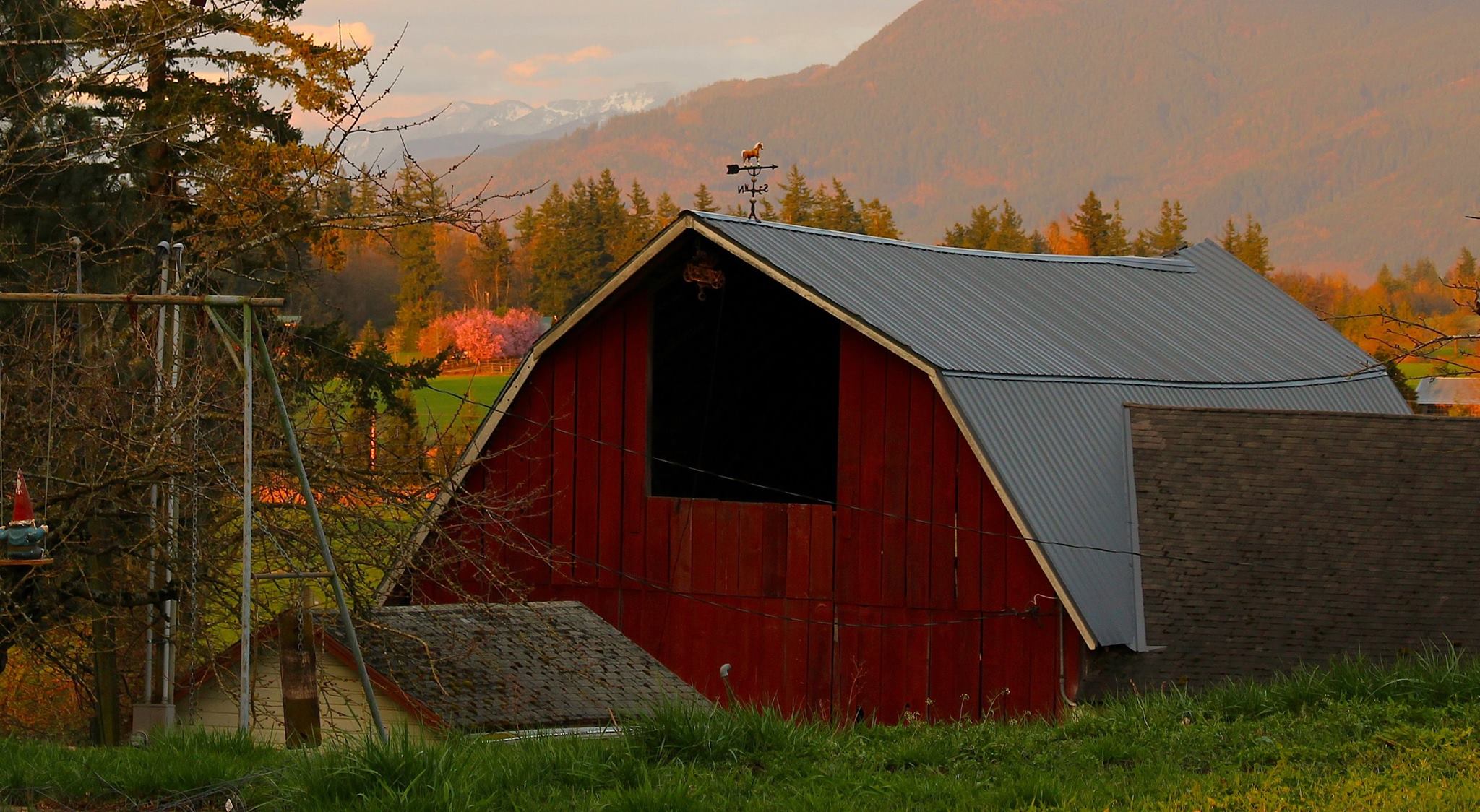
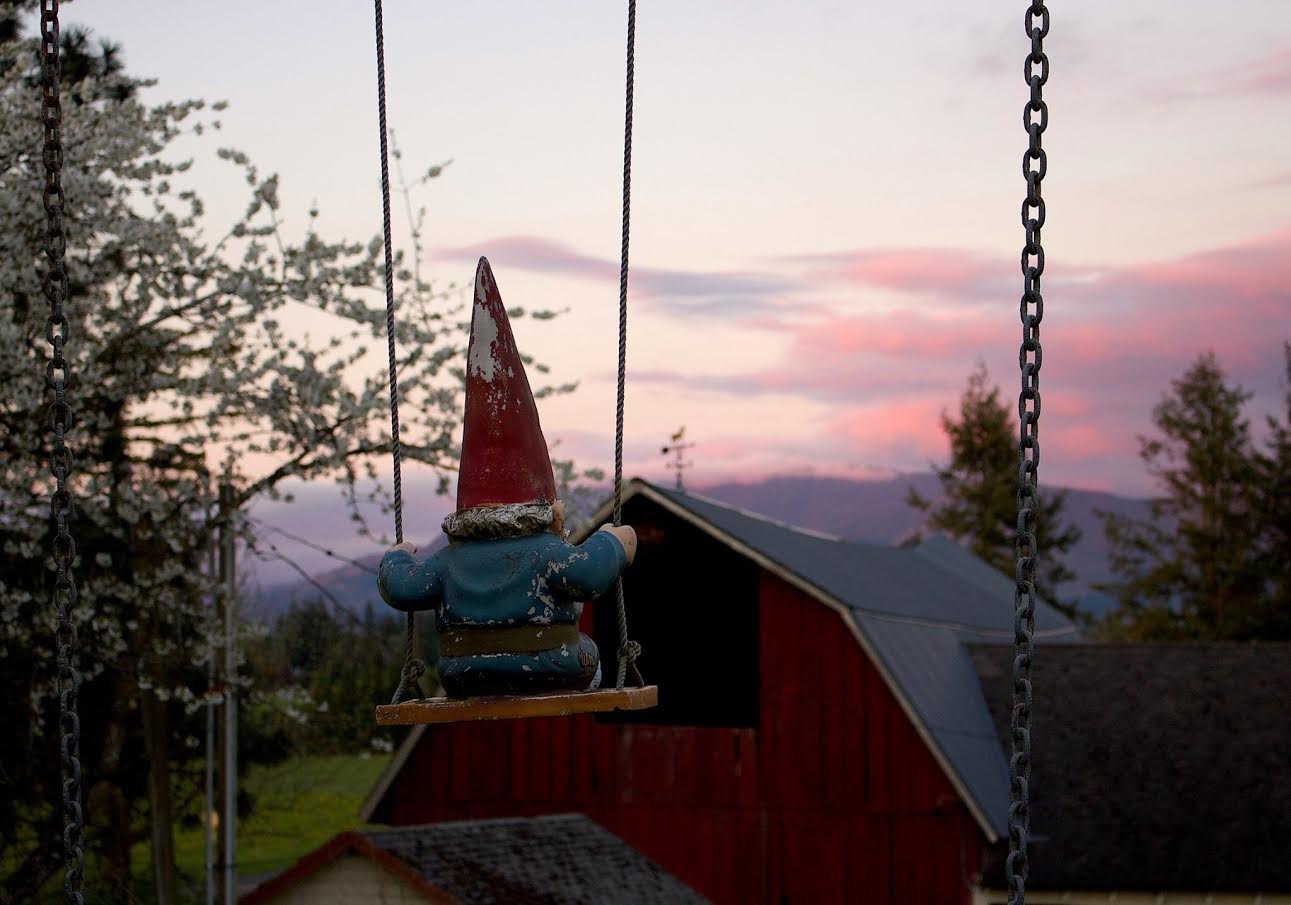
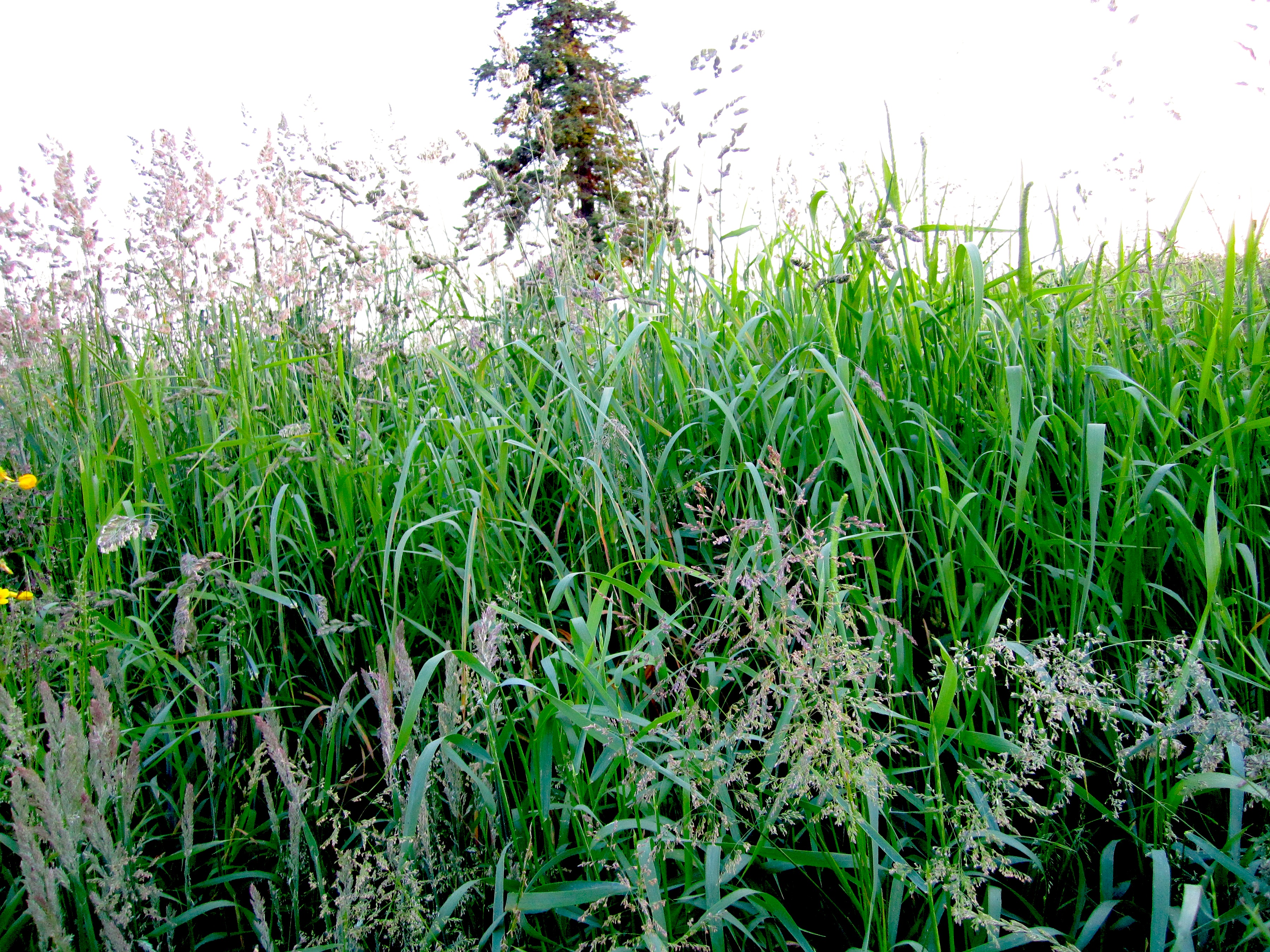
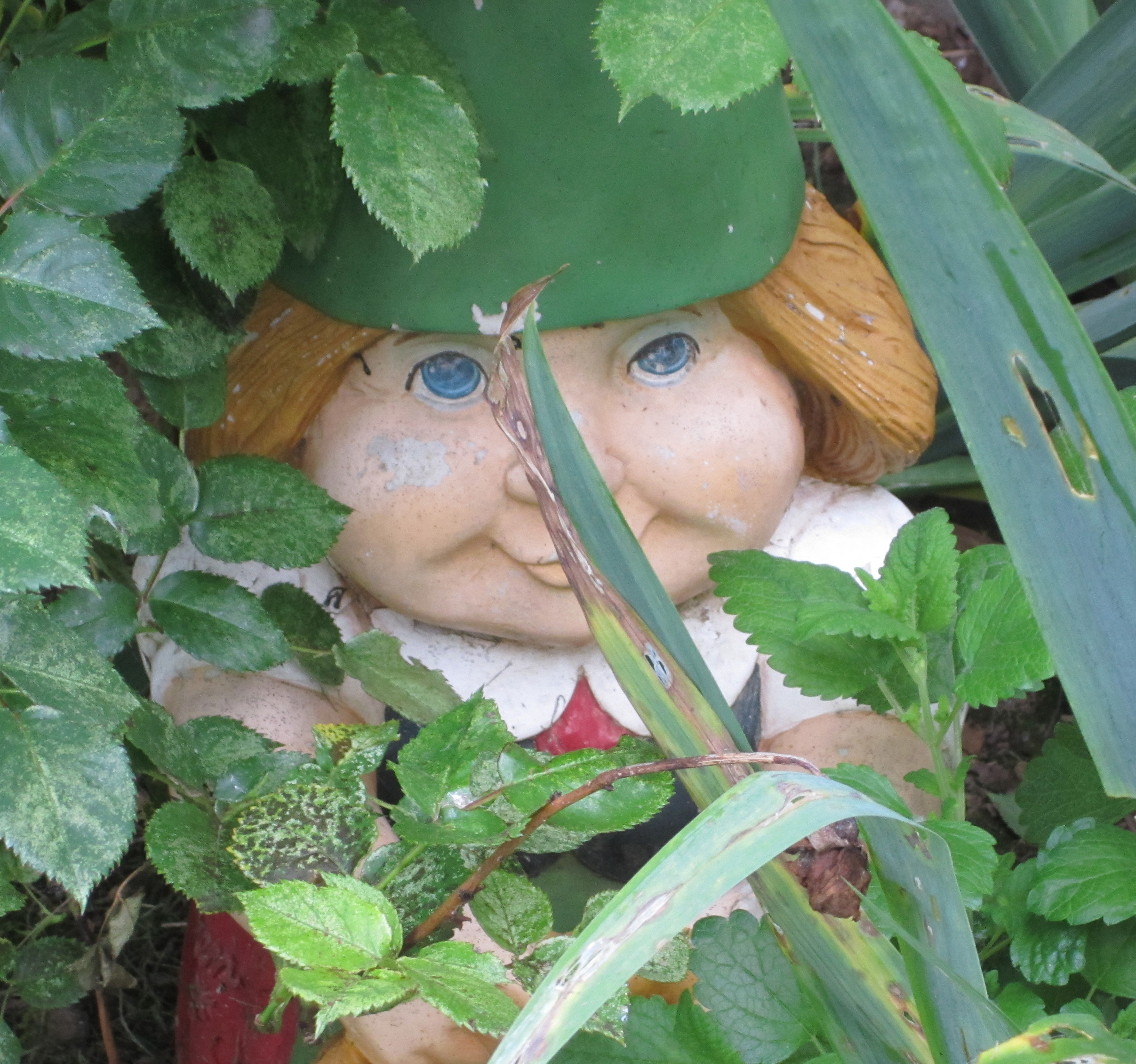
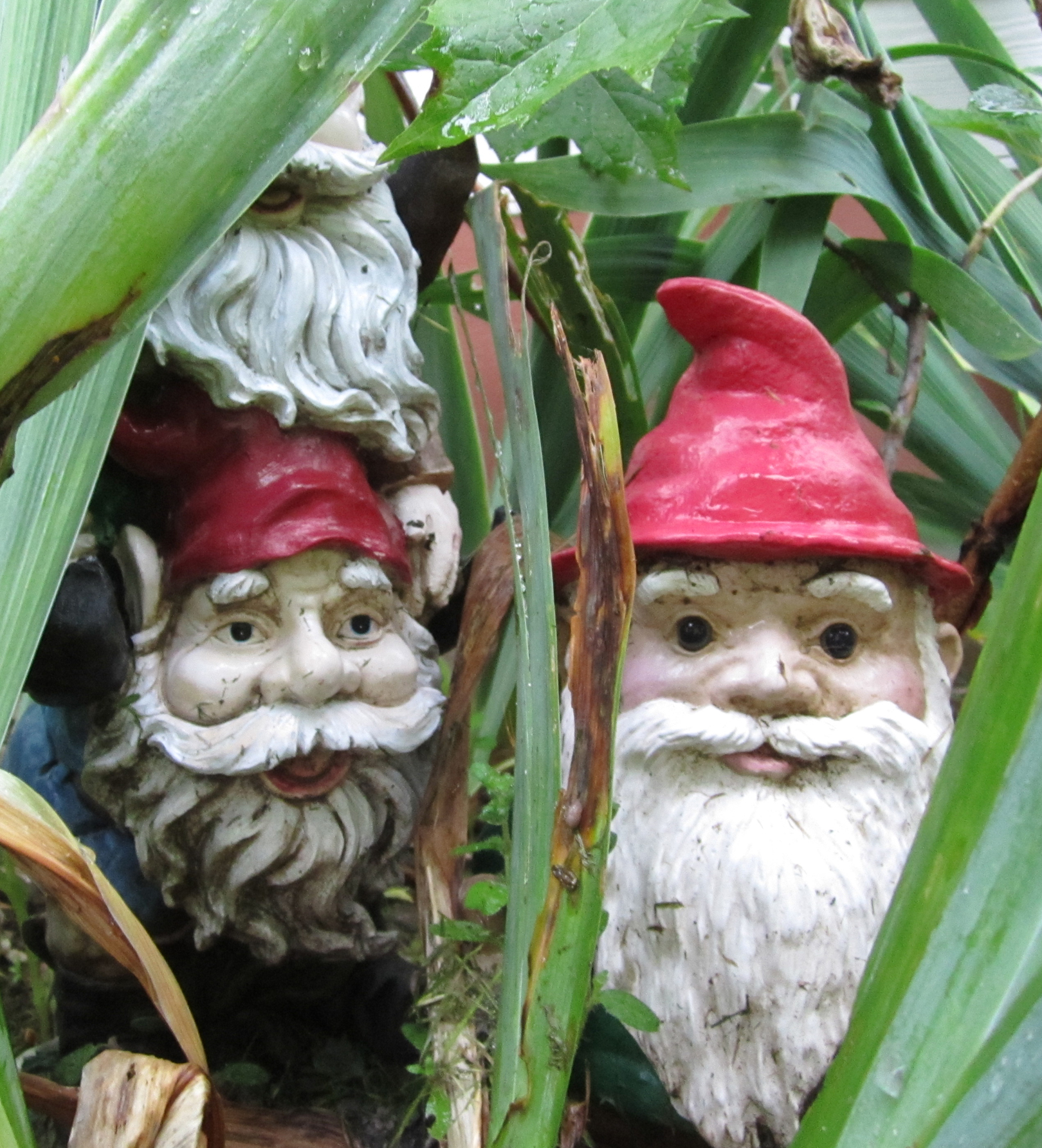
The grass around our orchard and yet-to-be-planted garden is now thigh-high. It practically squeaks while it grows. Anything that used to be in plain sight on the ground is rapidly being swallowed up in a sea of green: a ball, a pet dish, a garden gnome, a hose, a tractor implement, a bucket. In an effort to stem this tidal flood of grass, I grab the scythe out of the garden shed and plan my attack. The pastures are too wet yet for heavy hooves so I have hungry horses to provide for and there is more than plenty fodder to cut down for them.
I’m not a weed whacker kind of gal. First there is the necessary fuel, the noise necessitating ear plugs, the risk of flying particles requiring goggles–it all seems too much like and act of war to be remotely enjoyable. Instead, I’m trying to take scything lessons from my husband. Emphasis on “trying”.
I grew up watching my father scythe our hay in our field because he couldn’t afford a mower for his tractor. He enjoyed physical labor in the fields and woods–his other favorite hand tool was a brush cutter that he’d take to blackberry bushes. He would head out to the field with the scythe over this shoulder, grim reaper style. Once he was standing on the edge of the grass needing to be mowed, he would then lower the scythe, curved blade to the ground, turn slightly, positioning his hands on the two handles just so, raise the scythe up past his shoulders, and then in a full body twist almost like a golf swing, he’d bring the blade down. It would follow a smooth arc through the base of the standing grass, laying clumps flat in a tidy pile alongside the 2 inch stubble left behind. It was a swift, silky muscle movement — a thing of beauty.
I’ve yet to manage anything nearly as graceful. I tend to chop and mangle rather than effect an efficient slicing blow. I unintentionally trample the grass I mean to cut. I get blisters from holding the handles too tightly. It feels hopeless that I’ll ever perfect that whispery rise and fall of the scythe, with the rhythmic shush sound of the slice that is almost hypnotic.
Not only am I an ineffective scything human, but I have also learned what it is like to be the grass I am unintentionally mutilating, on the receiving end of a glancing blow that misses the mark. I bear plenty of footprints from the trampling. It can take awhile to stand back up after being knocked repeatedly to the ground.
Sometimes it makes more sense to simply start over as stubble, oozing and bleeding green, with deep roots that no one can reach. As I grow back, I will sing rather than squeak, and I’ll forgive the scythe every time it comes down on my head.
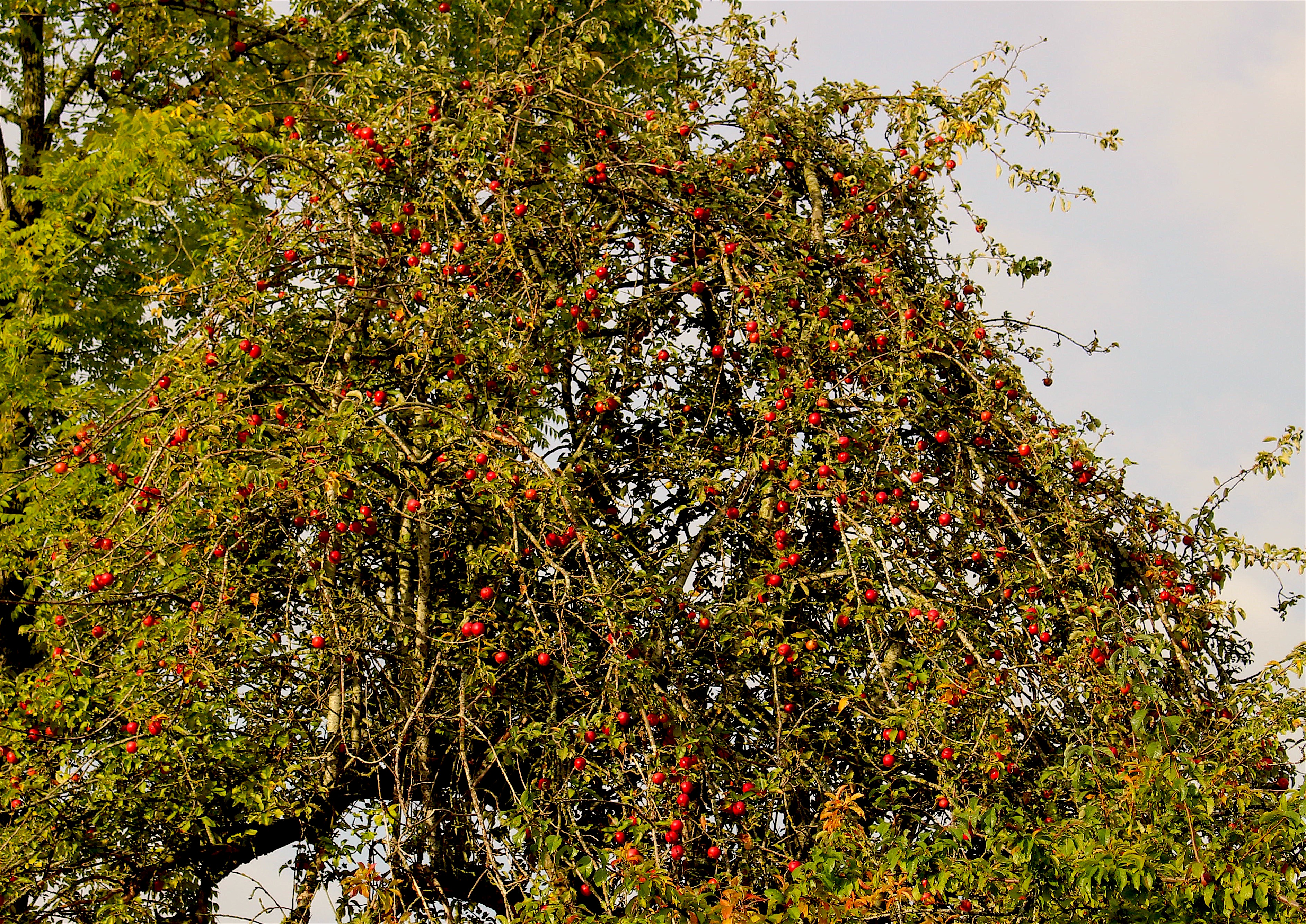
A scent of ripeness from over a wall. And come to leave the routine road And look for what had made me stall, There sure enough was an apple tree That had eased itself of its summer load, And of all but its trivial foliage free, Now breathed as light as a lady’s fan. For there had been an apple fall As complete as the apple had given man. The ground was one circle of solid red.
May something go always unharvested! May much stay out of our stated plan, Apples or something forgotten and left, So smelling their sweetness would be no theft. ~Robert Frost “Unharvested”
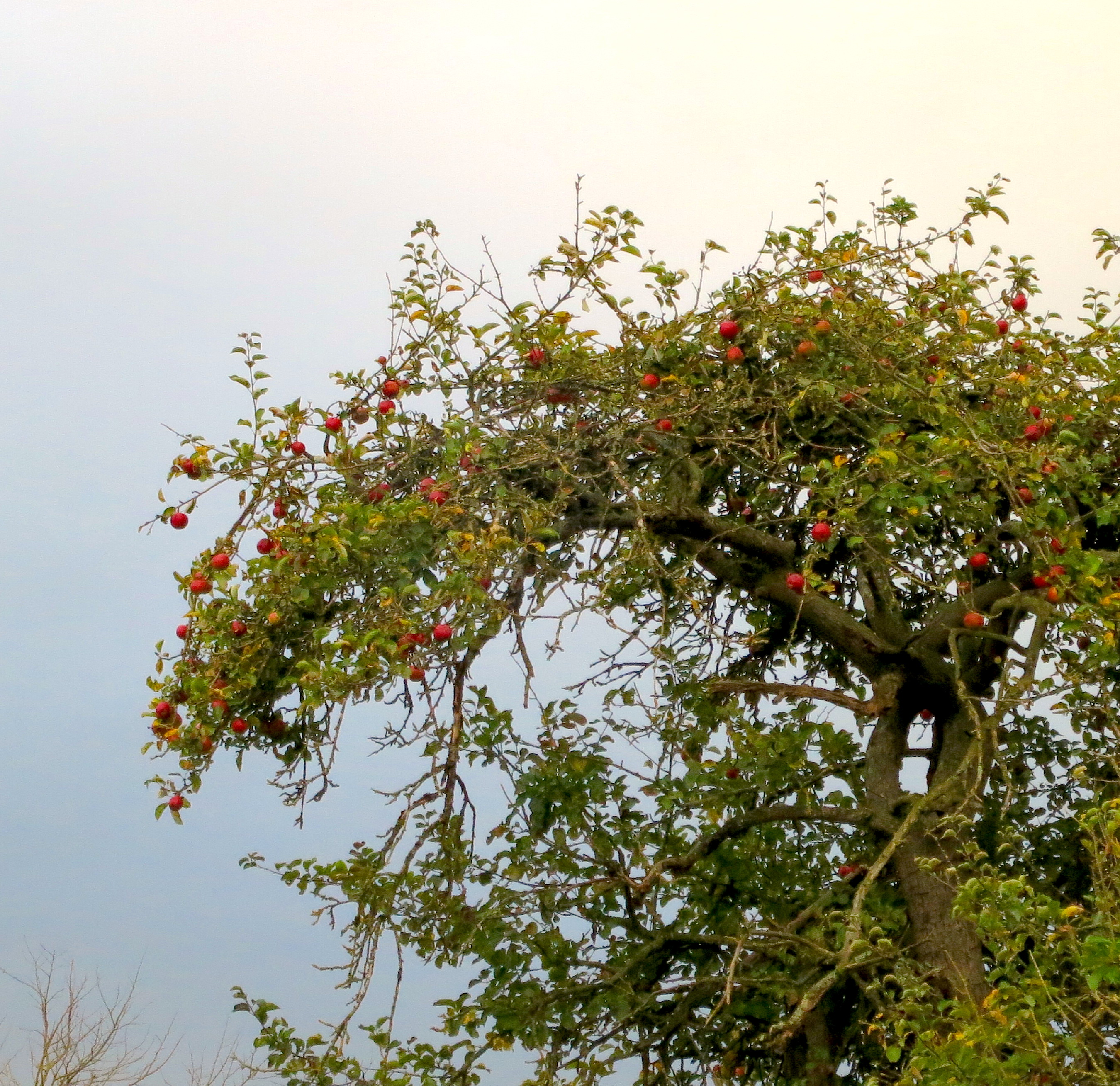
Our trees are heavy-laden — the dropping fruit thuds to the ground with such finality, it wakes me in the night and reminds me how far I’ve fallen.
“Fall” is just that: nothing will remain as it was. Autumn replays our desire for an apple that smelled so sweet, tempted with shiny sheen and lured with such color that we fell hard and fast for just one taste.
We ignored the worm hole.
And ended up in a hole ourselves, unharvested, hoping one day for the sweetness to return.











 Barnstorming