In the quiet misty morning When the moon has gone to bed, When the sparrows stop their singing And the sky is clear and red, When the summer’s ceased its gleaming When the corn is past its prime, When adventure’s lost its meaning – I’ll be homeward bound in time
Bind me not to the pasture Chain me not to the plow Set me free to find my calling And I’ll return to you somehow
If you find it’s me you’re missing If you’re hoping I’ll return, To your thoughts I’ll soon be listening, And in the road I’ll stop and turn Then the wind will set me racing As my journey nears its end And the path I’ll be retracing When I’m homeward bound again
Bind me not to the pasture Chain me not to the plow Set me free to find my calling And I’ll return to you somehow
In the quiet misty morning When the moon has gone to bed, When the sparrows stop their singing I’ll be homeward bound again. ~Marta Keen “Homeward Bound”
Eighty-two years ago, my parents married on Christmas Eve. It was not a conventional wedding day but a date of necessity, only because a justice of the peace was available to marry a score of war-time couples in Quantico, Virginia, shortly before the newly trained Marine officers were shipped out to the South Pacific to fight in WWII.
When I look at my parents’ young faces – ages 22 and just turned 21 — in their only wedding portrait, I see a hint of the impulsive decision that led to that wedding just a week before my father left for 30 months. They had known each other at college for over a year, had talked about a future together, but with my mother starting a teaching job in a rural Eastern Washington town, and the war potentially impacting all young men’s lives very directly, they had not set a date.
My father put his college education on hold to enlist, knowing that would give him some options he wouldn’t have if drafted, so they went their separate ways as he headed east to Virginia for his Marine officer training, and Mom started her high school teaching career as a speech and drama teacher. One day in early December of 1942, he called her and said, “If we’re going to get married, it’ll need to be before the end of the year. I’m shipping out the first week in January.” Mom went to her high school principal, asked for a two week leave of absence which was granted, told her astonished parents, bought a dress, and headed east on the train with a friend who had received a similar call from her boyfriend.
This was a completely uncharacteristic thing for my overly cautious mother to do, so… it must have been love.
They were married in a brief civil ceremony with another couple as the witnesses. They stayed in Virginia only a couple days and took the train back to San Diego, and my father was shipped out. Just like that. Mom returned to her teaching position and the first three years of their married life was composed of letter correspondence only, with gaps of up to a month during certain island battles when no mail could be delivered or posted.
As I sorted through my mother’s things following her death over a decade ago, I found their war-time letters to each other, stacked neatly and tied together in a box.
In my father’s nearly daily letters home to my mother during WWII, month after month after month, he would say, over and over, while apologizing for the repetition:
“I will come home to you, I will return, I will not let this change me, we will be joined again…”
This was his way of convincing himself even as he carried the dead and dying after island battles: men he knew well and the enemy he did not know. He knew they were never returning to the home they died protecting and to those who loved them.
He shared little of battle in his letters as each letter was reviewed and signed off by a censor before being sealed and sent. This story, however, made it through:
“You mentioned a story of Navy landing craft taking the Marines into Tarawa. It reminded me of something which impressed me a great deal and something I’m sure I’ll never forget.
So you’ll understand what I mean I’ll try to start with an explanation. In training – close order drill- etc. there is a command that is given always when the men form in the morning – various times during the day– after firing– and always before a formation is dismissed. The command is INSPECTION – ARMS. On the command of EXECUTION- ARMS each man opens the bolt of his rifle. It is supposed to be done in unison so you hear just one sound as the bolts are opened. Usually it is pretty good and sounds O.K.
Just to show you how the morale of the men going to the beach was – and how much it impressed me — we were on our way in – I was forward, watching the beach thru a little slit in the ramp – the men were crouched in the bottom of the boat, just waiting. You see- we enter the landing boats with unloaded rifles and wait till it’s advisable before loading. When we got about to the right distance in my estimation I turned around and said – LOAD and LOCK – I didn’t realize it, but every man had been crouching with his hand on the operating handle and when I said that — SLAM! — every bolt was open at once – I’ve never heard it done better – and those men meant business when they loaded those rifles.
A man couldn’t be afraid with men like that behind him.”
My father did return home to my mother after nearly three years of separation. He finished his college education to become an agriculture teacher to teach others how to farm the land while he himself became bound to the pasture and chained to the plow.
He never forgot those who died, making it possible for him to return home. I won’t forget either.
My mother and father could not have foretold the struggles that lay ahead for them. The War itself seemed struggle enough for the millions of couples who endured the separation, the losses and grieving, as well as the eventual injuries–both physical and psychological. It did not seem possible that beyond those harsh and horrible realities, things could go sour after reuniting.
The hope and expectation of happiness and bliss must have been overwhelming, and real life doesn’t often deliver. After raising three children, their 35 year marriage fell apart with traumatic finality. When my father returned home (again) over a decade later, asking for forgiveness, they remarried and had five more years together before my father died in 1995.
Christmas is a time of joy, a celebration of new beginnings and new life when God became man, humble, vulnerable and tender. But it also gives us a foretaste for the profound sacrifice made in giving up this earthly life, not always so gently.
As I peer at my father’s and mother’s faces in their wedding photo, I remember those eyes, then so trusting and unaware of what was to come. I find peace in knowing they both have returned home to behold the Light, the Salvation and the Glory~~the ultimate Christmas~~in His presence.
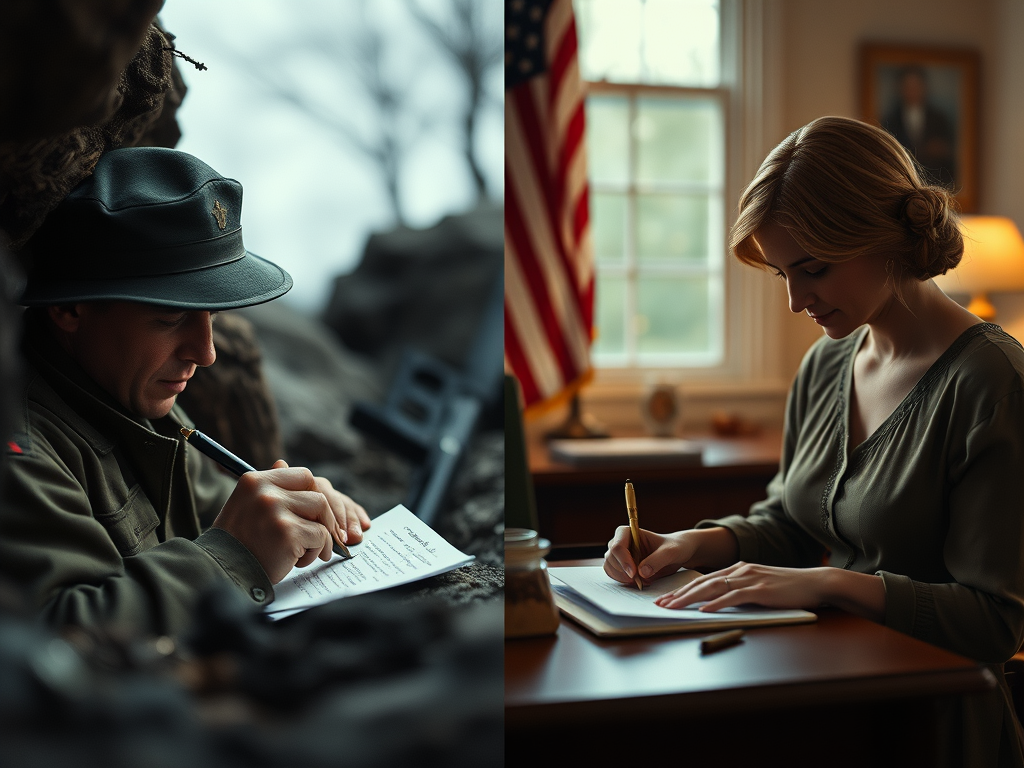
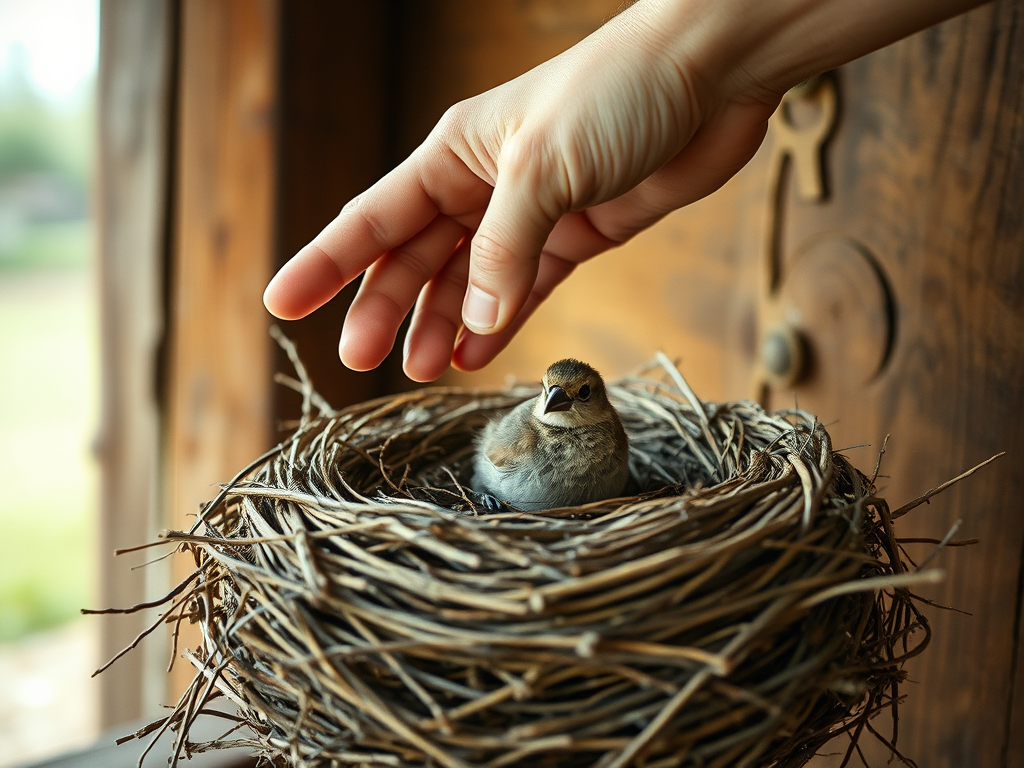
AI image created for this postAI image created for this post
One-Time
Monthly
Yearly
Make a one-time or recurring donation to support daily Barnstorming posts
…the low is lifted high; the stars shall bend their voices, and every stone shall cry.
And every stone shall cry in praises of the child by whose descent among us the worlds are reconciled. ~Richard Wilburfrom “A Christmas Hymn”
Gentlemen, I have lived a long time and am convinced that God governs in the affairs of men.
If a sparrow cannot fall to the ground without His notice, is it probable that an empire can rise without His aid?
I move that prayer imploring the assistance of Heaven be held every morning before we proceed to business. – Benjamin Franklin at the Constitutional Convention of 1787
We are therefore Christ’s ambassadors, as though God were making his appeal through us. We implore you on Christ’s behalf: Be reconciled to God. – 2 Corinthians 5:20
Come, let us now resolve at last To live and love in quiet; We’ll tie the knot so very fast That Time shall ne’er untie it.
The truest joys they seldom prove Who free from quarrels live: ‘Tis the most tender part of love Each other to forgive.
When least I seem’d concern’d, I took No pleasure nor no rest; And when I feign’d an angry look, Alas! I loved you best.
Own but the same to me—you’ll find How blest will be our fate. O to be happy—to be kind— Sure never is too late! ~John Sheffield “The Reconciliation”
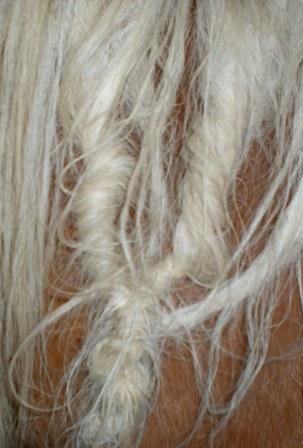
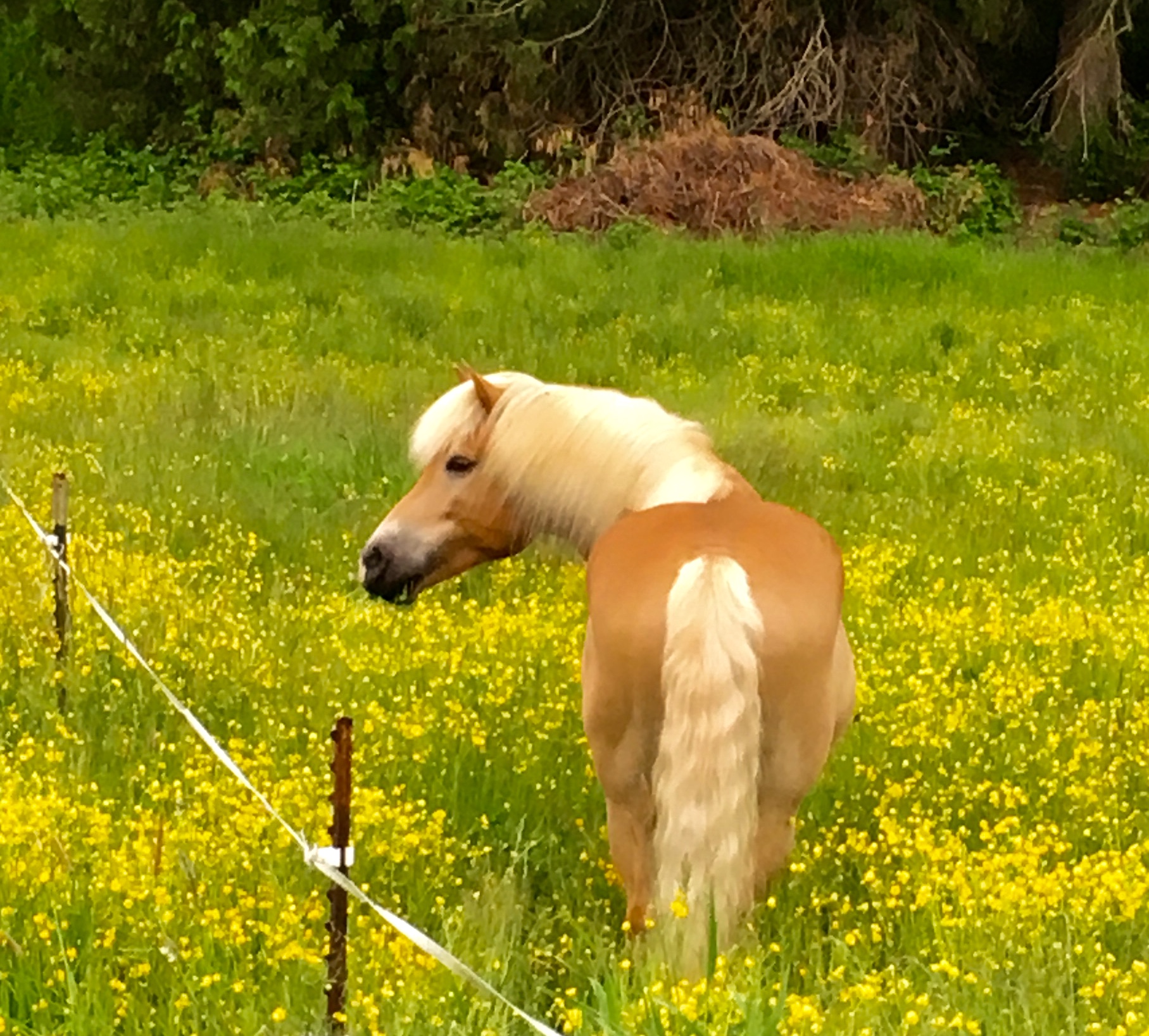
It did seem odd this morning during my barn chores that our Haflinger gelding stood facing the back wall as I opened his stall door to give him his hay. For a moment I wondered if there was a problem with his appetite as he usually would dive right into his hay as soon as I threw it to him. A closer look told me the problem was with his hind end, not his front end: his heavy white tail was wrapped snugly around a J hook hanging on the stall wall meant to hold his water bucket. Instead now it held him — and wasn’t letting go. He had apparently been itching his butt back and forth, round and round on the handy hook and managed to wrap his tail into such tight knots on the hook that he was literally tethered to the wall. He was very calm about the whole thing; maybe just a little embarrassed.
He turned his head to look at me, appearing a wee bit pitiful. How long he’d been standing there like that through the night was anyone’s guess. I bet he no longer felt itchy.
I started to work at untying the tail knots to free him and found them wound so tight that loosening them required significant cooperation from my 1200 pound buddy. Unfortunately, any time I managed to almost unloop a knot over the hook end, he would pull forward, snugging it even tighter.
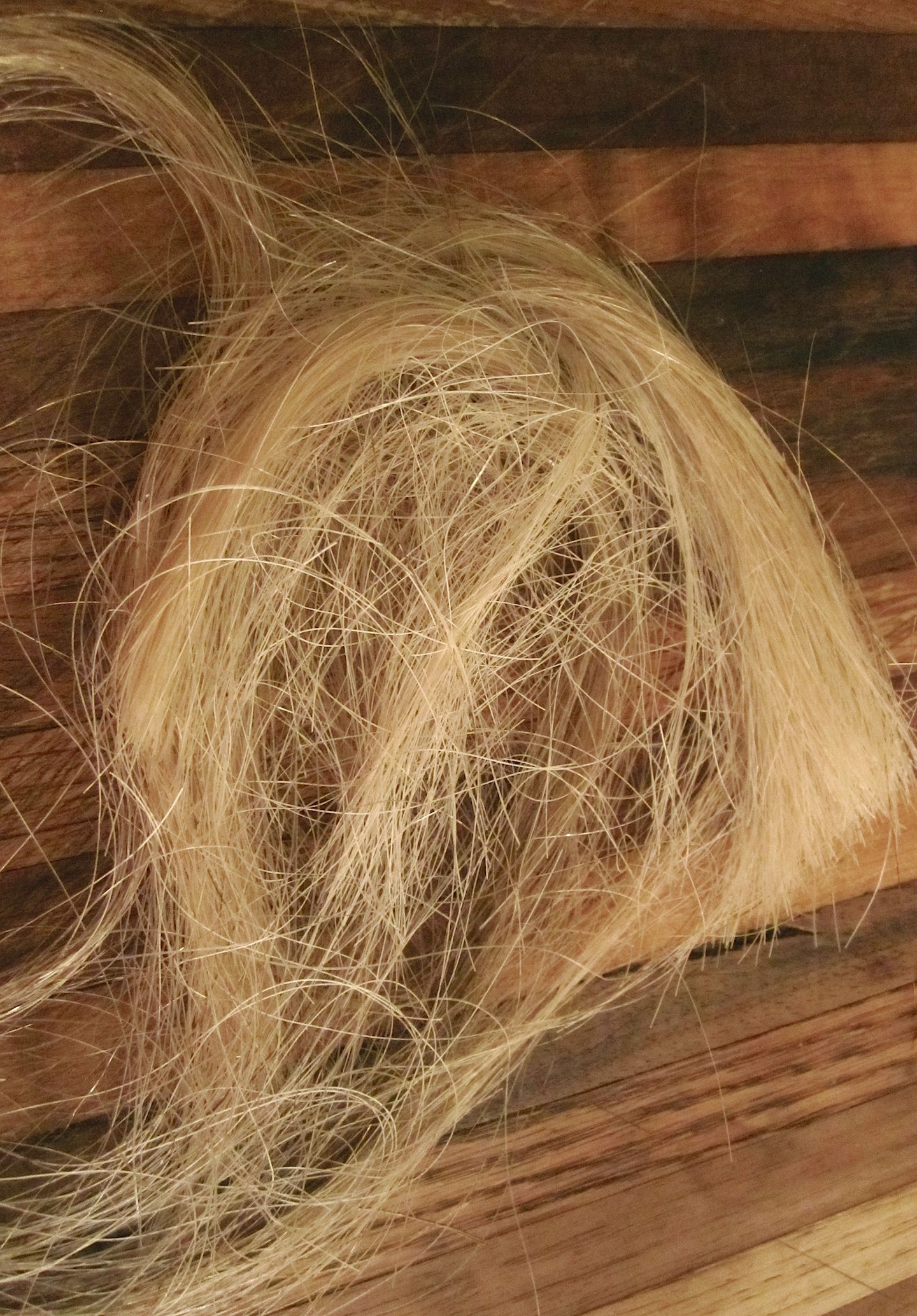
Out of desperation I pulled out the scissors I keep in my barnjacket pocket. I cut one knot hoping that would be sufficient. Then I cut through another knot. Still not enough. I cut a third big knot and thank God Almighty, he was free at last. He sauntered over to his hay now with a chunk of his tail in my hand and a big gap in what was still left hanging on him. It may take a year to grow that missing hair back out. But hey, it is only hair and at least someone kind and caring came along with a set of shears to release him painlessly from his captivity.
I know what it is like to get tangled up in things I should give wide berth. I have a tendency, like my horse, to butt in where I best not be and then become so bound I can’t get loose again. It can take forever to free myself, sometimes painfully leaving parts of my hide behind.
So when I inevitably get tied up in knots again, or when I fall out of my comfortable, secure nest, I pray someone will come along to save me. Better yet, I hope someone might warn me away from the things that hook me before I foolishly back right into them.
I’ve got to loosen up and quit pulling the knots tighter.
I am humbled in my need. I am humbled by my helplessness.
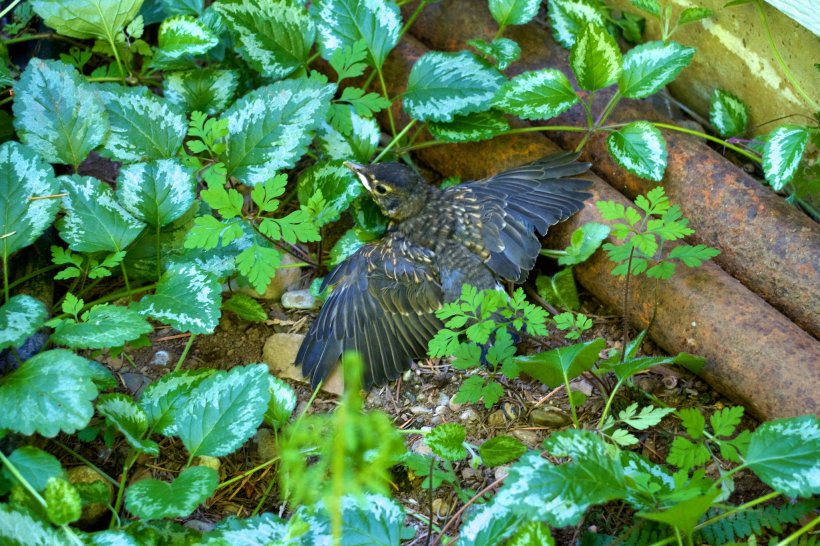
So I implore God for His steadfast, reconciling assistance – as the sparrow on the ground, fallen from the nest, as the horse bound by his knotted tail to the wall.
I trust God’s protecting, rescuing, forgiving Hand.
AI image created for this post
This year’s Advent theme is from Dietrich Bonhoeffer’s sermon on the First Sunday in Advent, December 2, 1928:
The celebration of Advent is possible only to those who are troubled in soul, who know themselves to be poor and imperfect, and who look forward to something greater to come. For these, it is enough to wait in humble fear until the Holy One himself comes down to us, God in the child in the manager.
God comes.
He is, and always will be now, with us in our sin, in our suffering, and at our death. We are no longer alone. God is with us and we are no longer homeless. ~Dietrich Bonhoeffer – from Christmas Sermons
One-Time
Monthly
Yearly
Make a one-time or recurring donation to support daily Barnstorming posts
I am what you make me; nothing more. I swing before your eyes as a bright gleam of color, a symbol of yourself. ~Franklin K. Lane, Secretary of the Interior, 1914 Flag Day address
Sometimes, as a child, when I was bored, I’d grab a step ladder, pull it into our hallway, climb half way up and carefully lift the plywood hatch that was the portal to our dark attic. It took some effort to climb up into the attic from the ladder, juggling a flashlight at the same time, but once seated safely on the beams above our ceiling, being careful not to put my foot through the carpet of insulation, I could explore what was stowed and normally inaccessible to me.
All the usual attic-type things were put up there: Christmas ornaments and lights, baby cribs and high chairs, lamps and toys no longer used. Secrets to my parents’ past were stored away there too. It was difficult imagining them as young children growing up on opposite sides of the state of Washington, in very different circumstances, or as attractive college students who met at a dance, or as young marrieds unencumbered by the daily responsibilities of a family. The attic held those images and memories like a three dimensional photo album.
My father’s dark green Marine Corps cargo trunk was up there, the one that followed him from Officer Training in Quantico, Virginia, to beach and mountain battles on Tarawa, Tinian and Saipan in the South Pacific, and three years later back home again. It had his name and rank stenciled on the side in dark black lettering. The buckles were stiff but could be opened with effort, and in the dark attic, there was always the thrill of unlatching the lid, and shining the flashlight across the contents. His Marine Corps dress uniform lay inside underneath his stiff brimmed cap. There were books about protocol, and a photo album which contained pictures of “his men” that he led in his battalion, and the collection of photos my mother sent of herself as she worked as a teacher of high school students back home.
Most fascinating was a folded Japanese flag inside a small drawstring bag, made of thin white see-through cloth with the bold red sun in the middle. Surrounding the red sun were the delicate inked characters of many Japanese hands as if painted by artists, each wishing a soldier well in his fight for the empire. Yet there it was, a symbol of that soldier’s demise, itself buried in an American attic, being gently and curiously held by an American daughter of a Marine Corps captain. It would occur to me in the 1960s that some of the people who wrote on this flag might still be living, and certainly members of the soldier’s family would still be living. I asked my father once about how he obtained the flag, and he, protecting both me and himself, waved me away, saying he couldn’t remember. I know better now. He knew but could not possibly tell me the truth.
These flags, charms of good luck for the departing Japanese soldier as he left his neighborhood or village for war, are called Hinomaru Yosegaki (日の丸寄せ書き). Tens of thousands of these flags came home with American soldiers; it is clear they were not the talisman hoped for. A few of these flags are now finding their way back to their home country, to the original villages, to descendants of the lost soldiers. So now has this flag.
Eighty years ago doesn’t seem that long, a mere drop in the river of time. There are more than mere mementos that have flowed from the broken dam of WWII, flooding subsequent generations of Americans, Japanese, Europeans with memories that are now lost as the oldest surviving soldiers pass, scores of them daily, taking their stories of pain and loss and heroism with them. My father could never talk with a person of Asian descent, Japanese or not, without being visibly uneasy. As a child, I saw and felt this from him, but heard little from his mouth.
When he was twenty two years old, pressed flat against the rocks of Tarawa, trying to melt into the ground to become invisible to the bullets whizzing overhead, he could not have conceived that sixty-five years later his twenty two year old grandson would disembark from a jumbo jet at Narita in Tokyo, making his way to an international school to teach Japanese children. My father would have been shocked that his grandson would settle happily into a culture so foreign, so seemingly threatening, so apparently abhorrent. Yet this irony is the direct result of the horrors of that too-long horrible bloody war of devastation: Americans and Japanese, despite so many differences, have become the strongest of allies, happily exchanging the grandchildren of those bitterly warring soldiers back and forth across the Pacific. It too was my privilege to care for Japanese exchange students daily in my University health clinic, peering intently into their open faces and never once seeing the enemy that my father feared.
Now all these decades later, our son taught for 13 years in Tokyo, with deep admiration and appreciation for each of his students, some of whom were great-grandchildren of WWII Japanese soldiers. He married a granddaughter of those my father fought. Their two children are the perfect amalgam of once warring, yet now peaceful, cultures; a symbol of blended and blending peoples overcoming the hatred of past generations, creating a new world.
Our son and daughter-in-law, having now settled their family in the States, are adapting to a different language, culture and flag. I pray our son – having devoted part of his life as teacher and missionary to the land of the rising sun – has redeemed his grandfather, the soldier-warrior of the past century.
(U.S. Air Force photo by Staff Sgt. Peter Reft)
One-Time
Monthly
Yearly
Make a one-time or recurring donation to support daily Barnstorming posts
A stable lamp is lighted Whose glow shall wake the sky The stars shall bend their voices And every stone shall cry And every stone shall cry And straw like gold will shine A barn shall harbour heaven A stall become a shrine
This child through David’s city Will ride in triumph by The palm shall strew its branches And every stone shall cry And every stone shall cry Though heavy, dull and dumb And lie within the roadway To pave the Kingdom come
Yet He shall be forsaken And yielded up to die The sky shall groan and darken And every stone shall cry And every stone shall cry For thorny hearts of men God’s blood upon the spearhead God’s love refused again
But now as at the ending The low is lifted high The stars will bend their voices And every stone shall cry And every stone shall cry In praises of the child By whose descent among us The worlds are reconciled ~Richard Wilbur“A Christmas Hymn”
Castlerigg Stone Circle in Cumbria
Feeling heavy, dull and dumb, I am convinced I’m no better than a simple rock, inconsequential and immobile, trod upon and paved over, forgettable and forgotten.
I could believe there exists no pulse in my stony heart, incapable of love if I turn away from God who has come to walk beside me on this humble ground .
Yet the especially the low are lifted high by His descent– every stone, even the dumb and lifeless, shall cry out in community with Him, even the silent will find a voice to praise.
Even my own voice, meager and anemic, shall be heard.
I am no longer forgotten. In fact, never have been forgotten. So hard to reconcile: as the stones have known Him all along, then so should I.
So must I.
One-Time
Monthly
Yearly
Make a one-time or recurring donation to support daily Barnstorming posts
How exactly good it is to know myself in the solitude of winter, my body containing its own warmth, divided from all by the cold; and to go separate and sure among the trees cleanly divided, thinking of you perfect too in your solitude, your life withdrawn into your own keeping –to be clear, poised in perfect self-suspension toward you, as though frozen. And having known fully the goodness of that, it will be good also to melt. ~Wendell Berry “The Cold” from New Collected Poems
It is too easy to find comfort in solitude in yet another waning pandemic winter, with trust and friendship eroded, to stay protected one from another by screens and windows and masks.
Standing apart can no longer be an option as we long for reconnection; the time has come for the melt, for a re-blending of moments full of meals and singing and hugs.
We’ll find our way out of the cold. We’ll find our way to trust. We’ll find our way back to one another.
One-Time
Monthly
Yearly
Make a one-time or recurring donation to support Barnstorming
Though I know well enough To hunt the Lady’s Slipper now Is playing blindman’s-buff, For it was June She put it on And grey with mist the spider’s lace Swings in the autumn wind, Yet through this hill-wood, high and low, I peer in every place; Seeking for what I cannot find I do as I have often done And shall do while I stay beneath the sun. ~Andrew Young “Lady’s Slipper Orchid”
My grandmother’s house where my father was born had been torn down. She sold her property on Fidalgo Island near Anacortes, Washington to a lumber company – this was the house where all four of her babies were born, where she and my grandfather loved and fought and separated and finally loved again, and where we spent chaotic and memorable Thanksgiving and Christmas meals. After Grandpa died, Grandma took on boarders, trying to afford to remain there on the homesteaded wooded acreage on Similk Bay, fronted by meadows where her Scottish Highland cattle grazed. Her own health was suffering and she reached a point when it was no longer possible to make it work. A deal was struck with the lumber company and she moved to a small apartment for the few years left to her, remaining bruised by leaving her farm.
My father realized what her selling to a lumber company meant and it was a crushing thought. The old growth woods would soon be stumps on the rocky hill above the bay, opening a view to Mt. Baker to the east, to the San Juan Islands to the north, and presenting an opportunity for development into a subdivision. He woke my brother and me early one Saturday in May and told us we were driving the 120 miles to Anacortes. He was on a mission.
As a boy growing up on that land, he had wandered the woods, explored the hill, and helped his dad farm the rocky soil. There was only one thing he felt he needed from that farm and he had decided to take us with him, to trespass where he had been born and raised to bring home a most prized treasure–his beloved lady slippers from the woods.
These dainty flowers enjoy a spring display known for its brevity–a week or two at the most–and they tend to bloom in small little clusters in the leafy duff mulch of the deep woods, preferring only a little indirect sunlight part of the day. They are not easy to find unless you know where to look.
My father remembered exactly where to look.
We hauled buckets up the hill along with spades, looking as if we were about to dig for clams at the ocean. Dad led us up a trail into the thickening foliage, until we had to bushwhack our way into the taller trees where the ground was less brush and more hospitable ground cover. He would stop occasionally to get his bearings as things were overgrown. We reached a small clearing and he knew we were near. He went straight to a copse of fir trees standing guard over a garden of lady slippers.
There were almost thirty of them blooming, scattered about in an area the size of my small bedroom. Each orchid-like pink and lavender blossom had a straight backed stem that held it with sturdy confidence. To me, they looked like they could be little shoes for fairies who may have hung them up while they danced about barefoot. To my father, they represented the last redeeming vestiges of his often traumatic childhood, and were about to be trammeled by bulldozers. We set to work gently digging them out of their soft bedding, carefully keeping their bulb-like corms from losing a protective covering of soil and leafy mulch. Carrying them in the buckets back to the car, we felt some vindication that even if the trees were to be lost to the saws, these precious flowers would survive.
When we got home, Dad set to work creating a spot where he felt they could thrive in our own woods. He found a place with the ideal amount of shade and light, with the protection of towering trees and the right depth of undisturbed leaf mulch. We carefully placed the lady slippers in their new home, scattered in a pattern similar to how we found them. Then Dad built a four foot split rail fence in an octagon around them, as a protection from our cattle and a horse who wandered the woods, and as a way to demarcate that something special was contained inside.
The next spring only six lady slippers bloomed from the original thirty. Dad was disappointed but hoped another year might bring a resurgence as the flowers established themselves in their new home. The following year there were only three. A decade later, my father himself had left farm and family, not looking back.
Sometime after the divorce, when my mother had to sell the farm, I visited our lady slipper sanctuary in the woods for the last time in the middle of May, seeking what I hoped might still be there, but I knew was no longer. The split rail fence still stood, guarding nothing but old memories. No lady slippers bloomed. There was not a trace they had ever been there. They had simply given up and disappeared.
The new owners of the farm surely puzzled over the significance of the small fenced-in area in the middle of our woods. They probably thought it surrounded a graveyard of some sort.
And they would be right – it did.
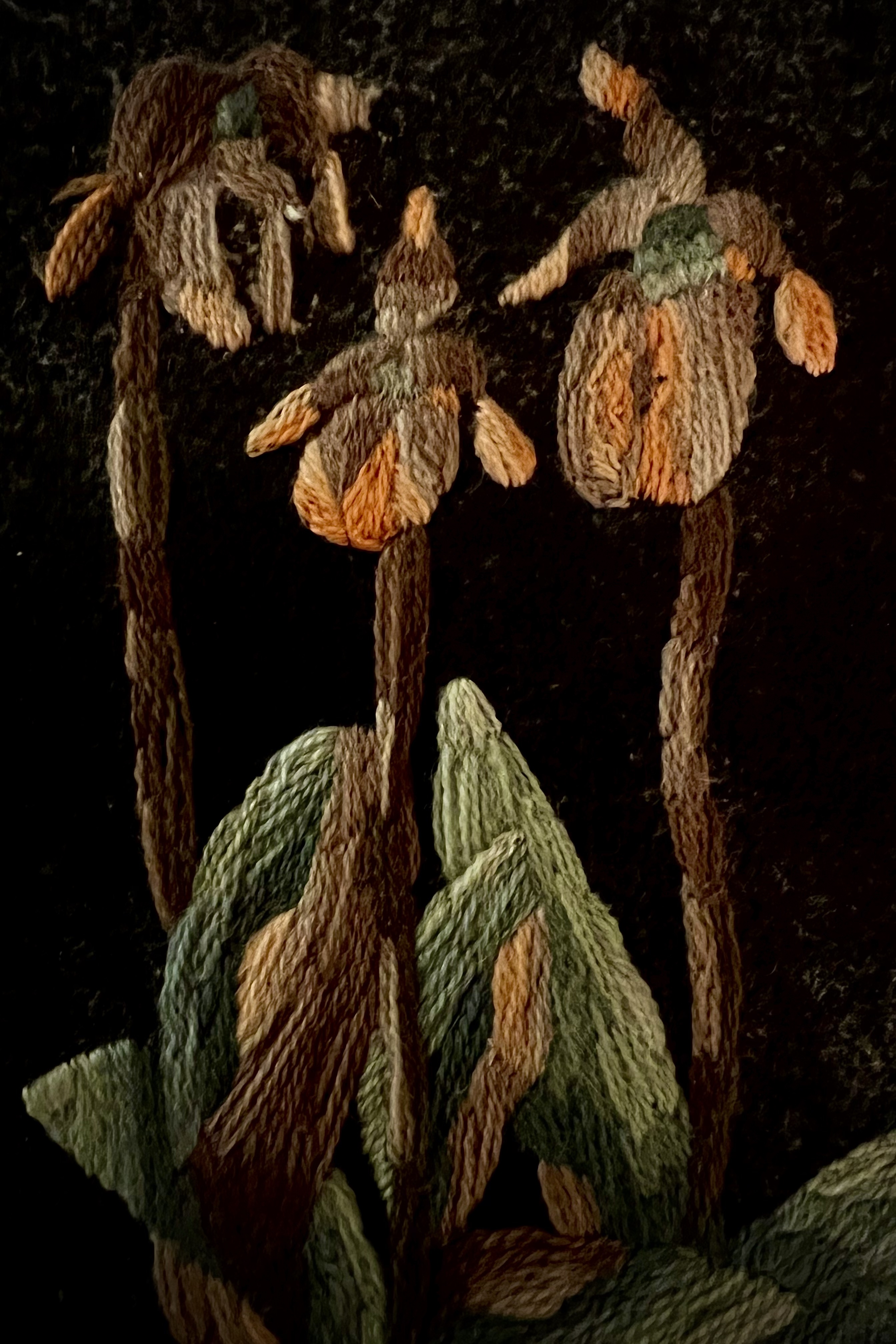
An embroidery I made for my father after he replanted the lady slippers — on the back I wrote “The miracle of creation recurs each spring in the delicate beauty of the lady slipper – may we ourselves be recreated as well…”
Once more, once more into the sunny fields Oh, let me stray! And drink the joy that young existence yields On a bright, cloudless day. Once more let me behold the summer sky, With its blue eyes, And join the wild wind’s voice of melody, As far and free it flies. Once more, once more, oh let me stand and hear The gushing spring, As its bright drops fall starlike, fast and clear, And in the sunshine sing. ~Frances Kemble“A Farewell”
One-Time
Monthly
Yearly
Make a one-time or recurring donation to support Barnstorming
My life is not this steeply sloping hour, in which you see me hurrying. Much stands behind me; I stand before it like a tree;
I am the rest between two notes, which are somehow always in discord because Death’s note wants to climb over— but in the dark interval, reconciled, they stay there trembling. And the song goes on, beautiful. ― Rainer Maria Rilkefrom “My Life is Not This Steeply Sloping Hour”
photo by Josh Scholten
On Monday mornings I often feel I’m stuck immobilized in the spot in the middle between discordant notes.
There is on one side of me the pressure of catch-up from what was left undone through the weekend and on the other side is the anticipated demand of the coming week of stressful work I am committed to doing. Before I arrive to work, I dwell uneasily in dead center between the unknown ahead and the known behind.
This moment of rest in the present, this trembling broken Now, is my moment of reconciliation, my Sabbath extended.
This Monday morning I allow myself an instant of silence and reflection before I surge full bore into the week, knowing that on my journey I’ll inevitably hit wrong notes, just as I do when I play, unprepared, at the piano.
But it can be beautiful nevertheless.
Even the least harmonious notes seek reconciliation within the next chord. I now move from the rest of my Sabbath back into the rhythm of my life.
Trembling, still trembling.
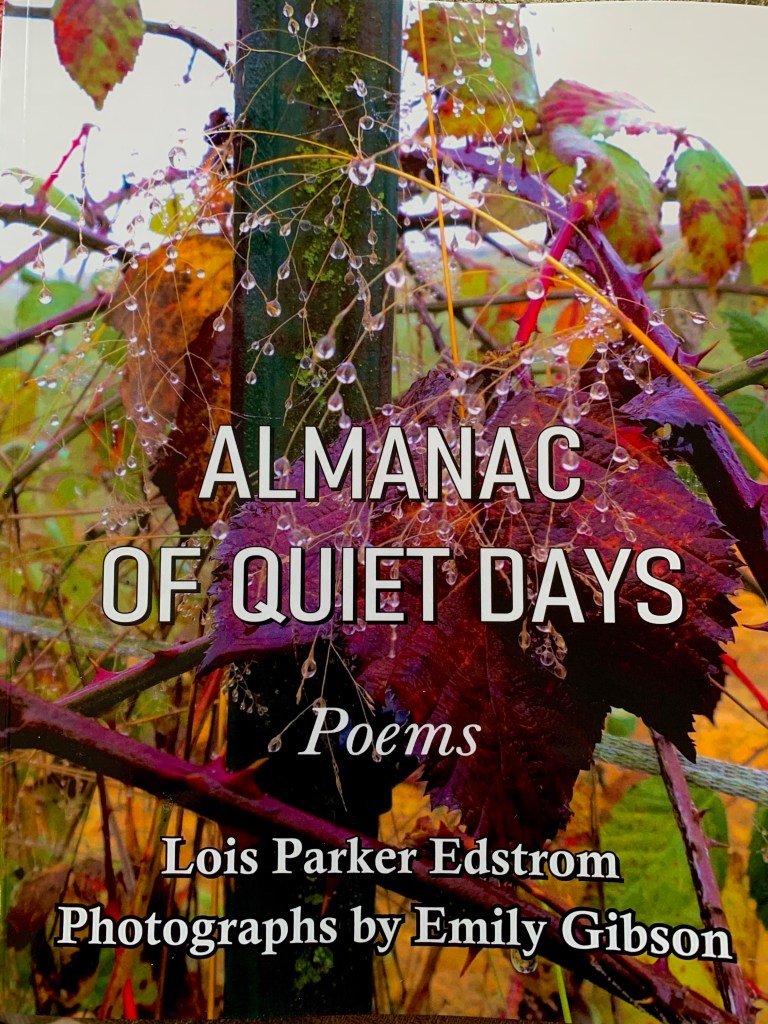
A book of beauty in words and photos, available to order here:
‘Regret has to be useless or it’s not really regret.’ ~Simone de Beauvoir
Rescuers did not find my uncle’s body. But they found his axe at an icy altitude impossible to navigate without one.
A little higher up, they found my uncle ’s sleeping bag at an altitude unsurvivable without one.
You likely have a pen in purse or pocket. Take it out and write a list of all you need at your present altitude.
Next, change altitudes. Now, make another list: the two biggest regrets of your life. Take your time. Get it right. Because
here is all you need to know about need: That list of regrets—cross one off. You are going to need that space later. ~Jessica Goodfellow, “Unreachable” from Whiteout
I’ve known people who lost their lives while hiking/climbing in the mountains or due to some other tragedy – the cascade of decisions leading to their death are sources of regret for all who mourn them, even decades later. Somehow regret is a difficult feeling to let go; we cling to it as if it is somehow an essential part of us.
It is easy for me to come up with a long list of regrets in my life. They seem to grow like weeds – useless, unplanned, unwanted and prolific, threatening to take over any good fruit being produced.
Few of us volunteer to share openly about our current guilt or shame unless we are sitting in a therapy group or AA. Instead it gives us permission to beat ourselves up, going over and over in our minds how we could have done things differently. As a physician, I’ve heard about such heart-ache in my clinical encounters – a patient will regret an impulsive sexual encounter that turned out badly, or drinking and drugging too much, or regret an ongoing conflict with a family member, or wish they had decided to get that vaccine before becoming ill with a potentially preventable infection.
Our list of regrets can be endless and life-destroying.
I understand the pain of regret as I too am a flawed and fractured person with a seven decade history of things done and left undone, words said and unsaid. Even if I think I can somehow manage to cross a regret off my own list – perhaps I apologized and was granted forgiveness, or I tried to make right what I’d messed up — I still know a new regret will occupy its place before long.
I can’t simply fix my own regret list.
No matter what altitude we’re at — down in the pits in the lowest of the low, or up in the highest imaginable, I have come to realize that forgiveness is only possible through a knowledge of God Himself. He came to walk beside us in our low spots and our high spots, no matter where we find ourselves. His work on earth has crossed off our regrets and mistakes and wiped us clean of them.
He did this because He understood our desperate need; thanks to His sacrifice and love, our heart-aches are left at the Cross.
More beauty in words and photos are found in this new book from Barnstorming, available to order here:
If you have already read our book, your review of the book would be deeply appreciated here:
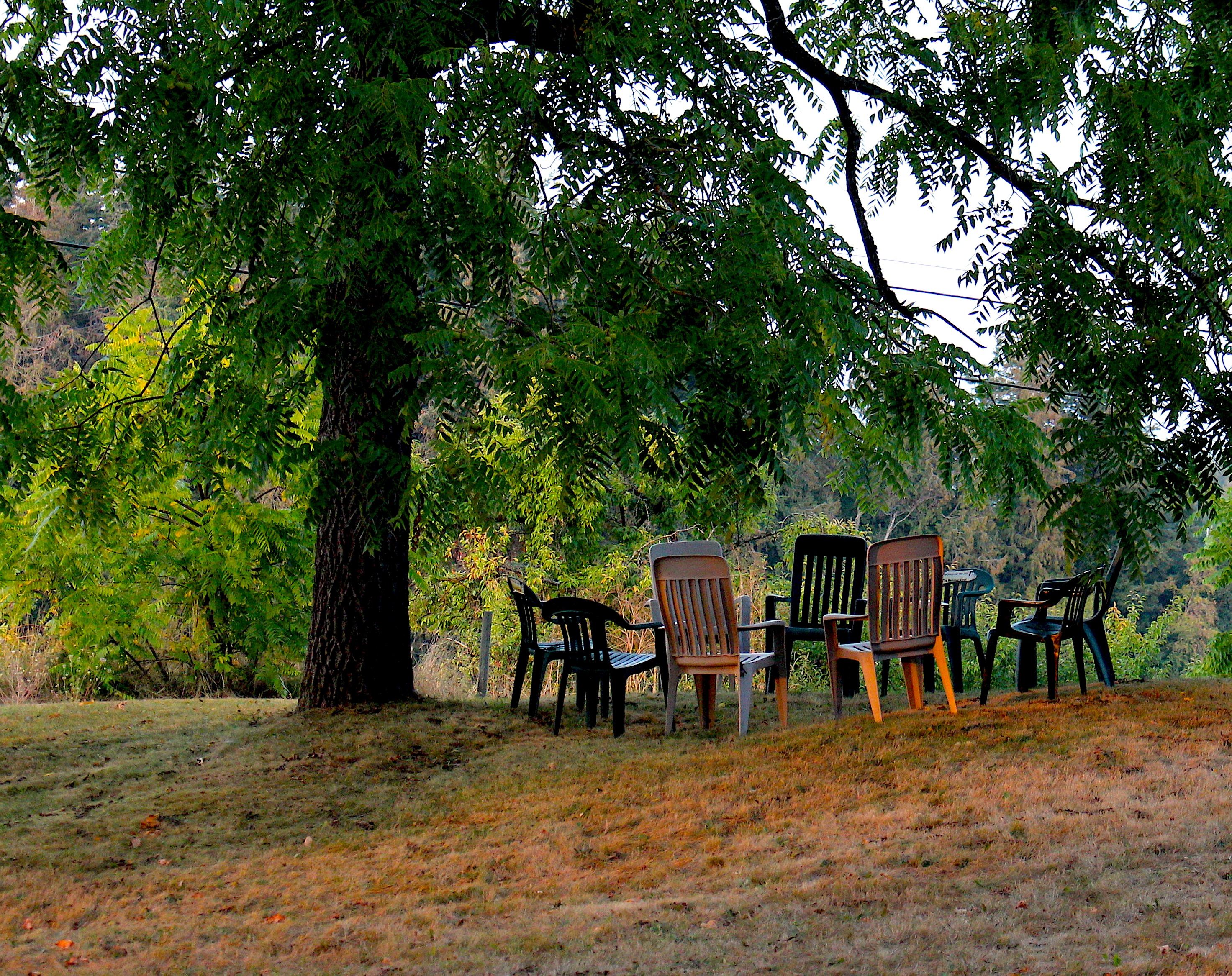
The talkative guest has gone, and we sit in the yard saying nothing. The slender moon comes over the peak of the barn.
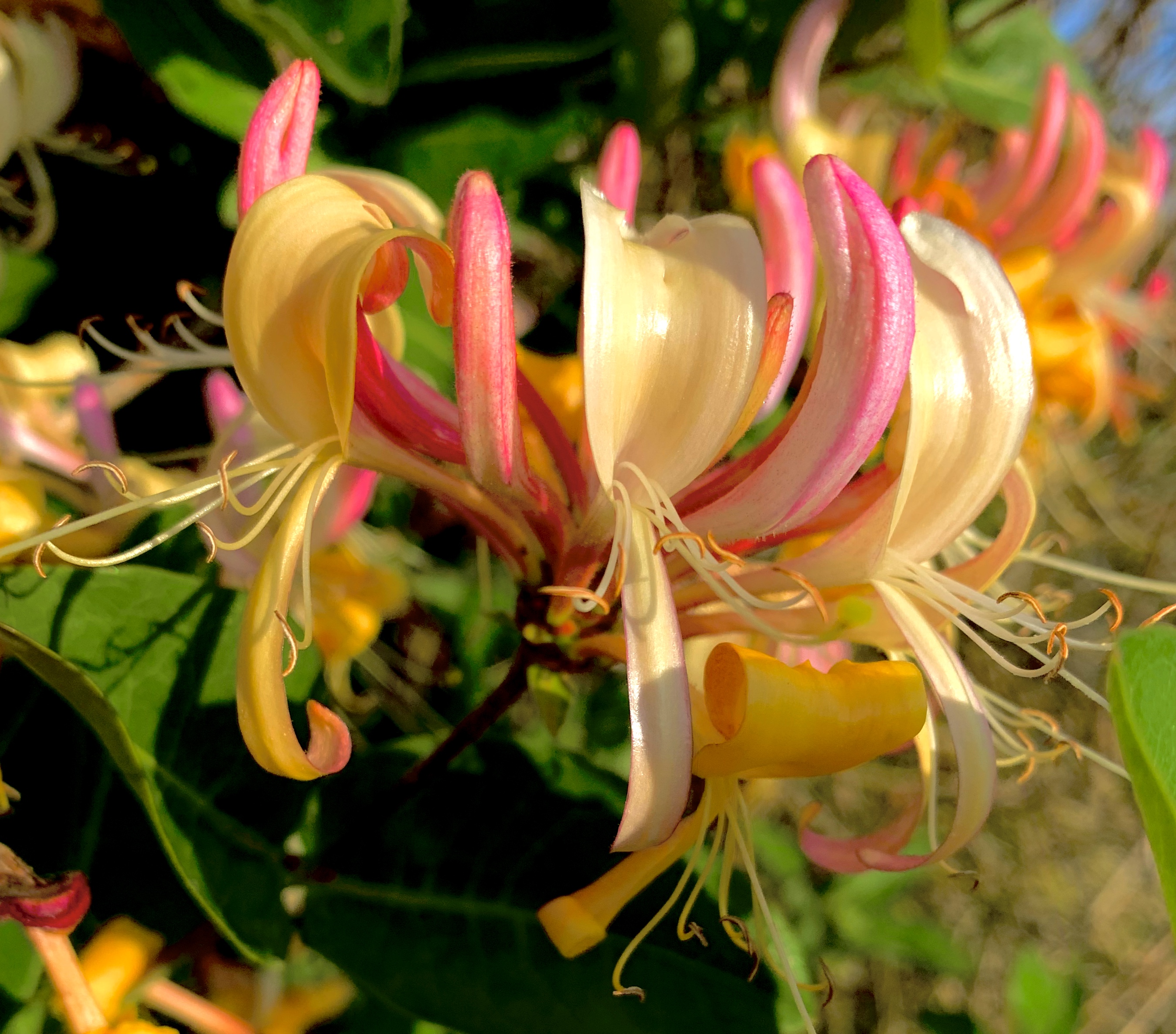
The air is damp, and dense with the scent of honeysuckle. . . . The last clever story has been told and answered with laughter.
With my sleeping self I met my obligations, but now I am aware of the silence, and your affection, and the delicate sadness of dusk. ~Jane Kenyon, “The Visit” from Collected Poems
As we slowly adapt to evenings spent with family and friends again, taking off our masks to actually witness the emotion on a familiar, now unveiled, face:
There are smiles and laughter again. We are trying to remember how to be ourselves outside the fearfulness that contagion wrought. More important: there are tears again. And wistfulness. And regret. And longing.
This delicate sadness happened – even to those of us who were never directly touched by sickness. We will never be the same, never so light of heart again, remembering what this past year has cost.
It is a slow transition to dusk. We sit together now and watch it come.


























 Barnstorming